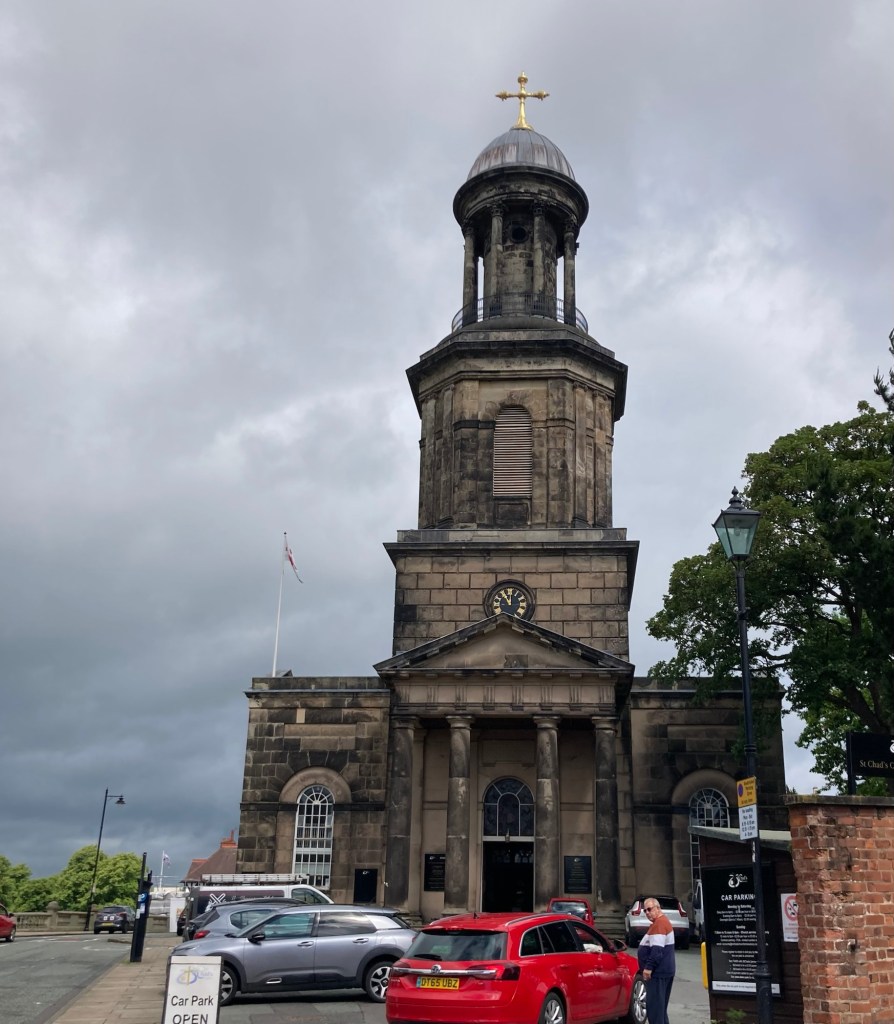
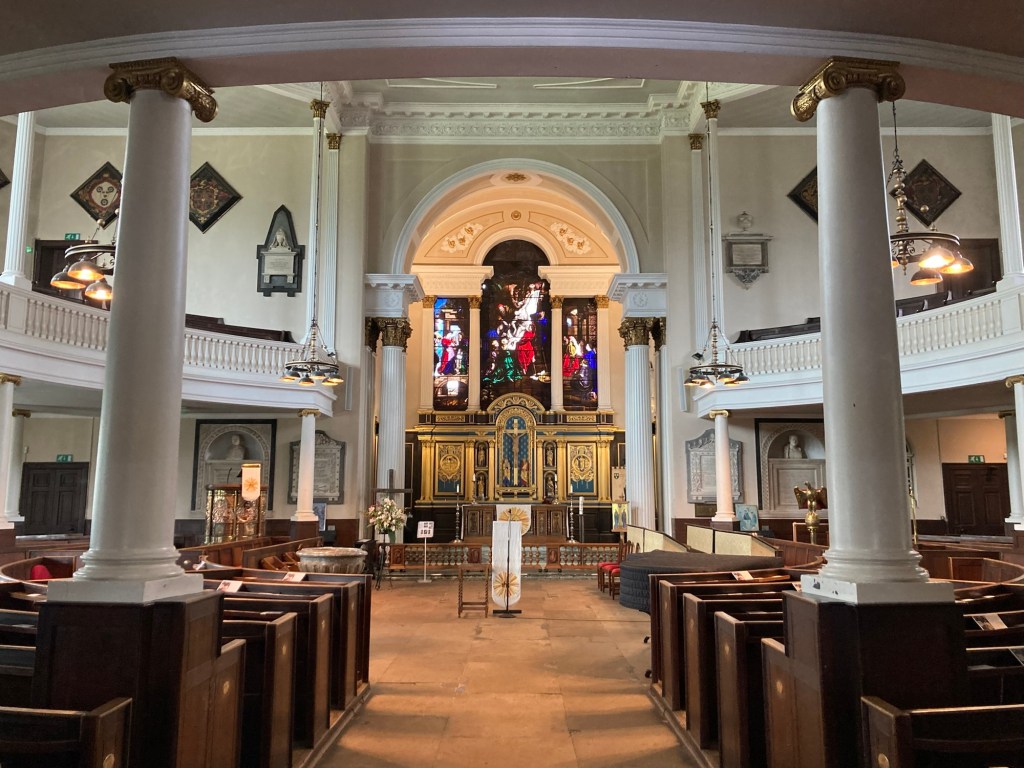
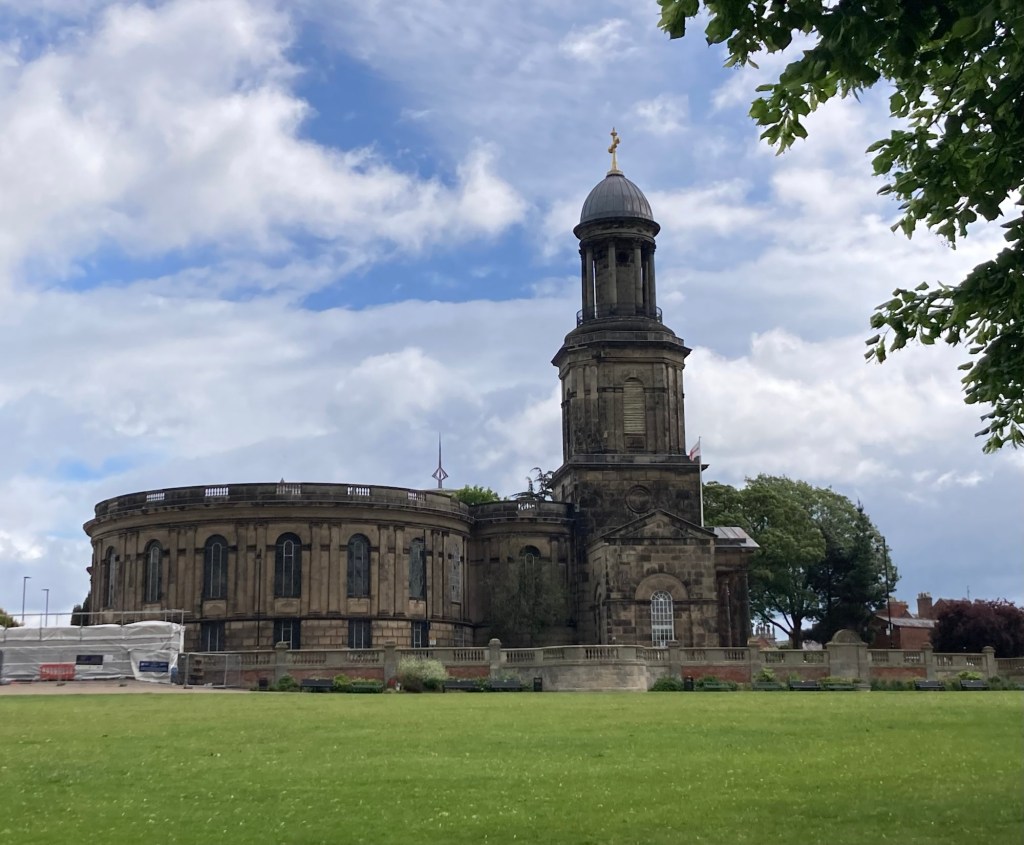
Onward through the walkabout. The next stop was the very unusual St. Chad’s Church. It’s circular, inspired by the Tour Magne mausoleum in Nimes, France. It was built by George Steurt and opened in 1792. Also, although I’ve never heard of St. Chad, he was apparently a prominent 7th century Anglo-Saxon monk.
The front of St. Chad’s.The circular nave. It felt like walking into the senate or house of representatives.The side view of the whole church from the large, beautiful Quarry Park.
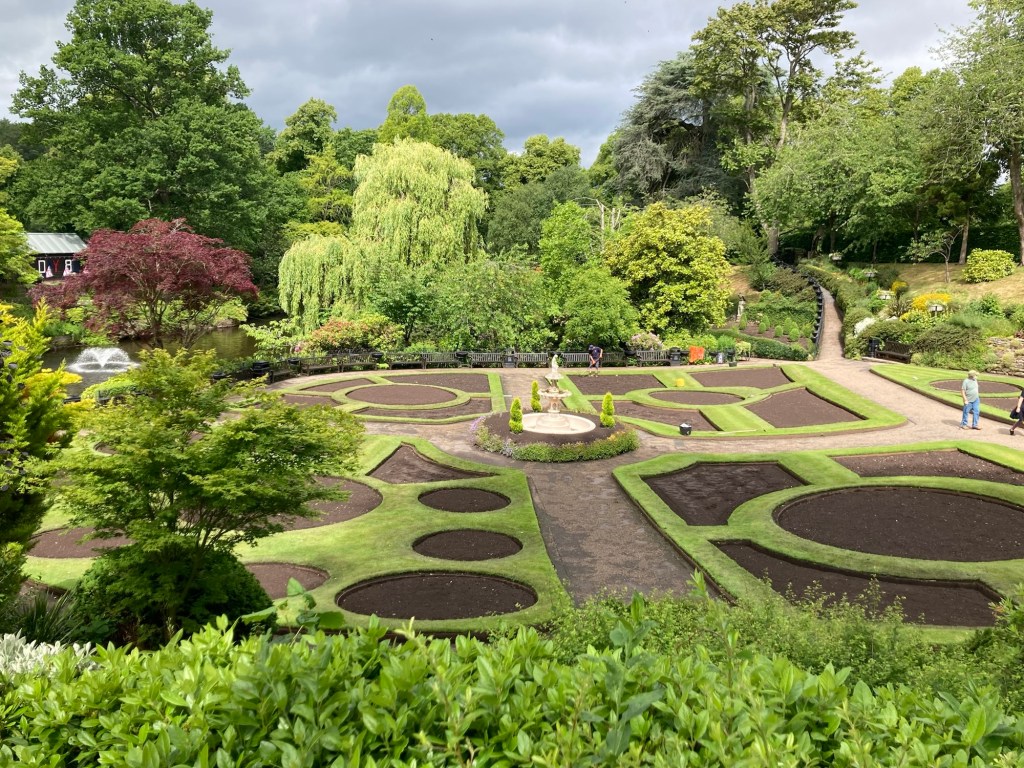
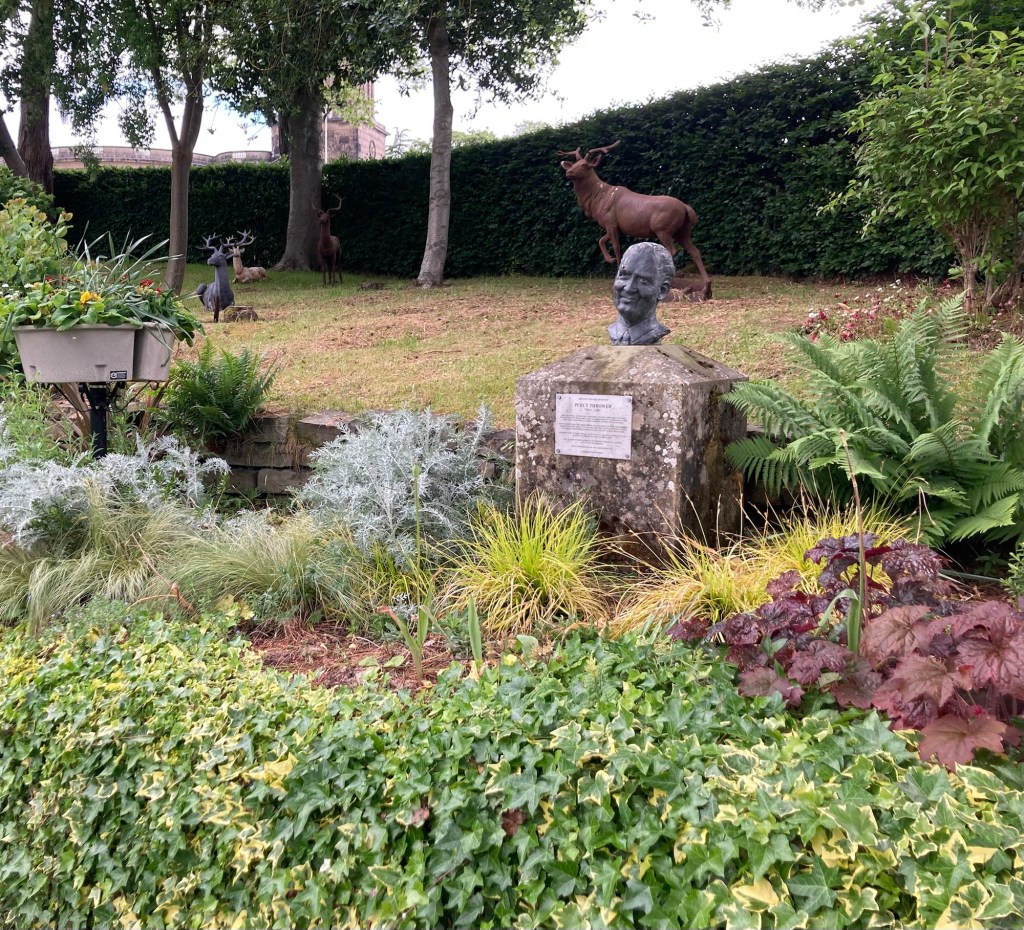
Directly across from St. Chad’s Church is Quarry Park, a 29 acre parkland which has been Shrewsbury’s most important site for recreation since the 16th century. The most beautiful part of the park is the hedge-encircled Dingle Garden designed by Percy Thrower. The following are photos from the Dingle Garden.
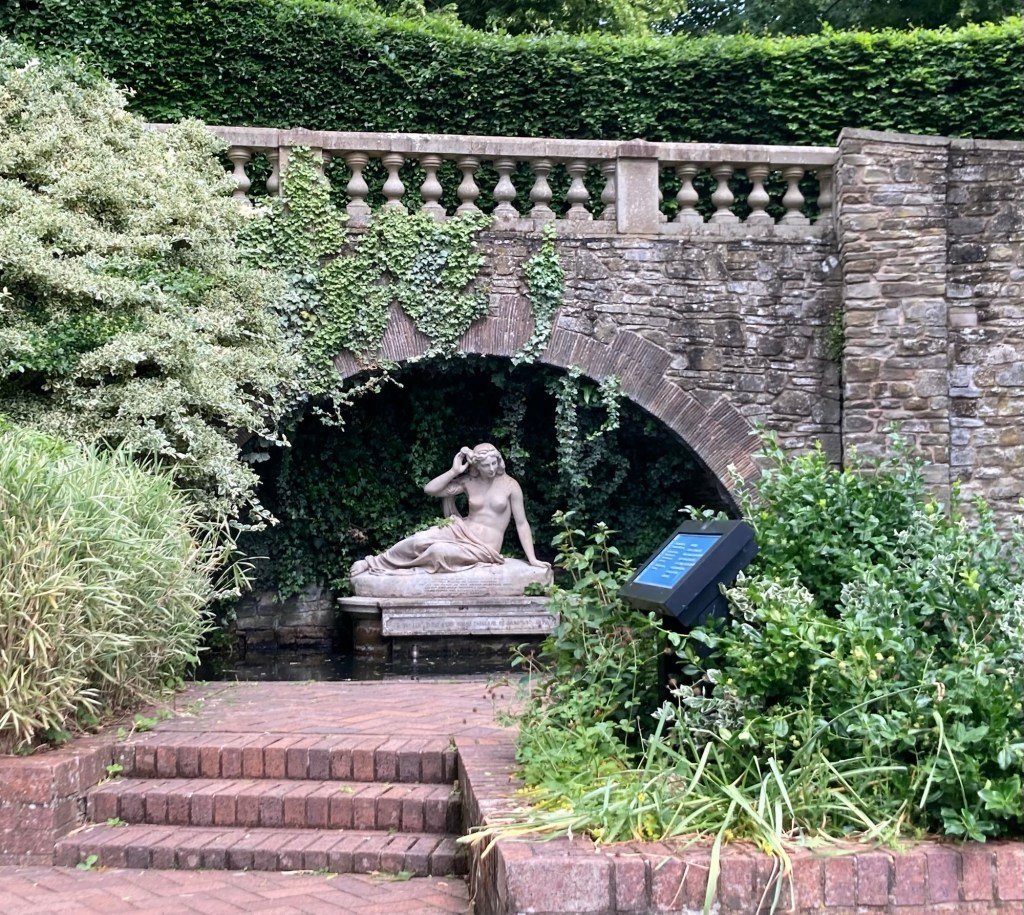
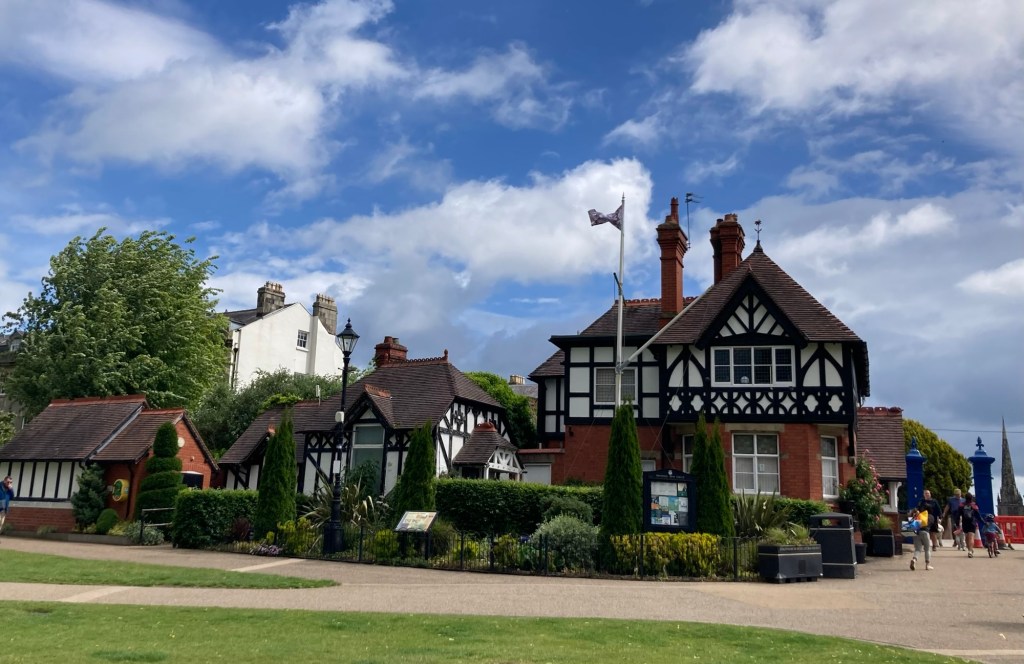
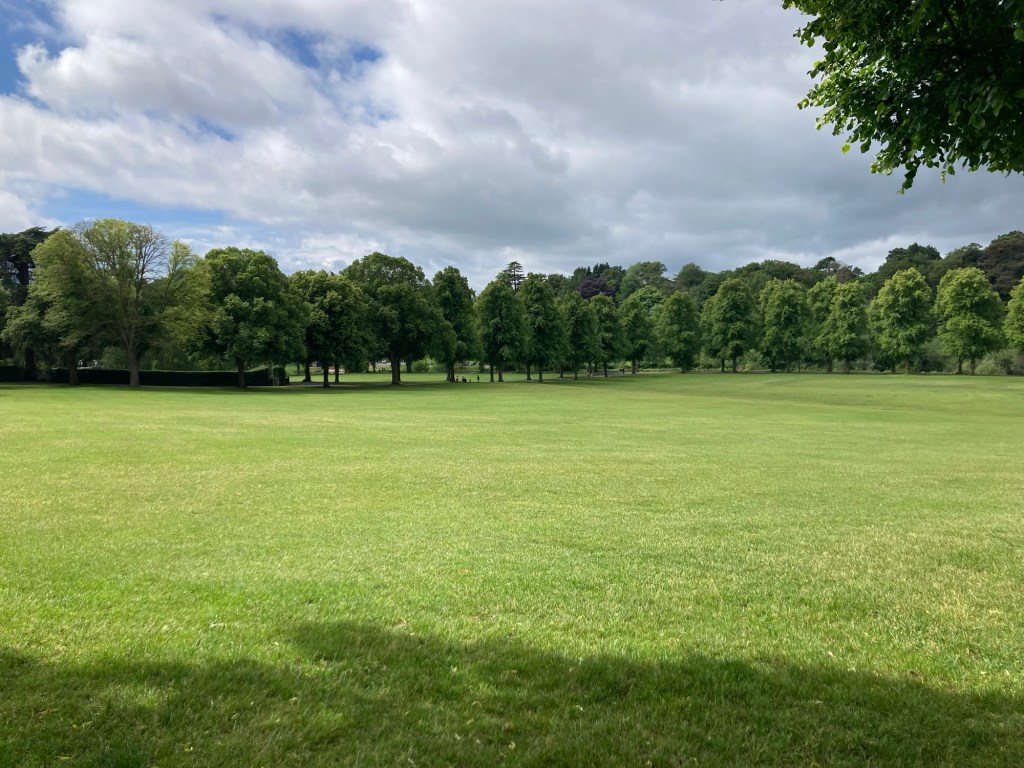
Another statue to Sabrina, the goddess of the River SevernQuarry Lodge, on one edge of the parkSome of the expansive lawn
From the park, we headed towards the Porthill Footbridge over the river.
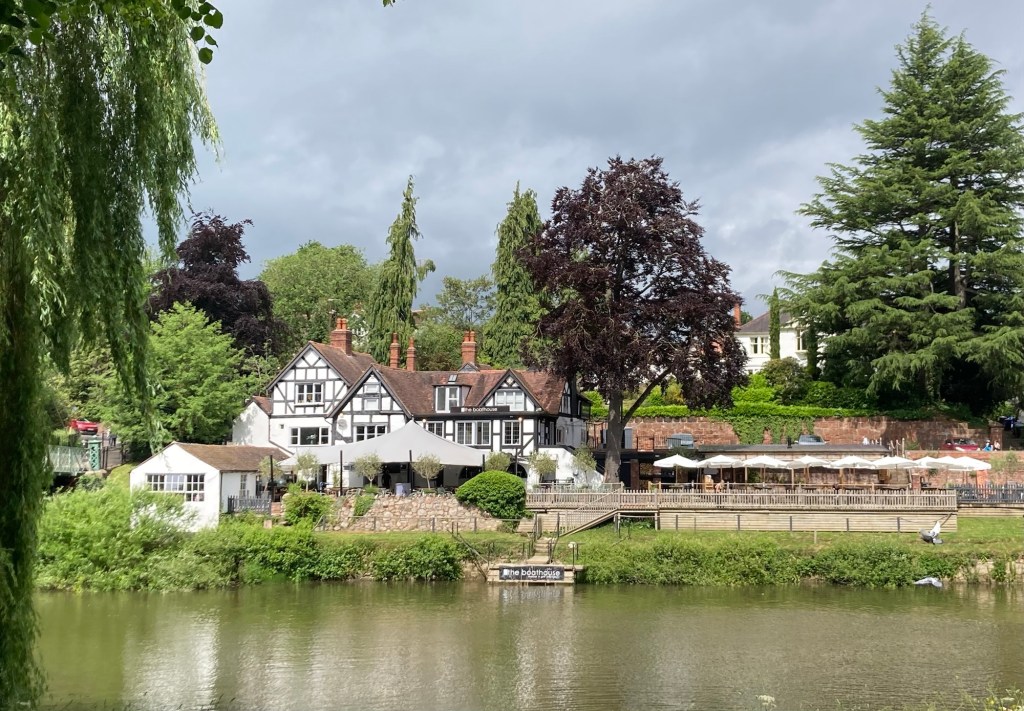
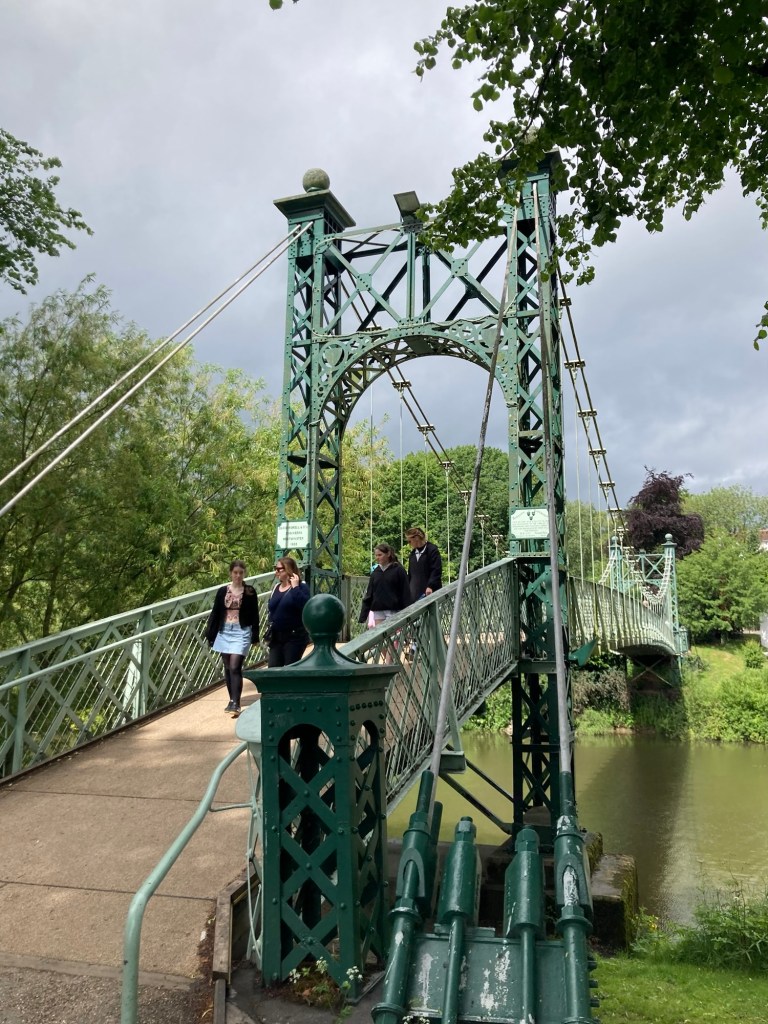
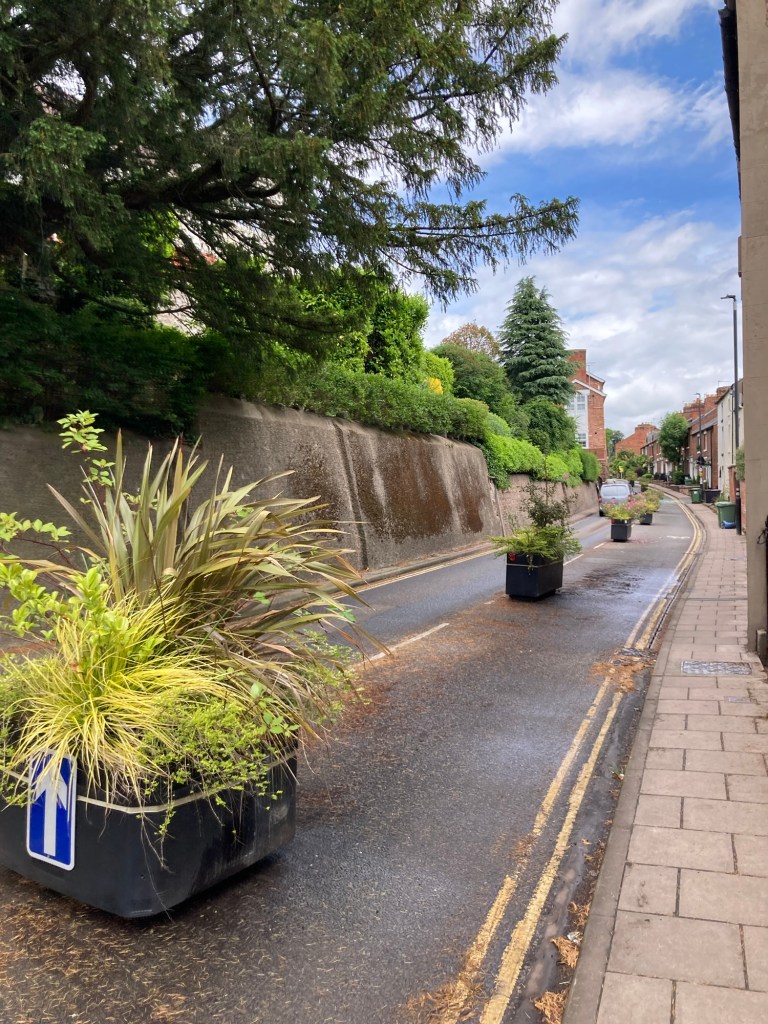
The Boathouse Restaurant along the SevernThe Porthill Footbridge, known as the bouncy footbridge by the locals. The center of the bridge does move.A pretty way to calm trafficThe sculpture “Quantum Leap” was built in 2009 to celebrate the 200th anniversary of Darwin’s birth in Shrewsbury.
One big difference between Wrexham and Shrewsbury (besides the country of course) is that it is easy to find useful maps of Shrewsbury to help plan your visit. We used the map today to plan our walkabout to see the local sites.
It was an easy two hour walk as everything is very close, but it means lots of photos over what will be at least two posts. Technical issues with some photos, not currently understood by Bob or me, will determine whether a third post is completed or not.
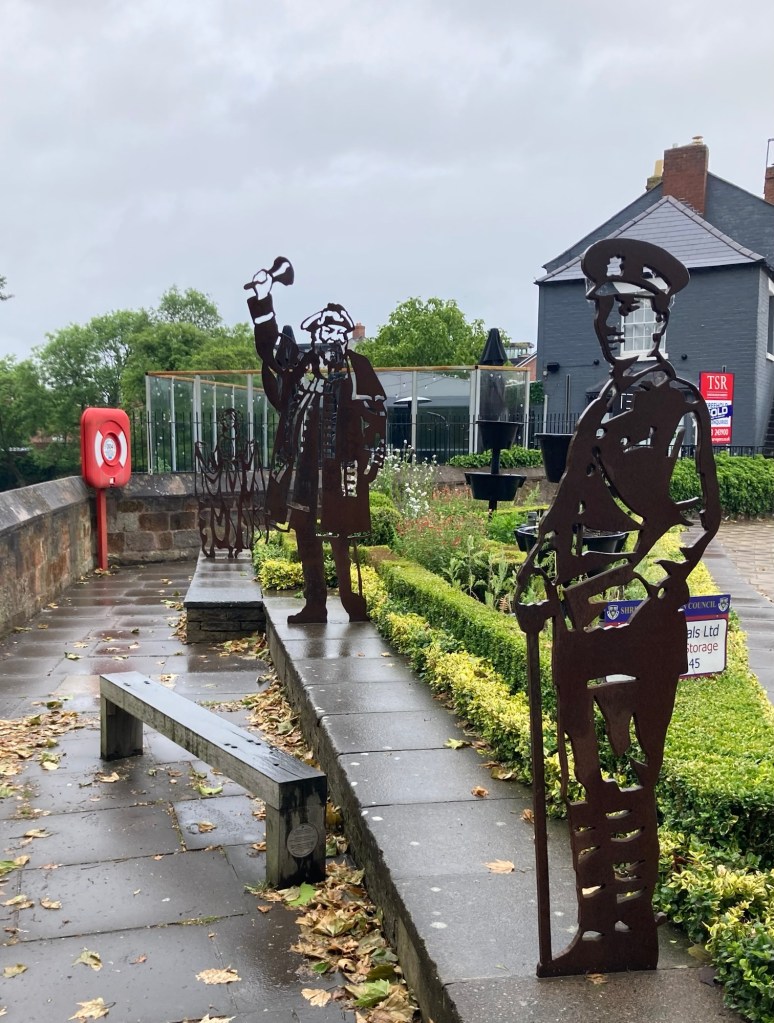
The first stop was a Tribute to Local Heroes sculpture in a pocket park almost directly across from our hotel.
The first statue is a soldier, the second, the town crier, and the third, Sabrina, the goddess of the River Severn.
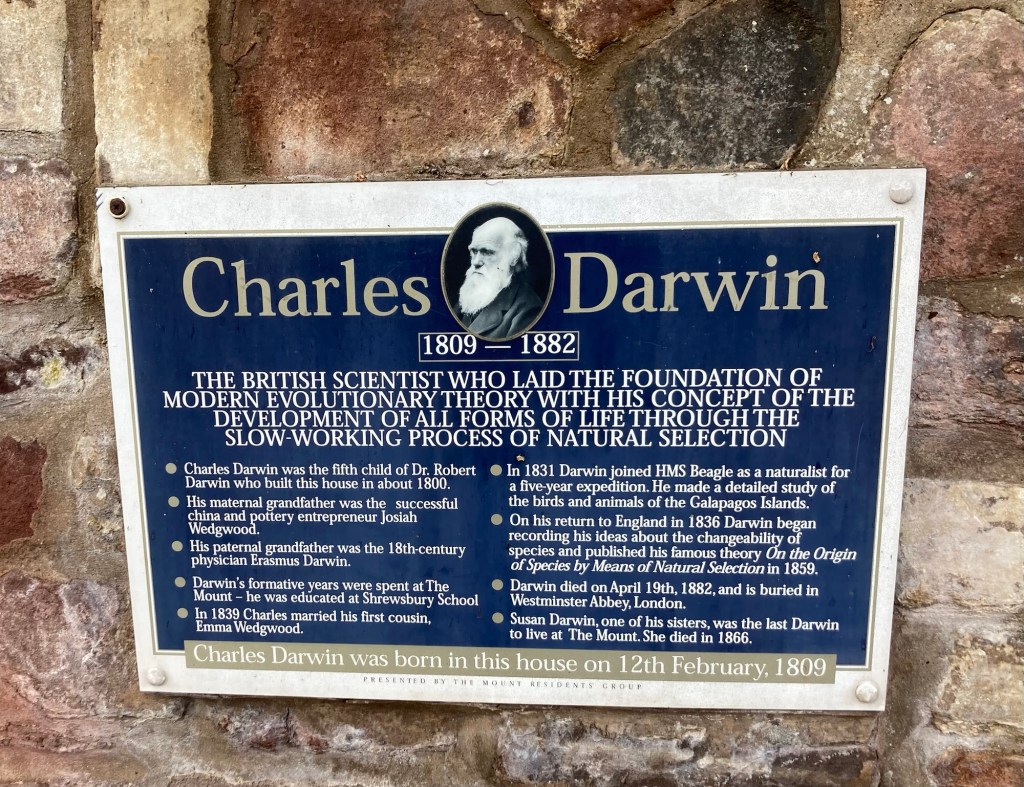
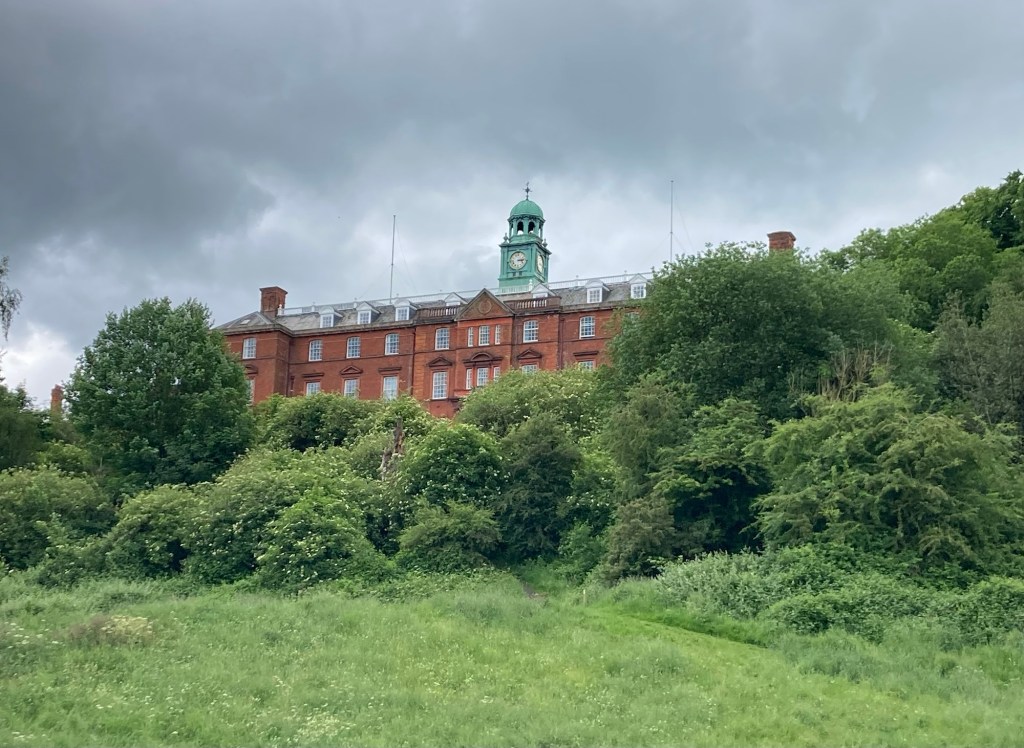
Next, we were off to see the impressive Castle Gate Library with a statue of Charles Darwin out front. The structure was originally Shrewsbury School, founded by King Edward VI in 1552. Charles Darwin, among many others, was educated here.
The building was completely renovated and reopened as a library in 1983.
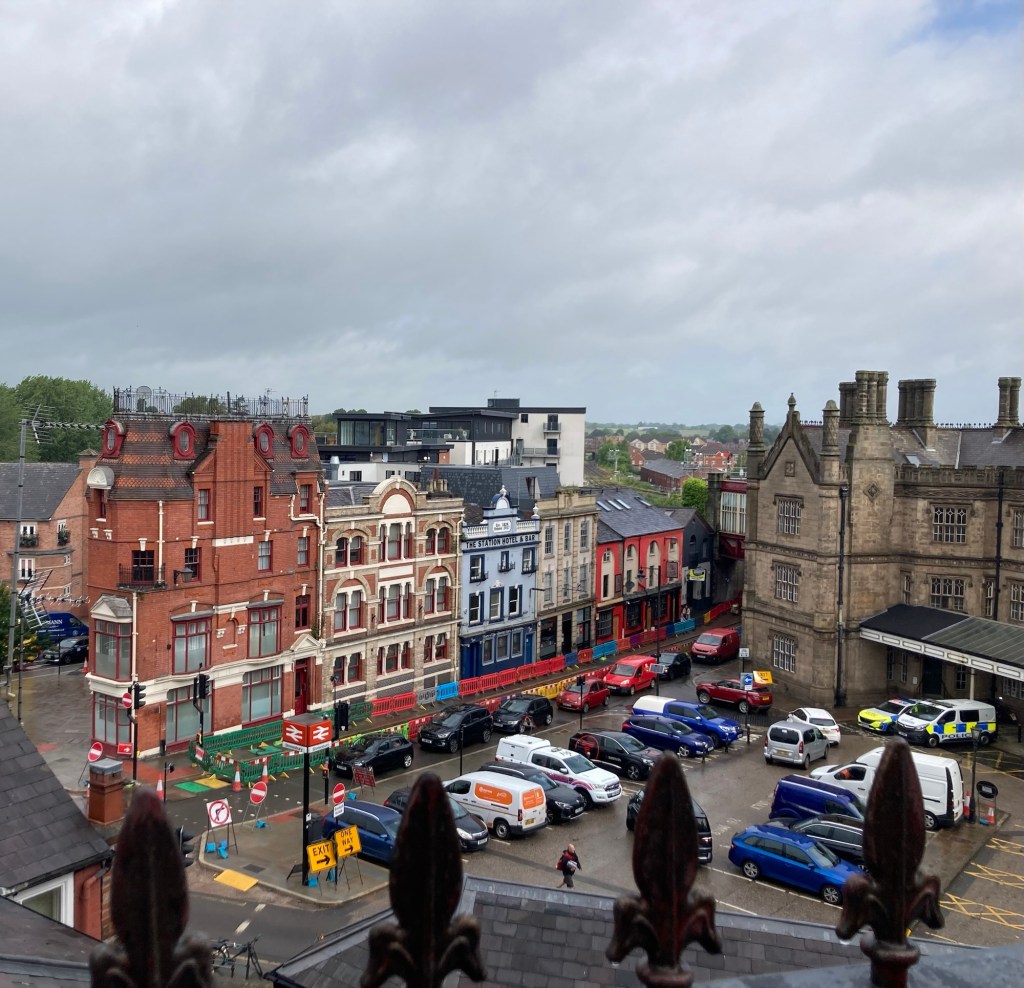
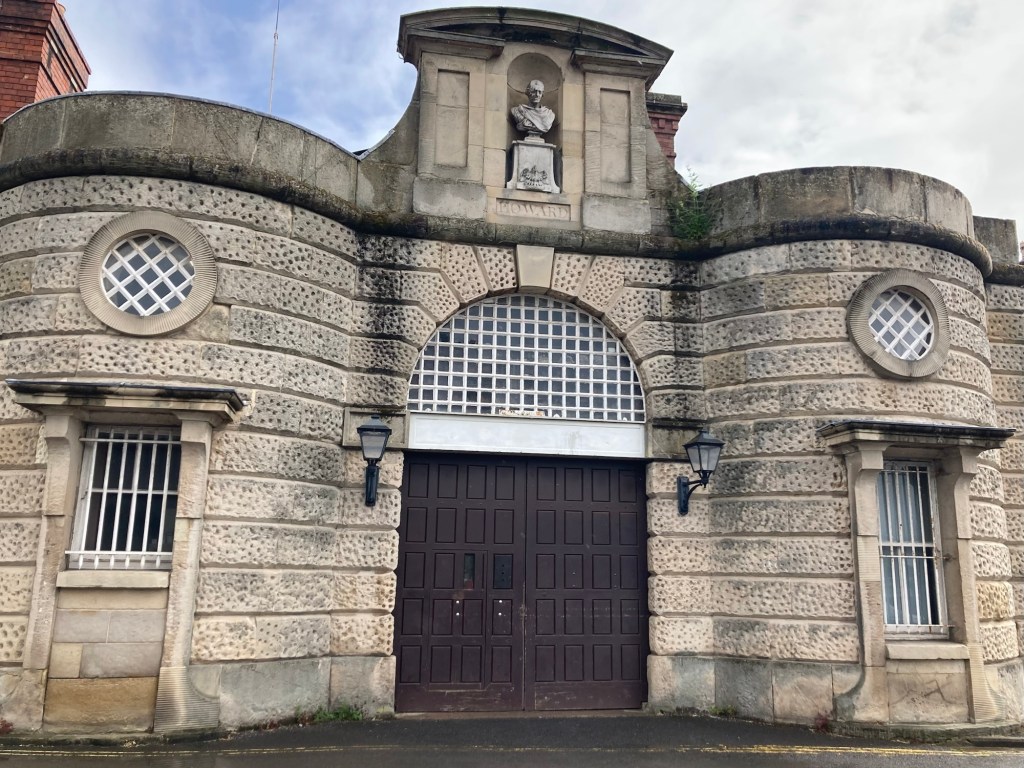
We attempted to find Laura’s Tower by the castle but went up the Castle Gate path by mistake. This didn’t get us to the Castle Grounds, but we did get a good view and saw the prison, which hadn’t been on the original plan.
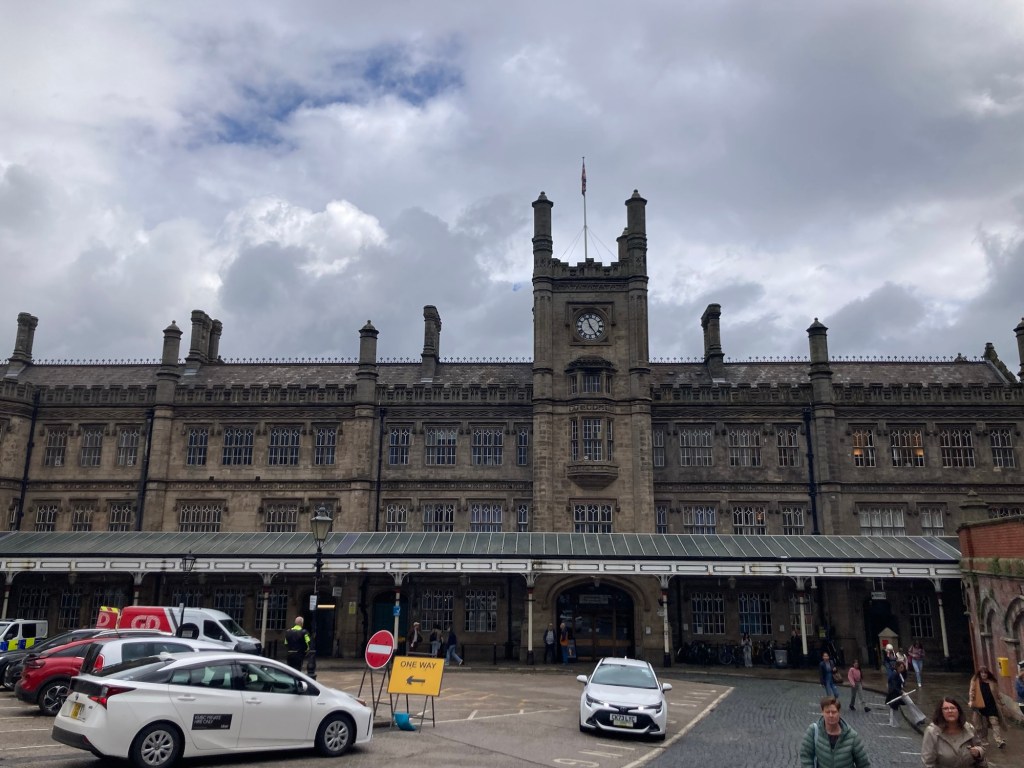
The view of the square in front of the train station. I like the colorful row of what appear to be thin buildings.Shrewsbury Prison, built in 1793, known as The Dana, after Reverend Edmund Dana. It was decommissioned in 2013.
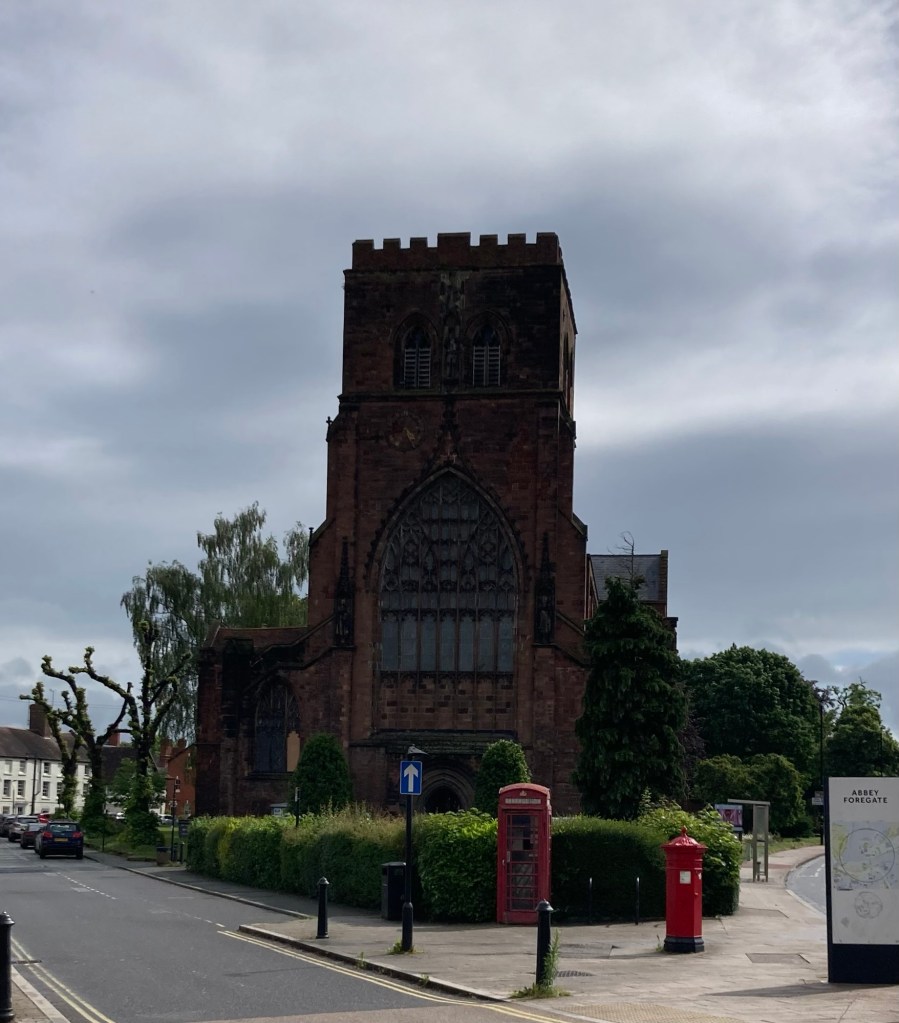
We then walked across the English Bridge (where our boat tour had ended yesterday) to reach the Abbey.
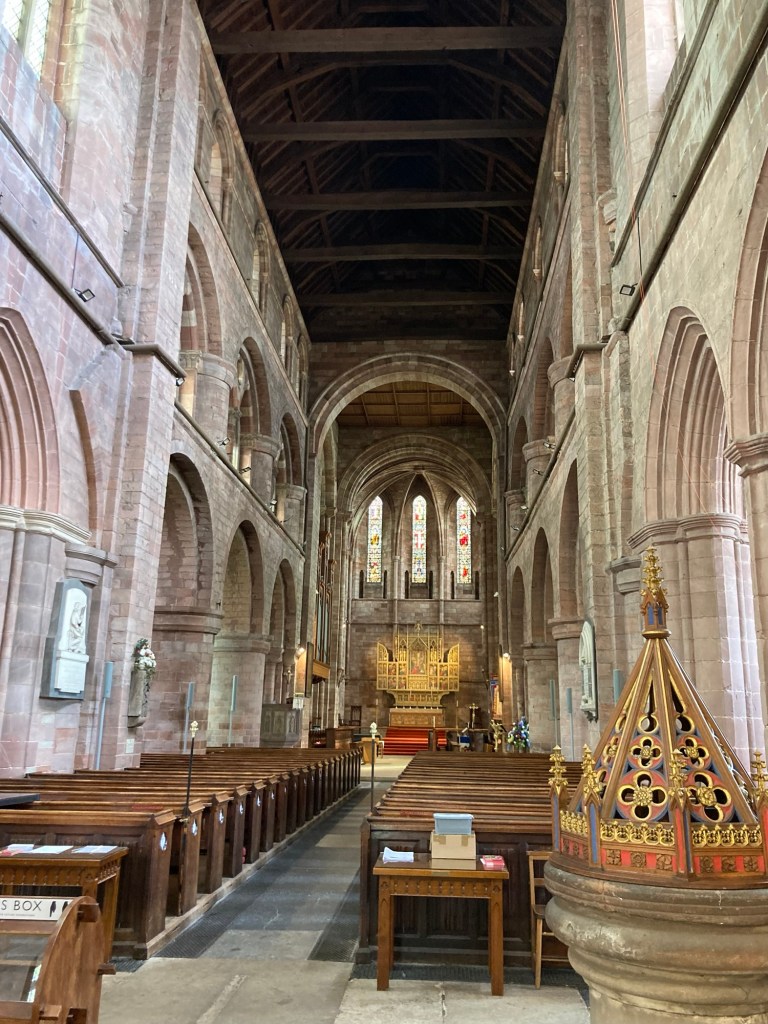
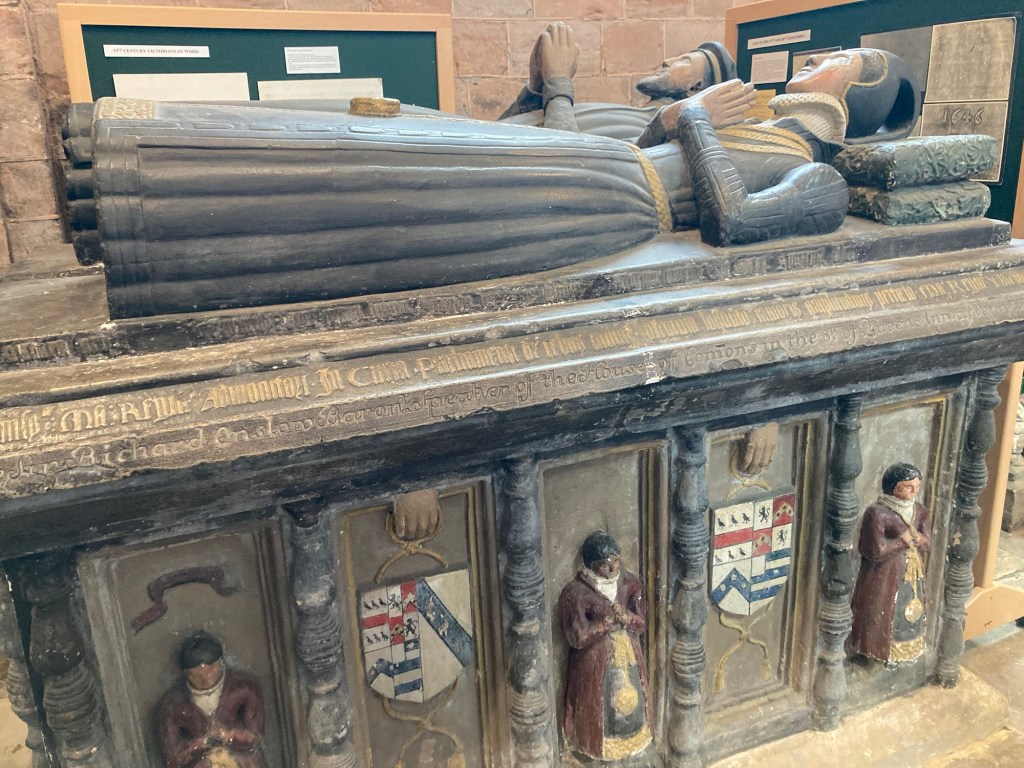
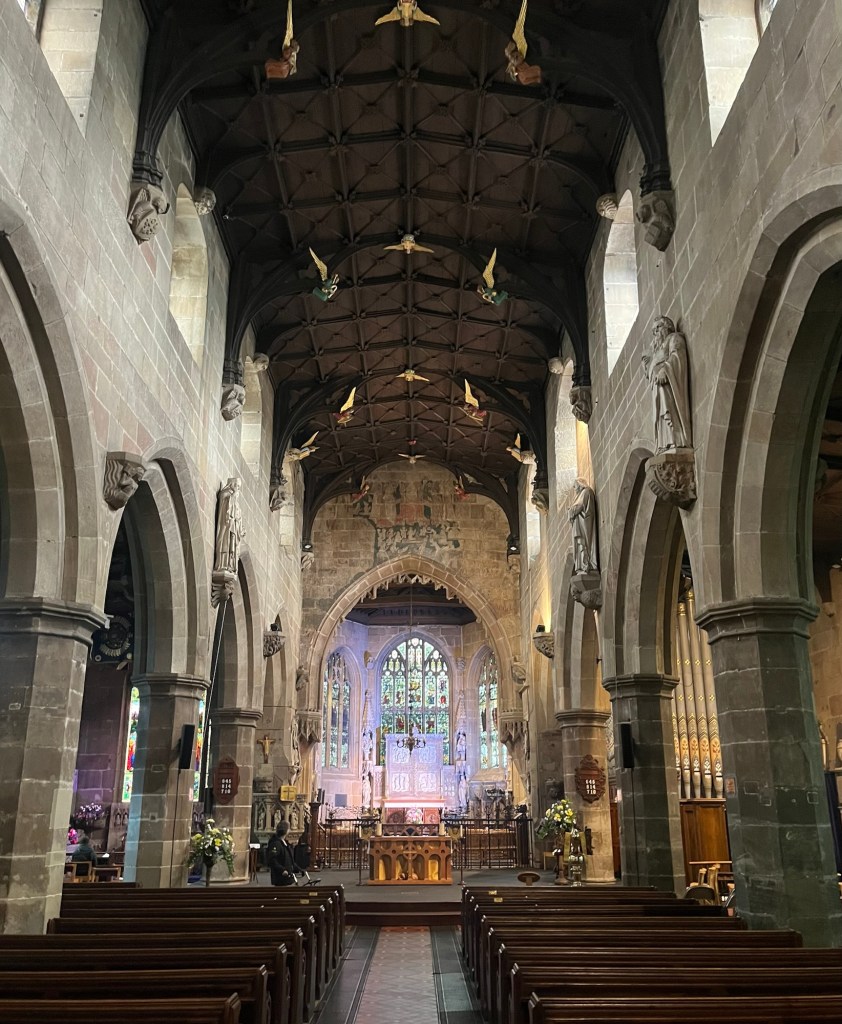
The Abbey, originally founded as a Benedictine Monastery in 1083 on the site of an existing Saxon Church.The nave of the parish church with the roof and arches reflecting the different periods of building.Some 17th century tombs
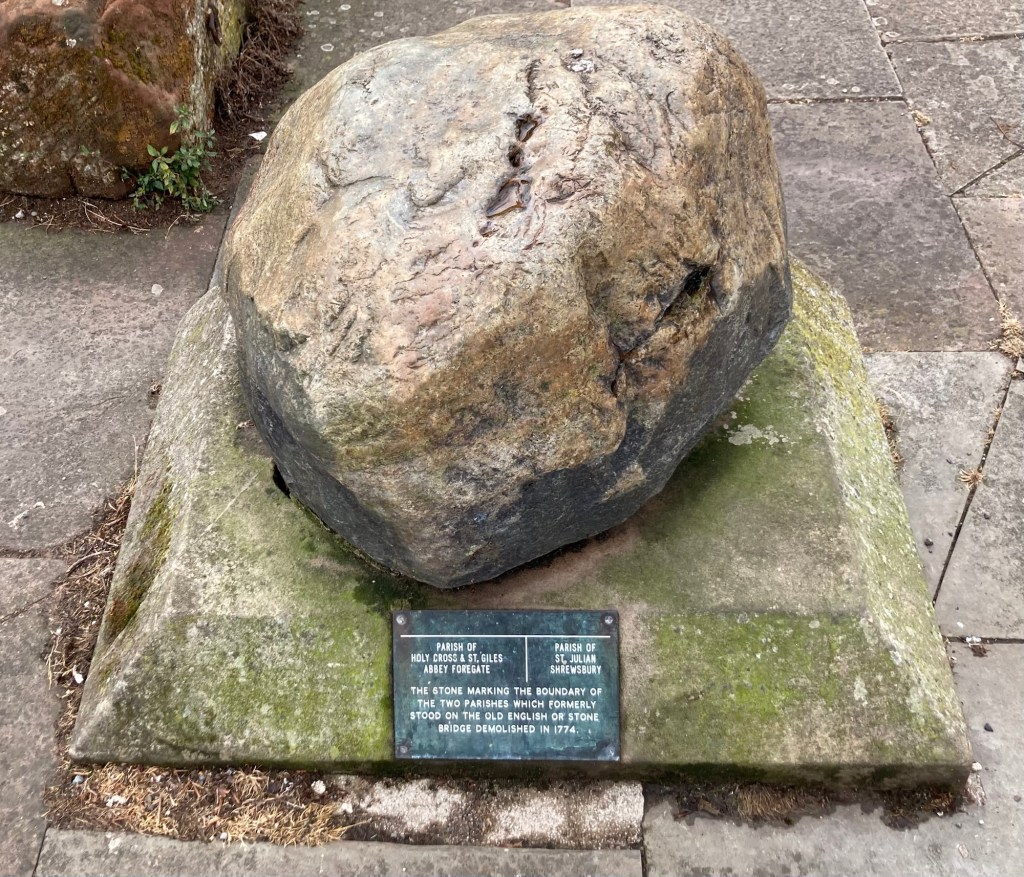
We crossed back over the English Bridge on the other sign and saw this stone marker depicting the former geographical division between local parishes.
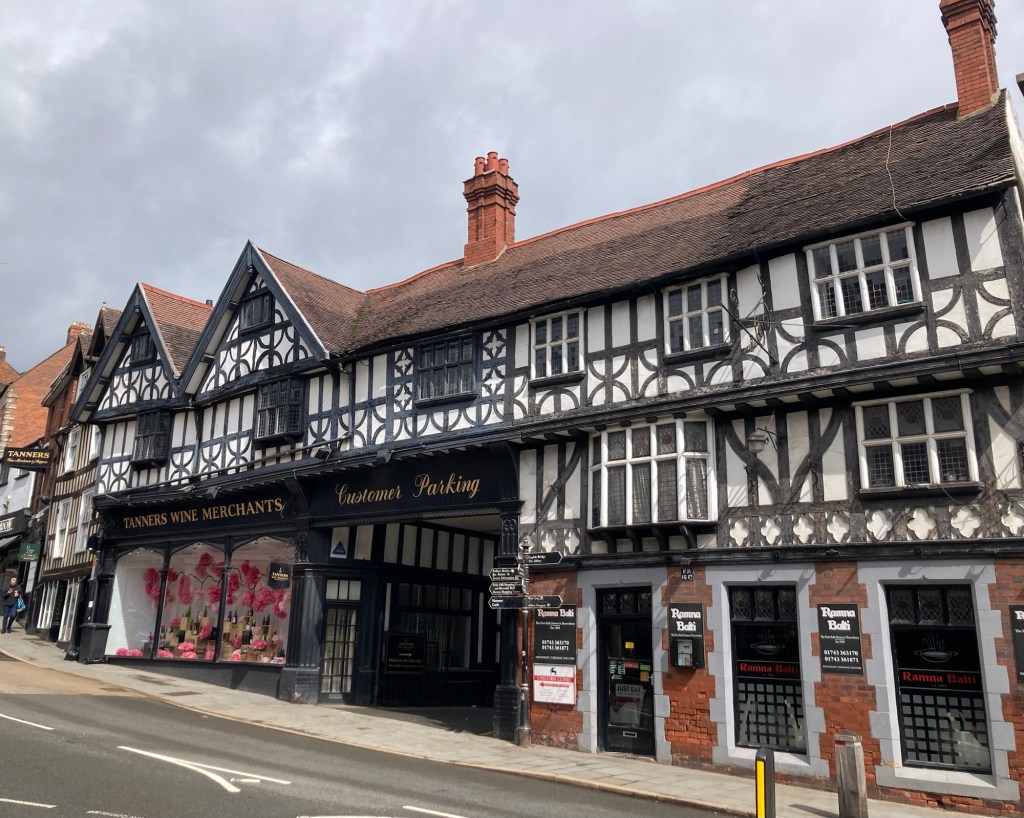
More Tudor style buildings
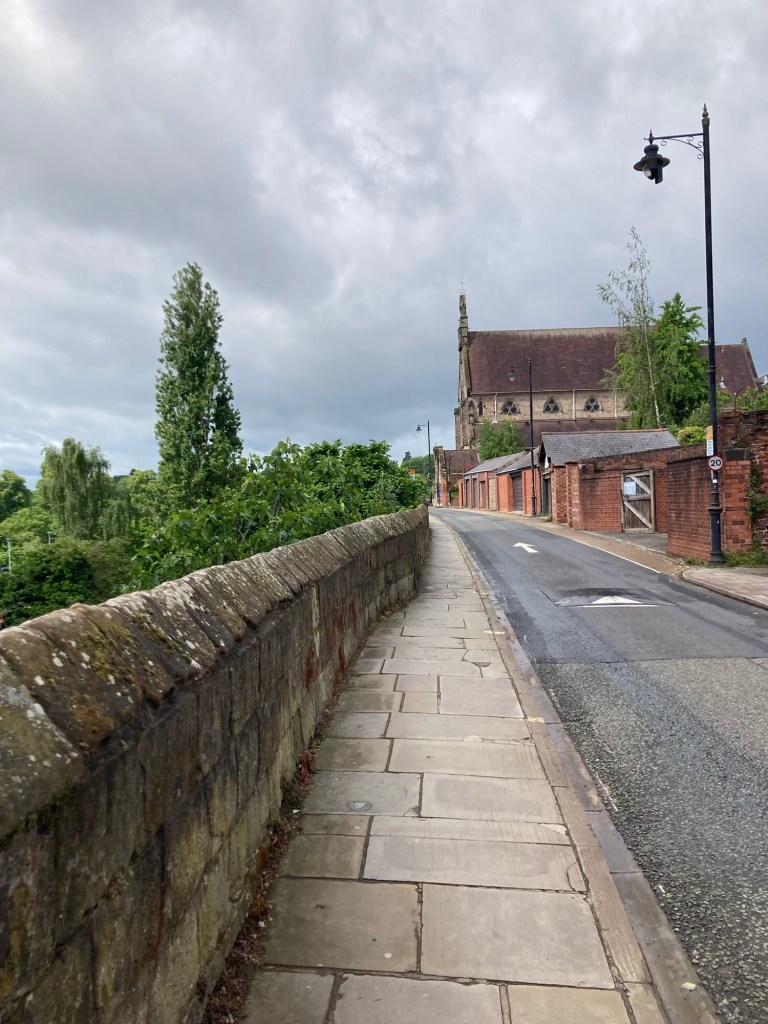
Then we headed along the old town walls towards Shrewsbury Cathedral.
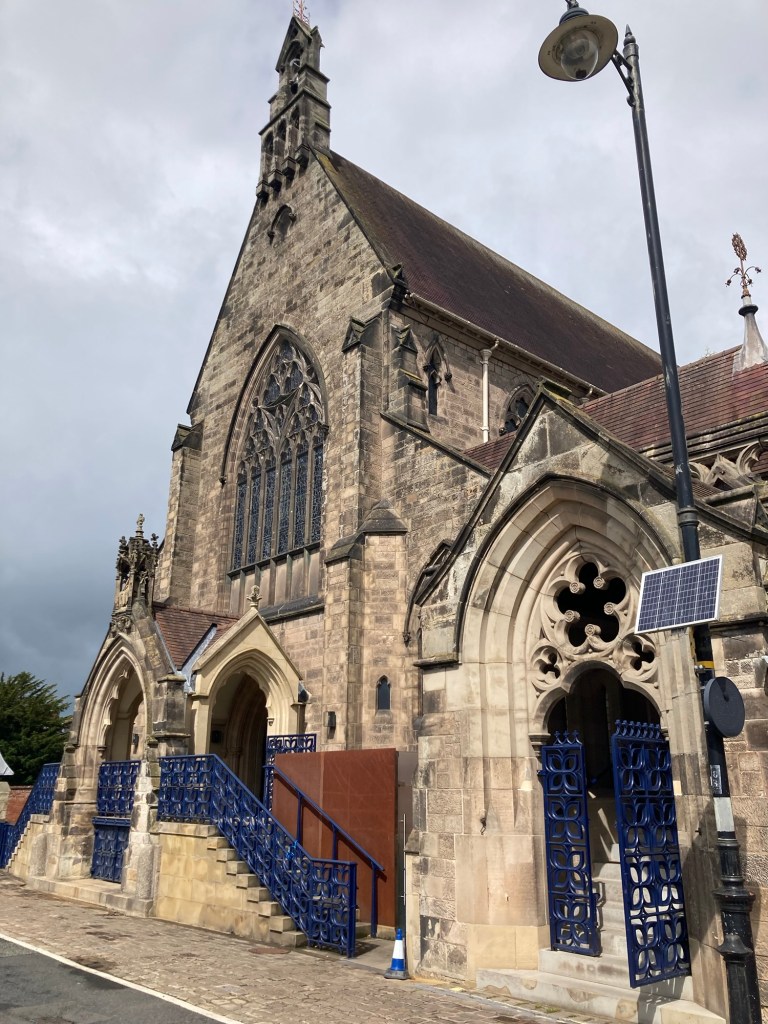
Town wall on left and the cathedral on the right in the background The front of the cathedral
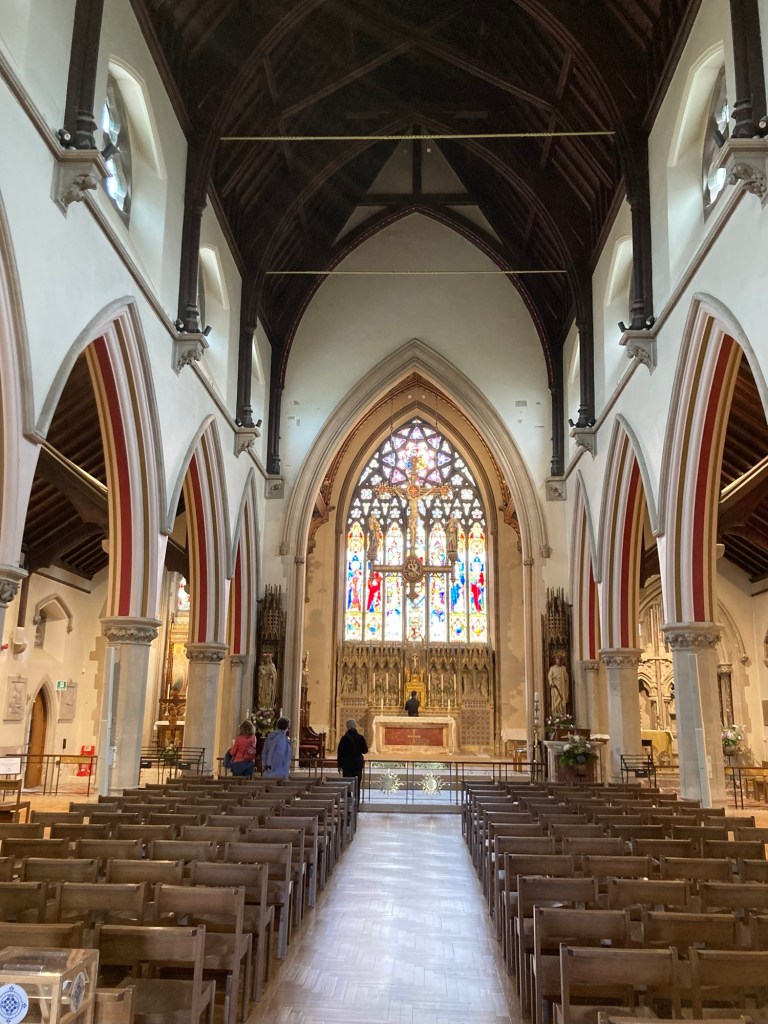
The building of the Catholic Cathedral was funded by Bertram Talbot and was opened with a mass on November 29, 1856.
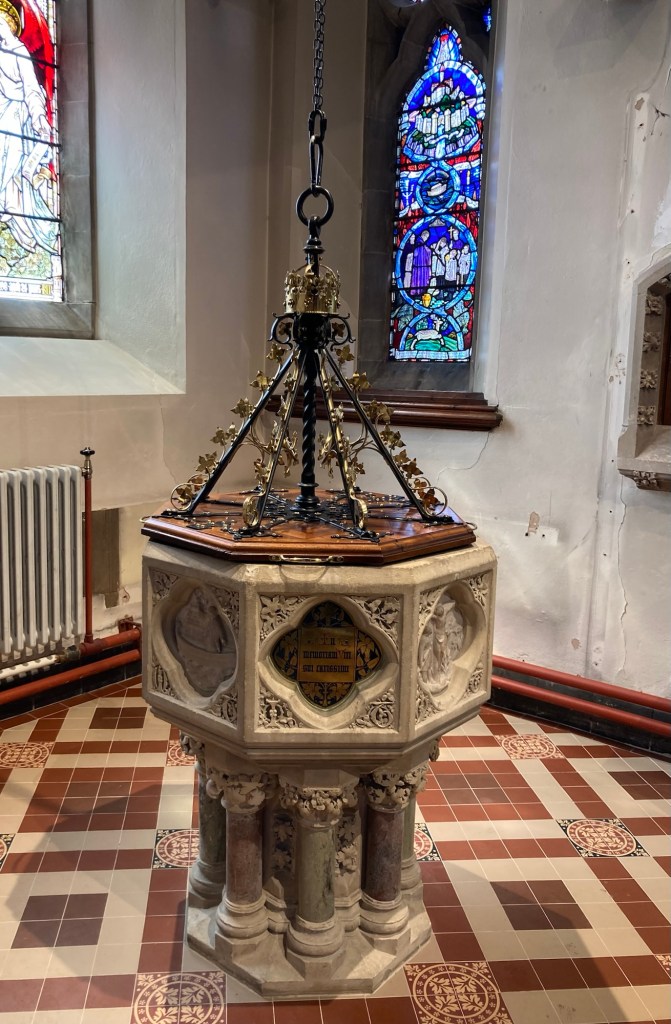
The nave The baptismal font
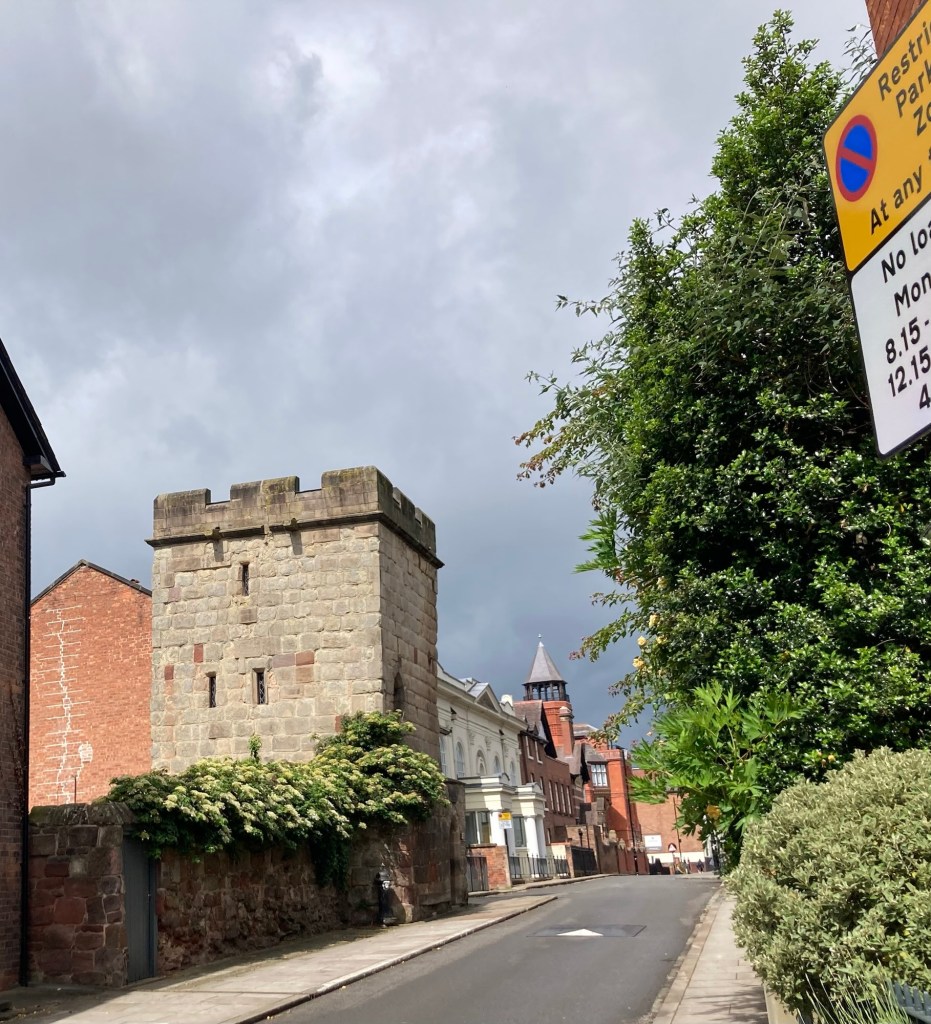
Directly up the road from the Shrewsbury Cathedral is the
Town Walls Tower, which is a National Trust Landmark that is on use as a private holiday accommodation.
First, all good on the car front. Our car has not been towed, and we’re in coordination with the manager of the parking lot as to how to fix the license snafu. Good people exist in the US despite what our current leadership may indicate.
Now on to the vibrant Shrewsbury. We arrived about 11:15 this morning and were able to check into our Premier Inn as Bob had paid for an early check in. We had a bit of a walkabout in the city center and bought tickets for a boat tour at 3:00 pm. The city was hopping. Lots of foot traffic.
Things to know about Shrewsbury. It is a market town in Shropshire, England, sited along the River Severn (the longest River in the UK). It has a population of about 77,000 and is located 9 miles east of the England-Wales border. It is also the birthplace of Charles Darwin.
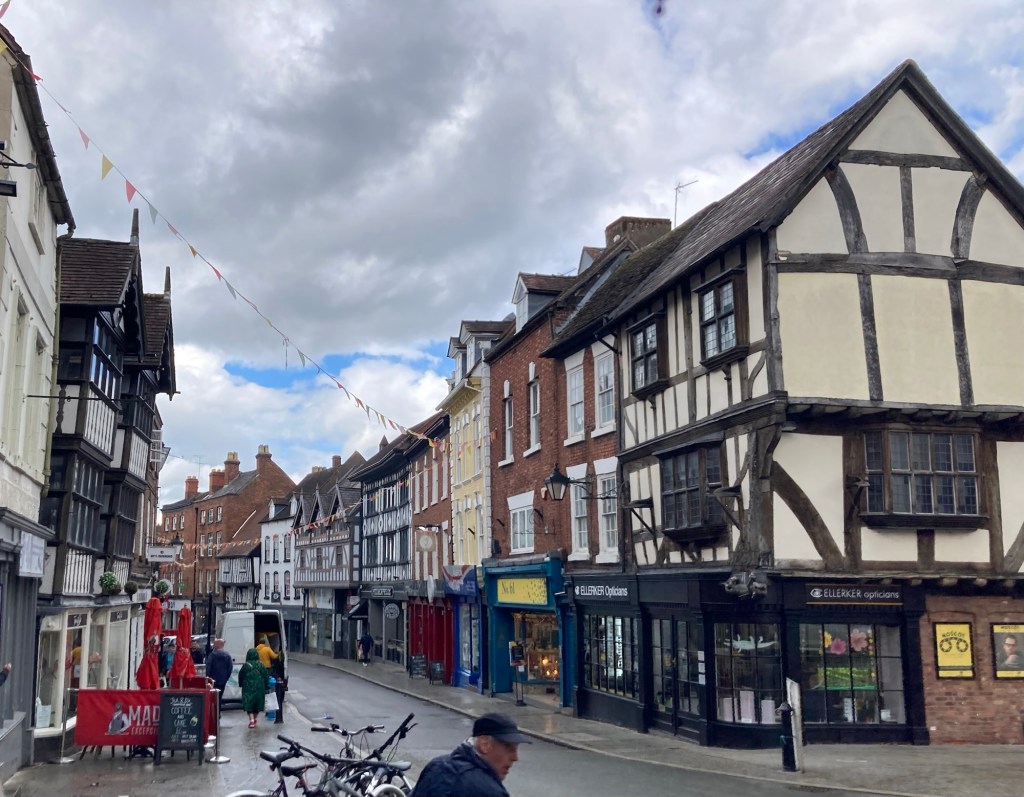
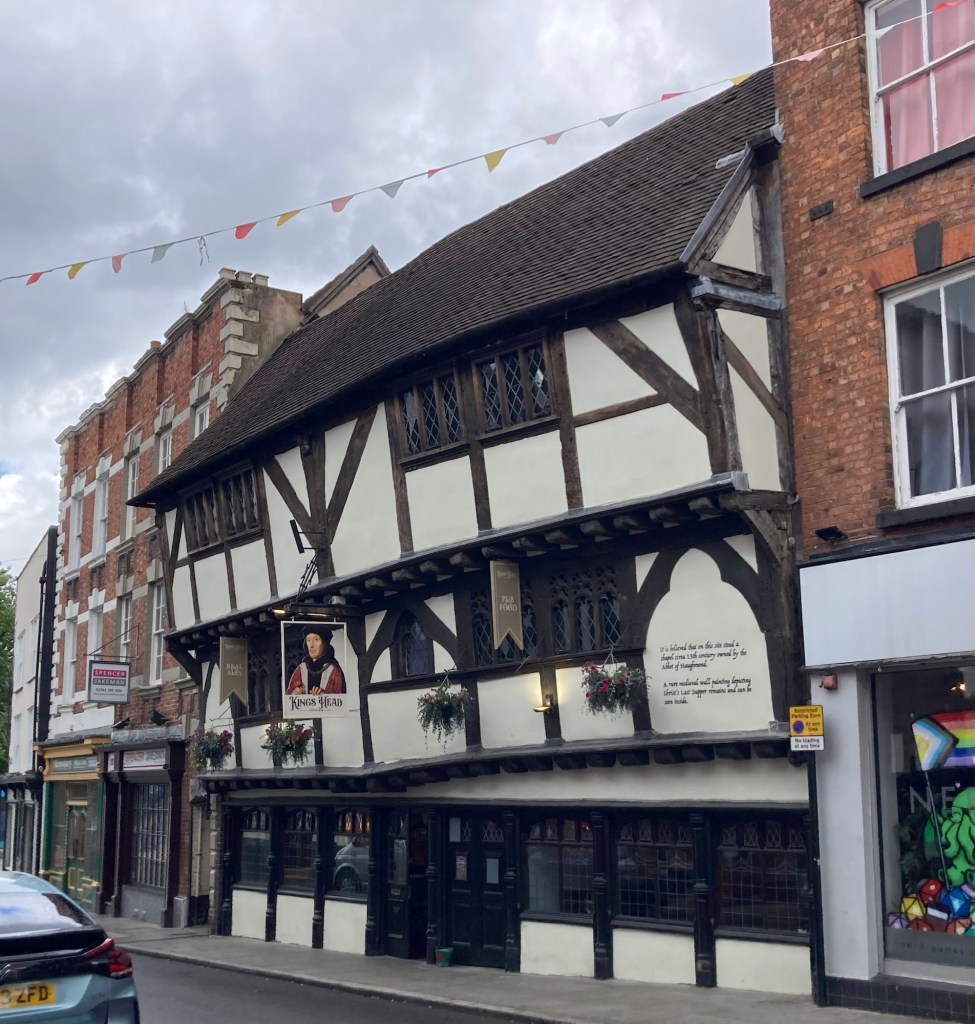
Some photos of the historic city center.
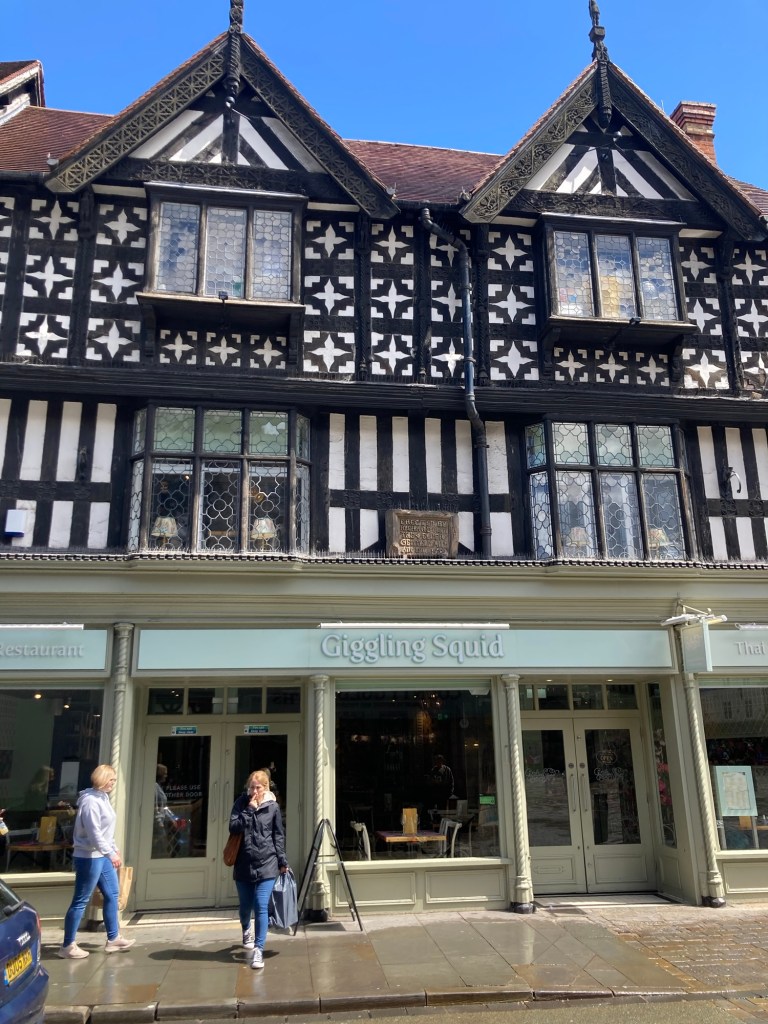
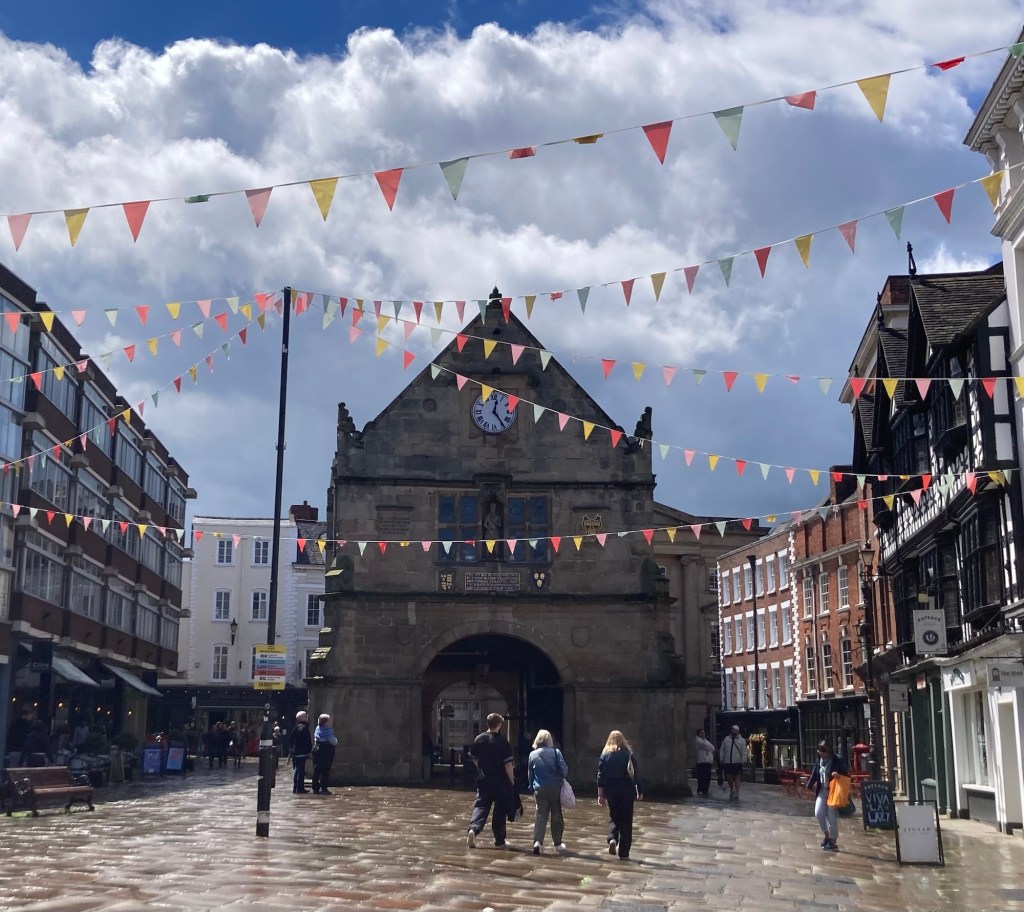
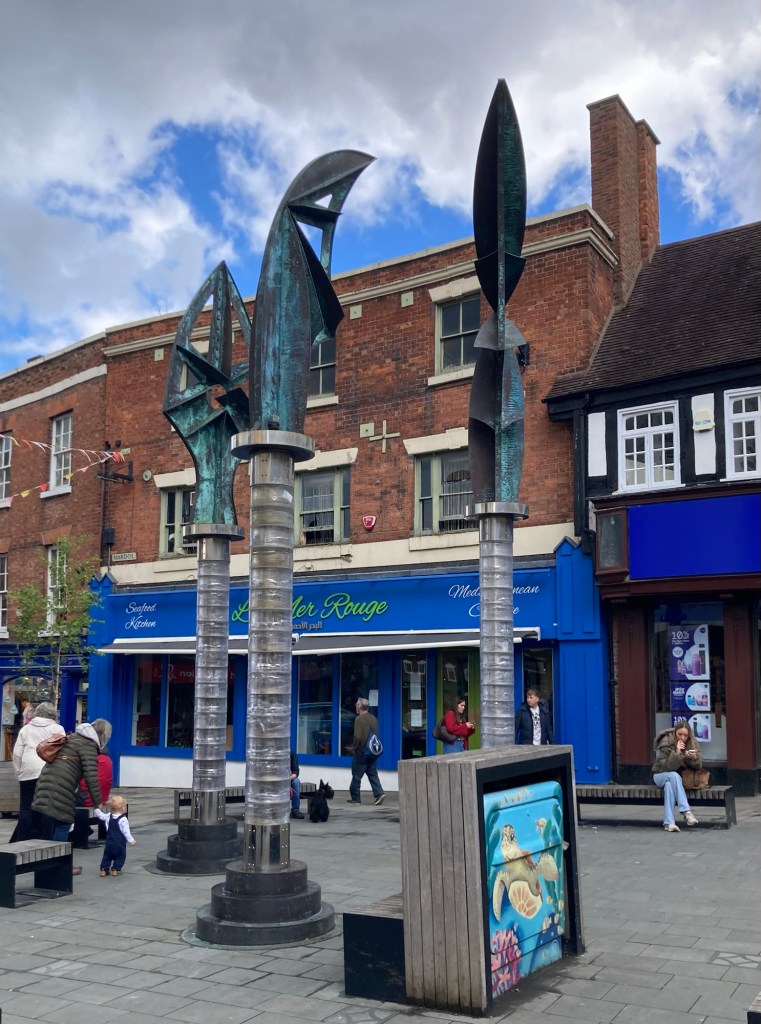
The train station A Tudor style building with a historical markerThe old market hall in a main square Some public artA whole street of older buildings We loved this building, which notes that there is a medieval painting of The Lord’s Supper inside the building Fun facts about Darwin to ensure you are fully evolved
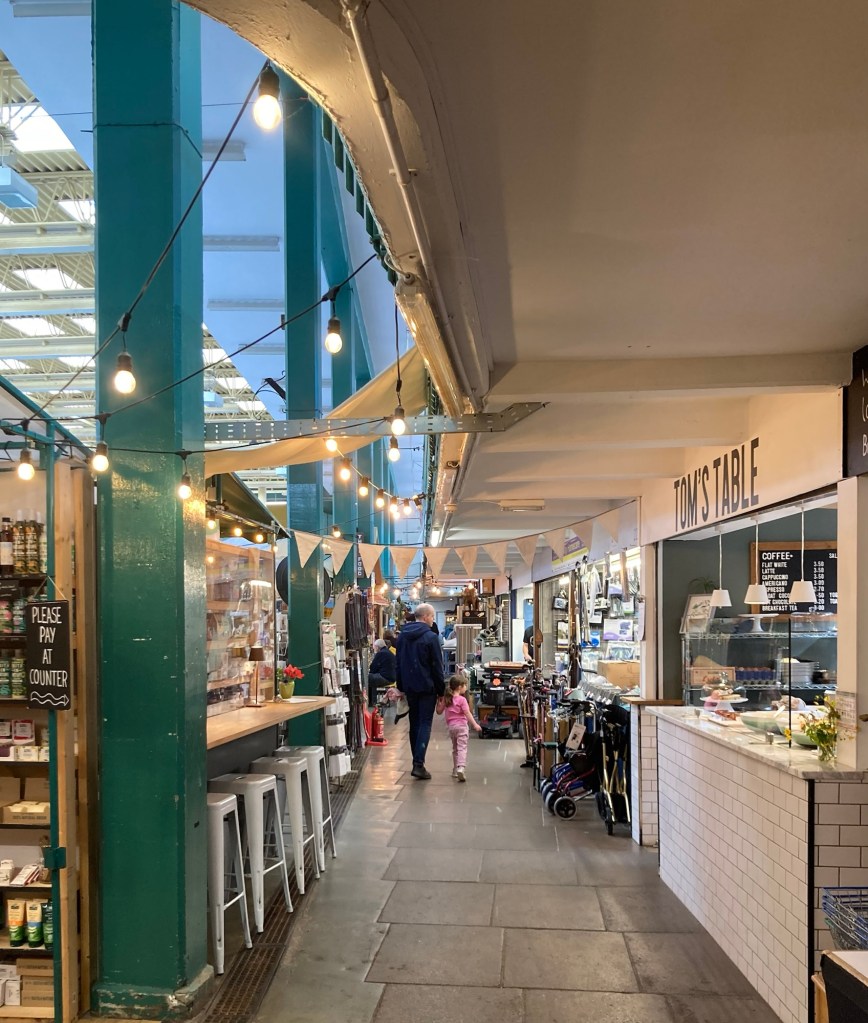
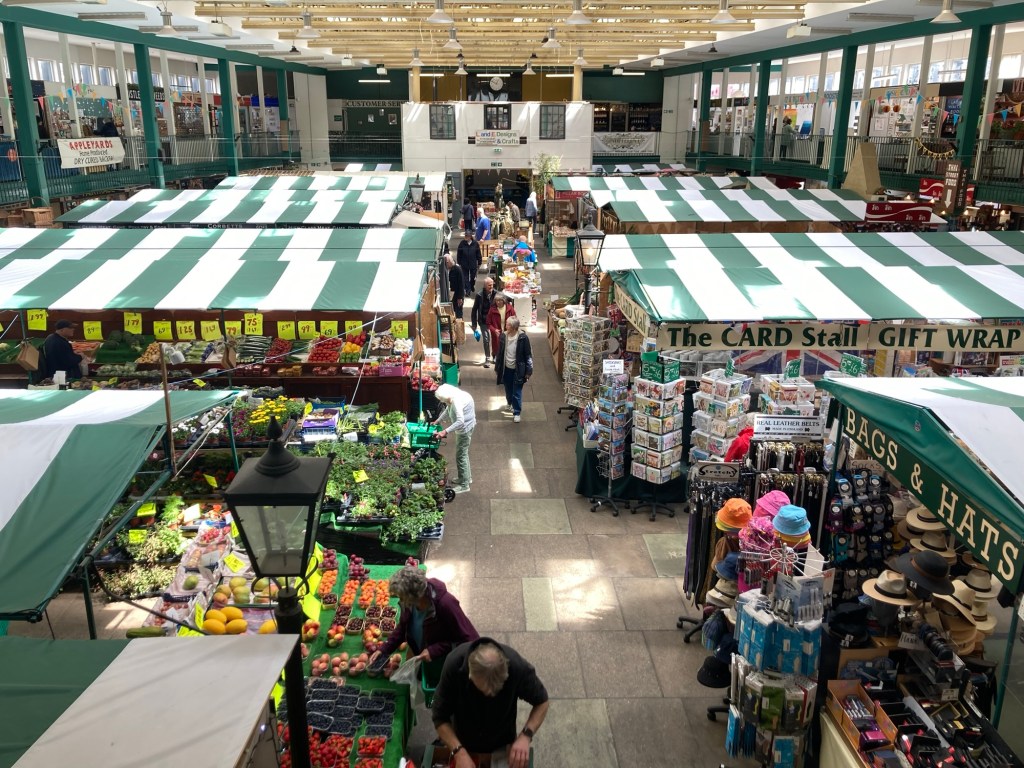
We also checked out Shrewsbury’s Market Hall with its range of local vendors.
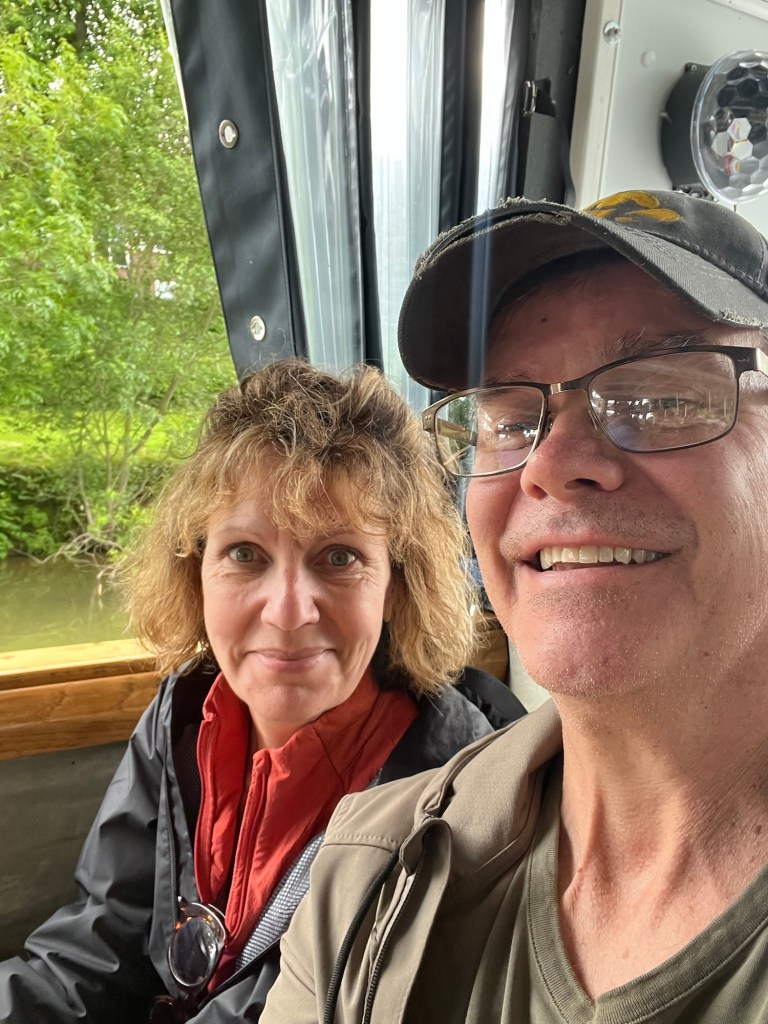
And then we have photos from our boat ride.
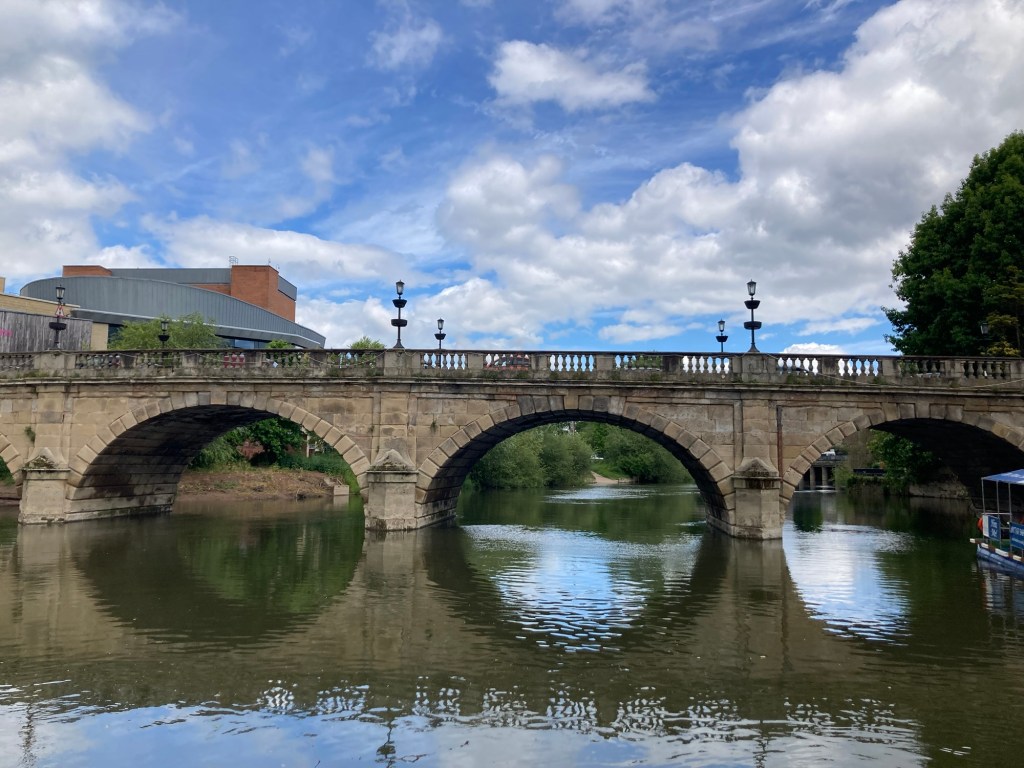
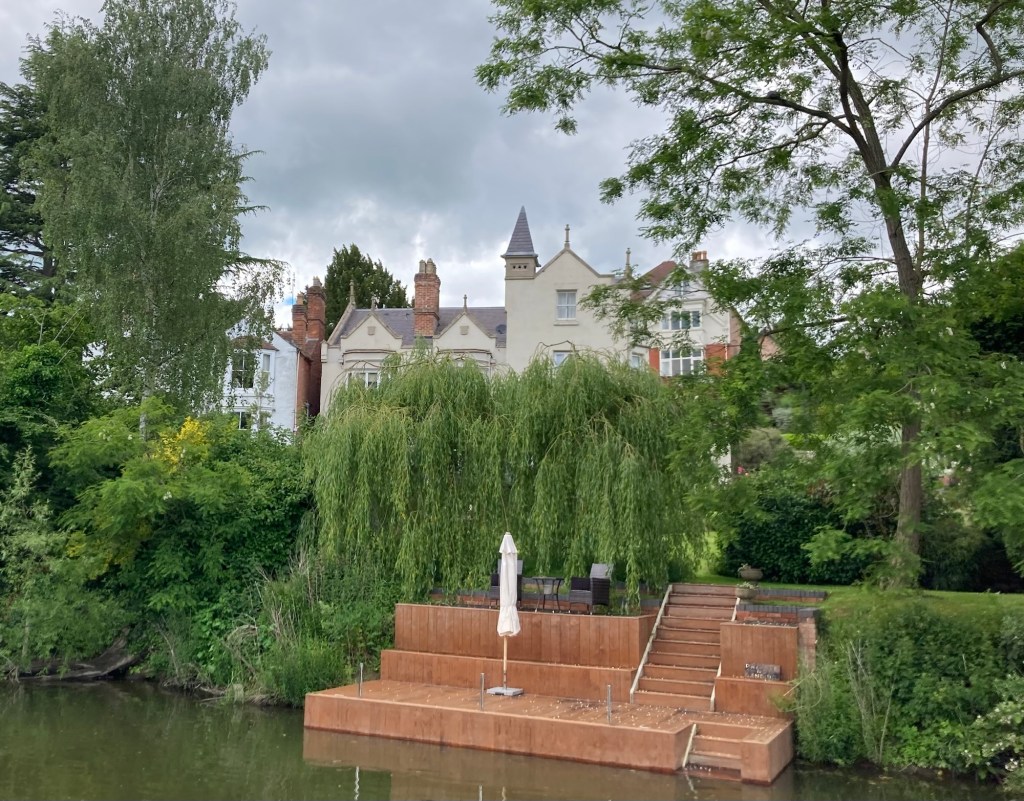
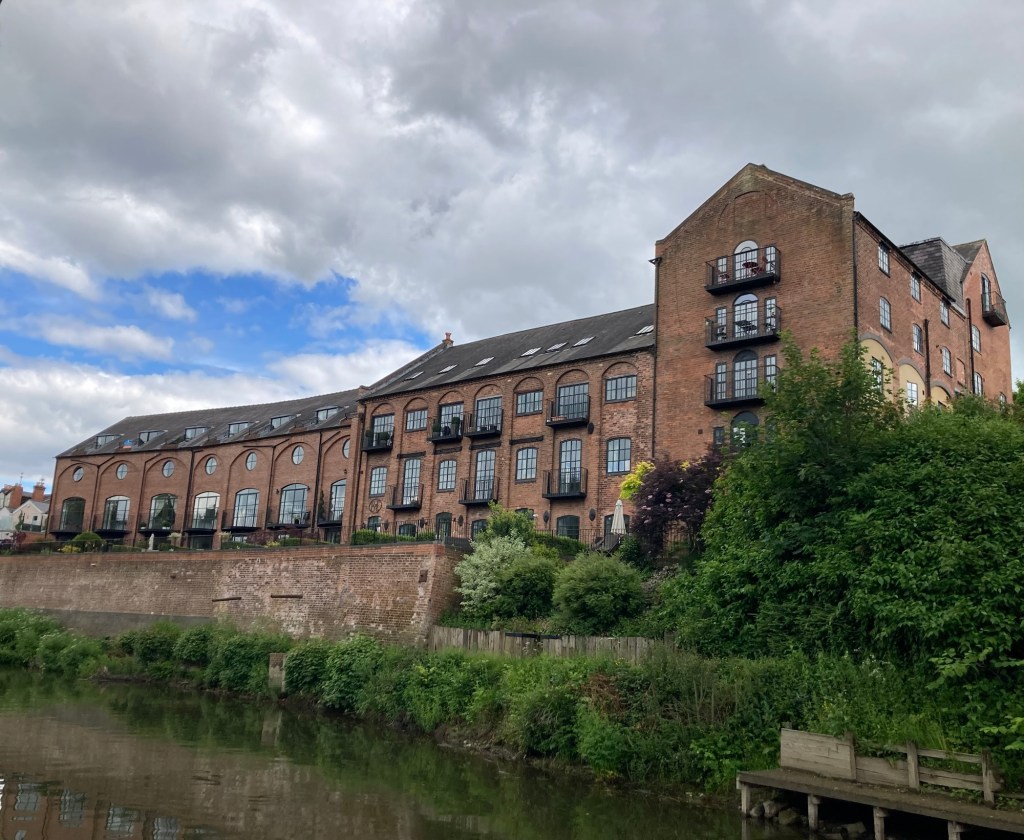
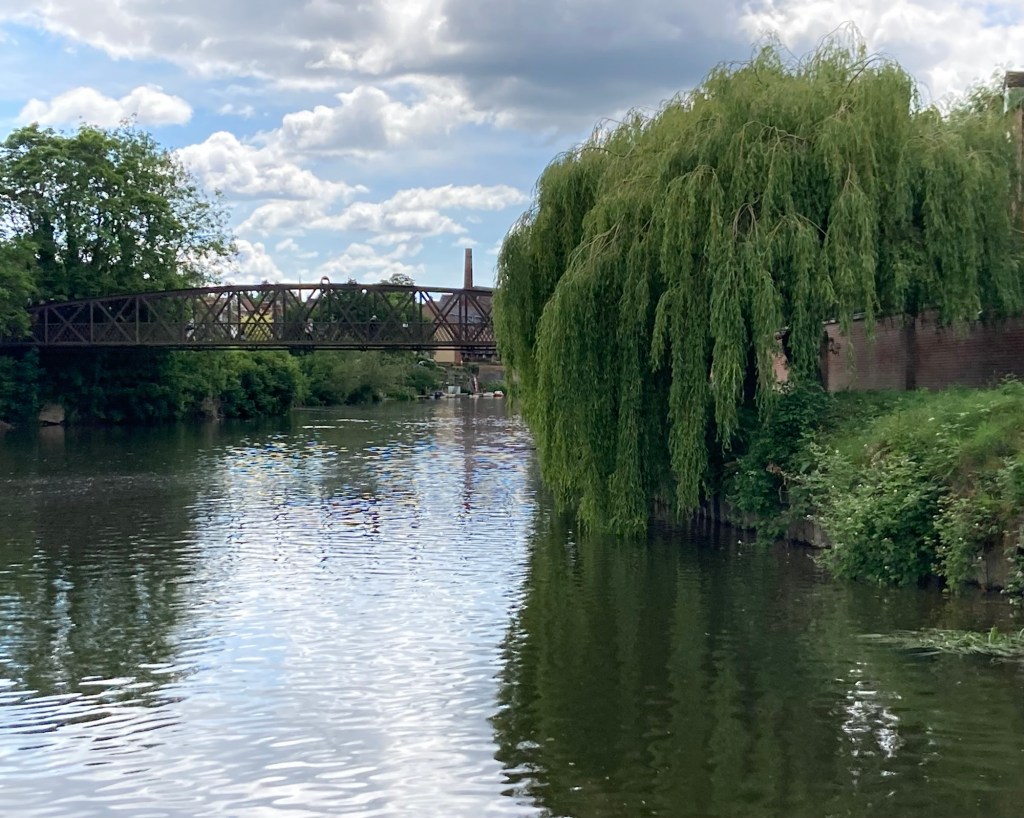
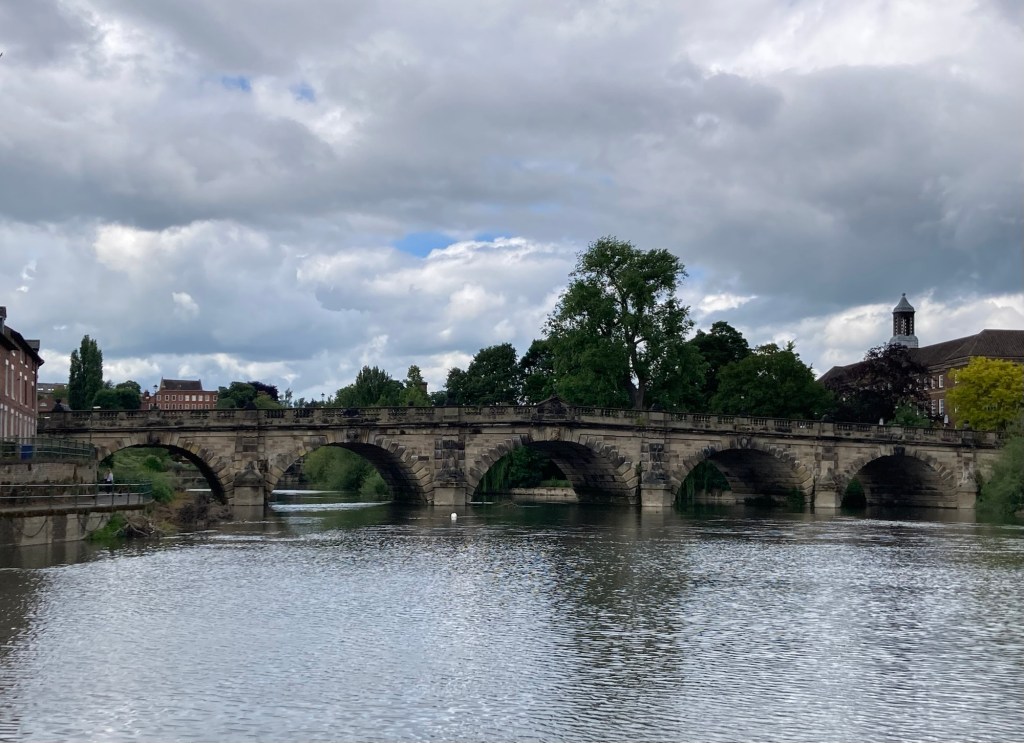
On the boatThere are 9 bridges in Shrewsbury over the River Severn. This is the Welsh Bridge.Some impressive homes along the RiverThe Severn School, which apparently costs 50,000 pounds per yearSome condos and apartments in a former brewery building The Greyfriars Bridge named for a local friary, whose friars dressed in greyThe English Bridge
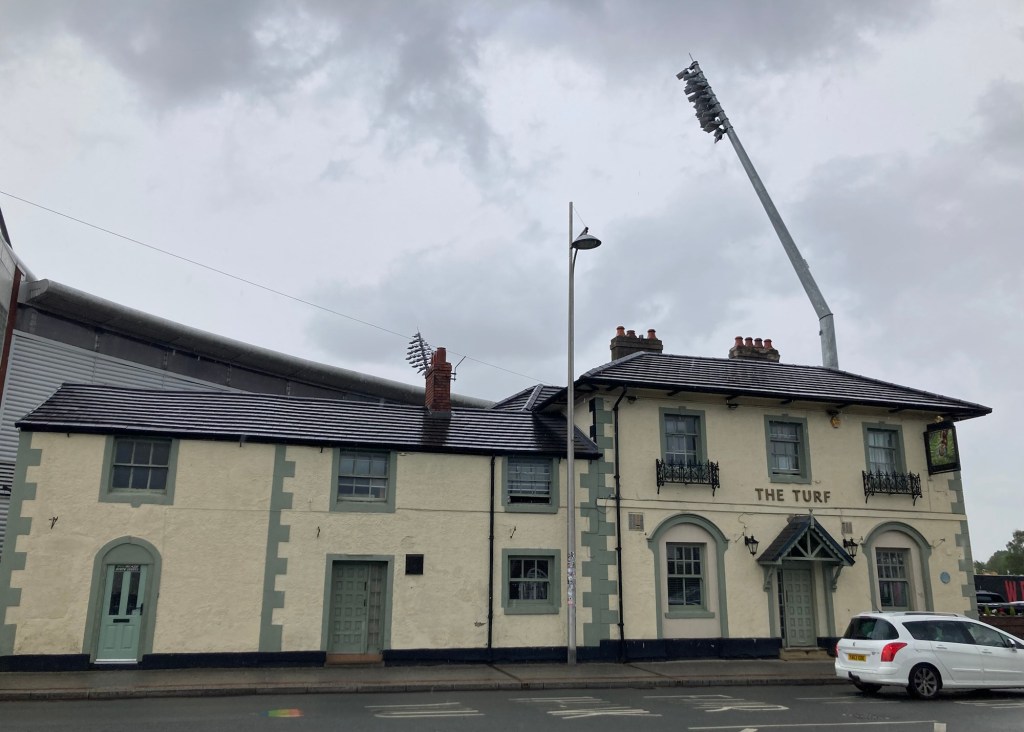
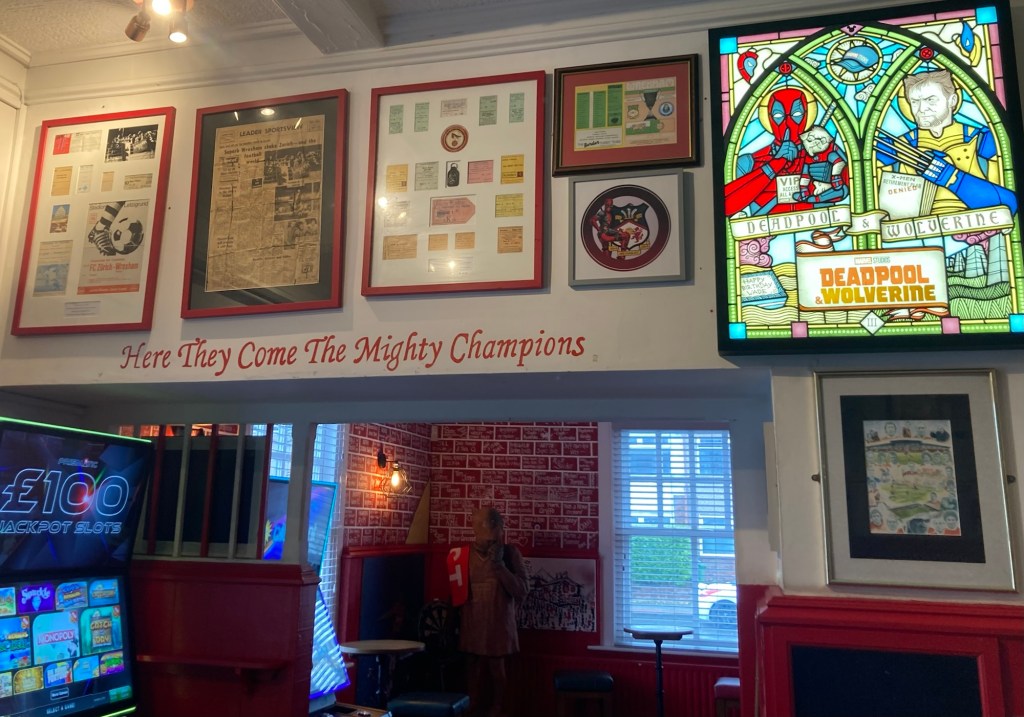
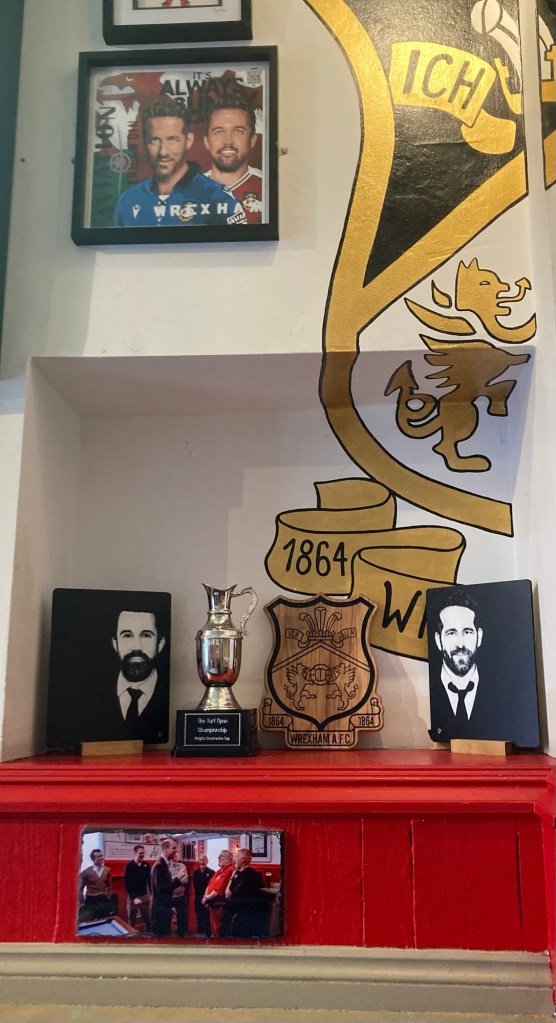
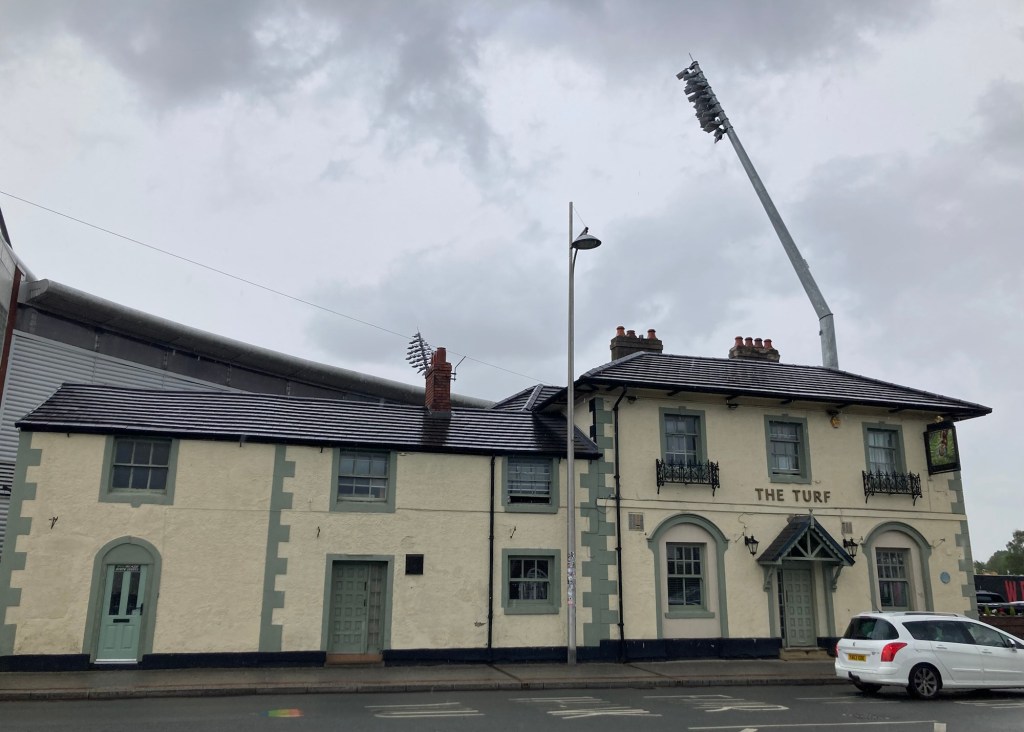
Of course, we could not come to Wrexham without visiting the Turf, as it is as close to being in the stadium as we can get, and we feel like we know it from the show. Unfortunately, no sighting of Ryan, Rob, Wayne (the owner of The Turf), or anyone else that we recognized, at least not in person. Still, an enjoyable visit with mostly locals, including a couple of families with children. It must be nicer for the locals to have a relaxing night at the pub when there is not all the game day hoopla or bus loads of tourists.
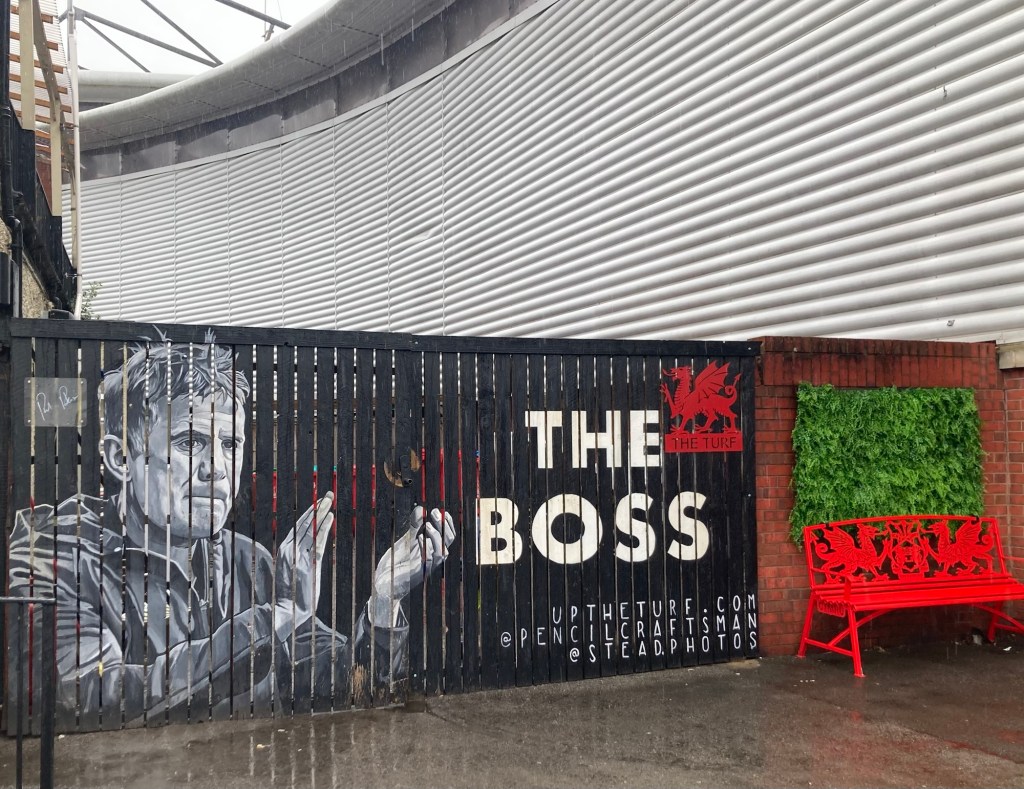
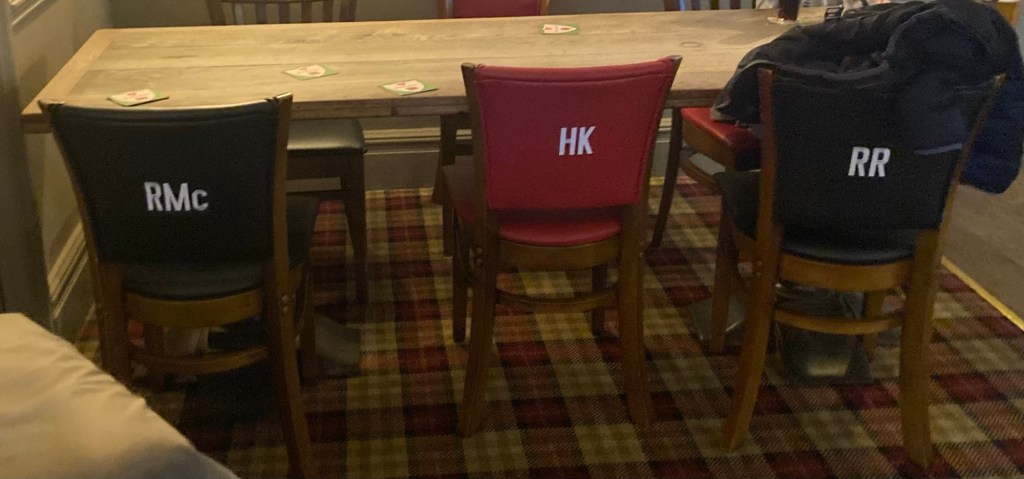
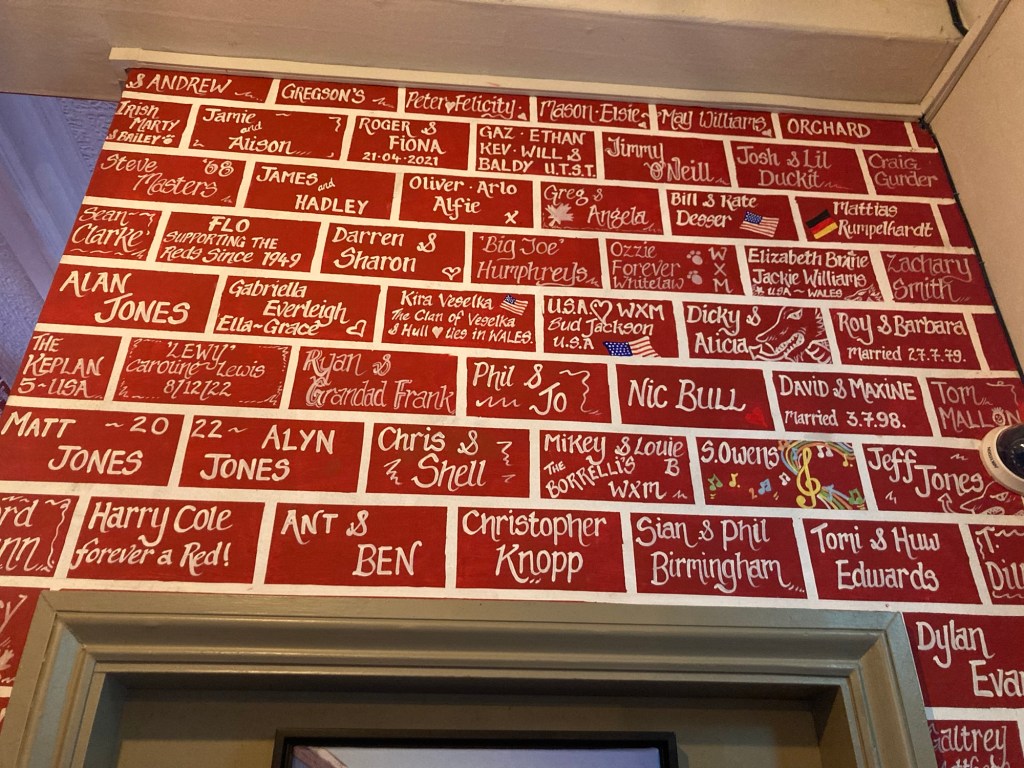
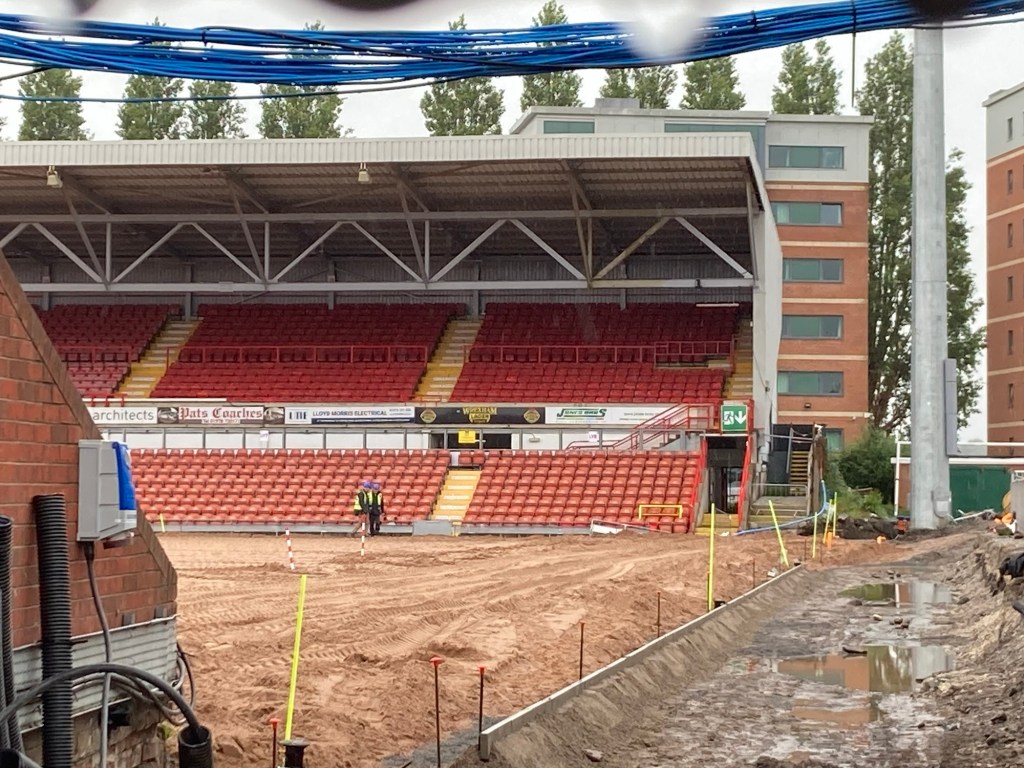
The TurfA painting of Phil Parkinson, the Wrexham AFC Coach on a gate into the field A photo about a 1934 mining disaster in Wrexham Bob ordering our drinksSeats with the initials of the 2 US owners as well as HK for Humphrey Ker, an actor, writer, and comedian and also the Community Director in Wrexham for Ryan and RobNames on painted red bricks. We’re not sure what you have to do to get your names on one.Bob drinking a Wrexham Lager, which has also been discussed in the show.Club history along with a nod to Ryan’s most famous roleSome old with the newThe current state of the field as seen through a hole in the tarp in the fence. Work is underway.
Now, we’re on our way to Shrewsbury for the next leg of our break between sits. It’s a short, direct 39 minute ride.
Bob and I are having a bit of a lazy day amid a little bit of traveling drama, more on the last bit later. The weather was clear this morning for my run but started raining before we headed out and promises to continue for most of the day. It’s not a bad or blowing rain just steady enough that you seem to get wet even with the rain gear.
As mentioned yesterday, we had to get over to see what we could of the football stadium, given that the season is over so no games nor stadium tours. While our interest in the Wrexham football began with its purchase by the American actors and subsequent documentary, the history of this club is much more impressive than that.
Per their website, Wrexham AFC was founded in 1864, making it Wales’ oldest football club and the third oldest in the world. It was founded by members of the Wrexham Cricket Club at a meeting at the Turf Hotel (a pub of the same name is now next to the stadium) to find a sport to fill the winter months and also in part by a local social club wanting to increase the enrichment opportunities for Wrexham’s young men.
The club has been promoted three times under the current ownership. We have watched the three seasons of “We are Wrexham” and are awaiting access to the fourth.
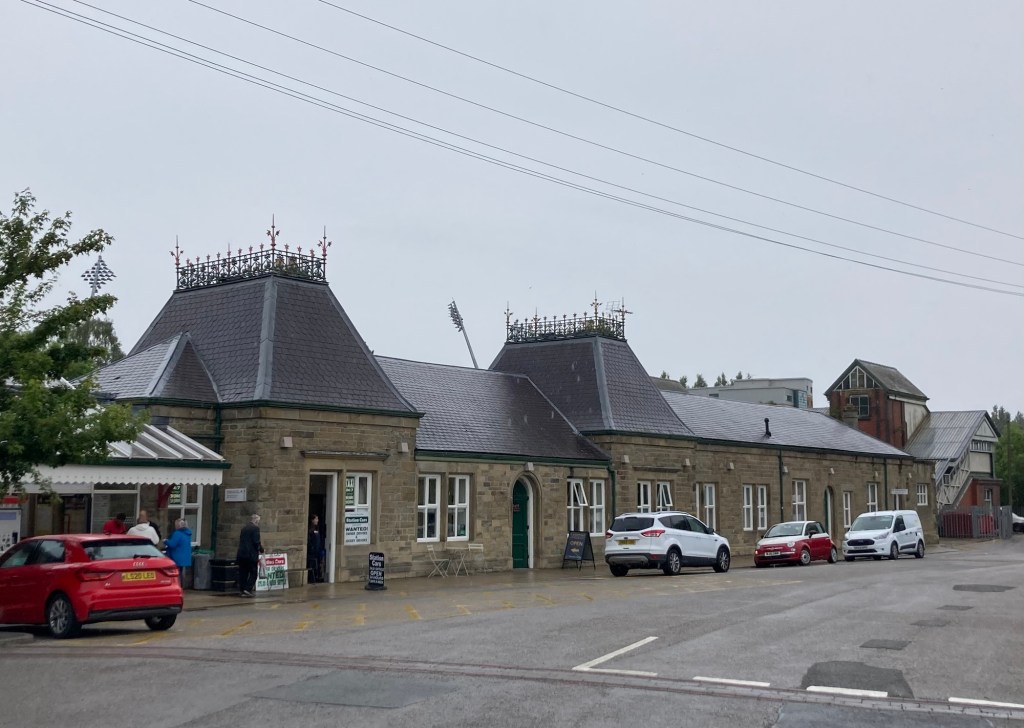
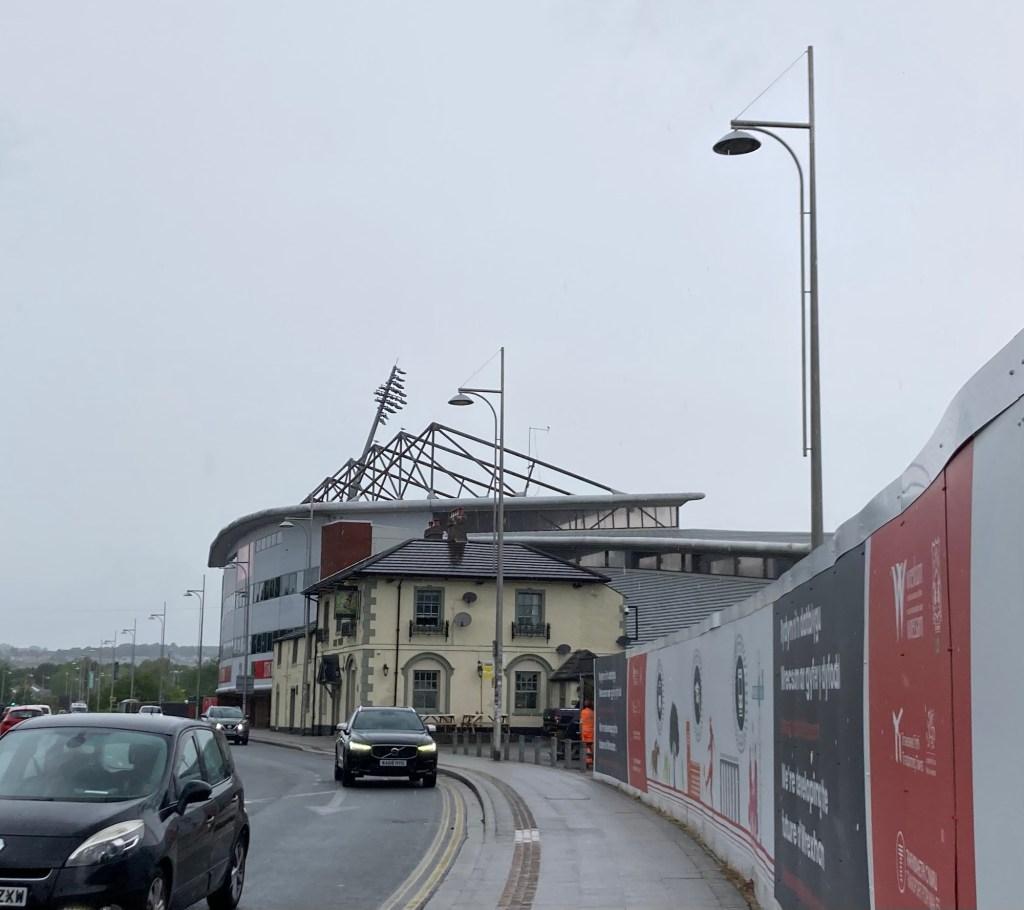
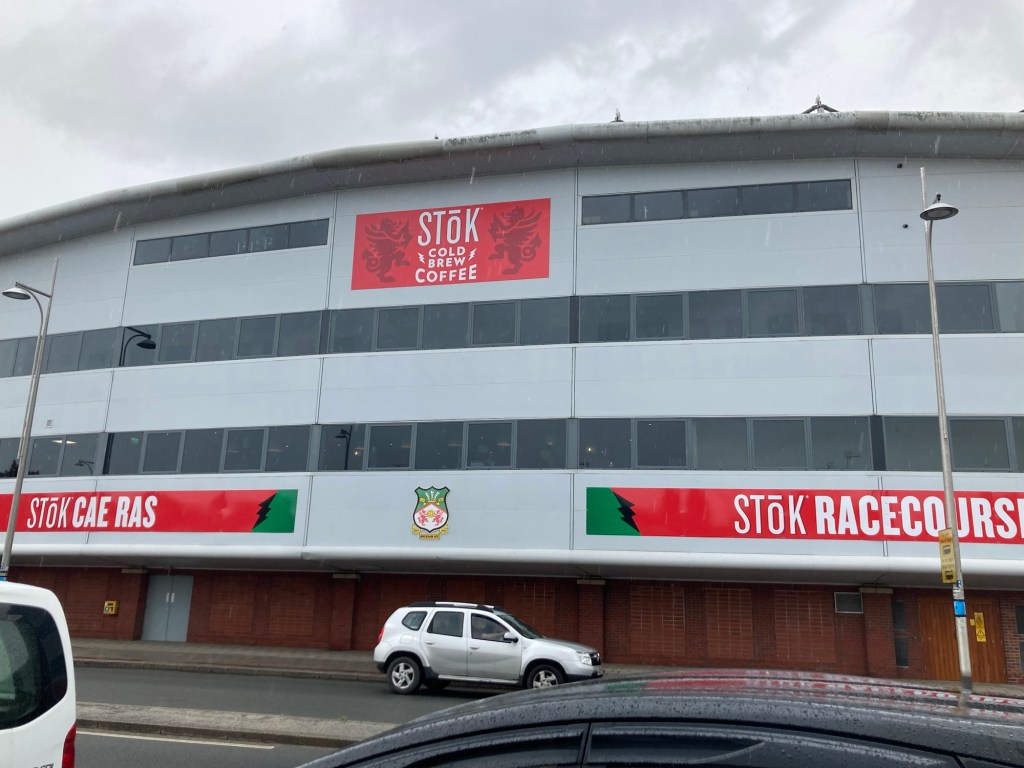
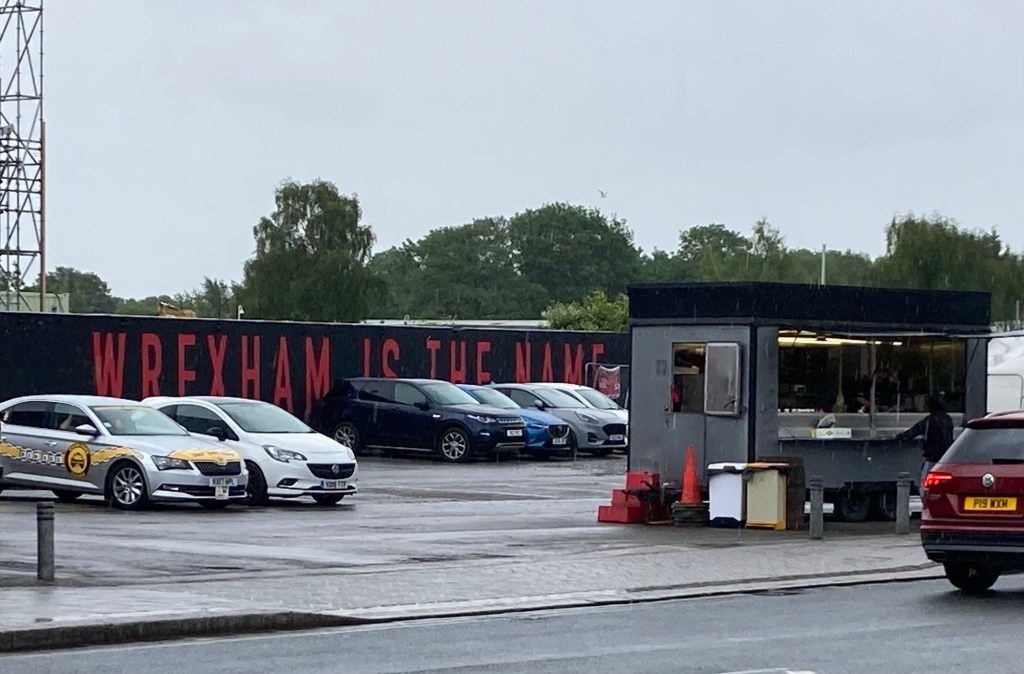
The Wrexham Train Station, where we arrived on Sunday. We passed it today on our walk from the hotel to the stadium.Walking towards the stadiumThe stadium is currently called the Stok Racecourse after one of the major sponsors. As the documentary has discussed, the ownership/management of these teams is not cheap.The Turf Pub next to the stadium. The pub and the owner, Wayne Jones, have been featured regularly in the documentary.The pub does not serve food except through the butty van in the parking lot, cash only.
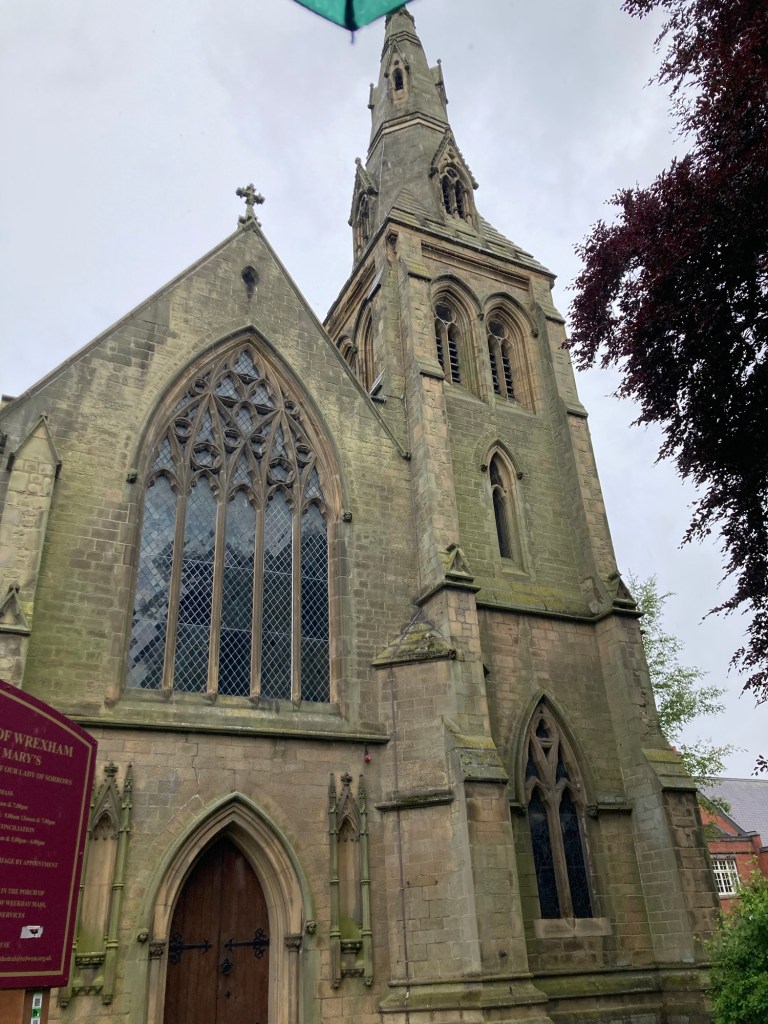
There is, of course, more to Wrexham than football, so we snapped a photo of St. Mary’s Cathedral on our walk back into the city center.
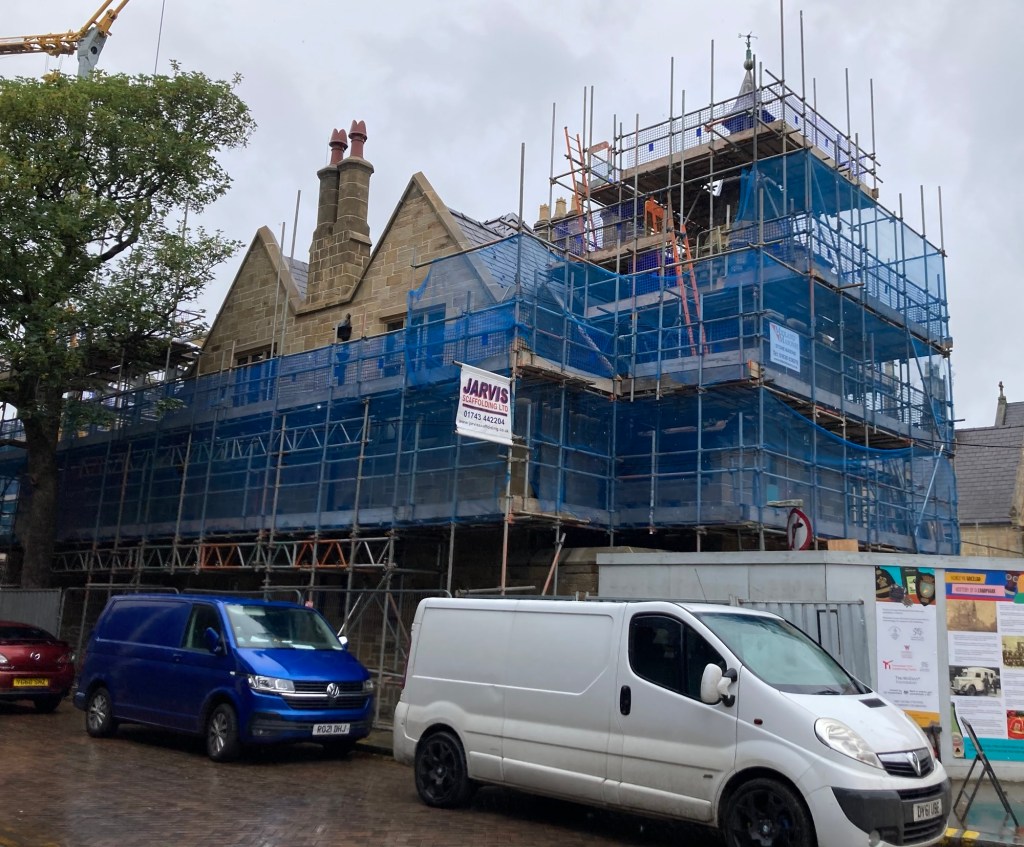
St. Mary’s Cathedral, the cathedral church of Our Lady of Sorrows, built in 1857 in the Decorated Gothic style.To our sorrow, the Wrexham Museums are currently under a major redevelopment. We were thinking that might be a good use of a rainy day.
The Wrexham Museum will be significantly enhanced and a Football Museum for Wales is either being created or being moved here.
I have been needing new running shoes, a regular rain jacket, and a rain jacket for running. We had spotted a store yesterday which looked as if it might carry all three, and it did. We caught some good sales, and I am now completely rekitted.
Finally, for some really unwanted drama. When we started this leg of our travels, we parked our car in the bus lot in my hometown, which we have successfully done before. The only change this time is instead of paying ahead of time for the number of days needed, everything was to be done online.
You enter your license, which they have a photo of from when you entered, and pay for a maximum of 19 days. If you need longer than that, you add money as you go. Bob noted that our payments (2 so far — the initial and the next installment) have been pending but the expiration date has moved out. He was confused by this and upon further inspection noticed that he had entered our license plate with the incorrect last digit. So now we are waiting word as to whether or car has been towed and/or how best to resolve this issue. More to follow when we know more.
Wrexham is a city of about 45,000 in the northeast of Wales. It is the 3rd city in Wales that we’ve visited after Hawarden and Cardiff. Our interest in visiting is mostly due to our following of the documentary on the Wrexham football team after the purchase of the team by the US actors, Ryan Reynolds and Rob McElhenney. The team has improved (moved up a league) over the past few years and the team is now in the Championship League, but more on the football team tomorrow after we see the stadium and visit the next door pub.
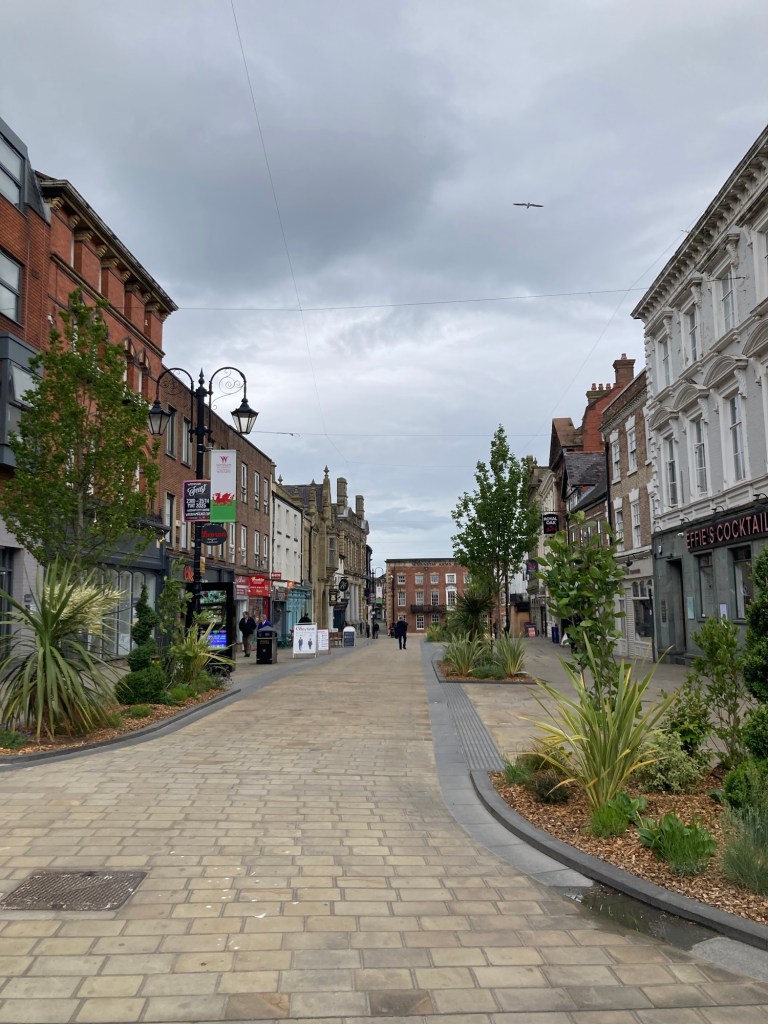
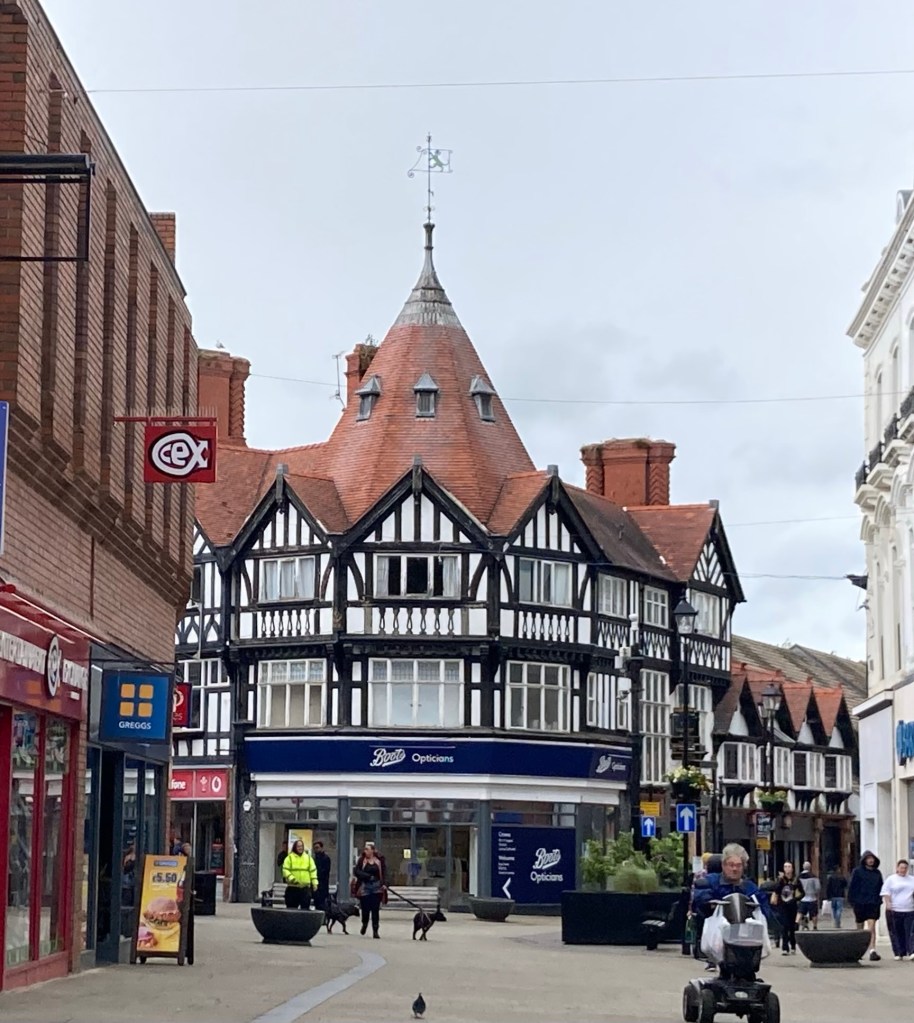
Today, we walked around the city center, visited a local National Trust site, and viewed the parish church. First, some photos of the city center, which was not busy due to it being a bank holiday here, as in US but more stores seem closed.
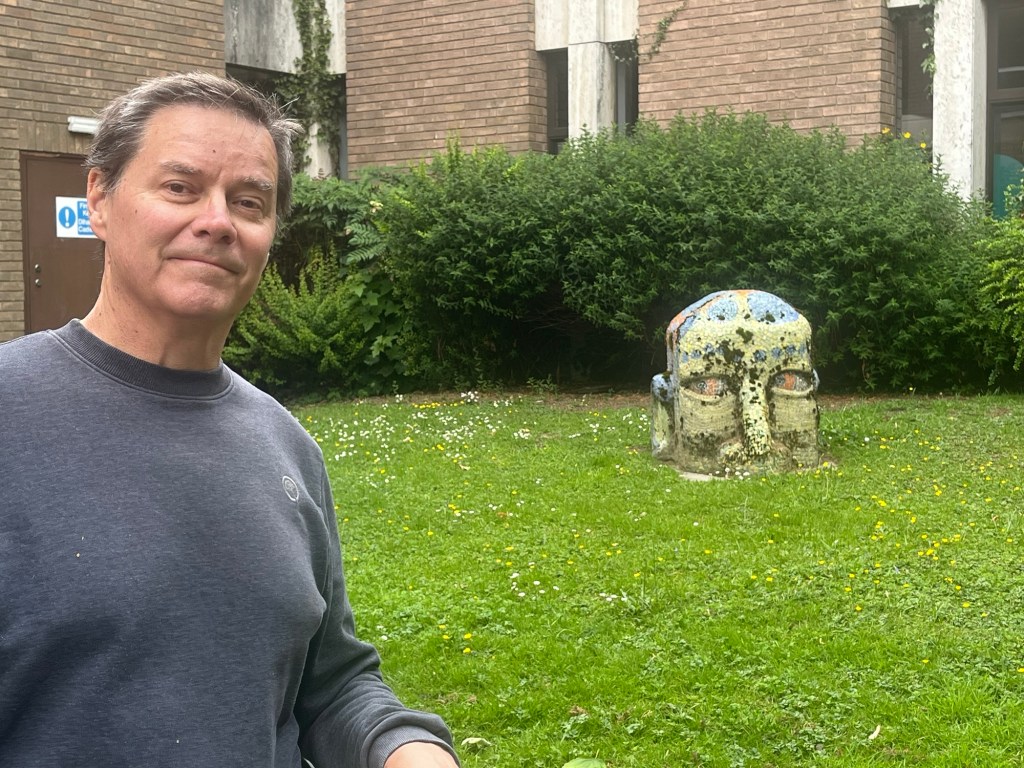
I saw this big head on my run this morning, so had to get Bob there for a photo. It may be the first partially moss covered big head (the one on the lawn).Nicely landscaped pedestrian areasAn interesting Tudor style building
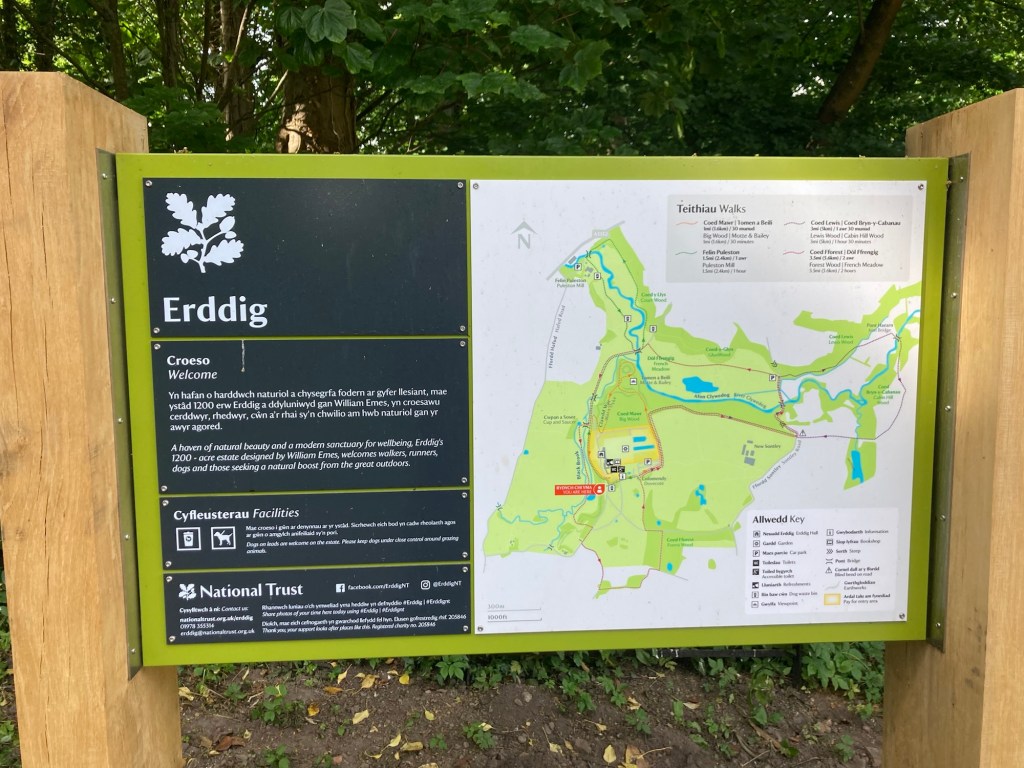
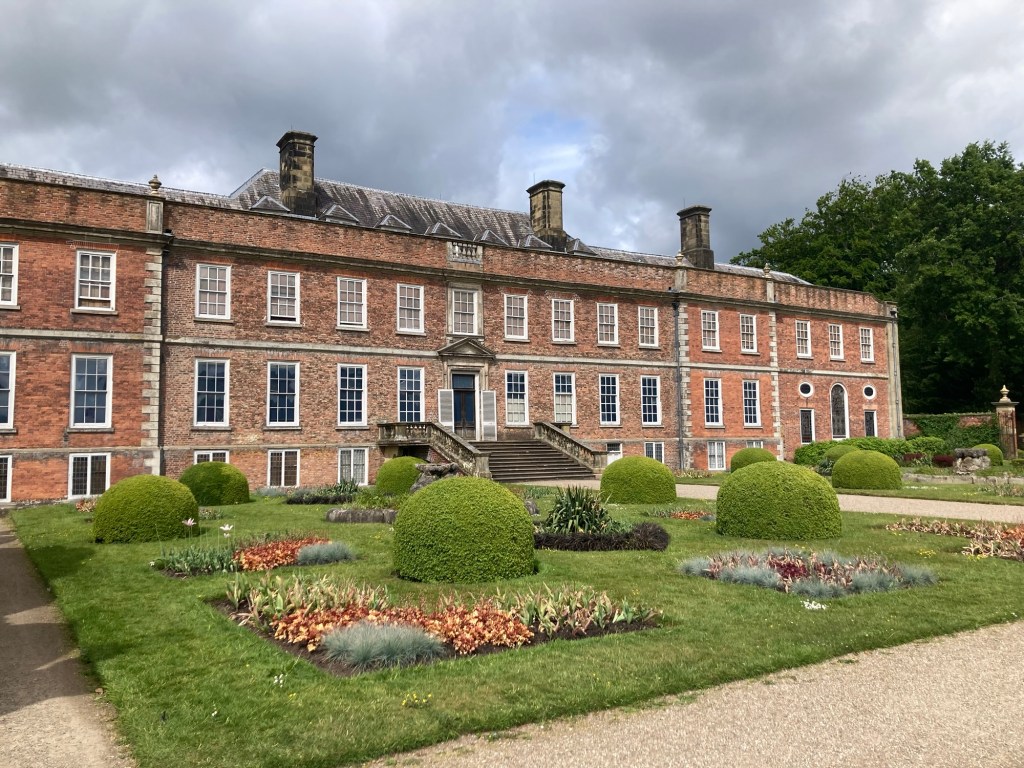
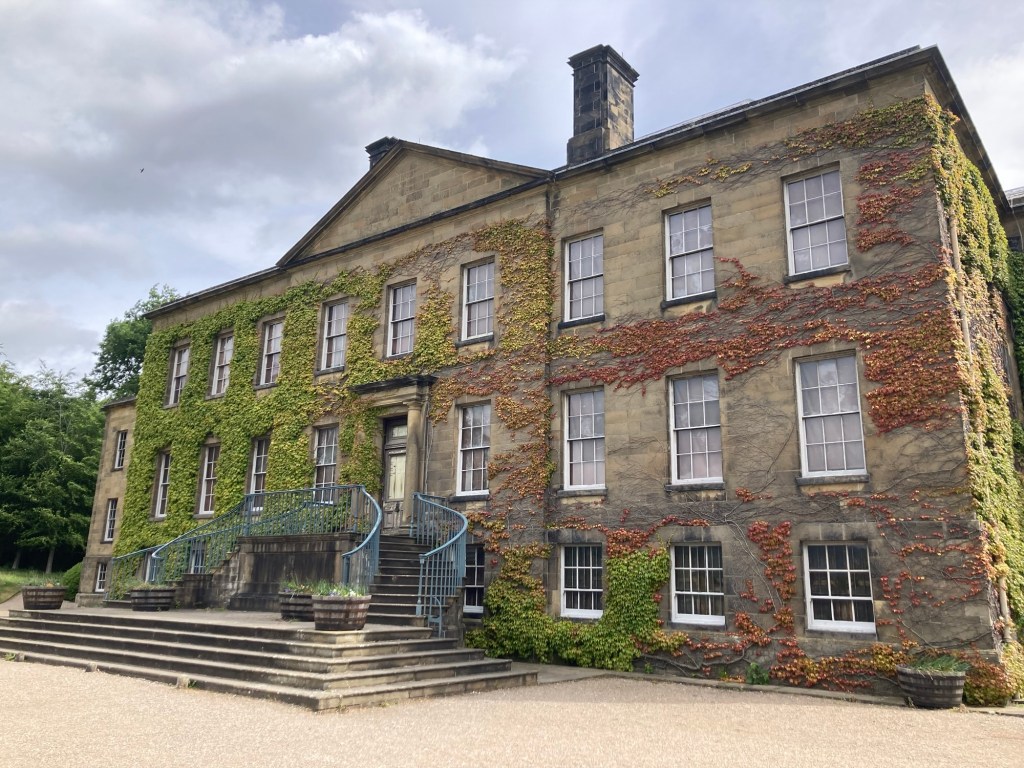
We walked about 45 minutes to Erddig, a large estate, home, and garden, which is a National Trust site. These sites tend to be historical heritage sites or other places of interest or natural beauty which are cared for by the National Trust, a UK conservation charity.
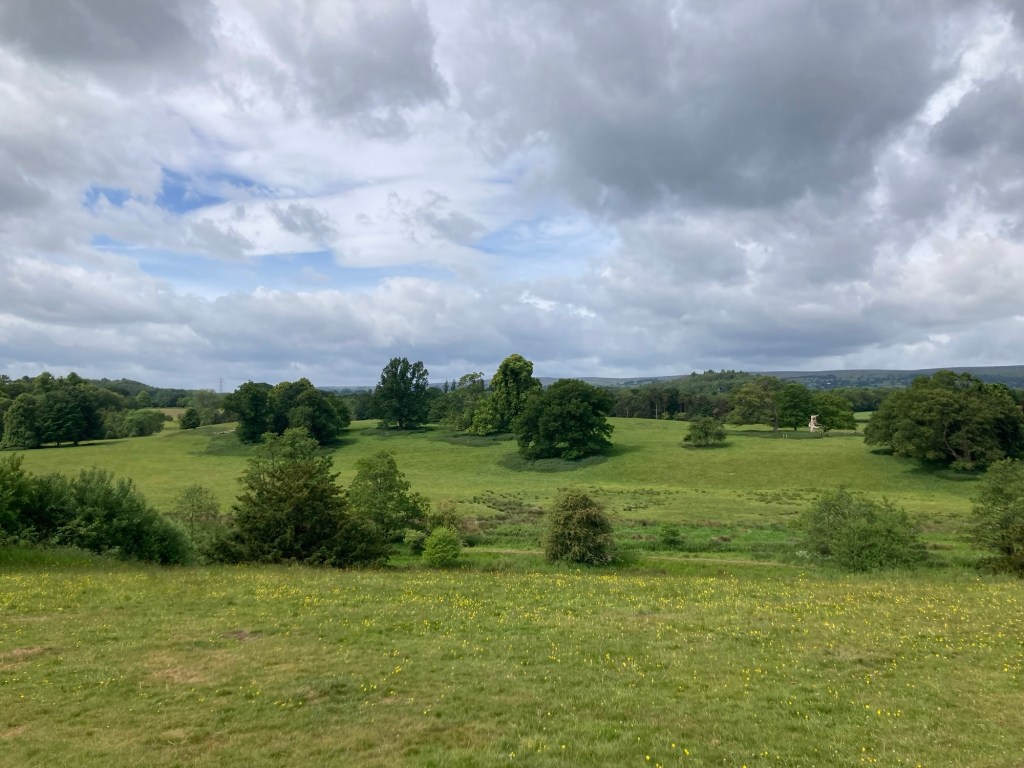
The grounds of Erddig are open to the public daily for no charge. You can pay to see either both the house and gardens or just the gardens. We chose to just go into the gardens, although we ended up seeing the exterior of the house as well as a bit of the 1,200 acre estate.
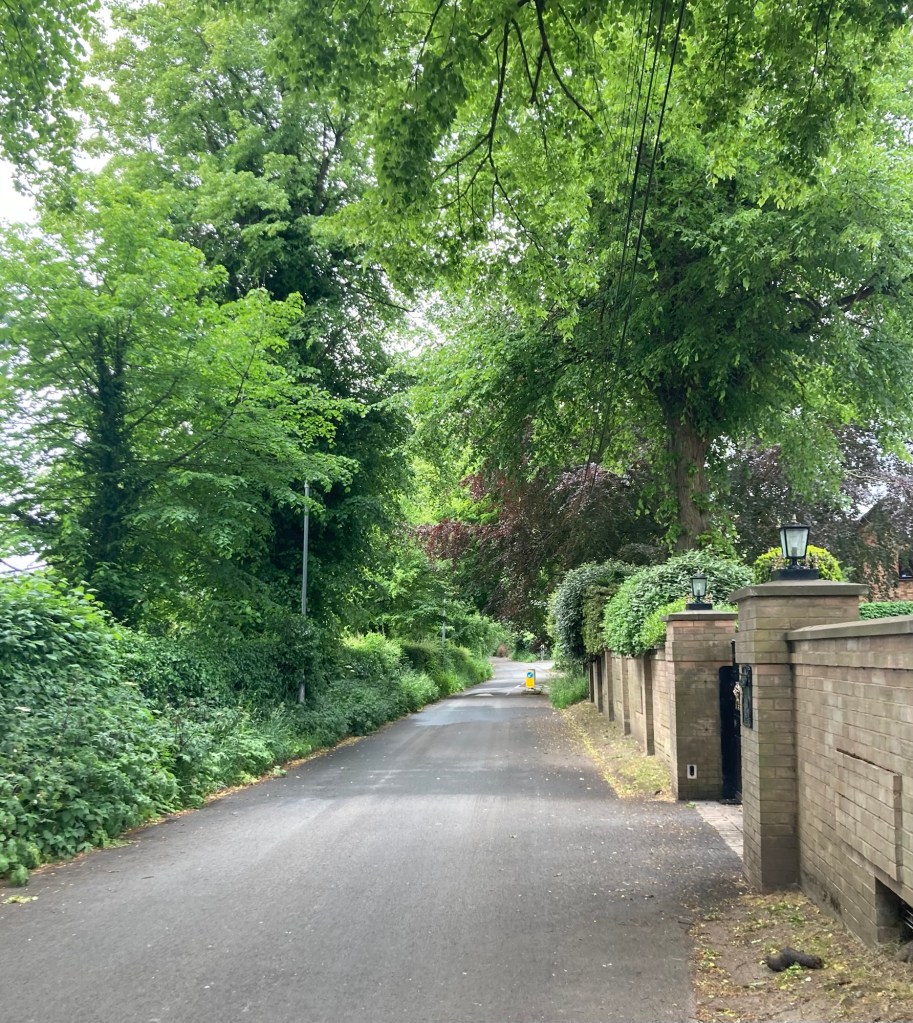
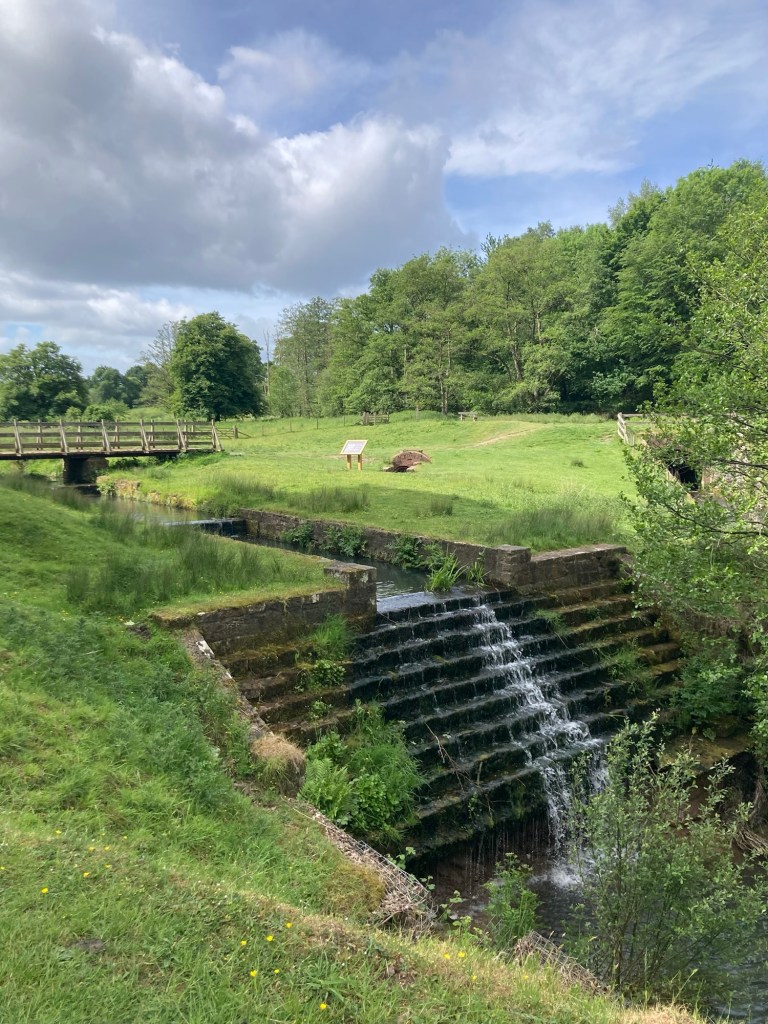
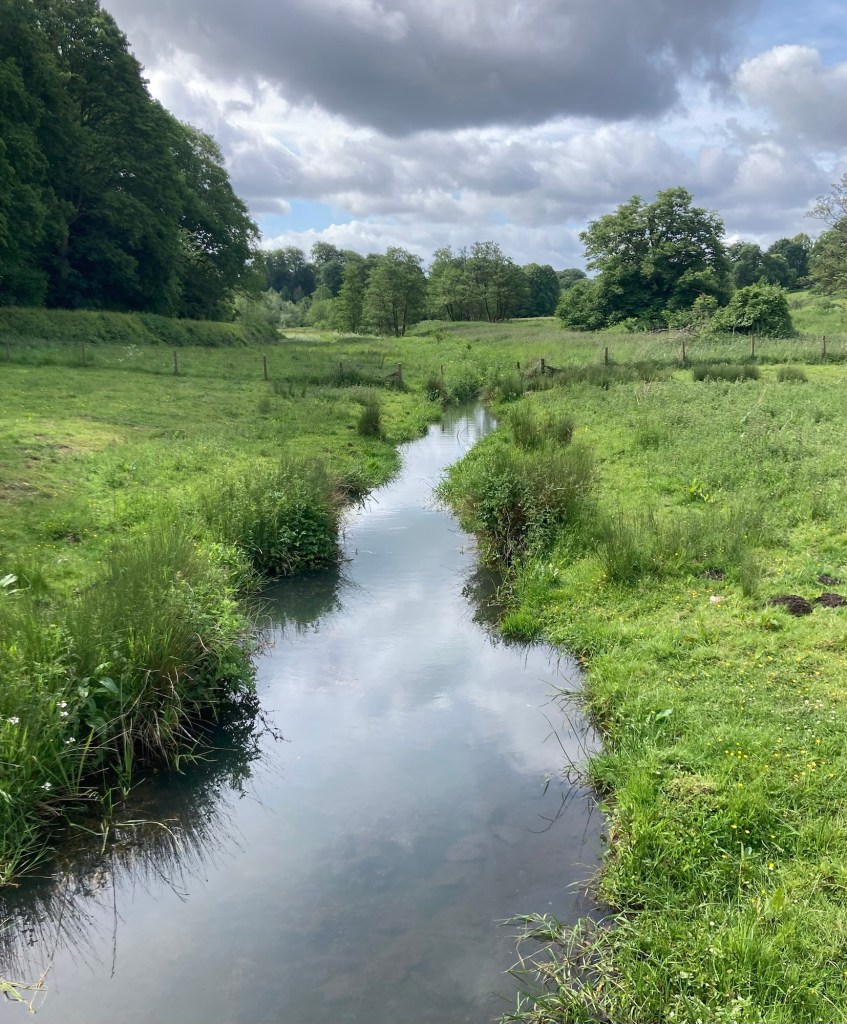
The lovely road leading to ErddigWe were thereOne of the walking paths through the property A small waterfallLots of creeks
The following photos are from the gardens that we paid to enter.
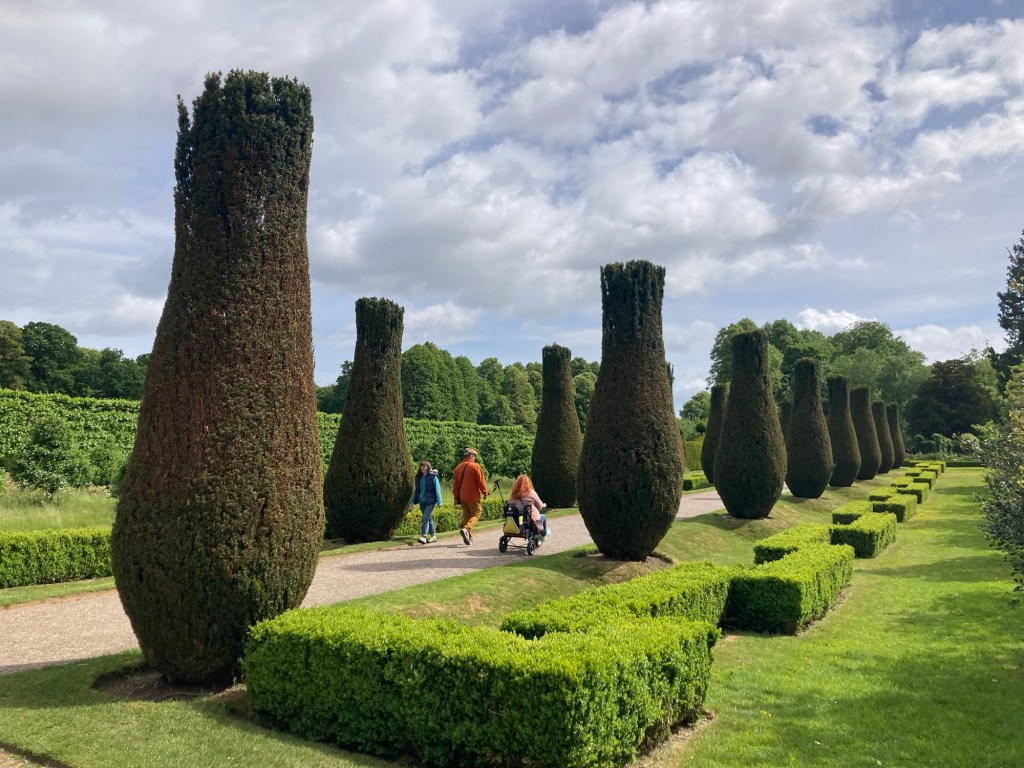
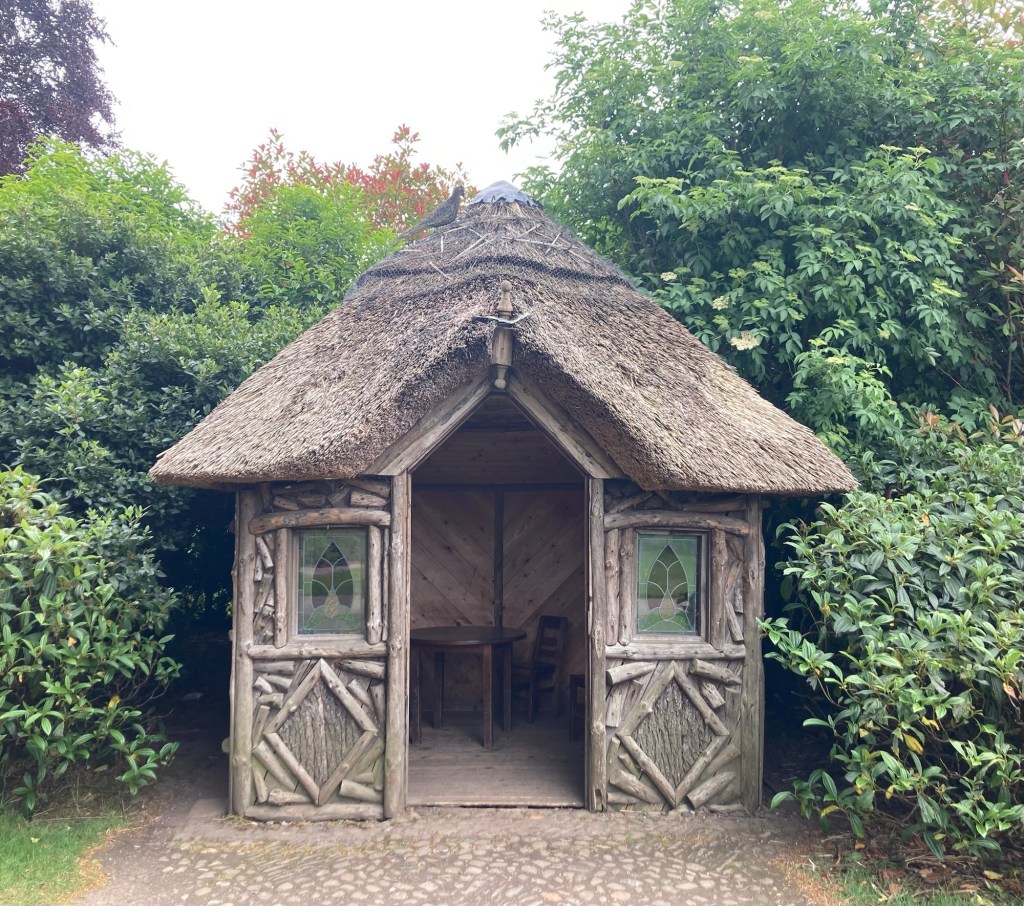
Our first glimpse of the impressive gardensSmaller gardens near one side of the large houseA cute little hut in the gardenA lovely sitting areaA view back towards the house over the pool and gardensAnother area of sculptured hedges near a pondBright flowersA little “secret” gardenThe side of the house with amazing views of the areaThe views
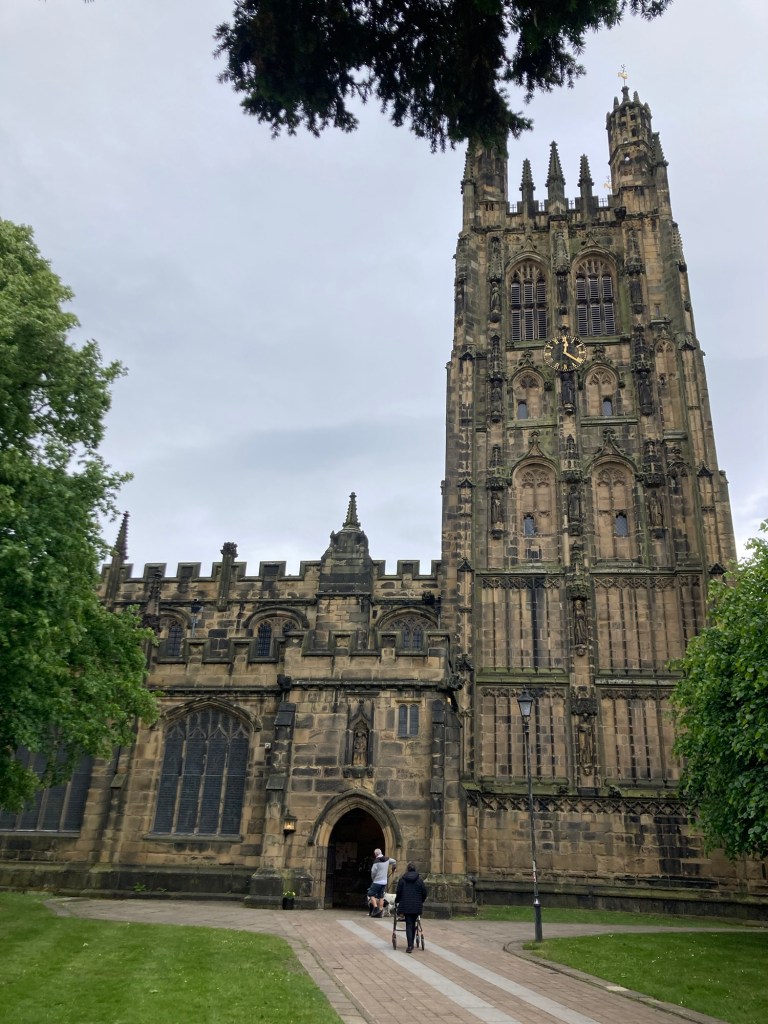
Finally, we headed to St. Giles Parish Church back near the city center. There has been a church on the current site since the 11th century, but the current structure dates to the late 15th and early 16th century. The impressive tower, completed in 1525, is a well known landmark. Two other fun facts, Elihu Yale, founder of Yale University is buried in the churchyard. Also, St. Giles’ steeple is one of the 7 wonders of Wales listed in a children’s rhyme, where it’s referred to as Wrexham steeple.
Bob and I farewelled the sweet dog Jojo and her mom upon her return from California yesterday afternoon. It took Jojo a bit to warm up to us and show her real personality, so we were a bit sad it was such a short housesit.
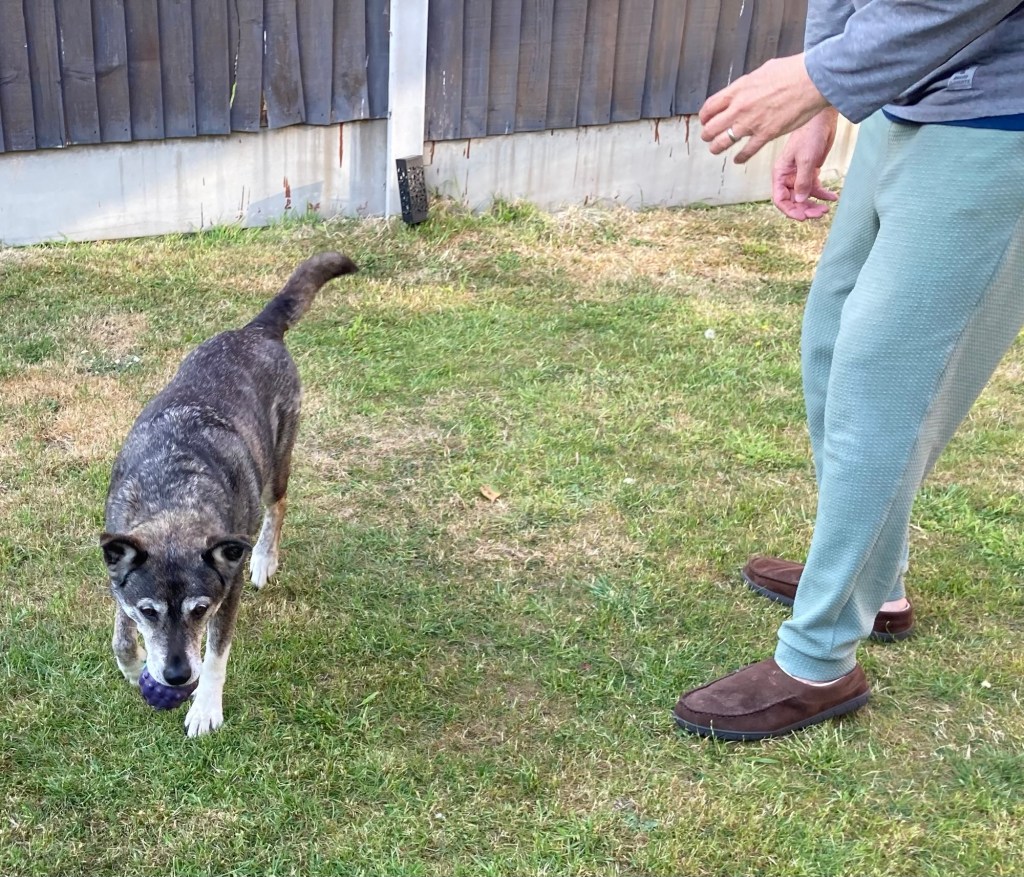
Bob and Jojo playing with her ball in the back gardenJojo loves a good back scratch
Because of the weather, we Ubered to the train station for a 4:21 train towards Wrexham, Wales. This will be our 4th country on this visit out of country, and it is the first of our “extra” stops to fill in the shorter Plan B housesit after our Scottish one cancelled.
Our train journey entailed a 30 minute leg to Crewe, England, followed by a 40 minute layover, then a 20 minute trip to Chester (remind me to sing my Chester song for you, Bob loves it), then a 30 minute layover, and finally the 15 minute trip to Wrexham.
We don’t have many photos from the journey, but we did nab a couple.
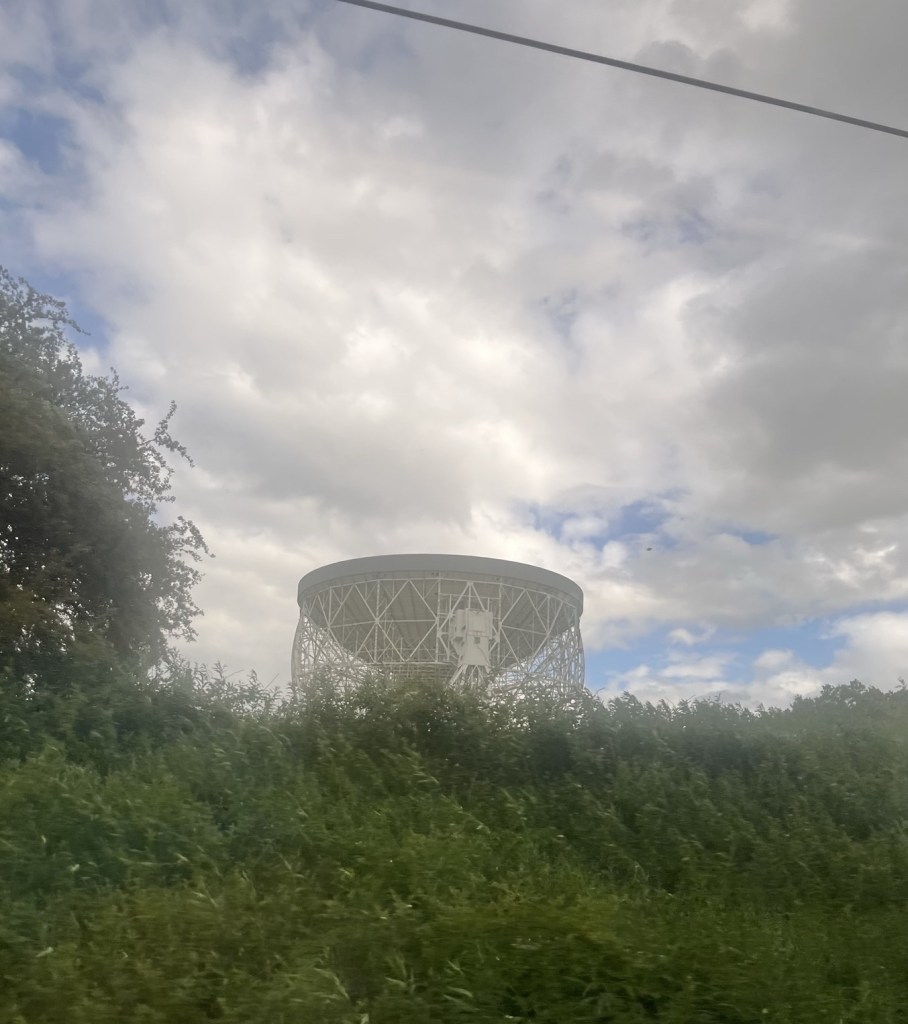
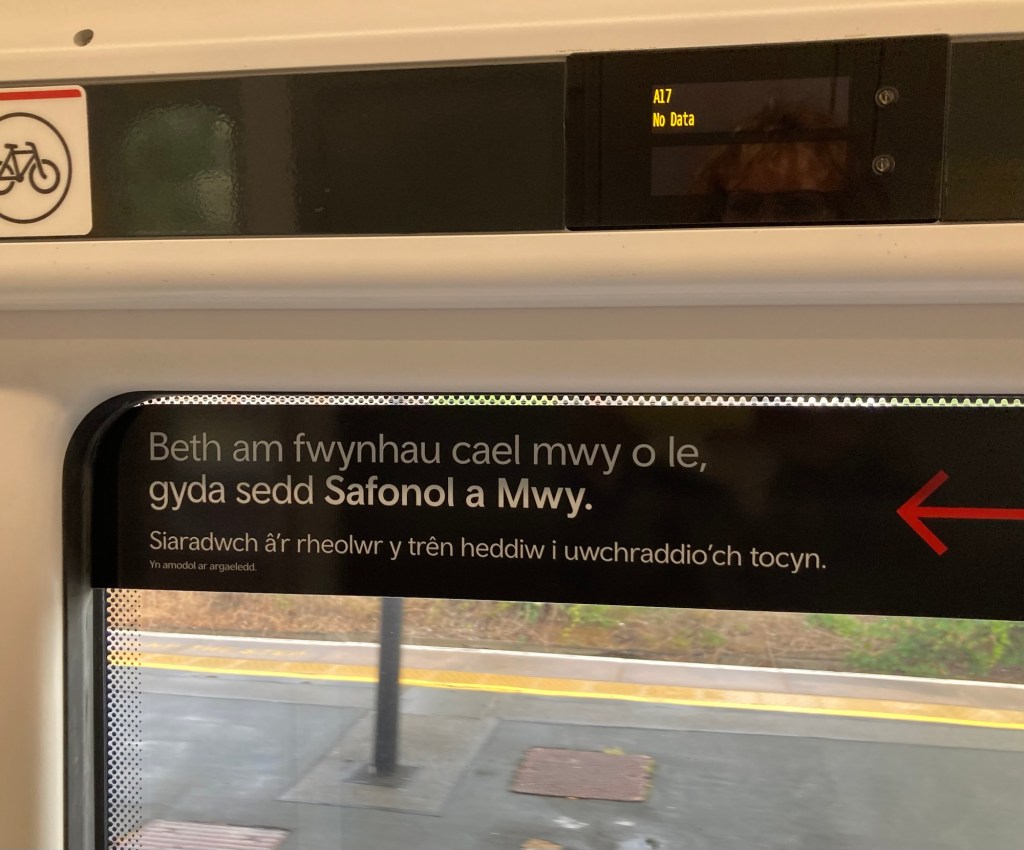
The Lovell Telescope, which we passed on the 1st leg of our journeyAnd this one on the train to Wrexham. The sign is in Welsh, but it seemed like it was meant just for me!
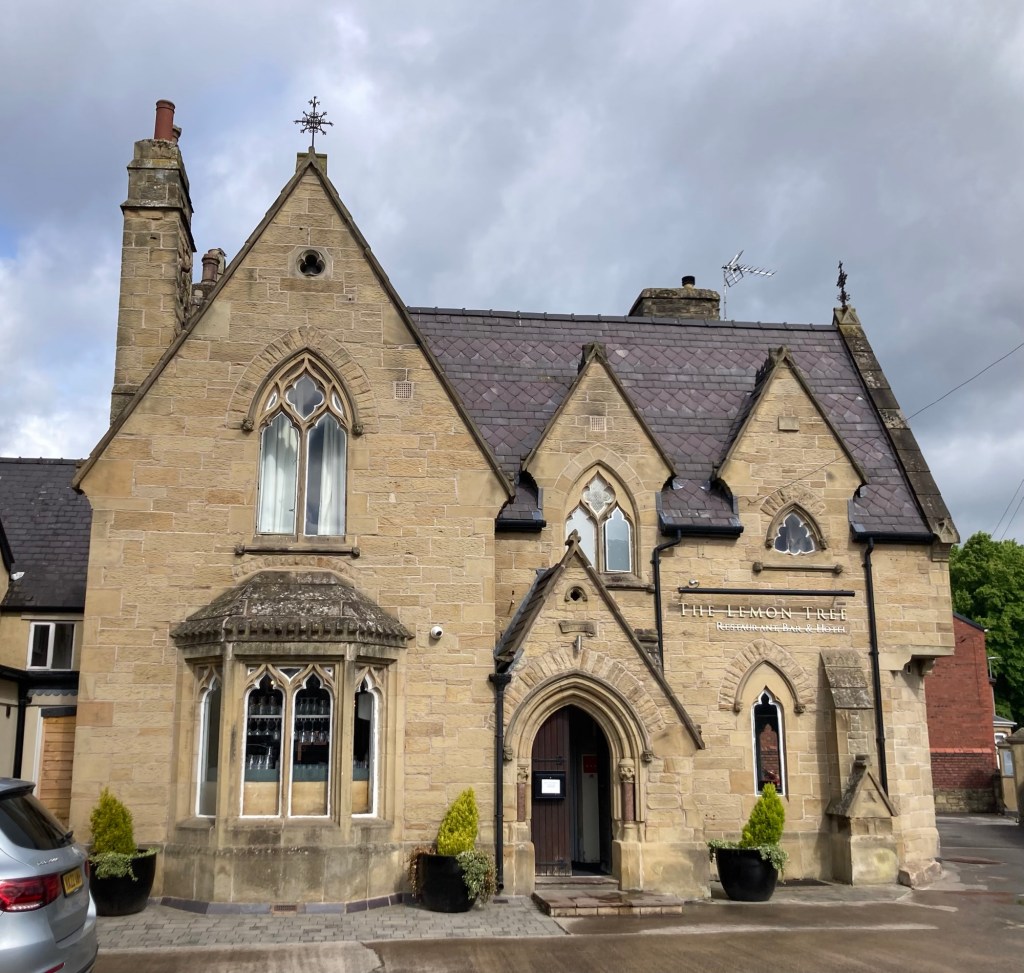
Bob got us reservations for 3 nights at the cute Lemon Tree Inn, which is just outside the city center and an easy 10 minute walk from the train station.
The Lemon Inn, which calls itself a restaurant with rooms
In looking up sites to visit in our current area, I had found Bramall Hall and Park, about a 40 minute walk from the house. The grounds are always open, but the house can only be toured Thursday through Sunday (6.5 pound/person entry). We decided to visit the house today.
We were able to take our usual neighborhood trail, continue onto the bridle trail we walked the other day, and then continue a bit further on the trail to reach the park and house. It was a good day for a walk, as the temps were in the low 60s F, and it may be the last non-rainy day for about a week.
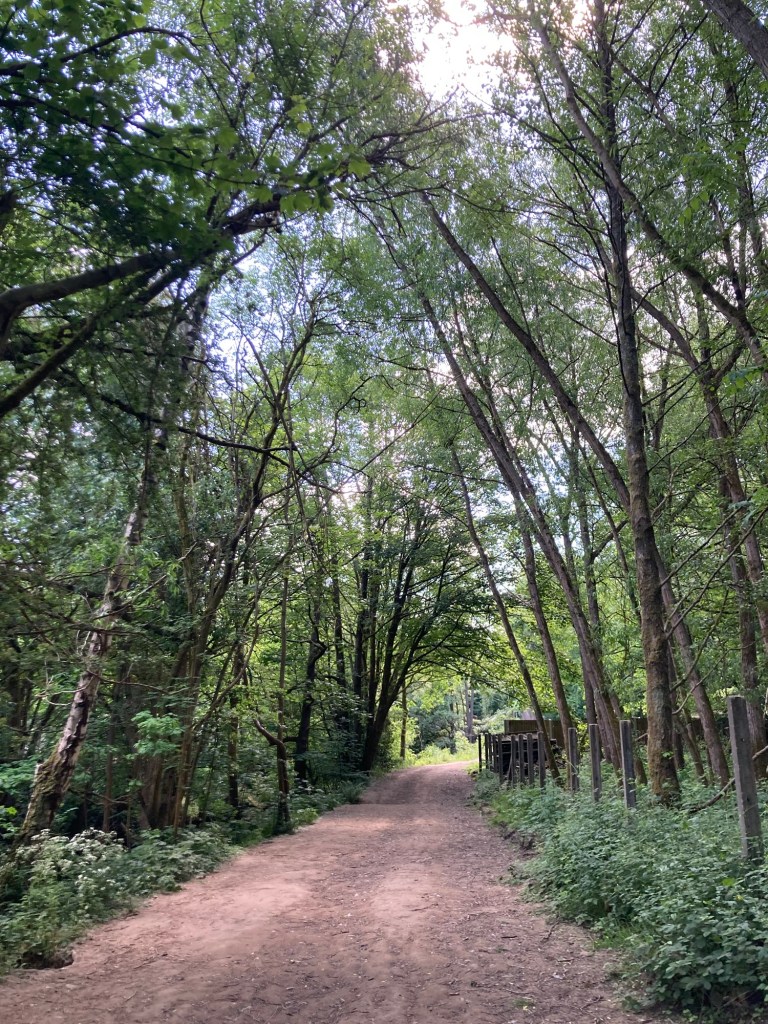
Part of the tree lined path
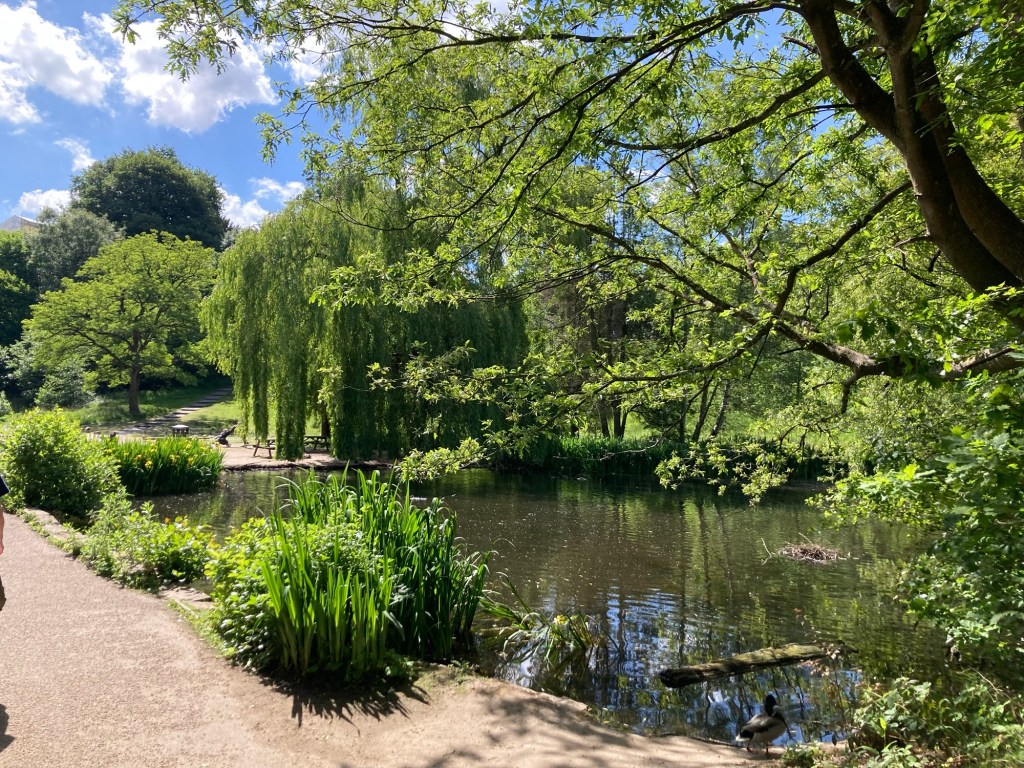
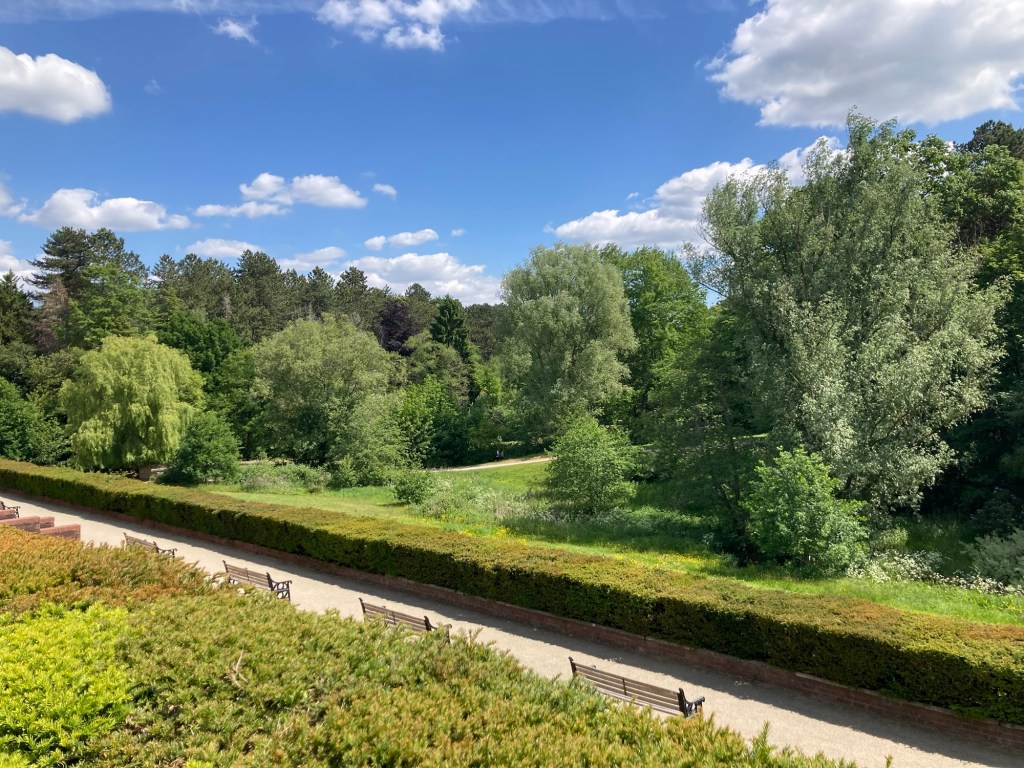
Bramhall Park (for some reason the name of the park has an h but the hall/house does not) is 51 acres and has a range of habitats, including formal parkland, woodland, and open grassland, through all of which runs Lady Brook, flanked by several ponds.
One of the ponds in Bramhall ParkAnother pond
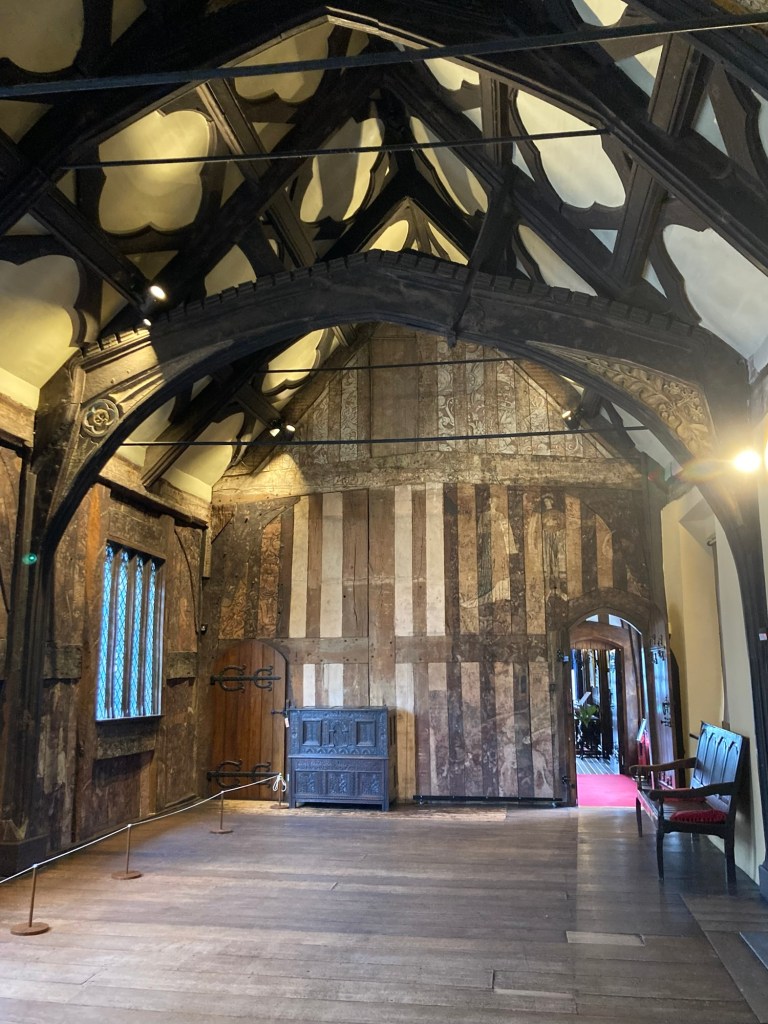
Bramall Hall is described as one of England’s finest timber framed buildings. It was built around 1370 as a single story medieval hall by Alice and John de Davenport, and by the 1600s it had become one of the largest homes in the area. It remained in the family for over 500 years. In 1883, Charles and Mary Nevill moved into the house when it was given to them as a wedding present by Charles’ father, the wealthy owner of Strines Print Works in nearby Stockport.
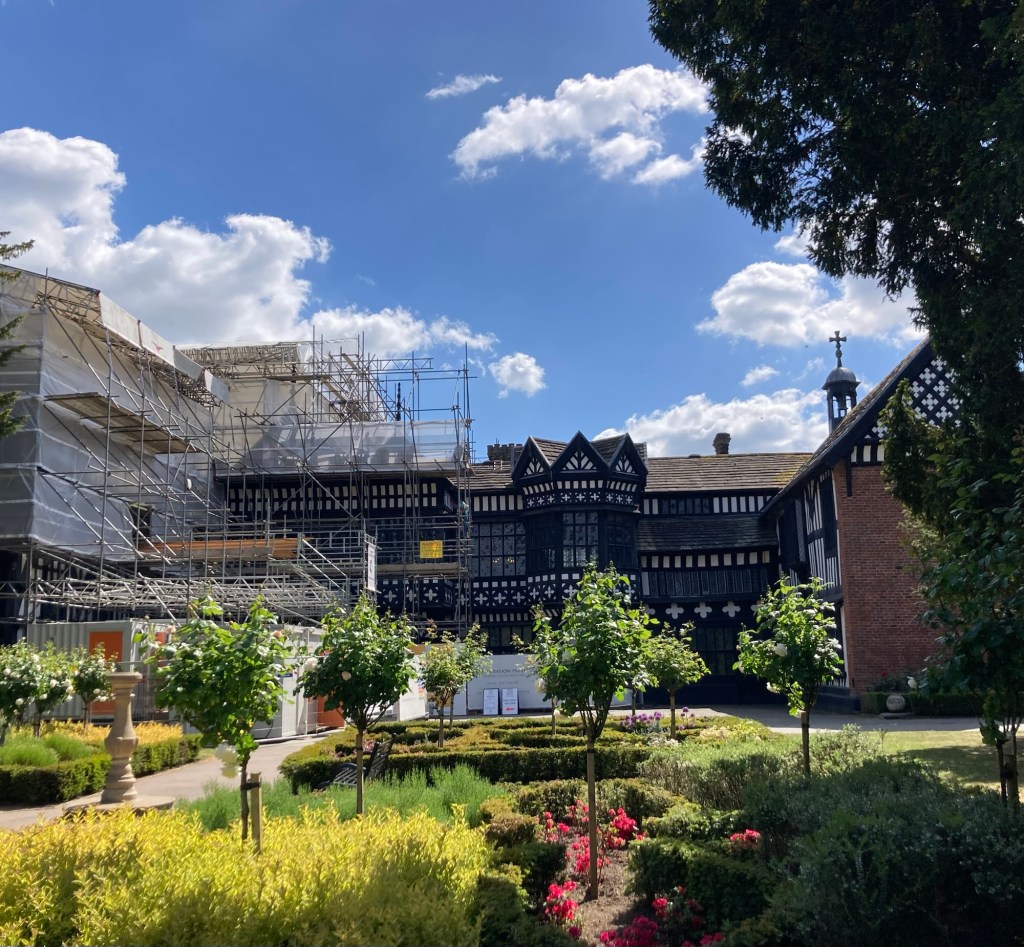
Happily for the good of the house, the roof is being refurbished. Unhappily for us, we didn’t get the best outside view of the house.
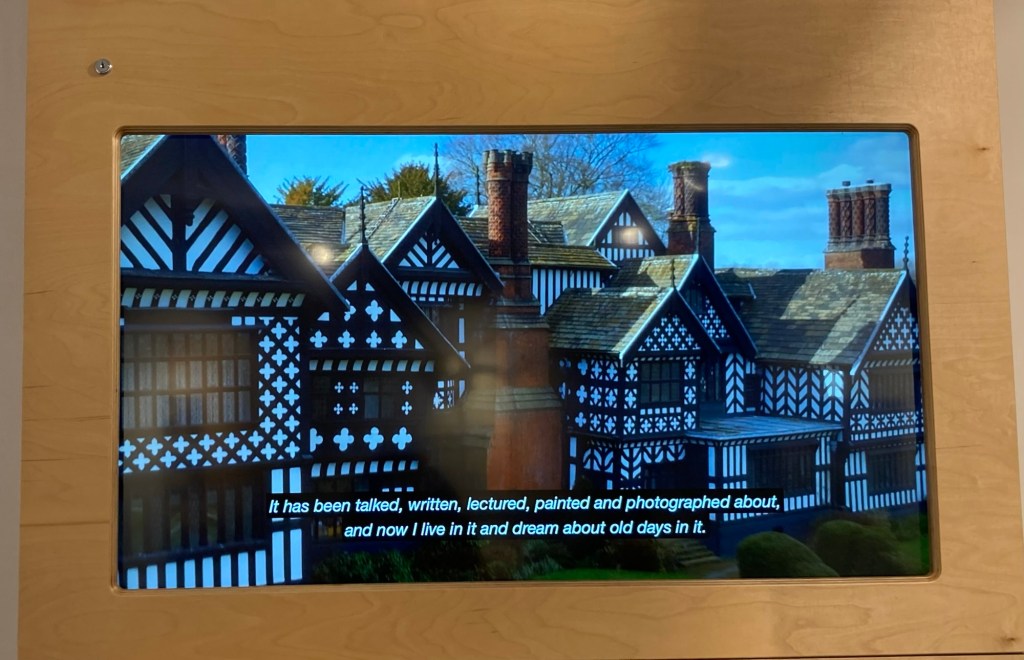
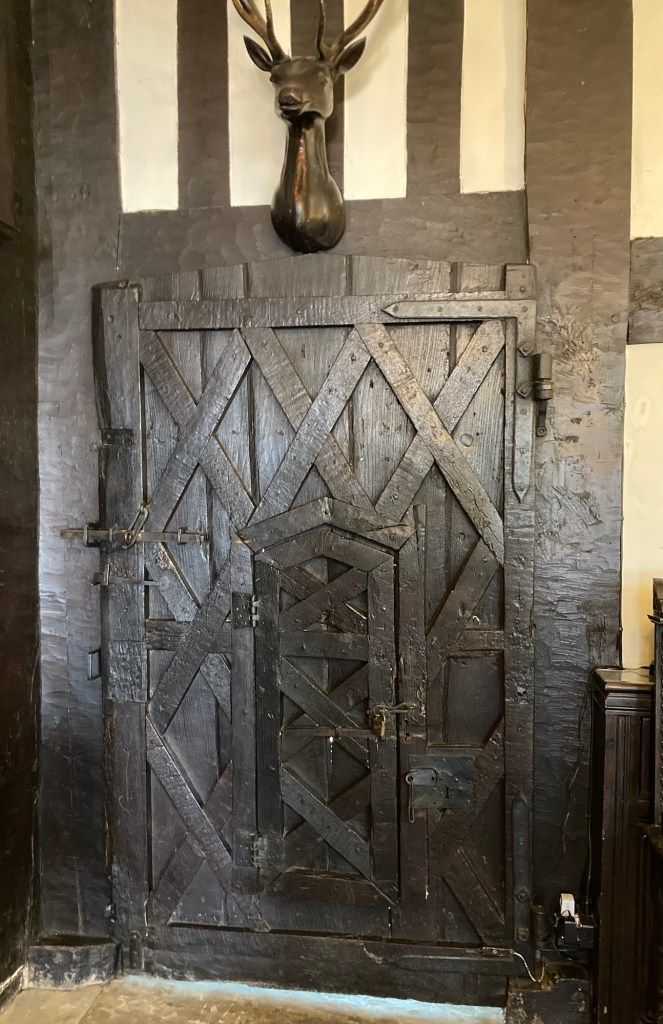
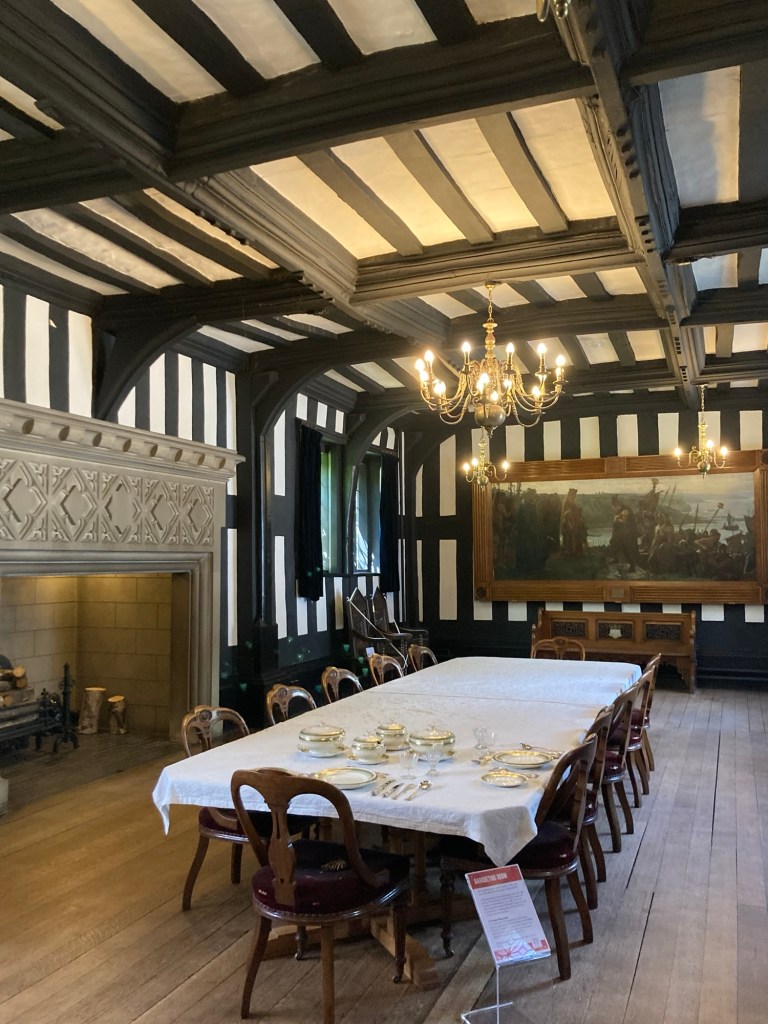
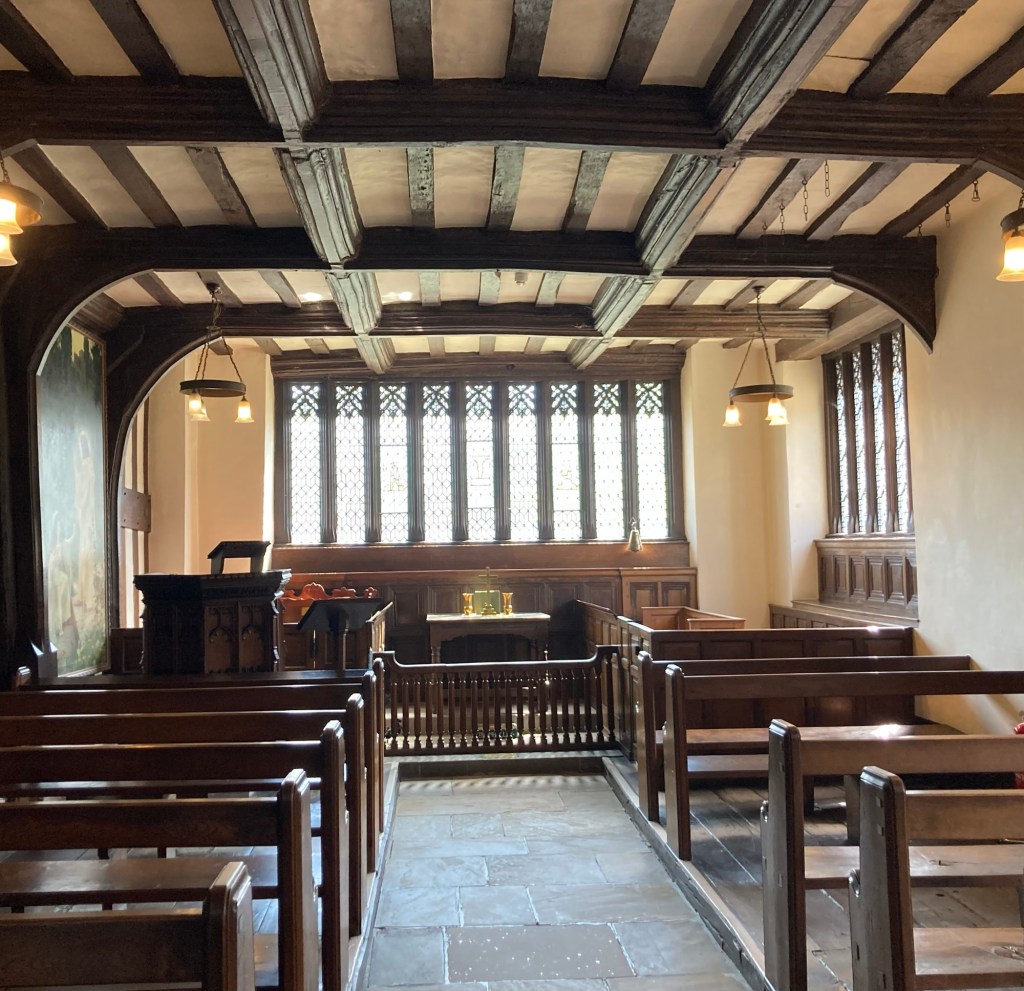
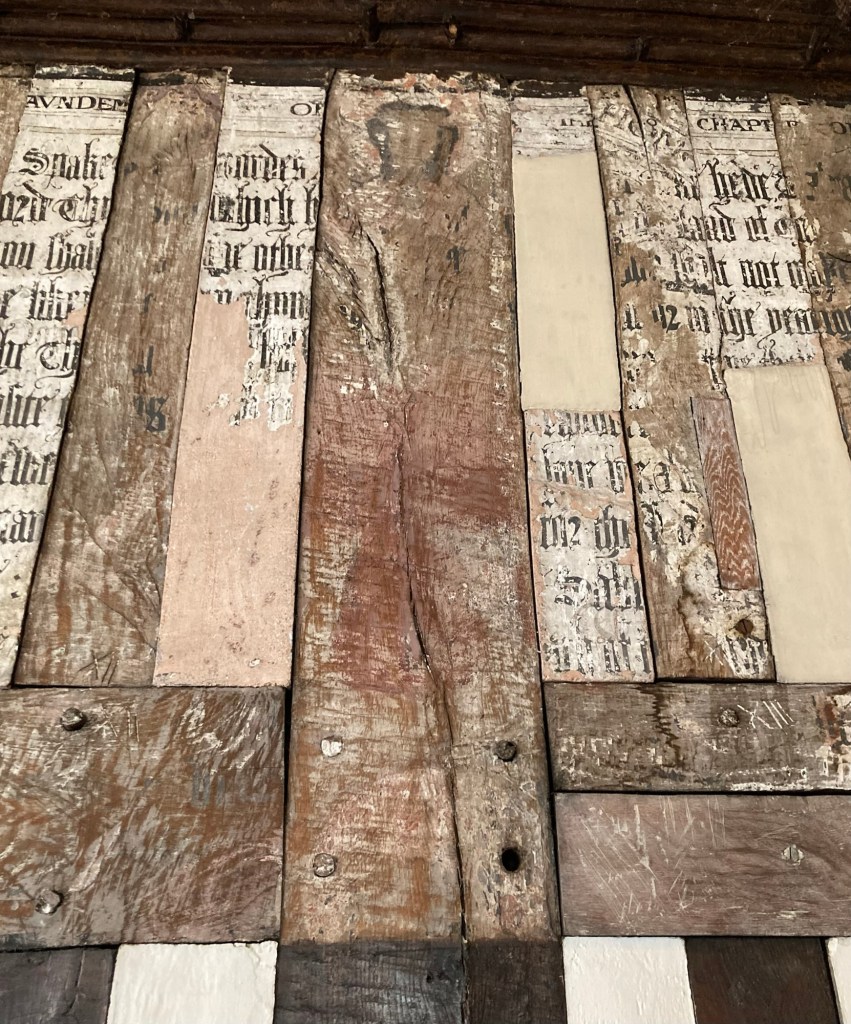
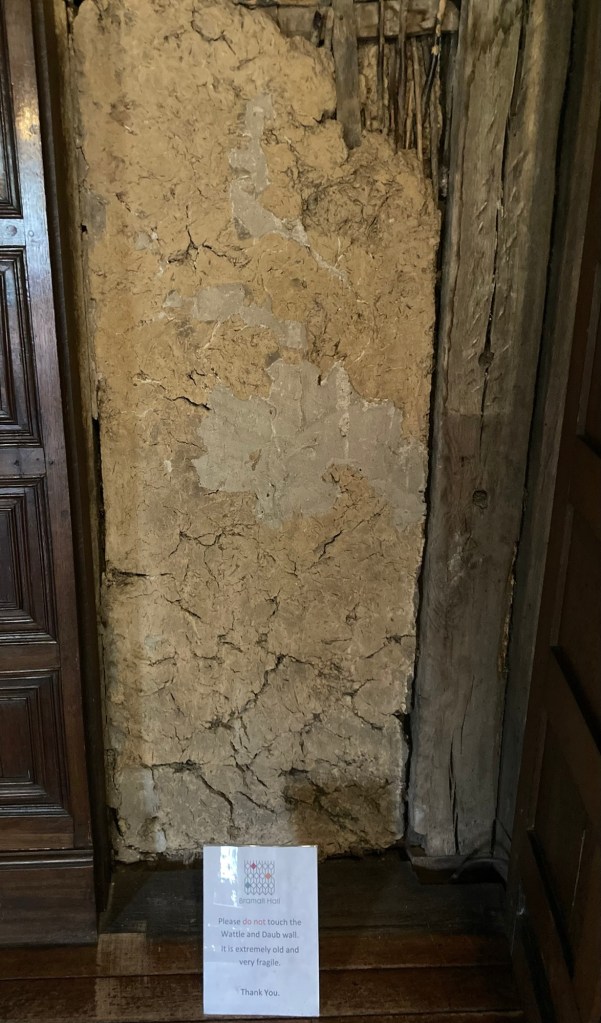
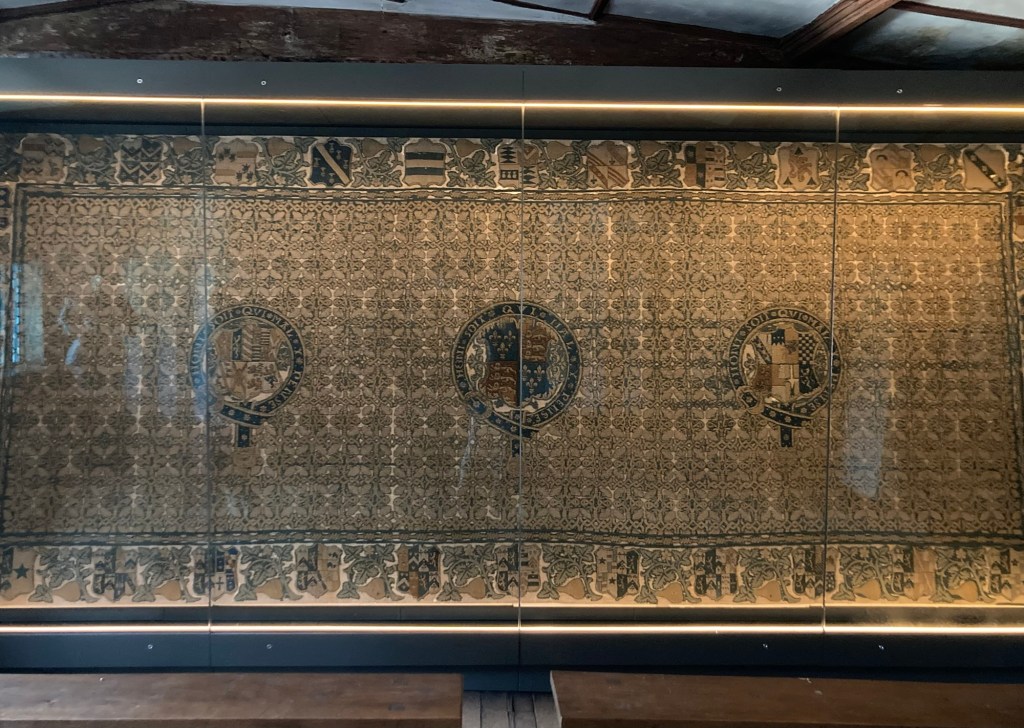
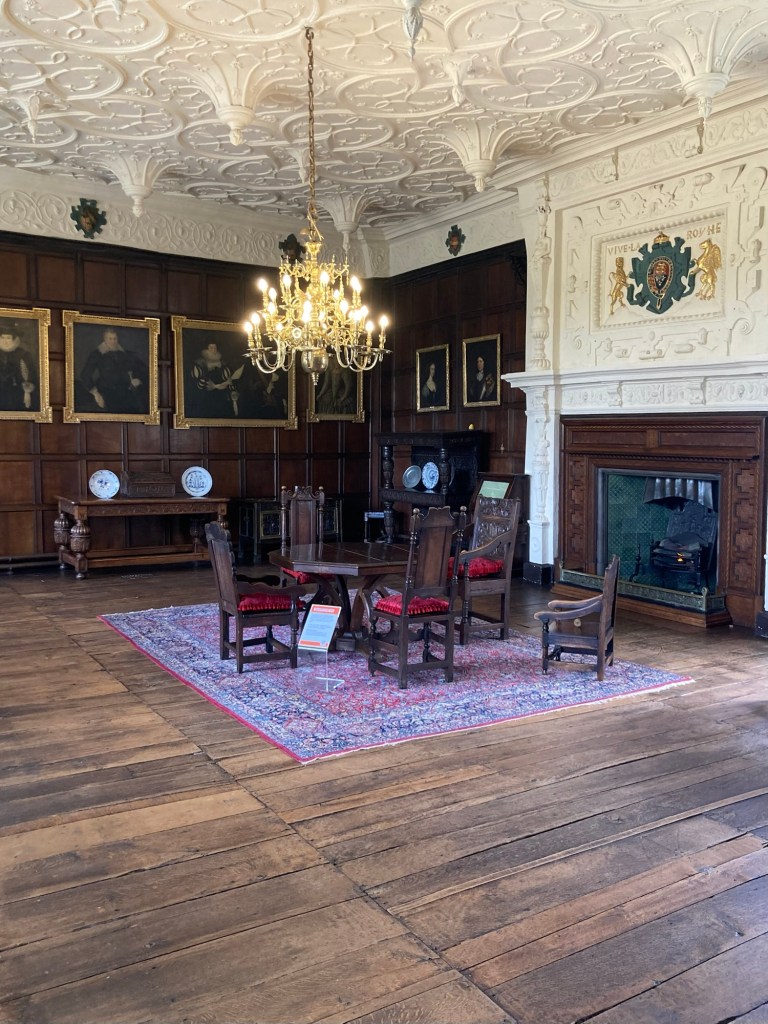
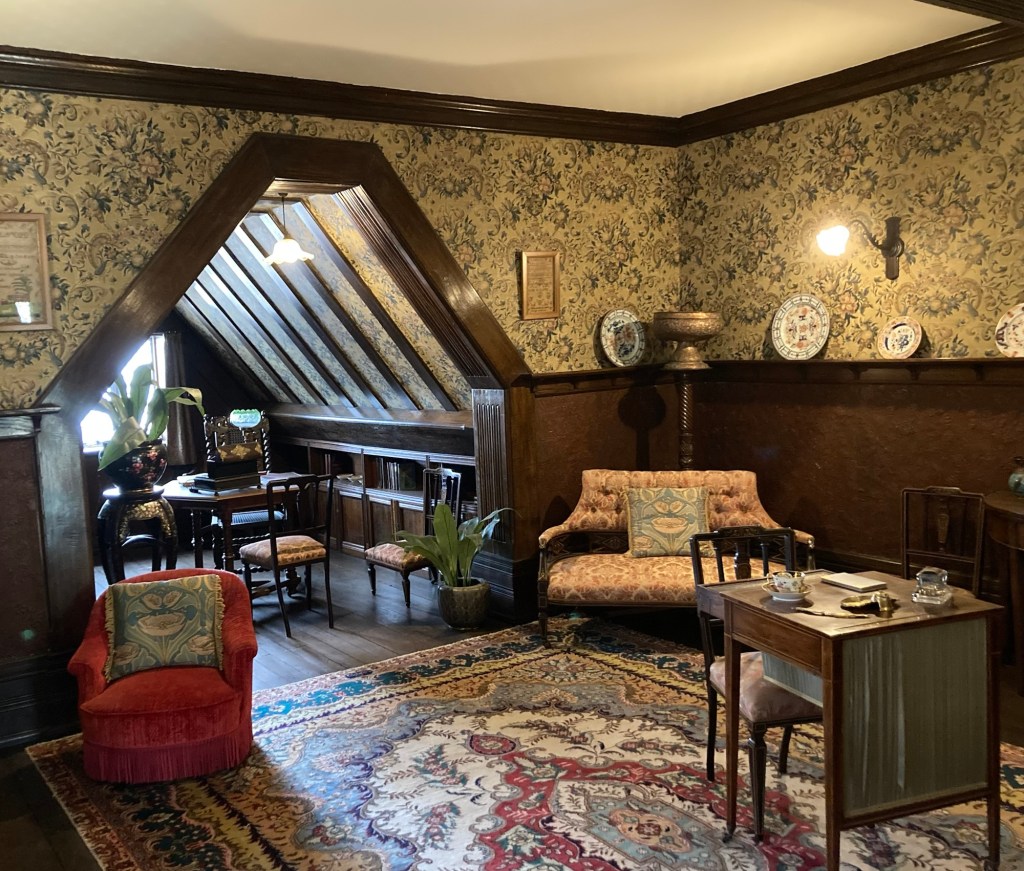
The scaffolded Bramall HallWe watched a short film about the house in the shop where we bought the tickets, which provided a non-scaffolded view of the houseThe wicket door (small one) in what is currently the great hall, but which would have originally been used to control entry into the home by allowing for the identity of unexpected callers to be checked and then requiring visitors to enter one at a time in a crouched position.The banqueting roomThe chapelThe figure of Christ appears on the wall of the chapel in between text for the 10 Commandments. It won’t be the last instructional wall art that we’ll see in the home.The solar room with its Tudor wall paintings, used in imitation of tapestry and dated to the 1530s.A closer look at the paintings, which were both decorative and filled with moral messages.Bob in the Nevill room, so called as the Neville’s made a significant number of changes to this room when they moved in.A section of the wall showing the typical construction method up until the mid-16th century , wattle (interlaced branches) and daub (a clay mixture).A table carpet (tablecloth) probably commissioned in 1560 by William Davenport III for the high table used in the great hall.The withdrawing room, not for obtaining money or being alone, but where the family and guests would withdraw to following dinner. The plaster ceiling was a mark of wealth in the Elizabethan age (late 1500s).Mary Neville’s boudoir, on the American 3rd floor/ UK 2nd floor of the houseThe master bedroomThe great lawn in the back of the house
Our current housesit is officially in Cheadle Hulme, which is a suburb of the large village of Cheadle in the metropolitan bureau of Stockport in Greater Manchester. In 2016, we did a housesit in the Levenshulme area of Manchester, one of the few we have done without a pet, as the bird had died a week or so before we arrived. Our current housesit is a little over 5 miles south of the prior sit.
Yesterday and today we have done some exploring of both Cheadle Hulme and the High Street of Cheadle, each are about a 25 minute walk from the house. When going to Cheadle Hulme, we can take the nearby walking path all the way to a busy street, which we can then cross to pick up another trail that takes us to the Cheadle Hulme train station. There is no train stop in Cheadle at this time.
That is the route we took yesterday to start our short walkabout in the business district of Cheadle Hulme.
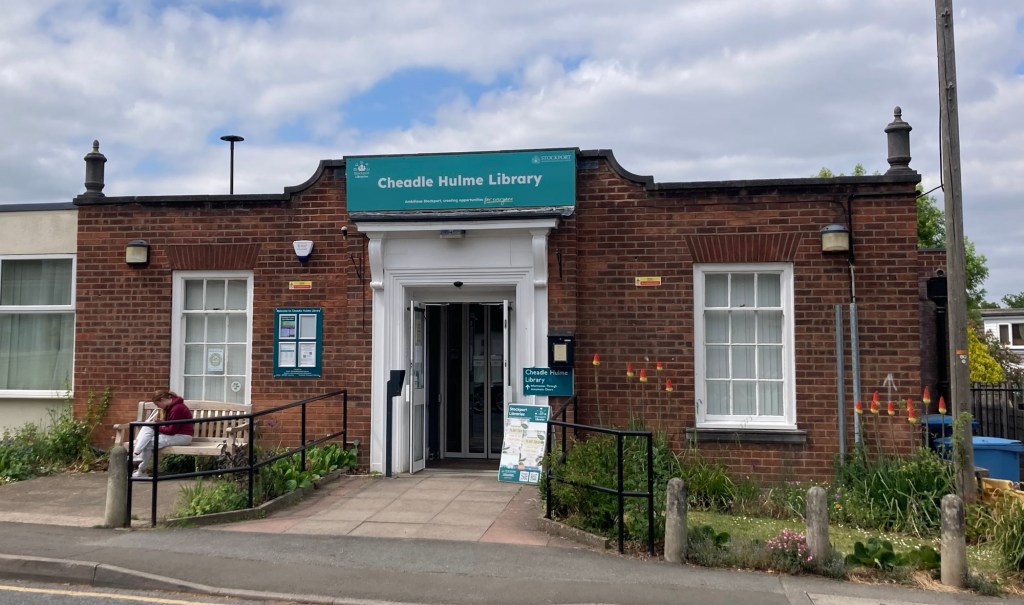
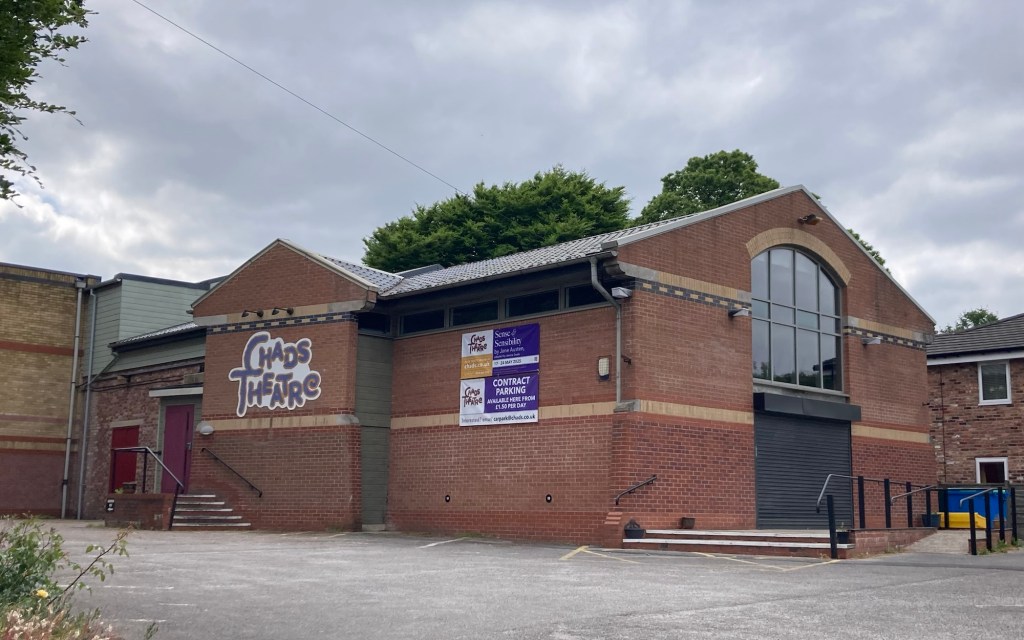
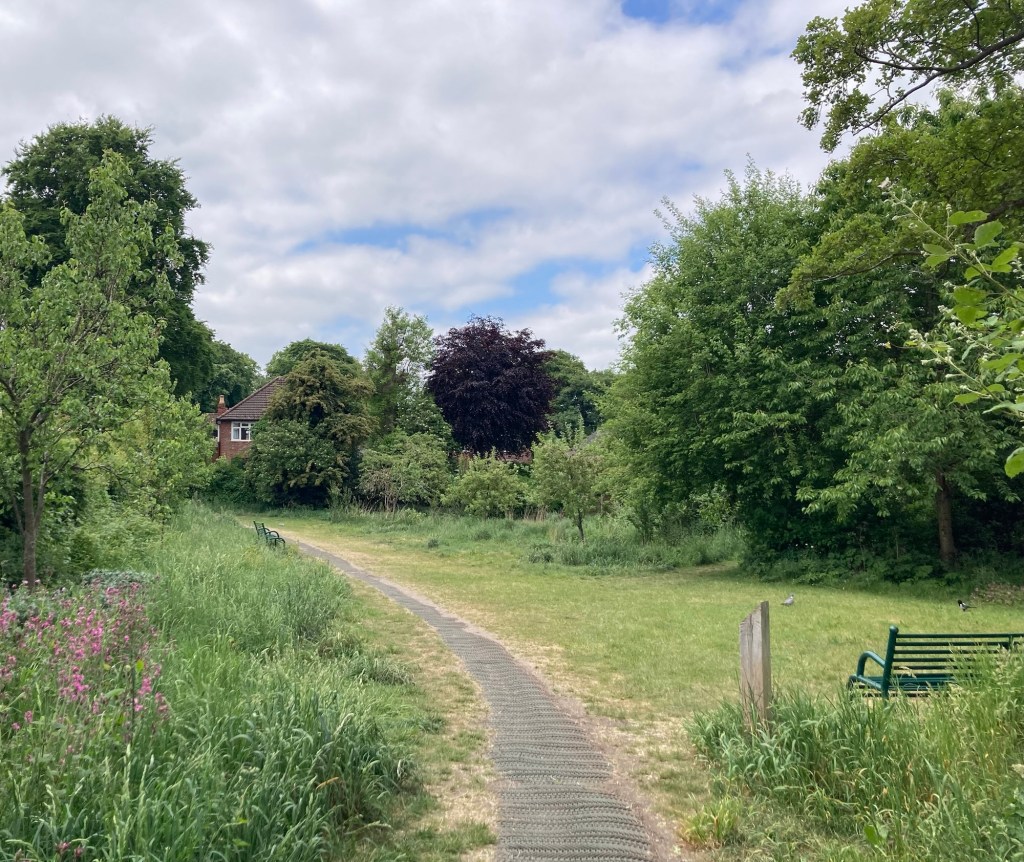
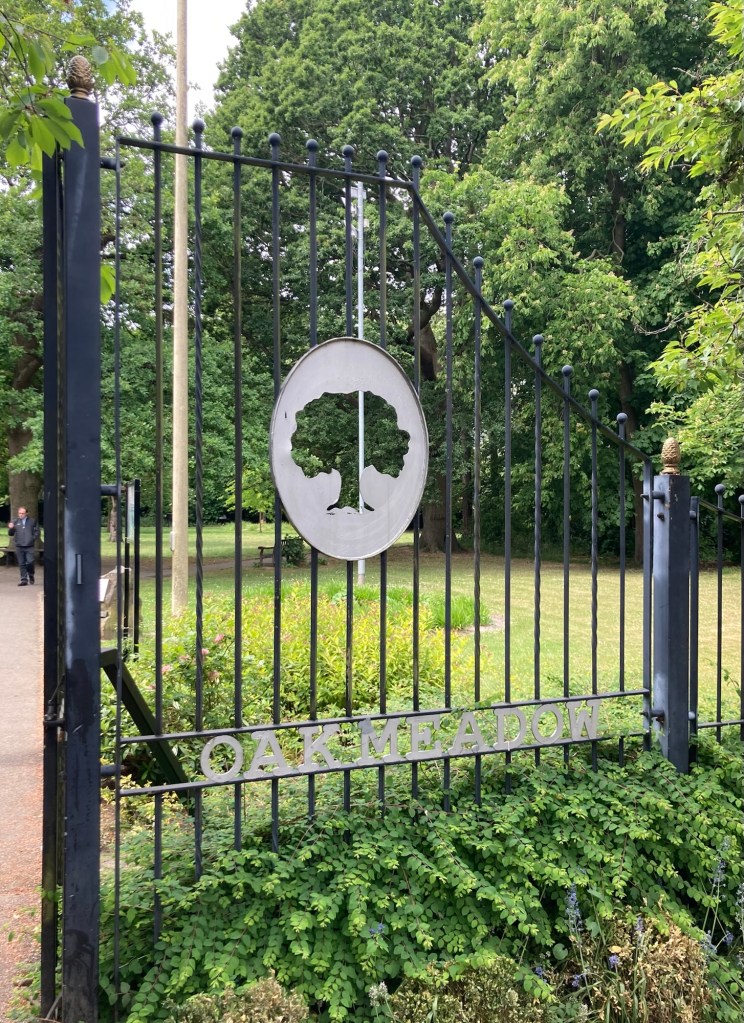
The aptly named Platform 5 Pub behind the 4-platformed Cheadle Hulme Train Station.The small Cheadle Hulme Library. The Chads Theatre, currently playing “Sense and Sensibility”Mellor Green, across from the theatreThe entrance to the small Oak Meadow Park along Station RoadA bit of landscaping in the park
While we didn’t take a photo of it, our favorite find in Cheadle Hulme might be the Waitrose grocery store, where we picked up supplies for last night’s dinner.
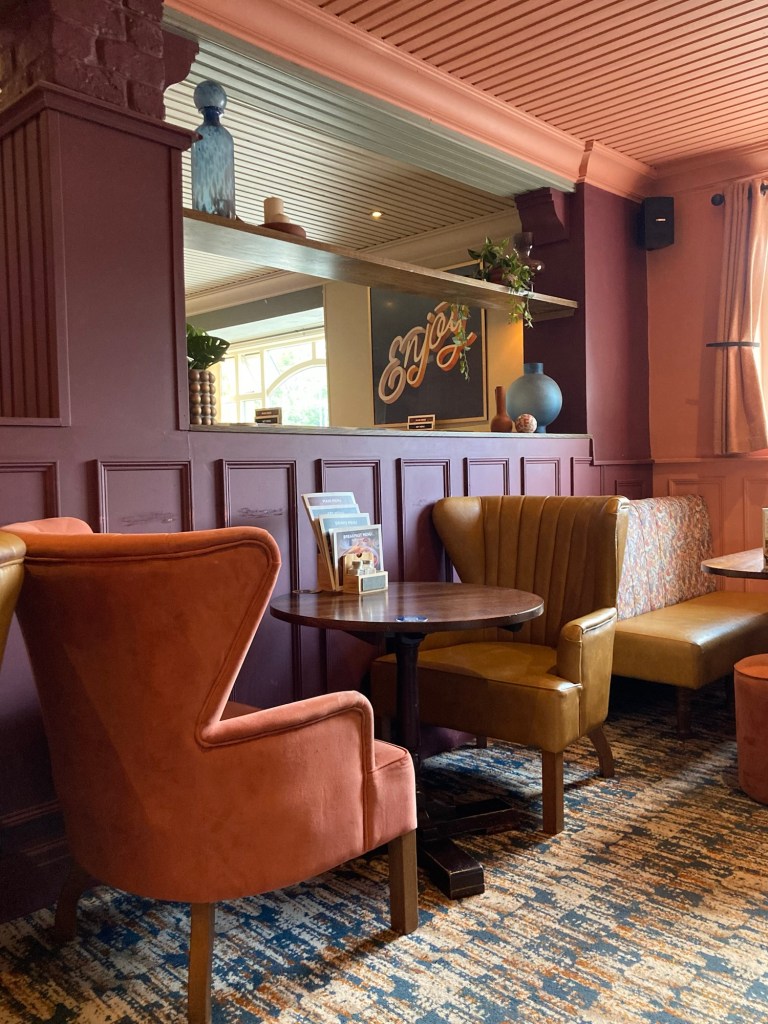
Closer to home (about a 10 minute walk and near a Lidl grocery store), Bob and I stopped at the restaurant below for a pre-dinner wine. The bar area was cute, and Bob enjoyed watching the diners partake of the carvery station, with 3 different meat options and then lots of veggies. The full option was only 13 pounds, so I’m not sure how good any of it was.
The restaurant, which seems to do a little of everything Part of the bar area
Today, we headed in the other direction to explore the Cheadle High Street. I’ll be back there tomorrow for a much needed hair color and cut at a salon recommended by our home owner. Cheadle seemed to be hopping and has lots of dining options, charity shops, and hair salons and barbers, and one Scotch Bob.
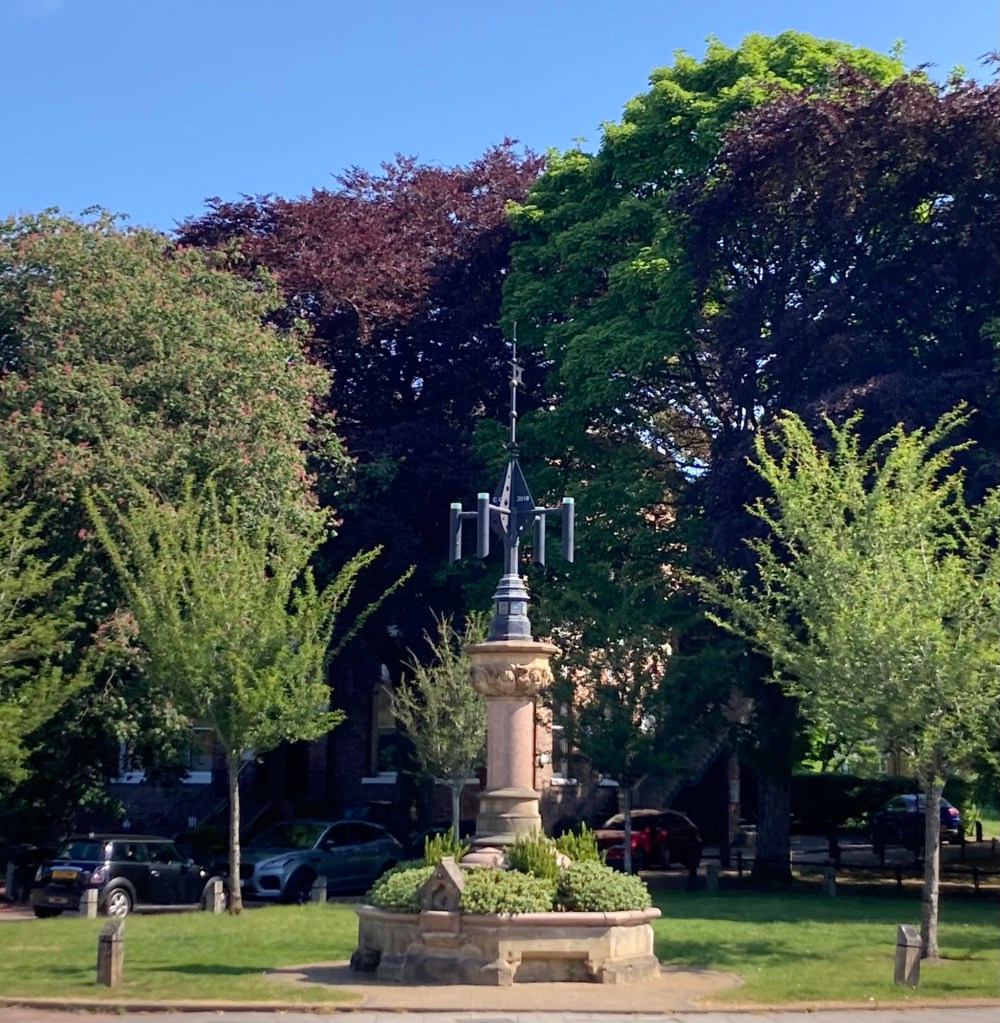
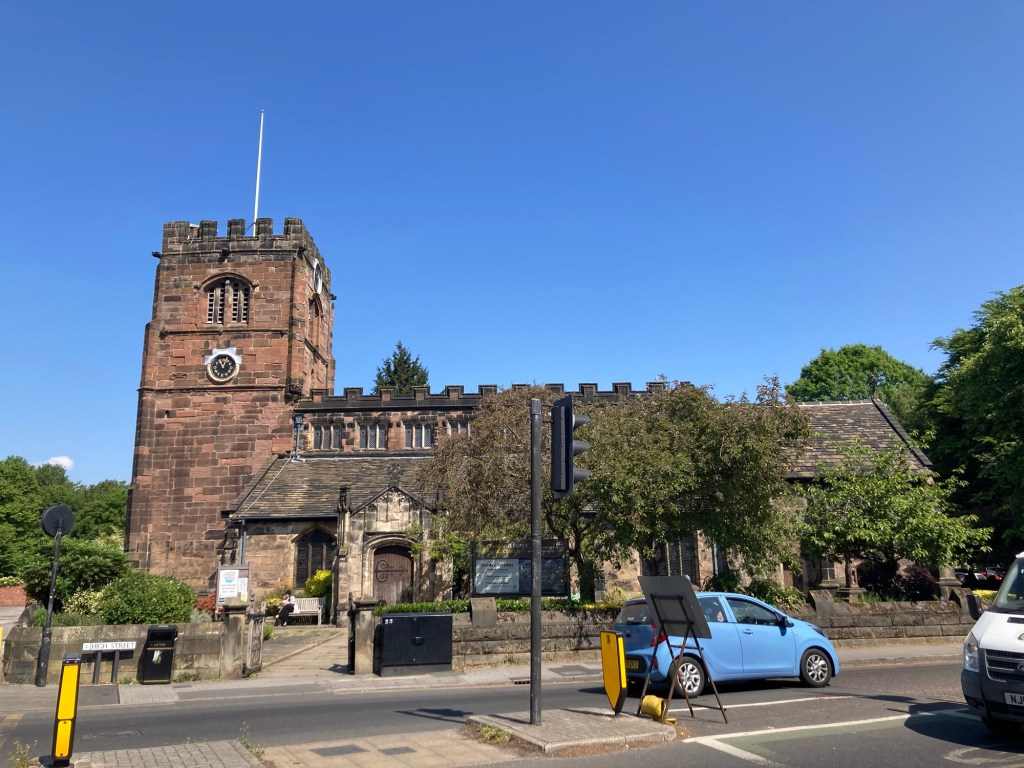
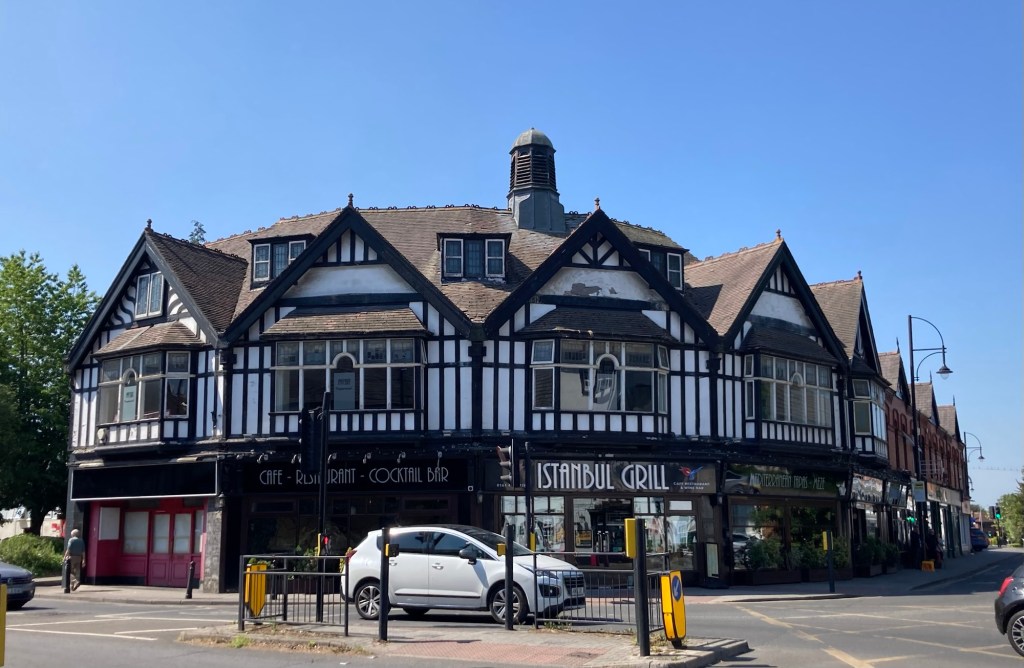
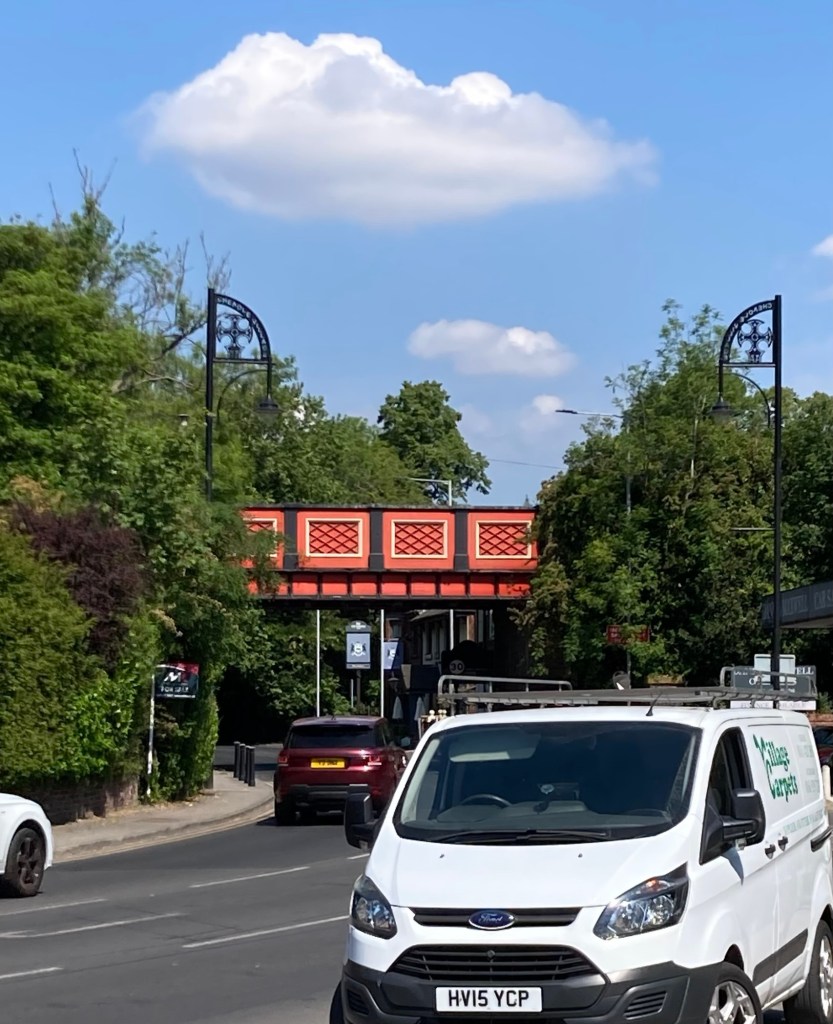
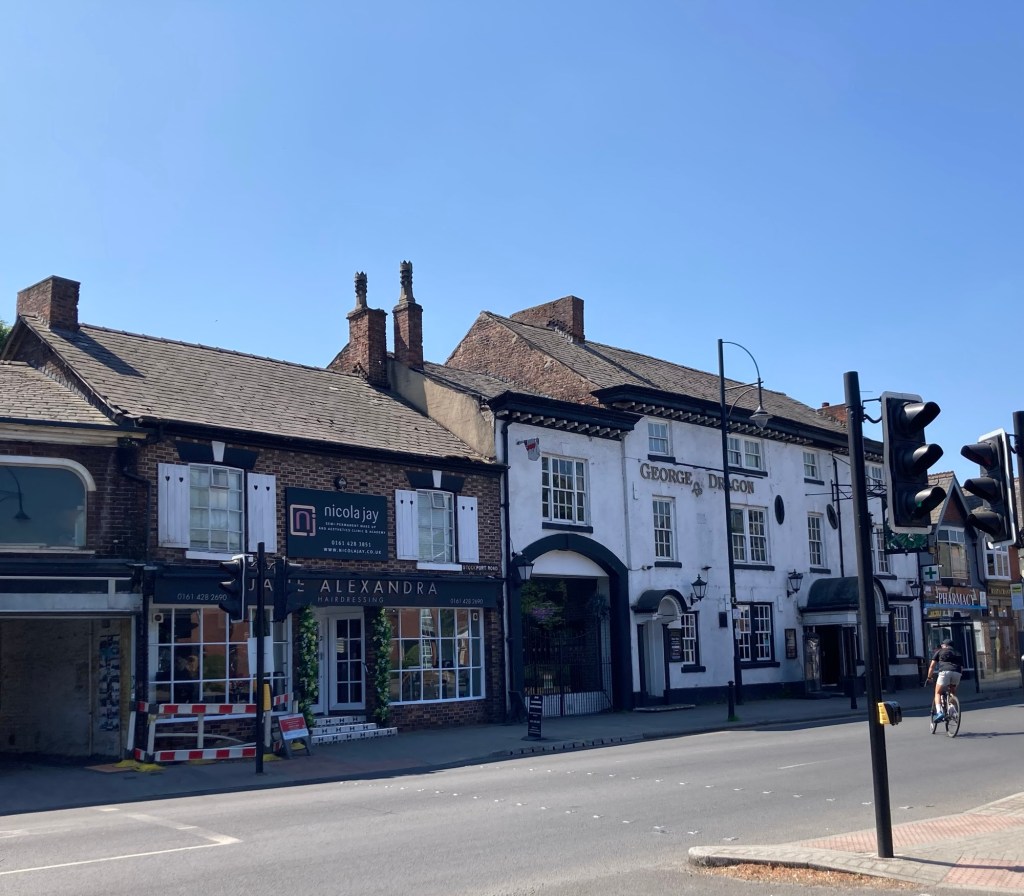
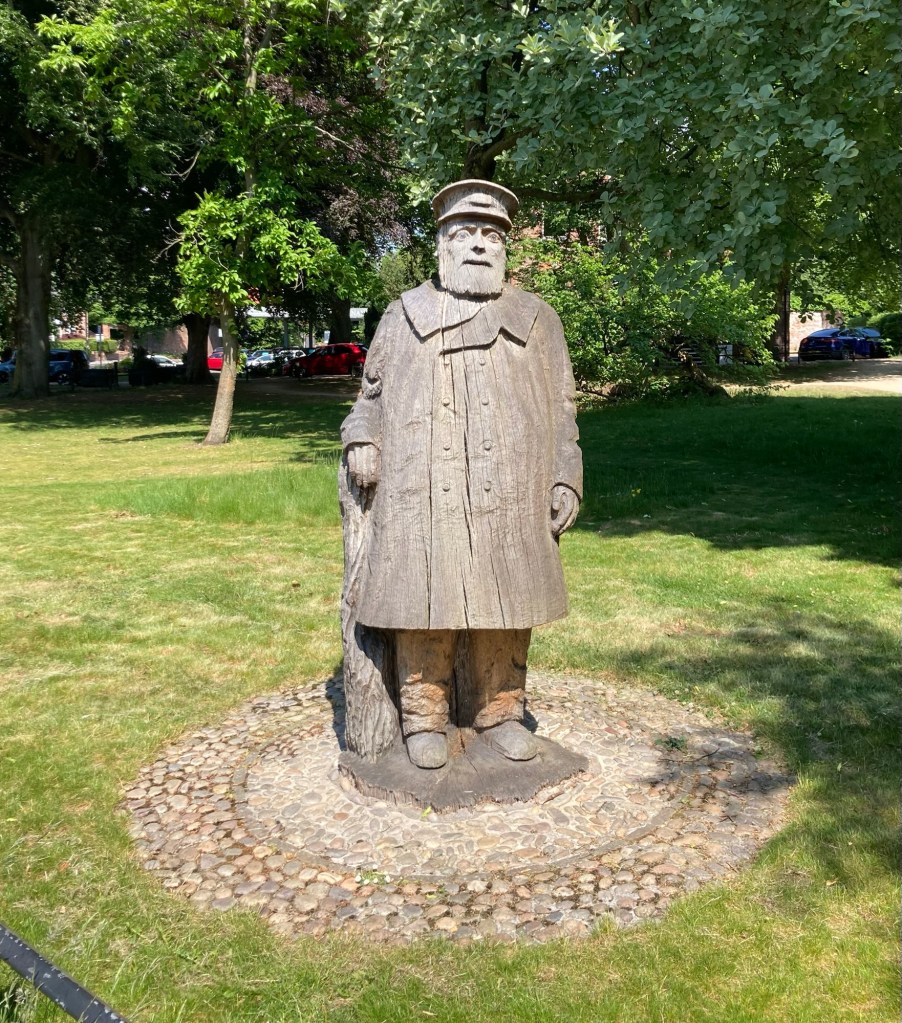
The Red Lion, one of at least five pubs that we passedA fun mosaic on a corner building A memorial and drinking fountain at the edge of Cheadle Green, erected in 1889 in memory of Robert Ockleston, a well regarded doctor in the village.A couple of the buildings on High StreetCheadle’s Parish ChurchThe White Hart Tavern next to the church. Red Lion and White Hart seem to be common names for pubs.A newer restaurant in an older looking building The attractively painted railroad bridge More High Street buildings. The shop on the left, Jane Alexandra, is where I’ll be getting my hairs worked over tomorrow.This is a carving of James Telford, known in the community as Scotch Bob.
Reading about this beloved local reminded us of our recent stay in Thornhill, Scotland. James Telford came to Cheadle from Dumfriesshire Scotland (where Thornhill is located) in 1871. He drove the red horse-drawn buses of the Manchester Carriage Company for 35 years, often reciting from the works of Robert Burns while he drove! In 1908, he set a British record for driving over 60,000 miles on the route between Manchester and Cheadle! A well-earned statue and happily nothing to do with war!
Friday was a travel day with Bob and I as we left our lovely Scotland hosts to drive back (north) to the Edinburgh airport to return our rental car and then catch a tram to the Haymarket station in Edinburgh to travel 3 hours south to Manchester, England, and then change trains for a short 20 minute ride to Cheadle Hulme.
We originally bought tickets into Edinburgh (rather than Glasgow) as we were to be doing a housesit just northwest of Edinburgh after our visit in Thornhill. As previously reported, that sit was cancelled and we were able to find this sit in Cheadle Hulme. Anyway, Friday was a long day with us getting up about 5:30 and getting to our Cheadle Hulme housesit about 3:45 (an hour later than anticipated as the train to Manchester was delayed). The trip was made a bit easier by some helpful advice from our friends in Thornhill after attempts to drop the car off in Carlisle in Northern England rather than Edinburgh were unsuccessful.
Upon arrival at the housesit, we had a great meet-up with our homeowner, who is now in California for work, including a thorough run through of care needs for Jojo (dog) and home, a couple of walks with Jojo to introduce us to the great paths near the house, and some great homemade pastries and dinner. We have definitely been spoiled food-wise on this trip.
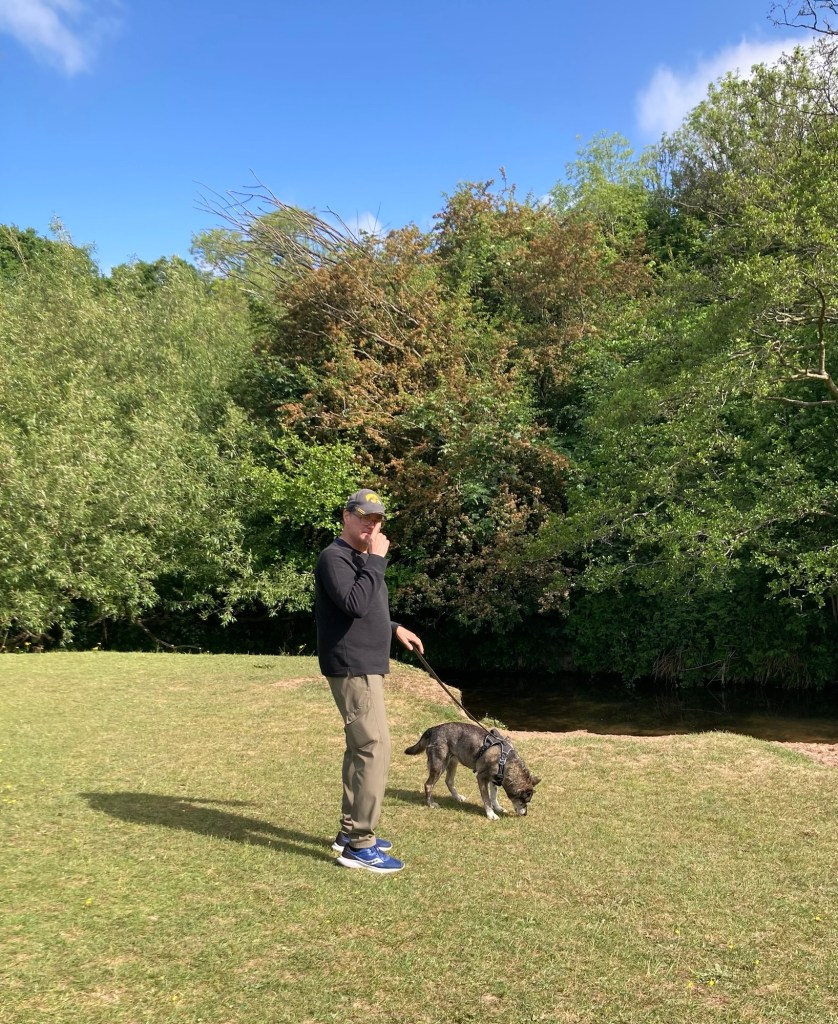
Jojo (short for Jodi) is a very calm dog that was rescued by the family 14 years ago when they were living in the Netherlands. She is a breeze to walk, as she’s very non-reactive to other dogs, of which there are always some out on the trail with us.
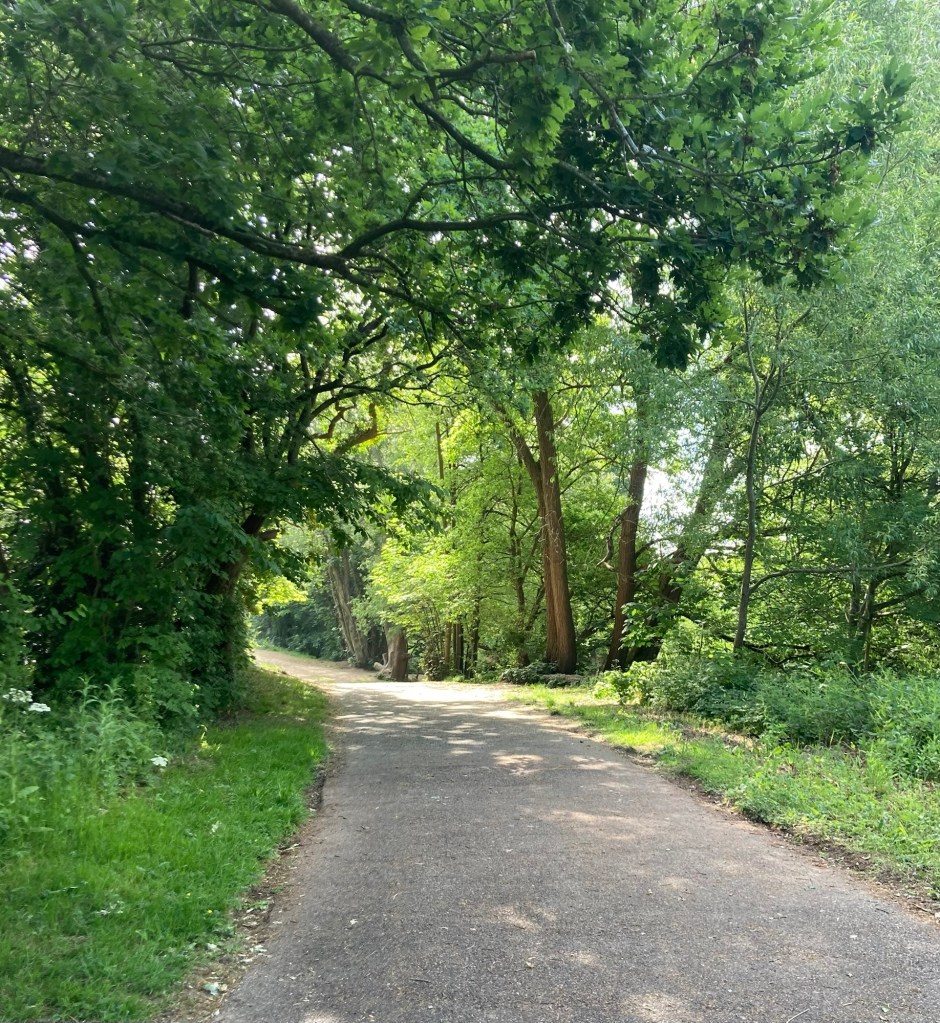
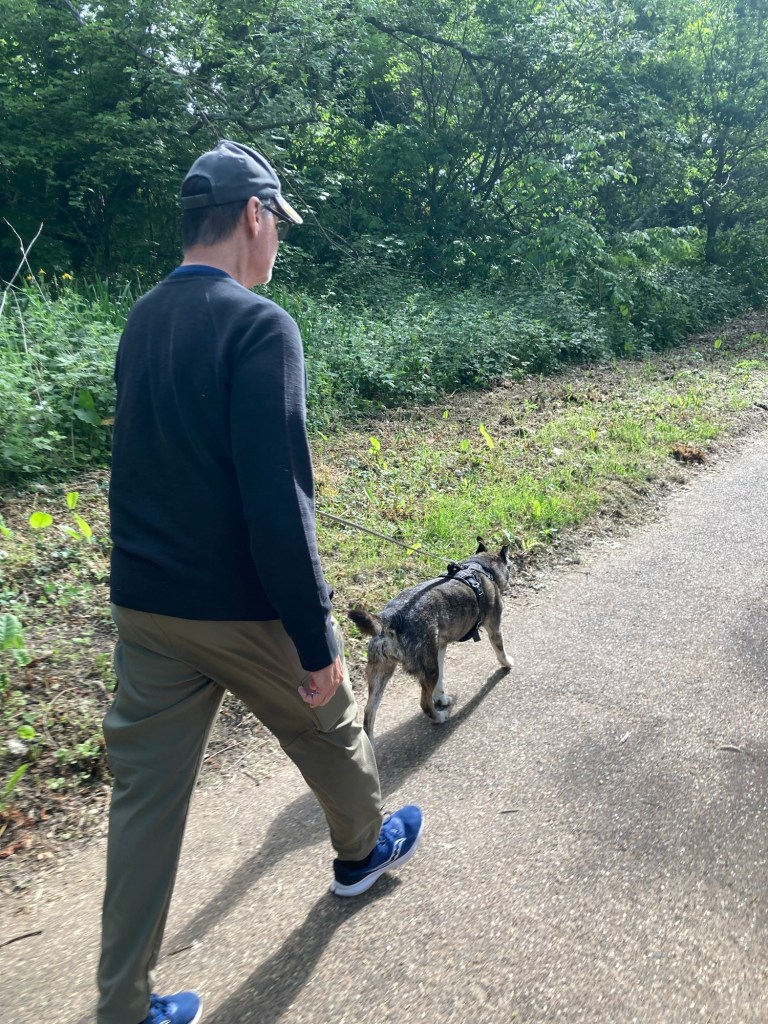
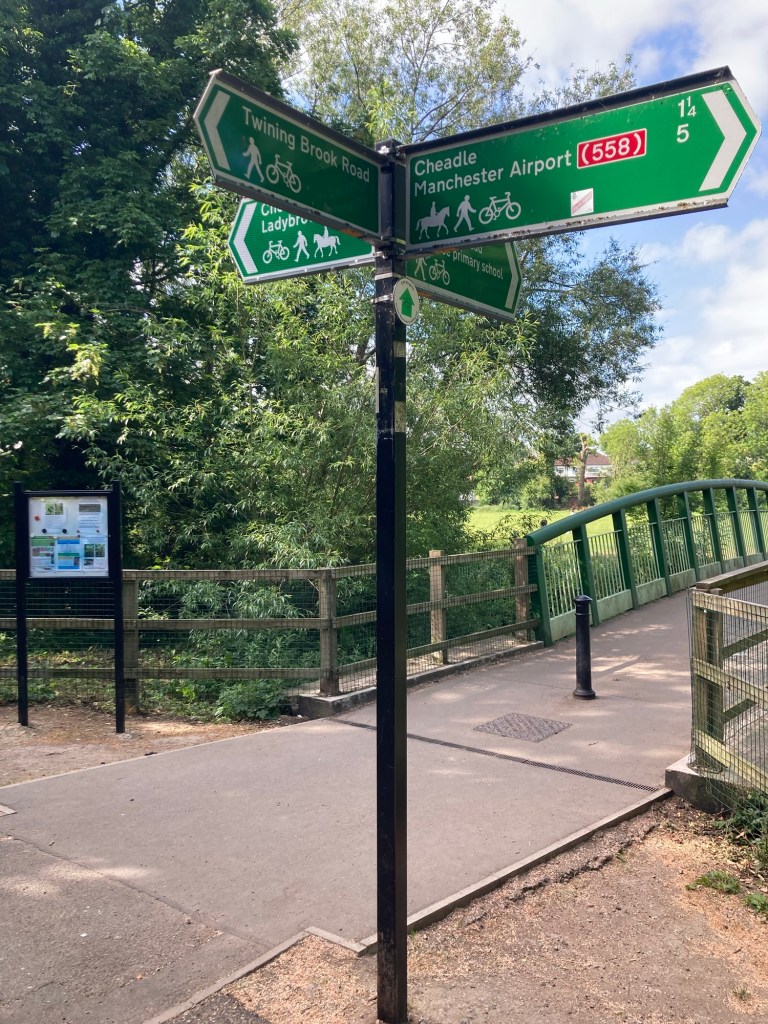
The wide, paved trail very close to the house.Heading out todaySignage for the different locations you can get to on the trail network Some landscaping along one side of the trailDitto
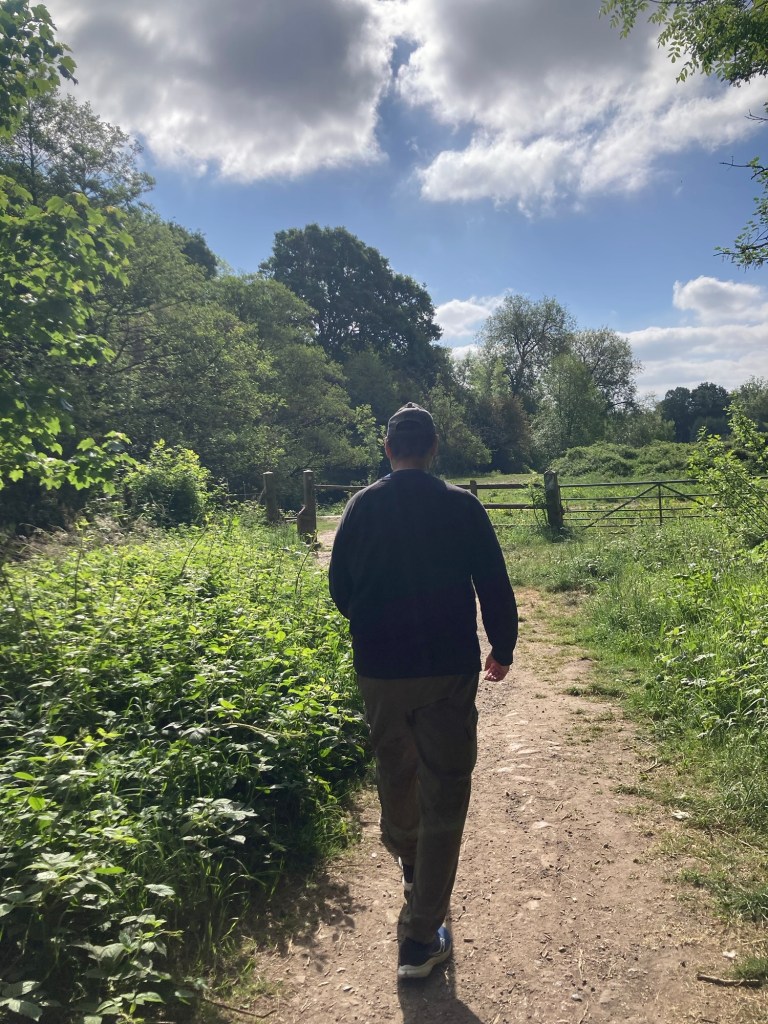
Usually we have turned around on our walks once we hit a main road, but today we crossed to walk a bit on a bridle way that goes under the railroad and into some fields.
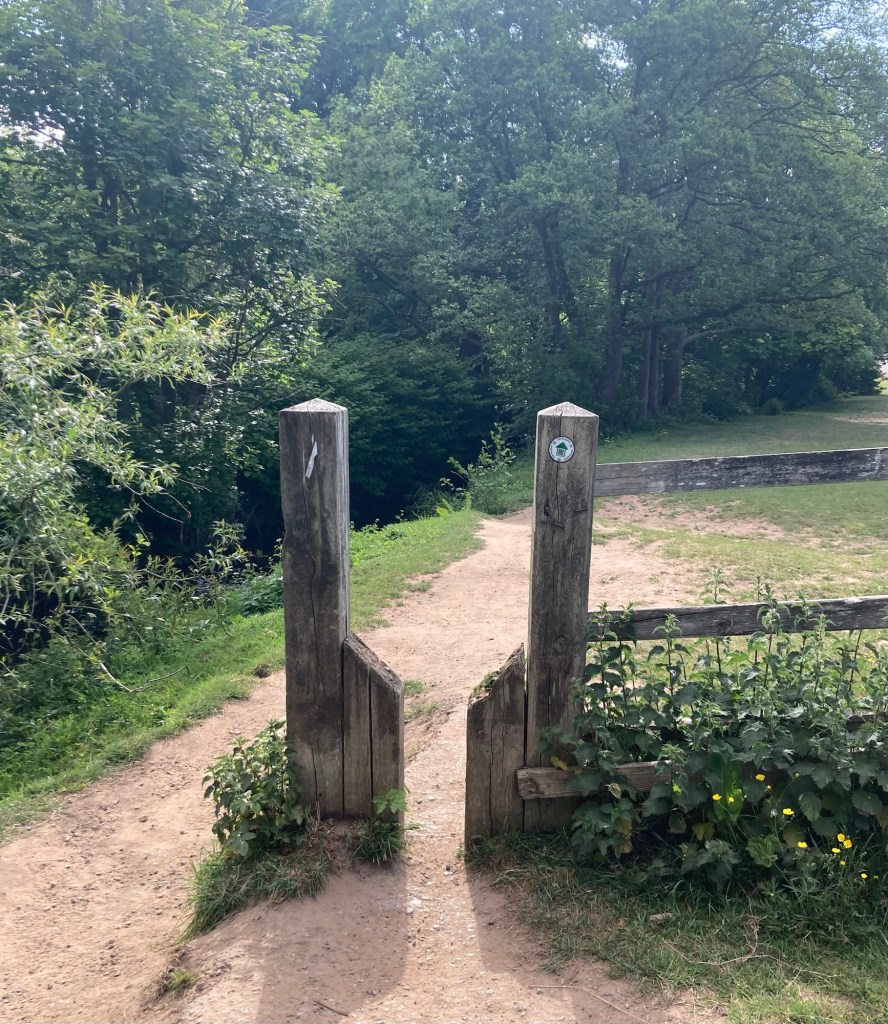
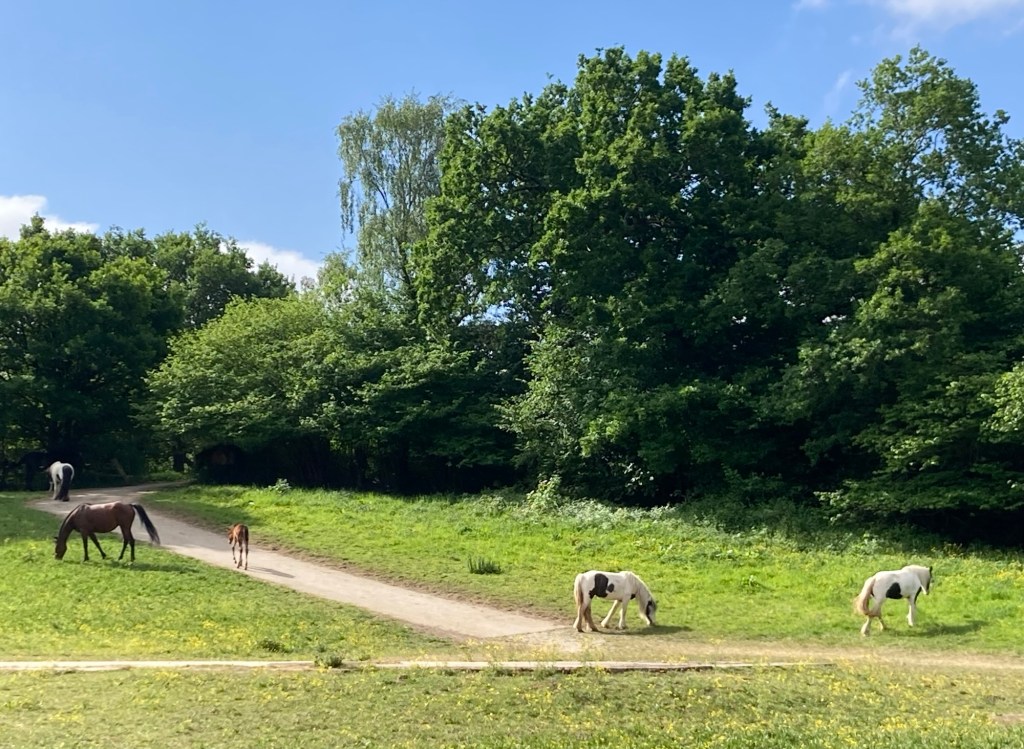
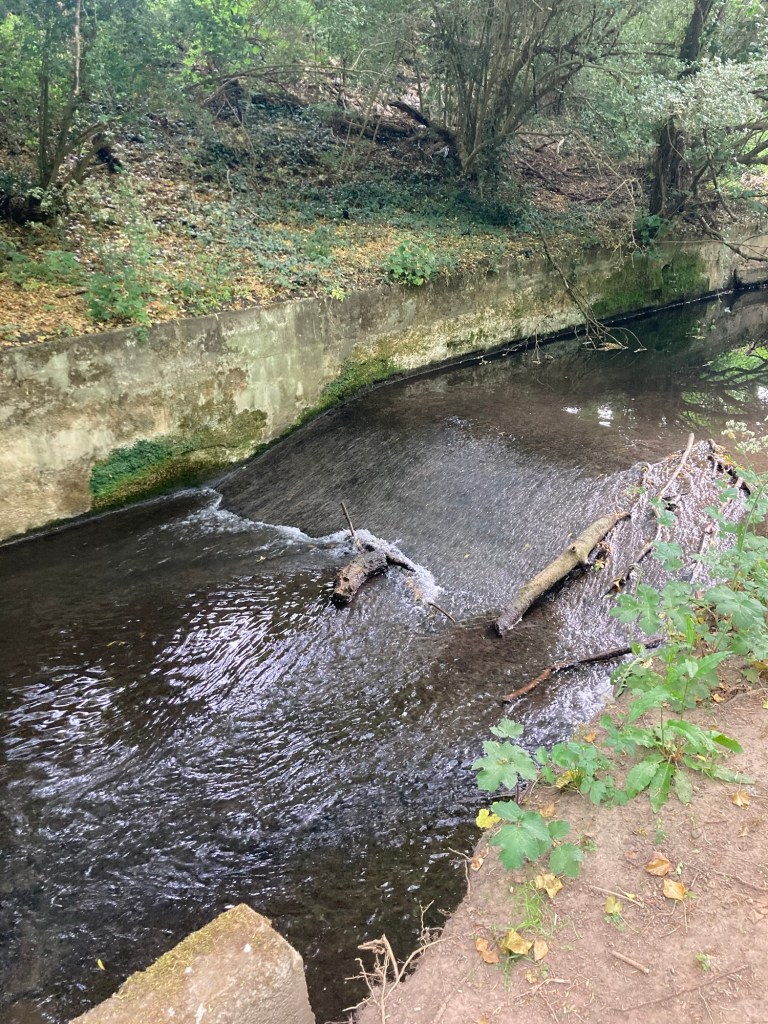
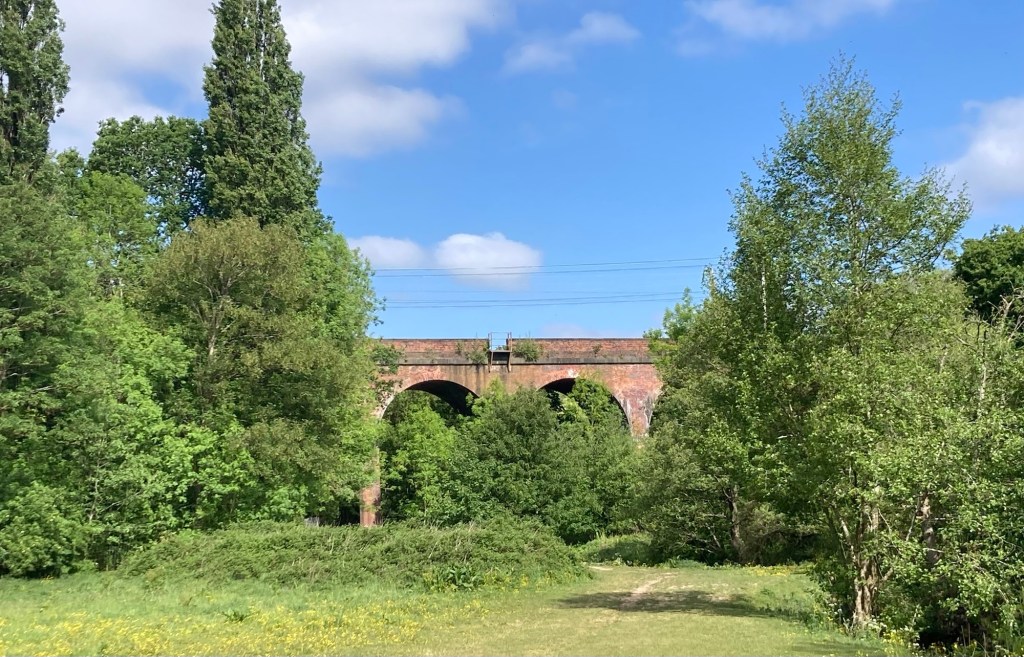
Entering the rural pathThe path ran between a river and a fieldBob and JojoAnother gate type structure along the pathThere were horses in part of the fieldThe riverCrossing back under the rail line A pretty plant along the trail






















 Peckish Travels