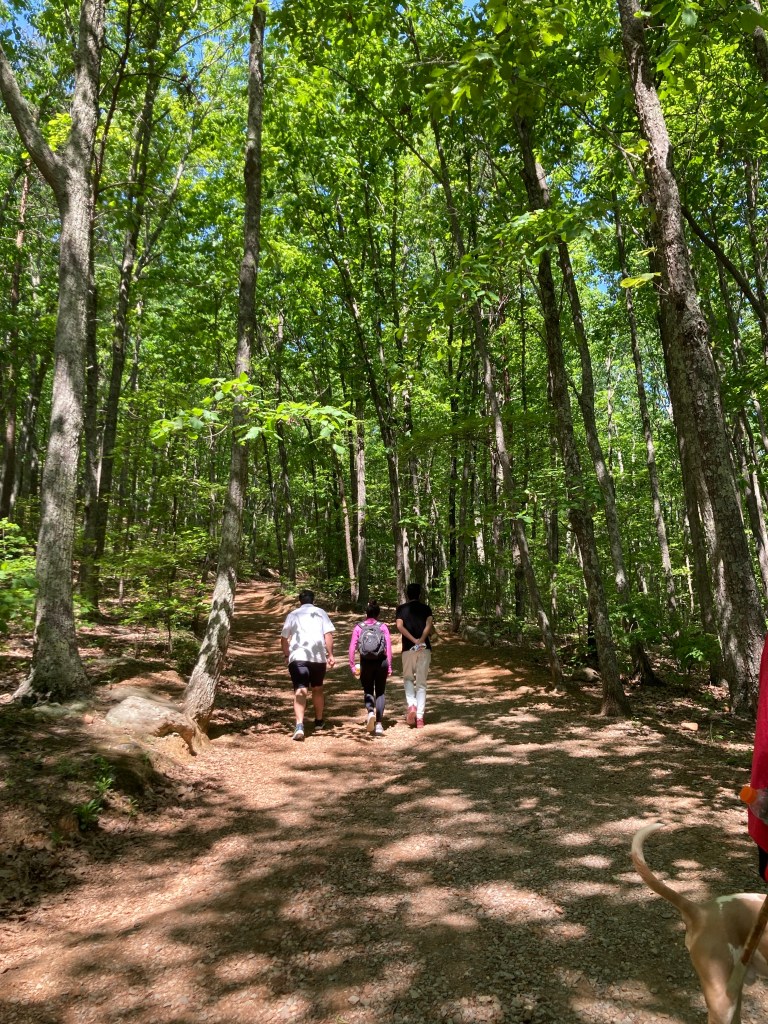
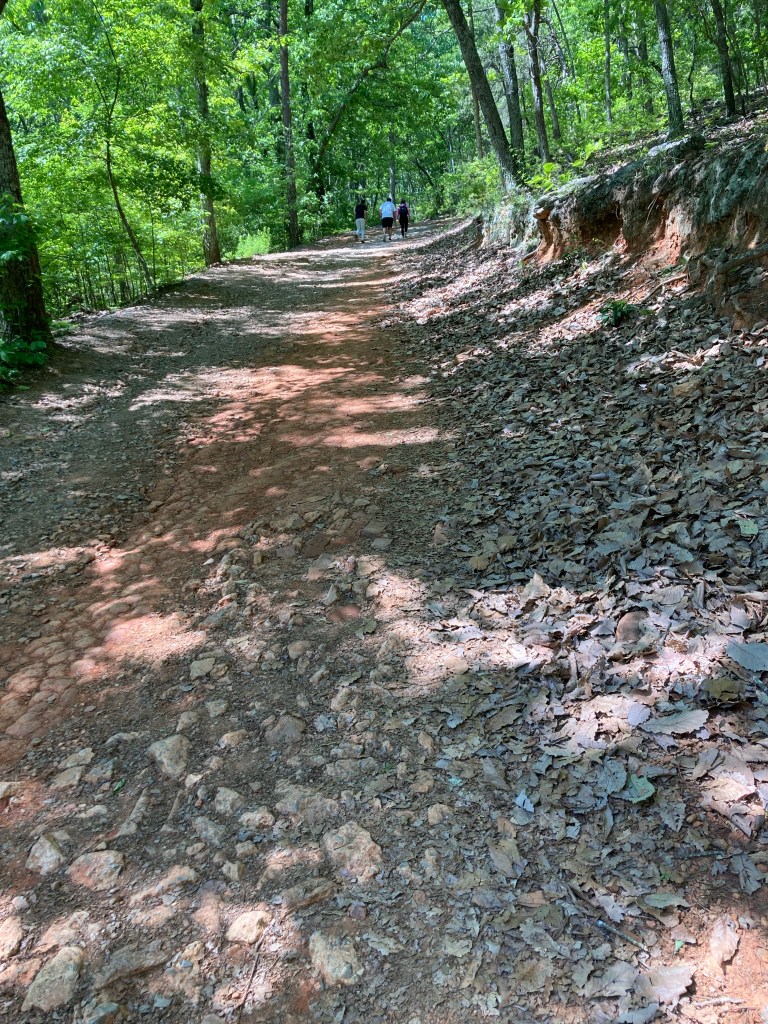
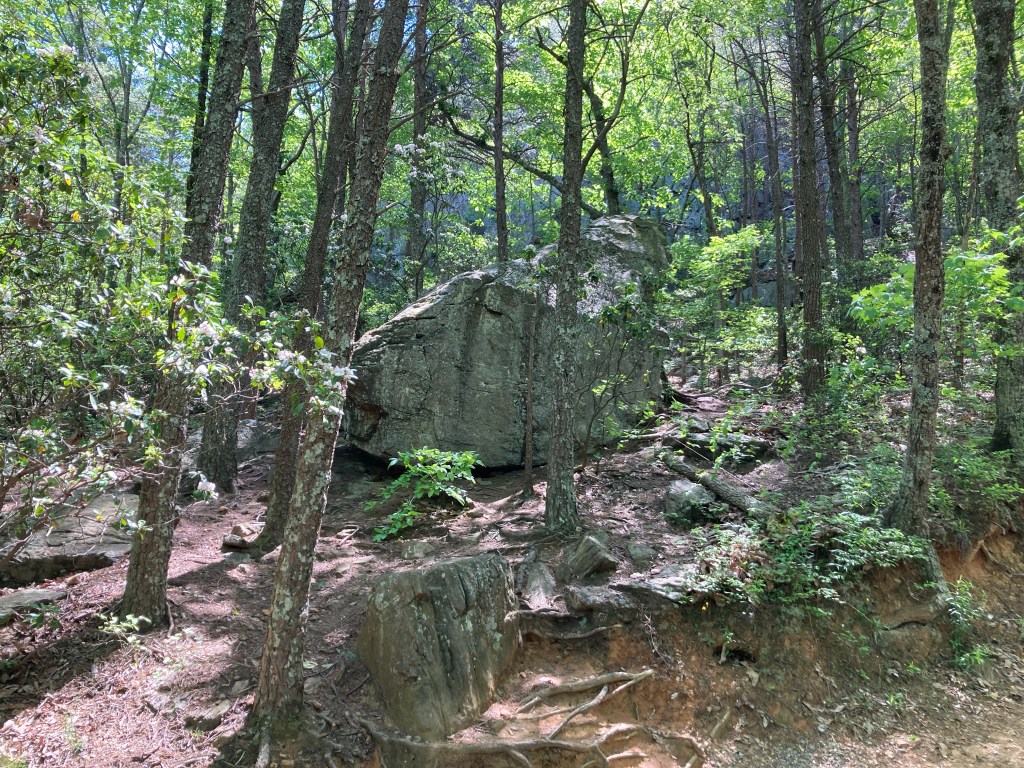
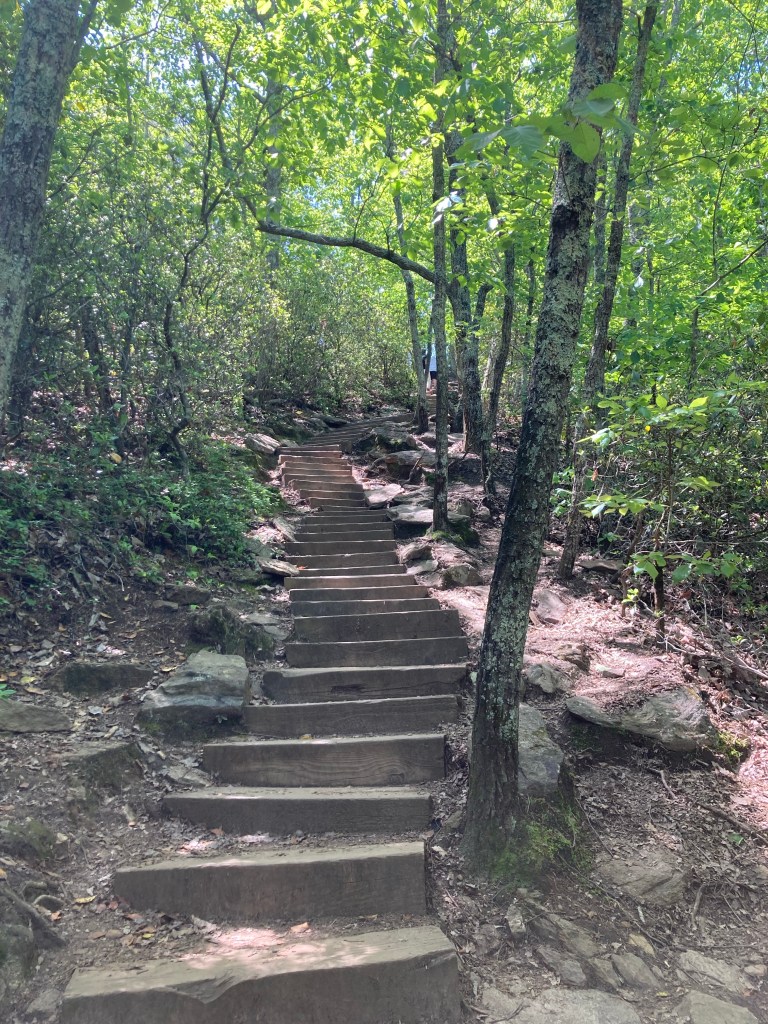
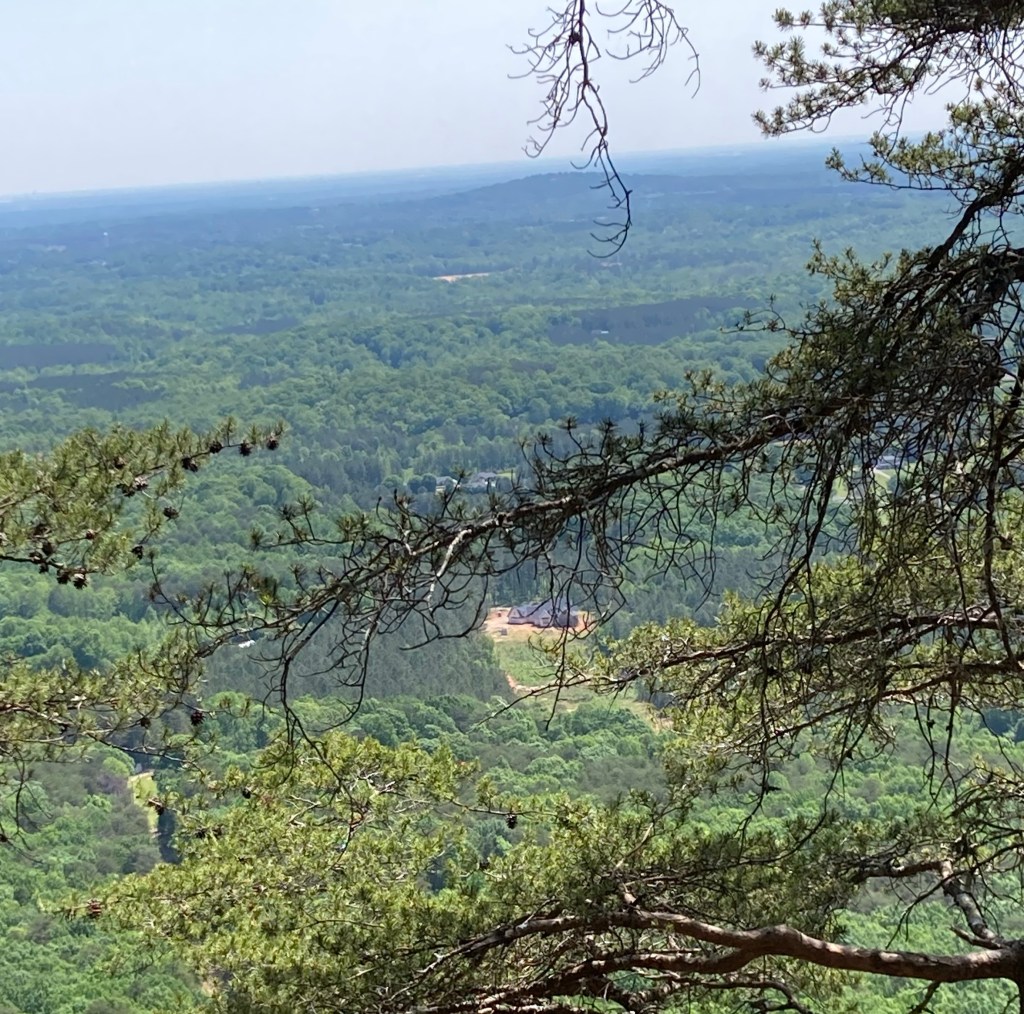
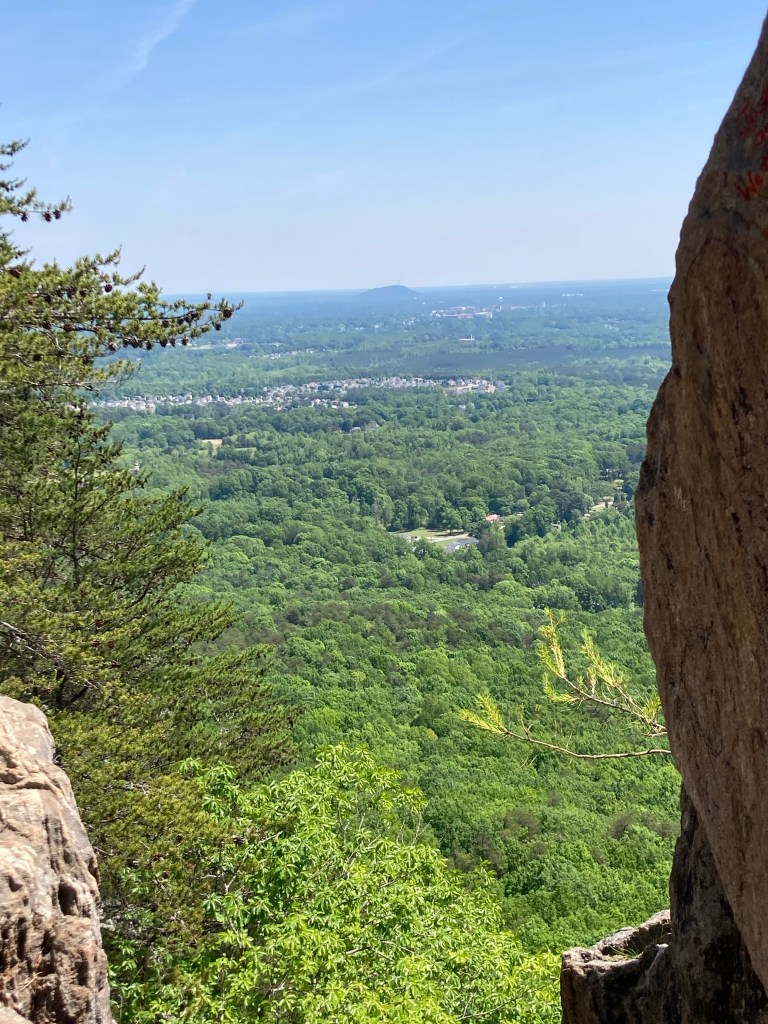
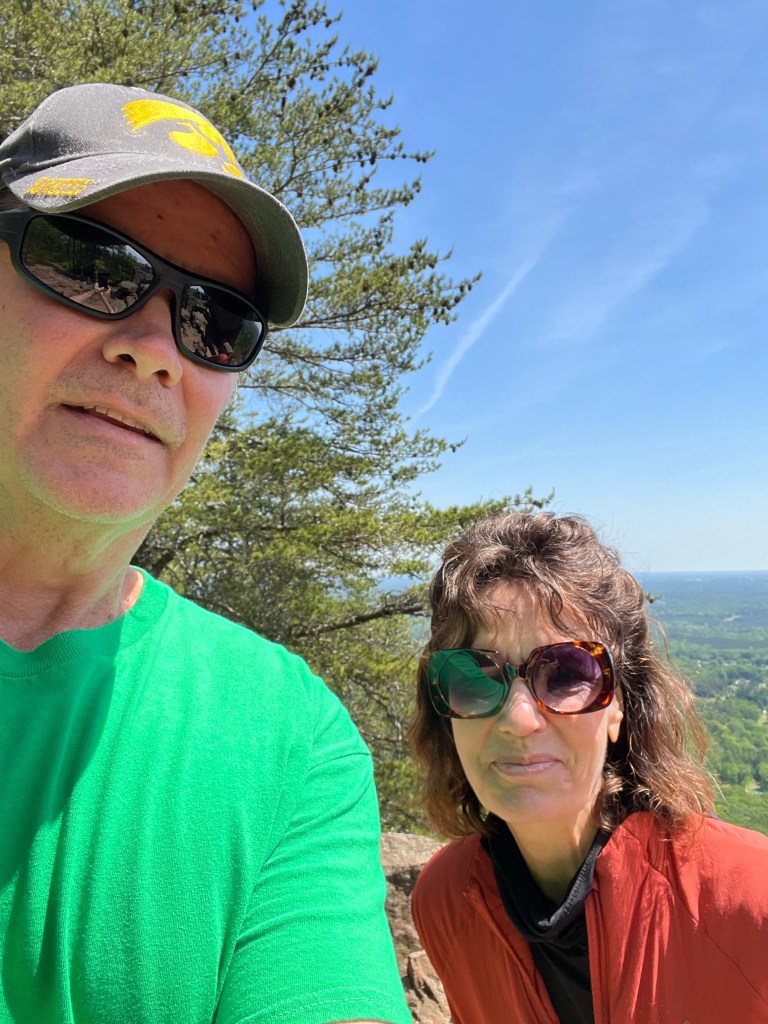
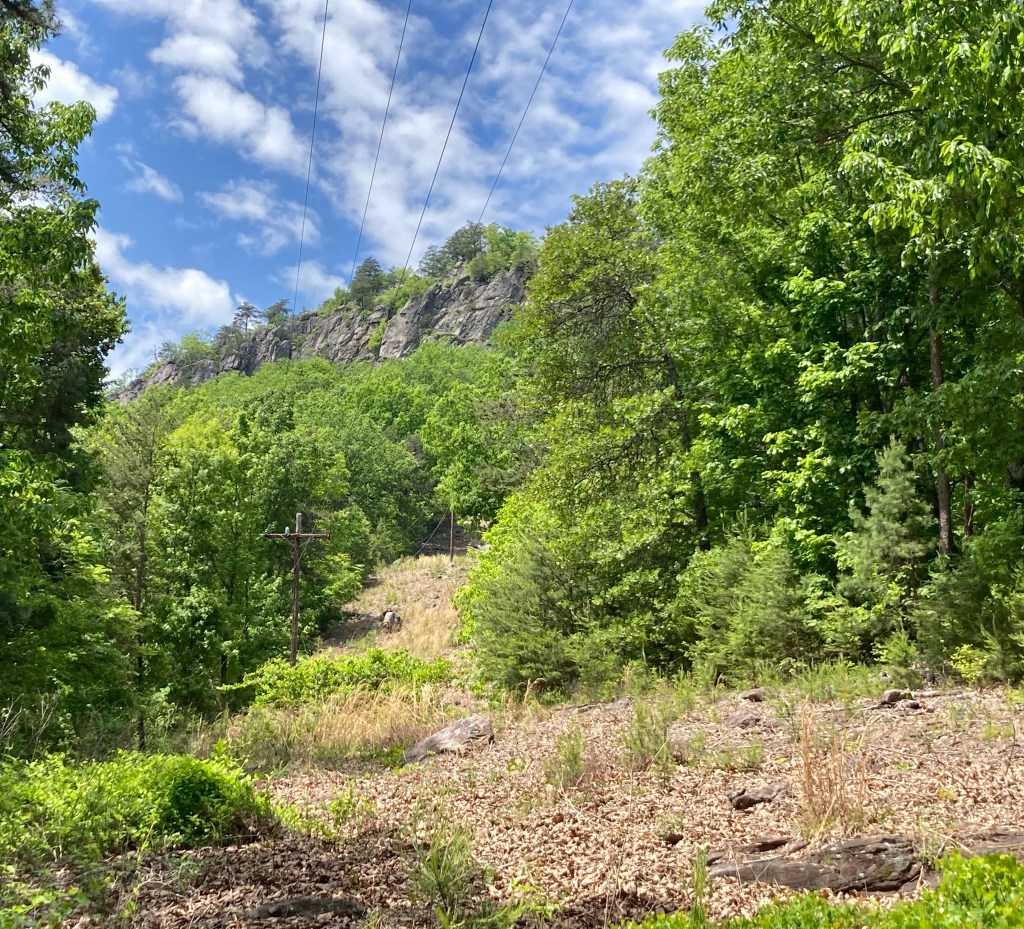
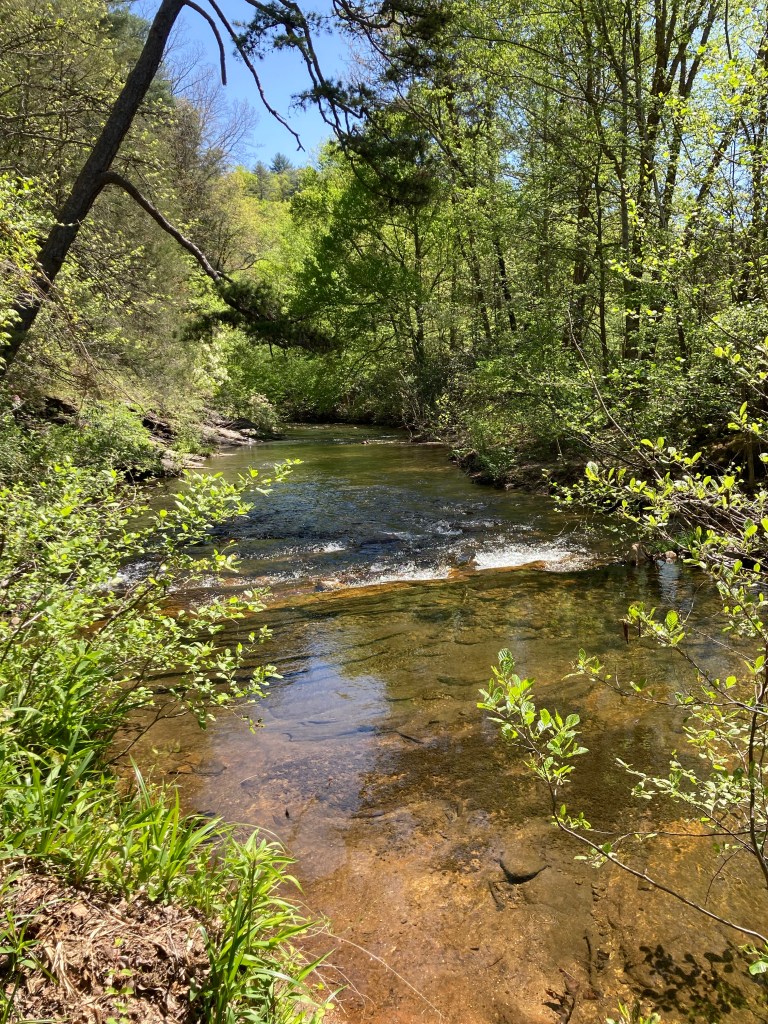
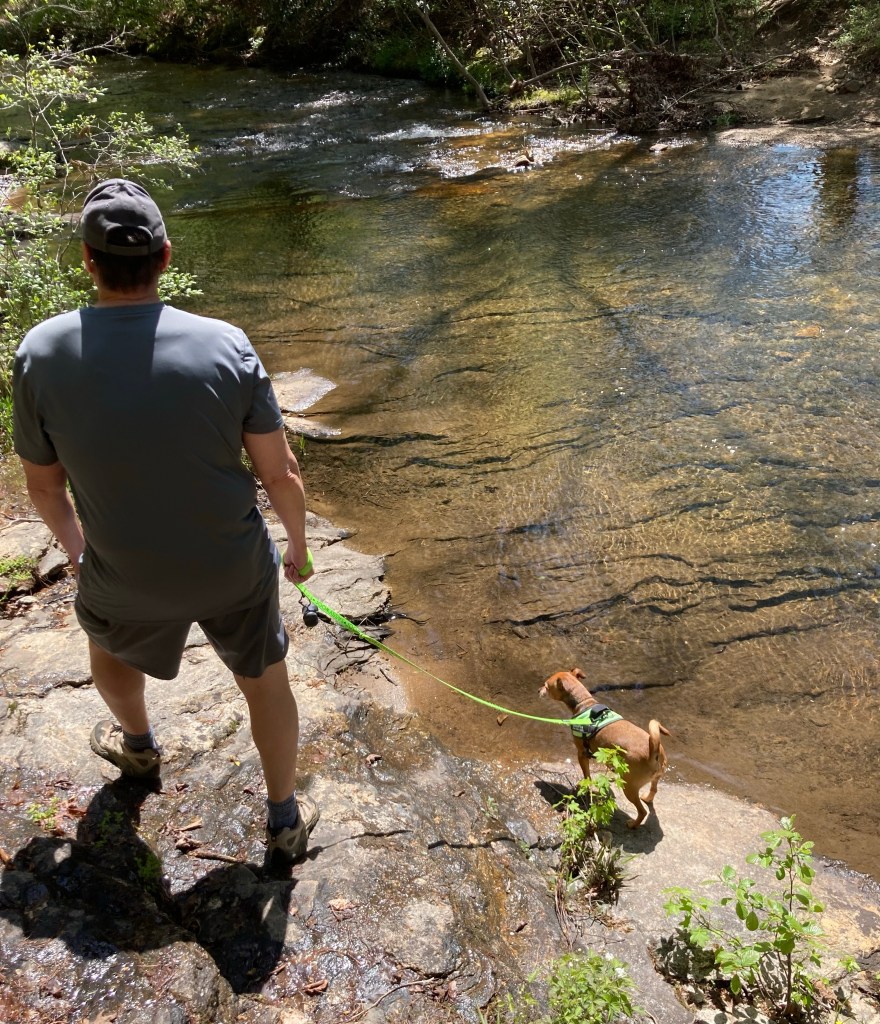
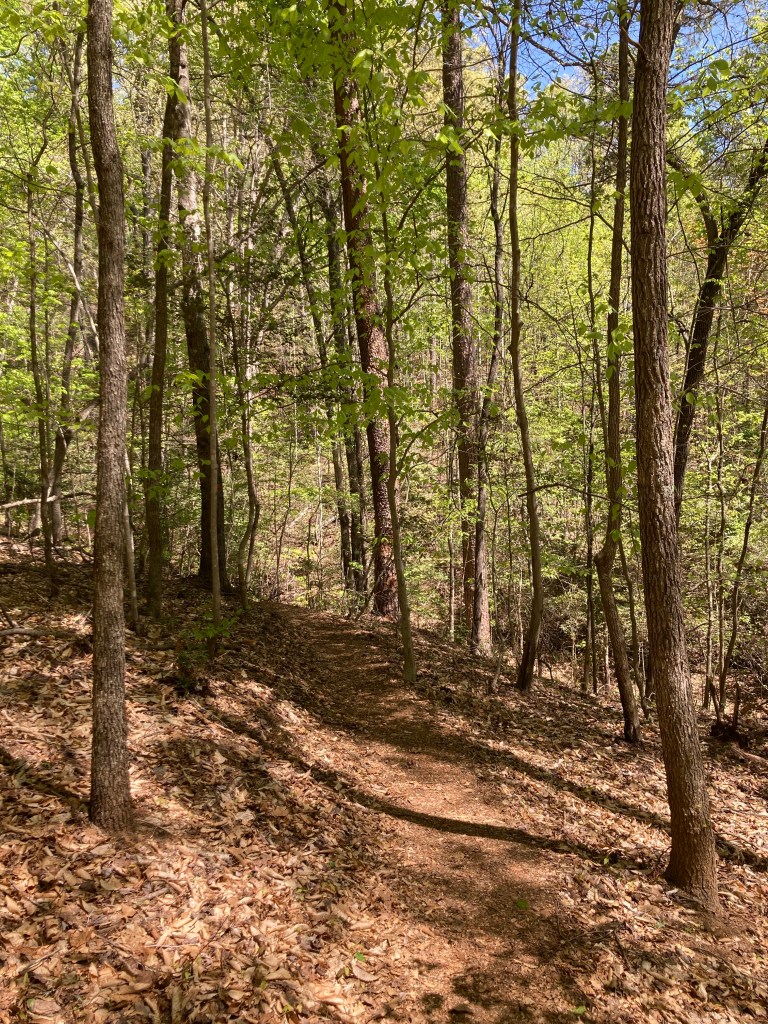
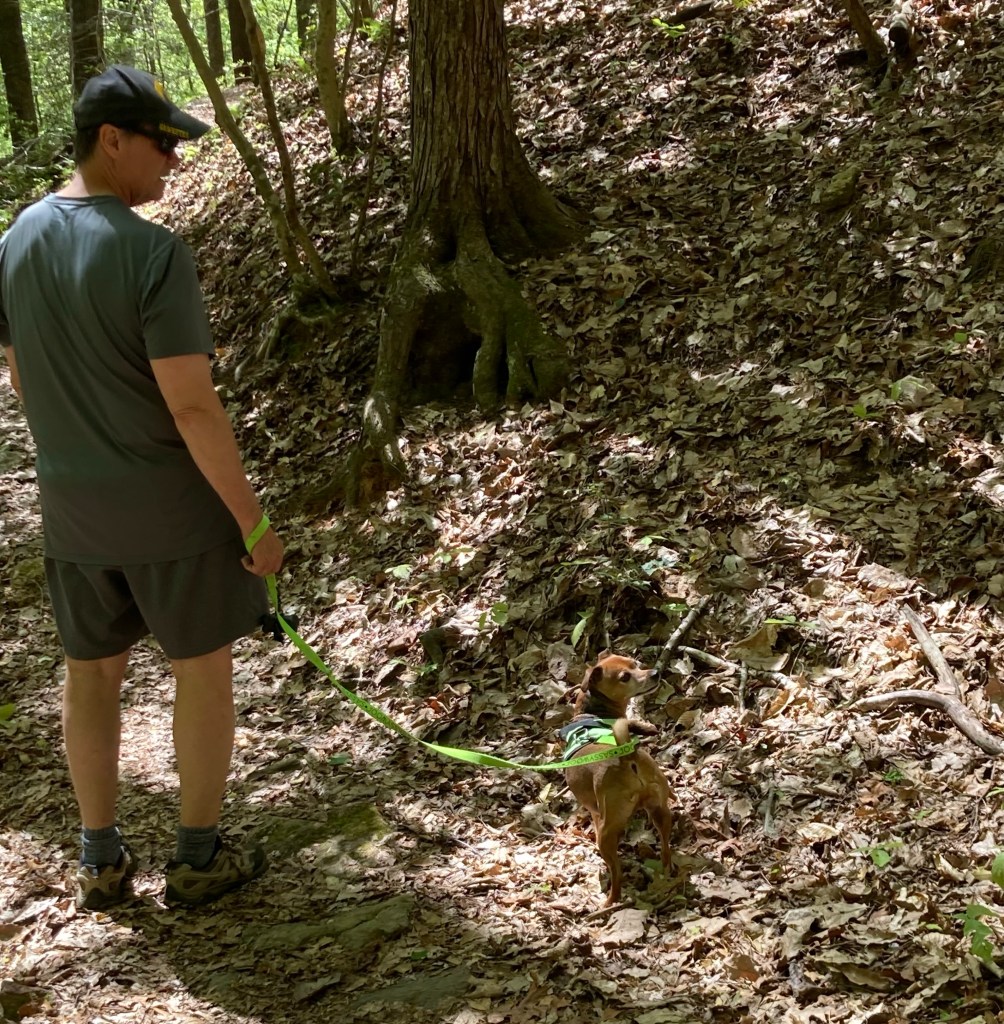
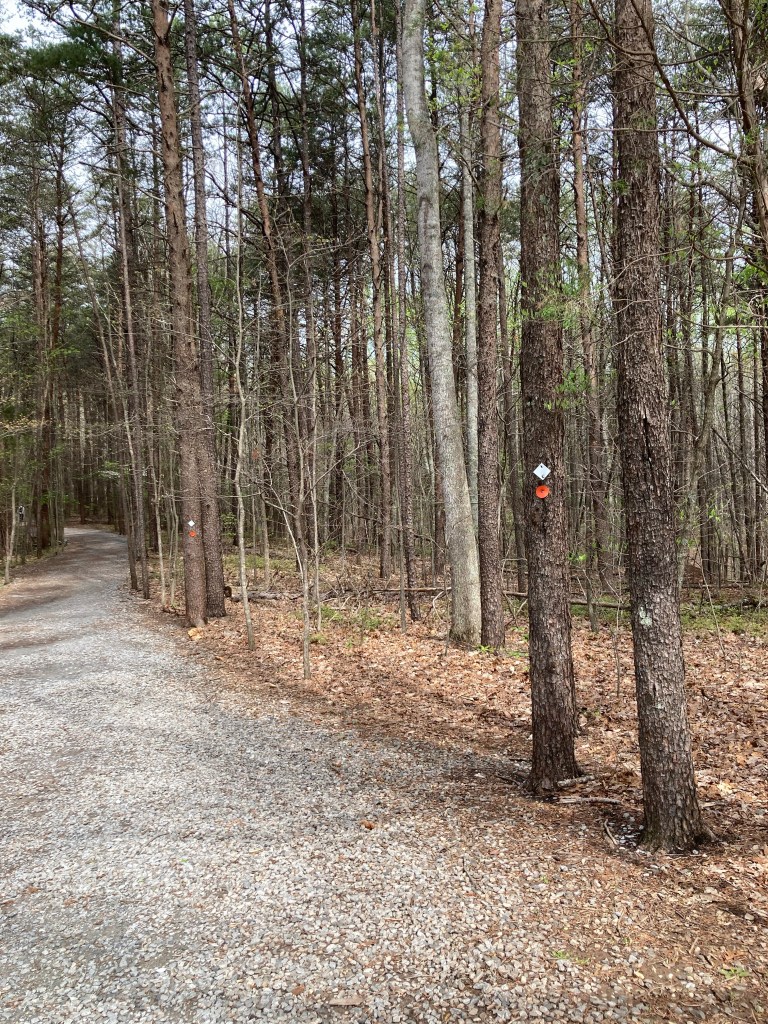
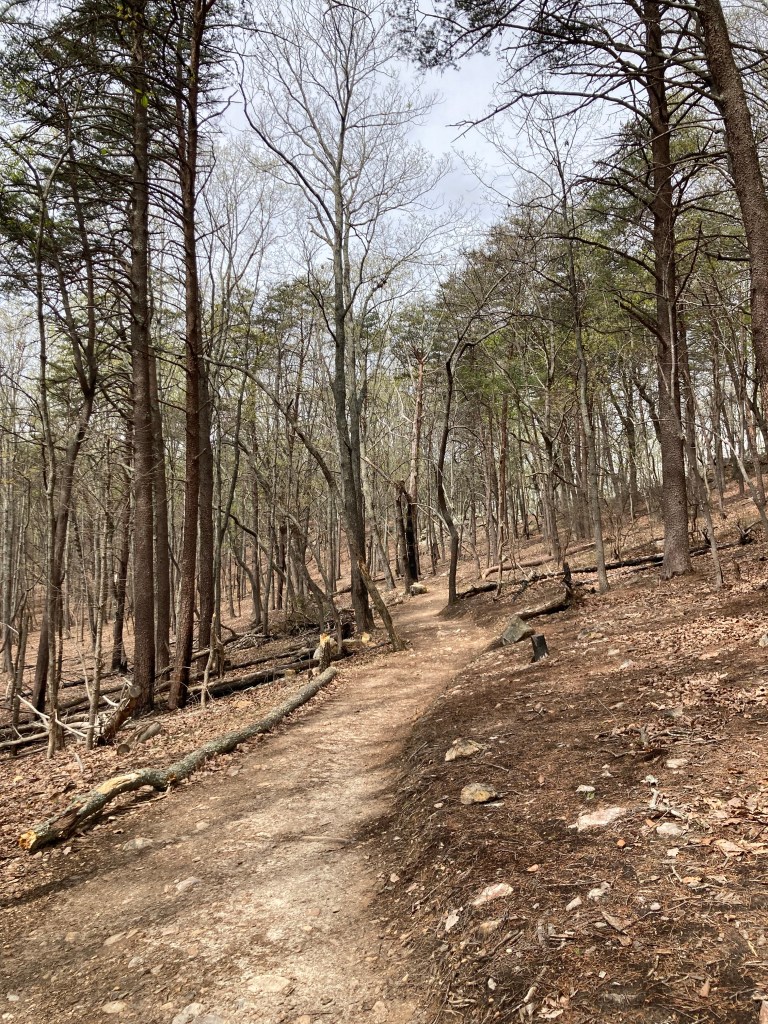
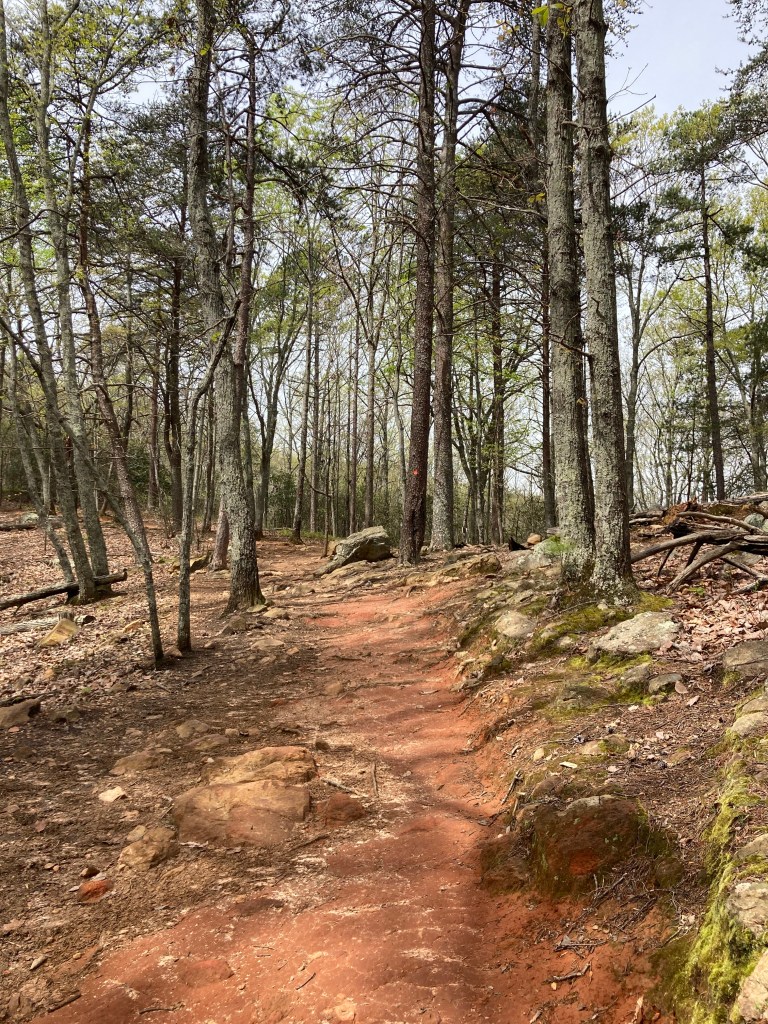
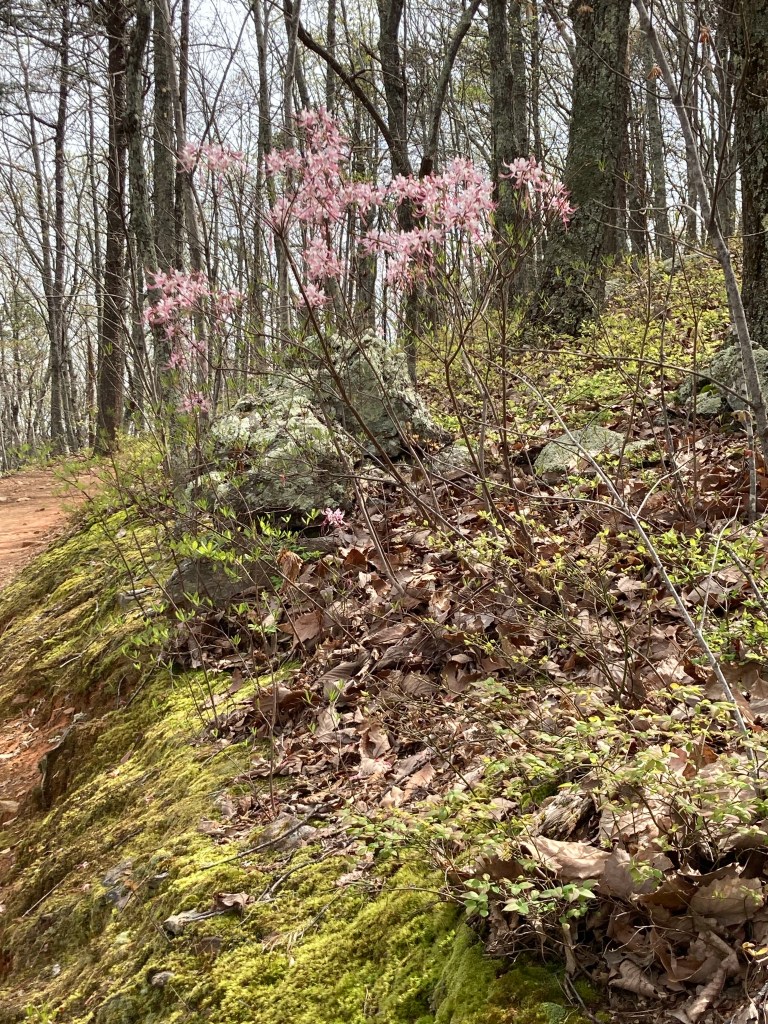
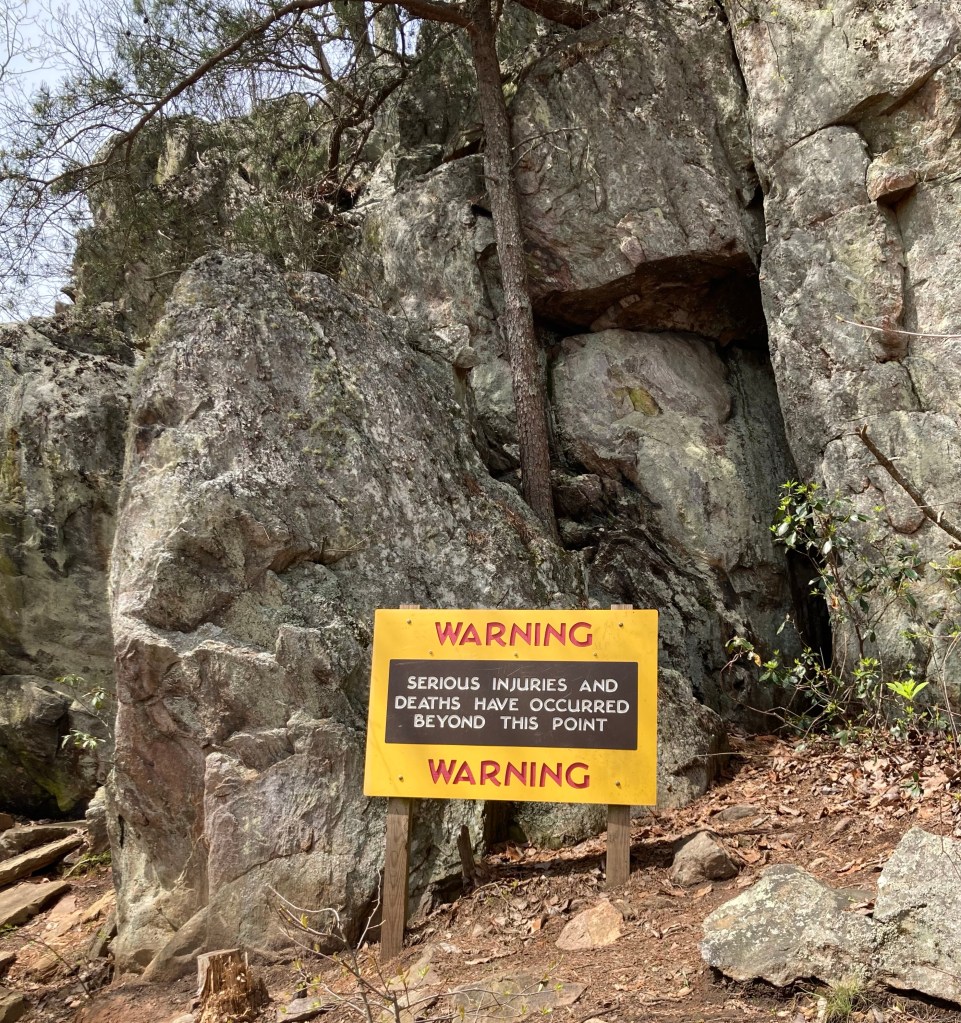
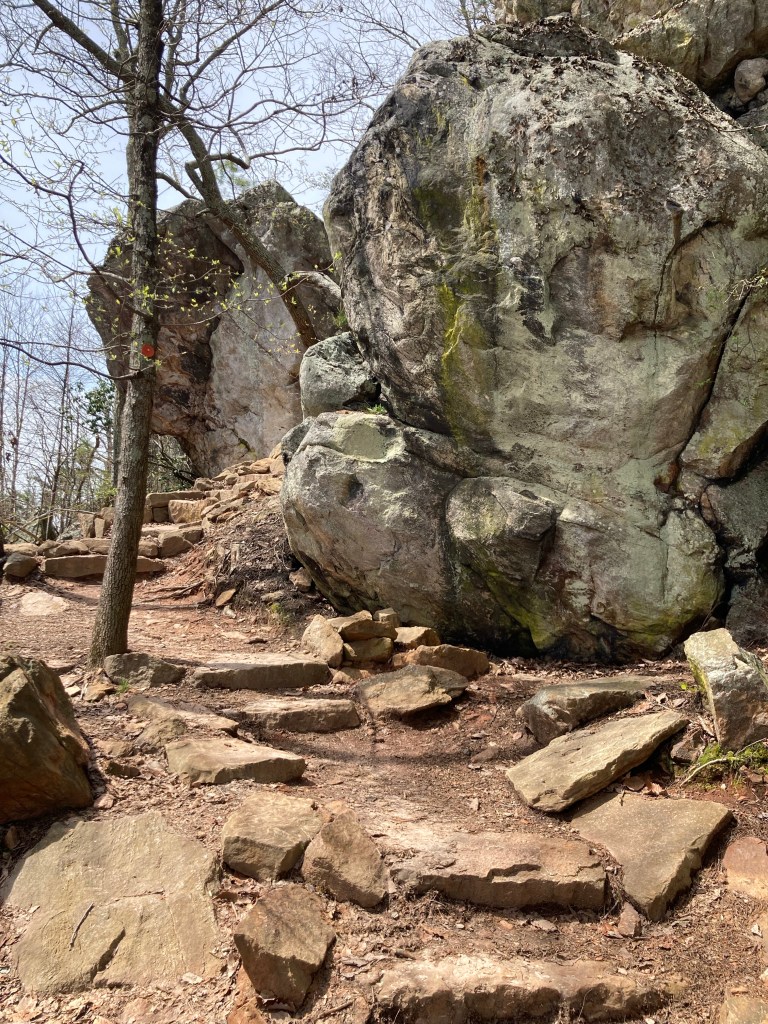
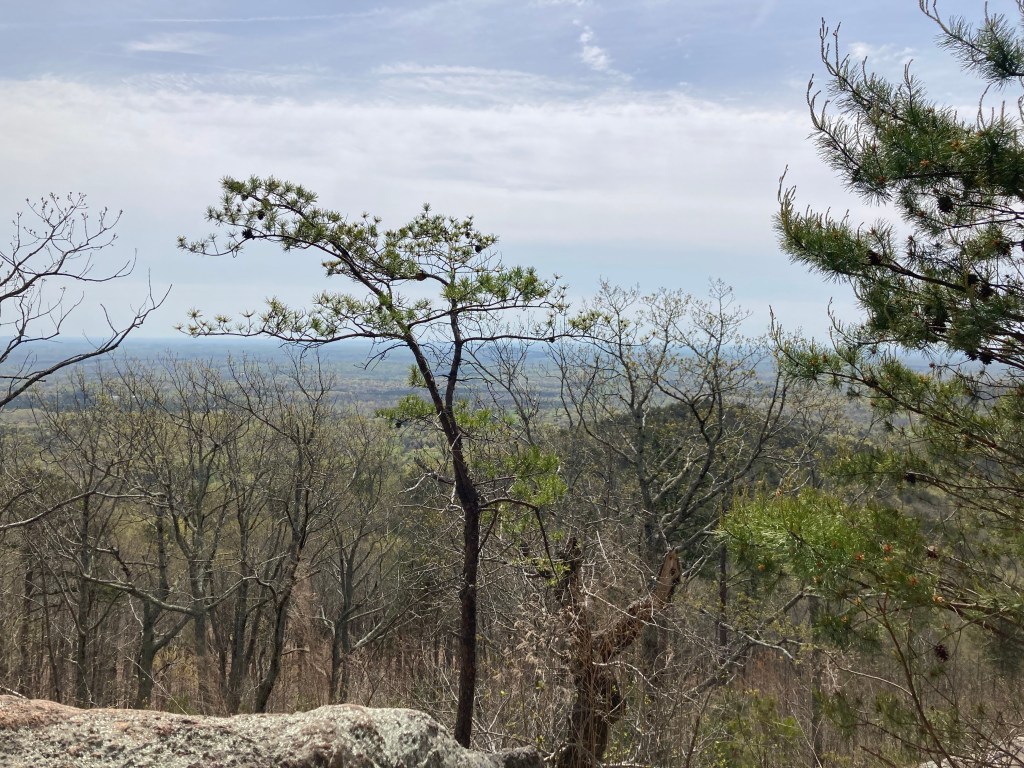
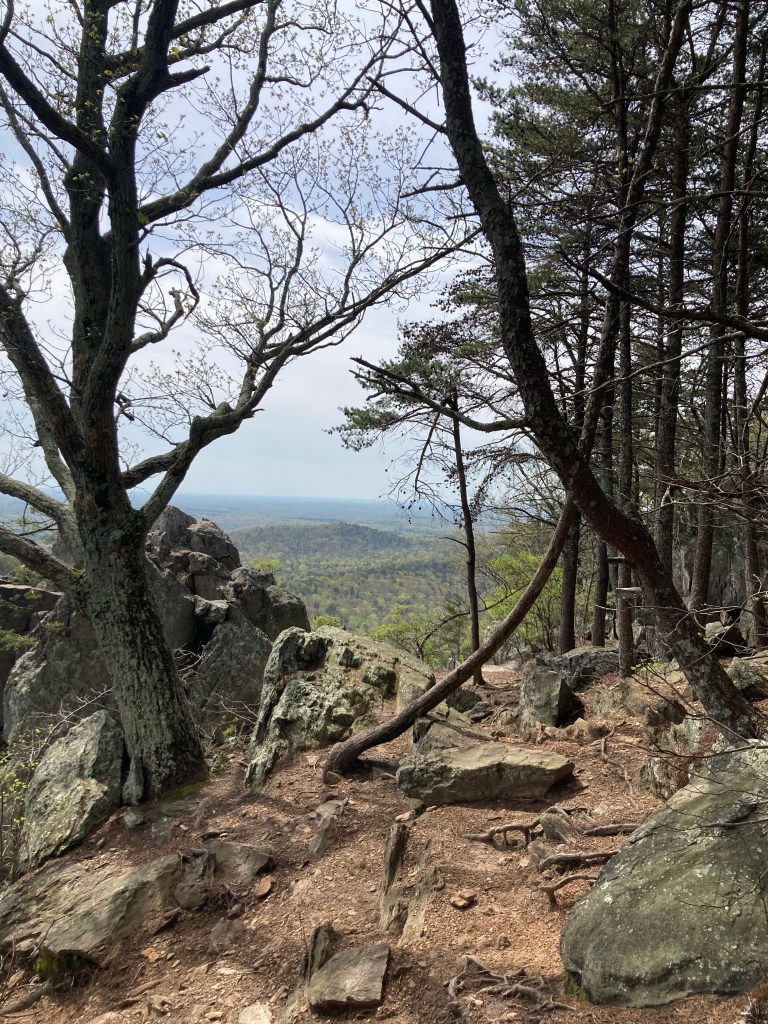
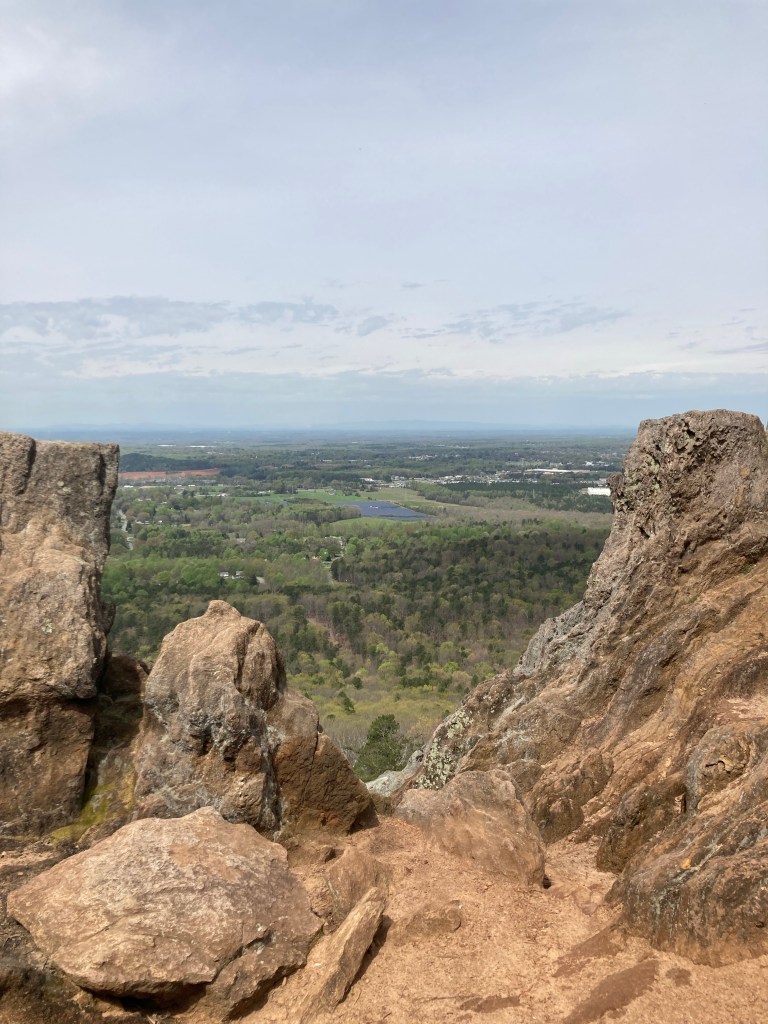
Yesterday, Bob and I took Cooper back to the Broad River Trail for another hike full of smells, and today, Bob and I headed back to Crowder Mountain to hike another trail to a different outlook. The first time, we hiked the Pinnacle Trail from the Visitor’s Center for views in multiple directions. Today, we drove to the Linwood Access to the park to do a loop trail that got us to an west facing overlook that had great views of the surrounding countryside, including the Veronet Winery that we visited a few weeks ago.
This trail, while unsigned at the start as well as the top, was the busiest trail we have been on. Luckily, we met a friendly local who confirmed we were on the correct trail and that we would have a 300+ step climb to the top.
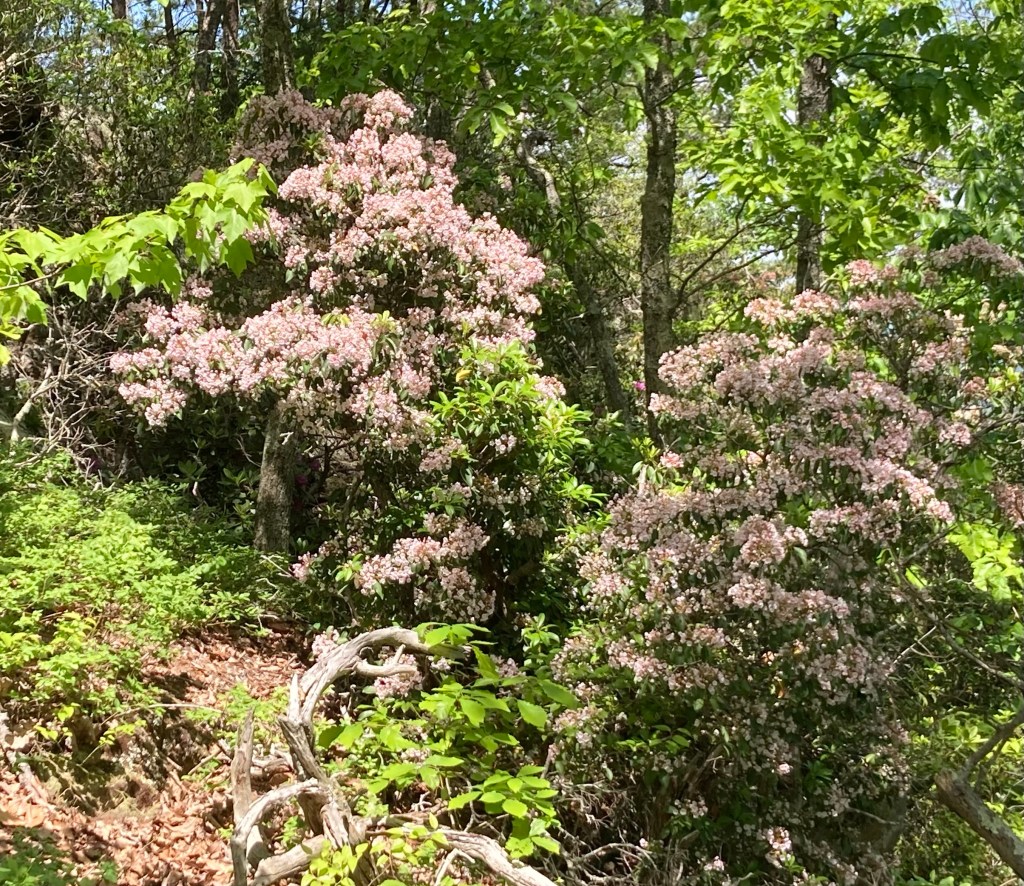
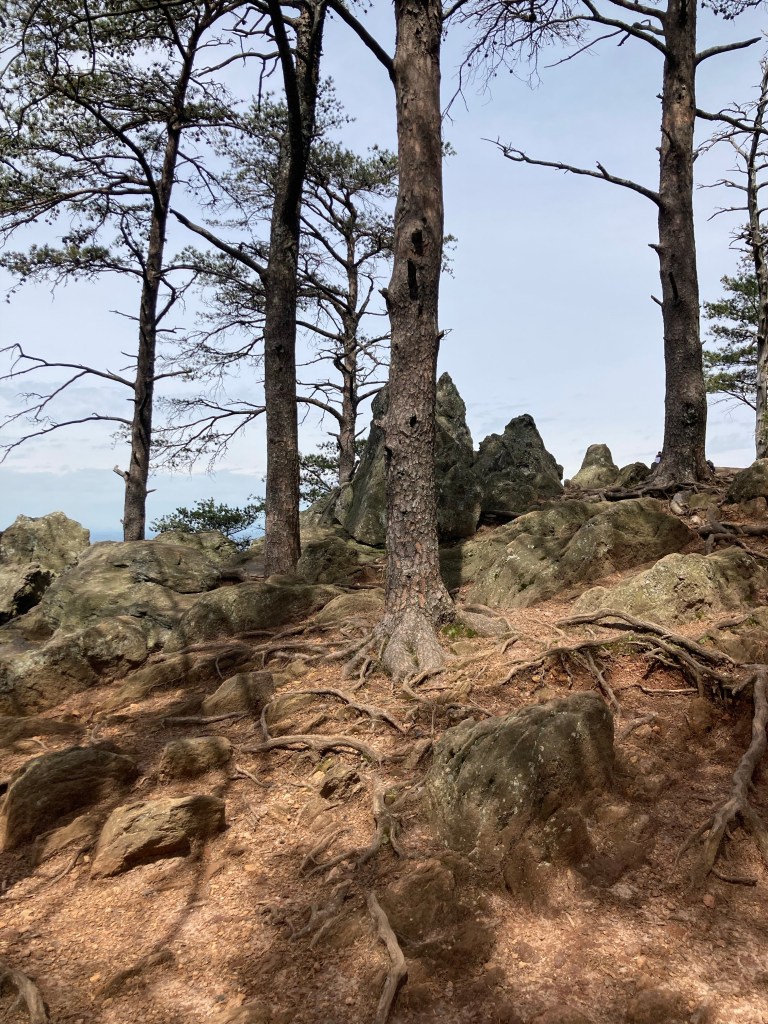
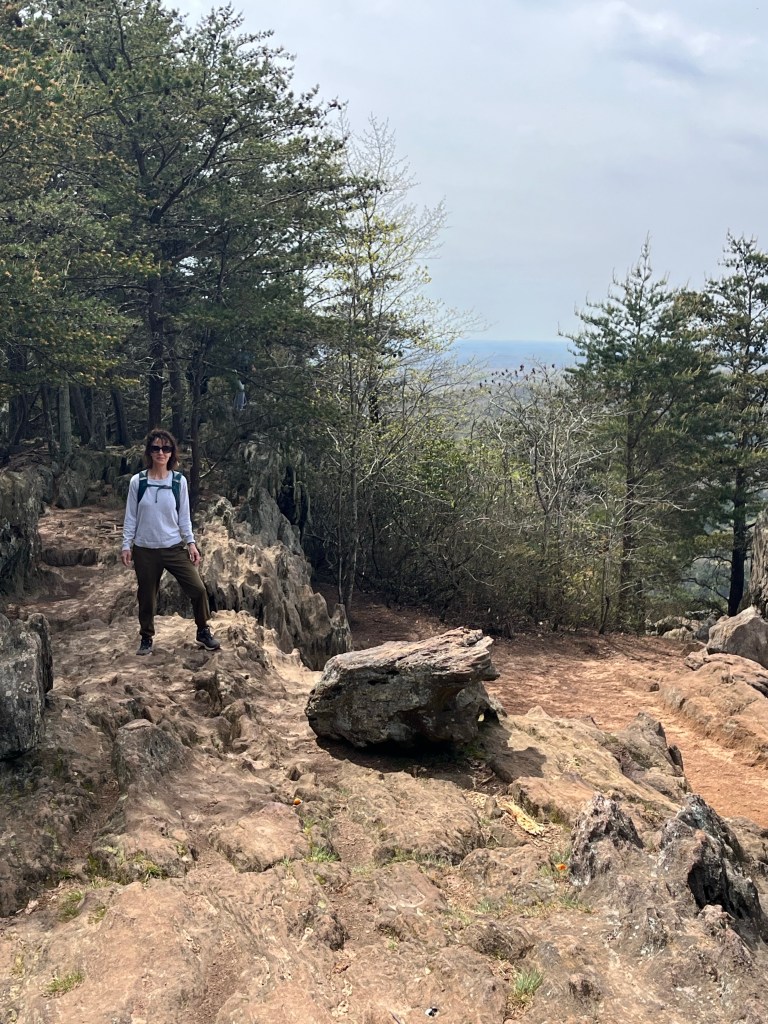
Starting outThe sometimes rocky terrain We saw lots of big boulders along the trailStarting up the stairs Follow the leaderAlmost thereWe’ve been warnedAt the topWe’re not aloneDittoA sad commentary on visitorsAwesome views!A glimpse of the wineryMore of the areaTower Trail selfieSome beautiful trees on the way back (just path, no stairs)A look back up
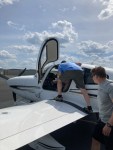
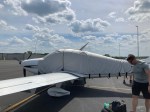
Bob and I had company this weekend when Bob’s brother Eric flew his plane down from Alexandria, Virginia to the local airport for a visit. He gave us a heads up, and we cleared his stay with our homeowner before his arrival. He gave Bob the name of an app that allowed him to track his plane’s progress. We headed out to the airport in time Friday afternoon to watch his arrival and assist a bit with unloading and then covering the plane in anticipation of Saturday’s storm/rain.
The front of the very nice Shelby-Cleveland County AirportA marker on-site. It appears to have been updated/renovated since 1959.An informal posting inside the airport of a student’s first solo flightEric landing at the airportTaxiing to parkÉric watching Bob check out the cockpitBob and Eric by the planeThe plane ‘dressed’ for the rain
From the airport, we drove up to Tryon to the International Equestrian Center. There was a dressage event this weekend but nothing horse-related happened while we were there, but we got to show him around. Then we headed to the Mountain Brook Winery that we had visited a few weeks ago to catch up over a glass of wine and some cheese and crackers. Bob made dinner after we got back, and Cooper the dog made a new friend.
On Saturday, Bob and Eric went to the Shelby Cafe to introduce Eric to livermush and then onto Cowpens State Park to view the film of the battle and history there and walk the Battlefield Trail. The rain ended about 2 pm just in time for the Boiling Springs Webbstock, which closed down part of Main Street for music, vendors, face painting, etc. It turned out to be a great temperature and weather for it. We enjoyed perusing the area before heading to El Acapulco, the local Mexican restaurant for dinner.
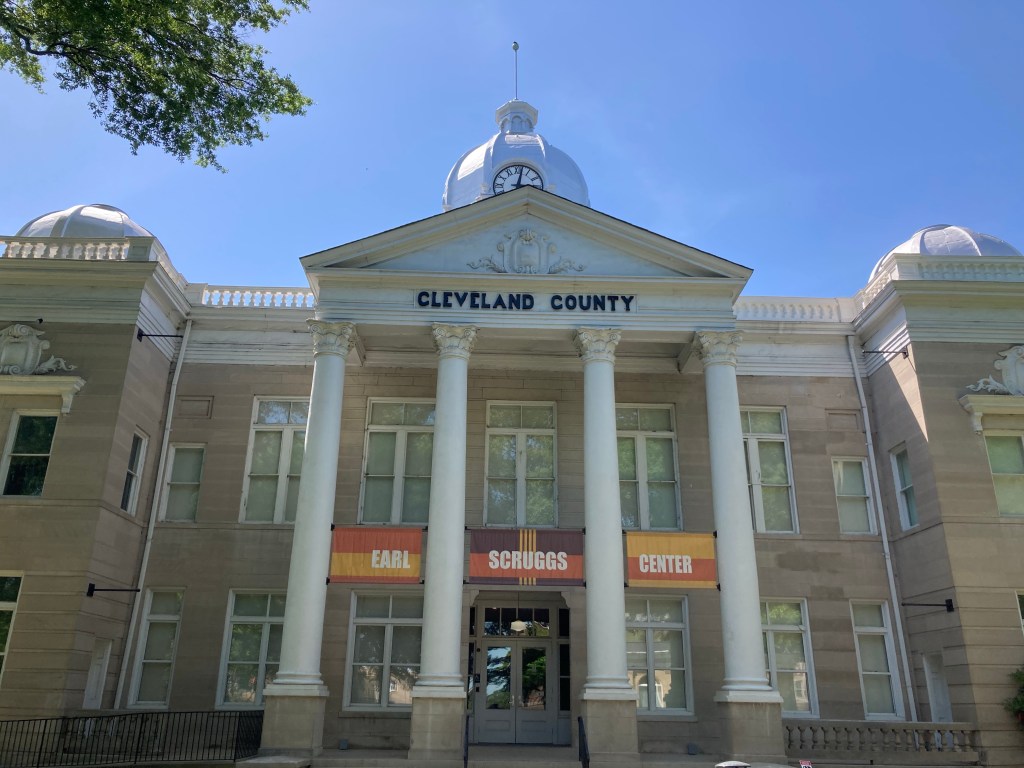
Ever since we arrived in Boiling Springs we’ve heard of the Earl Scruggs Center in the old courthouse in the main square in Shelby. Along with Don Gibson and Bobby Bell, Earl Scruggs is a local boy that went on to much bigger things. Today we decided it was time to check out the Earl Scruggs Center to learn more about this local and American icon.
The old Cleveland County Courthouse and current Earl Scruggs Center
I think we appreciated the museum more having been in the area for some time, as we learned more about the community as well as Earl Scruggs and bluegrass music. The museum started out with an informative film that provided information on Earl Scruggs’ career, including his partnership with Lester Flatt, his wife’s management of his career, and his continued growth including performing and playing with his sons.
Earl Scruggs was born in the Flint Hill section of Boiling Springs, North Carolina. He would have almost been our neighbor! He was born into a musical family on a 40-acre farm, and he helped with both the family’s farm and mill work before making it as a musician. He taught himself the 3 finger playing style on the banjo for which he is famous at age 10.
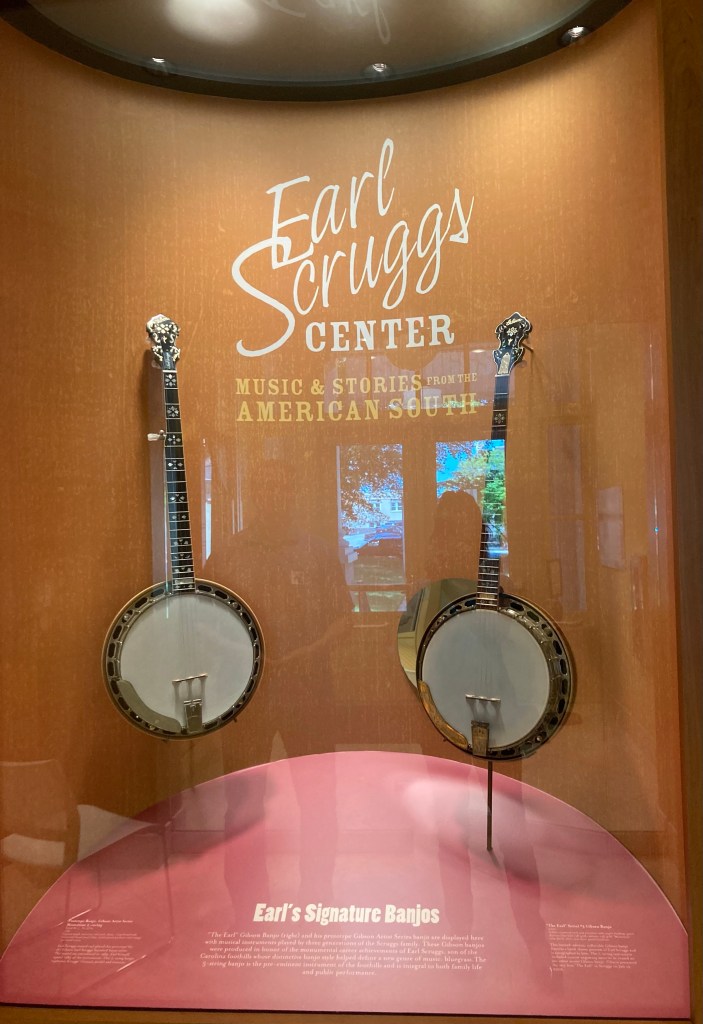
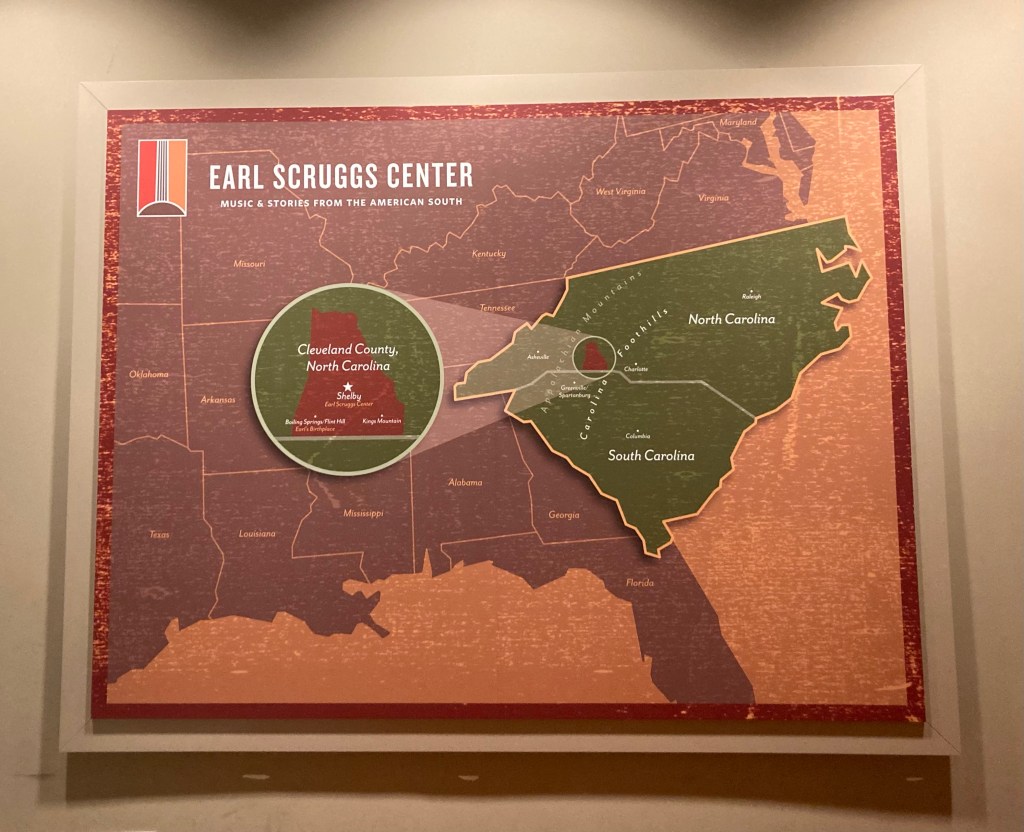
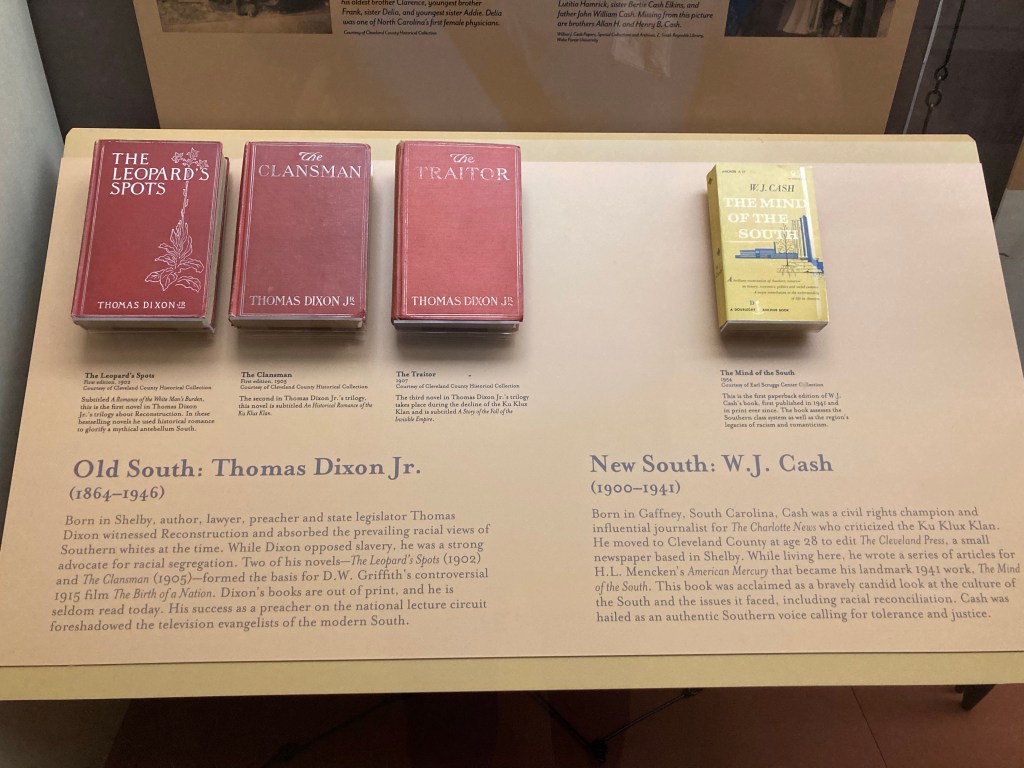
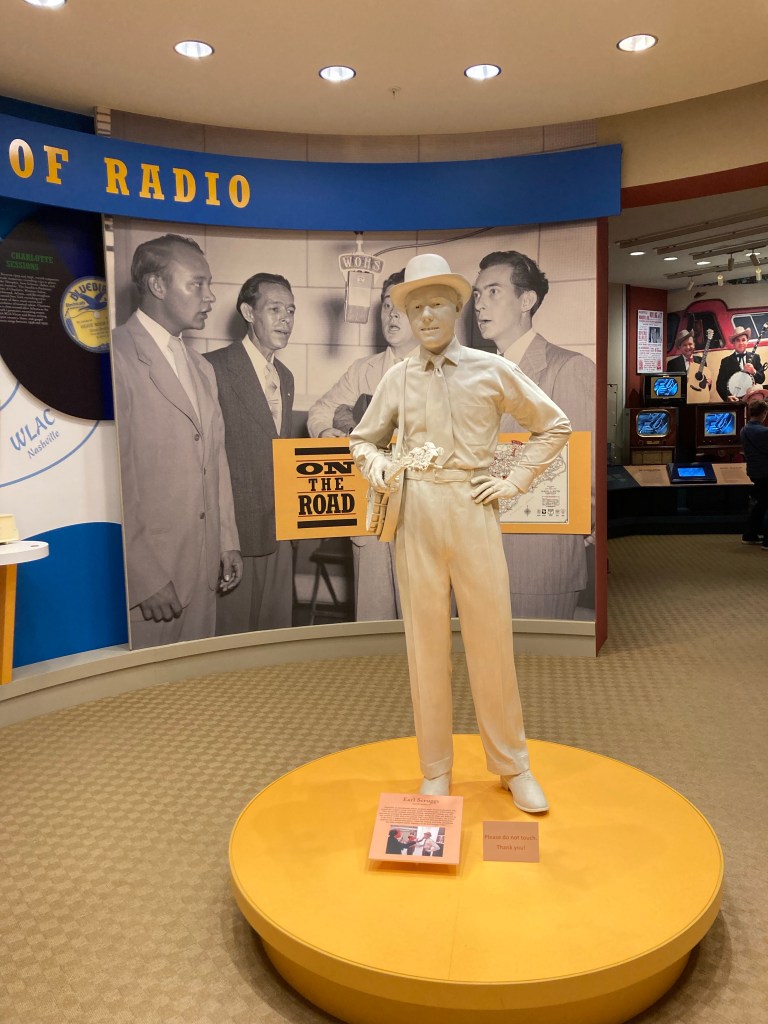
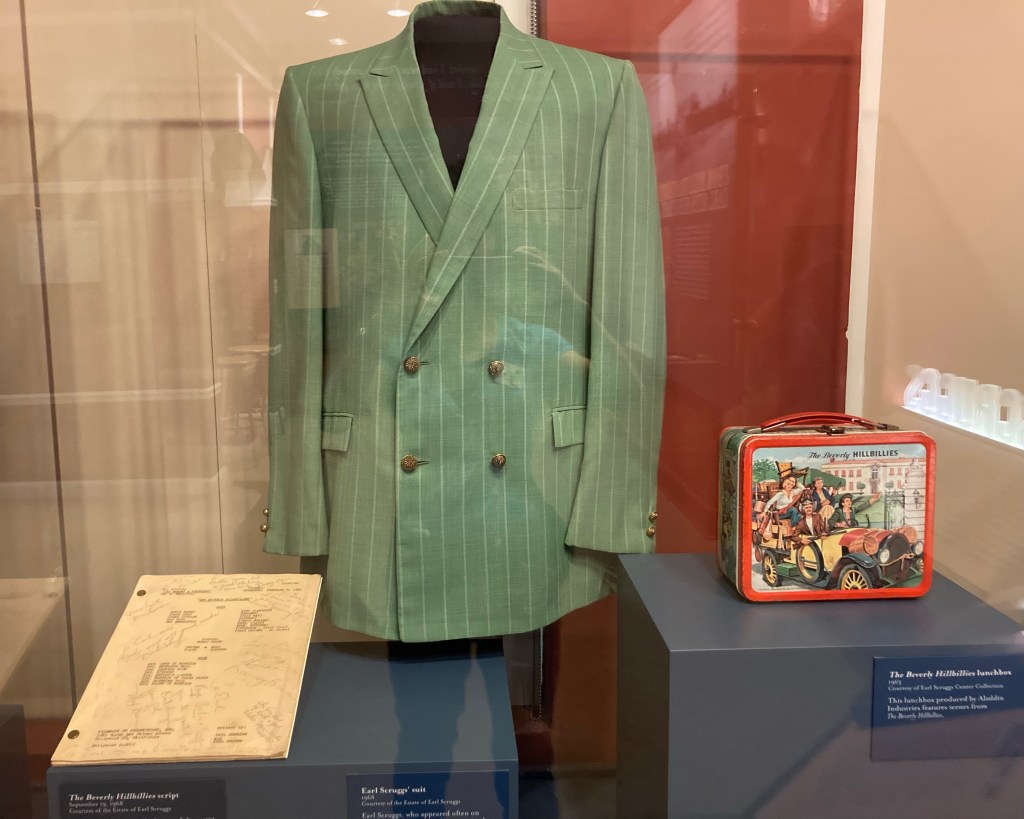
A couple of Earl’s banjosA good map to show exactly where we are in North CarolinaInformation on two local journalists with divergent views on slavery/civil rightsA statue of Earl Scruggs in front of some information on his radio and touring careerRemember the Beverly Hillbillies? Flatt and Scruggs had a recurring role on the show.
Flatt and Scruggs wrote the theme song for the Beverly Hillbillies and their song “Foggy Mountain Breakdown” was featured in the 1967 film “Bonnie and Clyde.” The song won two Grammy Awards and was nominated for the National Recording Registry works of unusual merit in 2005.
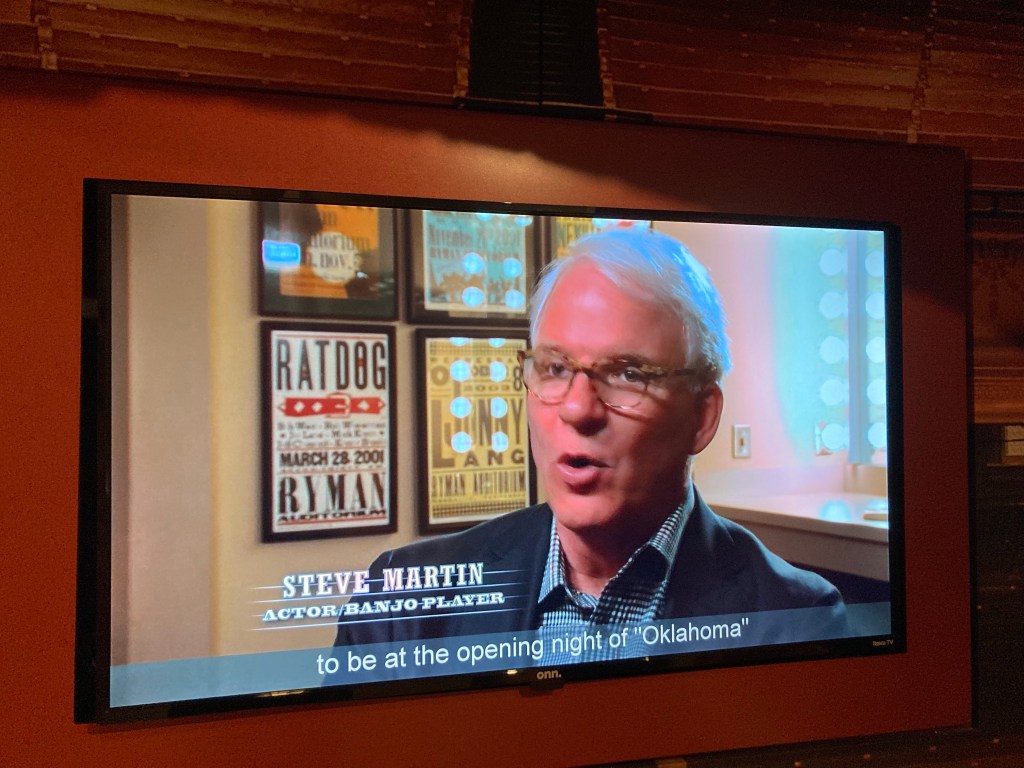
Steve Martin, who also plays the banjo, is one of many banjo players that speak to Scruggs’ importance in video shorts of the history of banjo playing.A display of many of Flatt and Scruggs albums
Scruggs received 4 Grammy Awards, a Grammy Lifetime Achievement Award, and a National Medal of Arts. He became a member of the International Bluegrass Music Hall of Fame (as was his wife Louise for her management work) and was given a star on the Hollywood Walk of Fame.
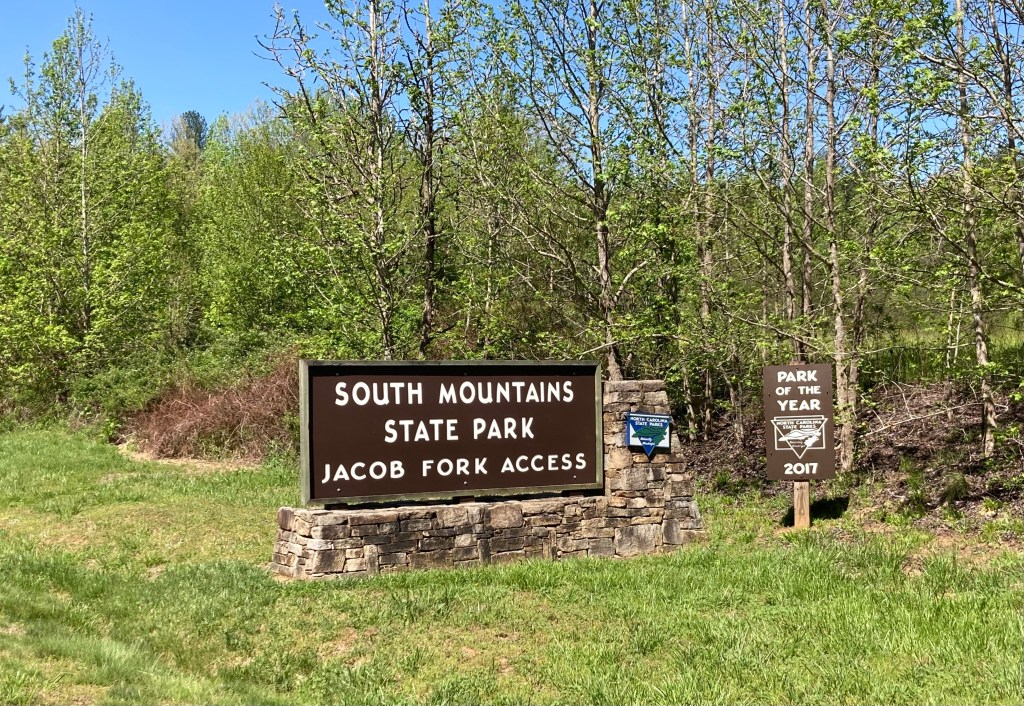
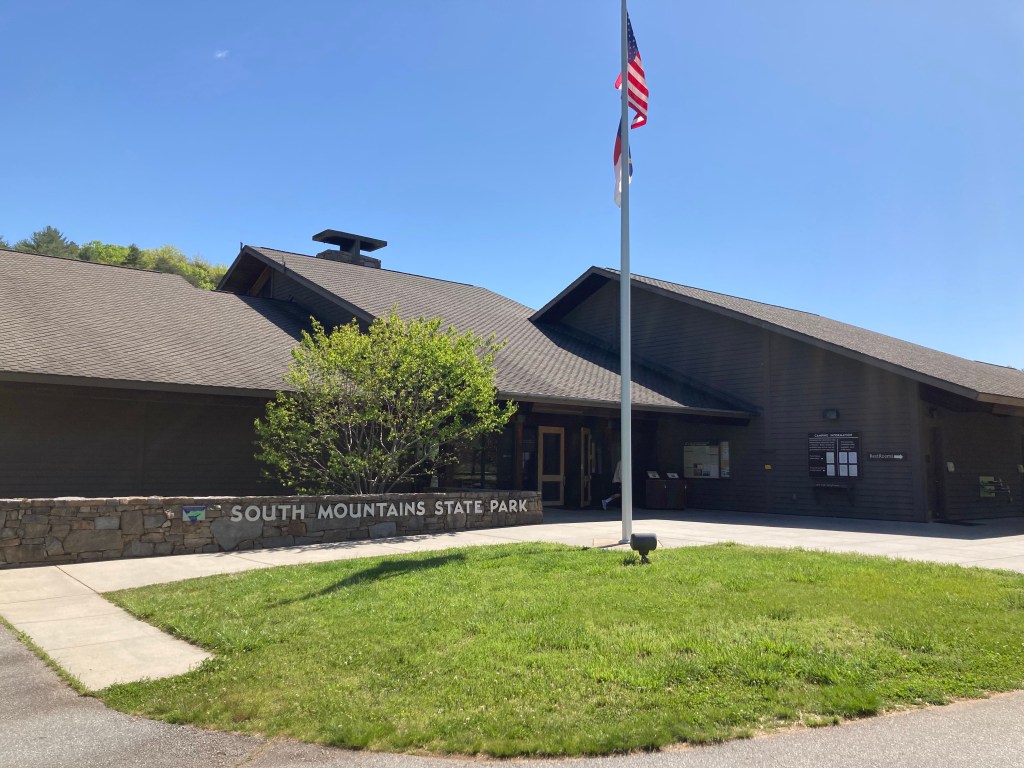
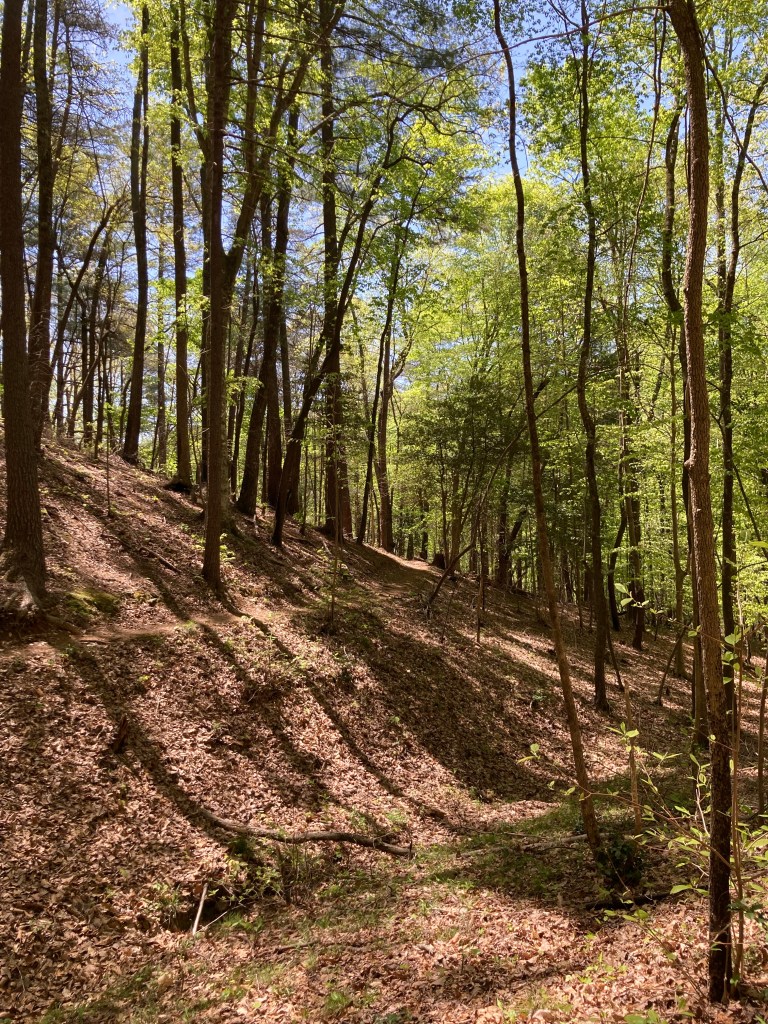
There are parks yet to explore, so Bob and I headed out with Cooper today to check out South Mountain State Park, the largest state park in North Carolina. The park has elevations up to 3,000 feet, a waterfall dropping 80 feet, and more than 47 miles of trails.
It was a scenic 40 minute drive from the house. We didn’t do the waterfall trail, as it was marked strenuous and we weren’t sure how Cooper would do, but we did a 3 mile moderate out and back trail that was well shaded and a lovely introduction to the park.
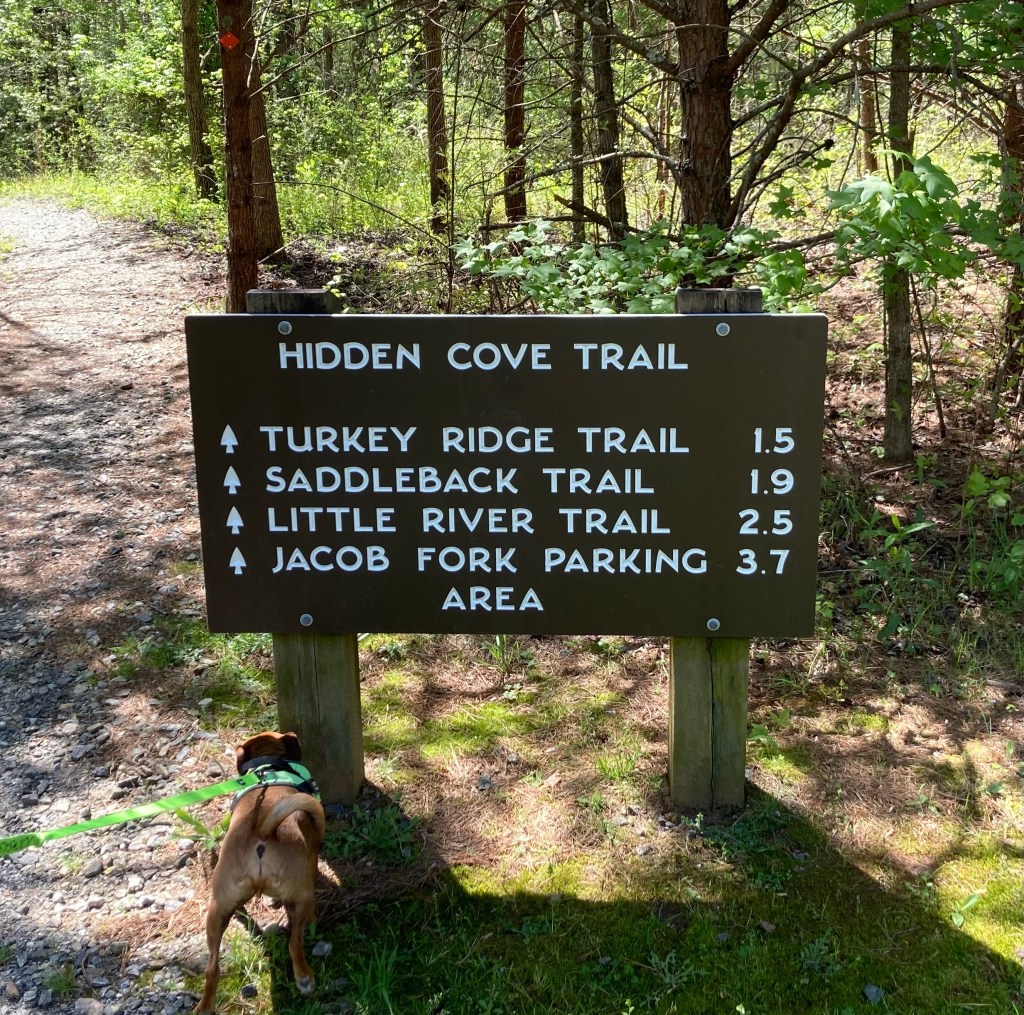
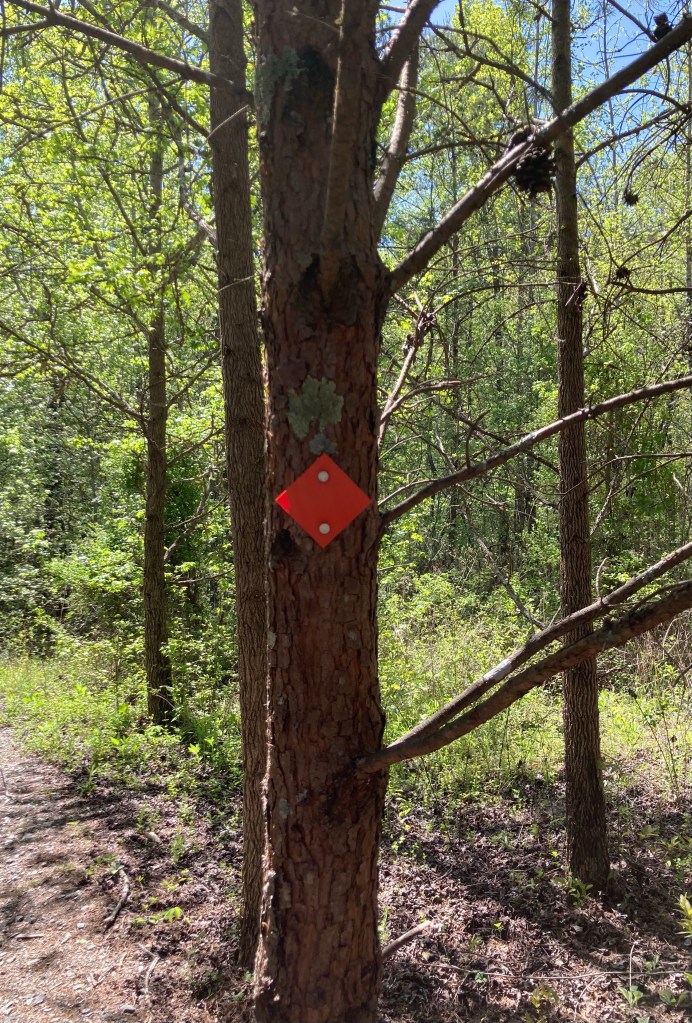
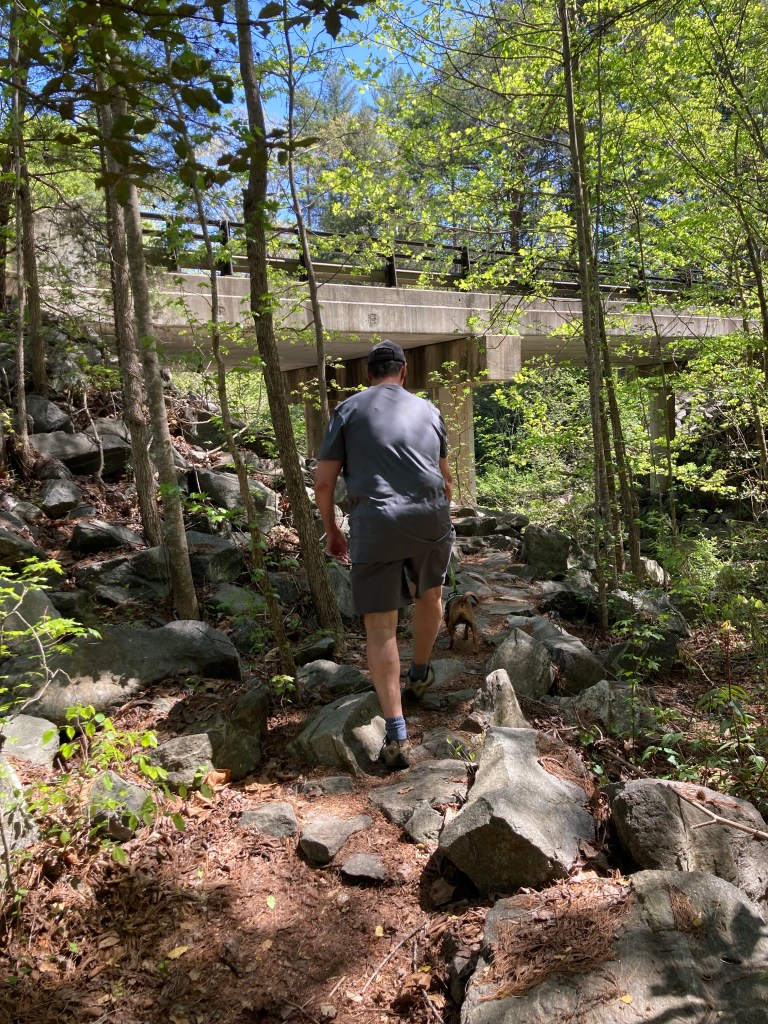
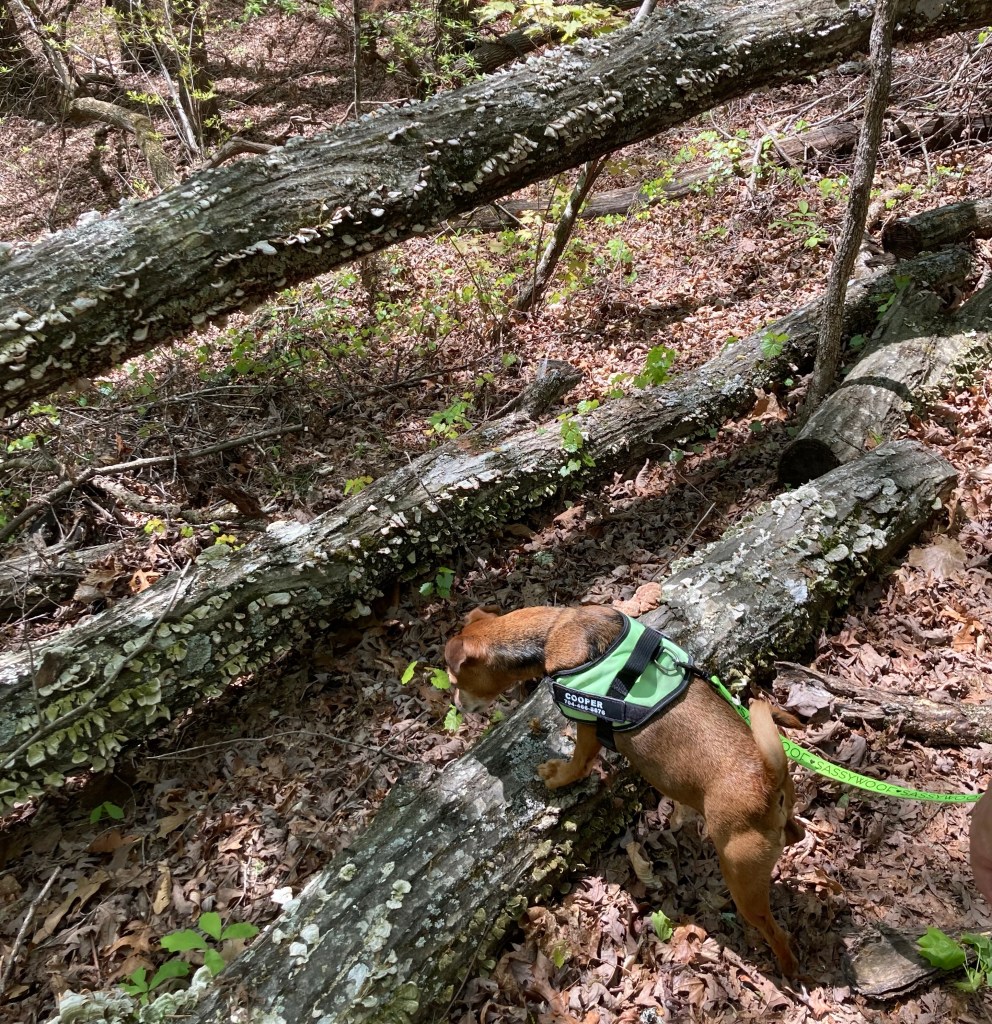
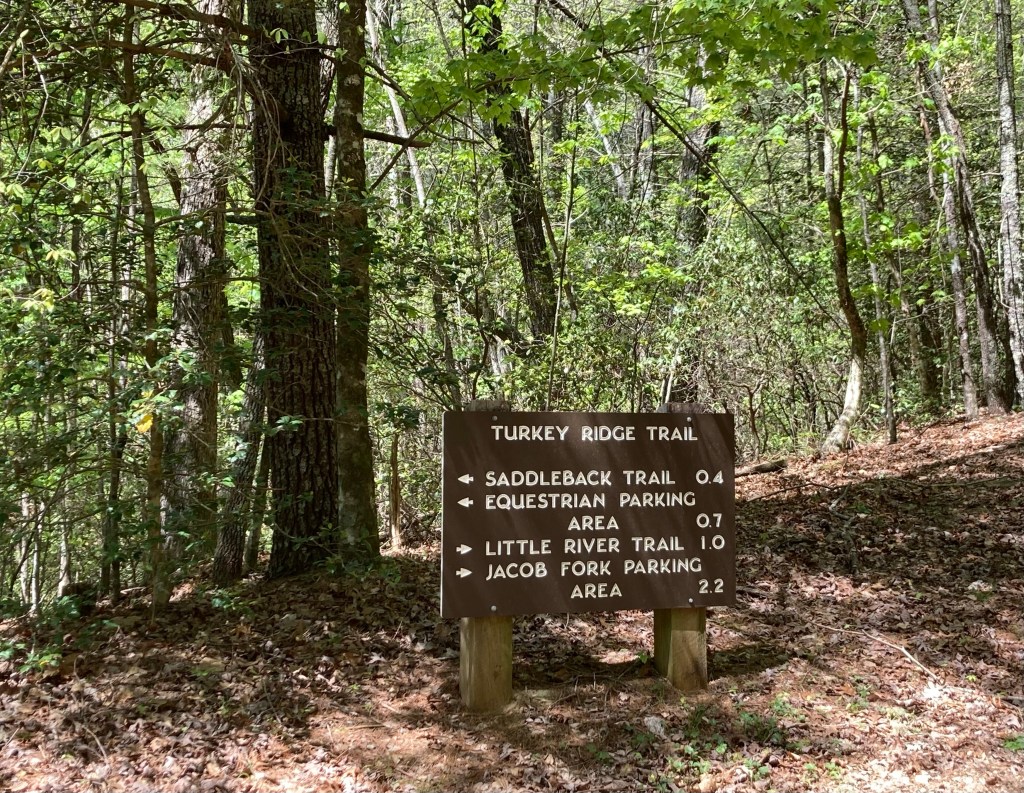
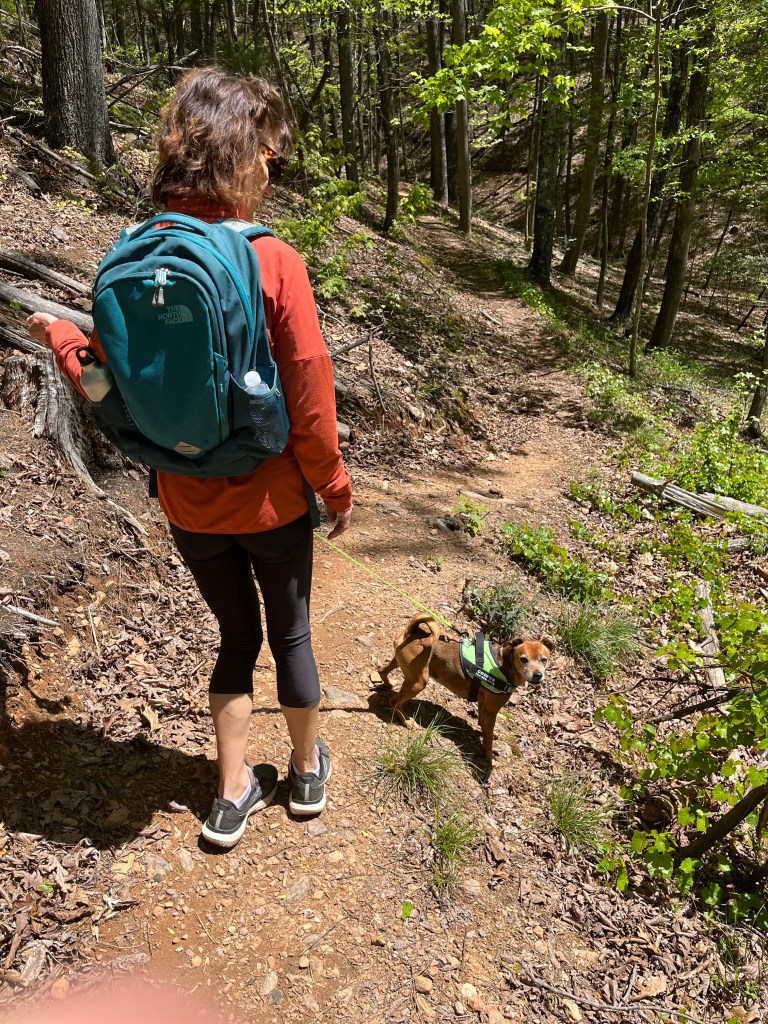
Driving into the parkThe Visitor’s Center with handy trail mapsStarting out on the Hidden Cove Trail and heading for Turkey RidgeThe orange diamond was the blaze for our trail.Walking under the park road along Jacob’s CreekJacob’s CreekShortly before we realized that we weren’t seeing any orange diamonds and after consulting our handy map, realized we had missed a turn.Back on the right path, which made a sharp left soon after the bridge.Cooper checking out a sound or a smellLooking back at the trail from the other side of the mountain Cooper looking for treasure under a mushroomed logReaching the Turkey Ridge TrailHeading back
What a lovely day! Maybe it takes the rain to make us really enjoy the sun because after some more rain earlier this week, it was lovely to be outside enjoying the sun and temps in the high 70s.
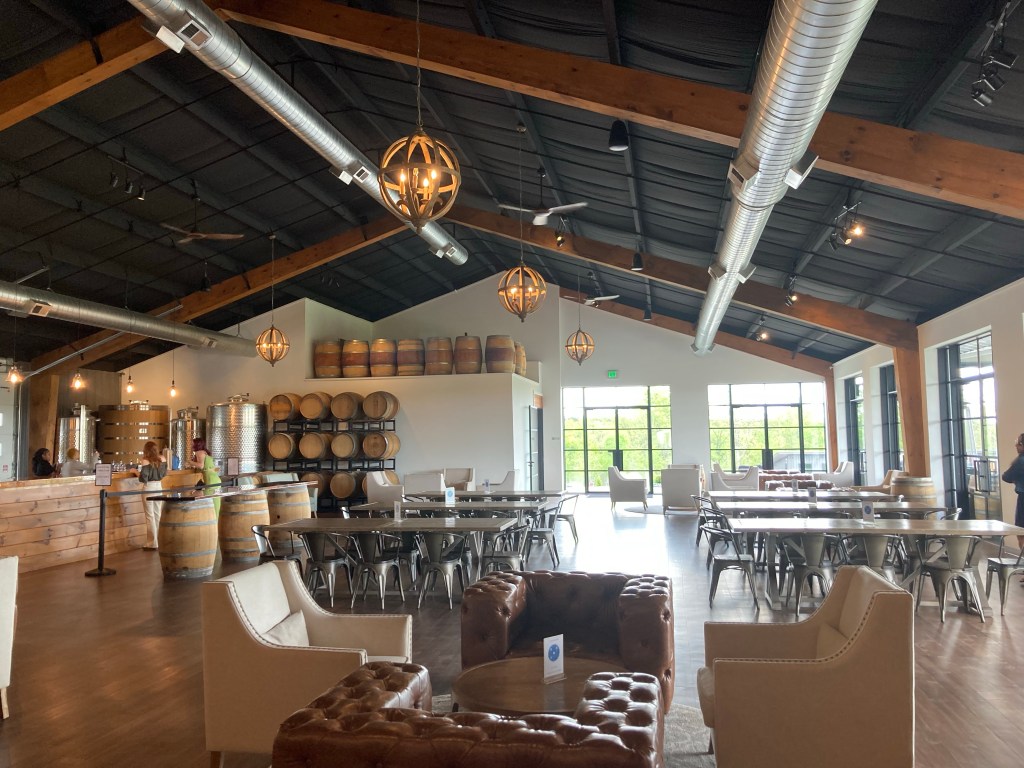
I started the day early to head out to the Thermal Belt Rail Trail for a 24 mile training run. All went well, and I just have 1 more long run to do before the marathon in Australia on May 28! This afternoon Bob and I headed to Shelby for a quick book return and pick up at the library before heading out towards Kings Mountain to visit Veronet Vineyards and Winery, another local winery that we had seen advertised.
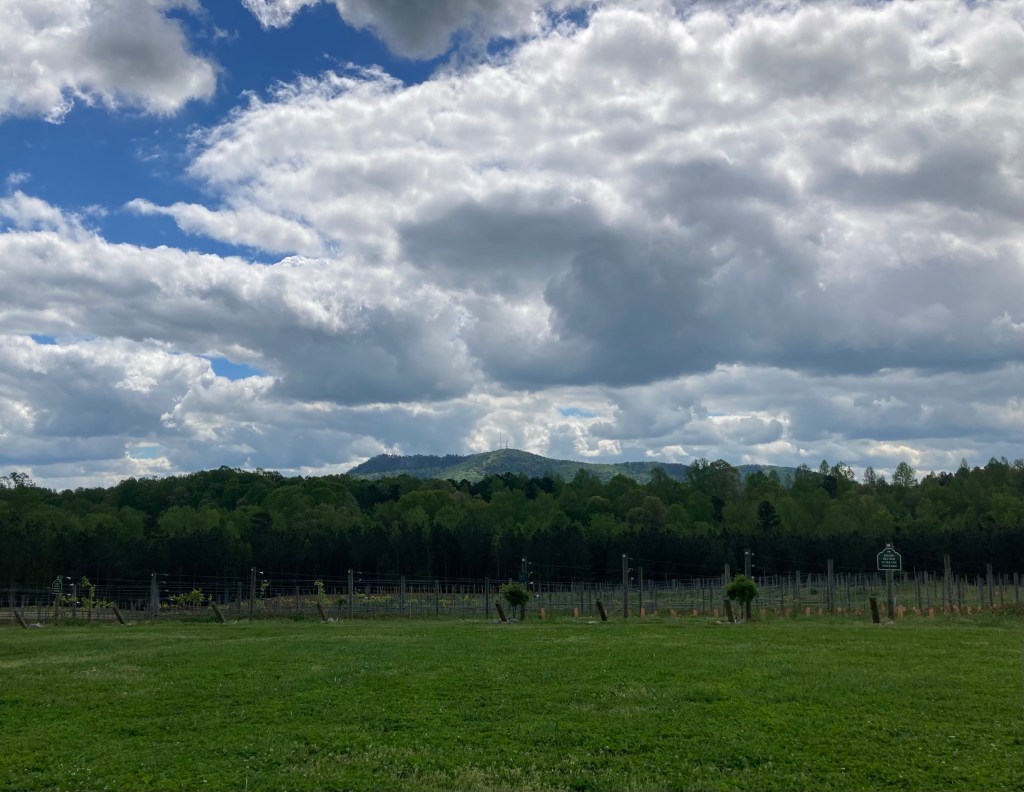
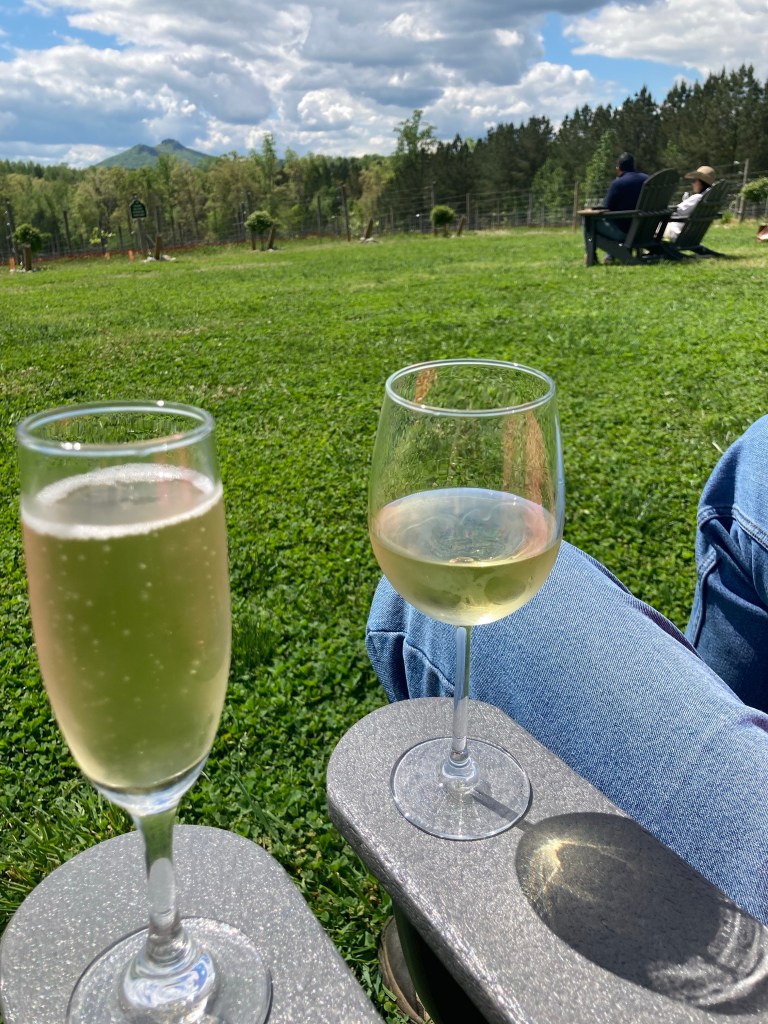
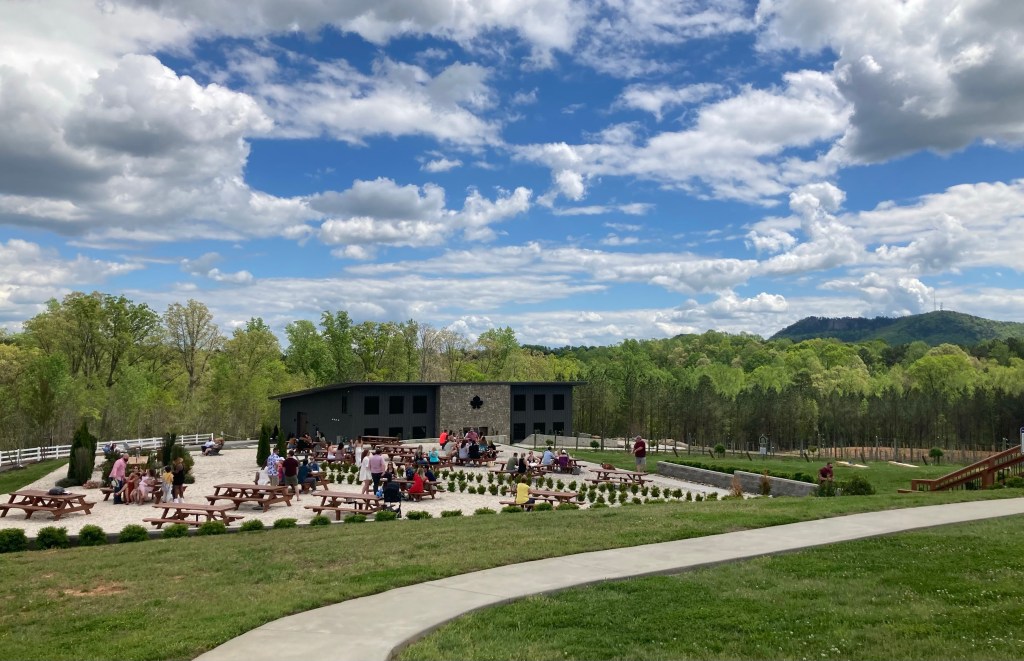
The winery opened at noon. We arrived at 12:15. We followed 2 cars into the parking lot, including one van, 2 more cars were behind us and the parking lot already seemed to be full! However, the staff were friendly, there was plenty of seating, both inside and out, and the views were lovely! The wine was yummy as well. We had a lovely walk around the grounds as well as a relaxing sit (both inside and out).
The main bar inside the tasting room.More of the tasting roomLooking across the property towards Crowder Mountain, which we recently climbed Another viewRelaxing outside in Adirondack chairs and taking in the lovely viewsWildflowers between vines yet to be plantedAnother facility (event space maybe?) and more outdoor seating
To end the day on a great note, Chef Bob is making Squid Ink pasta with mixed seafood, a favorite dish of ours, inspired by a dish we had in Venice.
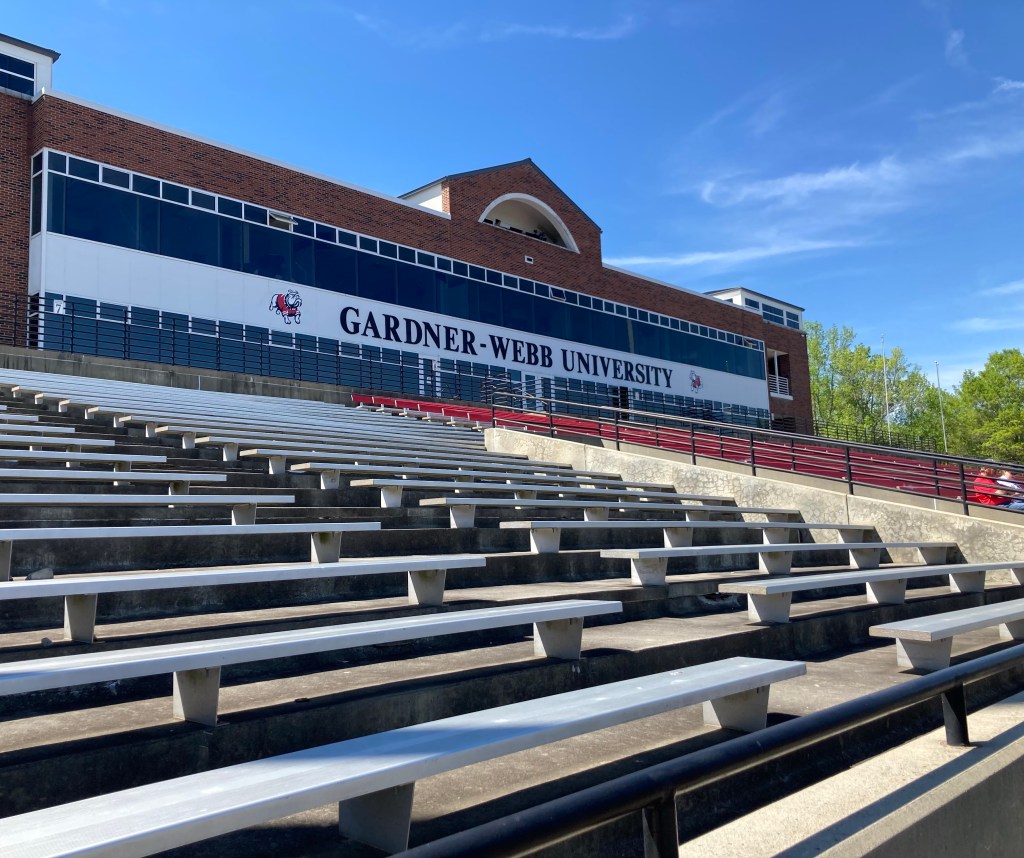
This afternoon, Bob and I took advantage of the 70 degree weather to take in a college women’s lacrosse game between the Gardner Webb Runnin’ Bulldogs and the Campbell University Camels (situated in the town of Buies Creek, NC, a 3.5 hour drive from Boiling Springs). This was our first time watching lacrosse, and we enjoyed the fast pace of the game.
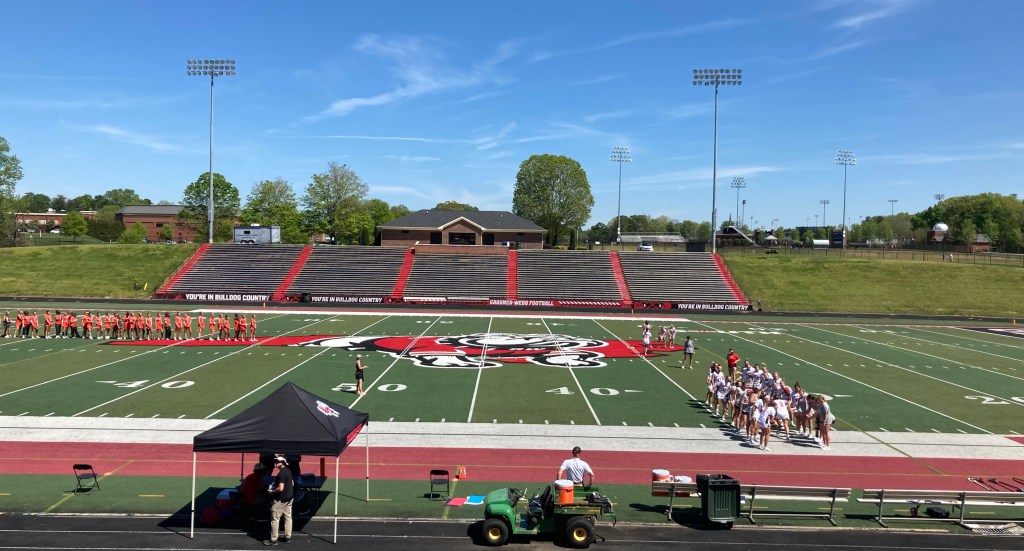
The lacrosse team plays in the football stadium, so we were glad to be able to check that out as well. Since it was an afternoon game, the attendance was pretty low, so we were happy to add some fan support.
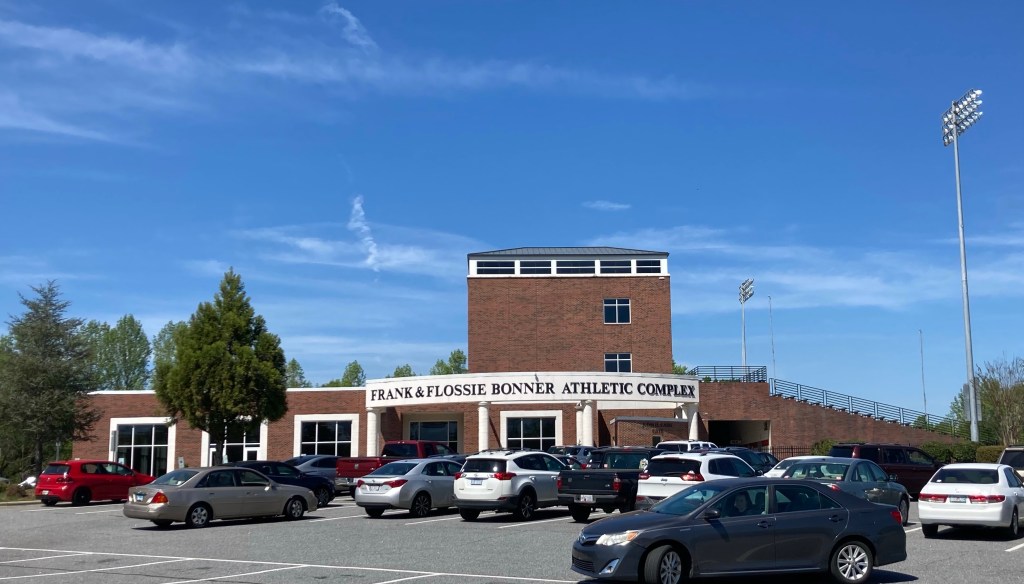
The outside of the football/lacrosse stadium
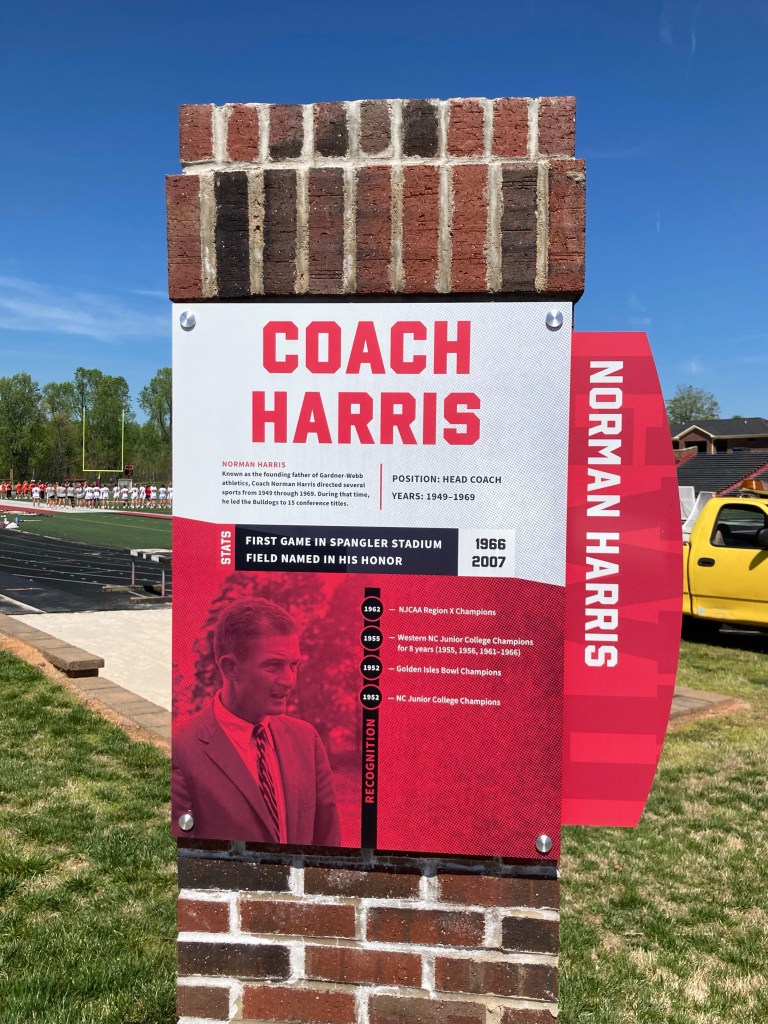
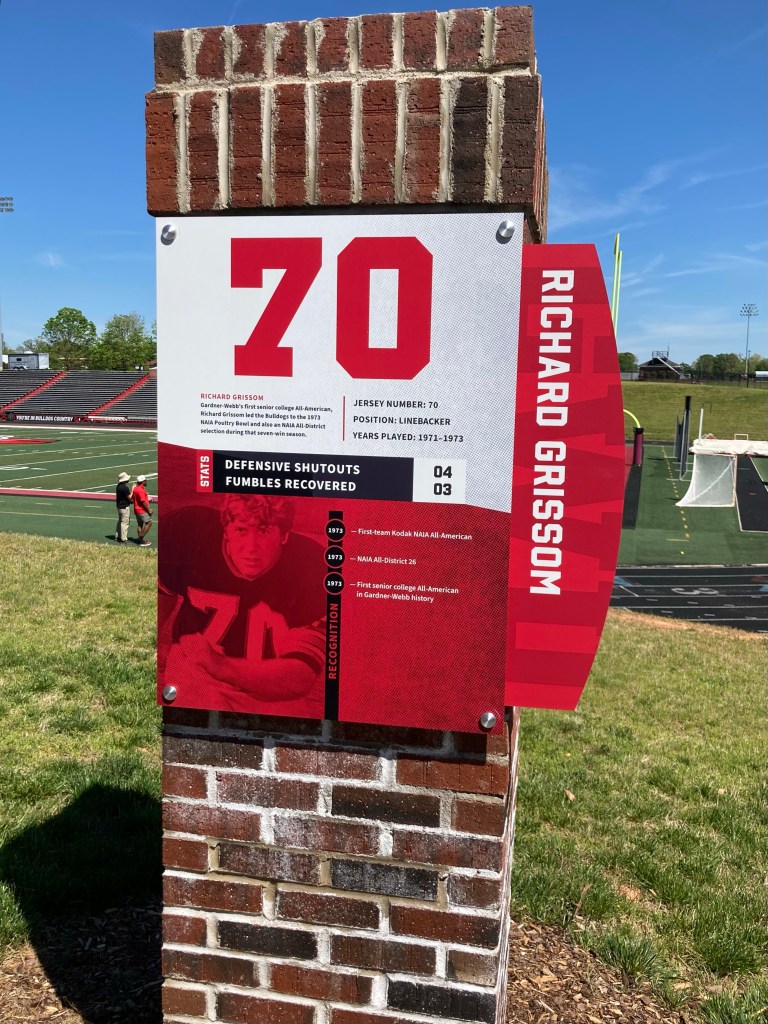
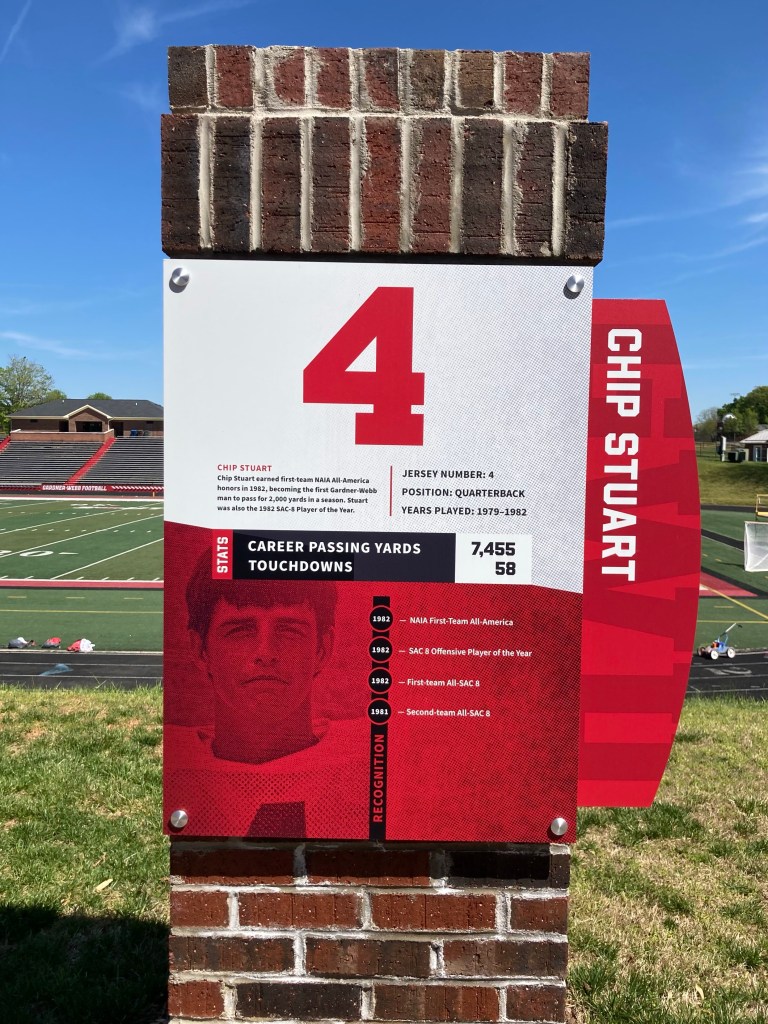
Walking up to the grandstands, there was a series of plaques about various football players or coaches of note at GW. See below.
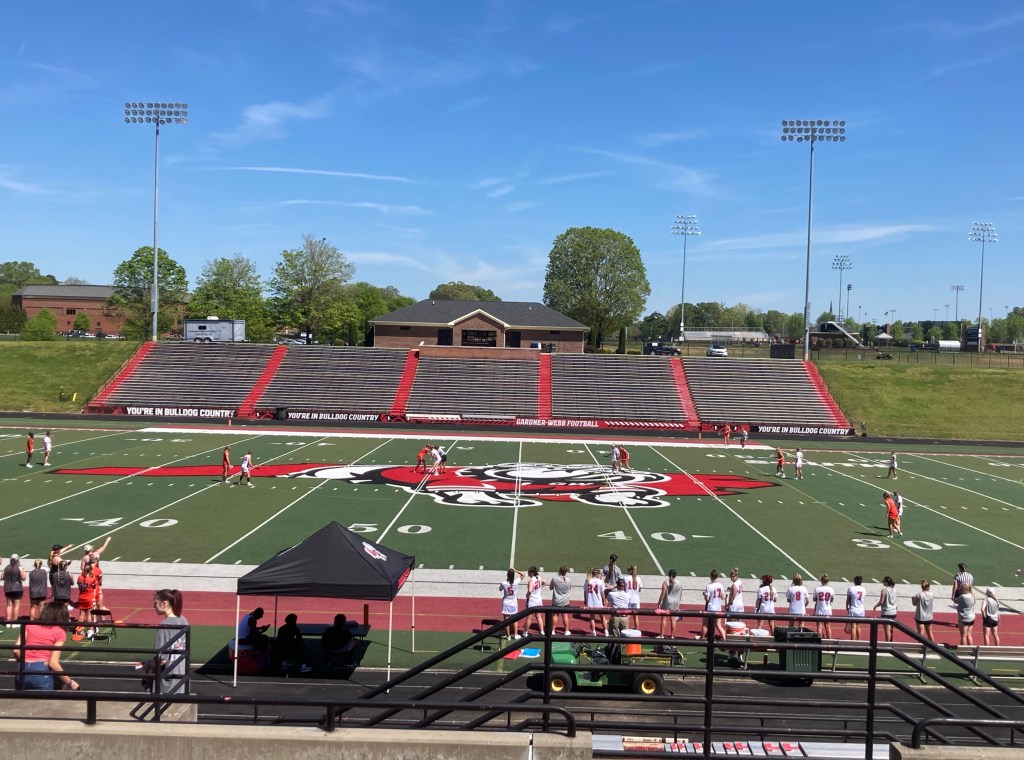
Walking up to the home side of the grandstands Looking at the field as the GW team in white is being introduced Looking across the mostly empty grandstand towards the impressive video screenThe draw to begin a lacrosse game
Bob and I took advantage of a beautiful day to visit the small resort community of Lake Lure, NC, about 42 miles northwest of Boiling Springs. It is known for its lake and its flowering bridge, and it was the location of some of the scenes in the movies, ‘Dirty Dancing’ and ‘The Last of the Mohicans.’
The lake itself was created by damming the Rocky Broad River. The dam was completed in 1925 and the lake was fully created in 1927. At ordinary levels, Lake Lure covers approximately 720 acres and has a shoreline of approximately 27 miles. The dam is also used to provide electricity for Duke Power Company.
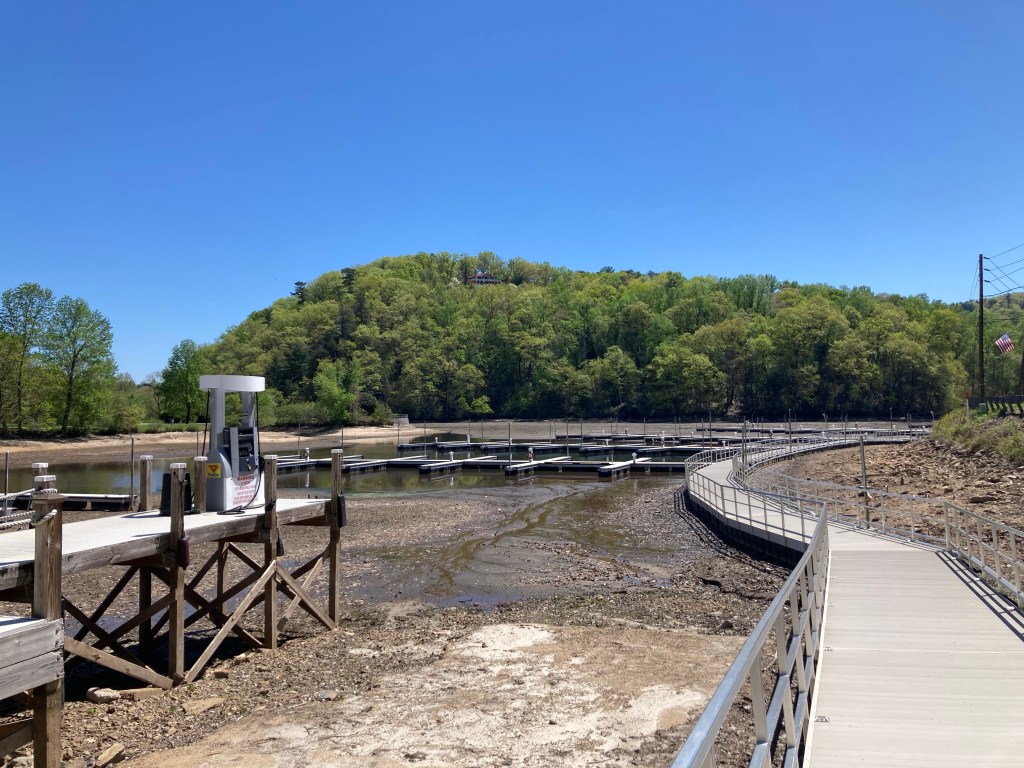
The lake, however, is not currently at ordinary levels, as the lake was lowered in January for the completion of a number of infrastructure projects and has only recently started to be refilled (per a sign we saw at the Visitor’s Center not from information on their website).
Looking at the lake bottom on our walk into town
We began our visit at the Visitor’s Center which is conveniently located between the town center and the Flowering Bridge and is also where you would catch the boat for a boat tour when those are running.
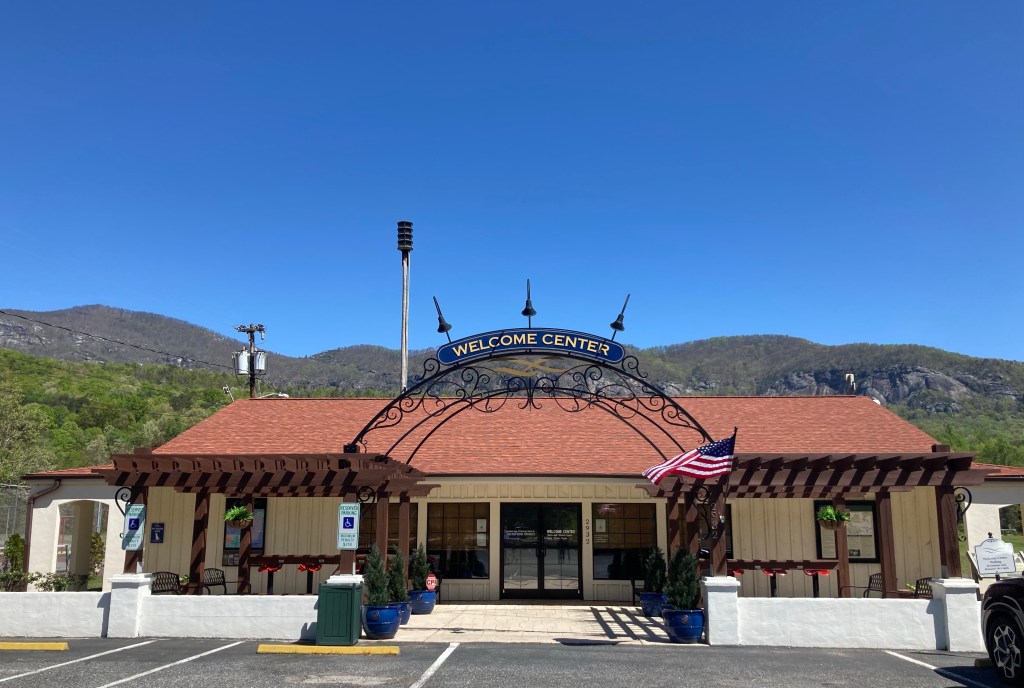
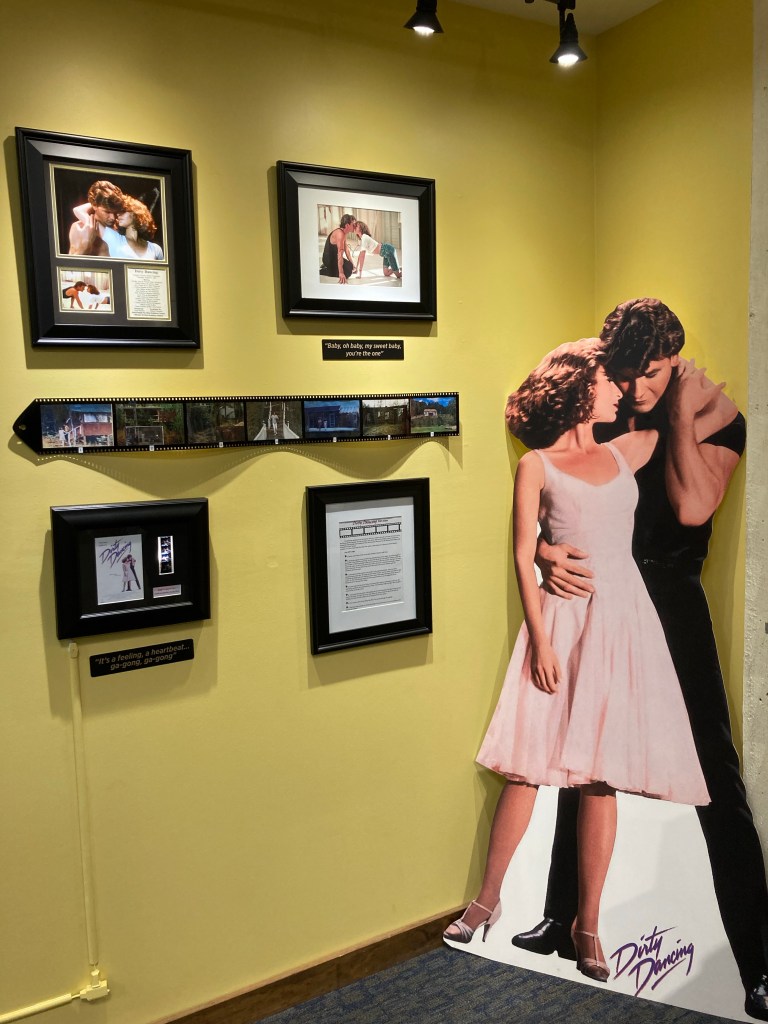
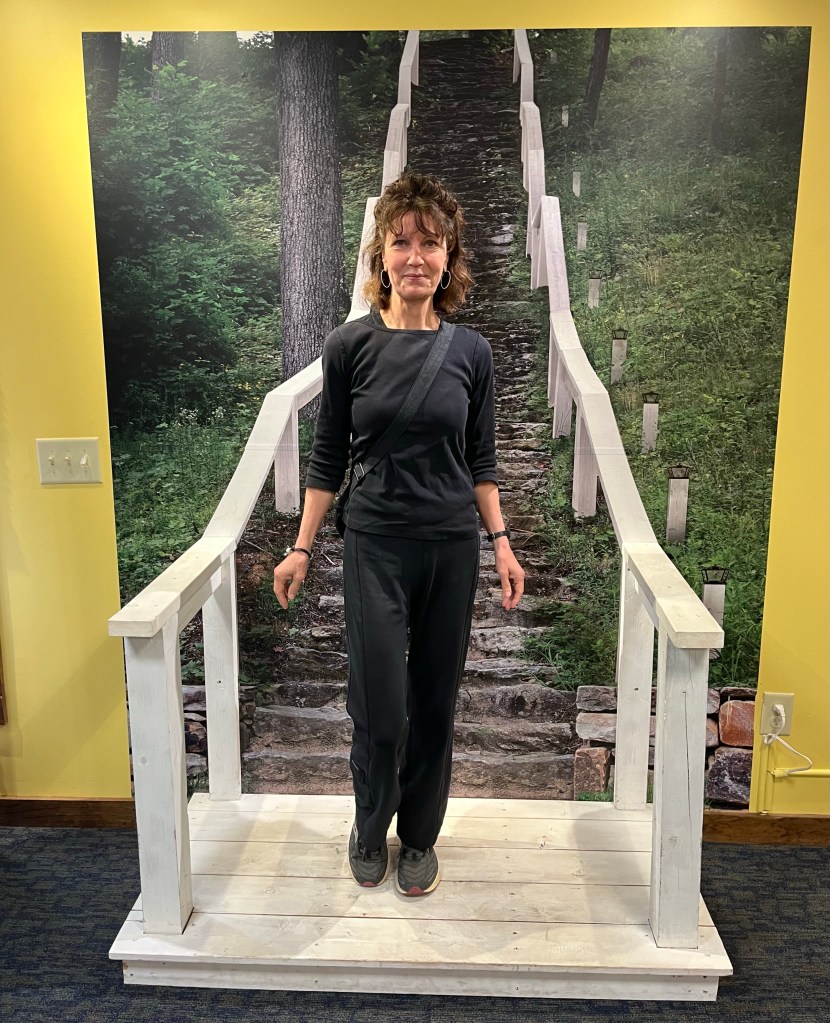
The Welcome Center with the Blue Ridge Mountains behind itInformation about the filming of ‘Dirty Dancing’Posing on a recreation of the steps where Baby practiced dancing
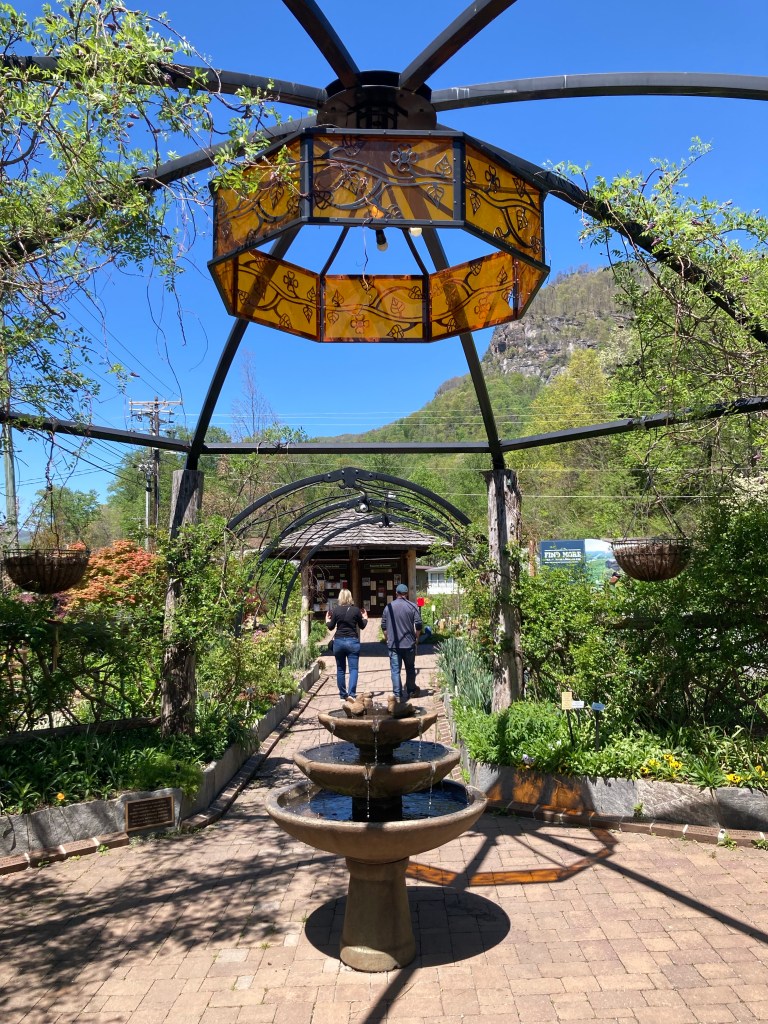
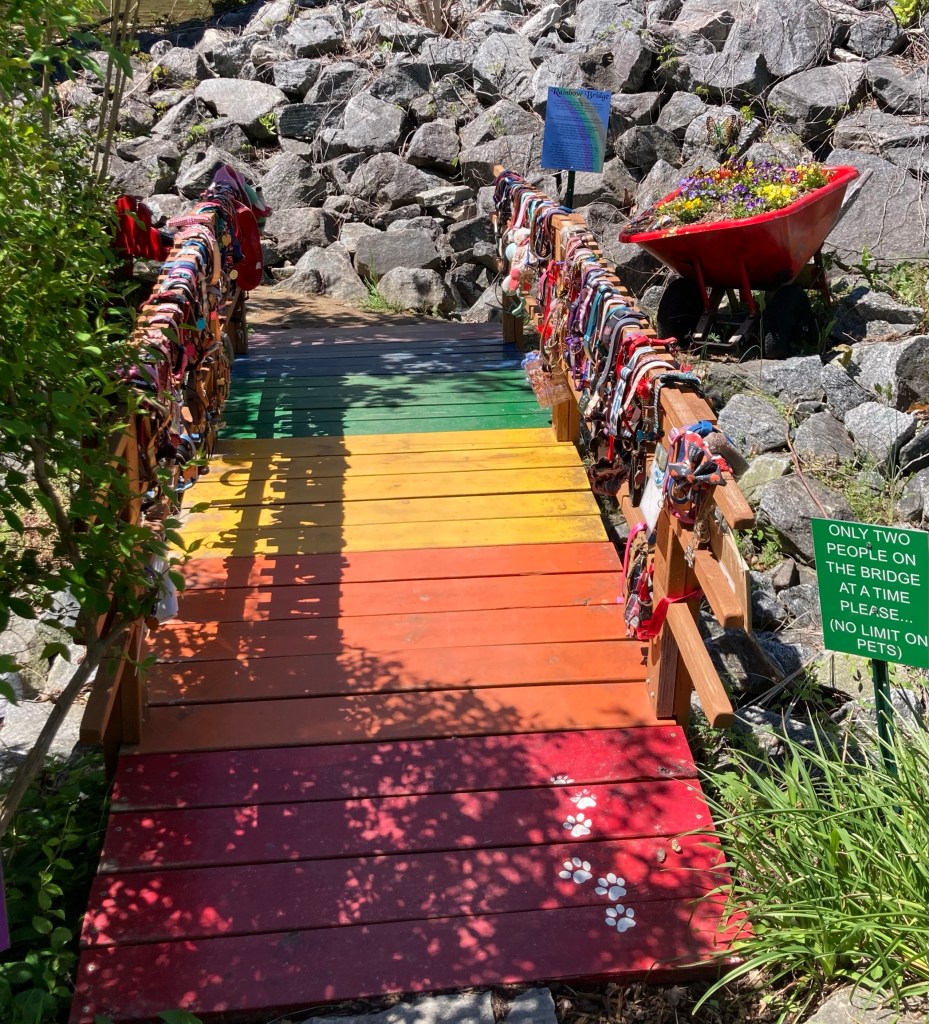
From the Welcome Center, we walked to the Flowering Bridge. Completed in 2013, the bridge was created on the site of an old bridge that once connected Lake Lure to Chimney Rock. It is now a pedestrian bridge only, that has been redesigned for gardens as well as garden art and is certified as a Monarch Waystation and is part of the Rosalyn Carter Butterfly Trail. It’s a lovely area to walk through or sit and chill. We really liked the dog/pet section and the painted ‘books’ throughout the gardens.
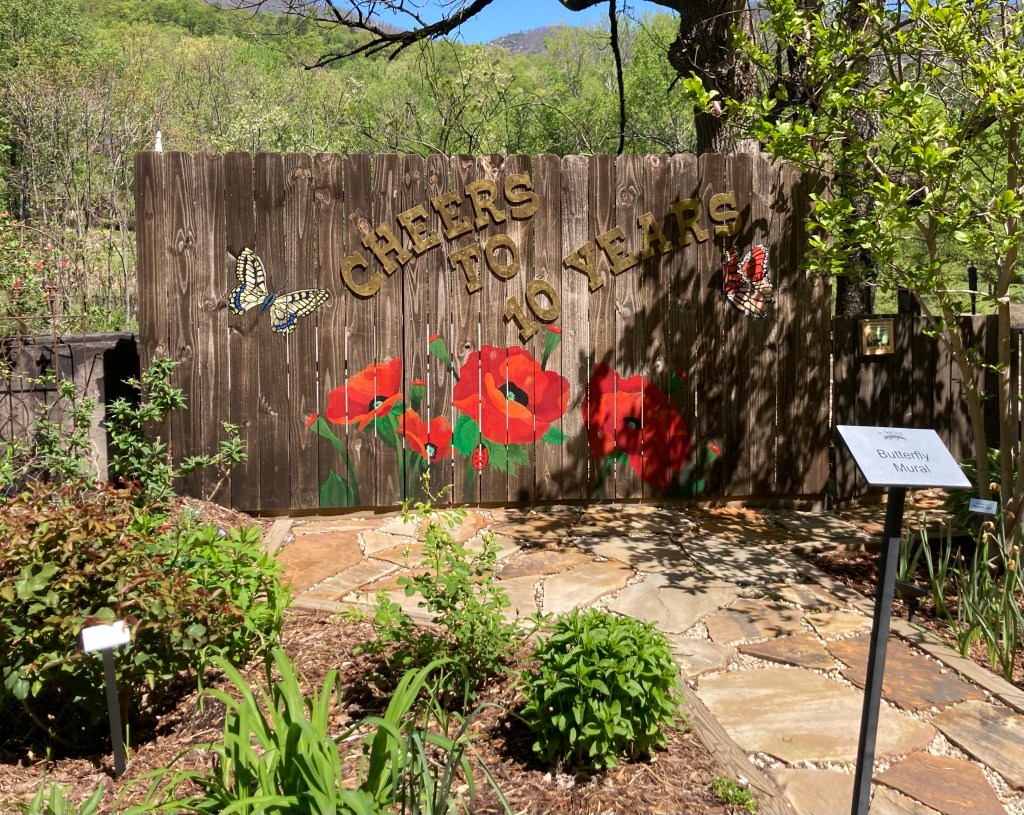
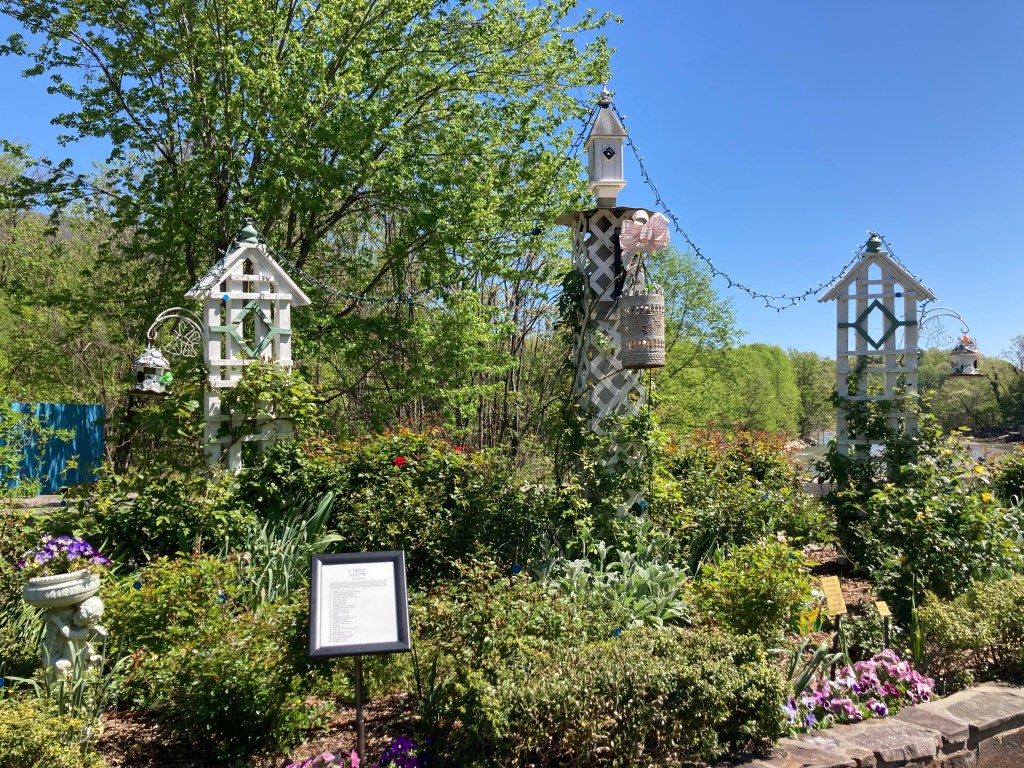
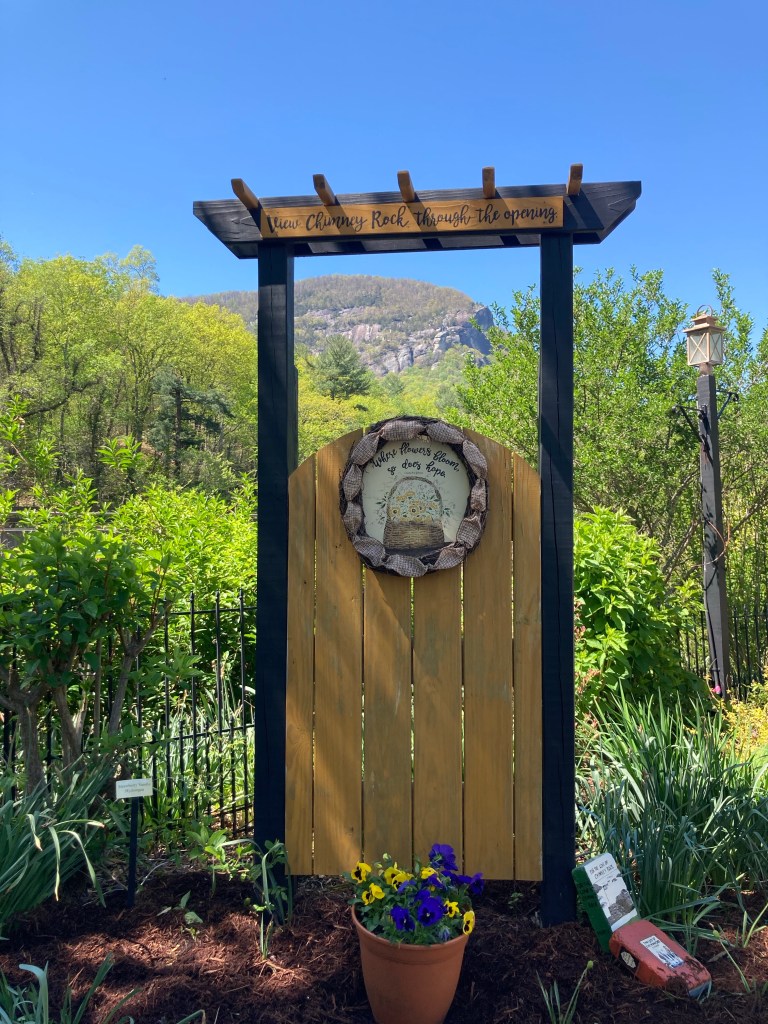
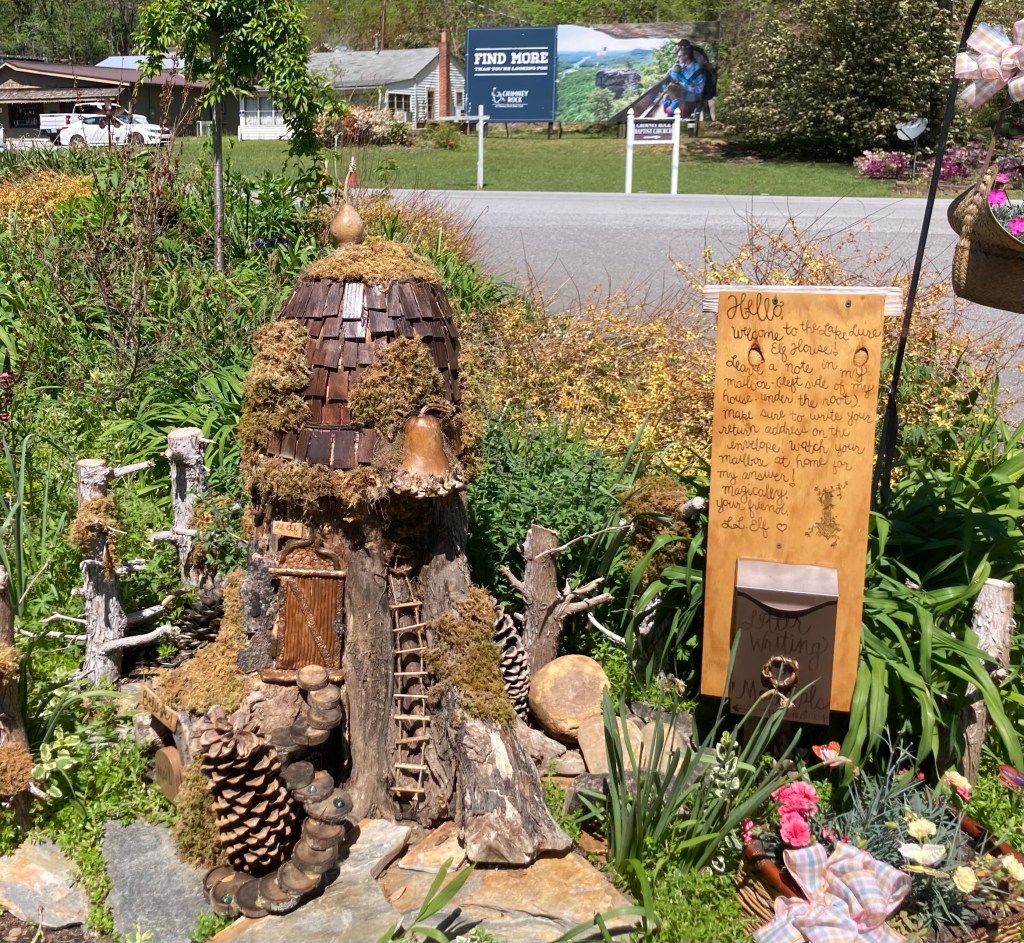
They are celebrating their 10th anniversary, so there were lots of 10s throughout the gardens.A portion of the gardens decorated for Easter with the lake in the background.Gardens and birdhouses A Peter Rabbit inspired garden with a nod to Beatrix Potter, which reminded us of visiting her house in the Lake District of England.A door to Chimney RockPart of the walkway through the gardensA cute little gnome houseA natural dog sculpture The Rainbow Bridge dedicated to beloved pets who have passed on.
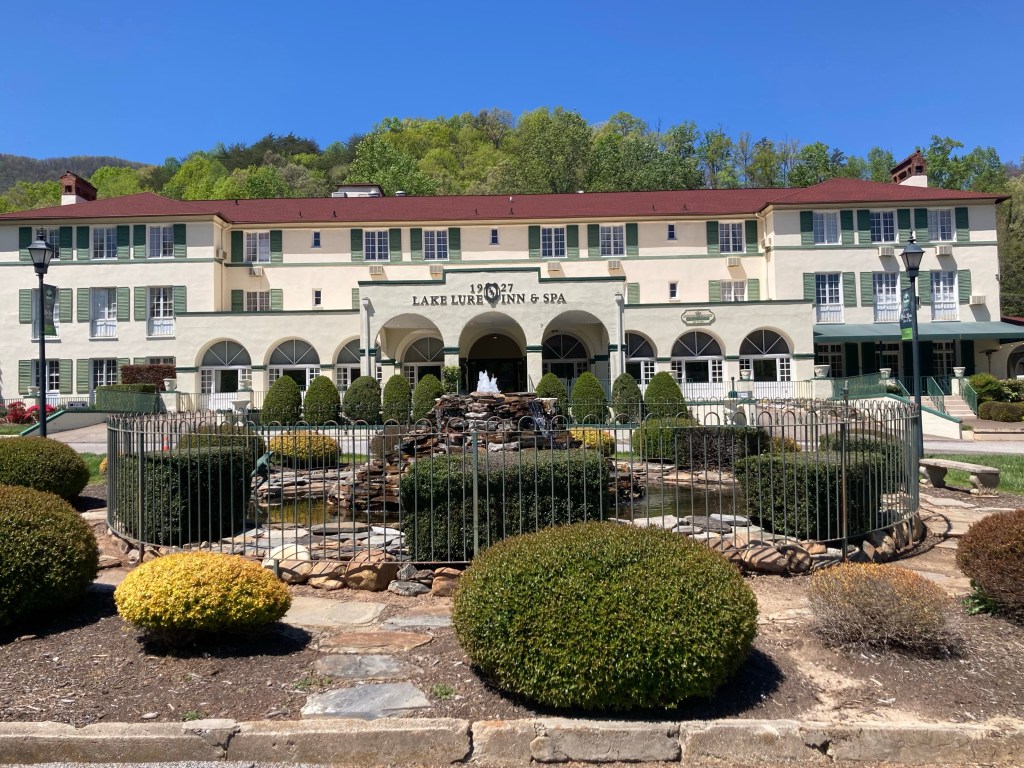
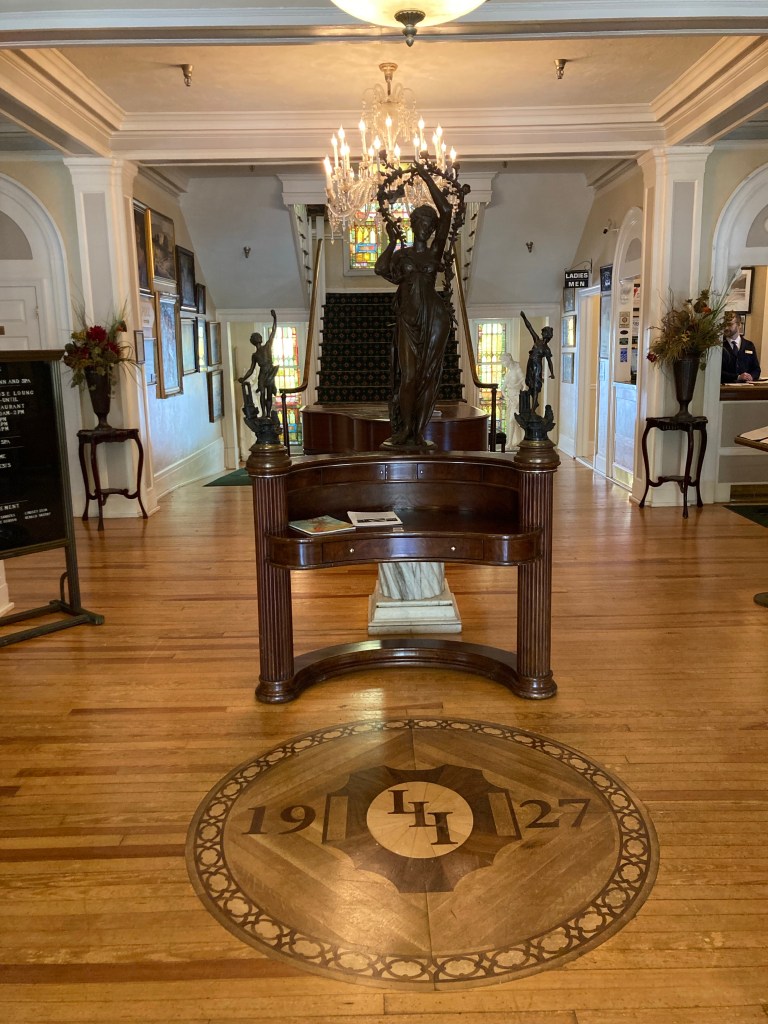
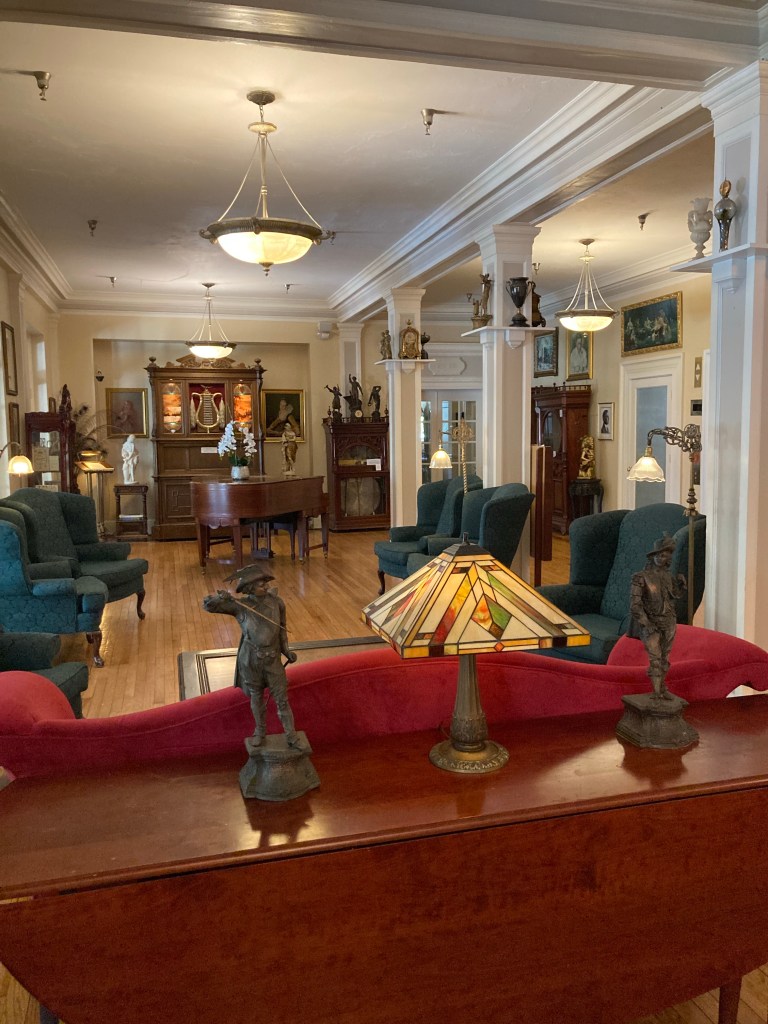
Finally, while we were in Lake Lure we checked out a couple of inns that were written up.
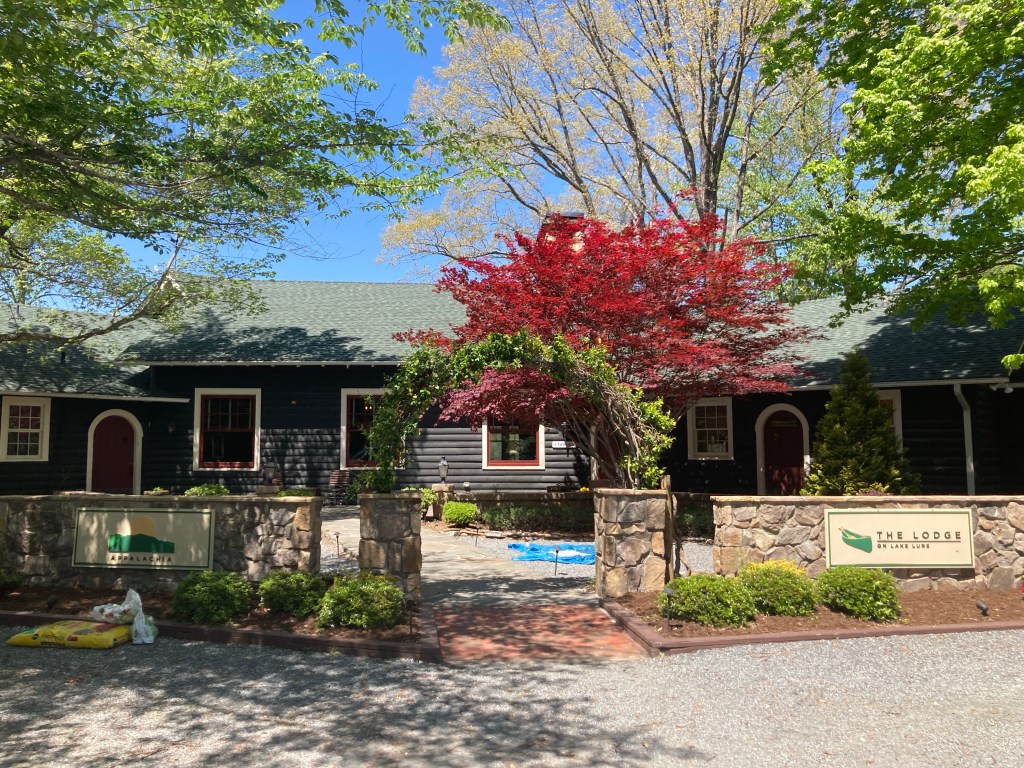
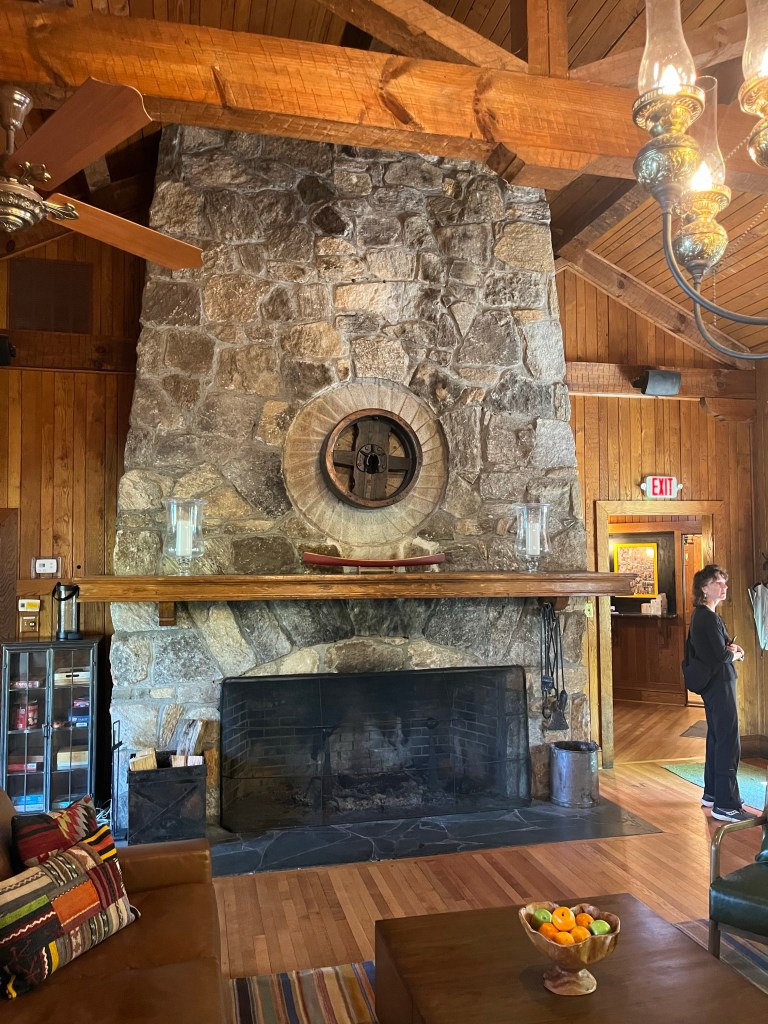
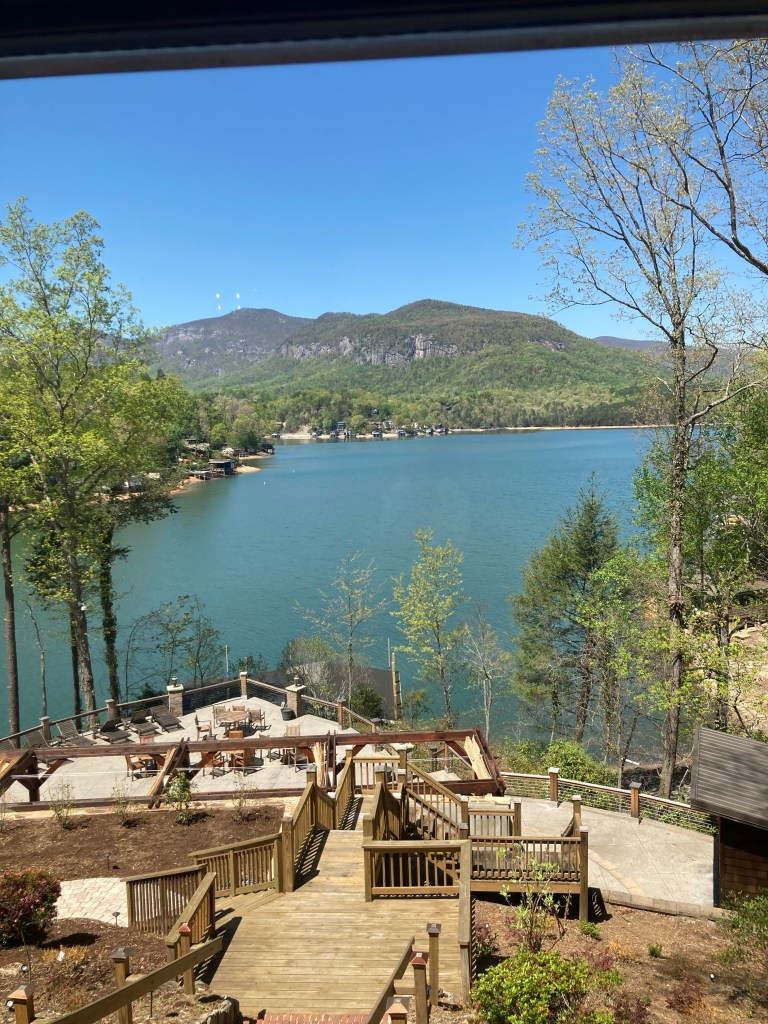
We walked along the lake to the Lake Lure Inn and Spa. It is right across from the Lake Lure beach.The entry to the historic hotelThe lobbyThe Lodge at Lake Lure (main building), a 12 minute Drive from the Welcome CenterThe lobby of the lodgeA view of the lodge patio and lake from the lodge restaurant
Bob and I headed to Pineville, North Carolina, today to visit the birth place (kind of) of James K. Polk, our nation’s 11th President. Pineville is about 60 miles from Boiling Springs and just southwest of Charlotte. We had reserved tickets for the 30 minute tour of the two cabins located on the property.
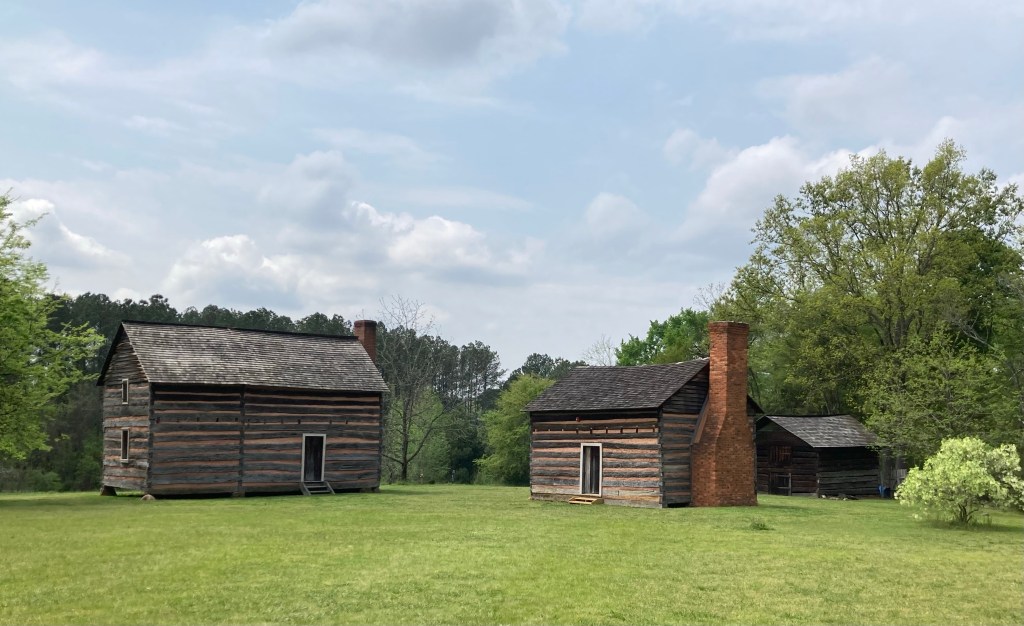
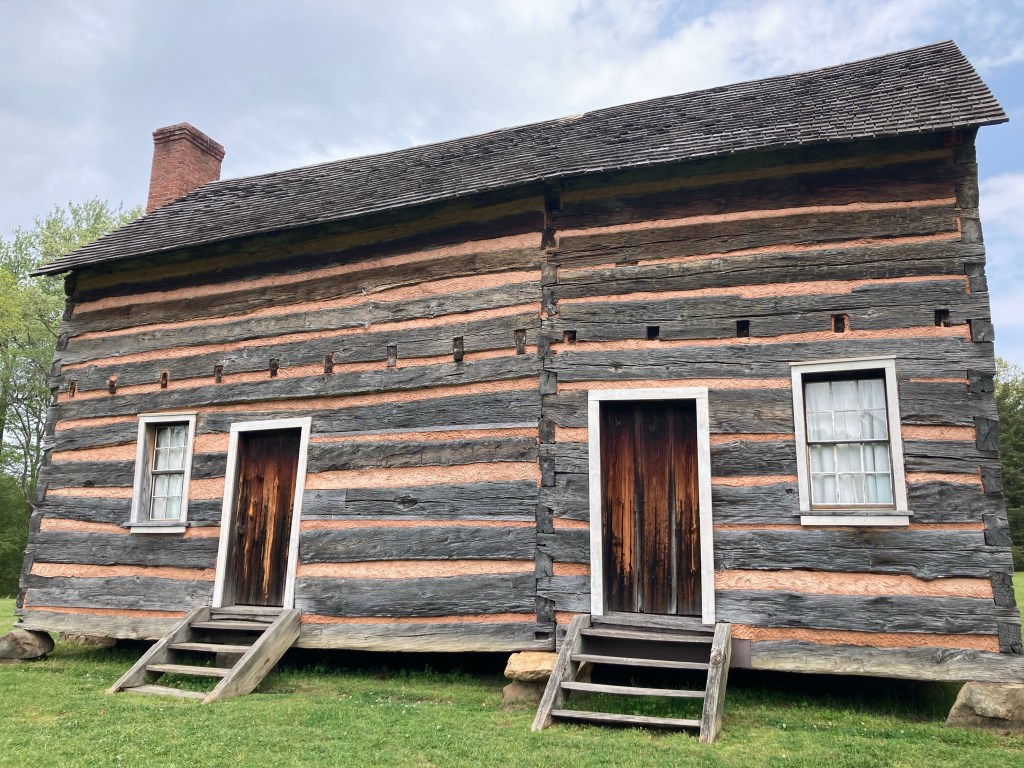
The historic site is located on the actual property once owned by Sam Polk, James’ father, and where the first 5 (including James) of the eventual 10 Polk children were born. Since the family moved to Tennessee when James was 11 and no one knew he would be president, the actual buildings on the property were not maintained. The cabins that are there were recreated with logs taken from buildings of that time period and recreated in the style of the Polk buildings based on descriptions that exist.
The recreated Polk family home (on left) and the kitchen (on right with chimney)The front of the building where you can tell the Polk’s wealth by the 2 room structure and presence of glass windows.
The house would have been set up on stones as it is here to help keep out bugs and allow for space for the chickens to roost. Children were sent underneath the house daily to collect the eggs. The logs were held in place by chinking, the red clay from the nearby river. The chinking would wear away, however, and another chore for the children would be to go to the river to collect more clay and then rechink the house.
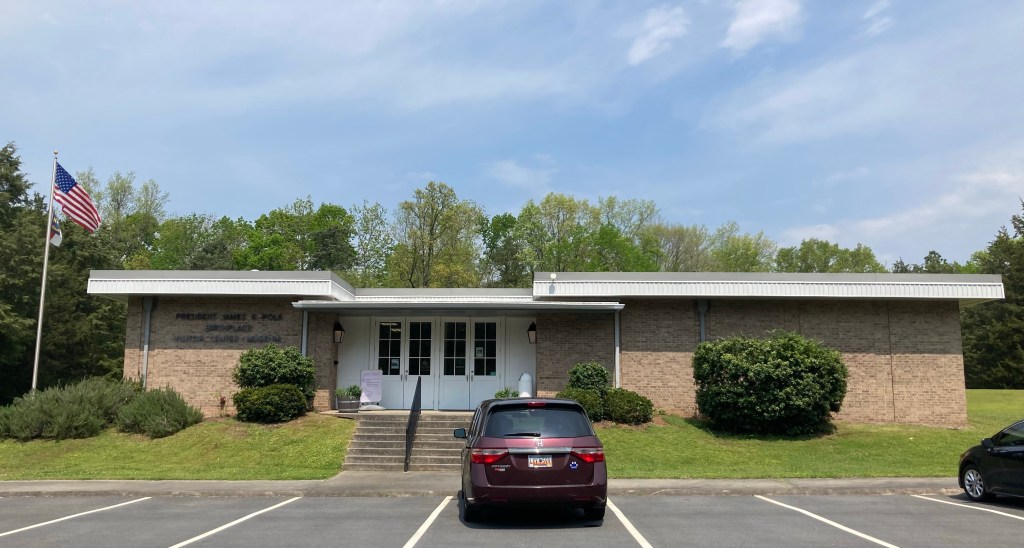
In addition to the cabins, the site contains a museum (free of charge) with exhibits and an informative 15 minute film. We learned a lot about a president of whom we had known very little, even though Texas, Iowa, and Wisconsin, all became states during his one term administration.
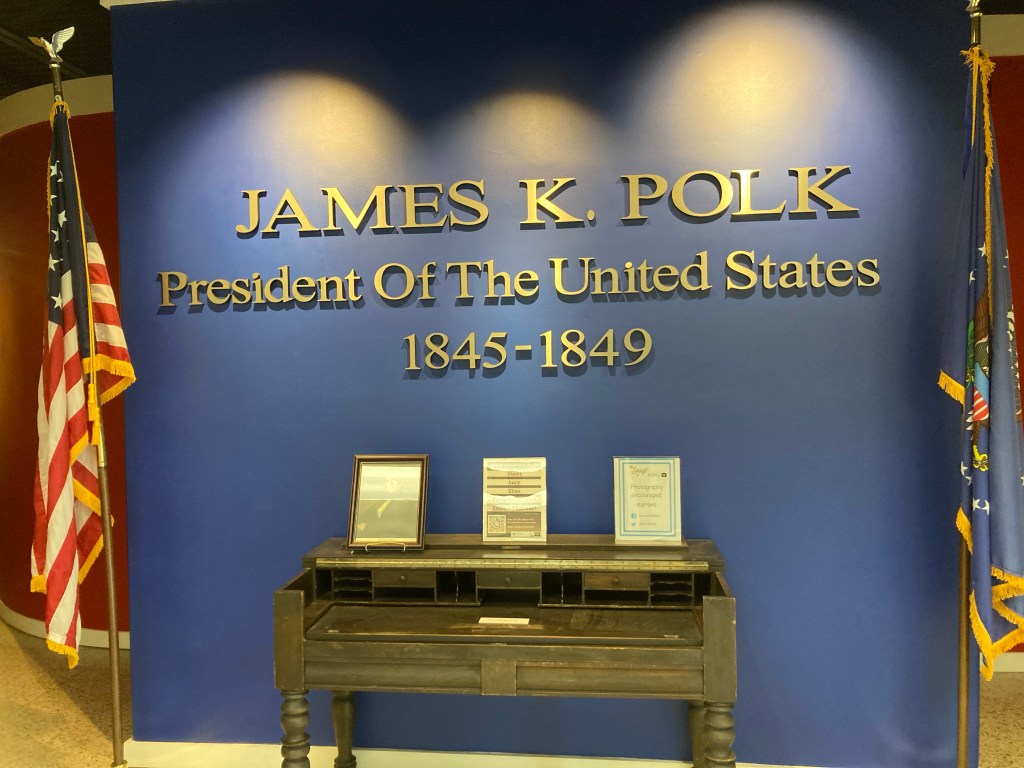
The President James K. Polk MuseumThe entrance into the exhibit area
Polk was born on 11/2/1795 and moved with his family to Tennessee in 1806. He graduated at the head of his class from the University of North Carolina in 1818 and married Sarah Childress in 1824. He was elected to the US House of Representatives from Tennessee in 1825 and was Speaker of the House from 1835-1839, when he resigned to become Governor of Tennessee. He served one term as Governor, 1839-1844. He was a surprise nominee for President as the Democrats didn’t want Van Buren who was opposed to the annexation of Texas. He served as President from 1845-1849 and died a few short months after leaving office. He remains the only person to have served as both Speaker of the House and President.
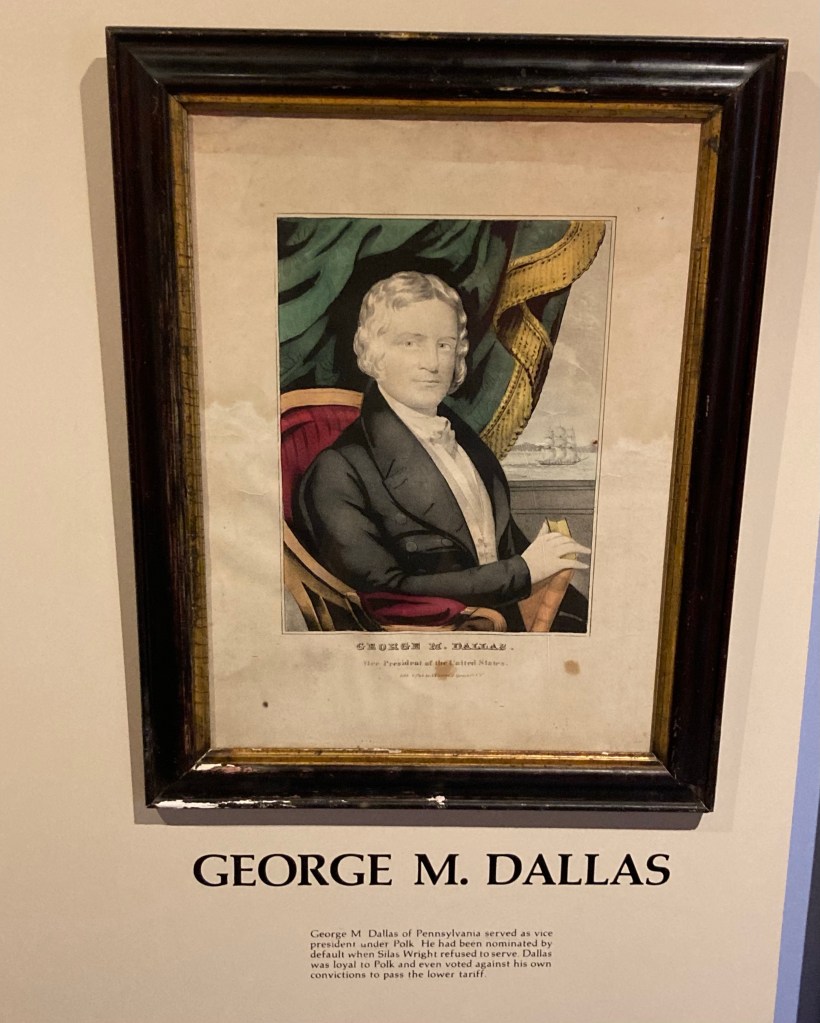
Andrew Jackson was a mentor to Polk, and they both were strong supporters of the Manifest Destiny doctrine. Thus, Polk’s support of the annexation of Texas and his war with Mexico to claim more territory for the US. He was a slave owner, and one of his slaves moved to the White House with the Polks as their personal valet.
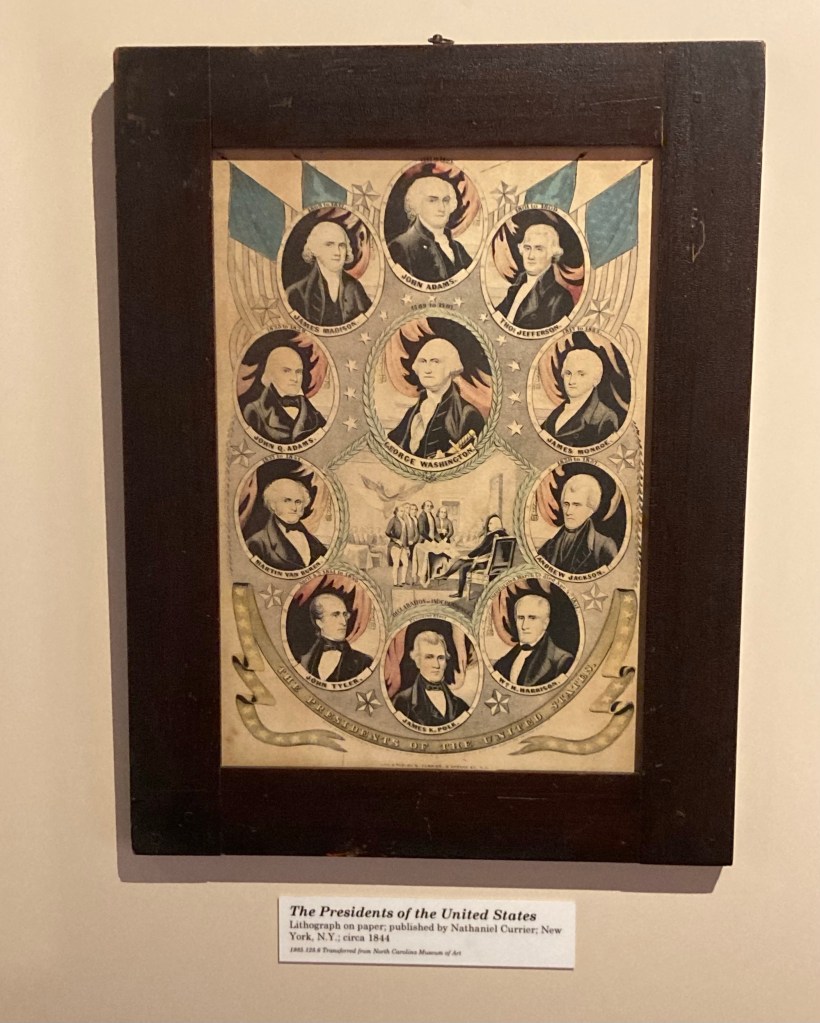
The first 11 US presidentsI found it an bit ironic that a man who was nominated for President due to the Texas issue had a Vice President with the last name Dallas.The dinnerware chosen by the Polks for the White HouseSome of the major events during the Polk administration.
One of the places to visit that was mentioned to us by our homeowner and appears in all the travel brochures is Crowder Mountain State Park. It’s about a 35 minute drive from the house, near King’s Mountain National Park, which we have visited, and King’s Mountain State Park, which we have not.
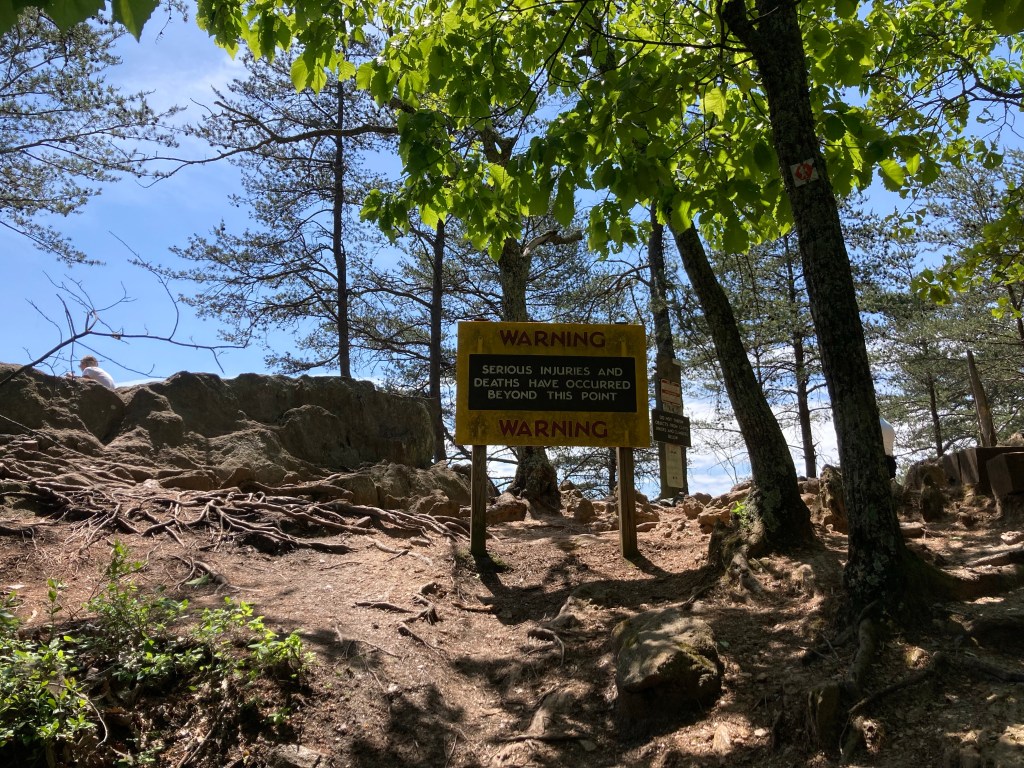
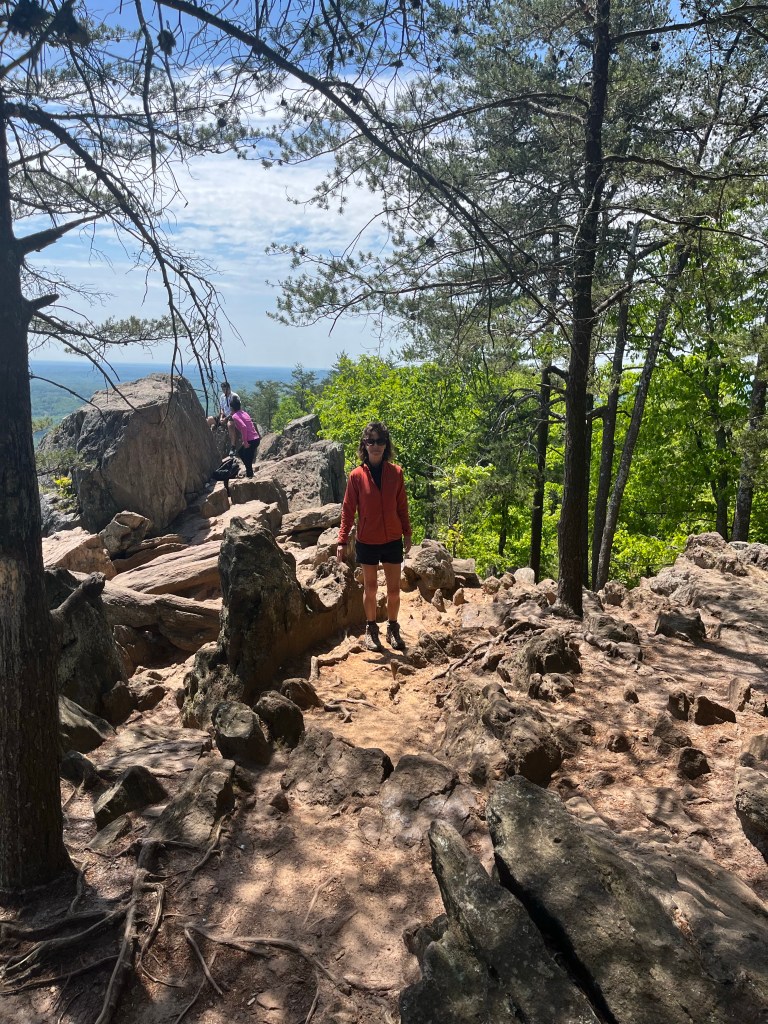
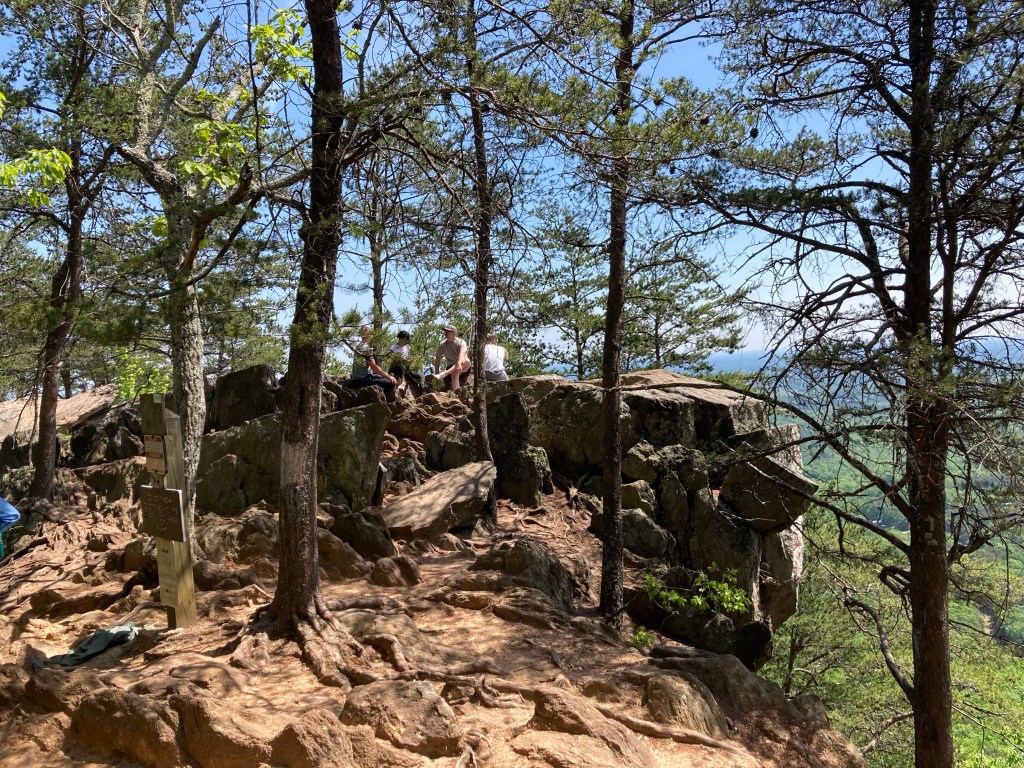
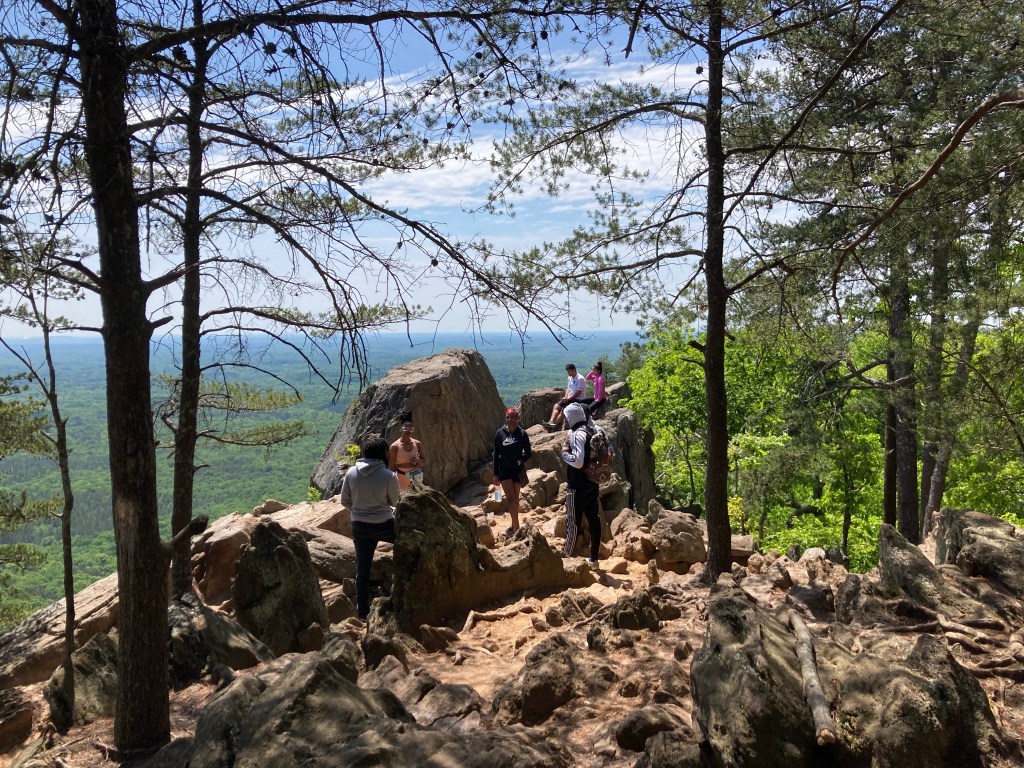
All of that to say that Bob and I went to Crowder Mountain State Park today and had a great hike on the Pinnacle Trail, 4.4 mile round trip, with an 800 foot elevation gain. While we saw a few other people on the trail (no dogs, though dogs are permitted on leash), it was definitely not crowded.
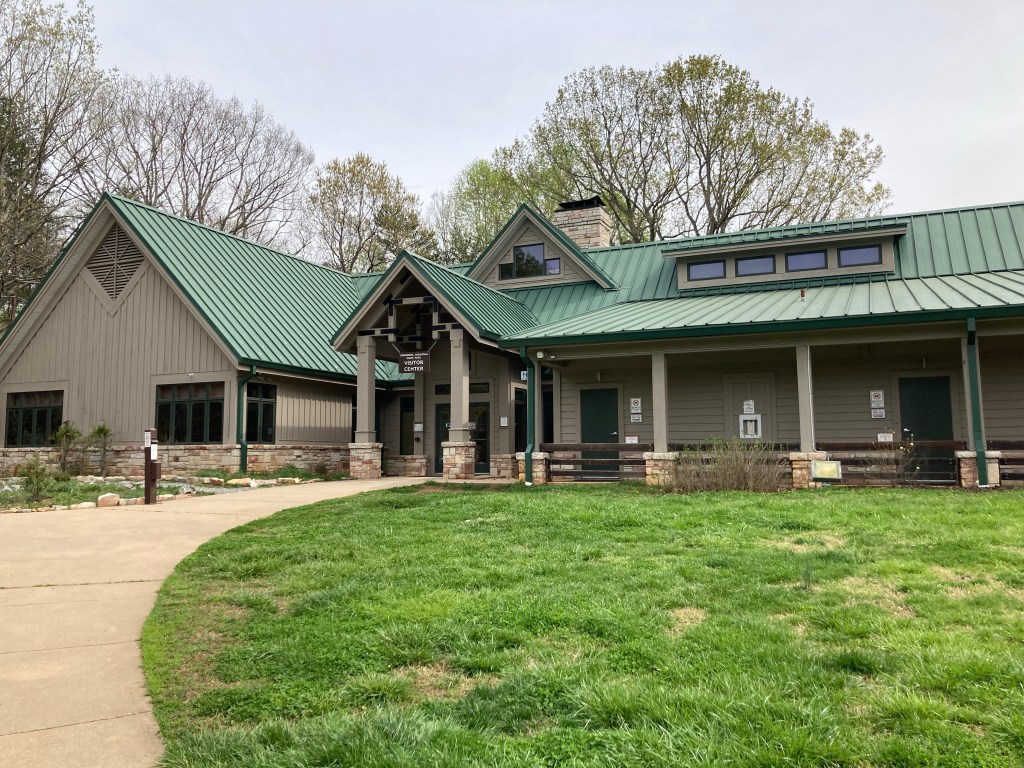
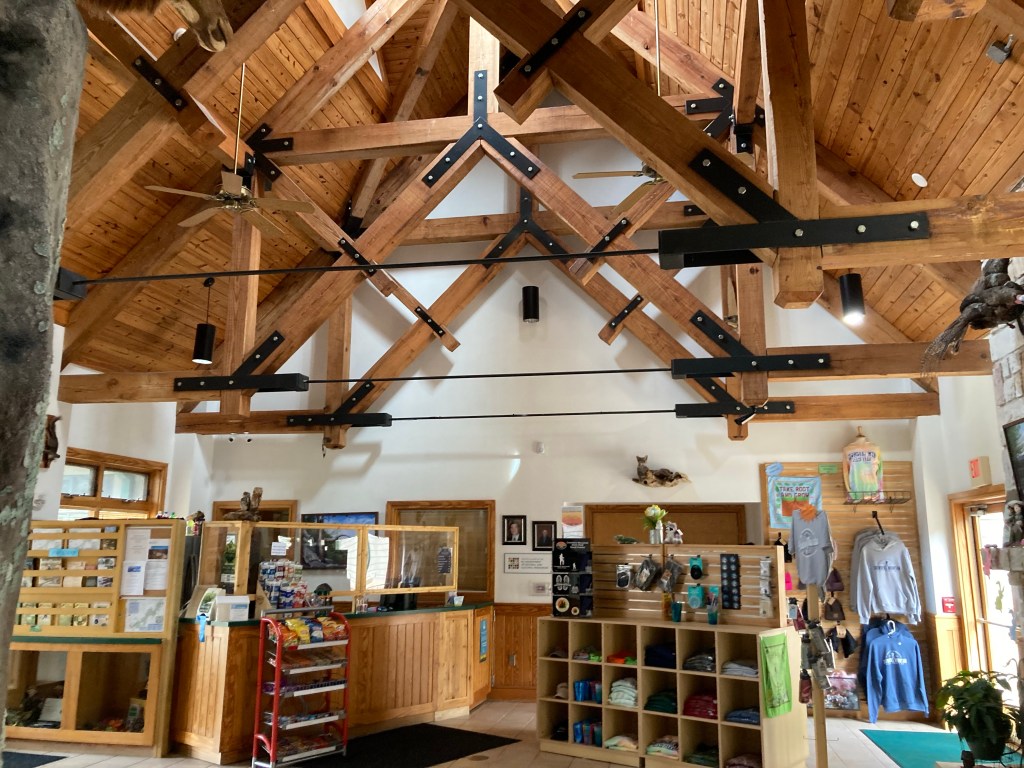
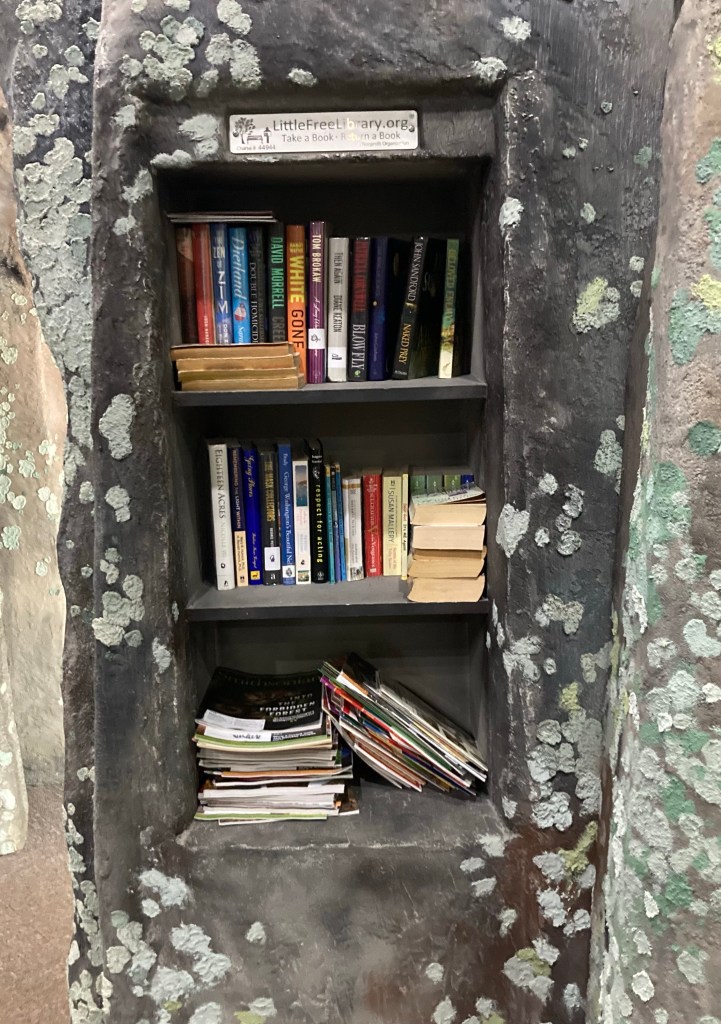
The park Visitor CenterThe Visitor Center gift shopA free small library in the Visitor Center. We have found that they have these near trails or parks.The orange circle marked the Pinnacle Trail.The signage on the trail was impressive.Heading upThe orange soil typical of the areaSome pretty new growth along the trailA warning that gave us a bit of pause near the topGoing up at our own riskView from almost the topEnjoying the view 1Enjoying the view 2The rocks, trees, and tree roots at the topProof of summit
Bob and I drove a short eight minutes to the little town of Lattimore, North Carolina, to visit their historical museum. It is listed in the visitor’s brochure that we have been working our way through, but it is only open from 12:30 to 2:30 on Sundays and just opened for the year a couple weeks ago.
I just looked up the population of Lattimore, and it was 488 at the time of the 2010 census. The town has a total area of 1 square mile, so there’s no getting lost. Accordingly, the historical museum was very small — one room with some odds and ends from various aspects of their history.
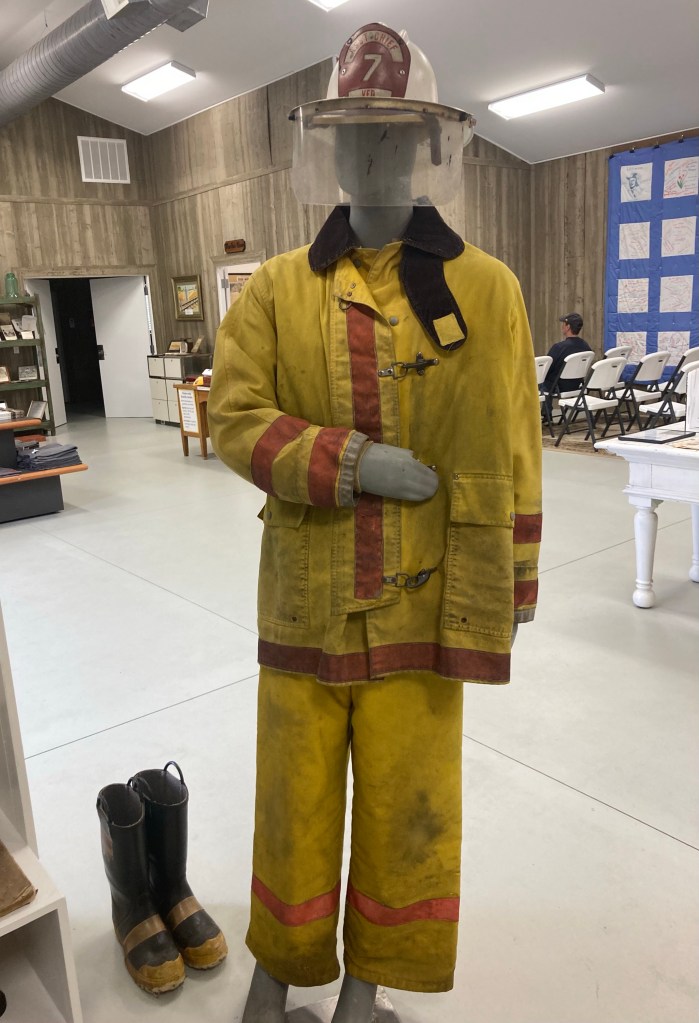
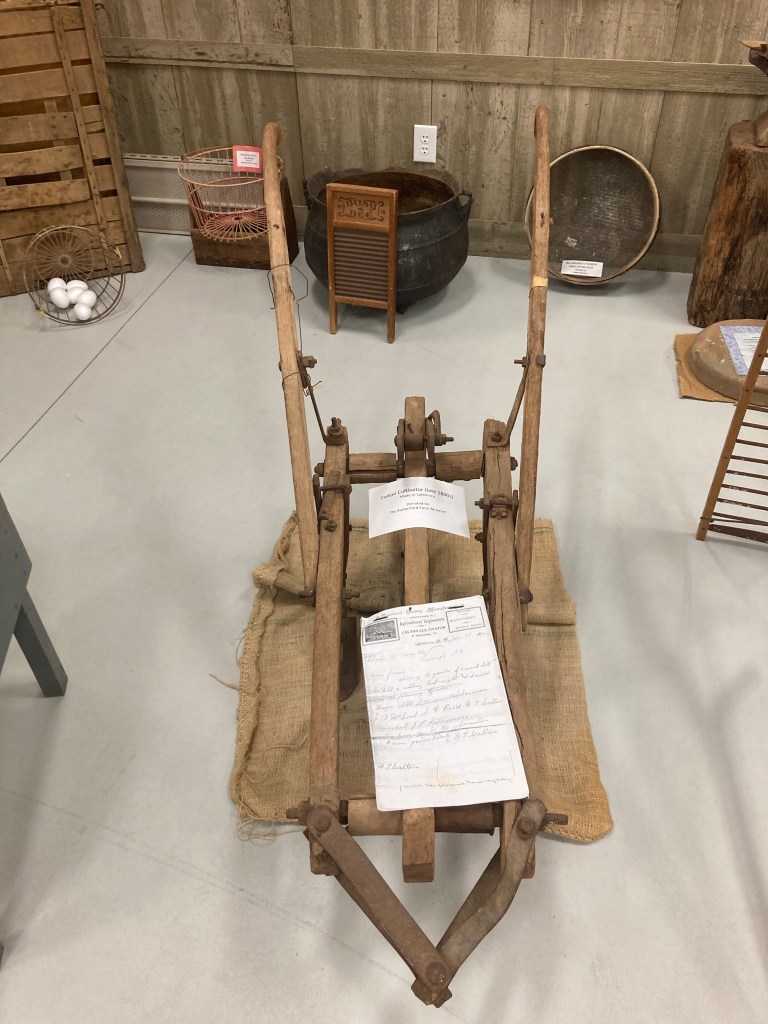
A 1914 cash registerAn old fire fighter uniform, with Bob watching a film in the background (see more below)News stories about localsThese old farm tools amaze me.A Lattimore made Carlton Cultivator from the 1800s
When we first walked in, we thought it would be a very quick stop , but the helpful volunteer gave us some additional information about one of their exhibits and played a 20 minute film for us that will likely ensure that we remember this visit for awhile.
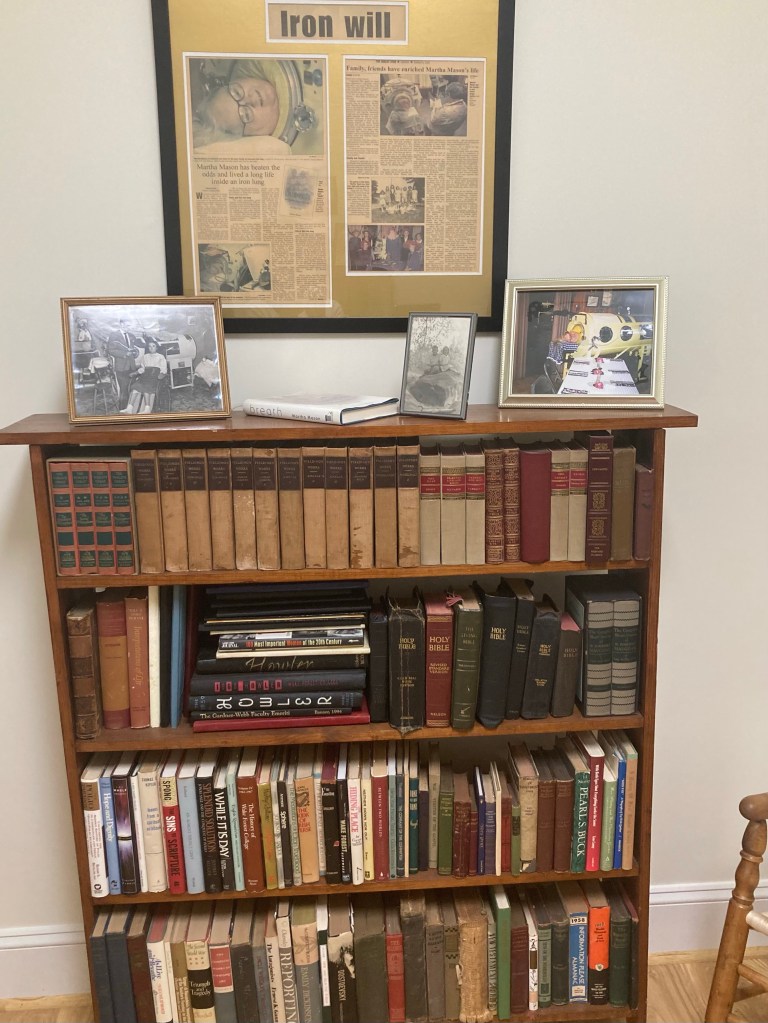
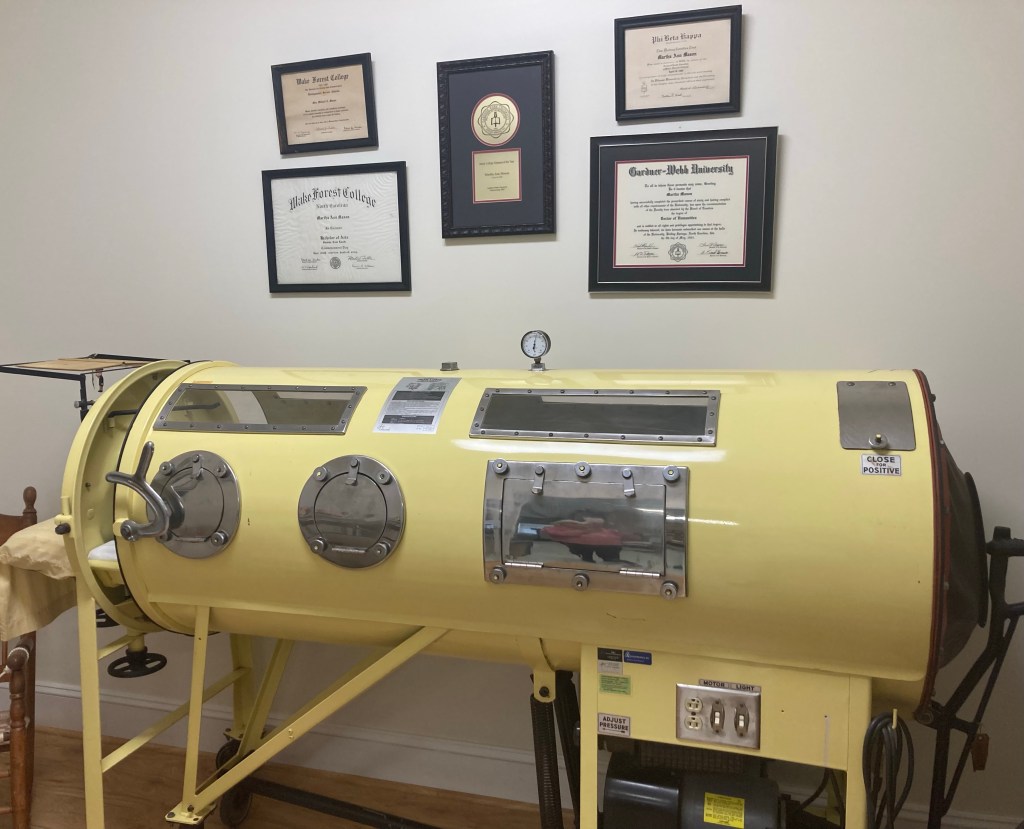
We learned the story of a local woman, Martha Mason, who died in 2009 at the age of 72, after 61 years living in an iron lung due to having contracted polio. She had a brother who was two years older, who died of polio four days before she went into the hospital for the same disease. The film tells her story, but she has also wrote her autobiography. While Martha never recovered , she graduated from Gardner Webb (when it was a 2 year college) and Wake Forest, both at the top of her class. She also ended up learning to use a computer by speaking and wrote her autobiography. She lived on her own after her parents both died with the help of three caregivers.
Some photos and stories about Martha.Martha’s iron lung and her diplomas. She was completely encased in the machine with only her head exposed.