This morning Bob and I had our own personal walking tour of Cambridge, very generously provided by our homeowners. It was two hours of non-stop information on Cambridge (both the town and the university) provided in an entertaining manner by Tony Rogers, a Cambridge University alum.
Some fun facts about Cambridge University. 1209 is claimed as the start date for the university, as this is the year when some Oxford students fled to Cambridge when Oxford was closed. The university is made up of 31 colleges, the oldest of which is Peterhouse. It has produced an incredible number of Nobel prize winners — 121 individuals. It is built on the monastic tradition of caring for one’s mind, body, and soul and so colleges provided a library, cafeteria, and chapel.
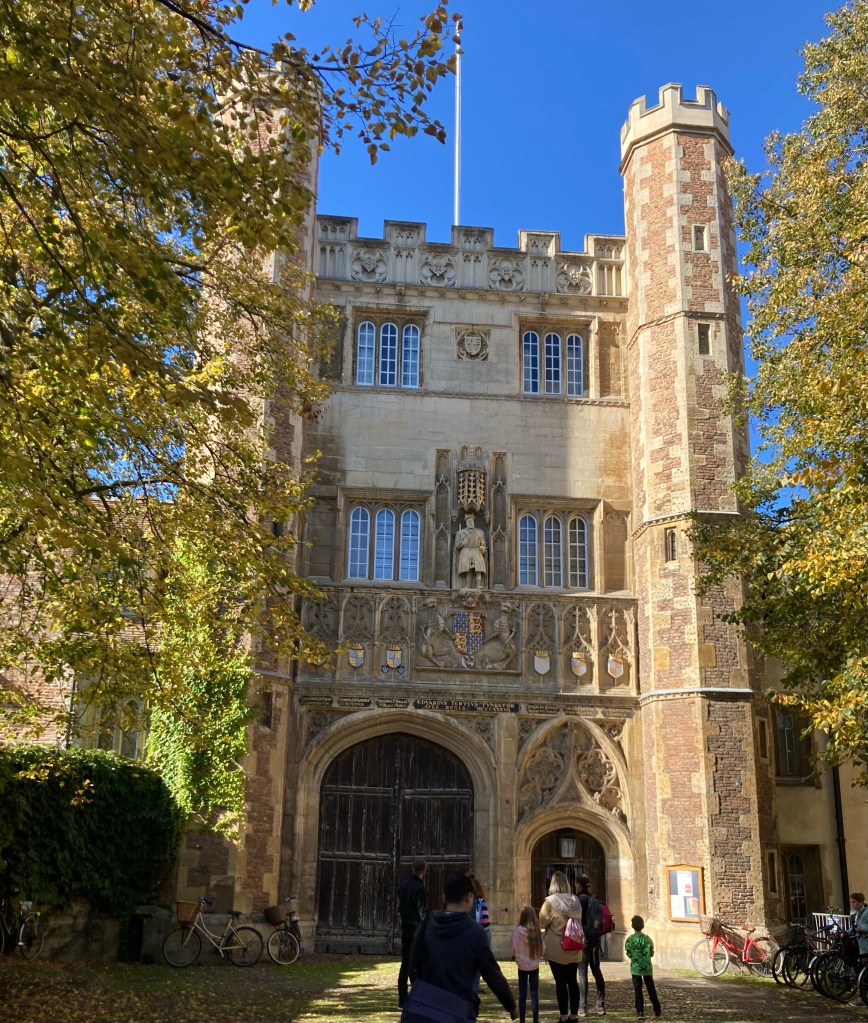
The following photos are some of what we learned about the university. The city-related photos follow.


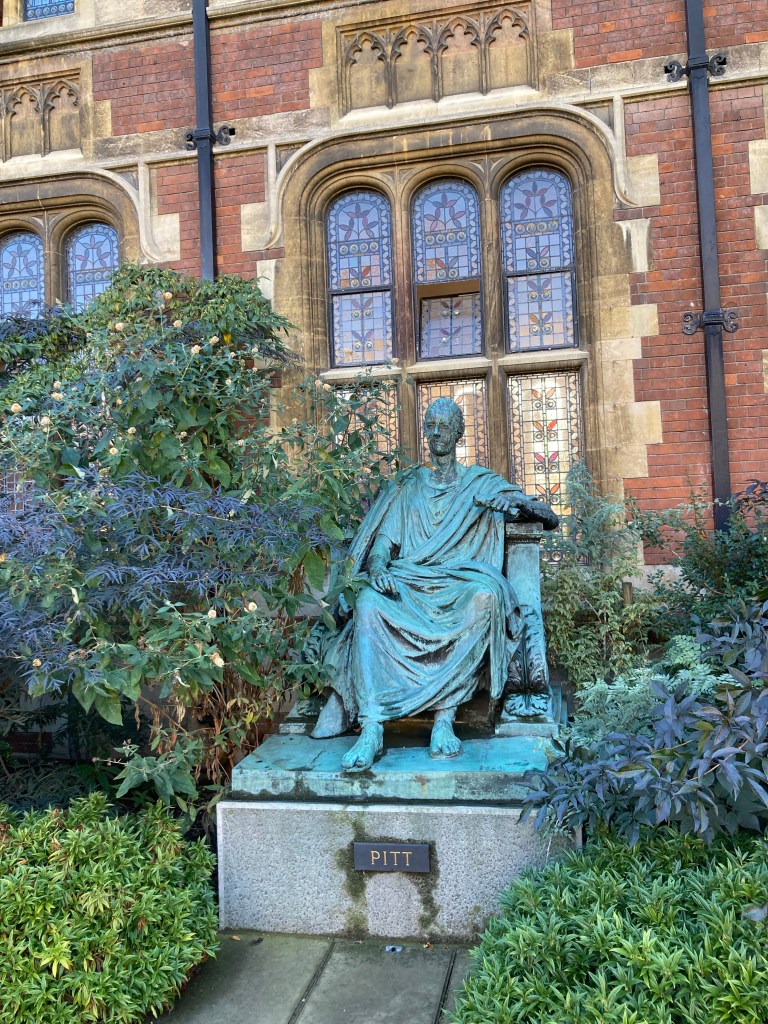

where Stephen Hawking was a Fellow
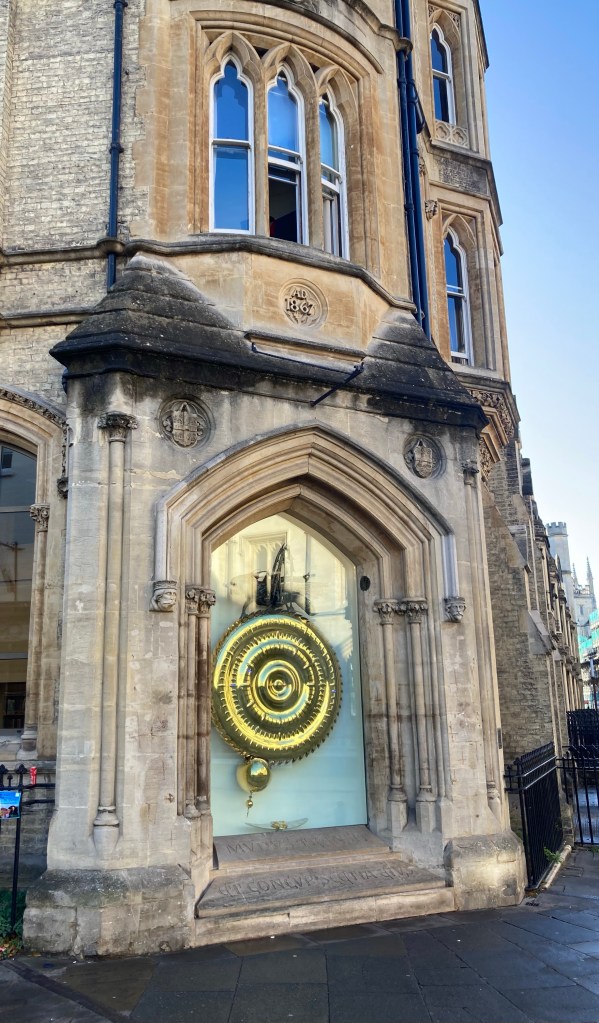
One of the newer features of Cambridge is the Corpus Clock which is behind leaded glass on the outside of the Taylor Library at Corpus Christi College. It was conceived and funded by John Taylor, an alumnus of the college. It is 24 carat gold plated stainless steel. The outer ring shows the seconds, the middle ring minutes, and the inner ring the hour via a blue light. The animal on the top, which didn’t photo well due to movement, looks a bit like an evil grasshopper, but is actually a chronophage, or time eater. The whole work is to remind us of the constant passage of time and to live life while we can.
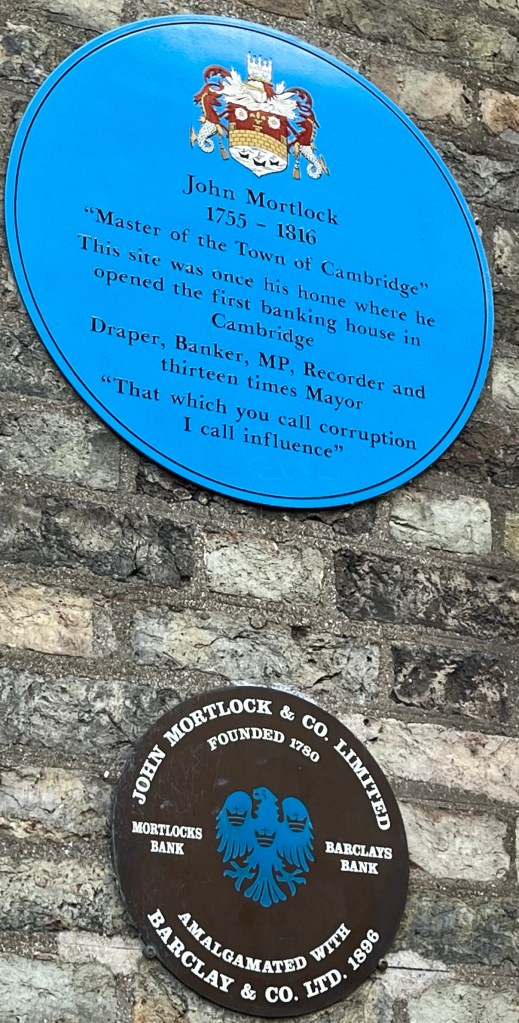
We also learned some history about the city of Cambridge.
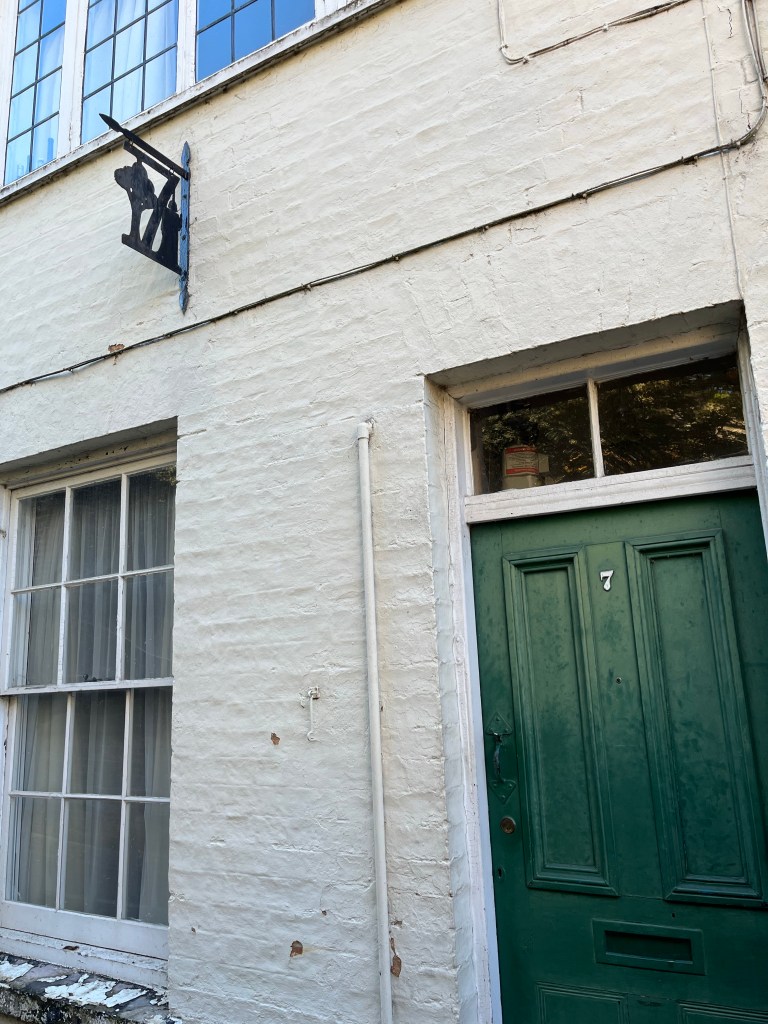
Note the metal sign showing the number of the house
surrounded by a tree and a person with a noose.
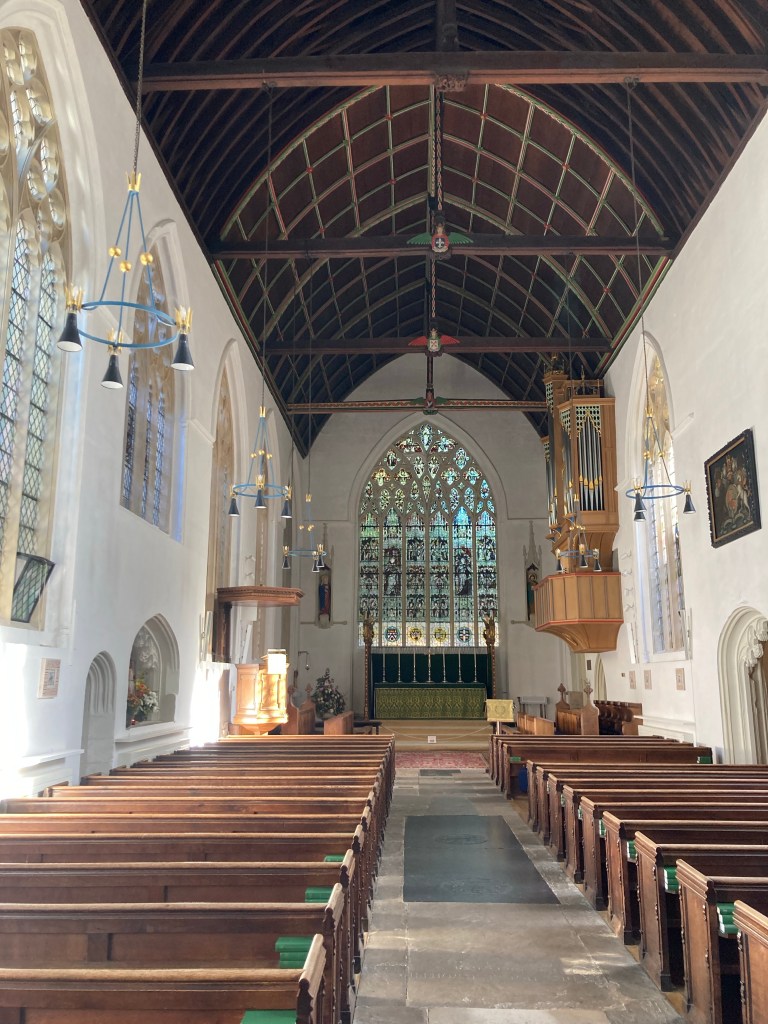
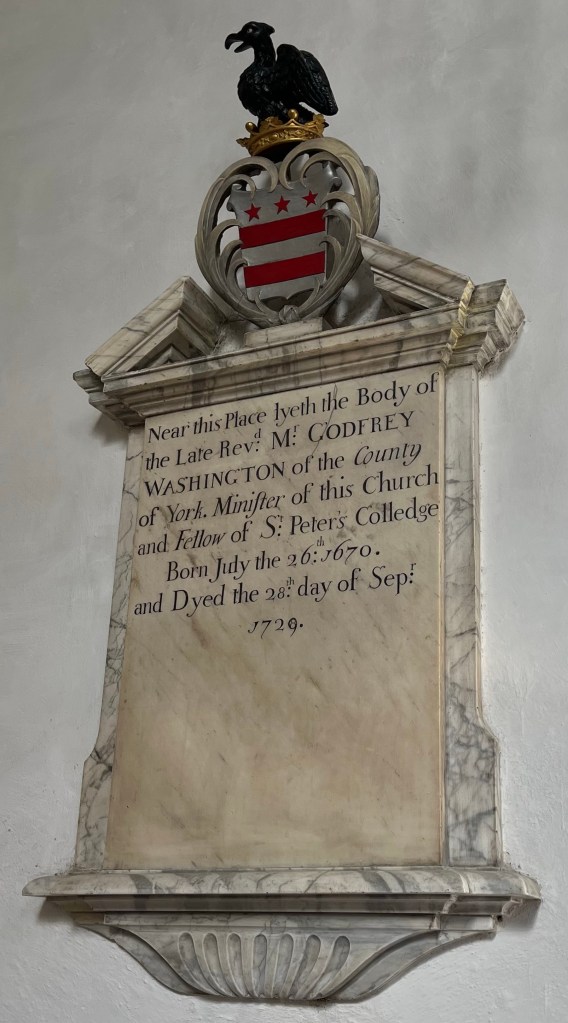
where the great uncle of George Washington is buried.
And the plaque on top may have influenced the USA flag.
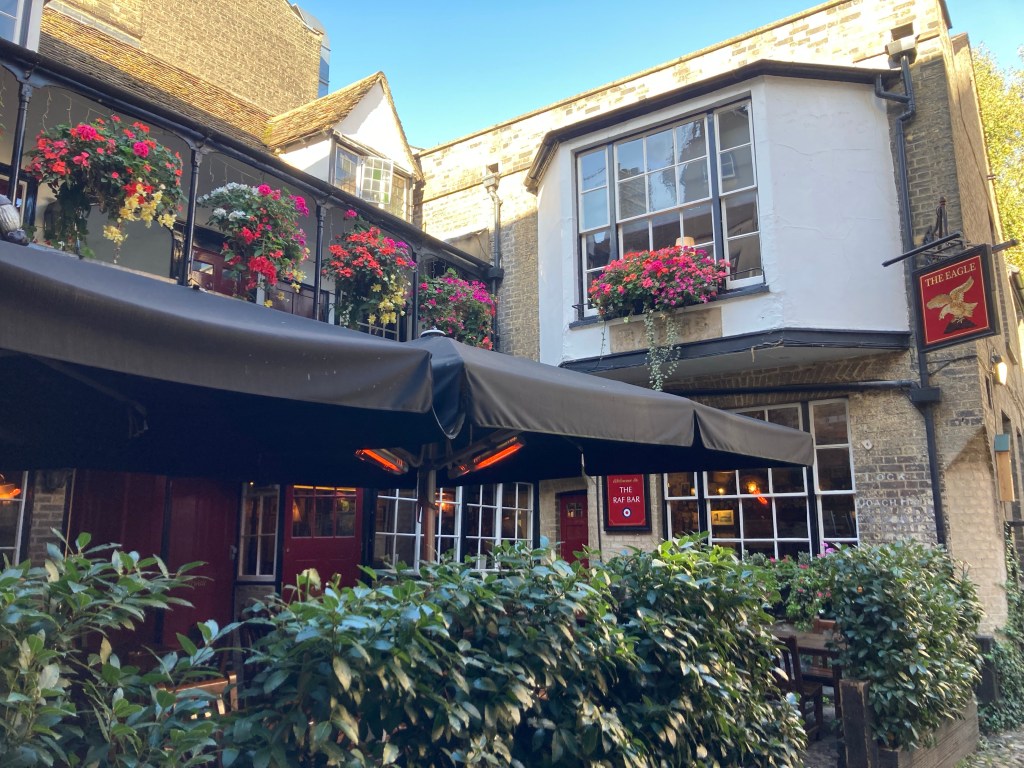
It was frequented by the Royal Air Force and US forces during WWII.
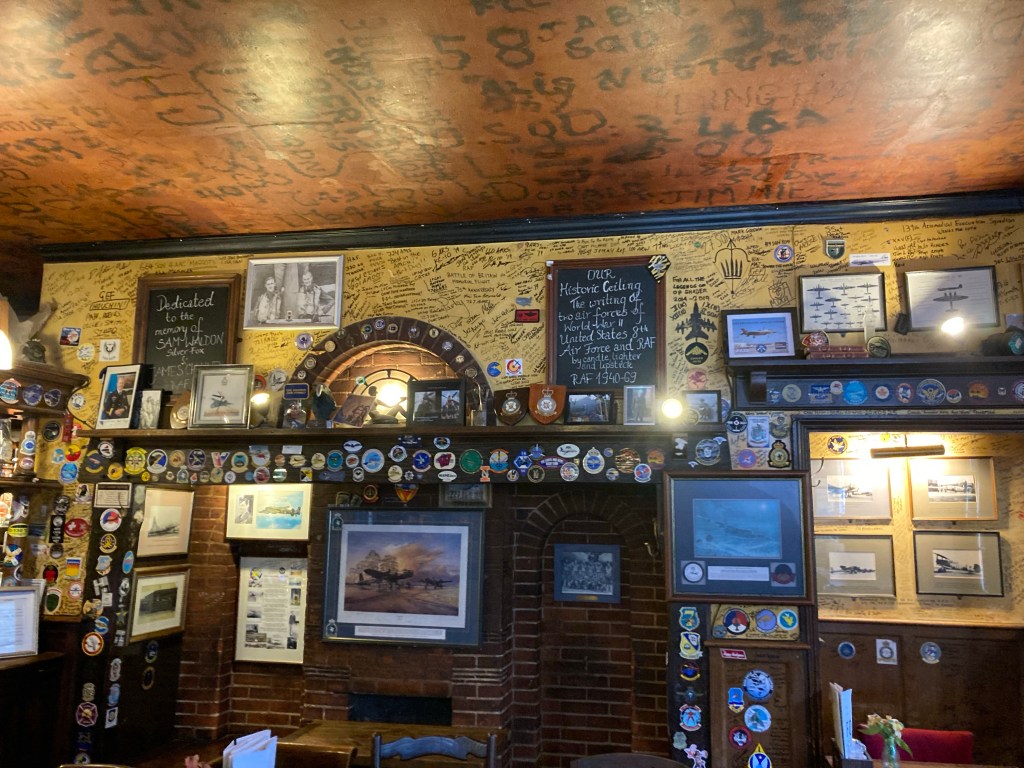
Individuals in the military who show their IDs get to sign the walls.
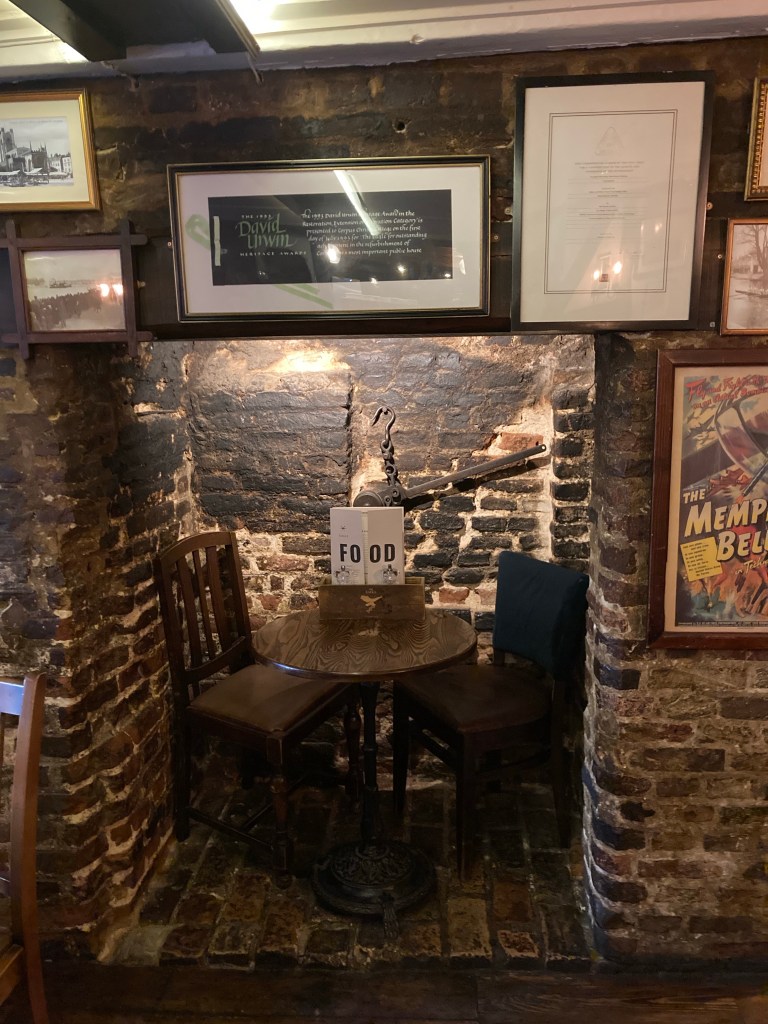
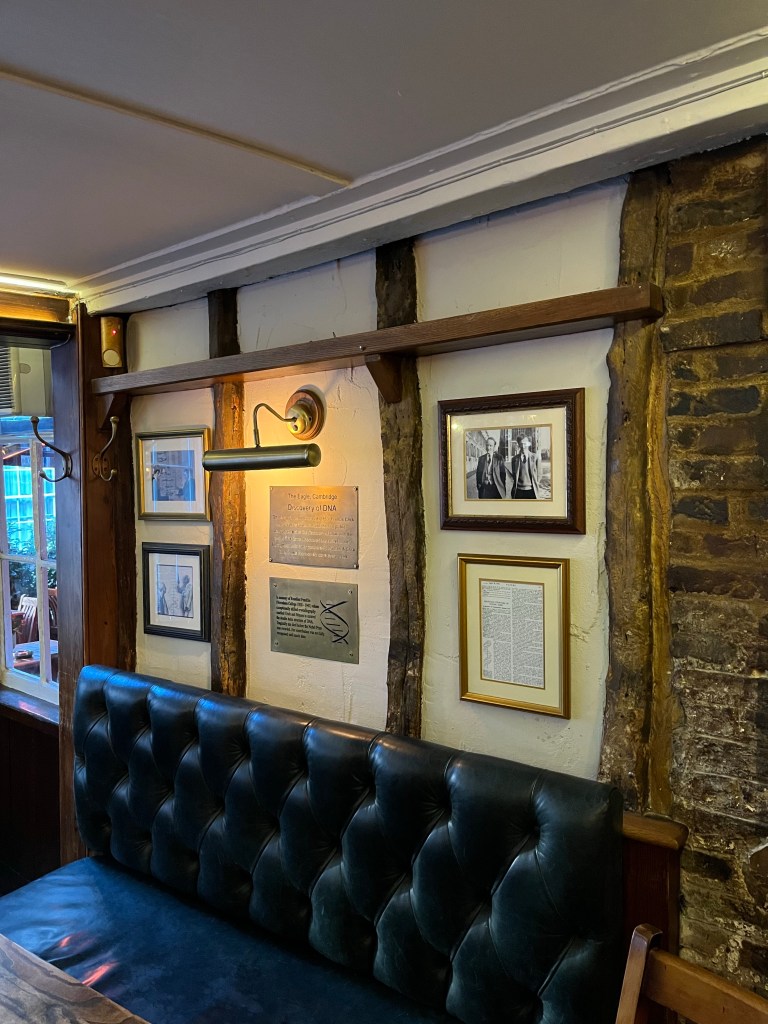
where Watson and Crick announced their discovery of how DNA works.
Work by Rosalind Franklin, another Cambridge alum,
is also now credited with contributing to this understanding as well.
 Peckish Travels