Bob and I have spent a good deal of time over the last few days watching the World Cup Semifinals. Unfortunately, they were played during the afternoons of the last two non-smoky days we may have for awhile. There are wildfires going on all over the world right now, but we are focused on those burning in Ontario, Canada, as the smoke from those is really impacting the air in much of the Midwest and Northeast of the US.
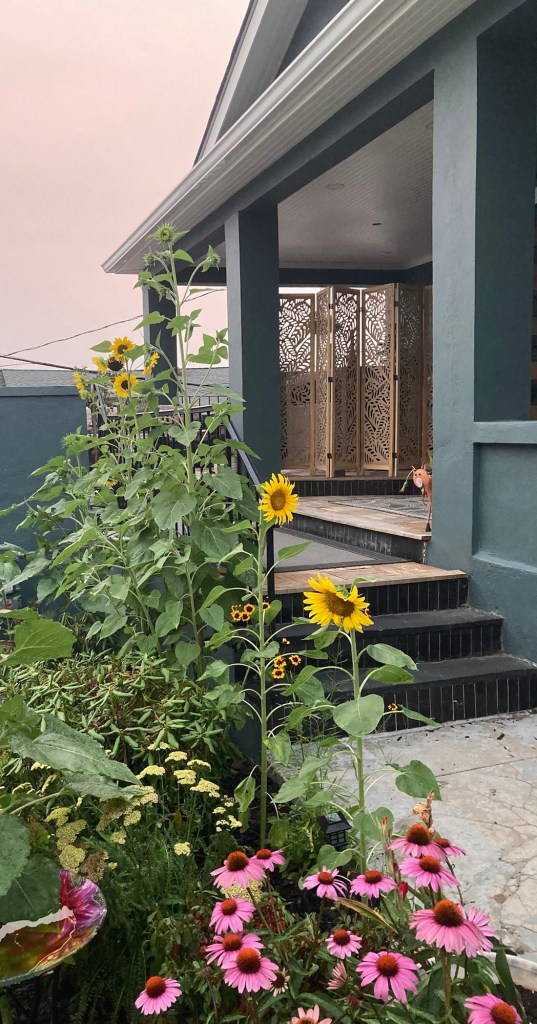
The sunflowers are really blooming now,
but the sky is not usually the shade of pinkish orange.
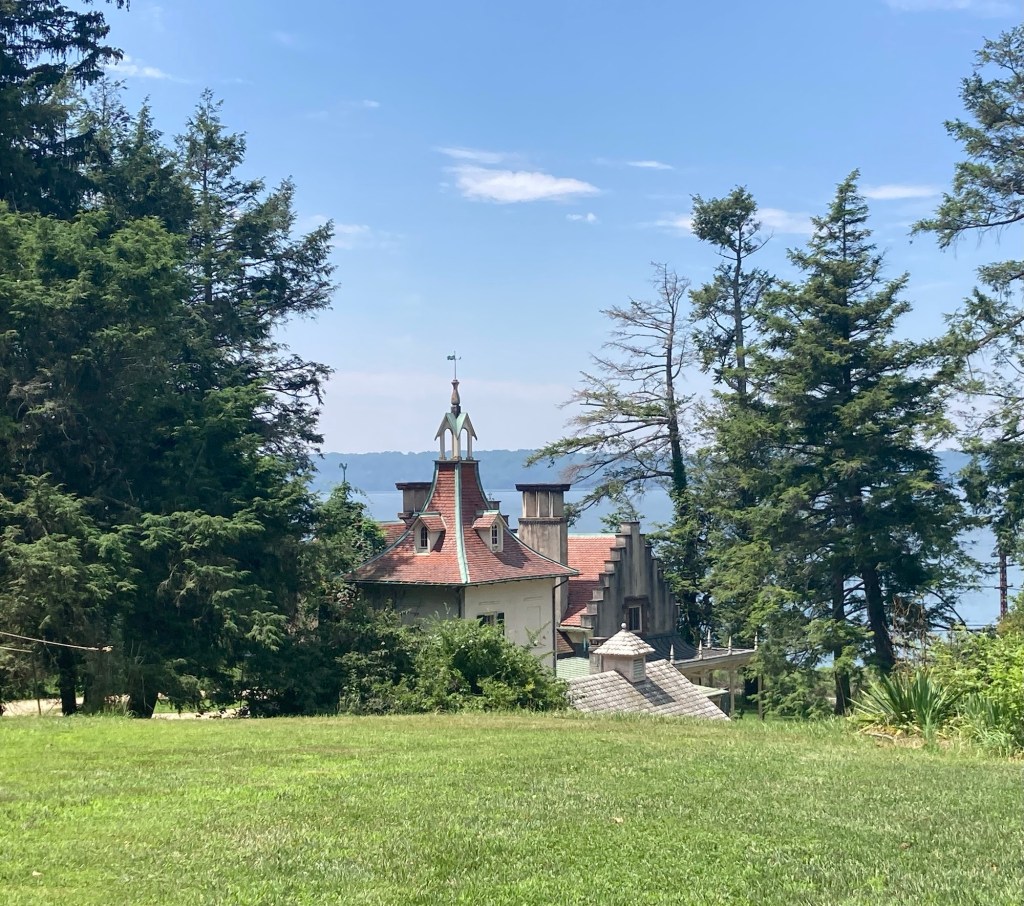
Except for watering last night, we stayed inside to just not deal with all the fine particulates in the air. Today, is a little better, and we were a bit stir crazy, so we walked a little over 2 miles (round trip) to tour Sunnyside, the home of Washington Irving.
Washington Irving (1783-1859) was born in New York City and died in Tarrytown in his home called Sunnyside. He is considered America’s first professional writer. Best known for his short stories, “The Legend of Sleepy Hollow” and “Rip Van Winkle,” he was also the author of many celebrated works of travelogue and biography, including volumes on Christopher Columbus, the American West, and George Washington (for whom he is named).
We learned during the tour that he was the youngest of eight surviving children, never married (although he was once engaged to a woman who died of tuberculosis before they were to marry), and lived in Europe for about 17 years. Sunnyside was the first and only home that he owned.
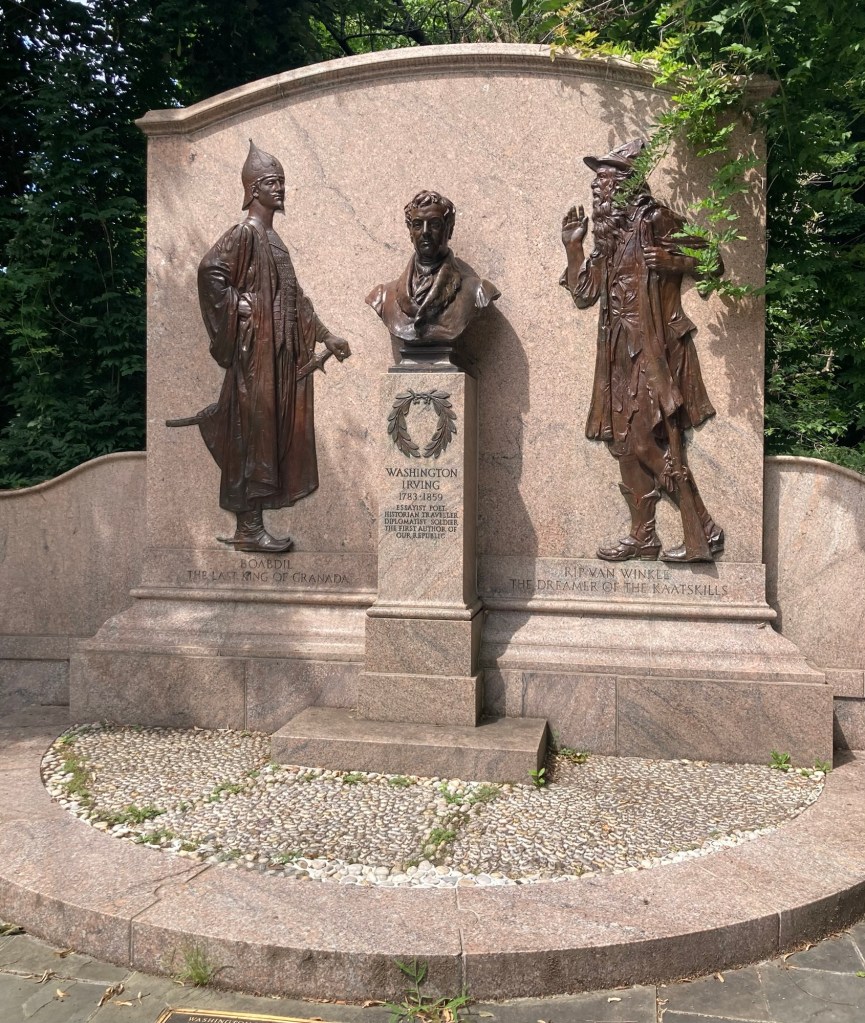
at the entrance to the road to his home.
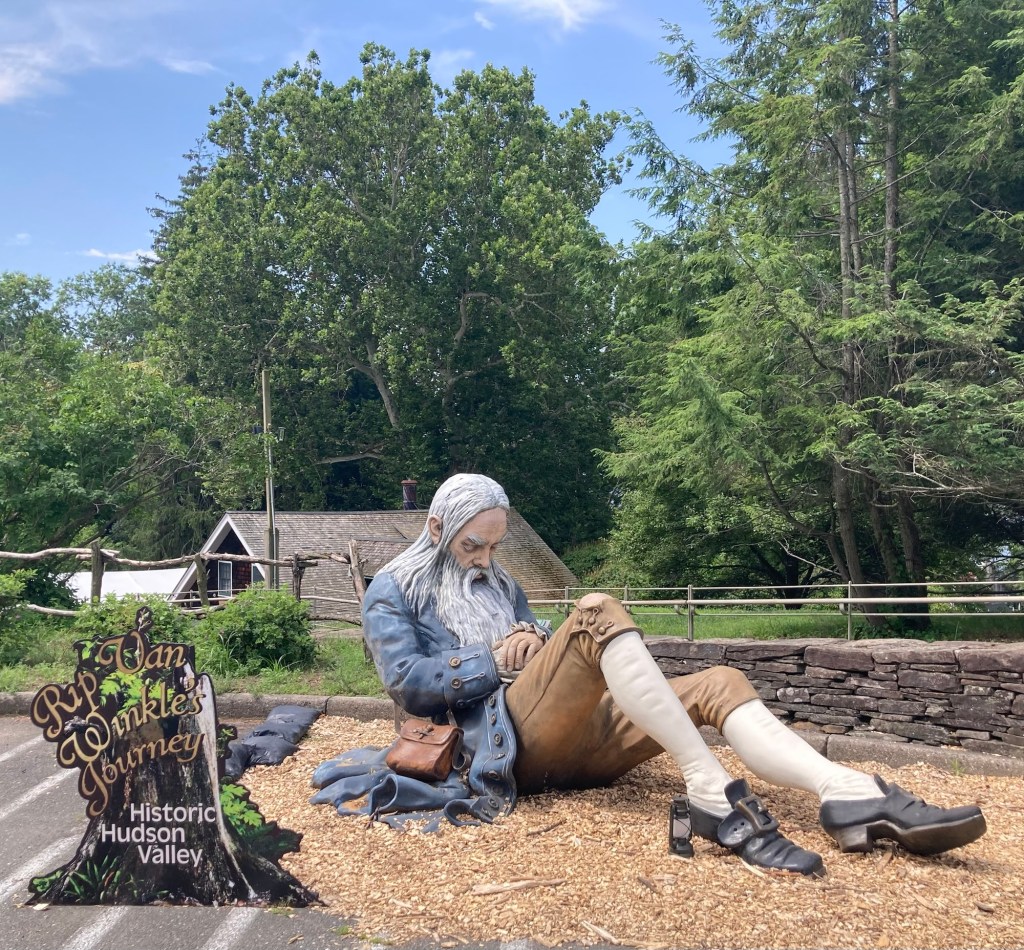
It was created in 1927 by Daniel Chester French,
who also created the Lincoln Memorial among other works,
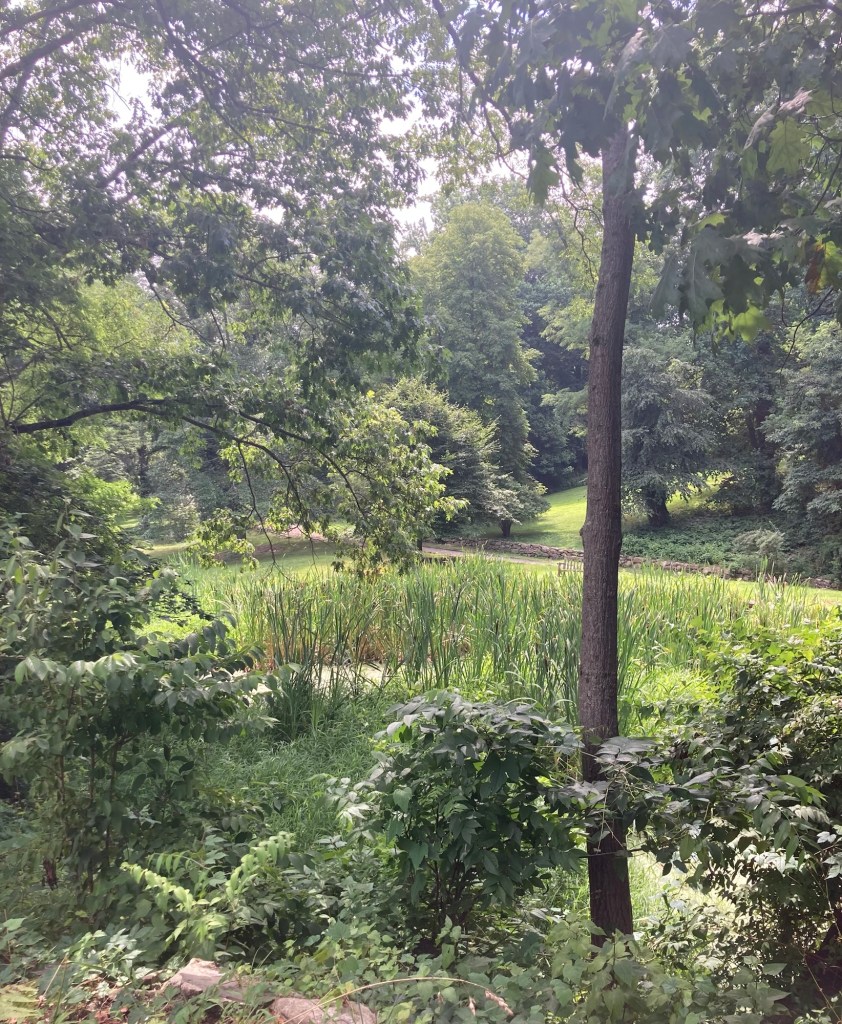
It used to be clear and was used as a source of water for cooking via pipes that ran downhill from the pond to the house.
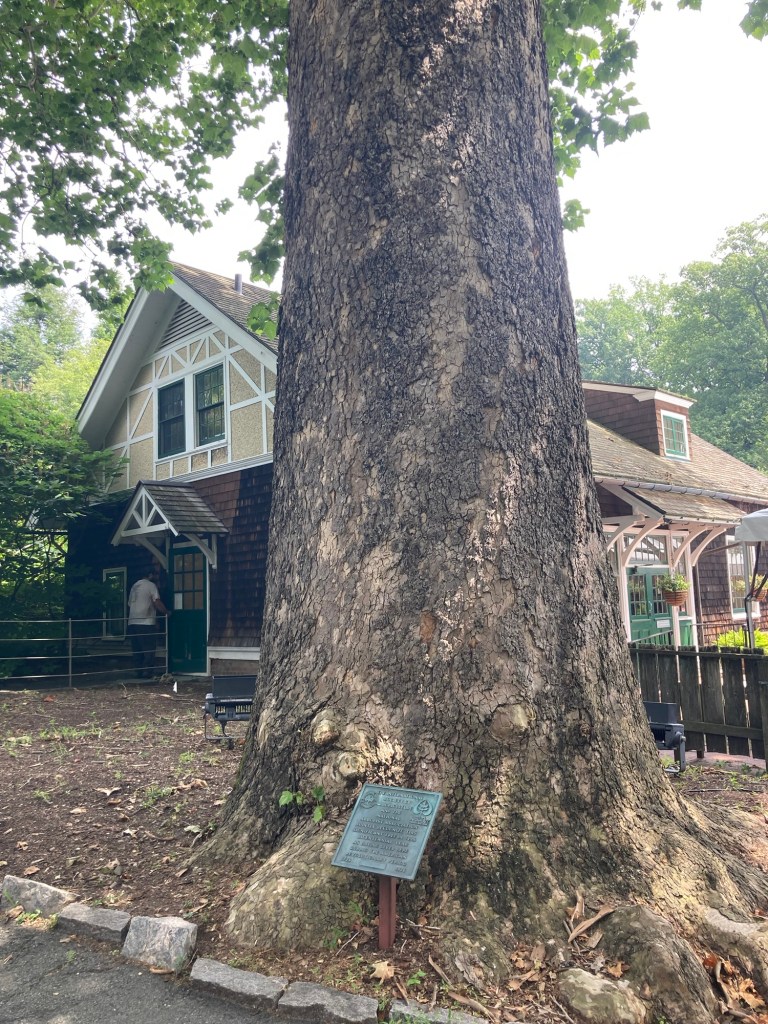
The marker in front of the tree as having been around
since the American Revolution.
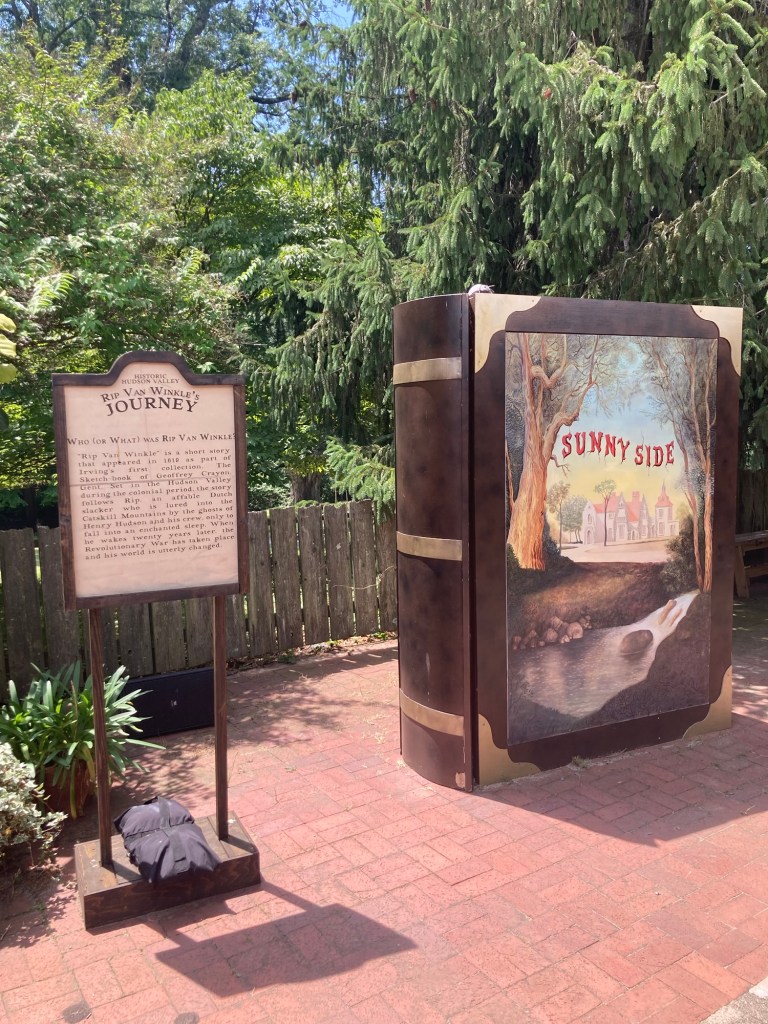
The placard tells the gist of the story of Rip Van Winkle.
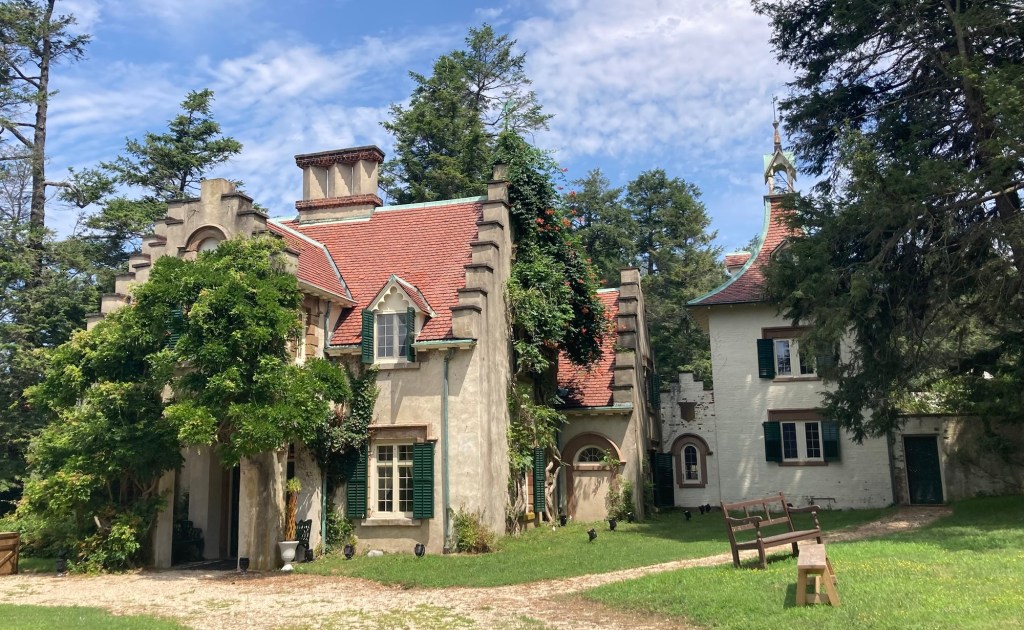
(the front portion of the left section of the house).
The “tower” on the right was added later
to house his female house staff.
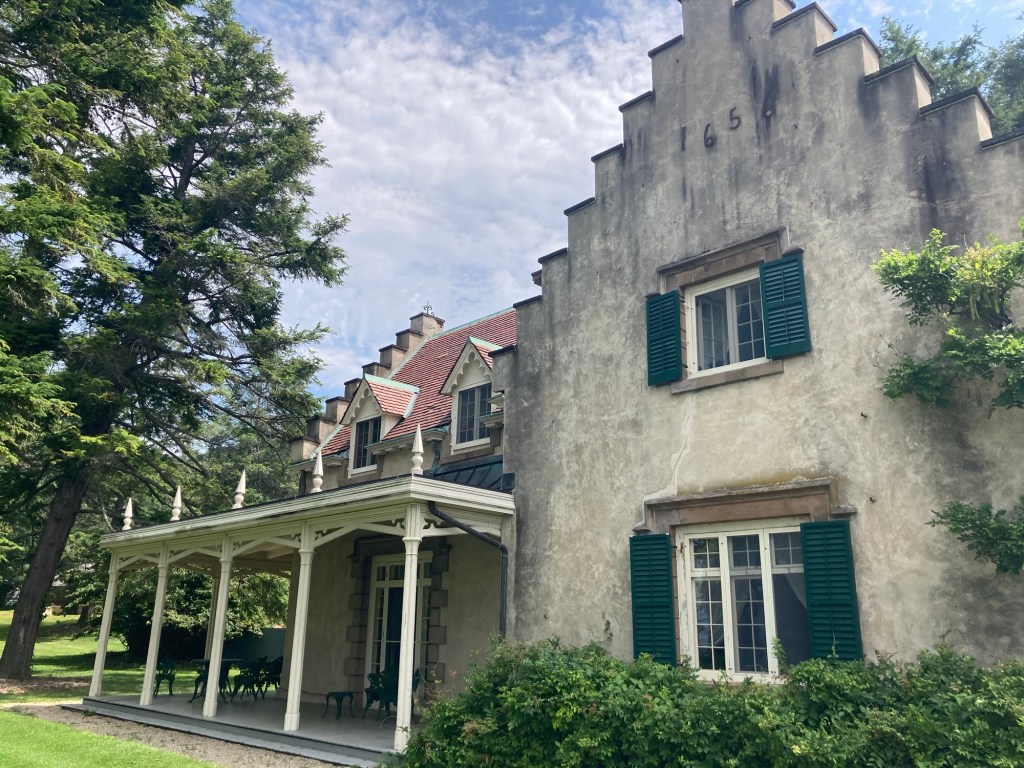
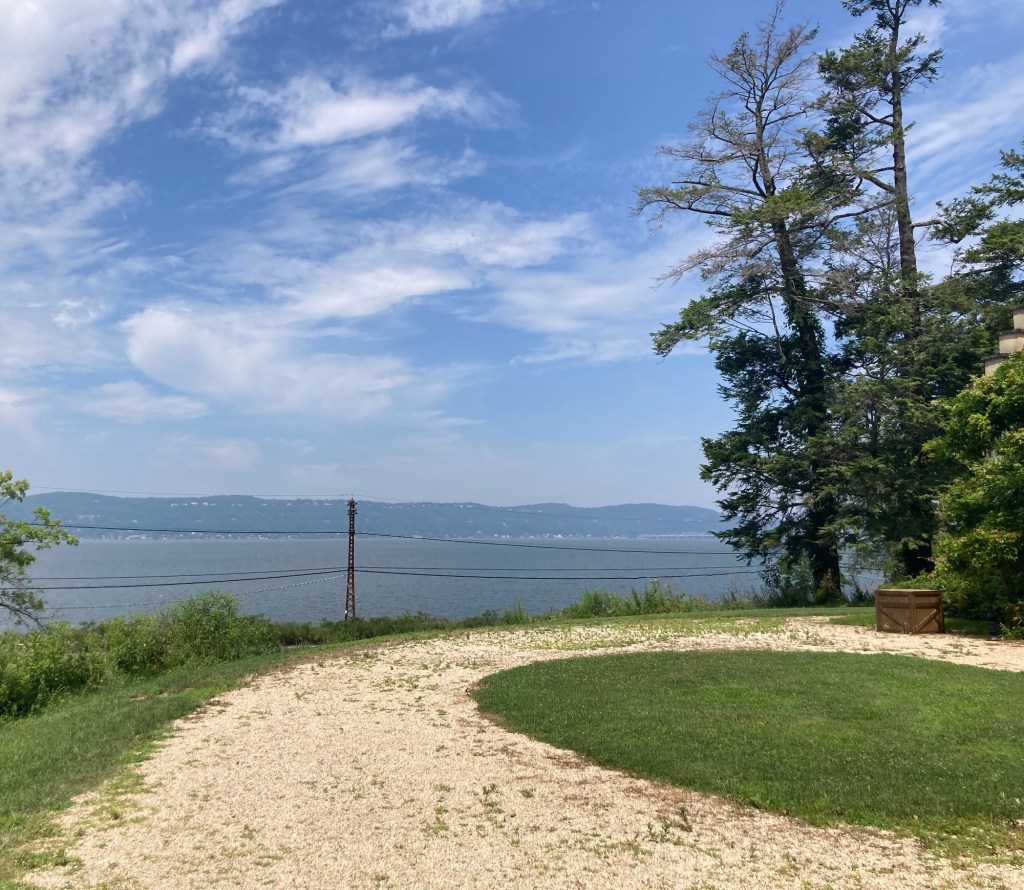
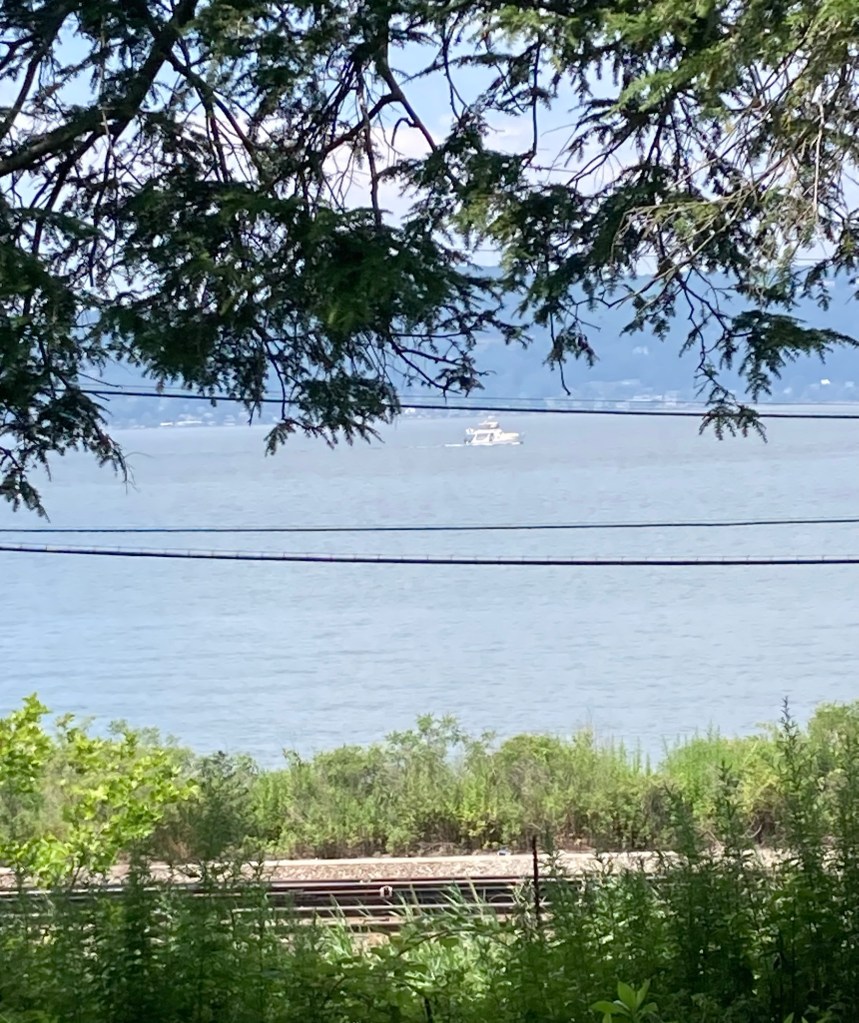
in front of the house. The train line,
which was added after he had finished the house,
is right below the fence.
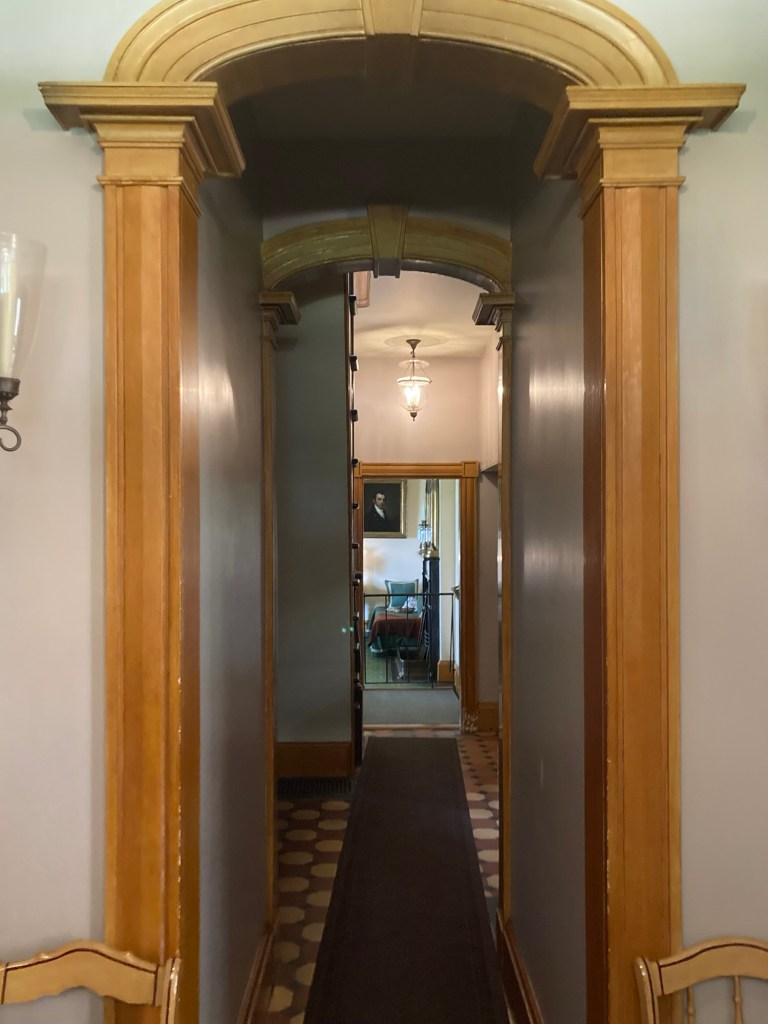
Communal rooms are off either side of this hallway
with all of the family bedrooms upstairs.
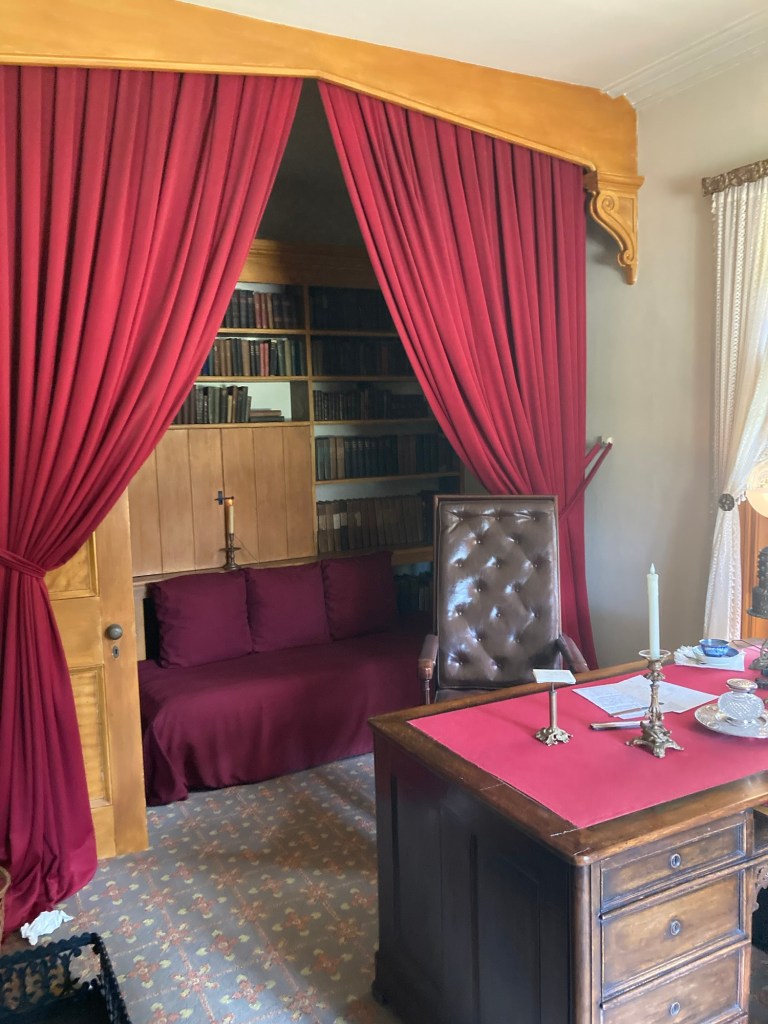
which went up to a sleeping loft.
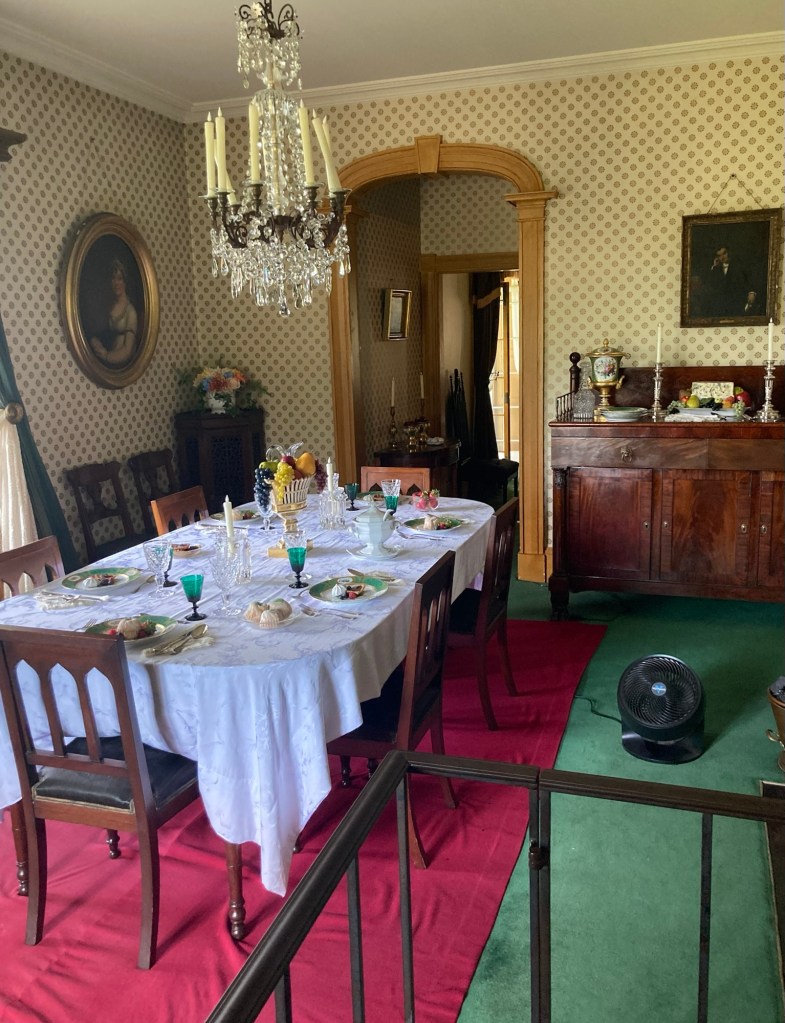
to accommodate 12 people.
While Washington Irving never married, he lived in the home with a widower brother and two of his older sisters.
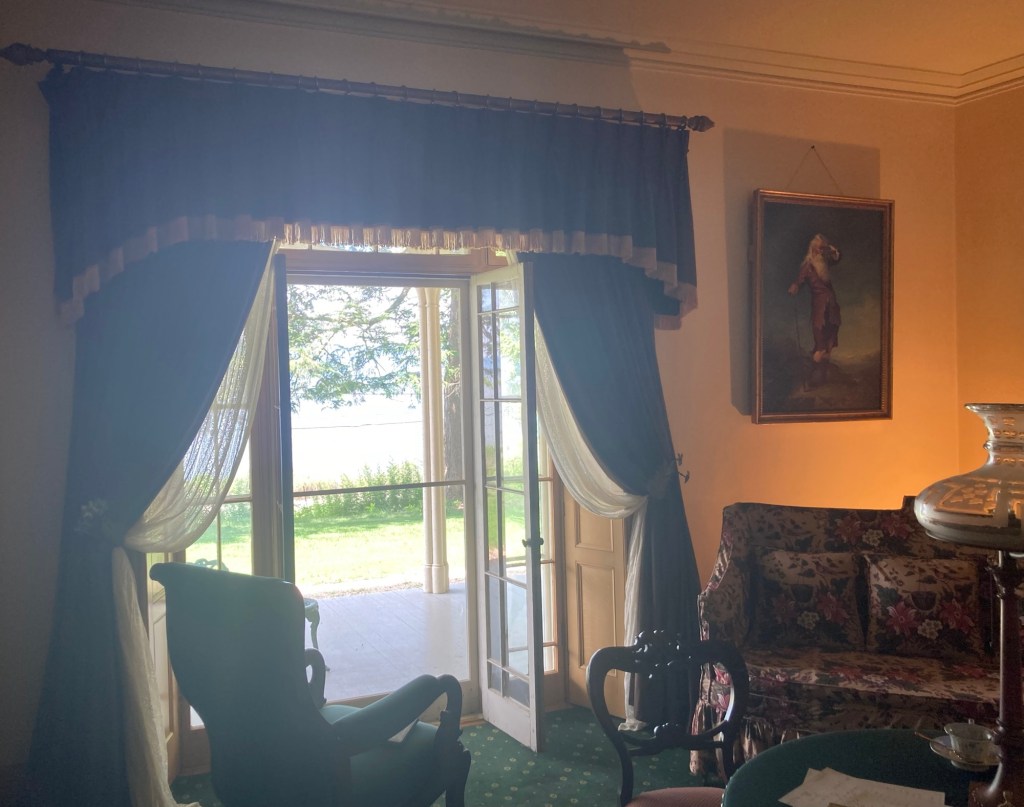
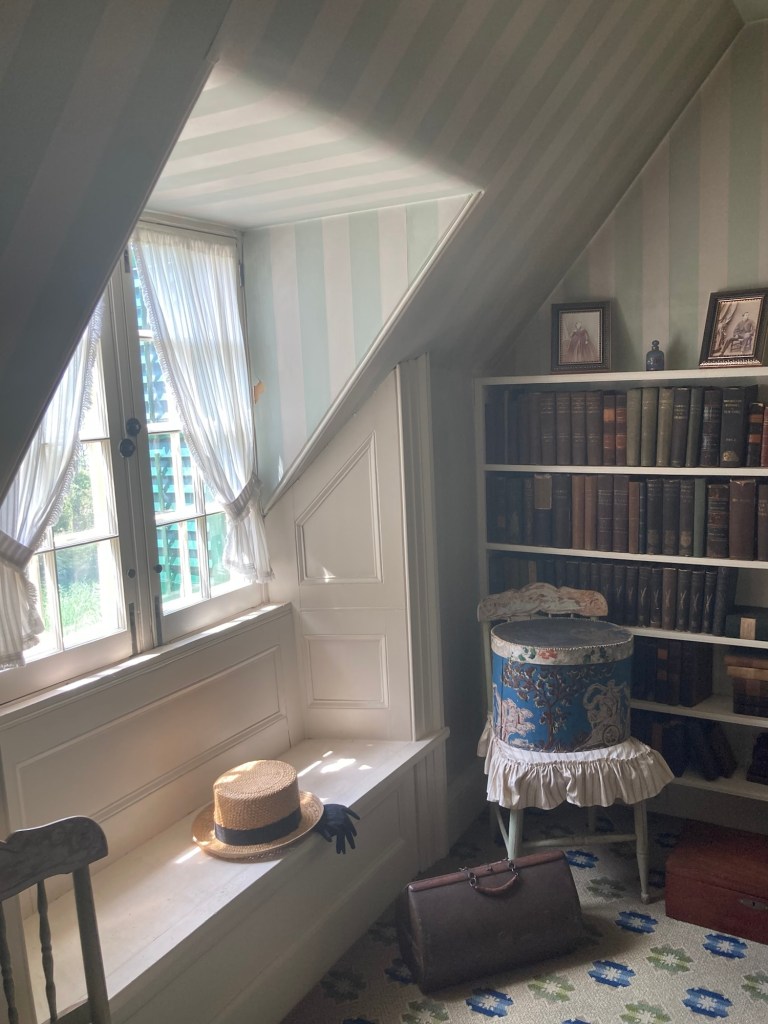
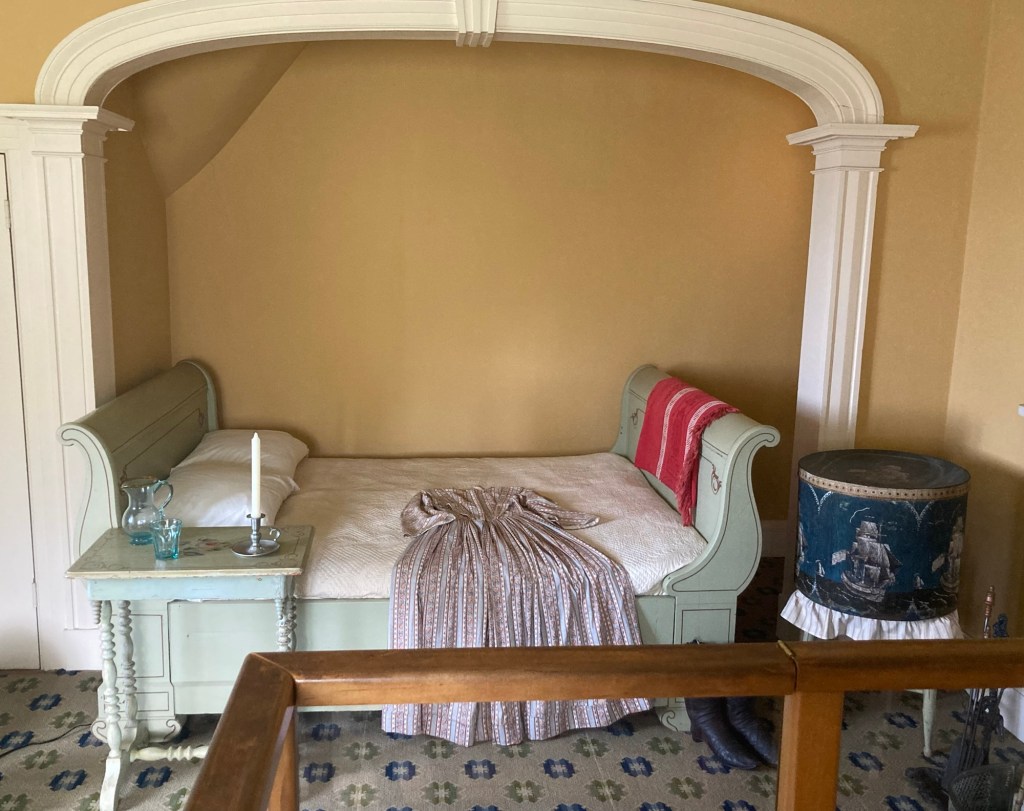
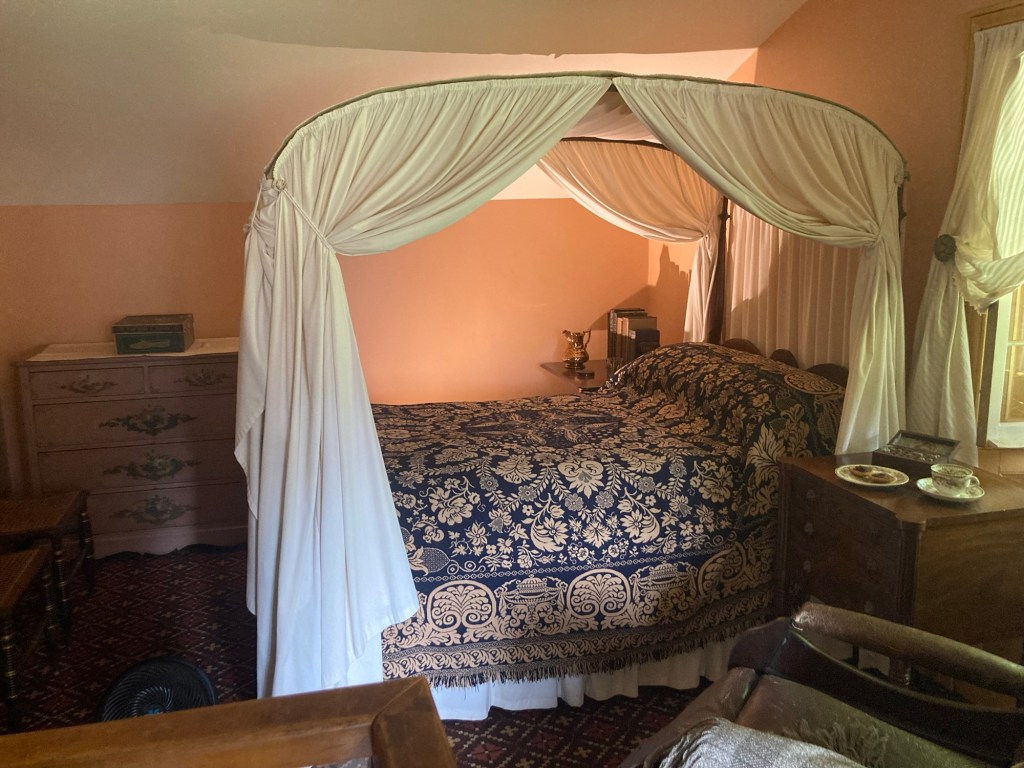
Much of the house and furnishings remained intact after he and then his sisters passed away because the family that purchased the property thought the cottage style house was too small and built a mansion next to it without razing or disturbing the property.
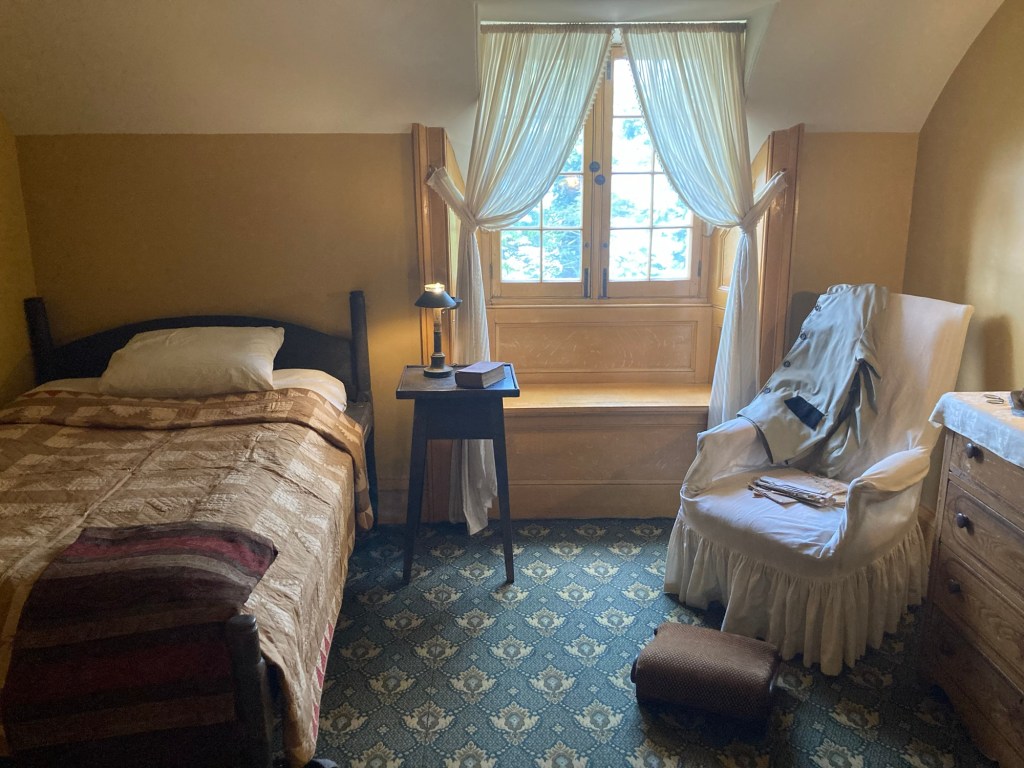
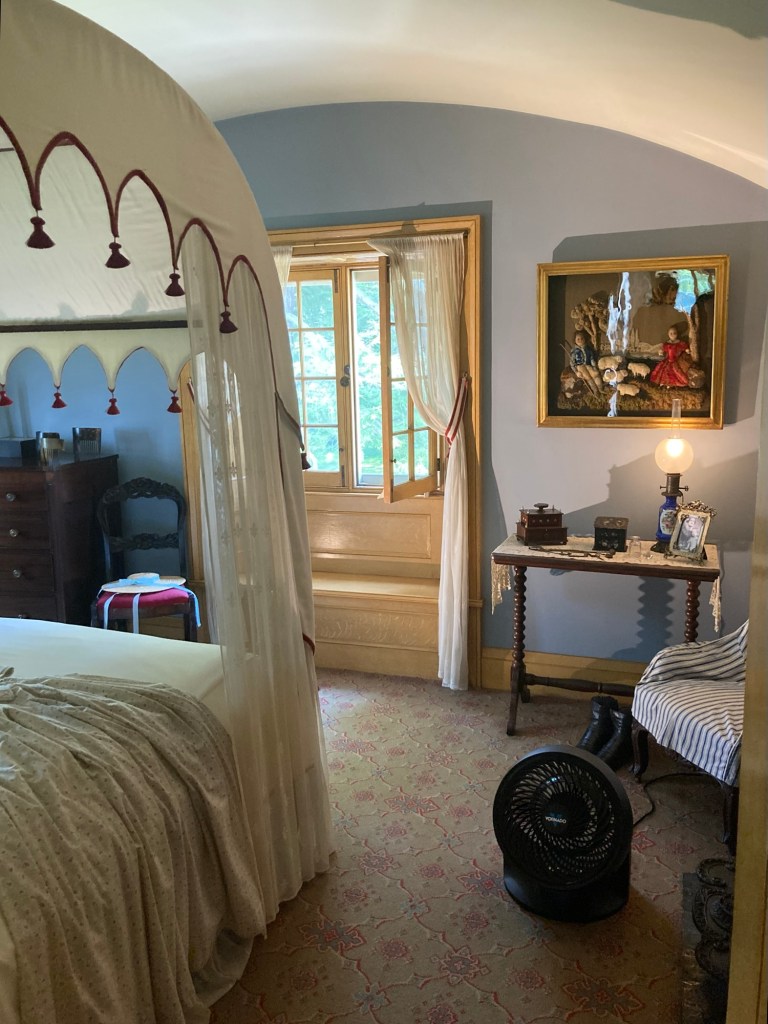
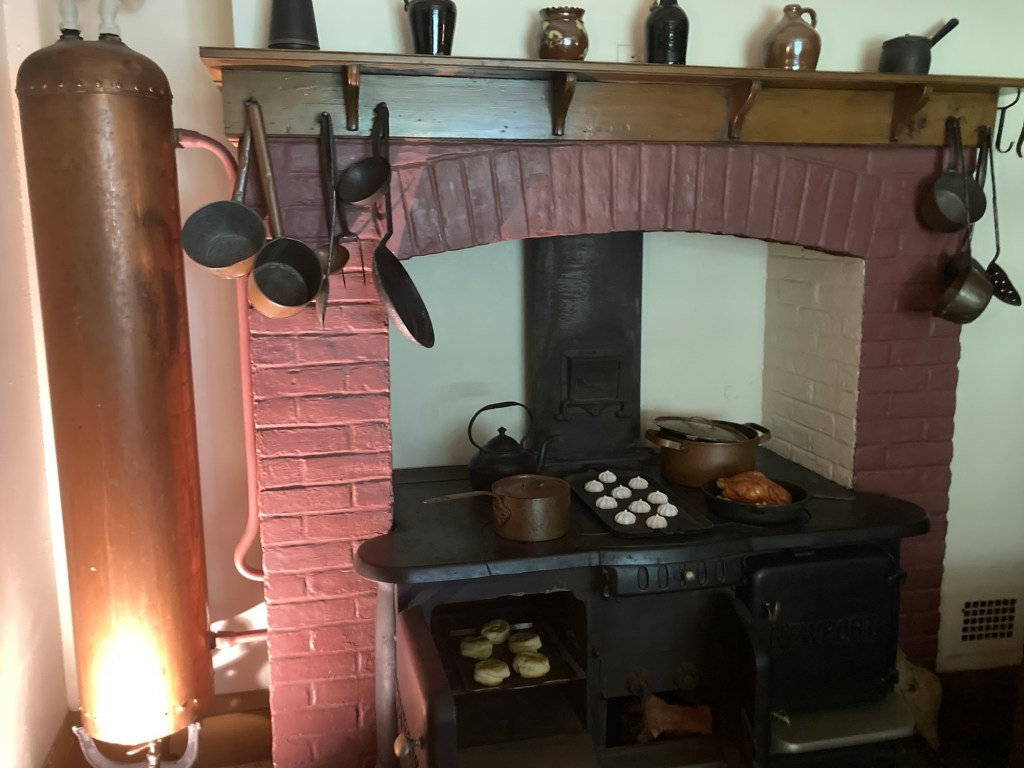
and a stove that burned both coal and wood
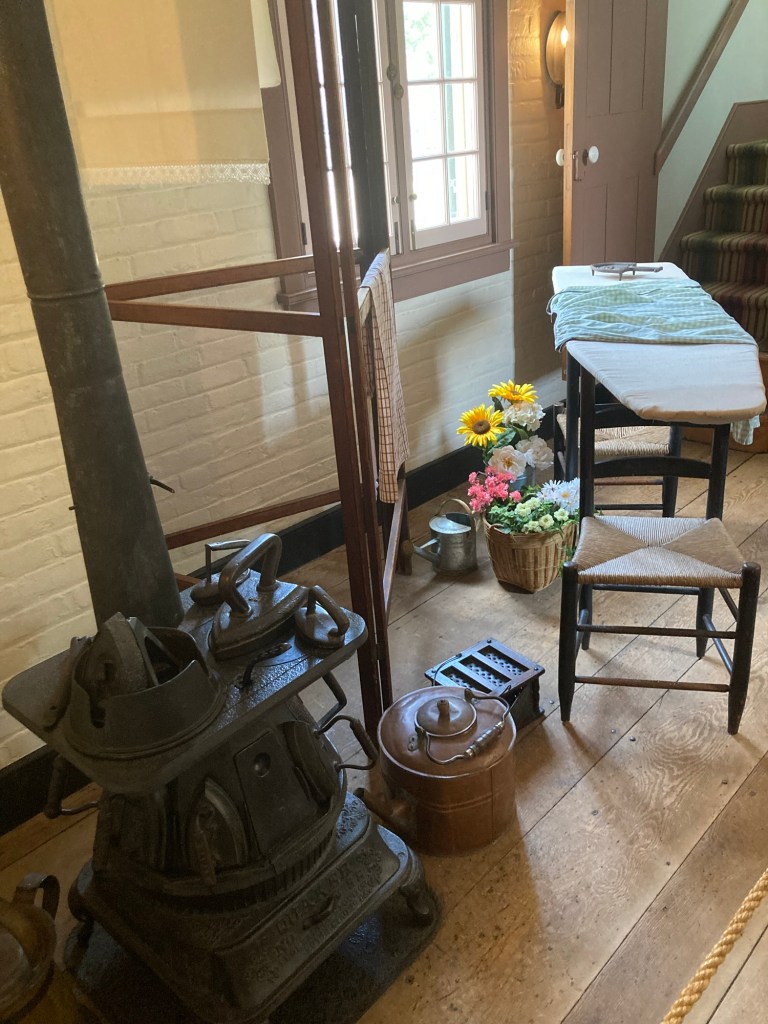
that was put on top of chairs to use
as we briefly sat on the portico at the end of the tour