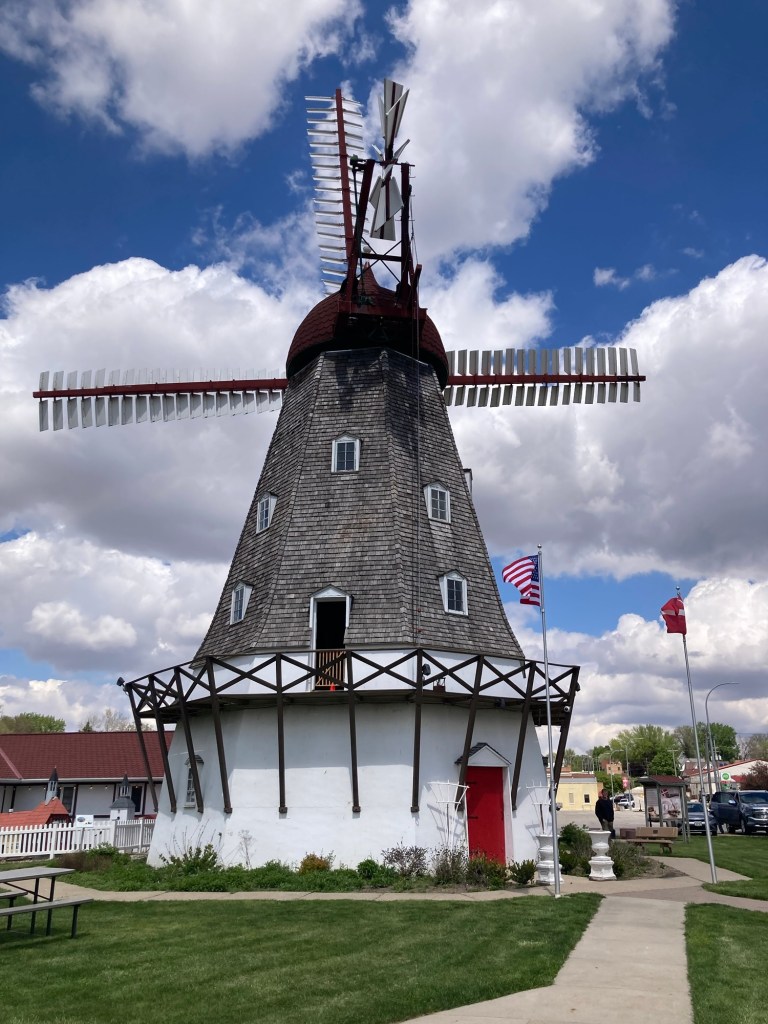
Bob and I left Des Moines, Iowa, yesterday about mid-day to start our slow drive to Destin, Florida, for a family gathering and then a housesit. We were headed yesterday to Plattsmouth, Nebraska, just outside of Omaha to stay with Bob’s sister Shelli and her husband John. We drove I-80 out of Des Moines and started seeing signs for the Danish Windmill in Elk Horn, Iowa. We decided to take the short 6-mile detour off the interstate to check it out. It did not disappoint.
The information at the windmill talked about the efforts the community of 750 people made to raise $100,000 from 1975-77 to locate, purchase, move, and rebuild an authentic Danish windmill.
As a side note, Bob and I did a housesit in Pella, Iowa, a couple of years ago, which is home to a Dutch windmill.
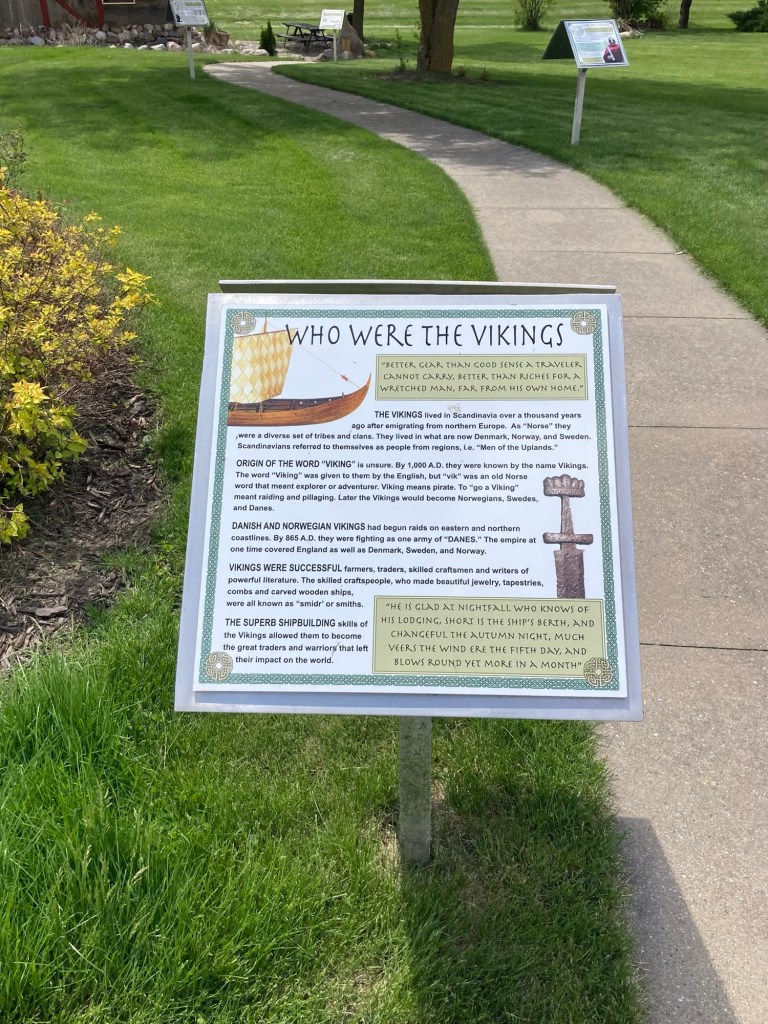
Elk Horn is also home to a Danish museum and genealogy center. We had a lovely visit in the gift shop with a very personable clerk, and we bought some goodies to take to Bob’s sister and brother-in-law.
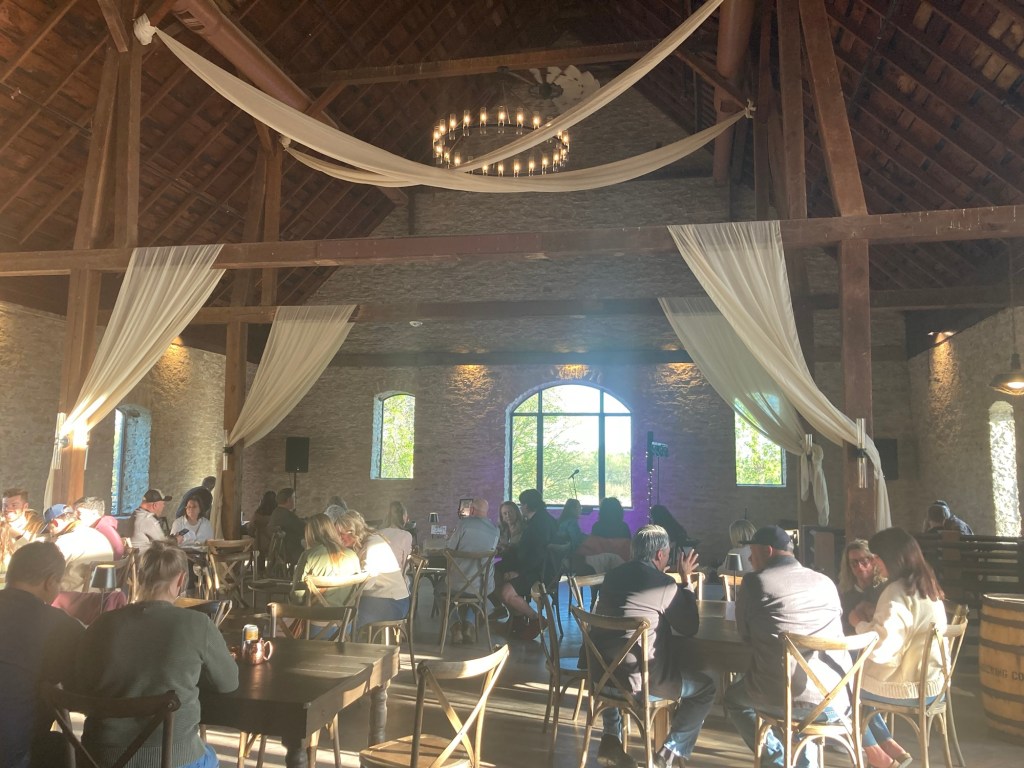
We had a great dinner and visit with Shelli and John. We did a load of laundry, and we caught up on their recent and upcoming travels as well as what their kids are up to. After dinner, we went to a nearby event space that just opened for some drinks and to listen to music. It was lovely.
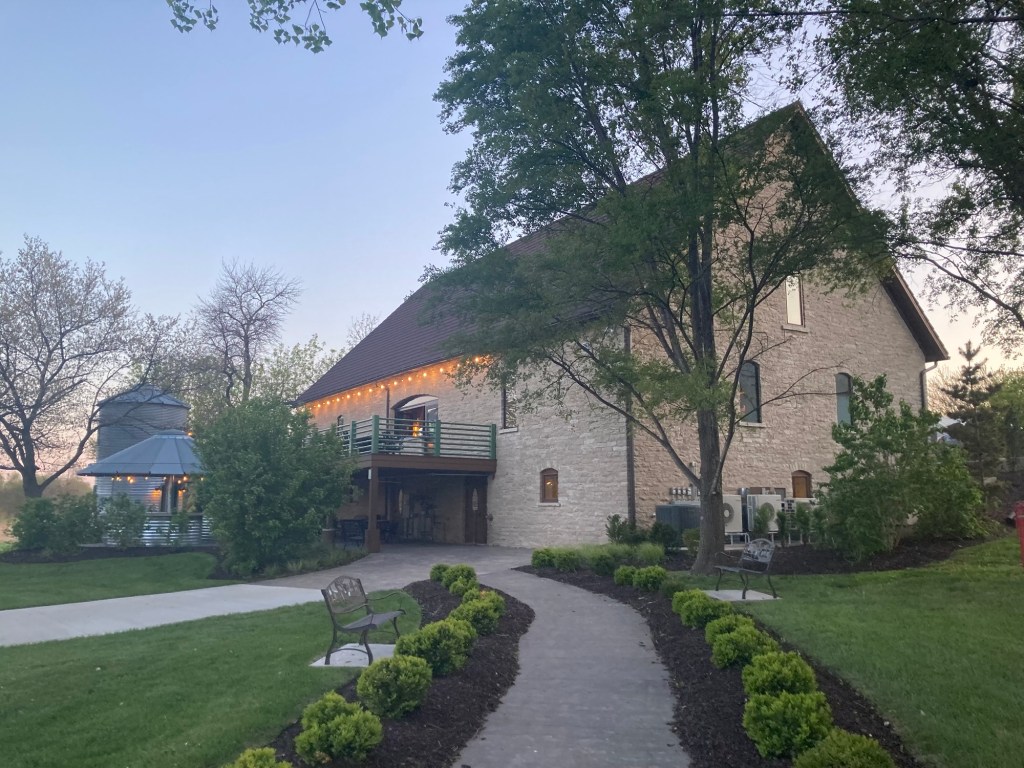
on Thursday and Friday nights and weddings on Saturdays.
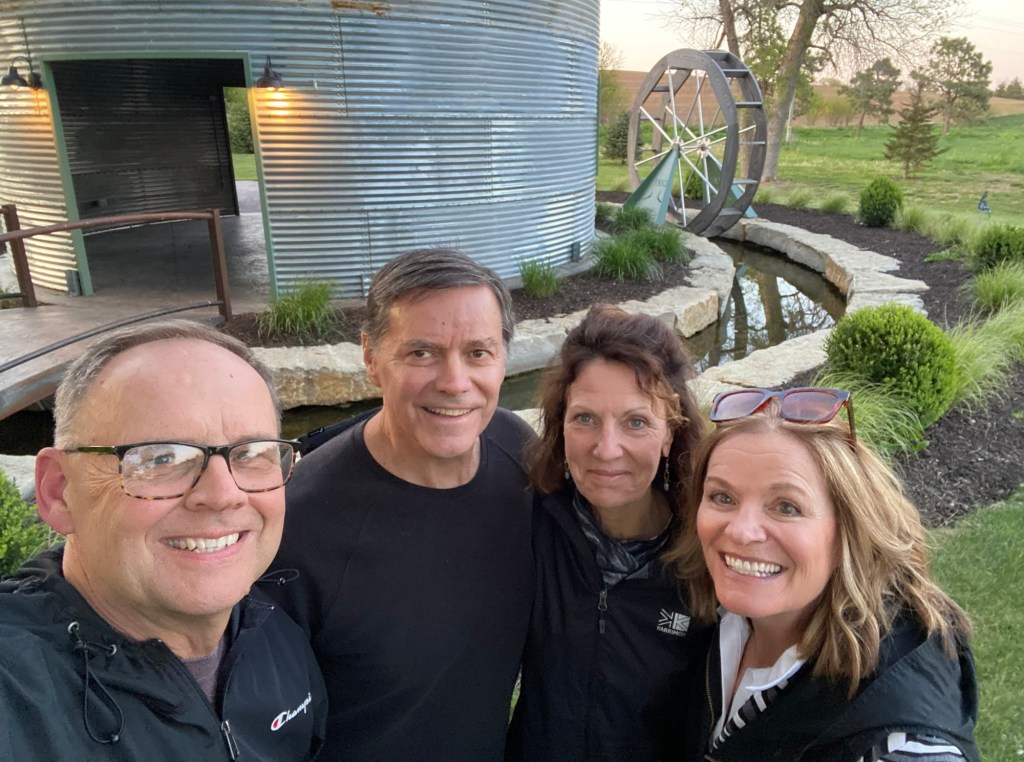
This morning we had coffee and a light breakfast at Shelli and John’s before leaving to head towards Nebraska City and then on to Topeka. After almost having left my phone, which John found, and a bag of Bob’s, which John also found, they still had to call us back after a few minutes on the road, as Bob had left his coat there.
The second departure was successful, and we headed 30 minutes down the road to Nebraska City, Nebraska, to visit the Arbor Mansion. This is the home of Julius Sterling Morton, his wife, and his four sons, all of whom contributed a great deal to Nebraska and the country. Julius Sterling Morton (1832-1902) was a Nebraska newspaper editor and politician who served as the Secretary of Agriculture under President Grover Cleveland. He is credited with founding Arbor Day in 1872.
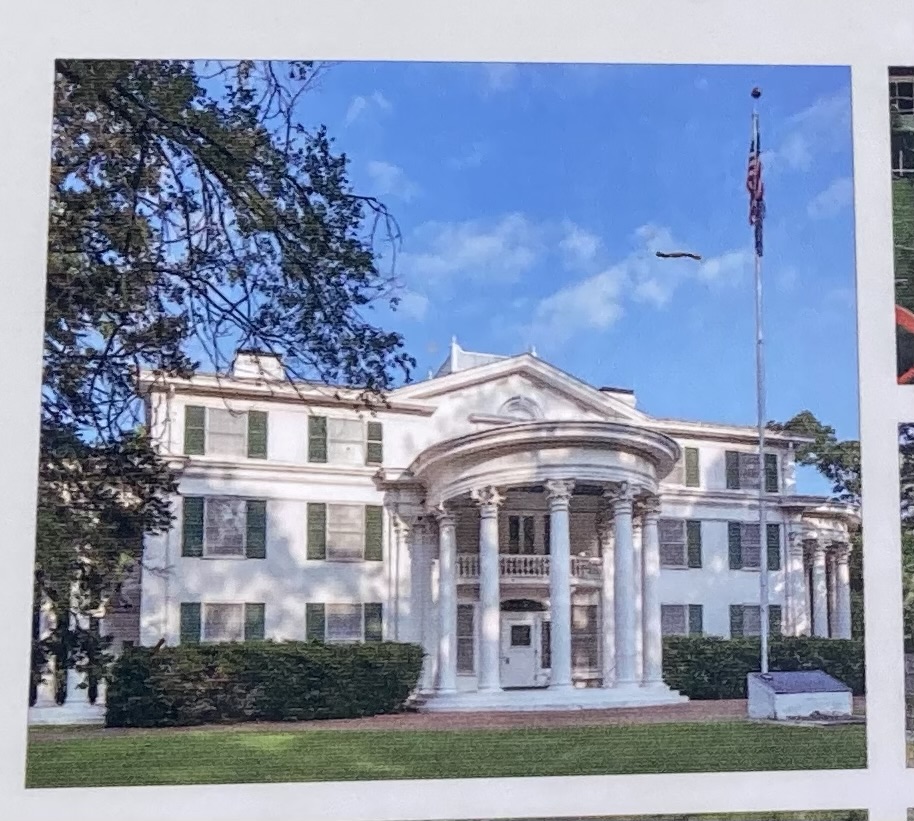
It began as a small cabin which was added onto 4 times
by Julius Morton or one of his sons.
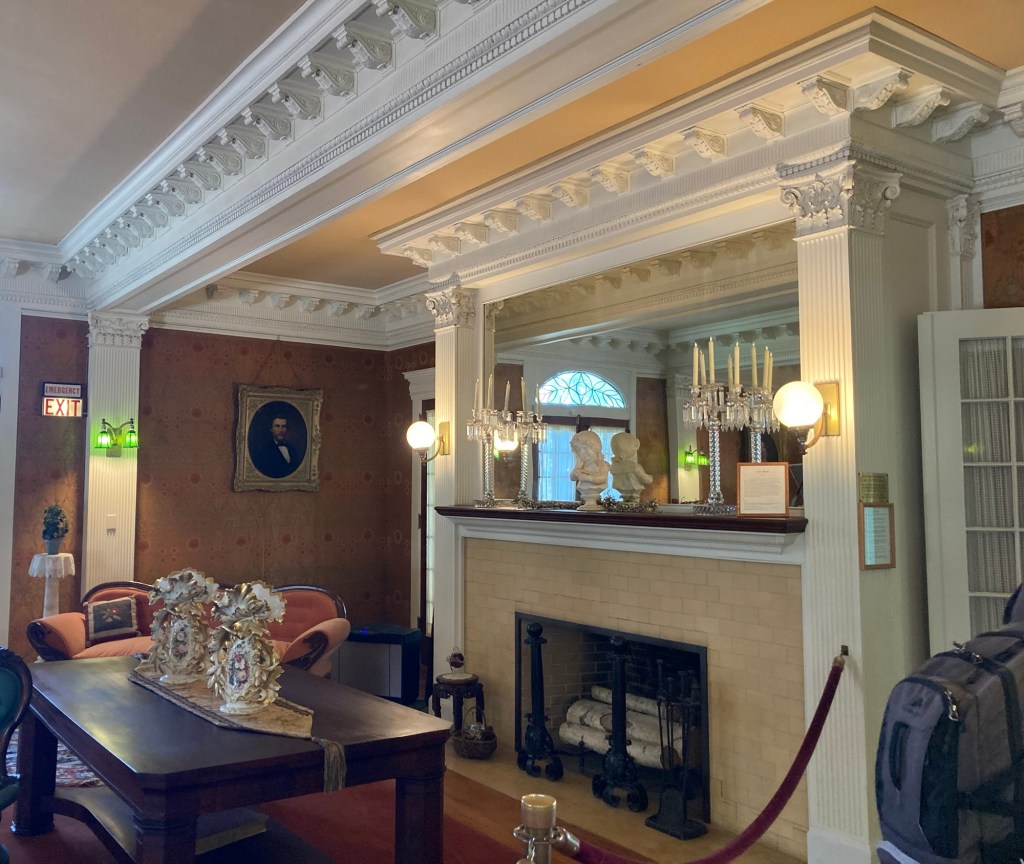
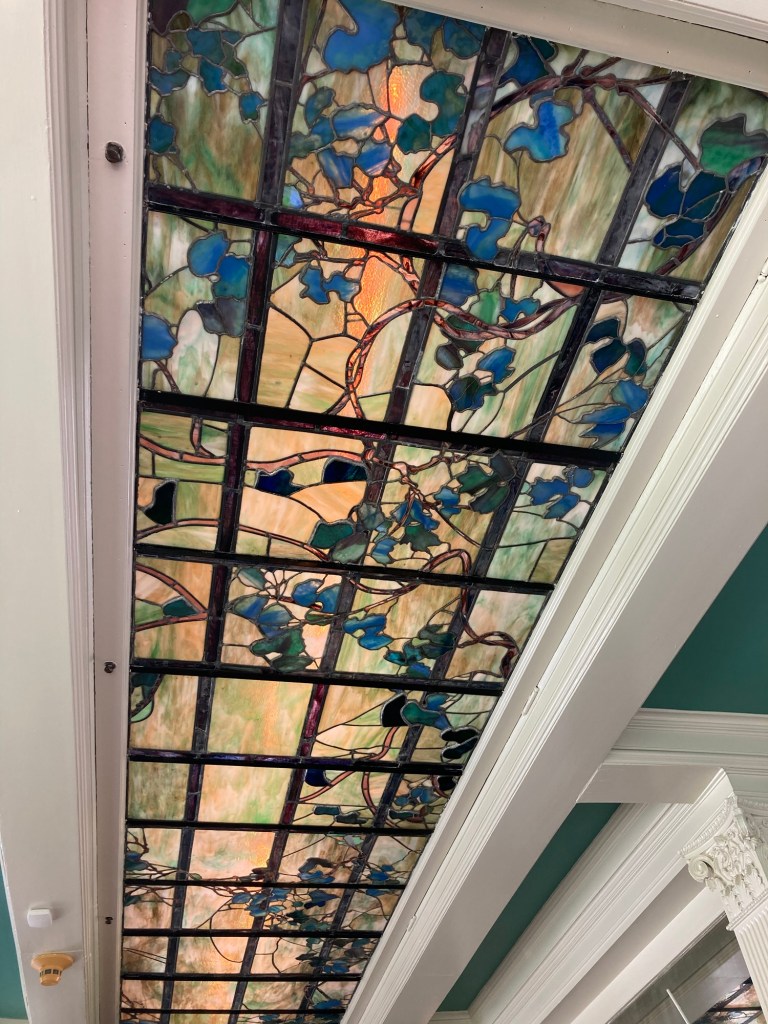
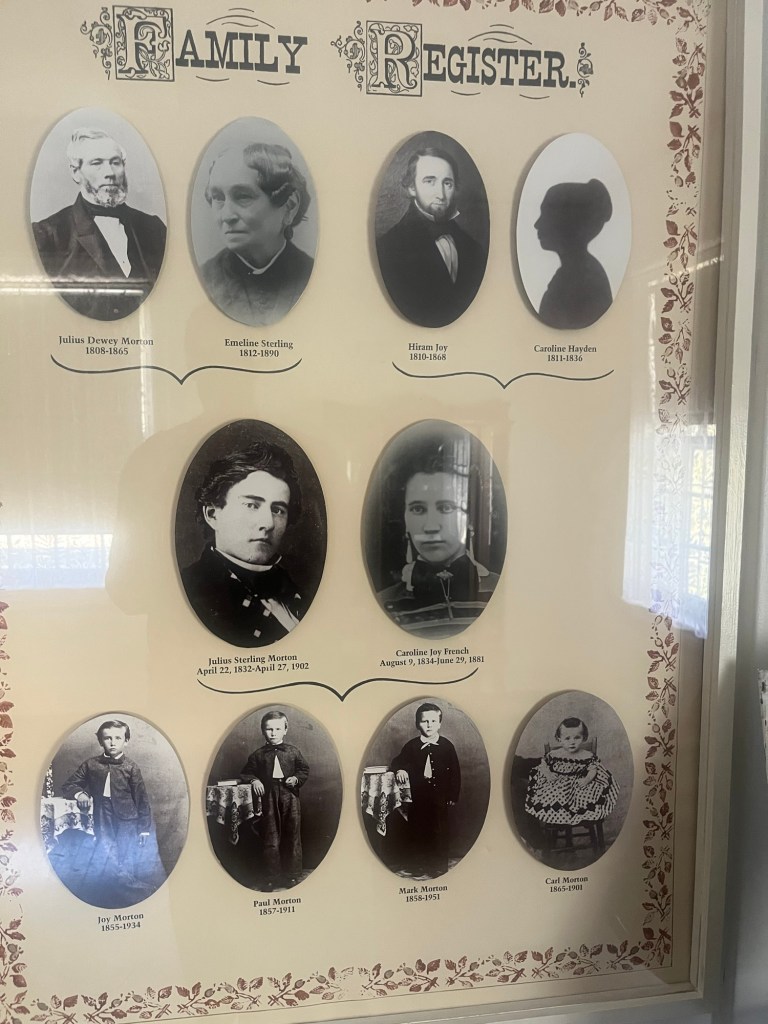
Each of the four sons were successful in business and/or railroads, but the most famous for most Americans might be Joy, the eldest, who founded the Morton Salt company, with the famous dark blue container with the logo of a little girl pouring salt under an umbrella as it rains.
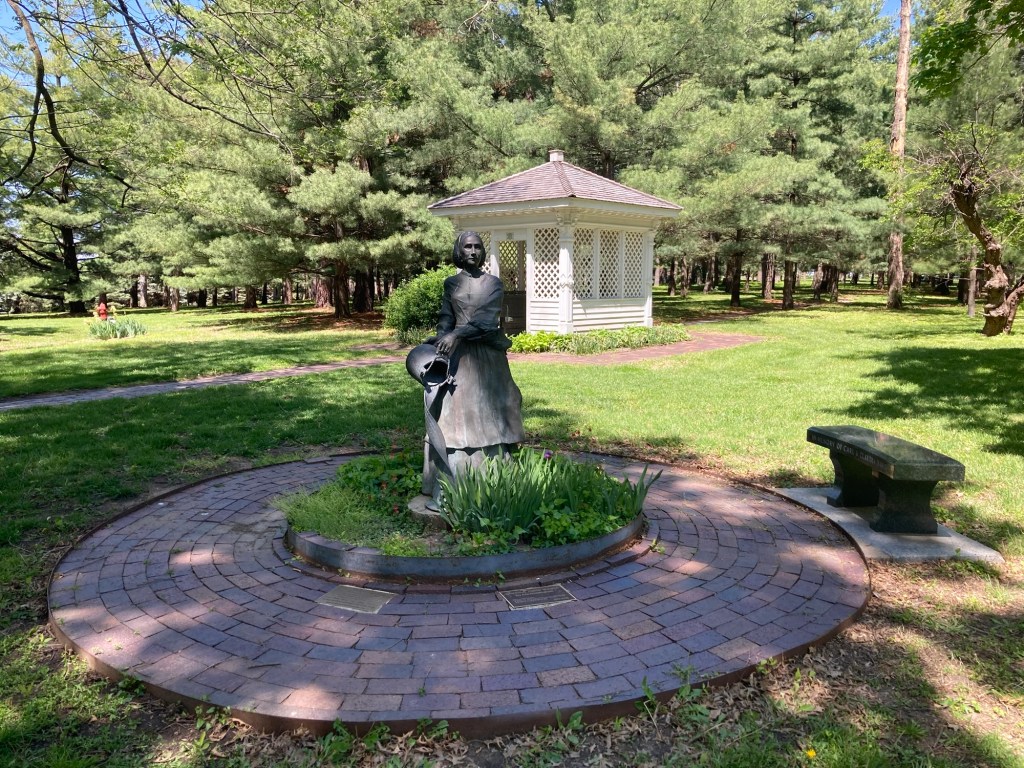
The home and grounds are now part of a 72 acre park that includes the mansion, carriage house, gift shop and wine tasting room, tree adventure area, tree nursery, and a hotel and convention center.
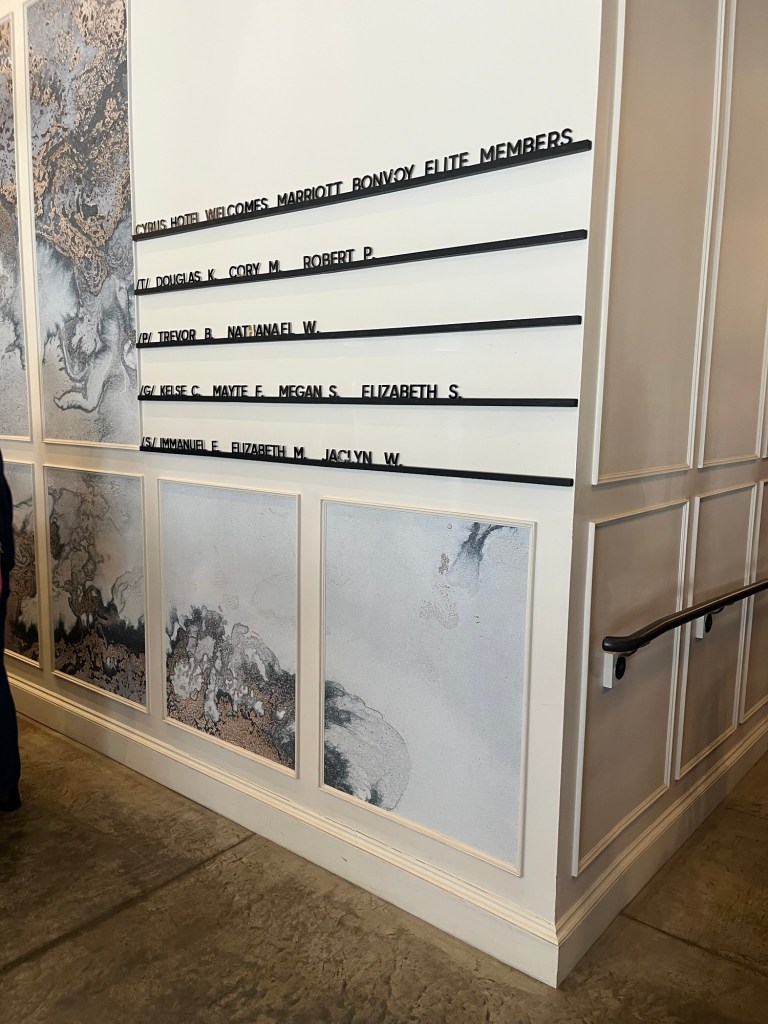
After our walk through the mansion, carriage house, and gift shop, we headed on to Topeka, where we will spend the night. We arrived about 3:00 pm and were able to check in. Bob was thrilled to see his impressive status duly noted on the board behind the check-in desk of the Marriott Cyrus Hotel in downtown Topeka (haha).
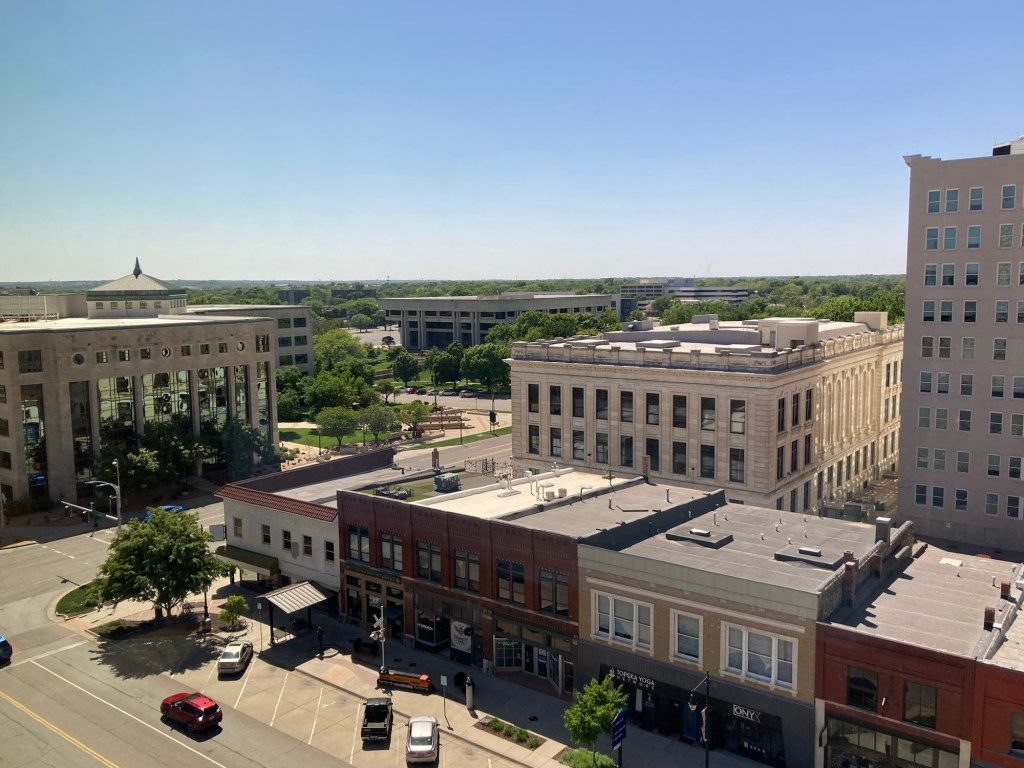
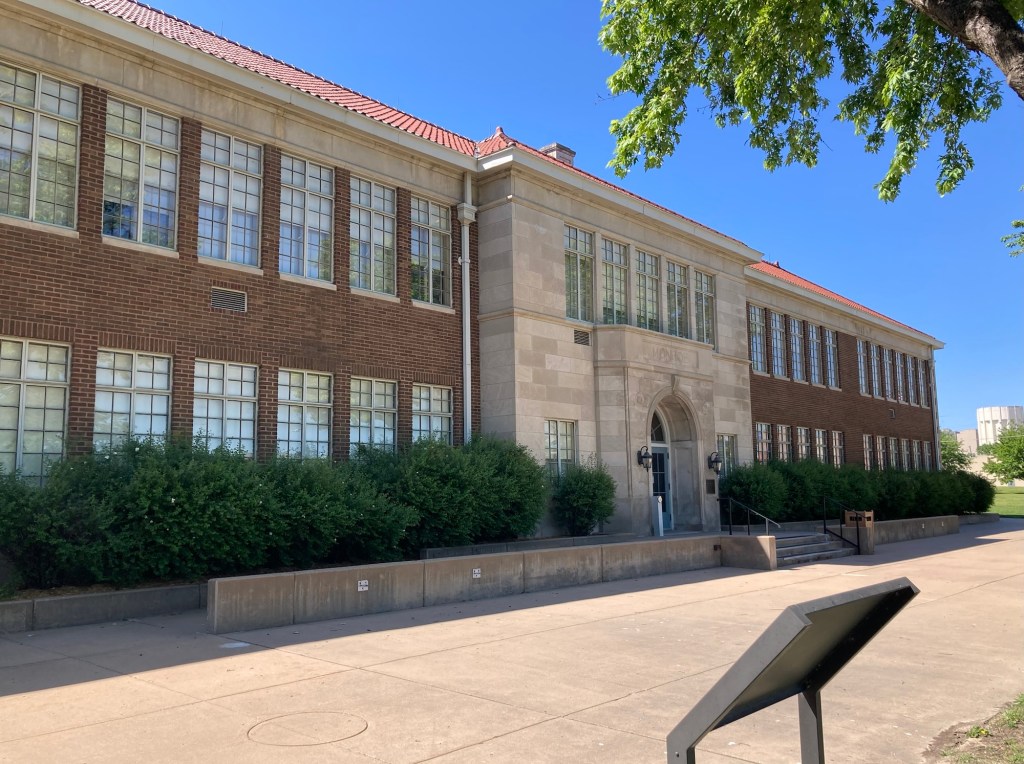
Since it was early we decided to walk about 15-20 minutes to the Brown vs Board of Education museum.
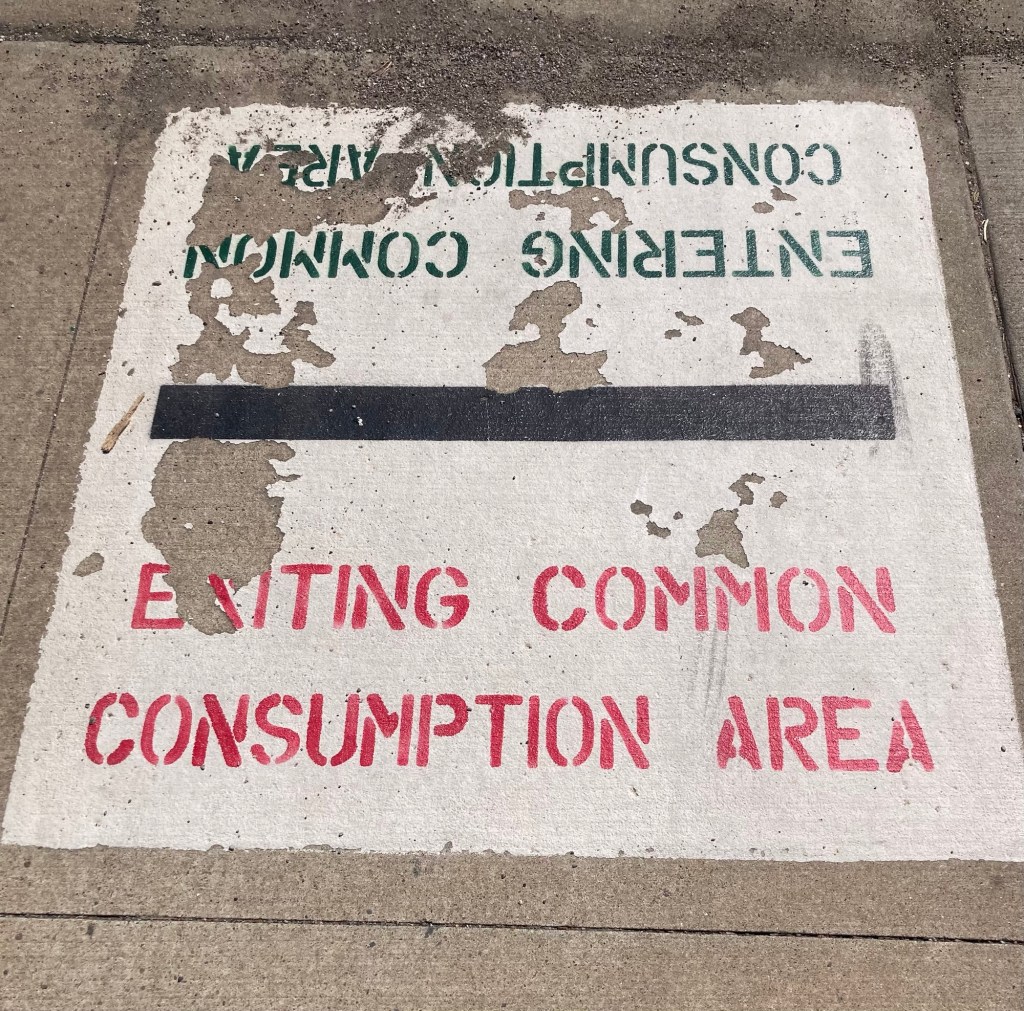
There apparently is a designated section of downtown
where you can carry and consume alcoholic drinks in public.
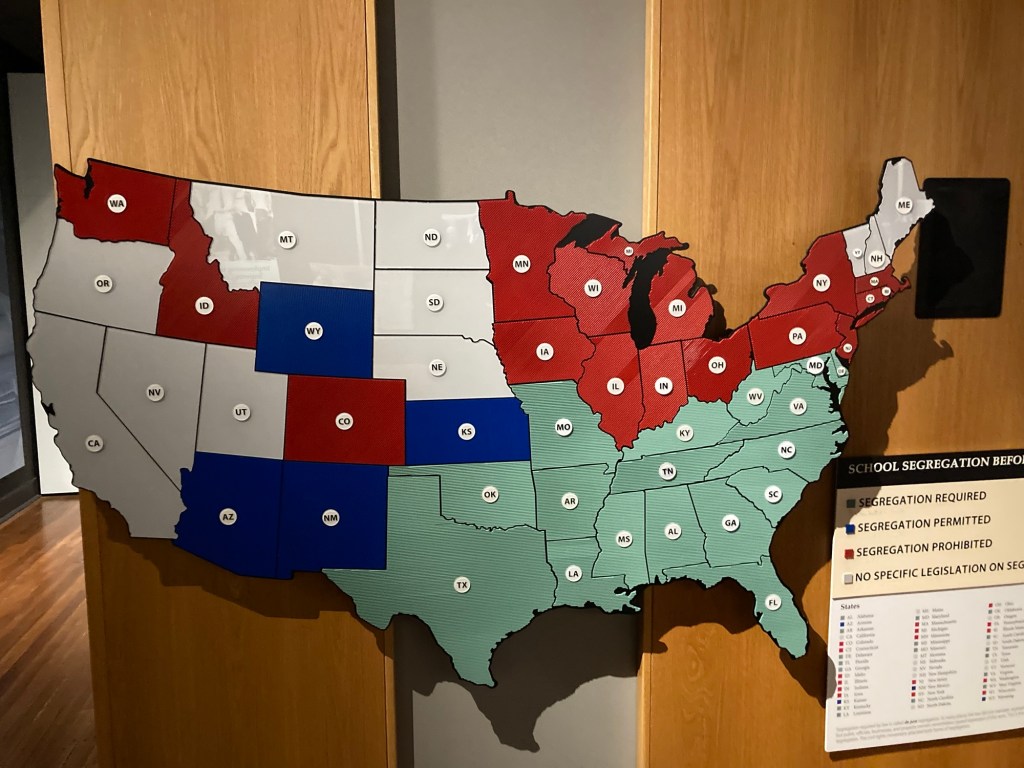
Brown vs the Board of Education is a landmark Supreme Court decision in 1955 that mandated the desegregation of public schools in the United States. It was a combination of five separate lawsuits challenging segregation in states around the country. The museum is in Monroe School, the Topeka school challenging segregation. Other schools included in the lawsuit were from Delaware, the District of Columbia, South Carolina, and X.
One thing we read that we hadn’t thought about before as that Black teachers were against the lawsuit as they knew it would likely mean the loss of their jobs.
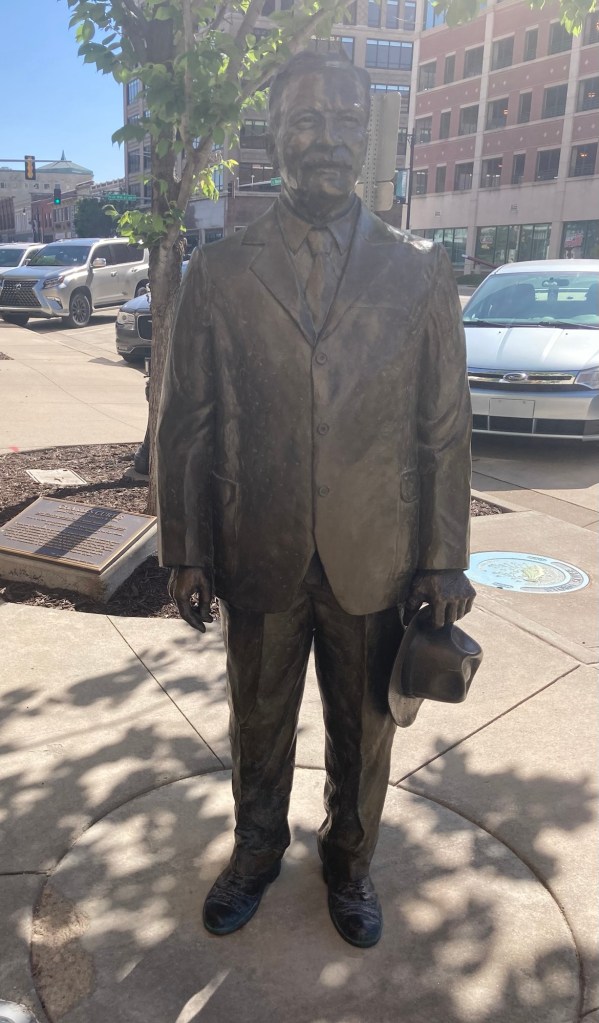
the 31st Vice President of the United States under Herbert Hoover. He was born in Topeka
and is the first Native American Vice President.


One reply on “Destination Destin: Part One (5/1-5/2/26)”
Fame at last for Robert P. 😂😂👍
S.J.B
>
LikeLiked by 1 person