It is always good, and a bit humbling at this age, to learn about something of which you were previously unfamiliar. One of the buildings that we had been encouraged to check out while in Des Moines was the World Food Prize Hall of Laureates building. Neither Bob nor I had heard of the building and it brought no clear picture to mind as to what it was about. Today, we took a free guided tour with Bob’s sister and brother-in-law (who did know about the building and its purpose) and about 10 others, to learn more about the building.
The building itself is architecturally attractive and interesting, and it served as the Des Moines Central Public Library from 1903 until 2003, when it underwent a nearly $30 million renovation to become the Dr. Norman E. Borlaug World Food Prize Hall of Laureates.
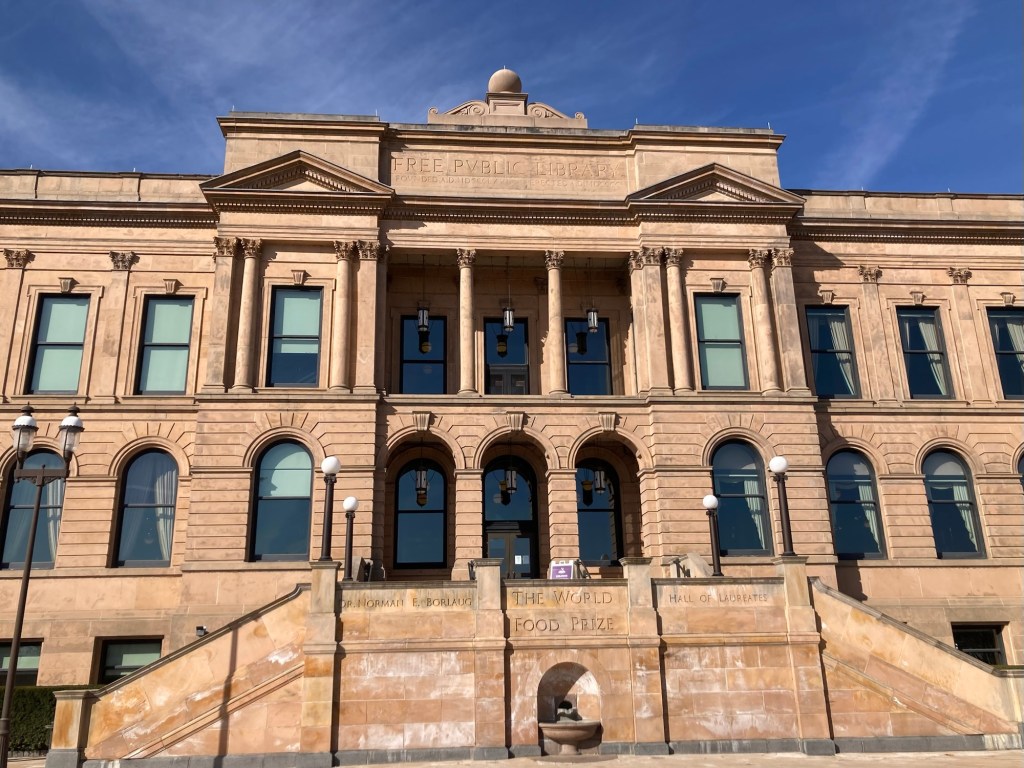
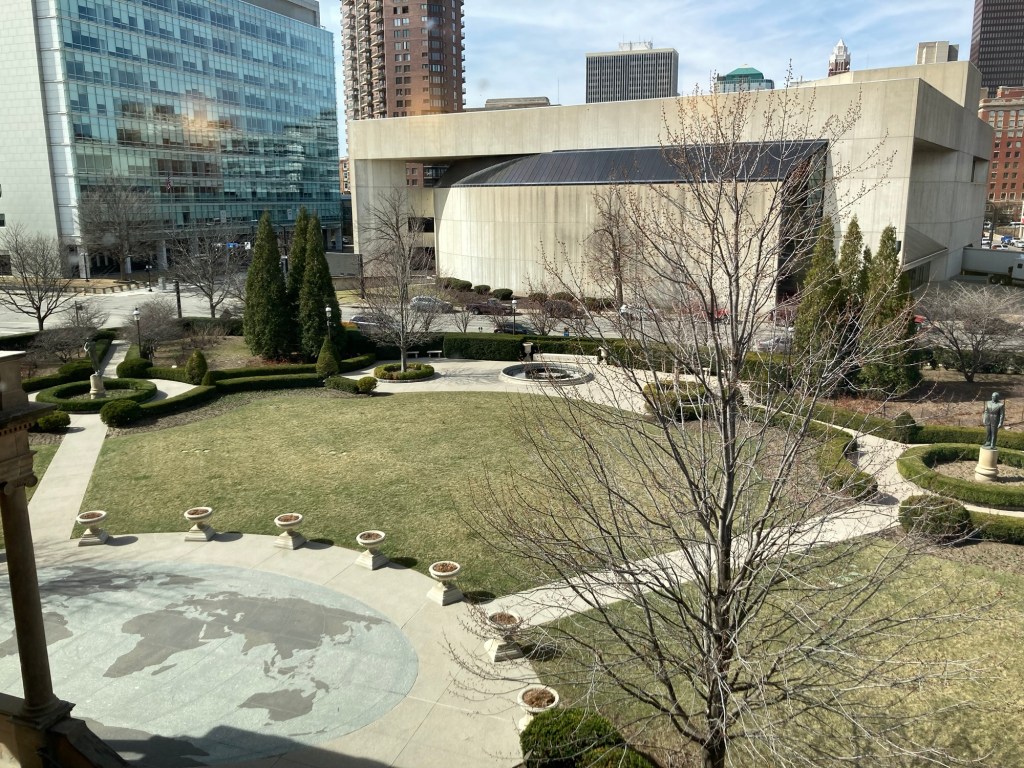
It immediately overlooks the Des Moines River.
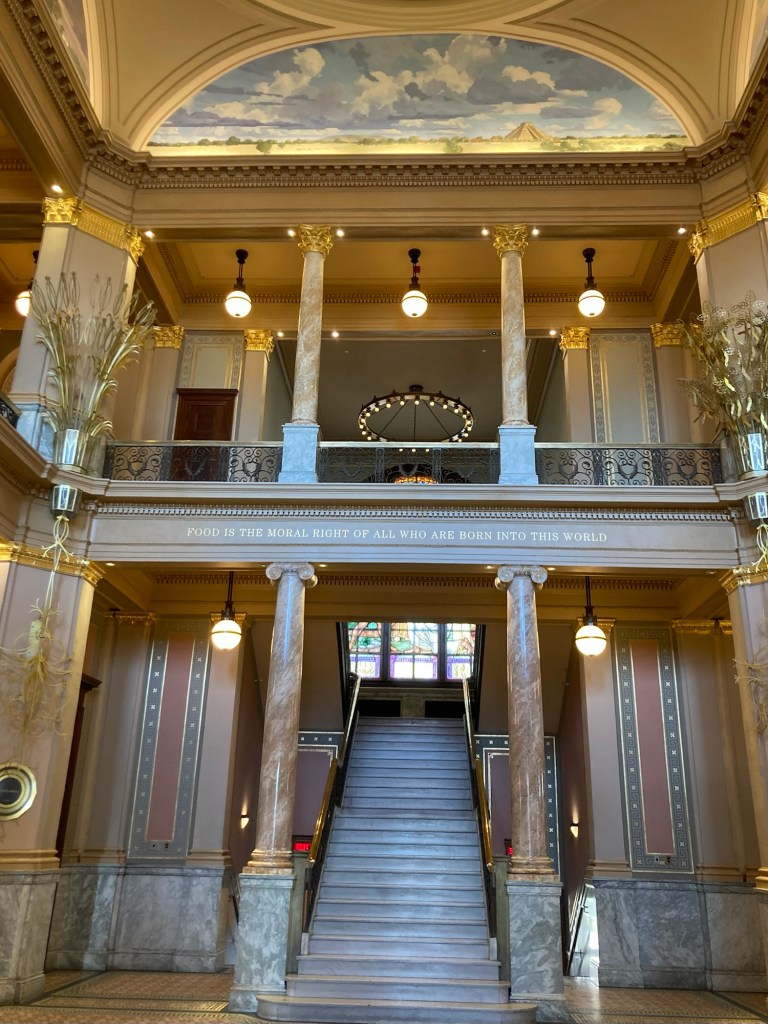

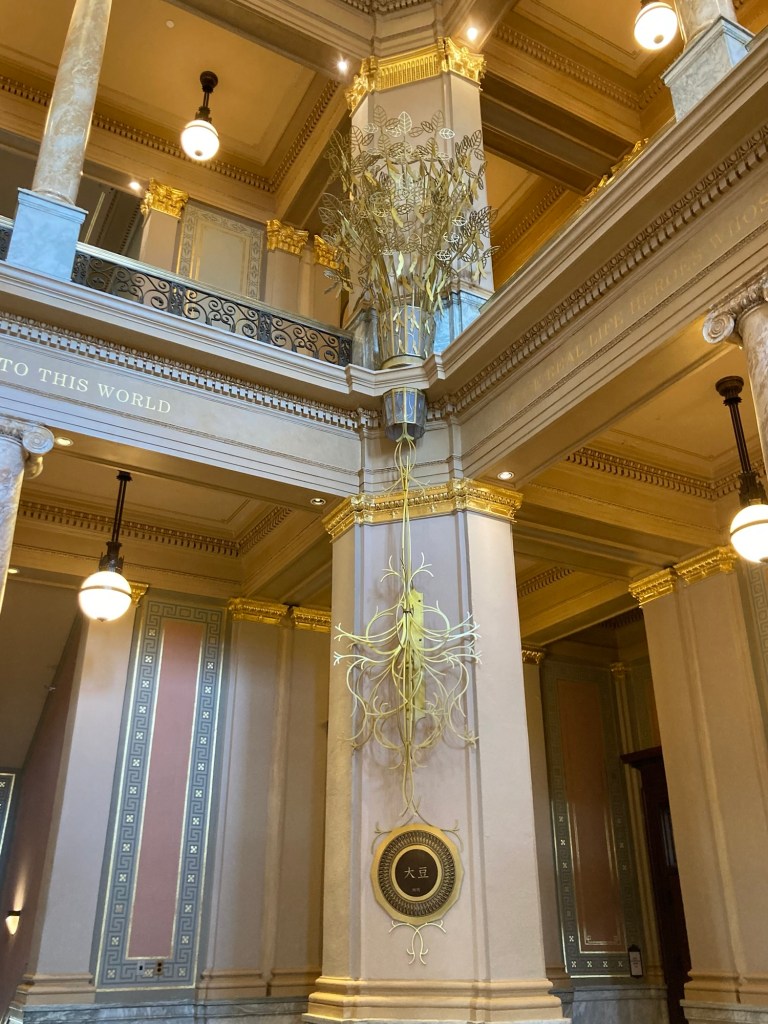
one of the four main food crops — rice, corn, wheat, and soy.

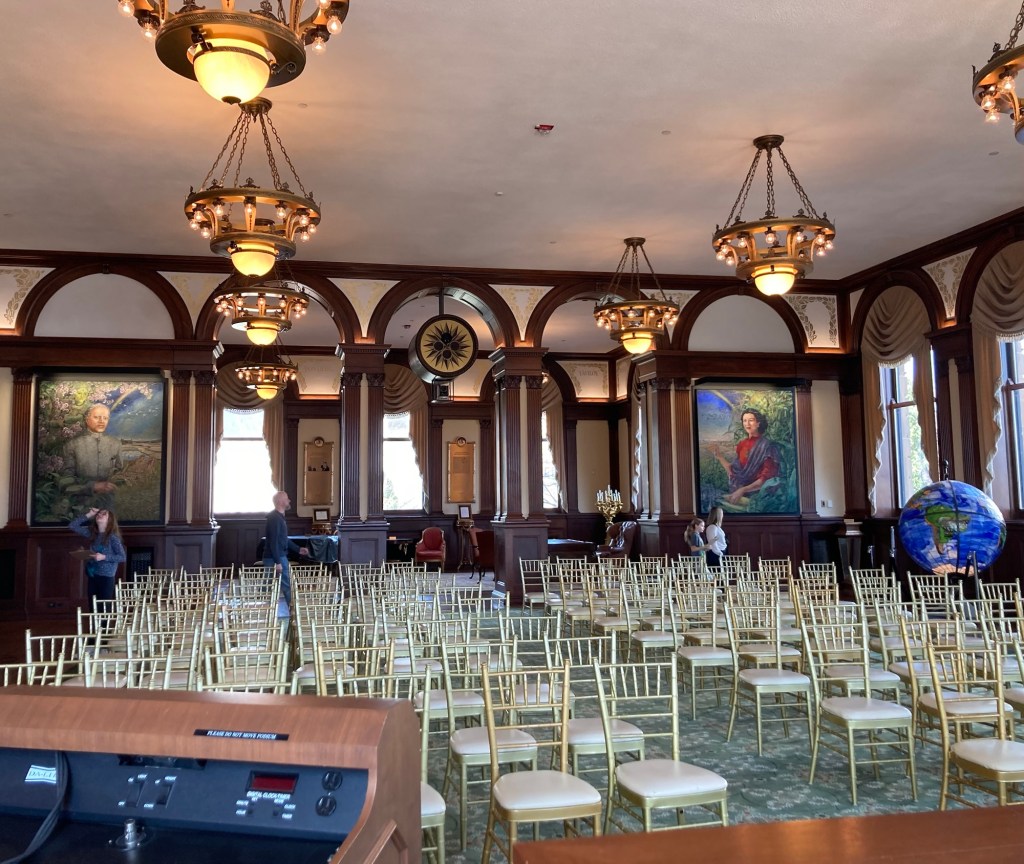
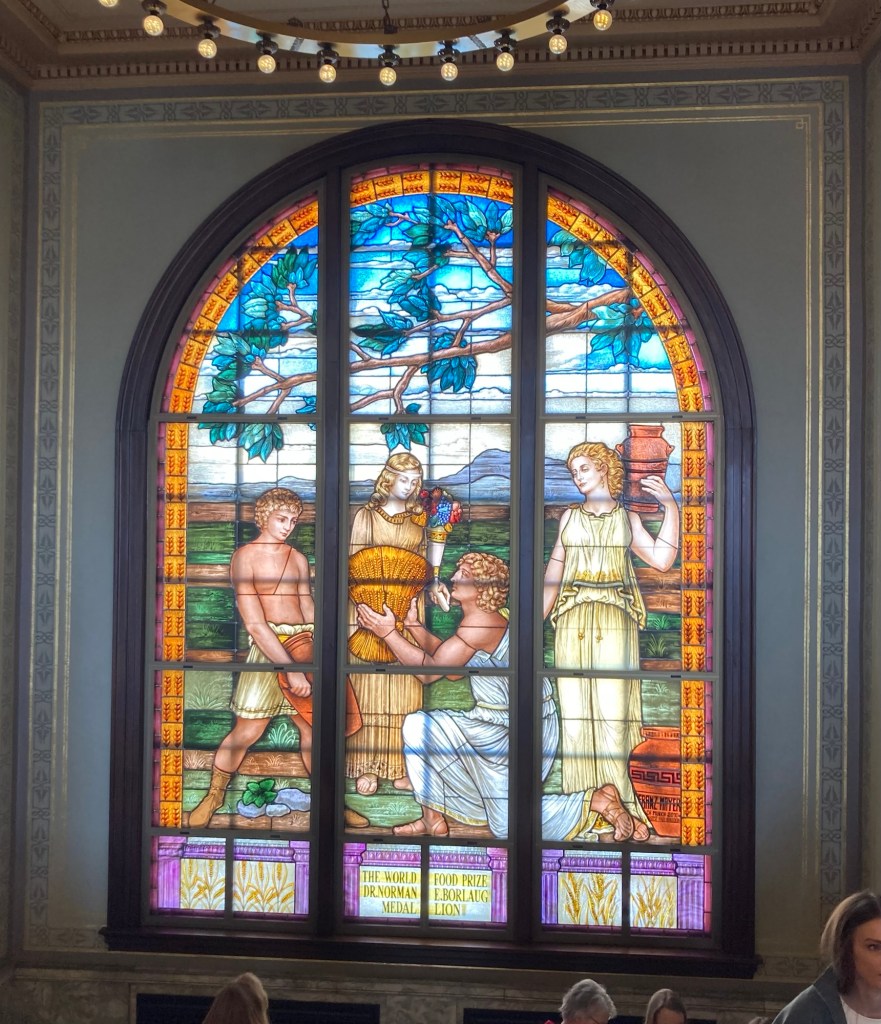
which was added during the renovation.
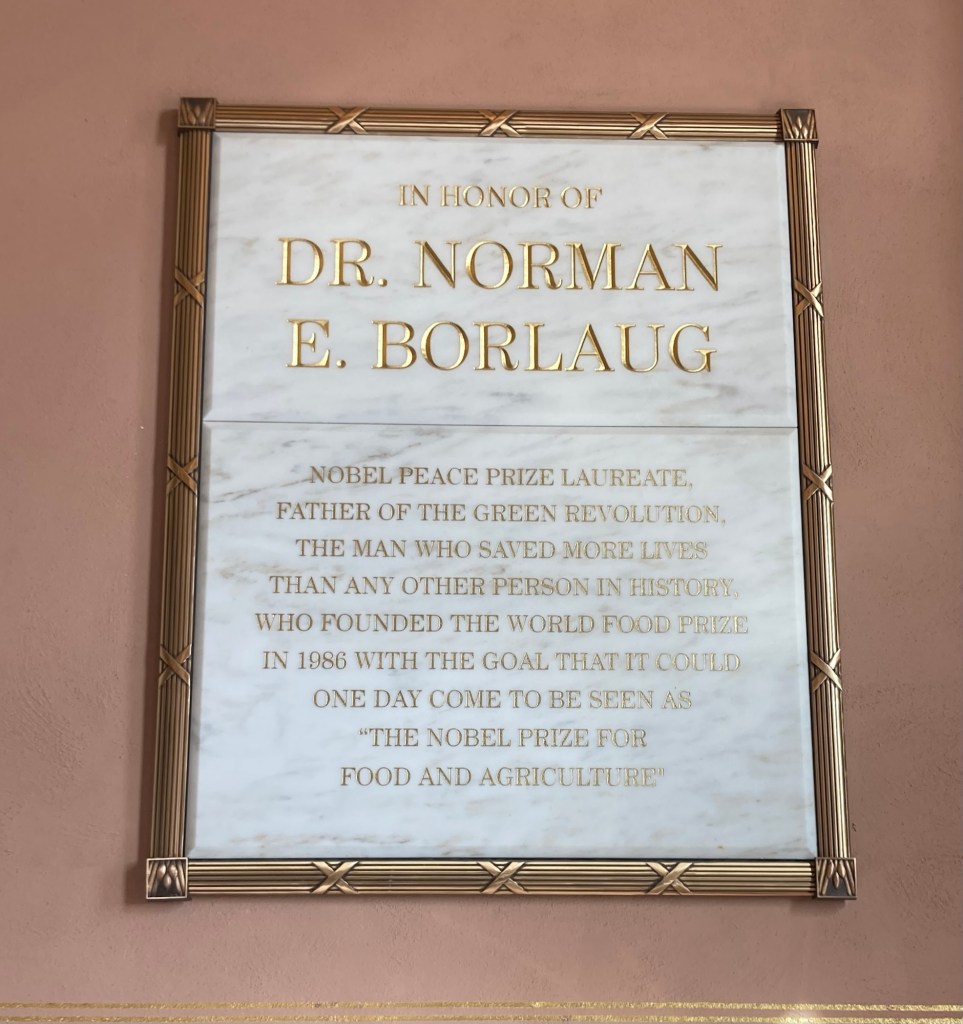
Dr. Norman E. Borlaug, a native Iowan, was awarded the Nobel Peace Prize in 1970 for his lifetime of work to feed a hungry world. Specifically, he created new wheat varieties that transformed agriculture production in the 1940s and ‘50s and later in Asia and Latin America, sparking what is now known as the GreenRevolution. Because of his work, he is known as the man who has saved more lives than any other person in history. Very impressive!
He felt strongly that the Nobel Committee should give a prize for work in food and agriculture because of its importance for humanity. Apparently, the Nobel Committee is not allowed to give a prize in that area, so Dr. Borlaug helped lead an effort to annually bestow the World Food Prize to recognize contributions in any field related to the world food supply. The first prize was awarded in 1986.
the entrance to the building
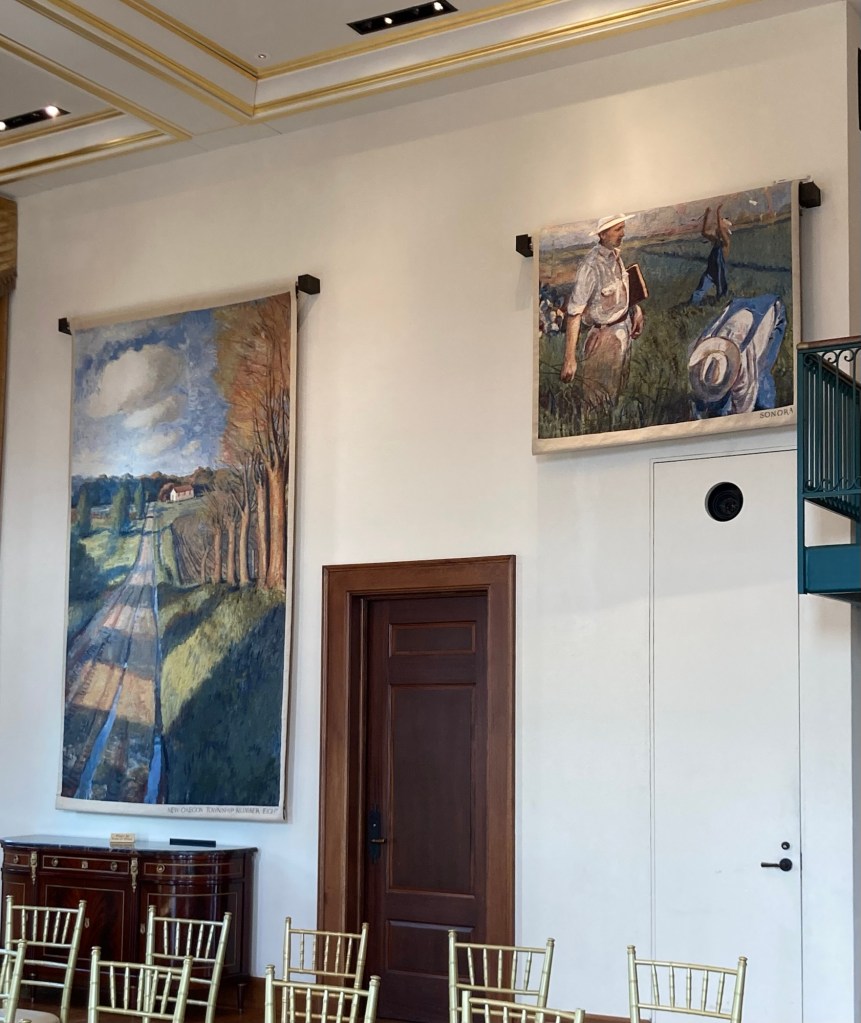
On the left, the one room schoolhouse in Iowa, and on the right,
a wheat field in Mexico where he helped to discover and grow
a heartier wheat crop.
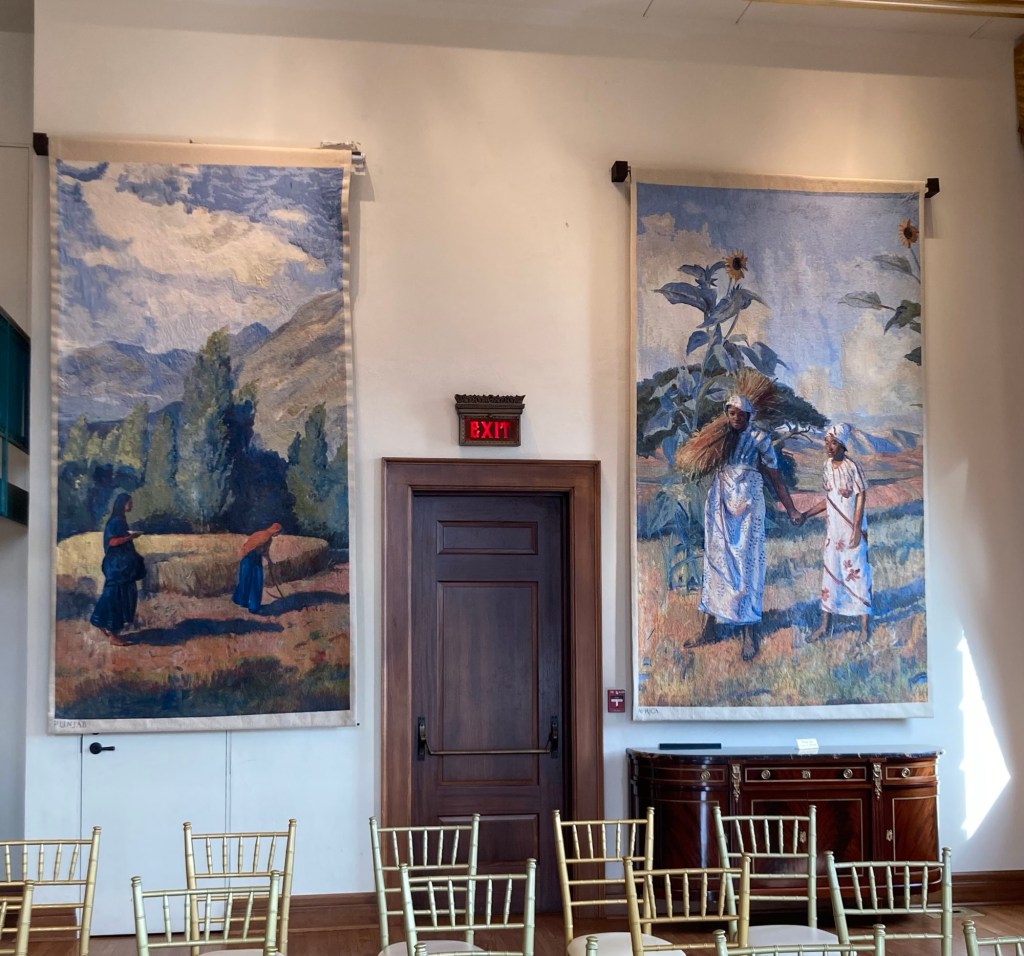
in the Punjab (left) and in Africa (right).

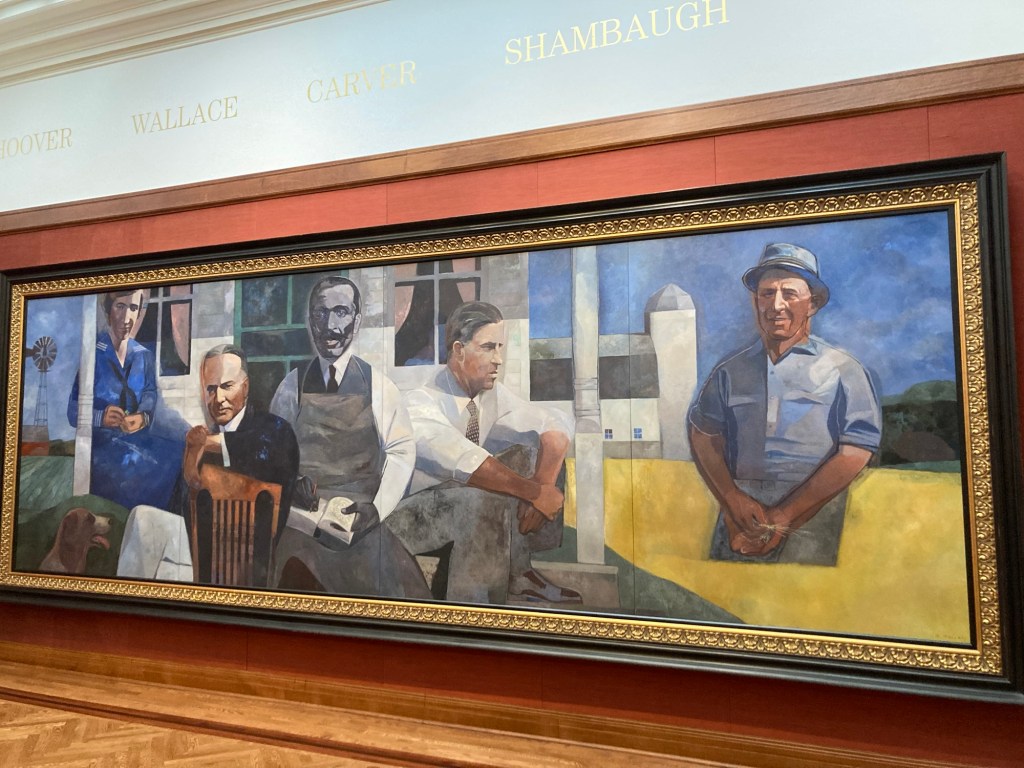
in food or agriculture.
Jessie Shambaugh, the Mother of the 4-H program,
Herbert Hoover, for his work in food delivery
to many parts of the world following both world wars,
George Washington Carver, for his work
on promoting alternative crops to farmers
to help prevent soil depletion,
Henry Wallace, who created a farm magazine
and helped farmers organize into cooperatives,
and Dr. Norman Borlaug.


One reply on “A Local Connection Between Food, Prizes, and a Library (3/18/25)”
That’s a very impressive looking building 😁👍
S.J.B
>
LikeLike