Awhile back I had picked up a Cambridge Concert Calendat pamphlet in one of the souvenir shops. This appears to list all of the concerts held in the various colleges that are open to the public for the Michaelmas term of October through December. Some of the concerts require a paid admission, but many are free. We thought this might be a great way to see a new campus as well as listen to music that we might not normally listen to.
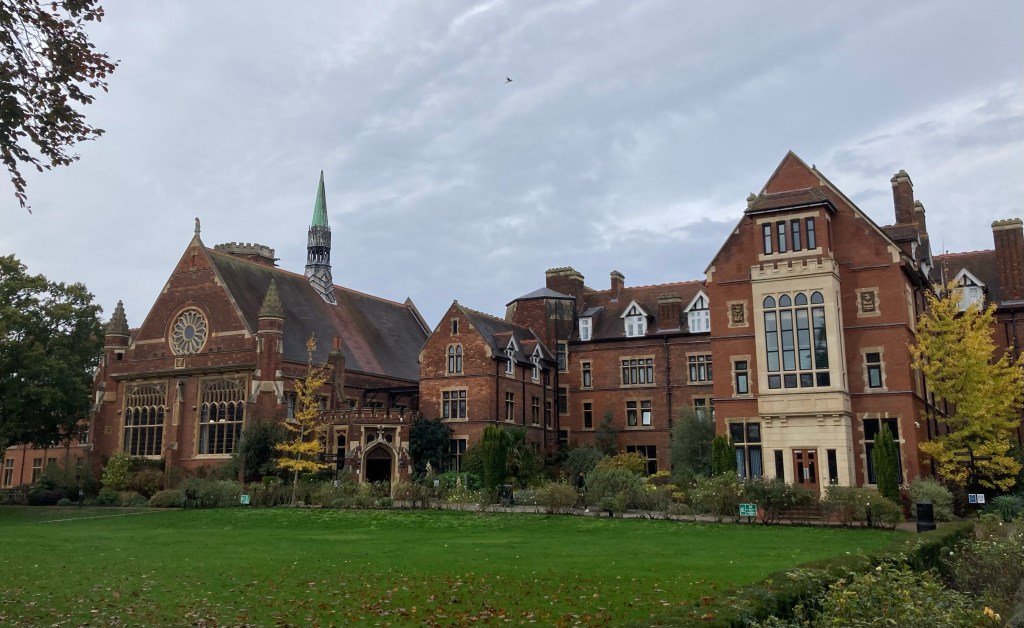
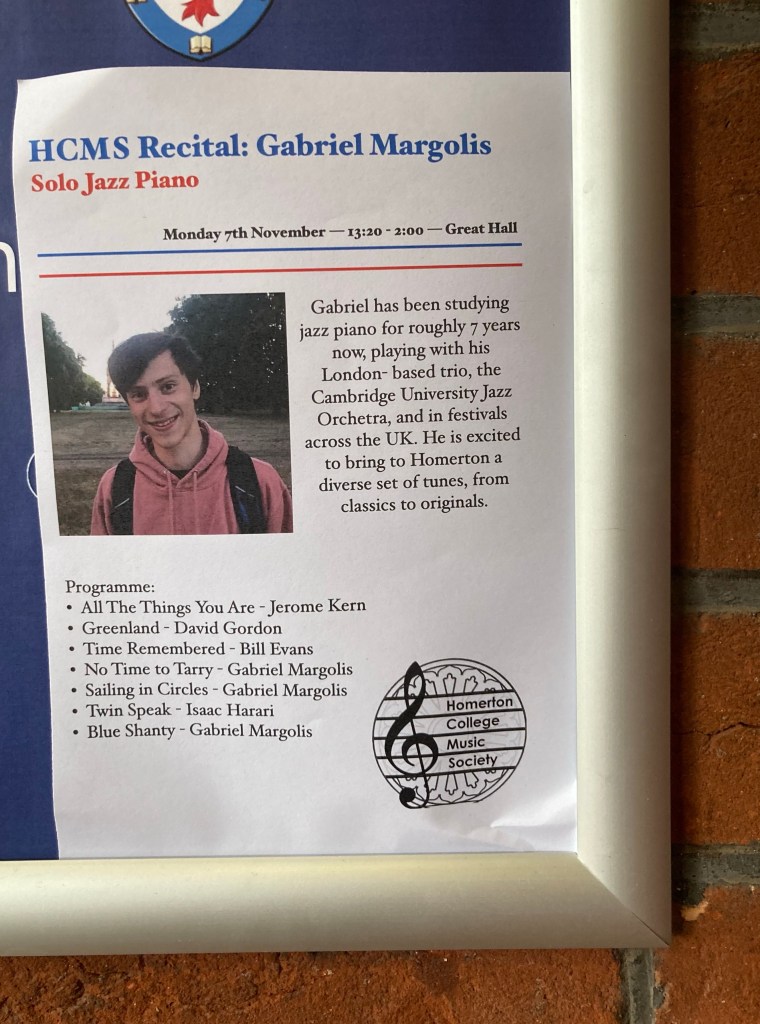
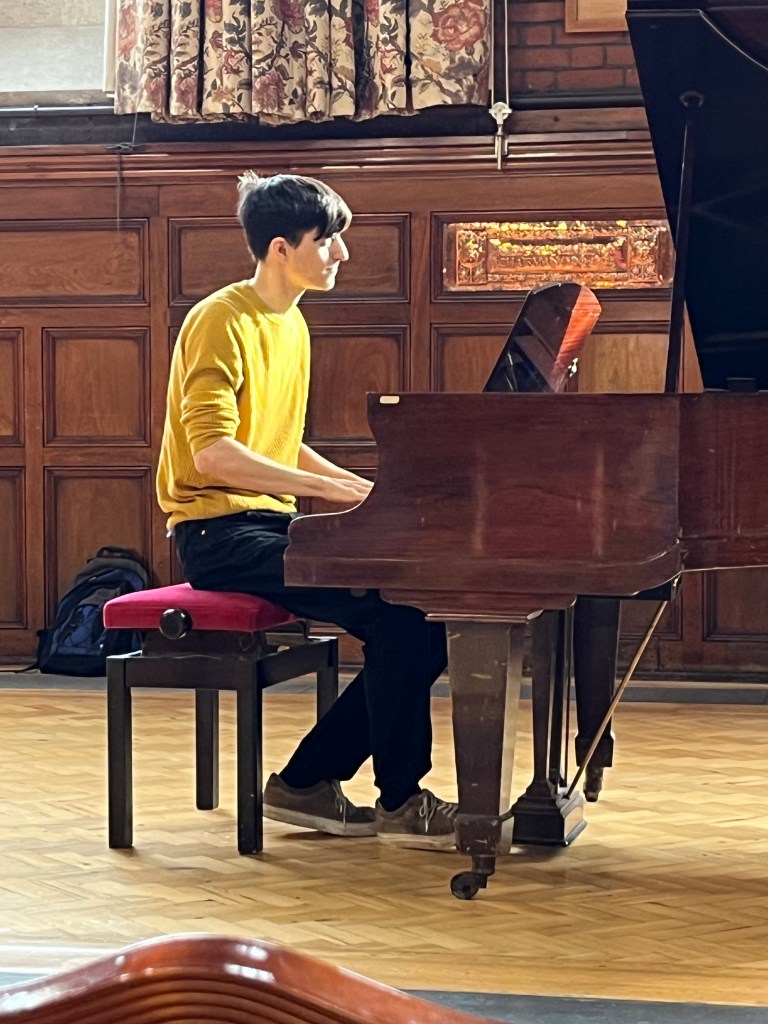
We dipped our toe in the water today and made the short walk to Homerton College for a 40 minute free lunch jazz piano recital by Gabriel Margolis, who we assume is a student at one of the colleges. There were a total of 10 people there to watch, which was almost as many chairs as they had set up.
He played a total of seven songs, some of his own and some of friends, mentors, or people he is inspired by. It was a great outing. We enjoyed seeing some of the campus as well as his music.
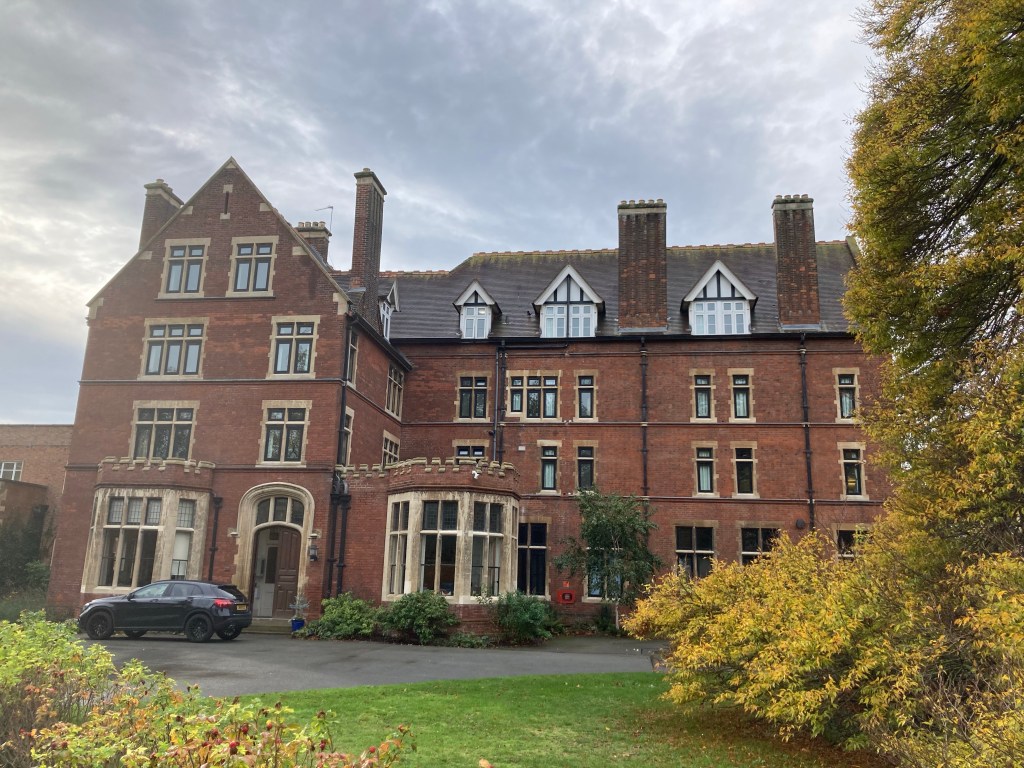
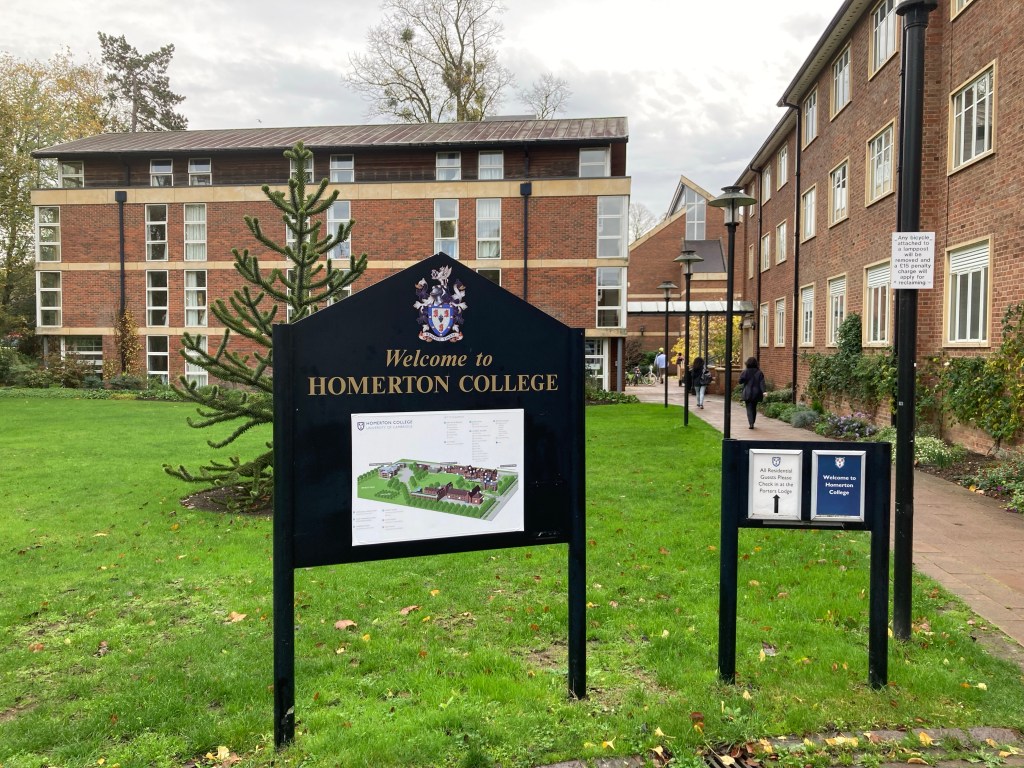
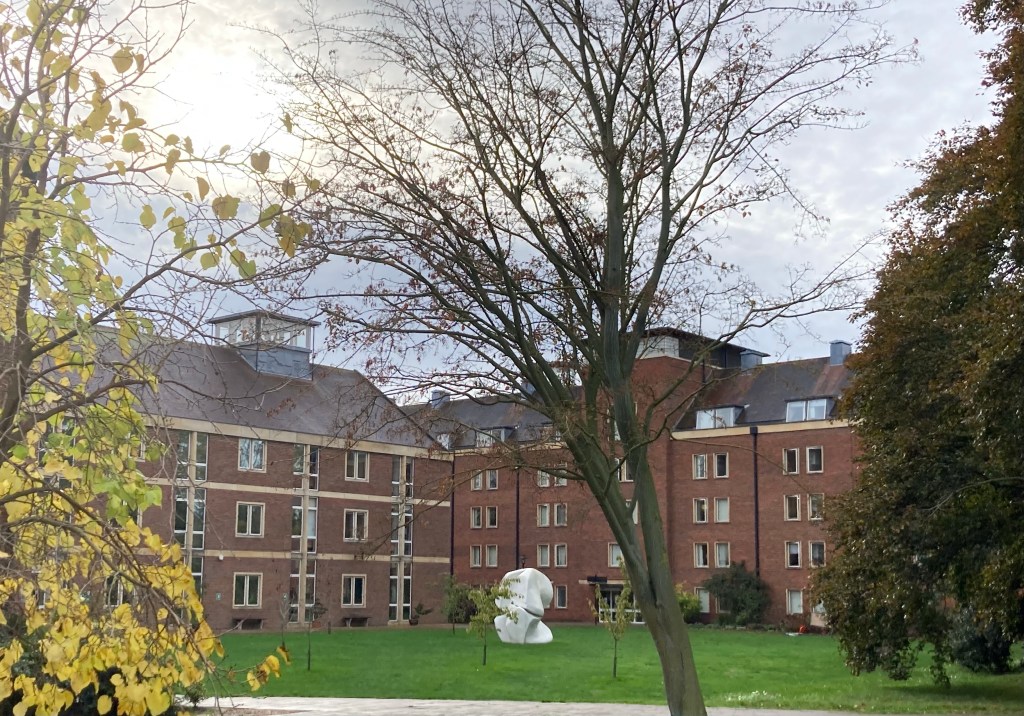
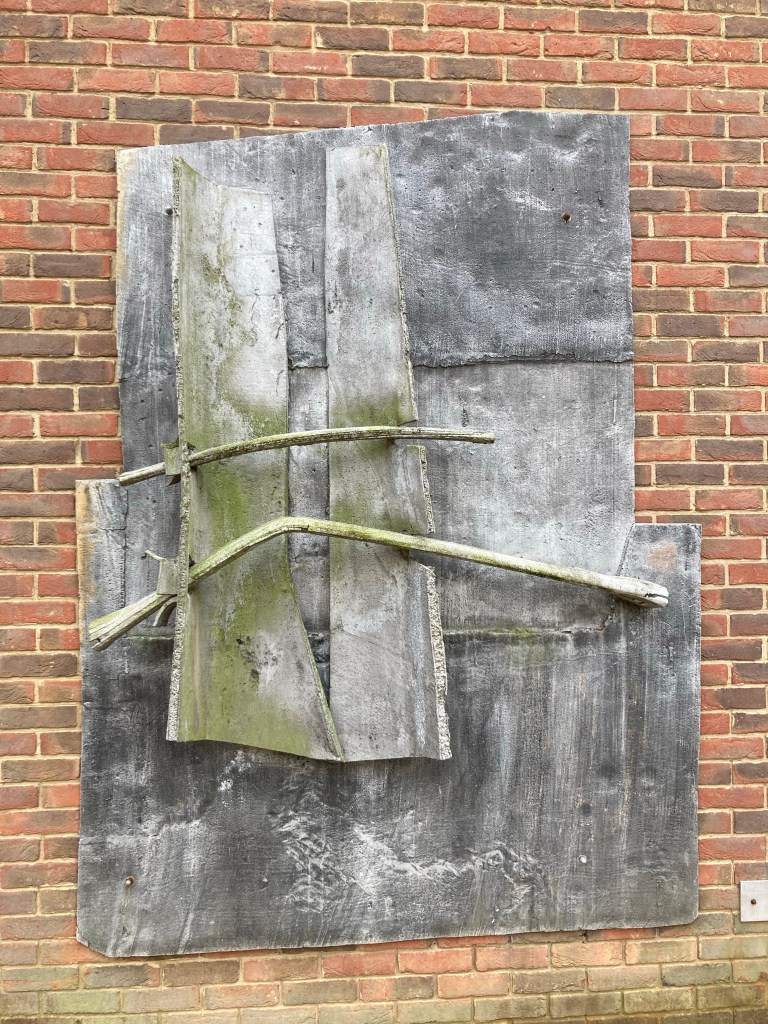
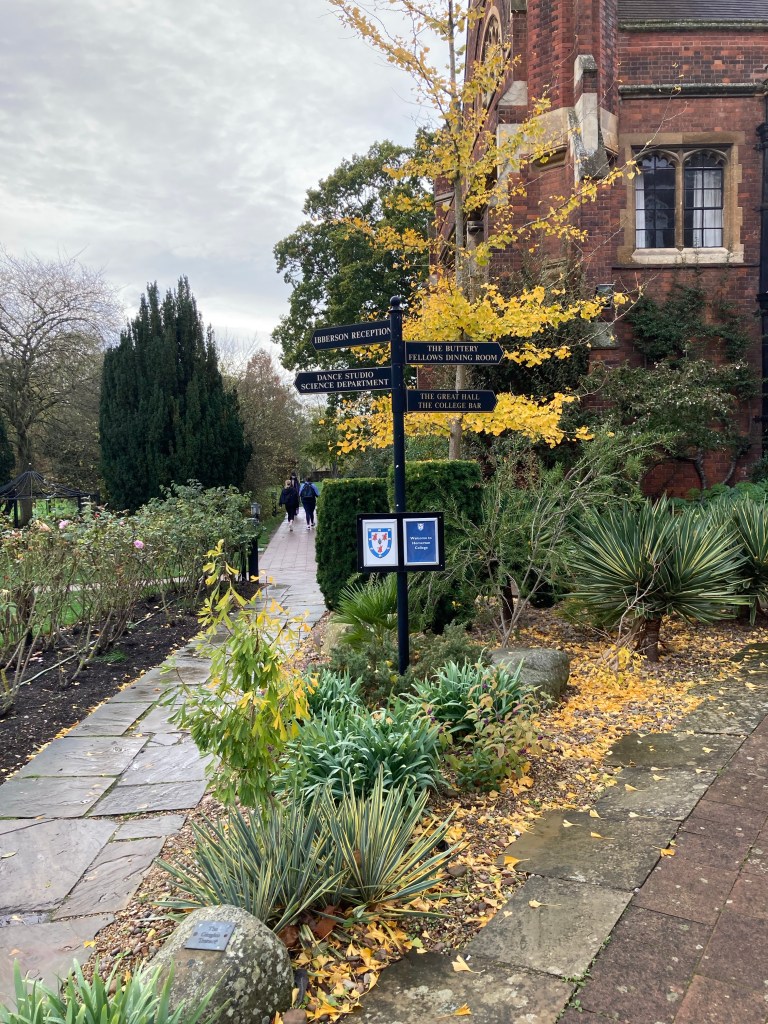
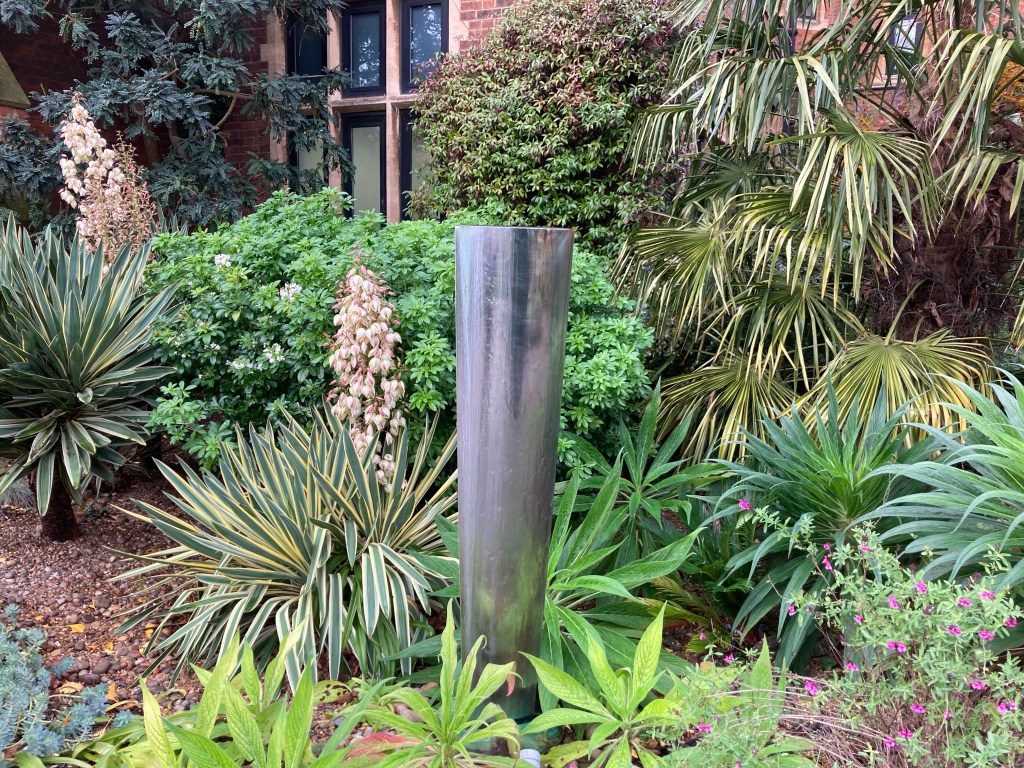
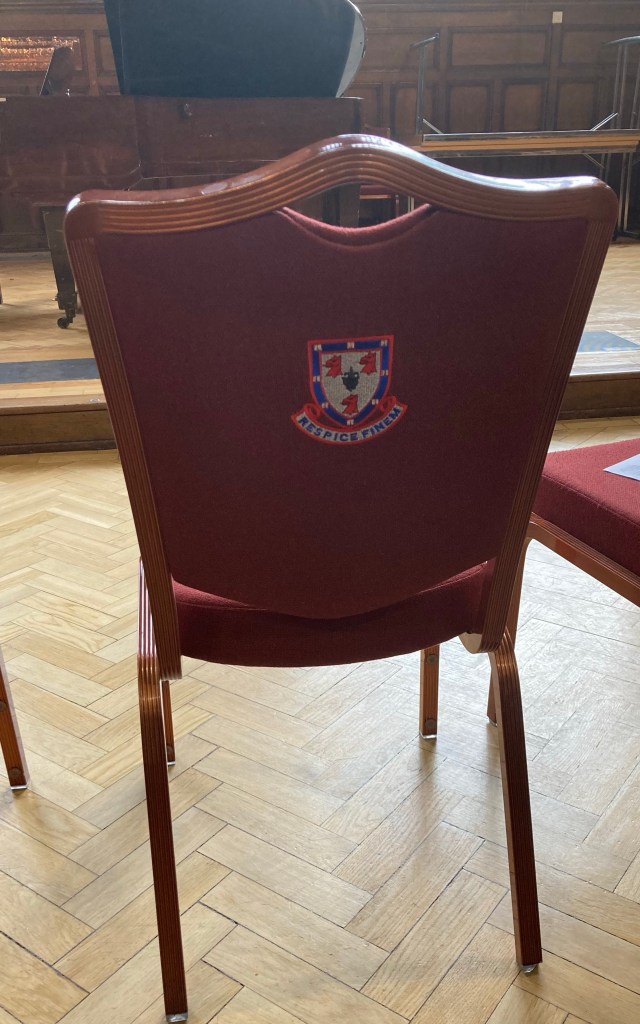
The Queen’s Wing Building at Homerton College. The college dates to 1695.A map of the campus and a sign directing us to the Porters Lodge where non-students check-in.A nice sculpture in one of the courtyards.Wall art The Great Hall where the recital was held (through the wooden doors towards the left).Beautiful landscaping and way finding signsA sleek fountain and more landscaping The program for the recitalThe chairs that we sat on with the school motto, which Google translates as “look at the end,” which could be taken a couple of ways in this placement.The talented Mr. Margolis
Bob and I took advantage of a much rarer sunny day yesterday to head to the nearby community of St. Ives. We wanted to visit the town anyway, but it also gave us an opportunity to actually ride on a guided bus to get there.
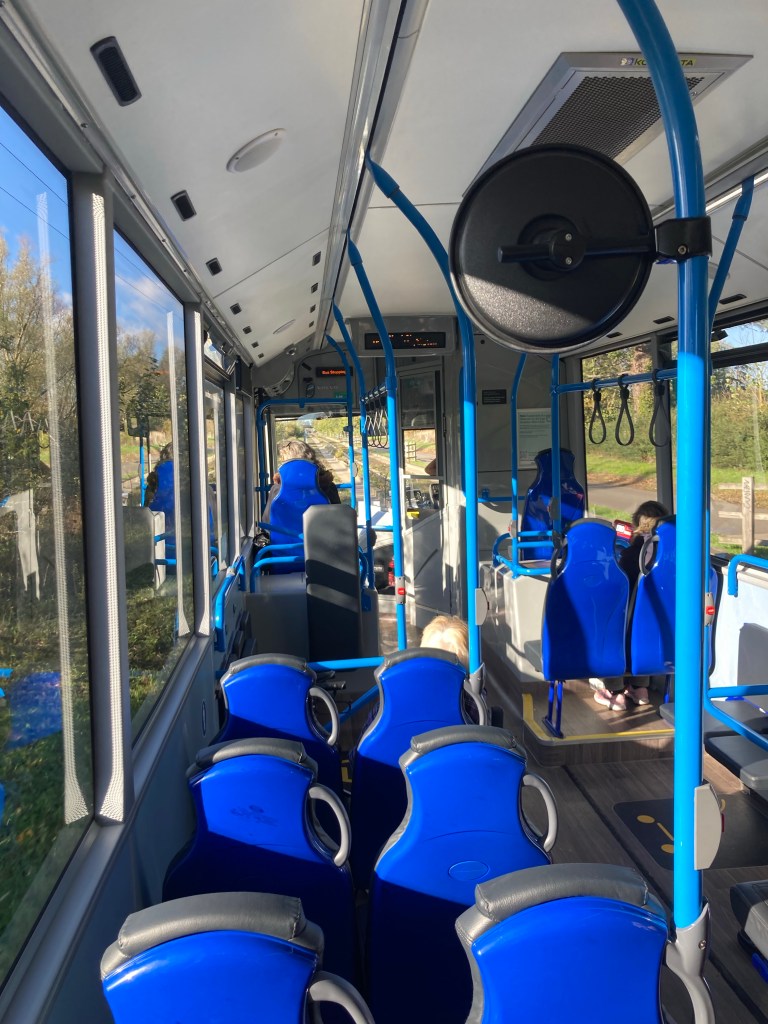
We caught the bus near the Cambridge rail station, and it was about a 55 minute journey both off rail (through town) and on rail/guided between the Cambridge North rail station and St. Ives.
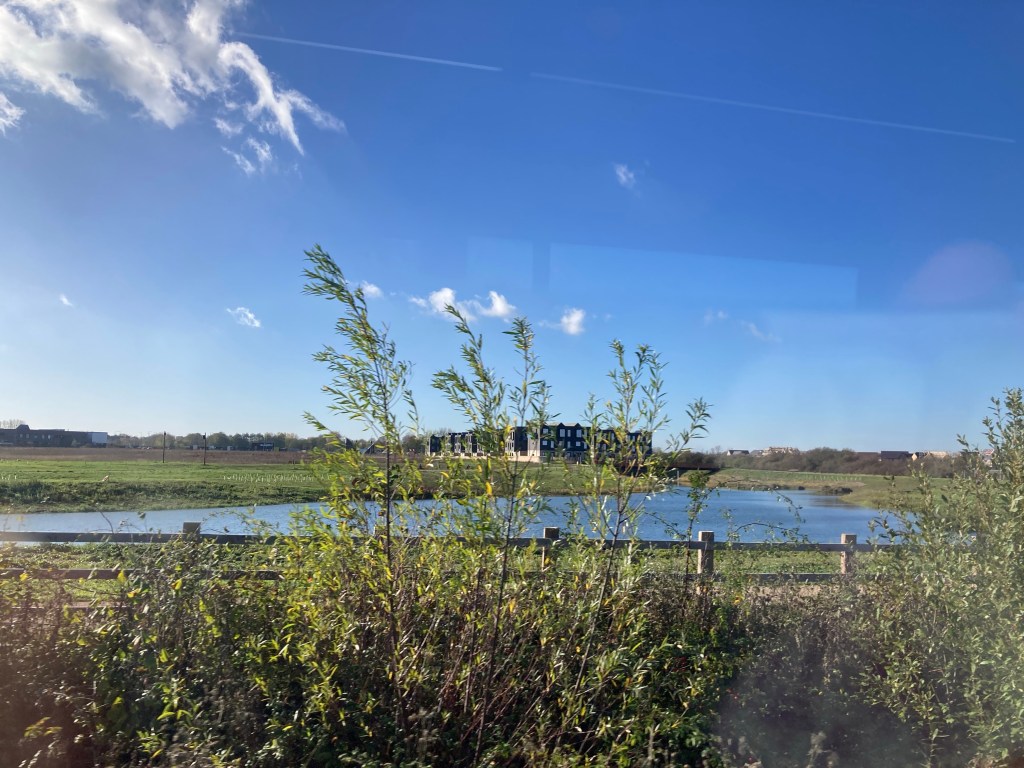
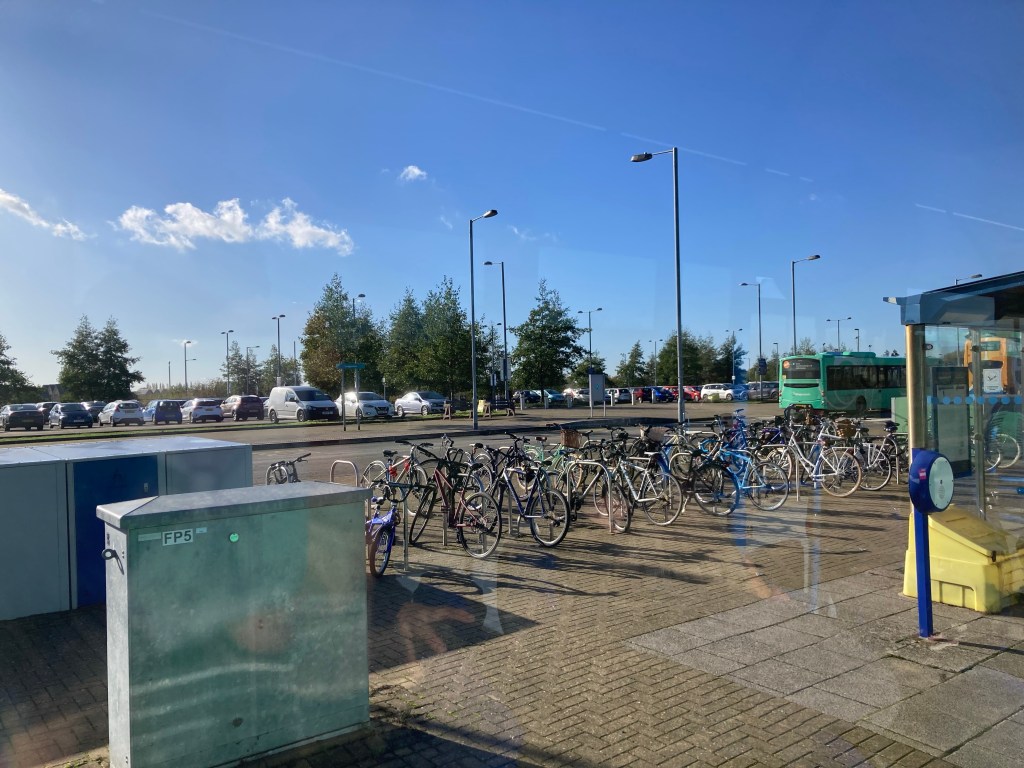
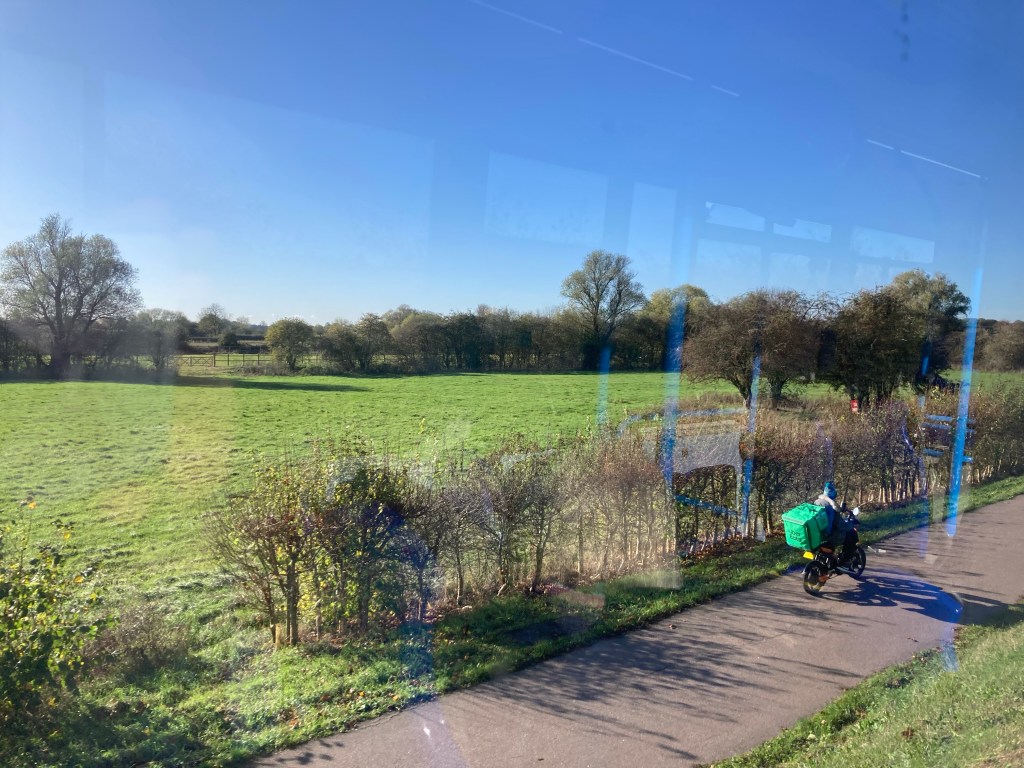
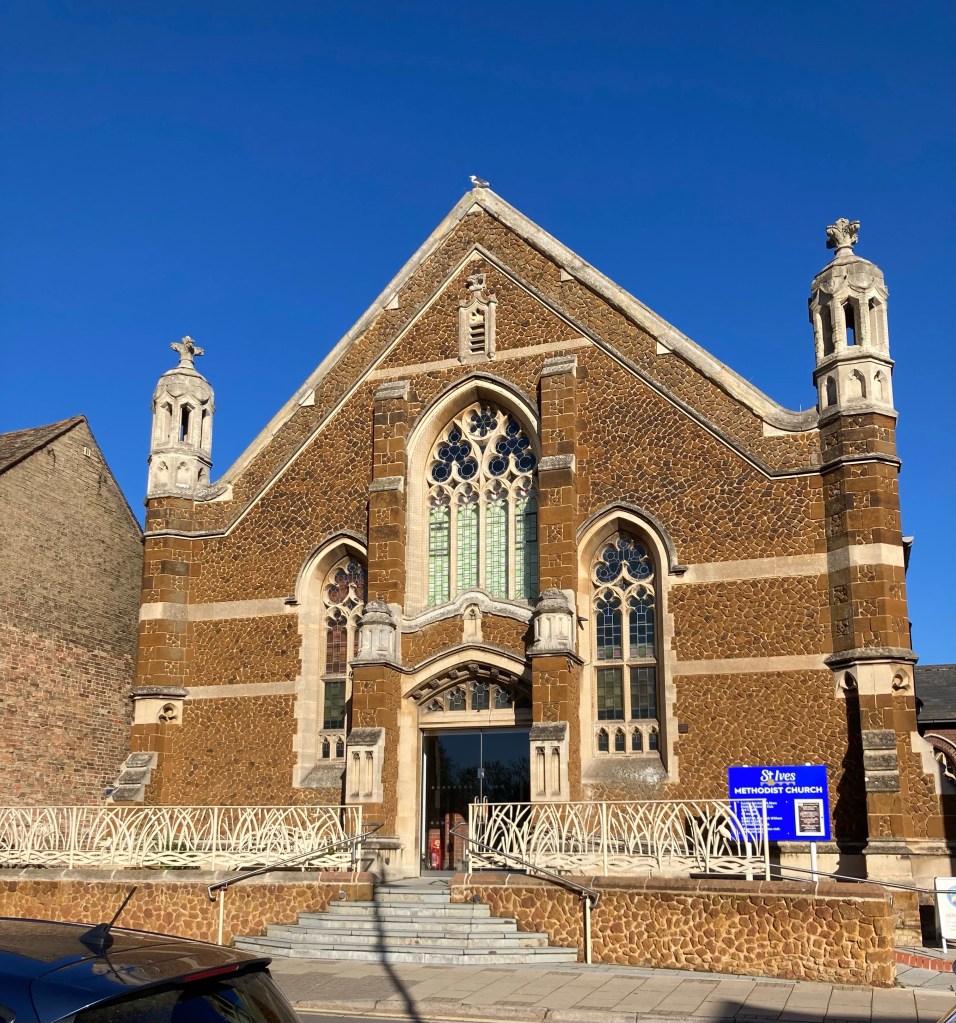
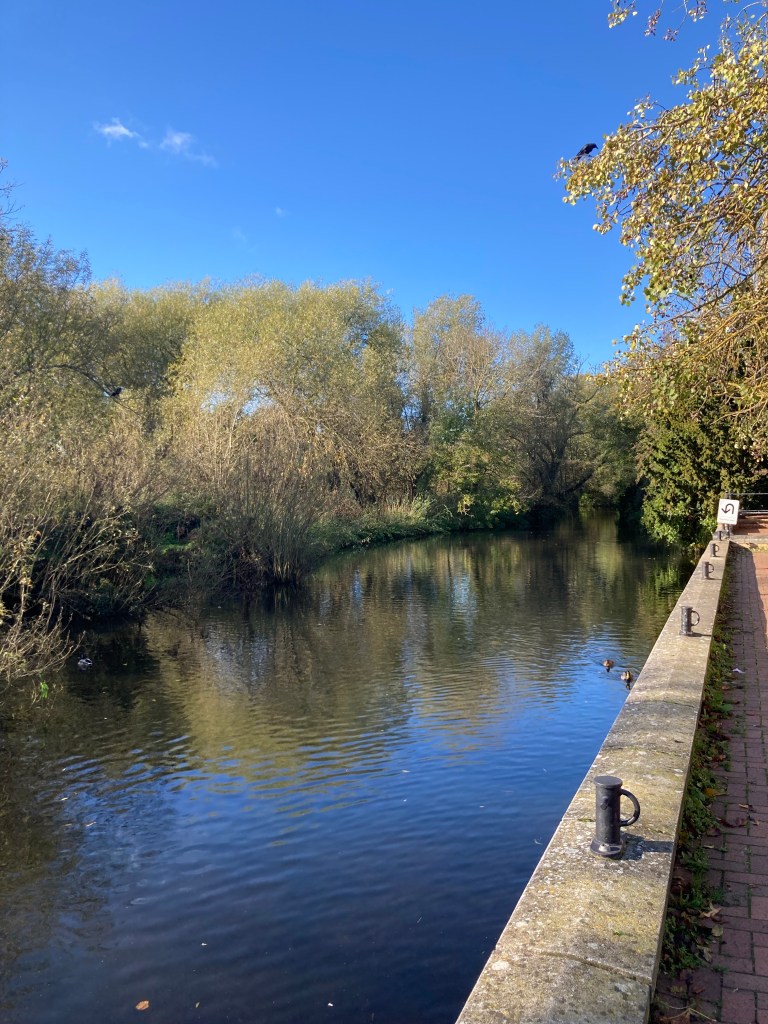
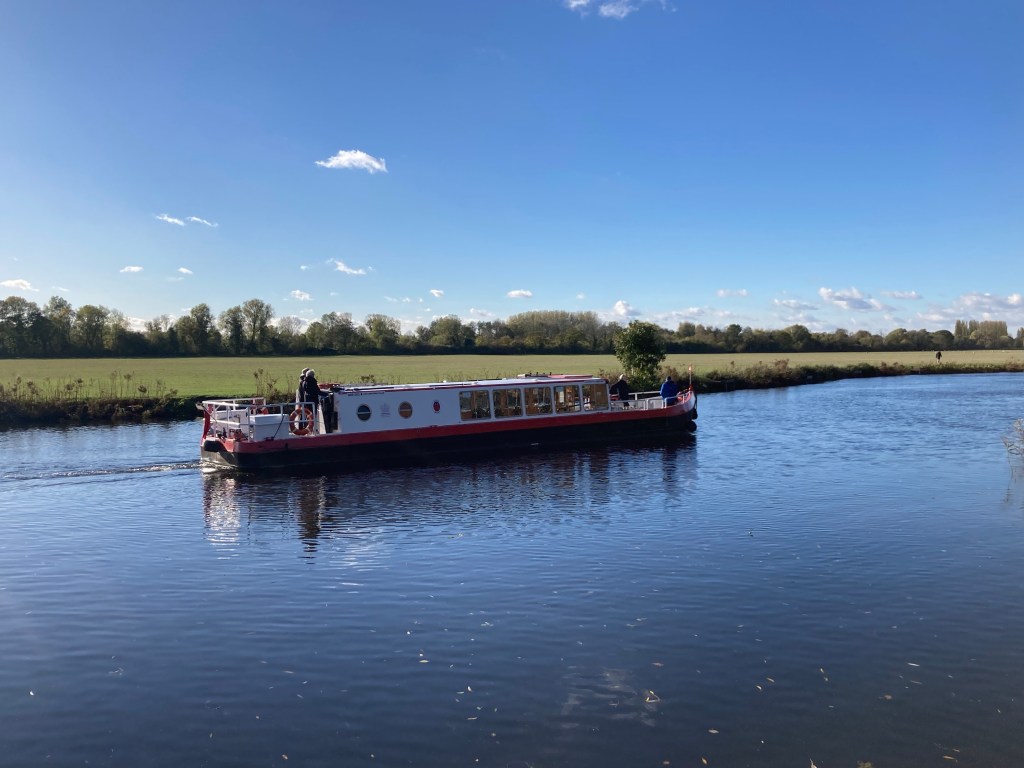
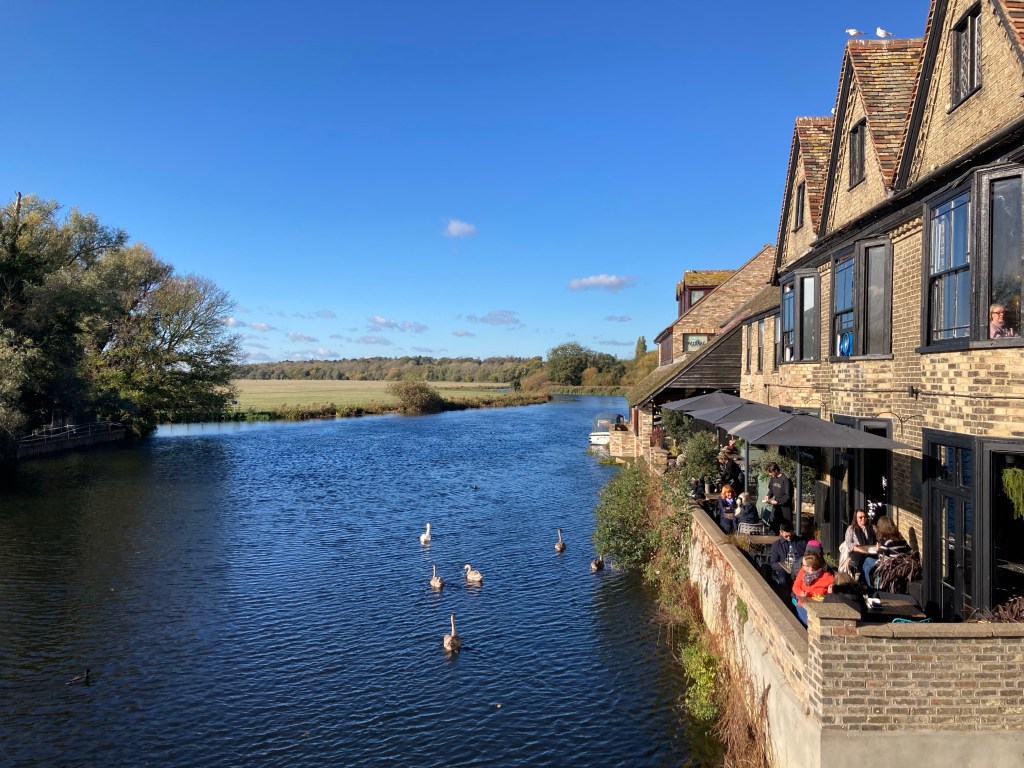
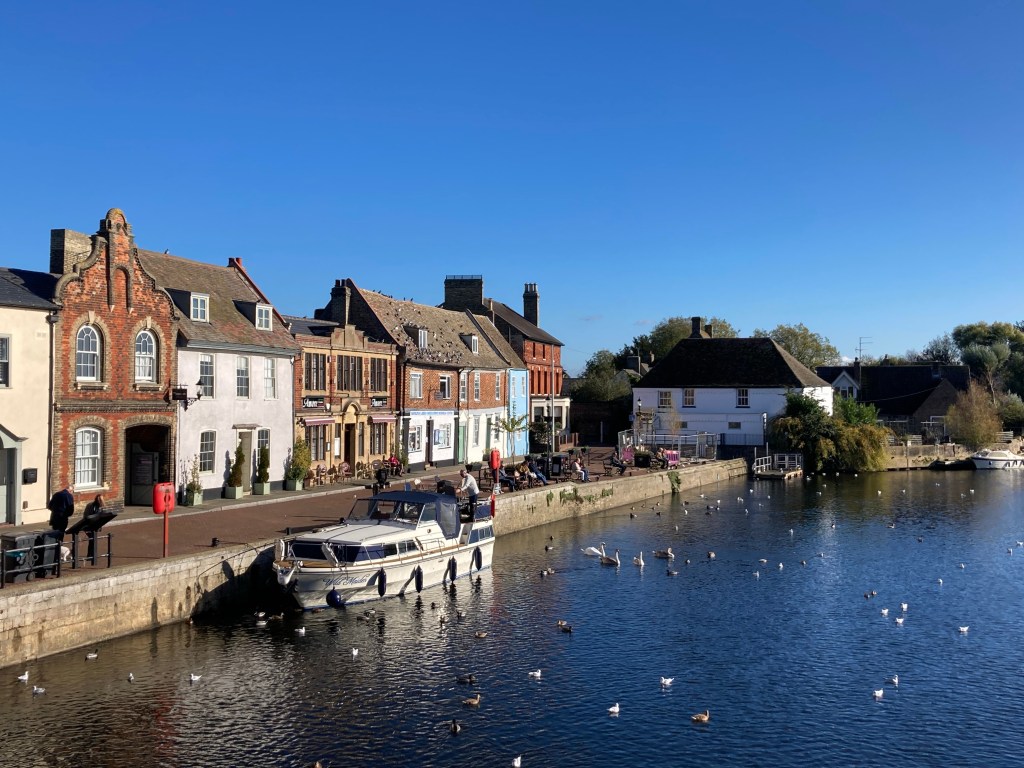
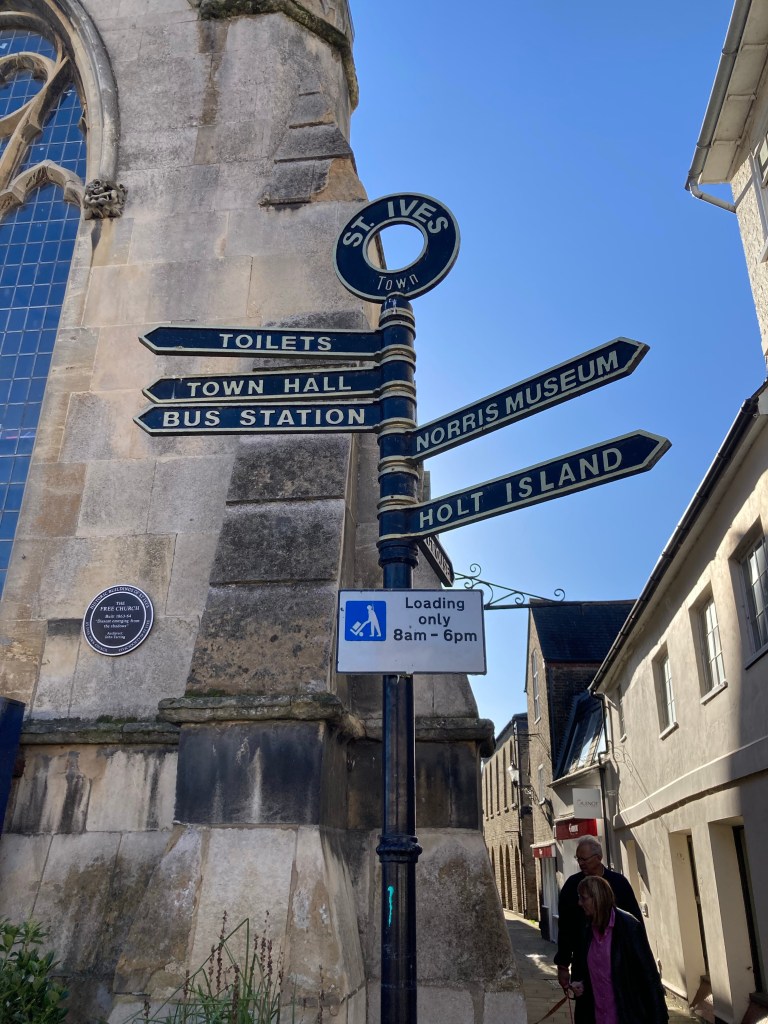
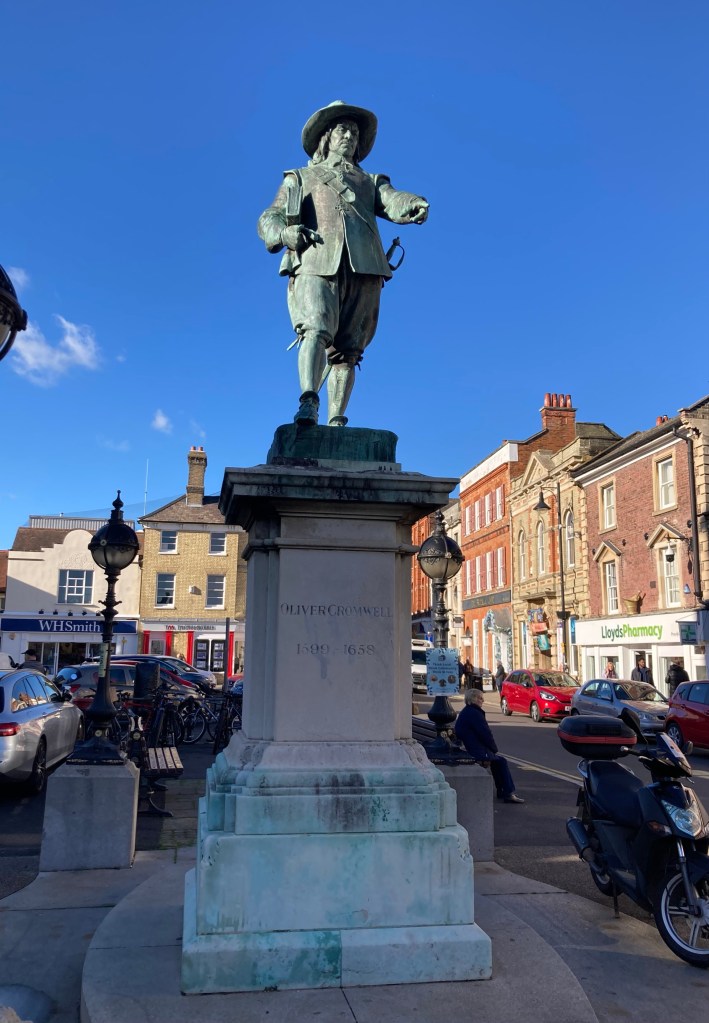
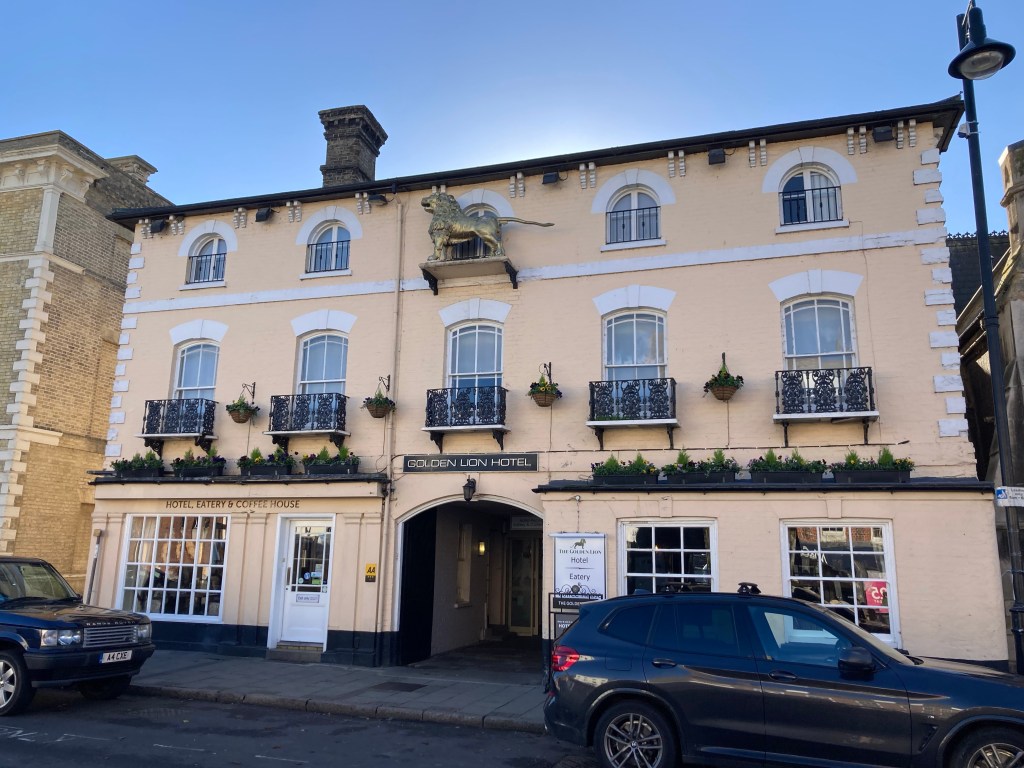
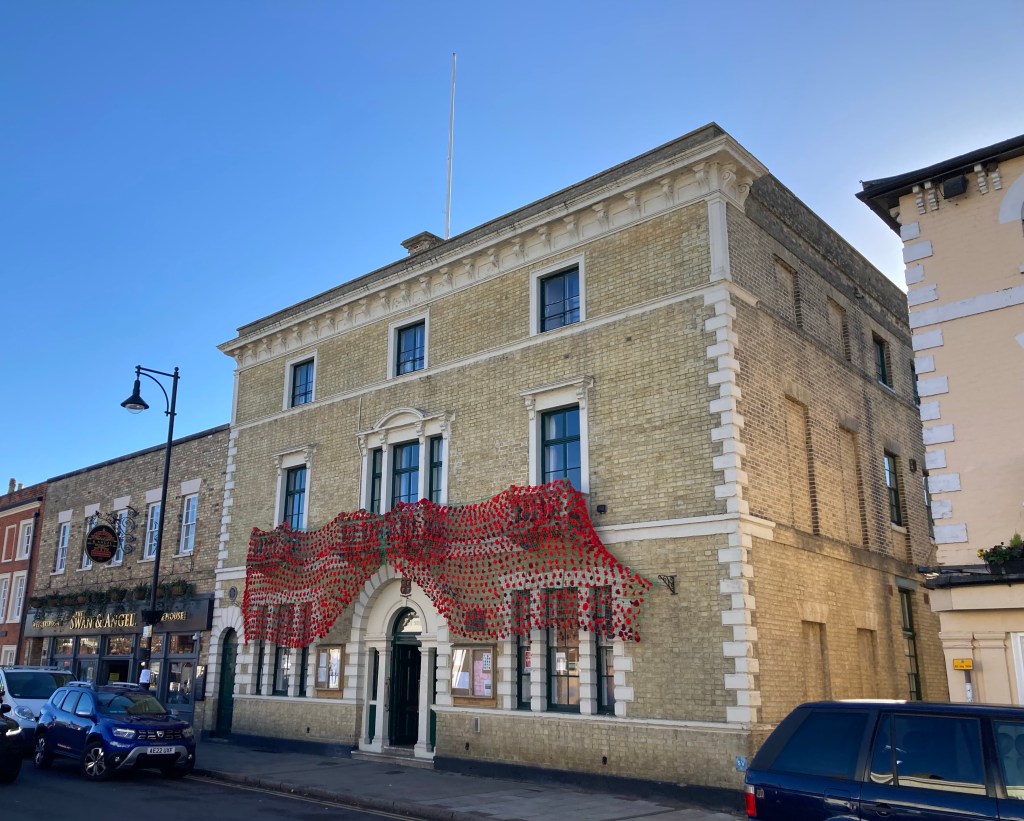
On the guided buswayView from the busA park and ride station between Cambridge and St IvesA biker on the bikeway alongside the guided buswayAnother view from the busSt Ives Methodist Church. I read on a plaque that John Wesley preached in St Ives in 1774.The Great Ouse River that runs through townPart of the Ouse Valley Way walk, a 150 mile route along the Great Ouse RiverThe Norris MuseumNarrow boaters on the riverDiners along the riverAnother view of the river — lots of ducks!A way finding signA statue of Oliver Cromwell, one of only 4 in Britain. He led the parliamentary forces against the Royalists during the English Civil War.A cute hotelAnother cute building adorned with poppies for Remembrance DayA war memorial with more poppies
Last night we were surprised with fireworks for Guy Fawkes Day (the celebration of a failed bomb attempt on King James in 1605). We knew there was a Bonfire Night today but didn’t realize there would be fireworks in the neighborhood on Friday. Pretty cool to be able to see them from the house.
Can’t believe we are already in November. Bob and I have been out a bit over the past couple of days but haven’t blogged. Monday morning we had a late breakfast at a lovely bakery near the train station, called Gail’s, before heading off to explore the many international groceries (and restaurants too) on Mill Street and do some shopping. Last night, we had a great night out with dinner at Al Pomodoro before going across the street to see “Nothing Compares,” a documentary about Sinead O’Connor.
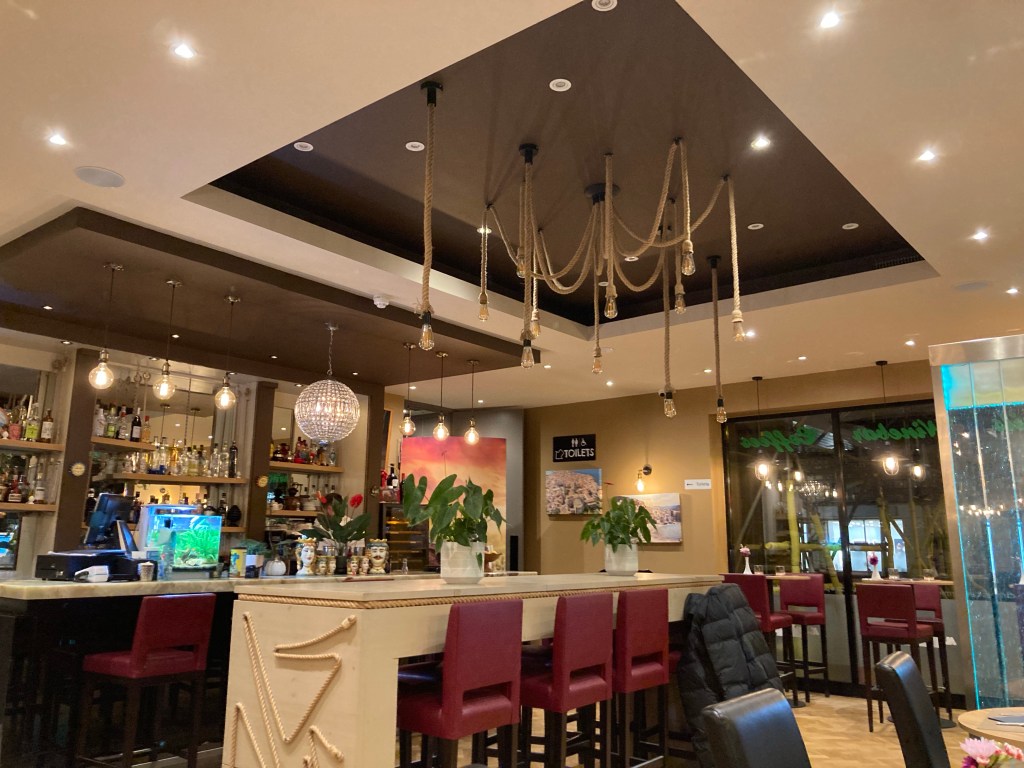
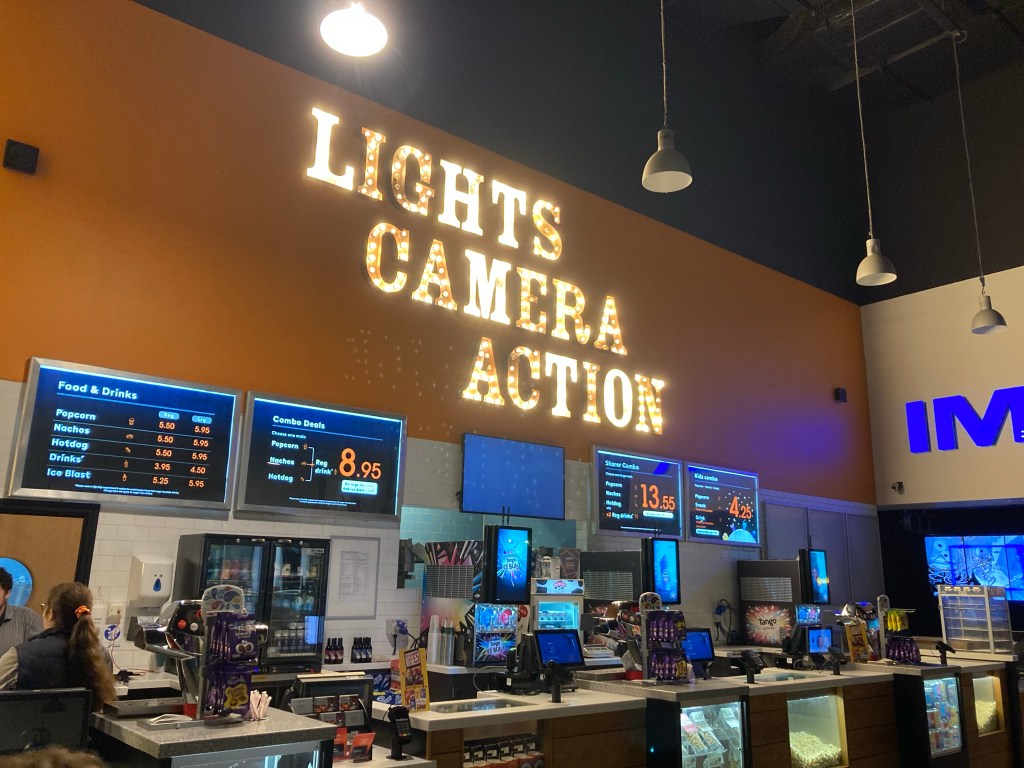
Al Pomodoro Lobby of The Light movie theater
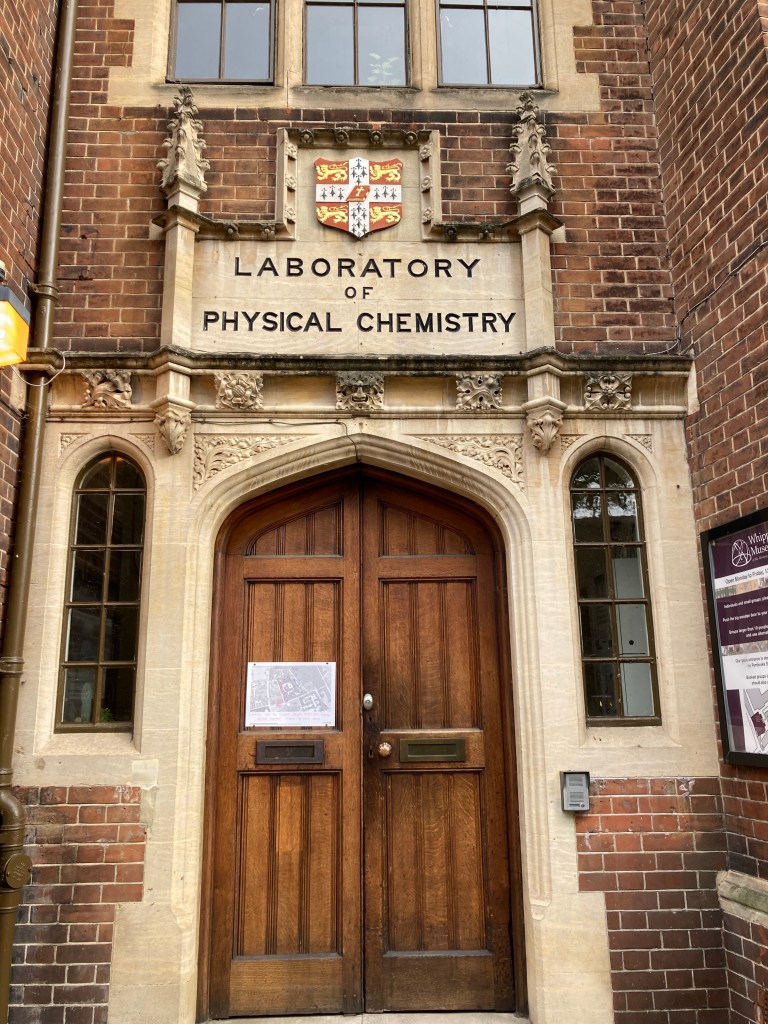
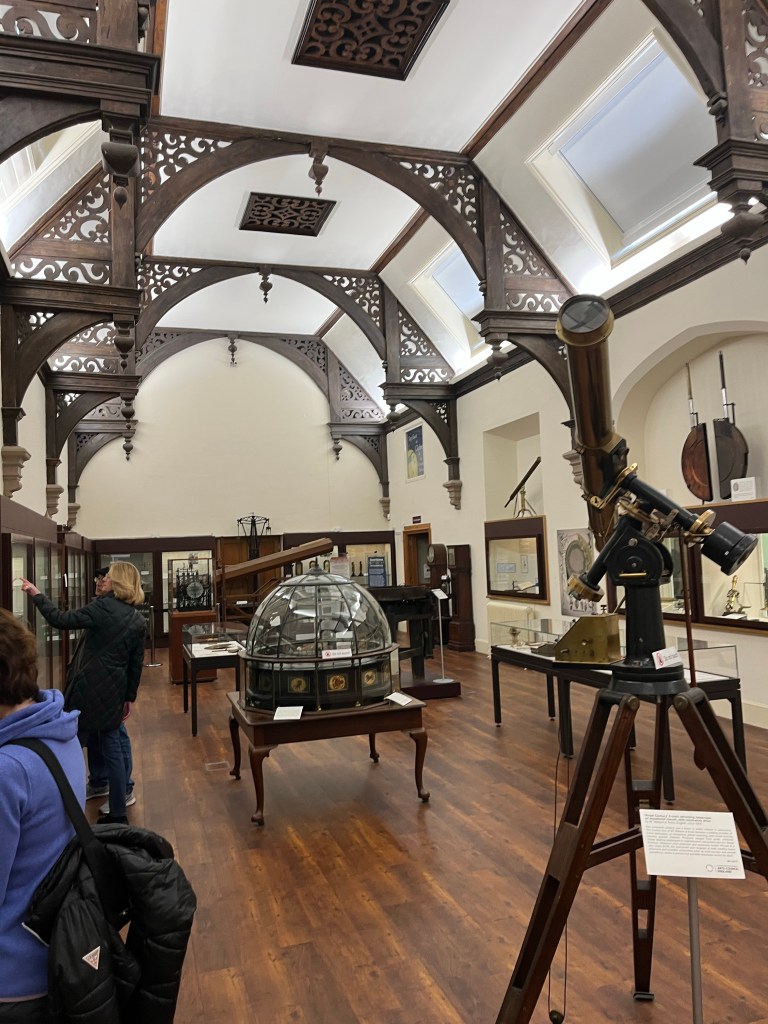
Today, we headed to another Free Cambridge University museum, the Whipple Museum on the history of science. Not surprisingly, the museum is not named for the Mr. Whipple of “Don’t squeeze the Charmin” commercials fame from our childhood but rather Robert S. Whipple, a former Director of the Cambridge Scientific Instrument Company.
In 1944, he presented 1,000 scientific instruments and related rare books to the University of Cambridge. That collection continues to grow and now has 7,000 objects. The items shown were spread among five galleries. Below are some pics from the visit.
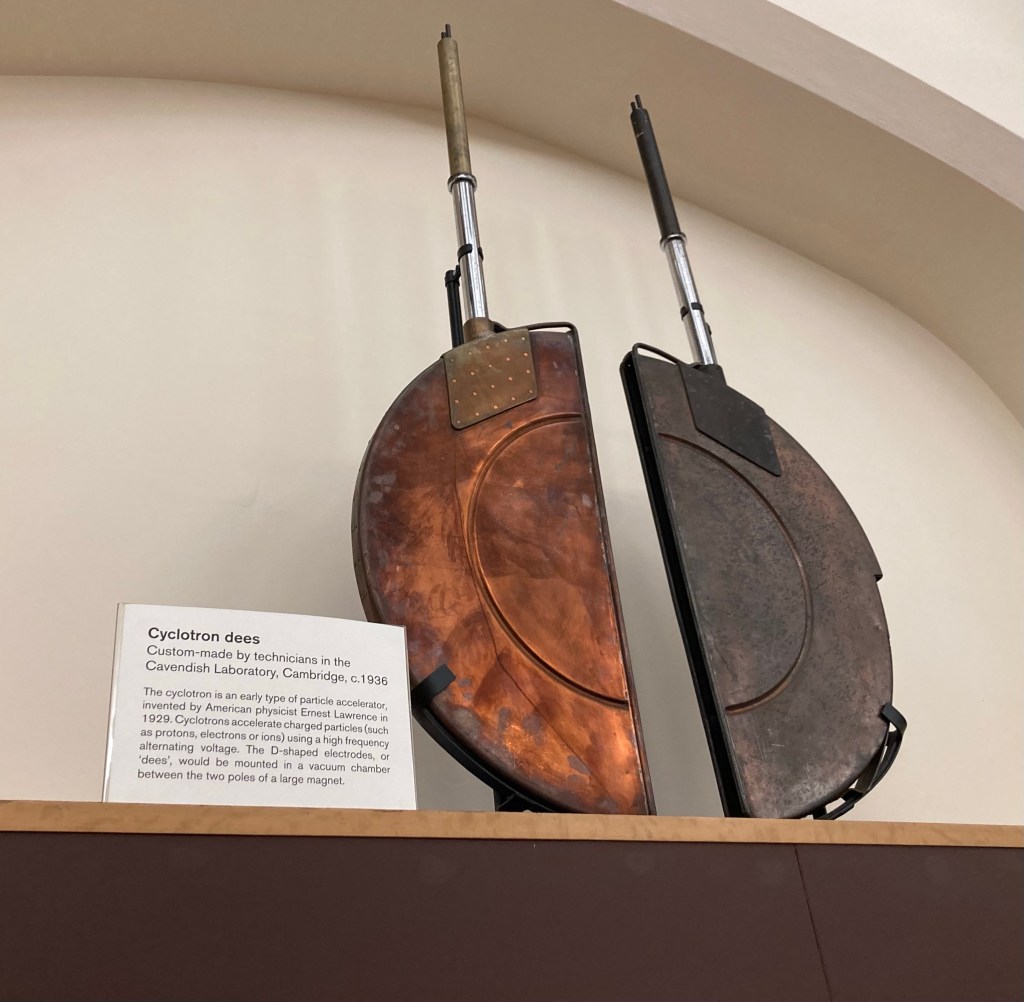
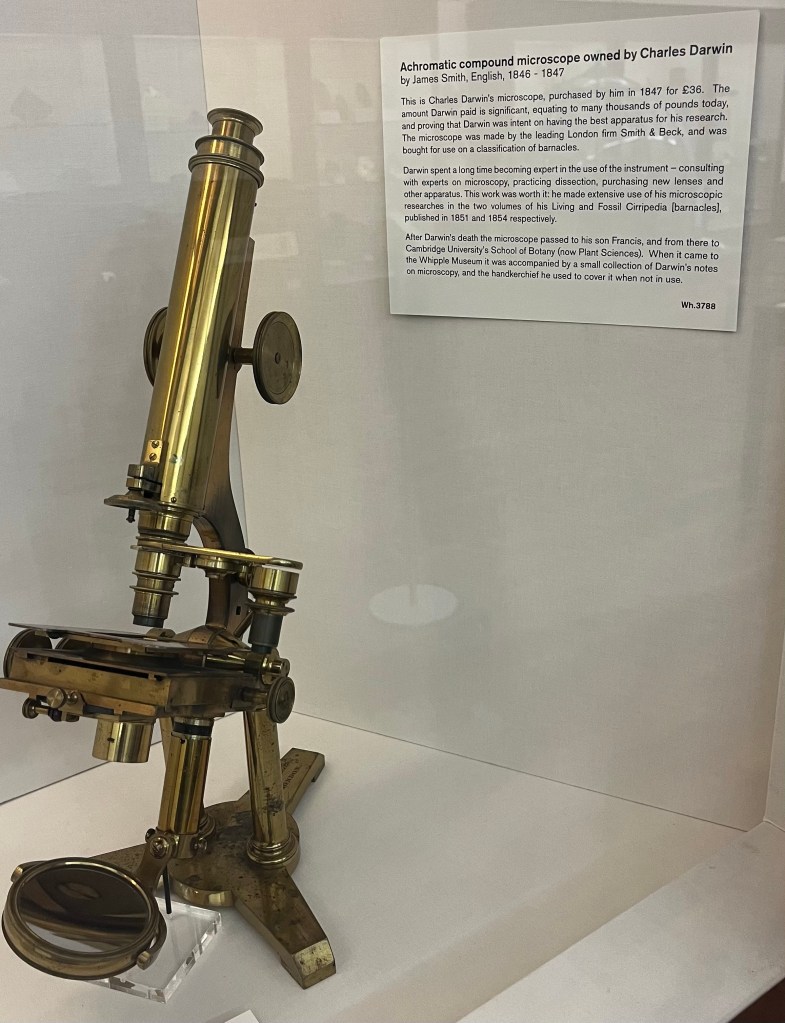
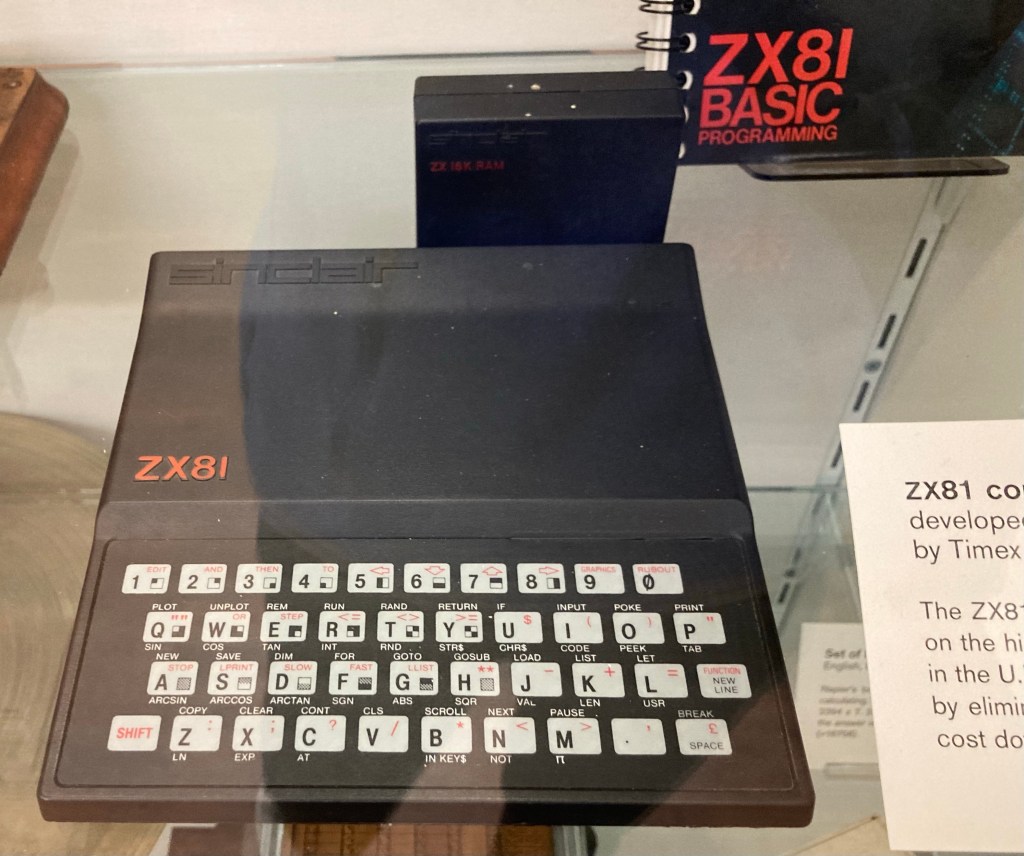
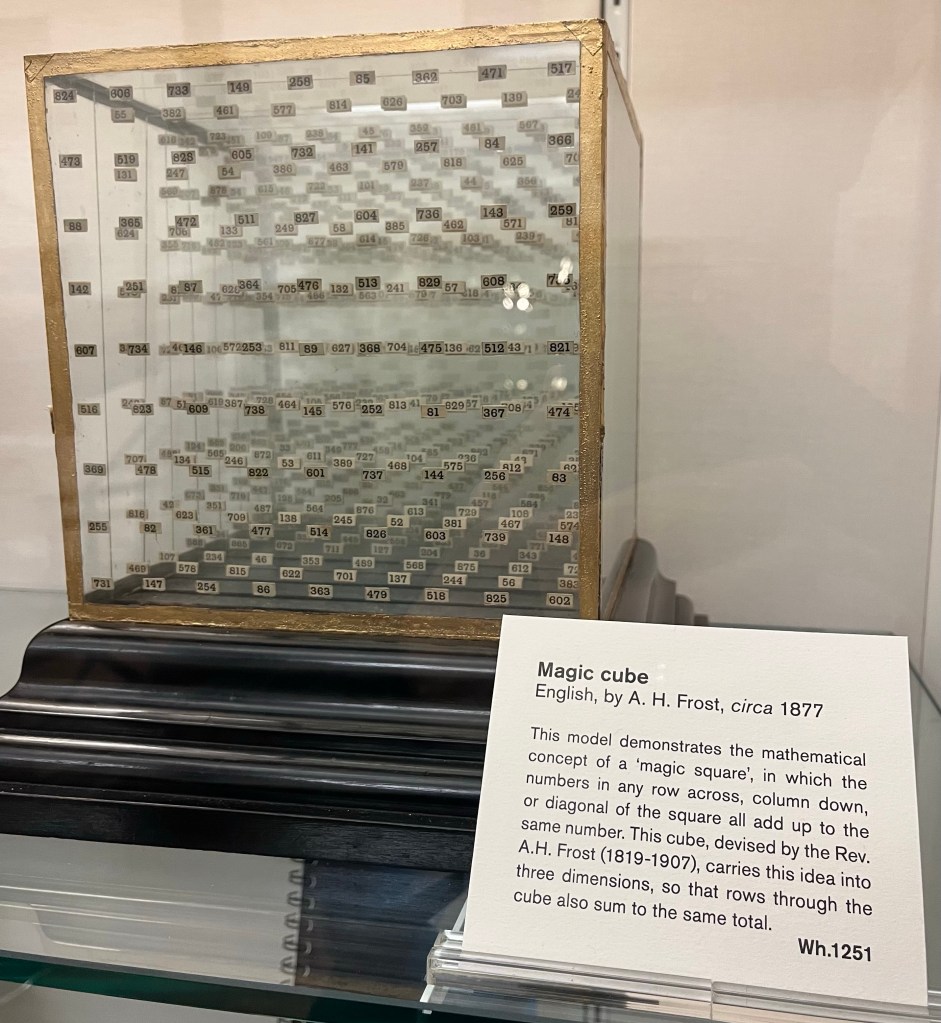
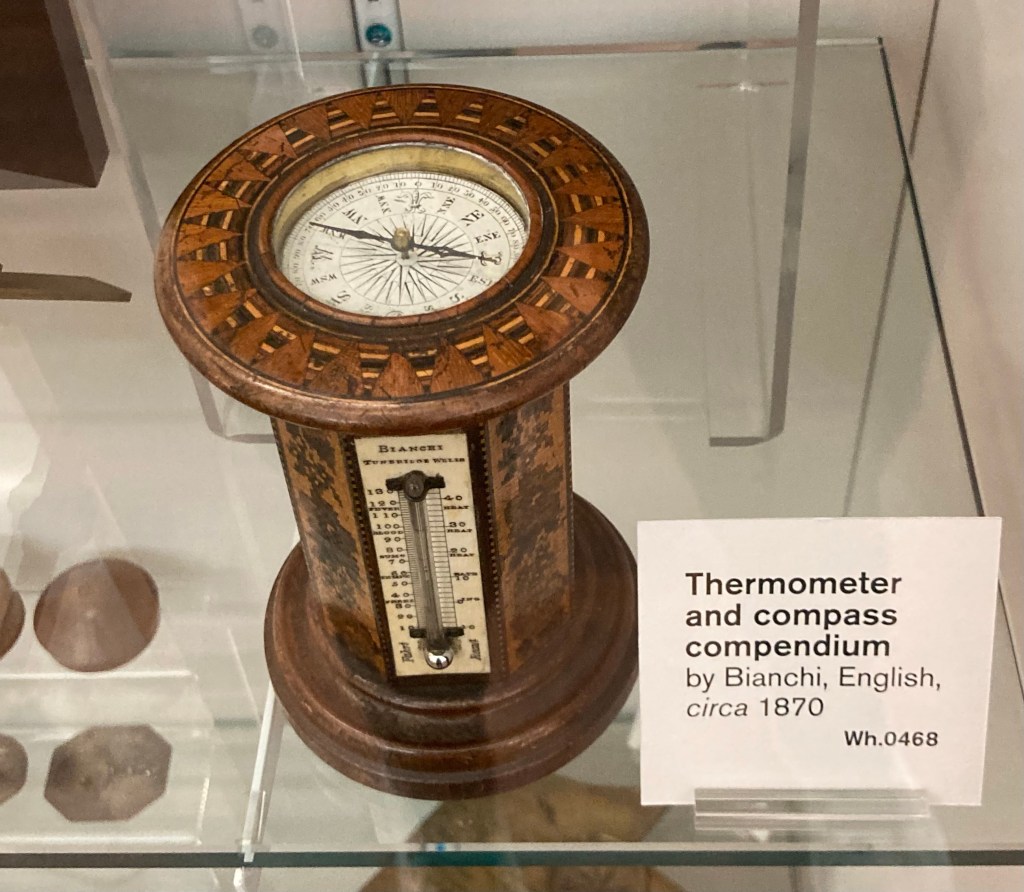
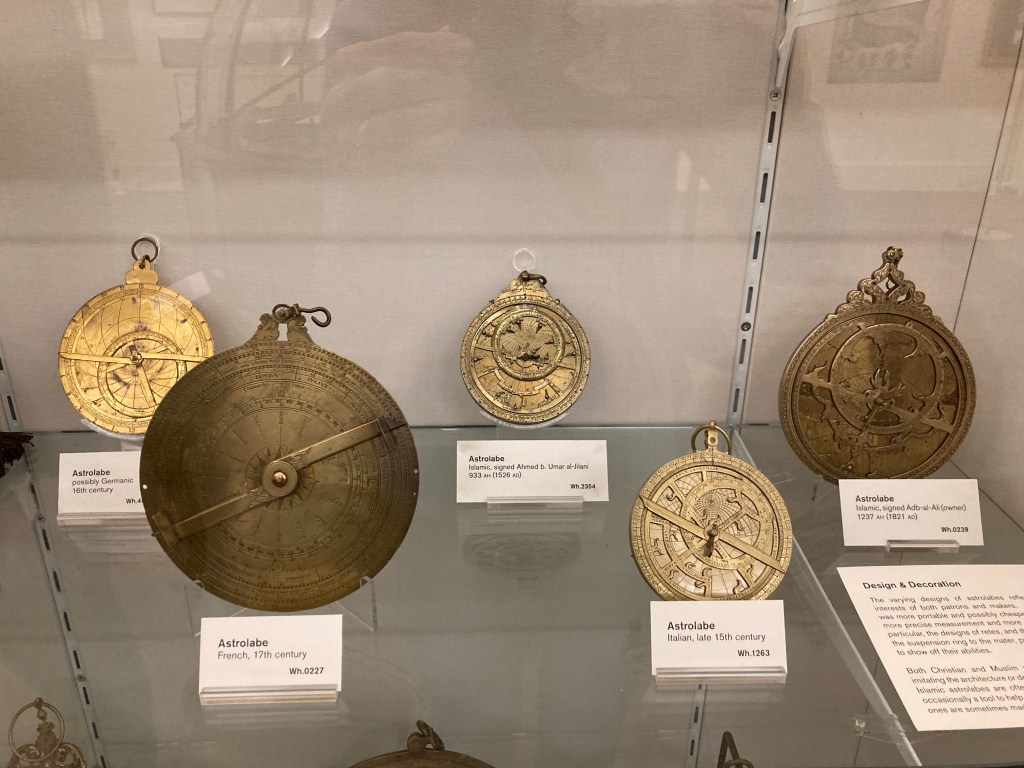
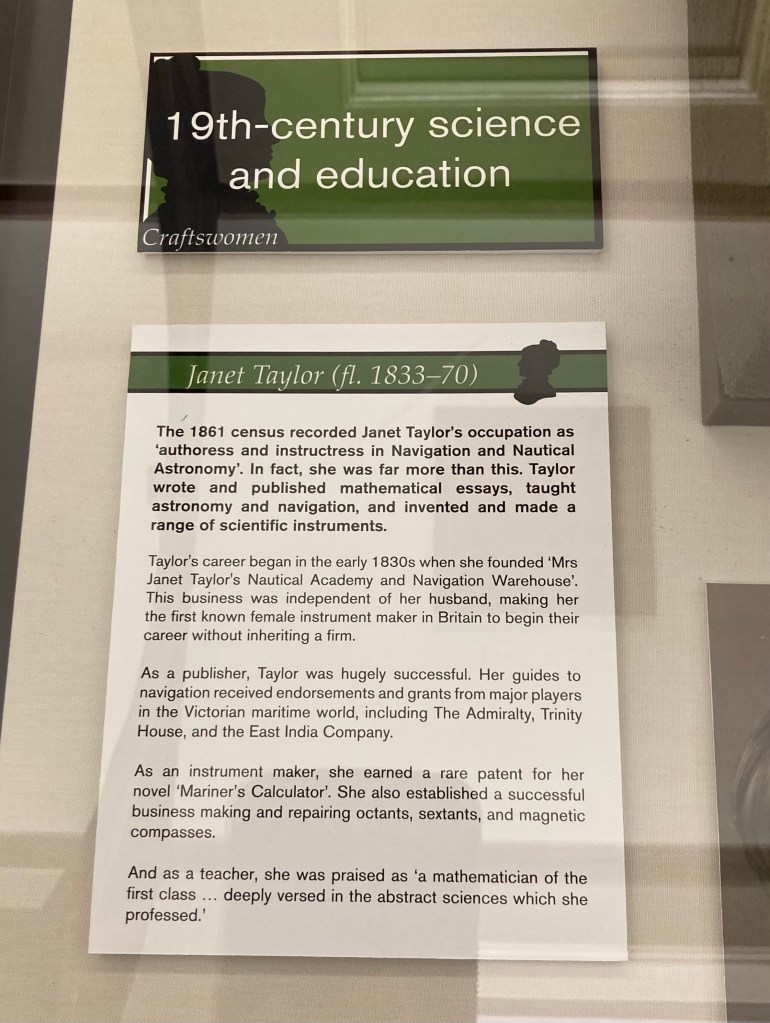
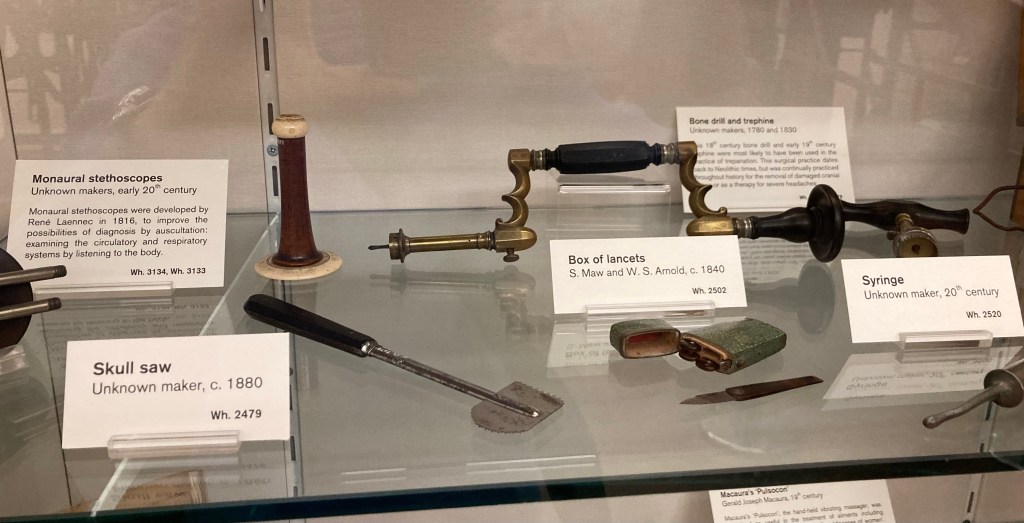
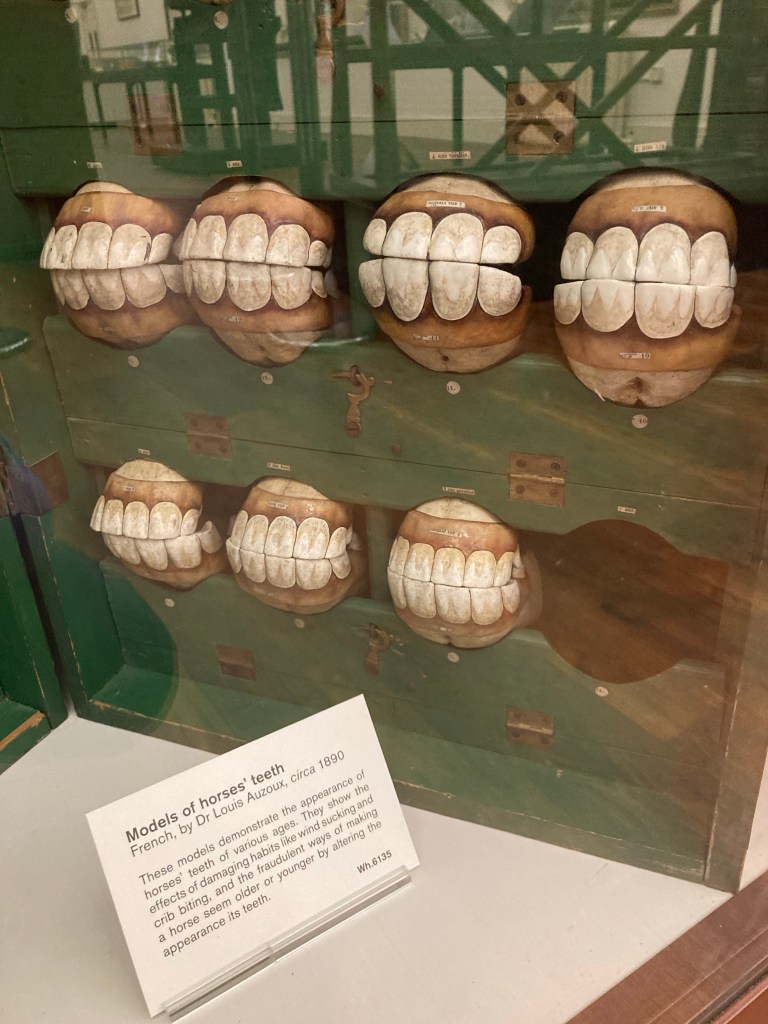
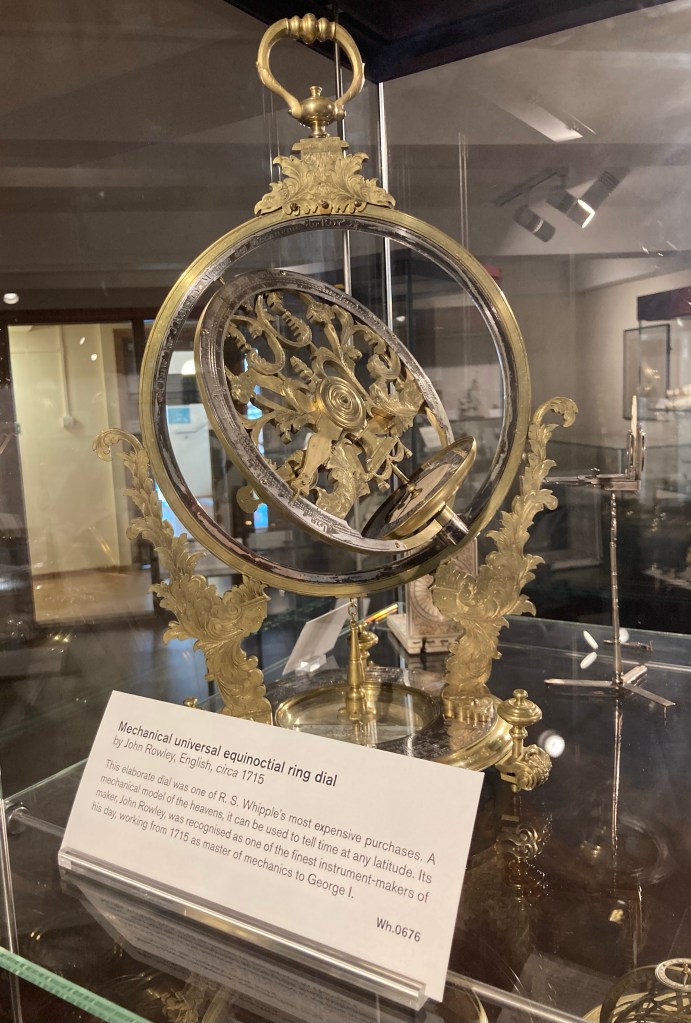
The entrance to the Whipple Museum View of the first exhibit room of the museum A cyclotron, an early type of particle acceleratorCharles Darwin’s microscope The ZX81 computer, one of the first home computers, and the first affordable model in the UK. Developed in 1981, it won the British Design Council Award.A fun way to learn multiplication More fun with numbers A double duty instrument A plethora of astrolabes to make astronomical measurementsThere was a whole exhibit on the many women who have contributed to the development of not just science but scientific instruments. Impressive!I could rattle off any number of complaints about today’s medical “system “ but super glad that our instruments have advanced.This just makes me smile and wonder if I inadvertently learned where the term “suck wind” originated.There were lots of models of the heavens but this one was especially attractive.
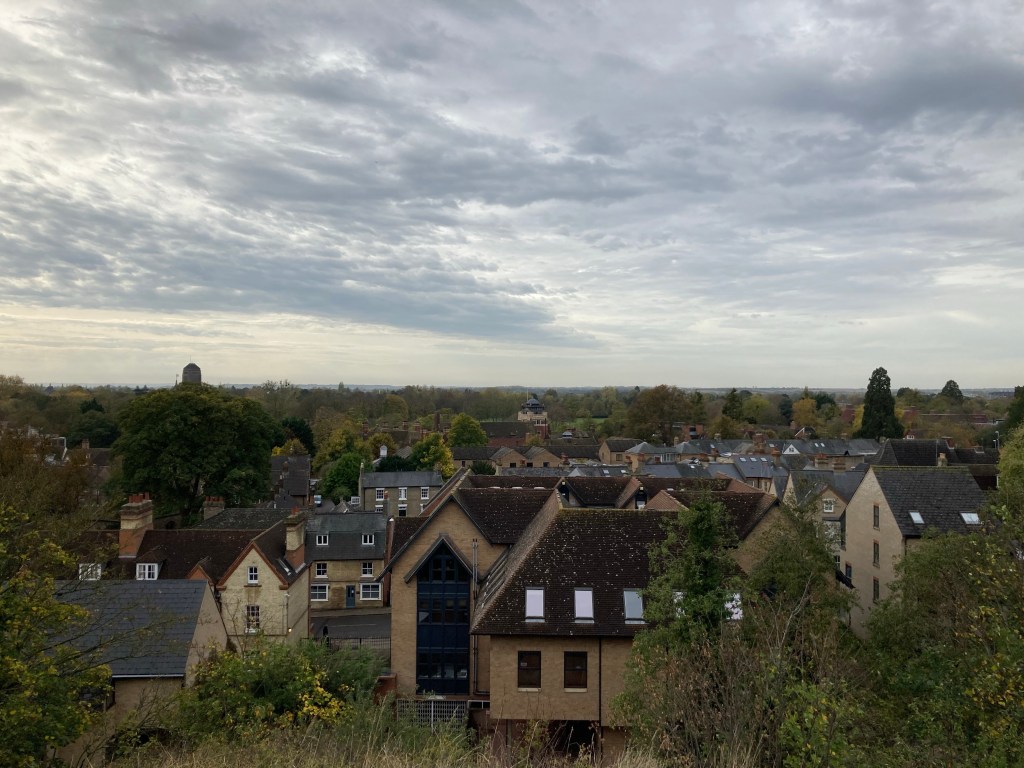
After a soggy start to the morning (first time I’ve been rained on during a run since I’ve been here) and a leisurely read of the big Saturday paper, (it’s the Saturday rather than the Sunday issue here that is the big one), I set off for Castle Hill to see what the views would be. The weather had cleared, and we’re headed for 70 F today before the day is through! Bob’s hip was acting up a bit, so he stayed home.
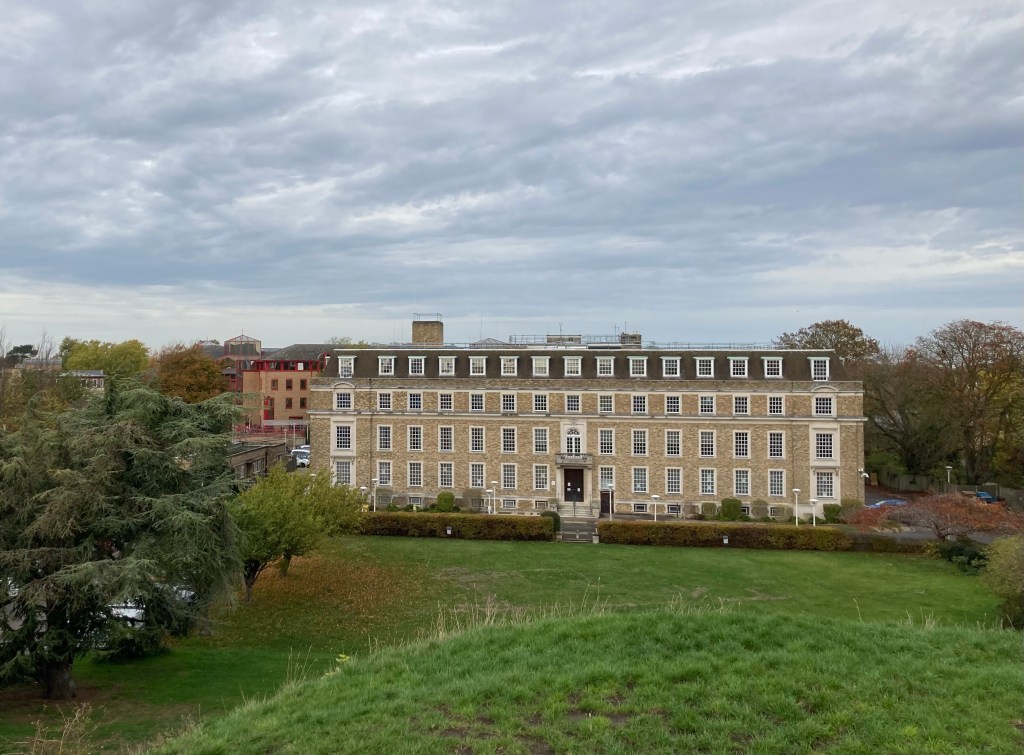
Castle hill (Wikipedia calls it a knoll, which might be more appropriate) is the site of the original settlement in Cambridge and was also the site of a Norman castle at one time.
I walked the back way to try to avoid the crowds that flock to the city center on the weekends.
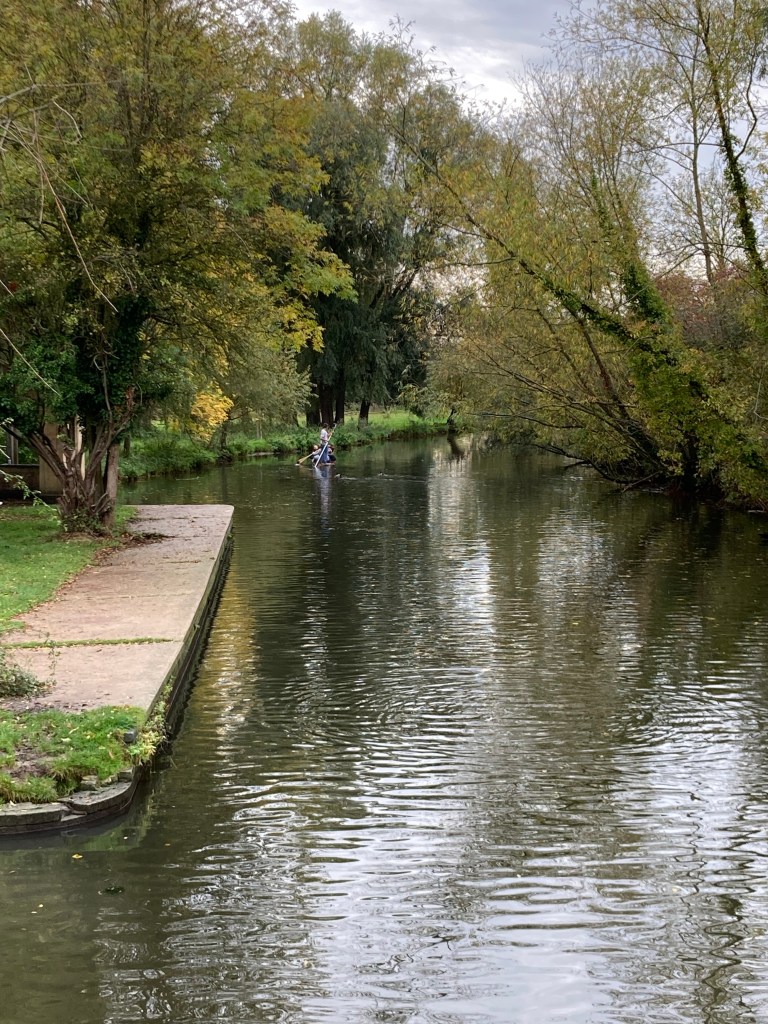
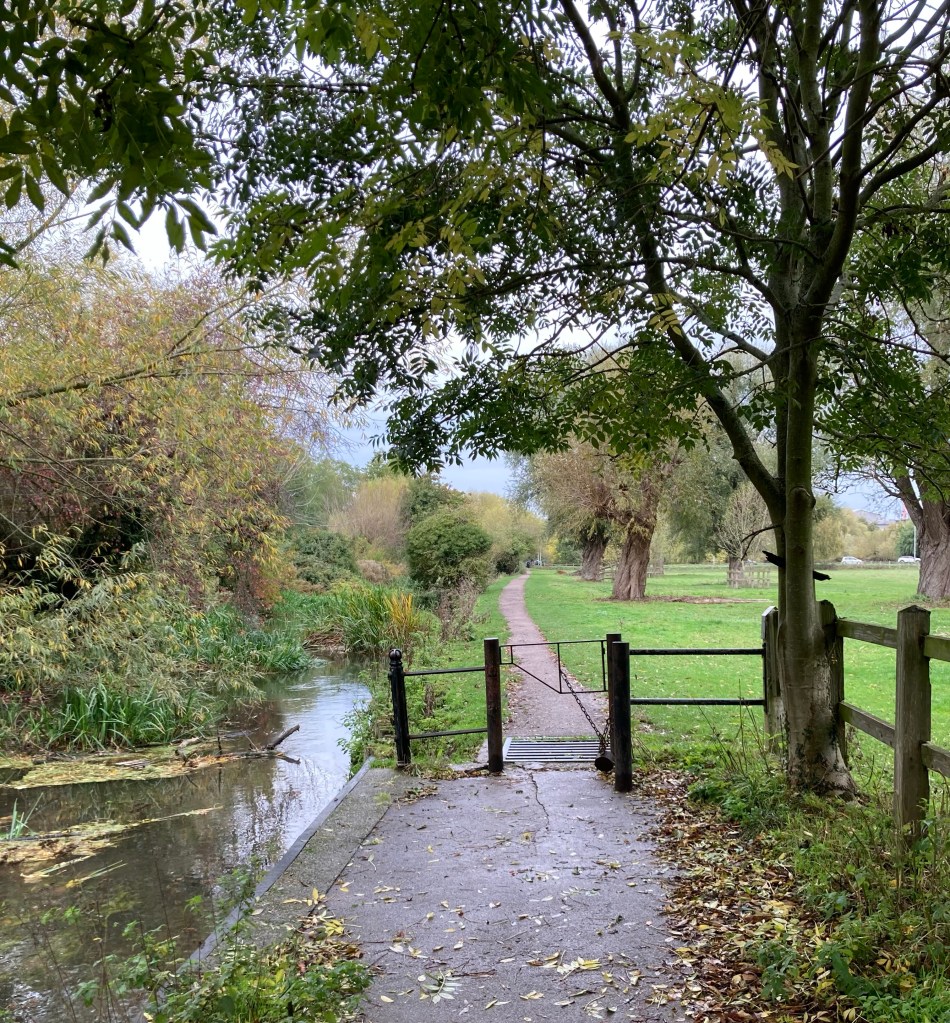
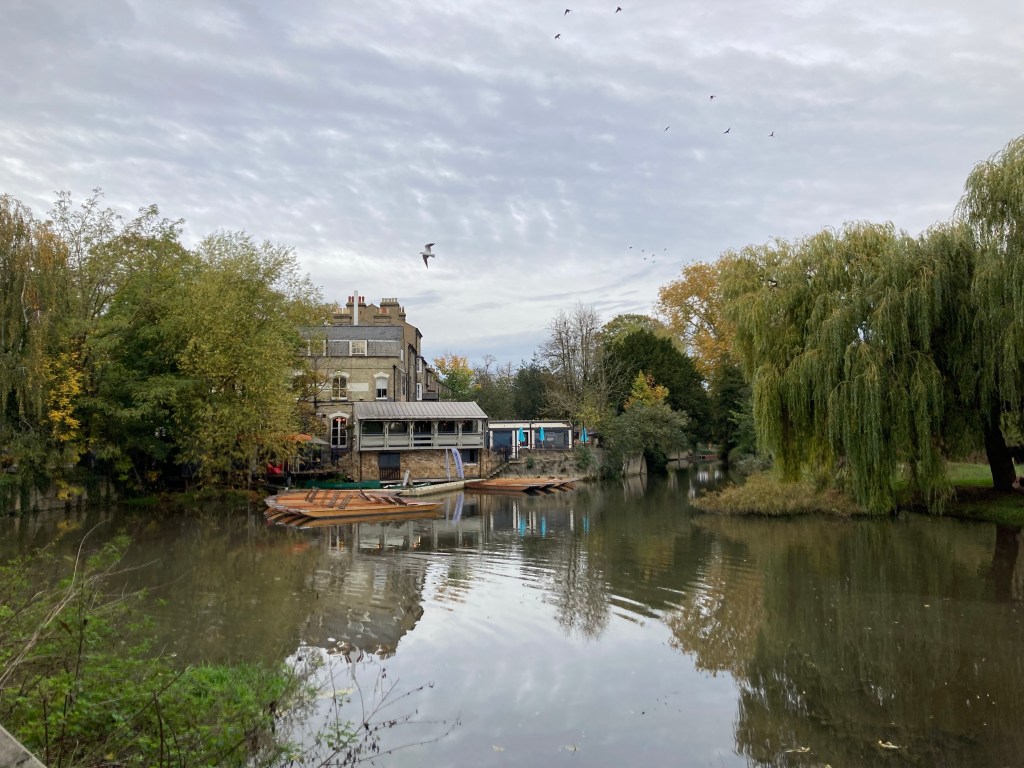
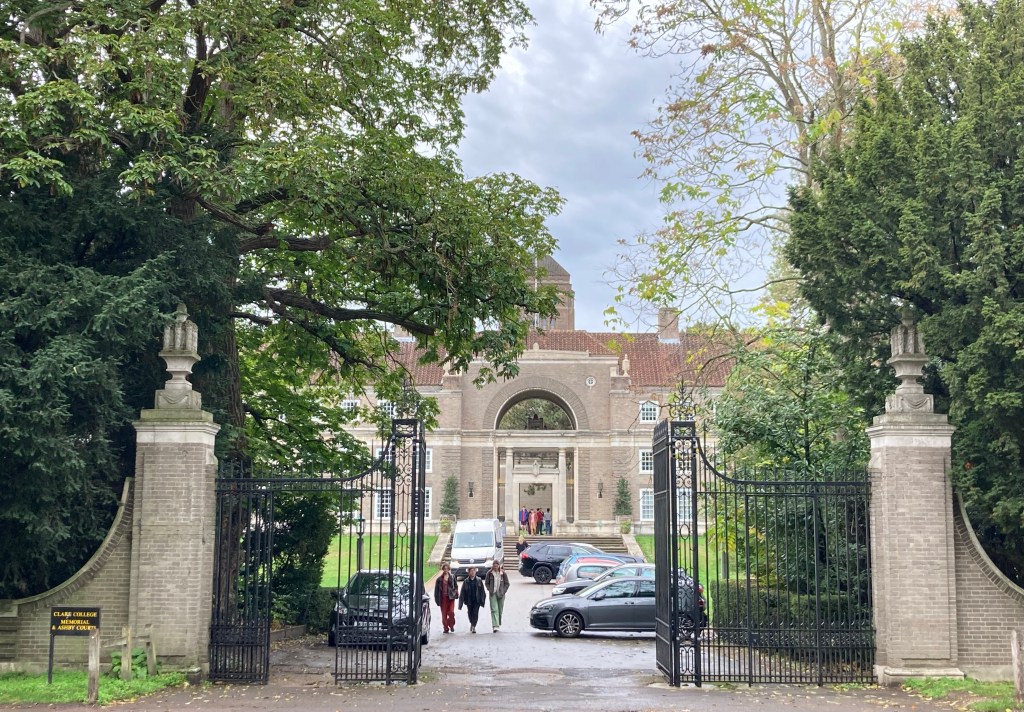
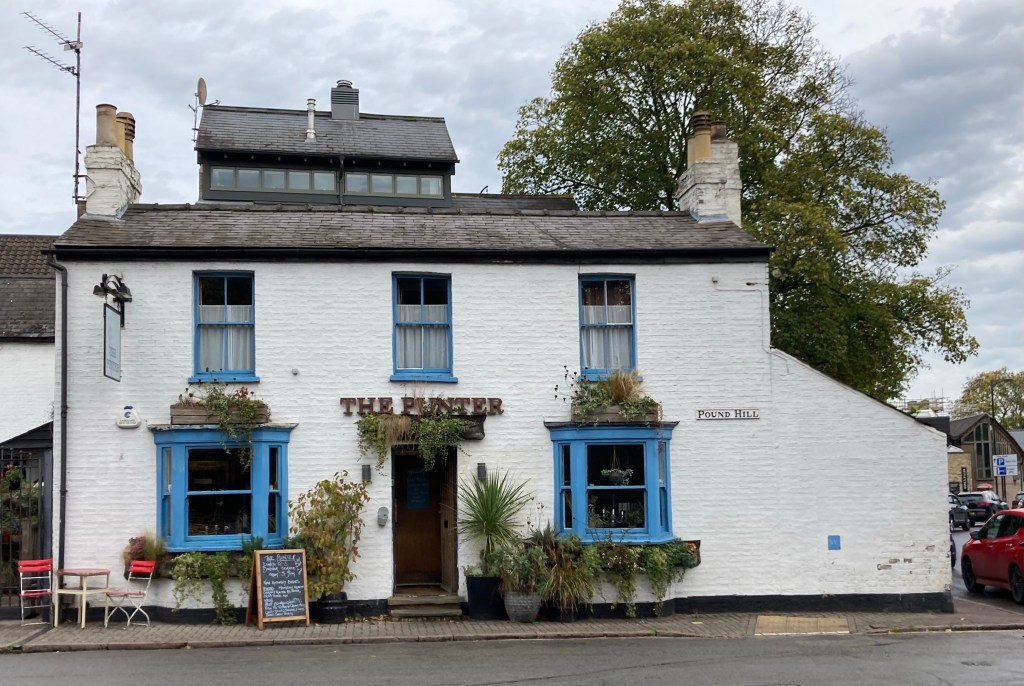
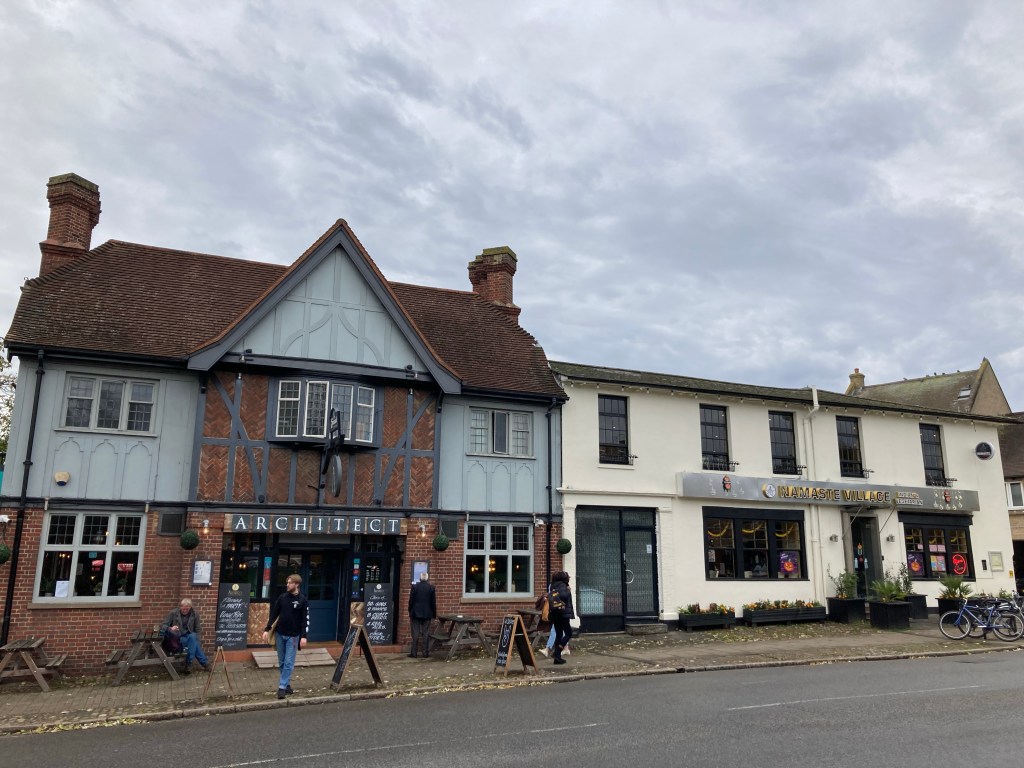
A punter on the River Cam as it flows through Sheep’s Green (but which has cows and no sheep)The trail along the River Cam in Sheep’s Green, headed towards the Fen Causeway and onto Mill Pond.Mill Pond, located near a 19th century mill which is now a pub called The Mill.Clare College Memorial and Ashby CourtAnother pub, not sure why we feel compelled to photograph so many of these, but we tend to find them attractive, and it’s cheaper than stopping for a pint.A couple of restaurants/pubs across from Castle HillCastle HillLooking into town from the hillLooking away from town
After the long slog up and a bit of a rest 😁, I descended back to earth and made my way up Bridge Street to face the crowds and pop in a couple shops.
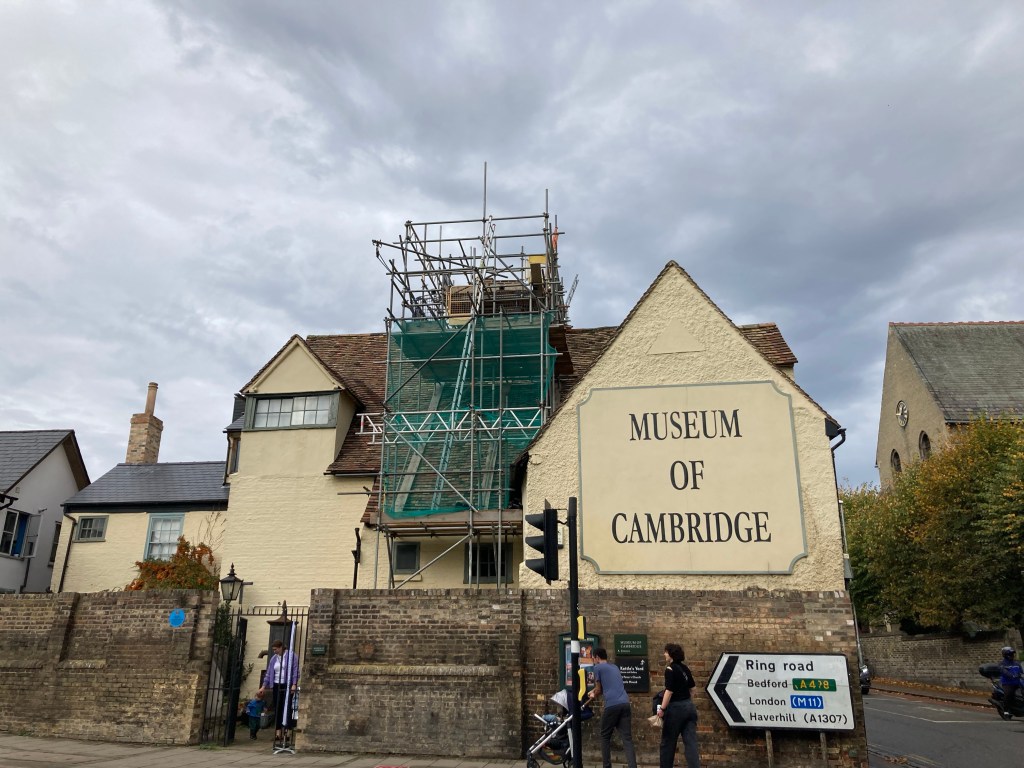
The Cambridge Museum under refurbishment More punting on the River CamThe mythical Isaac Newton apple tree where he was said to discover gravity. This tree did not exist at the time Newton was at Cambridge, and Newton was home visiting his mother in Lincolnshire when he saw an apple fall from a tree and began to consider the cause.
One of the walks recommended to us was in Grantchester and through Grantchester Meadows. Since biking is kinder to Bob’s hip than a longer walk, we decided to bike to the nearby community and then swing back to Waitrose, a larger grocery, to check that out as well.
It is a quick bike ride to Grantchester, about 15 minutes taking the more scenic route. I had run through a bit of the community, but since I run in the dark, I really hadn’t seen much. We biked through Grantchester Meadows and then by some pubs and churches as well. On the way back, we brought the Guided Busway trail.
The only negative of the little excursion was Bob forgot the bike lock keys, so we took turns shopping while the other stayed with the bikes. Below, are pics from the outing.
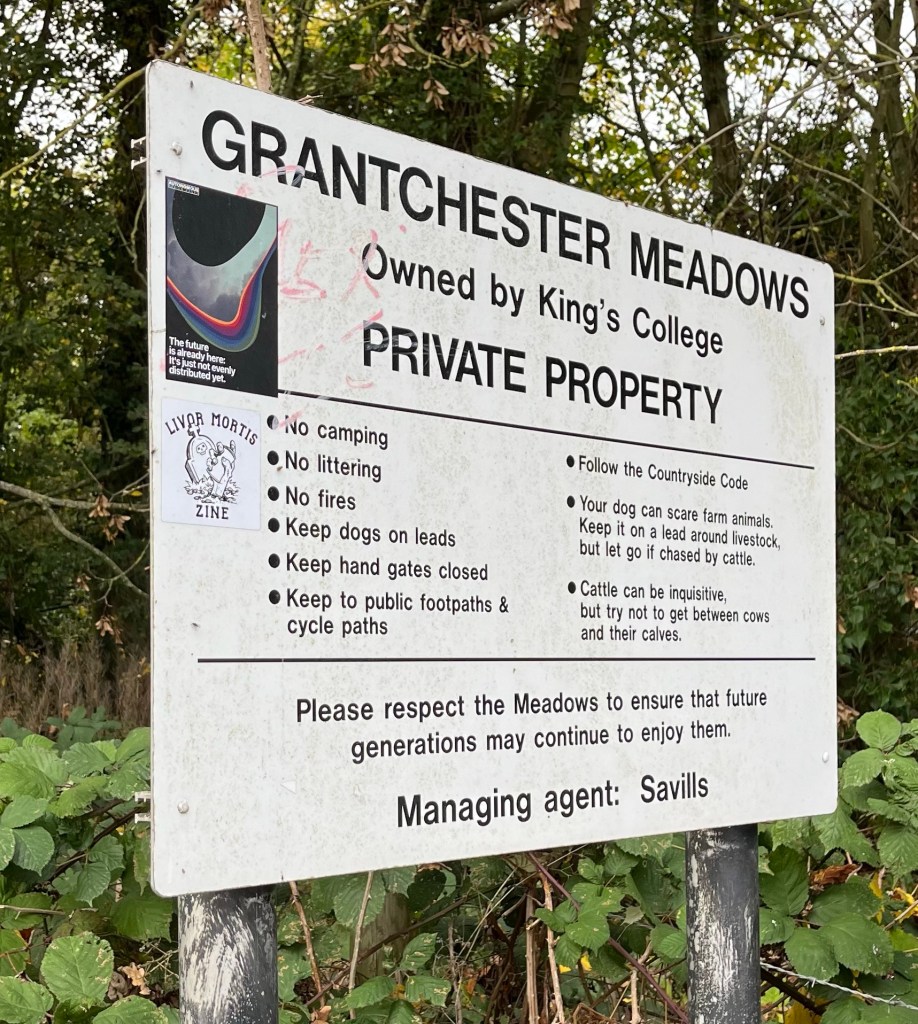
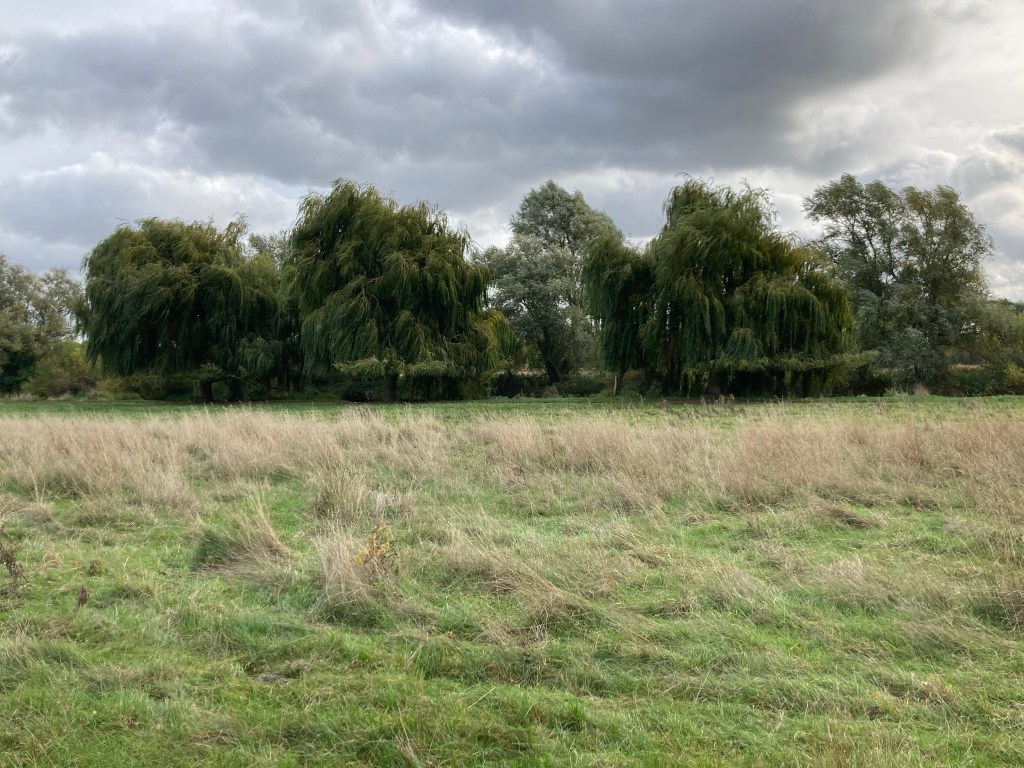
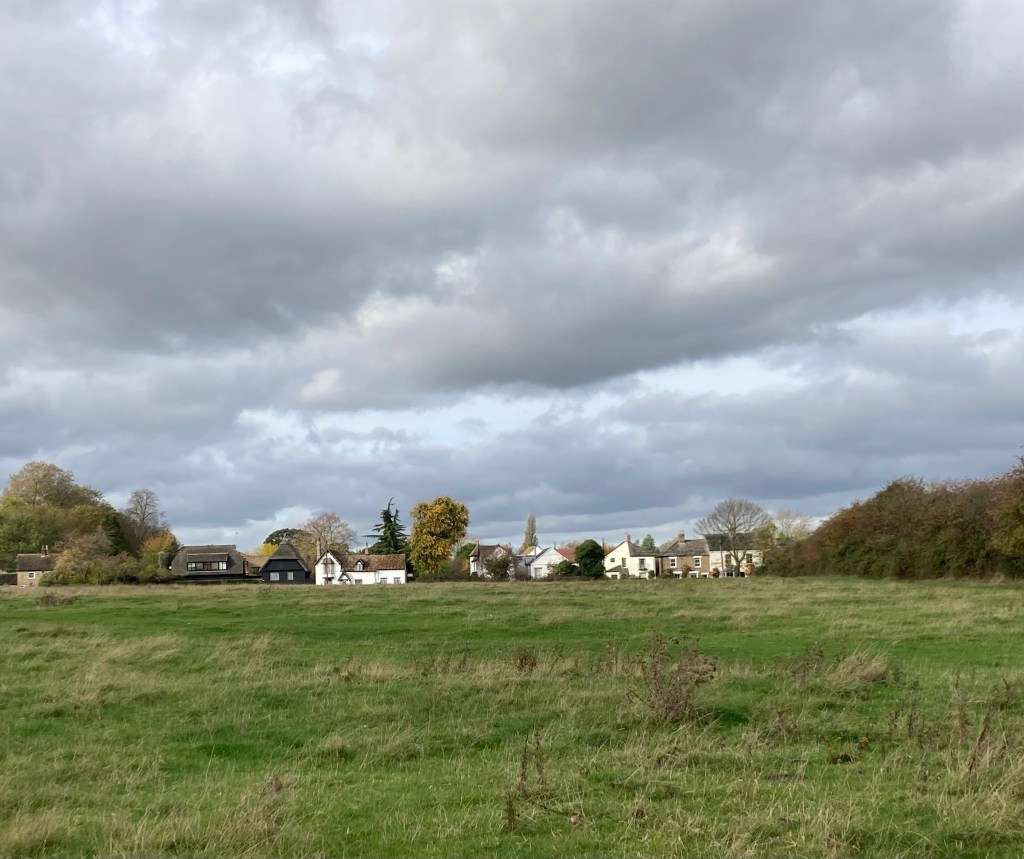
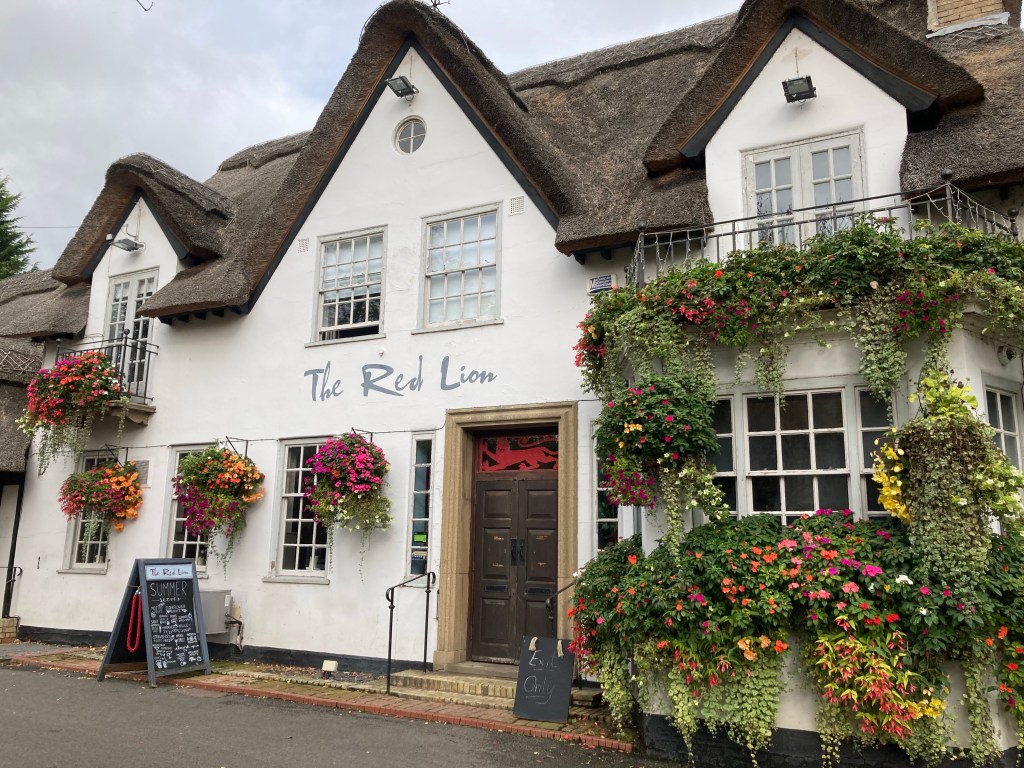
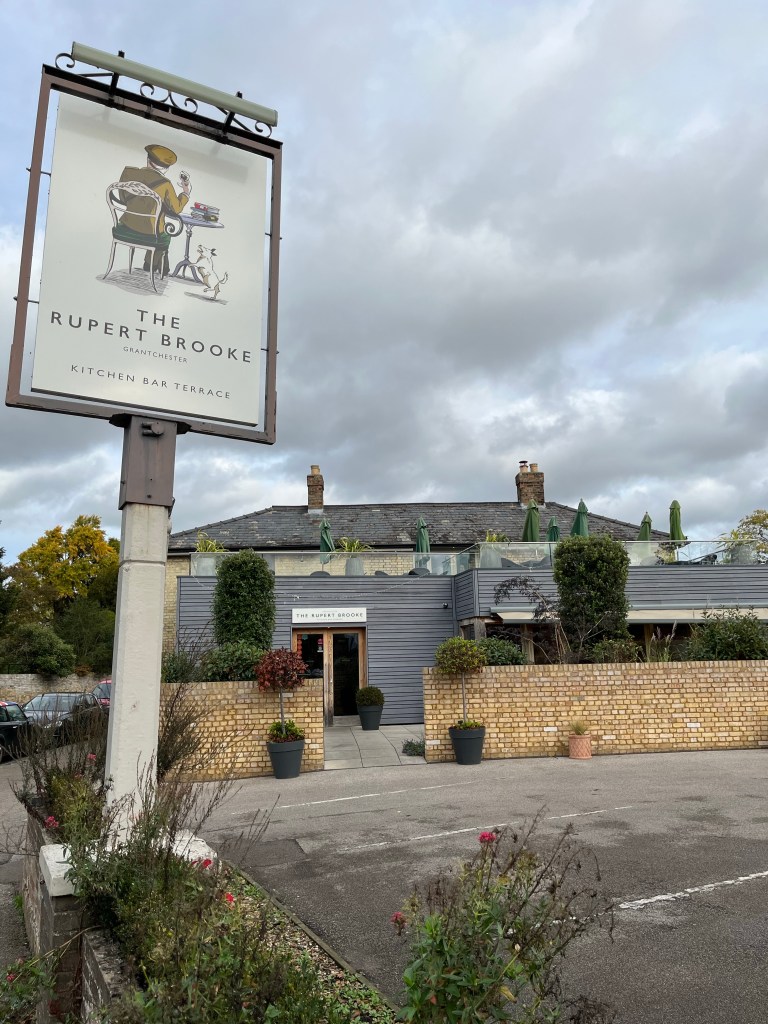
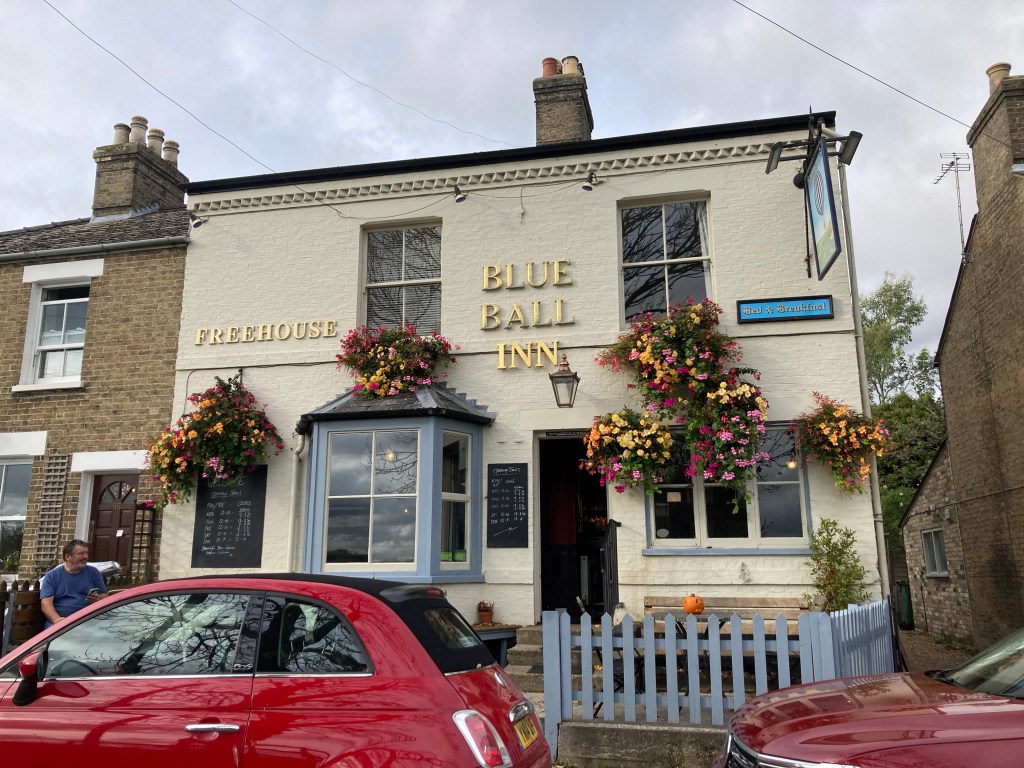
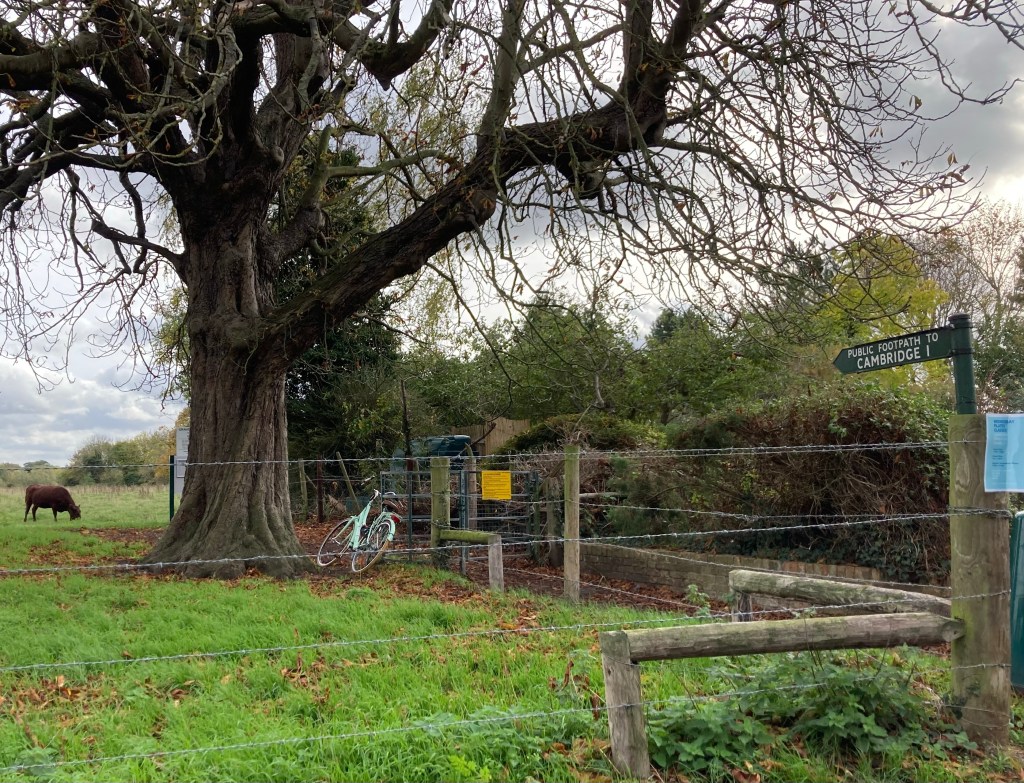
The path was paved.Another shot of the trail.Grantchester MeadowsInteresting that the parkland is owned by one of the collegesMore meadowsA view of the River Cam from the meadows Houses in Grantchester.This pub was at the end of the trail. We loved the flowers.Beth had read about this place last night.A modern pub/restaurant with 2nd floor (or in UK and Europe, 1st floor) outdoor seating.A pub and B&BA directional sign to get back to Cambridge.A nice church in Grantchester.A home has nice statutes in the yardAnother view of the River CamA memorial on Trumpington High Street, down the street from the grocery.
Today, we visited the Fitzwilliam Museum. We had heard about this museum from our homeowners as having an impressive collection that might require a visit or two. According to its website, the museum was started in 1816, when Richard, the Seventh Viscount Fitzwilliam of Merrion, bequeathed his works of art and library to the university along with £100,000. It currently houses over 500,000 works of art. The building itself is beautiful too.
The museum was a short walk from our house, just under a mile away. Along with many of the other museums associated with Cambridge University, it is free to visit, although we did give a donation when we reserved our timed entry tickets online. The museum has collections exhibited in approximately 25 rooms over two floors. We just perused the exhibits on the upper level today and hope to get back for a second visit.
First, let’s start with the building.
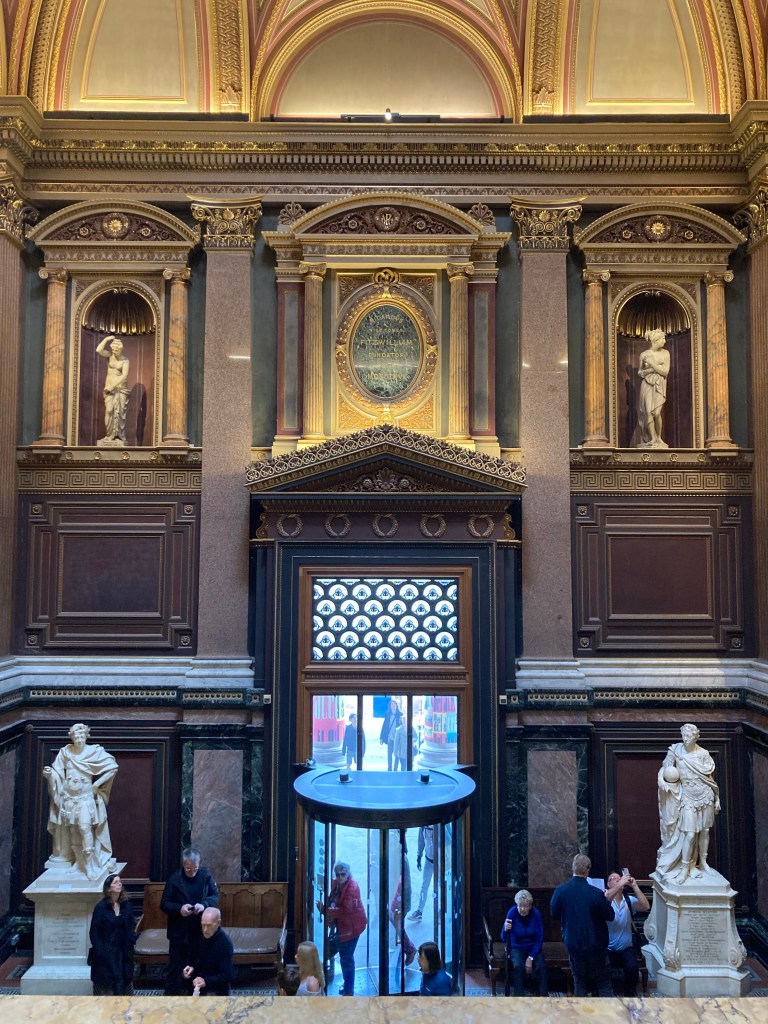
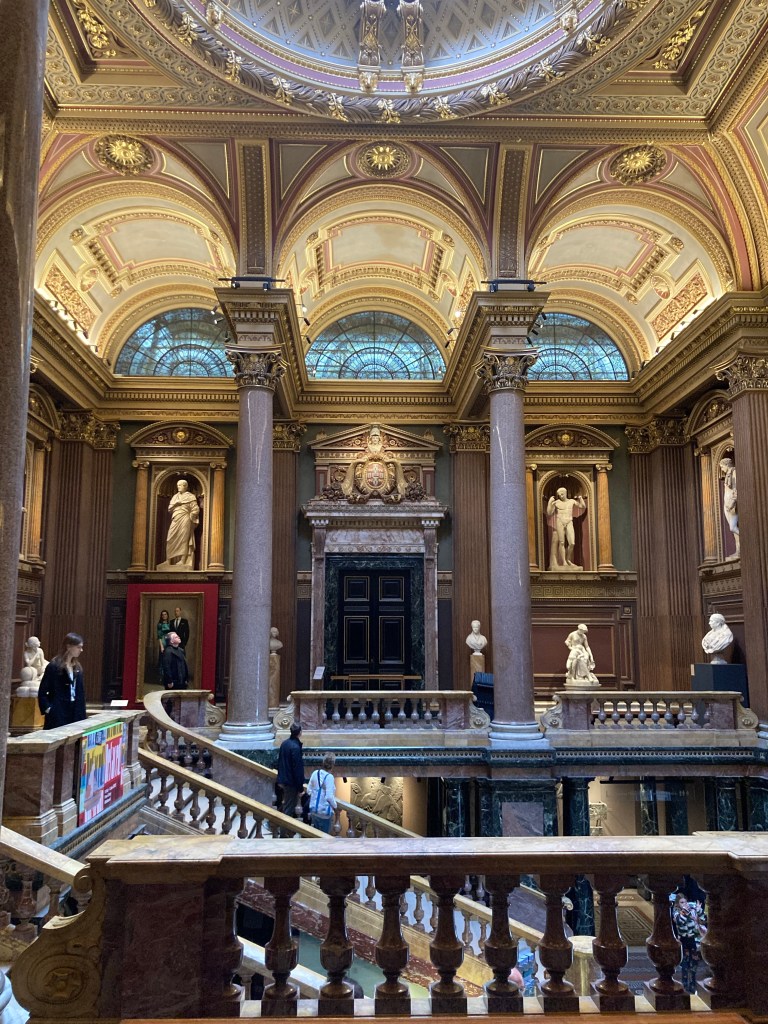
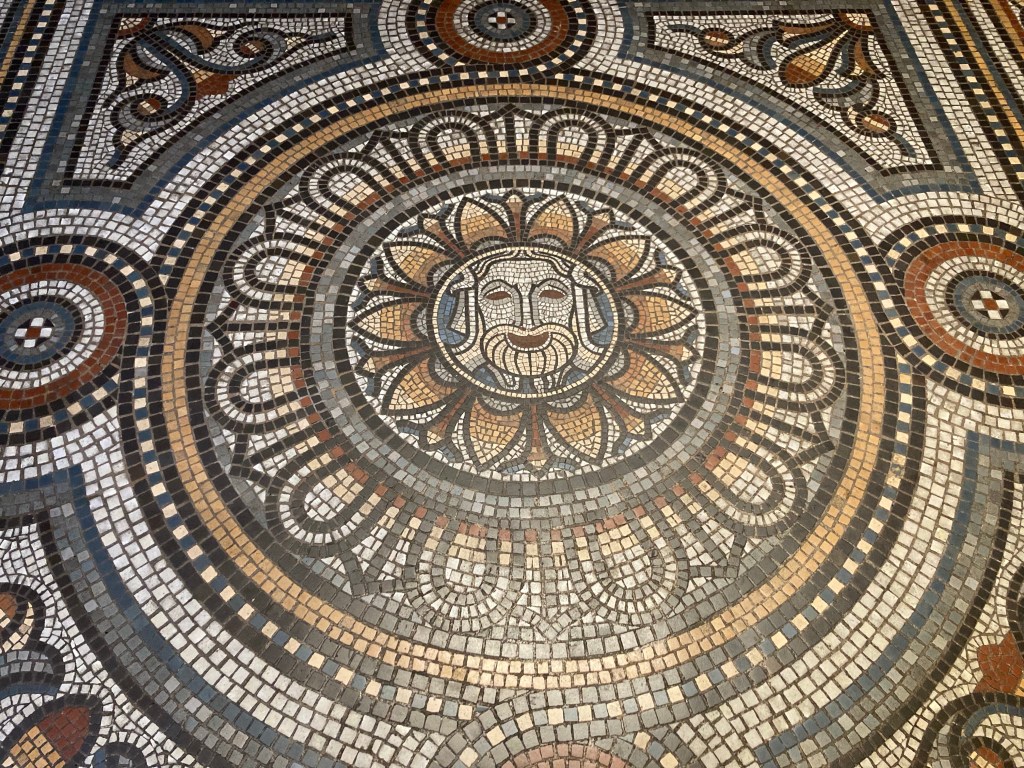
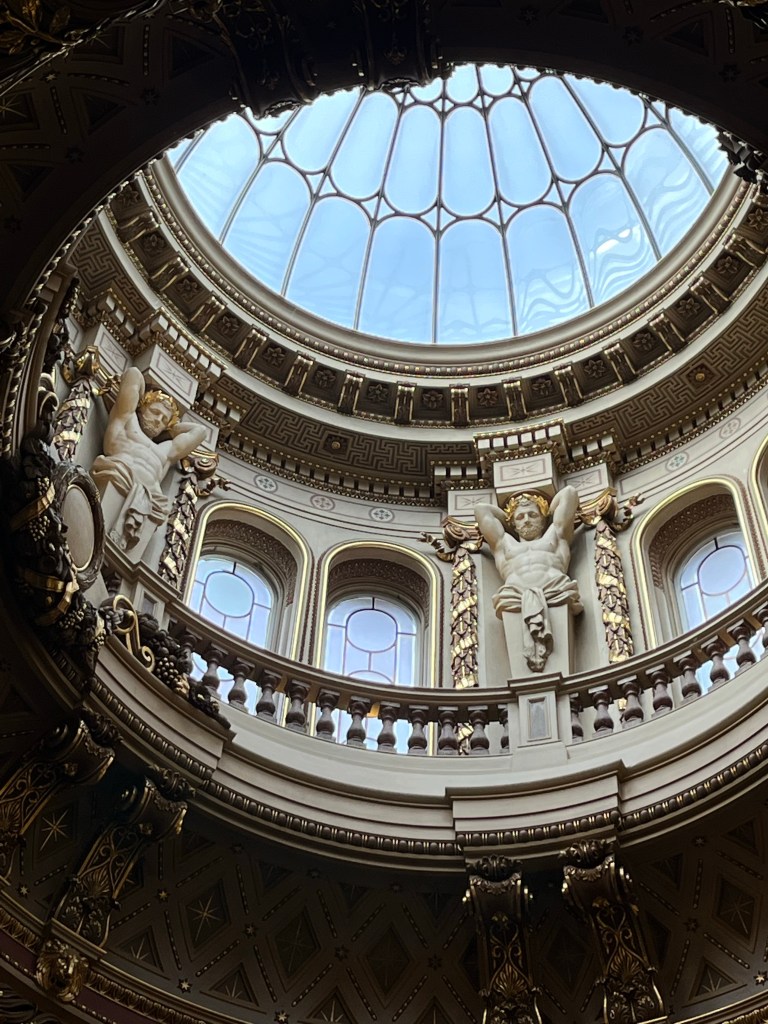
The Fitzwilliam Museum with columns adorned with posters for their Defaced! Exhibit (more below).The lovely main entry hall and rotundaLooking across the top floor over the main entry staircase The mosaic floor on the upper level of the entryThe top of the rotundaThe beautiful room that displays European artAnother stairwell with views of the University of Cambridge Judge Business School
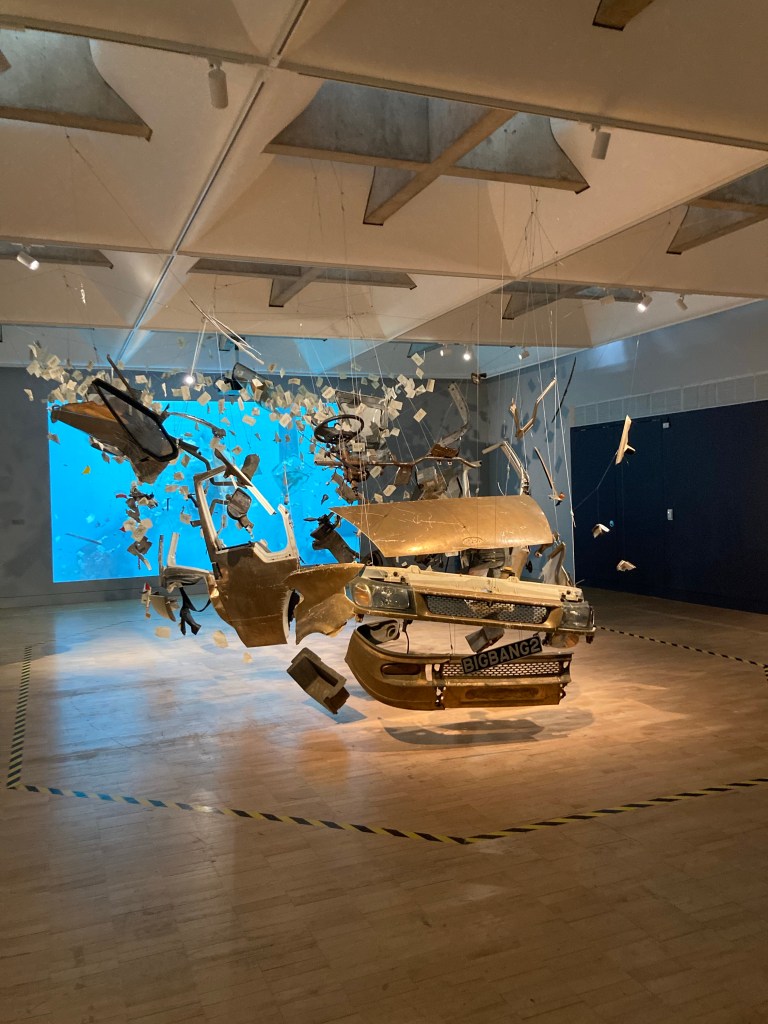
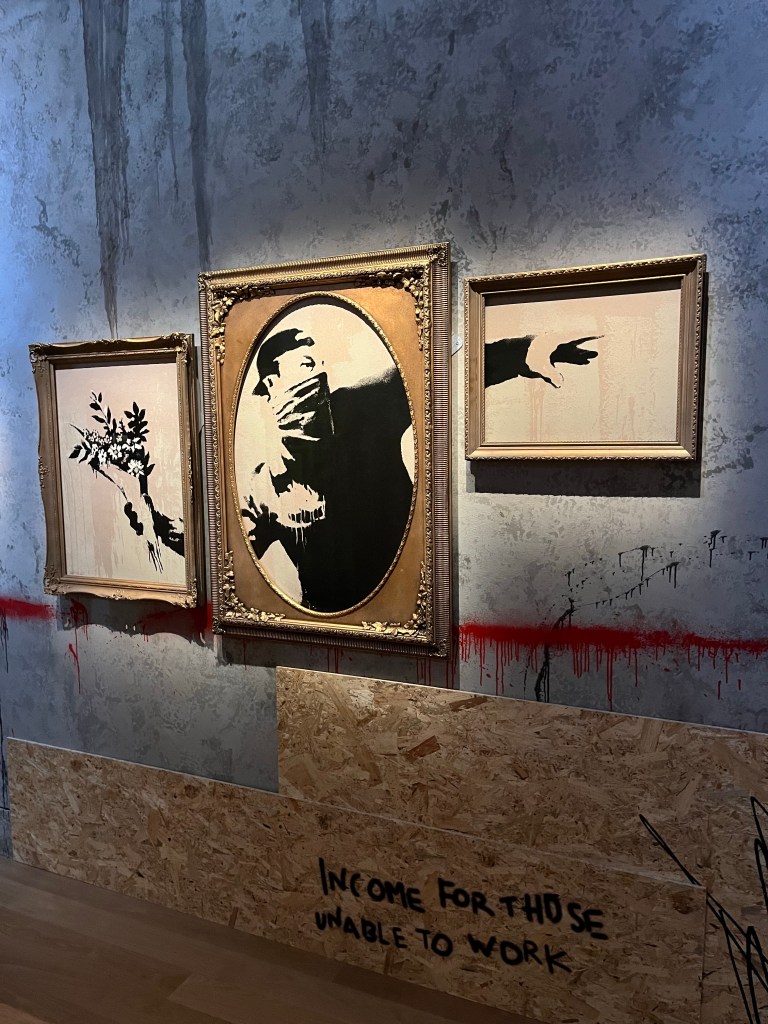
During our visit today, we started with the current exhibit, Defaced! Money, Conflict, Protest, which focused on how the defacement of money (coins and paper) has been used through the ages as a form of protest. I can honestly say this had never crossed my mind, so it was an interesting exhibit to go through. There was a short video playing at the end of the exhibit which stated that physical money (coins and paper) currently only accounts for about 8% of the word’s money with the rest being stocks, bonds, bitcoin, etc.
A blown up version of one of the examples of defaced currency An impressive representation of a van that was safely blown up in London to celebrate the elimination of over £1.2 million in pay-day loan debts.In the same exhibit as the van, a charity then created a bank which made its own money to finance different charitable causes as well as help pay down debt.A cool Banksy reproduction, also in the exhibit, with flowers replacing something violent, maybe like a Molotov cocktail.
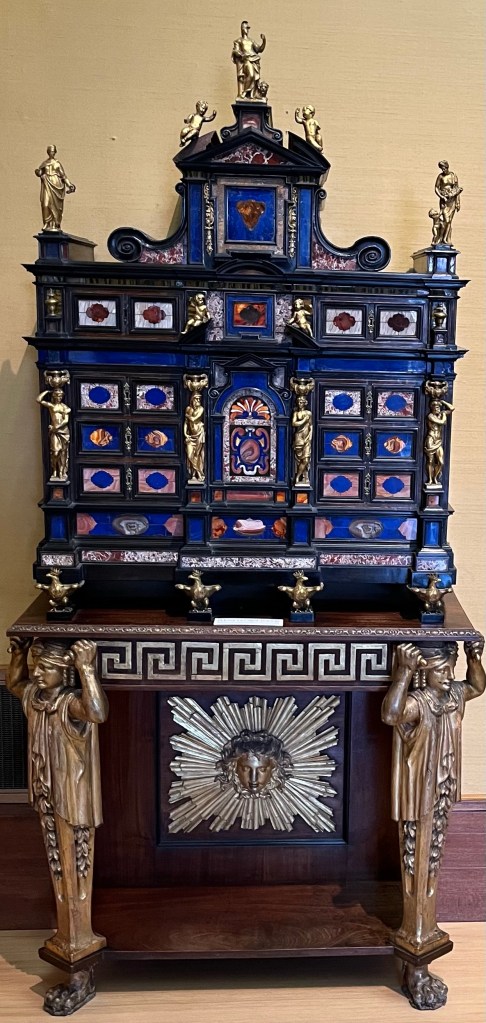
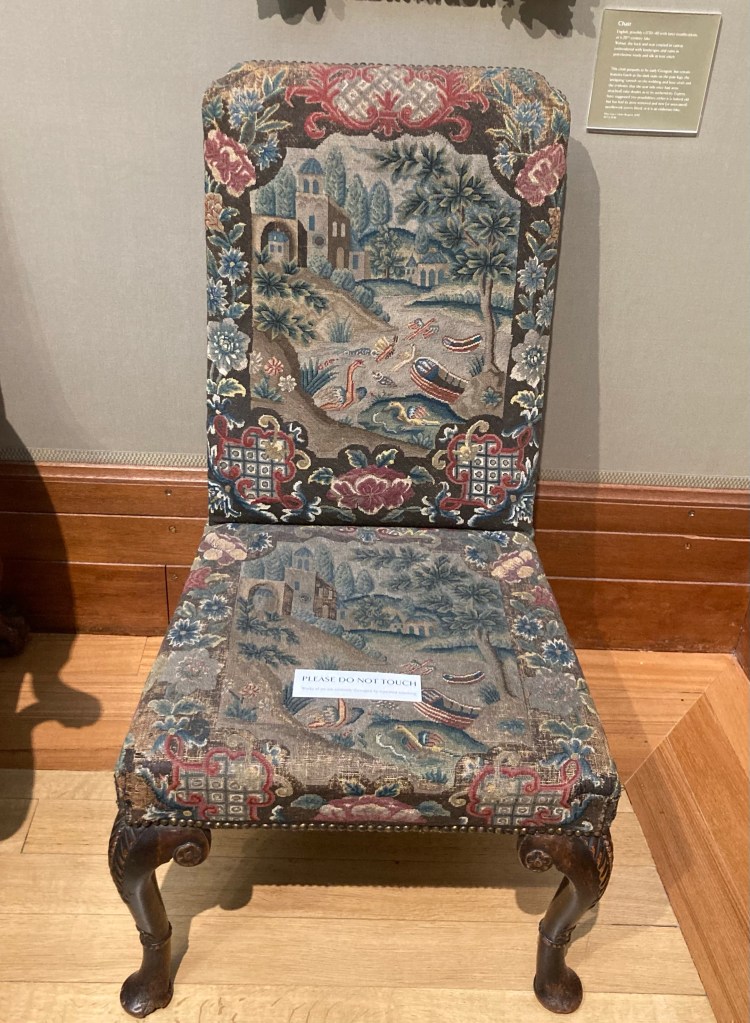
Then we moved on to check out Dutch, European, and Italian art as well as a room with flower paintings, inlaid furniture, and clocks.
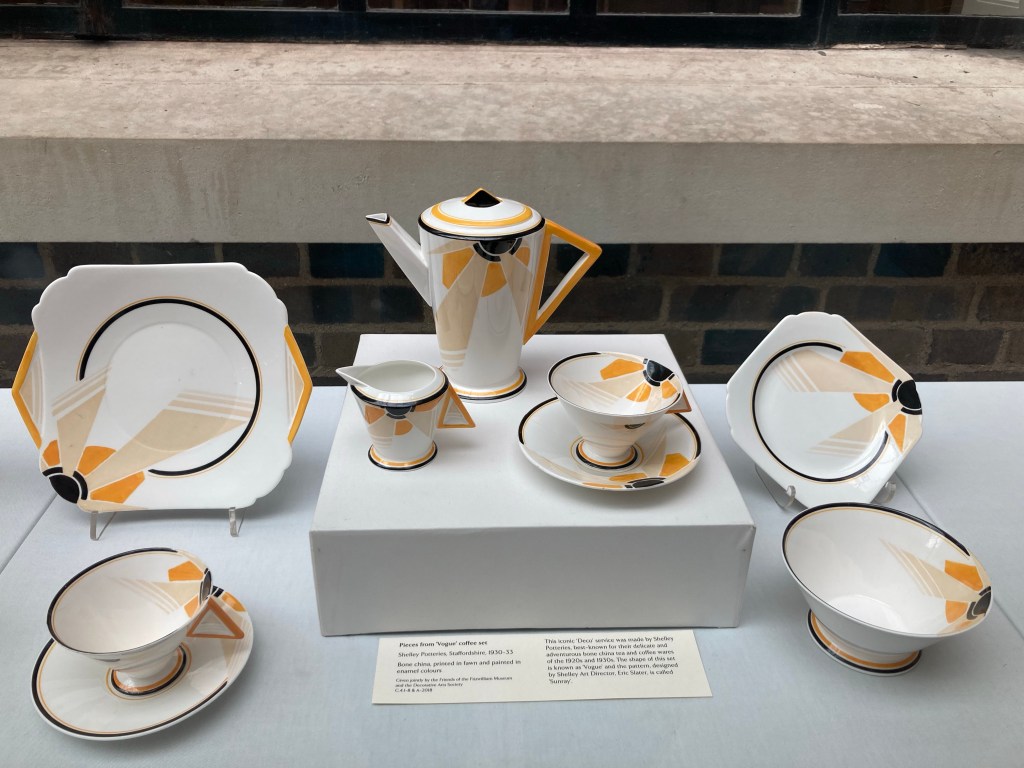
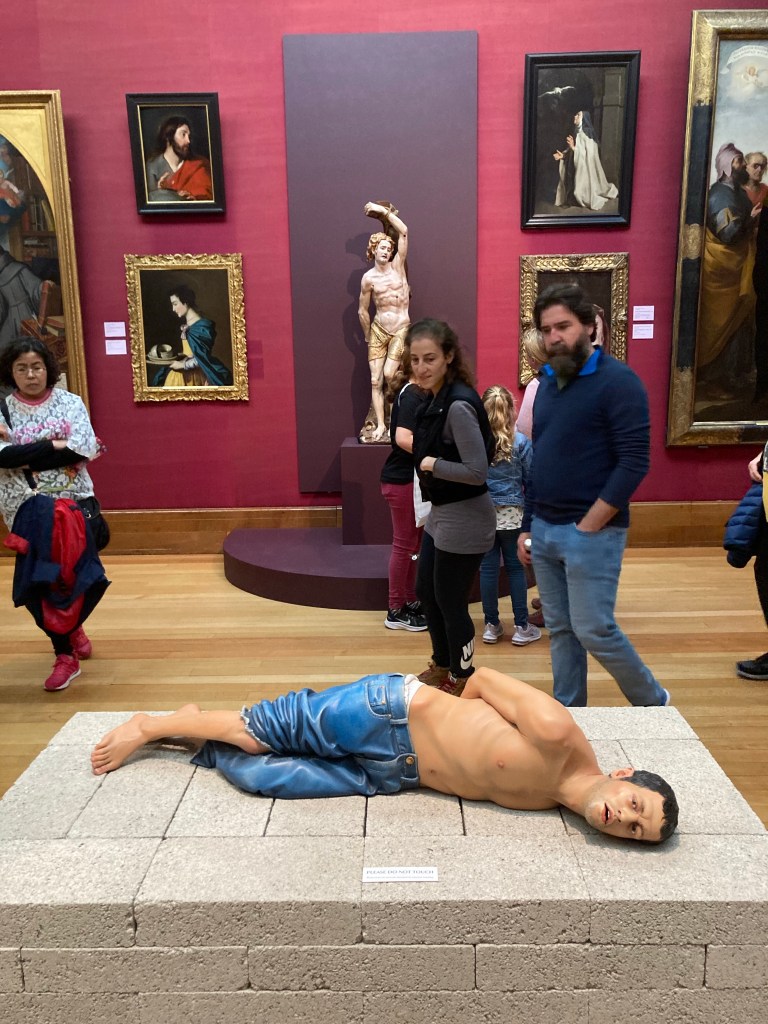
Bob loved the blue in this cabinet from 1625.Beth liked this tapestry chair.And this service set.A special display was called Juxtaposition and compared the body of a young modern immigrant with the statue of a youth being detained against the wall.
Today we went (on the recommendation of our homeowners) to a second farm market. It is called Burwash Manor and is near the community of Barton. We biked the short 4-mile route out into the country, and the trail was 95% off-road.
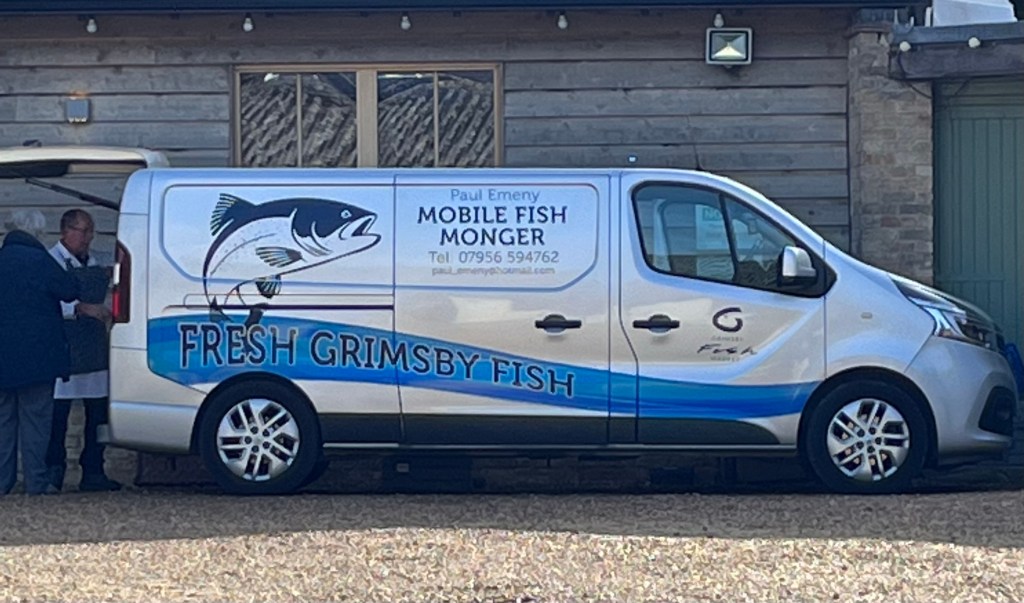
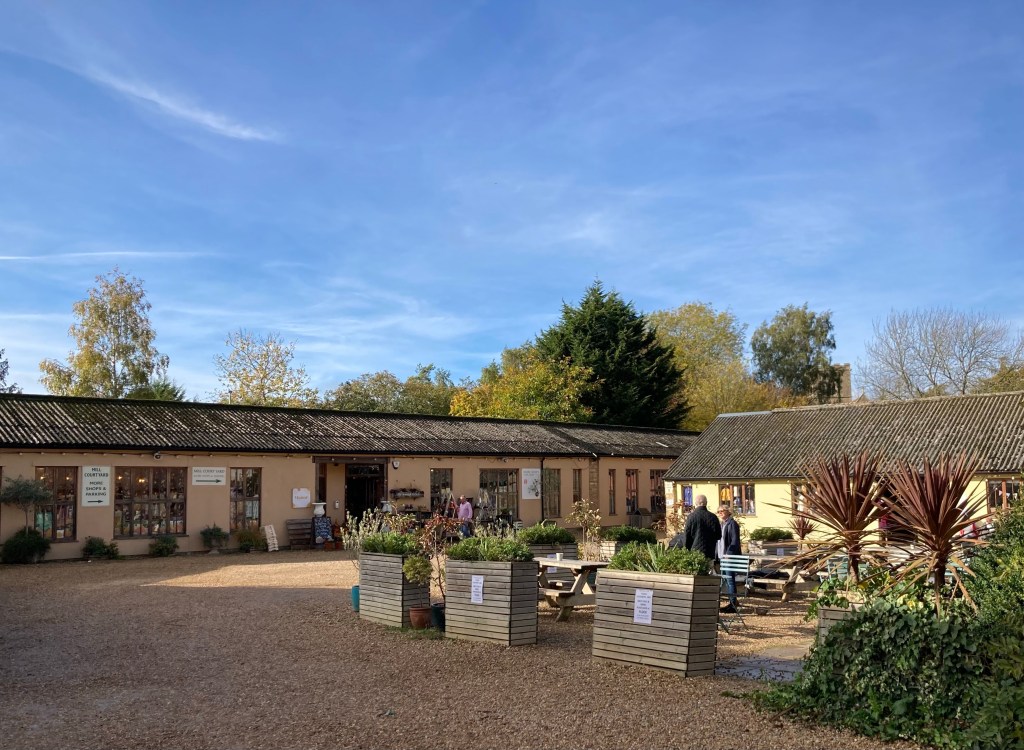
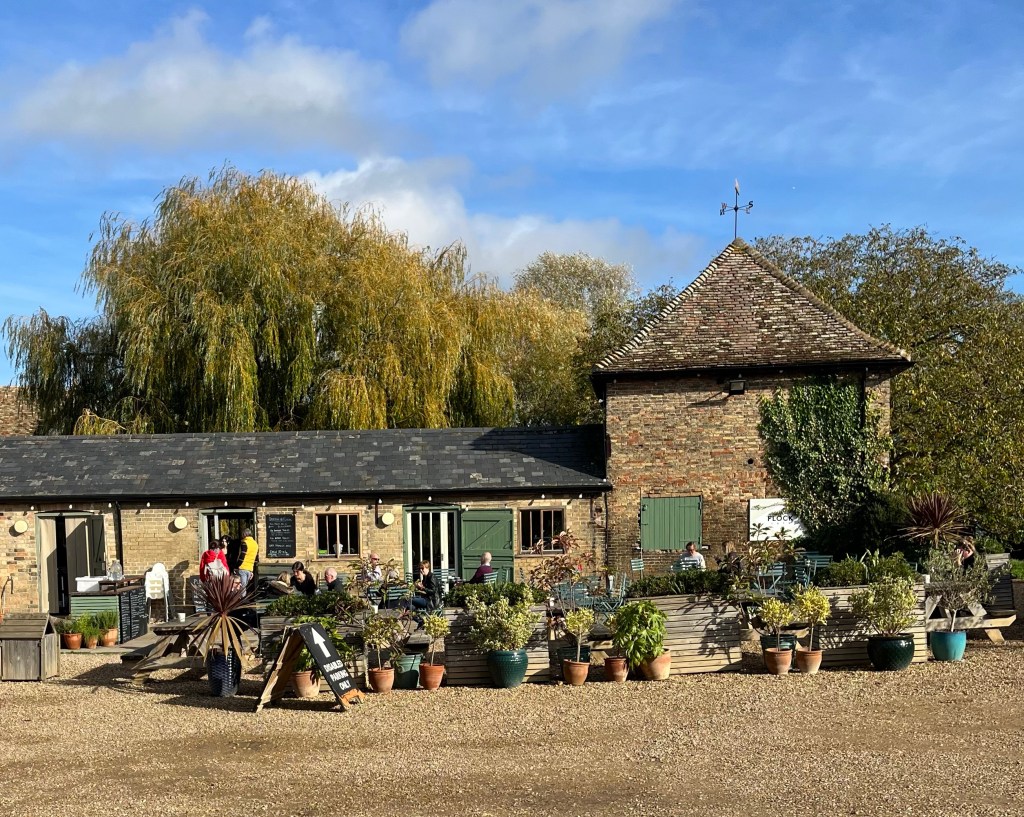
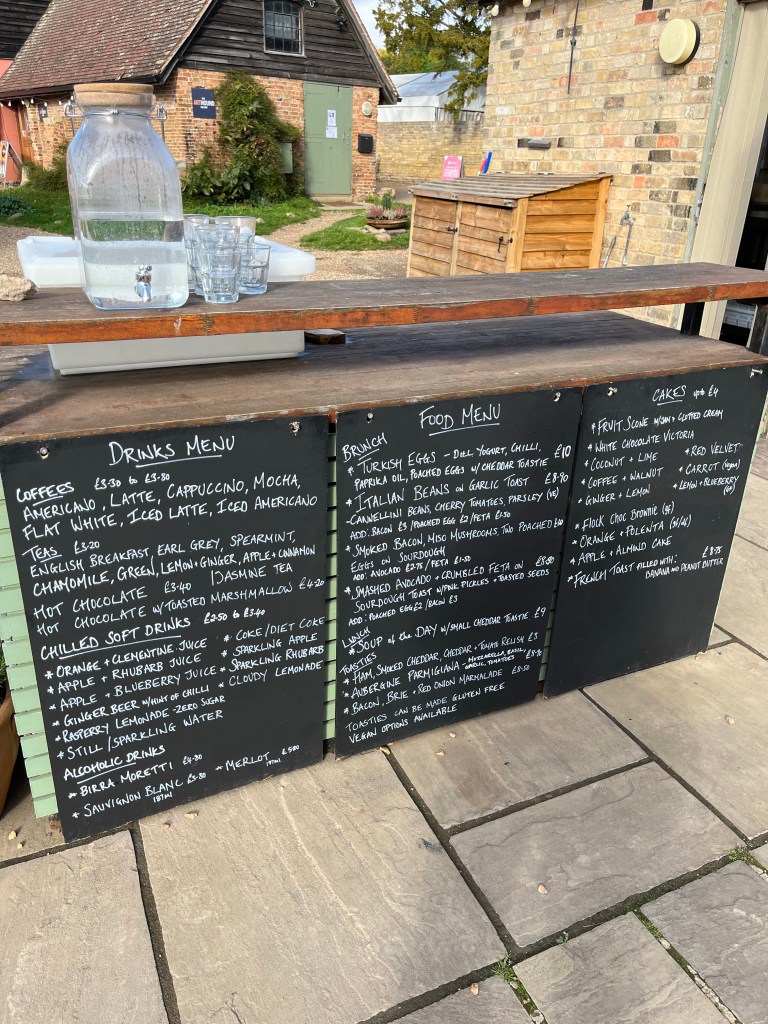
Burwash Manor had a great mix of shops including a grocery with bakery items and prepared foods, wine shop, cafe/tearoom, flower shop, rug shop, gift shop, and a couple others. And oh, on Tuesdays a mobile fish monger sells out of his van. We did some damage in the grocery and will likely return for a picnic lunch and gift shopping, as Beth found some items of interest.
After a few days of intermittent and sometimes heavy rain, the weather was fine — high 50s. We have definitely had a great fall here.
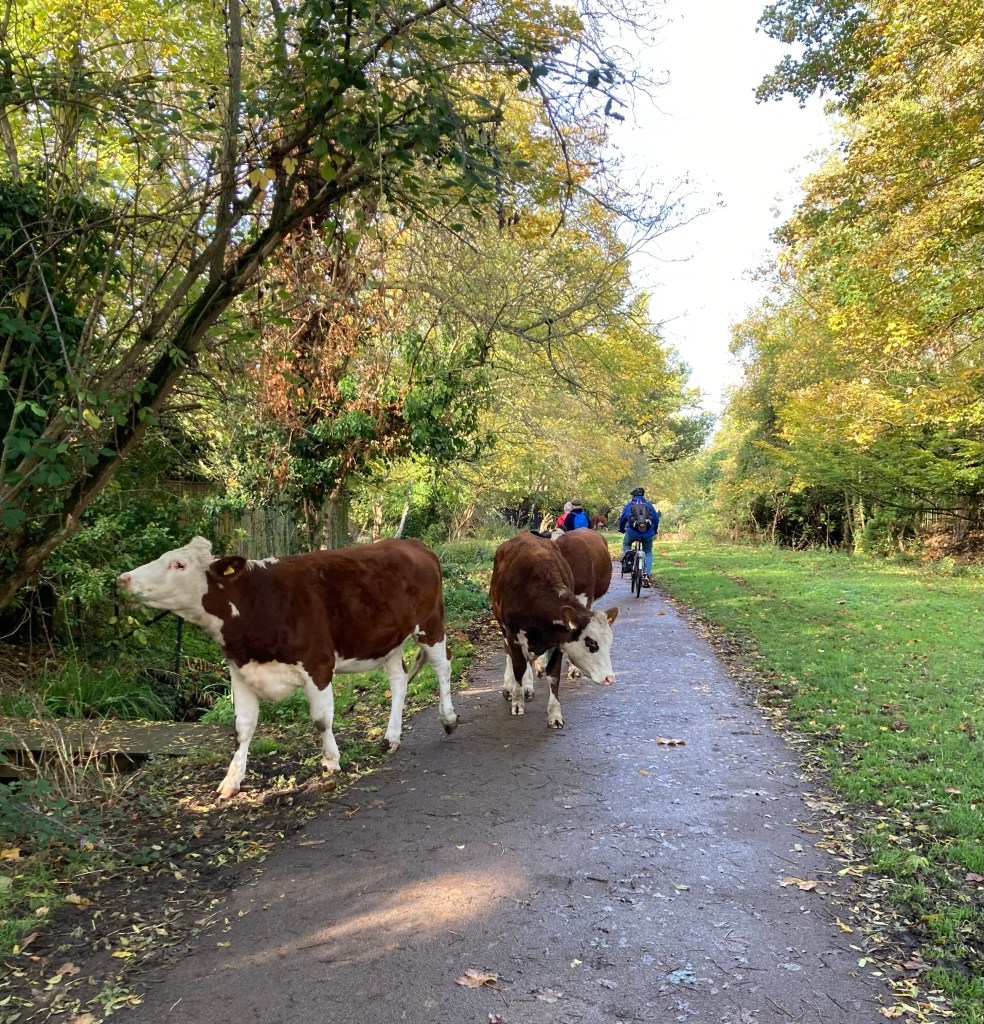
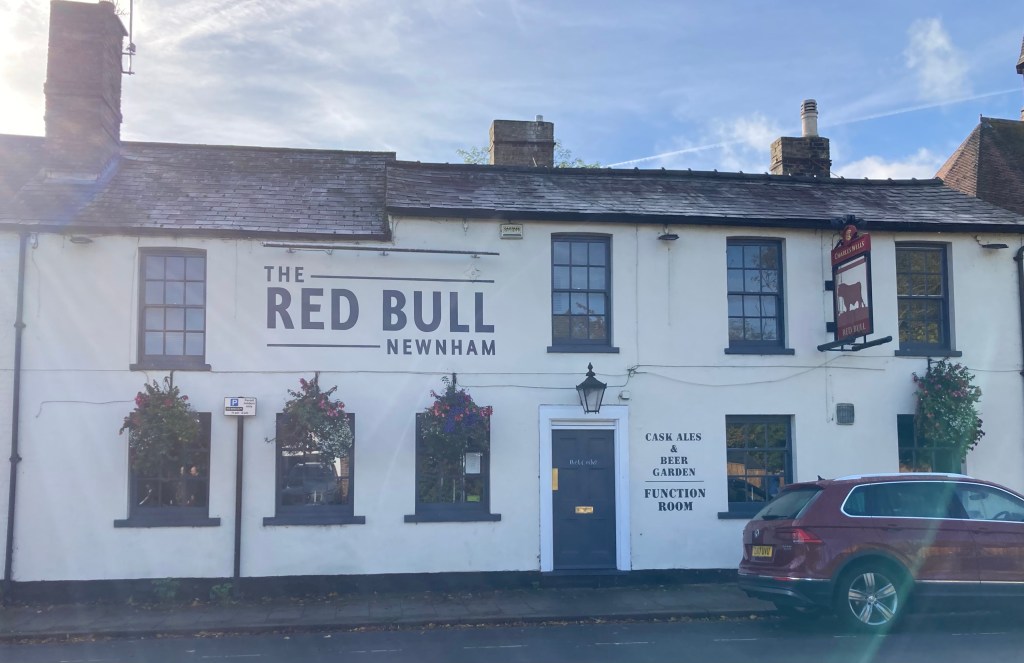
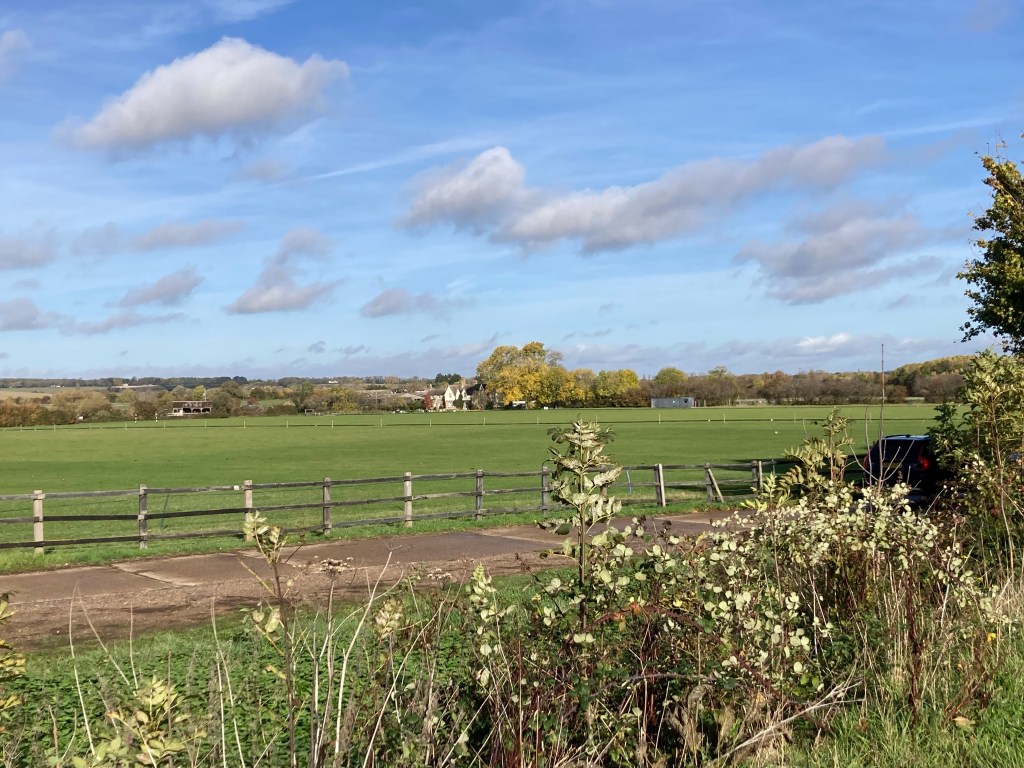
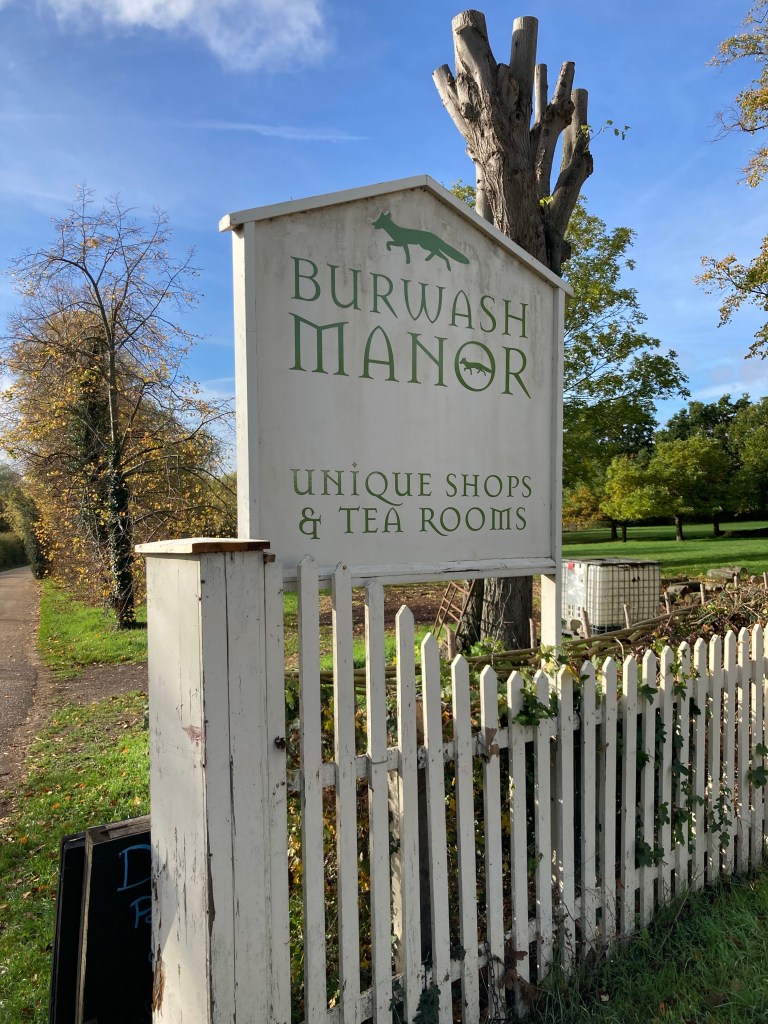
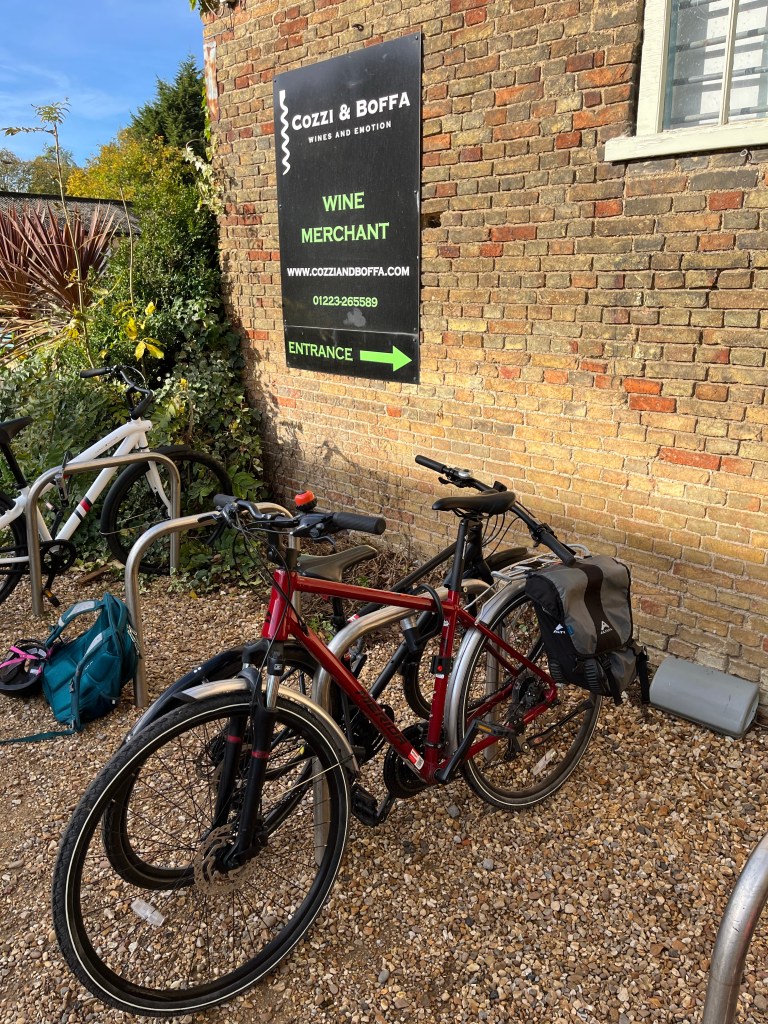
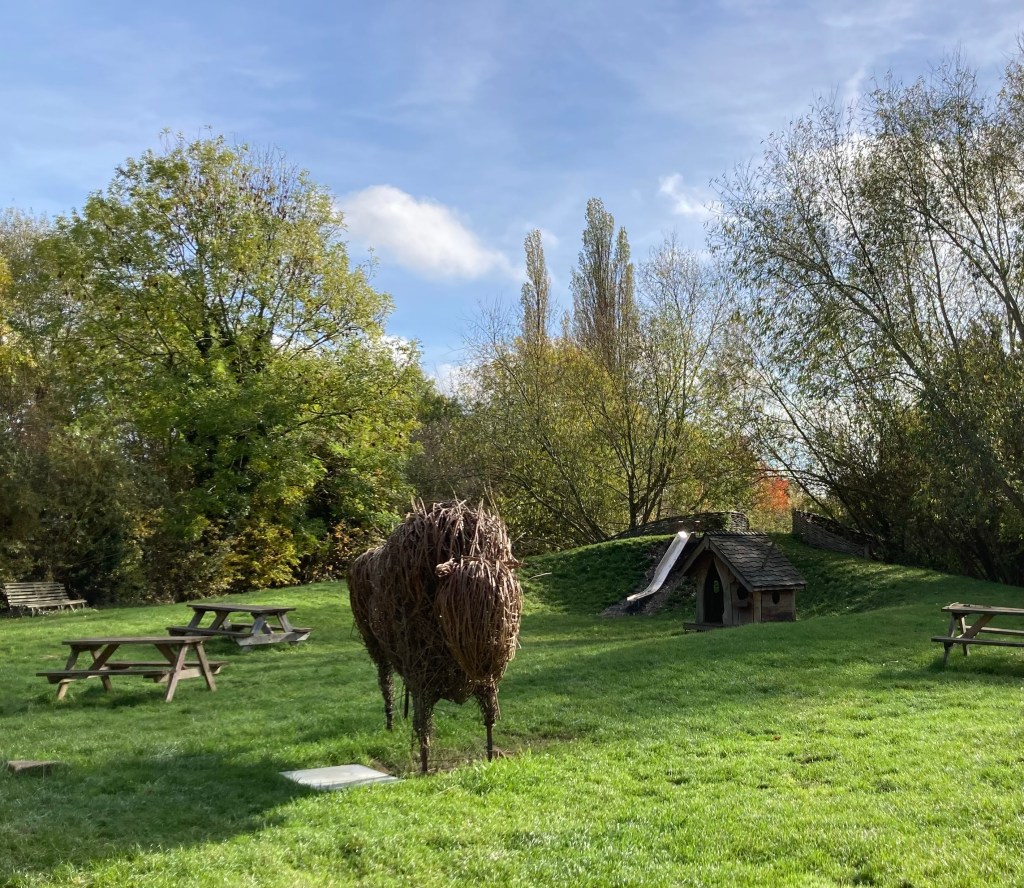
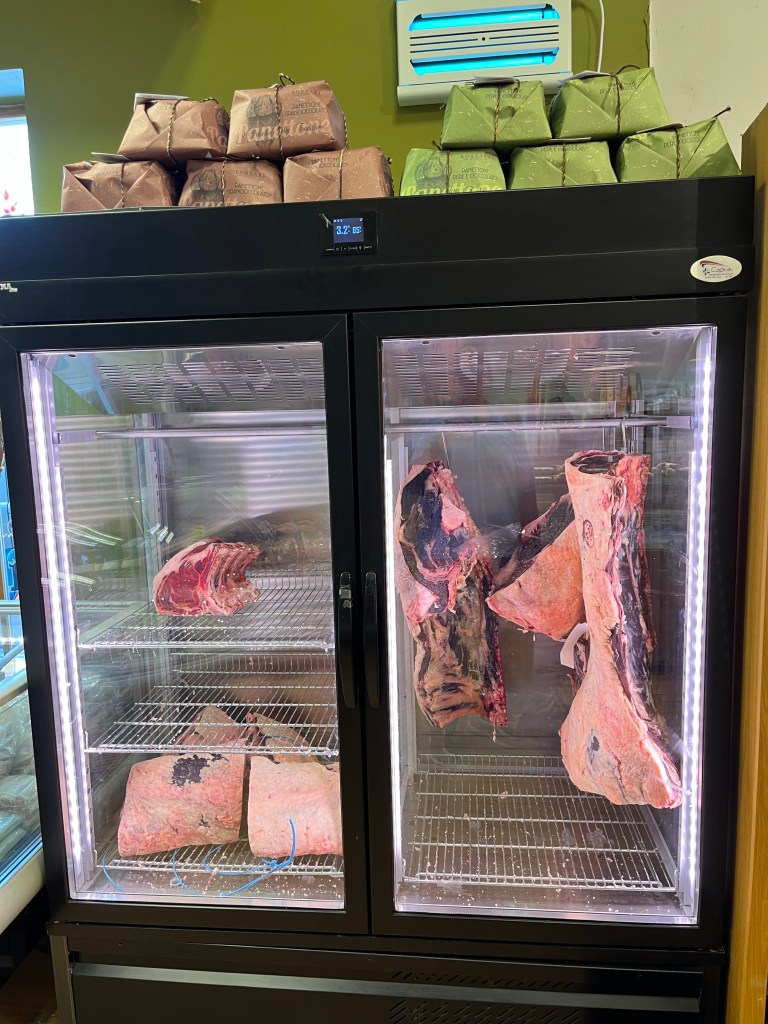
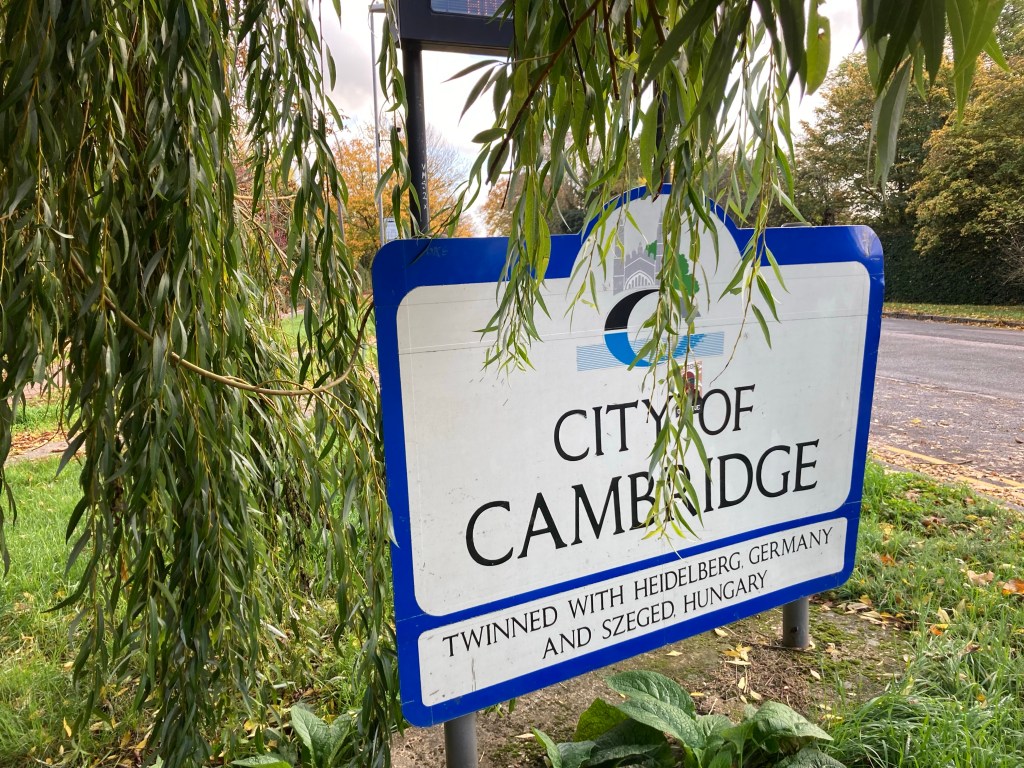
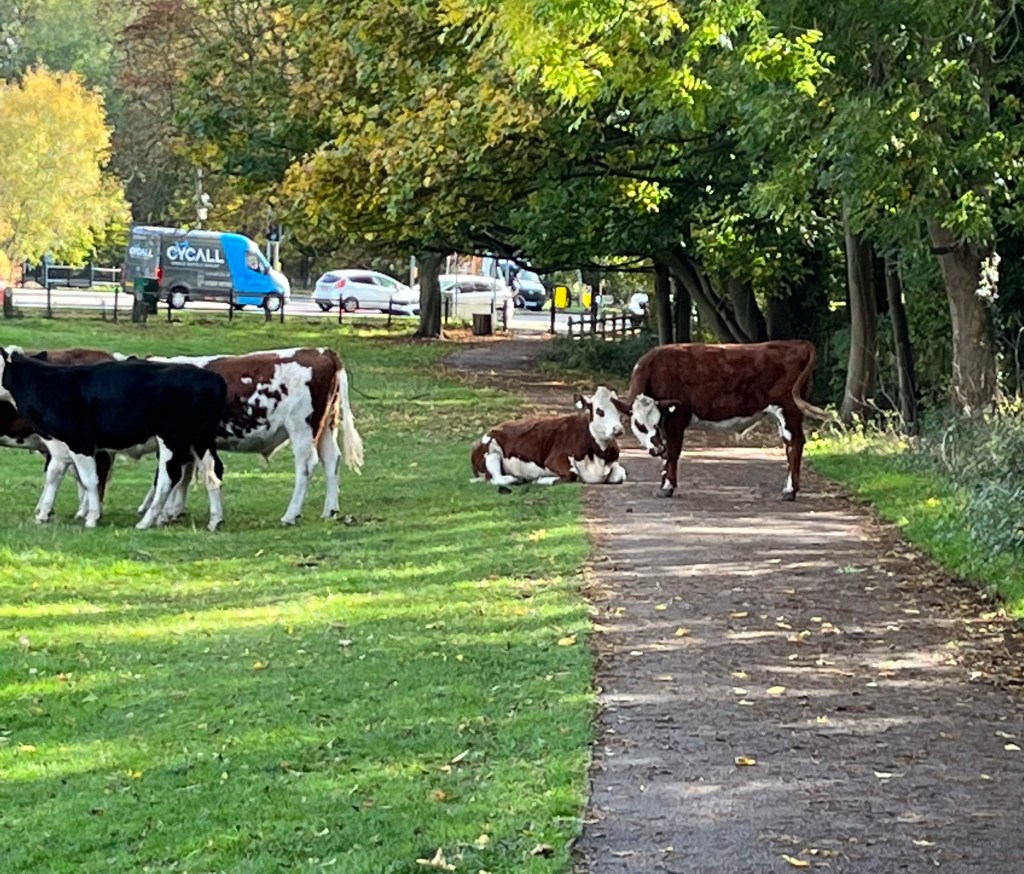
The route started through Sheep’s Green near our house, and the cows were also enjoying the trail.On our way on a nice bike/walk trail.We passed a nice looking pub.The Cambridge Polo GroundsEntrance sign to the farm marketThey had good bike parking. We saw two other cyclists at the farm shop.A stick buffalo sculptureIn front of the grocery, deli, and butcher storeAging beef at the butcher’sThe fish monger and his vanThe courtyard and some of the other storesOutdoor seating at the cafeThe cafe menuA city welcome sign coming back into town.The cows were ruling the trail on the ride back to the house as well.
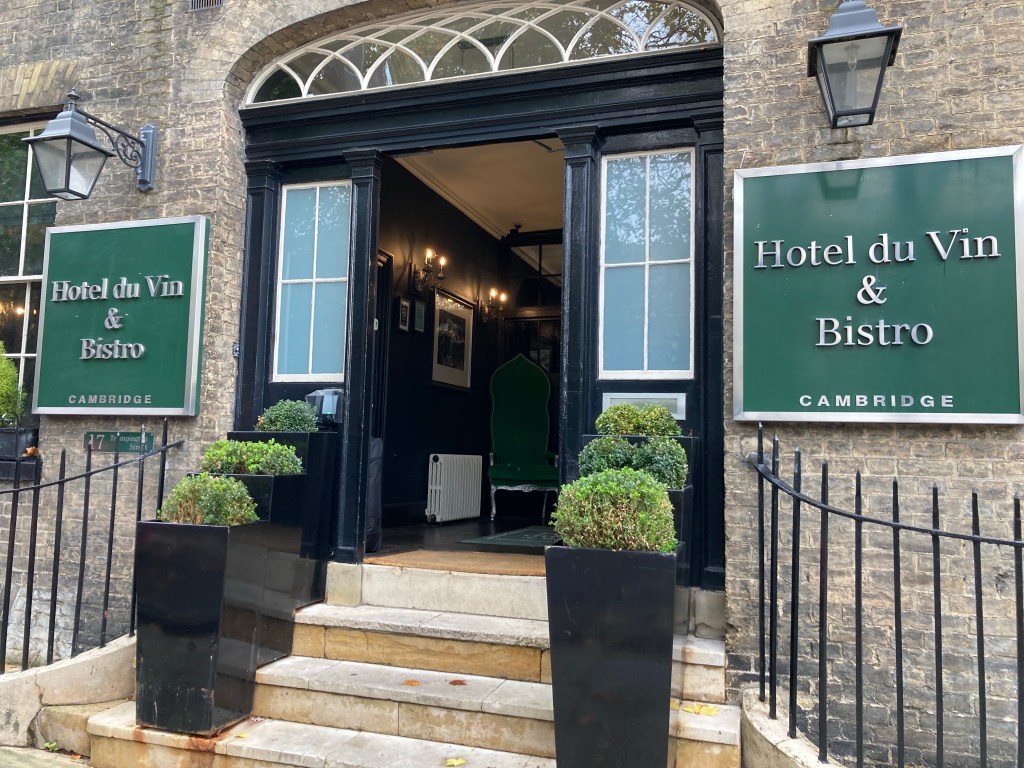
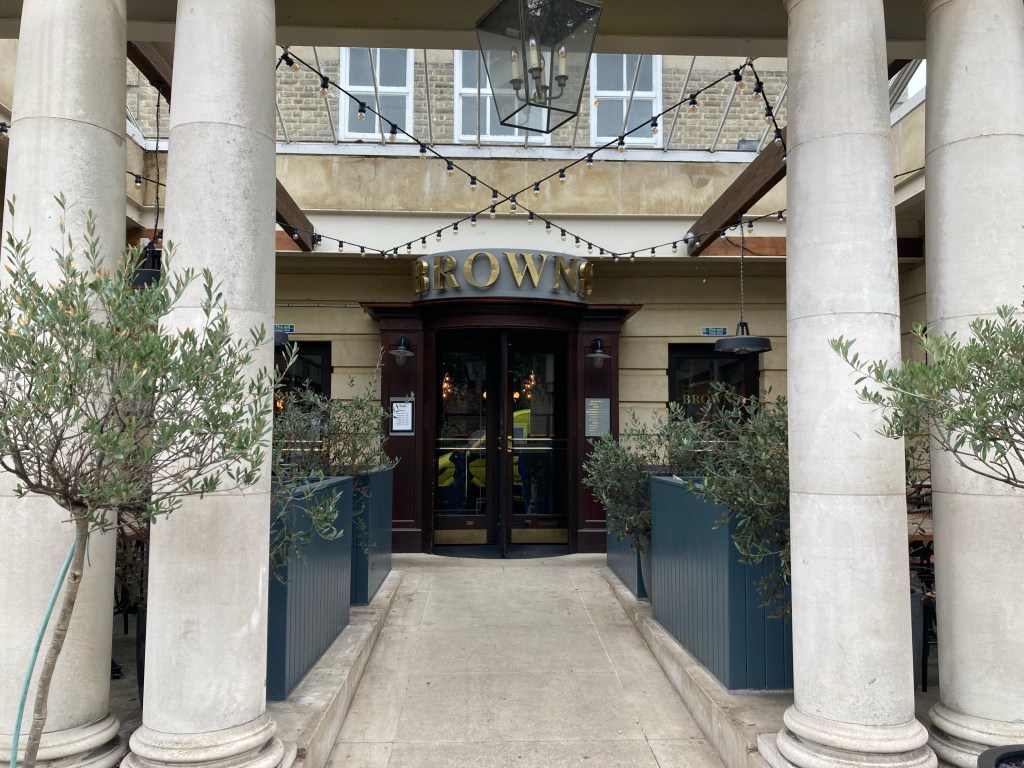
We haven’t gone out for dinner since we’ve been here since we’ve had good grocery shops and great cooking situation at the house — space to work, great oven and stovetop, etc. But we have decided to treat ourselves tonight and are going to a restaurant called Brown’s, which is on the way into town headed towards King’s College or Great St. Mary’s Church.
The Hotel du Vin, very close to Brown’s where we may head for a pre-dinner cocktail.Brown’s Restaurant
Last week we called to reserve a couple spots for today to do a self-guided tour of the King’s College Grounds and Chapel. We should note that during the time when students are in session access to the 31 colleges associated with Cambridge University is generally limited or not open to the public.
The tour cost 10£ online for each of us, and if space was available, 11£ at the door. The college and chapel was about a 25 minute walk from the house.
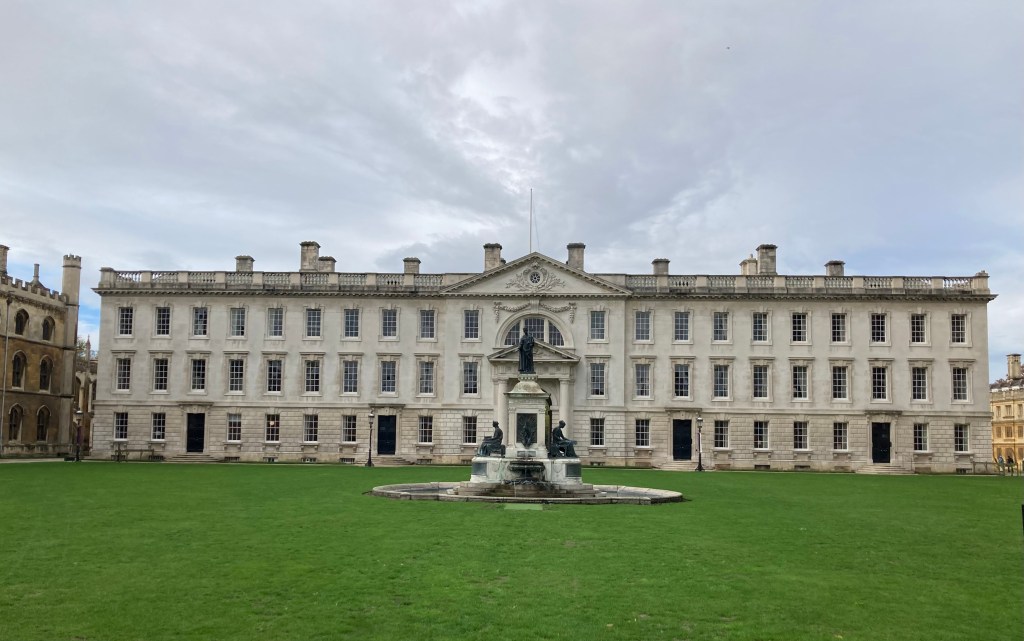
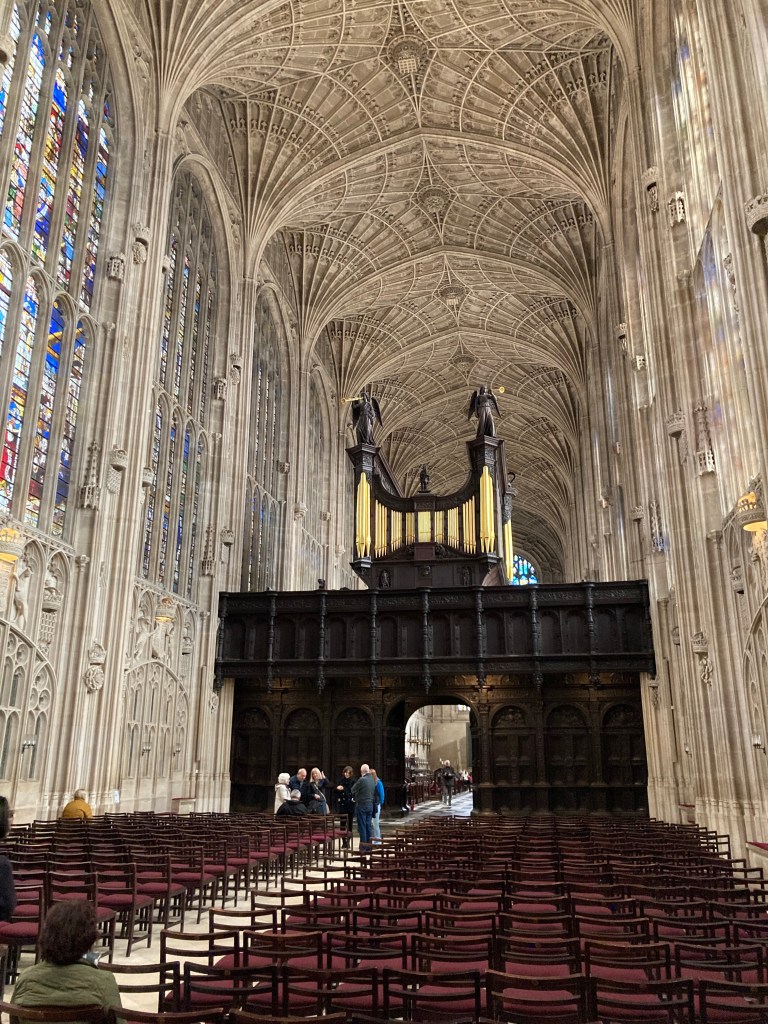
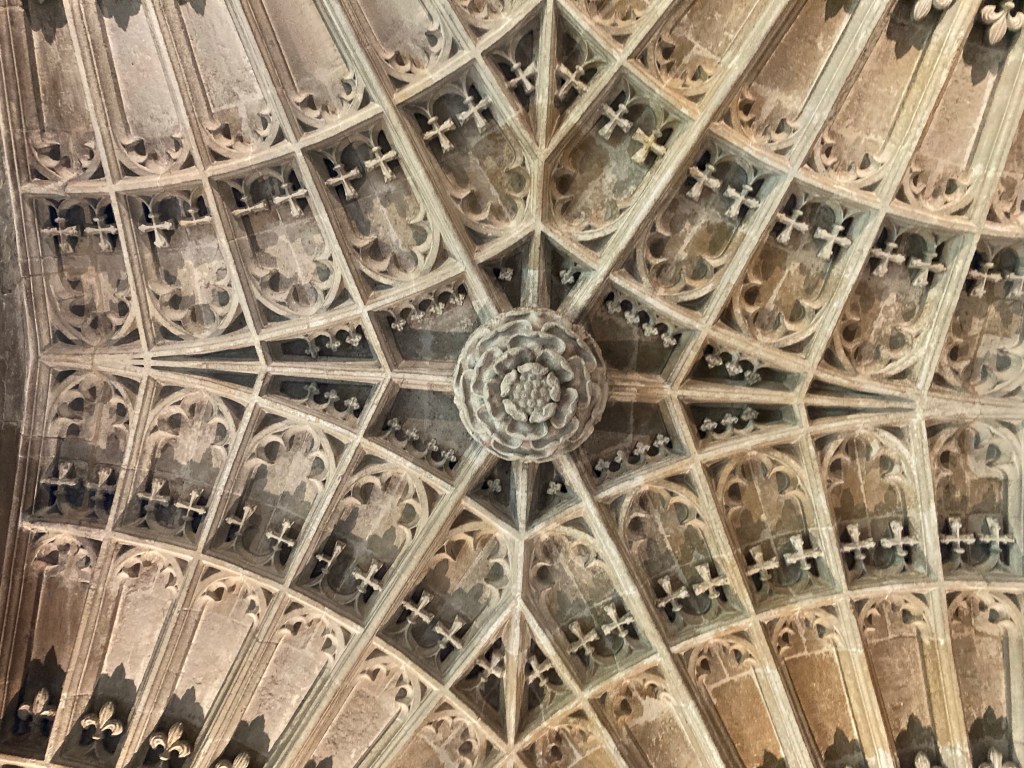
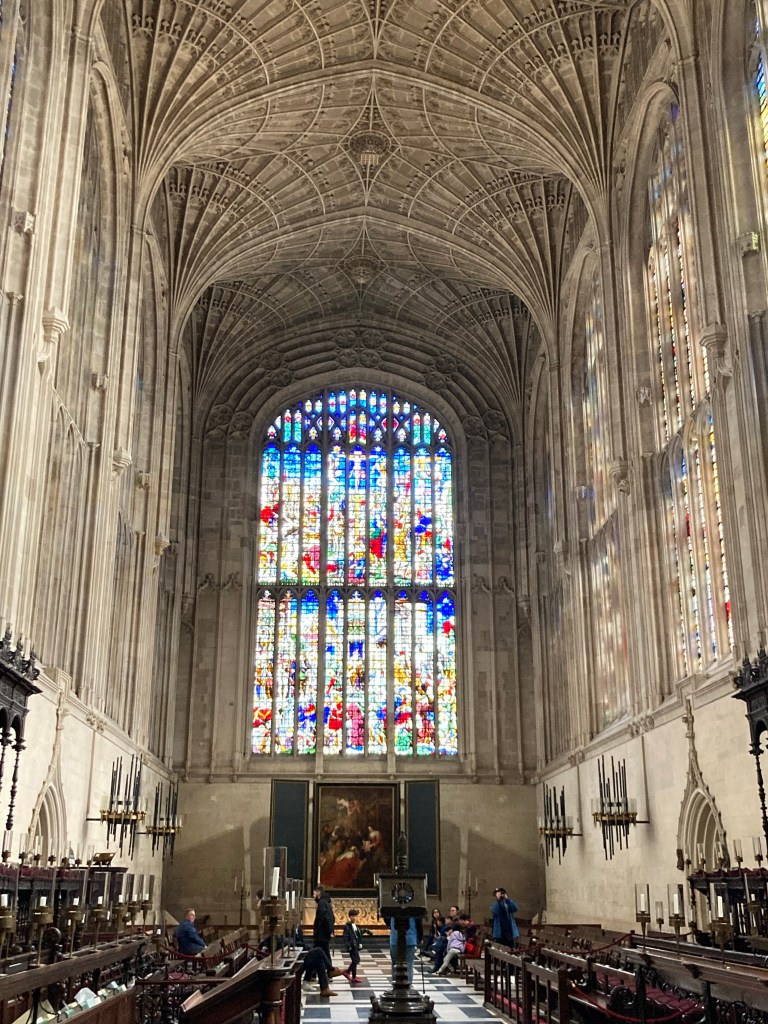
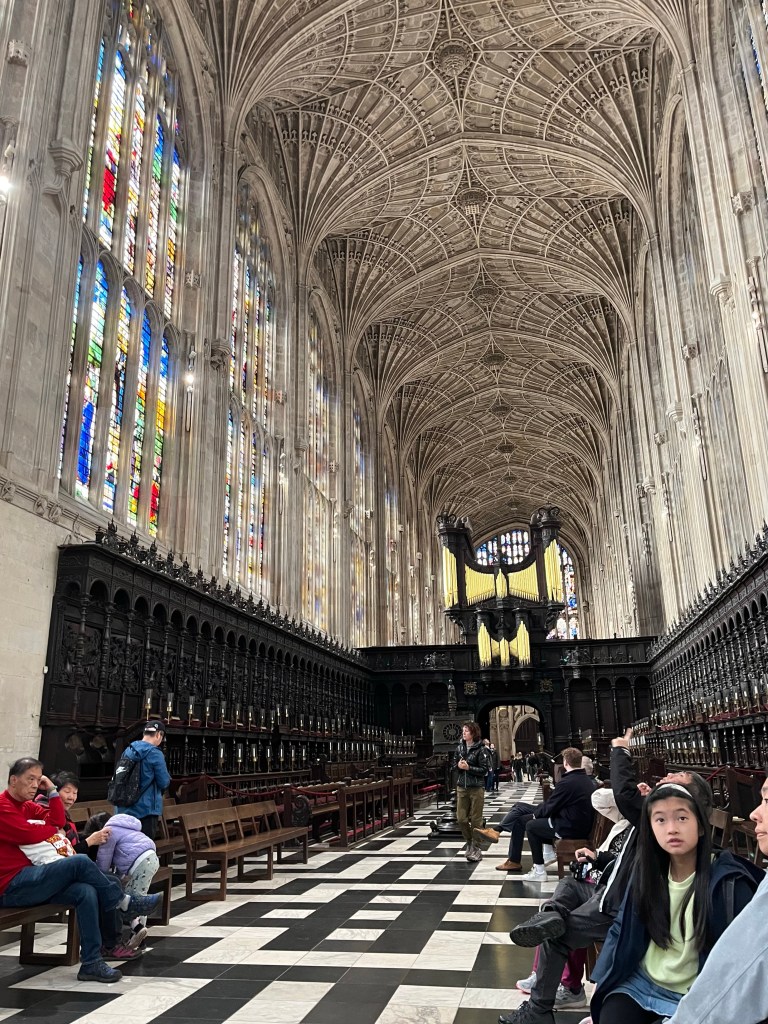
King’s College has been in existence for over 550 years and was established by King Henry VI, who also established Eton College. Both colleges were originally intended to admit a maximum of 70 scholars from poor backgrounds. The chapel, which was the only building we could enter, took over a century to complete. Below are pics from our tour.
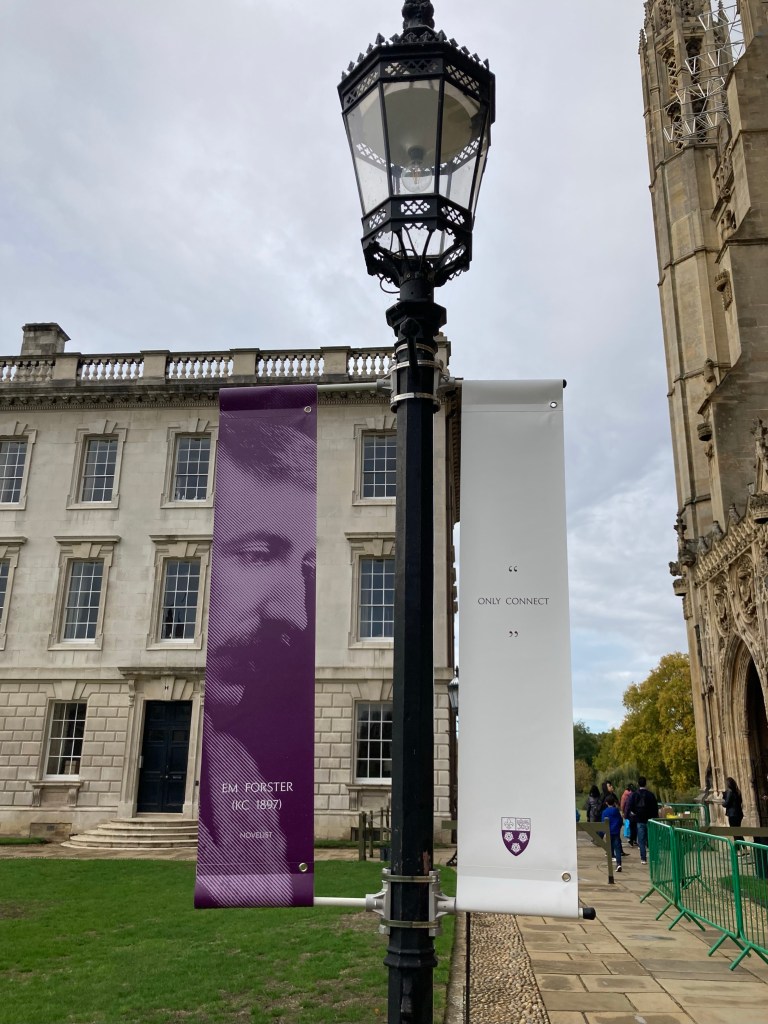
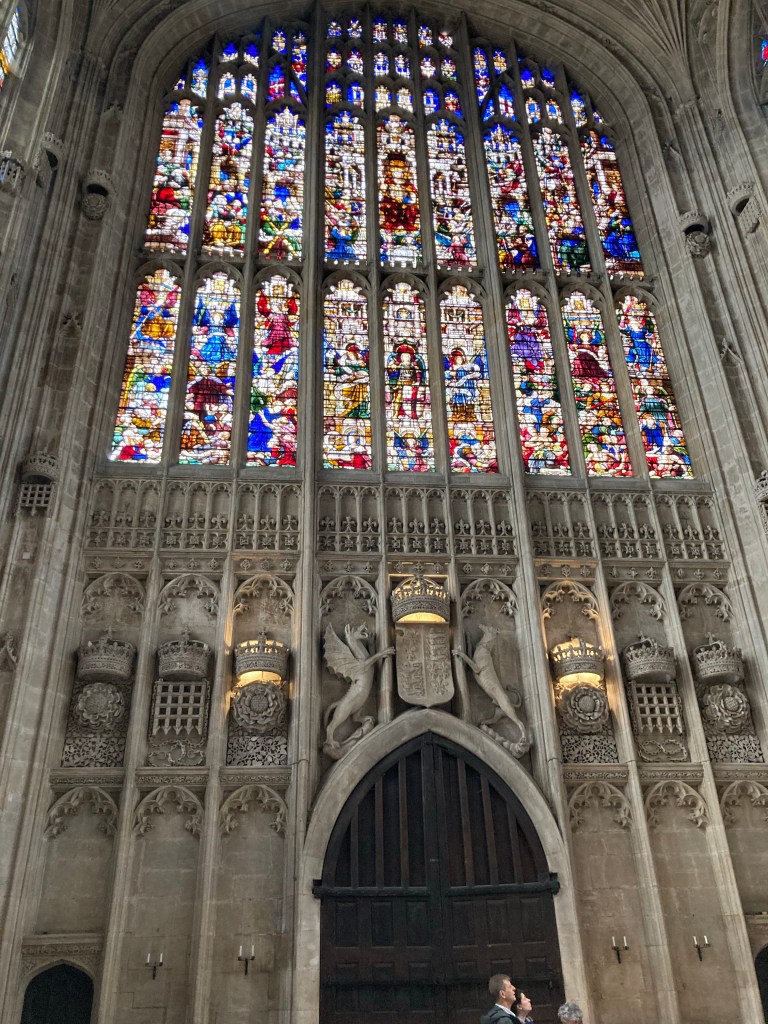
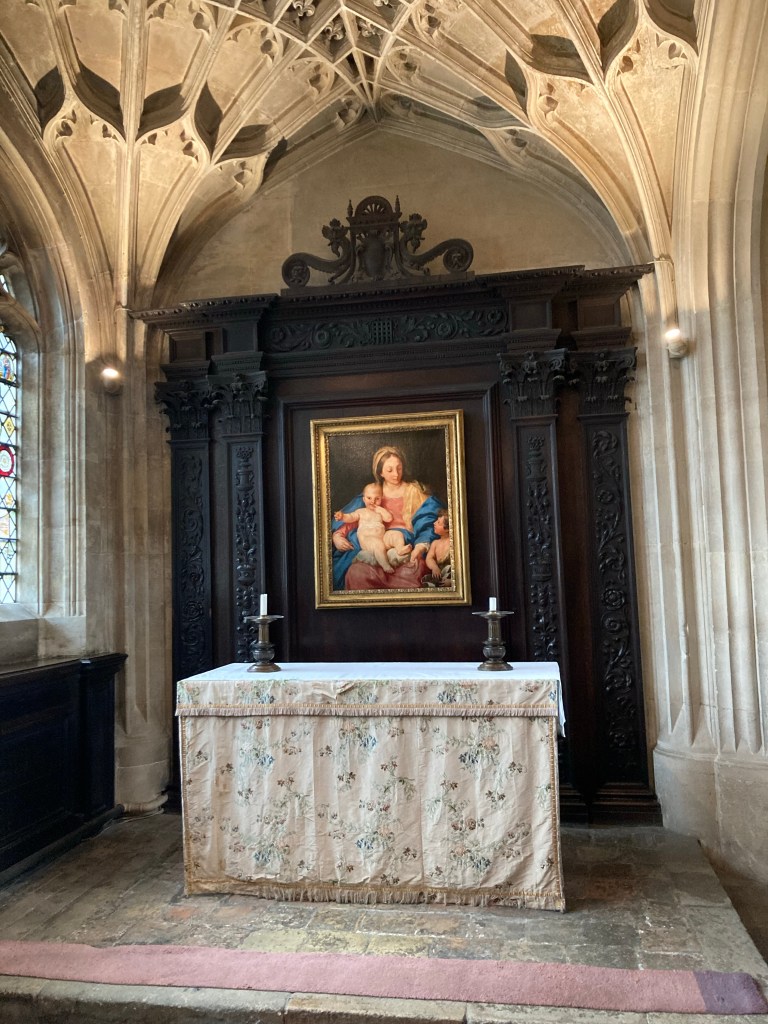
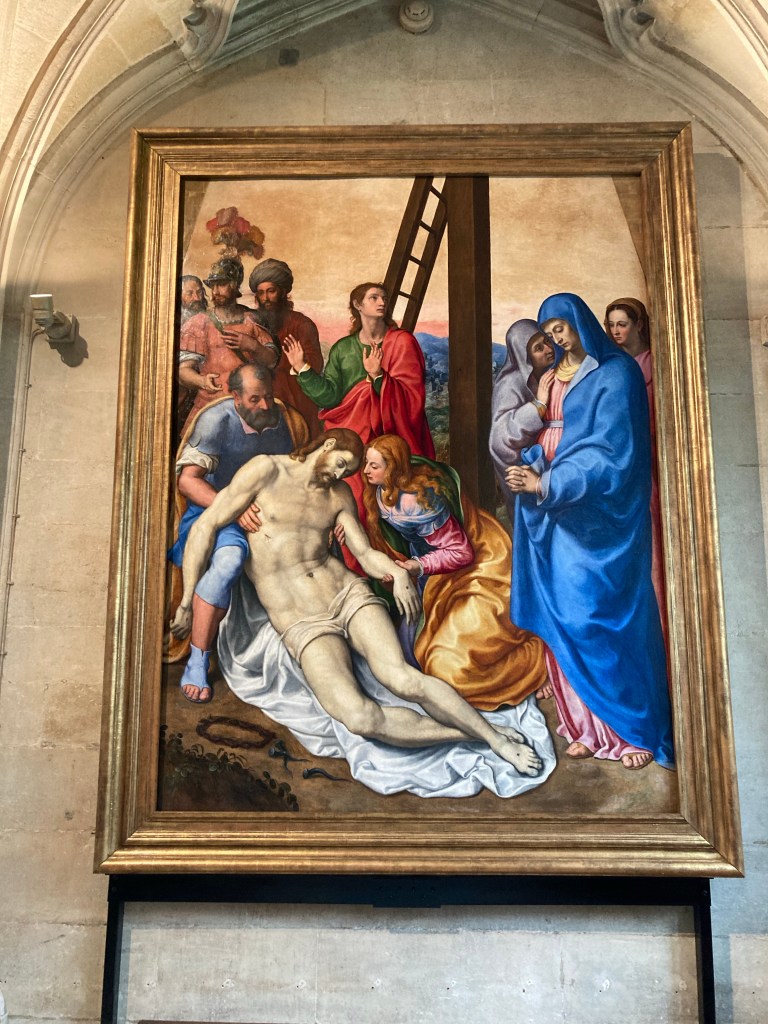
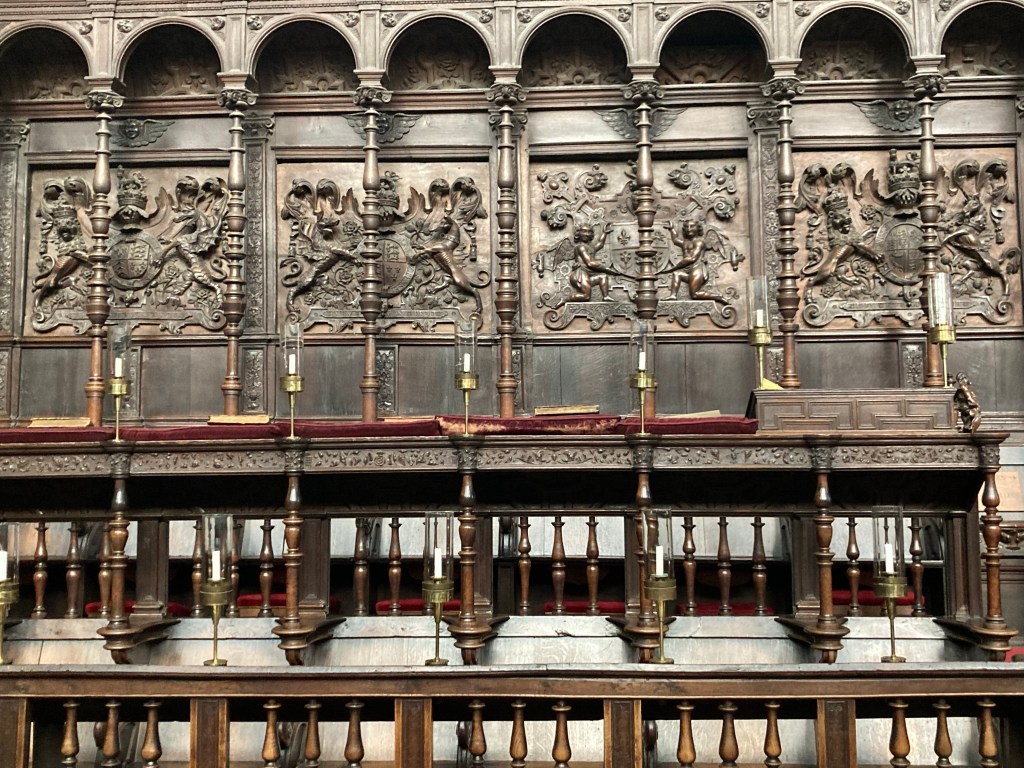
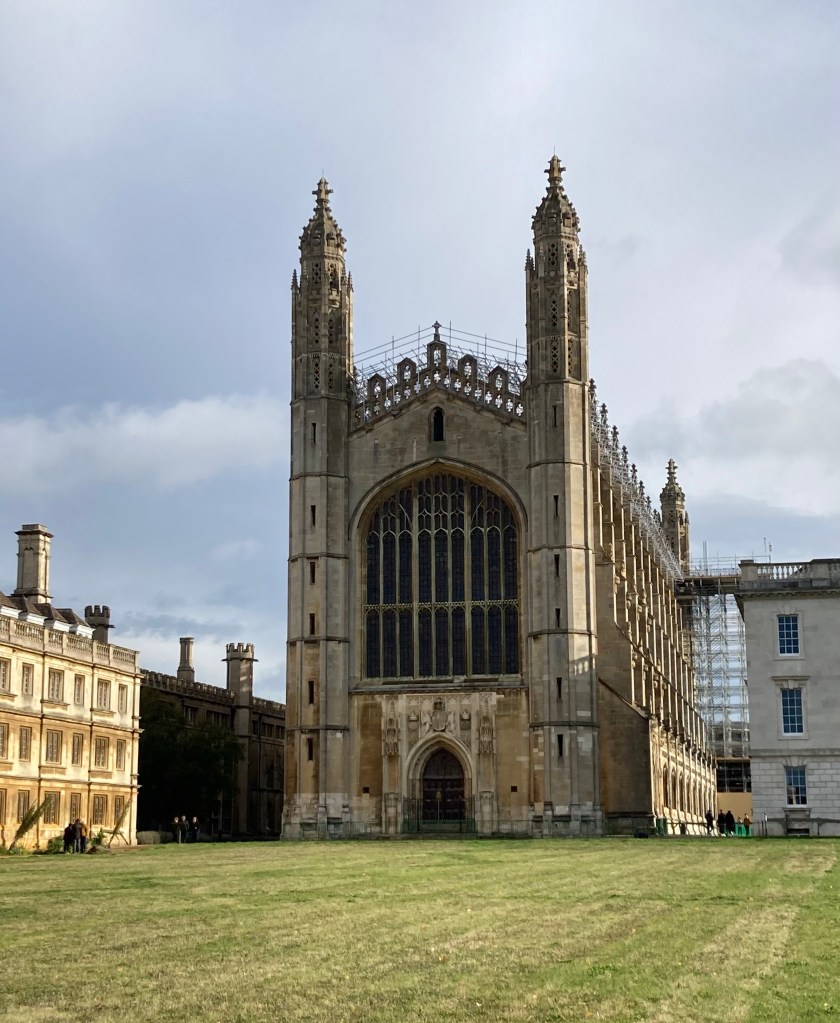
Looking back towards the Gate House, where we entered the college grounds.The view upon entrance onto the King’s College grounds from King’s Parade, the green Front Court and the Gibb’s Building. On top of the fountain is a statue of Henry VI, the “boy king.”One side of the chapel. There must be refurbishments underway, as there was scaffolding on one end of the chapel and on the roof.E.M Forster, “A Passage to India,” “Howard’s End” is a King’s alumnus.A view of the chapel with the amazing ceiling and dark wooden choir screen. A pamphlet said the ceiling or “fan vaulting” is the “undoubted glory of the building.” The chapel is almost 300’ long and 80’ high.Beautiful stained glass windows.A painting by Carlo Maratha in the Whichcote Chapel off of the main chapel.Stained glass in the Whichcote ChapelThe painting Deposition of Christ by Girolamo Siciolante de SermonteZooming in on the fan vaulting.The choir area of the chapelStalls in the choir areaThe choir screen and pipe organ.Another shot of the choir area, do you see Beth?A view of the back of the chapelThe River Cam right behind the chapel.
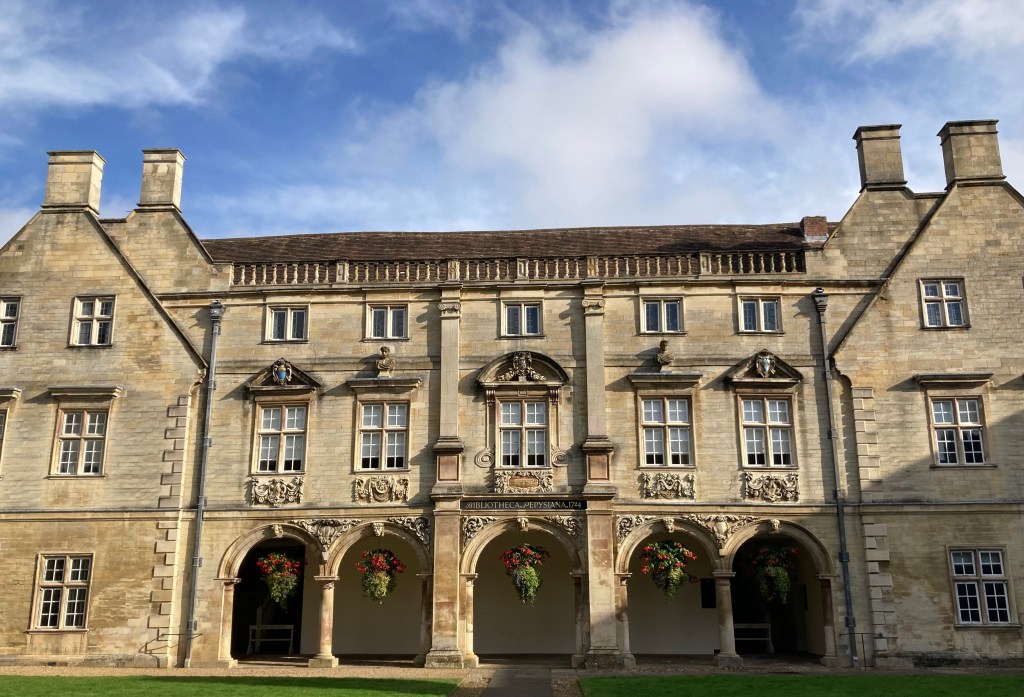
Bob and I had tickets today for an 11:00 am tour of the Pepys Library at Magdalene College (pronounced maudlin, so I’m glad we didn’t have to ask for directions). This college is located just on the other side of the River Cam, so it was about a 35-40 minute walk from the house.
The library comprises the personal collection of Samuel Pepys (pronounced peeps, that one I knew, and now, so does Bob) that he left to his alma mater at his death in 1703. Apparently, Mr. Pepys was a Member of Parliament and worked as an Administrator for the Royal Navy. He also served as Secretary to the Admiralty under King Charles II and King James II. However, I was only familiar with him because of his diary which was published after his death. We read parts of it in my English Lit class, as it provides a good overview of the times in which he lived, not only of everyday life but also descriptions of the great London fire and the Black Plague.
No photos were allowed in the library, but we ended up as the only guests so had a personal tour. There are 3,000 books displayed in 12 lovely bookcases, and per his wishes, his collection has not been added to. It was great to see the old volumes and admire some handwritten ones as well as some beautifully typeset ones. Apparently, at that time when you bought a book, you only bought the printed pages and then paid to have it bound with a cover. Mr. Pepys always chose to place his seal on the front cover, the title on the spine, and his photo on the inside cover.
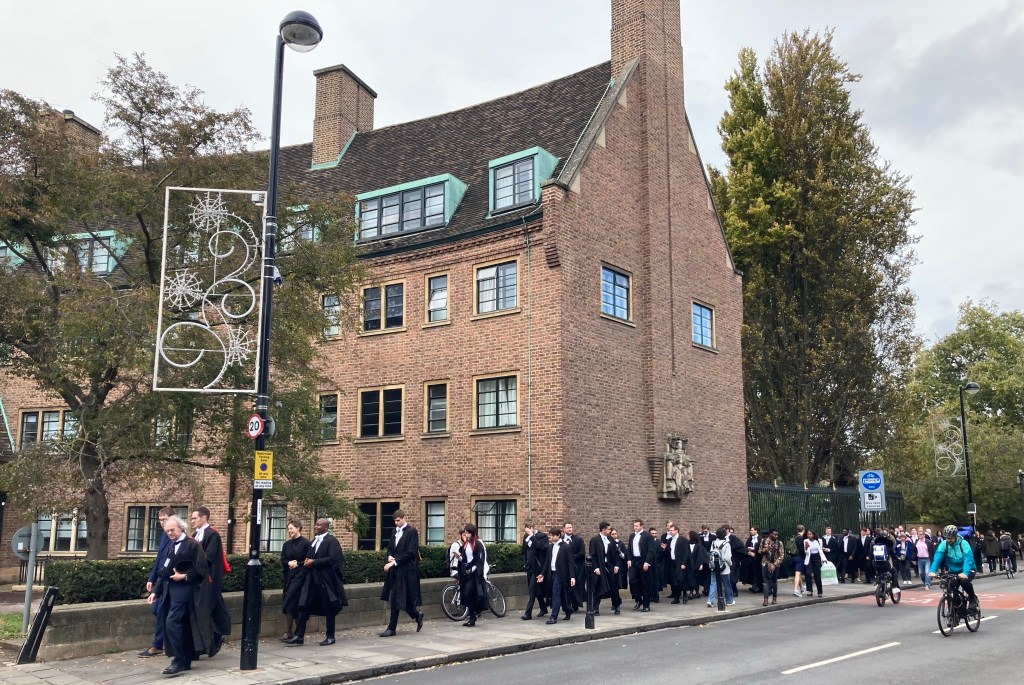
Today’s excursion was made even more interesting as it turns out it was Graduation Day for some of the graduate students. A few pics from the day.
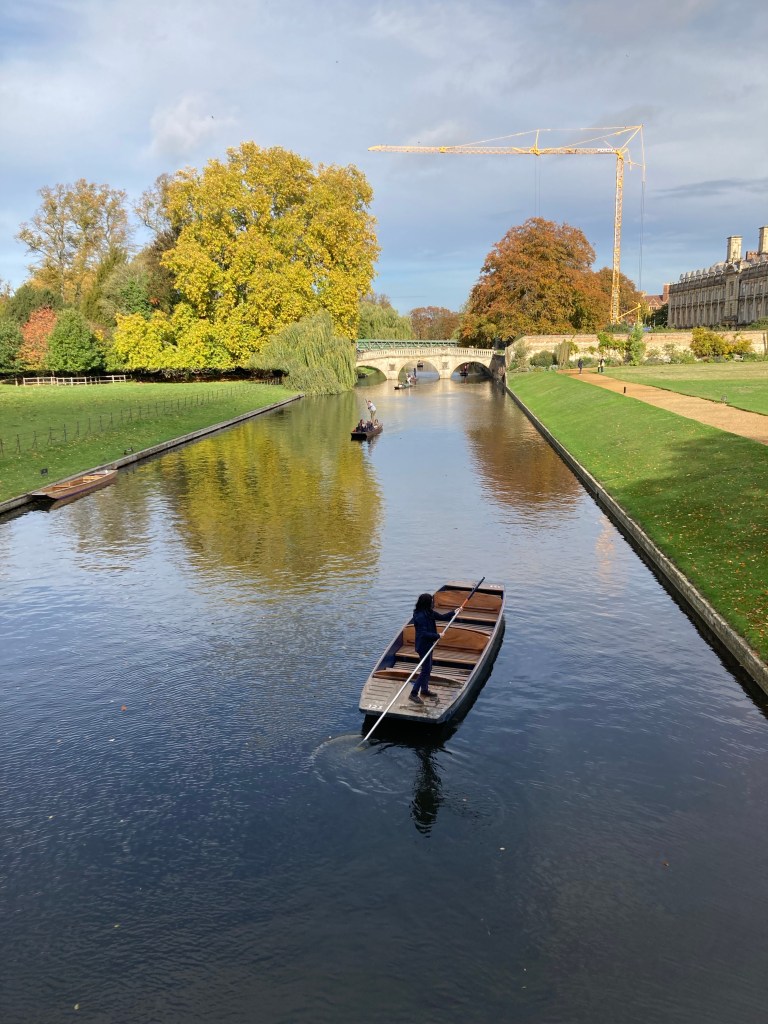
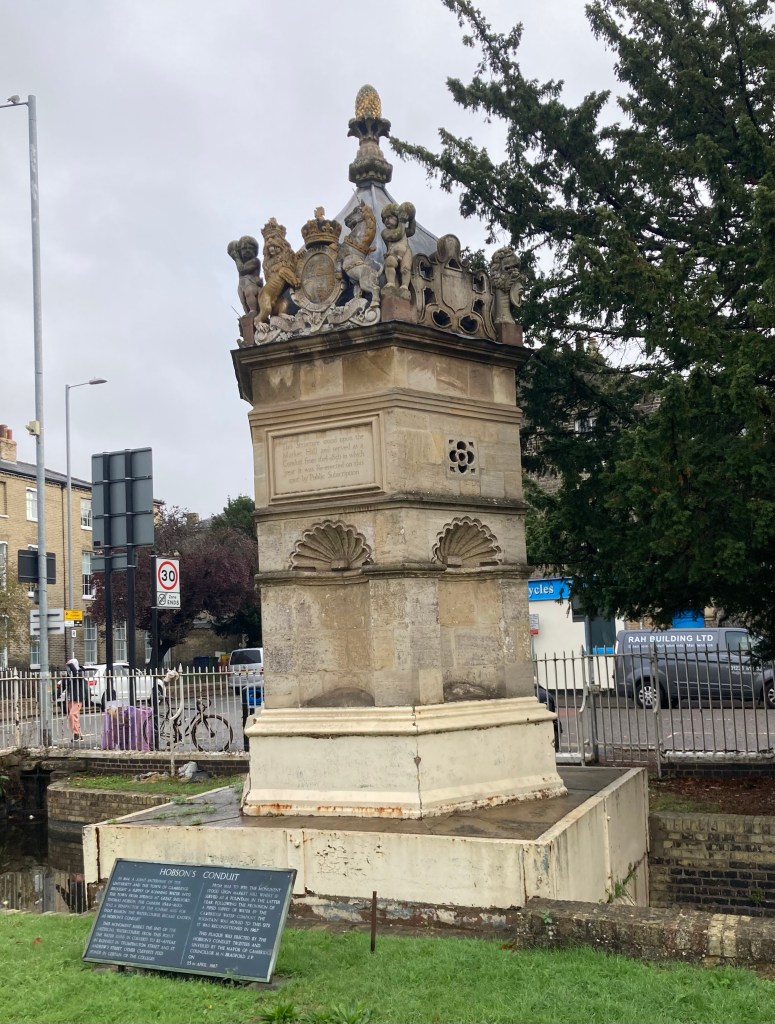
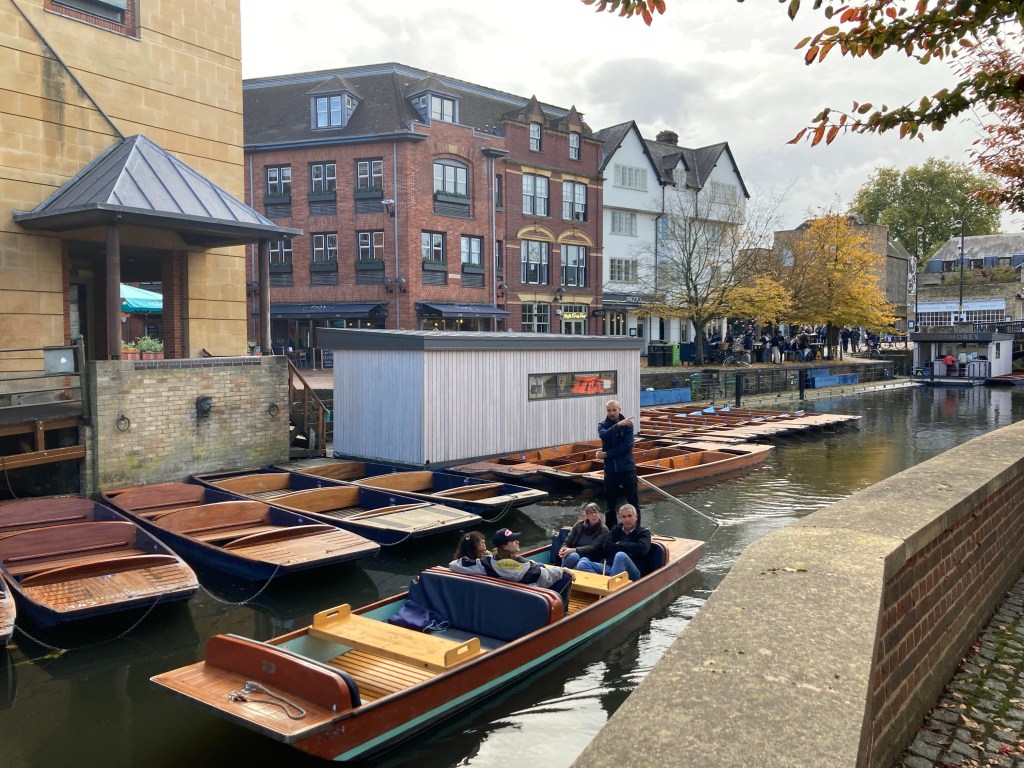
A short cut-through path near the houseA memorial about Hobson’s Conduit — a canal along a busy street which was built to bring fresh water to Cambridge.We don’t believe this is Bob’s relation.Punters on the CamThe lovely Pepys LibrarySome of the graduates, here walking along Regent Street.
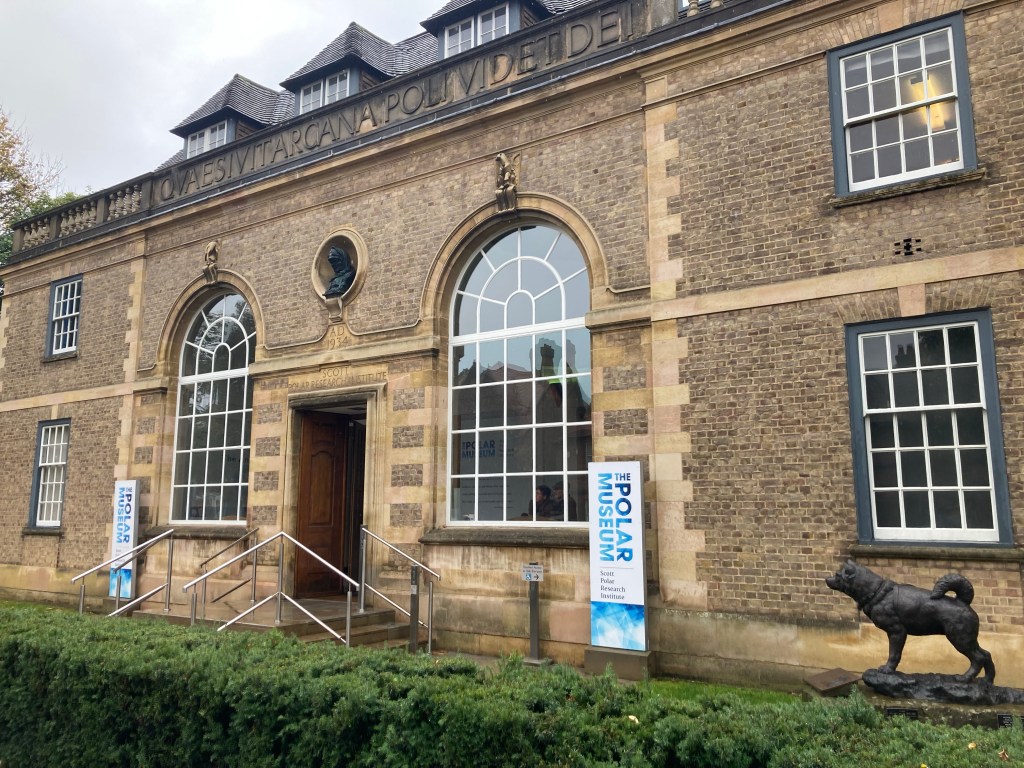
Today has been a rainy day, so we thought it might be a good day to check out one of Cambridge University’s free museums. The Polar Museum is fairly close to the house, so we headed there about mid-day for a visit. The museum presents information on the history of arctic and Antarctic exploration as well as polar artefacts, photographs, and written materials.
We weren’t the only ones who had the idea to spend a rainy day in a museum as the relatively small site was fairly busy.
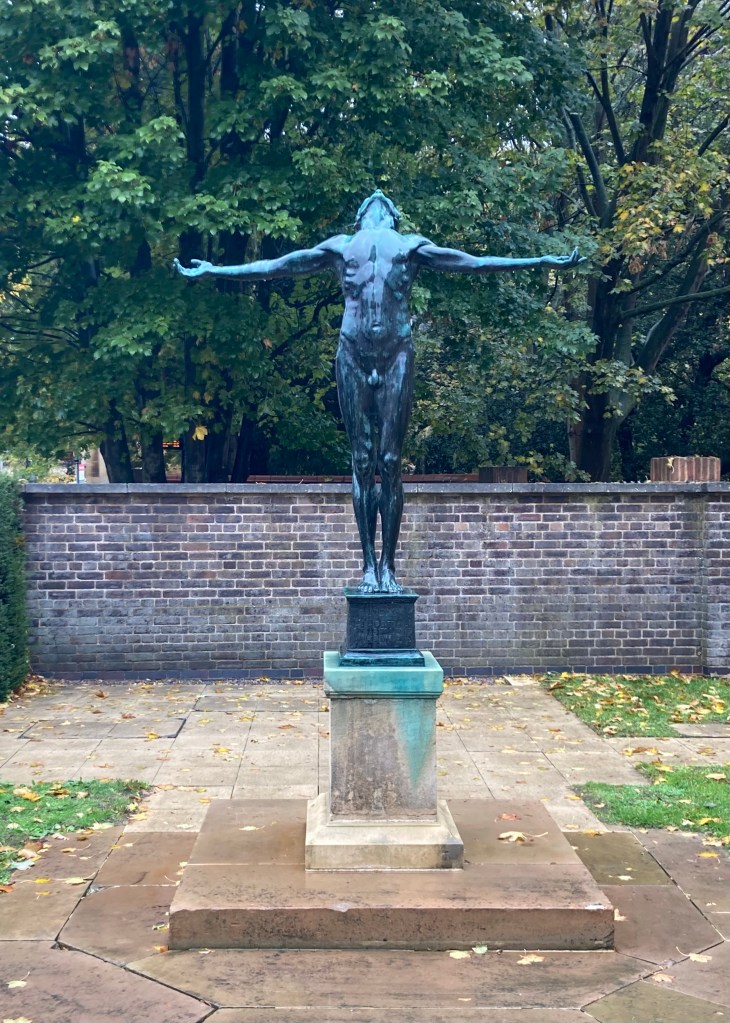
The building that houses the Polar Museum. It was completed in 1934 and has always housed polar researchers and artifacts.One of the many lovely sculptures outside of the museum The quote at the entrance to the museum, proving that this type of exploration was not for the faint of heart.
The Scott Polar Institute, where the museum is based was formed in memory of Robert Scott who led two expeditions to Antarctica. On the first one, he set a record for going as far south as anyone had until that time. On the 2nd one, he missed being the first team to reach the South Pole by 35 days to Roald Amundsen, a Norwegian. He and his men never made it back.
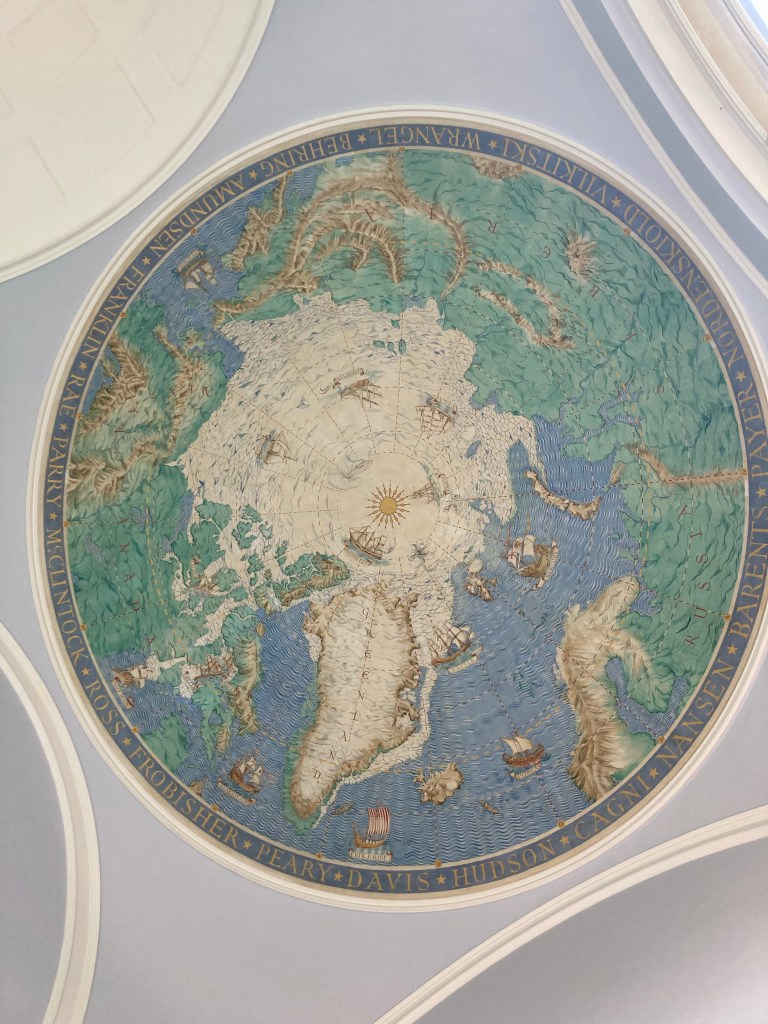
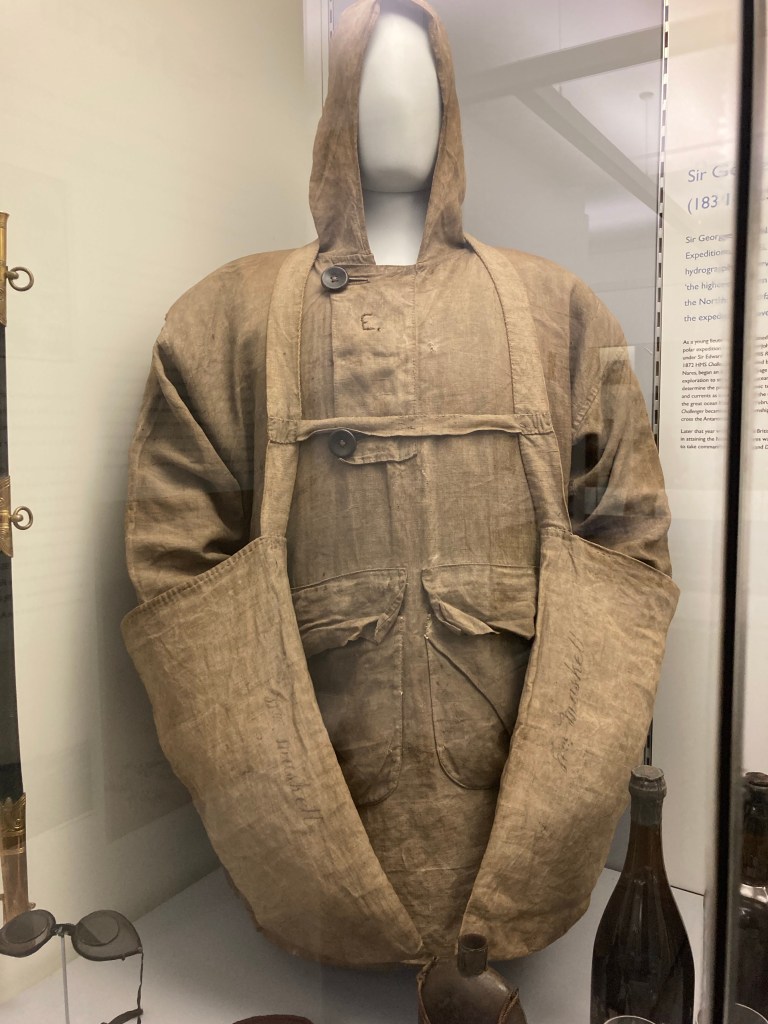
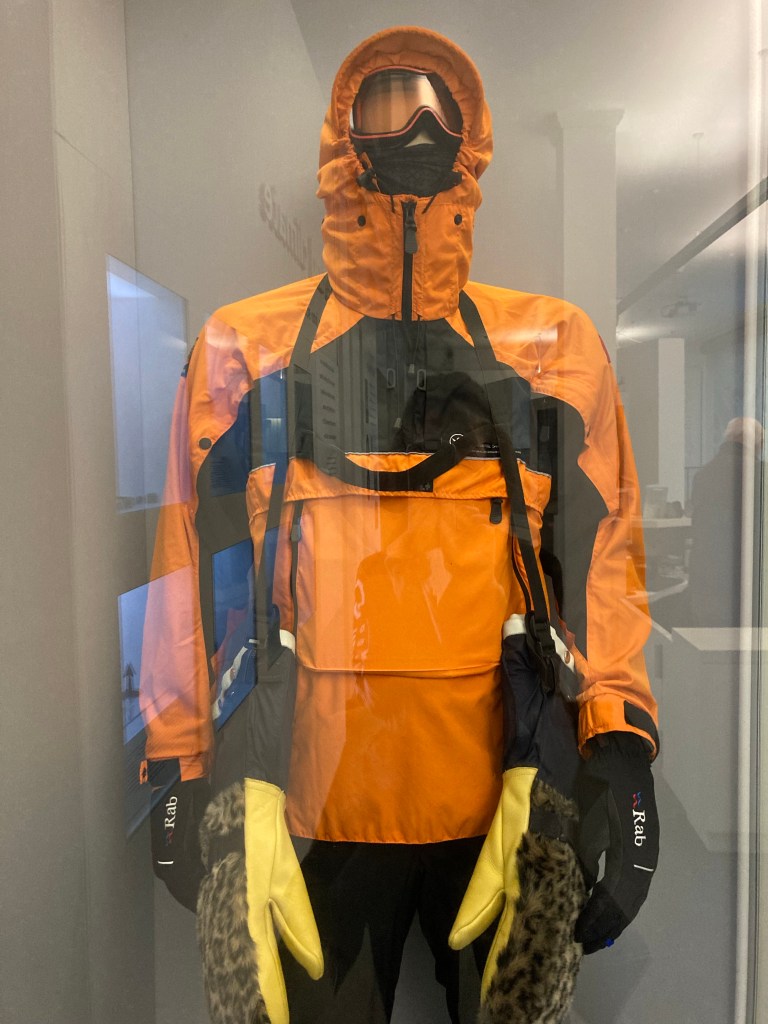
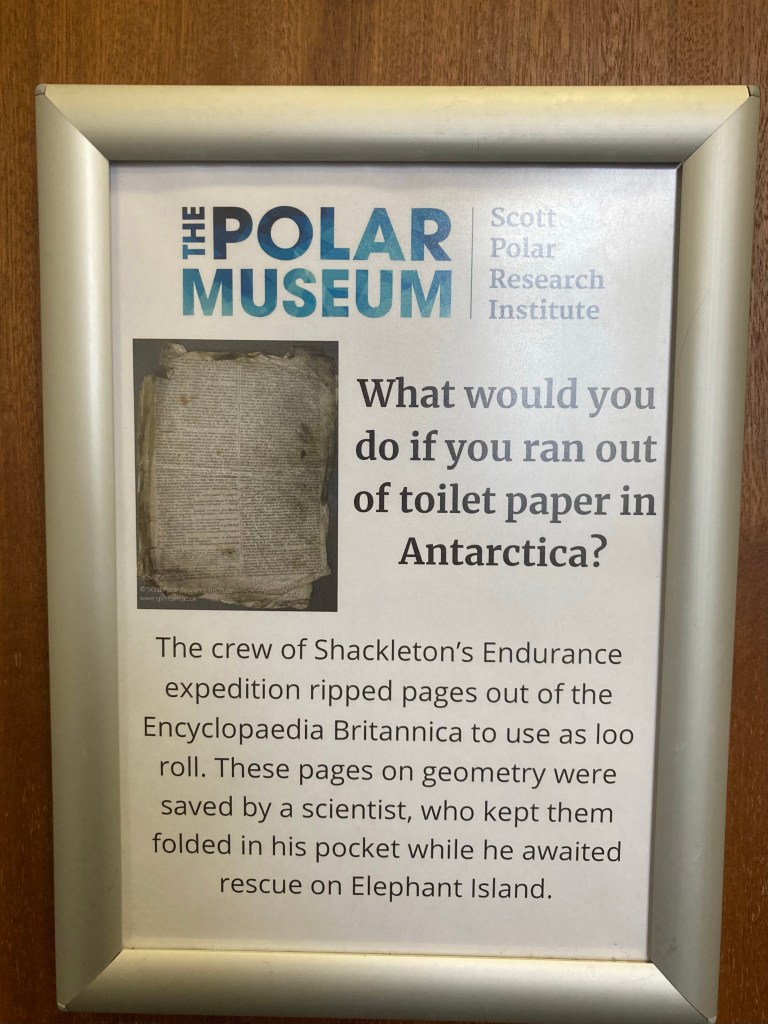
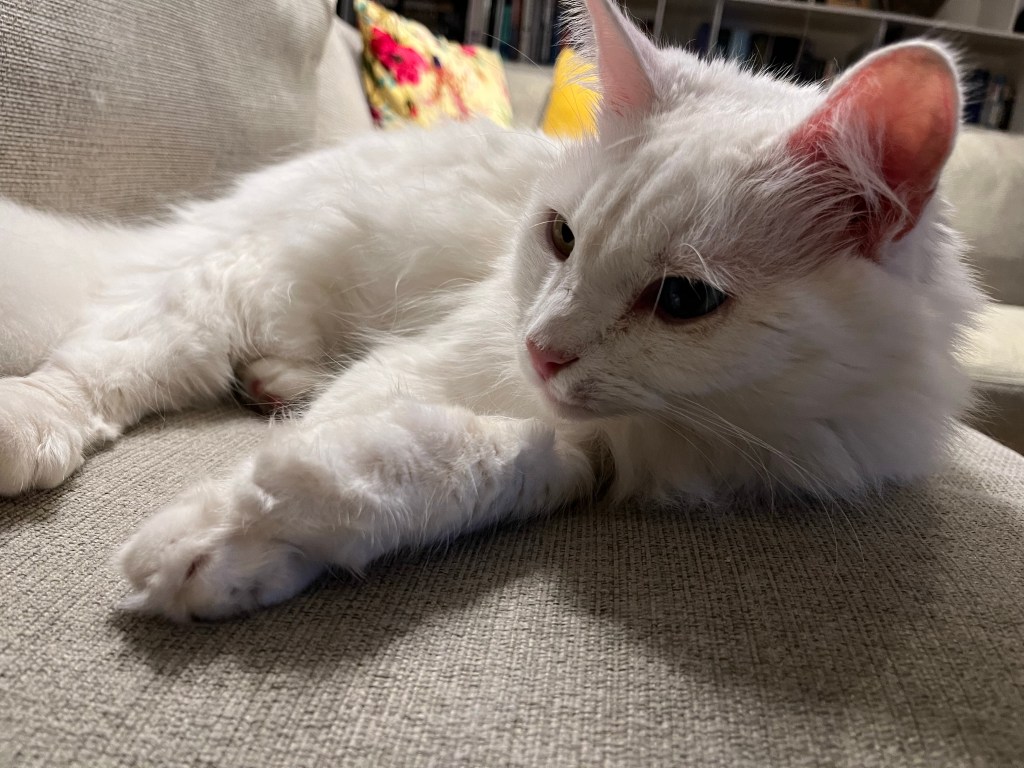
A photo of the arctic circle on one of the domed entrances to the museumEarly exploration clothingModern clothingEven the loo is informative A photo of the adorable Hugo. Don’t believe he’s been to either pole, but he is snowy white and has been known to get out and explore his own neighborhood.




















 Peckish Travels