Categories
Uncategorized

A Walk to Stormont Estate (4/5/24)

One of the places Bob and I knew we wanted to visit in Belfast is Stormont, which is the Northern Ireland Assembly building. The building is the seat of the devolved government for Northern Ireland, and as we just discovered today, lies on a beautiful estate that is well used by the public.

The walk from our hotel to Stormont was 4.5 miles and took about an hour and 45 minutes. It took us over a pedestrian bridge and then through East Belfast and other neighborhoods. As is typical in the UK, we had clouds, sun, rain, and sometimes a mixture. The temperature was great, however, mid to upper 50s, and the rain was never very heavy.

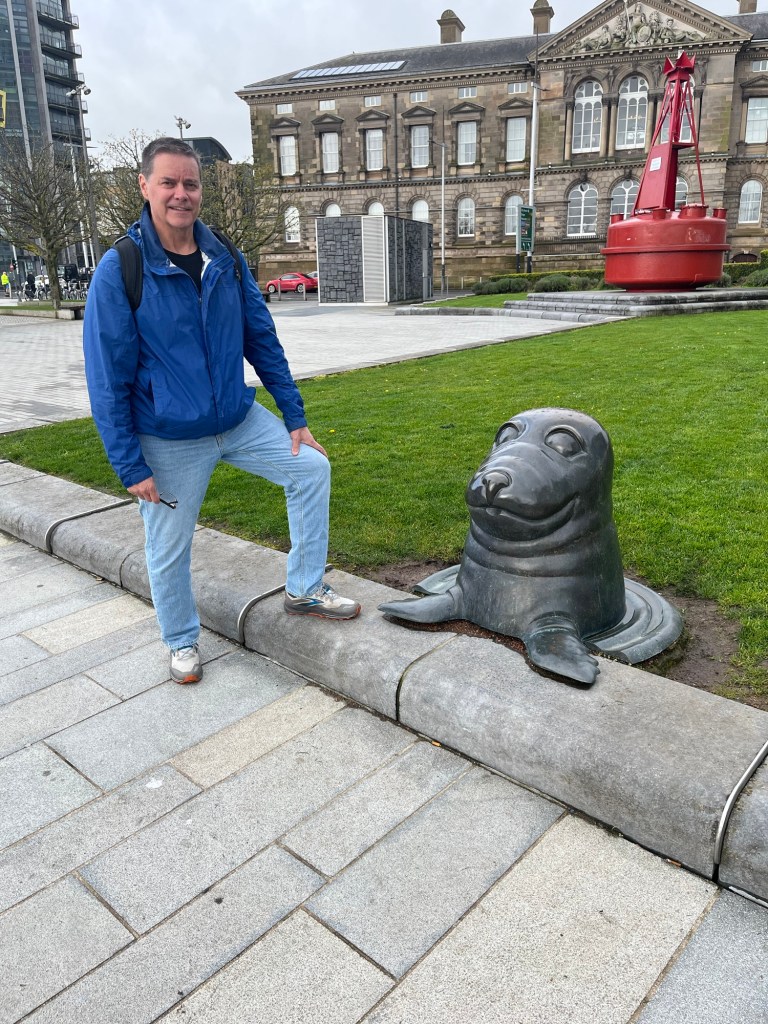
We started our walk on the promenade behind our hotel and had an early opportunity for a mixed species big head shot for Bob.
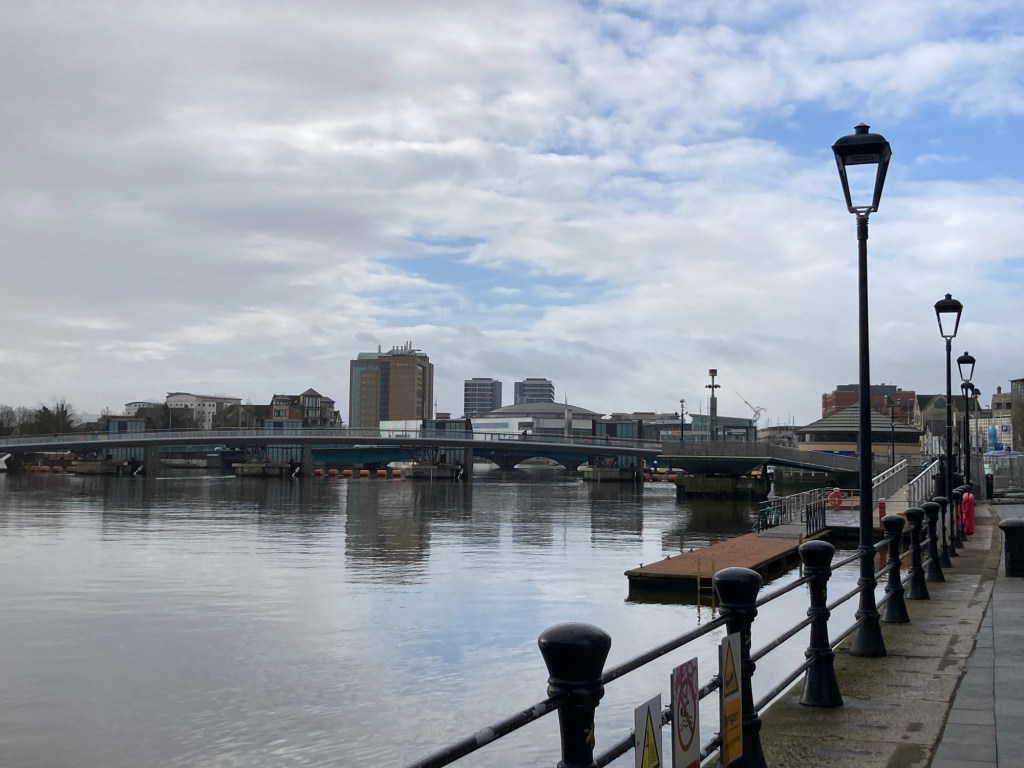
Looking towards the pedestrian bridge from the promenade
Bob is inclusive with his big heads
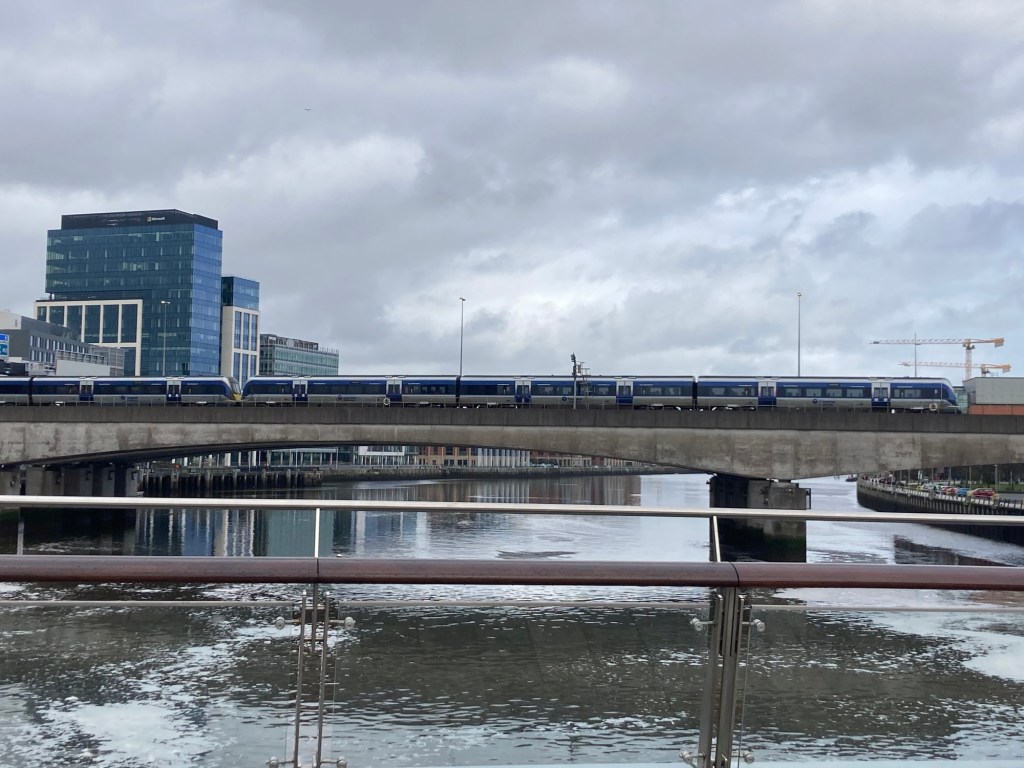
Capturing the city train crossing the Lagan River near us
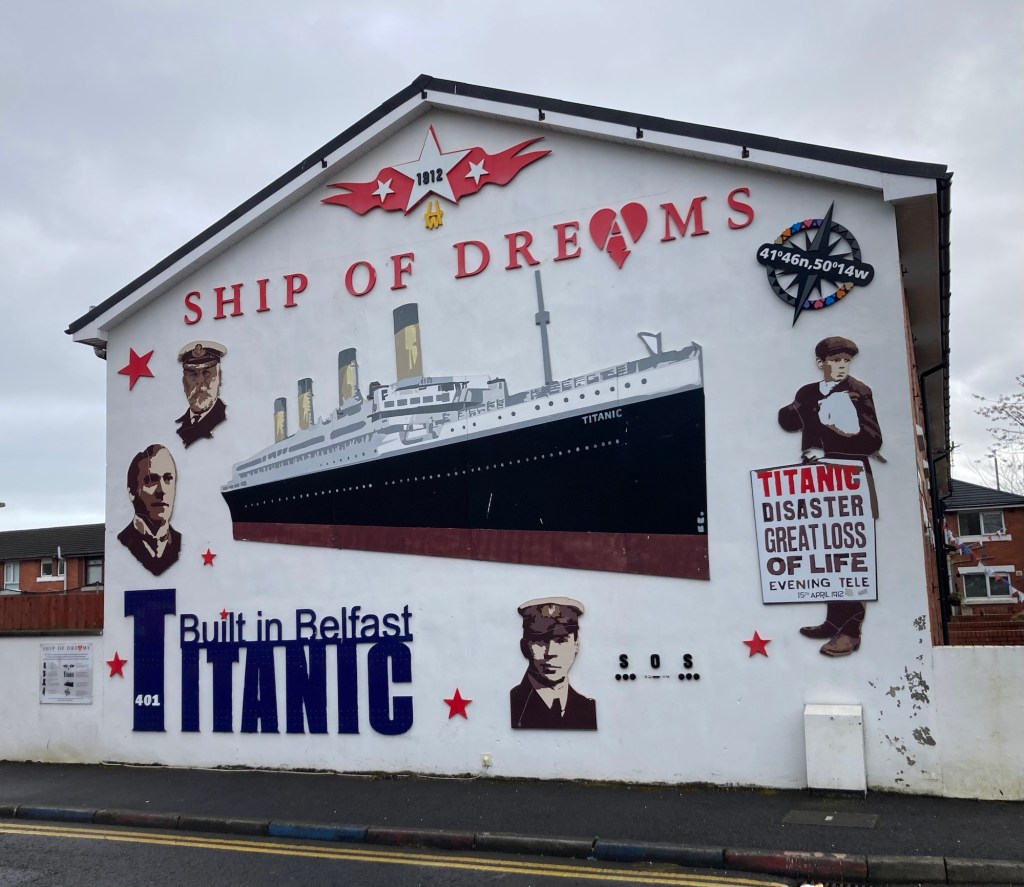
A titanic mural on a building on the way
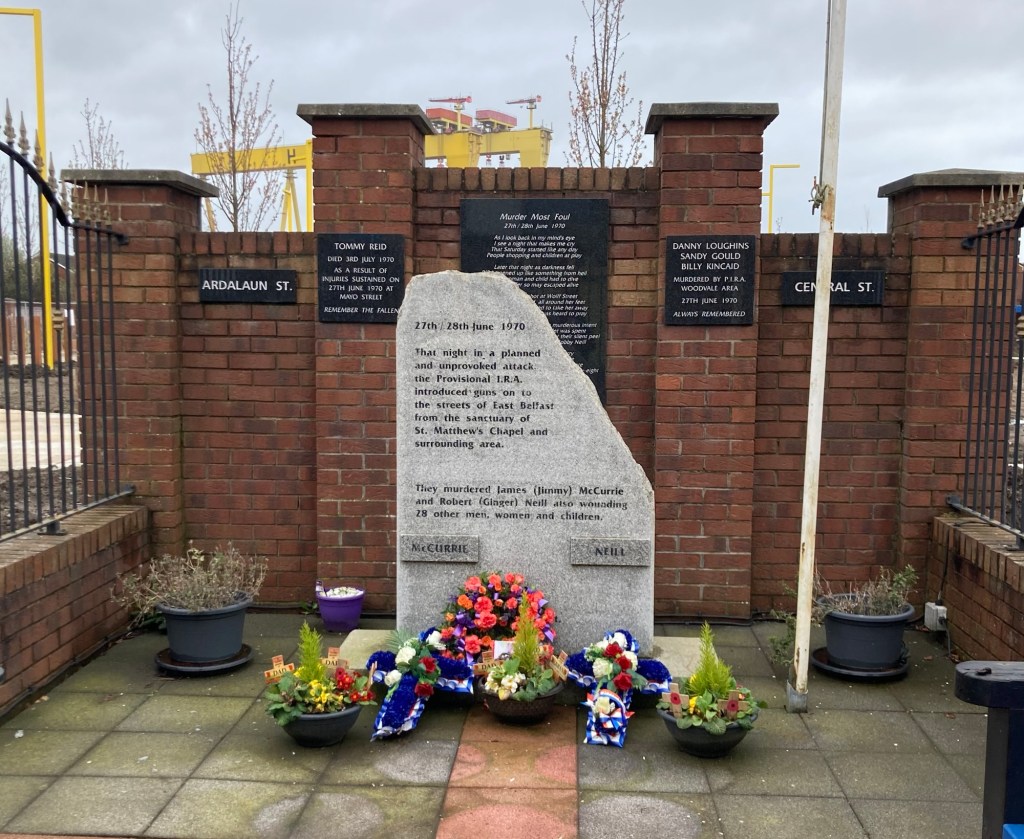
East Belfast is the Unionist/ Loyalist side,
so the memorials we passed today were those individuals
killed by the IRA.
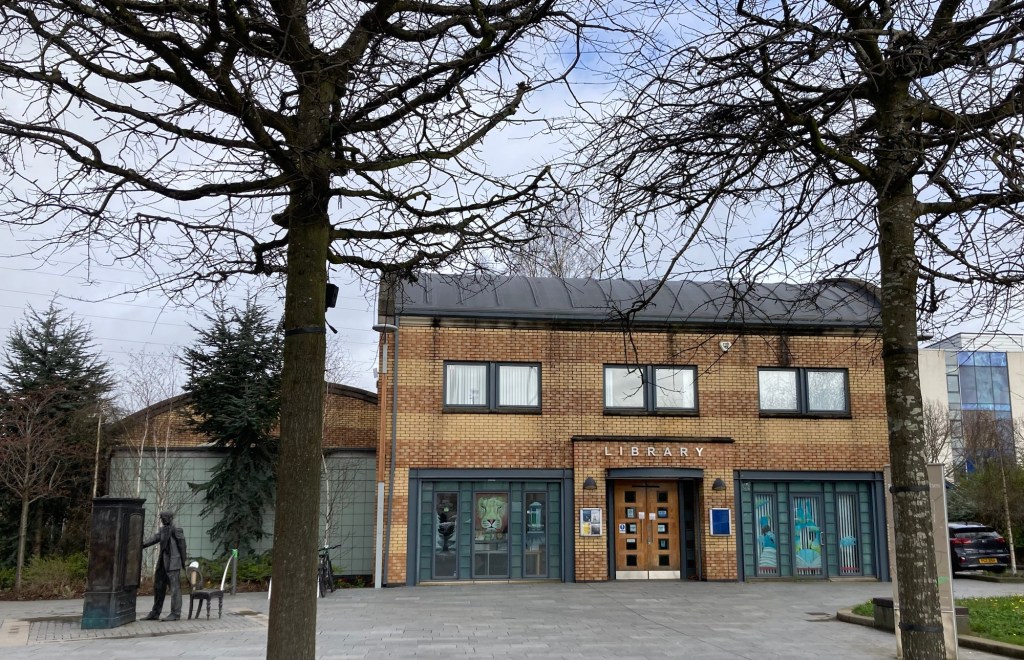
A cute local branch library near C.S. Lewis Square.
C.S. Lewis was born in Belfast
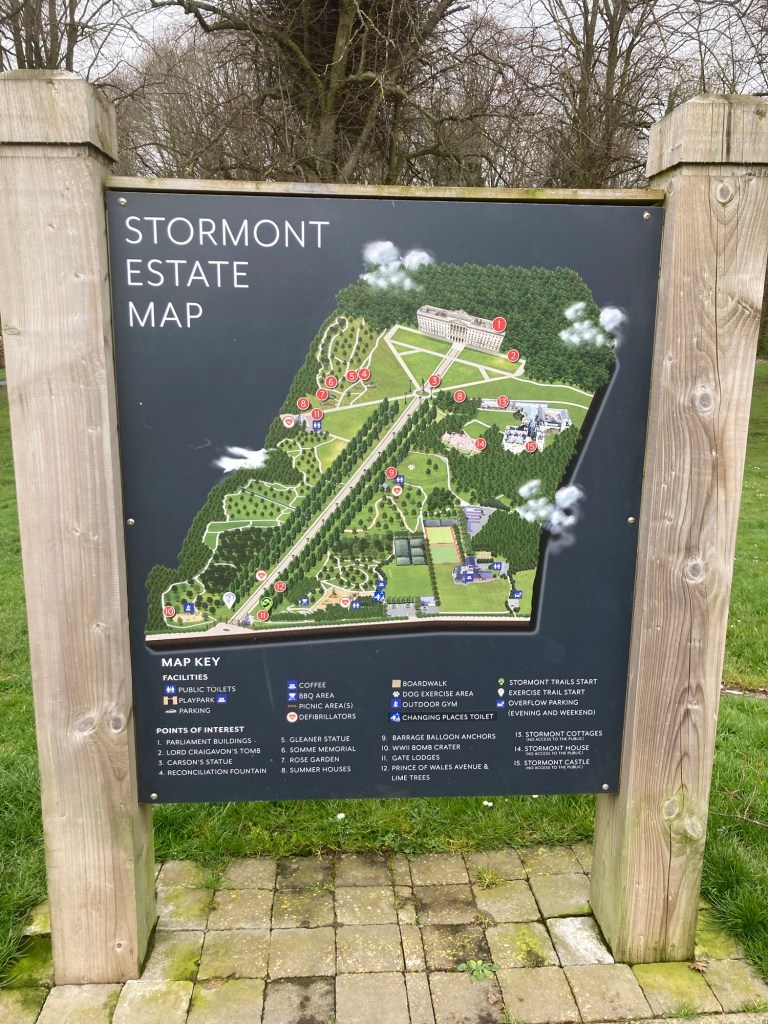
Map of the lovely Stormont Estate, including a castle,
the parliamentary building, a children’s park,
woodland trails, and gardens
One of the woodland trails near the children’s playground
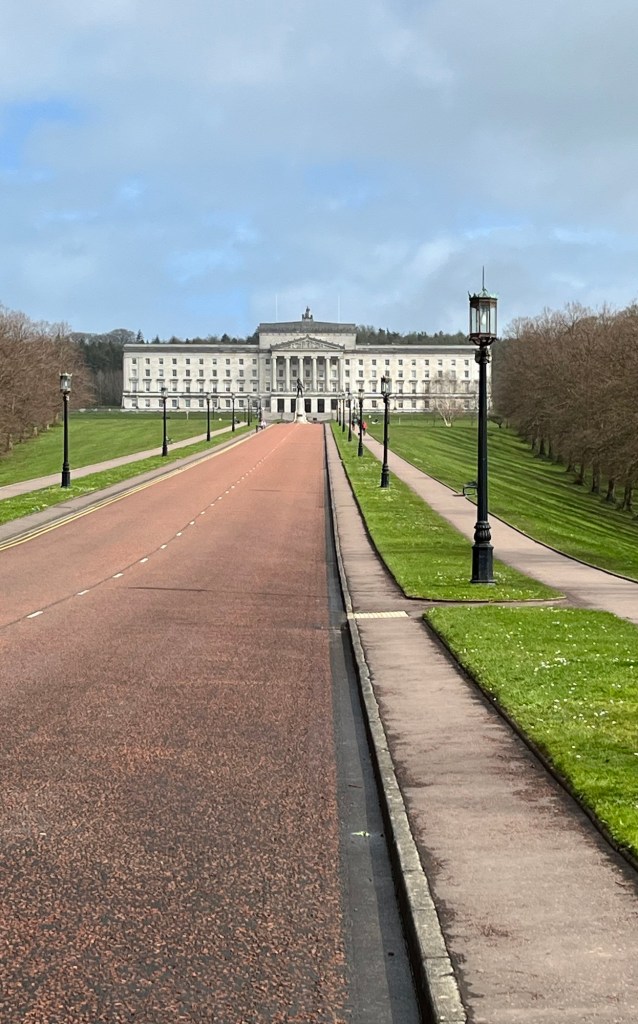
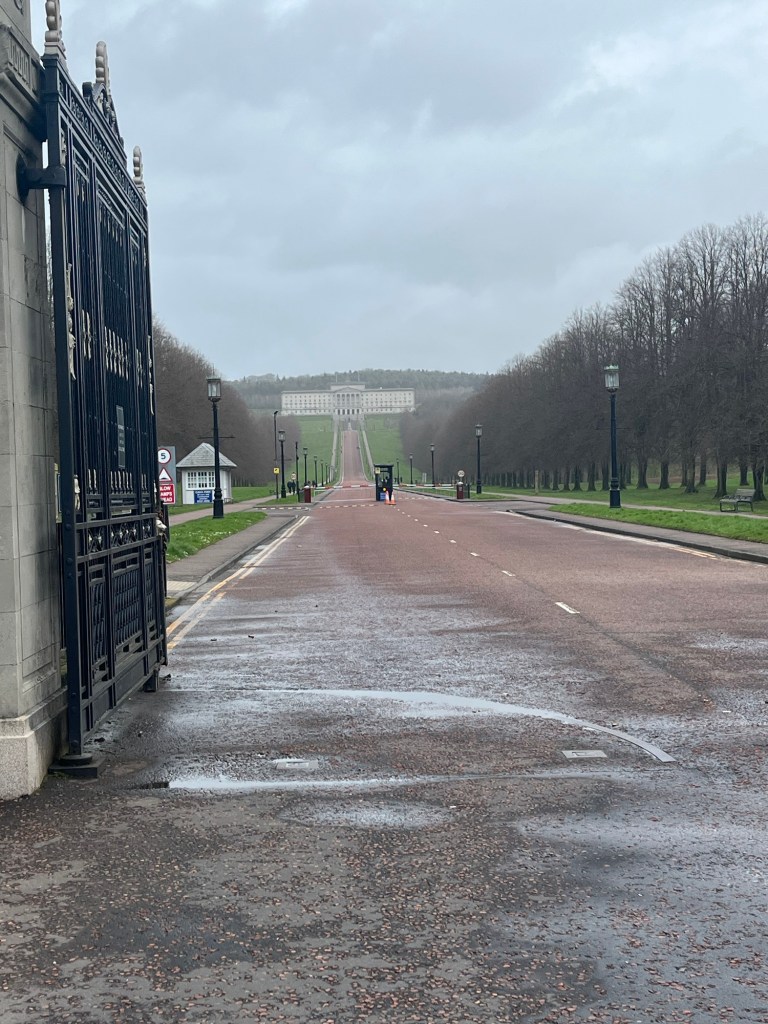
Looking up Prince of Wales Avenue
towards the parliament building

The parliament building is open to the public during weekdays from 9-4, and tours are conducted at 11 and 2 daily. You have to reserve tickets for the tours. We did not because they were all reserved by the time we checked into it. However, when we entered the helpful guy up front took us to the Assembly Chamber where the 11 am tour was ending so we could see the chamber before doing our own self-guided tour later.

Although the Northern Ireland Parliament was established in 1921, this building wasn’t completed until 1932, when it was officially opened by the Prince of Wales, Edward VIII. The Northern Ireland Parliament was dissolved in 1972 by the Stormont Government as a response to the violence (start of “The Troubles”) enacted by the Republicans (IRA) who felt that their needs were not being equally addressed by the government. It was reinstated under the Northern Ireland Elections Act of 1998 as part of the Good Friday Agreement.
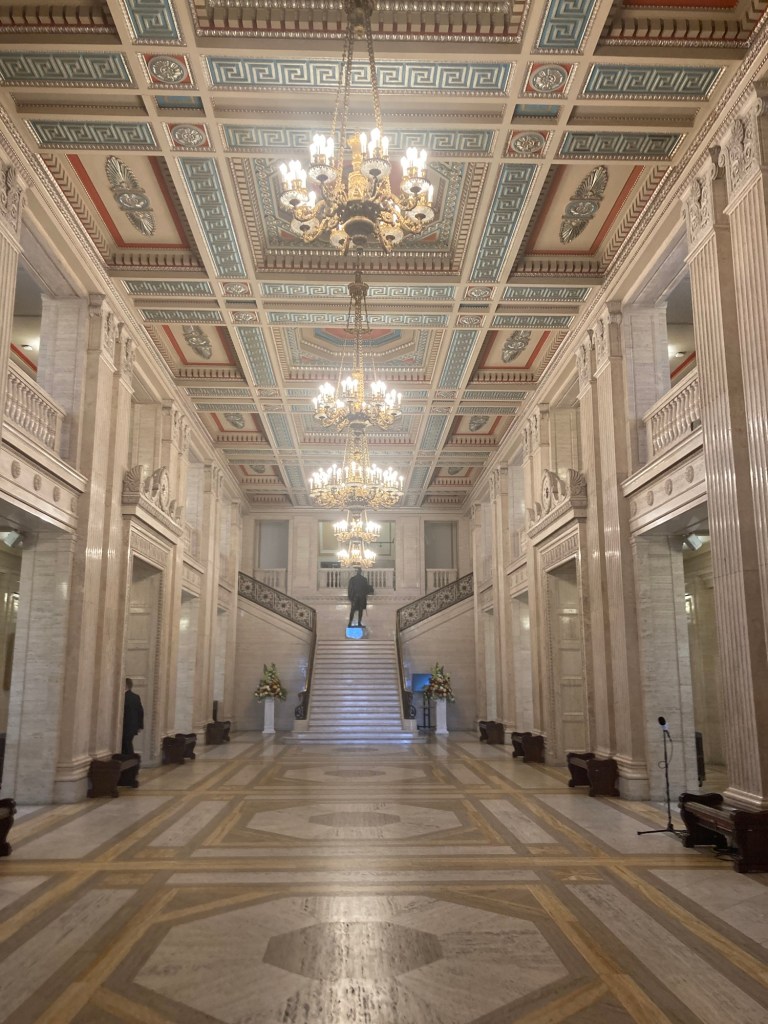
The entrance hall of Stormont.
This was the only floor we could access as visitors.
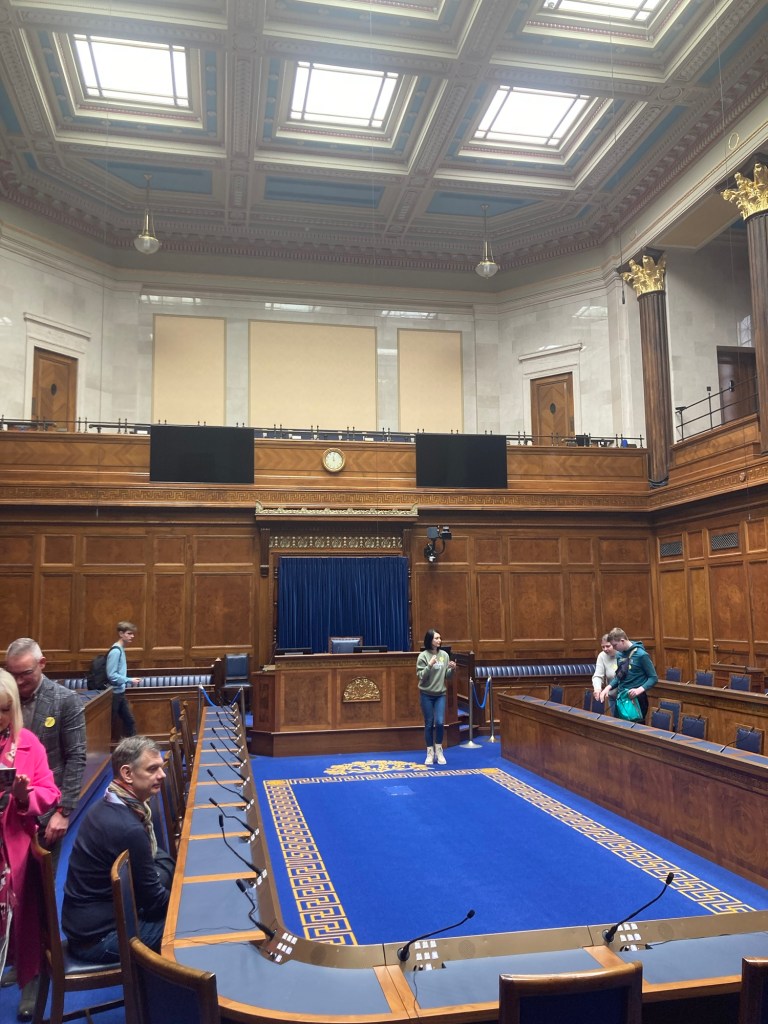
The Assembly Chamber where we walked in on the guide promoting the benefits of Hobnobs as snacks for children
vs. digestive biscuits as a way to explain
how members would introduce issues to the chamber.
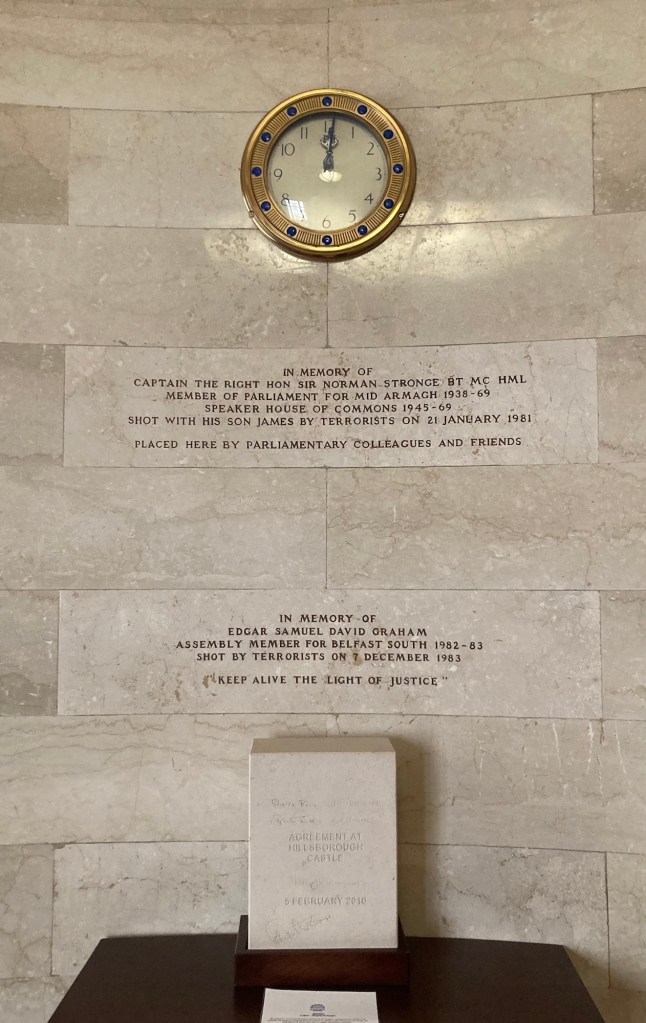
Memorials to two Assemblymen killed by terrorists (IRA)
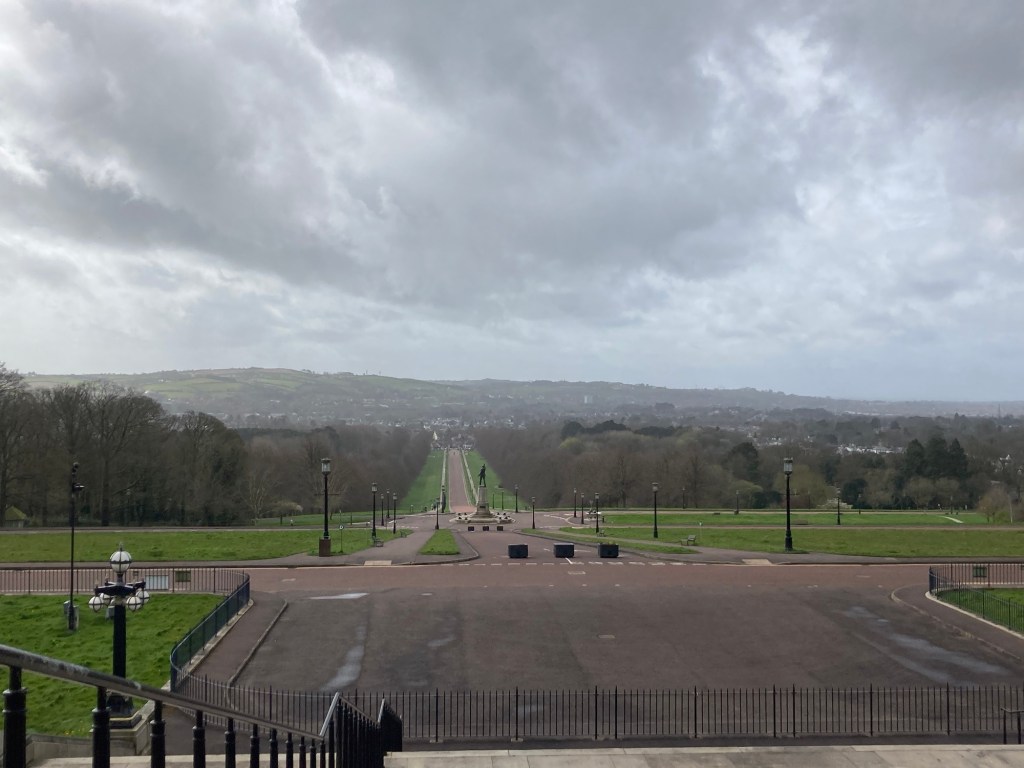
View of the surrounding area from in front
of the parliament building
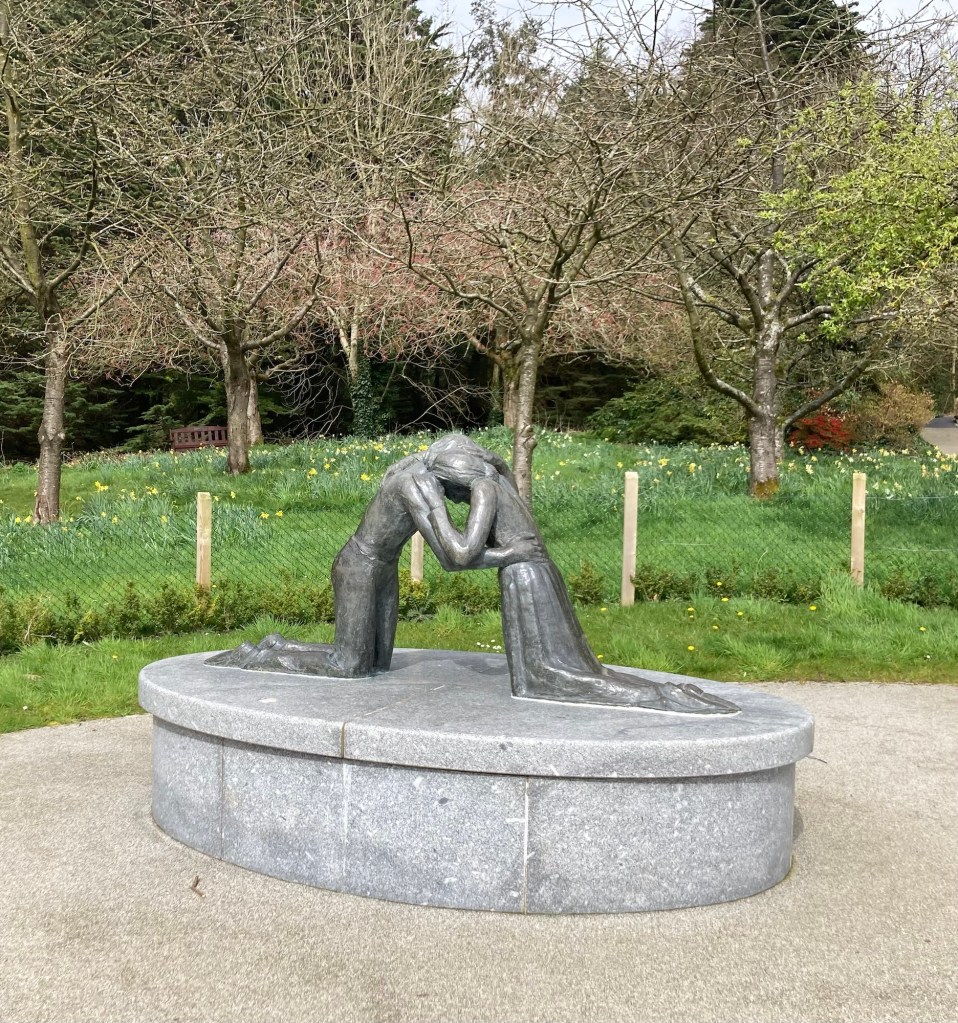
Reconciliation statue presented
by Coventry Cathedral and Sir Richard Branson.
Identical statues were placed in Berlin and Hiroshima.
A view of Stormont from over the gardens
Categories
Uncategorized

B & B in Belfast (4/4/24)

Bob and I endured some very bumpy plane rides and some slow immigration processing in Heathrow but have arrived safely in Belfast. We will be here until Monday morning when we head to Scotland to see some good friends and a sweet dog named Otter. To get here and be able to be out of the country for 4 months, we have gotten/are getting a lot of help from Bob’s sister and her husband for which we are very thankful. Also indebted to Bob’s mom for letting us park our car at her house for the duration of this trip. It takes a village.

After our arrival at the AC hotel about 1:00 pm, via taxi from the airport, we unpacked and then headed to the Visitor’s Center to determine our plans for the rest of the day. It was about a 10 minute walk to the Visitor’s Center.

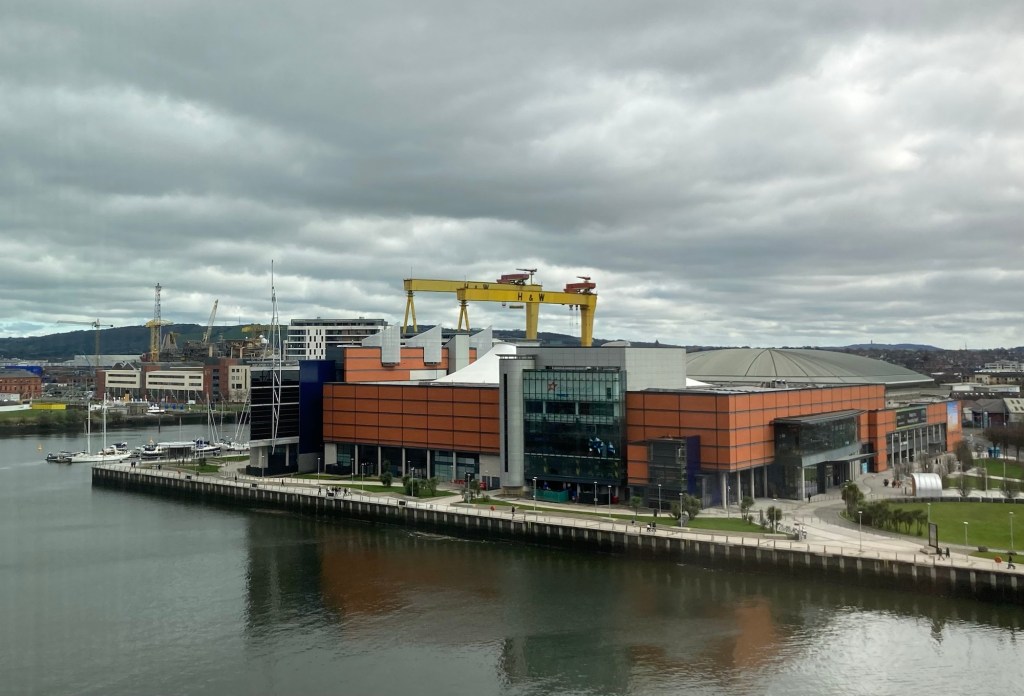
A view of Odyssey Place, a sports arena and event venue,
from our room. The cranes in the background
are Samson and Goliath, iconic parts of the Belfast skyline.
More on them when we go to the Titanic Museum.
One of the taller buildings we passed
on the way into the city center
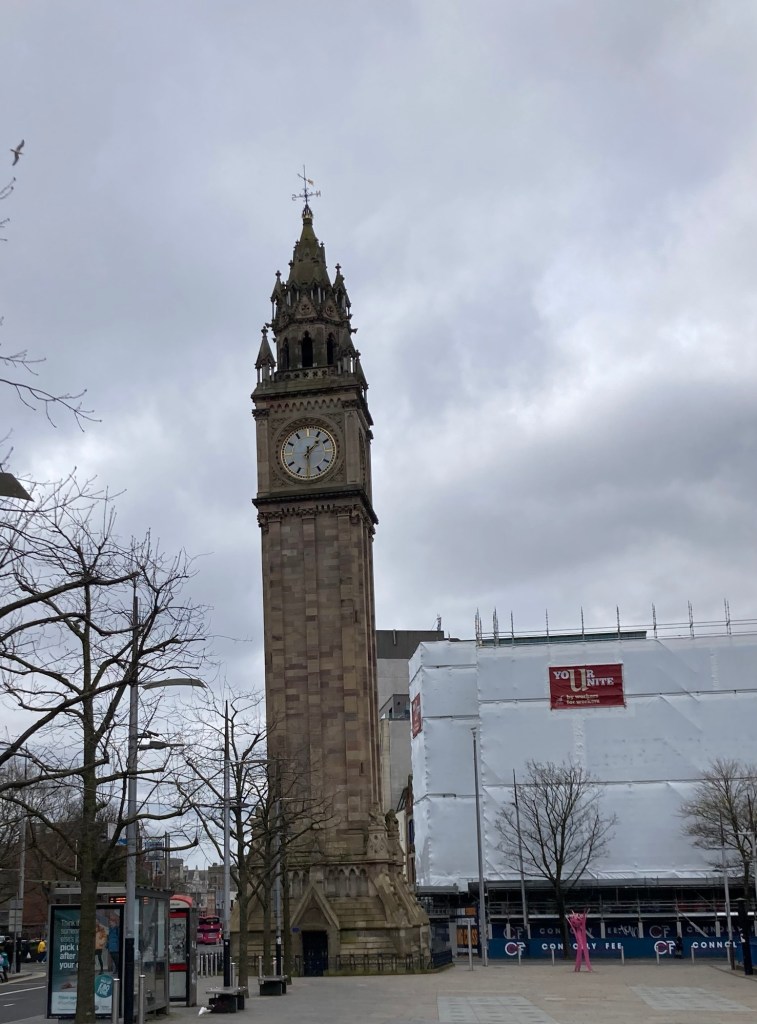
The Albert Memorial Tower built in 1869.
It’s Belfast’s own leaning tower.
It’s built of sandstone on reclaimed marshy land
and over the years has become 1.25 meters from vertical.
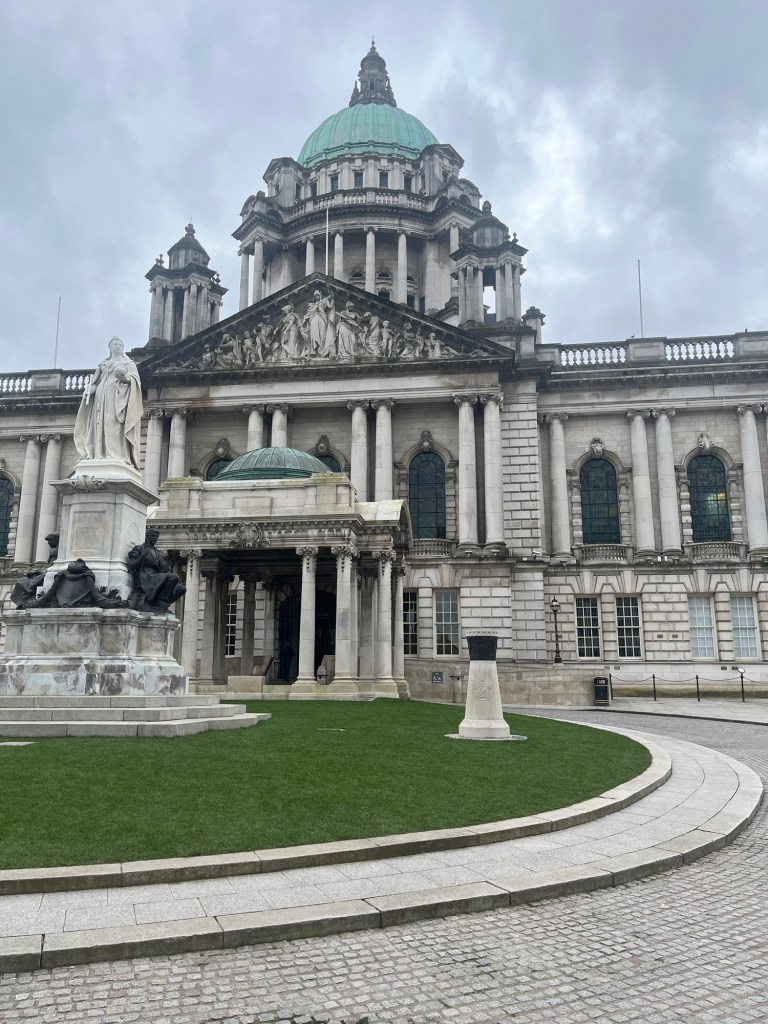
Belfast City Hall, built in 1906, after Queen Victoria declared Belfast a city in 1888.
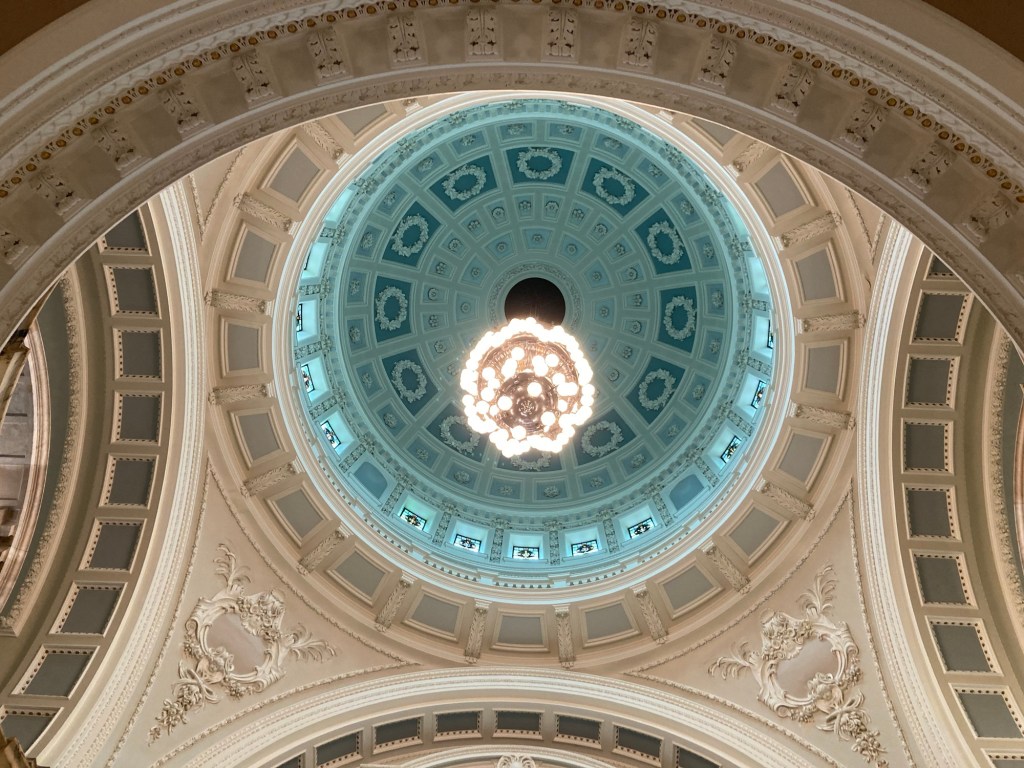
Looking up at the dome in City Hall
A cenotaph beside City Hall

We decided to do a Black Cab Tour this afternoon. It was recommended by Rick Steve’s as well as by our taxi driver from the airport. It is a 90 minute cab tour that provides a visual and informative description of some of the happenings during “The Troubles” in Northern Ireland (or the North of Ireland as our driver prefers to refer to it.). I’m not even going to begin to try to summarize what we learned (from an admittedly Republican vs. Nationalist or Catholic vs. Protestant perspective) except to say that people have trouble living with other people, people like power, and people can do horrible things to each other. In that regard, it was a sobering tour, and while what we heard was specific to Belfast it has similarities with other conflicts at home and around the world.

This is one of many memorials to the IRA members
who died during this time (and actually since the time
Ireland was partitioned by England in 1921),
but this was specific to the individuals
who died during hunger strikes in prison.
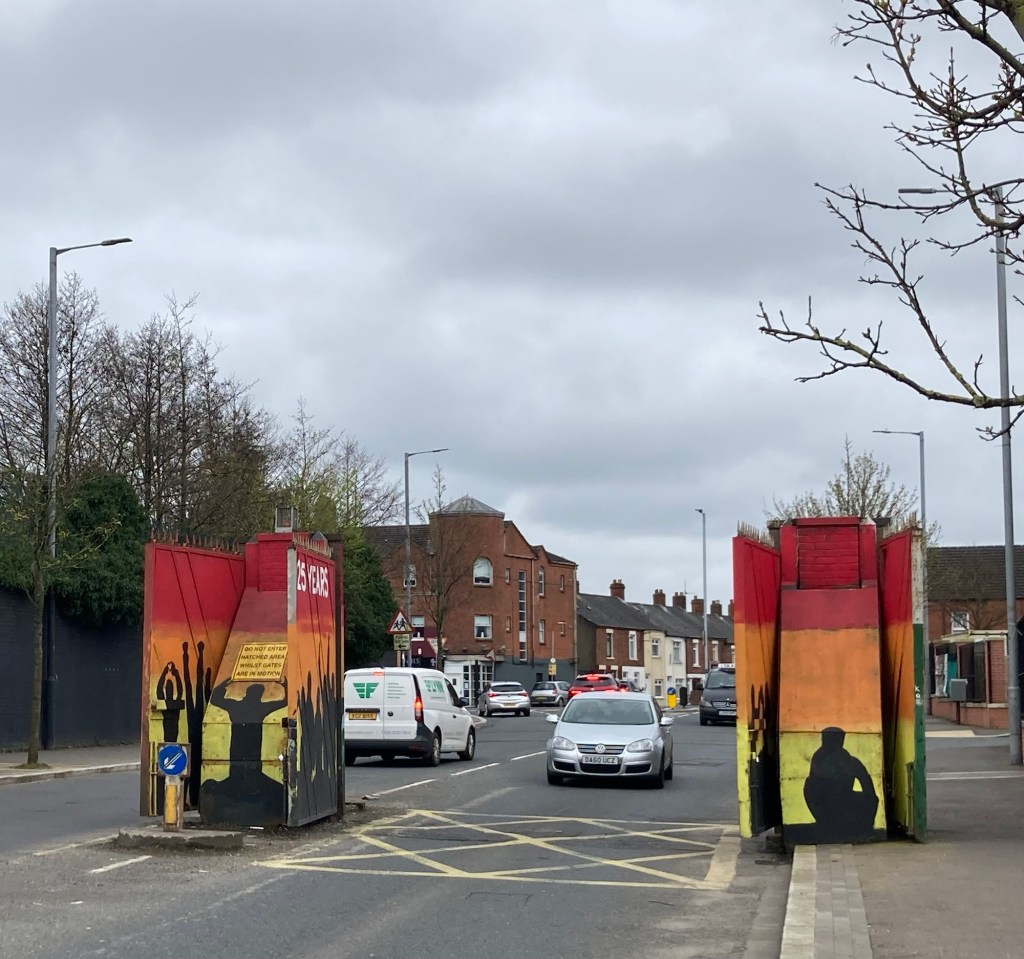
A set of three gates that we drove through
that open at 5:00 am and close at 7:00 pm daily
between Falls Road (Catholic area)
and Shankill Road (Protestant area)

Categories
Uncategorized

Up and Down (3/30/24)

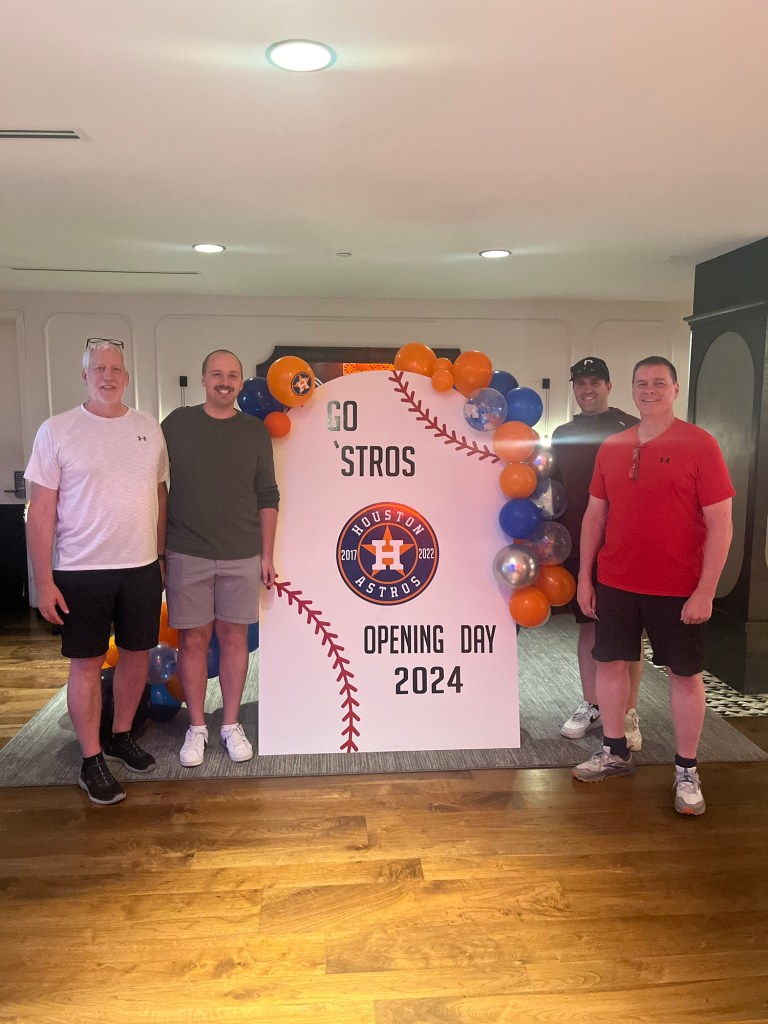
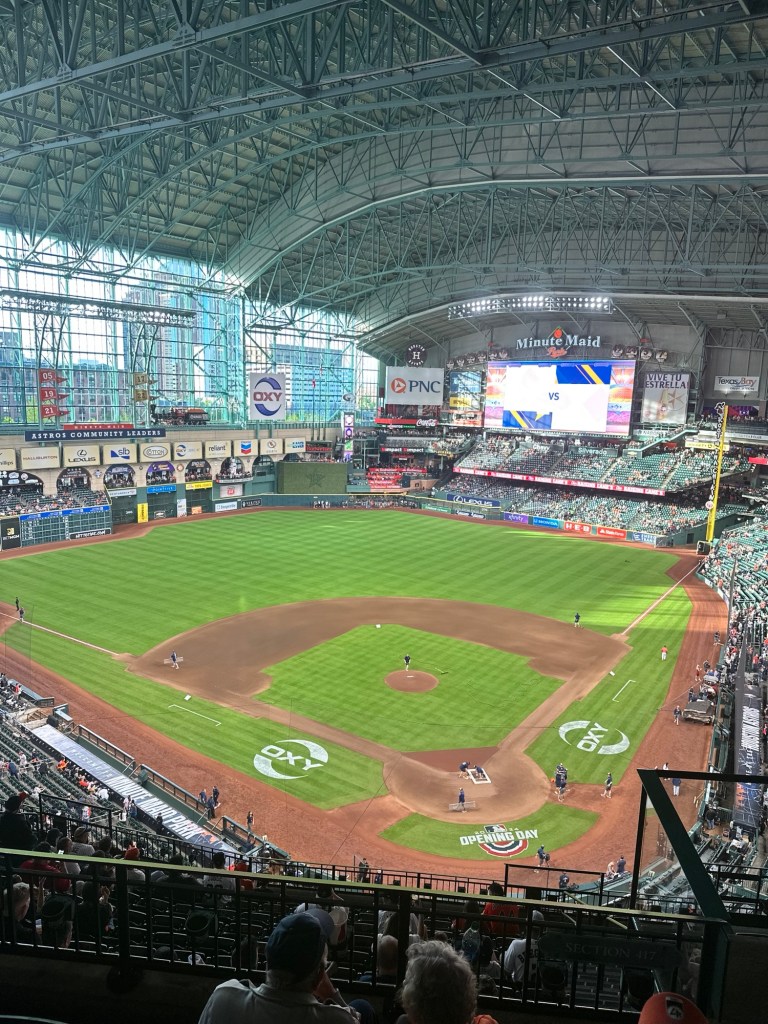
Down (South) — Bob and the gang have already said goodbye to Houston after a ballgame last night with the Houston Astros losing to the New York Yankees 7-1. They drove to Dallas this morning.

The crew at the game — Jody, Zack, Nick, and Bob
Minute Maid Park in Houston

Up (North) — On my drive into Decorah yesterday, I saw road signs that said Driftless Scenic Byway. Usually, these signs just say Scenic Byway, so I wasn’t sure what this meant. Today I learned that Decorah is in a region in the Midwest called “The Driftless,” which means that it was skipped by the glaciers in the last ice age, so the area lacks glacial drift. The Driftless includes parts of Northeast Iowa, Southeast Minnesota, and Southwest Wisconsin. Due to the lack of glacial drift, the area enjoys bluffs and valleys and other geographical features not found in other parts of these states.

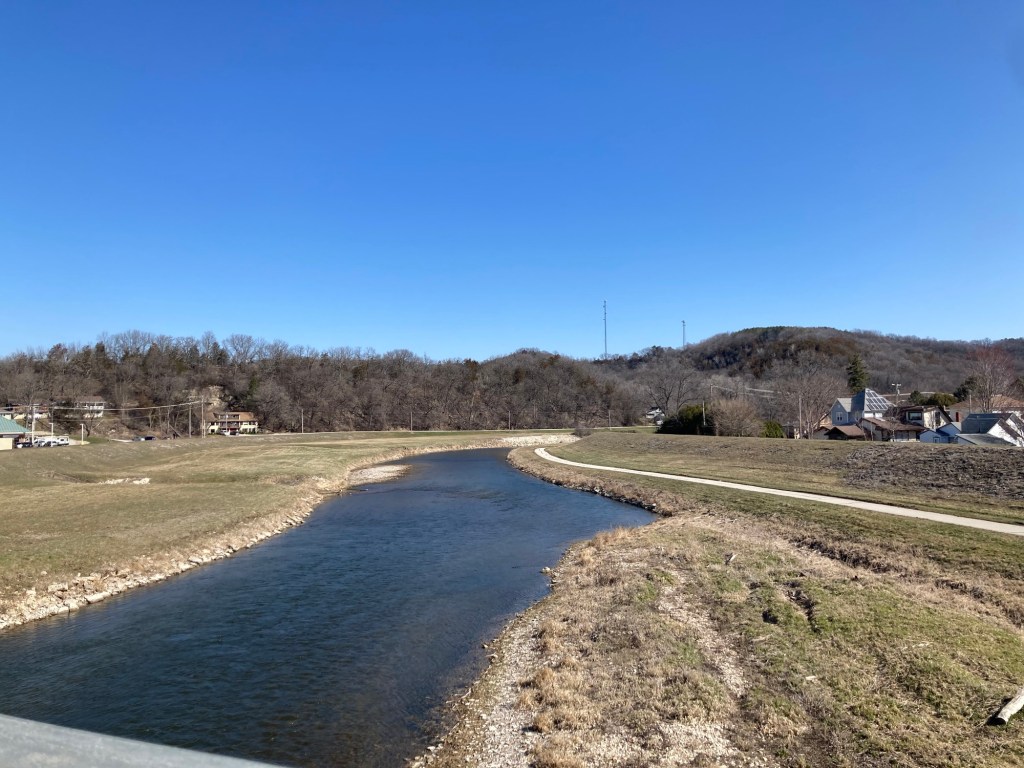
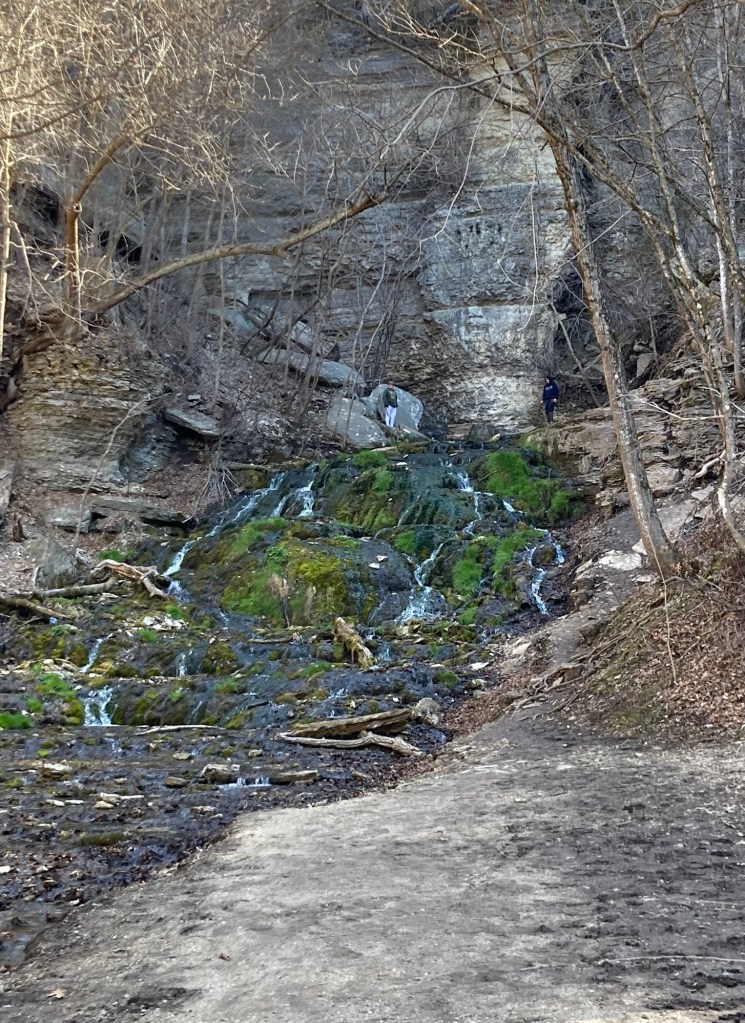
I headed out this morning on a bit of a walking tour of Decorah. I started by heading for the waterfall in Dunning’s Spring Park. That walk took me through town, across the Upper Iowa River, and then into the park. The park was small but had the promised waterfall as well as a scenic overlook of Decorah.

The Upper Iowa River
The waterfall
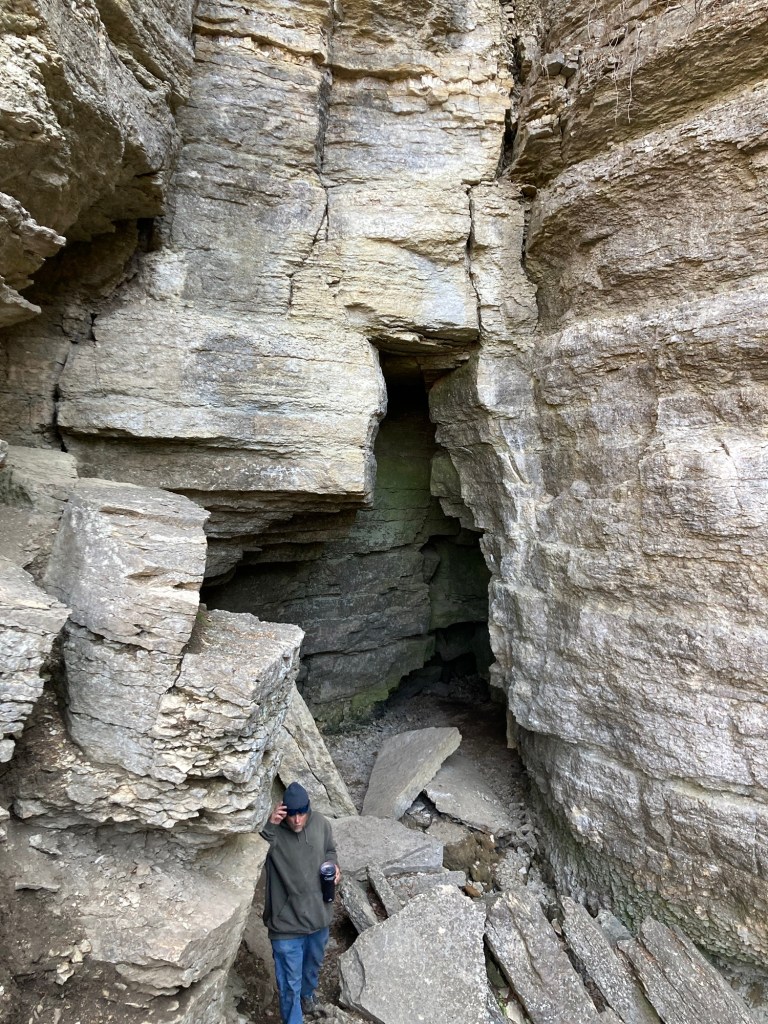
A man coming out of the cave above the waterfall.
We startled each other.
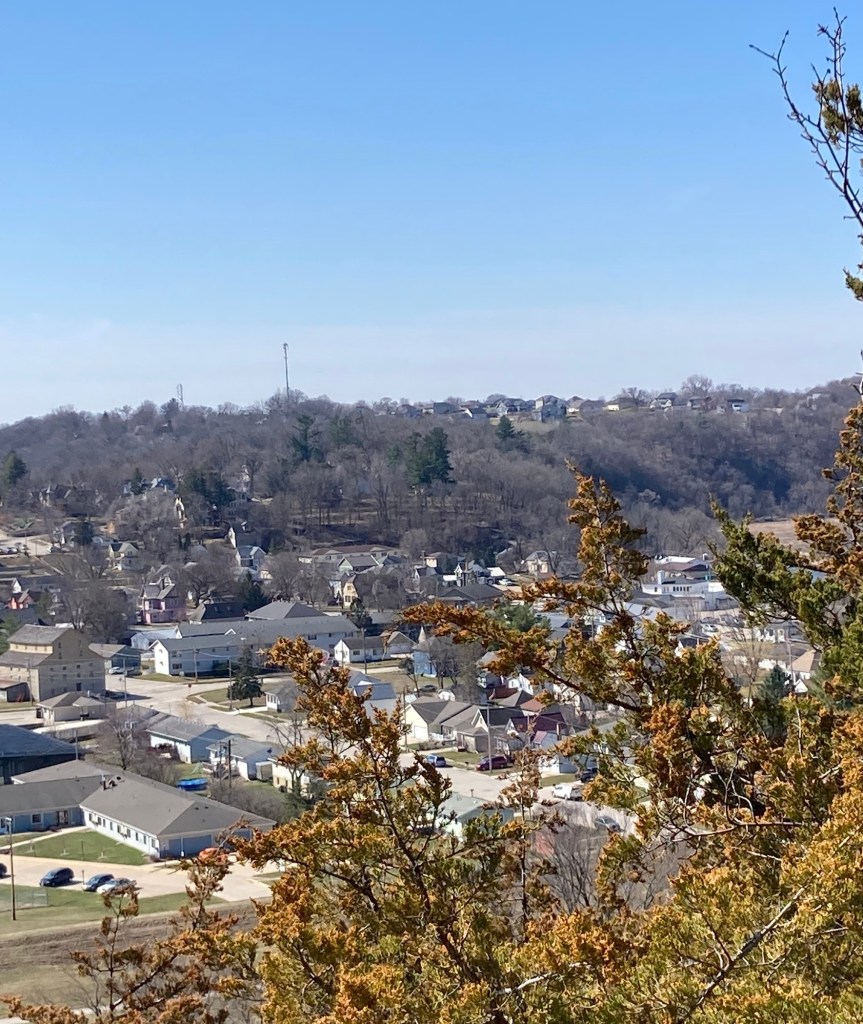
Looking back towards the town center from the park

Luther College is relatively close to the park, so I headed there next. Luther College is a private Lutheran liberal arts college. It was originally established near LaCrosse, WI, as a seminary in 1861 by Norwegian immigrants. It was moved to Decorah when it became a college.

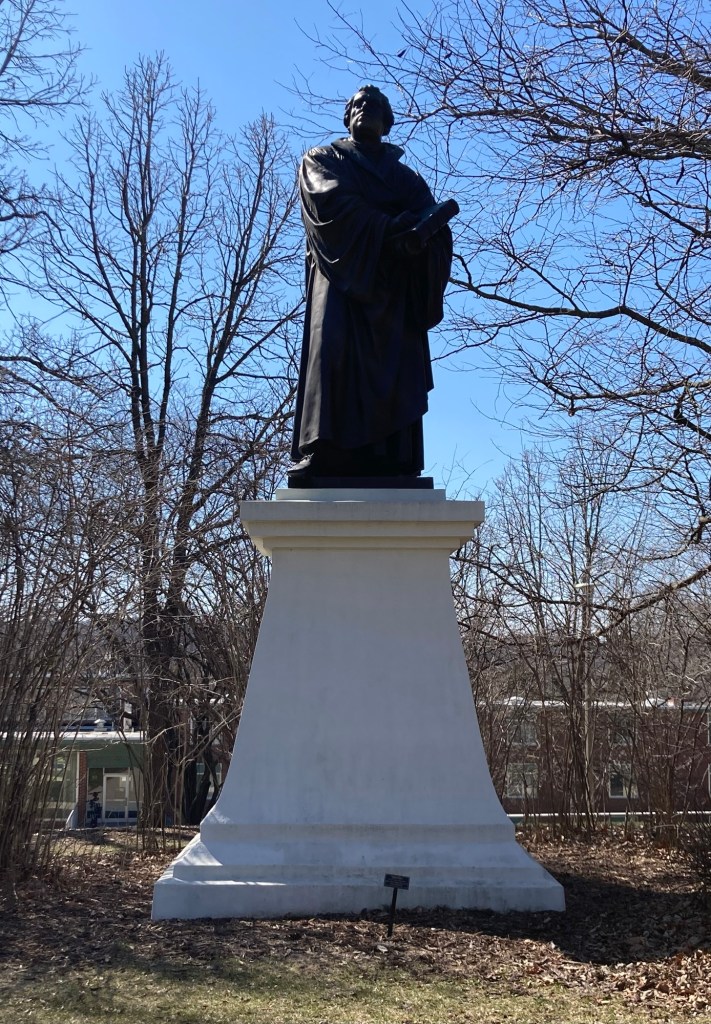
A statue of Martin Luther
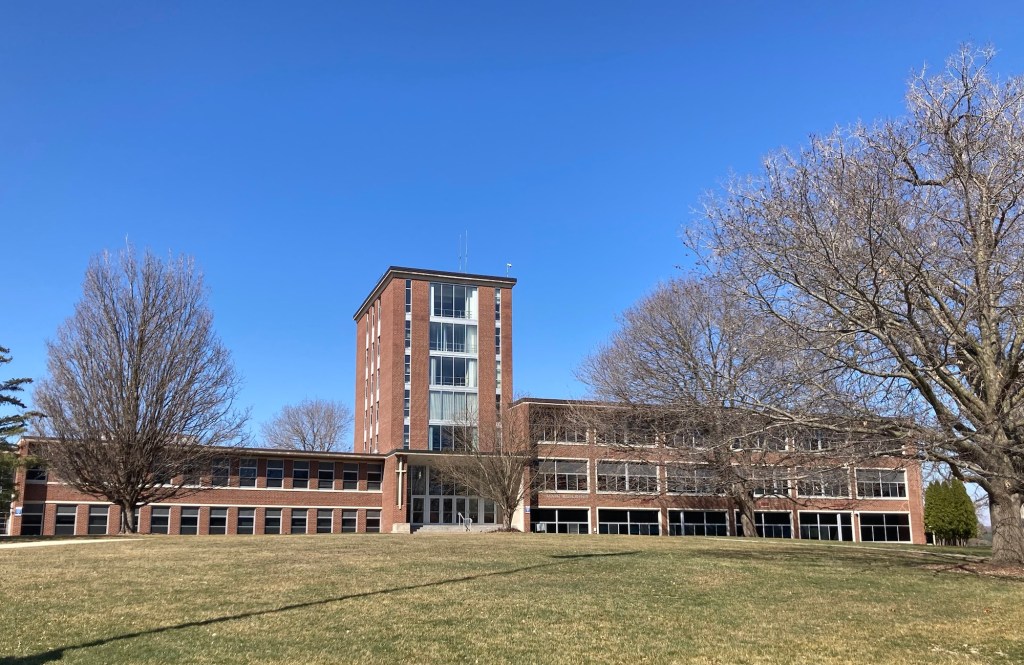
The Main Building
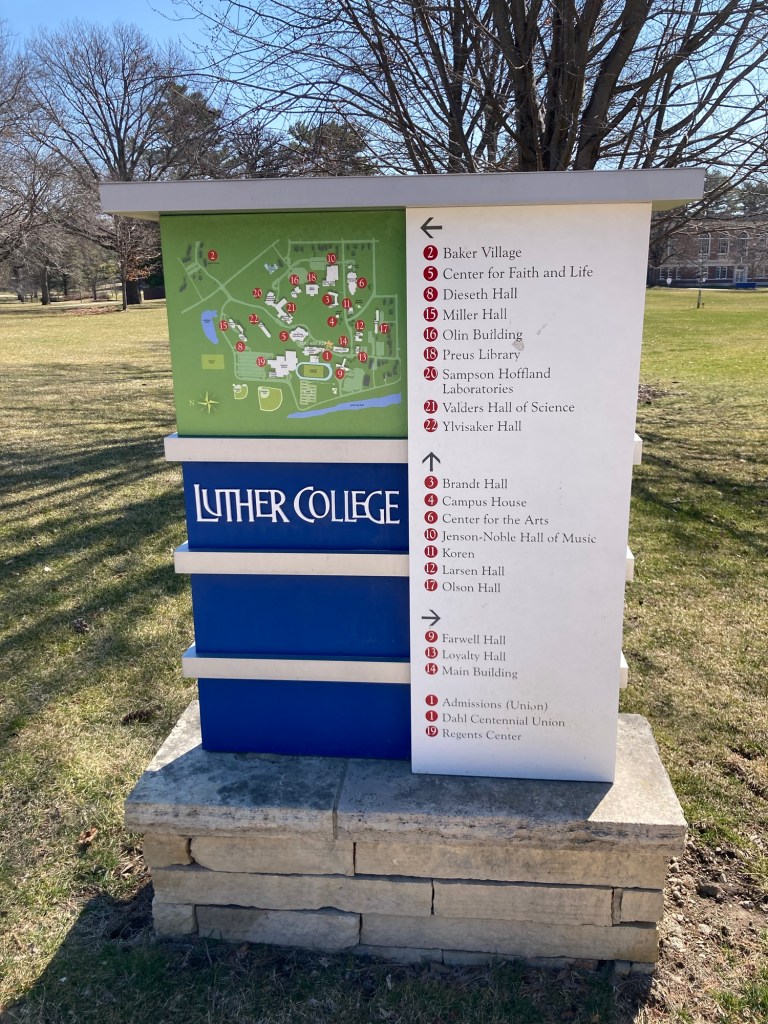
Helpful campus signage
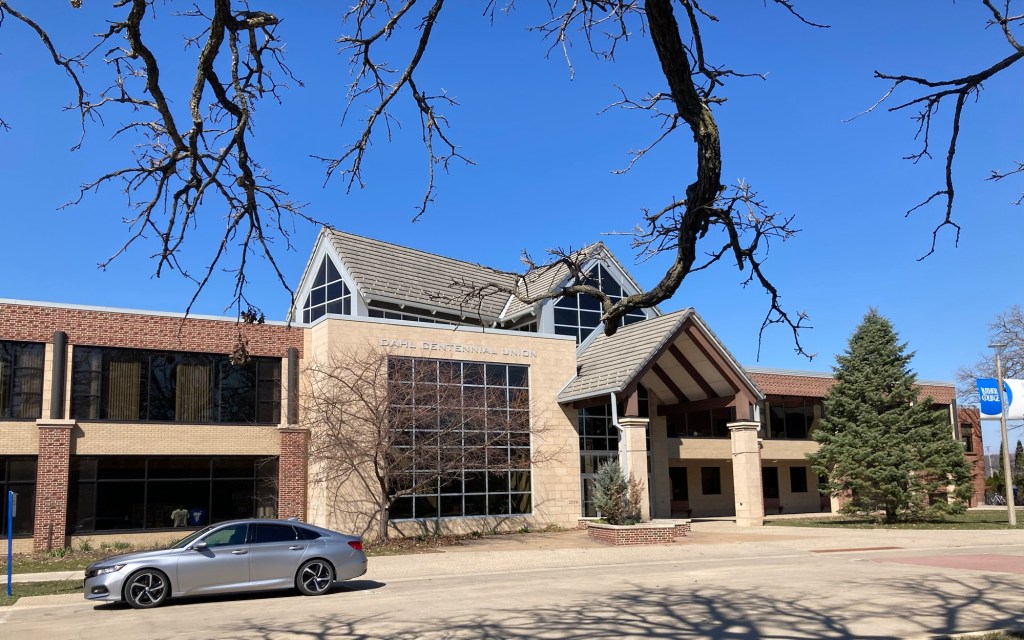
The Student Union
View of the football field and tennis courts
from the terrace behind the Student Union

After my walk around campus, I crossed back over the Upper Iowa River to walk around the town center, which I just visited briefly yesterday with my visit to the Norwegian-American Museum. The downtown is much more vibrant than many of the other small towns that we have visited in Iowa. It also has a lot of signage around town, if you are interested in learning about the history and architecture of the area.
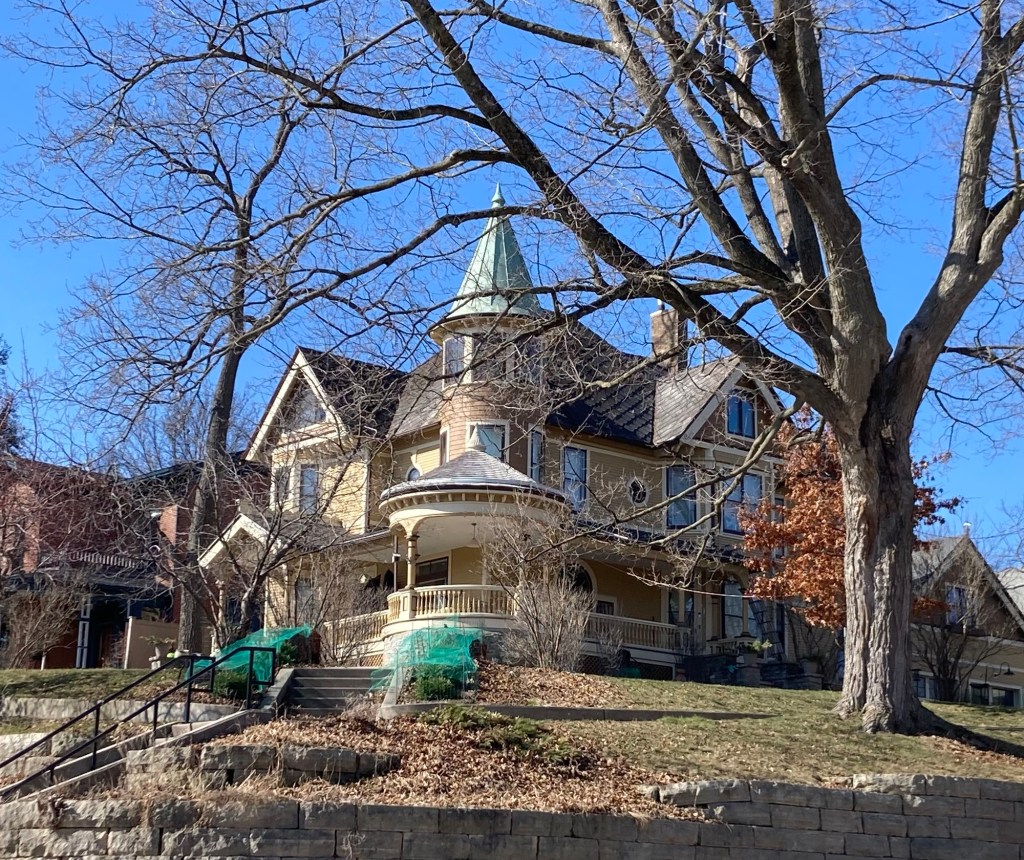
The Queen Anne style house of L.M. Moss, built from 1898 to 1901.
The Porter House Museum.
The former Italianate home of Adelbert Field Porter and his wife.
The Winneshiek County Courthouse
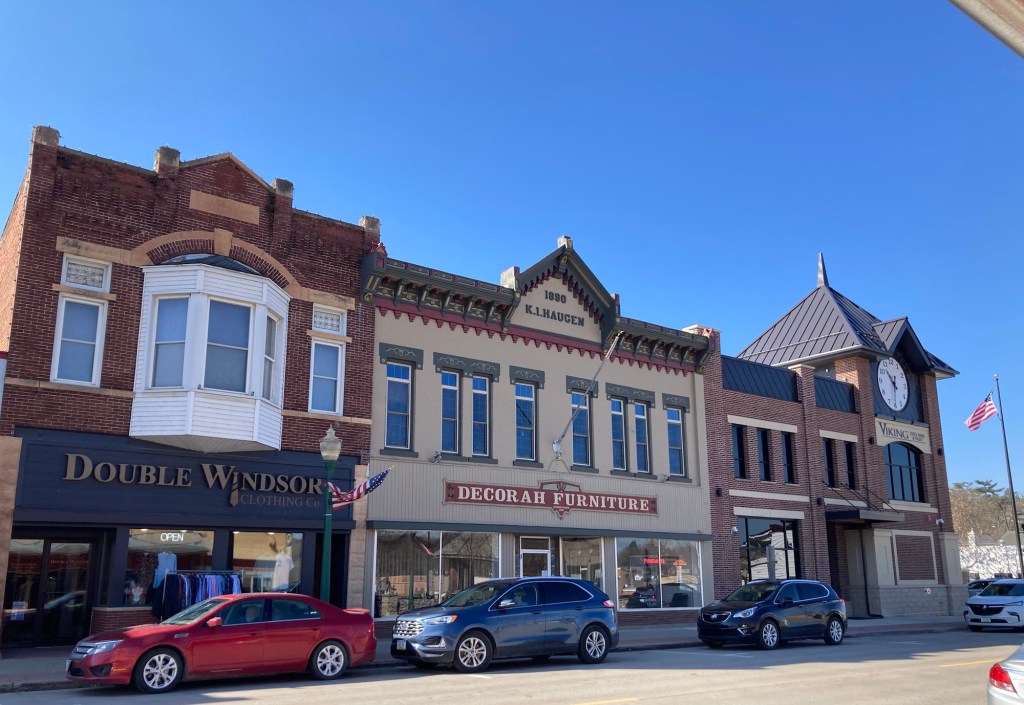
Some of the buildings downtown
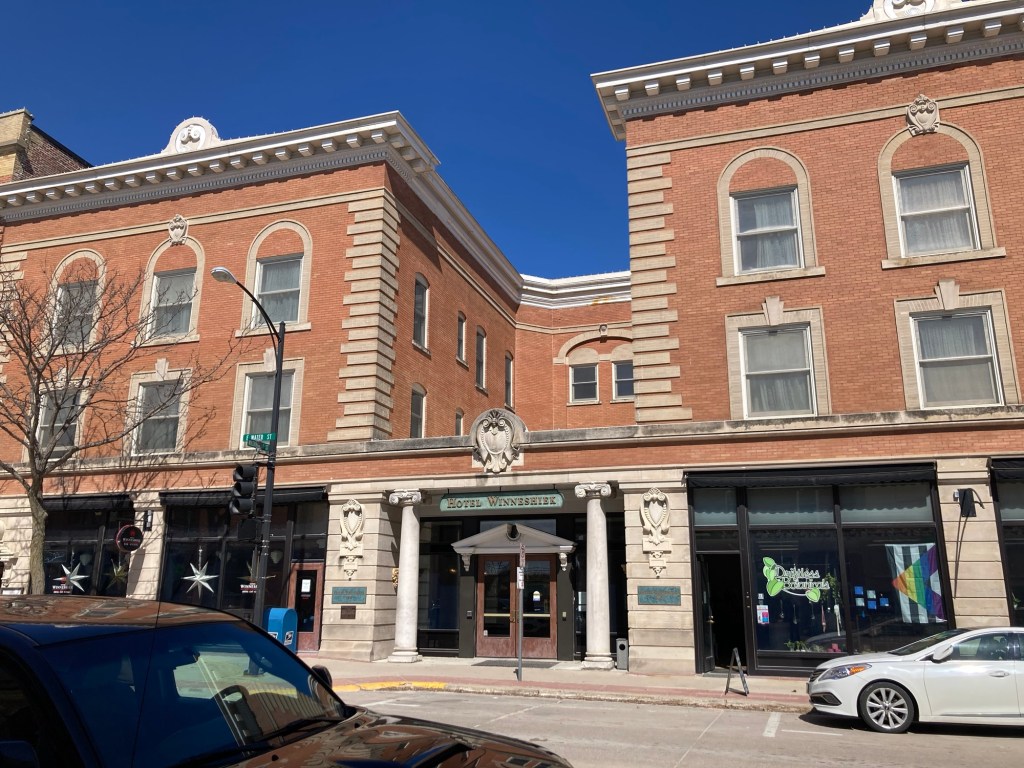
The Hotel Winneshiek, constructed in 1904-05,
it hosted Norway’s Crown Prince Olav
and Crown Princess Martha in 1939.

Up and Down — Bob and I are separately watching the Iowa Hawkeyes Women’s Basketball Team compete in the Elite Eight portion of the NCAA March Madness Basketball Tournament.

Categories
Uncategorized

Uff Da, Reconnecting with my Ancestry (3/29/24)

Bob and I are currently in separate states. Bob’s in Texas on a baseball trip with his brother-in-law and nephews. They are trying to see games at all of the baseball stadiums in the NBL. This time they are visiting the stadiums in Houston and Arlington, Texas. I left Janesville, Wisconsin, this morning where I had been visiting my mom, and am now in Decorah, Iowa, as I make my way back to Grimes, Iowa, and Bob (post baseball trip).

Decorah, with a population of about 7,500, is the largest community in Winneshiek County Iowa. Decorah has become a center for Norwegian-American culture originating from a number of Norwegian settlements beginning in the 1850s. My mom’s ancestors came from Norway, and I grew up eating Norwegian food during holidays, so I had to check out the Norwegian-American Museum that is here. The local Vesterheim Norwegian-American Museum is the largest museum in America devoted to a single immigrant group.
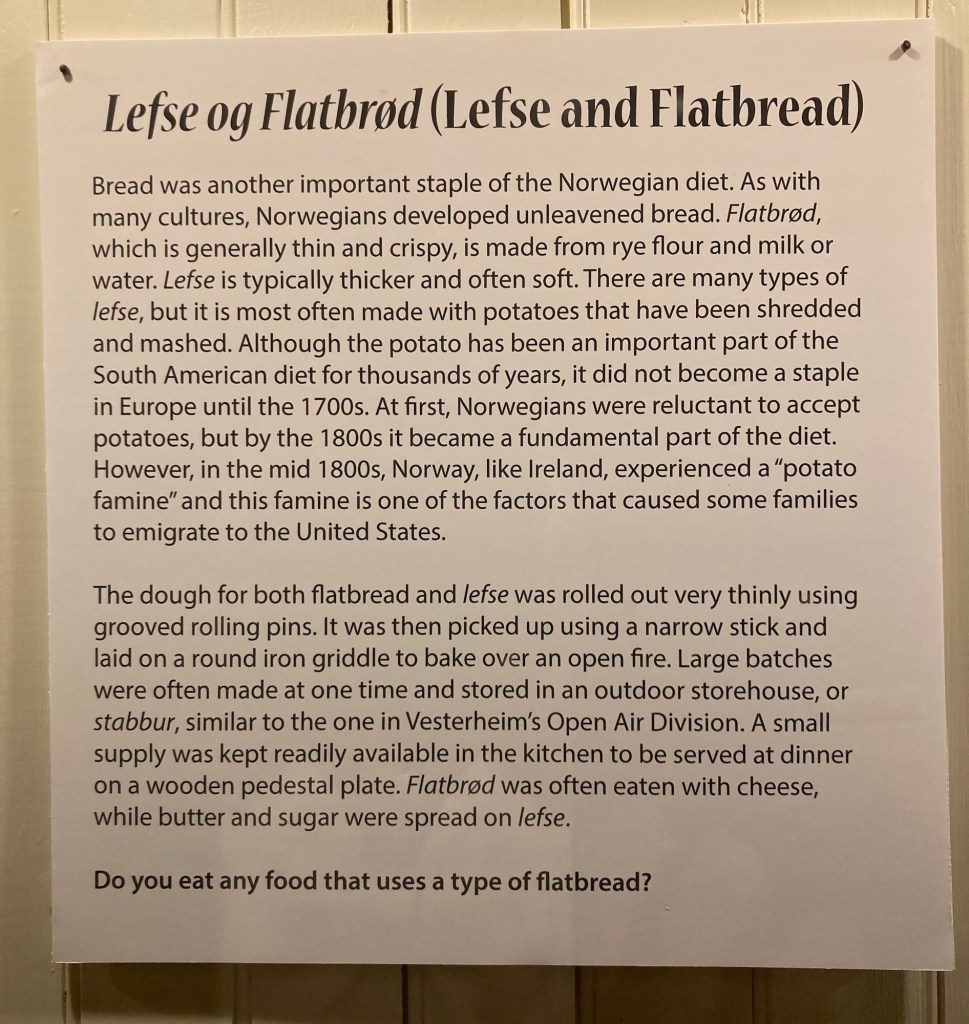
The first exhibit was about food, and I recognized a lot of the foods mentioned.

My family is all about lefse.
We ate it around the Christmas holidays
with butter and cinnamon and sugar.
My mom and her sisters would have lefse making sessions.
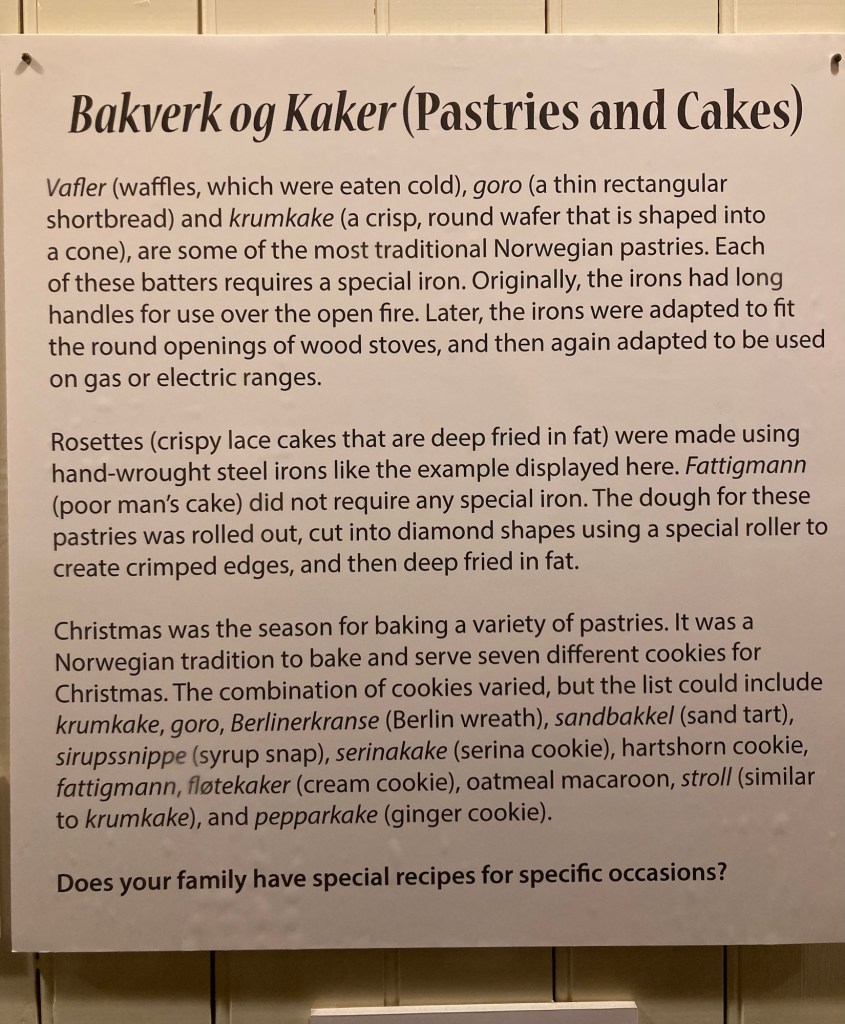
Many of the cookies we made at Christmas were Norwegian, including a few mentioned here
— krumkake, rosettes, and sandbakkel.
This is sadly as much as I have ever known
about the history of Norway.

Between 1825 and 1930, over 800,000 Norwegiansleft Norway for the New World, a number nearly equal to the population of Norway in 1825. Only Ireland would give up a greater percentage of its population to emigration.

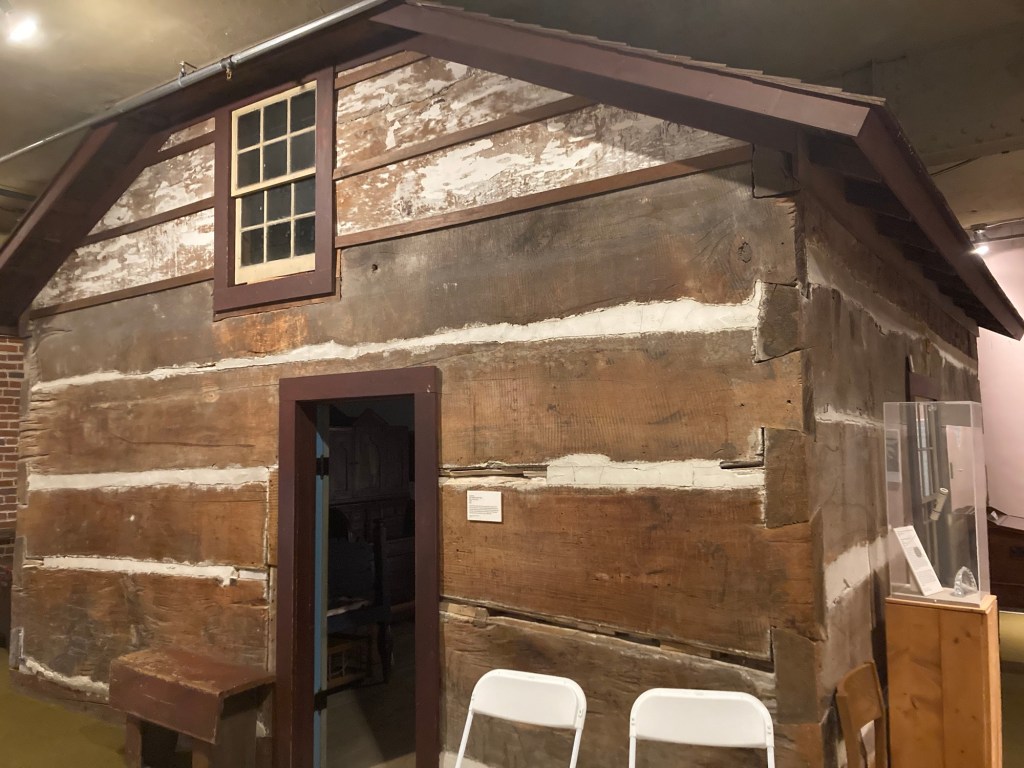
This is an actual log house built by a Norwegian-American
from one pine tree in Pine Creek, Iowa.
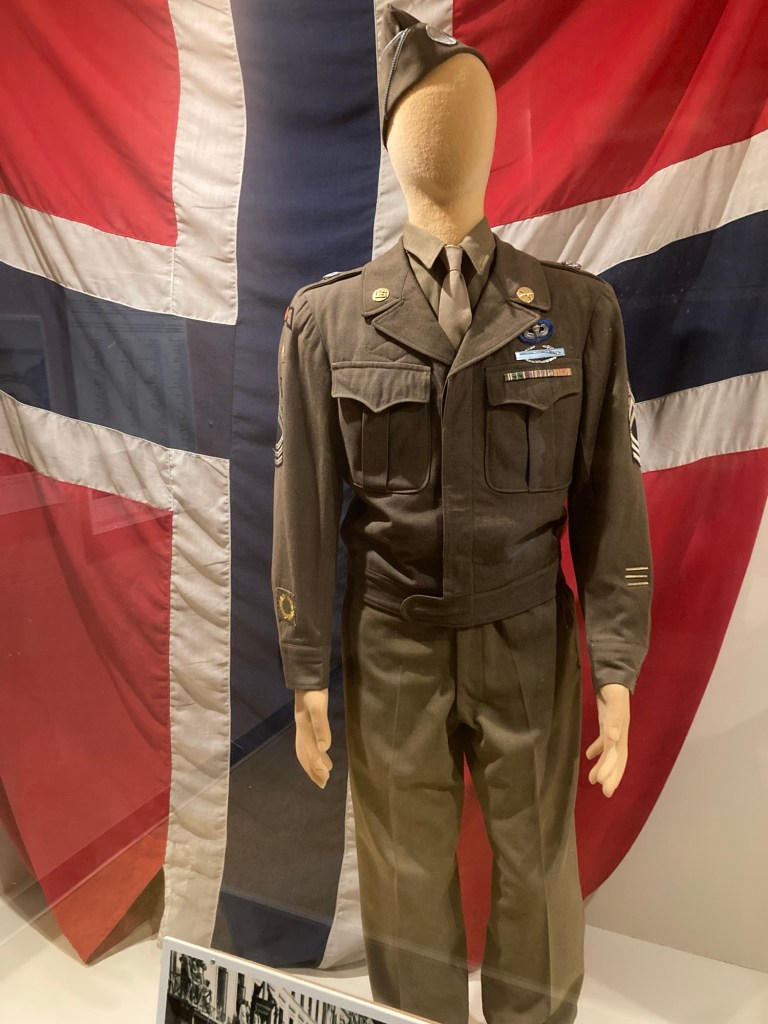
The uniform of the 99th Infantry Battalion in WWII
composed of 1,000 Americans of Norwegian descent
who had some knowledge of the Norwegian language.

This was new information as well. This battalion was created to liberate Norway from Nazi control. They got to Norway too late to do that but did help restore order to Norway after the war and help welcome back the king.

A Norwegian style corner cupboard made
by Lars Christensen of Benson, Minnesota.
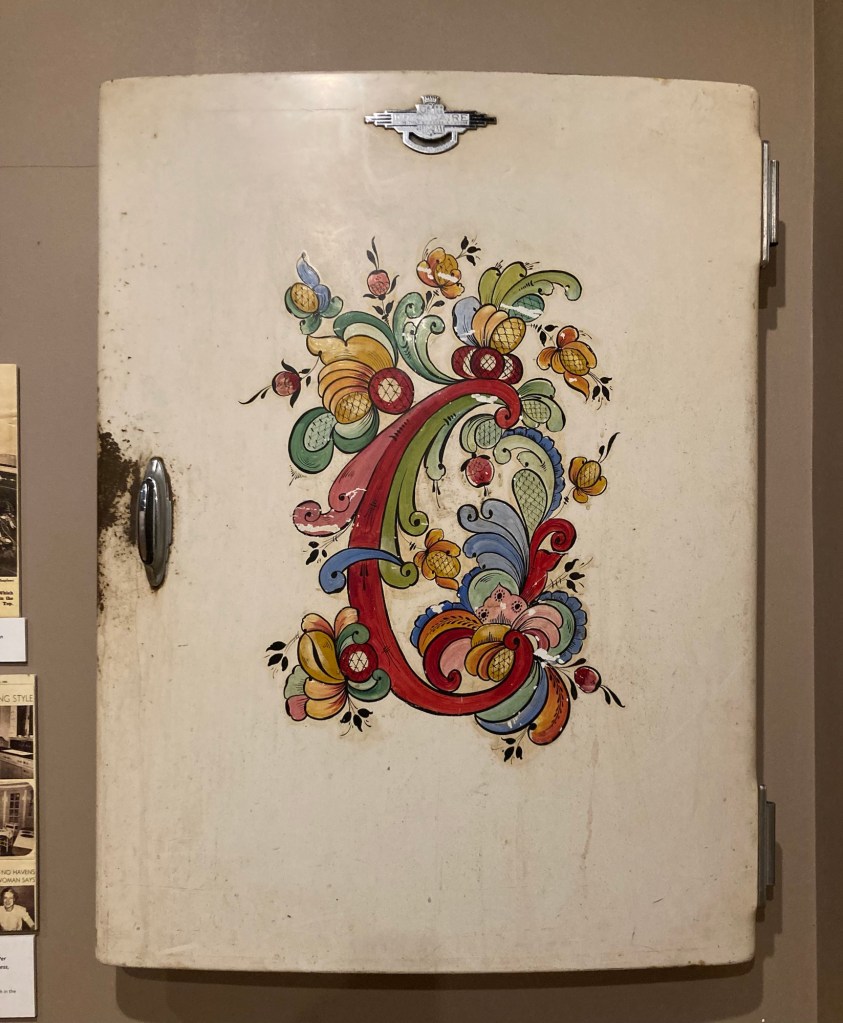
An example of the Norwegian art of rosemaling.
I was able to take a class on this when Iwas in middle school.
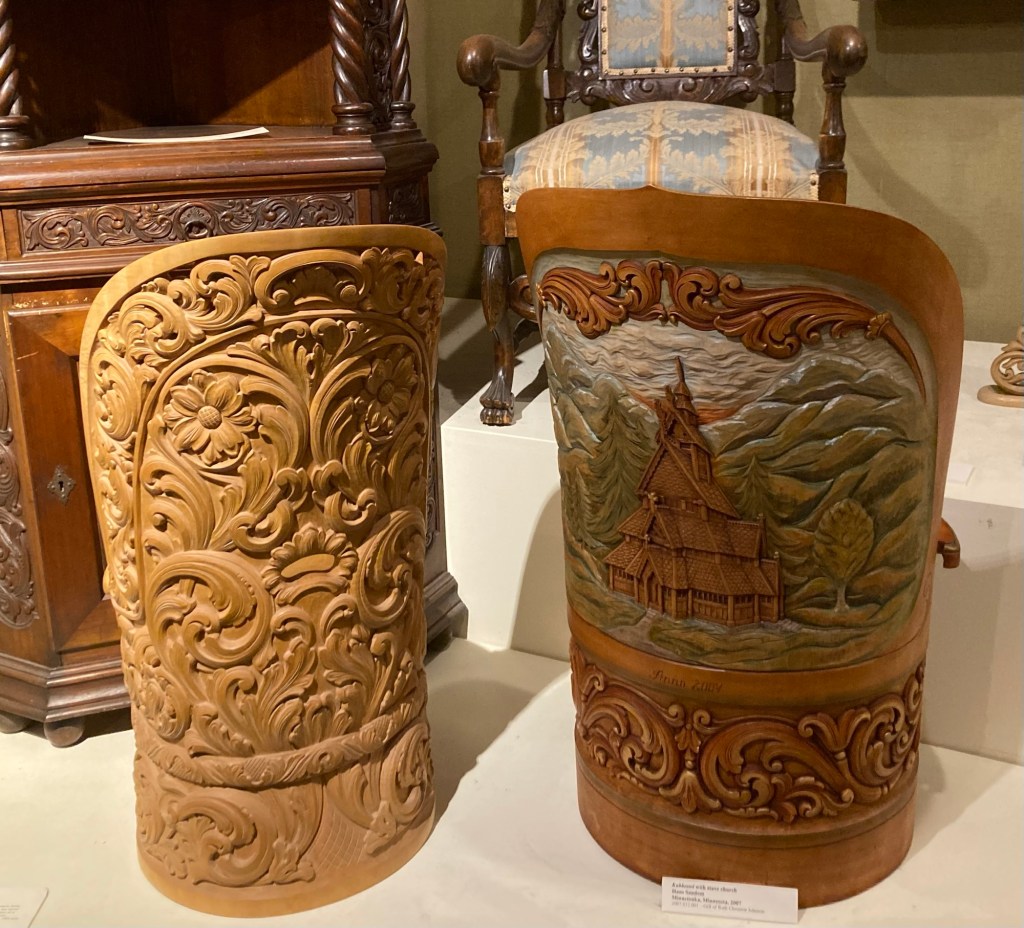
Handmade Norwegian style chairs that Norwegian-Americans would make for their homes.
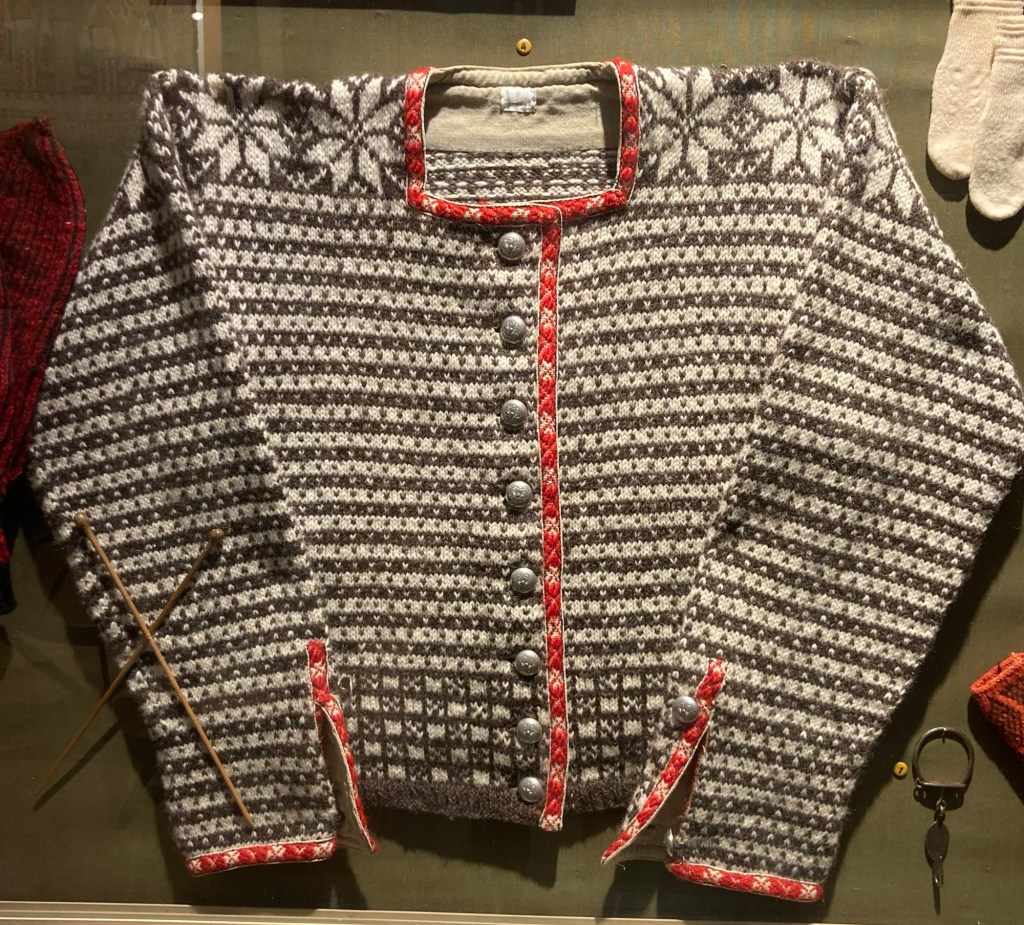
A Norwegian style sweater

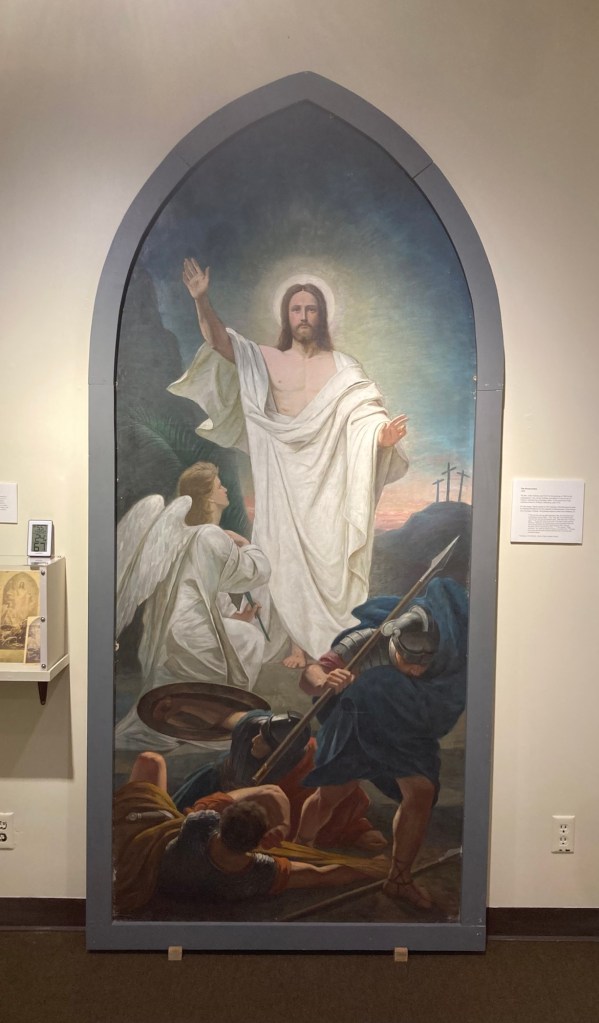
There was an exhibit on Herbjorn Gausta, apparently the most widely known American painter of Norwegian ancestry. I was not aware of him, but as you can tell by the blog, I am continually learning new things. He was born in Telemark, Norway, but came with his family as a young man to southeastern Minnesota. He was studying in Decorah at Luther College when he was persuaded to pursue his artistic talents.

“The Resurrection” altar piece by Gausta
for the Vinje Lutheran Church in Willmar, Minnesota.

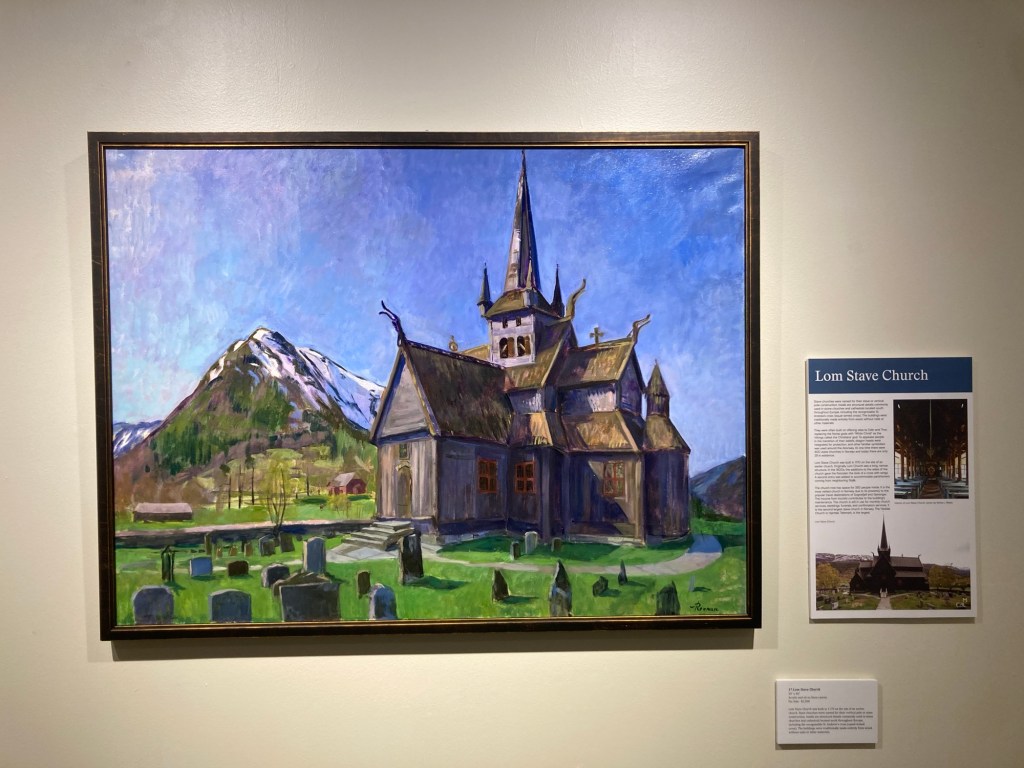
Another art exhibit at the museum was called Seven Summers by Arna Renan. She was a Norwegian-American who grew up in Duluth, Minnesota, and later studied at the National Academy of Art in Norway. Her paintings were created over 7 summers in Norway.

Painting of the Lom Stave Church.
All of her paintings made me want to visit Norway.
An exhibit of Norwegian-American writers
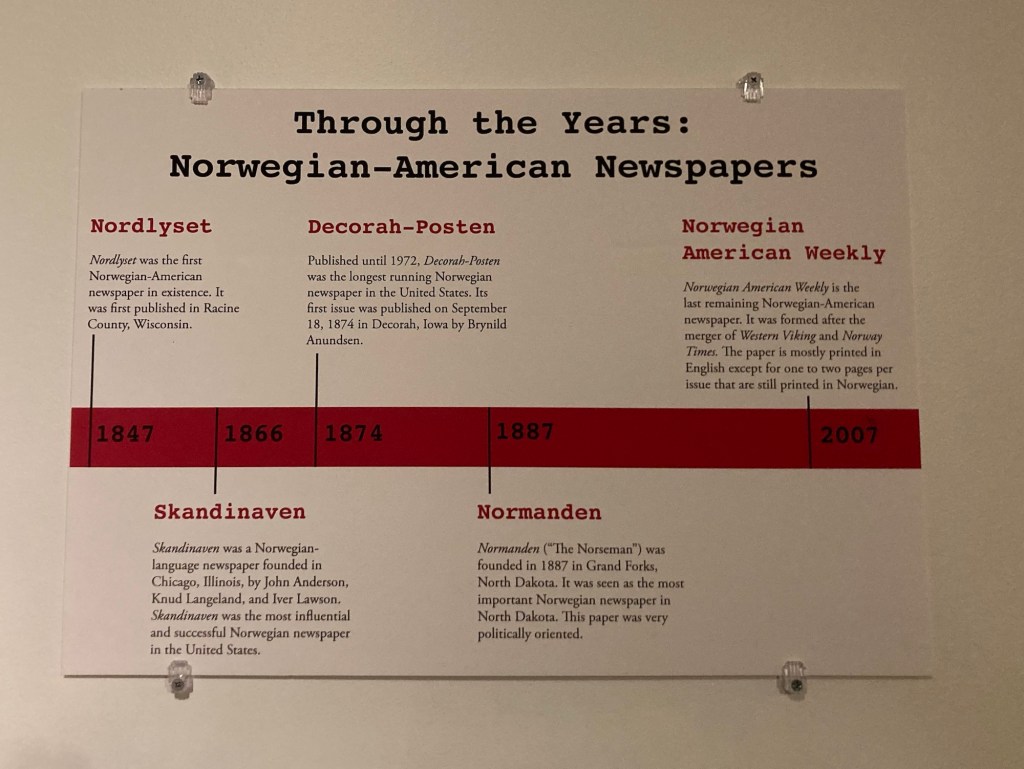
A timeline of Norwegian-American newspapers
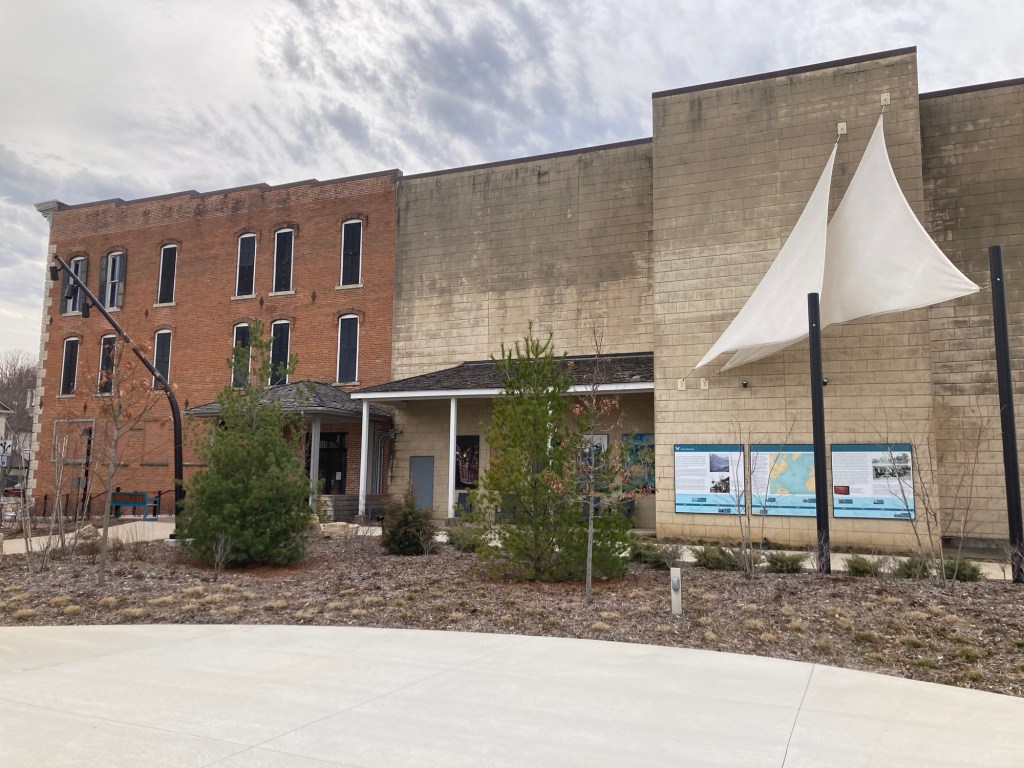
A view of the side of the museum from the nearby plaza.
You could walk a trail to see more examples
of houses and other buildings from early Norwegian immigrants.
Categories
Uncategorized

The Driehaus Museum in the Nickerson Mansion (3/20/24)

Our homeowners were kind enough to leave us some passes for various museums, a couple of which we had not heard of before. Today, we took the handy 146 express bus (which we catch just down a block from the condo on Lake Shore Drive) to the Driehaus Museum. Actually, we got off the bus at Michigan and Erie and then walked a few blocks down Erie to the museum.

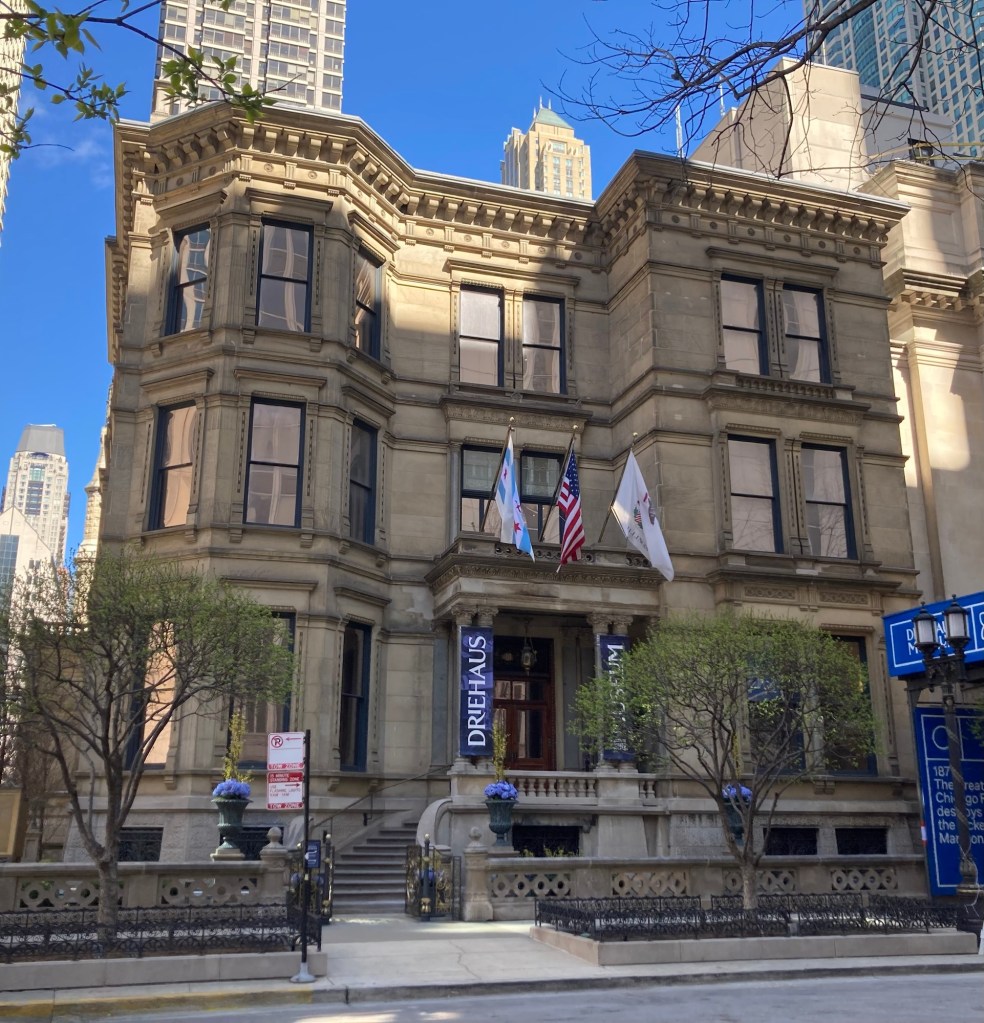
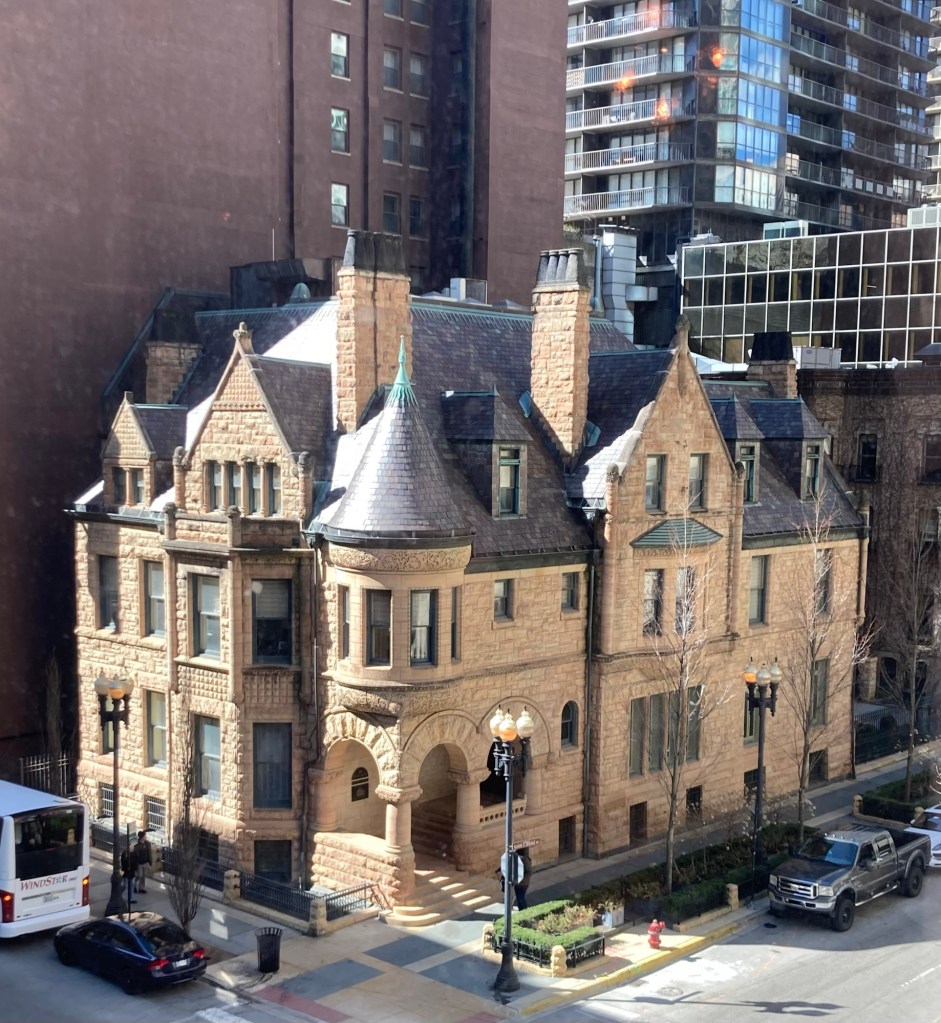
The museum is housed in the former residence of banker Samuel Nickerson and society leader Matilda Nickerson. It was completed in 1883 and became known as the Marble Palace. It cost $450,000 when built which seems like that would be a crazy amount in today’s dollars. The museum is named after Richard Driehaus, who sponsored the restoration of the mansion from 2003-2008. The museum showcases the mansion as well as providing art exhibitions.

The exterior of the Marble Palace
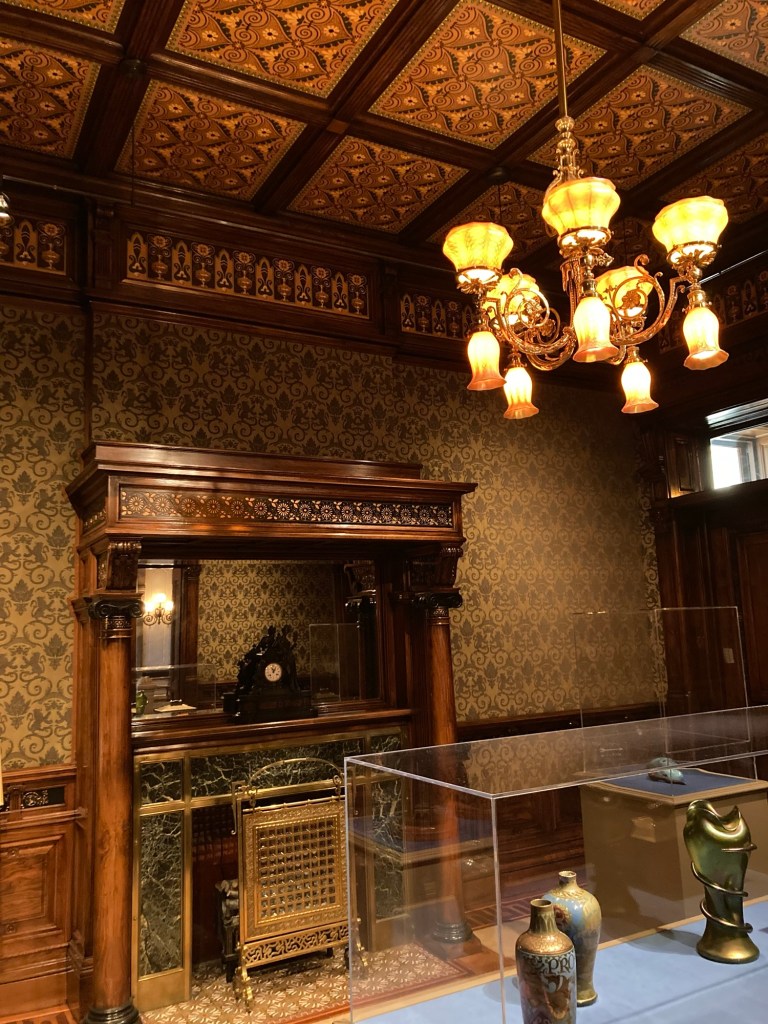
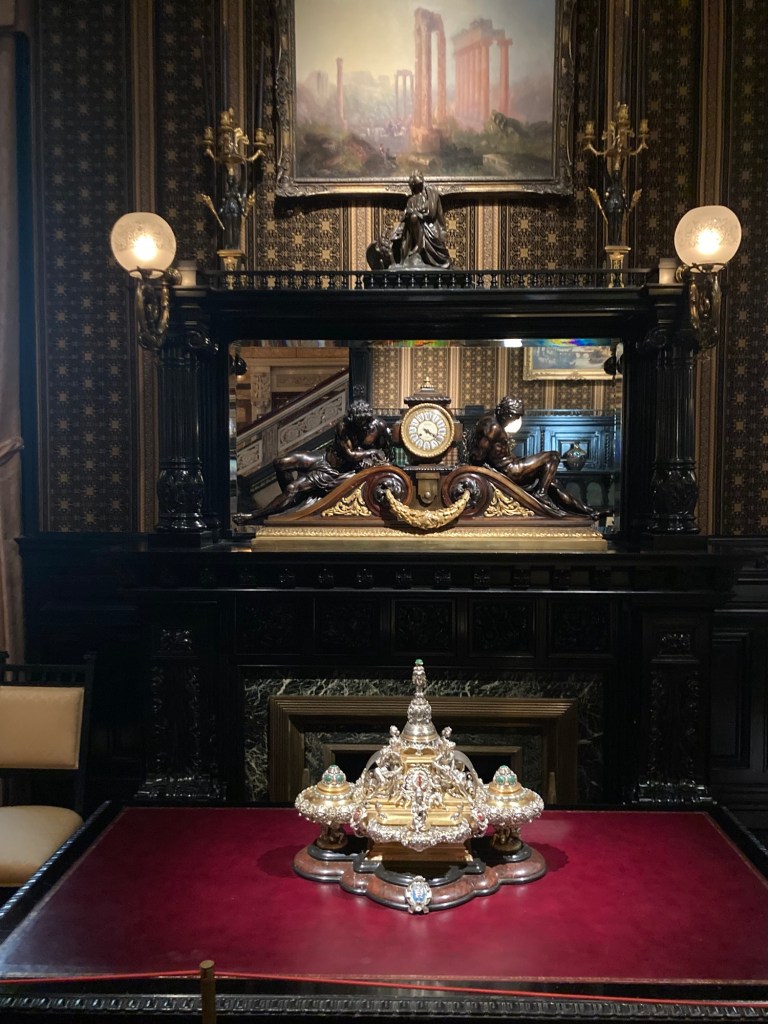
A mantle clock in the Special Exhibition Gallery on the third floor
A second exhibition gallery on the third floor.
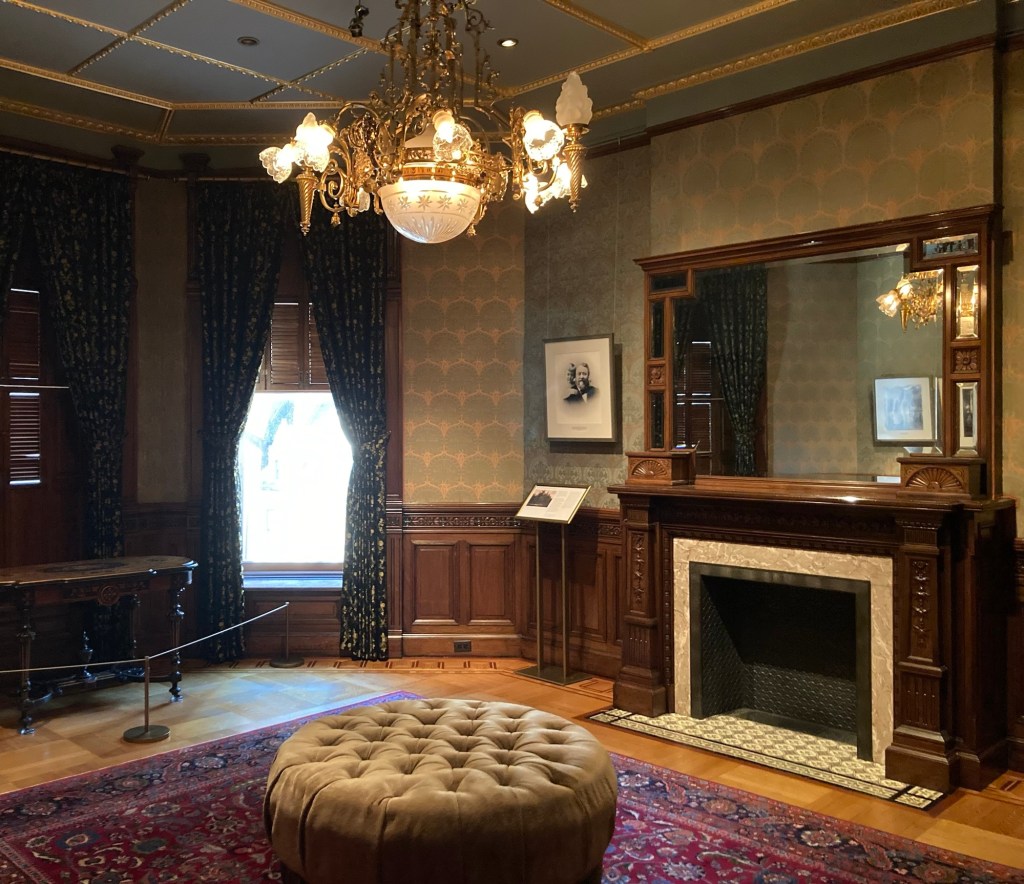
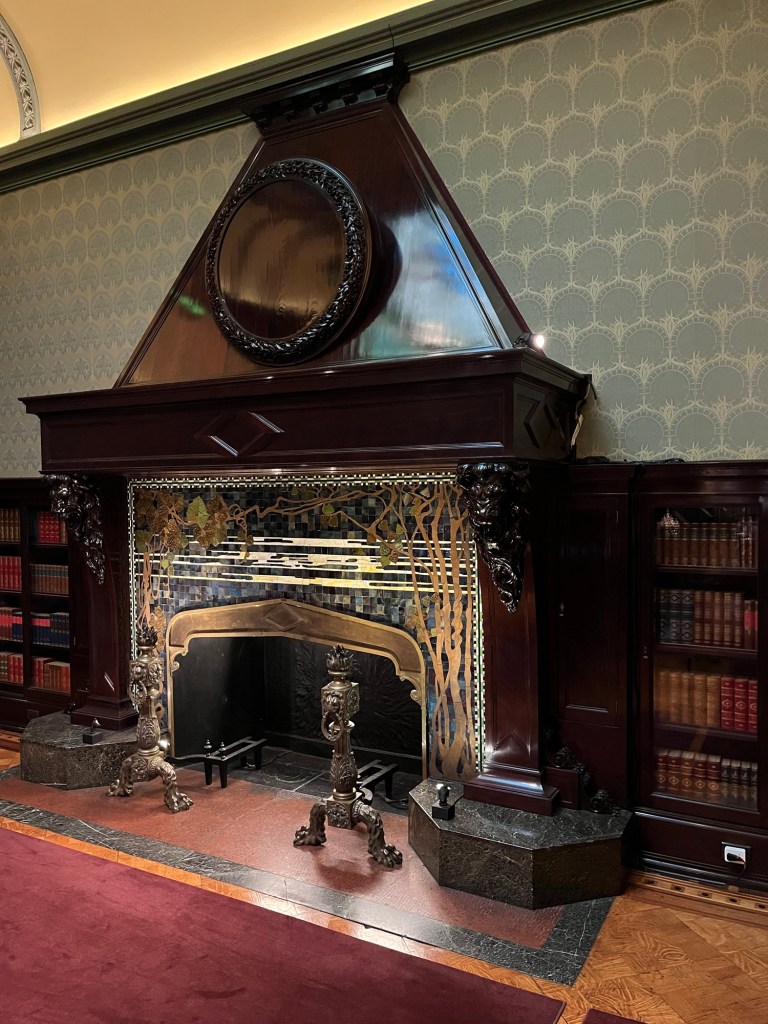
Each room had a fireplace.
The Ransom Cable Home diagonally across the street
from the Driehaus Mansion.
Ransom Cable was the President
of the Chicago, Rock Island, and Pacific Railway.
An unintentional selfie in the fireplace
in one of the second floor bedrooms of the mansion
An alcove in the 2nd floor sitting room
The fireplace in Mr. Nickerson’s bedroom
A portion of Roland’s (the son) bedroom
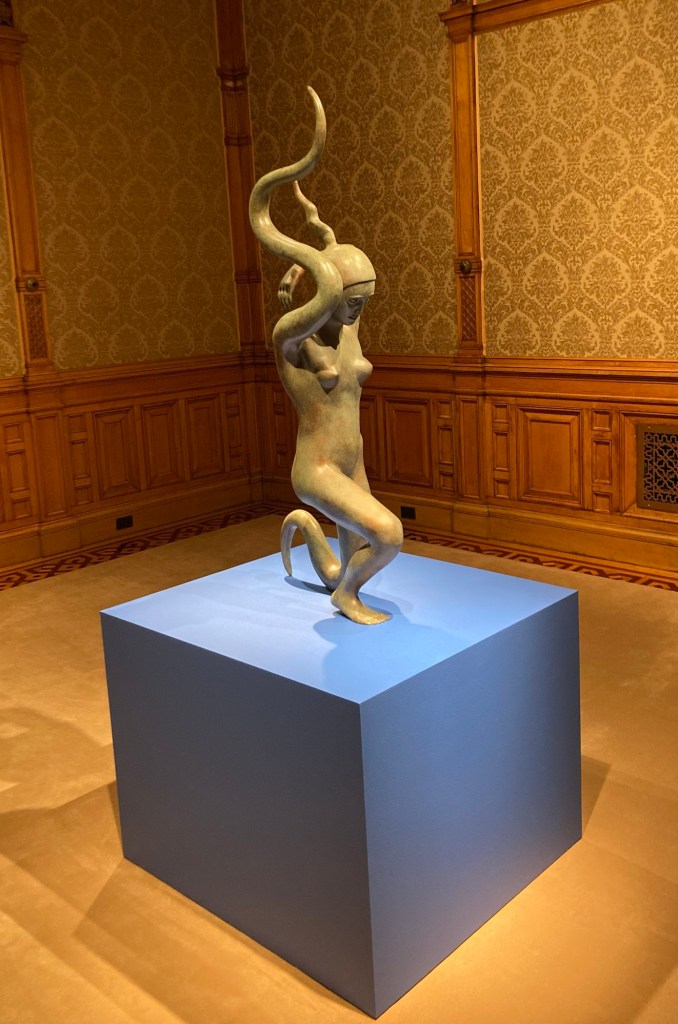
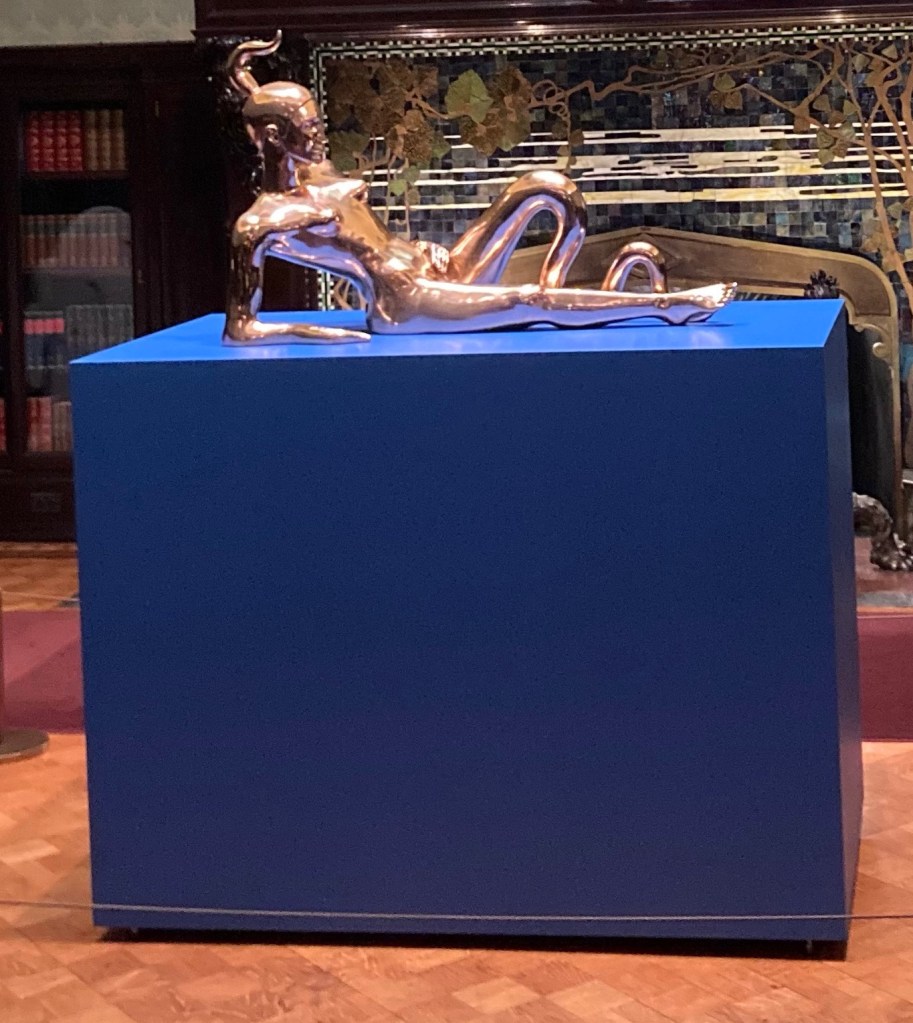
“Surrender” statue by Sif Itona Westerberg,
the featured artist, who is from Copenhagen
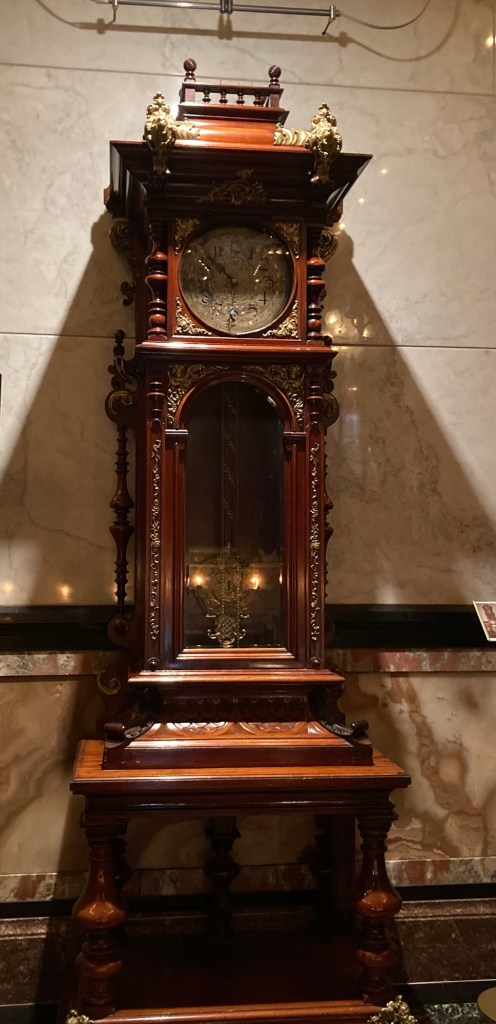
A grandfather clock from the Black Forest region of Germany
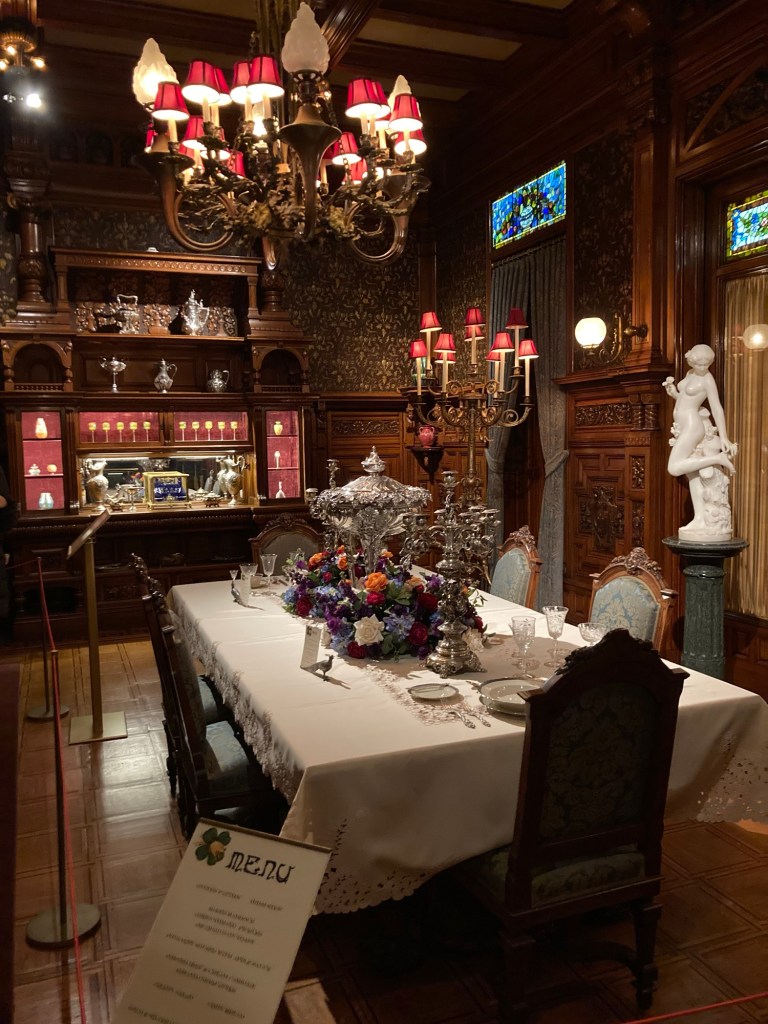
The gorgeous dining room
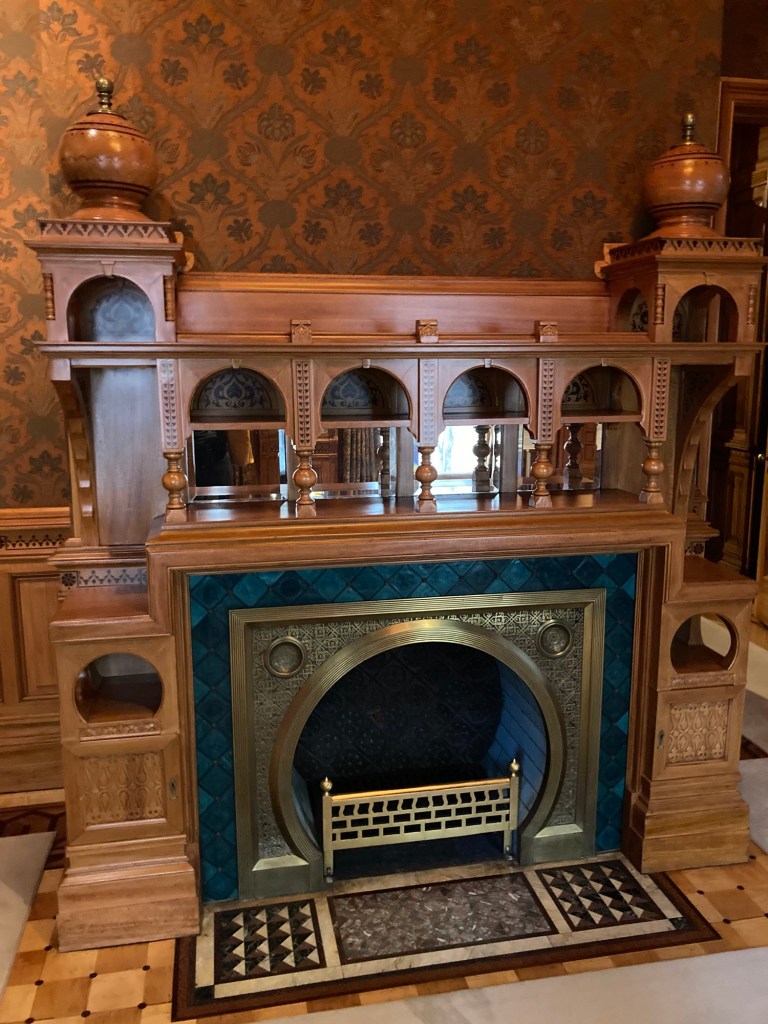
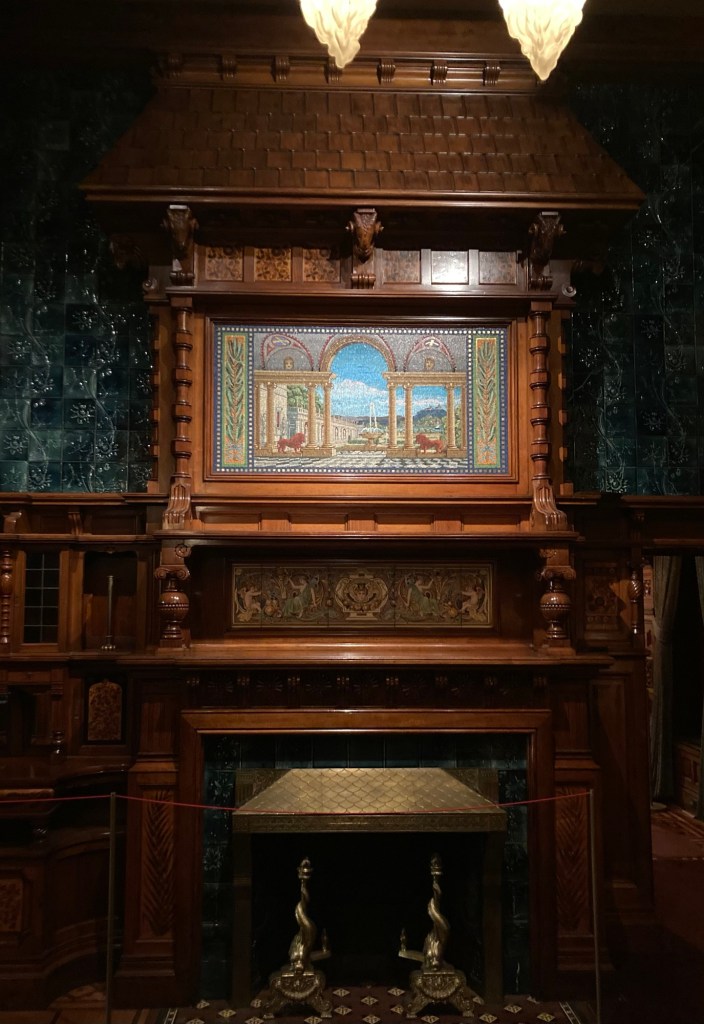
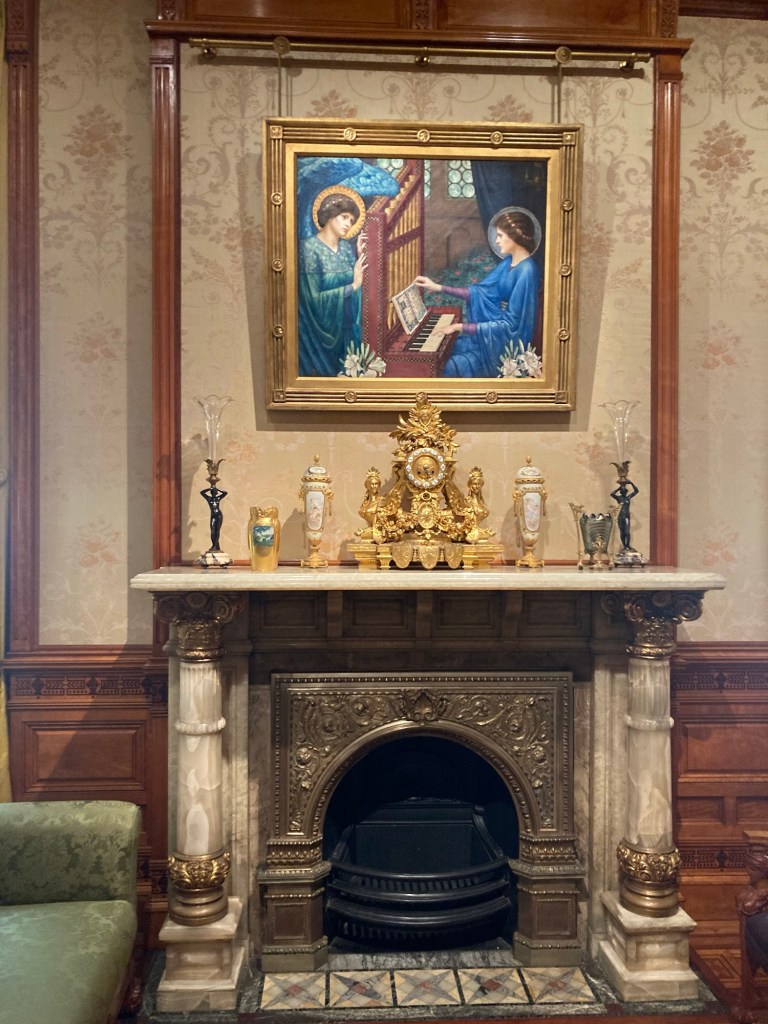
My favorite fireplace in the reception room.
The tiles on the wall almost look like water when seen all together.
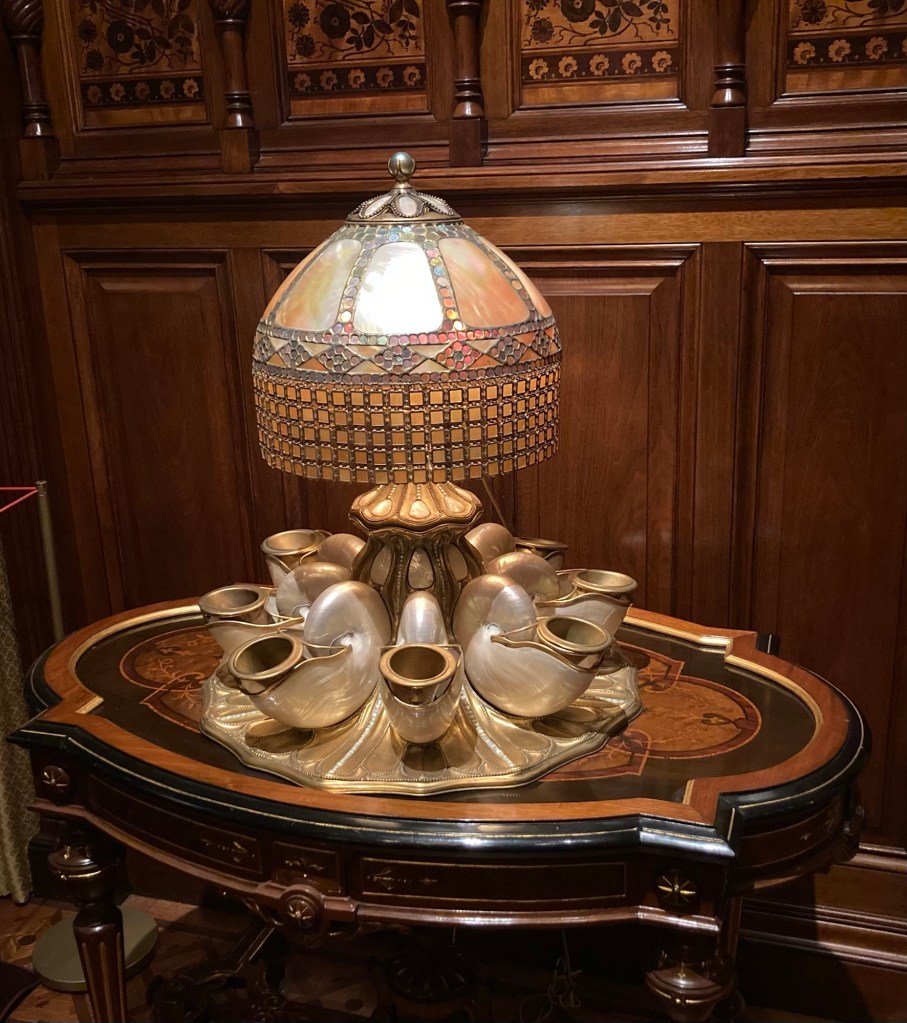
The Tiffany Nautilus Shell Lamp in the reception room
The fireplace in the front parlor
The fireplace in the drawing room
The fireplace in the library
“Ascendance” statue by Sif Itona Westerberg
The fireplace in the back library

After our visit, Bob and I walked the 3.6 miles back to the condo against a very strong, cold wind.

Categories
Uncategorized

Going to Graceland — without Elvis (3/19/24)

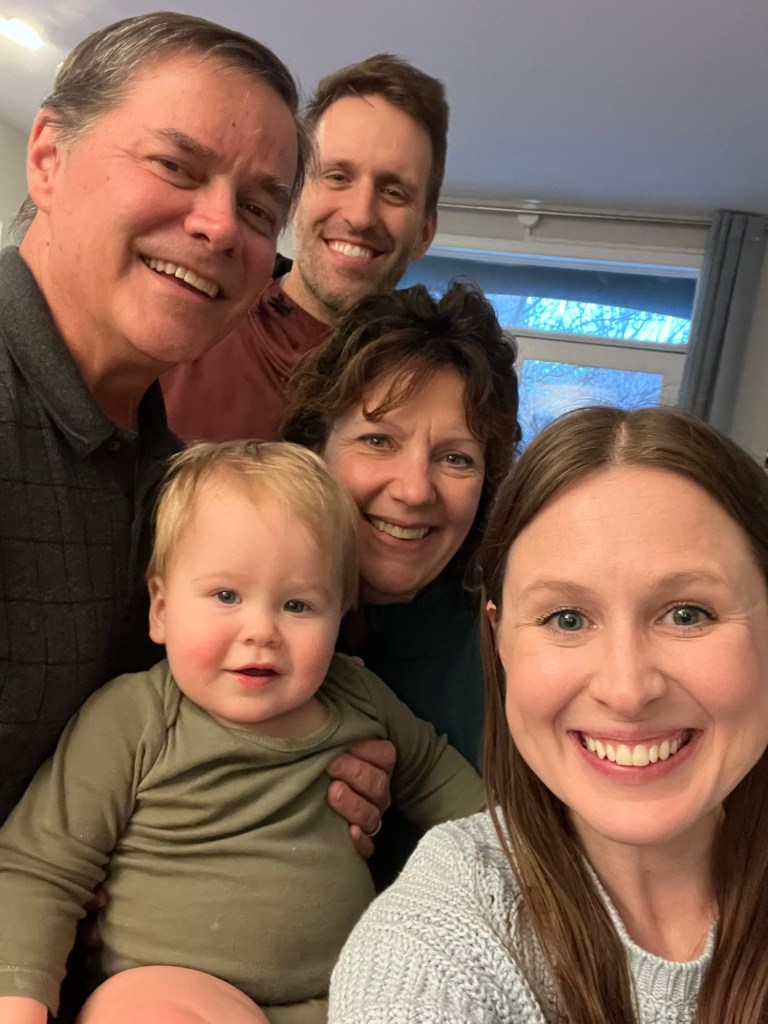
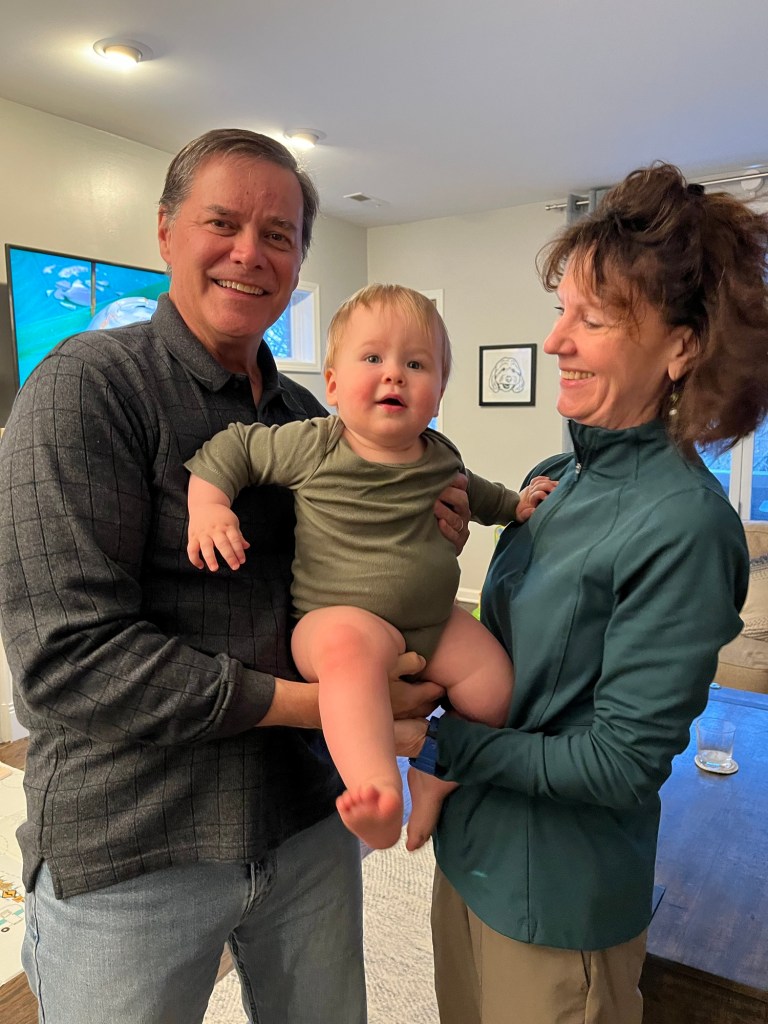
Sunday night Bob and I walked about 40 minutes to our nephew’s house, where Bob prepared a great dinner, and we got to spend time with our nephew and his wife, (who made an amazing cheesecake for dessert) as well as our great nephew, Harrison, who is now walking.

Bob, Nick, me, Harrison, and Kelly
Bob and I with Harrison

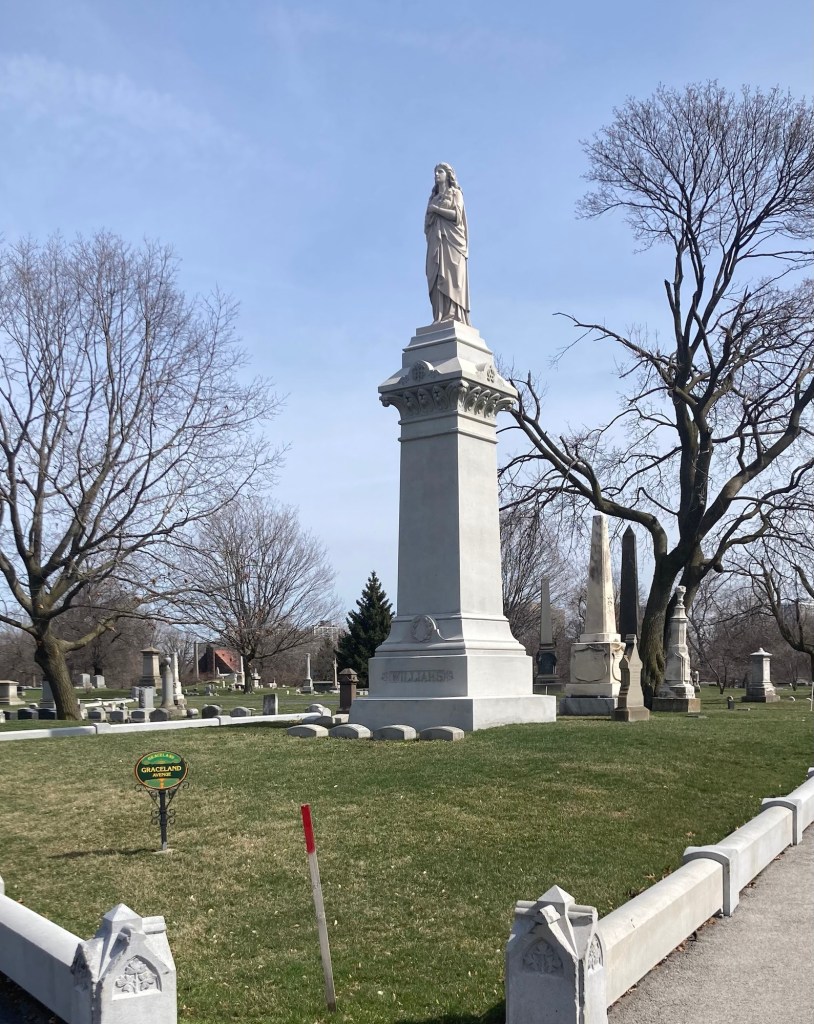
Today, we decided to finally checked out Graceland Cemetery, which we had heard a lot about. The 120-acre cemetery was established in 1860 and became the preeminent place of burial for Chicago’s elite. It is the final resting place for a number of people closely associated with Chicago, including architects, businessmen, and sports players and owners. The cemetery provides a helpful map and history of some of the most famous people there. We had a lovely day to stroll the grounds and admire the variety of headstones, monuments, and mausoleums.

Victorian monument for Eli Williams (1799-1881),
settled in Chicago when the population was 200
Bronze statue of Eternal Silence on a grave
for Dexter Graves (1793-1845), a hotel owner.
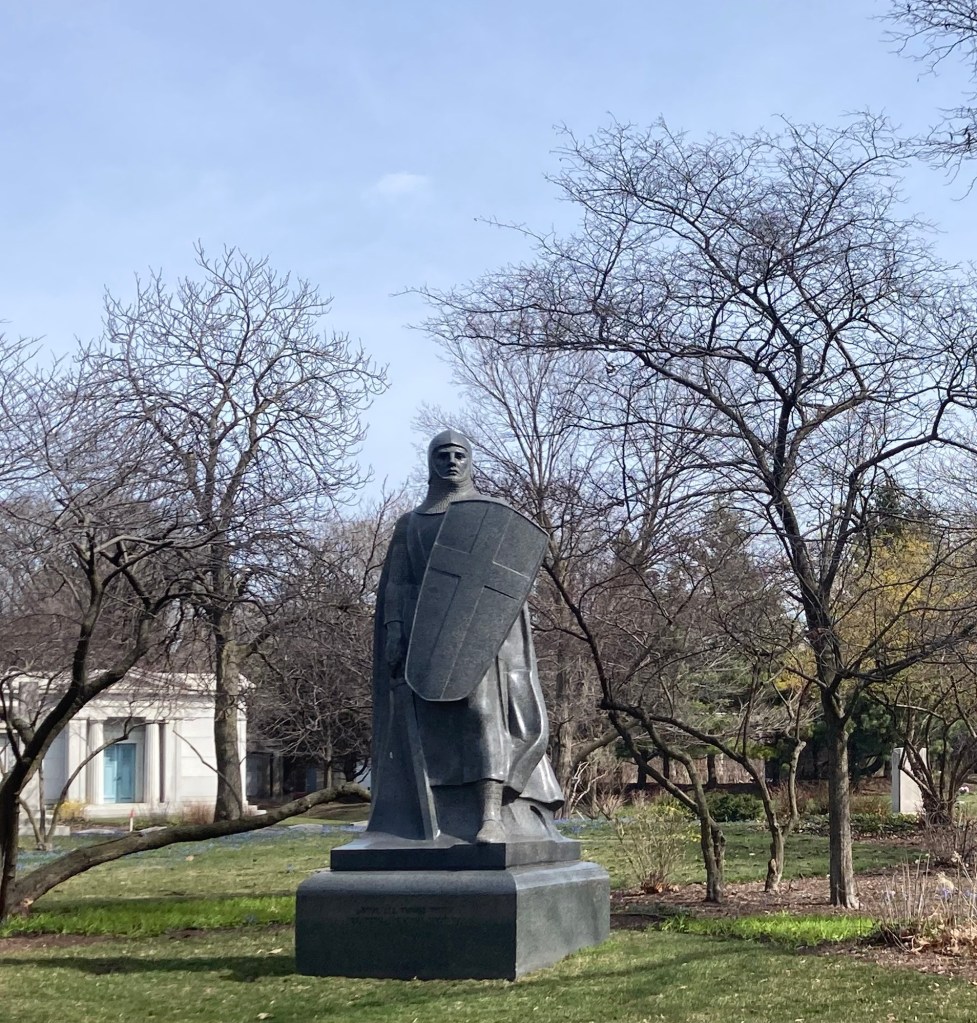
The “Crusader” guarding the grave of Victor Lawson (1850-1925), publisher of the Chicago Daily News
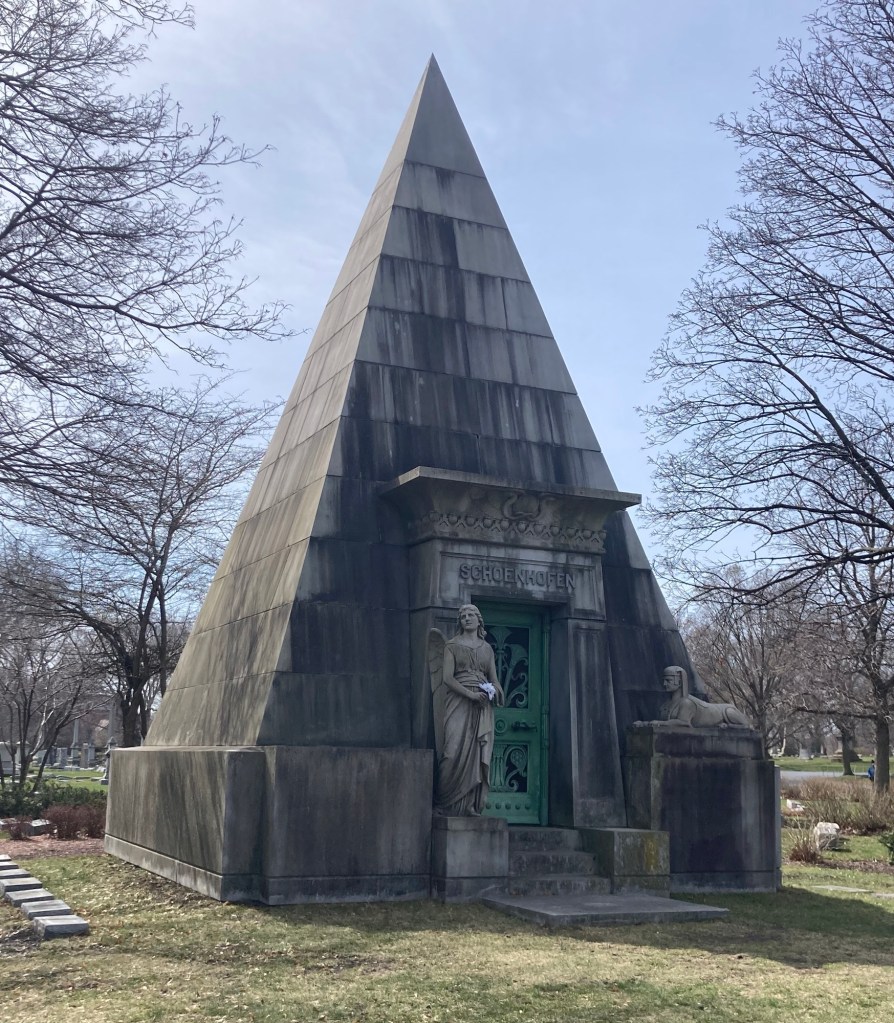
The pyramid shaped grave for Peter Schoenhofen (1827-1893),
a Chicago brewer
The steel-reinforced concrete tomb of George Pullman (1831-1897), renowned for luxury rail cars
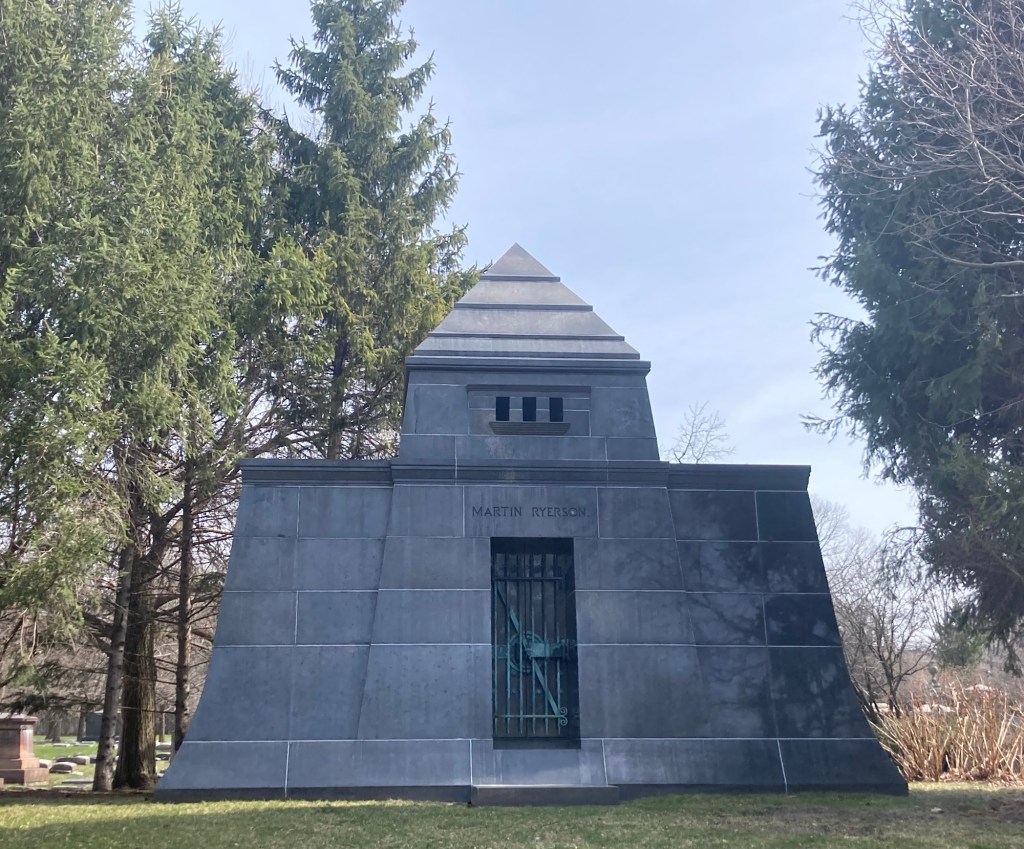
The Ryerson Tomb designed by Chicago architect Louis Sullivan for Martin Ryerson, Sr. (1818-1887), a
lumber baron and trustee of the Art Institute of Chicago
and an incorporator of the Field Museum
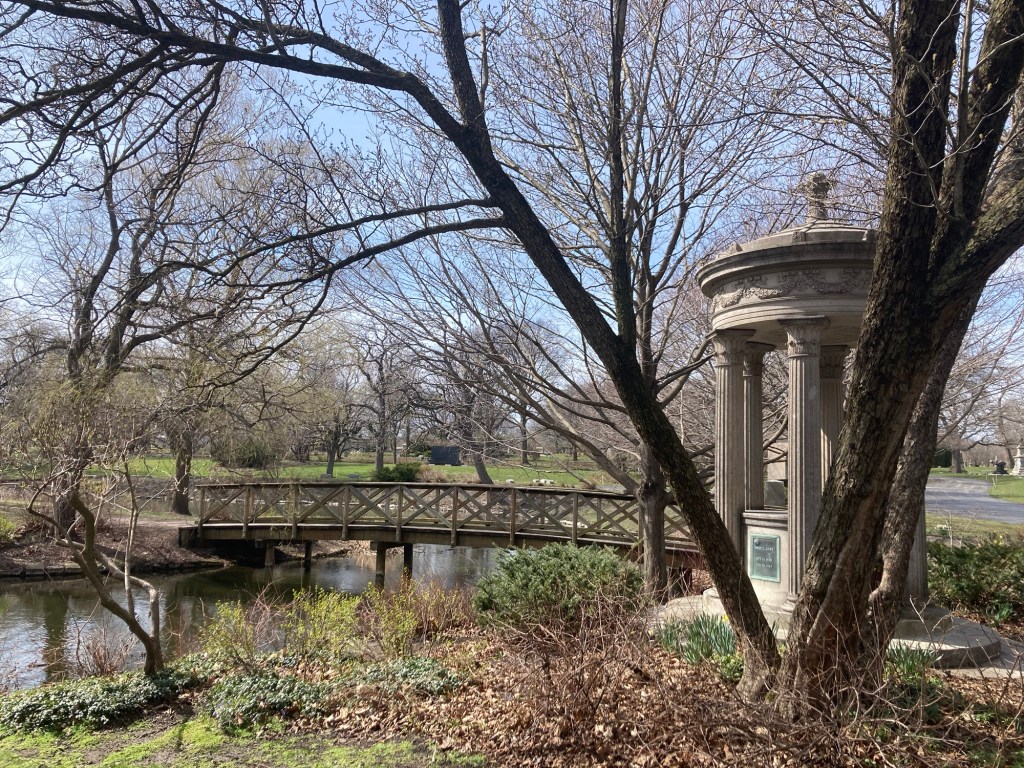
A small bridge over Lake Willowmere.
The bridge crosses over to a small island
where Daniel Burnham (1846-1912) is buried.
His 1909 Plan of Chicago is considered a landmark
in urban planning history.
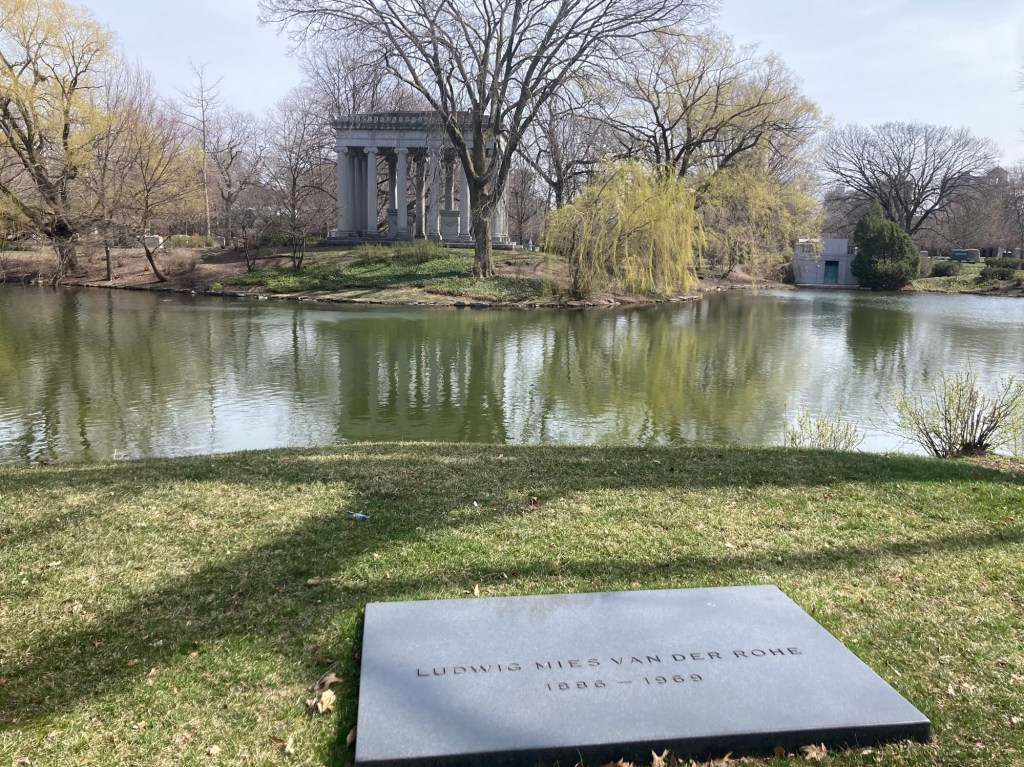
The graves of Ludwig Mies van der Rohe (1886-1969), famed architect, and the tomb of Potter Palmer (1826-1902), a retailer, real estate investor, and builder of the Palmer House Hotel.
Bob standing near the grave of Ernie Banks (1931-2015),
the first African American player to play for the Chicago Cubs,
known as Mr. Cub.
The beautiful tomb of Marshall Field (1834-1906), famous retailer who coined the phrase “the customer is always right.”
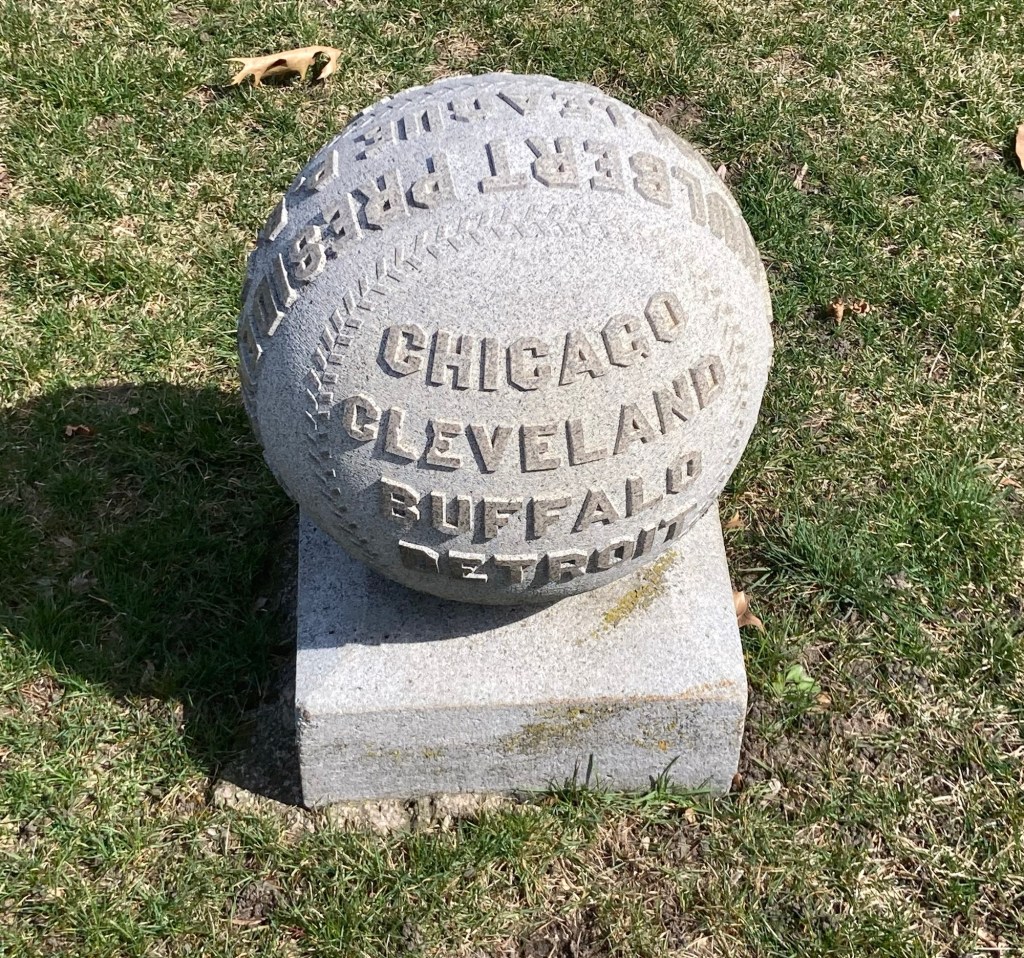
The unique but appropriate grave of William Hulbert (1832-1882), part owner of the Chicago White Stockings,
which became the Cubs.
It features the 8 original cities that comprised the National League.
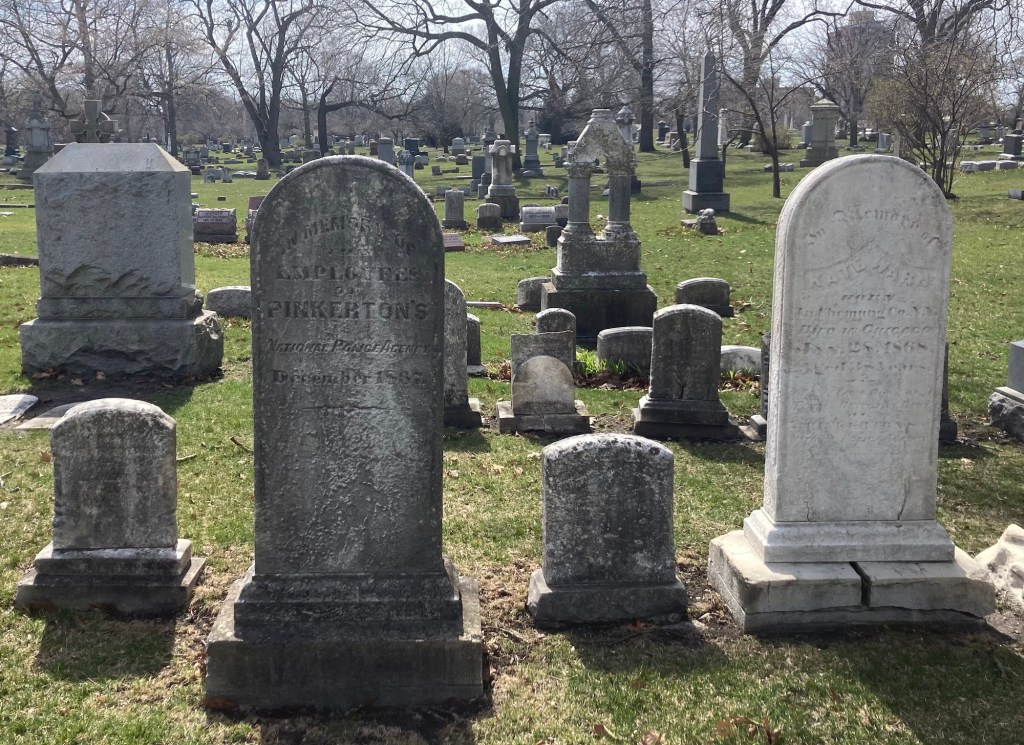
Graves for Allan Pinkerton (1819-1884),
one of America’s first undercover agents
and guardian of President Lincoln, and Kate Warne,
described by Pinkerton as America’s first female detective
Categories
Uncategorized

A GUSty Housesit and a Green Day (3/16/24)

Bob and I left St. Louis Park about mid-morning on Thursday and drove the 6+ hours to our new housesit for Mr. Gus, a Cairn Terrier, on Lake Shore Boulevard in Chicago. We had a great walk through and visit with the homeowners Thursday night before they flew to Boston to do their own housesit and visit with their son.

Our current abode in Chicago
The super cute Gus
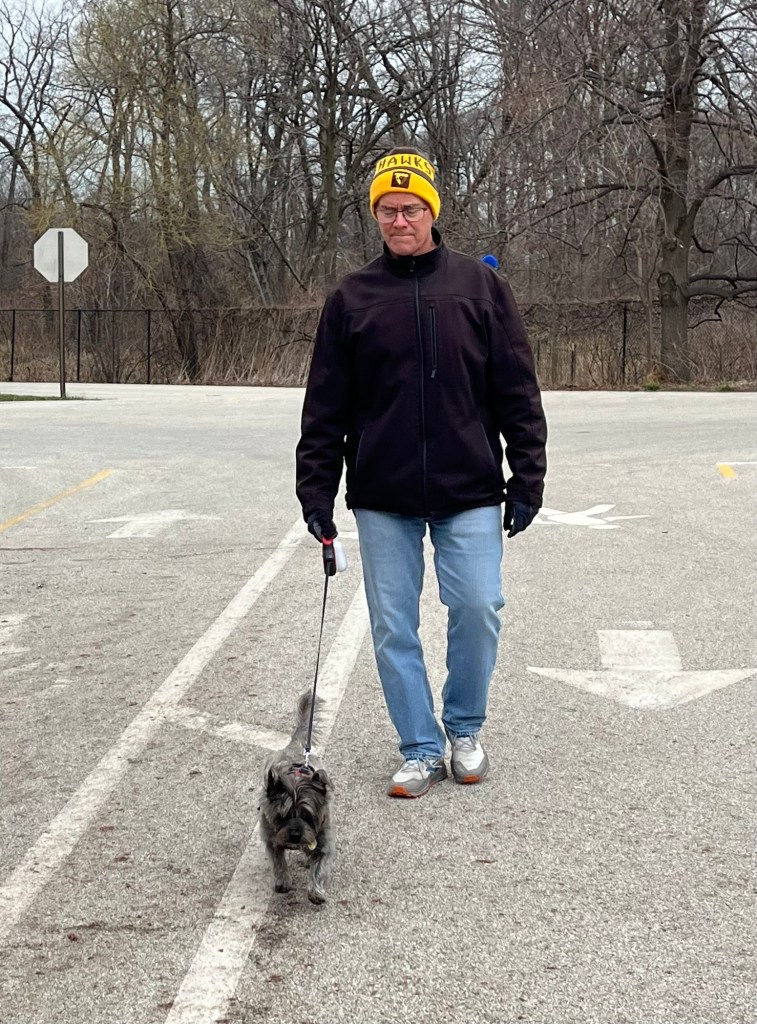
Bob walking Gus near the lakefront

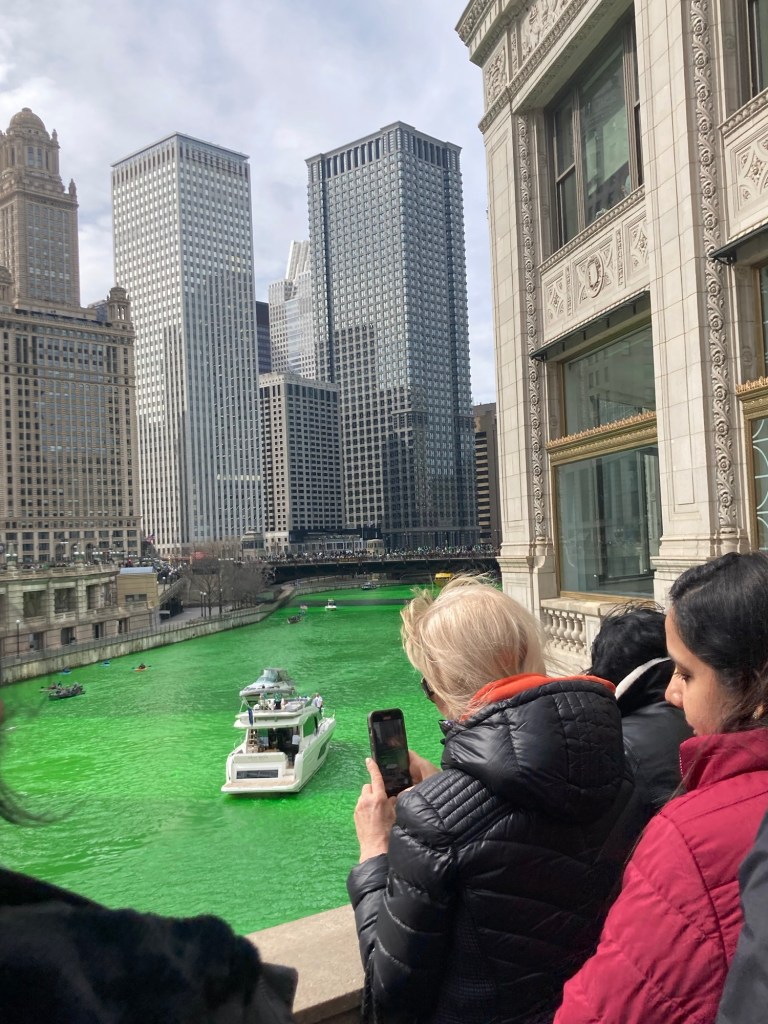
Today, Chicago dyes part of the Chicago River green for St. Patrick’s Day. Our friends from Austin are in town for her mom’s 89th birthday. We took the express bus downtown about 11 am to meet up with them and see the newly green river.

The 69th year that the Chicago Plumbers Union
has dyed the Chicago River green
in honor of the city’s St. Patrick’s Day celebrations
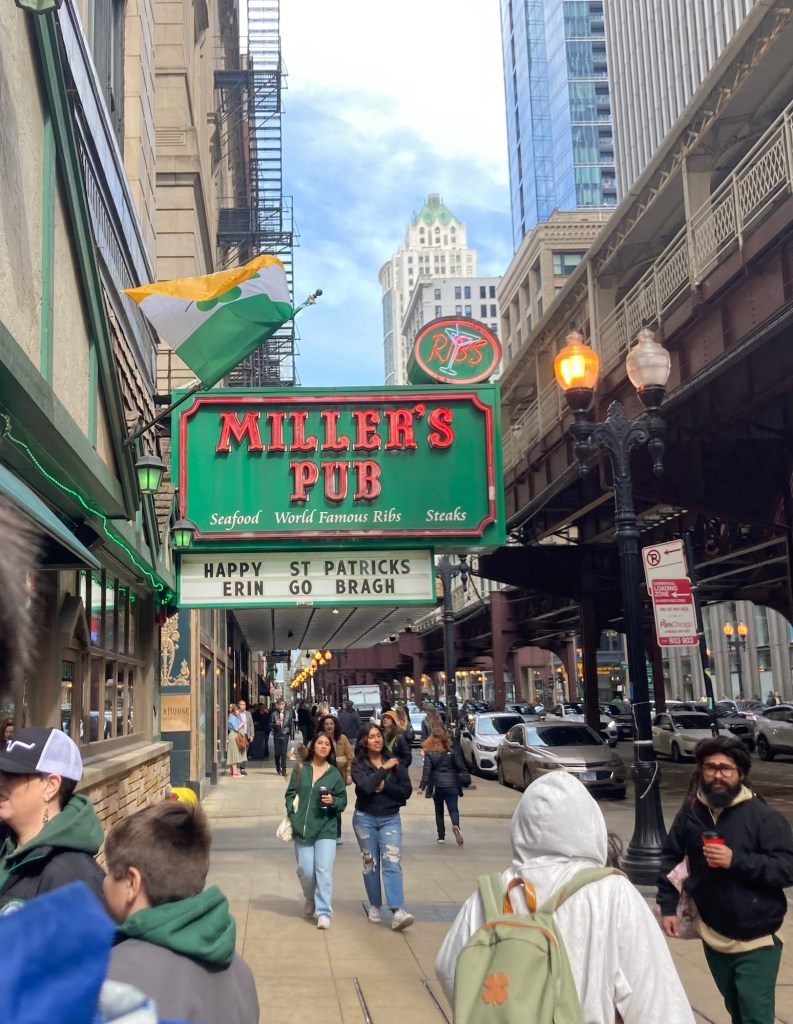
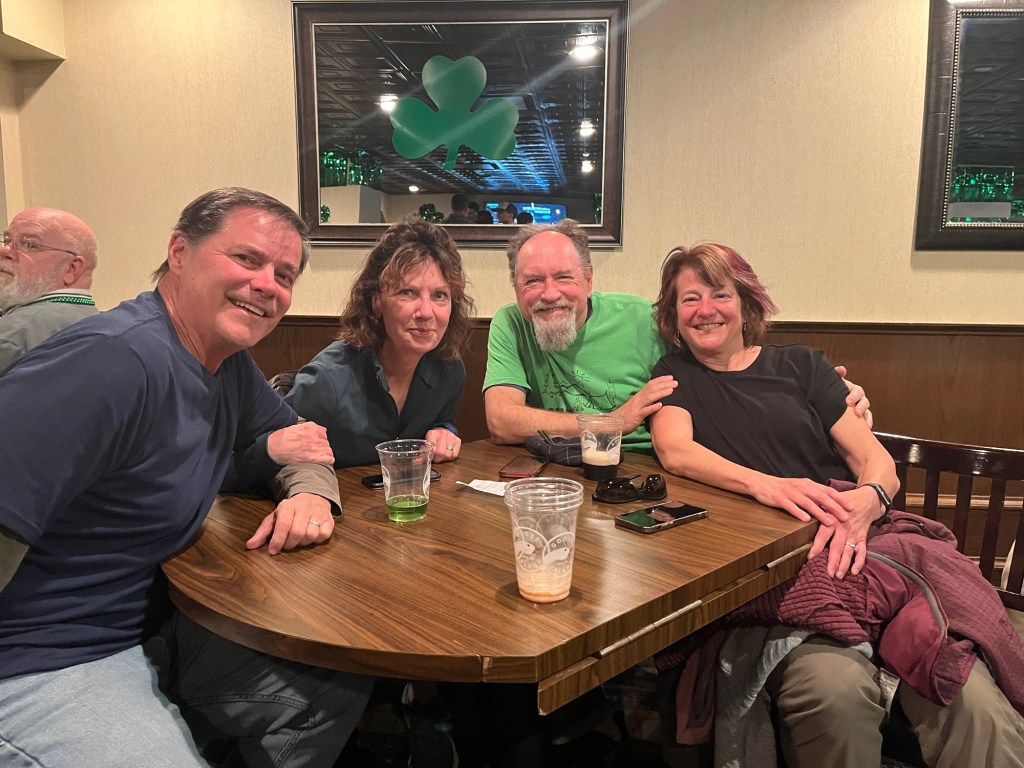
Popping into Miller’s Pub to celebrate the Irish
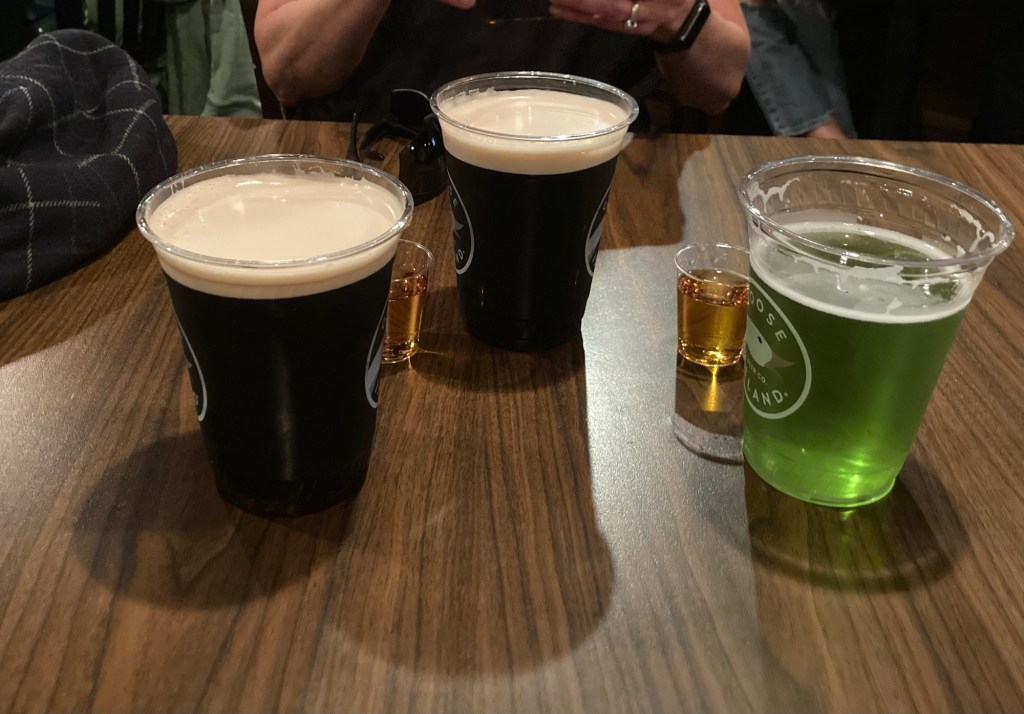
Guinness, Jamison, and a green beer
A crooked selfie — not the result of drinking
A photo from a fellow patron — Bob, me, Kennan, and, Sandy
Categories
Uncategorized

A 12 Mile Walk for Some Medicine (3/11/24)

Trying to get in another good walk as well as enjoy a beautiful spring-like day (highs in the upper 60s F), Bob and I headed off towards Medicine Lake (the lake). Medicine Lake is also an independent municipality (population of 330) on a peninsula that juts into the lake that we visited. It is surrounded by the suburb of Plymouth, but voted to separate from Plymouth in 1944.

To get to Medicine Lake (the lake), we traversed roads, sidewalks, pedestrian bridges, and trails through the municipalities of St.Louis Park, Golden Valley, and Medicine Lake. As the blog title indicates, it ended up being about 12 miles round trip.

One of the many small bodies of water
that we passed on our walk.
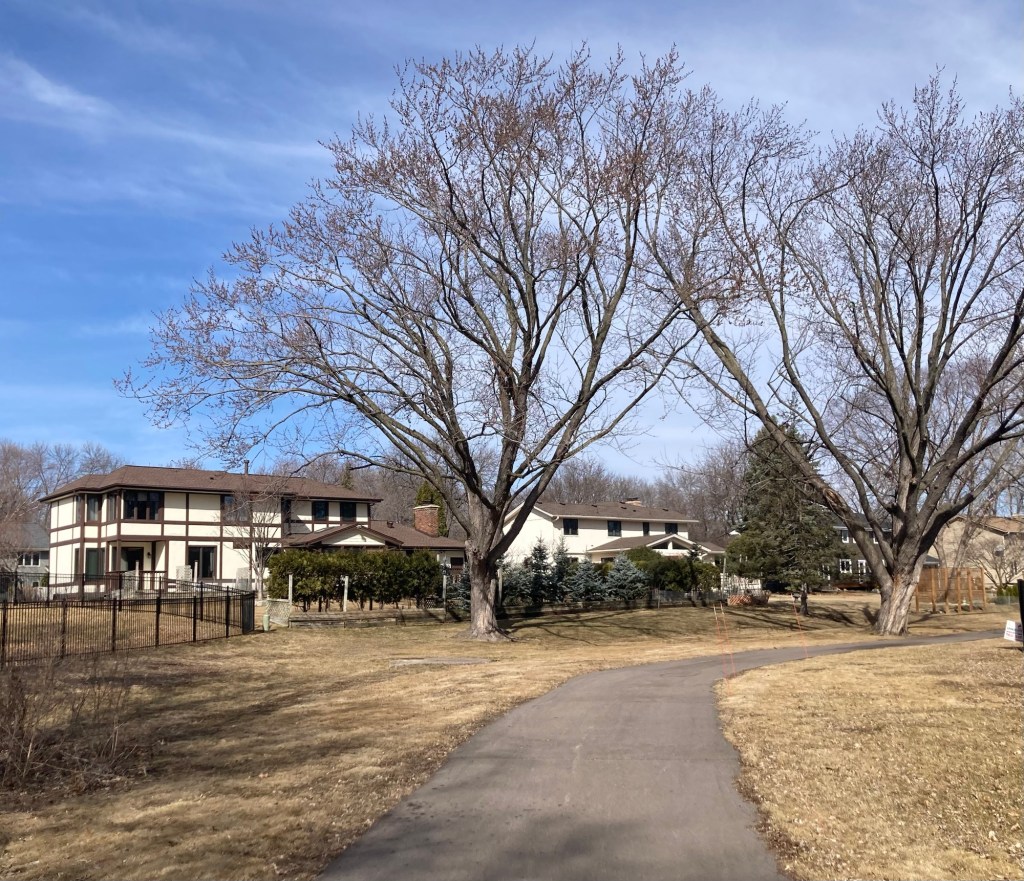
A trail/path behind a neighborhood of lovely homes
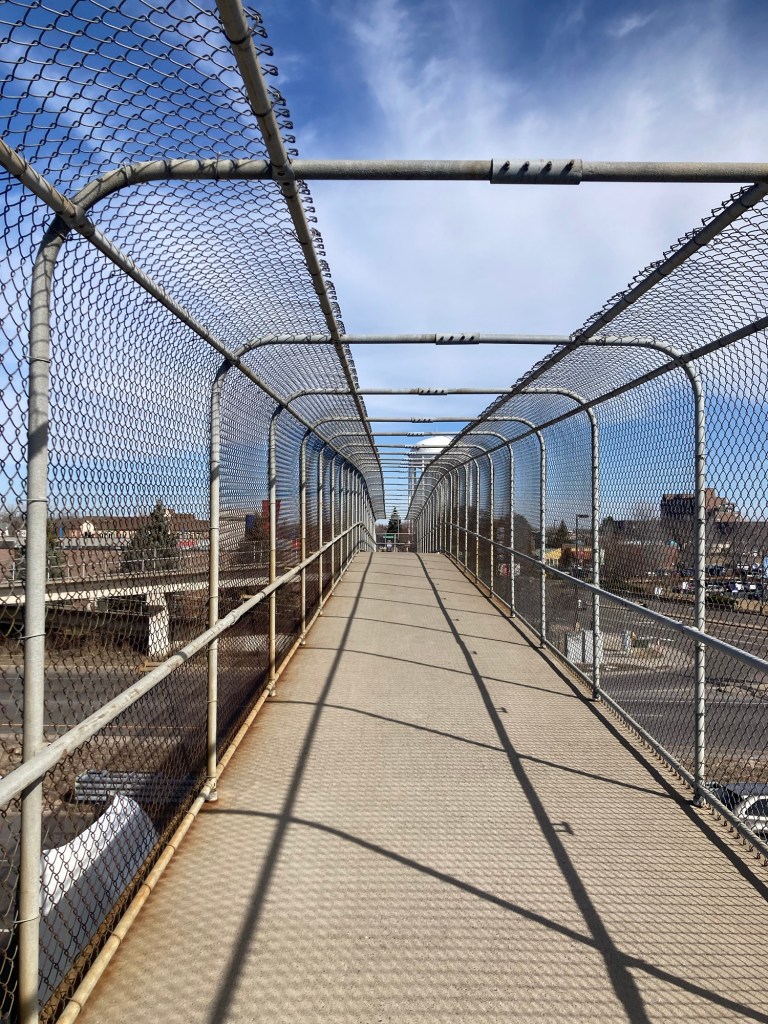
Crossing a pedestrian bridge over a busy street
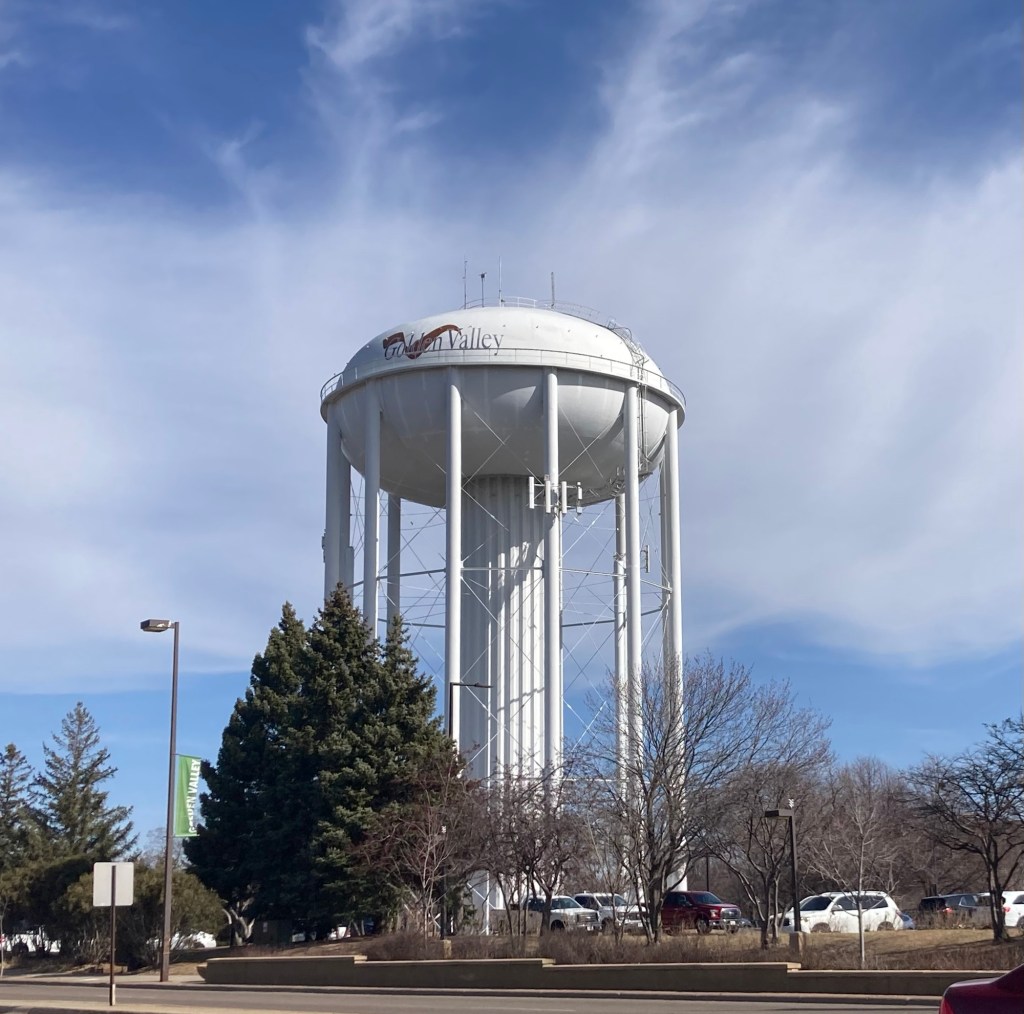
The water tower for Golden Valley (population of 22,500)
Walking on the very impressive Luce Line Regional Trail,
an 8.8 mile trail running from the suburb of Plymouth
into Minneapolis
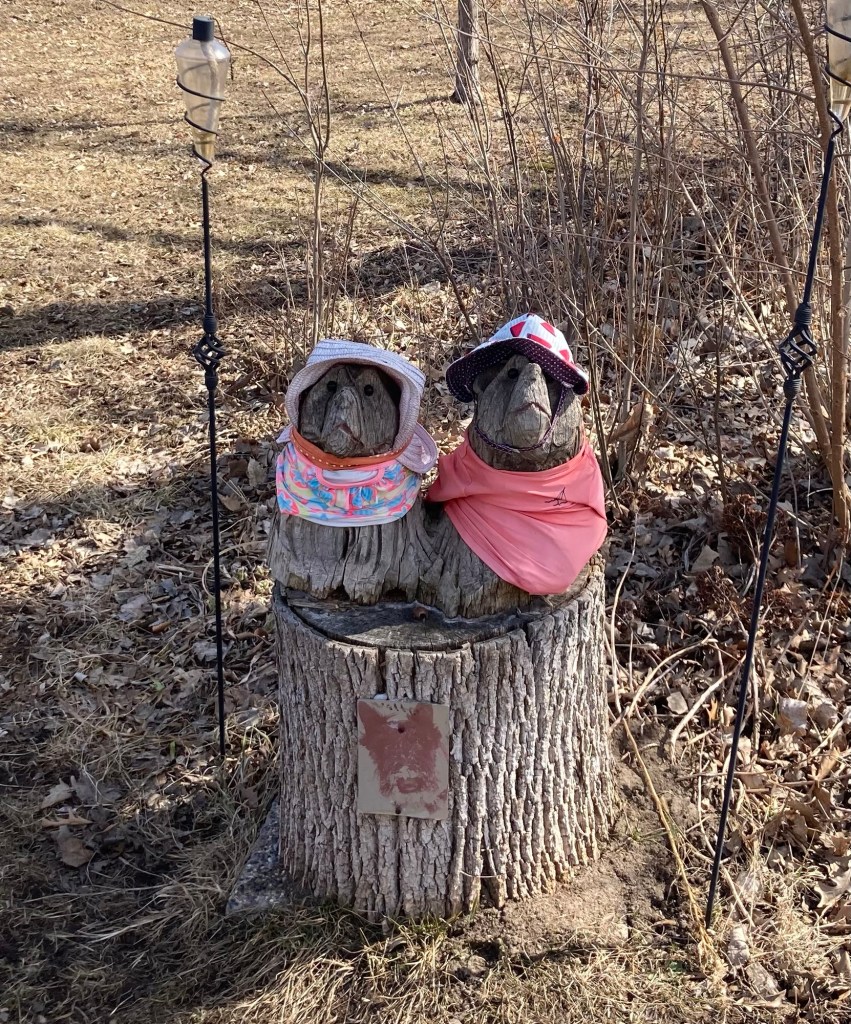
Tree art along the Luce Line Trail near Medicine Lake
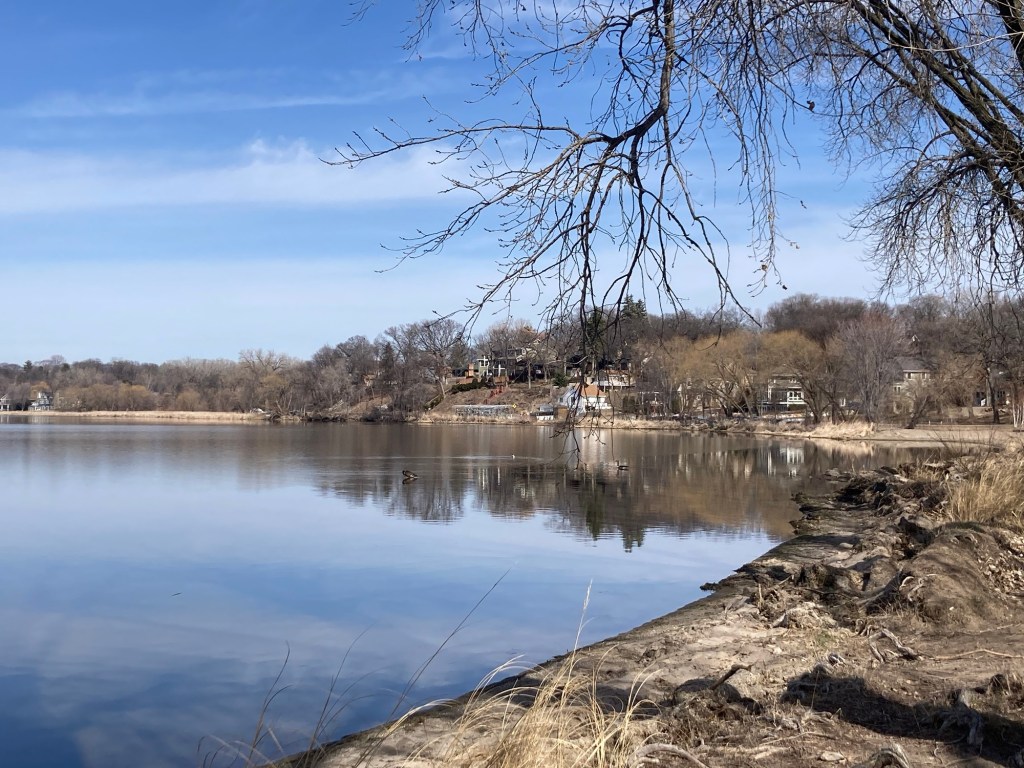
Walking on the trail near Medicine Lake
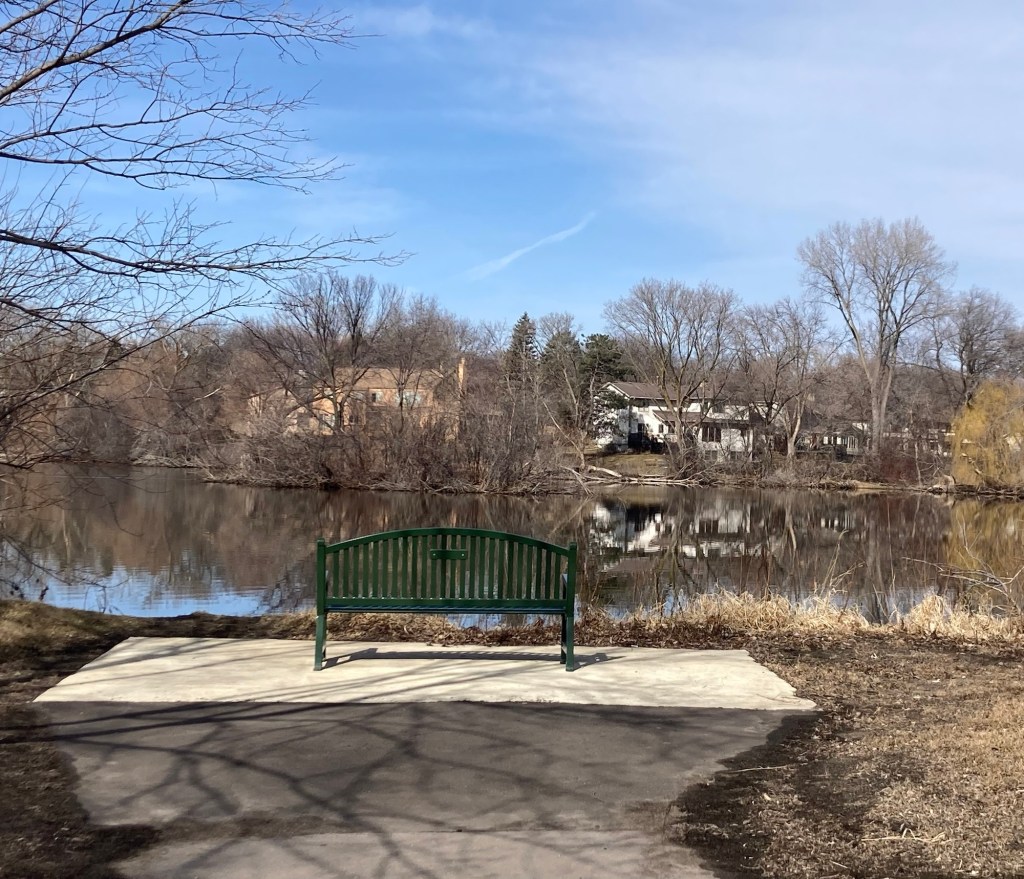
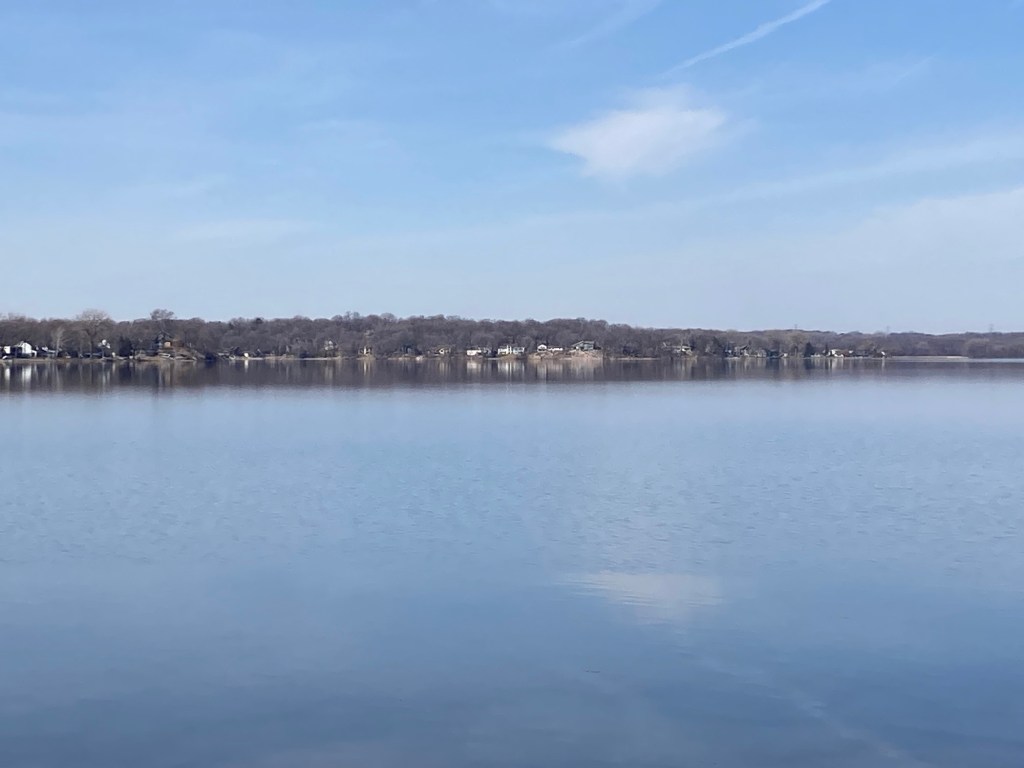
Looking across the lake
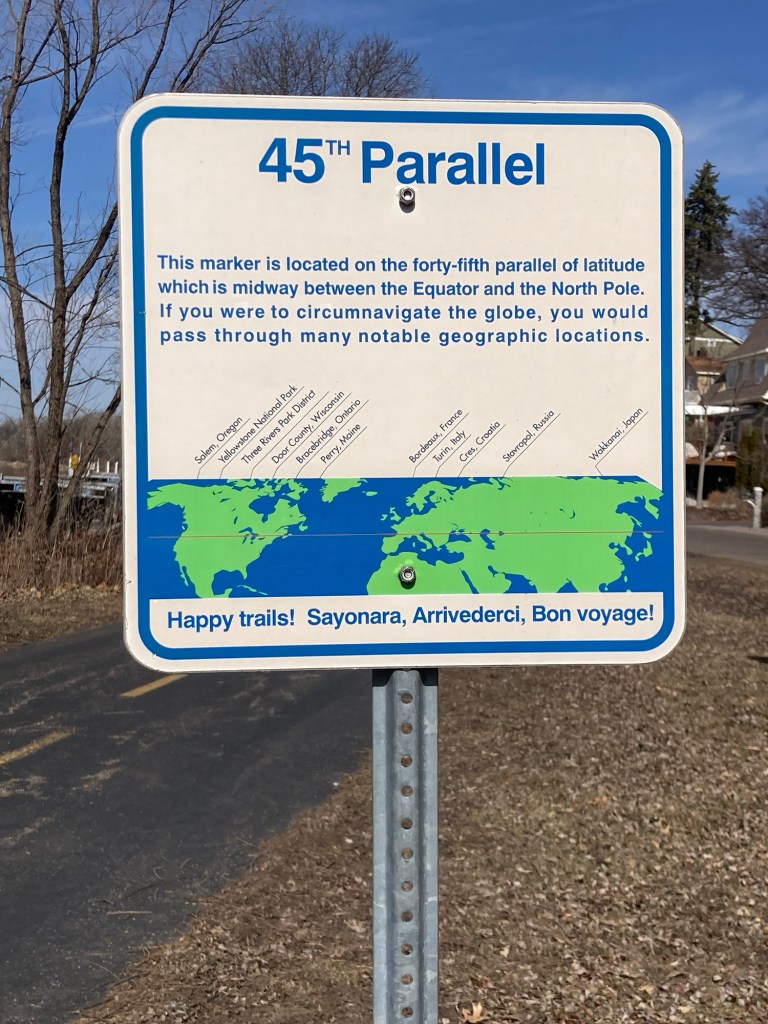
Getting informed on our location in the larger scheme of things
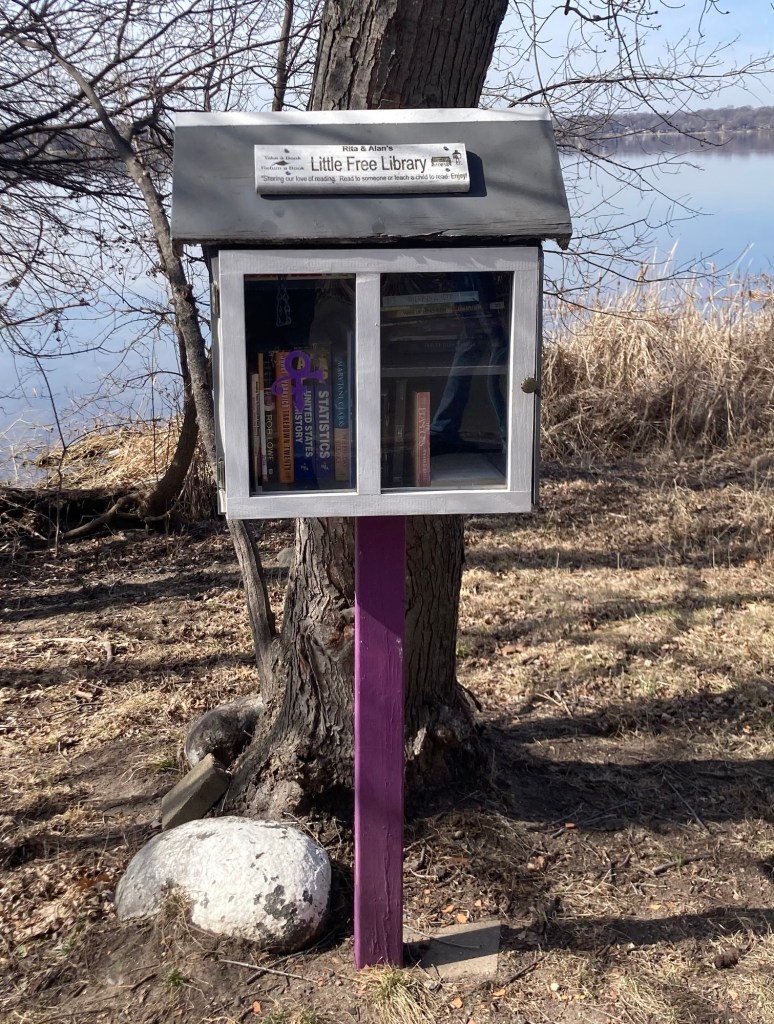
A small library with a nod to Prince
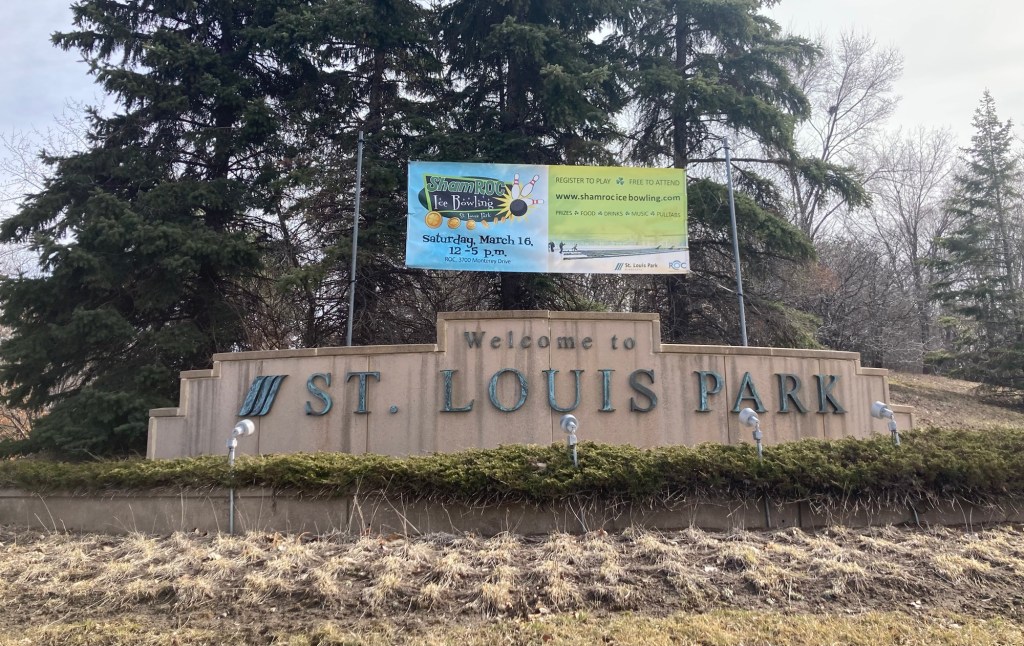
Being welcomed back into St. Louis Park (our current ‘hood), population 50,000.
Categories
Uncategorized

Rico, Family, and a Great Walk (3/7/24-3/9/24)

Bob and I arrived at our housesit in St. Louis Park, MN, (suburb of the Twin Cities) at 4:30 pm on Thursday for a walk through before our homeowners left for a week-long Arizona vacation. We’re caring for the sweet Rico, who is blind but has managed to teach himself to get around his two story house.

Rico chilling on the windowseat

Yesterday afternoon, after Bob and I got back from a short neighborhood walk, Bob’s uncle who lives in the area reached out. We ended up meeting up with him and his wife for happy hour sushi. We had a great visit.

Jeff, Debby, and Bob

Today, we decided to do a longer walk to start getting ready for a walking trip that we will be doing in England in April. We headed to Westwood Hills Nature Preserve, which ended up being about 7 miles there and back and around the lake at the preserve. We’ll definitely need to get more mileage in, but it was a lovely park and a nice winter walk with temps in the low 30s but the wind making it feel cooler.

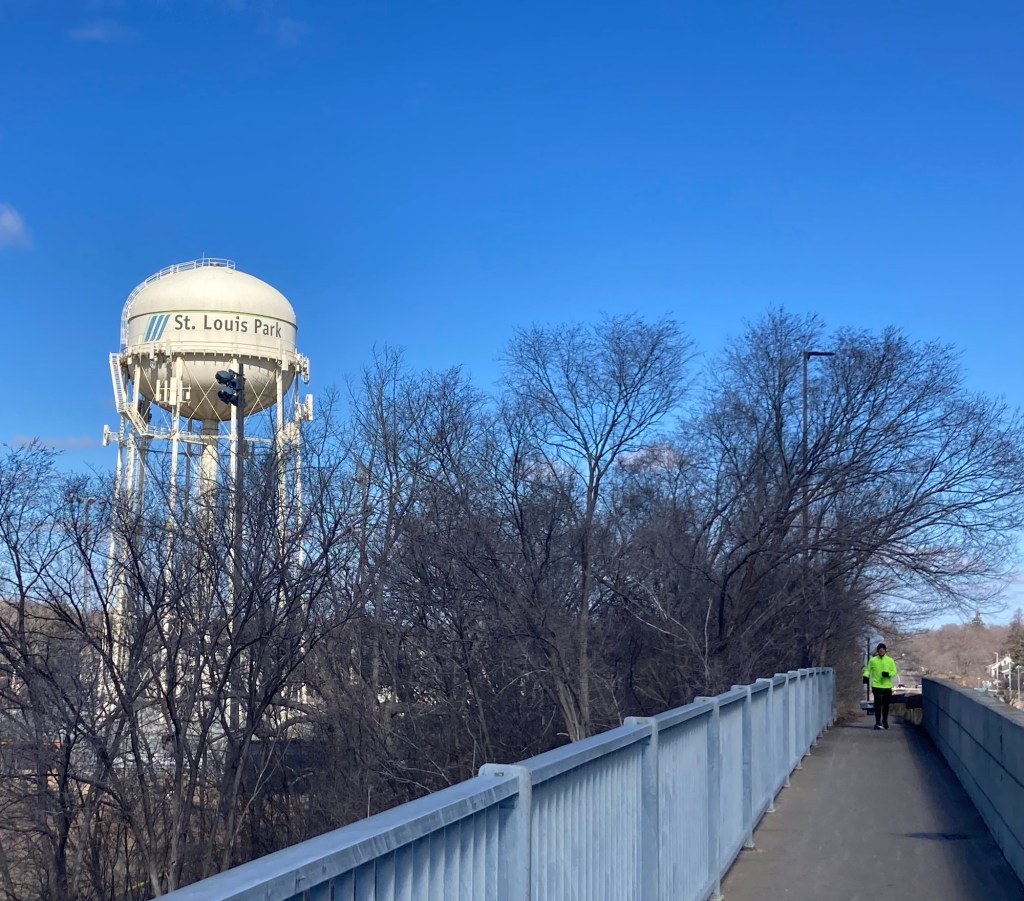
Walking over a bridge by a St. Louis Park water tower
on the way to the park
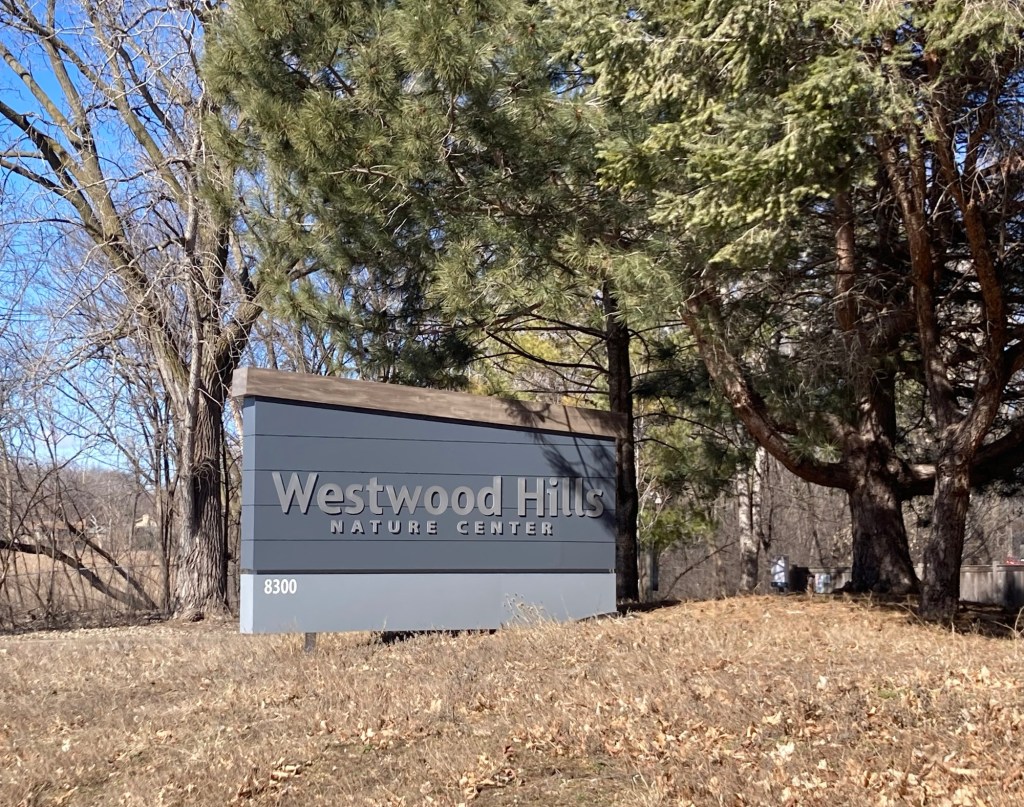
The sign at the entrance to the preserve
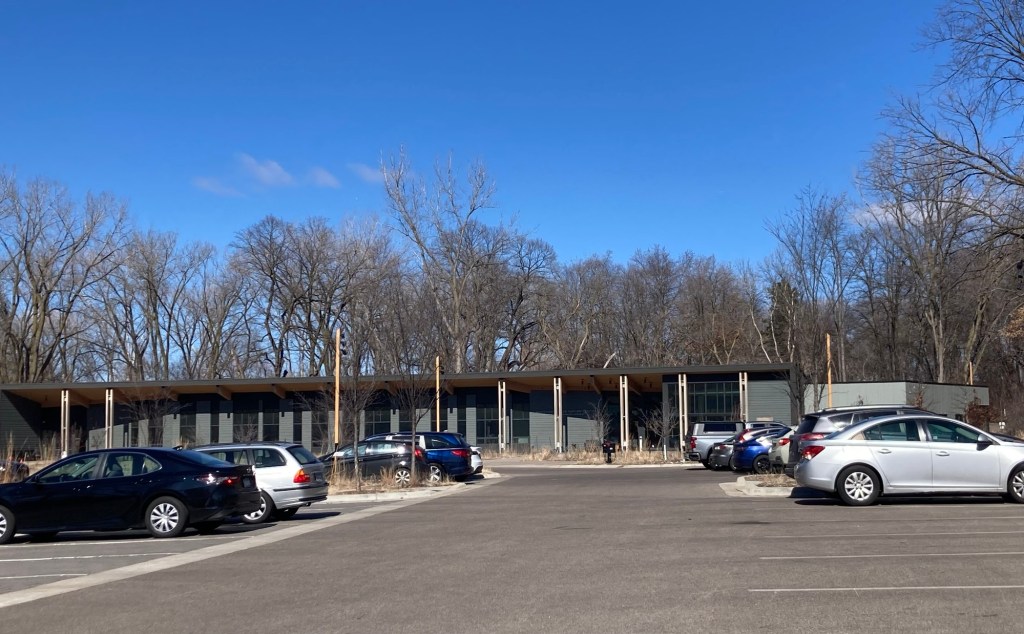
The interpretive center
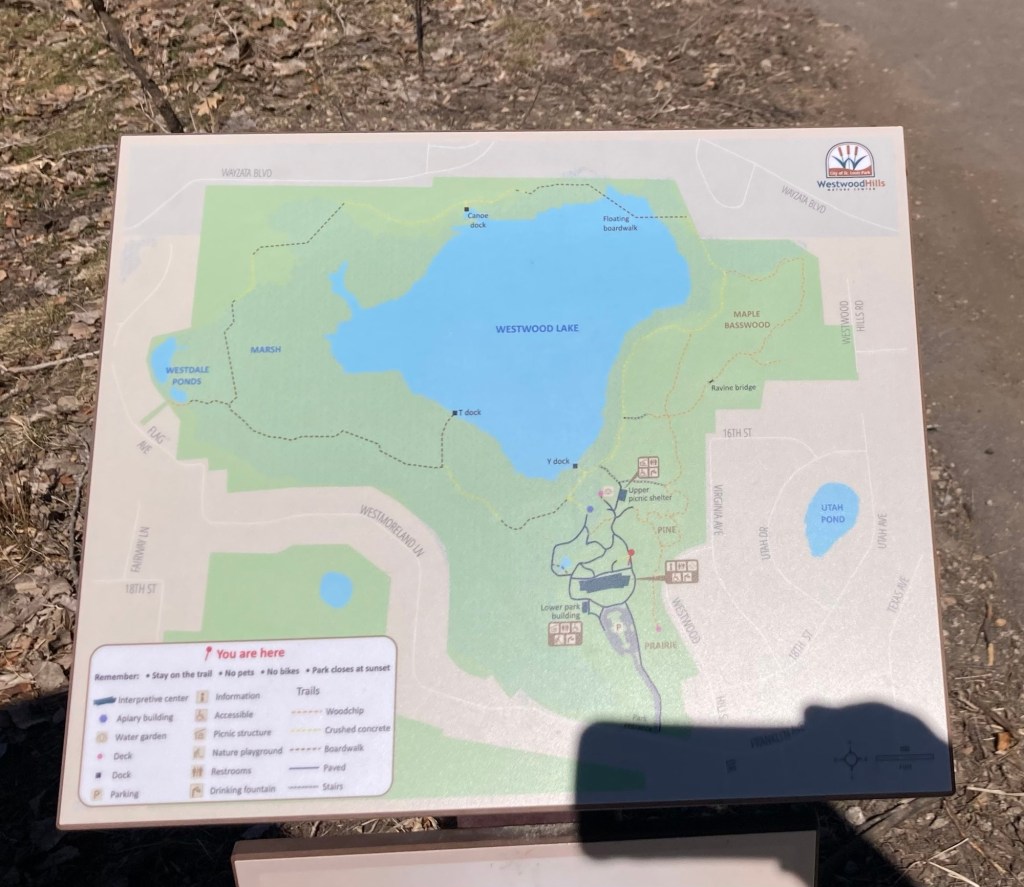
Helpful trail signage
The view from the lookout deck near the upper picnic area
Stairs connected the lake trail to the upper picnic area
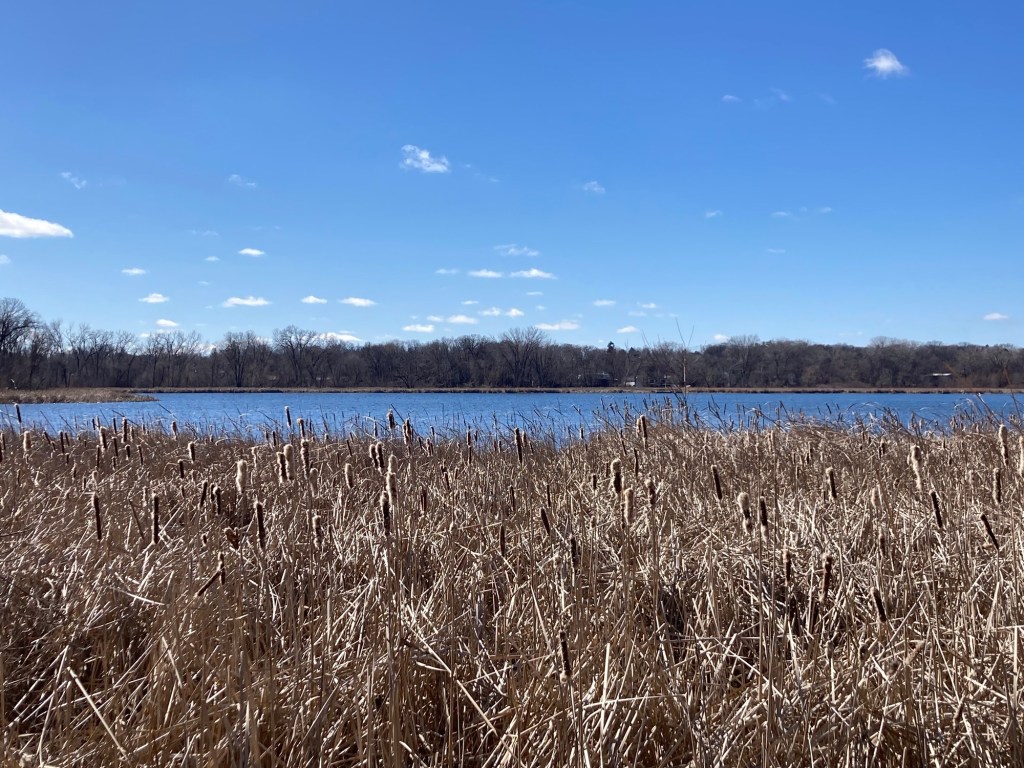
Looking across Westwood Lake at lake level
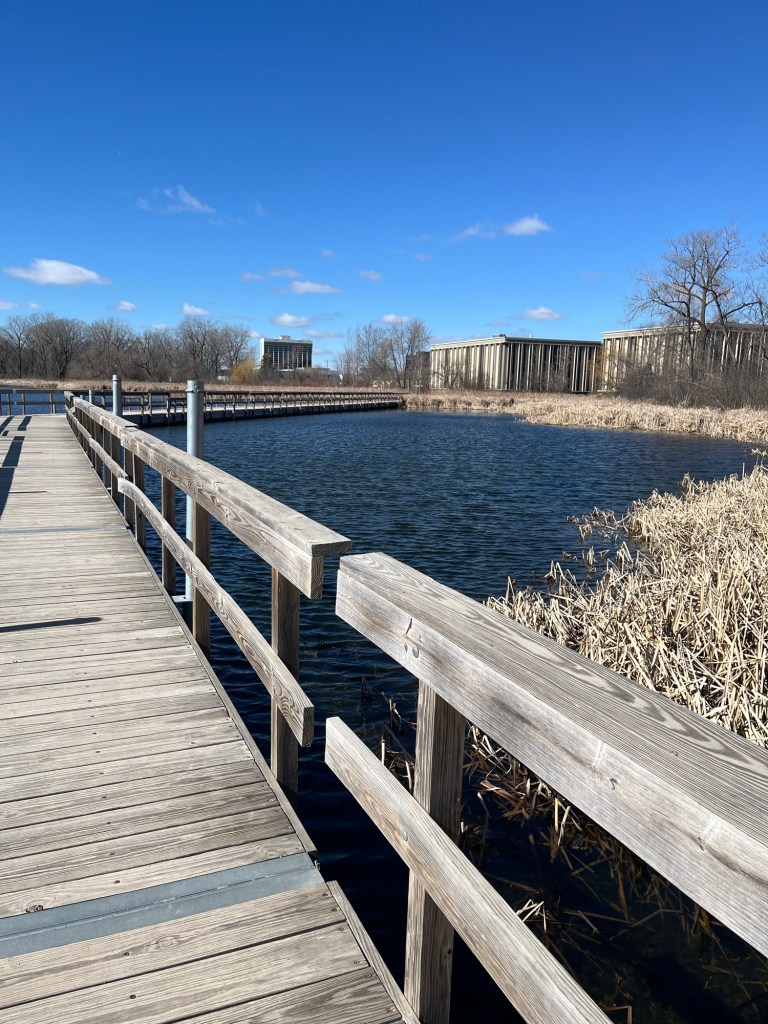
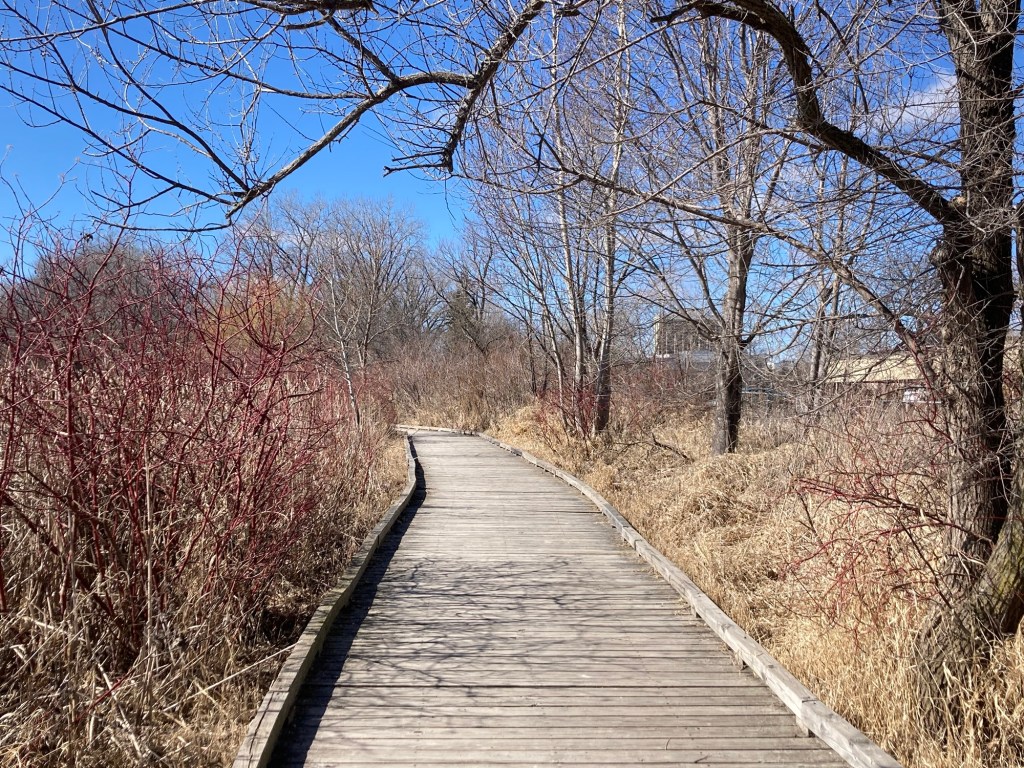
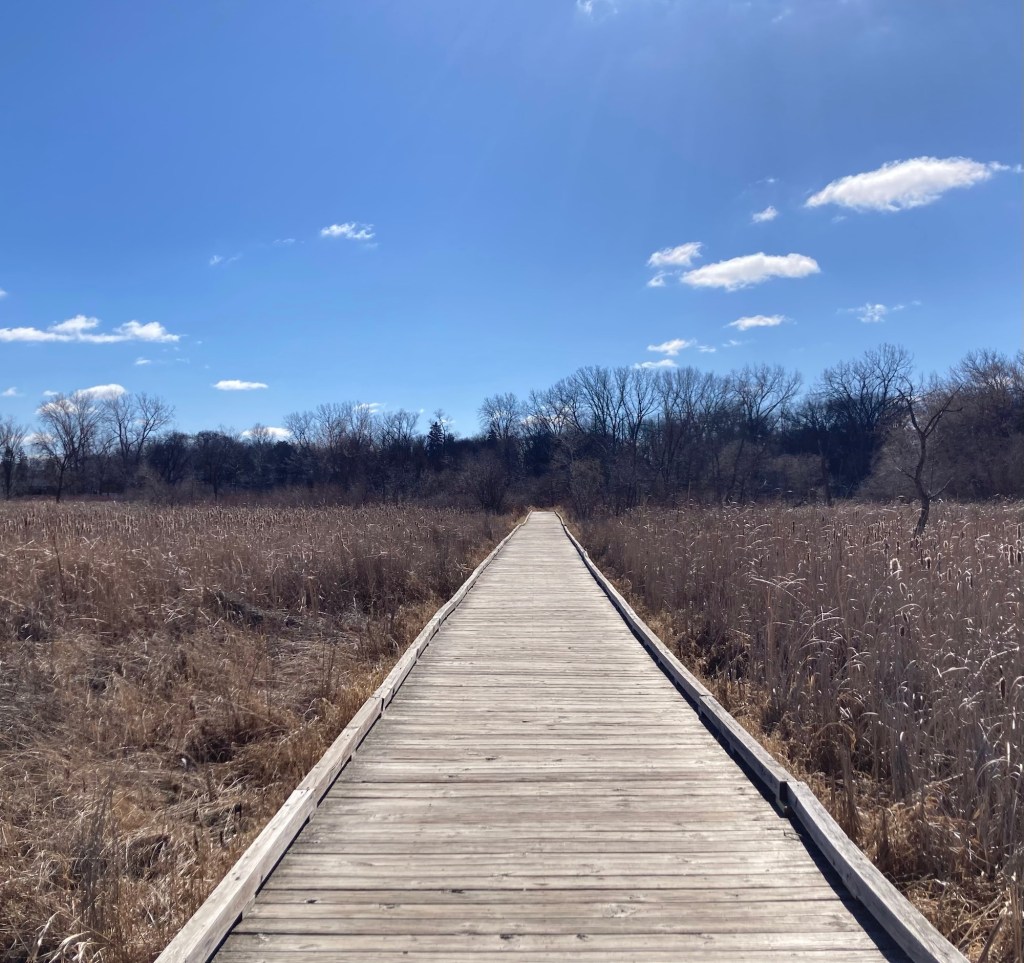
Parts of the lake trail were on land but much of it was boardwalk due to the lake and surrounding marsh
Some of the flora along the boardwalk
Canoe rentals are available
Another area of the boardwalk
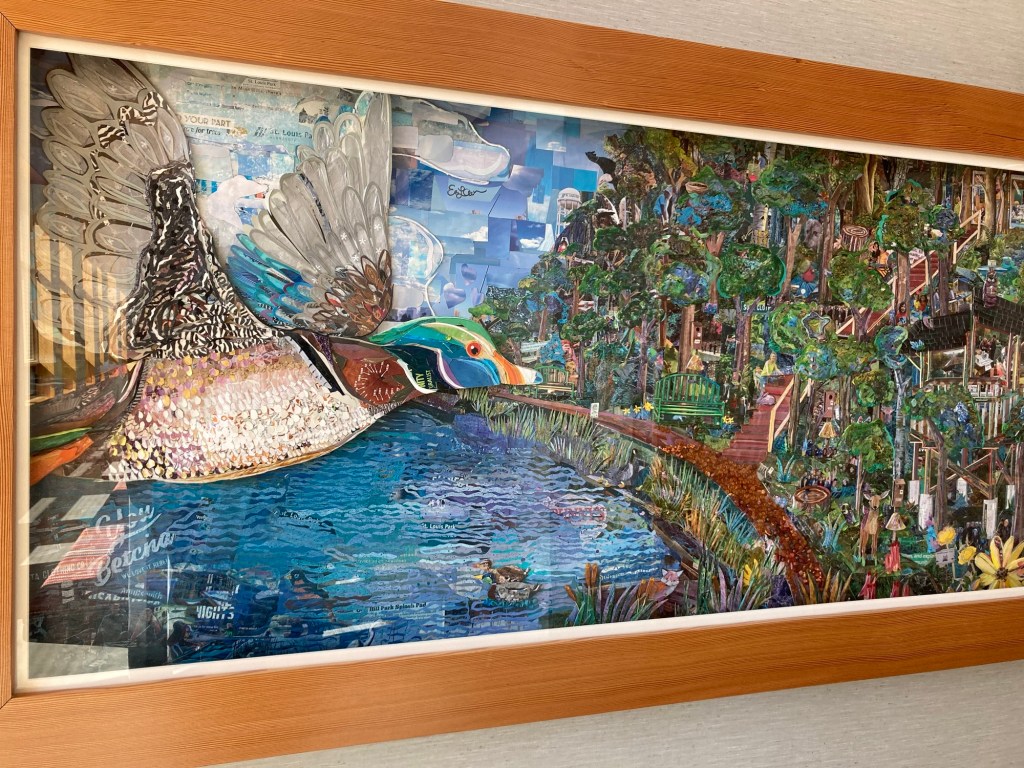
A collage by local artist Emily Lavalier
called Waterfall Observation Deck inside the interpretive center
The exhibit area in the 2020-built center
Passing through Lamplighter Park on the way back to the house
Crossing a pedestrian only bridge over a railroad
as part of the North Cedar Lake Regional Trail
Categories
Uncategorized

We’ve Got Spam (3/6/34)

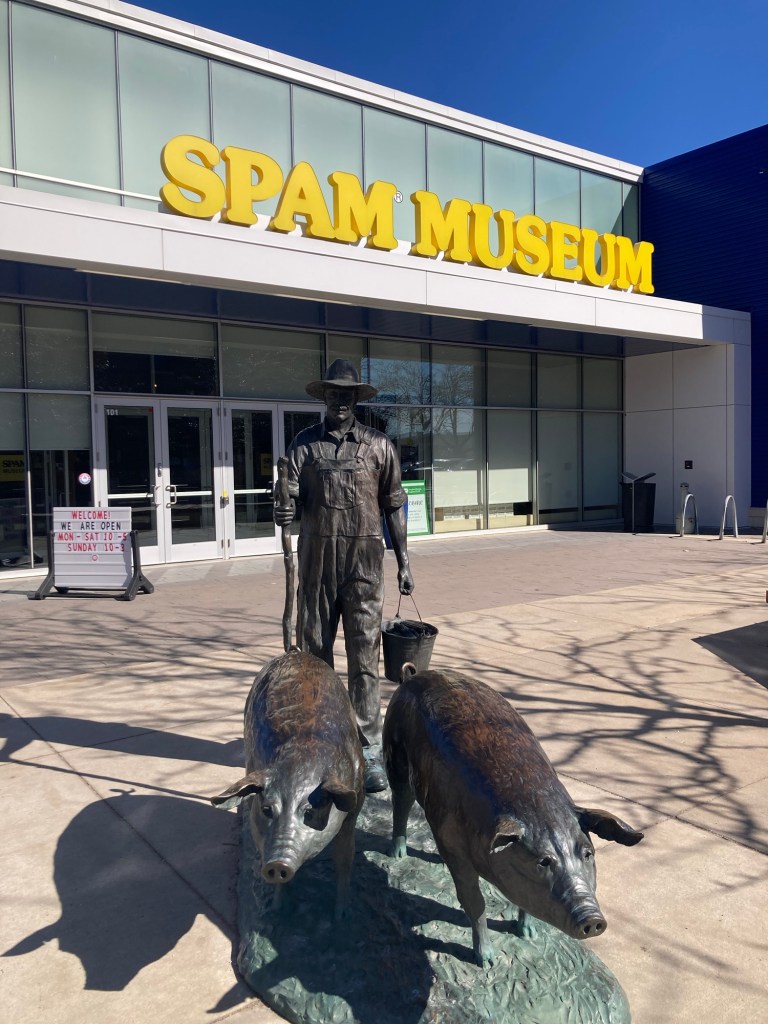
Bob and I left Mason City, Iowa, about mid morning to head to Austin, Minnesota, on our way to Minneapolis. The attraction for us in Austin was the SPAM museum , which we learned of when living in Austin, Texas, which had an annual SPAM festival.

SPAM is a canned luncheon meat created by the Hormel company in Austin, MN, in 1937. It gained popularity worldwide after its use in WW II and is now found in over 40 countries. The free museum in Austin celebrates this product in a colorful and engaging way.

According to the museum, the name SPAM was chosen after a naming contest at a Hormel New Years Eve party, believed to be the combination of the words spiced and ham.

A mural on the side of the museum
The museum entrance
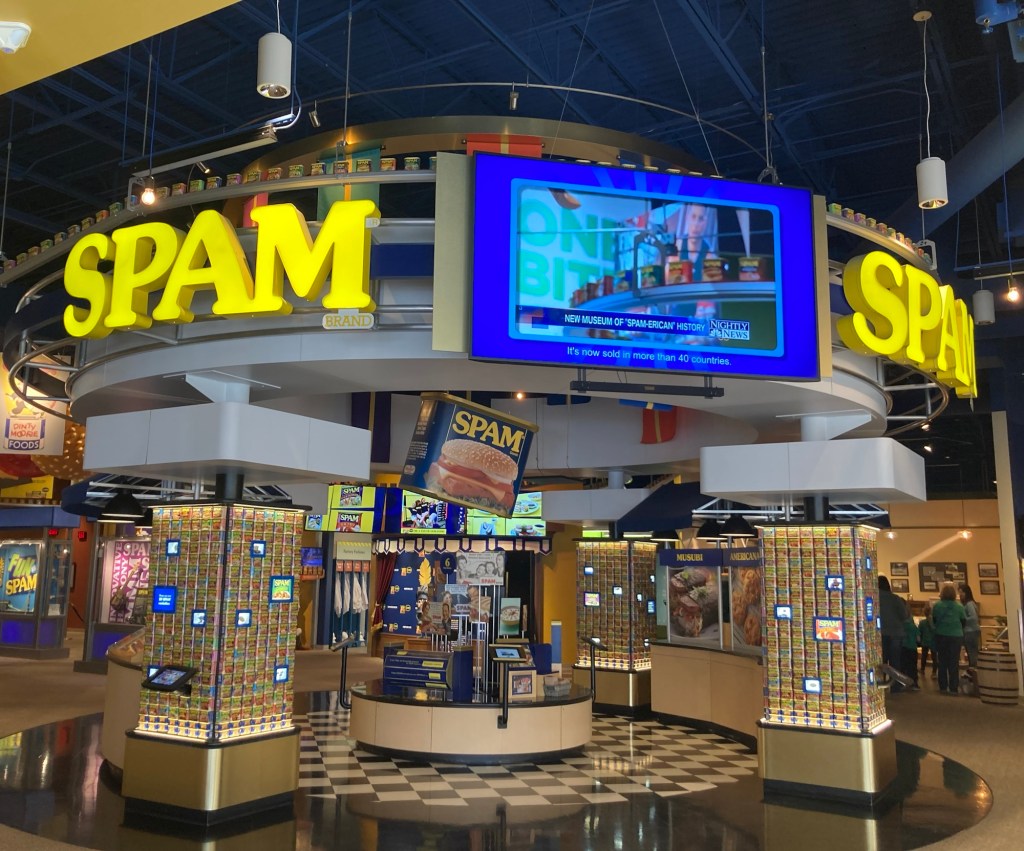
The Can Central section of the museum
Who knew there was all these varieties?
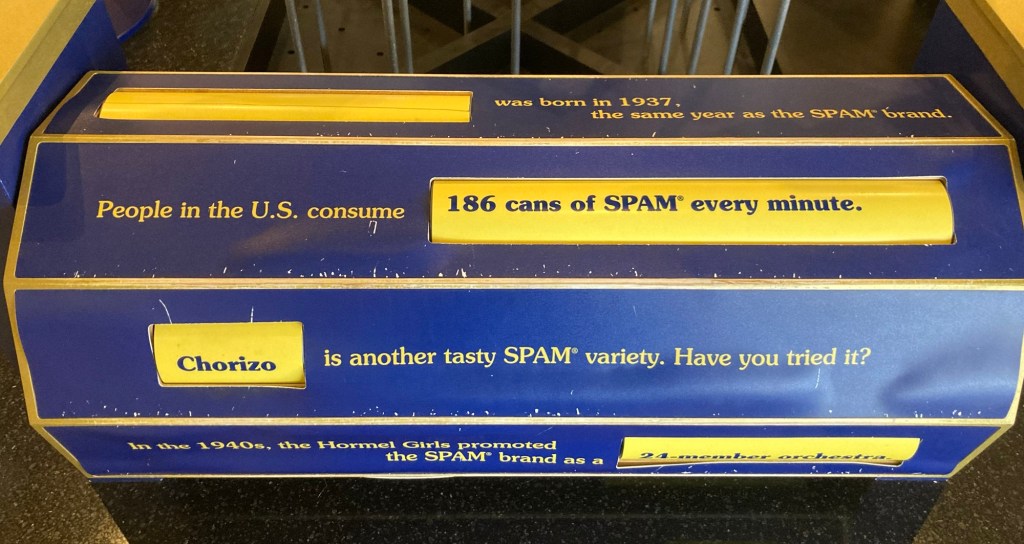
SPAM trivia. Who is eating all this SPAM?
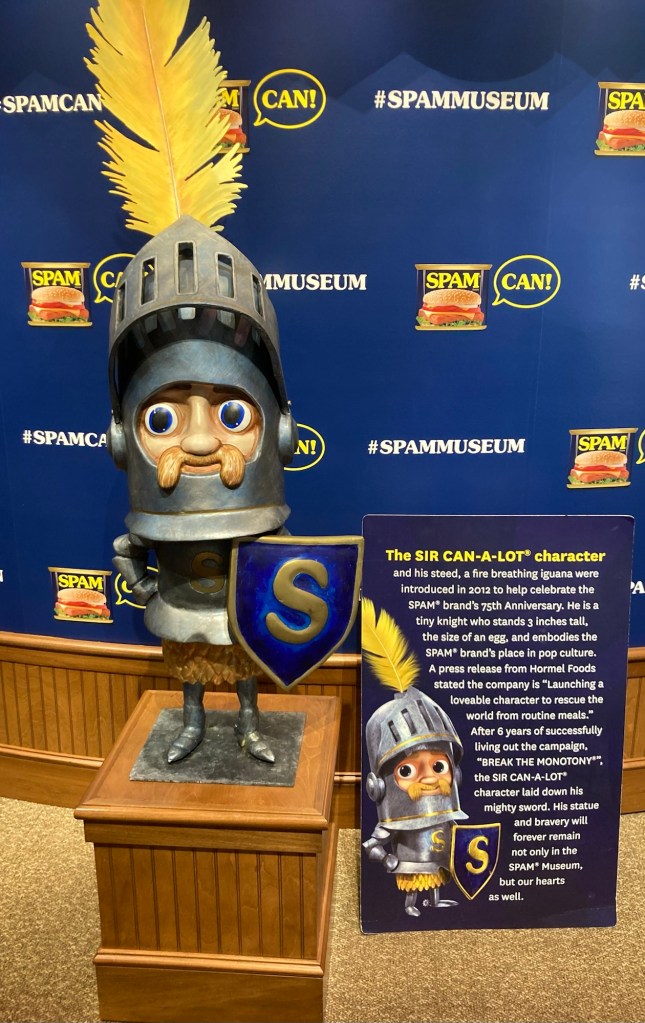
One character used in SPAM marketing (the non-digital kind)
Bob with a big head, SPAM style,
the SPAMMY advertising character used in Japan
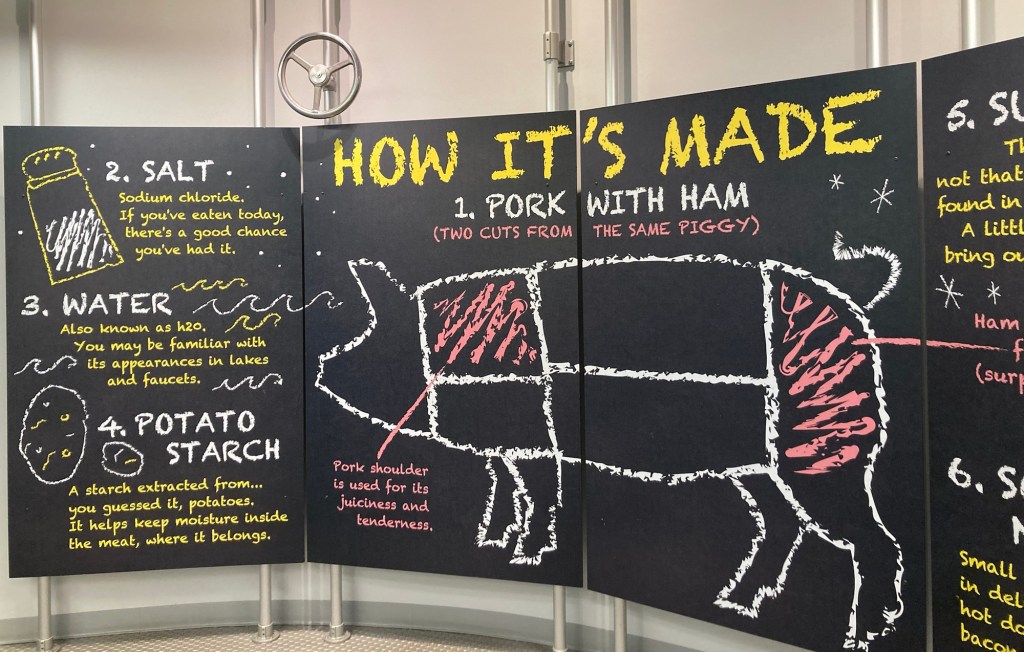
Breaking down what’s actually in that potted meat product
Hormel’s Outlook on life
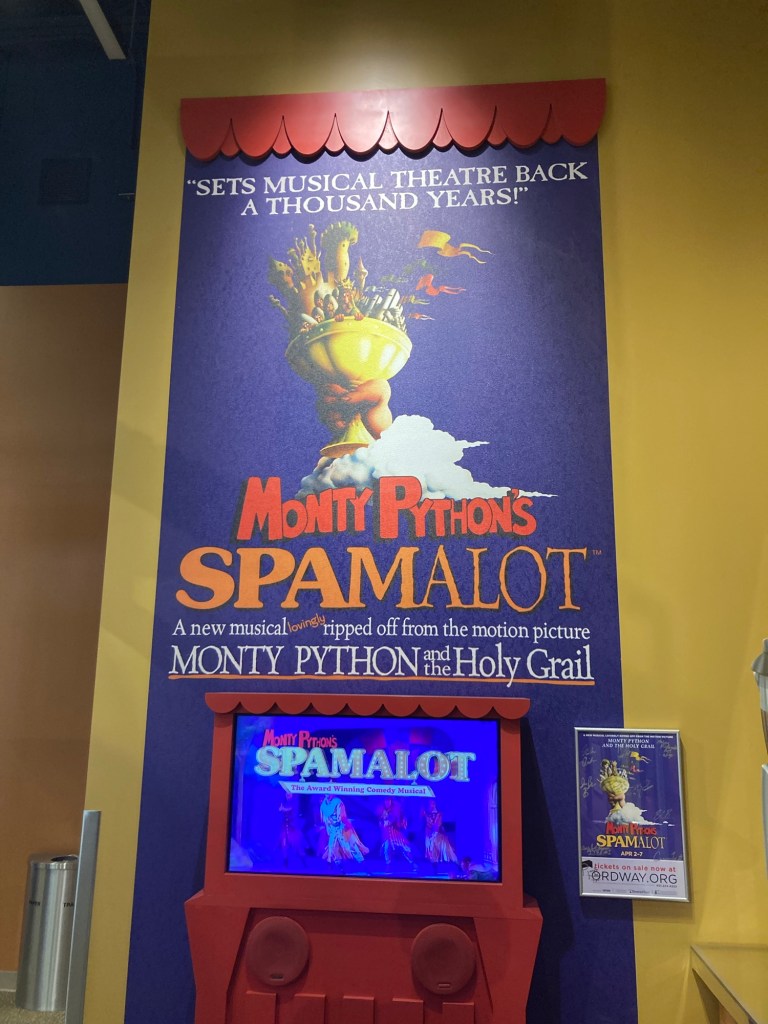
There were exhibits regarding SPAM and it’s tie to Monty Python, including not just the name of their show
but also that the term spam for excessive digital marketing
is based on a Monty Python skit about a restaurant
that sold only menu items that contained SPAM
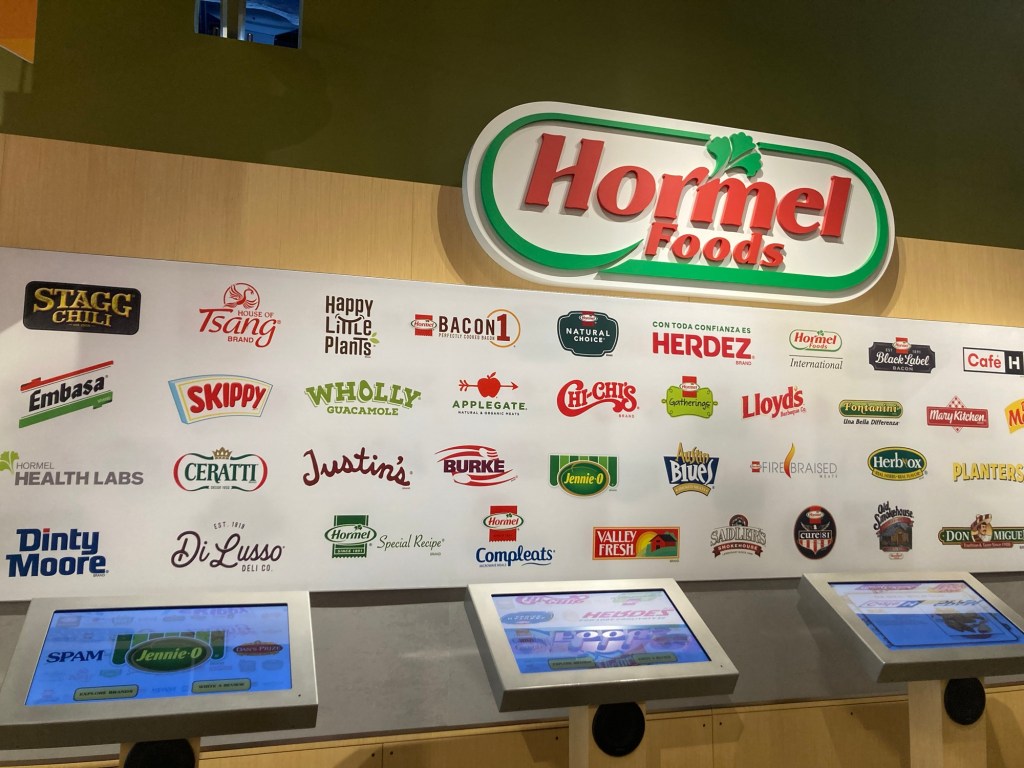
Many brands under the Hormel umbrella
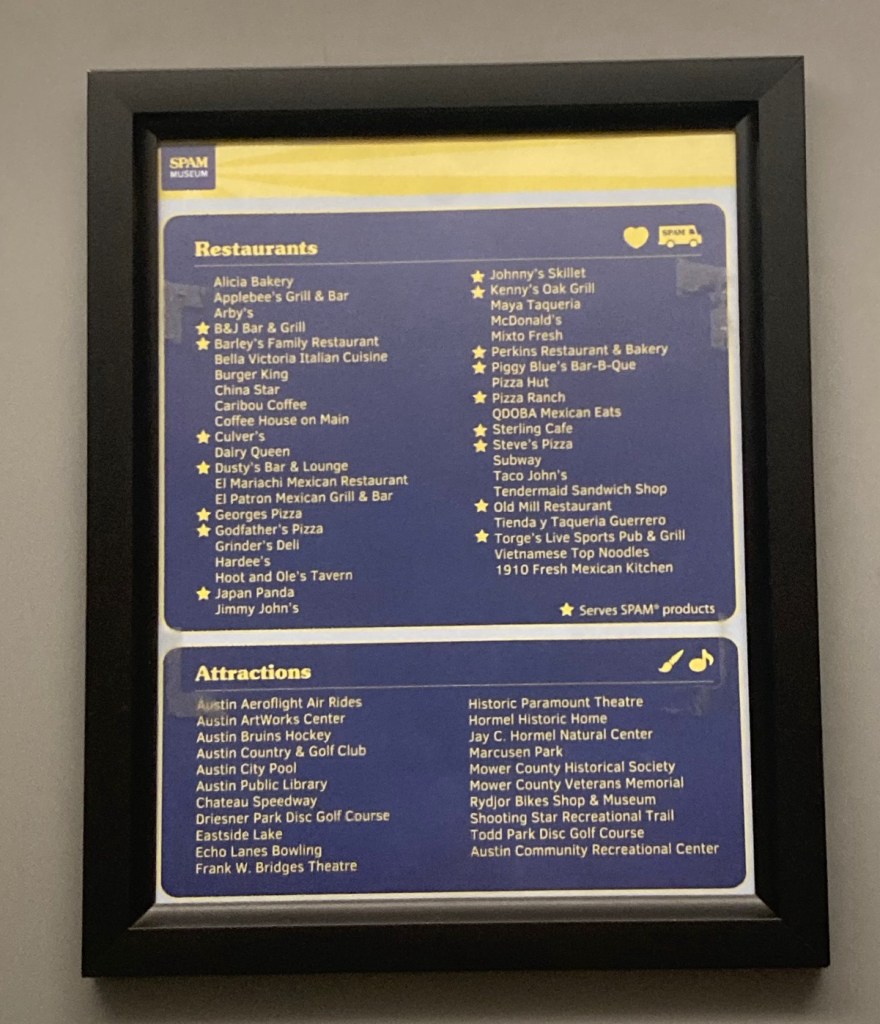
A posting in the museum bathroom touting local attractions, including restaurants that serve SPAM
Variety SPAM packs on sale in the gift store