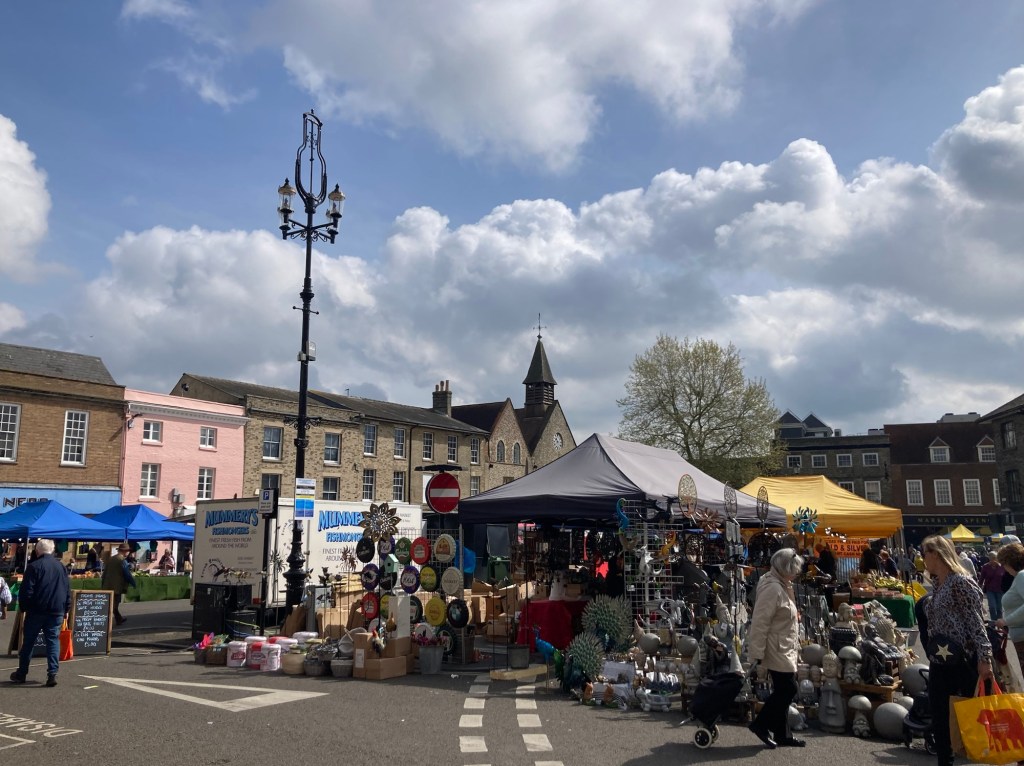
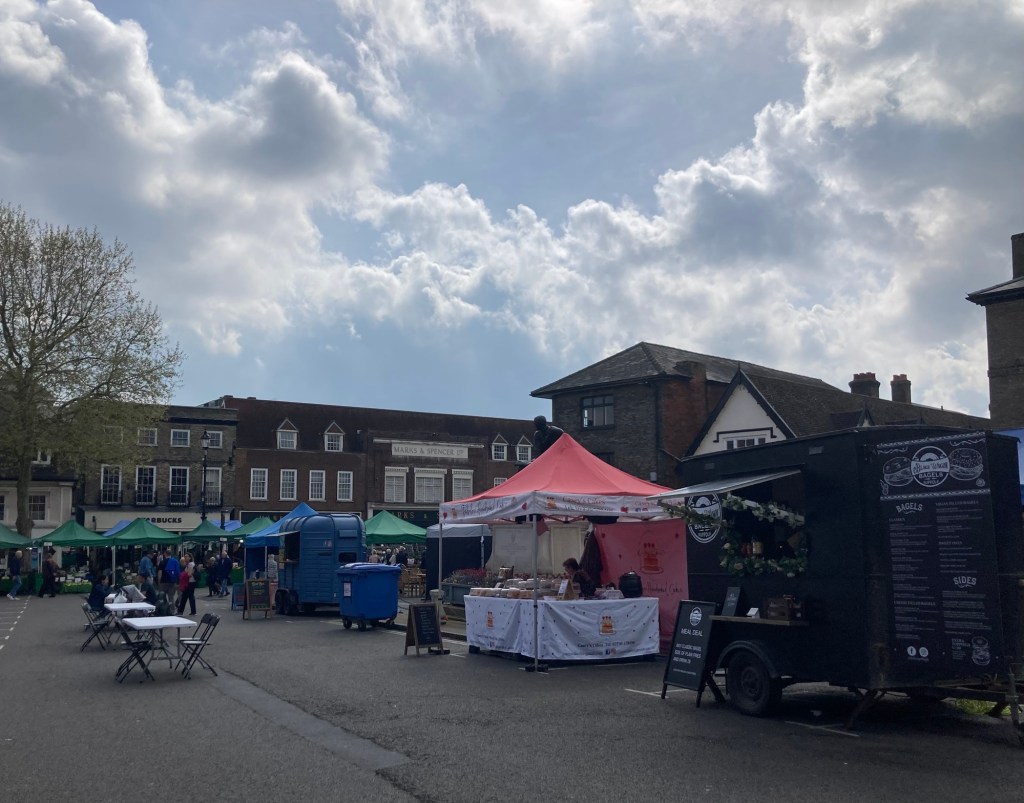
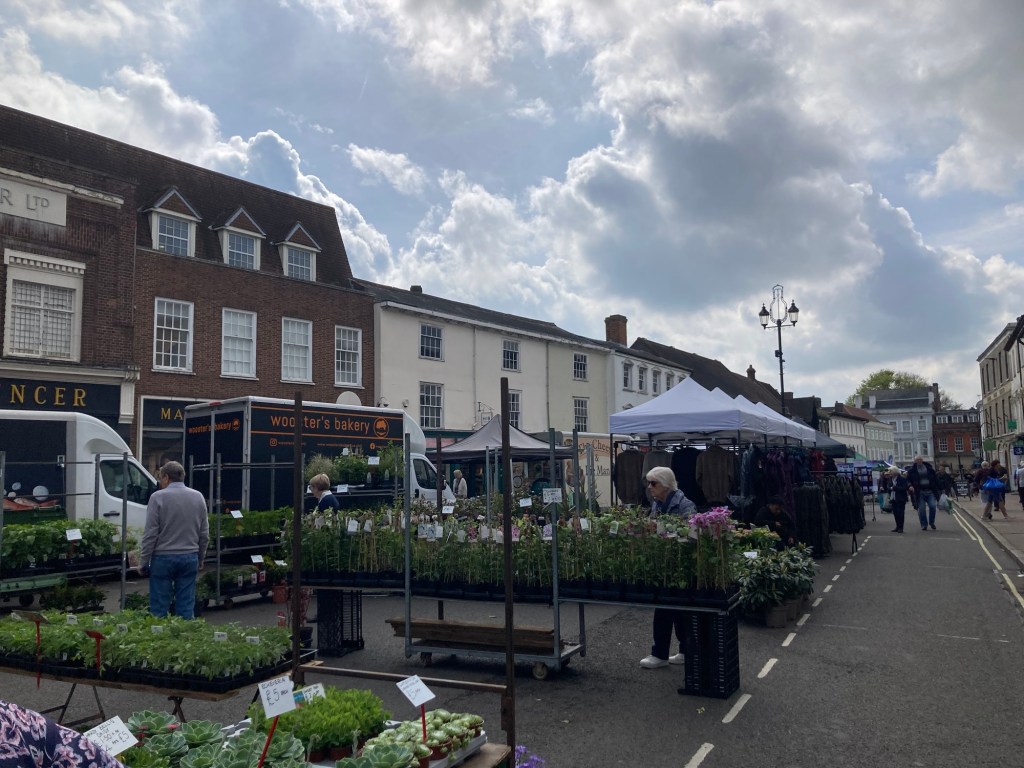
Today we did our easy walk down to the city center to explore Bury’s market that occurs every Wednesday and Saturday. The website said there are about 60 stalls on Wednesdays and 80 on Saturdays. The market dates back to before the days of William the Conqueror (died 1087). We perused the stalls and found a couple items to purchase at a baker’s stall. We also stopped in an M&S to do a grocery run.
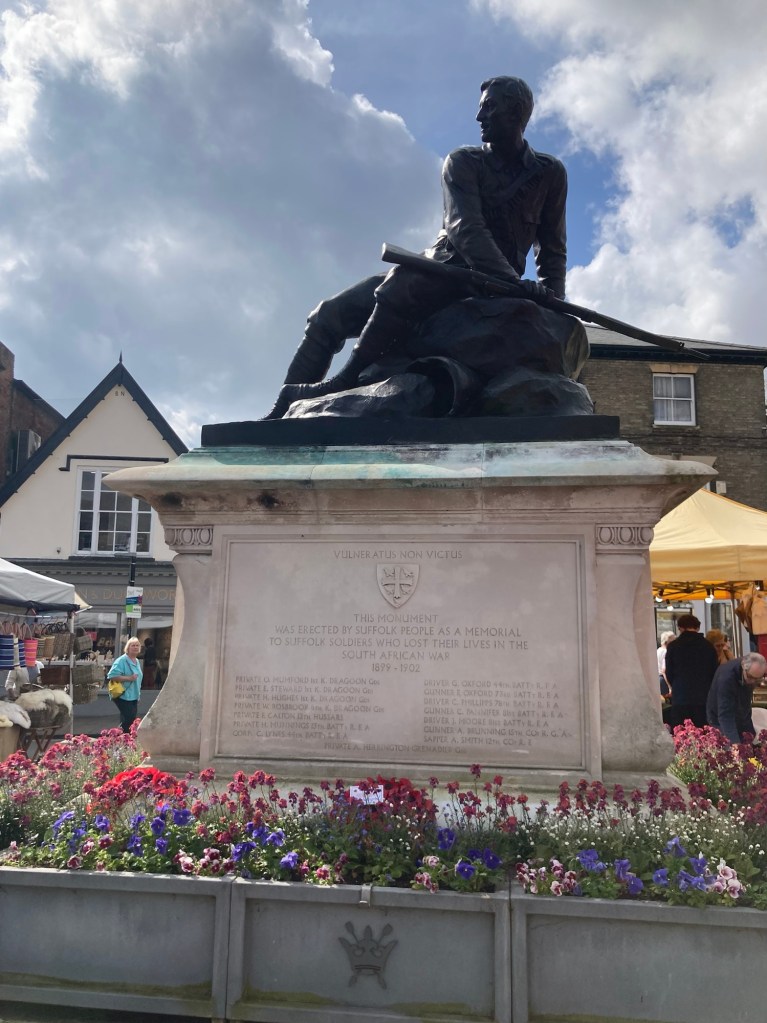
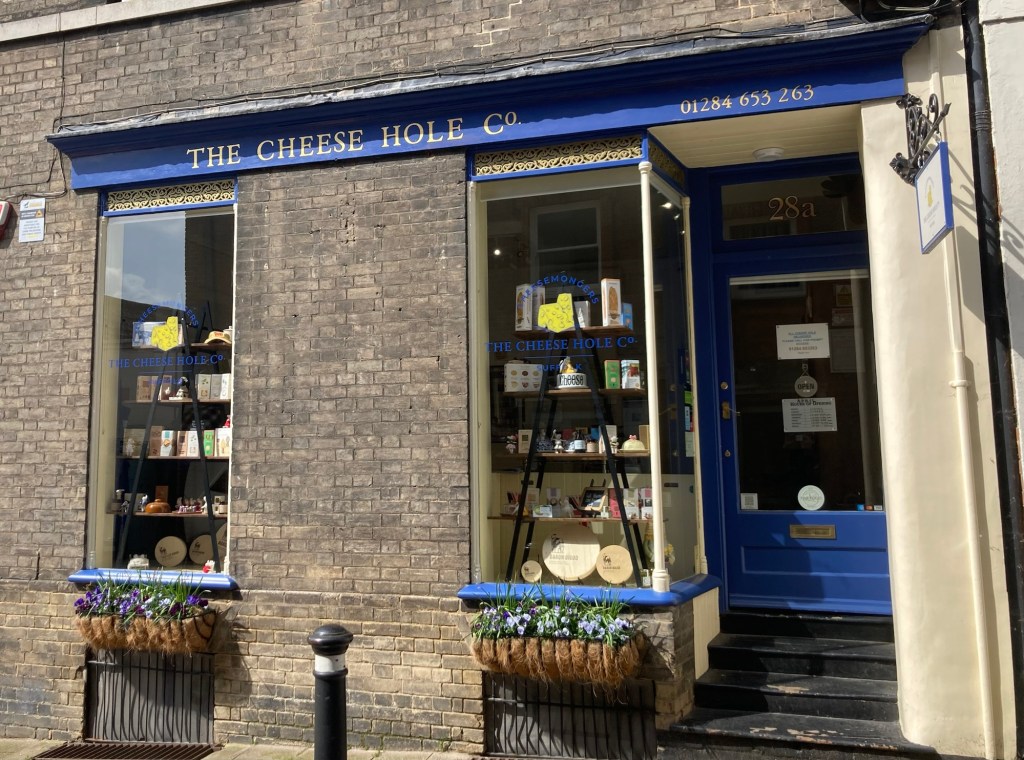
It doesn’t maybe look like it, but supposedly the smallest pub in Britain. Peeking in, it did seem to be just the bar and maybe 2 seats.Entering into the market this morning. Bury was busy!More stallsMonument dedicated to Suffolk people that lost their lives in the South African War (1899-1902)More stalls — mostly food, but some plants and clothes and jewelry as wellWe also popped into this local cheese shop on a side alley that we hadn’t noticed before
Tomorrow night we have reserved tickets for a free lecture at the nearby University and Professional Development Center on the Corpses of the Abbey. We’ll see how much we understand, but we’re looking forward to continuing to learn about the local area.
Since Bob and I saw so much of the St Edmundsbury Cathedral yesterday during our walk around the abbey grounds, we decided to go back today to get a tour of the inside of the church/now cathedral. As we learned, the building is the epitome of both old and new, although the construction succeeded in melding the two so that it looks like a cohesive whole.
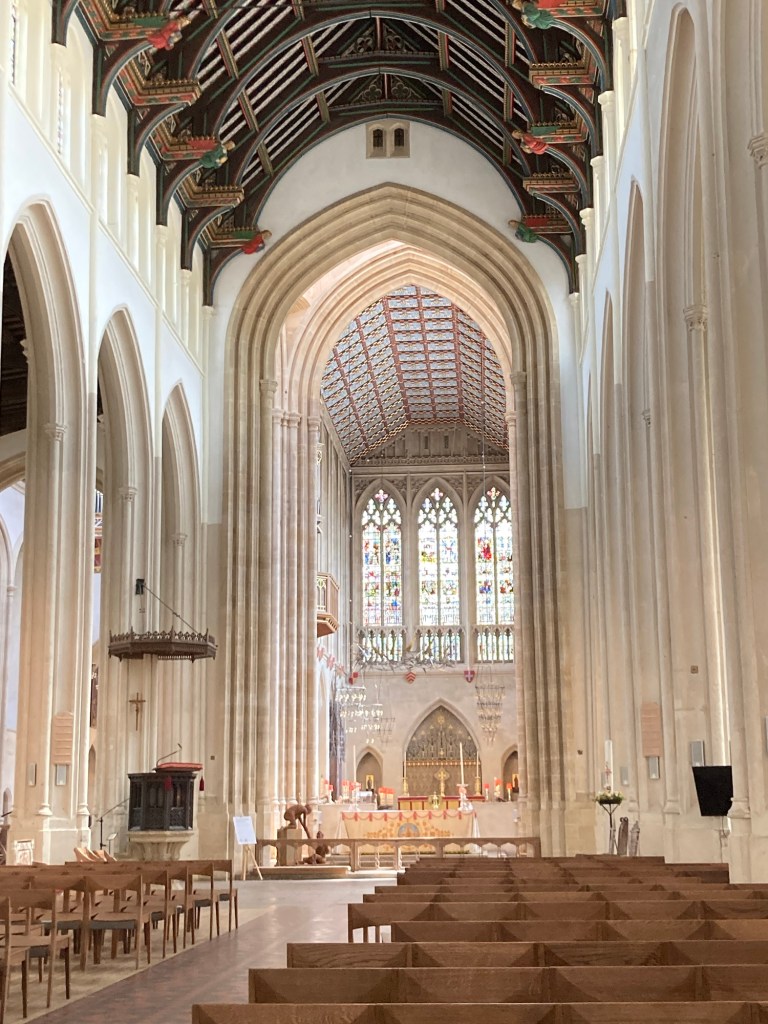
The building began as the Church of St James, and the old building (originally constructed in the 11th century) is the part that you first enter.
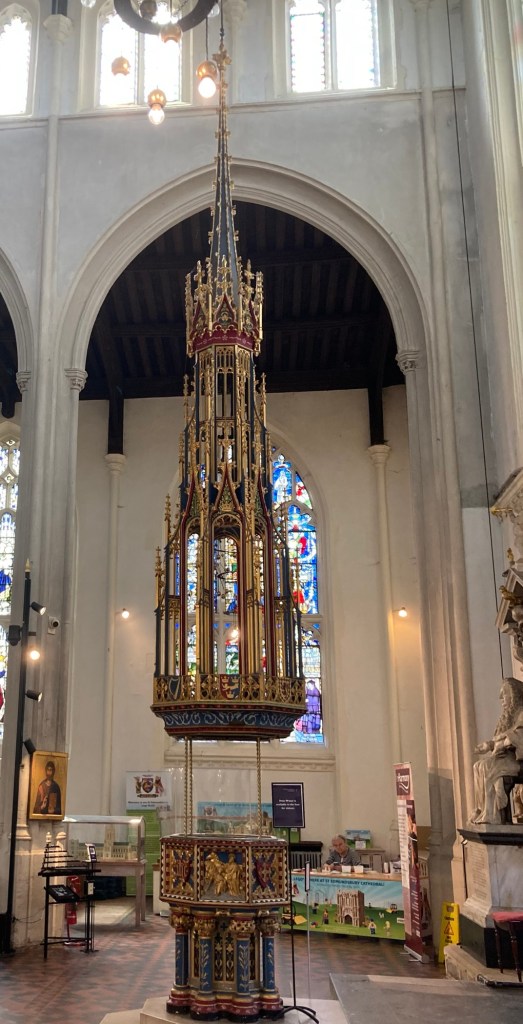
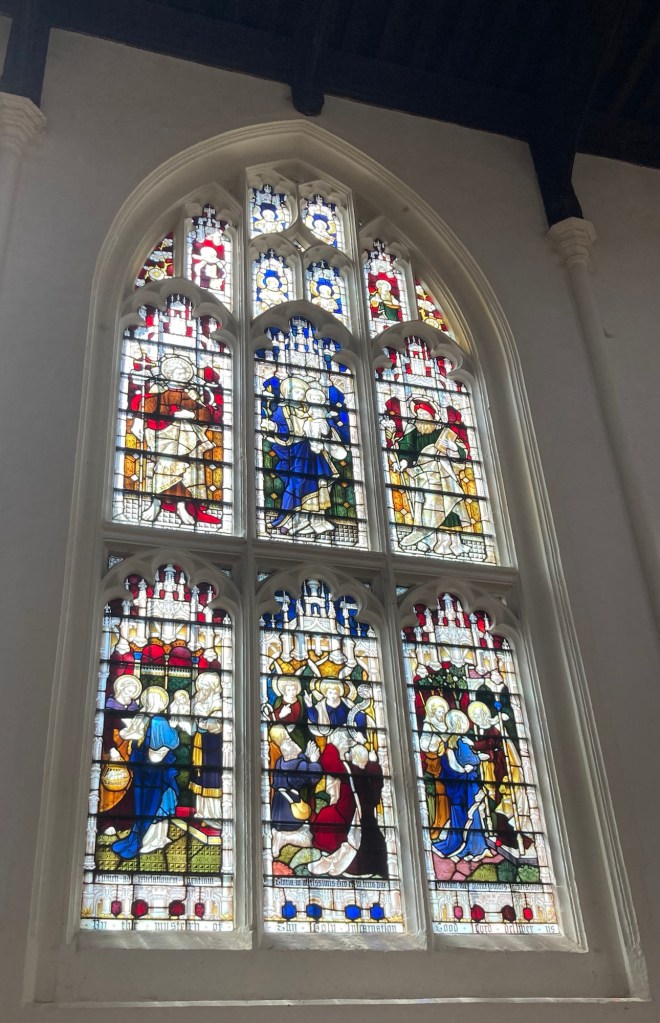
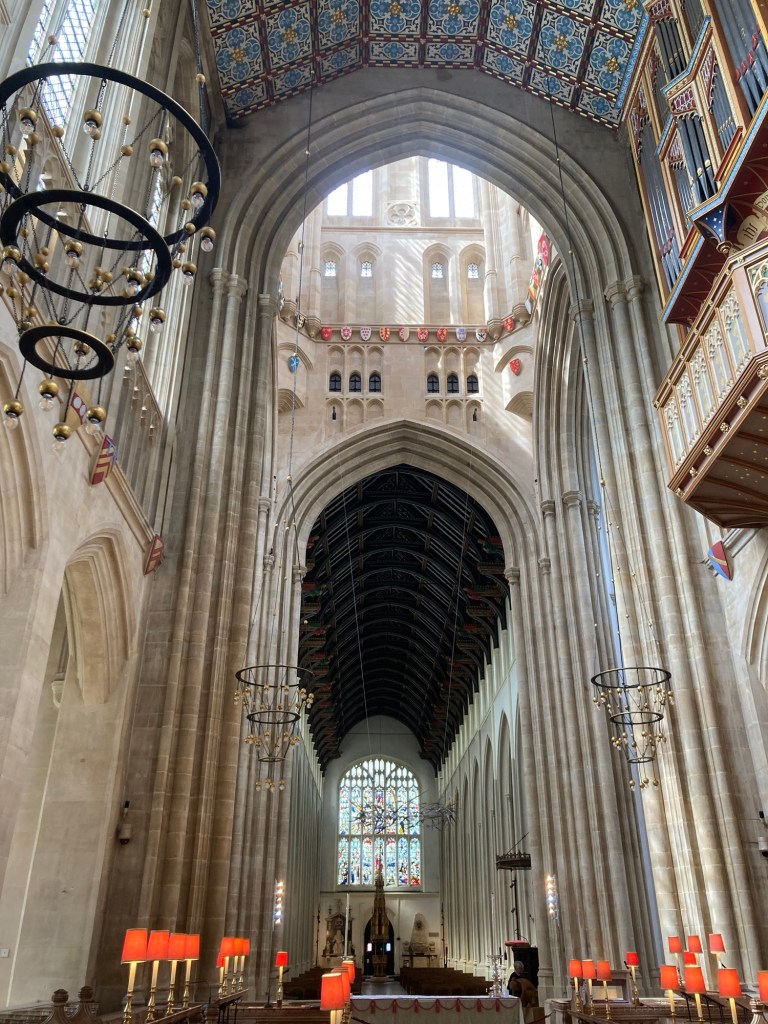
Sitting in the nave, that was designed by John Wastell and built in 1503, and looking towards the 20th century addition which makes this now a cathedral.The pretty font, a mix of Medieval and Victorian.The tour guide noted that the image in the upper middle large window was used on stamps in England in the 70s.The high pitch nave ceiling with saints, including both James and Edmund, was added by Sir Gilbert Scott in 1860.The pulpit
The tour guide stated that the Diocese of St Edmundsbury and Ipswich was created in 1914, which required the creation of a cathedral. Since this was at the end of WWI, followed by financial constraints and then WWII, the construction of the cathedral didn’t get started until after 1943 when Stephen Dykes Bower was selected as the architect. Normally, Ipswich, being the larger and the county seat, would have been the chosen location. However, all of the historic churches in Ipswich are located in the city center with no room for expansion, so the St James church in Bury was selected.
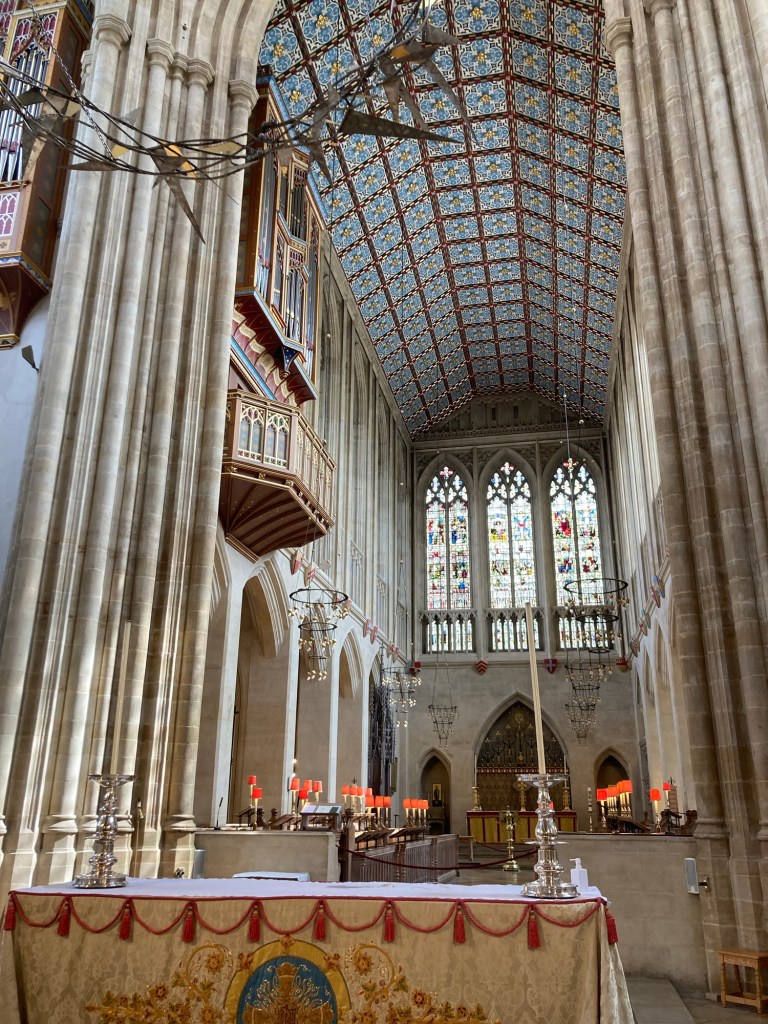
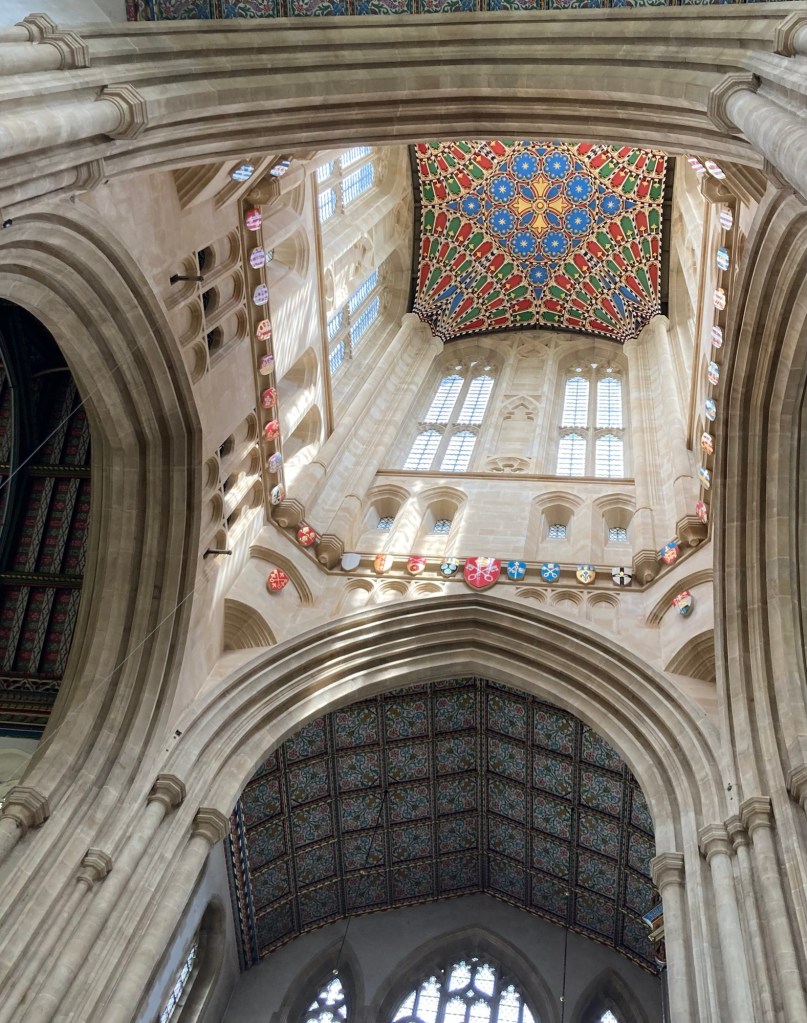
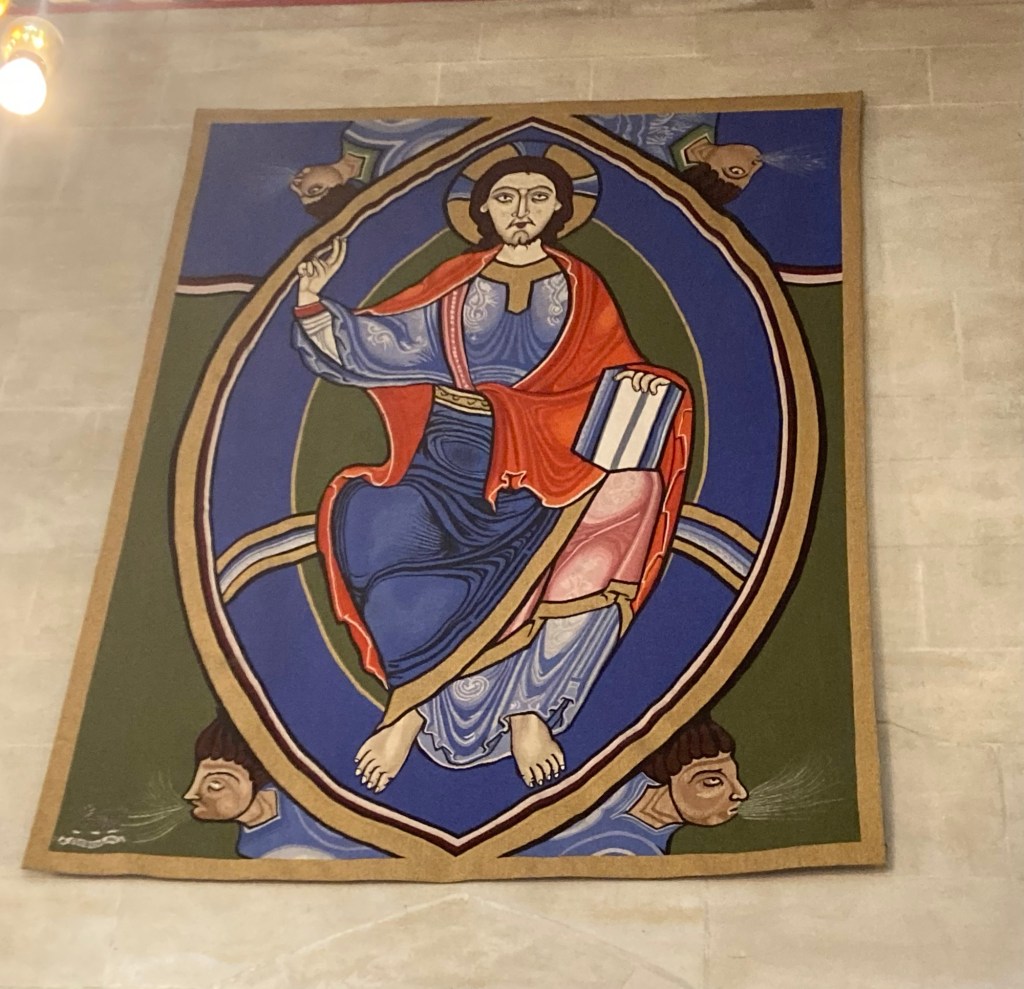
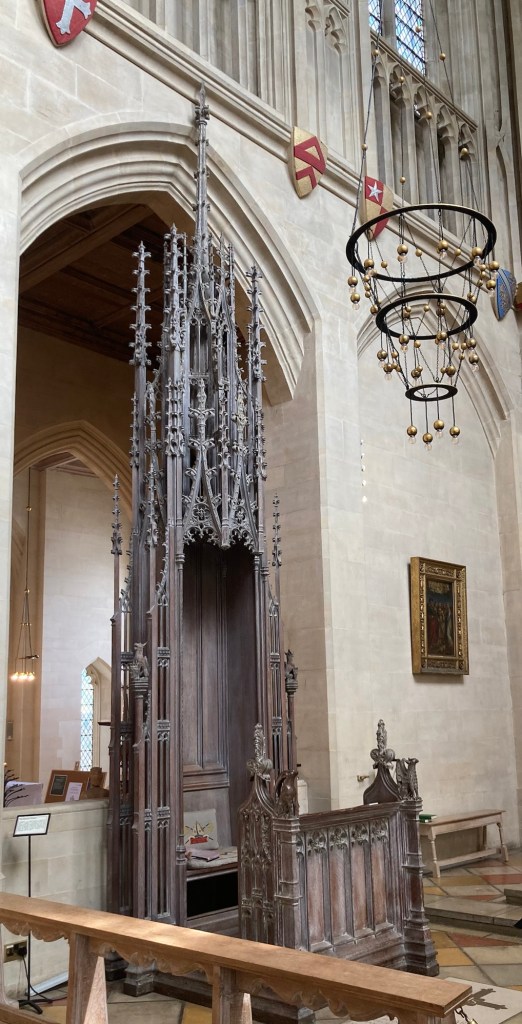
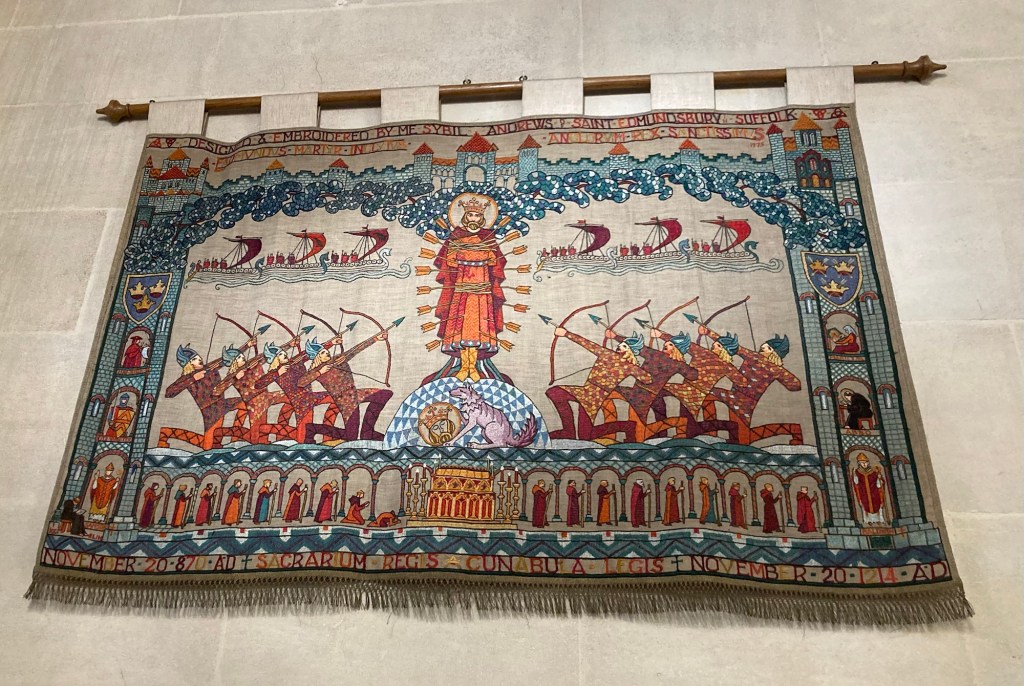
Looking into the cathedral addition to the church, from the communion altar to the high altarLooking up to the ceiling of the Millennium Tower, which wasn’t completed until 2005 and the colorful ceiling wasn’t added until 2010.This painting was used as a reference to Master Hugo, a Romanesque artist of the 12th century who illustrated the first volume of the Bury Bible. The colors of the ceiling in the Milennium Tower were based on the colors from that book.Looking back towards the nave of St James Church from the cathedral expansionThe Cathedra, or Bishop’s Chair, from which the Archbishop exercises his responsibilities The Banner of St Edmund, made by Sybil Andrews, who was born in Bury. It hangs in the St Edmund’s Chapel.
After our tour, we stopped in the lovely cathedral gift shop and also in the tourist information center, where we picked up lots of additional information on what to do in the local area.
Bob and I arrived by train into Bury St. Edmunds at 10:30 Saturday morning, where we were met by our current homeowner and driven to our current housesit. We had a great chat over a cuppa and then a walkthrough before they headed off for Norway.
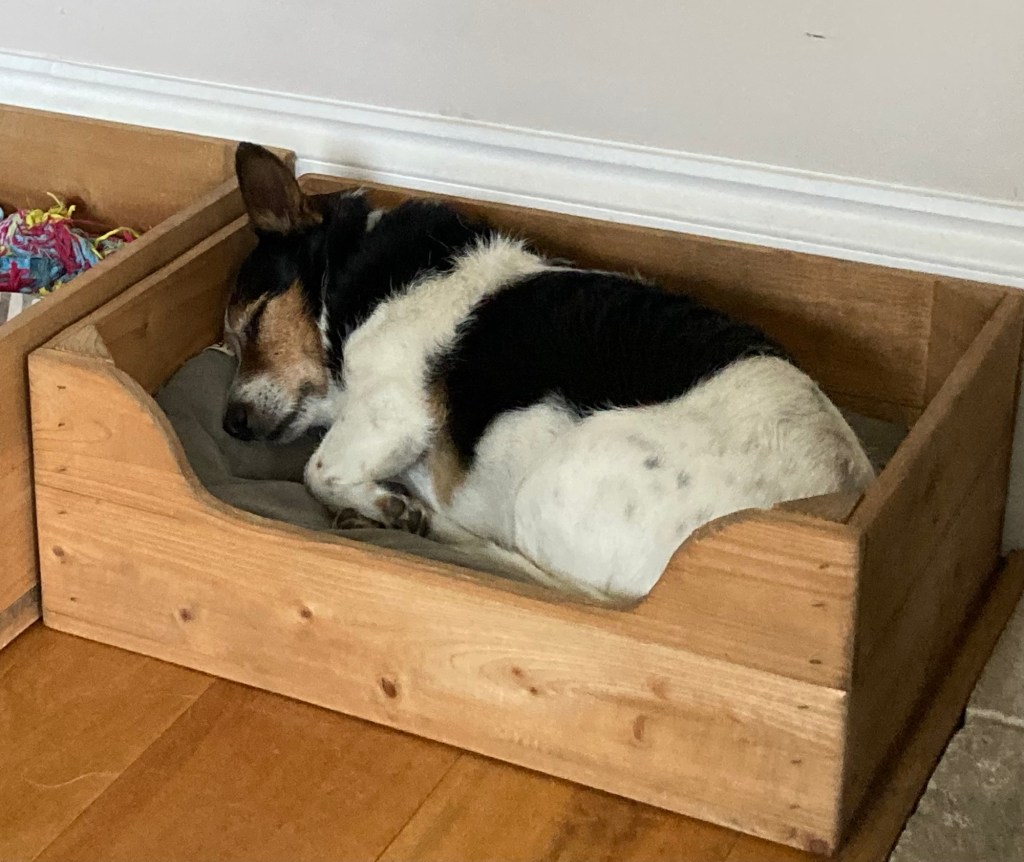
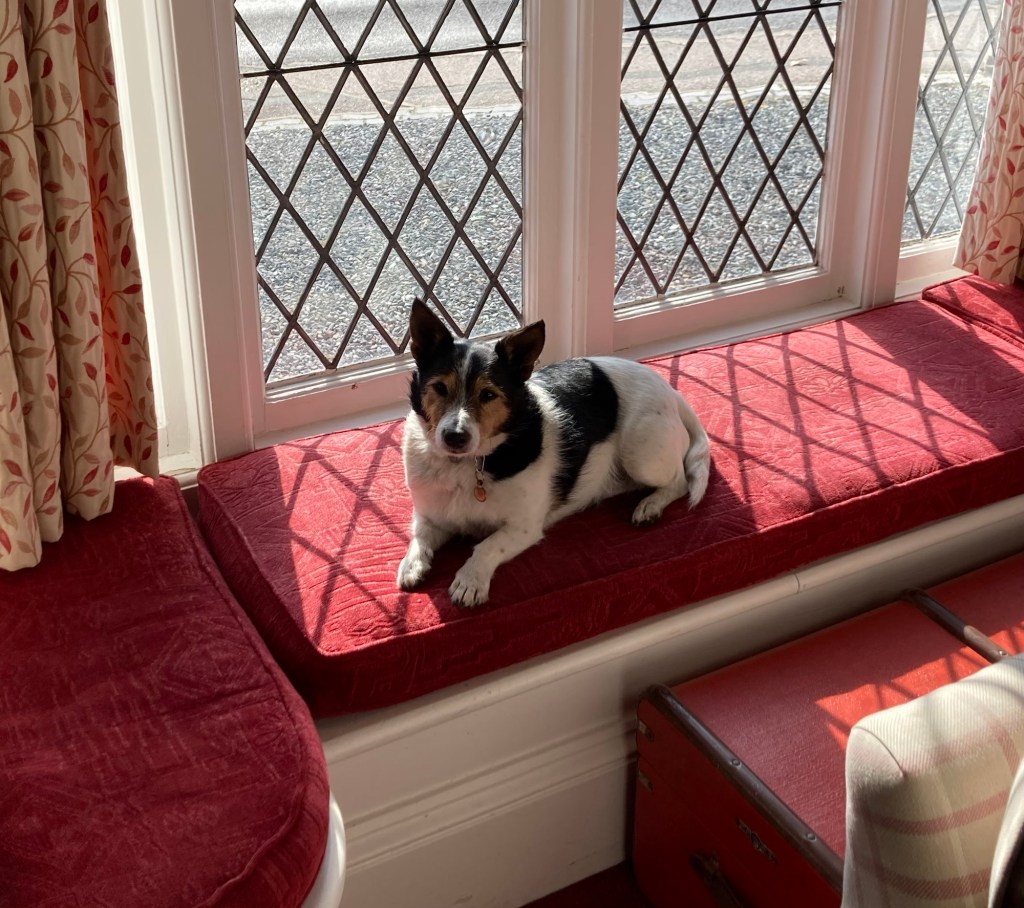
We are sitting for two dogs. The sweet, but fierce Mollie (she will get her choice of dog beds), and the lovable Angus, who just can’t get enough affection.
Mollie in reposeMollie soaking in the sun and keeping guard of her kingdom Angus snuggling up close to Bob.
They get at least two walks a day and also have a lovely garden to play in, now that we have sun again!
Bury St. Edmunds, commonly referred to as Bury, is a historic market and cathedral town in West Suffolk. Although it has a population of about 45,000 (much bigger than we were expecting), it does not have the city designation. It is best known for the Bury St Edmunds Abbey and the St Edmundsbury Cathedral. We started with the Abbey this morning.
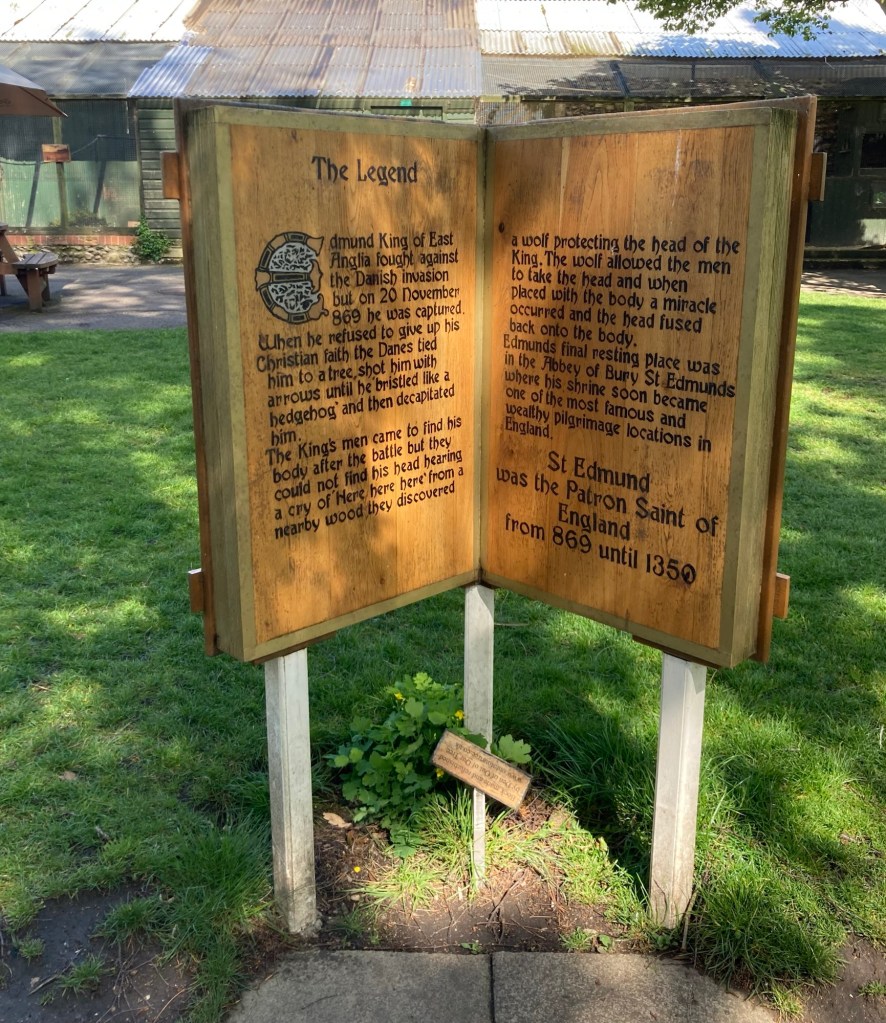
Although, perhaps we should start with a little history from long ago. It seems that King Edmund of East Anglia fought against a Danish (site of our next housesit!) invasion on November 20, 869. He was captured but refused to give up his Christian faith. The Danes then killed him by tying him to a tree, shooting him with arrows, and then decapitating him. When Edmund’s men came to retrieve him after the battle, they found his body but not his head. A wolf’s cries alerted the men to the head that the wolf was guarding, and when the head was placed with the body it fused back on. Thus, he became St Edmund and the Patron Saint of England from 869 to 1350.
A traffic circle with a state of Edmund made of metal arrows
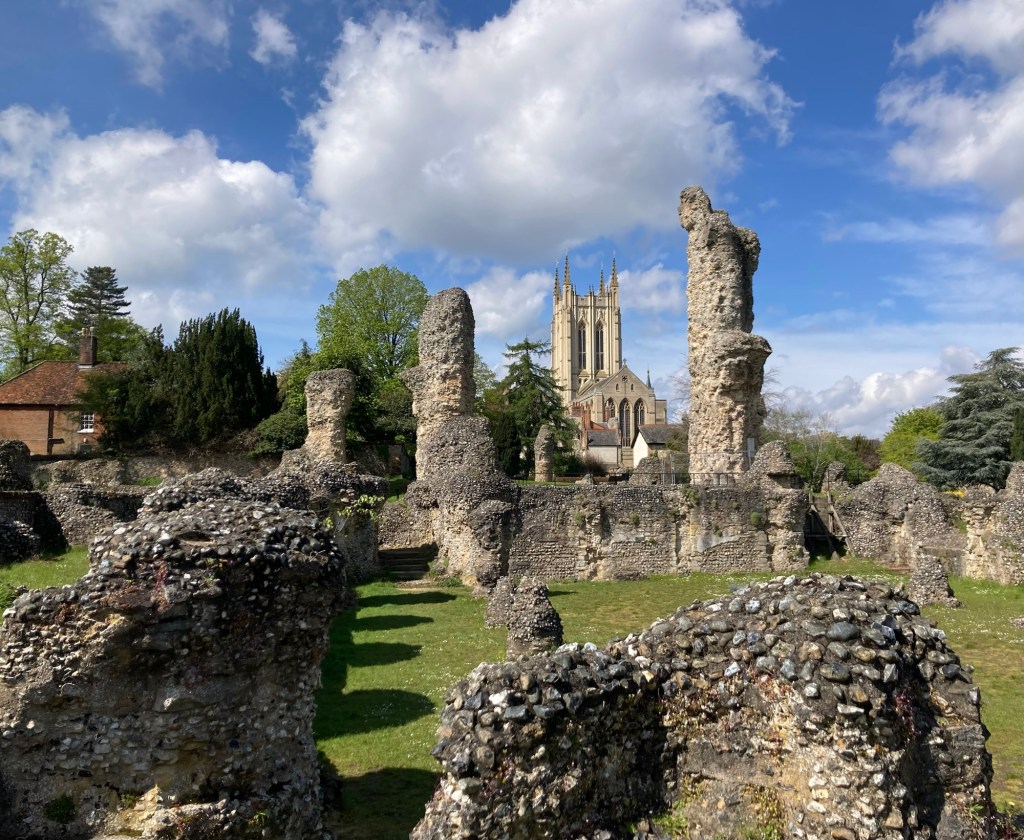
Edmund’s body was buried in the abbey, the ruins and grounds of which we explored today.
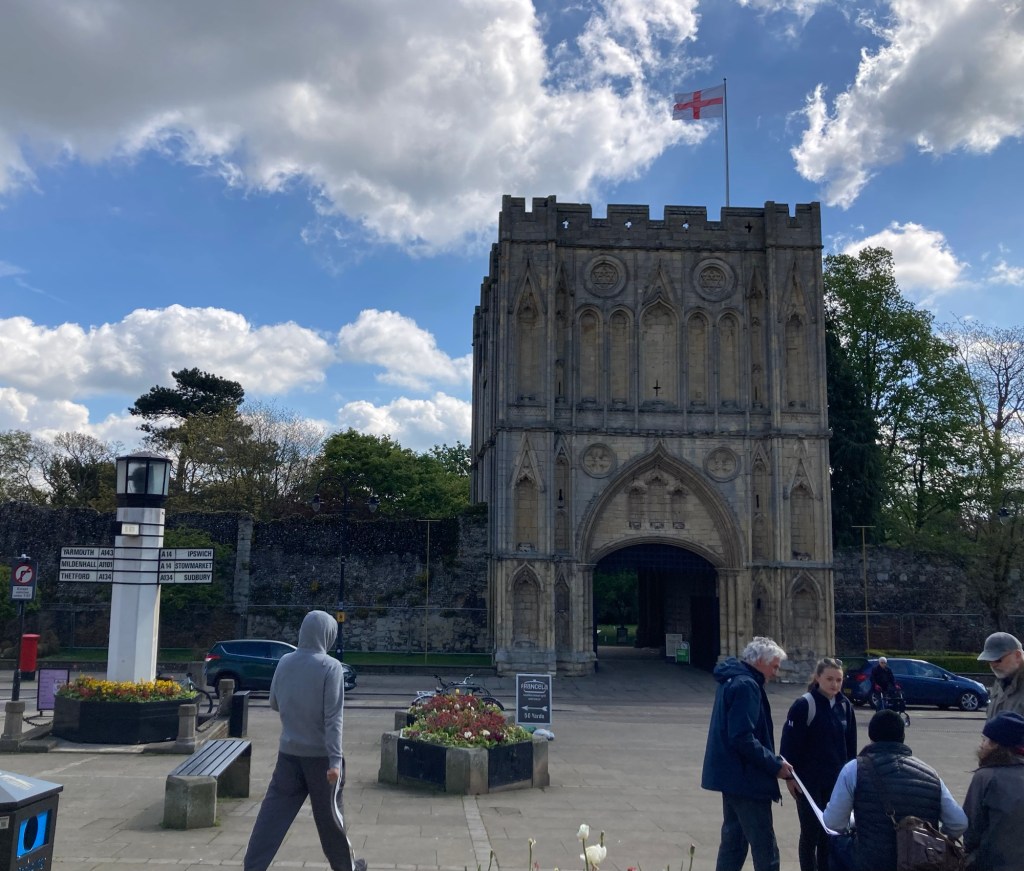
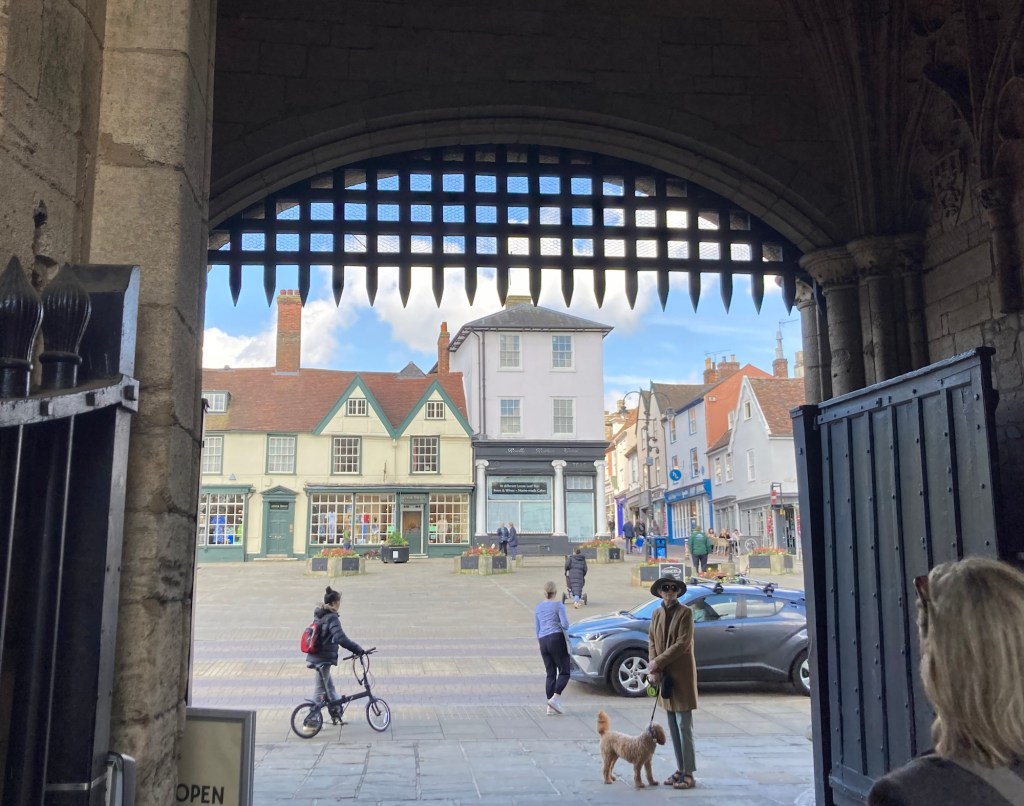
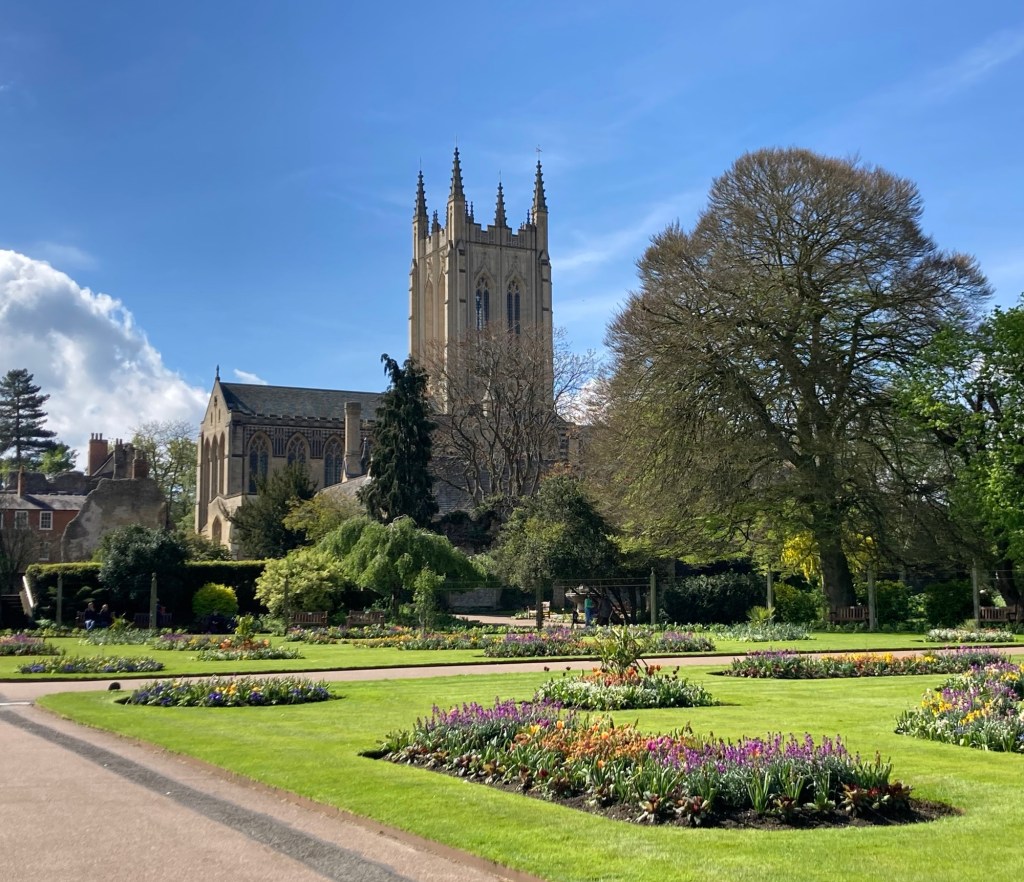
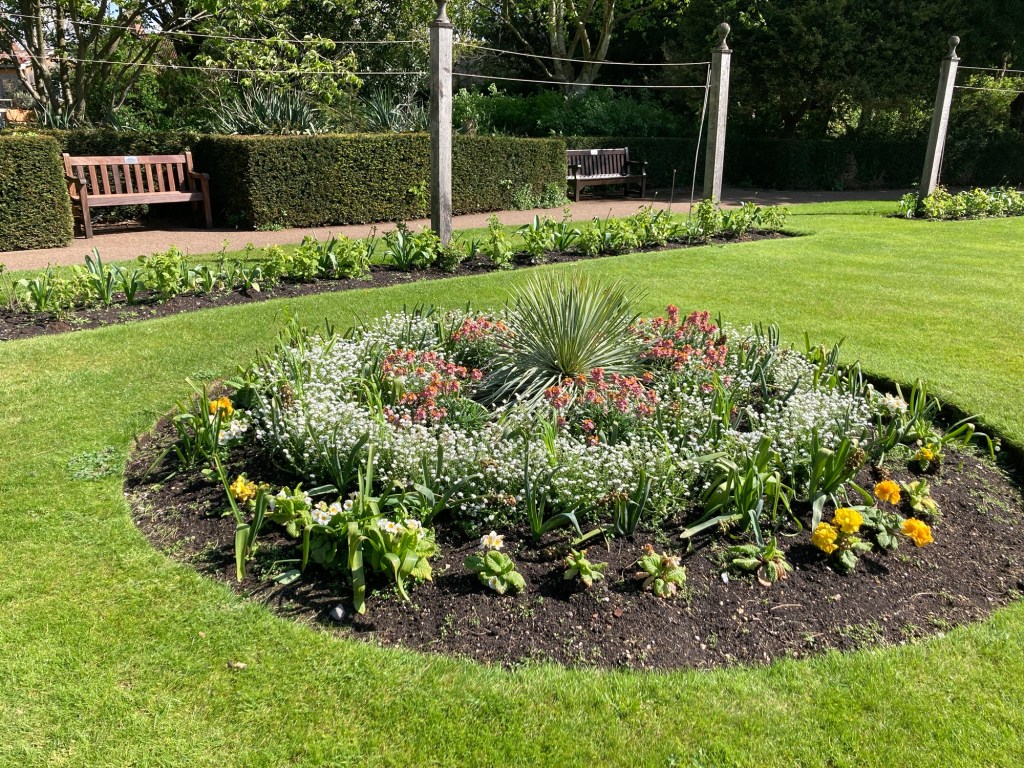
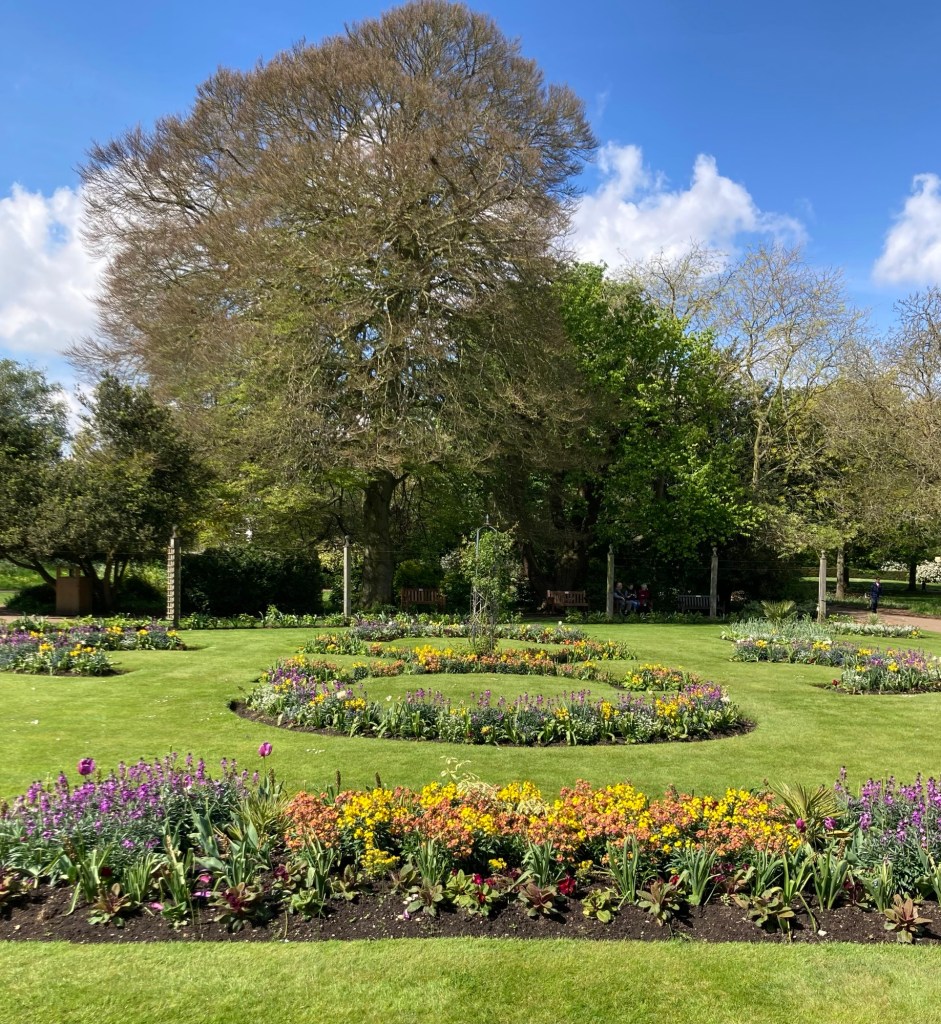
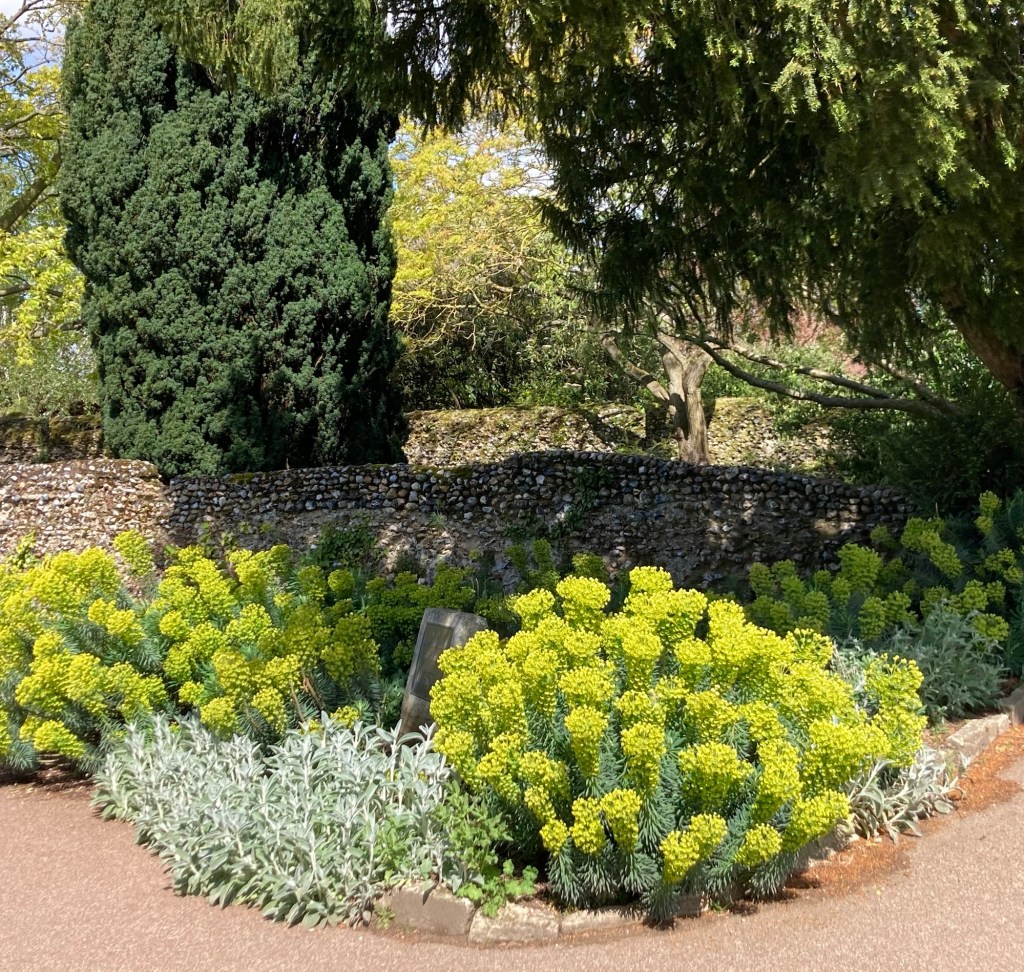
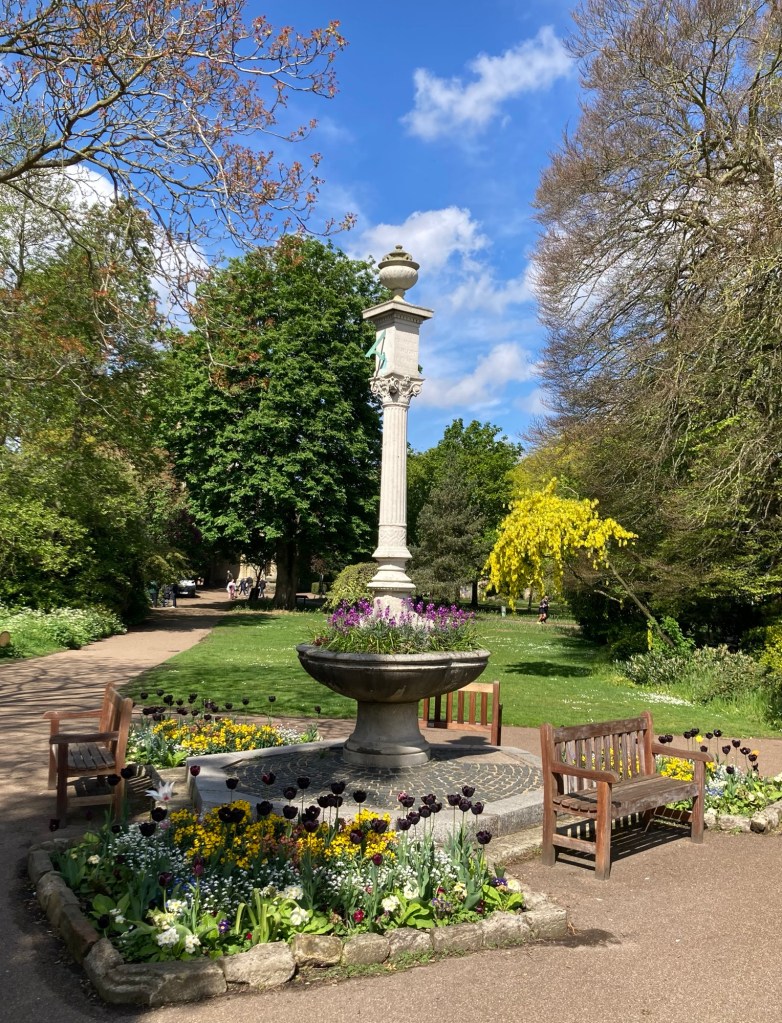
The gothic style Abbey Gate entrance to the abbey grounds, the main entrance to the abbey’s great courtLooking back towards the town center through the gateLooking over the lovely gardens of the great court towards the cathedralA closer look at some of the gardensDittoThere was a small aviary beside the cafe on the grounds. This is a colorful Golden Pheasant.The Magna Carta memorial on the grounds.
Another brief foray into history. The Magna Carta is England’s foundational document for their democracy, a bit like the US Constitution, but written in 1215. In 1214, the Archbishop of Canterbury secretly brought a number of barons to the Bury Abbey to discuss the unpopular King John, which was the first step towards the signing of the Magna Carta. I prefer my history lessons in beautiful surroundings!
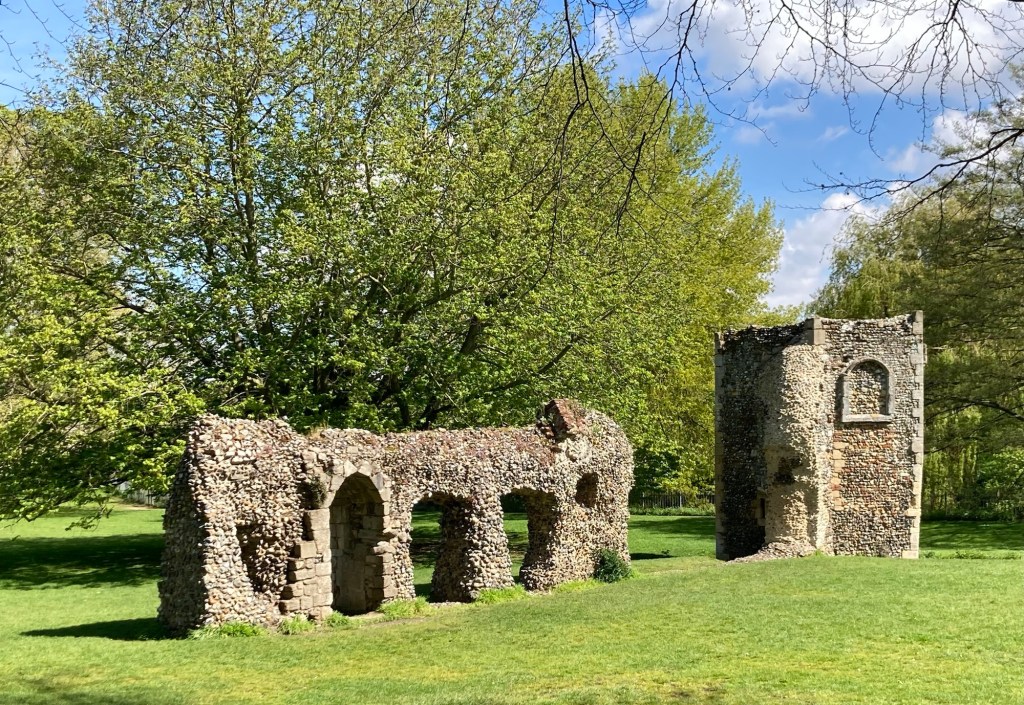
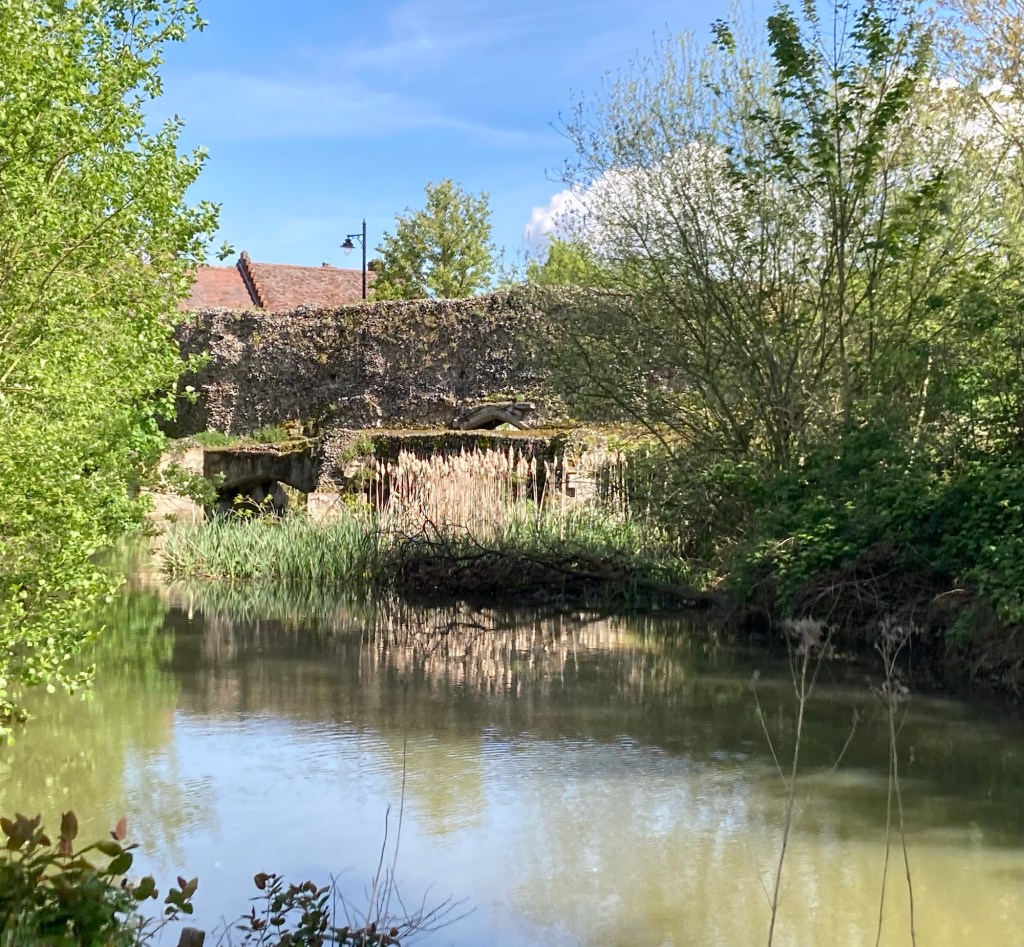
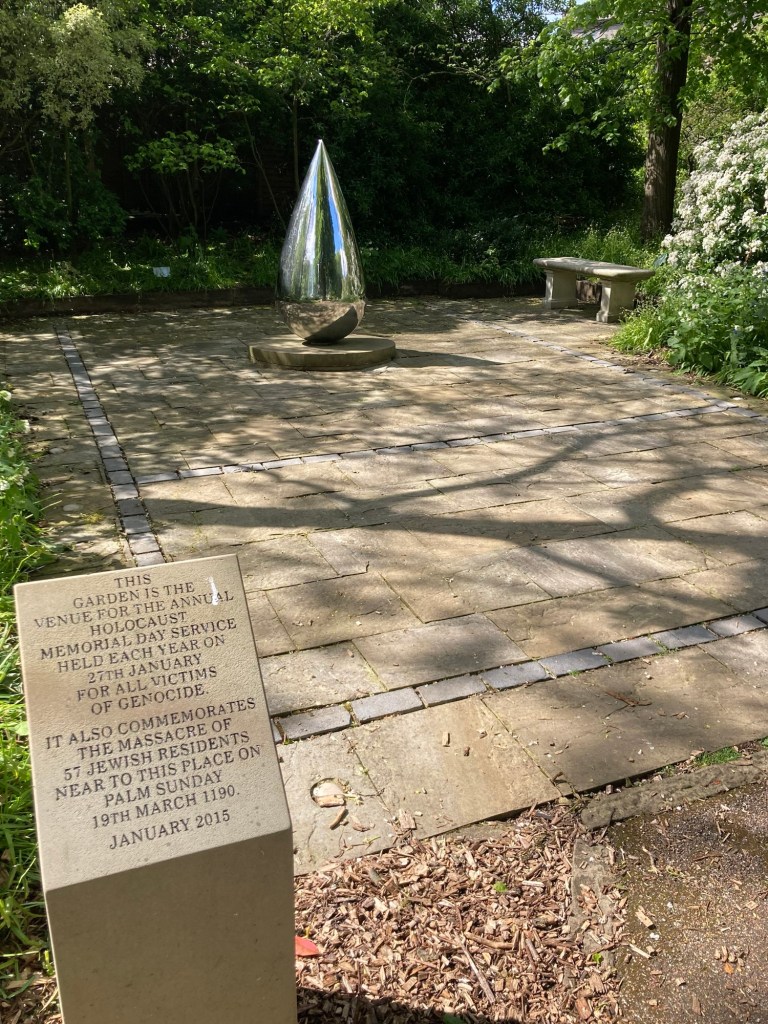
Some of the ruins of the abbeyThe old abbey bridgeMore of the ruinsMore gardensDittoA sadder memorial, and unfortunately not consigned to history
Bob and I have had a lovely visit in Cambridge. It is so nice to train into a place and know where to go without getting out the Google Maps to direct us!
Yesterday, we had a great meet-up with prior homeowners (and now friends) Peter and Sue, whose home and adorable cat we cared for in October/November of 2022 while they were exploring New Zealand and cheering on the England Women’s Rugby Team in the Covid-delayed 2021 World Cup.
After checking into the Ibis by the train station, though not as early as we expected, don’t get Bob started on that, we met up with Peter, Sue, and Hugo at their home. We went to a local farm market, shops, and cafe for coffee and cake and some shopping before going back to their house to continue the visit. By this time, Hugo had awoken from his nap and came right up to us on the couch as if to welcome us back. He got right on Bob’s lap and purred contentedly. It was the sweetest thing.
Hugo is full of personality and reminded all of us later when it was his dinner time.
Hugo’s humans and us had a great dinner at Tawa, a local Indian restaurant that Bob and I had enjoyed during our first visit.
Bob, me, Sue, and Peter
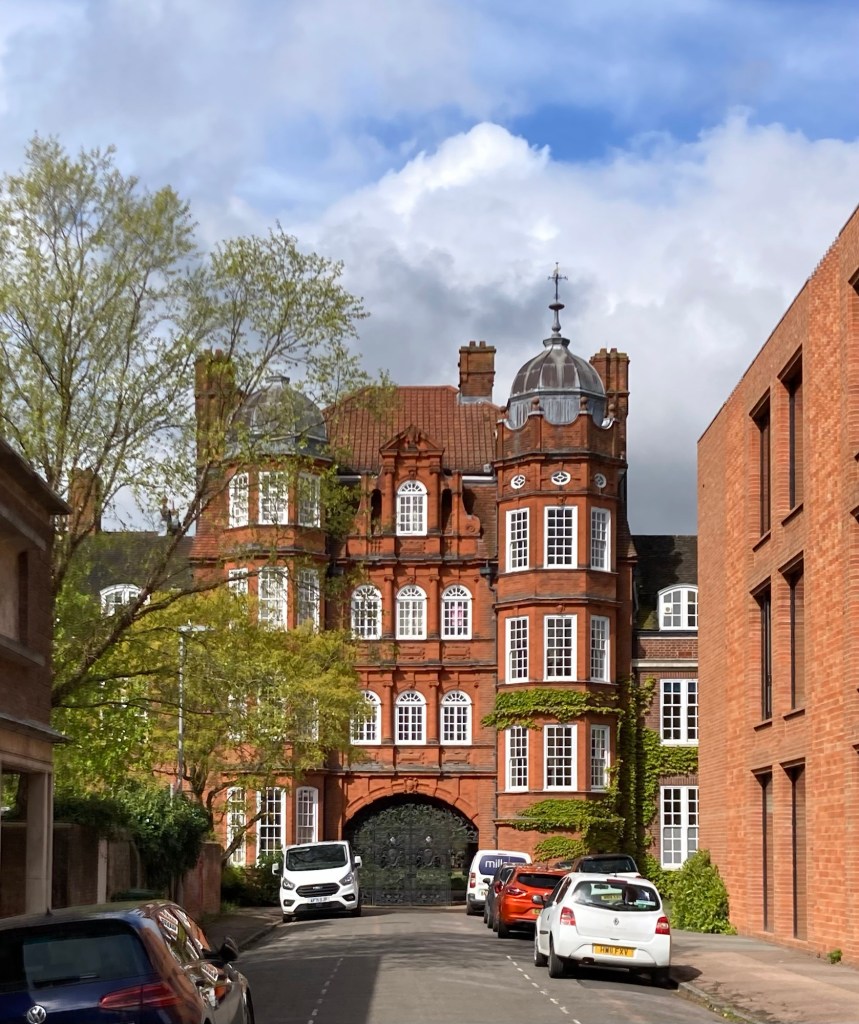
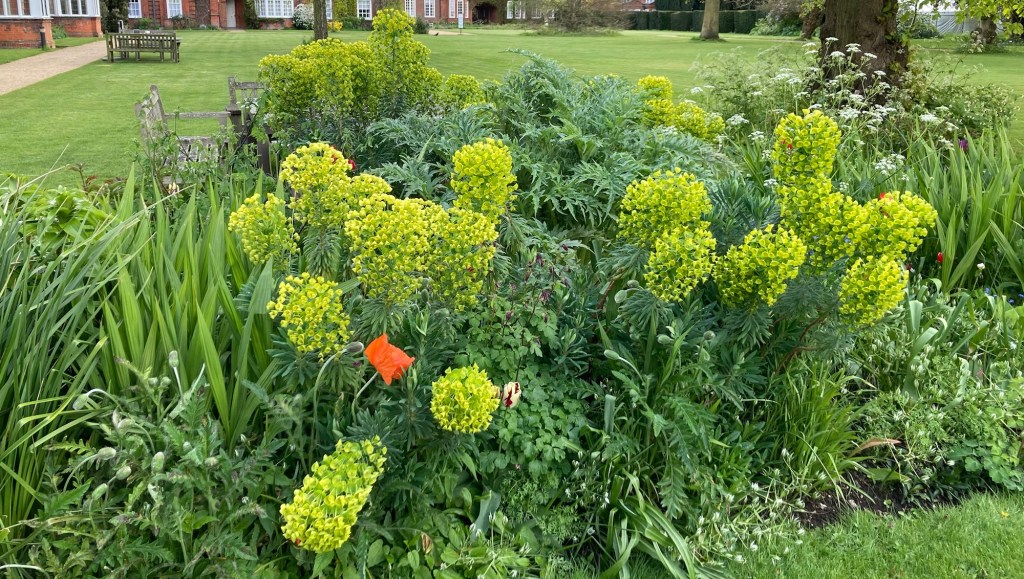
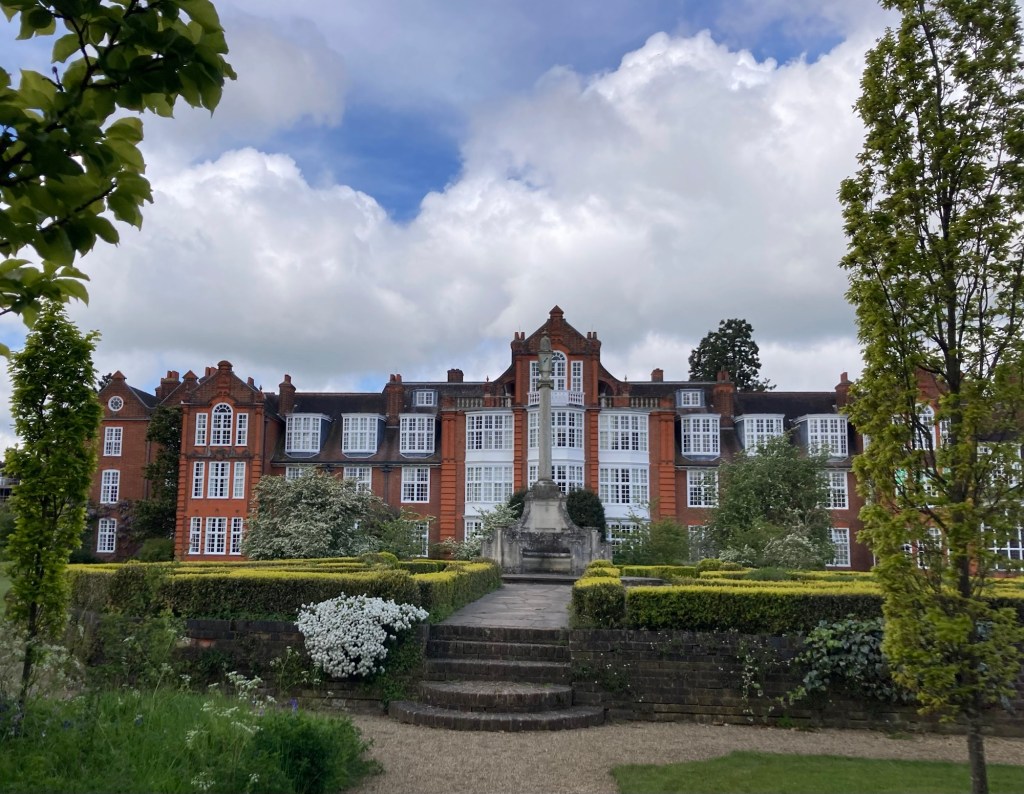
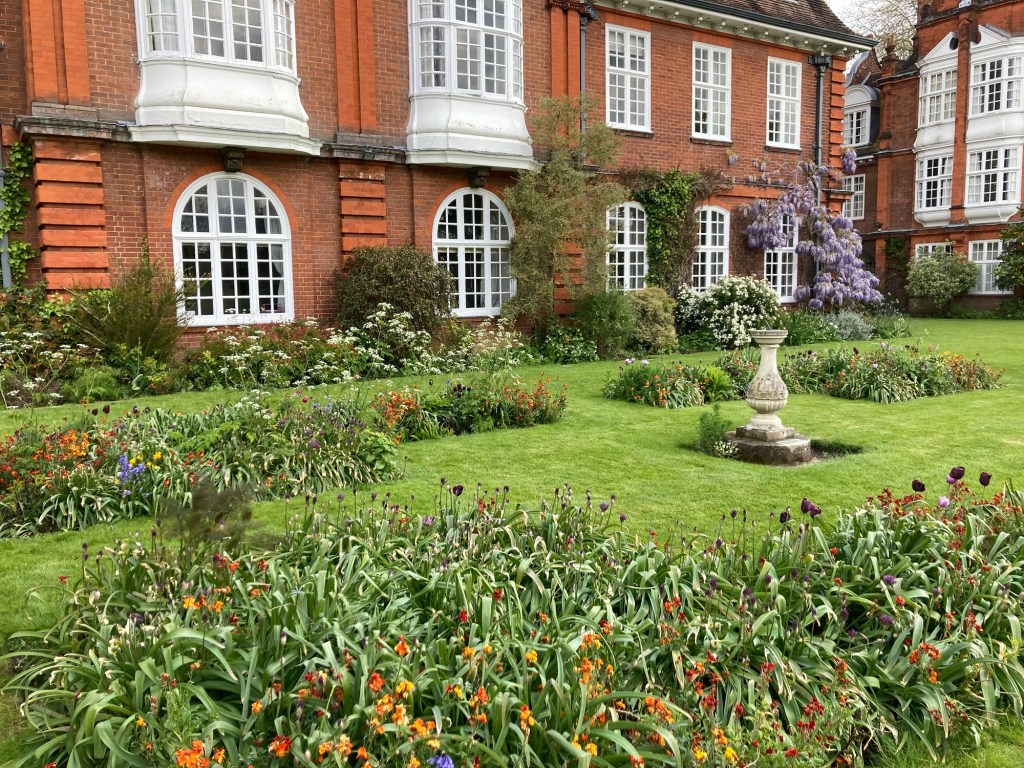
Today, Sue took me to Newnham College to see the gardens and “have a cuppa,” as they say in the cafe on campus.
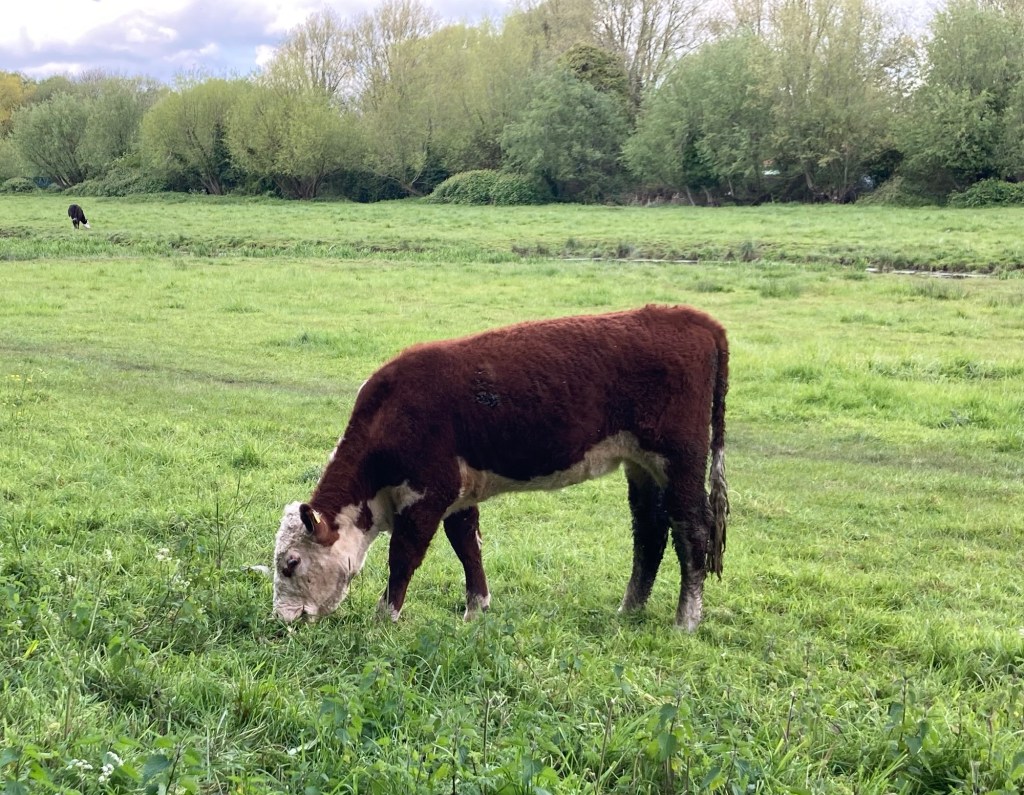
The black iron gates under the beautiful building where you enter the college campusSome of the beautiful flowers in the Newnham gardenMore of the gardens and buildings on campusDittoOf course, cows in Cambridge
Bob and I later walked into the town center and down by the River Cam to reacquaint ourselves with more of Cambridge. We stumbled onto Downing College that had some areas open to the public.
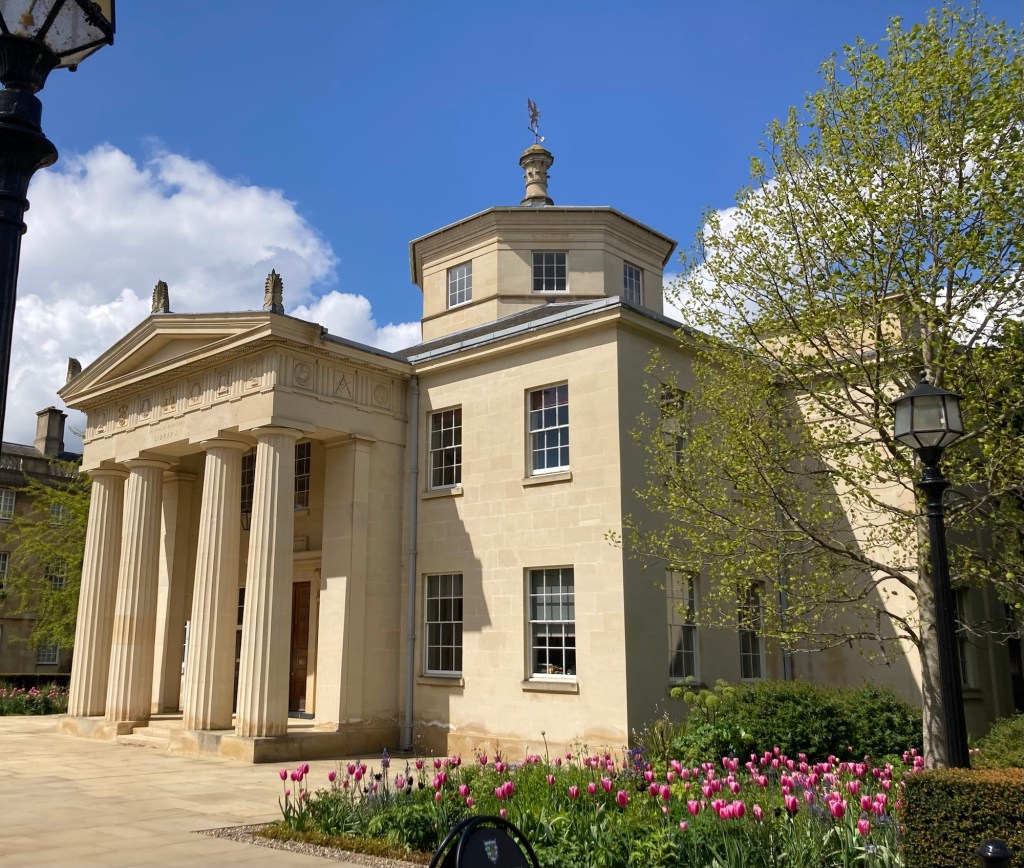
A building on the college campus A sculpture on the Downing College campus by Ai Weiwei
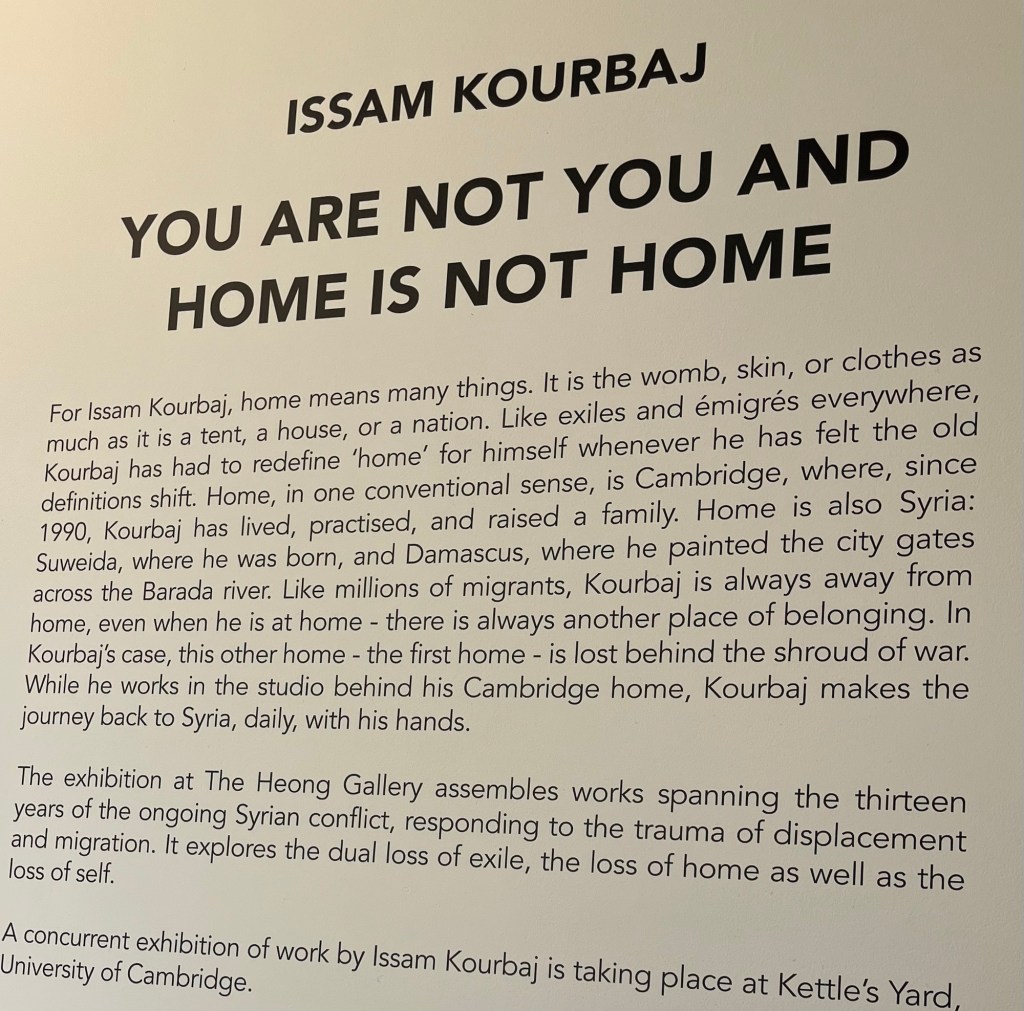
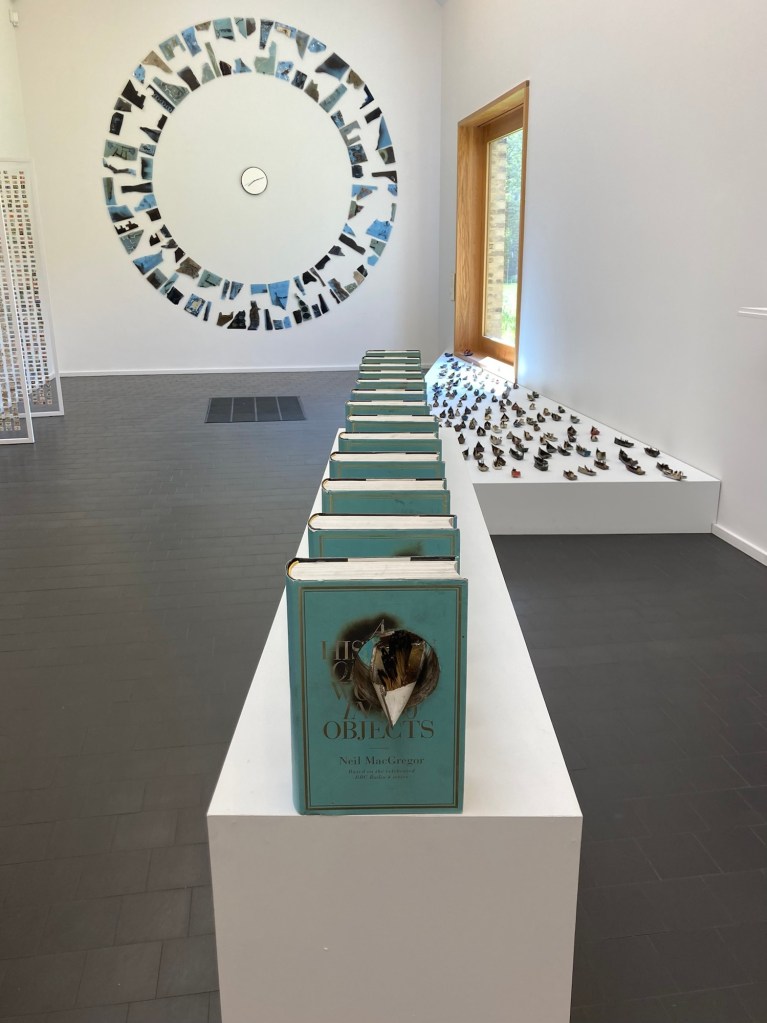
One of the places open to the public on the Downing College campus is the Heinz Gallery, where they were having an exhibition by Issam Kourbaj.
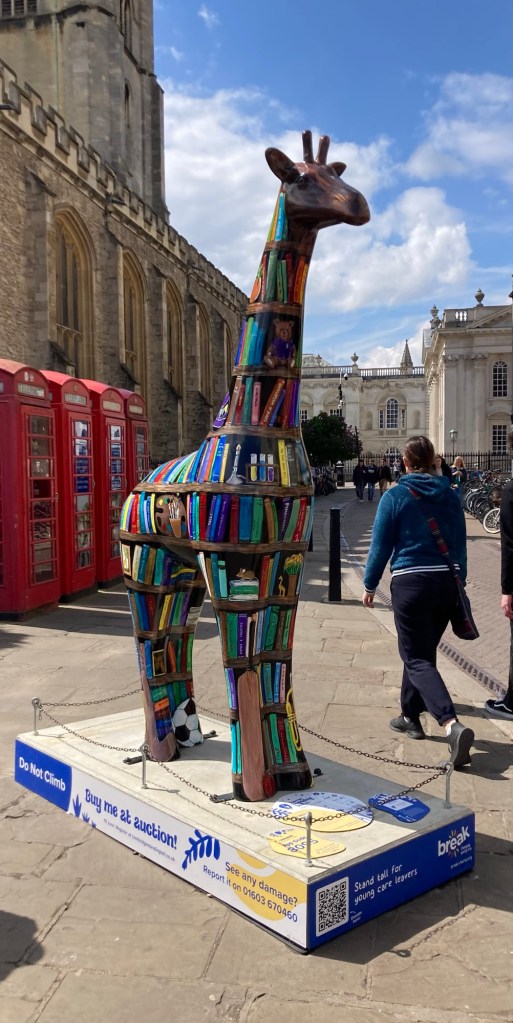
Bob and I could relate to having more than one place feel like homePrecarious Passage showing a boat flowing through 1 of 13 books representing each year of the Syrian conflict One of many giraffes around town that will be auctioned for charity, this one book relatedBikes rule in this townOne view of the River Cam
Tomorrow we get back to housesitting by meeting with our homeowners in Bury (pronounced Berry) St. Edmunds.
Today, was all about reading and books, although a bit differently than we expected. We started with a leisurely morning reading the paper, and John Crace making me laugh with his word phrasing
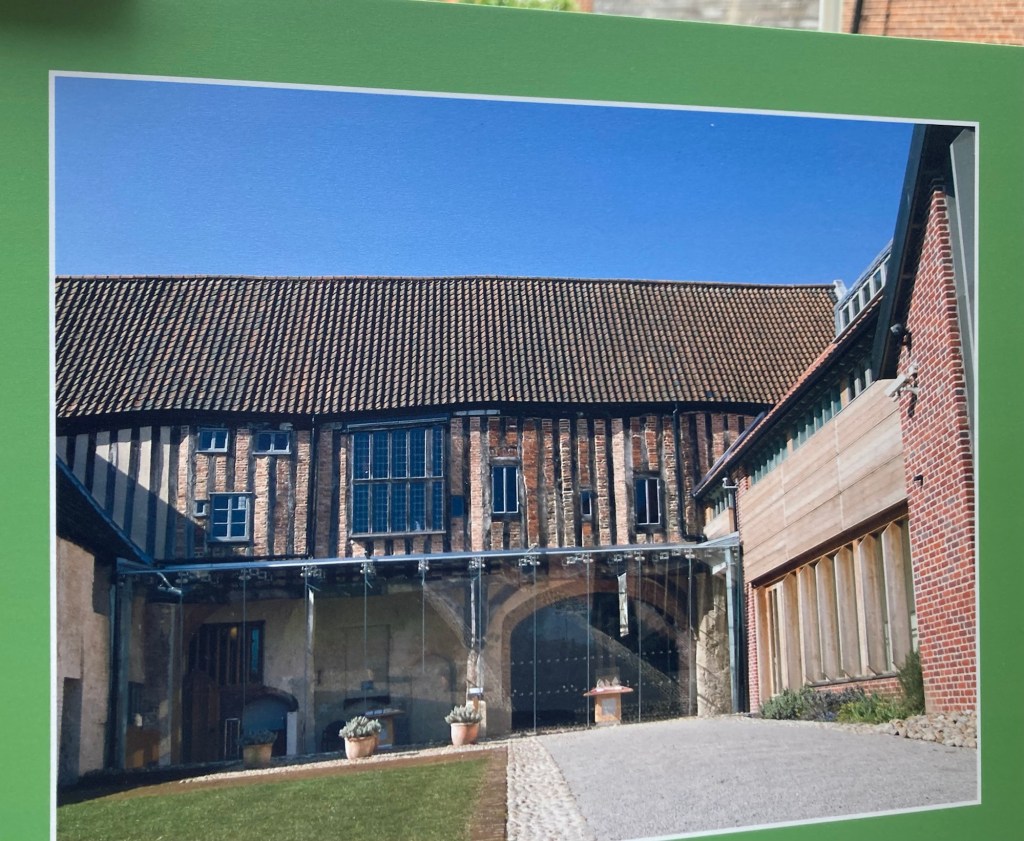
Then we headed off to the National Centre for Writing where we thought we would learn a bit about English writers. We did not, but we did learn about Dragon Hall, the lovely medieval building in which the Centre is housed. It was built around 1427 by a wealthy merchant.
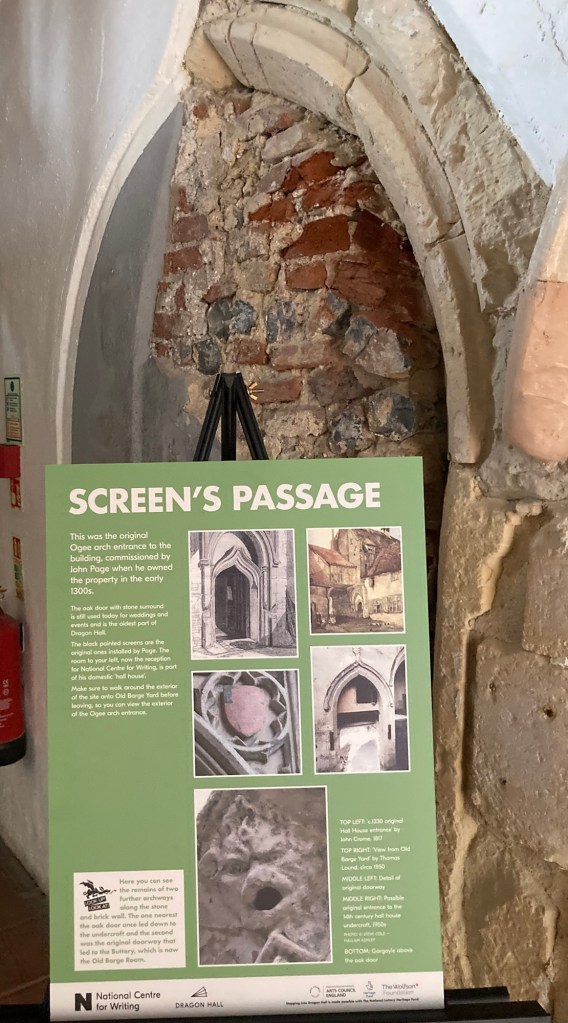
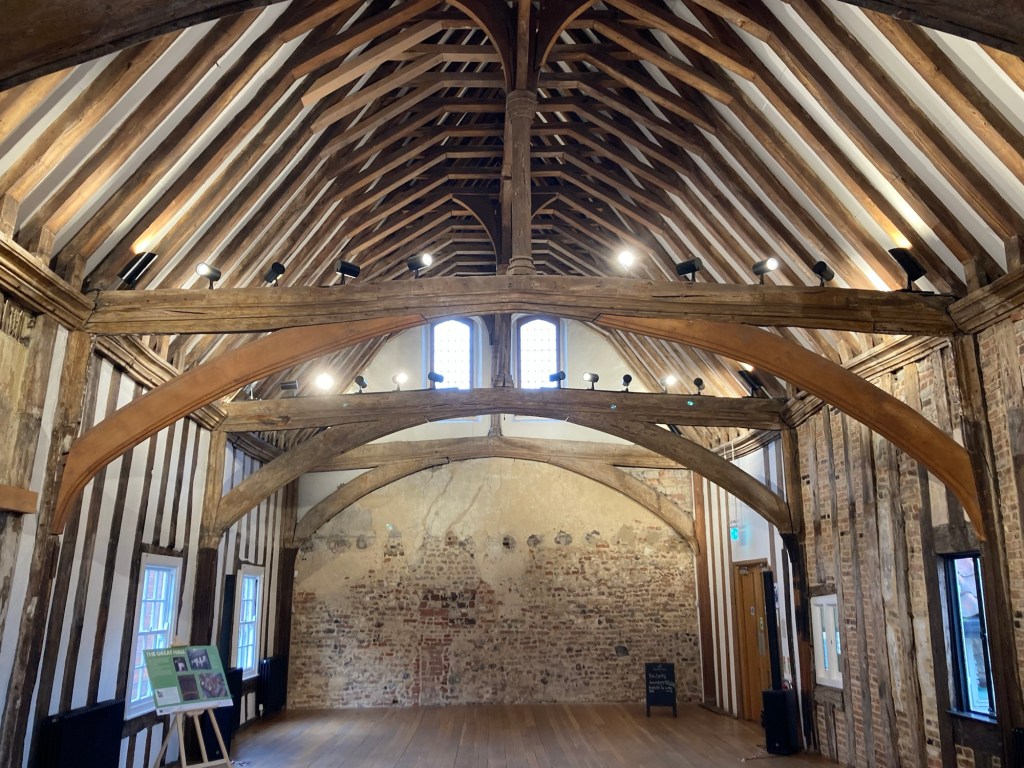
Dragon Hall, currently home to the National Centre for Writing a s well as an event spacePart of the interior of one of the roomsA photo of what the rear of the building currently looks likeI mostly like this information panel and related arch, as it allowed me to really learn the term ogee, which I only know from crossword puzzles The great hall upstairs, which is used for weddings and other events
While we didn’t learn anything about writers from our tour, the National Centre for Writing does seem to host a number of writing related events for the community and even has a cottage nearby to house writers or translators in residence. Also, I picked up a brochure that we would use for another walking tour of the city after we checked out the public library that Bob had researched for us.
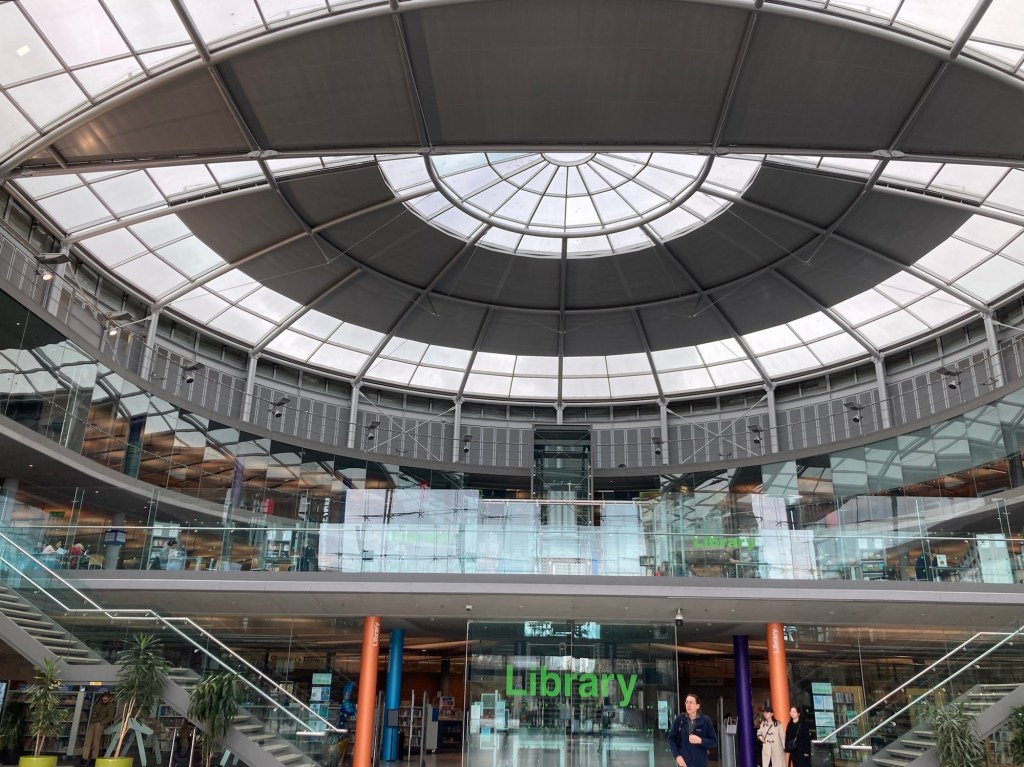
The impressive sounding Norfolk and Norwich Millenium Library is housed in an impressive modern building called The Forum, which also houses cafes and other businesses.
The ForumThe library inside The ForumLooking out towards the city from inside the library
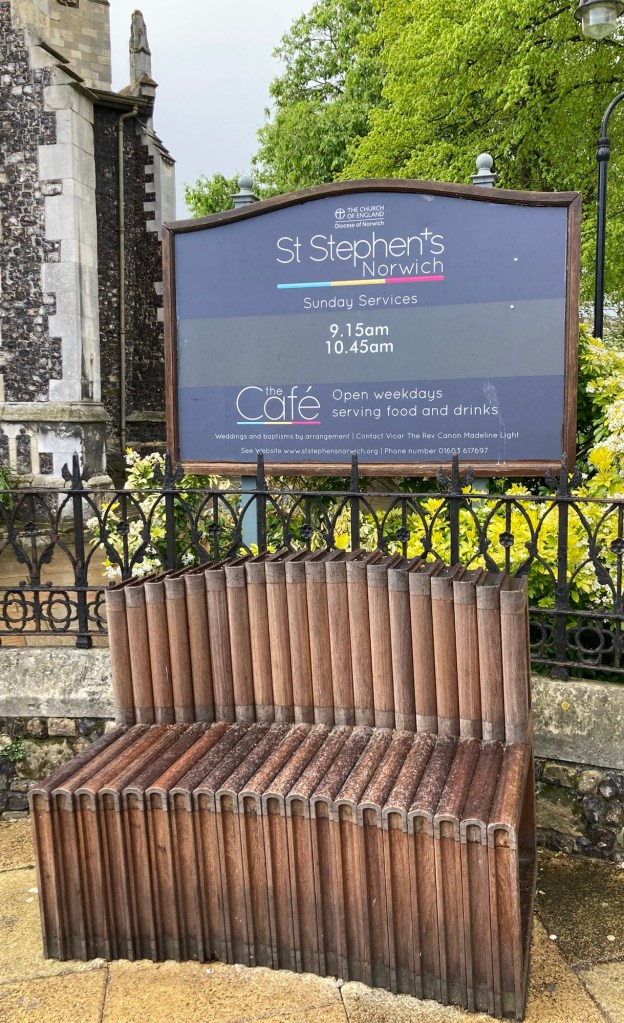
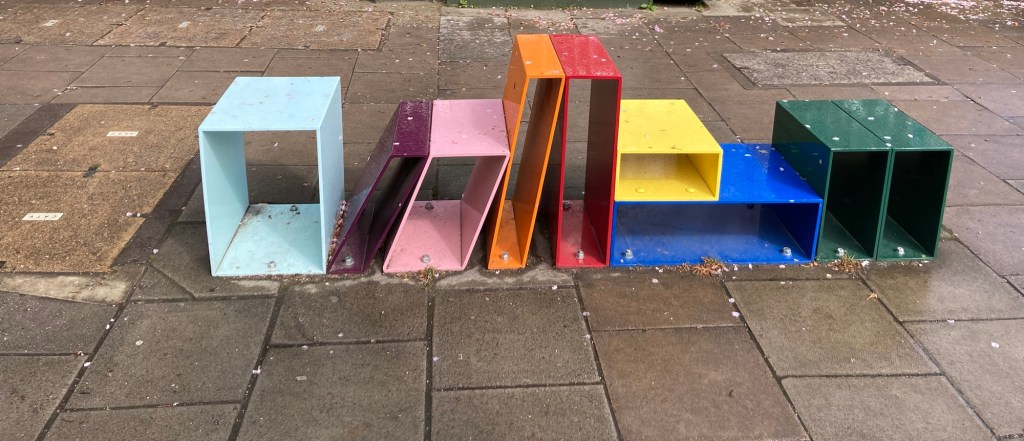
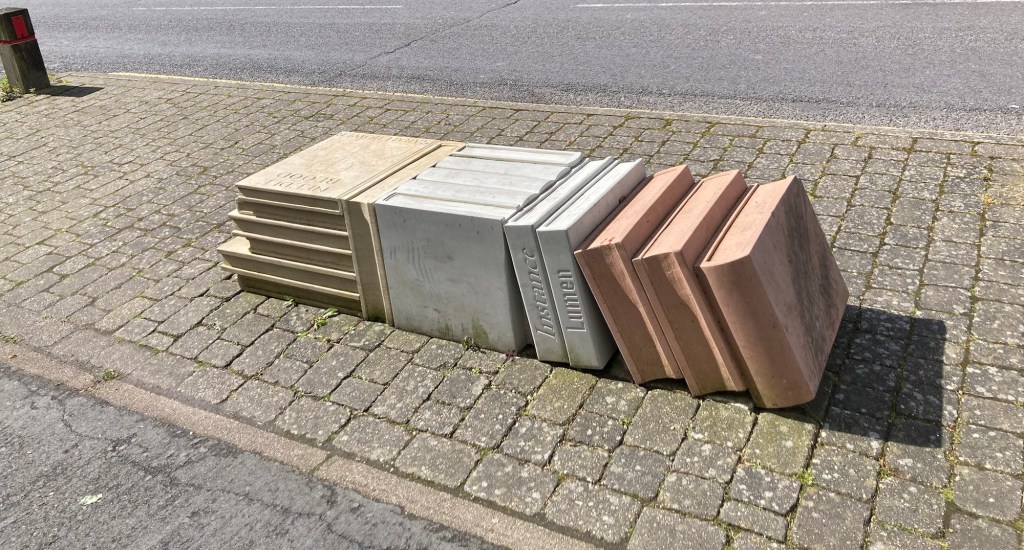
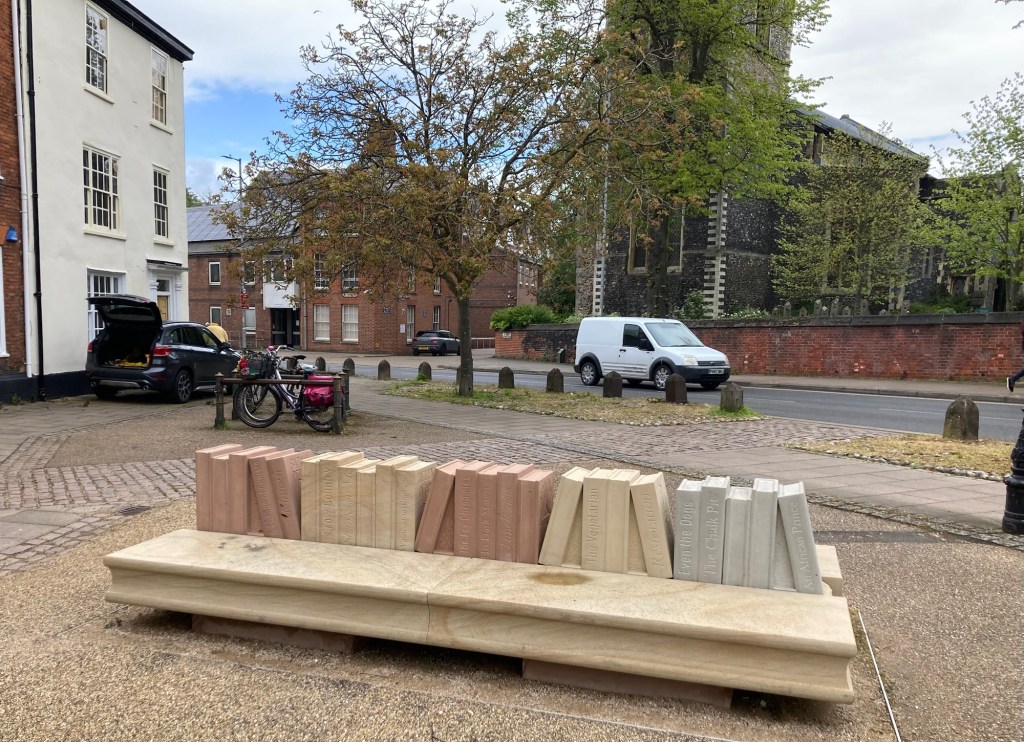
After exploring the library, we headed out to do the walking route to find the book-themed benches around Norwich. During our walk, we also popped into the department store, Jarrold’s, which we had seen yesterday but hadn’t explored (very impressive food hall and 4 restaurants within the store!), and stopped into a local bakery, which used to just be a stall in the market but has now transferred into a brick and mortar building, for a lovely cheese scone. The walk also took us through a number of small alleyways in Norwich, so it made for a great walk even with the on again/off again rain that was not noted in our weather app.
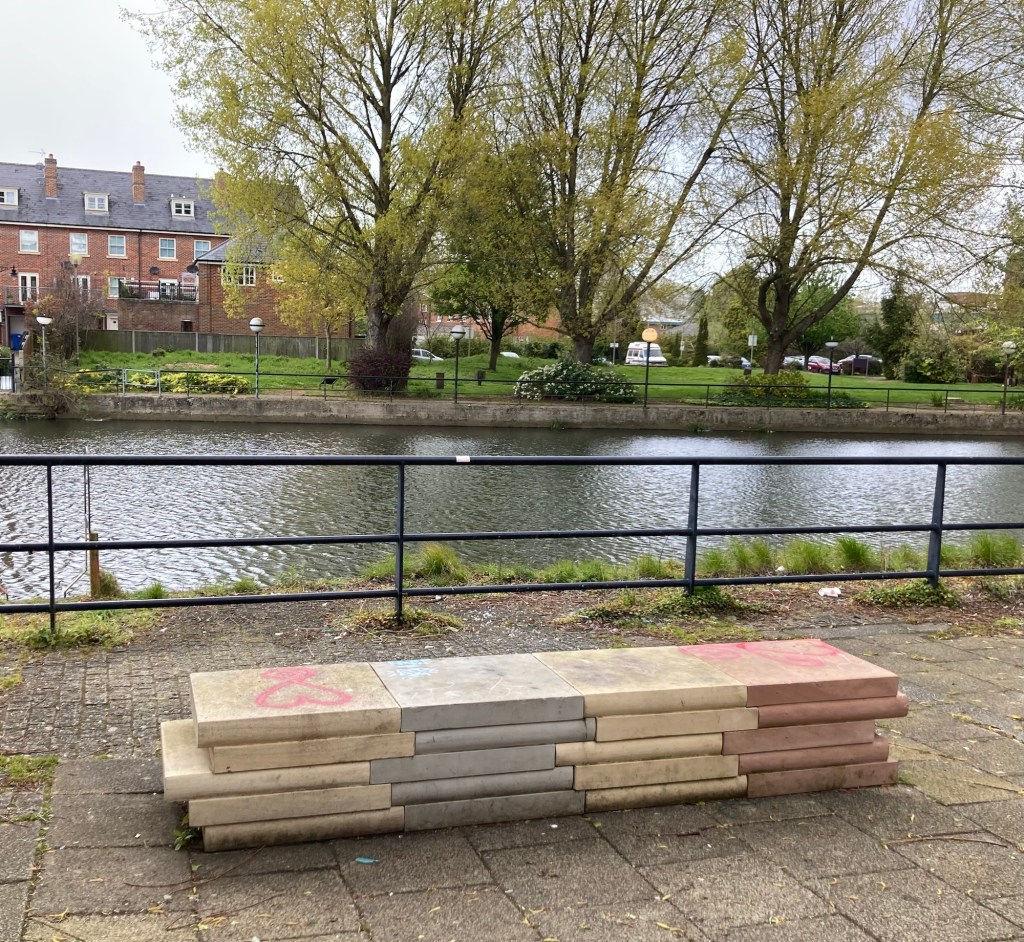
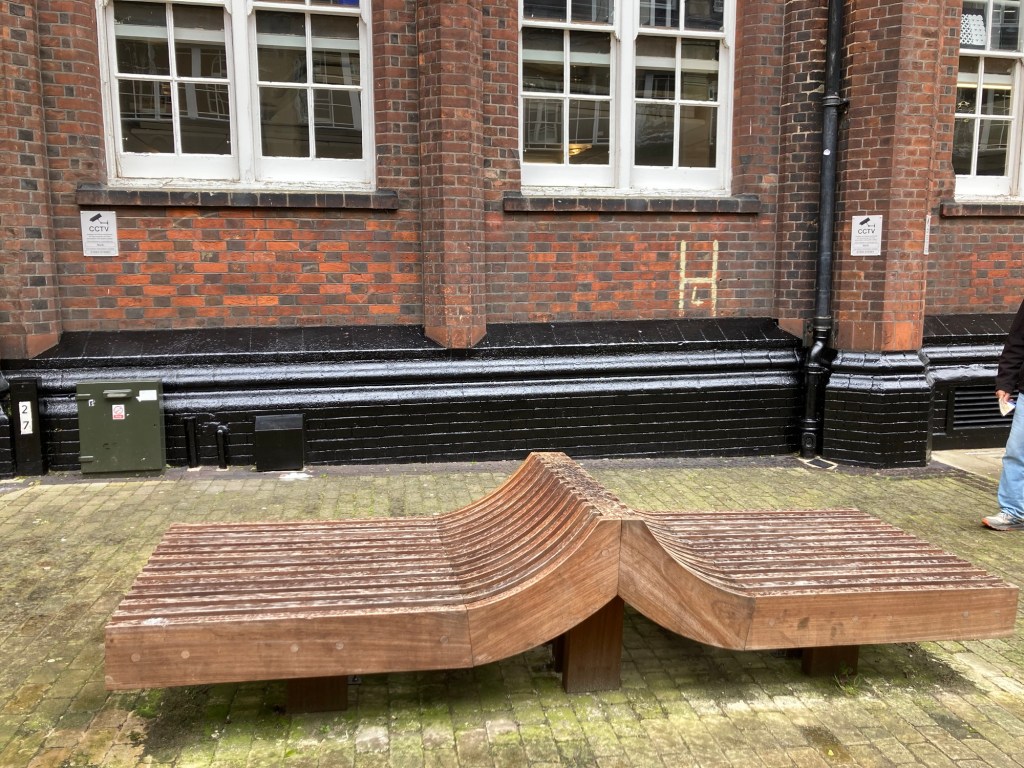
There are 2 of these to represent books as though stacked on a shelf.This one is a bit more obscure, but each rectangle is to represent a book is a different color to represent the different districts within Norwich.Made of UK stone, they have names of authors from Norwich or books about the region.More stone books but this time placed so you can watch the River Wensum.The longest of the benches, featuring 25 books related to NorwichThis is outside the Norwich University of the Arts, and looks like a book layer down open, which really isn’t the best way to treat a book.Stacks of stone books outside St. Giles ChurchBooks open on their spine near Norwich Castle.
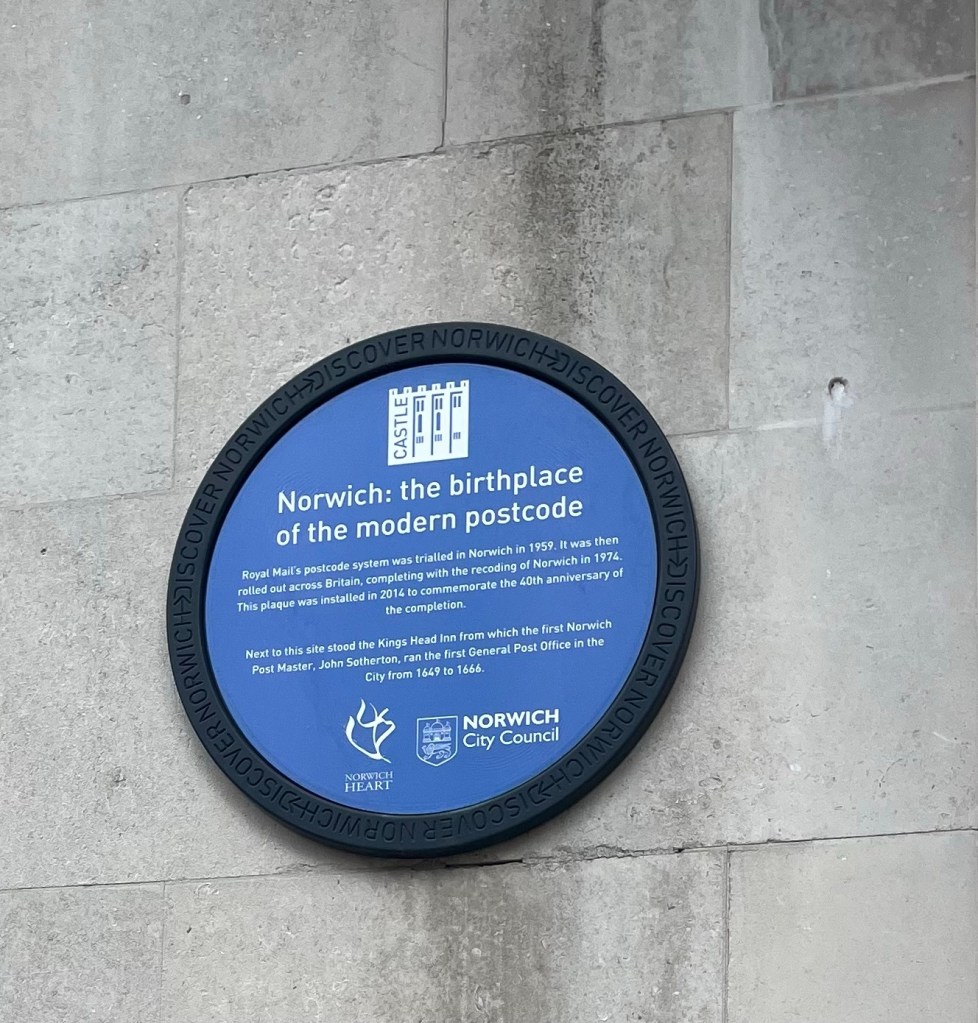
Fun find of the day, and in memory of Bob’s dad who worked for the US Postal Service for many years.
Norwich is a city within the county of Norfolk, England. It is about 100 miles northeast of London and has a population of about 144,000. It claims to be the most complete medieval city in the UK. In 2012, it was designated as England’s first UNESCO City of Literature. (We hope to learn more about that tomorrow.)
Our inn had a handy map to help us explore, so we identified some places of interest to visit and headed out in the misty day.
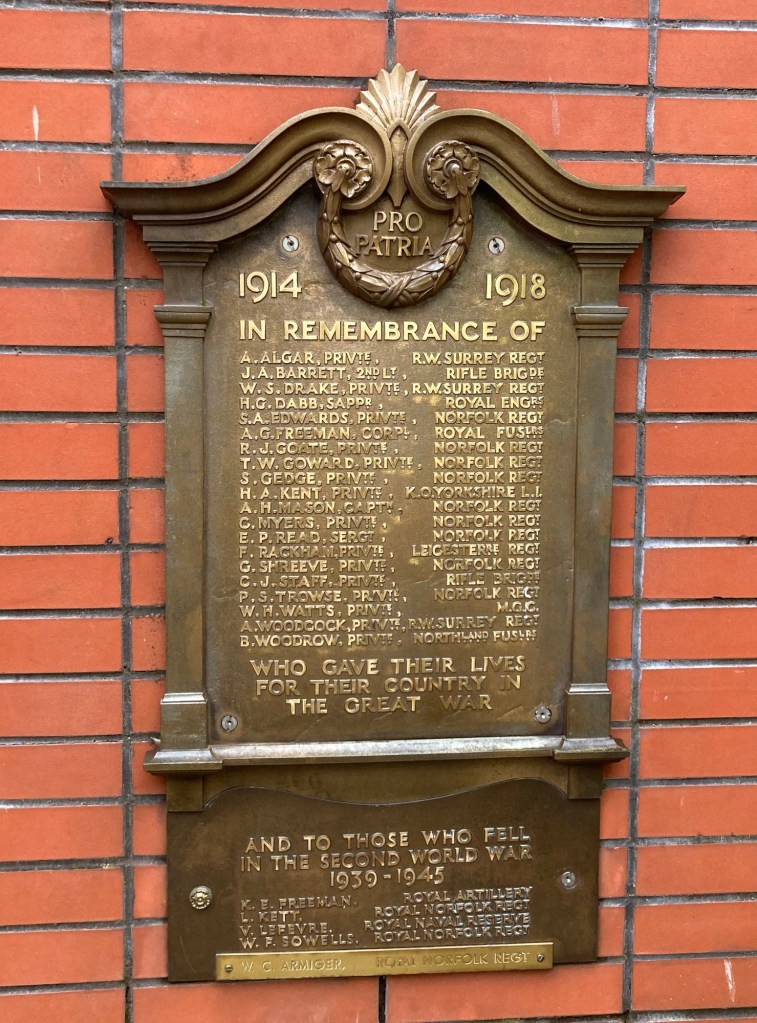
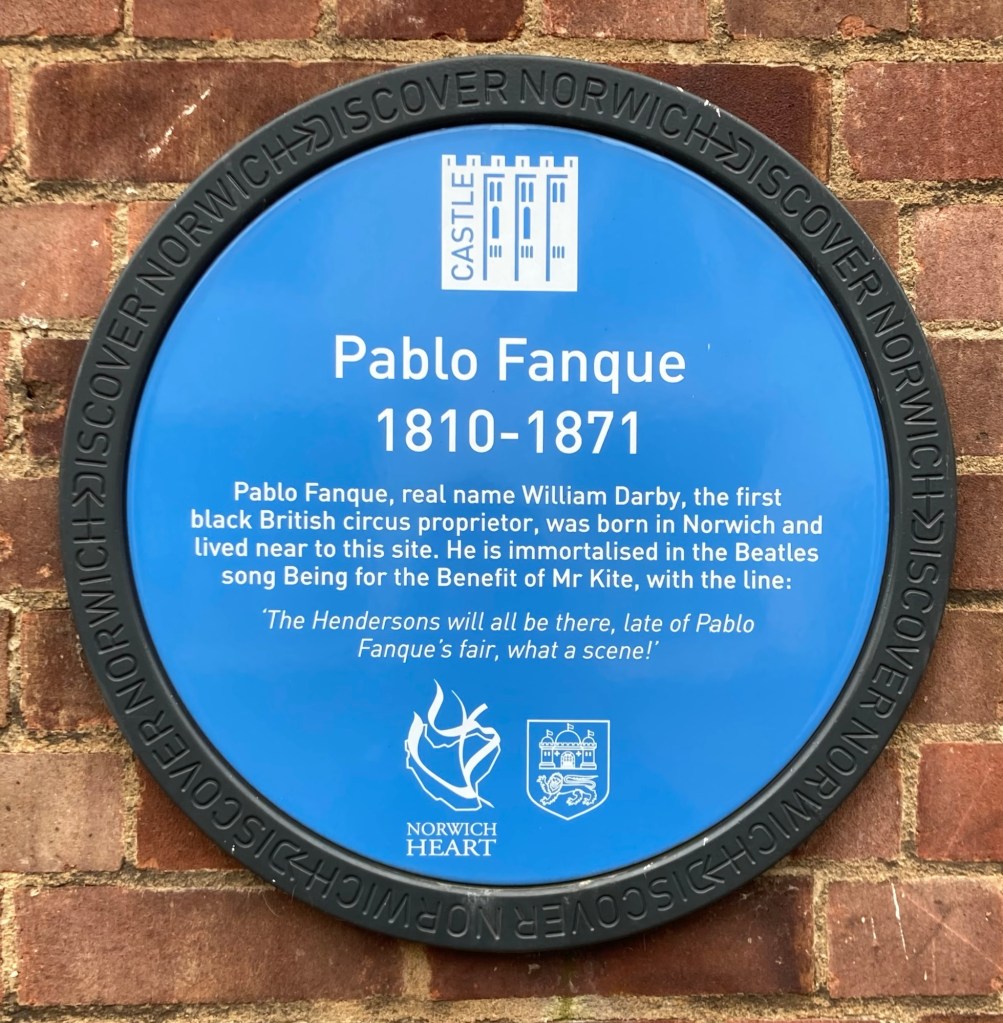
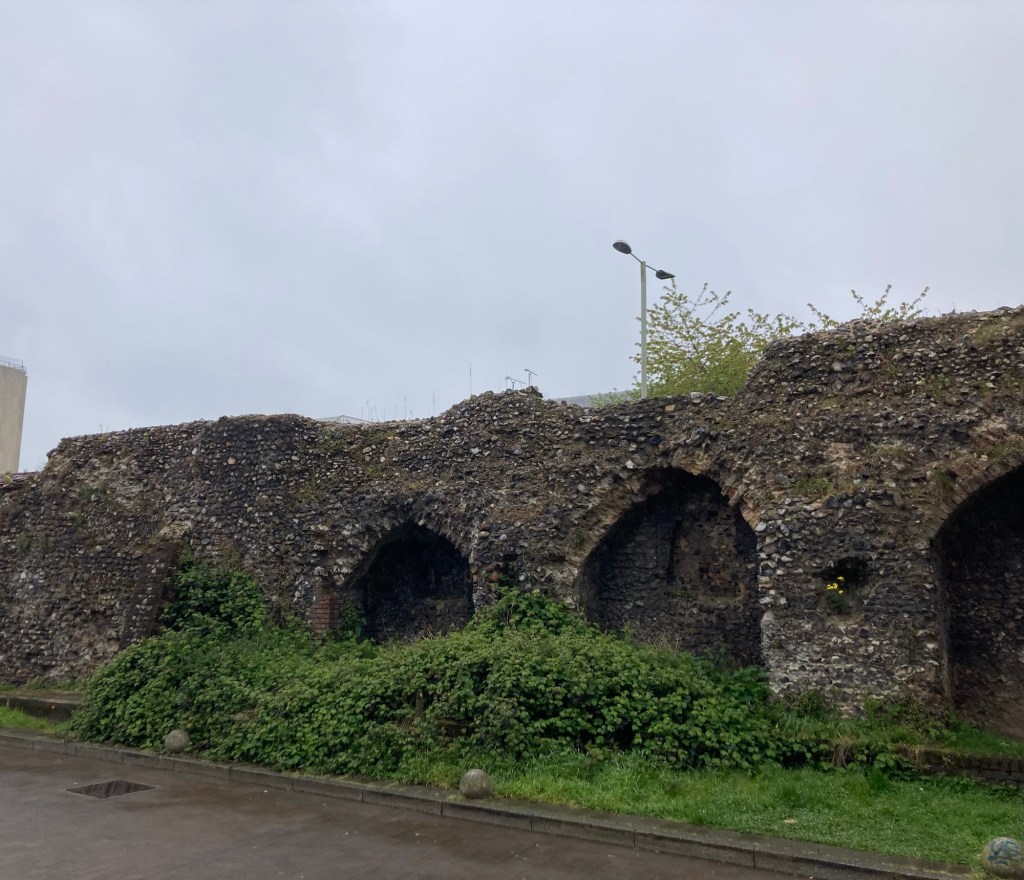
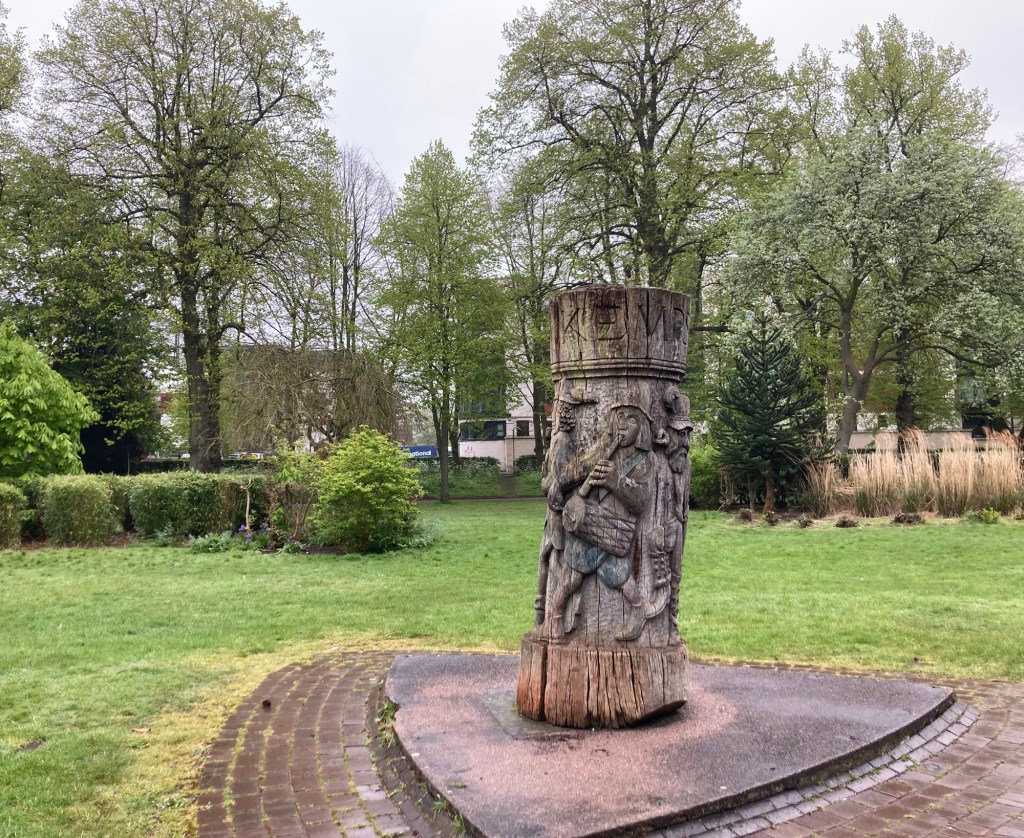
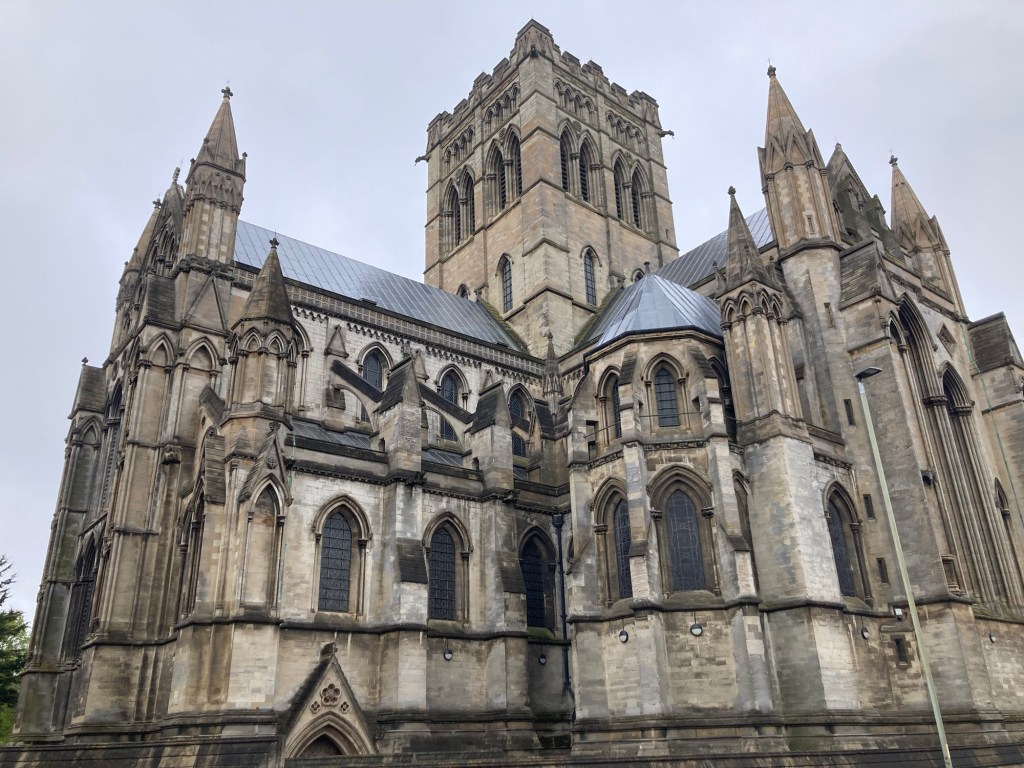
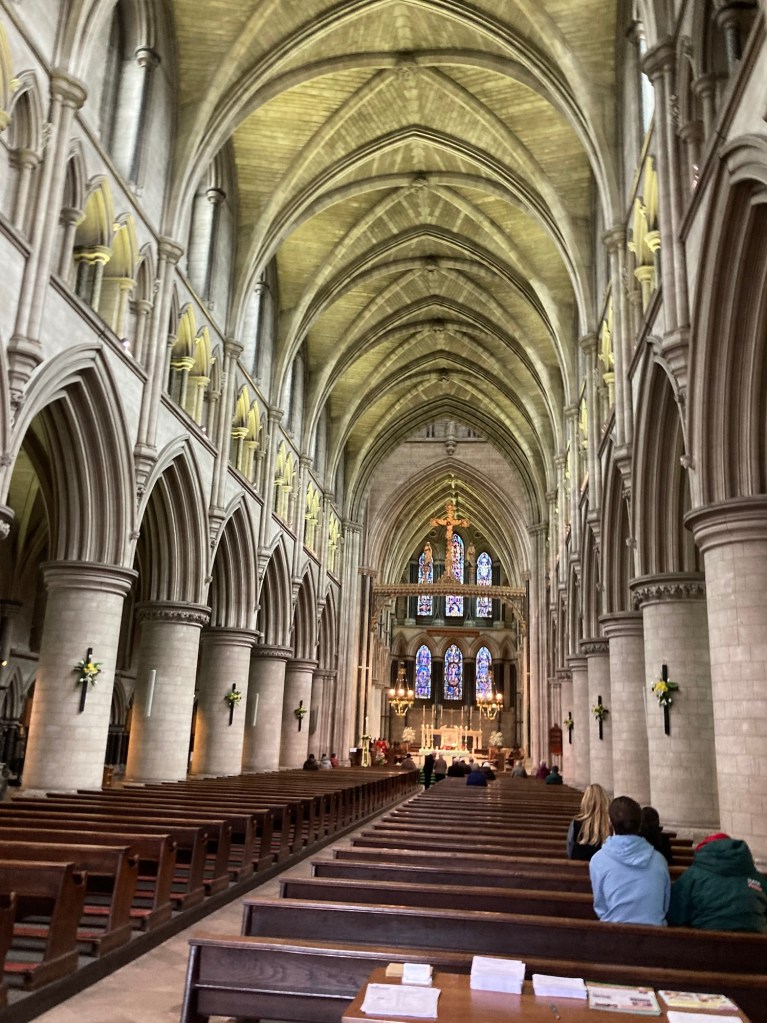
We stumbled on this memorial marker for the Norwich Brewery Companies that were killed in WWI and WWII.These markers are found around town. This may be of interest to any diehard circus or Beatles fans.A section of the old city wall that is still standing. They were completed in the mid-14th century, and at that time formed the longest circuit of urban defenses in Britain.The city walls were near the cute Chapelfield Gardens with this tree sculpture St. John the Baptist Catholic Cathedral, begun in 1882, opened for worship in 1894, and finally completed in 1910.The central nave of the church
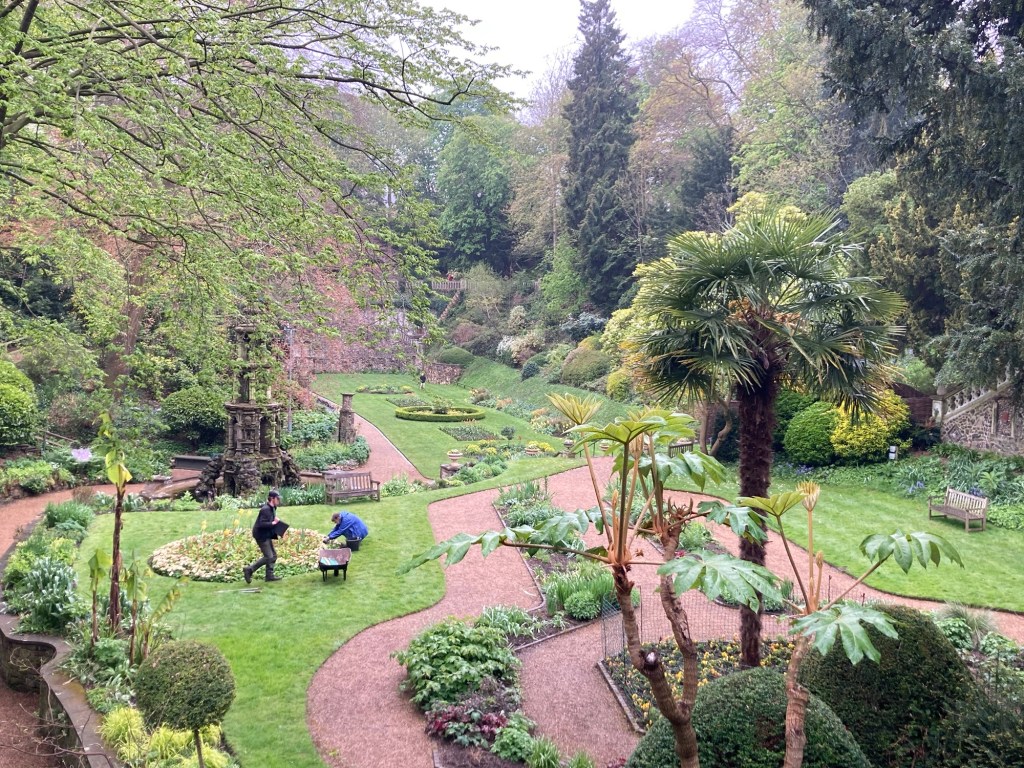
We had seen that the Plantation Gardens were a must see, and they are located very close to the cathedral. We paid the 2 pounds to visit the small, but very lovely Italian gardens. The gardens were established over 100 years ago in an abandoned chalk quarry.
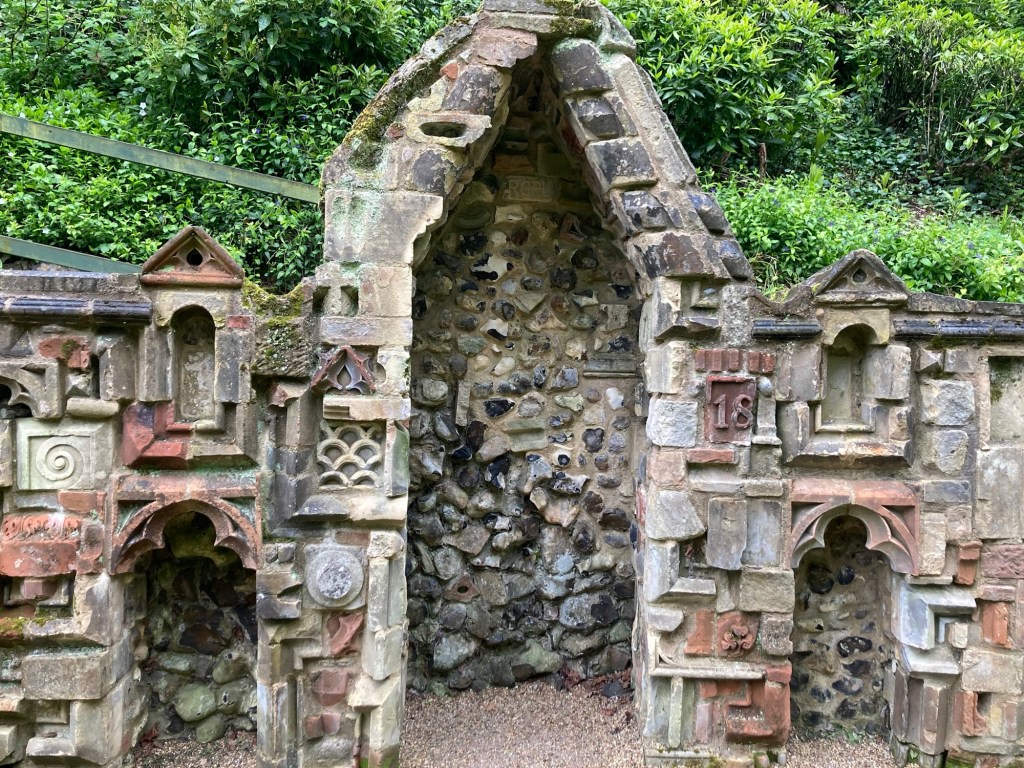
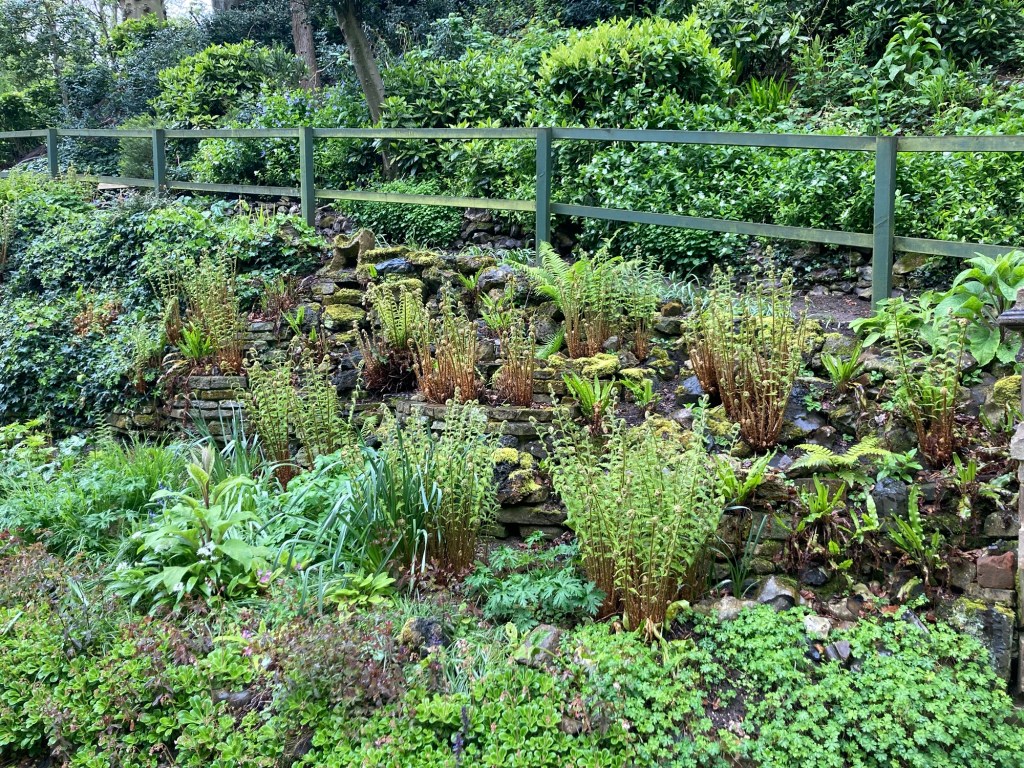
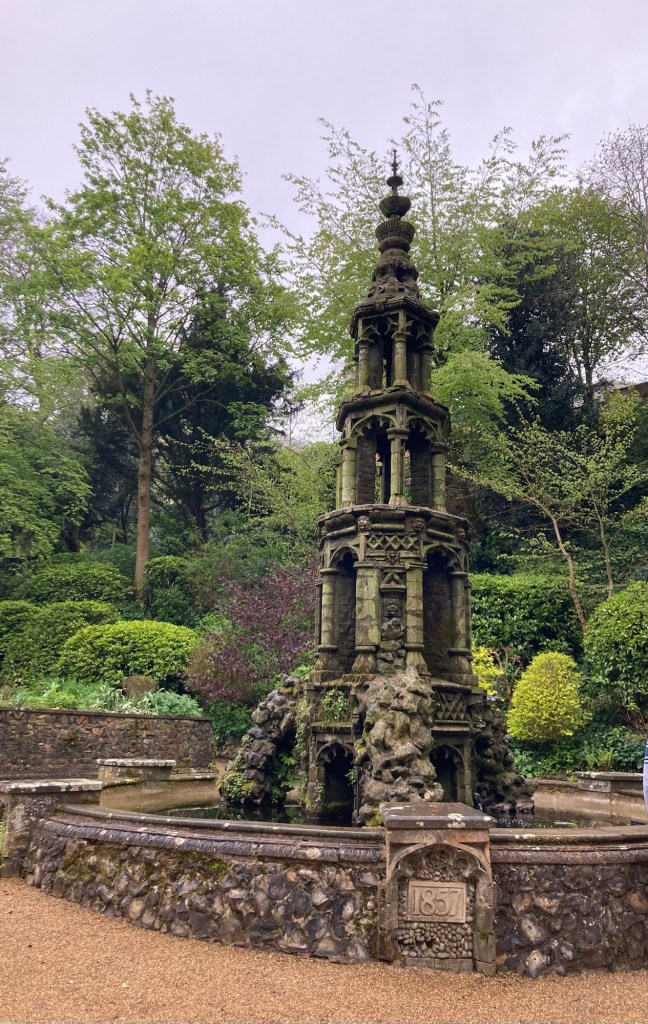
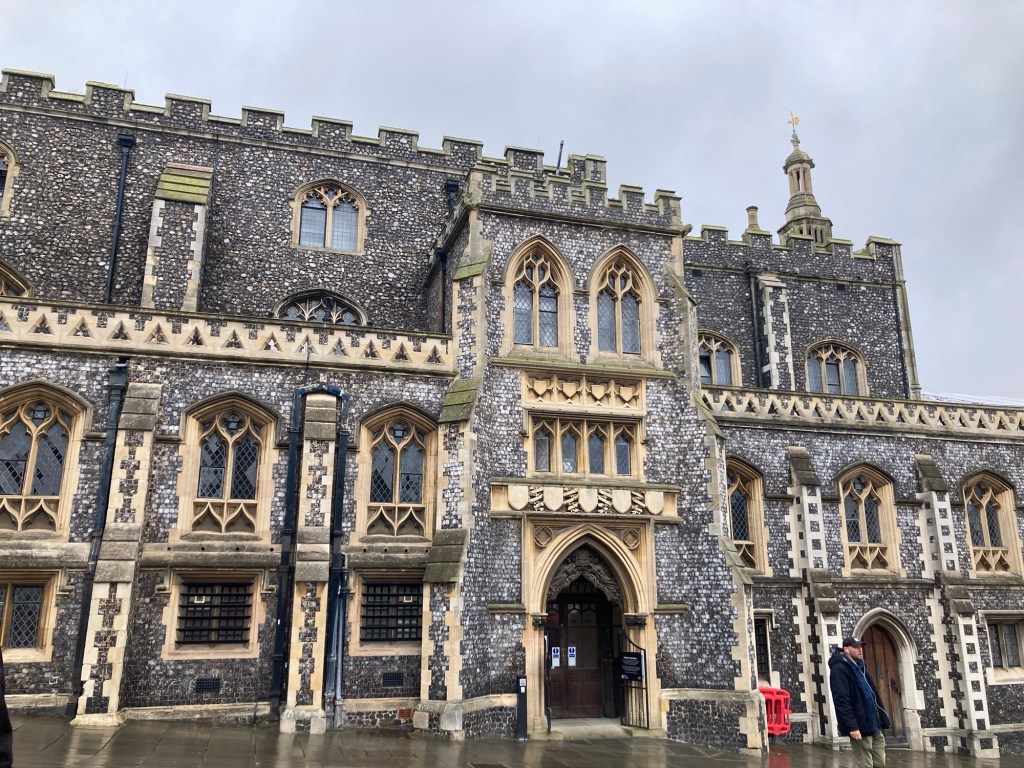
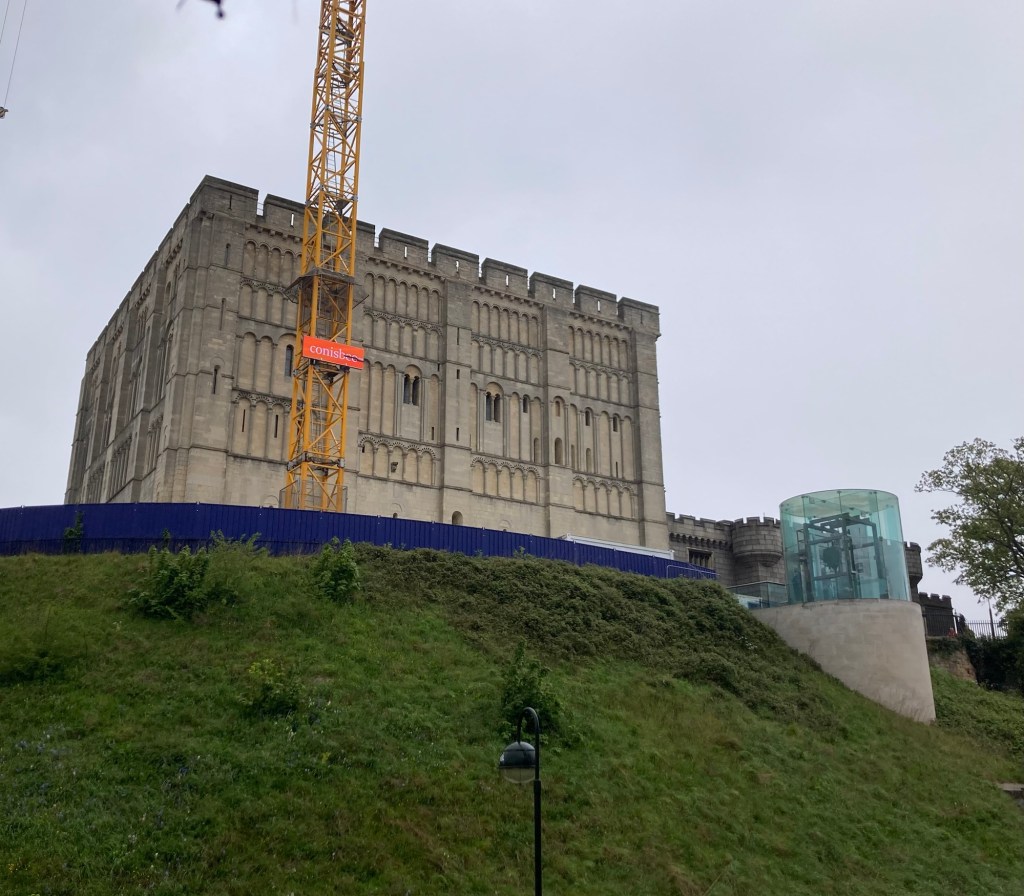
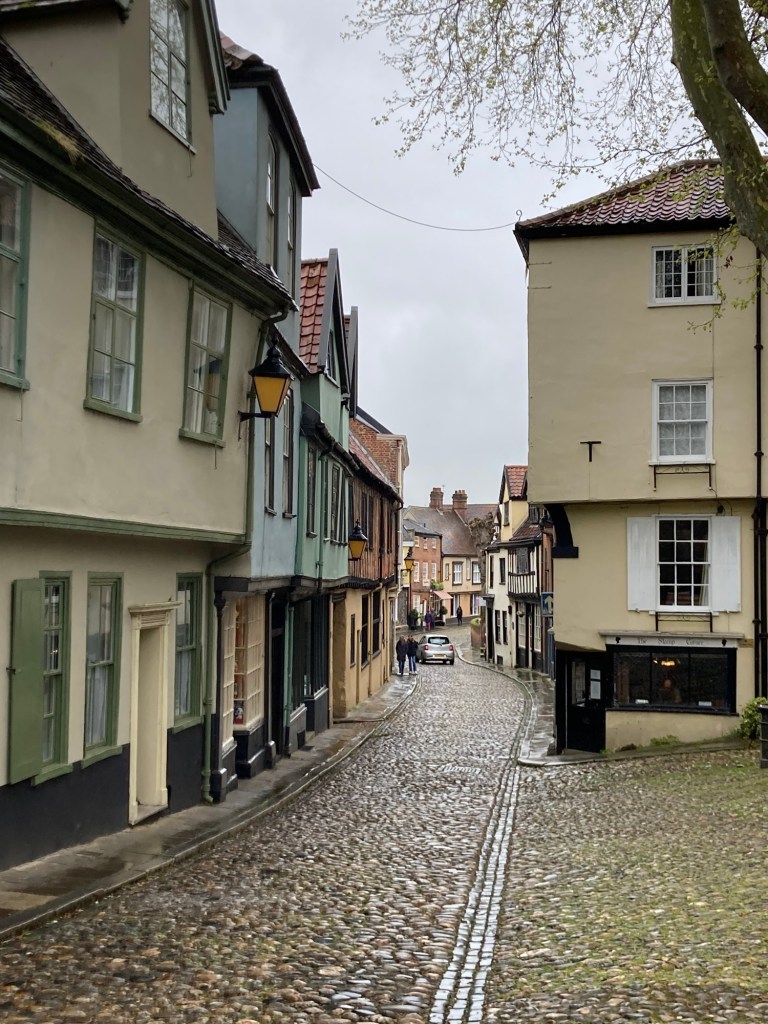
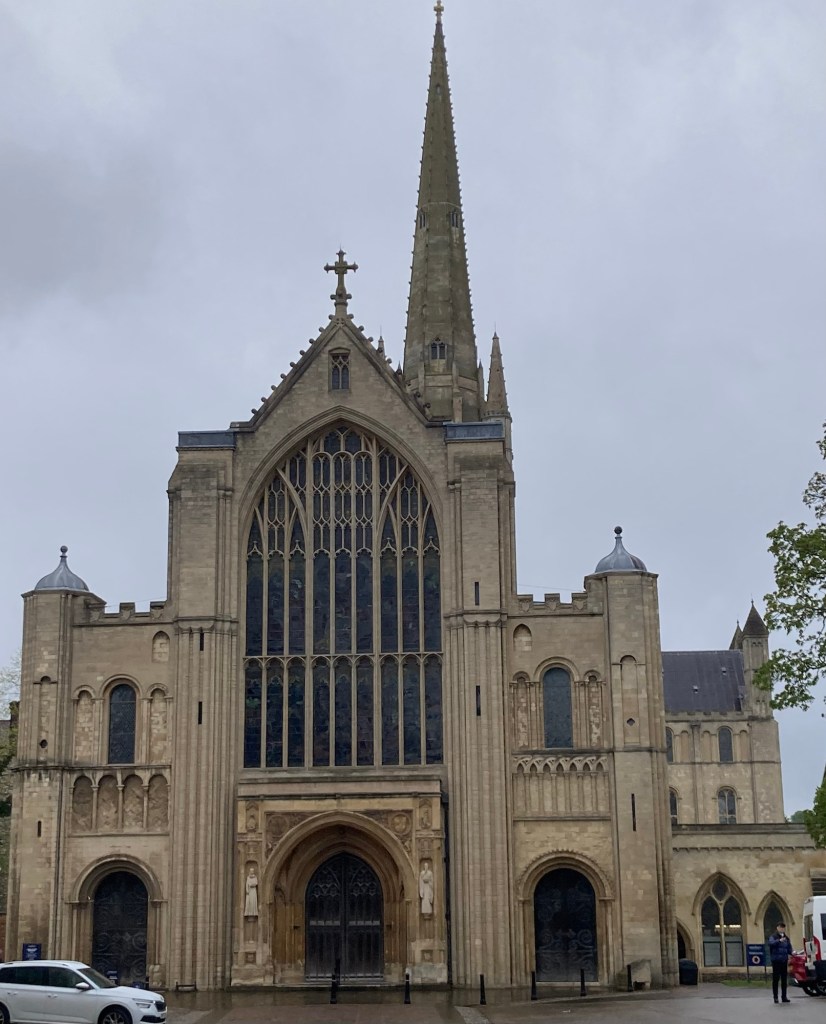
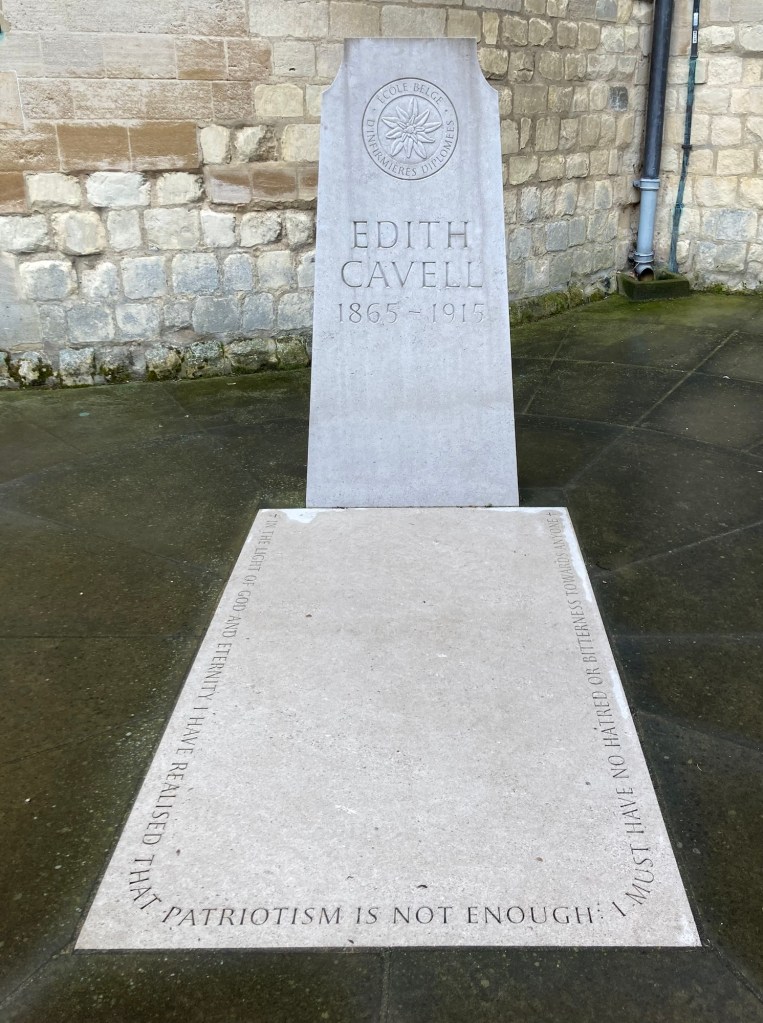
A view of the Italianate terrace from aboveA section of some of the interesting mixed stone walls around part of the terraceThe green plants along the outer perimeter A gothic fountain Norwich Guildhall Looking across the top of the colorful stalls of the Norwich Market, selling everything from takeaway food to produce and baked goods to antiques, clothing and accessories, and flowers.The Norwich Castle under refurbishment The cute, quaint Elm Hill shopping district Norwich CathedralThe grave of Edith Cavell, a nurse in WWI who cared for soldiers on both sides and was later executed by the Germans for helping Allied soldiers escape Belgium.
Bob and I arrived in Norwich this afternoon at about 3:20 after having traveled by train from Eastbourne to London, switching stations in London by tube, and then onward to Norwich. We had a short 10 minute walk to our hotel, where we’ll be for 3 nights.
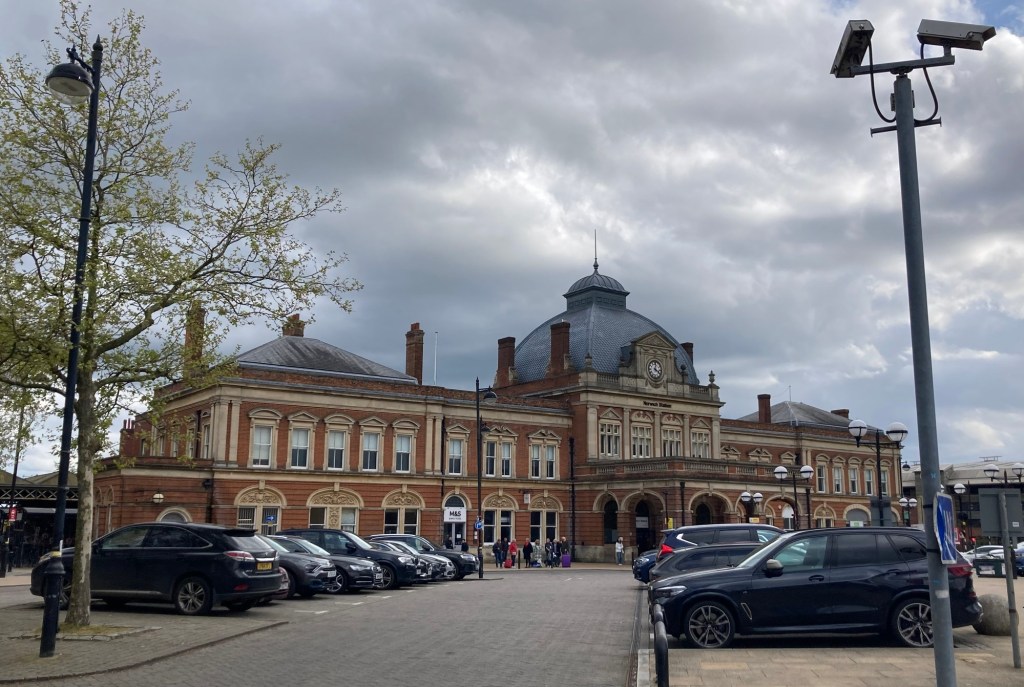
The Norwich Rail Station
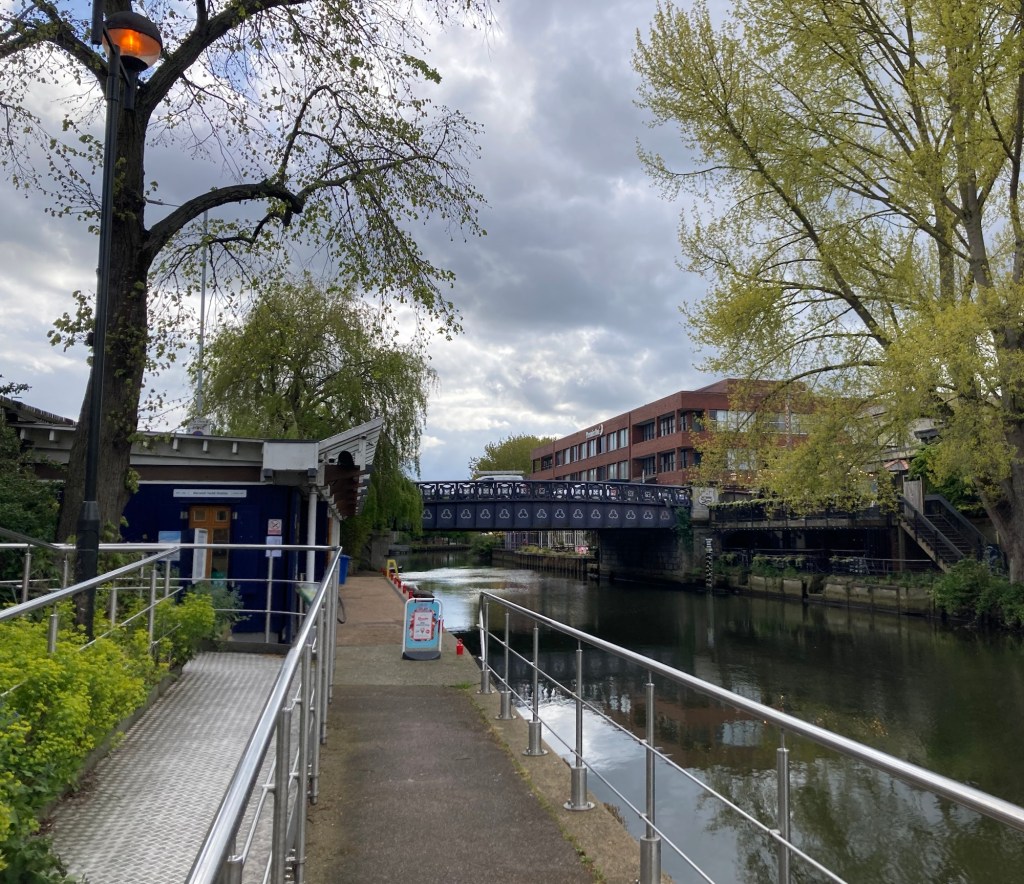
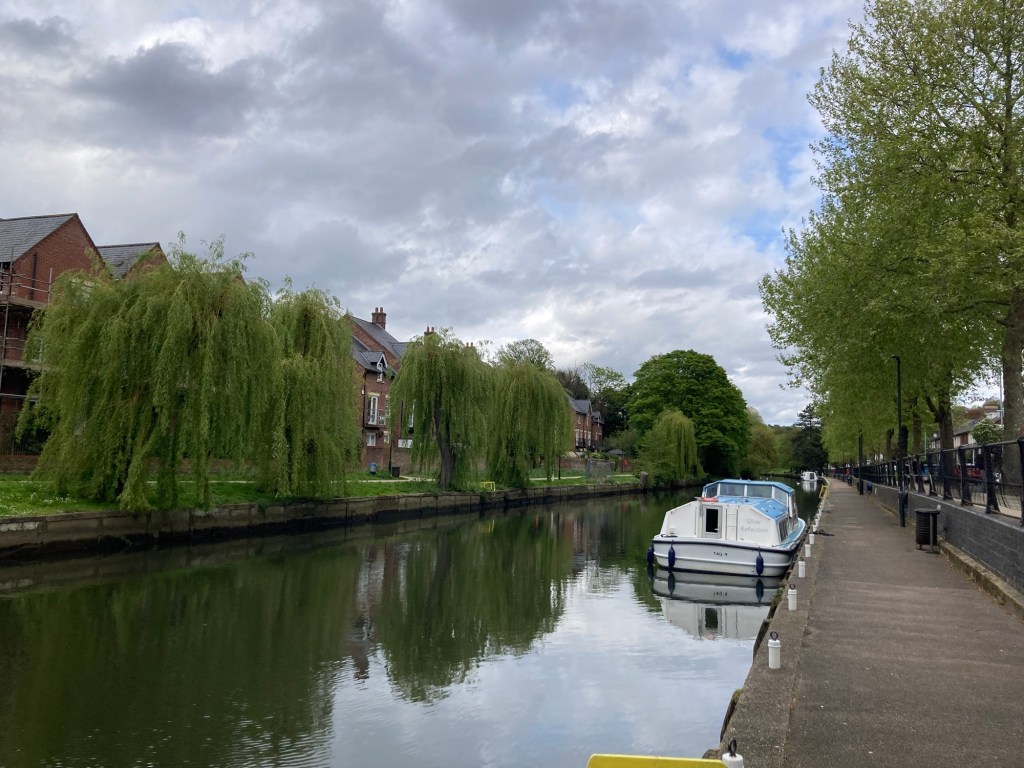
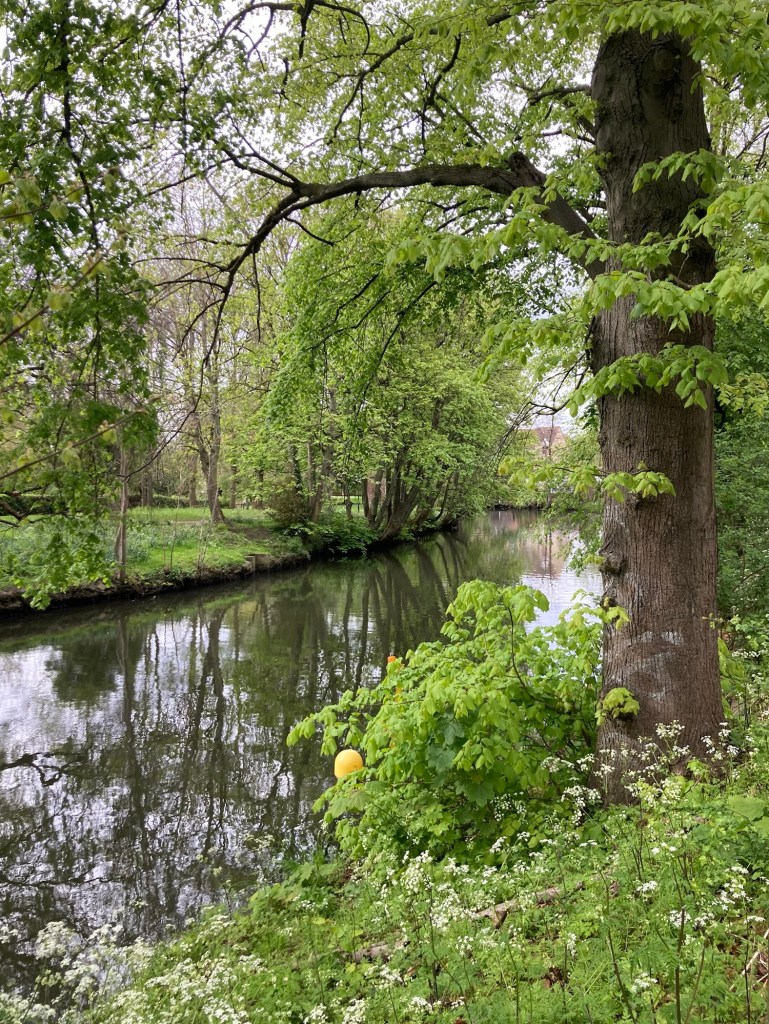
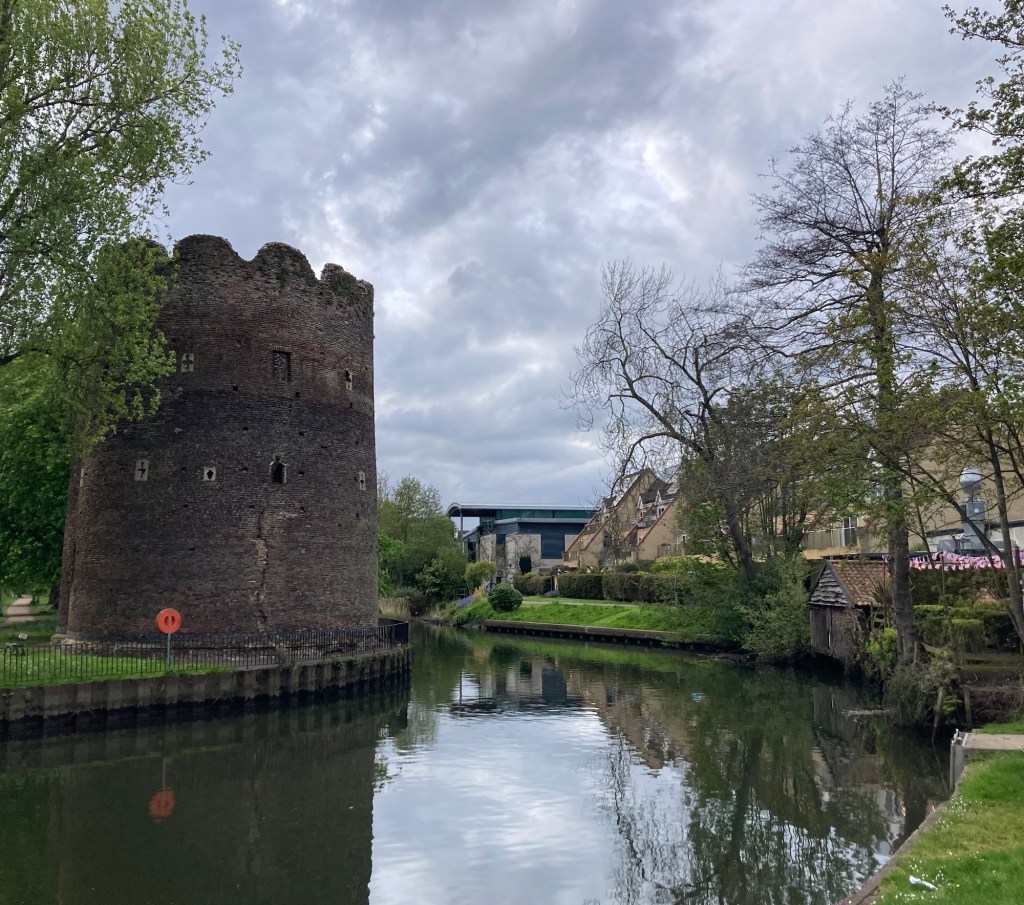
Shortly after unpacking we went for a walk along the riverside walking path that we could catch near the train station.
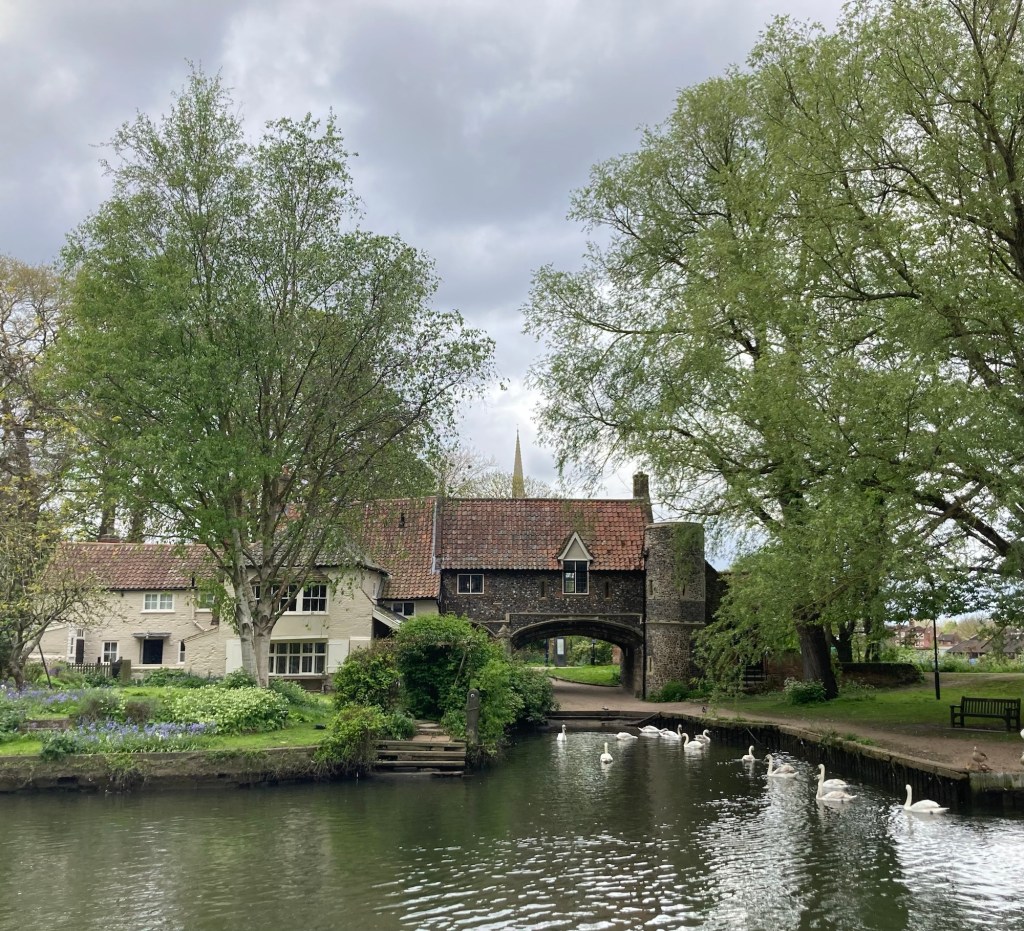
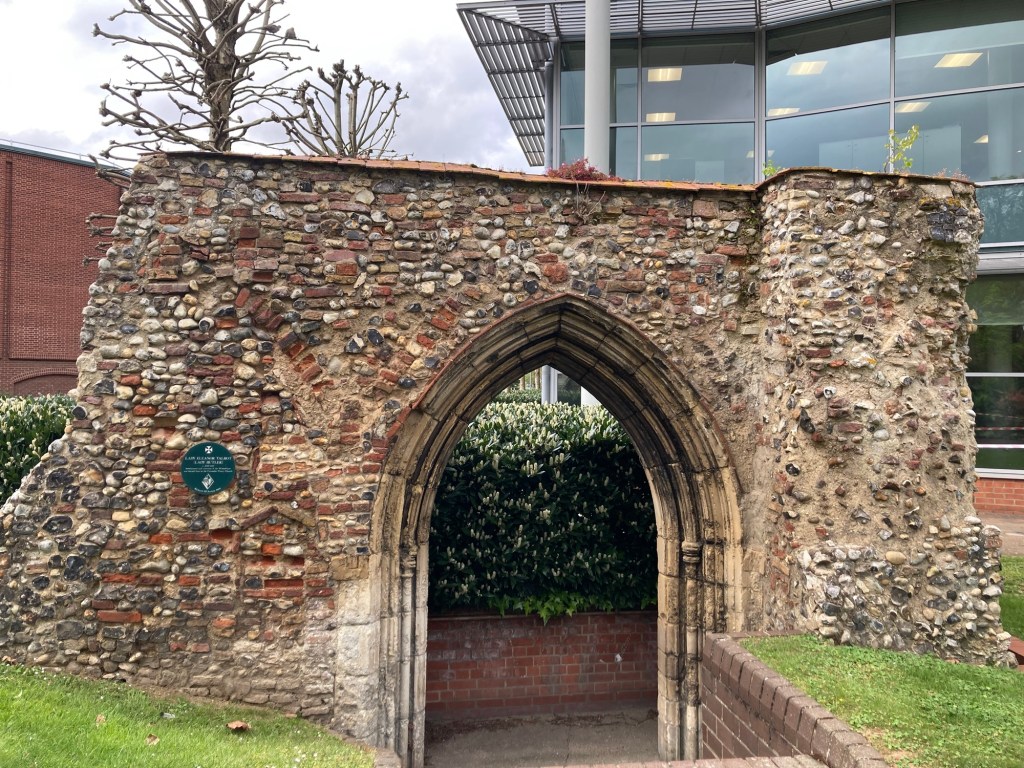
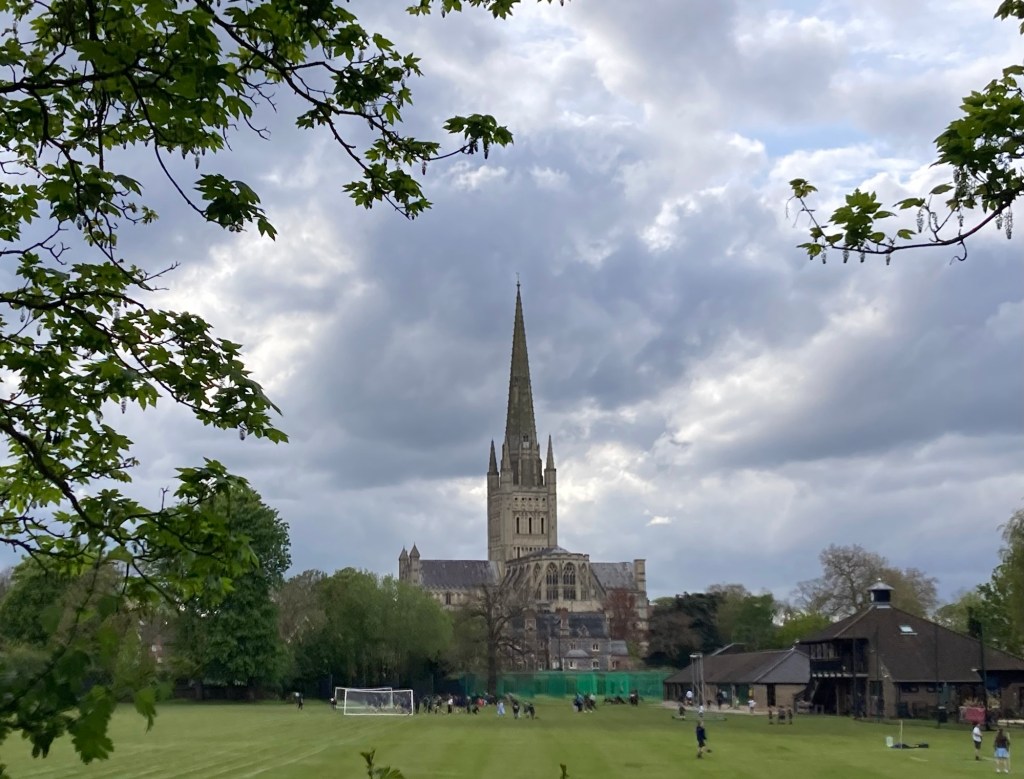
One of the earliest artillery blockhouses in England, this brick tower was built in about 1398-9 to command a strategic point in Norwich’s city defence.St. James Mill built in 1839, now the head offices of Jerrold & SonsThe marker regarding the burial of Lady Butler (Eleanor Talbot) in the church of the Carmelite Friars. She was claimed to have had a pre-contract of marriage to Edward IV, which Richard III used to deny the throne to Edward’s children.The impressive Norwich Cathedral
We’re looking forward to exploring more of Norwich tomorrow.
After completing the multi-day hike and before a day of travel to Norwich tomorrow (a train, a tube and another train), Bob and I have had a pretty lazy day in Eastbourne.
We had the free breakfast at the hotel (a good buffet of hot and cold options), and then headed to a launderette to do some much needed laundry. The launderette was staffed, so we could get the proper coinage (7 pounds here for a wash versus 6 in Winchester) and we had a nice chat with a man, originally from South America but who has been in England for 60 years and has served king and country (his words) by serving some time in the military. He helped us as well with the machines.
View from our window at The View Hotel
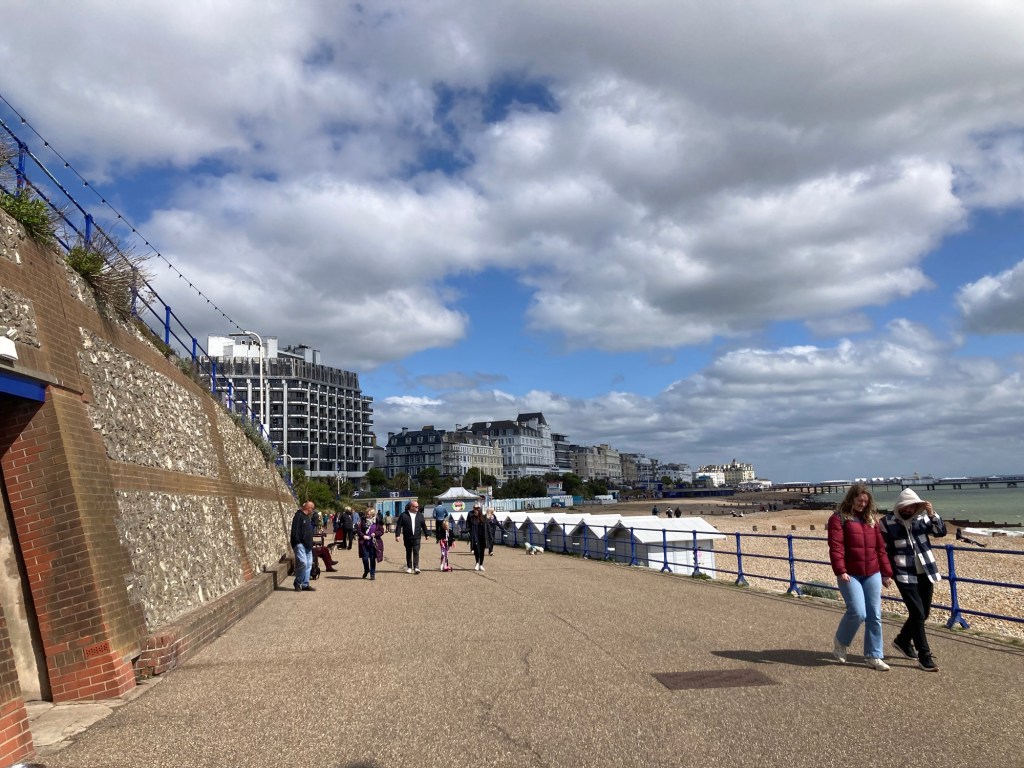
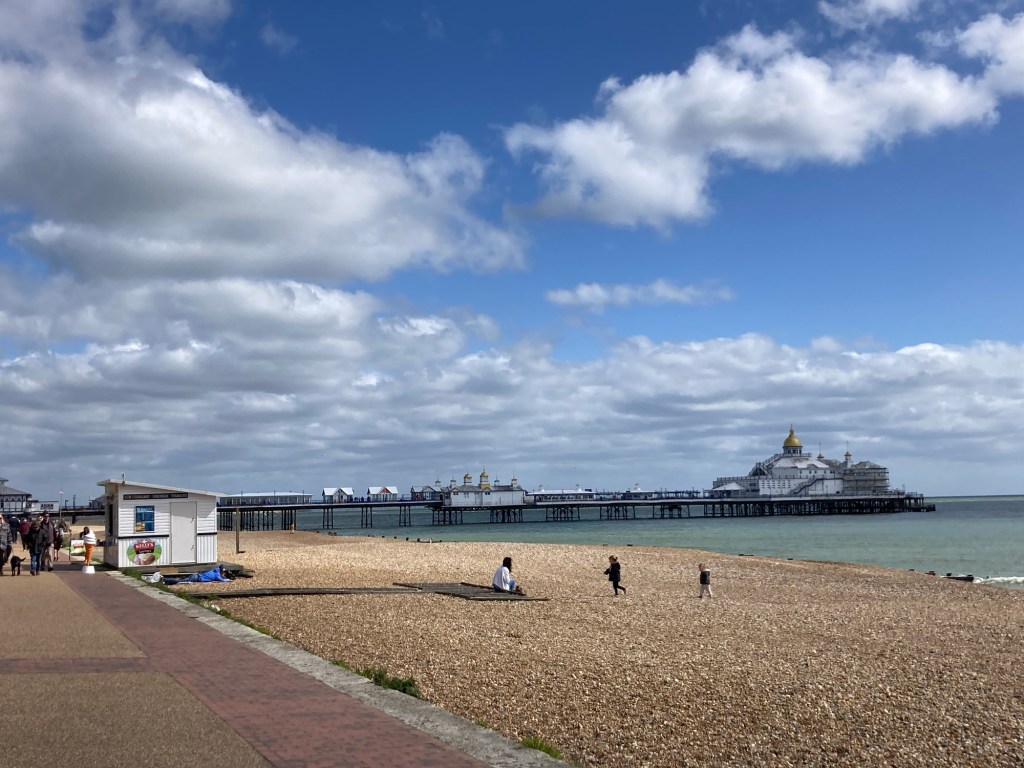
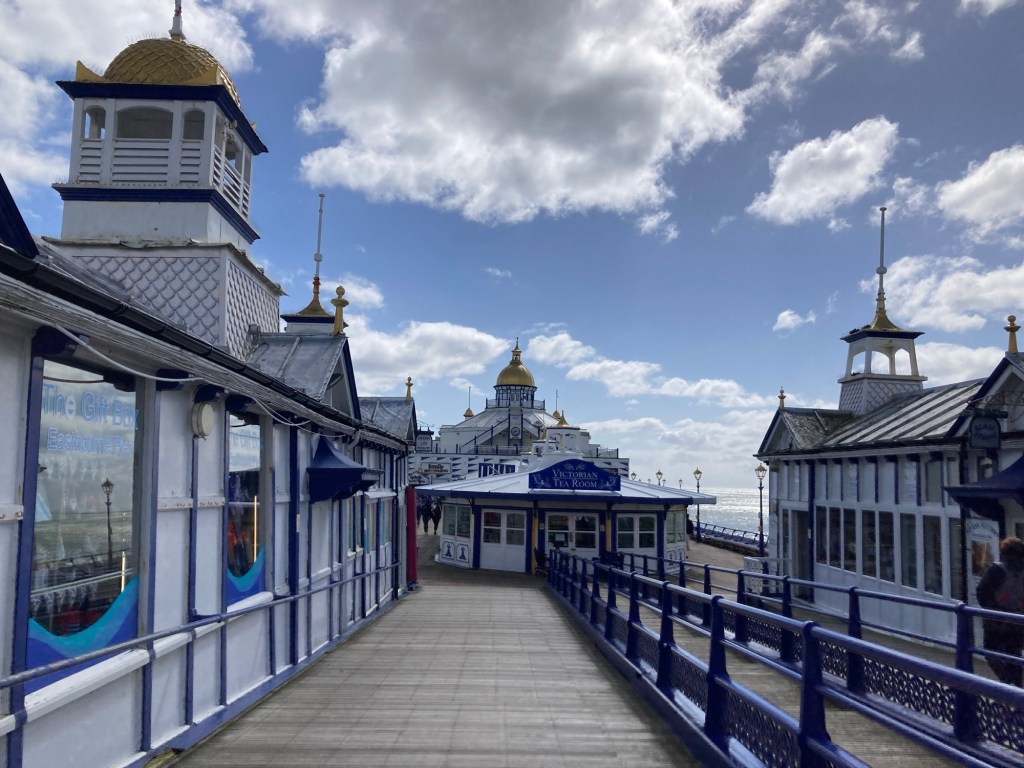
From there, we walked to the rail station to print our tickets for tomorrow. After folding and packing our clothes. We had a lovely but windy walk on the promenade and out to the pier.
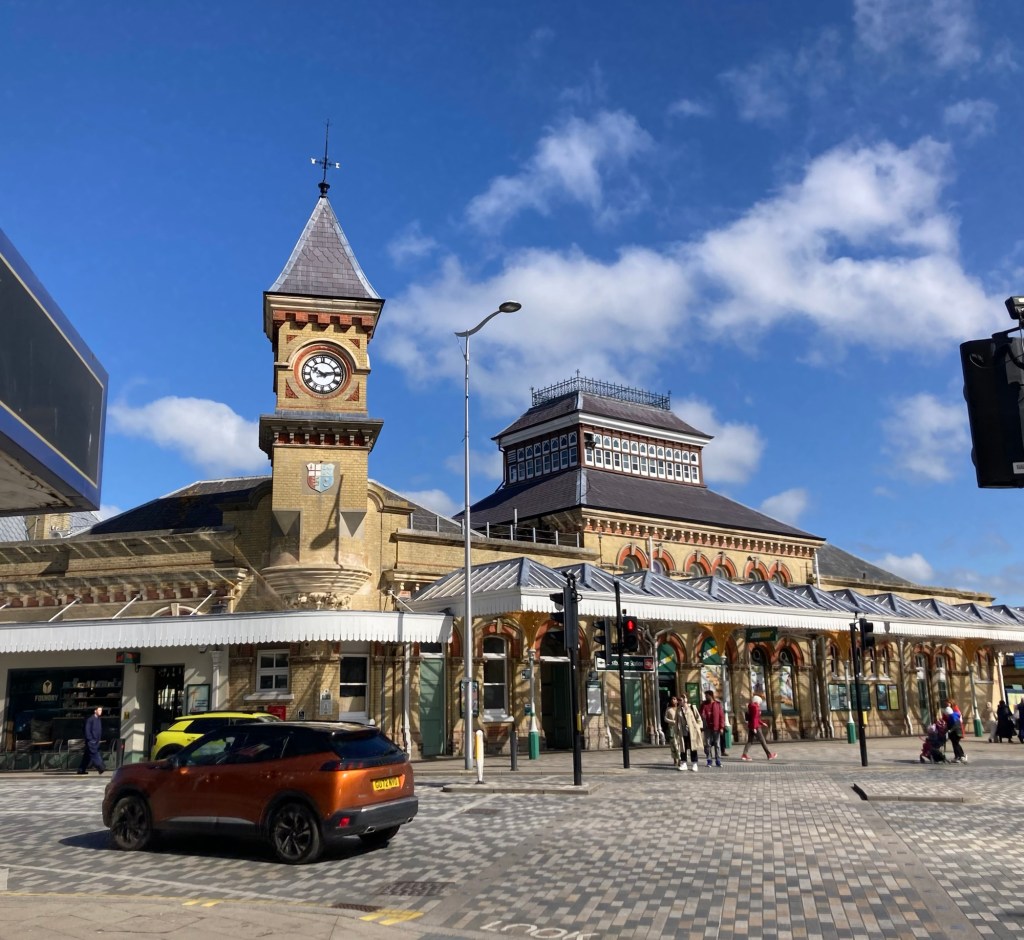
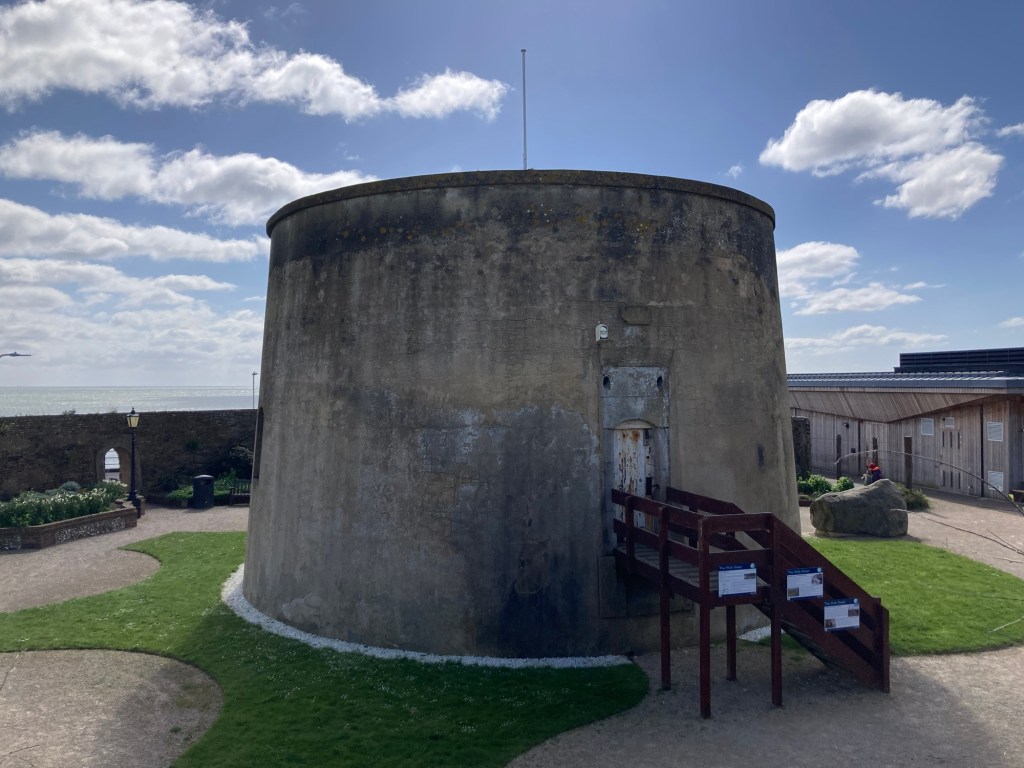
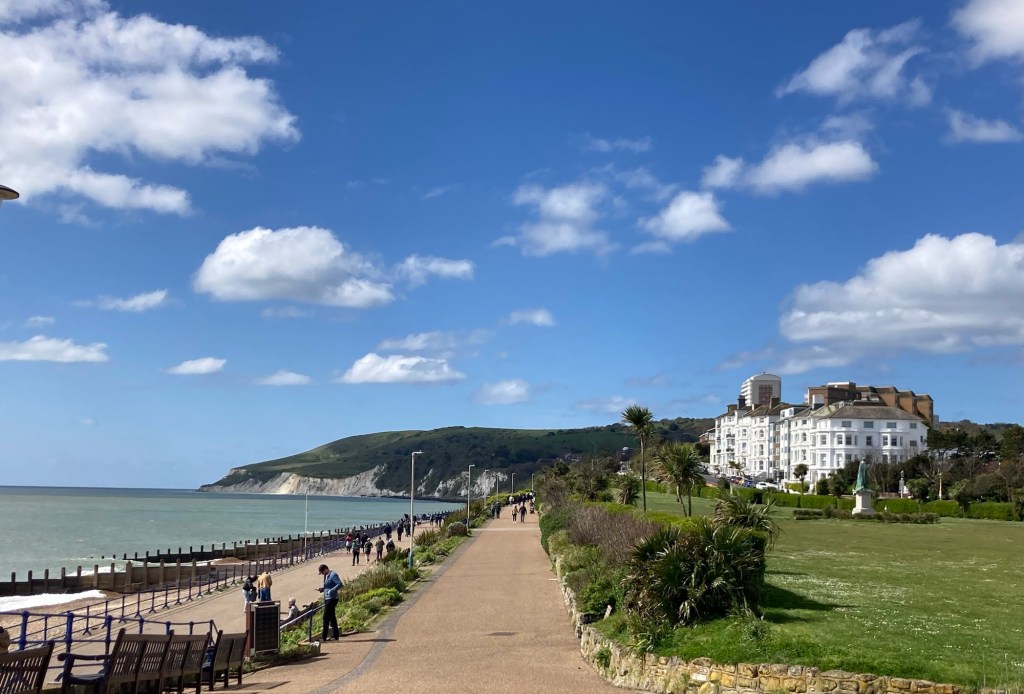
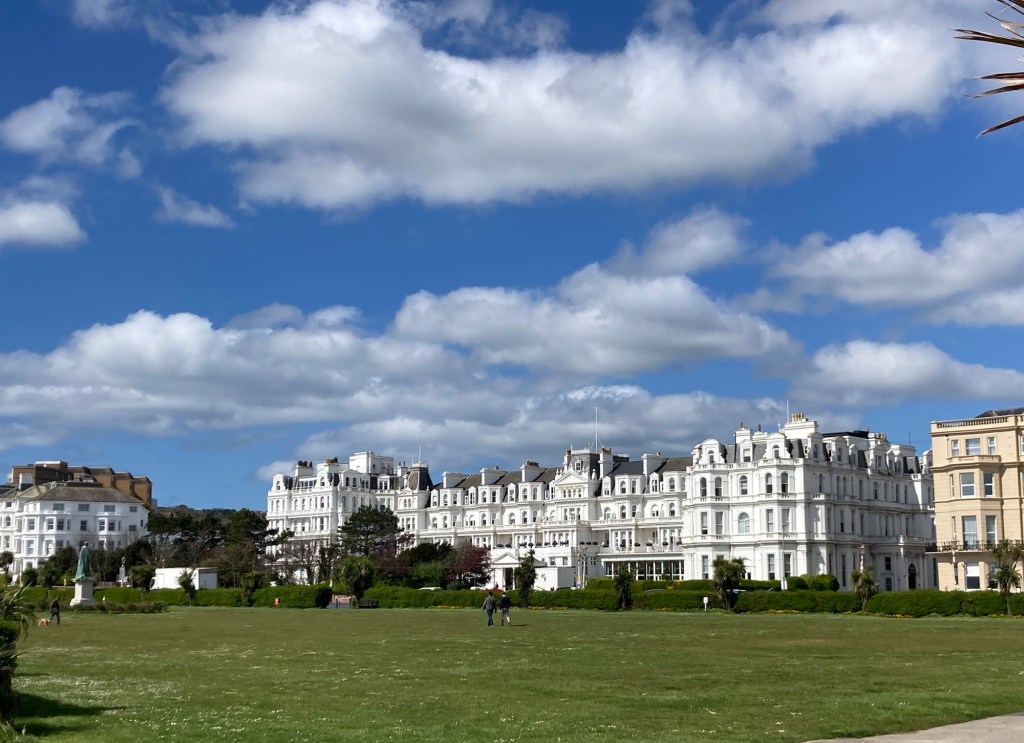
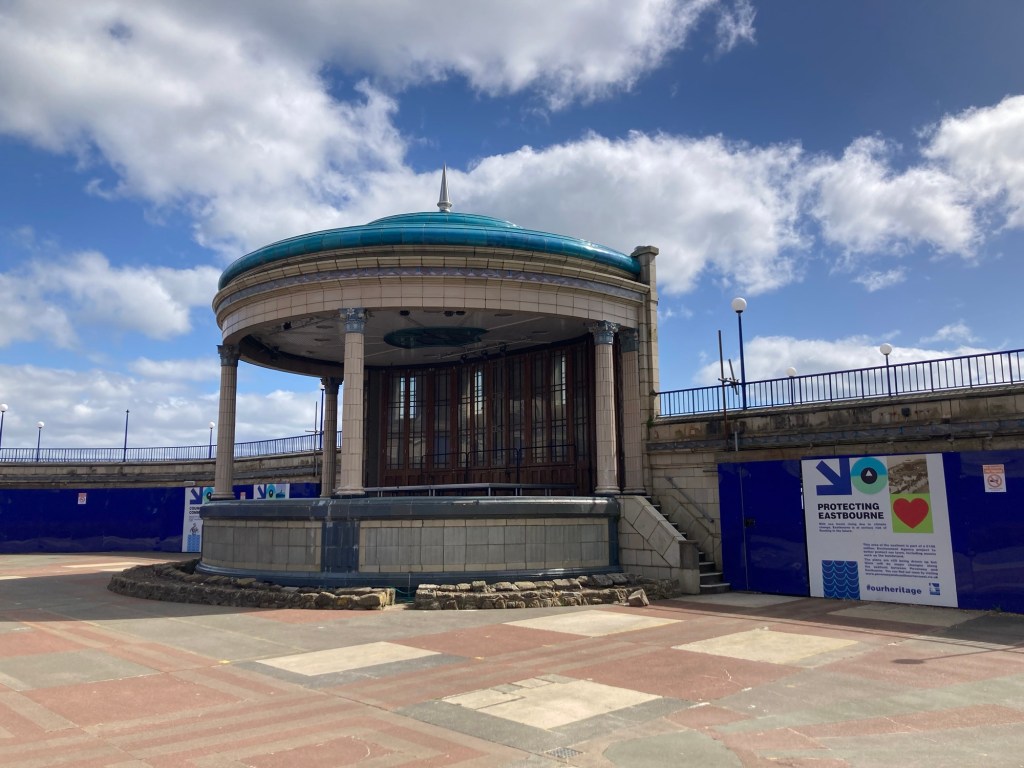
The Eastbourne Rail Station from which we’ll catch a train to London Victoria and then catch a tube to the Liverpool Street Station to head onto Norwich.The Wish Tower, one of over 100 Martello Towers built to defend against the anticipated invasion by sea from Napoleon.The promenade along the sea, looking back towards where we walked from yesterday The Grand Hôtel down the street from our hotelLooking down the promenade towards townThe view of our hotel, The View Hotel from the promenadeThe bandstand along the promenade. A nearby marker notes the fact that John Wesley Woodard played with the local municipal orchestra before joining the White Star Line company and sailing on the Titanic where he perished.Walking on the promenade towards the Eastbourne PierMore of the view along the coast to the east from the pierWalking along the pier
We have just woken up from a nap and feel quite content not doing much else today.
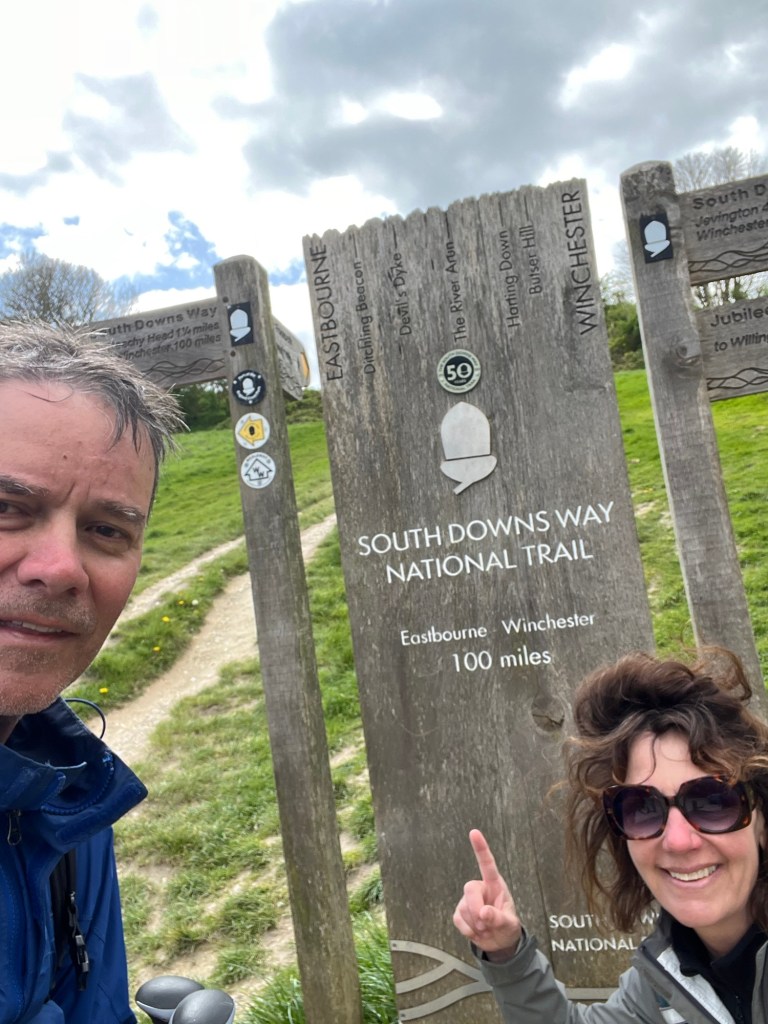
Bob and I completed the South Downs Way (SDW) at about 2:00 pm this afternoon. Today, we are the Big Head photo after almost 130 miles (according to Bob’s fitness tracker) with mileage to and from our accommodations included.
The SDW start (or end) in Eastbourne
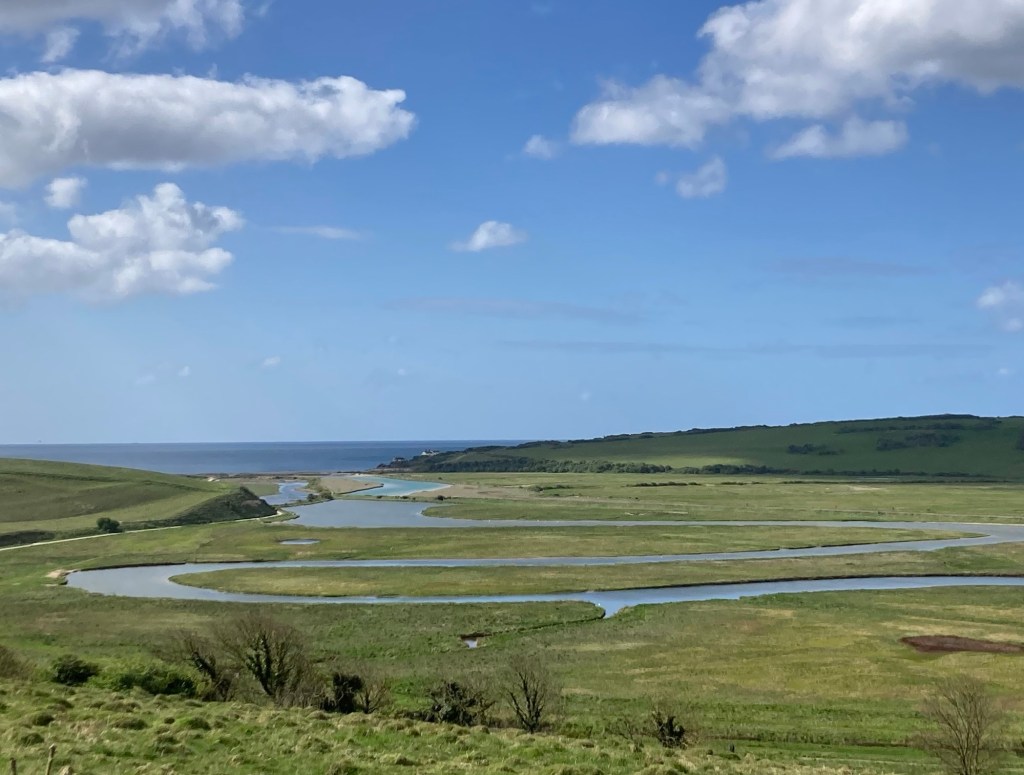
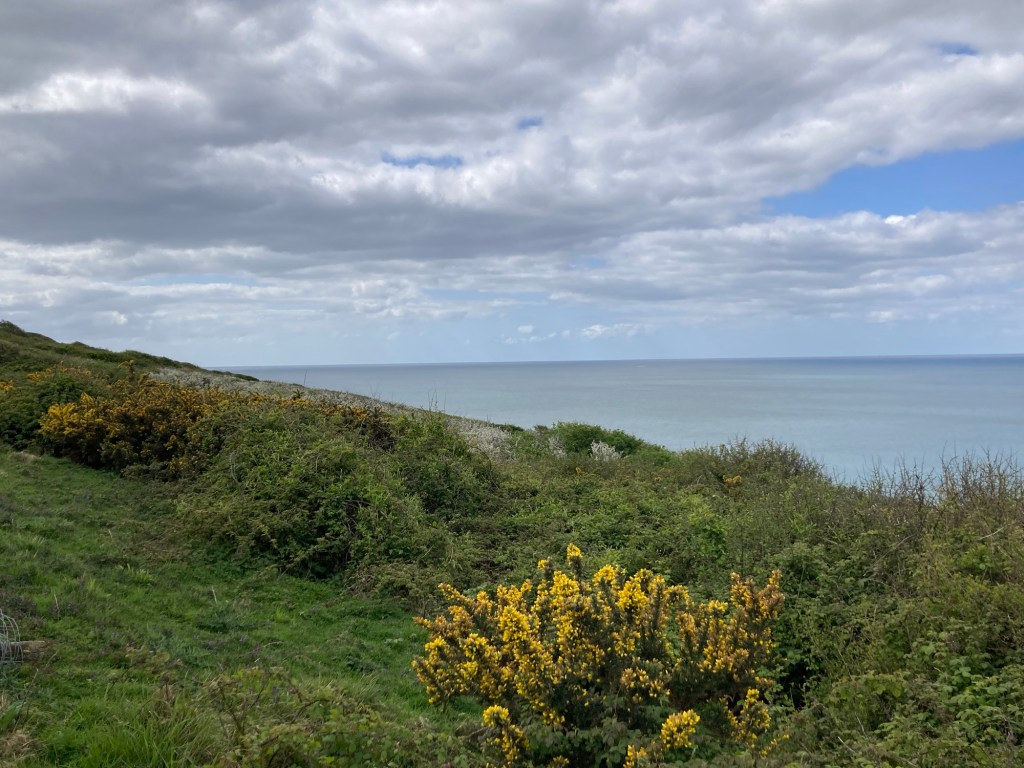
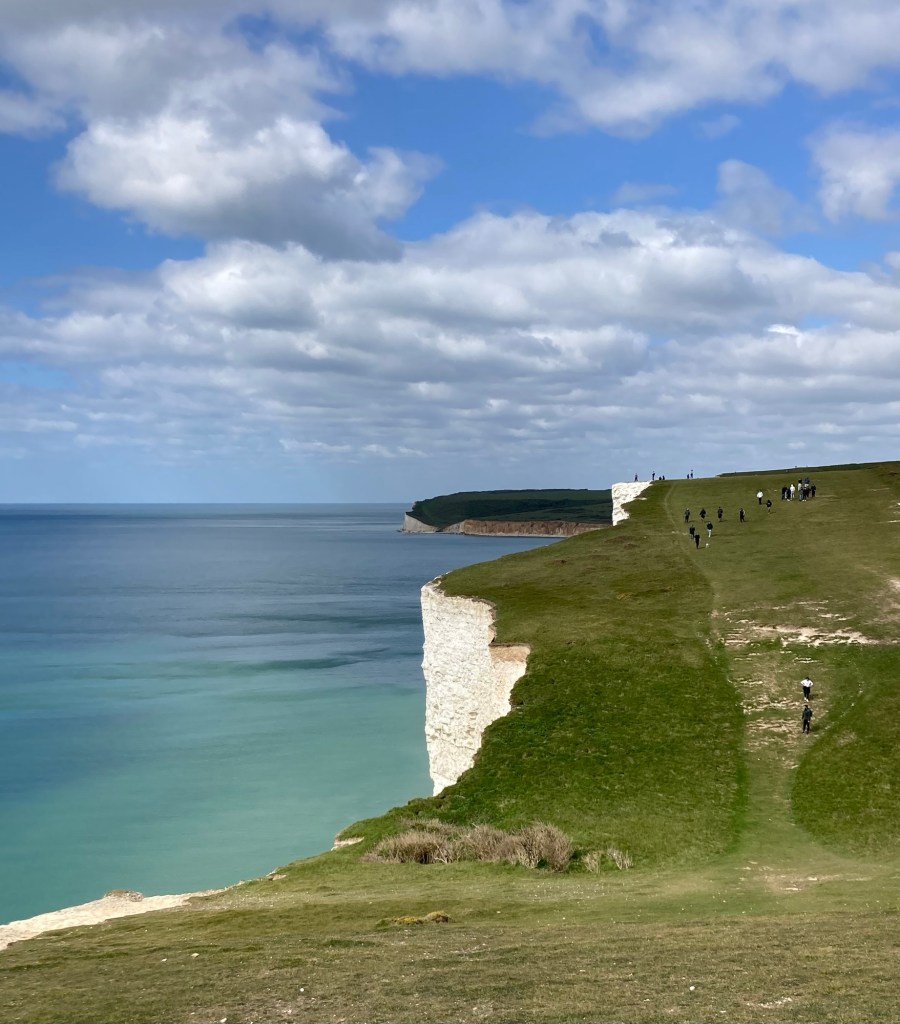
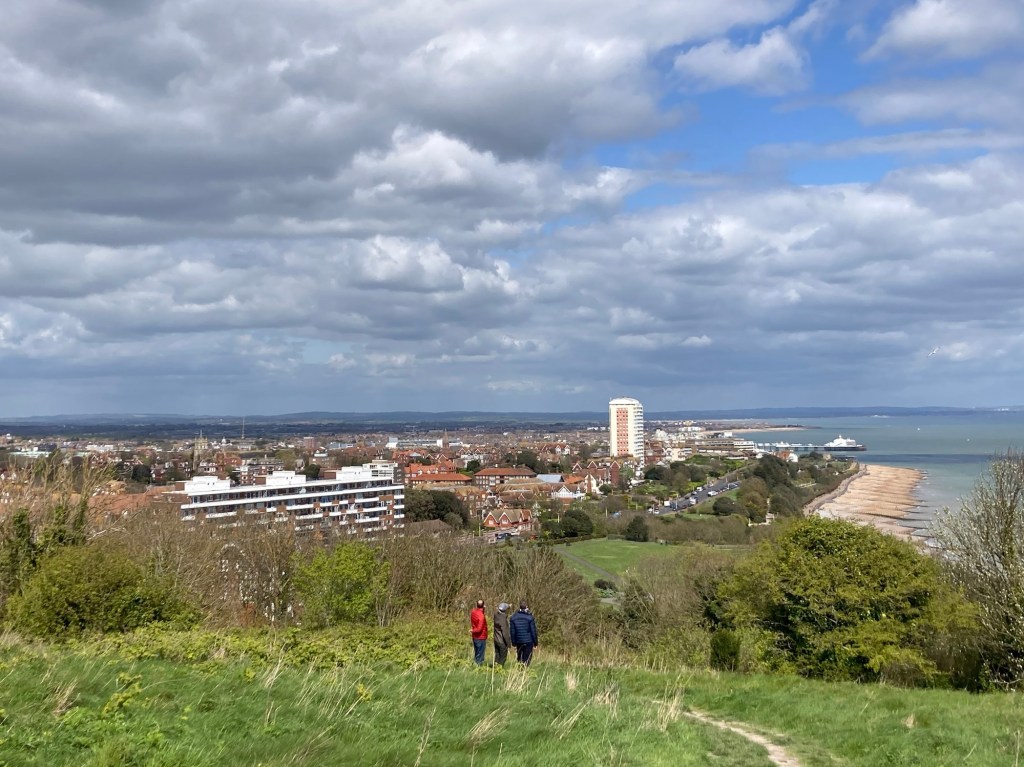
Today’s route was just over 13 miles with the most climbs balanced by awesome views, as we went up and over the Seven Sisters, down into Birling Gap, up and over Beachy Head, which seemed never-ending and then steeply down only to be taken backup and over a couple more hills to get into Eastbourne. There will be wine and a proper meal out tonight. Photos below.
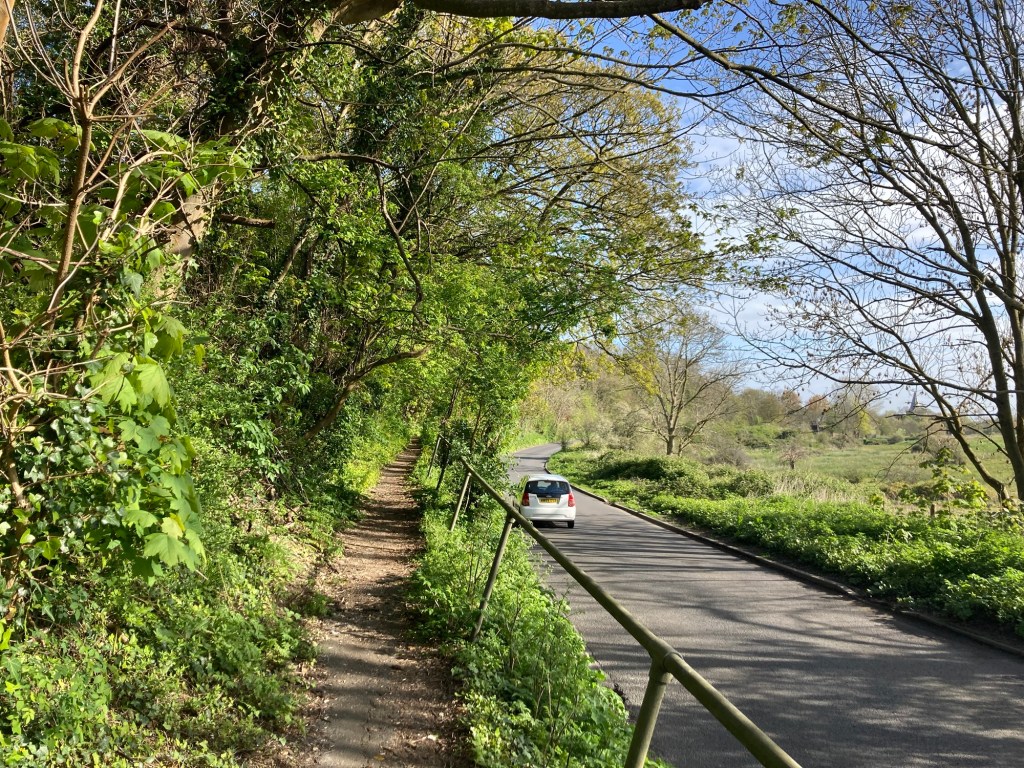
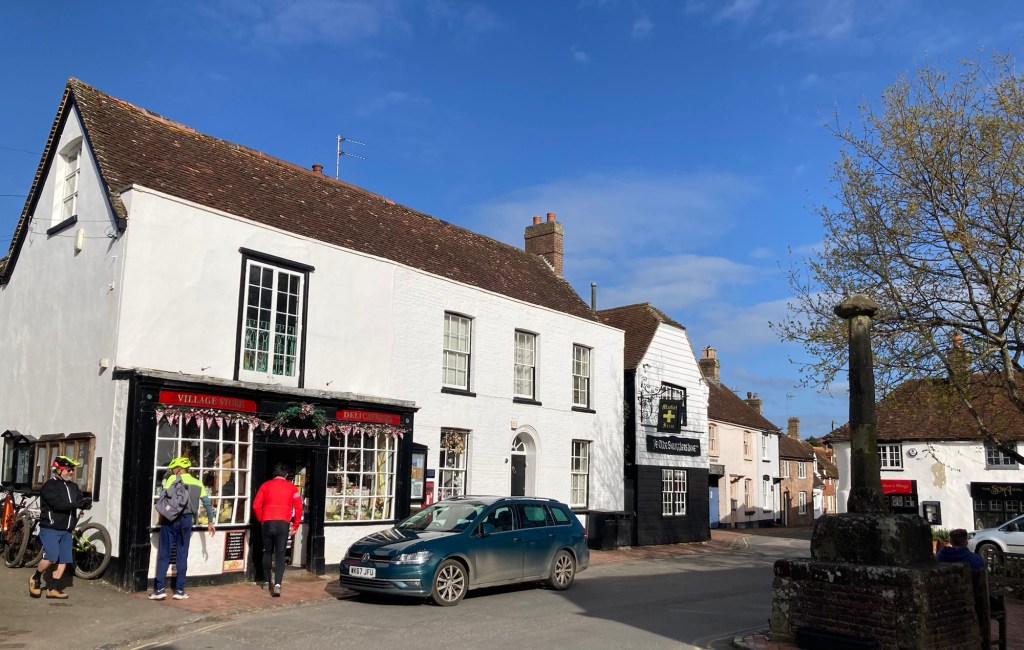
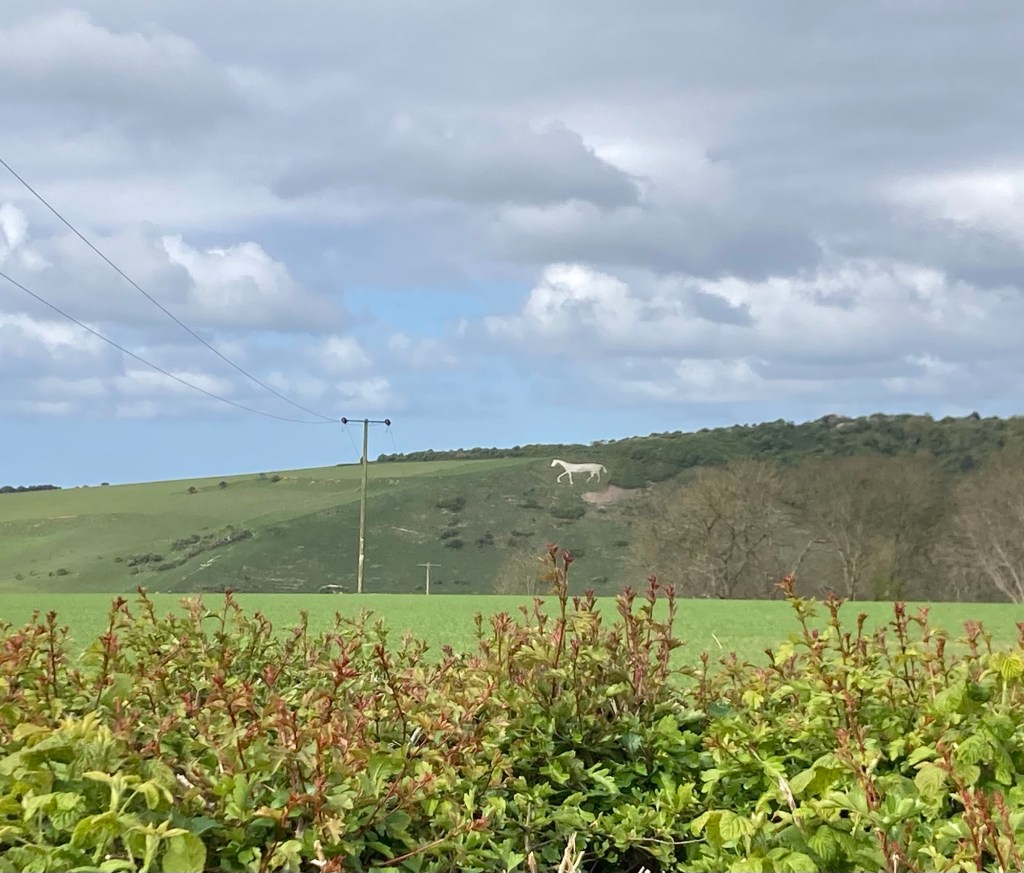
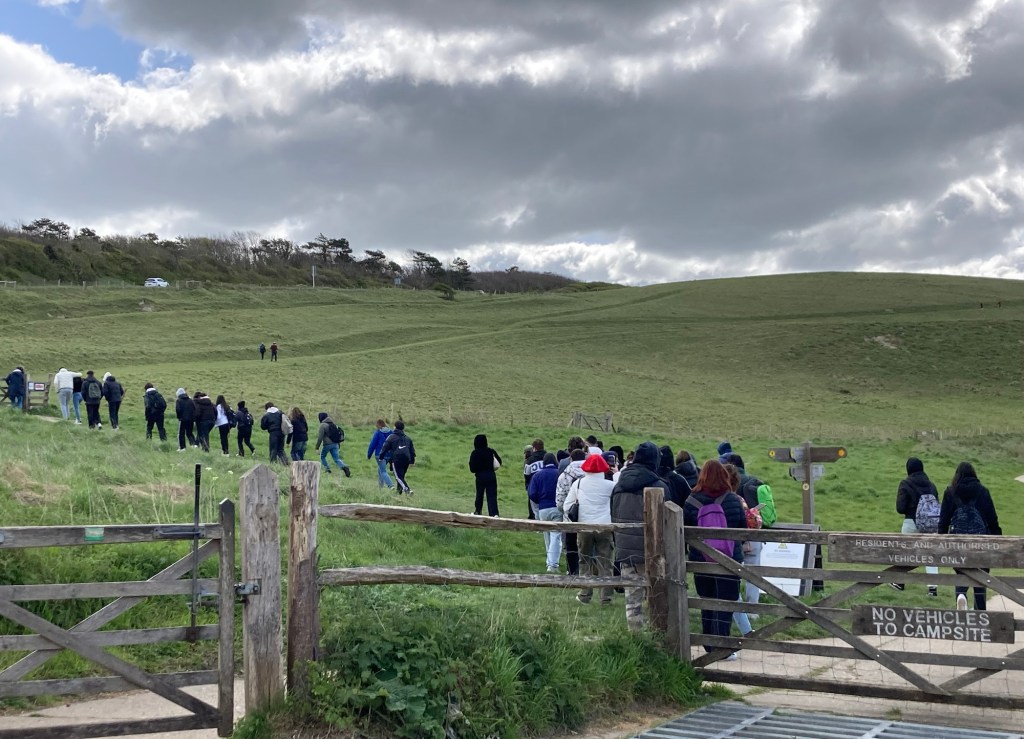
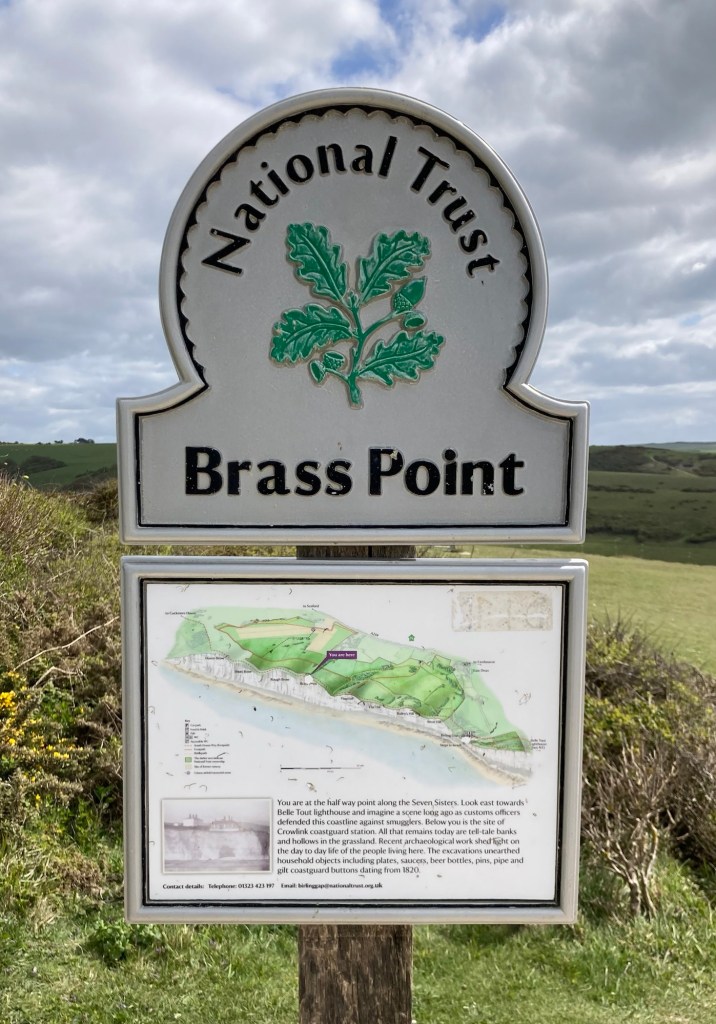
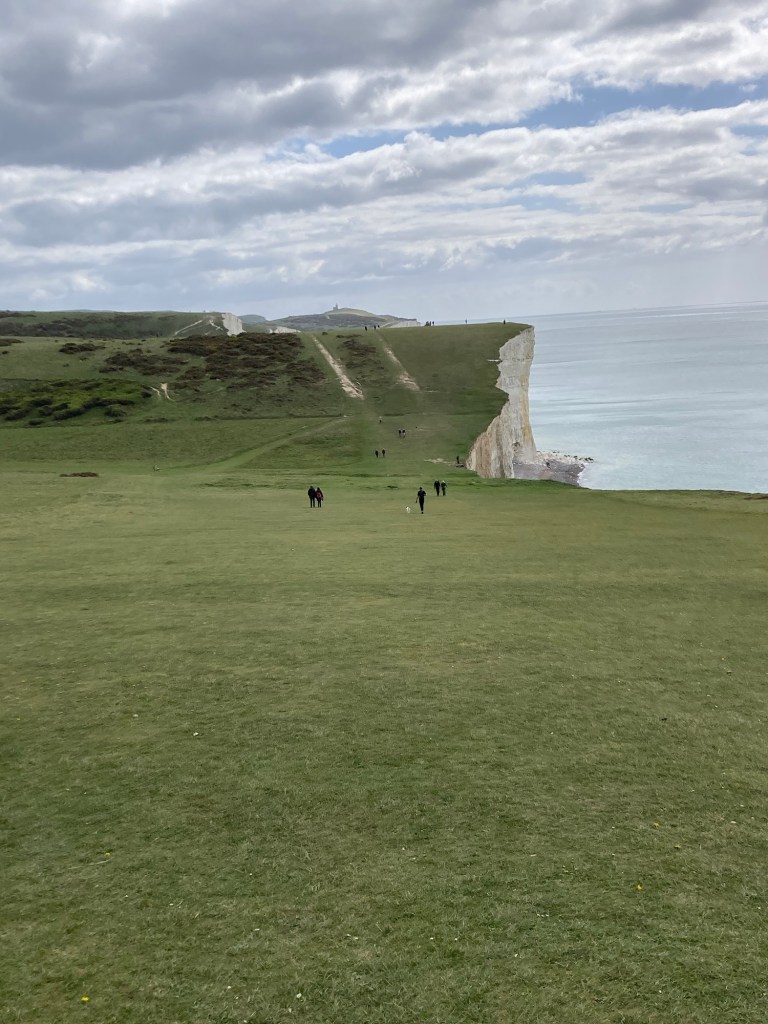
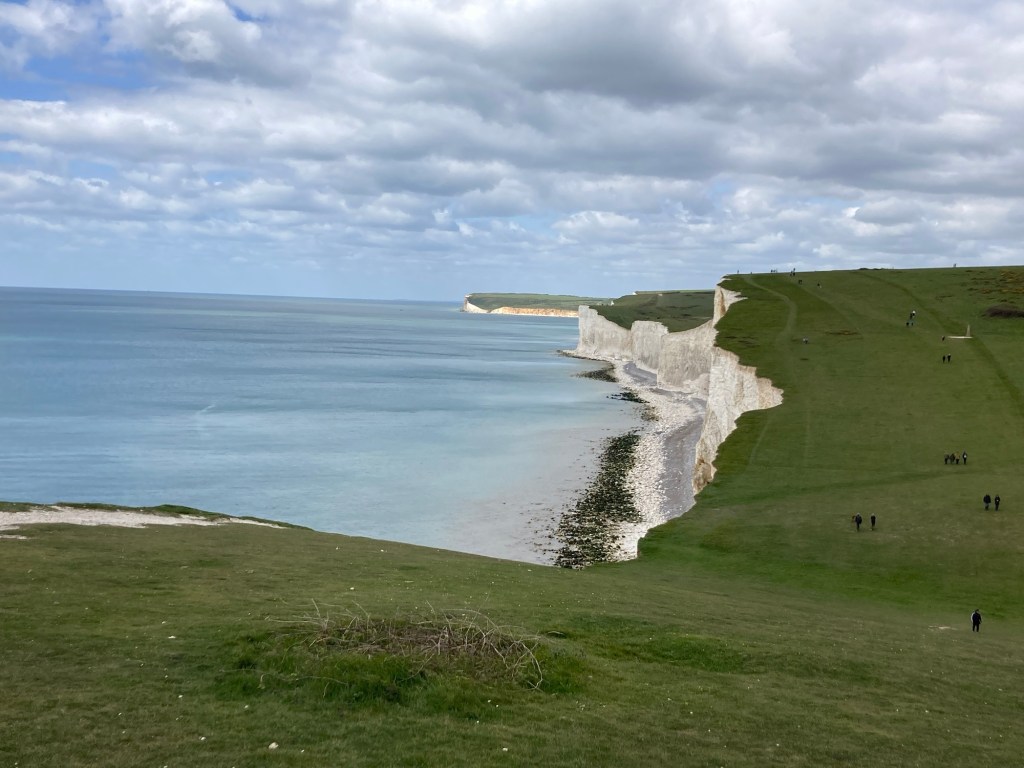
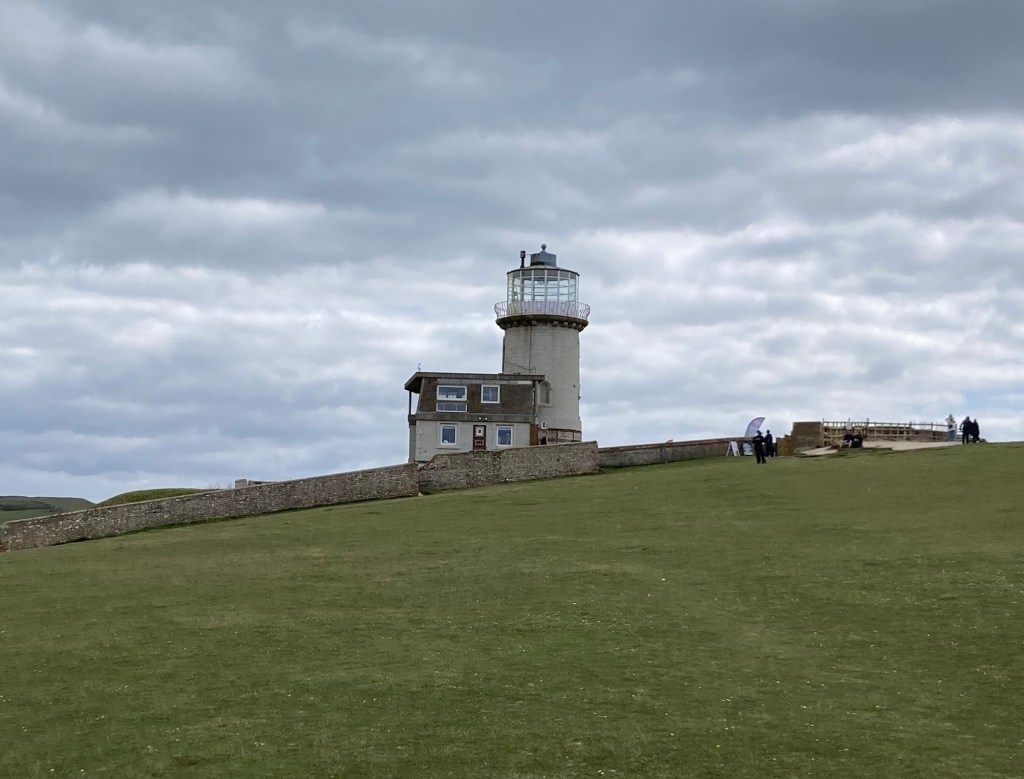
Walking the narrow trail along the road back into Alfriston to get back to the trail start this morning The market square in AlfristonA chalk horse on a hill on the slopes of High and Over (that location sounds made up but that’s what the guidebook says)Entering the Seven Sisters National ParkThe unloading of a tour bus. Don’t recommend timing your walk to end on a weekend.Our first look at the cliffs along the English ChannelOur ascent of the initial “sister”Coming down one and looking ahead to the next “sister”Looking back — beautiful!Finding out that we were only at the halfway point of the “sisters”Looking forward (east) to a lighthouse which is now a B&BAnother view back to the westAn obelisk dedicating this land to the National Trust in memory of two brothers killed in WWIA closer view of the lighthouse Another view westA war memorial along the coastSteeply down. Surely we’re on level ground from here.Nope, atop last hill before entering Eastbourne
We left The Dorset Inn in Lewes this morning a little less pleased with it than initially after the coffee machine in the room didn’t work and they offered only a continental breakfast of store-bought rolls, some fruit, cereal, and yogurt, and bread for make-your-own toast. That isn’t horrible, but there were no plates (but a few bowls), and when the other guest eating at the same time as us asked for butter for the toast, the staff member brought him 2 pats of butter. We would have had to ask for our own. Quite a unique experience and good for a story.
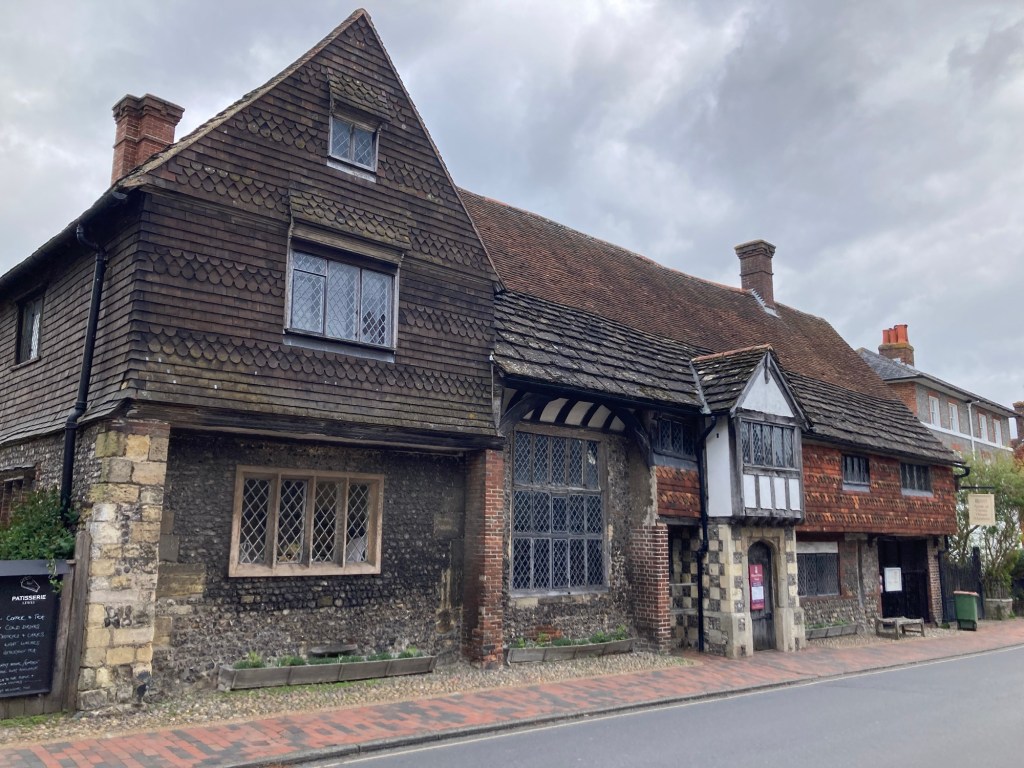
On the way back out of Lewes to return to the trail, Bob found us a route that took us by the home of Anne of Cleves, so we could at least get a photo. Anne was the 4th wife of Henry VIII, so was Queen for about 7 months in 1540. She was lucky enough to get out of the marriage with just an annulment instead of a beheading.
Anne of Cleves home sort of. It was gifted to Anne at the end of her marriage to Henry, but she never lived there.
Bob tells me that today’s walk was the same length as yesterday’s, but it felt much different. We had an hour and 20 minute walk back to the trail, much of it steeply uphill, and that was only one of quite a few hill climbs today. We also had quite the downpour for about 30 or 40 minutes atop a couple of the hills later in the walk, that we luckily had dressed for before it started. However, after the burst, we were treated to sun that helped dry us out.
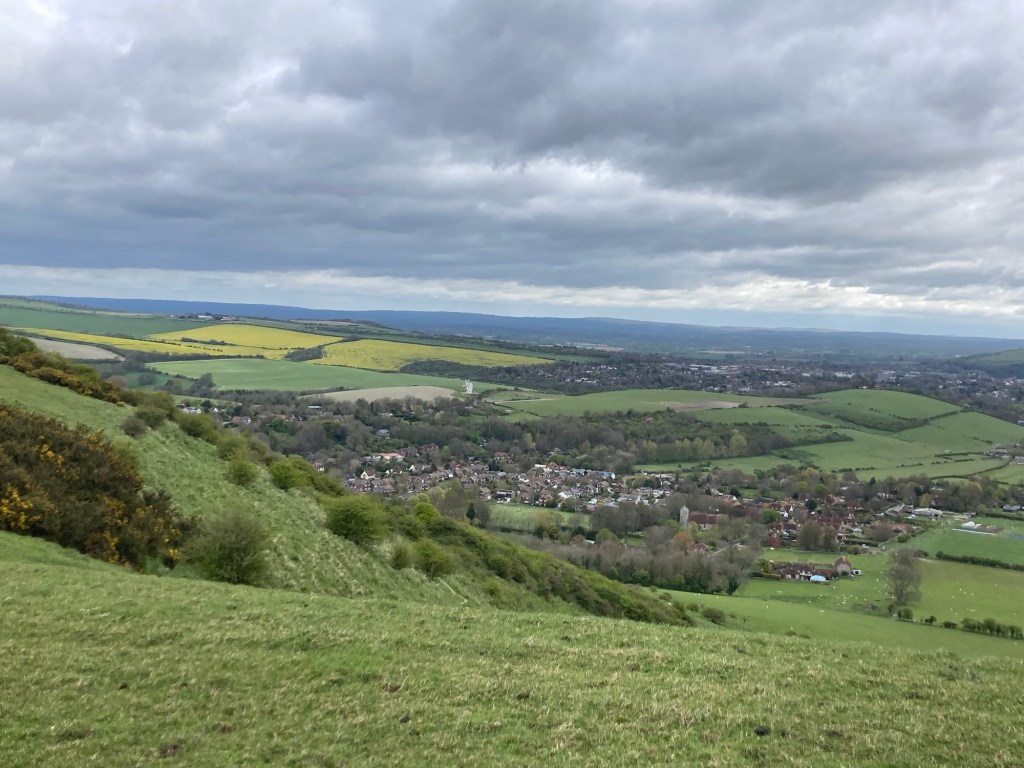
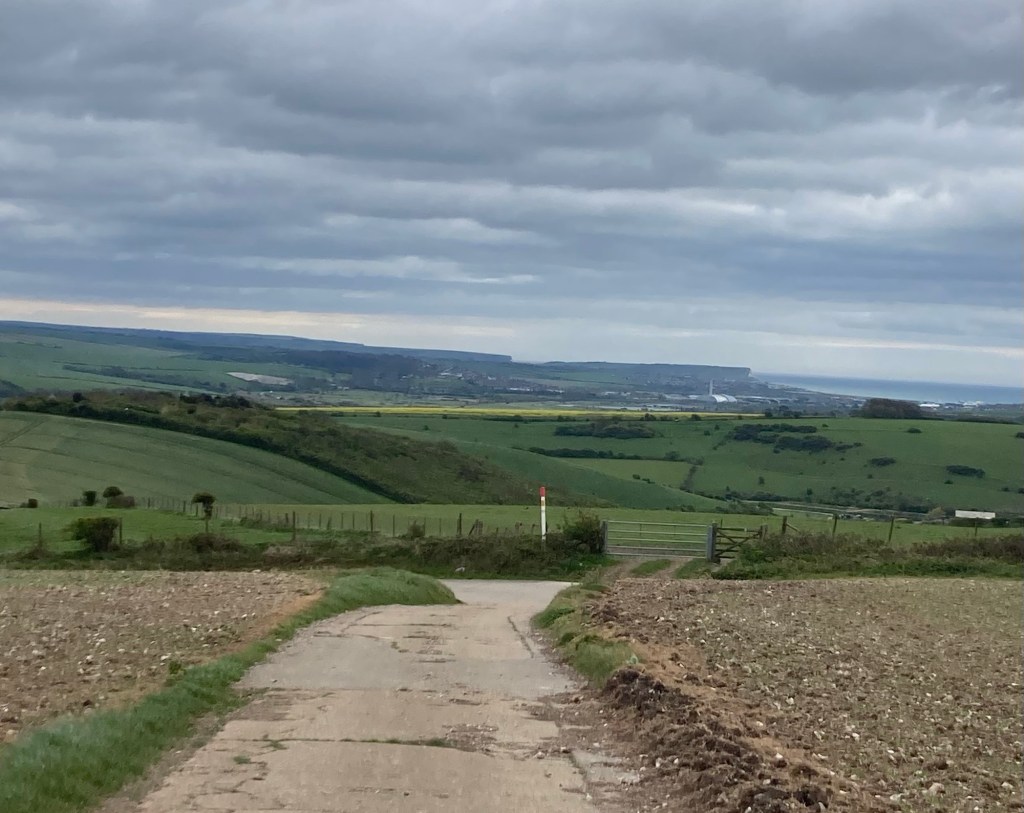
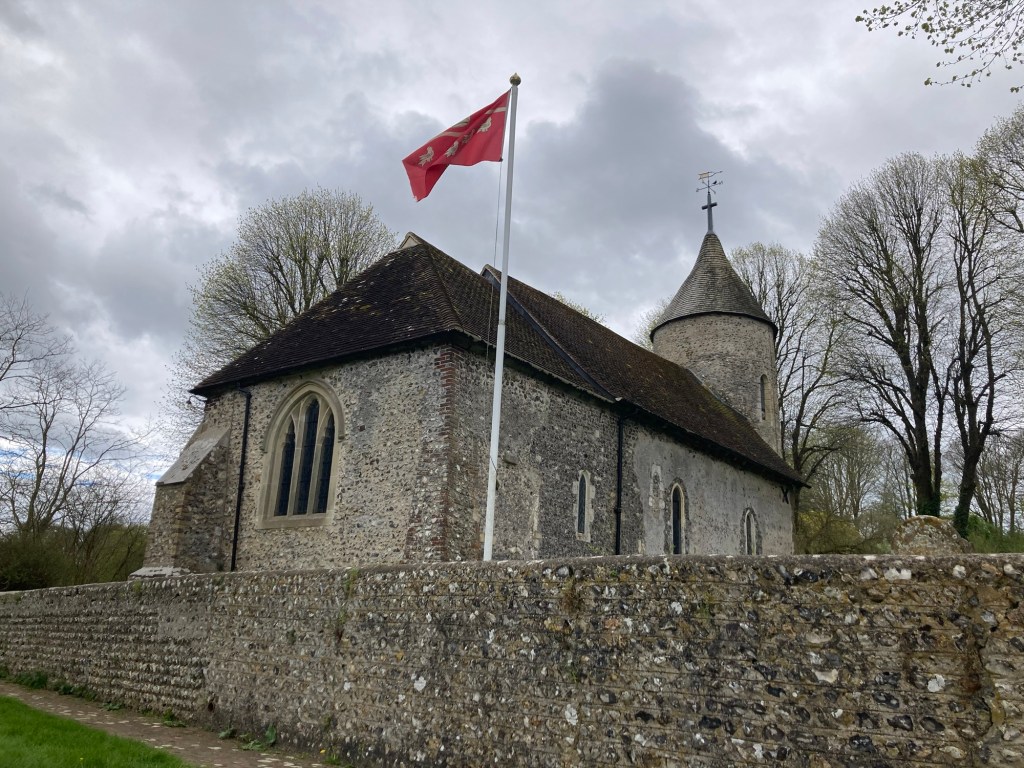
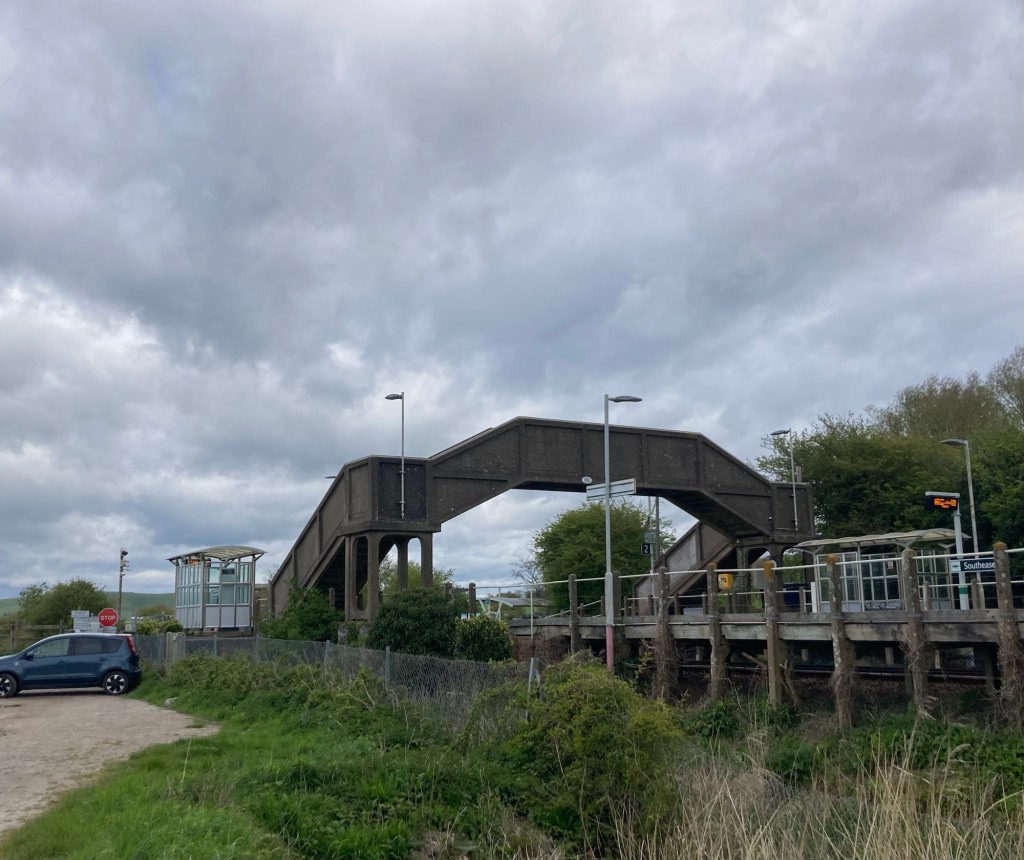
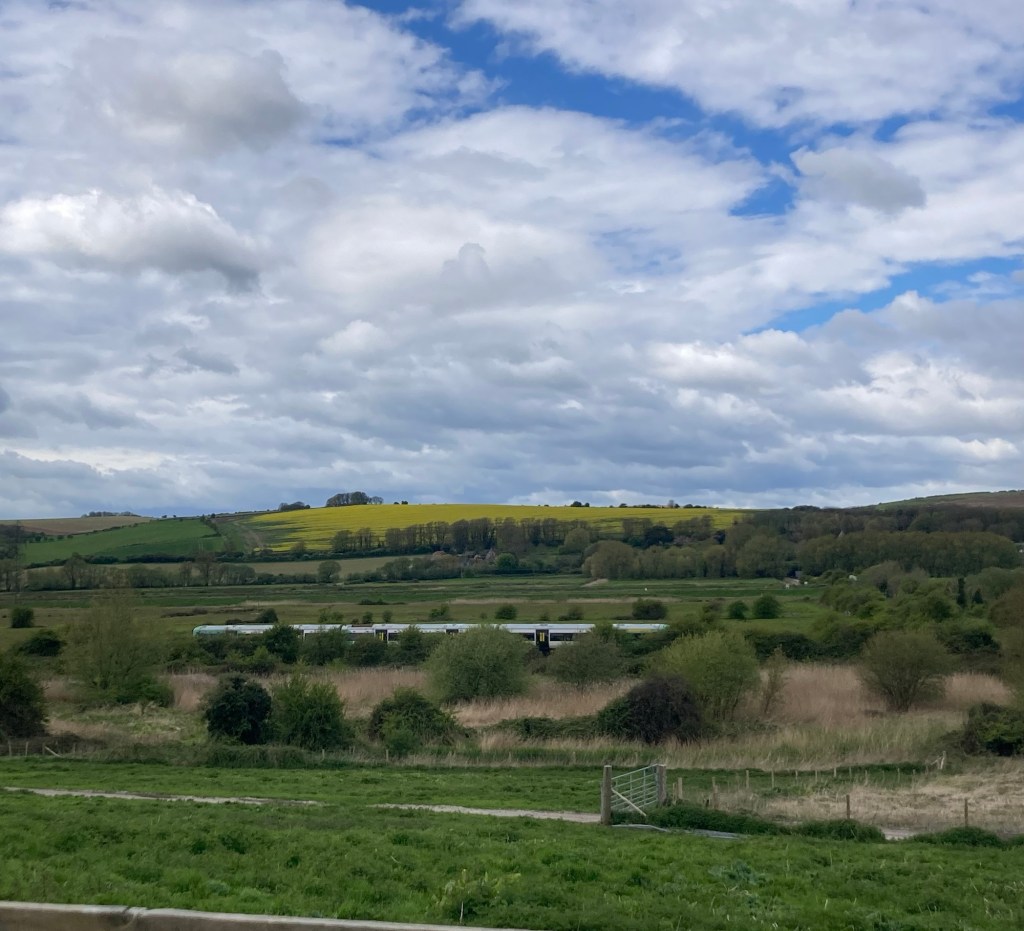
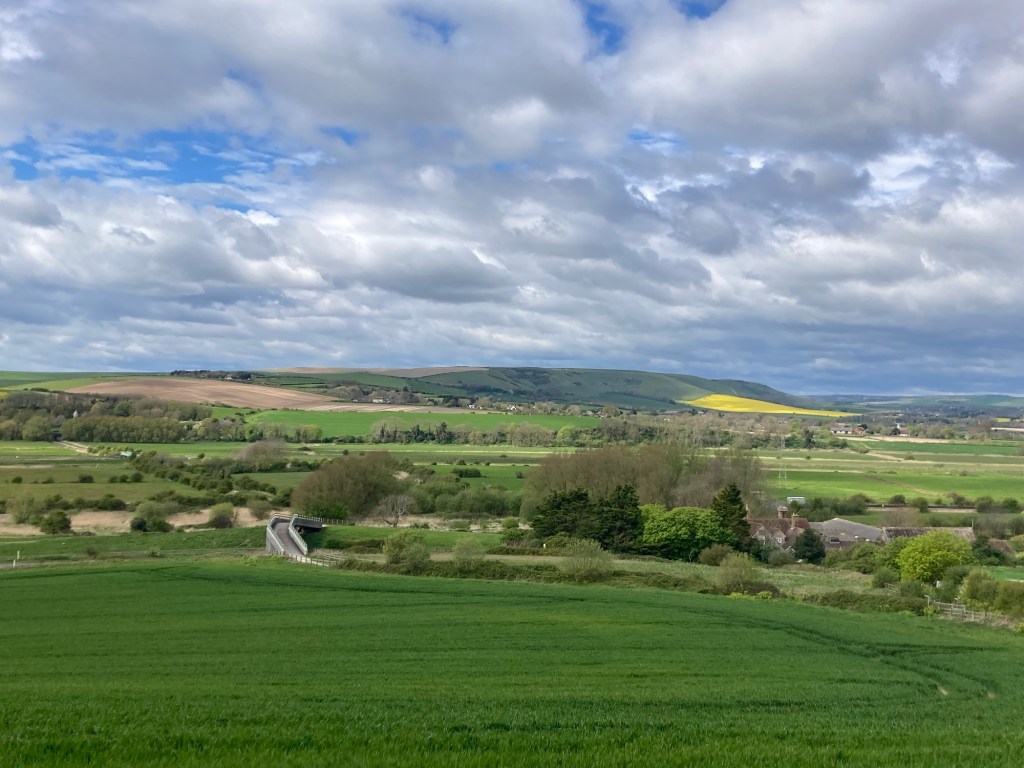
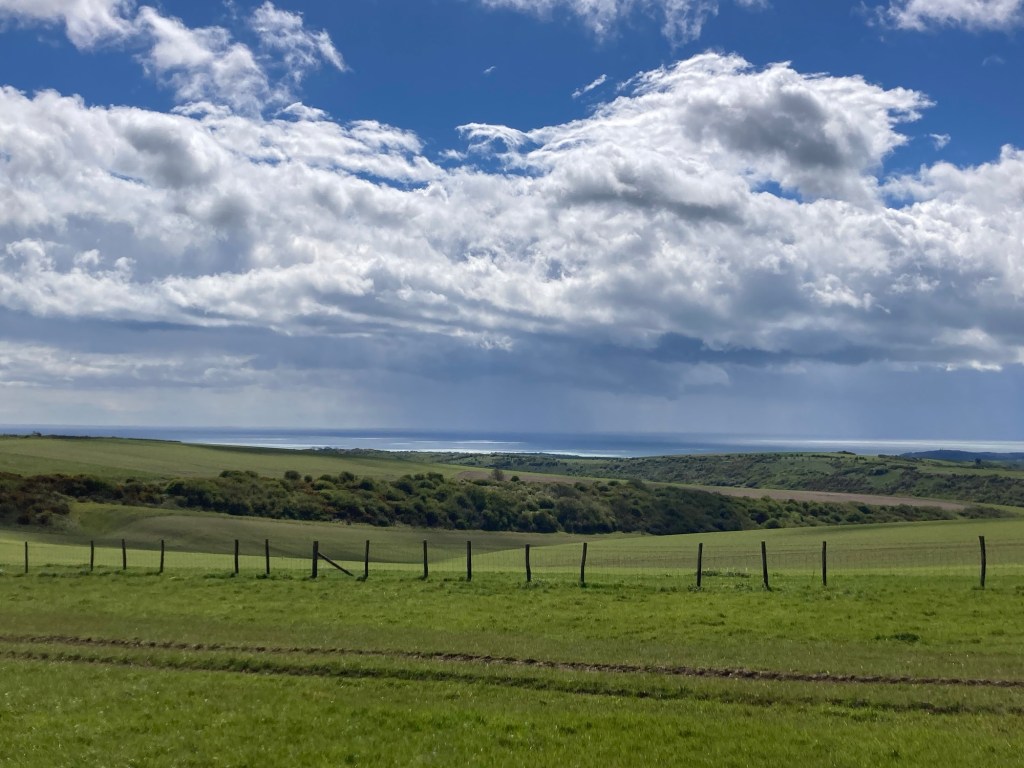
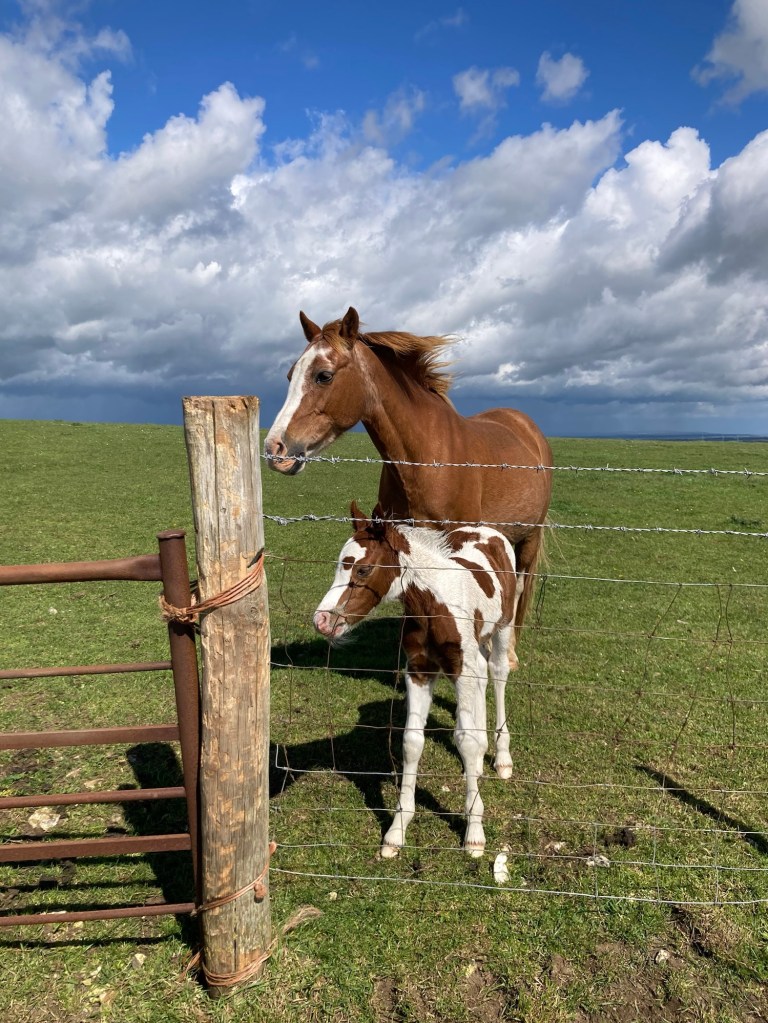
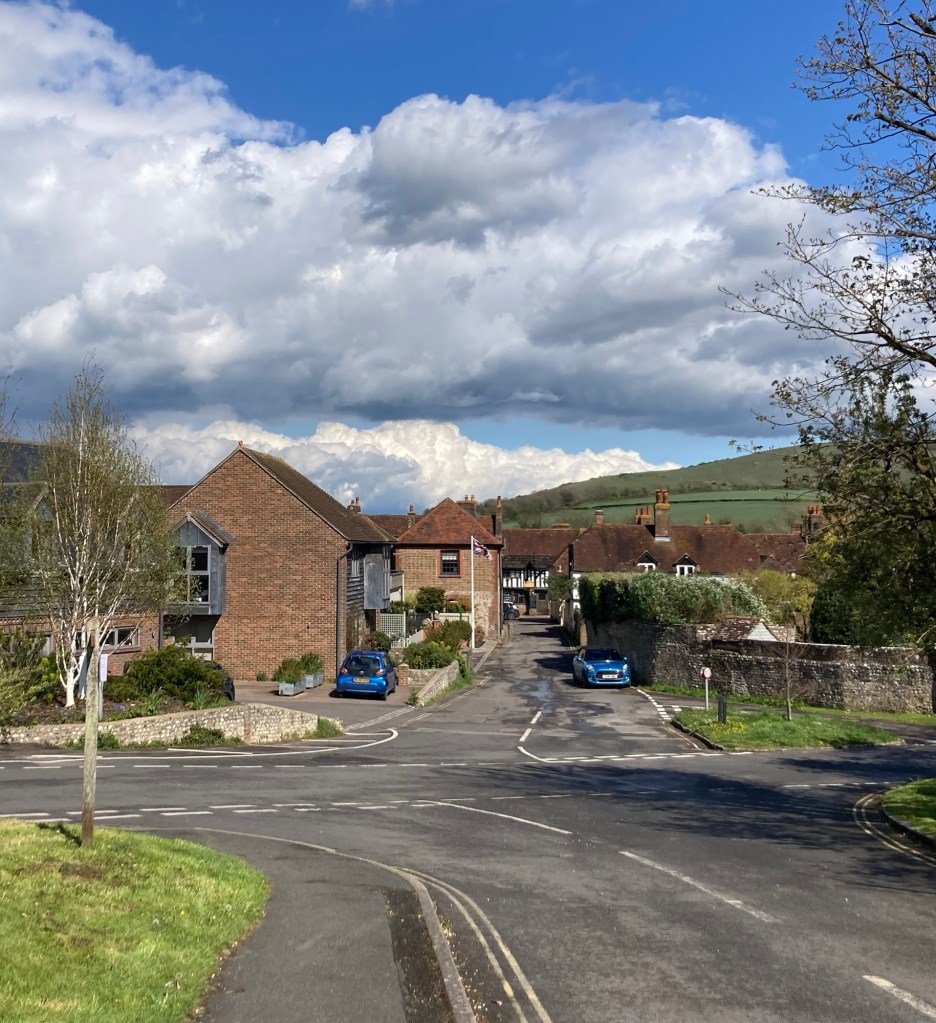
Looking back towards LewesWalking what seemed to be a random concrete road in the middle of 2 fields while looking towards the coast.A marker denoting the prime meridian dividing the eastern and western hemispheres. This spot also lies along the Greenwich Meridian Trail.St. Peter’s Church in the tiny community of Southease The rail station that we crossed in Southease. We were surprised to find a station there.Looking back towards Southease to see the trail passing through Another view looking back towards SoutheaseWatching the weather come inAnother memorial along the trailLooking towards the coast after the rain has passed Lambs feeding on the gorseBeautiful countrysidePassing close to a horse and foalWalking into the small but busy community of Alfriston, where we’re spending the night.Riverdale House, a bed and breakfast where we’re spending the night. We have a bedroom and a sitting room!





























 Peckish Travels