Categories
Uncategorized

Valencia 102 — Traditions

One of the Valencian festivals that I remember most from my time studying there was Las Falles.  It’s a two week-long festival that commemorates Saint Joseph, although I mostly just remember it as time to stay out late, eat free paella from neighborhood pans (we each carried around our own spoon), the monuments built for Las Falles, and the end of celebration fires.  Las Falles refers both to the celebration itself as well as to the monuments that are constructed (and later burnt) for the celebration.  The Falles are built around that year’s theme and consist of Ninots (figures).  Each year a committee recommends a set number of Ninots to be saved from the fires.  The one(s) actually saved are those that receive the most votes from the public.  Bob and I visited the museum that houses the saved Ninots and provides an overview of the festival.

The museum building
One hallway of saved figures
A saved into from a children’s themed monument
A Cervantes Ninot
One free museum that we happened upon on our walk around Old a town one day was The Corpus Museum also known as The House of the Rocks.  This building was bought by the Valencia City Council in 1446 to house the ceremonial carts (rocks) used in the city’s annual Corpus Christi festivities.  The festivities take place on the Sunday closest to the 60th day following Easter (per papal instructions from the XIII century).  The carts are Valencia’s emblem of their celebration.  There are currently 11 rocks that have been elaborately crafted over many years, with the oldest completed in 1512 and the newest in 2001. They are brought out of the museum for viewing on the Friday night before the official celebration.  The Sunday festivities consist of thrwe different parades throughout the day on Sunday.

One of the rocks
The parades consist of more than just the rocks. They include children and adults folk dancing, mythological creatures, and Giants that reflect the different populations around the world to whom the word of God should be spread.
Bob taking advantage of a multiple big head opportunity in front of some of the costumes

Categories
Uncategorized

Valencia 104 — The Beach

Since we had seen the beautiful beaches and coastline in Croatia, we had to see what Valencia had to offer.  I also wanted to walk back from the beach on the road that I lived on as a student — the Avenue of the Port.  We walked down through the gardens (see prior post) which got us very close to the beach through the lovely arts and sciences complex (see next post).  It was a lovely day, but I didn’t recognize much from “my” old street — I guess 30 years and some urban renewal efforts will do that.
Walking up to the port area
The customs house
Boats in the harbor

Looking back at Carbanyal Beach from the harbor area
Another look at the beach
One of 2 big sand castles that we saw along the beach near the promenade

The promenade along the beach
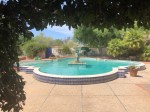
We popped into Las Arenas hotel — a 5 star hotel complex on the beach. This was one of their pools.

Walking back into the city
Categories
Uncategorized

Valencia 105 — City of the Arts and Sciences 

The City of Arts and Sciences is a cultural and architectural complex at one end of the garden of Túria.  It was designed by Santiago Calatrava and Félix Candela.  It was inaugurated in 1998 and has become Valencia’s number one modern tourist attraction.  The complex consists of a number of buildings including — The Hemispheric (IMAX, planetarium, and lasrium), the Prince Philip Science Musem, the Umbracle ( open, landscaped structure with a Walk of Sculptures and outdoor art gallery), the Oceanographic (largest oceanographic aquarium in Europe), the Queen Sofia Palace of the Arts (opera house and performing arts center), a bridge, and an agora (a covered plaza which hosts concerts and sporting events).

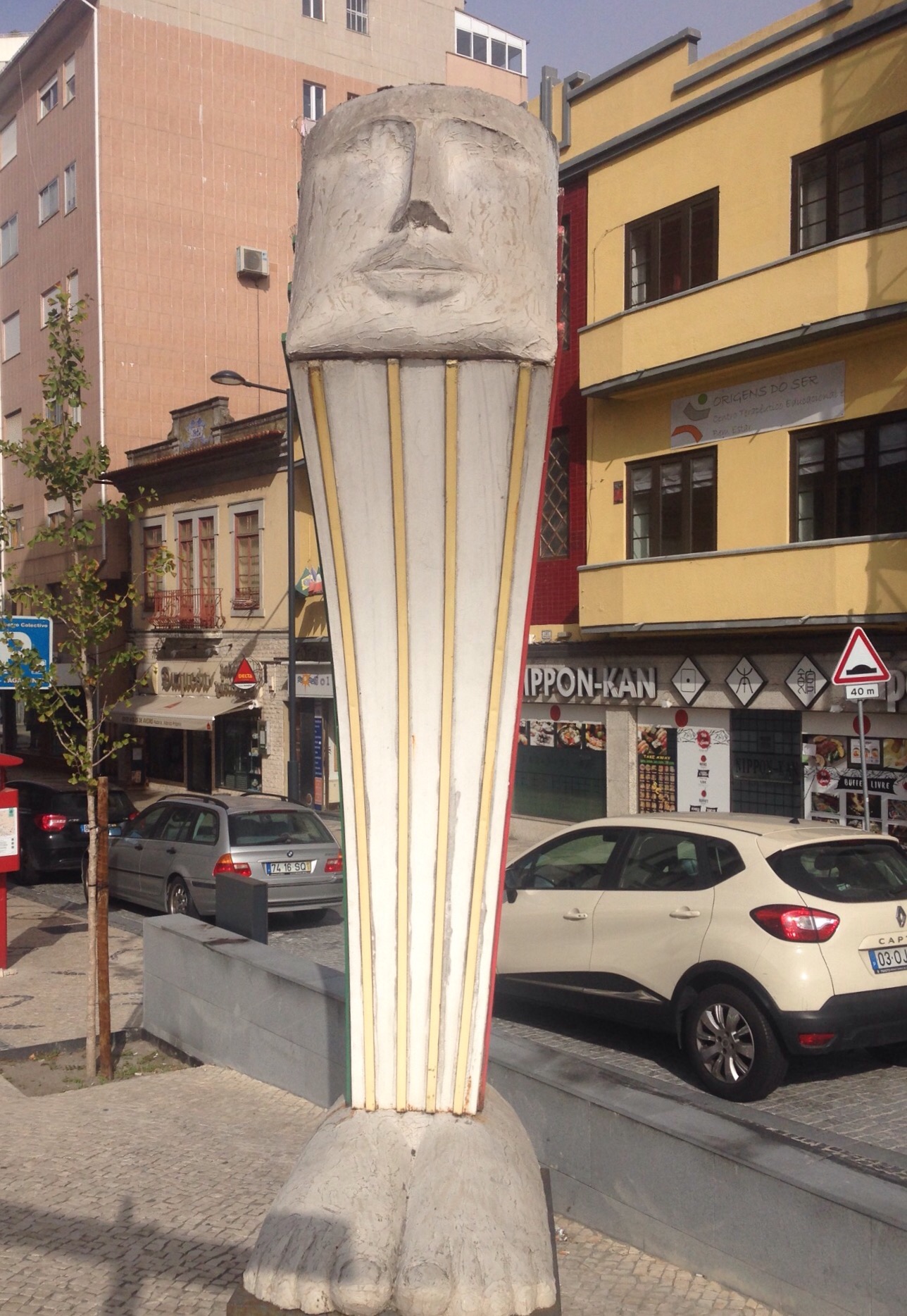
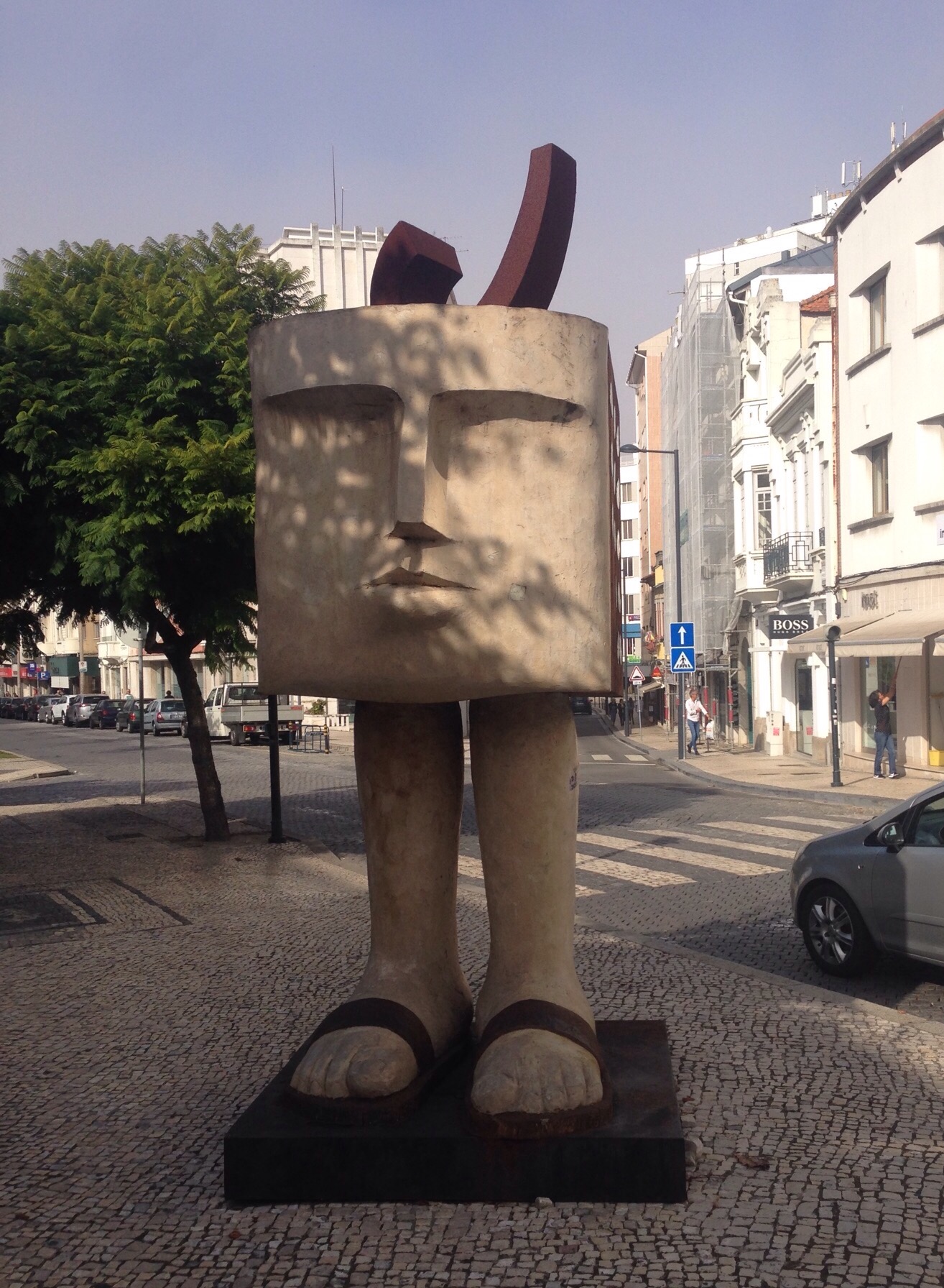
Bob and I walked around most of the complex and did a paid tour of the Palace of the Arts.  We also stumbled upon a Big Head Bonanza!

The Calatrava-designed Palace of the Arts — from different angles it looks like a helmet or a cruise ship
The front of the Palace of the Arts with its water feature
The back of the Palace of the Arts

One view from the 6th level of the building
Another view from the 6th level of the building
The largest (non-operatic) performance stage. The glass panels can be lowered or raised to create the optimum acoustics for each performance
The Umbracle structure

The Science Museum on the left and the Hemispheric on the right
The Science Museum and the Umbracle
The large plaza connecting the buildings
Looking back at the Hemispheric, the Palace of the Arts, and the big head sculptures in the pool

Bob with the 1st of the big head sculptures
Bob with the winning sculpture — voters decided that this was the one to keep
Bob with another big head sculpture

Categories
Uncategorized

Valencia 103 — Jardin del Túria

Another memory I have of my time as a student in Valencia was crossing the River Túria, which we called the dry river since it was pretty much just sand and dirt, the river having been diverted in the 1950s to prevent flooding.  The riverbed wasn’t much to look at and wasn’t serving any useful purpose though the bridges across it were nice.  Since I left, the city has transformed the riverbed into the Jardin(es) del Túria, or the gardens of Túria, a large urban park.  It is 9 kilometers long and runs from a park near the zoo to the new, modern arts and sciences complex.  The gardens have 5 kilometers of running trails (loved them, as do the locals as they were busy), exercise spaces, playgrounds for kids and adults, and sports courts and fields along with beautiful trees, flowers, water features, etc.  The gardens are crossed by 18 bridges of varying historical times and many of the city’s major museums and monuments run alongside of the gardens.

An overview of one section of the gardens.
A portion of the running path
The Palace of Music
Exposition Bridge
The Bridge of Flowers
Bridge of the Guardian Angel

An exercise station
Bob stands at the head (of course) of a creative play area for kids and adults in the shape of a captured Gulliver

A side view of Gulliver
Getting walked on
Getting in on the fun

Another view of a running trail from above
A covered walkway near tennis courts
Some public art
The 5k marker
A pond with swan boats
Looking across the water towards the city
Nearing the end of the gardens near the zoo
One last water feature

Categories
Uncategorized

Crazy for Croatia — Split Postcard #3 

To start our last day in Split (and Croatia), Bob and I walked out of the residential area in which we were staying and away from Old Town to the westernmost part of the city to view Bene beach.  This is a popular beach for locals and is located at the edge of the large Marjan Hill Park.  We walked into the park on the road which was filled with lots of runners as well as families headed to the very small children’s amusement park located near the beach.

Walking into Bene Beach
Part of the beach area
Marked swimming area

After walking around the beach, we headed into the park to climb to the other overlooks of the city that we hadn’t yet visited.  The trails were narrow, rocky, and not well marked, but it’s amazing the locational data stored in Google.  Bob has downloaded off-line ability with Google Maps, and it continues to be a handy resource.
Heading onto the trail
The marker at one of the overlooks
Looking down on Zvončac Beach with a pool and stands for viewing
Overlooking the city stadium and another harbor area
Overlooking most of the city and the surrounding mountains

From the overlook, we walked back down the hill on the southern side to visit the Ivan Meštrovič Gallery which is housed in his former summer villa.  Meštrovič lived from 1883 to 1962 and is a renowned Croatian sculptor.  He spent the last years of his life in the United States where he worked as a professor of sculpture for Syracuse University and then NotreDame.  We had not heard of him before our visit but where quite impressed with his work.
A helpful crossing guard in front of the museum

The stairs up to his villa, now gallery
One of his sculptures in the gardens in front of the gallery
Another of his sculptures in the terraced gardens in front of the gallery
 

The Meštrovič gallery overlooked the sea, so after viewing his work in the gallery and a church down the road, we headed to the nearby harbor to explore more closely what we had seen from the overlook.

Gorgeous! The building in the distance is a beach club that we walked around. It also had the pool for polo and other water sports that we had seen from above.

I think I had noted earlier that Split is in the Dalmatia region of Croatia.  Ever since I had learned that I had been watching for Dalmatian dogs.  I finally saw one — and doesn’t he (or she) look regal!

Categories
Uncategorized

Crazy about Croatia — Postcard from Split #2

Split is home to Diocletian’s Palace which is an ancient palace built for — wait for it — yep, a guy named Diocletian.  He happened to be the emperor of Rome at the start of the fourth century AD.  The site is quite the tourist draw, but it is actually more of a village than a palace as there are a number of structures within the outer walls.  The structures inside were originally intended for about half for Diocletian’s personal use and half for the military.  Currently, the buildings are used by the locals for their personal residence but also for hotels, restaurants, and retail shops.  We had a map that provided an overview of the street-by-street layout with some history to help guide us through the maze.  We spent a good half day in the “palace” with hundreds of our closest friends.  It was an impressive structure and well worth the exploration.

A church right outside the Golden Gate (the most architecturally elaborate entrance) to the palace
A drawing of the original structure of the palace
The St. George sculpture just outside the Golden Gate — supposedly good luck to touch his feet
The Peristil, the central courtyard where Diocletian would appear to be worshipped as the son of Jupiter
Terrace off of Diocletian’s Mausoleum and Cathedral
Inside Diocletian’s Cathedral — the palace is free to enter but there is a charge to enter the Cathedral/mausoleum and bell tower as well as the Temple of Jupiter
Another view inside the Diocletian cathedral
The bell tower to the cathedral — we did not pay to go up
A typical small alley in the palace
Stairs that would become seating for a bar later in the day
Stairs converted to bar seating in the palace
A band playing, and selling, Dalmatian music
Roman mosaic tiles in the castle
Church of Our Lady of the Bell Tower
 After completing our tour of the palace, Bob and I strolled along Marmontova, the pedestrian street, and surrounding area.  This is just a few blocks from the palace.

Part of the pedestrian-only thoroughfare
The daily fish market
A fountain near the end of the pedestrian walkway
The former site of the salt baths — the structures of the faces hollering indicated people needing the treatment
The yellow building is the Theatre
View of the city and mountains from a cafe atop a mall
View of the city and harbor from atop the mall

Harbor

Looking back at Split harbor as we walked along the harbor towards Marjan
Boats in the harbor
Plaques for Olympic medalists ran along the harbor walk — photo 1 of a Croatian medalist we knew of
2nd Olympic medalist we knew of
A graffitied quote we liked — 

Categories
Uncategorized

Crazy about Croatia — Postcard from Split #1

We took a 6:00 am ferry out of Korčula to Split, Croatia’s second largest city at just under 200,000 residents.  It is also on the coast of the Adriatic Sea, though further north than Dubrovnik.  It is the largest city in the region of Dalmatia, one of Croatia’s 4 historical regions.  It is a popular tourist spot for its famed beaches, Diocletian’s Palace, and Overall beauty.  We loved it!  

First view of Split and it’s lovely harbor after deboarding from the ferry
The promenade along the harbor, also known as the Riva
Market and church at one end of the Riva
 While in Split, we stayed at an Airbnb not far from the Riva.  We had  our own small apartment and were able to wash our clothes.  The homeowner left the key for us, as he knew we’were arriving early.  After doing a load of laundry and hanging it out on the clothes lines on the building, we headed out to begin to explore Split.  We started with a climb up Marjan Hill behind our neighborhood for an overlook of the city.
Climbing the steps up to the first overlook from Marjan Hill
Overlook of the harbor
Overlook of the city and the surrounding mountains
Another view of the harbor
We then headed back to and around the harbor to see some of Split’s many beaches.

Walking back along the harbor to check out the beaches on the other side of town
An unknown (to us) man posing with the Split sign
Bačvice Beach
Another view of Bačvice Beach
Hotel Park, a four star hotel near the beach area. We checked out their bar menu — very pricey. We did not partake.
Another beach along the coast — the city is crazy with inlets and beaches!

Categories
Uncategorized

Crazy for Croatia — Postcard from Korčula #2

To see a bit more of the island, Bob and I decided to walk 6k to the town of Lumbarda to check out its beach that our host had told us about.  While the day was a bit overcast, we had a good walk there and back.

A small chapel and old cemetery on the way into Lumbada
The main road into Lumbada along an inner harbor with a small beach
Looking across towards the town as we walk along a hill towards the outer beach
The bigger beach on one end of town
A statue along the inner harbor
Following the harbor back out of town
Bob found us a trail along the coast
A grotto along the side of the road

Back in Korčula, we walked out of town along the other harbor (opposite from where we stayed and from which we left town in the morning for Lumbada) to get a good overlook of Old Town.

Boats in the harbor
Looking back at Old Town as we head out along the harbor
Another view of Old Town as we continue our walk
The lovely St. Nikola Monastery and Church on the edge of town
A view of Old a Town from above
Later that night we admired this yacht docked in the harbor
The view from our room at night

Categories
Uncategorized

Crazy for Croatia — Postcard from Korčula #1

On Monday, September 18, Bob and I caught a 6:30 am ferry from Dubrovnik to the island of Korčula.  The ferry trip took about 2 1/2 hours getting us to the island at 9:10.  Korčula is an island of about 15,500 people.  It is also the name of the main town on the island, population 5,600.  The town’s main claim to fame for tourists, other than being a beautiful island get-away, is its medieval towers in the Old Town and being the supposed birthplace of Marko Polo.

View from the front of the boat as we near Korcula
A map of the island

After deboarding from the ferry, we had a picnic breakfast by the harbor and then walked a quick 5 minutes into Old Town in Korčula (the town) to our accommodation. We stayed in a room over a pizza restaurant that faced the promenade on one side of the Old Town peninsula.

The medieval gate into the Old Town
The view from our window over the promenade
One tower that now houses a nightclub
One of the many cute alleyways
One of the churches in Old Town
On our first day, we continued our explorations out of Old Town to see more of the coastline.

Looking back across the harbor towards Old Town
Approaching the Hotel Liburna
Loving the mountains and the clear water!
Another cove
Swimming areas are designated in almost every cove
Beautiful blue view
Pecks in Paradise
Ditto that
Toasting Croatia and sister/sister-in-law Shelli’s b-day at a cafe in a little park

Categories
Uncategorized

Crazy about Dubrovnik — Postcard#3

On our second full day in Croatia, we took a 15 minute boat ride to the nearby island of Lokrum which is a designated nature preserve with a botanic garden, historical remains, and a number of beaches.  Boats between the Old Town of Dubrovnik and Lokrum run every half hour.

Boating out of Old Town
Seeing another boat en route
The crowd waiting to board to head back to Dubrovnik
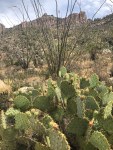
Memories of Arizona in Croatia, unlike many other botanic gardens the one on Lokrum is specifically geared to test the hardiness of non-native species in the Mediterranean climate
Looking back at Old Town in Dubrovnik from the highest point on Lokrum — the remains of an old fort
A very specific no no-smoking sign — a second sign was dedicated to cigarettes and vapes
The island as viewed from the highest point
Individuals enjoying the island’s Dead Sea and the nearby beach

After returning from the island, we walked to Banje Beach, Dubrovnik’s most famous beach, and then back through Old Town to our accommodation.

One view of Banje Beach — about a 10 minute walk from Old Town
Another view of Banje Beach from the — half private and half public
Part of a bridal party walking across a bridge into Old Town

Sunday was a cloudy day with light showers off and on.  We still got out to see some of the areas we hadn’t yet explored.

Dubrovnik’s pedestrian-only street down to Lapad Bay
The Dubrovnik Presidente Hotel and its beach
The plaza at the beach end of the pedestrian-only street
Hiking up the paths on the nearby hills for a better view of the area
Looking back towards the New Port and our accommodation
The helipad for Dubrovnik’s hospital
St. Blaise’s Church