Bob and I used our transport cards today to take a 30 minute bus ride to the nearby city of Roskilde. With a population of almost 53,000, it is the 10th largest city in Denmark.
We went mainly to visit the Roskilde Cathedral but also to see the harbor and a bit of the town as well. We had an easy bus ride on a clean, efficient bus and a great visit.
We caught the bus in the Solrød town center near the train station. We were the first ones on, but we had few fellow passengers either way.A pretty hotel and restaurant on the main shopping street in Roskilde.Cafes in the plaza in front of St Laurentius tower, the only remaining part of a former church.
The Roskilde Cathedral was built about 1200 and was the first Gothic building in Scandinavia. The church was originally Catholic, but since the Reformation in 1536, it has been Lutheran. 37 kings and queens are buried here, and there are more than 1,000 graves in the church.
Fun fact about the royals noted here (besides the fact that they have impressive tombs). Throughout the years, they ruled some combination of Denmark, Sweden, Norway, Iceland, Greenland, and Faroe Islands, and Scandinavians seem to require their kings to be named Christian or Frederik. There have been 10 Christians and 10 Frederiks (including the current king).
Roskilde Cathedral Looking down the nave of the cathedral The Raphaelis OrganMargrete I’s (1353-1412) sarcophagus Christian VI’s (1699-1746) tomb in the White ChapelFrederik V’s (1723-1766) tomb, also in the White ChapelThe vibrant Christian IV’s (1577-1648) ChapelChristian IX (1818-1906) and Queen Louise’s (1817-1898) tomb in the Glucksburger ChapelFrederik II (1534-1588) and Sophie’s (1557-1631) sepulchral monument Walking through a lovely park down towards the harborOne of the most charming restrooms we’ve stopped atThe Viking Ship Museum, the other big tourist draw for Roskilde. We didn’t go in but could walk through part of it on the trail near the harbor.A marina in the harbor A group heading out on a Viking shipThe Roskilde Train StationPretty public artA very green and serene cemetery within the city
The sun is shining off and on once again in Solrød after a few days of raininess. We were under a severe rain alert from 8 pm Friday, and yesterday it rained steady with some heavy spells from early morning until after 5 pm. It made for a lazy day though we did get some upcoming travel planning done and got both dog walks in.
This morning I had a slug and snail avoidant run, as I often do here, as I don’t want to accidentally hit any of them. Speaking of snails, we saw one with a fairly large shell on our walkabout today.
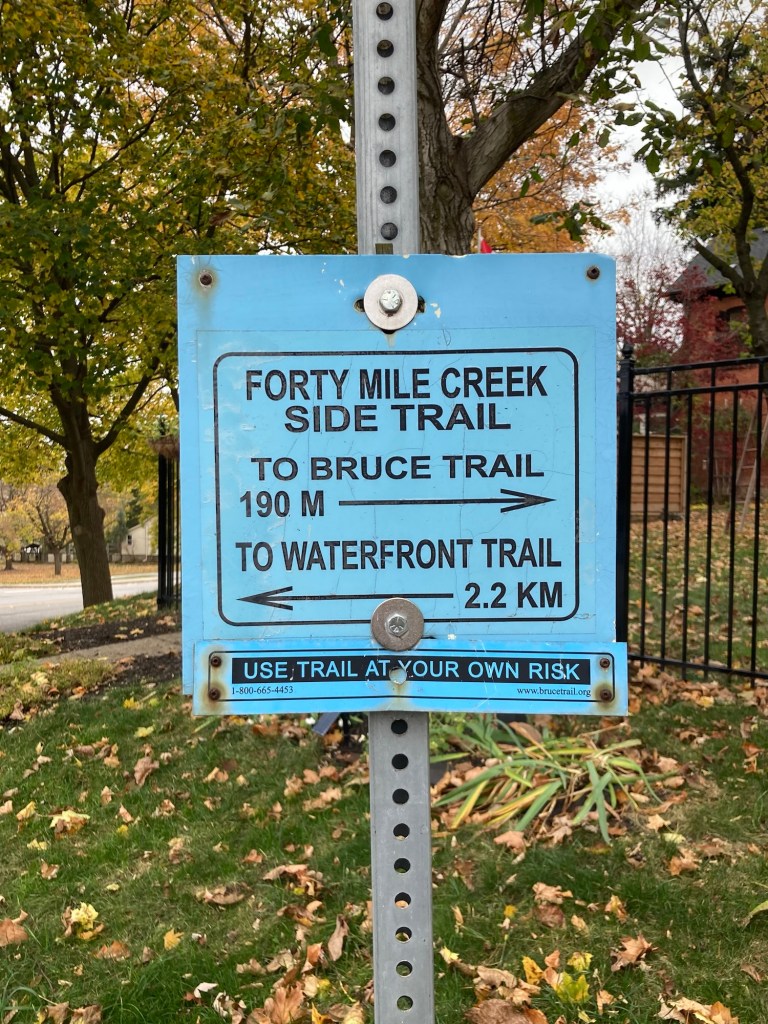
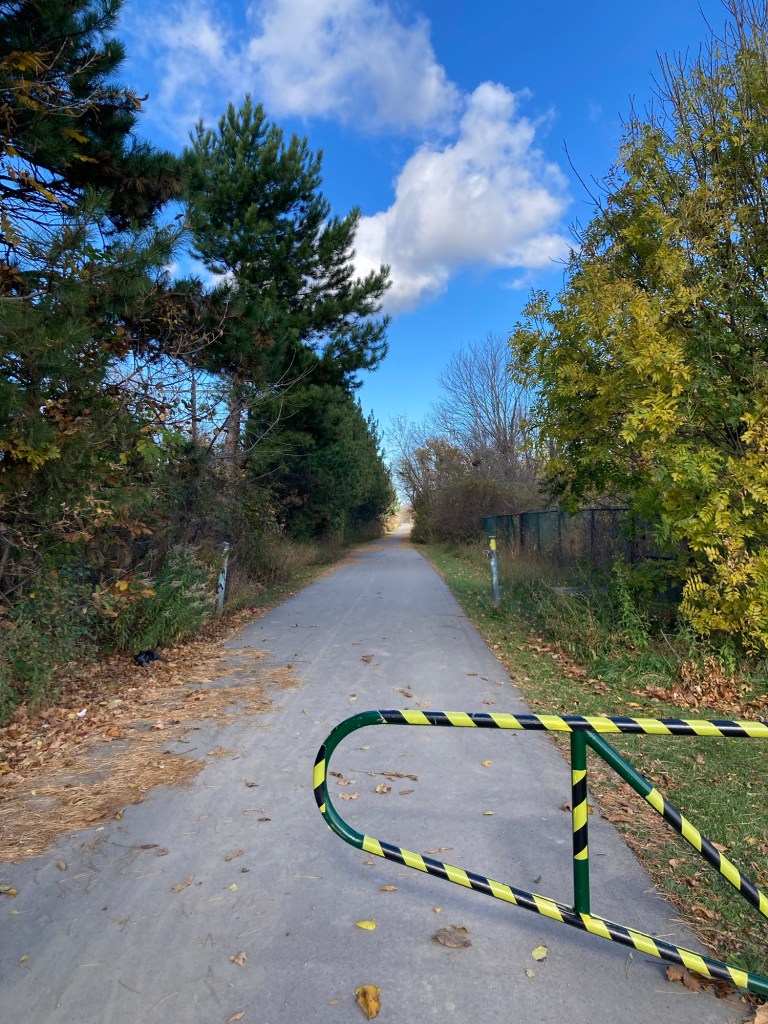
Solrød has a number of walking/biking paths, as we’ve mentioned. Some of them are designated by colored symbols (green, gray, black, blue, and red), and we snapped a photo of a small map the other day, which has three of the routes. The map would also be more helpful, if it indicated where you were on the map or had some street markings or other landmarks, but we thought we’d head out today to find a way-marked post and then see if we could follow the route.
We weren’t entirely successful, but we had a good walkabout anyway following some of the green route and much of the blue. We continue to be impressed with the cleanliness of the area, the number of paths for pedestrians and cyclists, the variety and ease of using public transportation, and access to an airport. These are many of the factors we are wanting in the next place we settle. I still haven’t decided about the climate, and we would definitely need to work on our Danish language skills.
Scenes from today’s walk.
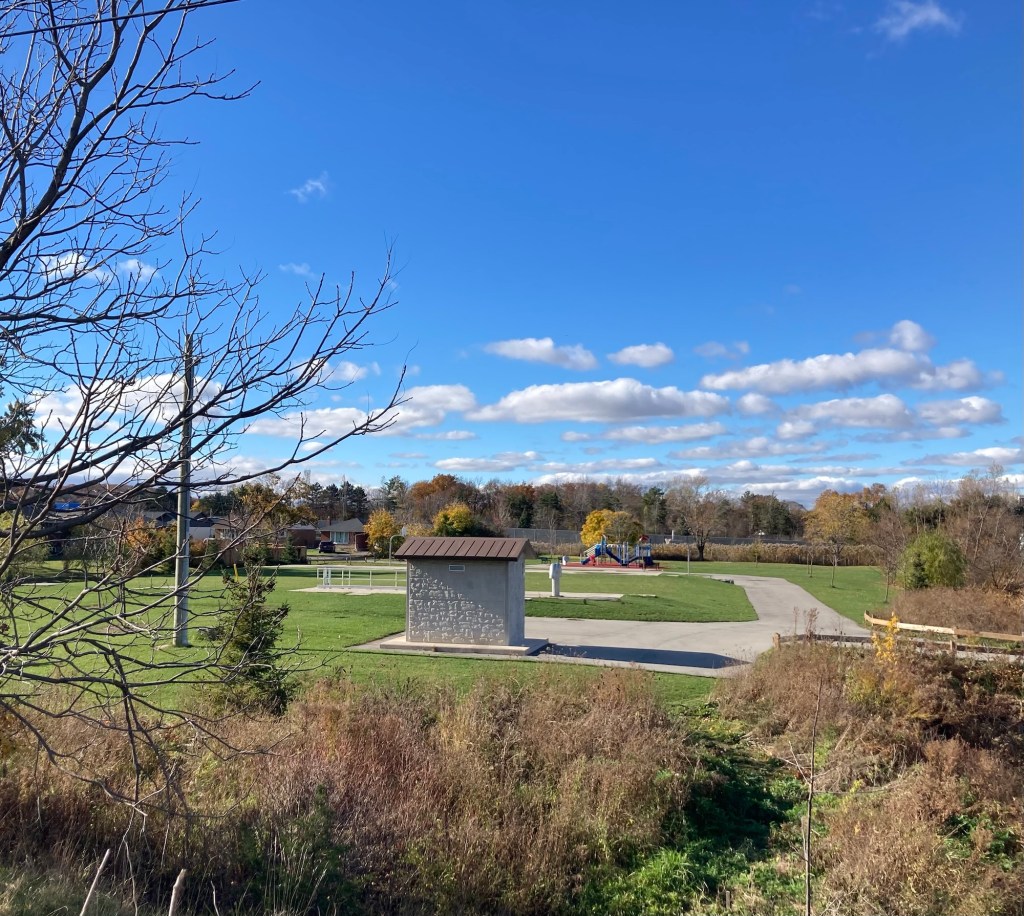
This is a playground used by the nearby school. It looks like a lawsuit waiting to happen in the US.The local library. They have a photography exhibit of each of the businesses in the town center.A bookshelf sculpture A cafe and wooden sculptures as you walk through a nature park towards the beach (but still a good bit from the proper beach).In a language of long words, this is one of the longest we’ve seen.
Bob and I did a return trip into Copenhagen today to catch the changing of the guard, glimpse the Rosenberg Castle, and check out a popular food hall. The trip in was unexpectedly shortened by about 3 stops (luckily within the city center) when the train conductor announced (in Danish) that the route was ending (or something to that effect). We got the message when the route stops that appear on the overhead monitor suddenly ended with the current stop, and everyone appeared to be leaving. Luckily, Bob was able to find us a route to the plaza in front of Amalienborg Palace to see the changing of the guard at noon.
Built in the 1750s, the octagonal Royal plaza contains four Rococo palaces that were once home to four noble families. Currently, the retired queen lives in one and the current king and his family live in a second. Not sure how the other two are currently used. The Danish Royal Guards stand outside the palace guarding the monarch in 2 hour shifts (when monarch is in residence). At noon, guards from Rosenberg Slot march through the city streets to take over these responsibilities.
The guards struck us as being very young, and there seemed to be less movement/action than in other guard changing ceremonies that we’ve seen. The most drama came from the weather, as we had a bit of thunder and a quick downpour before the ceremony began. Below is my lay interpretation of what happened.
The current guards coming from inside the palace. They currently aren’t out guarding, as the monarch isn’t in residence.Nice formation Here come the replacementsNow they are facing each other and did this for quite awhile before anything else happened.Staring contest over and more movement underwayThe replaced guards returning to the palaceNew guards moving to assume new positions
From the changing of the guard, we walked to the food hall (TorvehallerneKBH) via the beautiful King’s Garden with Rosenborg Castle. Rosenborg Castle was originally built as a summer home between 1606 and 1632 by Christian IV. Denmark’s crown jewels are kept in the basement.
The nicely manicured trees in the King’s GardenRosenborg Castle
It was then a short walk to the food hall (actually two buildings), which was conveniently located near the Nørreport Metro Station, where we could catch an S train back to Solrød. The food halls were impressive but very busy and very warm.
A selection of Denmark’s famous open faced sandwiches
To further explore the Solrød area where we find ourselves, Bob and I headed out for a 45 minute walk on some of the many paved trails to explore Karlstrup Kalkgrav, a lake formed in an old limestone quarry that our homeowner had mentioned to us. It rained off and on during the walk there, while we were there, and part of the way back into town. However, it’s sunny and lovely now.
As we left the neighborhood, I captured (photographically) one of the many slugs that also populate this area. Probably shouldn’t be surprised as they like moist habitats.
Also on the edge of our neighborhood are some obstacle courses on a hillside. There isn’t a school right next to them, so we assume that these are for any children to use.
Then we we continued on the divided path out of the ‘hood.
On our way, we walked by some pretty wildflowers as well as a small outdoor sculpture between a business called OJD (automotive headquarters) and what appears to be an associated (or just named after them) art gallery. We need to see if this is something that we can visit.
This bent tower and nearby marble sculpture are part of the small sculpture park
The Karlstrup Kalkgrav is now a recreational nature area that allows for swimming, fishing (with a license), and camping. For many years, limestone was quarried on site, and you can see the limestone cliffs that surround the lake. There is a path that we walked around the very clear lake.
Our homeowner said that it is a popular swimming hole for local teens. No swimmers today, but we did see others on the path either walking their dogs or out with family/friends.
The sign where we enteredThe lake that emerged after quarrying ceased. Look how clear the water is!The marshy area between the path and the limestone cliffsAnother pic of the lakeA pier into a side body of water from the main lakeAnother shot of the clear lakeWe saw this on our walk back. Assume it’s measuring the length of a path but not sure which one.
Bob and I took the train from the Jersie station in Solrød for a short, 3 stop ride to Køge (pronounced coo). Køge is an old medieval town south of Solrød on the Køge Bay. It is the principal town and seat of Køge municipality, and the urban area has a population of about 39,000.
Bob and I went to do a walking tour of the old town that we had picked up in the tourist office in Copenhagen. It was a great walkabout through a lovely town on one of the nicest days we’ve had here.
One of 3 public roof gardens in the plaza across from the train station View of part of the old town area from another roof gardenSt Nicolai Church, built in 1324. The tower formerly served as a lighthouse.Built in 1527, this is the oldest precisely dated half-timbered building in Denmark. It now appears to be part of the library.The 16th century build for the former smithyThis house is famous in Denmark for being used for a wedding scene in the “Matador” seriesA former merchant’s residence built in 1619, it is now the Koge MuseumBuilt circa 1620. The timber frame has been preserved only in the 2nd story (3rd floor for US)Koge pharmacy built in 1660. The present facade dates from 1865.Another example of former merchant’s residences. This is called The Pig House, as pigs were traded in the courtyard.Built in 1636 by the mayor at that time, it is the longest half-timbered building in Koge.Built circa 1600, this is the old tannery. At that time, Koge dominated the production of shoes and boots.A 17th century half-timbered building, currently housing a pubA group of kayakers out on the pretty canalThe courtyard for a pub housed in a 14th century cellarA chair sculpture along the canalThe Koge sign along the harbor. We hope to see it lit up sometime.Bob trying a pizzolo from a 7-Eleven. These stores are all over Denmark and one of the first things we saw when we landed. They have a much nicer variety of food than in the States.
Bob and I have begun our housesit for the imposing but sweet Kobe after having had a great walk through with our young family homeowners, who are off to the US for a family visit with the husband’s family, a short cruise from California to Mexico and back, and a trip to Las Vegas. A great way to celebrate the wife’s 40th birthday!
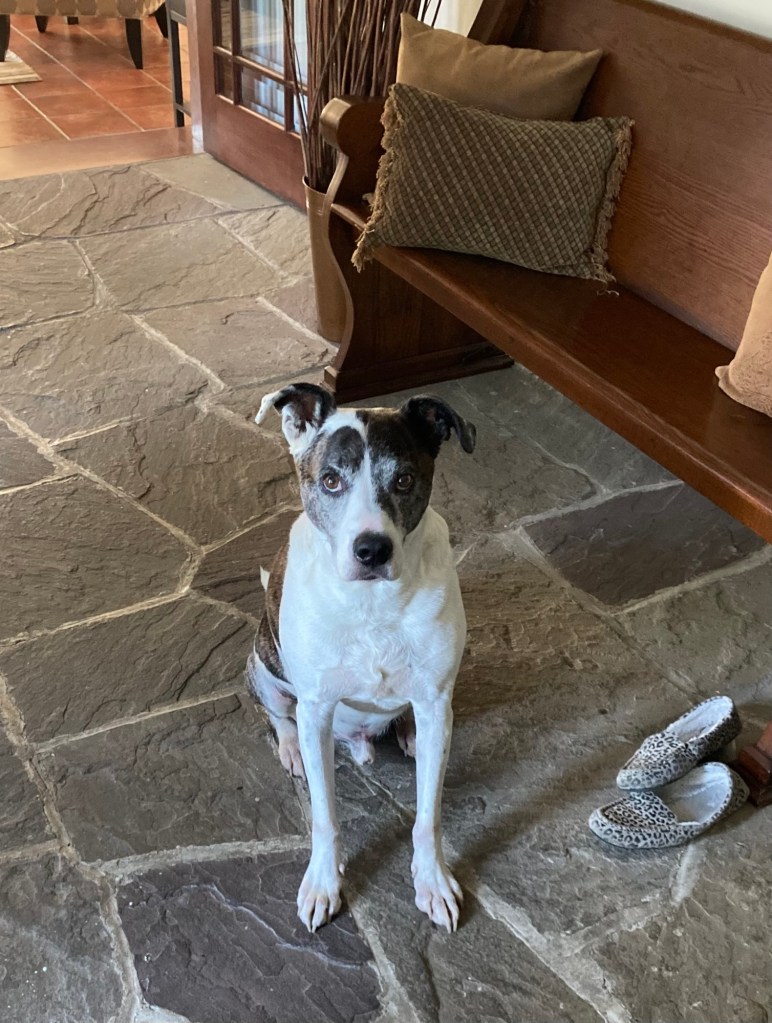
Kobe is a 3 year old German Shepherd (female) named after Kobe Bryant. She is a mostly calm girl except when meeting new people and/or dogs she’s not fond of. She likes to be near her people either playing ball in the yard or lying on one of her beds.
KobeKobe bringing back her orange ball in the backyard
In terms of our new location, we are loving the super clean Solrød Strand (known as Solrød) with all of its neighborhood paths (usually a separate walkway and bikeway side-by-side but divided. Our current house is in a small subdivision near the daughter’s school and about a 20 minute walk into the town center with multiple grocery and retail options as well as hair salons, one of the two local train stations, and municipal buildings.
In addition to all of that, Solrød lies on the Koge Bay, so has a beach as well as a marshy inlet. We went to check out those areas today as well as do a small shop at the Netto grocery in Solrød Center.
Heading out of the neighborhood on the right hand walkway, leaving the left side for the bikersWalking under an overpass for one of the busier roads in townThe inland waterway that runs parallel to the Koge BayMore of the inner bay in the Jersie Strand ParkSome cute homes near the trail along the inner bayBob in rain gear walking along the trail towards the beach and the town centerOn the trail towards Koge Bay and the beach. Koge BaySolrød Strand BeachCute houses near the bay. We thought this was clever and somewhat ironic as it seems to rain off and on all the time here.A pretty plaza on the way into the town centerA pretty floral shopWalking under the rail line into the town center When you want your bagel with a candy chaserA lovely outdoor eating area in the town center
Bob and I spent the US Independence Day and the UK Election Day exploring the Black Diamond Royal Public Library before taking an S train (as opposed to a regional train) about 30 minutes out to the town of Solrød for a walk through with our homeowners for our housesit that begins tomorrow.
The Royal Danish Library is located on Søren Kierkegaard Plaza and is located in 3 very different buildings. Facing the water is the Black Diamond, designed by Schmidt Hammer Lassen Architects in 1999, in the center of which is Preben Hanson’s narrow extension built in 1968. At the back is H. J. Holm’s historical library building from 1906.
A view of the 3 facets of the Royal Library as we walked across the waterA view out to the harbor from the 6th floor of the Black DiamondA reading room and a lecture or event hall in the Black DiamondA painted ceiling in the extension A reading room in the old library building A relief in the old library building over a woman’s restroom The War Museum next to the Royal Library GardenLooking across the Royal Library Garden from the back of the old library building The Danish Jewish Museum at the back of the old library building A statue of Søren Kierkegaard Looking back towards the old library building
From the library we walk to the Nørreport station to catch our train to Solrød, where we had a great walk through with our homeowners and their 6 year old daughter and German Shepherd. The husband will pick us up at 7 tomorrow at the hotel to bring us to the house.
When we got back to the hotel, we went up to the walkway between the two towers on the 23rd floor to see the views.
See prior blog for today. The following photos are from Bob and my short excursion to Malmo, Sweden, today. Malmo is the 3rd largest city in Sweden with a municipal population of approximately 360,000. It struck us as one of the cleanest cities we have ever visited.
Bob and I found ourselves in the quiet car of the train on the way to Malmo. We were.Our first view of Malmo from the Malmo Central Station The interesting World Maritime University building The Turning Torso, the tallest residential building in Sweden and 2nd tallest residential building in EuropeThe Malmo CastleThe Malmo Windmill on the castle groundsA fountain in the King’s Park near the Malmo CastleA pretty, small cemetery that we walked through The Little Square in the Old TownAn old phone booth in the plazaBoats to rent in the Malmo CanalPublic art along the waterfront A food hall in the buildings in front of the large Lantmannen mill
Bob and I had a great day today exploring the waterfront area of Copenhagen by boat, and then taking a 40-minute train ride over the Oresund Bridge to Malmo, Sweden. We ended with a drink at the Nimb Hotel on the grounds of Tivoli Park, which we had seen promoted (both the hotel and park) on an international hotel show that we saw while in the UK.
Due to the amount of photos, I’m going to break today’s activities into 2 blogs — one for Copenhagen and one for Malmo.
The Copenhagen waterfront is active with pedestrians and bicyclists on the 13k hiking/biking trail and people enjoying the water in kayaks, small rental boats, harbor taxis, and tourist boats like what we rode in today. During our 1 hour tour, along with the cultural and military sights, we also saw a boat that picked up trash, a lifeguard boat as well, lots of moored houseboats as well as some floating houses, and a couple of swimmers.
Bob and I on our boat, ready for the rideThe opera house, where they perform opera but also hold an annual diving contest from off of the roofThe Copenhagen Incinerator, which incinerates garbage to produce energy, but the outside of the building has a rock climbing wall as well as a ski slope.A still functioning military siteThe popular Little Mermaid statue. Bob and I have also seen the duplicate along the waterfront in Vancouver.Going under one of the many low bridges Going down a residential quiet zone canalThe spire of Our Savior’s Church which can be climbed. The church also has a 4,000 pipe organ from 1698.Some colorful buildings along the routeThe circle bridge in front and the Black Diamond behind. The Black Diamond is a part of the Royal Library. You can check out books and view exhibitions.The Blox Building, which contains the Danish Architecture Center, design shop, and rooftop cafe.Thorvaldsens Museum, where the art work of Bertelsmann Thorvaldsen is displayed and where he is also buried Our drinks at the Nimb Hotel after our Sweden excursionThe view of the popular and multi-faceted Tivoli Park from the bar at the Nimb Hotel
First, a few fun facts about Copenhagen. The city has a population of about 700,000, with a population of 1.4 million in the greater urban area. It has 250 miles of bike lanes, and is the capital of Denmark (or Danmark to the Danes).
Today, we headed to the geographic center of the city center but a bit north of the main tourist spots. We had an easy 25 minute commute, 5 minutes by foot to the Bella Center stop on the M1 line, and then 17 minutes to the Nørreport stop. We saw a number of beautiful park areas today, other museums, toured the Denmark Design Museum and then walked through the governmental plaza to the Kongens Nytorv metro for the ride back to the hotel. Had some mist off and on, but not too bad.
Our first park visit was to Ørsted Park, a cute city park that was built on a section of the large fortification ring that was constructed around Copenhagen in the 17th century. It has a lovely lake, meandering walking paths, and a number of bronze statues.
Some flora between the walking path and the lakeA memorial to Hans Christian Orsted, a Danish physicist and the namesake of the park
From Orsted Park we walked to the Botanical Garden, much of which, unfortunately, was undergoing maintenance. But it was still lovely. On the way, we got a unique big head photo for Bob.
Finally, a normal photo.Some of the flora in the Botanical GardenDittoDitto
After walking through what was open of the Botanical Garden, we walked farther along the road to Østre Anlæg Park, with a couple more museums and more gardens and ponds.
The National Gallery of DenmarkA secluded garden in the parkOne of the ponds in the park
We then walked to the Kastellet (citadel), a lovely star-shaped fortress built in the 17th century as part of the larger fortification ring around Copenhagen. It now contains a number of memorials as well as a windmill.
The bridge across the moat and entrance to the areaLooking across the moat from the bridge to the St. Alban’s ChurchThe Citadel WindmillLooking towards the harbor from our walk atop the citadel groundsThe Museum of Danish Resistance near the citadel park
The Design Museum was just a short walk away, and we decided to pay to visit. We were not alone. It was popular today. In addition to the regular visits, the museum had special exhibits on Japanese screen printing, futuristic designs, and a man who has created his version of outfits representing different areas of Denmark.
The museum noted that Danish Design became an international concept in 1949 after some American journalists visited the annual furniture exhibition of the Copenhagen Cabinetmaker’s Guild.
Denmark Design MuseumEntrance to the regular exhibits4 chairs from the hallway of chairsBob with the Irma girl, the logo for Irma, the 2nd oldest supermarket chain in the world. Irma was established in Copenhagen in 1886.
From the Design Museum, we continued down Bredgade Street, where we saw Frederick’s Church and then walked on to the Kongens Nytorv metro station.
Frederick’s Church. The large Magasin du Nord store with an impressive food shop in the basement from which we could walk down to the metro