Bob and I had a great meet-up and hand-off with Kris, who will be housitting for the remainder of our homeowners’ trip. They chose to split the sit since they weren’t sure if anyone could or would want to do the whole thing. Kris is another experienced house sitter (30+ sits, sometimes with her daughter), who is also a former work colleague of one of the homeowners.
We will definitely miss the super sweet Bijou and Nala but may be coming back in December for a month long sit.
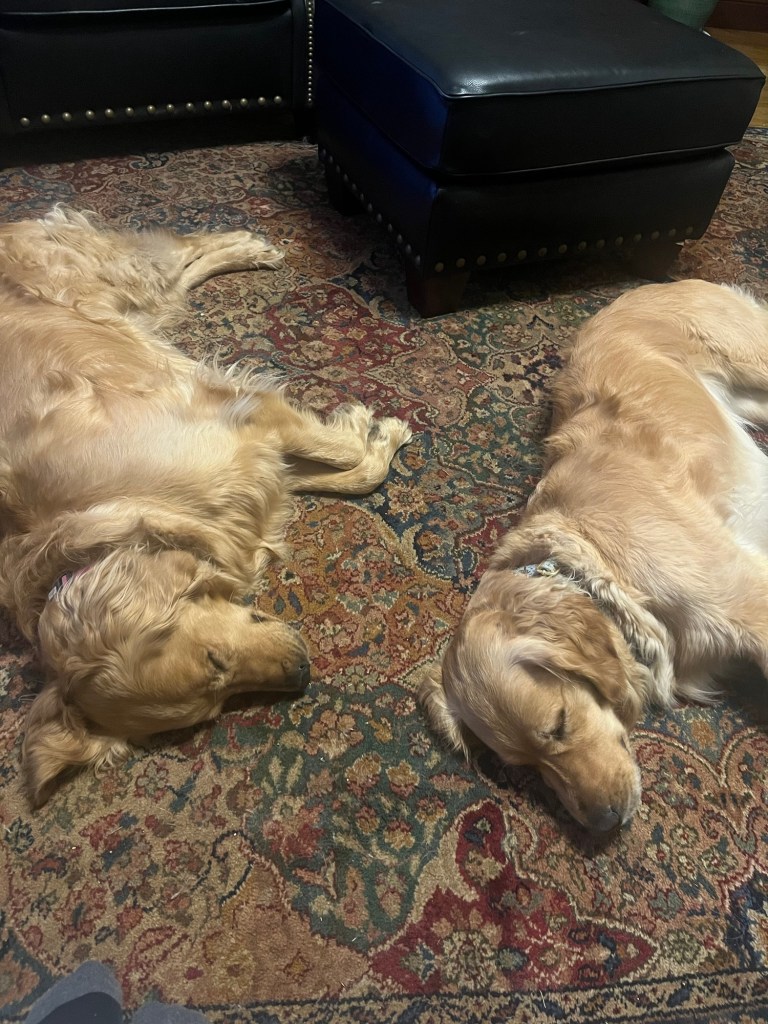
The girls at restAnd at play
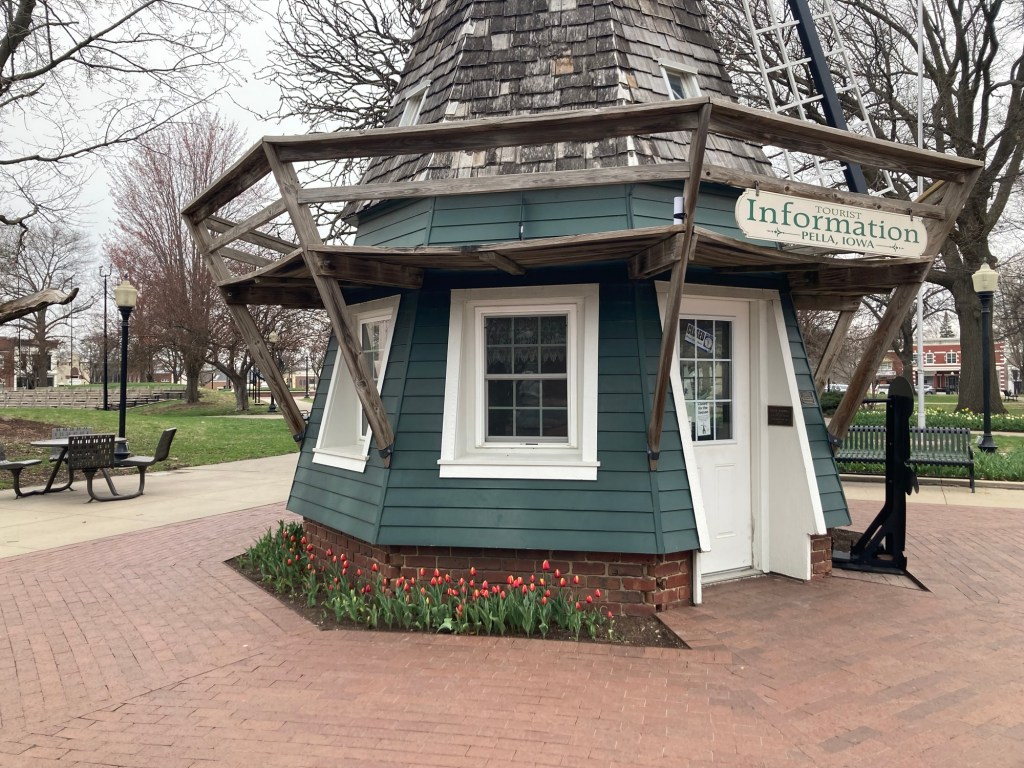
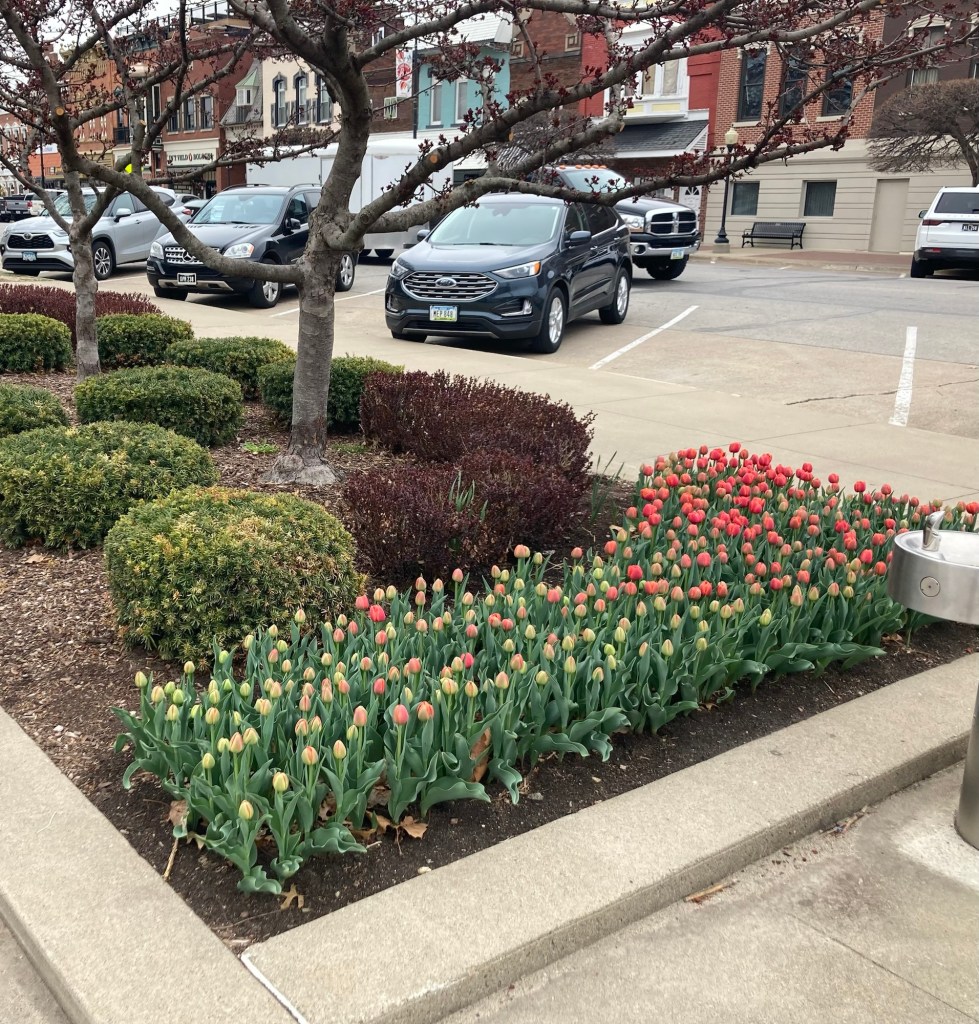
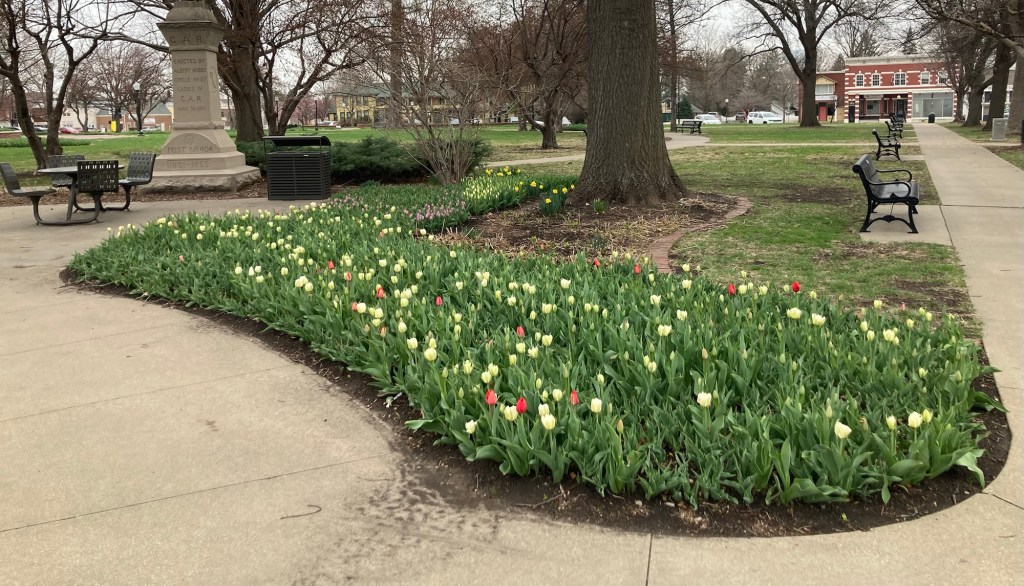
Other photos from our final days in Pella.
Sunrise at the house
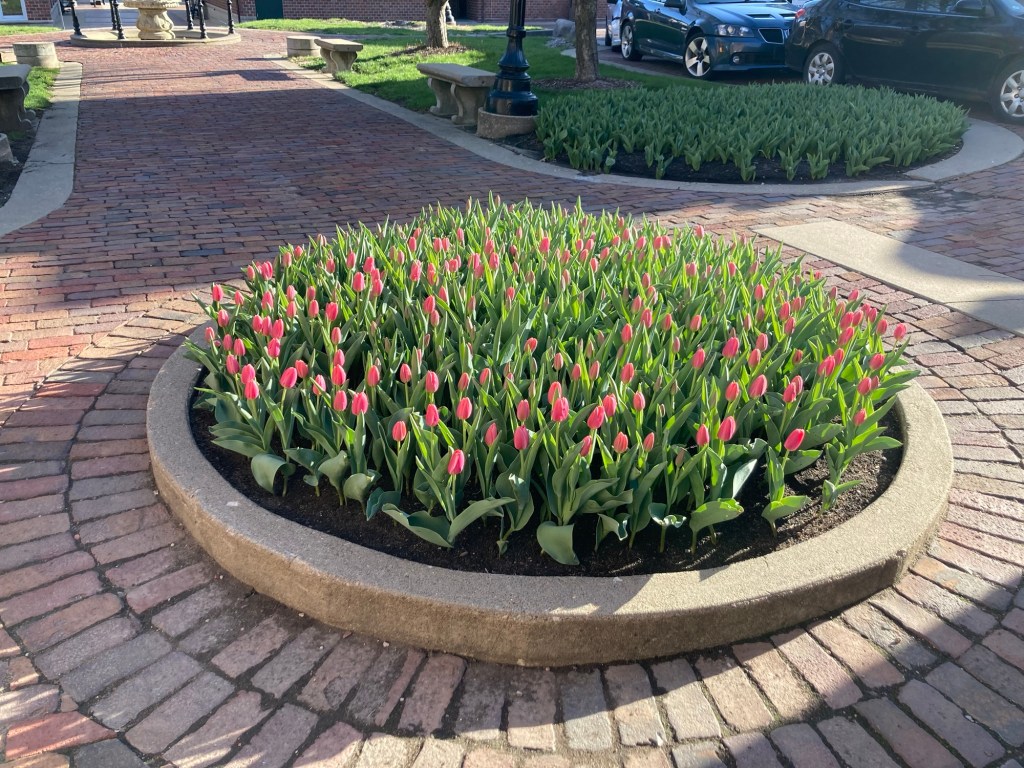
A few pics of the tulips in bloom.
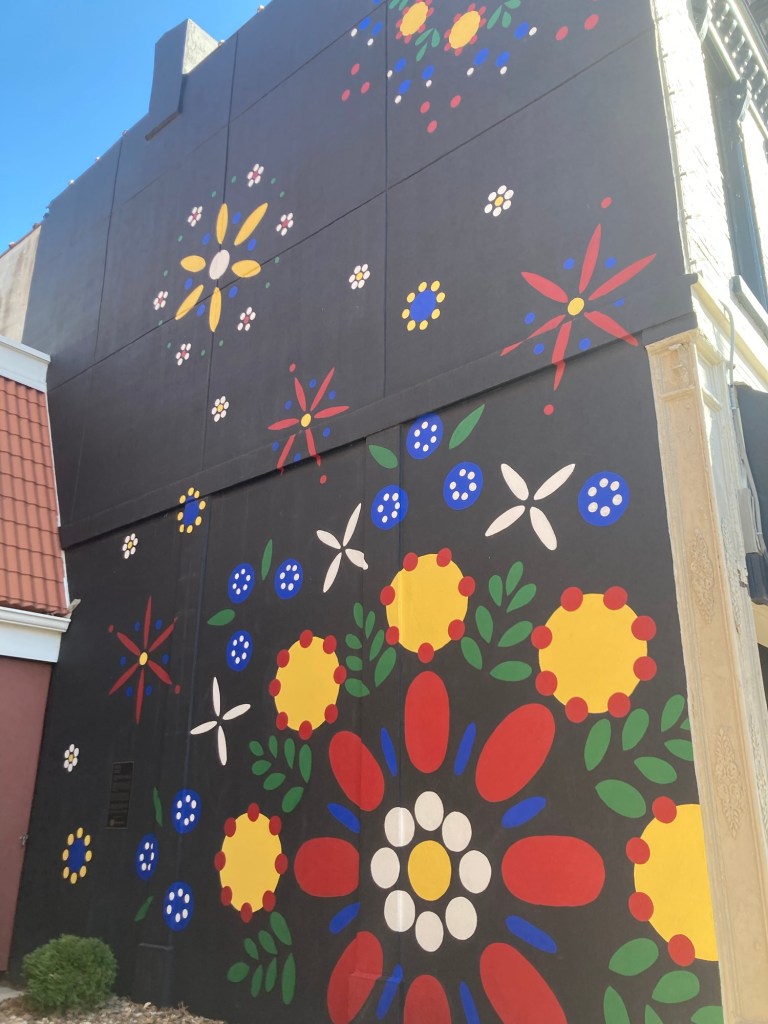
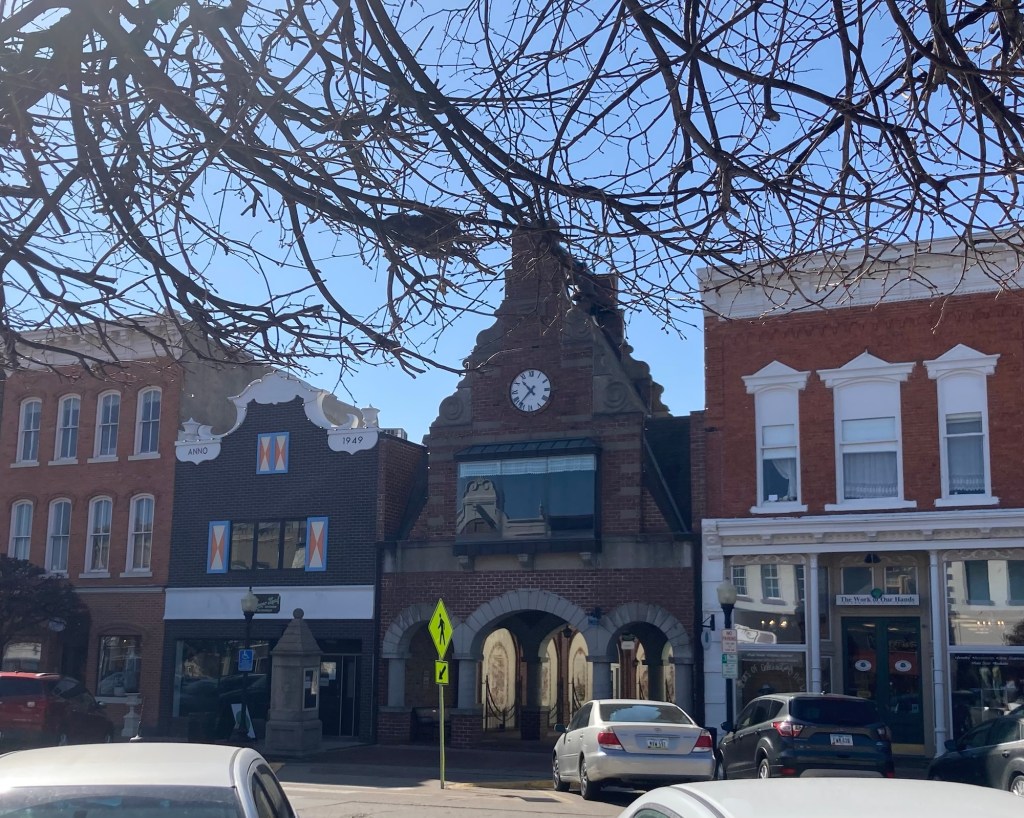
And a mystery solved. A design feature that we (Bob first) noticed on many of the buildings downtown (see top level of Jaarsma Bakery and store 2 to the left) is a representation of Danish windows.
After our transfer with Kris, we drove 1.5 hours to Iowa City, home of the University of Iowa to do a repeat housesit for two cats for a week before heading back to Des Moines for more medical procedures for Bob and potentially jury duty for Beth along with one more housesit.
During our walk through with our homeowners they mentioned that we might enjoy a visit to Lake Red Rock, which is close to Pella. We got some additional information about it from a travel brochure that we had picked up downtown. Since no rain was in the forecast for today and it was to be less blustery than it has been, we decided to go check it out.
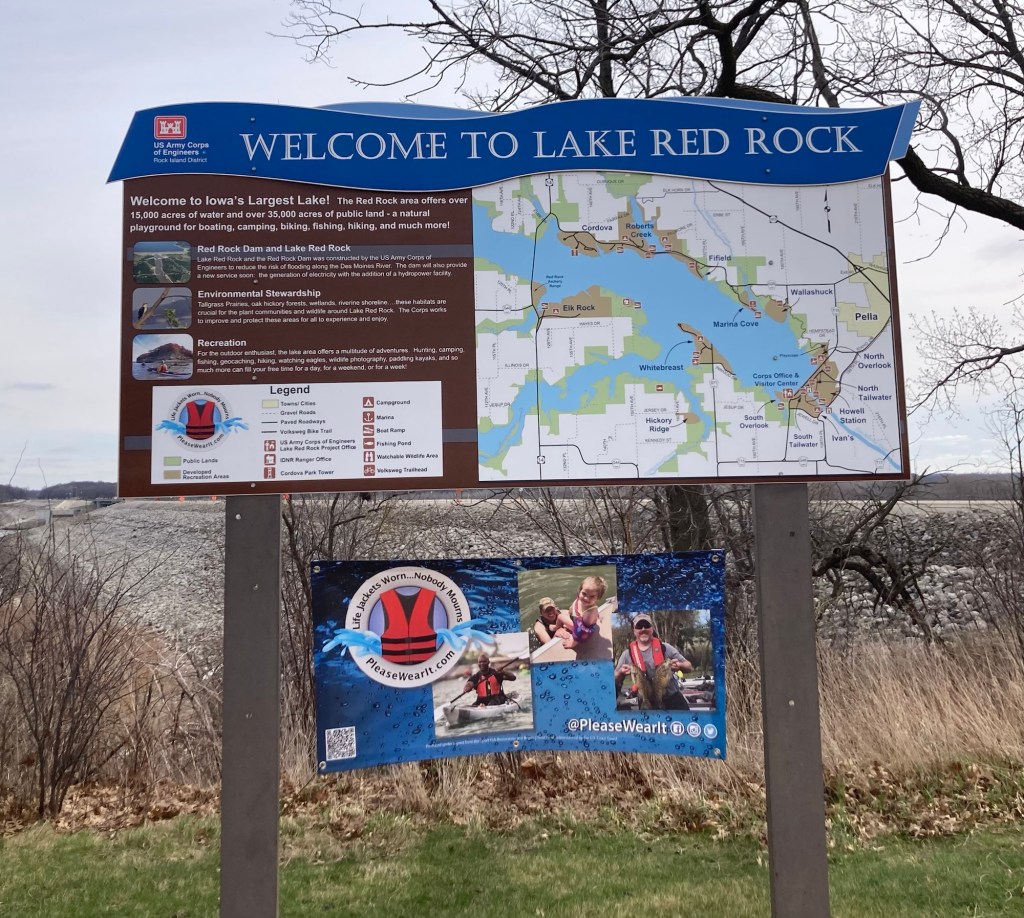
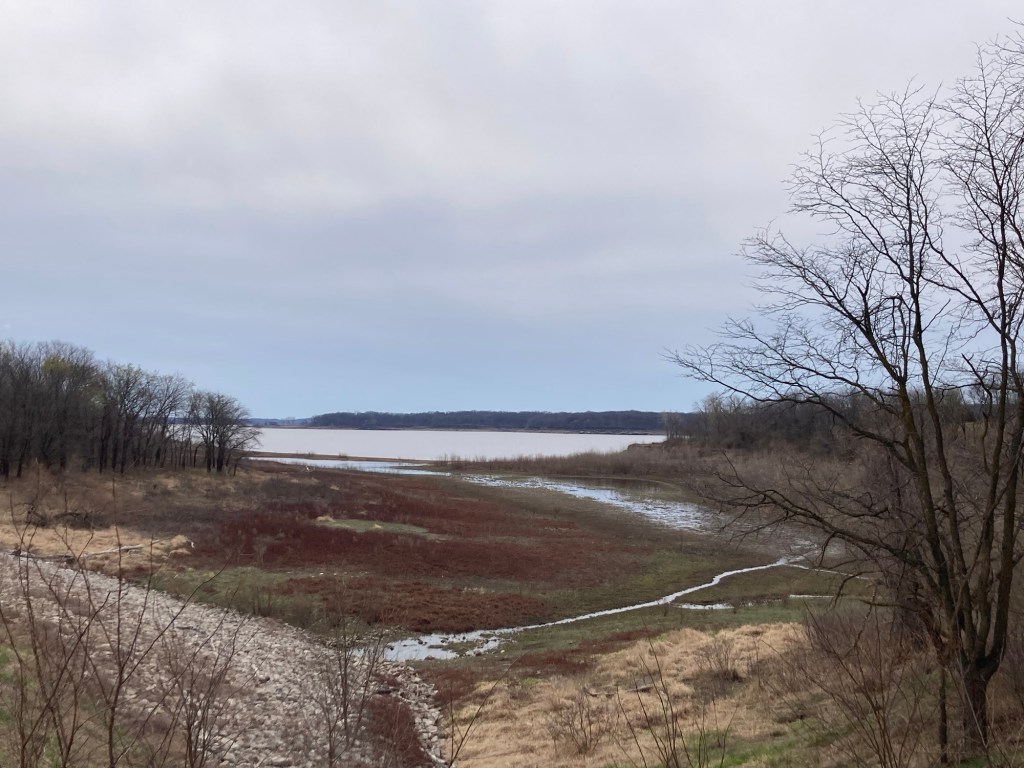
We started at the park’s Visitor Center, which was about a 15 minute drive from the house. There we learned that Red Rock is actually the largest lake in Iowa. It is 11 miles long and has a water surface of 15,250 acres. The lake and the Red Rock Dam were created by the US Army Corps of Engineers in 1969 to reduce the risk of flooding along the Des Moines River. The dam is also used to provide hydroelectric power.
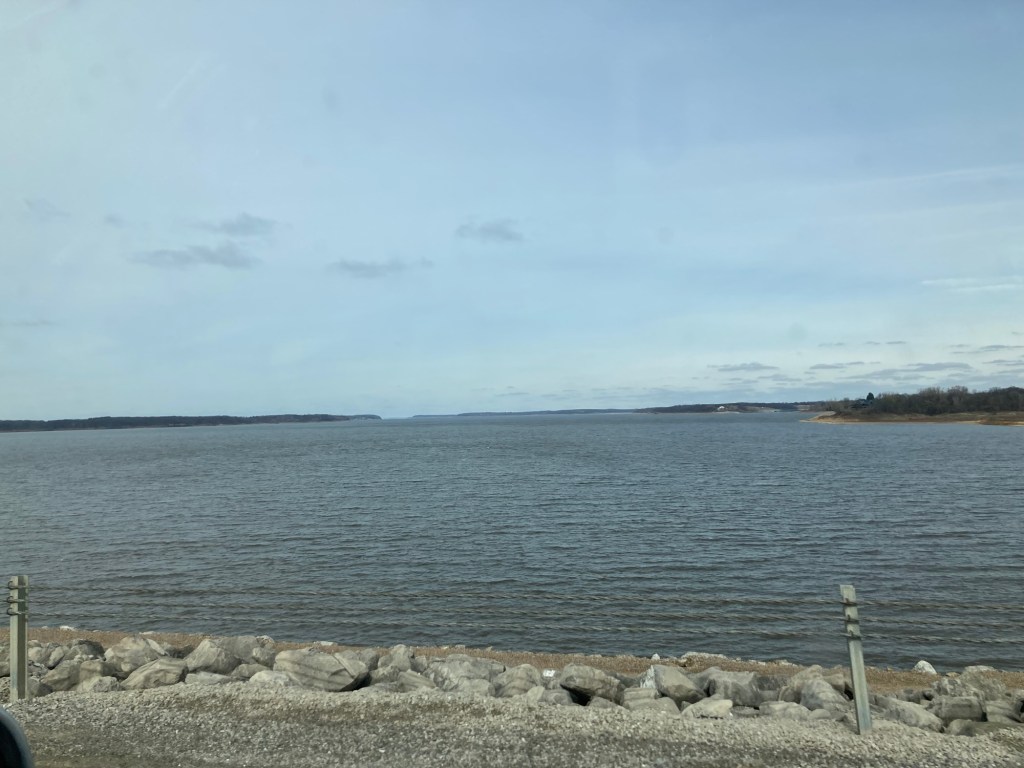
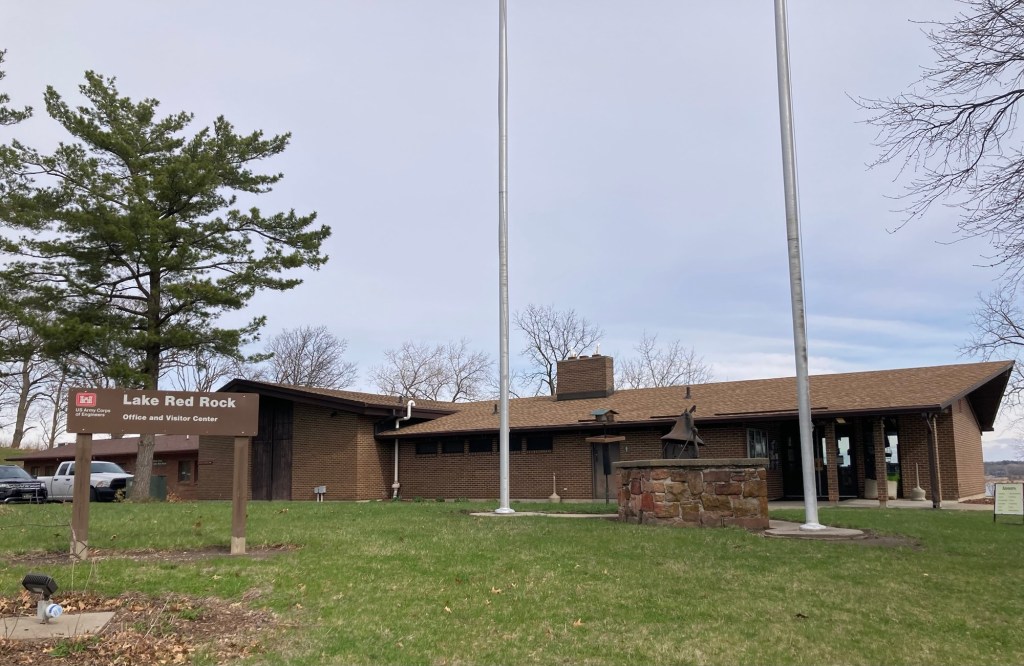
View from the car as we drove across the causeway to the Visitors Center.The current Visitors Center, a new one is to open nearby sometime in 2026.Map of the lake, various campsites and beaches, as well as the 17 miles long Volksweg Trail that runs from the Pella Public Library in downtown Pella to Cordova Park at the northwest portion of the lake.A nice viewing area behind the Visitors Center
From the Visitors Center, we drove about 18 minutes to Cordova Park to climb the observation tower there and then walk some of the Volksweg Trail.
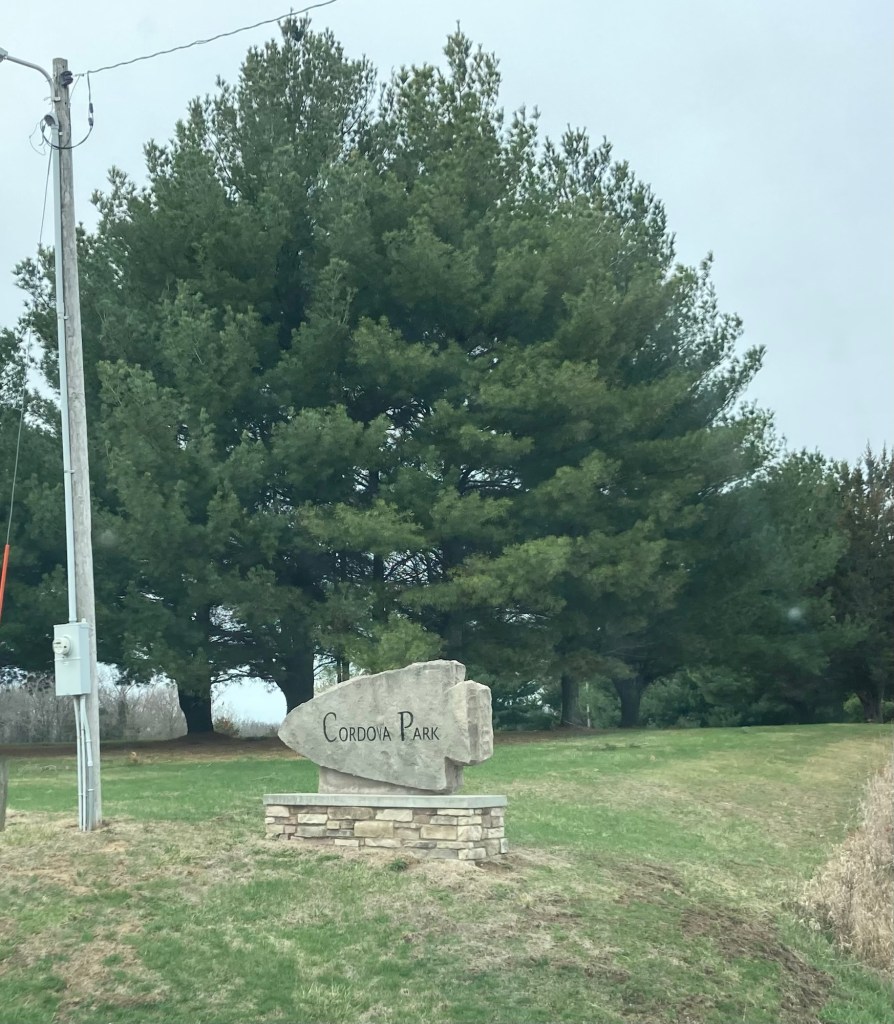
Sign at the park entrance
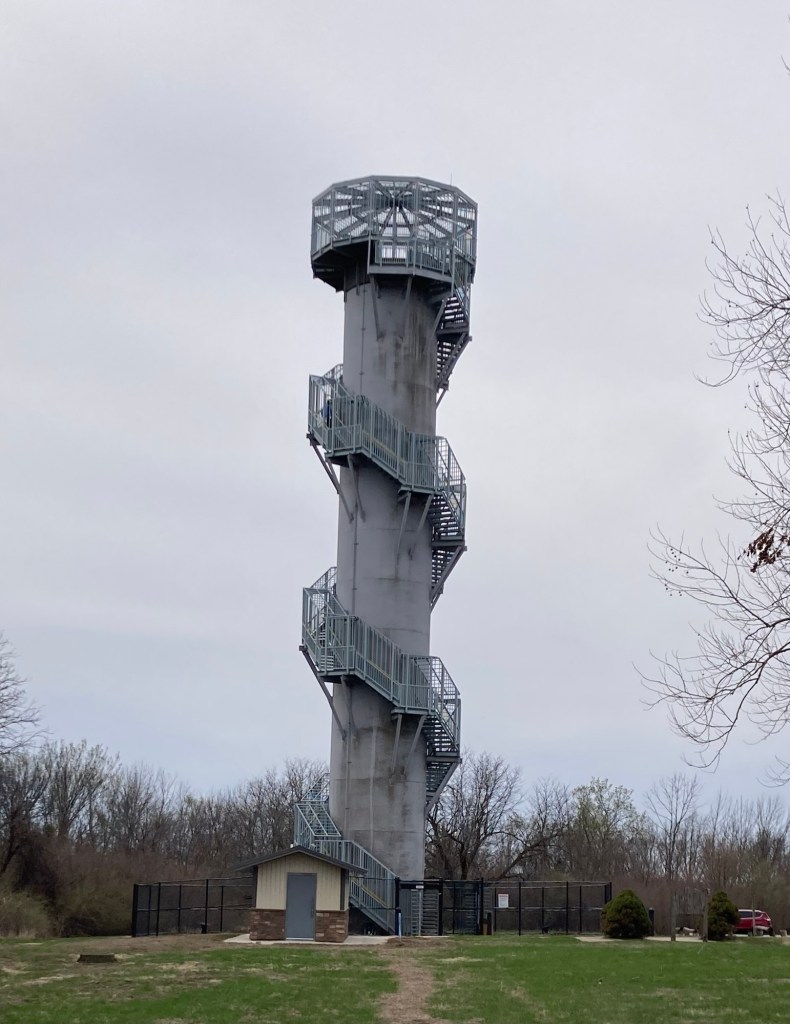
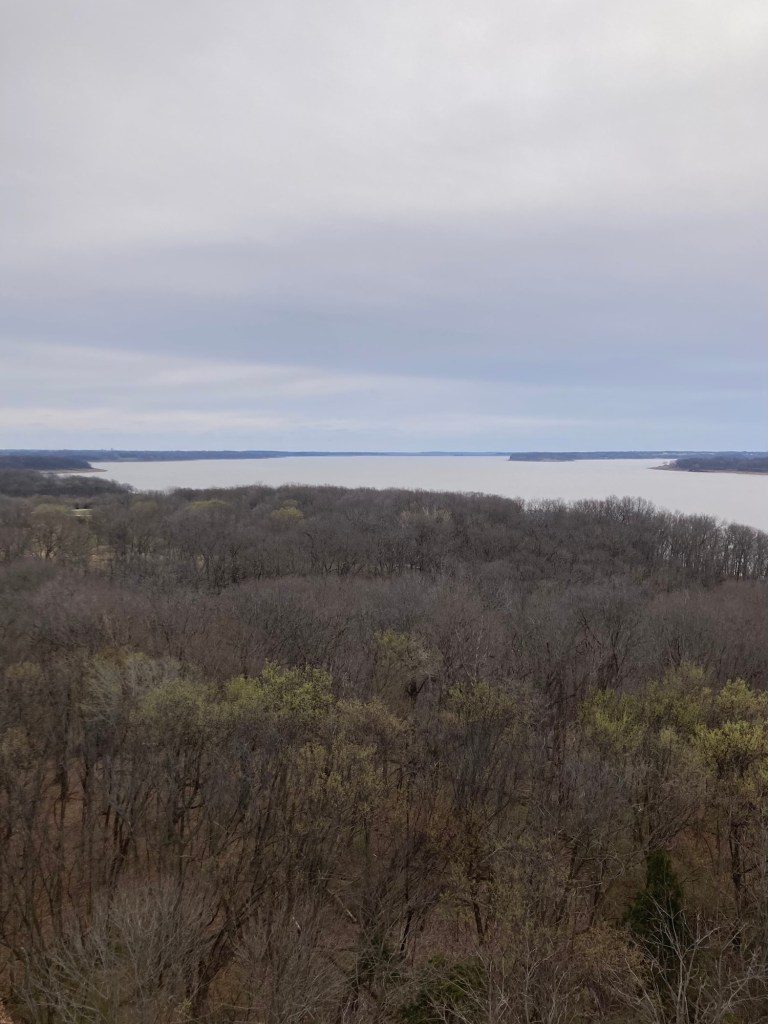
The Cordova Observation Tower was constructed as a water tower in 1972 as part of the park’s water system. The water tower was 15’ in diameter and 100’ tall. It could hold 130,000 gallons of water. In 1984, the park was able to utilize rural water, so the tower was no longer needed. It was converted into an observation tower in 1998 with the addition of stairs, the observation deck, and a red light on top to help with navigation for boaters. It is the tallest in the Midwest and is recognized as having the tallest and longest continuous fiberglass staircase in the world.
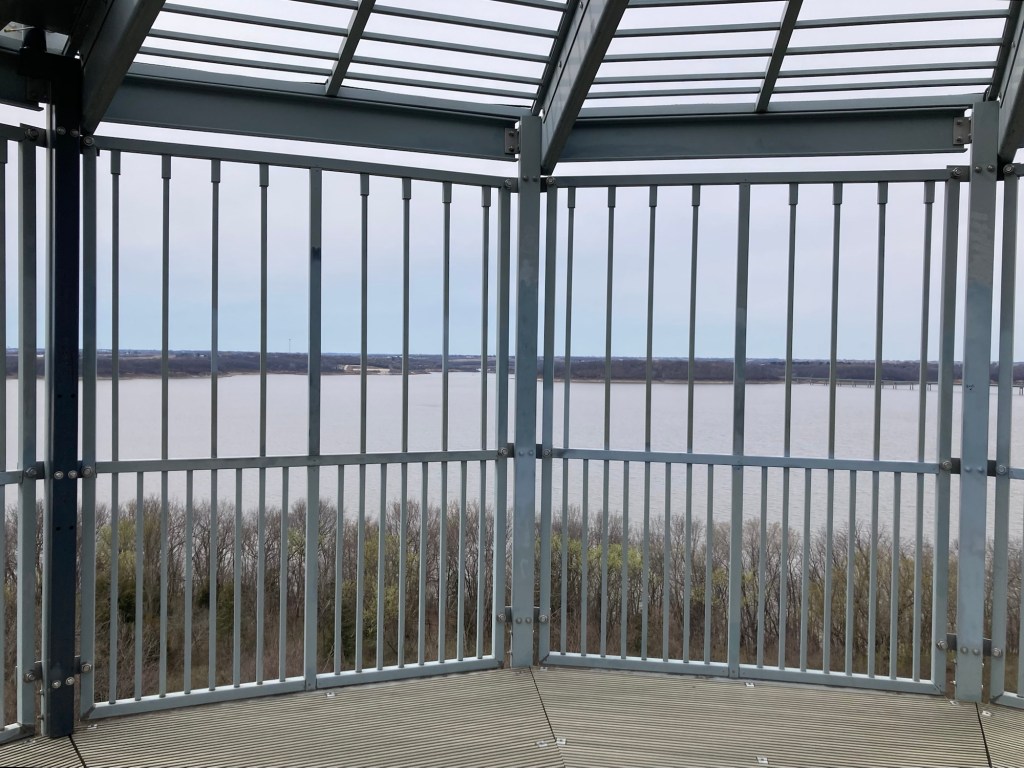
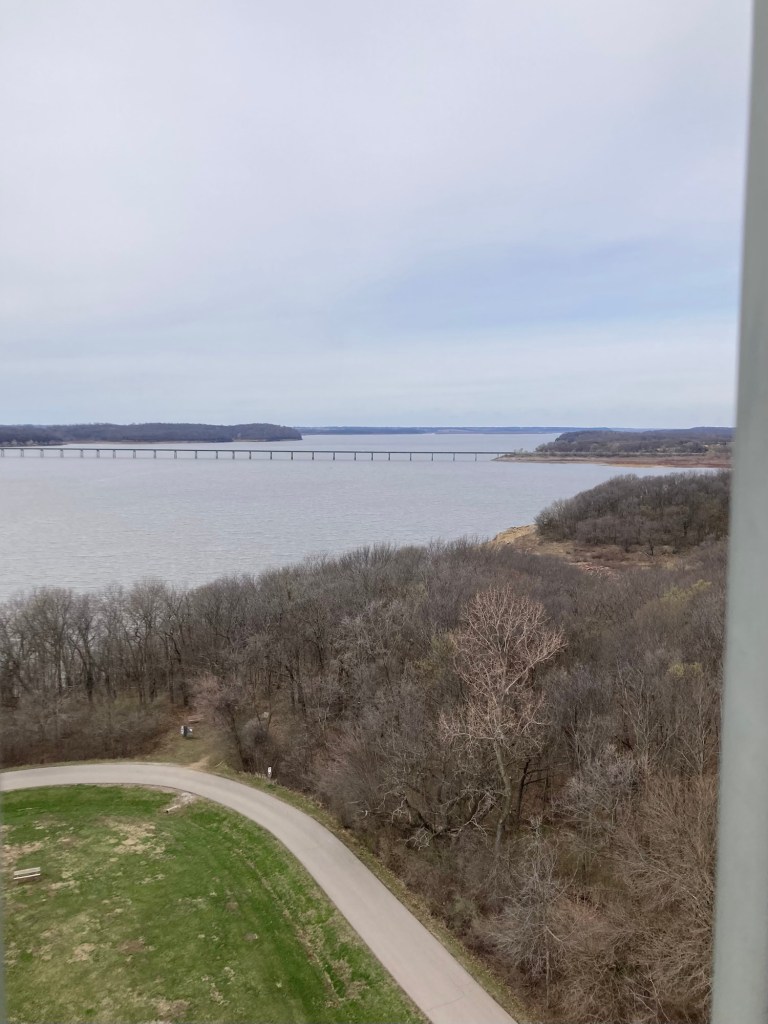
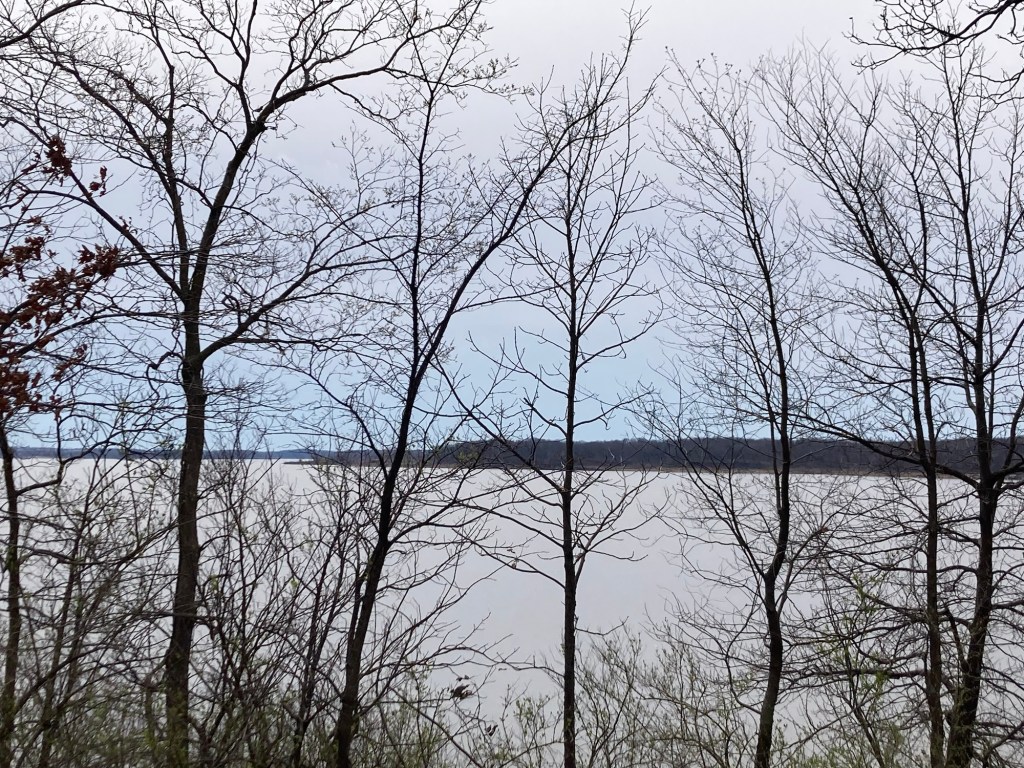
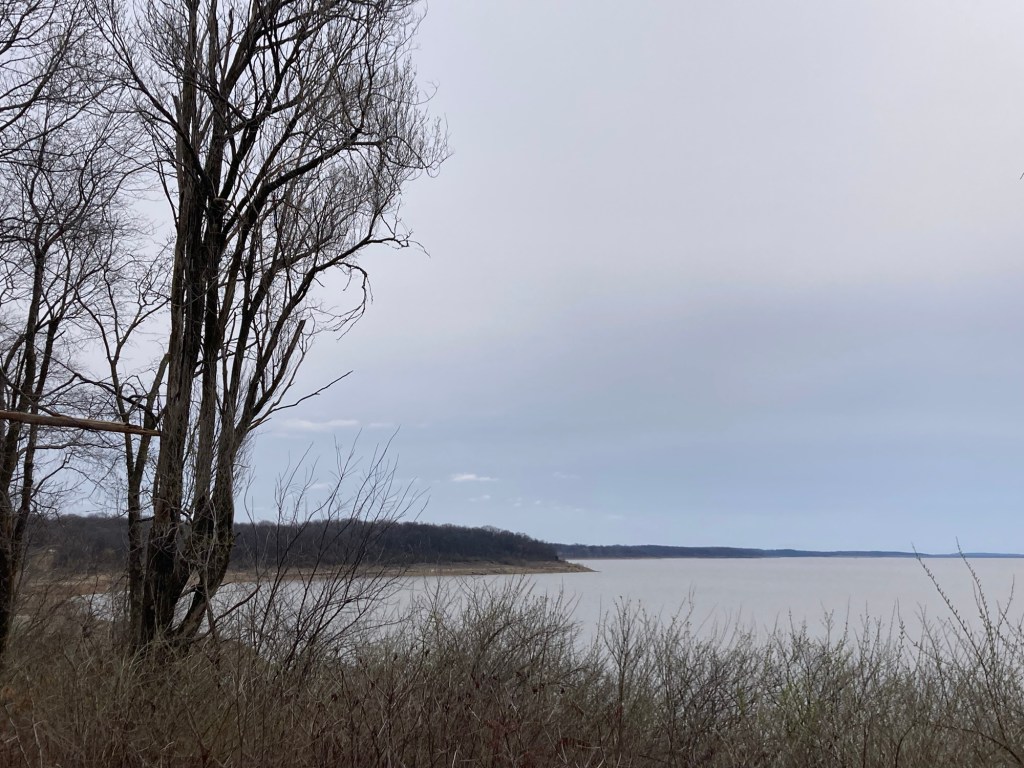
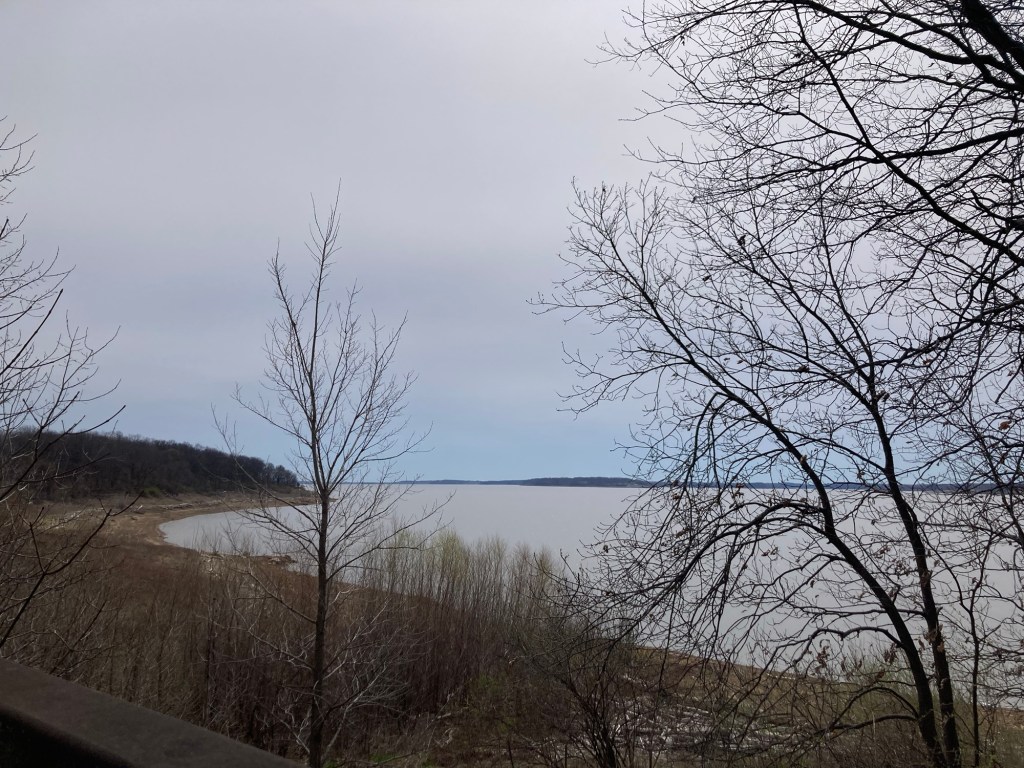
The observation towerA partial view of the observation deck and surrounding areaLooking further north and west on the lakeLooking back towards the Visitors CenterLooking away from the lake
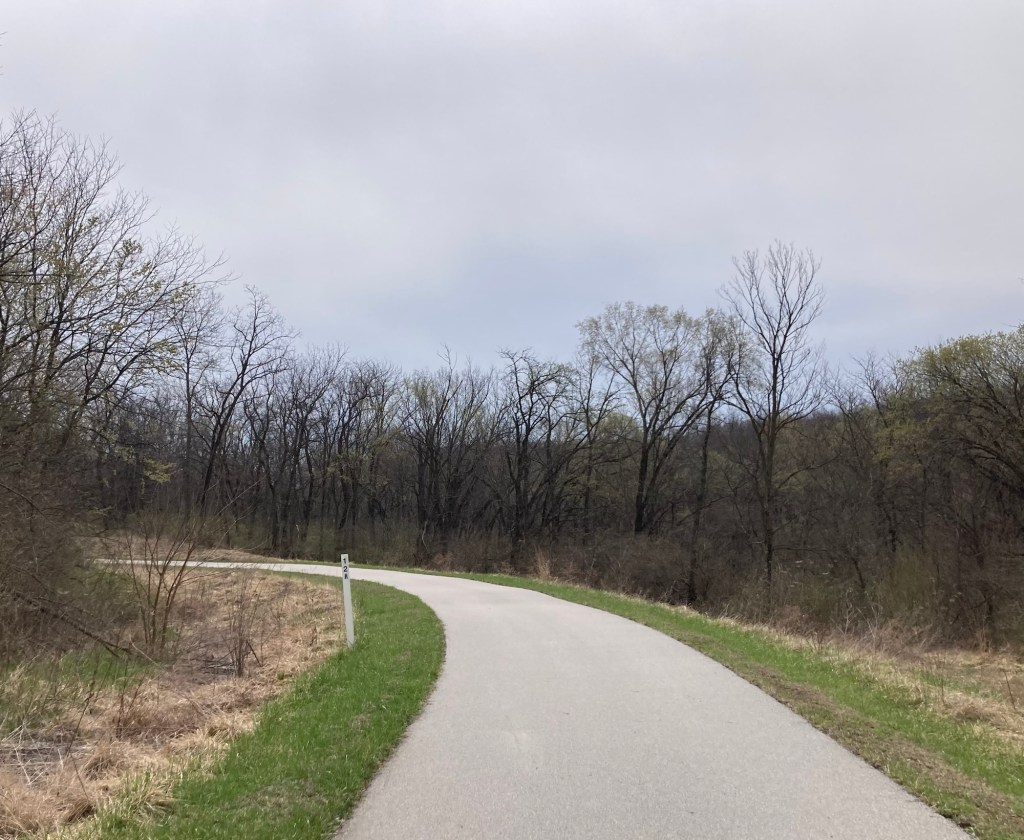
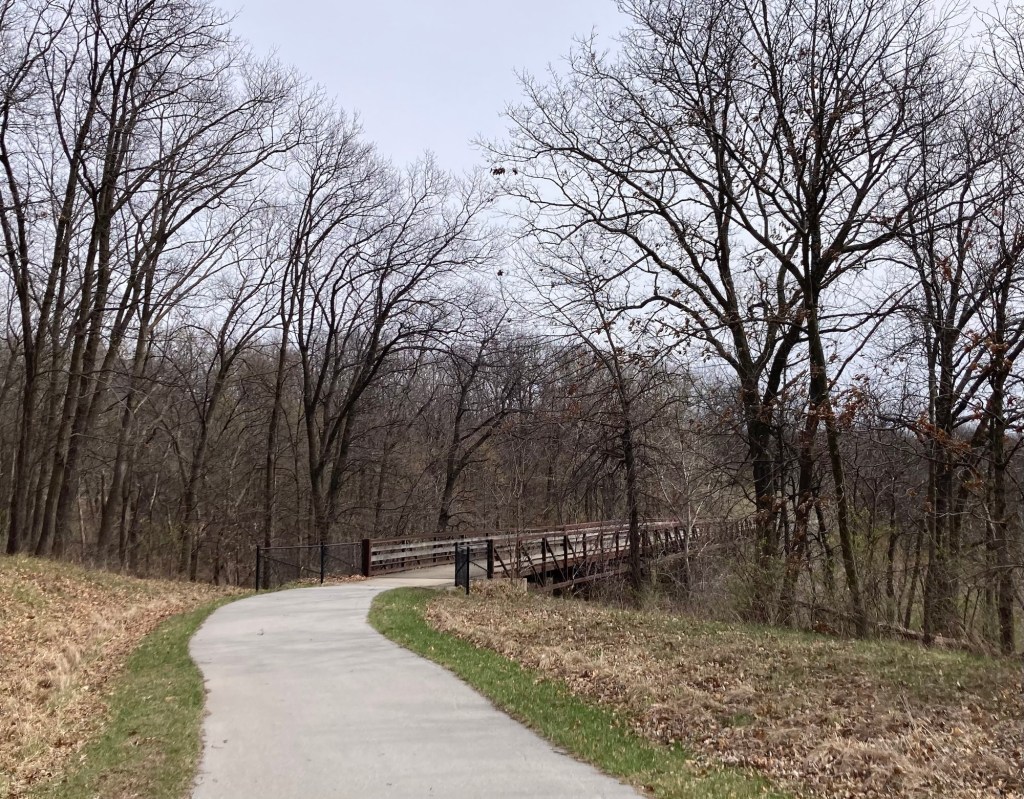
The following are pics from our out and back walk on the Volksweg Trail.
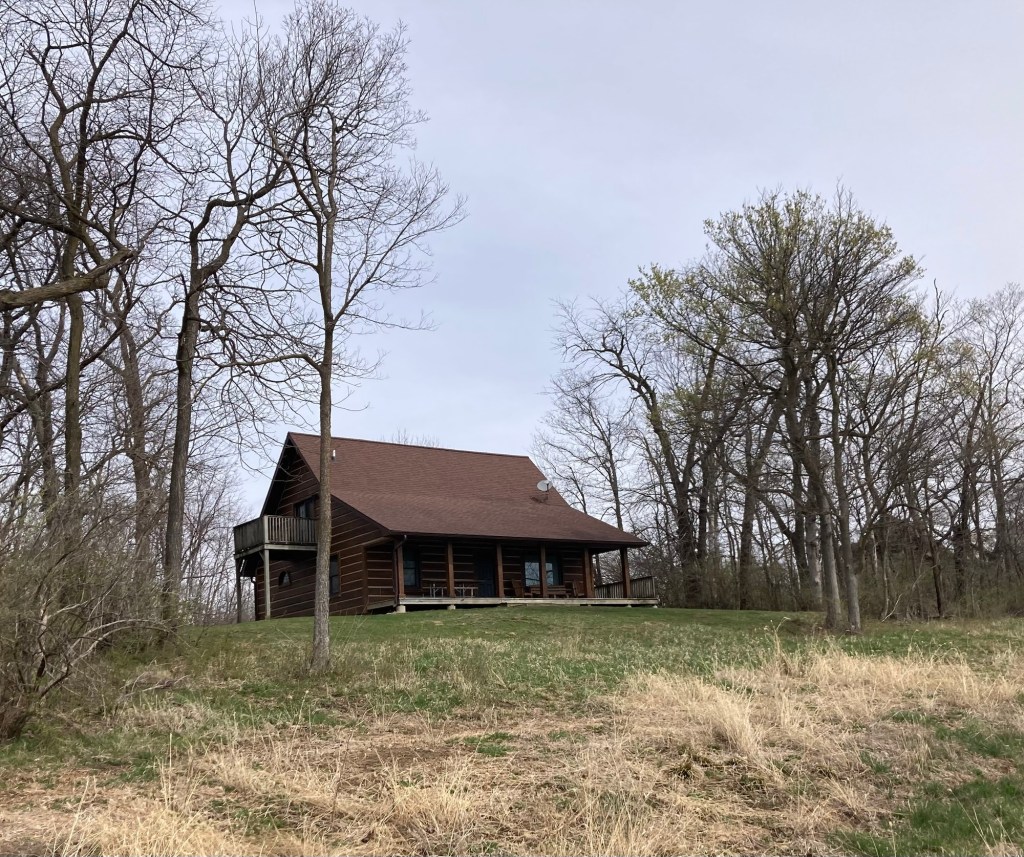
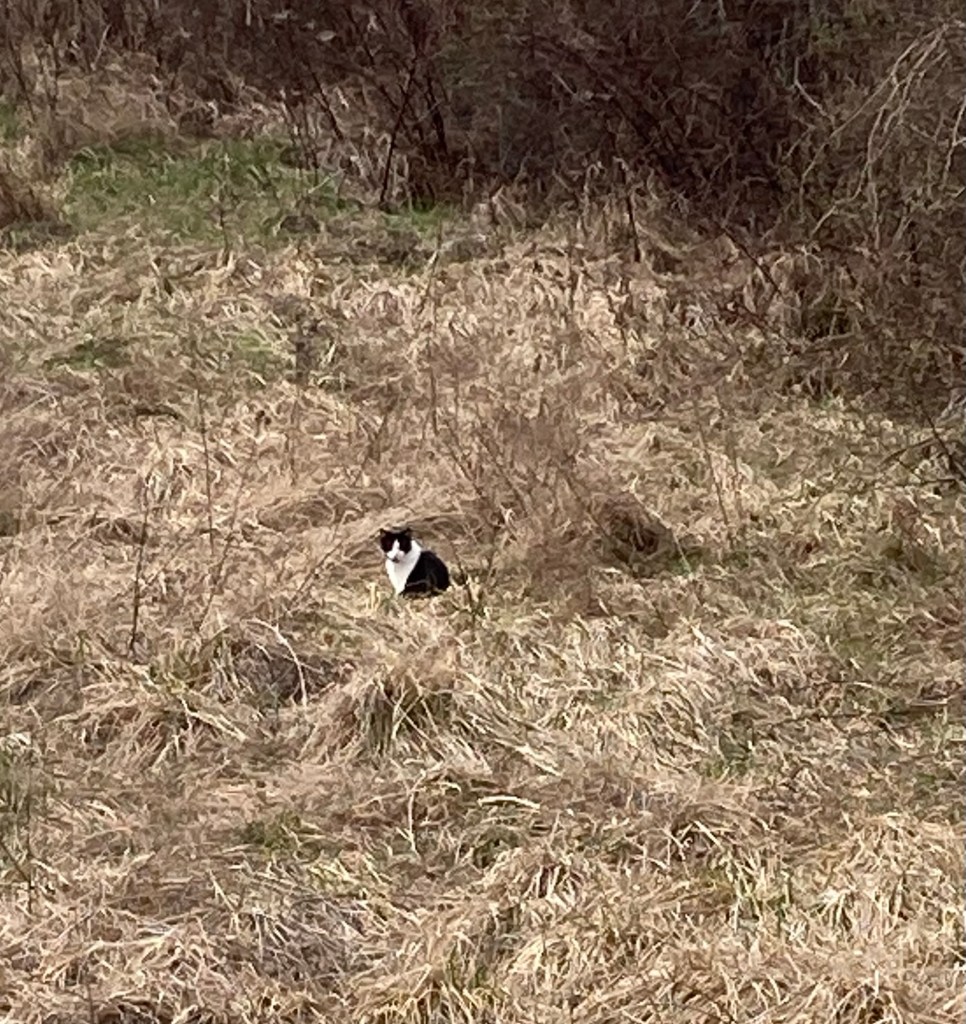
Heading out from the lake end of the trailComing up to the first trail marker, which is 12 miles, as 2 sections of the trail are marked separately One of three large cabins in the park that overlook the lakeThe only “wildlife” we saw along the trail
Happy April Fools’ Day! No pranks within this blog however.
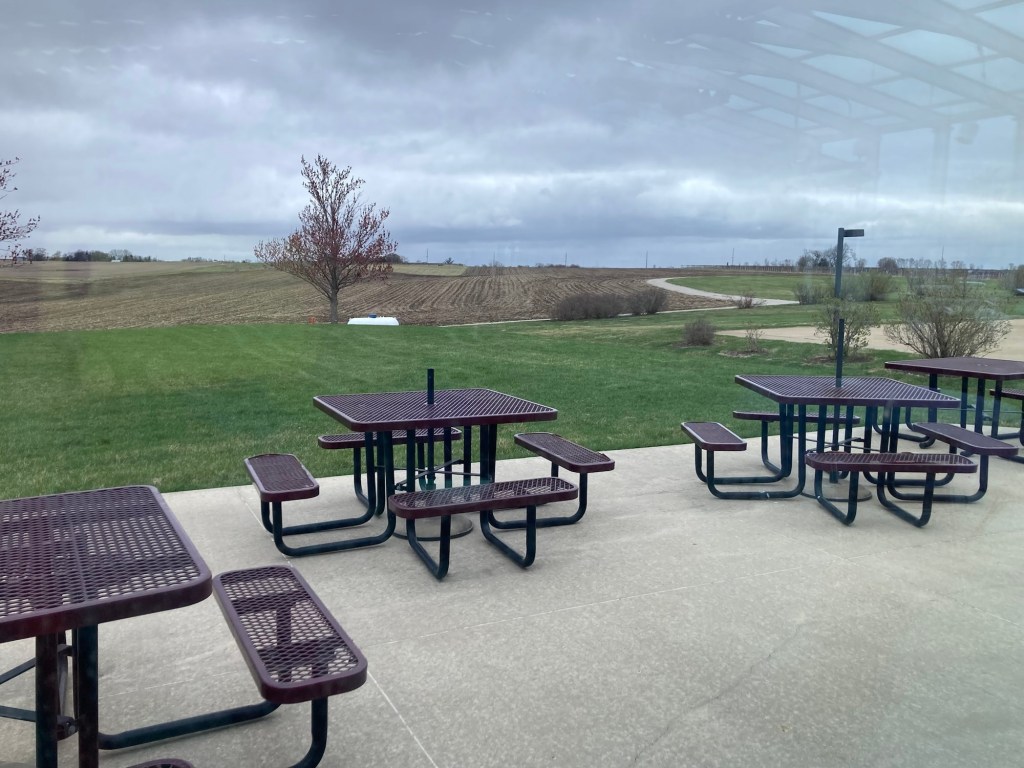
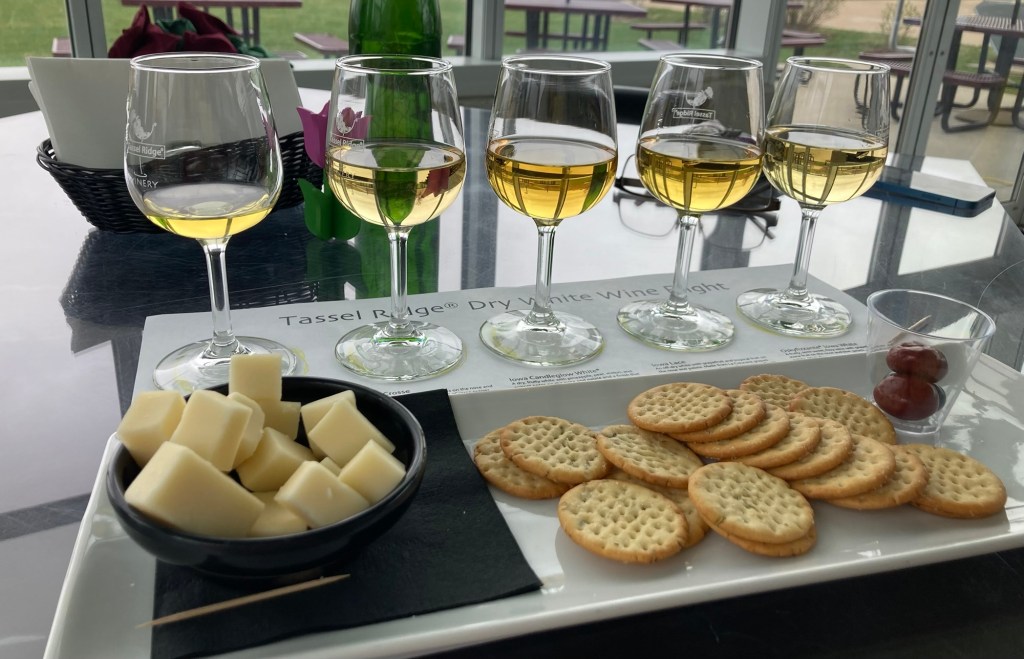
On Sunday afternoon, Bob and I drove about 12 minutes due east of us to the local winery in the area, Tassel Ridge. We got there about 3:30 to find that their electricity had gone out. They apologized and said that if we did a tasting, they would have to substitute cheese and crackers for the usual warmed bread with dipping. Since we rarely are offered any food with a paid tasting, that still sounded good to us. There were a couple of tables being served, and we found a table on their patio where there was plenty of natural light and a nice view.
I will not remember this visit for the quality of the wine. Most was okay, but something I would have been disappointed with in a restaurant, but I will remember the staff’s friendliness, professionalism (they had old time credit card carbon-paper receipts ready to go since they couldn’t use their computers), and their generous portions of food and drink, as you’ll see below. They even brought us the bread and oil for free in addition to the cheese and crackers after the electricity came back on.
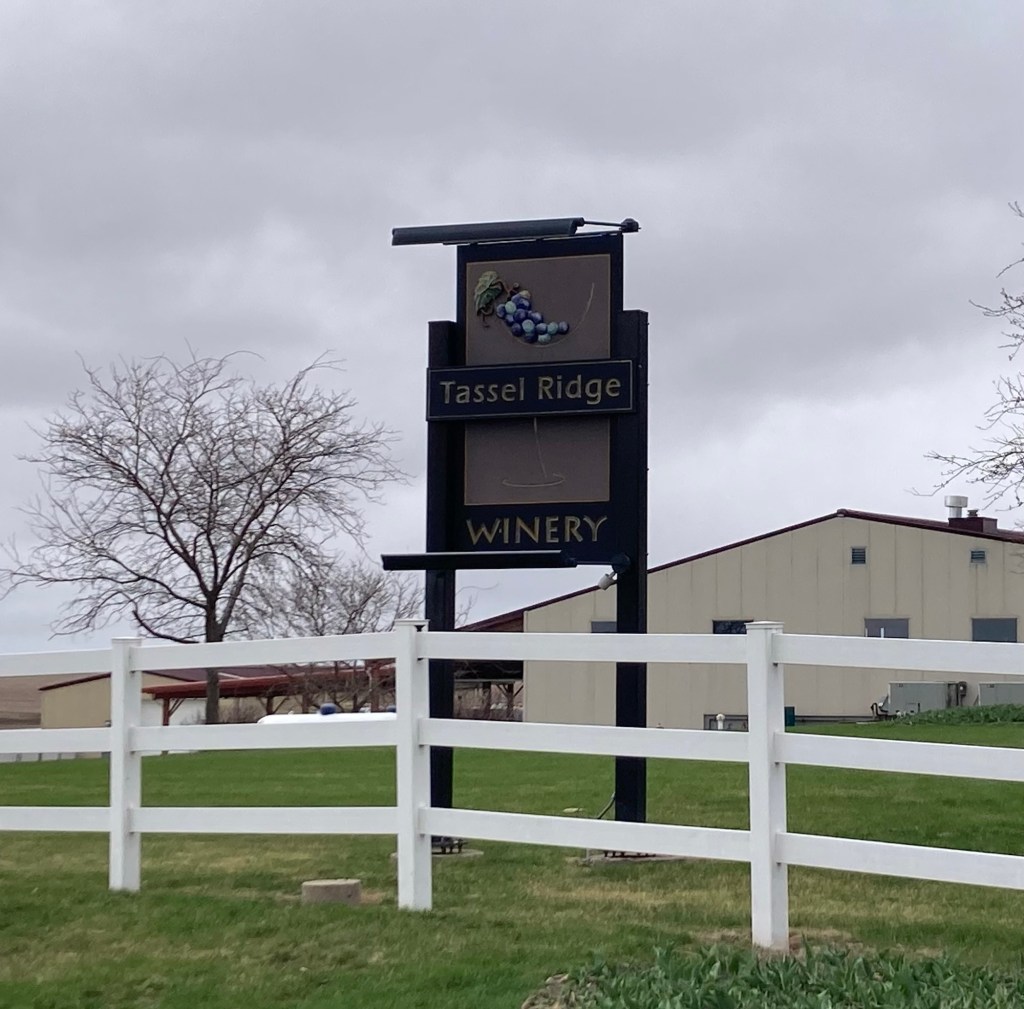
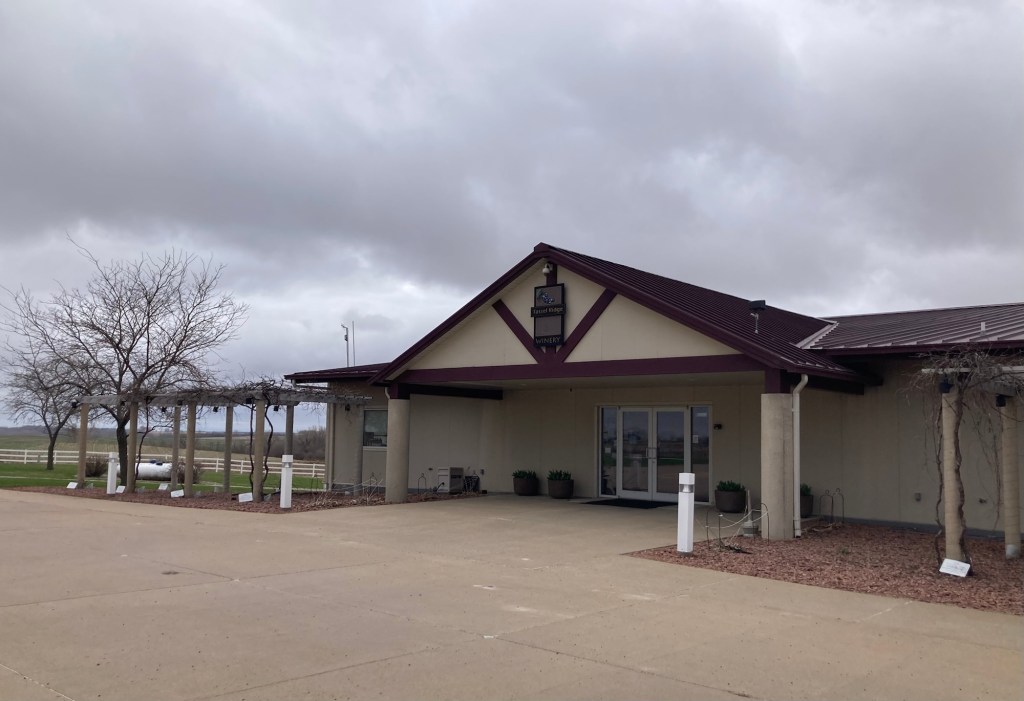
The sign for the wineryThe tasting room. It had at least three different rooms of tables, a gift shop, and a wood-fired pizza oven that they serve from on Fridays.The view of the surrounding area from our inside table.They offer a number of options for wine tasting. We chose to split one tasting of their dry wines. This was one tasting!
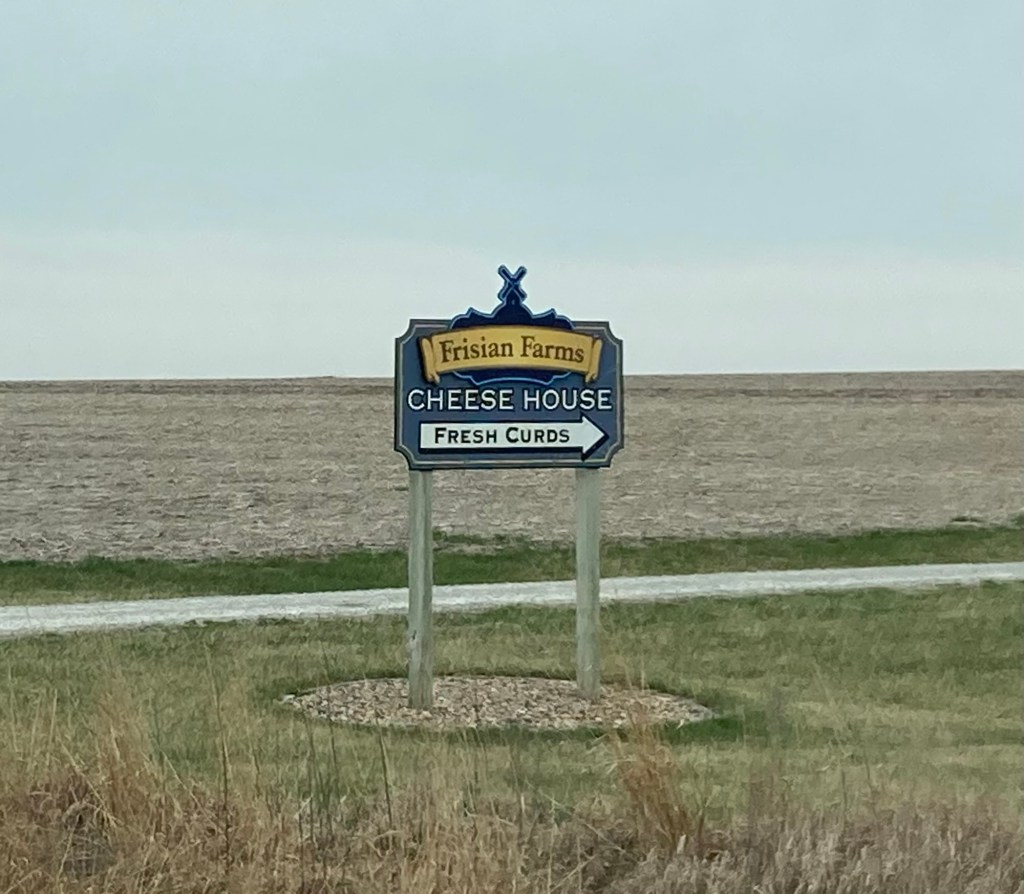
Today, after a breakfast at a downtown cafe that our homeowners left us a gift card for, and after walking a few blocks in the very cool temps (feels like temp in the high 20s F) to exchange a book at a Free Little Library, we headed to Frisian Farms Cheese House for some locally made, Dutch inspired cheese. Note: the cheese we were served at the winery was a Frisian Farms Gouda.
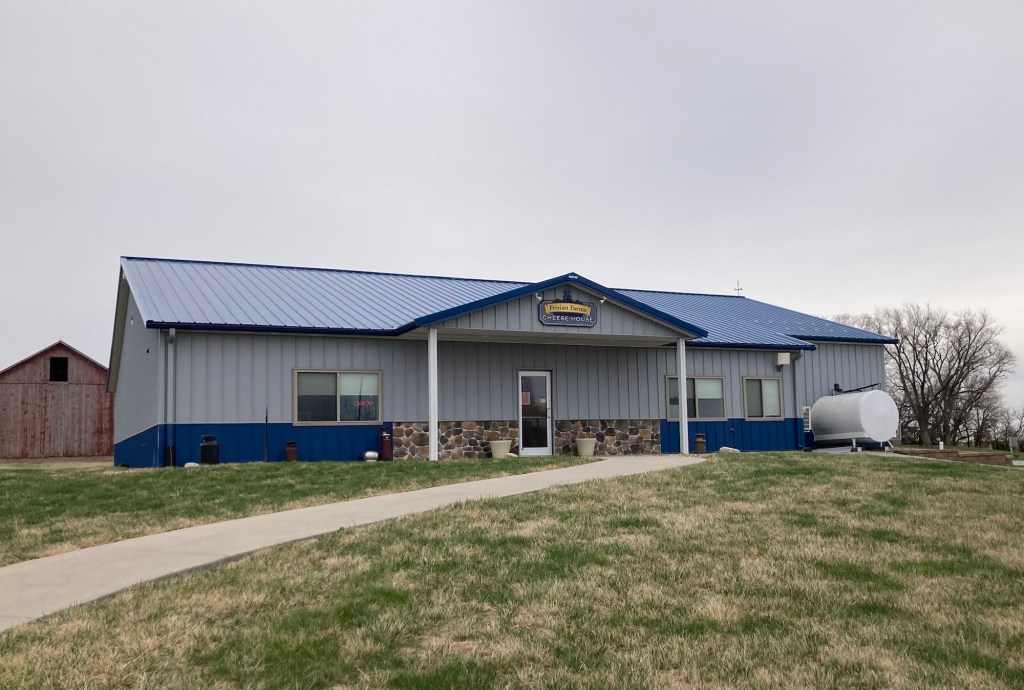
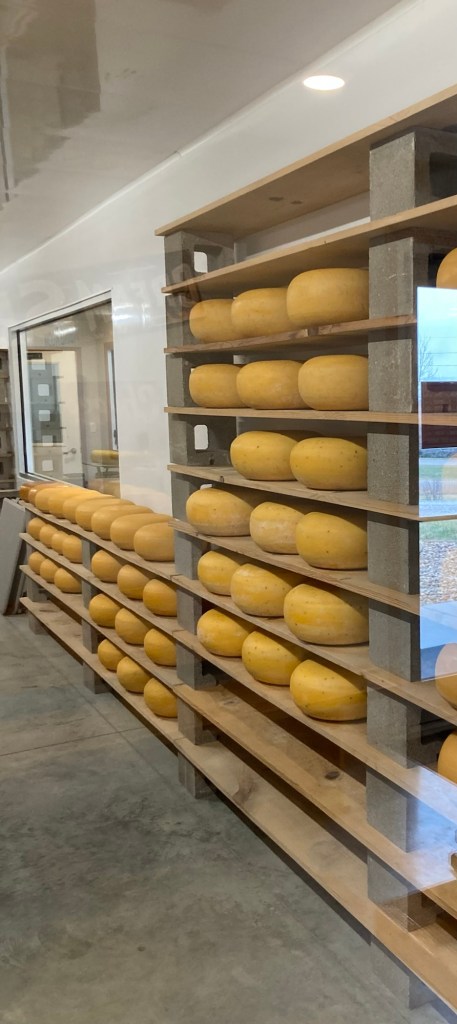
The farm is located between where we are staying and the winery. It is run by two local men, who eventually both returned to Iowa to pursue the dairy business after realizing they missed the cows their dad sold when his land was annexed by the city. They decided to make Gouda cheese as a nod to their own and the community’s Dutch heritage.
A nice young man talked us through the cheese making process and encouraged us to sample their varieties of Gouda. Not wanting to be rude, we did try a few and bought their flavored herb variety to take with us.
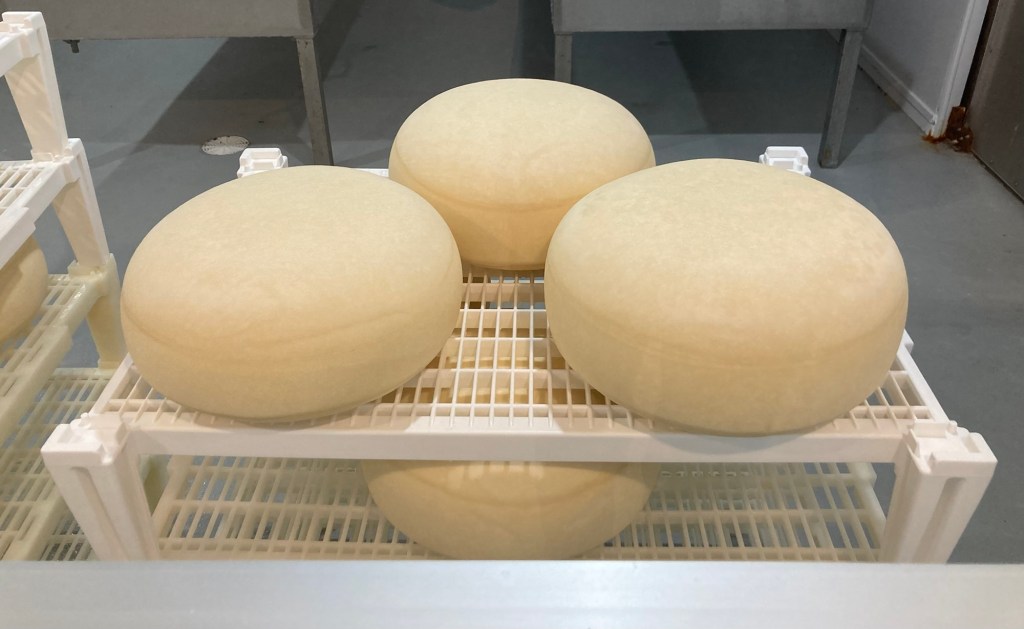
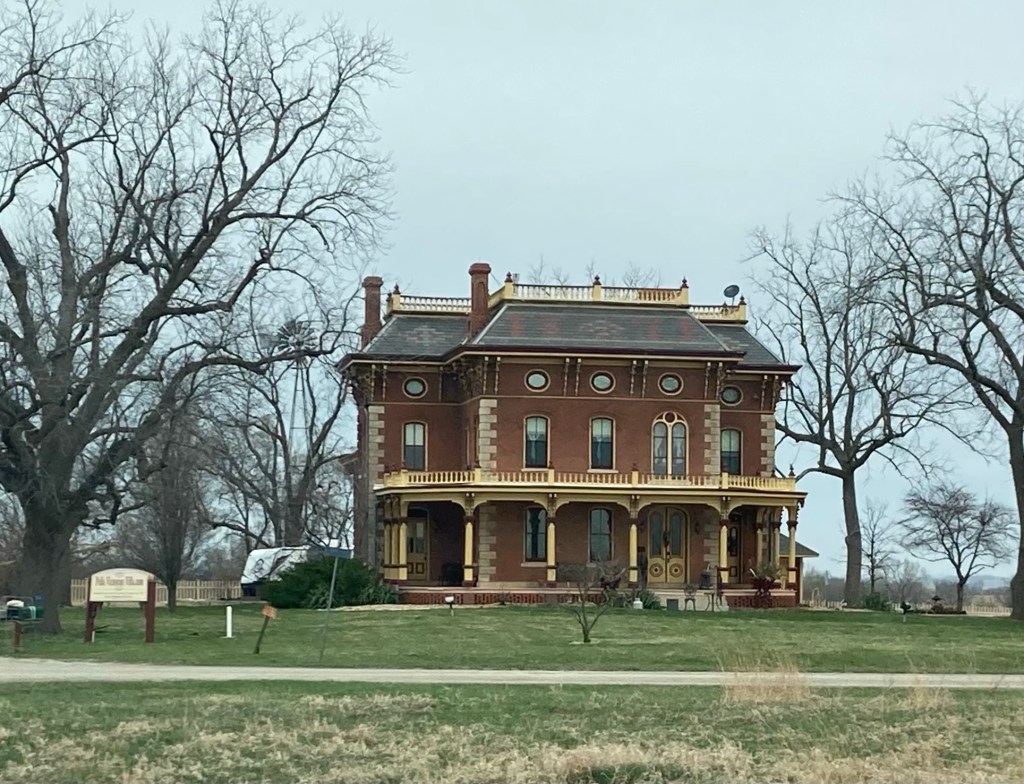
The sign for the cheese shop.The small cheese shop. You can watch the cheese making in process, buy their flavored or plain Gouda varieties, as well as some Tassel Ridge wine and a few locally made meat products.The cheese in the brining room, where they are placed in a brine solution to add salt to the cheese and starts the formation of the rind.The now rinded (is that a word?) cheese in the aging room.Pella Mansion Bed and Breakfast, an event venue between the house and Frisian Farms.
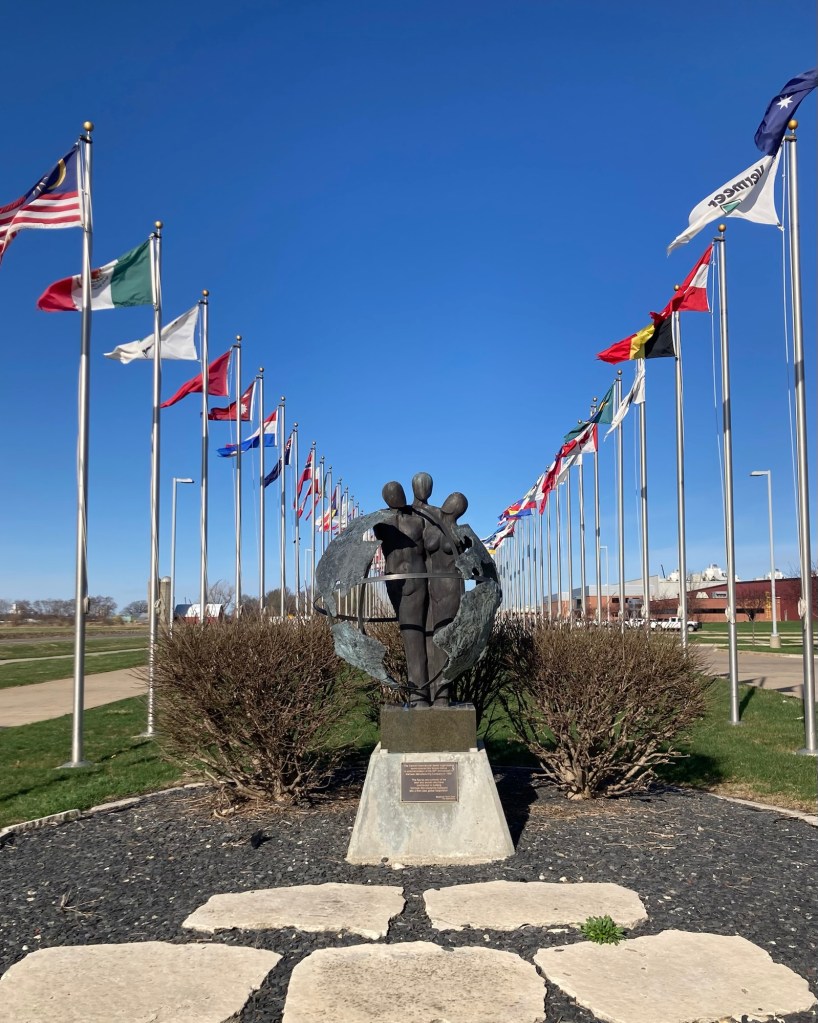
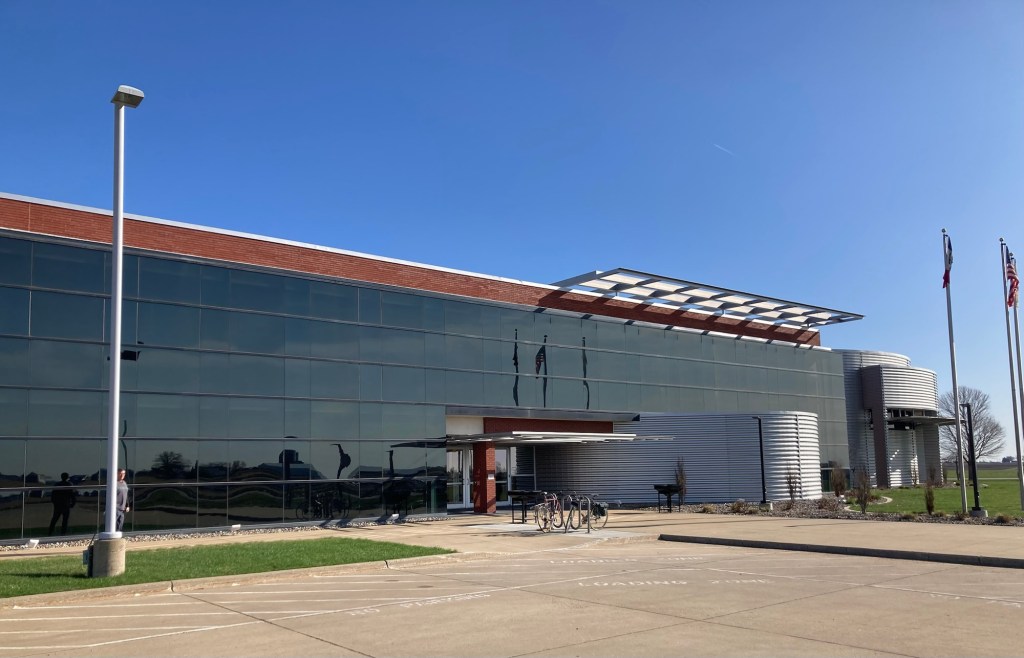
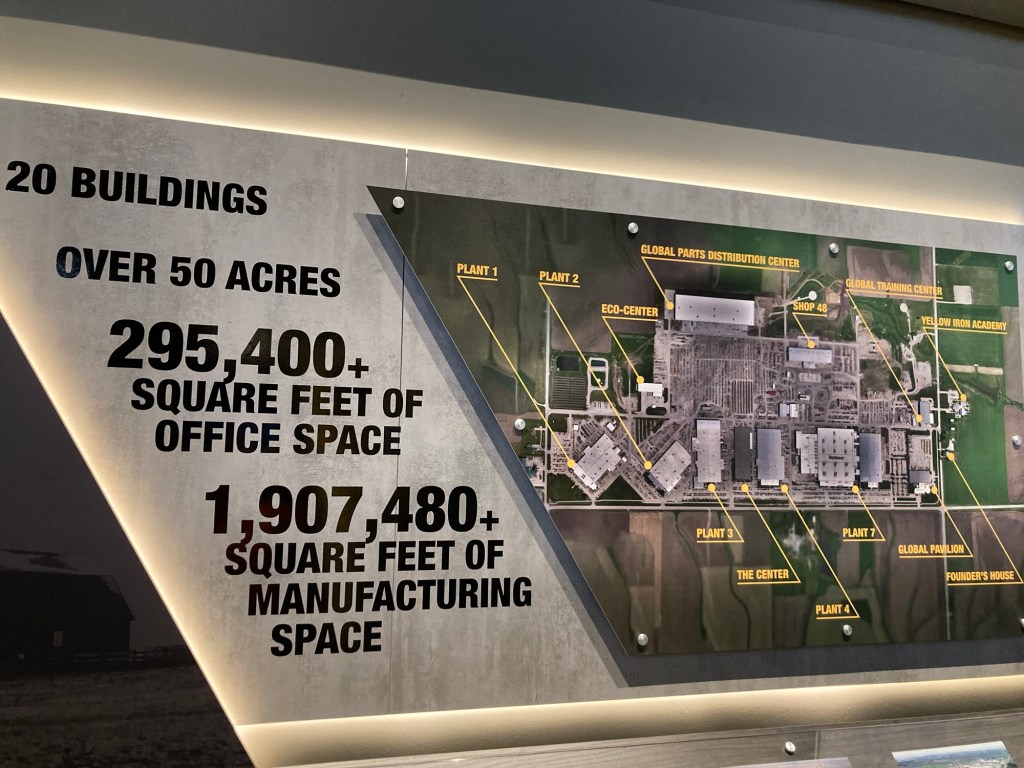
Today we stopped into a museum that we regularly drive by when going between downtown Pella and the house we are watching. It is associated with and on the campus of the Vermeer Corporation. This international manufacturer of agricultural and industrial equipment is headquartered in Pella on a campus known as The Mile. It borders a one mile stretch of road, now named Vermeer Road, starting with Plant 1 and ending at the property where fonder, Gary Vermeer lived and raised his family. The museum is located in the Global Pavilion at the one end of the campus.
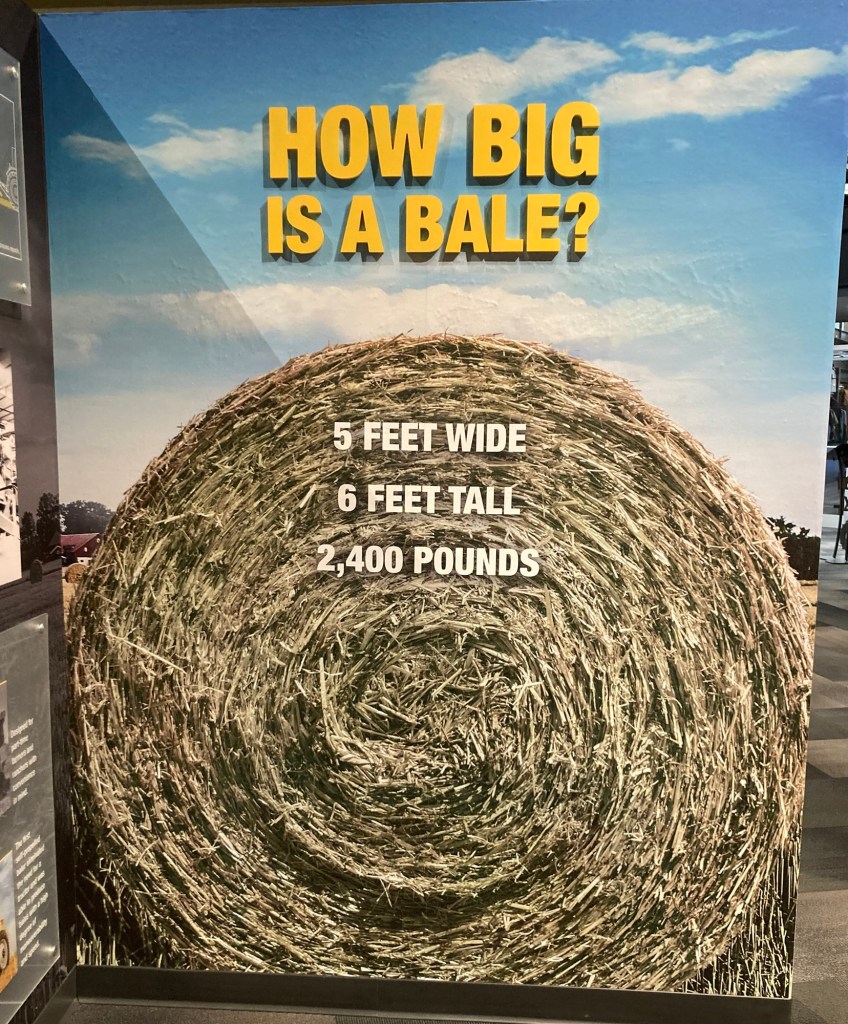
The museum was free to visit and even has a gift shop, if you’re so inclined. It provided an informative overview of the corporation’s history, charitable efforts, agricultural and industrial equipment lines, and even a few ideas that never really caught on.
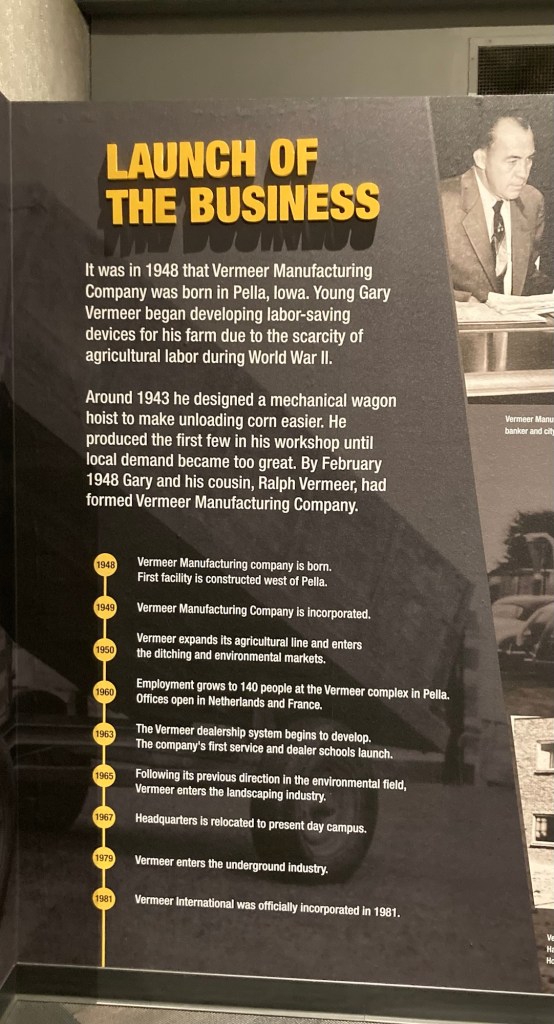
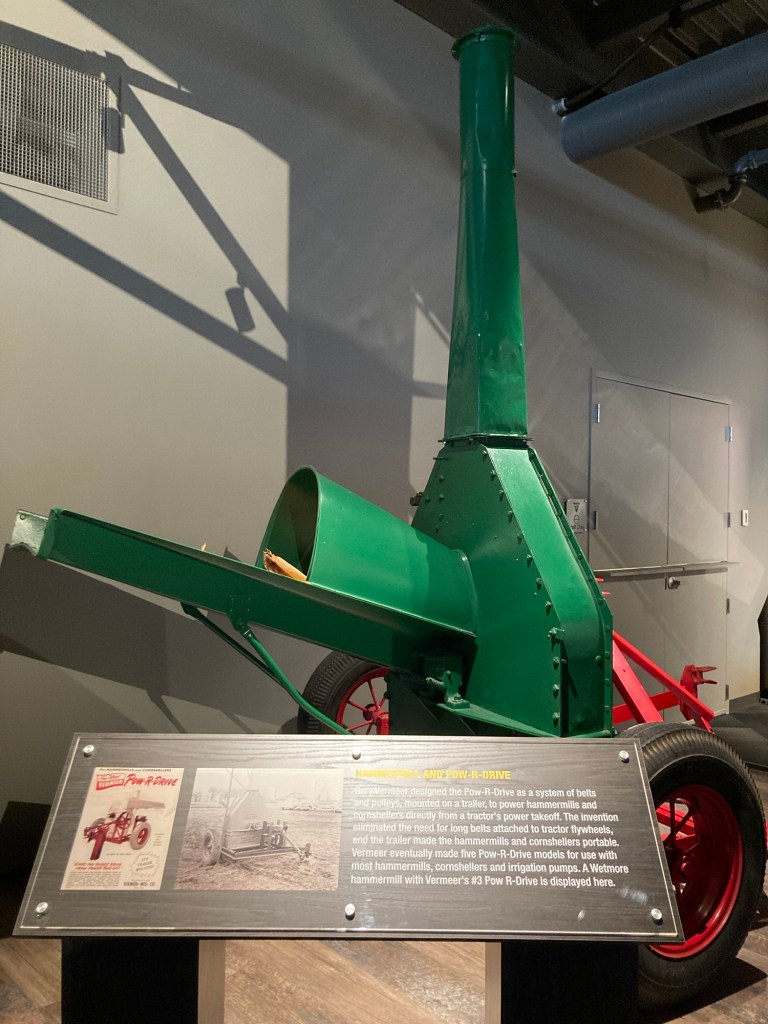
The plaza in front of the Global Pavilion. The bronze statue was commissioned by the company for its 50th anniversary in 1998 to honor the men and women who have contributed to making the company a global corporation.The Global Pavilion and MuseumThe current layout of the mile long campusEntering the museum. It’s larger than it appears.Apparently, it all began in 1948 with a mechanical wagon hoist.An early invention, The Hammermill and Pow-R-Drive, which powered hammer mills and cornshellers directly from a tractor’s power takeoff, eliminating the need for long belts to be attached to tractor flywheels.
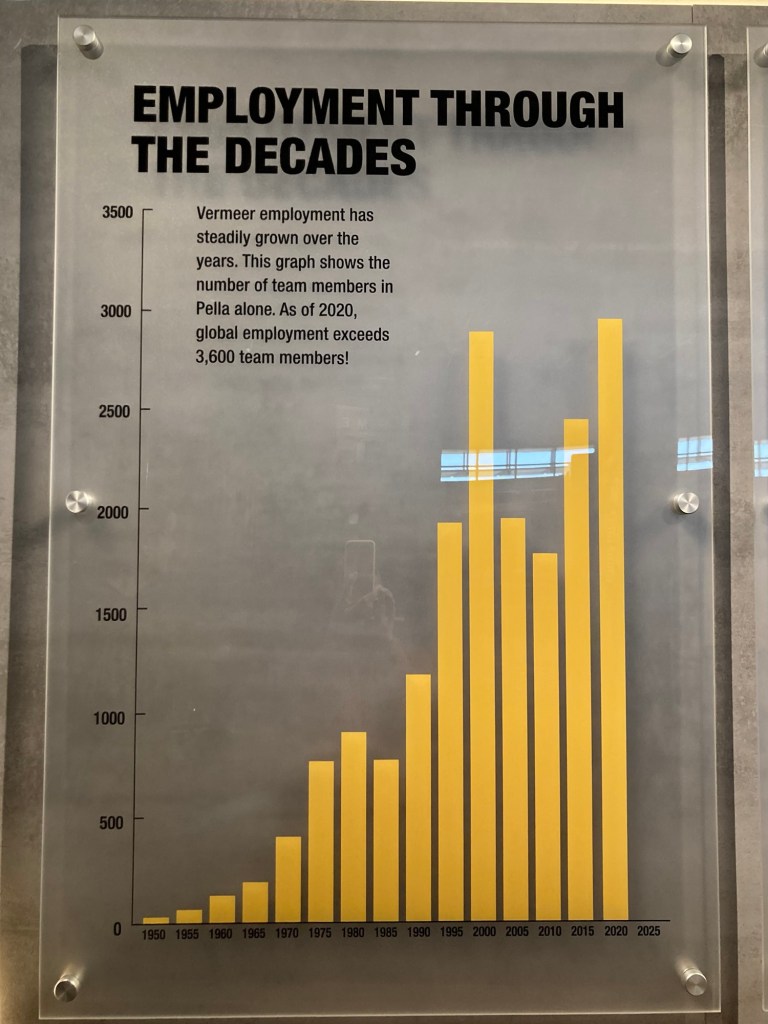
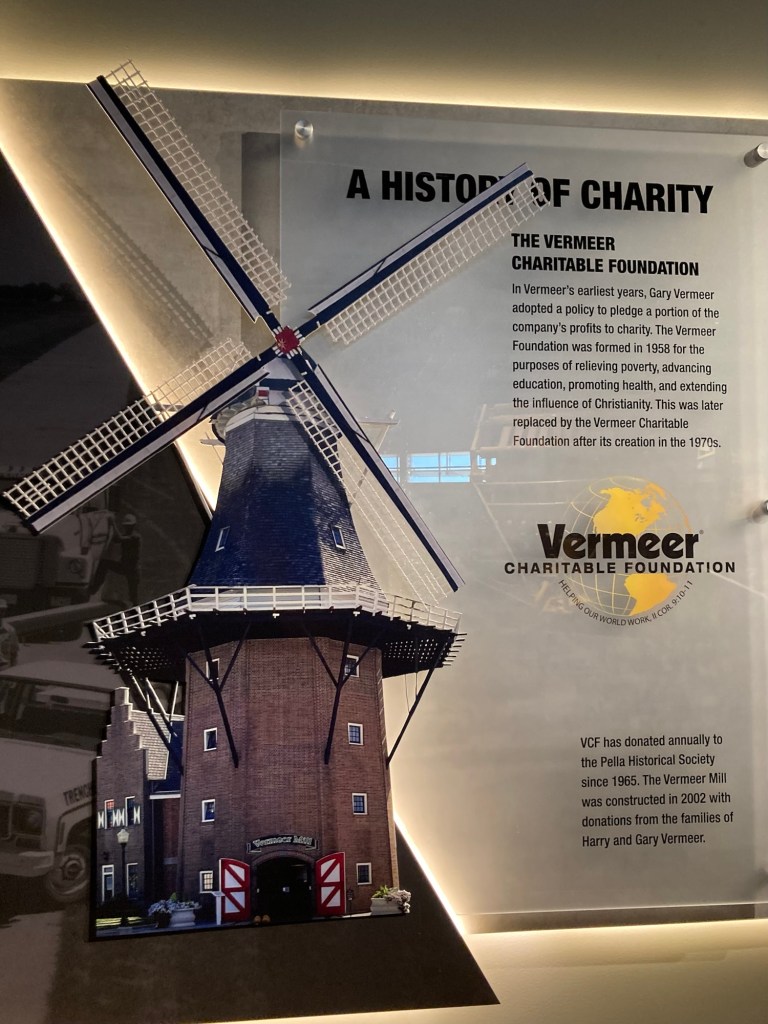
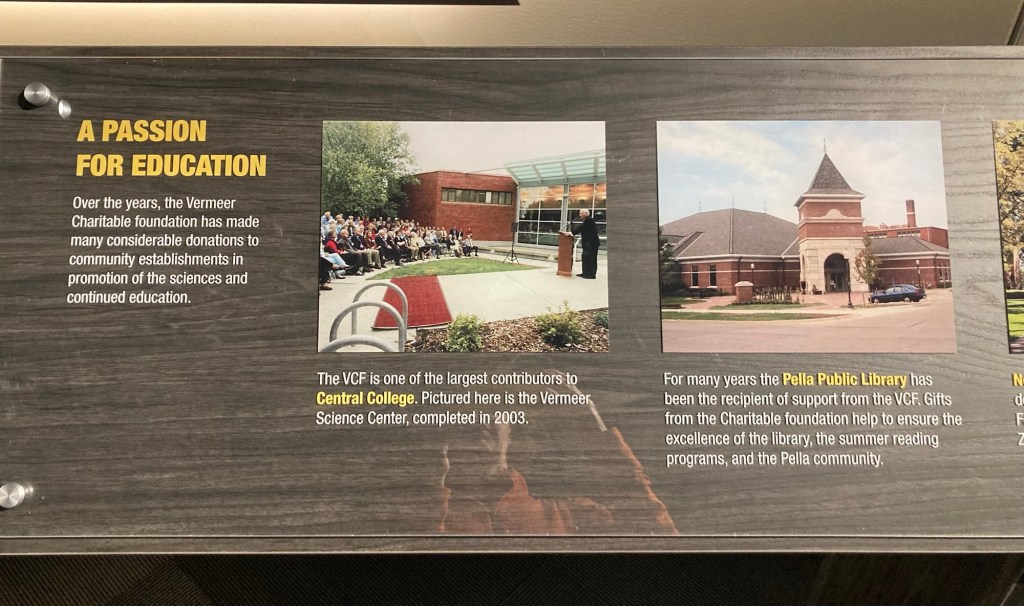
I don’t understand what that above means exactly, but it sounds helpful, and I like corn.Showing the growth in employment and also that the vast majority of Vermeer staff work at the Pella plant.The Vermeer foundation, among other things, has given to a number of local causes, including the downtown windmill.And Central College and the library.
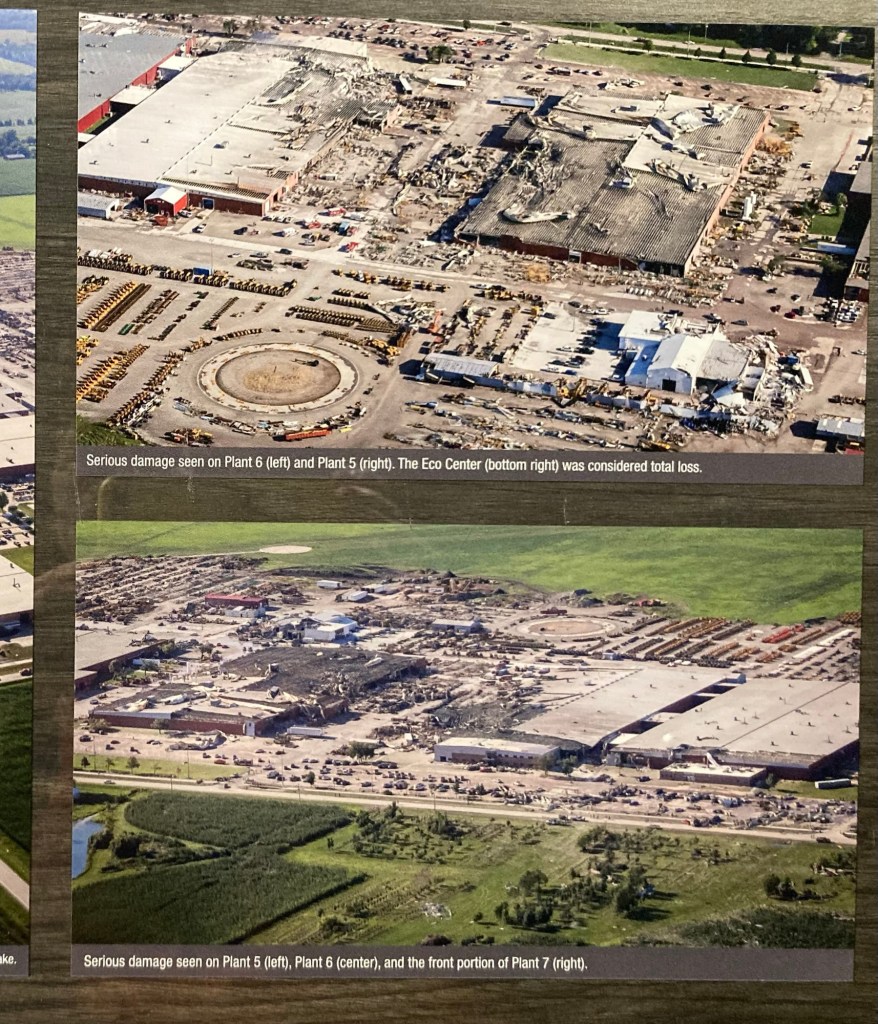
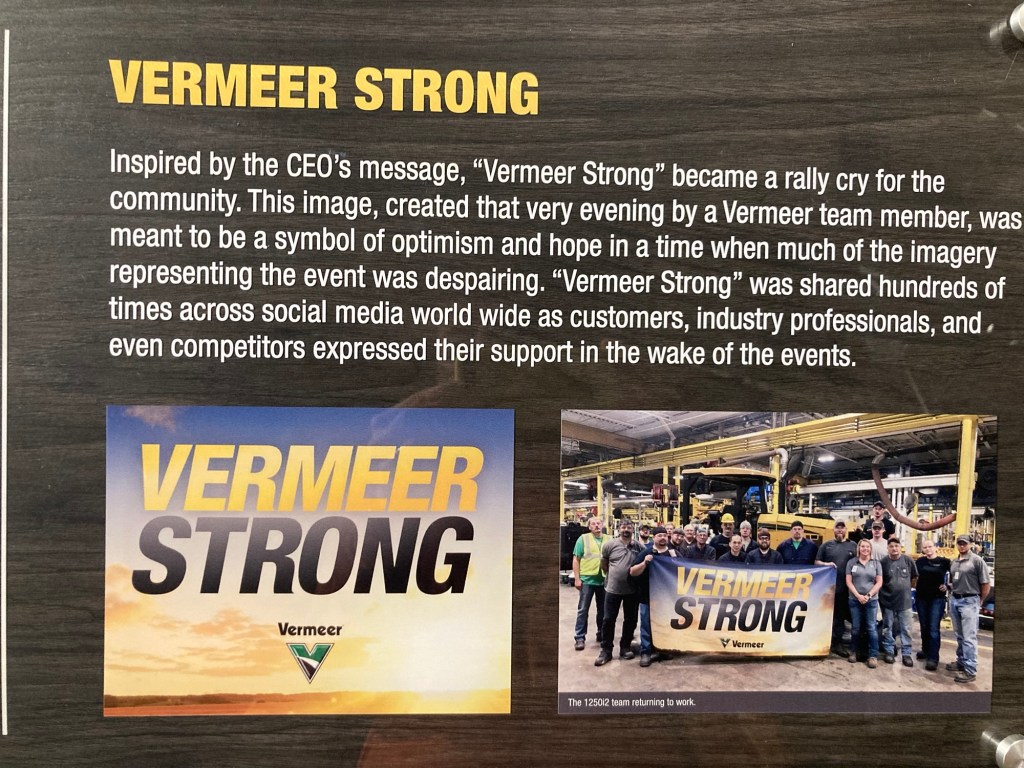
There was a whole exhibit on the effects of a tornado that hit the plant on July 19, 2018. 400 guests from around the world and nearly 3,000 team members were on site celebrating Vermeer’s 70th anniversary. Towards the end of the day, the campus sustained a hit from an EF3 tornado,, with wind speeds reaching 144 mph. While no major physical injuries or loss of life occurred, there was quite a bit of destruction to the campus as shown on the photos below.
As non-farmers, there was a lot of information that was helpful for us in learning about the many processes that the Vermeer equipment was designed to help facilitate/improve.
Additional exhibitions detailed their expansion into the design and manufacturing of industrial equipment, including for landscaping/clearing land and the laying of pipelines or utilities.
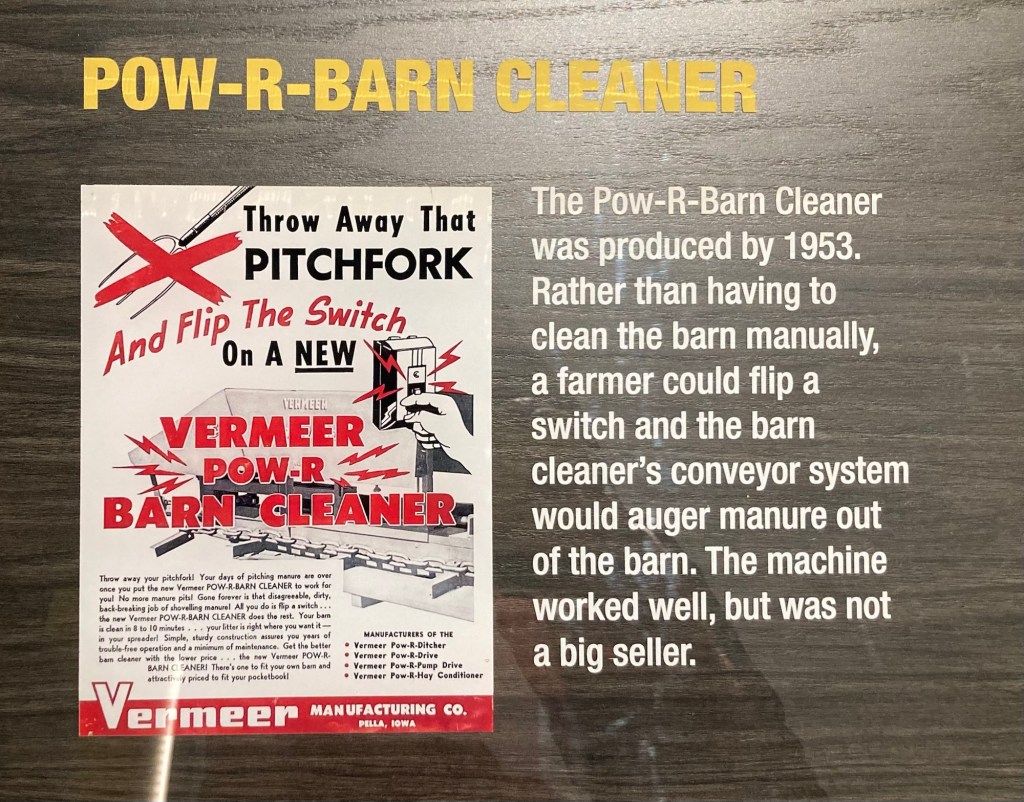
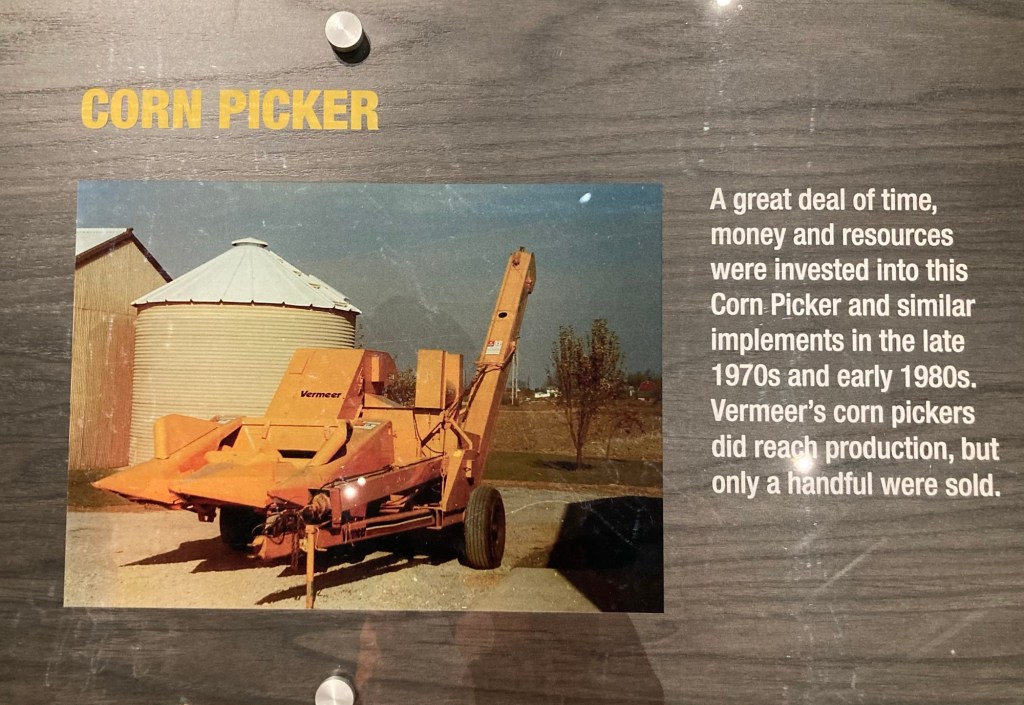
My favorite section might have been the 10 innovations that didn’t make it, just ‘cause that seemed like something most companies might not share.
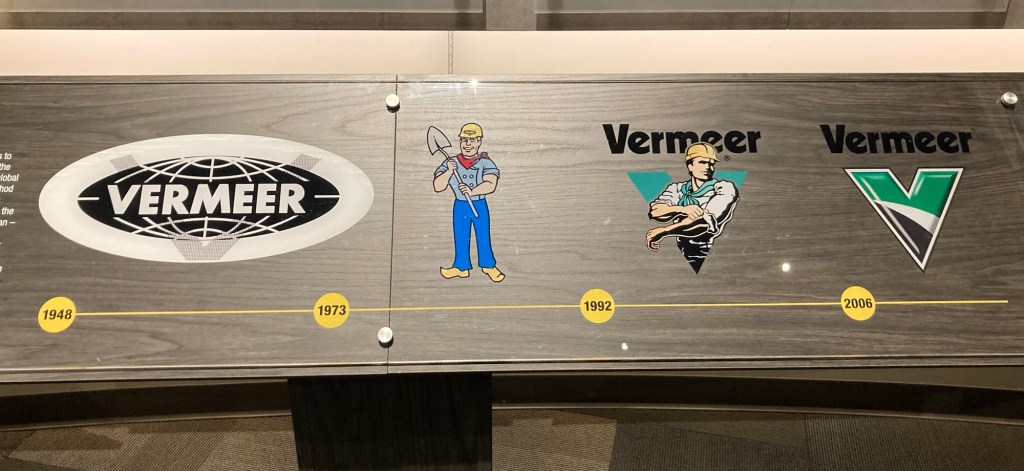
I would have bought this!If you can’t get a corn picker to sell in Iowa. . .Company logos through the years
All in all, it was a pretty interesting museum. We would recommend to others. The price is right, the exhibits are helpful without being overwhelming, and if you are really impressed, the gift shop sells some quality items.
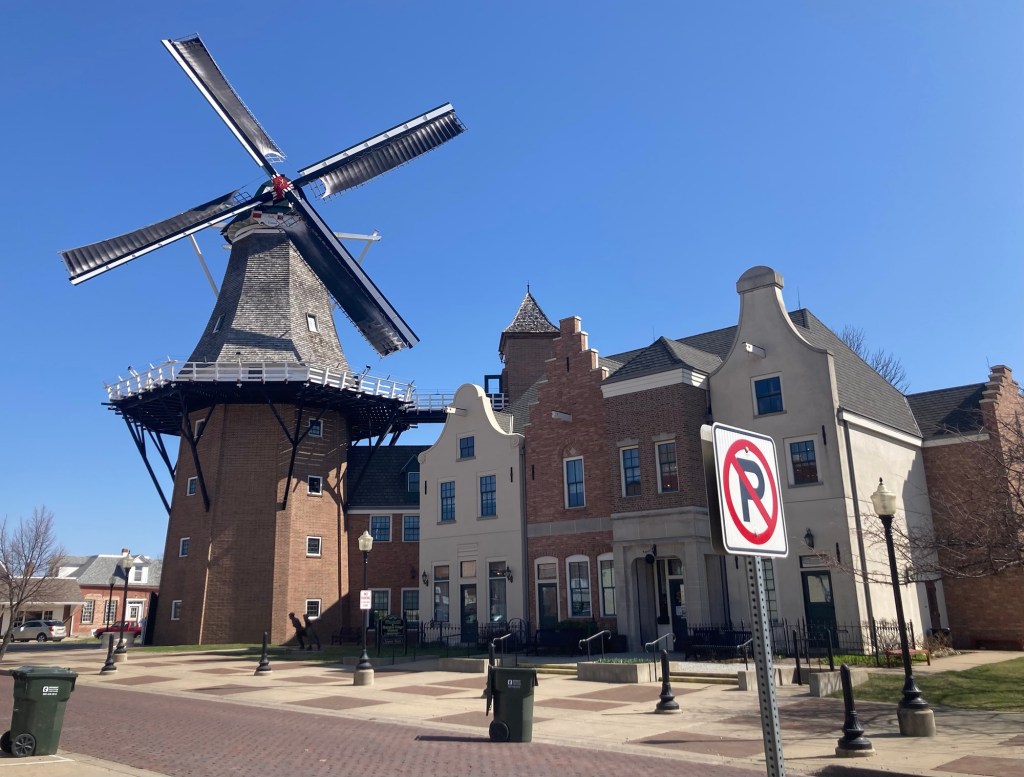
One of the main sights on the main square in Pella is the Vermeer Windmill. It was designed in the Netherlands and disassembled and shipped to Pella for reassembly in 2002. It’s replica of an 1850s city mill that would be built high on a hill to catch the wind. At 12 stories high and 124’ from ground to blade tip, it’s the tallest working mill in the US.
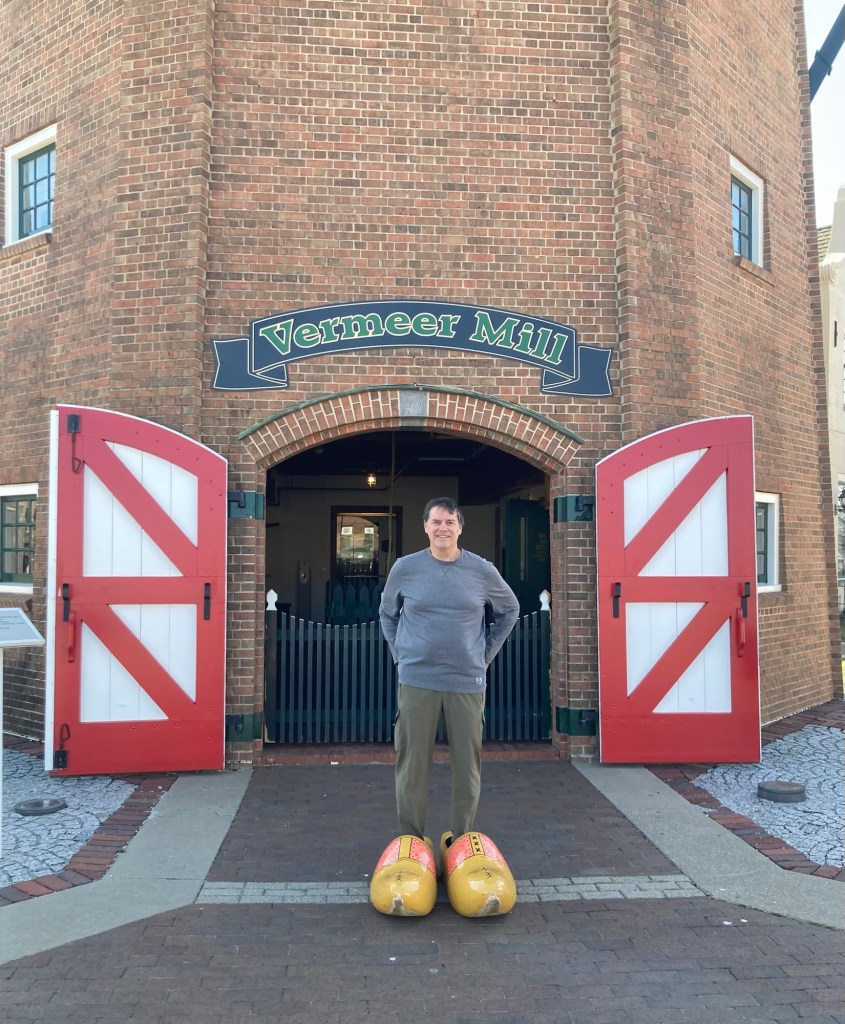
Pella’s Vermeer WindmillBob filling some big shoes
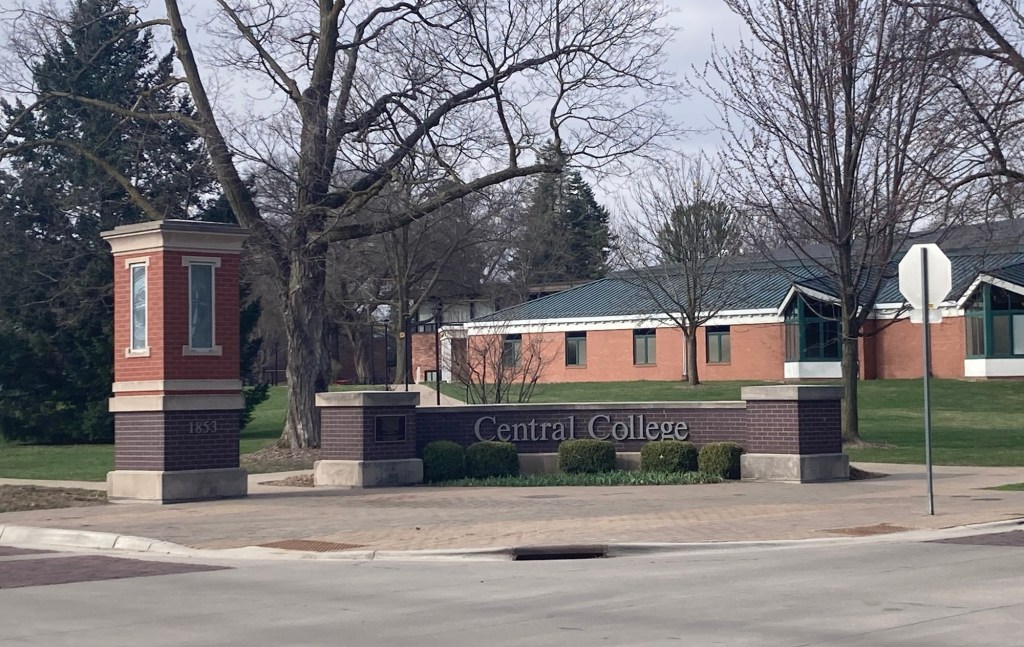
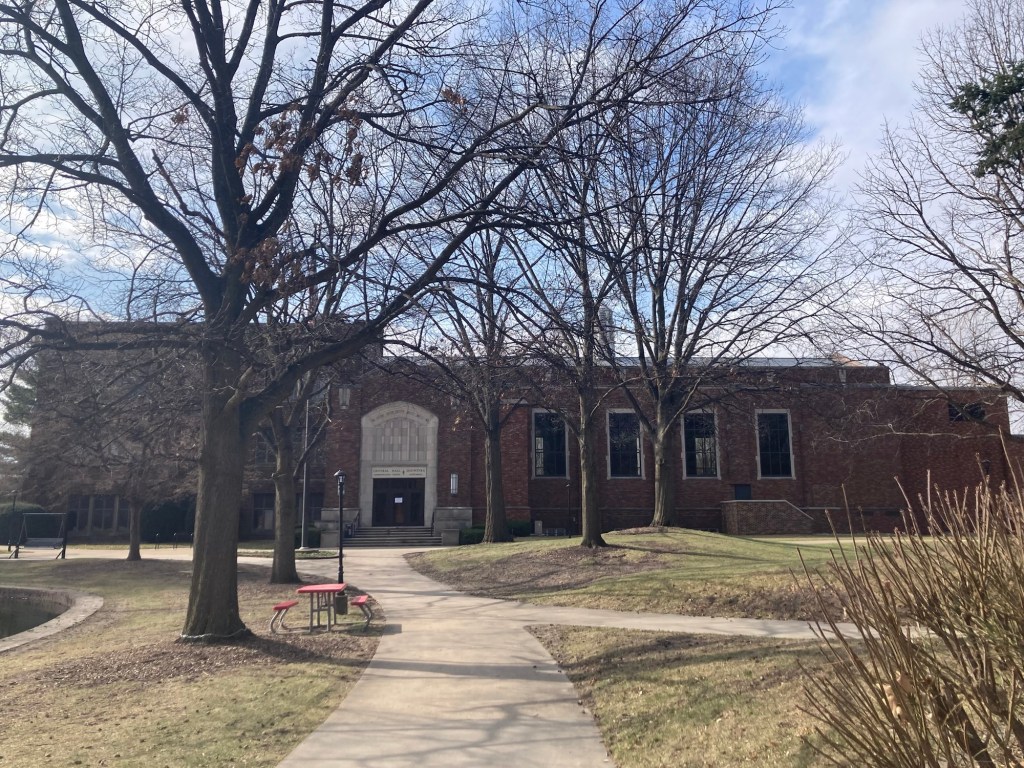
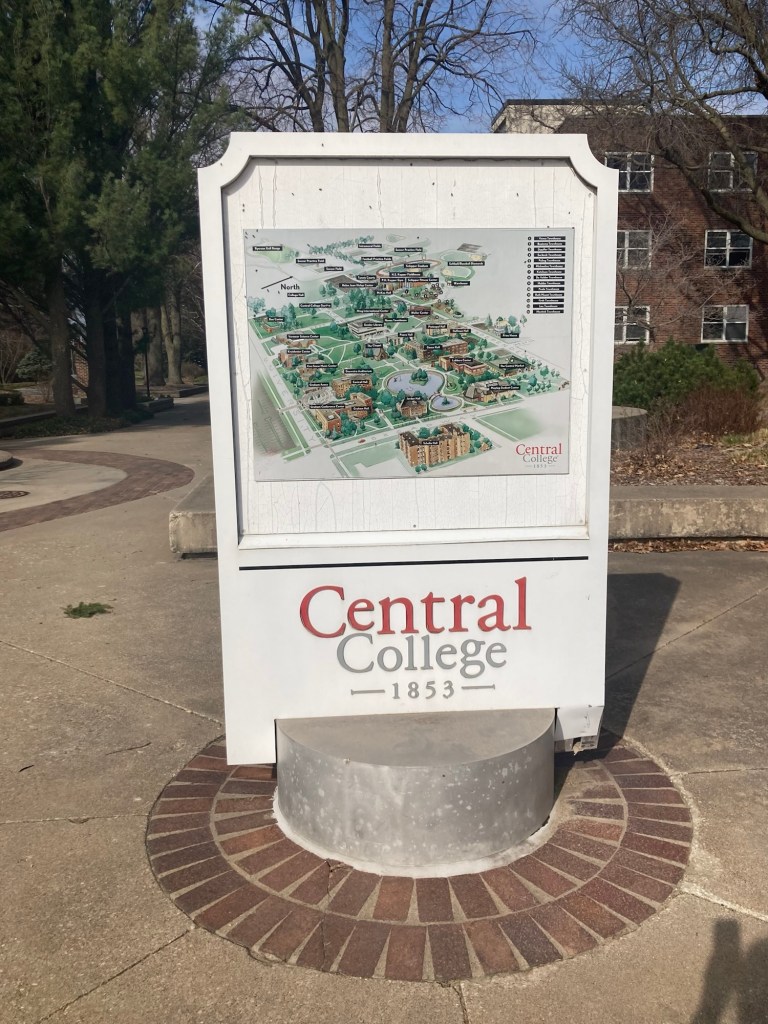
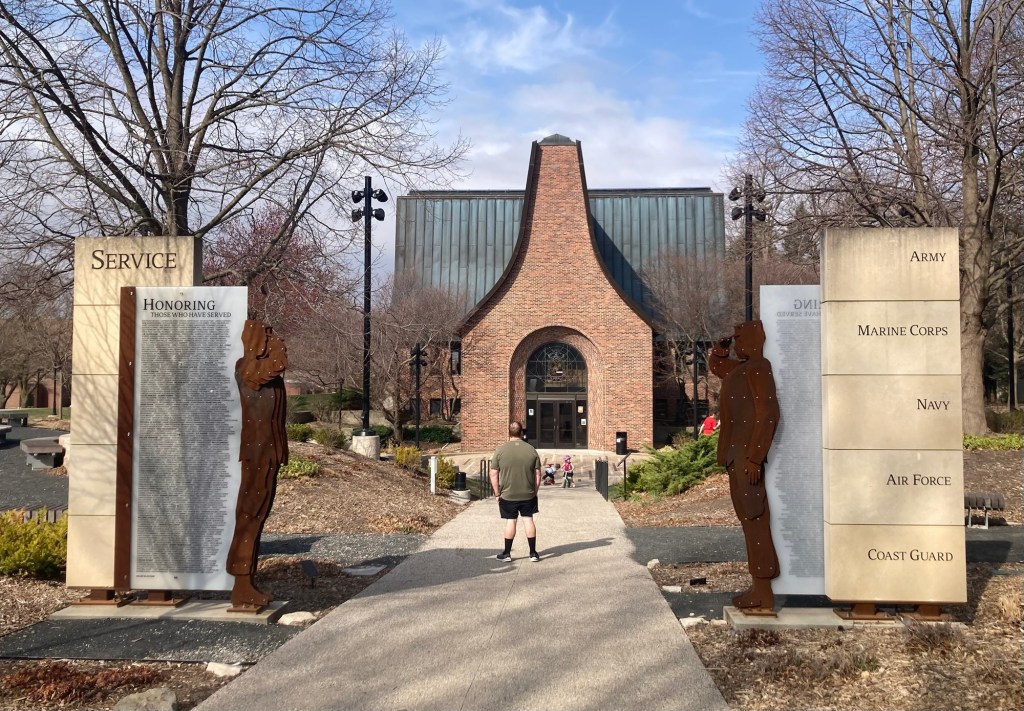
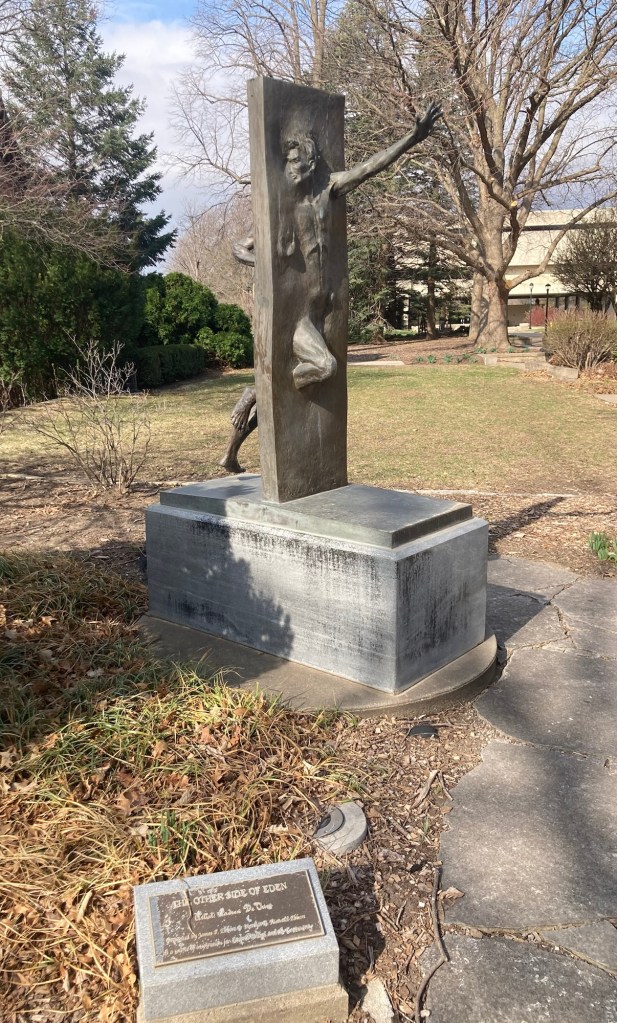
Bob and I decided not to spend the $40 that it would have cost for both of us to tour the windmill, but we did check out the very cute gift shop. Instead, we decided to walk around Central College near downtown. Central College is a private college that is associated with the Reformed Church in America. It was established in 1853 and has been accredited since 1942. It has an enrollment of just over 1,000 students.
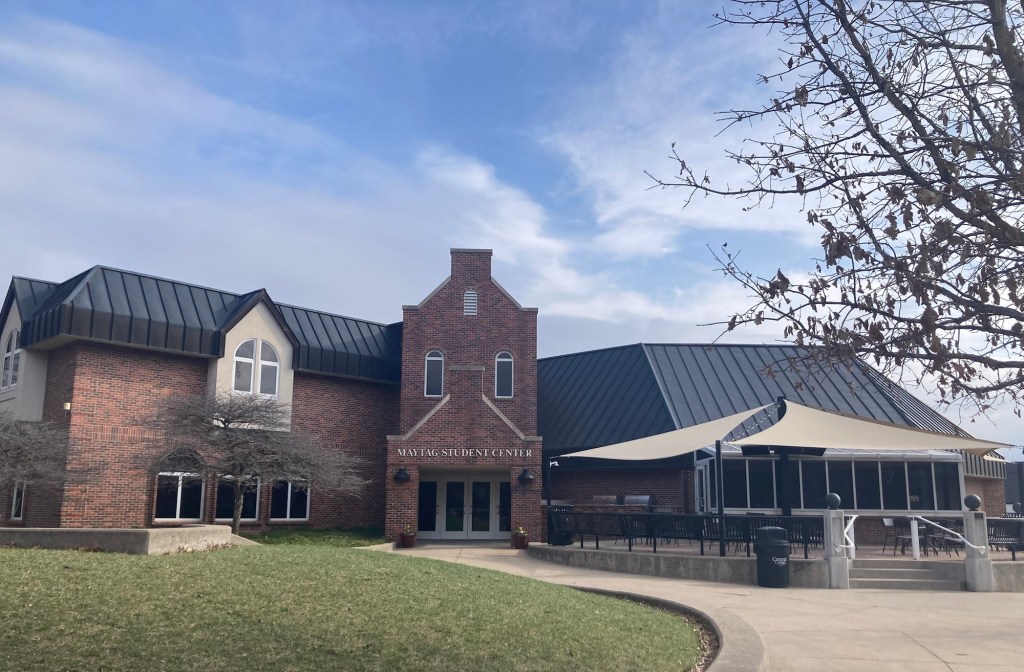
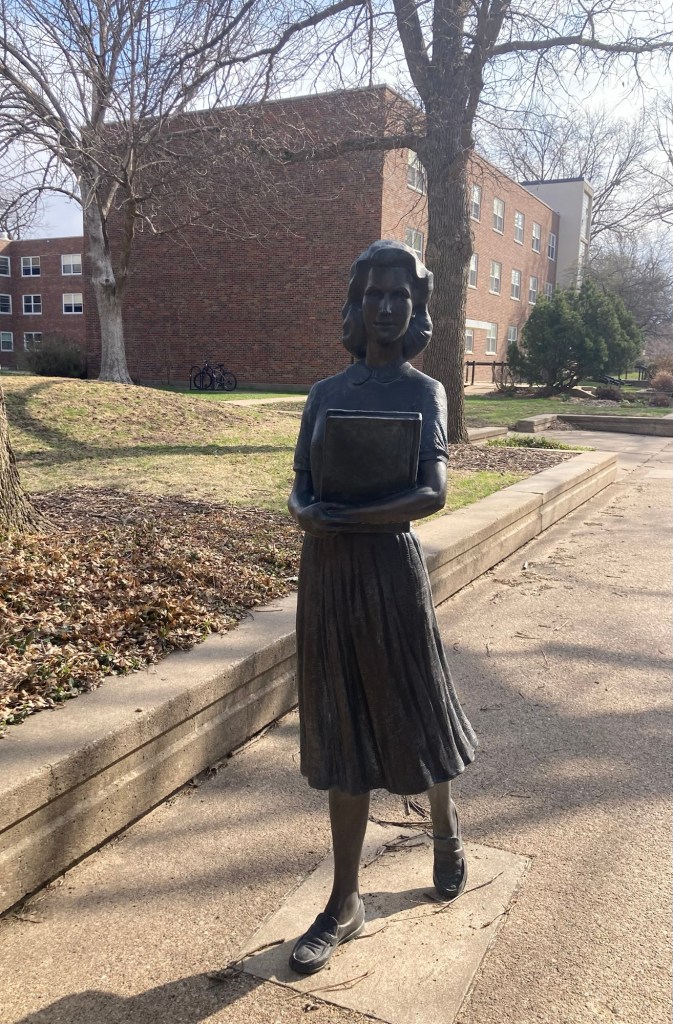
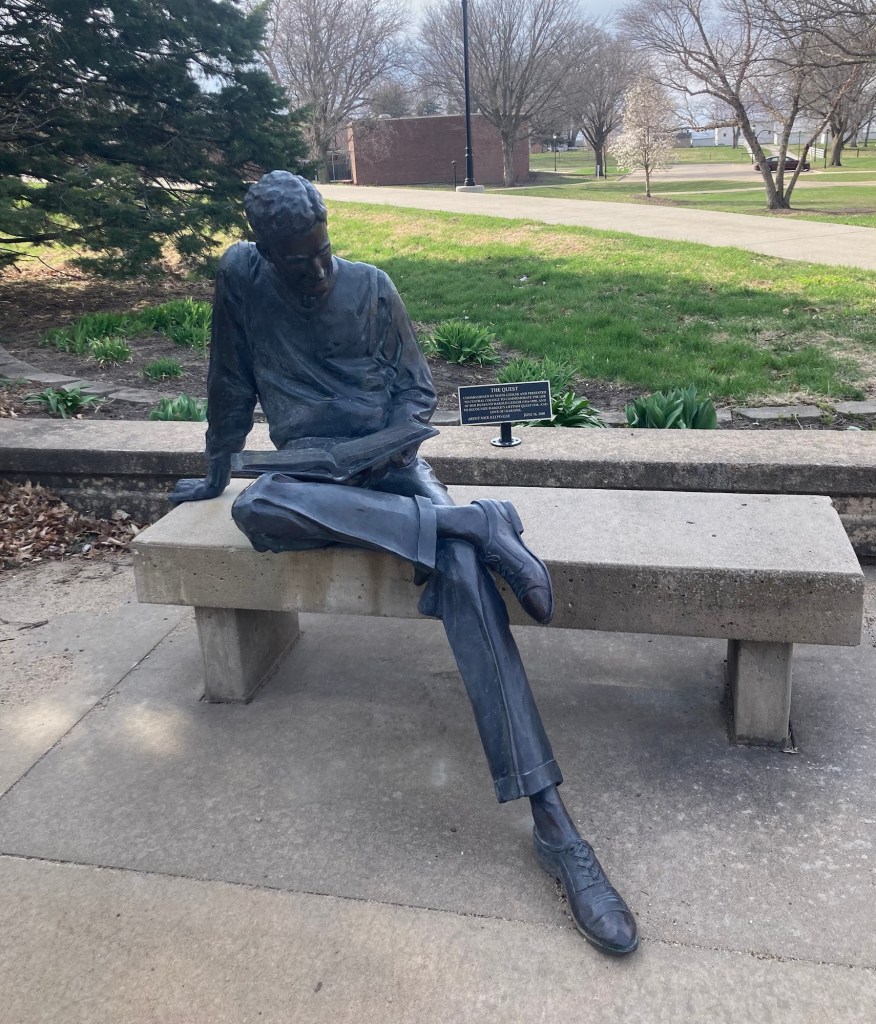
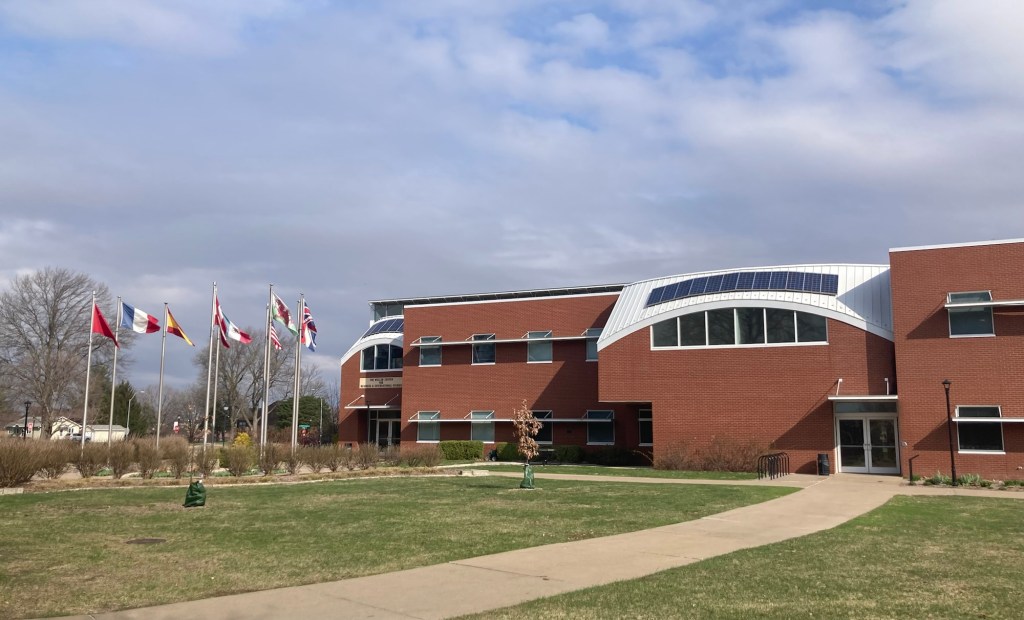
Main sign for the college Beautiful entry to the campus The student centerCentral Hall/Dowstra Auditorium Map of campusWar Memorial and chapel“The Other Side of Eden” sculpture by Andrew DeVries in the Peace GardenA sculpture of Mavis Geisler commissioned by the college in recognition of her contributions to the collegeDitto for her husband HaroldThe Geisler LibraryWing International Center
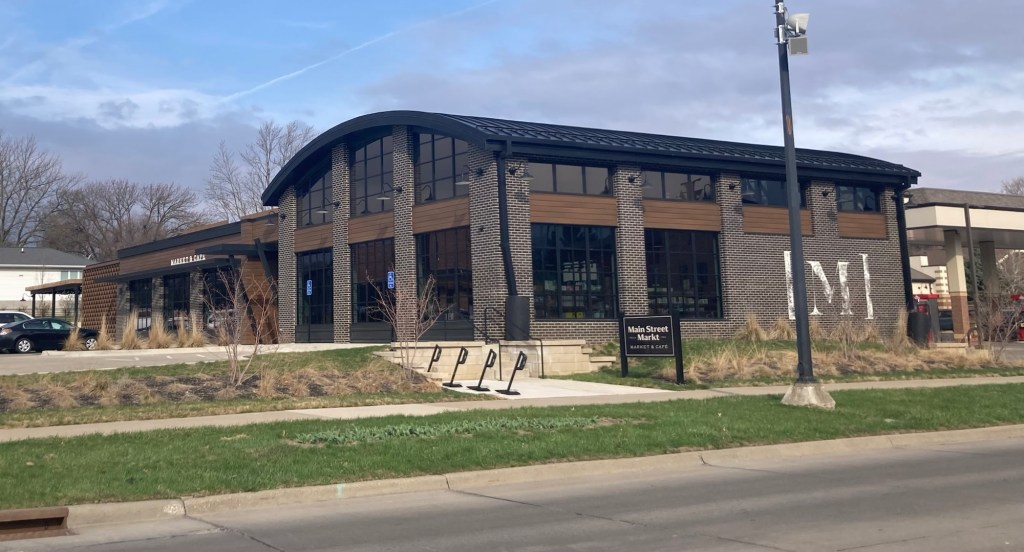
After our walk around campus, we checked out a cute local market down the street.
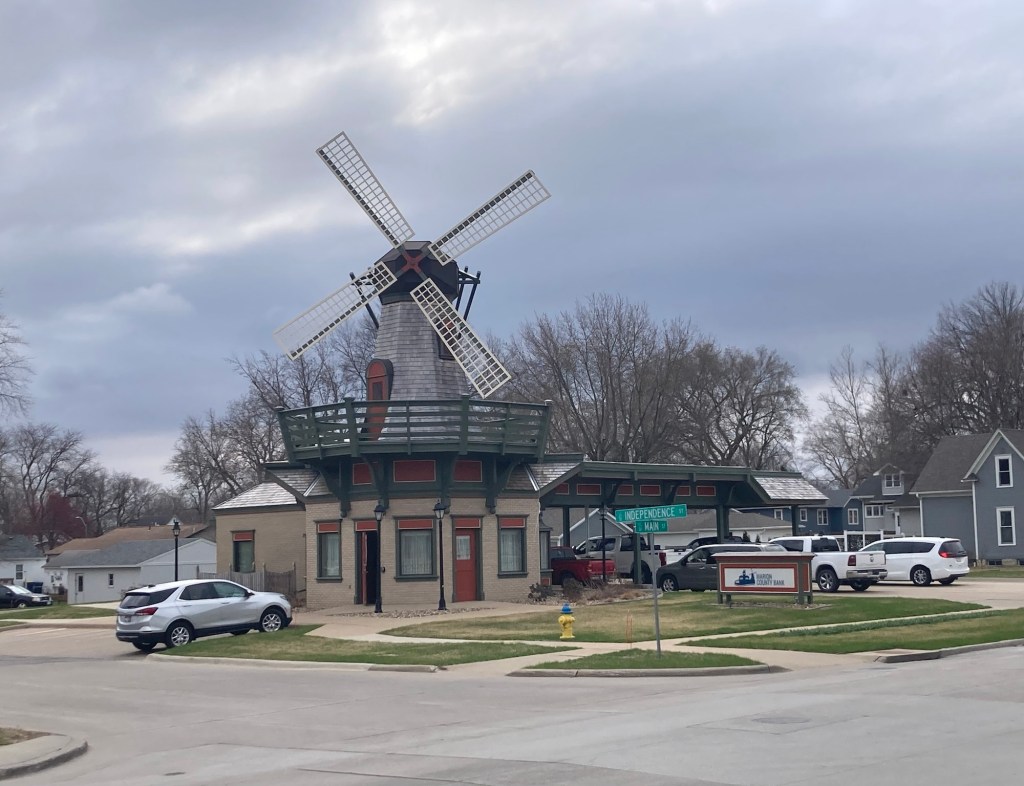
Main Street MarktA windmill shaped bank across from the market
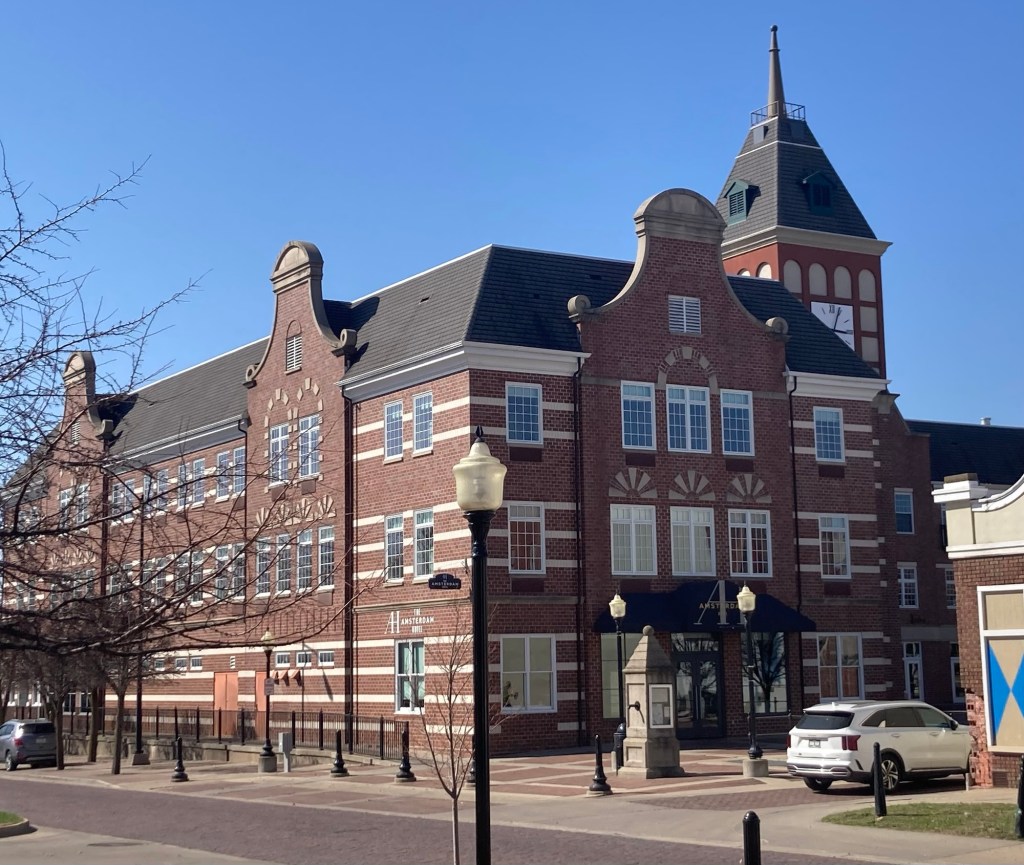
So on the evening of the same day we left our Ankeny housesit (Wednesday), and after a brief visit with Bob’s sister and brother-in-law, we made the short drive (just over an hour) to meet our new homeowners in Pella. We met them at the Liberty Street Kitchen in downtown Pella for dinner before following them to their house, which is about 6 miles out. (Side note, if you ever find yourself in Pella, Iowa, we highly recommend Liberty Street Kitchen, which is located inside the Amsterdam Hotel.)
Our homeowners were so lovely, and we had a thorough walk through at the house before we turned in. The homeowners are now in Paris taking a French language immersion course. It sounds a bit intimidating, but they’ve taken other courses before and really enjoy it. In the meantime, we are in the lovely town of Pella, caring for Nala and Bijou, 2 female Golden Retrievers (as was our dog in Ankeny). As they have a large yard to run around in, they are mostly outdoor dogs and sleep in crates in the garage. They are very sweet natured.
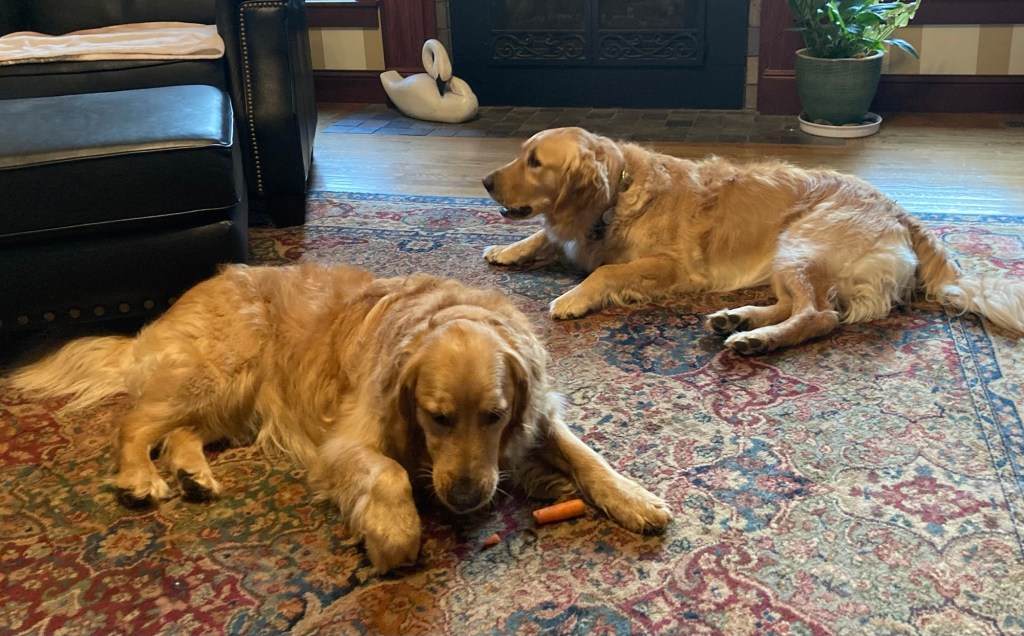
Bijou and Nala enjoying a carrot treat last evening
Pella is a city of about 10,000 about 40 miles southeast of Des Moines. It was founded by immigrants from the Netherlands, a fact of which they are very proud. The city is also home to the Pella Corporation (maker of windows and doors) and Vermeer Manufacturing (maker of industrial and agricultural equipment). A famous former resident of Pella is Wyatt Earp, who lived in Pella as a child, long before he became a lawman in the Wild West.
This morning we walked around the main city square as well as a bit off the square, and their pride in their heritage was evident.
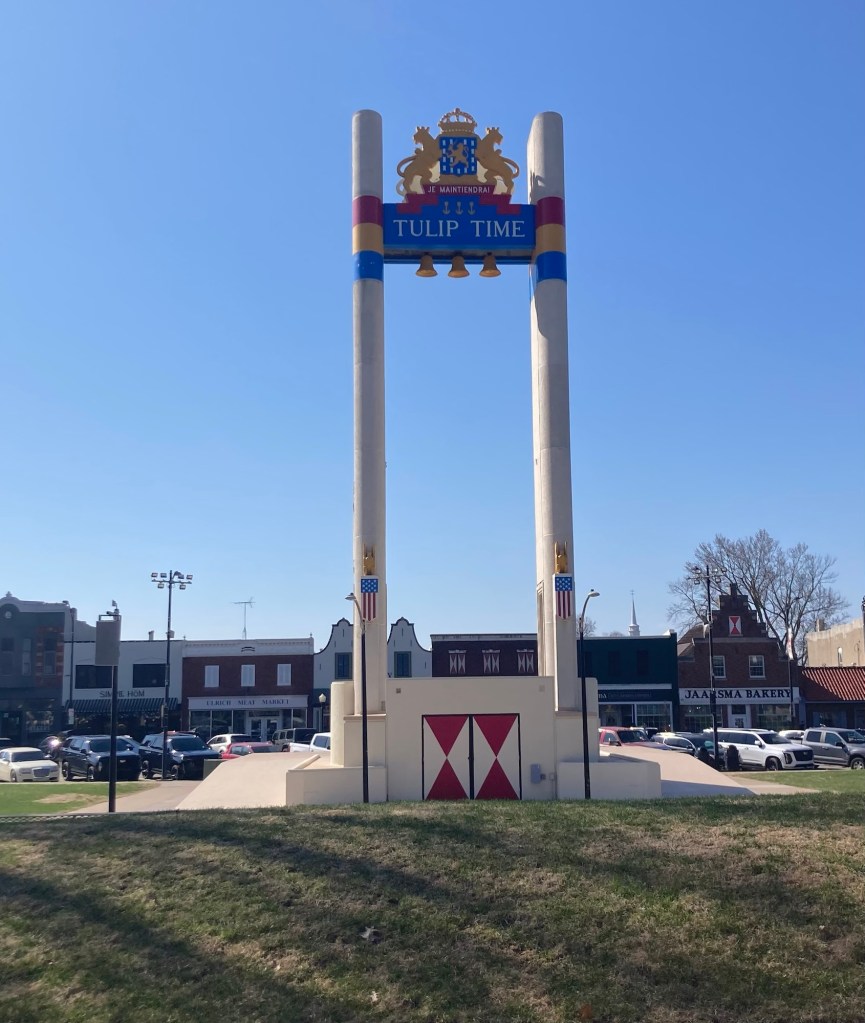
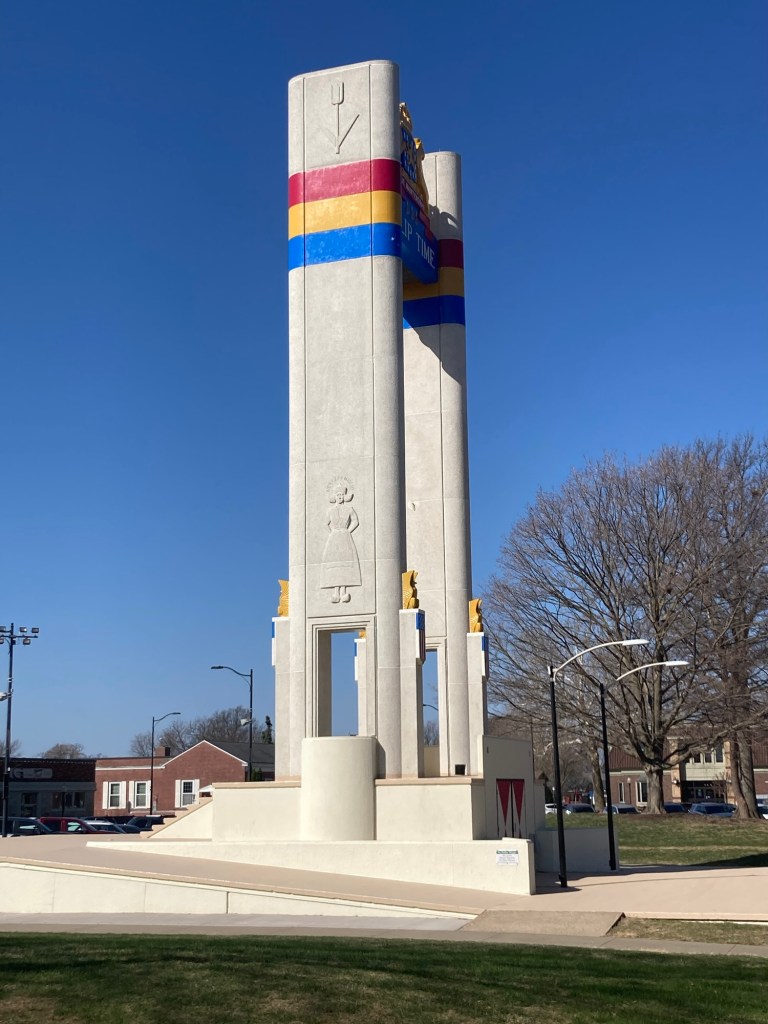
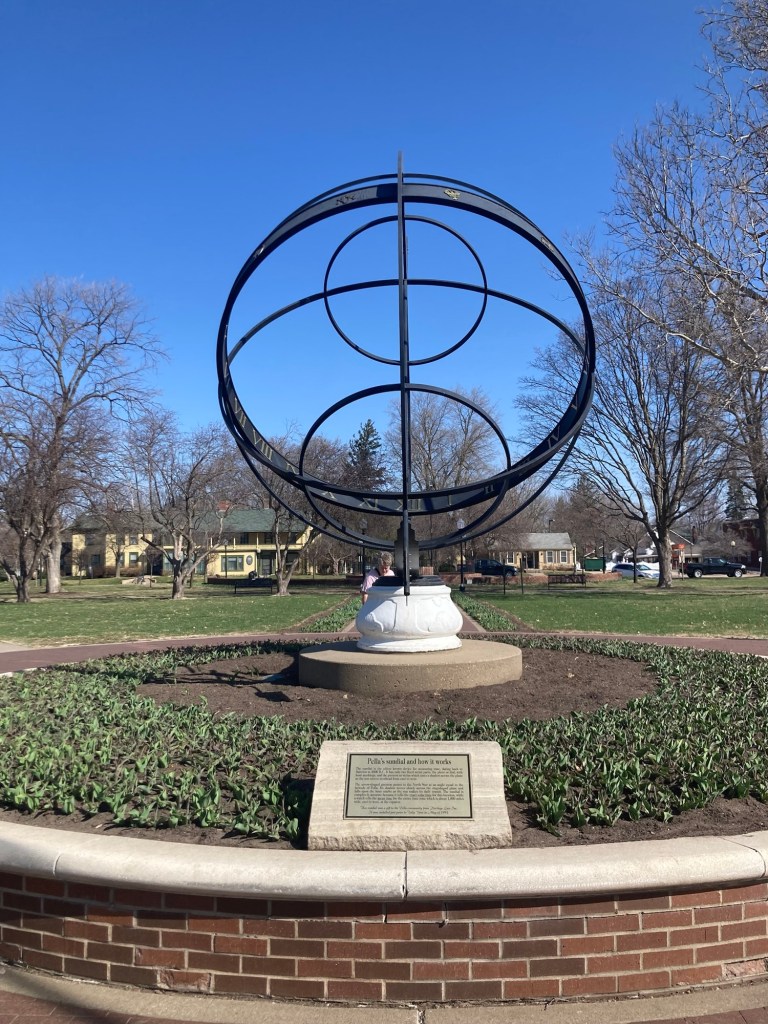
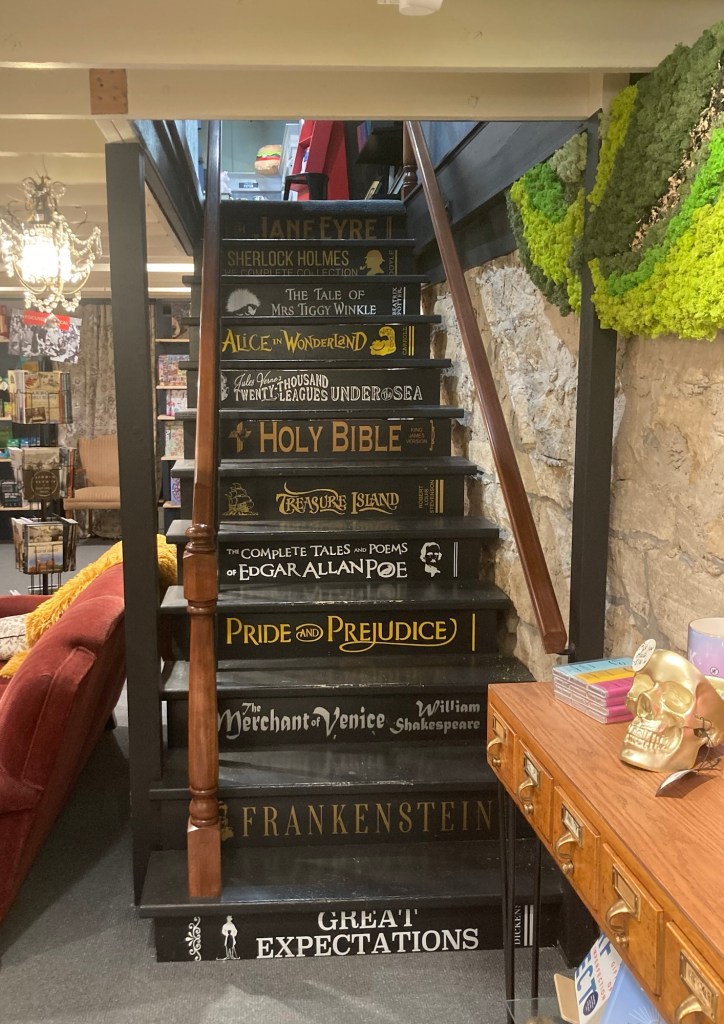
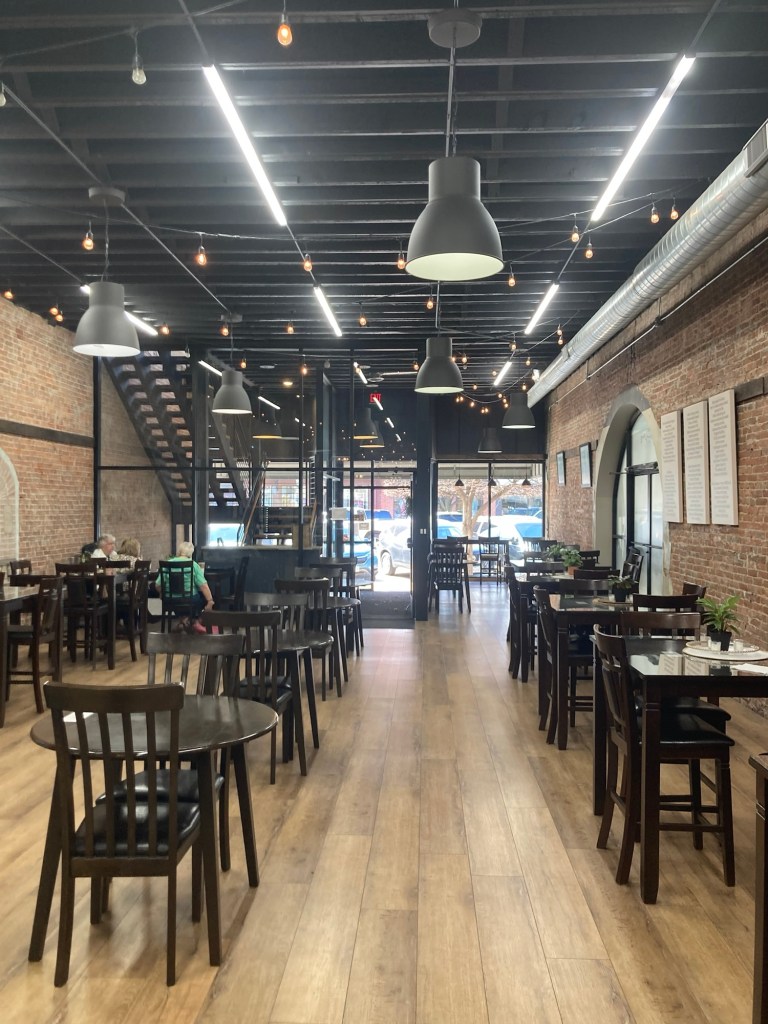
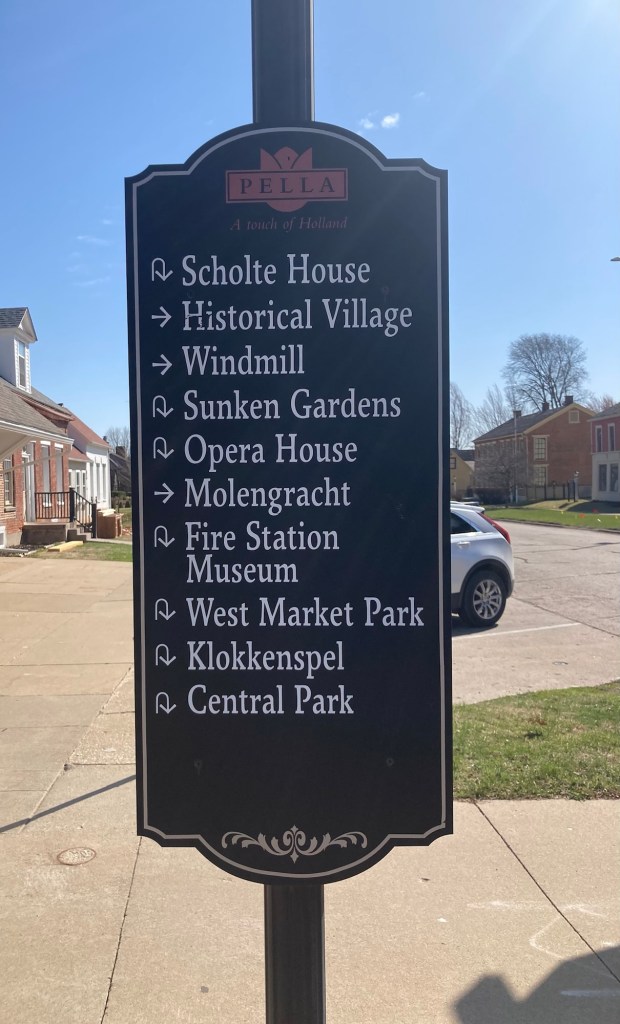
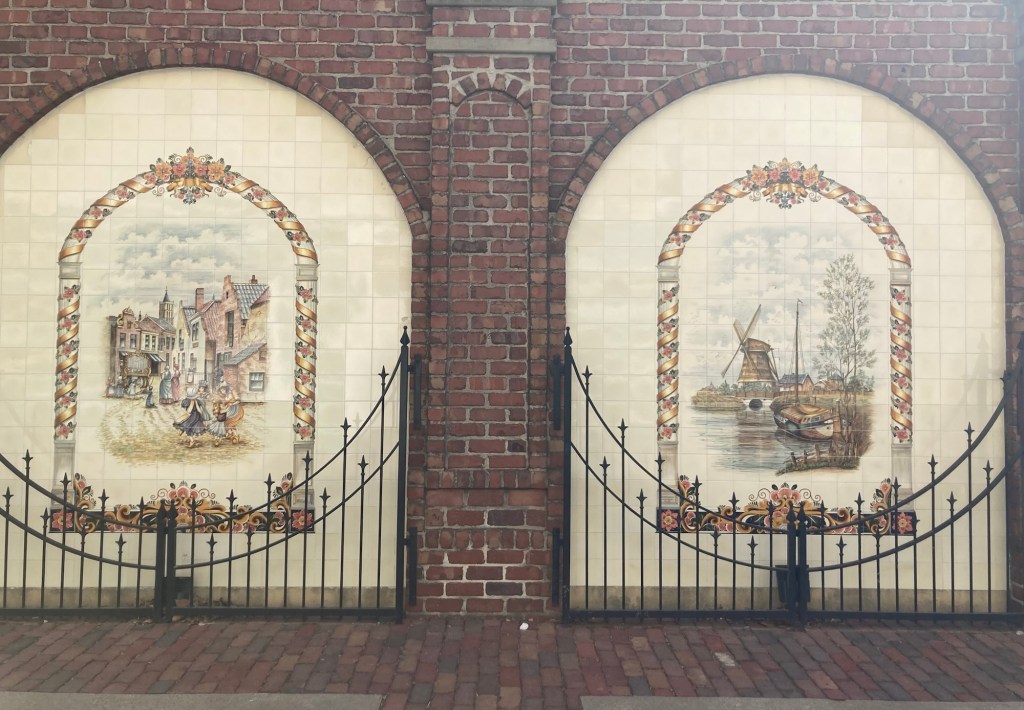
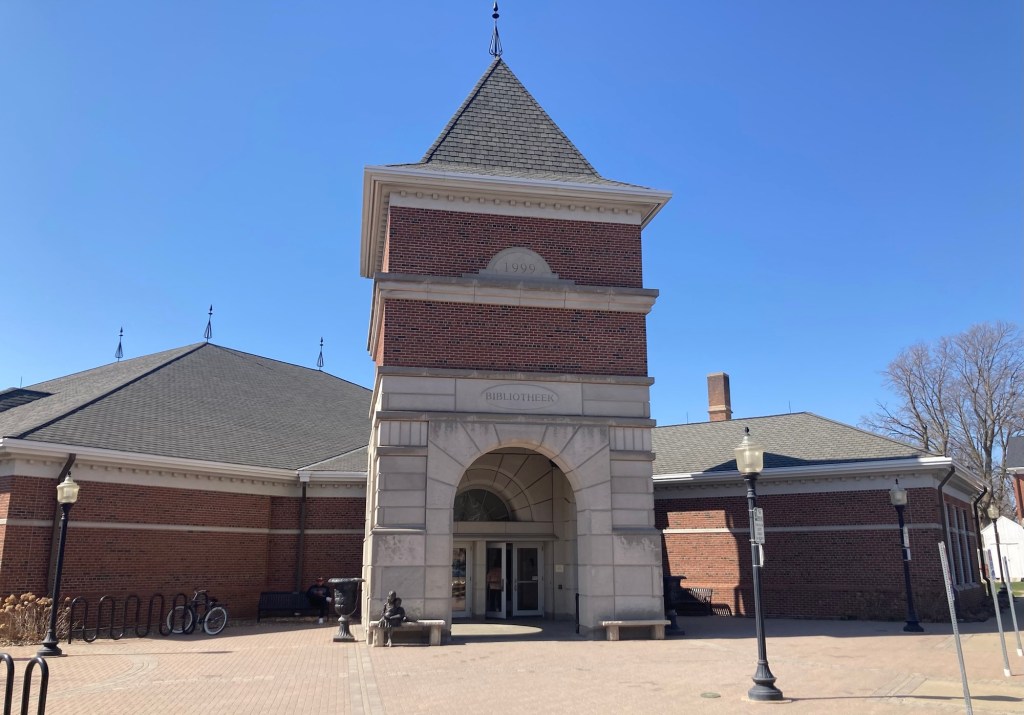
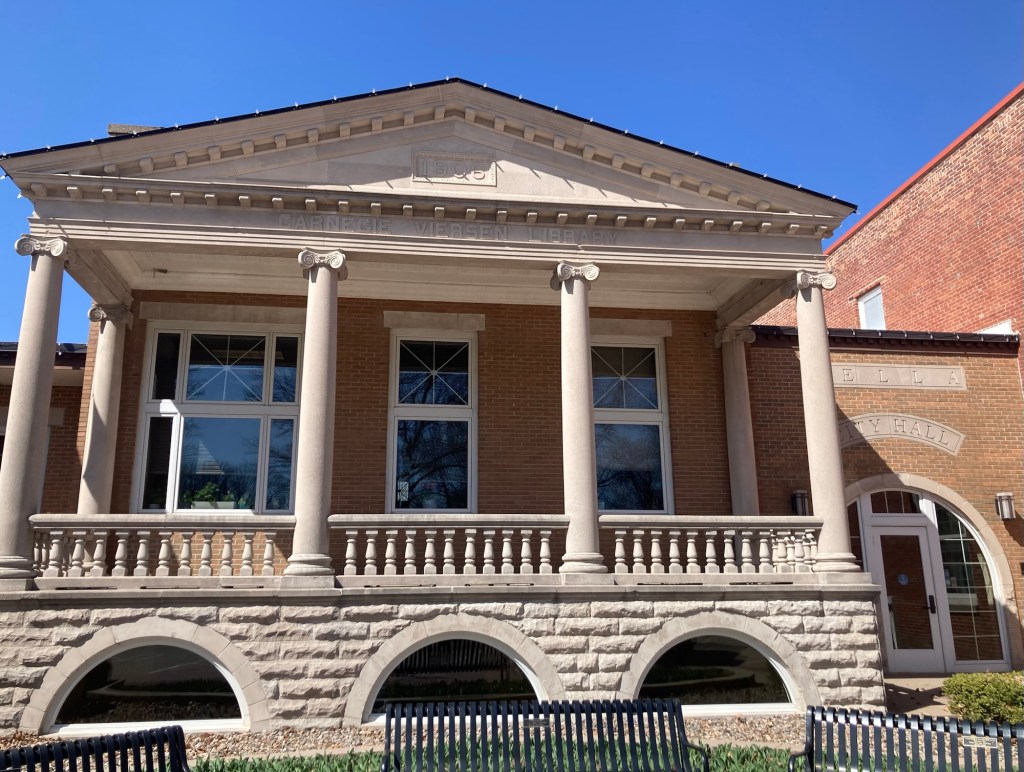
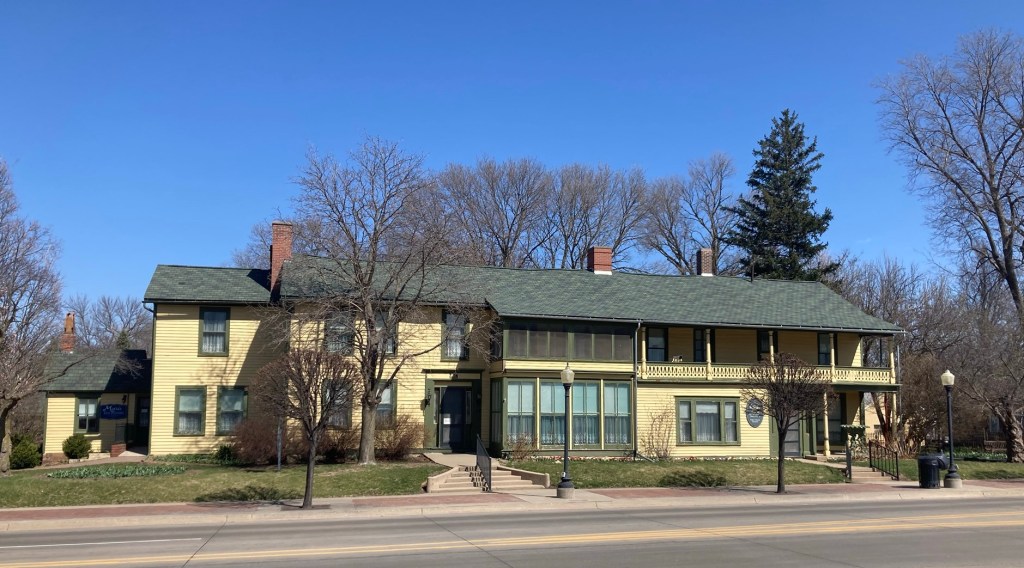
A tourist information spot (closed for the season) at one corner of the park space in the middle of the main square.The Tulip Time monument, the current version was dedicated in May of 1968. It plays a central role in Pella’s annual Tulip Festival in early May.A side viewA sundial in the parkA fun mural on the side of The Curiosity Shop bookstore that we perused The super cute first floor of the bookstore The stairs in the bookstore The inside of one of the many bakeries around the squareA list of some of the sites to see around the square The Amsterdam HotelThe Klokkenspel, as viewed from the street. It supposedly plays music daily, but we missed that. It opens onto a courtyard.A couple of panels in the courtyard Another colorful mural along a downtown storeThe Pella Public Library City Hall, which is located inside an old Carnegie Library.The 175 year old Scholte House, former residence of Hendrik Scholte, who was the leader of 800 Hollanders who arrived in Pella in 1847.
There is also a still working windmill downtown that we hope to visit tomorrow.
Last Wednesday Bob and I left the Residence Inn in downtown Des Moines to return to Ankeny for our second sit with Flynn and Sweet Pea. This time we are here for a week so will be leaving this coming Wednesday.
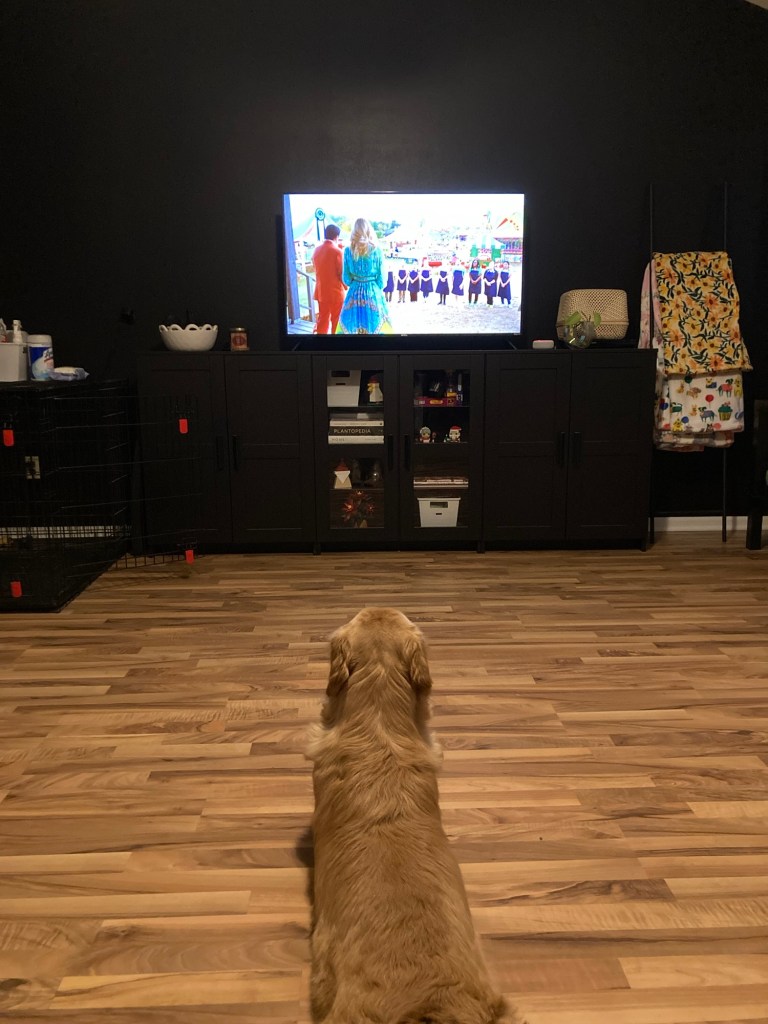
Sweet Pea checking to make sure Flynn isn’t around. She does not want to play with him.Bob playing ball with FlynnFlynn watching tv last night
All of these housesits in the greater Des Moines area is helping better understand the layout of the various communities in and around Des Moines. Ankeny is a city of about 68,000 that lies a bit northeast of the city of Des Moines. The one thing that Bob and I know it for is the rail trail (decommissioned railroad line) that runs through it — the 25 mile long High Trestle Trail.
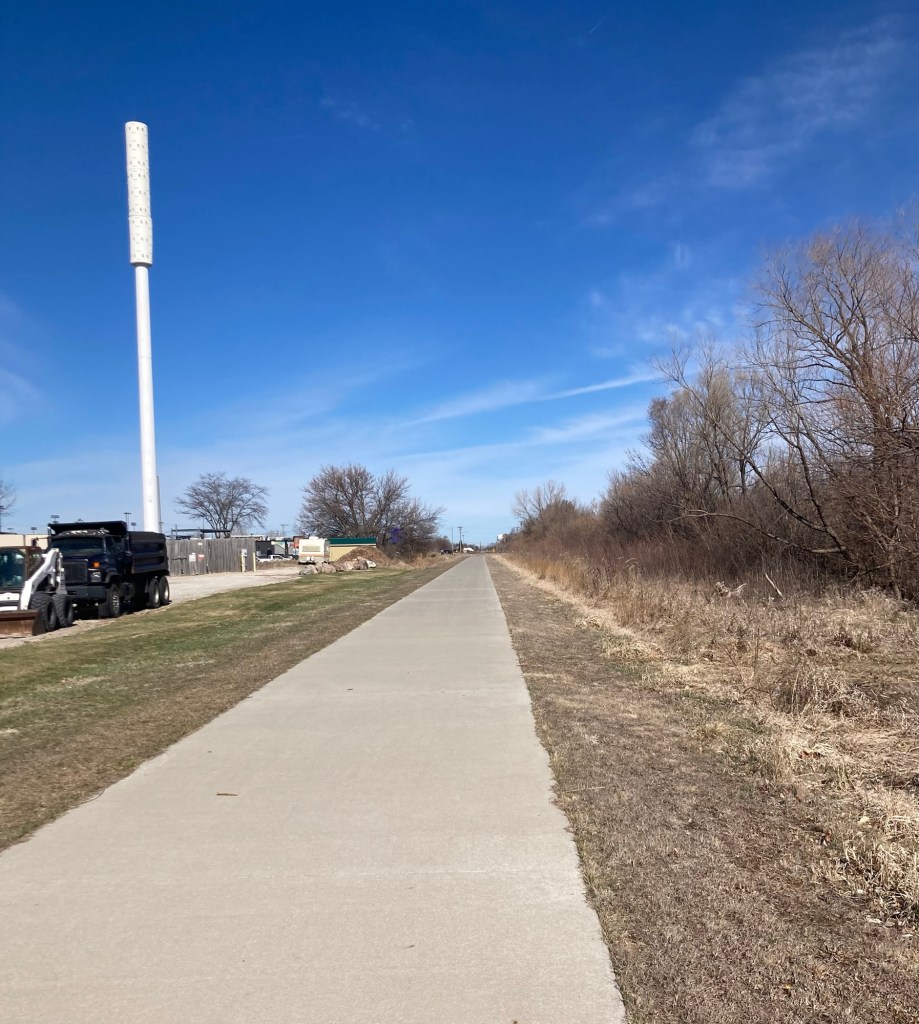
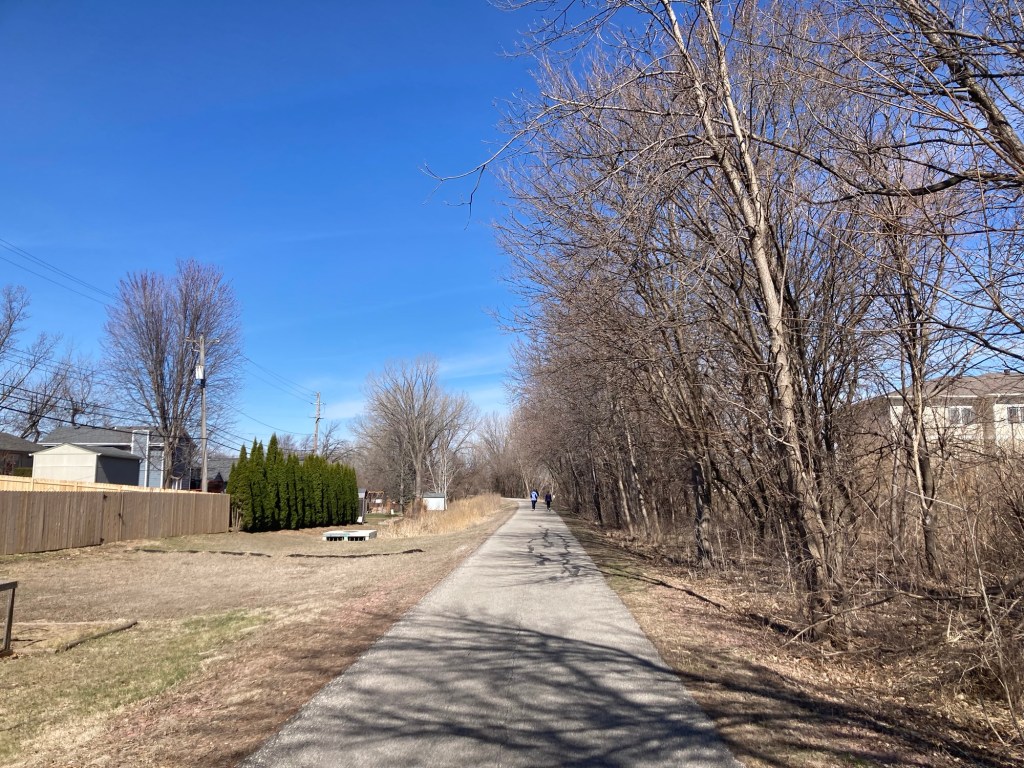
Bob and I walked about 20 minutes from where we’re staying and walked north on the trail for a bit into and out of Ankeny’s small Uptown area. We unfortunately didn’t get to the scenic High Trestle Trail Bridge, which is lit daily from sunset until midnight.
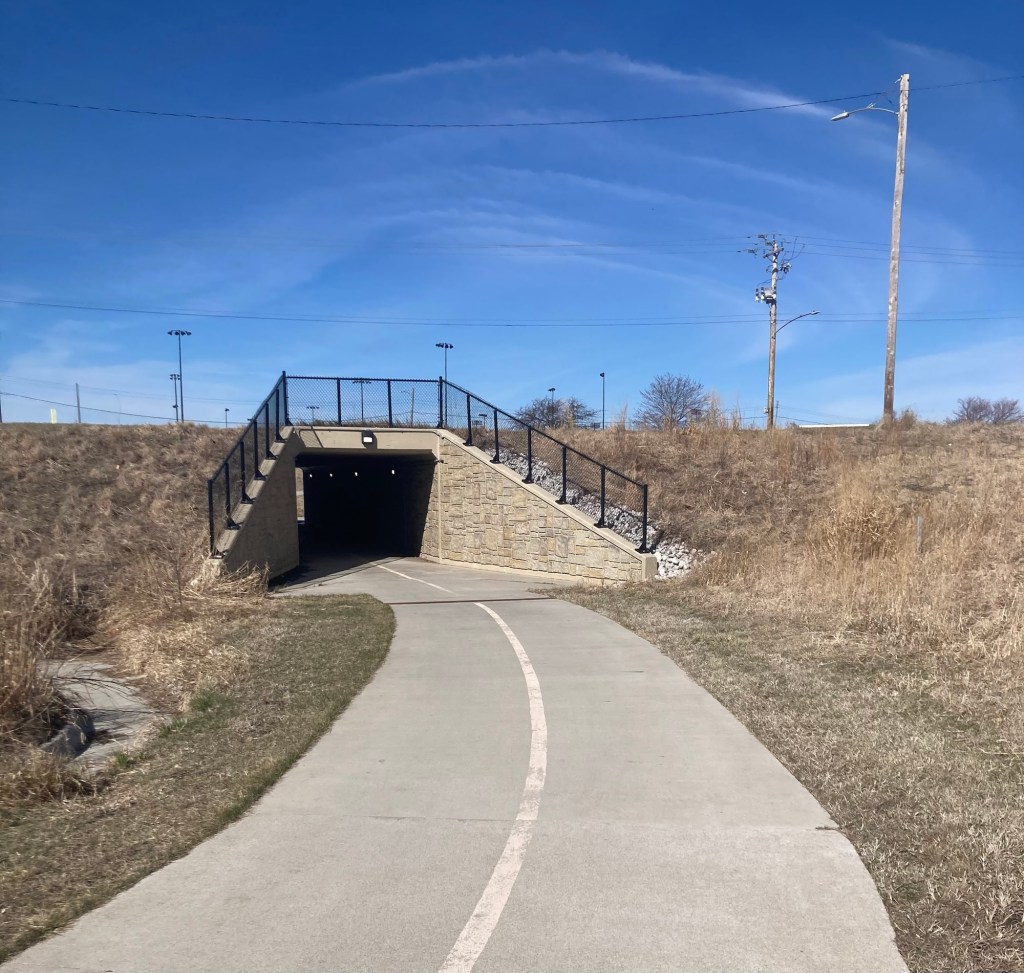
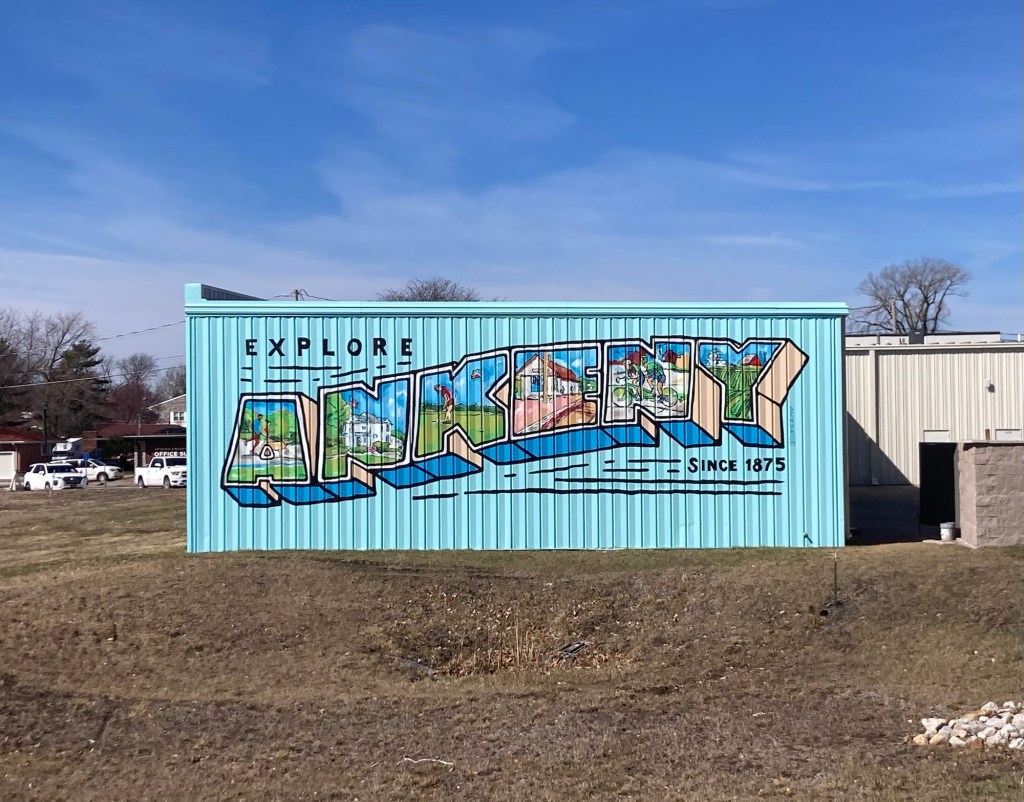
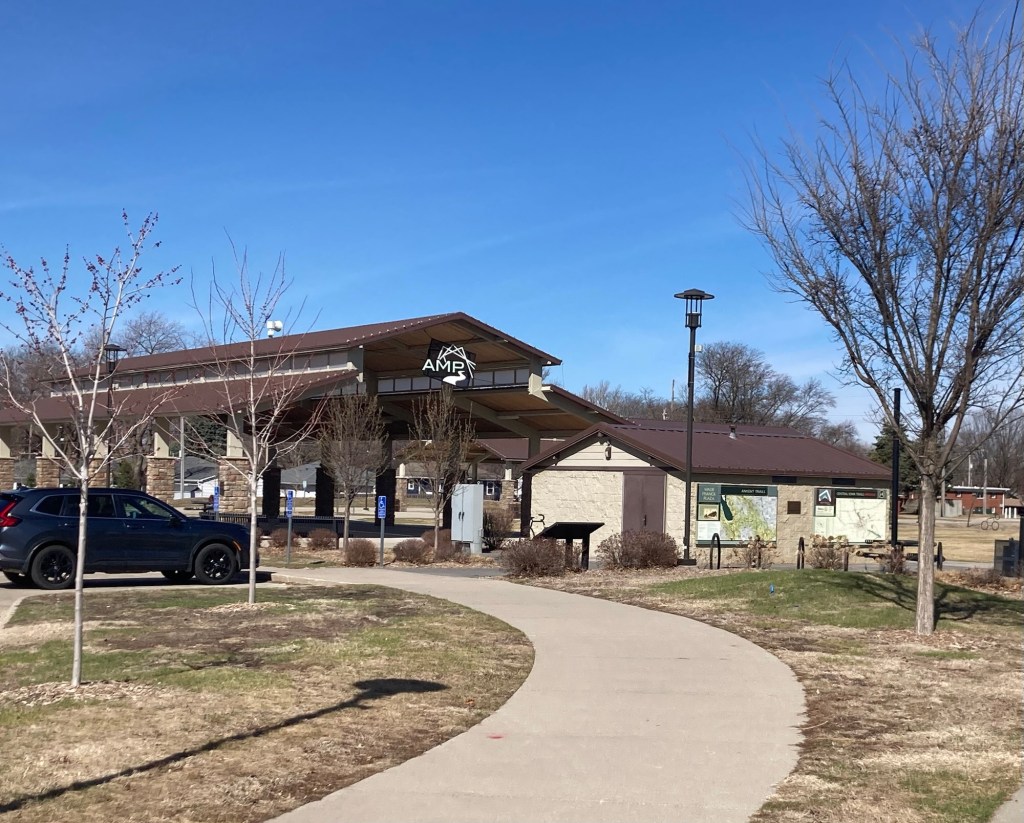
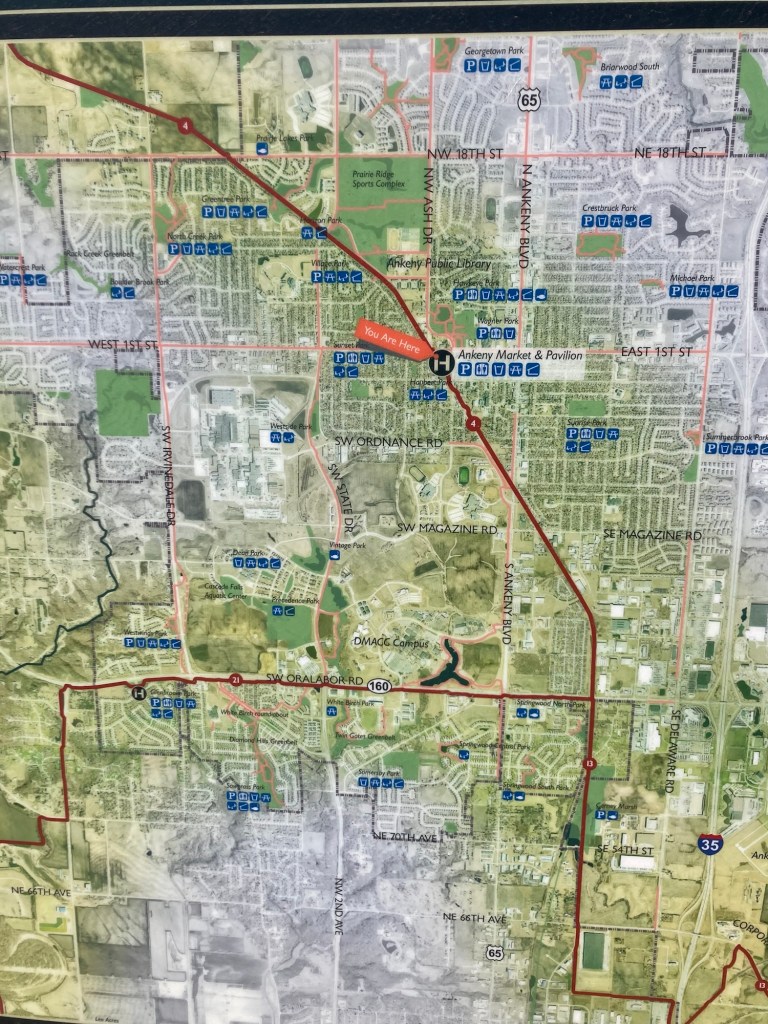
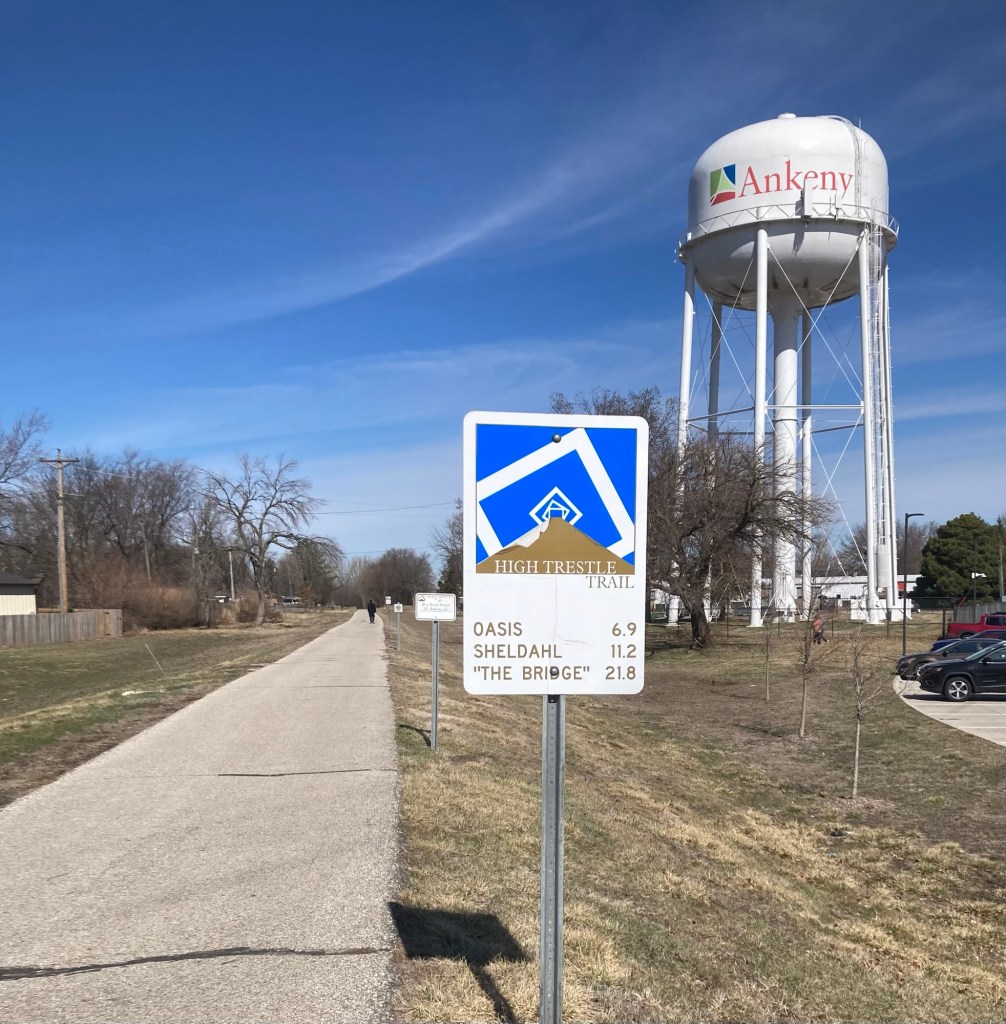
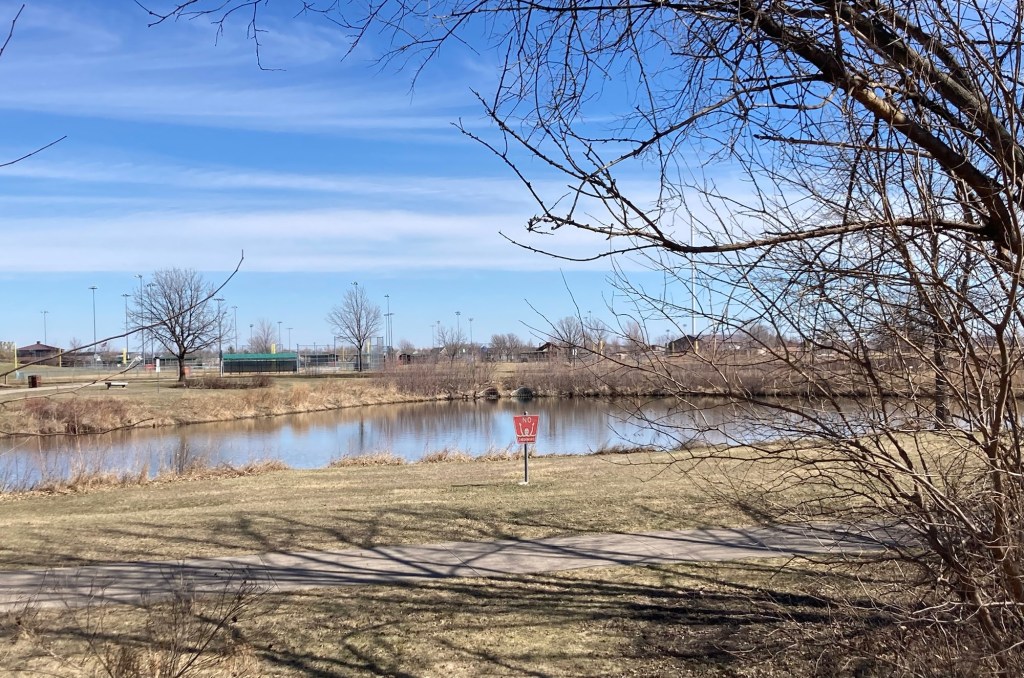
We connected with the High Trestle Trail just north of Magazine StreetThe only underpass we hit on our walkA cute Ankeny mural as we headed into Uptown AnkenyAnkeny Market and Pavilions on the site of the original railroad depot and stockyardsPark and Trail infoWe were there. We walked the section from Magazine Street to 18th Street and then back to the house off of Delaware StreetWe would have had to walk over 21 miles from this sign to get to the bridge, but we do need to check it out sometime Walking out of the Uptown areaPast a biker who has had a hard ride!We turned around near this pond. No swimming allowed.
It is always good, and a bit humbling at this age, to learn about something of which you were previously unfamiliar. One of the buildings that we had been encouraged to check out while in Des Moines was the World Food Prize Hall of Laureates building. Neither Bob nor I had heard of the building and it brought no clear picture to mind as to what it was about. Today, we took a free guided tour with Bob’s sister and brother-in-law (who did know about the building and its purpose) and about 10 others, to learn more about the building.
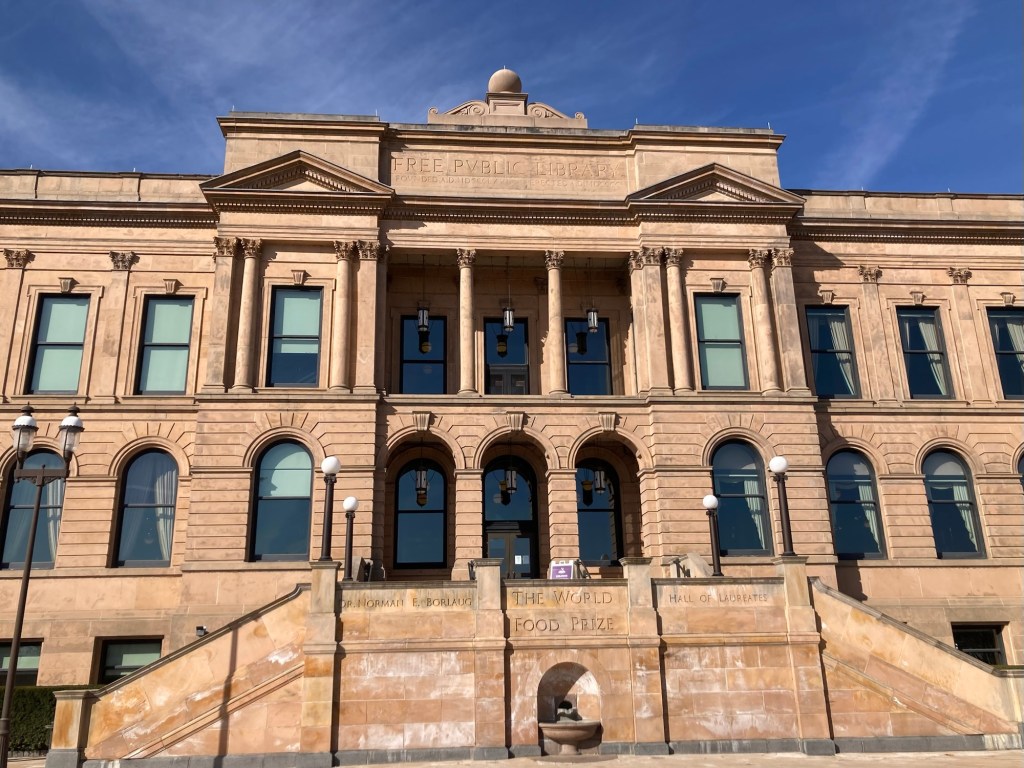
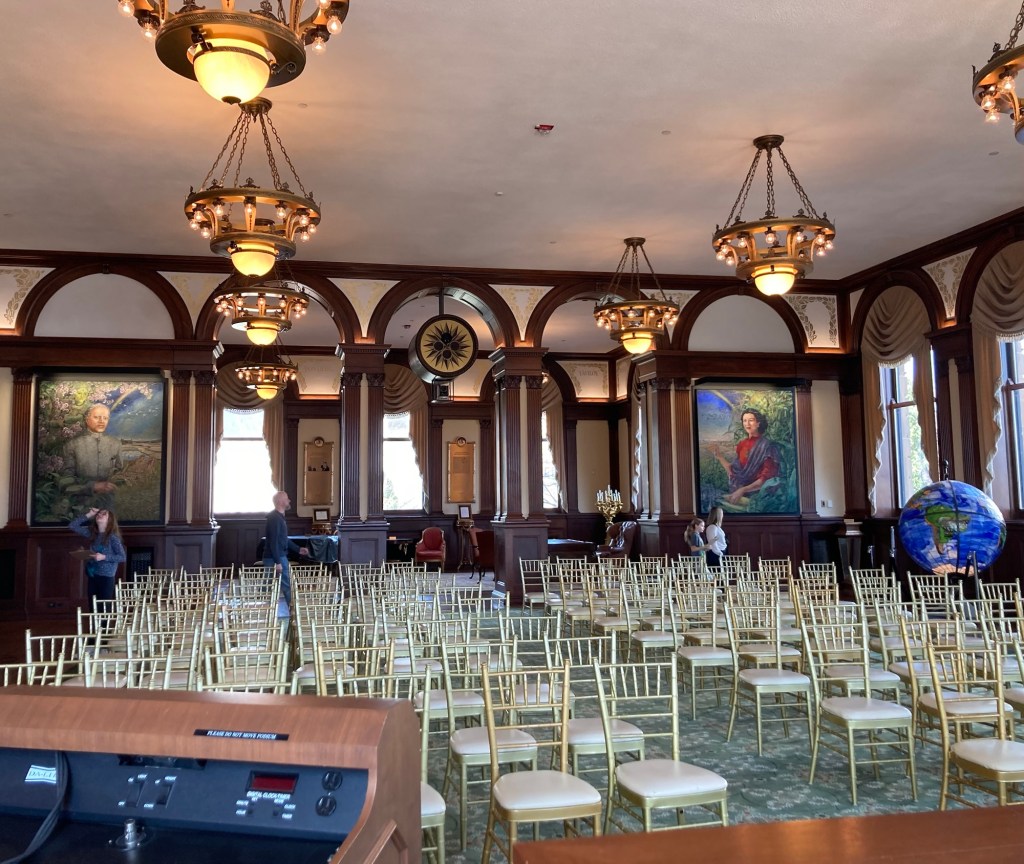
The building itself is architecturally attractive and interesting, and it served as the Des Moines Central Public Library from 1903 until 2003, when it underwent a nearly $30 million renovation to become the Dr. Norman E. Borlaug World Food Prize Hall of Laureates.
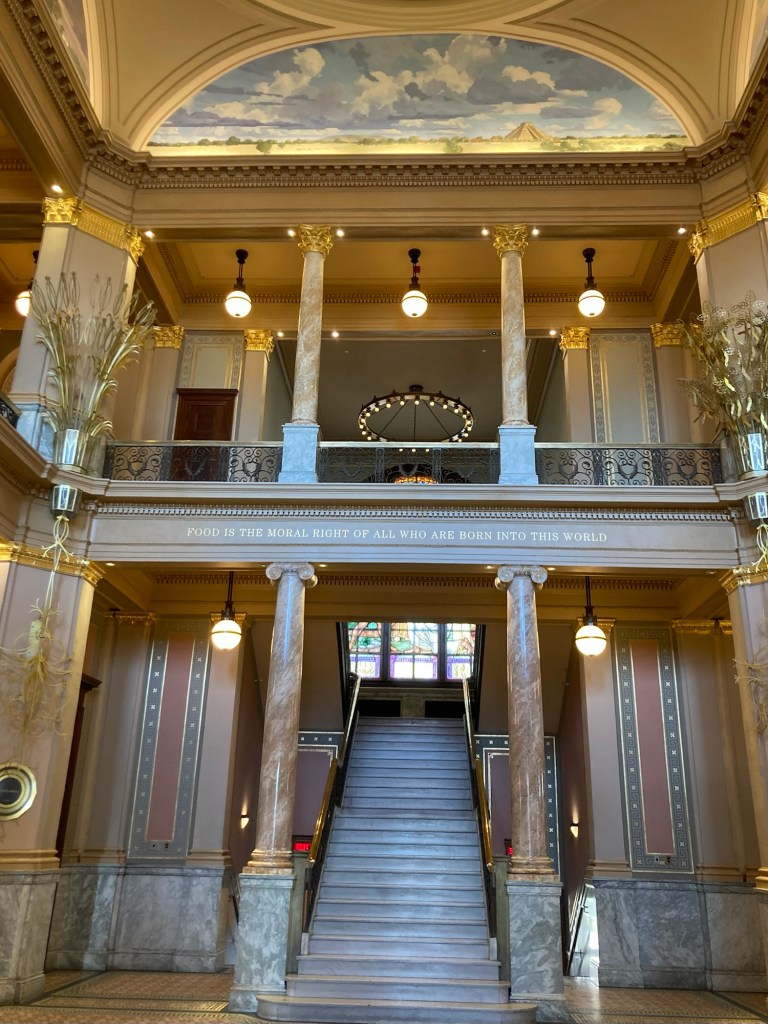
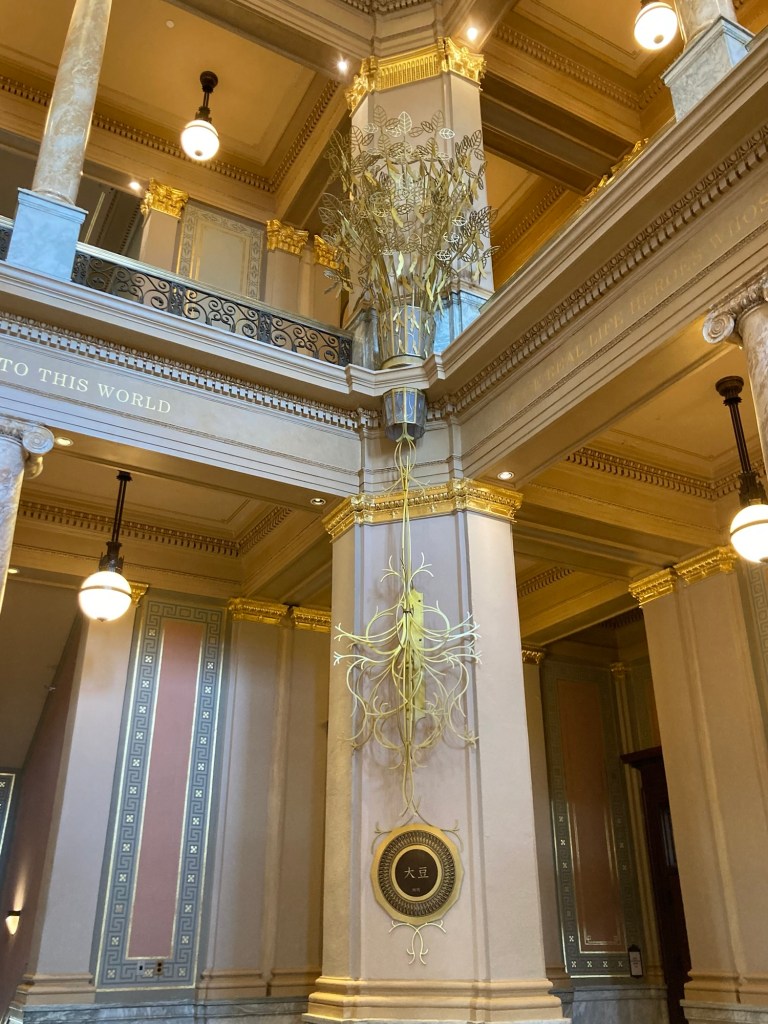
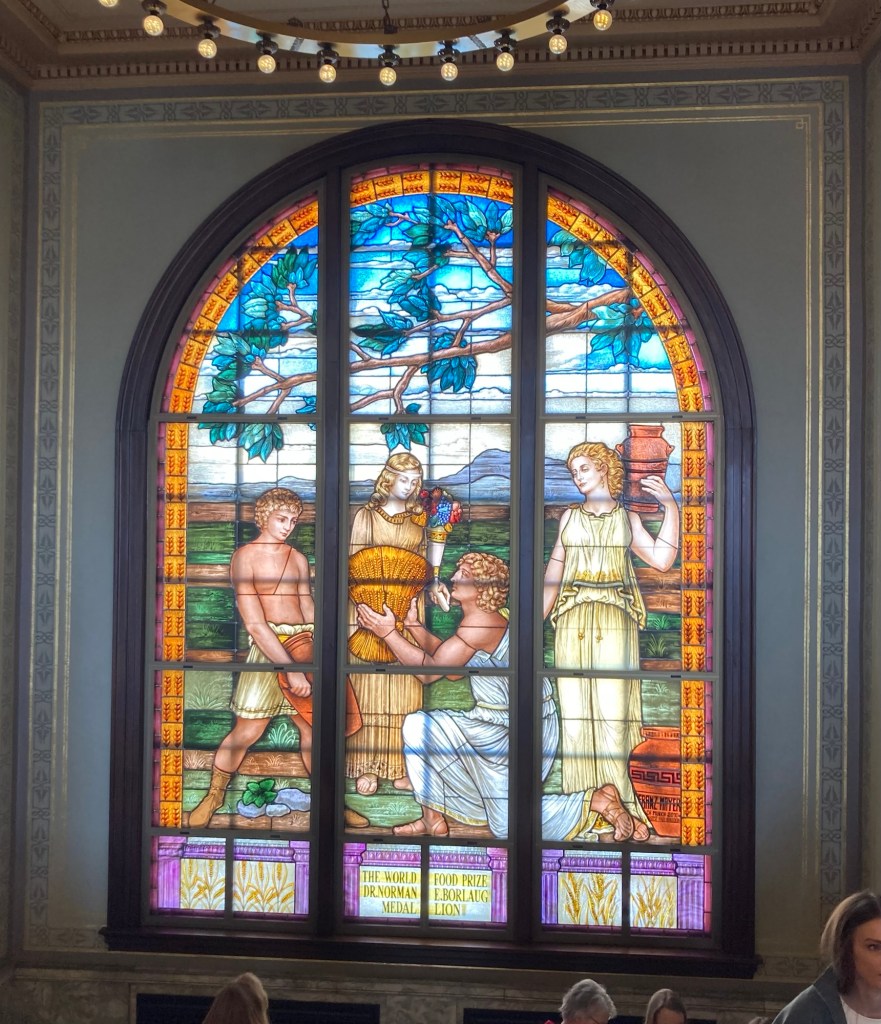
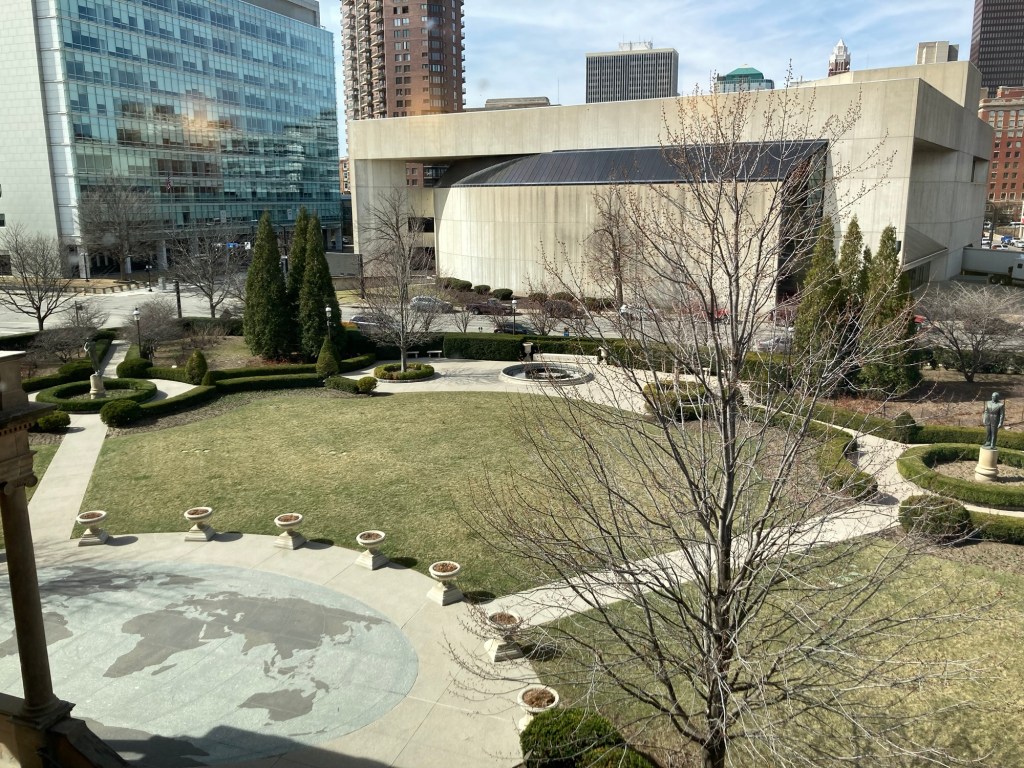
The East facade, and main entrance, to the building. It immediately overlooks the Des Moines River.The main entrance hallLooking up at the dome of the main hallEach of the four pillars of the main hall displays one of the four main food crops — rice, corn, wheat, and soy.The corn pillarAn event room off the main hallA stained glass window depicting an agricultural scene, which was added during the renovation.A view of the gardens from the second floor
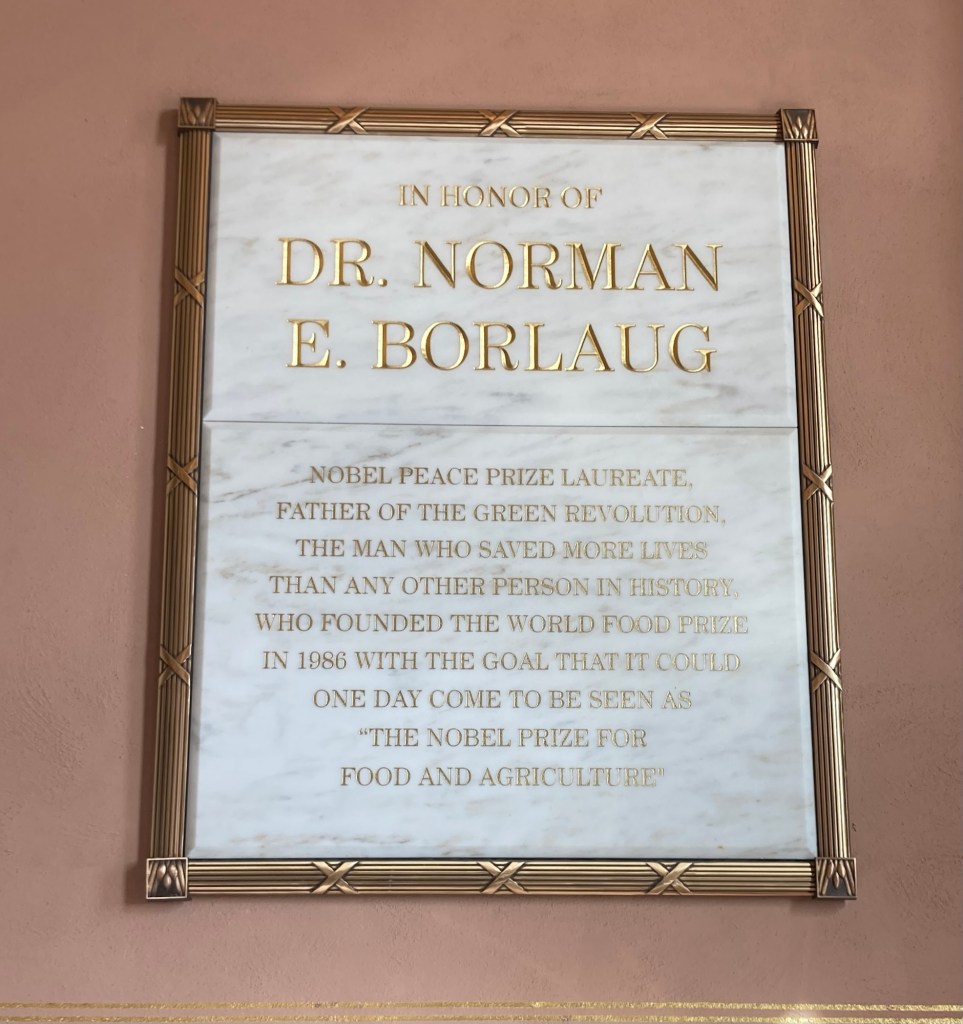
Dr. Norman E. Borlaug, a native Iowan, was awarded the Nobel Peace Prize in 1970 for his lifetime of work to feed a hungry world. Specifically, he created new wheat varieties that transformed agriculture production in the 1940s and ‘50s and later in Asia and Latin America, sparking what is now known as the GreenRevolution. Because of his work, he is known as the man who has saved more lives than any other person in history. Very impressive!
He felt strongly that the Nobel Committee should give a prize for work in food and agriculture because of its importance for humanity. Apparently, the Nobel Committee is not allowed to give a prize in that area, so Dr. Borlaug helped lead an effort to annually bestow the World Food Prize to recognize contributions in any field related to the world food supply. The first prize was awarded in 1986.
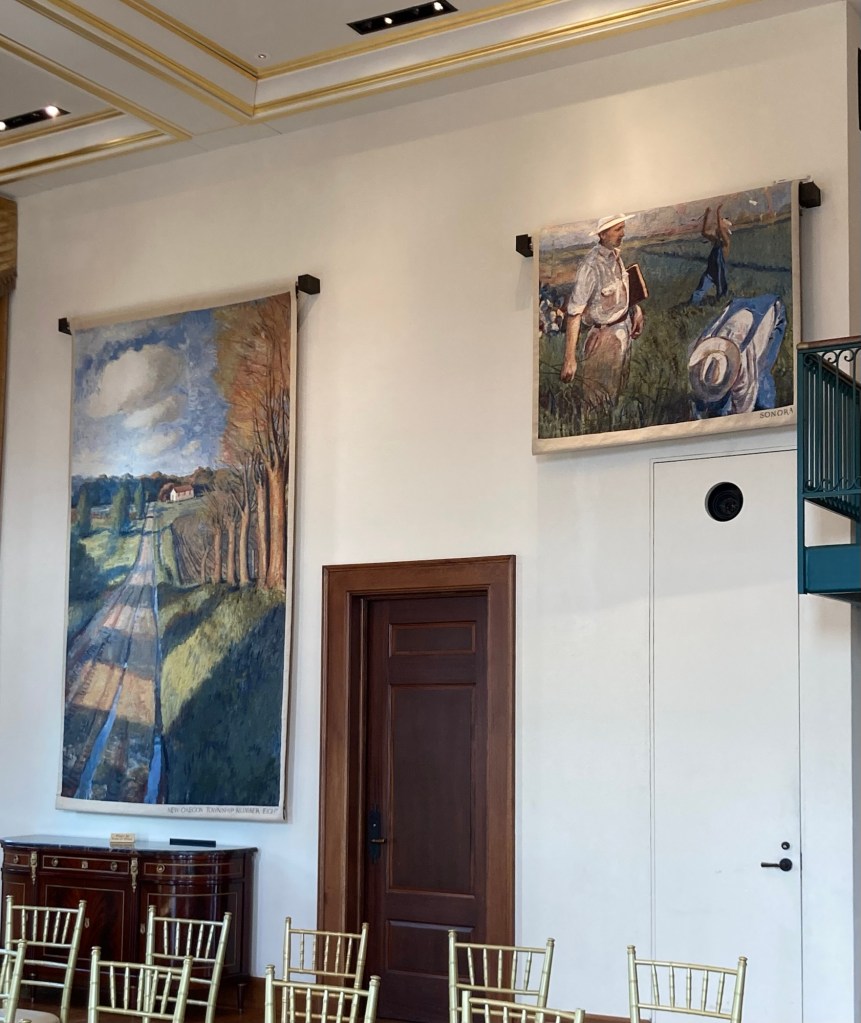
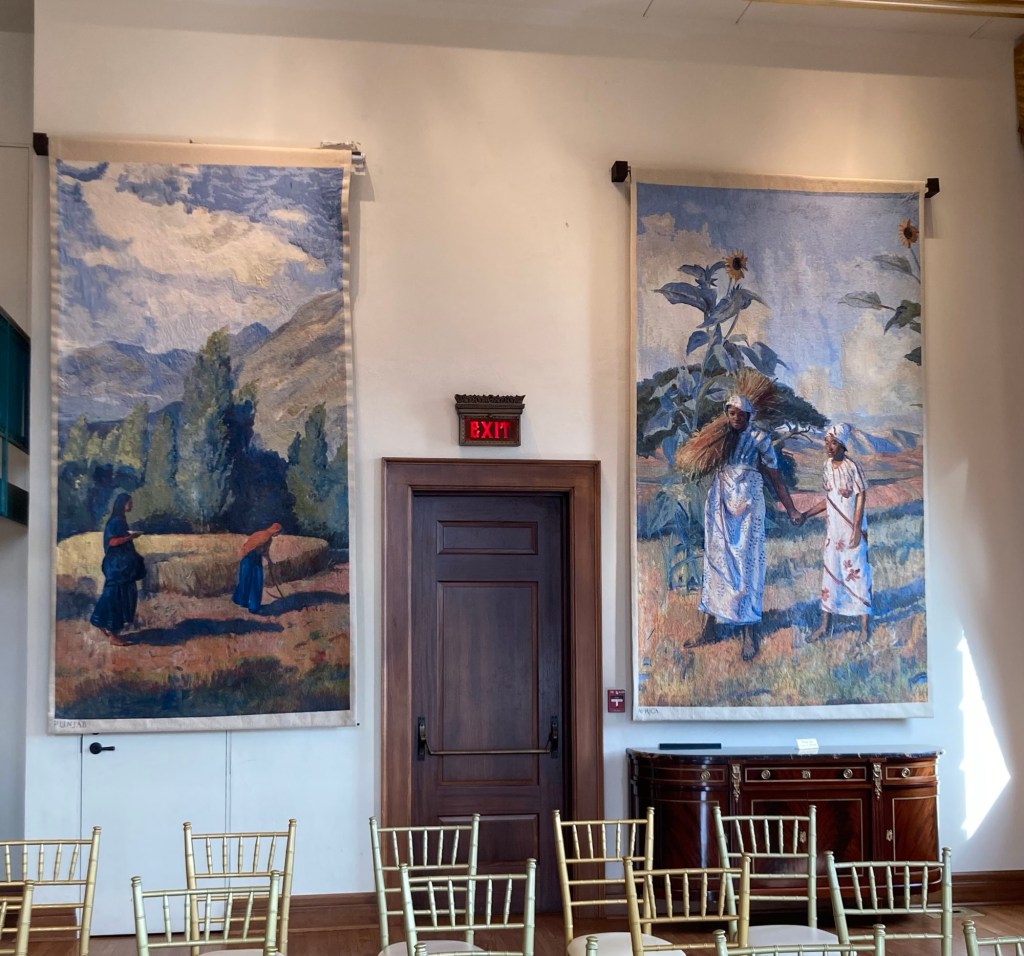
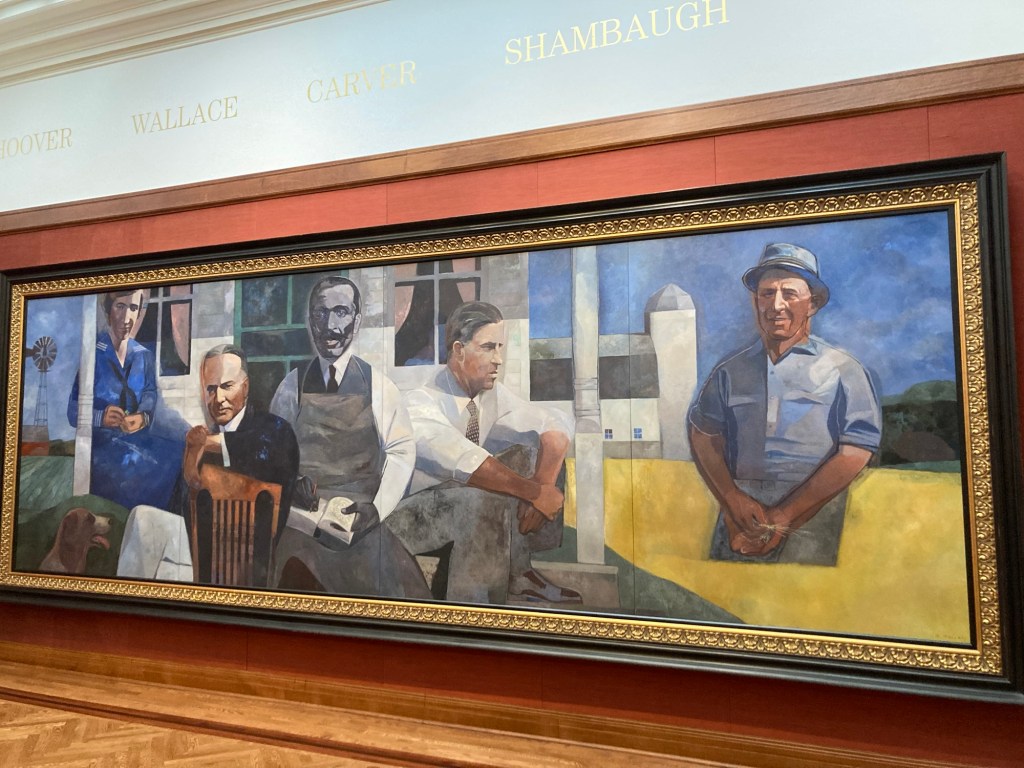
A tribute to Dr. Borlaug immediately inside the entrance to the building Tapestries depicting important points of Dr. Borlaug’s life. On the left, the one room schoolhouse in Iowa, and on the right, a wheat field in Mexico where he helped to discover and grow a heartier wheat crop.Two more tapestries depicting his agricultural work in the Punjab (left) and in Africa (right).The 2012 World Food Prize Laureate winnerFive Iowans who have made important contributions in food or agriculture. Jessie Shambaugh, the Mother of the 4-H program, Herbert Hoover, for his work in food delivery to many parts of the world following both world wars, George Washington Carver, for his work on promoting alternative crops to farmers to help prevent soil depletion, Henry Wallace, who created a farm magazine and helped farmers organize into cooperatives, and Dr. Norman Borlaug.
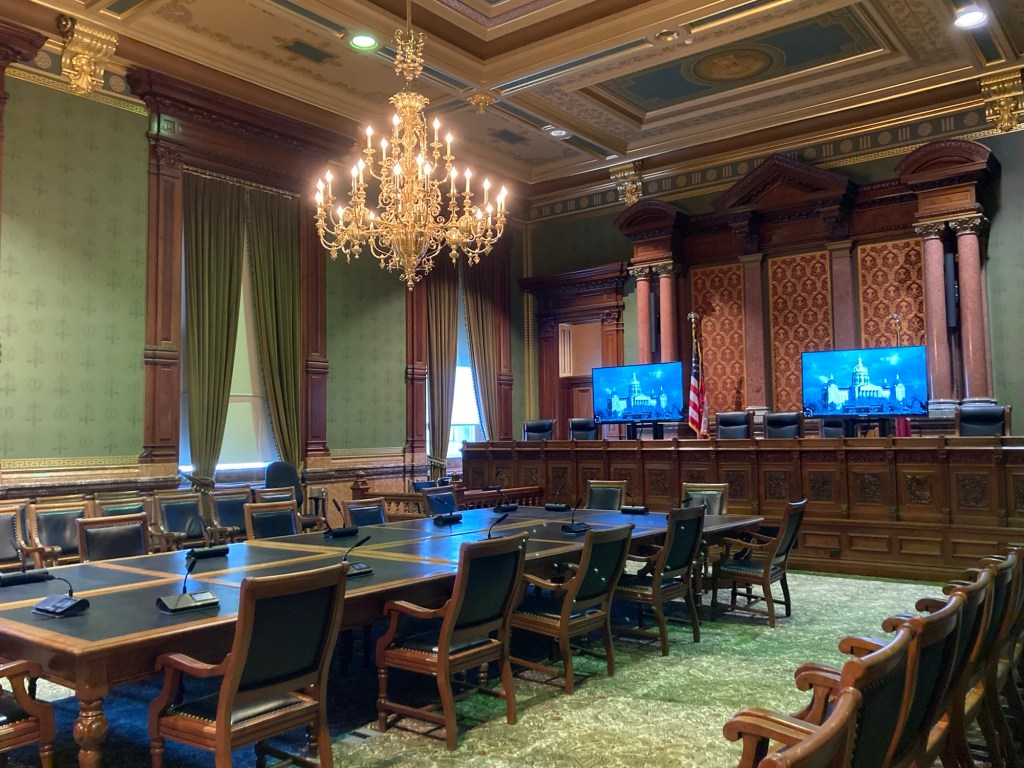
Bob and I have wanted to visit the Iowa capitol that we can see from our hotel. We were particularly interested in the law library, as we had heard how beautiful that was supposed to be. We decided today was the day to explore that part of Iowa’s capital city.
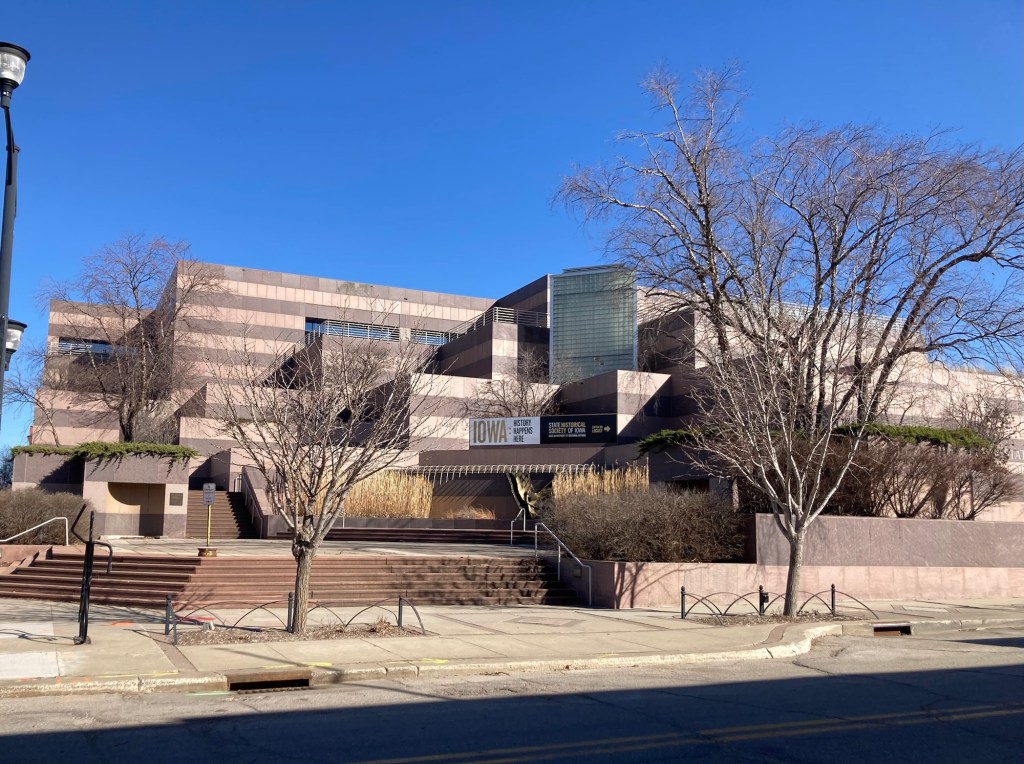
On the way, we passed the lovely Iowa Historical Museum.
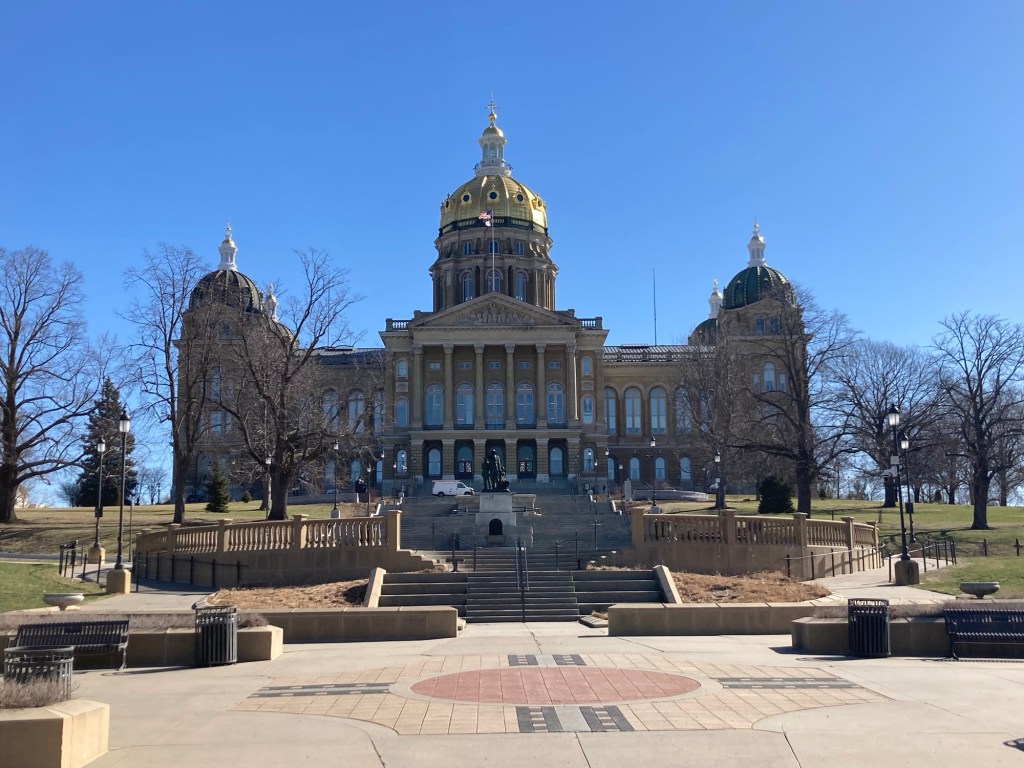
The current capitol sits atop a hill at the end of Locust Avenue. It was completed in 1886. It is topped by a 23 karat gold covered dome, which was most recently regilded in 1999 for approximately $482,000.
Walking up the grounds to the capitolThe Holocost Memorial, with the Iowa Department of Natural Resources building in the background.
The public enters on the ground floor (basement) of the capitol and goes through a quick screening process. The information desk had a helpful brochure for self-guided tours.
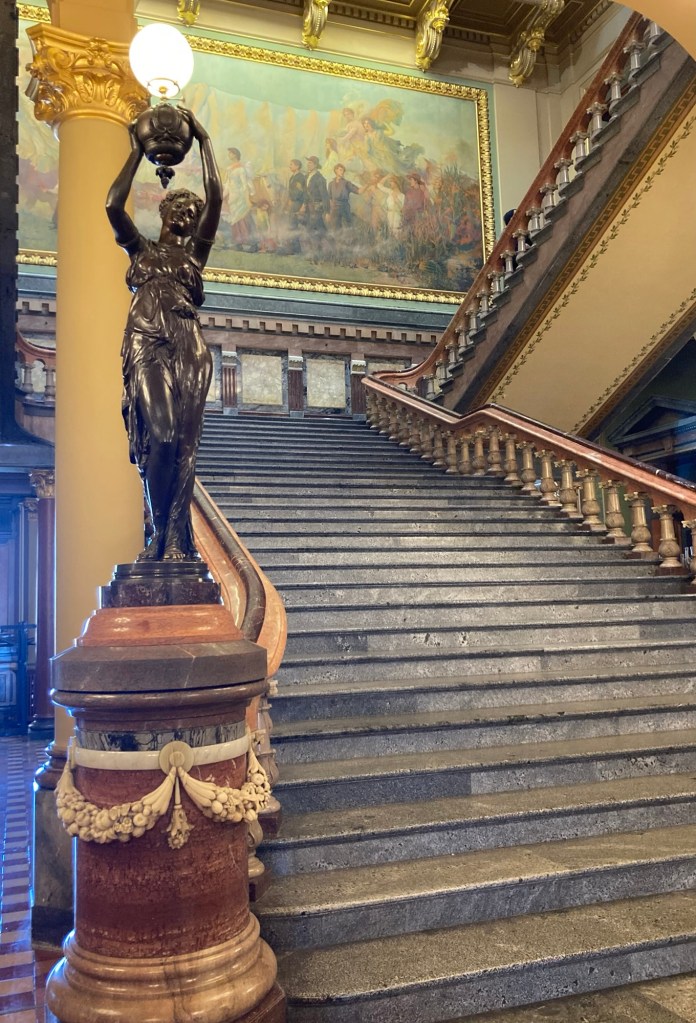
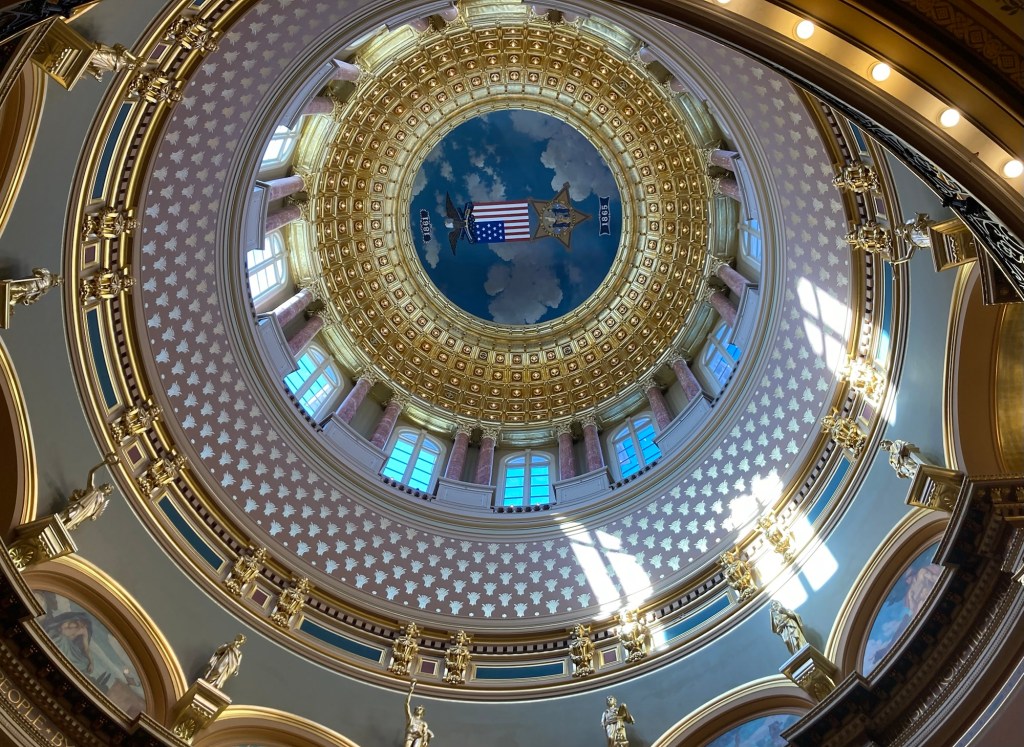
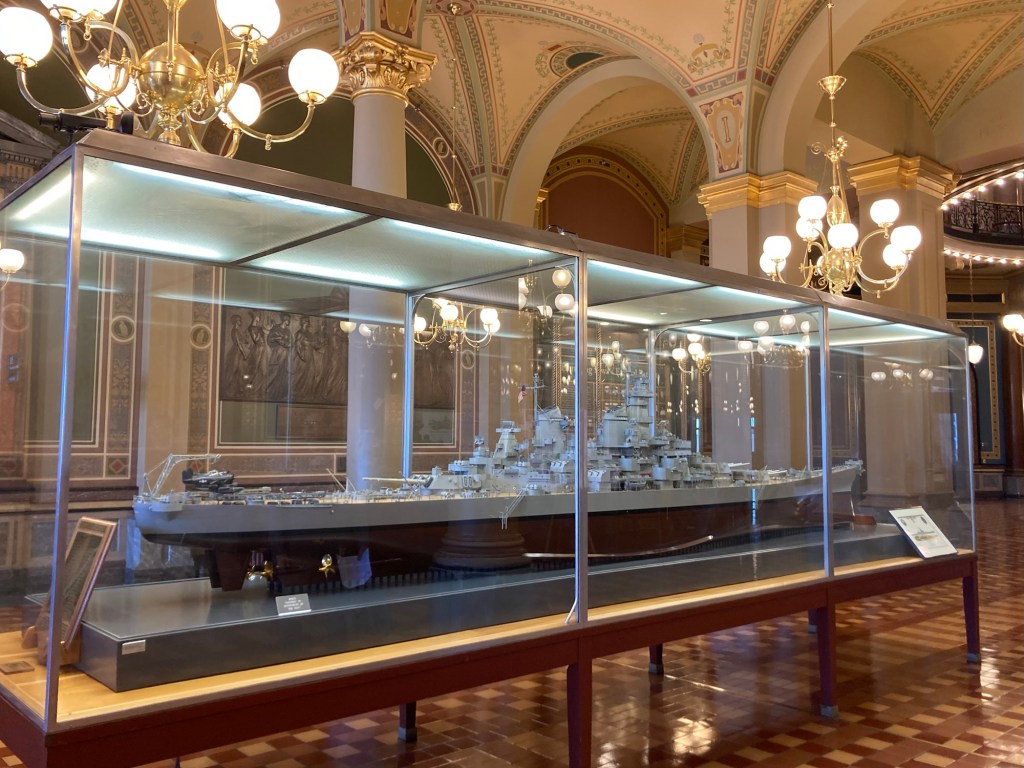
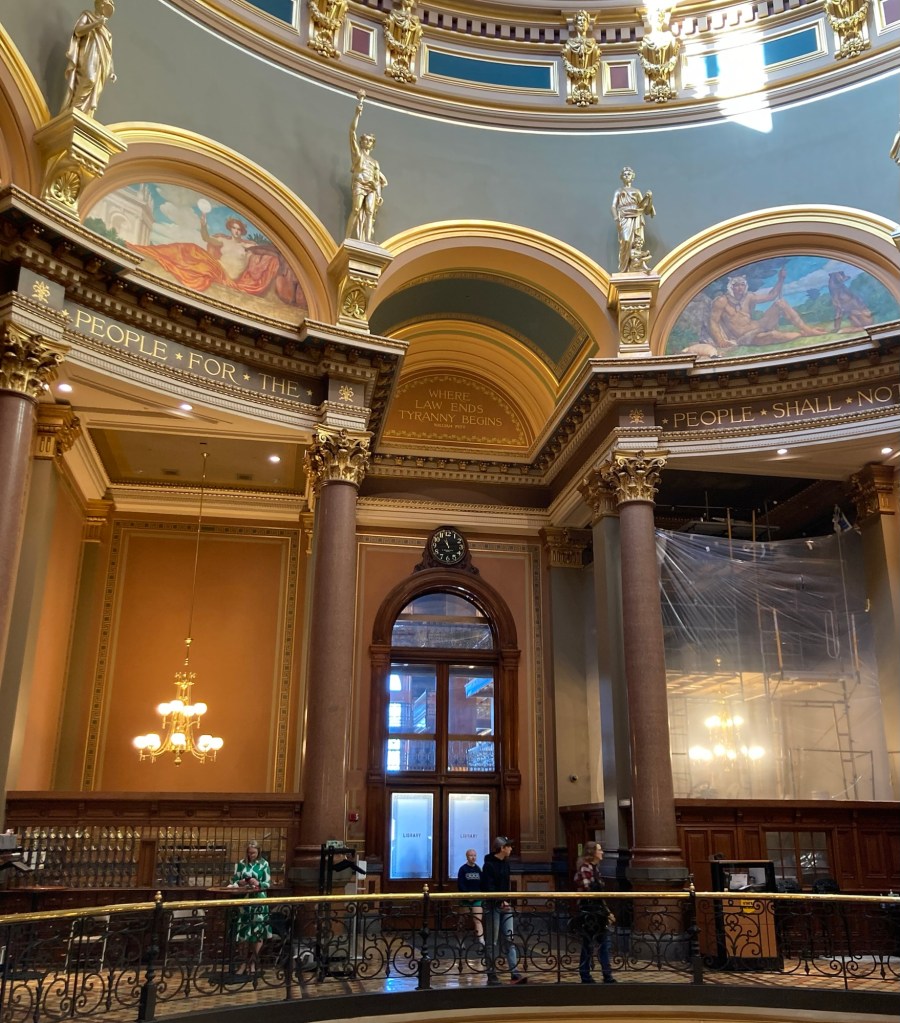
An impressive marble staircase connecting the first and second floors.Looking up into the dome from the first floor. The emblem of the Grand Army of the Republic is painted on canvas and hung 20’ below the blue sky of the dome.A collection of dolls depicting Iowa’s first spouses in their inaugural garb. The one man is the first spouse of Iowa’s current and only female governor.A model of the battleship U.S.S. Iowa, which was officially decommissioned in October 1990.The old Iowa Supreme Court chambers, used for 120 years until 2003.
The State Law Library of Iowa occupies the entire west wing of the second floor and contains over 100,000 volumes. The quote above the door, which is unfortunately way too relevant with the current administration, reads, “Where law ends, tyranny begins.”
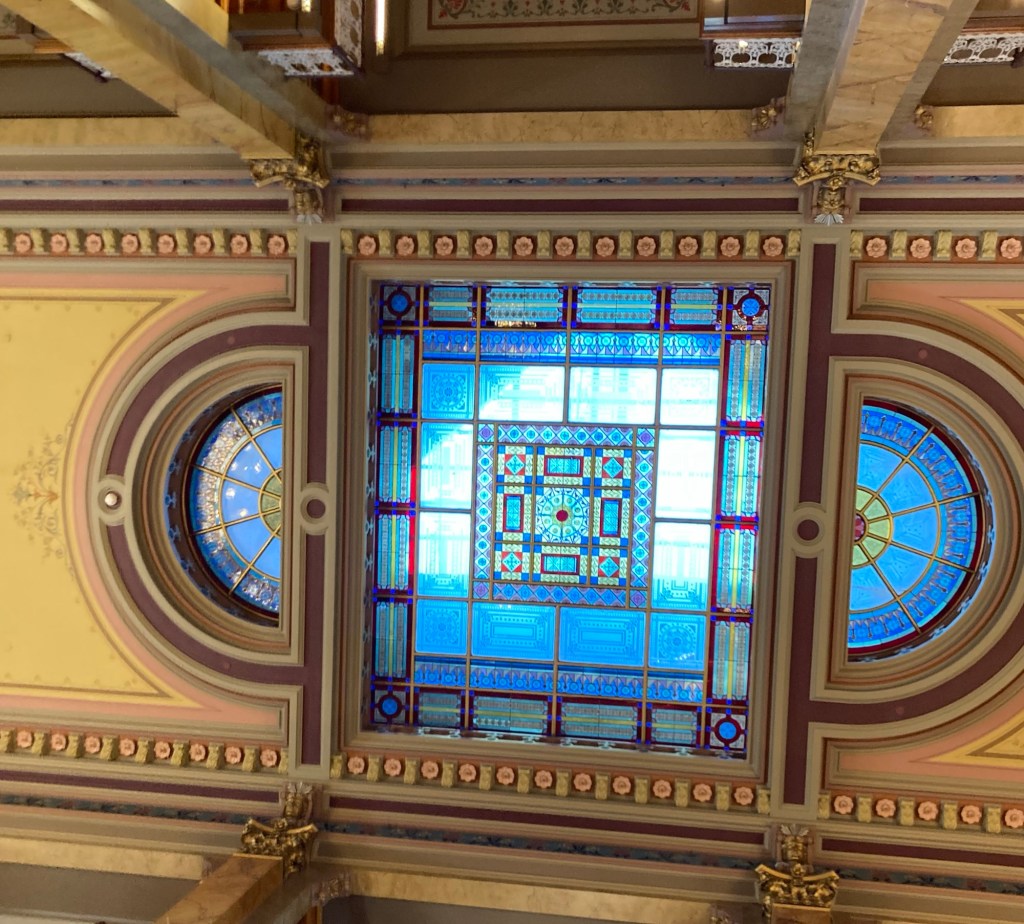
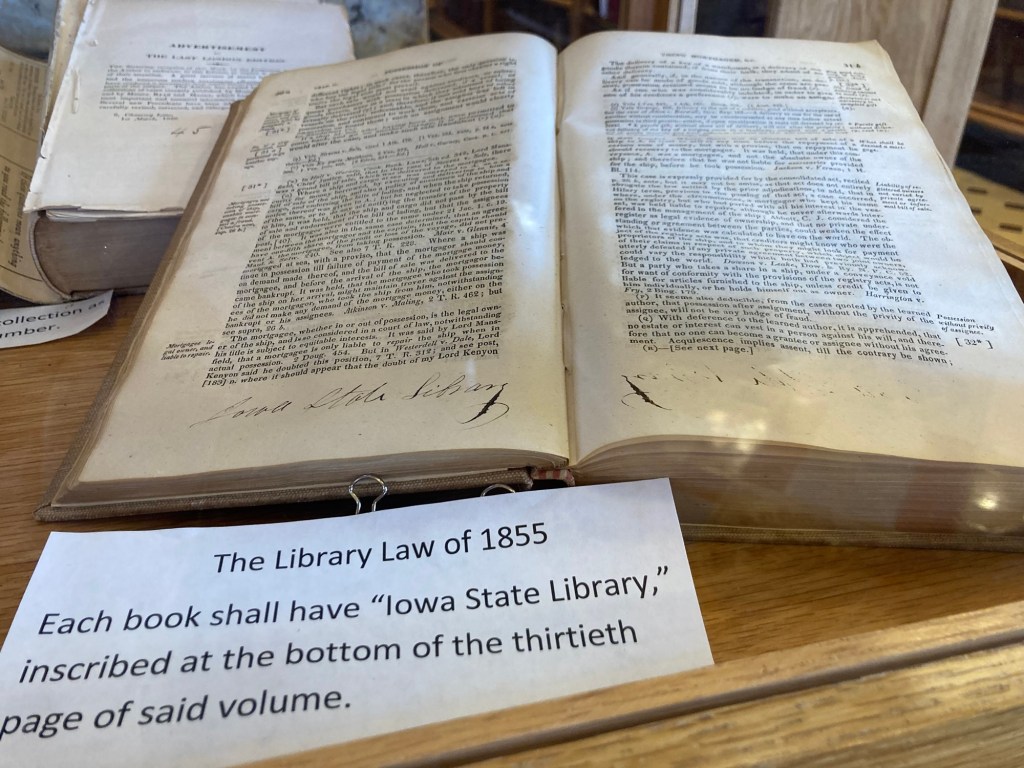
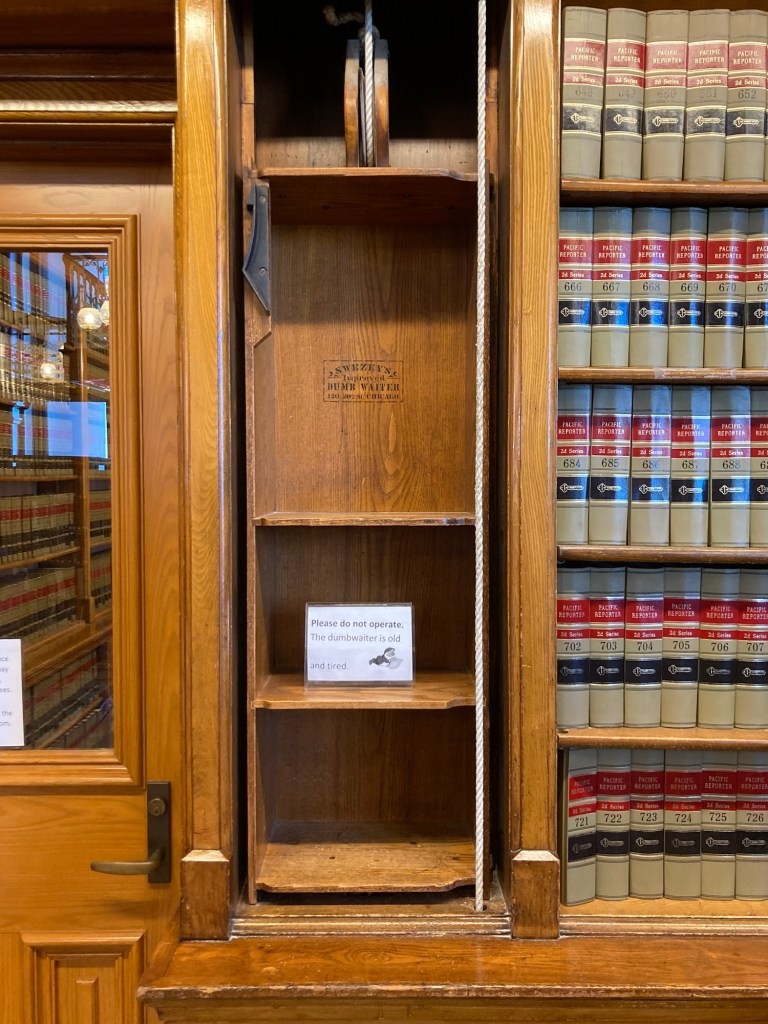
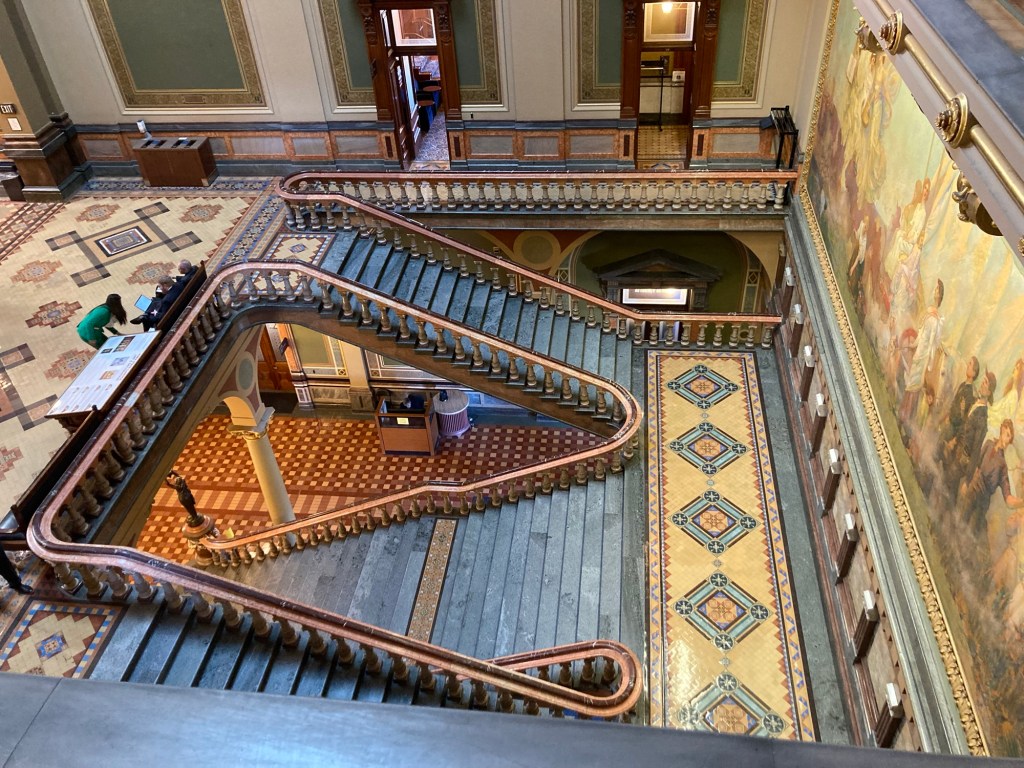
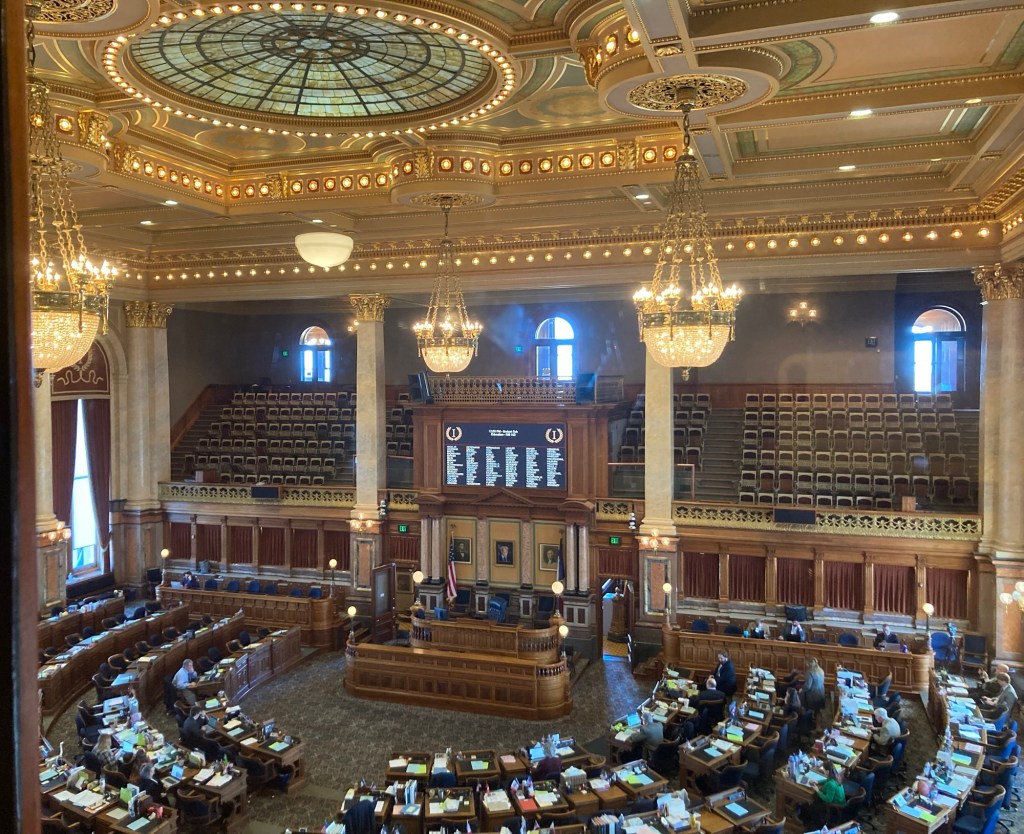
The doors to the law libraryThe circular staircase on each end of the library lead to four tiers of law books and court decisions.The ceiling of the libraryWould love to know the rationale for the 30th page.A dumbwaiter formerly used to retrieve booksLooking down on the main staircase from the 3rd floorLooking into the House chamber from the 3rd floor
After our tour of the capitol, we walked through the East Village, where I stumbled on a Free Little Library to change out a book, and on into downtown to catch the St. Patrick’s Day Parade.
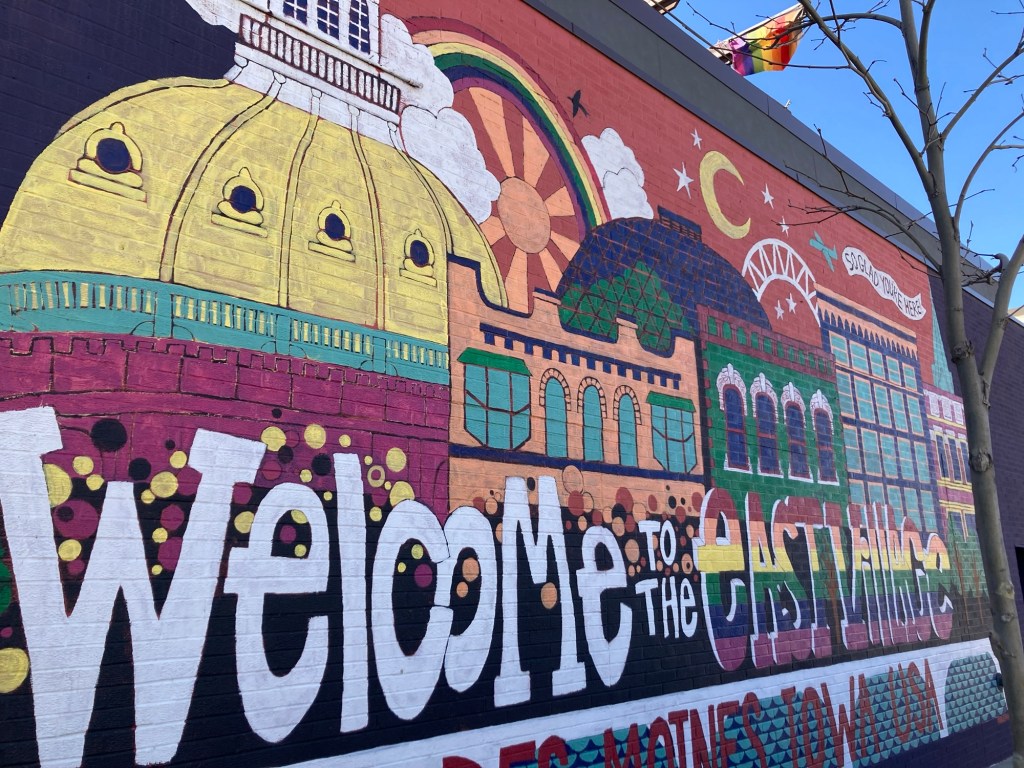
A colorful mural in the East VillageThe parade crossing the bridge on Grand over the Des Moines River
A group from an Irish Step Dancing school performing One of many festive floats
Bob and I have been moving around the greater Des Moines area catching up on doctor appointments and unfortunately also fighting a stomach or viral bug as well. However, we’re both feeling 100% once again.
Currently, we are staying at a Residence Inn Hotel in downtown Des Moines. We arrived yesterday afternoon and will be here until Wednesday morning when we return to Ankeny for our second housesit. After that, we have back-to-back-to-back housesits in the area until almost the end of April, along with a few more doctor’s appointments and procedures and maybe jury duty as well.
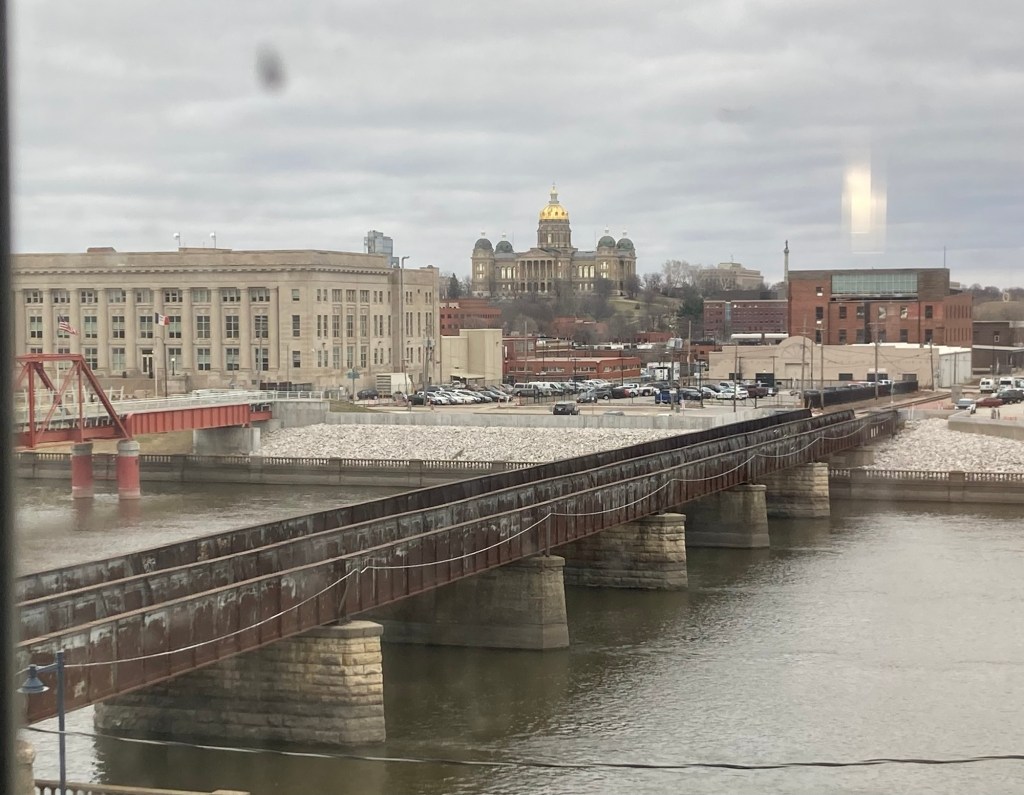
View of the Iowa Capitol and Des Moines River from our hotel room
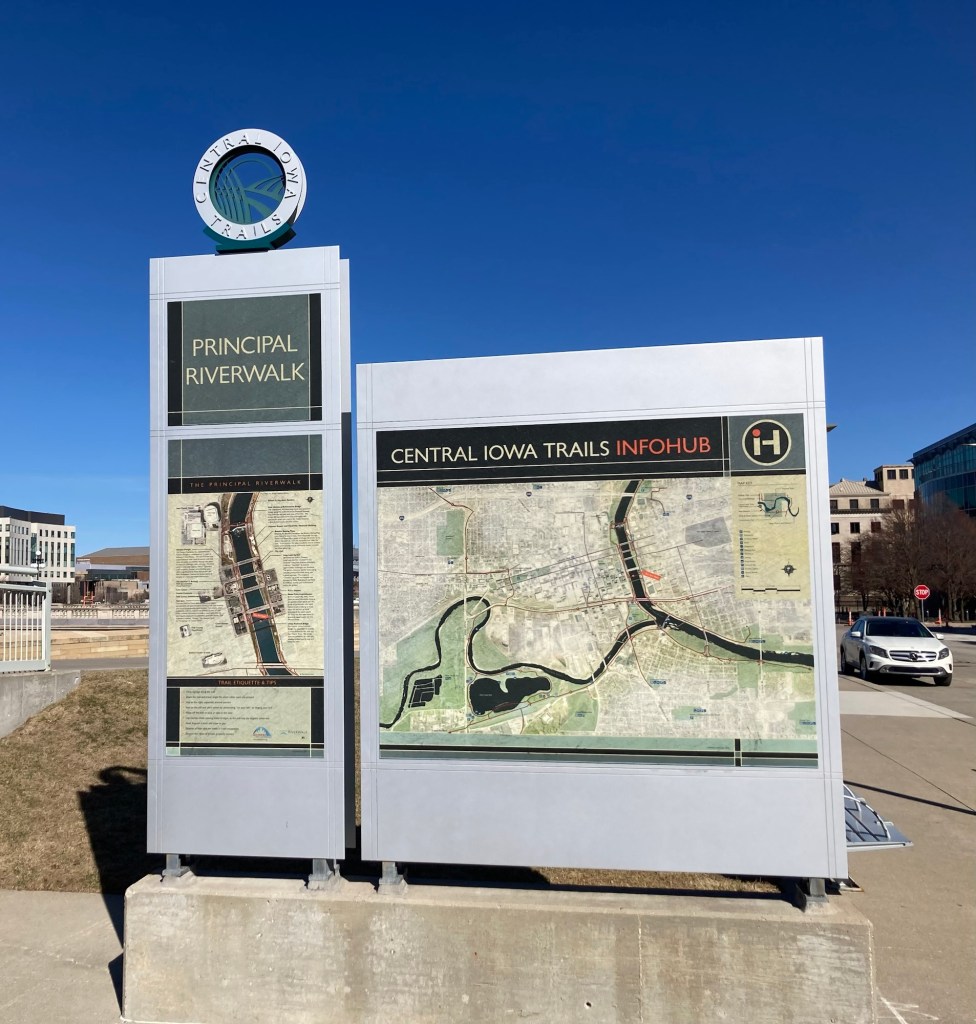
Today we decided to get out and walk part of Des Moines’ impressive trail system. It was in the lower 30s F when we headed out, with feel-like temps in the 20s. We headed out along the River, eventually making our way to and around Gray’s Lake for about a 6 mile walk.
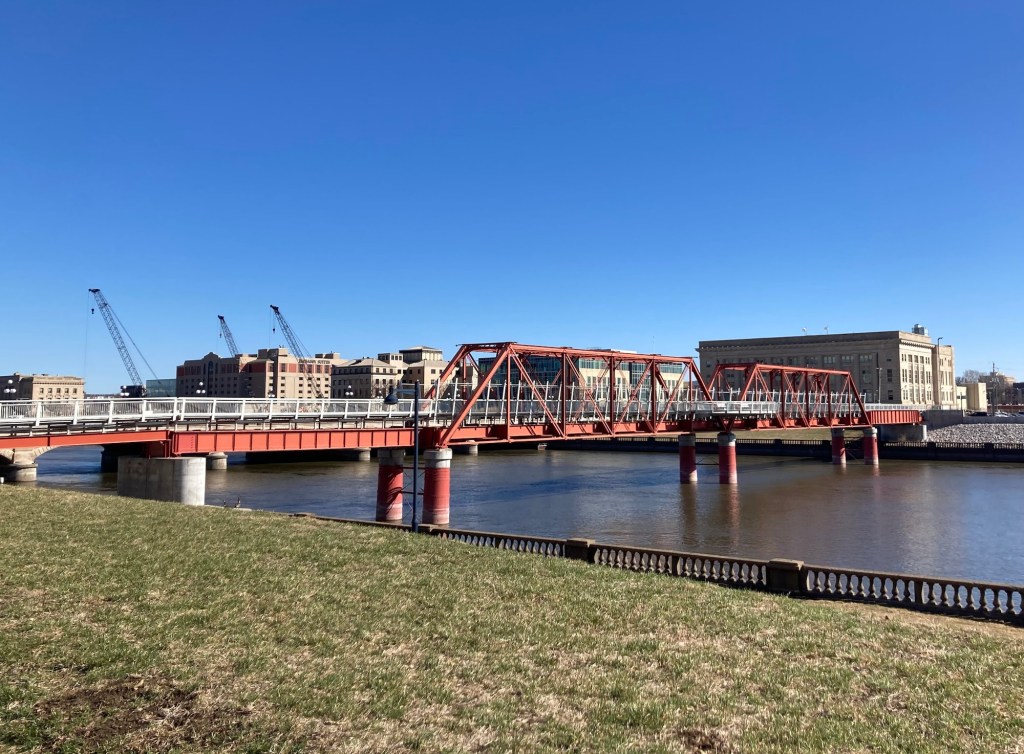
We initially crossed the Red Bridge over the river but ended up having to come back as construction had the trail closed on that side.
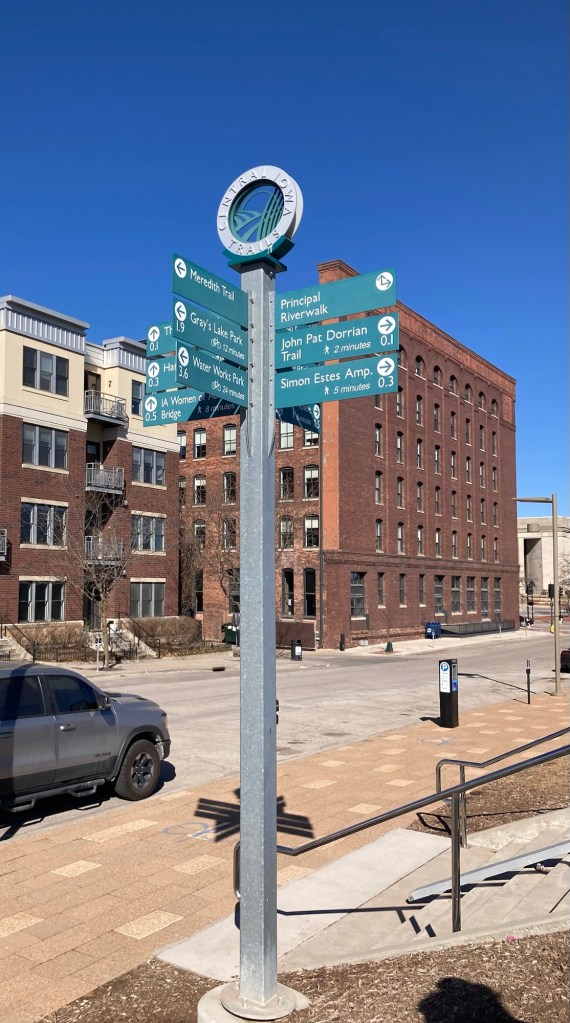
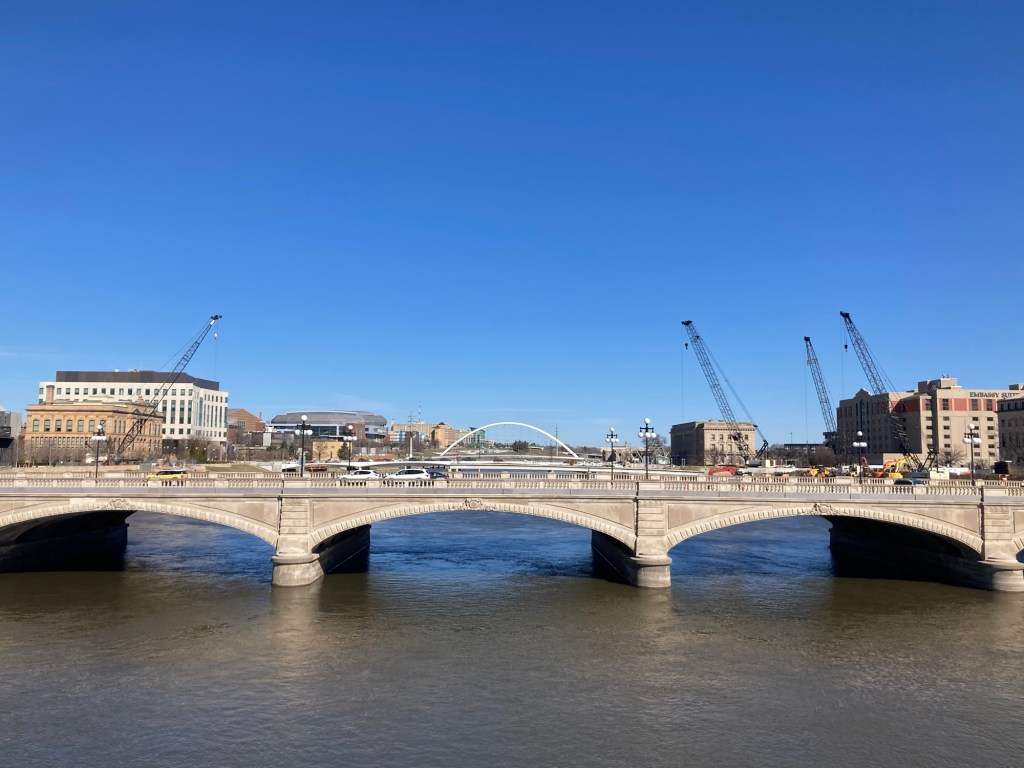
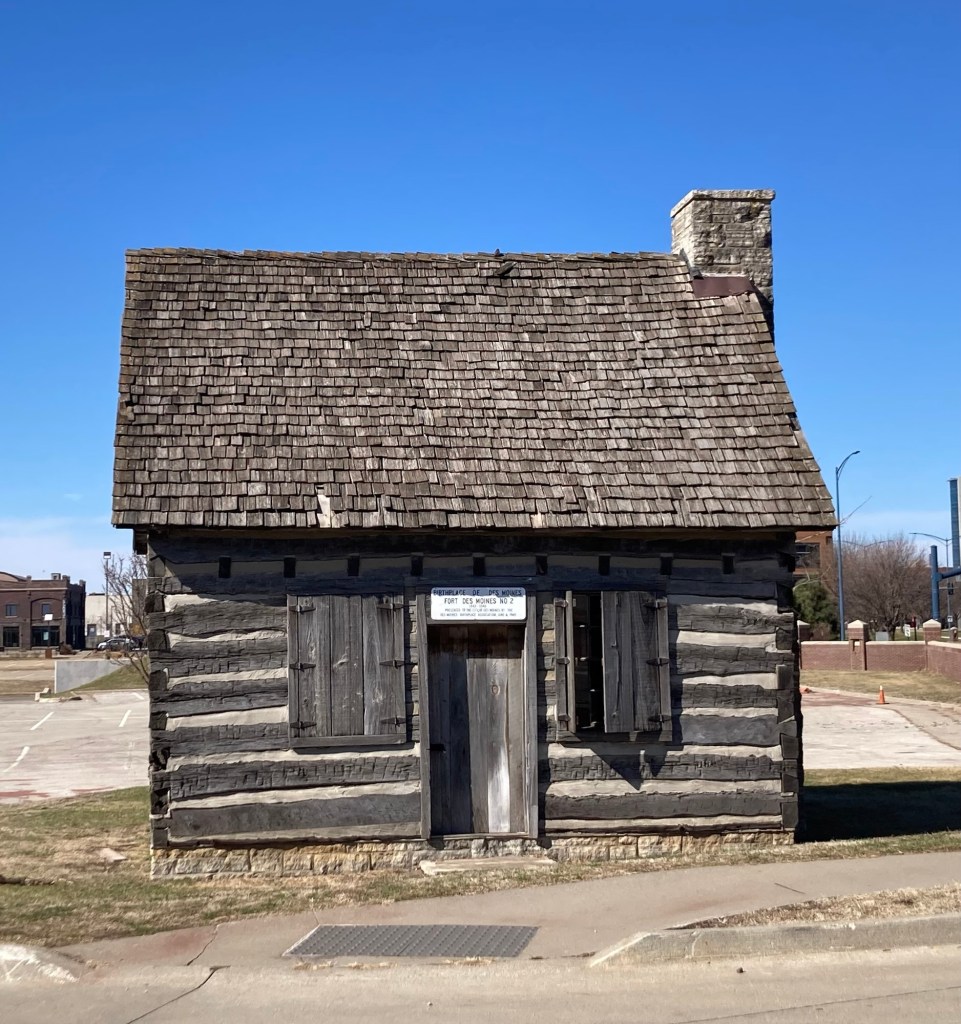
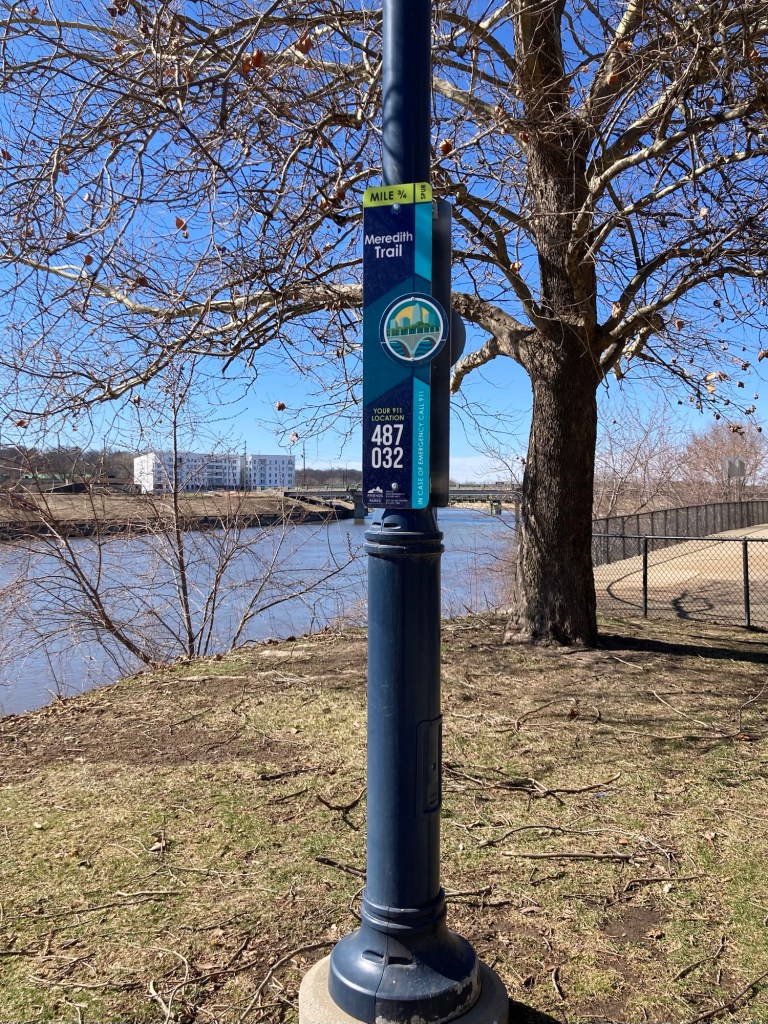
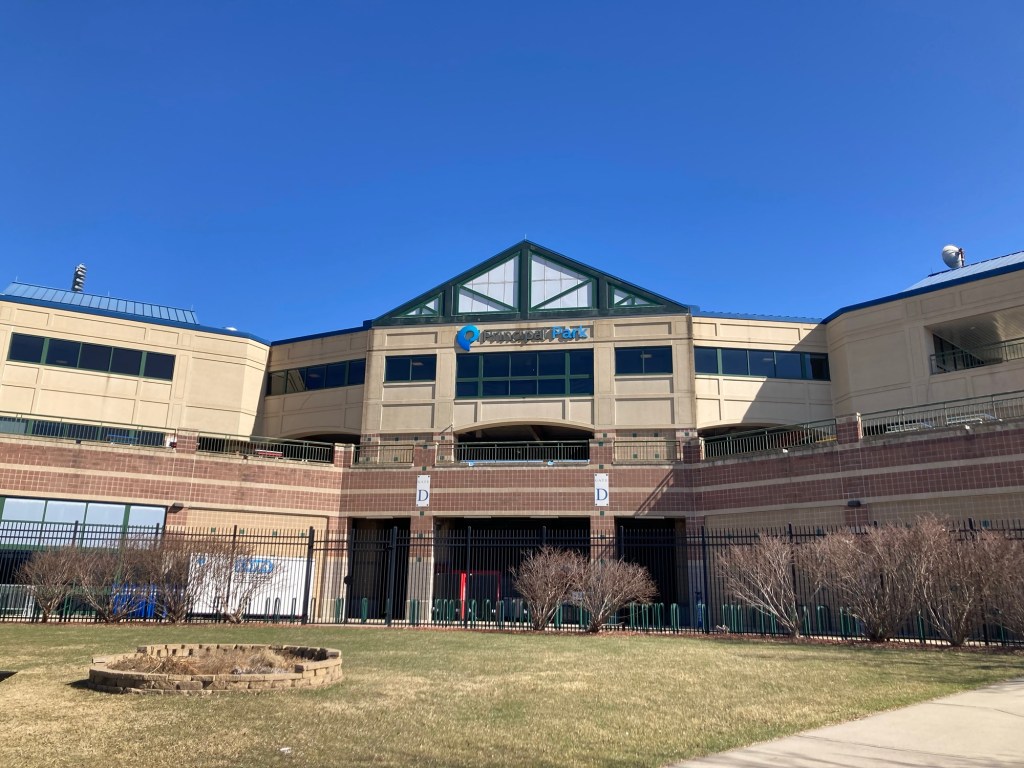
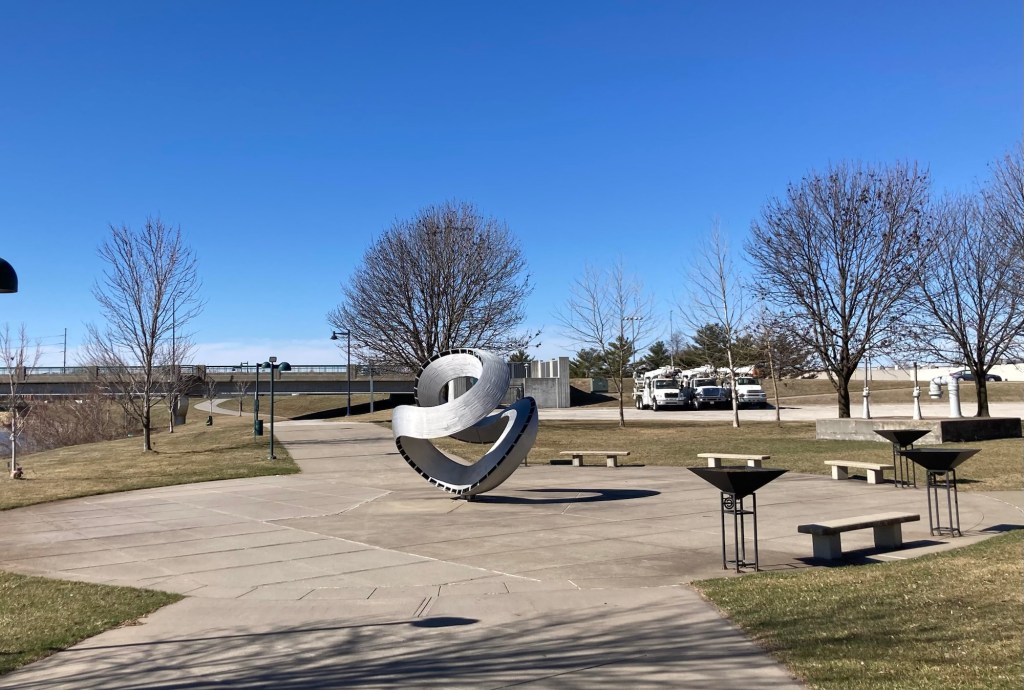
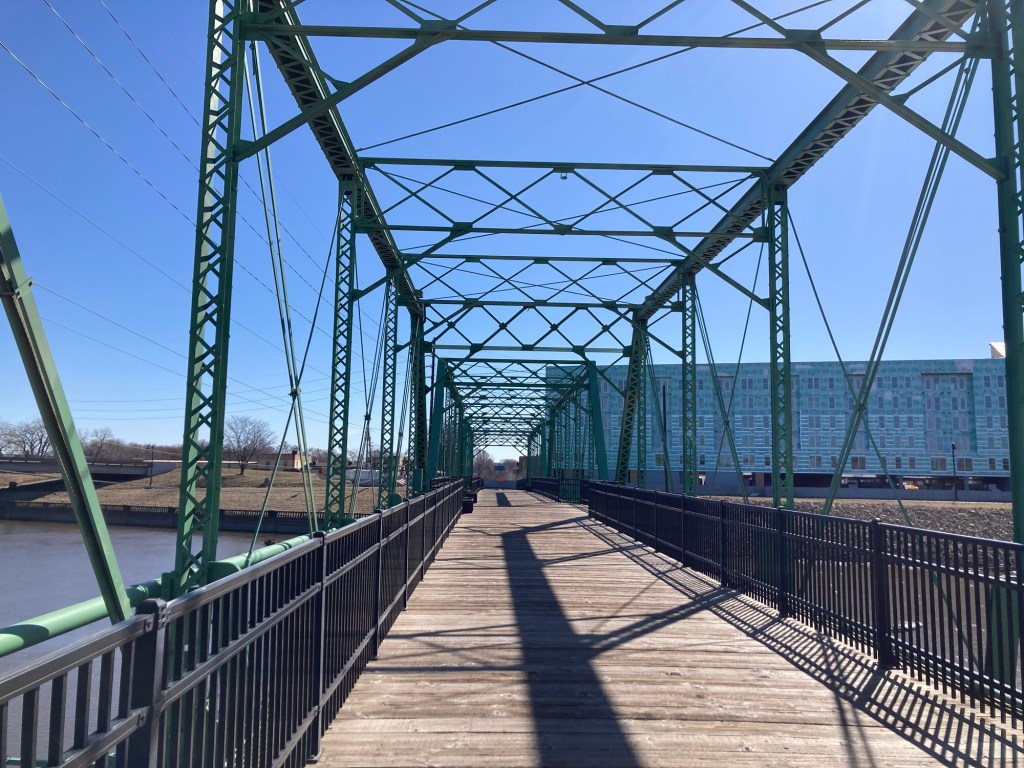
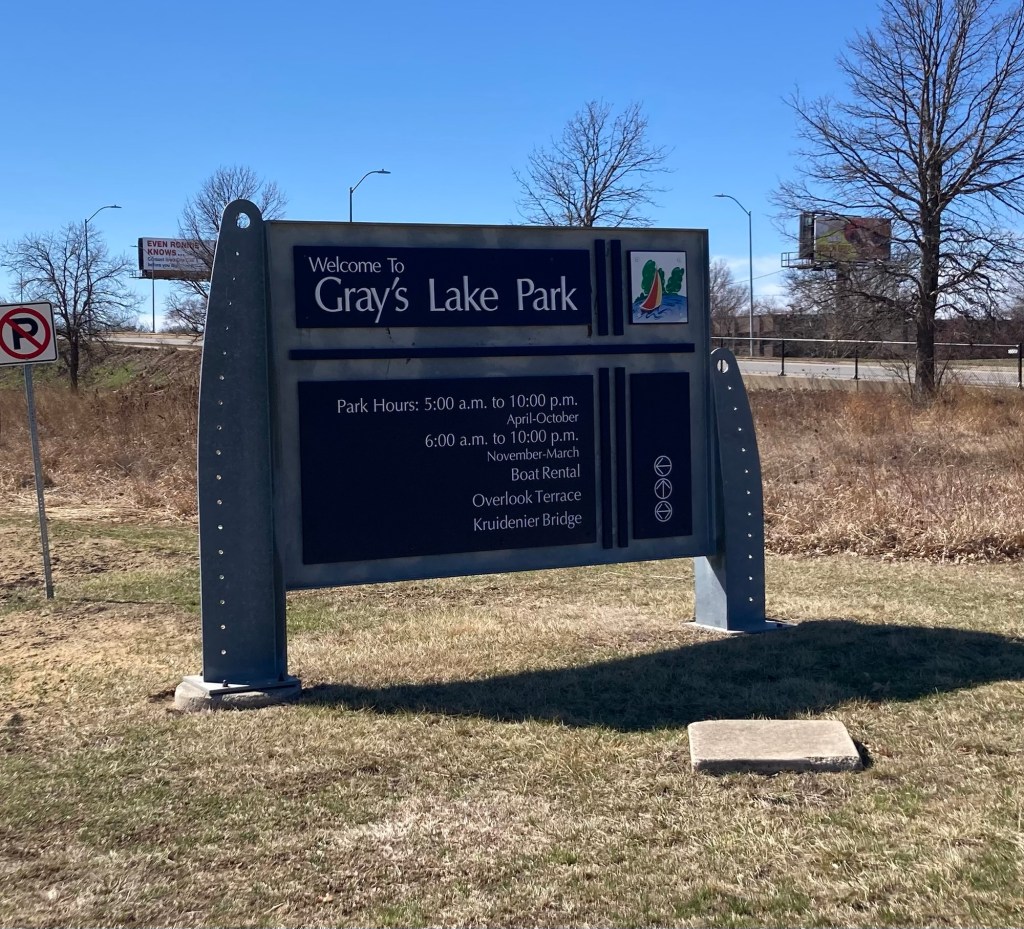
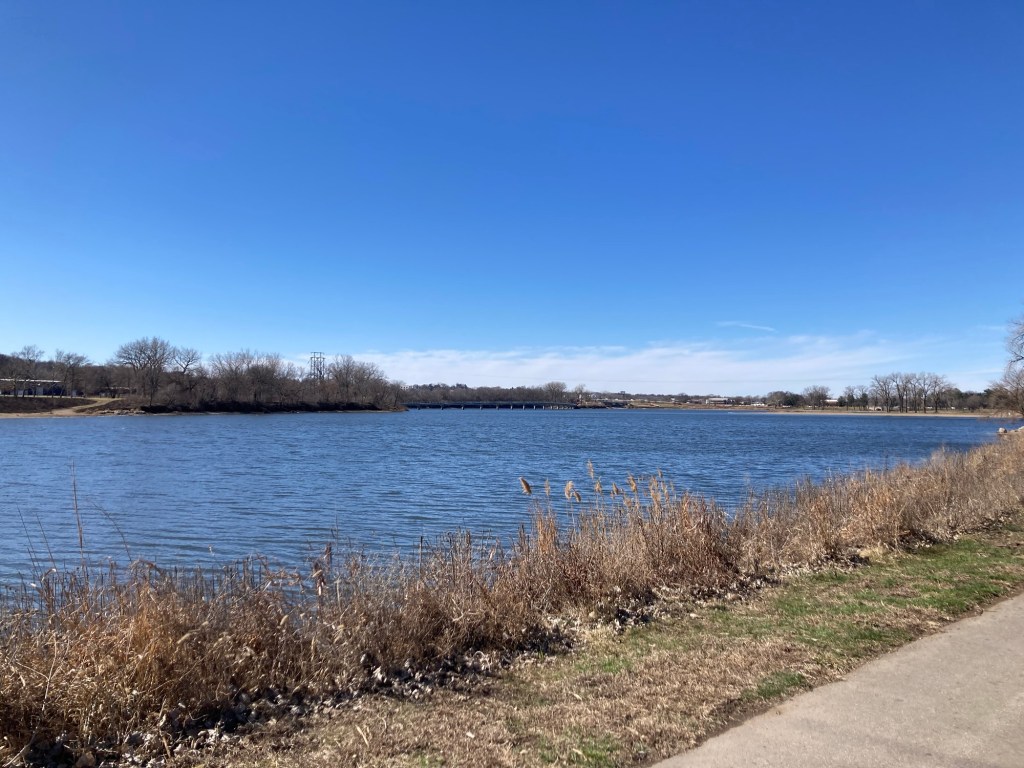
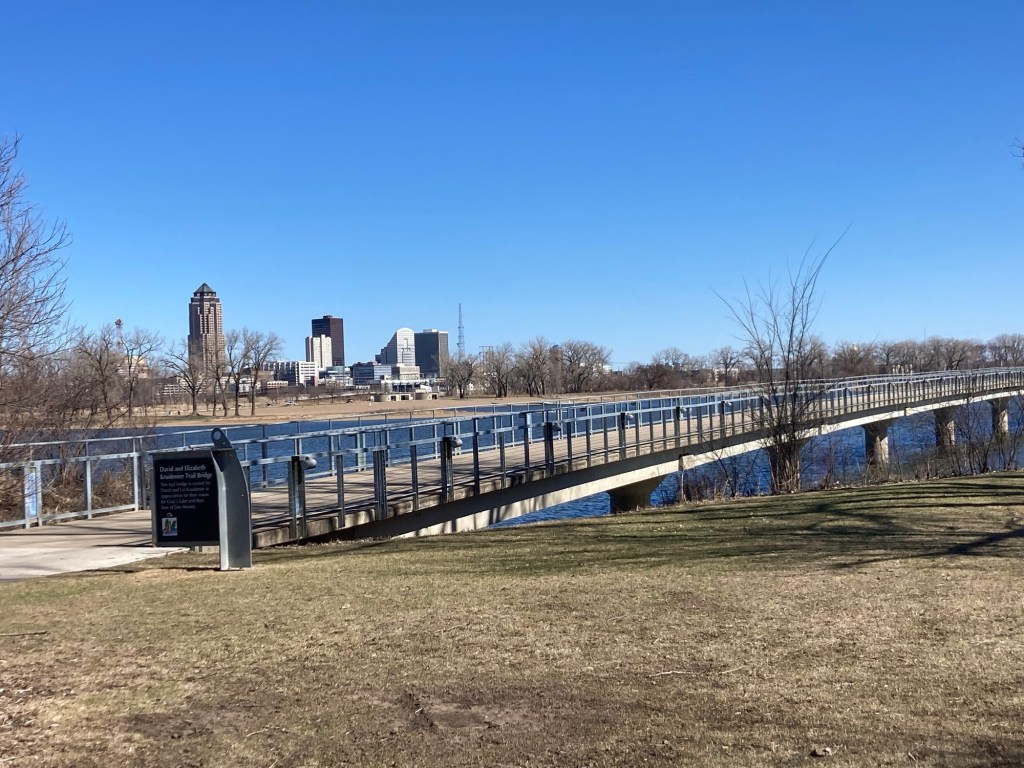
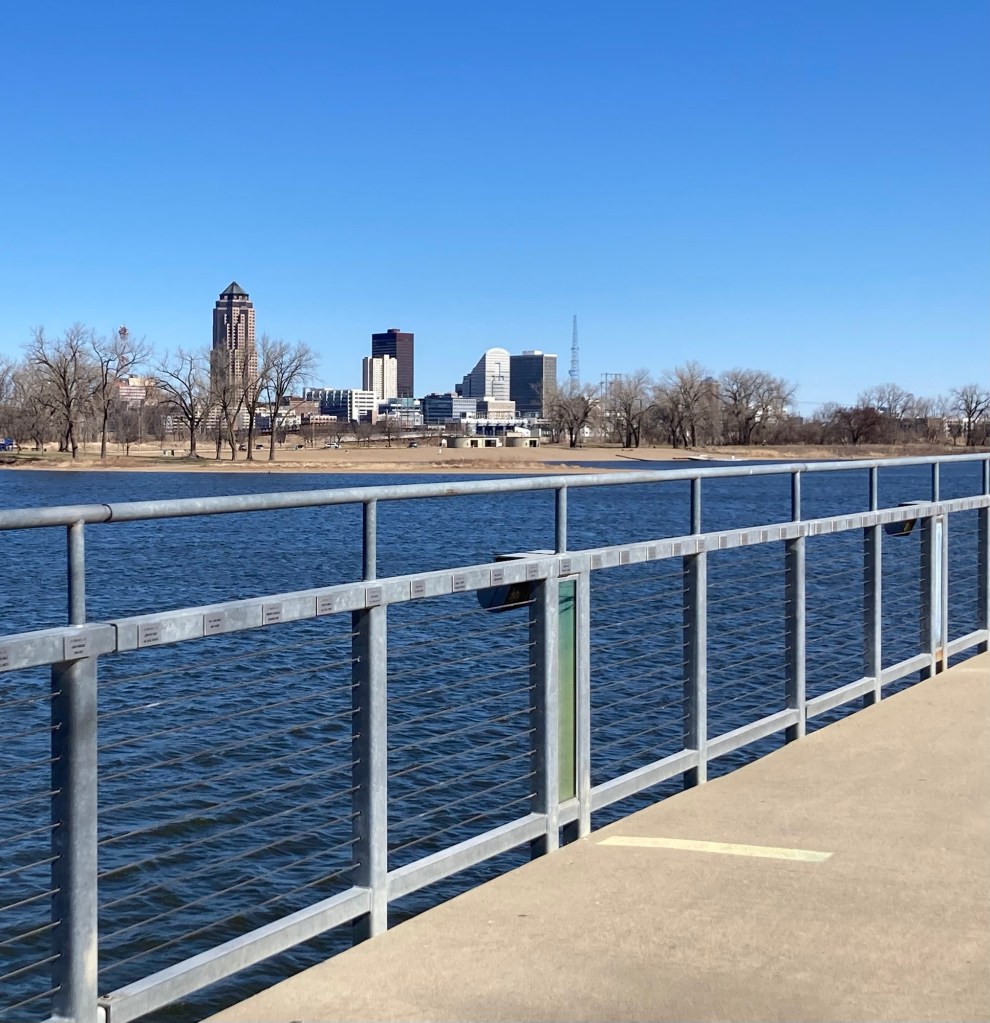
The Red Bridge, originally built as a railroad bridge but converted to a pedestrian bridge in 2005Signage to points of interest along the trail in downtown View of buildings along the river from the middle of the Red BridgeMaps of the trail system In 1846, the city of Des Moines was established near the confluence of the Des Moines and Racoon Rivers, near where this cabin is located. Signage along the Meredith Trail, which we walked to get to Gray’s LakePrincipal Park, home of the Iowa Cubs minor league baseball teamSculpture and plaza near the ballpark Looking back towards downtown as we walked to Gray’s LakeCrossing the Green Bridge over the Racoon River, Sign for the lovely Gray’s Lake ParkGray’s LakeA beach areaA boardwalk across the lake to allow for a loop trail around the lakeLooking across the lake towards downtown. Note the colored glass panel reflecting colored light on the boardwalk. There are a number of these panels along the boardwalk.