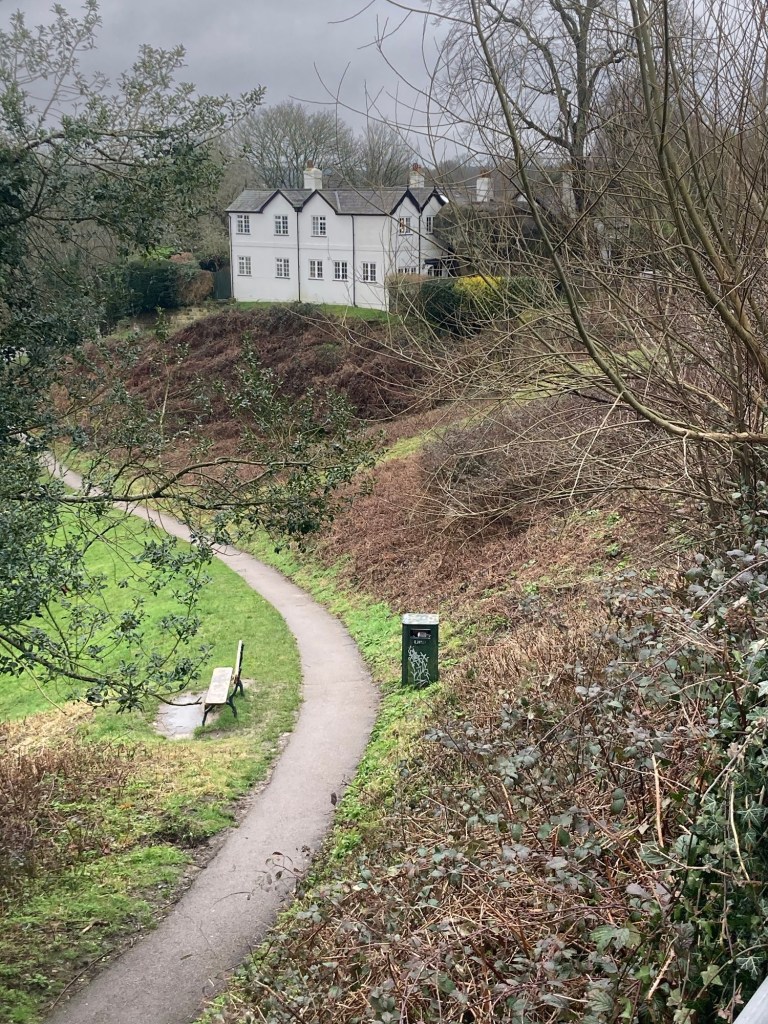
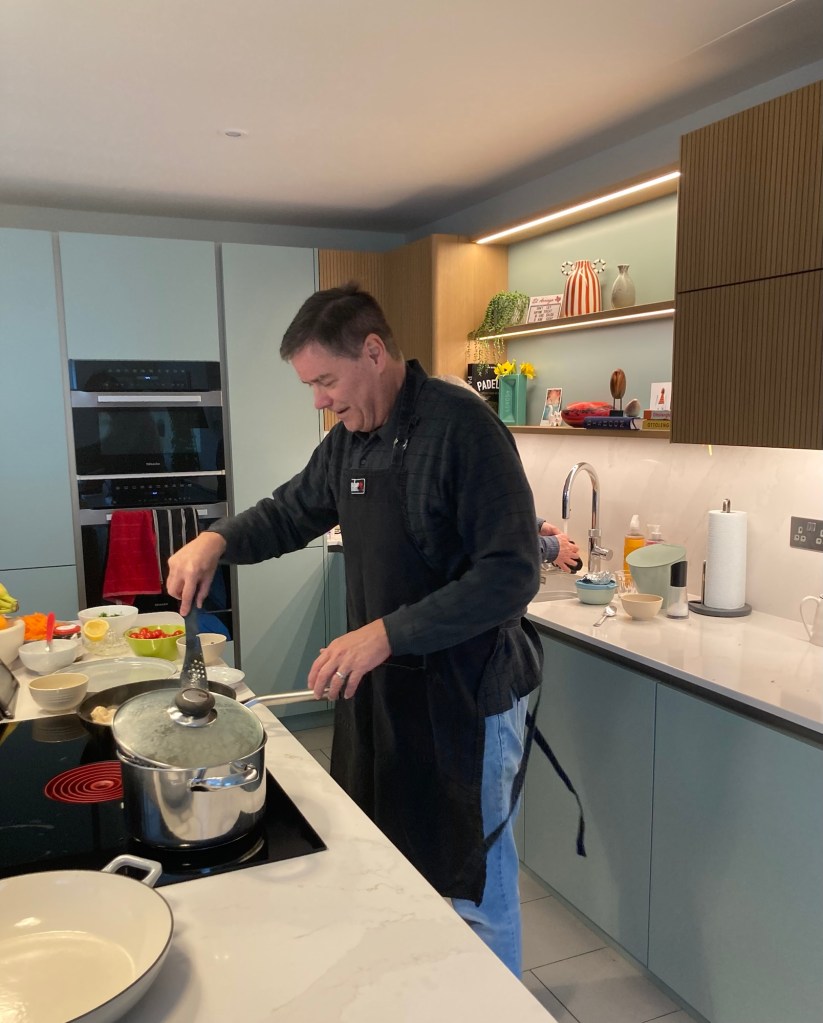
To walk or not to walk when the temps are cool (feels like in the 30s F) and the air is quite damp? That was the question. The answer? Gotta walk, as there is rain in the forecast for the next seven days, so not likely to be better weather conditions.
We headed out to view the former home of an English novelist, which is now a Michelin recognized restaurant (listed in the Michelin guide but without a star). We’re toying with the idea of maybe eating there at some point, but we’re known to be a bit on the thrifty side, so you never know.
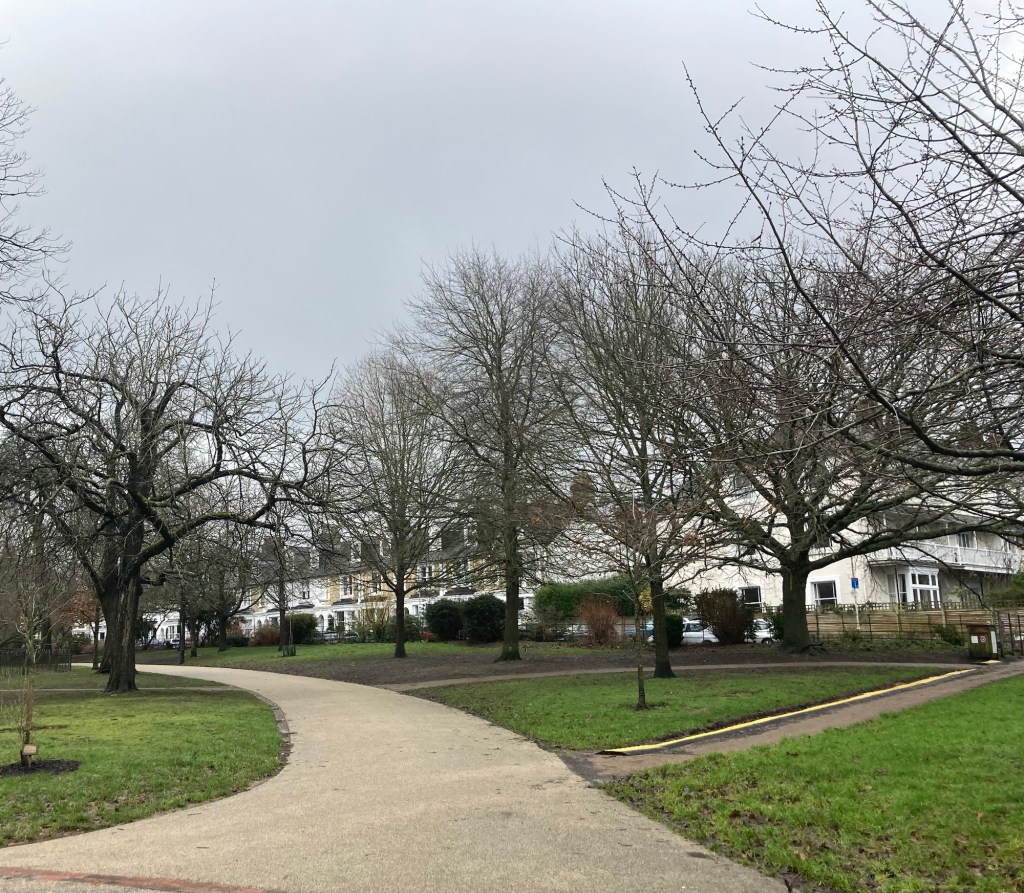
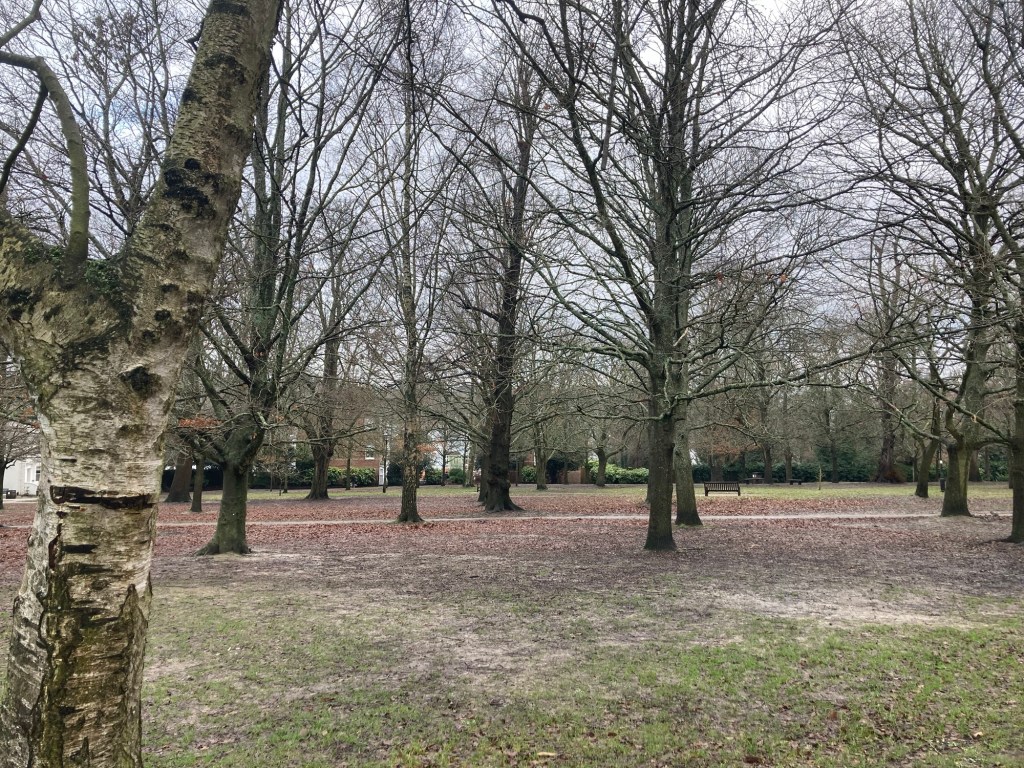
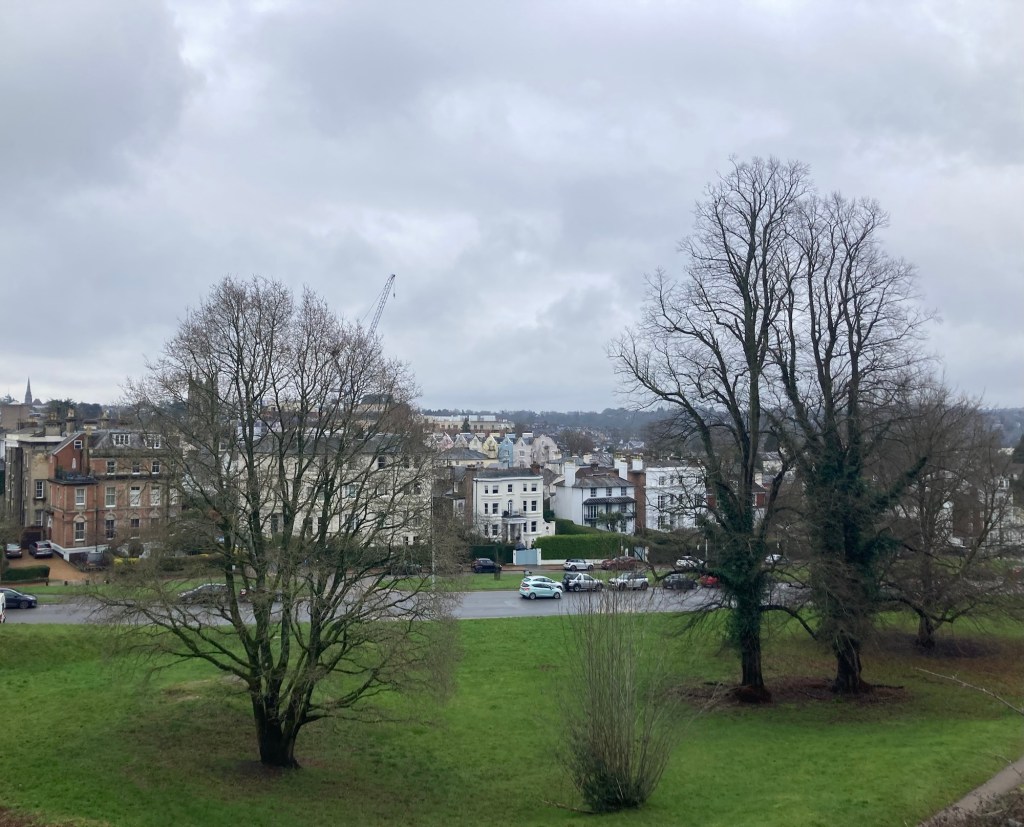
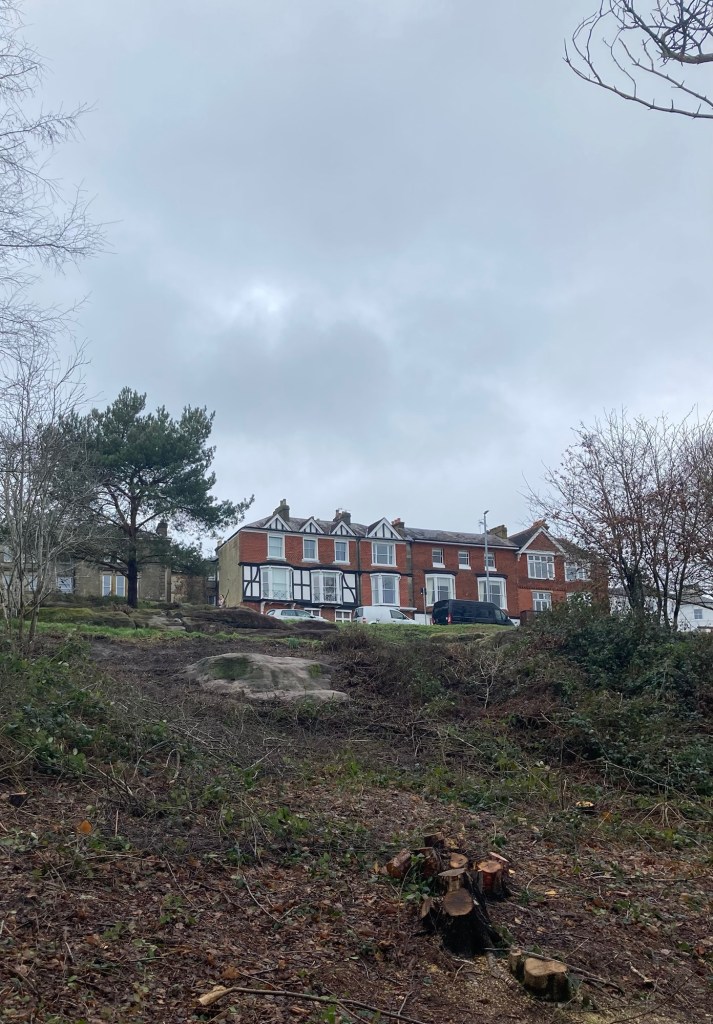
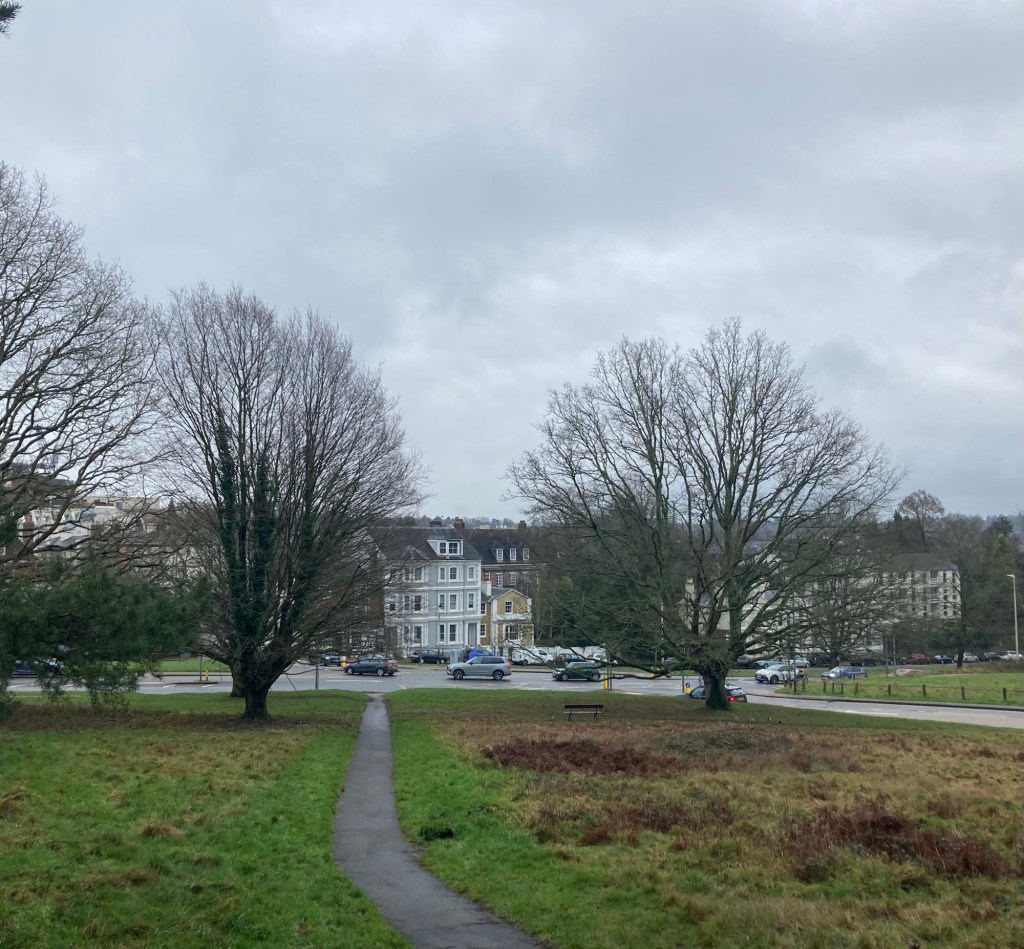
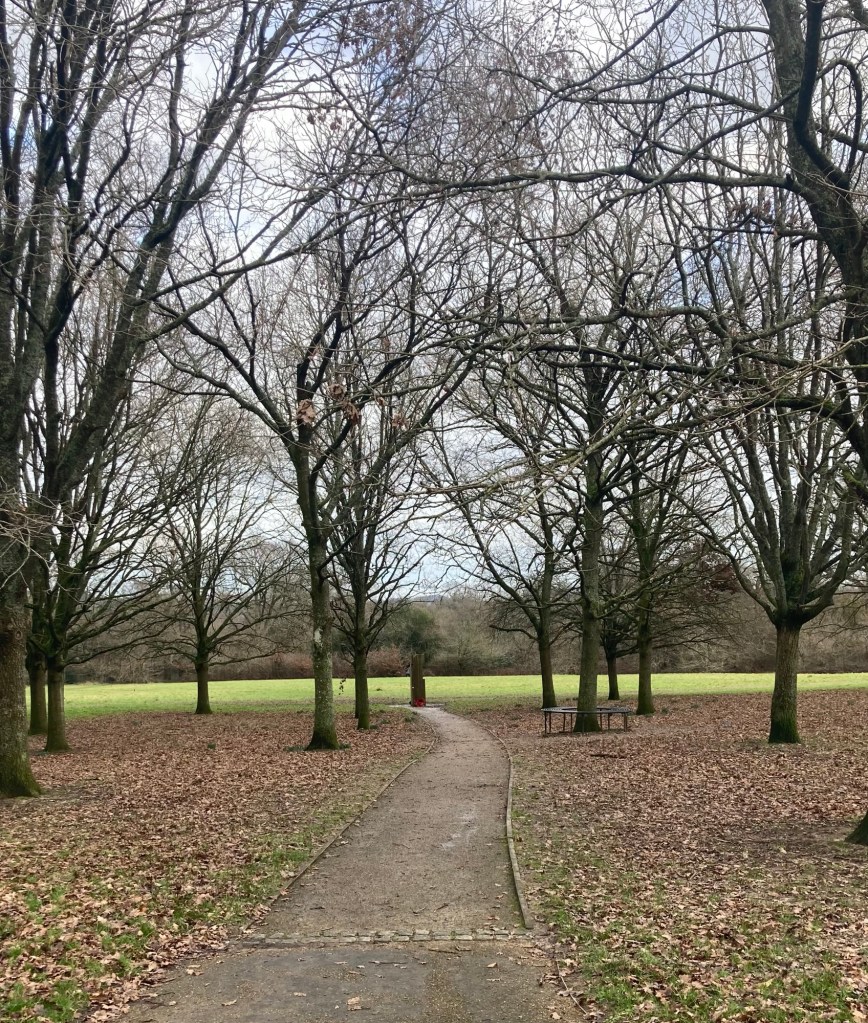
Heading towards the town center from the house, we walked through the small but cute Grove Park. It served as a vehicle base during World War II and many of the trees were planted following a great storm in 1987.
Looking towards the neighborhood side of the parkLooking towards the town center side of the park
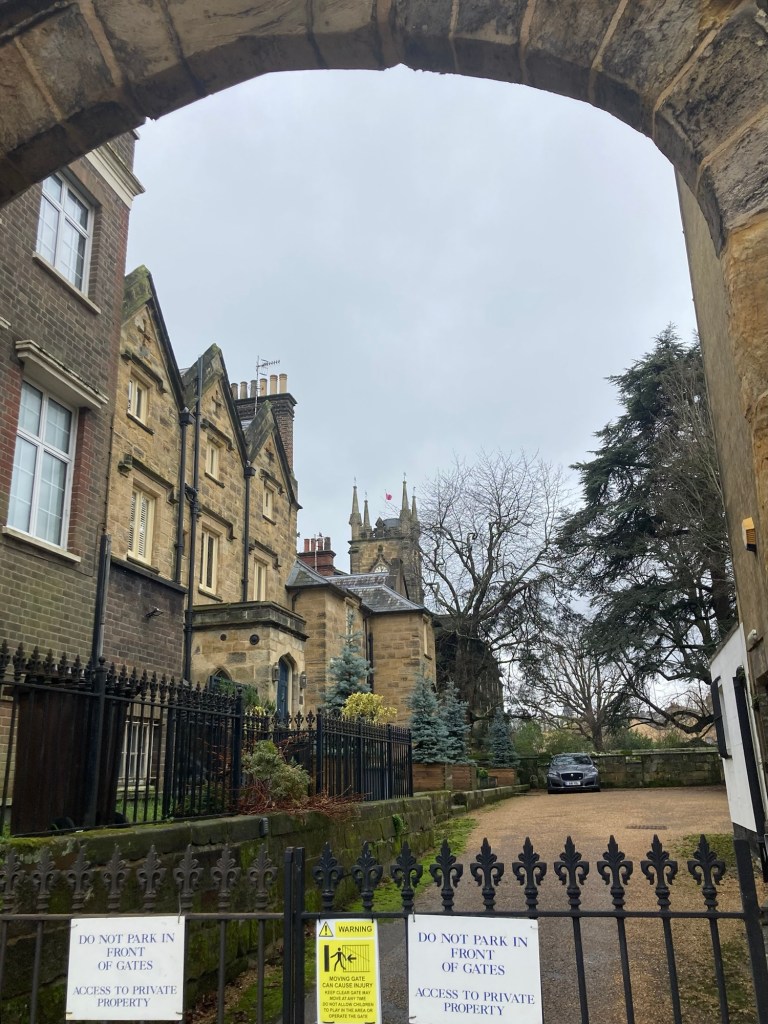
From the park, we entered the High Street for a bit and passed an old stone arch that leads onto a terrace.
We turned off the High Street to head west, away from the town center and towards the restaurant.
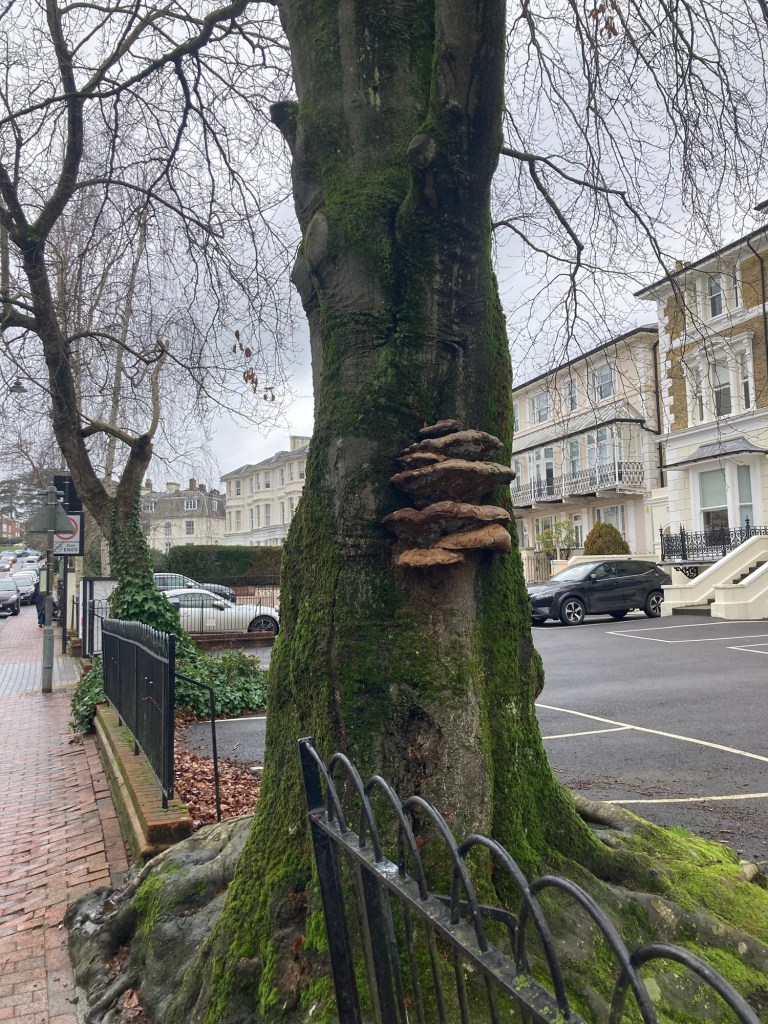
We passed a tree with some large mushrooms growing out of it.
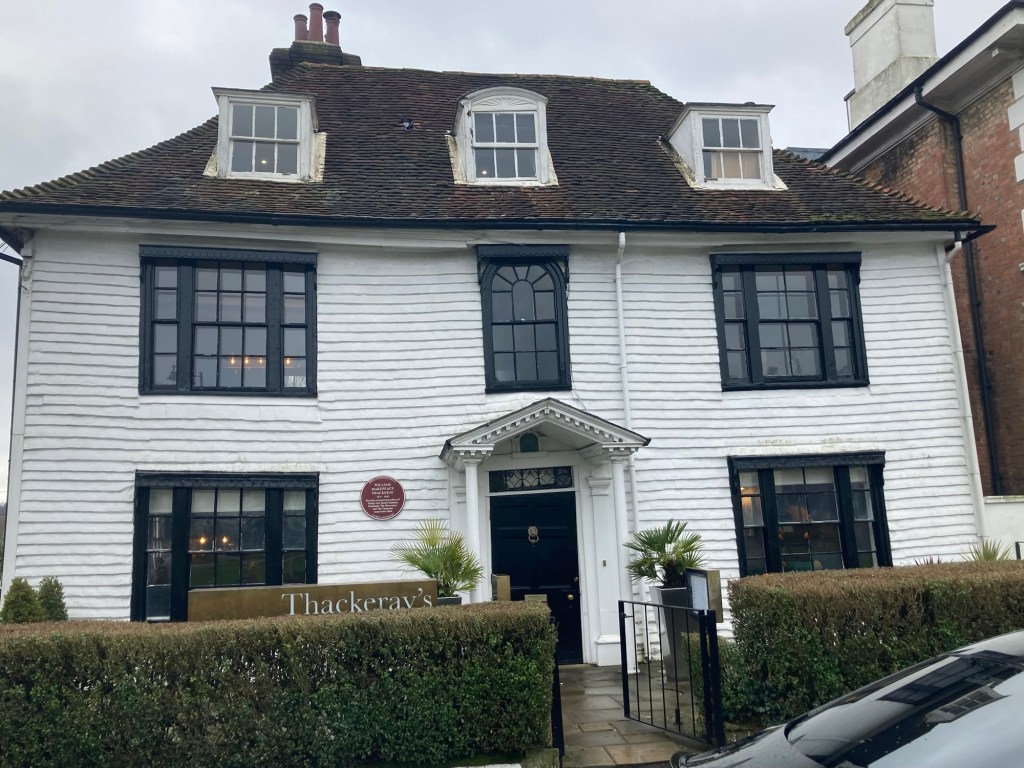
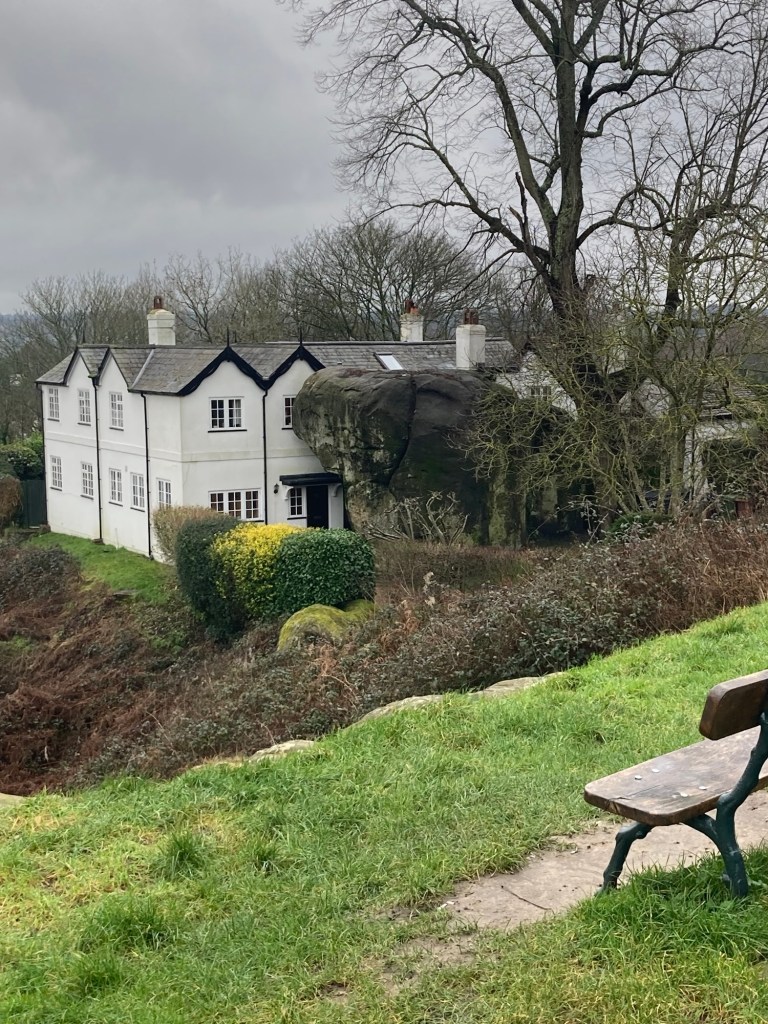
After walking a bit up hill, we got to the former home of William Makepeace Thackeray, now the restaurant Thackeray’s. William Makepeace Thackeray (1812-1863) was born in India but was sent to England after his father’s death in 1815. He is known particularly for his novel, “Vanity Fair,” which was a satirical take on British society.
The front of Thackeray’s
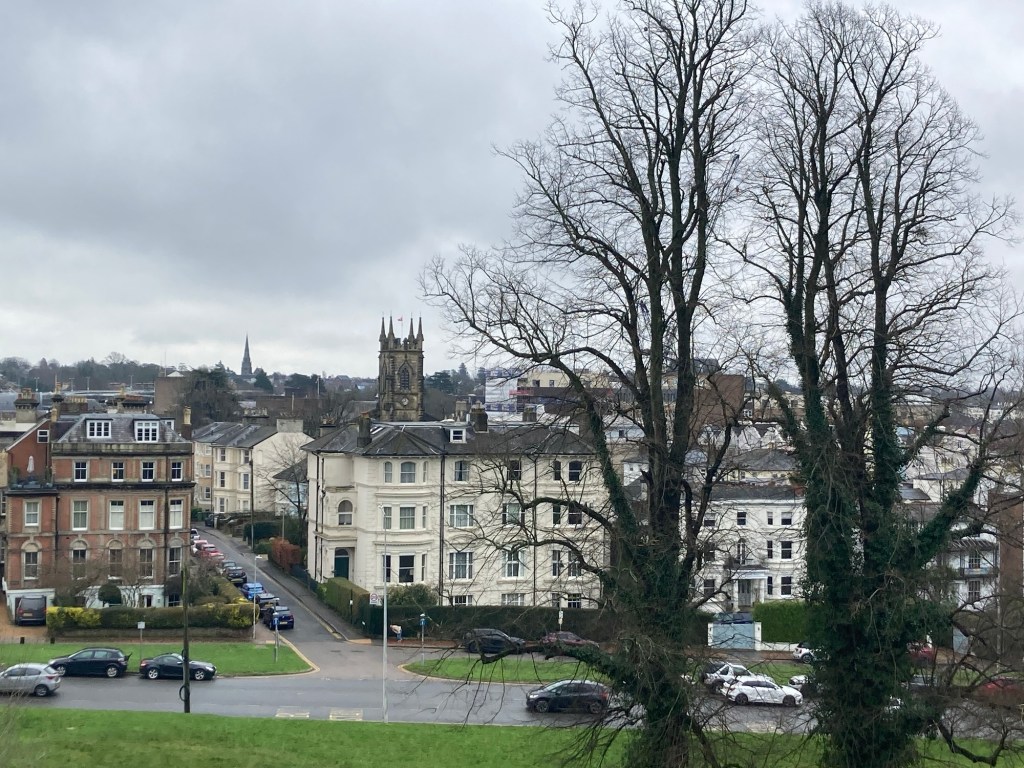
Thackeray’s was also happily located near Mount Ephraim, which provides a bit of an overview of Royal Tunbridge Wells.
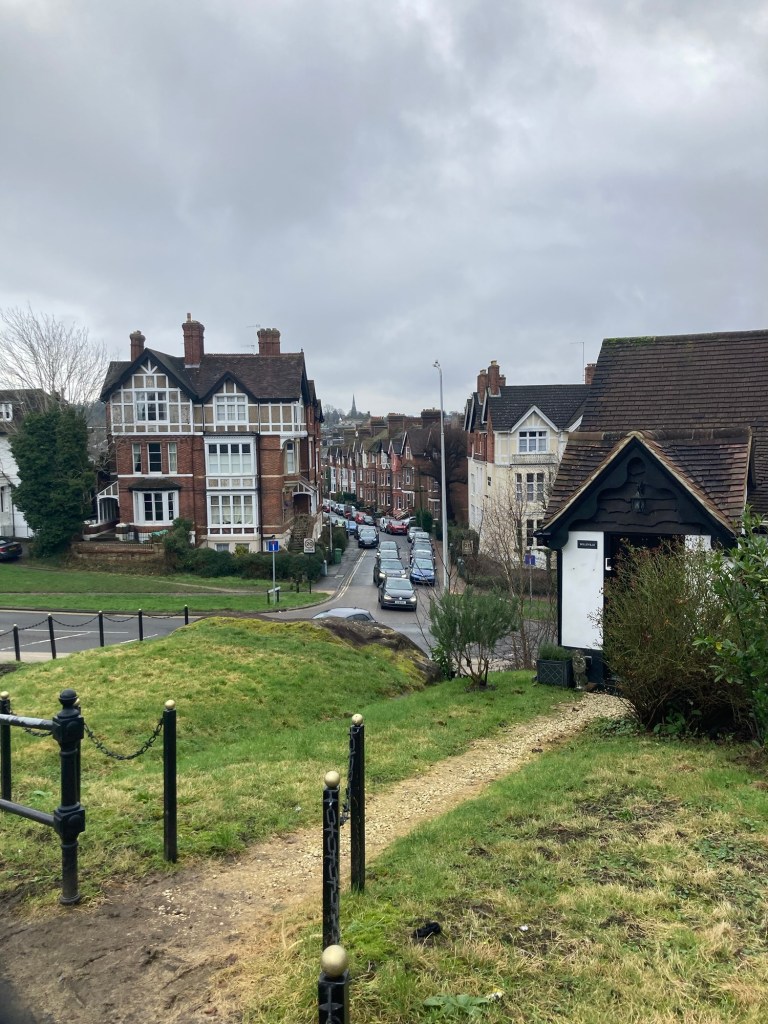
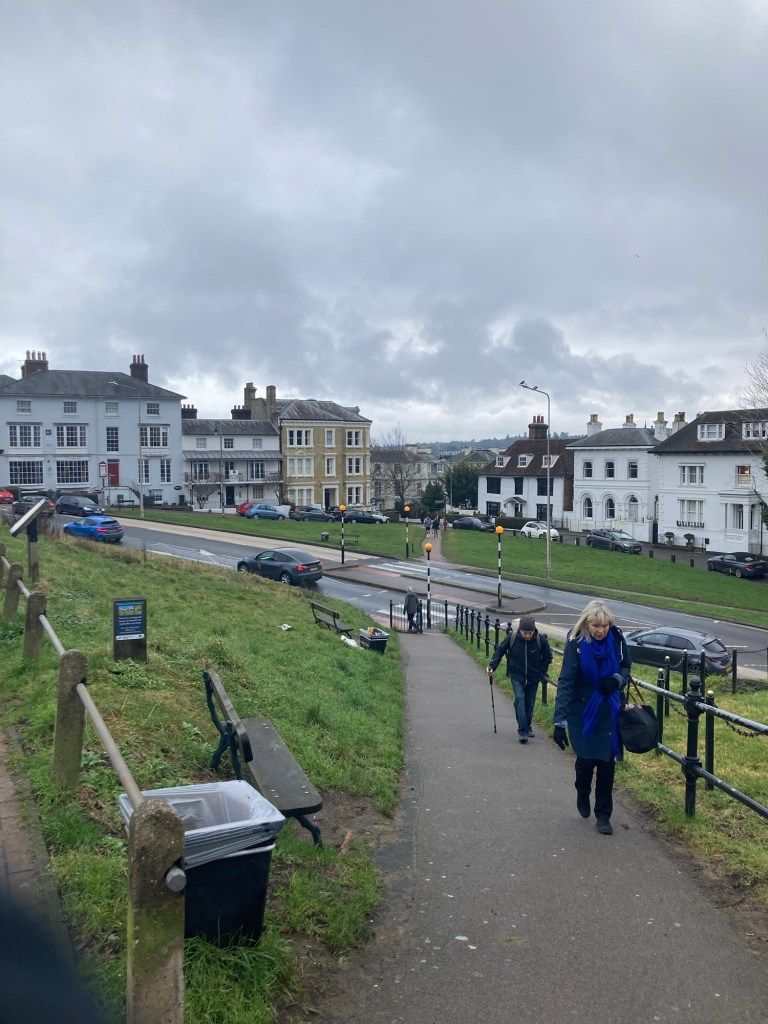
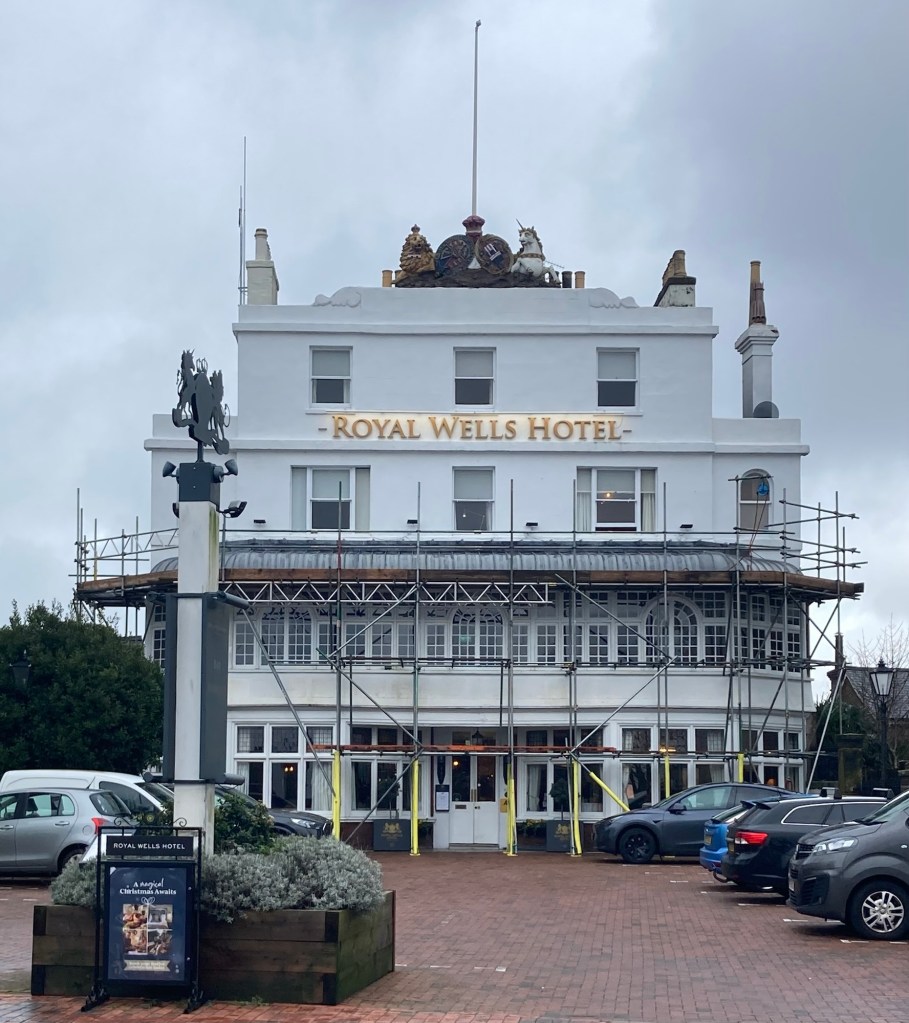
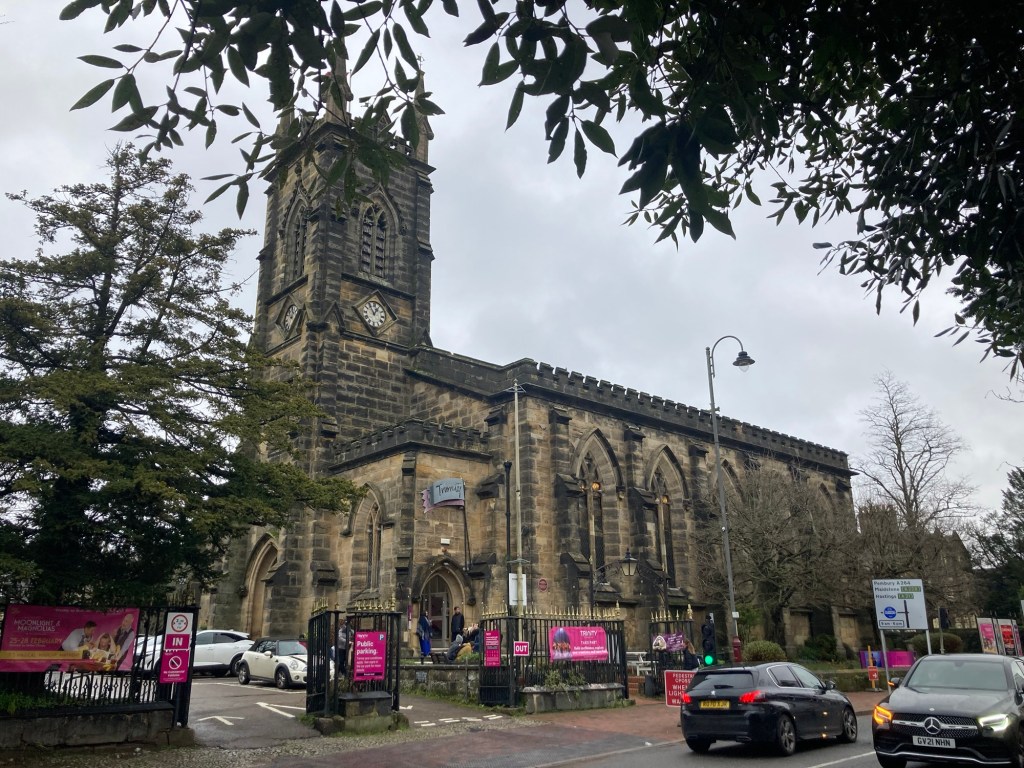
Looking back on our walk upAnother viewOnce on the higher level, we noticed this lovely hotel undergoing some repairs/renovations. Their website claims that it”was once favored by royalty.”Looking into the Commons from aboveA view towards the town centerLook at the large rock up near this house.Another view into townLooking back up as we are descending And our walk downWe passed an old church on our way back to the town center which is now Trinity Theatre.
It has been a few days of wet and wind. We just gave into it on Wednesday and did a mostly in house day with the exception of getting Nellie out. We are not griping about the current UK weather though as our family in the Midwest is experiencing sub-freezing temperatures. We’ll take wet and windy with milder (feels like in the 30s and 40s F) temperatures!
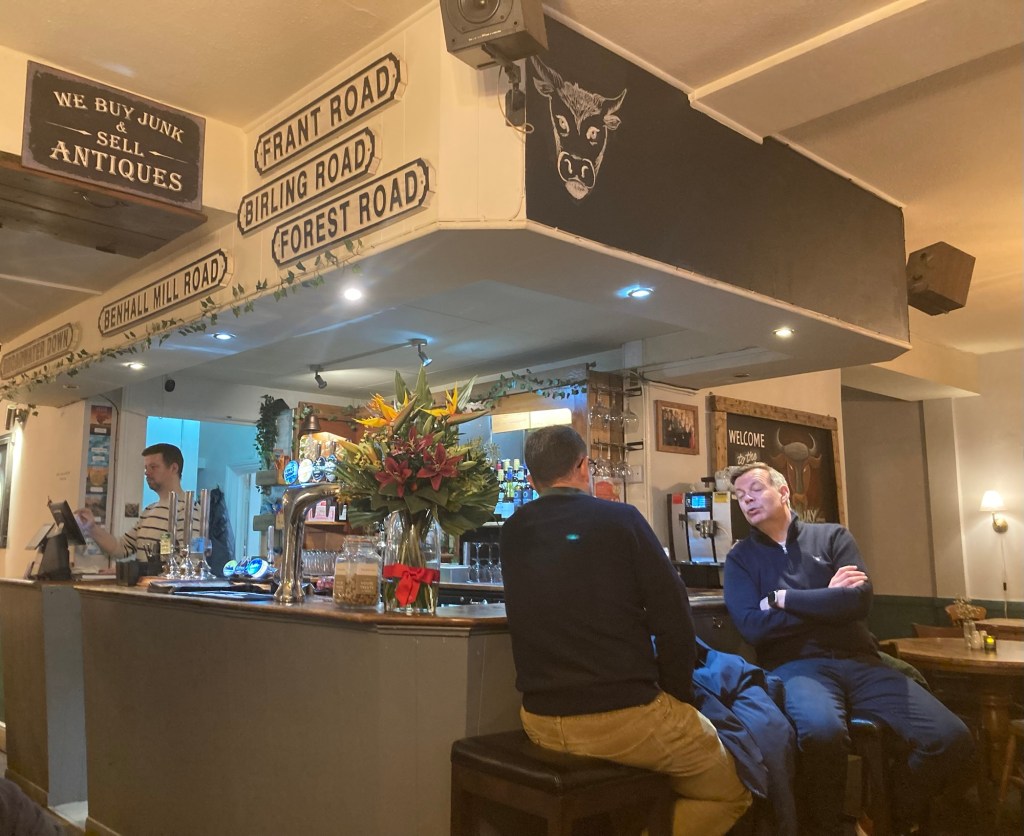
The maid comes on Thursday about 3ish and works for 3 hours, as this is a large, 3-story house. Not wanting to be in her way, we have elected to be out of the house while she’s here. We walked into town to check out the library and found that it is co-housed with a museum, so more on that next week. Close to 5, we headed back into the neighborhood to The Bull, the closest pub to the house for a drink before heading back to the house for dinner.
The bar at The Bull. It was comfy and warm after walking in the rain to get there.
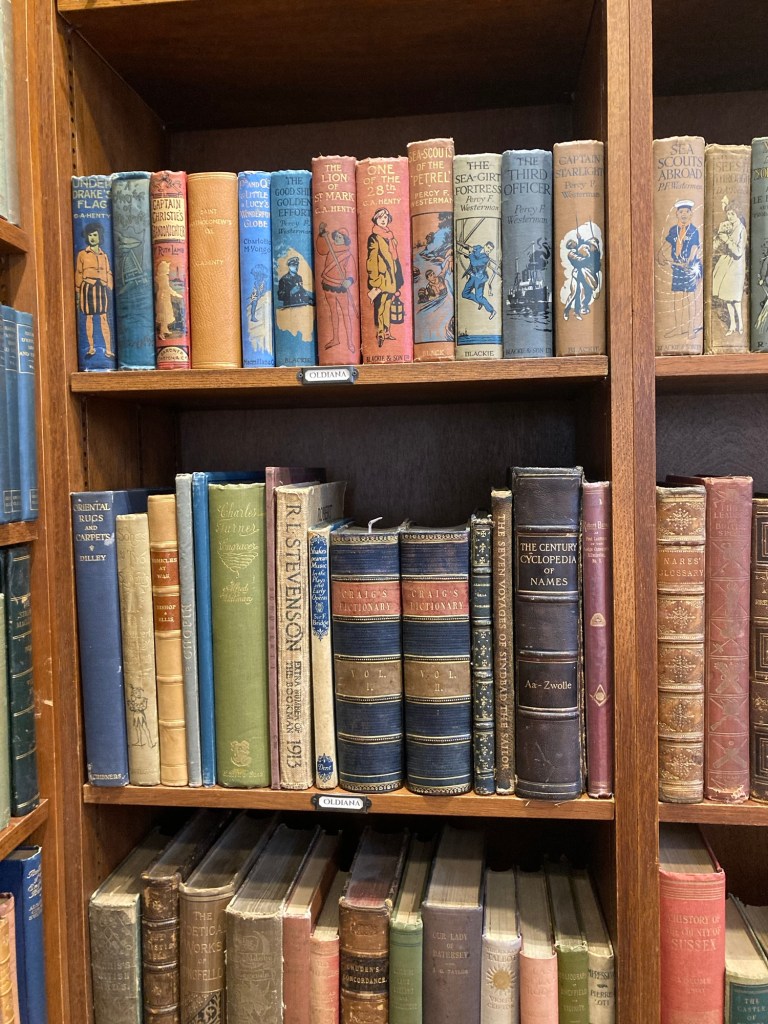
Yesterday, we walked to Hall’s Bookstore that we had seen on our first walkabout on the High Street. They sold lots of used books sorted by topic and had a section with a term I hadn’t seen before — oldiana.
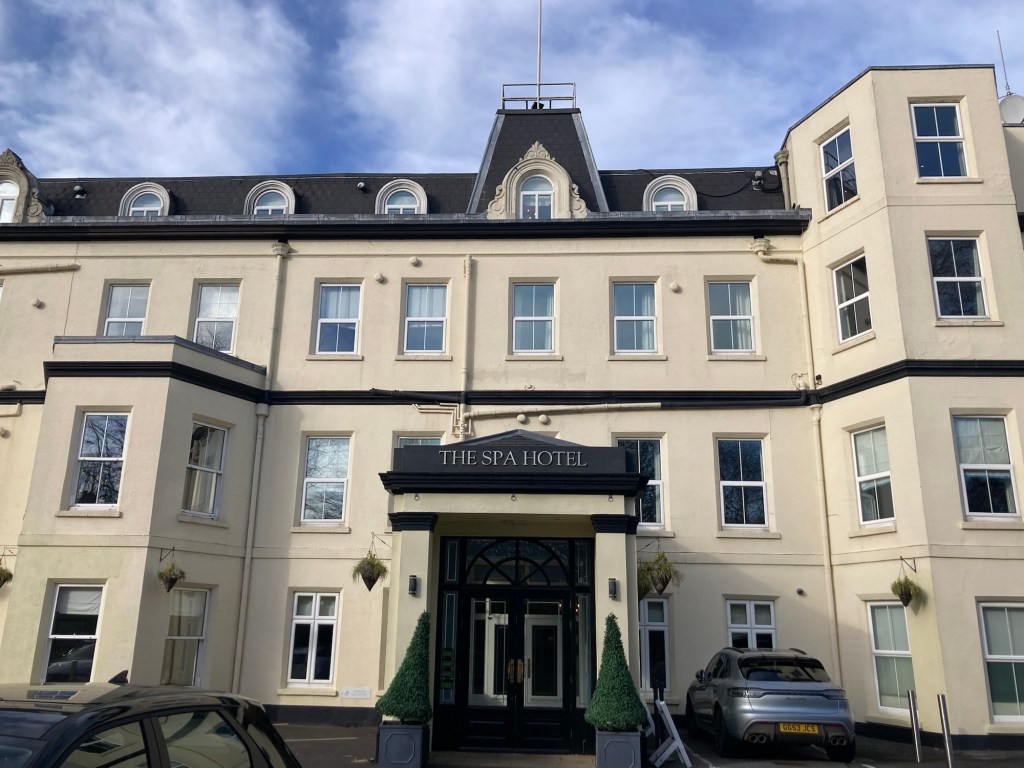
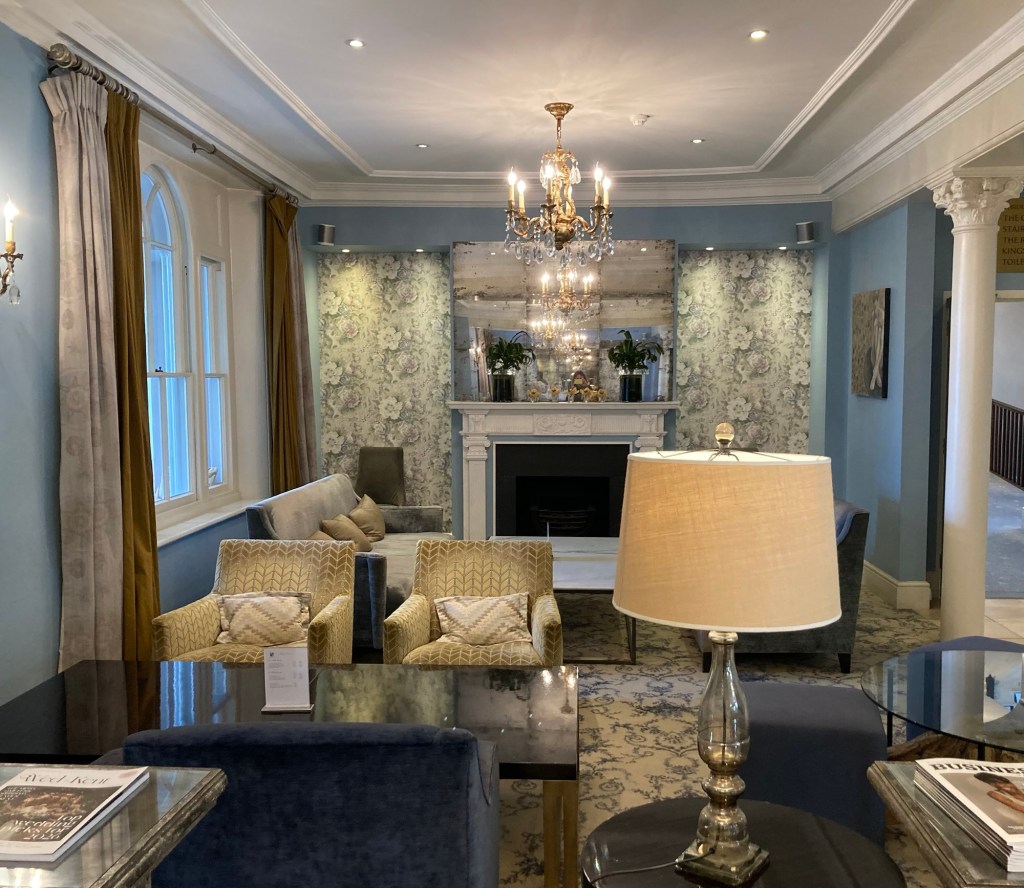
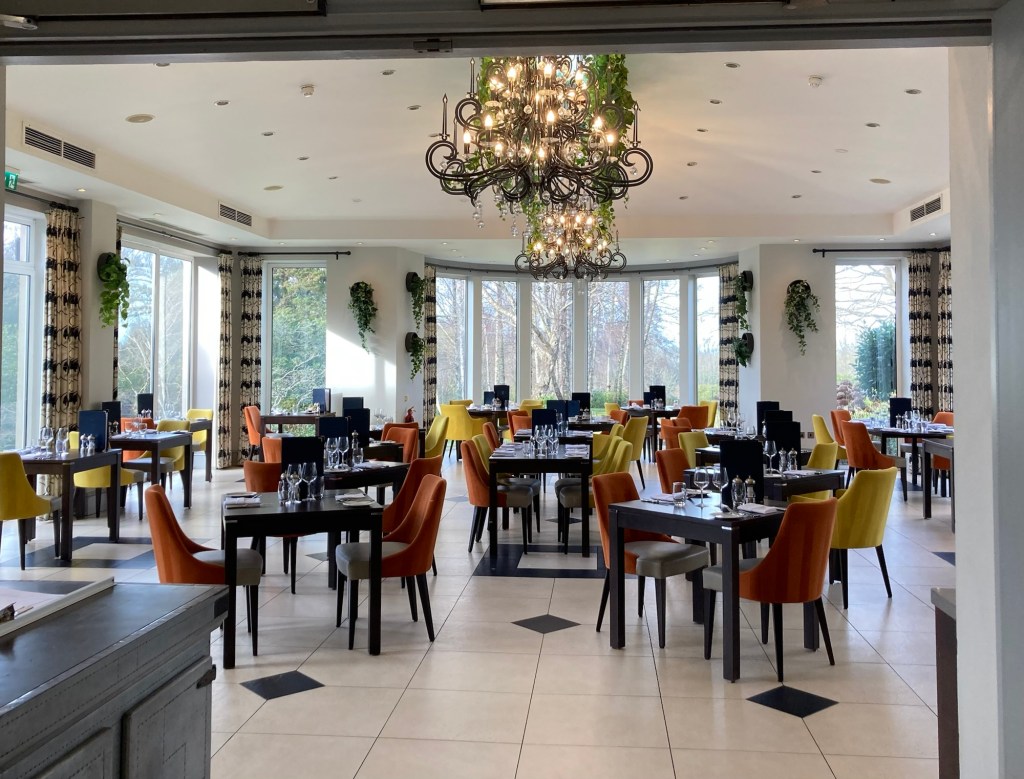
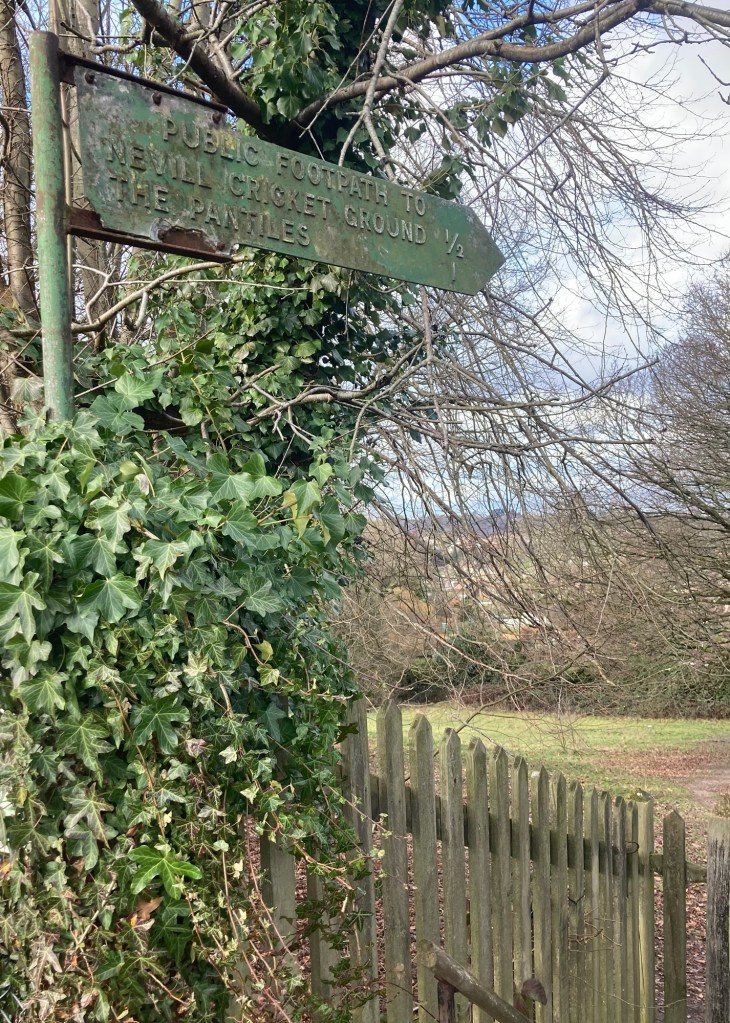
Today, it is still pretty windy, but the sun was shining, so we did a little longer walk. We have been wanting to walk through the Commons, which are across a busy road from The Pantiles, and we wanted to check out The Spa Hotel. Happily, Bob found a way to walk through part of the Commons to the hotel and even found us a public footpath to take from near the house all the way to The Pantiles.
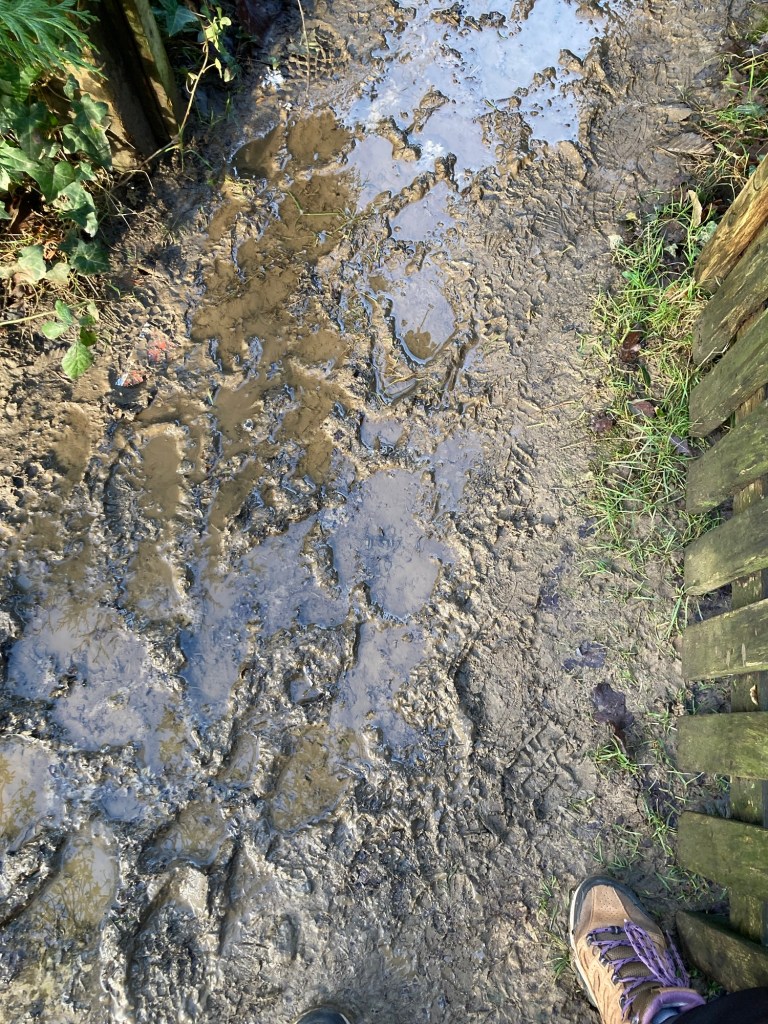
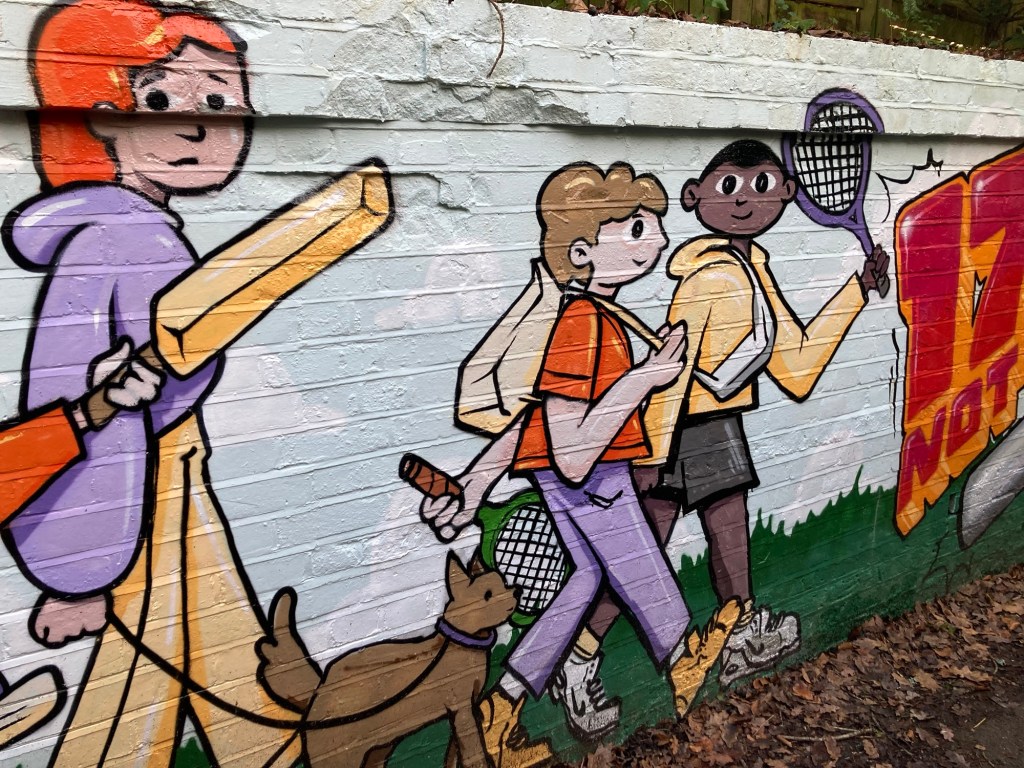
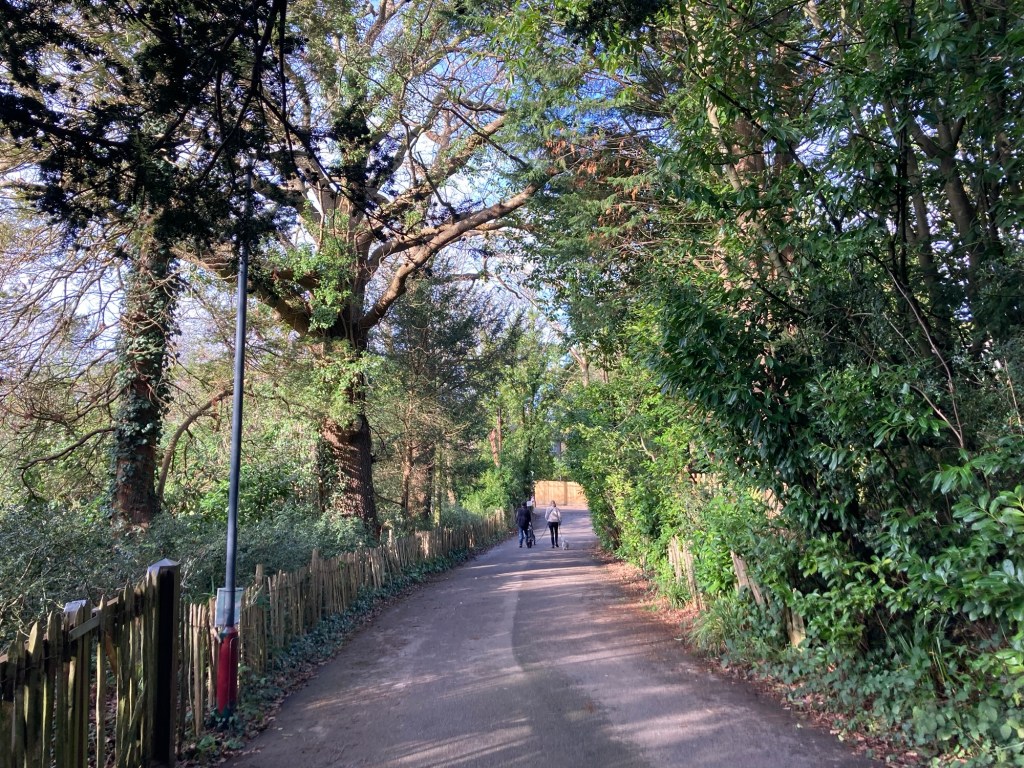
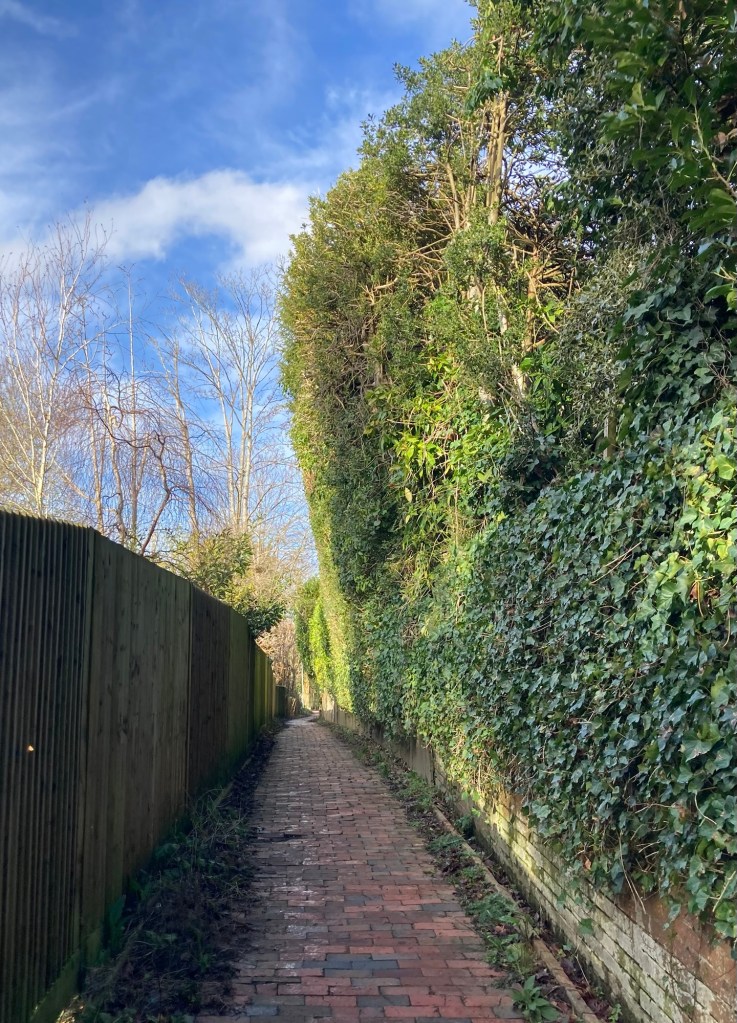
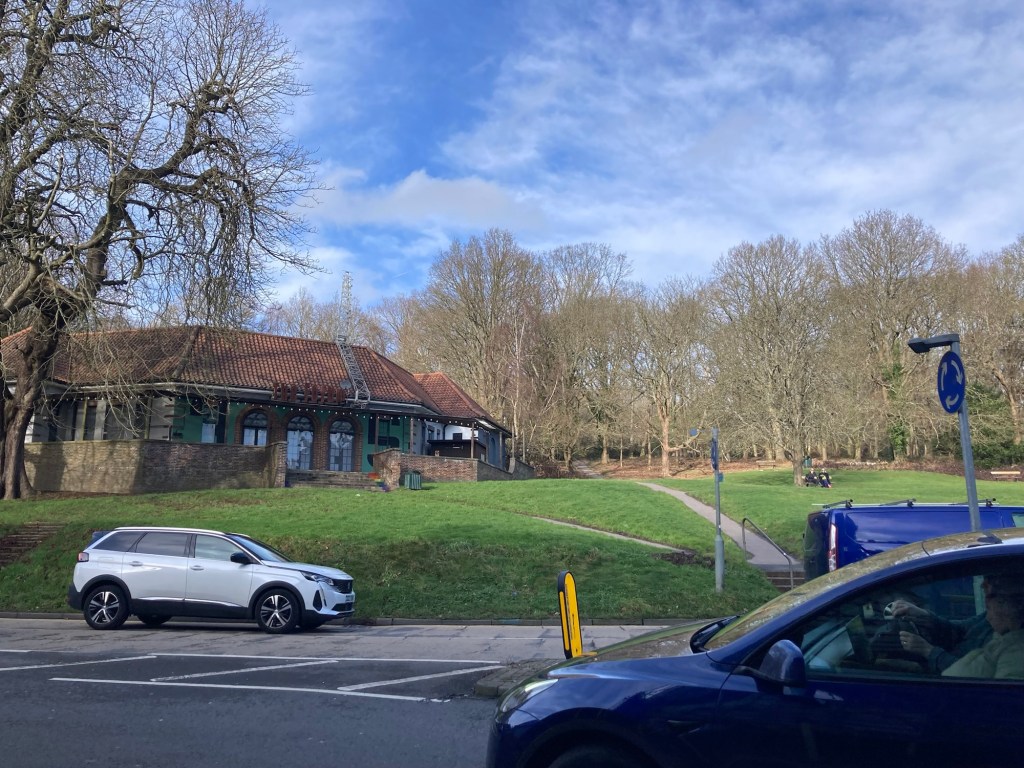
No escaping mud on non-paved portions of the paths.Starting out on a new (for us) footpath in the neighborhood Crossing over train tracksFun art on a wall along the path More of the neighborhood pathDittoLooking across the busy road to the Commons
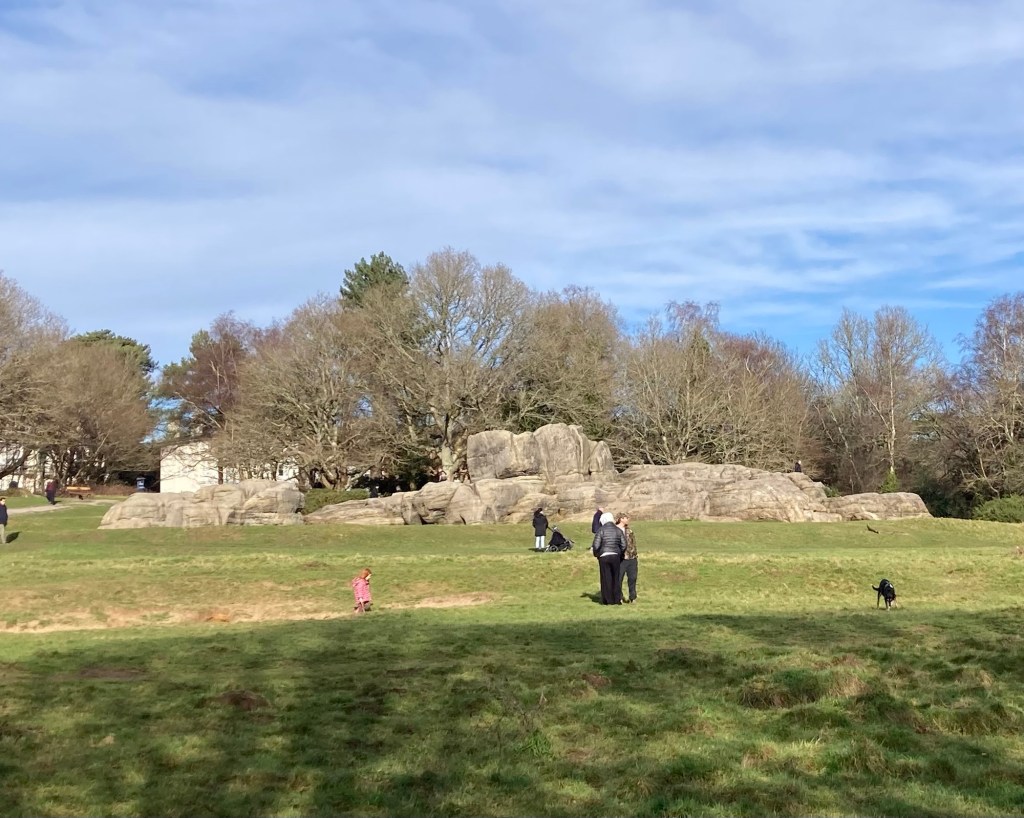
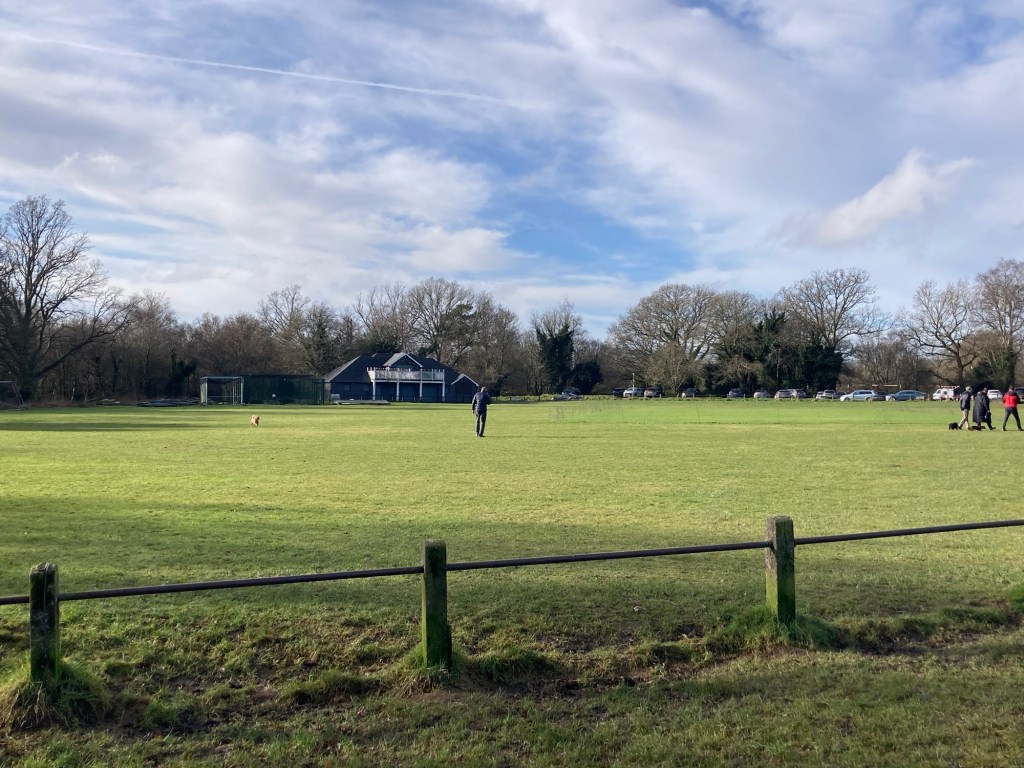
The full name of the Commons is the Tunbridge Wells and Rusthall Commons, and it comprises 256 acres of land, with a number walking trails and two cricket grounds. It is a mixture of heathland and woodland with sandstone outcrops. While the Commons are managed by a nonprofit group, the land is currently privately owned and up for sale. There is an effort underway by the community to get the council (or other governmental group) to buy them to ensure they stay open for public use.
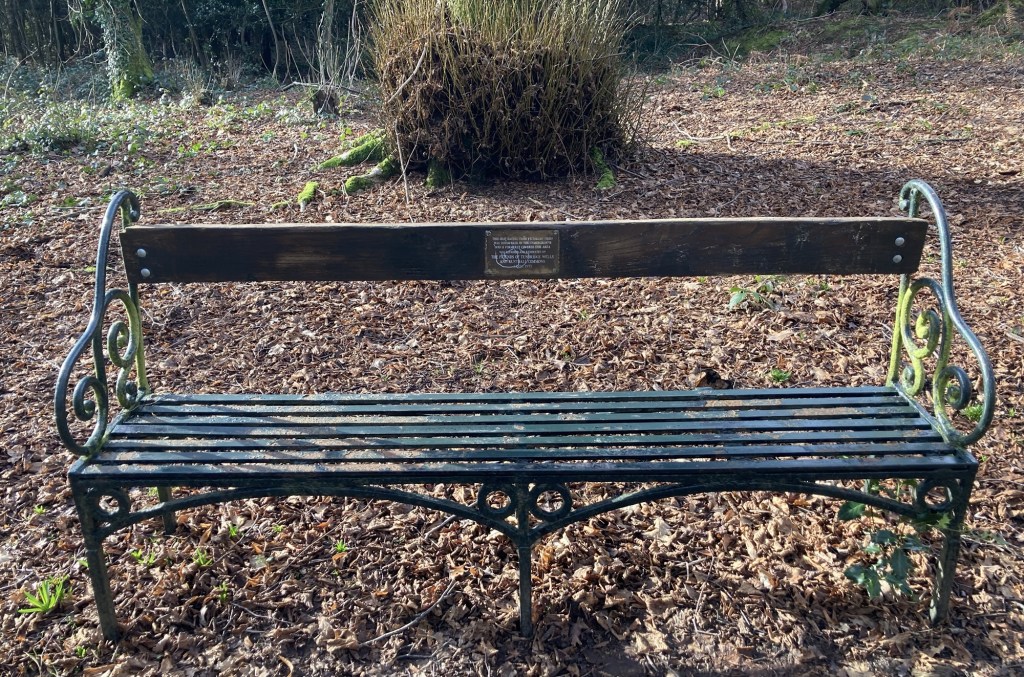
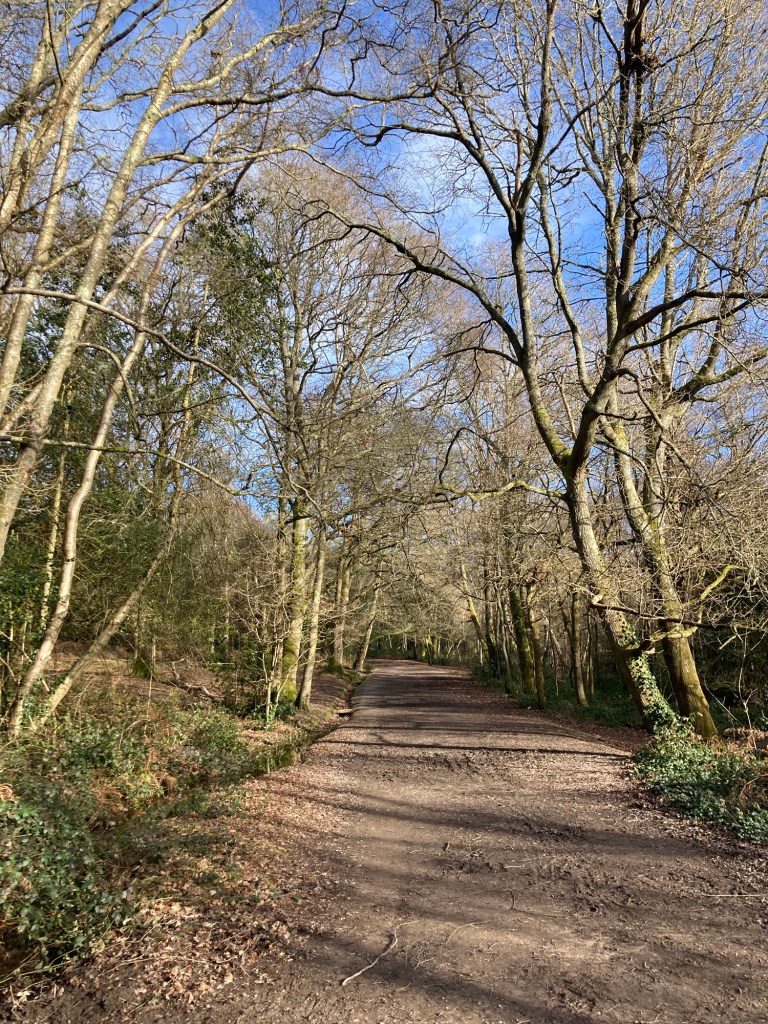
According to the signage, this is a Victorian bench that was found in the undergrowth that covered this area.One of the larger paths through the Commons. Many of the paths are paved.One of the sandstone outcroppings One of the cricket fieldsThe path we were on as we left the Commons to walk across the street to The Spa HotelThe main entrance to The Spa HotelOne half of the lovely, calming lobbyLooking into The Orangery, their restaurant
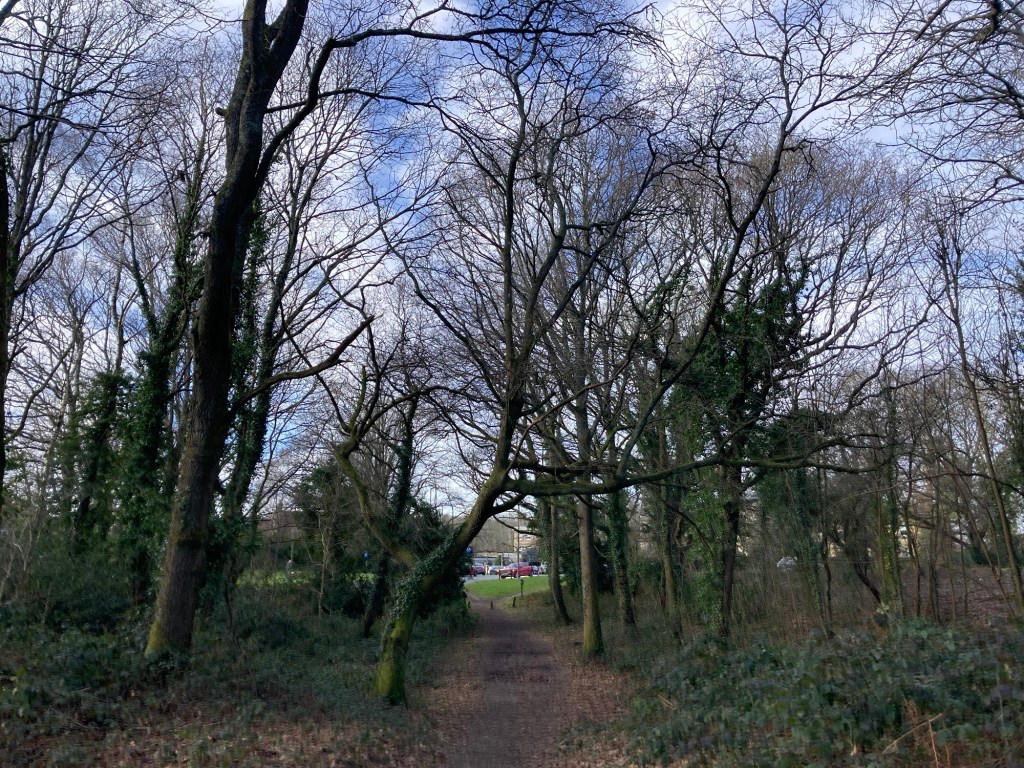
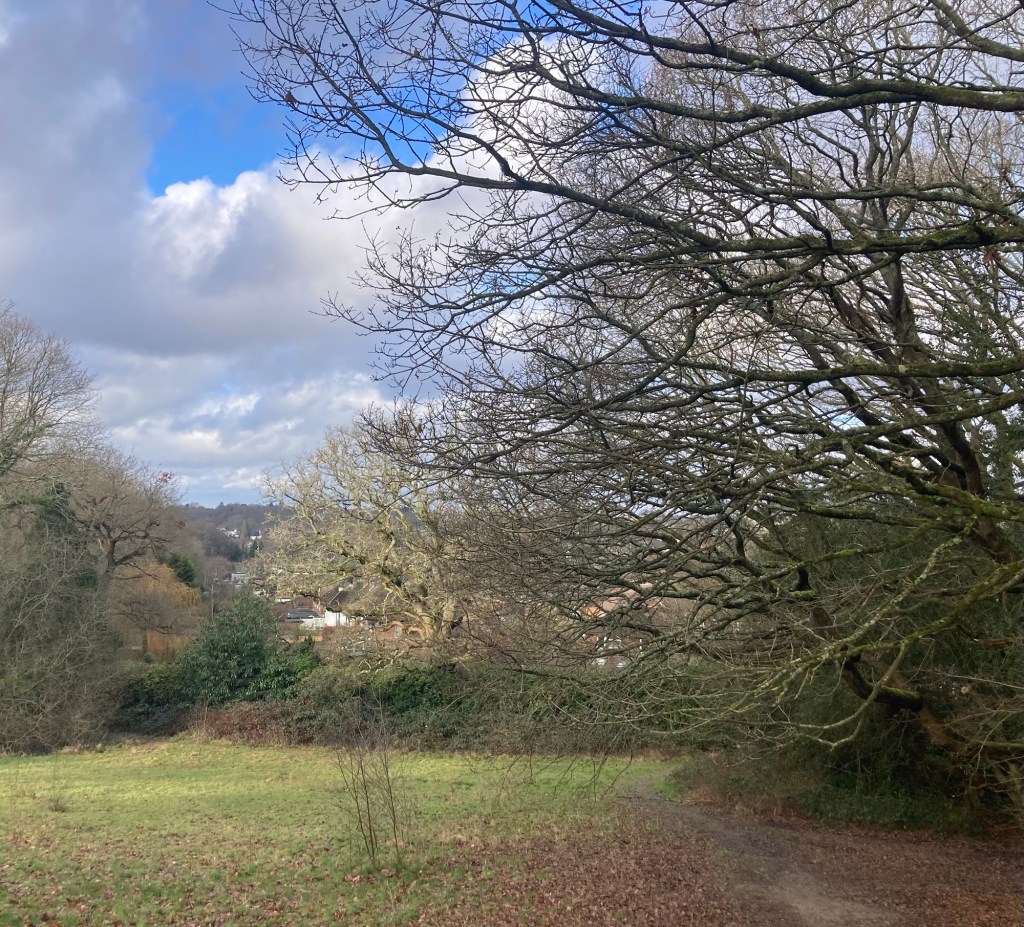
A couple more photos from our walk back on a different trail through the Commons.
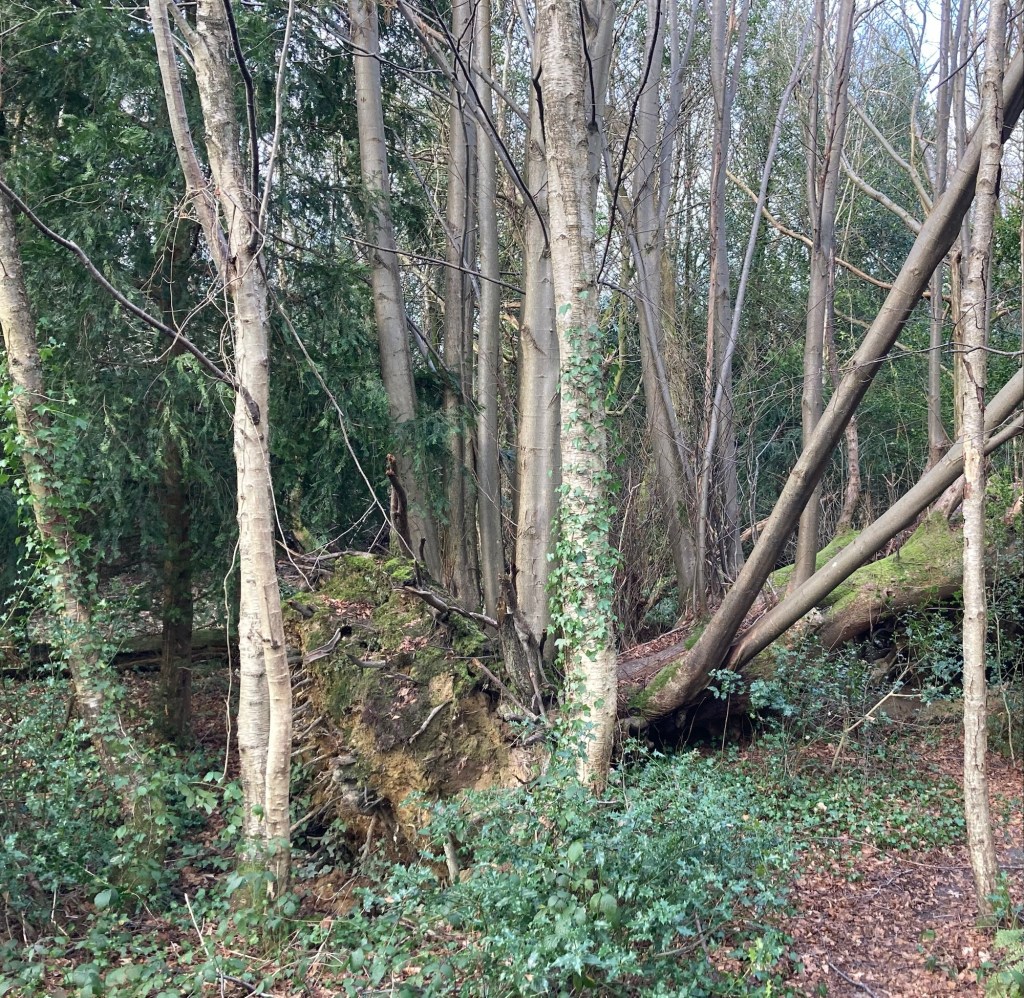
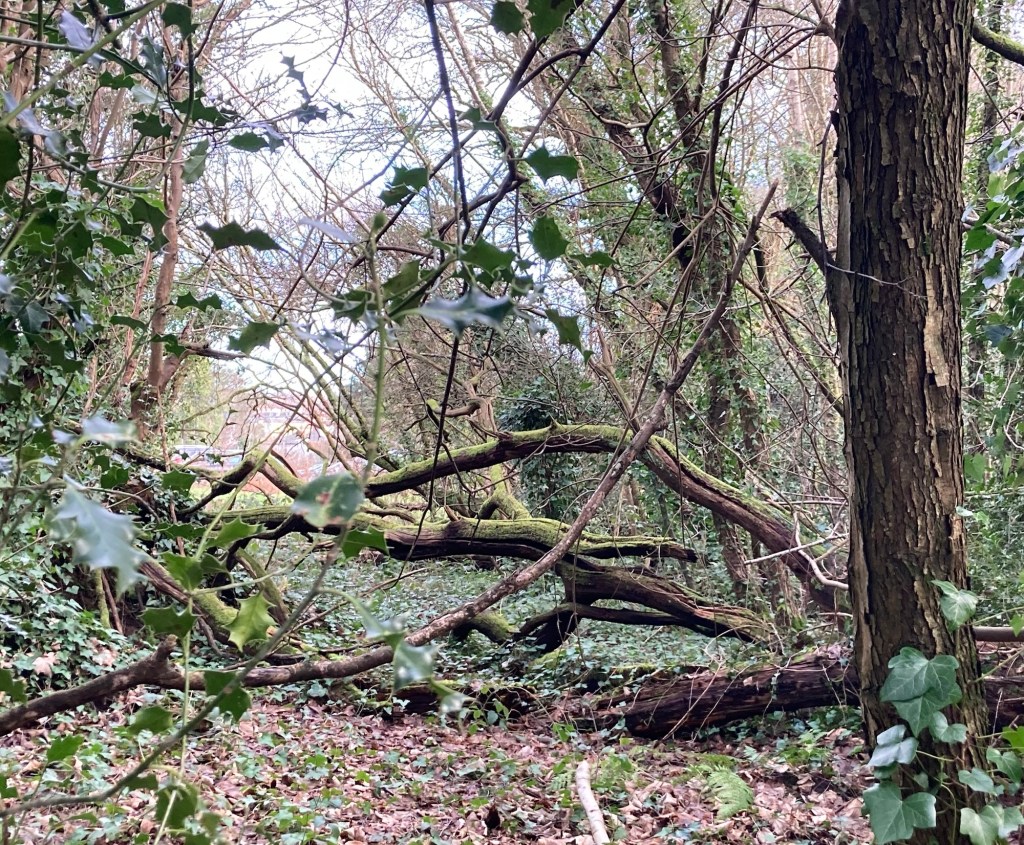
If a tree falls in the forest.Lots of moss-covered trees
After hearing today’s news from the States (more on Trump punishing countries for not supporting his desire for control of Greenland and inviting Putin to serve on the Board of Peace for Gaza) I was tempted to start this with an anti-Trump rant. Instead I just want to apologize for our country’s election of this madman and continue to hope that someone or all of us together can eventually (though sooner rather than later would be good) get him out of office and begin to restore a sense of sanity to the office and world at large. I’m not that hopeful at the moment.
But on with the doings of the day, which was a bit of a shorter walkabout to and through Calverley Grounds and then back into The Pantiles area for a quick errand before making our way back to the house.
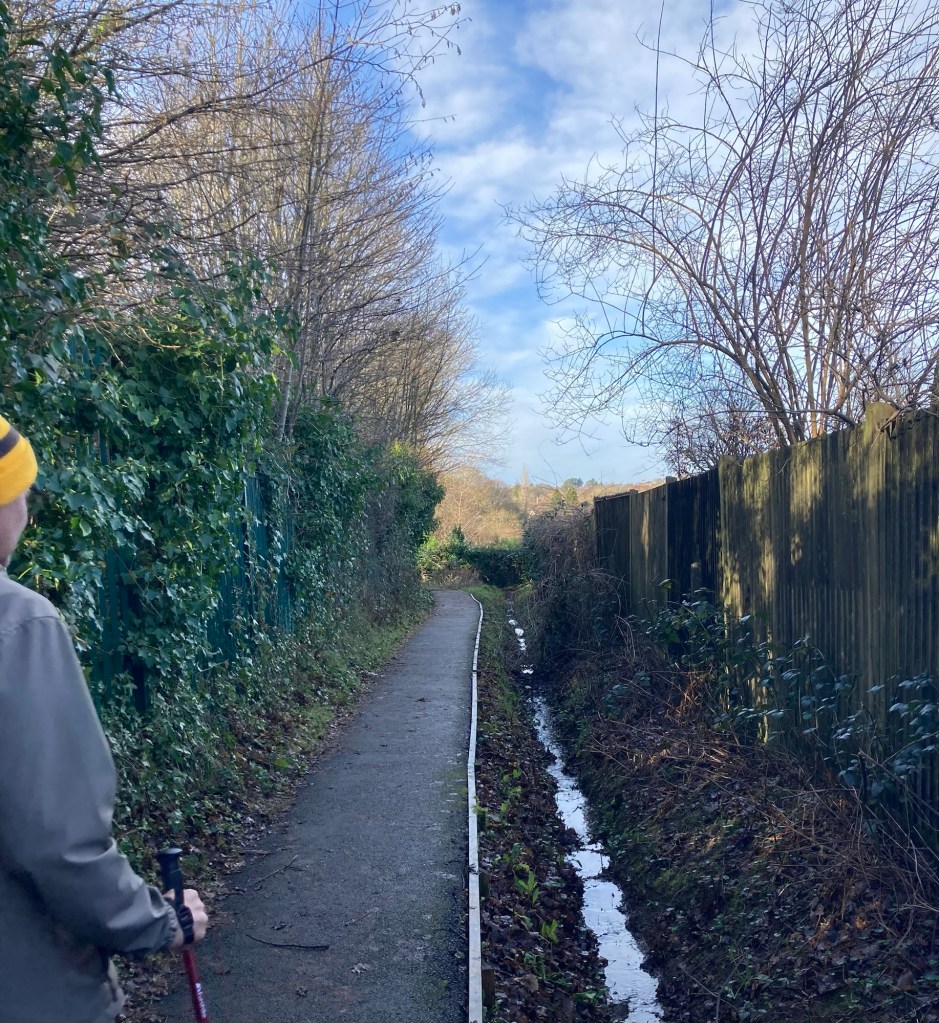
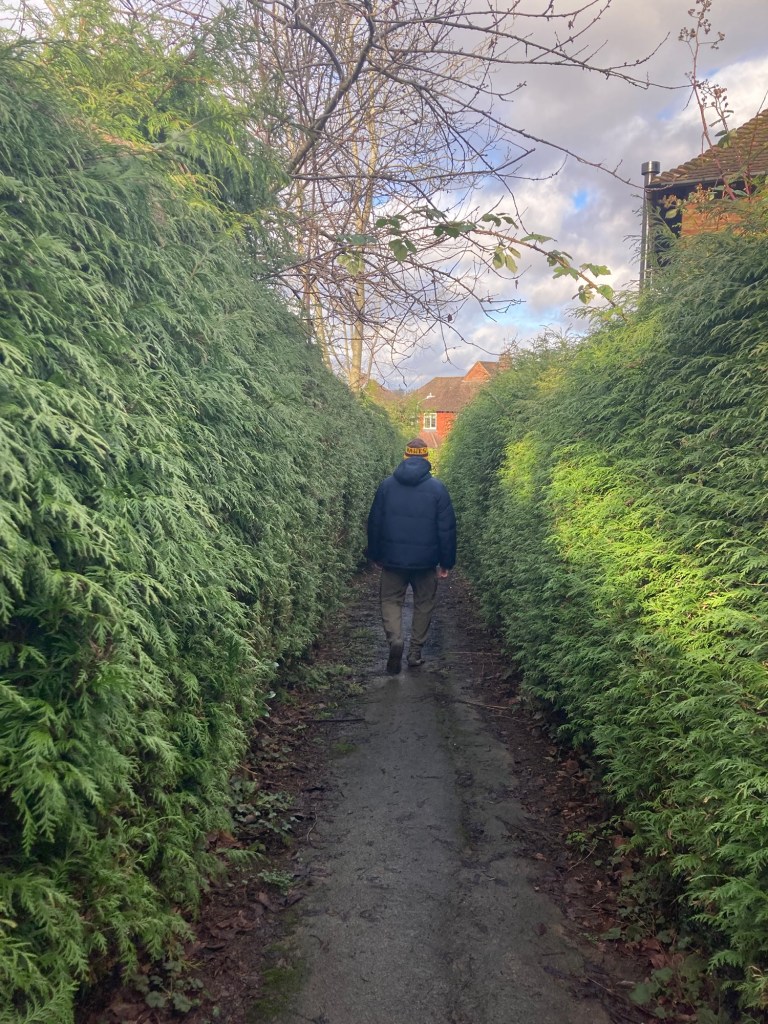
To begin, Bob found us one of many neighborhood footpaths that headed us in the right direction. The path started in a park before moving onto a paved narrow lane between houses.
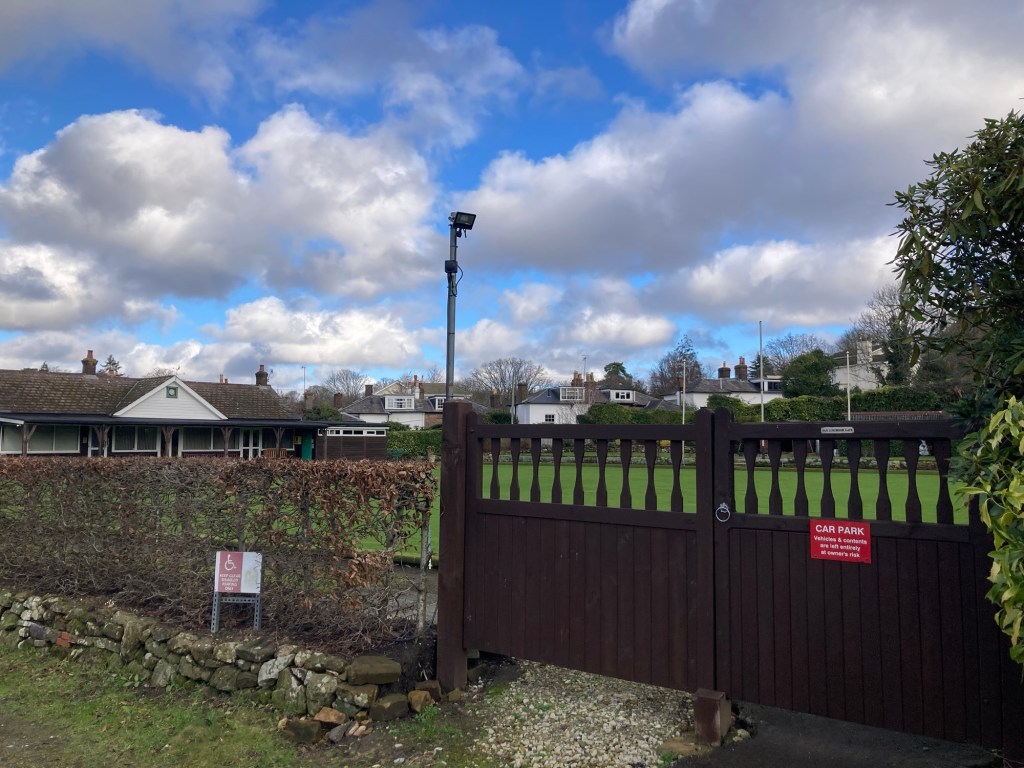
Entrance to the footpath through the parkLooking down into the neighborhood as we walked the path in the park. We seem to be up on a rise, so we walk downhill into town and then uphill out.On the paved section of the footpath. Note, Bob is wearing his winter coat.The Claverley Lawn Bowling Club
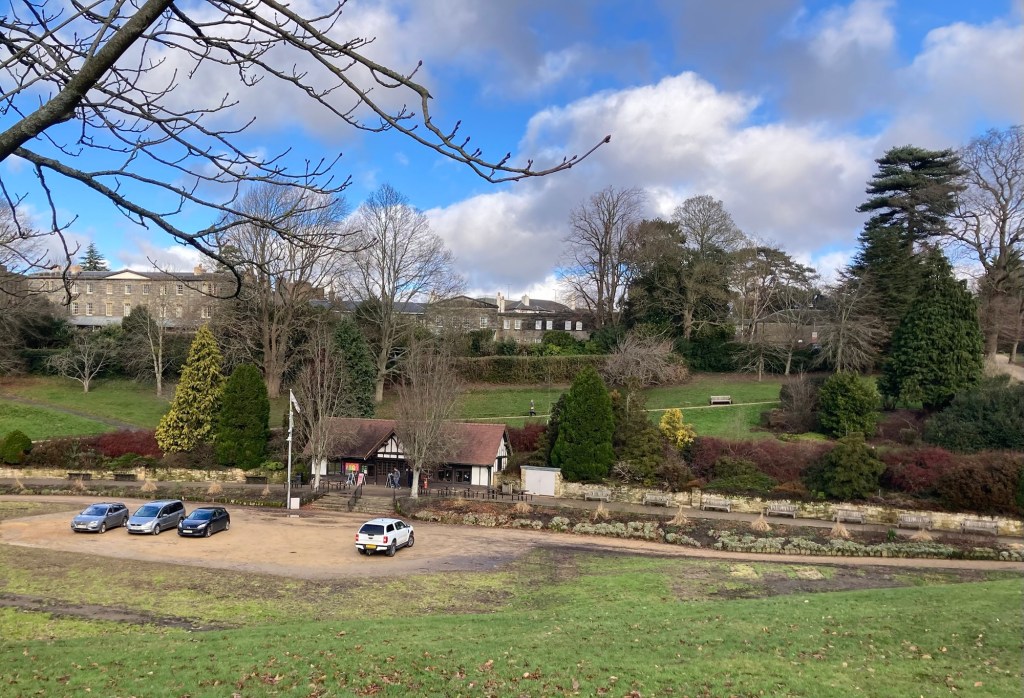
Our goal was to check out the Claverley Grounds which were recommended to us as an in-town place to visit by our homeowners. It is a park and gardens located just off of the High Street in the town center. It has a nice walking path along the outer perimeter as well as a cafe, toilets, a car park, a playground, and multiple sport facilities.
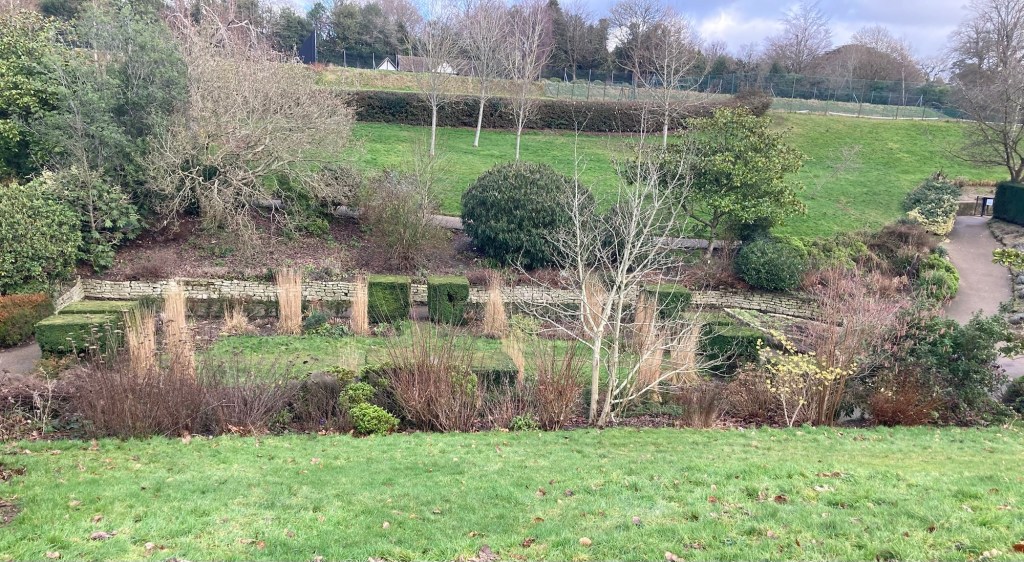
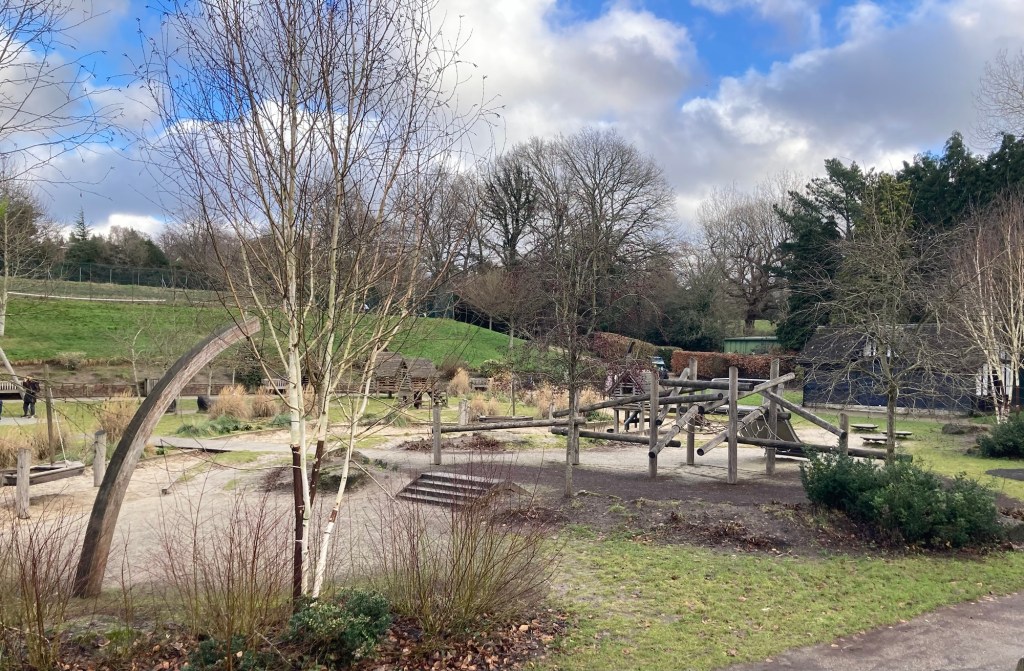
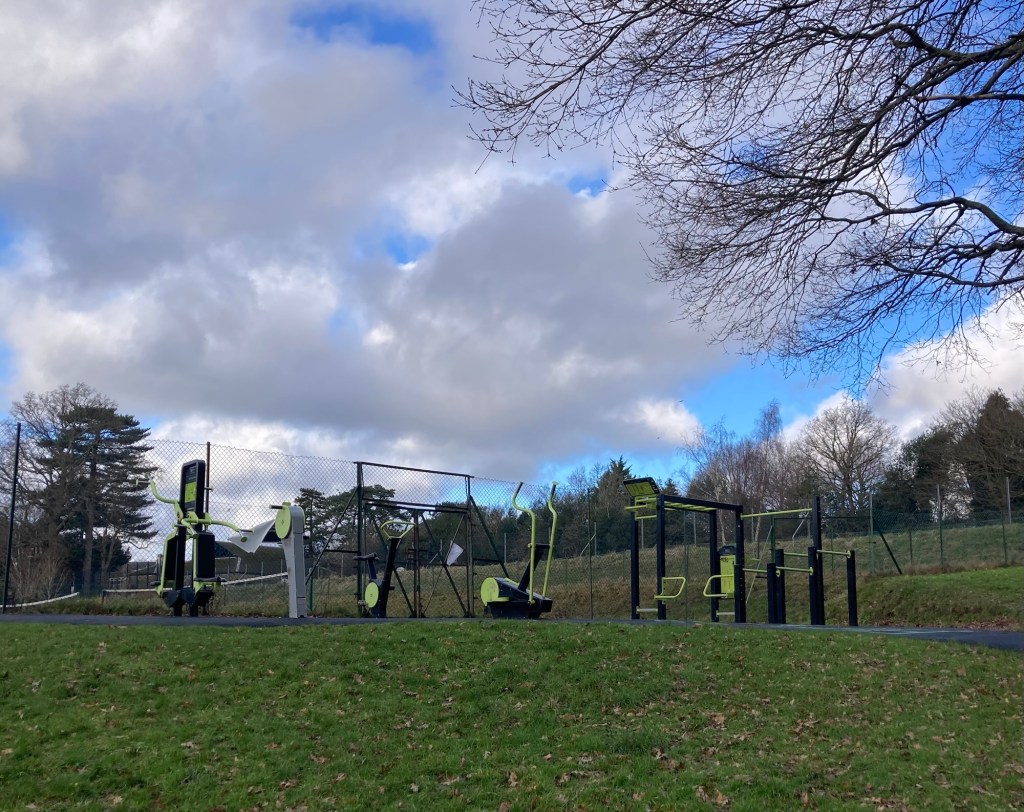
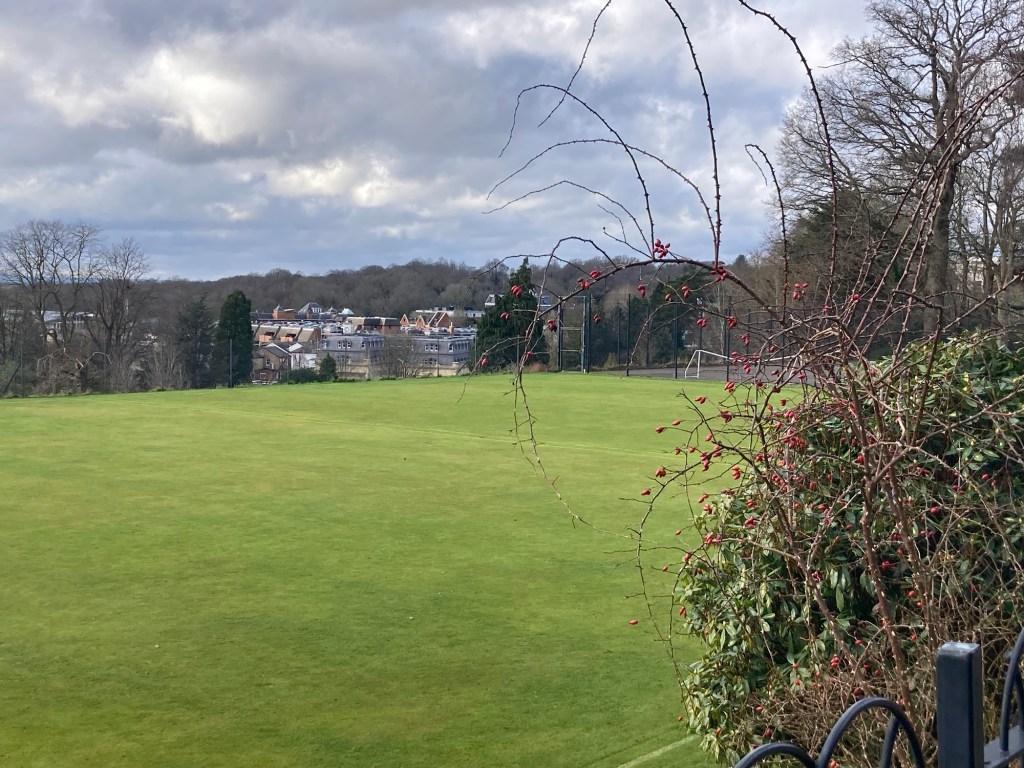
A view of the car park and cafe An Italianate sunken garden The children’s play areaExercise equipment Looking across the croquet lawn into town
It was a cute park, but a quick visit. From there, we walked about 10 minutes to the Pantiles area for me to stop into a hair salon that I had contacted online. Since I am due for a haircut and root touch up, I needed to come in for a patch test. This is a thing in the UK where they put a bit of the color solution on your wrist to determine if you will have an allergic response to it. I have had to have this done before all of my UK hair appointments. This is not something that is done in the US, at least I have never had it requested, and I’ve had my hair done in a number of states at this point.
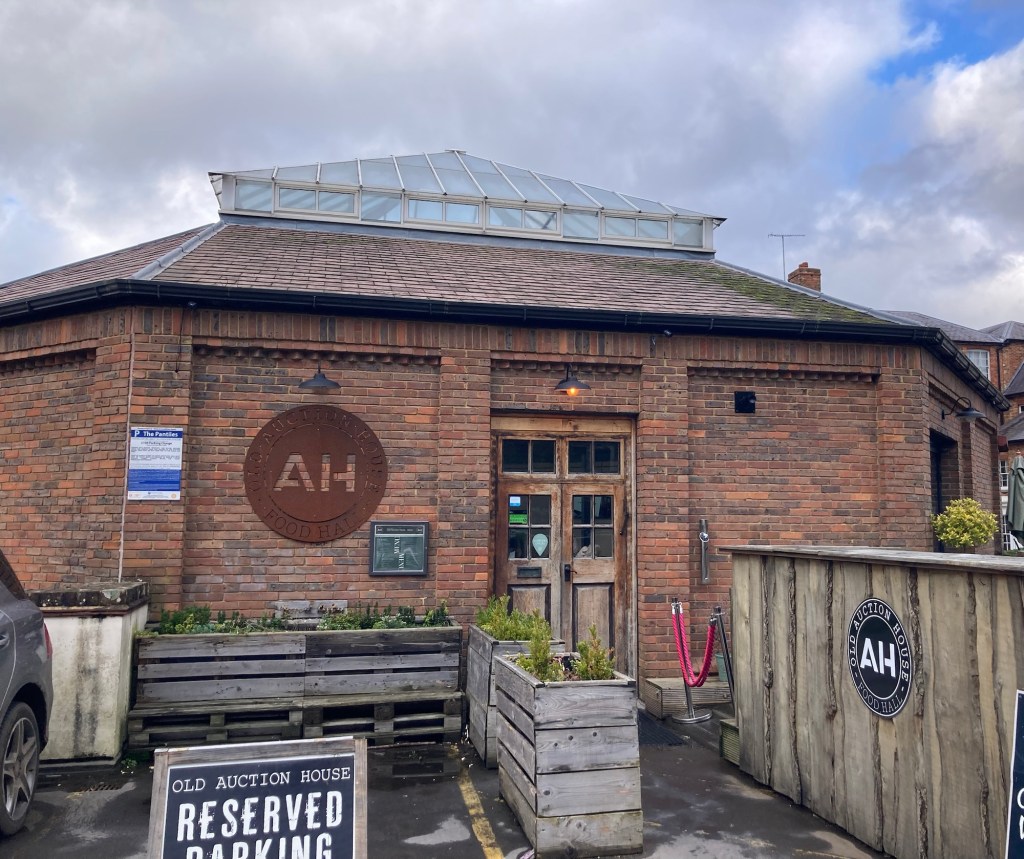
Anyhoo, appointment scheduled for no week, and no reaction to hair dye. Bob and I continued on, as he had two more sites he wanted to see. The first was a food hall in an old auction house building.
The outside of the cute building. It was warm and cozy inside. They are open from 9-5 and serve, coffee, tea, cocktails, and baked goods.
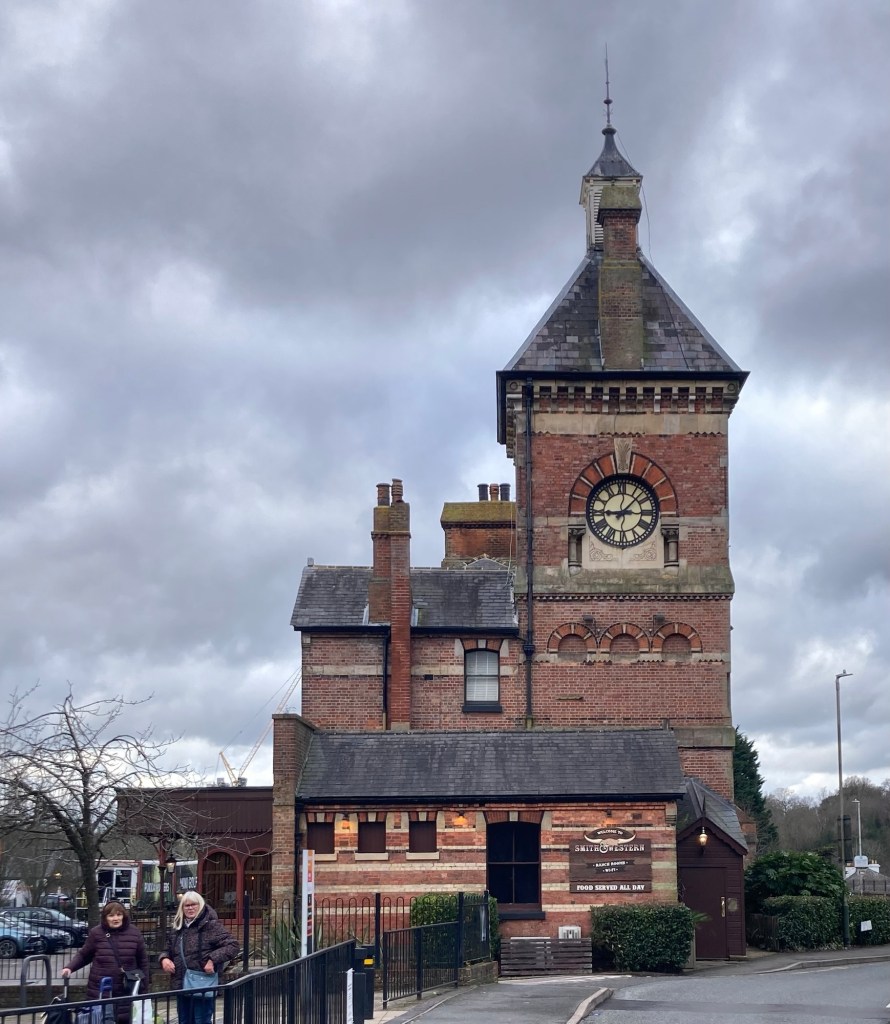
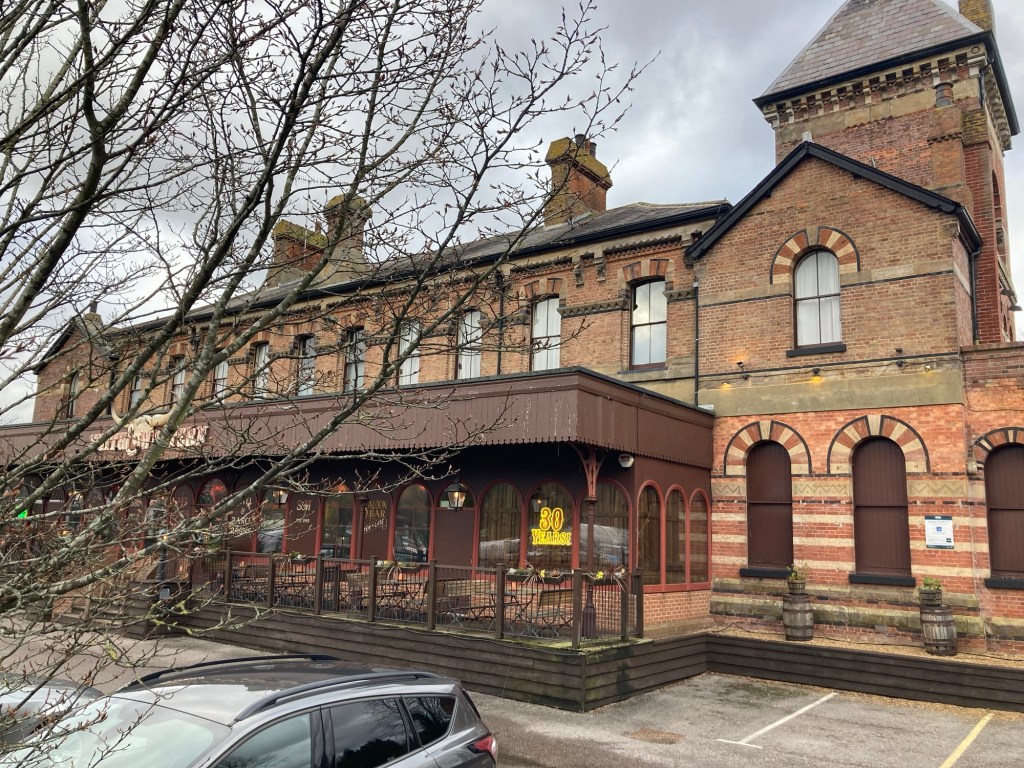
Bob also wanted to checkout the big Sainsbury’s grocery store while we were so close. We haven’t had to buy much in the way of food, as our homeowners stocked up for us. In going to the grocery store, we saw another repurposed old building.
One view of the former train station, that is now a Smith and Western Hotel with a western-themed bar and restaurant.The front of the now Smith and Western Hotel.
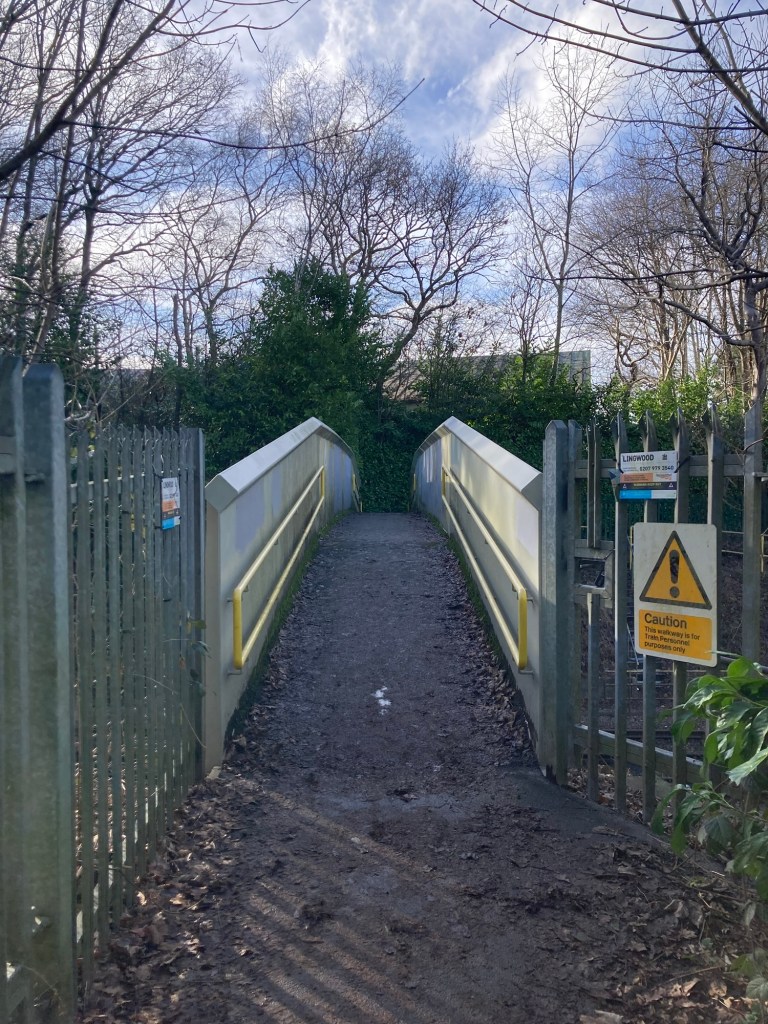
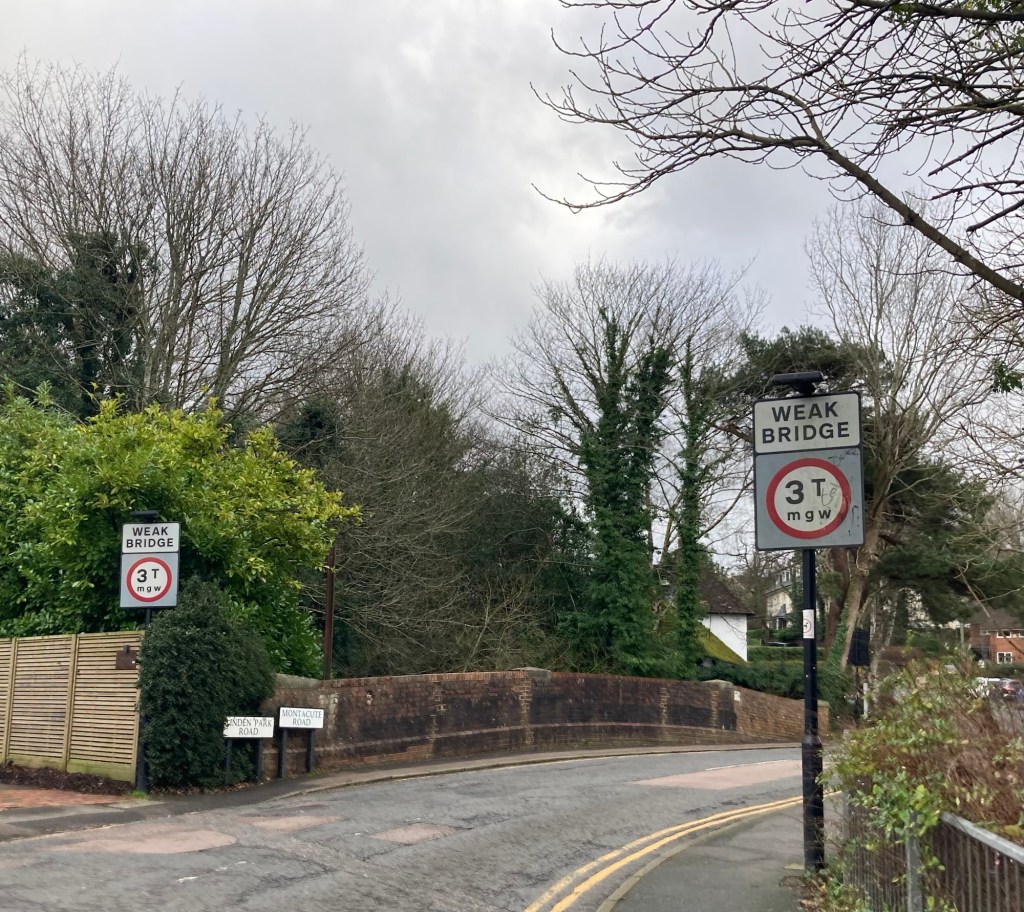
After a quick shop, we headed back to the house and saw another repurposed important posting. Bob and I sucked in our stomachs, thought light, happy thoughts, and successfully made it across the bridge.
We were impressed with the signage but are hoping it is known to the NatSav, so that large trucks aren’t having to learn about the weak bridge at this point as it seemed like having to back up on either end would create havoc for the truck and any other traffic.
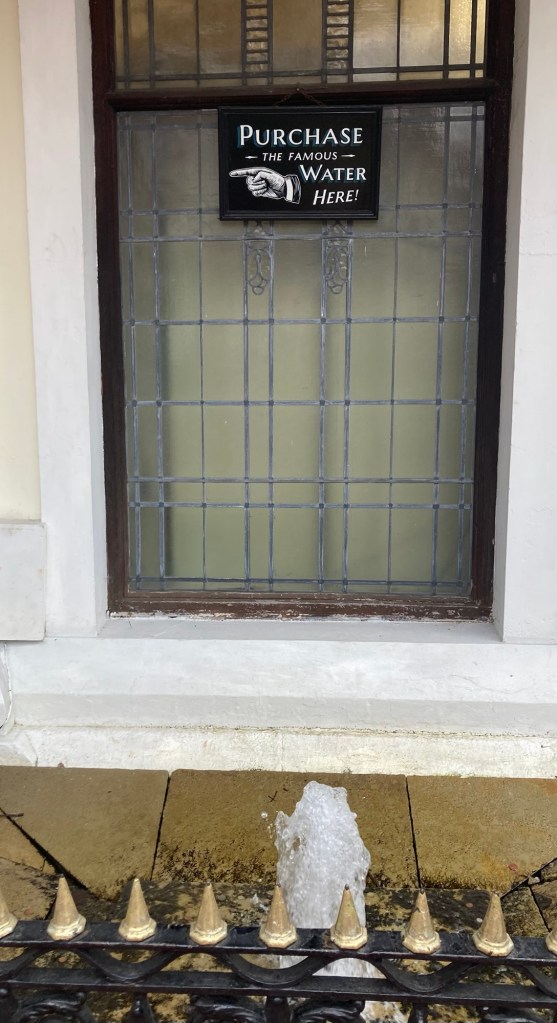
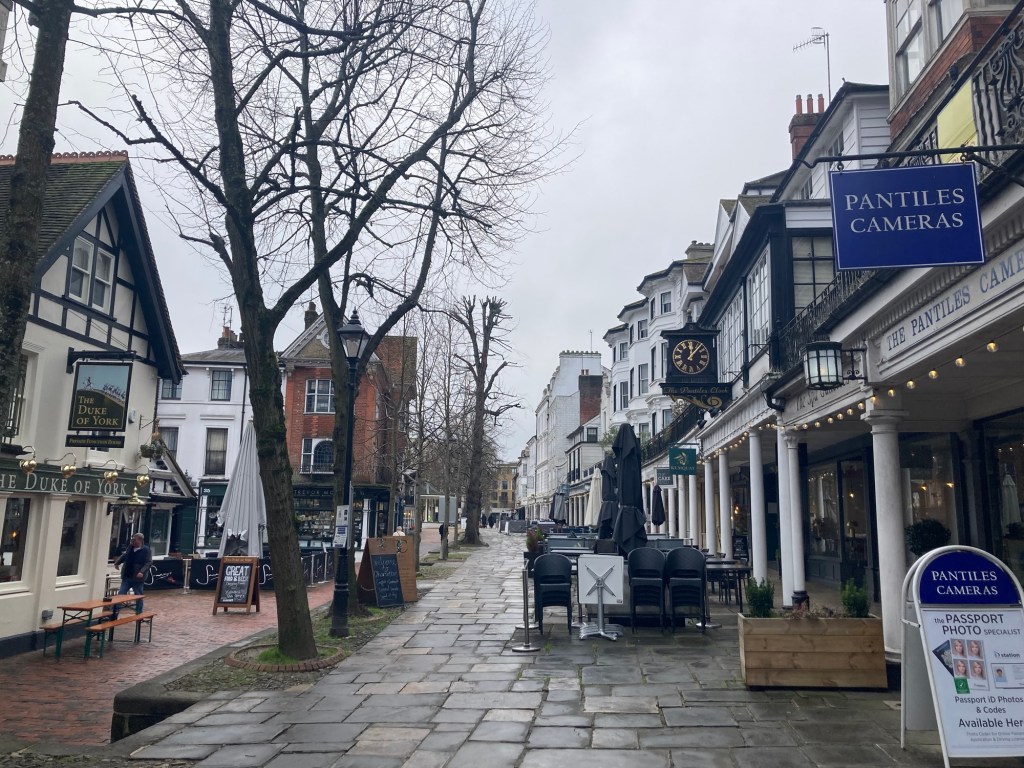
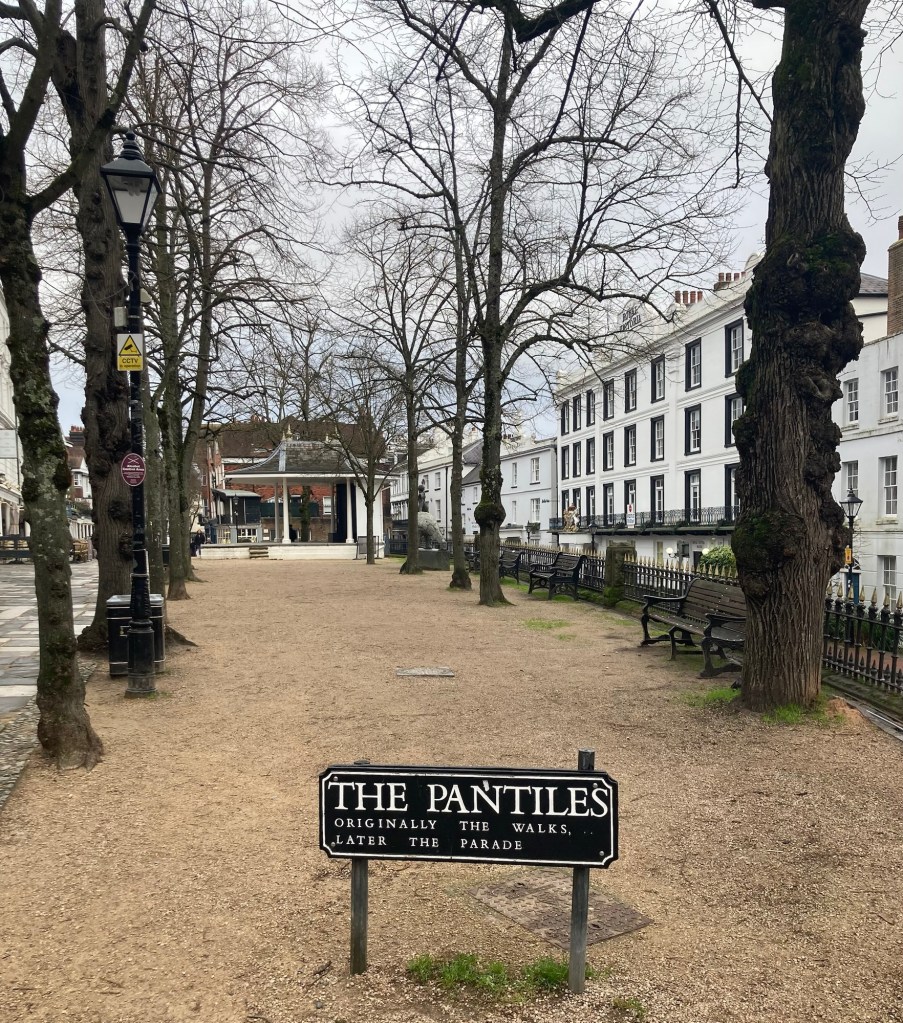
One of the sites recommended for us to check out in Royal Tunbridge Wells was The Pantiles, a Georgian area of the town center featuring boutiques, cafes, and galleries, in addition to an exhibit regarding the spa waters that earned the town its Royal designation.
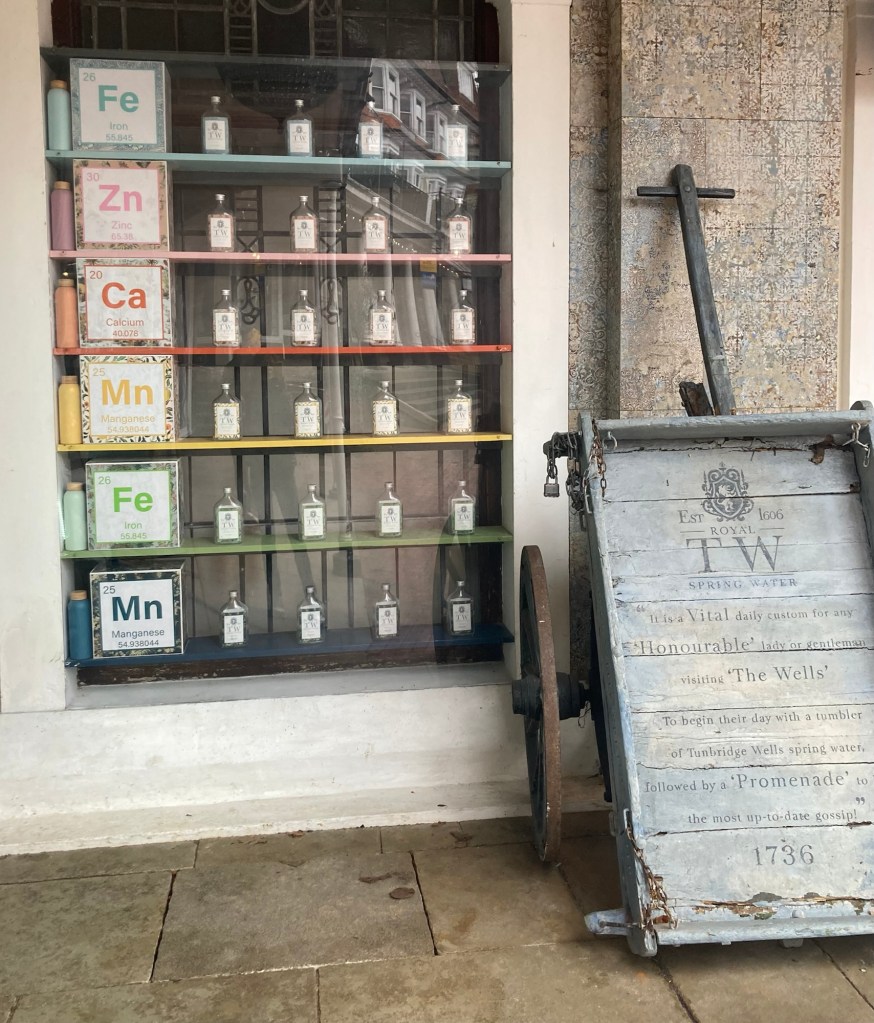
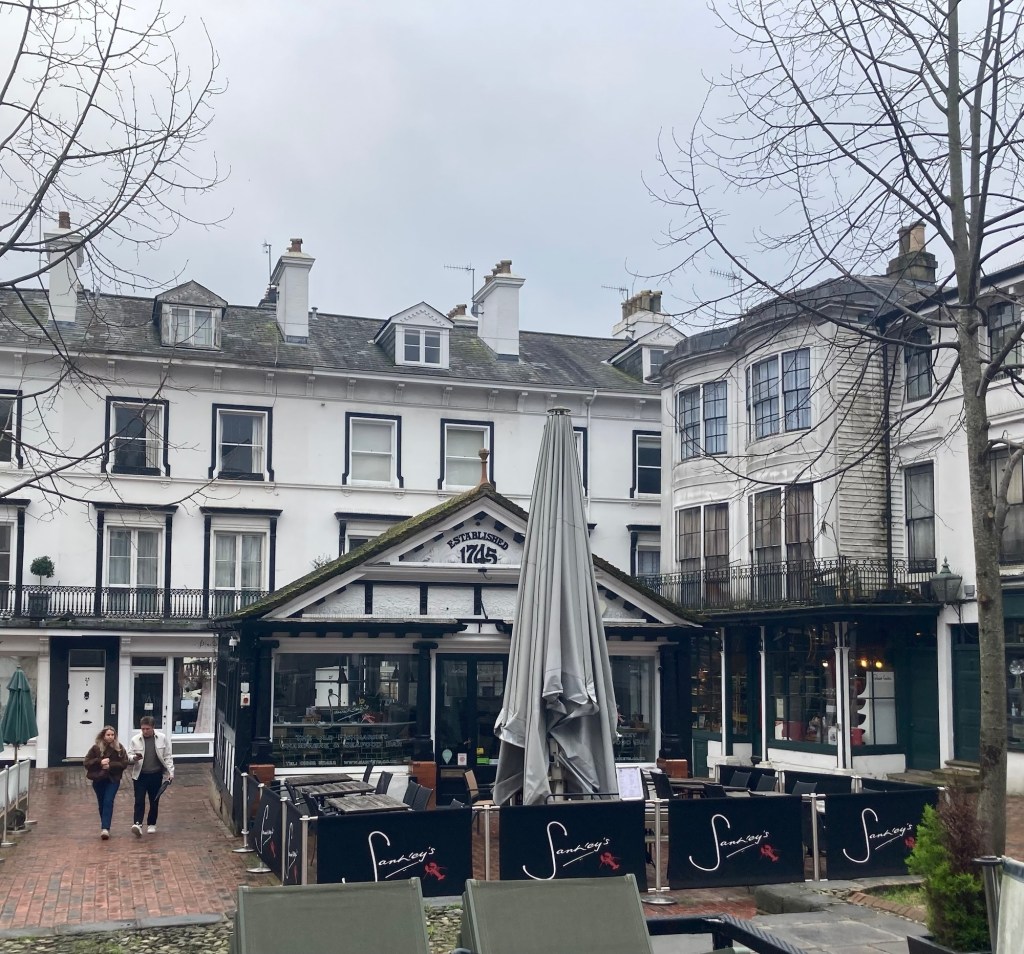
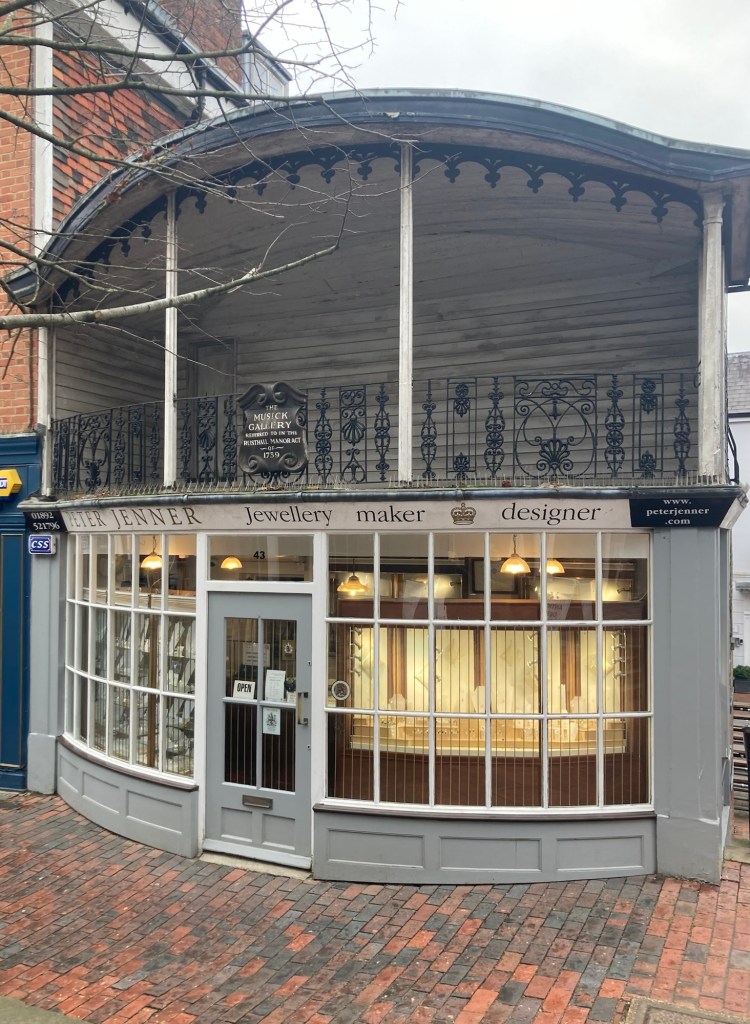
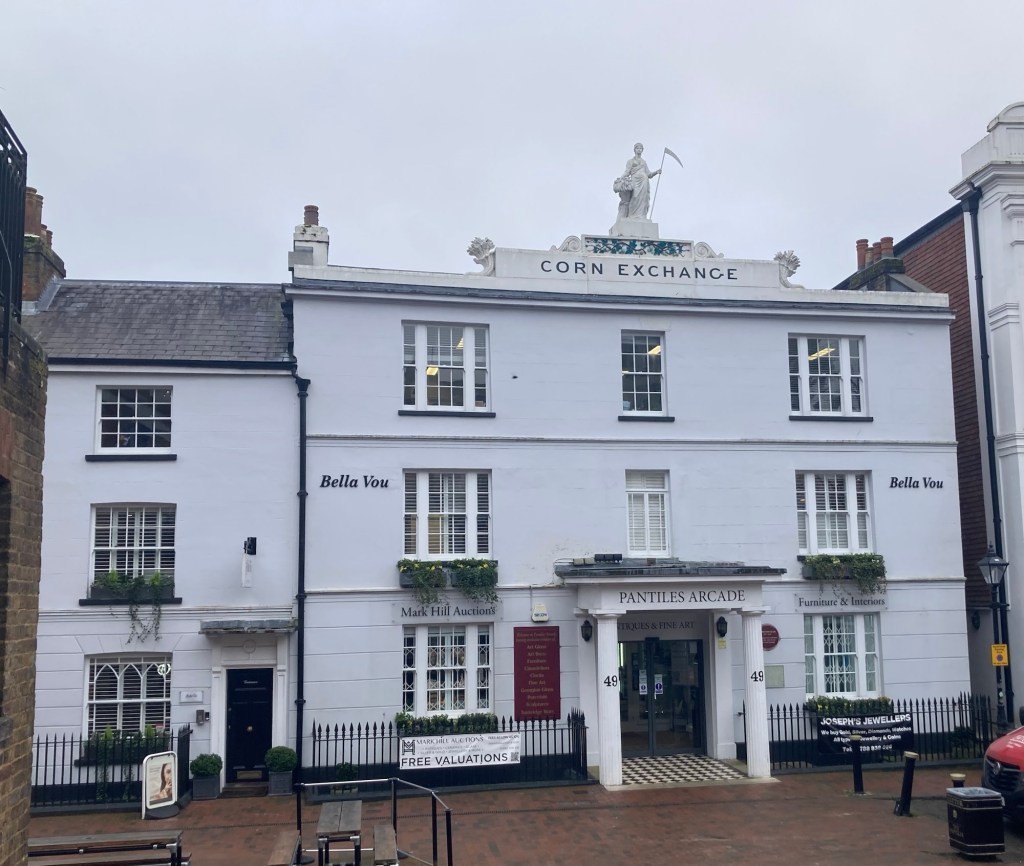
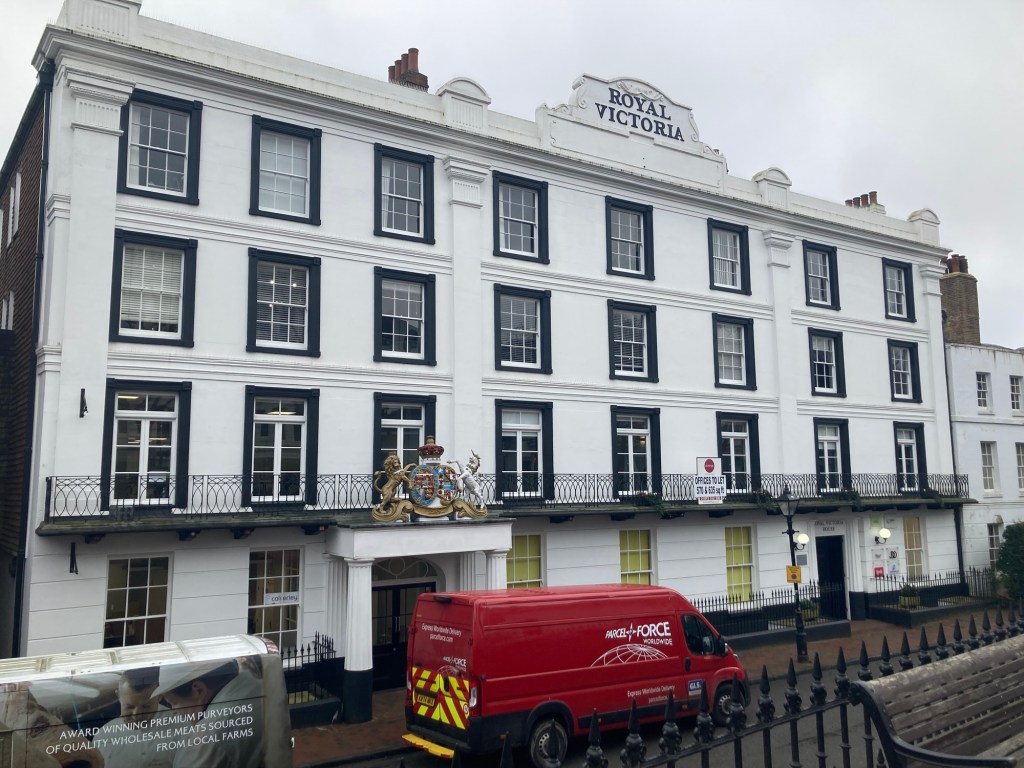
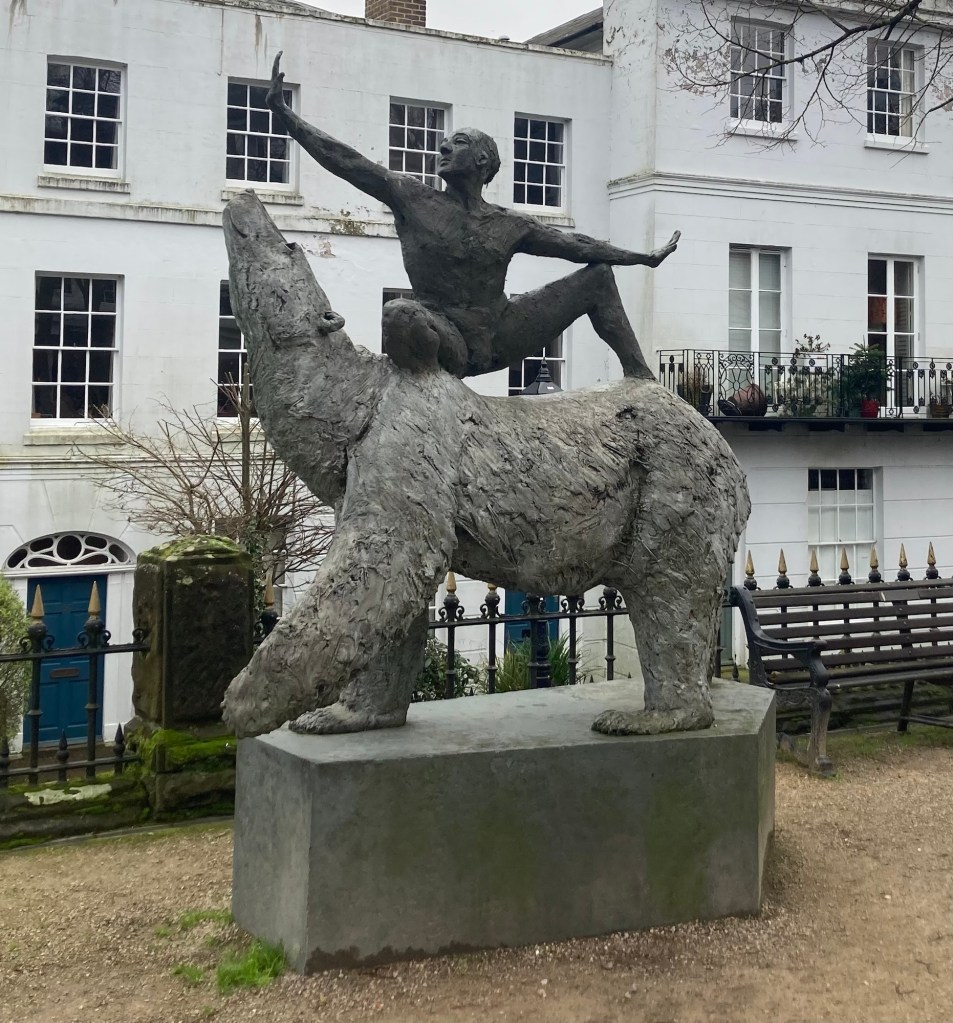
They sell bottles of the “famous” water out of a vending machine.A list of the minerals found in the spring waterThe walk and stores in The PantilesA cute seafood restaurant in a small squareA jewelry store under an old music galleryAn old corn exchange building, where corn merchants would meet to arrange pricing with farmersA statue in a small park in front of the Royal VictoriaA sign at one end of The Pantiles
We then walked back through the cute, small district to begin our perusal of the High Street. It was one of the longest and most vibrant High Streets that we’ve visited.
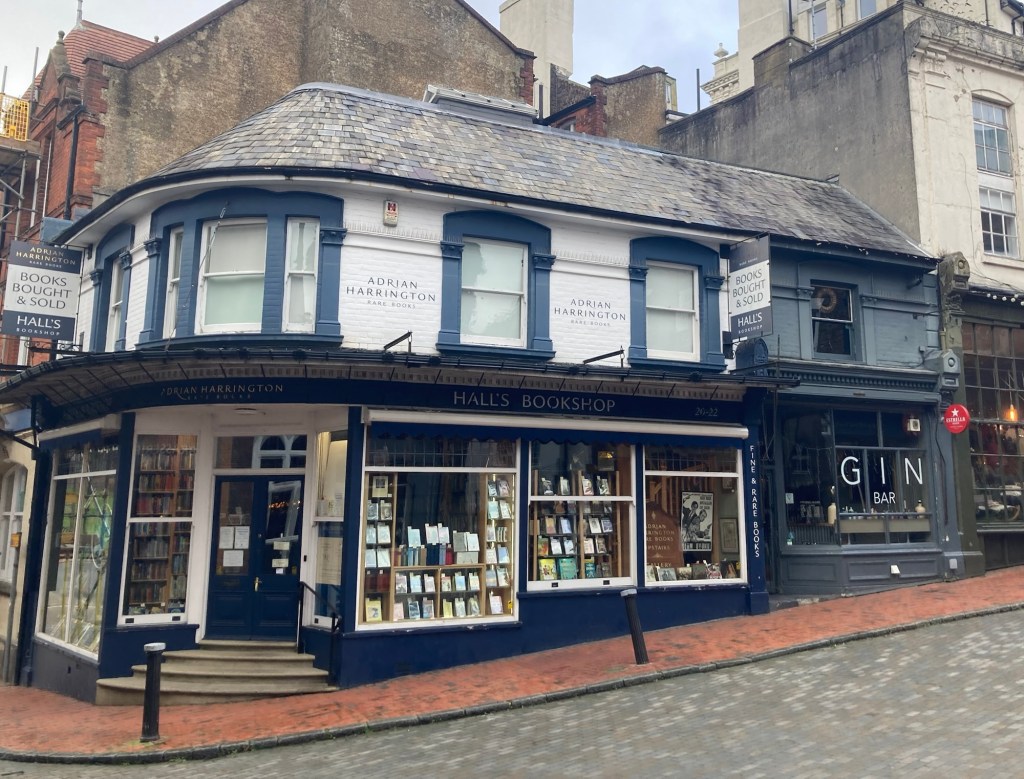
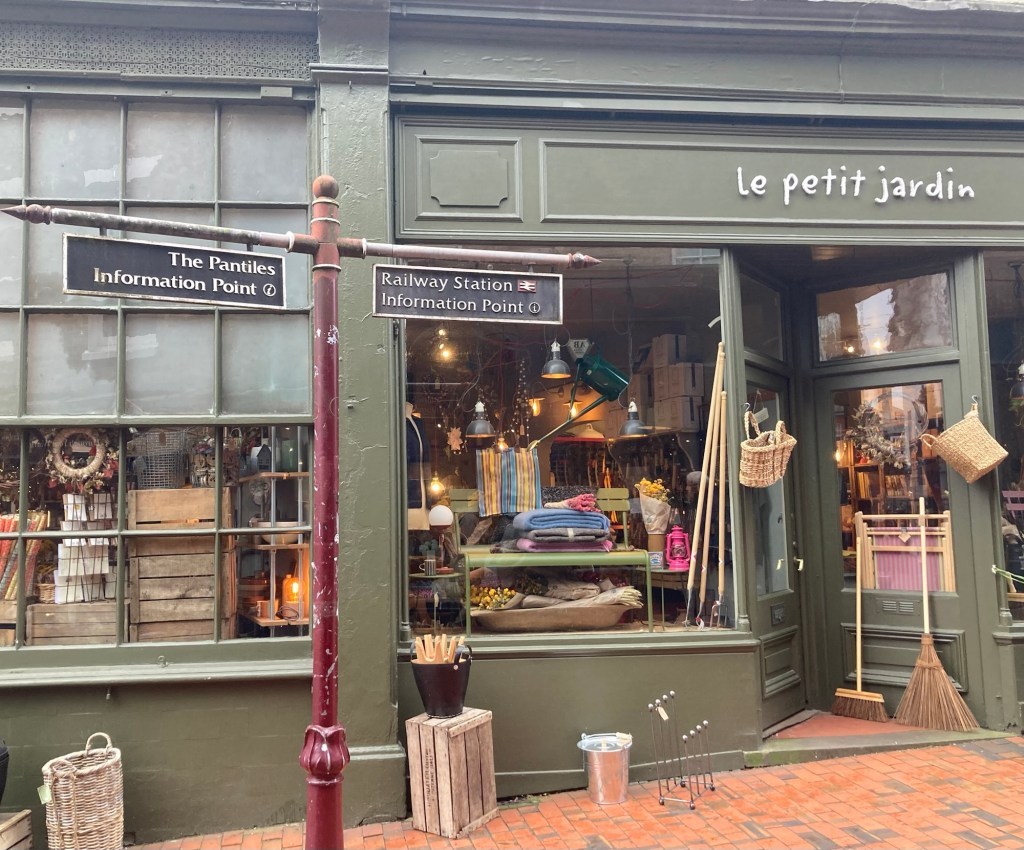
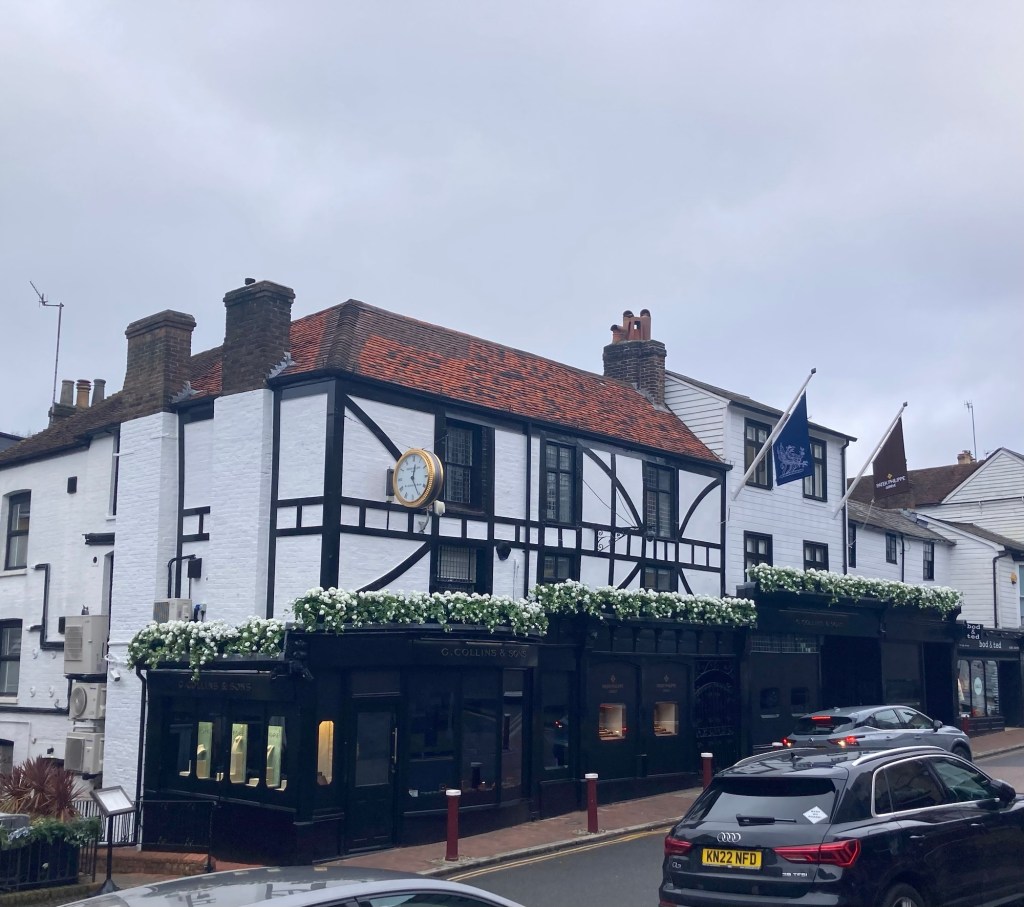
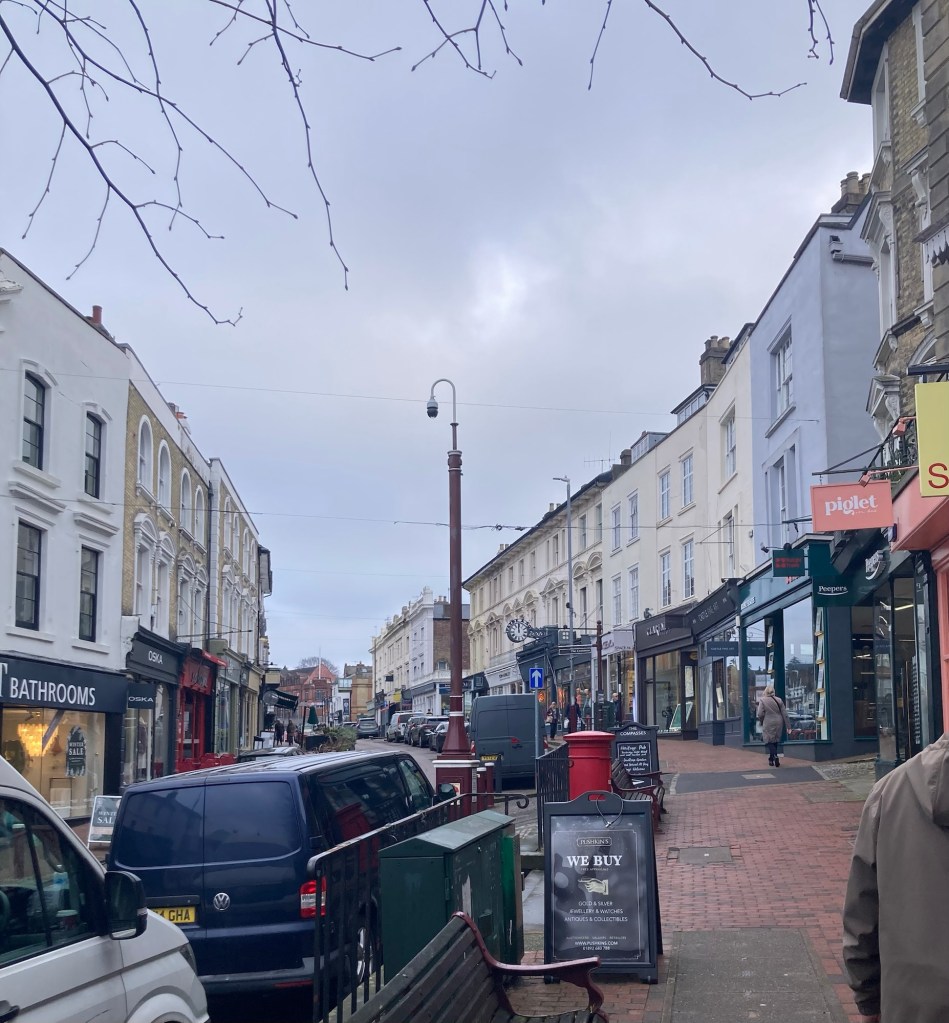
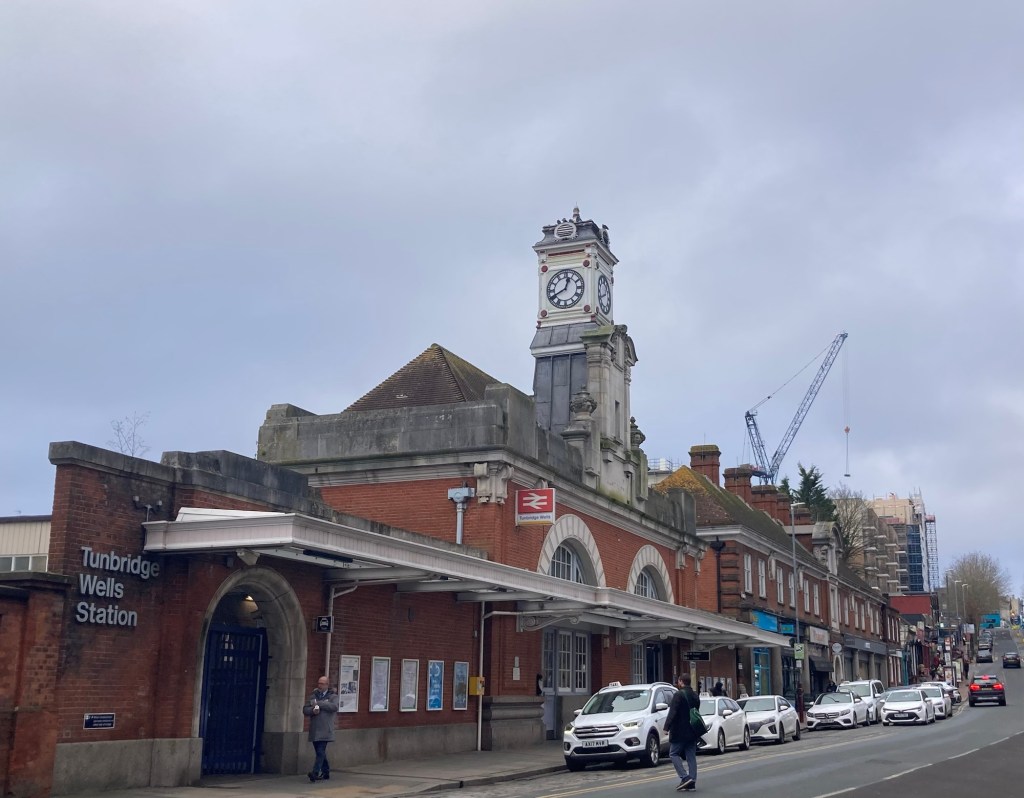
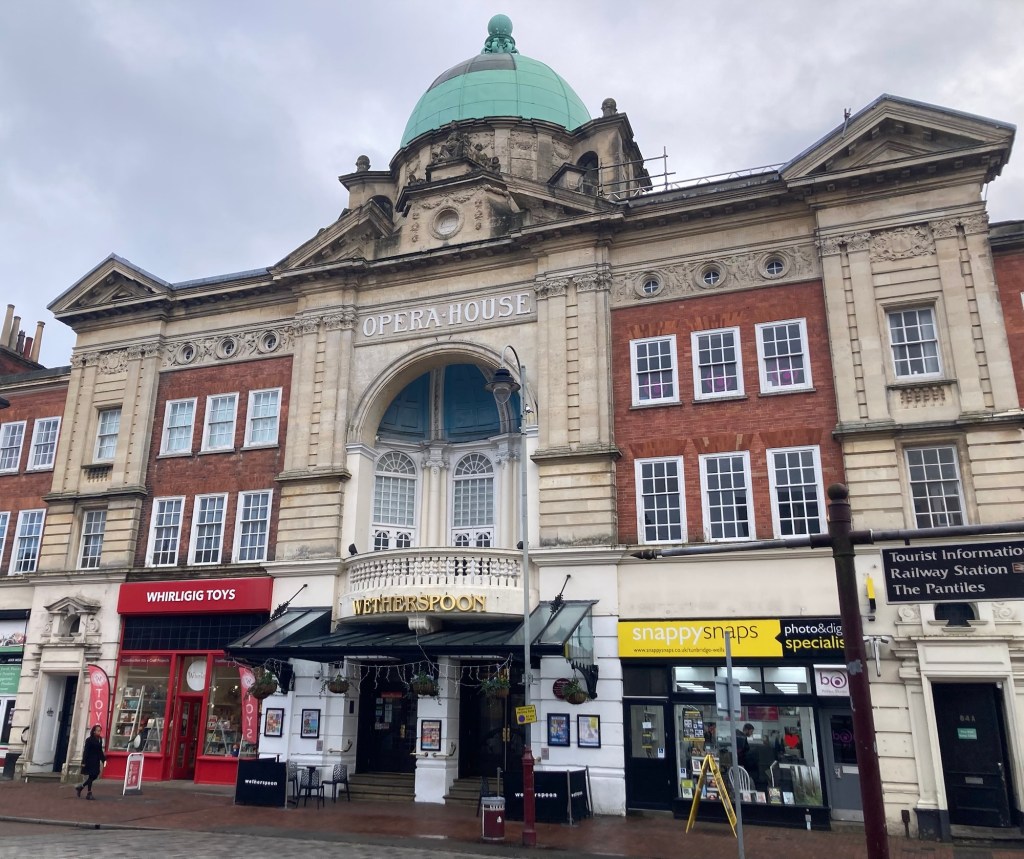
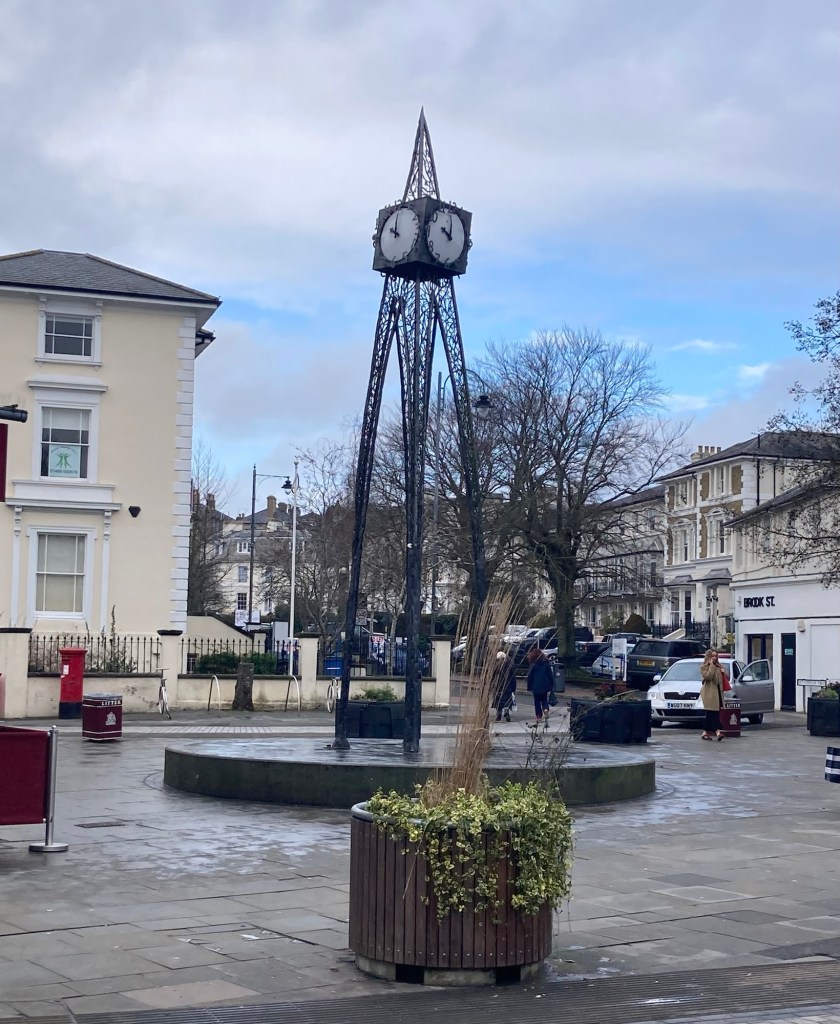
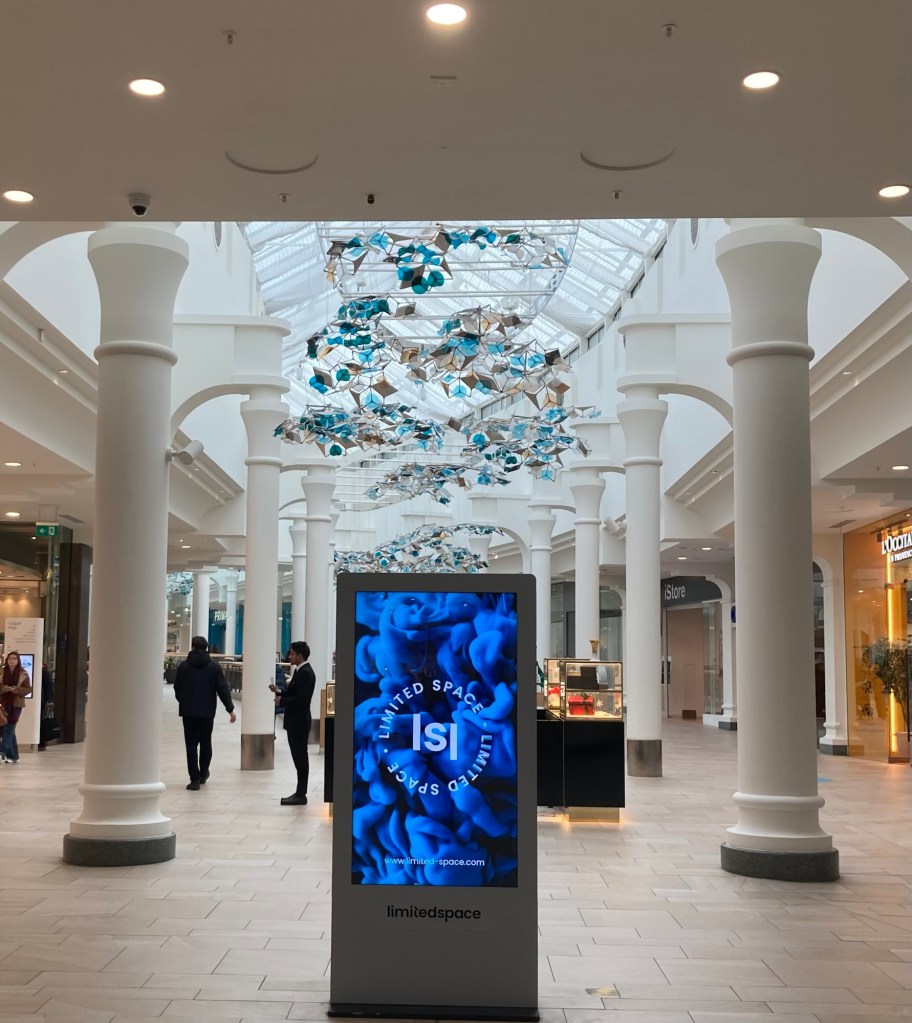
Here’s a happy corner — a cute bookstore and a gin barHelpful signageA very attractive watch shopLooking up the High StreetThe train stationShops in a former opera houseA cute squareInside a two level mall at the top of the High Street
Bob and I arrived by train to Royal Tunbridge Wells yesterday afternoon a little after 2:00 pm. (Fun Fact: We went through the town of Tonbridge to get to Royal Tunbridge Wells.)
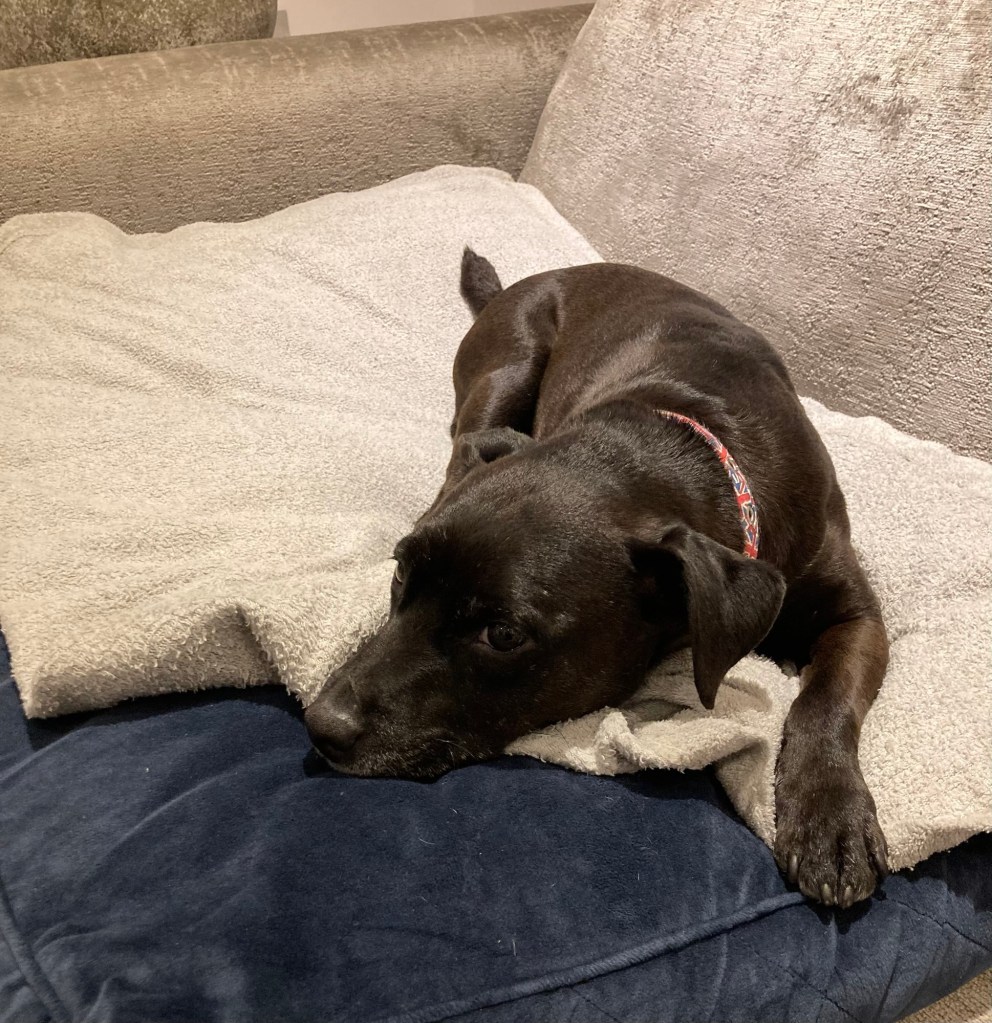
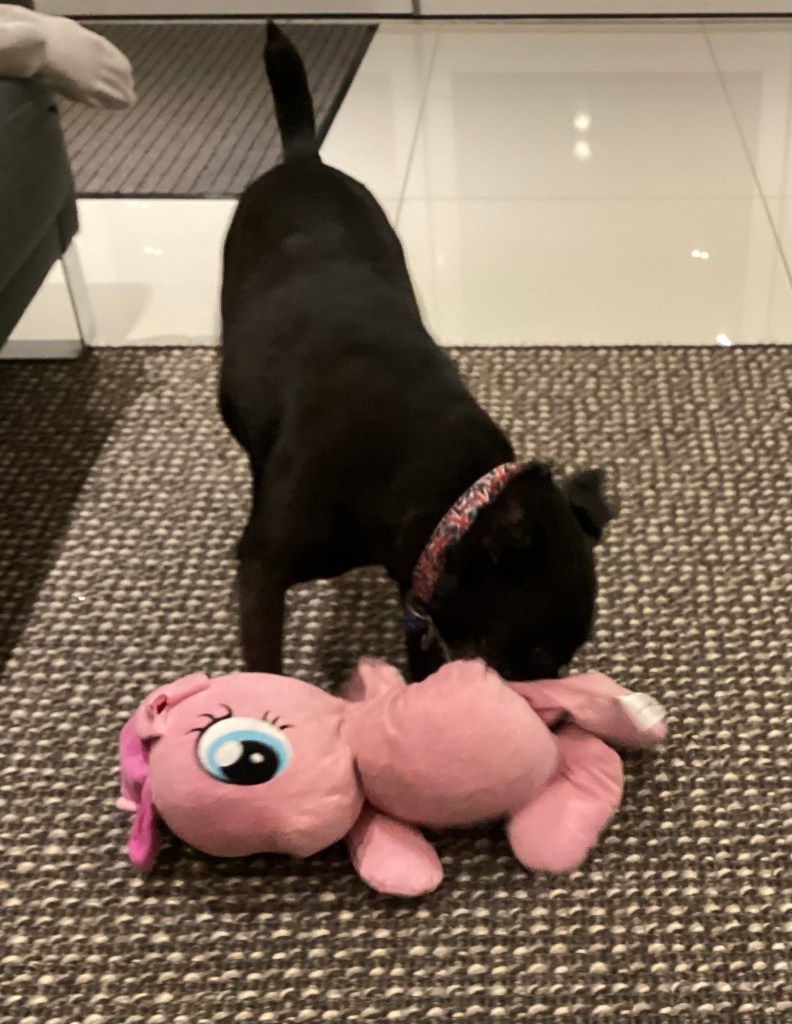
Our homeowner picked us up at the station. We had a great introduction to Nellie, our canine companion for this 31-day sit, and a thorough walkthrough of the lovely three floor home before the homeowners left at 5:00 pm for Heathrow airport to catch their flight to Rio. They will be spending a bit of time in Brazil before boarding a cruise around South America.
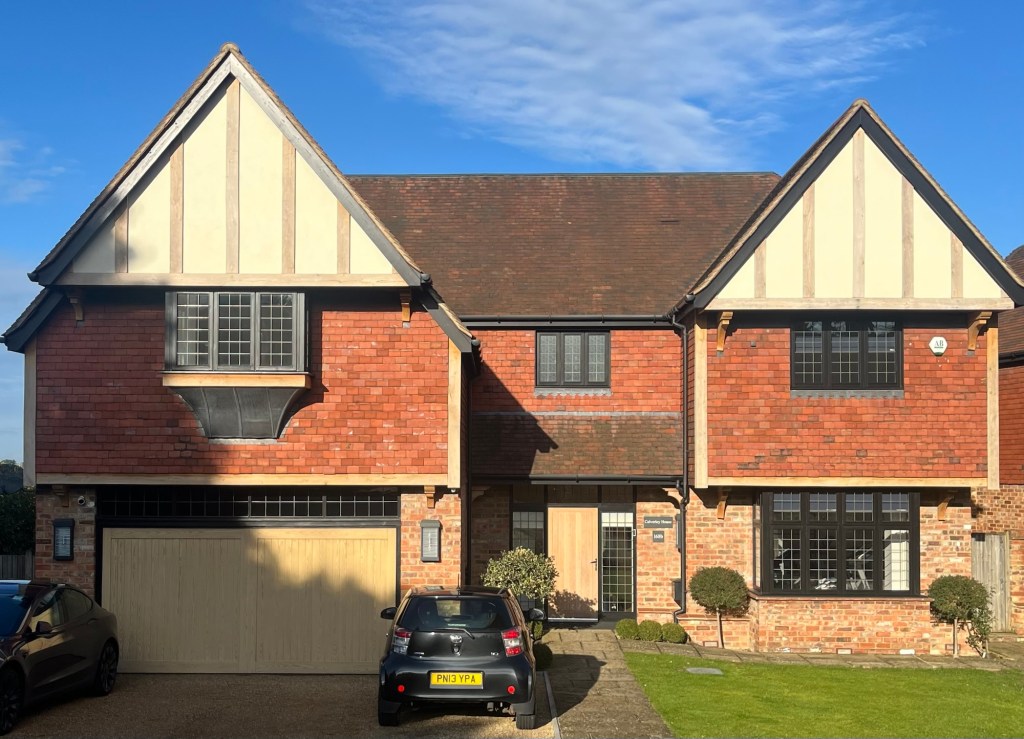
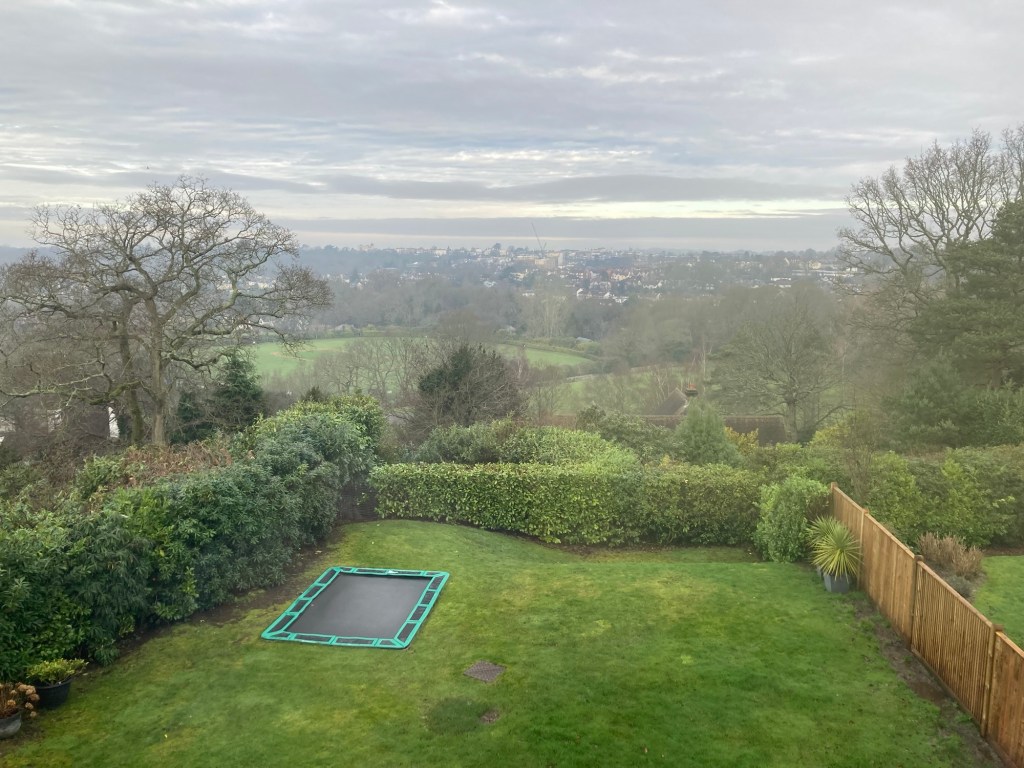
The exterior of our current abodeThe view of their back garden and the town center from the living room on the middle floor Nellie at restAnd playing with her favorite toy
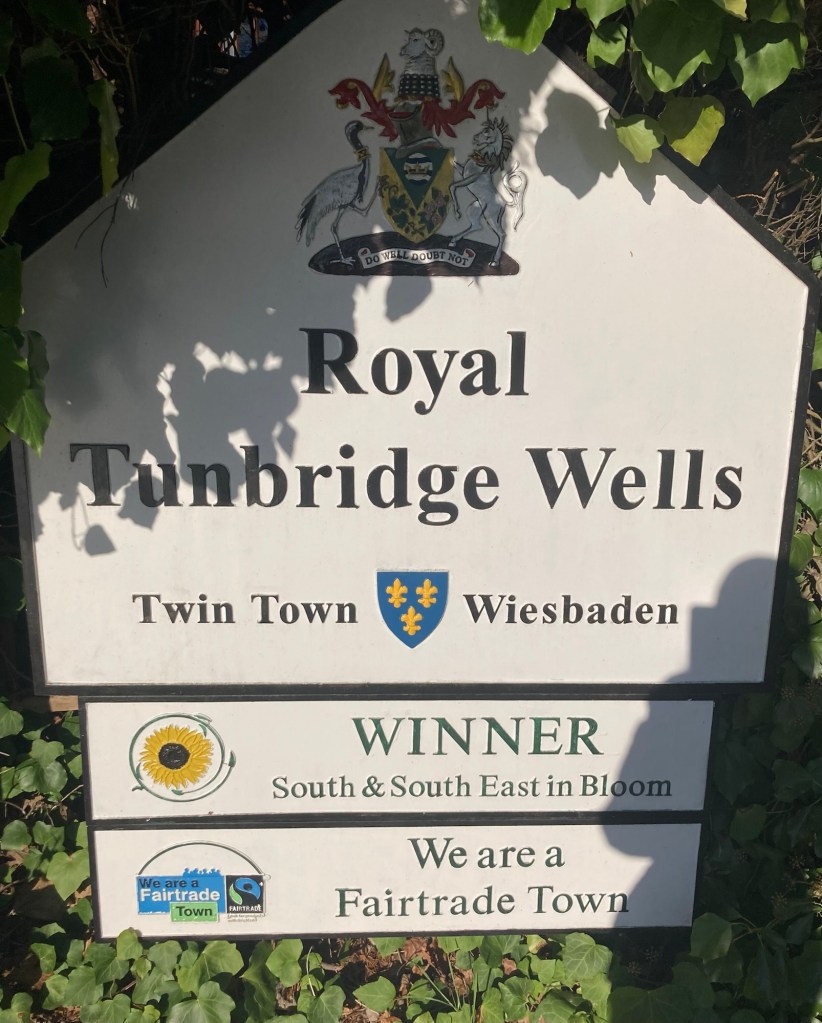
Royal Tunbridge Wells (also just called Tunbridge Wells) is a town of about 60,000 people in Kent, England. It is 30 miles southeast of central London. The town was a spa during the Restoration and a fashionable resort in the mid-1700s. It was granted the prefix “Royal” in 1909 by King Edward VII, acknowledging its long history as a spa town frequented by royalty, especially his mother Queen Victoria. It is one of only 4 towns in England with the title. We have not yet been required to curtsy or bow to anyone.
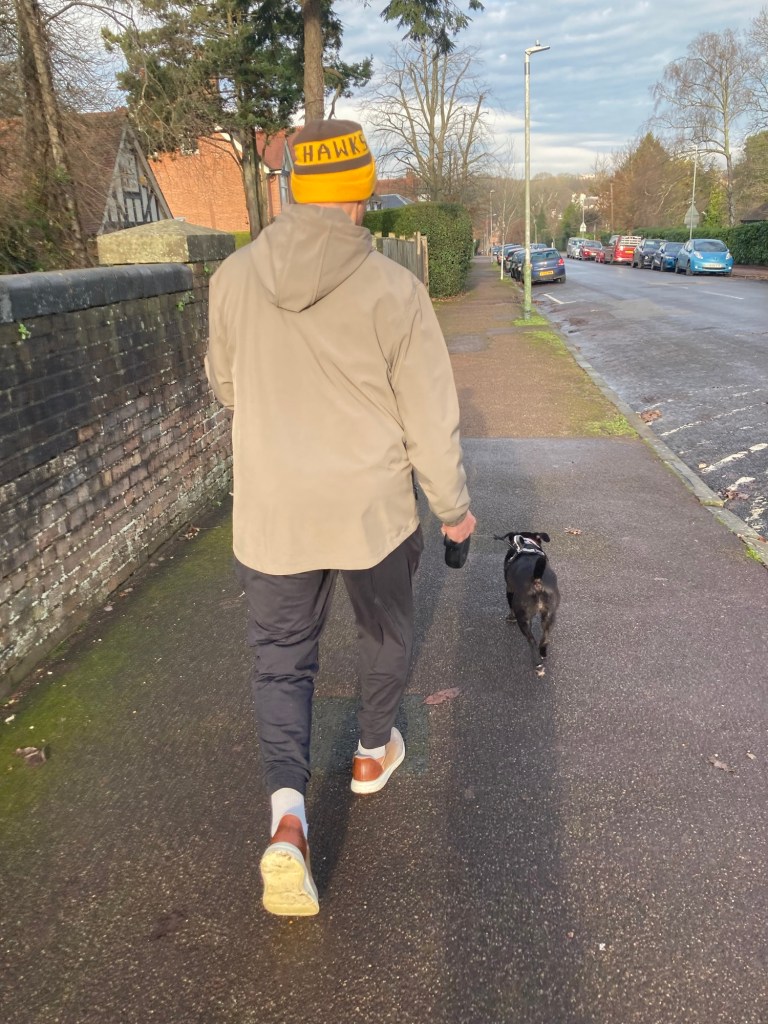
This morning, Bob and I took Nellie out for her first walk of the day on one of the routes suggested by the homeowners. It gave us our first real glimpse of our current neighborhood.
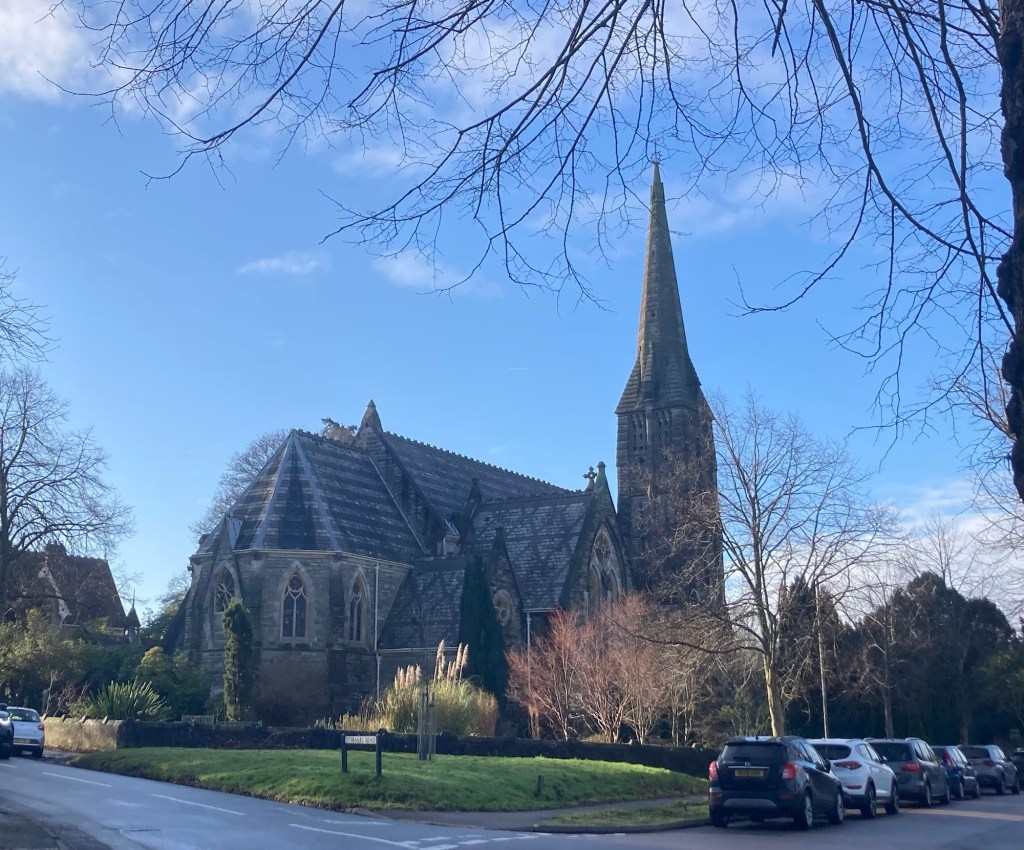
Bob and NellieThe impressive St. Mark’s Church that we passed on our 70 minute walkA proud sign on a corner near our house
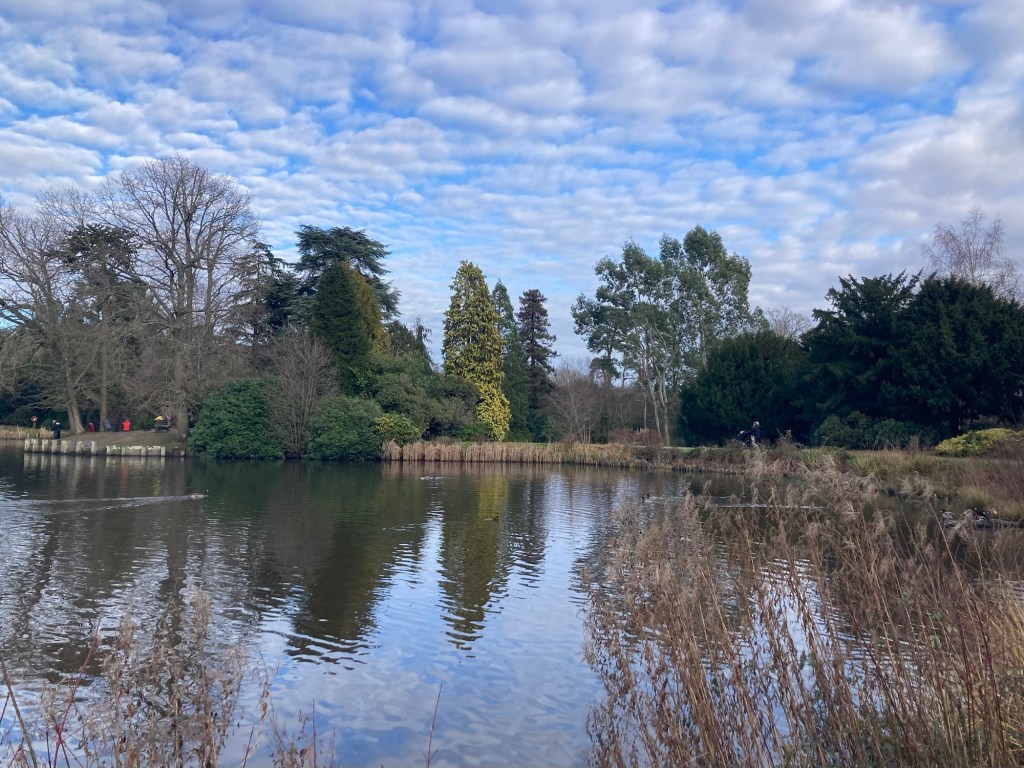
After we returned to the house, we decided to visit Dunorlan Park, as today was to reach a high of 50 degrees F and was partly sunny. It is likely to be the best weather we’ll have for awhile if not the whole visit.
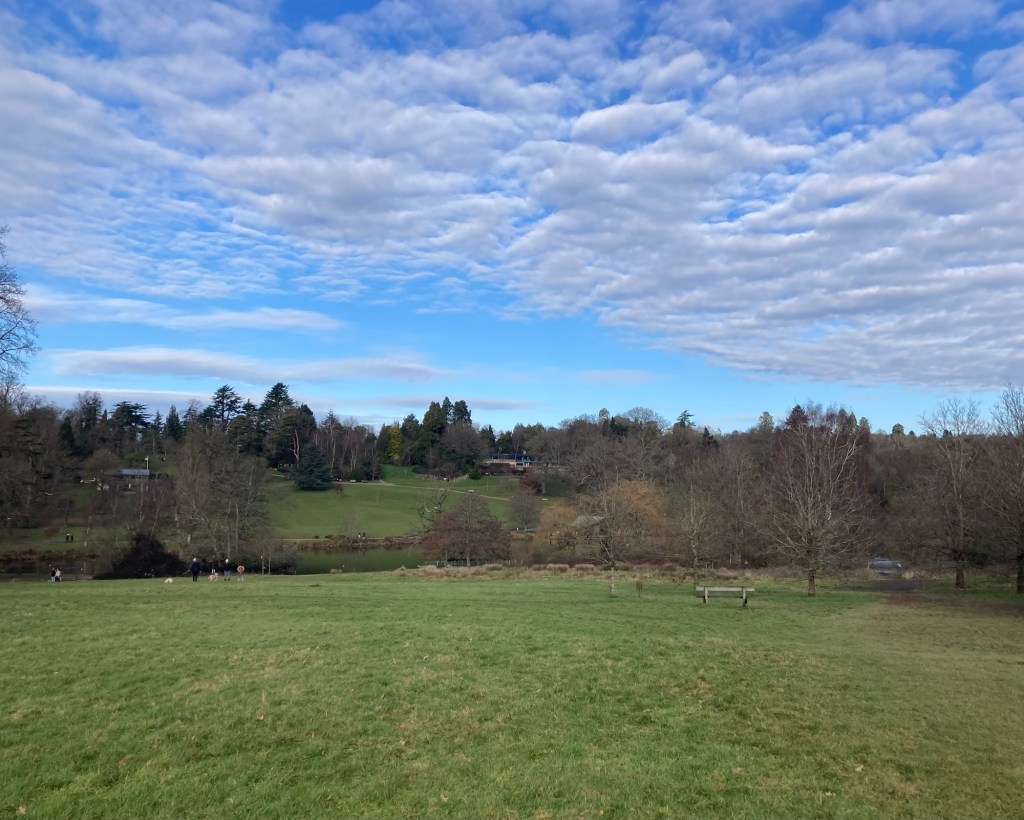
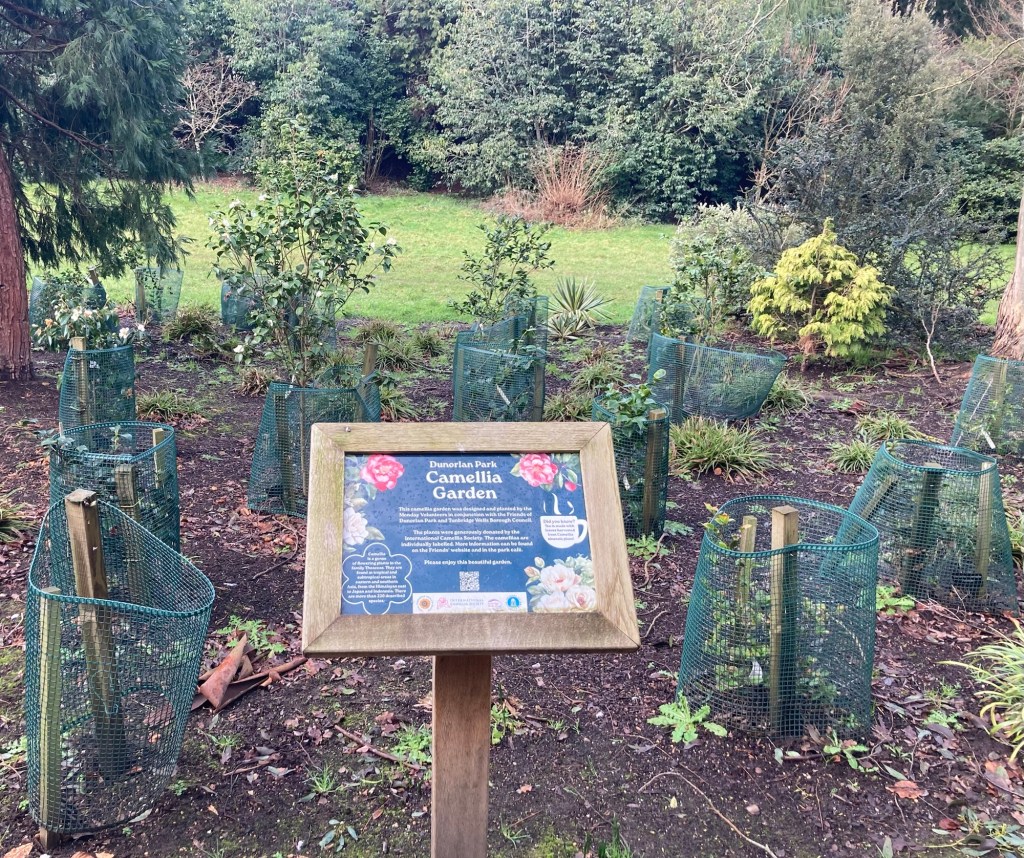
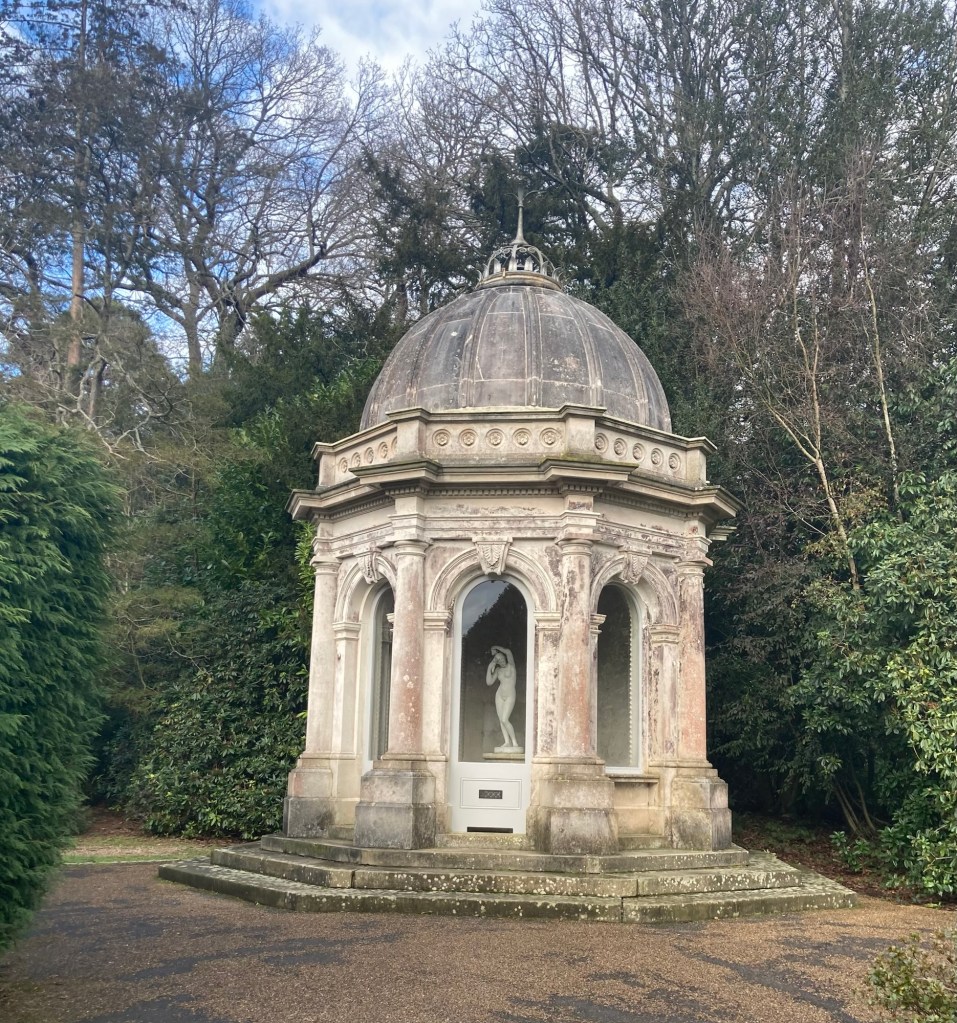
Dunorlan Park is a 78 acre park about a 35 minute walk from the house. It has a 6 acre lake as well as a cafe, exercise and play equipment, and boats for hire in warmer weather. The park was being well used today by walkers, dog walkers, and families.
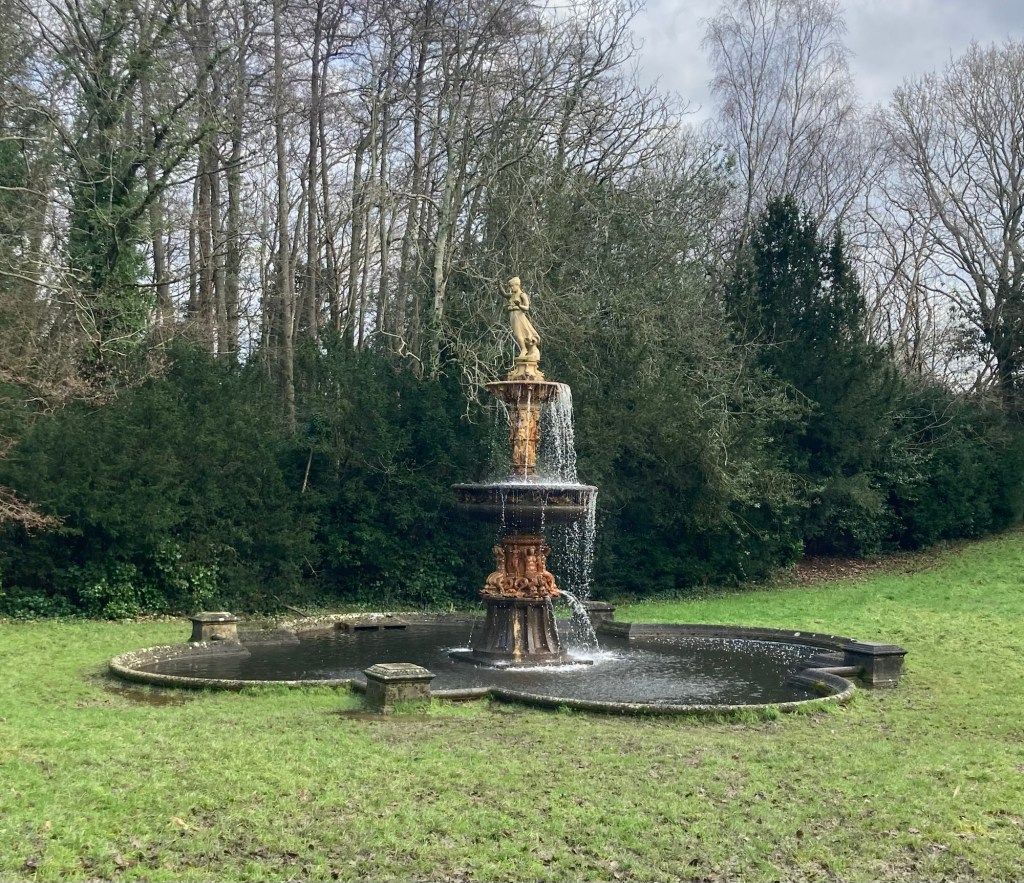
This fountain was originally made by James Pelham for the International Exhibition in 1862. It is titled “The Dunorlan.”“The Dancing Girl” by William Thees, 1951.Entrance to the park near the Victoria Cross GardenPhotos and information on the local citizens who were awarded the Victoria Cross, the highest British war medal
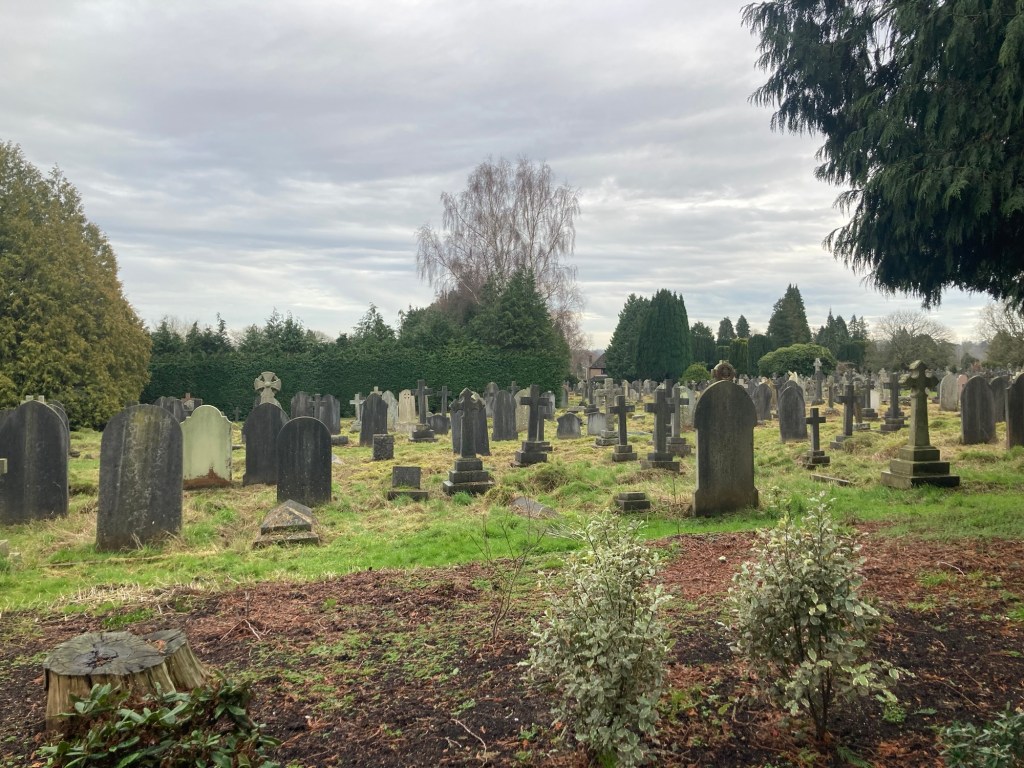
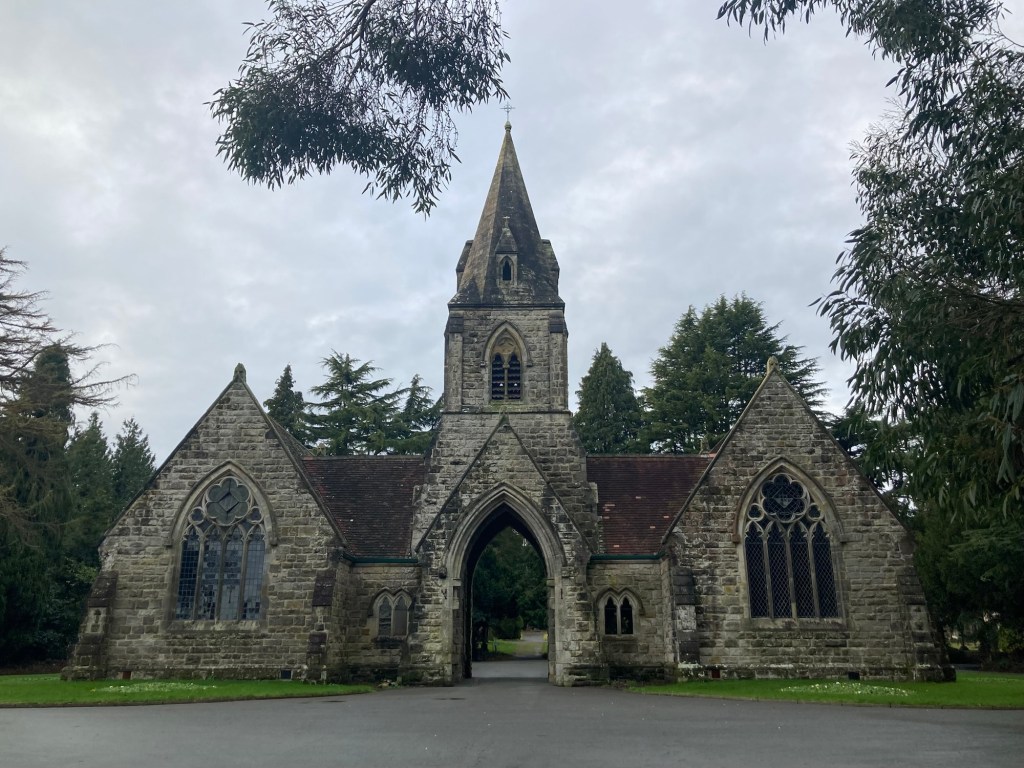
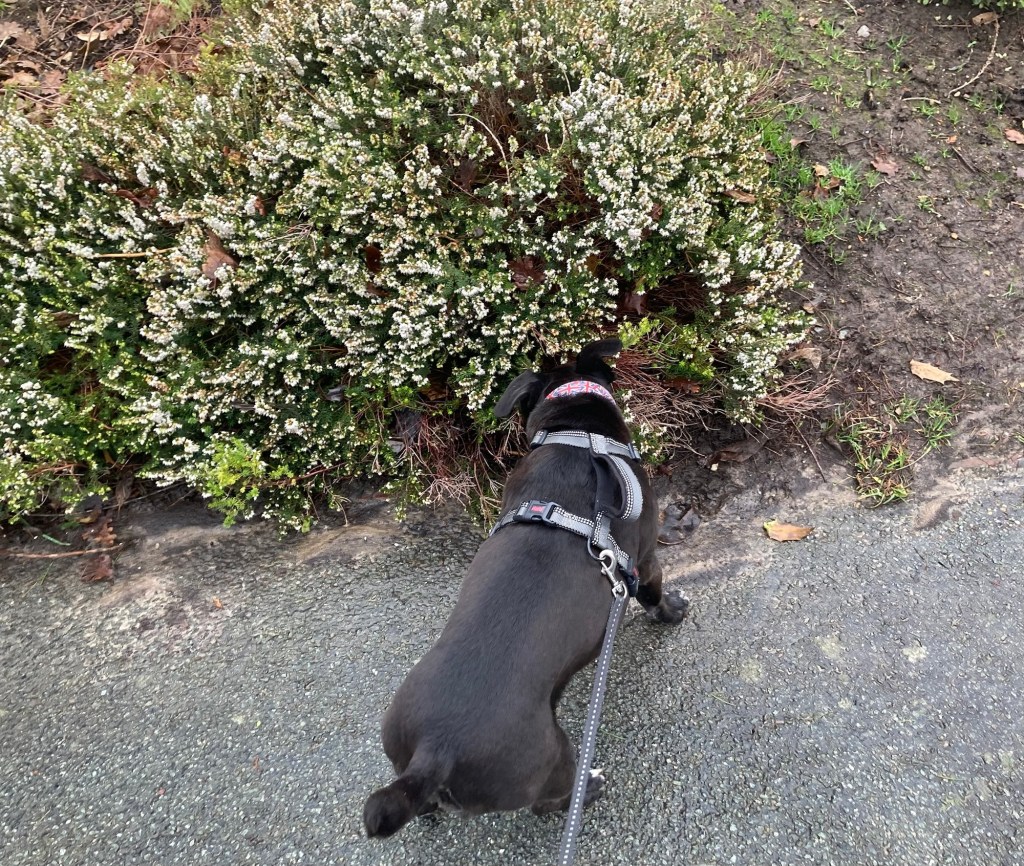
This afternoon, Bob and I did a shorter walk with Nellie through a nearby cemetery.
I’m happy to report that after the human crush trying to get to breakfast today, the hotel has opened up the stairs. They have also given 10,000 points to Bob for our account. Now, if they could fix the second coffee machine…
When we walked to the hotel on Wednesday, we noticed a sign for the Peter Layton Glass Gallery. Since I knew that Peter and Susan like glass blowing and have some beautiful pieces I wondered to Bob if maybe this was their London “supplier.” Bob was pretty skeptical, but just by chance I was right.
Based on Peter and Susan’s recommendation, we stopped by the gallery today, which has the London Glass Blowing Studio in the back. (Fun note: If you’ve ever watched the series “Blown Away,” Elliot Walmer, a glass blower from this gallery, won the second year of that series.)
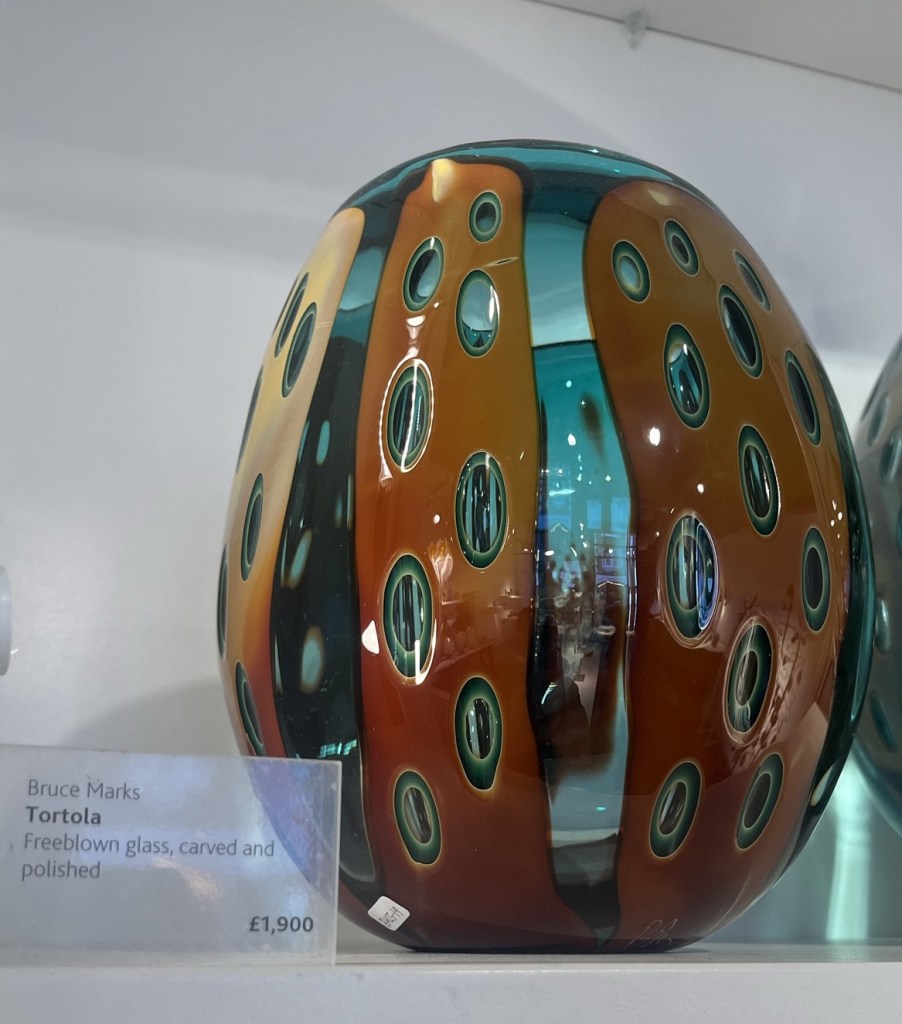
We were there about 10:30 this morning when they were prepping for a glass blowing session a bit later. We were able to watch them blow some very small pieces with very long tails to incorporate into a matte glass landscape piece. Bruce Marks,one of the glass artists, was very nice to talk to us about the process and some of his work. He does glass making for Peter Layton, who is almost 90, during the week and for himself on the weekend.
This is one example of Bruce Marks work.
Our stop continued our interest in this artistic method, as there are so many different styles.
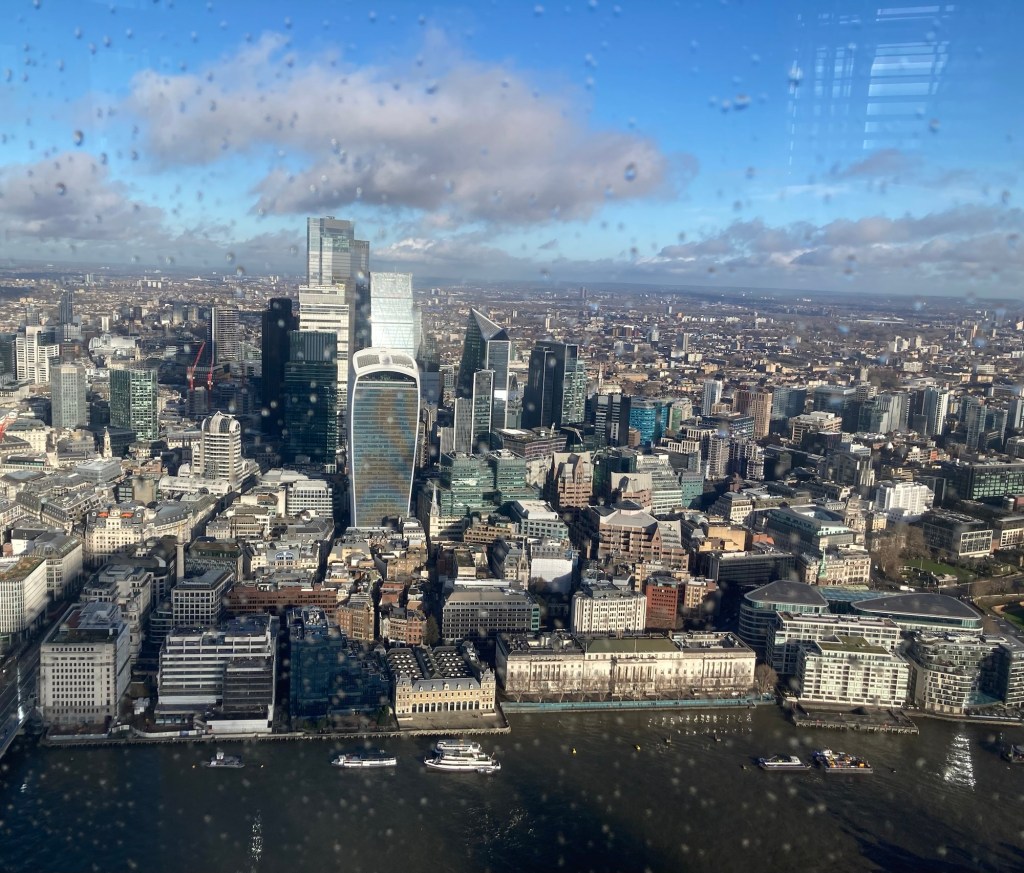
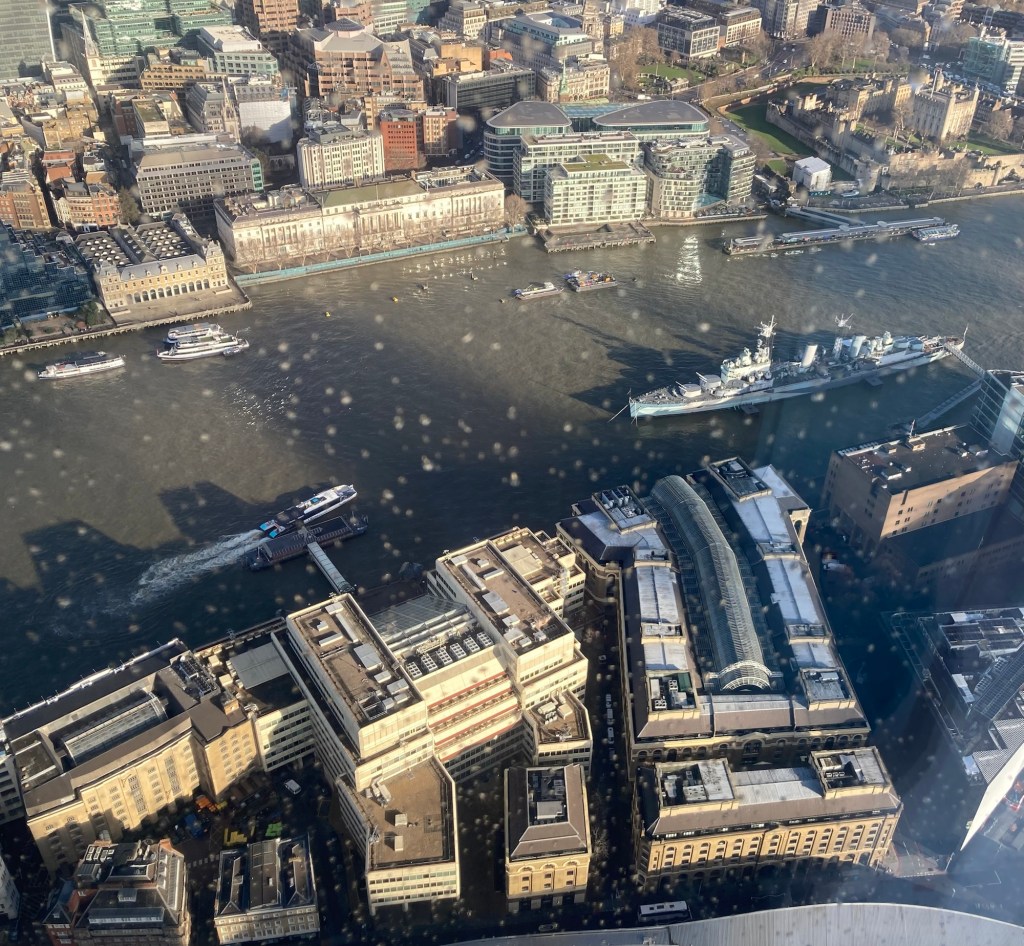
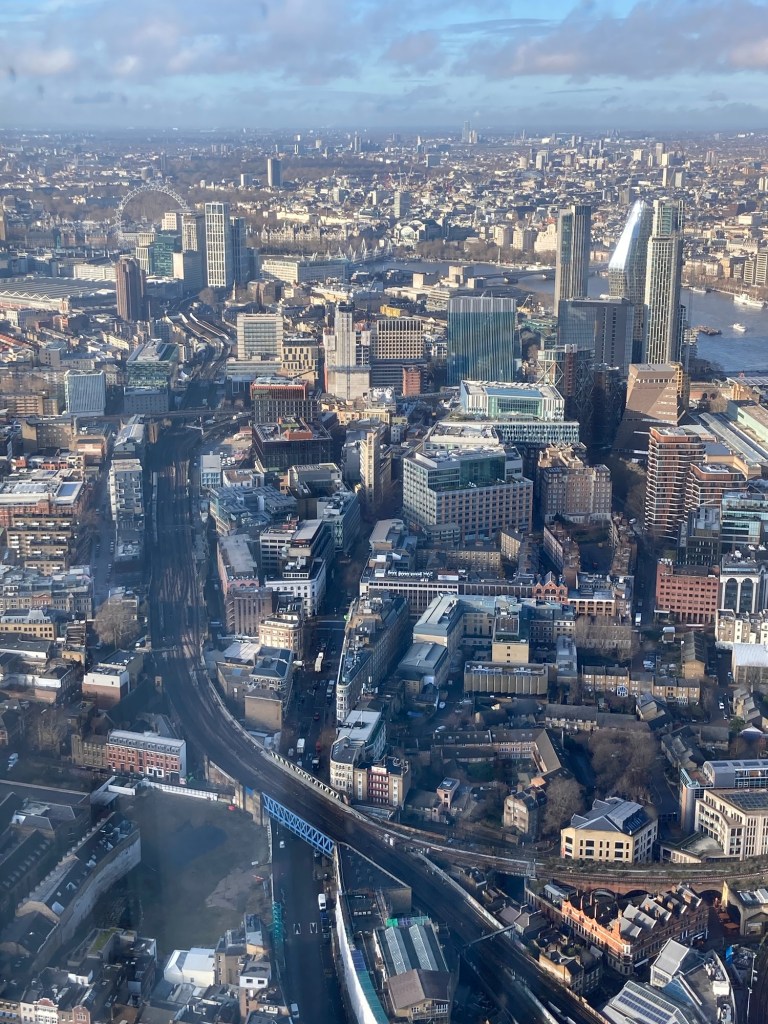
From the Peter Layton Gallery, we walked to The Shard to get some great views of London. The Shard is a 72 story mixed-use development super tall pyramid-shaped skyscraper right across from the London Bridge transit station. It opened in February 2013. For a minimum of 19 pounds (US $25.43), you can access the public viewing decks on floors 68 and 69.
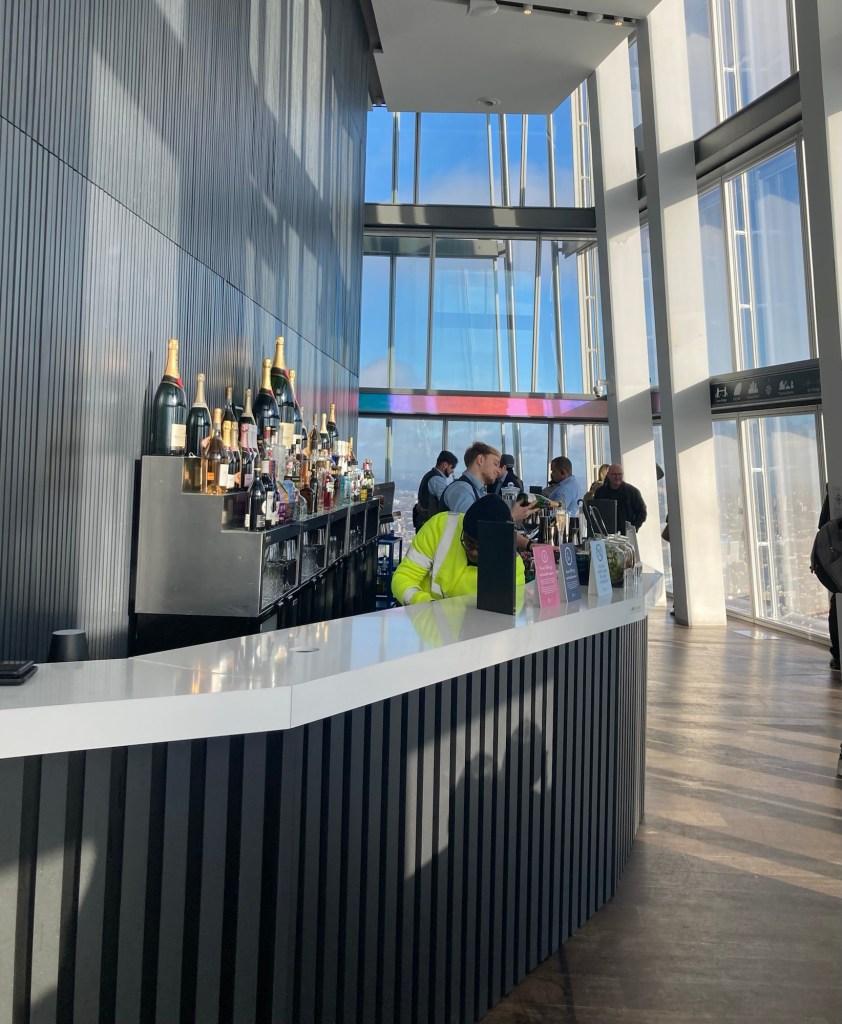
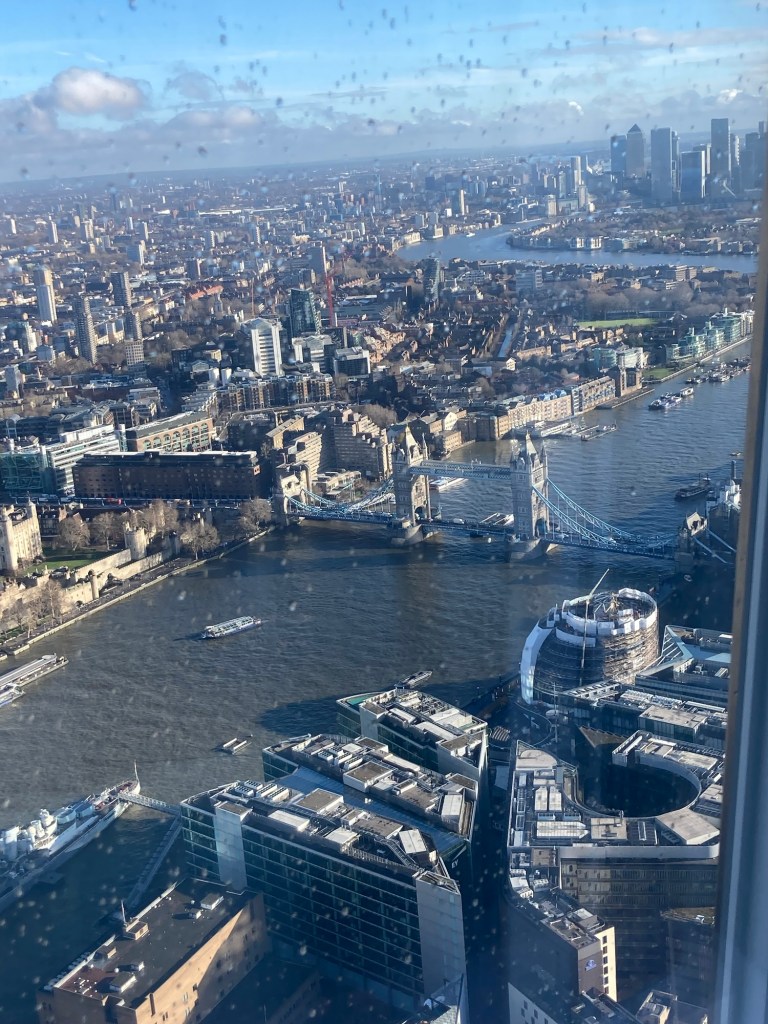
Since the clouds had cleared, we thought we needed to do it. The following are some pics from our visit. One of our favorite views was from the floor to ceiling glass in the bathrooms.
The Thames, Sky Garden, and lots of other buildings Looking down on the HMS BelfastA view of the London Eye (upper left) and surroundsThe bar on the 69th floorThe view of the Tower Bridge and surrounds from the bathroom
After The Shard, we decided to walk to the free Tate Museum via the Boroughs Market.
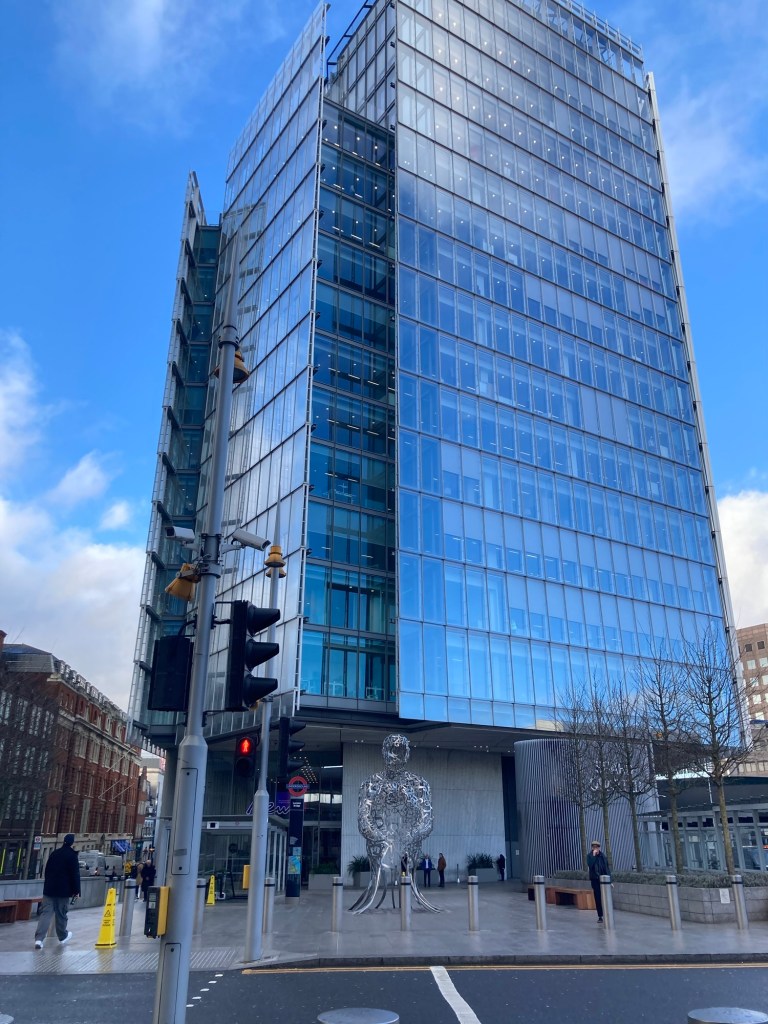
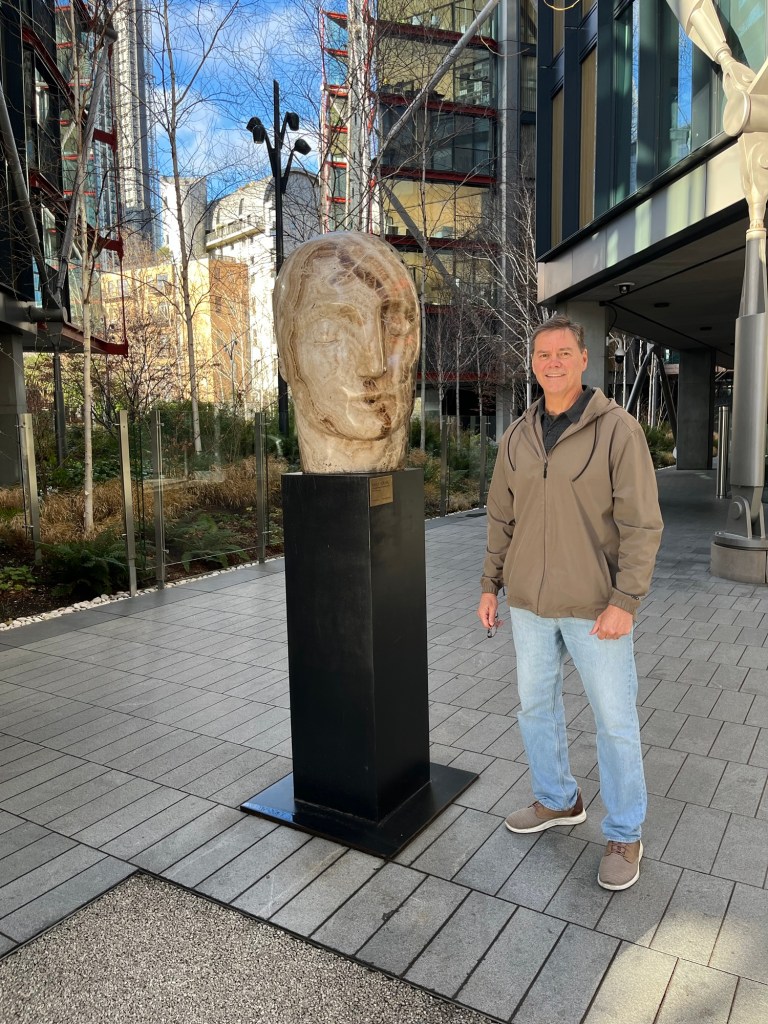
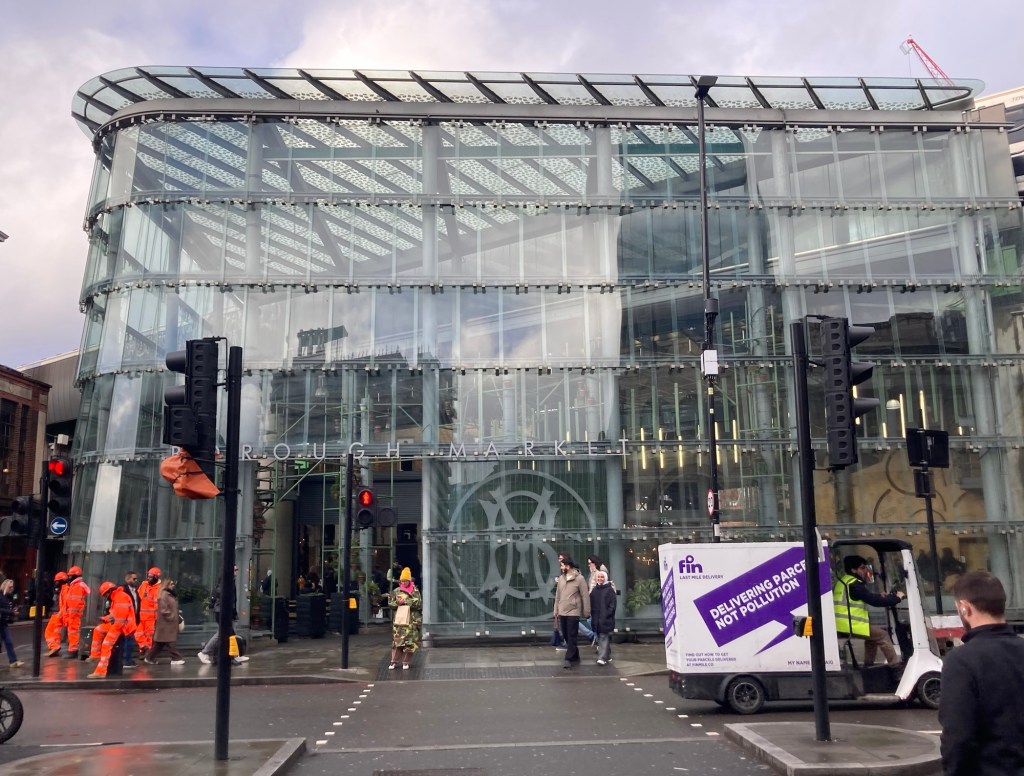
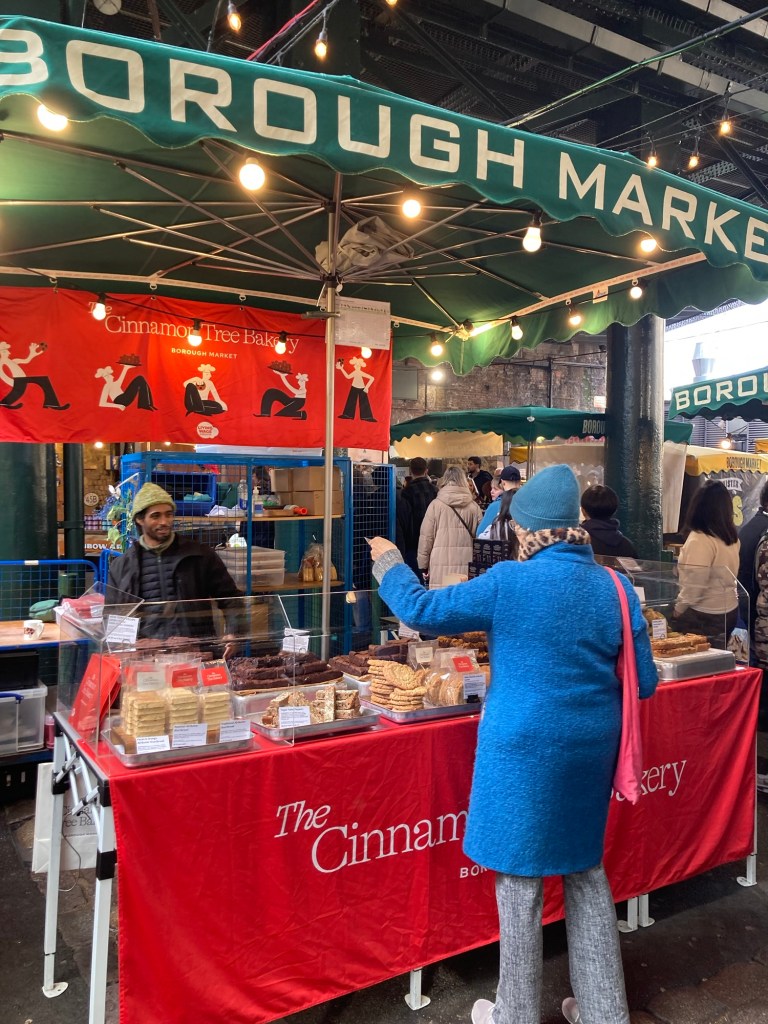
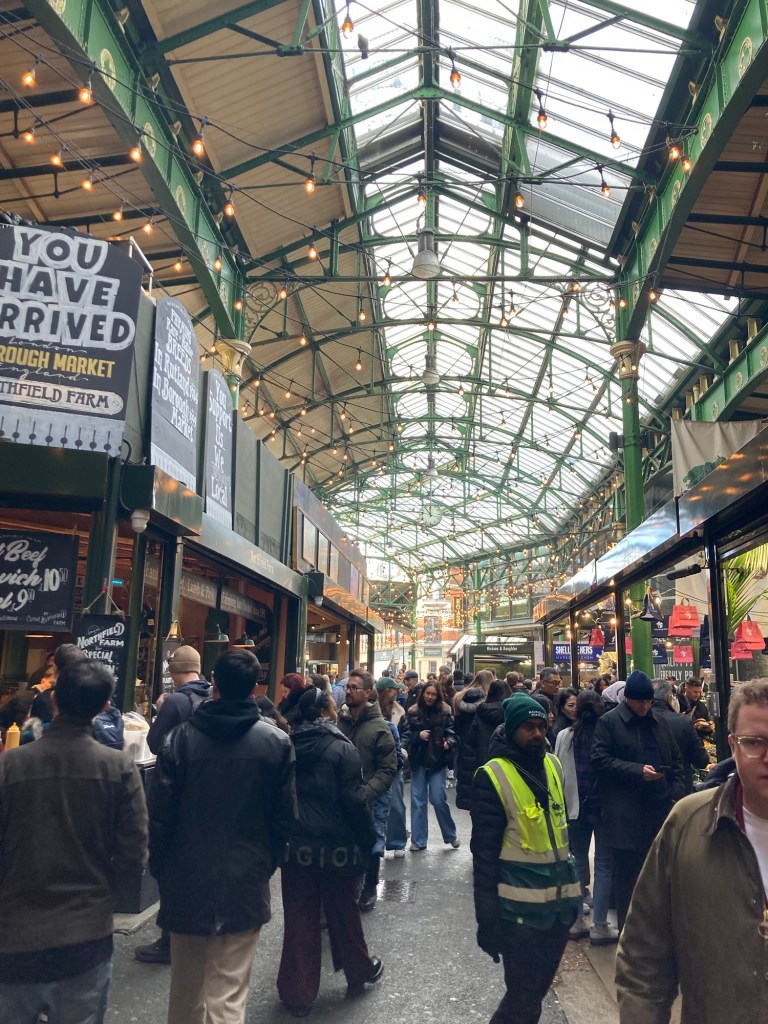
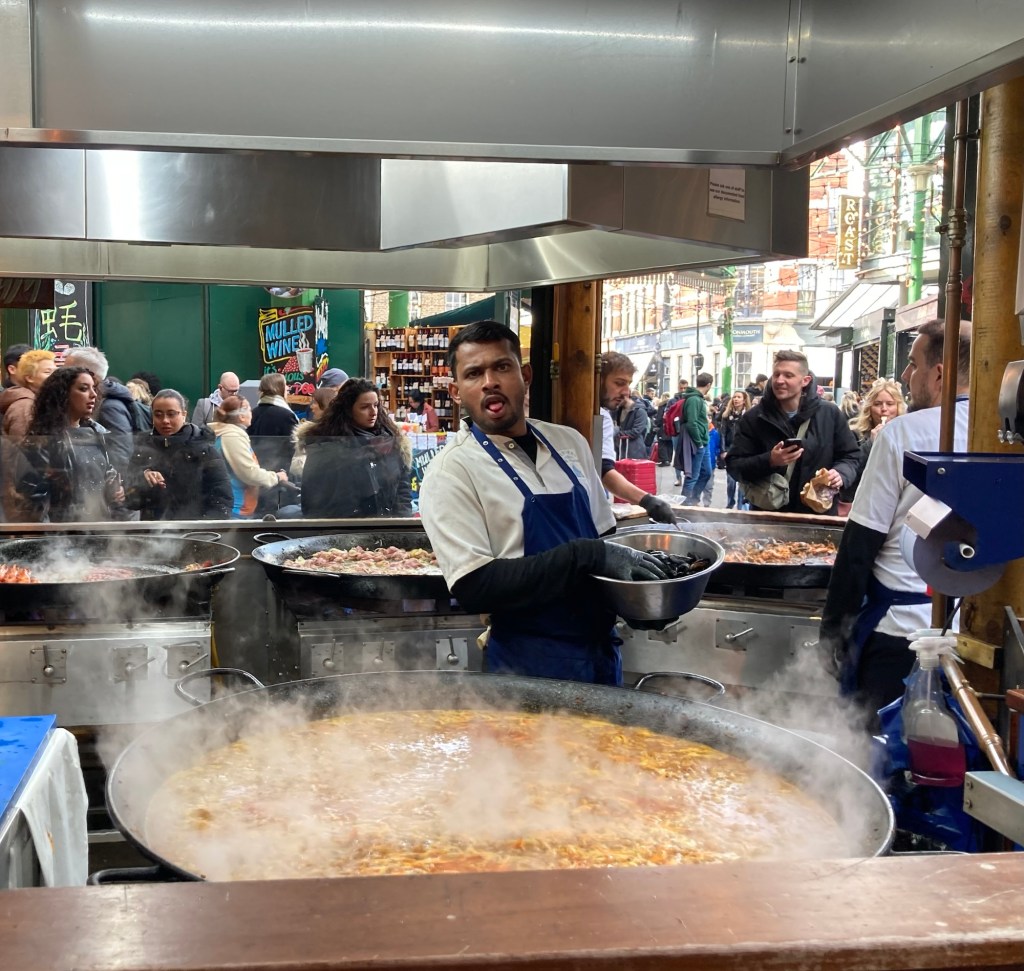
“We” by Jaume Plensa outside a building across from The ShardBob with another big head. This is “ Stillness Born of History II,” by Emily Young, 2014.One entrance to the Borough Market.One of many stands selling sweetsAnother main hallway through the marketA seafood stallA guy showing off at a paella standBob outside Neal’s Yard Dairy
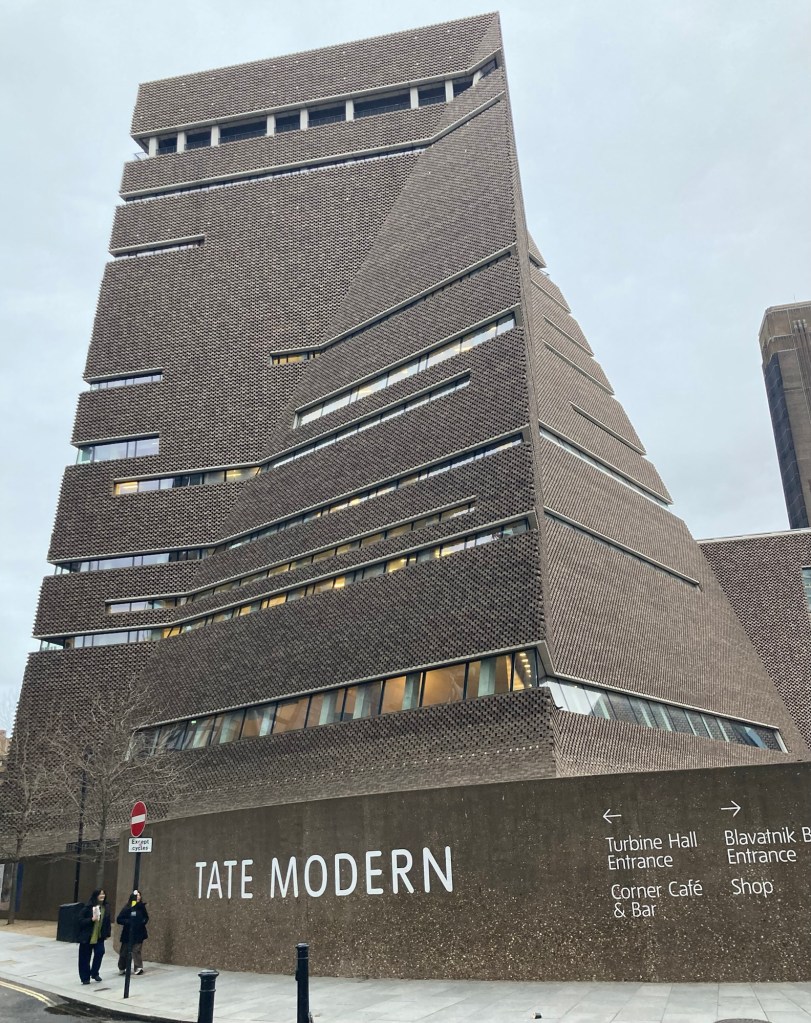
We walked through the free floors of the Tate Museum, but didn’t find much that spoke to us. We usually really like the buildings that house art museums, but we weren’t that fond of the building either. Just our tastes, I’m sure lots of people love the Tate and its exhibits.
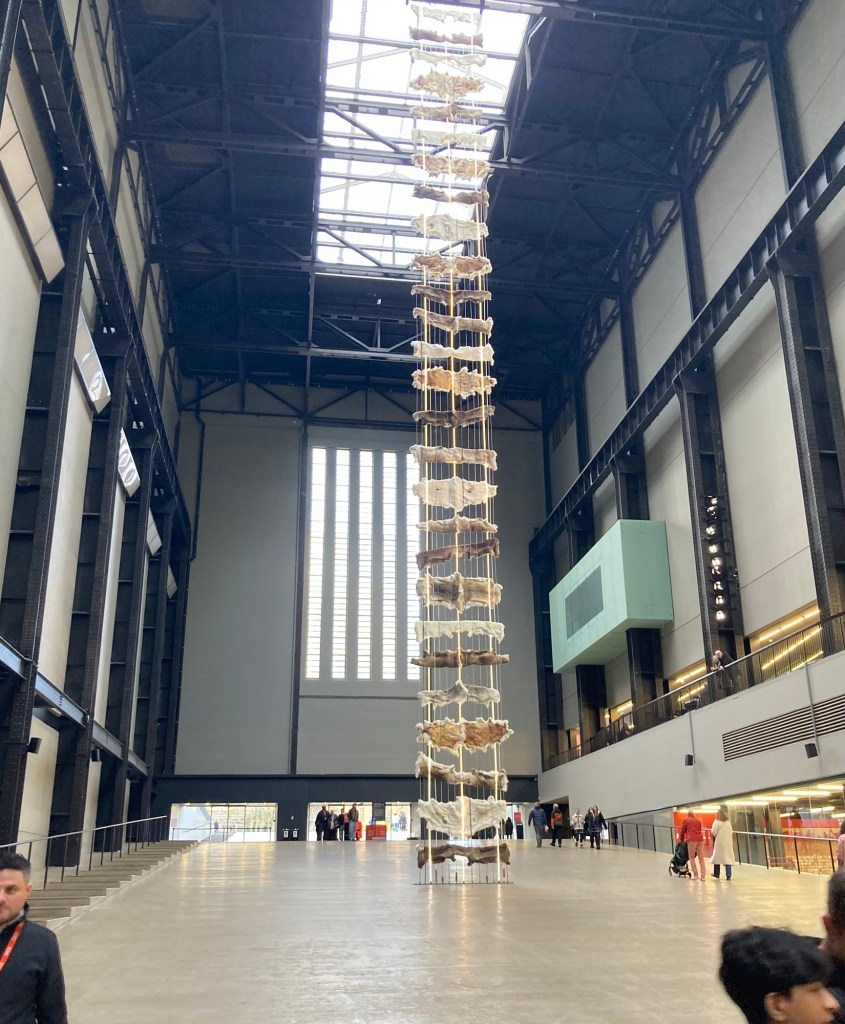
There were two impressive exhibits in the main hall by Maret Anne Sara. The first one, Goavve, uses reindeer hides bound by electrical cables to contrast indigent and modern relationships with the land.
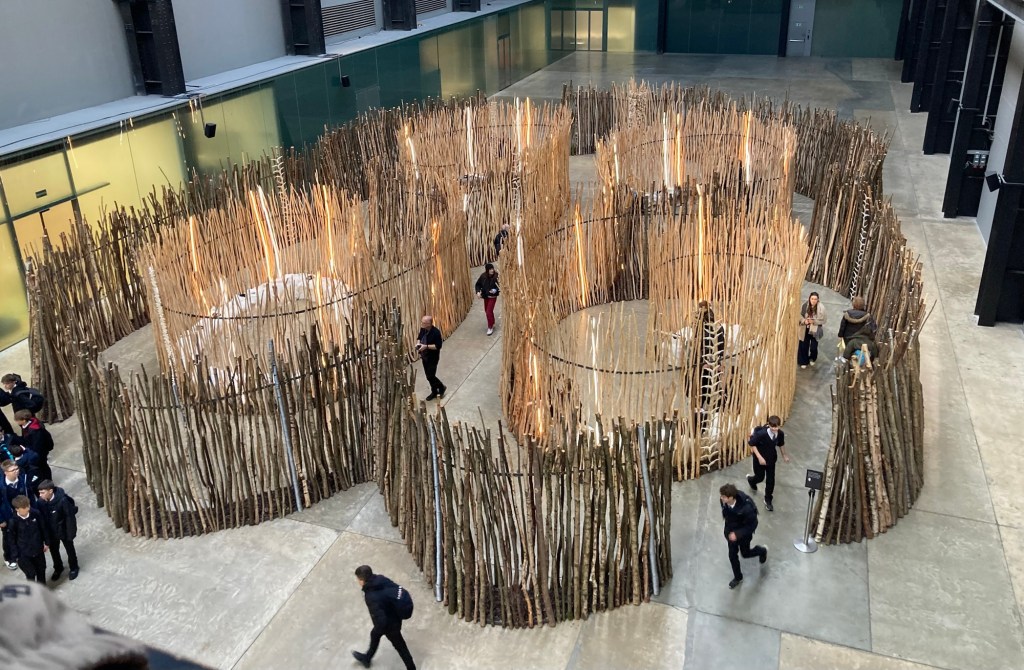
The second sculpture, Geabel, is a maze-like structure inspired by the shape of a reindeer’s nose. Fun fact, a reindeer’s nose is so energy efficient that it can heat air by 80 degrees C in a single second, enabling it to survive in very cold conditions.
We received our homeowner’s manual today for our next housesit, and we will have a 45 minute train ride tomorrow afternoon for our walk through with them before they head off for their trip.
After a 12 hour sleep Wednesday night, Bob and I got up with the alarm at 7:15 am yesterday (late for us) to get a bit of free breakfast at the hotel before catching a 1.5 hour train to Cambridge. The hotel is undergoing renovations and is down to one elevator and no use of stairs while repairs are underway there as well. While the staff have been very friendly, they are dealing with 5 floors of guests upset with the long wait to get to breakfast, leave the building, and/or get back up to their room. Titanium status Bob asked the front desk person to convey his unhappiness to the general manager. I doubt he was the only one.
Our train travel was a much happier experience with a smooth, uneventful journey in the rain. Peter and Susan, our Cambridge friends, met us at the station where we walked across the square to a popular coffee shop for a cuppa, as they say here, before the short walk onto their house.
We had a great visit catching up, and Peter made a lovely lunch. I am embarrassed to say, and I deeply regret, that I did not think to get a selfie of the 4 of us. I thought of it before we left for Cambridge, and then we just got busy talking.
I didn’t forget to get a couple photos of the two biggest male personalities yesterday though. The regal Hugo —
Letting the humans get on with their catch upDeigning to provide us with a quick visit
And Bob —
Peter did 99.98% of the work putting together the meal, yet we must give Bob props for his stirring ability. No, really, he insists that we do.
Since I predate the mobile phone era and don’t participate in much social media, I feel that the meet-up still counts even without the photographic evidence. It was a great day, and we left with ideas/advice for today in London, a much needed book to teach us about cricket, UK cheeses from a new cheese shop in nearby Ely, and a Christmas bread. All of that, and we were “run over” to the train station, so we arrived back in London safe and dry.
After a night in Des Moines, then Iowa City, and then Janesville, Wisconsin, Bob and I took a bus to O’Hare where we flew out late Tuesday night for London. We will be here for three nights before heading to our next housesit in Royal Tunbridge Wells on Saturday.
Bob surprised me by bidding for upgrade to Club World seats on the American/British Airways flight. While we have flown overseas in Premium Economy before, this was our first time sitting side-by-side in our own cubicles where we could lie horizontal when it came time to sleep. It also gave us access to the Flagship Lounge in O’Hare which was wonderfully calm. It was a great experience— once we figured out how everything works.
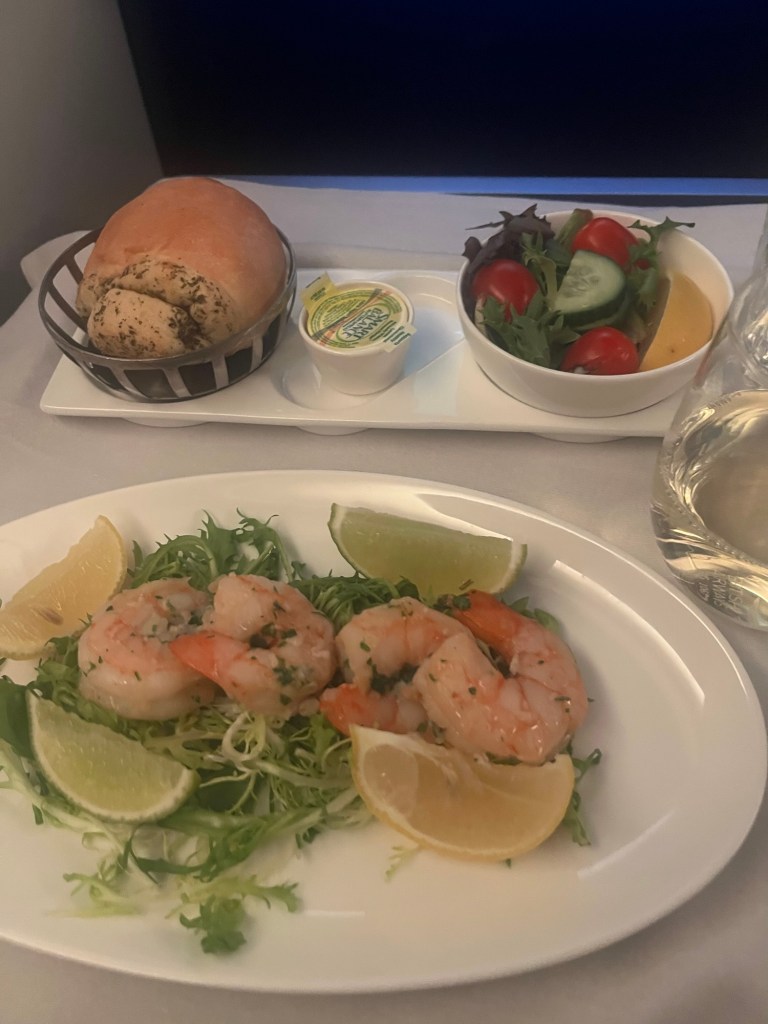
Bob holding his champagne before takeoff Our appetizer Who knew that people in the good seats were served 3 separate courses — starters, entree, and dessert— individually, and had options to choose from for each course?
I slept great in my little cubicle. Bob didn’t sleep as well, but we both felt that the flight seemed so much quicker than usual.
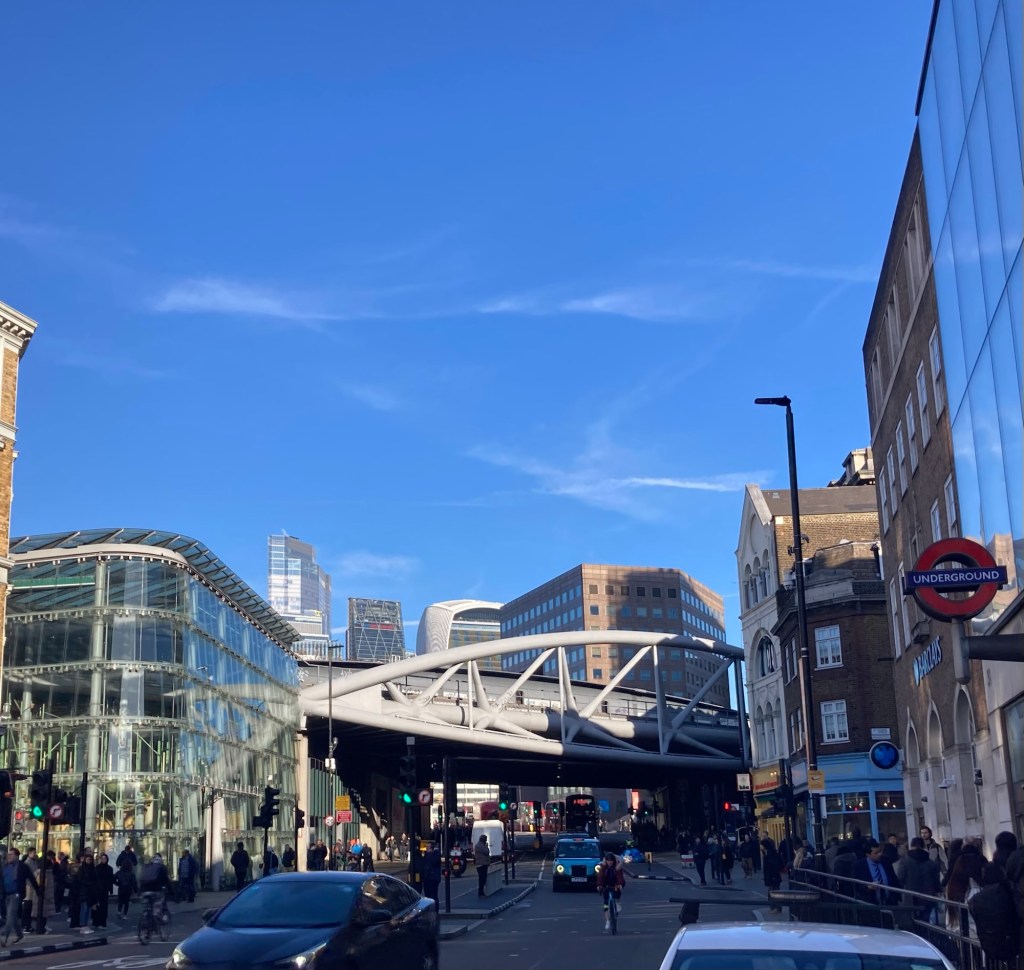
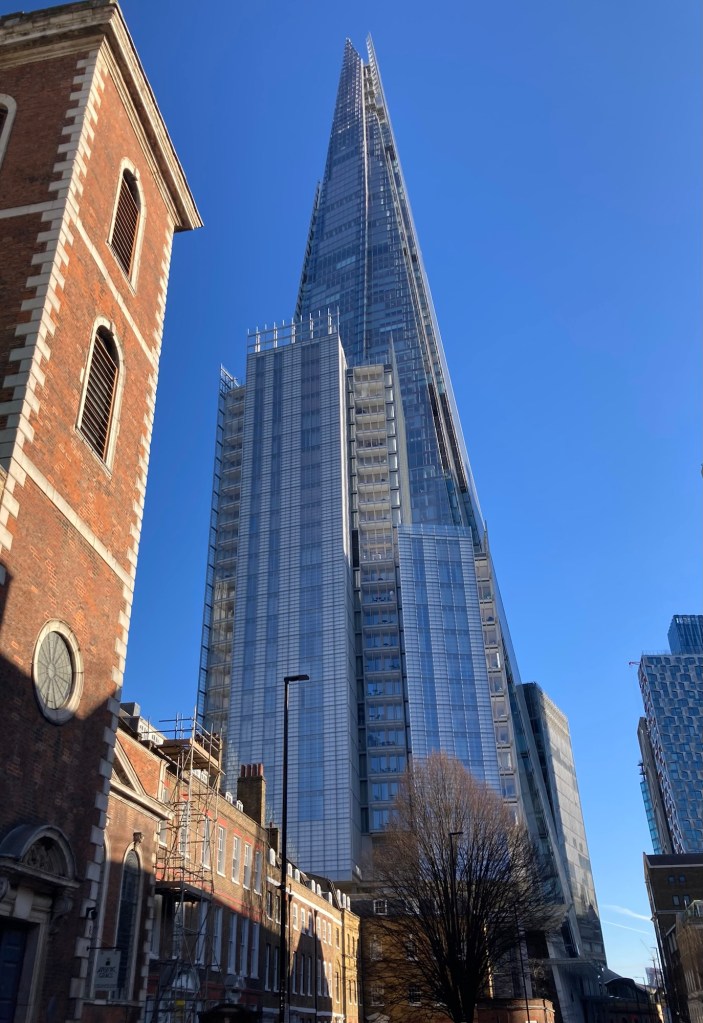
In London, we are staying at a Marriott Residence Inn near the London Bridge Station. We touched down early — a little before 11 am — and we’re at the hotel about 1:15 pm after taking 2 trains and a metro and then walking about 10 minutes from the station.
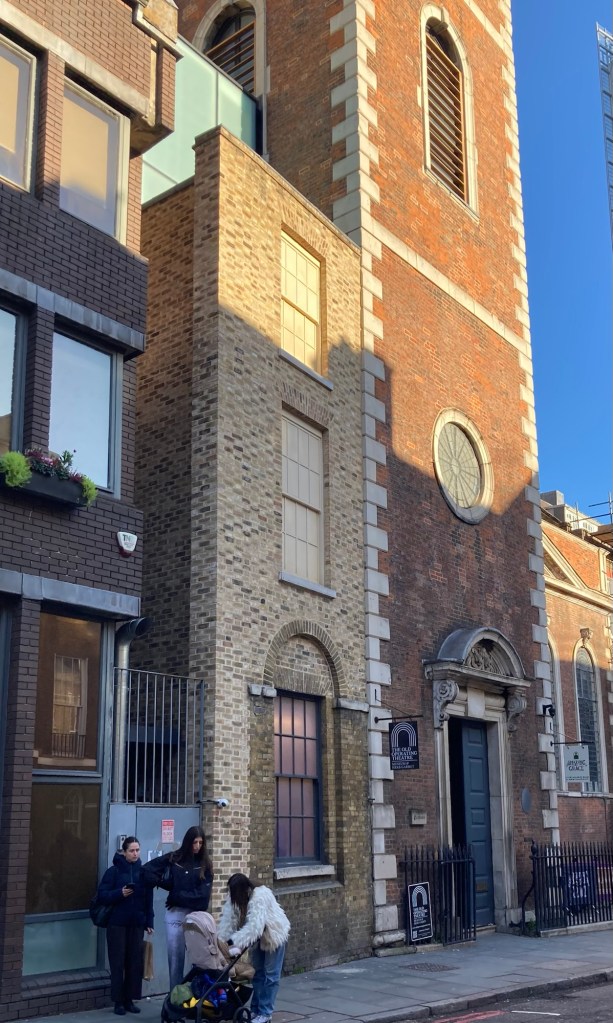
First view coming out of London Bridge Station Looking up at The ShardThe Old Operating Theatre Museum
After getting settled in our room, we went for a walk around our area.
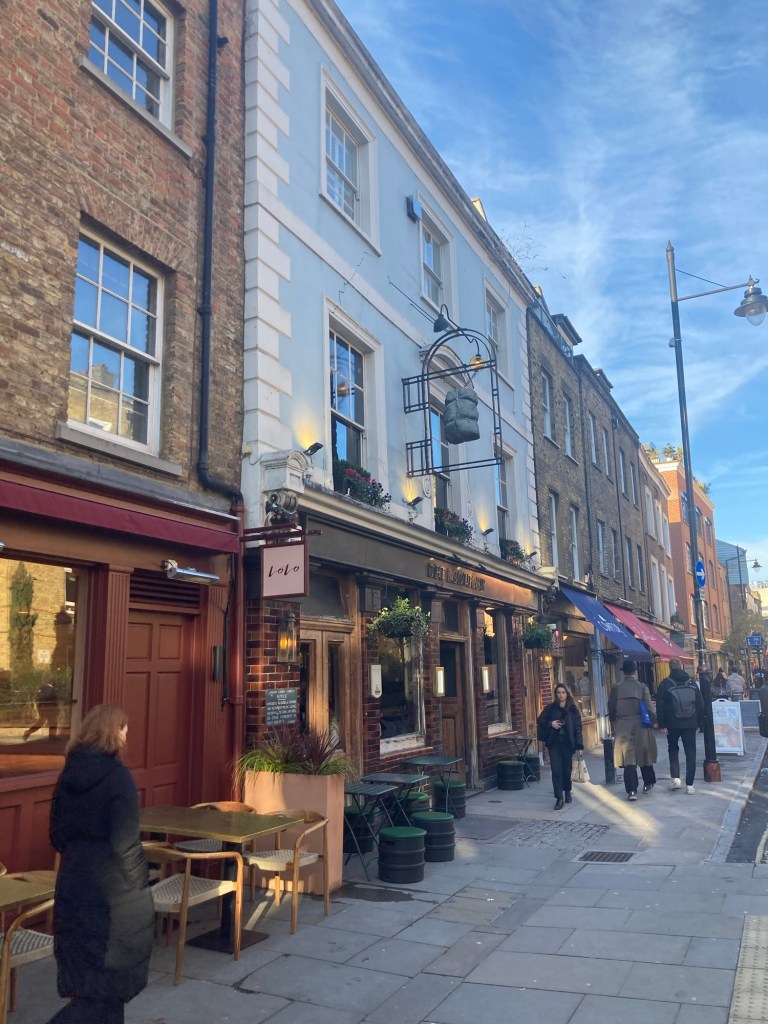
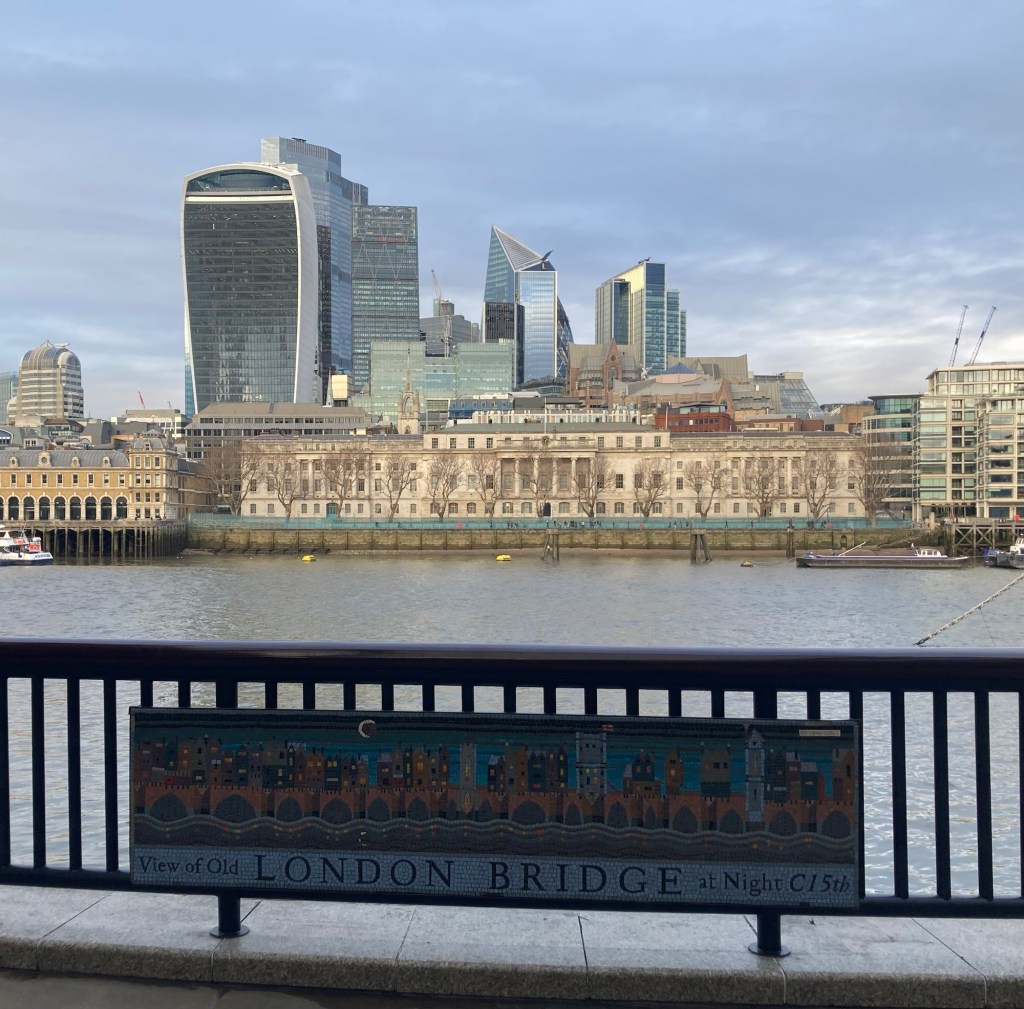
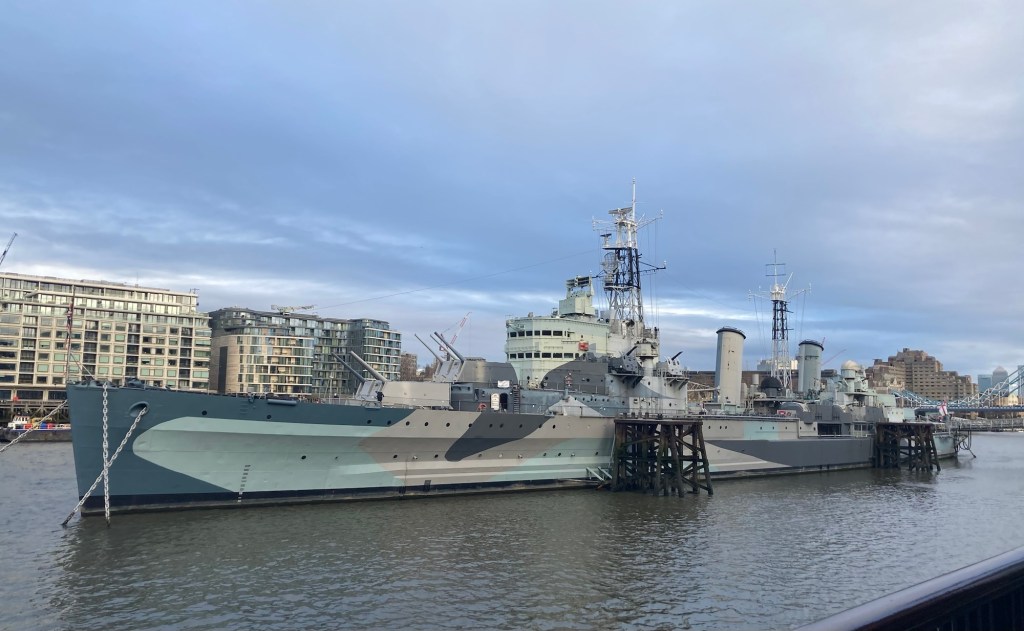
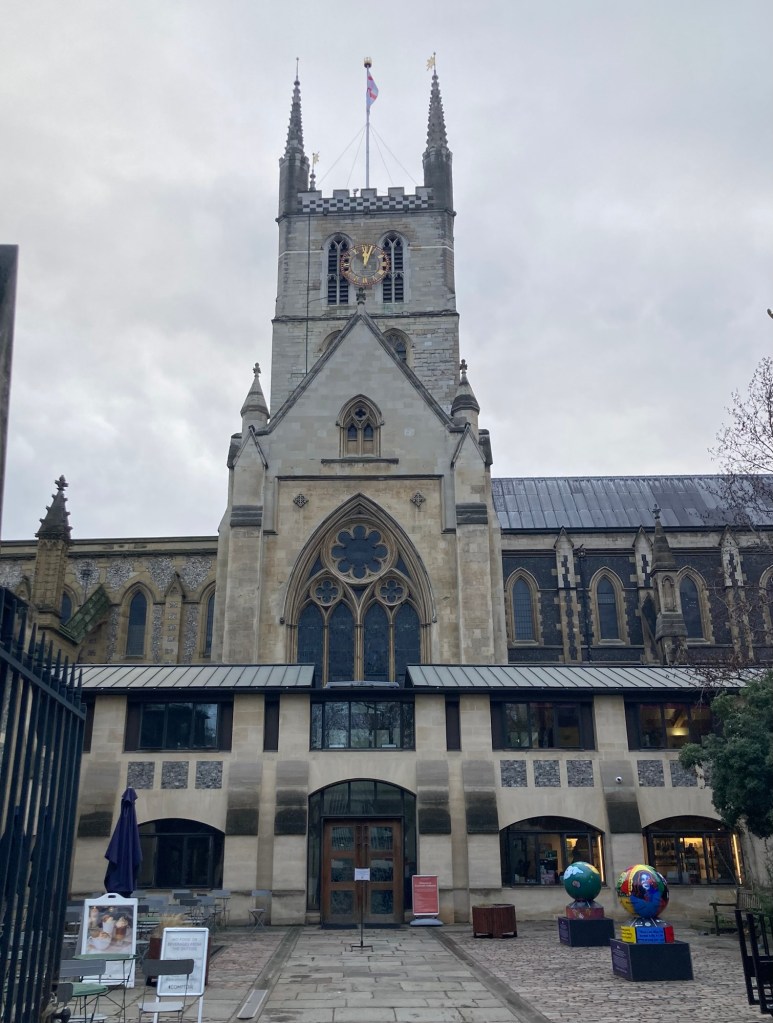
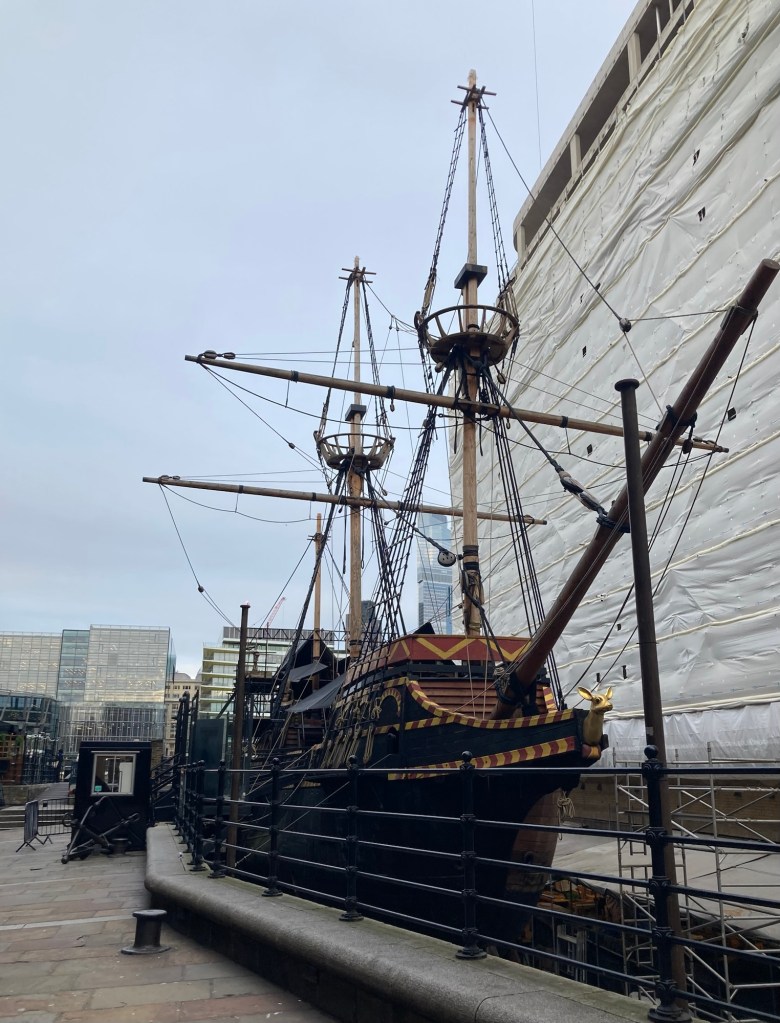
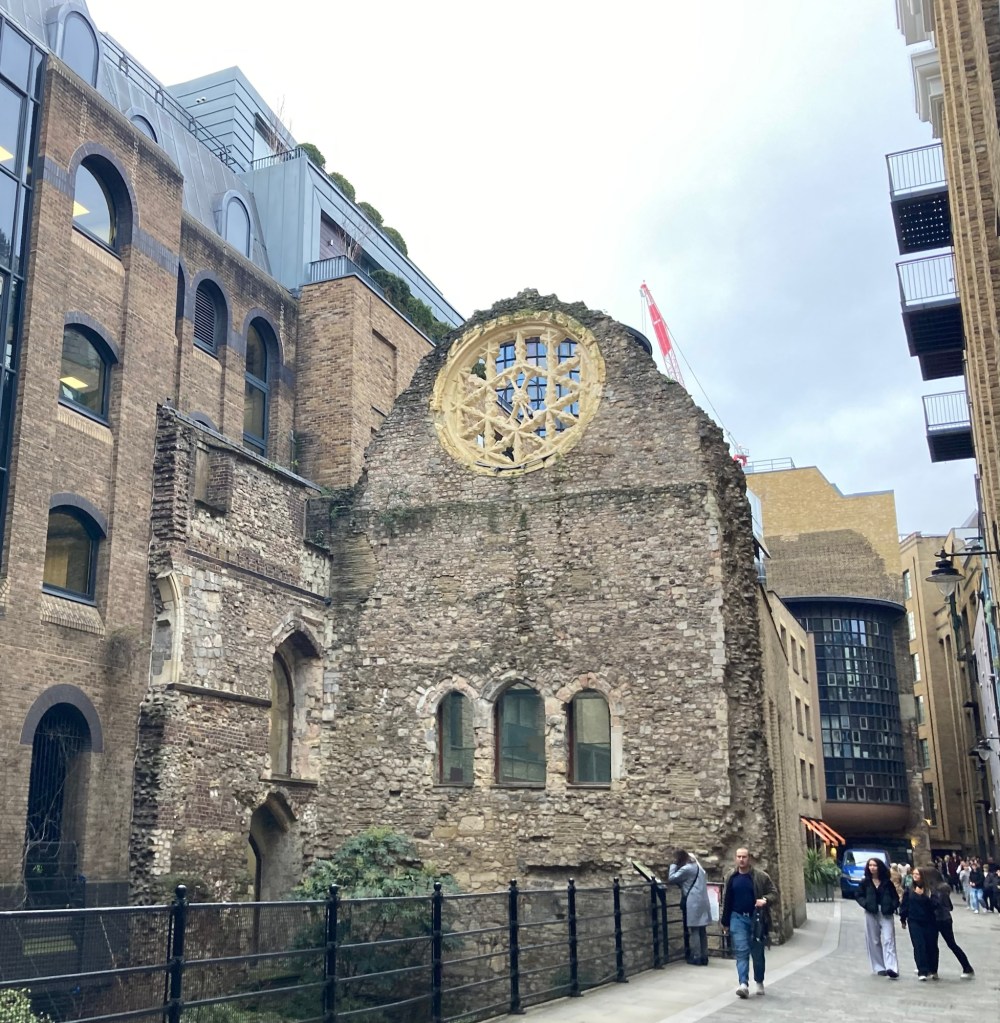
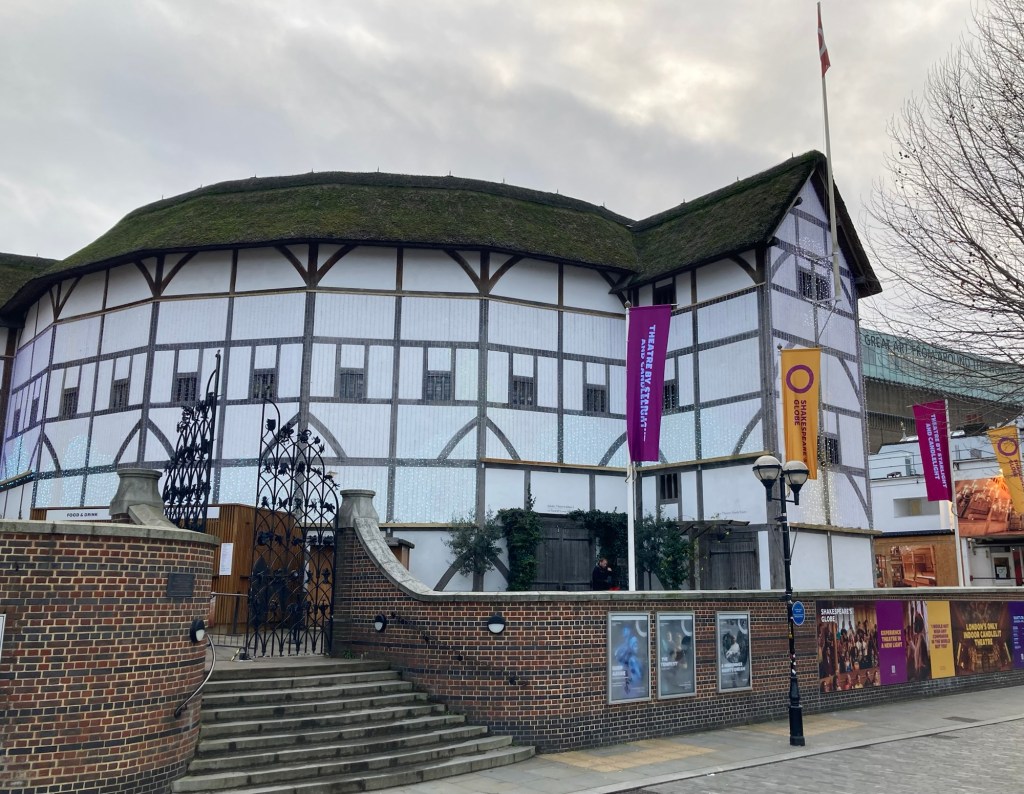
Looking down Bermondsey Street where our hotel is located An interesting sculpture in the small Bermondsey ParkA view across the ThamesThe warship HMS Belfast anchored in the Thames near the Tower BridgeSouthwark Cathedral, the oldest gothic church building in London The Golden Hinde, a full size reproduction of the boat used by Sir Francis Drake to circumnavigate the globeAn old wall from the former palace of the Bishops of Winchester The Clink Prison MuseumShakespeare’s Globe TheatreOne view of the outside of the very large Tate Modern Museum
Bob and I are back together in the Midwest after he left on New Years Day to drive to Des Moines for some doctors appointments that he was able to schedule. He is fine and has had a productive time while spending time with his sister and brother-in-law.
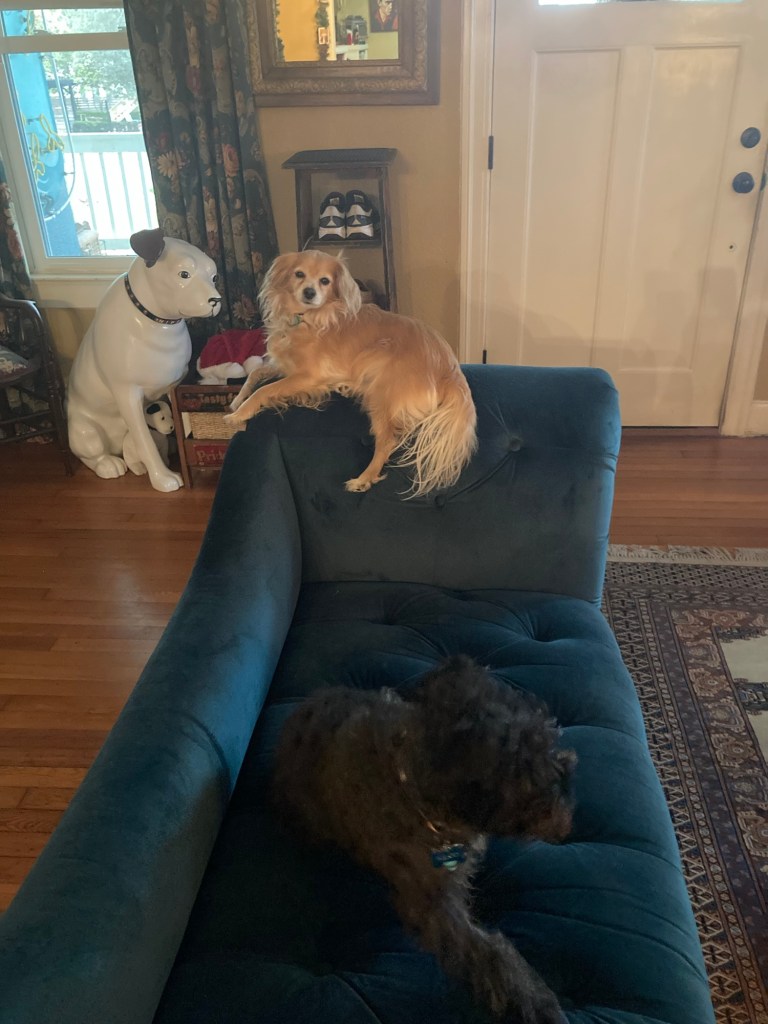
On 12/30, Bob and I finished our housesit west of Austin for Hollywood and Henry and had two nights by ourselves before I started a second housesit for friends in South Austin. The photos below are from the last of our and then my time in Austin. We had a lovely, relaxing stay and were able to spend time with friends and care for some sweet pets.
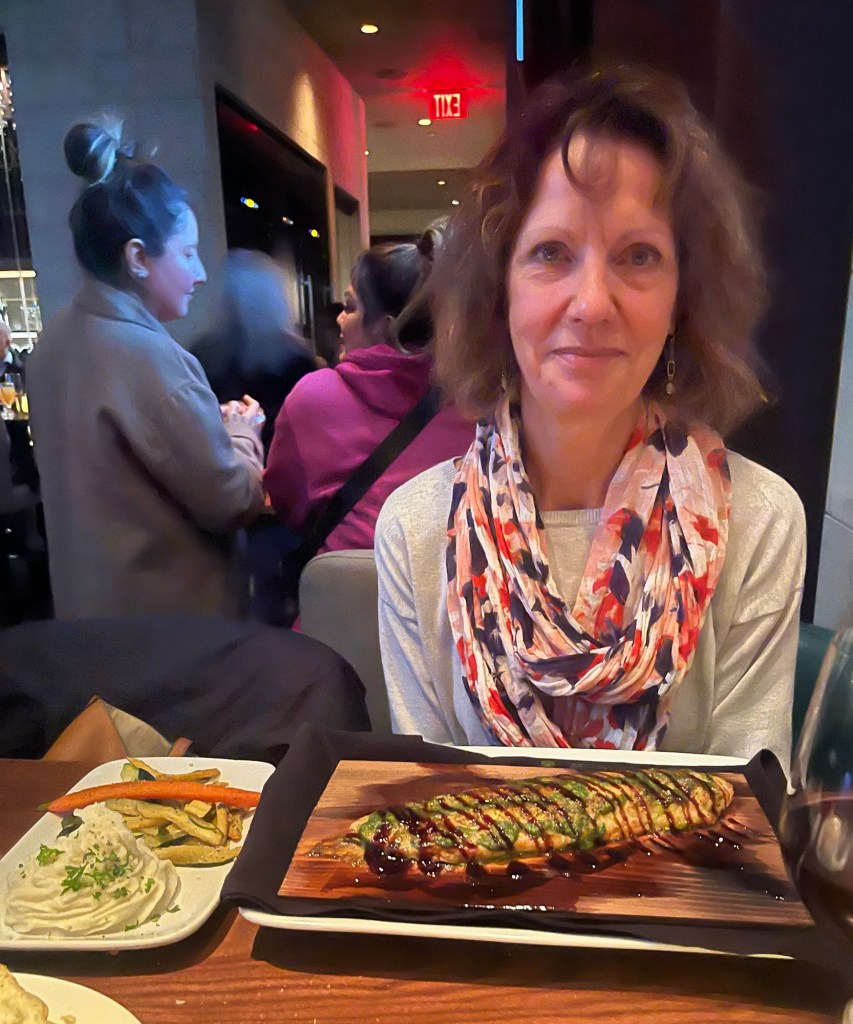
Hollywood and HenryMe at Perry’s Steakhouse on NewYears’s Eve, a very generous gift from our friends.
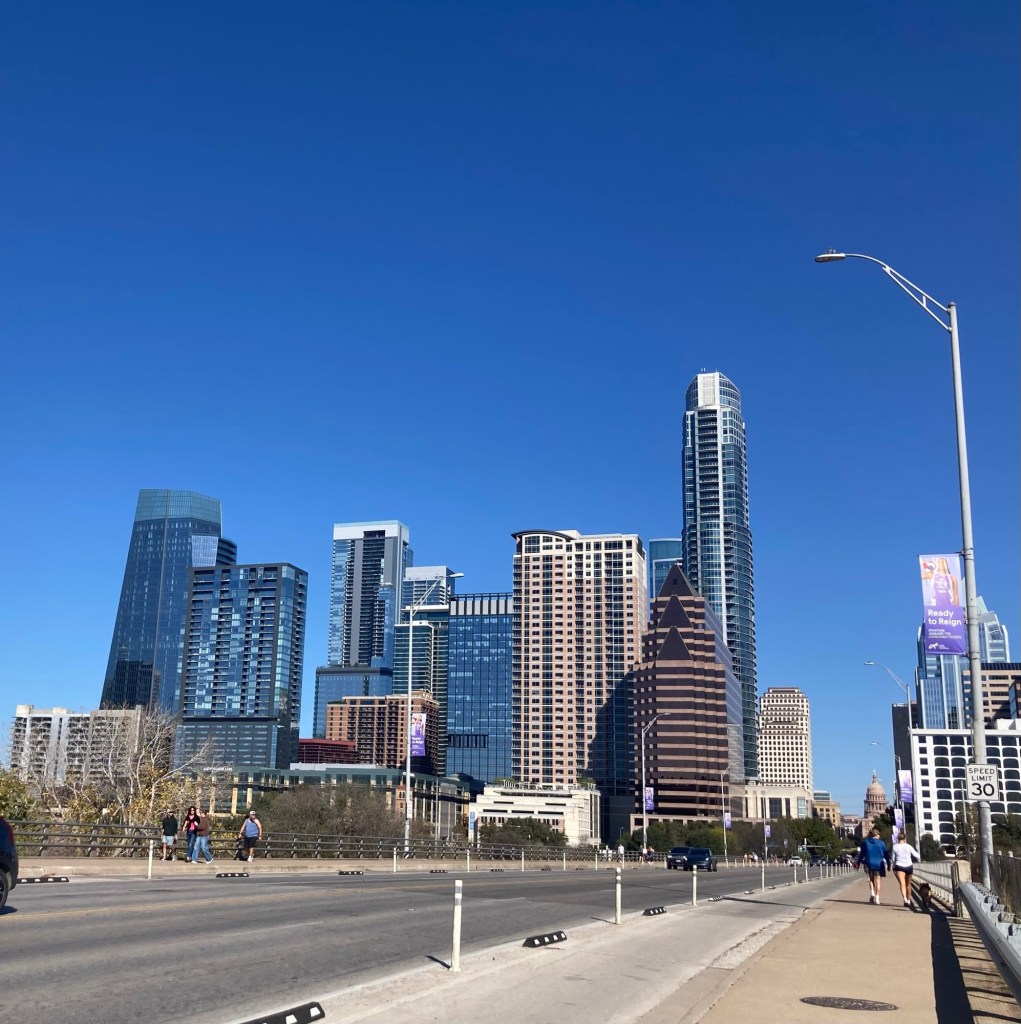
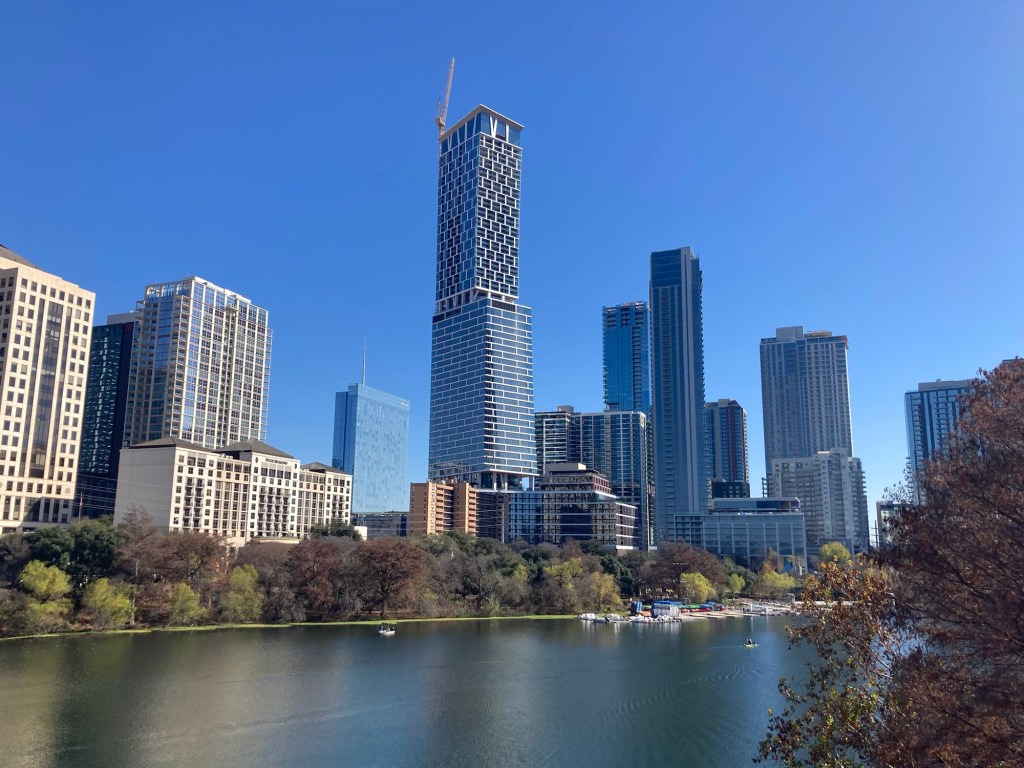
The following pics are from my walk downtown from my south Austin housesit. The temperature while I was in Austin reached highs in the low 80s F.
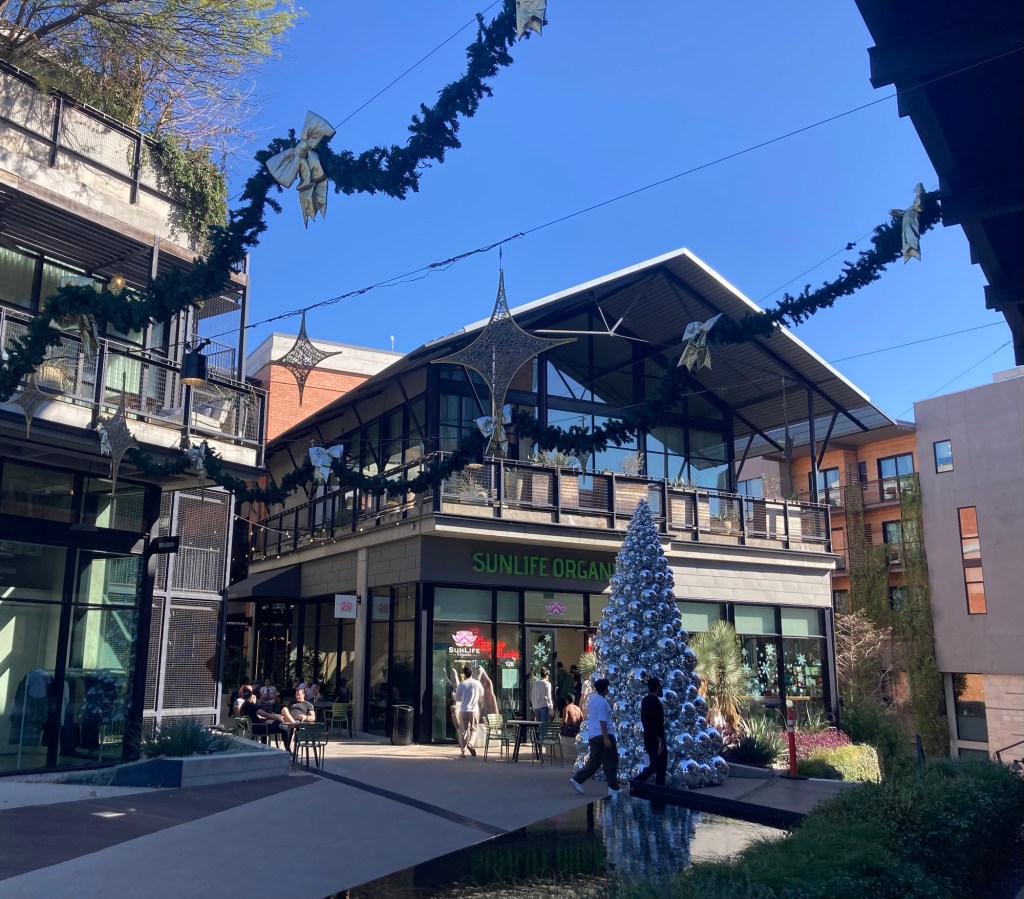
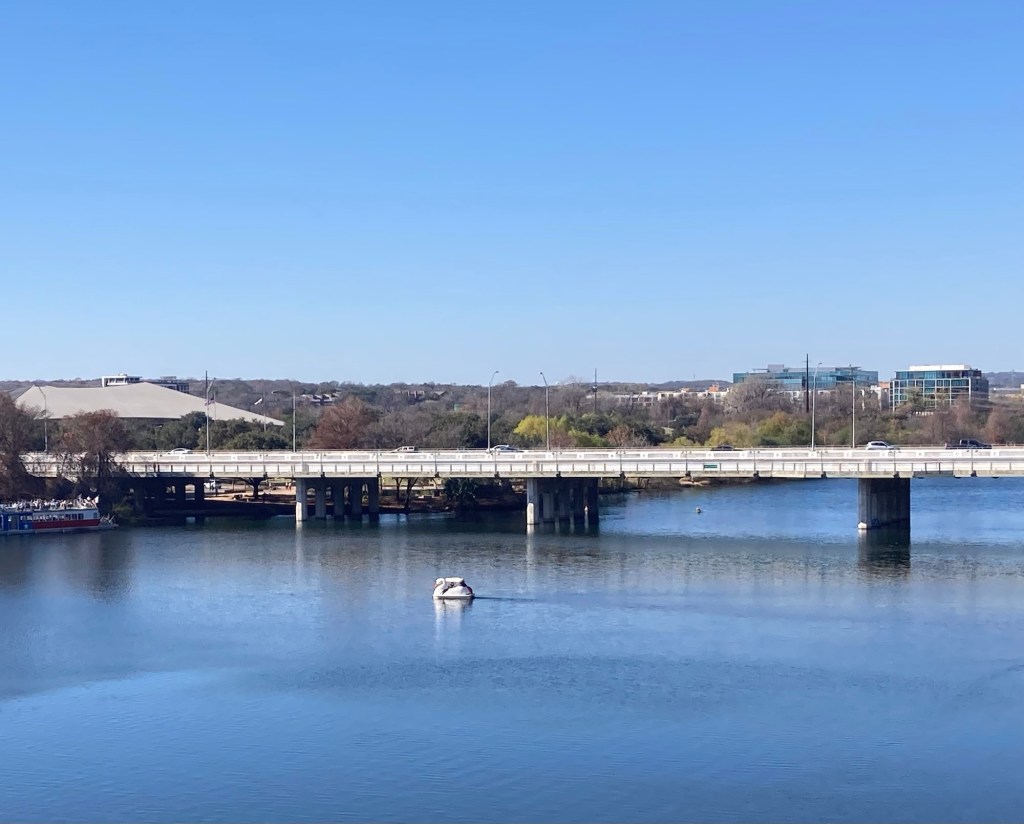
A new (to me) shopping district A view of downtown Austin crossing the Congress Avenue Bridge from South Austin Same view but looking east from the bridge Looking towards the 1st Street Bridge on my way back south
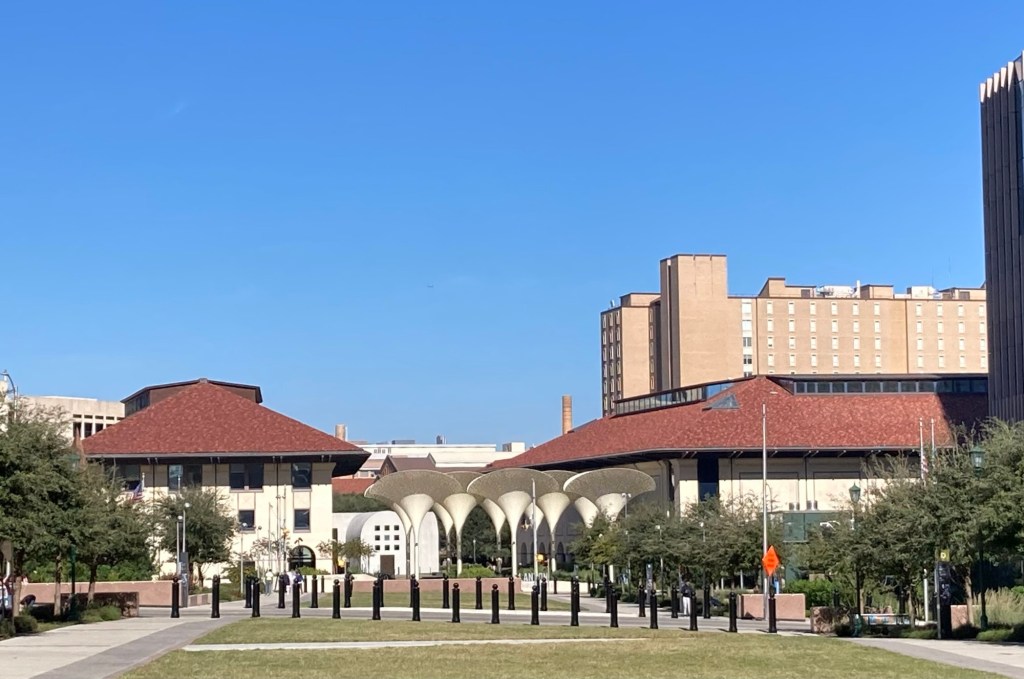
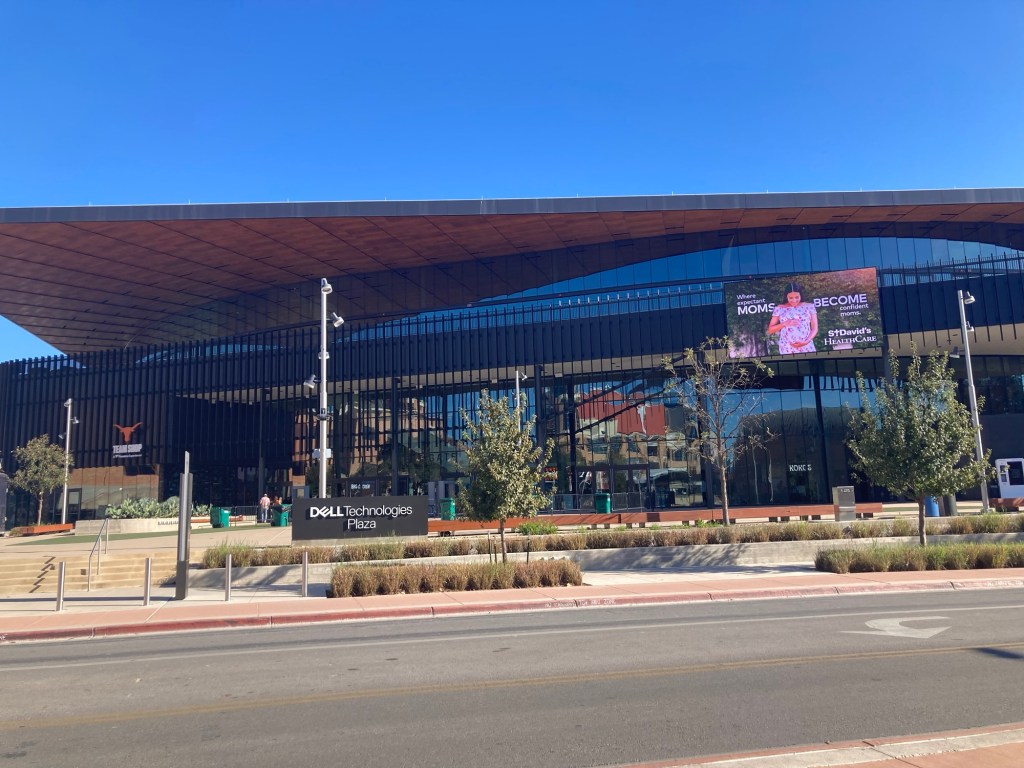
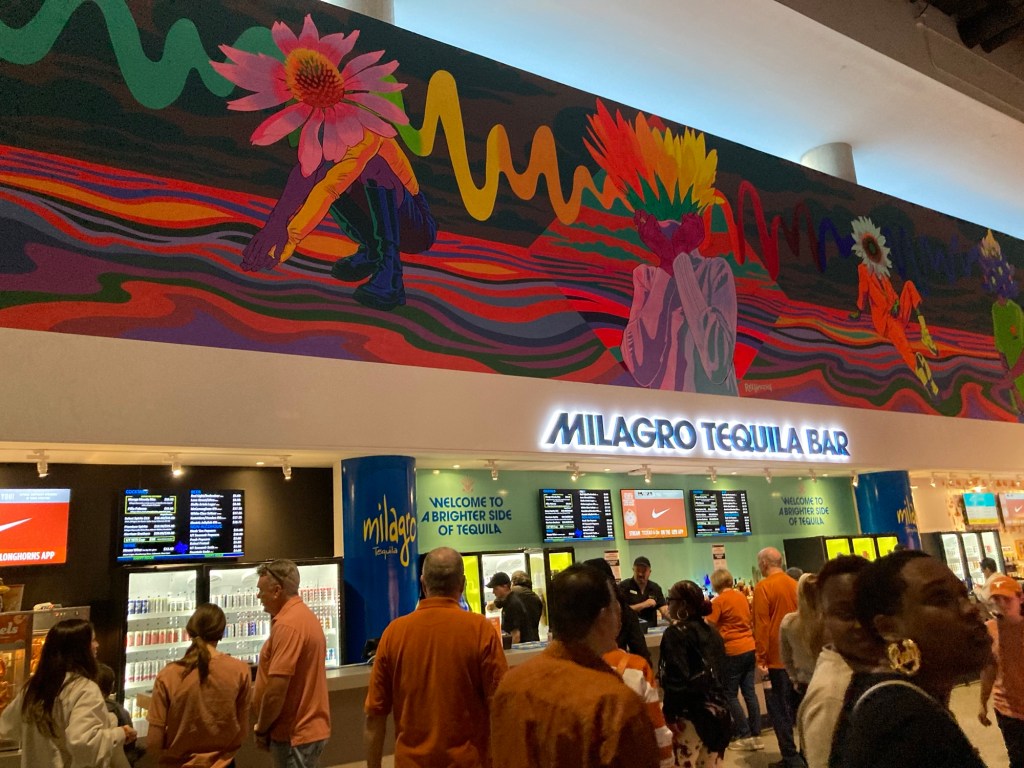
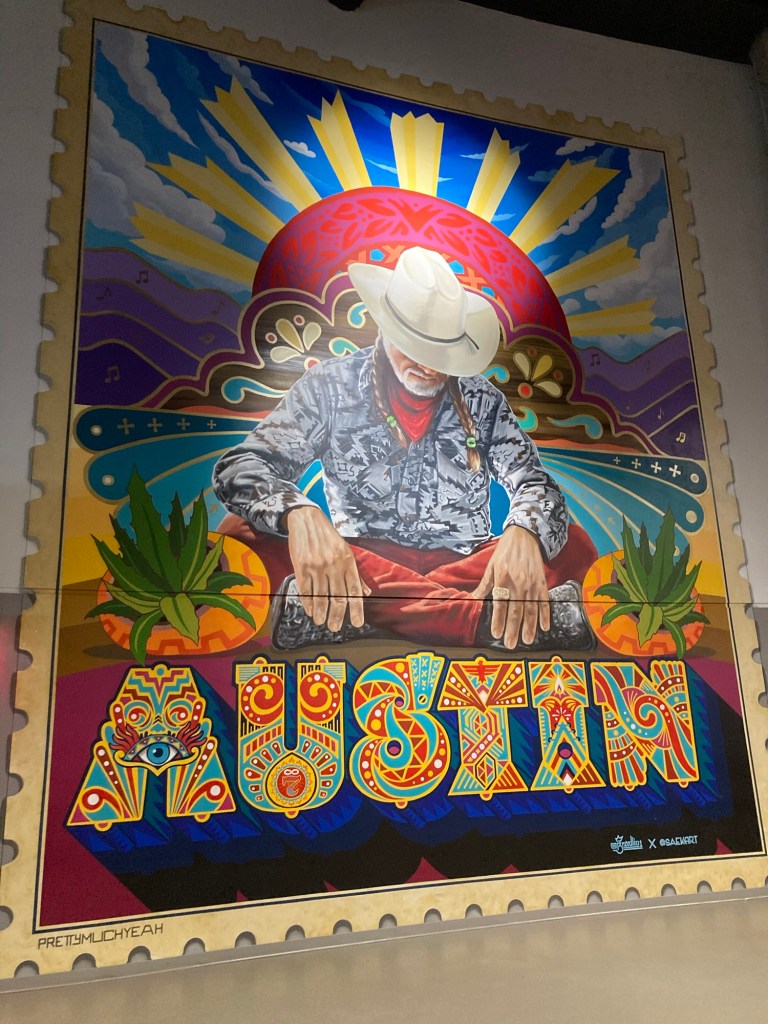
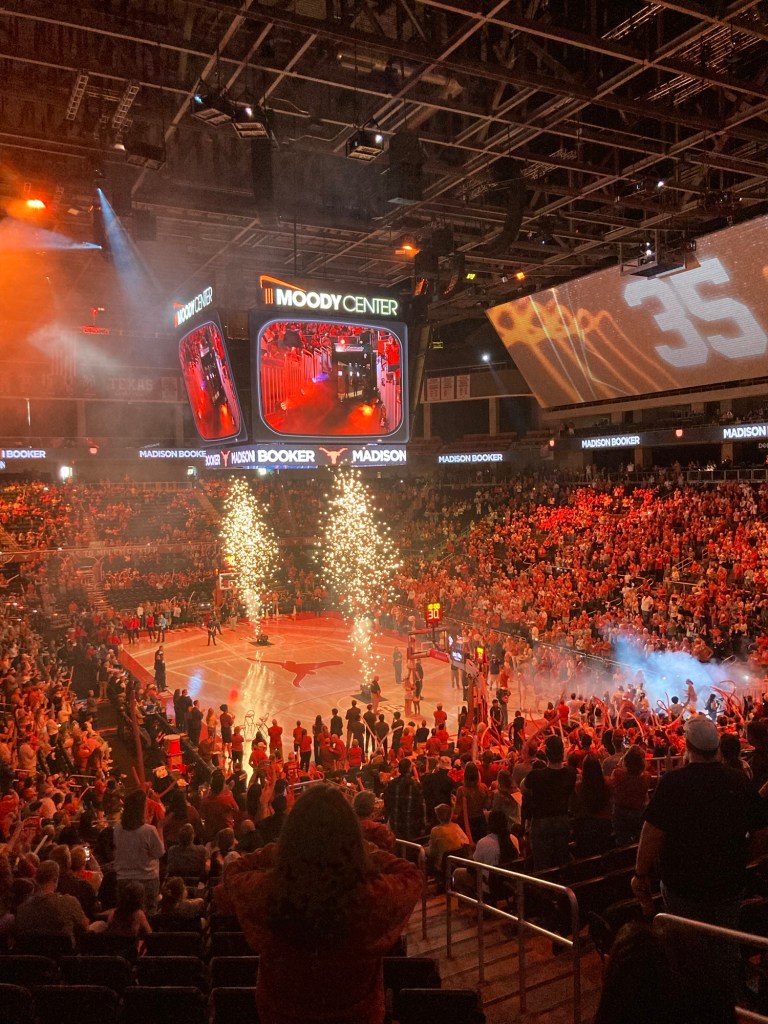
One day I went to see the Lady Longhorns play basketball at the new (to me) Moody Center. I parked in the neighborhood where Bob and I used to live and walked about 40 minutes to the arena on the University of Texas campus.
The Blanton Museum of Art at UTThe Moody CenterVibrant artwork over some concession standsBevo overlooking an escalator Wall art of Willie Nelson, an Austin iconThe dramatic announcement of the home team before the game
Tomorrow, Bob and I catch the bus from Janesville, WI (my hometown) to O’Hare airport for our flight to London for our next housesit.
While I have taken a bit of a holiday from blogging, Bob and I have been keeping busy while doing three housesits around Austin — central, south, and west.
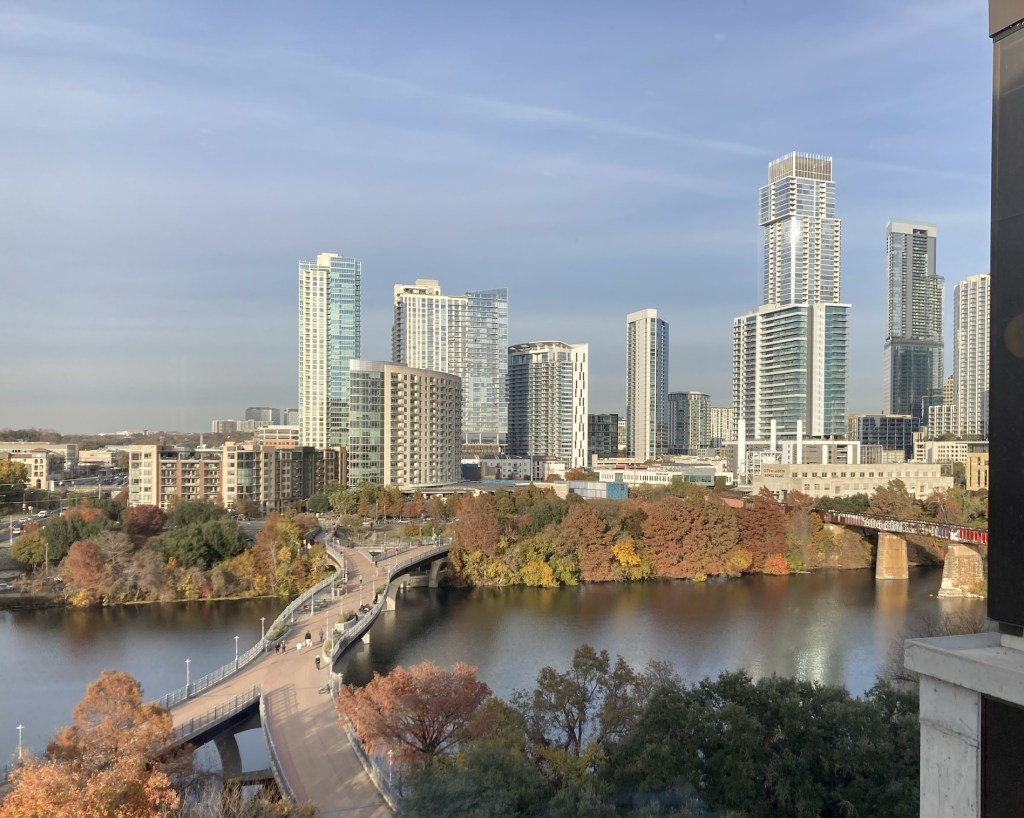
The last time I blogged we were in central Austin. Before we left there, I had a great happy hour meet up with three friends in a hotel restaurant overlooking Town Lake and my beloved hike and bike trail, upon which I trained for a number of marathons, triathlons, and even an ultra-marathon.
The beautiful view from our window seat in the restaurant.
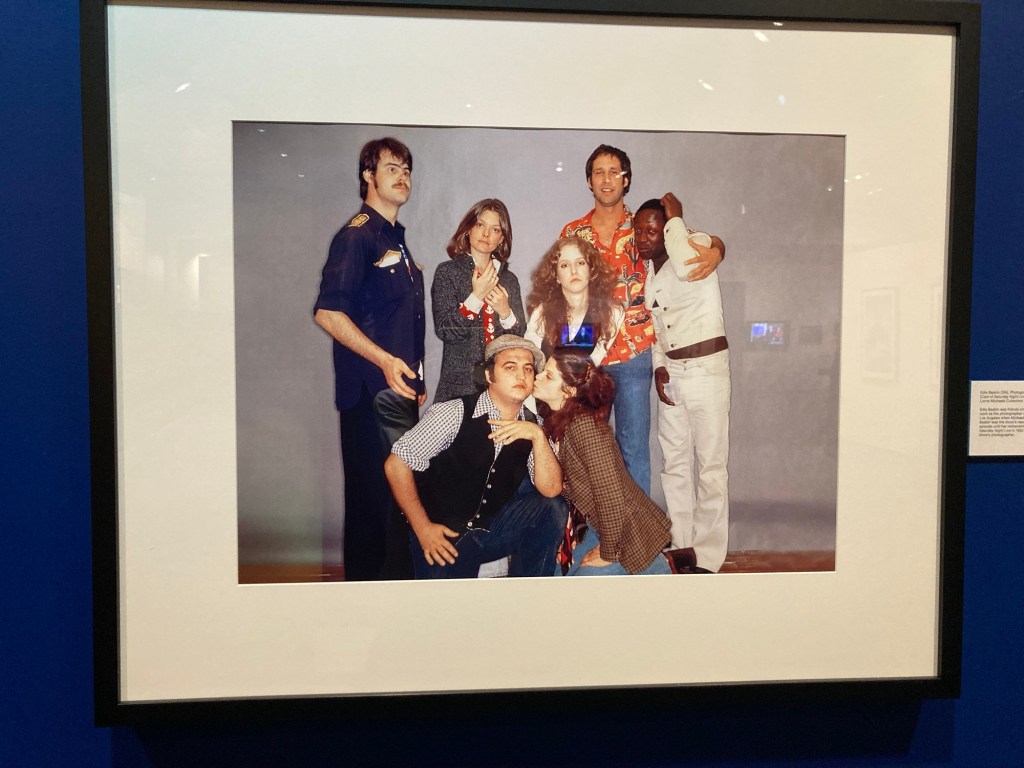
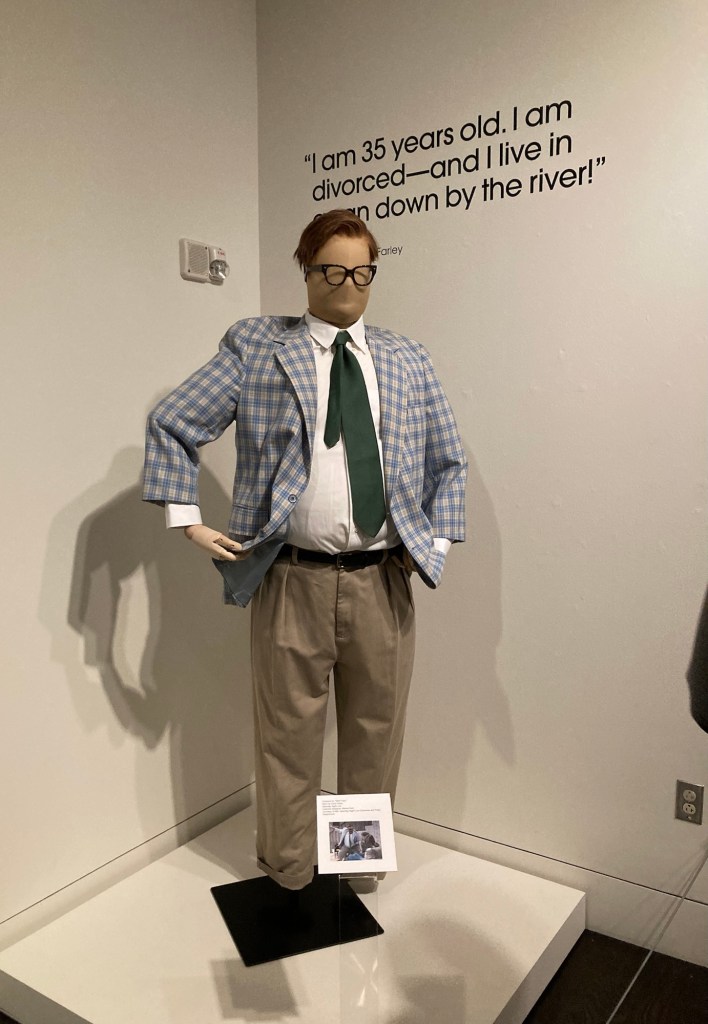
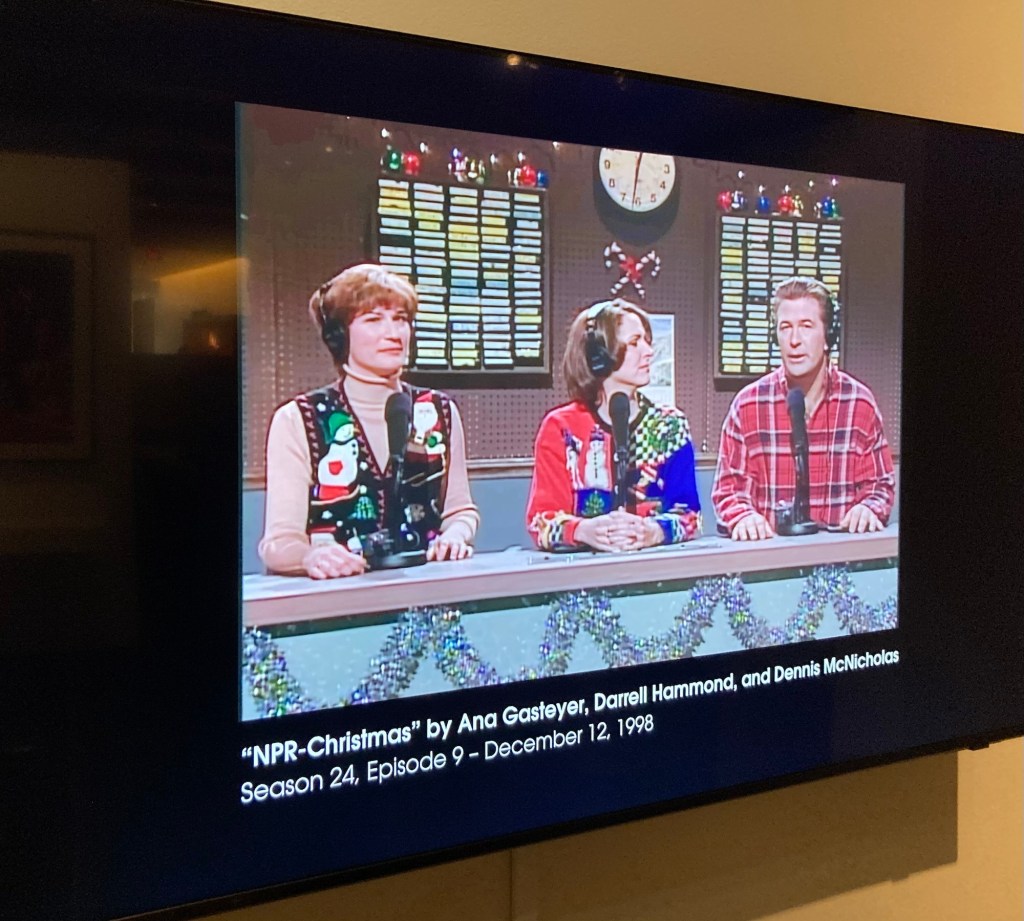
Also while we were still at the apartment in central Austin, we walked to the UT campus to check out the current exhibit at the Harry Ransom Center. The Harry Ransom Center is a humanities research center, library, and museum that collects and preserves literary and cultural artifacts. We go every chance we get, as they have been the recipient of personal collections from a number of famous artists, writers, etc. The current exhibit was a fun presentation of materials left to them in 2024 from Lorne Michaels, the creator and long-time director/producer of “Saturday Night Live.”
It was a great exhibit. We could have stayed all afternoon, especially since there was an area that was running some of the most famous skits on a loop.
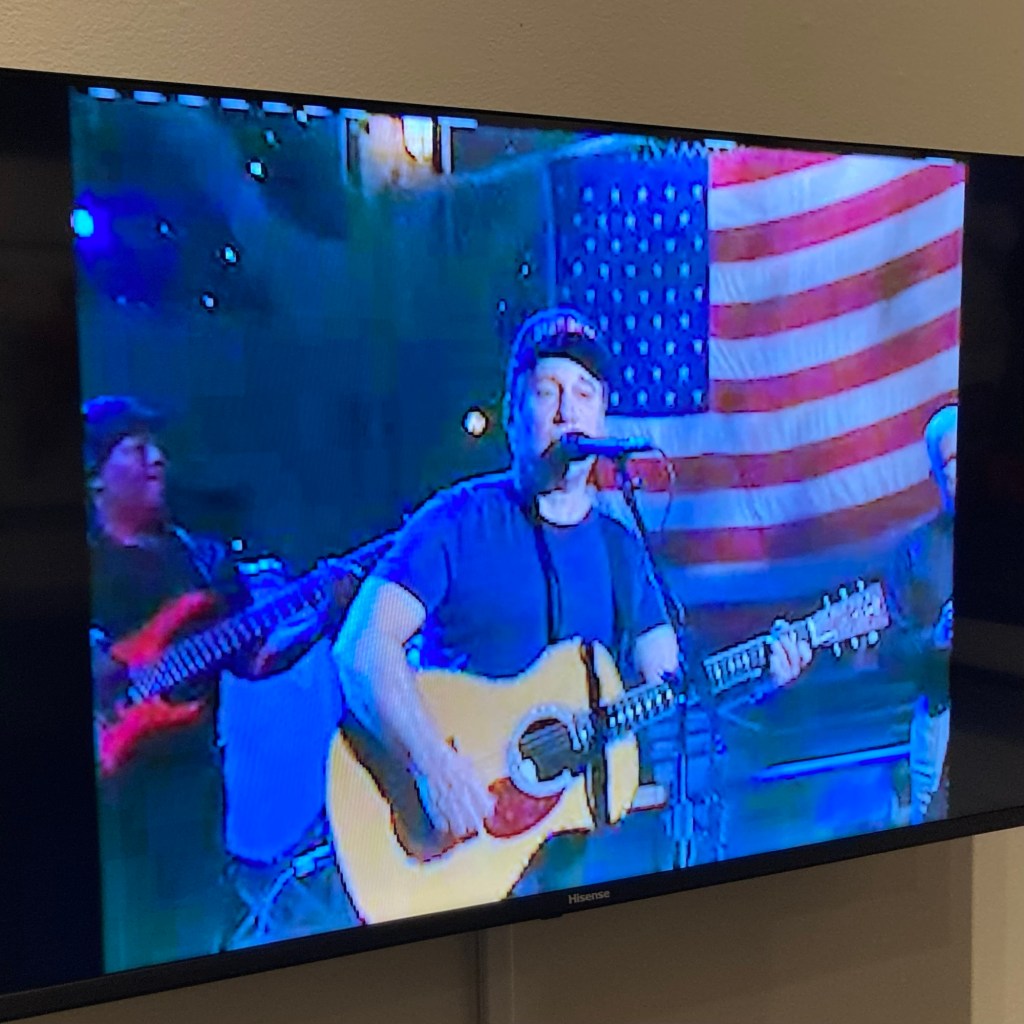
The original cast. Chevy Chase only stayed for two seasons and was replaced by Bill Murray.The costume for Matt Foley, one of Chris Farley’s best charactersNPR was never as fun or funnyAnd then the other extreme, SNL’s first show after 9/11, with Paul Simon singing “The Boxer” on stage with first responders
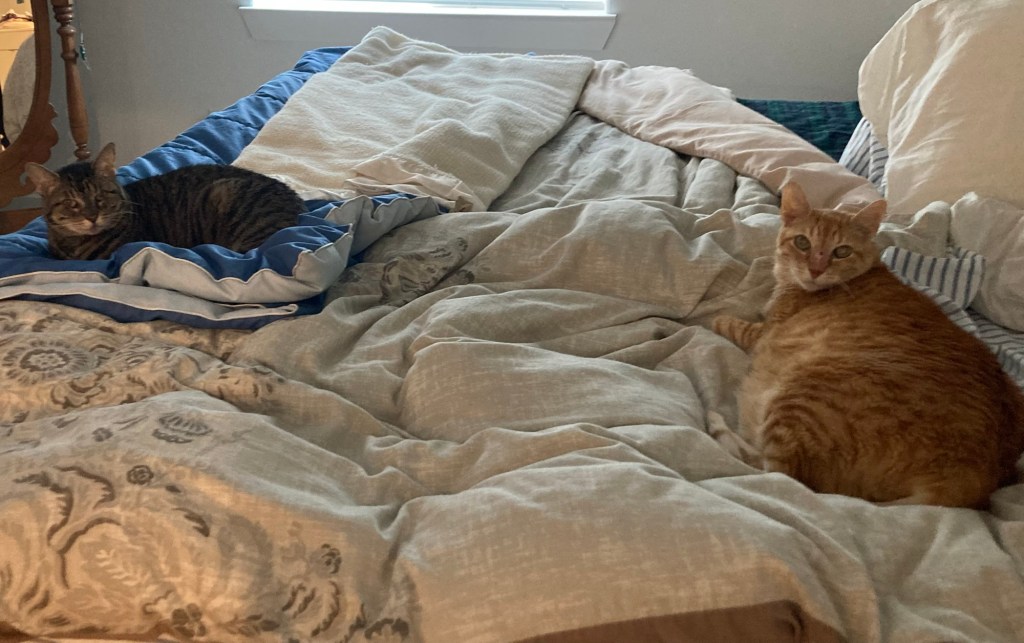
In South Austin, I sat for two cats for friends, while Bob started our housesit west of Austin. I always enjoy time with these two purring companions and will be back with them again on New Years Day.
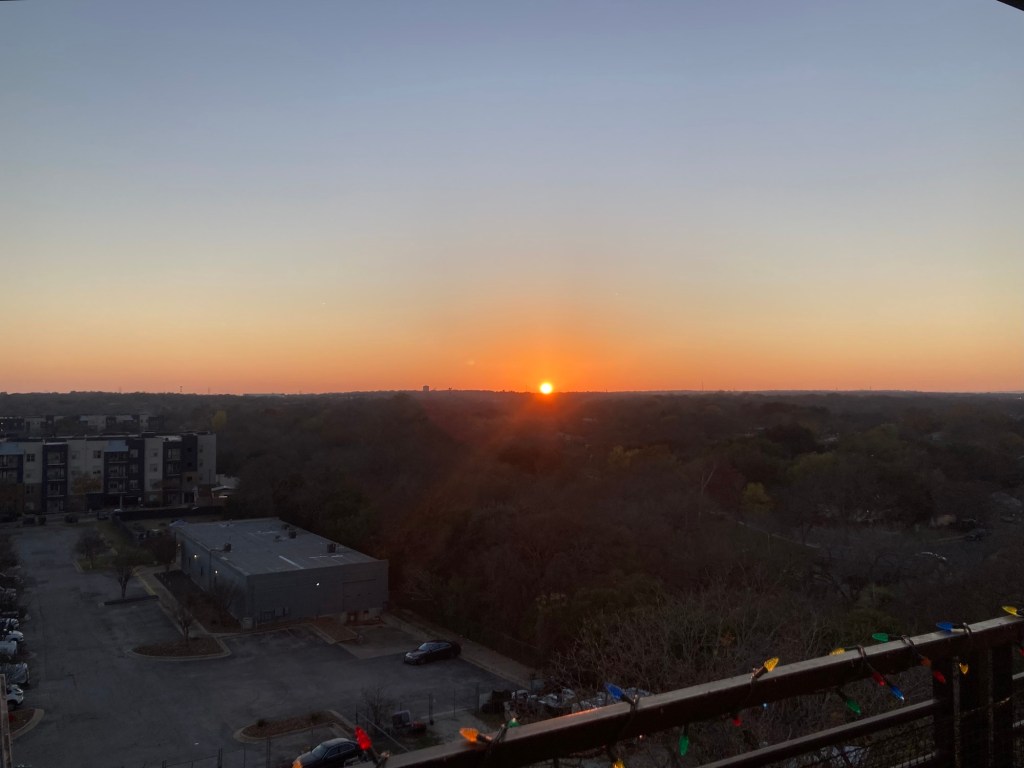
Lefty and Pancho, two very good kitties, and their humans are alright too!The sunset views from the balcony of the condo in South Austin were a daily sight to behold.
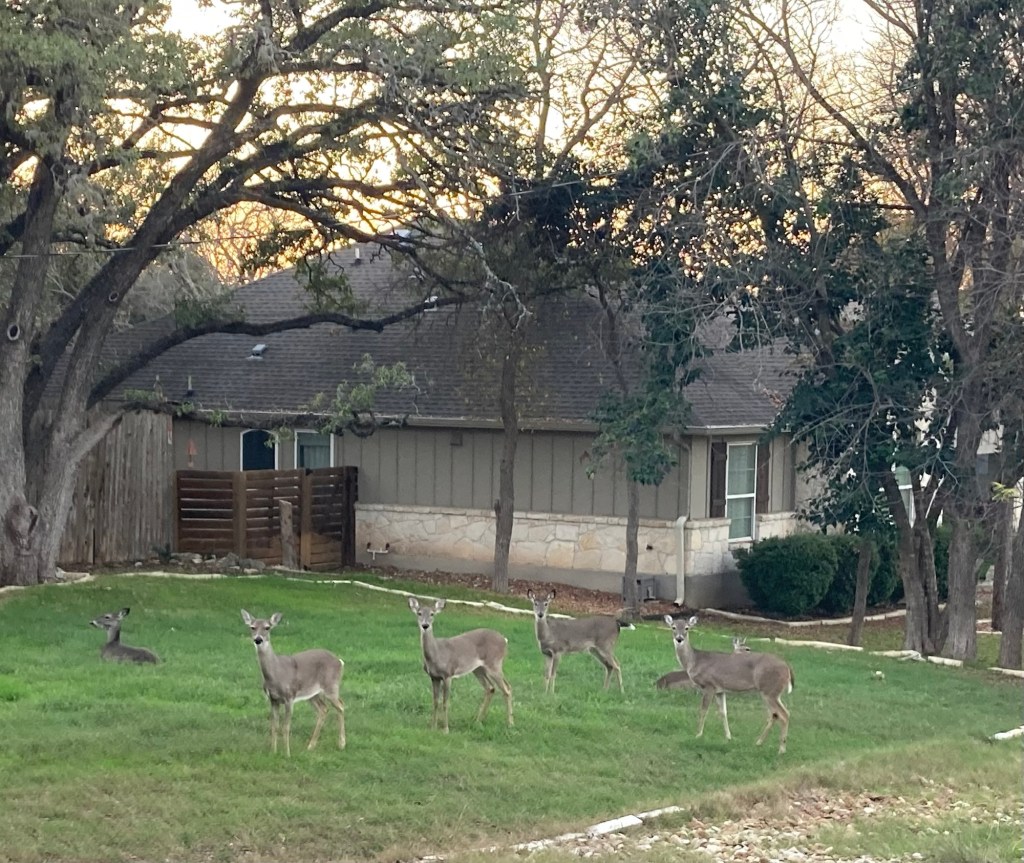
Our current housesit, another repeat, is in the hills west of Austin near the town of Bee Caves. There appears to be a very peaceful coexistence here between the home owners and their pets and the deer population.
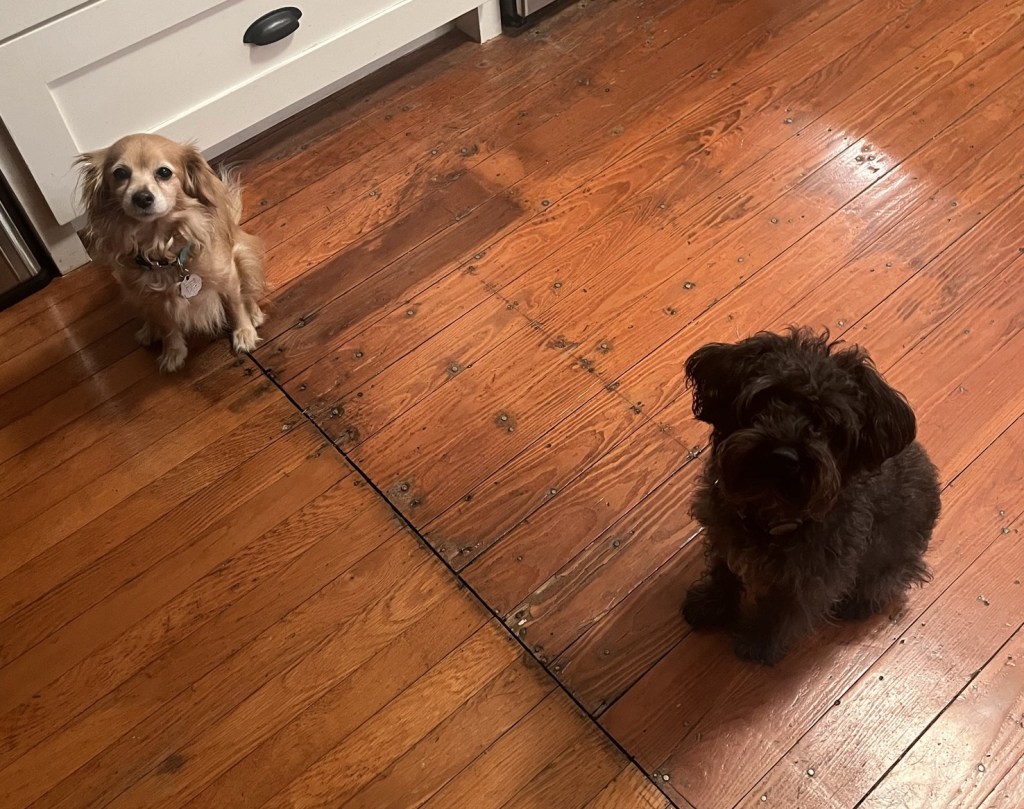
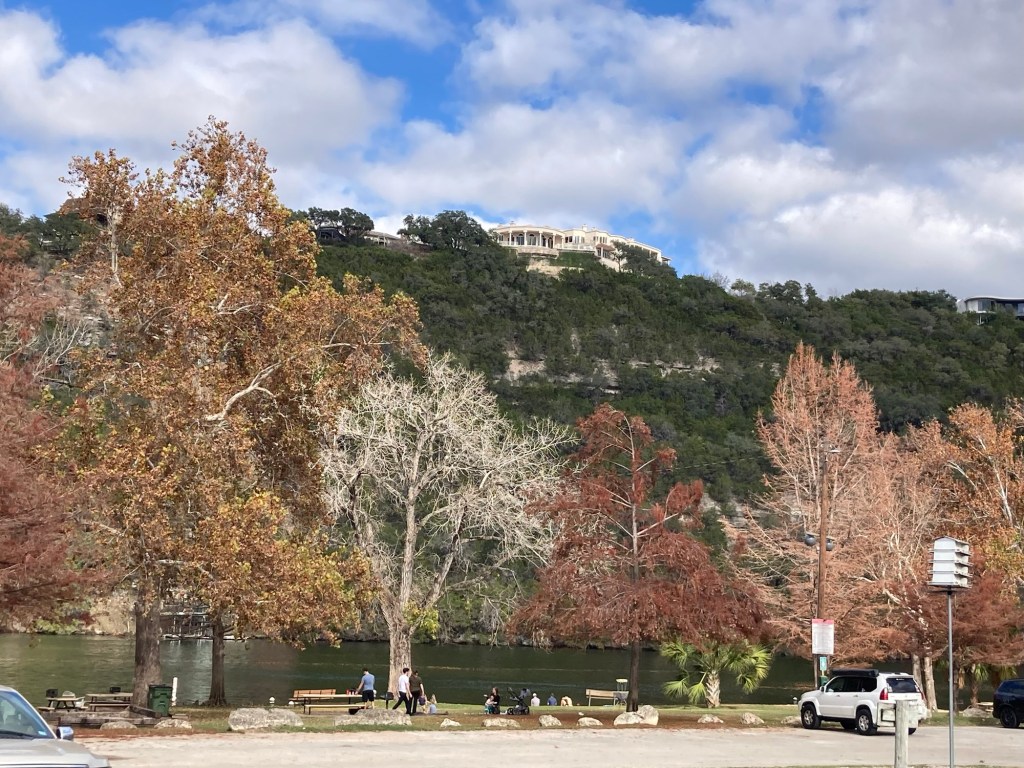
The aptly named Hollywood (on the left) and her adorable and high-energy brother Henry.The colorful trees and massive cliff top homes along the Colorado River in the subdivision. We took the photo from the road by the park, as the park is for members only.🤨Oh deer, this is a common sight in this area.