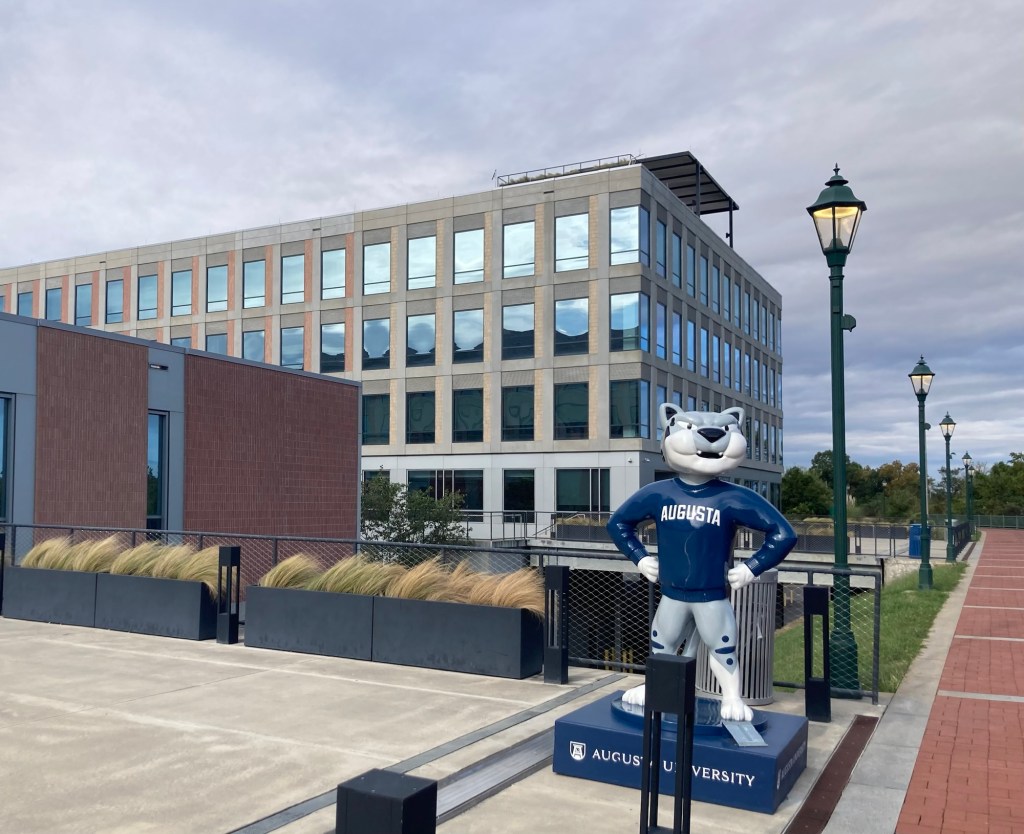
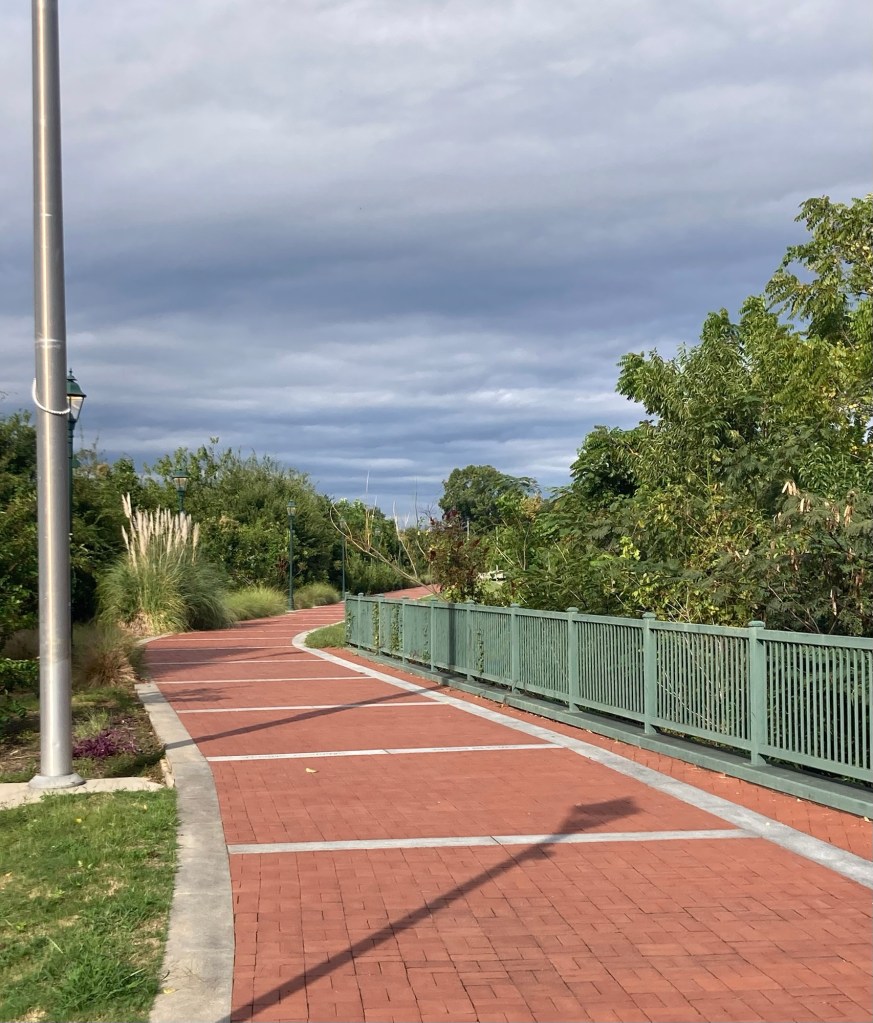
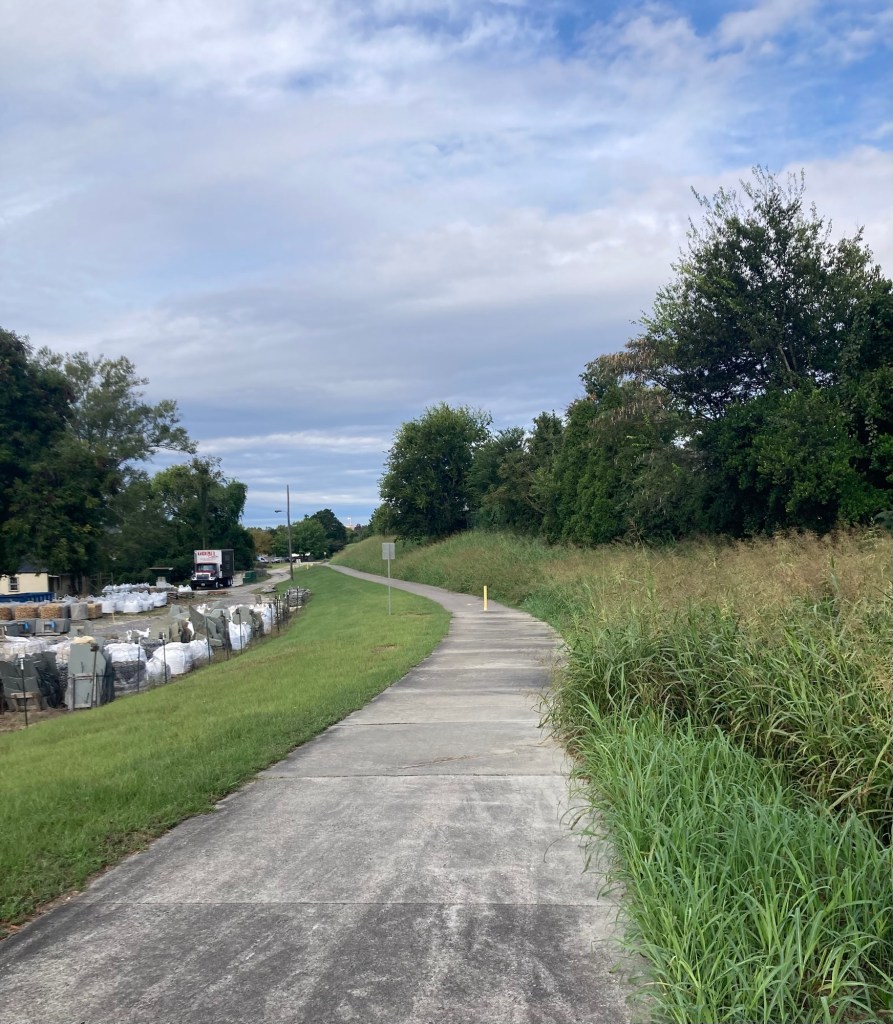
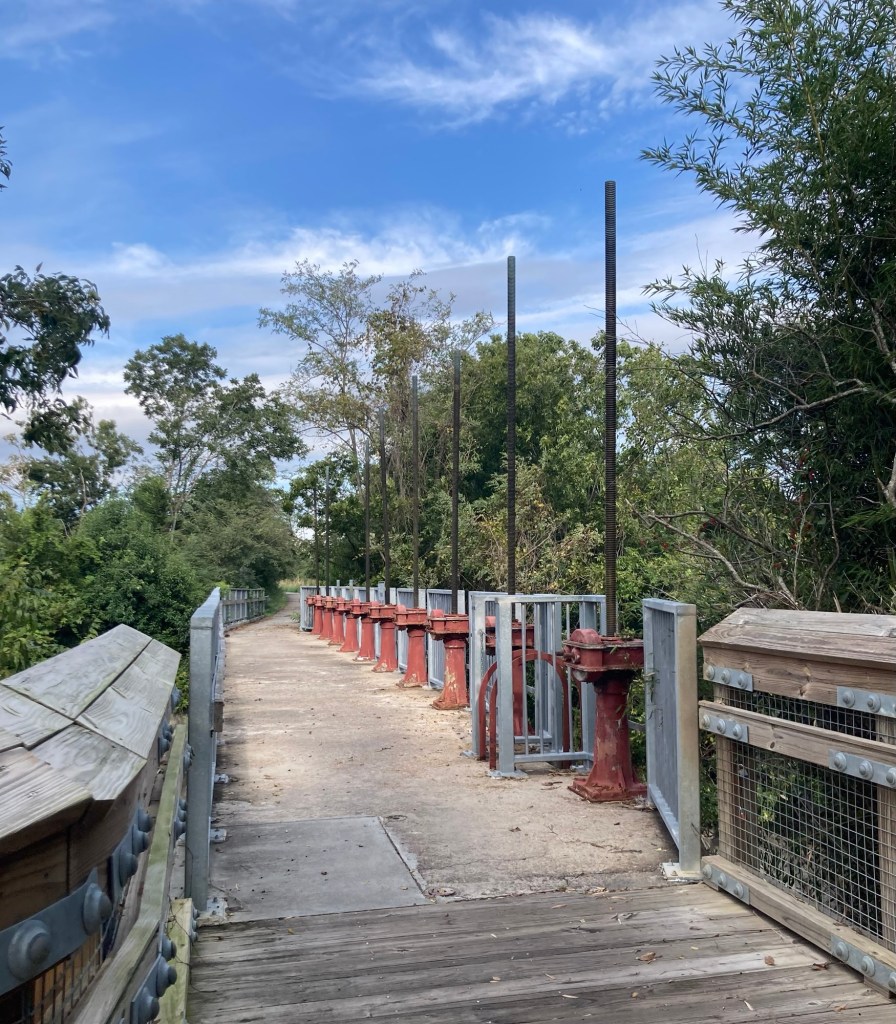
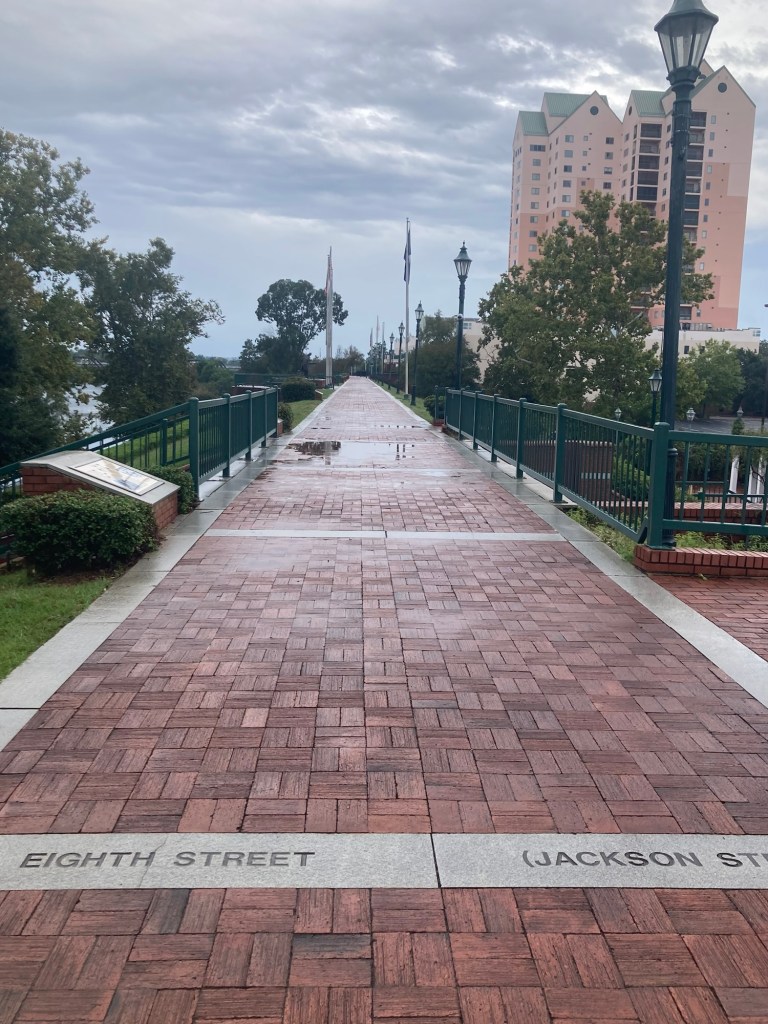
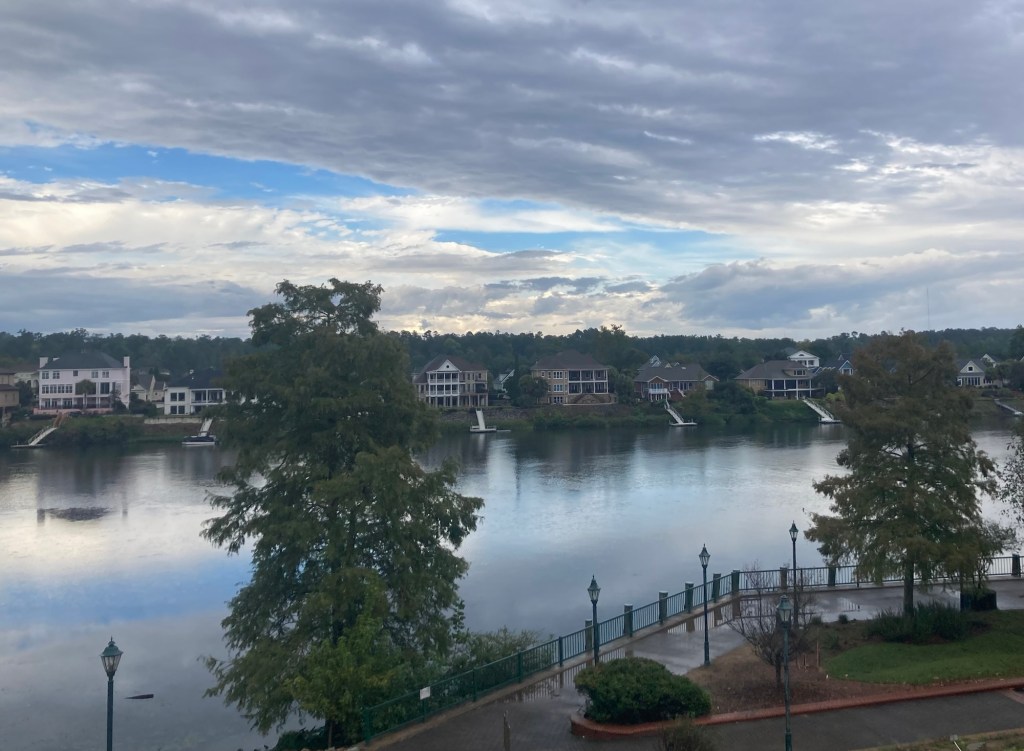
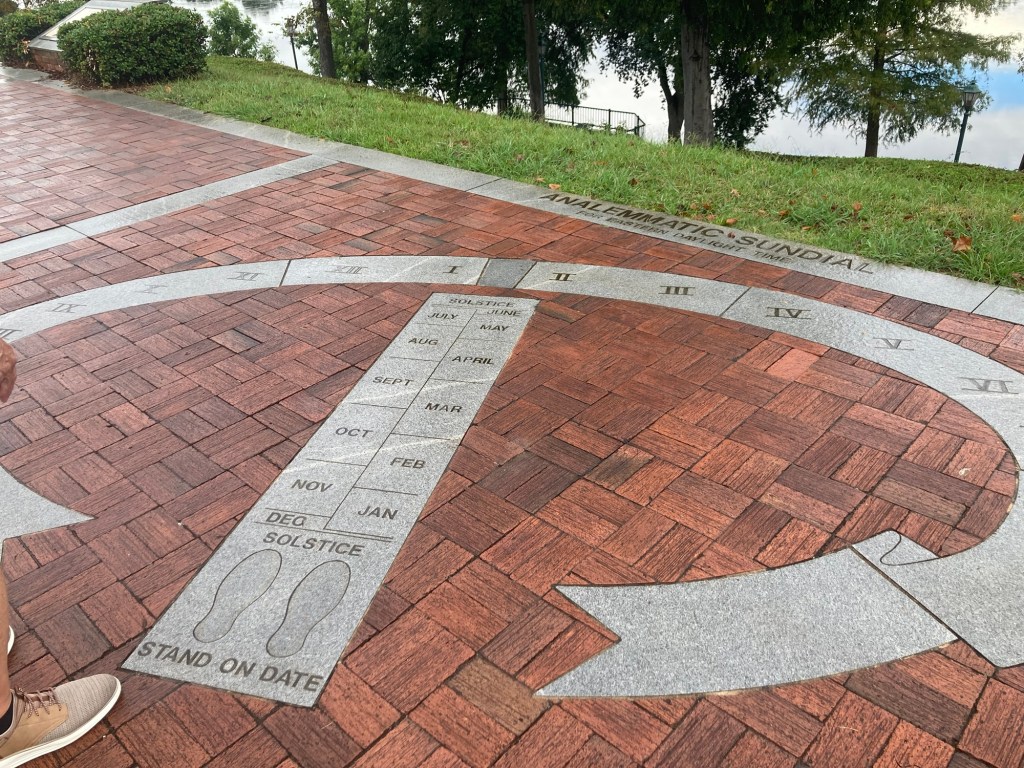
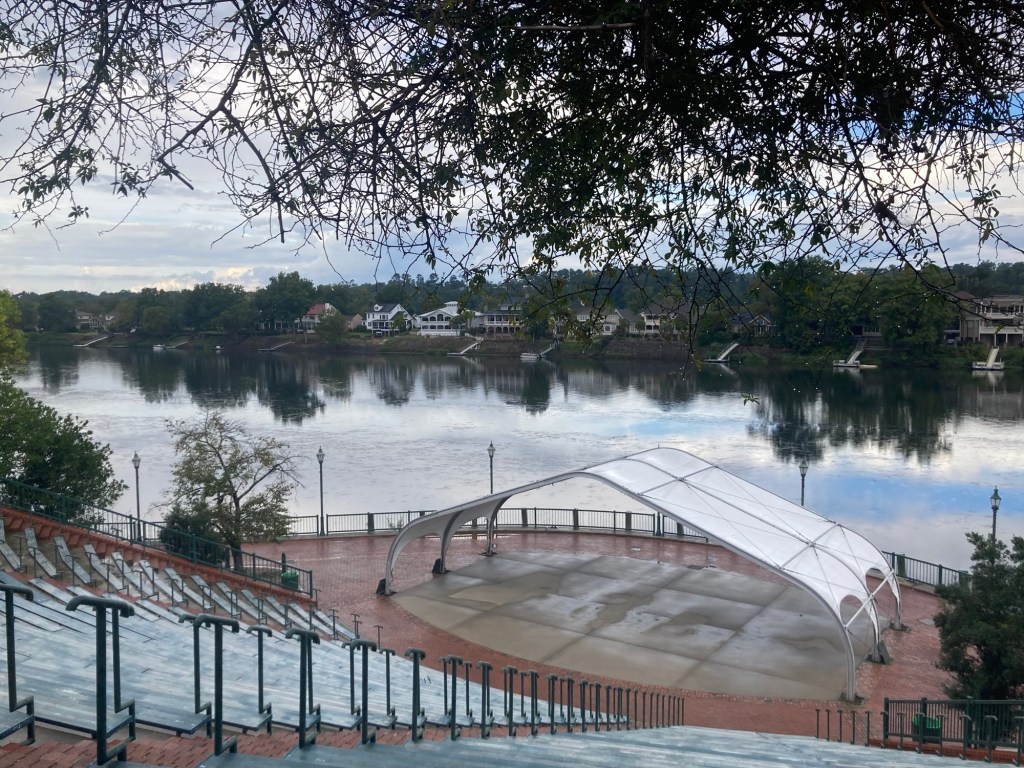
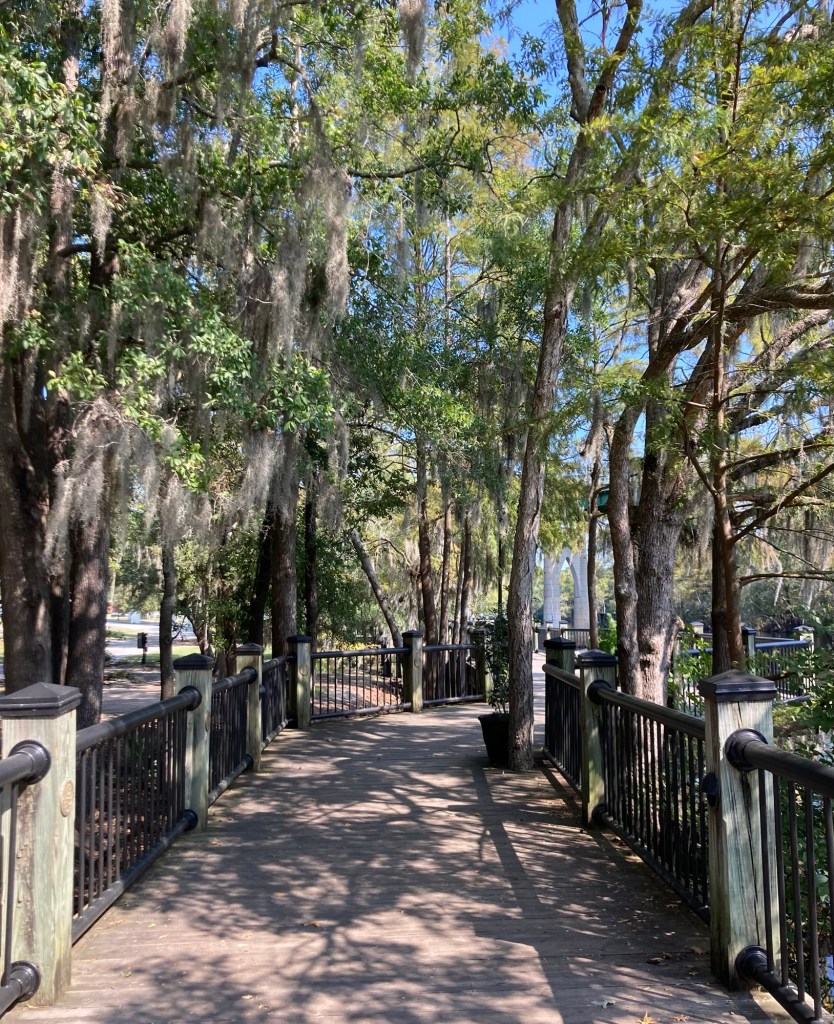
Bob and I visited Warbird Park today. It’s a small park on an old Air Force base behind Myrtle Beach International Airport that memorializes the contributions of local residents to the various wars in which the US has been involved. There is also a memorial to the victims of 9/11. It is a lovely little park near The Market Commons, where you can learn quite a bit about local war contributions, walk the lovely shaded paths, and/or watch planes leave from the airport.
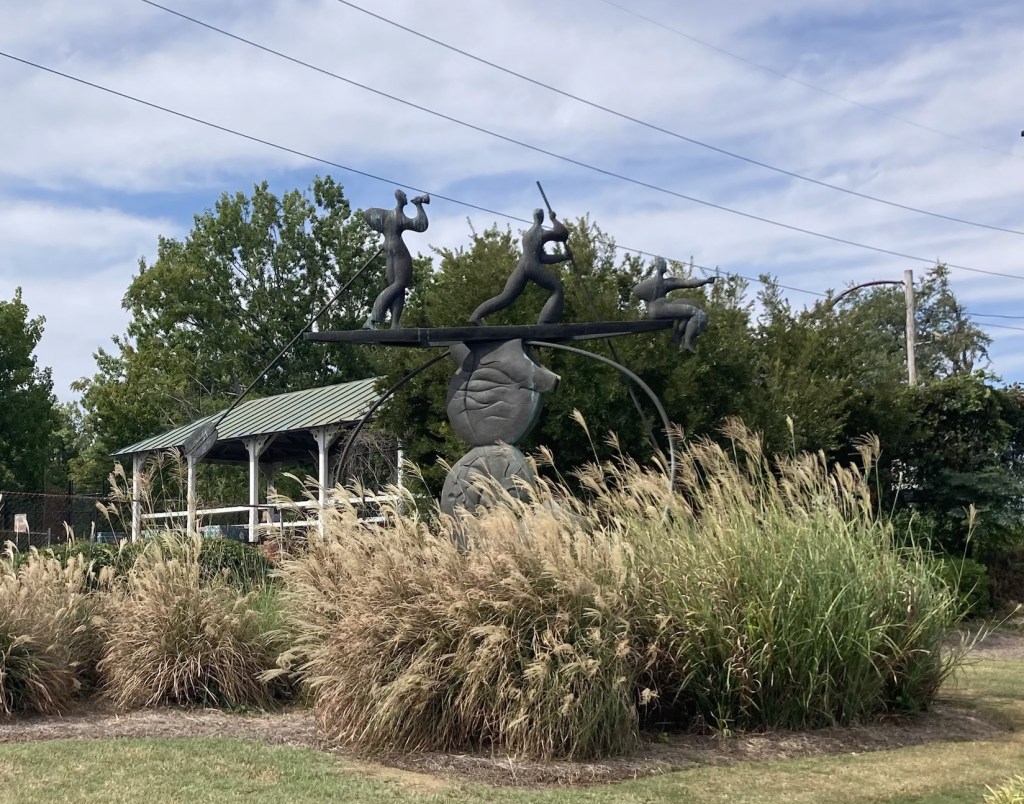
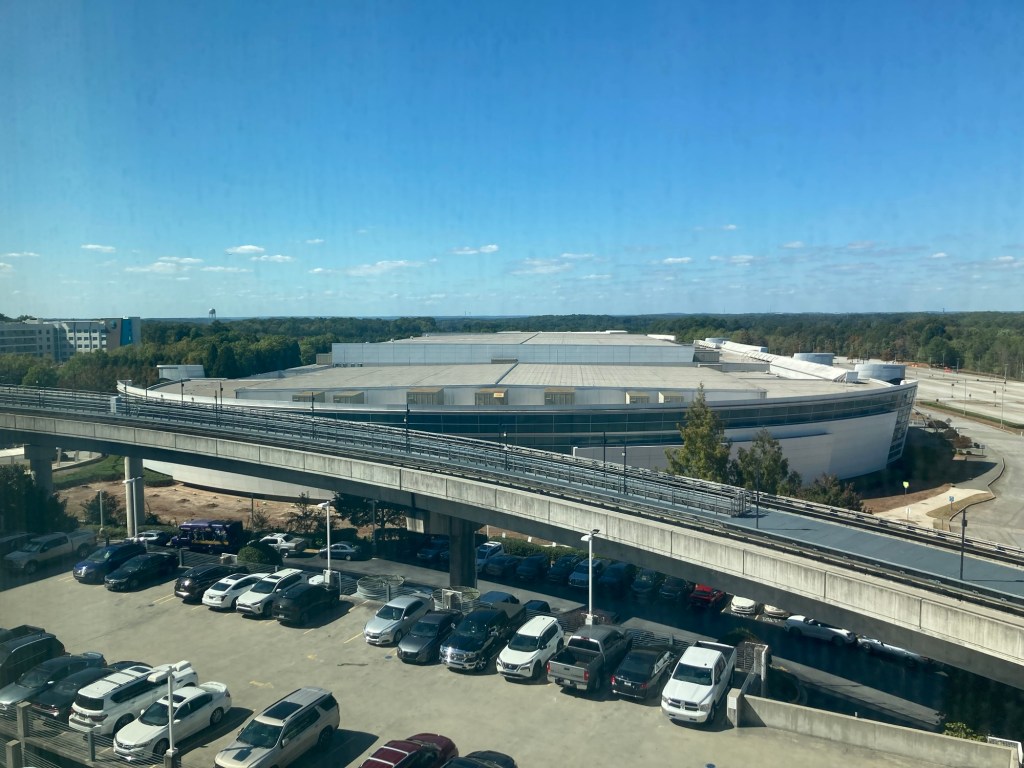
The street signage for the parkWalking up to the 9/11 MemorialA section of beam from the World Trade Center North TowerA F-1000 Super Sabre, used by the 354th Tactical Fighter wing for conflicts in the late 1950s and ‘60sLTV A-7 Corsair II, with inflight refueling and bombing capabilities, was adopted for use by the Air Force in the late 1960sFairchild A-10 Thunderbolt II, described as a tank killer, was first produced in 1975One of two parking spots reserved for those injured in combatThis is a display of the tradition of military aircraft nose art dating back to WWIIOne side of the Wall of RemembranceMemorial for the Korean WarMemorial for Prisoners of WarBattlefield Cross for fallen soldiers Walking up to the WWII Memorial A front view of the WWII Memorial The middle back section of the memorial A tribute to all Armed ForcesA tribute to families whose child has died in the Armed Forces while defending the USMemorial to Revolutionary War Patriots The view of the Myrtle Beach International Airport from the park
Like many cities throughout the country this week, there have been a number of events in the Myrtle Beach area to commemorate the heroes of 9/11. A couple of the memorials that we saw on the local news were for stair climbs to honor the sacrifice of the first responders on that terrible day.
I had not done a stair climb before, but I was intrigued. These events (at least the ones I saw discussed for Myrtle Beach) encourage you to climb 110 flights of stairs, which represents the 110 floors of the World Trade Center. Some encourage you to wear gear as well.
I decided to do a memorial stair climb today at a local gym. They allowed members and non-members to come in this week during their operating hours to do the climb in one go or over several days.
Crabtree Memorial Gym
Crabtree Memorial Gym, where I did the climb, is a large multi-purpose facility across from The Market Commons retail and residential center that we were at the other day. It is named for Clem Crabtree who served as head of Morale, Welfare, and Recreation at the Myrtle Beach Air Force Base. In 1982, the Air Force named the gym in his honor.
The gym is currently owned and operated by the City of Myrtle Beach. It is open 7 days a week and offers sports, weightlifting, cardio equipment, and fitness classes. It is a two-story building. When I arrived, I was told where the stairwells were. I was to go up the one flight, walk down the hall, go down the 2nd stairwell, and repeat until I reached 110 or whatever other number I wanted to stop at.
A sign by the stairwellThe first set of steps upThe entrance to the down stairwell
I had no idea how long the climb would take or how my legs would feel, but I wanted to do the full 110, if possible. I started a little after 10 am. One other woman also did part of the climb while I was there, having done some of the climb on two other days.
As it turned out, I didn’t have any problems. This is sort of my forte — unskilled athletic activities (those where you don’t need a lot of coordination) for long periods of time. My legs felt fine. It was good. Of course, I didn’t have the heavy gear, there was no fire or smoke, and I could listen to the music while I walked and climbed. Still, it took me about an hour and a half, so by the end I felt like I’d done something.
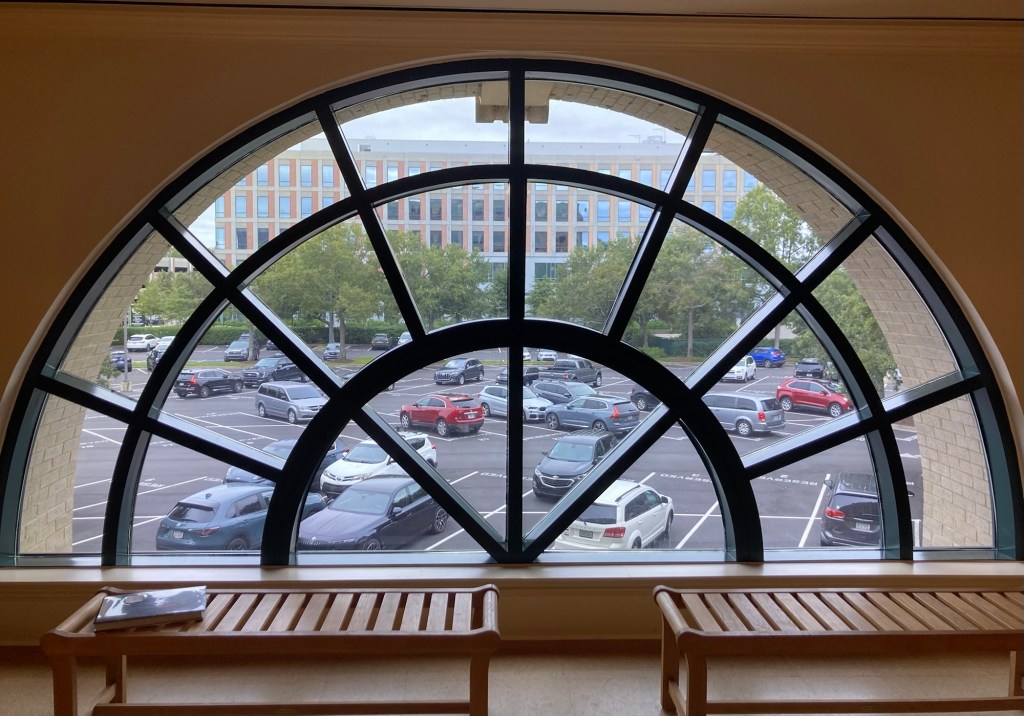
I also had a nice view out of the windows as I walked between the stairwells.
Bob and I drove 18 miles this morning to the Horry County Museum in Conway, South Carolina. Conway is the county seat of Horry County and home to Coastal Carolina University, which won the national championship in baseball in 2016.
Horry County Museum
As with most history museums, the building started out serving another purpose. In this case, the museum is in what used to be the Burroughs School.
An electric guitar made from original floor joists from the Burroughs School
The museum was laid out well, attractive, with motion sensors so that lights came on only when needed. The guide at the front considered himself a bit of a comedian, as he said that we could take photos of anything in the museum except the fish as they were in the wetness protection program.
The undercover fish in the museum entrance
Horry County encompasses over 1,200 square miles of land, making it the largest county in South Carolina and one of the largest counties east of the Mississippi River. Many of the first colonists to settle the county came from Ireland, Scotland, and Wales.
The county is named after Revolutionary War General Peter Horry.
General Horry
Prior to the British settlers, the area was home to the Waccamaw Indians, who are a recognized tribe by the state of South Carolina but not by the federal government, which means they are unable to enter into agreements with the federal government regarding self-government, religion, health care and gaming, among other things.
Acknowledgement of the original land owners. The rest of us are all immigrants.The outside of a Native American hutThe inside of the hut
Although rice, cotton, and indigo were grown in the area, early important industries for Horry County were timber and turpentine.
A barrel of resin, or crude turpentine, that fell off the vessel that was carrying itA model of a turpentine still
Of course, every place has been involved in various wars over the years, so there were a number of exhibits related to that.
A display case made in 2002 to commemorate the Elliot White Springs Flight 77 Order of the Daedalians, which honors all local WWI aviators.
The stain glass panels in the case were taken from the Myrtle Beach Air Force Base, which closed in 1993.
This is an Adolph Hitler silver platter, which was given to Robert Charles Bell, a soldier in the 45th Infantry Division, by an officer from Hitler’ mountain vacation home.Two German POWs who were held in the Myrtle Beach POW camp.
The Myrtle Beach Prisoner of War camp opened in 1944 and housed around 600 German POWs. There were 28 POW camps in South Carolina, and the POWs were used to fill gaps in industries, like timber or tobacco, from the US men at war.
Various war-related items. The tools on top are from a Civil War surgical kit.
Another highlight of the museum was the role of water in the area — both in terms of driving industry options but also fueling the tourism industry.
Various types of sea shells Pageant contestants posing on the beachThe lure of the area
It was an impressive museum, very well presented, especially compared to many other history museums that we’ve visited. We also were intrigued with downtown Conway and will likely go back to explore that area as well as their Riverwalk.
Almost forgot— next to the museum was their library which was quite busy.
Just as a quick note before I get into our recent activities and inactivities, Bob saw a shirt in a local store that was selling Murrells Inlet merchandise. The shirt had MISC in big letters for Murrells Inlet, South Carolina but also looking like the abbreviation misc for miscellaneous.
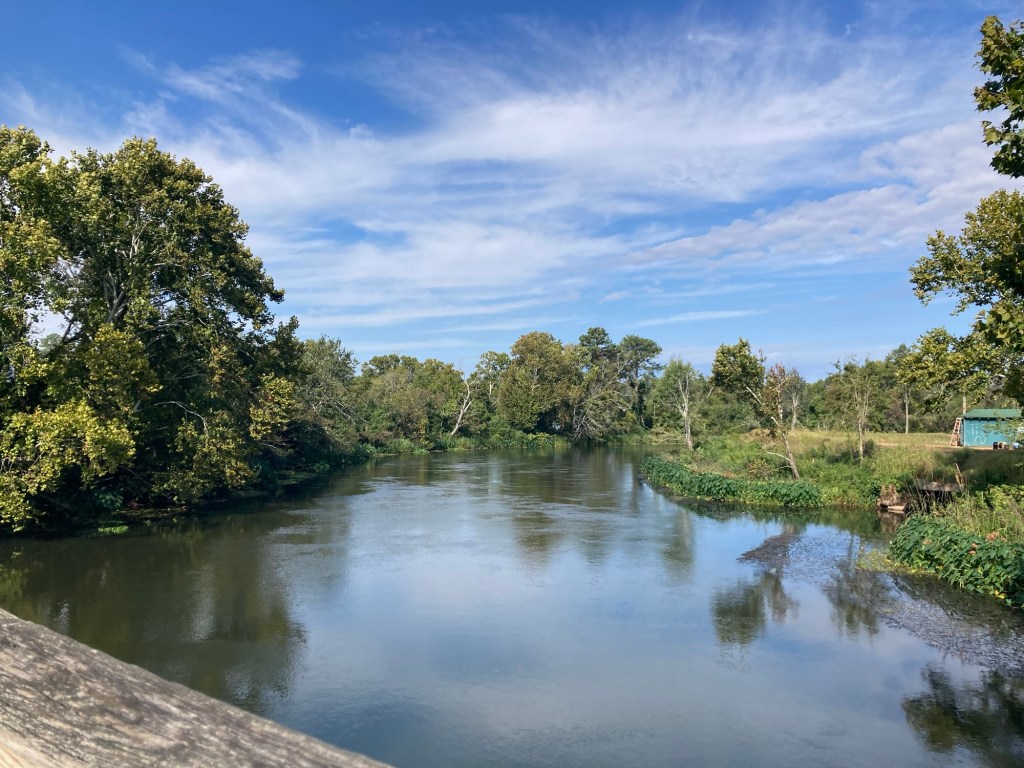
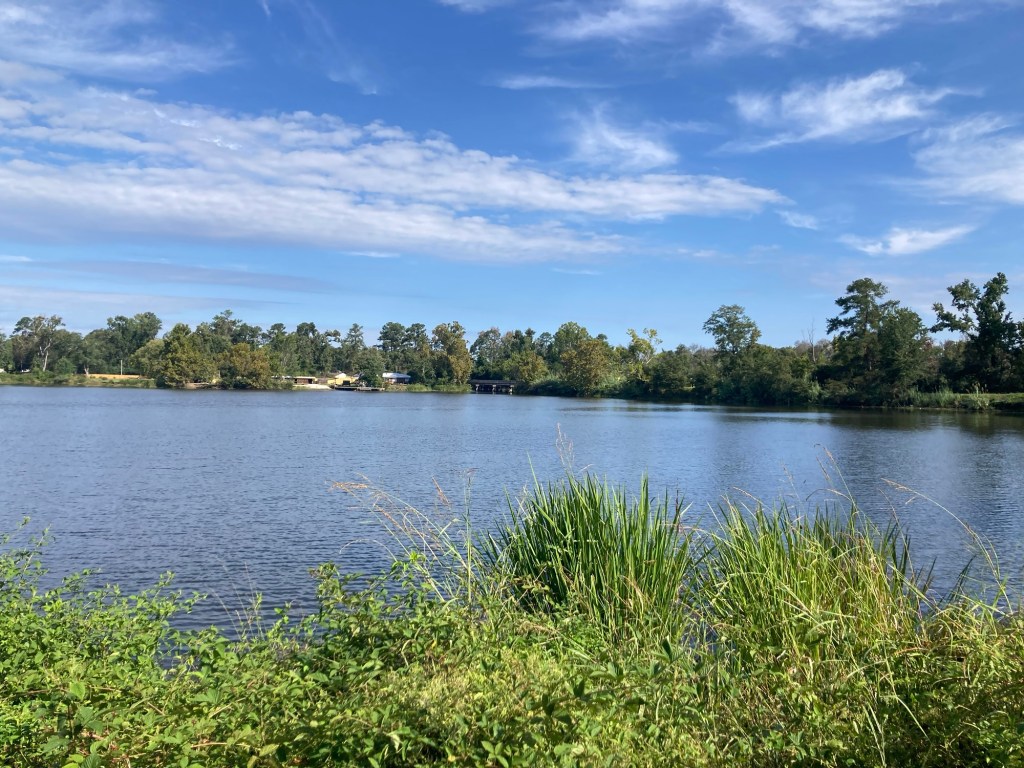
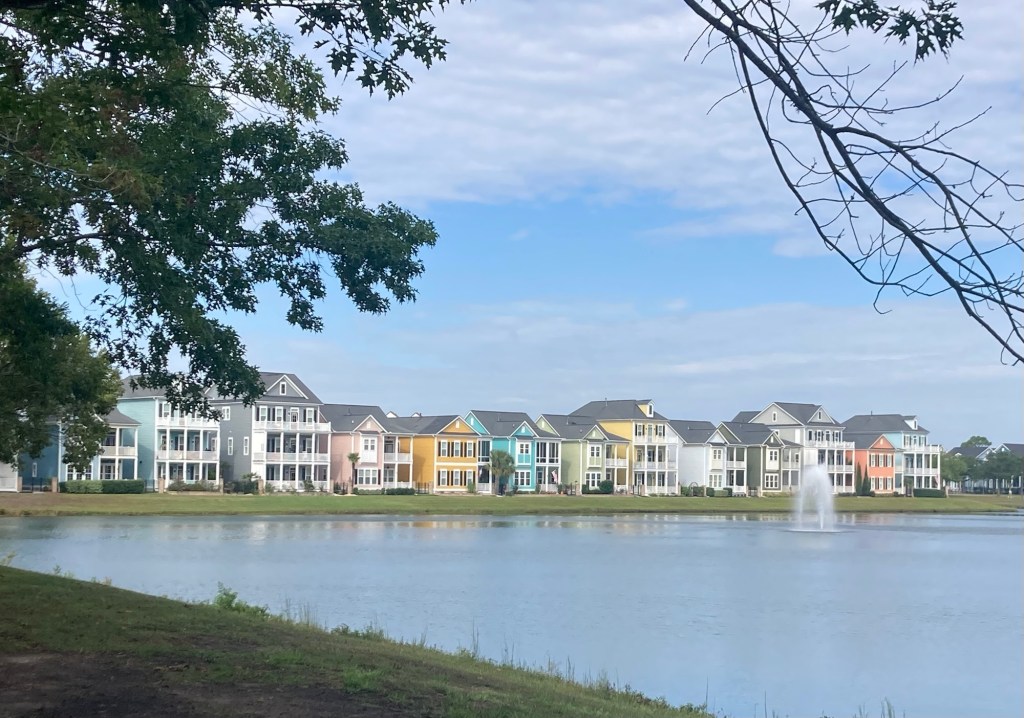
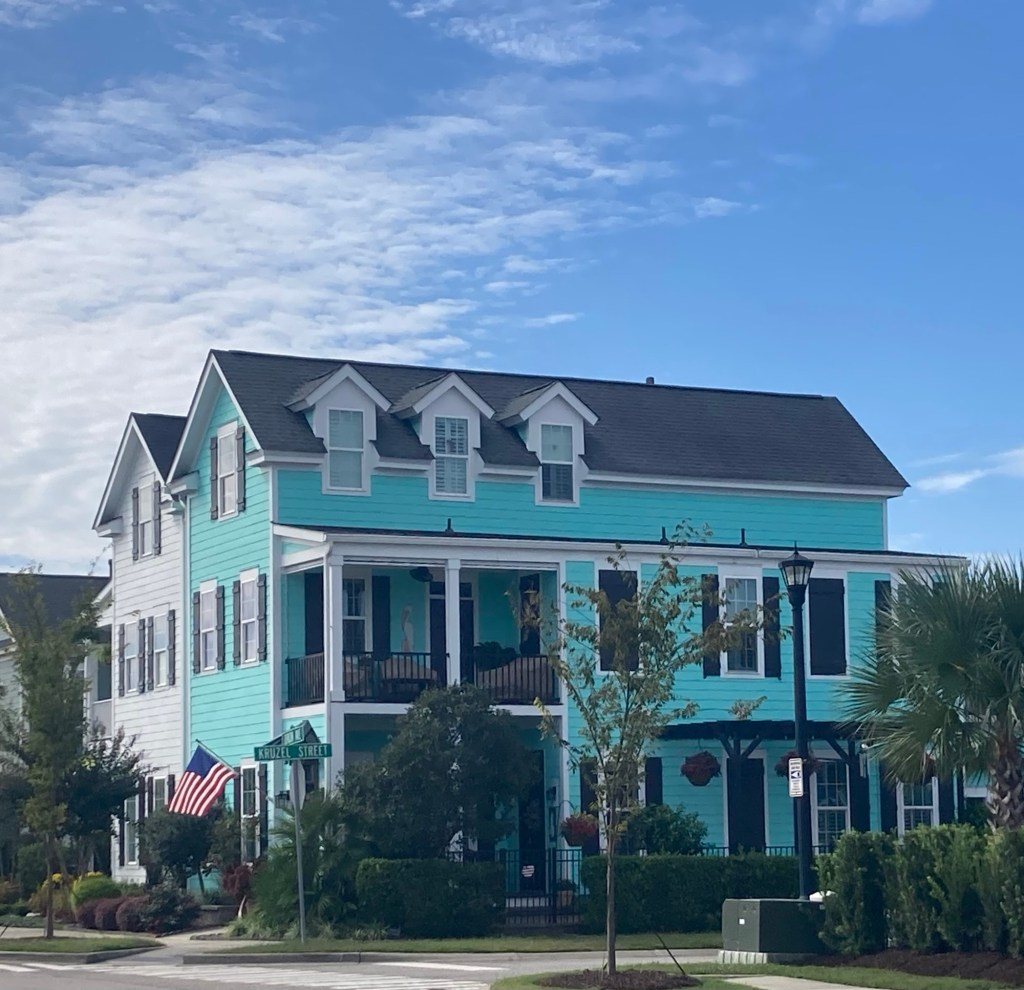
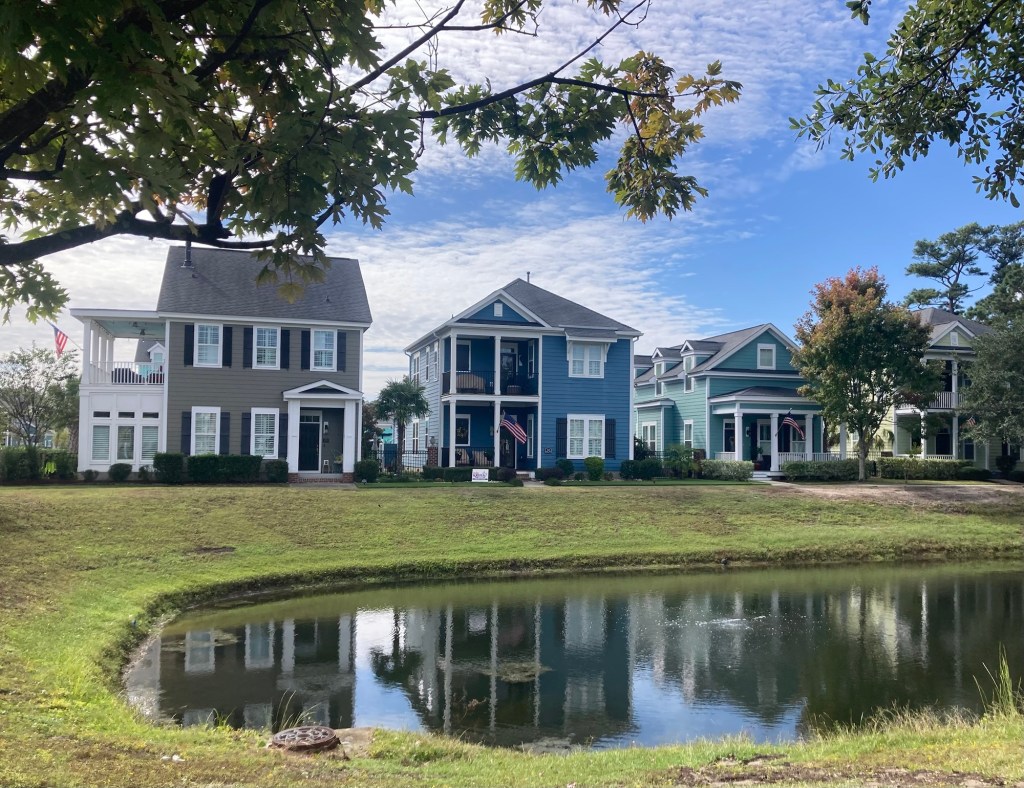
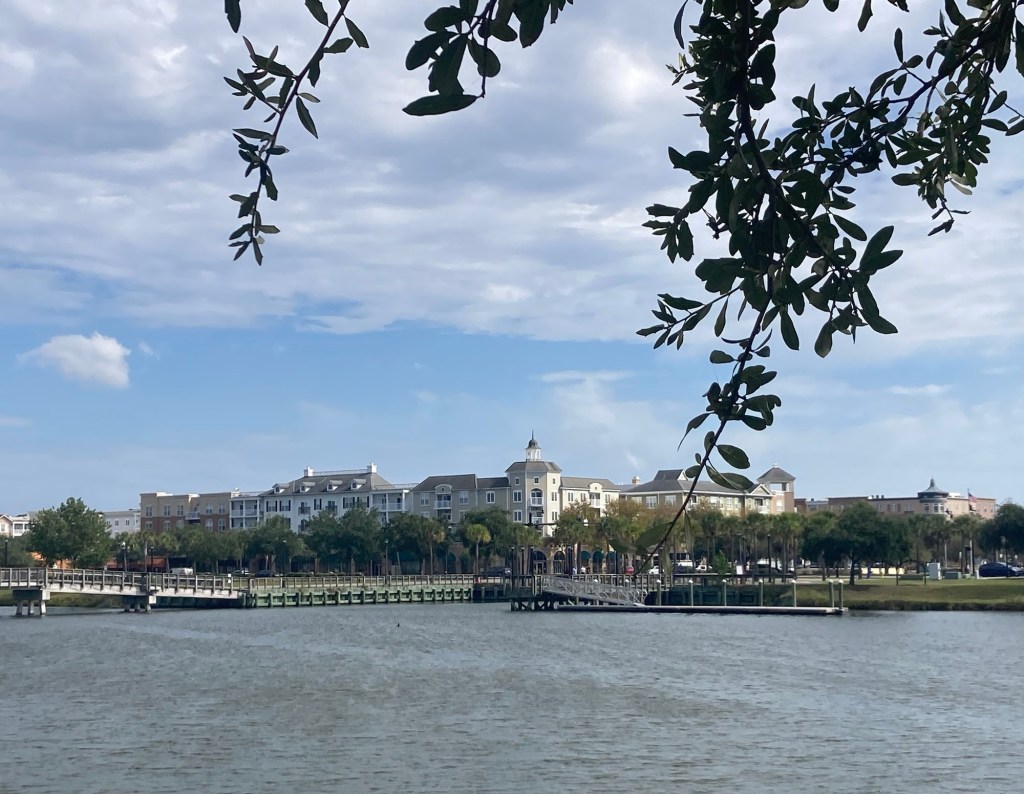
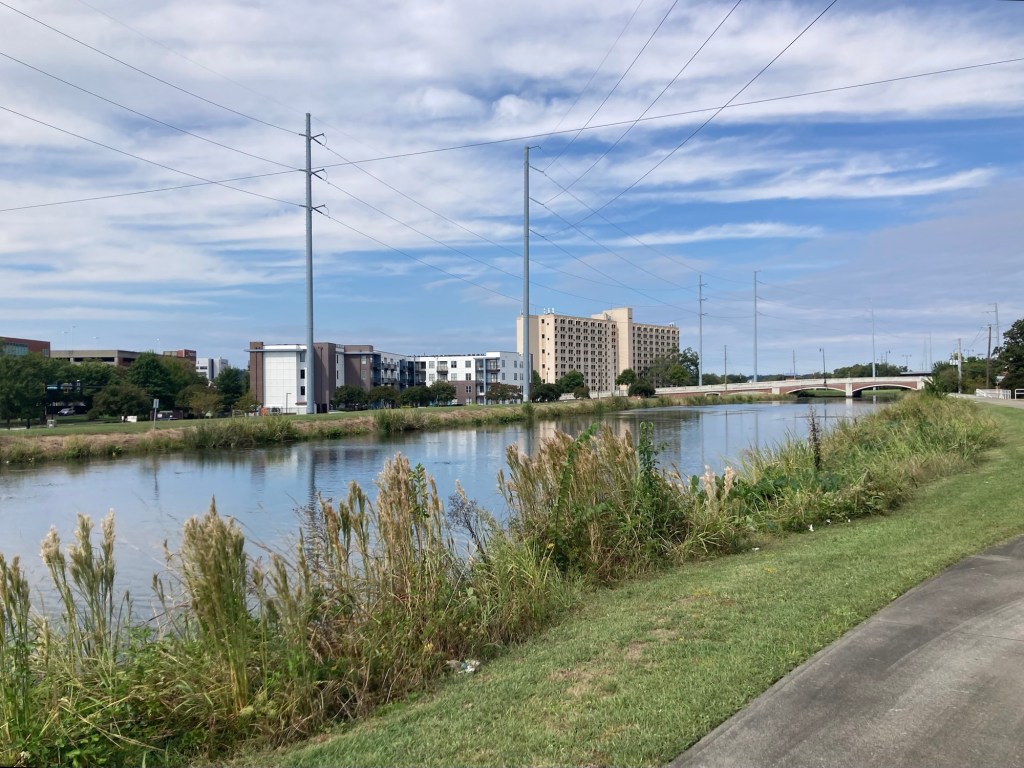
We’ve been having a relatively quiet past few days with some short outings as well as some planned and unplanned house duties with a lot of sports watching thrown in. On Friday, we drove to the new Market Common development. It’s very close to the Myrtle Beach Airport and has mixed retail and residential development as well as a nearby park with a lake and walking/exercise trail.
One entrance to the development The lake between the park and the development One of the exercise stations along the trailA Barnes and Noble with housing on top — that would be a dangerous place for me to live
Also on Friday we did our first run to the county garbage and recycling center, as the homeowners forgo curbside service. The facility is only a few miles from the house, and it accepts everything from garbage to batteries to cardboard to mixed recycling (paper, plastic, aluminum, and glass) to yard trimmings.
Saturday, Bob mowed the lawn, and I helped with getting the clippings in the bags to take to the garbage and recycling center. Unfortunately, while mowing he noticed that a portion of the front yard on one side by the back gate was very wet and there was some standing water under the gate.
He checked both the neighbor’s spigot and our spigot which are in that area. The neighbor’s spigot was off, but ours had been on, although it didn’t appear to be leaking water. We texted the homeowners and when they replied we talked by phone. They called their water utility who sent someone right out to check. Long story short, the utility guy thinks it was due to the spigot being on. I’m glad we didn’t wait longer to mow, as we are never on that side of the house. As of today (Monday), the standing water is gone but the ground is still squishy.
Otherwise, we spent most of the weekend watching various sports teams for college and professional American football and college volleyball. There were some good games, some of which went our way and some of which did not. Sunday it stormed here, so it felt like we had a good excuse to be inside. We also had Squeegee to entertain us. He’s not terribly active but very sweet, and he curls up in the cutest and/or funniest poses.
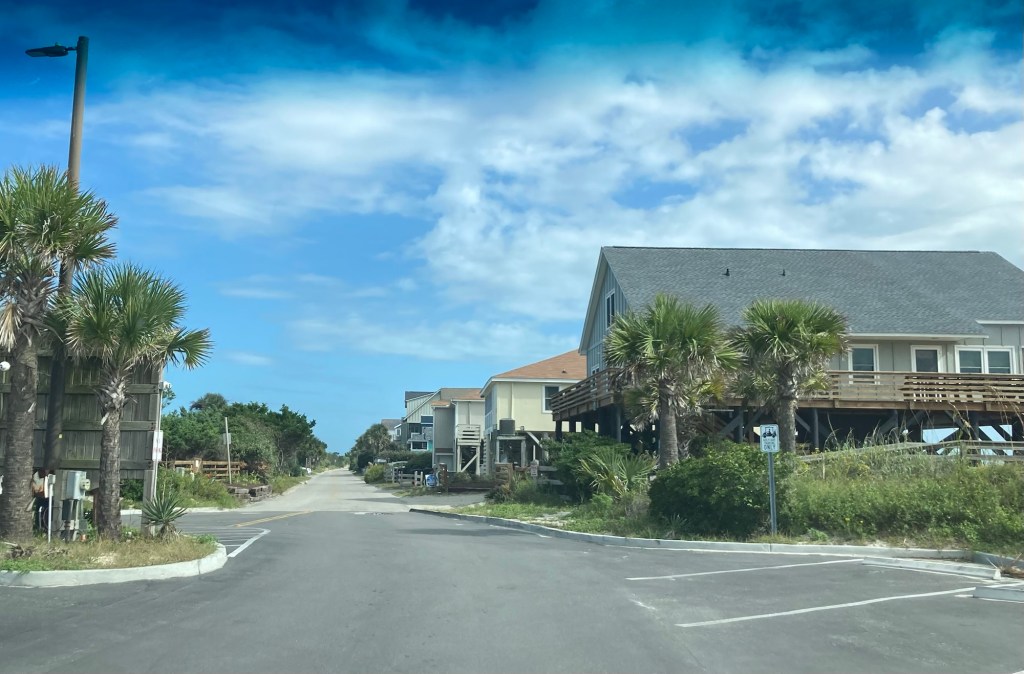
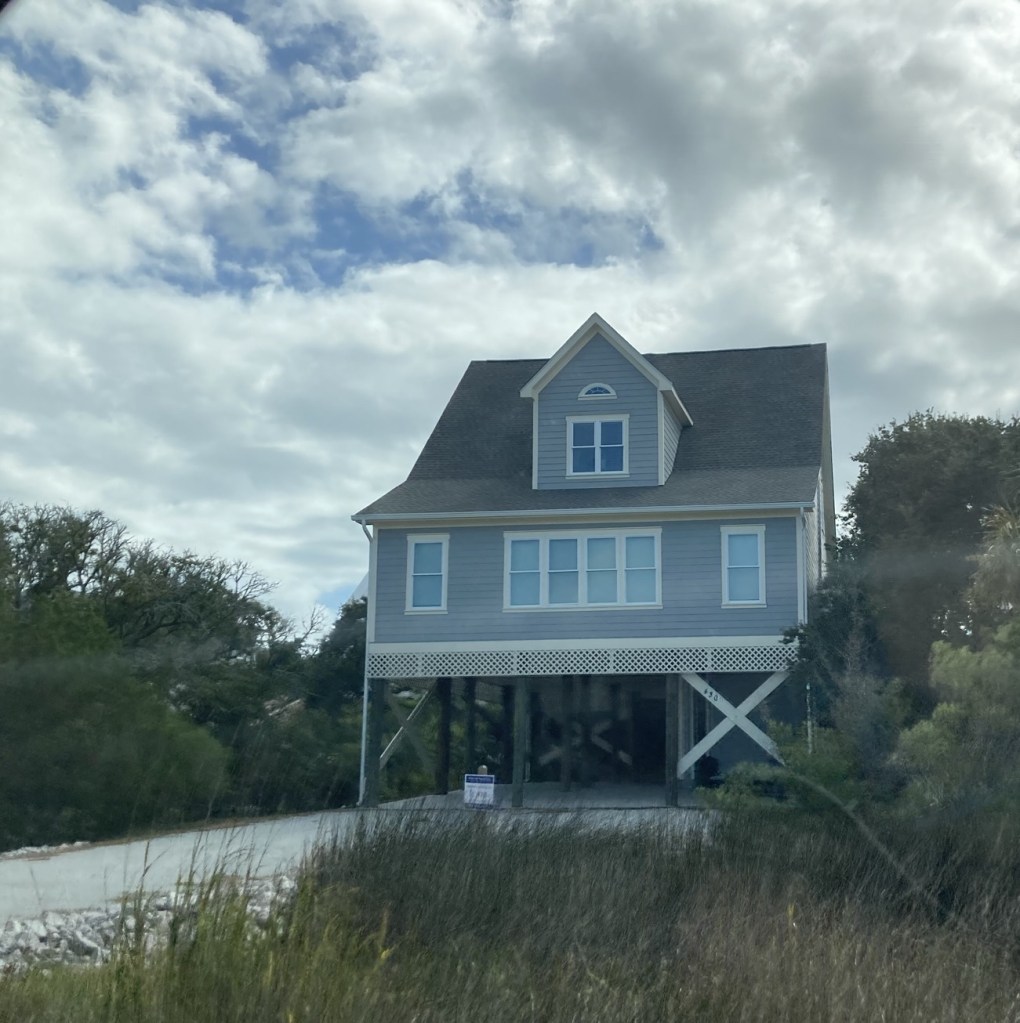
Today we drove over to Garden City, which was the area with all the big houses that we saw on our boat tour on Thursday. It is a community that basically runs along an isthmus that faces Murrells Inlet and the Atlantic. I took some photos of some of the houses on our drive.
Bob and I set sail this morning with Express Watersports and about 12 other people on a 1.5 hour Dolphin Watch cruise from the Murrells Inlet Harbor. It was a beautiful day for a cruise, and we saw lots of dolphins (although successfully photographing them is a whole other matter).
We did get lots of good pics of Murrells Inlet (the actual inlet not the town) as we sailed through that into the Atlantic Ocean. We also got a good view of much of the Grand Strand of beaches and the many large, lovely beach homes built along the coast. All of these multi-million dollar homes are required to have hurricane insurance, and that insurance does not cover anything on the ground level. You’ll see that most of the houses are built on stilts, but that still leaves the garage and its contents uncovered.
The Express Watersports office/shop where we checked in for the cruise Our boat with the captain on the upper deck and Piper, the tour narrator, on the main deckPulling out of the harbor, we passed Goat Island, which used to have real goats but now just has fake onesPeople fishing off the Murrells Inlet fishing pierLooking back towards Murrells InletA pointed reminderBeach houses in Garden City, a community across the water from Murrells InletA condominium complex and marina in Garden CityOne of the larger homesMore of the homes that go to the point where we move out of the bay and into the oceanThe rock jetty built by the Army Corps of Engineers to help protect the inner harborUs enjoying the cruise
Once we got into the Atlantic across from some of the oceanside beach communities between Garden City and Myrtle Beach, we were able to catch glimpses of a number of dolphin in various pods around our boat. Unfortunately, for these slow-fingered photographers, they don’t pause their swimming to pose. The following shots are the best we could do, but they were fun to watch.
Bob got a pretty good photo of dolphins and one of me missing the shotThis guy was out there with them
Myrtle Beach is a resort city in the center of a continuous 60-mile stretch of beaches known as the Grand Strand. While its year-round population is only about 35,000 (metro area is about400,000), it attracts over 20 million visitors every year. It was named after the local Wax Myrtle shrubs.
Bob and I have been avoiding going into Myrtle Beach proper until after Labor Day on the advice of our homeowners. We drove about 10 miles today to the beachfront to walk the 1.3 mile boardwalk, look at the beach, and check out stores along Ocean Boulevard, the main road that parallels the shore.
Another beautiful day for a walkabout. The photos below capture what we saw. The boardwalk is wide and paved in some areas, wide and wooden near the SkyWheel, and then narrow and wooden at one end. While not pictured, there are shows that you can go to, 18 real golf courses, and quite a few miniature golf courses as well.
Bob and I had stopped at a Visitors Center on our way to our housesit and picked up some information on the area. Some of this included local events like farmers markets, art shows, etc. Today, we drove 6 miles to the community of Surfside Beach for their weekly Farmers Market.
The Farmers Market was relatively small, maybe about 20 booths, but it offered a range of items from produce to baked goods, prepared food and coffee, as well as crafted decor and jewelry.
You don’t go anywhere here without seeing signs for boiled peanuts.The market is held in a park across from the library.
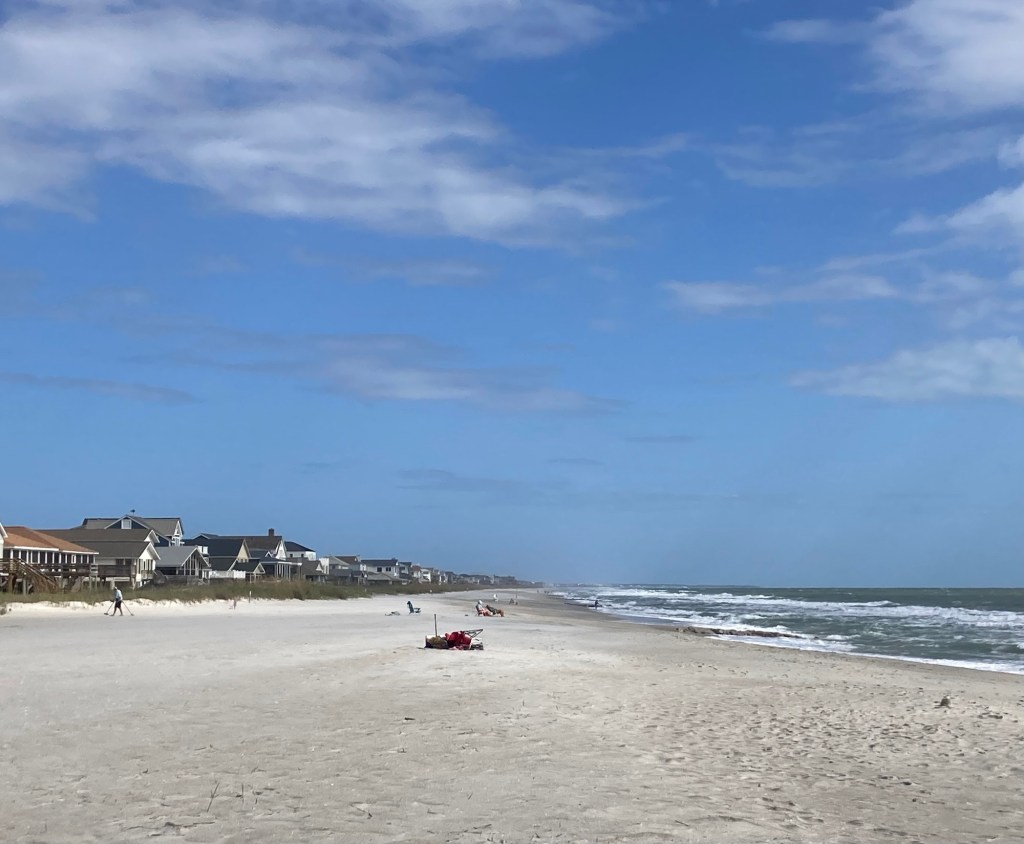
Surfside Beach is a town of about 4,000 northeast of Murrells Inlet. It is part of the Grand Strand, which is an arc of beach land on the Atlantic Ocean in South Carolina which extends for more than 60 miles. After we had looked around the market, we walked a few blocks to the beach. The houses (on stilts) were cute, it had a small restaurant area, and the beach was gorgeous. Lovely, high 70 degree F, low humidity day to be outside.
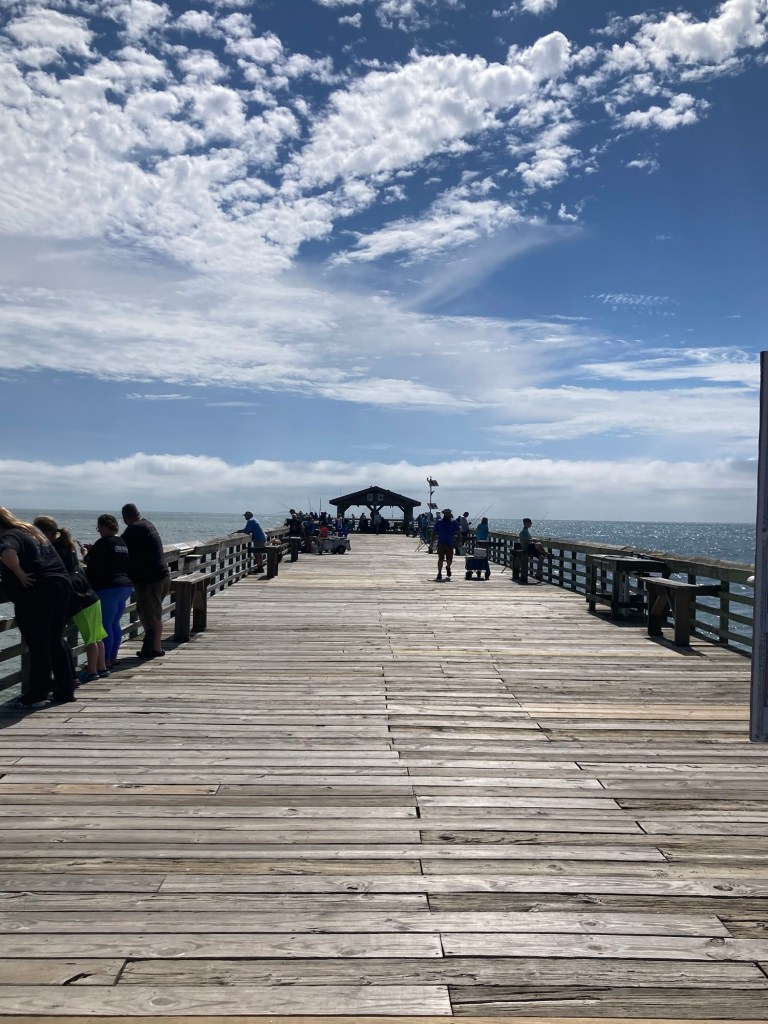
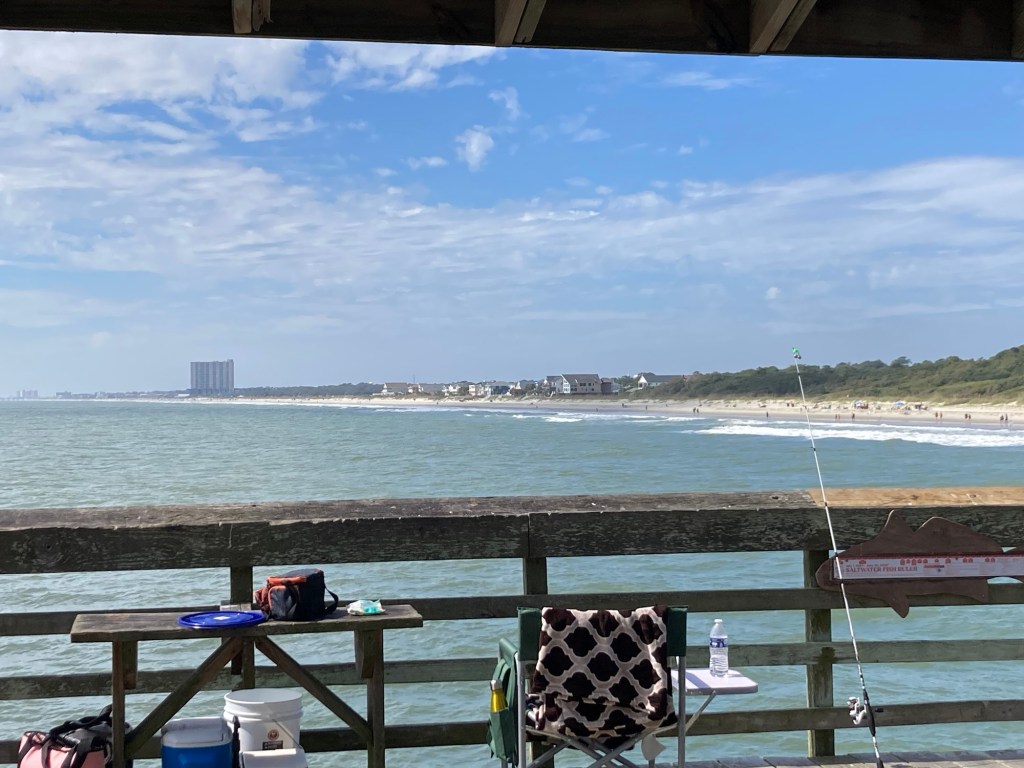
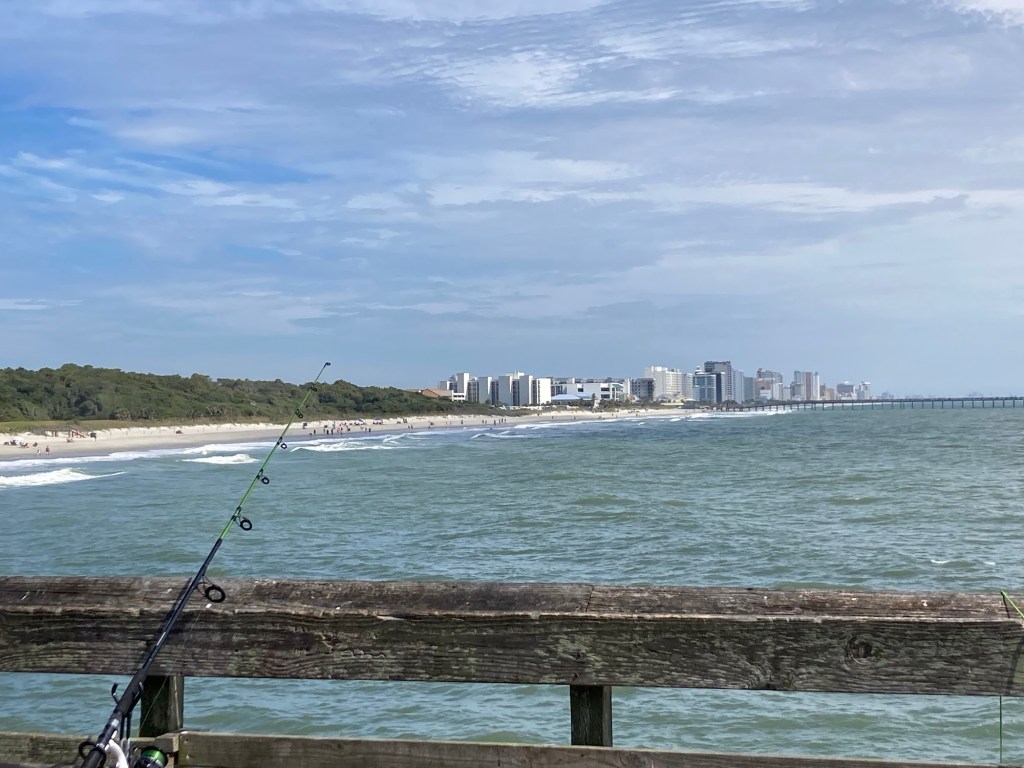
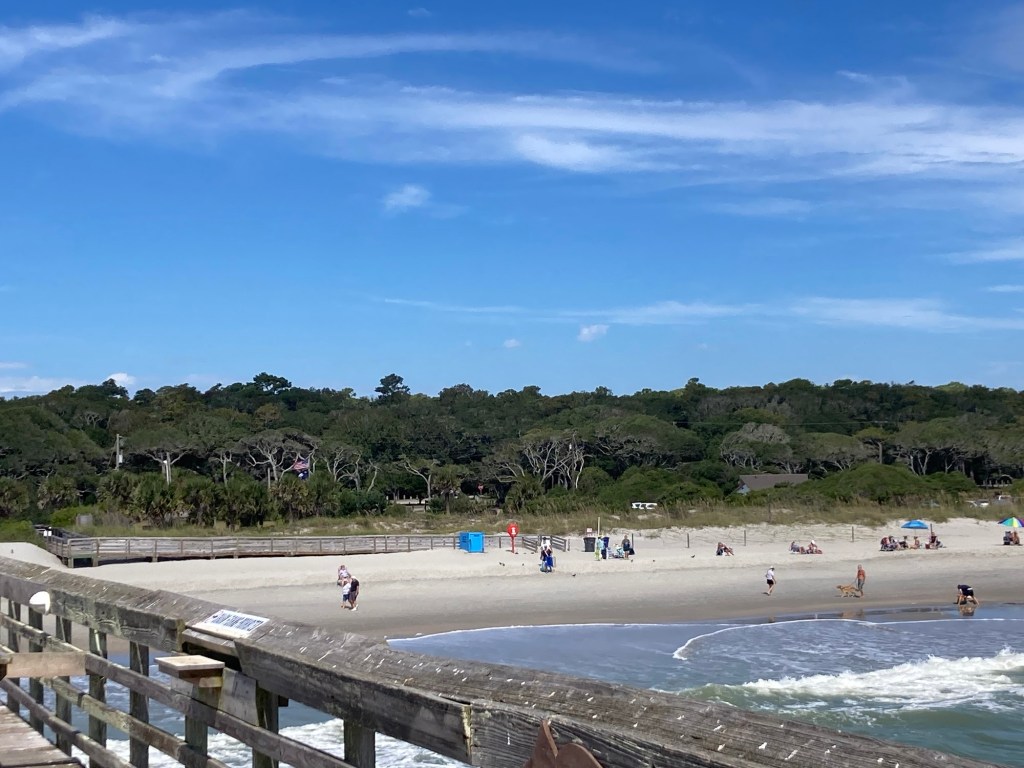
Some homes a block off of the beachThe elevated fishing pierA restaurant on the left and houses along the beachLooking out to the end of the pierLooking towards houses south of the pierOne view of the beachLooking northA Mexican restaurant on the left and a barbecue restaurant on the right More cute homesLots of people driving golf carts in this community
If you are somewhere where Labor Day is celebrated, happy Labor Day! It’s an early one this year, and already the beginning of another month.
When Bob and I were meeting our homeowners, they mentioned that they acted and stage managed at a theater in the nearby city of Georgetown, South Carolina. We looked up Georgetown and decided that perusing their Historic District and Harborwalk might be a good plan for today when the masses might be enjoying Labor Day at one of the beaches.
The city of Georgetown (population of about 9,000) is about 30 miles from the house.
Crossing the Atlantic Intracoastal Waterway
During our walk we learned that Georgetown was formally founded in 1729, making it South Carolina’s 3rd oldest city after Charleston and Beaufort. Its economy was at one time heavily based on the labor intensive crop of rice, and the slave population was about 85% of the total population during the 1800s. The Civil War and social/political changes as well as a few hurricanes put an end to rice as a major agricultural product.
A map of the small historic district along Front Street, which parallels the Sampit River
One of the first structures we saw was a clock tower. It is located atop a Greek Revival market and town hall built in 1842 after a fire destroyed most of the buildings on Front Street. An open air market was on the 1st floor and the town hall was on the 2nd. The clock tower and belfry were added in 1845.
The clock towerThe Strand Theater which keeps our homeowners busyA fountain and some shops at the start of our walkA pocket park between storesSome fun art along one building More of the buildings on Front Street. The backs of them also face the River, so we saw them on our Harborwalk as well.The Robert Stewart House, built between 1740 and 1770. President Washington spent the night in this house on his southern tour in 1791.The Kaminski House, built sometime between 1750 and 1800. It was home for many years for Harold Kaminski (and his family), who was a local County Commissioner, Mayor, and US Navy Officer.
A park connecting Front Street to one end of the Harborwalk displayed a few items of local and national history.
A memorial for the 1st African American to serve in the US House of Representatives, beginning in 1870.These brick display cases show copies of the three Charters of Freedom — The Declaration of Independence, The Constitution, and the Bill of Rights.A fountain at the end of the small parkLooking down the Sampit RiverLooking the other direction towards the shops, restaurants, and marinaSome of the restaurants and housing facing the riverFinding a tower of heads along the Harborwalk. This is “Generations” by Roy Smith.A small, independent hotel called The George back on Front Street.Peeking into its restaurant
We walked a little bit into a local neighborhood, which unsurprisingly, was very Carolina-esque — lots of big homes with porches. We also loved the big trees that provided a nice amount of shade.
As we are at the start of the very busy Labor Day Weekend, Bob and I chose a local park to explore today that we didn’t think would be a hotspot for weekend tourists. We drove about 39 miles northeast of Murrells Inlet to the community of Little River, South Carolina, to explore the Vereen Memorial Historical Gardens.
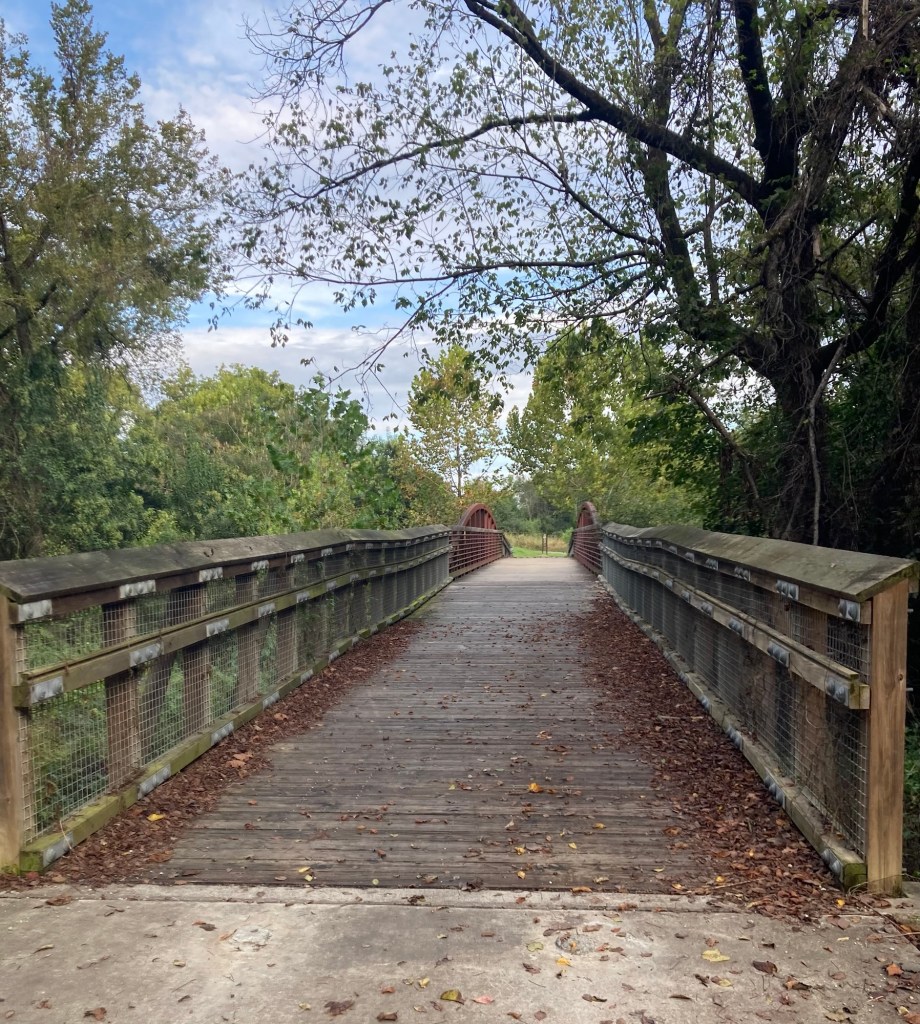
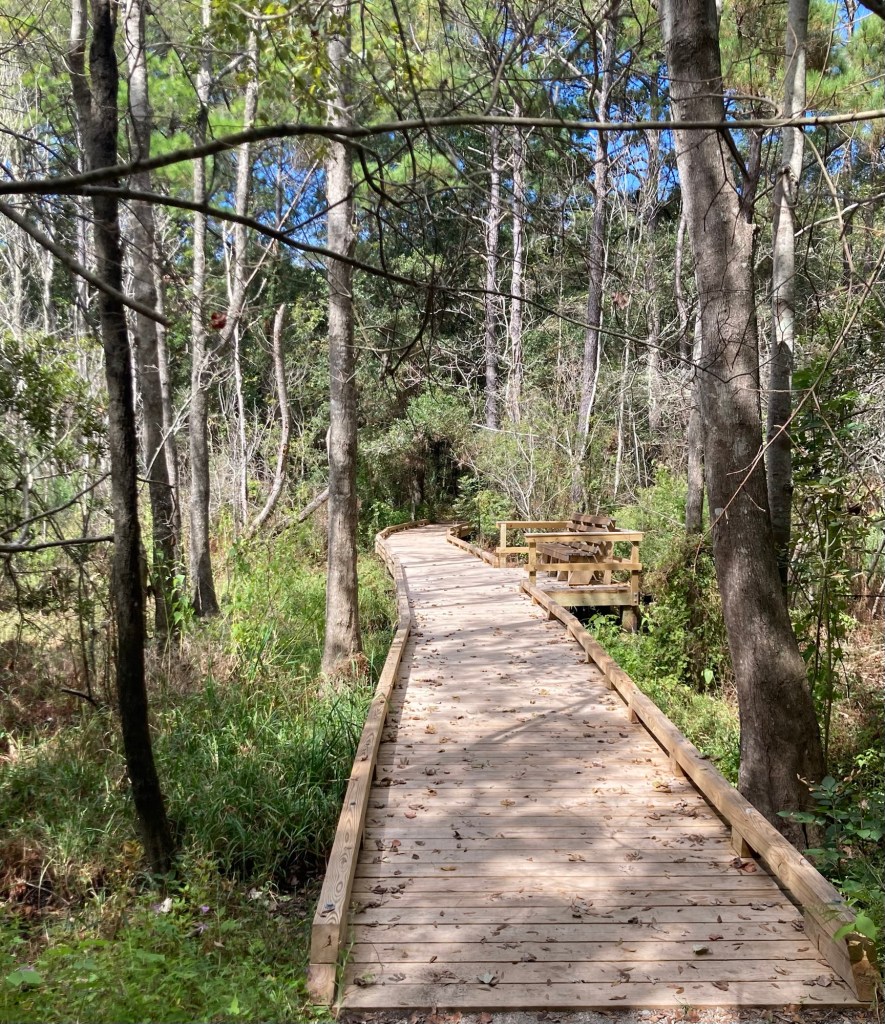
They did not disappoint, although they are not a flower-based garden. Instead, this pretty 115 acre park has trails through forests and over salt marshes and also overlooks the Intracoastal Waterway. It is free to the public and close to neighborhoods. We saw a number of other walkers while we were there.
The gate at the park entrance The tree-lined drive into the park.We started our walk on a boardwalk near a picnic pavilion.
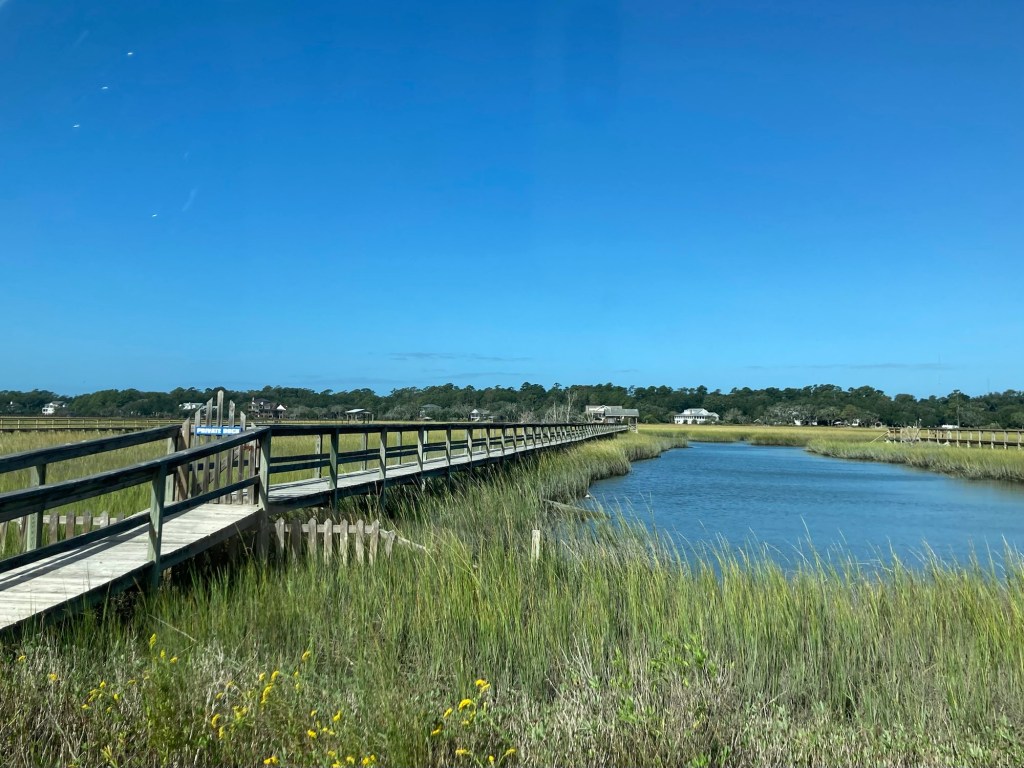
The boardwalks go over salt marshes, and an information sign noted that salt marshes are the most productive natural habitats on earth. They provide areas for animals and other organisms to feed and breed and also offer protection against predators. This one is also quite visually attractive.
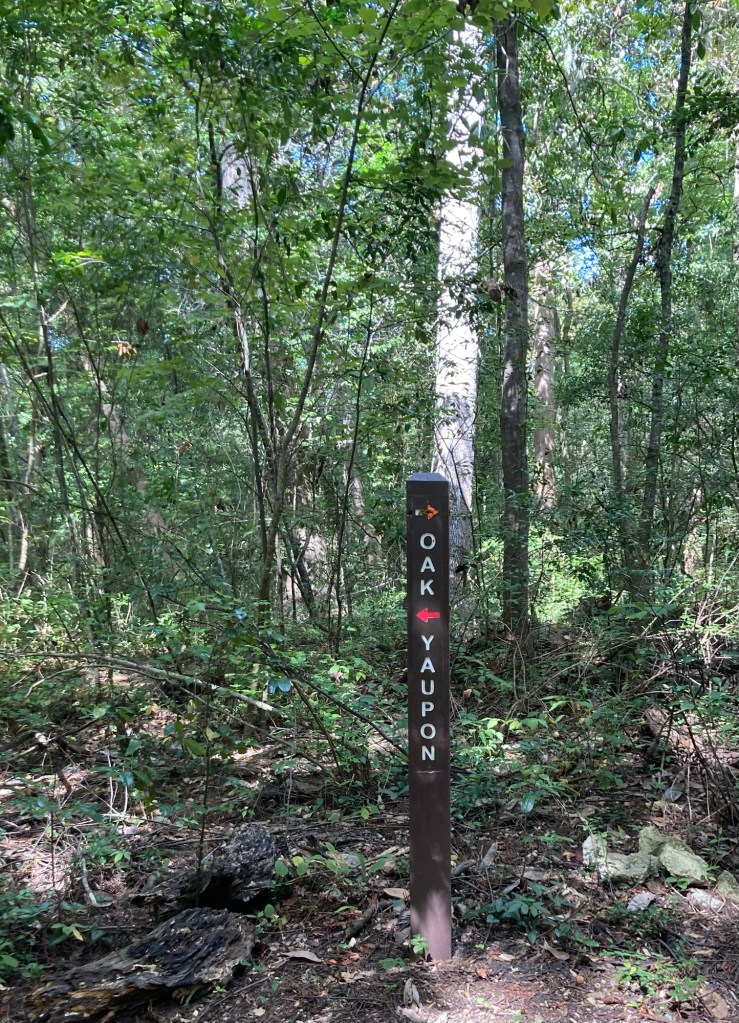
Crossing the salt marshLooking out on the Intracoastal WaterwayAnother view of the small beach and Intracoastal Waterway A casino cruise ship sailed pastOne of the wishing trees along the shore, where people hang oyster shells and make a wishWalking back towards the mainlandAlways on the lookout for gators in the marshThe trail markings for the first trail that we hikedA house with easy access to the park
The park is located on land that was once part of Big Landing Plantation, which was acquired by Jeremiah Vereen, Jr. in 1797. The Vereen family played a significant role in the area’s history, and a descendant of the Vereen family donated this land to the county Historical Preservation Commission in 1971 to create the park.
The Vereen Family Cemetery within the parkThe names of the 12 individuals who are buried hereThe patriarch, who apparently fought in the Revolutionary War
Tomorrow we will likely spend much of the day watching two college (American) football games, as the 2025 season is kicking off.
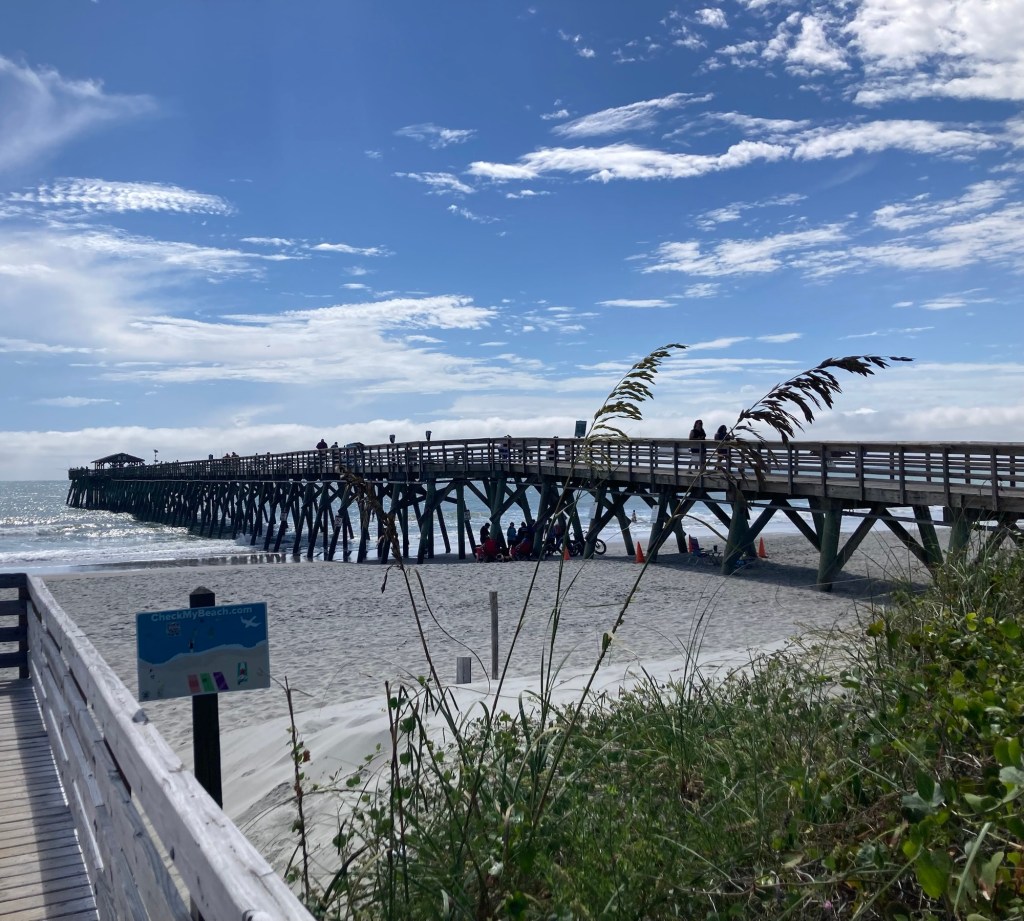
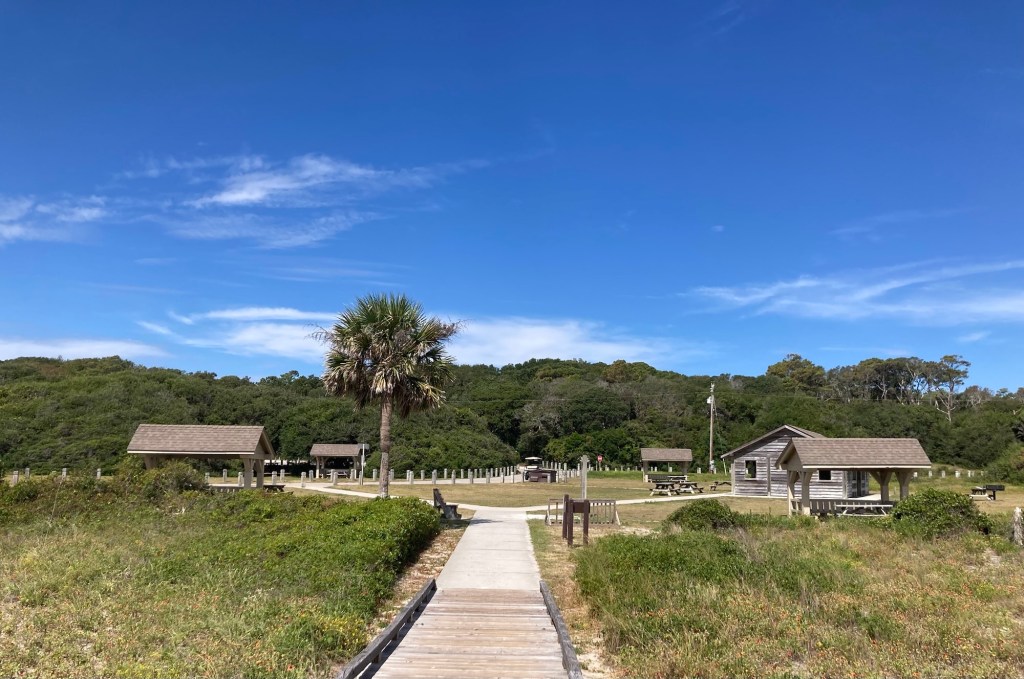
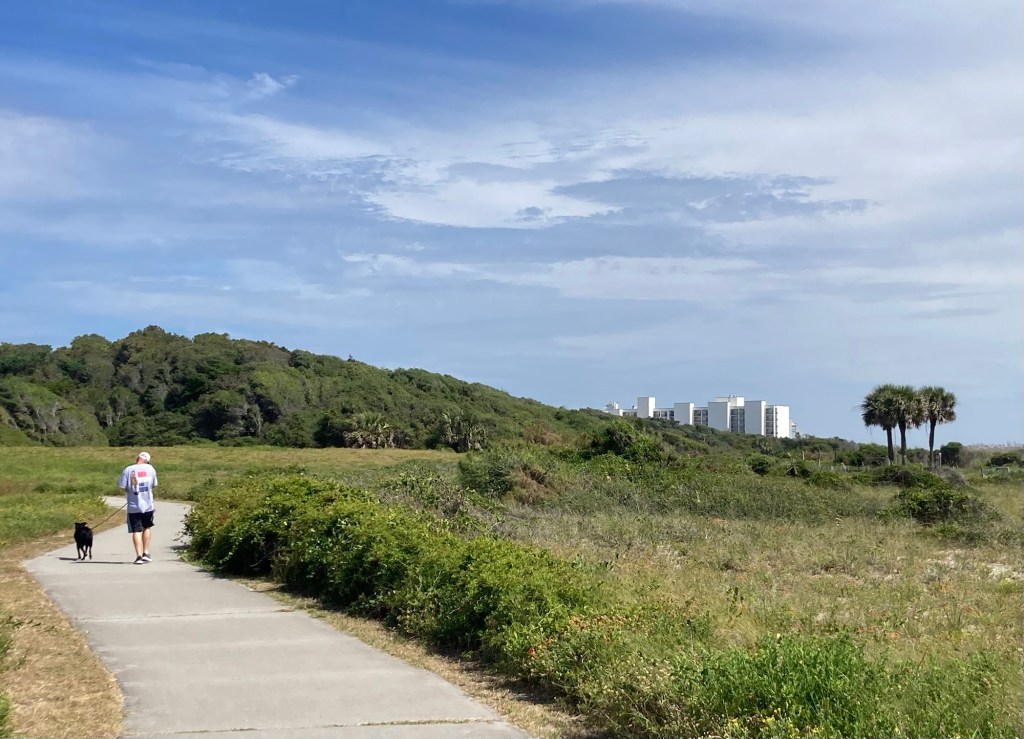
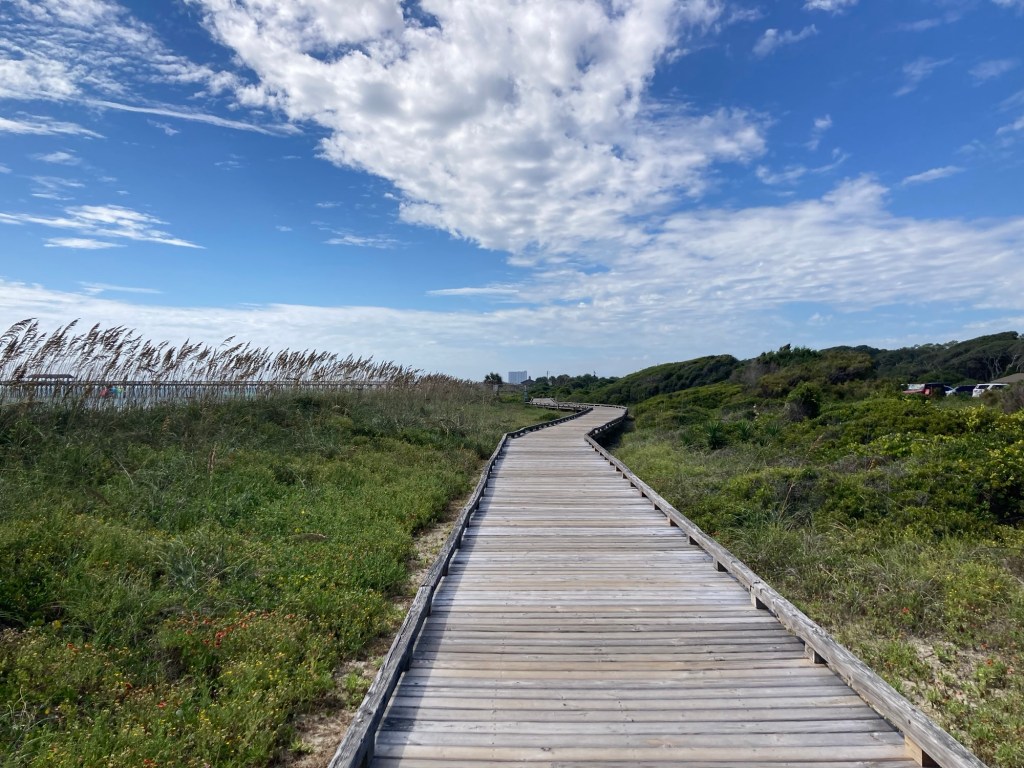
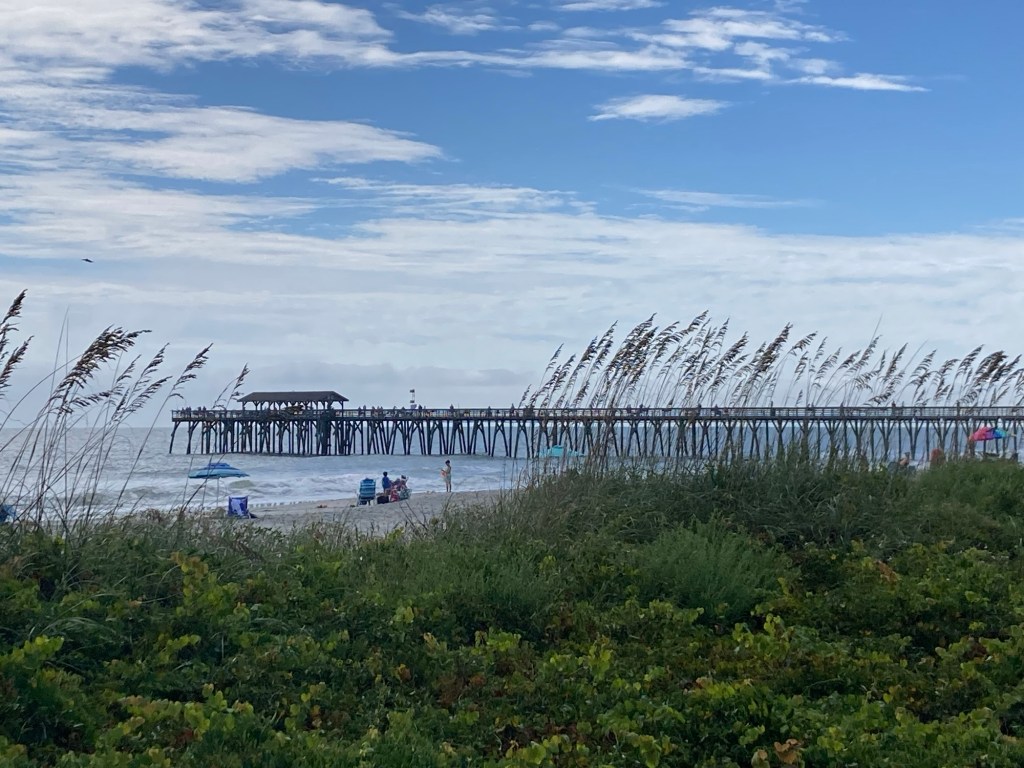
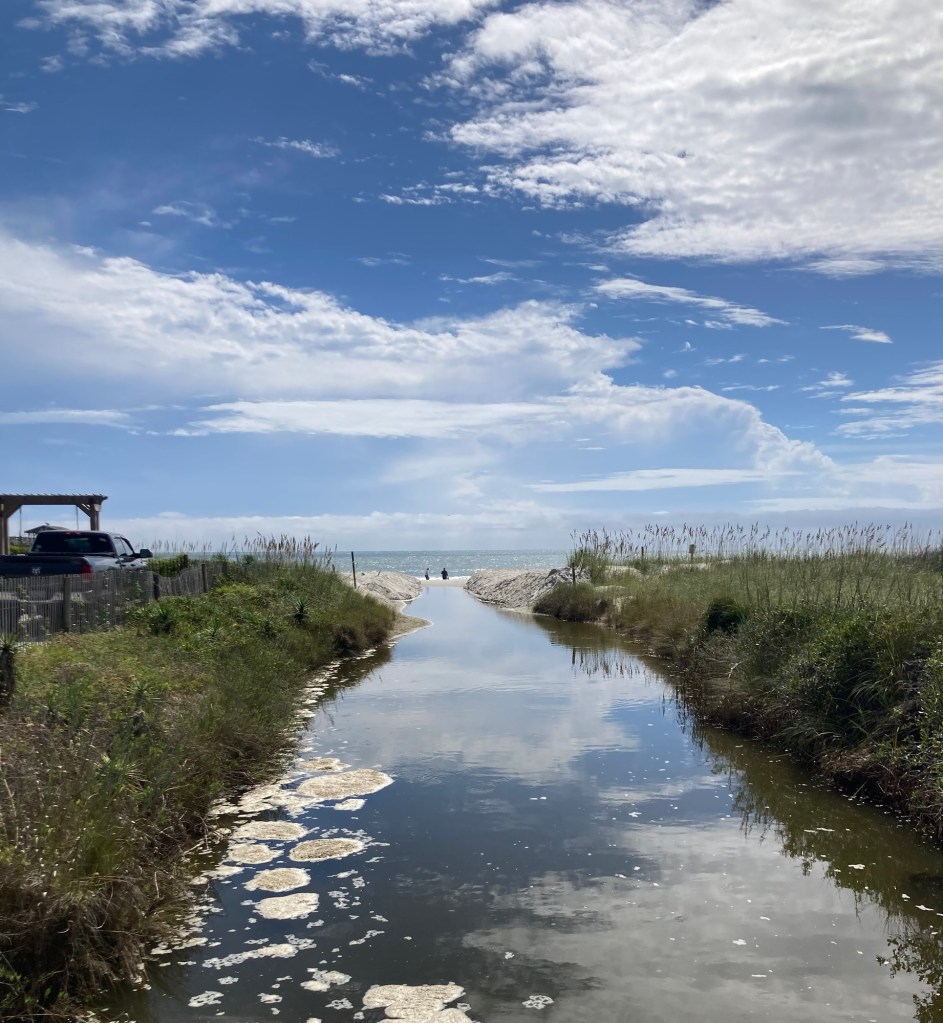
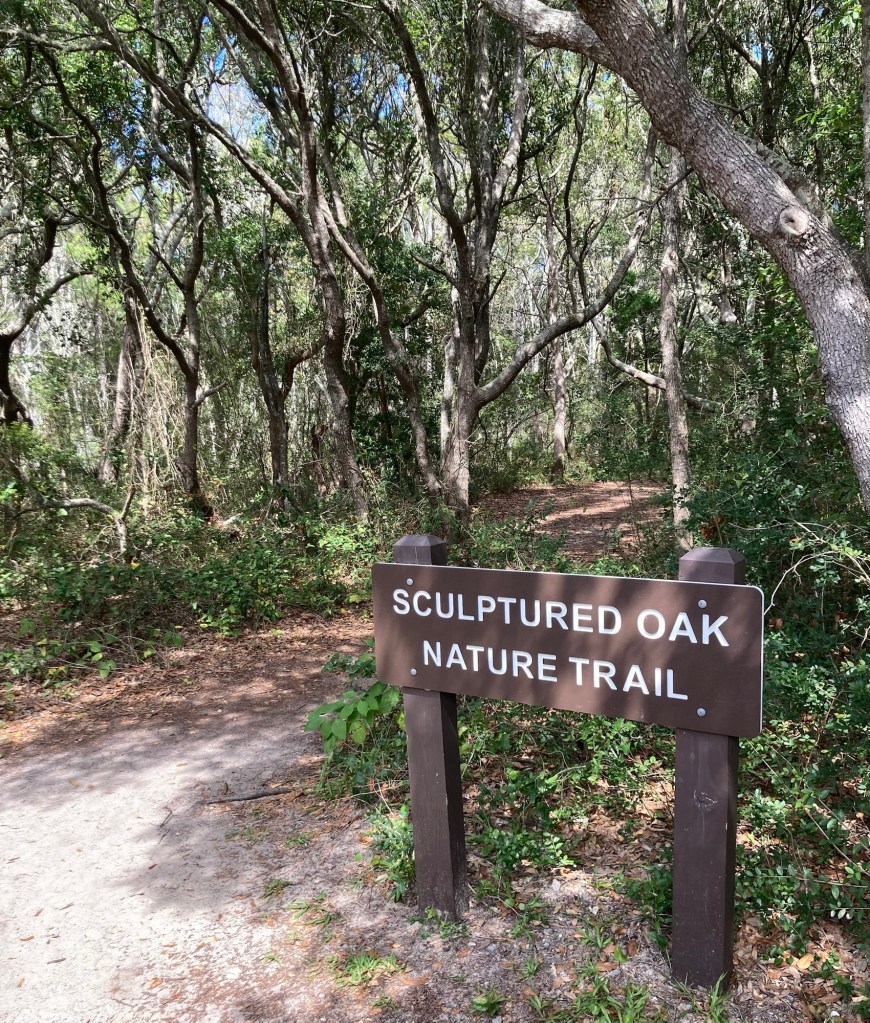
What do you get when you cross a natural wetlands, a bit of forest, paved and unpaved trails, an old Moorish estate, and access to a beautiful white sand beach on the Atlantic Ocean? Huntington Beach State Park, a 2500 acre state park located in Murrells Inlet about a 25 minute drive from the house.
It was an active day at the park at not quite the start of the Labor Day Weekend, and the first thing we saw on the way to the Visitors Center to pick up a map of the park was a tour group on Segway scooters.
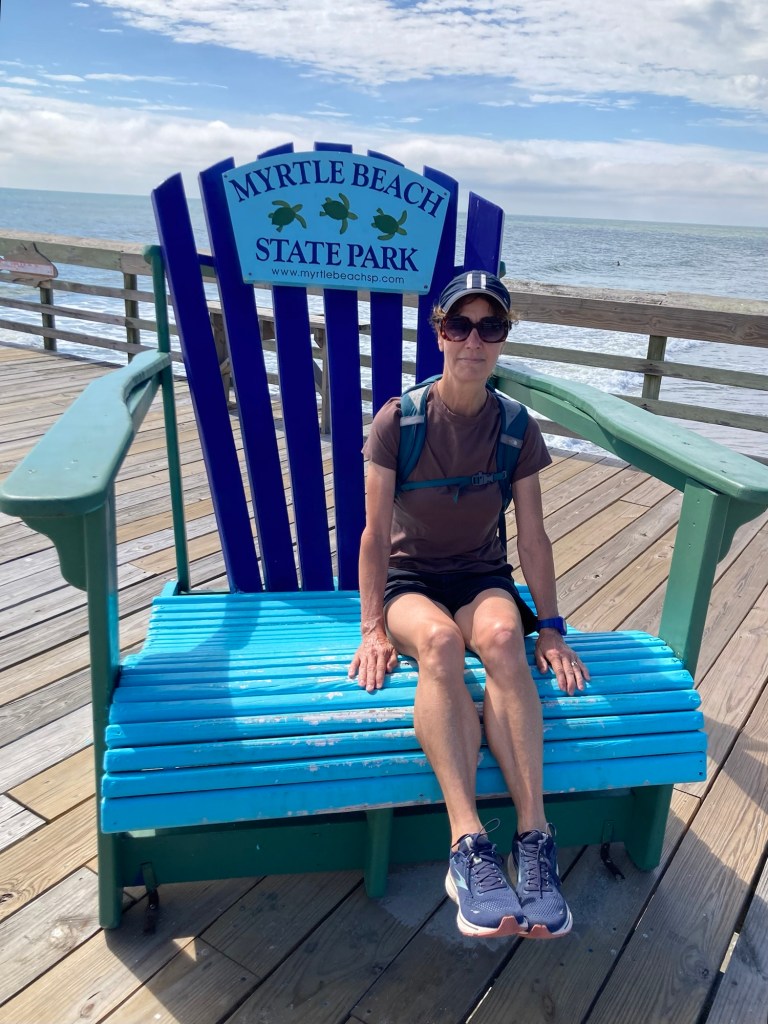
The guy in black was the guide, and there were 3 or 4 others that were behind. Not a typical activity in a state park.Some fun big chairs and signage to SC sites in front of the Visitors Center.We started our visit on the short Kerrigan Nature Trail that led to Mullet Pond.The boardwalk over part of the pond.
A few pics from the overlook.
Some colorful flowers on a tree.
From the Kerrigan Trail, we walked the paved Atalaya Trail between Mullet Pond and Mallard Pond. There were a number of safety signs about what to do if you see an alligator, but sadly (sort of), we didn’t see any.
The following pics are of the much larger and greener Mallard Pond.
Some colorful berries
Heading all the way back on the trail, we came to the entrance to Atalaya Castle, the winter home of Archer Milton Huntington and his wife, Anna Hyatt Huntington. There are no longer any furnishings in the house, and it has not been completely maintained, but you still get a sense the the Moorish style home.
The outer walls form a square, with the east side facing the ocean. Within the walled structure, there are two grassy inner courtyards with a covered walkway and tower in the center. The one-story living quarters consist of 30 rooms around 3 sides of the perimeter.
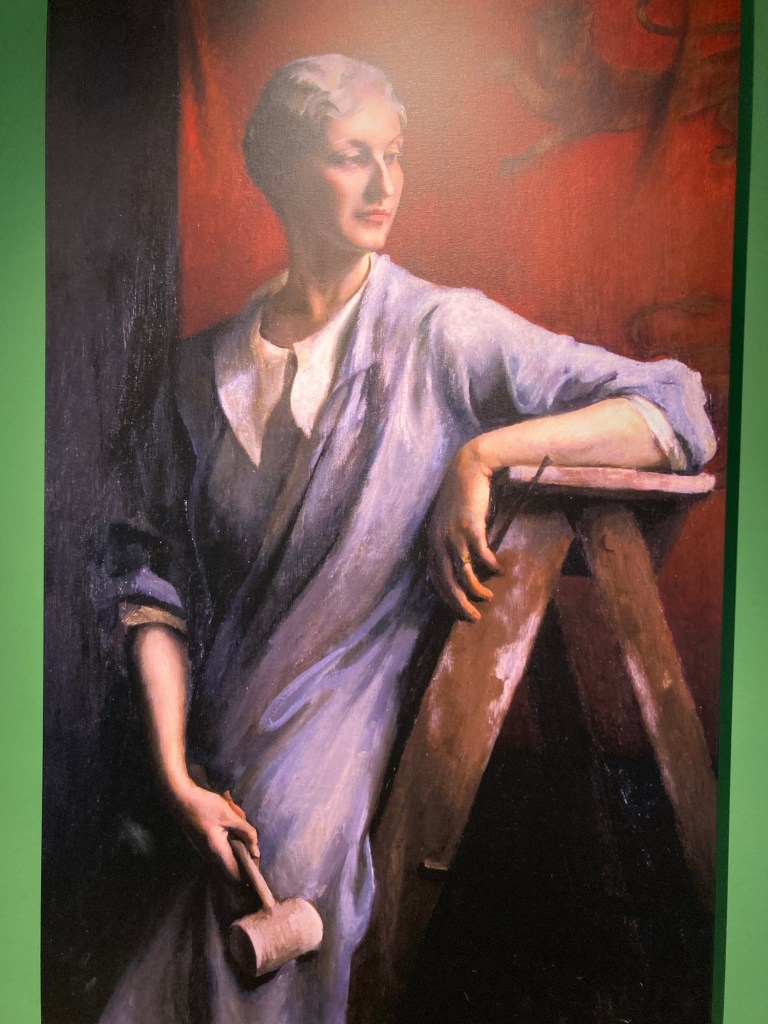
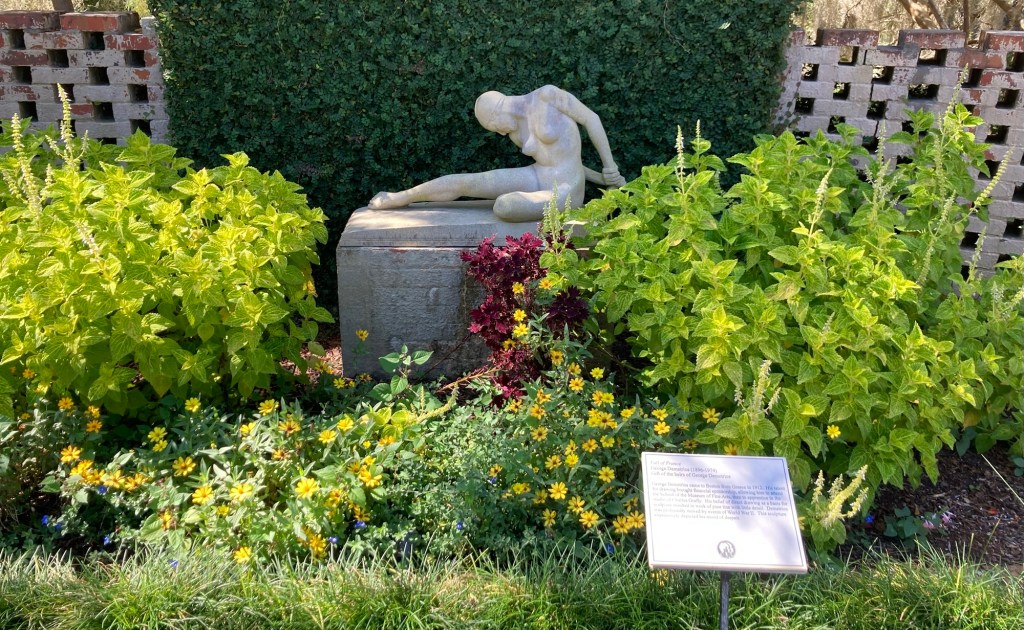
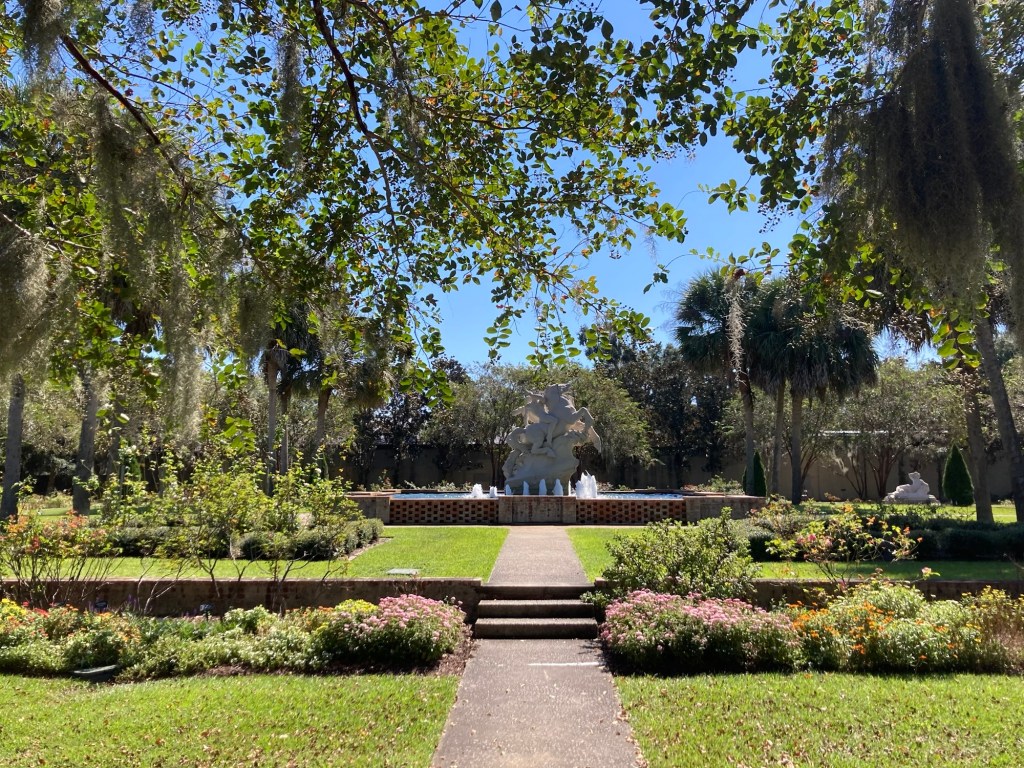
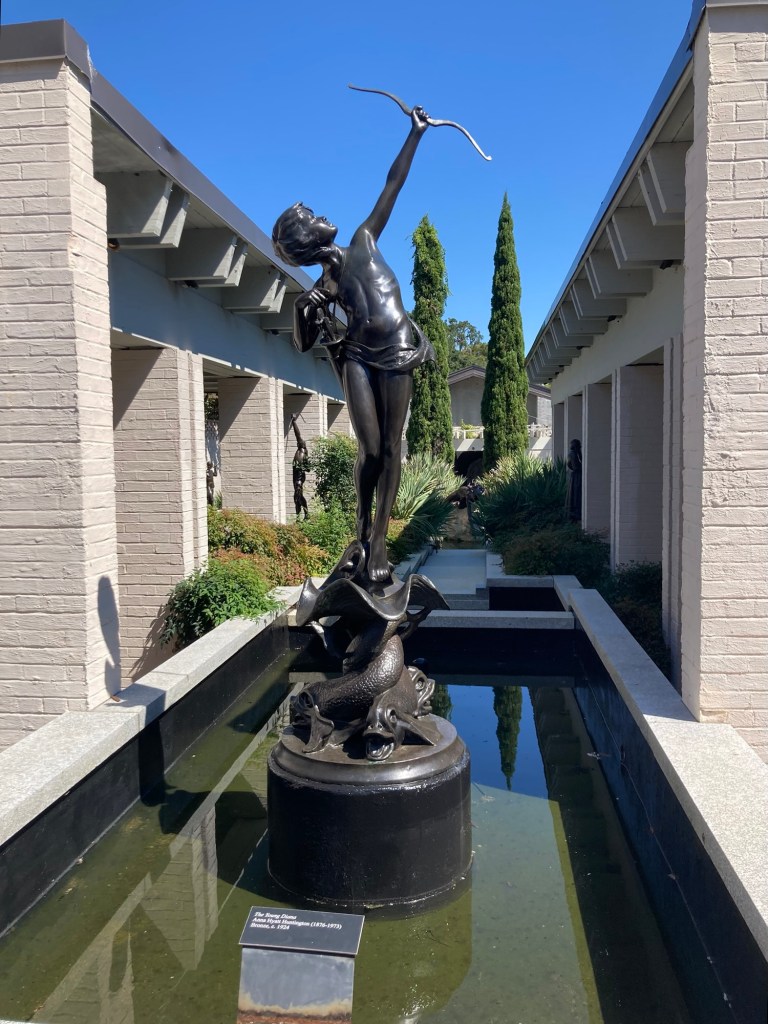
Entering the outer walls to the homeThese were impressive individuals, who we will learn more of, as we plan to go to the Brookgreen gardens, which Archer created and which displays a number of Anna’s sculptures.Right inside the walled entrance was this structure where oysters were shelled.One side of the inner courtyardThe walkway and tower which divide the courtyardThe master bedroom facing east, towards the oceanThe library, almost all of the rooms in the living quarters had fireplaces
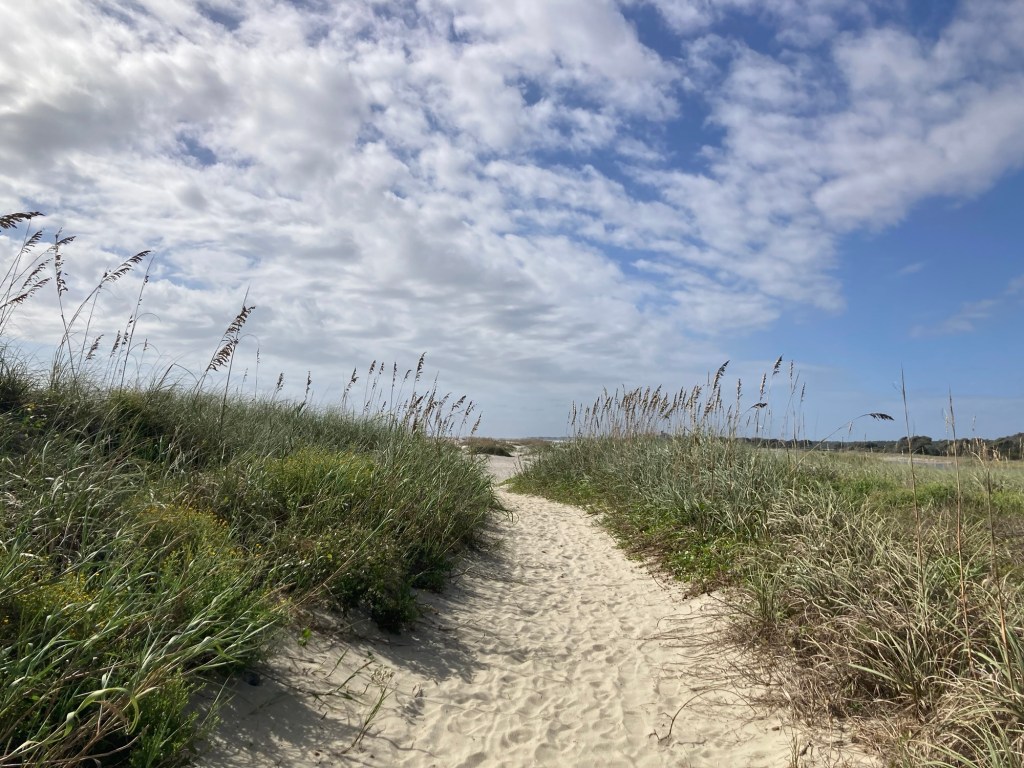
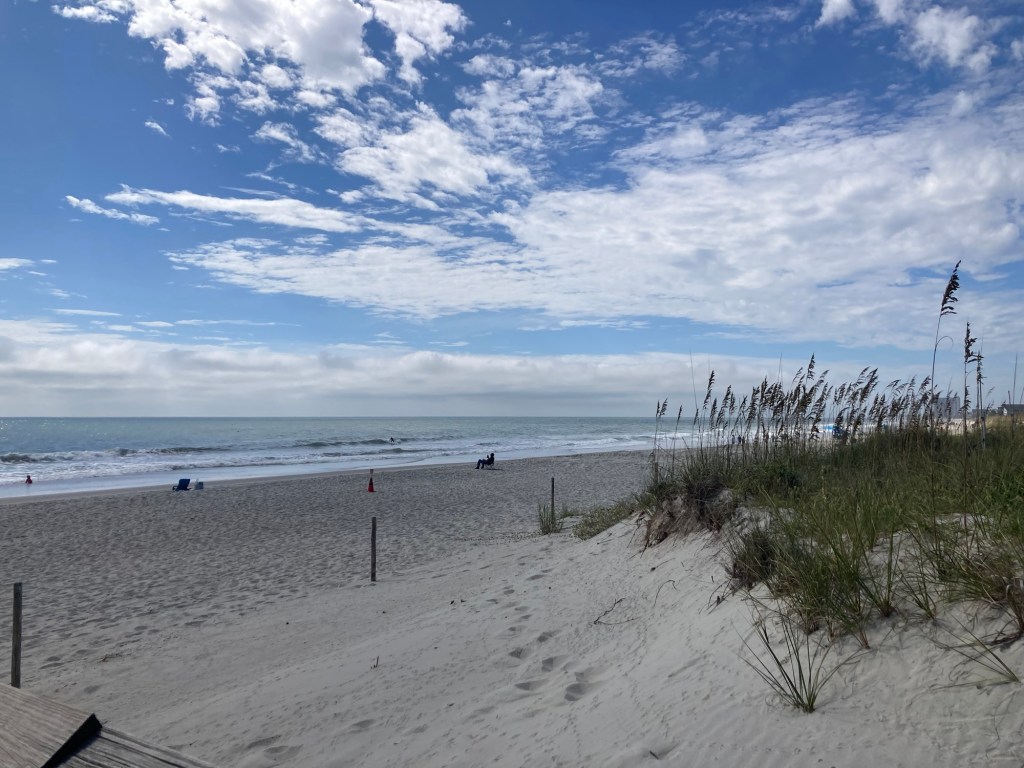
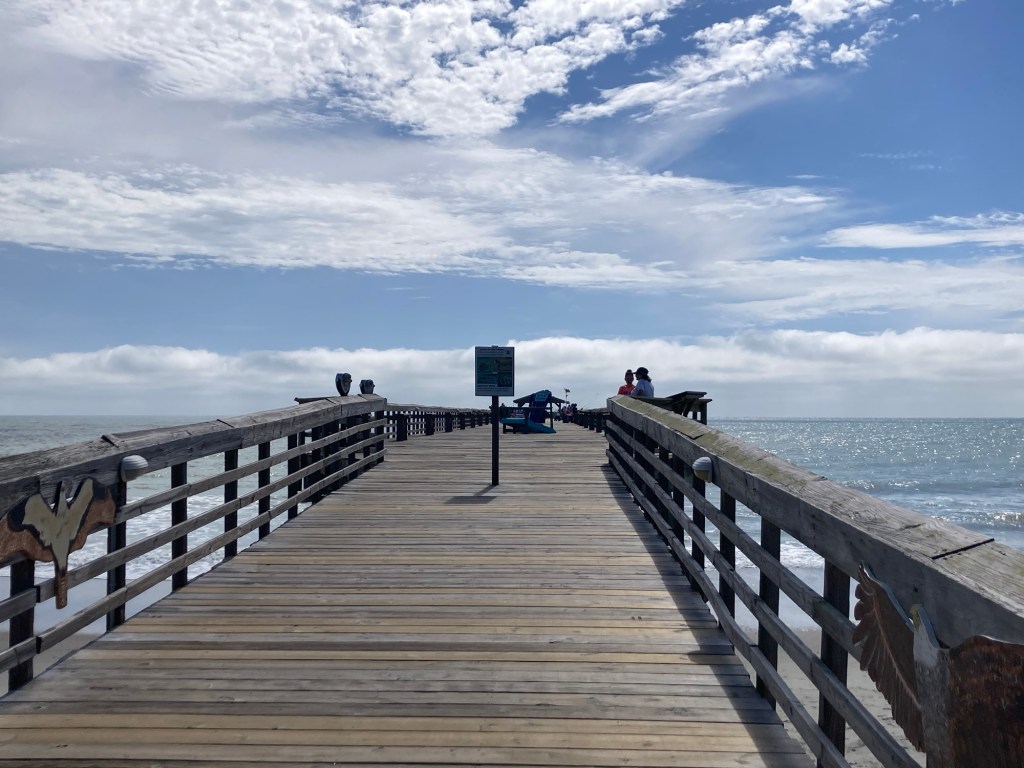
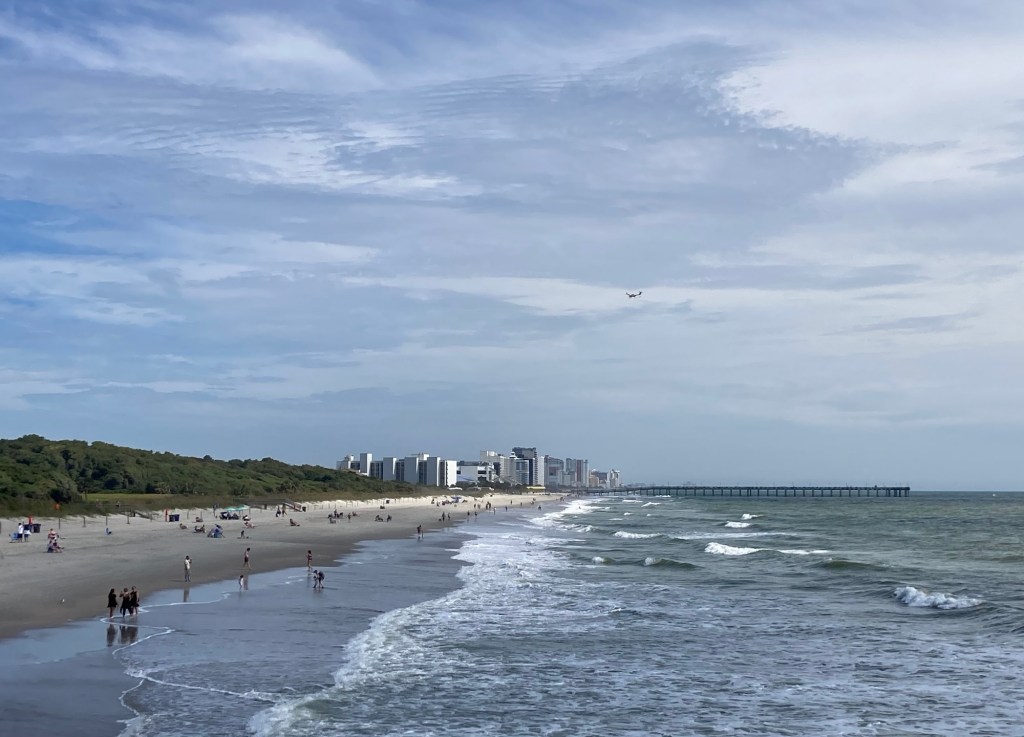
Finally, we walked the short path from Atalaya to the beach. There were a number of people out enjoying being near the ocean.