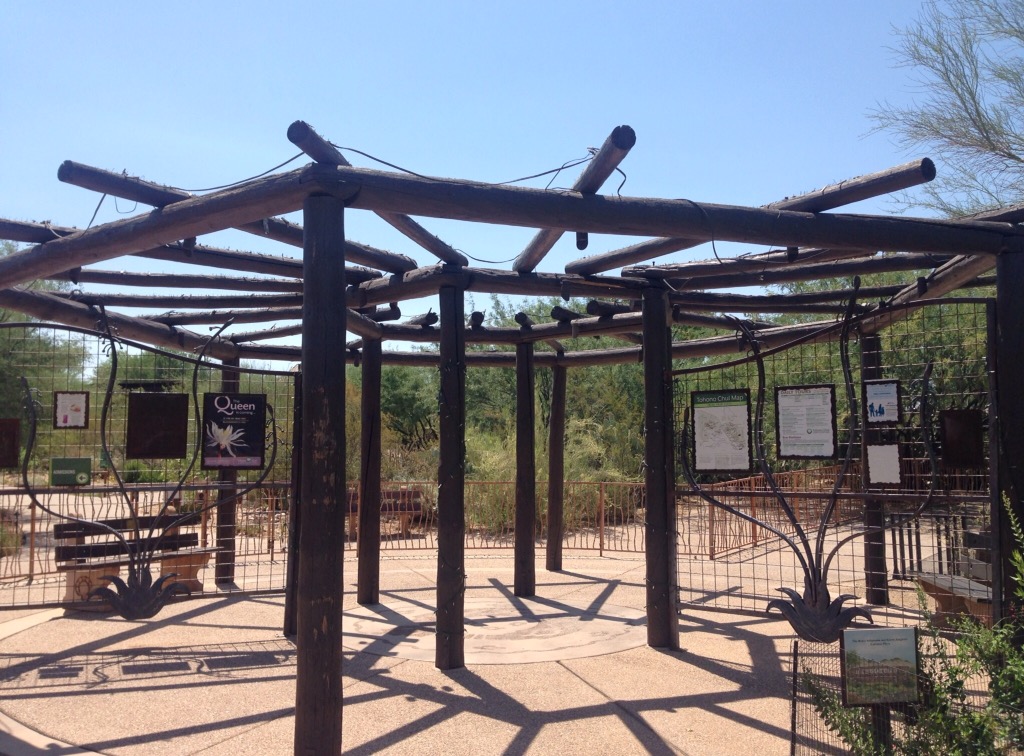
Tohono Chol (“desert corner”) is a desert botanical garden and nature preserve in Tucson. It contains various gardens, nature/walking paths, an exhibit house, cafe, and museum shop. We spent a lovely couple of hours there on Friday and enjoyed the natural surroundings (both flora and fauna) as well as the art work — both inside in the Exhibit house as well as outside along the paths. This is the park for which we were able to obtain 2 free passes from the Tucson public library.
Entrance to the park
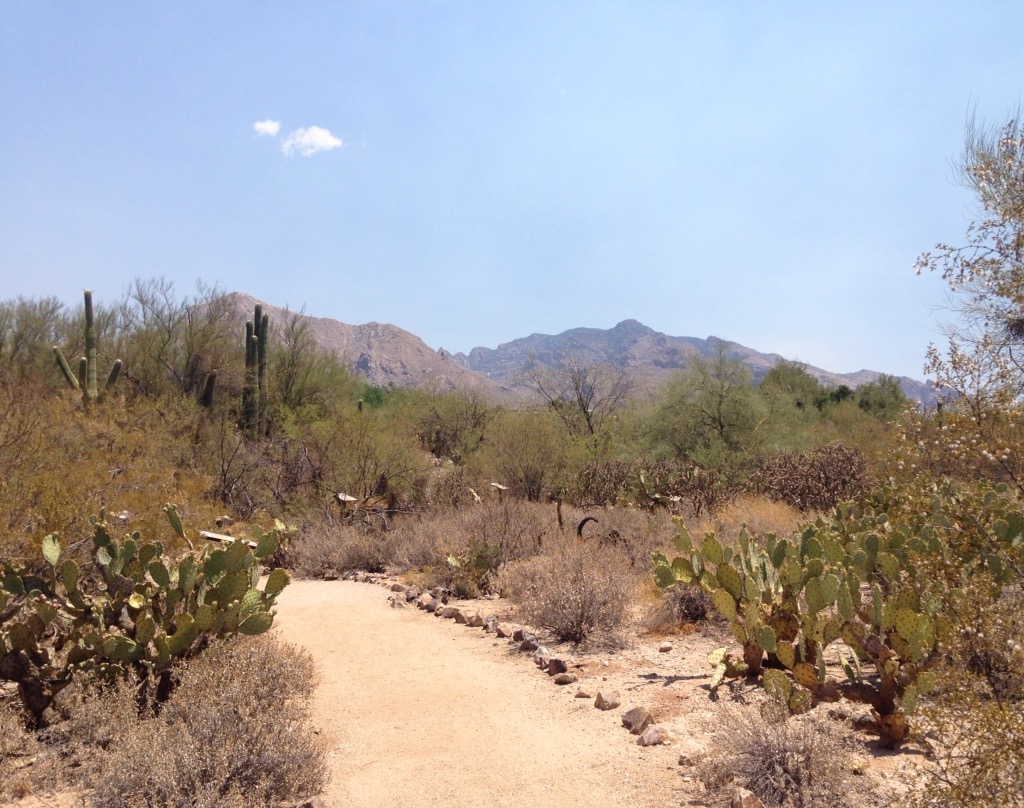
There were great paths to the various gardens as well as walking trails for desert views or to provide information on desert plants.
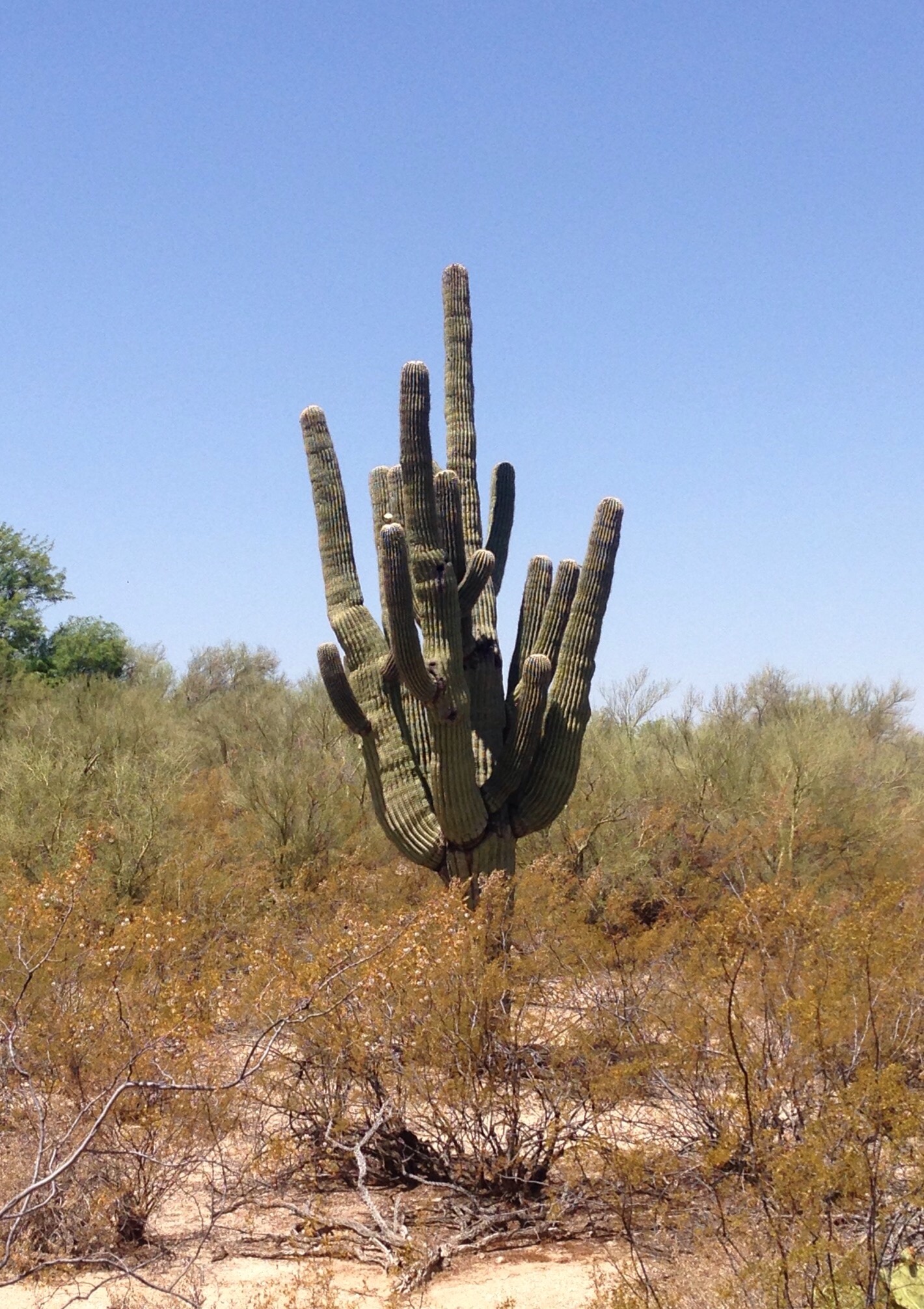
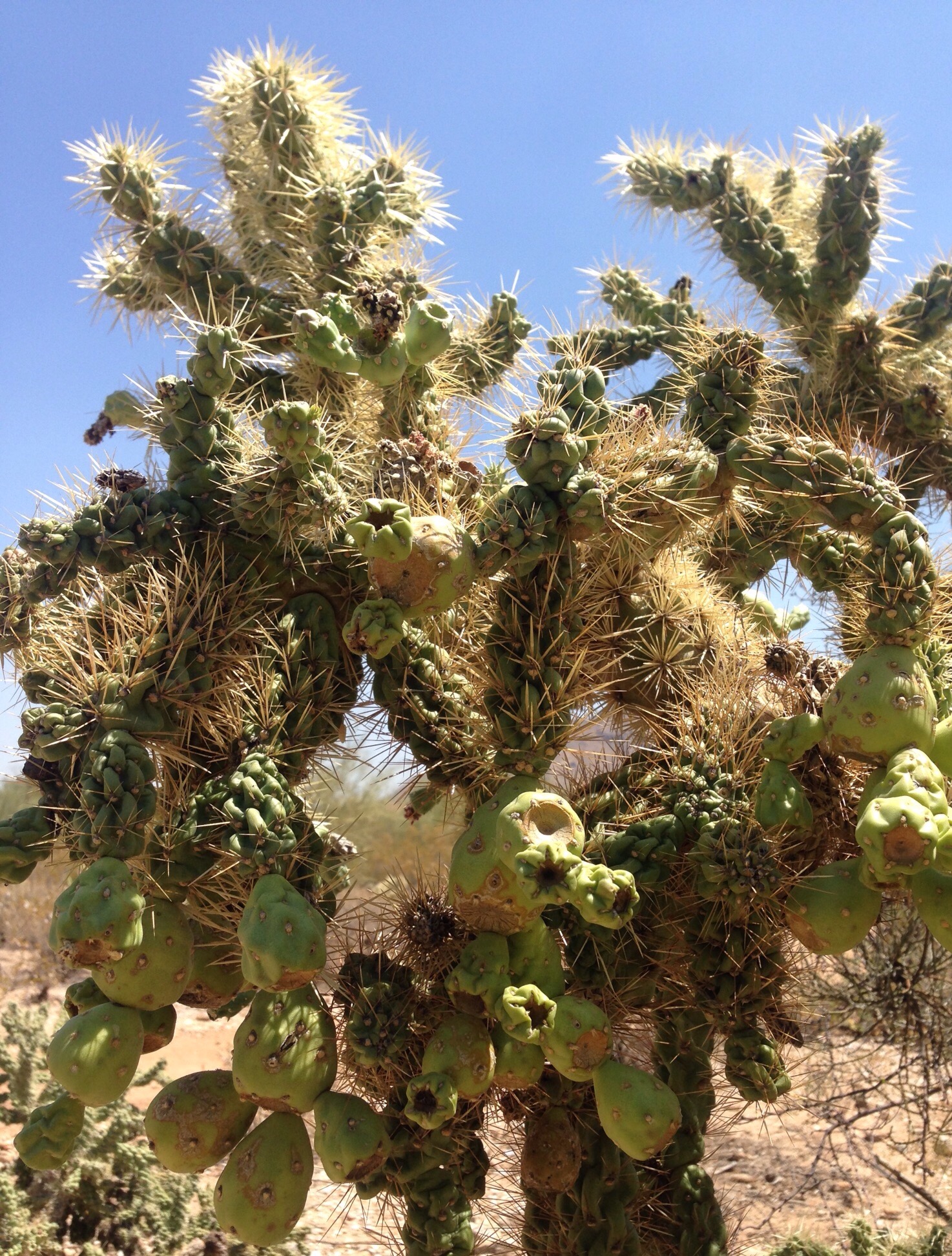
Part of the Desert View TrailOne of the mighty saguaro which can be up to 6-8 tons (90%) water and live to be 175-200 years old!Close-up of a cholla cactusWho says there can’t be green in the dessert?A lovely succulent
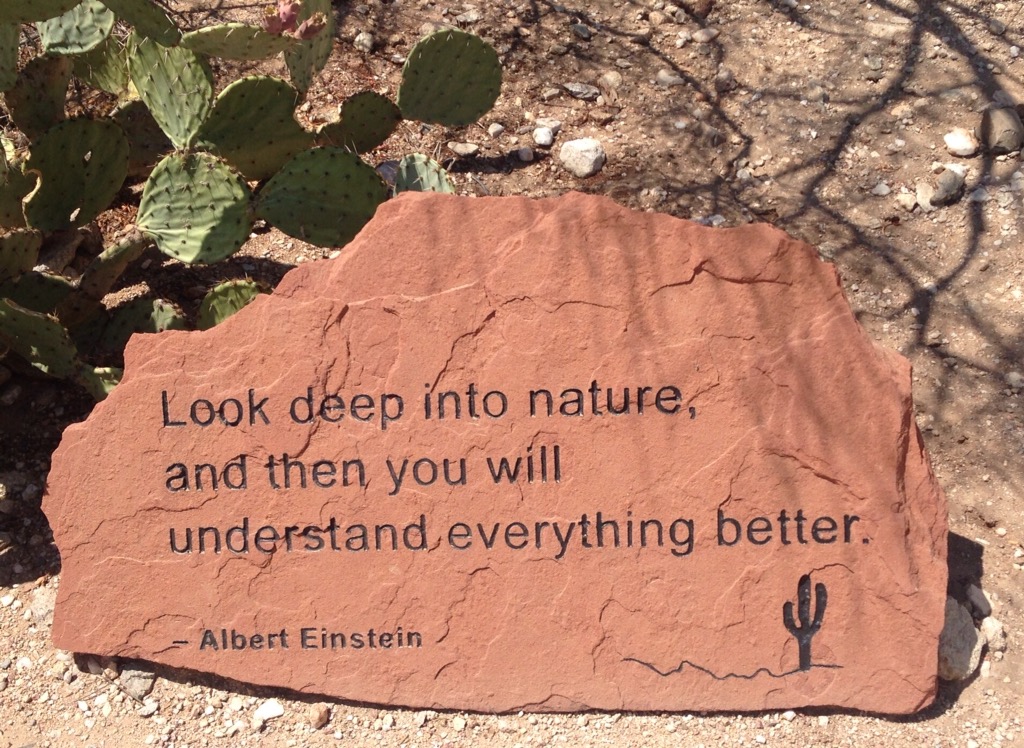
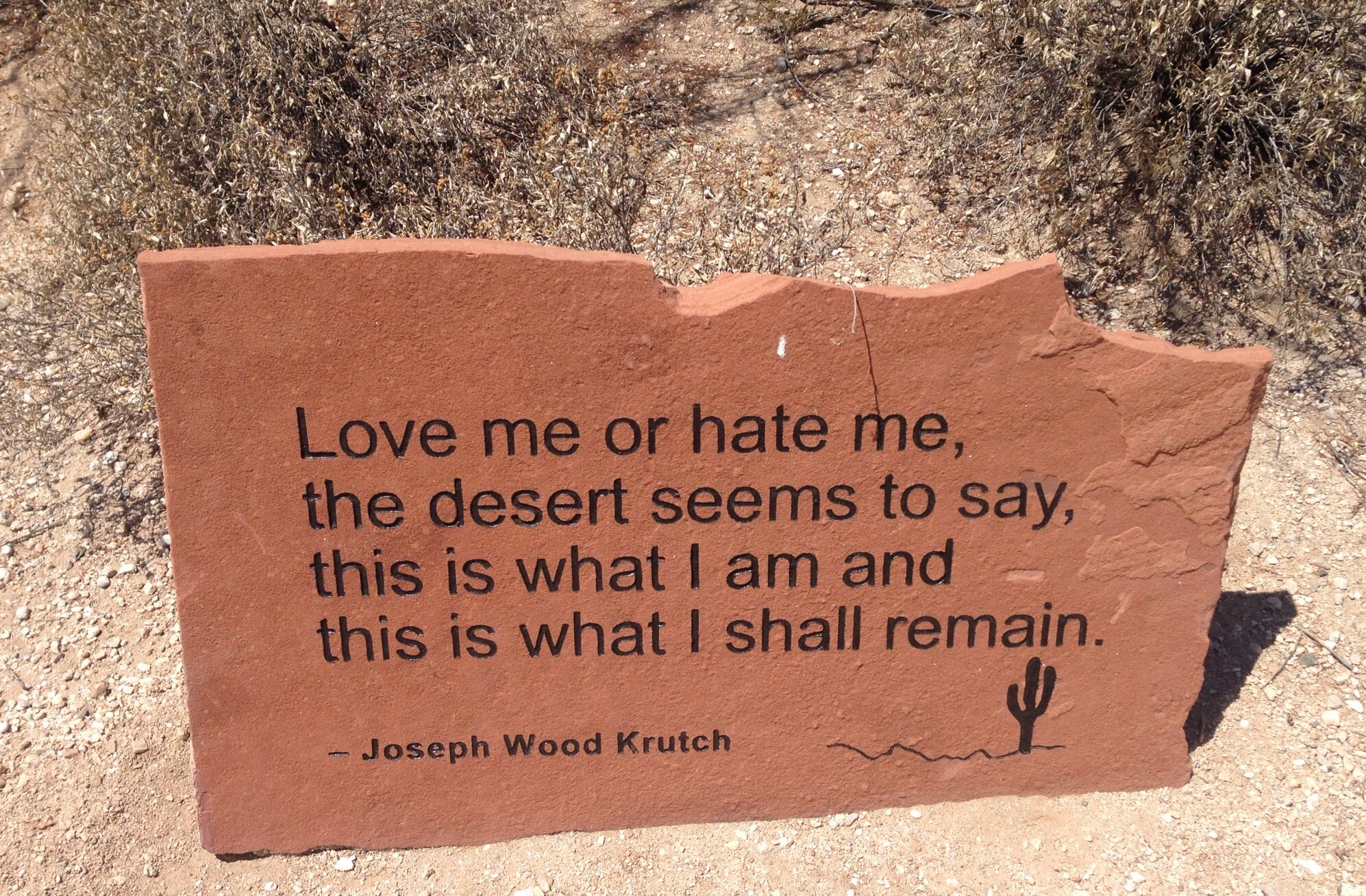
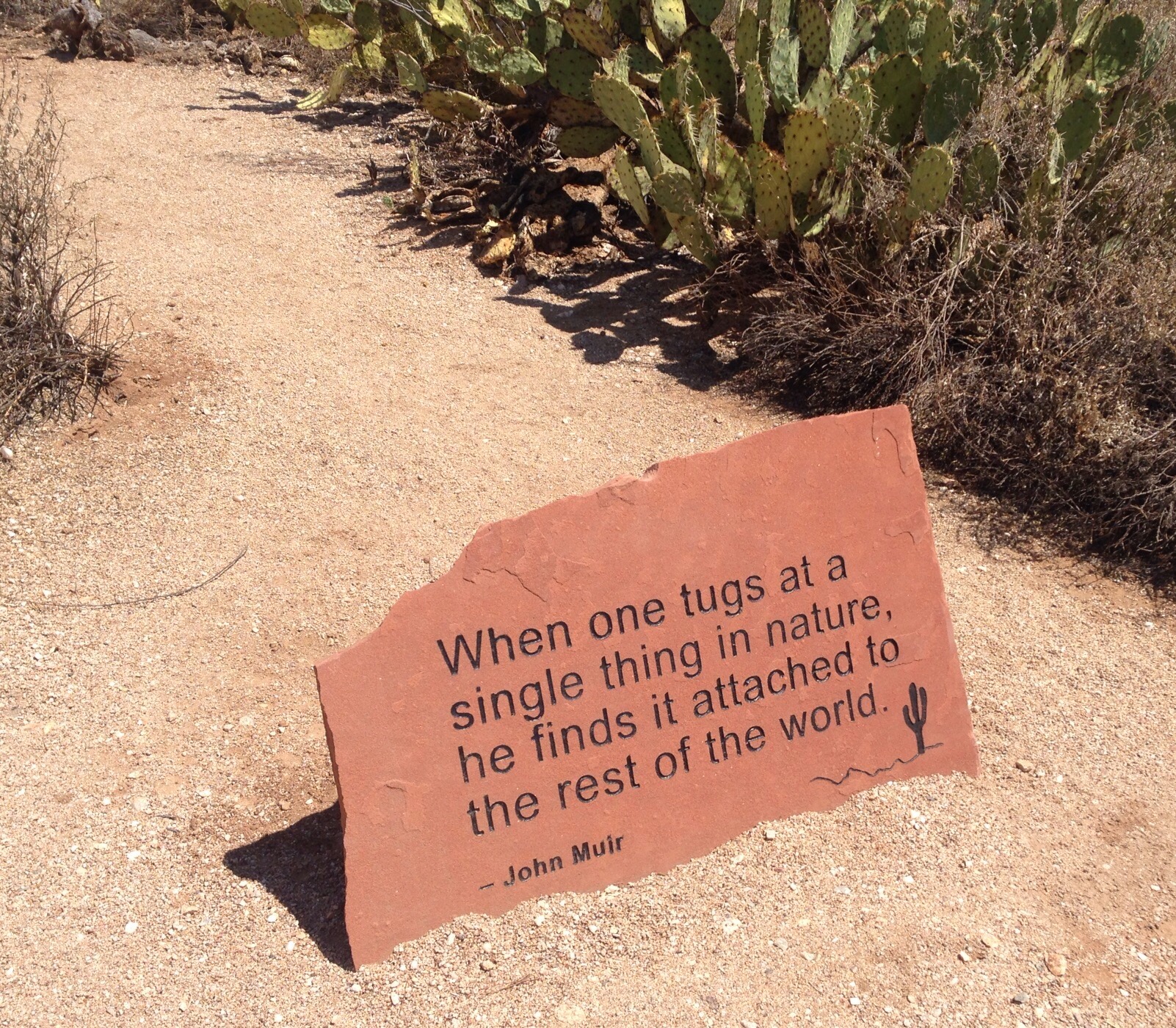
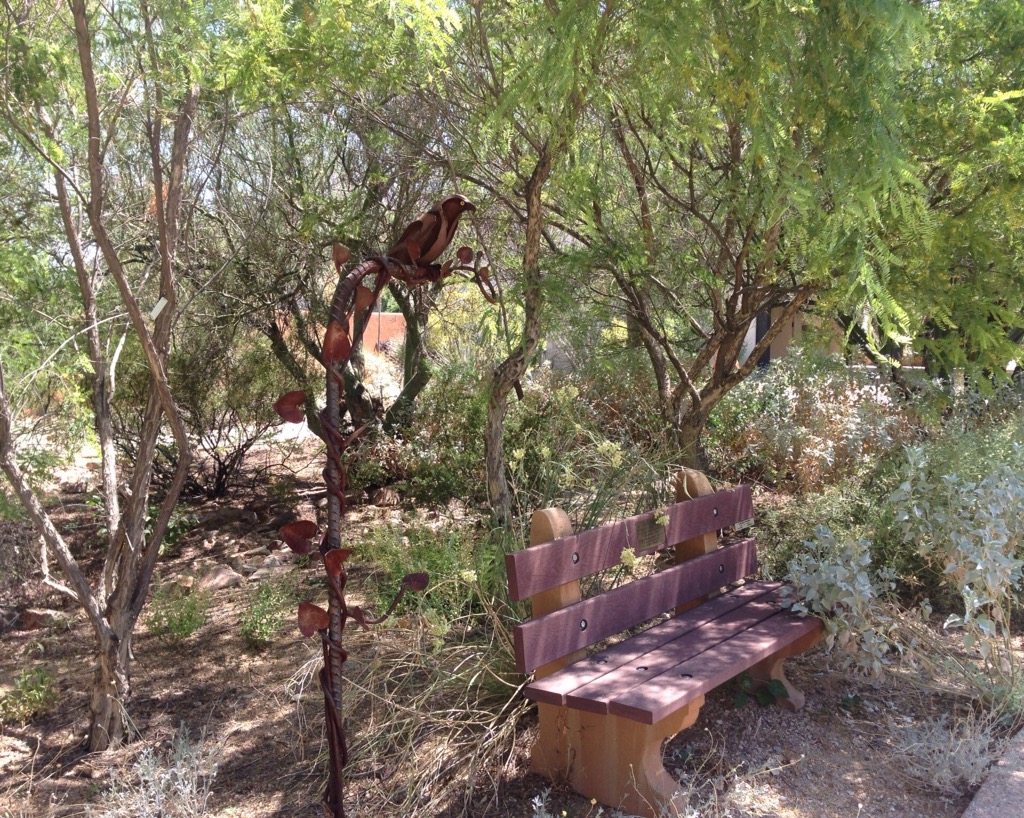
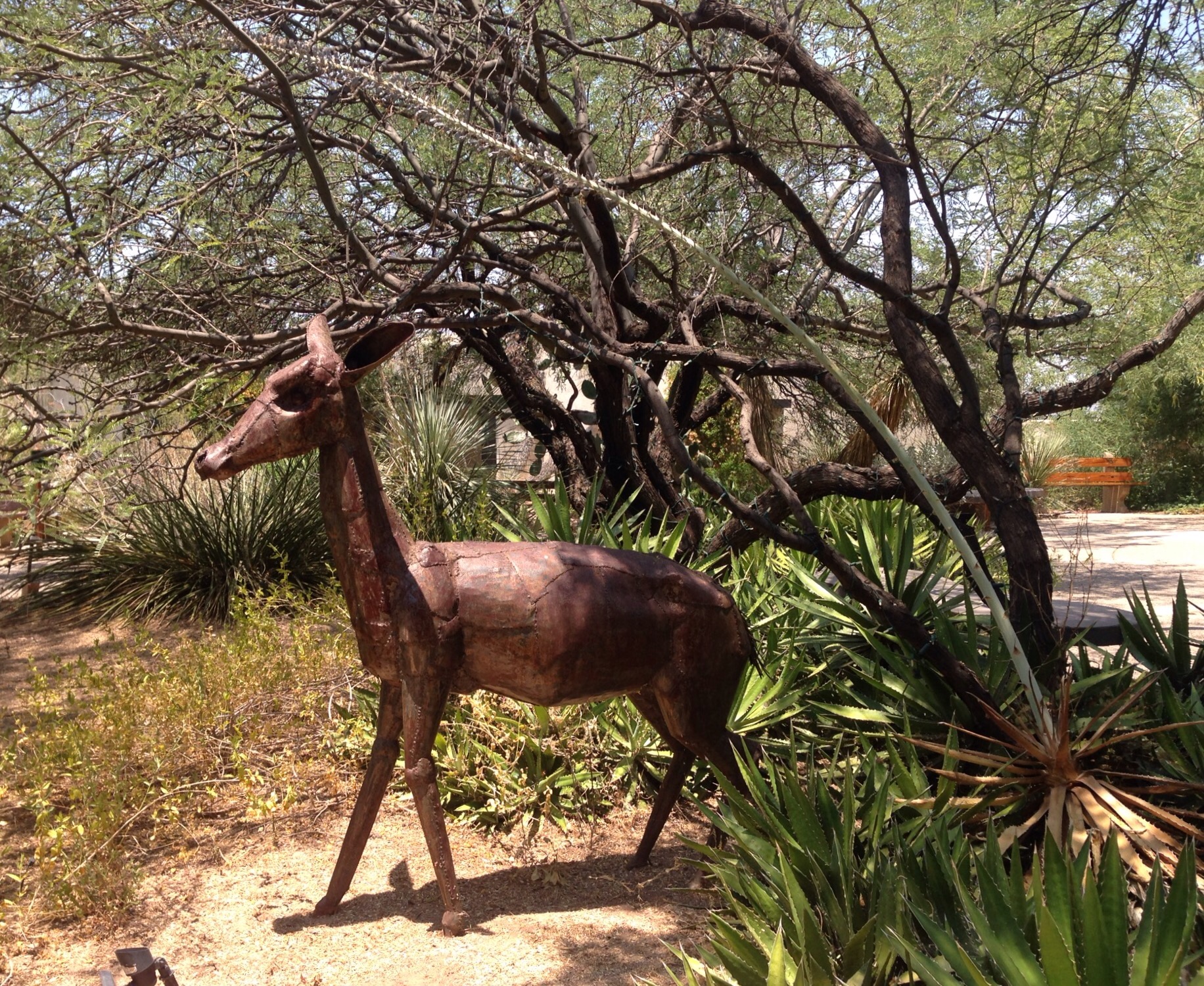
Along the paths we saw roadrunners, lizards, jackrabbits, rest areas, relevant quotes, and metal artwork.
Metal bird sculptureMetal horse sculptureMetal deer sculpture
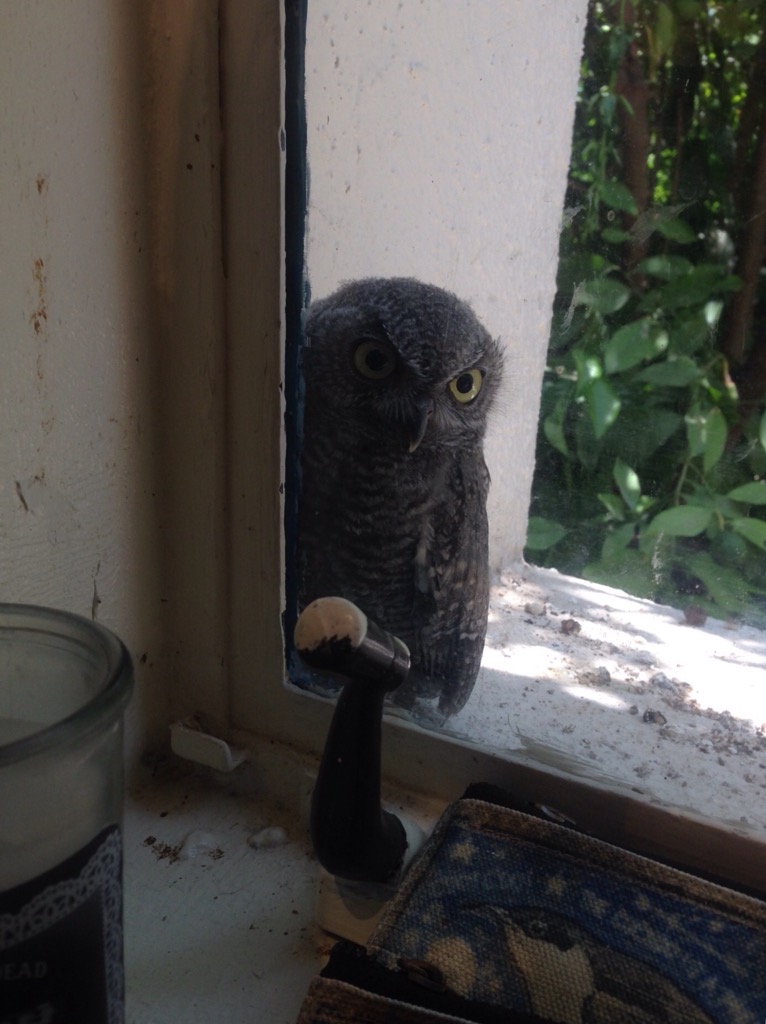
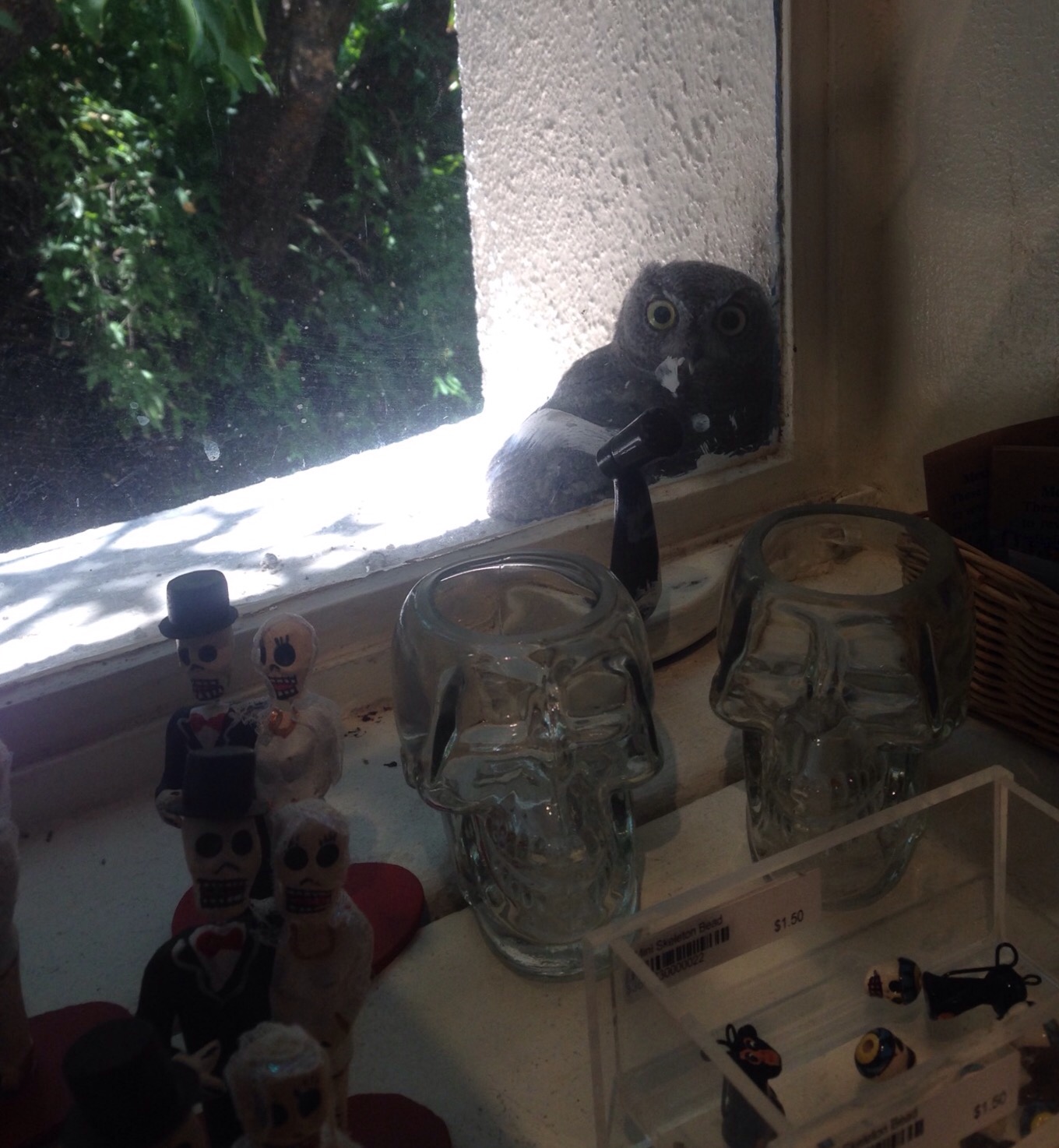
The land for the park was donated by a private couple. One of the original homes on the property is now used as an exhibit house to showcase the Native American pottery and basketry collection of the former owners as well as some temporary exhibitions by local artists. The former living area housed an abstract art exhibition. Finally, the highligh of the day came from the museum shop (actually just outside), and we didn’t have to buy them. Take a look at a couple of young owls who have taken up residency on the window sills of the shop. The sales clerk pointed them out to us.Whoo are you looking at?That stuff is just scarey!
Bob and I have moved on down the road from Phoenix to Tucson. Bob actually started this house sit solo while I was finishing the one in Phoenix. We are back together again, however, and enjoying caring for two Australian Cattle dogs in a lovely home in the historic West University neighborhood of Tucson.
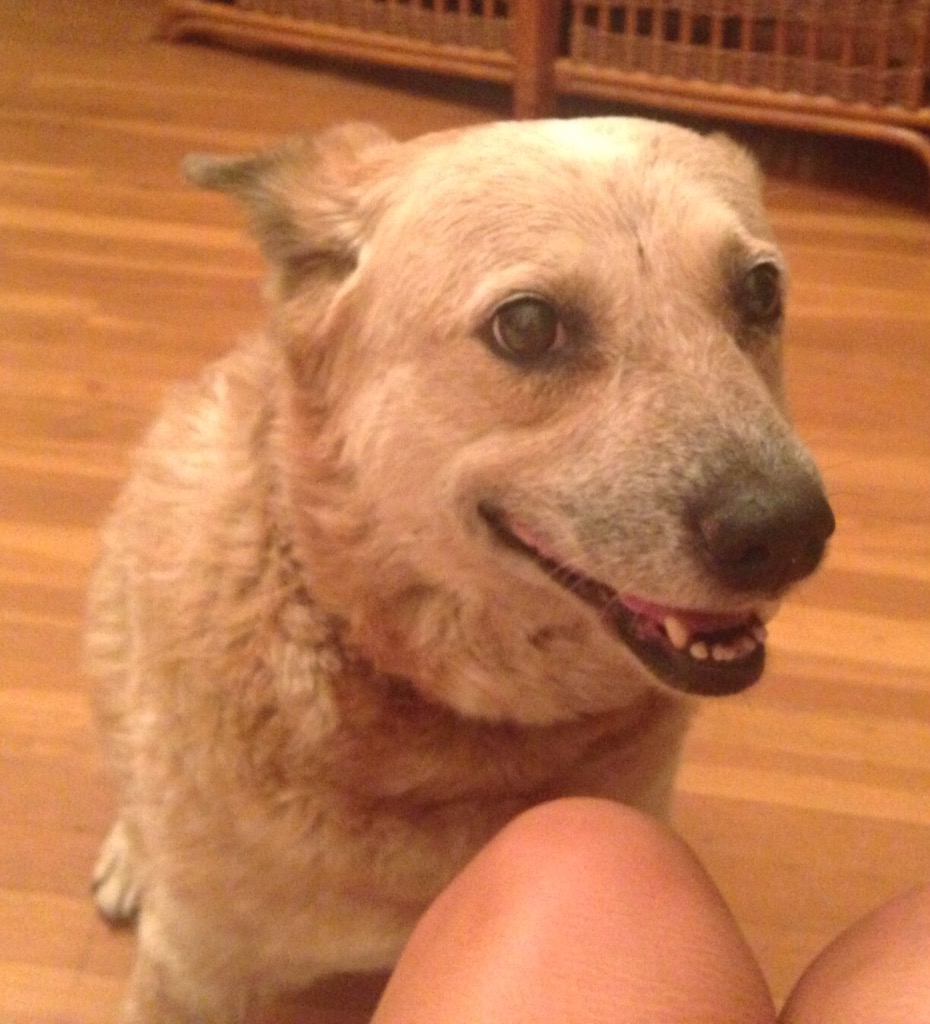
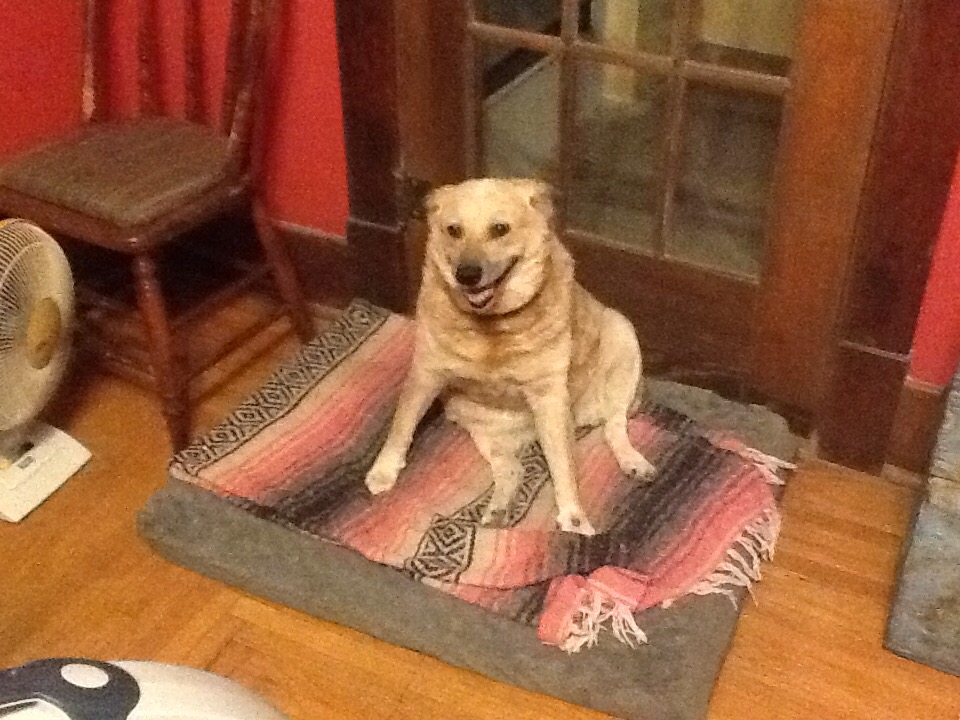
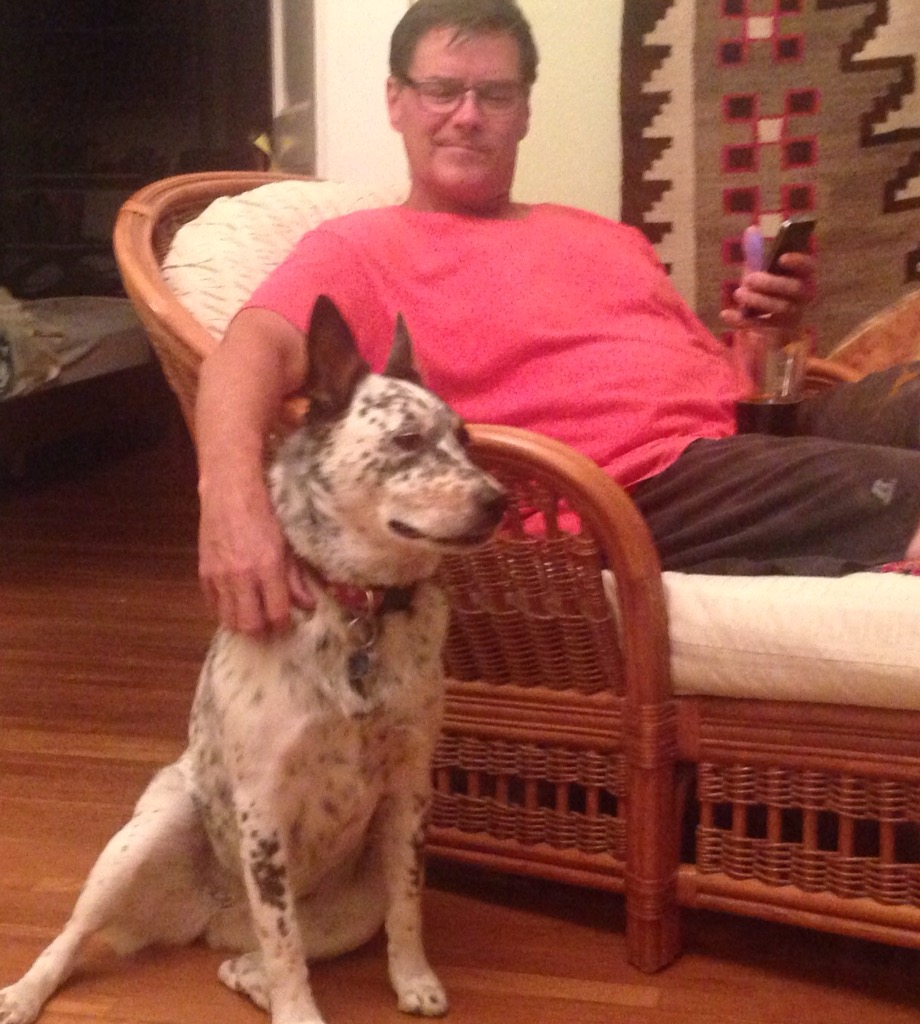
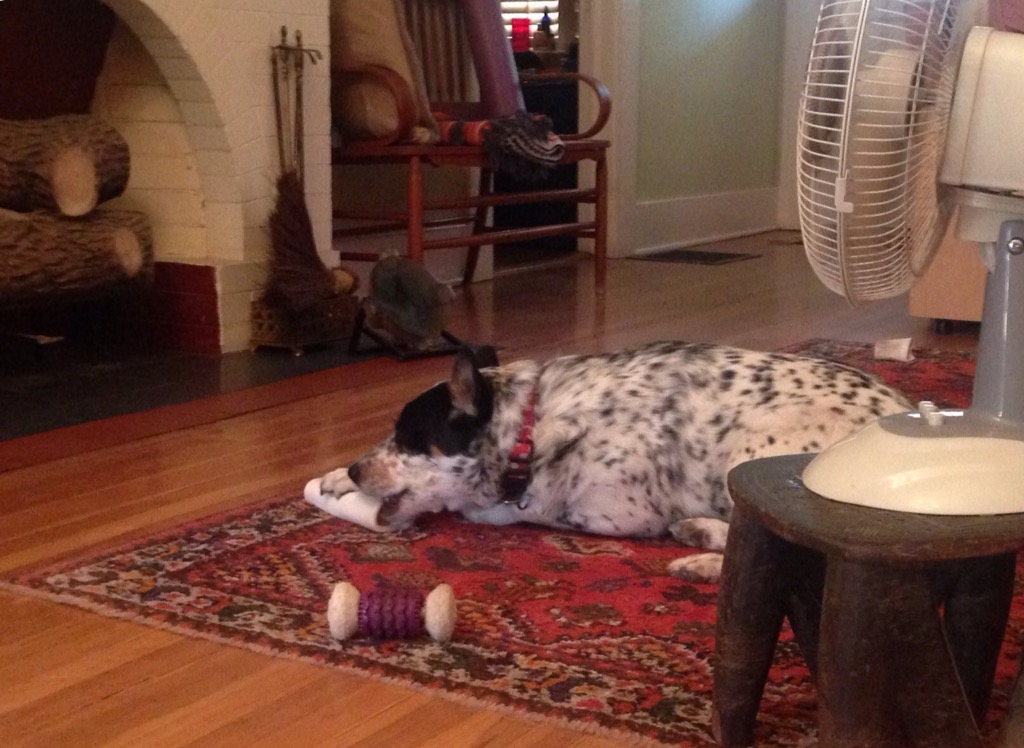
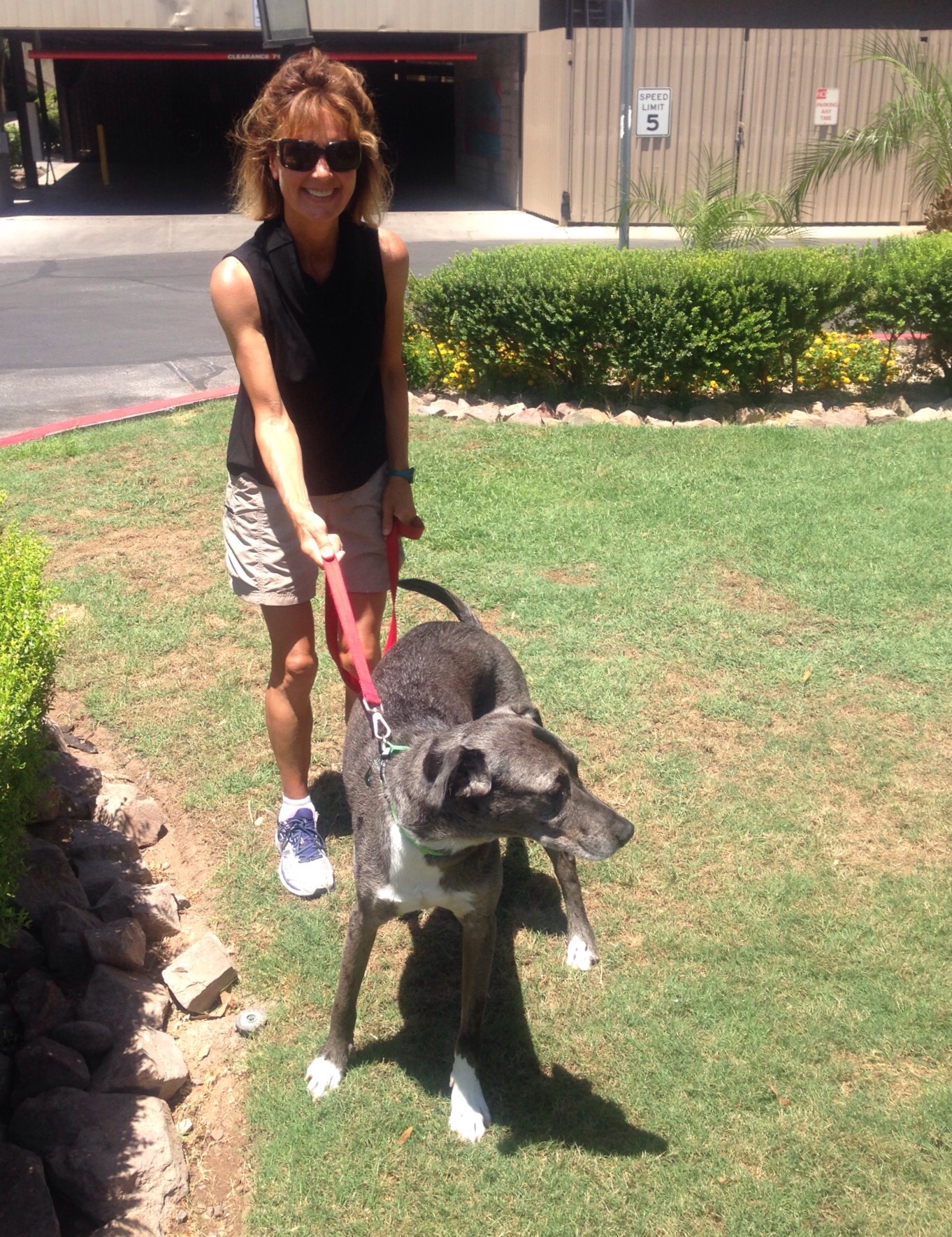
Raina is 11 years old. She is pretty laid back and very sweet. She also seems to collect the Arizona dust so reminds us a bit of Linus from the Snoopy cartoon. Dot is an energetic 3 year old who loves her walks and playing with toys. Both are very well behaved, and we generally only hear them bark if there is a stranger at the door. They are good protectors!
Raina saying helloRaina getting comfy on her favorite blanketBob with Dot, can’t imagine what inspired the nameDot with her boneDot showing off her multi-tasking skillsOur current abode is about a quarter mile from the University of Arizona, a couple of blocks from the vibrant 4th Avenue District, and about a 15 minute walk to the downtown area. We have walked around a bit already in each of these areas. At the downtown library, we were pleasantly surprised to find that the library cards that we got for Pima County while in Green Valley last year are still active. This allowed us to get 2 free admission passes to a botanical park (see Tohono Chol post) as well as check out a couple of travel planning books. We do love our libraries!
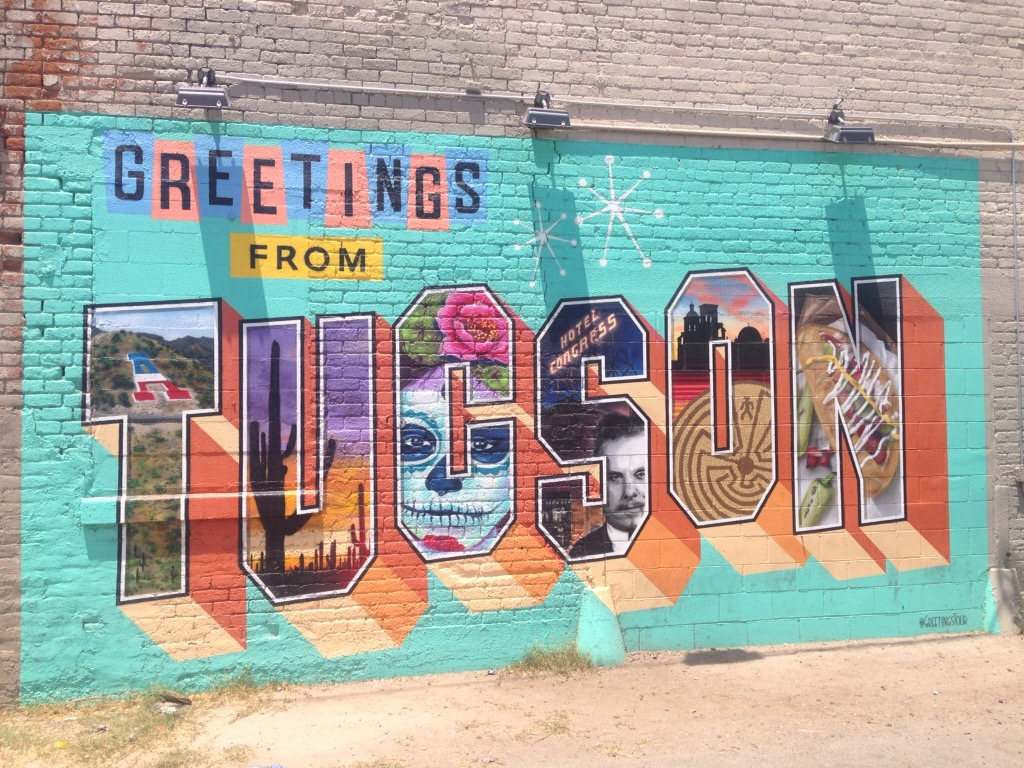
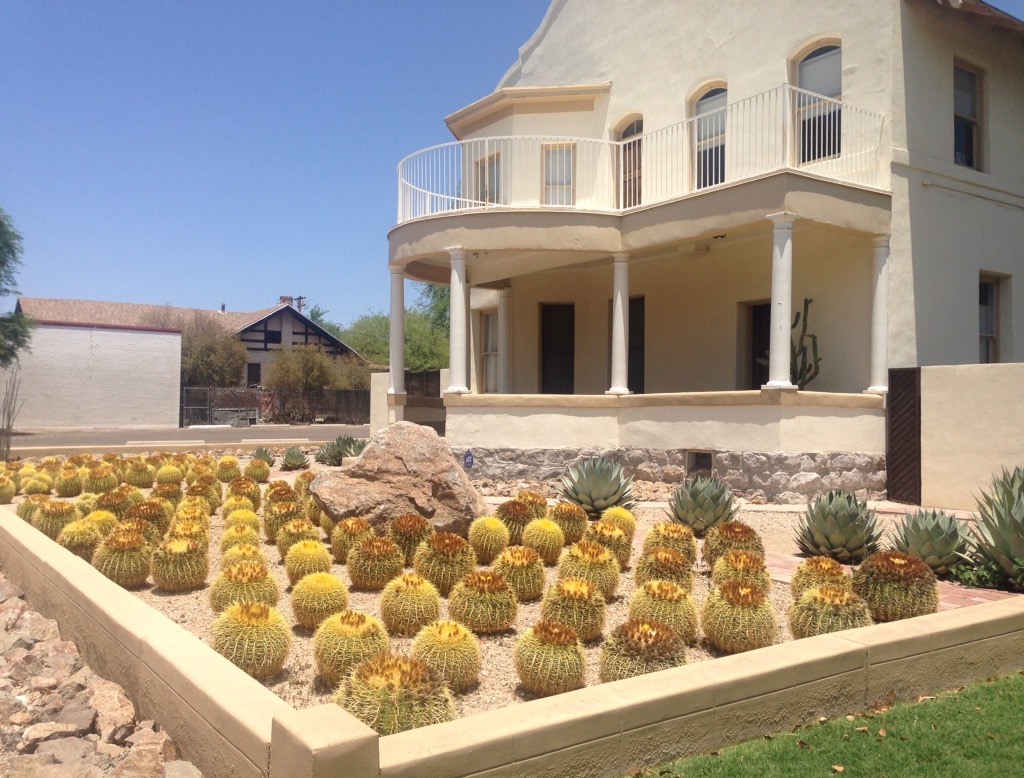
Watching a bit of the Tucson fireworks from our front patioA house in the ‘hood — we thought the yard was coolOne of the many murals that decorate the area
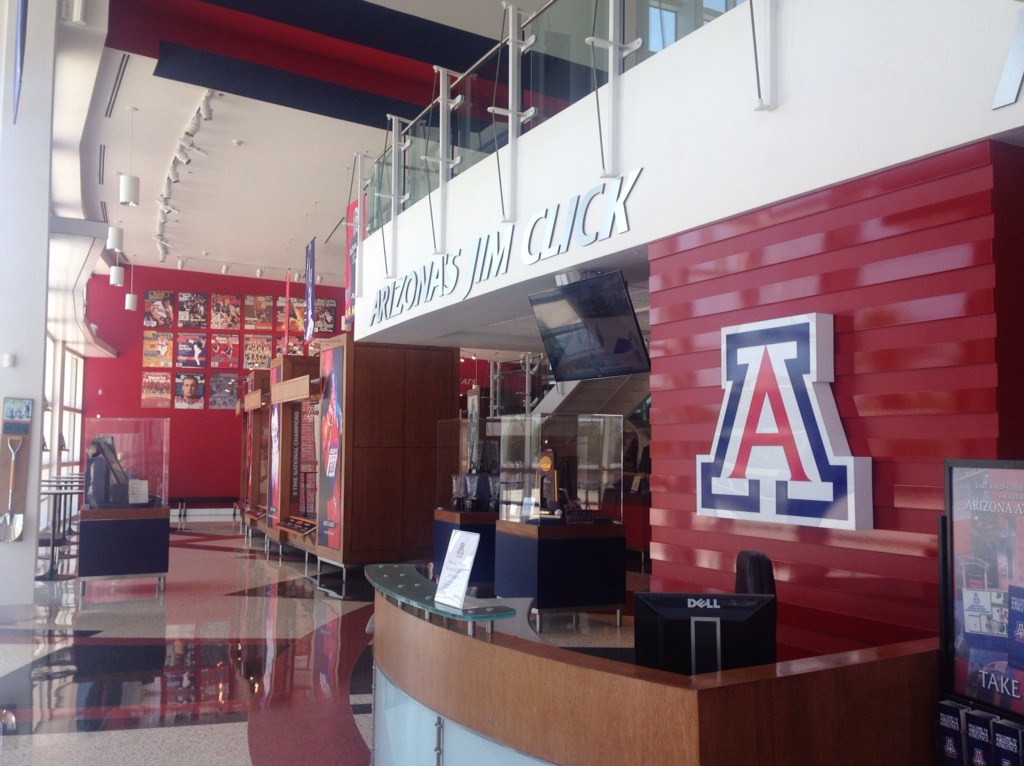
We spent a good bit of time on Thursday checking out a number of the (mostly) free museums on the U of A campus — everything from sports to poetry to photography to art.We started with the Jim Click Hall of Fame museum in the McKale Center.From the Hall of Fame, we could walk into the basketball stadiu
The Poetry Center was founded in 1960 and has nearly 70,000 items related to poetry. It holds a reading and lecture series, classes and workshops, a book club, and family days. It is basically a library dedicated to poetry, but it had some fun posters to look at, a jigsaw puzzle you could sit and work on, and a special exhibit on single-issue books.
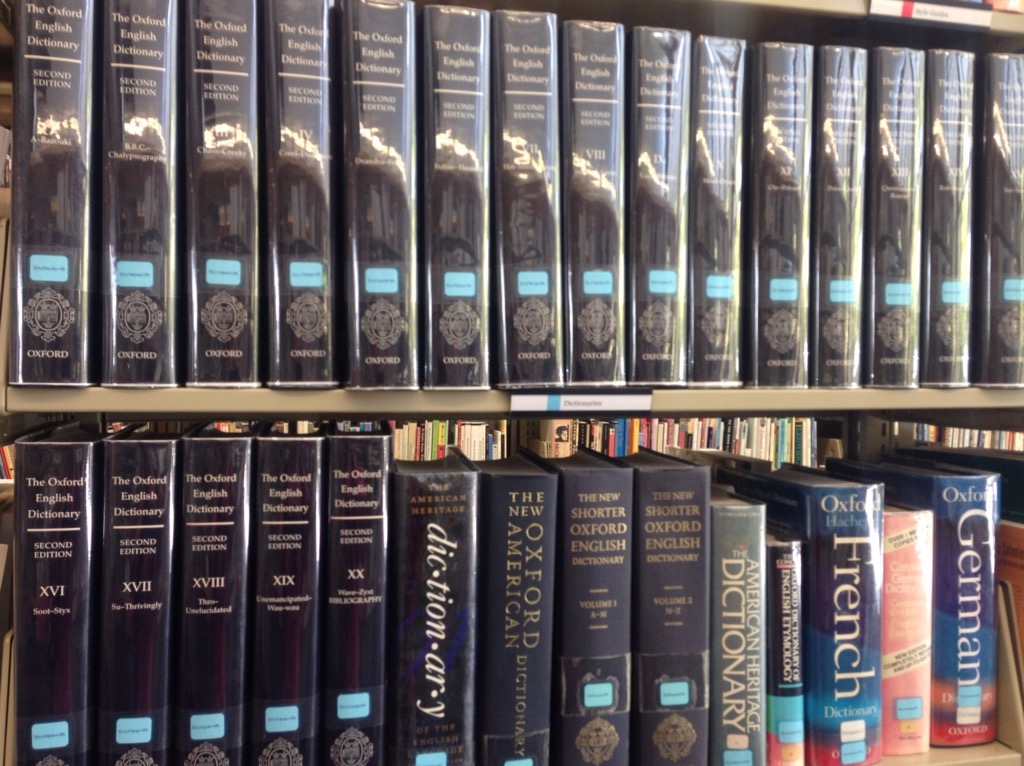
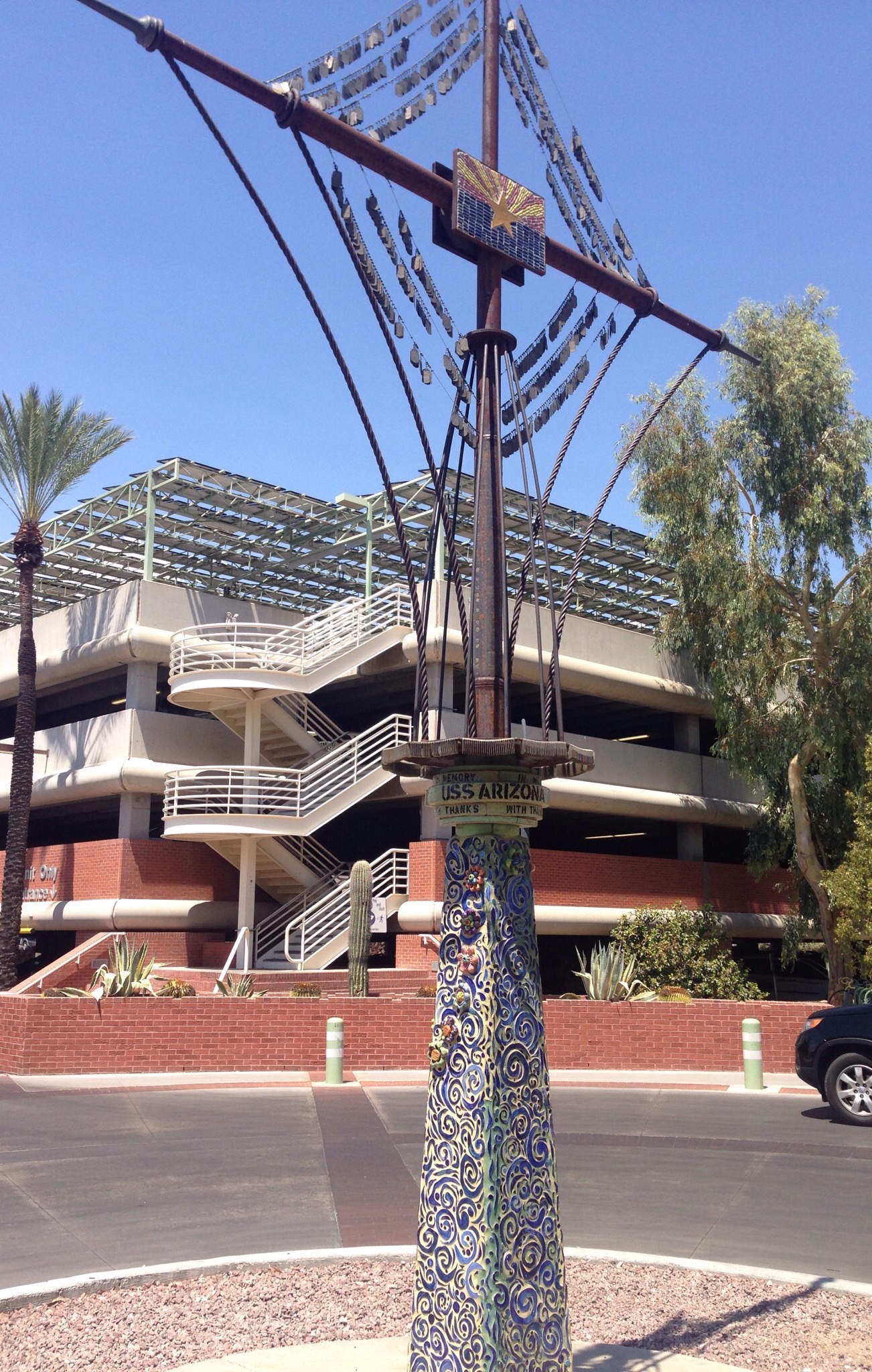
Along with flipping through some of the books, anthologies, and magazines, I was also thrilled to find a whole set of the Oxford English Dictionary.The University Museum of Art had some fun exhibitions. we really enjoyed one on some Bisbee artists since we had visited and really enjoyed that town during our stay here last year.Part of the Bisbee exhibit showcased some of the Artkarts that are made and paraded each year through BisbeeThis was just some artwork in the women’s restroom that I thought was cutePublic art outside of Harvill Hall on campusOne of many nods to the USS Arizona on campus — this is outside of the student union
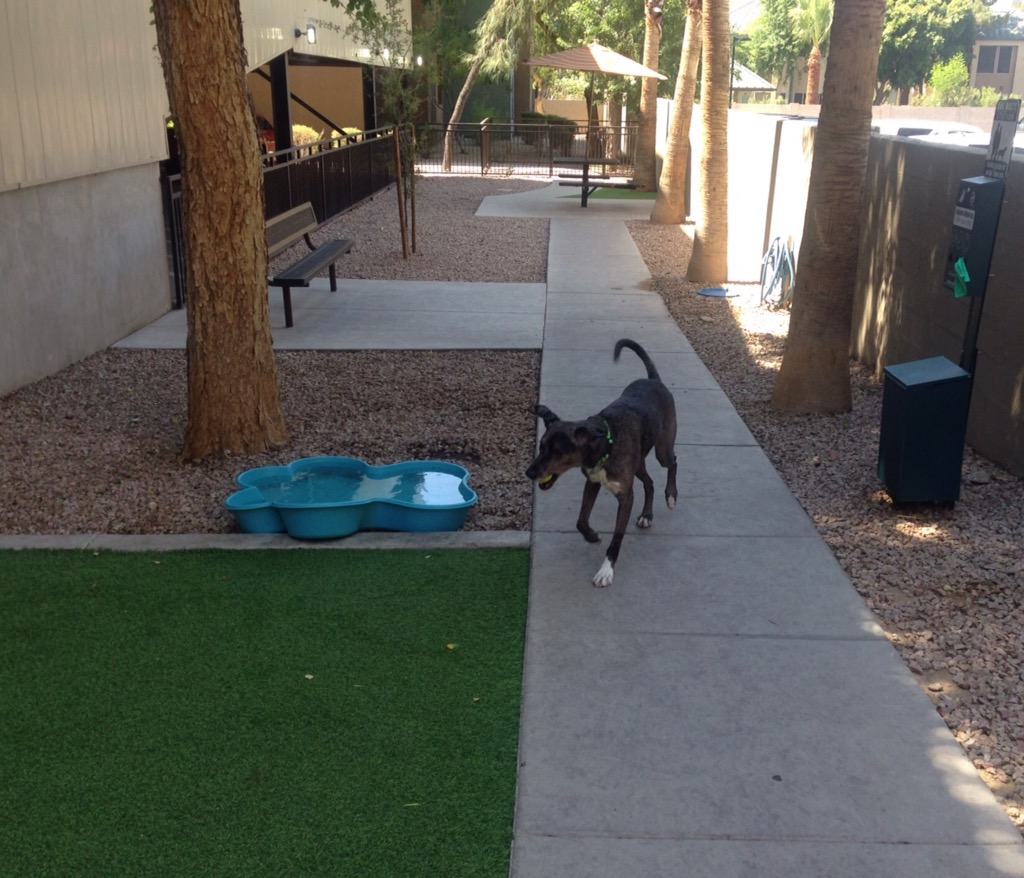
It has been a relatively short housesit in Phoenix but not too short to not be charmed by the sweet Riker, a 2-year old Great Dane mix. We do our walks early and late in the day to avoid the serious heat, but we had a couple of short ball throw sessions at about 10 am to let him get out a bit more.
Riker retrieving ball
We have continued to explore the greater downtown Phoenix area.
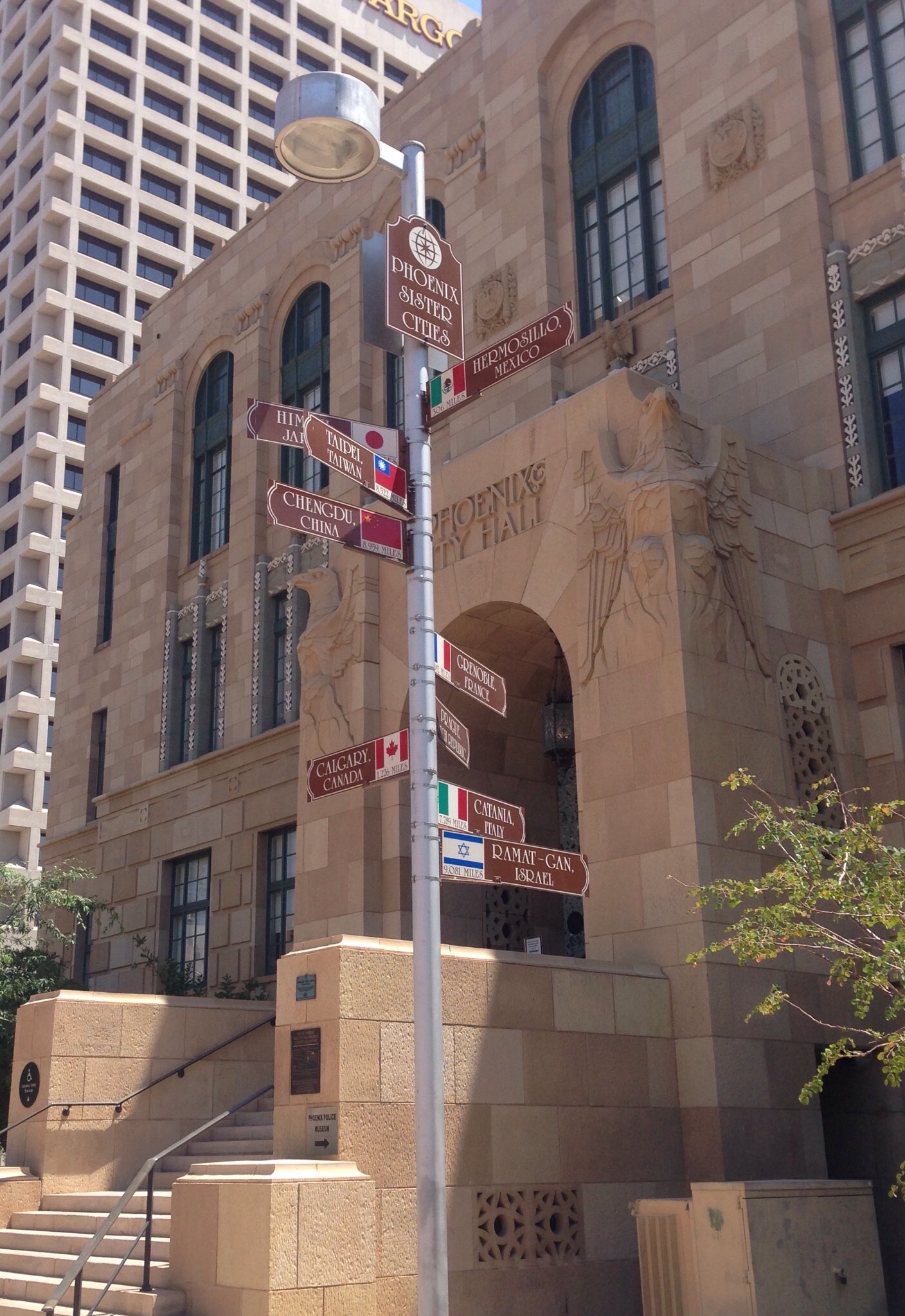
The Luhrs building and tower (1920s) representing beaux-arts and Art Deco architectureA sister cities sign (Calgary!) in front of the historic city hall now housing the Maricopa County Courthouse and a free police museum
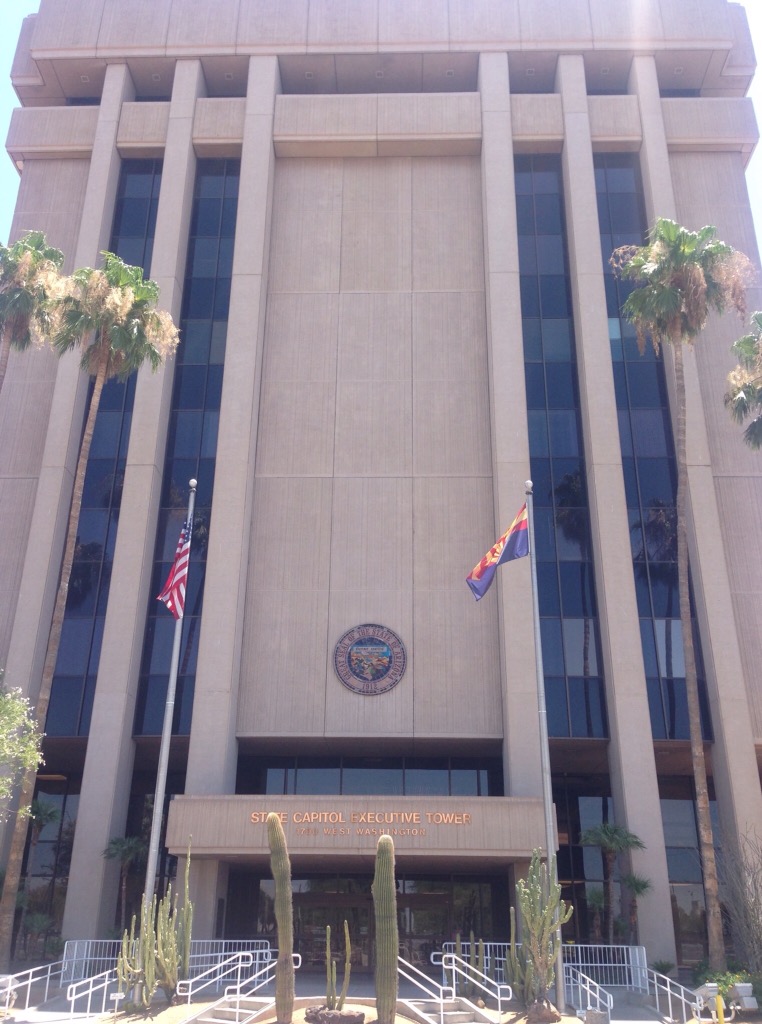
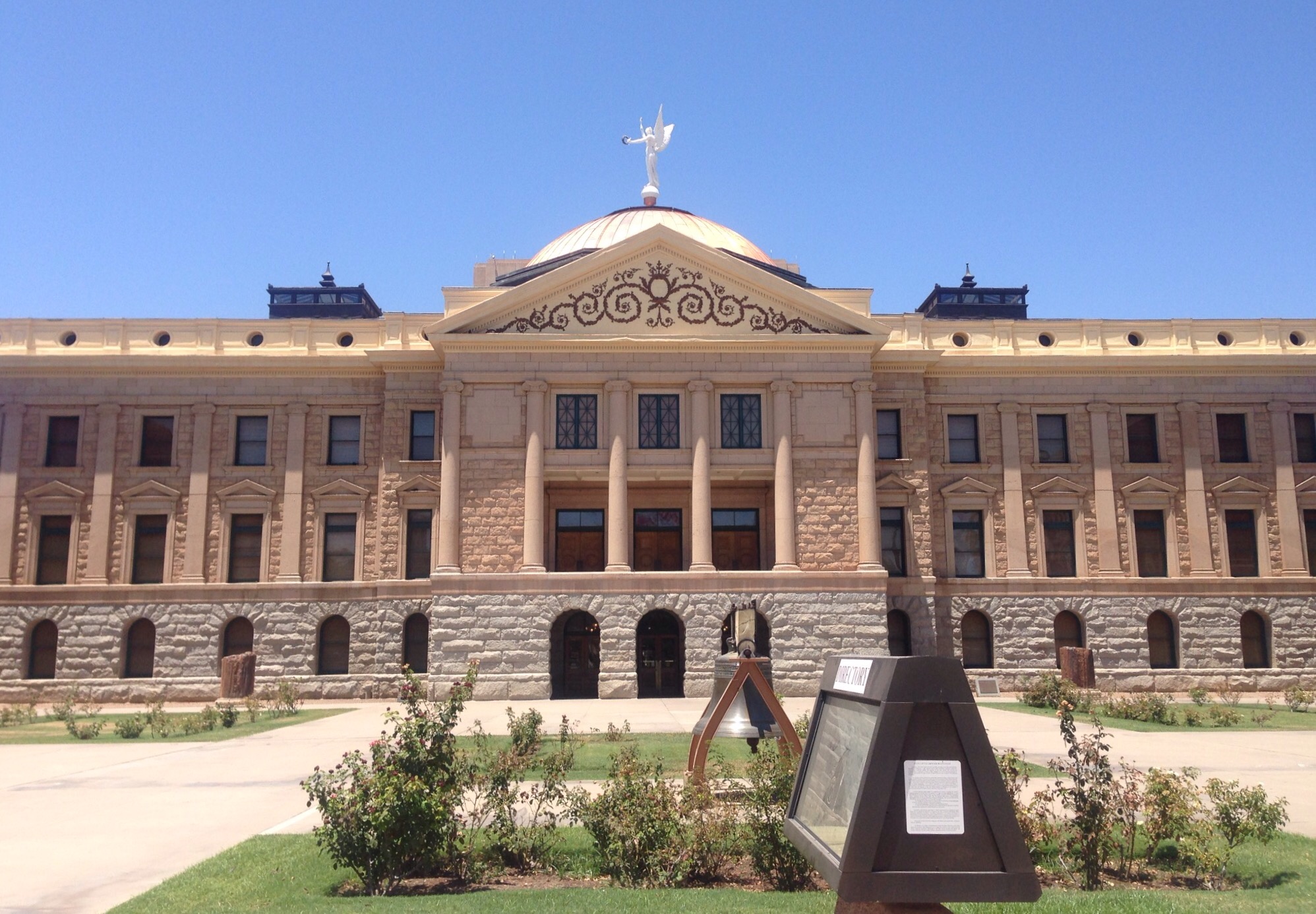
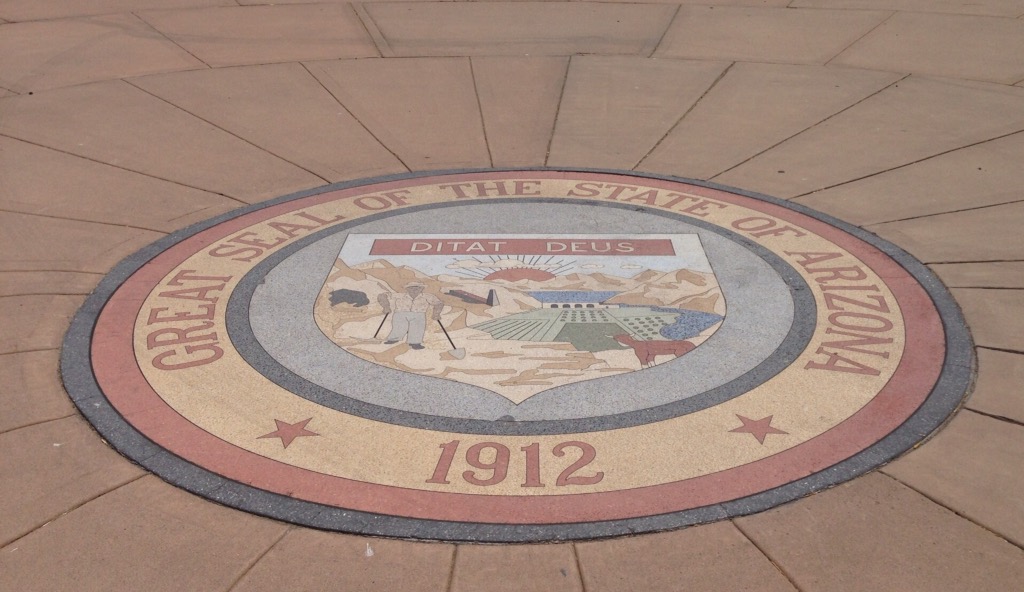
The state of Arizona is relatively young having joined the nation as the 48th state in 1912. It is the 6th largest state in land mass and the 14th in population. Phoenix is the capital. The State Capitol building and grounds lie outside of the main downtown area but are still walkable.
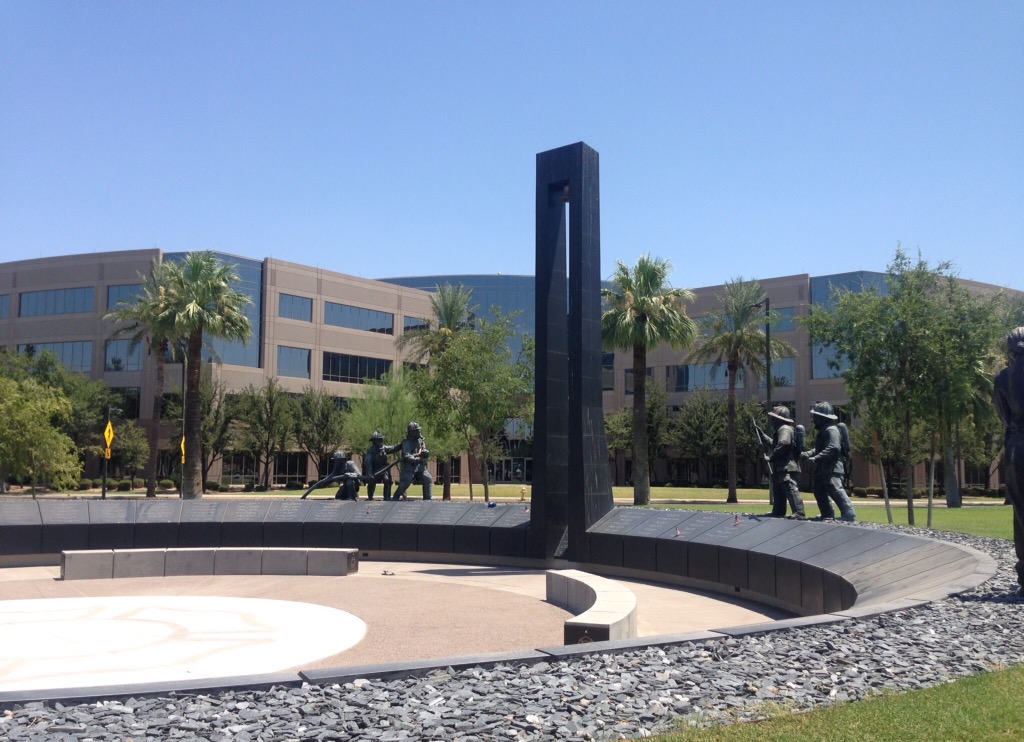
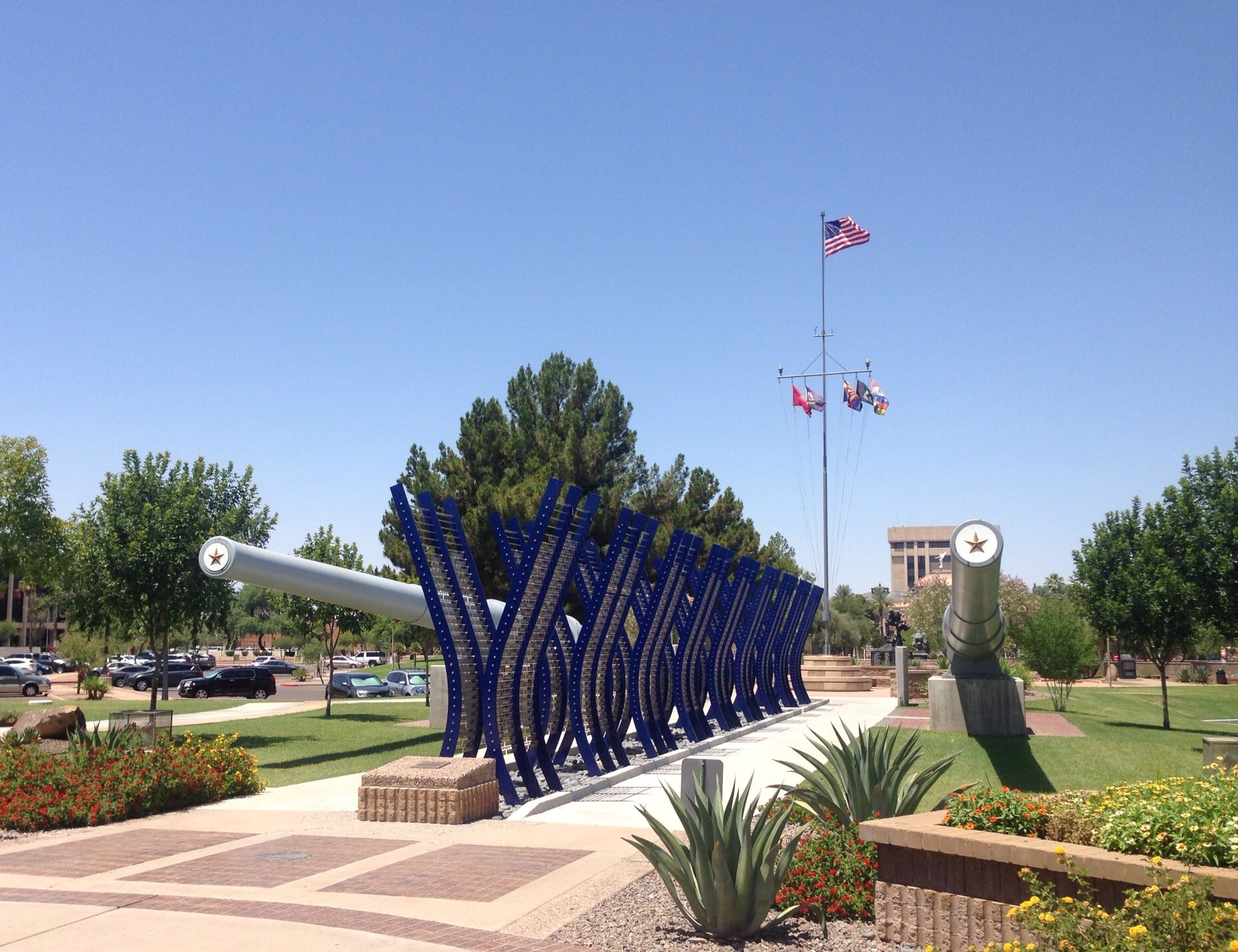
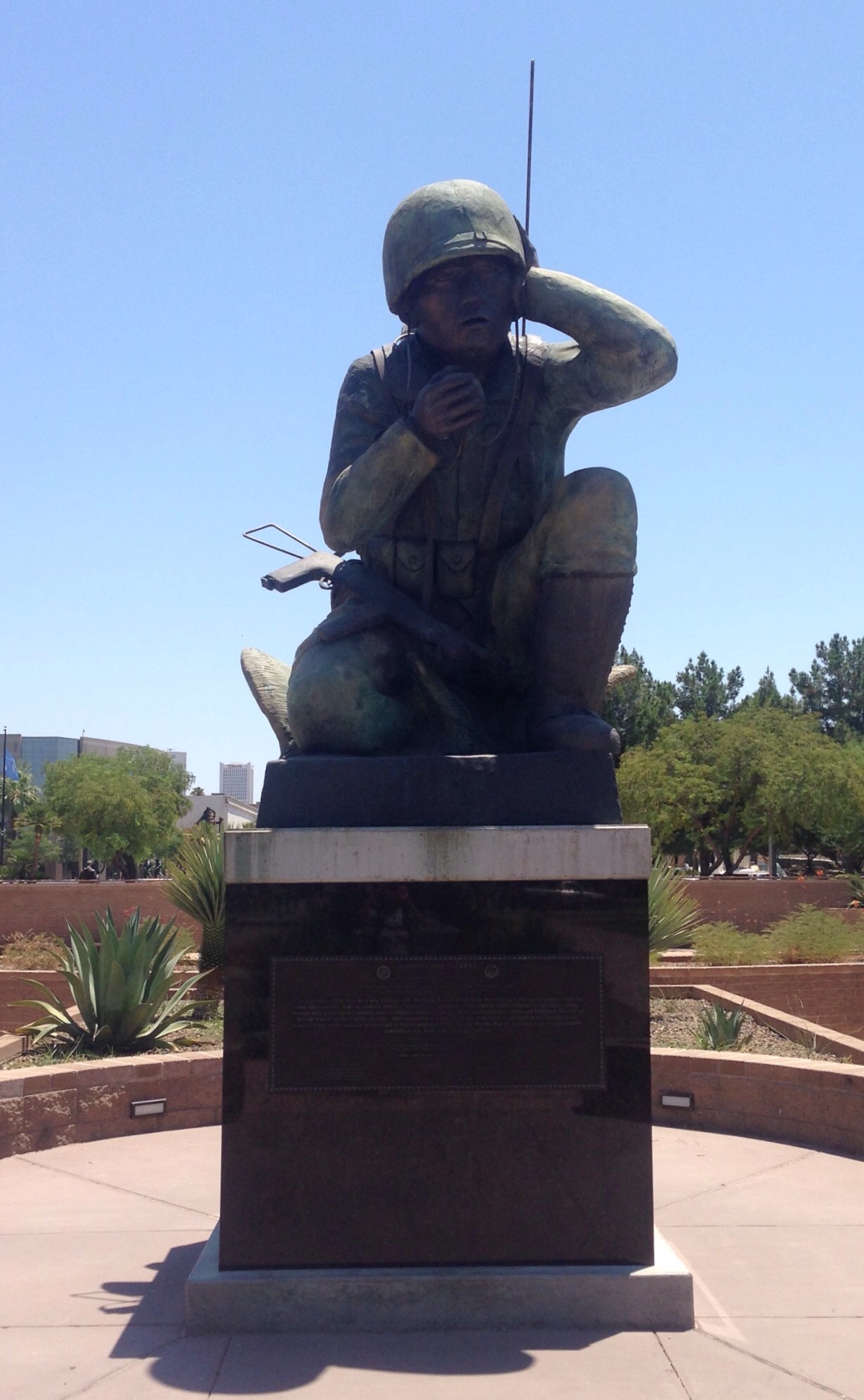
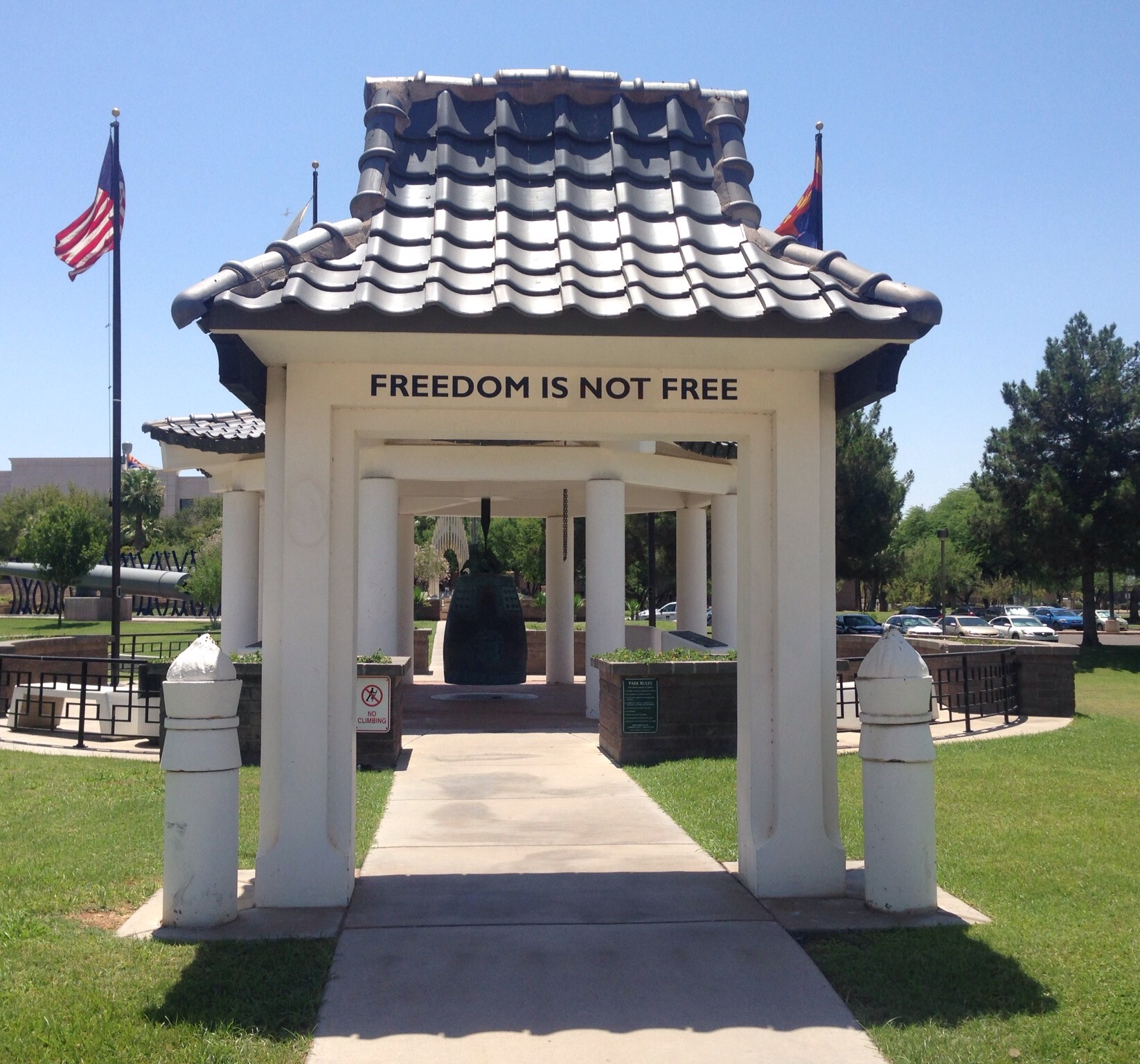
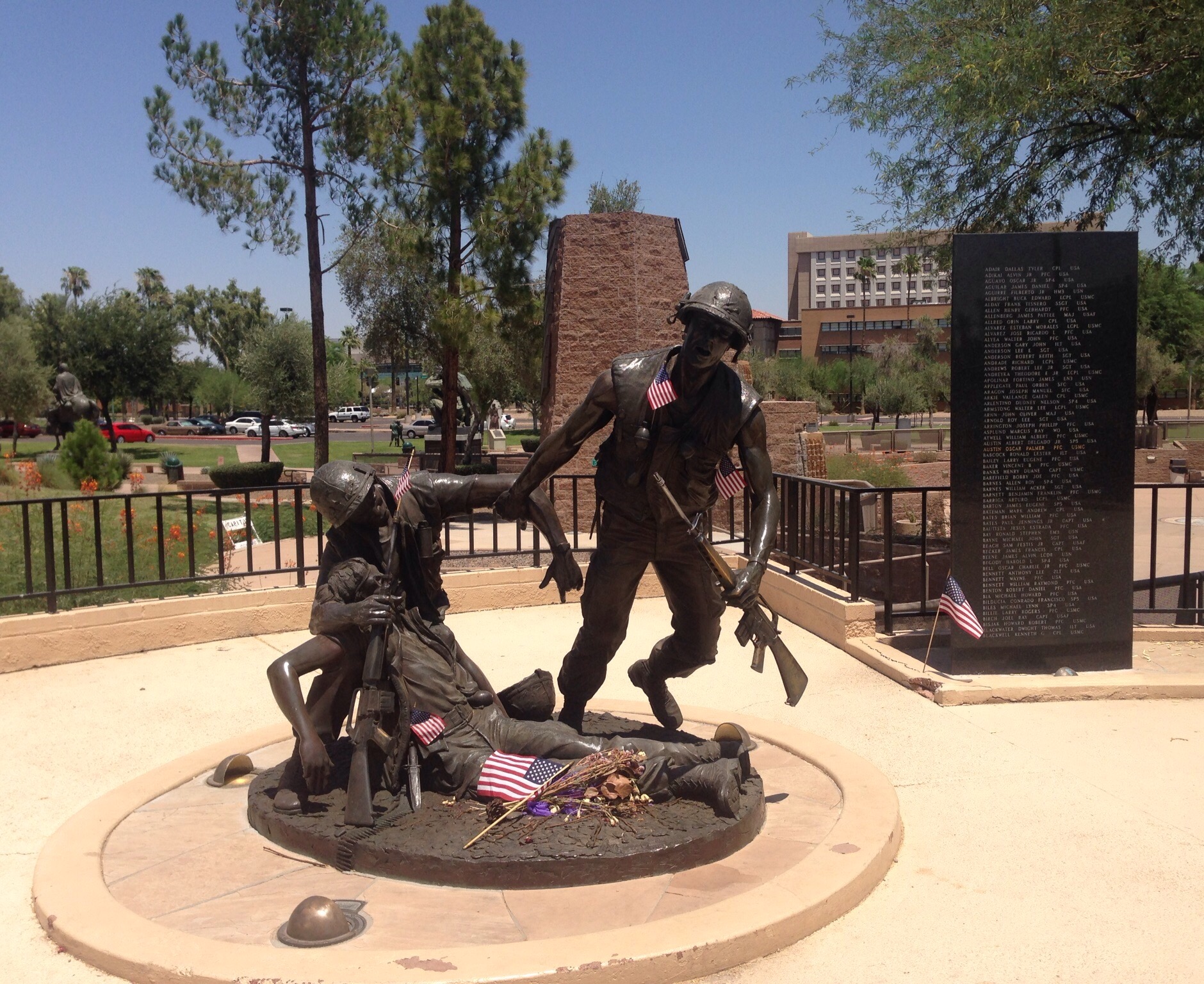
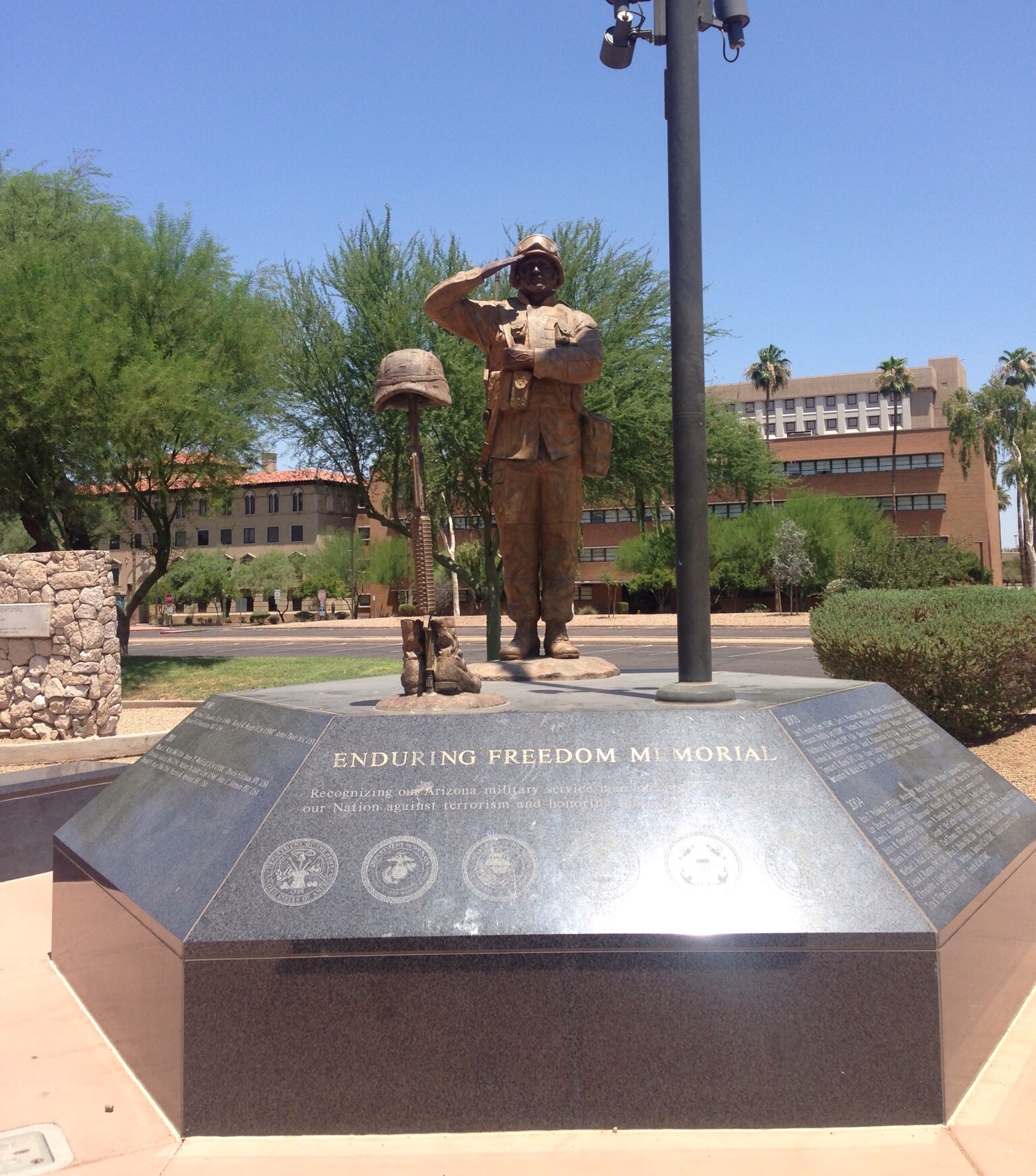
The Executive Tower at one end of the state capitol buildingArizona State CapitolReplica of the Liberty Bell in front of the CapitolThe Arizona state seal with the motto “God Enriches”A firefighters memorial on the groundsThe memorial to the USS Arizona which was sunk by the Japanese at Pearl Harbor. There are 2 gun barrels — one from the USS Arizona and one from the USS Missouri, the ship one which the Japanese signed their surrender.A memorial for the Navajo CodetalkersA memorial for those who served in the Korean WarPart of the Vietnam War MemorialA memorial to those serving in the various conflicts of Operation Enduring Freedom
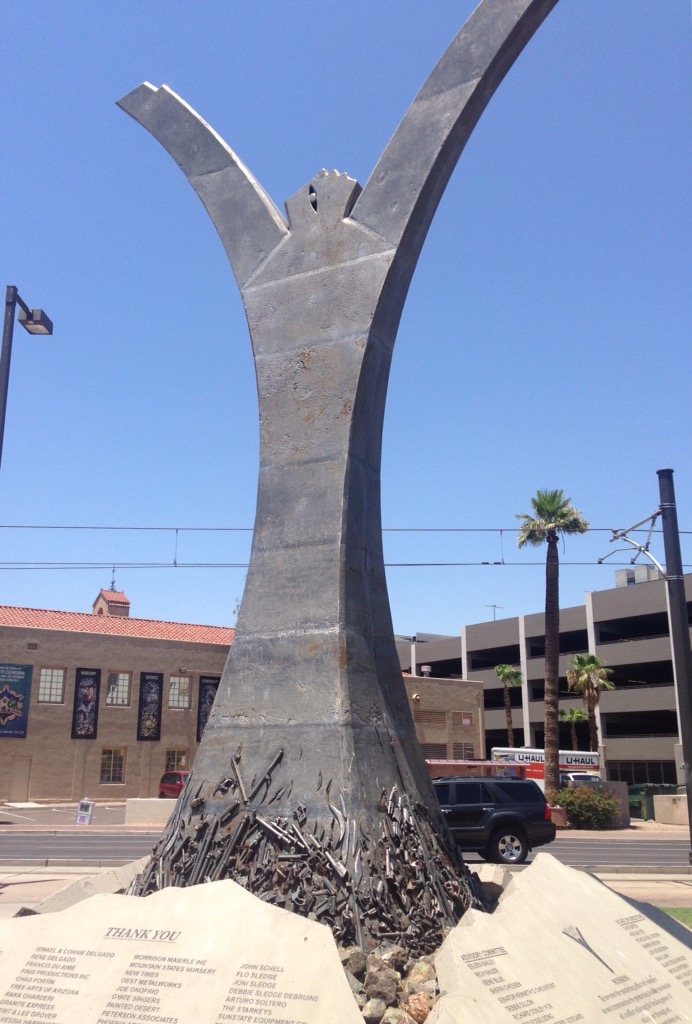
While all of these memorials were impressive and deservedly honored those serving our country in battle, it made me a bit depressed that we humans can’t seem to find a way to get along with each other. So, I was glad to come across the statue below as at least a change from the other memorials. The Release the Fear Sculpture below is made out of melted weapons and was created by Robert John Miley. The sidewalk beneath the sculpture has various peace-based quotes from famous people. My favorite is by Mother Teresa — “If we have no peace, it is because we have forgotten that we belong to each other.”
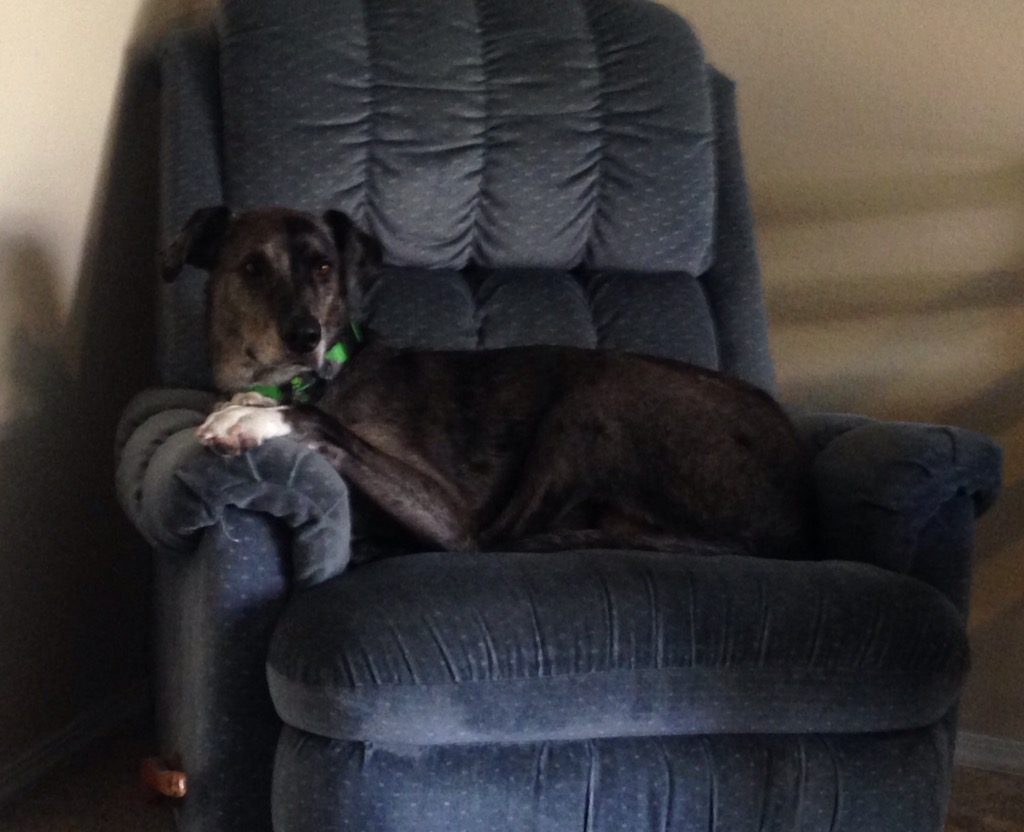
Bob and I officially began our downtown Phoenix house sit on Thursday morning after a transition meeting and dinner with the homeowners on Wednesday night. We are house sitting for newlyweds (married just last month!) who are in Wisconsin (grand old badger state!) for a family reunion. The have a sweet 2-year old Great Dane mix rescue dog named Riker. He likes his raw egg in the morning (served with his other food but he’s most excited about the egg), people, and walks/toys, etc. He is a charmer.
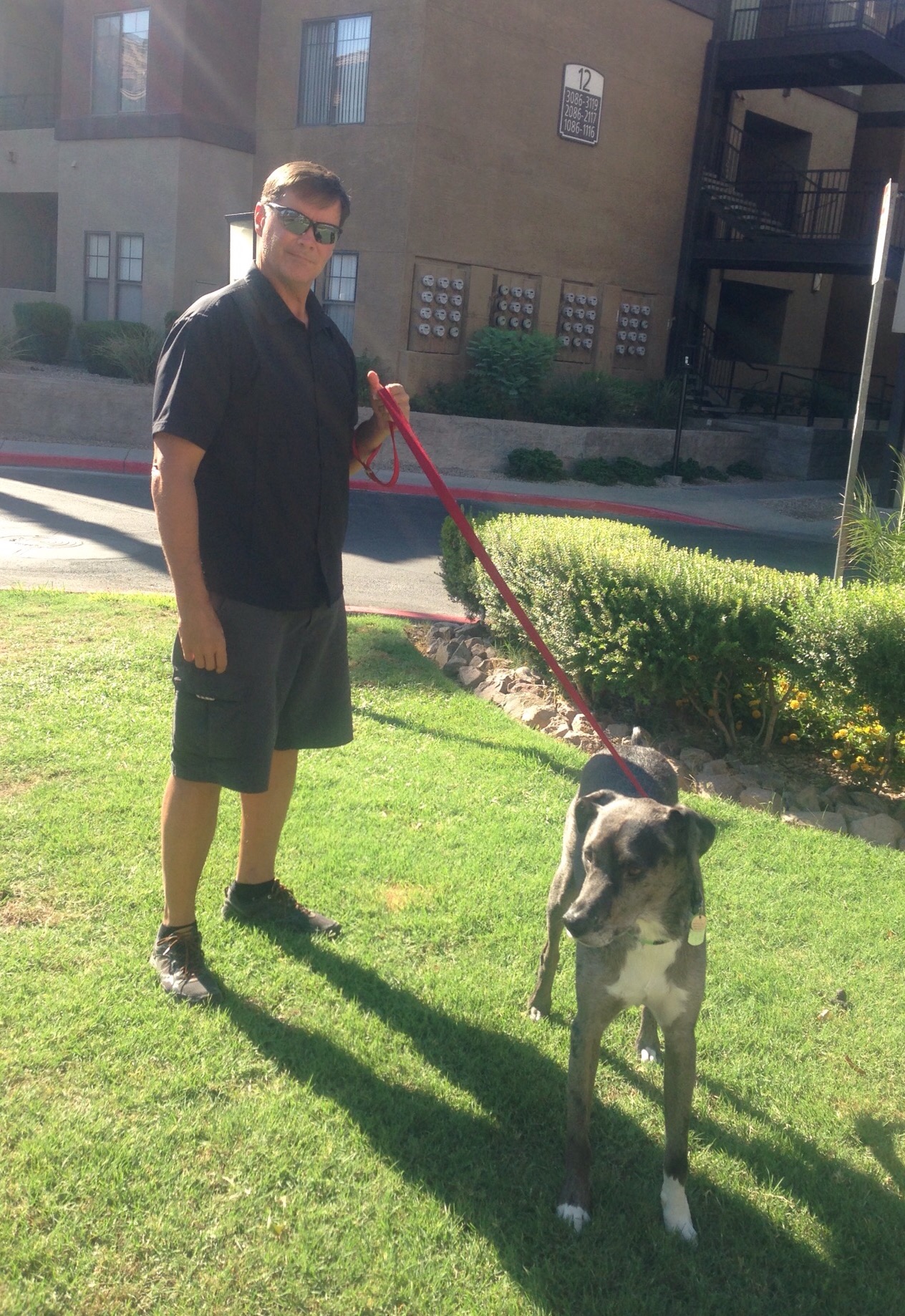
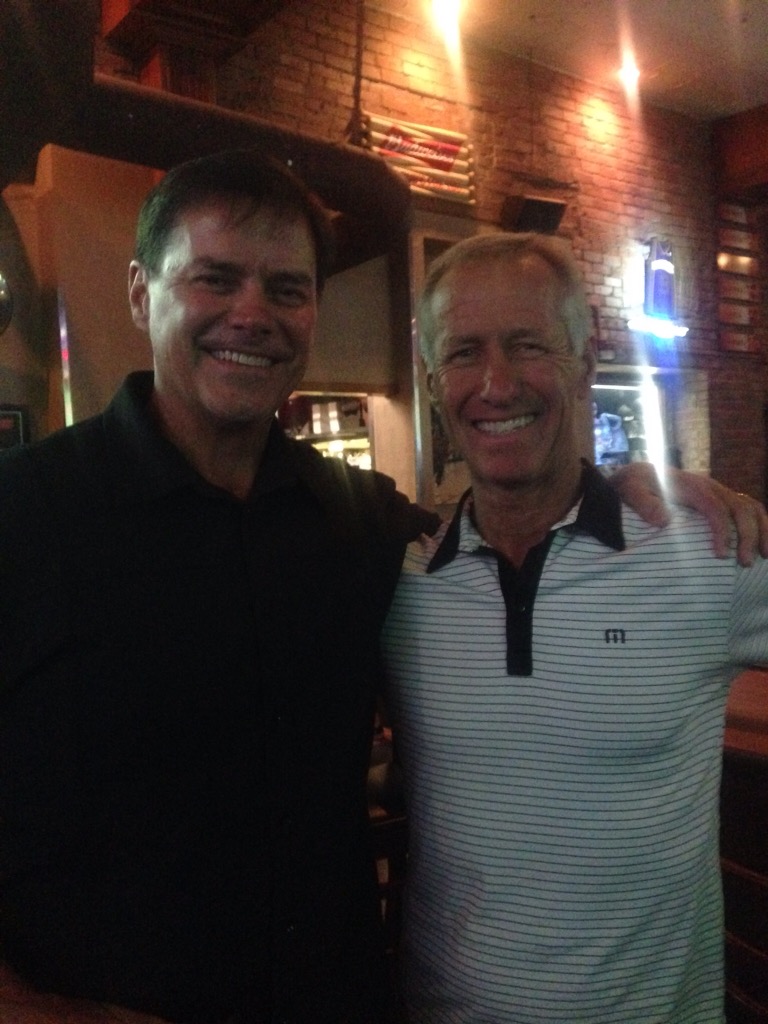
Riker in his easy chairBob with RikerMe with Riker The pool at the apartment complex where we are stayingAlthough the temperature has remained around 110, and likely will for awhile, we have done a bit of exploring of the downtown area and went to an afternoon Diamondbacks game on Thursday. Bob was even able to meet up briefly with a college baseball buddy.
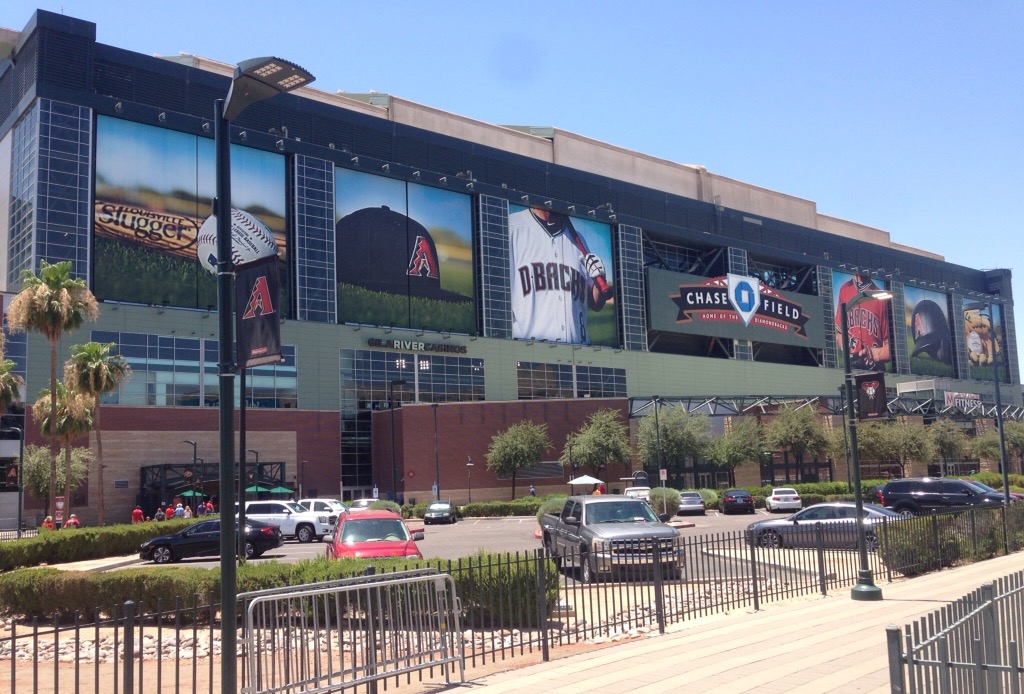
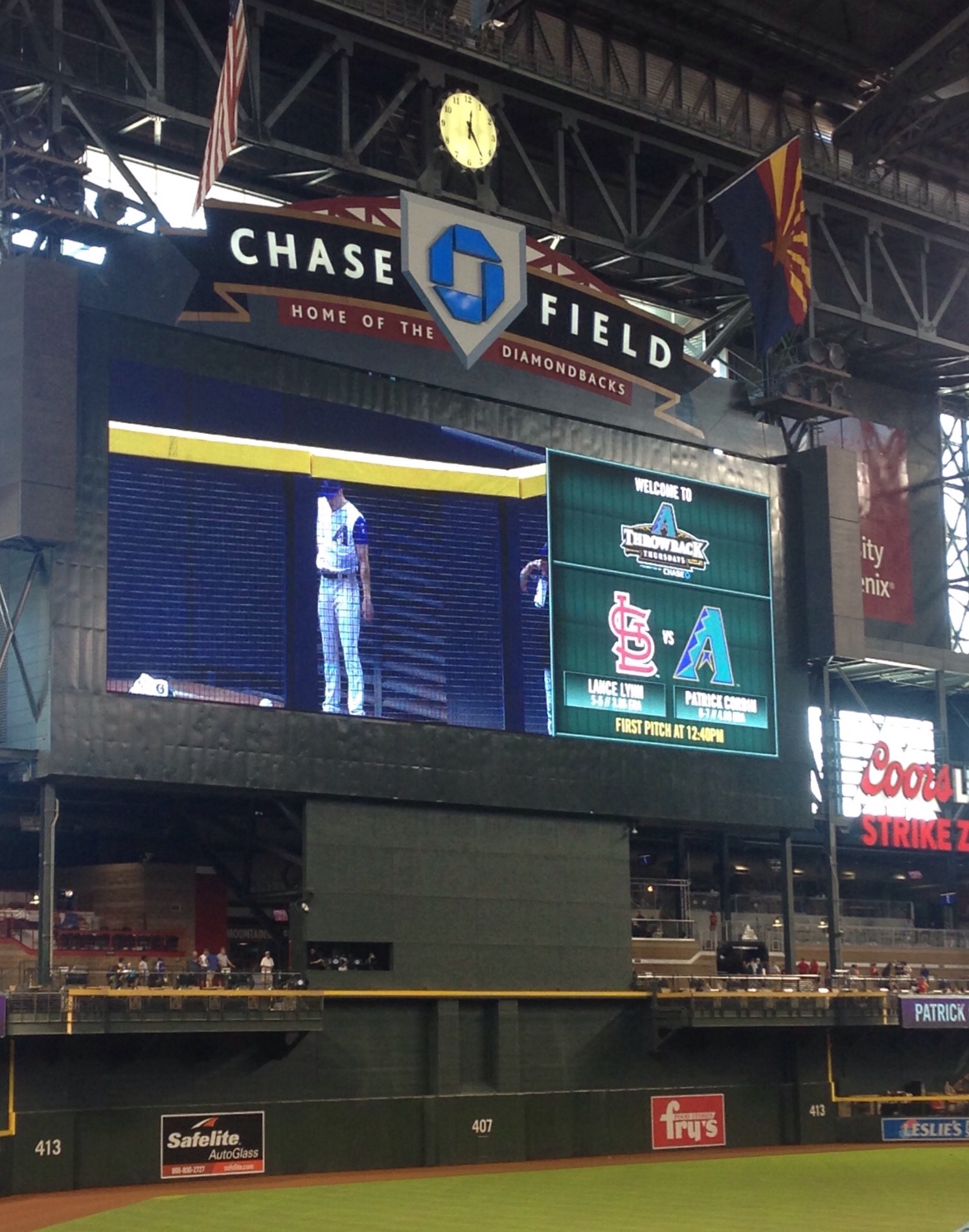
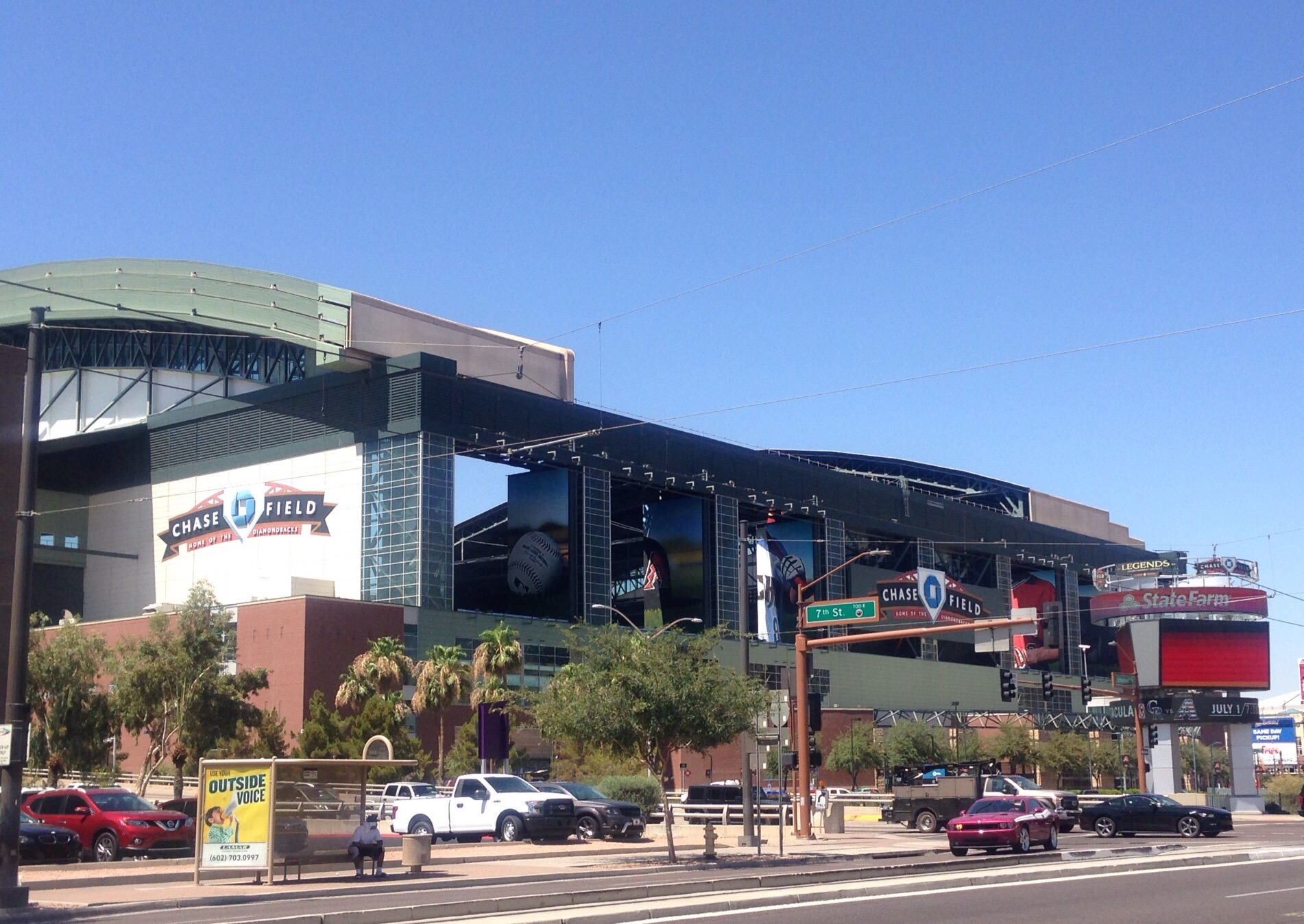
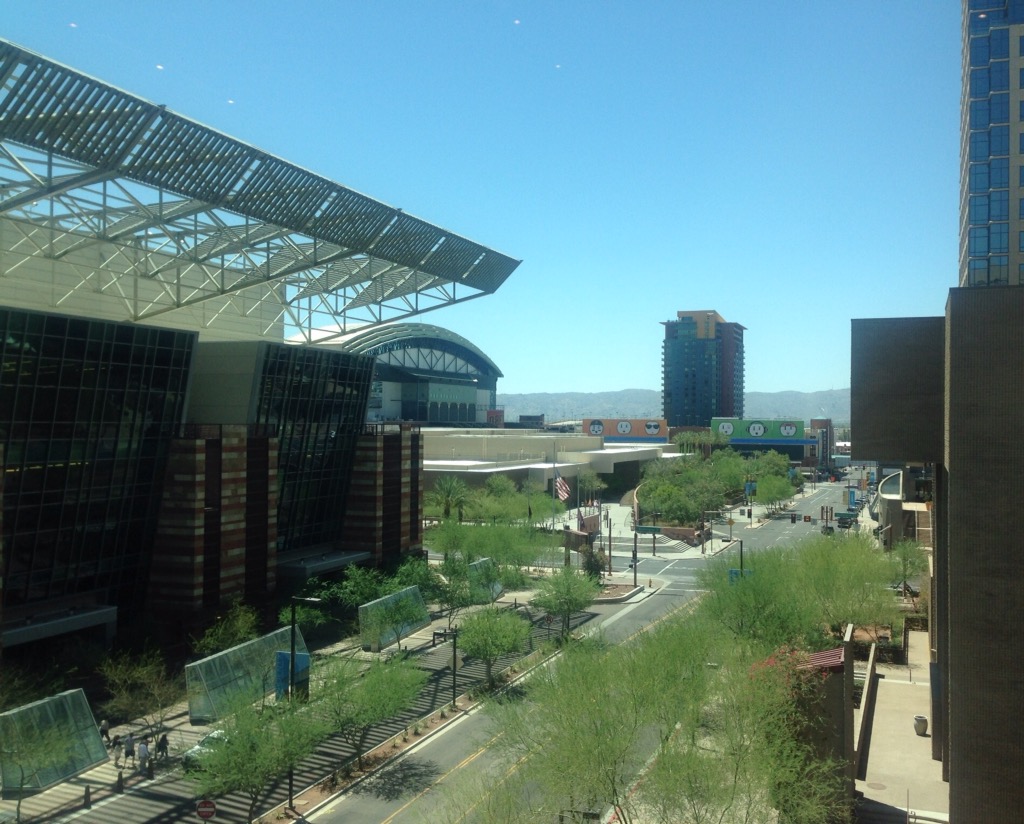
Bob and Bobby at dinner after the ballgame Outside of Chase Field as we approached for Thursday game — note top and sides closed so AC could be on!The big screen before the game with the Cardinals began. We did not bring them luck. The Diamondbacks have been doing pretty well this year, but the lost on Thursday.Outside of Chase Field with sides and top open The Phoenix Convention Center is huge. This is a photo from one of the buildings looking across at the second convention center building and towards Chase Field and Talking Stick arena (where Suns play)
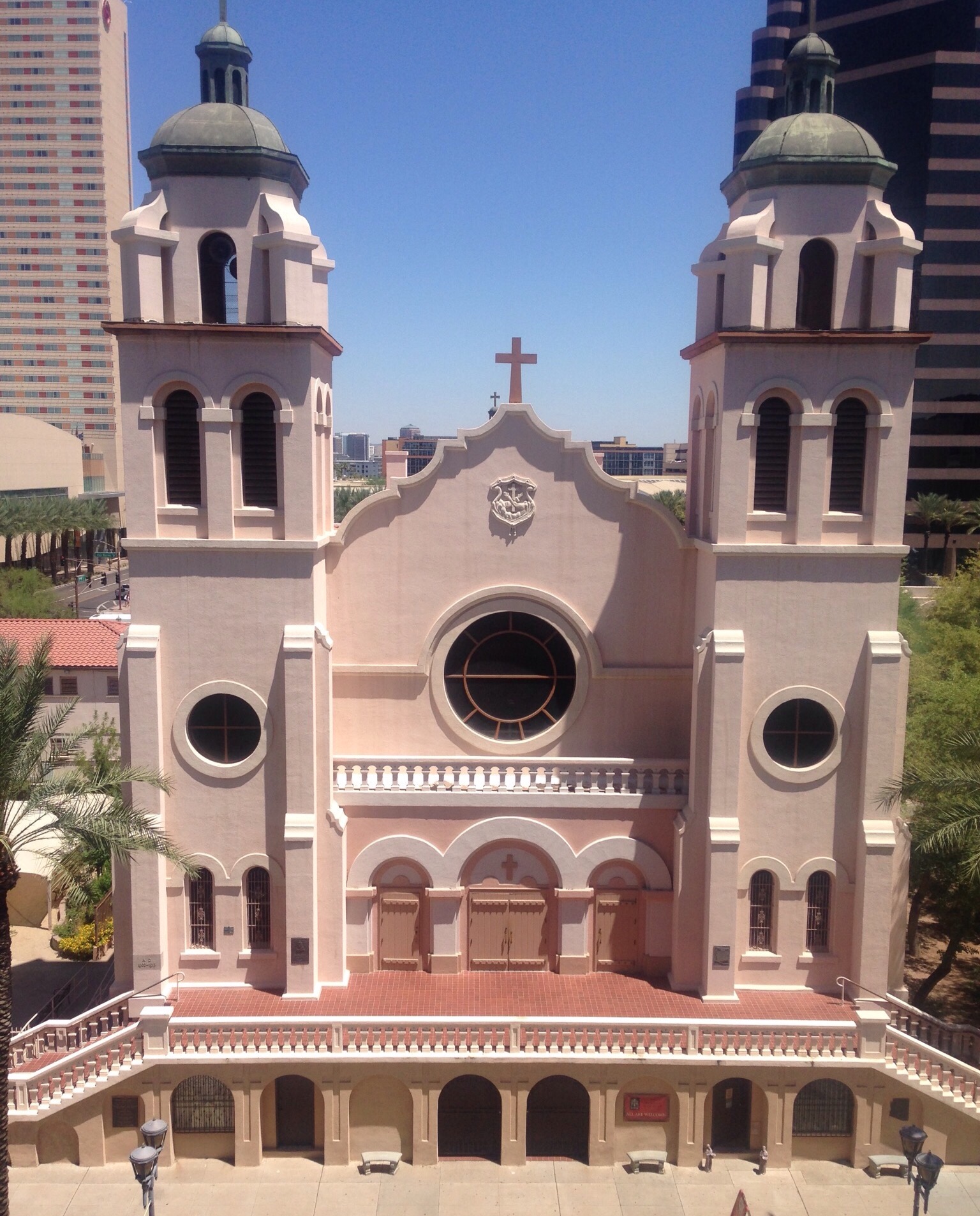
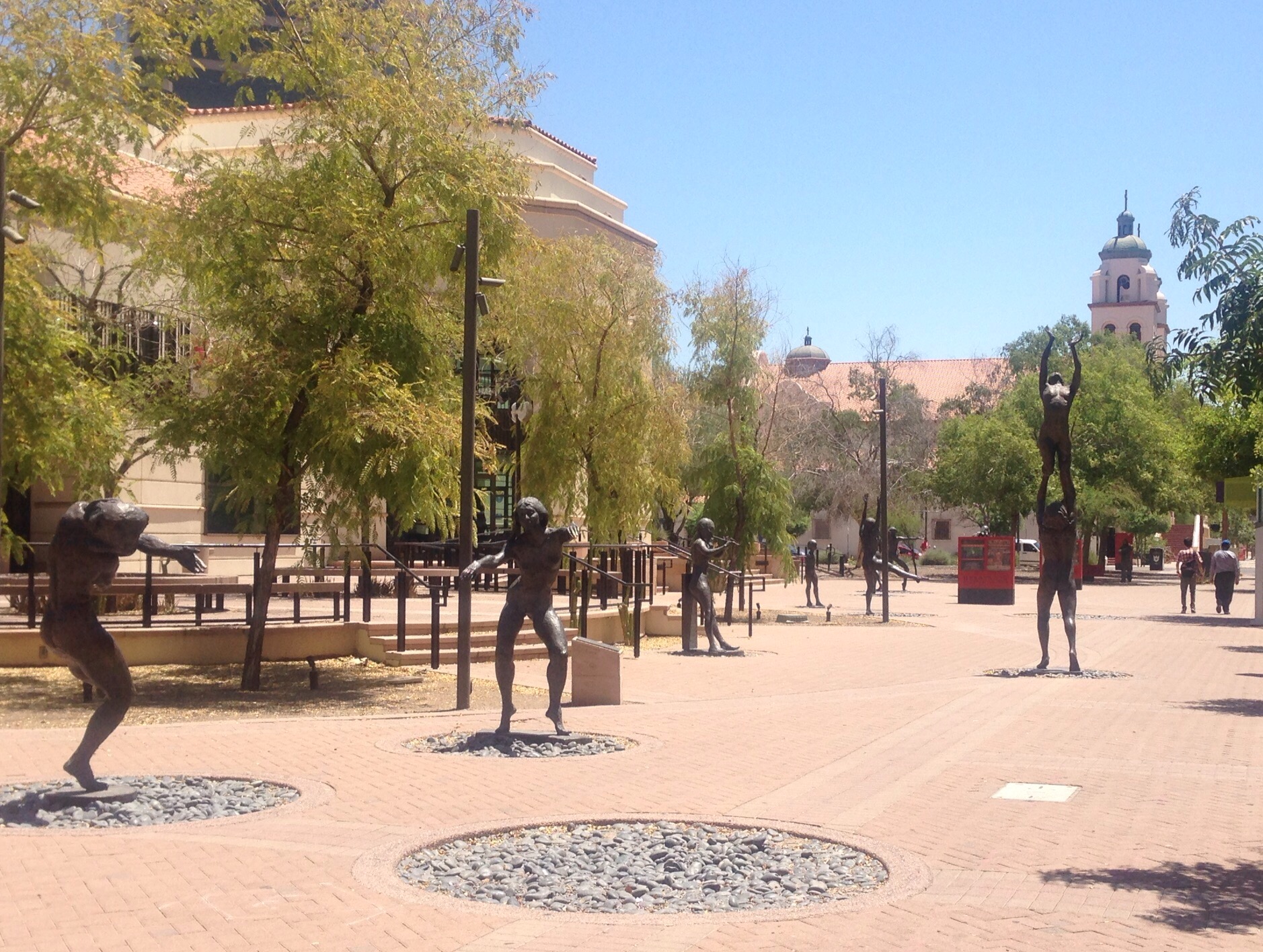
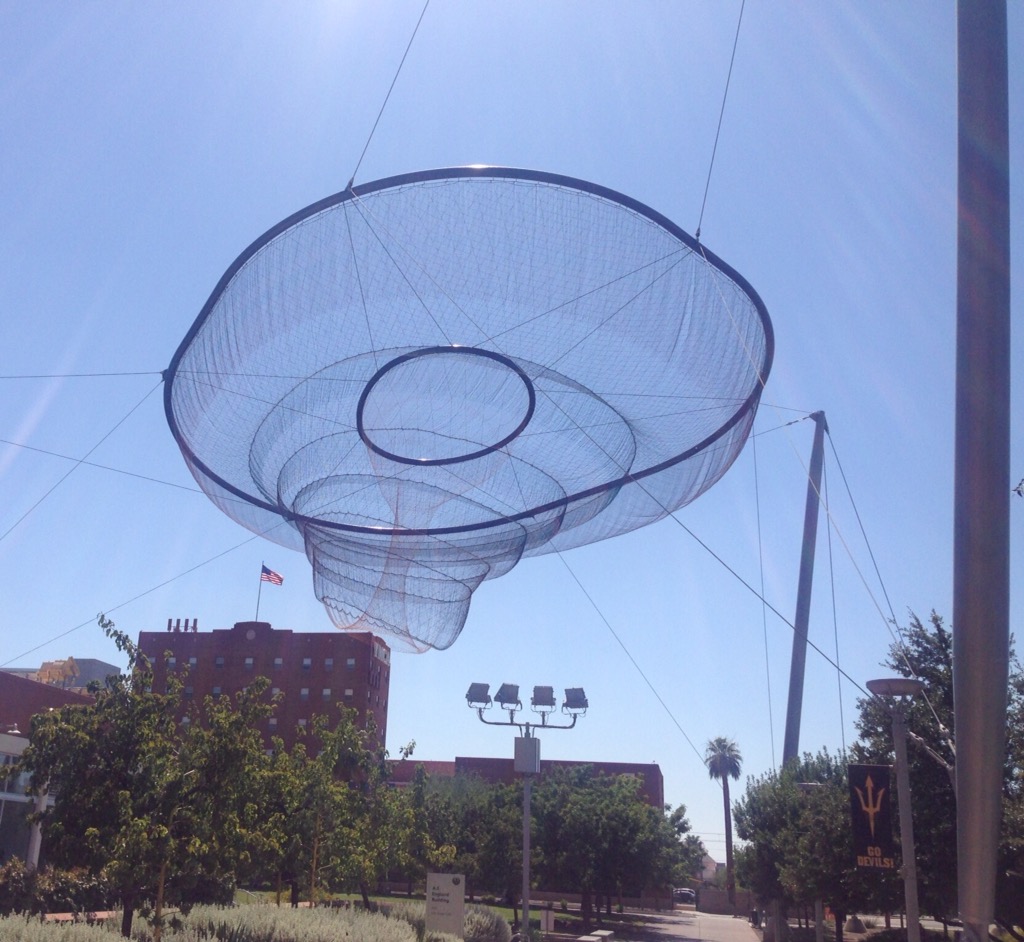
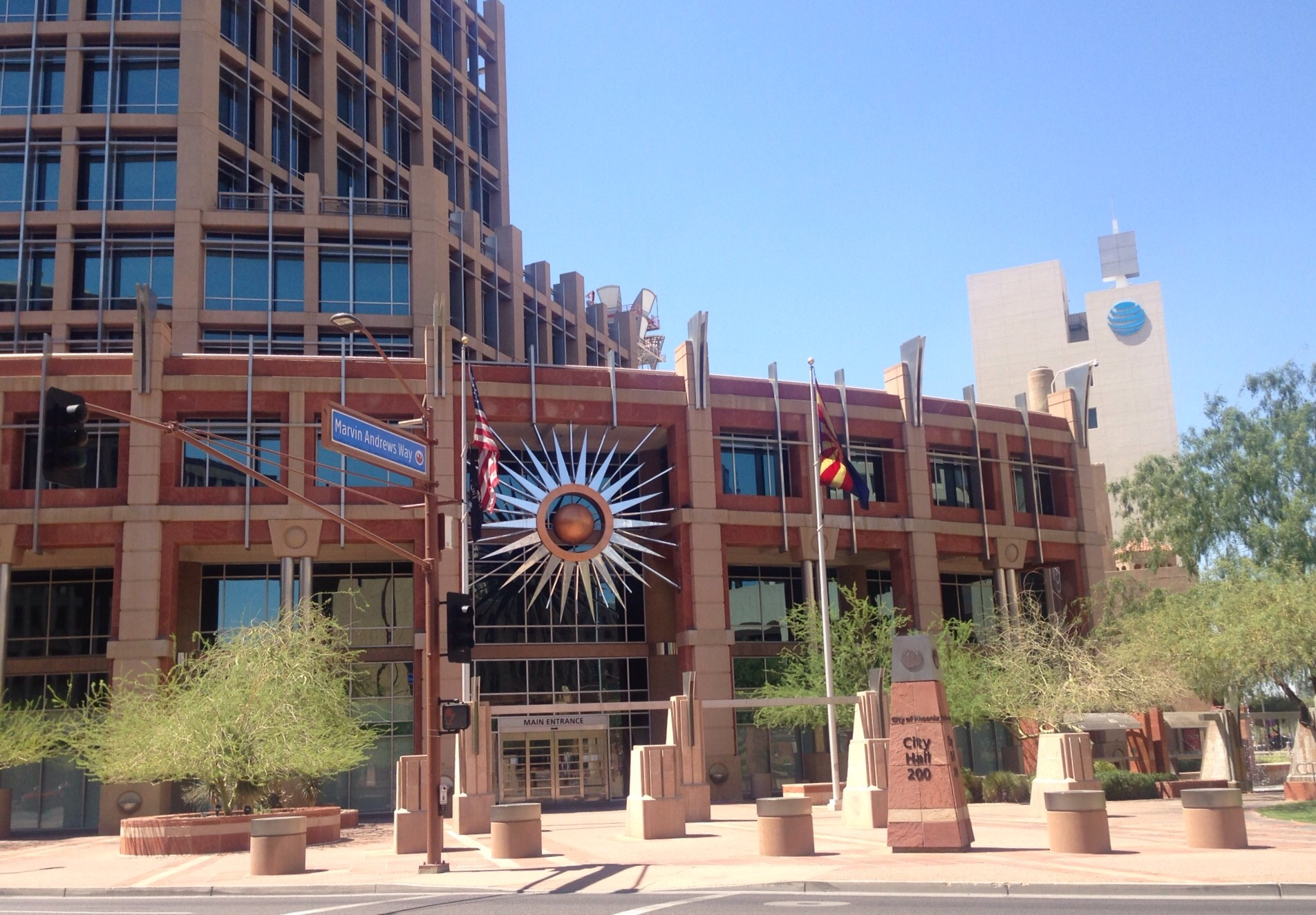
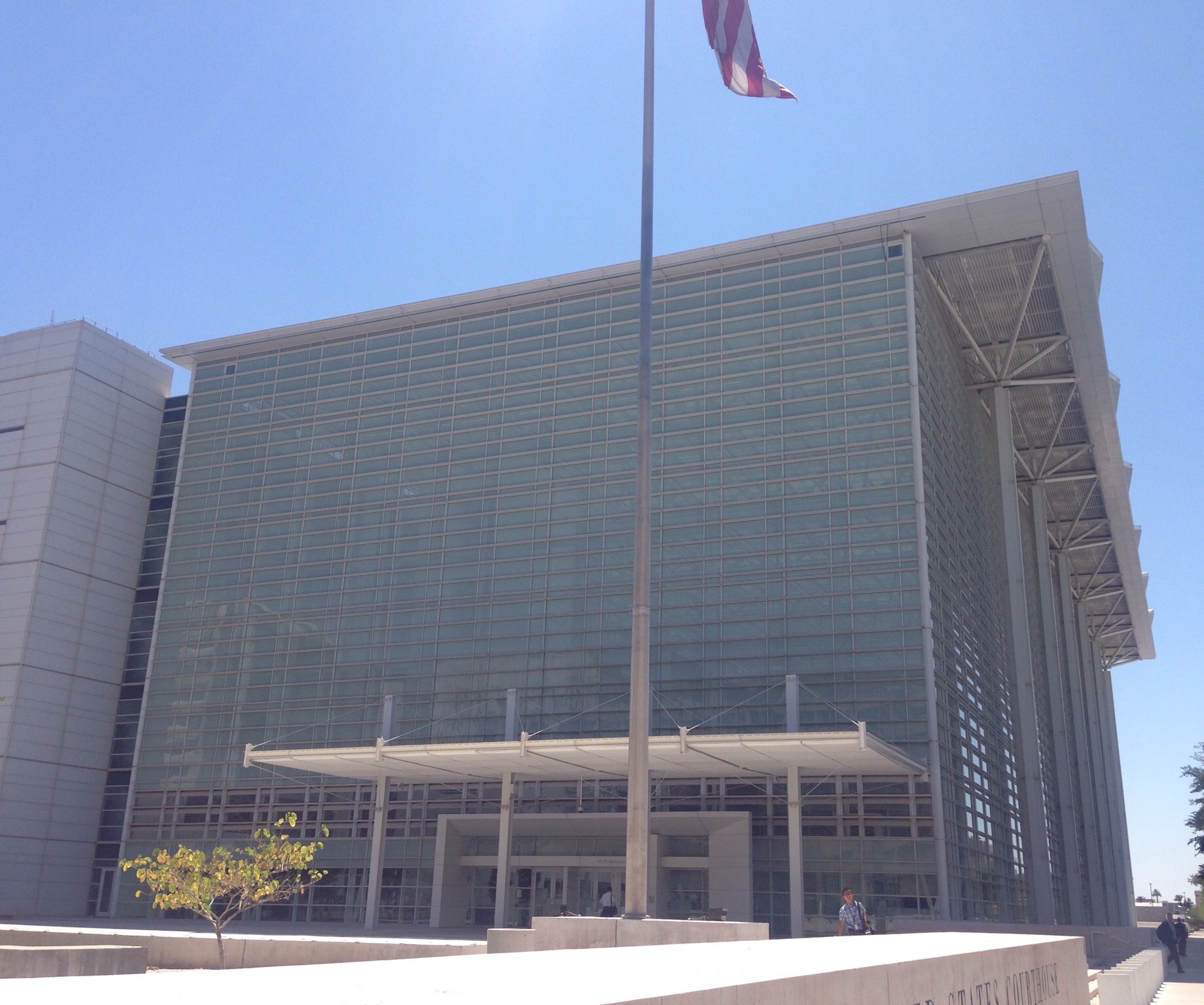
View of the beautiful St. Mary’s basilica from the convention centerPublic art by John Waddell outside of the Herberger Theatre in downtown PhoenixA public art installation by Janet Echelman based on the area’s monsoon clouds. It is sometimes lit up at night.Phoenix City HallSandra Day O’Connor CourthouseInside the Phoenix Central library where this post was composed
Bucket List Item — check (or at least partial check) 👍🏼
As I have said, we were to be in Oregon now, but we have moved to Plan B and have been welcomed back to Arizona for part of June and July with a quick house sit in Phoenix before moving onto Tucson. I was not going to allow us to get this close to the Grand Canyon (GC) again without actually getting there, so after a couple of days in Scottsdale, we headed to Flagstaff from which we would head up to the GC.
Why 2 days in Scottsdale when we would be staying in Phoenix for a house sit? A financial decision on our part to limit the number of days we would need a rental car, as the prices were a bit steep for renting from the airport. Anyhoo, on to funner things — like the drive to Flagstaff, Flagstaff itself, and the GC.
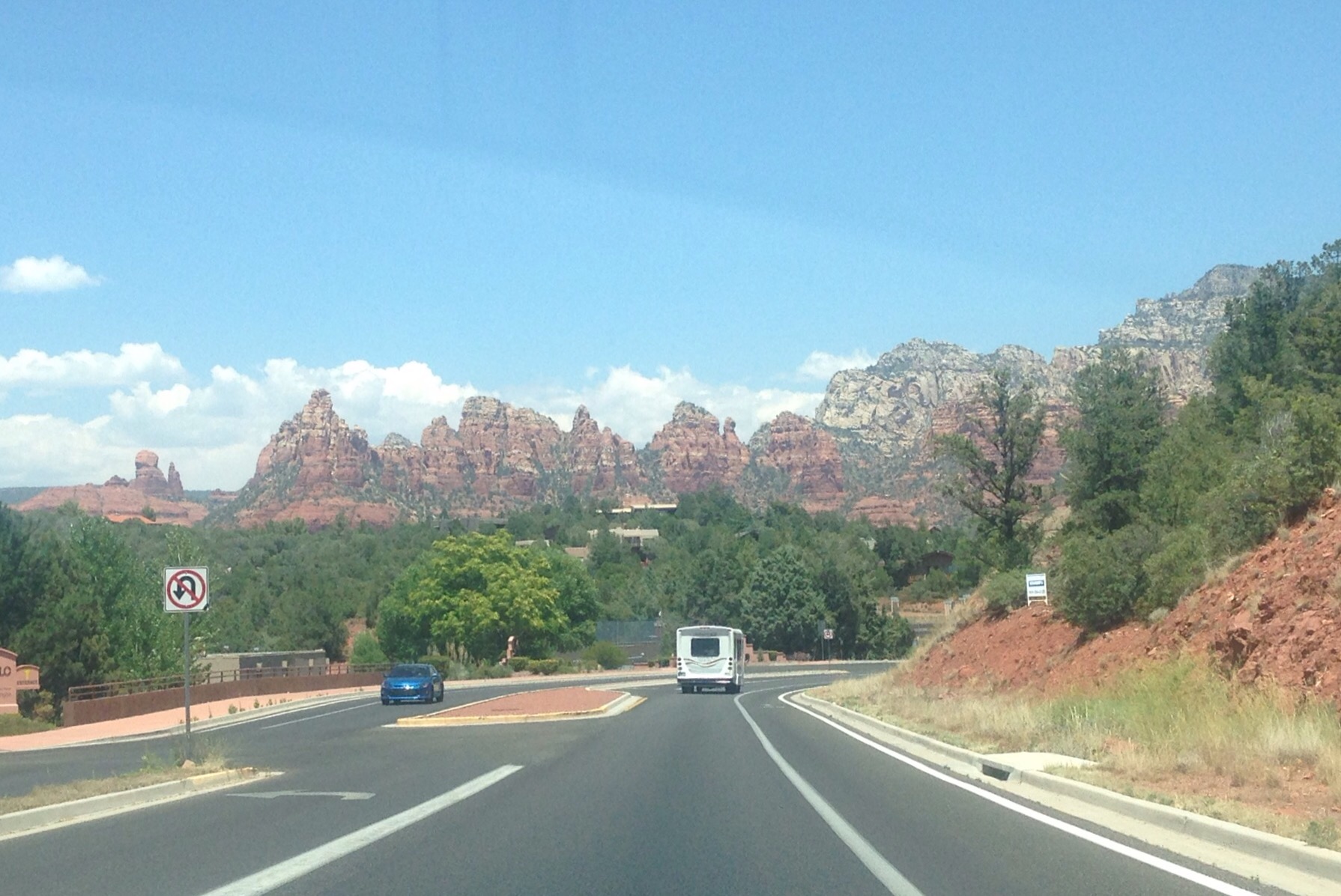
We drove from Scottsdale to Flagstaff via the scenic route out of Sedona on Monday afternoon. It was a lovely drive and, we got to reminisce about our trip to Sedona a few years ago. A few snaps from the car on the drive near Sedona —
We arrived into Flagstaff about mid-afternoon, and while we ended up really liking the town (especially my trail runs on Wednesday am), it got short shrift from us. We spent part of Monday afternoon doing a much needed load of laundry. We were at the GC all-day Tuesday and had to head out Wednesday am about 8:30 to return the rental car. We had a nice walkabout in downtown Flagstaff and a lovely happy hour meal out on Monday and will hope to return.
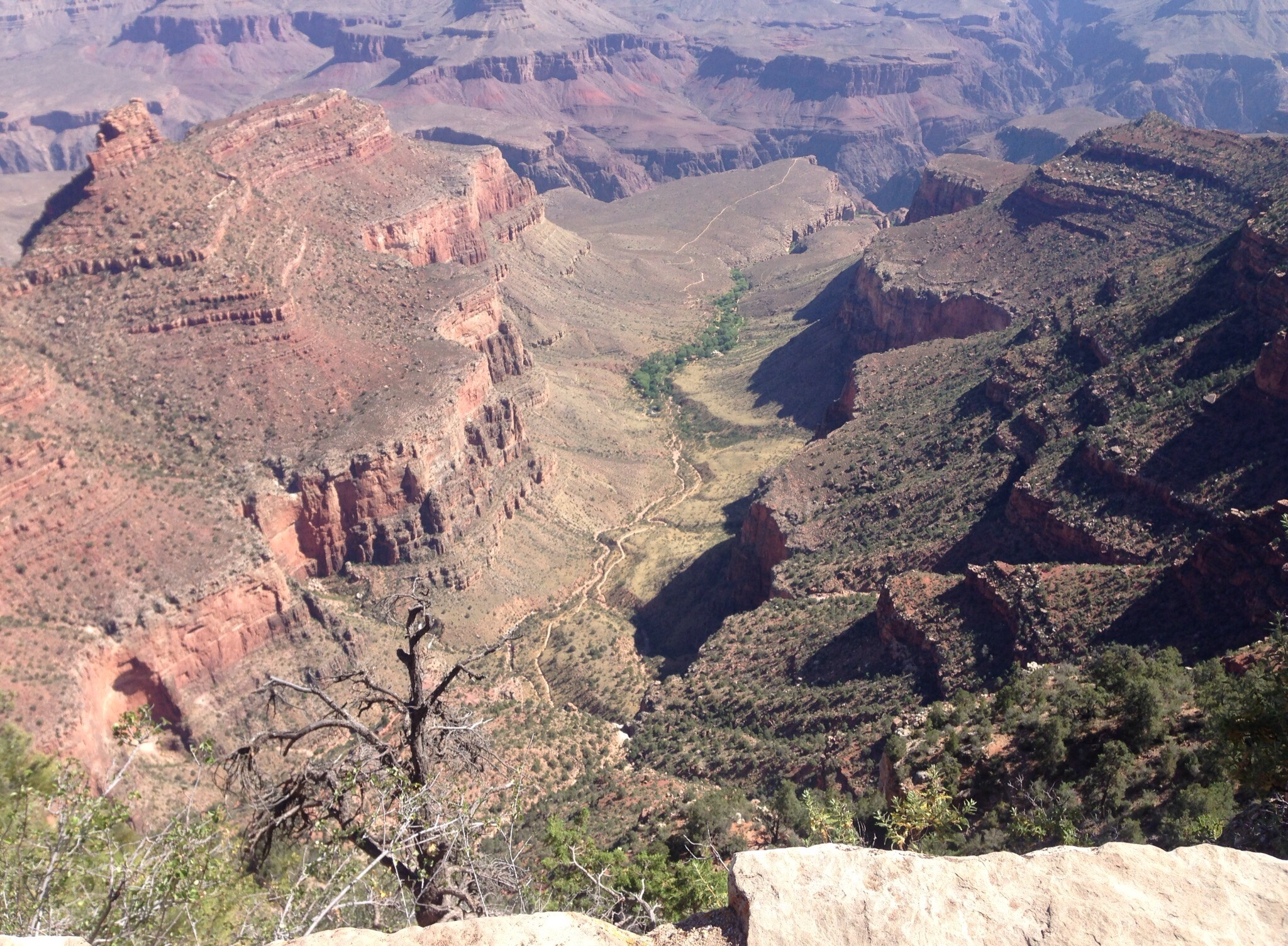
What to say about the GC? I have heard about it all of my life and yet have been pretty ignorant of what exactly it is, how it was formed, and its size. I use the words “awesome” and “ginormous” on an everyday basis way too loosely. The GC is both and then some. It is 277 miles long, 10 miles across, and a mile deep. It can be seen from space! AND it’s also very old. The canyon itself was “only” formed within the last 6 million years due to erosion of the rocks by the Colorado River. However, the exposed rocks (looking like rock layer cake) are millions of years older than that!
Visitors can access the park at the North or South Rim. We visited the South Rim and spent most of our day walking the 12 miles of the South Rim Trail. We did not hike into the canyon. While the Visitors Center opens at 8, we got there about 7:20 to beat the crowds. We visited the Visitors Center at the end of our day to catch the informative film.
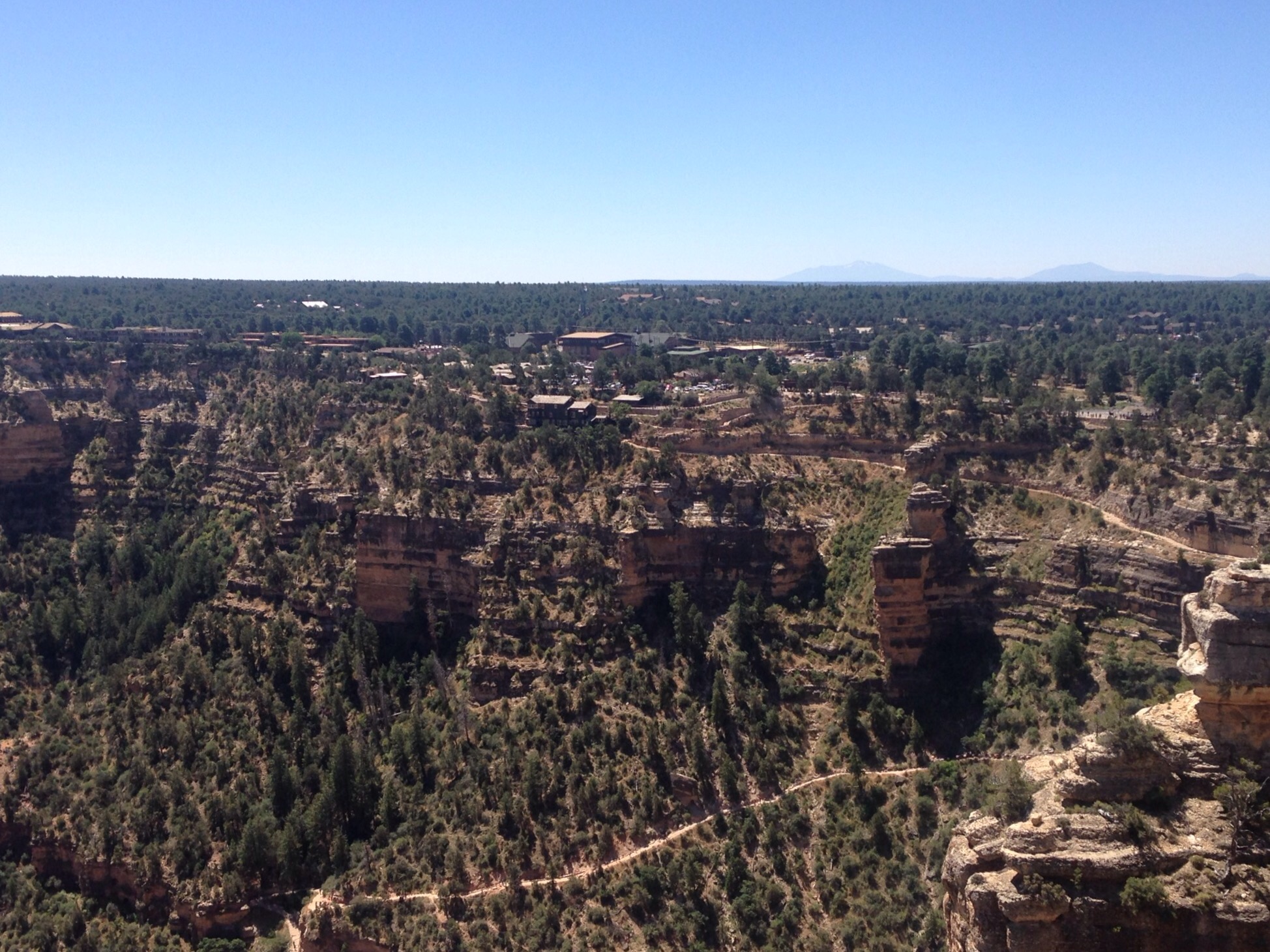
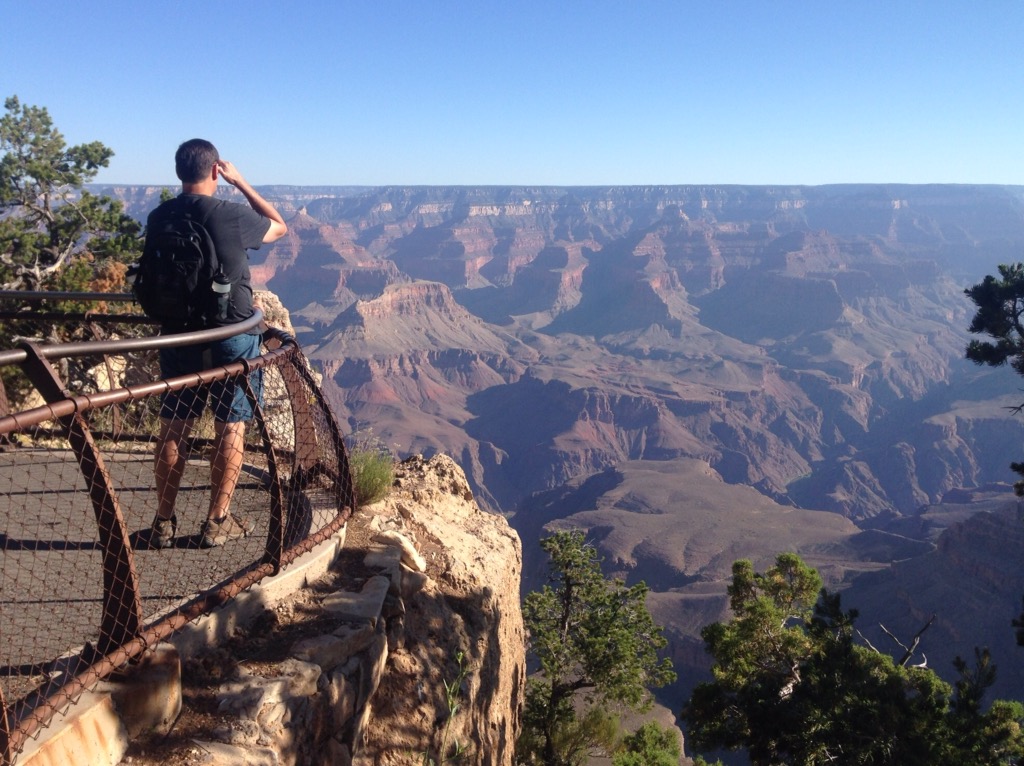
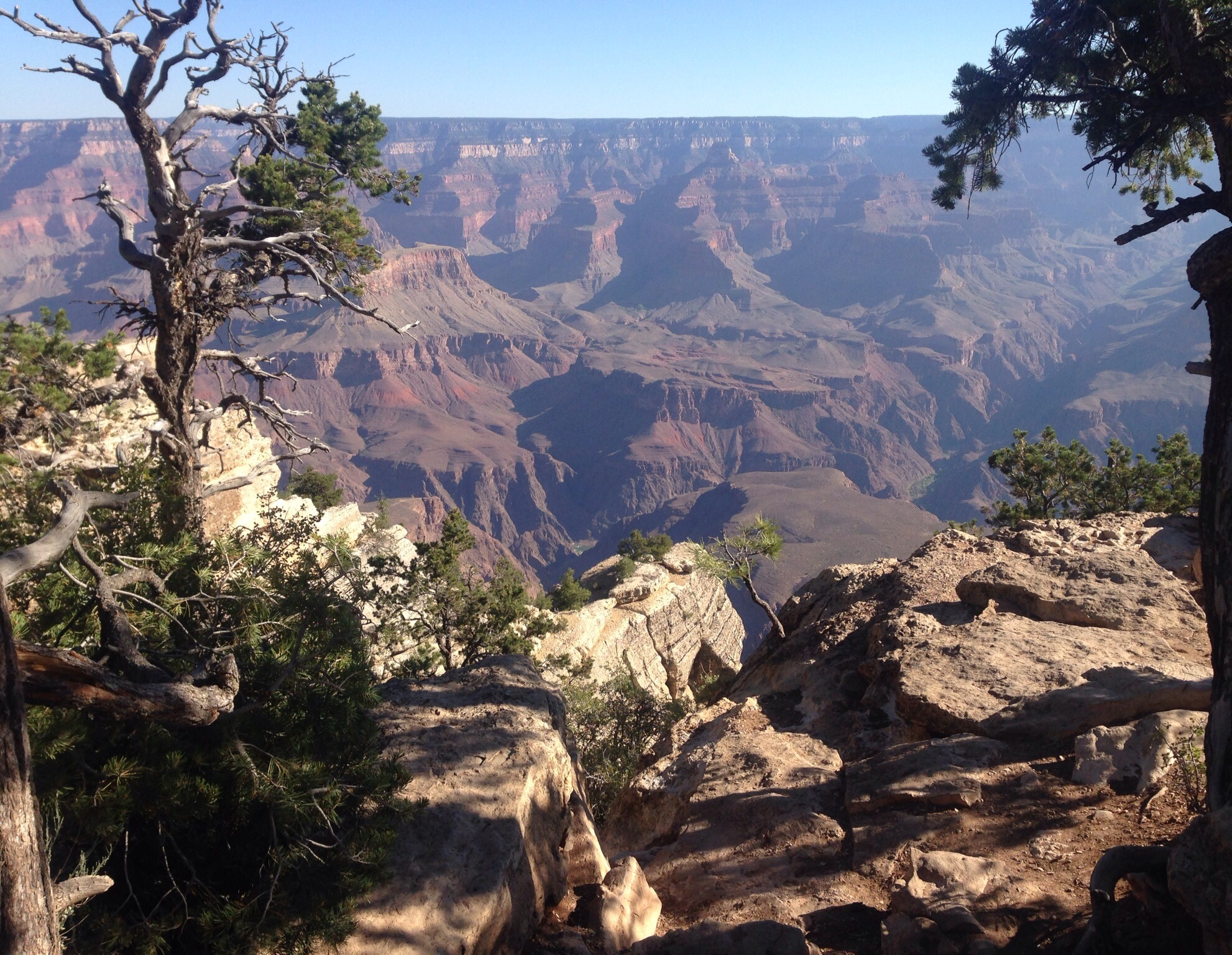
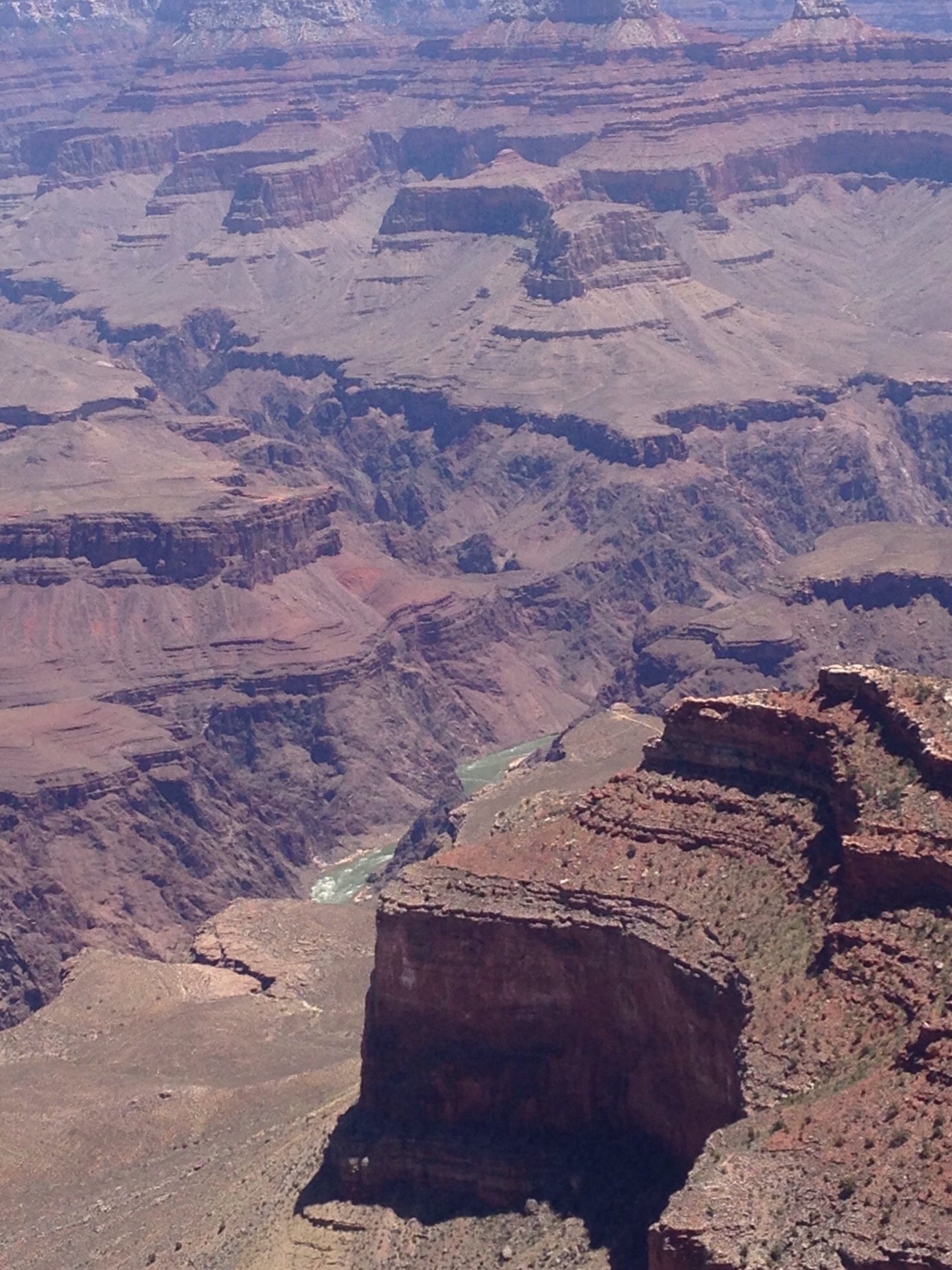
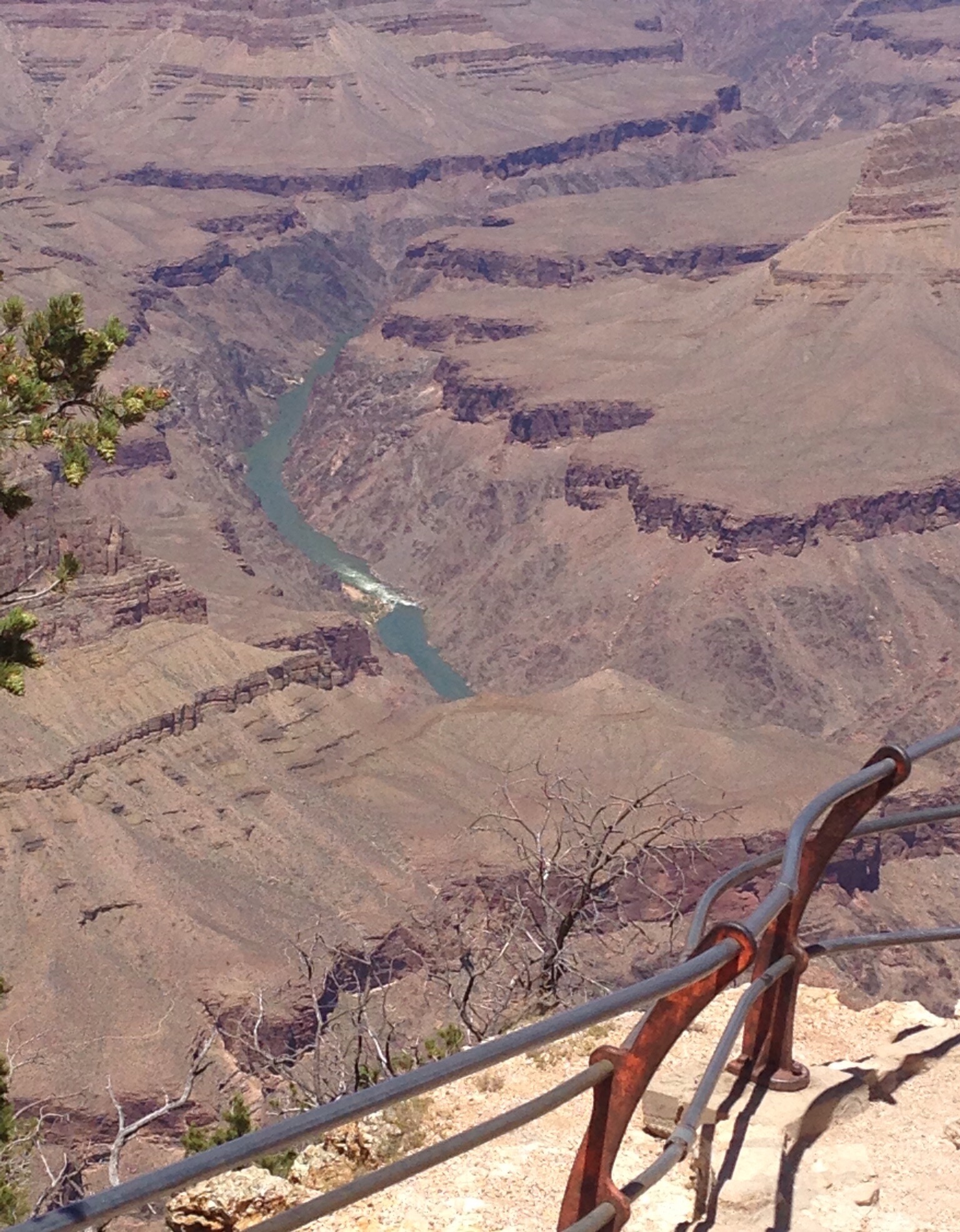
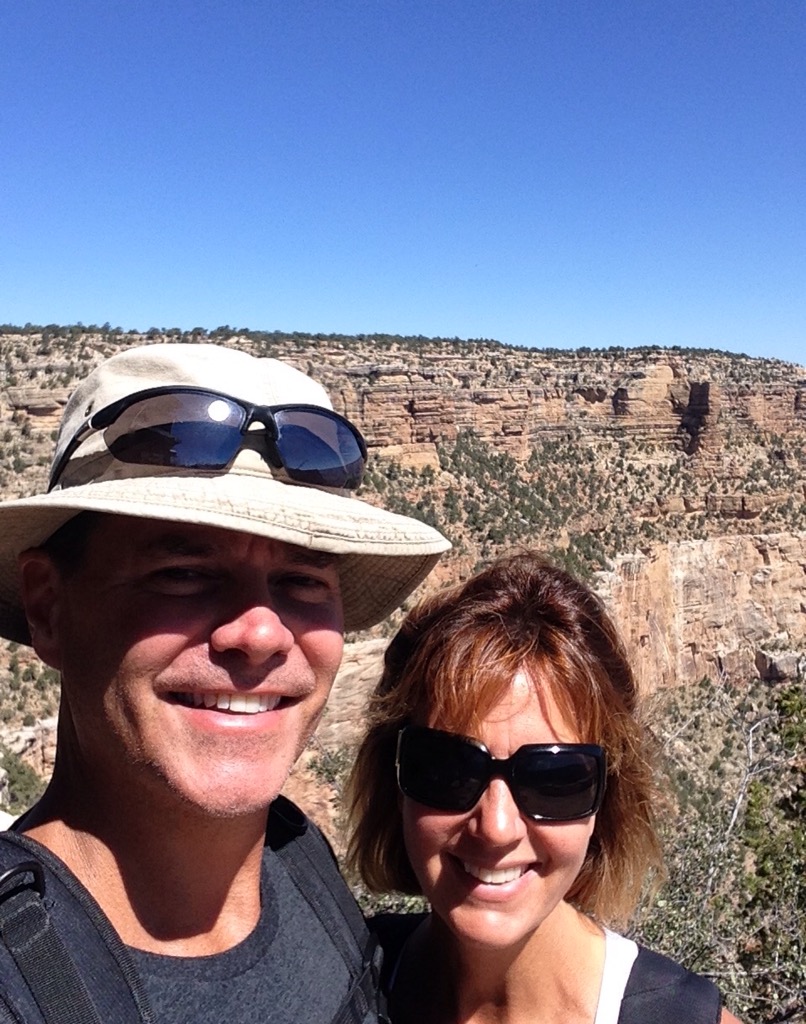
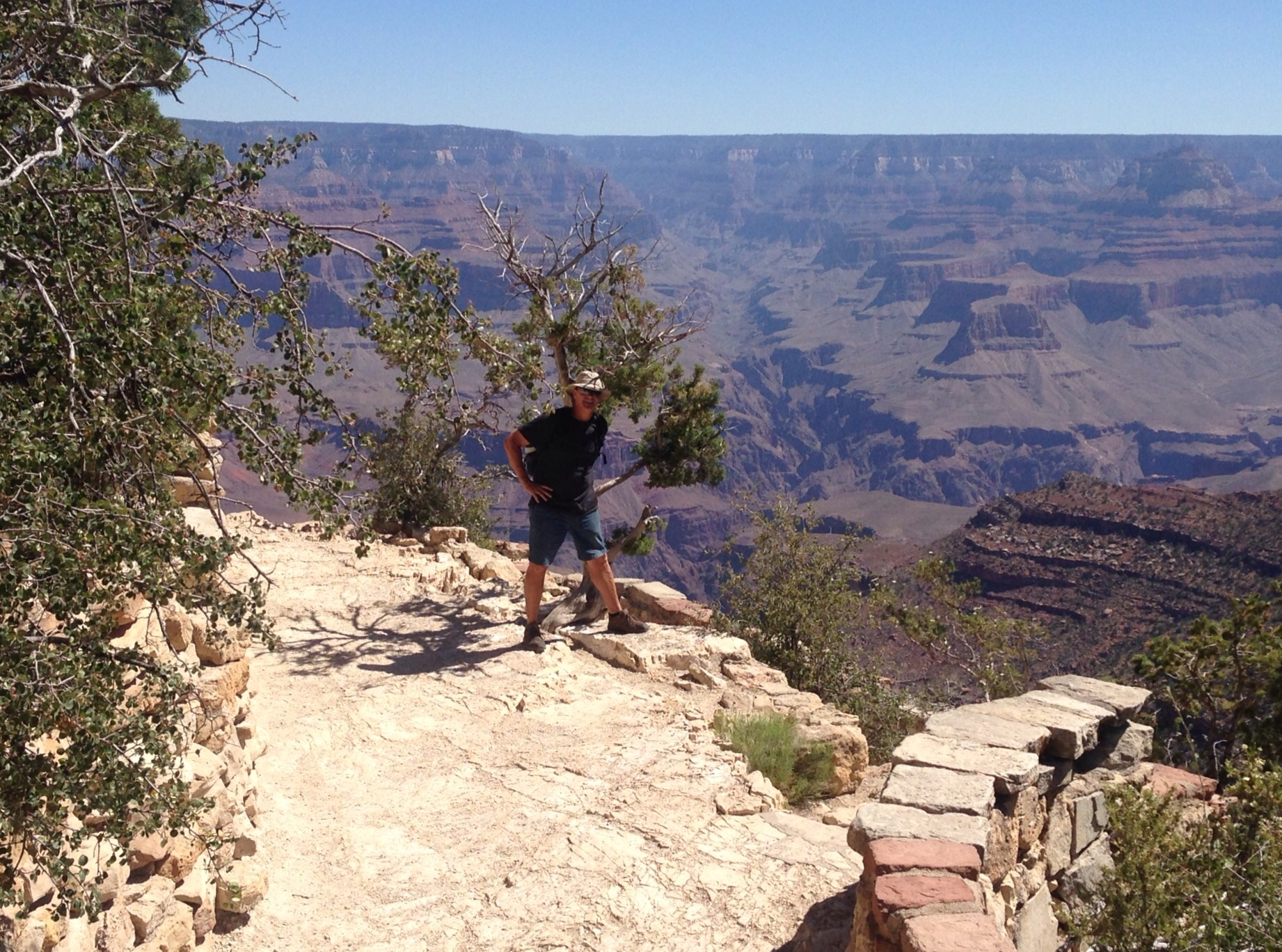
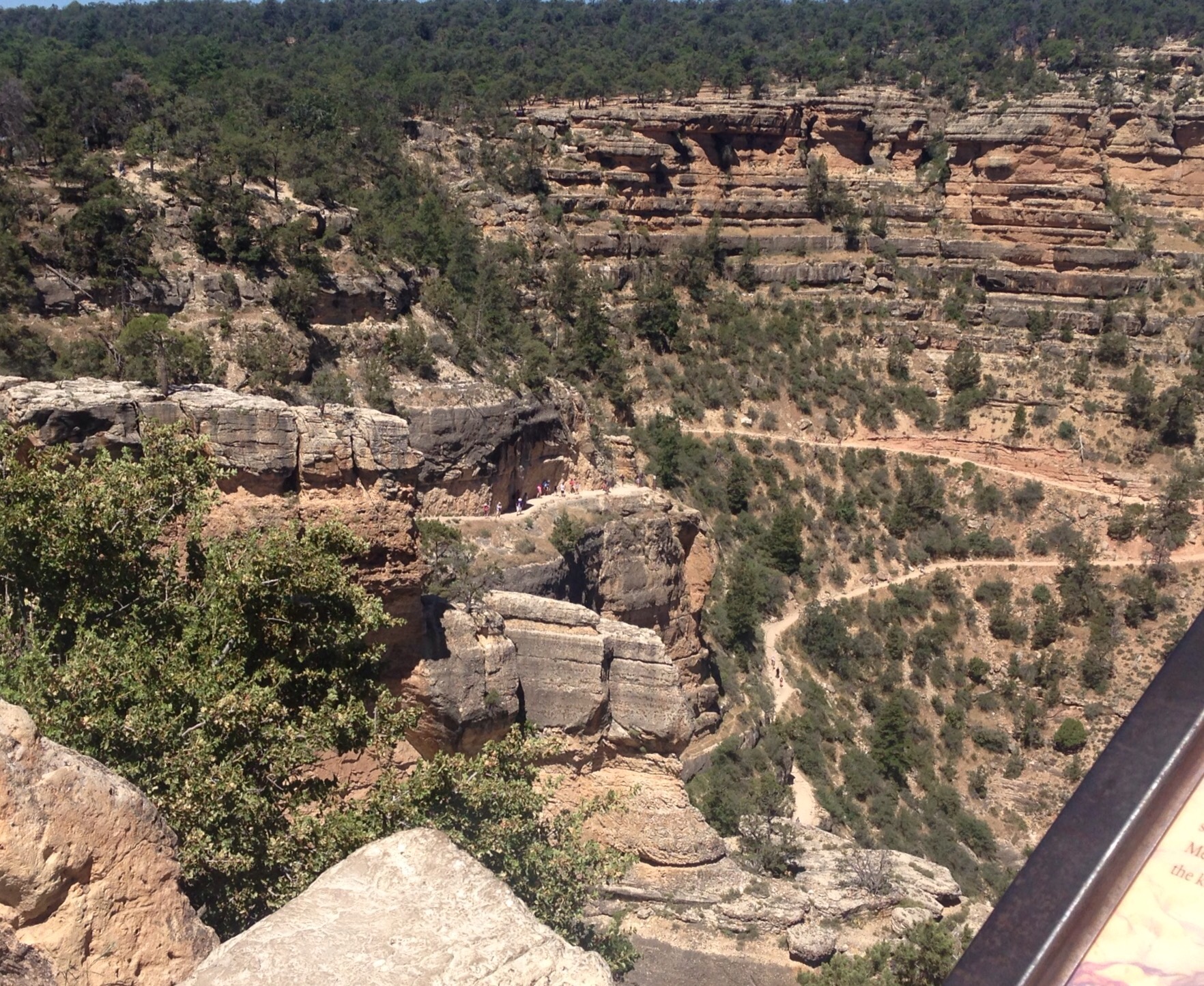
One of our first views of the canyonI find this, dare I say, awesome — and it still doesn’t do justice to the real thingHiking around the holeFinally a glimpse of the mighty Colorado — our next trip might have to involve some kind of boat/raft excursion.Catching a glimpse of the river RapidsLove the different striations and look of the rocksWe are definitely the young ‘uns in this photo!Bob on the brinkLooking at hikers going into the canyon — another thought for our next excursionIn addition to the natural beauty, there is a historical village at the South Rim with buildings from the early 1900’s, either continuing to serve in their tourist/travel capacity or converted into doing so (functioning as gift shops or museums).
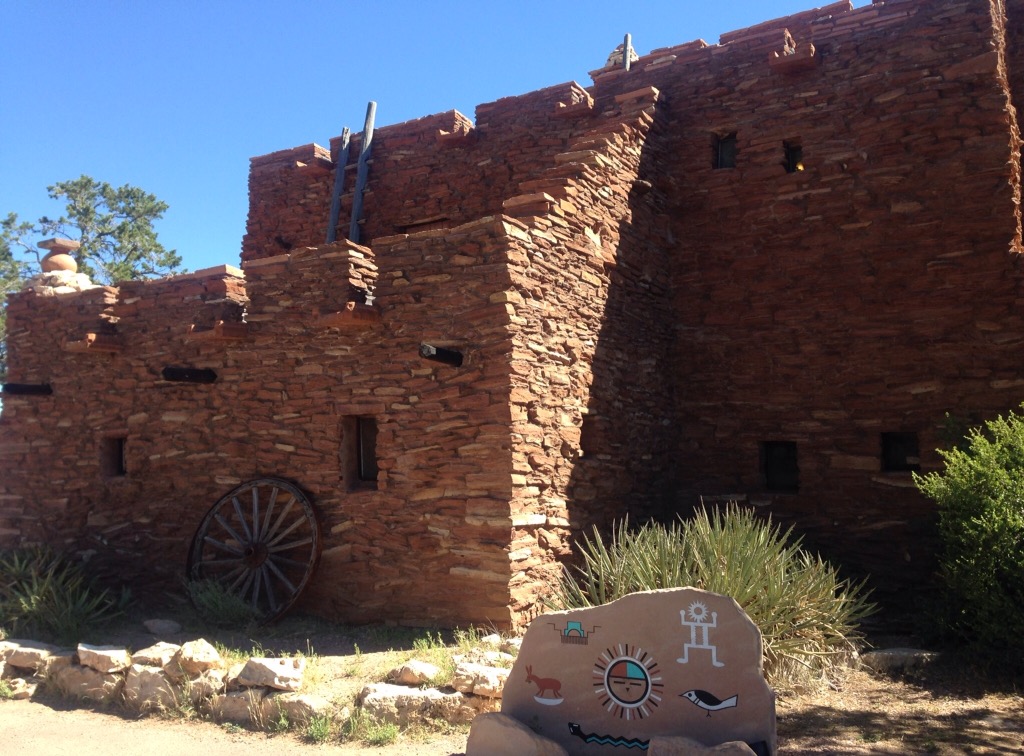
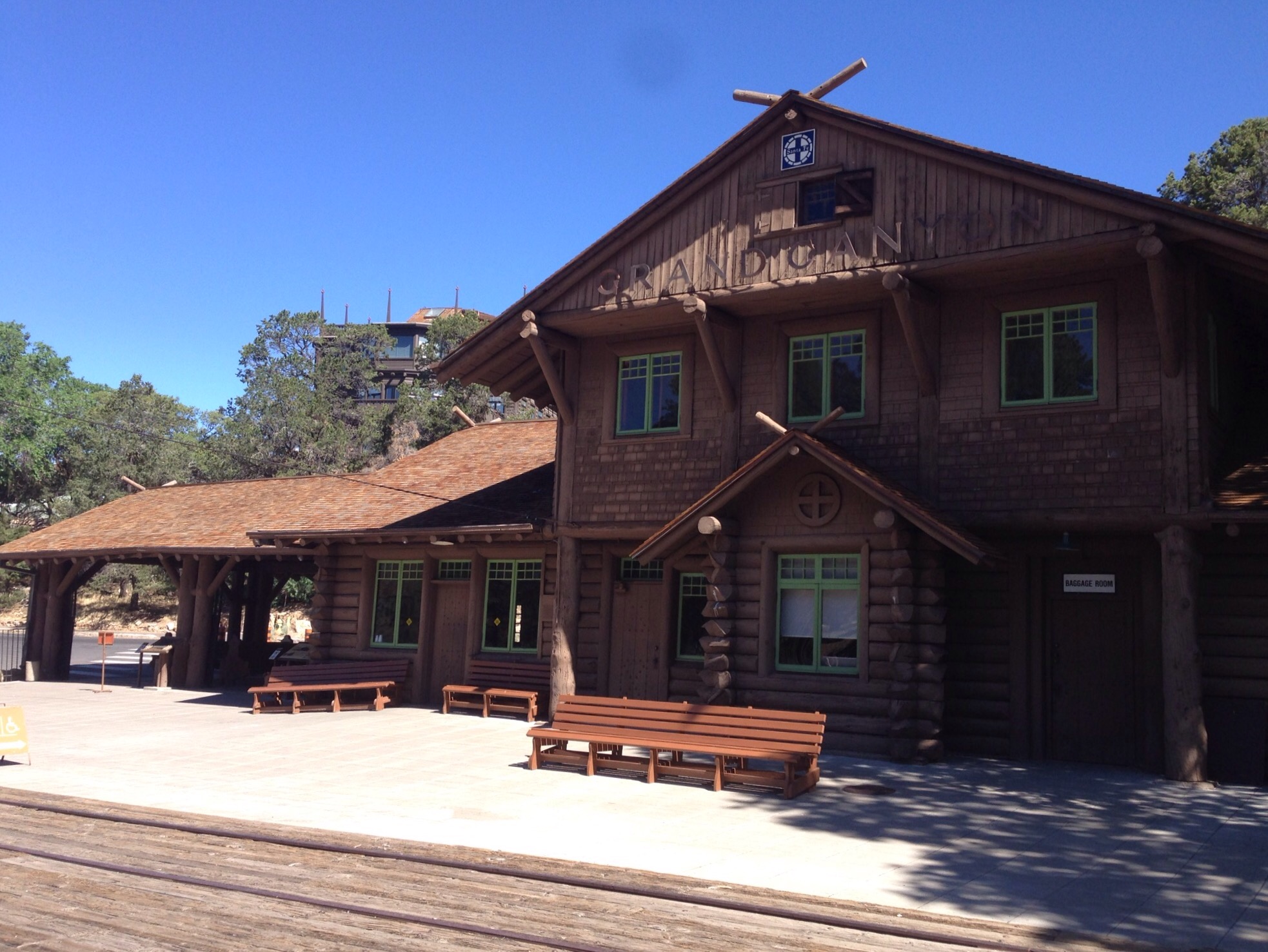
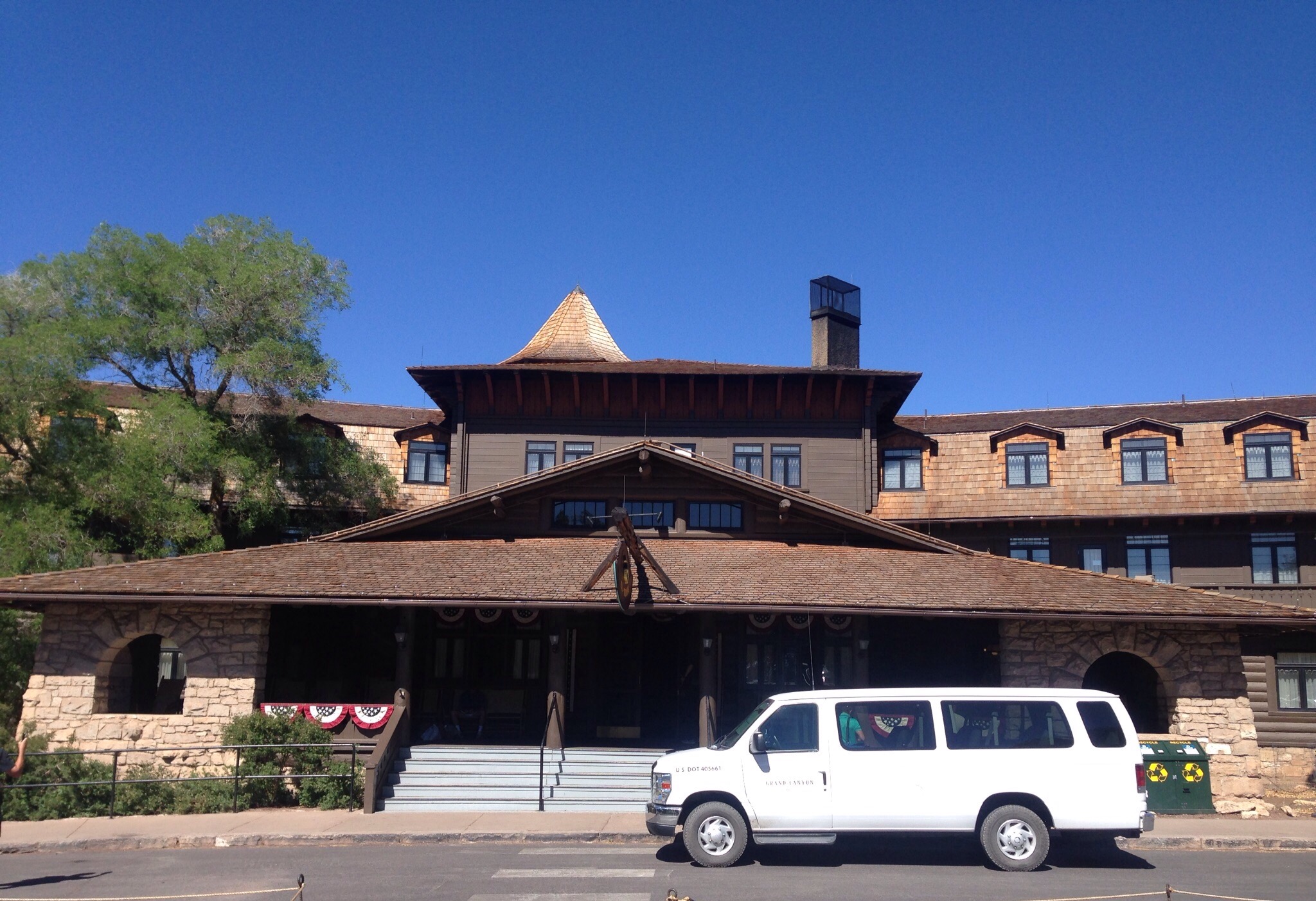
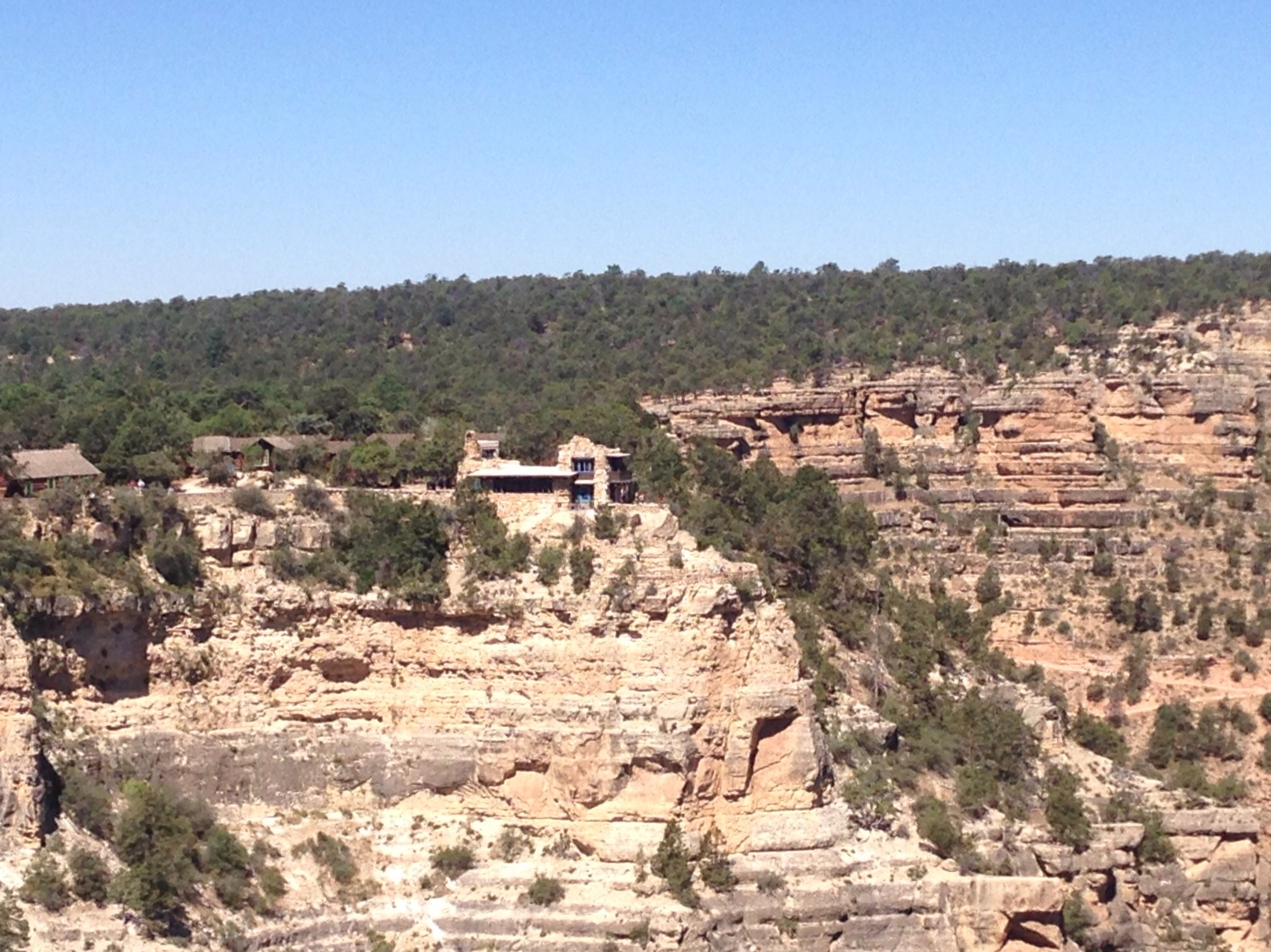
The Hopi House, one of many buildings at the park designed by Mary Colter. It opened in 1905 as a gift shop and cultural center and continues to function as a gift shop today.The Grand Canyon stop of the Santa Fe Rail Station. You can still pay to ride the train into the park from Williams, AZ.The El Tovar Hotel designed by Charles Whittlesey for the Santa Fe Railway. It opened in 1905. It still functions as a hotel.Looking across the canyon at Lookout Studio, also designed by Mary Colter, to provide a setting for observing the canyon and activities within the canyonLooking back across the canyon towards the historical village
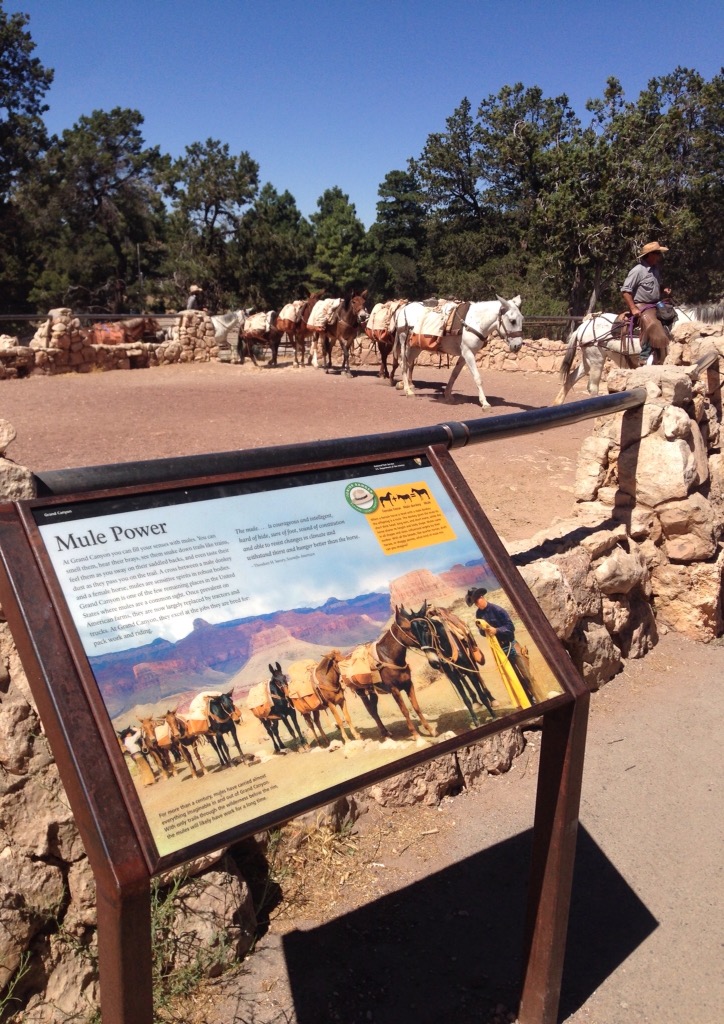
We saw 2 moose on the drive to the park, a fox while we were hiking, and an elk while we took the free shuttle from the end of the trail back to the Visitors Center. While there, we learned about the on-going efforts at the canyon to save the California Condor. However, the only animals we managed to get a photo of were the mules that are still used to carry passengers into the canyon.
Bob and I had quite the change of weather last Saturday when we flew from Bend, Oregon into Phoenix, Arizona. If you have seen the news, you may have heard that Phoenix has been having a heat wave. Bob would like to take the credit for the hotness, but it preceded our arrival.
We had a great experience flying Delta from Redmond, Oregon to Seattle and then Seattle to Phoenix. When checking in at the kiosk, we were asked if we’d be willing to be bumped and for how much (value of voucher for future flight). We responded in the affirmative and identified our price. We never heard anything else prior to boarding the Redmond -Seattle leg. In Seattle, we only had 45 minutes to make our connecting flight. This turned out to be a breeze since we only had to move down 2 gates. However, our flight to Phoenix was already boarding. They had already called our names about being bumped but had gotten other takers who were already at the gate. However, the gate agent went ahead and put us in first class. The vouchers would have been more useful, but it was awesome being treated like real people for our 3 hour flight to Phoenix! Bob even took full advantage with a couple of bloody Mary’s on the morning flight.
At the airport, we grabbed an Uber to our motel near Old Town Scottsdale and met a lovely local who is a retired manager with Haggars slacks. Then I got my butt kicked by the heat trying to get a run in after we checked in. I started a little before noon and managed to eke out 55 minutes before wanting nothing more than a dip in the local canals. Anyhoo, we had a couple of days in Scottsdale, including a 115+ on Sunday before heading to Flagstaff and the Grand Canyon.
A few Scottsdale photos —
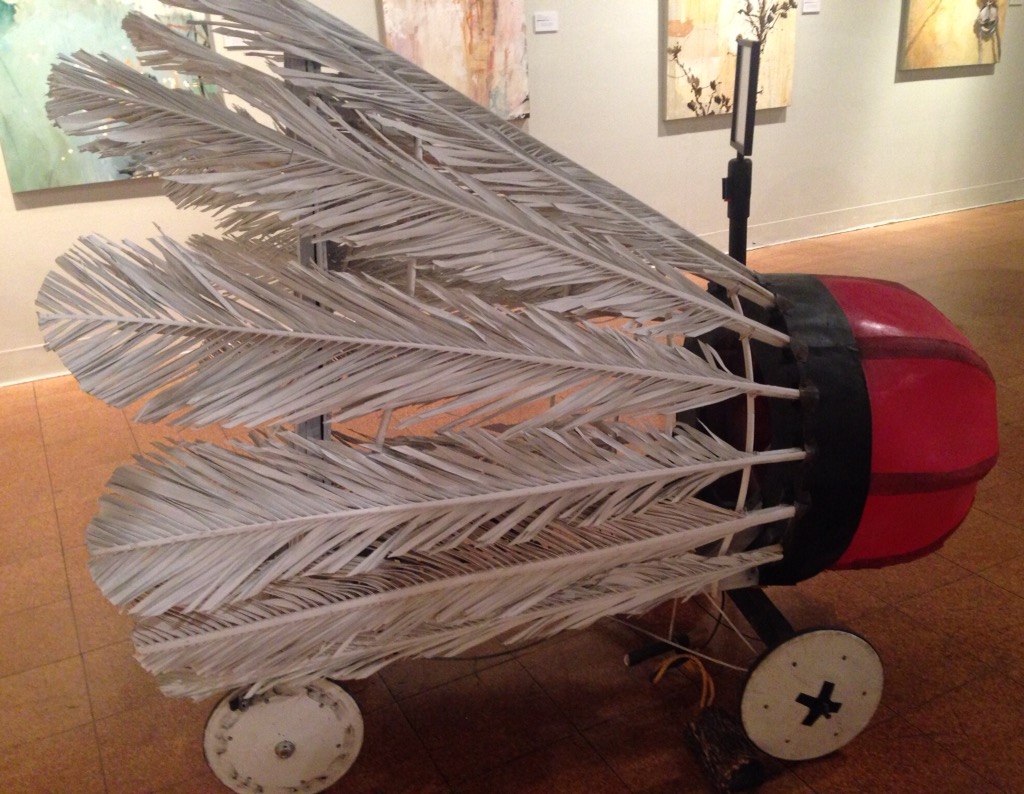
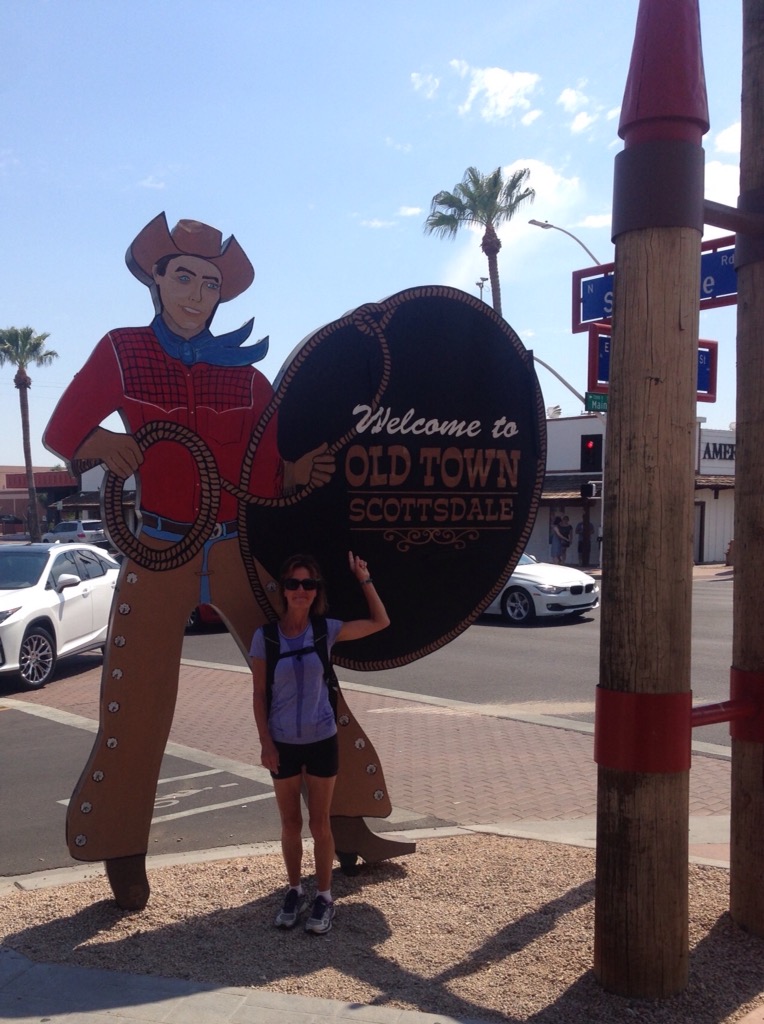
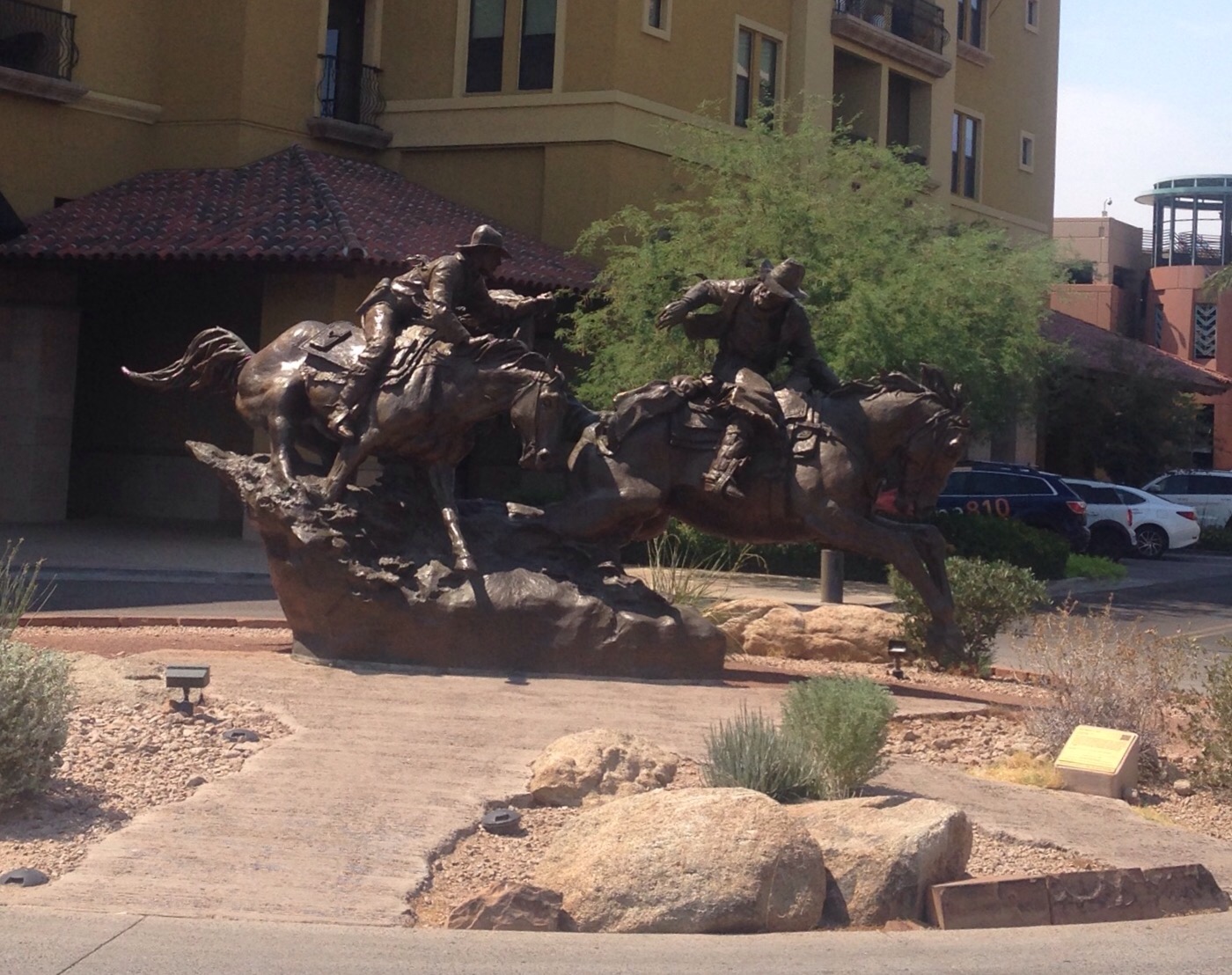
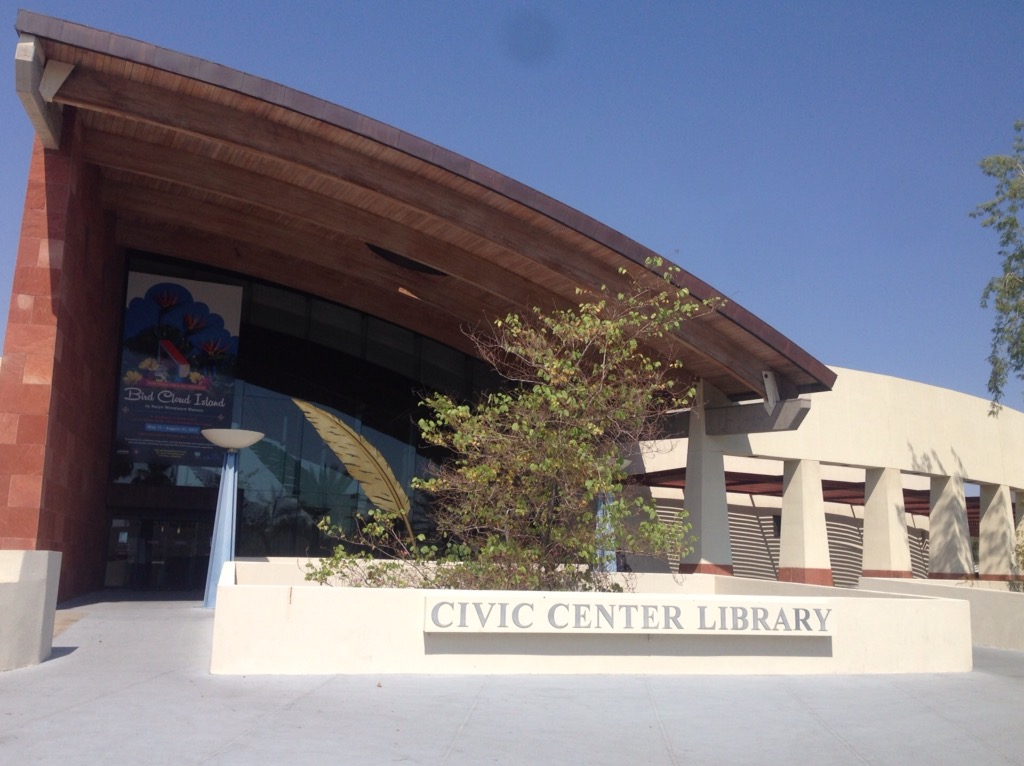
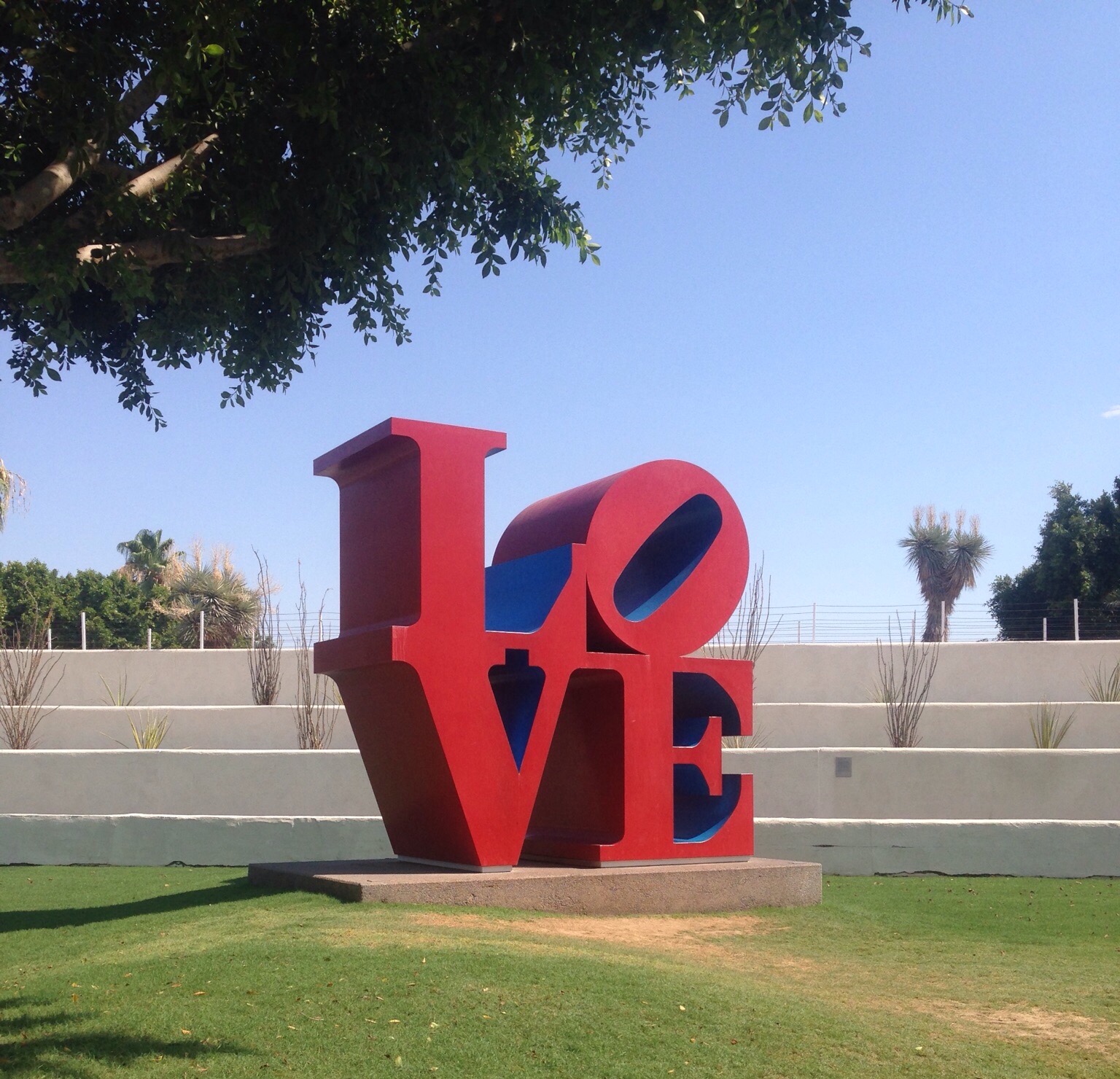
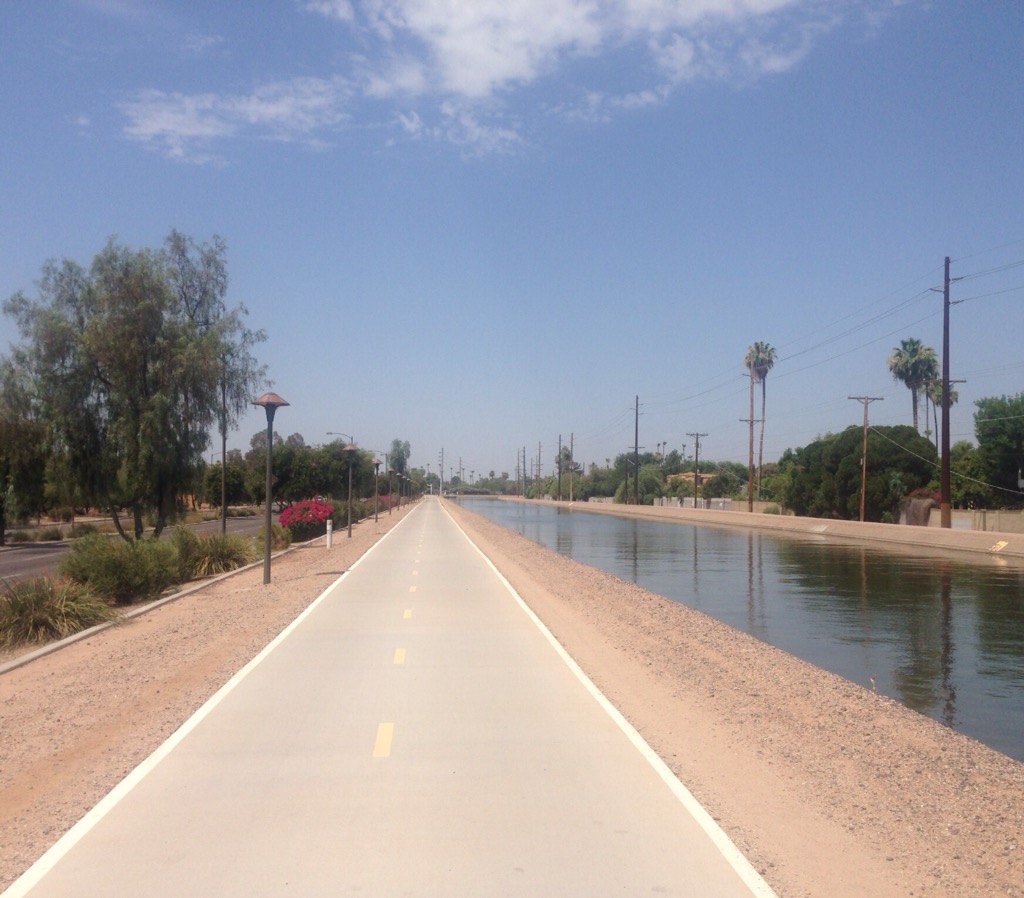
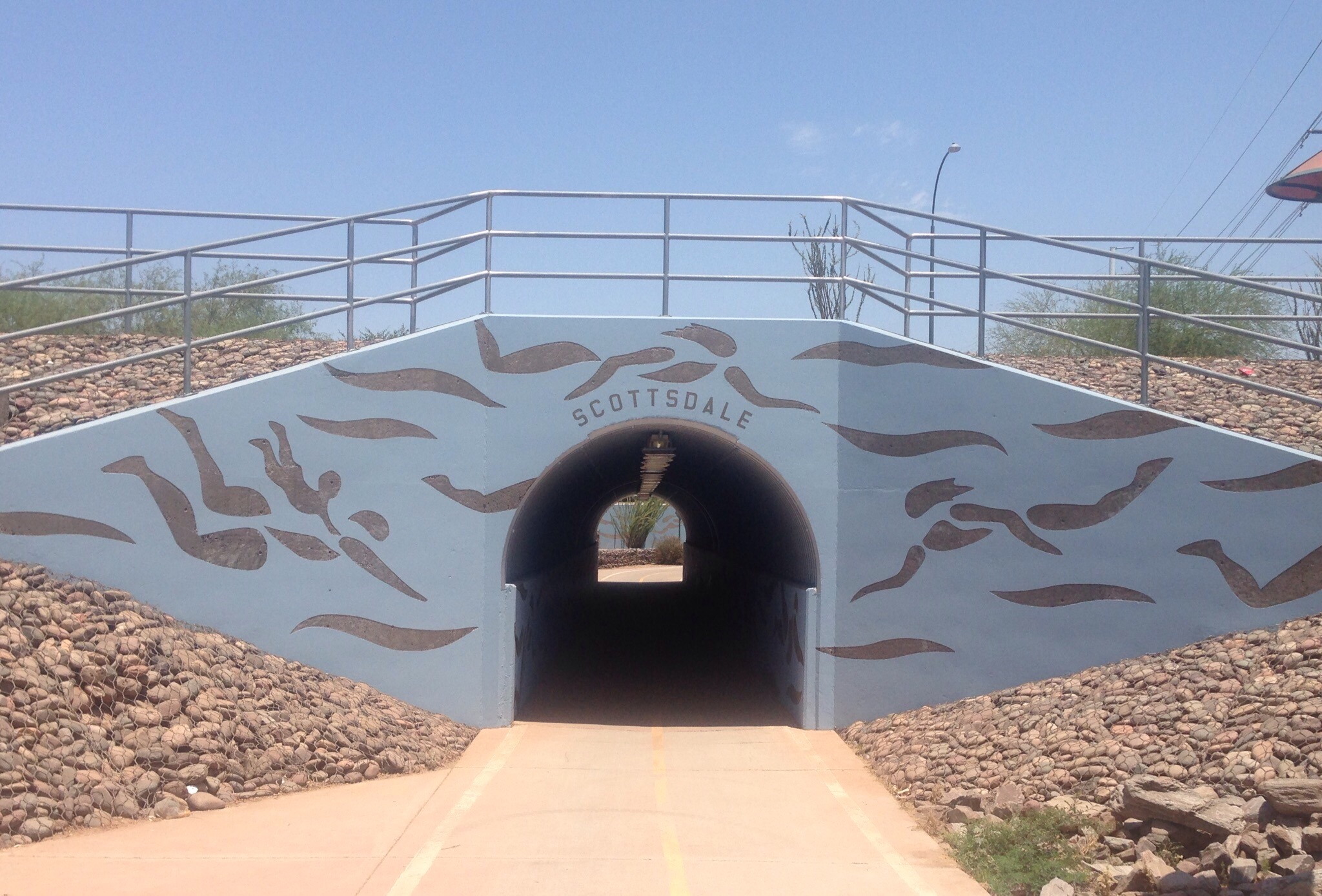
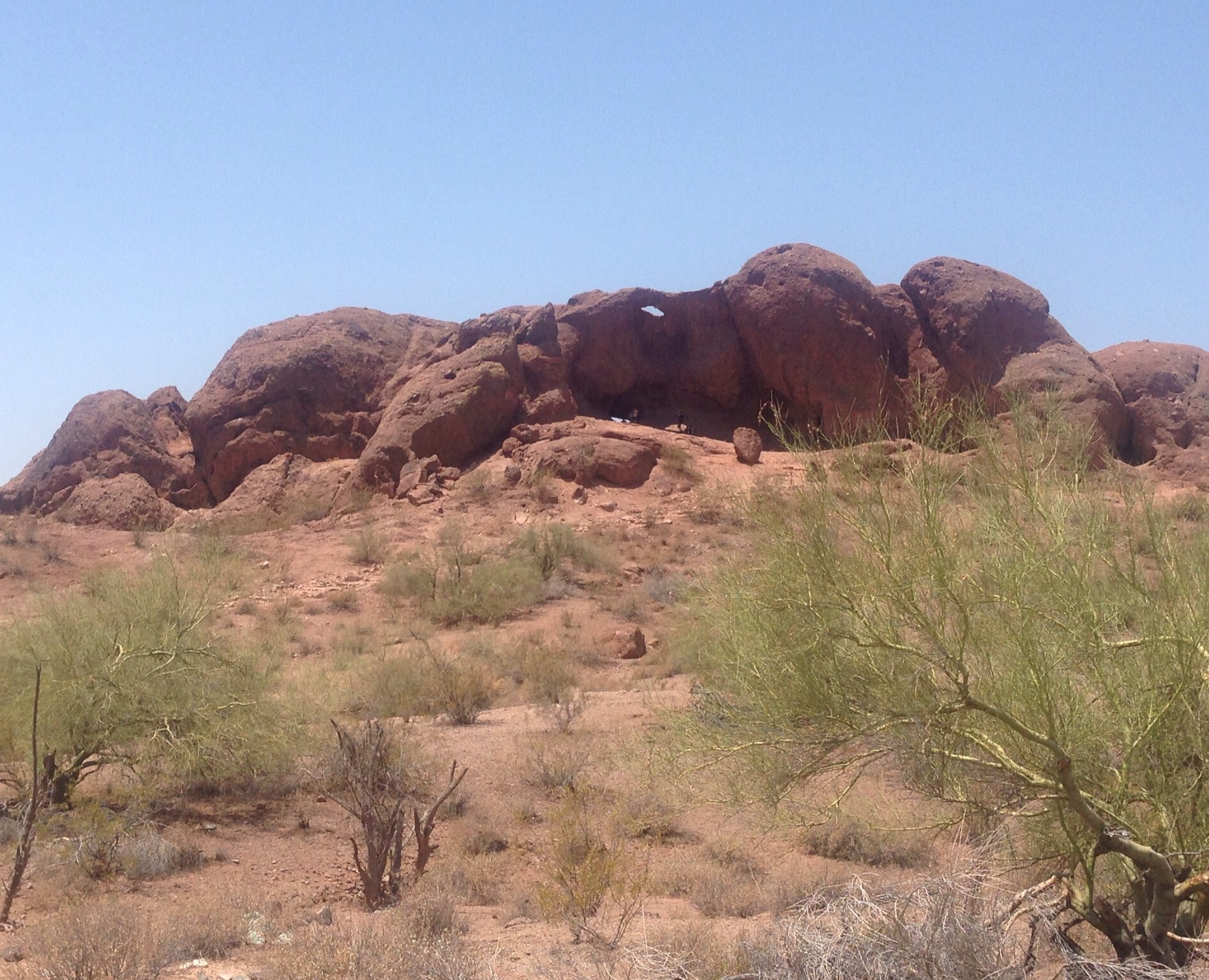
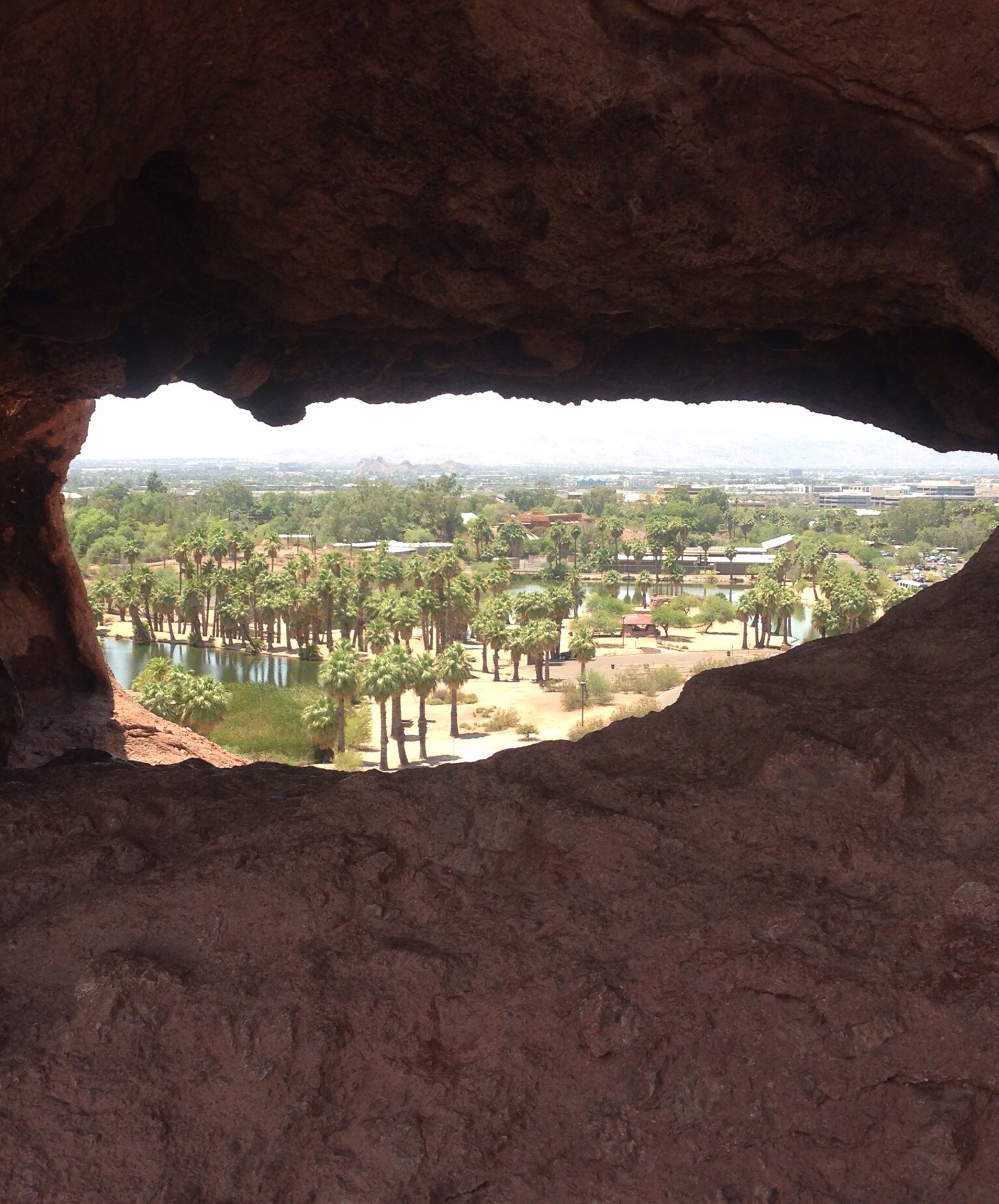
In my next life, I hope to be a billboard. . .Art along Marshall WayMore art along Marshall WayMore art along Marshall WaySculpture outside an art galleryThe Civic Center Library with the sculpture (the feather) “Imagination gives us wings”Robert Indiana’s Love sculpture near the libraryOne of the many hike/bike paths along canals that go throughout the greater Phoenix areaThe Swimming Dream art installation on one of the underpasses along the canalThe Hole in the Rock in Papago Park that we walked to on Sunday. We said — “Ha, take that heat, we will go outside anyway!” And the heat said “You will need to drink lots and lots of liquids!” And we didAwesome view through the hole in the rock!
Bend was awesome, and we met the loveliest couple on our last night. We popped into the Jackrabbit Grill after walking through the Bite of Bend food and drink event downtown. We were just in for a pre-dinner drink before heading back to our room but ended up having a nice conversation with Molly and Rory, a couple of locals who have been in the Bend area for 9+ years. They were in for Rory’s birthday dinner which we trust was lovely. They offered to show us around the next time we’re in the area, and we turned them onto the TrustedHousesitters website for upcoming travel planning.
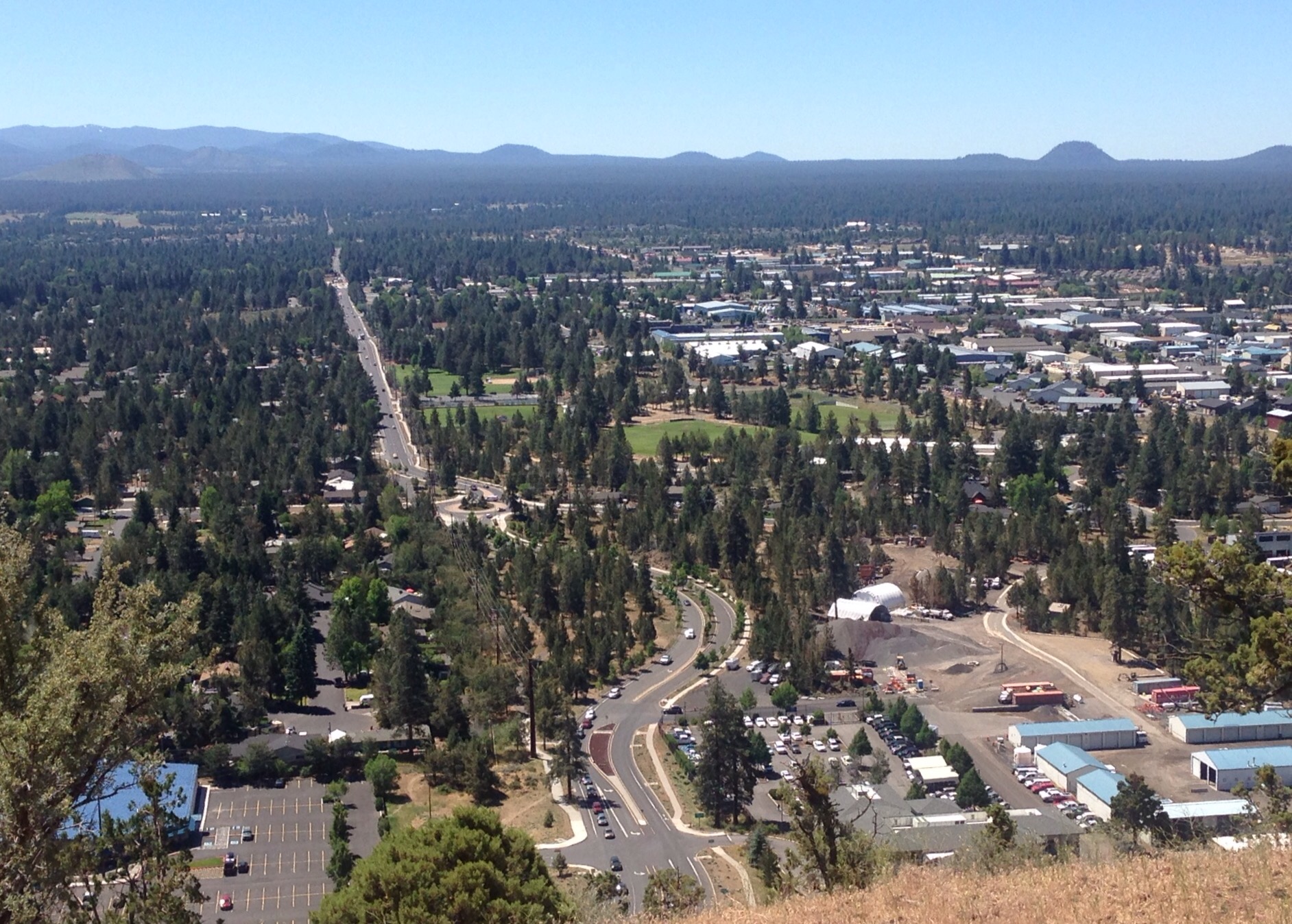
Here is more of our wanderings around (the) Bend. Our second day in town, we started with a hike up Pilot Butte, an in-town hike that offered lovely views of the city.
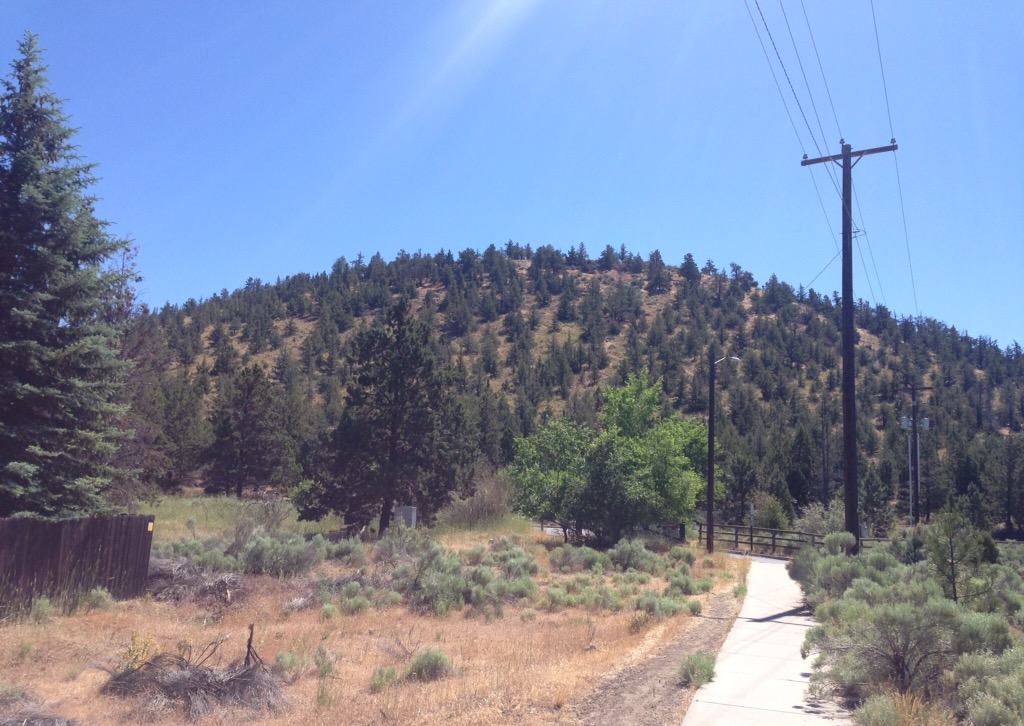
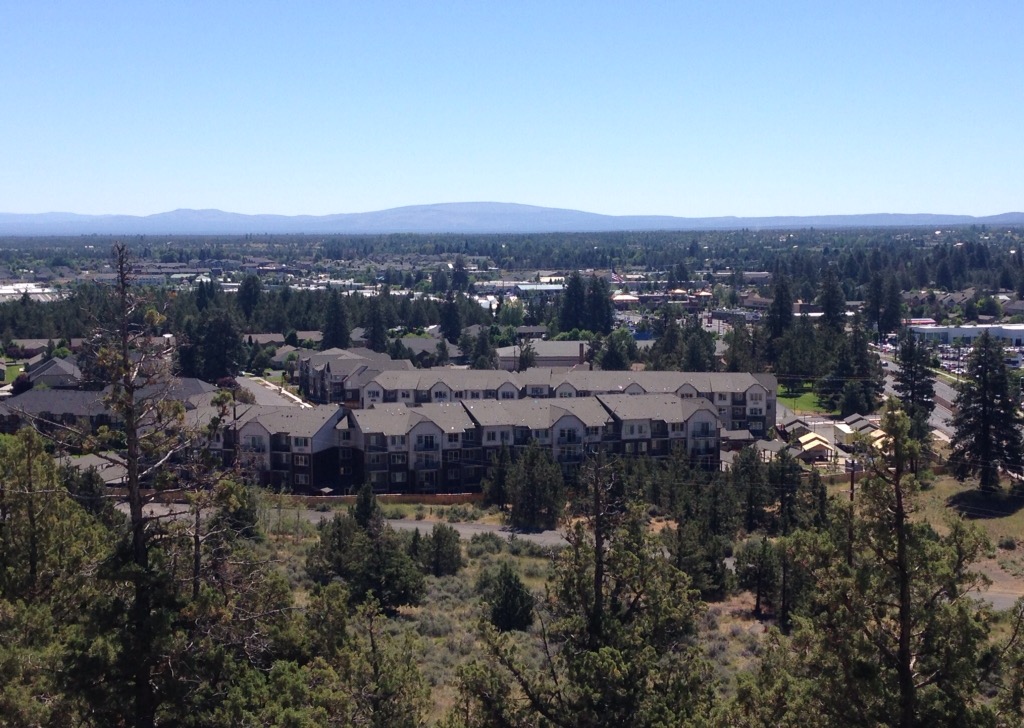
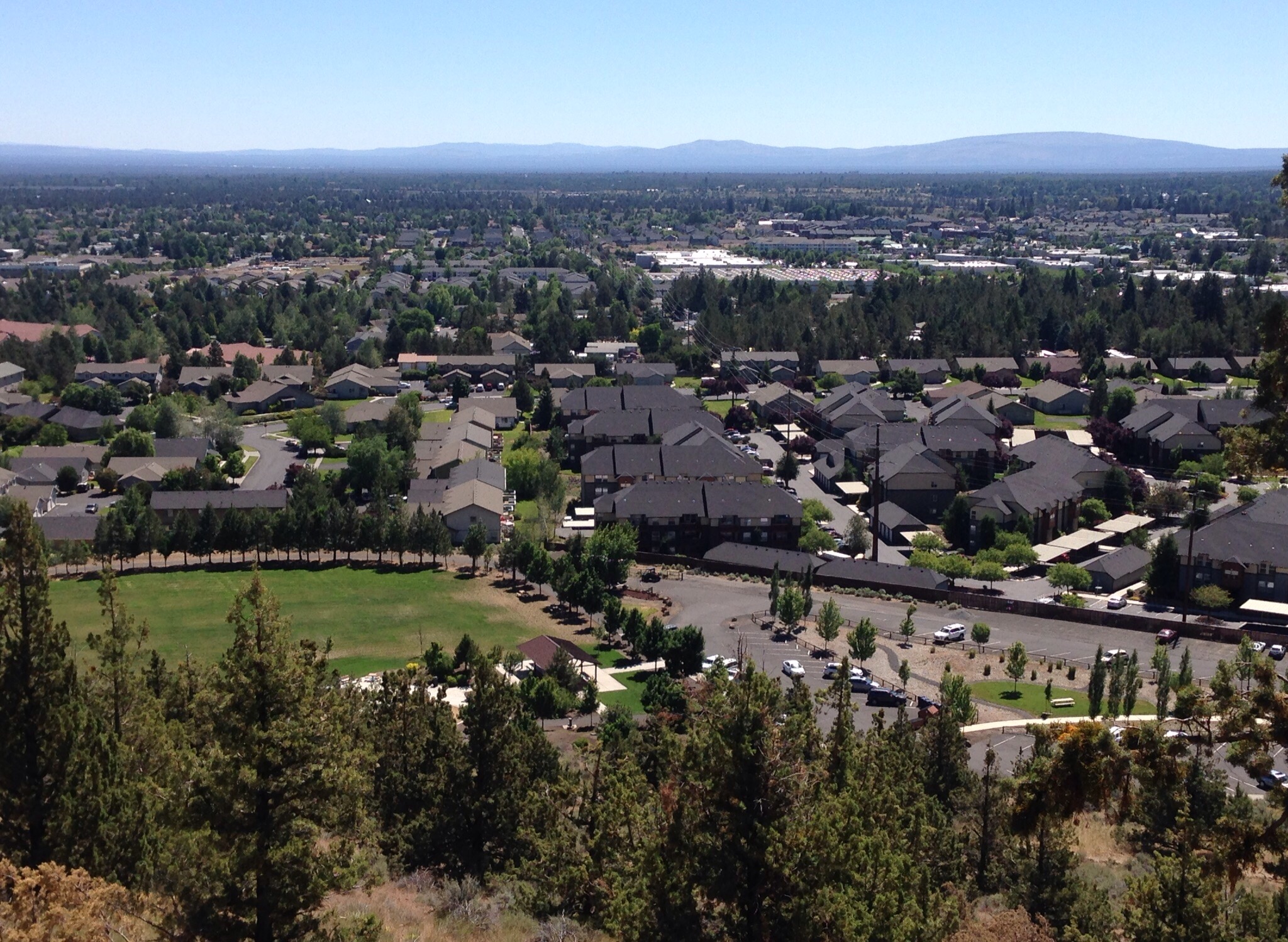
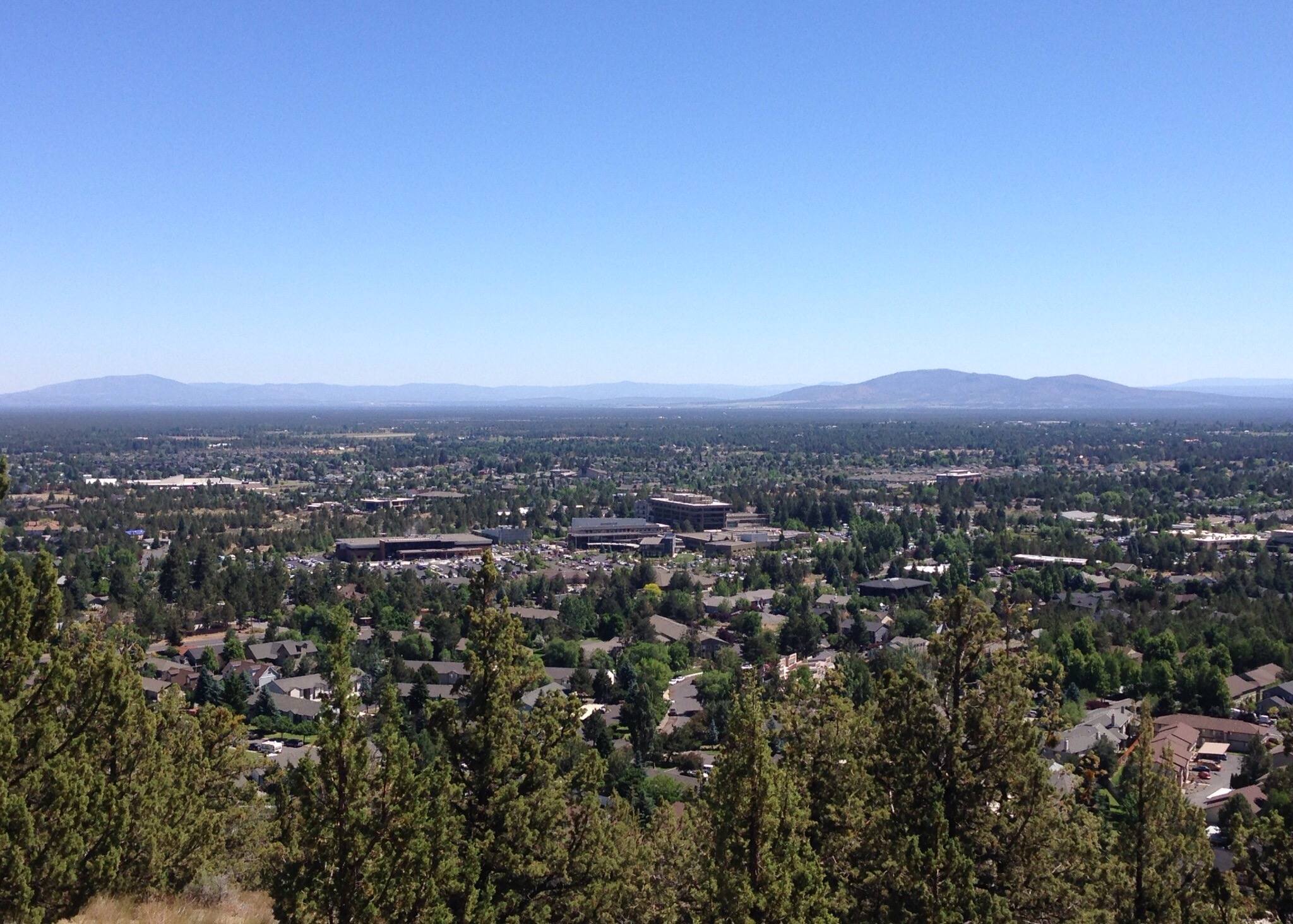
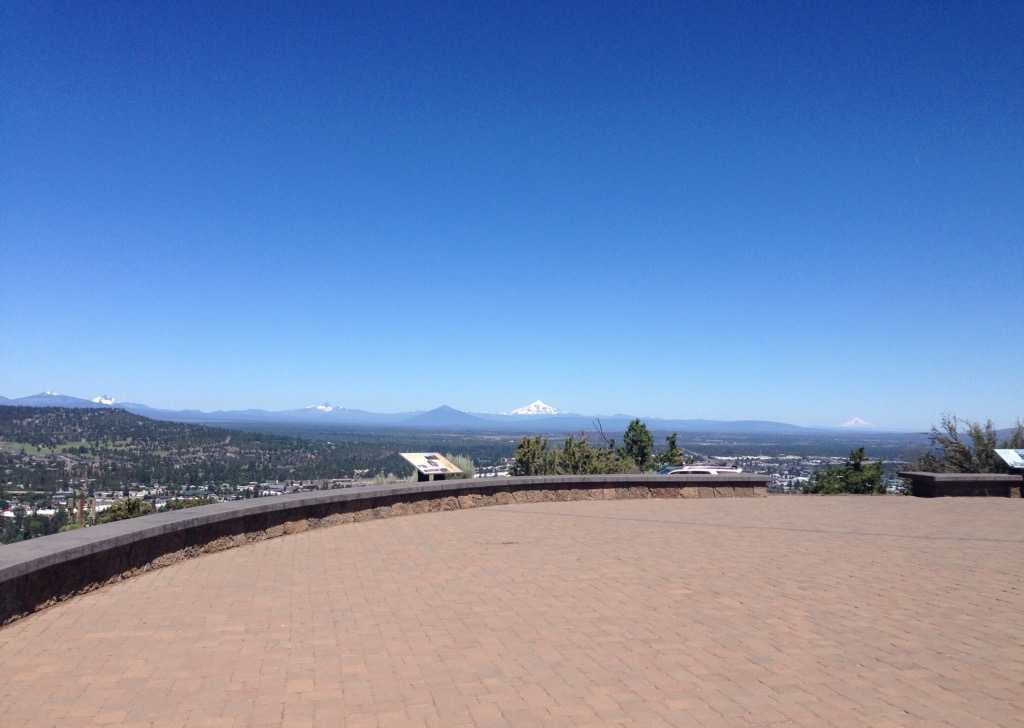
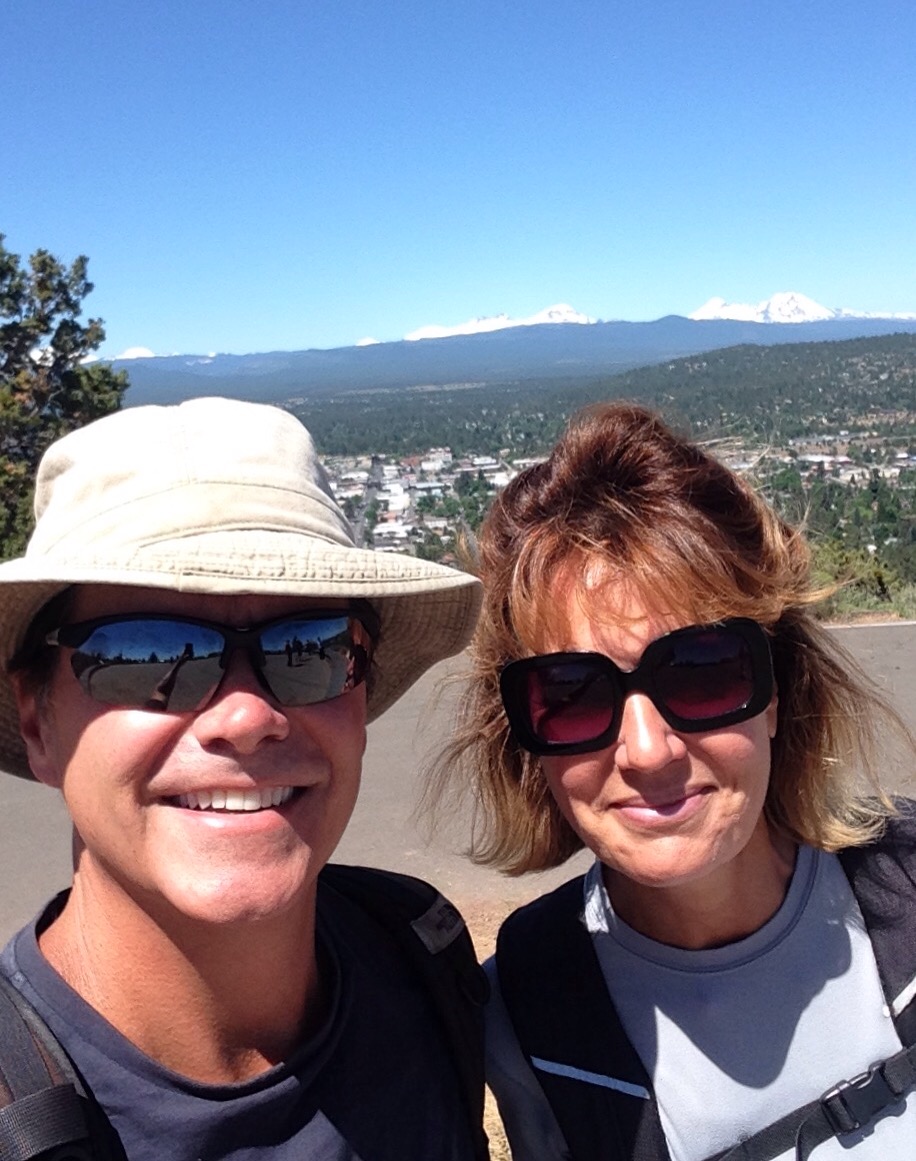
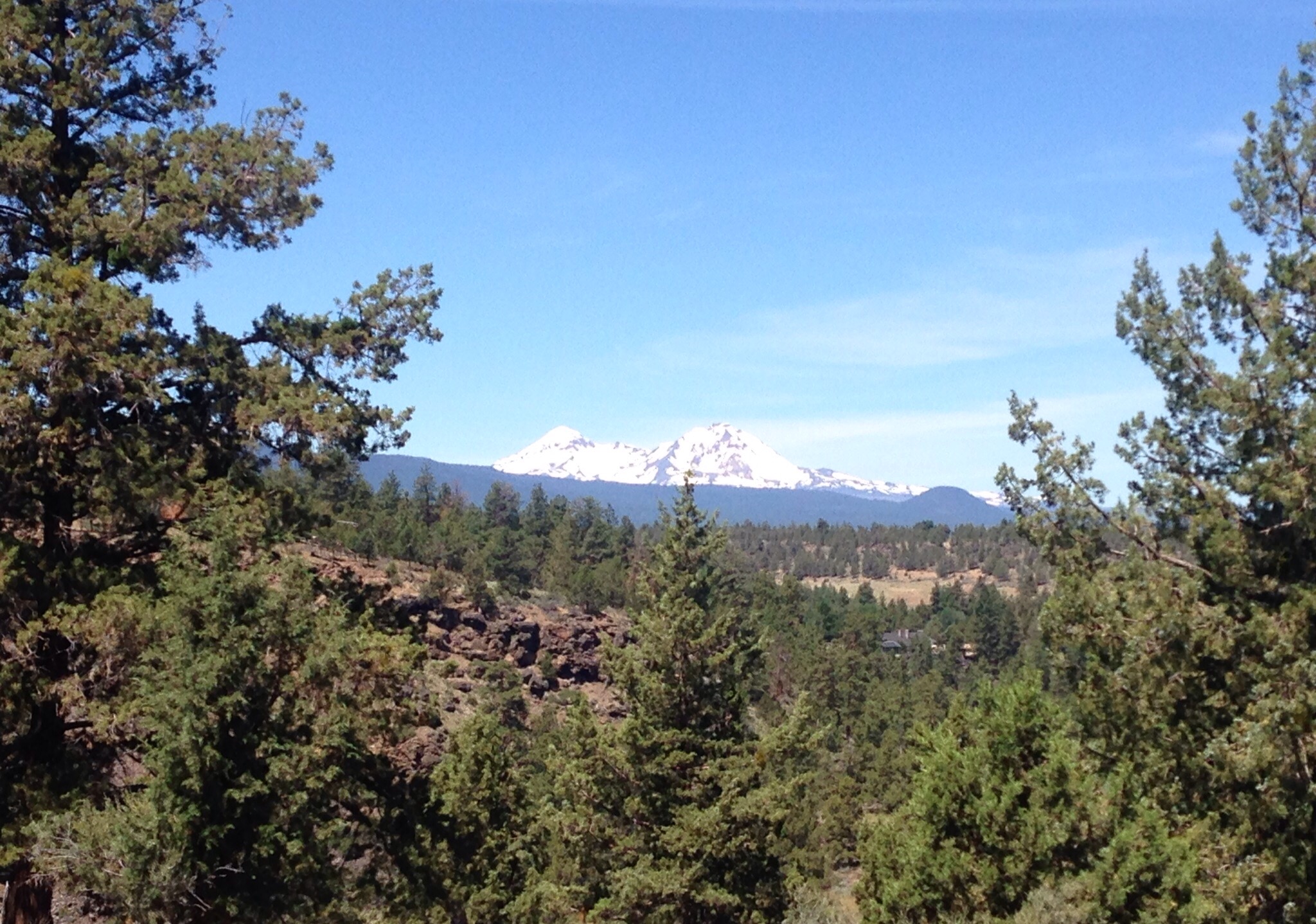
Pilot Butte, a little over a 2 mile hike to the top from our motelView 1 of the city as we made our way upView 2 on the way upView 3At the topShameless Selfie in front of the much more beautiful surroundings (Cascade Mountains in distance)Part of the city from the top. We started on the Main Street in the photo after our descent to hook up with a canal pathDescending the butte
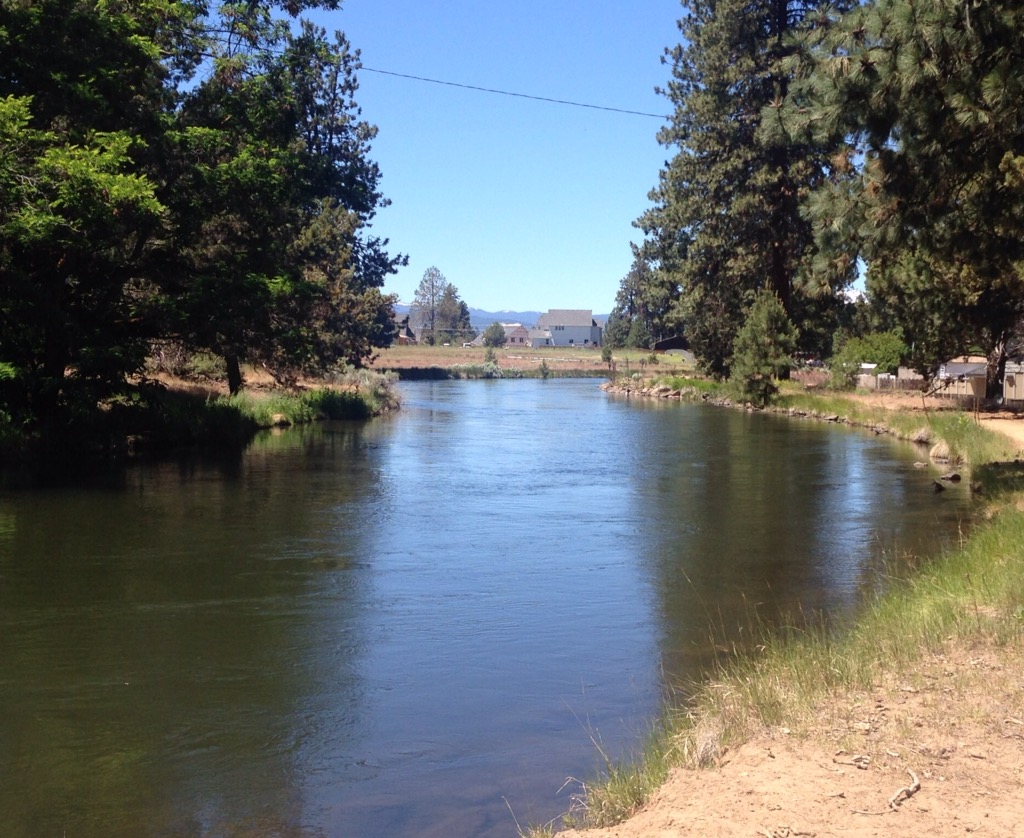
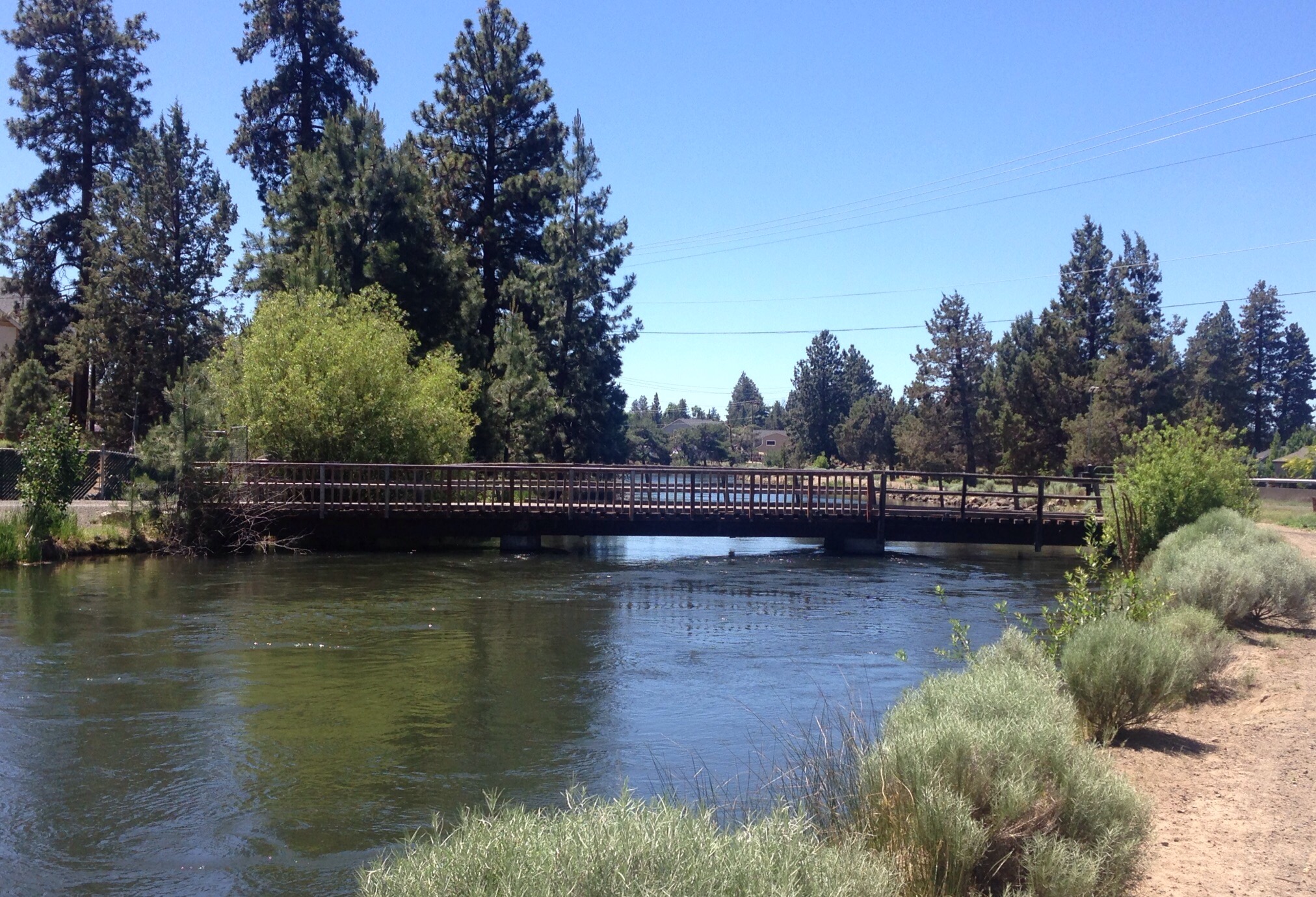
We walked from the butte to the Larkspur Trail which went through residential areas and parks before connecting with the Central Oregon Canal Trail and back to the Deschutes River. Bend had a much higher than normal snowfall this winter, so the canal is pretty full.
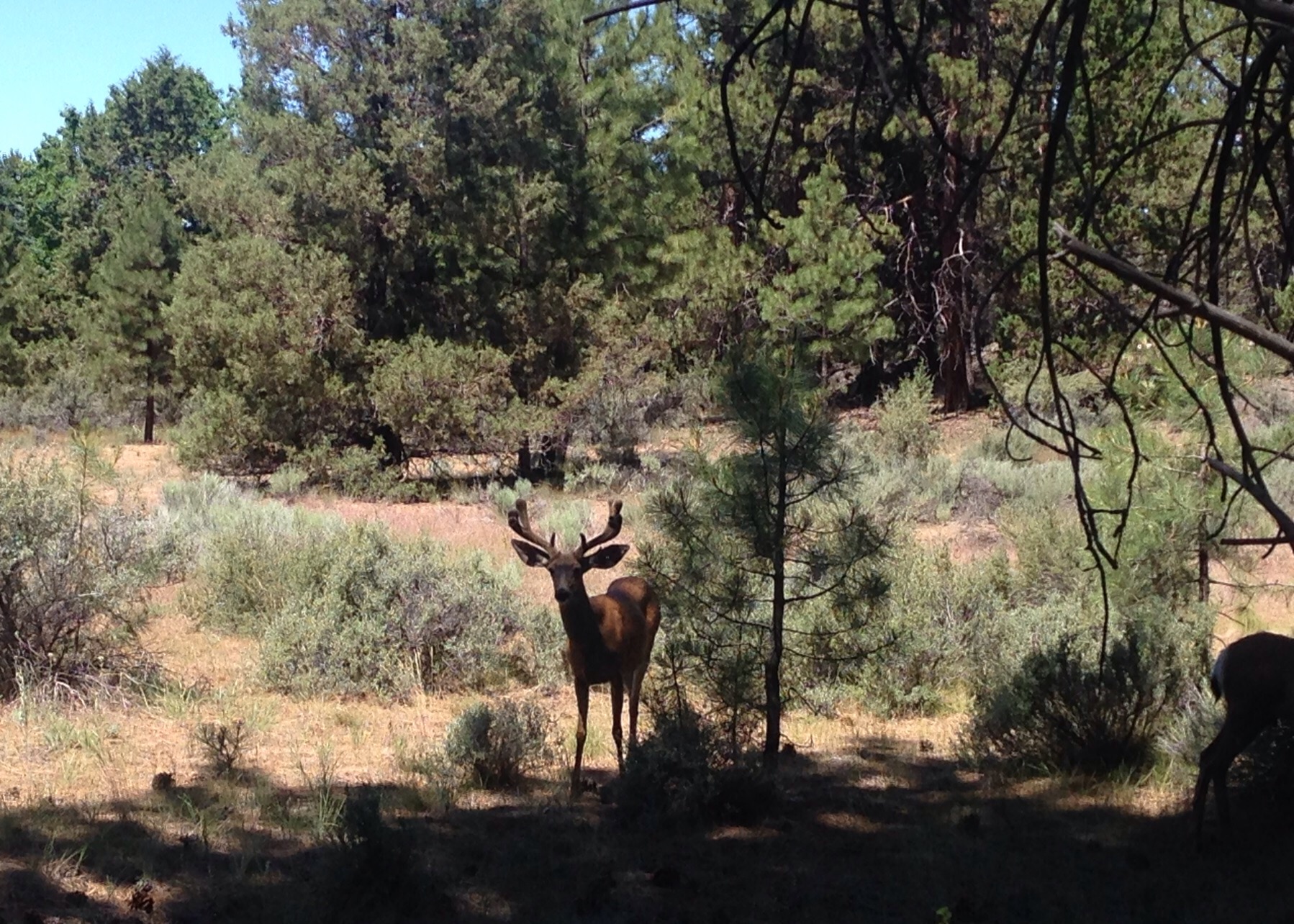
Walking along the very full canalA bridge connecting a residential area to the trailGetting checked out by the local wildlife along the trailLovely!
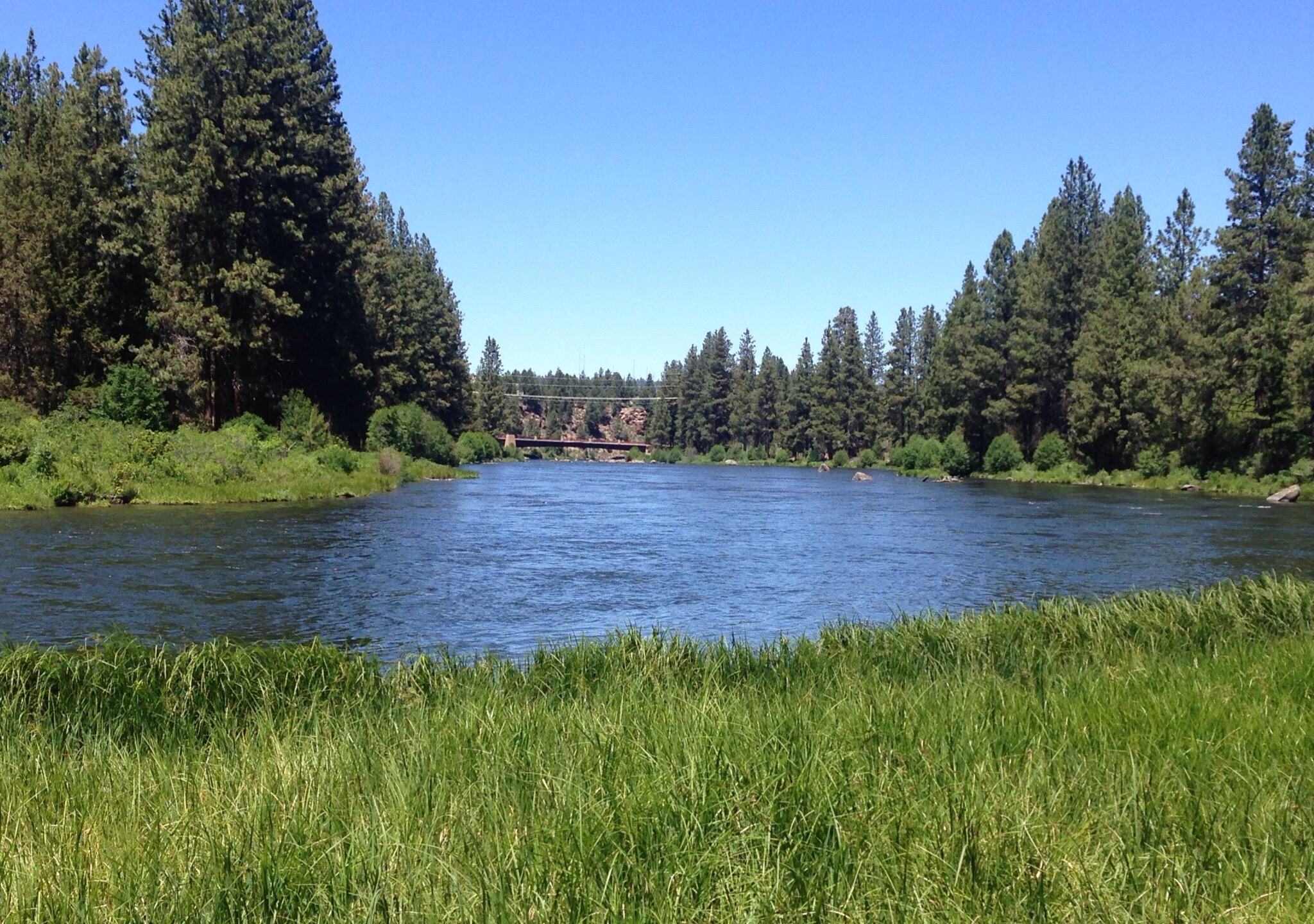
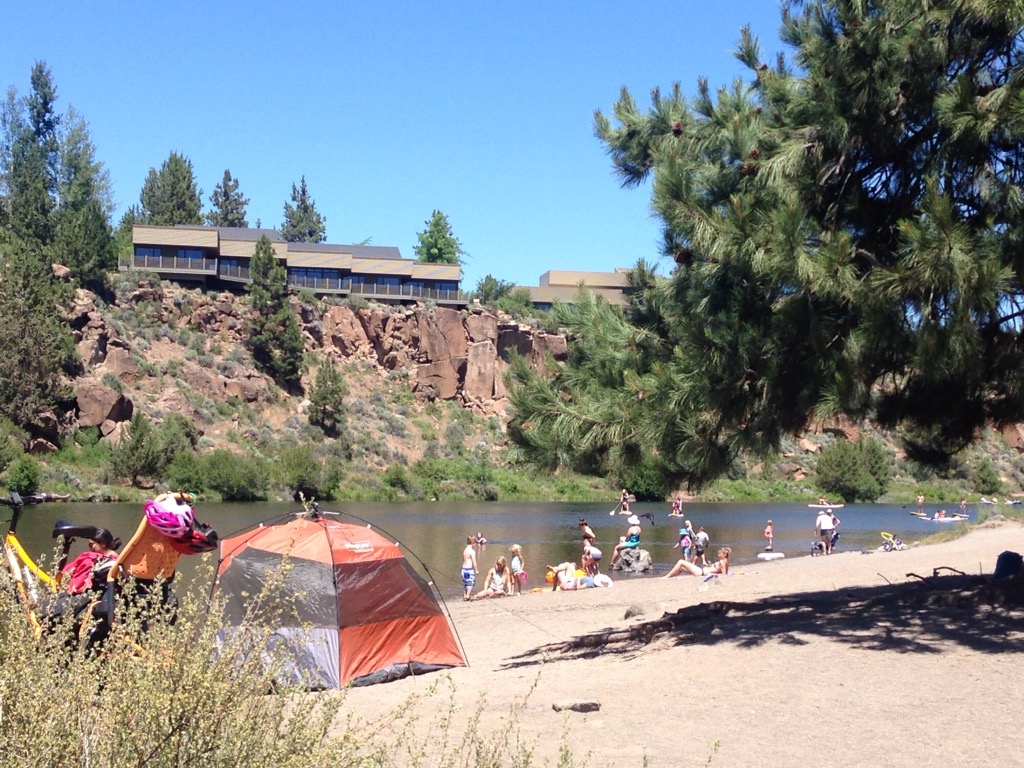
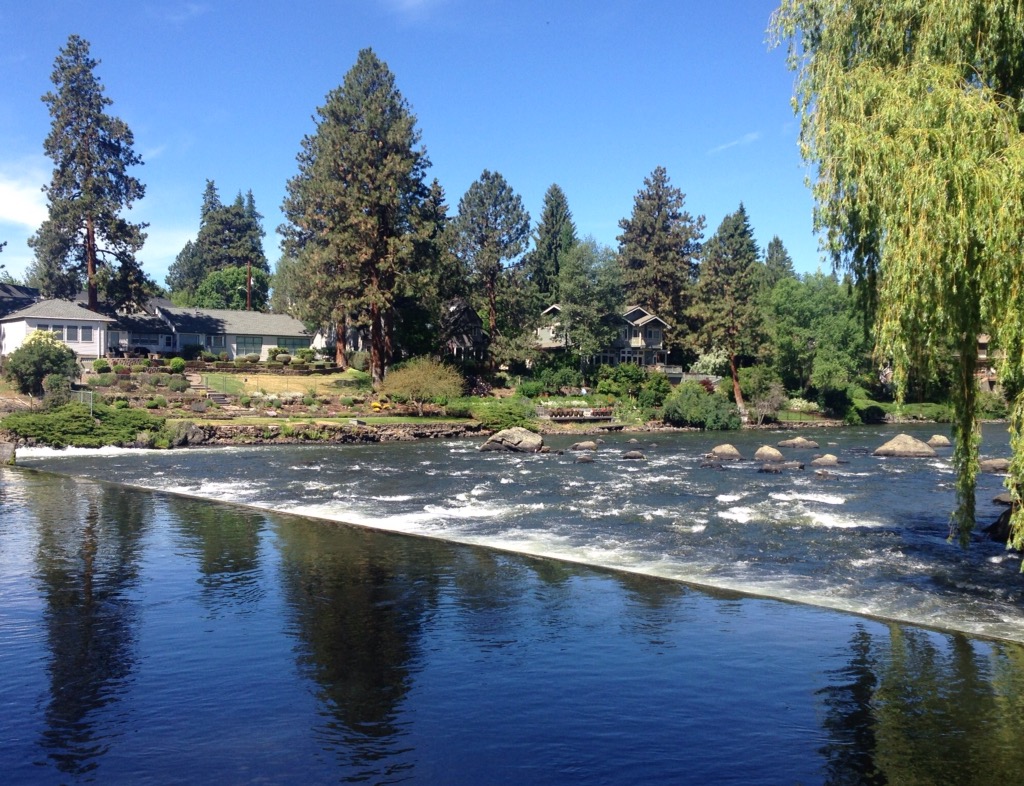
Once we met back up with the Deschutes River Trail, we headed north back into town via the Old Mill District. This section of the Deschutes River is popular for canoeing, kayaking, stand-up paddle boarding, rafting lessons, or just floating. The Old Mill District is a historic area formerly occupied by two lumber mills. It is now a popular retail and restaurant area. There is also an amphitheater across the river from the Old Mill District where Paul Simon was scheduled to play on the night we left.
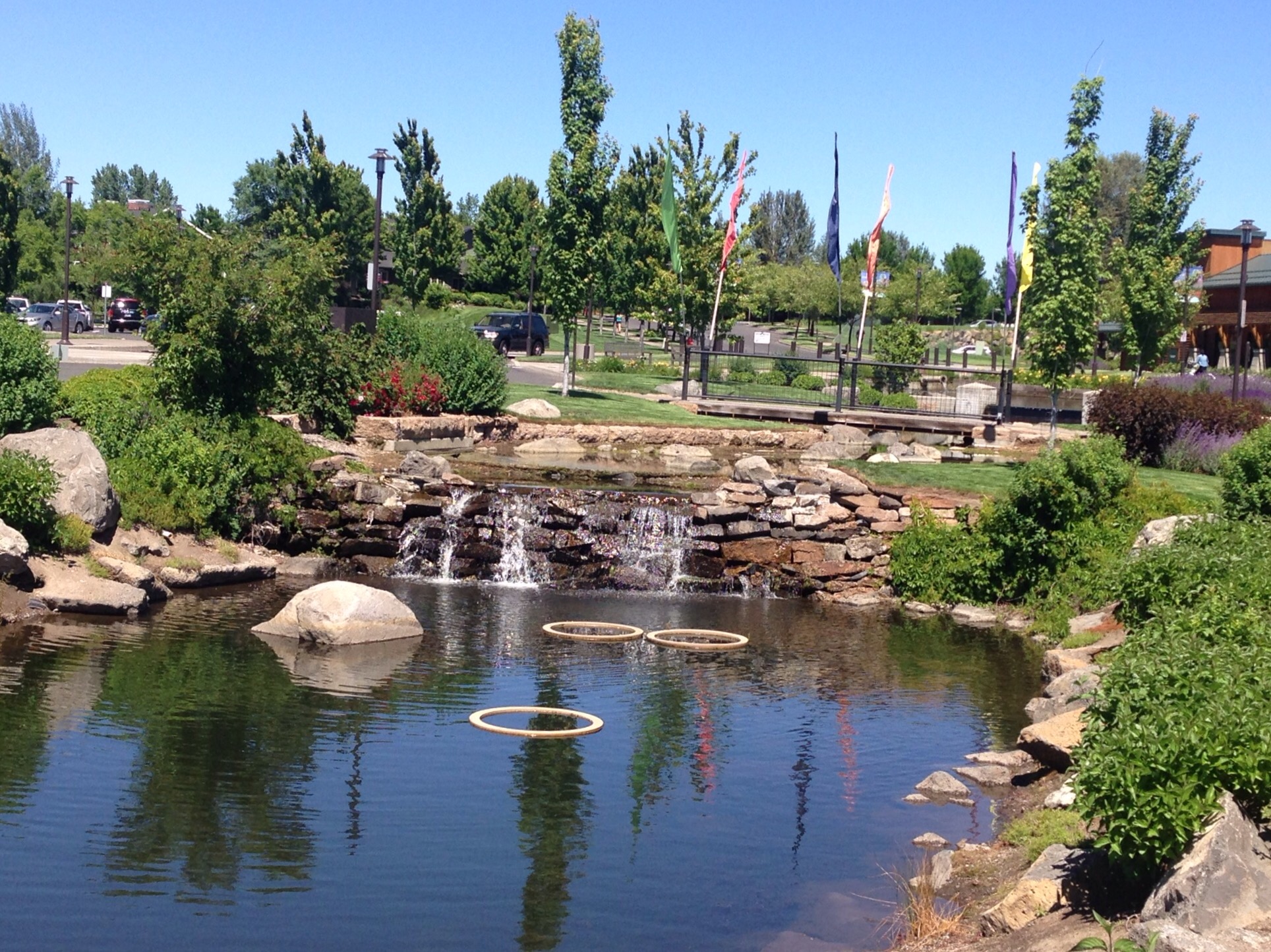
Watching the action on the DeschutesWalking along the Deschutes towards the Old Mill District, with Pilot Butte in the backgroundThe 3 stacks are at the Old Mill siteThe green (and water) space at the Old Mill District — the circles in the water are part of a casting challenge course for kids
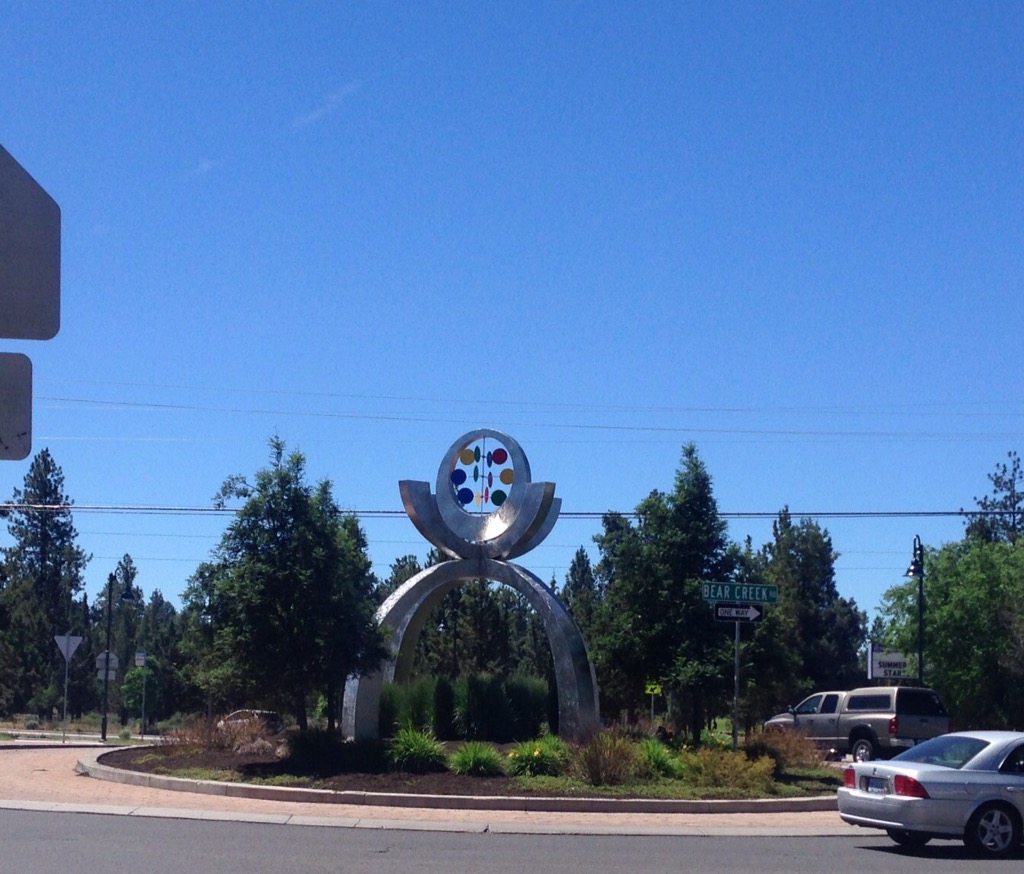
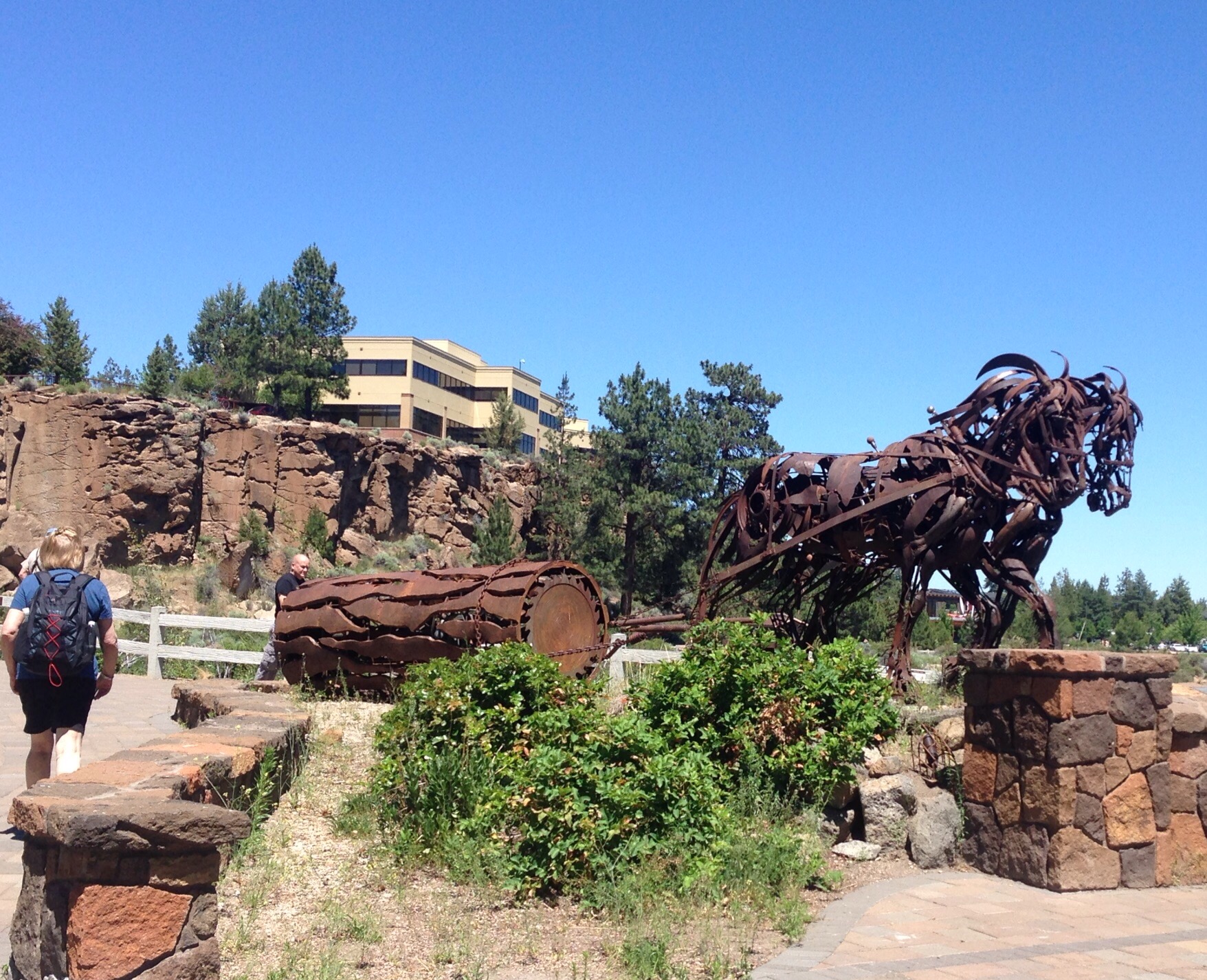
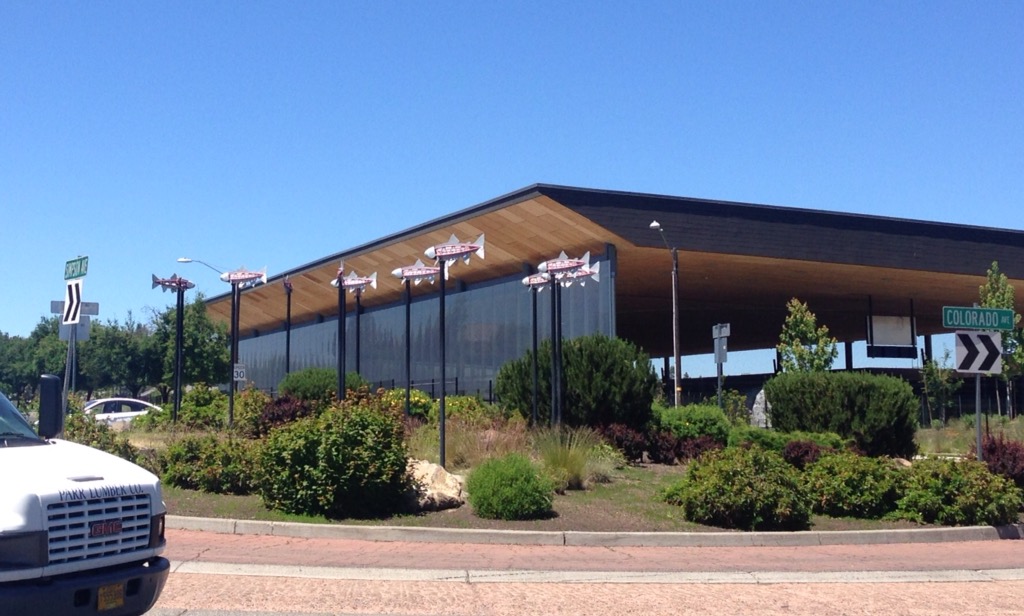
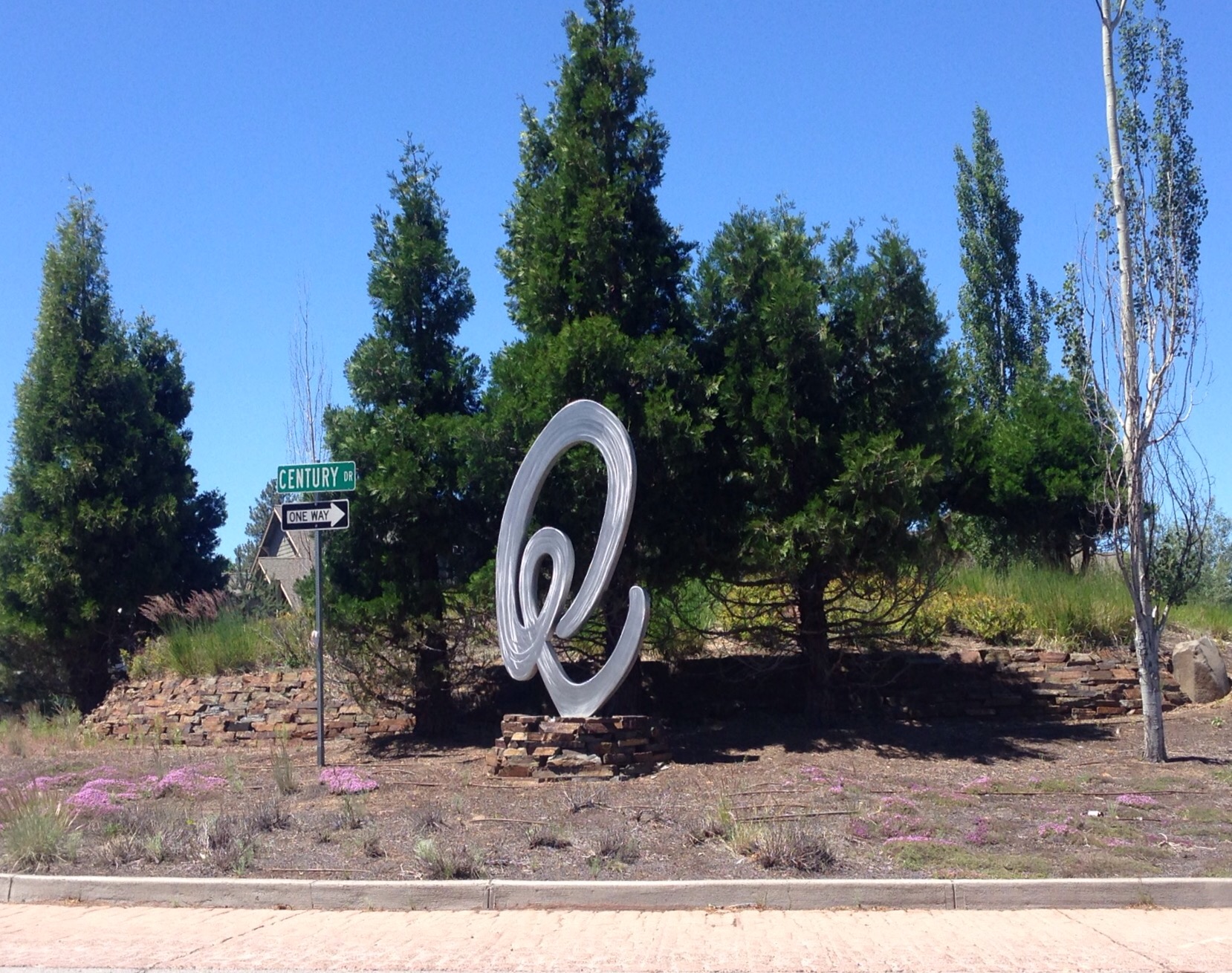
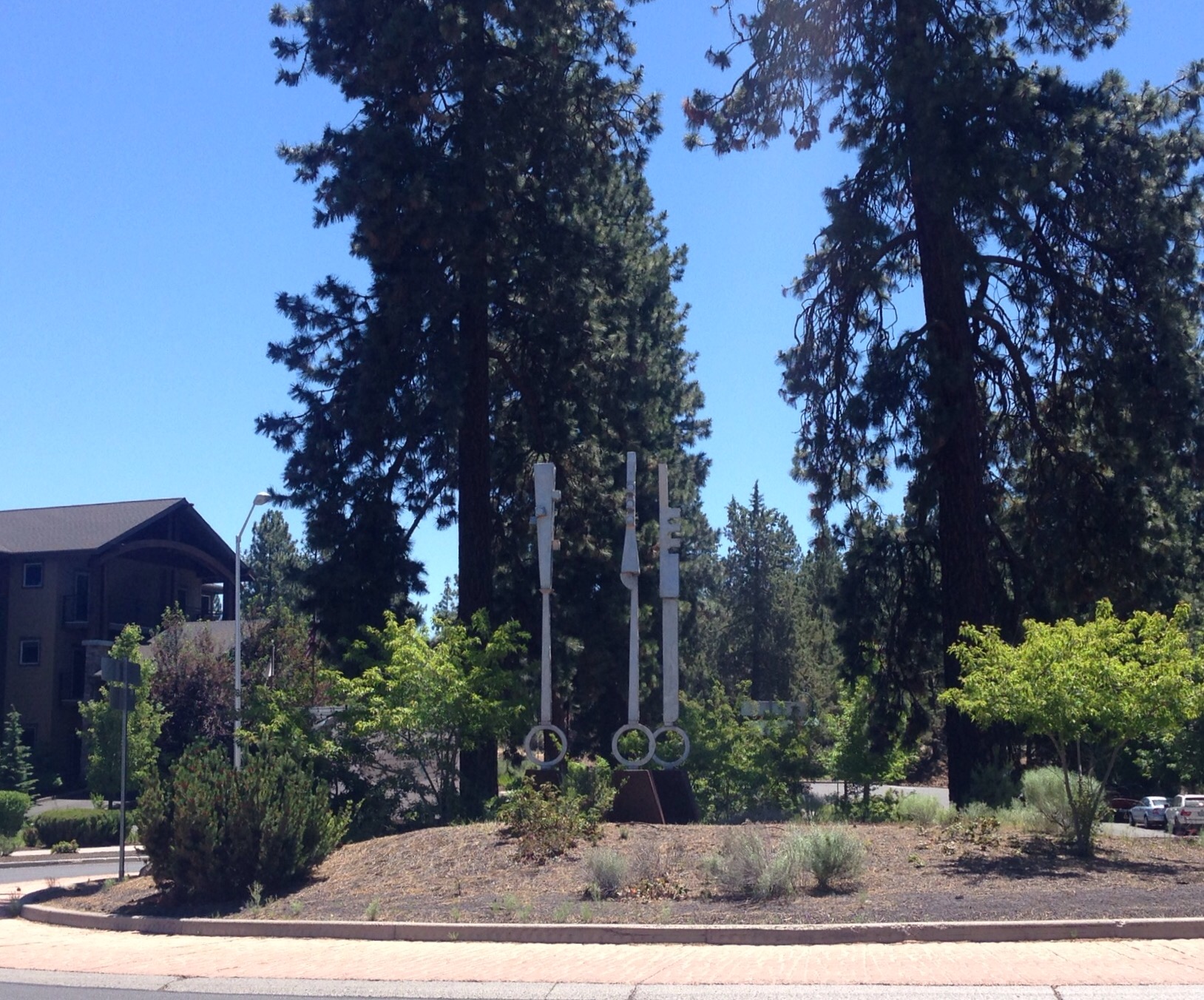
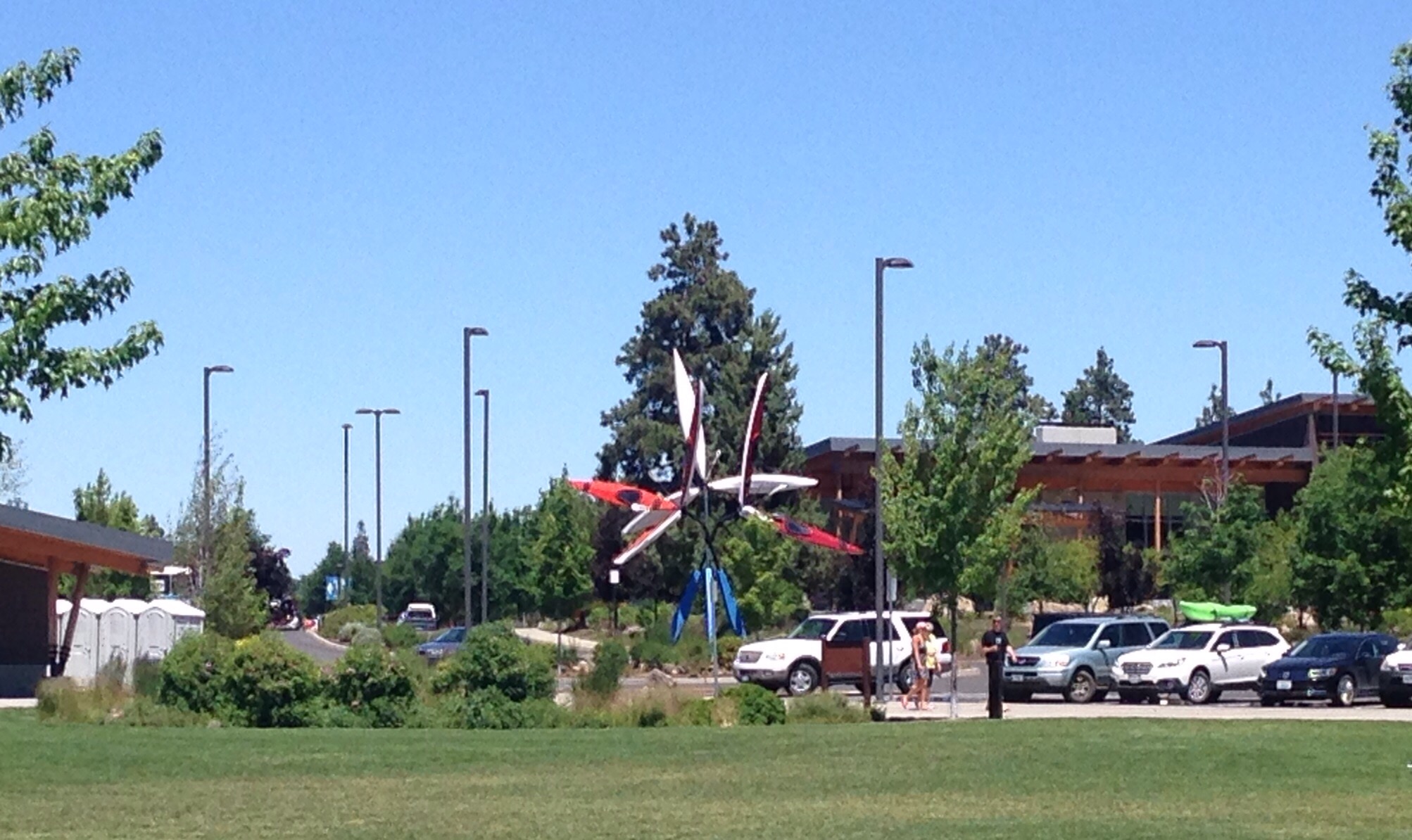
Bend has quite a few traffic circles and has a public art effort to incorporate statues in the center of these circles. We tried to capture the ones that we passed on our walkabouts.
Evolution, 2008, by Troy PillowThis one was not in a traffic circle but at the Old Mill DistrictRed sides, 2001, by Miles PepperMt. Bachelor Compass, 2002, Steve JensenSound Garden, 2010, Lee KellyYakaya, 2010, Troy Pillow
We have had an amazing three days in Bend, Oregon for what was to be a prelude to our Grants Pass, Oregon house sit. As you may recall from a prior post, however, that house sit was cancelled due to a critical family medical issue with the home owners. We had already purchased out tickets to Bend, however, so here we are. We are thrilled to be here before heading into the oven that is Arizona for the remainder of June and the first half of July.
Bend is the county seat of Deschutes County in central Oregon. Bend is a city of about 80,000 –the largest city in central Oregon. It is gorgeous, active, and vibrant. It has it all — lovely rivers and canals, beautiful trees and flowers, and nearby mountains. It is the best shades of green and blue and very active. We hope to return.
Our first full day here on Wednesday we spent hiking along the Deschutes River which is a major tributary to the Columbia River. While it is a popular river for water sports, we were on the quieter end on Wednesday.
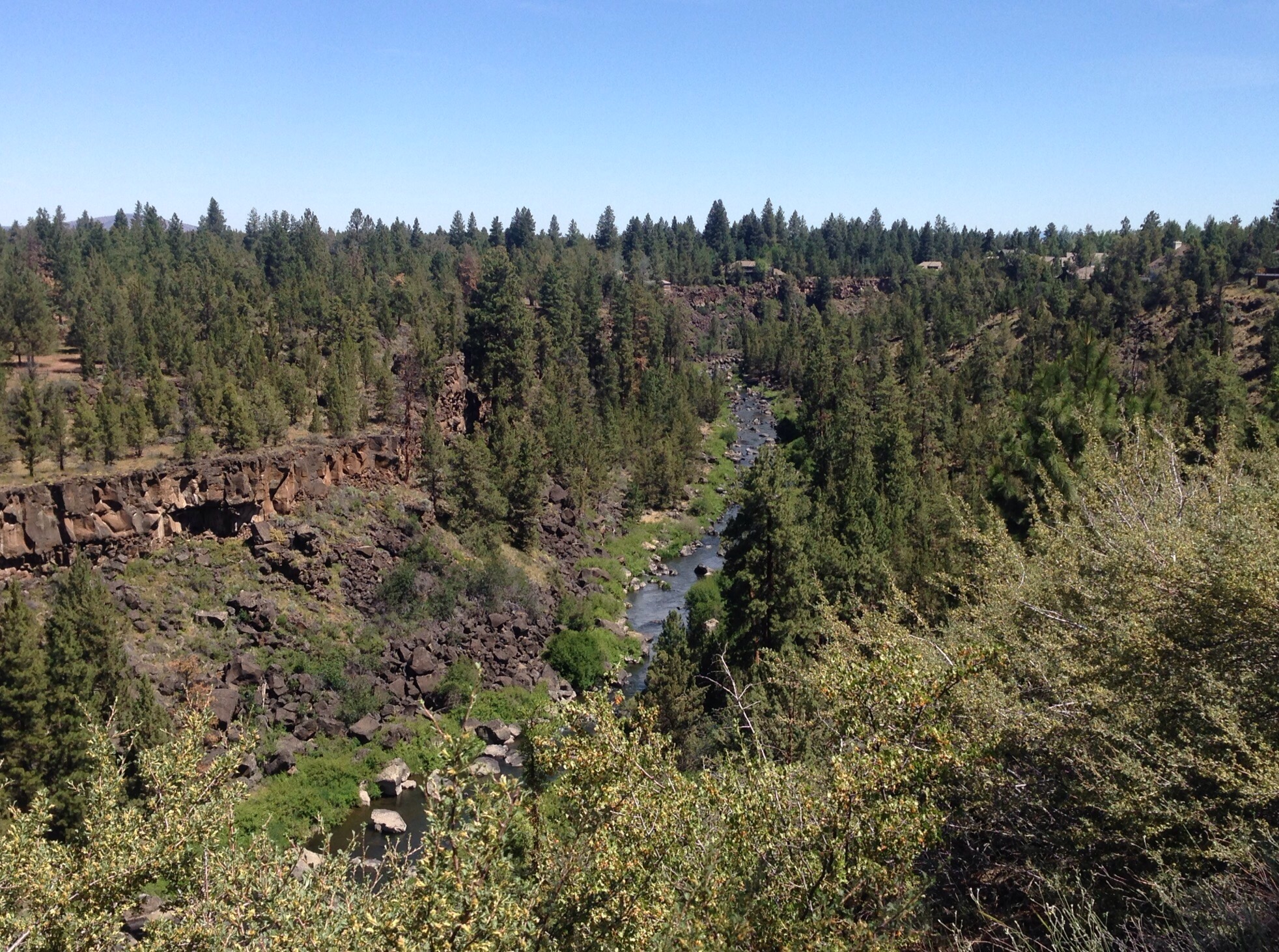
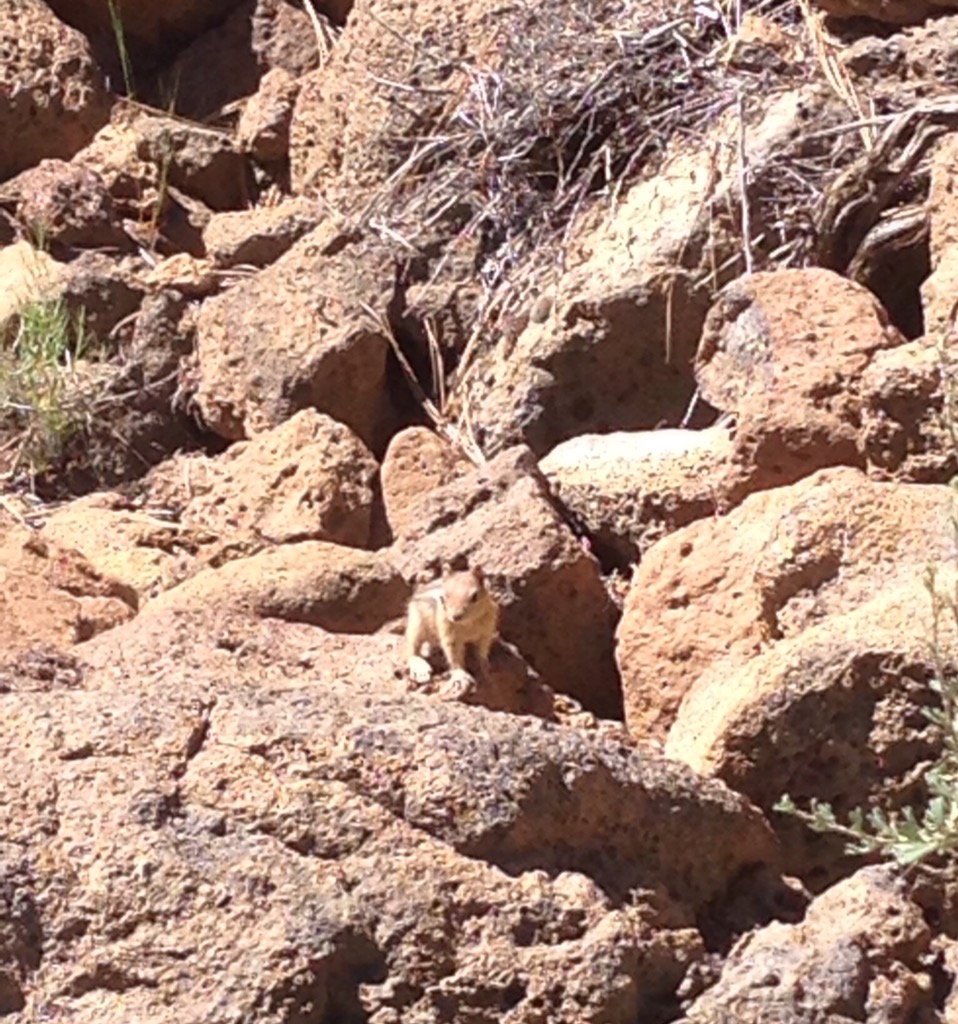
Starting the Deschutes River Trail near Newport AvenueThis river moves!A room (or many, many rooms) with a viewLooking towards the Cascade MountainsLooking down the gorge back towards the River Bob captured a well-camouflaged critter
The Deschutes River Trail took us up a gorge and into neighborhoods on top of hills/buttes out of the city center. We left that trail to follow a North Rim path to the Sylvan and Summit city parks (where we thought ther might be a good view but no — just the satisfaction of having summitted). We then walked back into town where we reconnected with the Deschutes River at a different point.
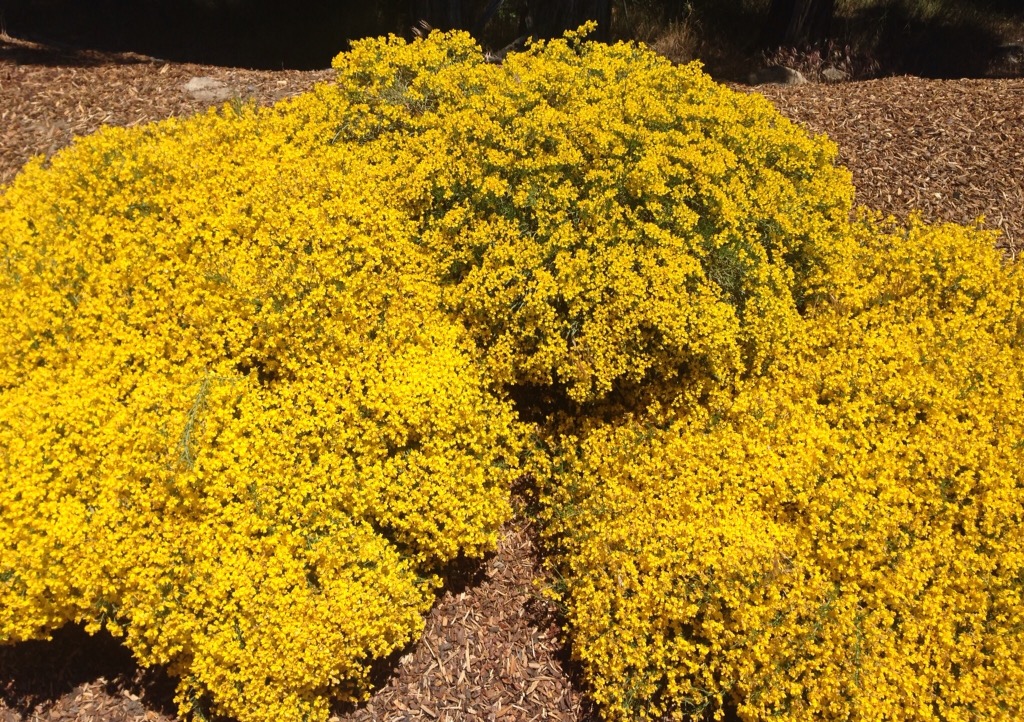
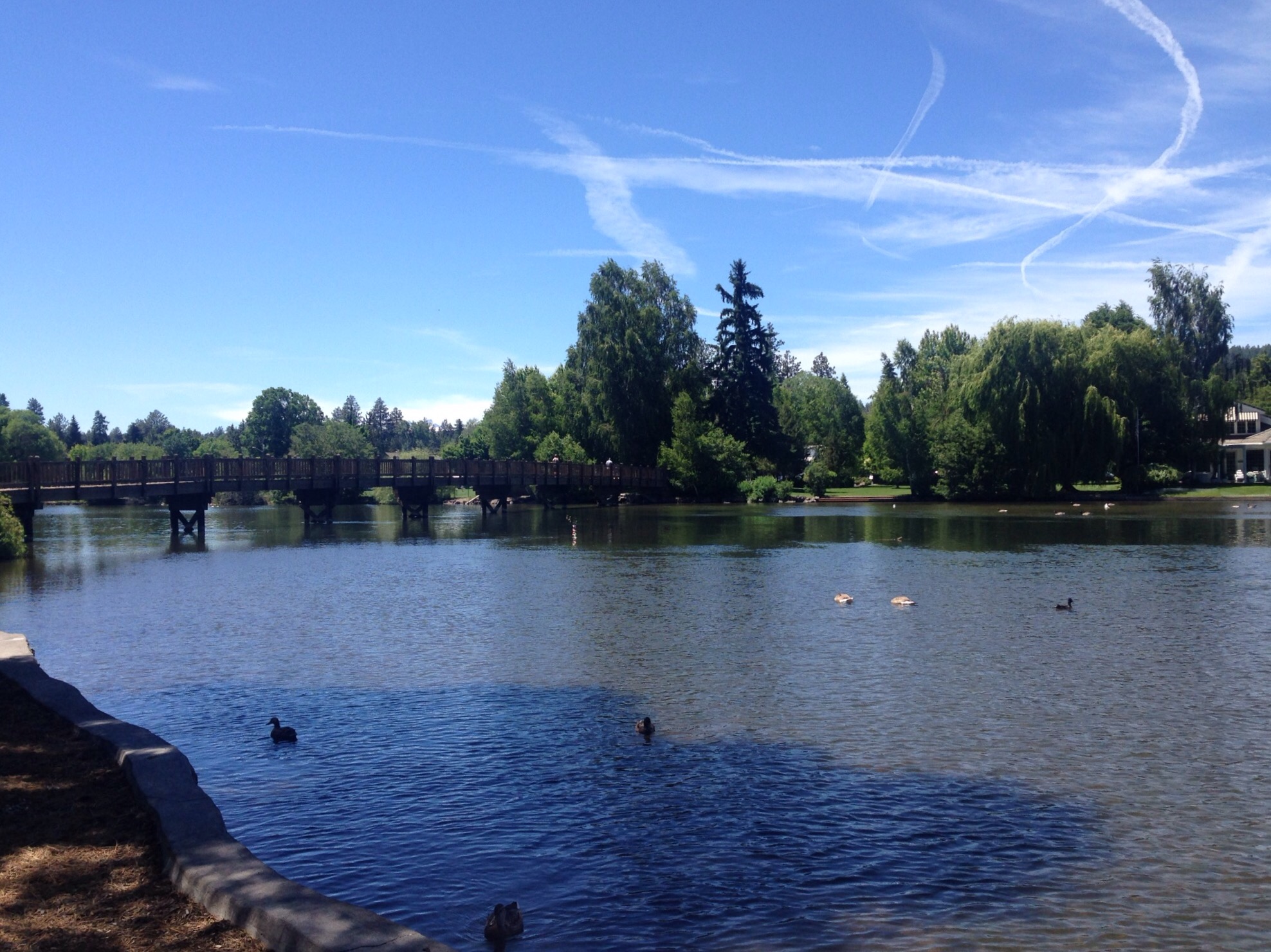
Striking yellow flowersOur view of Bend as we walked back into townReconnecting with the Deschutes River in Drake Park on the outskirts of downtown
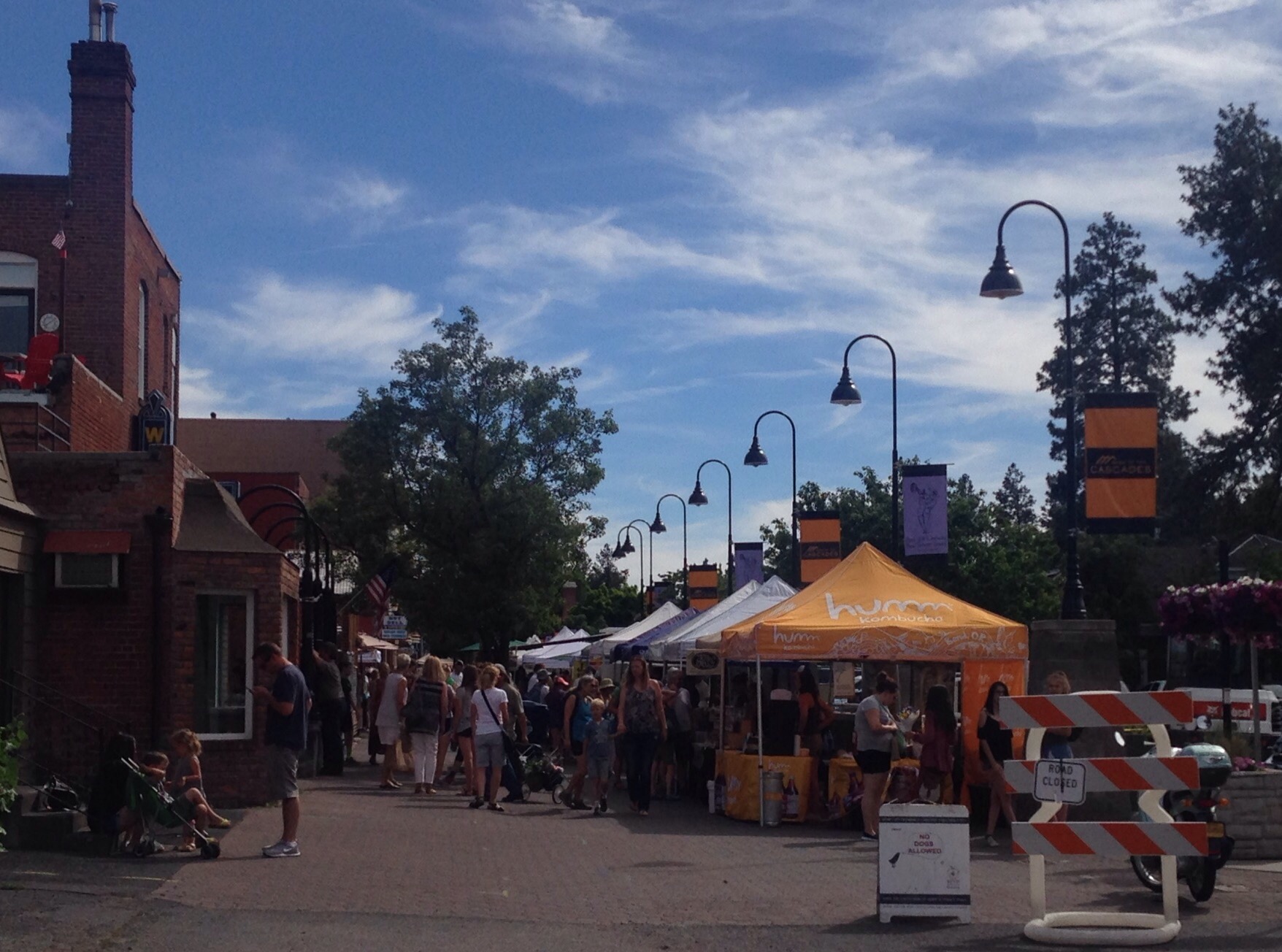
We then spent some time exploring the downtown area, including their Wednesday afternoon farmers market.
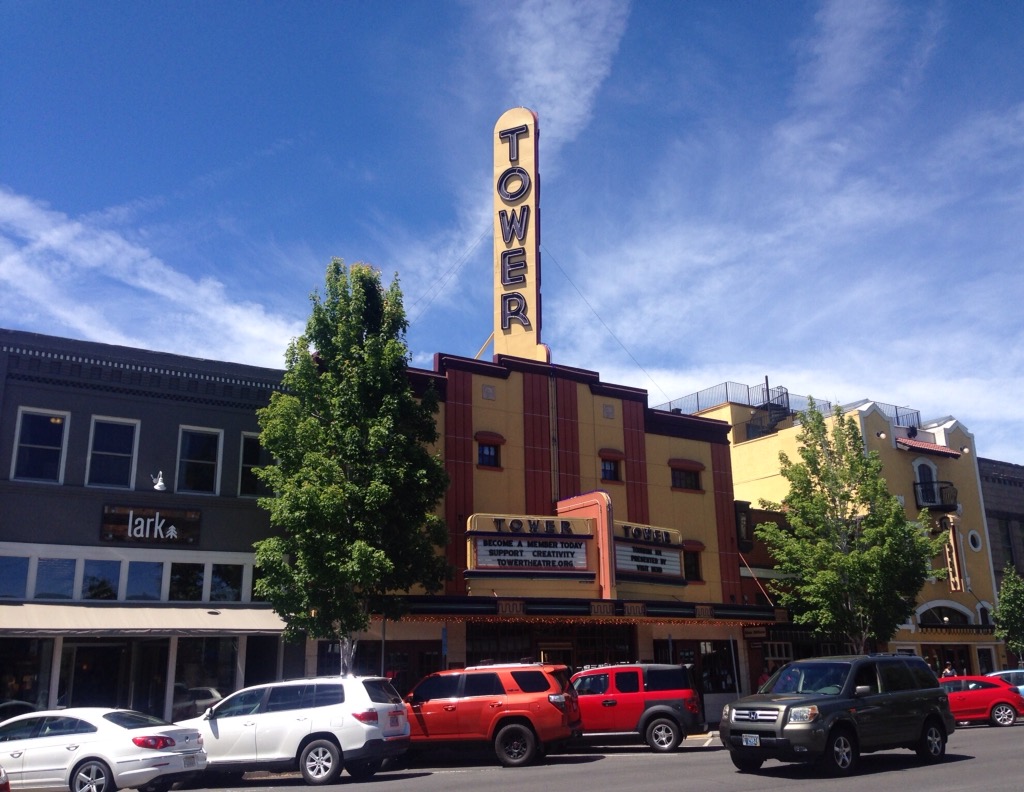
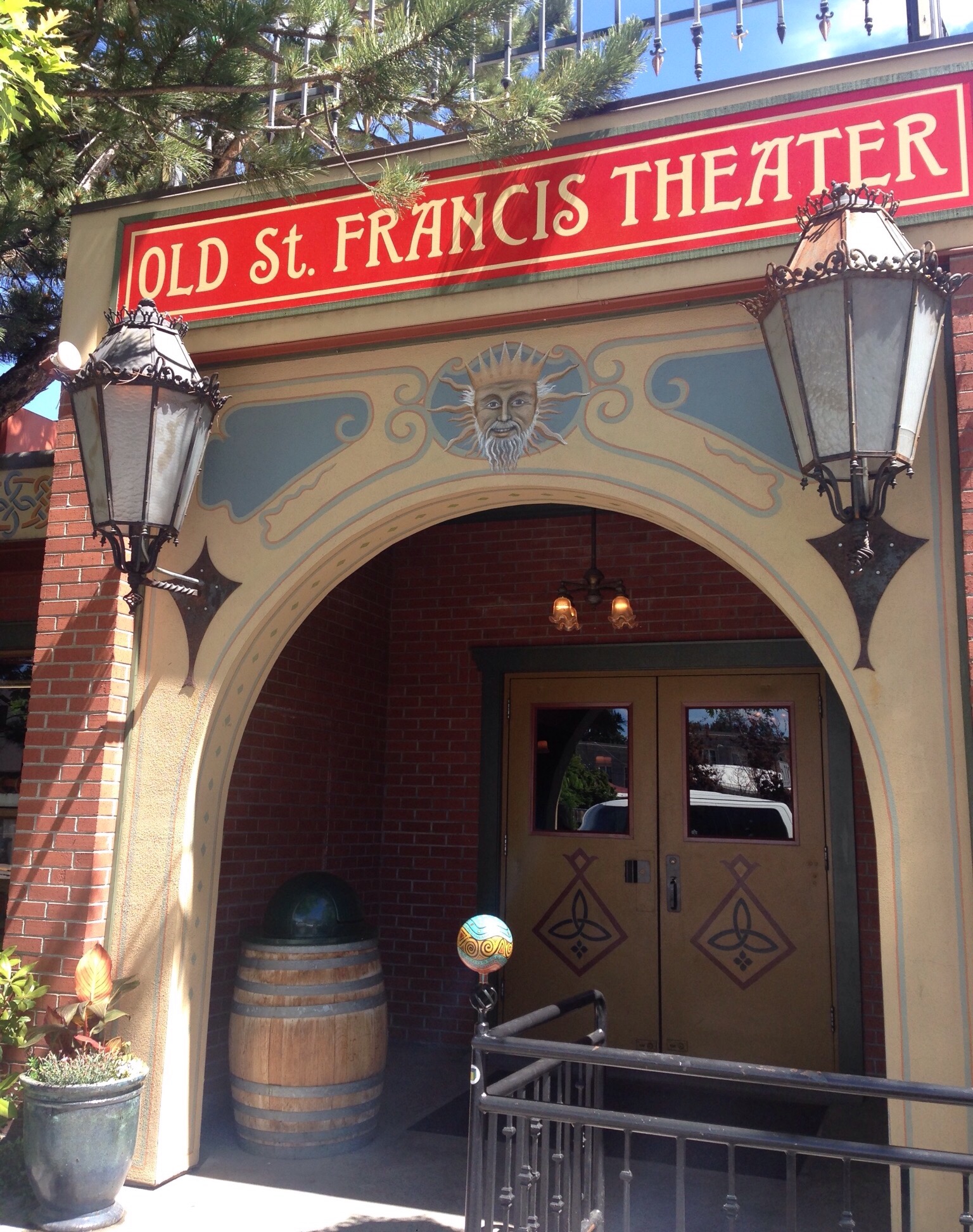
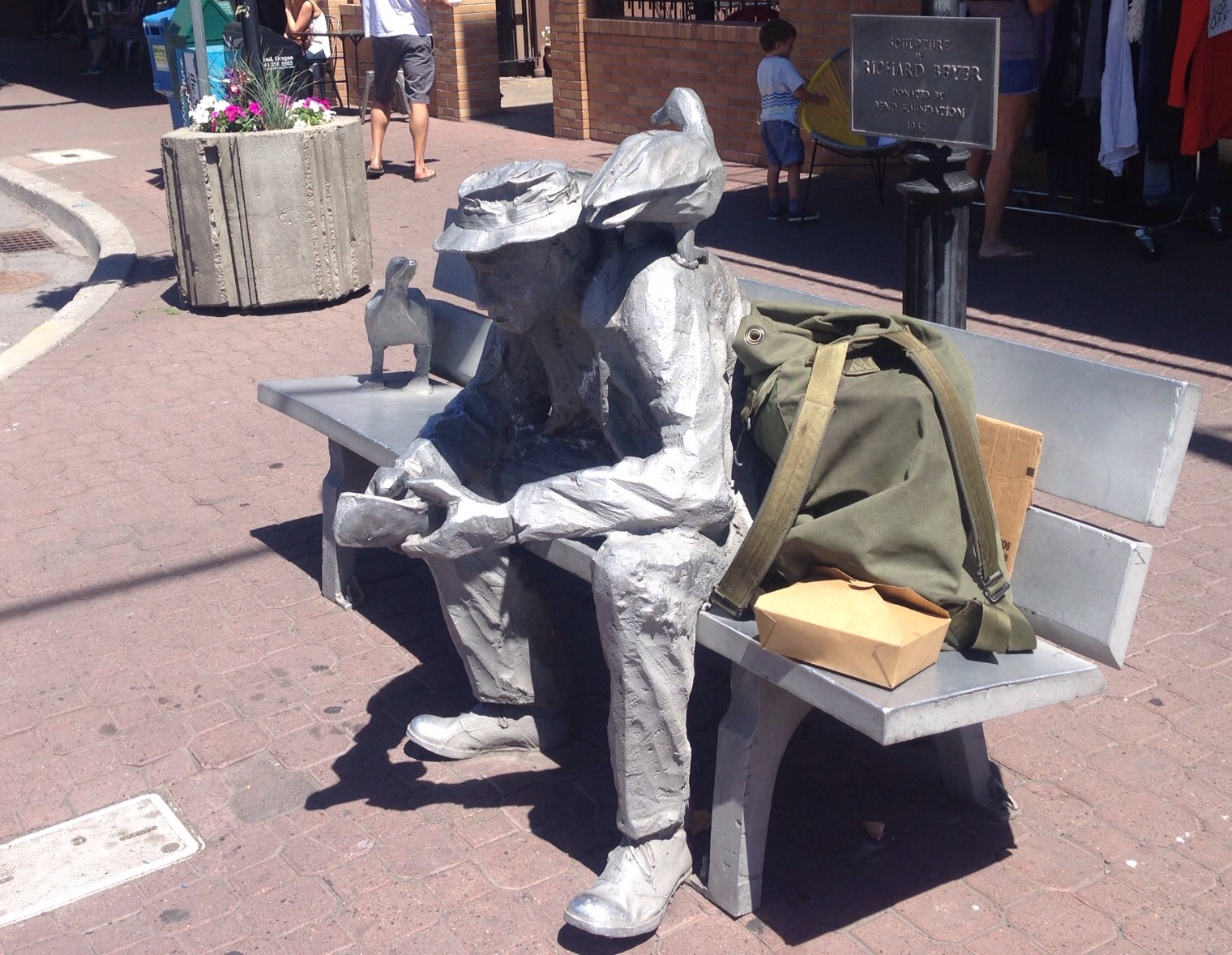
Some downtown buildings on Wall Street, one of the two main downtown thoroughfaresPart of what is now McMenamins — a hotel, pub, and theatre, in a former schoolhouseLots of public art in Bend — this is at a corner in downtownThis is one of many similar-sized pieces of art along a downtown building’s wallOur view of the farmer’s market as we headed towards it
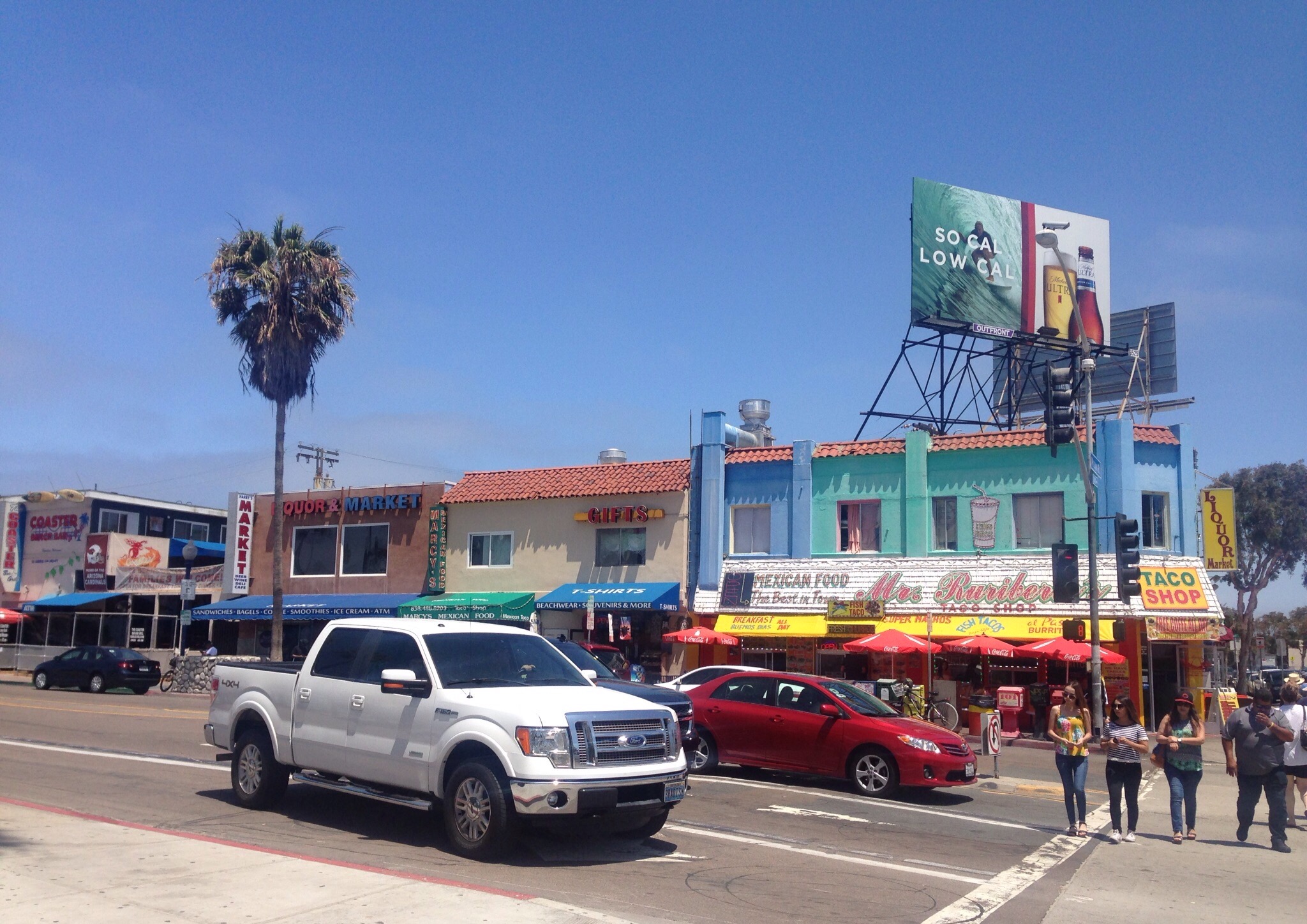
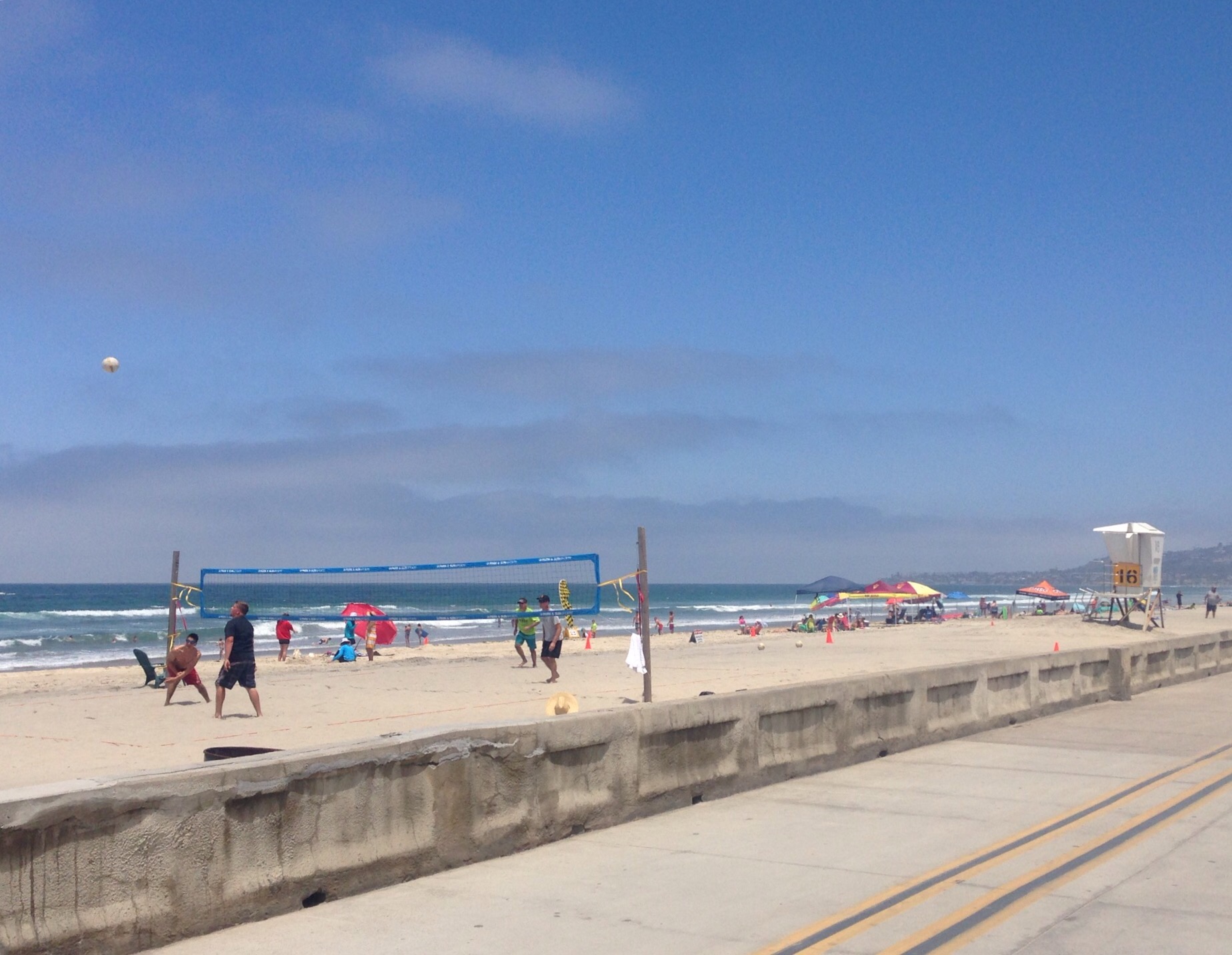
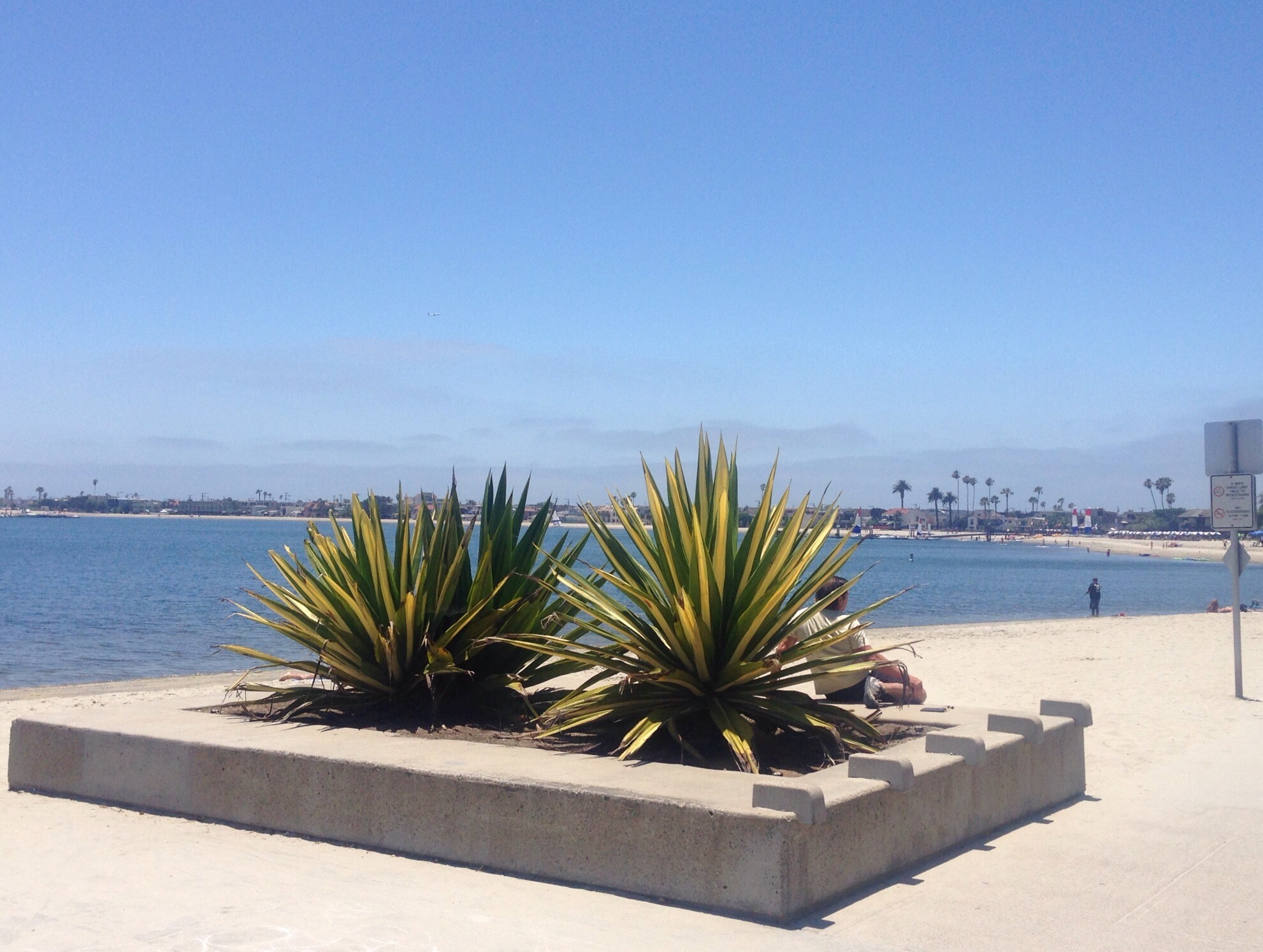
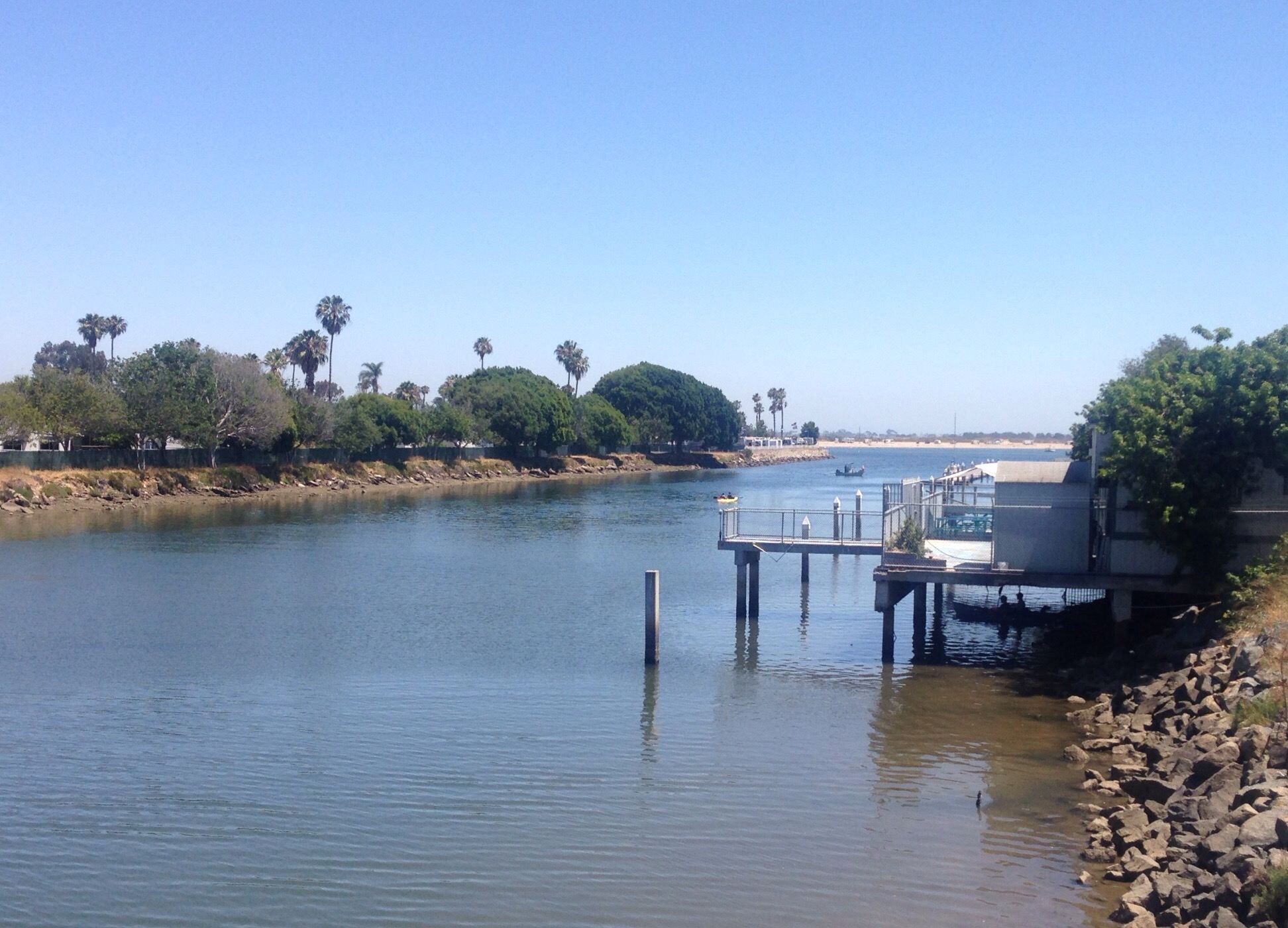
Bob and I had one full day ( Monday, June 19) in San Diego before flying up to Oregon. We stayed near Old Town but spent the day walking to and around Mission Bay, Mission Beach, and Pacific Beach. It was a full-day hike, and for us land-locked folks, it provided another opportunity to view the beautiful coast.
Photos below–
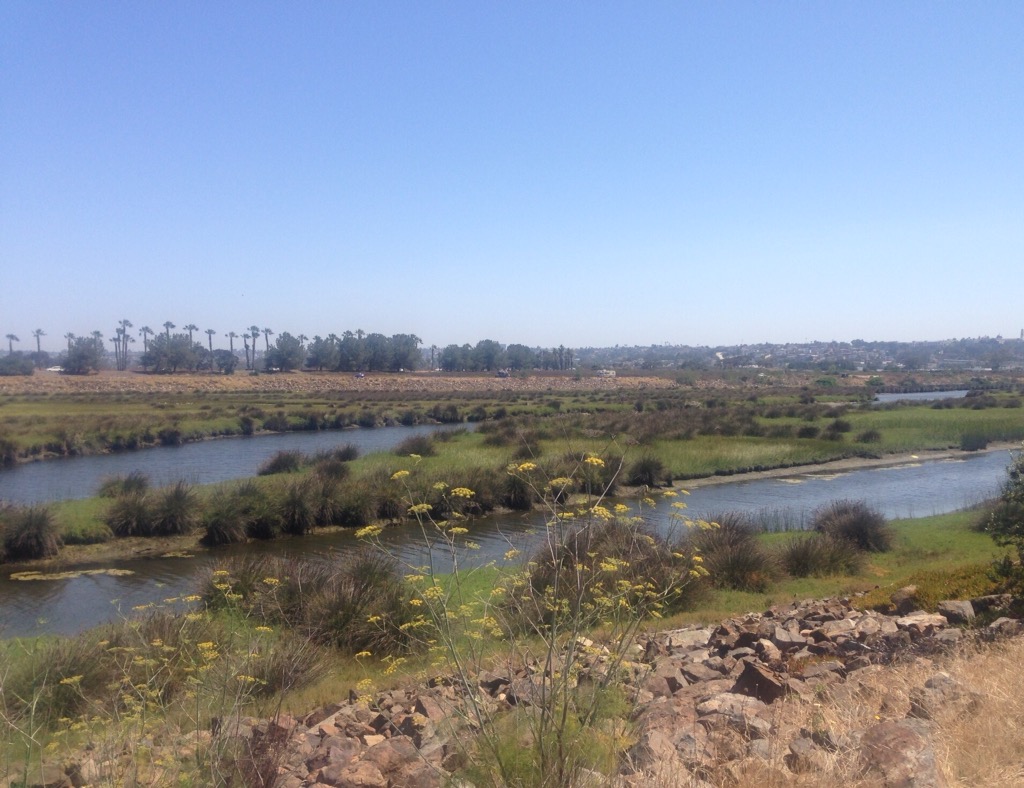
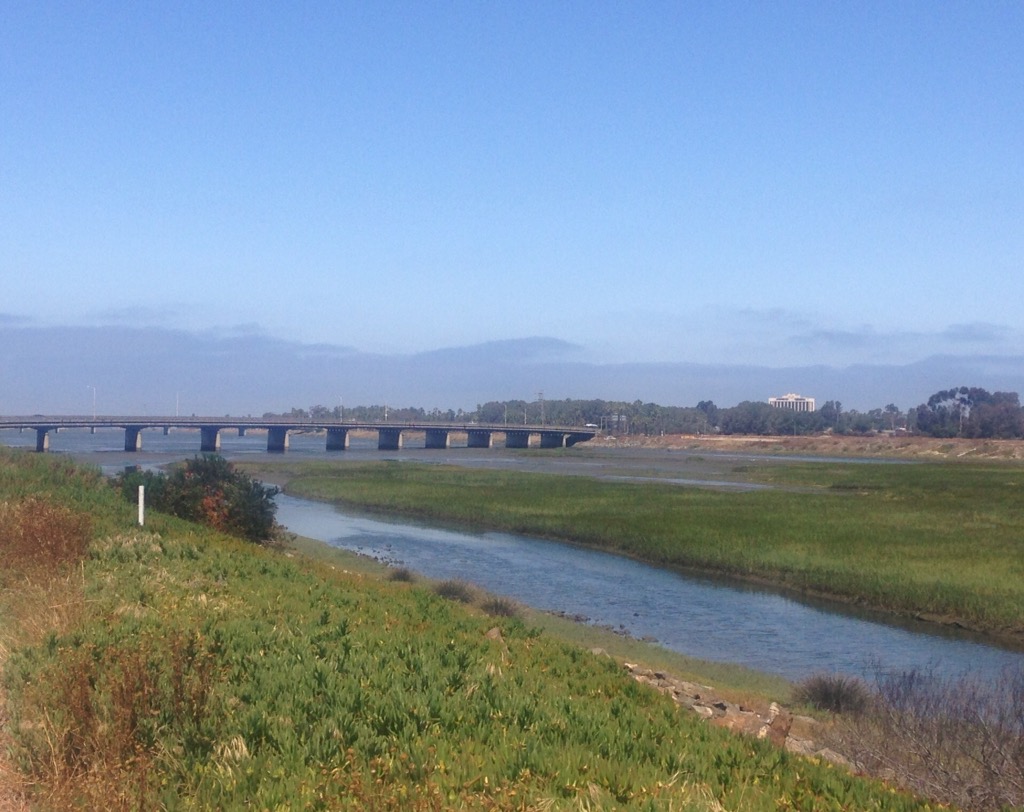
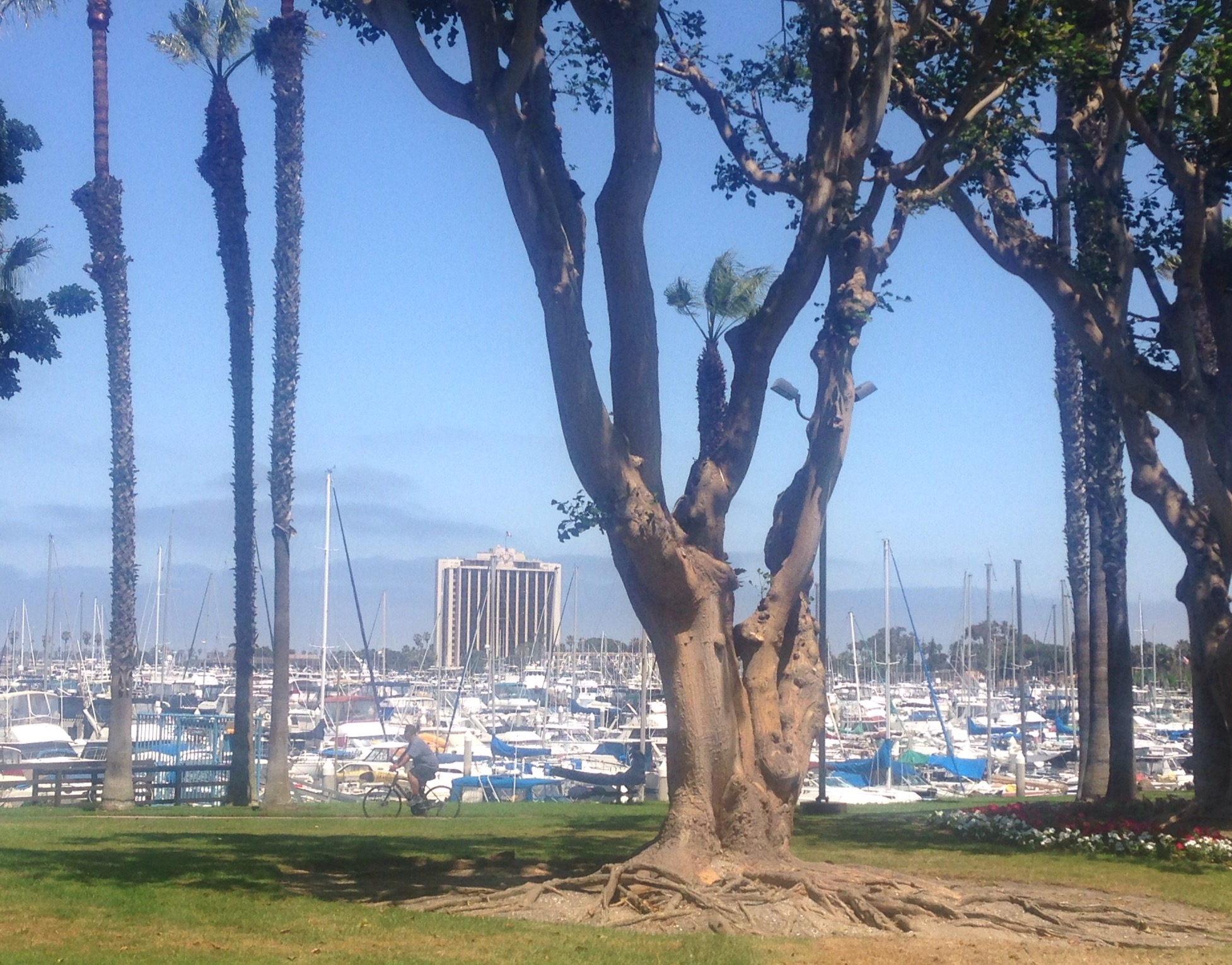
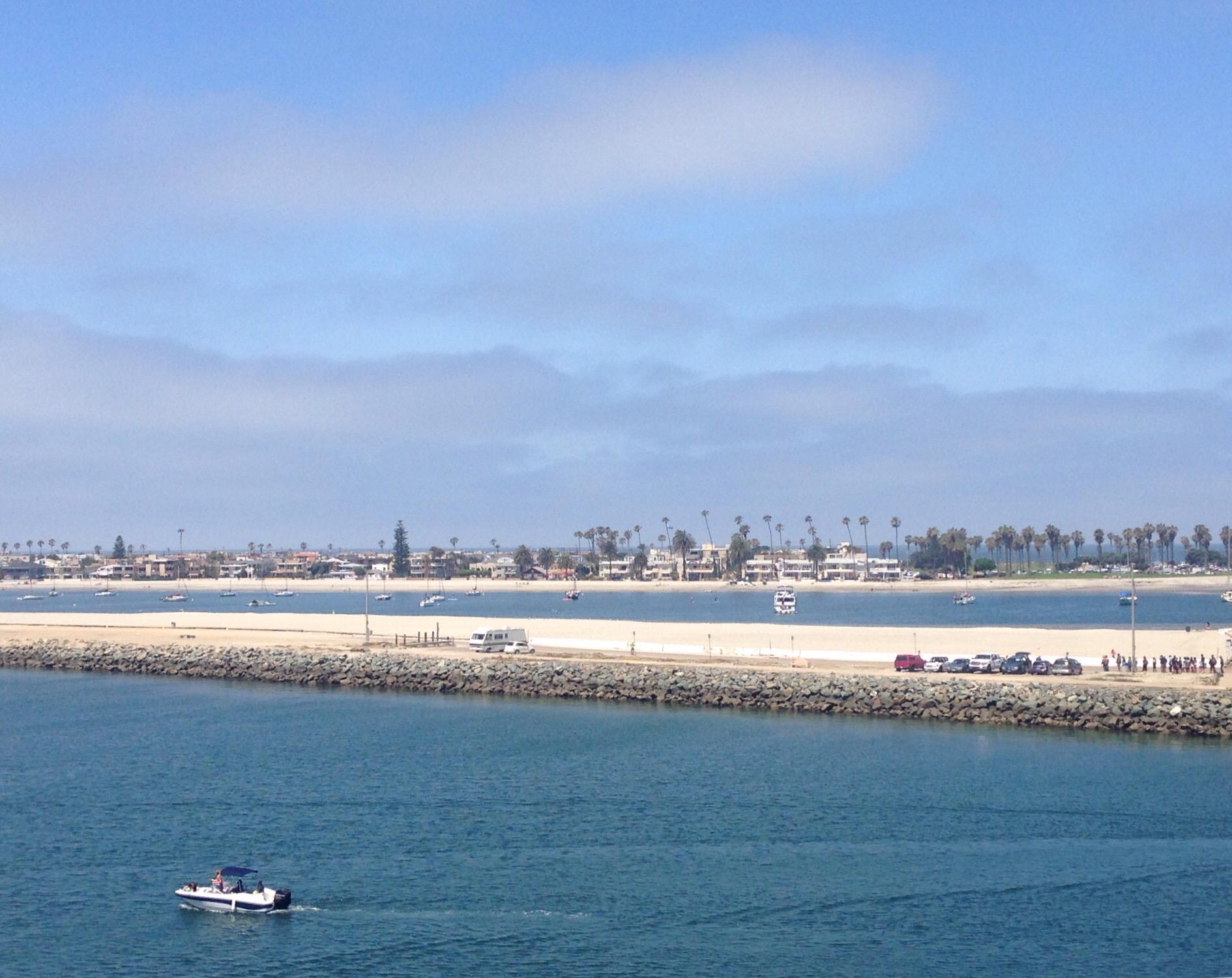
We started off along a wetland preserve — part of our initial route on our bike across the US a few years ago.More of the reserveA popular boat harborDowntown Mission BeachFun on the beachInland waterways are just as lovely
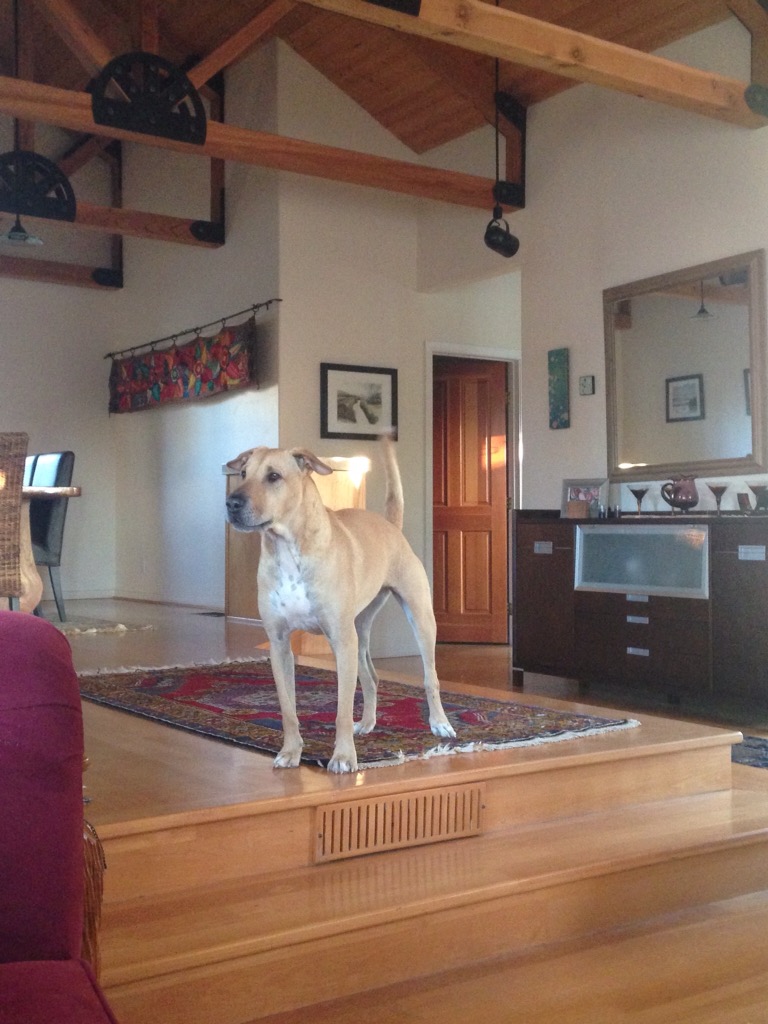
While our house sit in Encinitas was short, it left a big impression. We loved the beautiful community, the climate, and the walk-ability of the area. We also really bonded with “our” dog, Sadie. She is a rescue from Hawaii. There is apparently a lot of animals left homeless there when their owners leave the island. She couldn’t have been sweeter and kept us very close company in bed.
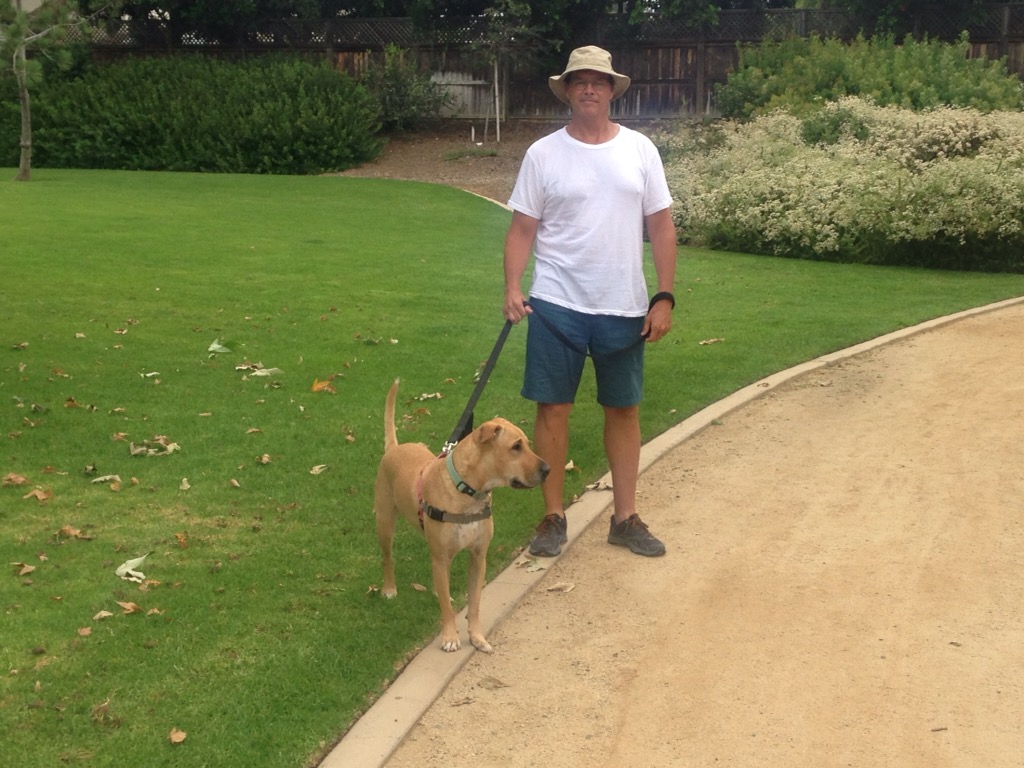
Sadie checking out a noise out frontBob and Sadie walking in the nearby park
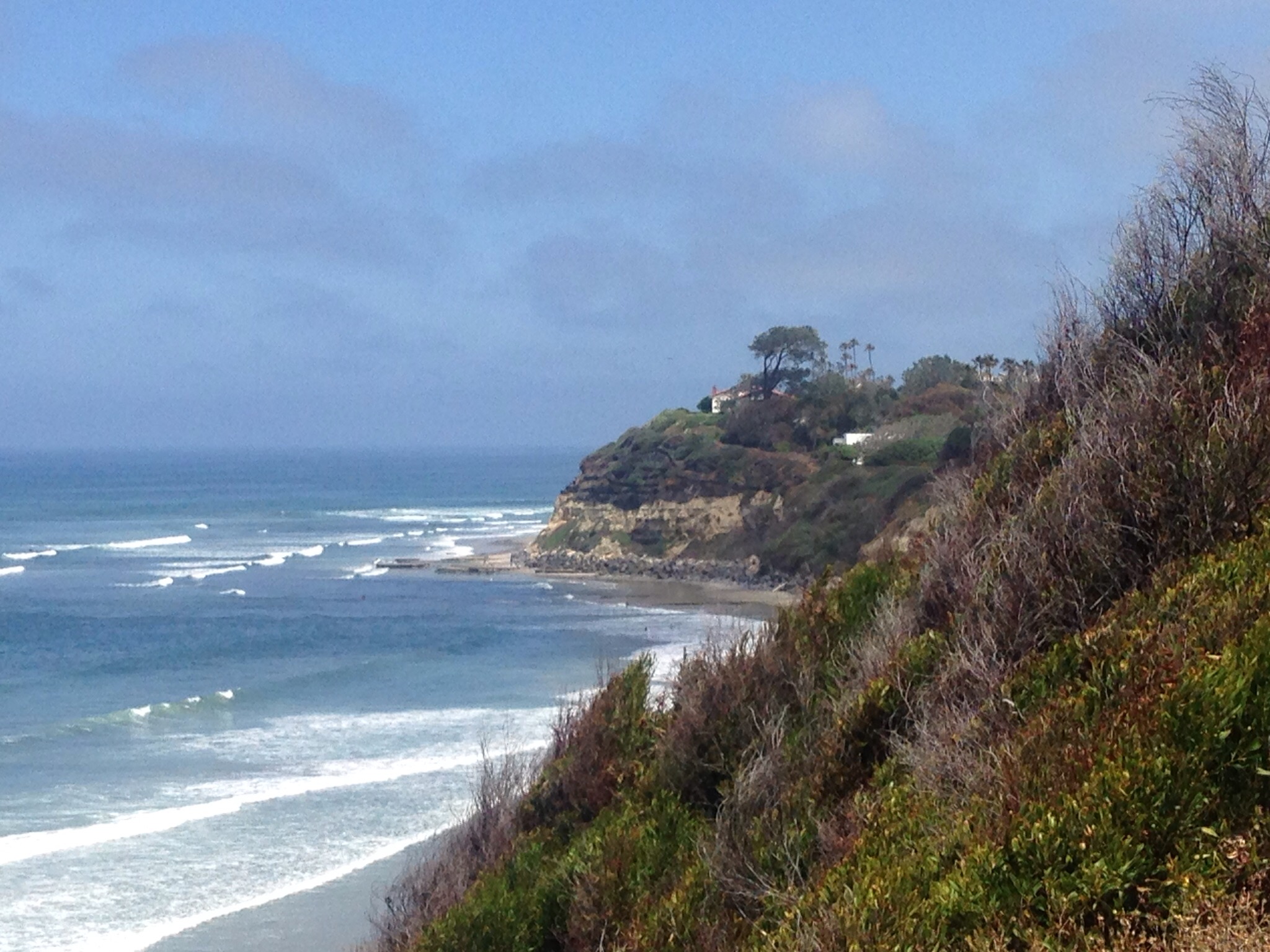
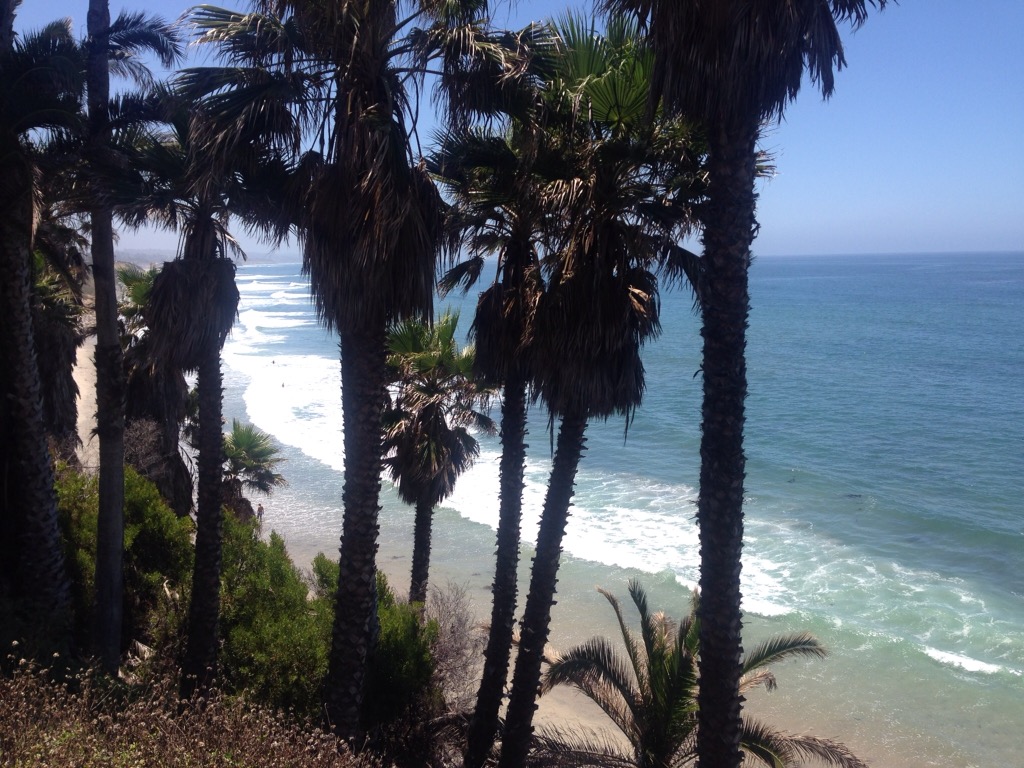
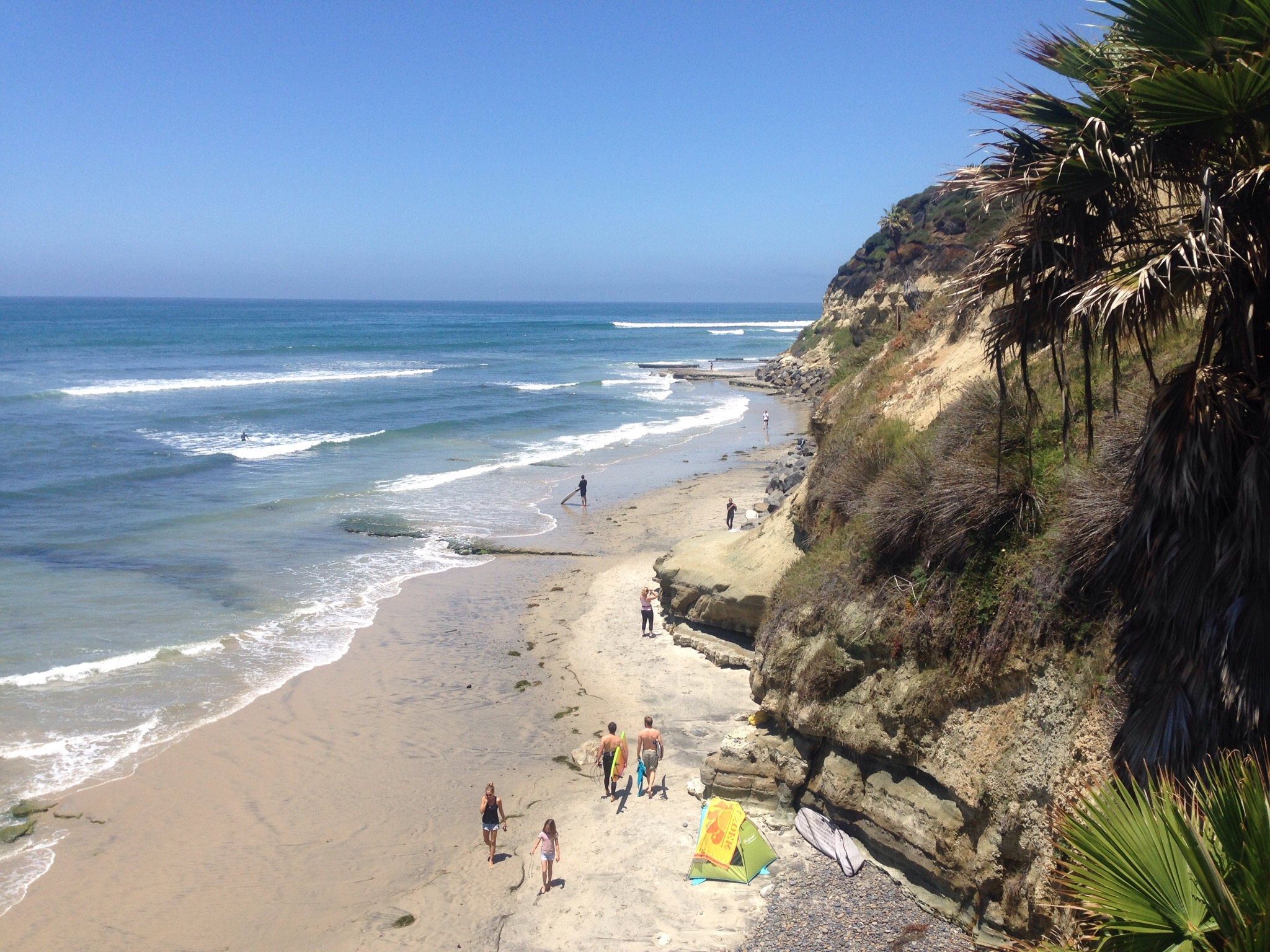
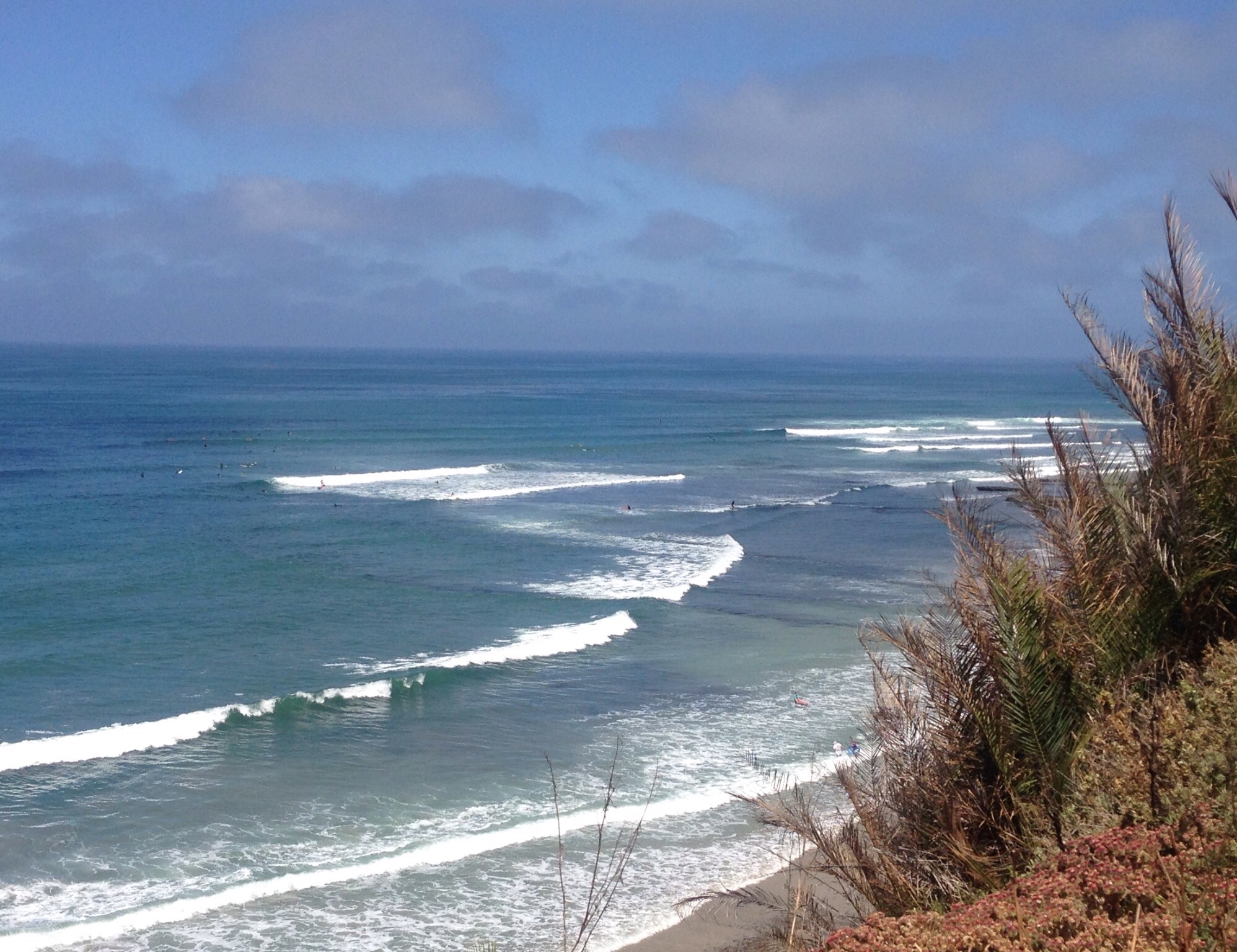
The beaches and coastline are gorgeous —
Moonlight Beach — about 2 blocks from the Main Street area of EncinitasView of the beach from the H street viewpoint and beach accessWe walked this trail along hwy 101 from Encinitas to Cardiff. There were runners, bikers, and lots of people changing at their cars to go surfing or swimmingBlue is such a happy color!People out on the beachMore beach/coastline between Encinitas and CardiffIt was hard to get anywhere — cuz we kept stopping to take photos! This is looking back towards Encinitas.
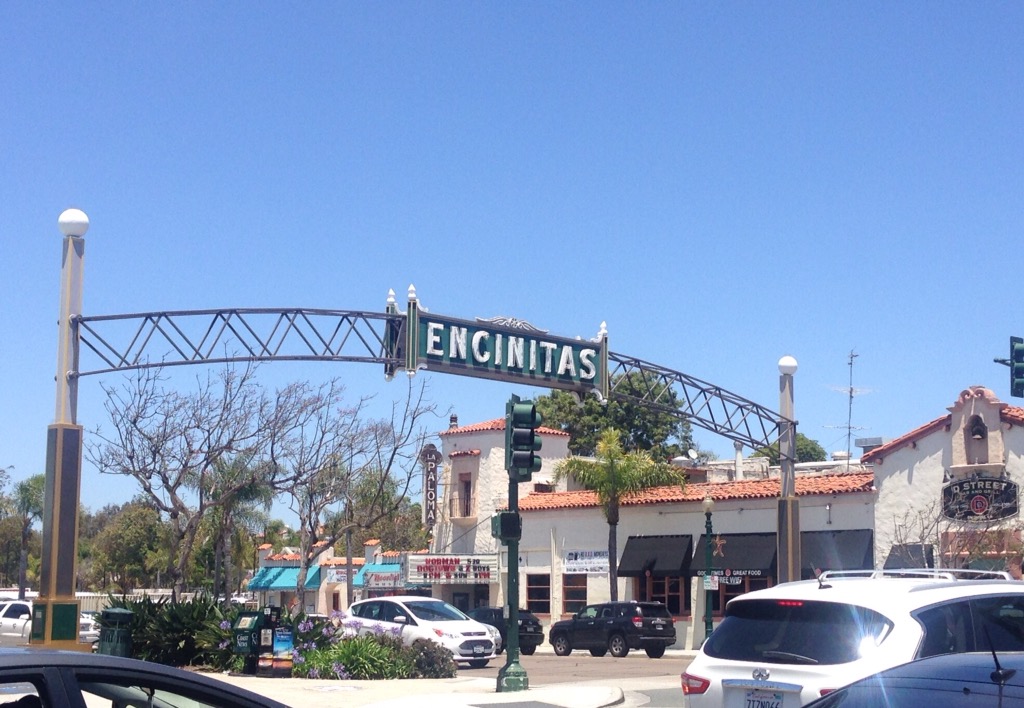
The downtown area was cute with lots of retail and dining options —
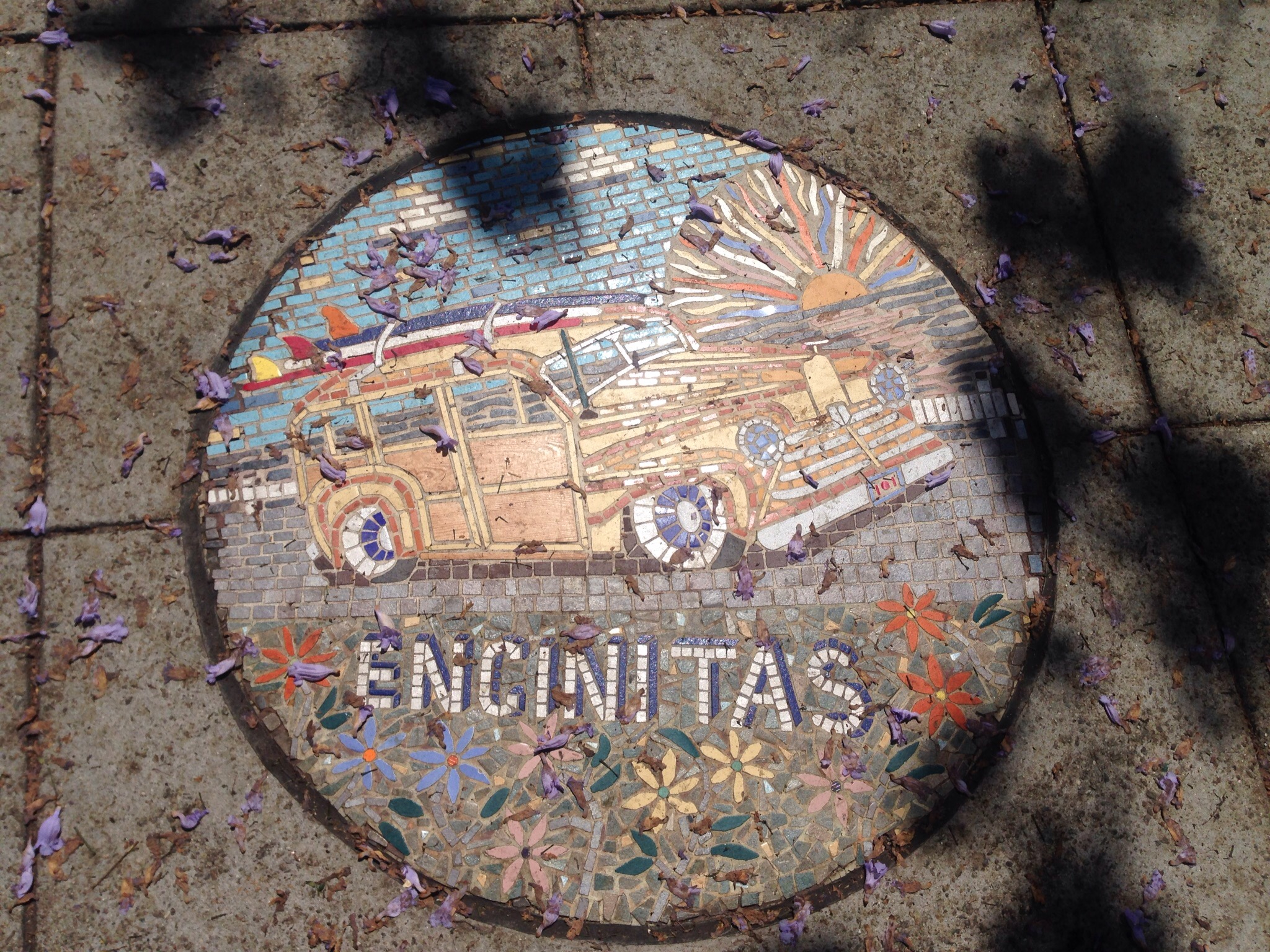
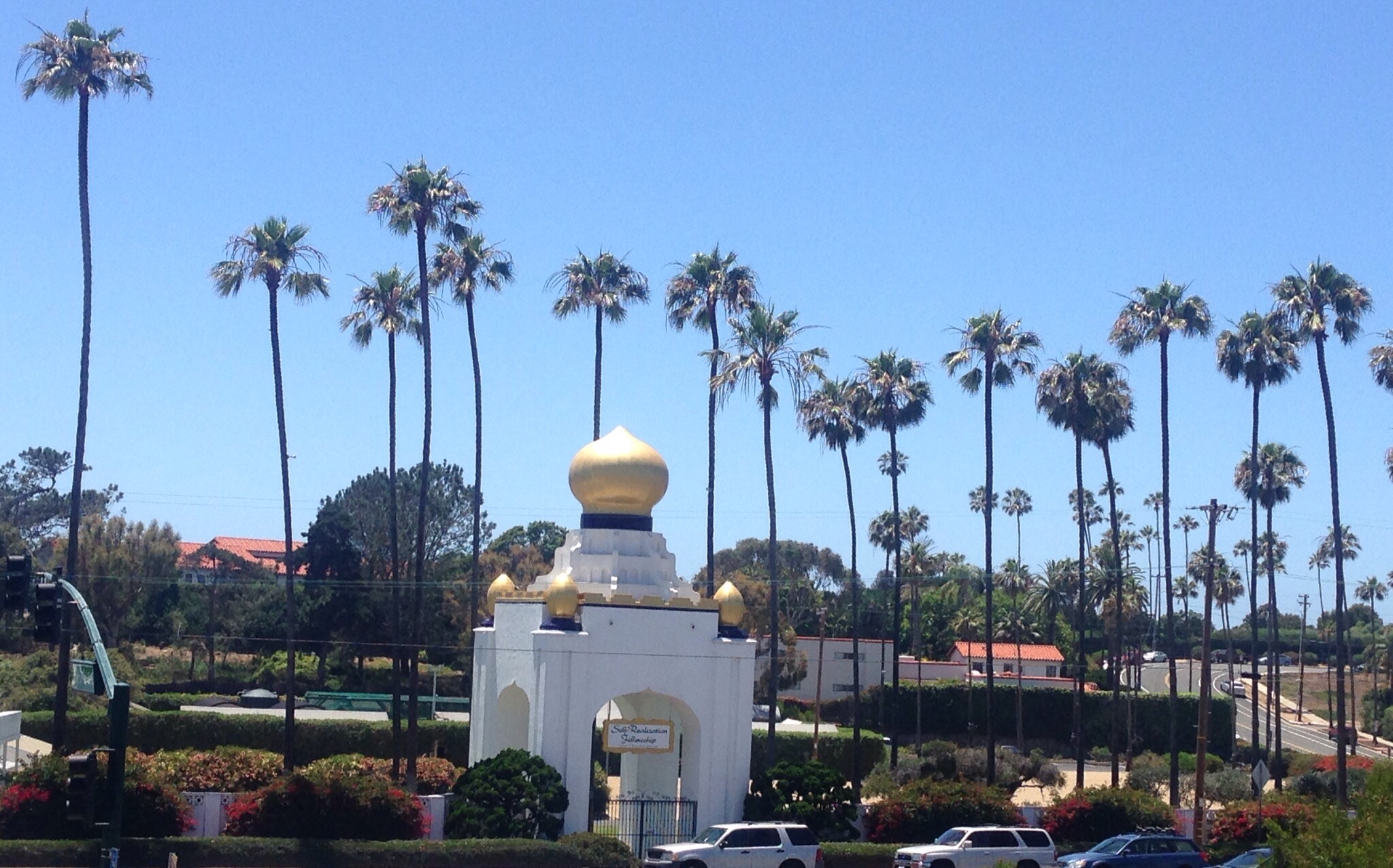
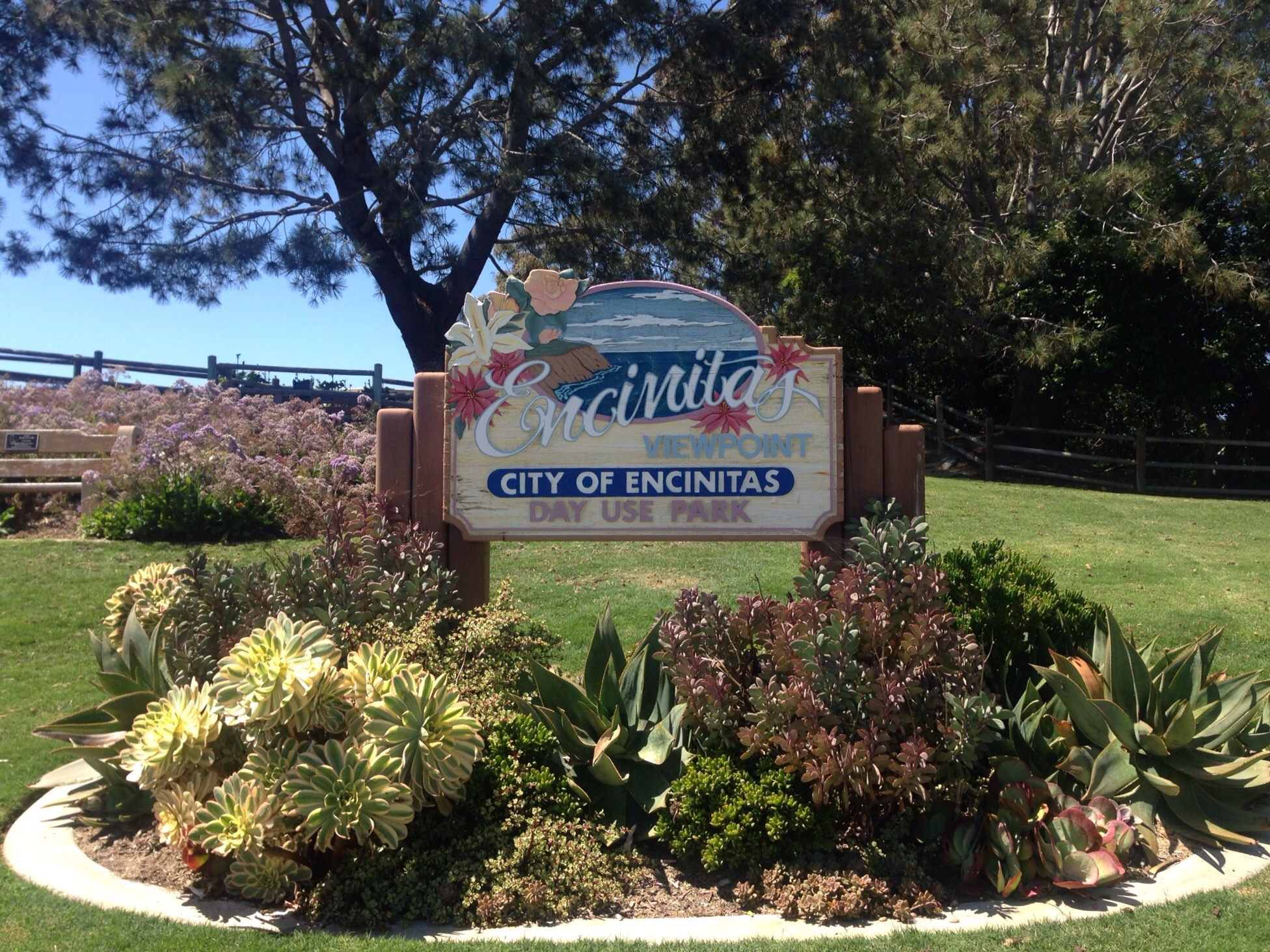
The Encinitas sign over the Main Street areaOne of several mosaic circles in downtown EncinitasThe Self Realization Fellowship founded in 1920 by Paramahansa Yogananda
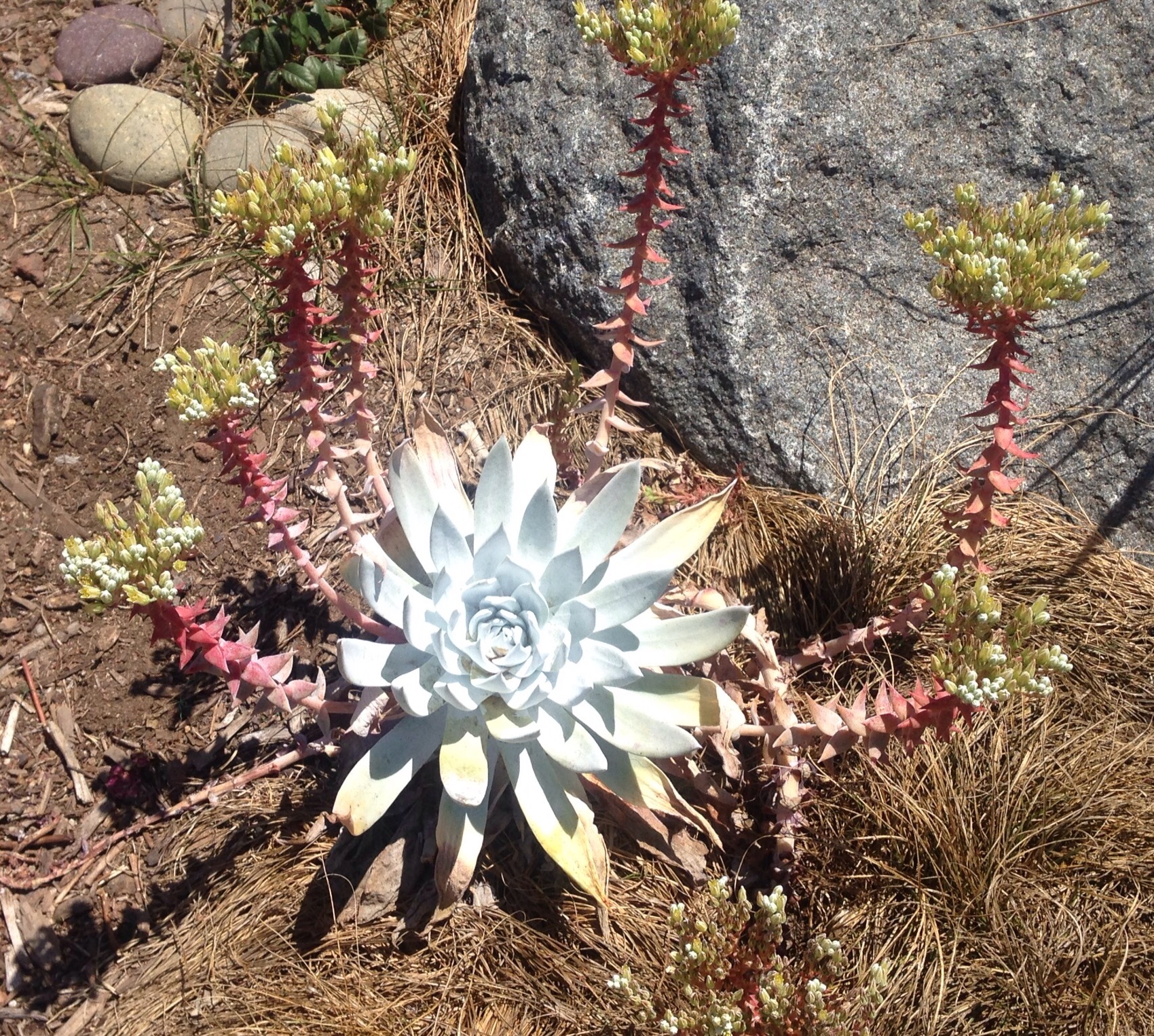
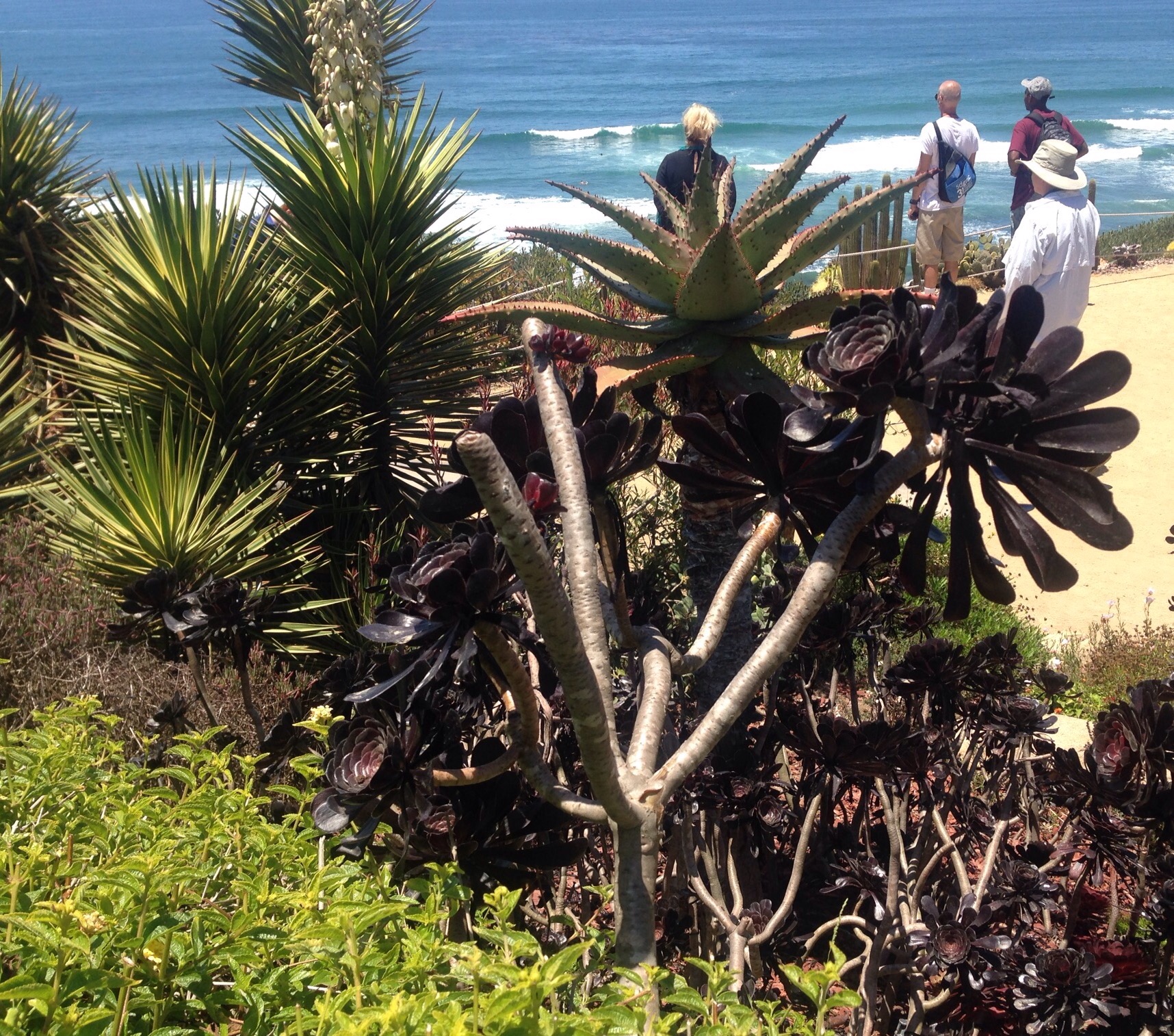
We also loved the variety of flowers and plants in the parks, gardens, and yards —
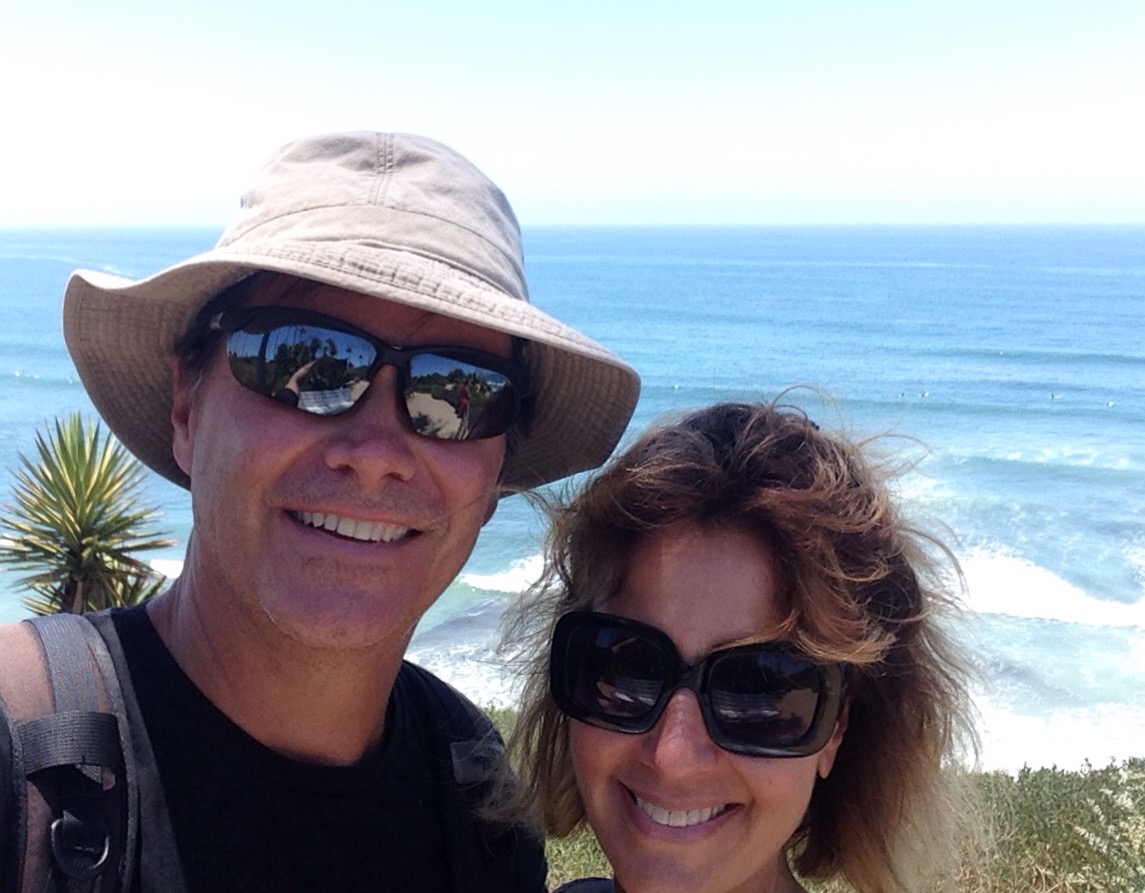
A local yard in our neighborhoodBeautiful cactus flowerOne of many local parksPart of the Meditation Garden at the Self Realization FellowshipMore of the (free!) Meditation GardenShameless selfie at the Meditation Garden
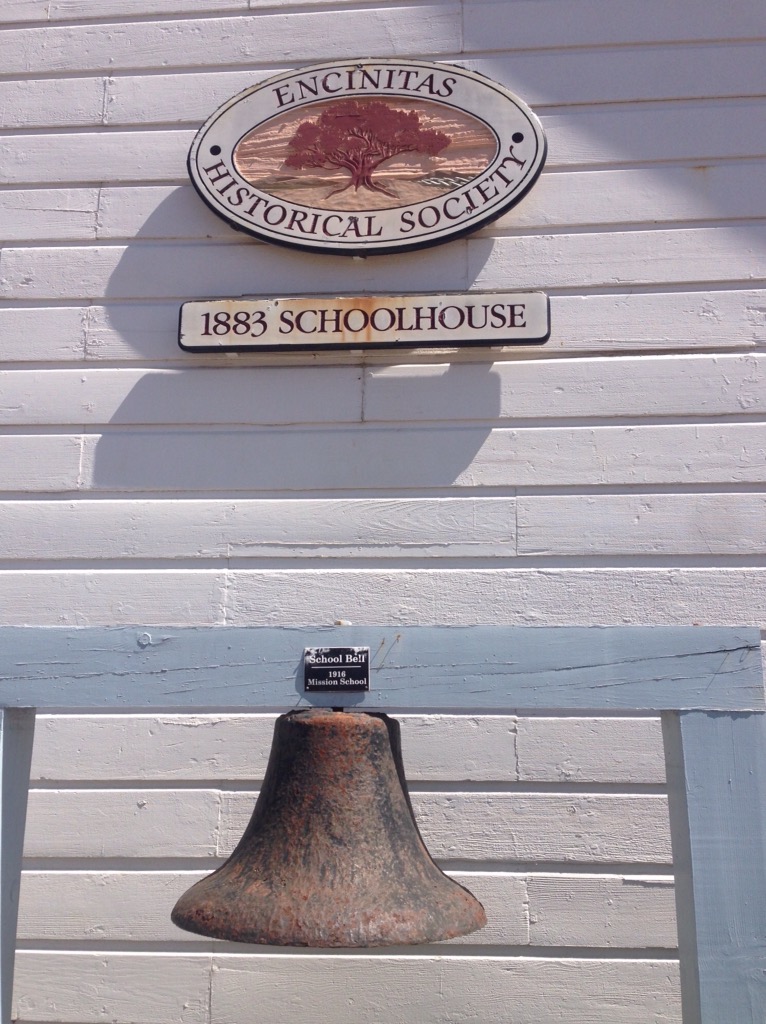
We even spent a couple of hours on Saturday on a free historical walking tour. It was interesting to learn more about the community — including the fact that Encinitas was the first town established between San Diego and LA due to its role in the development of the railroad.
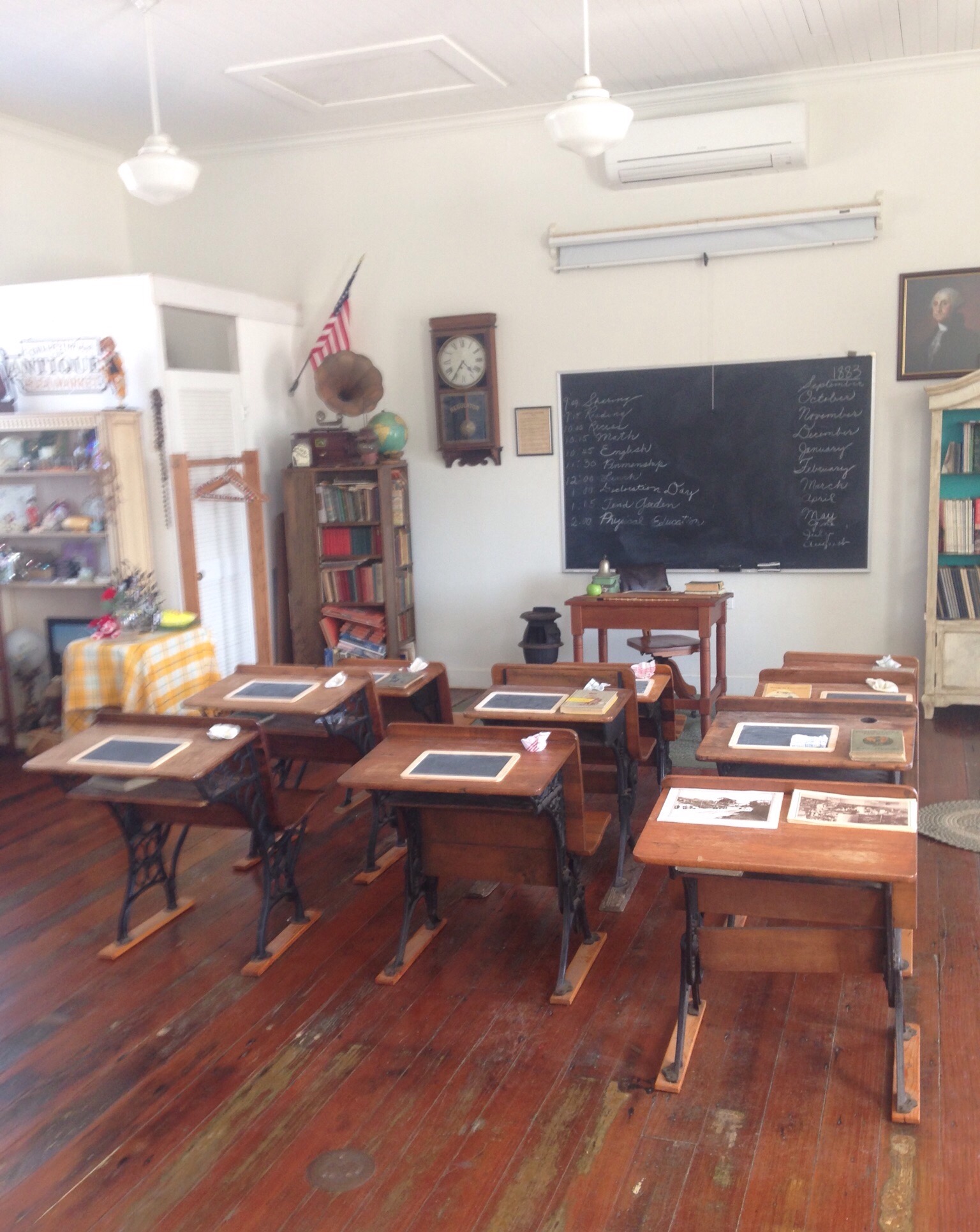
The outside of the original schoolhouseThe recreated inside of the original school houseTwo original boat houses that were built for on-land housing. They are currently affordable housing rentals, but the one on the left will be turned into a museum.
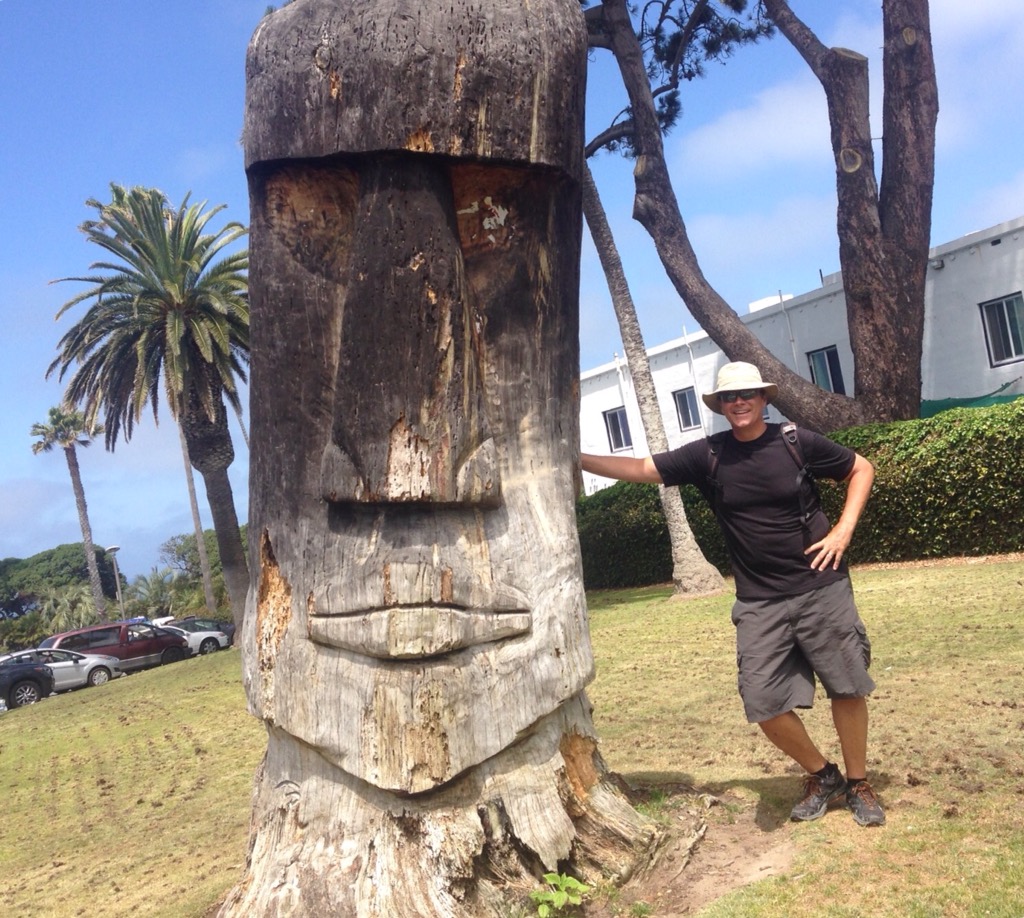
Oh, and we scored Bob another Big Head photo.






























 Peckish Travels