Bob and I traveled from Northern Ireland to Scotland by ferry on Monday, and today we traveled from Scotland to England by train. On Tuesday and Wednesday, we had a lovely visit with our friends, Stan and Mary (and canine friend Otter) in Thornhill, Scotland and were even able to help celebrate Mary’s birthday yesterday. We like to say that they are who we want to be when we get older, but we wouldn’t mind being more like them now. They are the consummate hosts, dear friends, and knowing them will always ensure that Thornhill and the greater Dumfries and Galloway area will hold a special place in our hearts.
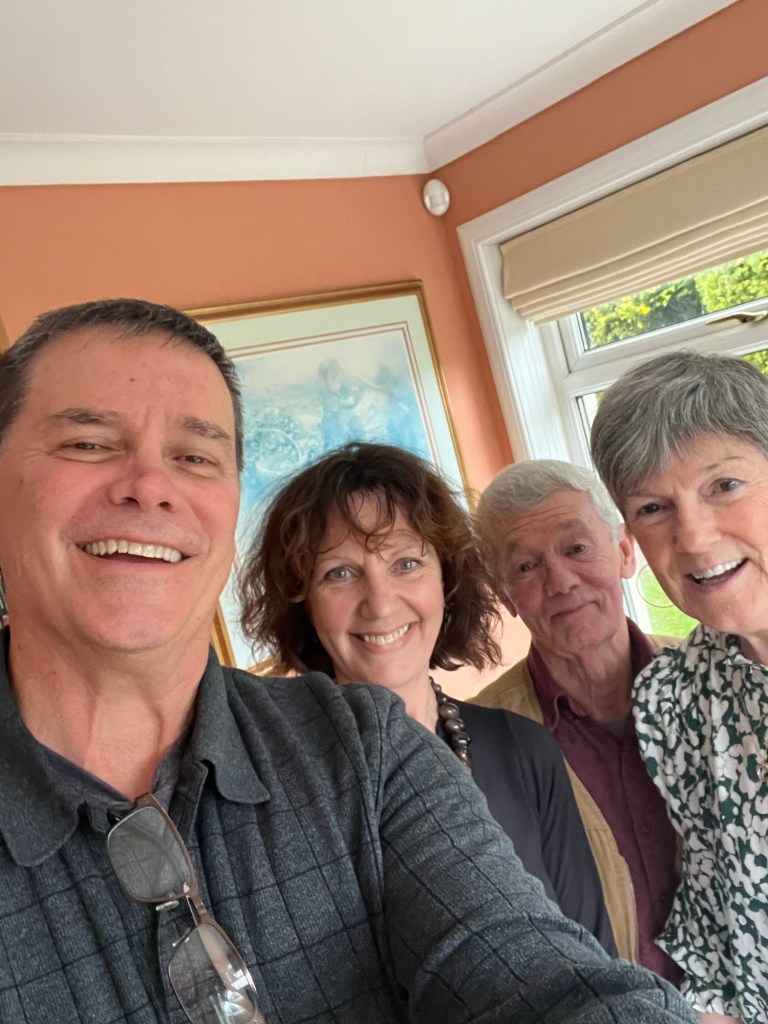
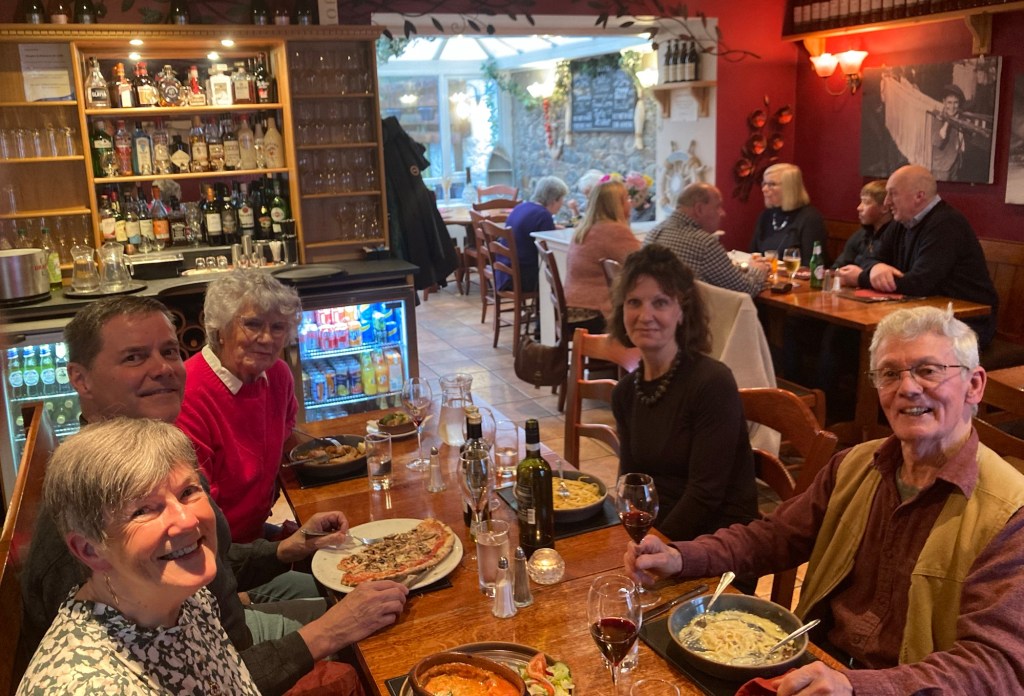
The very sweet OtterA selfie of Bob, me, Stan, and Mary before we left for dinnerMary, Bob, Nancy (Mary’s sister), me, and Stan
They sent us off with another good breakfast and Stan drove us to the train station in Dumfries, Scotland, where we caught a 9:00 am train to Carlisle, England (about 40 minutes) and then changed trains for a 3 hour trip to Birmingham, where we’re spending the evening.
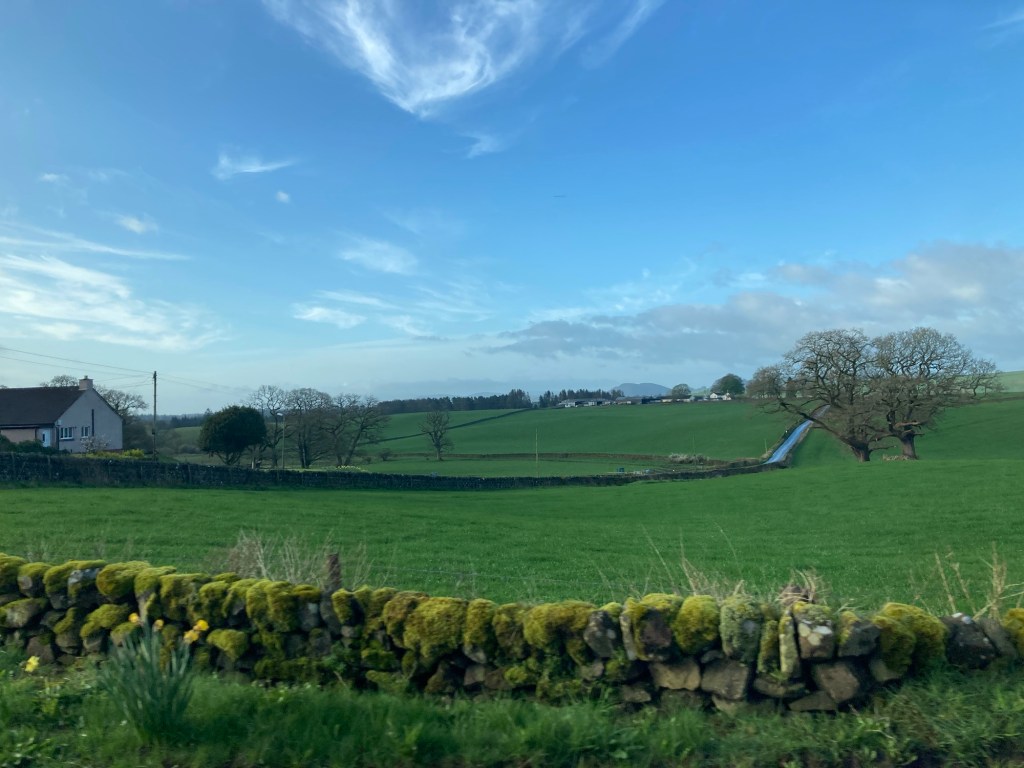
Some of the beautiful green Scottish countryside on the way to the rail station in Dumfries.
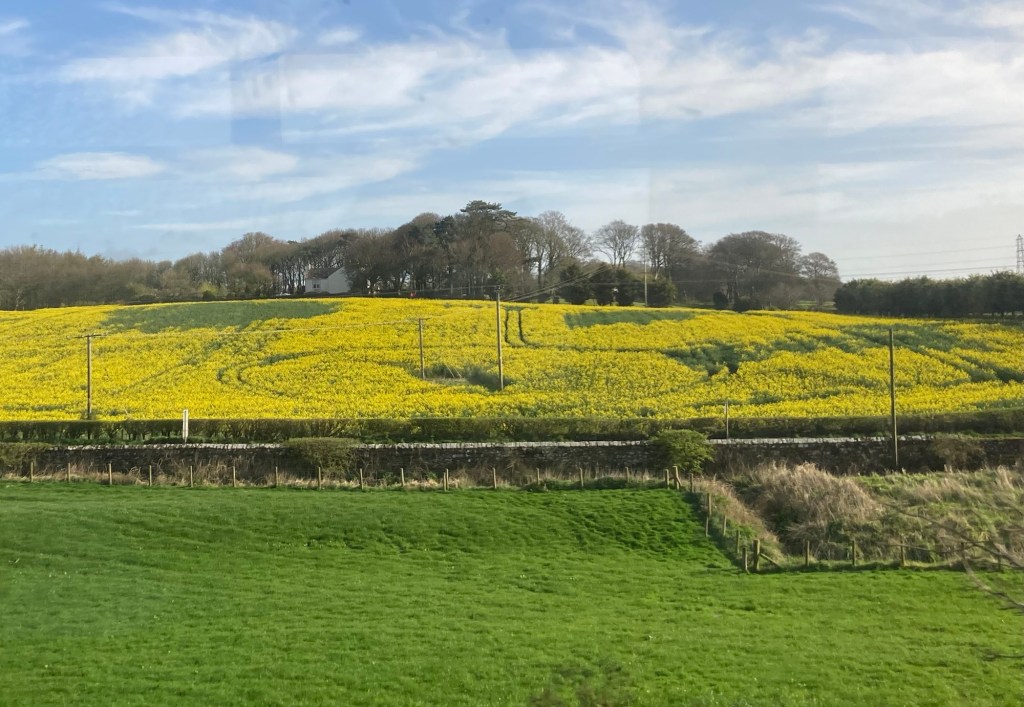
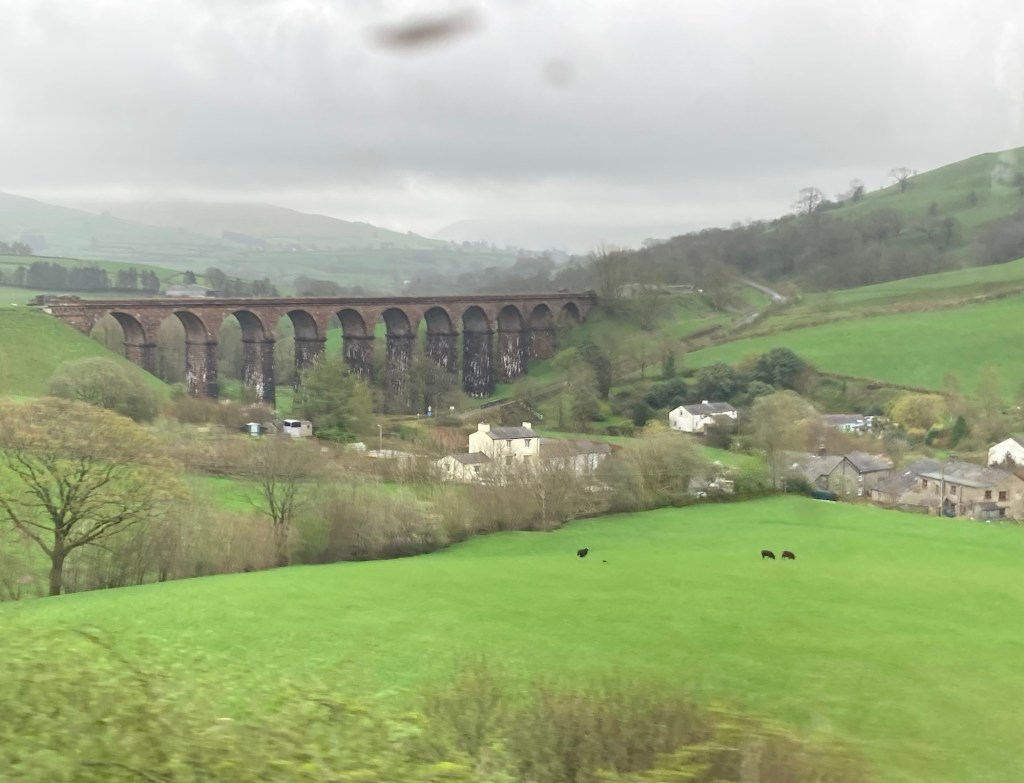
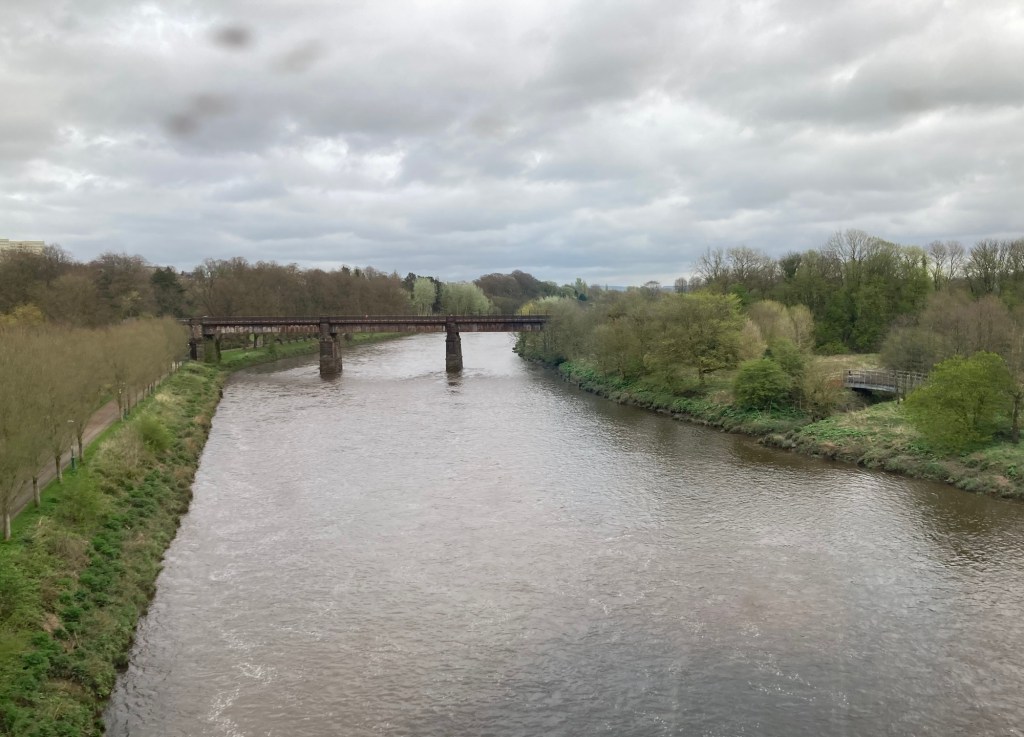
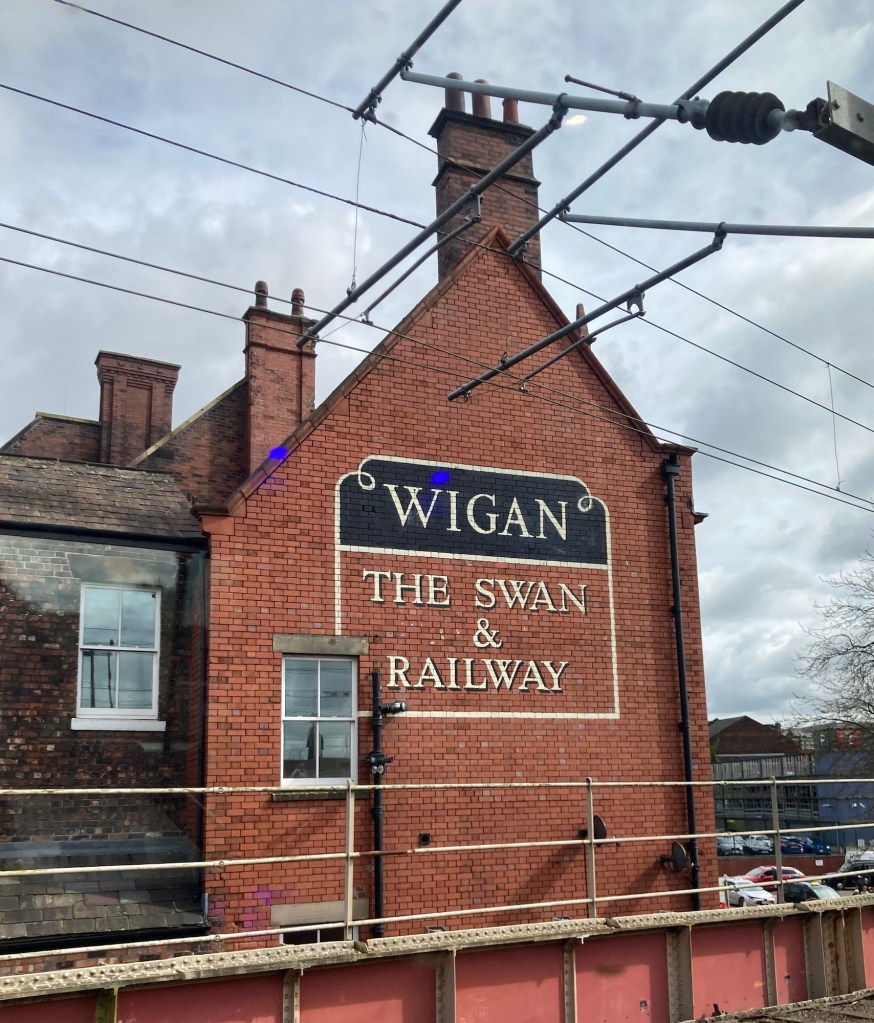
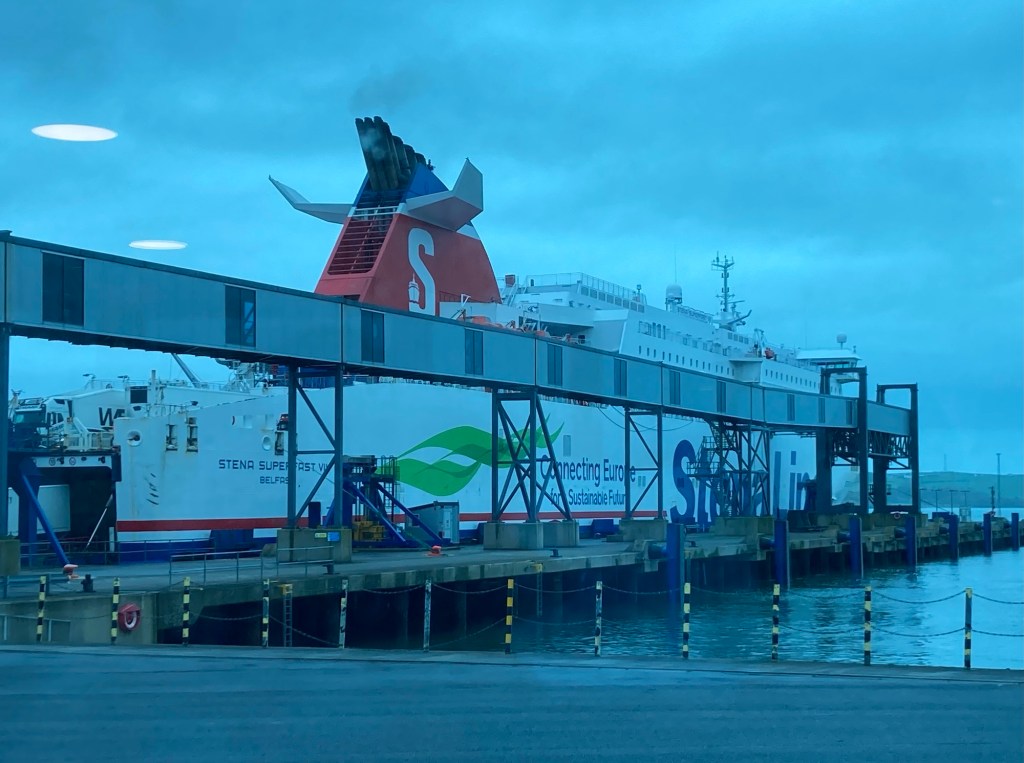
The following are some photos from our train journey to Birmingham.
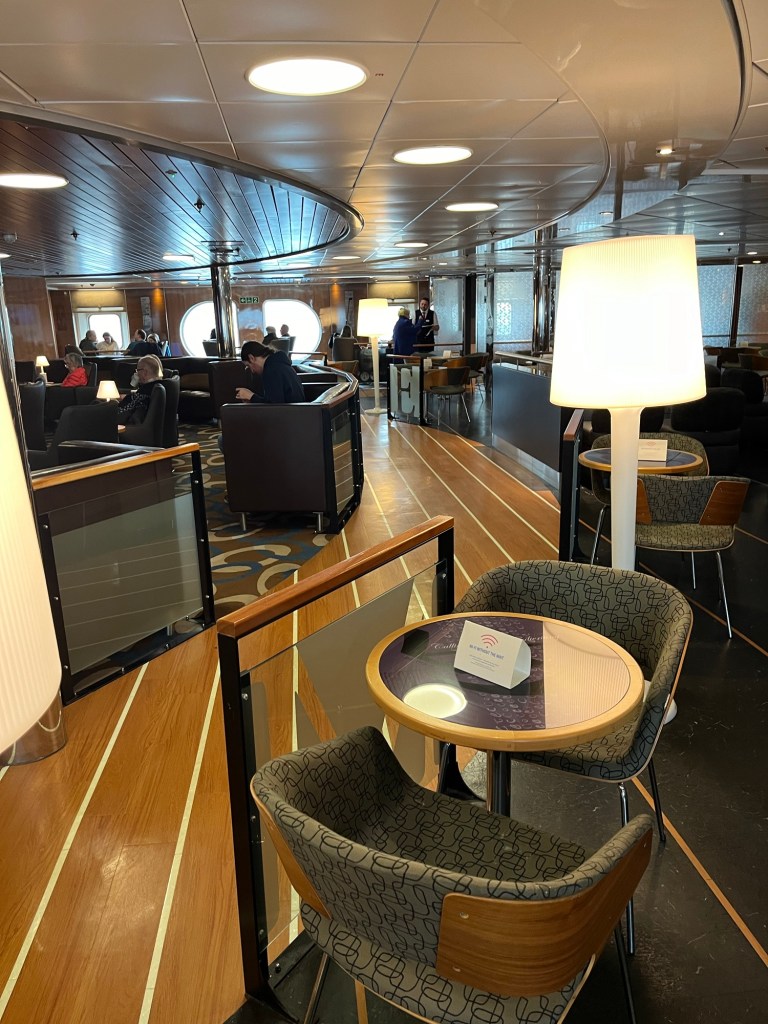
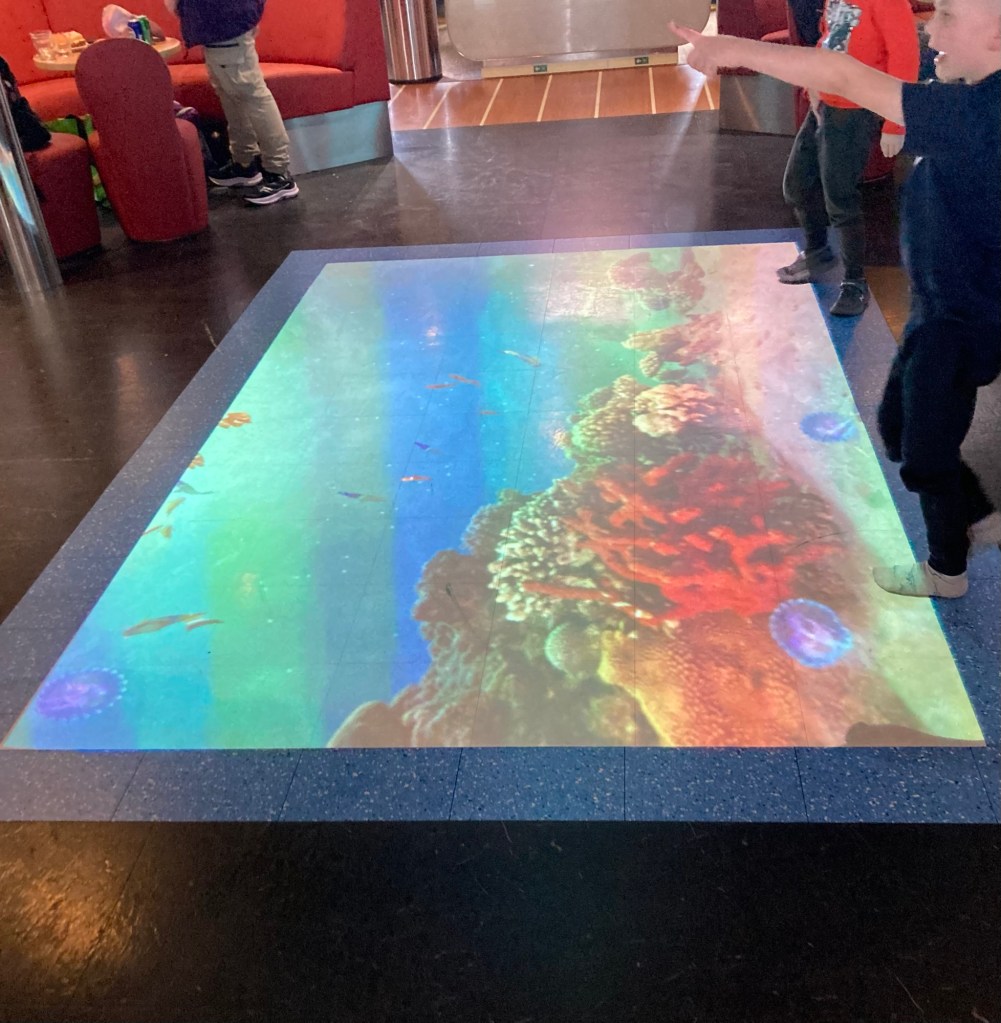
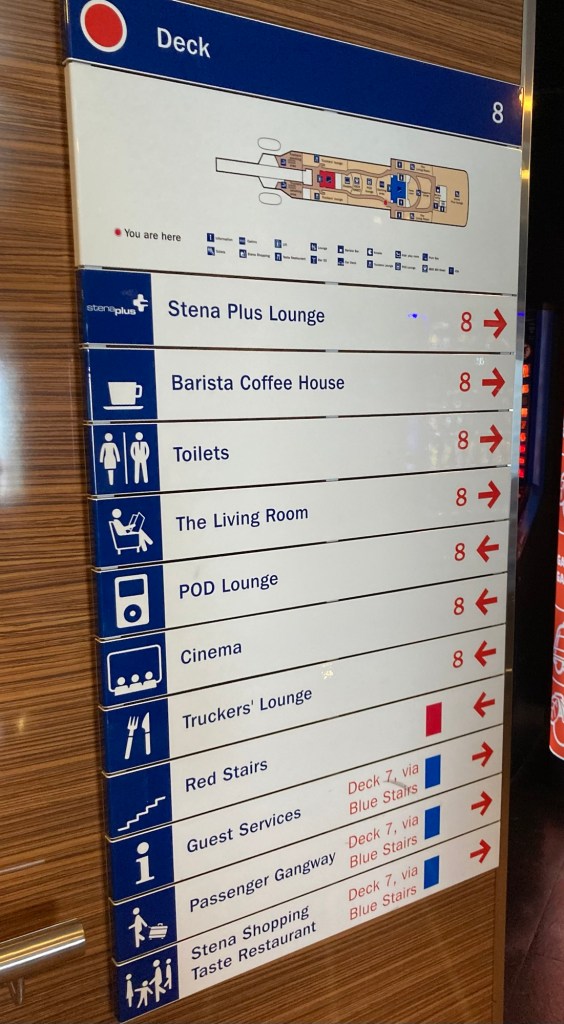
Bob and I left our Belfast hotel today by Uber for a quick 15 minute ride to the harbor to catch the Stena Line ferry to Scotland. We were very happy that the winds had calmed for our sailing. The voyage was 2.5 hours and was happily very smooth. In fact, it is a mode of travel that we would recommend if you have time. Compared to air travel, the check-in and boarding process is super quick with no security screening to worry about, and the boat has comfortable seating with plenty of leg room and lots of options for snacks or eating as well as shopping and diversions for families.
The ferry that took us from Northern Ireland to Scotland One of the lounge areas on the ferryA video display on the floor for kids to interact withSignage for the various offerings on the ferry
We arrived into Scotland at Cairnryan where we called a cab to take us just up the road to Stranraer to spend the evening in the North West Castle Hotel.
Sailing into Scotland Bob checking in at the hotel
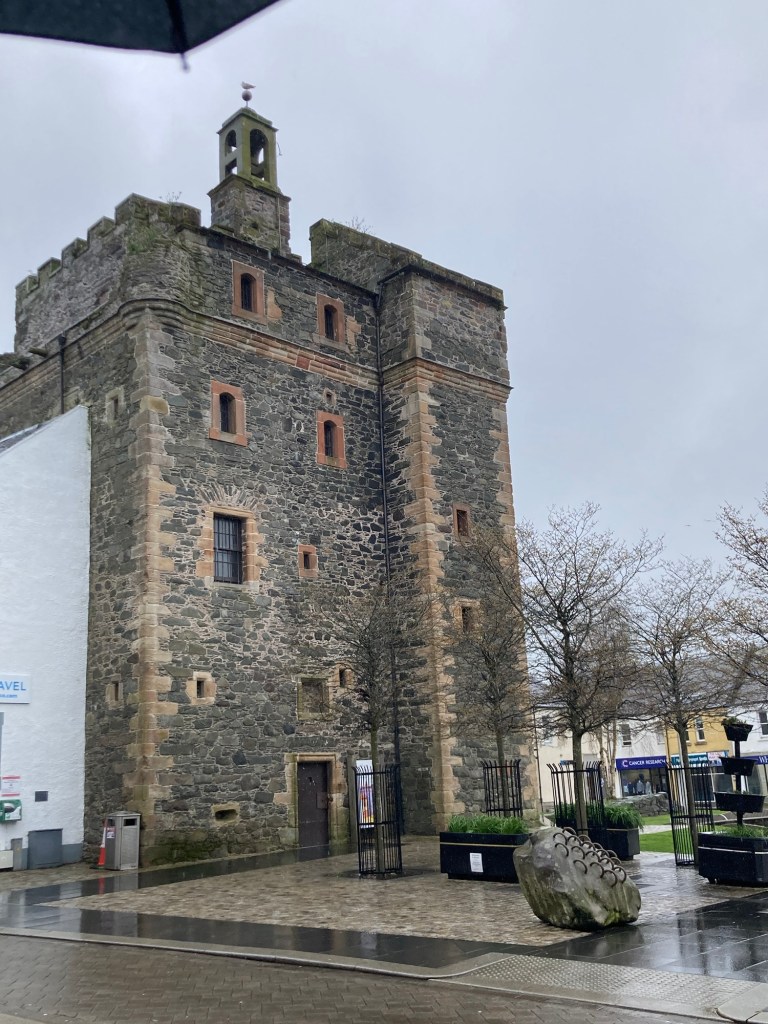
After we got settled in our hotel room, which is actually in a separate small building behind the hotel, we did a short walk about into town and got to experience school let out traffic (both auto and pedestrian). Stranraer is the 2nd largest town in Dumfries and Galloway with a population of nearly 13,000. Stranraer is a Gaelic place name that means fat stream. It used to be the ferry port for the trip from Belfast but that was transferred to Cairnryan in 2011.
Castle of St John, an early 16th century tower house which has been used as a house, court, prison, and military garrison. It’s now a museum.
Tomorrow we will take a bus to Dumfries to meet up with friends and celebrate a birthday.
First, some new news from yesterday’s outing. Yesterday’s wind wasn’t just any wind, it was part of Storm Kathleen. And Kathleen damaged part of the roof of the Titanic Museum, luckily after we left. The wind was still pretty blustery today, but much more manageable for our outing.
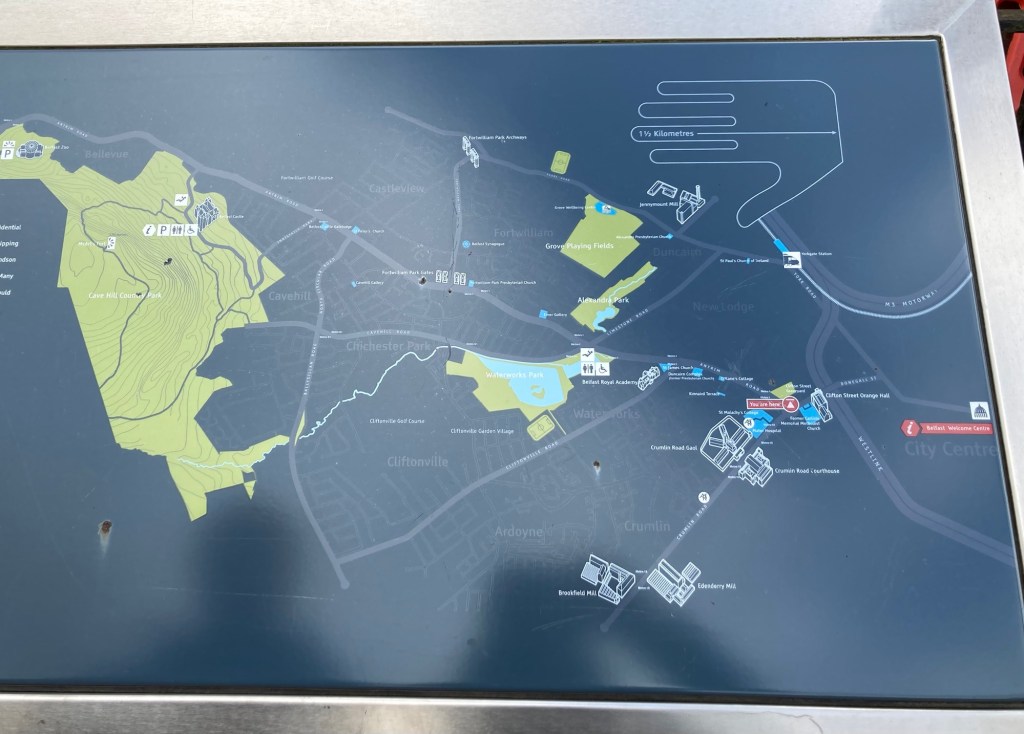
For our last full day in Belfast, we opted to walk to Cave Hill Country Park to check out views, see Belmont Castle, and do a short hike before walking back into town to do some shopping. The 3.5 mile walk to Cave Hill Country Park took us through North Belfast, and we discovered some maps along our walk.
A map of the area showing our location at that time as we headed to the big green space on the left.
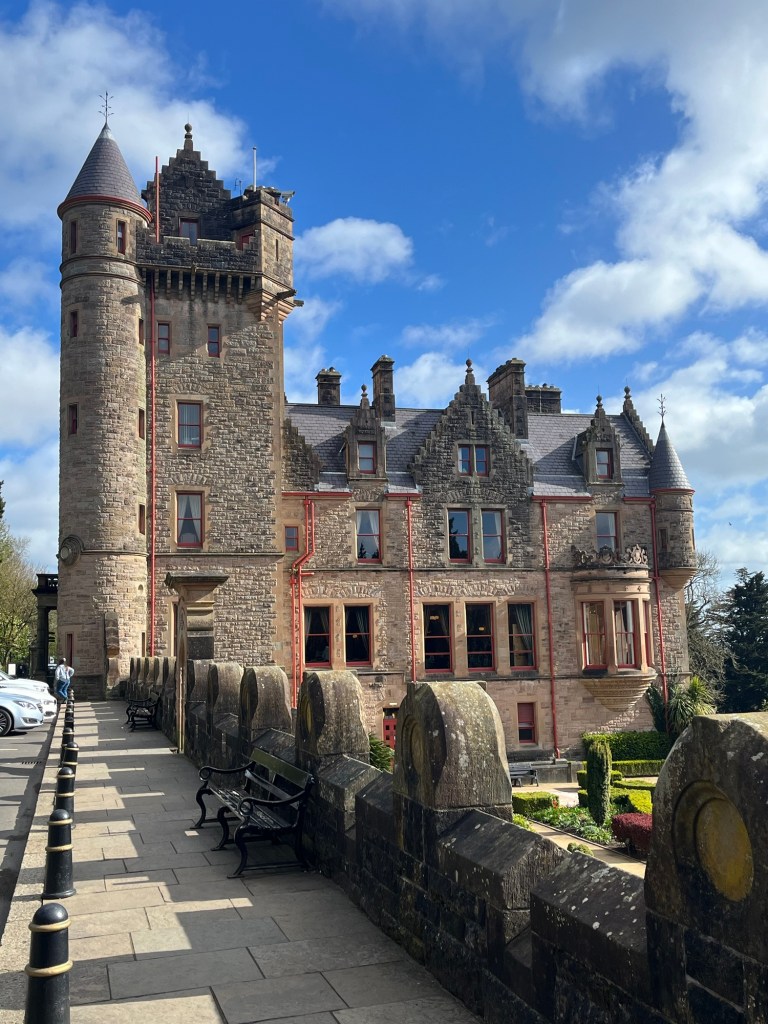
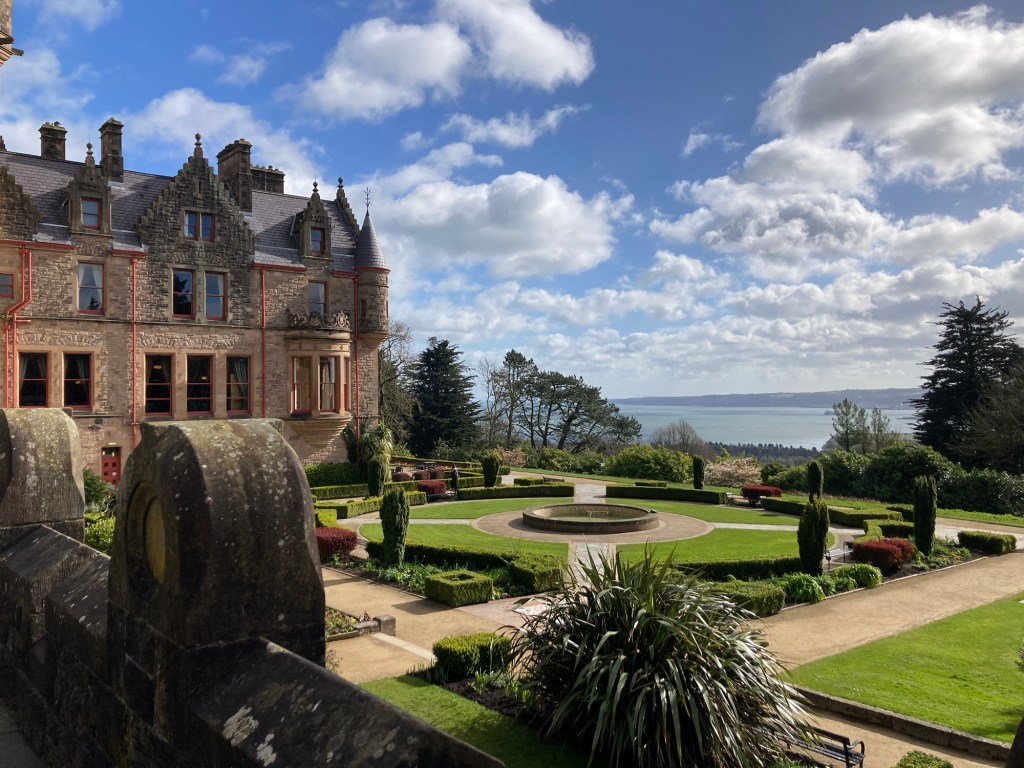
Cave Hill Country Park gets its name from the five caves located there, which could be early iron mines. The large park is currently used for cattle grazing, hiking and mountain biking, and visiting Belmont Castle for the views, lovely gardens, or events. The current Belfast Castle was built in the Scottish Baronial style for the 3rd Marquis of Donegall. It was completed in 1870. It isn’t much to look at on the inside now but the building itself and the gardens and views were worth the visit.
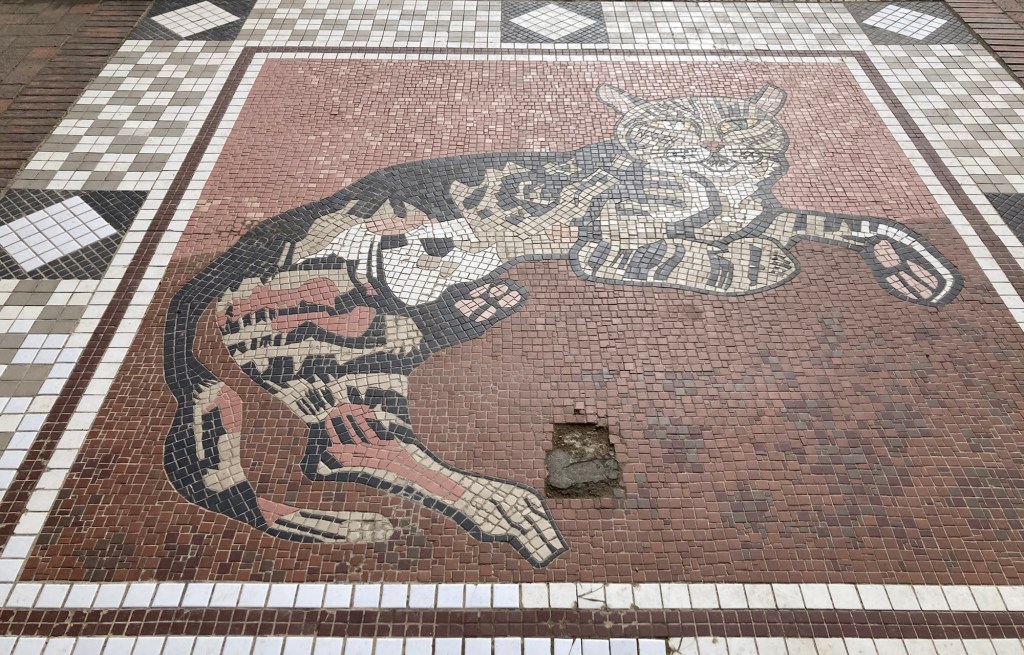
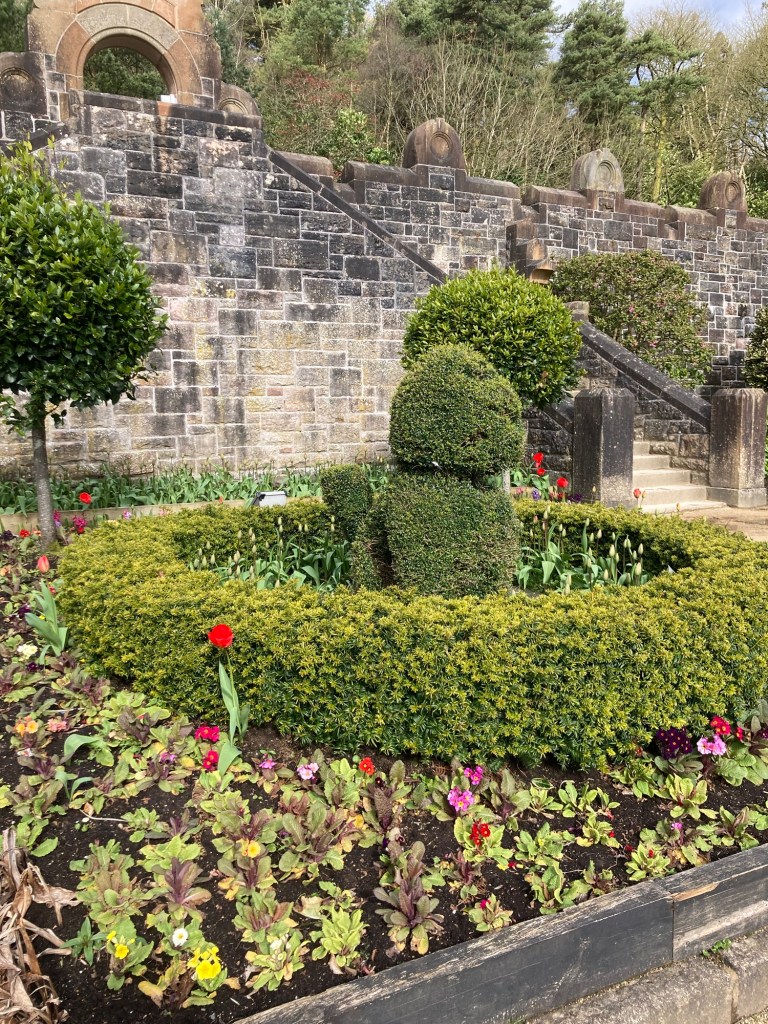
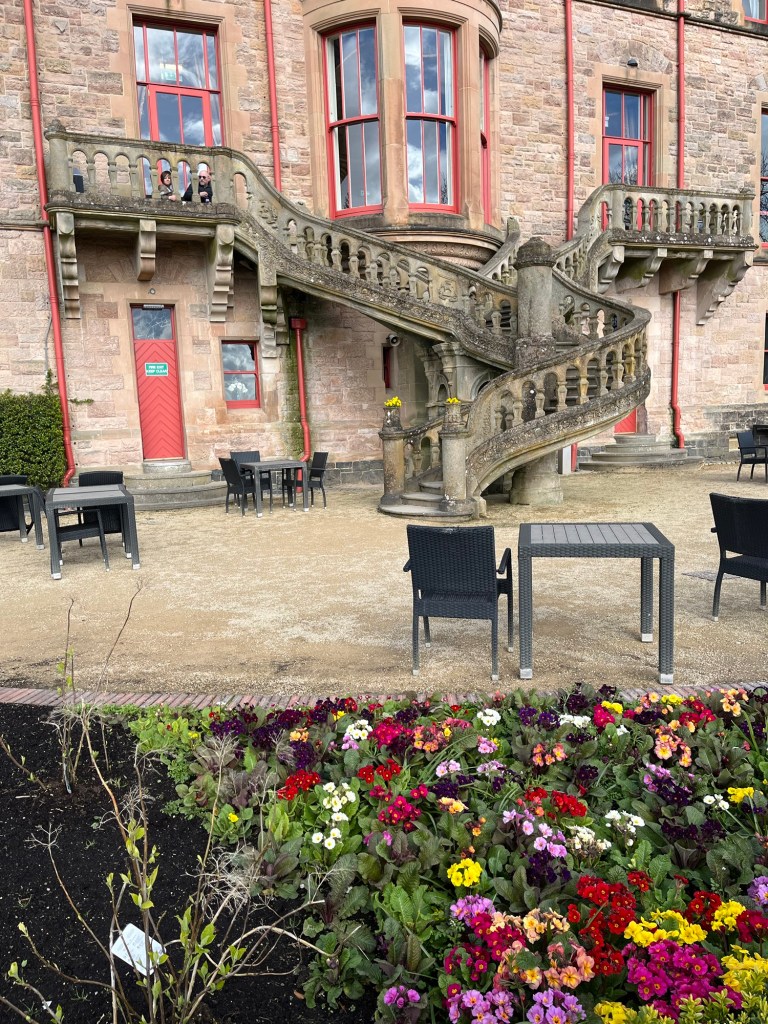
Walking up to Belmont Castle Looking across the gardens towards Belfast Harbor, where we’ll be sailing out of tomorrow A tiger mosaicA hedge sculpture. We’re guessing a cat since there seemed to be a cat theme going on.The gardens and spiral staircase in the rear of the castle (and 2 people trying to stay out of the photo)
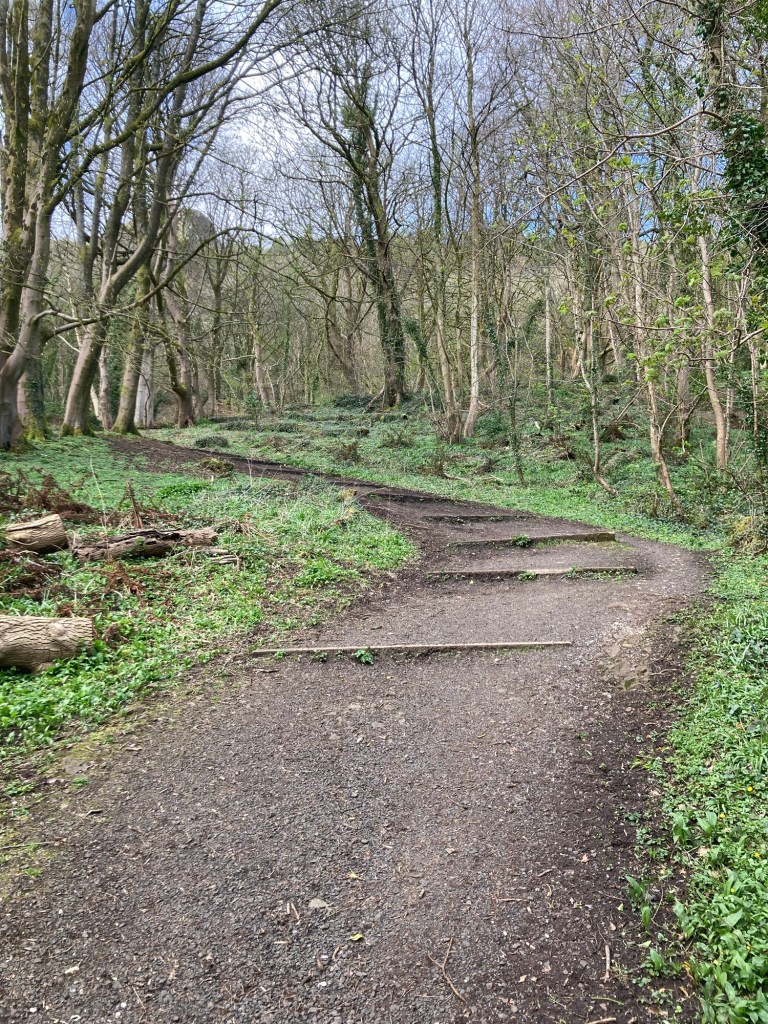
After touring the castle, we walked the 2.4 mile Estate Trail, one of a number of trails on the property.
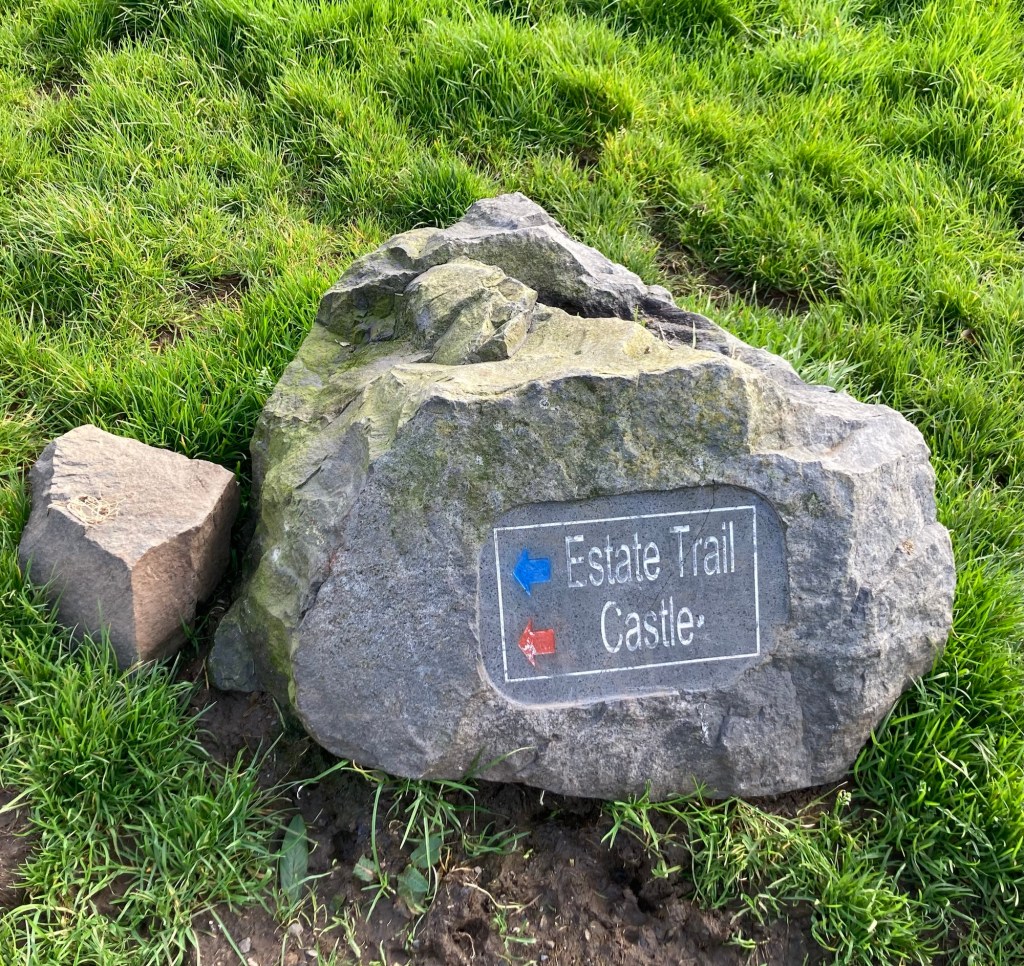
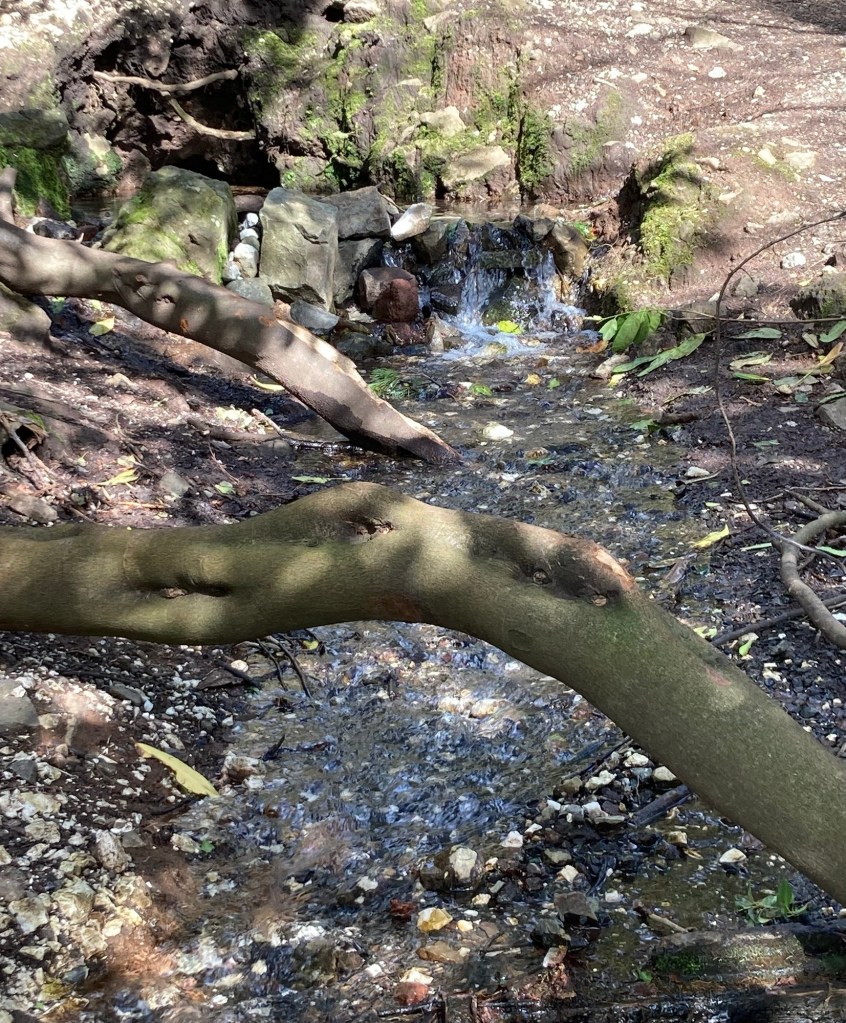
One of the trail markersVolunteers’ Well along the trail, a natural spring named for the Irish Volunteers militia group who conducted their drills on the slopes near the spring A portion of the Estate Trail
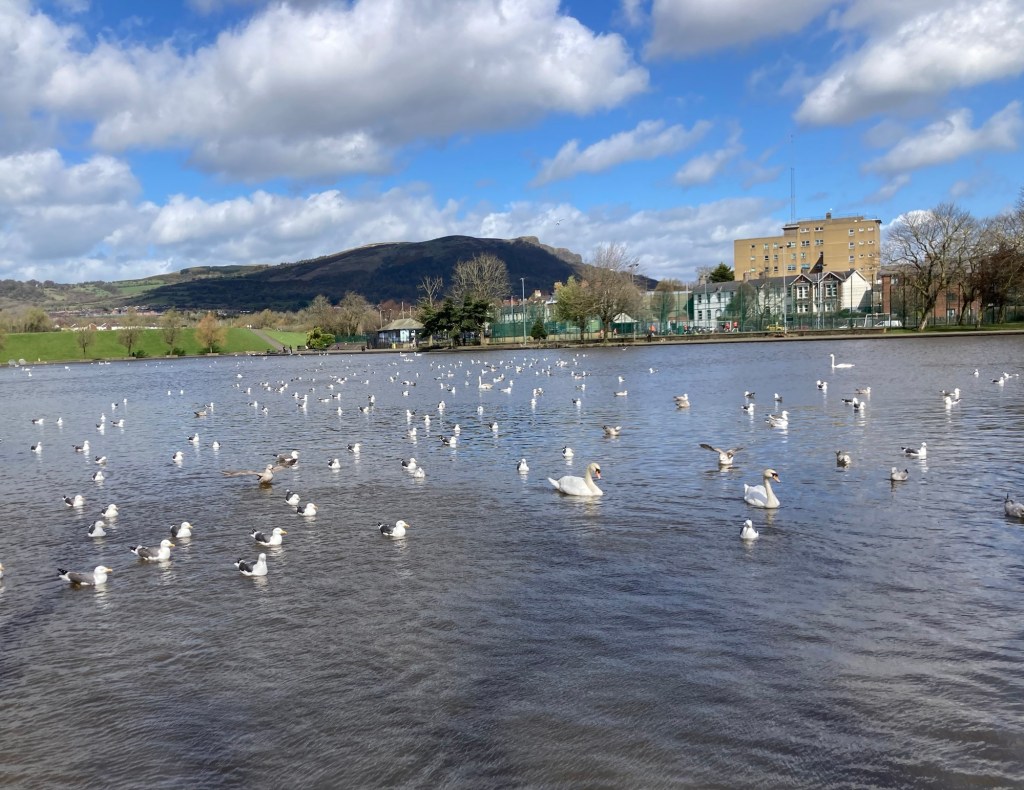
We had the wind at our backs for much of the walk to the park/castle, so we had a little tougher go of it on the way back into town. We poked into the lovely Waterworks Park that we had seen on the way.
The waterfall in Waterworks ParkThe seagull and swan filled lake in the park
We finally got to see the Belfast Cathedral (known locally as St. Anne’s). Our cab driver had pointed out its very thin, steel spire on our drive in from the airport. It is known as the Spire of Hope and wasn’t added until 2007.
Belfast Cathedral or St. Anne’s (spire out of view)
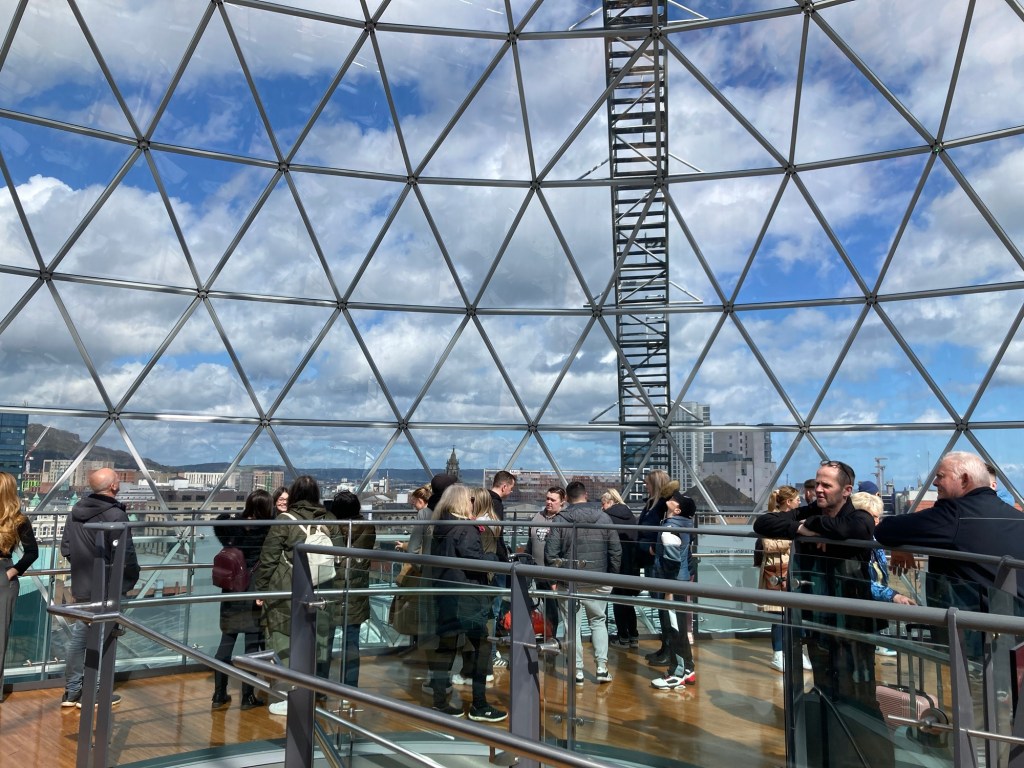
Finally, we headed to Victoria Square Shopping Center, an open air mall where we were able to climb to the observation deck on the top level (floor 3 here, would be floor 4 in the States) to get another view of Belfast.
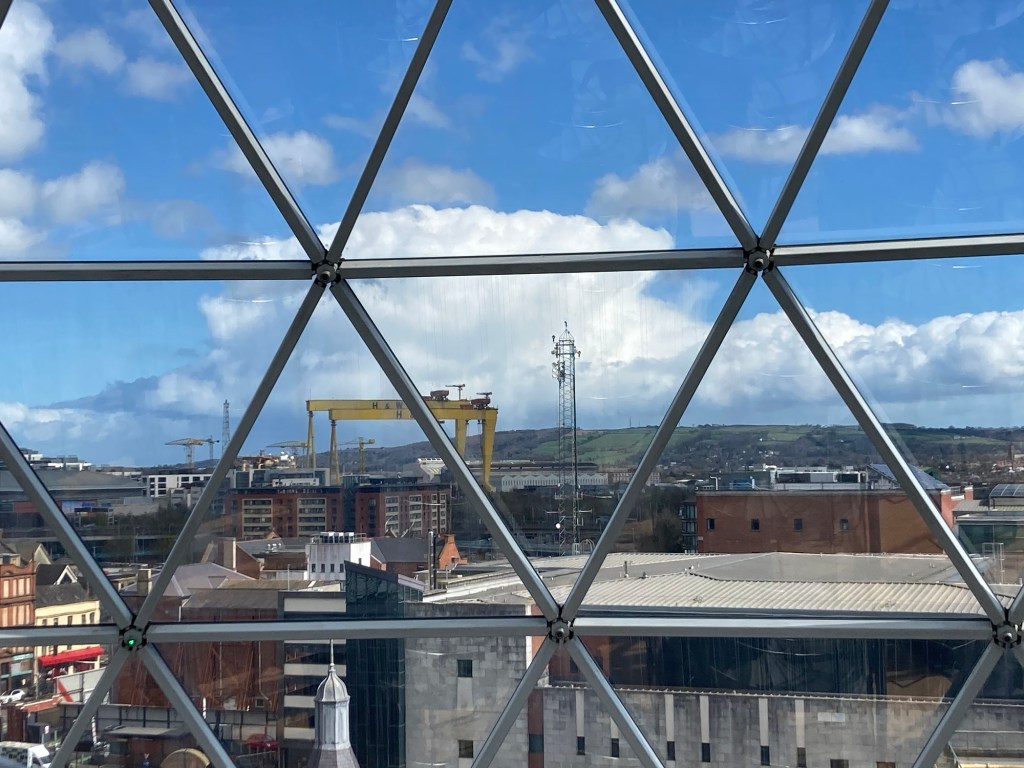
Lots of people taking in the views at the mallOne view of Belfast from the observation deckLooking out towards the shipyards and the famed Samson and Goliath cranes.
Fun fact — Goliath was erected in 1969 and Samson in 1974. Goliath stands 315’ tall, and Samson is 348’ tall. Samson wins again.
We didn’t end up shopping at Victoria Square, but a helpful employee recommended another store to help us and Bob now has his trekking poles for our upcoming walking trip.
Bob and I had an interesting visit to the Titanic Museum and then onto the fun and active St. George’s Market, but the story of the day and maybe tomorrow was the wind. They said on the news last night that it might get as strong as 60 mph. We don’t know yet if it got there, but it was definitely the strongest we have ever felt. We were literally blown around, sideways or flung forward or had to fight to move forward against it. Quite impressive!
But back to today’s events. We started with a walk to the Titanic Museum for our 9:30 am timed-entry. We had to walk away from the museum to a pedestrian crossing over the Lagan River before heading back towards the museum.
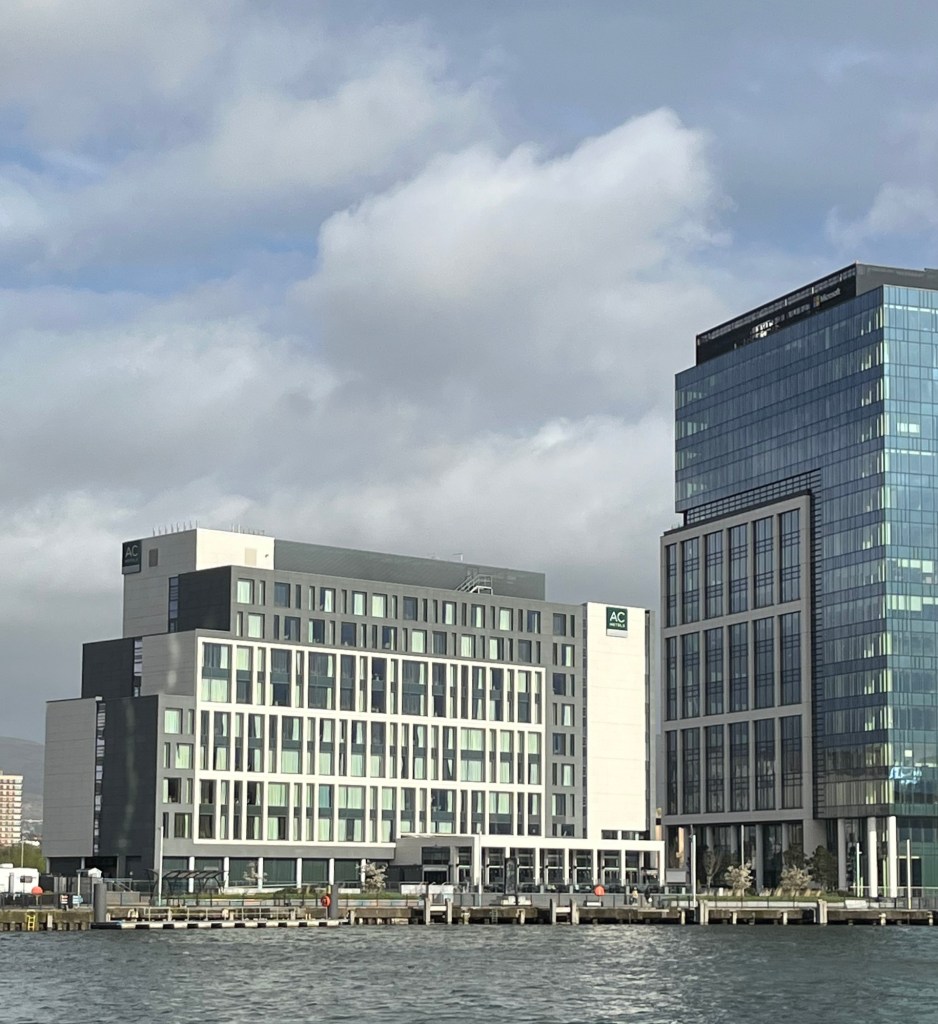
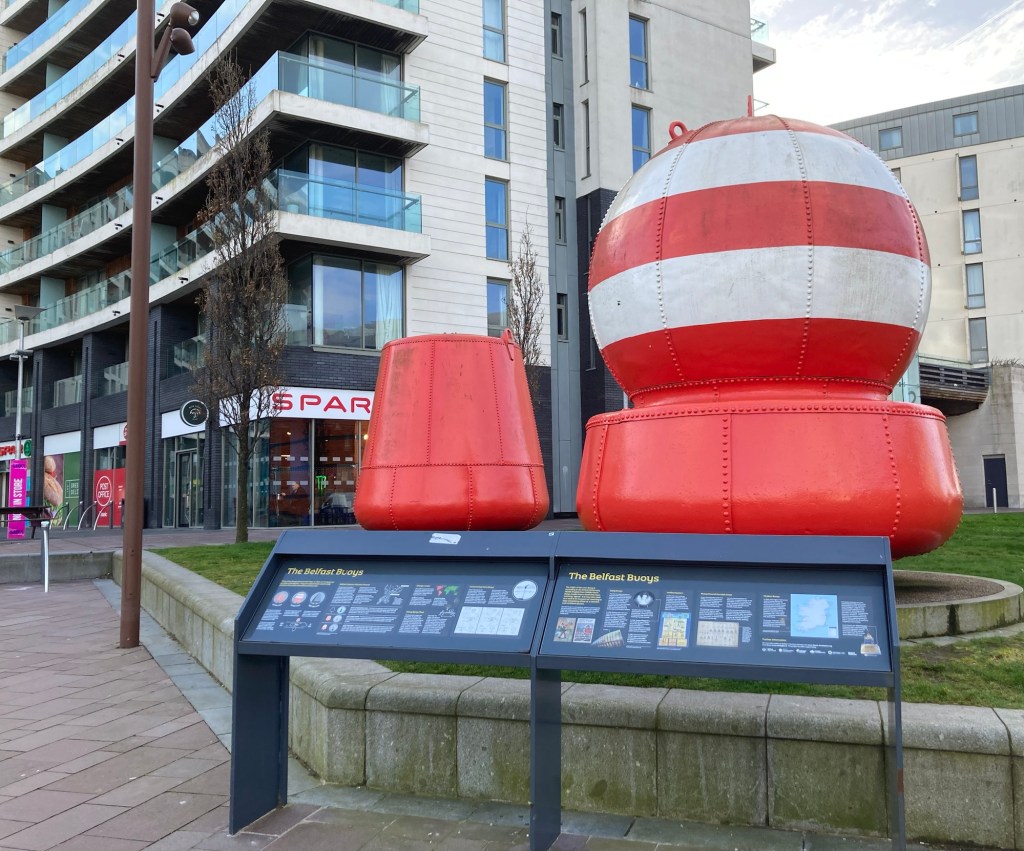
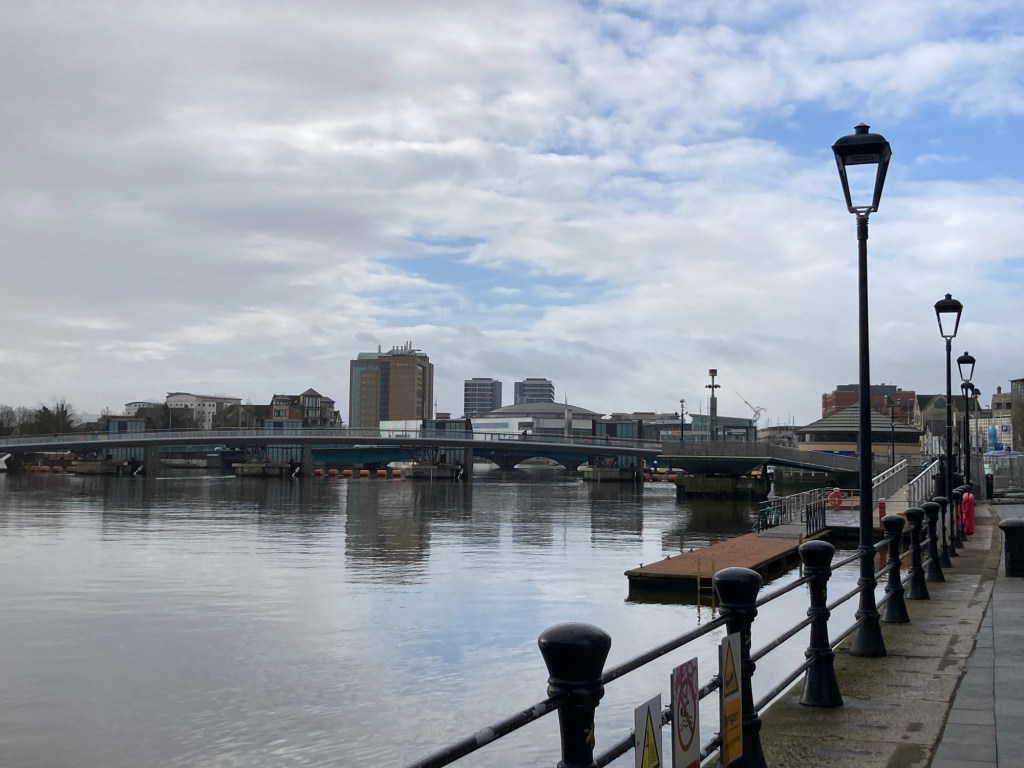
Looking at our hotel across the Lagan RiverA sculpture and new development along the river before the Titanic Museum
The Titanic Museum was completed in March 2012 in time for the centenary of the sailing and sinking. It tells the story of Belfast at the time the Titanic was built, the building of the ship, its sailing, disaster, and aftermath, using multiple-media and even a ride. We had also paid for the audio tour, which provided a great commentary and also allowed for us to learn the information even if we couldn’t get right up to a particular exhibit.
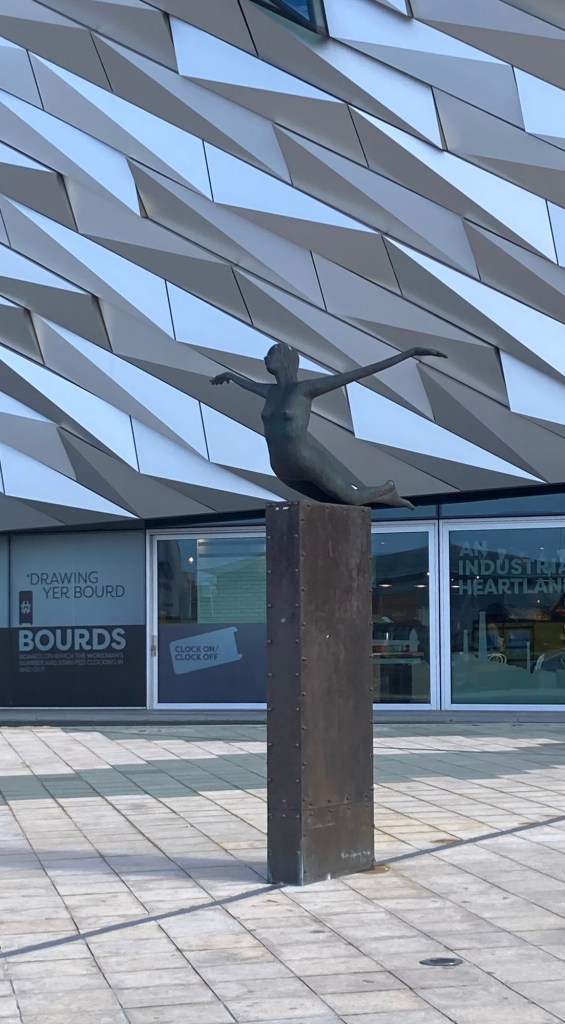
The very striking Titanic MuseumThe Titanica sculpture by Rowan Gillespie in front of the museum
The short story of the Titanic. It was built by Harland and Wolff in Belfast and owned by White Star Line out of Liverpool. It sailed on its maiden voyage on April 10, 1912, out of Southampton, England, and sunk on April 15, 1912, after striking an iceberg. It was the deadliest sinking of a single ship at that time and spurred major changes in maritime safety regulations.
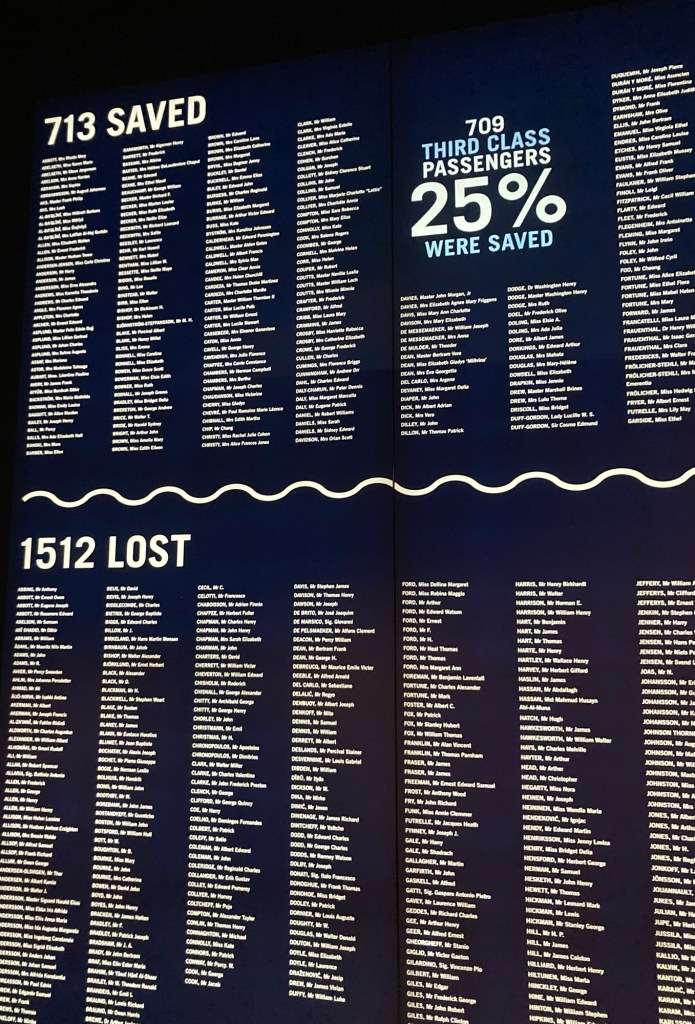
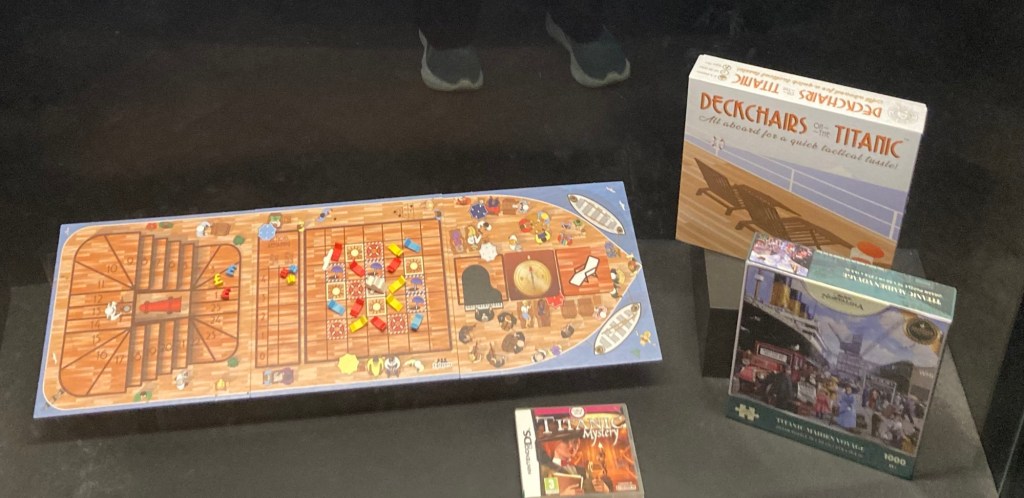
The cars we rode through an exhibit describing the construction of the ship.The listing of all passengers and crew.Who knew there was actually a game about rearranging deck chairs on the Titanic?
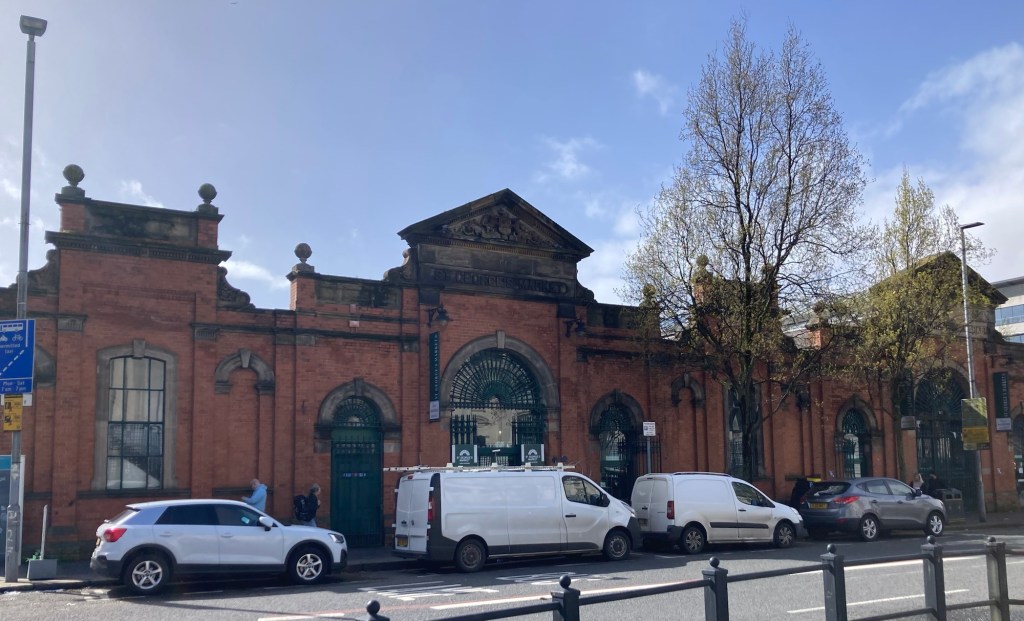
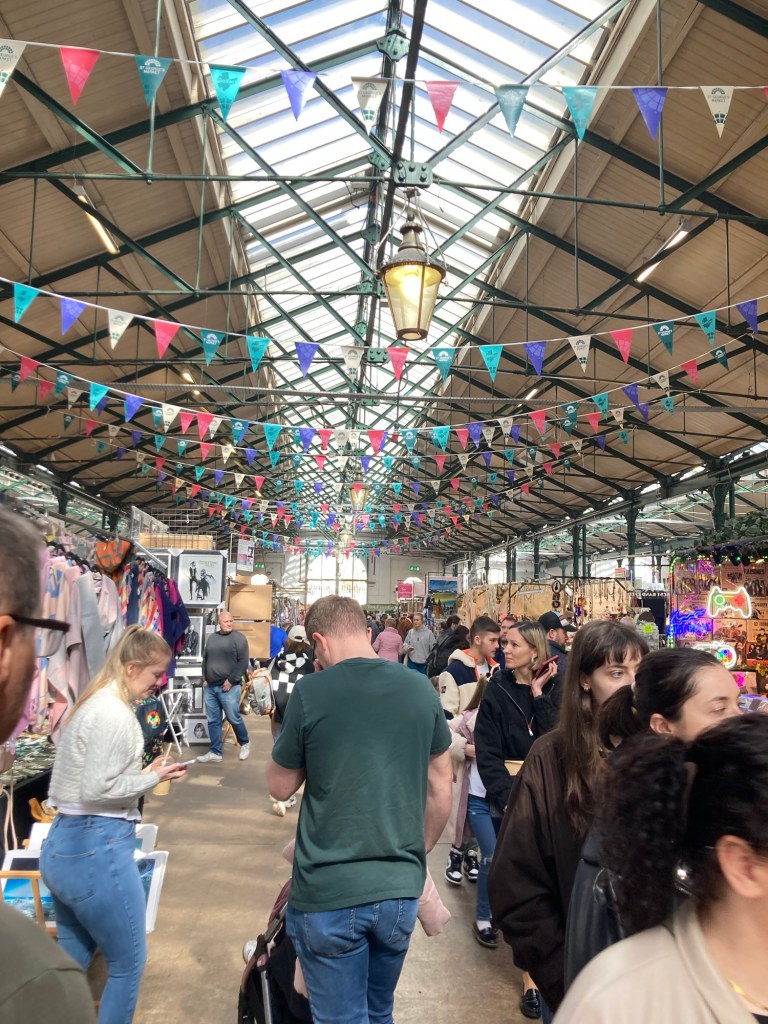
After we completed our tour of the Titanic Museum, we walked a little closer into the city center to check out the St. George’s Market, which had food, crafts, and antiques and other vendors. The market was originally opened in 1890 to sell butter, eggs, and poultry.
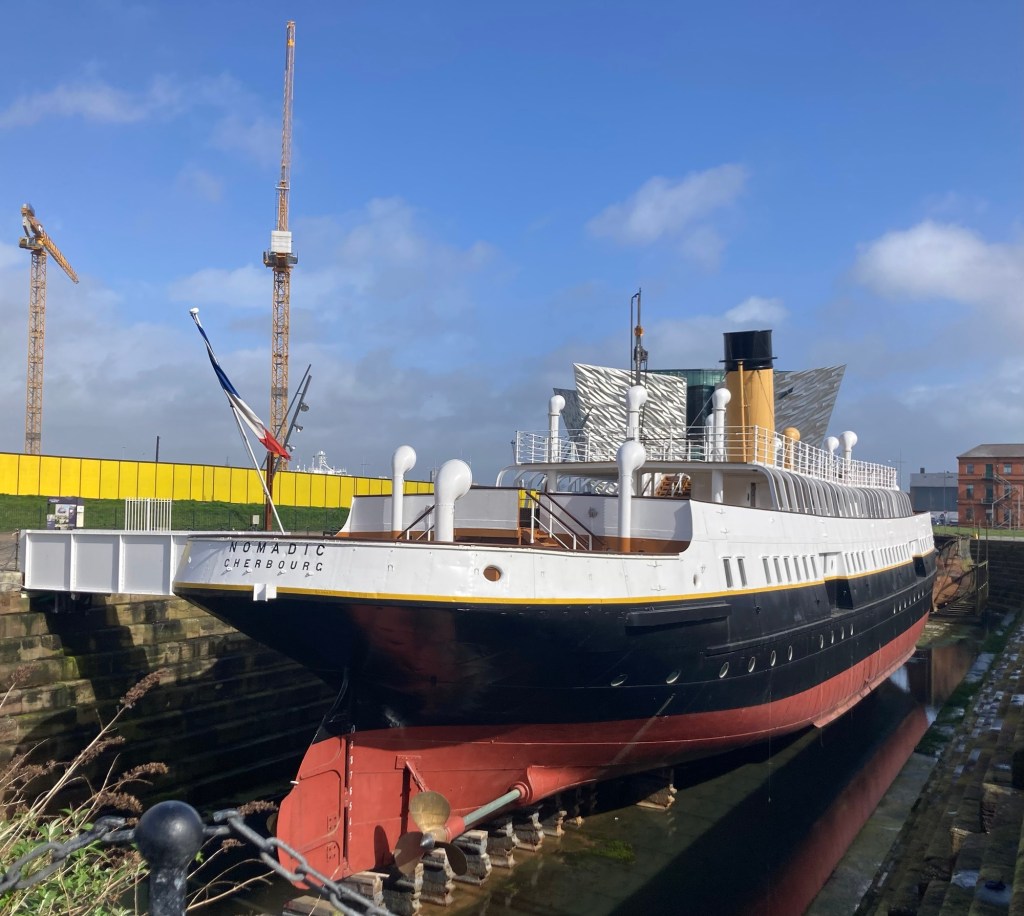
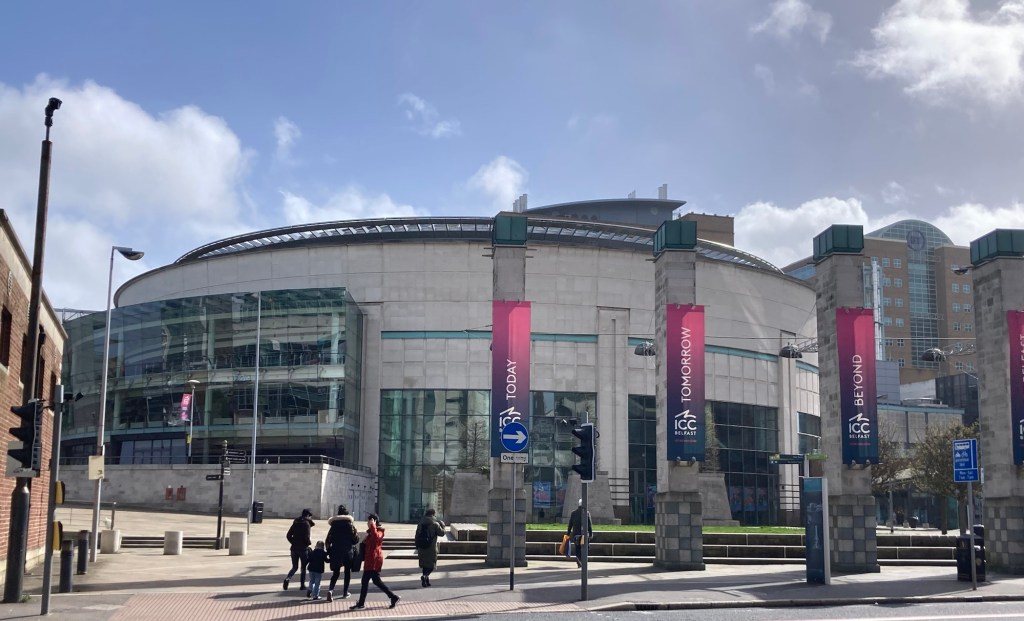
The last remaining White Star ship, which lies just in front of the Titanic Museum.The Belfast Opera HouseSt. George’s MarketInside the busy marketThe statue of Harmony along the riverfront
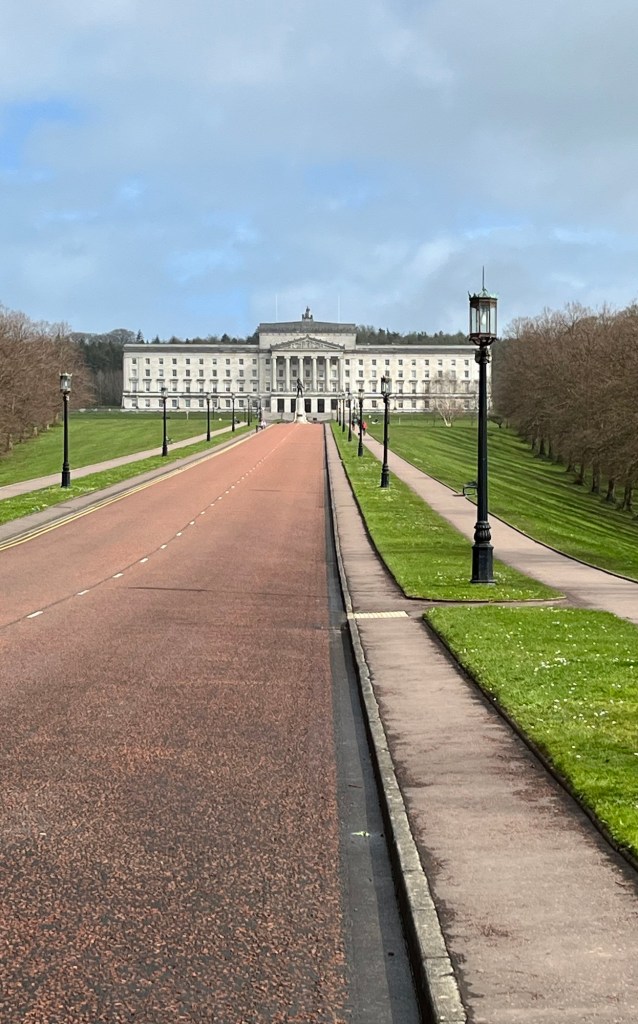
One of the places Bob and I knew we wanted to visit in Belfast is Stormont, which is the Northern Ireland Assembly building. The building is the seat of the devolved government for Northern Ireland, and as we just discovered today, lies on a beautiful estate that is well used by the public.
The walk from our hotel to Stormont was 4.5 miles and took about an hour and 45 minutes. It took us over a pedestrian bridge and then through East Belfast and other neighborhoods. As is typical in the UK, we had clouds, sun, rain, and sometimes a mixture. The temperature was great, however, mid to upper 50s, and the rain was never very heavy.
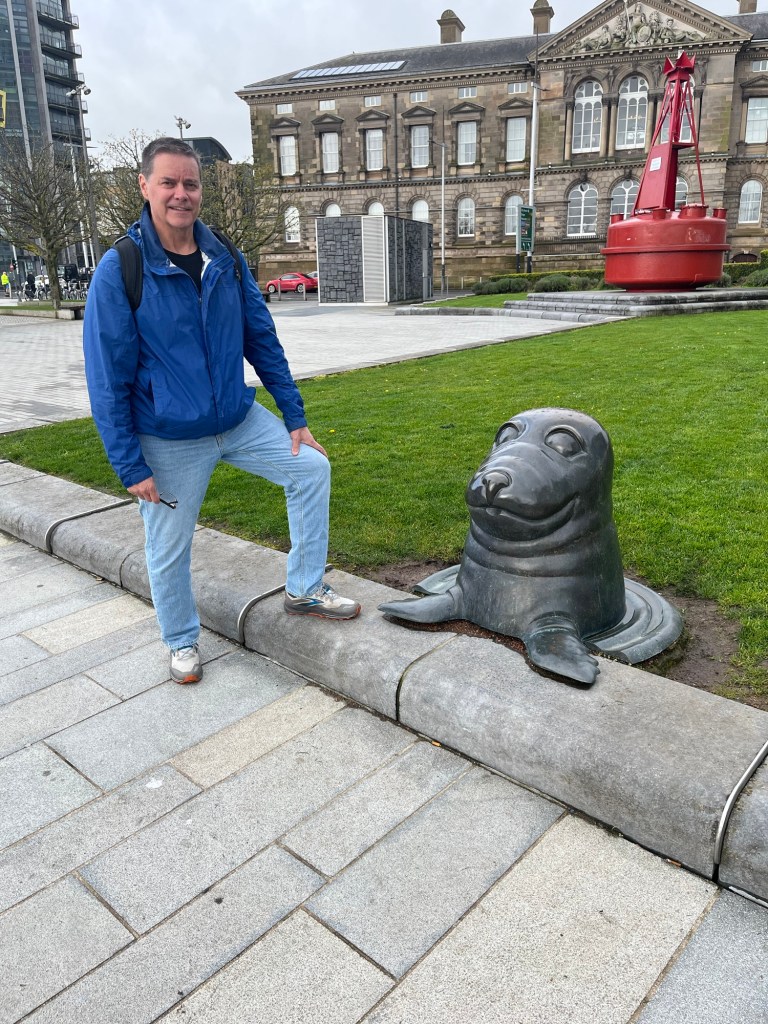
We started our walk on the promenade behind our hotel and had an early opportunity for a mixed species big head shot for Bob.
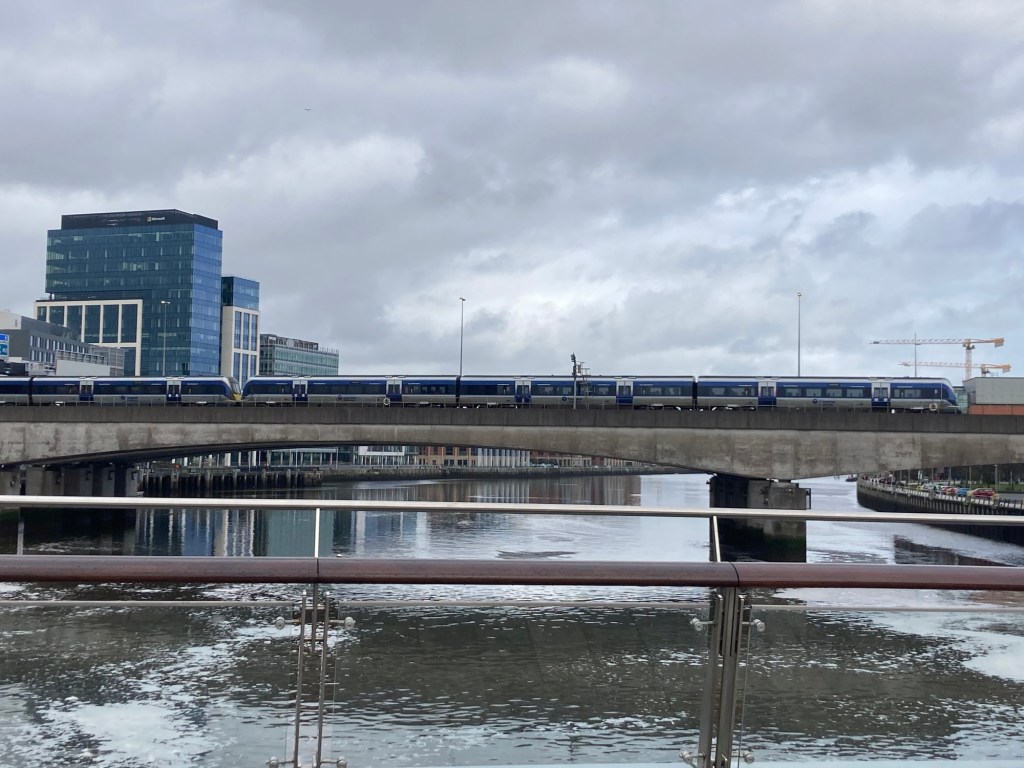
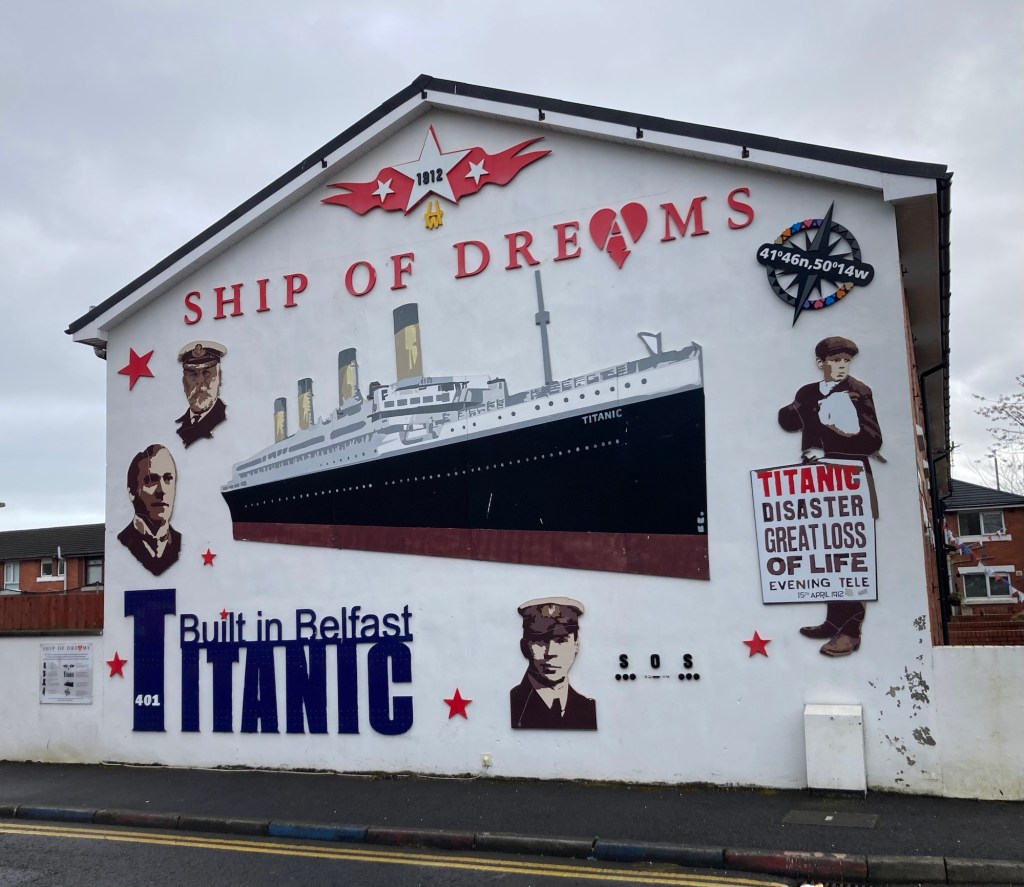
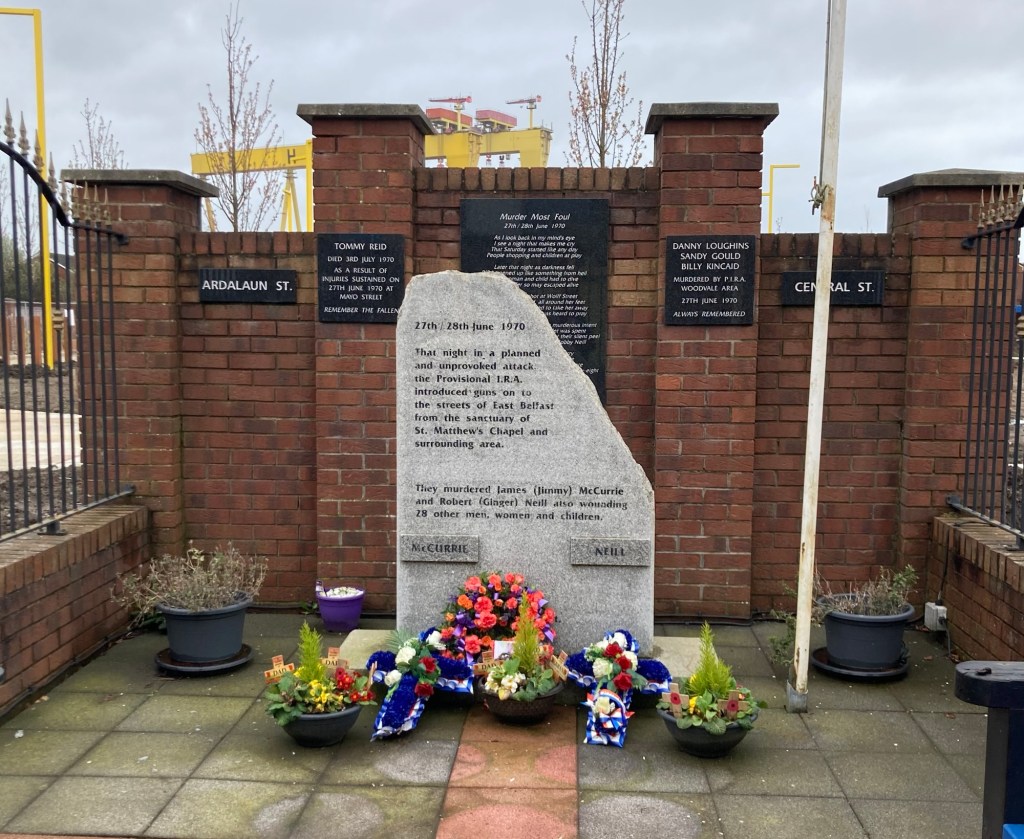
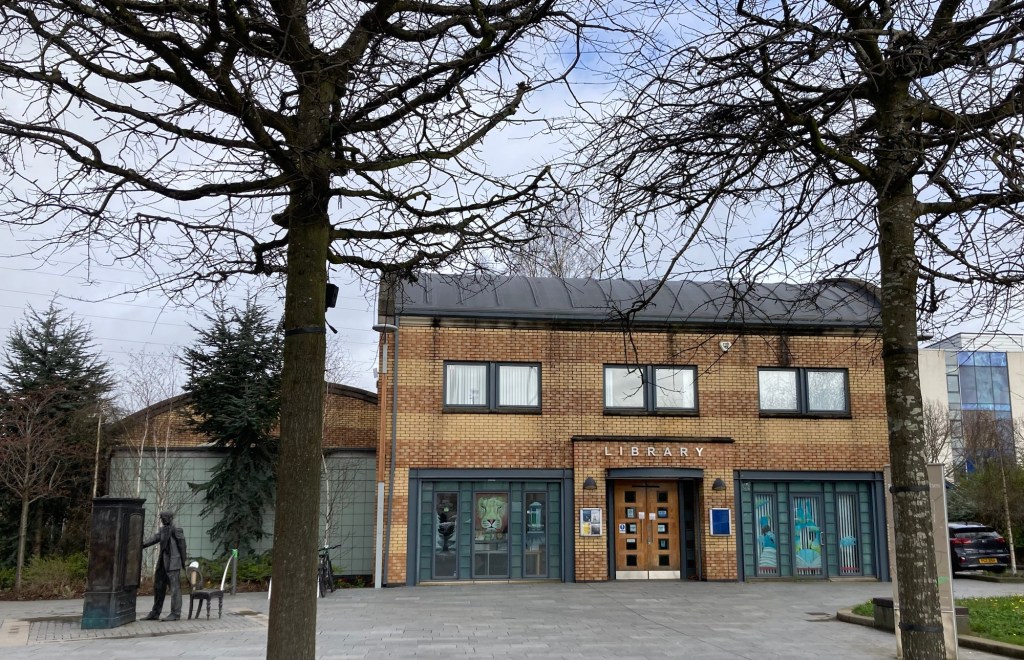
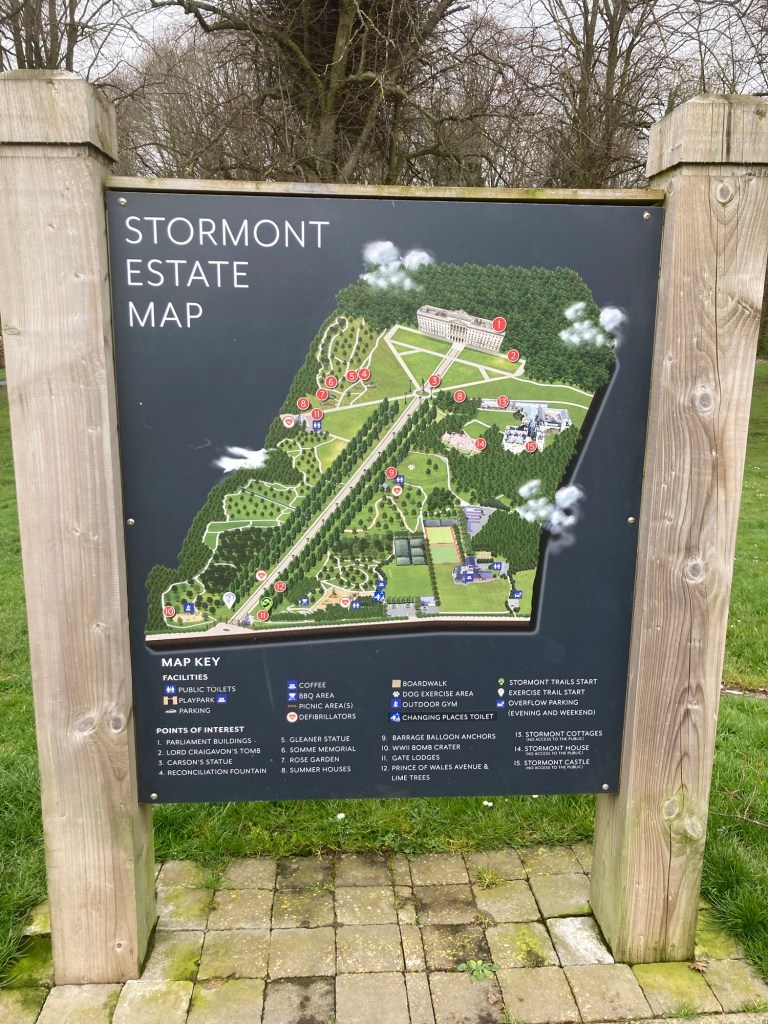
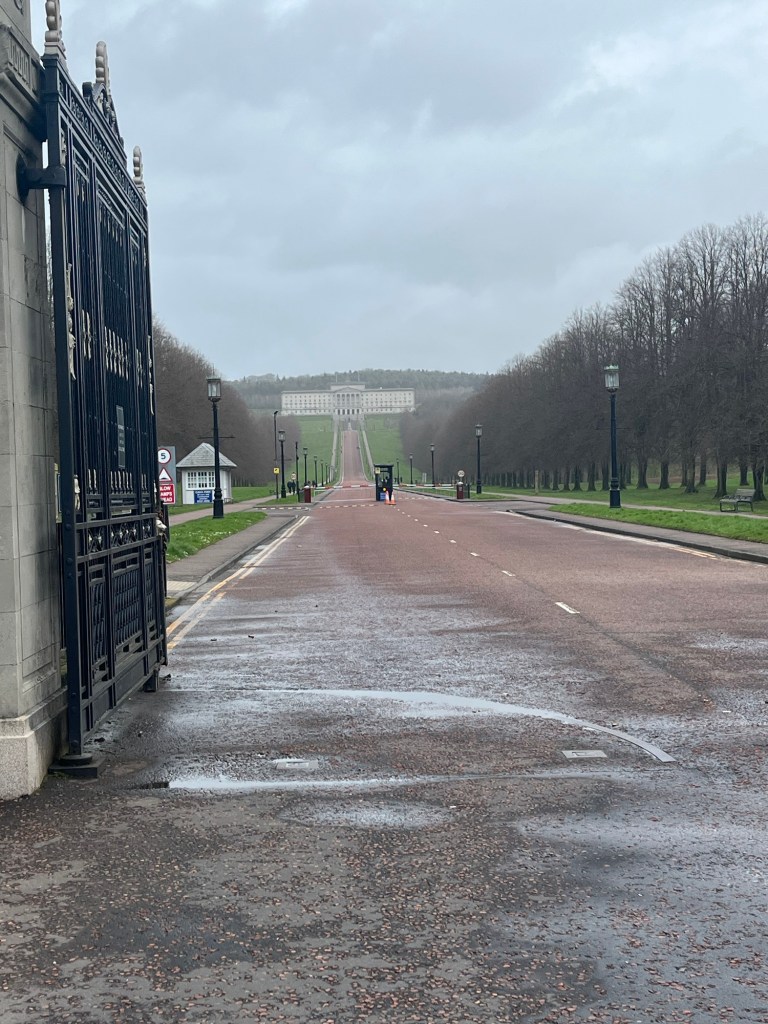
Looking towards the pedestrian bridge from the promenade Bob is inclusive with his big headsCapturing the city train crossing the Lagan River near usA titanic mural on a building on the wayEast Belfast is the Unionist/ Loyalist side, so the memorials we passed today were those individuals killed by the IRA.A cute local branch library near C.S. Lewis Square. C.S. Lewis was born in BelfastMap of the lovely Stormont Estate, including a castle, the parliamentary building, a children’s park, woodland trails, and gardensOne of the woodland trails near the children’s playground Looking up Prince of Wales Avenue towards the parliament building
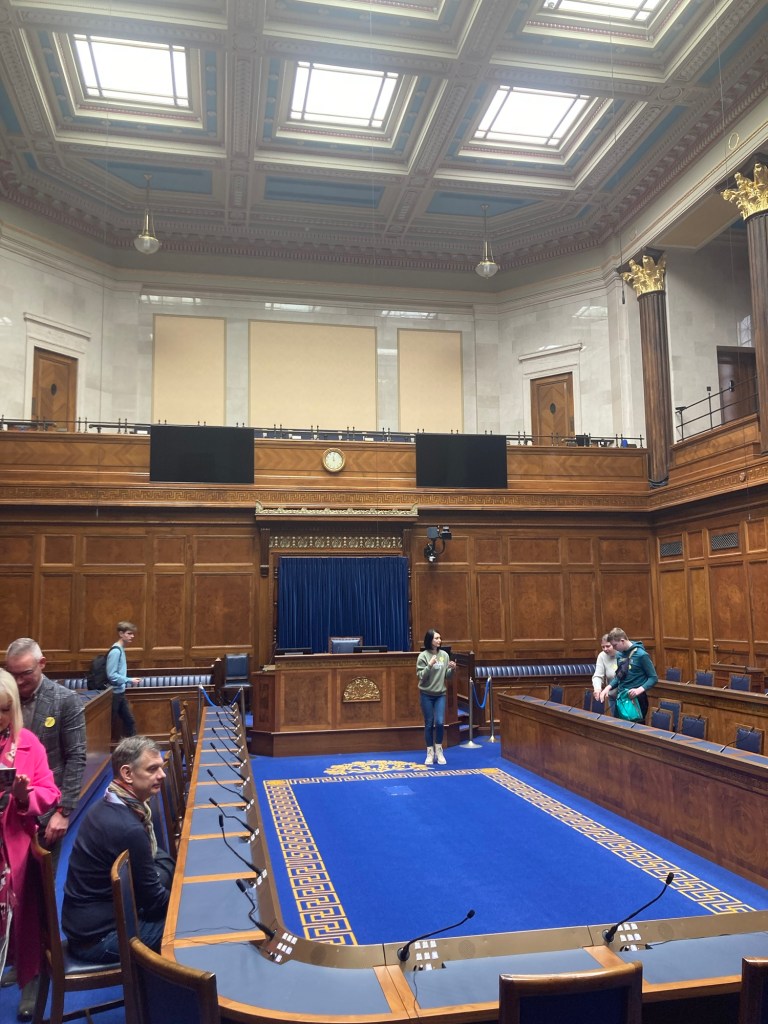
The parliament building is open to the public during weekdays from 9-4, and tours are conducted at 11 and 2 daily. You have to reserve tickets for the tours. We did not because they were all reserved by the time we checked into it. However, when we entered the helpful guy up front took us to the Assembly Chamber where the 11 am tour was ending so we could see the chamber before doing our own self-guided tour later.
Although the Northern Ireland Parliament was established in 1921, this building wasn’t completed until 1932, when it was officially opened by the Prince of Wales, Edward VIII. The Northern Ireland Parliament was dissolved in 1972 by the Stormont Government as a response to the violence (start of “The Troubles”) enacted by the Republicans (IRA) who felt that their needs were not being equally addressed by the government. It was reinstated under the Northern Ireland Elections Act of 1998 as part of the Good Friday Agreement.
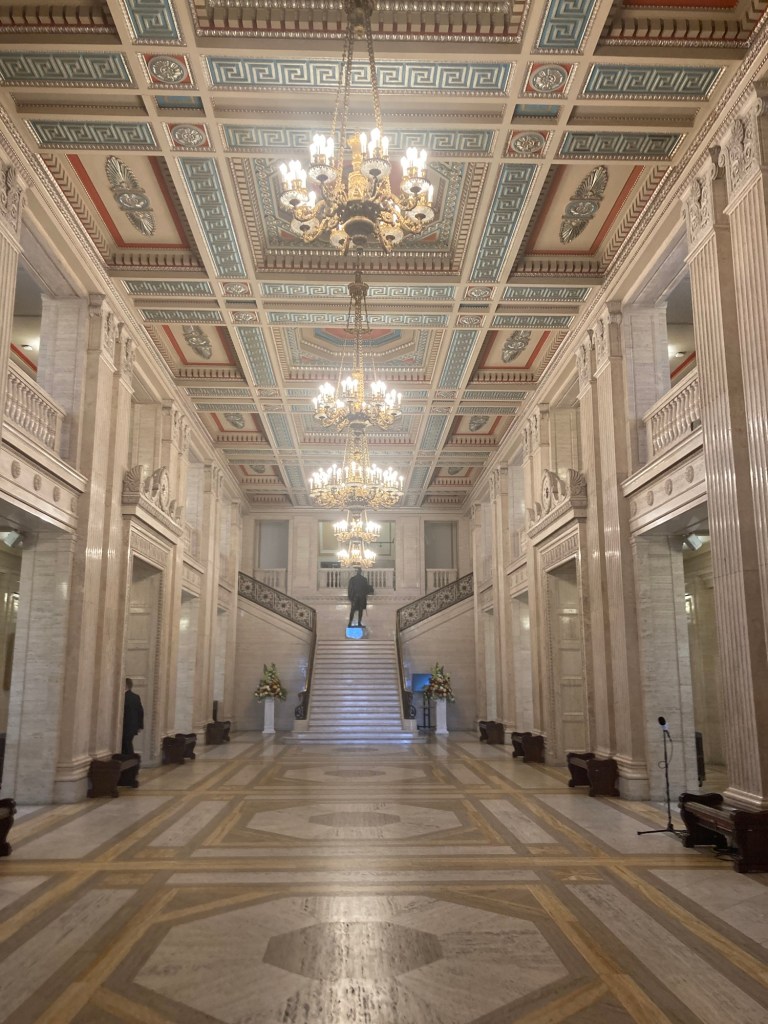
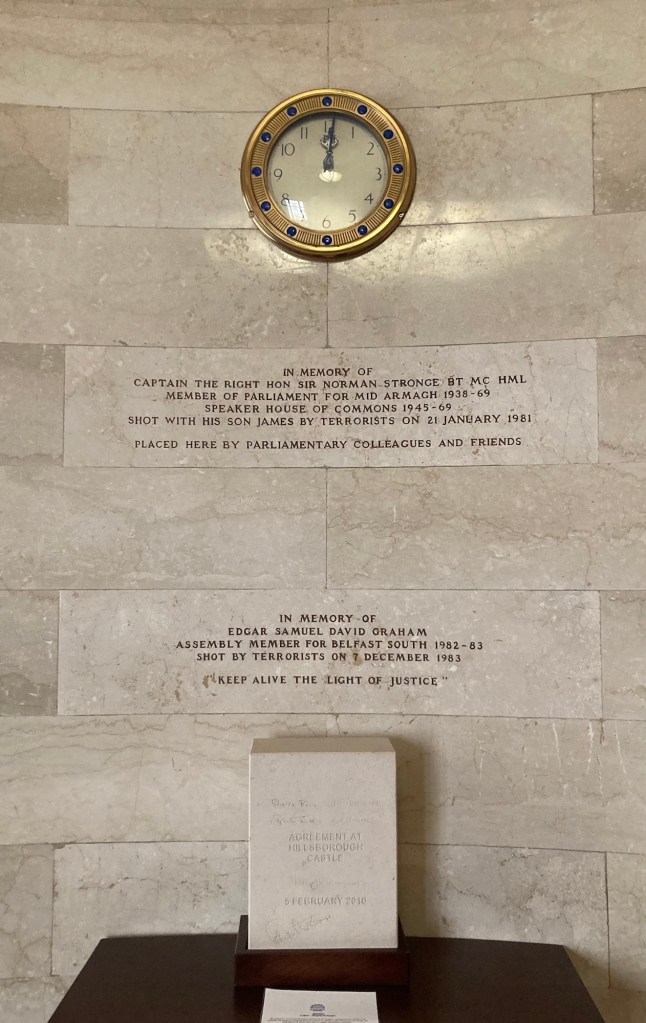
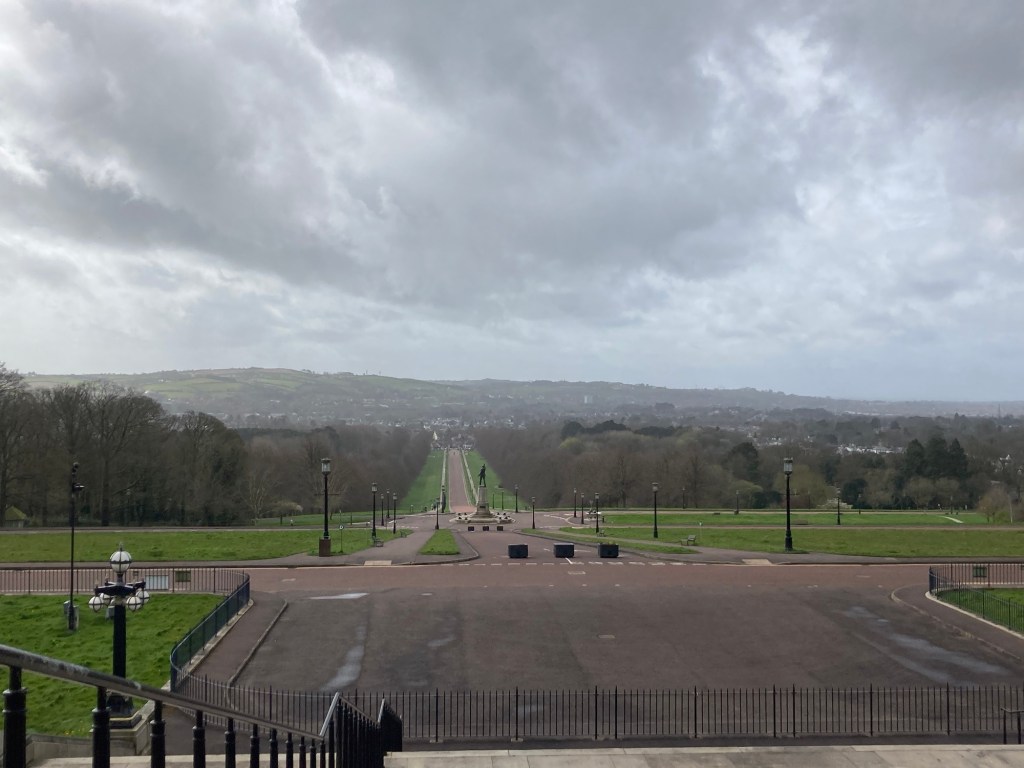
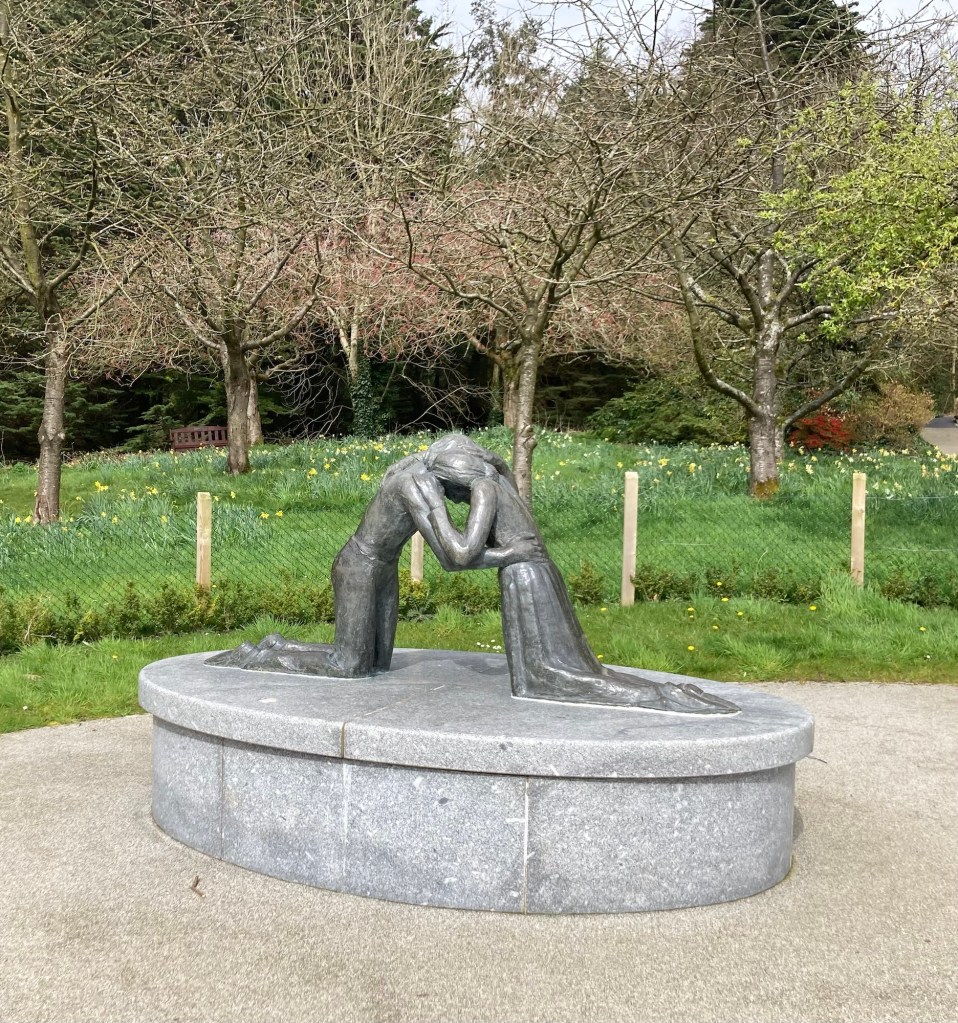
The entrance hall of Stormont. This was the only floor we could access as visitors.The Assembly Chamber where we walked in on the guide promoting the benefits of Hobnobs as snacks for children vs. digestive biscuits as a way to explain how members would introduce issues to the chamber.Memorials to two Assemblymen killed by terrorists (IRA)View of the surrounding area from in front of the parliament building Reconciliation statue presented by Coventry Cathedral and Sir Richard Branson. Identical statues were placed in Berlin and Hiroshima.A view of Stormont from over the gardens
Bob and I endured some very bumpy plane rides and some slow immigration processing in Heathrow but have arrived safely in Belfast. We will be here until Monday morning when we head to Scotland to see some good friends and a sweet dog named Otter. To get here and be able to be out of the country for 4 months, we have gotten/are getting a lot of help from Bob’s sister and her husband for which we are very thankful. Also indebted to Bob’s mom for letting us park our car at her house for the duration of this trip. It takes a village.
After our arrival at the AC hotel about 1:00 pm, via taxi from the airport, we unpacked and then headed to the Visitor’s Center to determine our plans for the rest of the day. It was about a 10 minute walk to the Visitor’s Center.
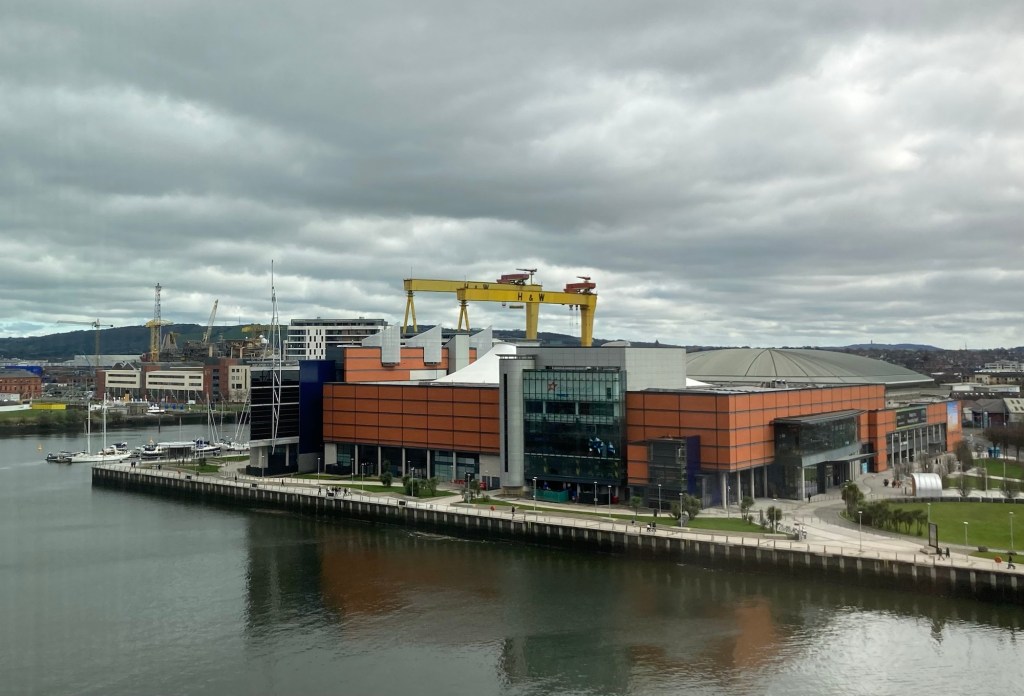
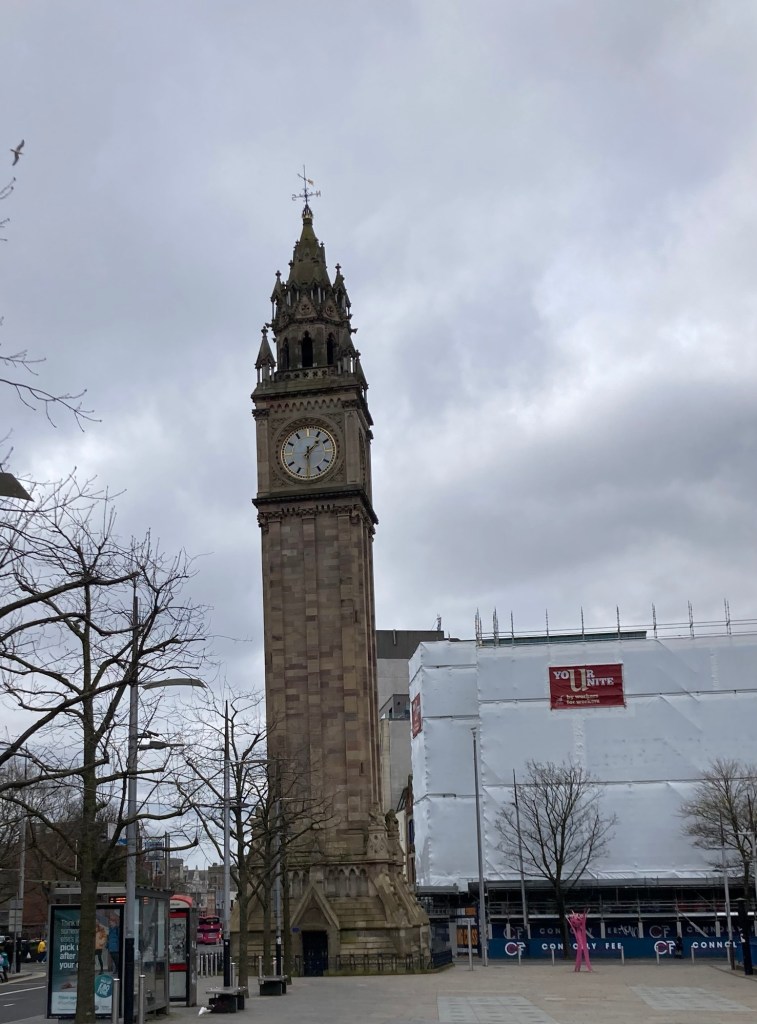
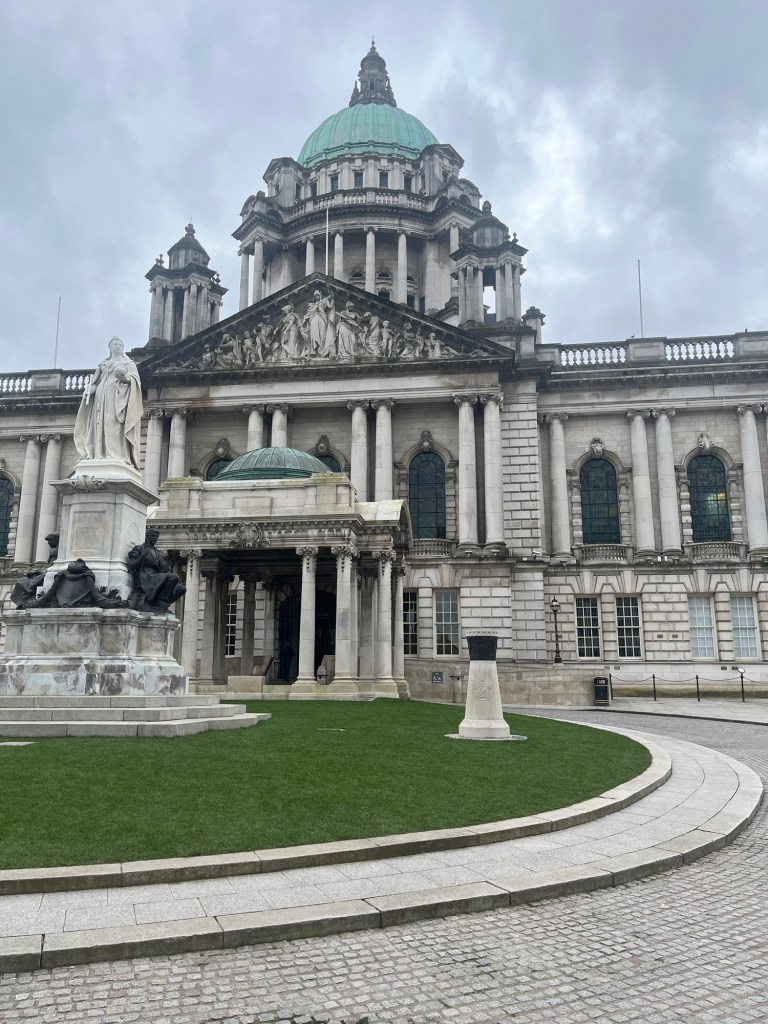
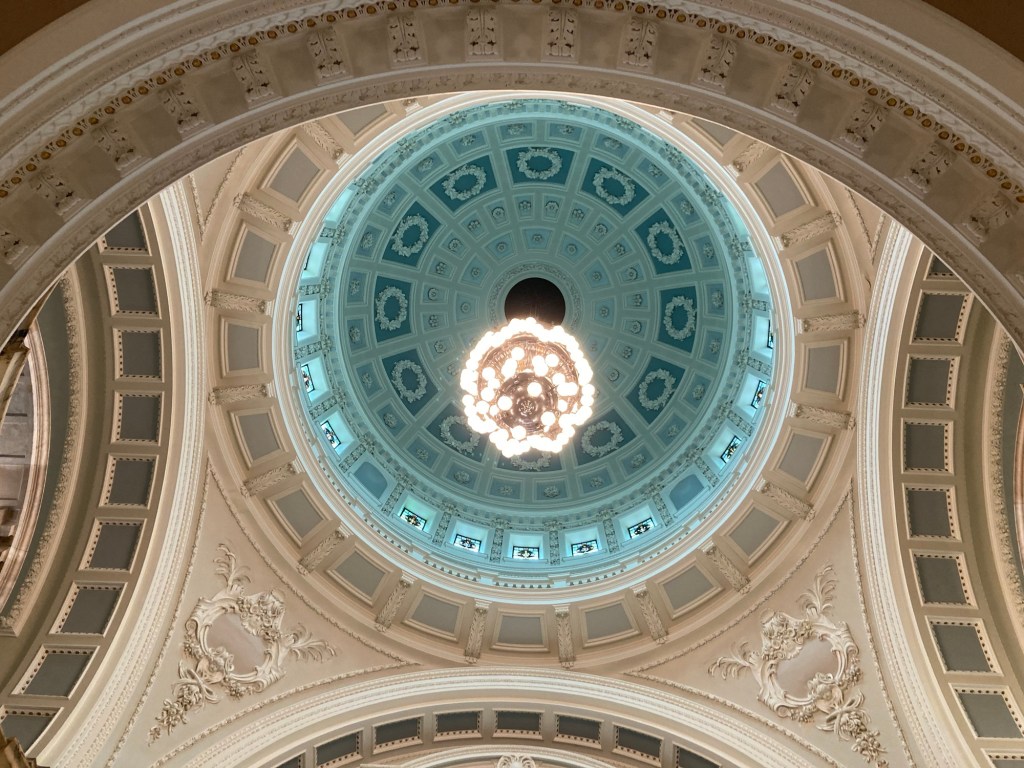
A view of Odyssey Place, a sports arena and event venue, from our room. The cranes in the background are Samson and Goliath, iconic parts of the Belfast skyline. More on them when we go to the Titanic Museum.One of the taller buildings we passed on the way into the city centerThe Albert Memorial Tower built in 1869. It’s Belfast’s own leaning tower. It’s built of sandstone on reclaimed marshy land and over the years has become 1.25 meters from vertical.Belfast City Hall, built in 1906, after Queen Victoria declared Belfast a city in 1888.Looking up at the dome in City HallA cenotaph beside City Hall
We decided to do a Black Cab Tour this afternoon. It was recommended by Rick Steve’s as well as by our taxi driver from the airport. It is a 90 minute cab tour that provides a visual and informative description of some of the happenings during “The Troubles” in Northern Ireland (or the North of Ireland as our driver prefers to refer to it.). I’m not even going to begin to try to summarize what we learned (from an admittedly Republican vs. Nationalist or Catholic vs. Protestant perspective) except to say that people have trouble living with other people, people like power, and people can do horrible things to each other. In that regard, it was a sobering tour, and while what we heard was specific to Belfast it has similarities with other conflicts at home and around the world.
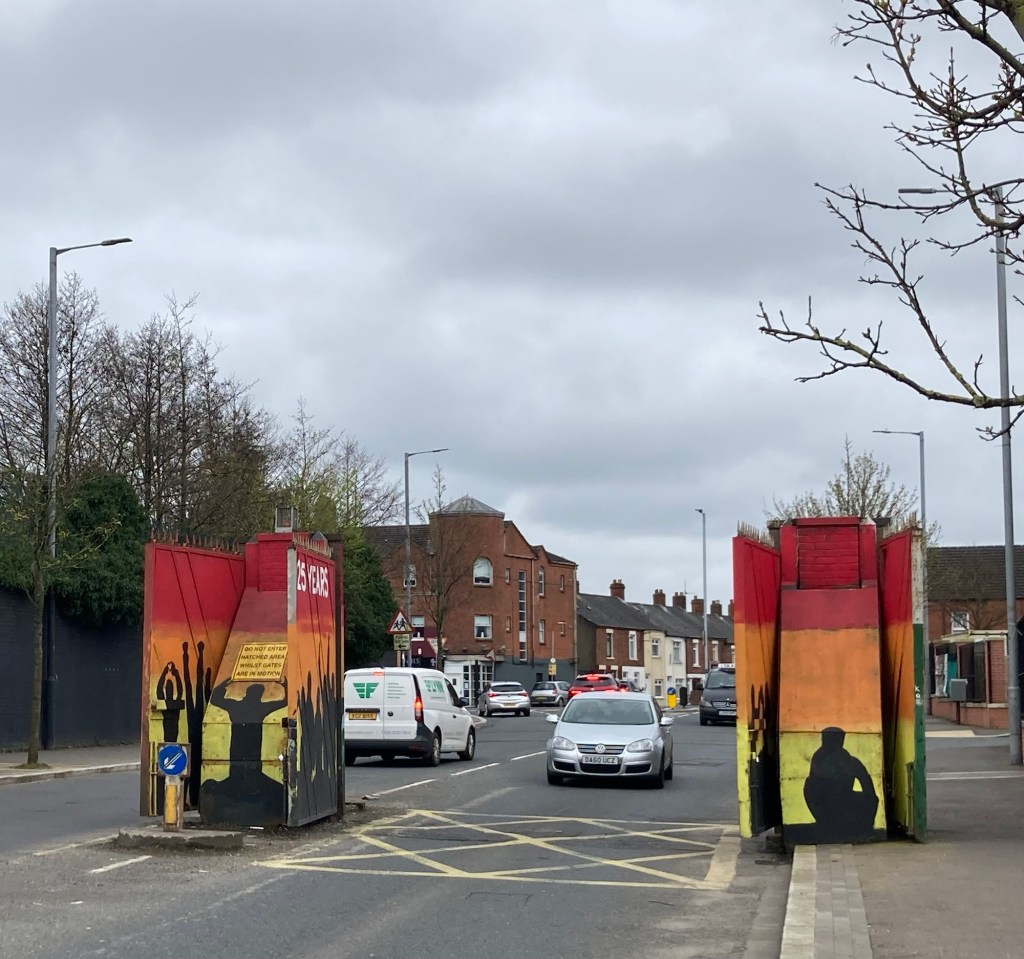
This is one of many memorials to the IRA members who died during this time (and actually since the time Ireland was partitioned by England in 1921), but this was specific to the individuals who died during hunger strikes in prison.A set of three gates that we drove through that open at 5:00 am and close at 7:00 pm daily between Falls Road (Catholic area) and Shankill Road (Protestant area)
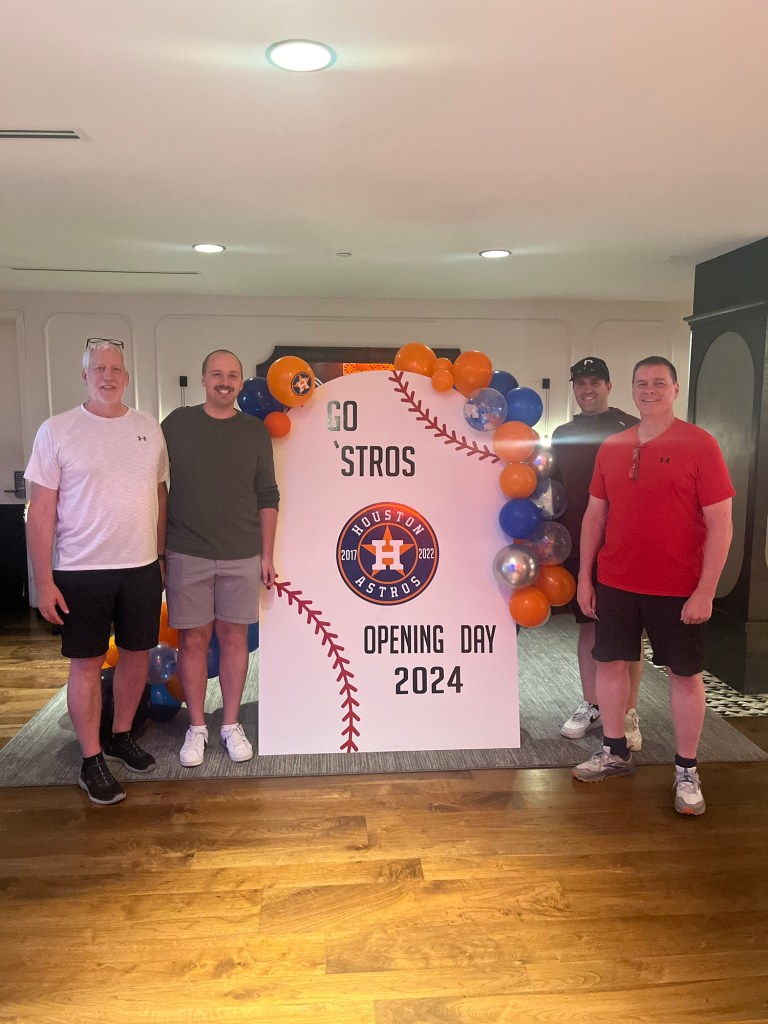
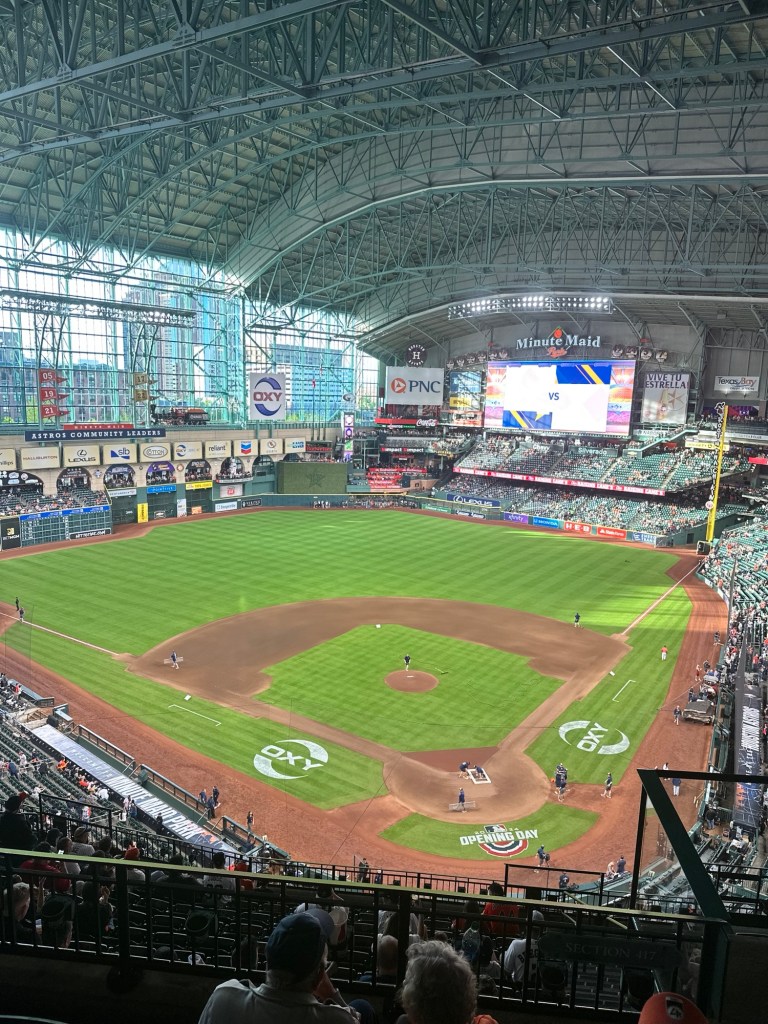
Down (South) — Bob and the gang have already said goodbye to Houston after a ballgame last night with the Houston Astros losing to the New York Yankees 7-1. They drove to Dallas this morning.
The crew at the game — Jody, Zack, Nick, and BobMinute Maid Park in Houston
Up (North) — On my drive into Decorah yesterday, I saw road signs that said Driftless Scenic Byway. Usually, these signs just say Scenic Byway, so I wasn’t sure what this meant. Today I learned that Decorah is in a region in the Midwest called “The Driftless,” which means that it was skipped by the glaciers in the last ice age, so the area lacks glacial drift. The Driftless includes parts of Northeast Iowa, Southeast Minnesota, and Southwest Wisconsin. Due to the lack of glacial drift, the area enjoys bluffs and valleys and other geographical features not found in other parts of these states.
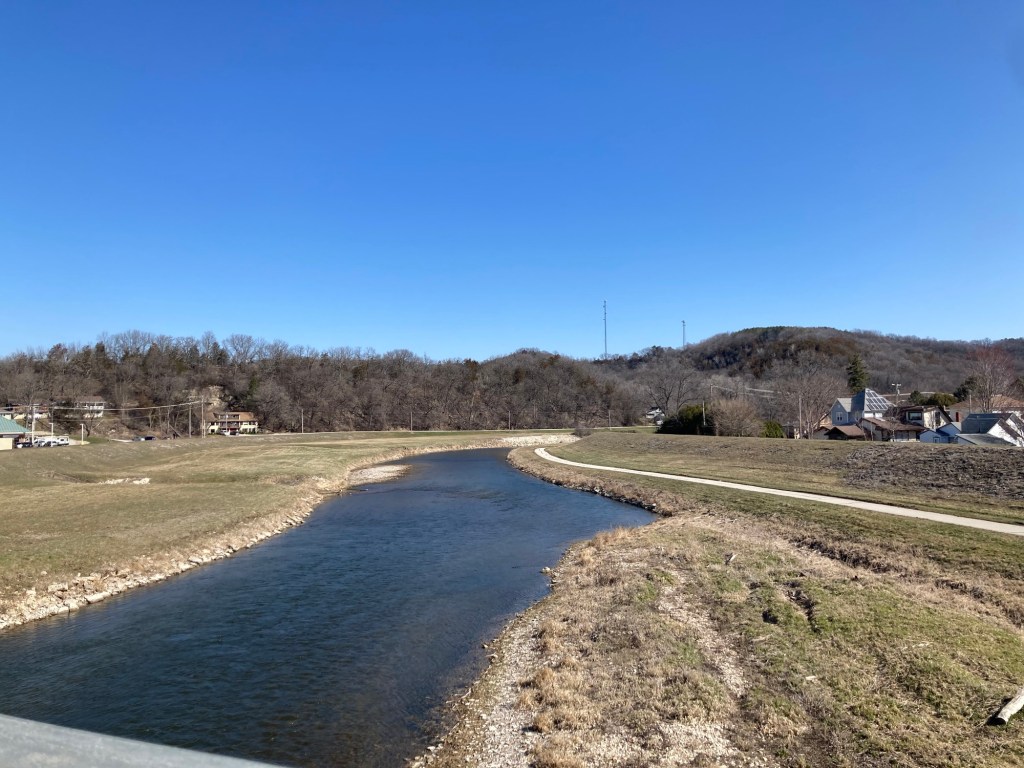
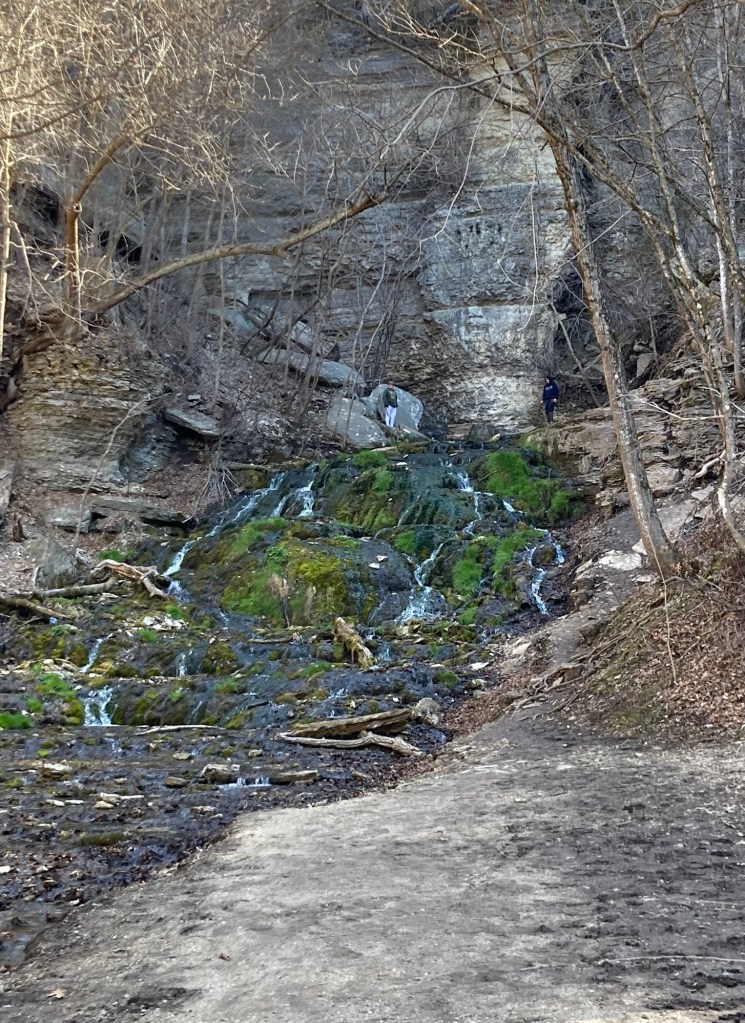
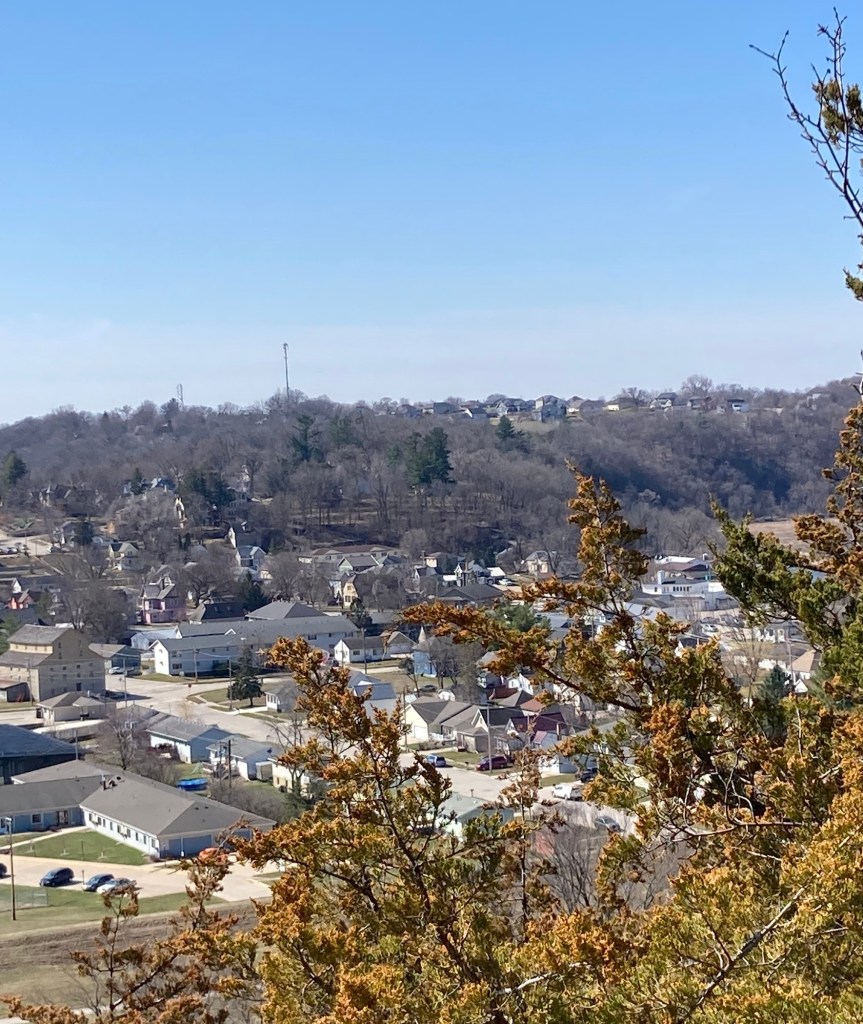
I headed out this morning on a bit of a walking tour of Decorah. I started by heading for the waterfall in Dunning’s Spring Park. That walk took me through town, across the Upper Iowa River, and then into the park. The park was small but had the promised waterfall as well as a scenic overlook of Decorah.
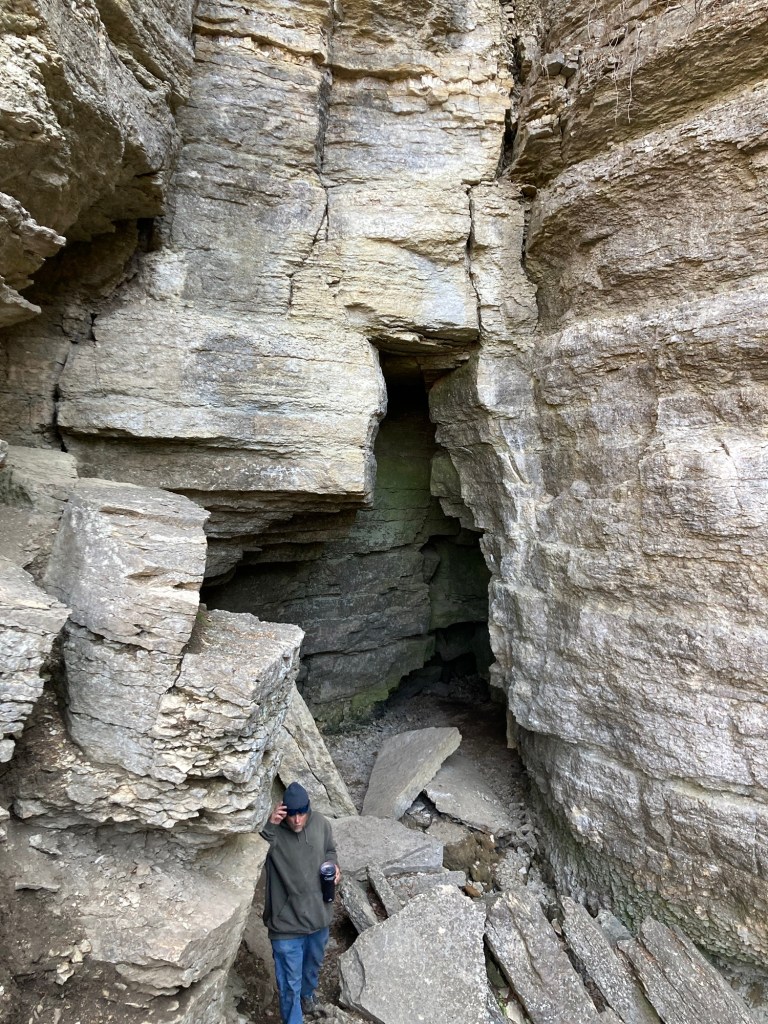
The Upper Iowa RiverThe waterfallA man coming out of the cave above the waterfall. We startled each other.Looking back towards the town center from the park
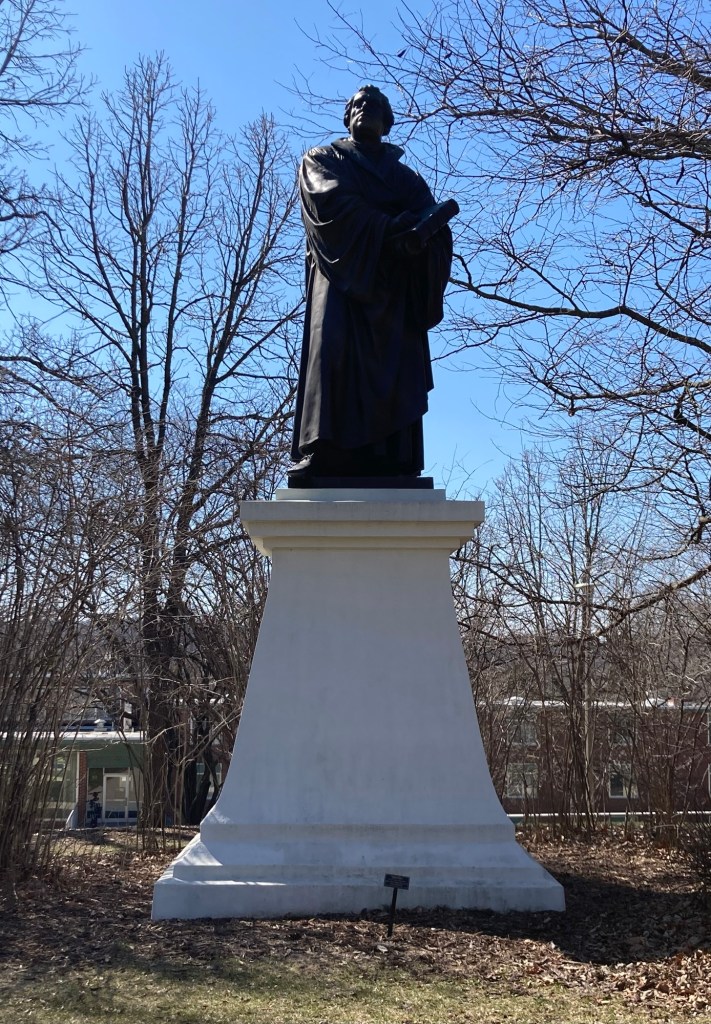
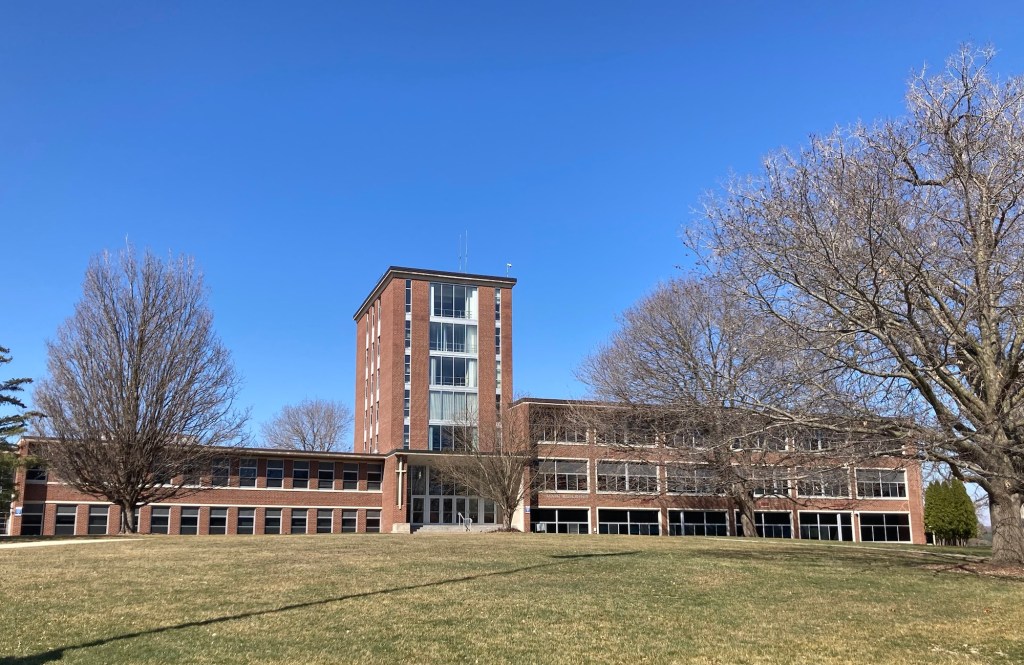
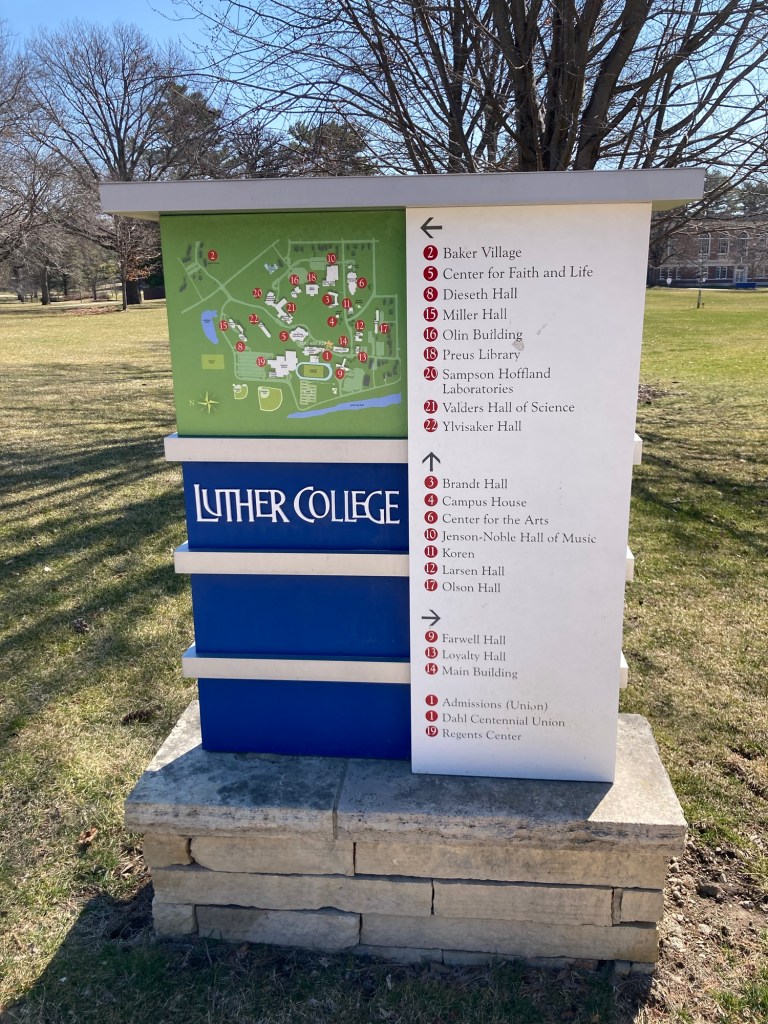
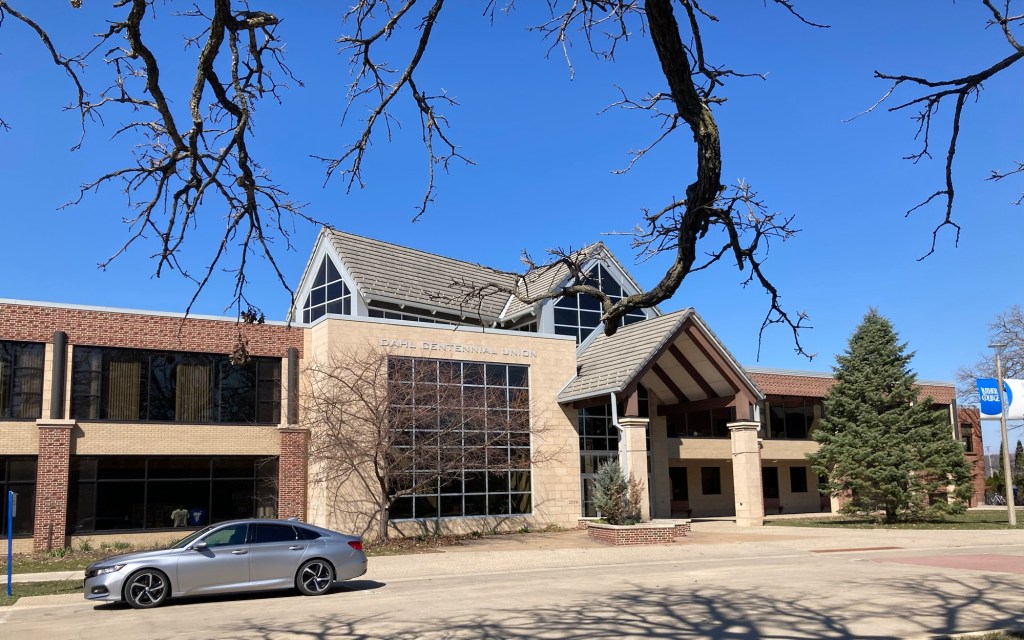
Luther College is relatively close to the park, so I headed there next. Luther College is a private Lutheran liberal arts college. It was originally established near LaCrosse, WI, as a seminary in 1861 by Norwegian immigrants. It was moved to Decorah when it became a college.
A statue of Martin LutherThe Main Building Helpful campus signageThe Student UnionView of the football field and tennis courts from the terrace behind the Student Union
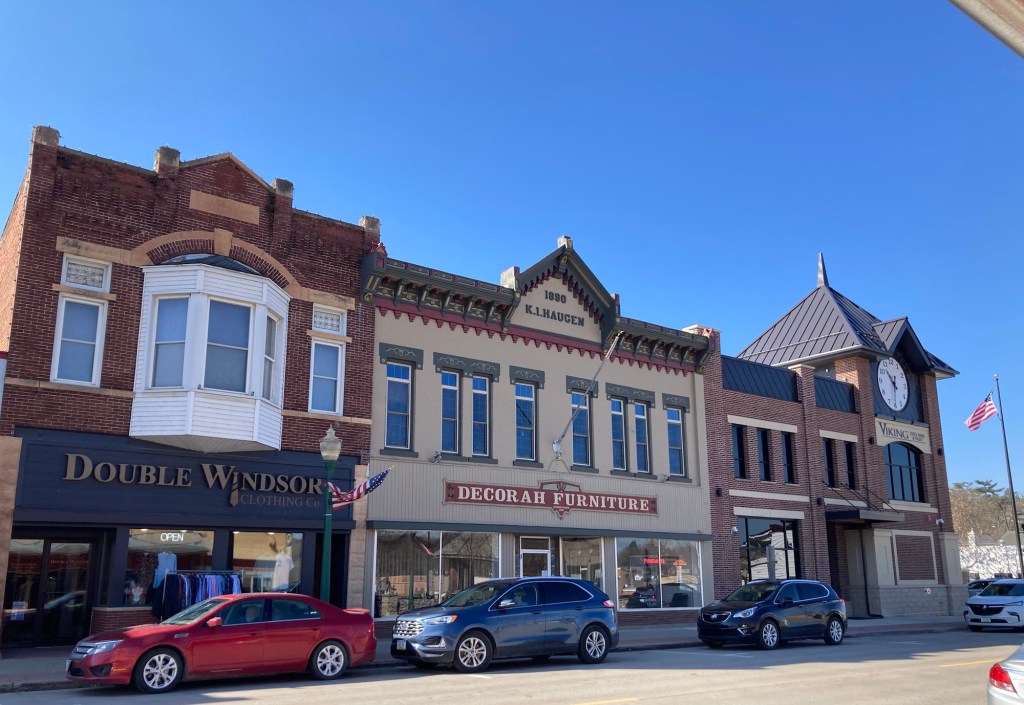
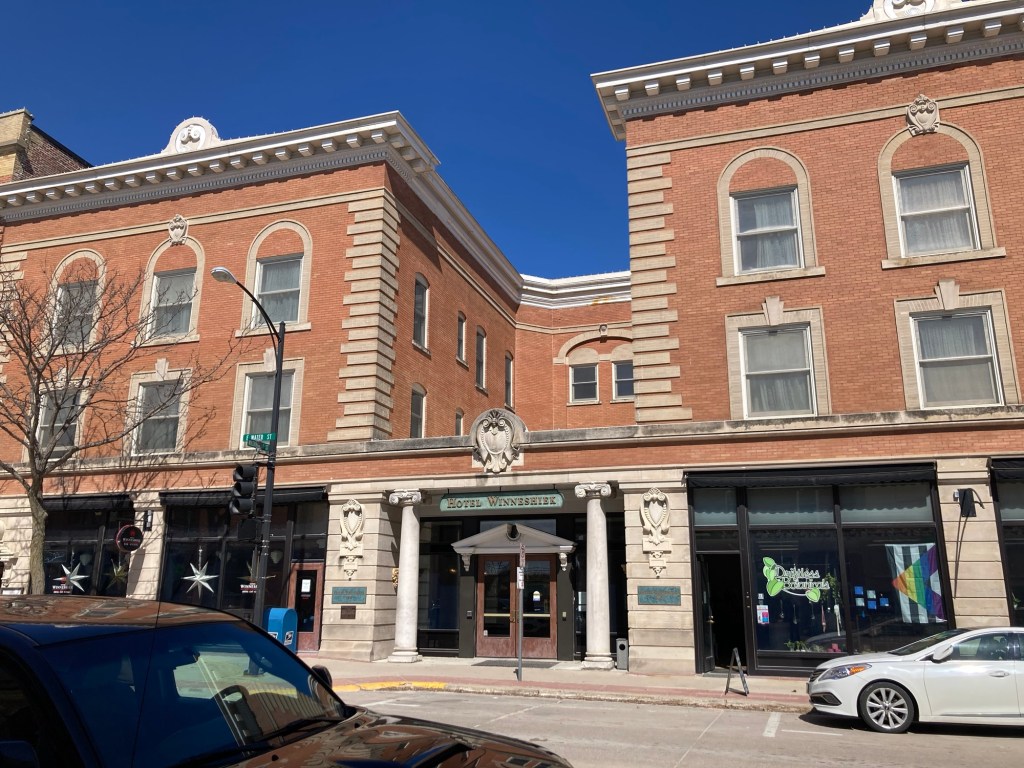
After my walk around campus, I crossed back over the Upper Iowa River to walk around the town center, which I just visited briefly yesterday with my visit to the Norwegian-American Museum. The downtown is much more vibrant than many of the other small towns that we have visited in Iowa. It also has a lot of signage around town, if you are interested in learning about the history and architecture of the area.
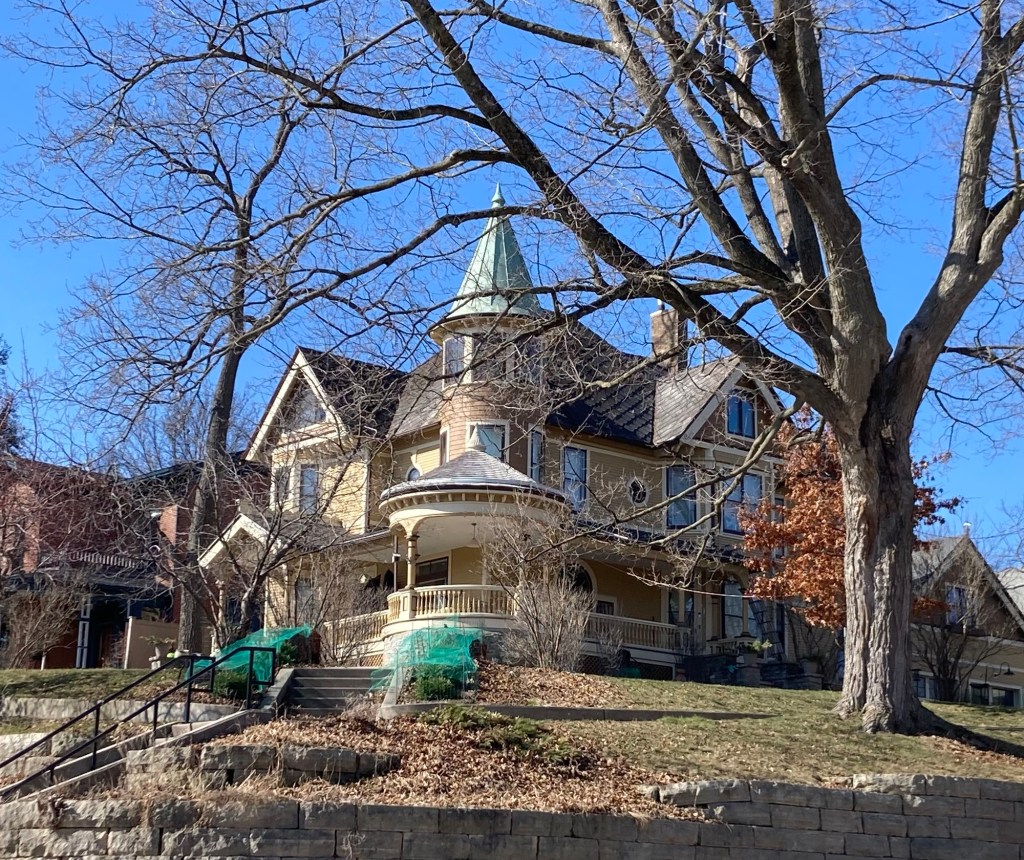
The Queen Anne style house of L.M. Moss, built from 1898 to 1901.The Porter House Museum. The former Italianate home of Adelbert Field Porter and his wife.The Winneshiek County Courthouse Some of the buildings downtown The Hotel Winneshiek, constructed in 1904-05, it hosted Norway’s Crown Prince Olav and Crown Princess Martha in 1939.
Up and Down — Bob and I are separately watching the Iowa Hawkeyes Women’s Basketball Team compete in the Elite Eight portion of the NCAA March Madness Basketball Tournament.
Bob and I are currently in separate states. Bob’s in Texas on a baseball trip with his brother-in-law and nephews. They are trying to see games at all of the baseball stadiums in the NBL. This time they are visiting the stadiums in Houston and Arlington, Texas. I left Janesville, Wisconsin, this morning where I had been visiting my mom, and am now in Decorah, Iowa, as I make my way back to Grimes, Iowa, and Bob (post baseball trip).
Decorah, with a population of about 7,500, is the largest community in Winneshiek County Iowa. Decorah has become a center for Norwegian-American culture originating from a number of Norwegian settlements beginning in the 1850s. My mom’s ancestors came from Norway, and I grew up eating Norwegian food during holidays, so I had to check out the Norwegian-American Museum that is here. The local Vesterheim Norwegian-American Museum is the largest museum in America devoted to a single immigrant group.
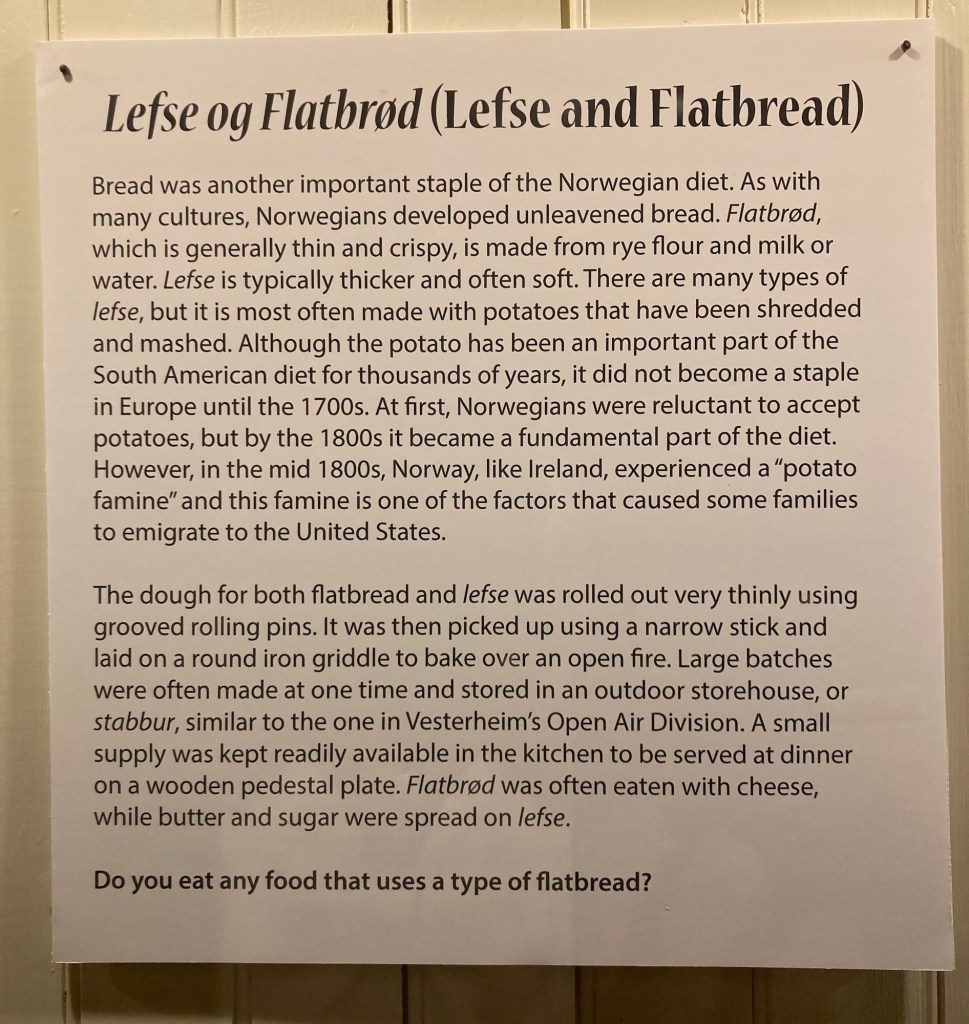
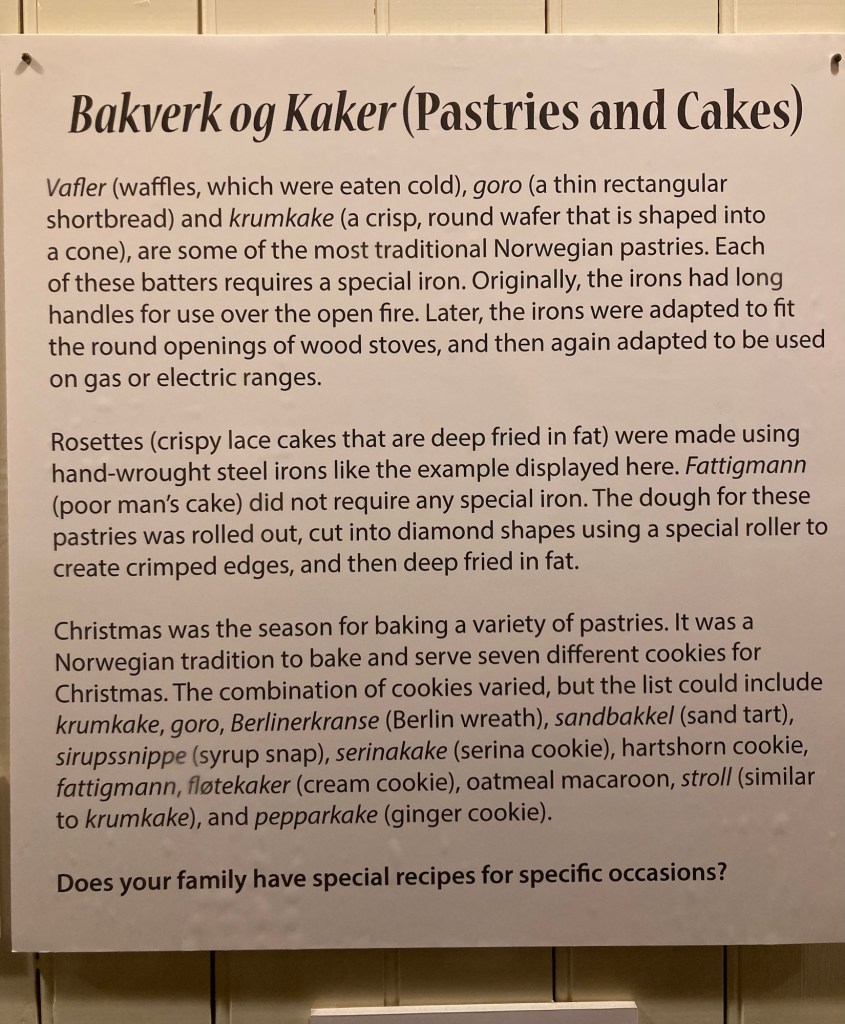
The first exhibit was about food, and I recognized a lot of the foods mentioned.
My family is all about lefse. We ate it around the Christmas holidays with butter and cinnamon and sugar. My mom and her sisters would have lefse making sessions.Many of the cookies we made at Christmas were Norwegian, including a few mentioned here — krumkake, rosettes, and sandbakkel.This is sadly as much as I have ever known about the history of Norway.
Between 1825 and 1930, over 800,000 Norwegiansleft Norway for the New World, a number nearly equal to the population of Norway in 1825. Only Ireland would give up a greater percentage of its population to emigration.
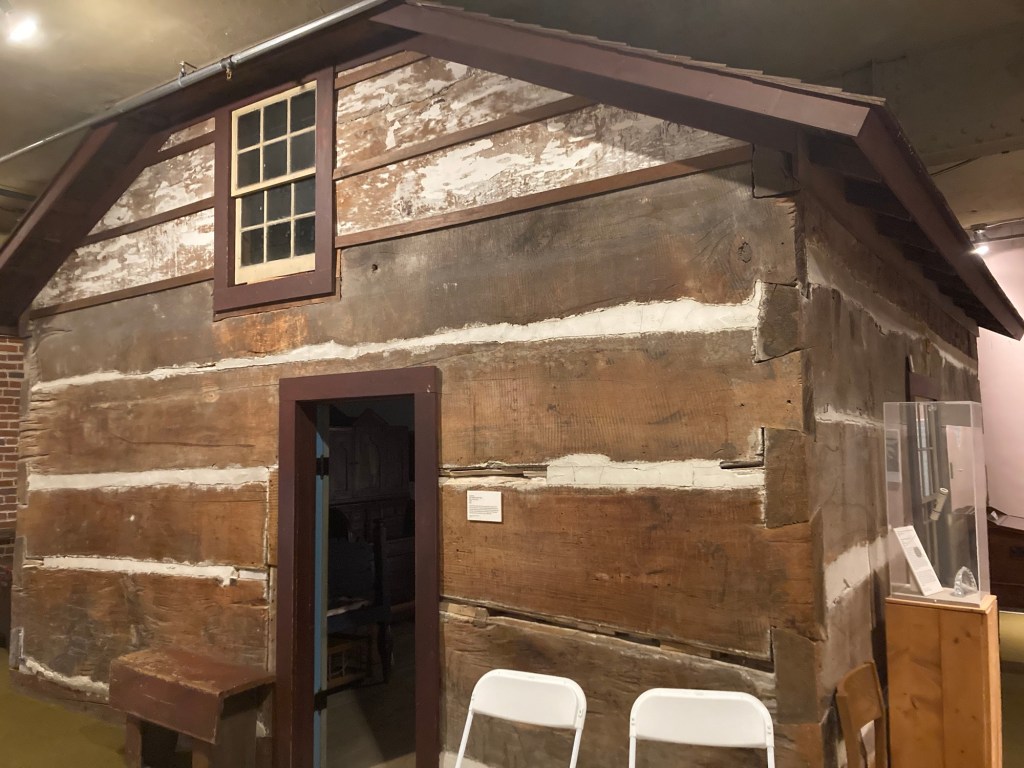
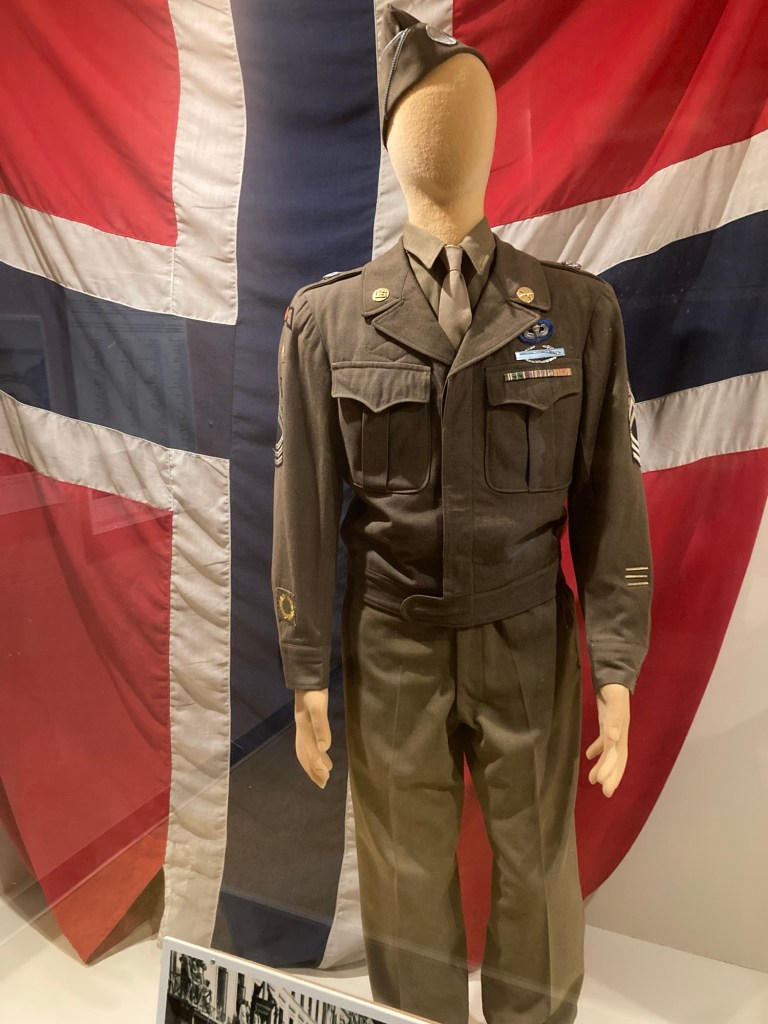
This is an actual log house built by a Norwegian-American from one pine tree in Pine Creek, Iowa.The uniform of the 99th Infantry Battalion in WWII composed of 1,000 Americans of Norwegian descent who had some knowledge of the Norwegian language.
This was new information as well. This battalion was created to liberate Norway from Nazi control. They got to Norway too late to do that but did help restore order to Norway after the war and help welcome back the king.
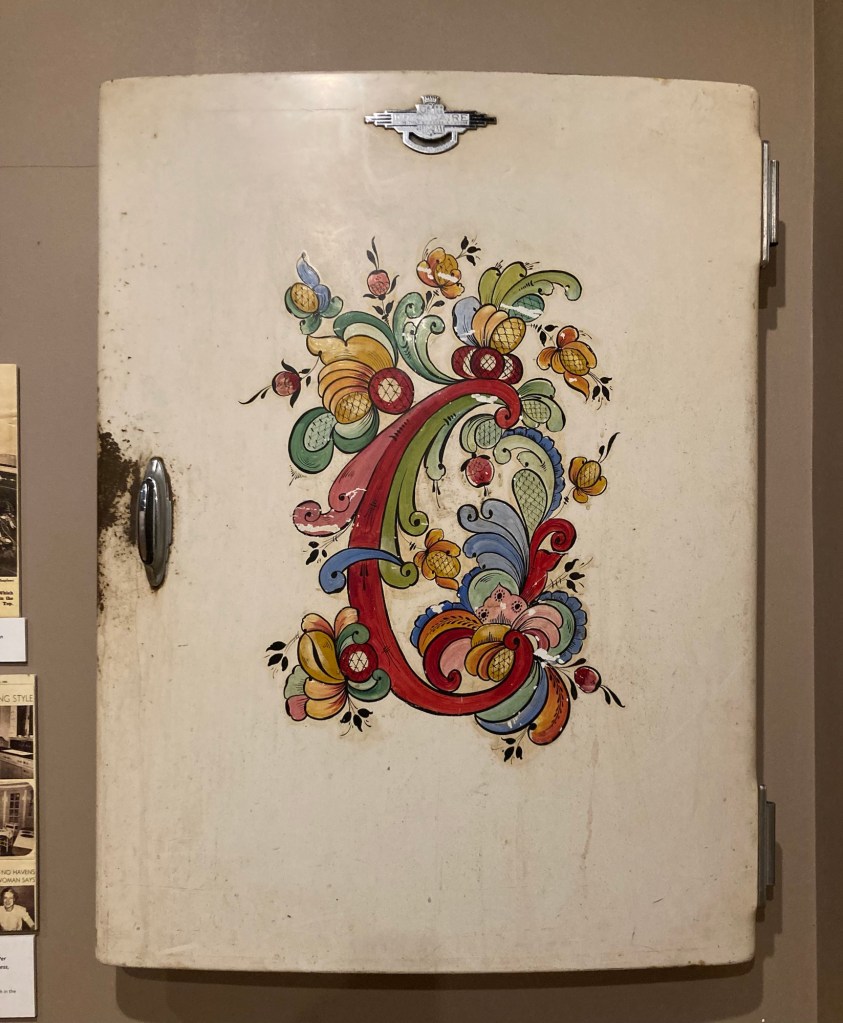
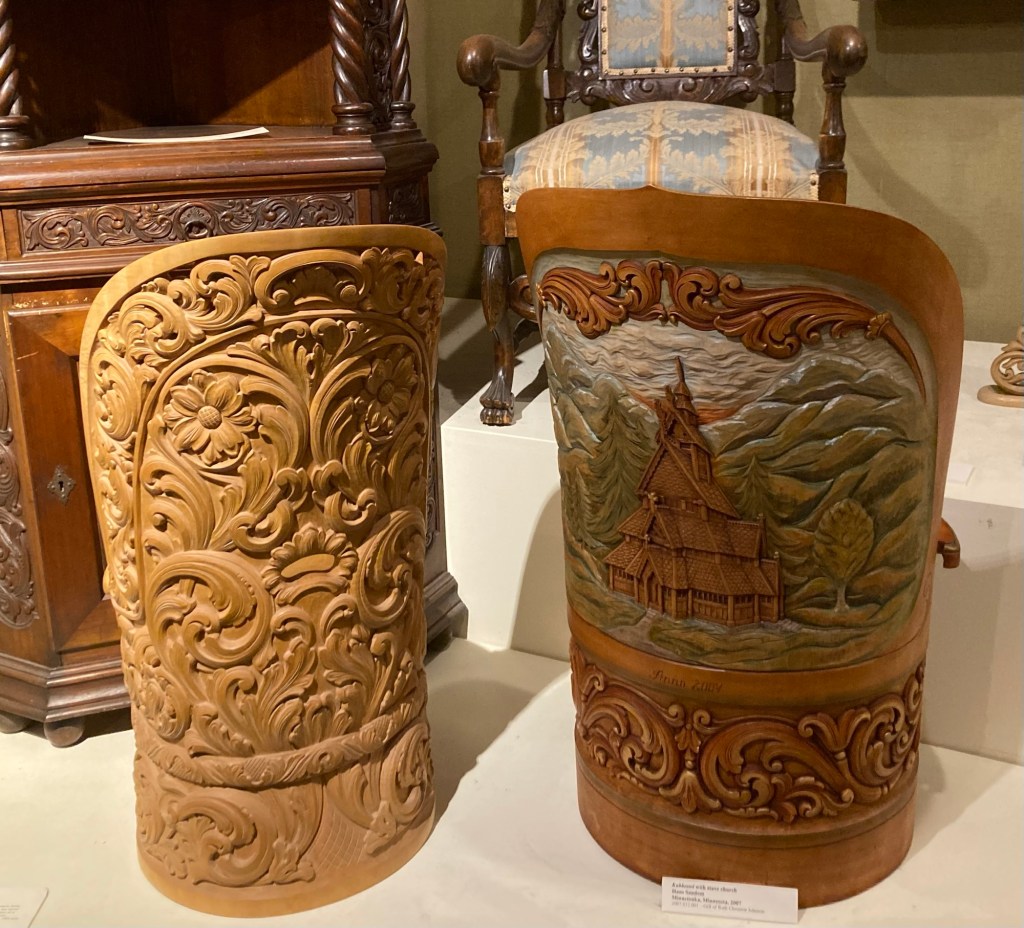
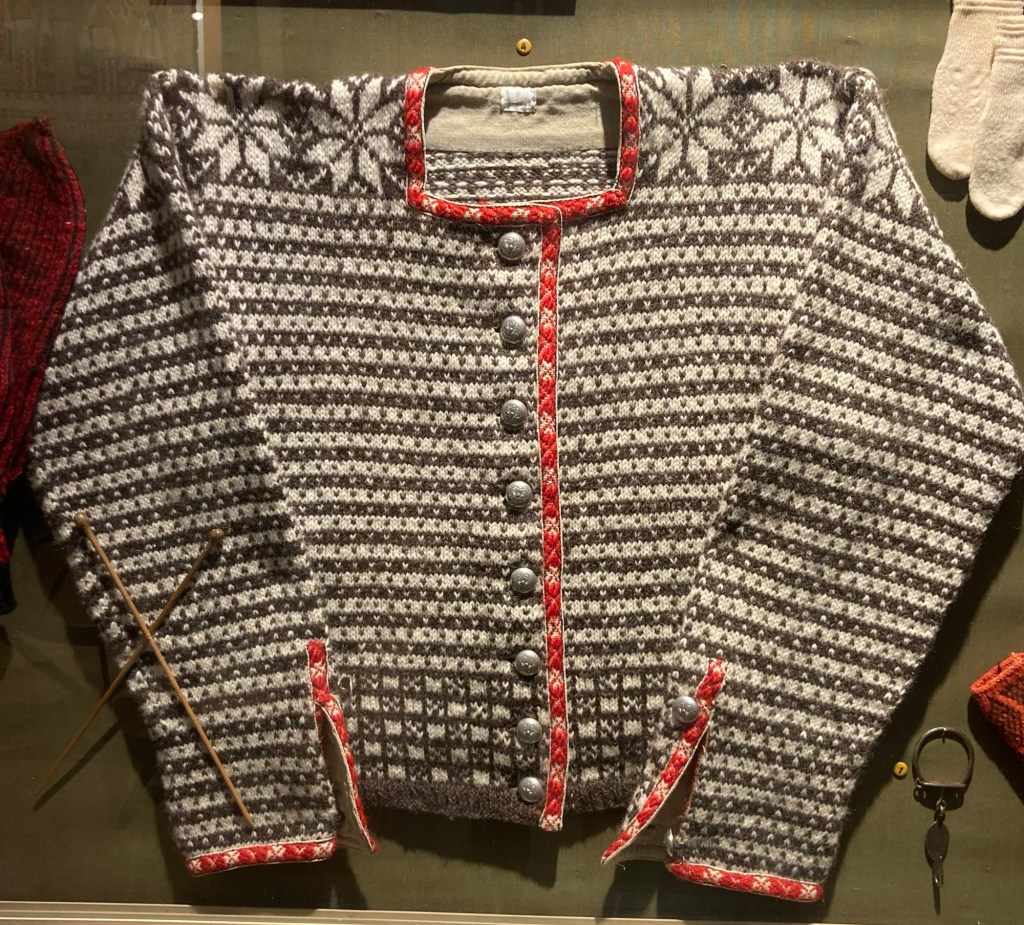
A Norwegian style corner cupboard made by Lars Christensen of Benson, Minnesota.An example of the Norwegian art of rosemaling. I was able to take a class on this when Iwas in middle school.Handmade Norwegian style chairs that Norwegian-Americans would make for their homes.A Norwegian style sweater
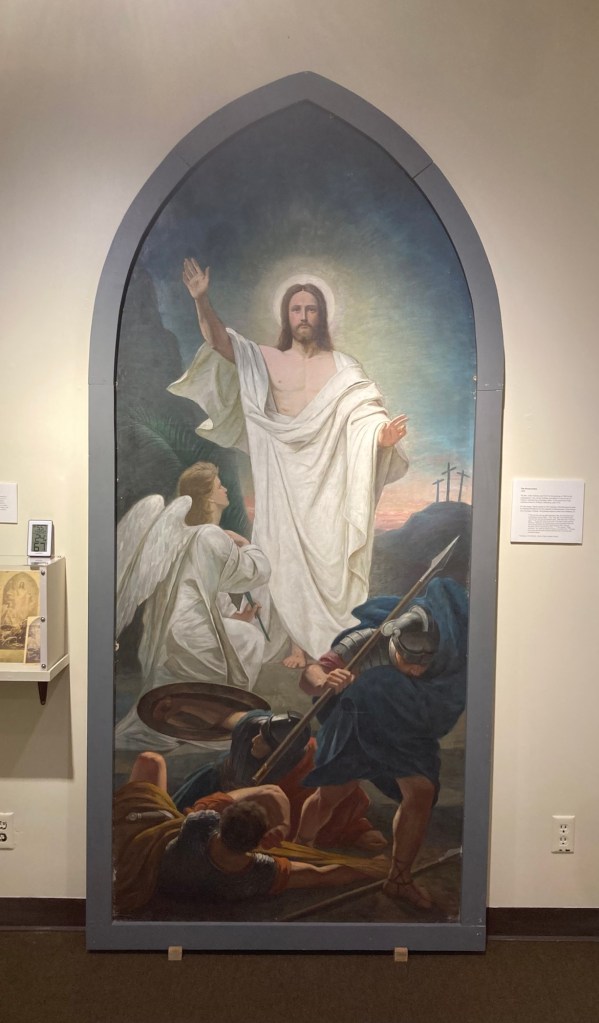
There was an exhibit on Herbjorn Gausta, apparently the most widely known American painter of Norwegian ancestry. I was not aware of him, but as you can tell by the blog, I am continually learning new things. He was born in Telemark, Norway, but came with his family as a young man to southeastern Minnesota. He was studying in Decorah at Luther College when he was persuaded to pursue his artistic talents.
“The Resurrection” altar piece by Gausta for the Vinje Lutheran Church in Willmar, Minnesota.
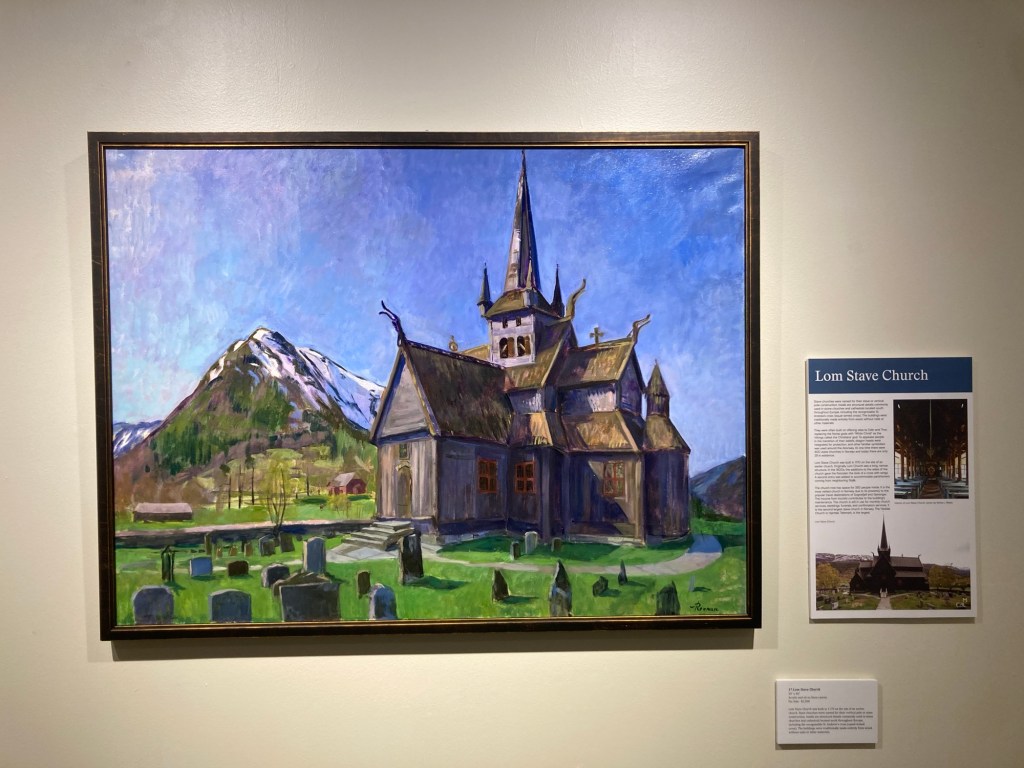
Another art exhibit at the museum was called Seven Summers by Arna Renan. She was a Norwegian-American who grew up in Duluth, Minnesota, and later studied at the National Academy of Art in Norway. Her paintings were created over 7 summers in Norway.
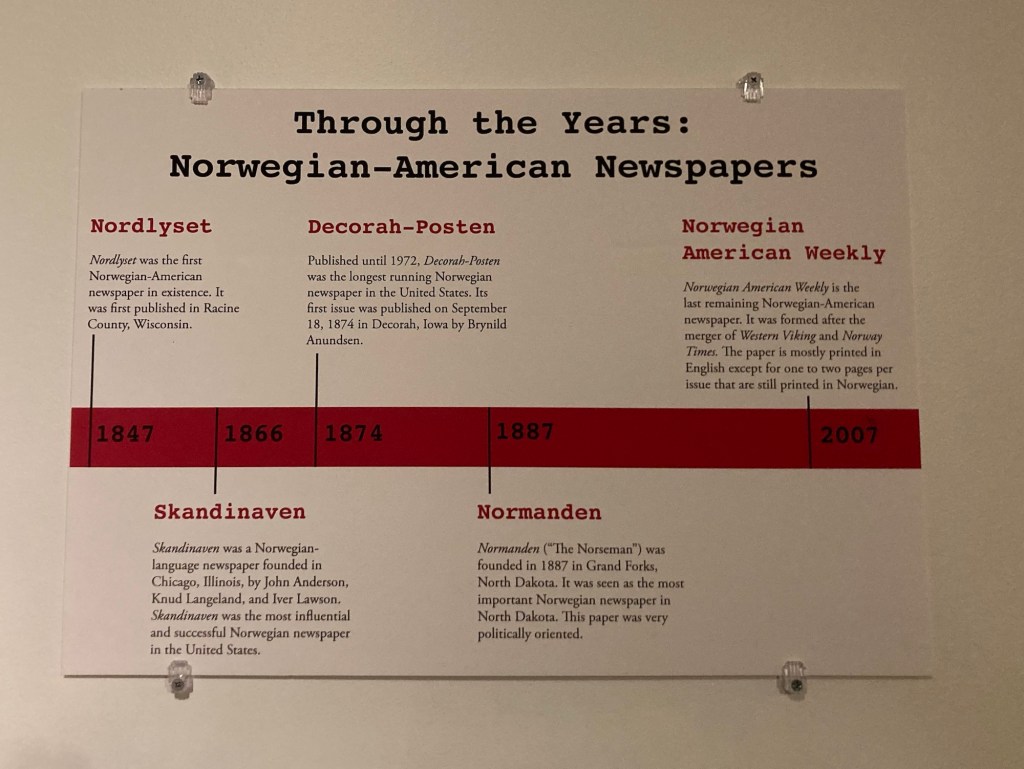
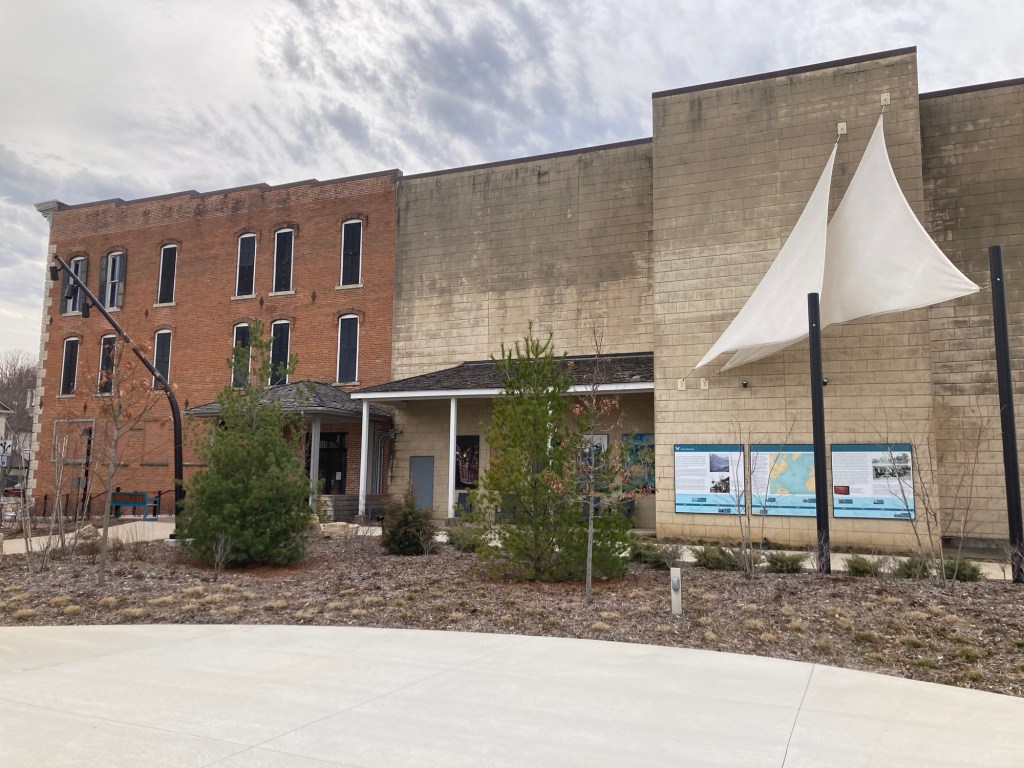
Painting of the Lom Stave Church. All of her paintings made me want to visit Norway.An exhibit of Norwegian-American writersA timeline of Norwegian-American newspapers A view of the side of the museum from the nearby plaza. You could walk a trail to see more examples of houses and other buildings from early Norwegian immigrants.
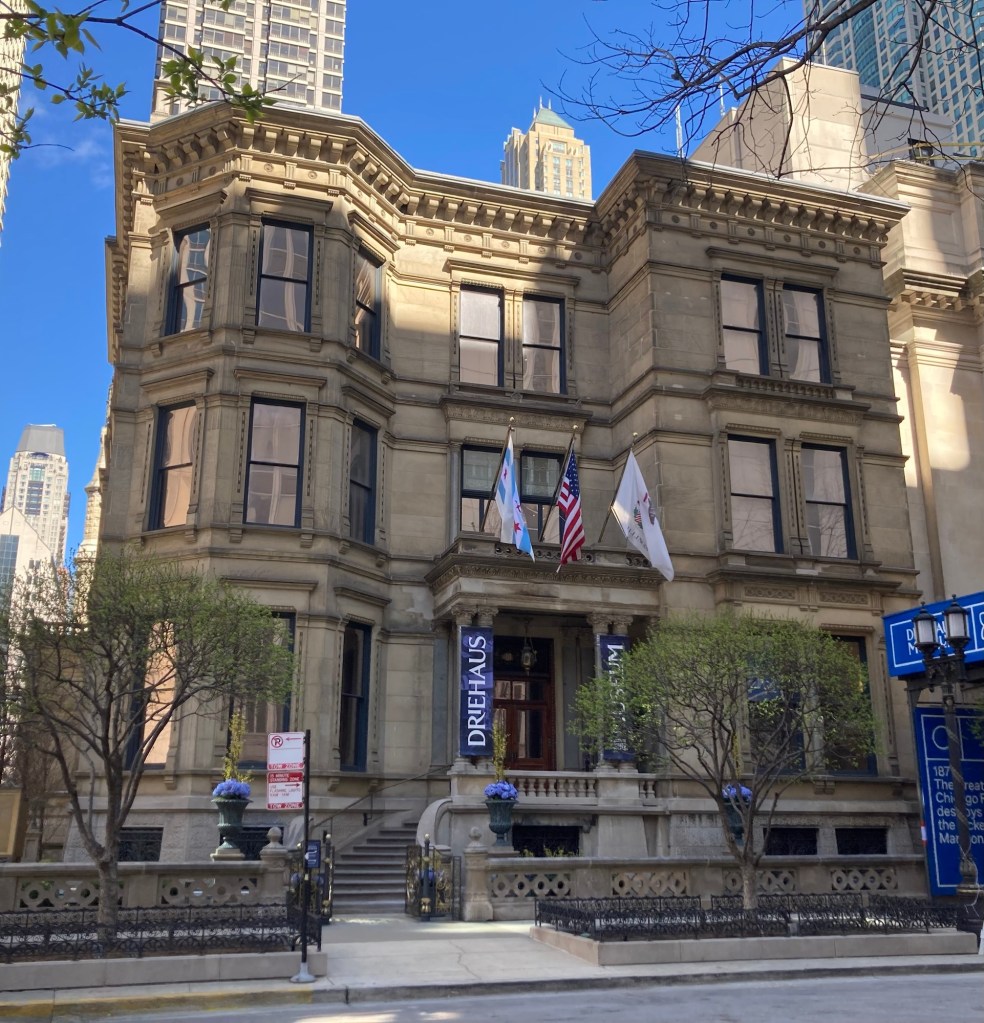
Our homeowners were kind enough to leave us some passes for various museums, a couple of which we had not heard of before. Today, we took the handy 146 express bus (which we catch just down a block from the condo on Lake Shore Drive) to the Driehaus Museum. Actually, we got off the bus at Michigan and Erie and then walked a few blocks down Erie to the museum.
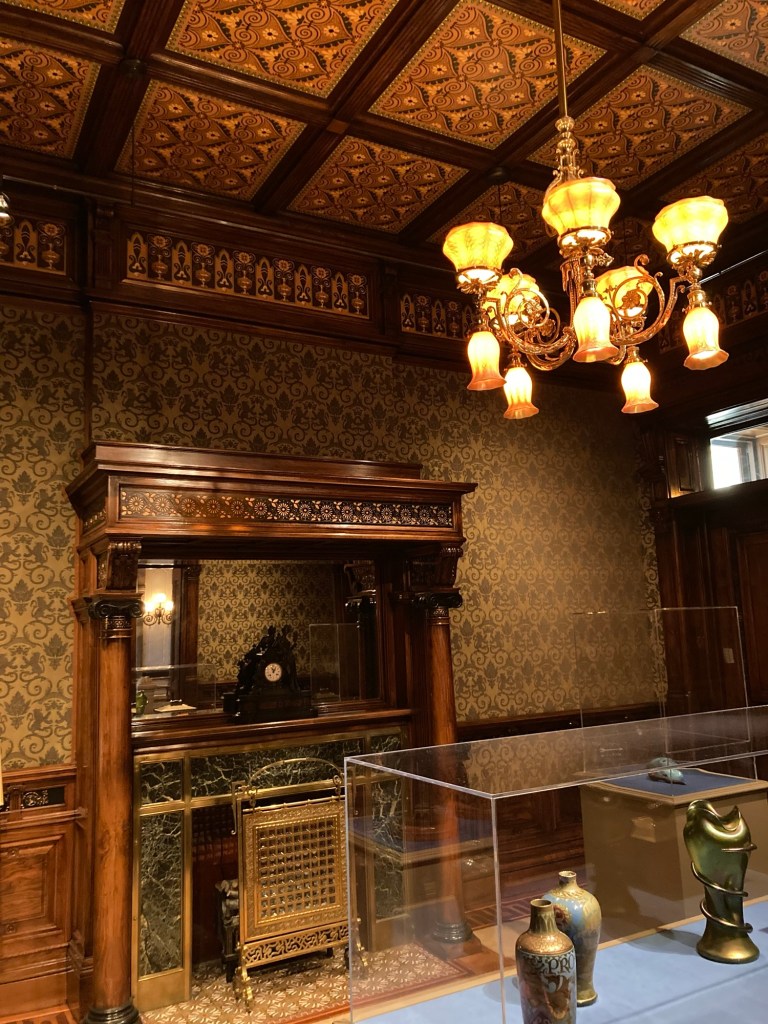
The museum is housed in the former residence of banker Samuel Nickerson and society leader Matilda Nickerson. It was completed in 1883 and became known as the Marble Palace. It cost $450,000 when built which seems like that would be a crazy amount in today’s dollars. The museum is named after Richard Driehaus, who sponsored the restoration of the mansion from 2003-2008. The museum showcases the mansion as well as providing art exhibitions.
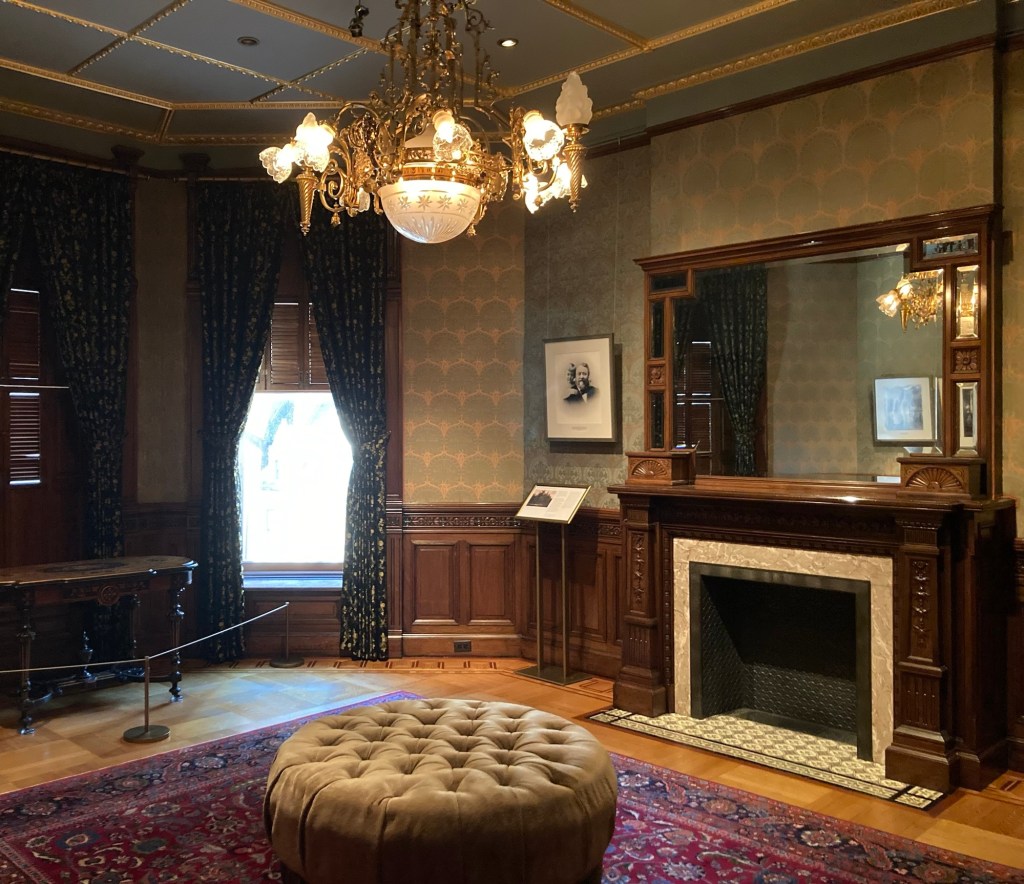
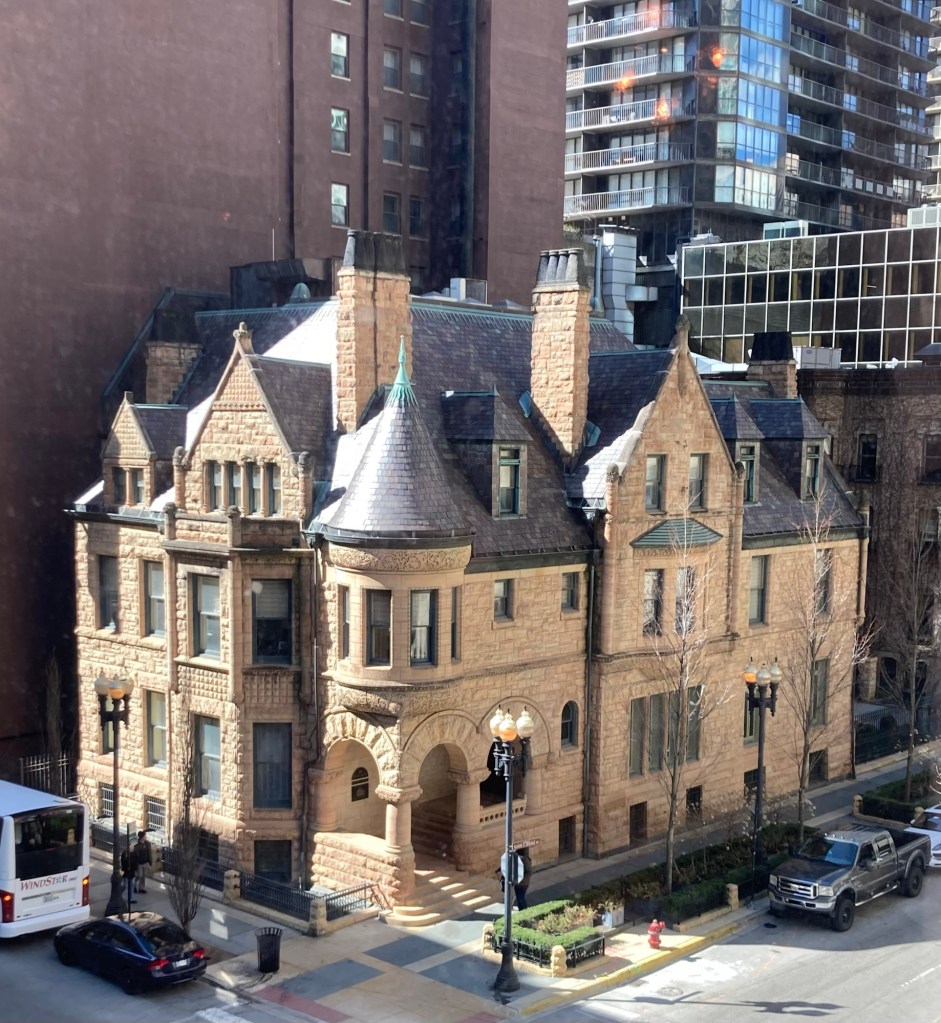
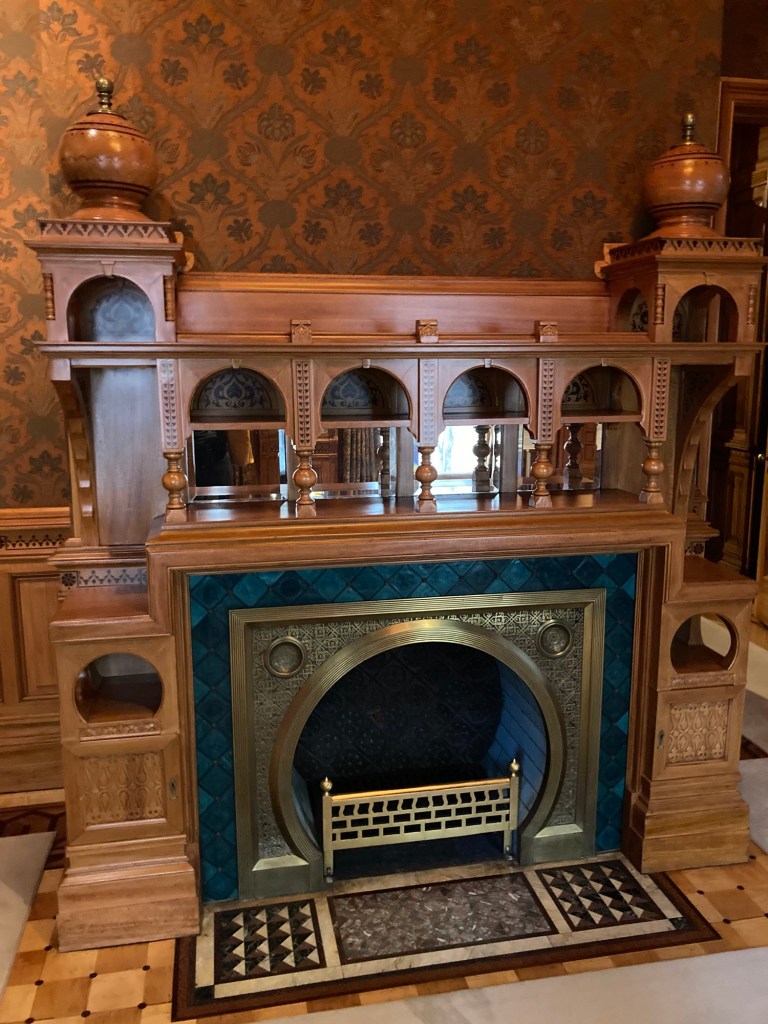
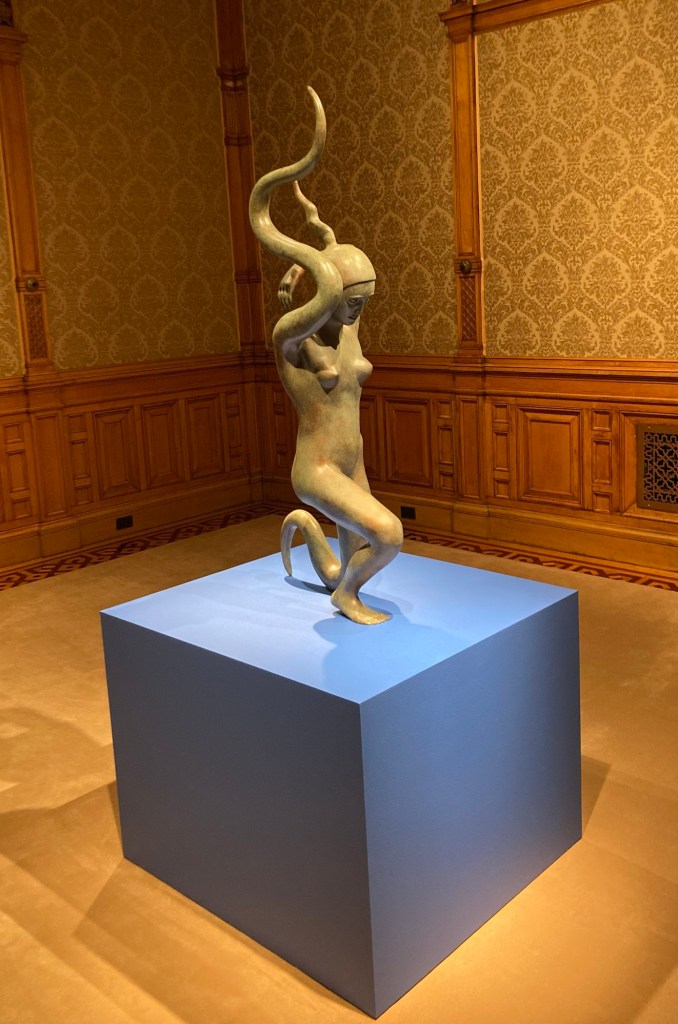
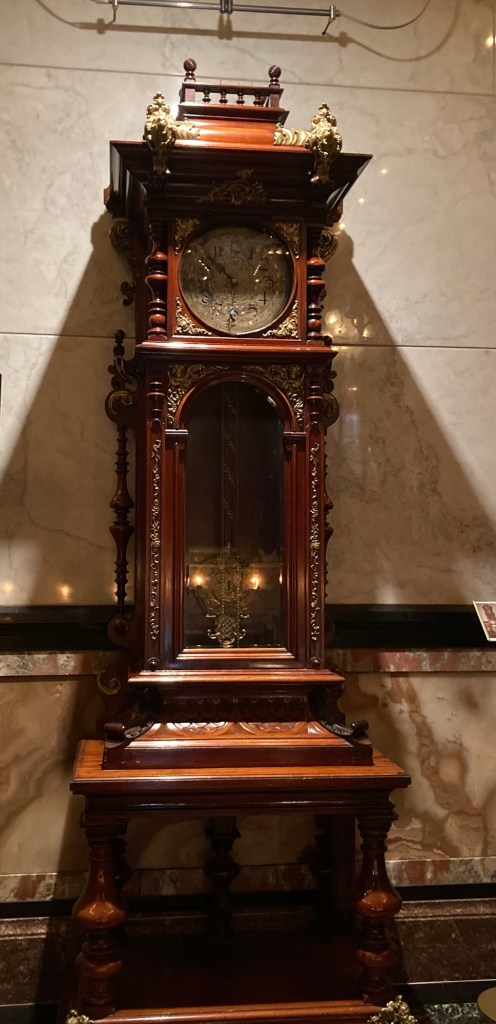
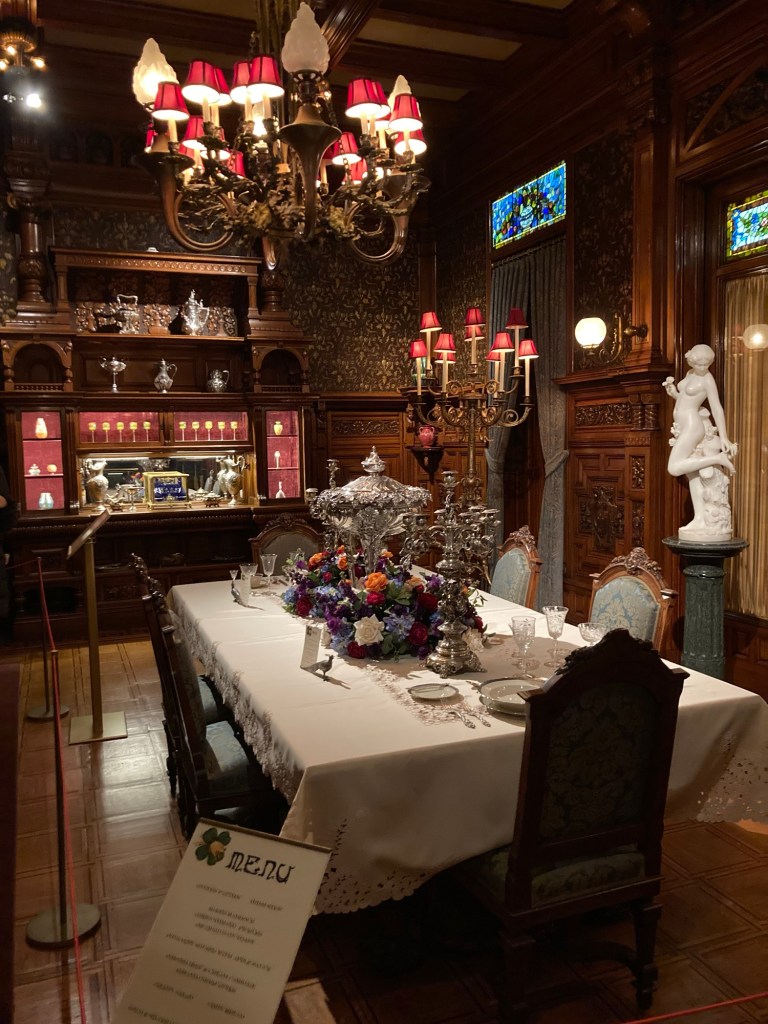
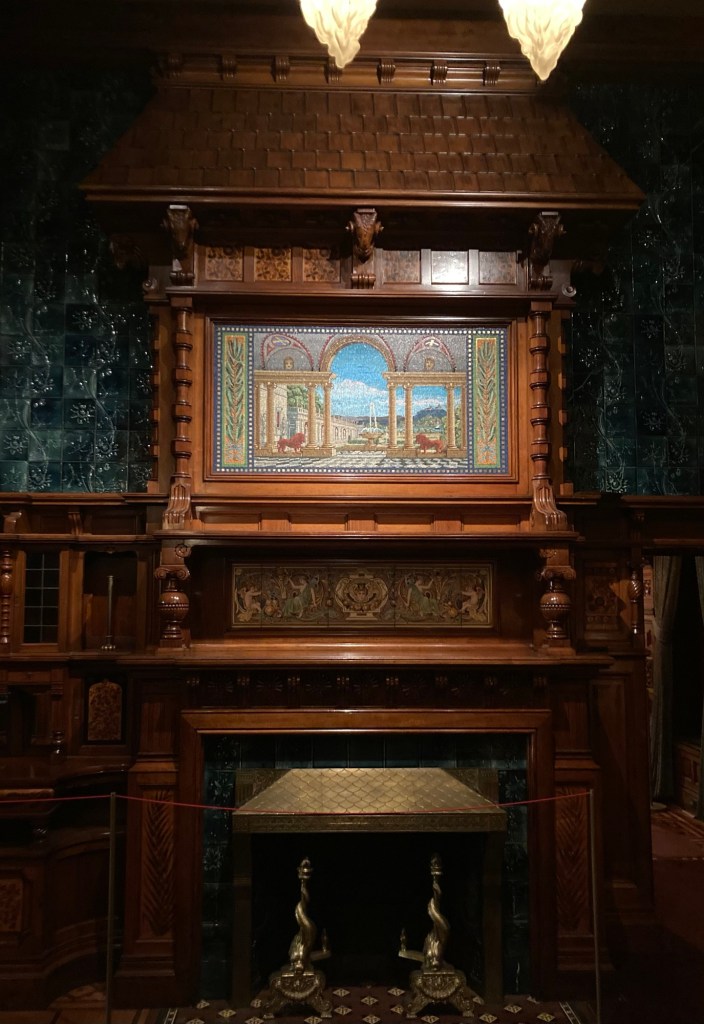
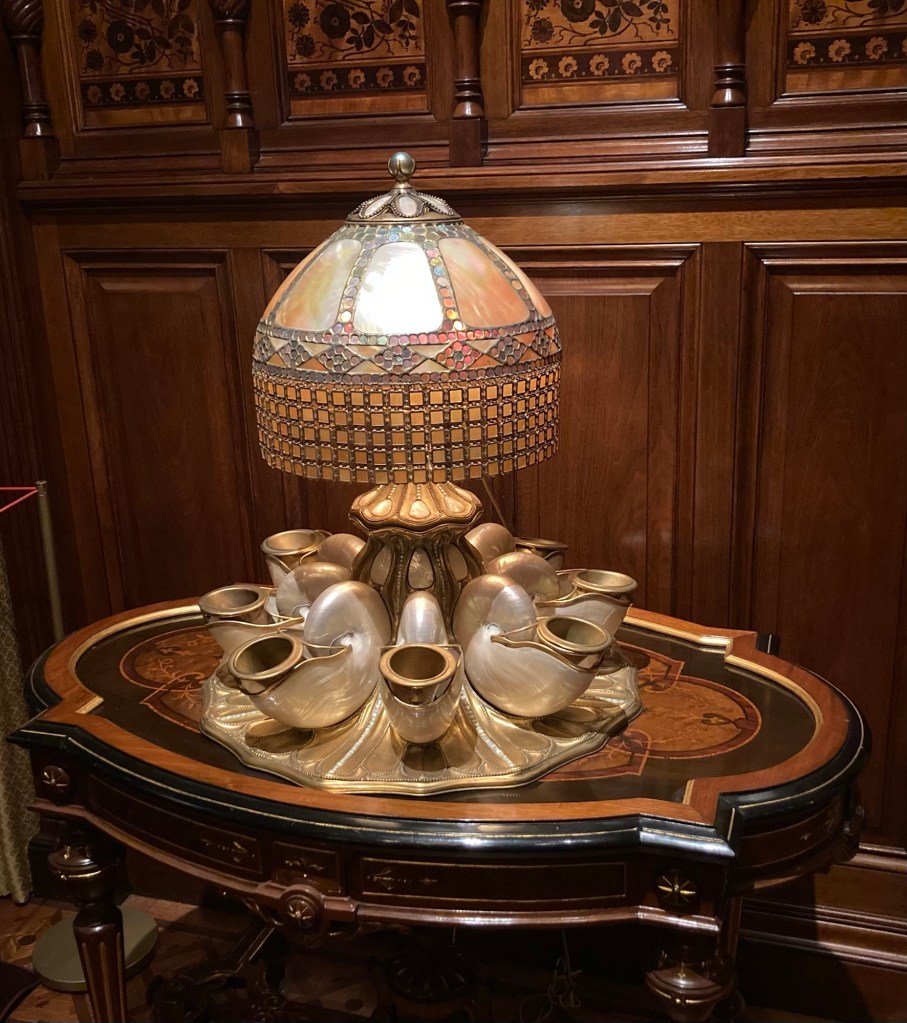
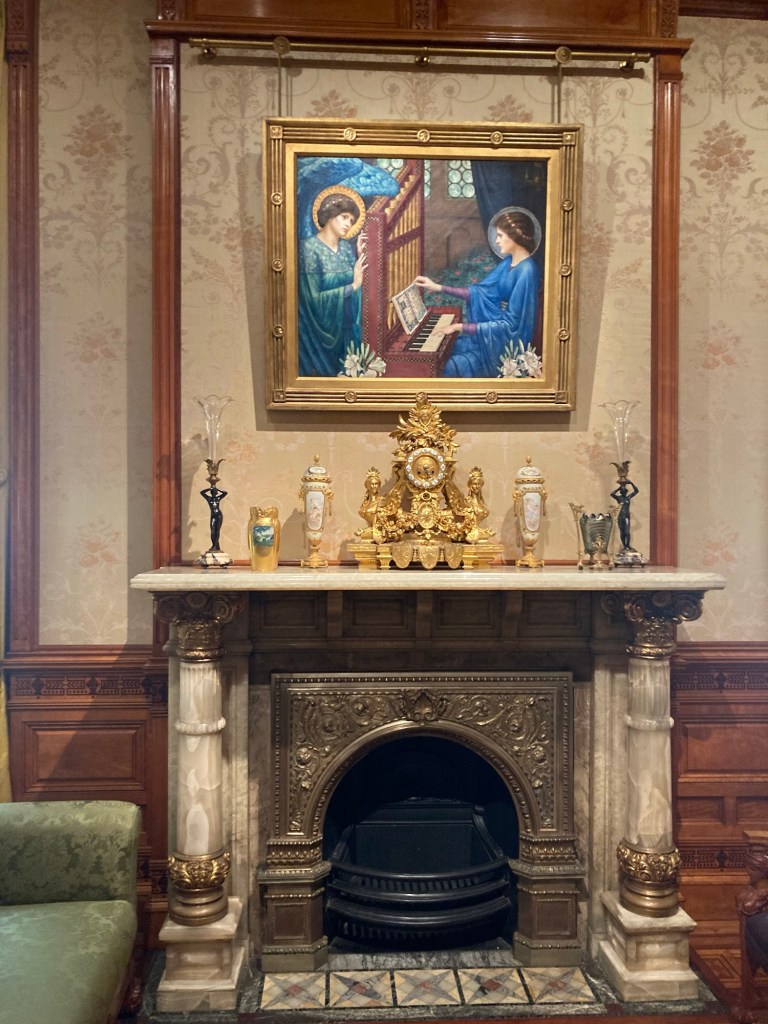
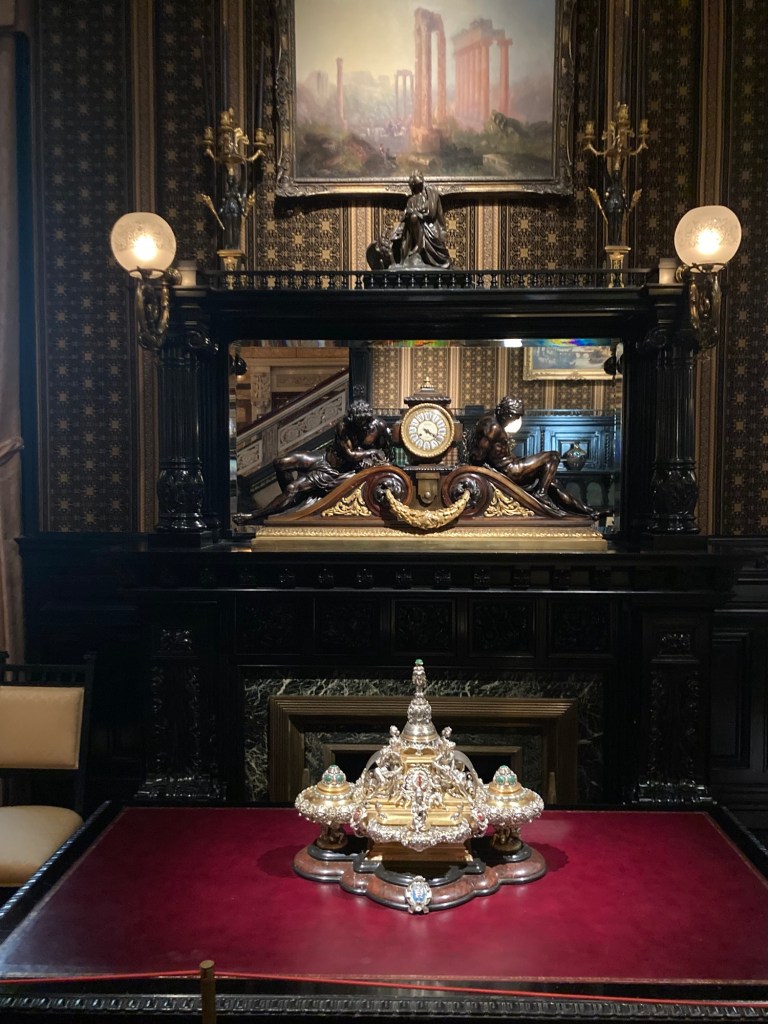
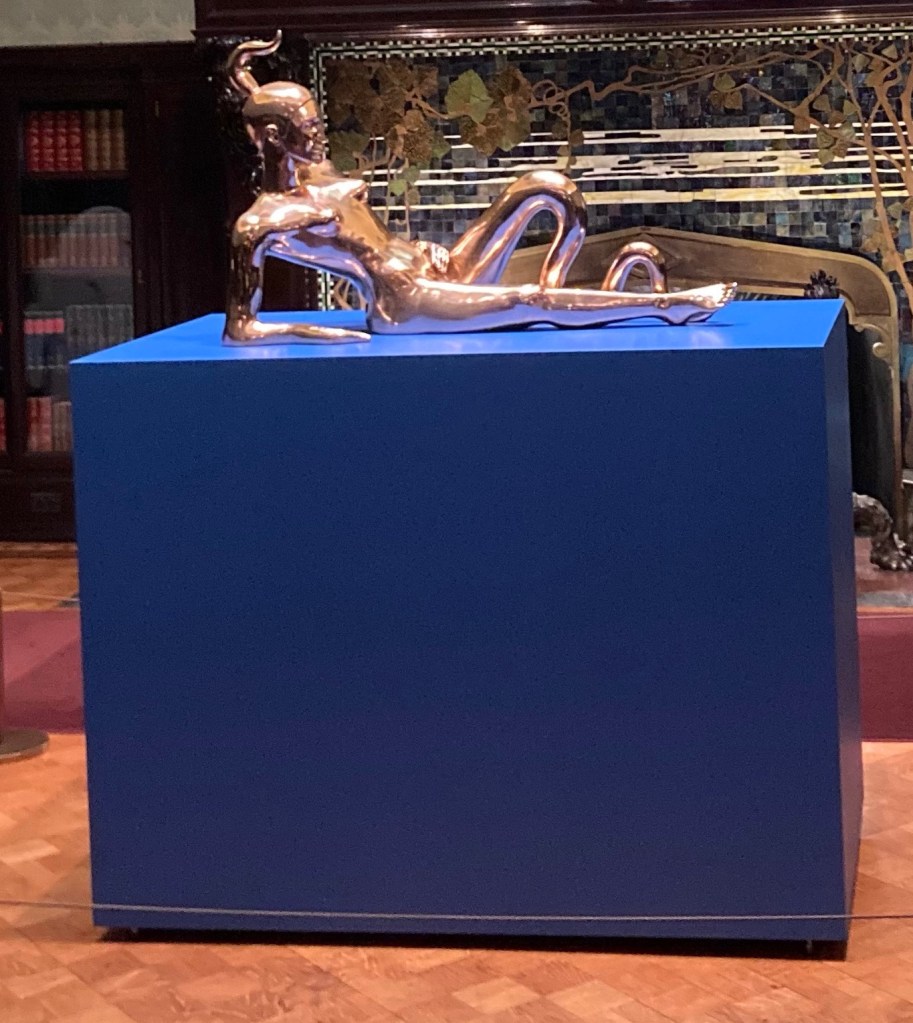
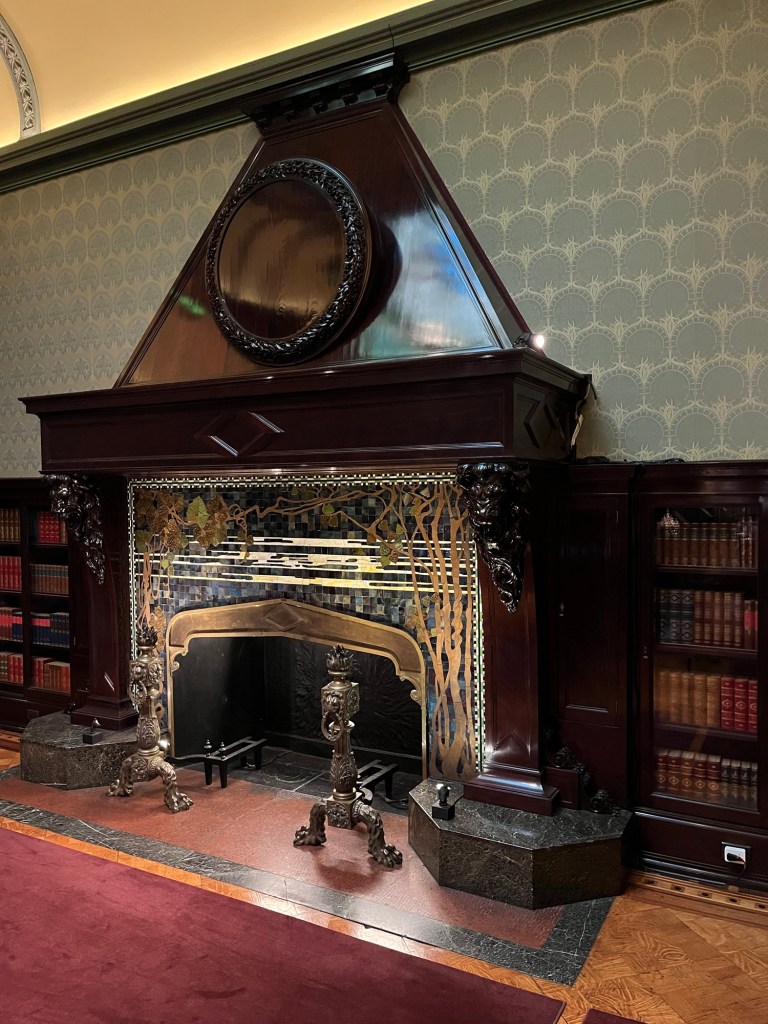
The exterior of the Marble PalaceA mantle clock in the Special Exhibition Gallery on the third floorA second exhibition gallery on the third floor. Each room had a fireplace.The Ransom Cable Home diagonally across the street from the Driehaus Mansion. Ransom Cable was the President of the Chicago, Rock Island, and Pacific Railway.An unintentional selfie in the fireplace in one of the second floor bedrooms of the mansionAn alcove in the 2nd floor sitting roomThe fireplace in Mr. Nickerson’s bedroomA portion of Roland’s (the son) bedroom “Surrender” statue by Sif Itona Westerberg, the featured artist, who is from CopenhagenA grandfather clock from the Black Forest region of GermanyThe gorgeous dining roomMy favorite fireplace in the reception room. The tiles on the wall almost look like water when seen all together.The Tiffany Nautilus Shell Lamp in the reception roomThe fireplace in the front parlorThe fireplace in the drawing room The fireplace in the library“Ascendance” statue by Sif Itona WesterbergThe fireplace in the back library
After our visit, Bob and I walked the 3.6 miles back to the condo against a very strong, cold wind.
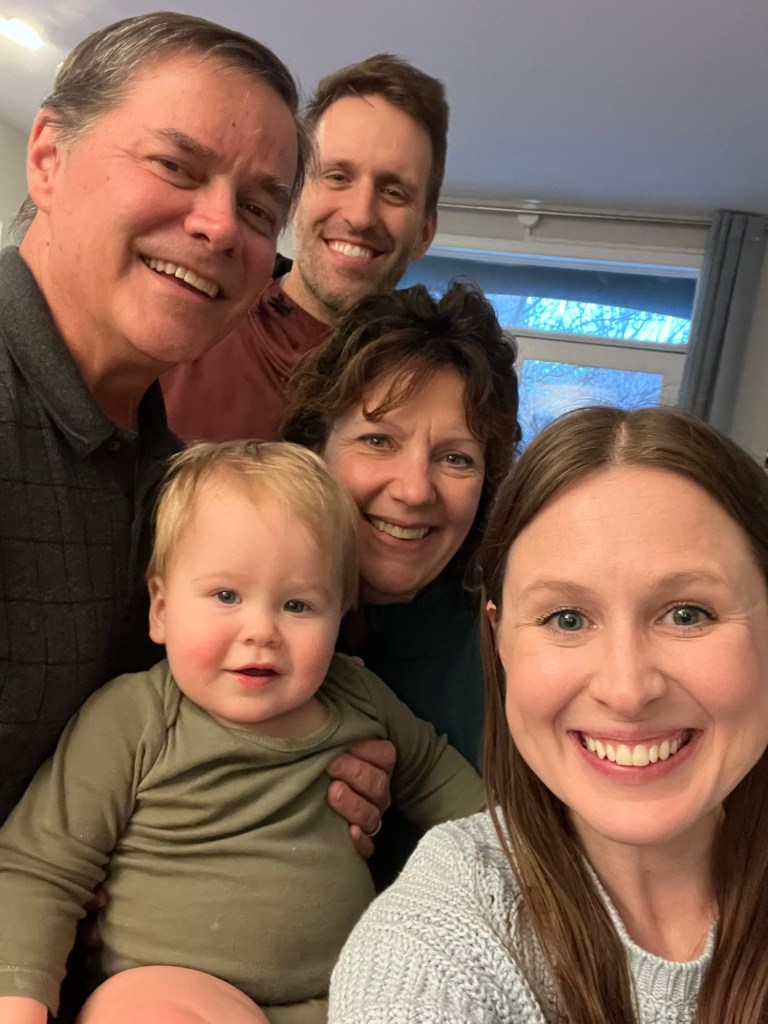
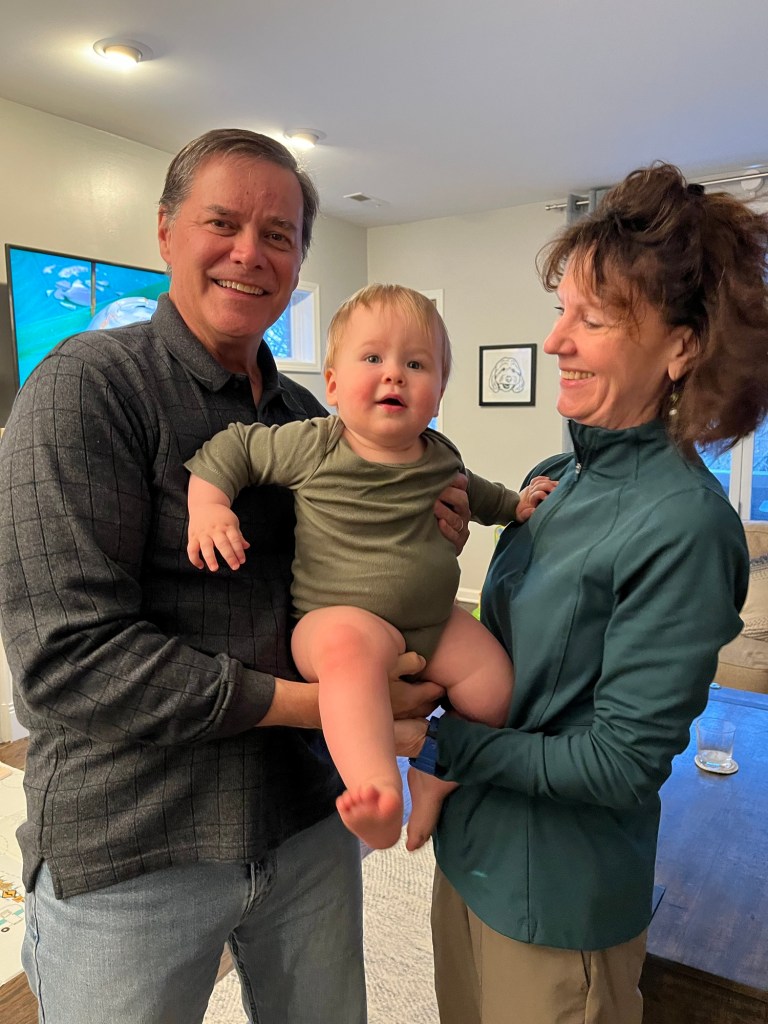
Sunday night Bob and I walked about 40 minutes to our nephew’s house, where Bob prepared a great dinner, and we got to spend time with our nephew and his wife, (who made an amazing cheesecake for dessert) as well as our great nephew, Harrison, who is now walking.
Bob, Nick, me, Harrison, and KellyBob and I with Harrison
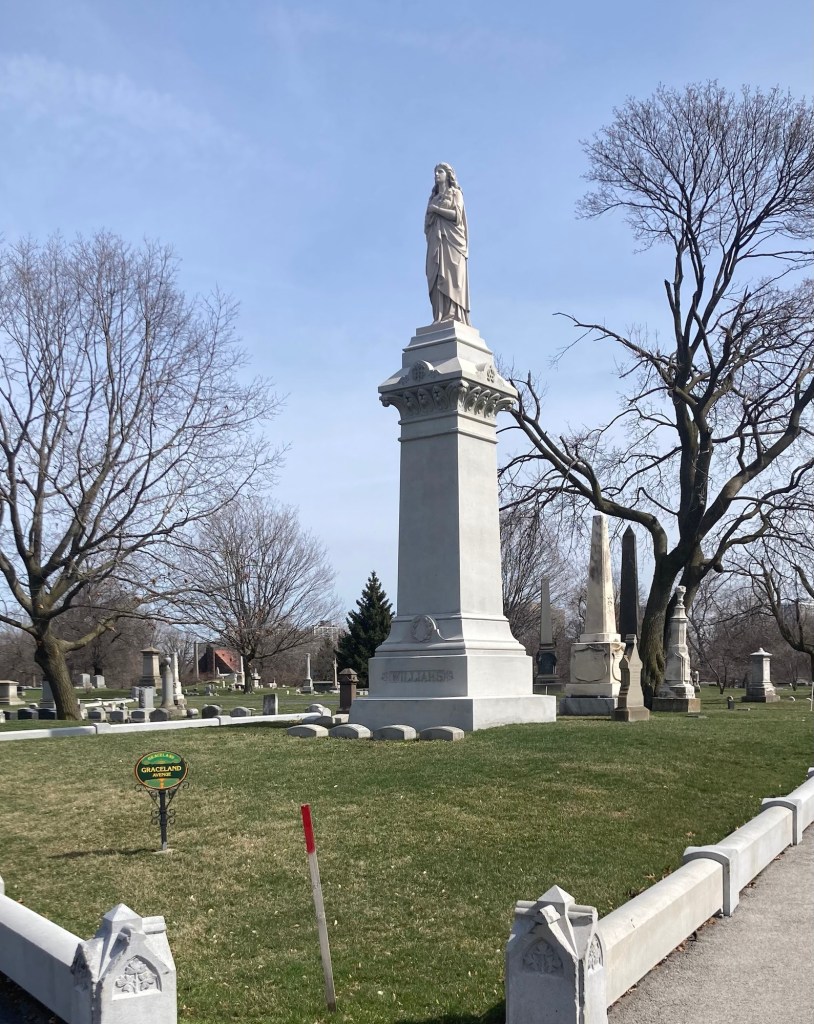
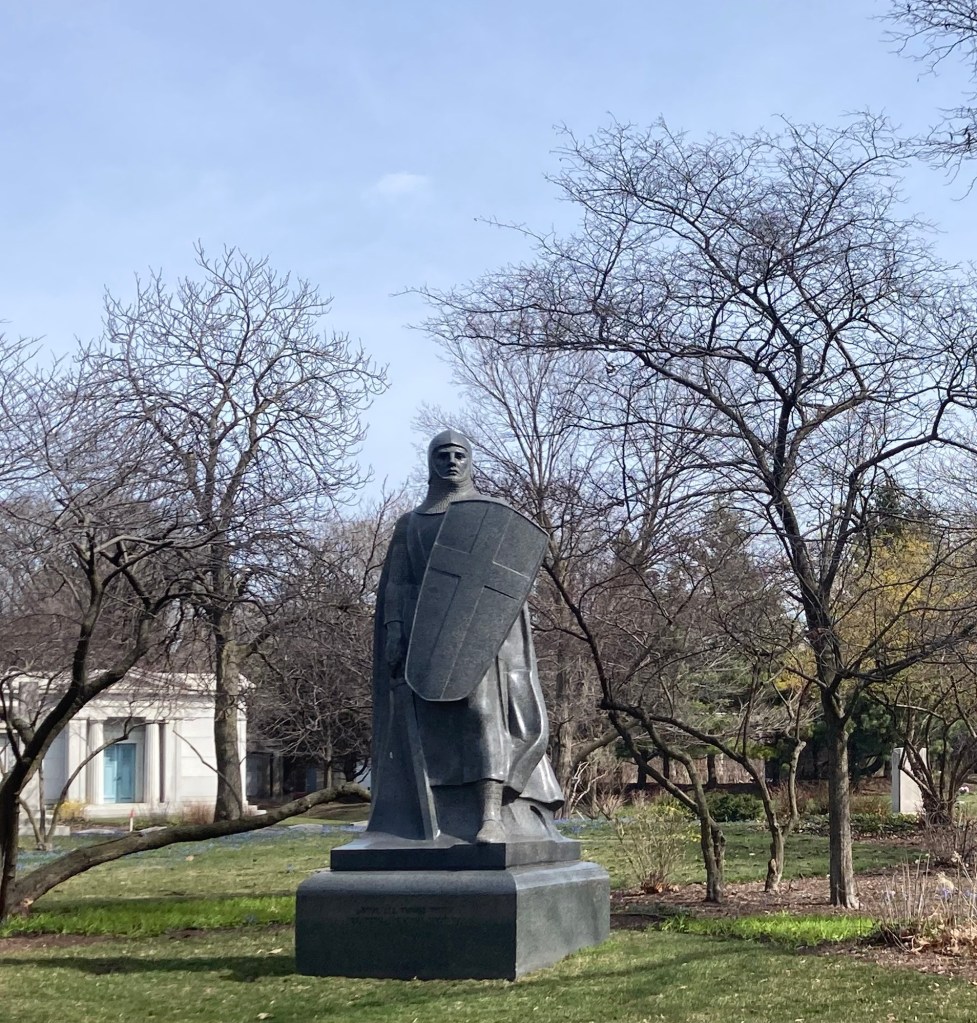
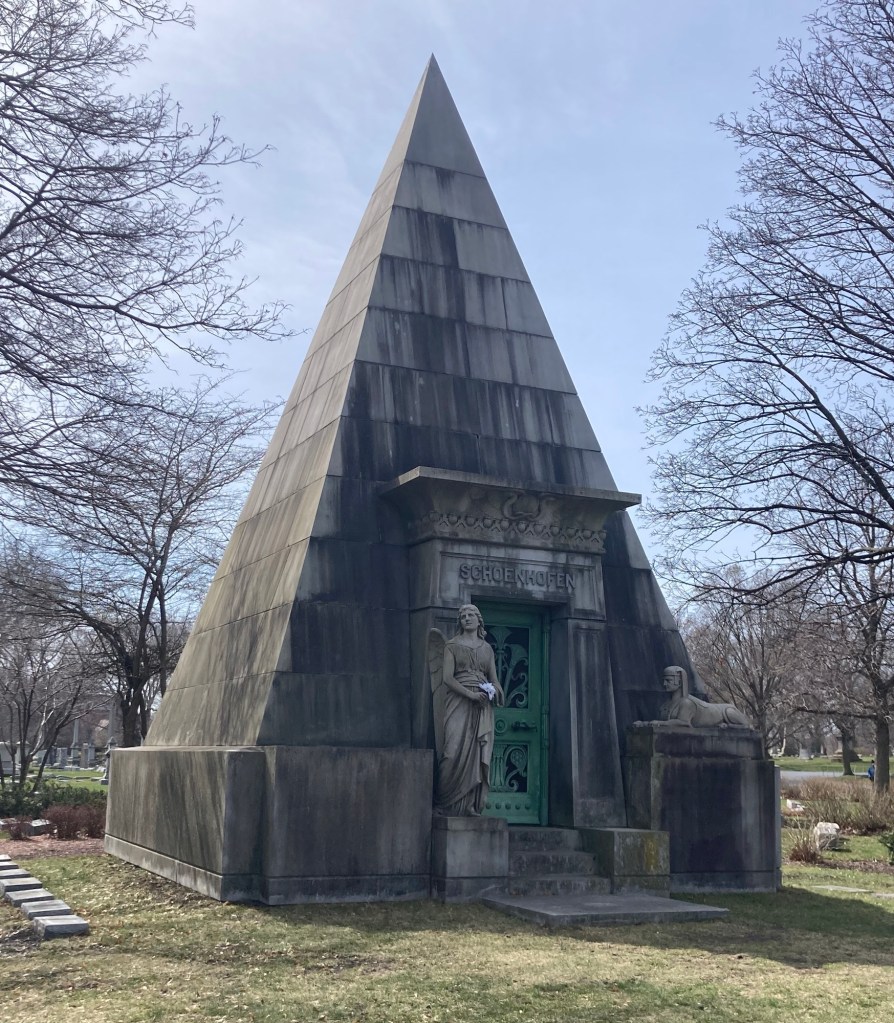
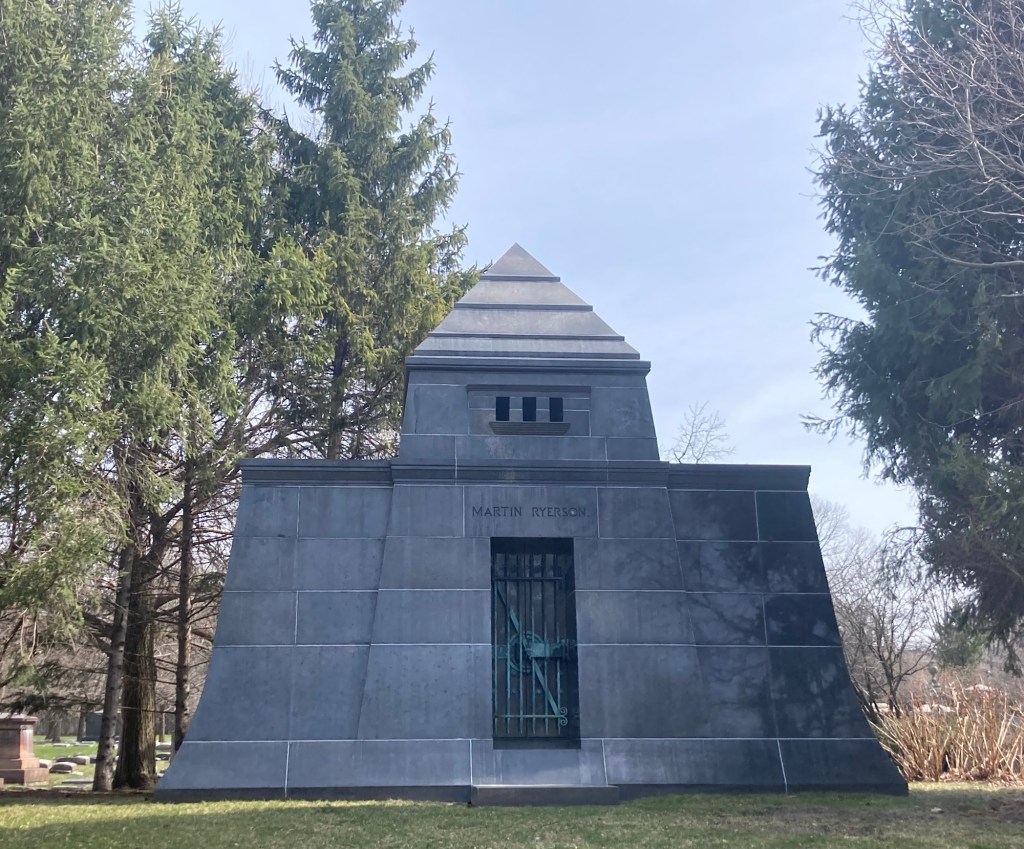
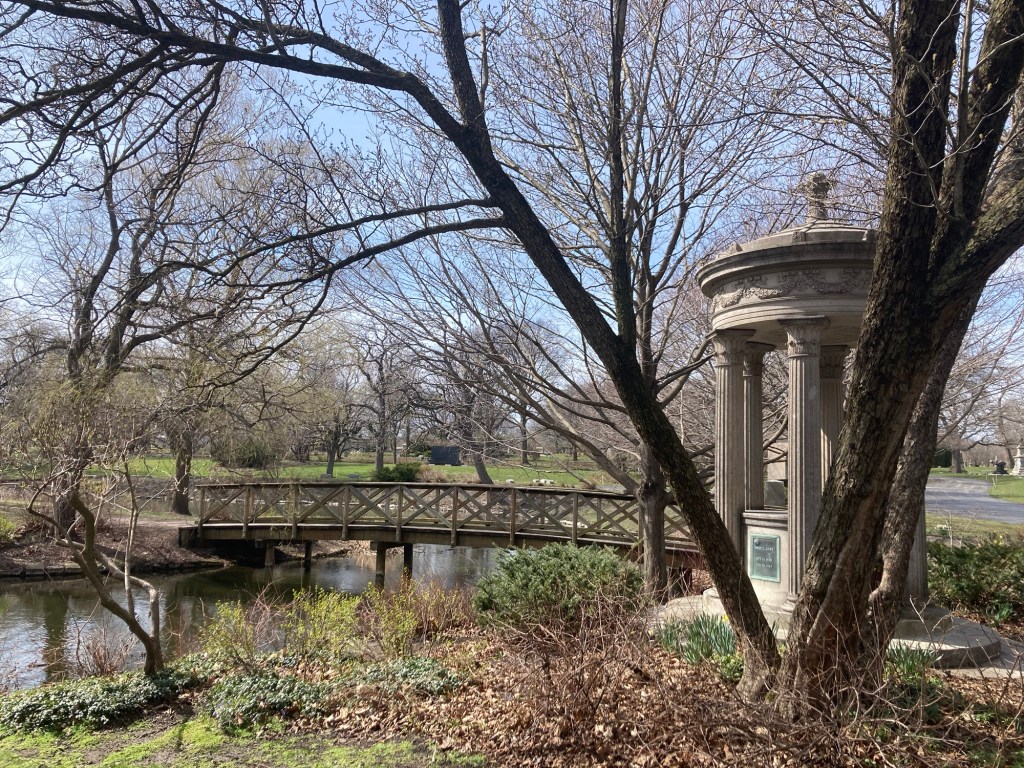
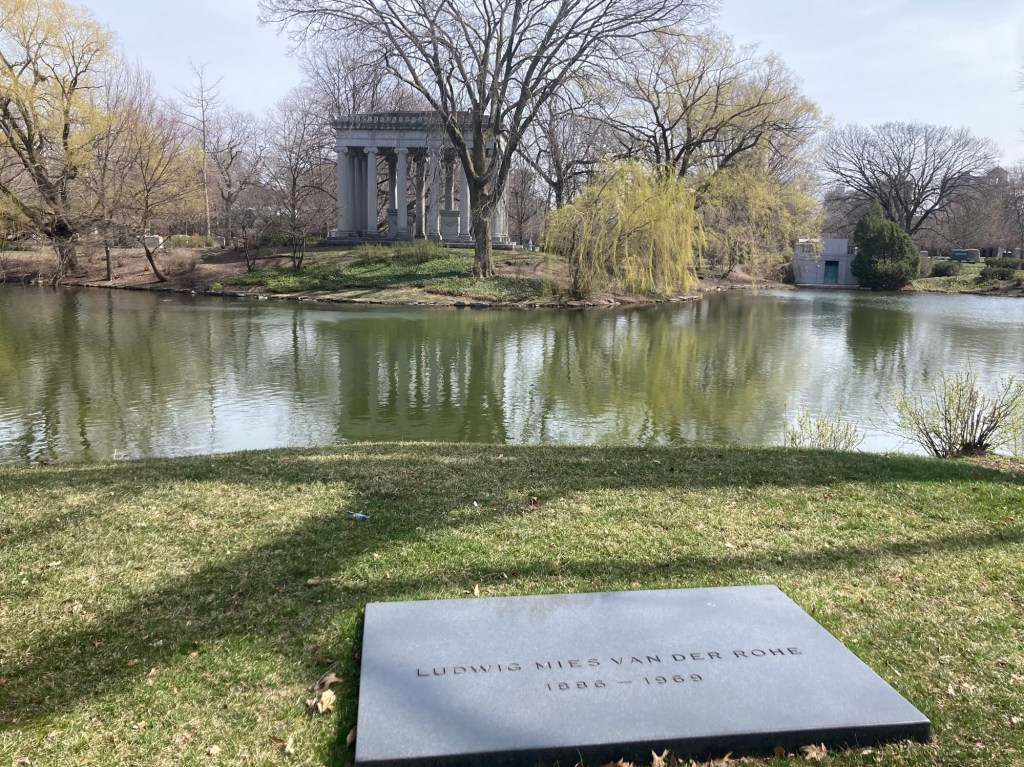
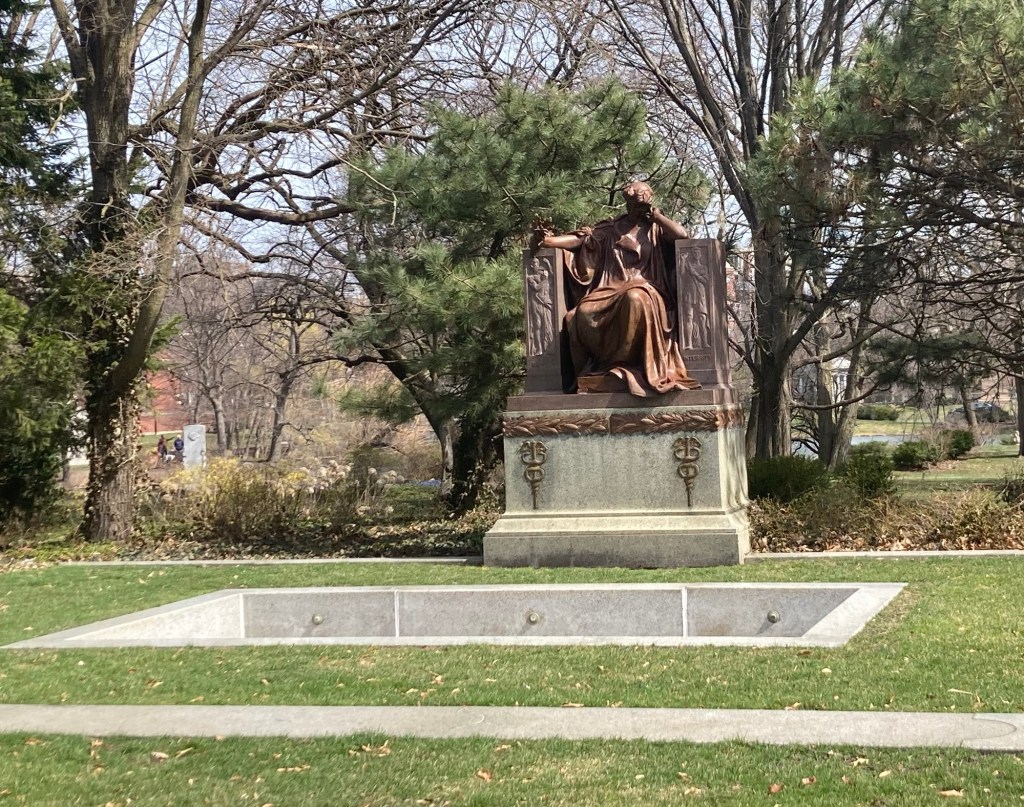
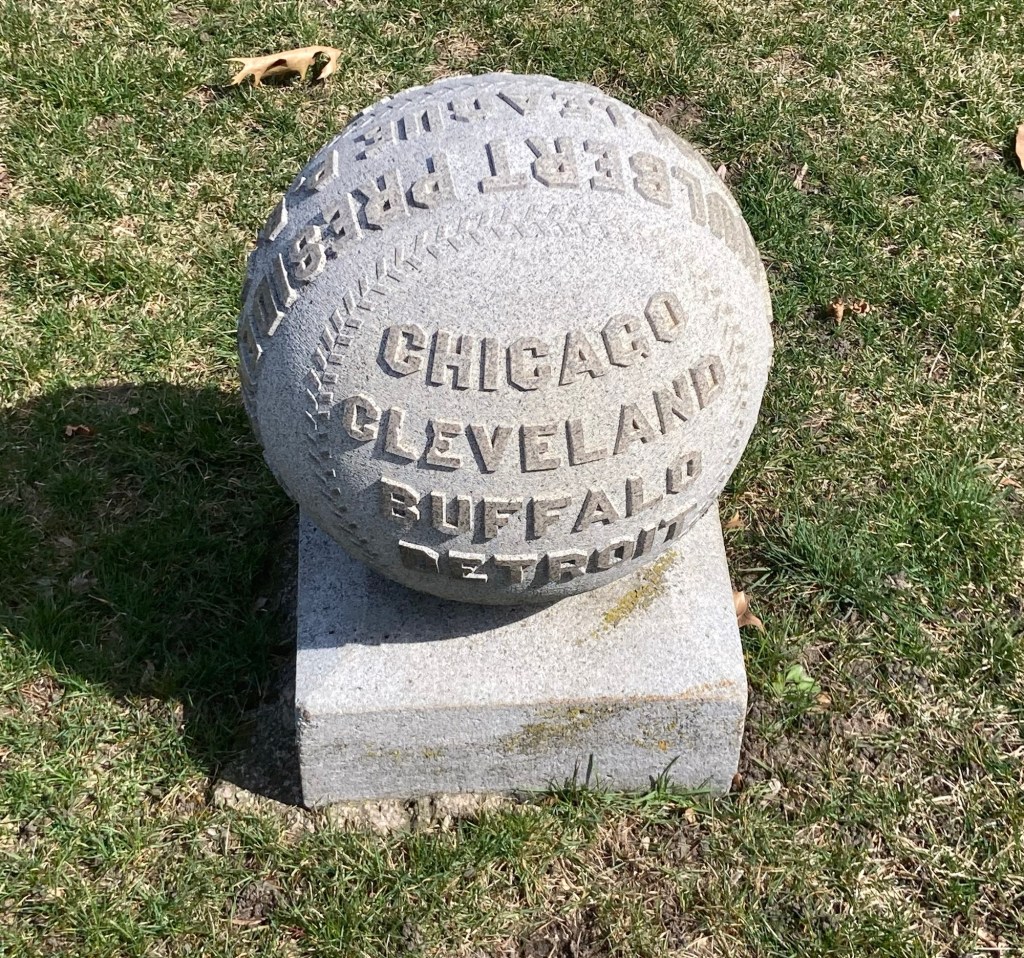
Today, we decided to finally checked out Graceland Cemetery, which we had heard a lot about. The 120-acre cemetery was established in 1860 and became the preeminent place of burial for Chicago’s elite. It is the final resting place for a number of people closely associated with Chicago, including architects, businessmen, and sports players and owners. The cemetery provides a helpful map and history of some of the most famous people there. We had a lovely day to stroll the grounds and admire the variety of headstones, monuments, and mausoleums.
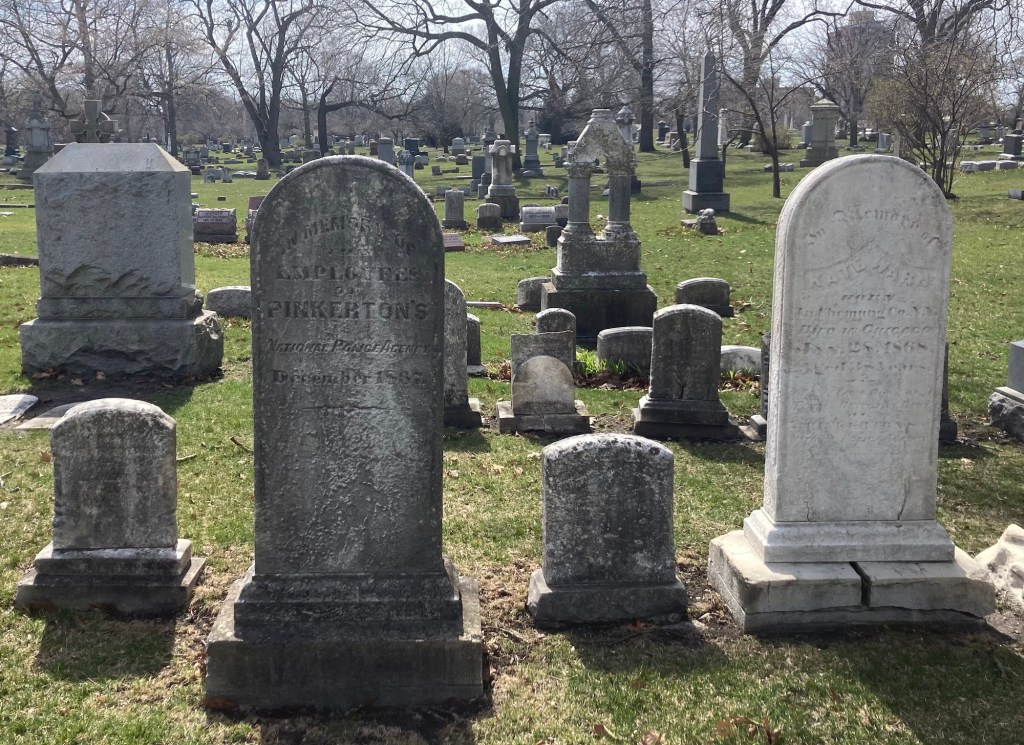
Victorian monument for Eli Williams (1799-1881), settled in Chicago when the population was 200Bronze statue of Eternal Silence on a grave for Dexter Graves (1793-1845), a hotel owner.The “Crusader” guarding the grave of Victor Lawson (1850-1925), publisher of the Chicago Daily NewsThe pyramid shaped grave for Peter Schoenhofen (1827-1893), a Chicago brewerThe steel-reinforced concrete tomb of George Pullman (1831-1897), renowned for luxury rail carsThe Ryerson Tomb designed by Chicago architect Louis Sullivan for Martin Ryerson, Sr. (1818-1887), a lumber baron and trustee of the Art Institute of Chicago and an incorporator of the Field MuseumA small bridge over Lake Willowmere. The bridge crosses over to a small island where Daniel Burnham (1846-1912) is buried. His 1909 Plan of Chicago is considered a landmark in urban planning history.The graves of Ludwig Mies van der Rohe (1886-1969), famed architect, and the tomb of Potter Palmer (1826-1902), a retailer, real estate investor, and builder of the Palmer House Hotel.Bob standing near the grave of Ernie Banks (1931-2015), the first African American player to play for the Chicago Cubs, known as Mr. Cub.The beautiful tomb of Marshall Field (1834-1906), famous retailer who coined the phrase “the customer is always right.”The unique but appropriate grave of William Hulbert (1832-1882), part owner of the Chicago White Stockings, which became the Cubs. It features the 8 original cities that comprised the National League.Graves for Allan Pinkerton (1819-1884), one of America’s first undercover agents and guardian of President Lincoln, and Kate Warne, described by Pinkerton as America’s first female detective




























 Peckish Travels