Bob and I arrived at our Bloomington, Indiana, housesit at about 7:00 pm on Wednesday evening. We had a great walk through and chat with our homeowners and an introduction to Jasper the cat, who we will be caring for for a few weeks. Our homeowners are off to Buenos Aires and then a cruise to Antarctica.
We arrived a day or two after a winter storm brought 6 inches of snow to the area, and we’re projected to get an additional 2 to3 inches starting about midday today into this evening. Luckily, the roads were good when we got here, and we’ll see how the plowing goes after this next system.
Jasper is typically an indoor/outdoor cat but is not so fond of the cold and snow, so is mainly staying indoors these days.
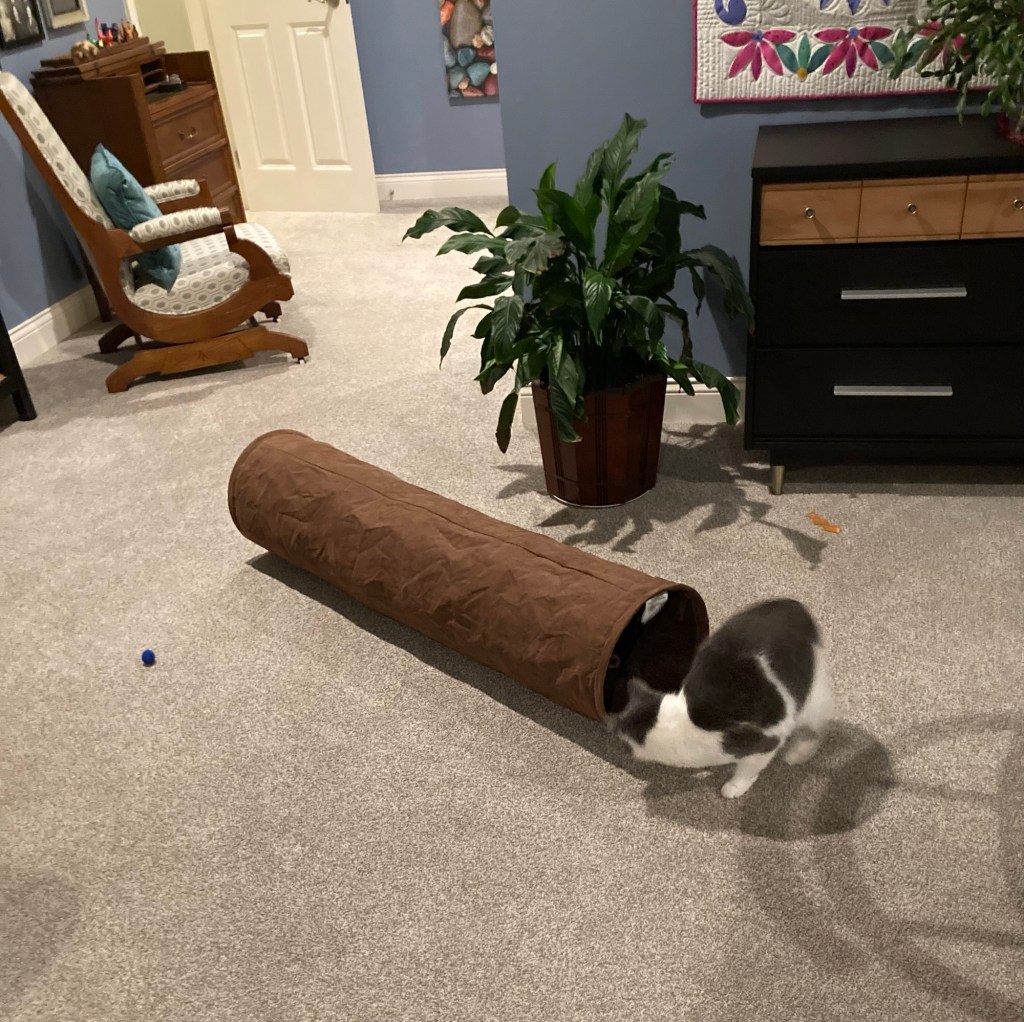
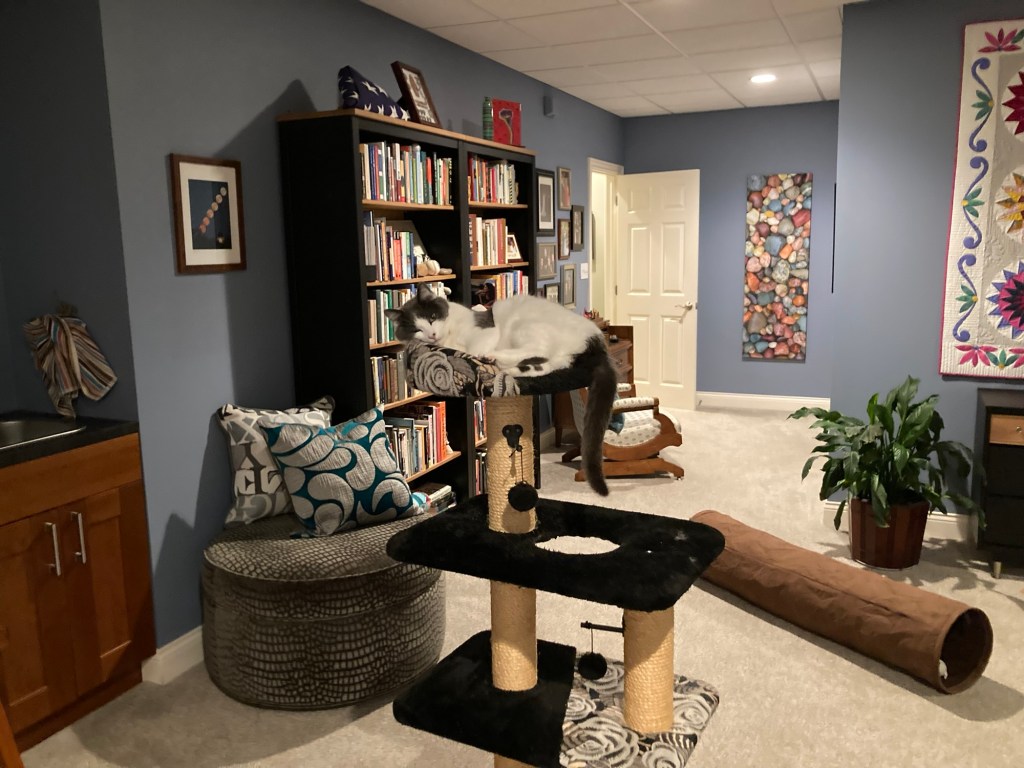
Jasper playingNapping on her treeJasper coming in from a quick trip onto the sun porch
We’re looking forward to exploring Bloomington after this next system passes. Among other things, it is the home to the University of Indiana, and our homeowners have kindly left us their tickets to two women’s basketball games while they are gone.
Bob and I drove the 3.5 hours from Knoxville, Tennessee, to Cincinnati, Ohio, on Tuesday for our last night before our next housesit. We weren’t sure how the roads would be after the snowstorm had gone through northern Tennessee and Ohio, but it was mostly interstate, so we didn’t really run into lesser plowed roads until we exited for a stop and then once we got to Cincinnati.
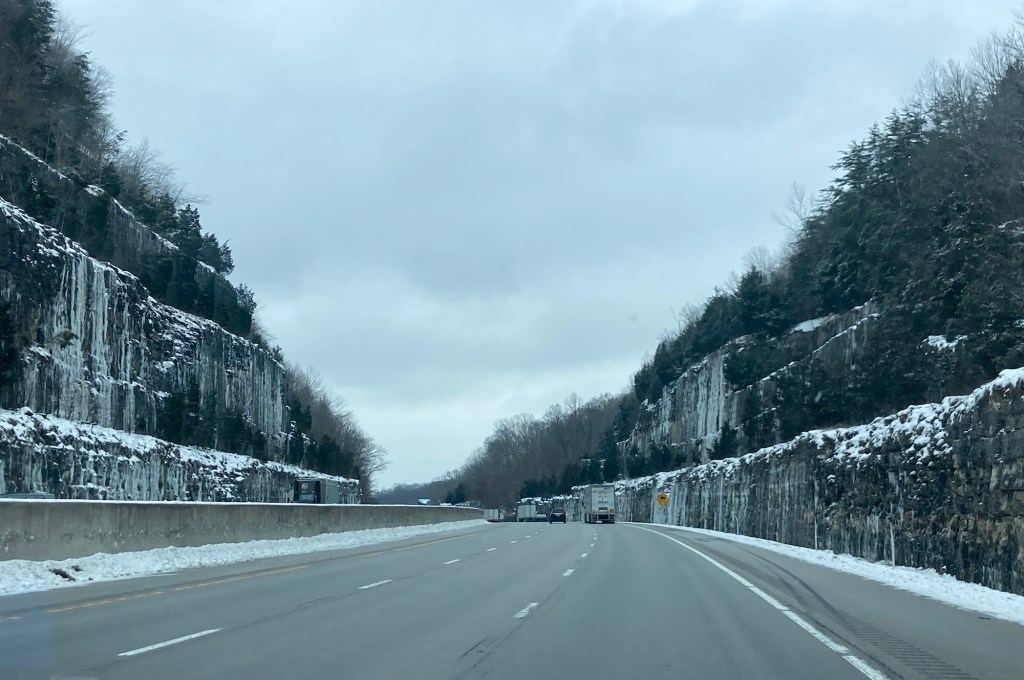
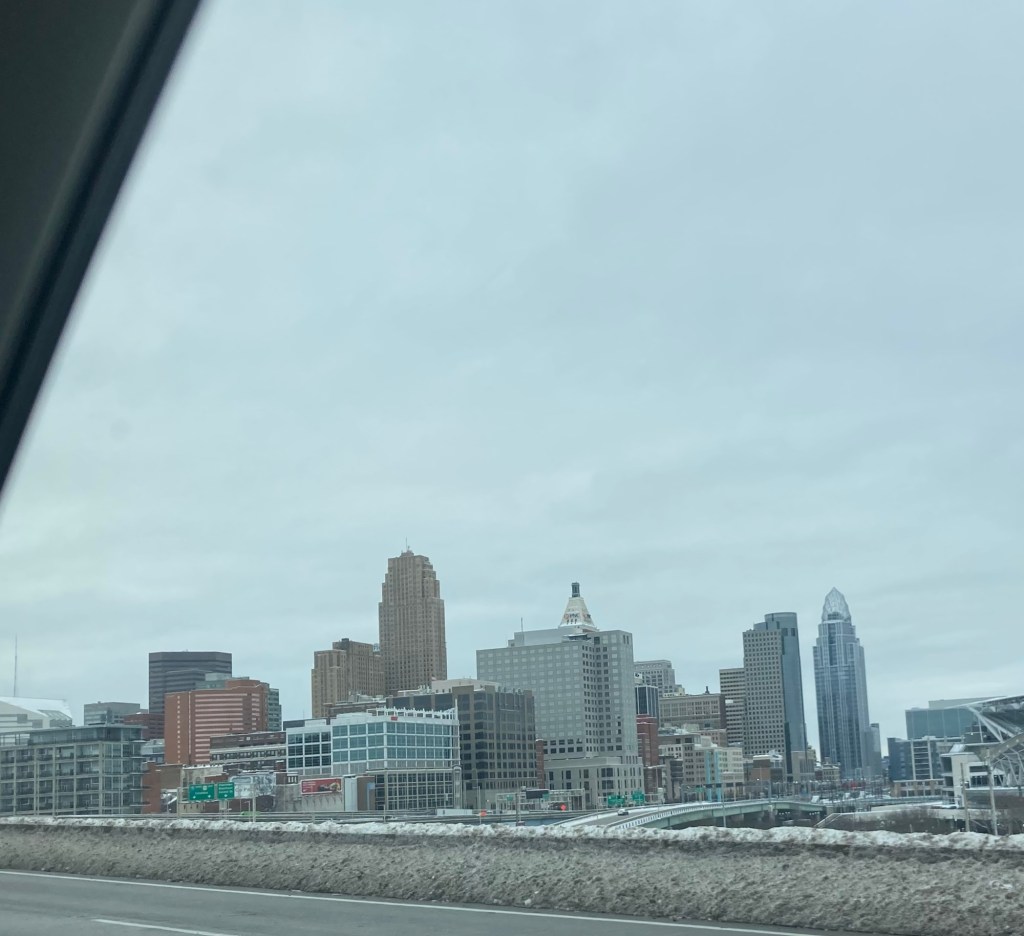
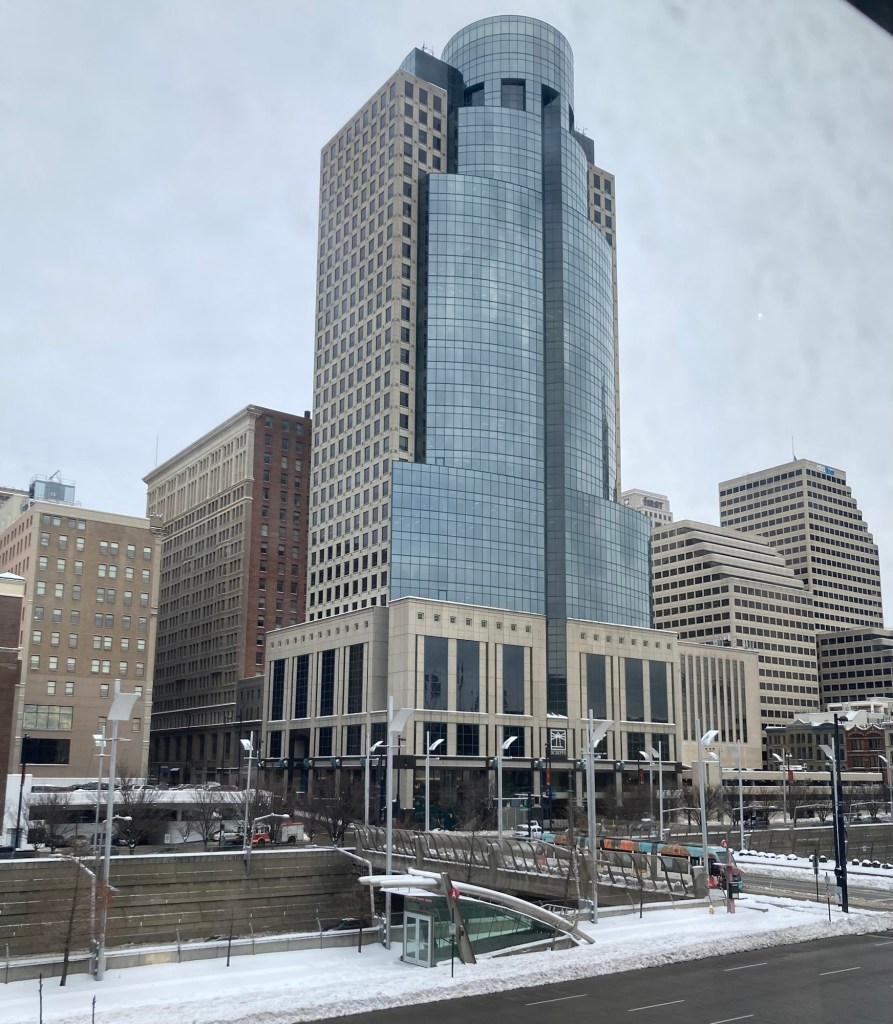
Some icicles on the rock along the edges of the road as we drove northOur first view of downtown Cincinnati as we crossed the Ohio River, which divides Ohio and Kentucky
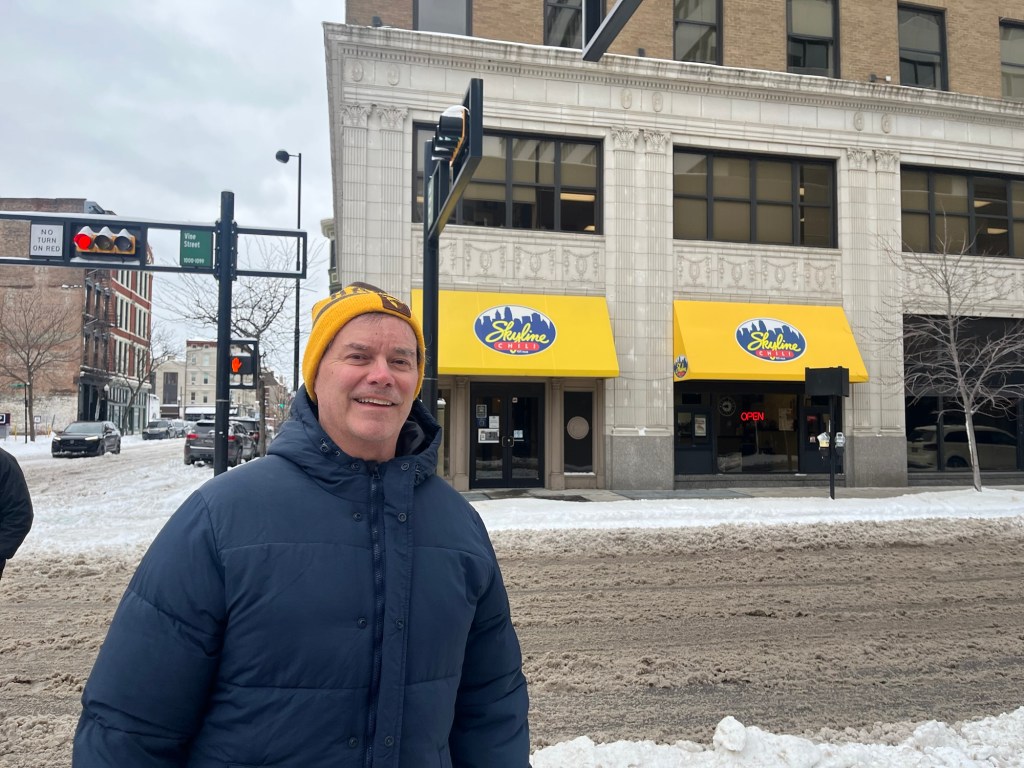
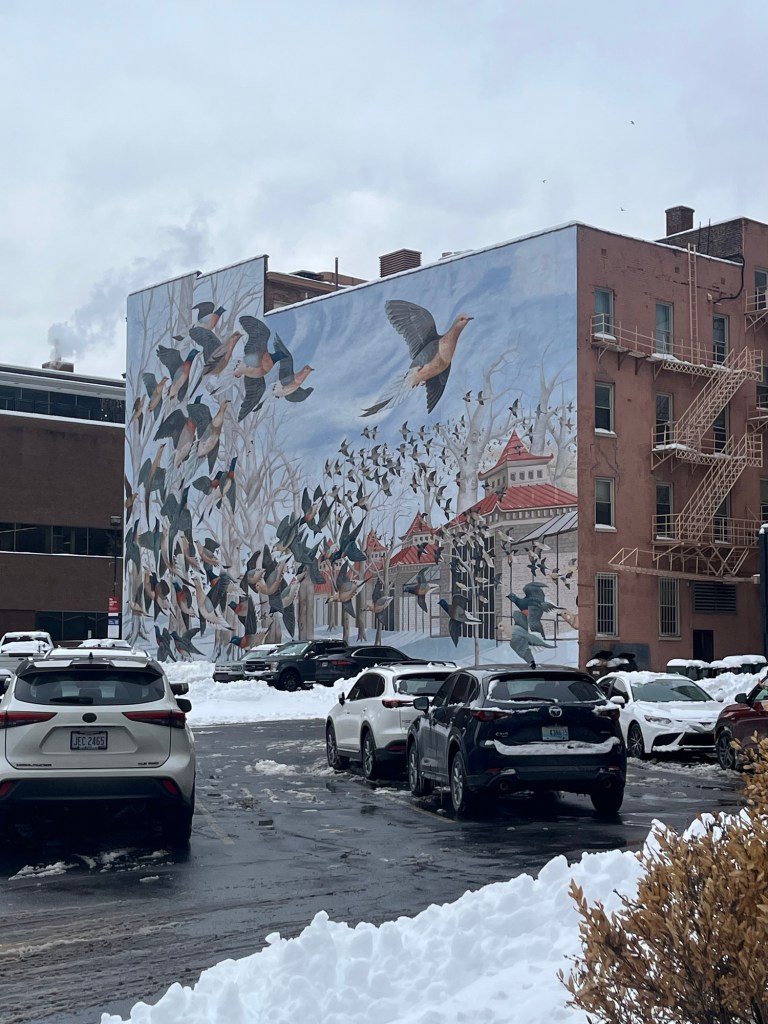
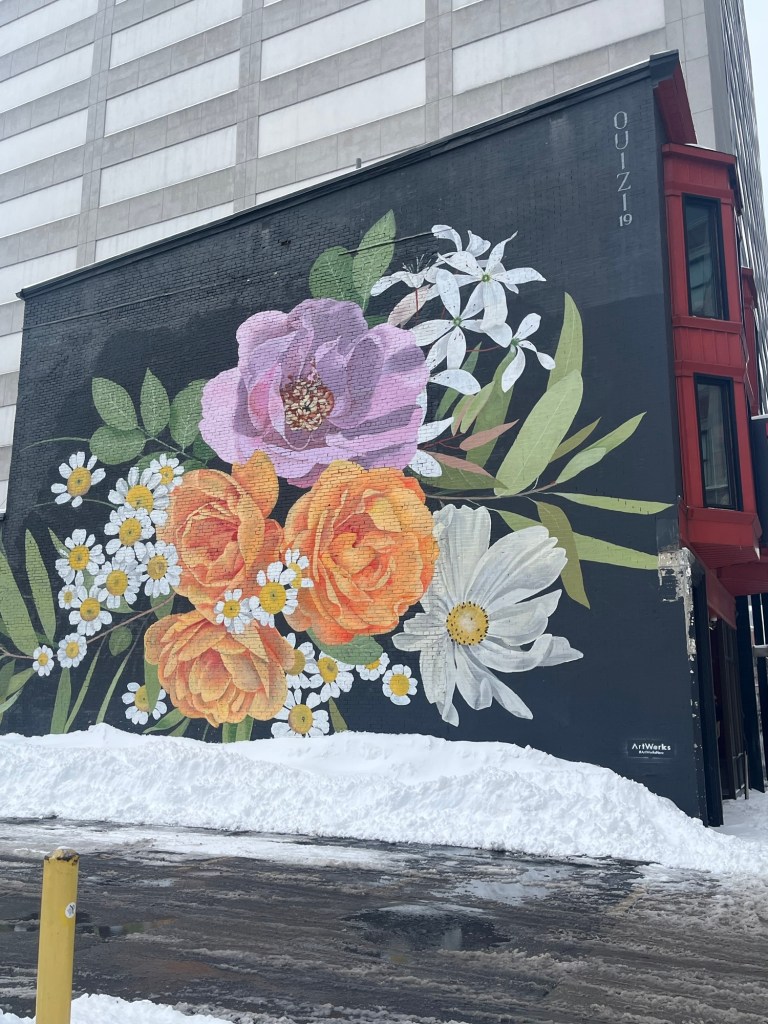
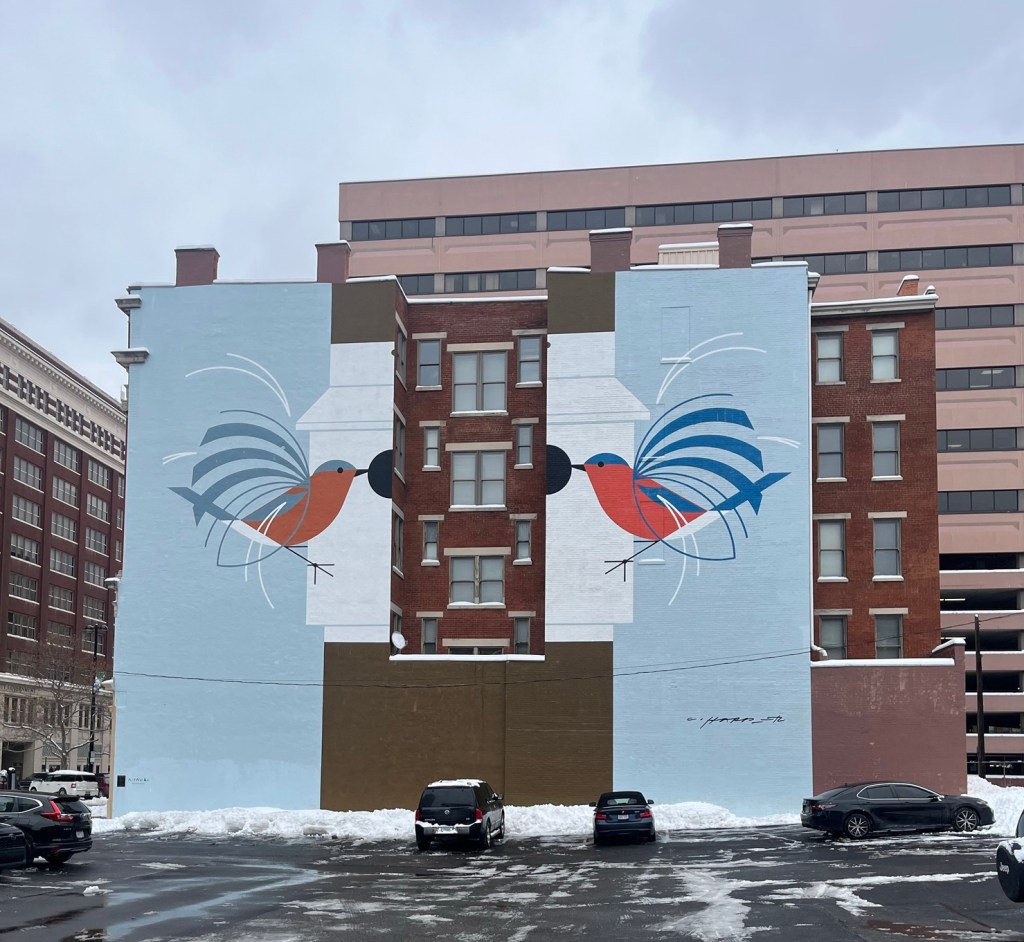
We had hoped to see a bit of downtown Cincinnati during our short stay, but lots of closings and many unplowed sidewalks made it a bit more challenging. Late afternoon on Tuesday, we did get out for a short walk and saw a Cincinnati culinary institution as well as some cool murals.
Skyline Chili, it’s definitely a thing in Ohio. We saw multiple billboards for it and other locations as well as we drove out on Wednesday. Bob ate their famed chili in this location during a baseball trip with his brother-in-law and nephews.
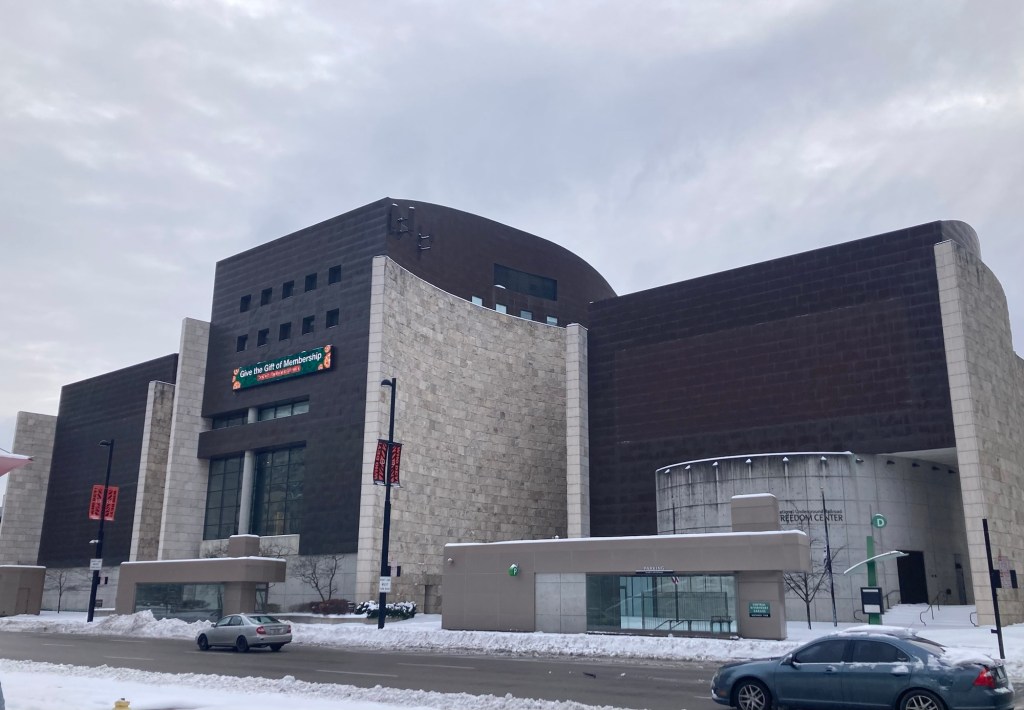
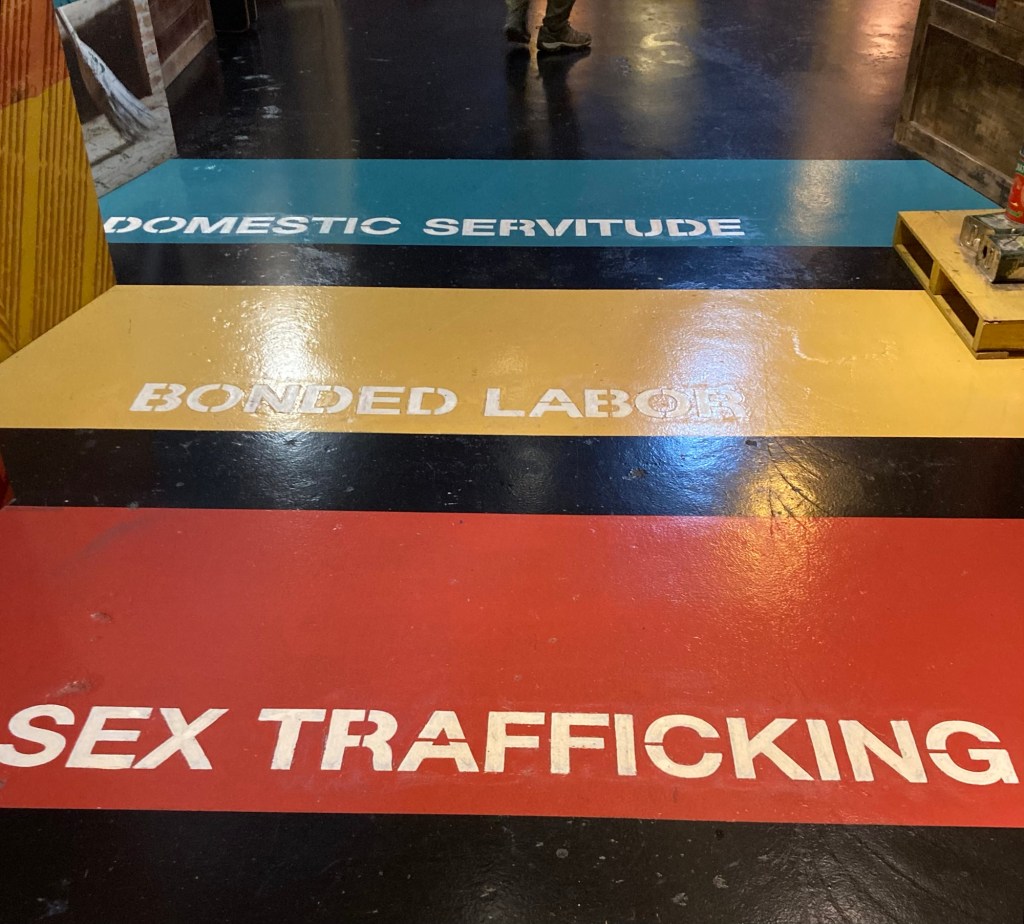
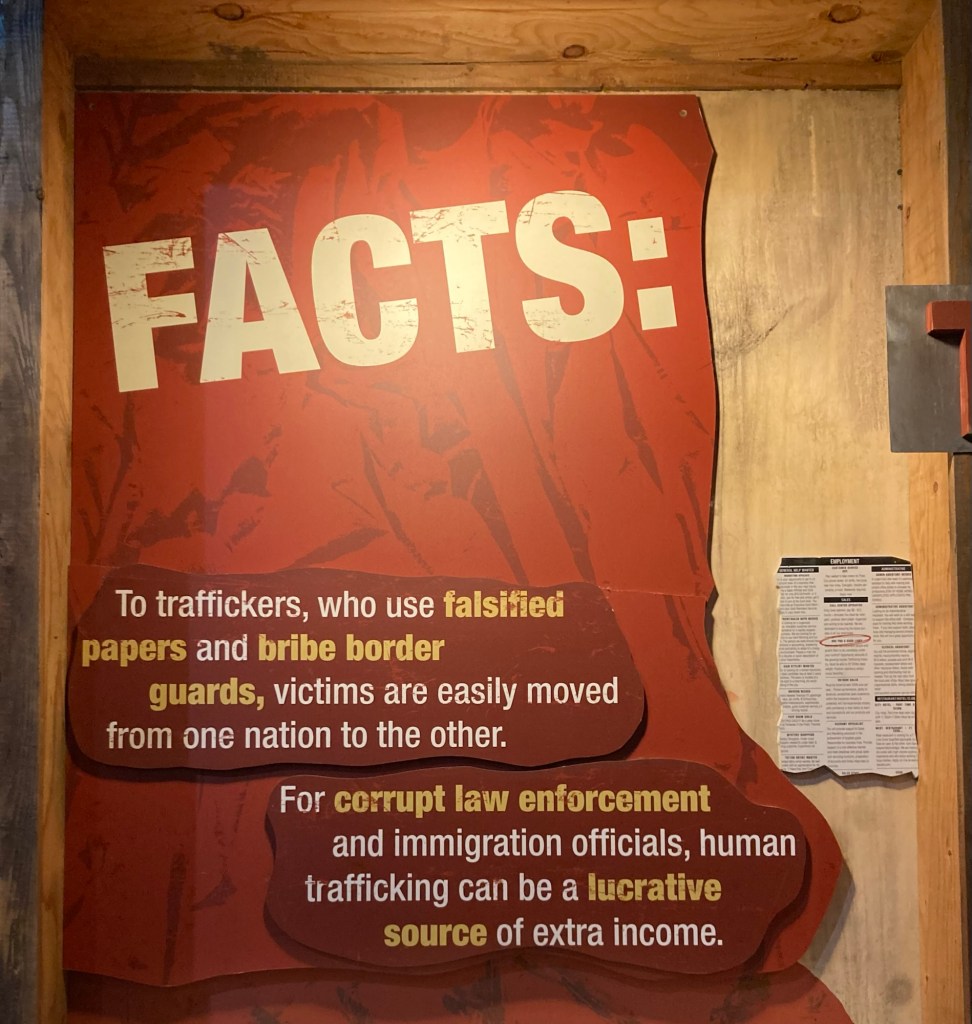
Our top priority in visiting Cincinnati, however, was to visit the National Underground Railroad Freedom Center, which we did on Wednesday morning. It’s an impressive museum that not only tells the story of the Underground Railroad (the secret movement of enslaved people in the US from slave holding states to free states and/or Canada and Mexico) but also sets the context with information on the development of slavery, the Civil War, as well as the continuation of modern day slavery.
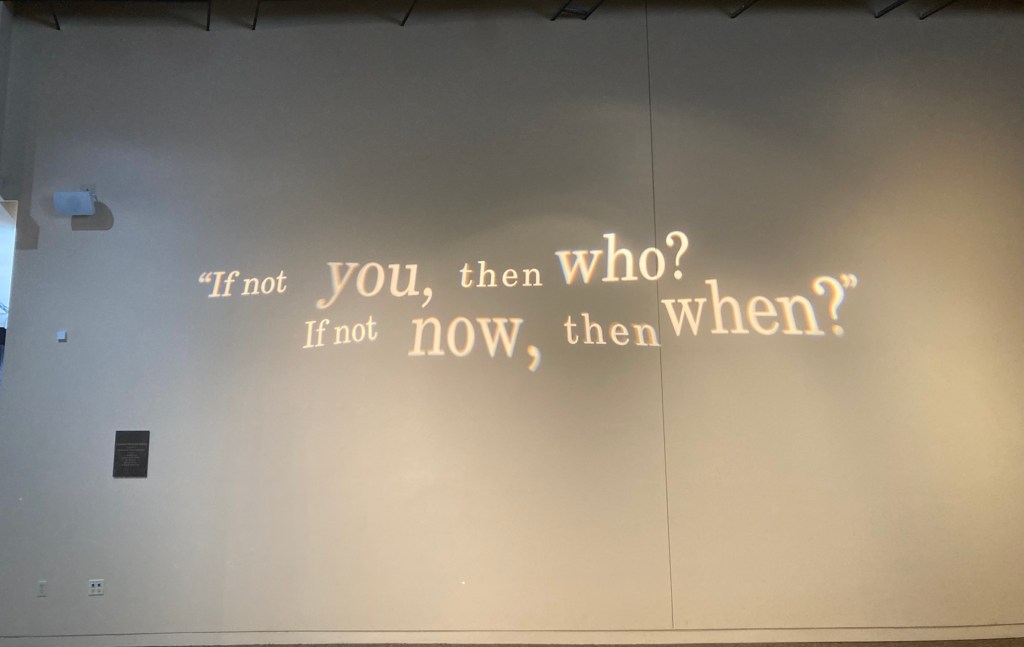
The National Underground Railroad Freedom Center The greeting in the lobby as you begin the tour of the museum A view across the Ohio River into Kentucky from the 3rd floor of the museum. As we would learn, the Ohio River was an important part of the run to freedom, as Kentucky was a slave holding state and Ohio was not.Some of the forms of modern day slavery. A piece of the Berlin Wall was given to the museum
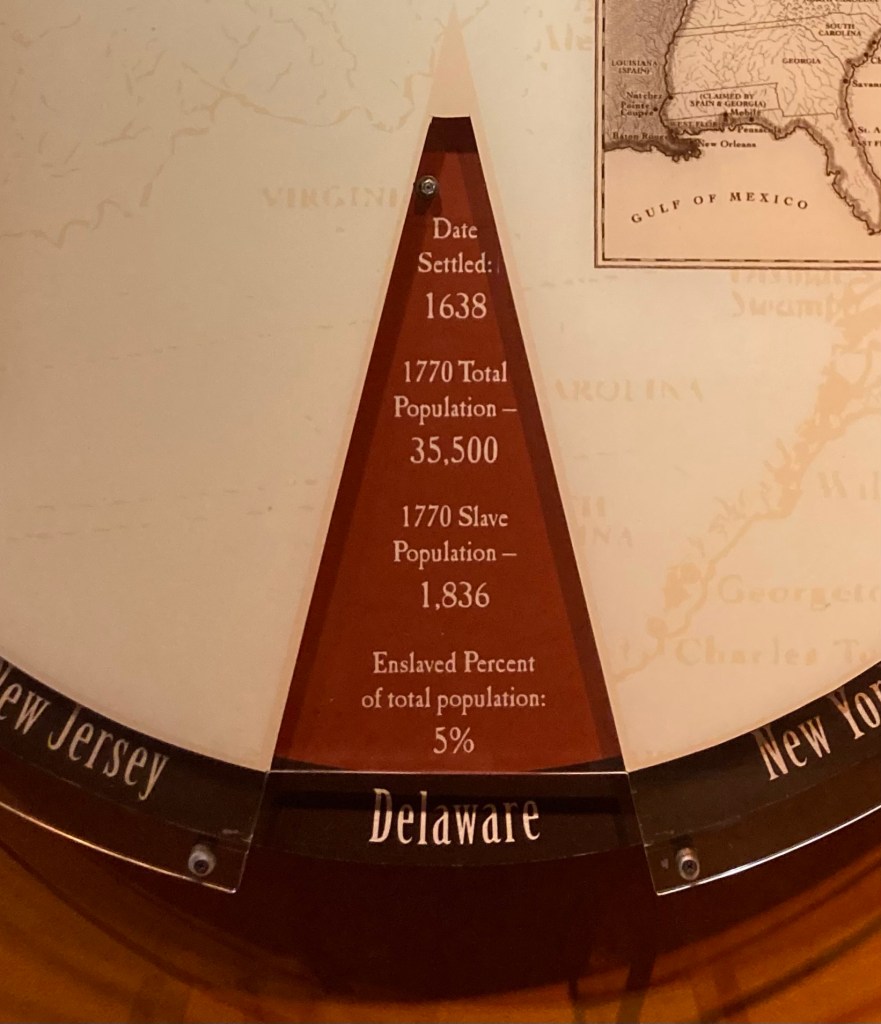
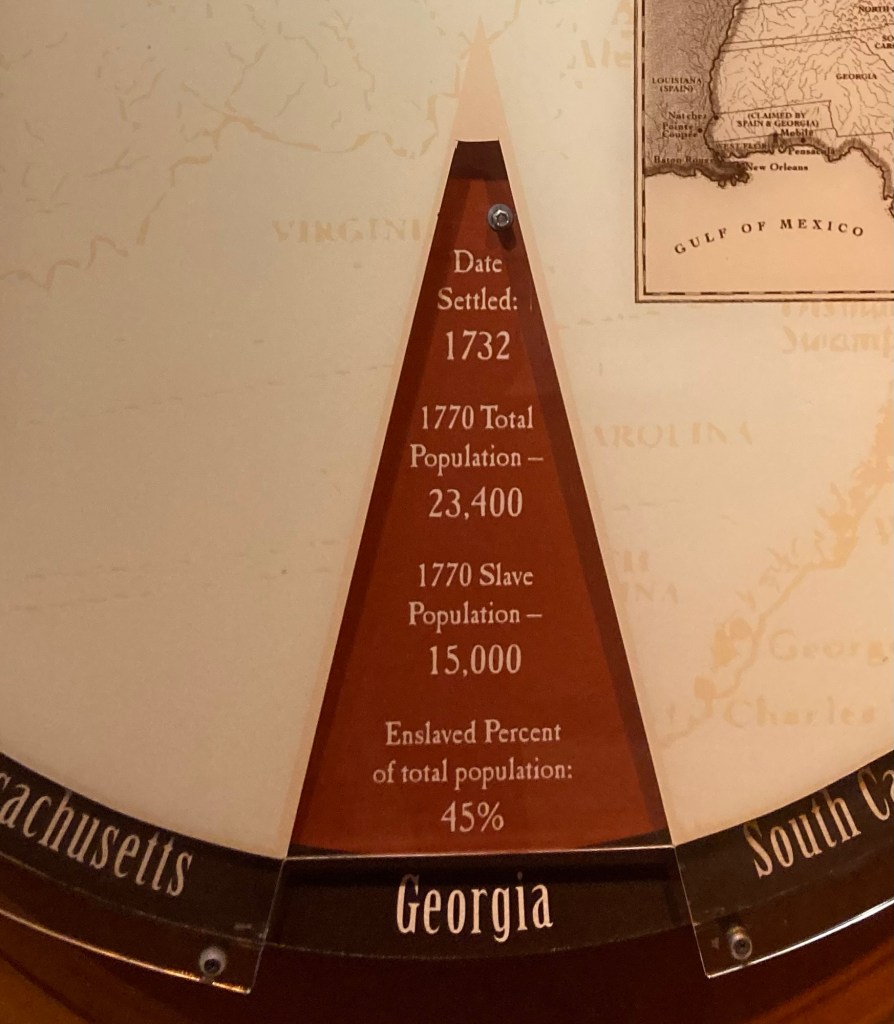
One exhibit showed the different percentages in slave populations in selected US states in 1770, so pre-American Revolution, but at least 100 years after the colonies in the US started. I chose to look at the last two states in which we have done housesits — Delaware and Georgia.
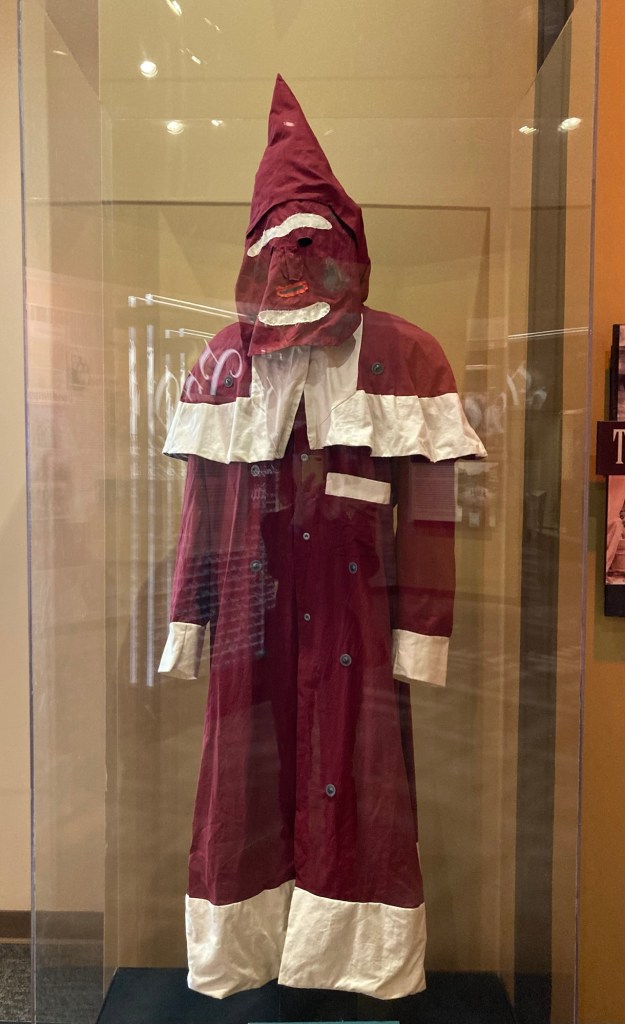
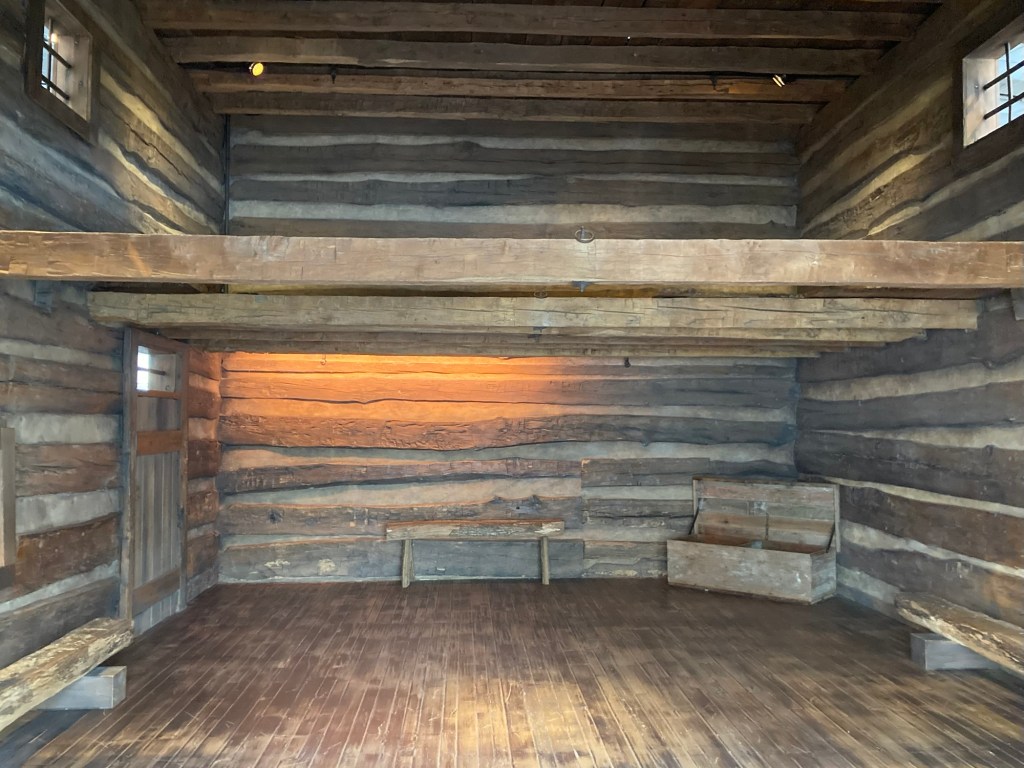
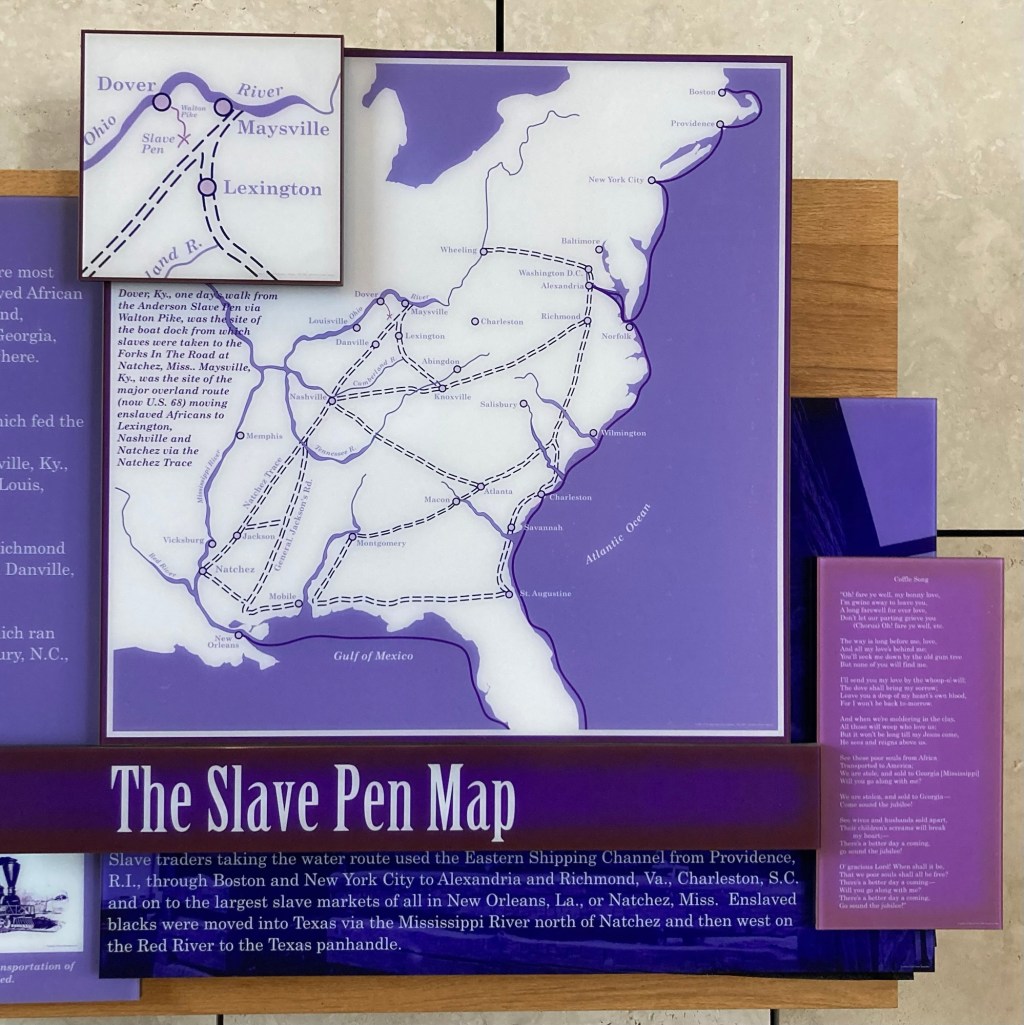
A fairly small percentage, but not nothingNot surprisingly, a much higher percentageA replica of an early Klu Klux Klan outfit. You know you should be ashamed of what you are about to do if you’re dressed like this.A slave pen discovered about 60 miles from Cincinnati in Mason County, Kentucky. These pens were used to temporarily store enslaved people before they were taken further south.The inside of the slave pen
This slave pen was owned by John Anderson and operated on his farm. In the early 1830s, he would scour the roads of rural Kentucky to find young Blacks for the slave market at Natchez, Mississippi.
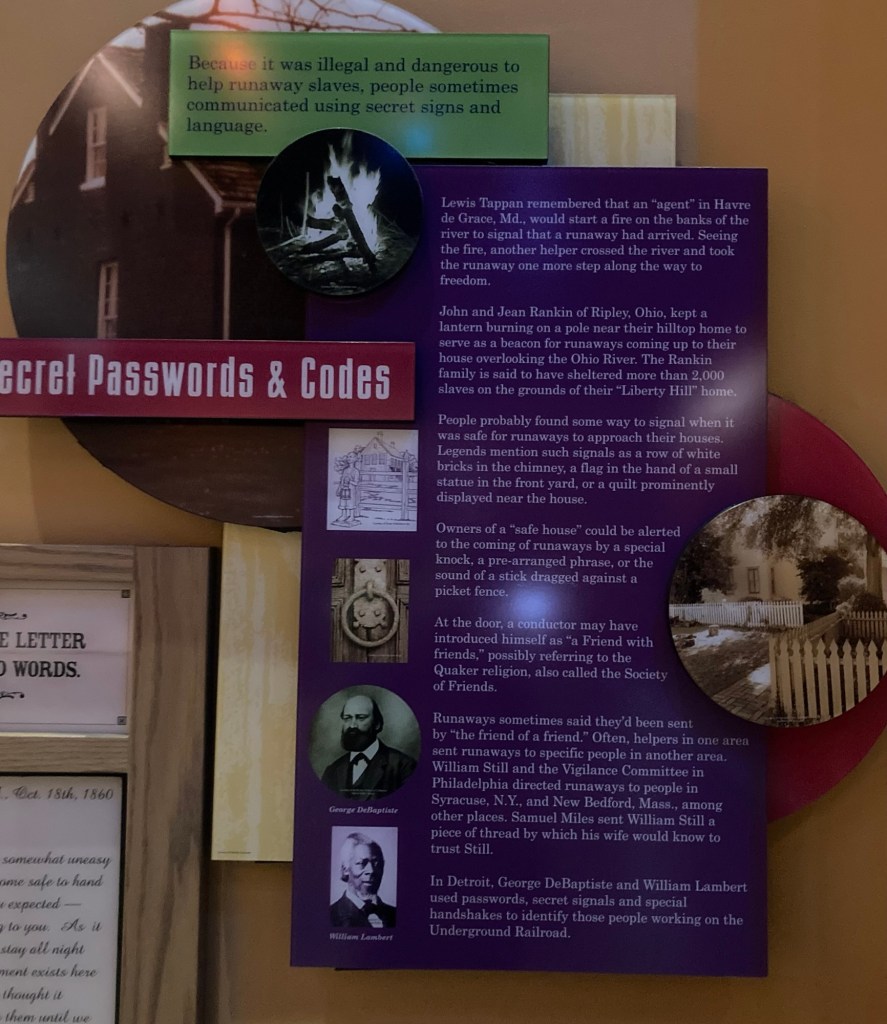
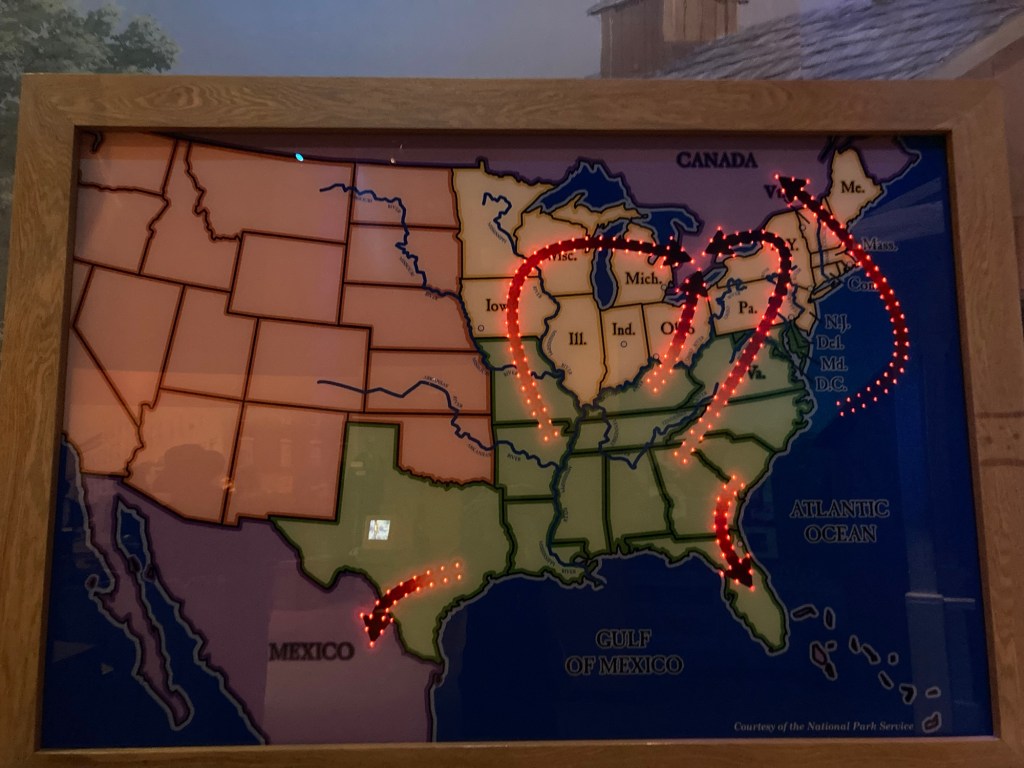
Moving new, freed, or escaped Black into or back to enslavement, the opposite of the Underground RailroadInformation on communication along the Underground Railroad to keep from being caughtDifferent routes for the Underground Railroad, including into Mexico. It’s estimated that approximately 100,000 enslaved individuals escaped via the Underground Railroad.A view of downtown Cincinnati near the museum
Bob’s winter coat died (zipper became nonfunctional) shortly before we left Atlanta, and his raincoat has been shedding its internal lining for quite awhile. We thought we might stop for a shop on our way into Knoxville yesterday, but we decided a Monday might be a quieter day for the stores.
Anyhoo, today saw us hitting the stores, with Bob getting 2 new coats at great prices. It’s rare to get Bob out to shop, so I’m super glad he had an easy time of it.
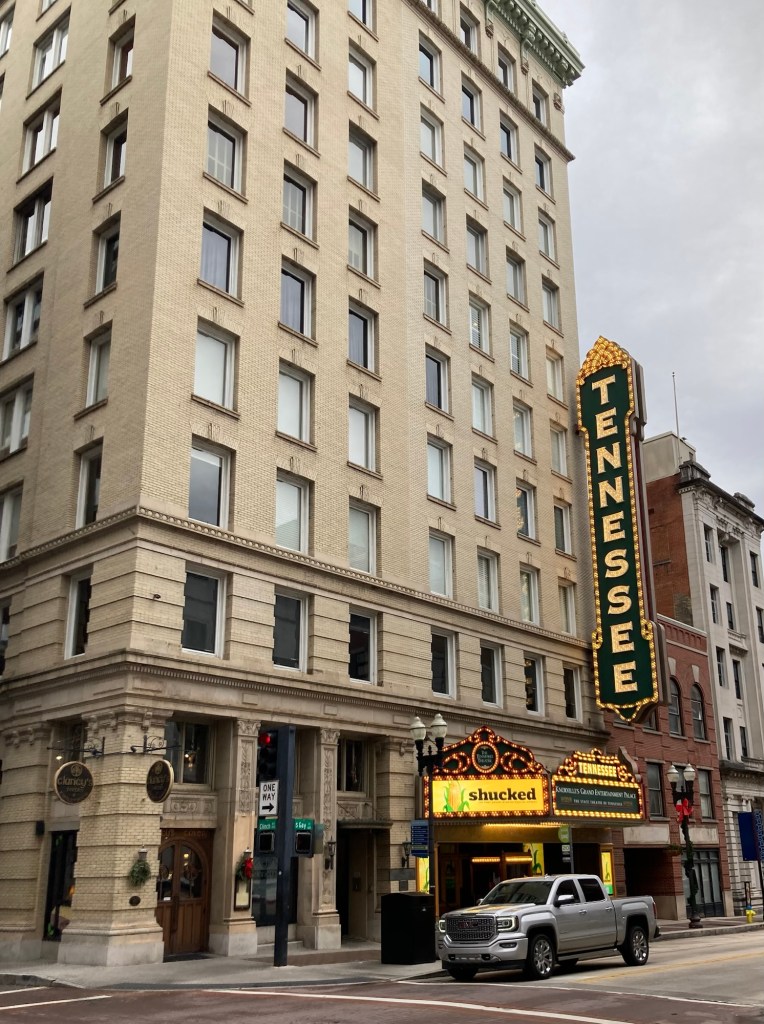
After we returned to our room, we quickly headed to the Tennessee Theater just around the corner on Gay Street that we had seen from the outside yesterday.
We looked up the theater last night because we saw that it was showing the musical, “Shucked,” which we had just heard about for the first time during our tour of the Fox Theater in Atlanta. It peaked our interest since it’s about corn, which is what Bob’s home state of Iowa is mostly known for.
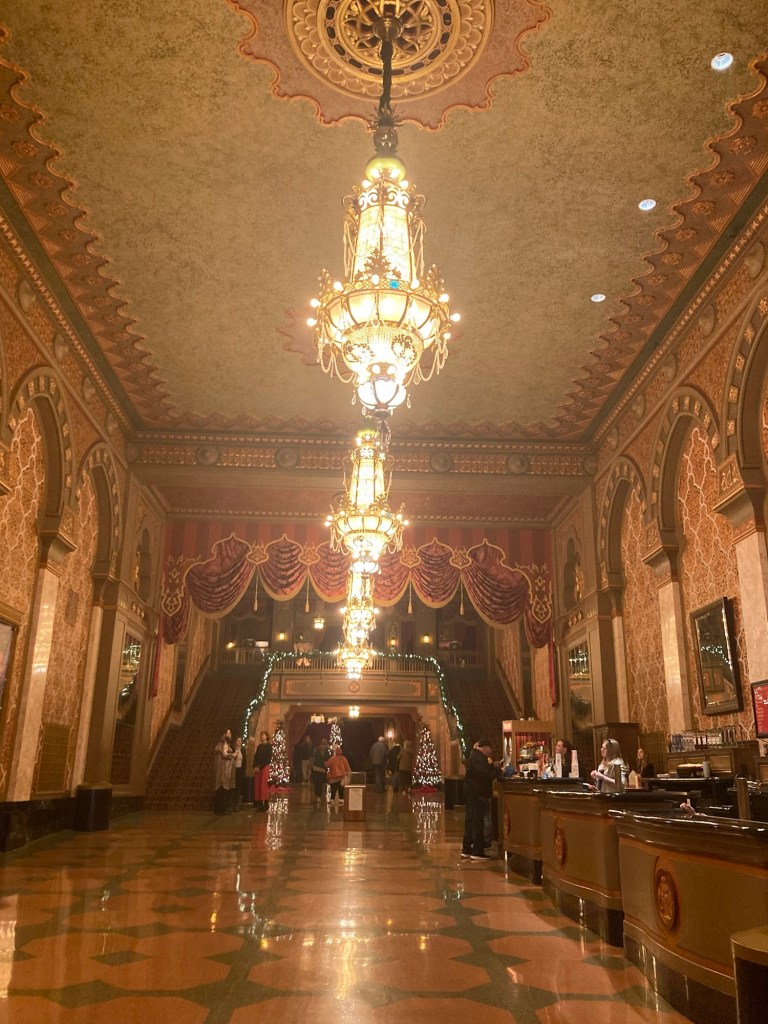
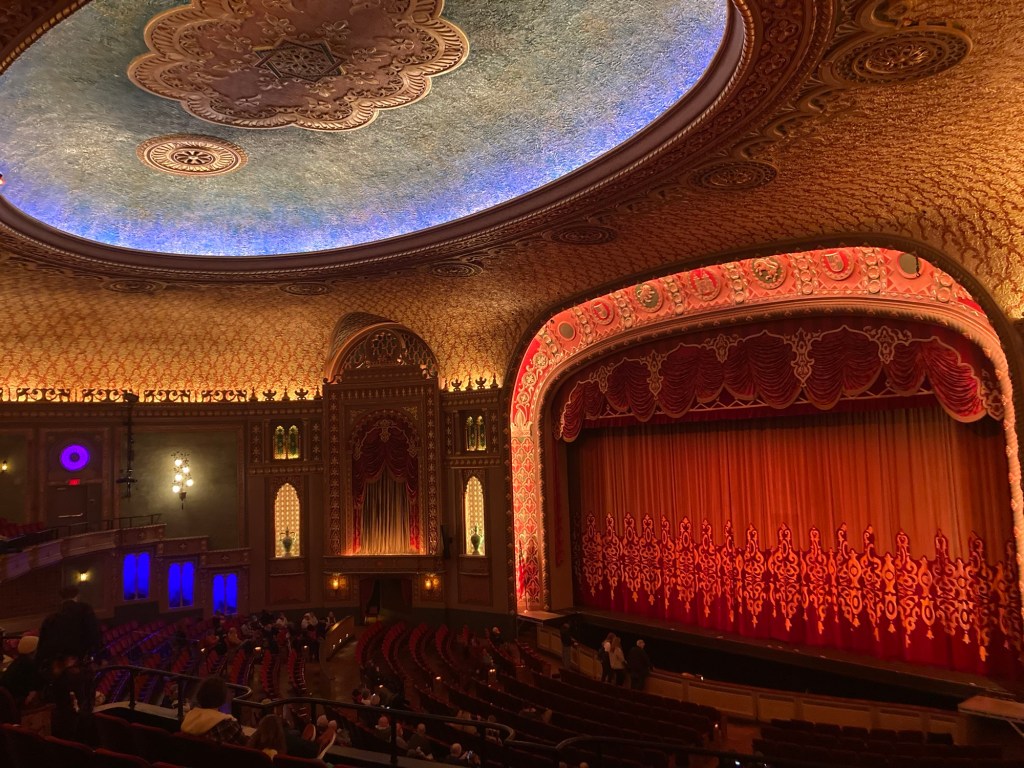
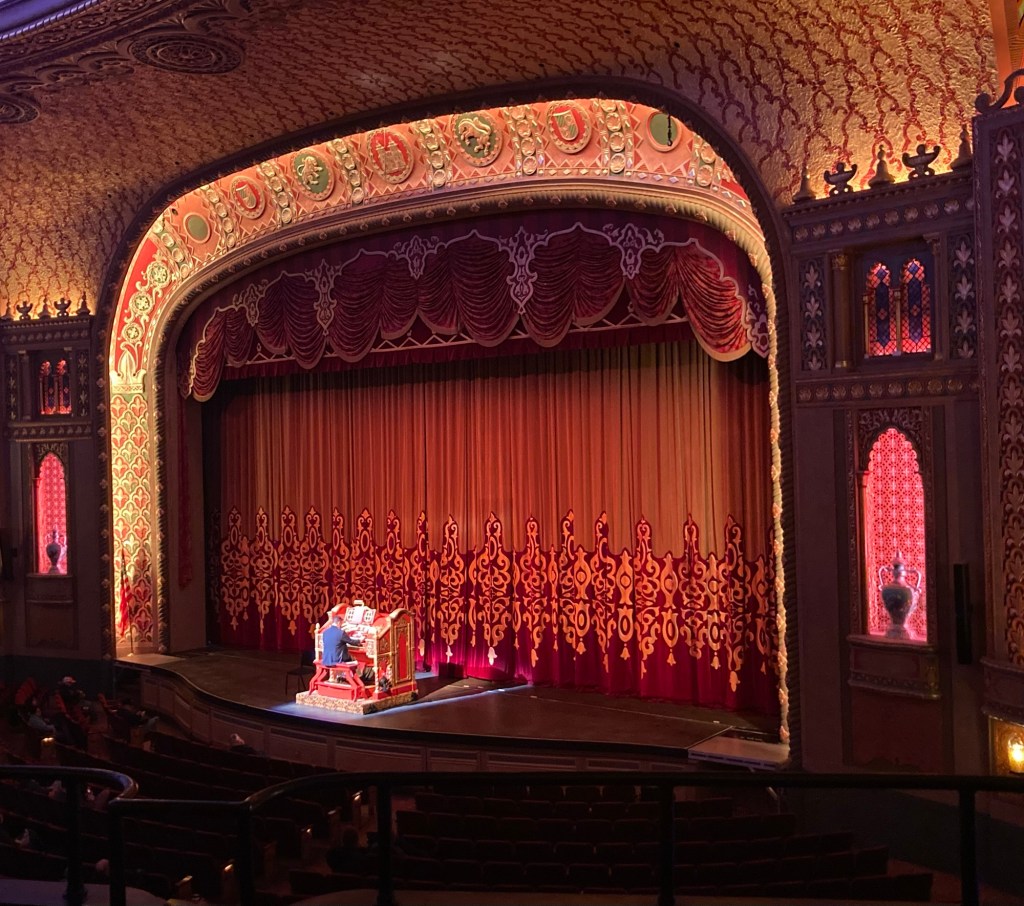
Unfortunately, last night was the last showing of Shucked, but we noticed that today at noon the theater’s organist would be doing a free noon performance on the theater’s Wurlitzer organ. We decided that sounded interesting and would also be a great way to see the theater and the organ. We loved both and were entertained with a mix of holiday songs and show tunes.
Some quick facts about the Tennessee Theater. Built in 1928, the Tennessee Theater is the official state theater of Tennessee. Like the Fox Theatre that we toured in Atlanta, it was originally built to be a movie house. It currently has a capacity of 1,645 (versus 4,665 for the Fox, not that it’s a competition.). They were both built the same year and both have impressive organs 😜😂.
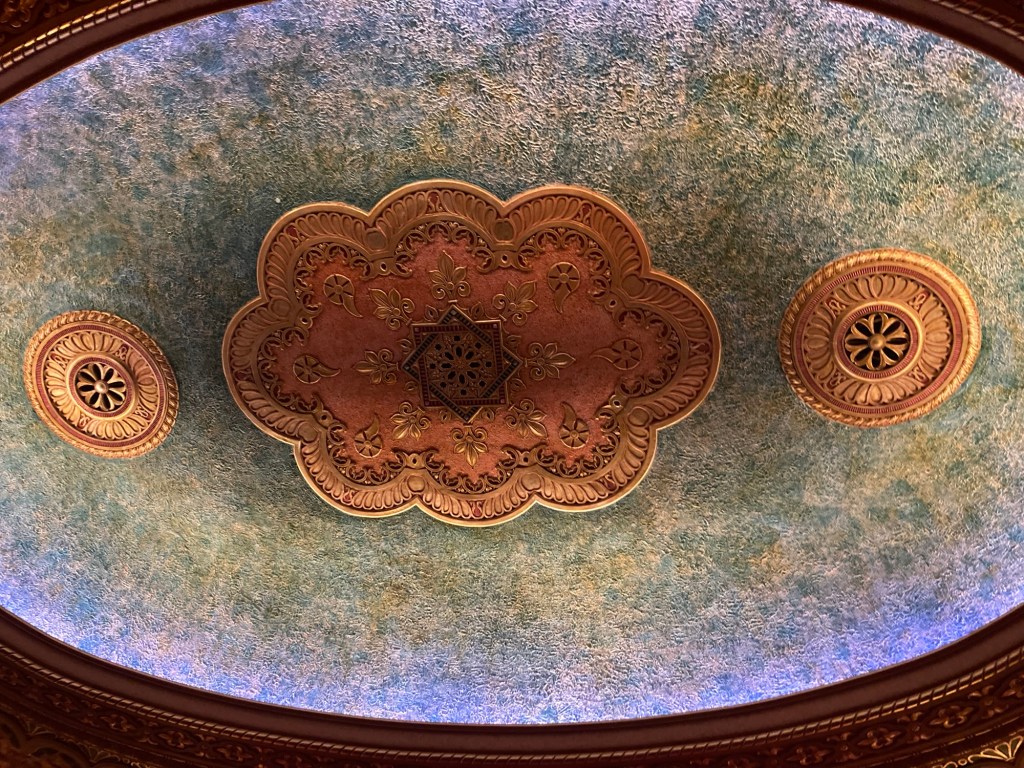
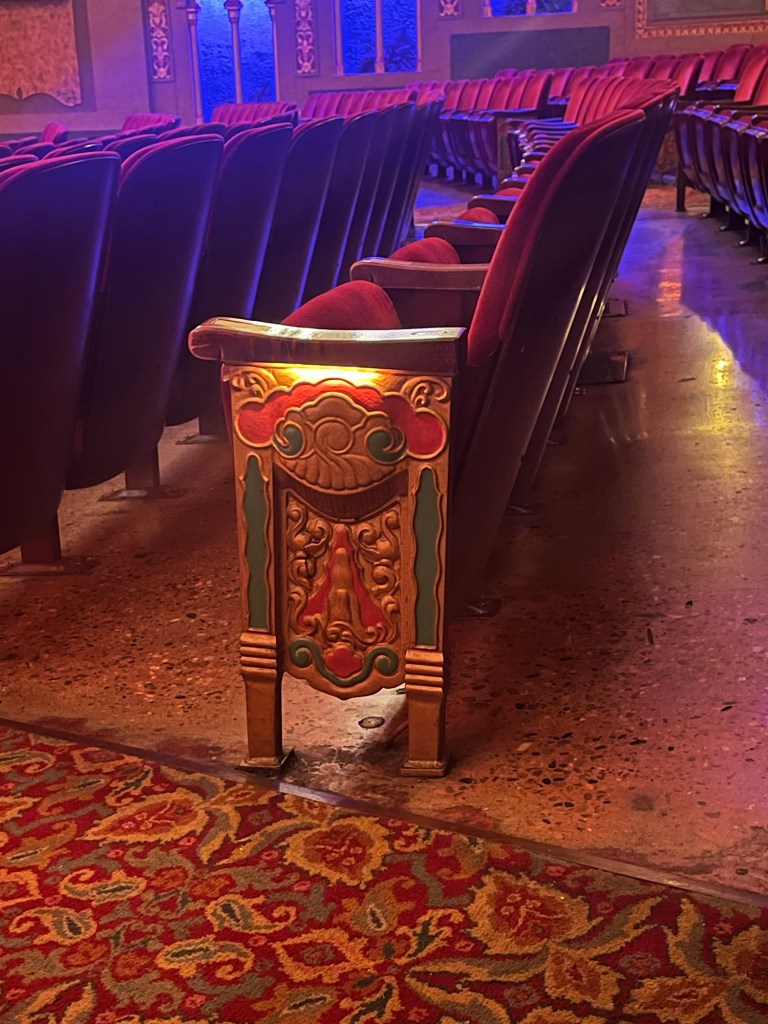
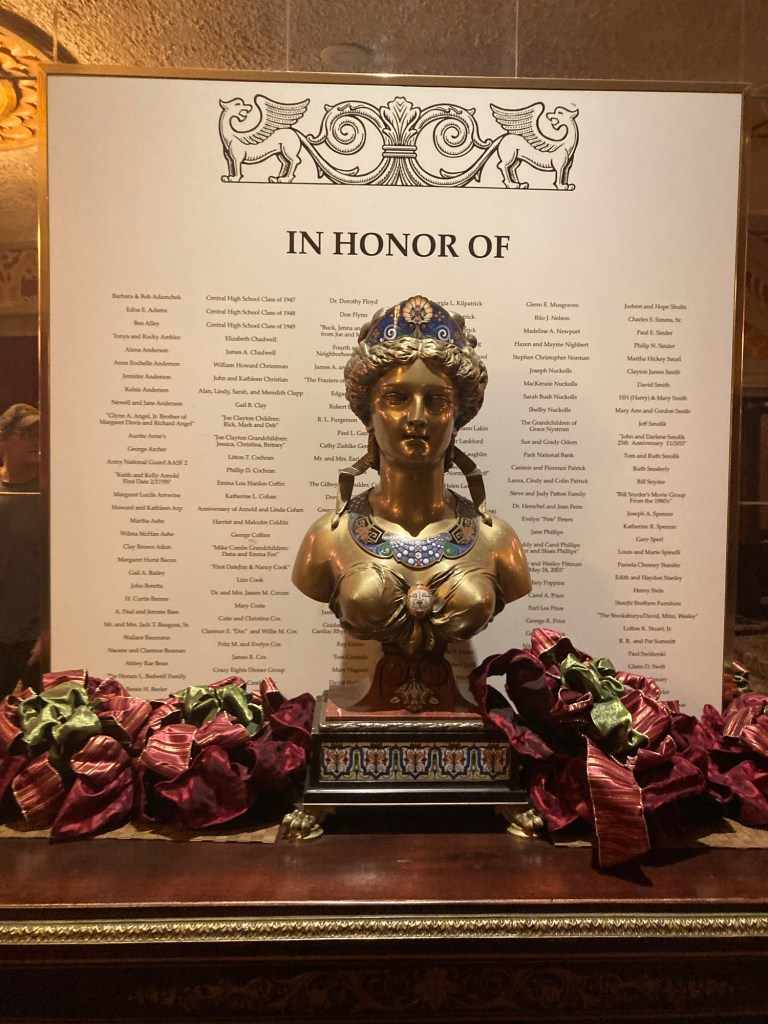
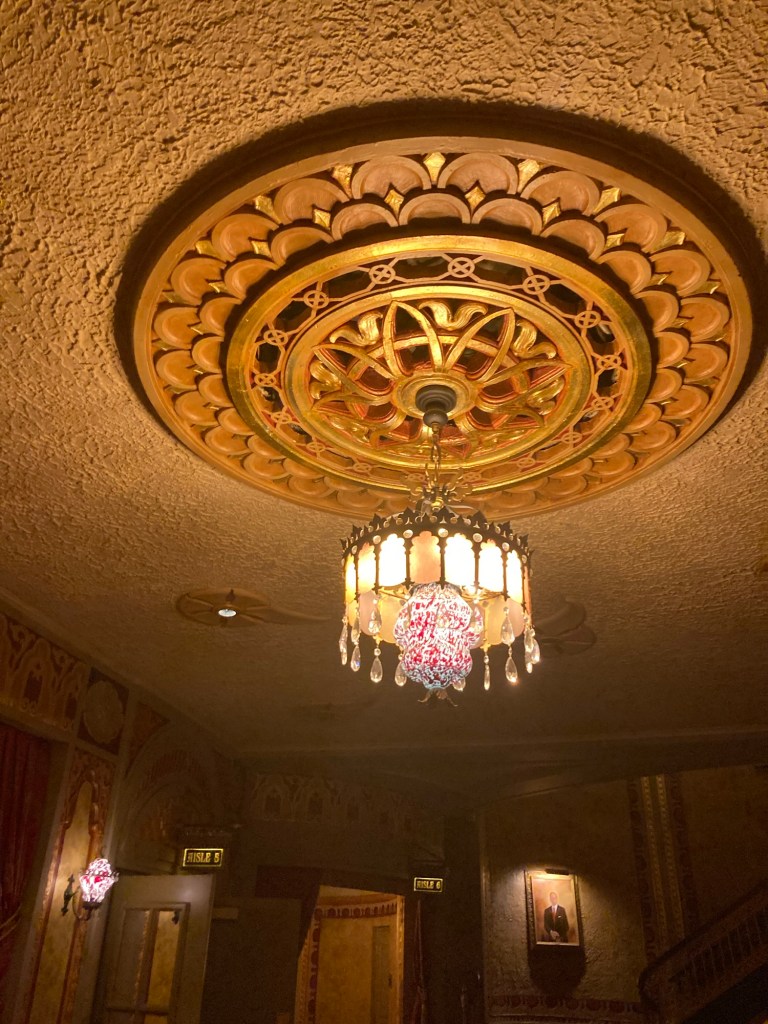
The lovely lobby entranceA view of the stage from the orchestra levelThe ceiling of the auditorium The decorative finish on the aisle seatsAn attractive sculpture in front of a list of donors in the lobby on the mezzanine levelAttractive light fixtures A view of the auditorium from the upper level, where we watched the performance The organist and Wurlitzer after they arose from the pit
Bob and I left our lovely Atlanta housesit home and fun cat, Jax, early Saturday afternoon to go — uptown.
Jax looking liked he’d been caught
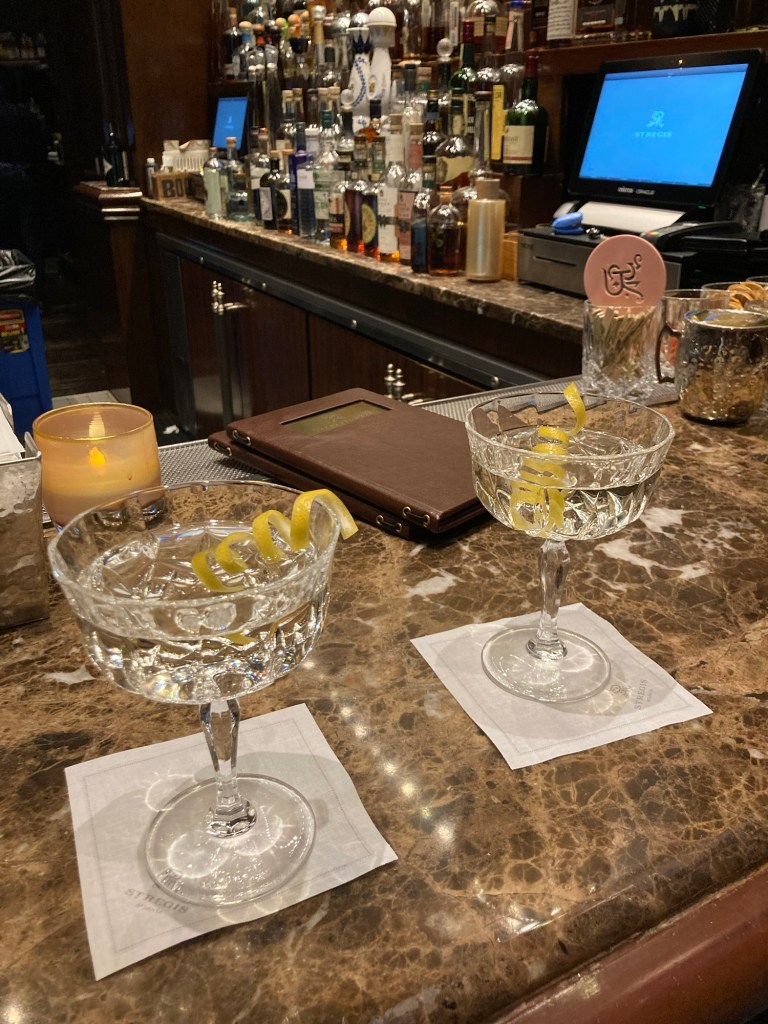
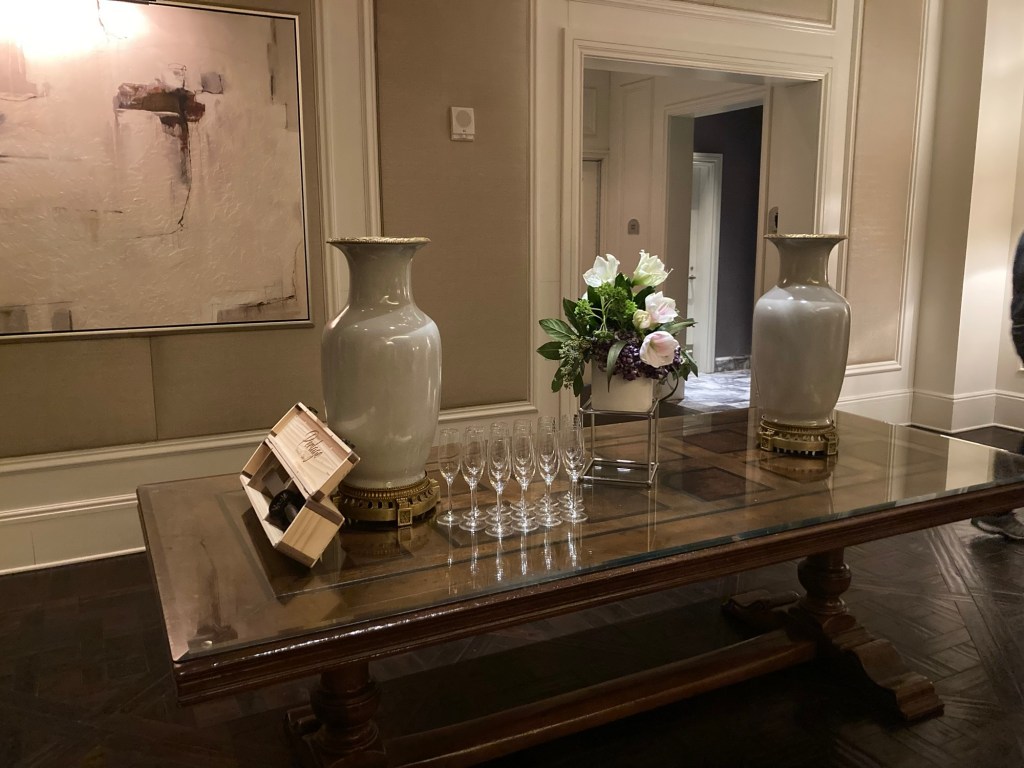
I have mentioned Bob’s Marriott Titanium status. Well, he/we had accumulated enough points through our meanderings to earn a free night at a very nice Marriott Hotel. So, we decided to use this at the St. Regis Hotel in the Buckhead section of Atlanta, where rooms were going (the night of our stay) for over $800/night. I don’t know why anyone would pay that, but it was fun to feel rich and special for an afternoon and evening. We were offered (and accepted) a glass of champagne and macarons upon check in. We also chose to get a free breakfast ($80 credit) the next day versus more hotel points.
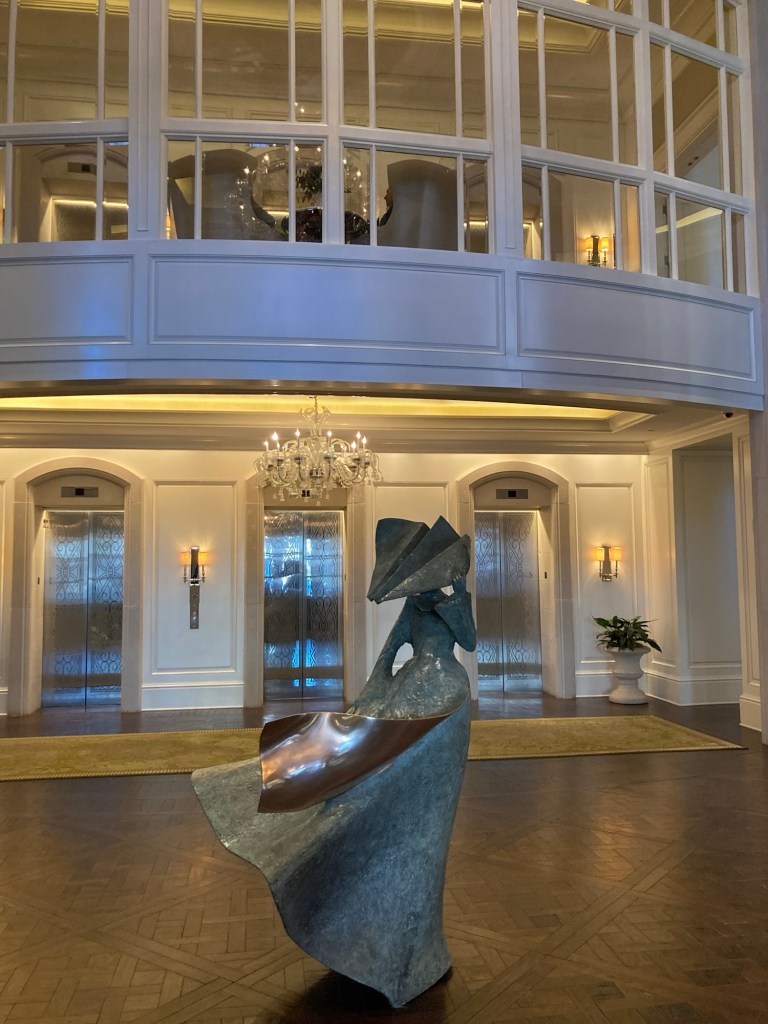
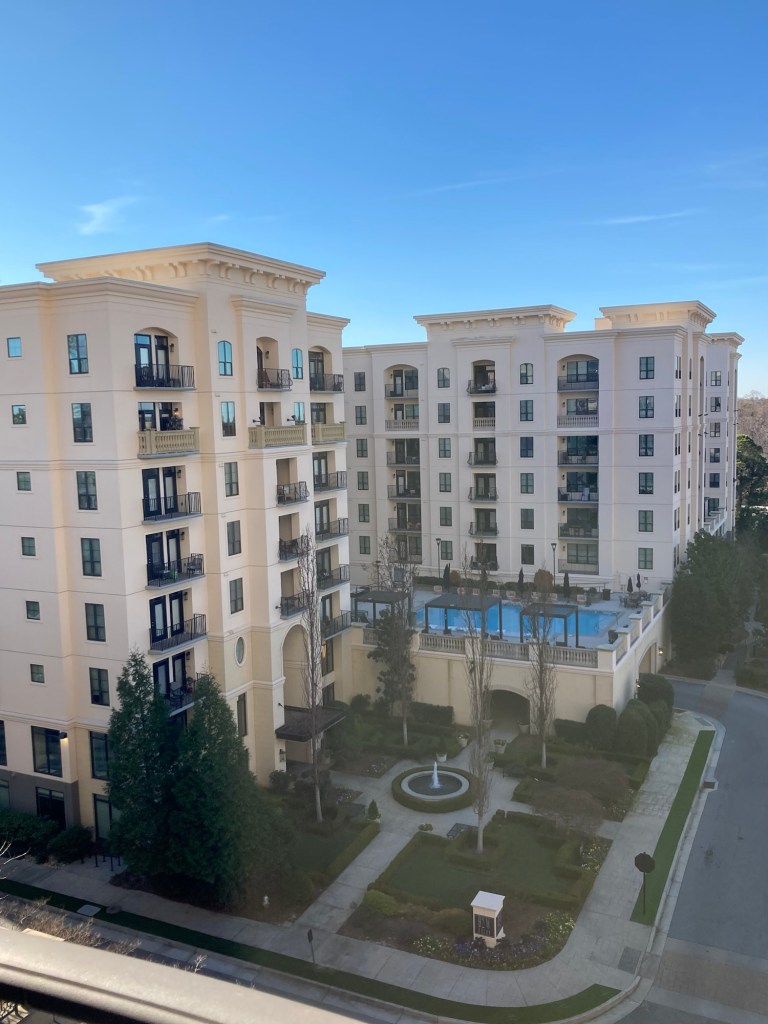
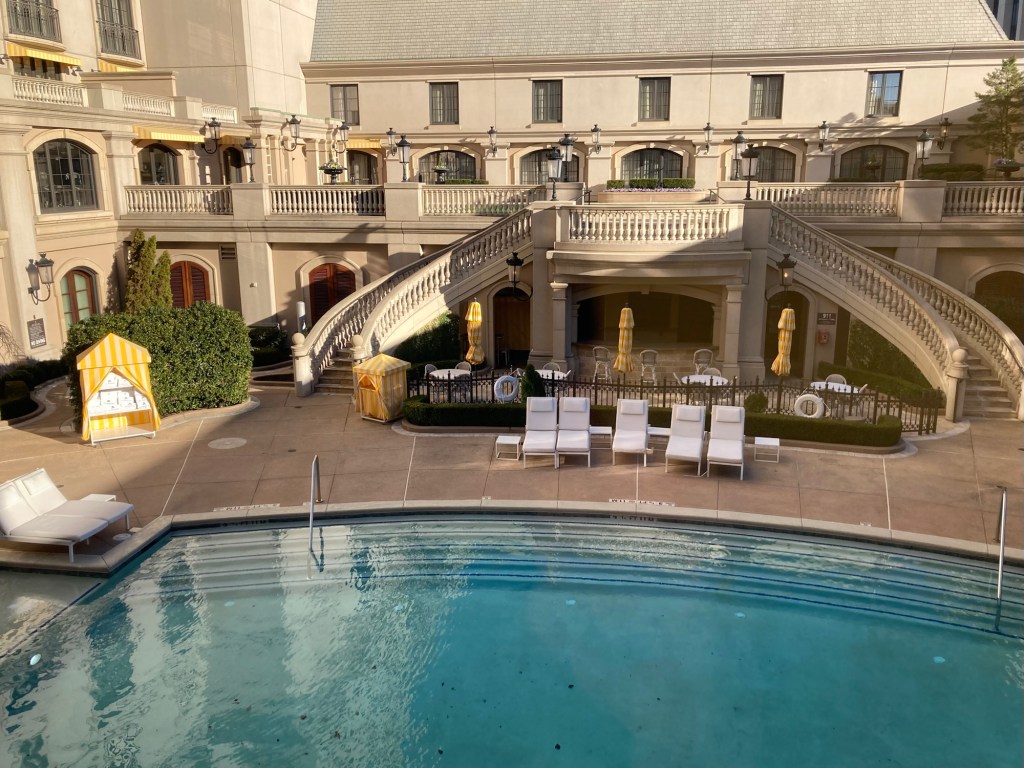
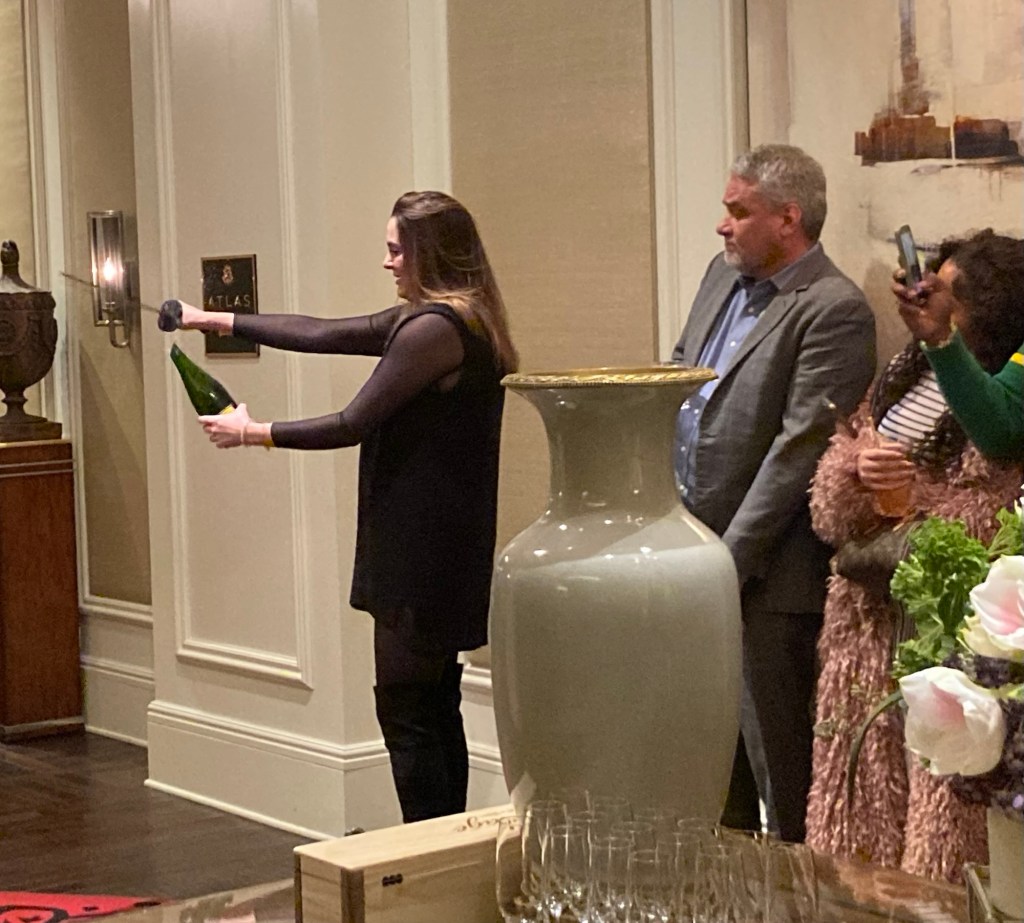
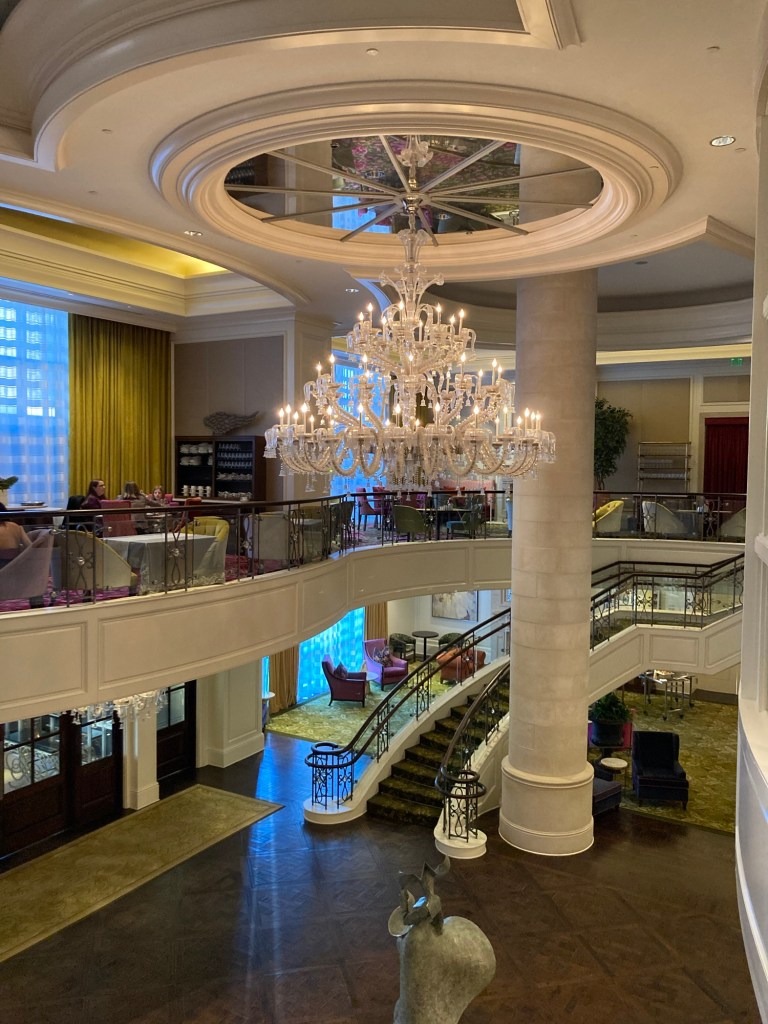
The lovely sculpture in the lobby entrance A view of some residential towers across from the hotel A view of the pool from our 5th floor vantage pointWe bought some salads from Whole Foods Market across the street for dinner but did enjoy a cocktail at one of the hotel barsAt 6 pm every evening, they do a sabering of champagne.A hotel employee provided some history of this practice (dates back to Napoleon if his history is right) and then he showed a guest how to do it.The upper level is where we had our free breakfast this morning
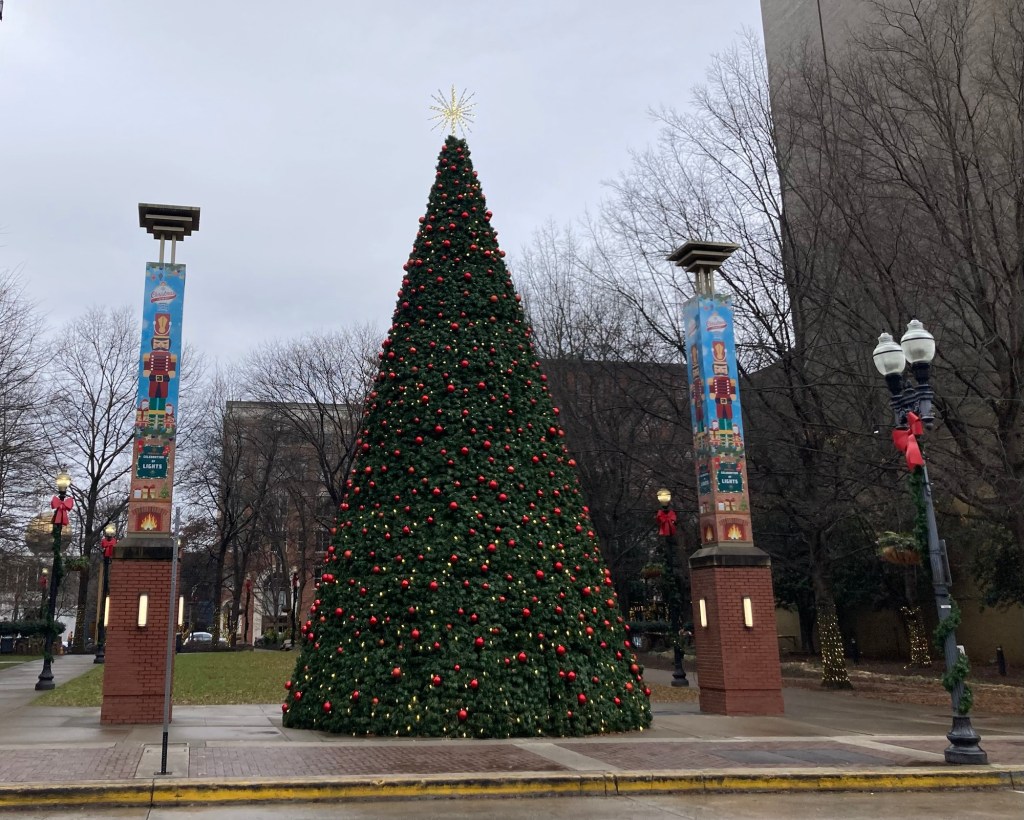
Now, it’s the calm before the winter storm…. We drove three hours to downtown Knoxville, Tennessee and will be here until Tuesday morning. Tonight, rain or snow is to start, so we’re not sure what the next couple of days will bring weather wise. We did a little walk about after our arrival this afternoon to the Marriott Residence Inn.
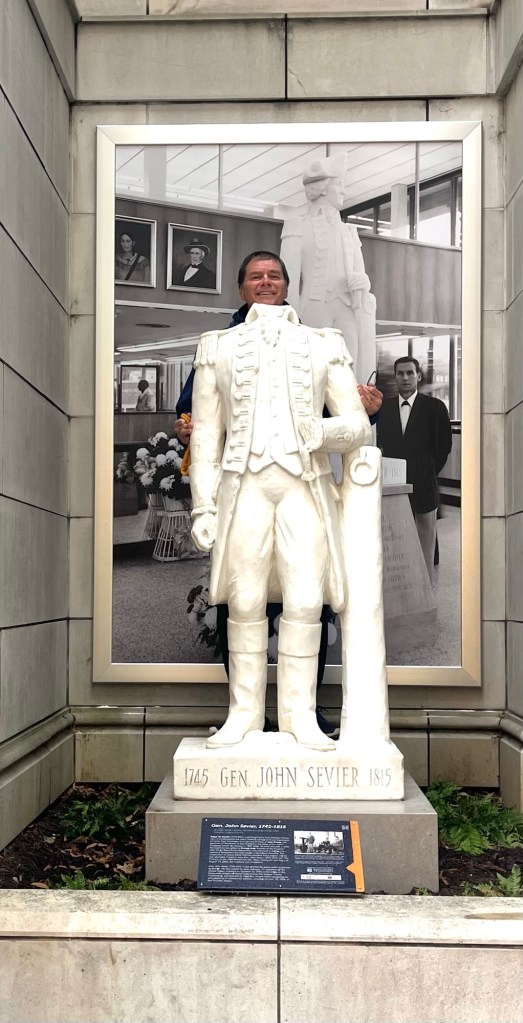
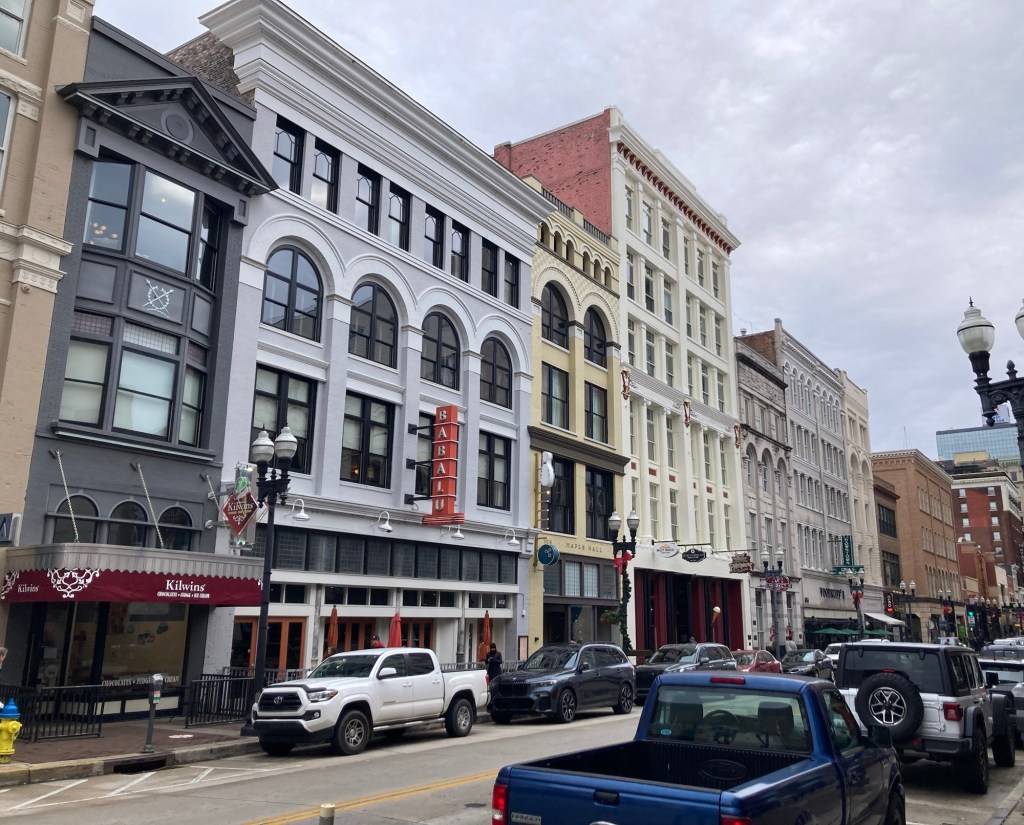
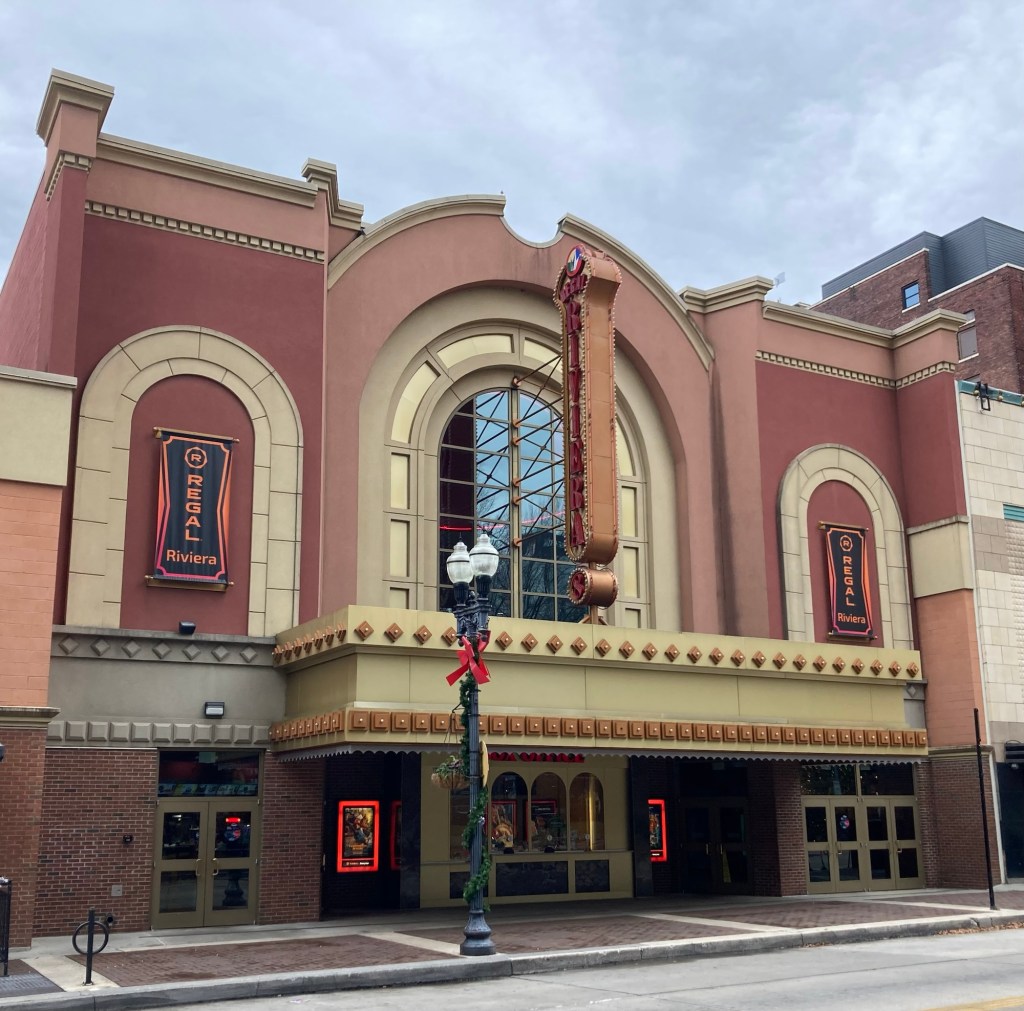
The East Tennessee History enterBob took advantage of a DIY big head statue opportunity The entrance to a cute downtown park Gay Street downtown The Riviera movie theaterThe Tennessee Theater for live performances A downtown statue that reminded us of our Canadian homeowner that was on his country’s Olympic rowing team.
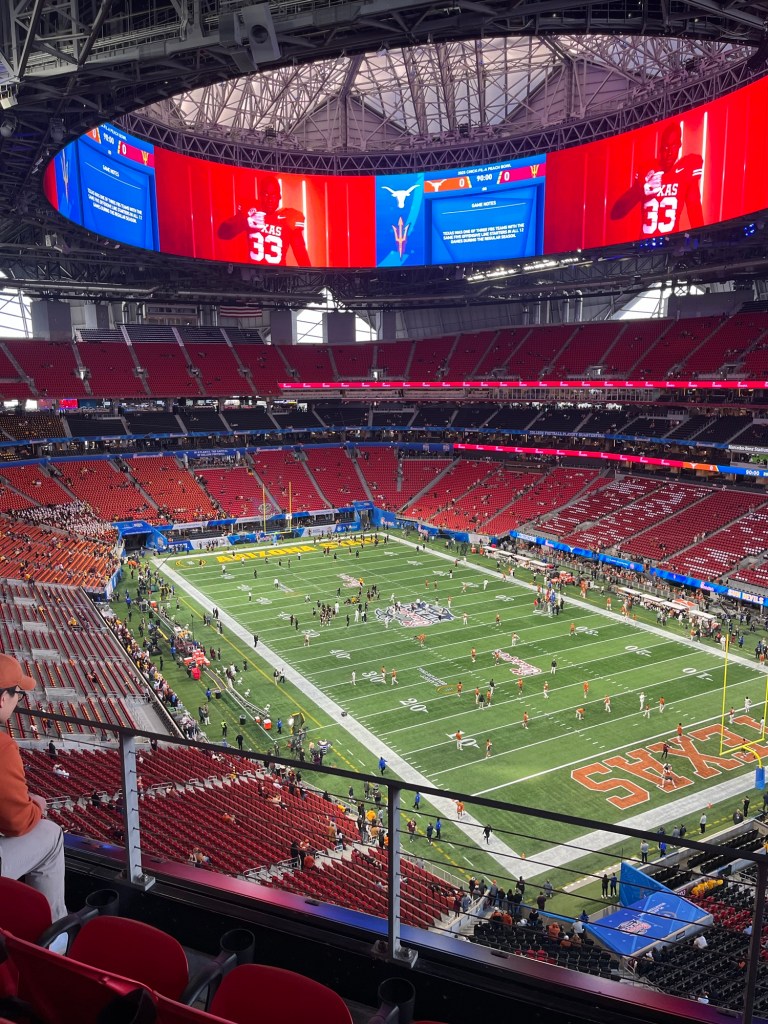
This is a blog post from Bob. Yesterday, I attended the Peach Bowl, an annual college football game, this year featuring one of my two favorite college teams, the Texas Longhorns, playing the Arizona State Sun Devils. Though the Horns won, it wasn’t a convincing win.
The game was played in Mercedes-Benz Stadium in downtown Atlanta, a beautiful 71,000 seat stadium that opened in 2017 and is the home of the Atlanta Falcons. Below are pics from the day.
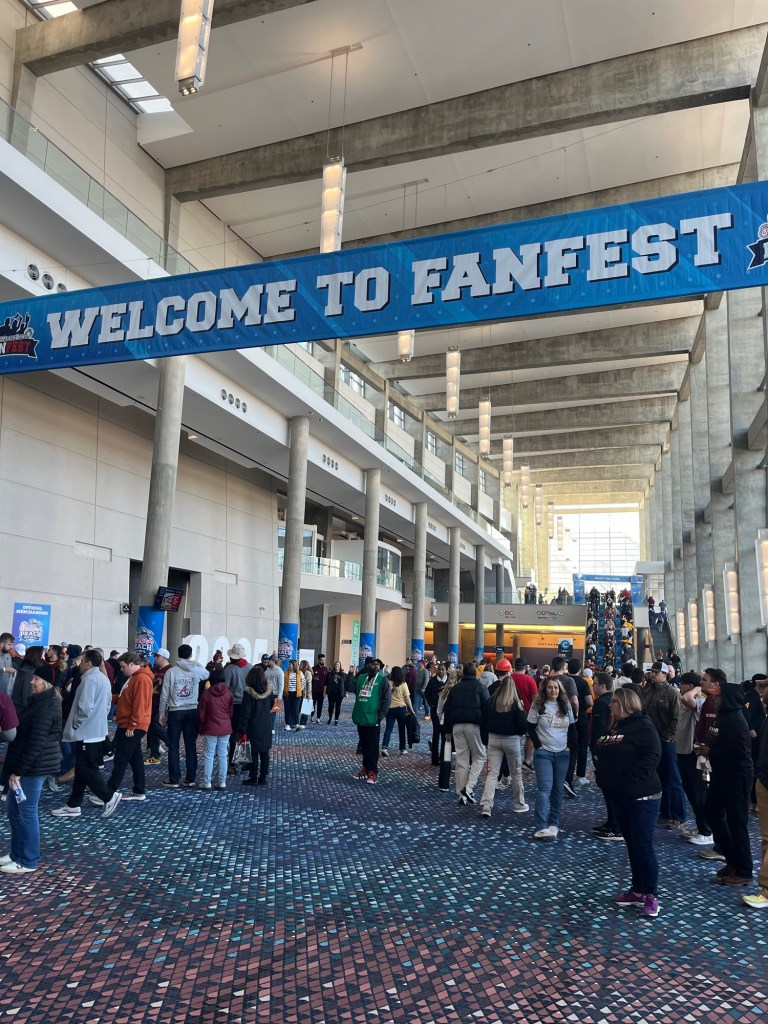
Next to the stadium was the huge Atlanta convention center where a fan appreciation event was held prior to kickoff.
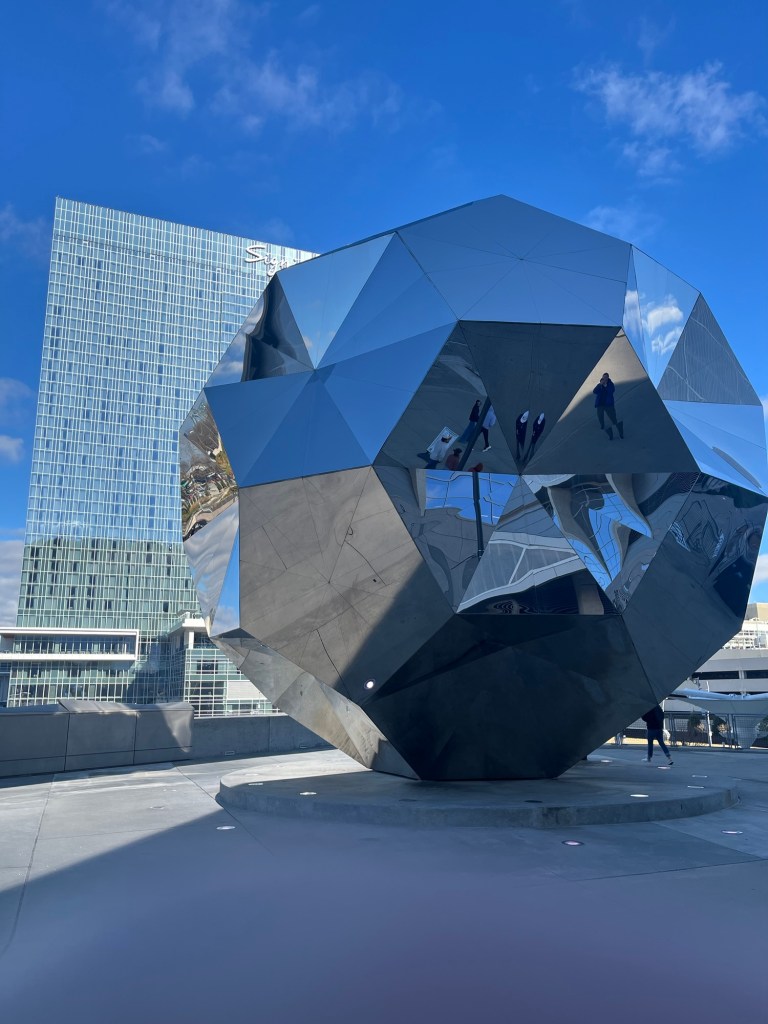
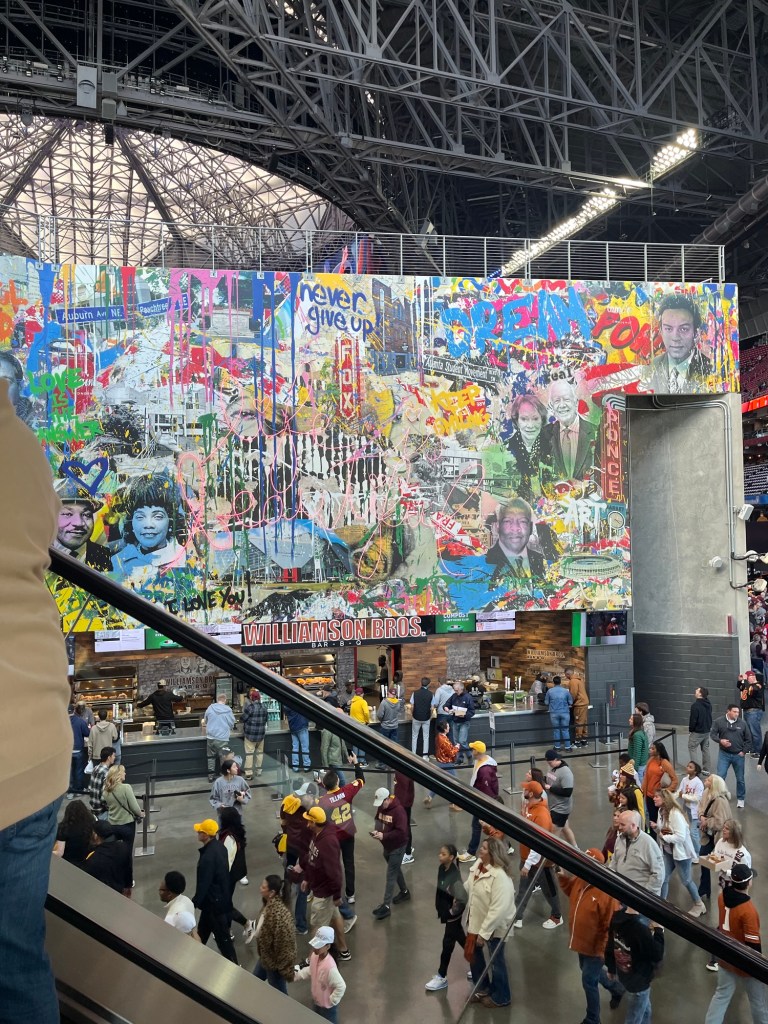
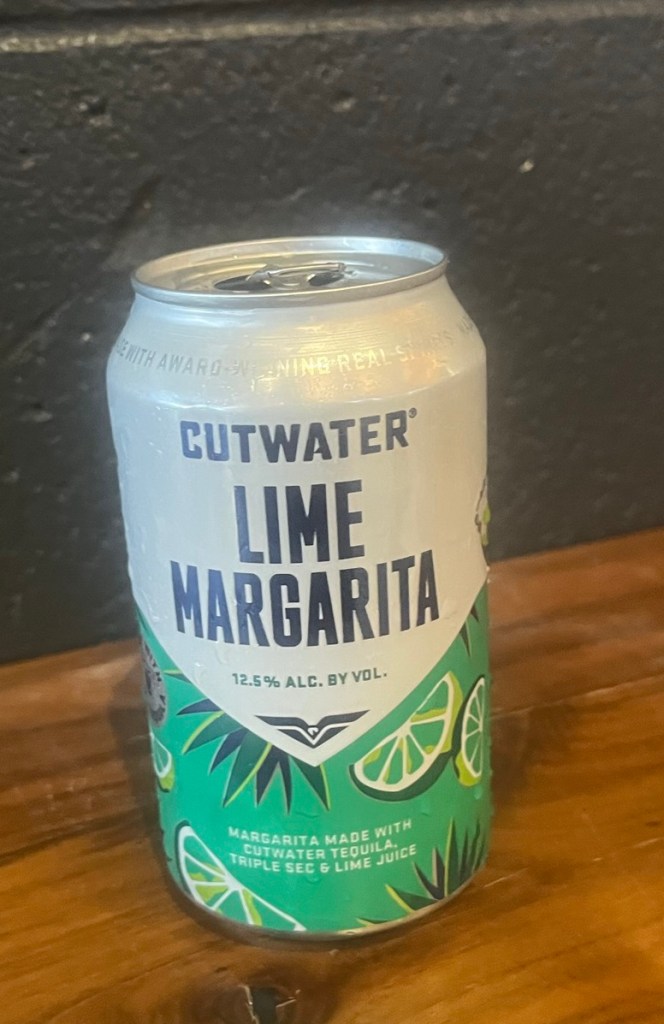
The Longhorn marching band played at the fan fest.A sculpture outside of the stadiumNext time I attend an event at the stadium, I wouldn’t mind staying here.One side of the stadium.A Falcons statue right outside the stadium.A mural of Atlanta places and people from one of two long escalators up to the level where I sat.Got there early and this was the view from my seat.Downtown Atlanta from inside the stadium.The stadium is known for having relatively inexpensive food and drink prices. This cost $6, where most stadiums would charge $12-15 for the same meal.A canned cocktail for $9, which I would guess would be closer to $15 in most other stadiums.
Bob and I spent a lovely few hours this afternoon walking to and then having a tour of Atlanta’s historic Fox Theatre. This on a day that almost hit a heat record at a high of 72 degrees Fahrenheit. A cool front comes in tonight and temps will soon be more seasonal.
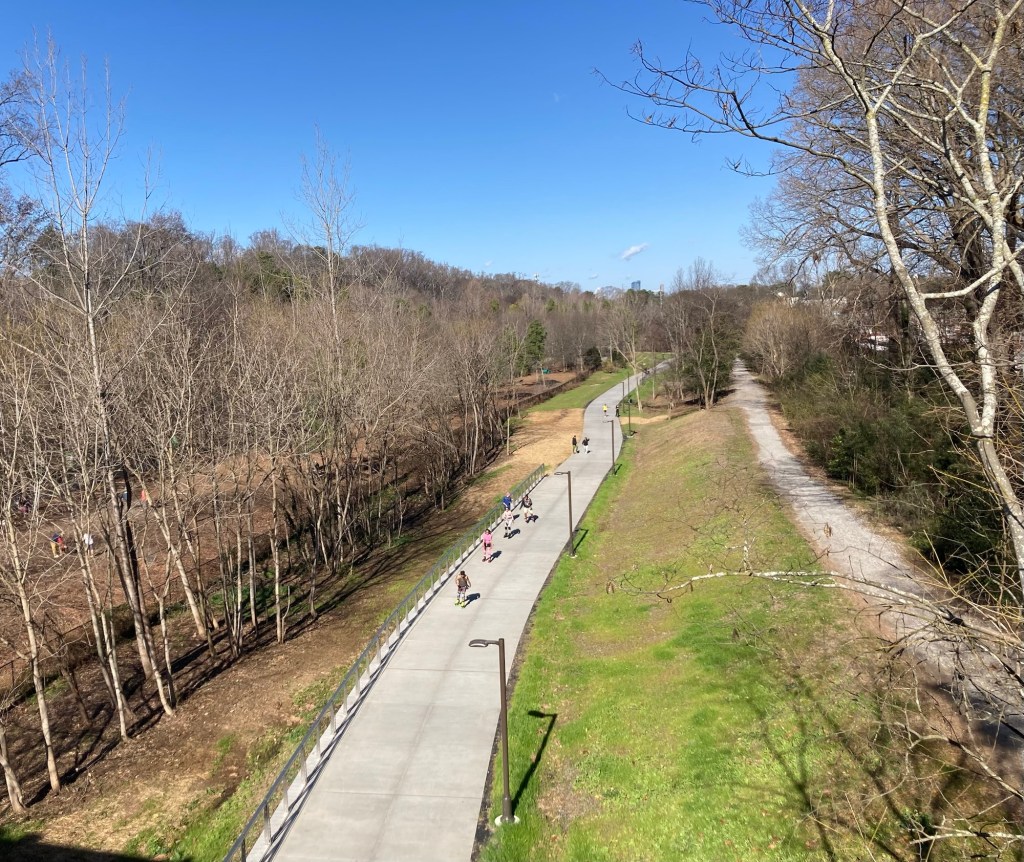
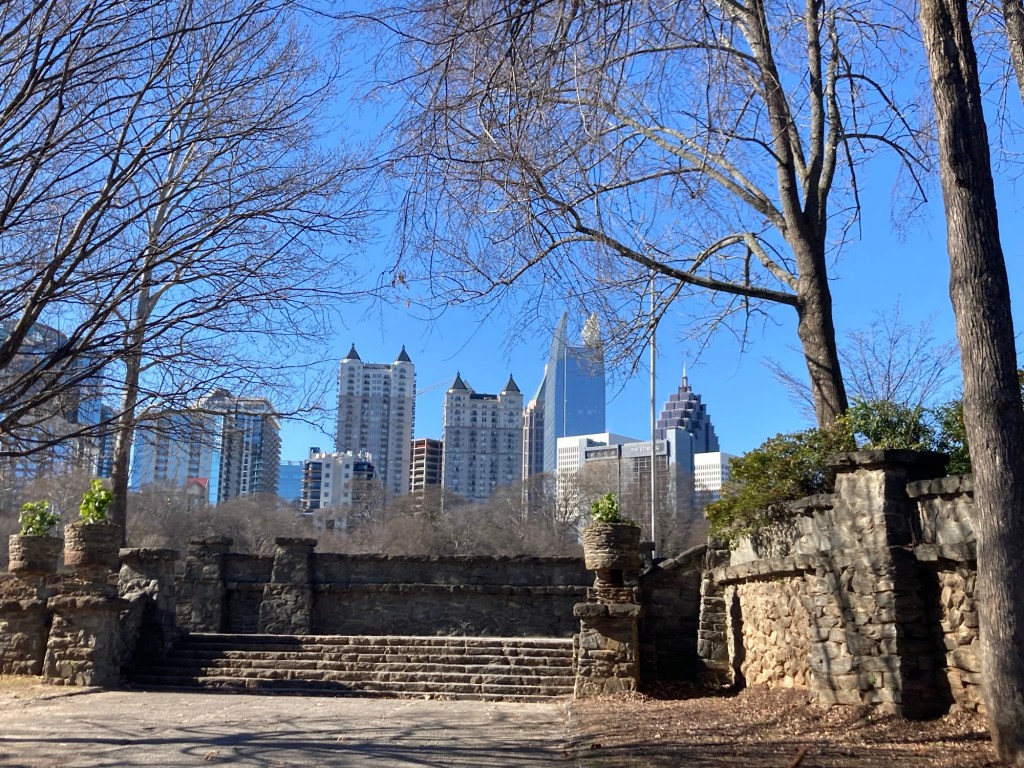
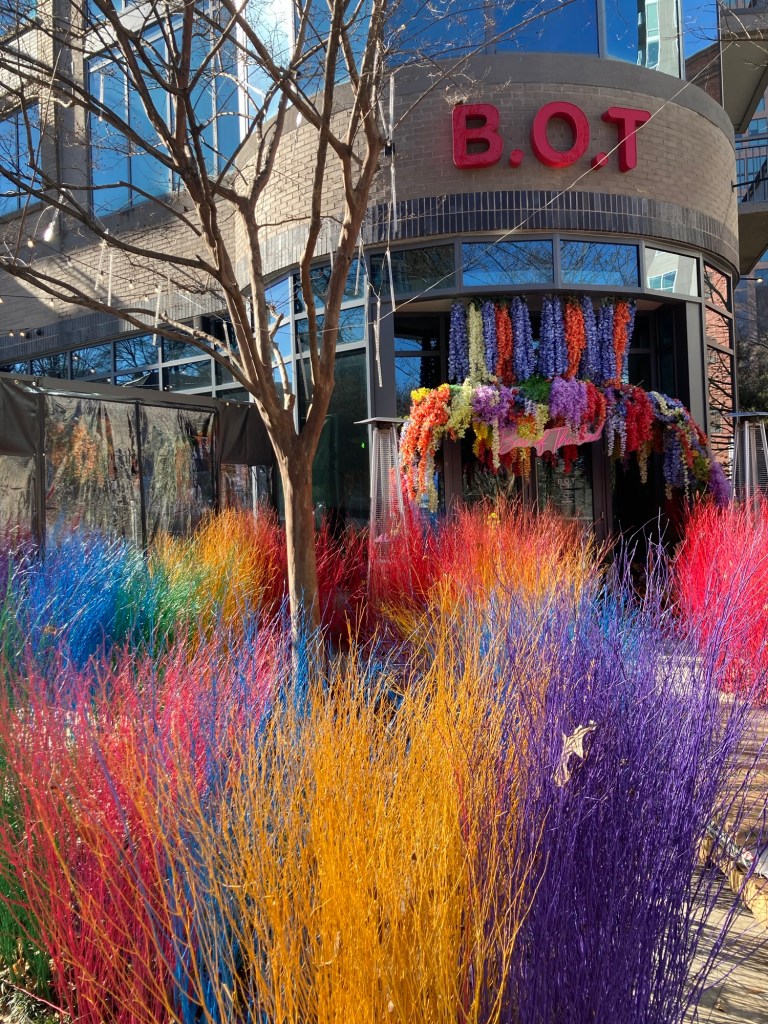
Walking on a bridge over the Beltline trail to Piedmont ParkLooking across Piedmont Park towards downtown A colorful entrance to a Thai restaurant A residential building near the theater
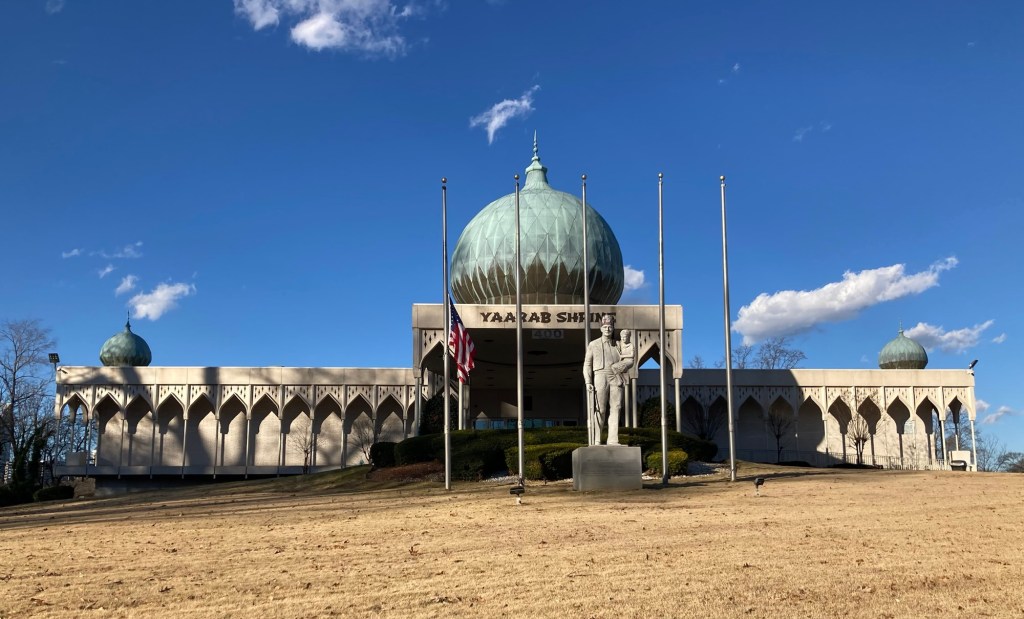
The Fox Theatre was begun in 1928, originally conceived as a home for the Atlanta’s Shriners organization. They were focused on creating a structure that honored the great mosques/structures of the Far East. However, they soon ran out of money and ended up partnering with William Fox, a movie mogul wanting to create a large movie venue in Atlanta.
The now Fox Theatre opened on Christmas Day 1926 with a 4600 seat theatre for Fox and a couple of ballrooms and offices for the Shriners.
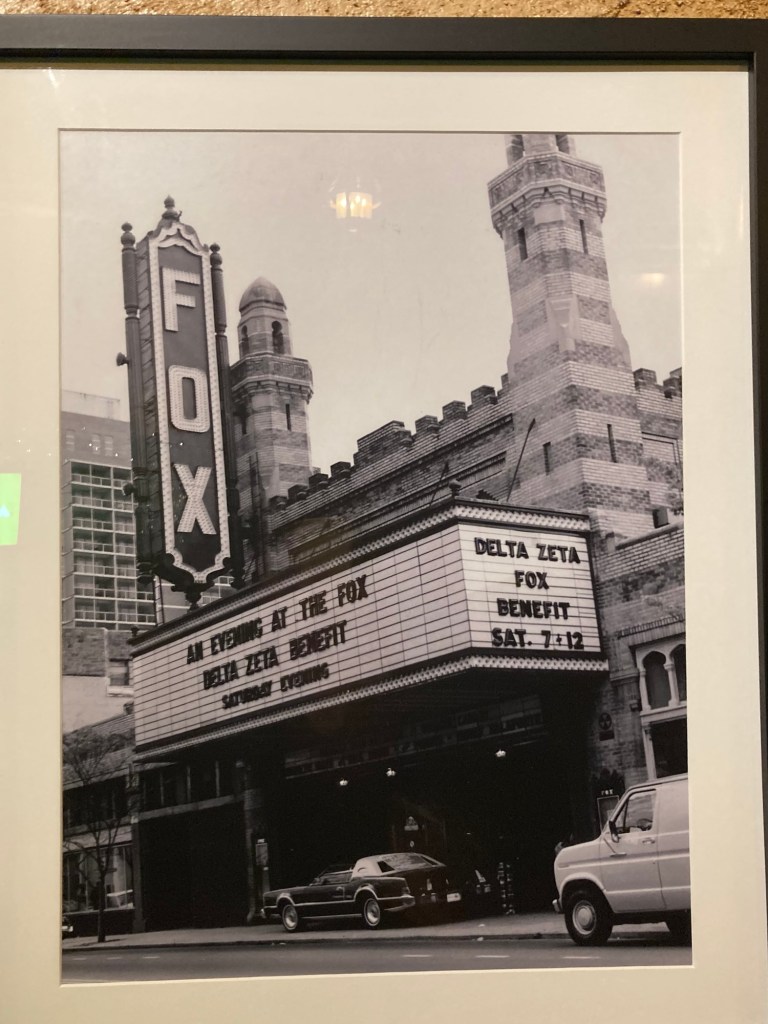
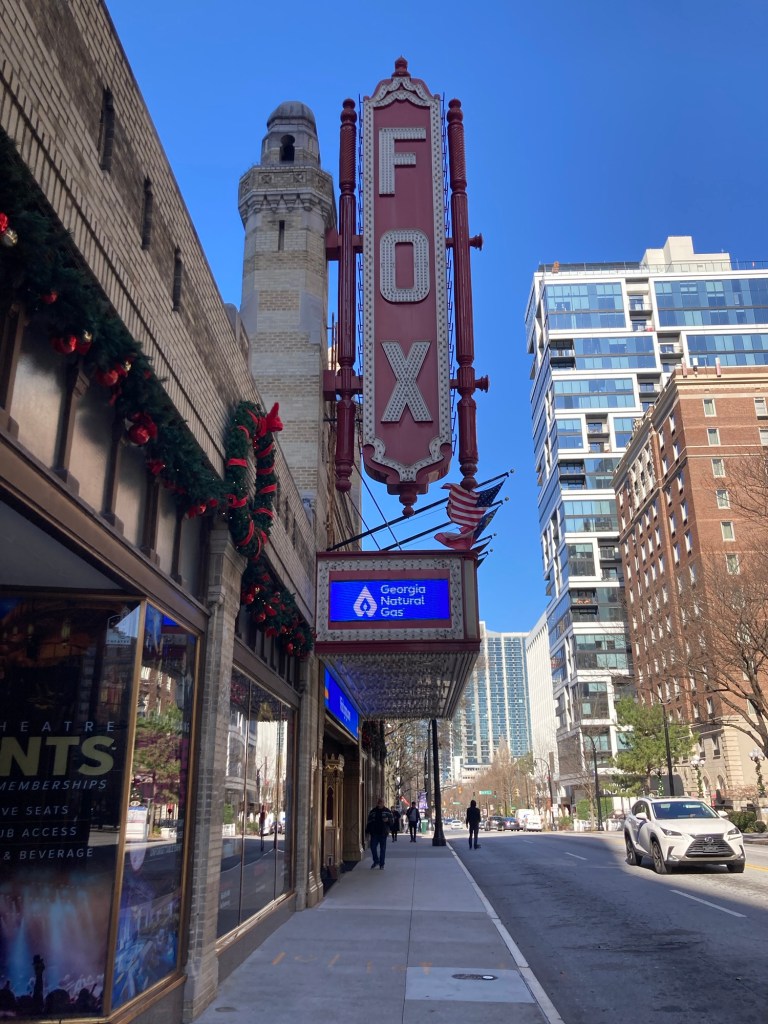
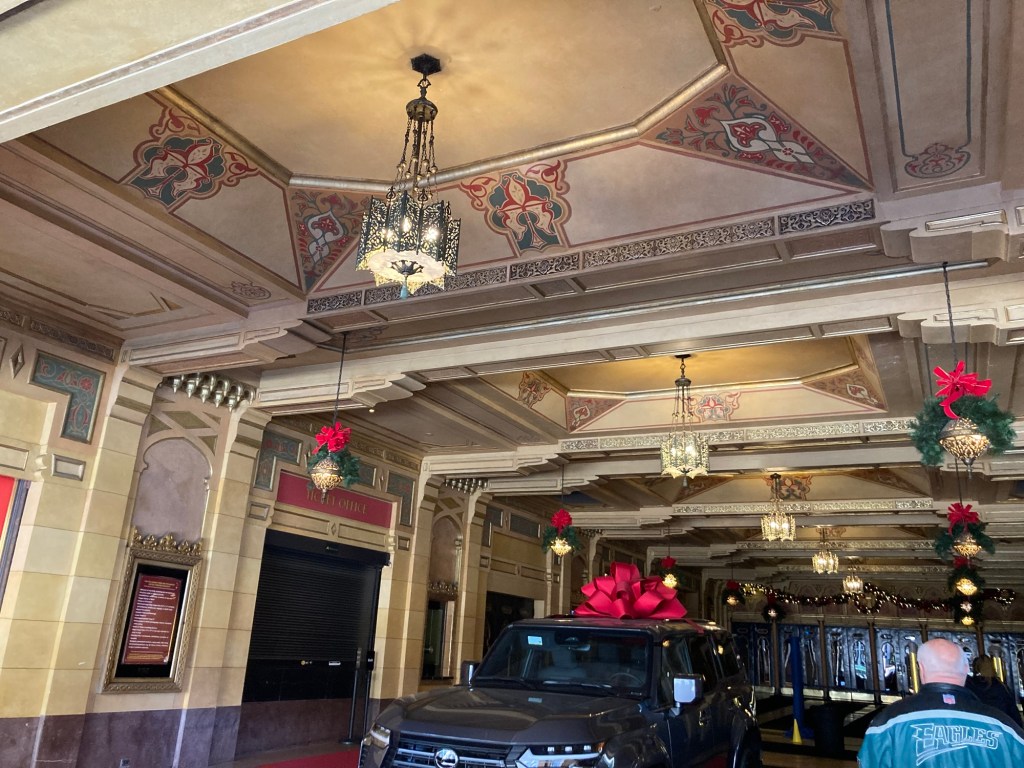
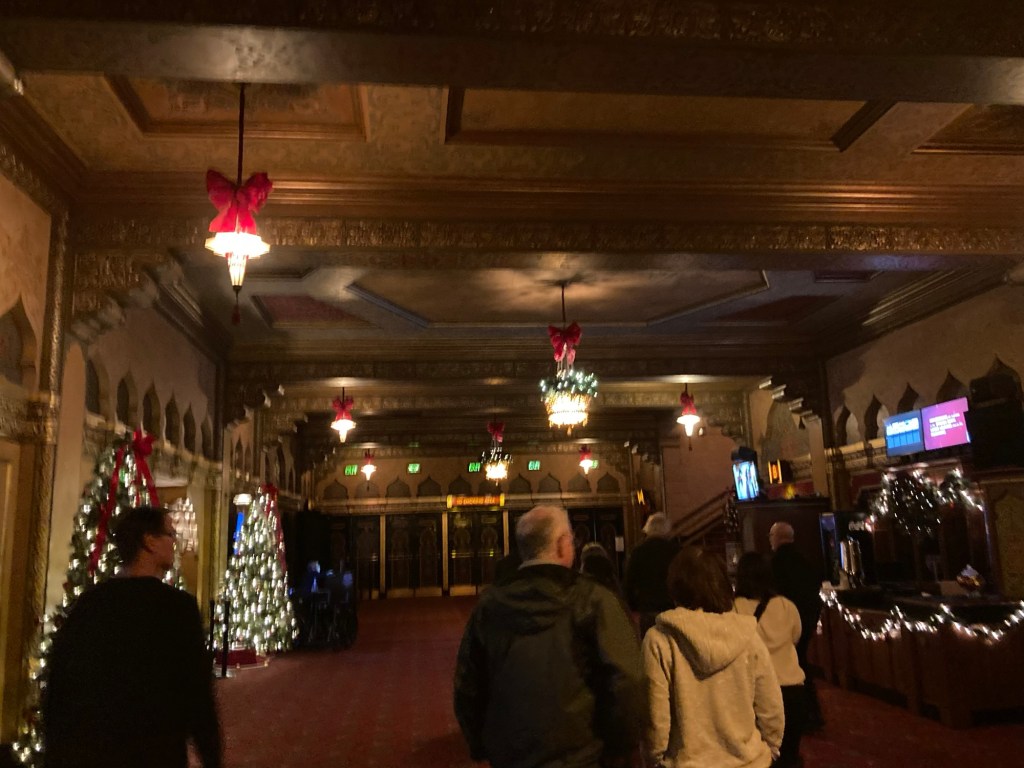
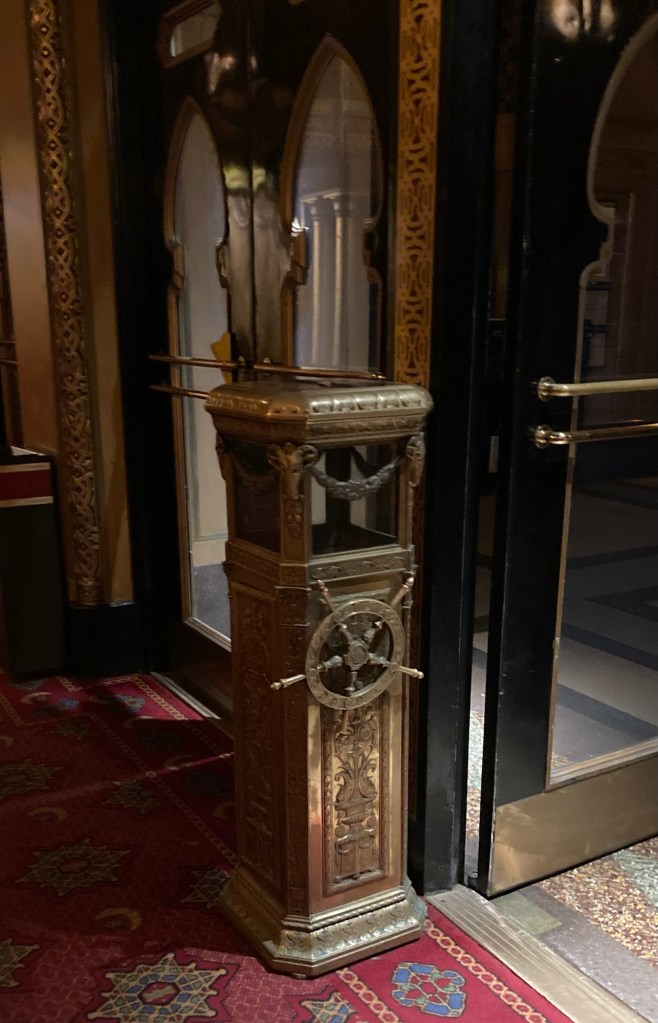
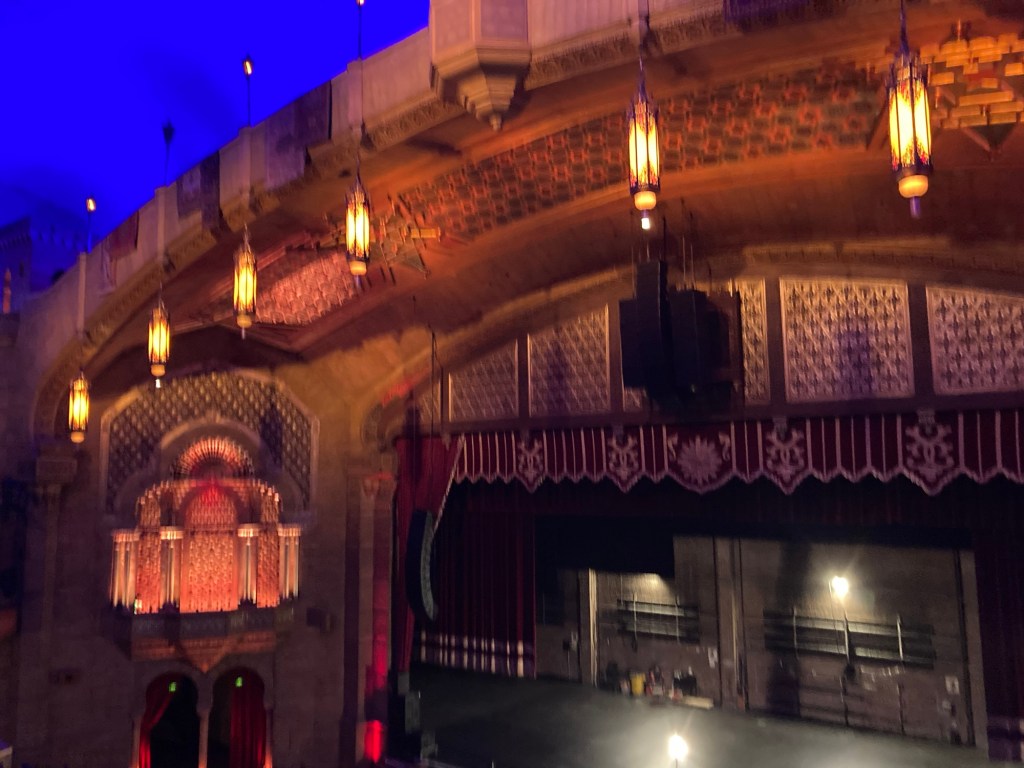
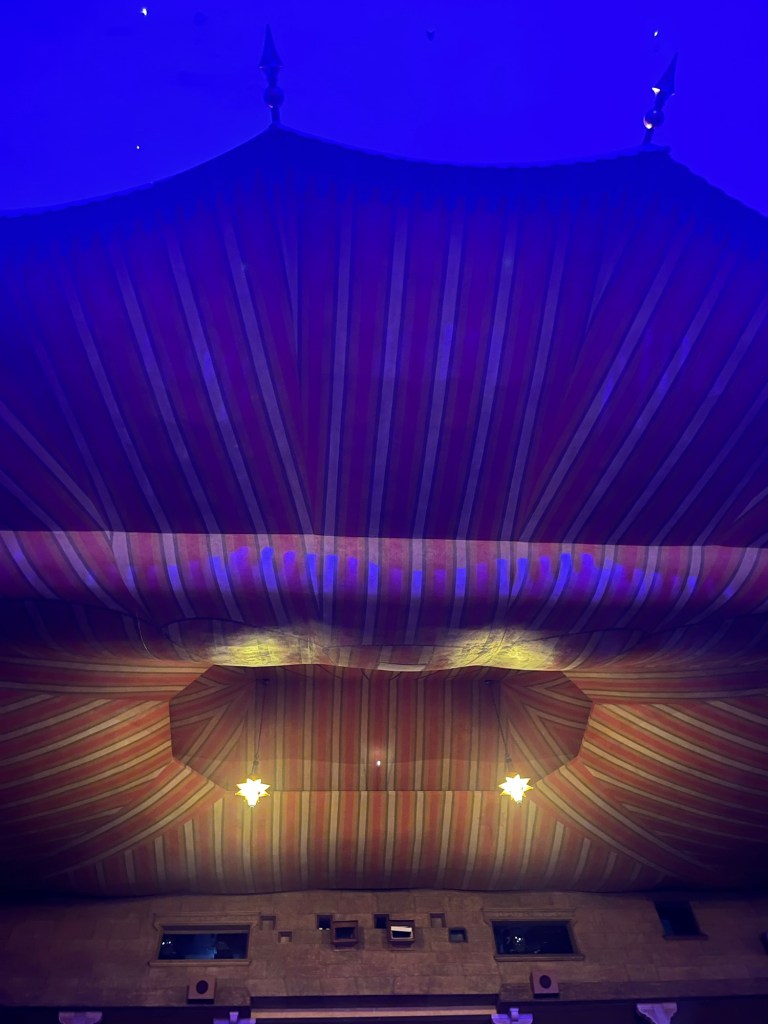
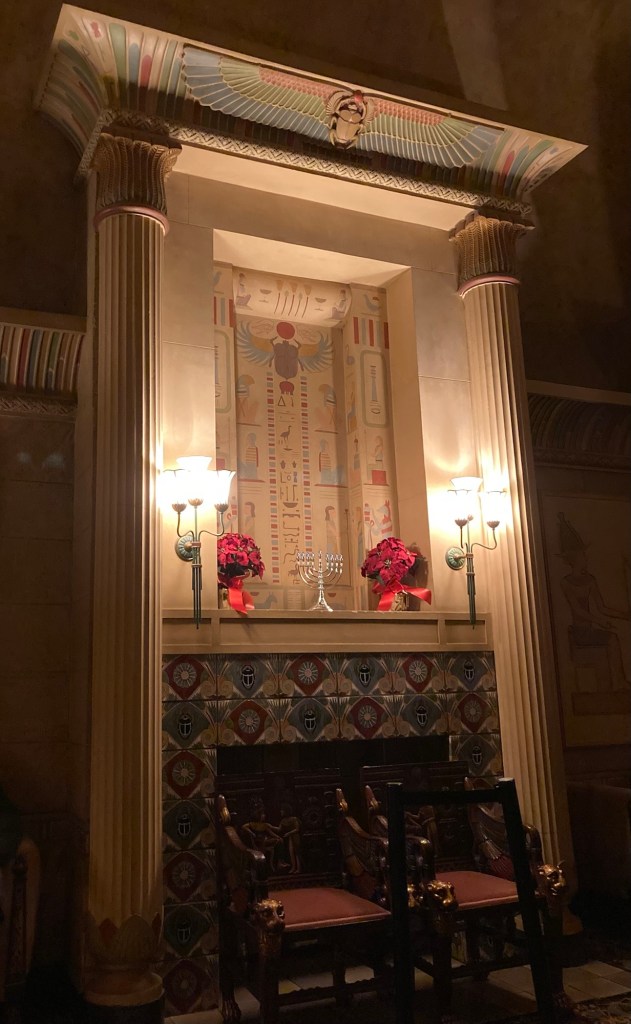
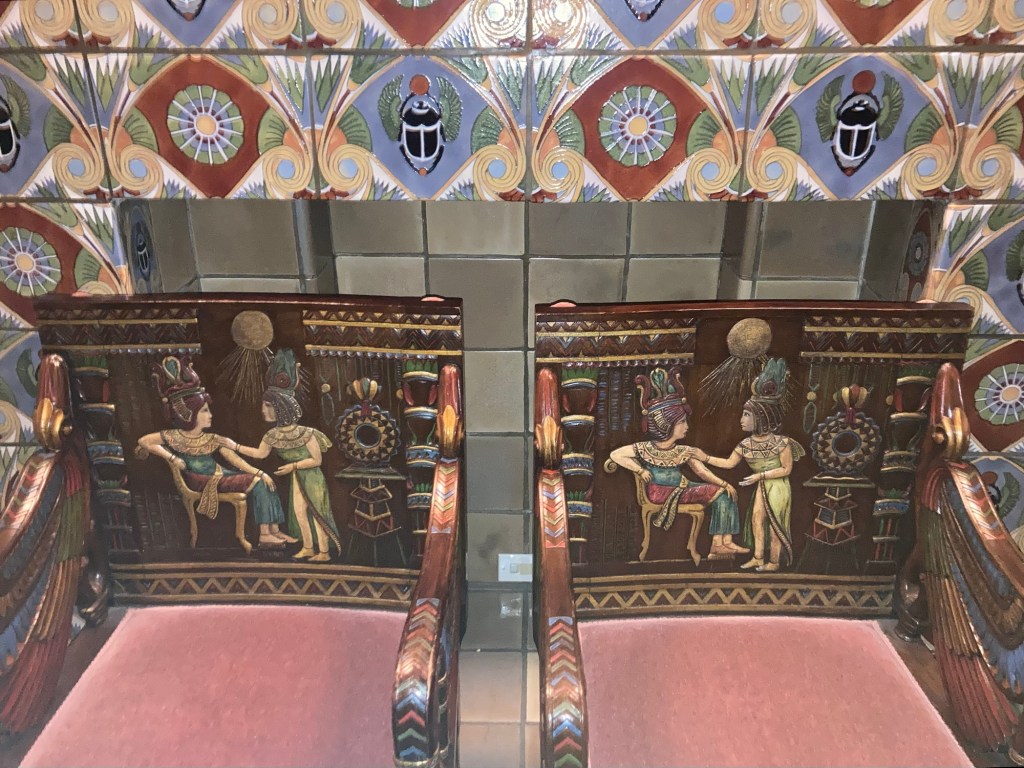
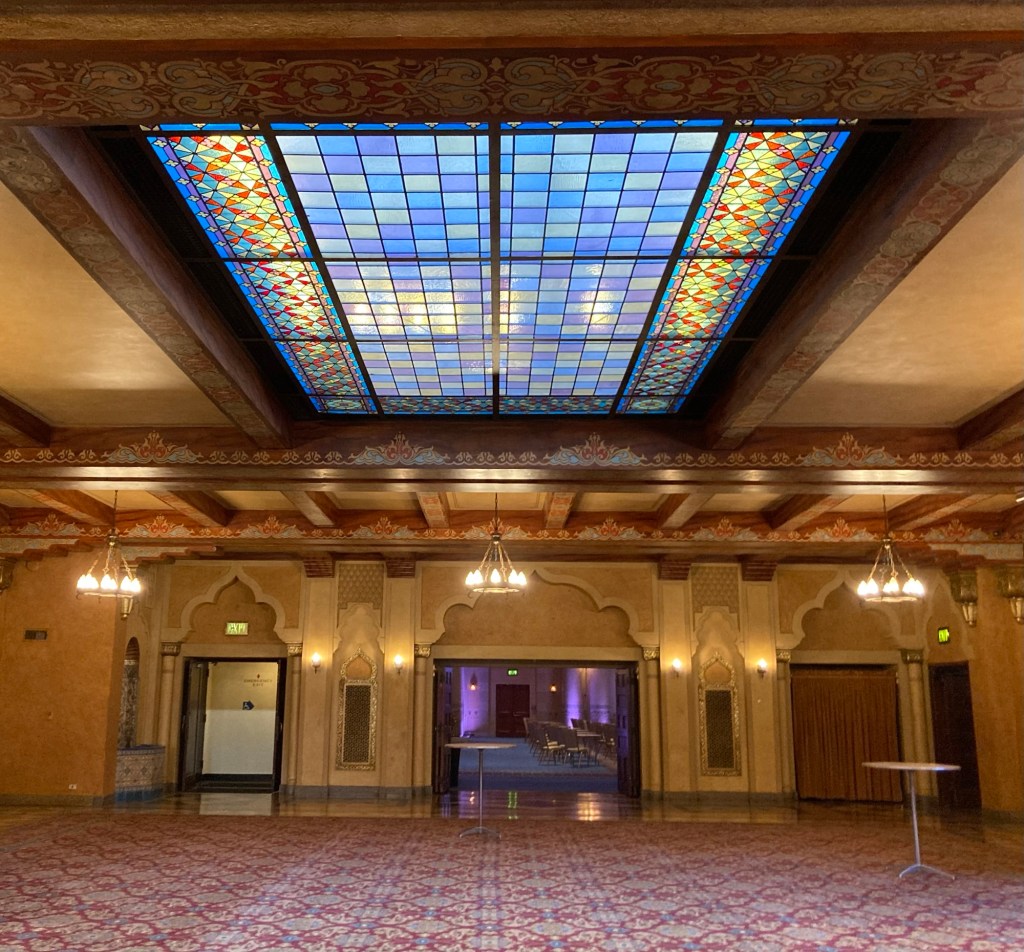
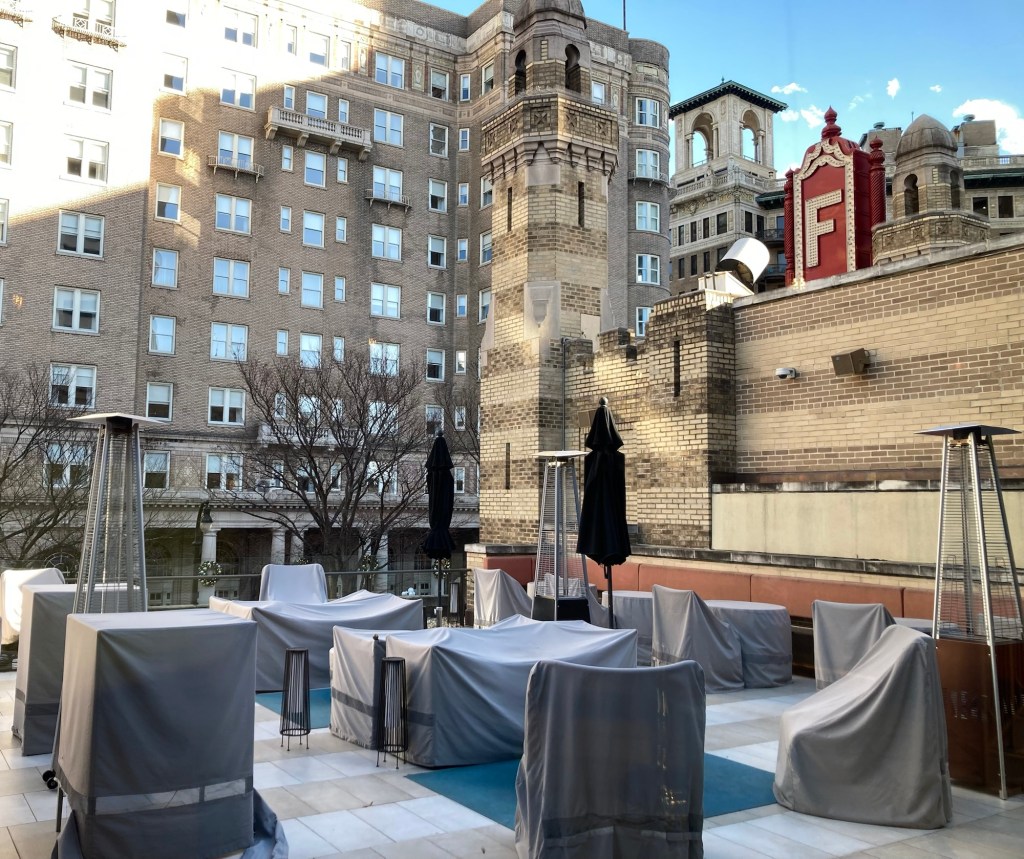
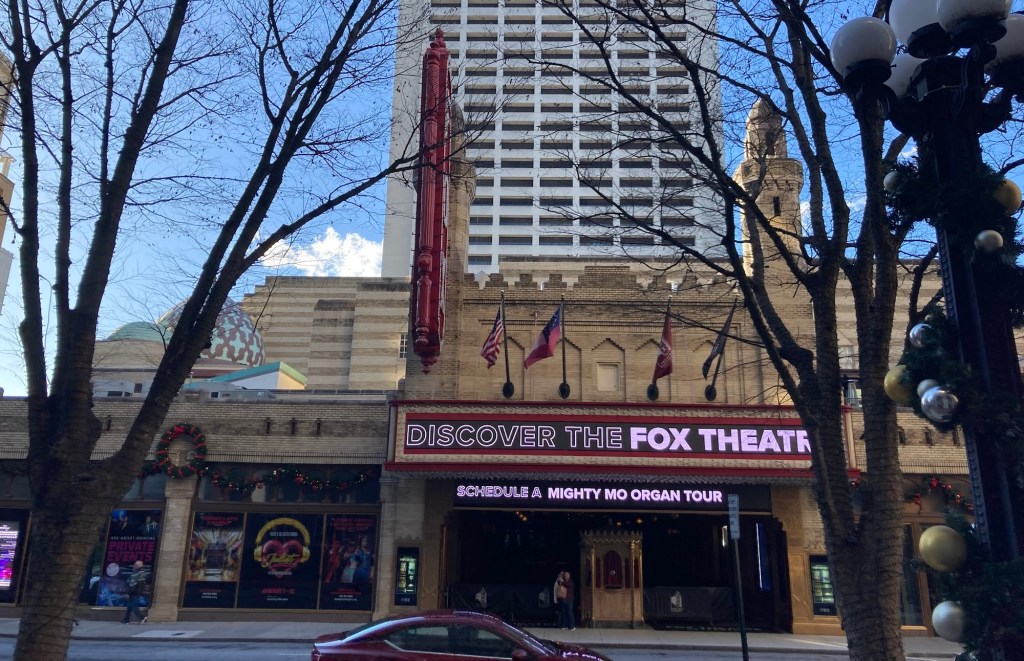
A photo of the Fox in the 1960s when they were having a benefit to keep the theater from being razed to make a parking lot for Southern Bell Telephone.The Fox Theatre todayThe external lobby for the theaterA sign in the external lobby that shows the location of the theater at Peachtree St and Ponce de Leon AveThe lobby of the theater The old ticket box where the staff would collect the tickets at the doorThe stage in the auditorium. The highlighted Parton the left is not boxed seats but covering for the pipes for the Mighty Mo organ.The large canopy over the back of the auditorium The auditorium carpet, the Jewish star for William Fox and the moon and star for the Shriners.A decorative wall in the the women’s loungeA close up of the mantel tiles and the King Tut chairsOne of the upstairs ballroomsThe Egyptian Ballroom, where they currently host proms and weddingsLooking onto the patio of their member’s club A look at the theater from across the street
On the way back, Bob and I walked a different route back which took us by the current Shriners Temple.
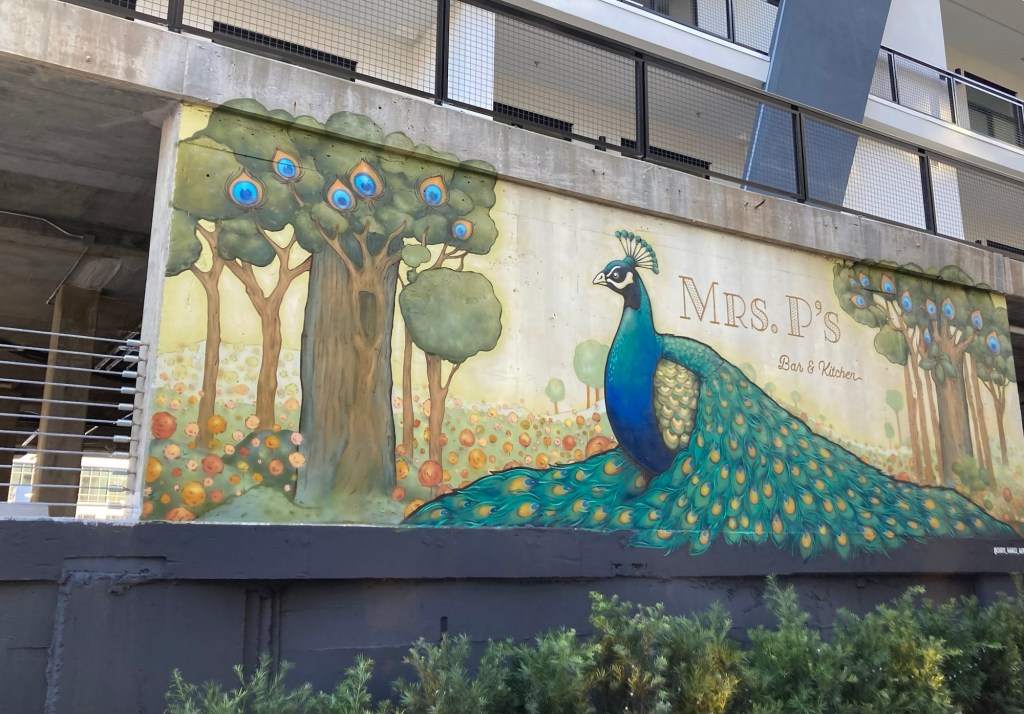
On the way back, Bob and I stopped at a bar in a boutique hotel for a cocktail before heading back.
Signage for the bar
Just for giggles, Bob and I counted the number of different places we rested our head in 2024 and came up with 72. We still find that pretty exciting.
One of the attractions that came up in Googling what to do in Atlanta (that we hadn’t already done) was the Oakland Cemetery. Although some may find it morbid, I find cemeteries to be good places for quiet walks and sometimes architecturally interesting and always good for a bit of local history.
The Oakland Cemetery was established in 1850 when the city of Atlanta purchased 6 acres of plantation farmland on the edge of town for a municipal cemetery. By 1867, the 6 acres had grown to 48 acres. Today, it is the permanent home to more than 70,000 people of all distinctions.
The cemetery is located near the Martin Luther King, Jr. Historic District and about 2.9 miles from where we are staying. It was about a 90 minute walk to the cemetery through a few new areas of town and on a lovely 60+ degree day.
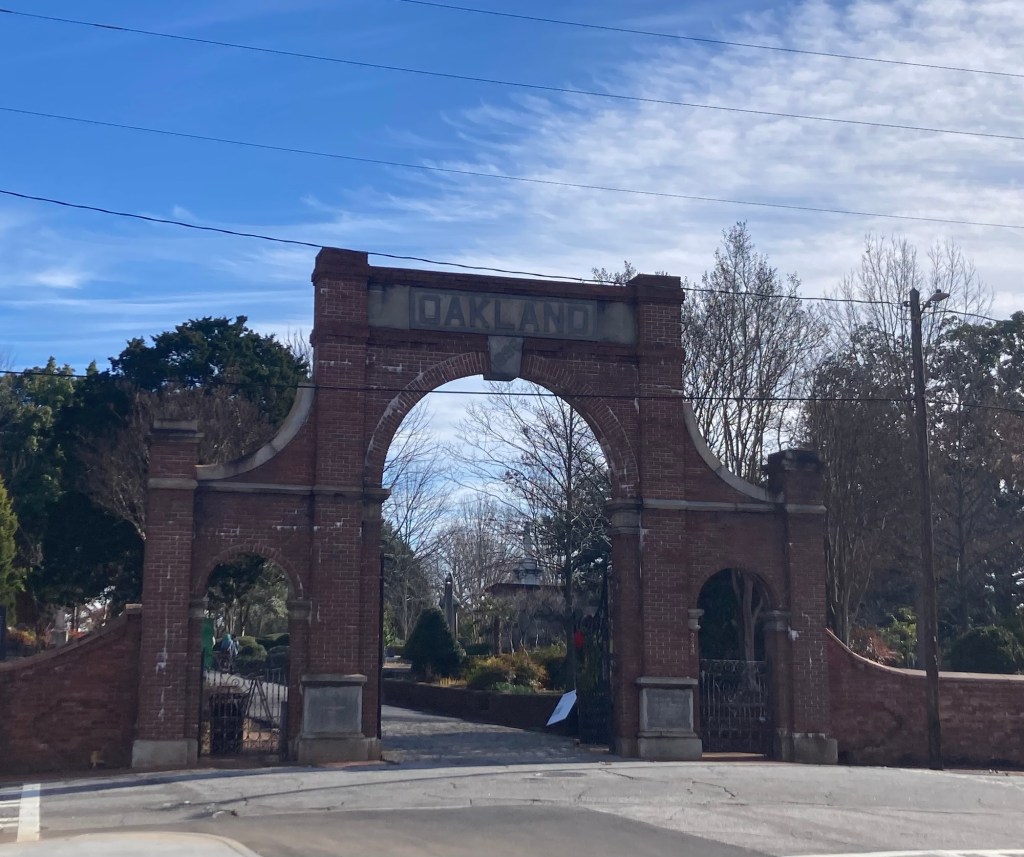
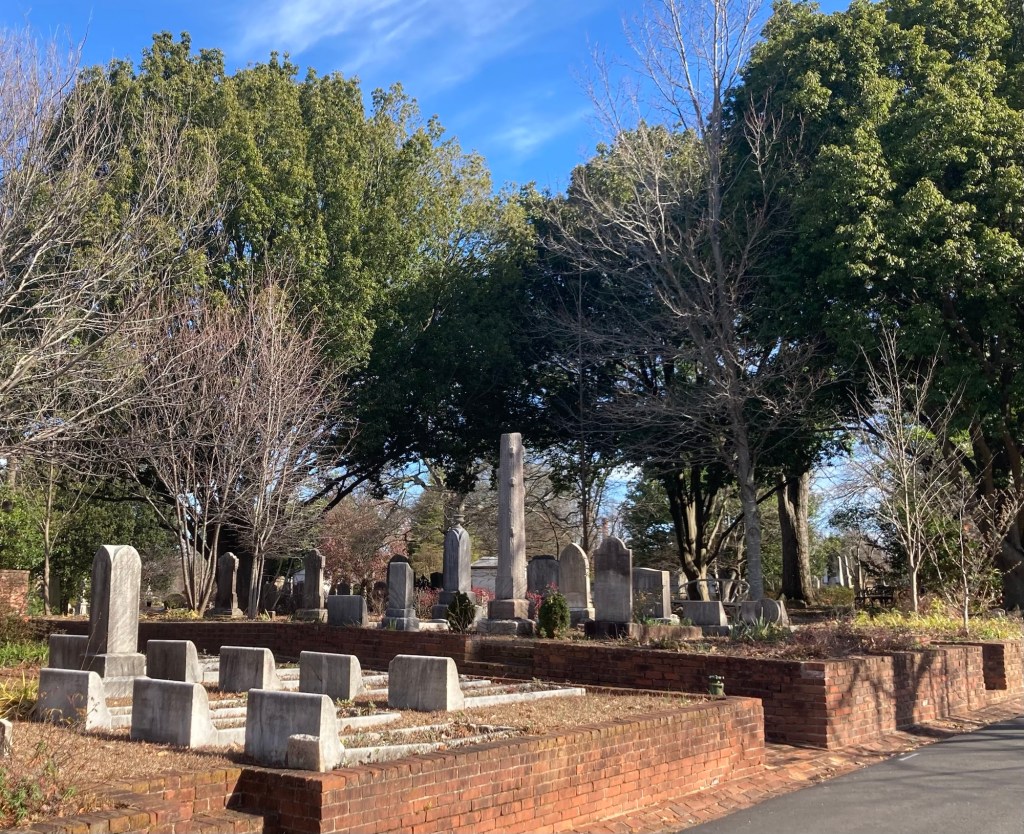
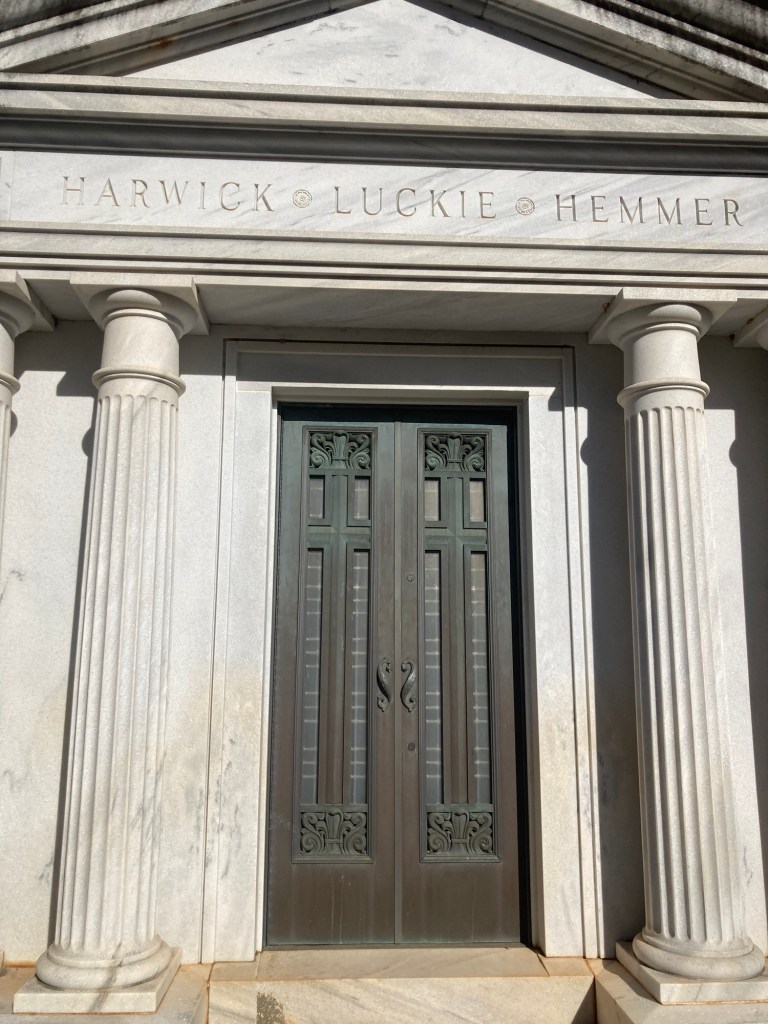
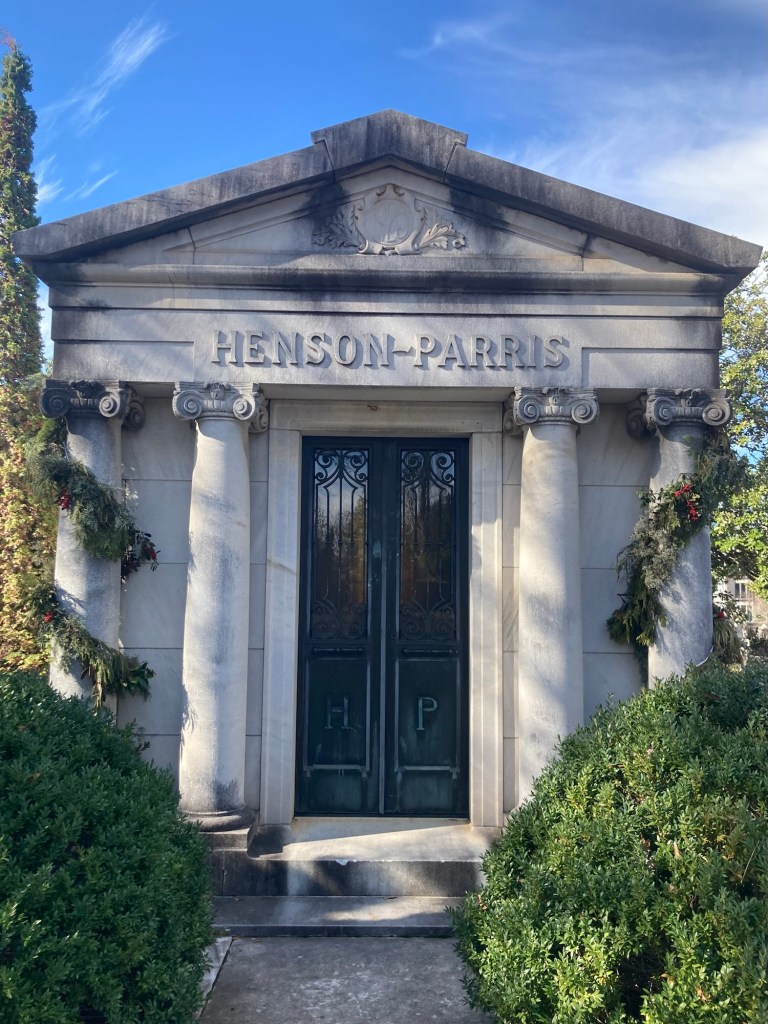
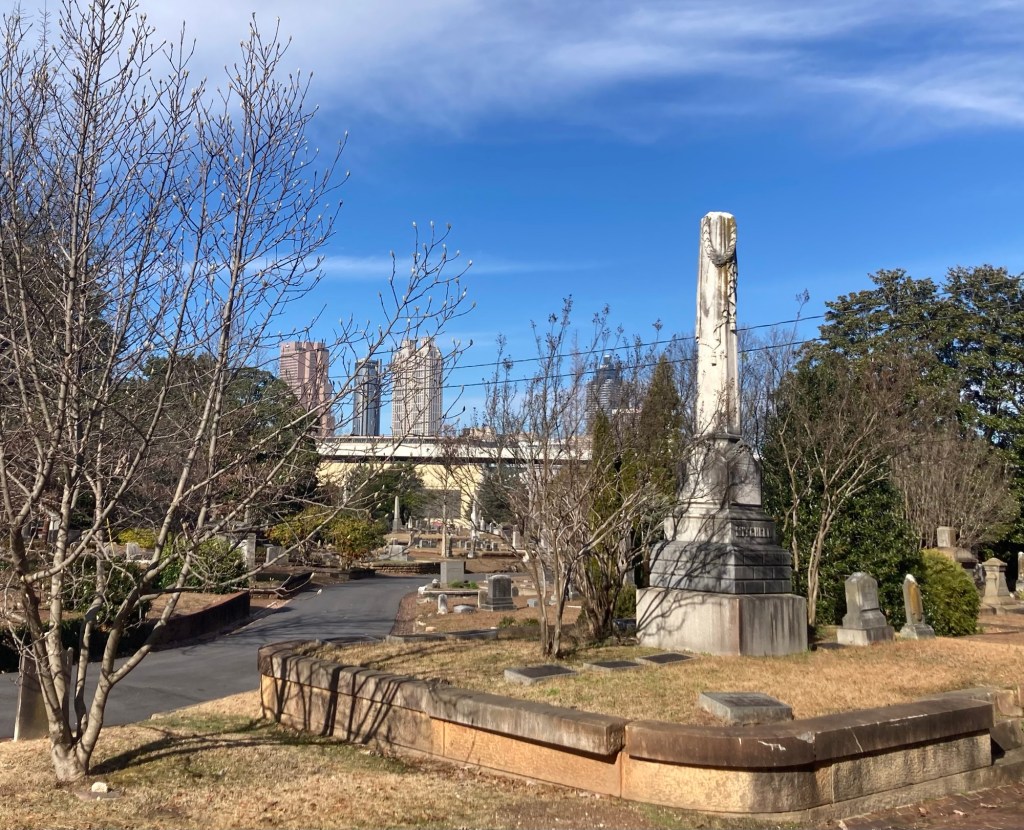
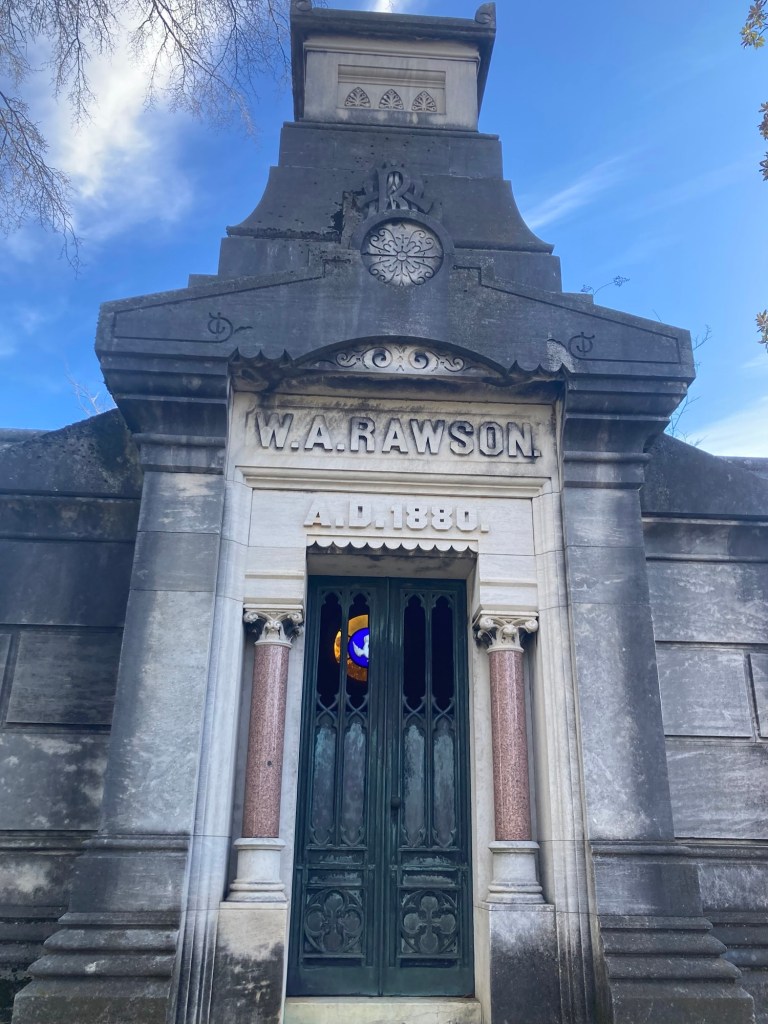
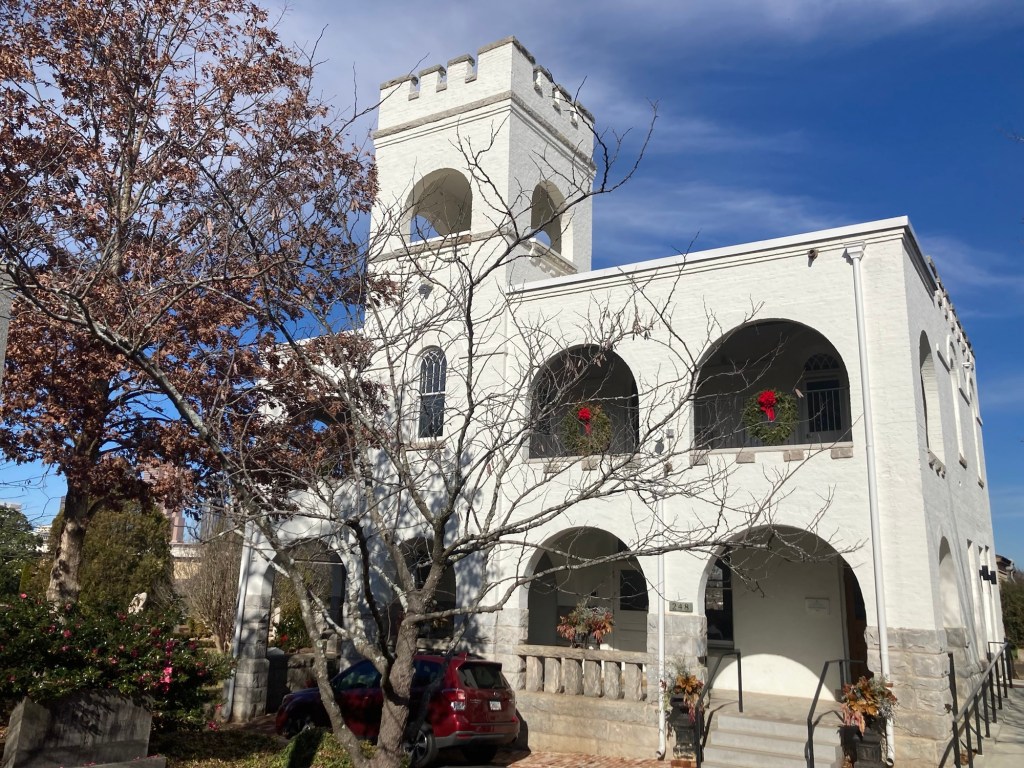
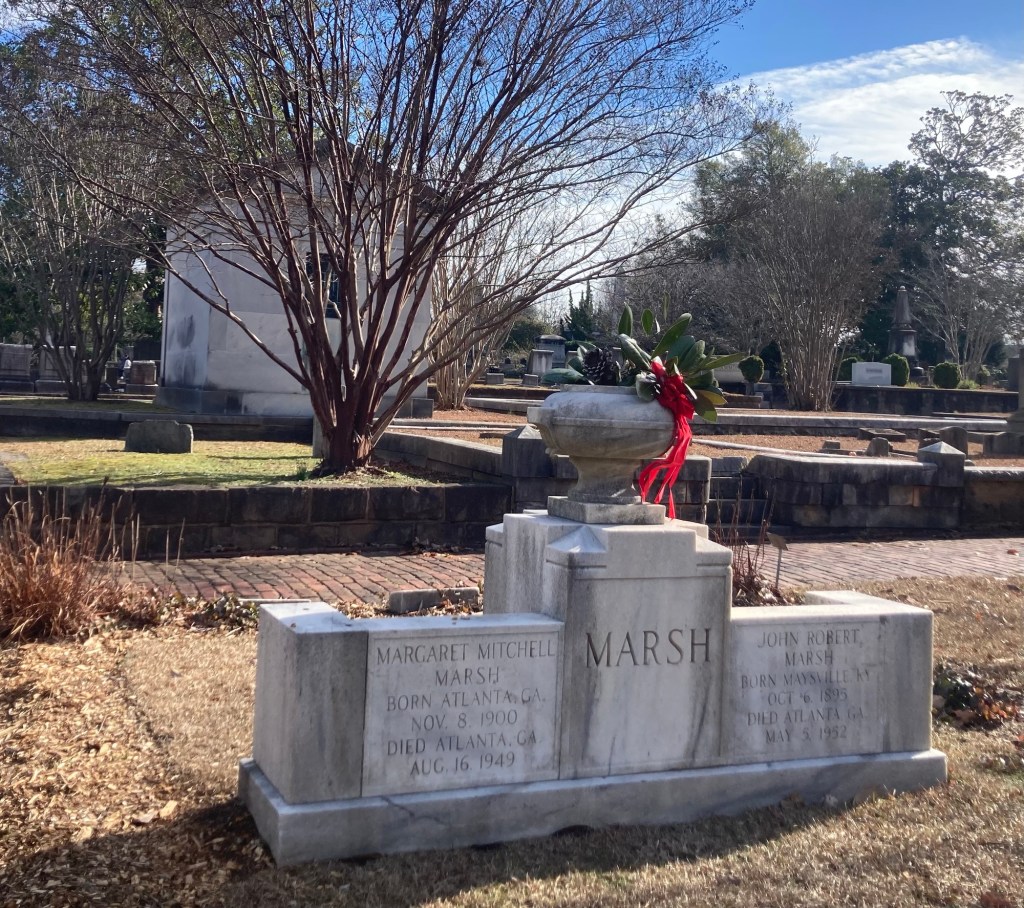
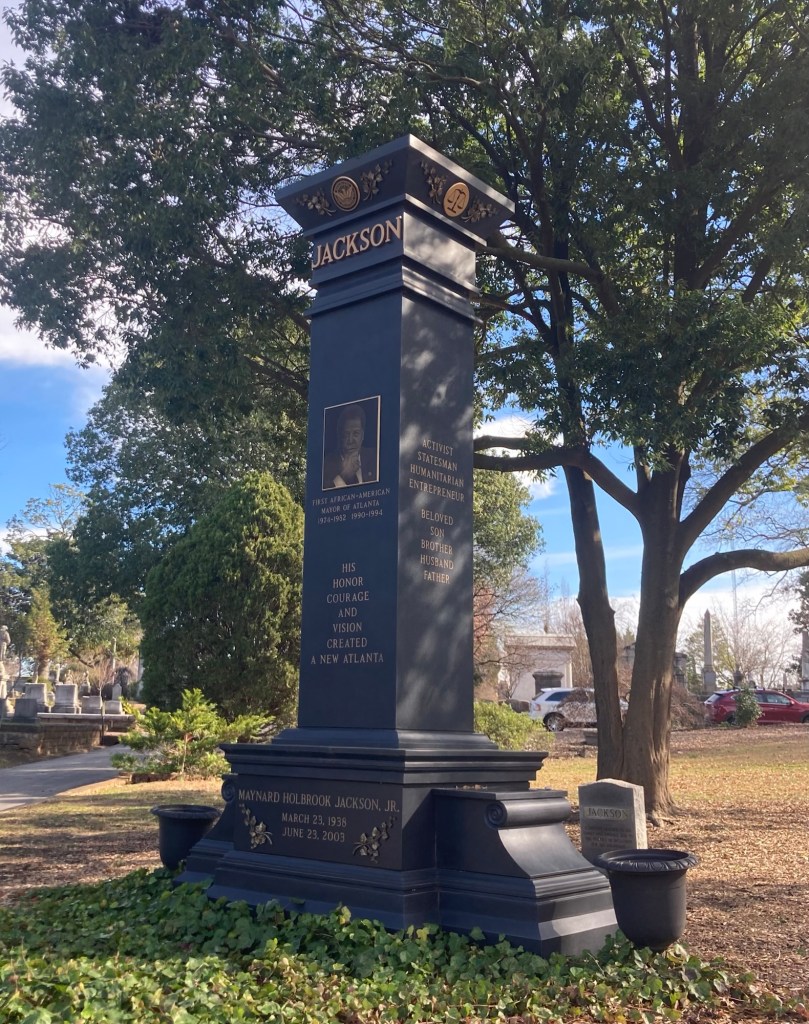
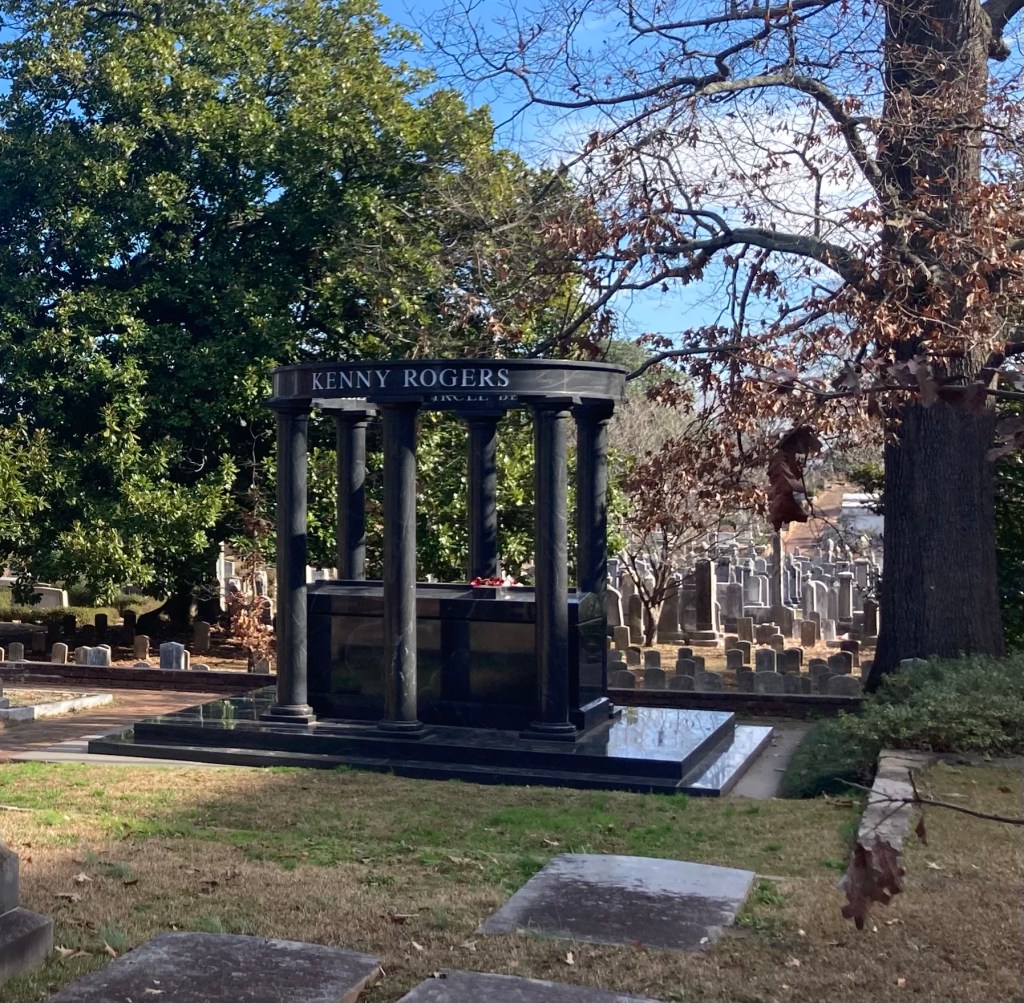
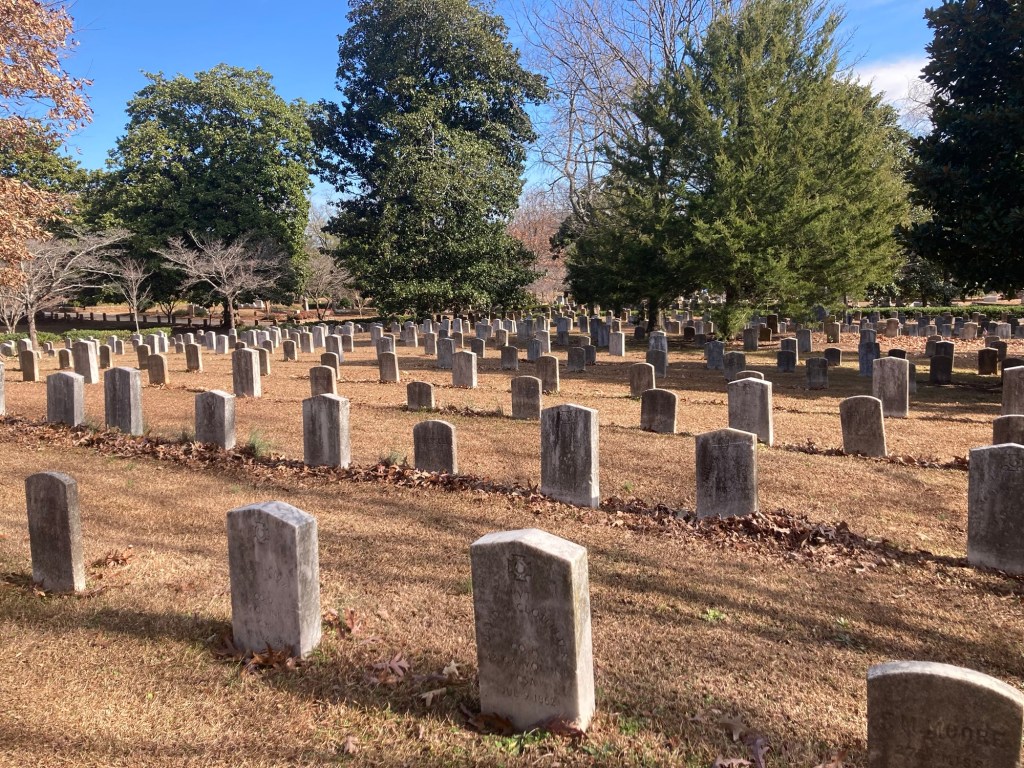
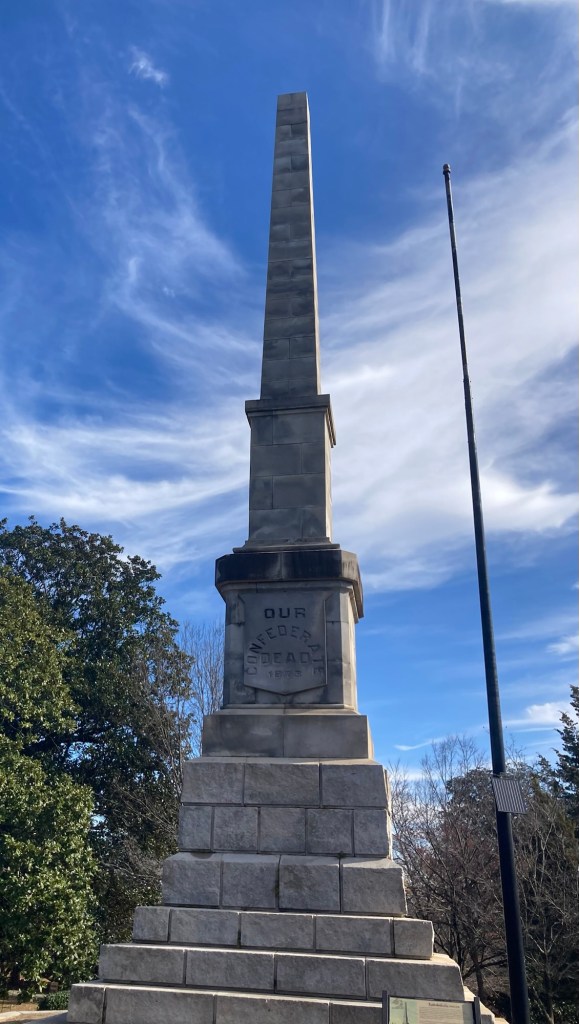
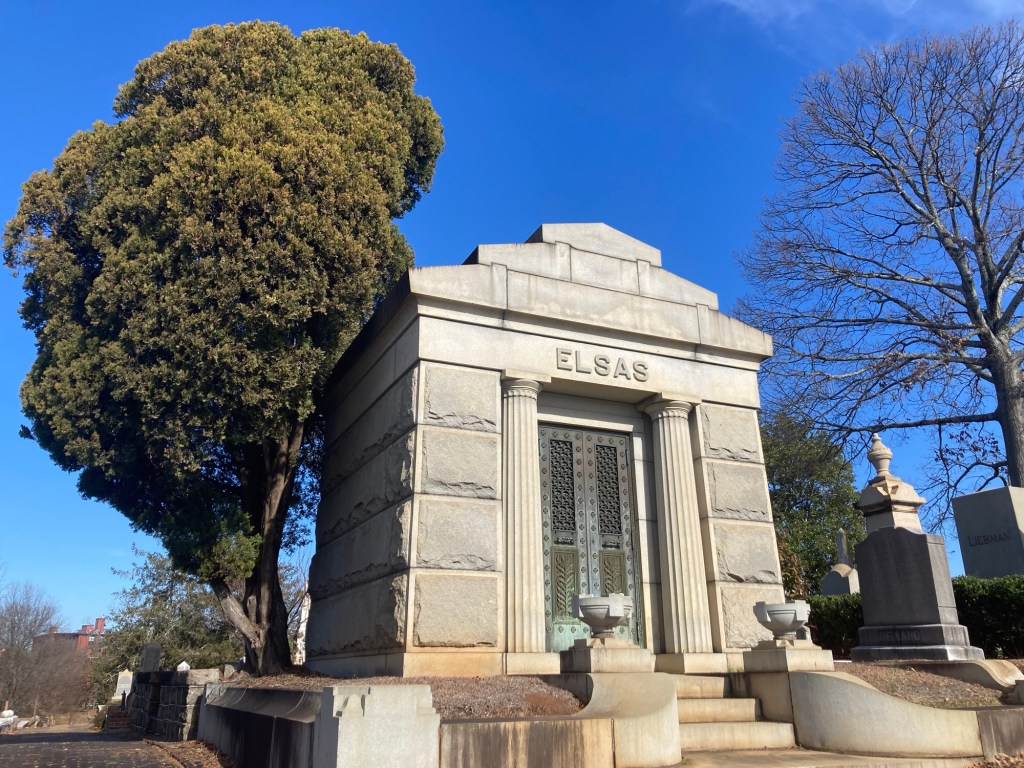
Walking on an overpass with a good view towards downtownThe MLK Branch Library with one of his quotesThe front gate of the cemeterySome of the headstones at the entrance to the cemetery An impressive looking mausoleum DittoLooking across the cemetery towards downtown This mausoleum houses Atlanta Mayor Charles Collier (1848-1900), his daughter, Julia, and her husband Julian Harris, who was the son of “Uncle Remus” author Joel Chandler Harris. Julia and Julian also owned the Columbus Enquirer-Sun that won the 1926 Pulitzer Prize for journalism.The bell tower, which originally housed a receiving vault for caskets and an office for the Sexton, who oversaw the cemetery. It currently houses the Visitors Center.The burial spot of Margaret Mitchell (1900-1949), author of Gone with the Wind, and her husband John Robert Marsh.The black granite monument for Mayor Maynard Holbrook Jackson (1938-2003), Atlanta’s first African American mayor. He served 3 terms and was instrumental in bringing the 1996 Olympics to Atlanta and expanding the airport, which now bears his name.The grave of Bobby Jones (1902-1971), considered the greatest amateur golfer of all time. In 1930, after winning golf’s Grand Slam, he retired. He co-designed Augusta National golf course.The monument for Kenny Rogers, one of the bestselling musicians of all time. He had 24 number 1 hits and 3 Grammy awards.Part of the confederate burial grounds in the cemetery The obelisk to the confederate deadThis mausoleum is home to Jacob Elsas (1842-1932), whose family owned the Fulton Bag and Cotton Mills until the 1960s. The former mill is now a residential community in Cabbagetown (see below).
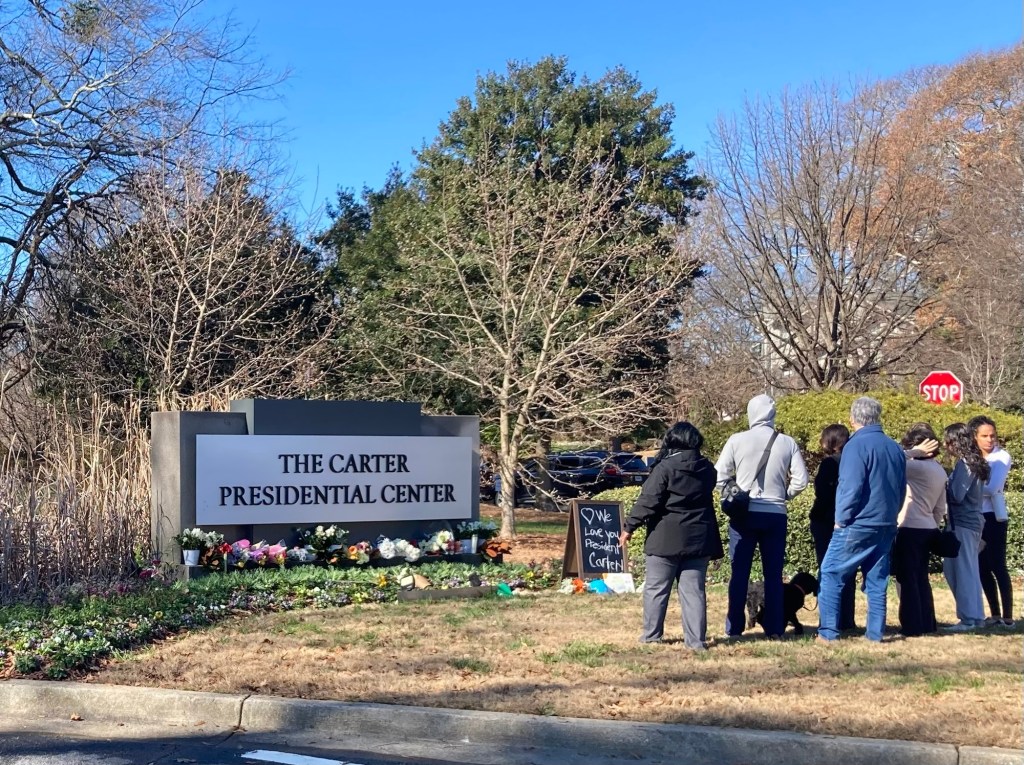
Last night, we learned that former President Jimmy Carter, from Plains, Georgia, had passed away at age 100. The last time we housesat in Atlanta, we visited the Carter Center and Presidential Museum here in Atlanta. I thought I would walk by there on my way back to the house.
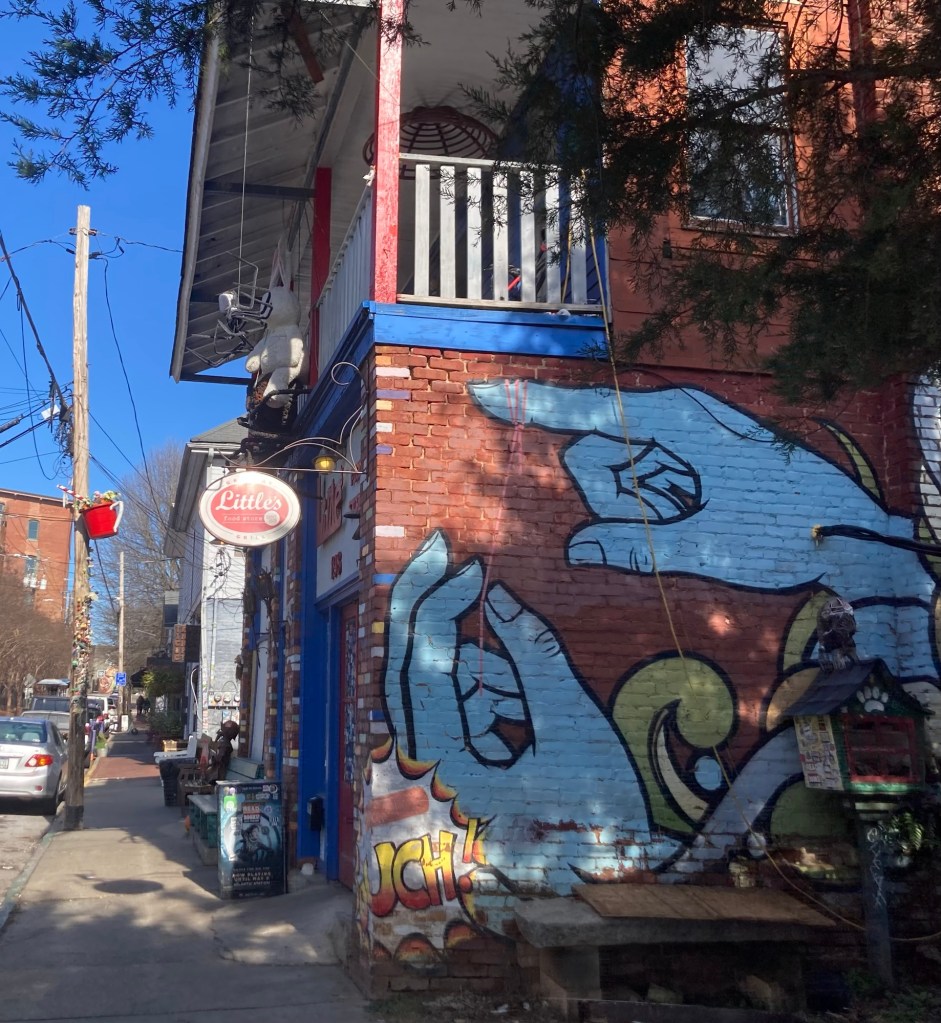
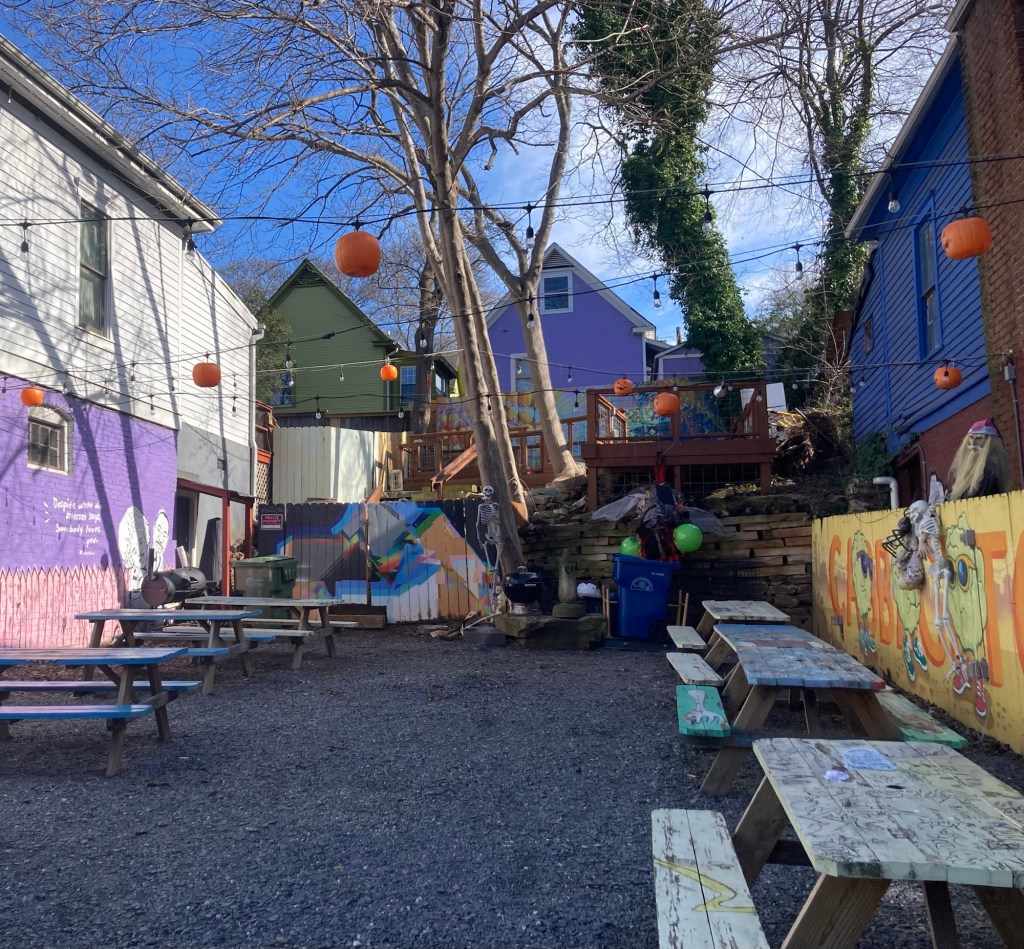
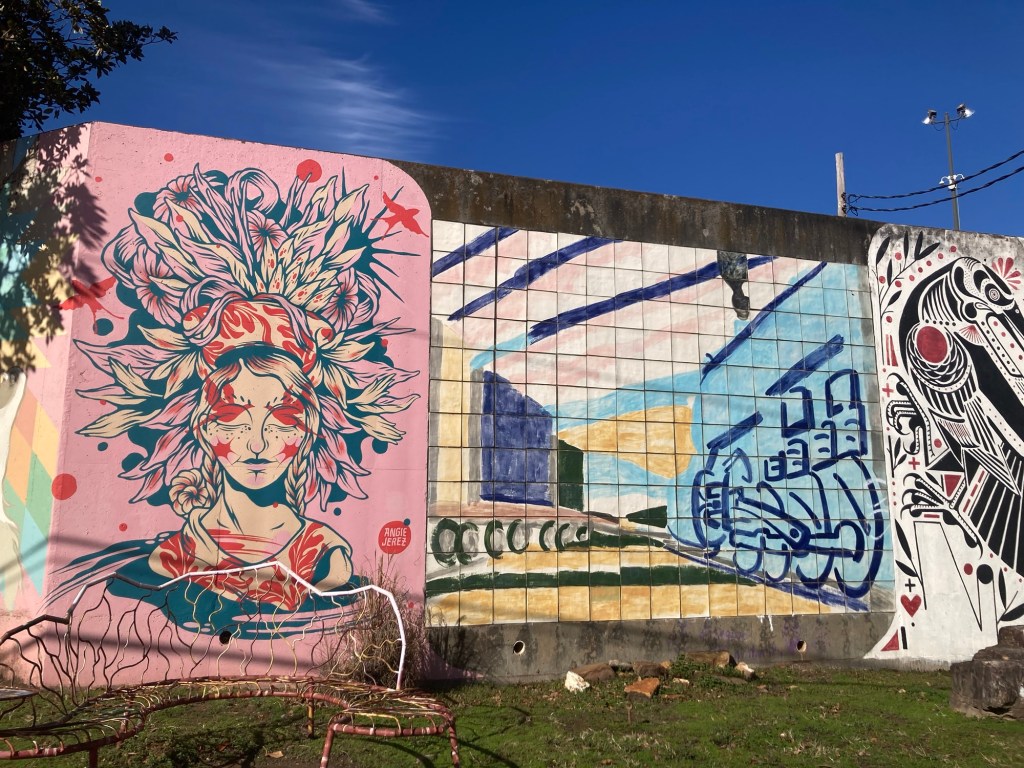
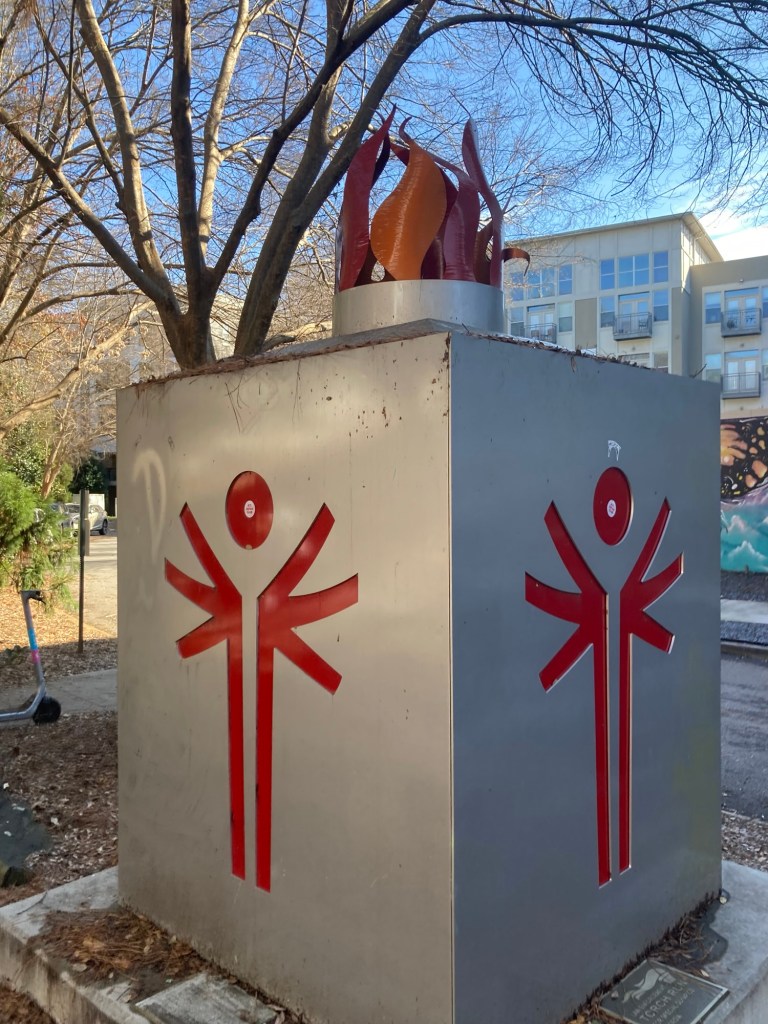
I first walked through the very funky Cabbagetown after leaving the cemetery.Another eclectic neighborhood dining spotMurals on a wallBefore I got to the Carter Center, I walked along the Beltline Trail. This is a monument to the Law Enforcement Torch Run for Special Olympics.Some of the people and offerings left in tribute to our 39th President, who was an honorable President and even better man and humanitarian.
This is our 4th repeat housesit of 2024. The other three were in Canada. This is the 3rd time Bob has sat at this house and my second. It is a lovely home in the Midtown area of Atlanta, and we are completely taken with the cat, home, and the neighborhood.
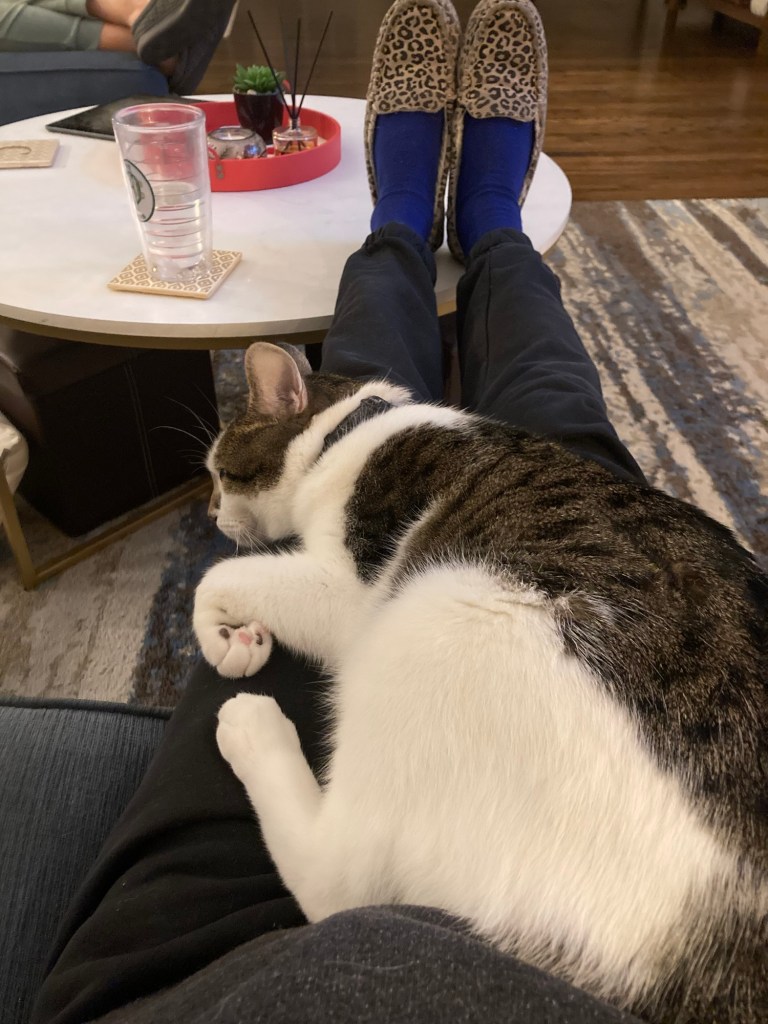
Jax we enjoy because of his fun personality and occasional lap/leg sitting.
Jax on chairJax on legs on chair. Usually, he prefers Bob’s legs.
The home is super comfy with all the kitchen utensils you could want, and the neighborhood may be the best ever in terms of walkability. There are so many stores, grocery stores, and restaurants within a 5 to 30 minute walk. It is definitely something that we would love to have whenever we land again. Then, there is the nearby Beltline Trail for running, biking, etc., and the city is sufficiently sidewalked to make longer walks possible.
We have explored two neighborhood retail/restaurant areas, and today, we went back to checkout the vibrant Ponce Market, about 15 minutes from the house.
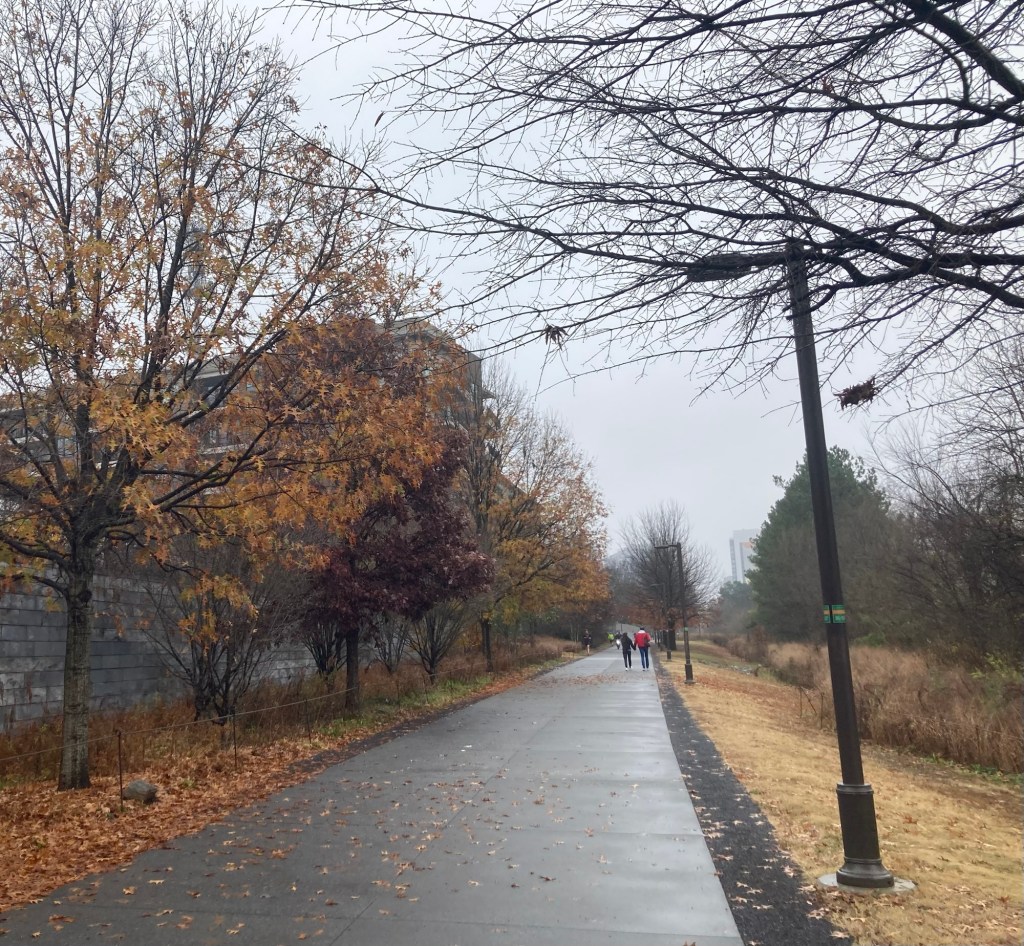
Heading down the 22 mile loop Beltline Trail to the Ponce Market on a cloudy/misty day.Some bike decor along the trail with the Ponce Market in the background
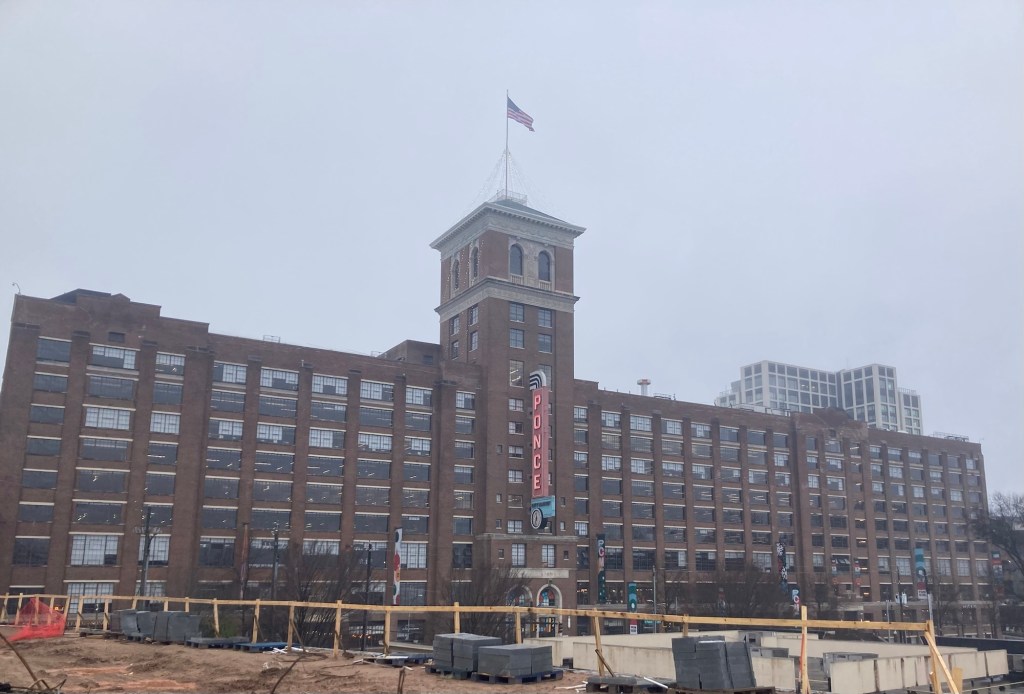
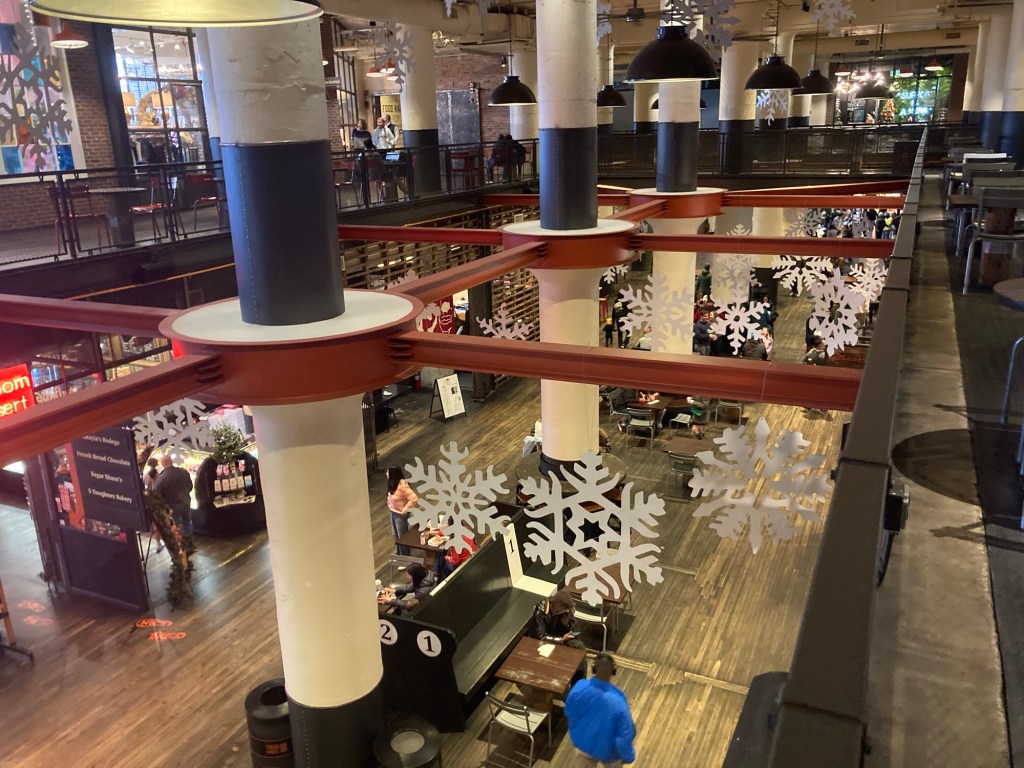
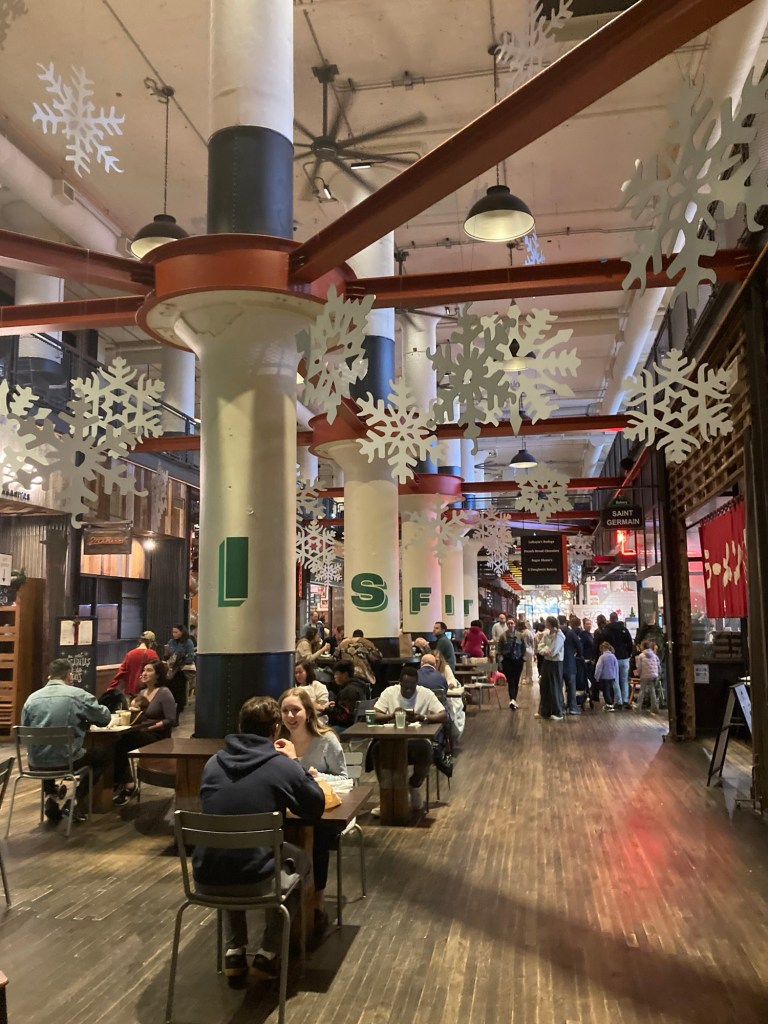
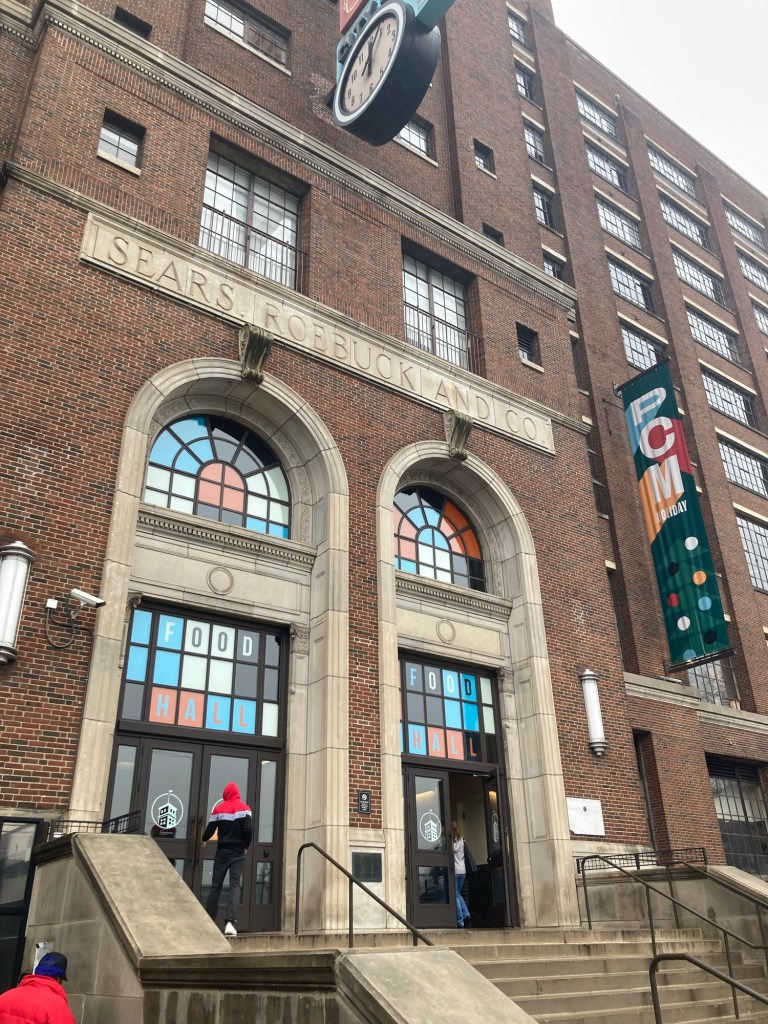
The building that now contains the Ponce City Market was built in 1926 as a retail store, warehouse, and regional offices for Sears, Roebuck, and Company. It was renovated in 2011 as a space for retail, restaurants, and pop-up shops as well as a rooftop deck with a mini golf course, carnival games, food and drinks. Due to the weather, we stayed inside today. There is also apartments and workspace in the building.
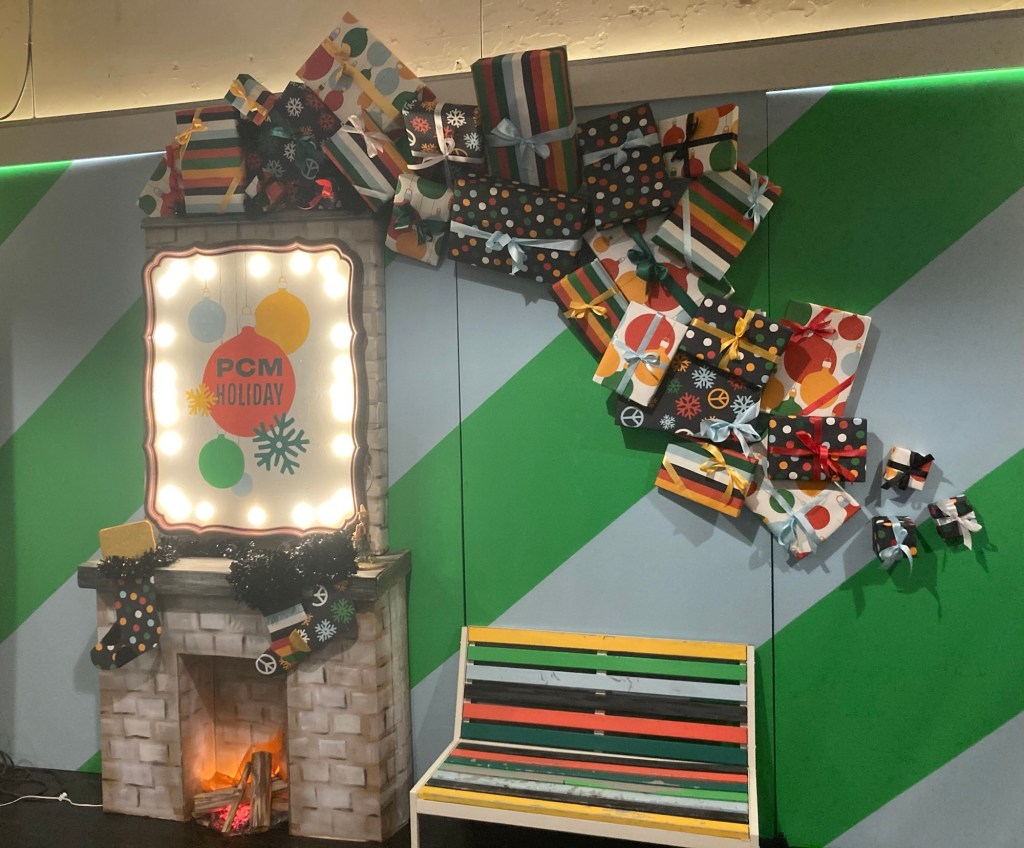
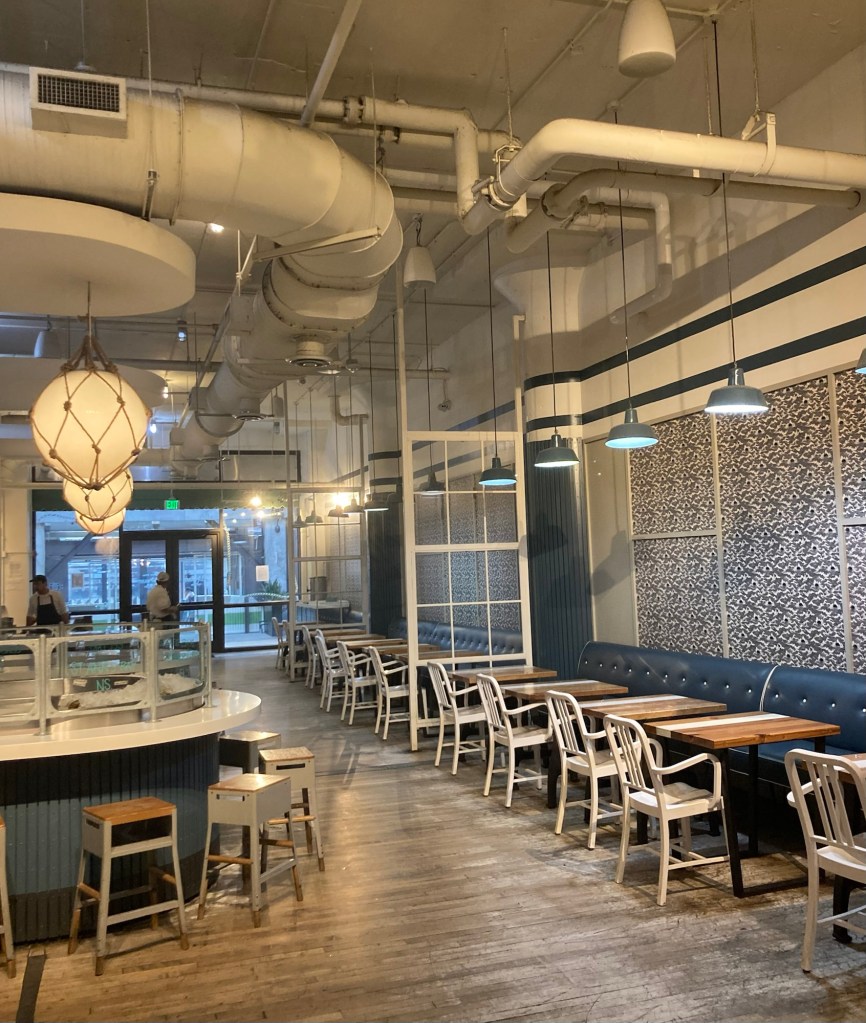
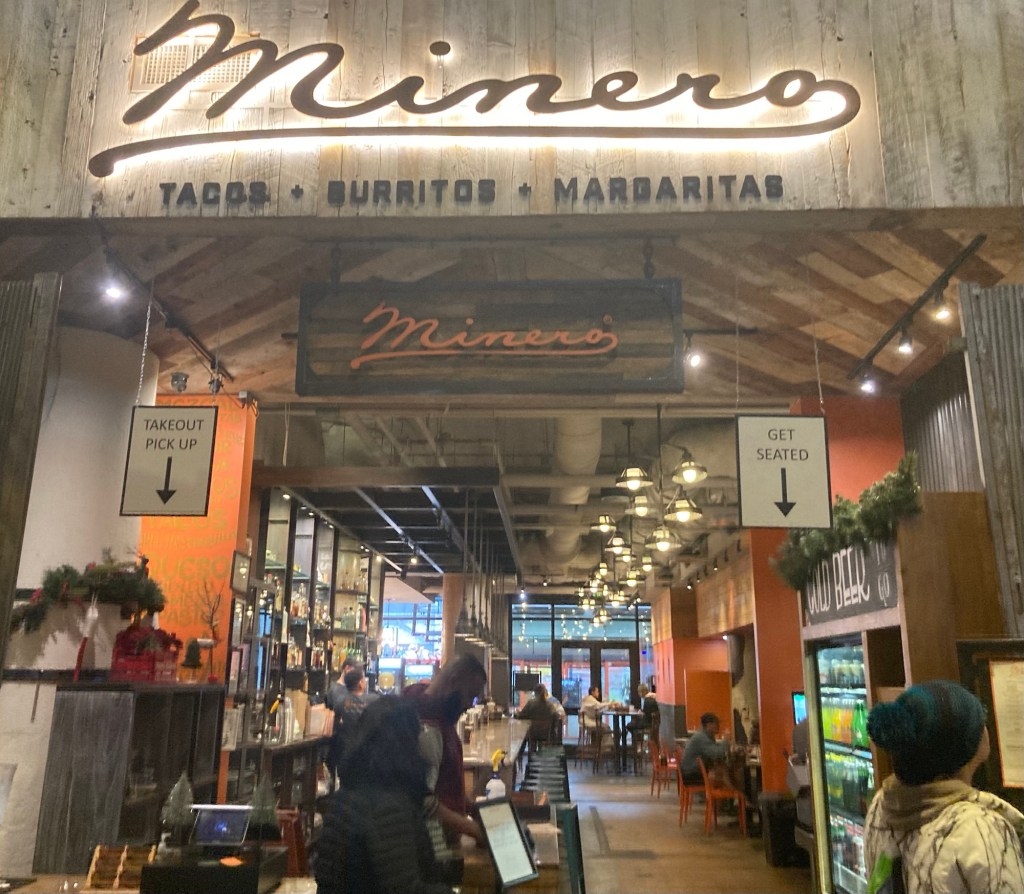
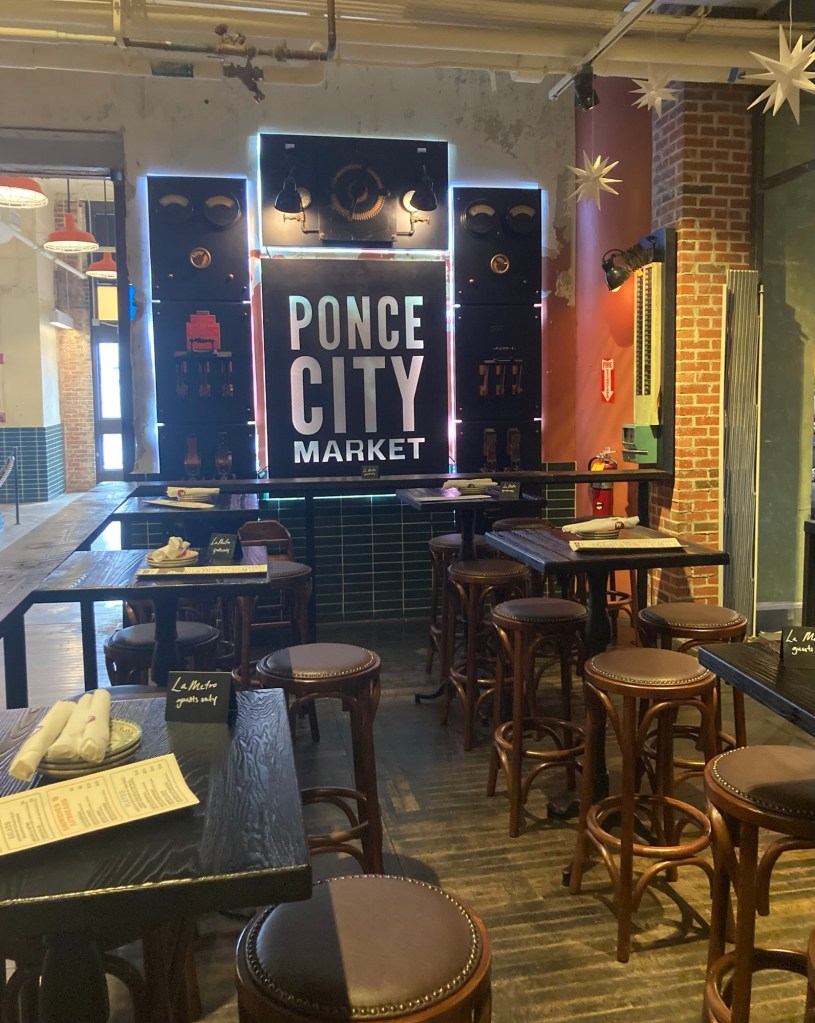
The market as viewed from the Beltline TrailMost of the retail and restaurants are on two floors. Looking down on the lower floor from above.A holiday selfie spotW.H. Stiles Fish Camp restaurant A spiral staircase up advertising some of the stores aboveAnother restaurant, we were there between 11 am and noon, so things were just starting to pick upFun signageOne of the establishments you could frequent if you followed the sign aboveThe very cute Atrium restaurant Fun historical decorThe seating area for La Metro, a Spanish tapas restaurant we hope to visit before we leaveThe lower floor of the market A closer view of one of the entrances
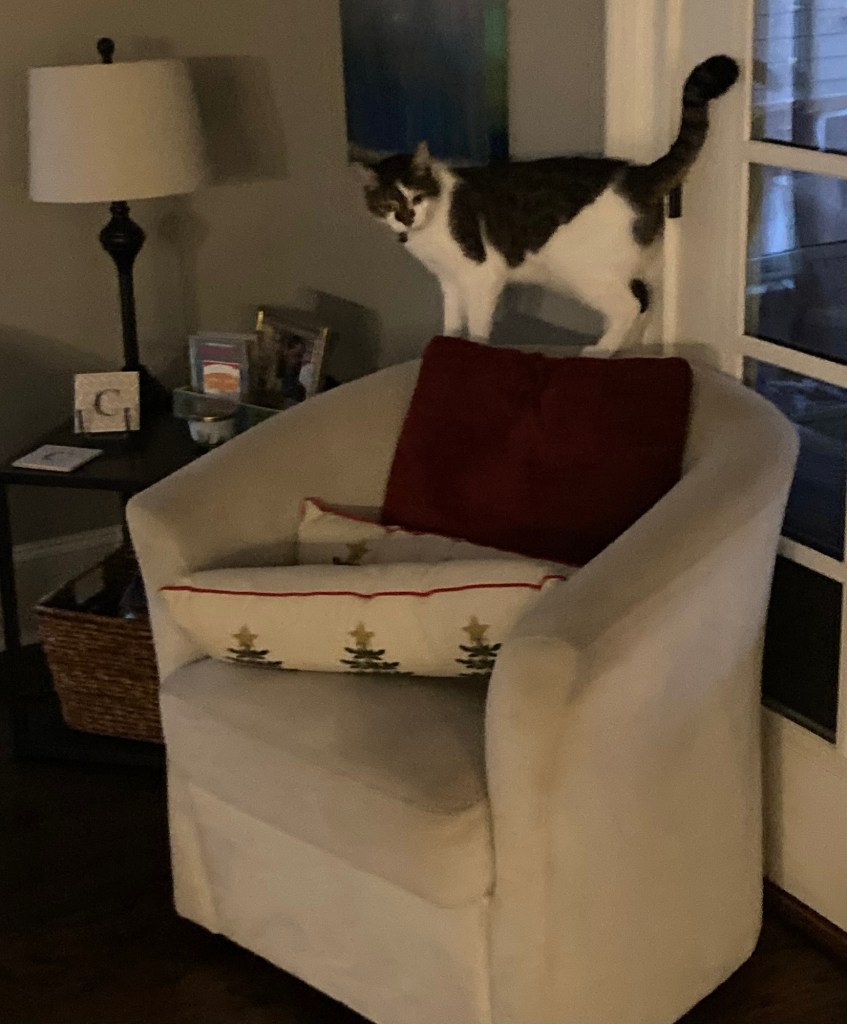
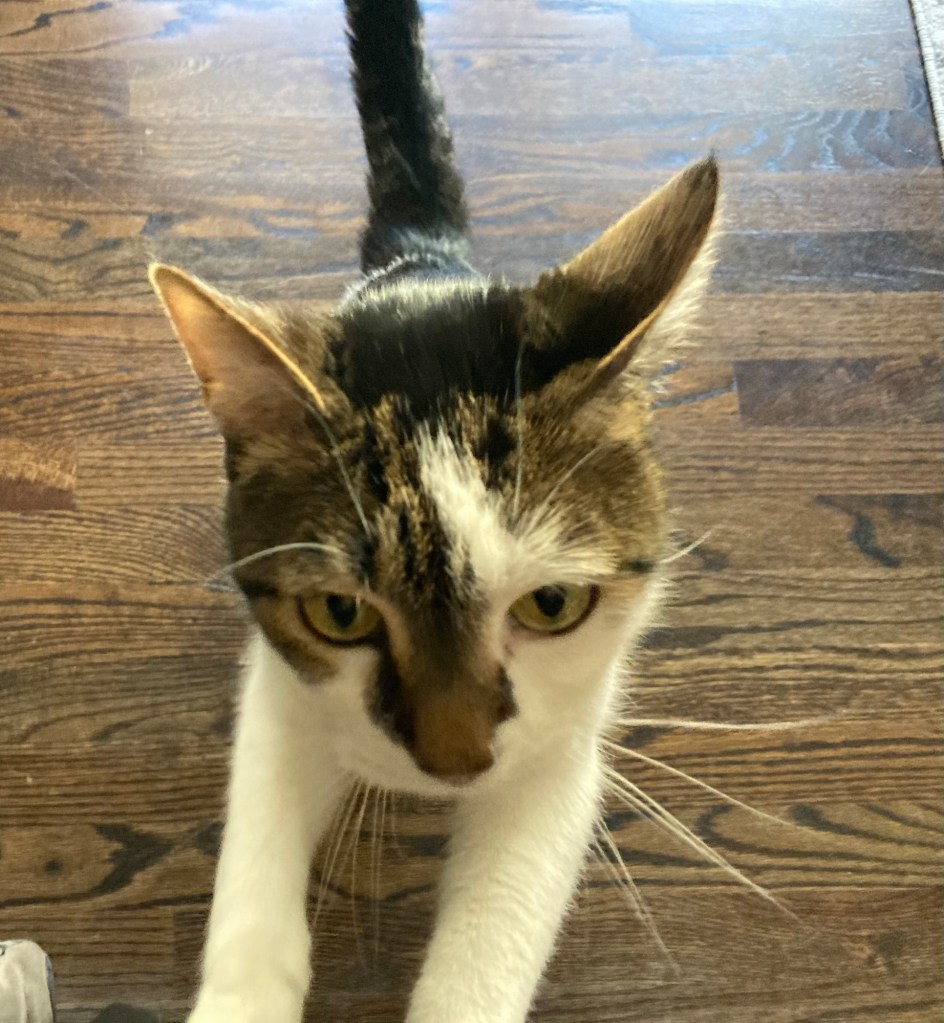
First, Jax the cat has finally shown himself and can be quite the talker. He typically stays on the upper level (family bedrooms), but does come down to the main level when he hears us go into the room where his food is kept and/or if he’s in the mood for some petting or a short lap sit. He’s a cutie.
Jax reaching up to the chair I was sitting on for a pet and a head rub
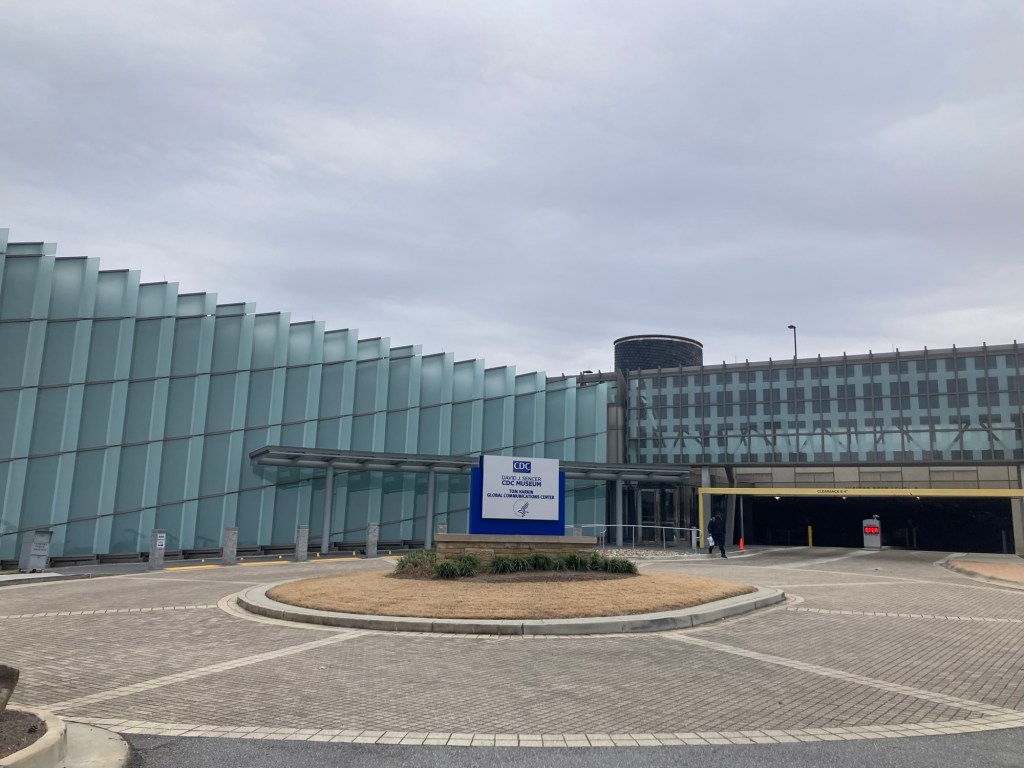
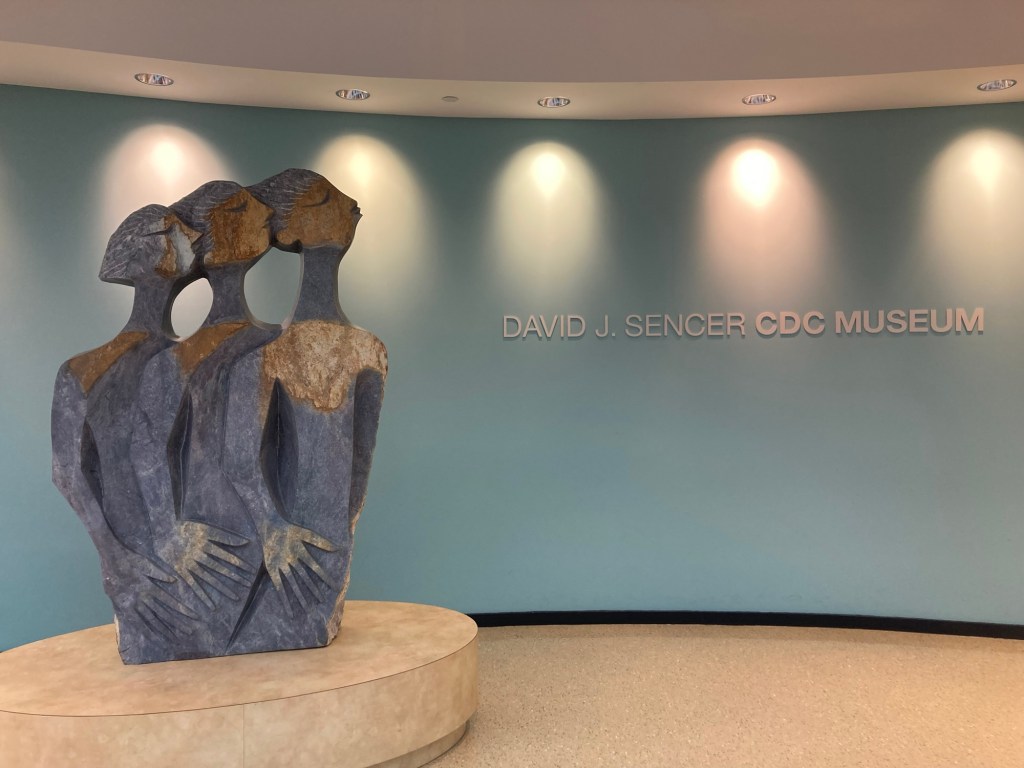
After a chill couple of days for Christmas, Bob and I headed out today to visit the Centers for Disease Control (CDC) Museum on its main campus on Emory University. It was about an hour walk from the house. A couple of highlights from the walk.
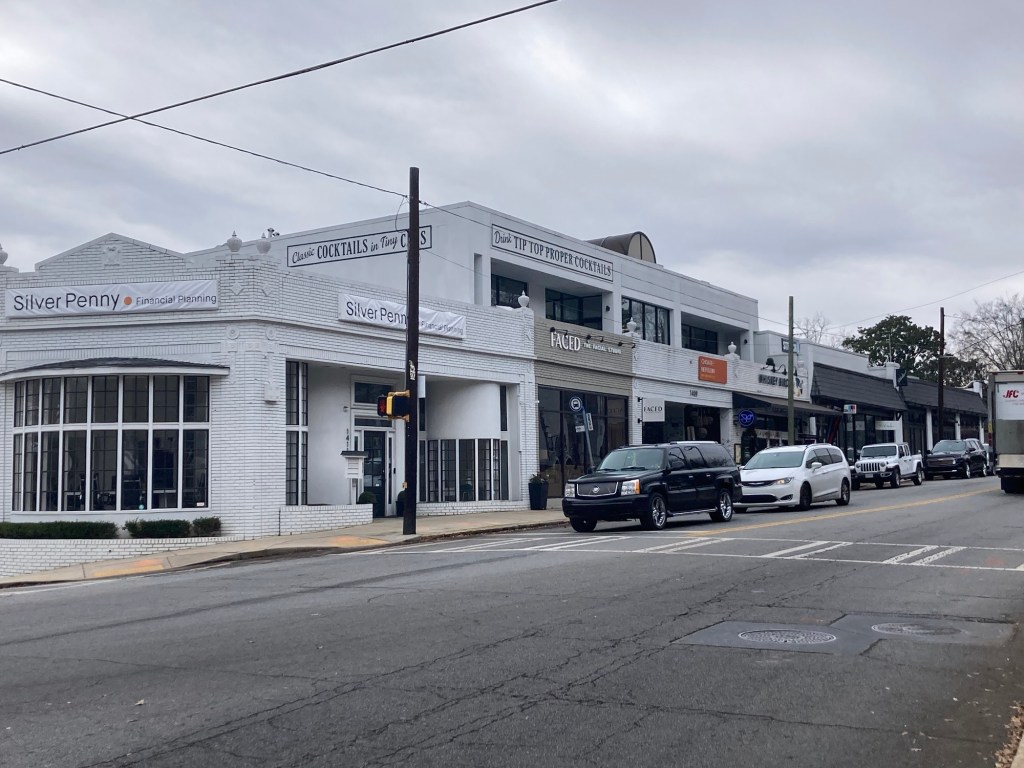
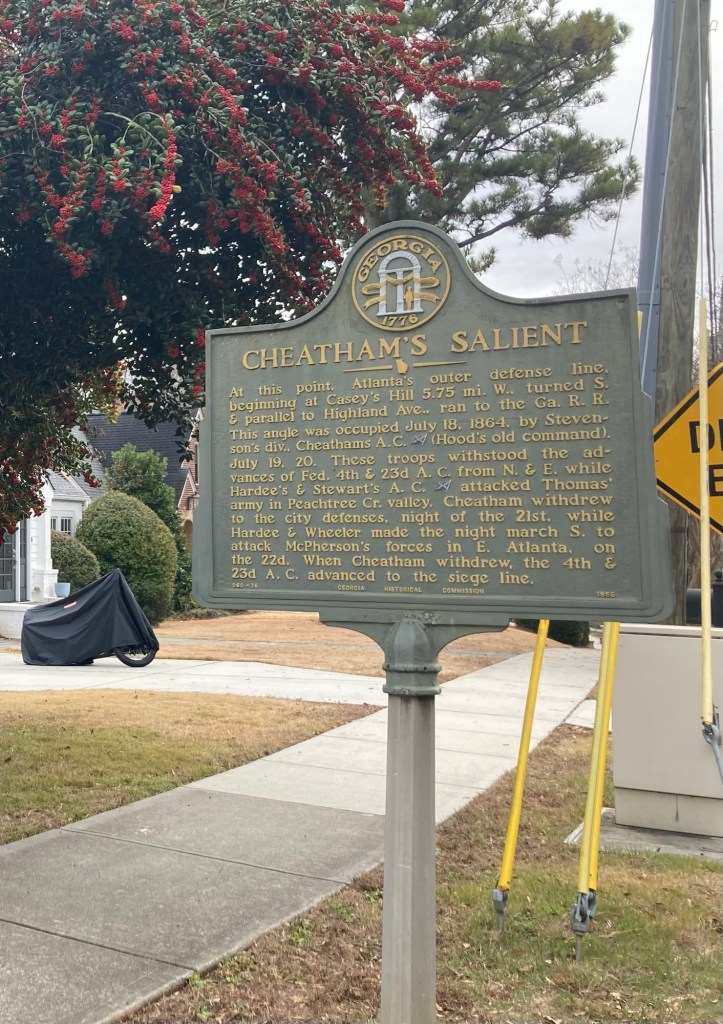
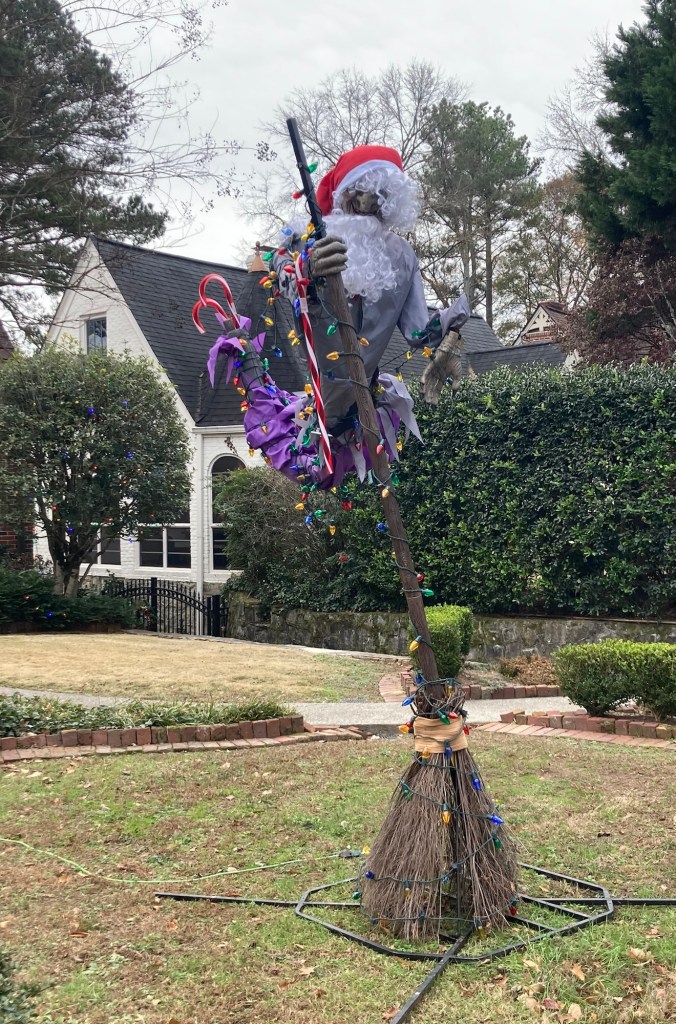
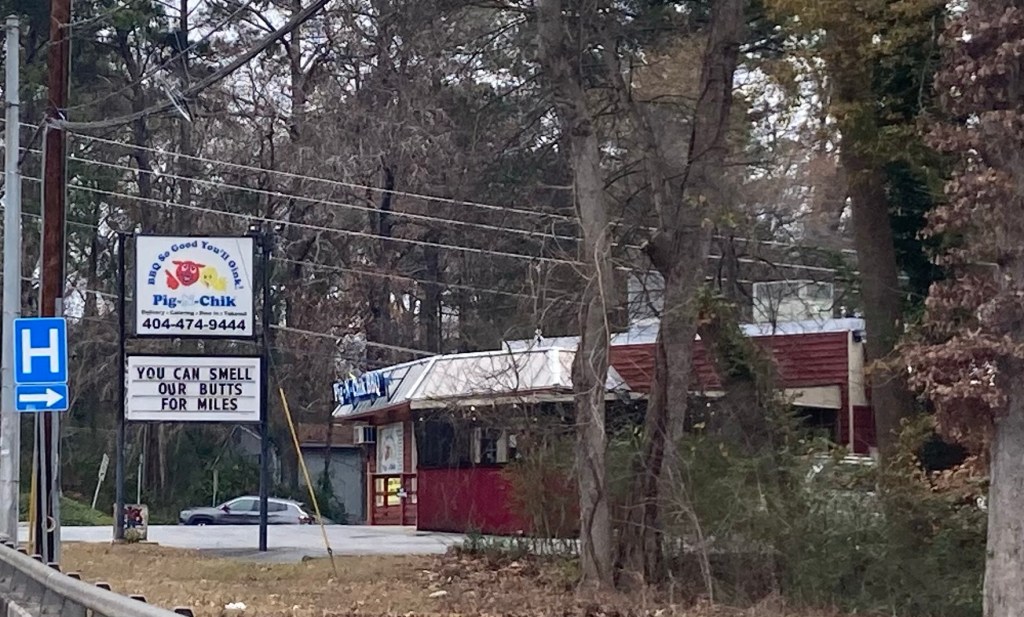
One of the small, neighborhood shopping areas near where we’re staying. A marker to a Civil War battle One of the more unique Christmas yard decorations in the lovely neighborhoods we walked throughAnd then a restaurant advertisement that caught our eye
The CDC Museum is free and open to the public, although you must show a government-issued ID or a passport, if you are not from the US. You also go through security.
The museum building The lobby. The sculpture is “The Messengers” by Lameck Bonjisi.
The museum has permanent exhibits on the history of the CDC, the different types of work it undertakes, and then a rotating exhibit. The current rotating exhibit was on Health as a Human Right and Health Disparities. The exhibits are on three levels.
The introduction to the exhibit space with rotating information displayed on the monitors
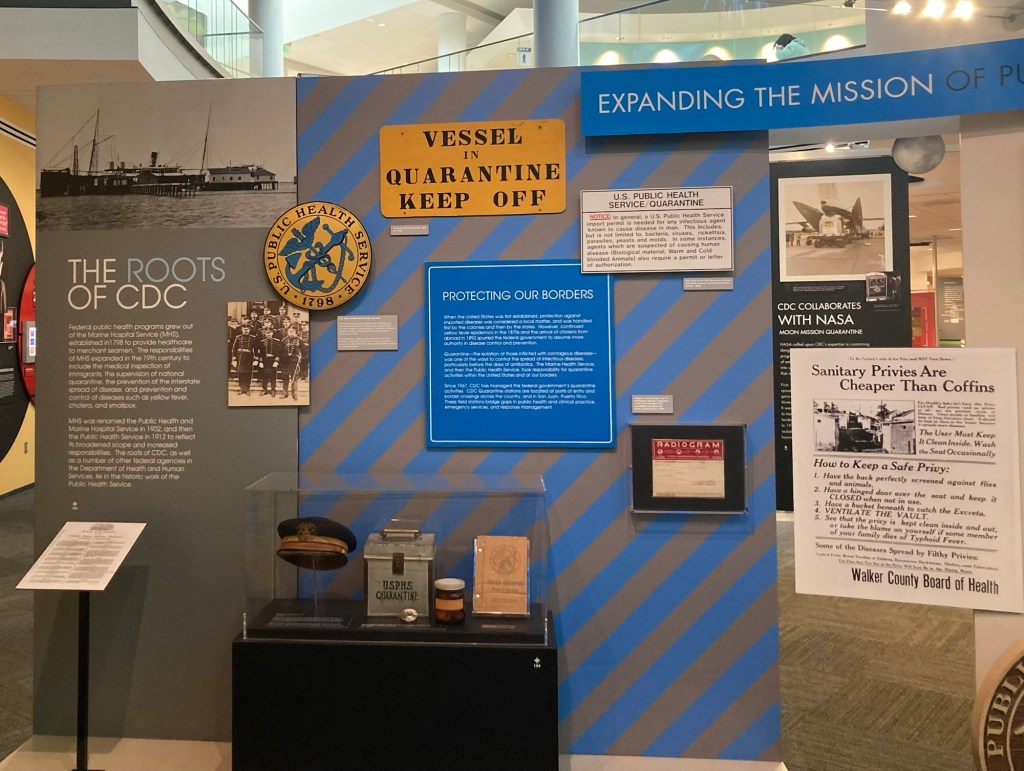
According to the exhibits, federal public health programs in the US grew out of the Marine Hospital Service established in 1798 to provide healthcare to merchant seamen. The MHS responsibilities expanded in the 19th century to include the medical inspection of immigrants, the prevention of the interstate spread of disease, and prevention and control of diseases. It was renamed the Public Health Service in 1912.
The CDC itself was established after WWII and opened on July 1, 1946. It is currently on a 45 acre campus of Emory University and is one of 13 major operating components of the Department of Health and Human Services. It is one of the few government agencies with headquarters outside of Washington, DC. Besides this main campus, it has 10 other major locations in the US and Puerto Rico, and its over 15,000 employees work in over 50 countries around the world. We generally hear about the agency during pandemics (Covid, AIDS, Ebola), but they do a lot to assess and improve the physical and environmental health of people around the world.
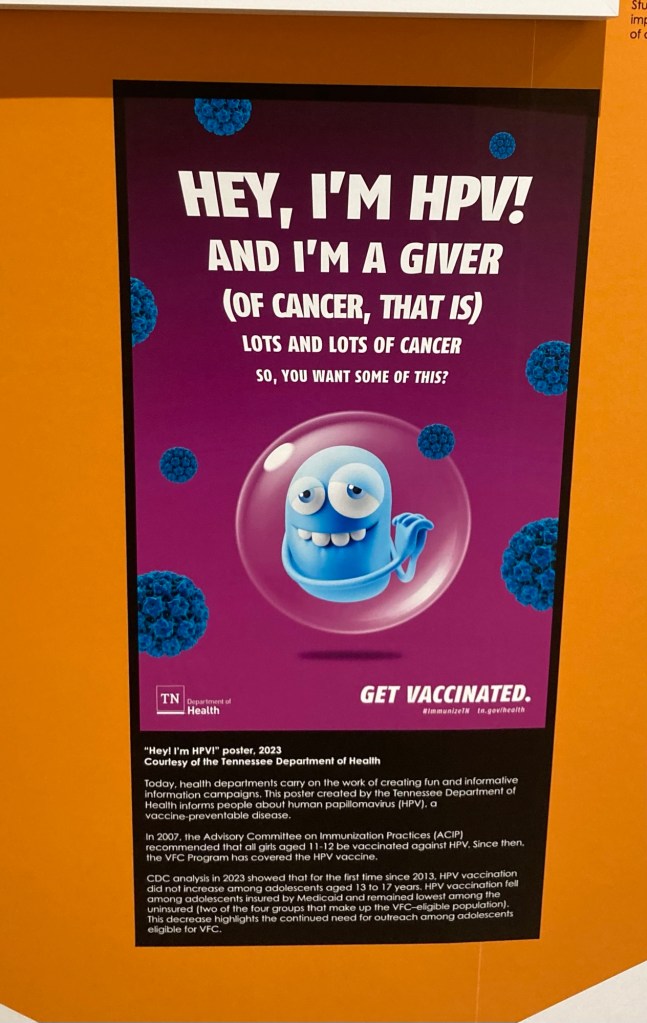
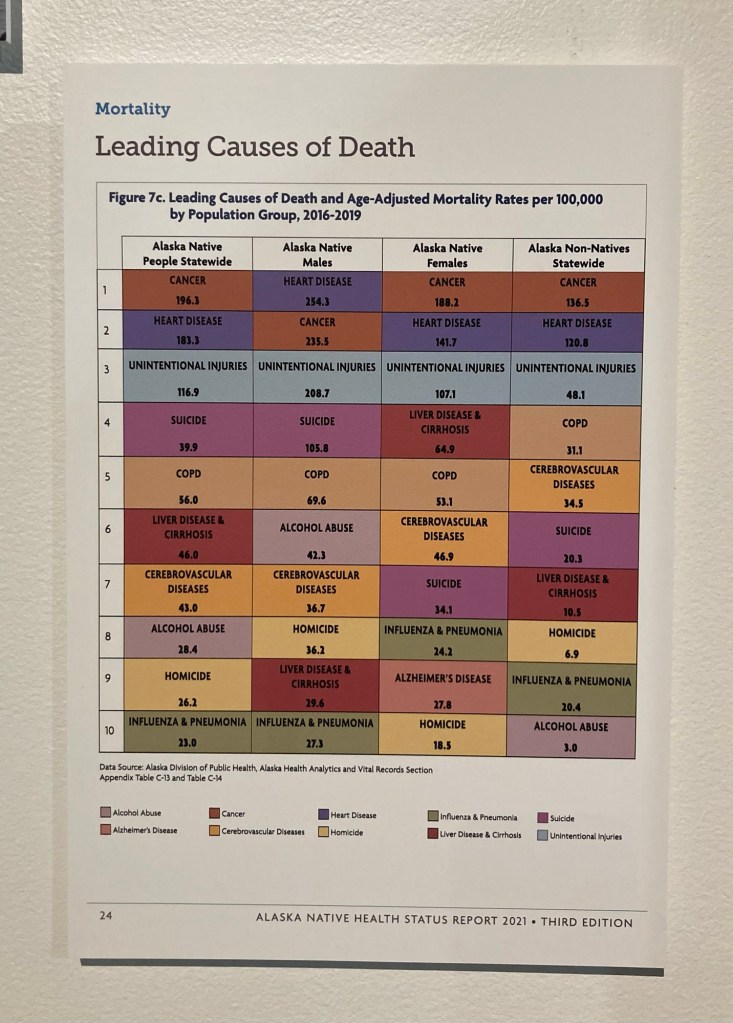
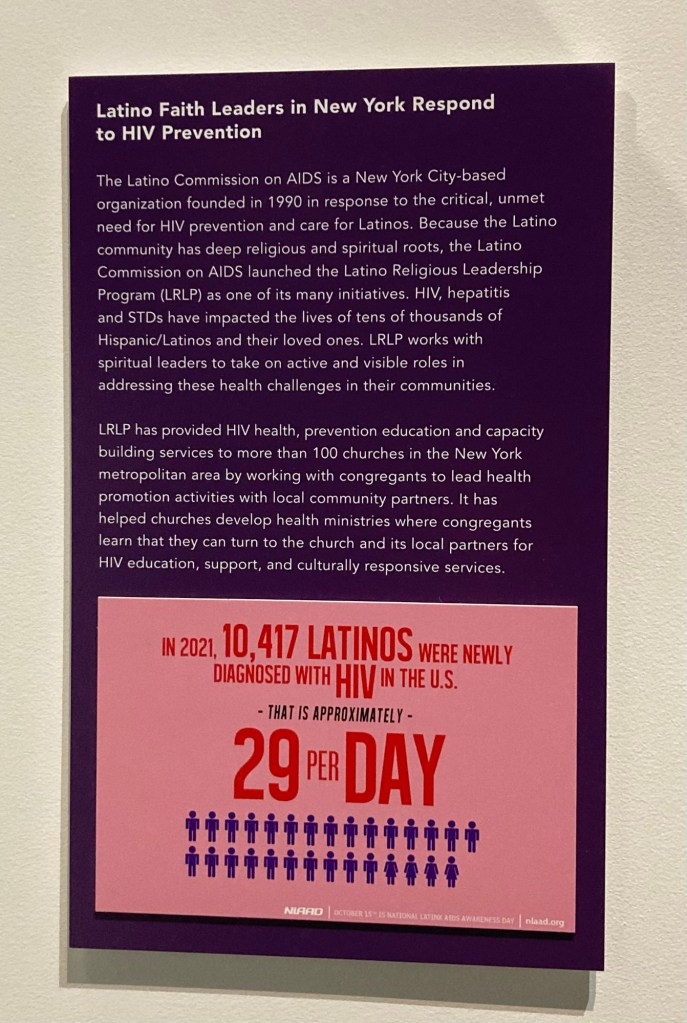
Below are some samples from the various exhibits.
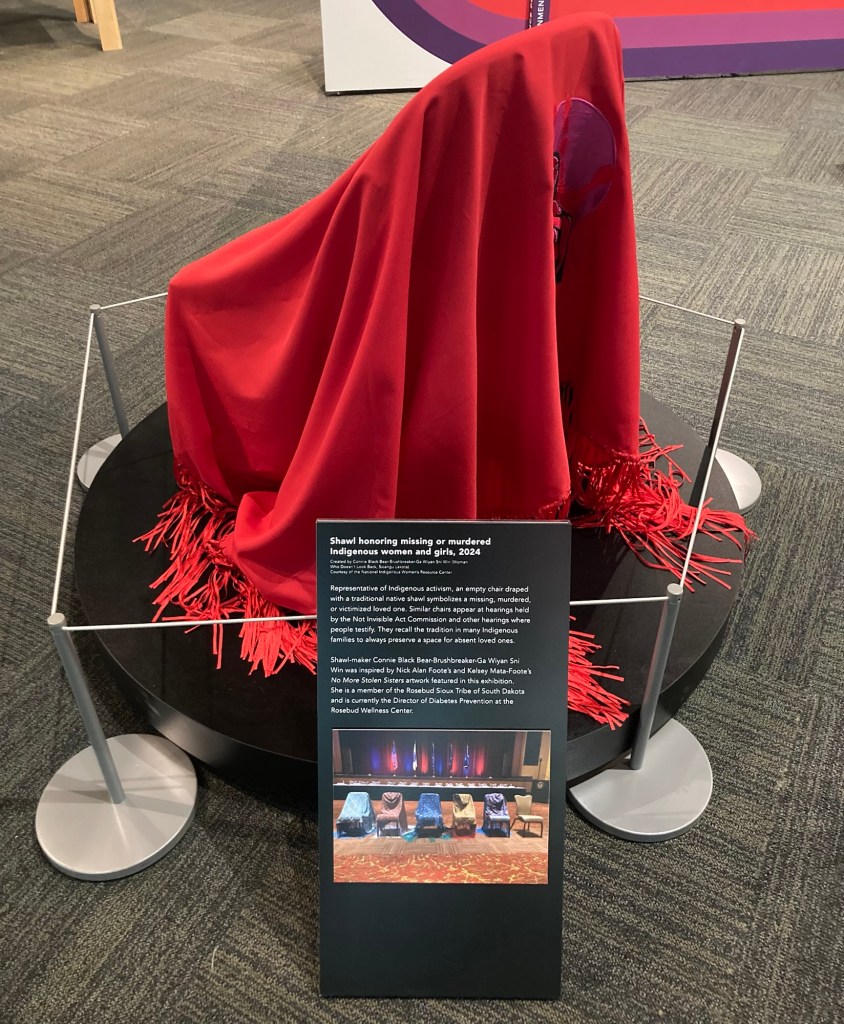
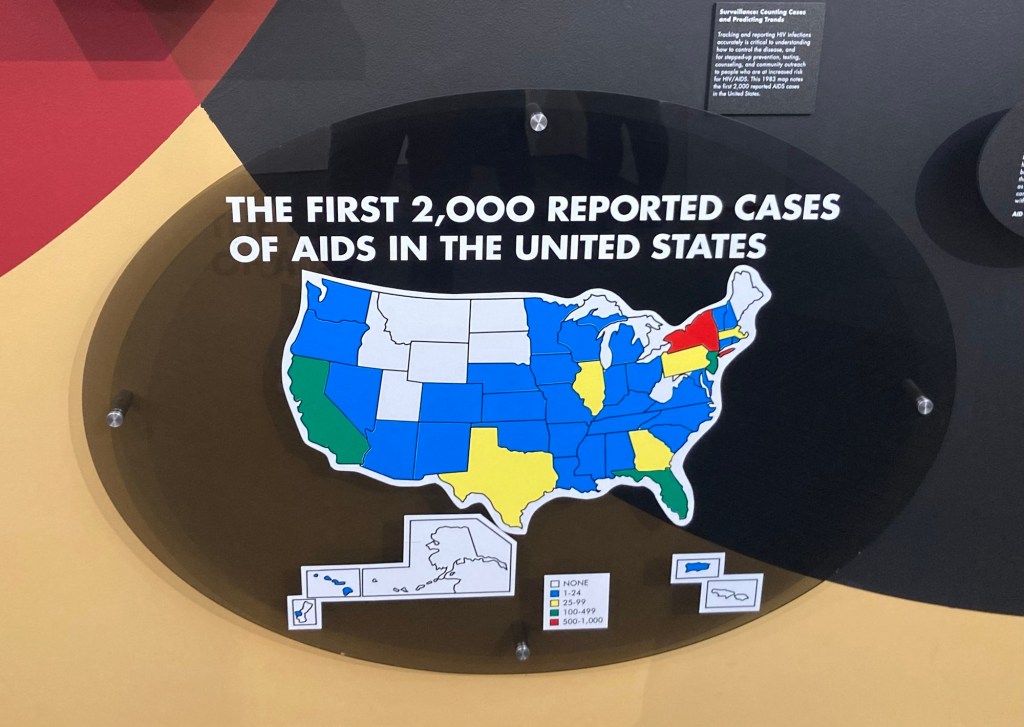
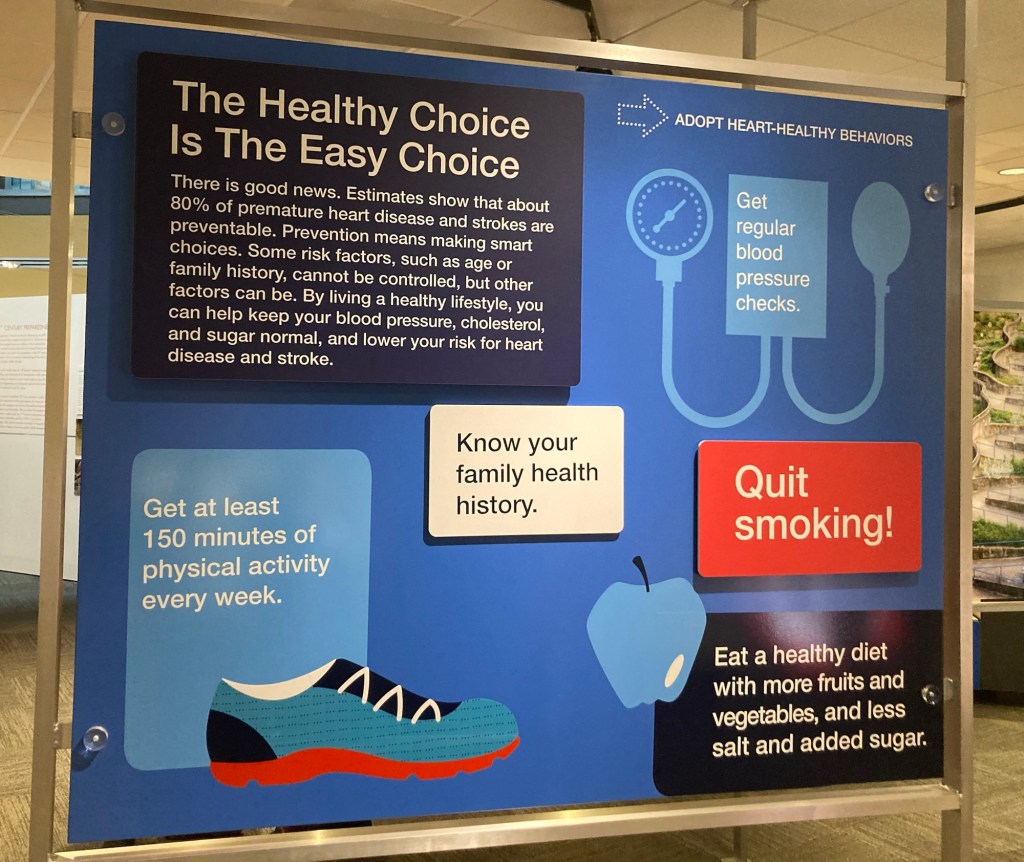
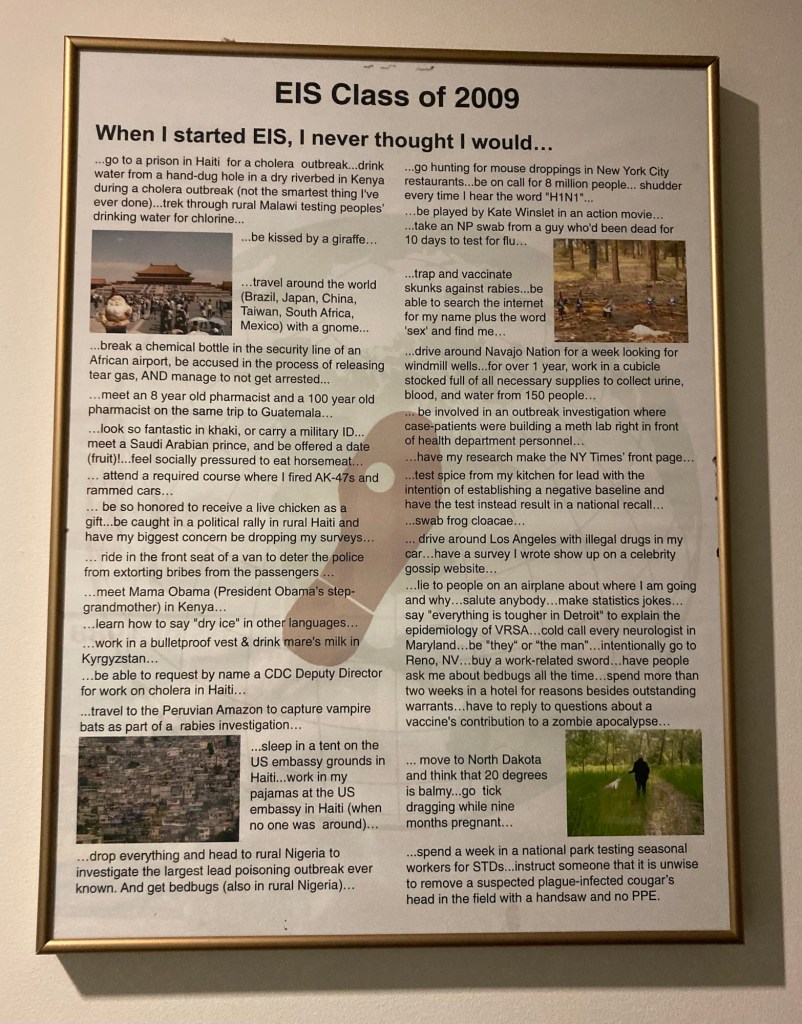
A sample poster to help increase vaccinations This was from the health inequality exhibit comparing disease rates between native and non-native populations in AlaskaA call to actionThis was sadly impactful— shawls covering empty chairs to indicate missing or murdered Indigenous women and girls Some of the historical information Part of the AIDS exhibit Good health remindersThis was part of an interesting exhibit on projects created by the different classes of the Epidemic Intelligence Service. The footprint is used to convey the amount of walking required in field investigations of diseases.
It was really impressive to see the variety of work that they do, and the number of emerging diseases and terrorism events they have had to respond to even since 1946 (polio, Zika, anthrax scares, 9/11, AIDS, Ebola, TB, etc.). They do not get nearly the recognition they deserve for helping address public health needs on an ongoing basis as well as these more major events.
The big assignment for the day was to drive from Greensboro, North Carolina, to Atlanta, Georgia, to start our new housesit. Mission accomplished. We had our relatively quick walk-through, as this is a repeat. We will be caring for a cat, Jax, who has not yet made his appearance, and a lovely home in midtown Atlanta. More to come on the new sit.
On the way, we stopped in Boiling Springs, North Carolina, to visit a former homeowner, neighbor/friend of home owner, and the adorable dog, Cooper. They all hold a special place in our hearts, and we had a great visit over some homemade goodies.
The seriously cute Cooper. Us with Cooper and Linda, his humanLinda and her neighbor/friend Maria
We also learned on the drive that our nephew and his wife will be having a daughter this June to make our great nephew a big brother.
After a couple of longish drives in a good amount of traffic, it feels great to have landed for a two week sit.



























 Peckish Travels