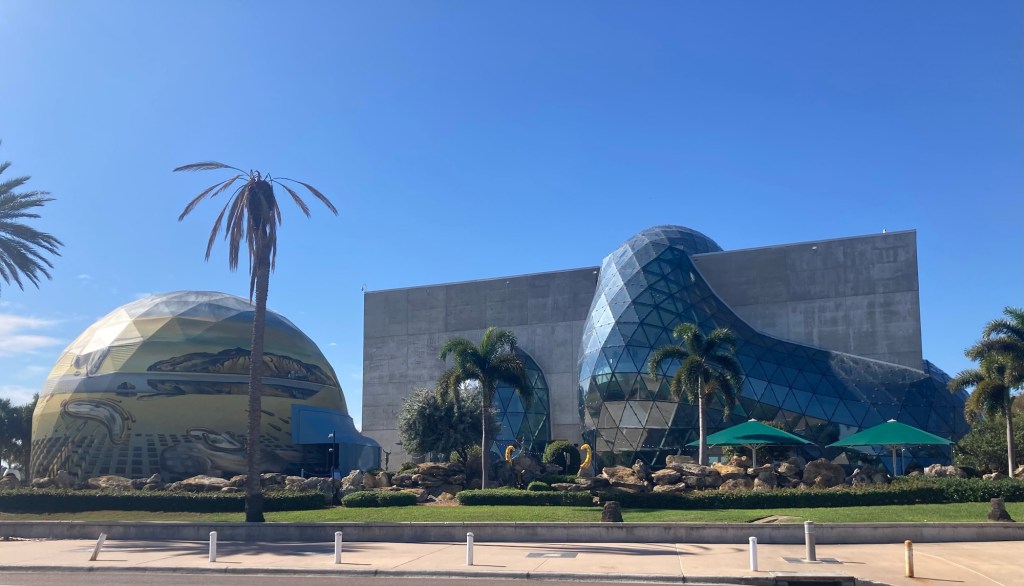
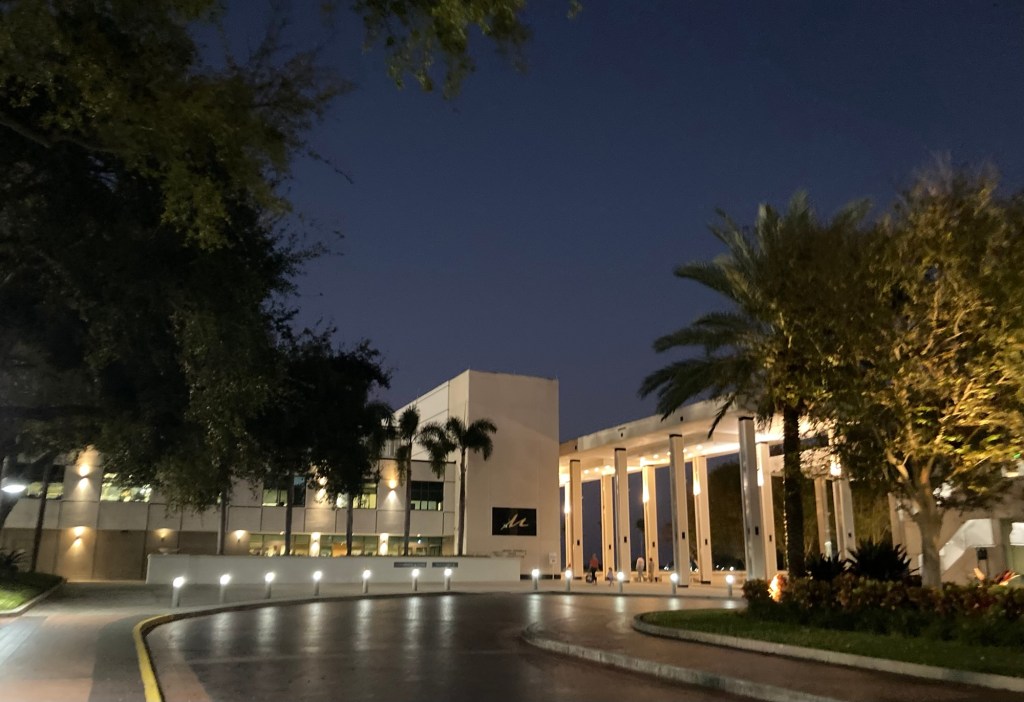
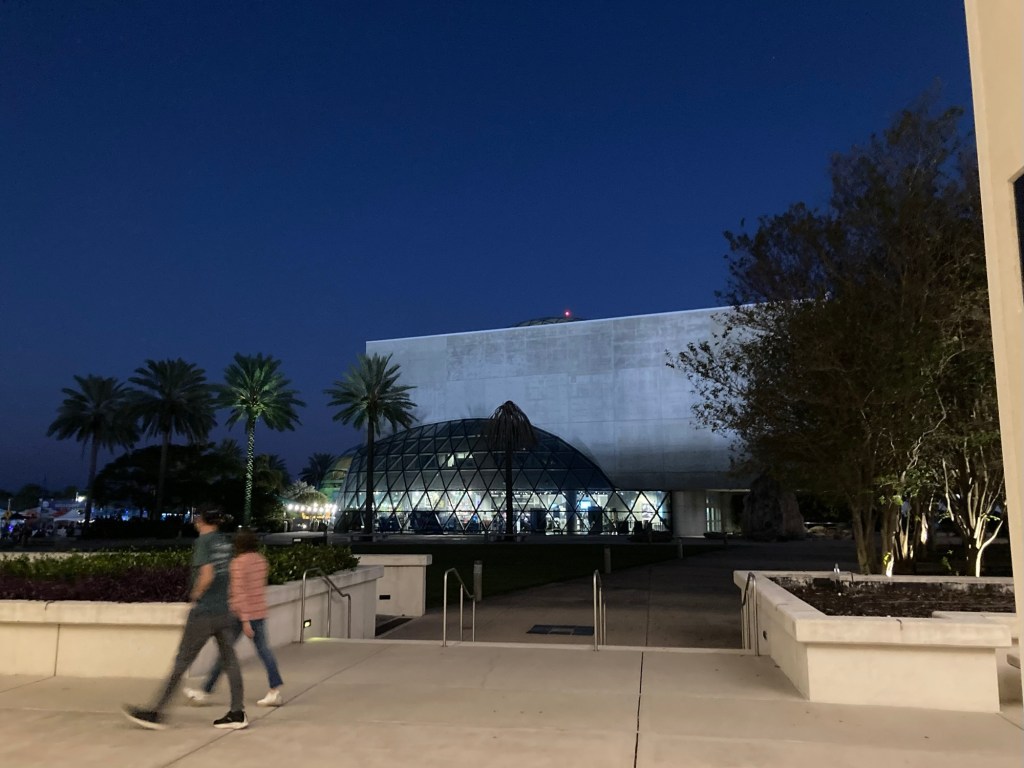
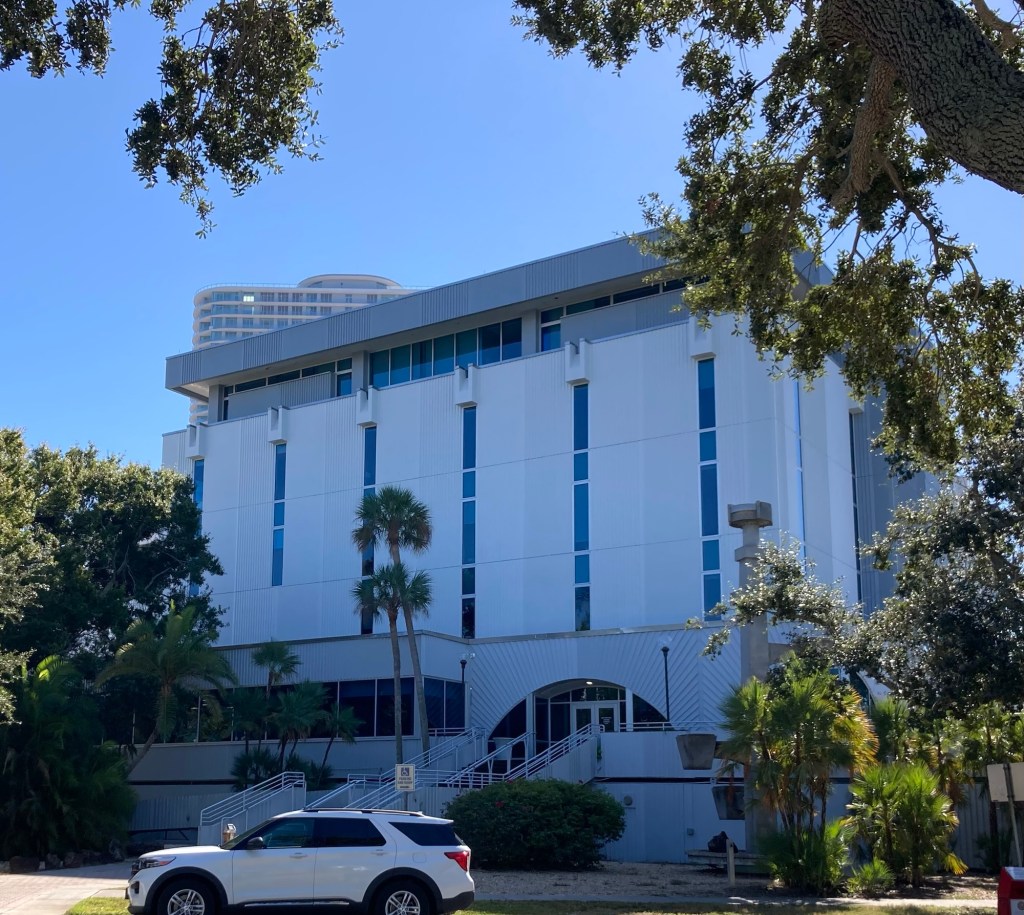
Today was our day to learn about all things Salvador Dali, at least as presented in the Dali Museum in St. Pete. This is in fact our second trip to the museum having been to the museum in another, smaller location at least 25+ years ago. The current building, which was designed by architect Yann Weymouth, opened in January of 2011. We watched a show about the building a few weeks ago. It is designed to be hurricane resistant and combines the rational with the fantastical, including a geodesic glass bubble known as The Enigma and a helical staircase).
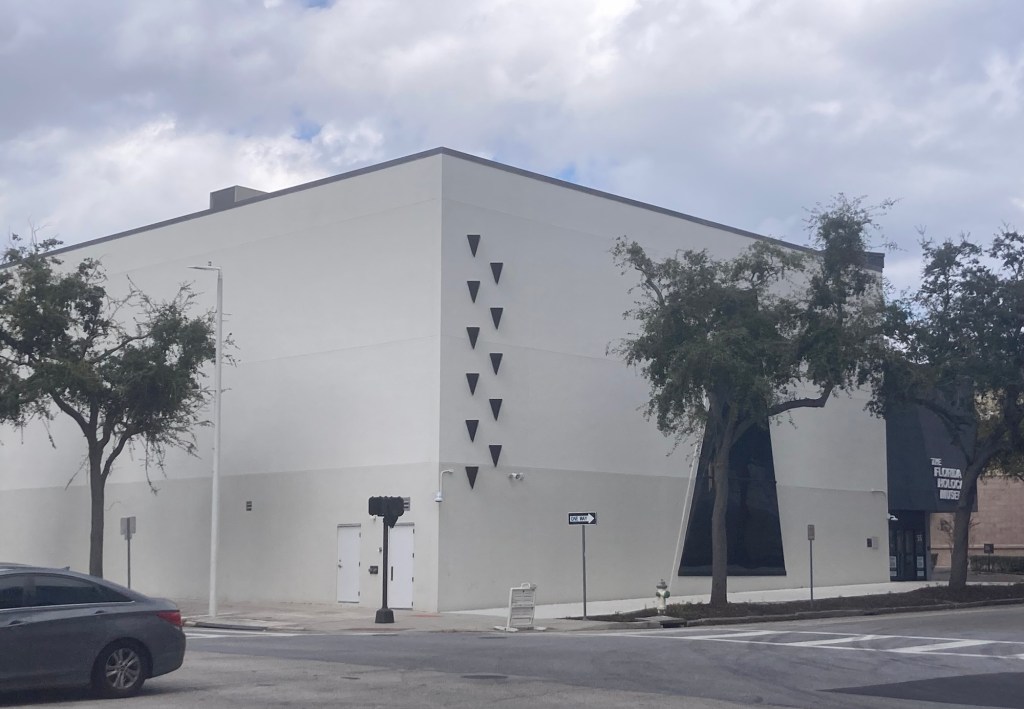
A few photos of the building before discussing the artist, the artwork, and museum experience.
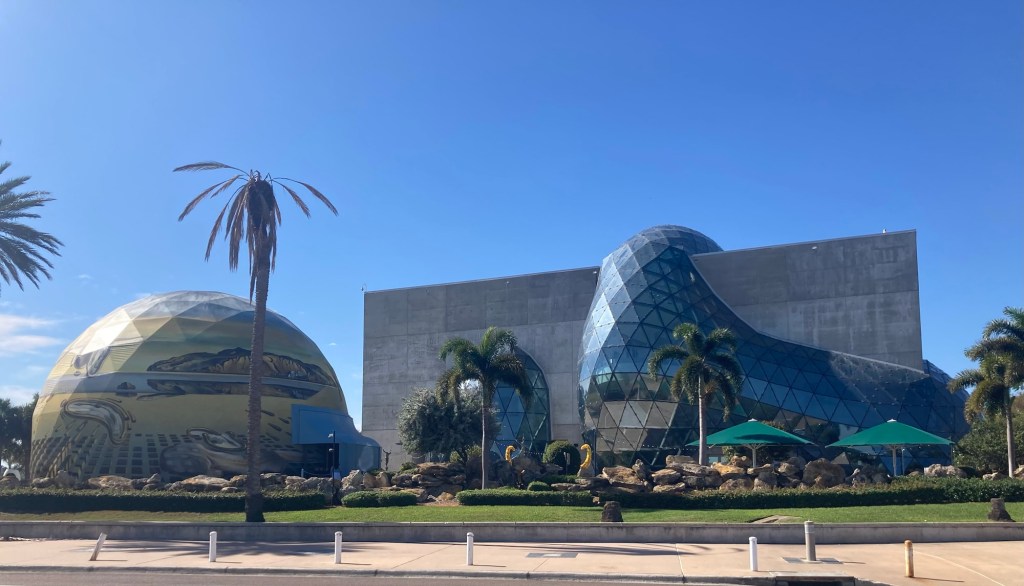
You can see the glass bubble that appears
to be coming out of the building.
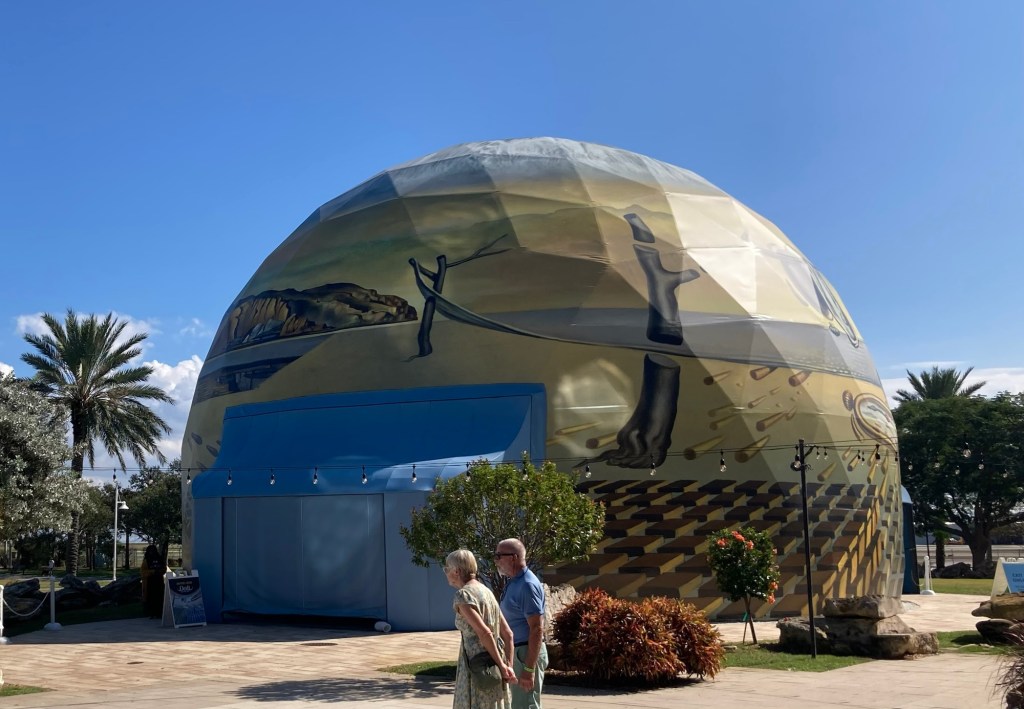
The dome on the left is a separate building
for immersive art experiences
of either a Van Gogh painting or a Dali painting.
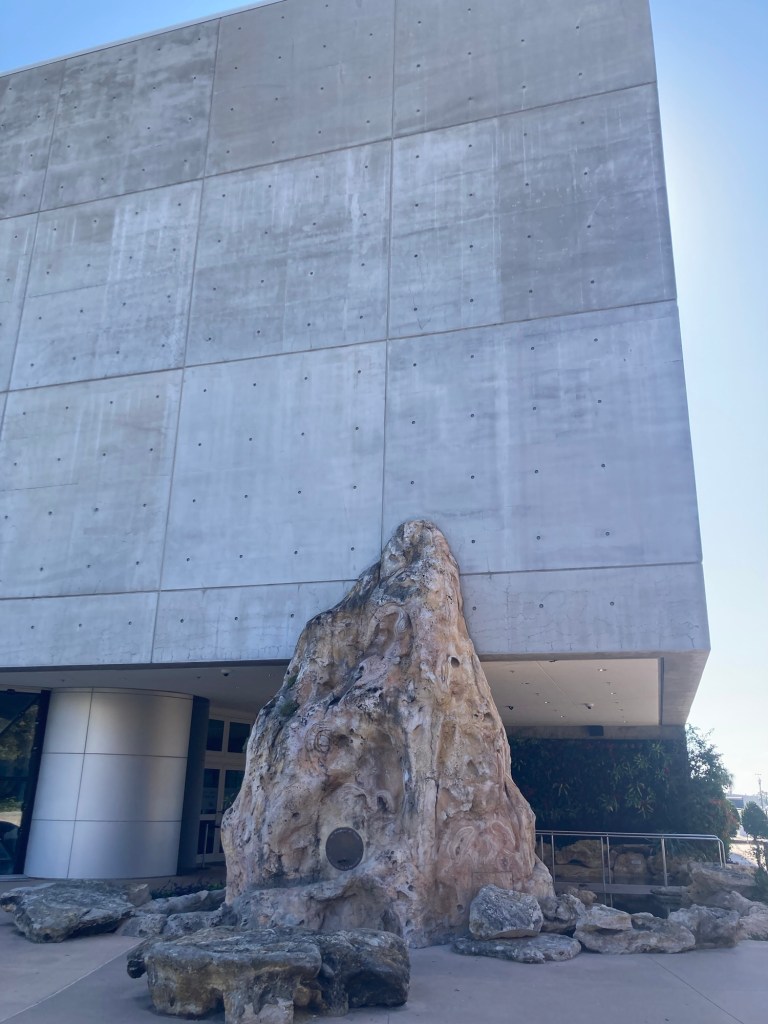
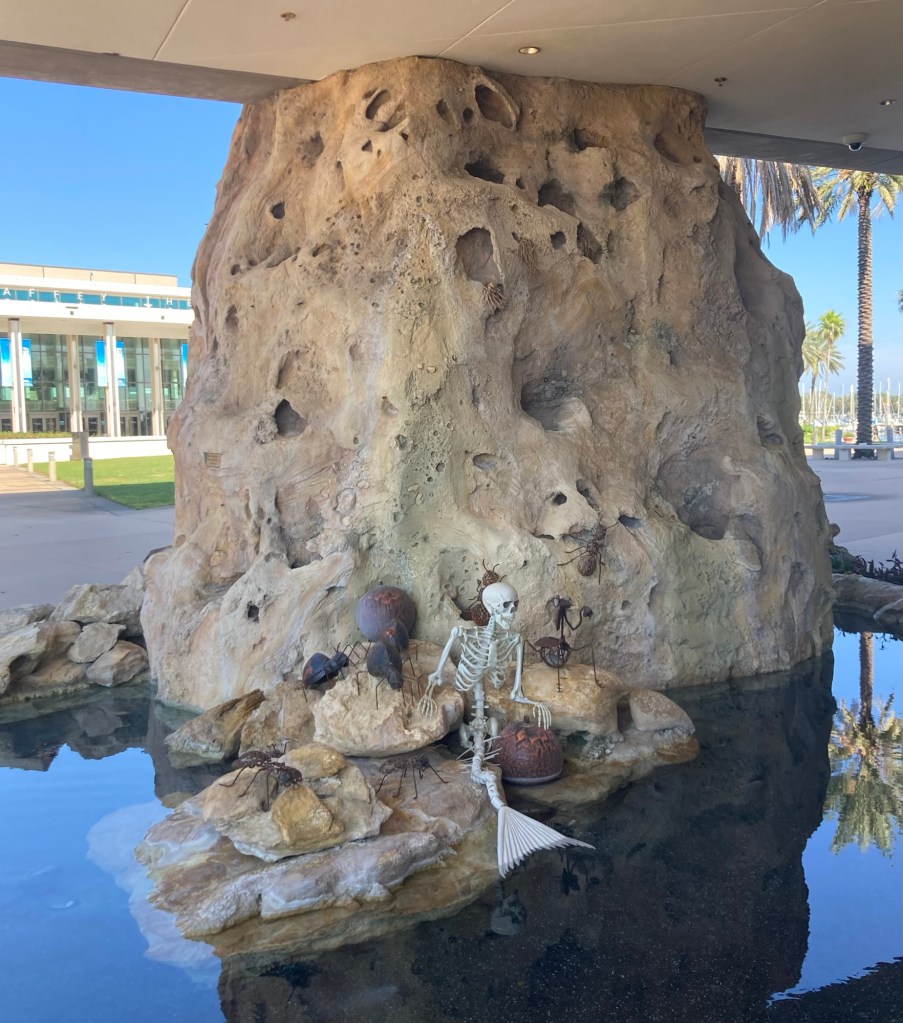
you see this rock with the fountain of youth.
This is a new version of an old artesian well that was on the pier and reputed to have healing qualities.
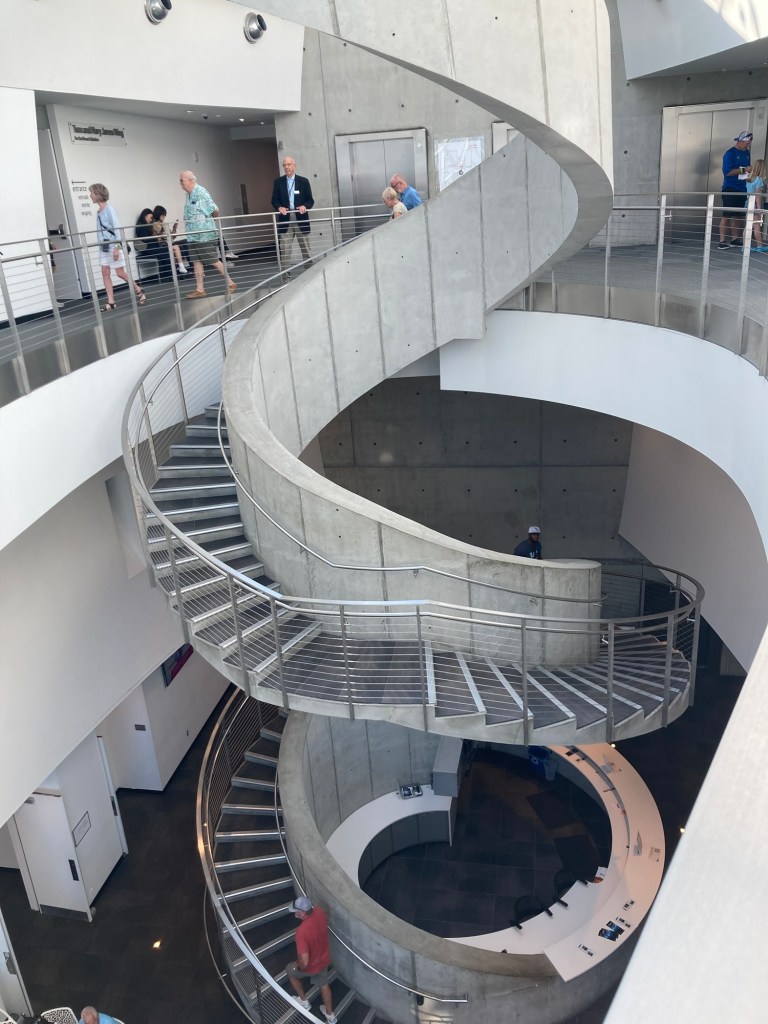

from the third floor
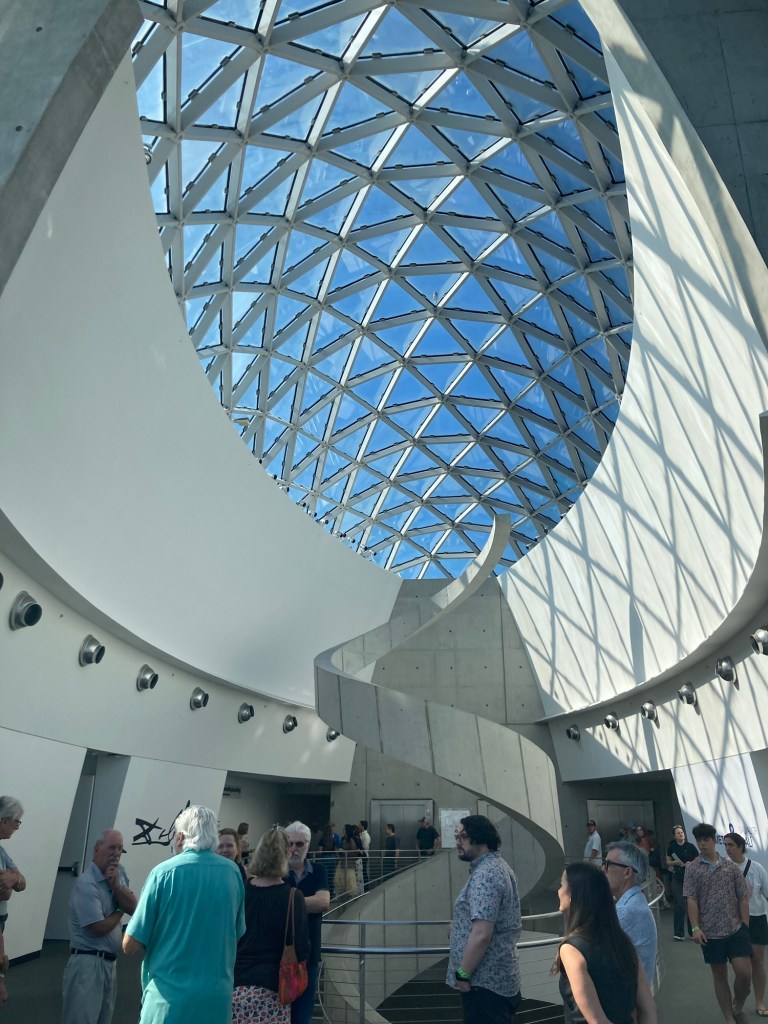
and the spiraling top of the staircase
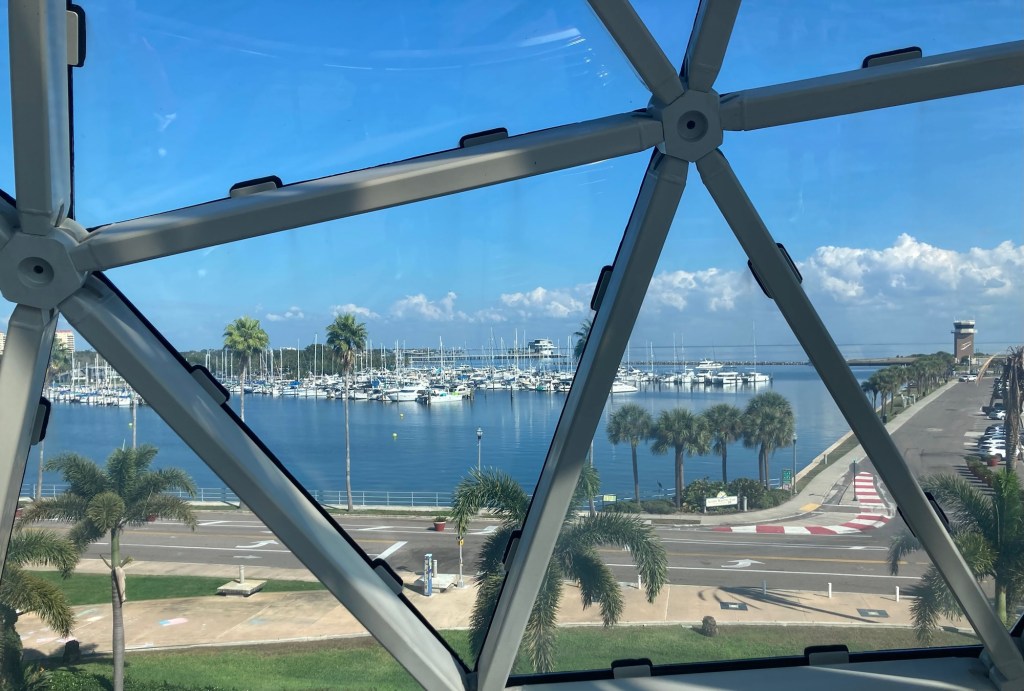

and Dali’s “Carmen Castanets” bronze sculpture
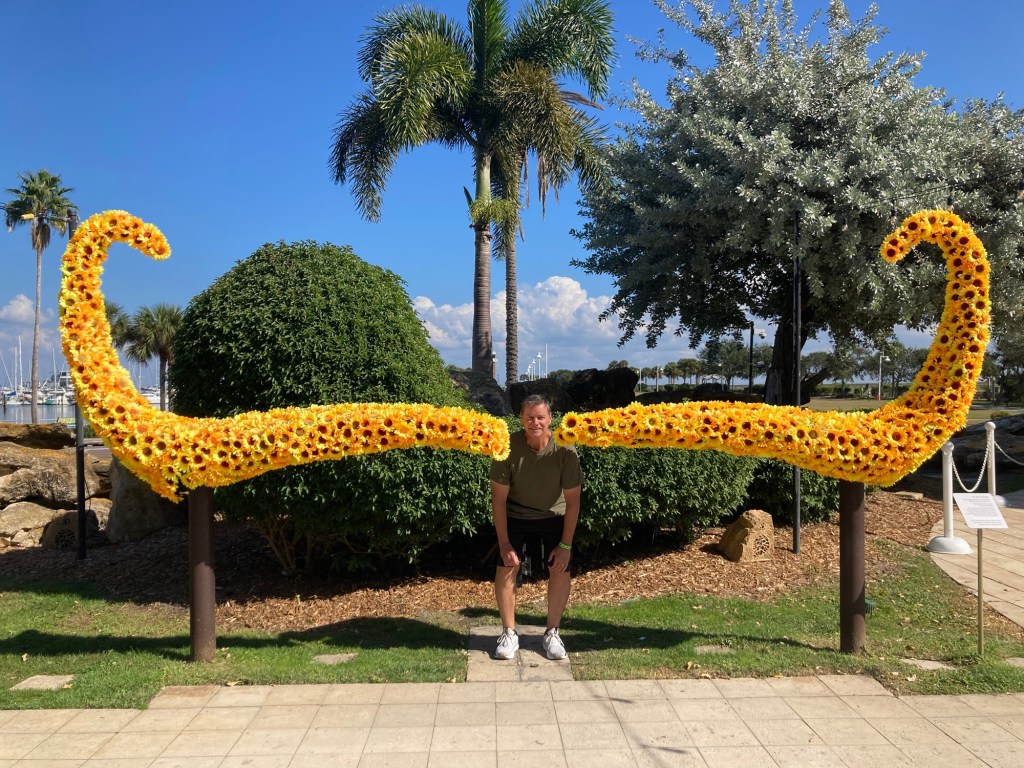
The tickets for the museum were $32 each. It would have been $15 more per person for one of the dome shows, but Bob and I had already done the immersive Van Gogh experience a few years ago in Austin, so we chose not to do that today. We really enjoyed the museum. In addition to looking at the art exhibits, they offer free films about Dali, surrealism, and the museum, free guided public tours of the art, special exhibitions, a virtual reality experience to go into a painting, a cafe, and a great museum shop. While we didn’t eat at the cafe, we took advantage of everything else (though just window shopped in the store). Highly recommend a visit.
If people know anything about Dali, they associate him with surrealism and melting clocks. Both correct, but as we learned, he was really only actively involved with the Surrealists for about 10 years. His art then moved into nuclear mystical.
His technical skill was evident from an early age, and he was able to go to a prestigious art academy in Madrid, though never graduated. At some point, he felt he was good enough and didn’t need to prove himself to instructors or anyone else.

He was born in 1904, so would have been 14 or 15 years old.
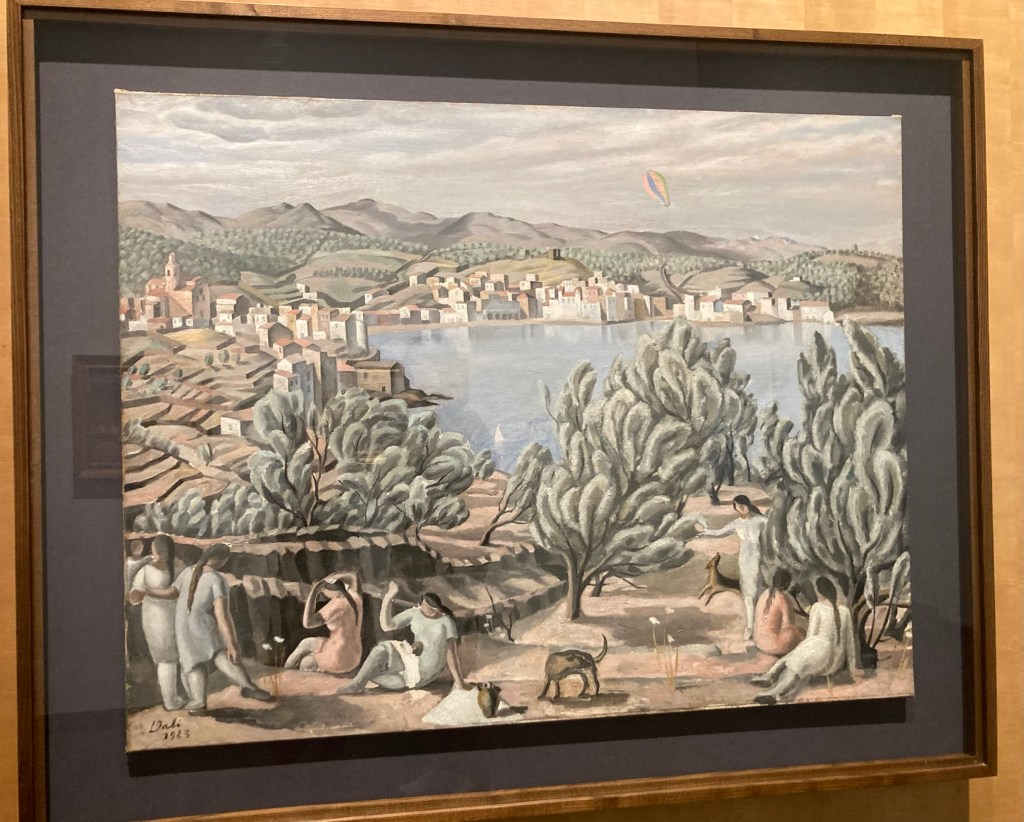
which he depicted throughout his career
but in more symbolic ways.
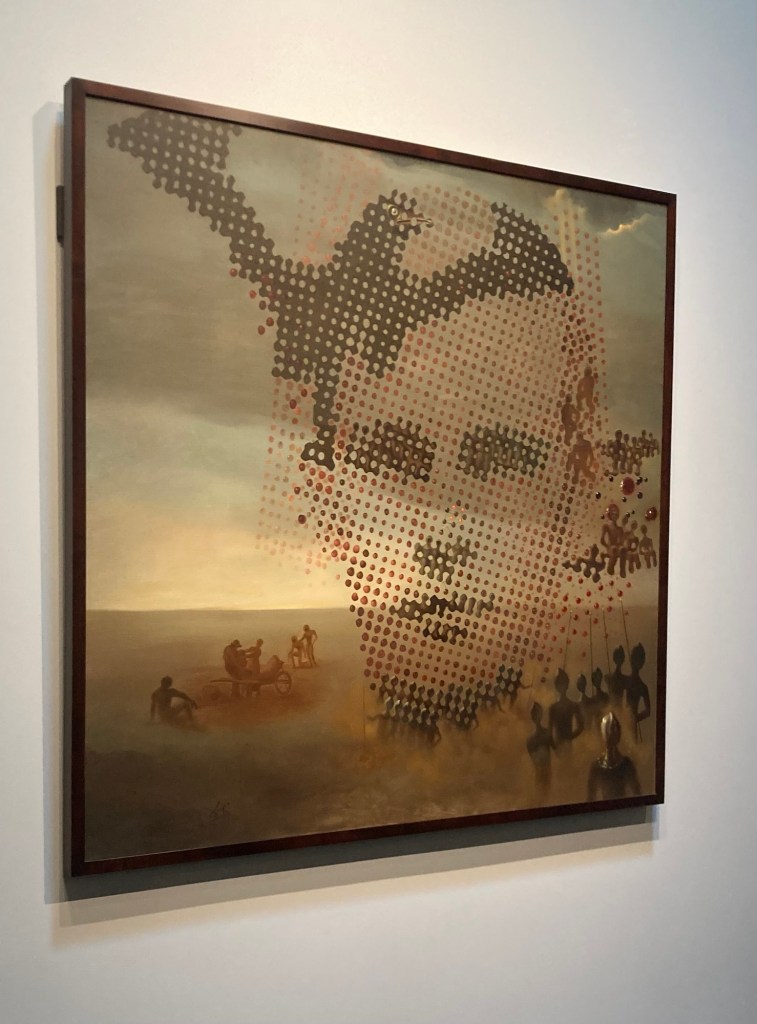
Salvador shared a name with his father
but also an older brother who died young.
The face is formed by a number of painted cherries.
The vast majority of the museum’s collection comes from Reynolds and Eleanor Morse, who collected Dali’s art throughout their marriage and formed a friendship with Dali. They later wrote numerous books and articles on Dali, trained the docents of the Dali Museum (the first building) when it opened in 1982, and in 1989 received the Cross of the Officer of the Order of Isabella the Catholic from King Juan Carlos of Spain in recognition of their scholarly work.

This was the first Dali purchased by the Morses.
It represents Dali’s belief in a costly but victorious end to WWII.

Dali drew this in response to his father,
who worked for the government,
being upset with the choices Dali was making
(like dropping out of art school).
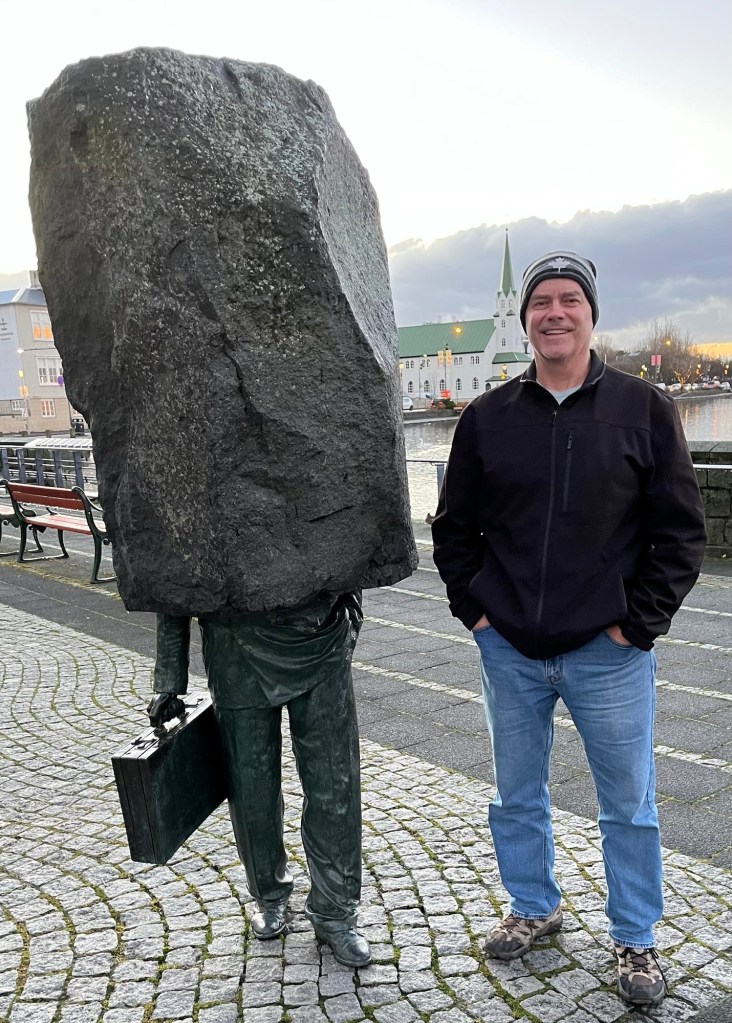
The name of the painting reminded Bob and I of a big head(less) head sculpture we had seen in Iceland in 2022.

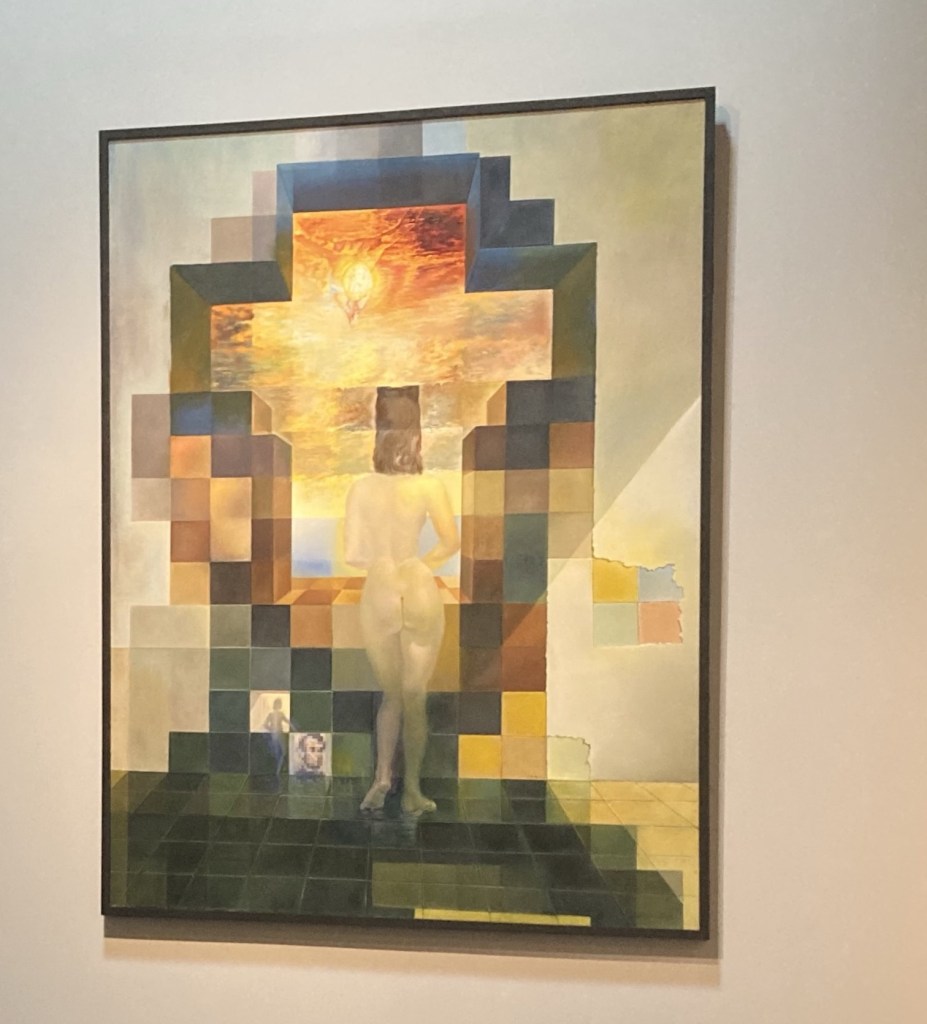
Which painting do you see? Play with the size of the photo and see if you can see the other one. Right now, I see Gala, but on my phone it looks like Abe Lincoln.

in “The Hallucinogenic Toreador,” 1969-70.
You can see the toreador (bullfighter)
if you see the green as his tie.
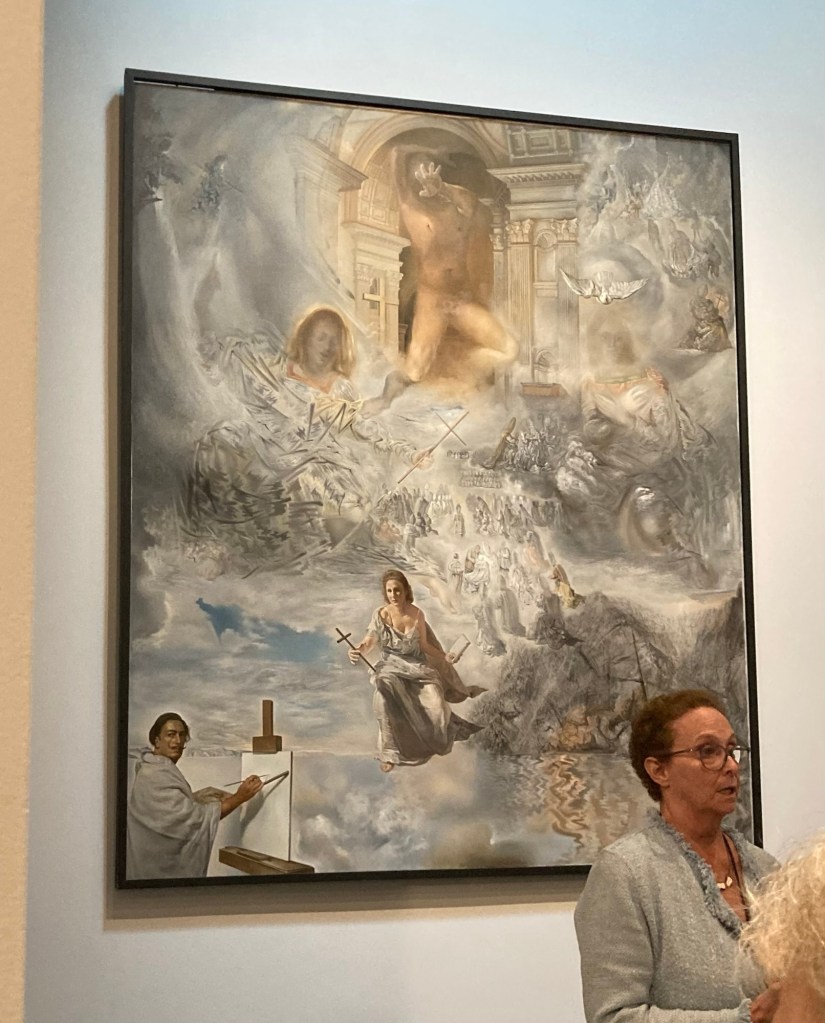
The woman in front was our tour guide.

























 Peckish Travels