Today, Bob and I drove about 9 miles northeast of the house to Myrtle Beach State Park. Our homeowners kindly left us their pass to use at the two local state parks. We visited Huntington Beach State Park on our first excursion of the housesit. We delayed going to Myrtle Beach State Park until after the end of the big tourist season, but even today it had a lot of visitors.
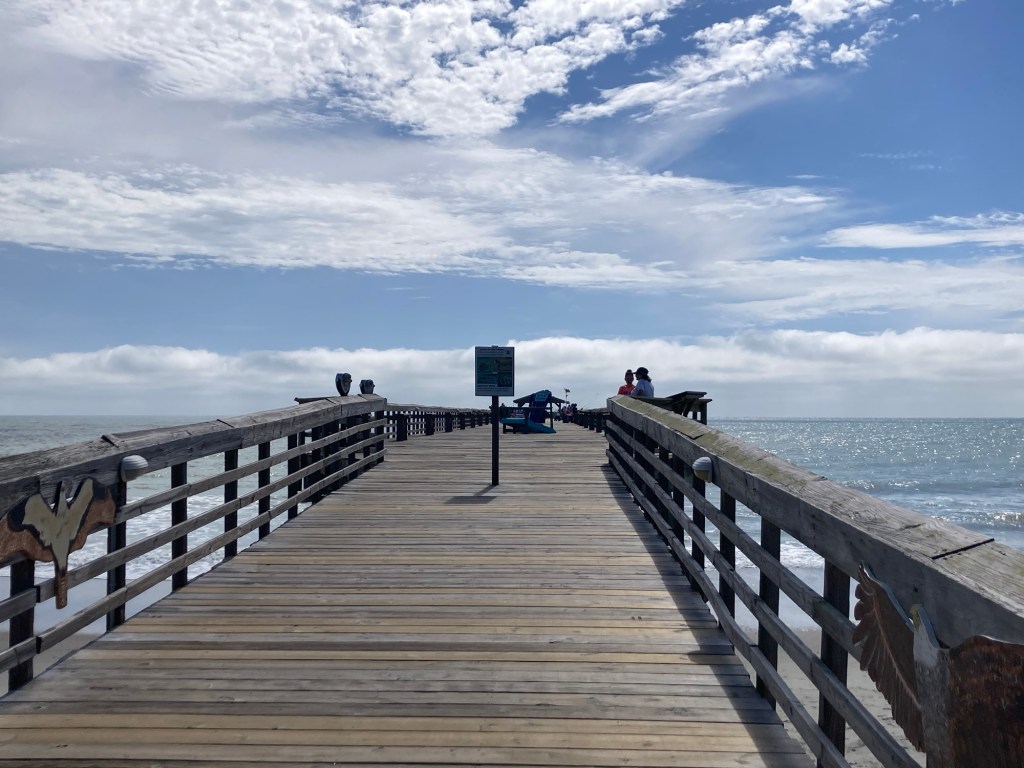
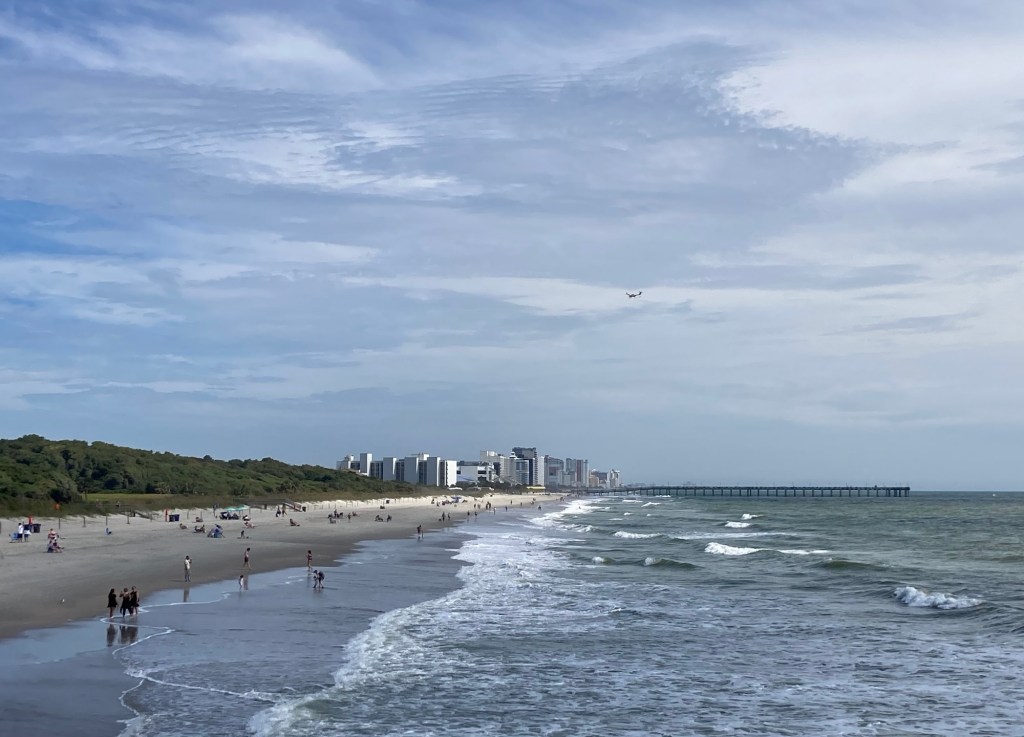
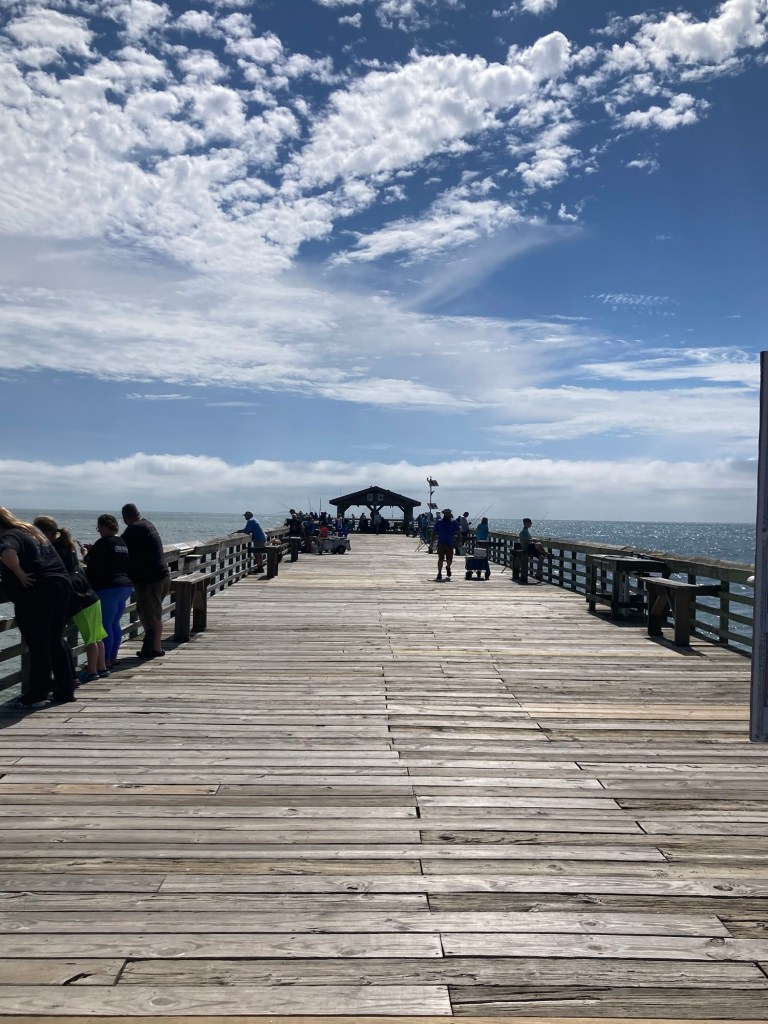
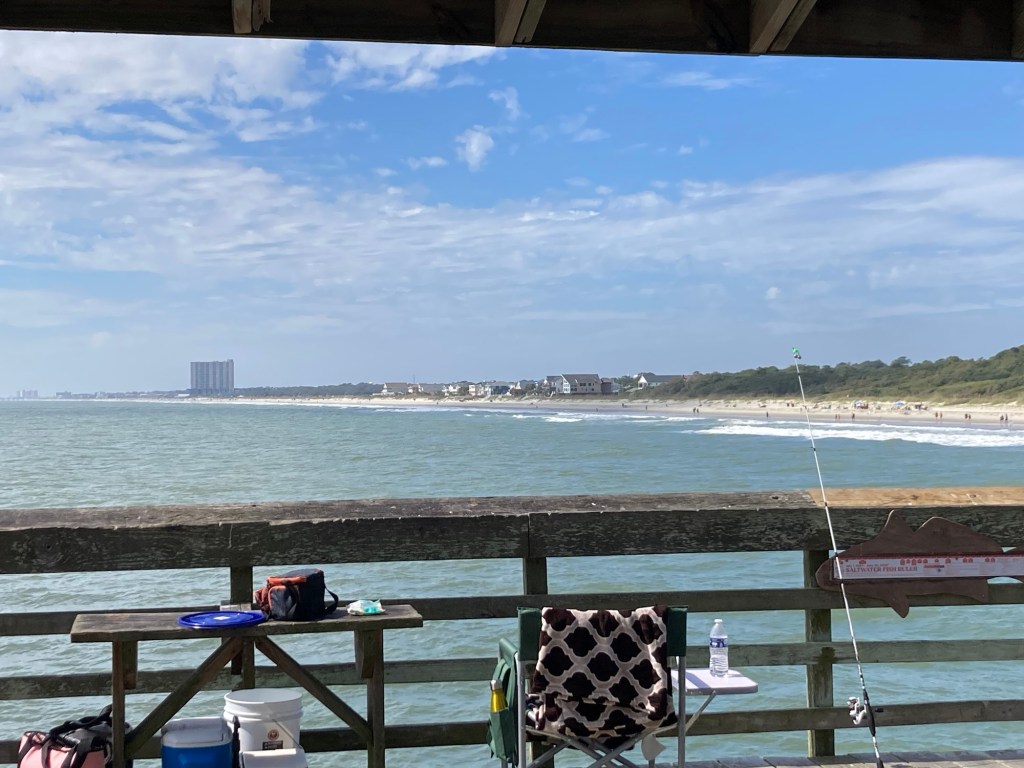
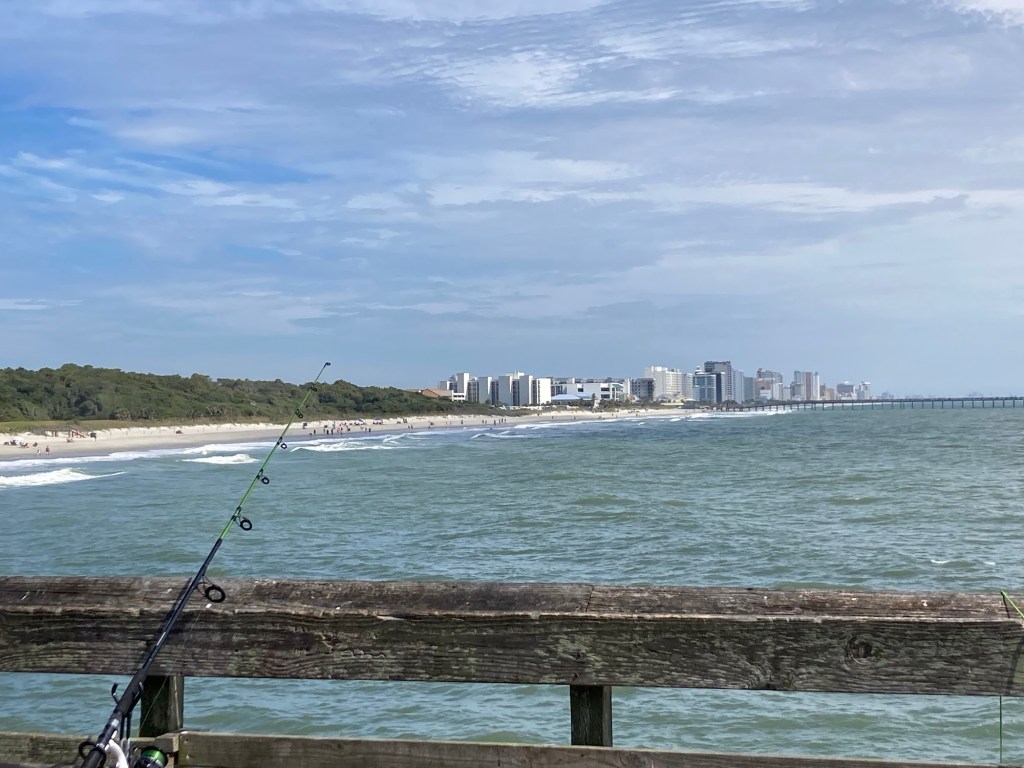
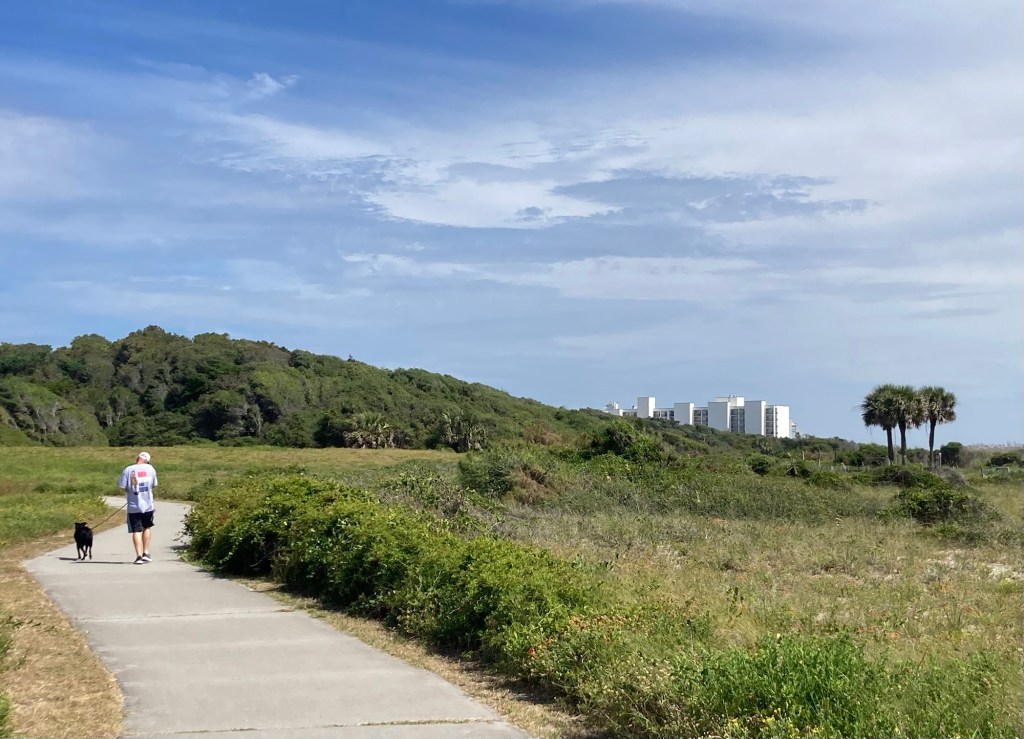
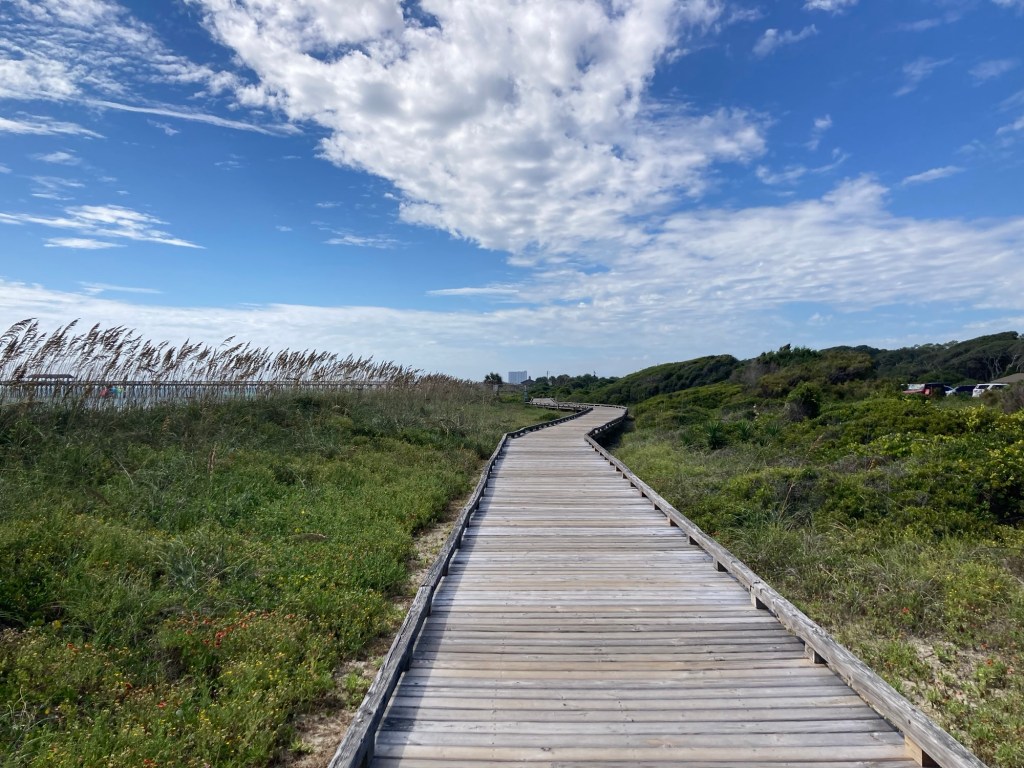
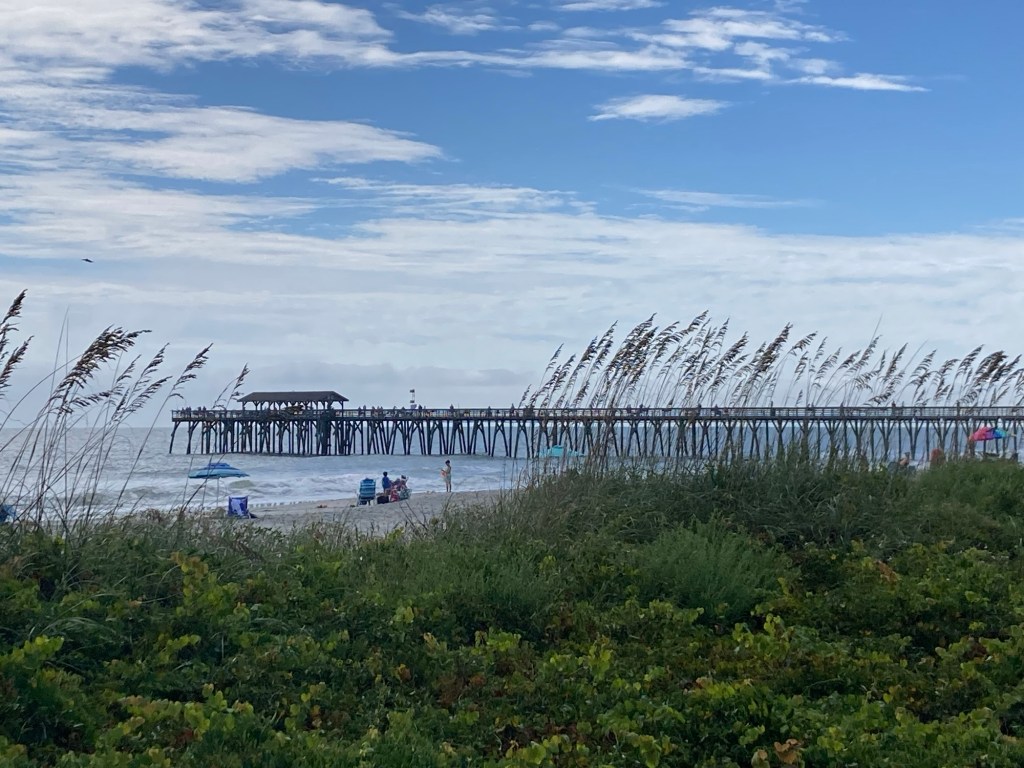
The state park lies along part of the Grand Strand along the Atlantic Ocean between the city of Myrtle Beach to the north and Surfside Beach to the south. It opened in 1936, and is one of 16 South Carolina State Parks built by the Civilian Conservation Corps. It has a fishing pier, over 300 tent and campsites, 1 mile of undeveloped beach, and a couple of nature trails. We walked down the fishing pier, along part of the beach, on the boardwalk that parallels the beach, and on the nature trails. With the temp in the low 80s and a nice breeze, it was a great day for an outing.
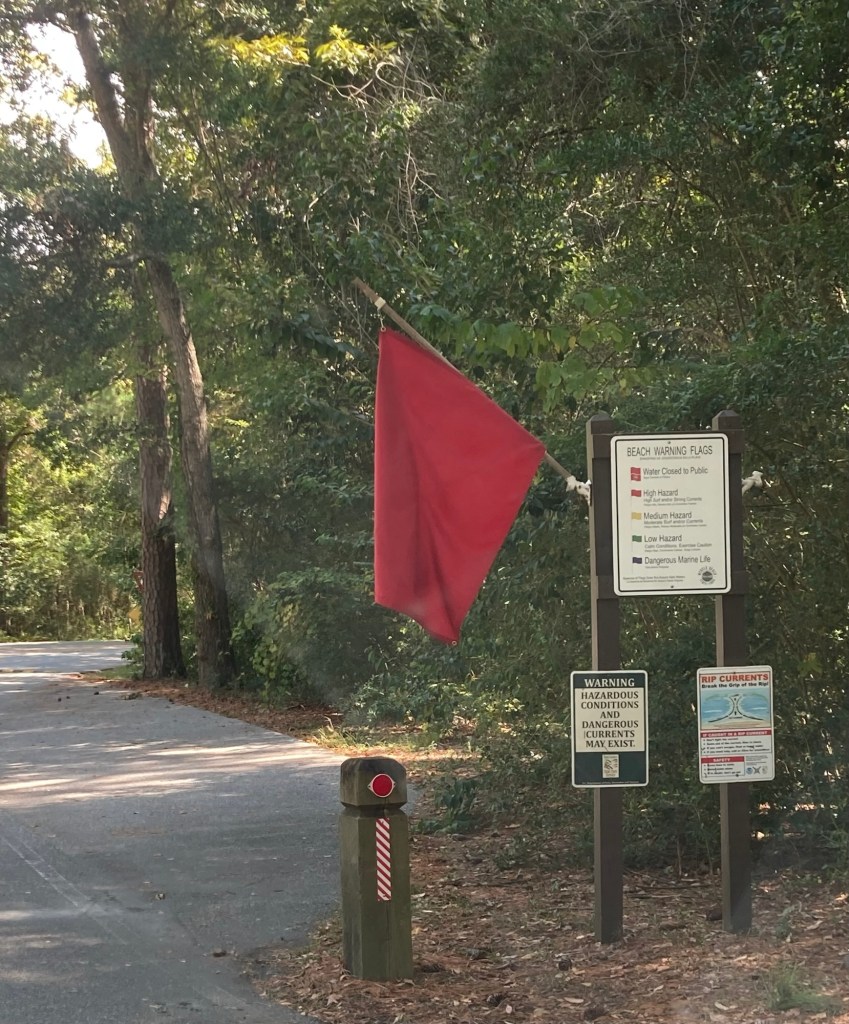
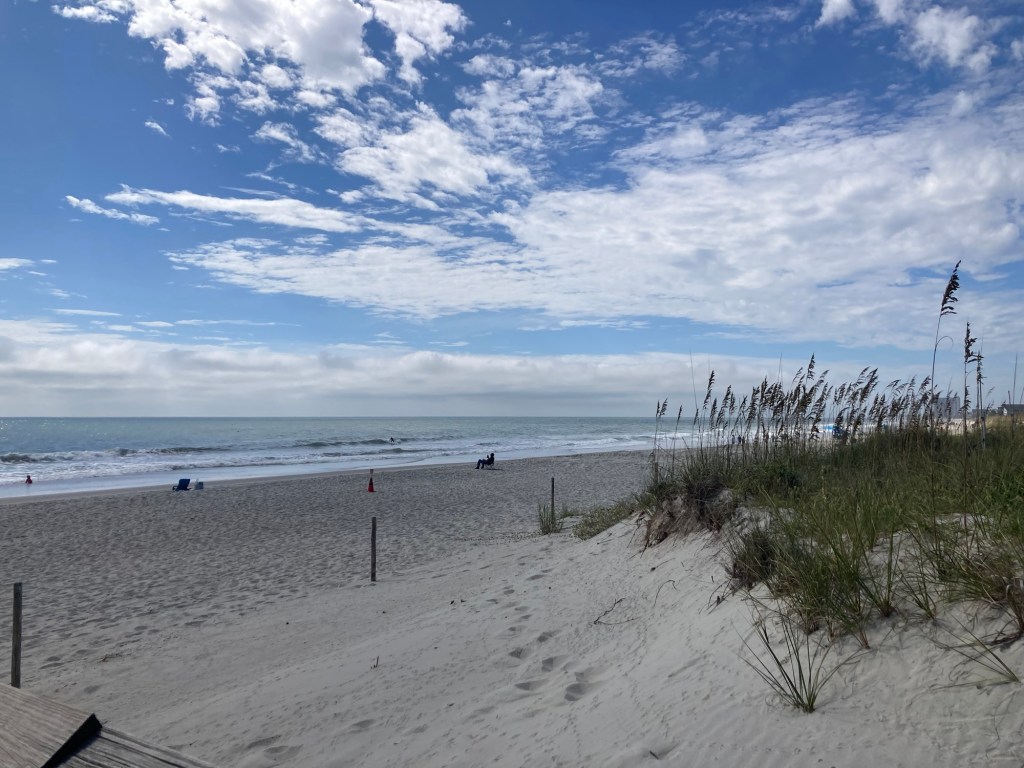
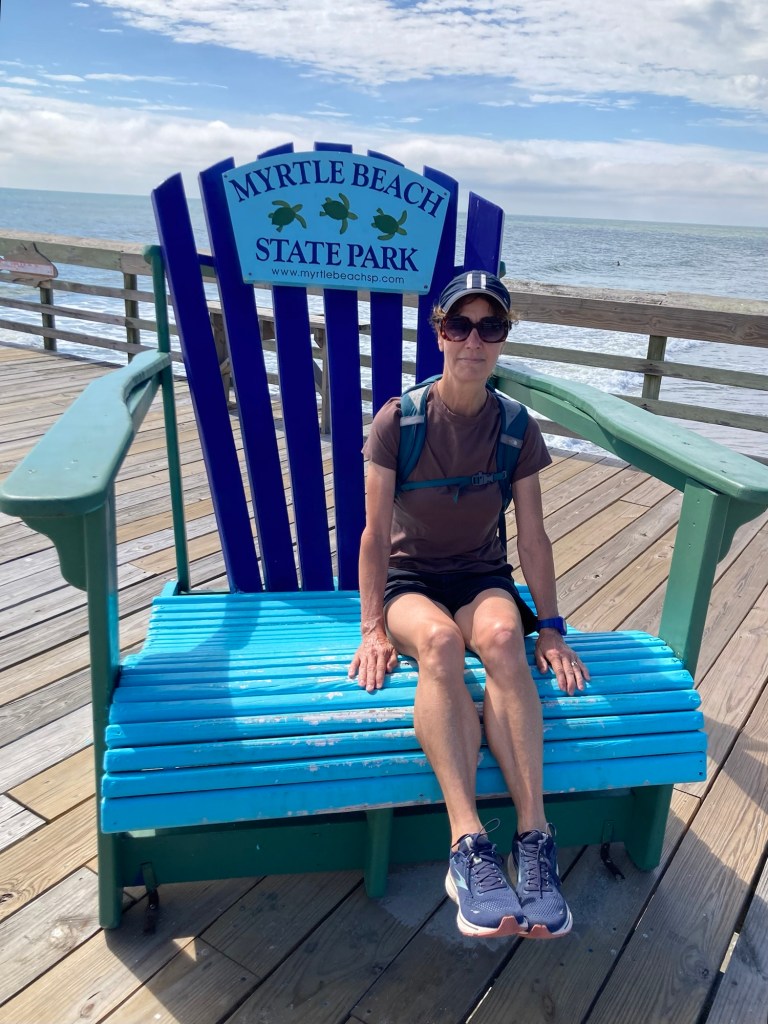
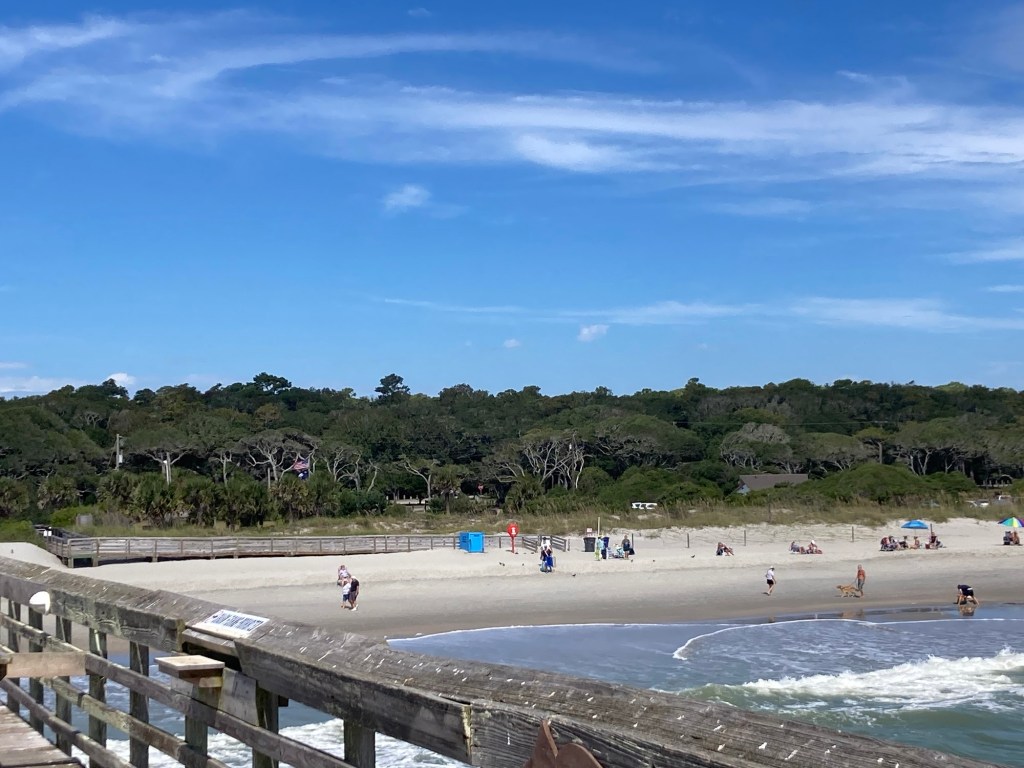
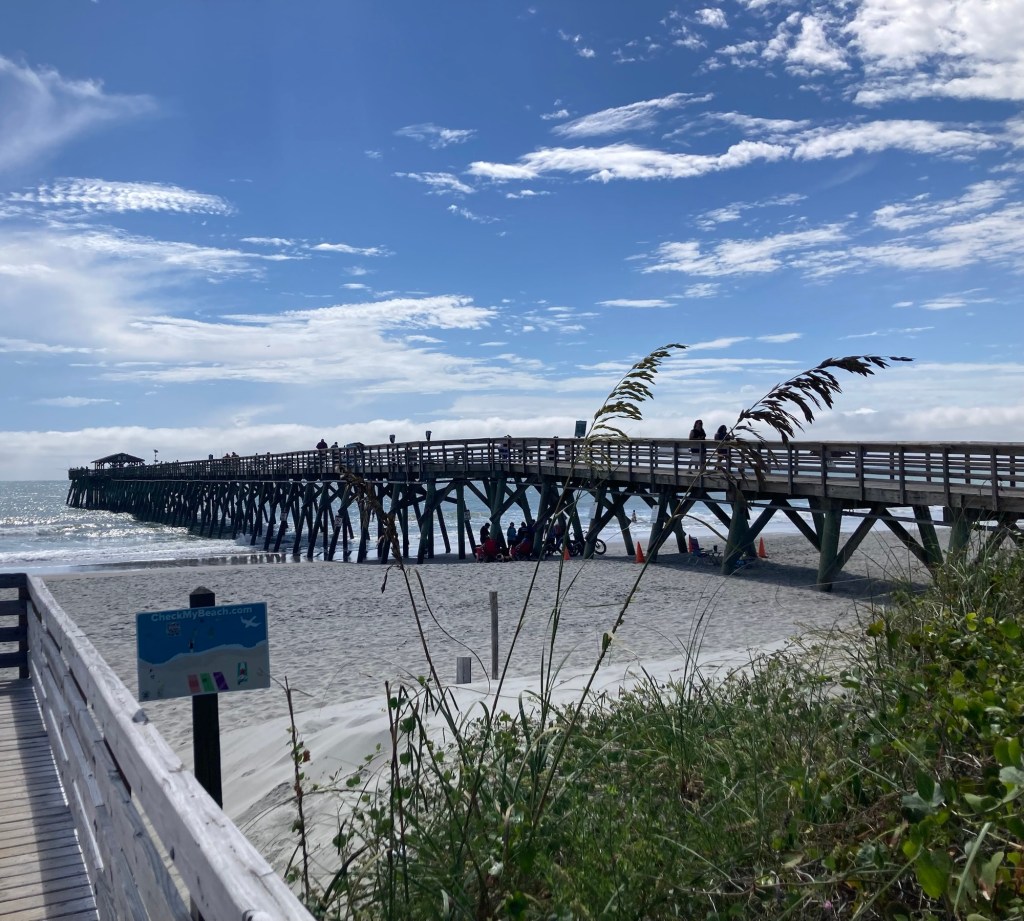
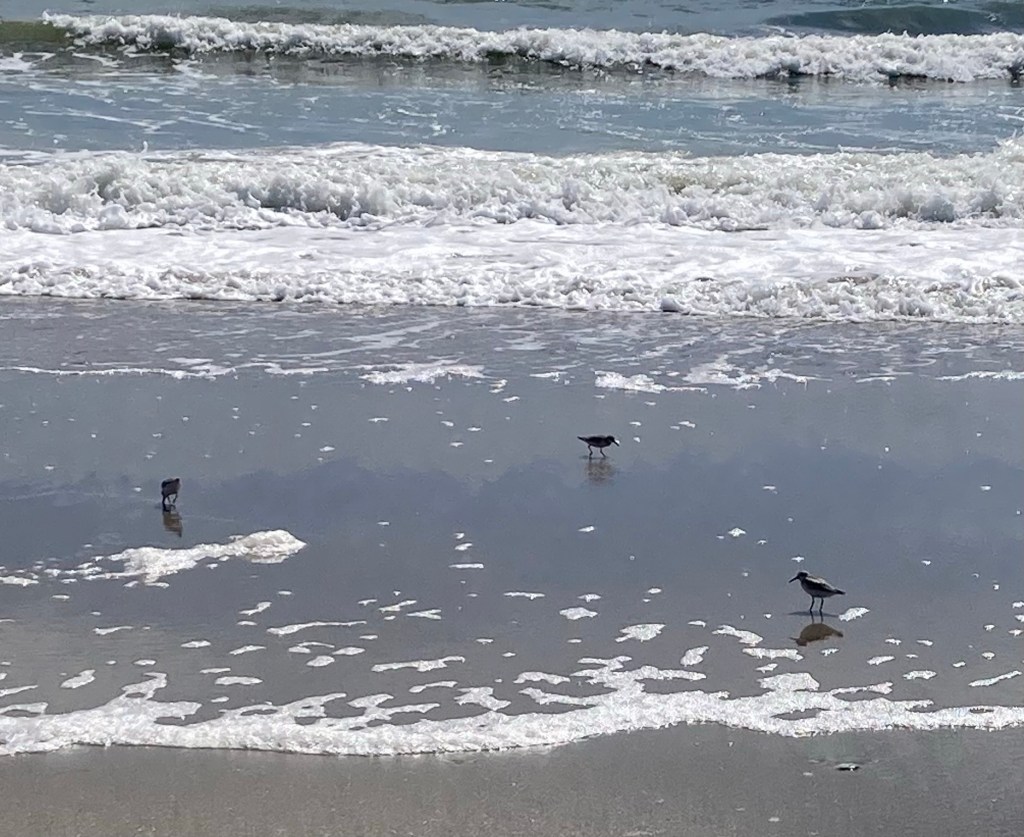
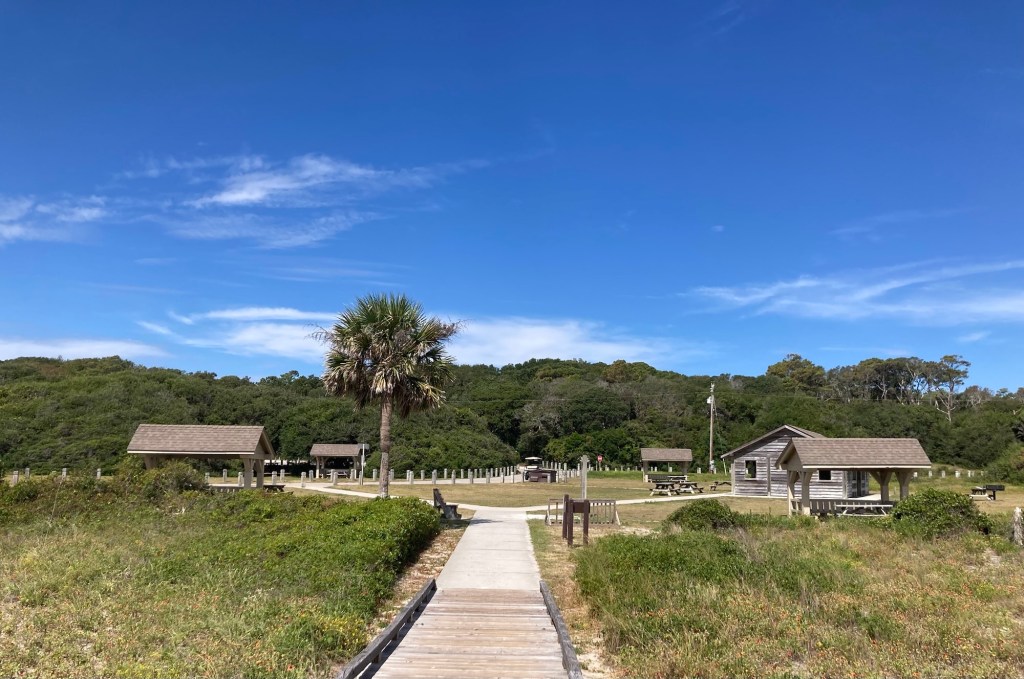
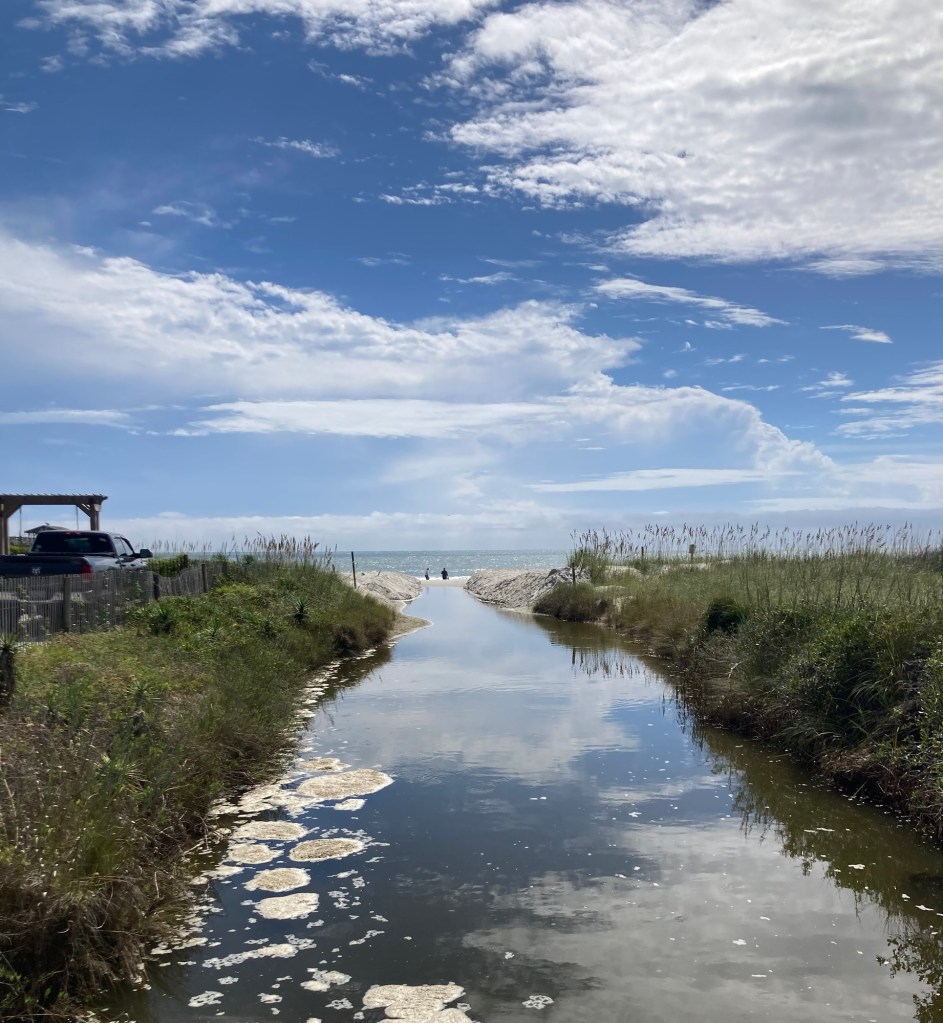
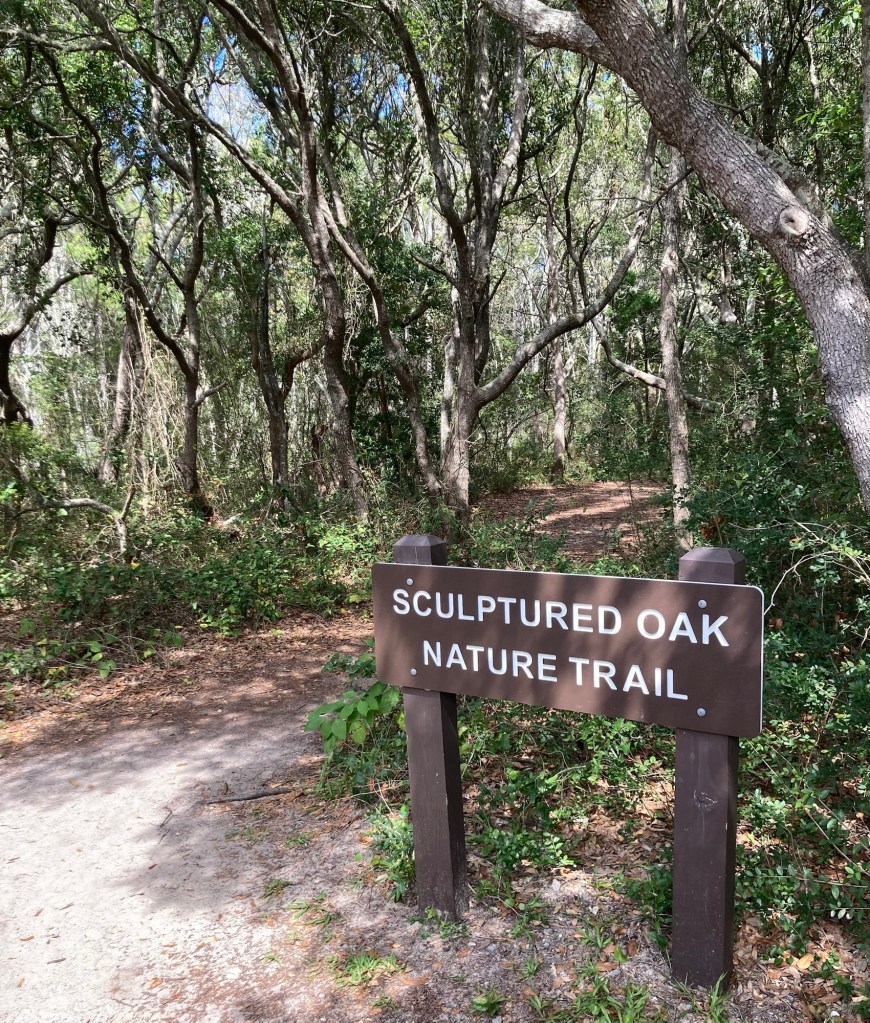
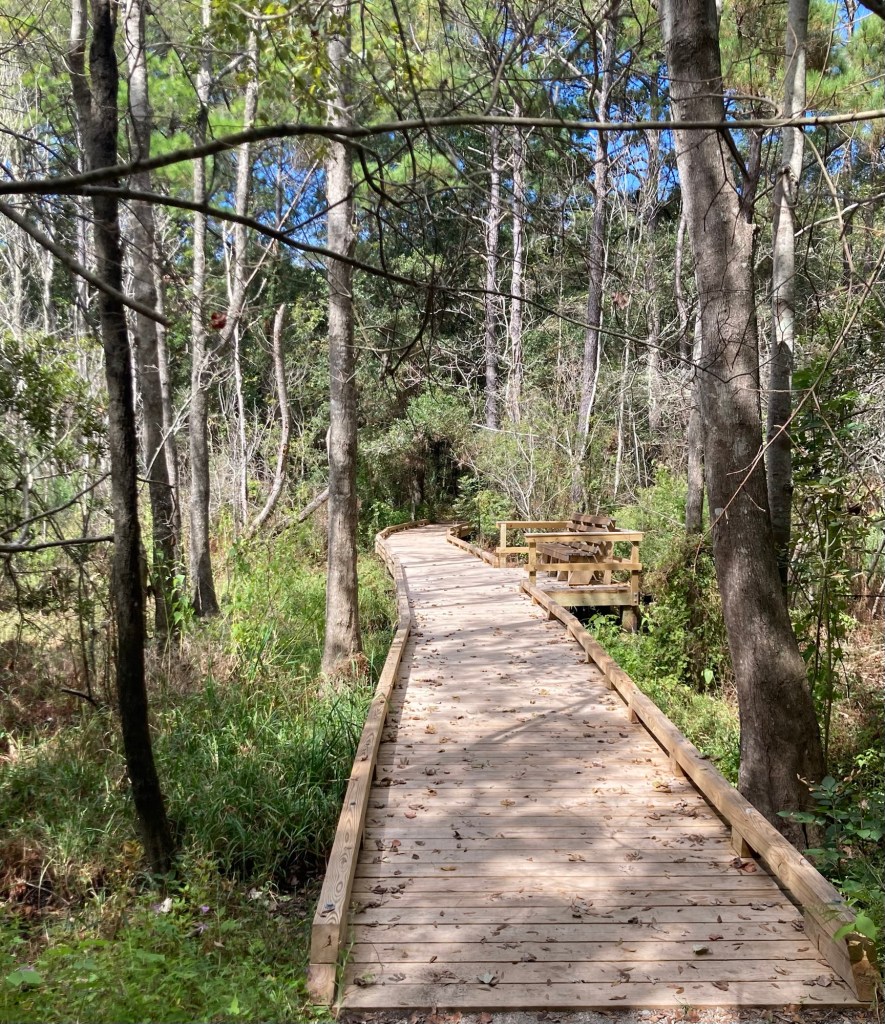
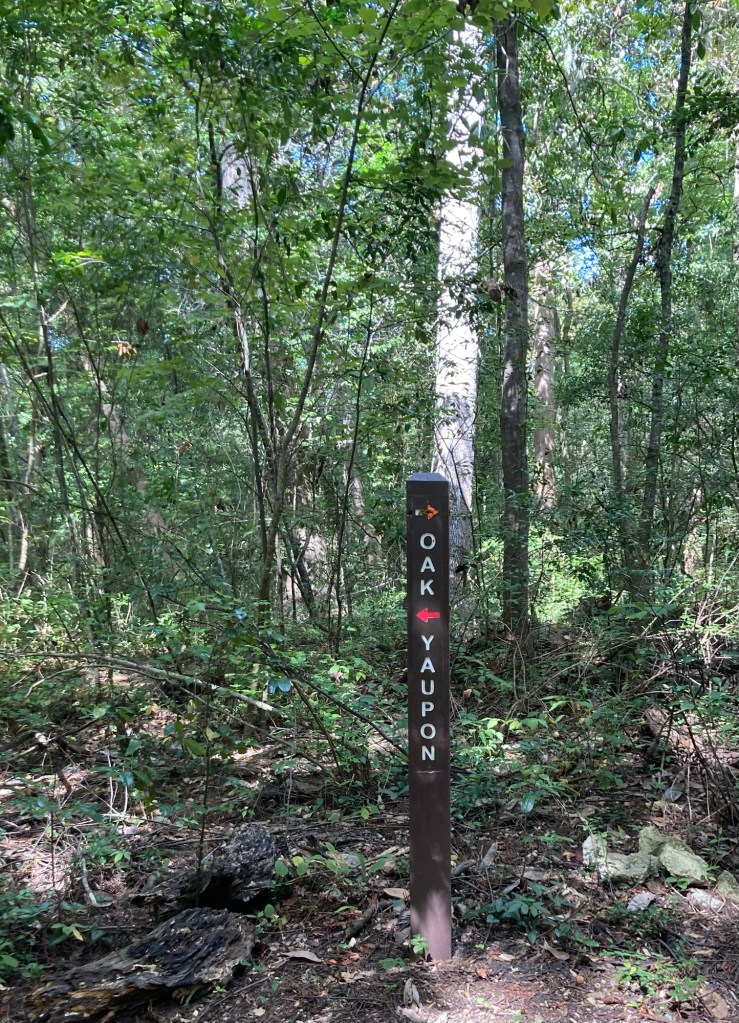
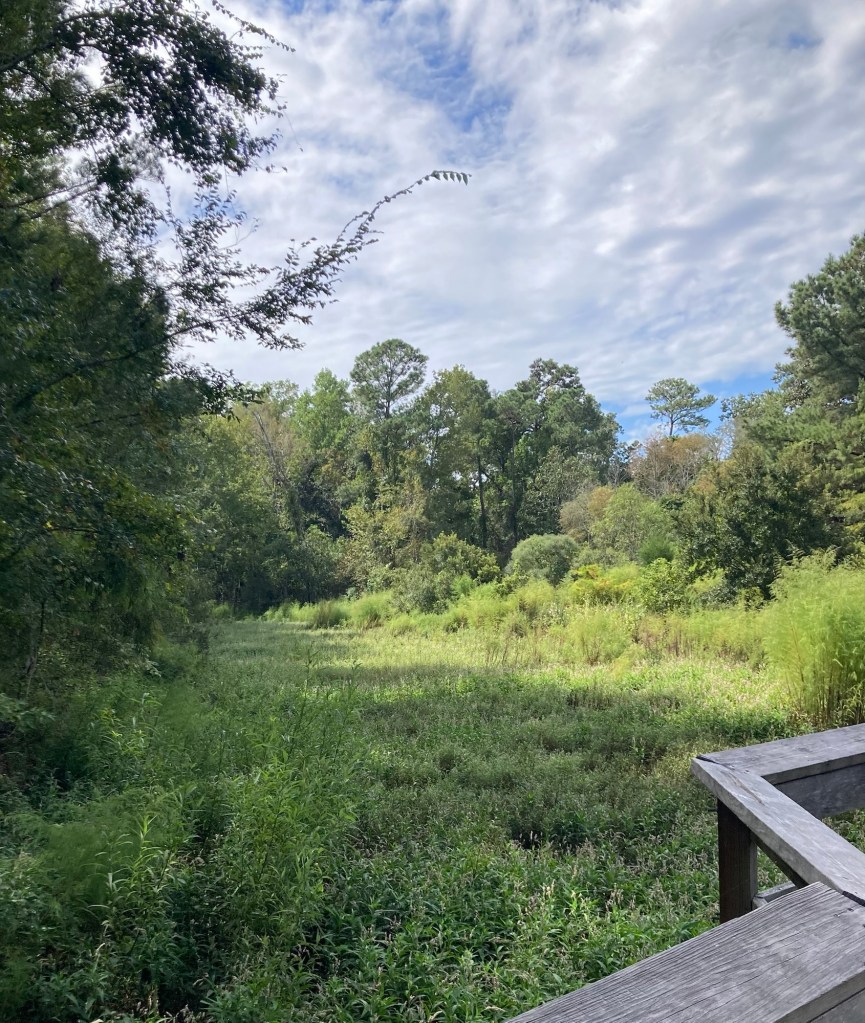
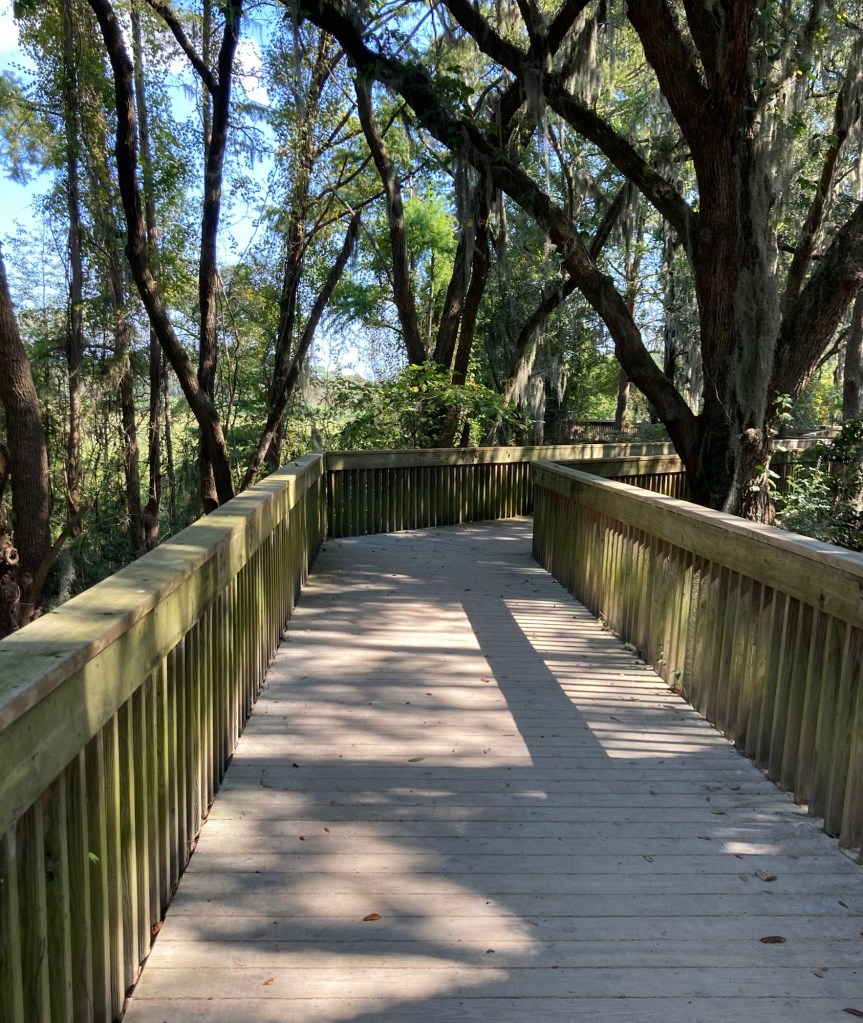
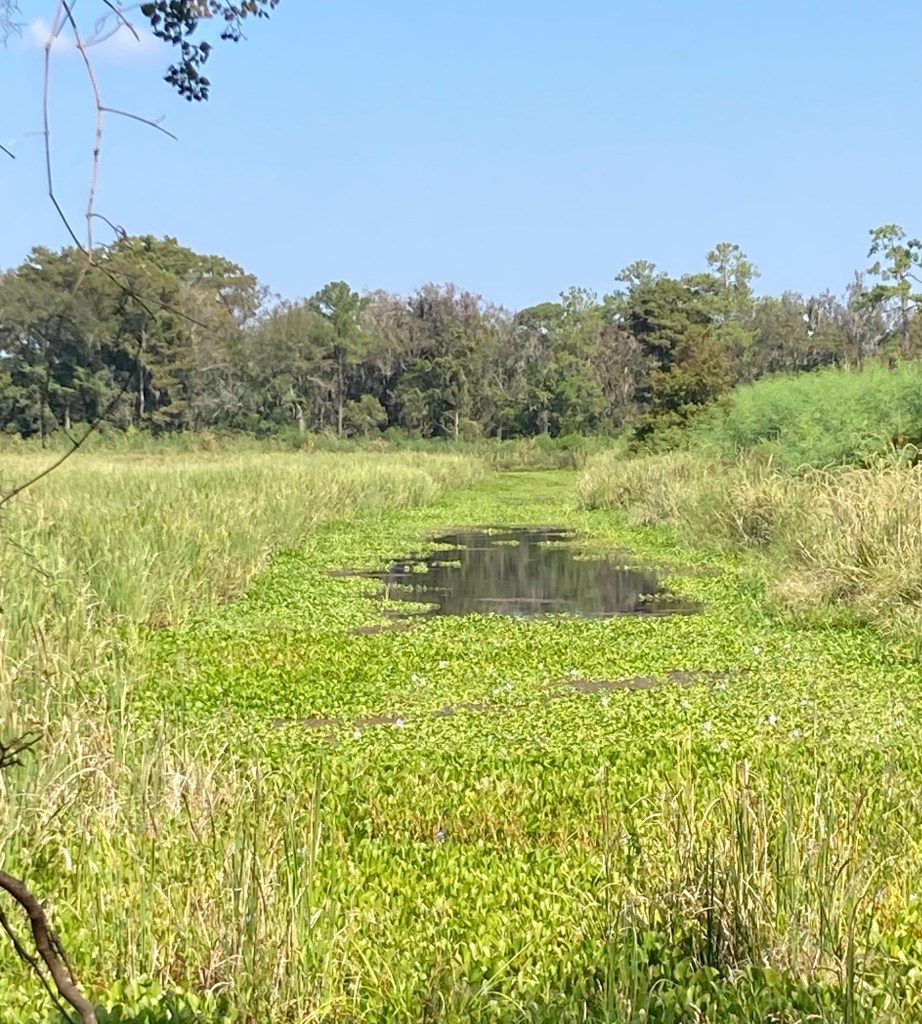
While Hurricane Gabrielle is headed away from the coast, it is stirring up the waves, so a red flag advisory was posted.The beach isn’t too far from the airport, so we saw a number of planes coming in while we were there.The Atlantic Ocean, beach, and some of the protective dunes that parallel the shore.Walking out onto the pier. No charge to walk on it, but you do have to pay to fish.These chairs are everywhere. I finally decided to do the photo.Looking north towards downtown Myrtle BeachLots of people out fishing and/or enjoying the viewLooking south towards Surfside Beach from under the pavilion at the end of the pierAnd north from same location Looking back towards the beach and park areaA side view of the pierThe surf and tiny birds on the beachA picnic area near the camping section Walking north on the boardwalk And heading back southAnother view of beach and pierAn inletHeading out on the nature trailsA boardwalk in the woodsGood trail signage The trail map showed this as a pond. This is what we saw, although there may be more water present at high tide.
Bob and I used our tickets to Brookgreen Gardens again today to visit the indoor galleries that we hadn’t visited earlier. We visited four small galleries and were also able to see some outdoor statues that we hadn’t seen earlier since we walked a different route.
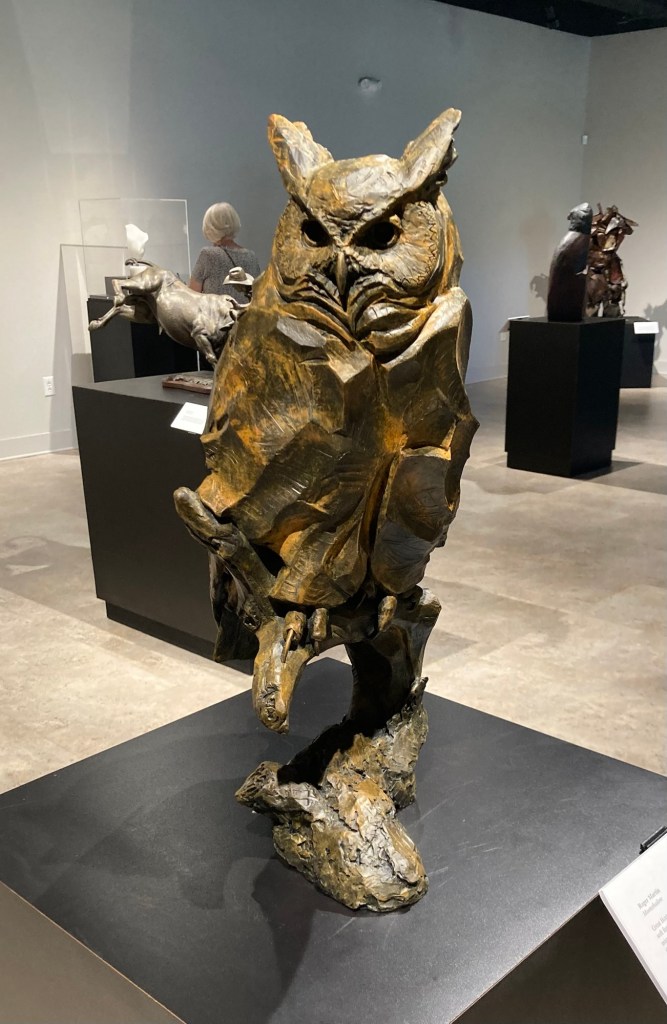
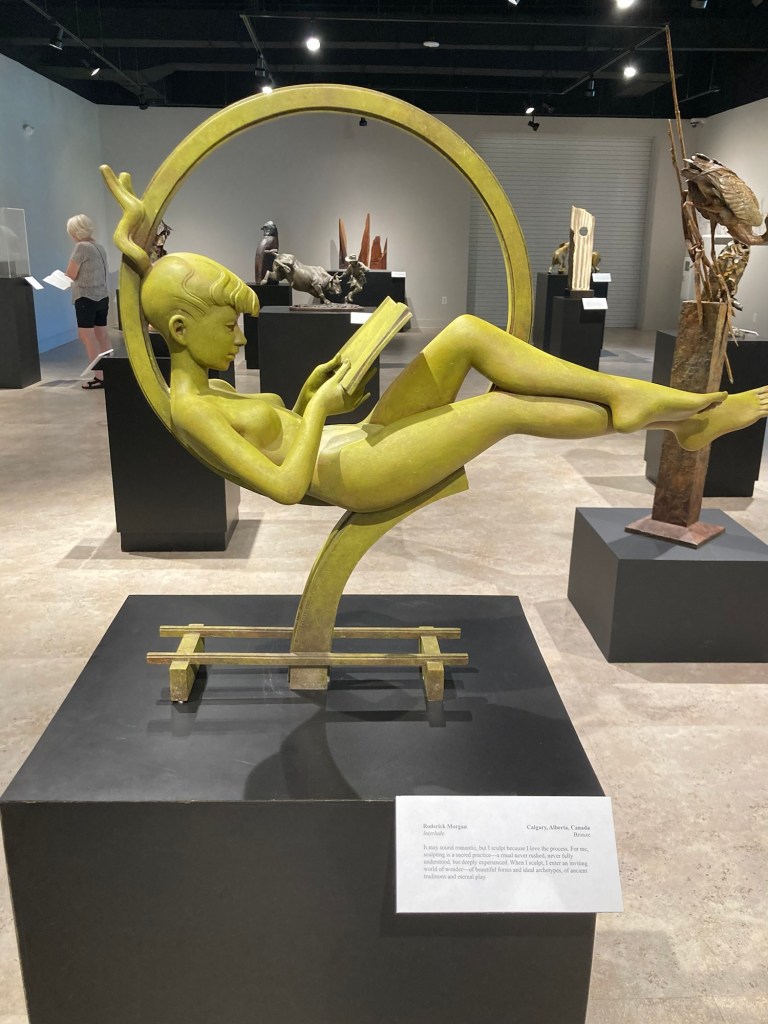
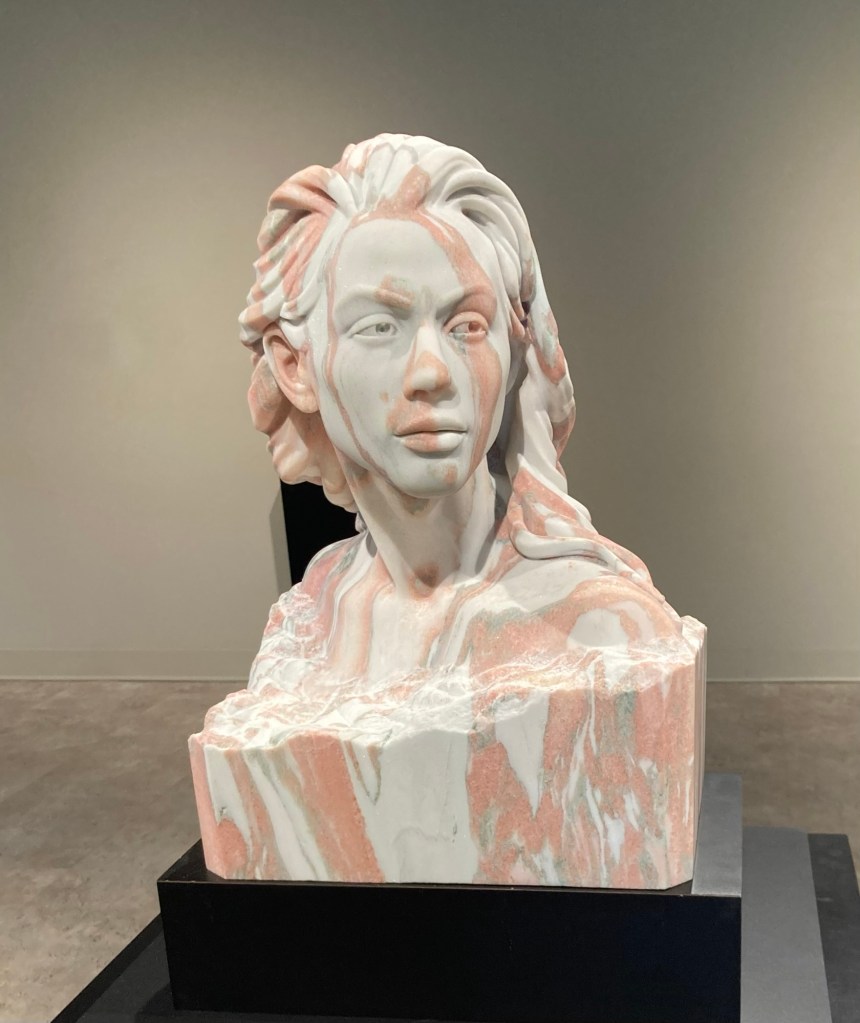
The first gallery we visited was the Brenda and Dick Rosen Gallery, where they were showcasing (along with items from their permanent collection) the National Sculpture Society Annual Awards Exhibition for the 26th year. These sculptures are for sale, so I’ve included the asking price where I have it just in case you’re interested in making a purchase.
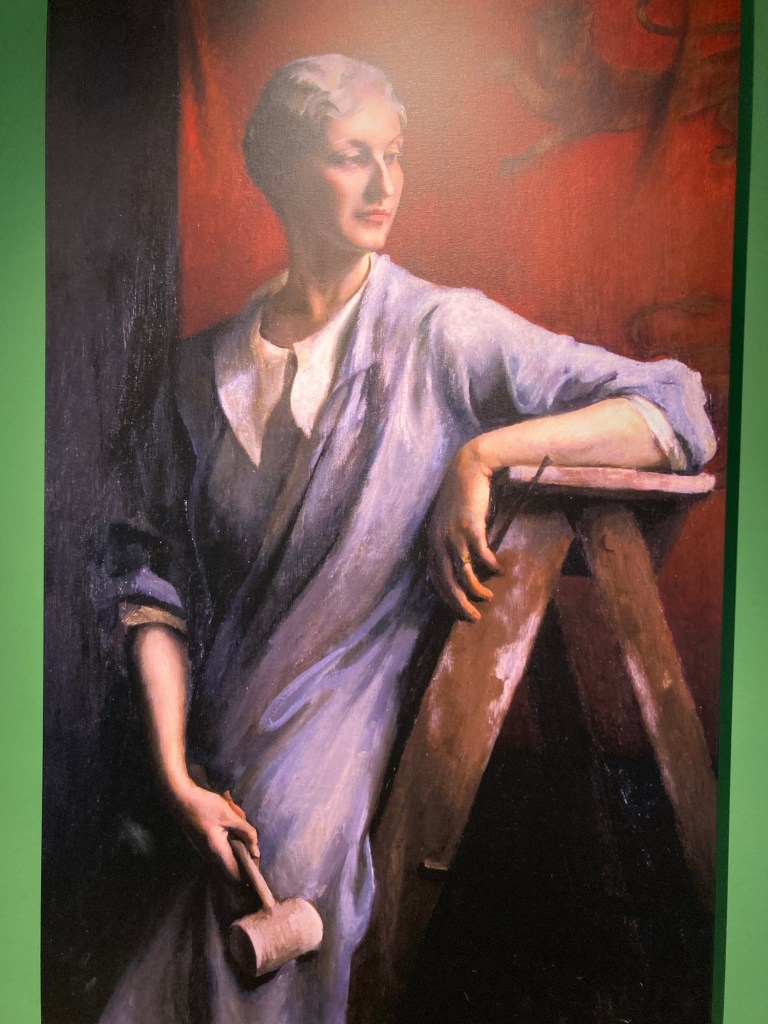
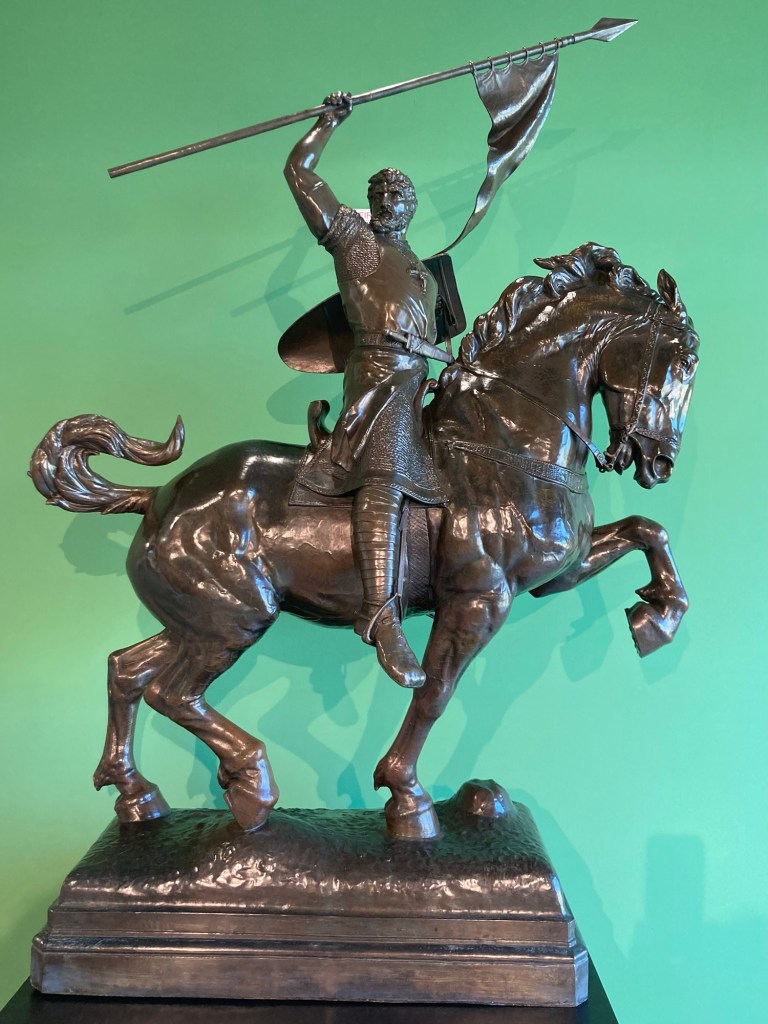
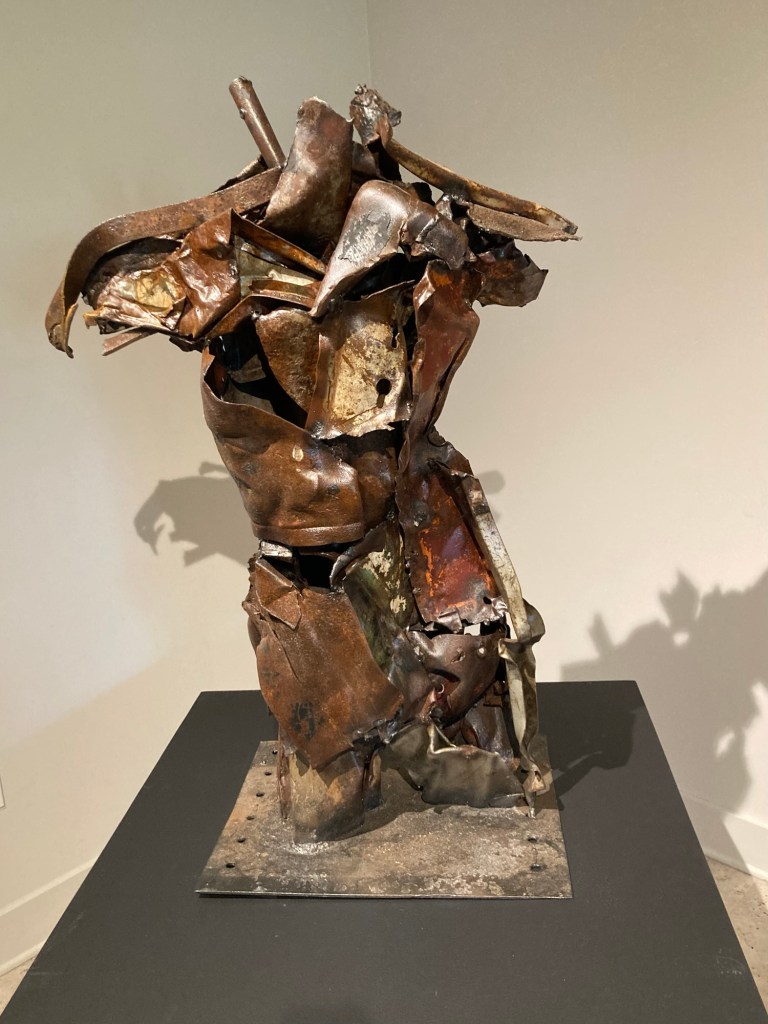
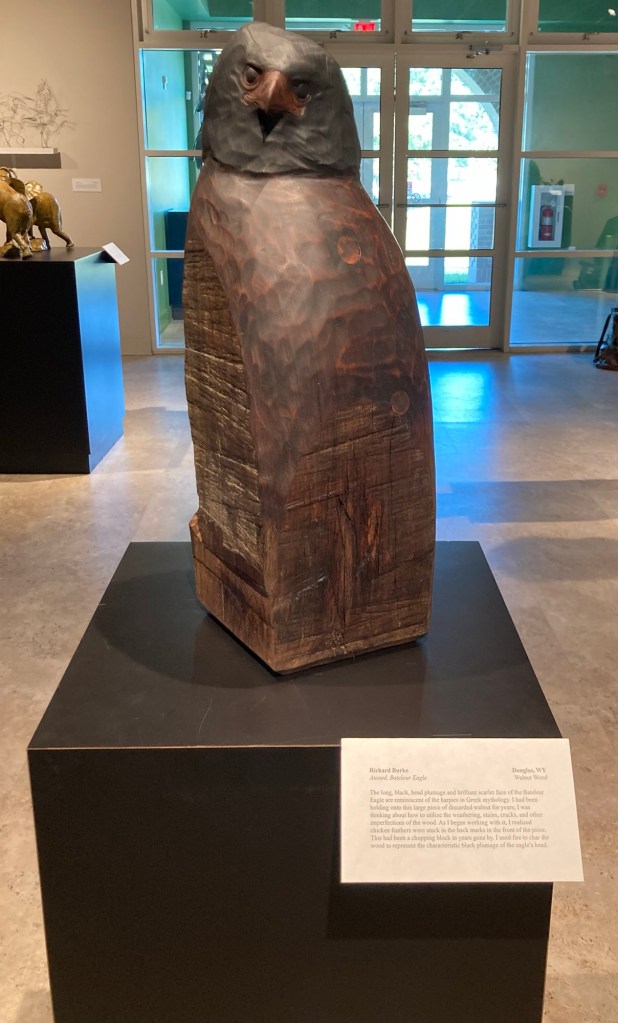
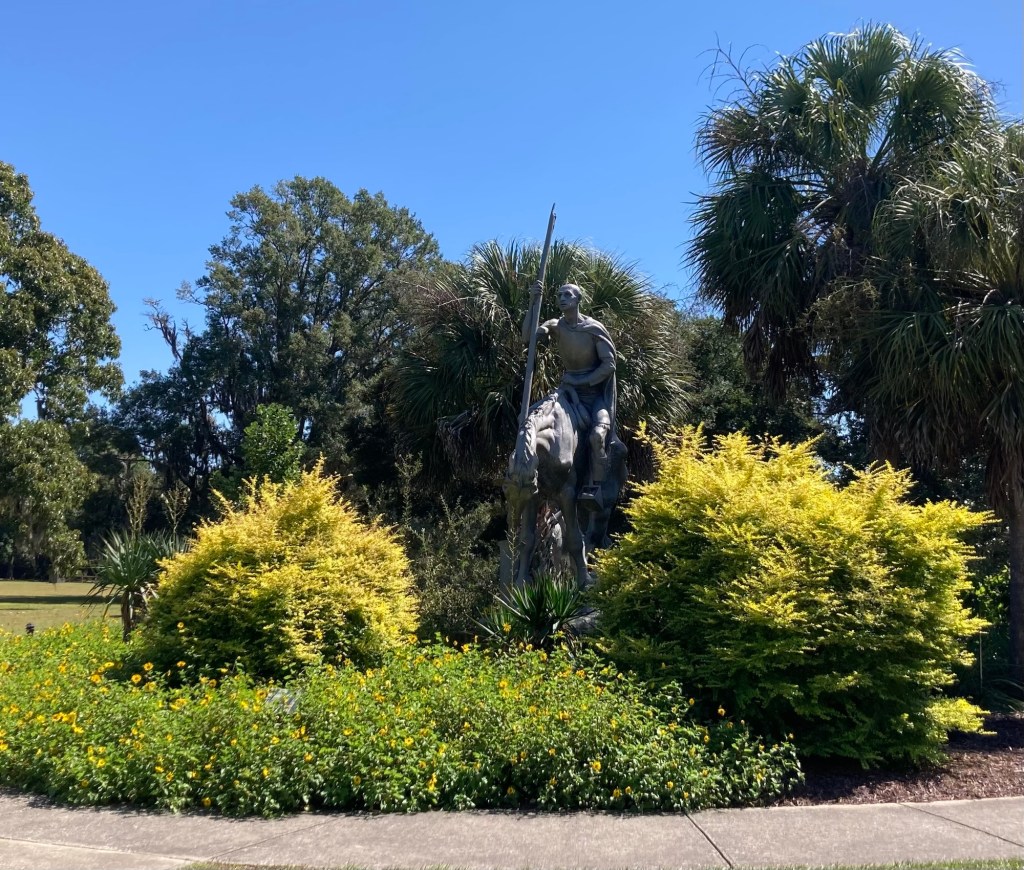
A portrait of Anna Hyatt Huntington, the matriarch and original sculptor on this land. “El Cid Campeador” by Anna Hyatt Huntington, 1927.“Torso” by Madeleine Lord, welded steel, $4,200.“Atoned, Bateleur Eagle,” by Richard Burke, walnut wood, $9,390.“Moonshadow,” by Roger Martin, bronze, $6,200.“Interlude,” by Roderick Morgan, bronze, not for sale.“Eidolon X,” by Brendan Johnston, Norwegian rose marble, not for sale
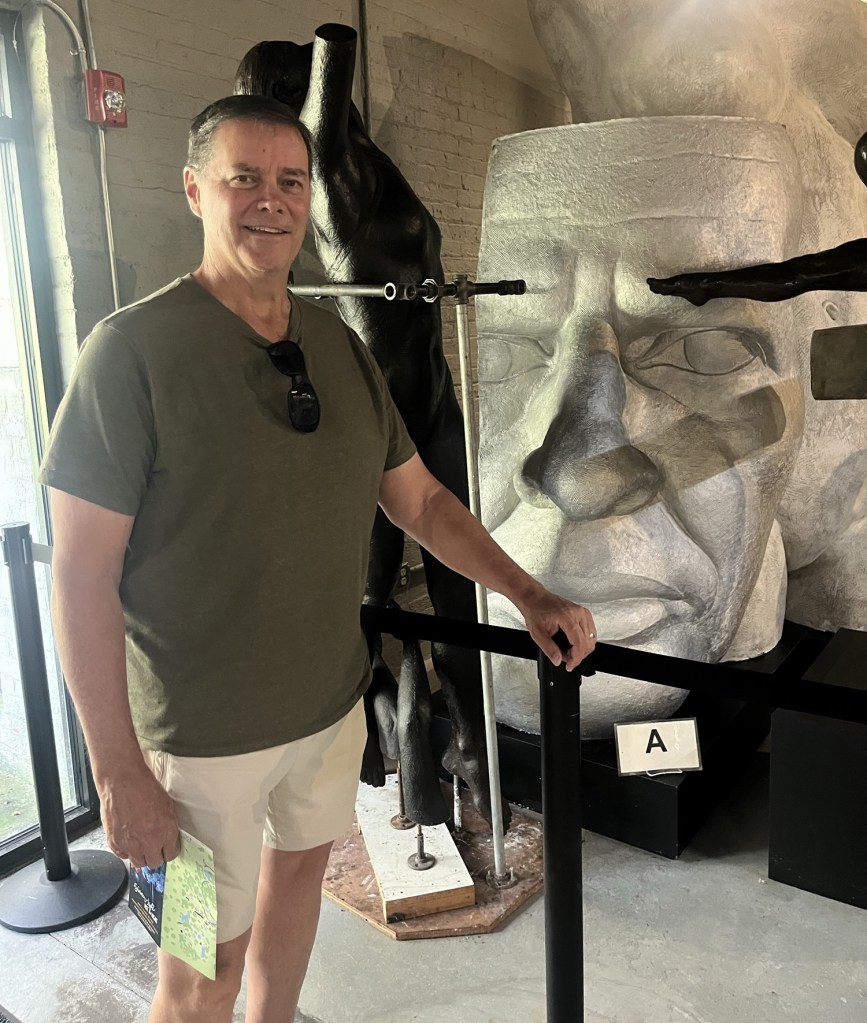
The second gallery that we visited was the Offner Sculpture Center, which the volunteer working there described as their storage gallery, as it allows them to display the portion of their holdings that they can’t place on the grounds for various reasons. In this gallery, we were also able to watch a film of Richard McDermott Miller creating a sculpture, and we finally found a big head for Bob.
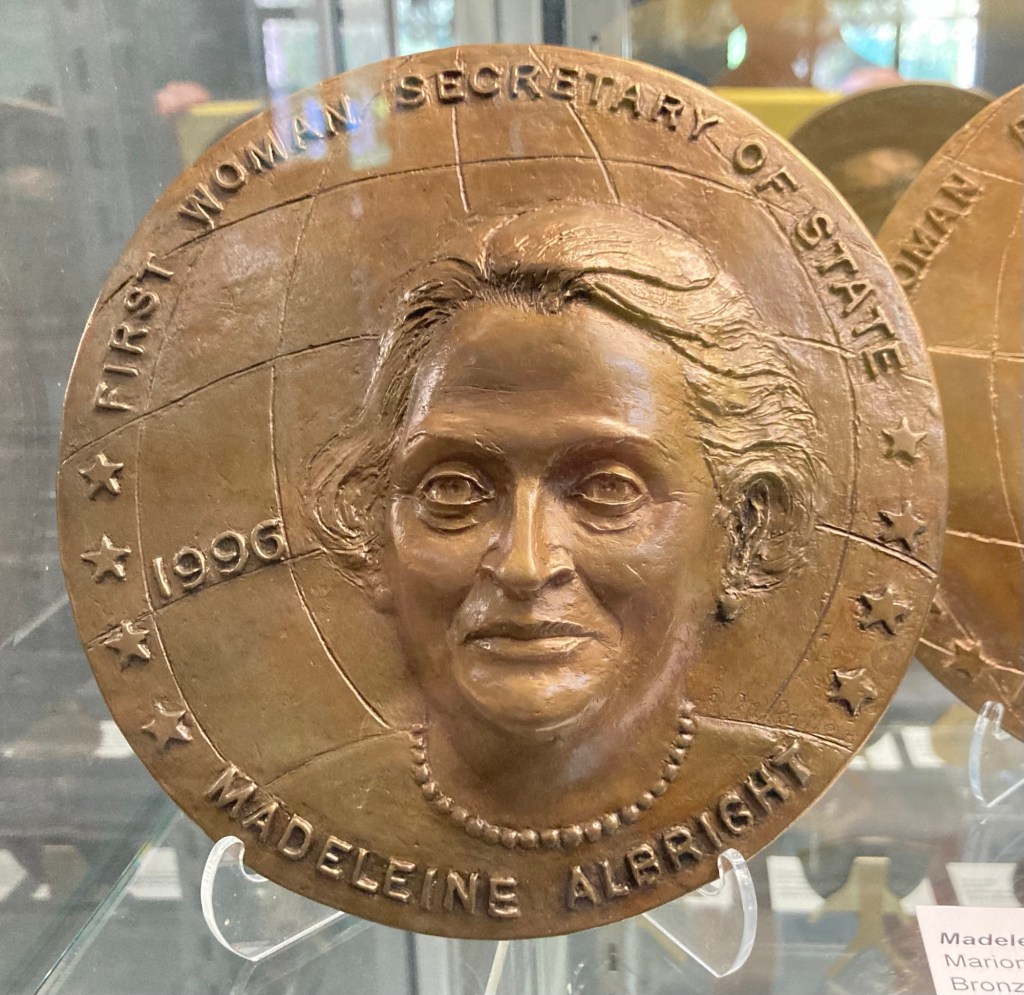
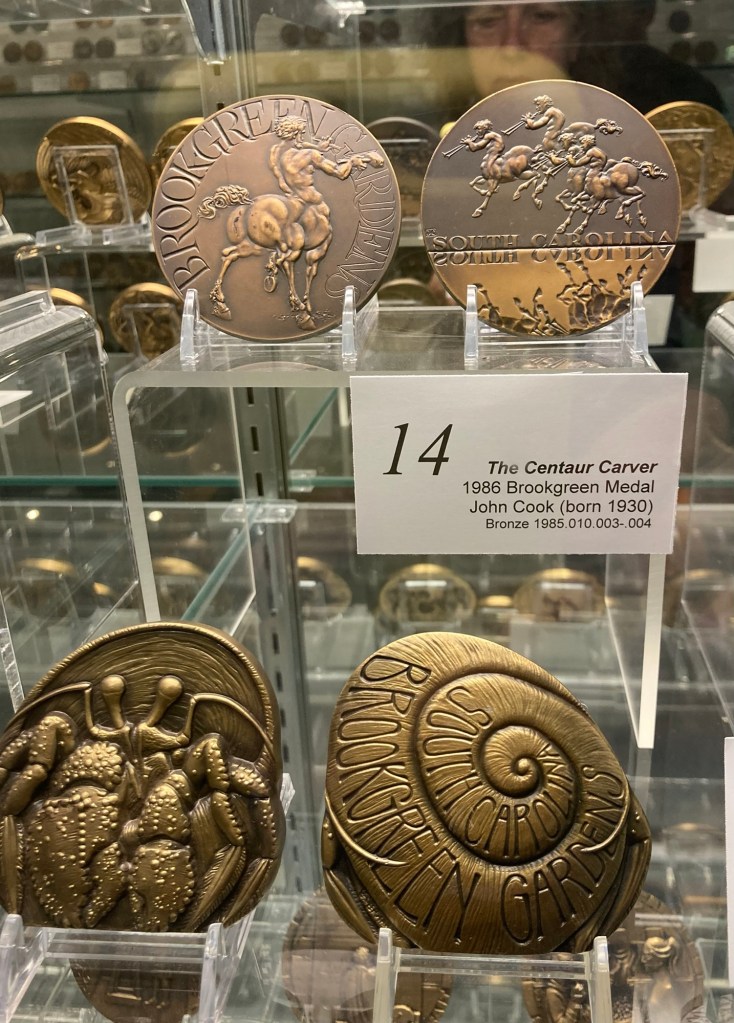
They have a large collection of medals, which I wouldn’t necessarily thought of as sculpture, but it does seem to be a different type of sculpture.
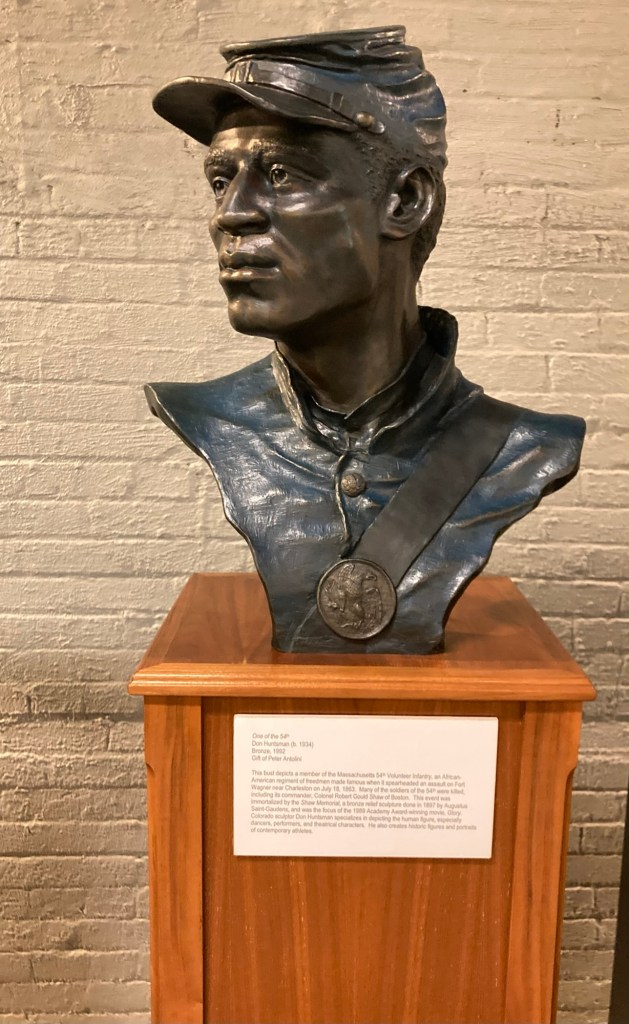
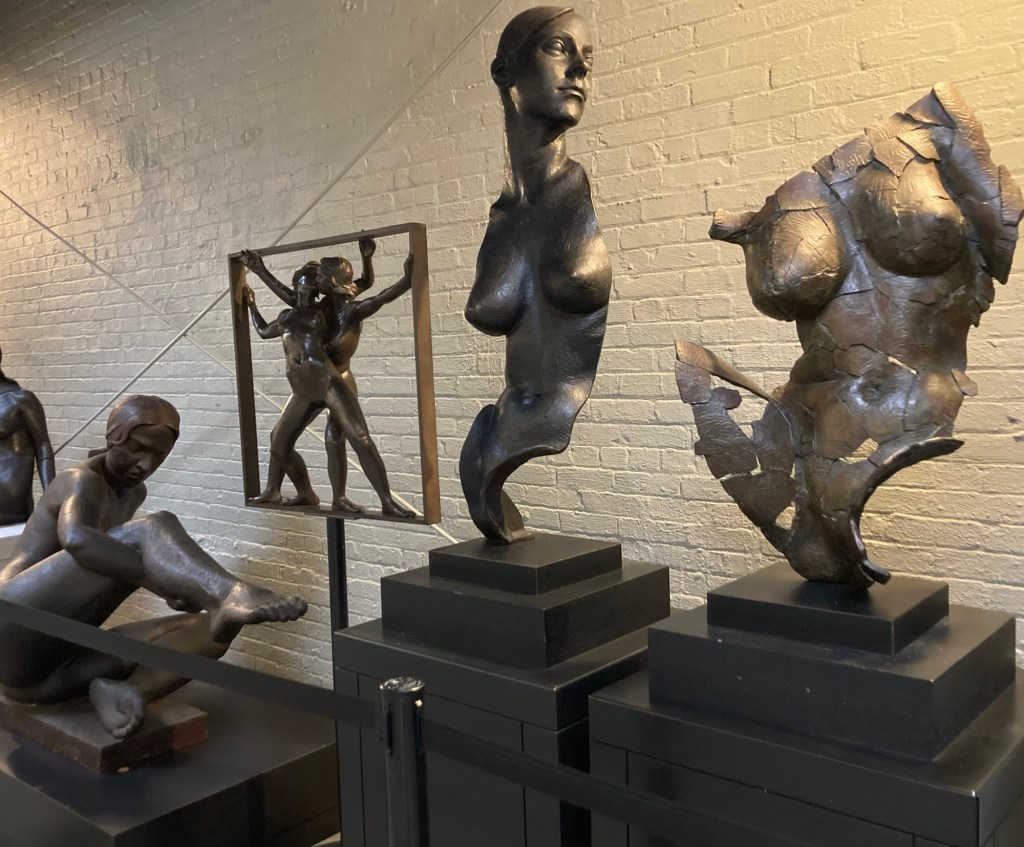
“Madeline Albright Medal,” by Marion Roller, bronze, 2015.The lower medals are “The Hermit Crab,” by Don Everhart II, bronze, 1991.“One of the 54th,” by Don Huntsman, bronze, 1992Bob with “Rome,” by Richard McDermott Miller, plaster, 1968More sculptures by Richard McDermott Miller
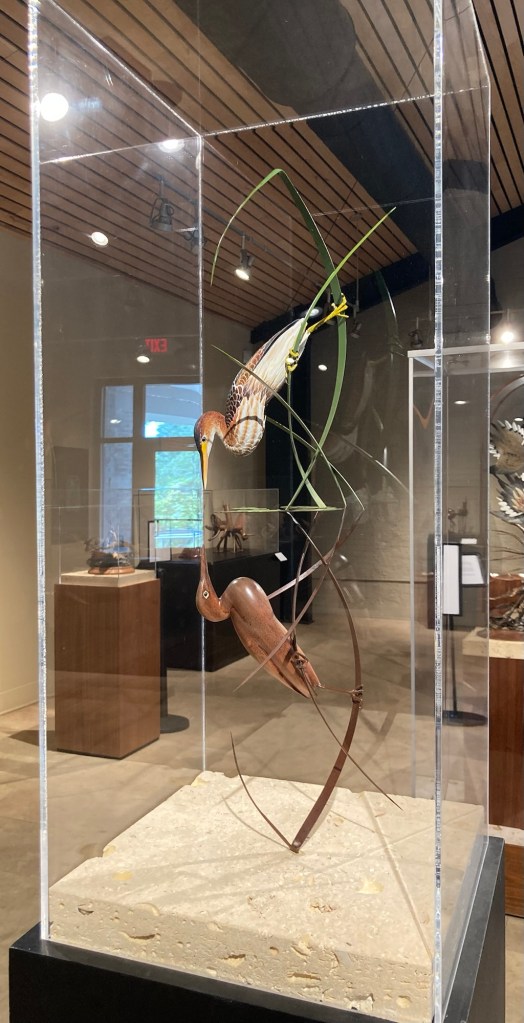
The third gallery we visited was the Bleifield Gallery. This one was all sculptures of animals — mostly birds.
“Least Bittern,” by Grainger McKoy, basswood, walnut, steel, and oil paint, 1987.
The last gallery we walked to, the Noble and Jennewein Galleries, didn’t have an exhibit, but was showing an overview film about the creation of Brookgreen Gardens. We always an enjoy a good overview film. On the walk to these galleries, we saw more outdoor sculptures.
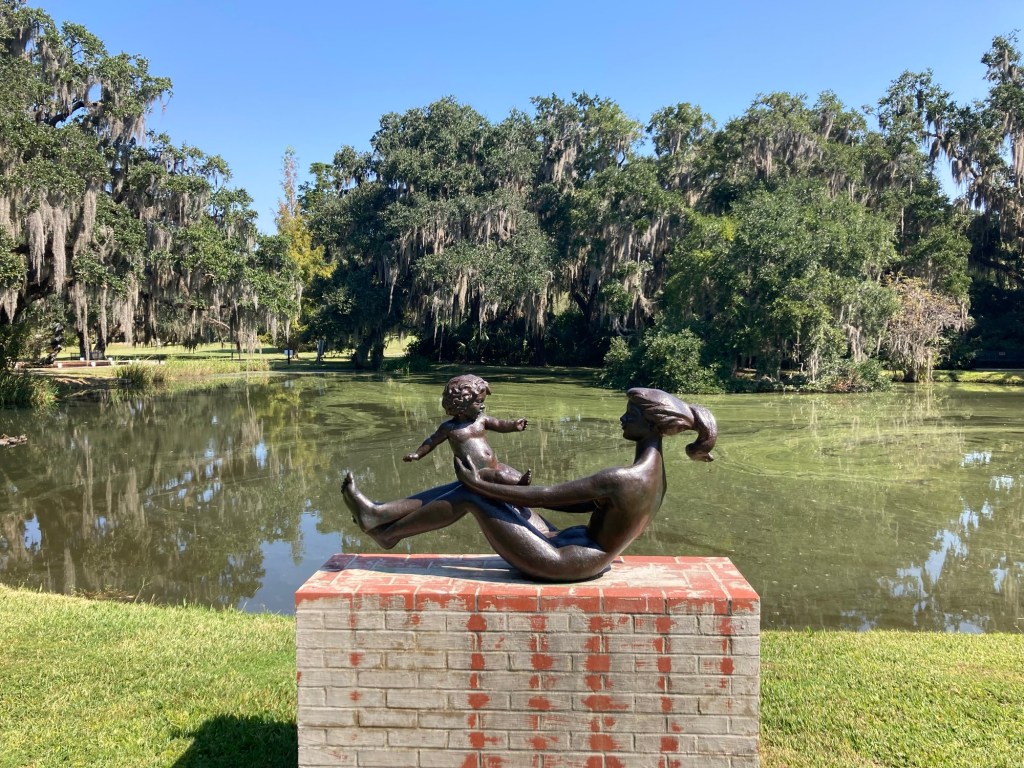
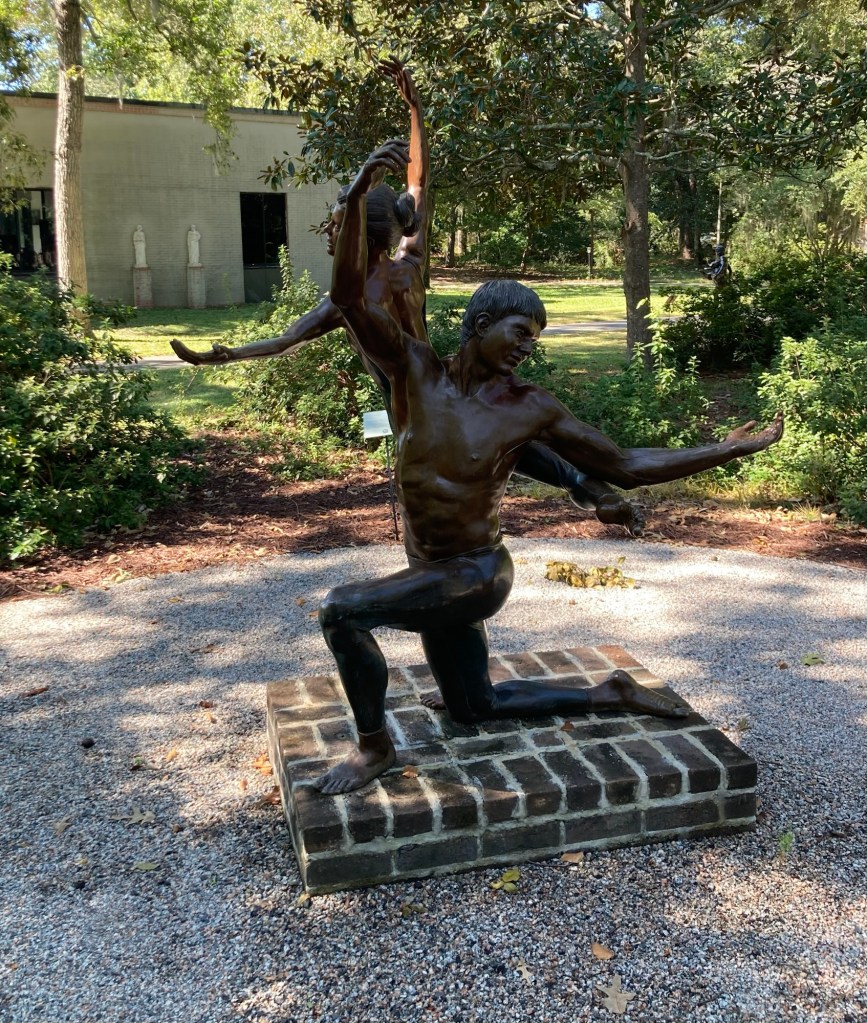
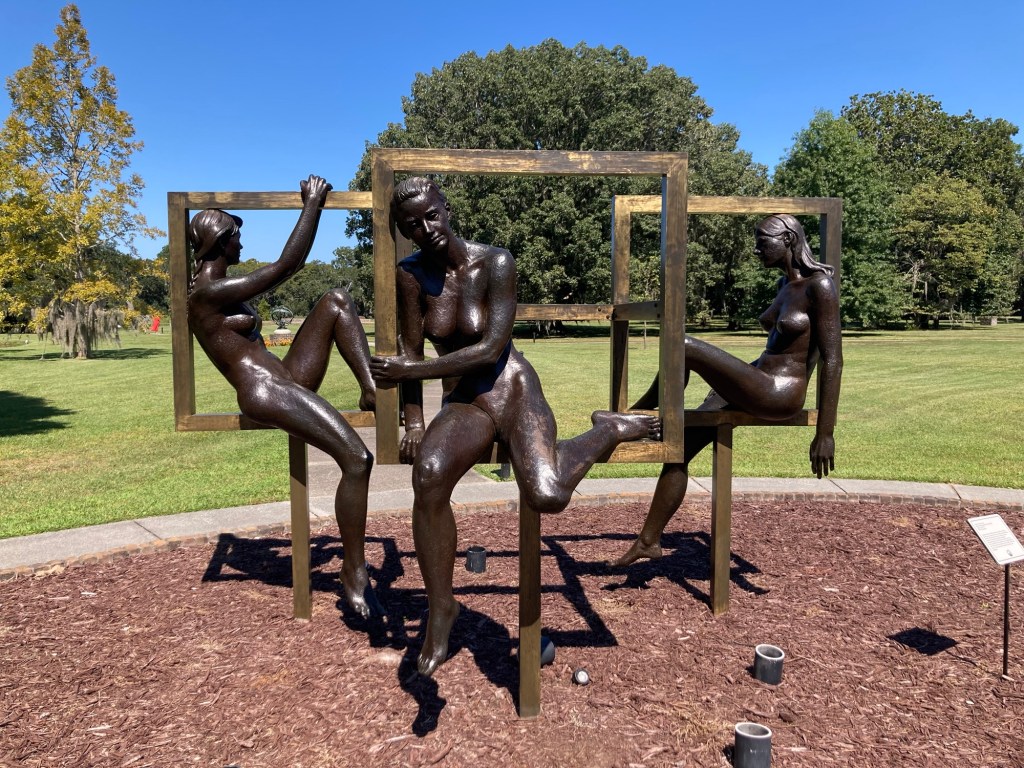
“Resting Dancer,” by Harold Langland, bronze, 2000.“Raphell,” by Bruno Lucchesi, bronze, 1983“Joy of Motherhood,” by Willard Newman Hirsh, bronze.“Phryne Before the Judges,” by Albert Walter Wein, limestone, 1948
Also new today, a group of at least 50 people were doing yoga in one of the gardens this morning. It was the perfect setting. It’s just a lovely, serene place to spend some time.
Bob and I went back to Brookgreen Gardens today on our still valid tickets to see the remainder of the park — primarily the Lowcountry, heritage farm, and zoo areas. of course, we also saw more sculptures and more of the beautiful grounds.
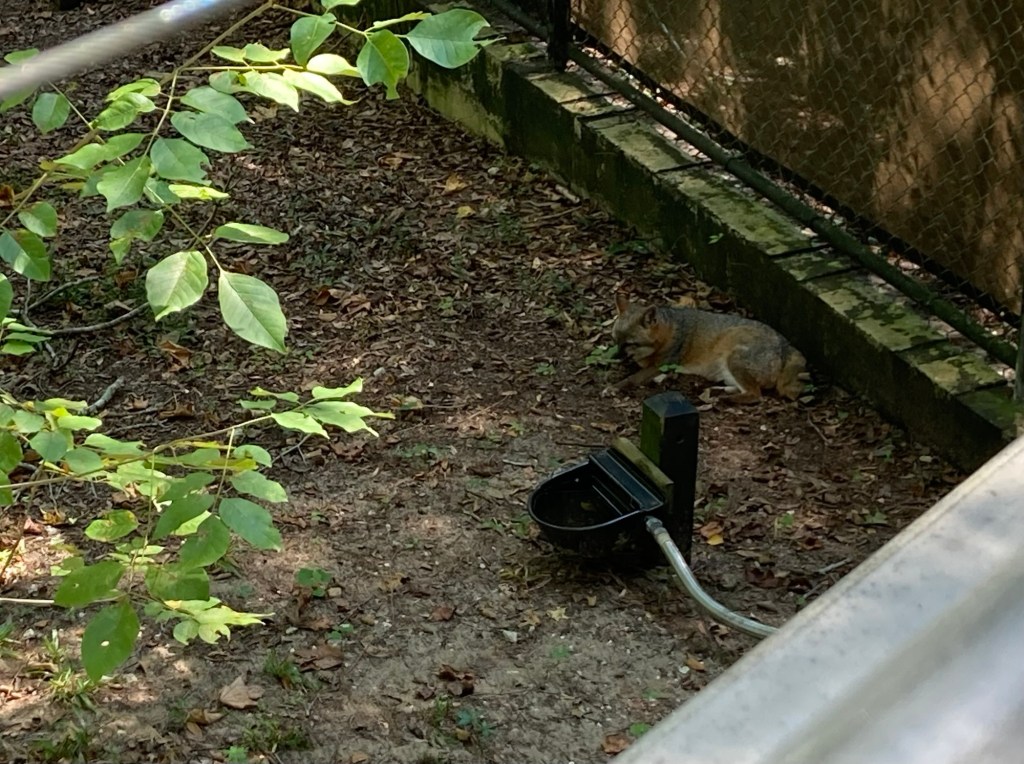
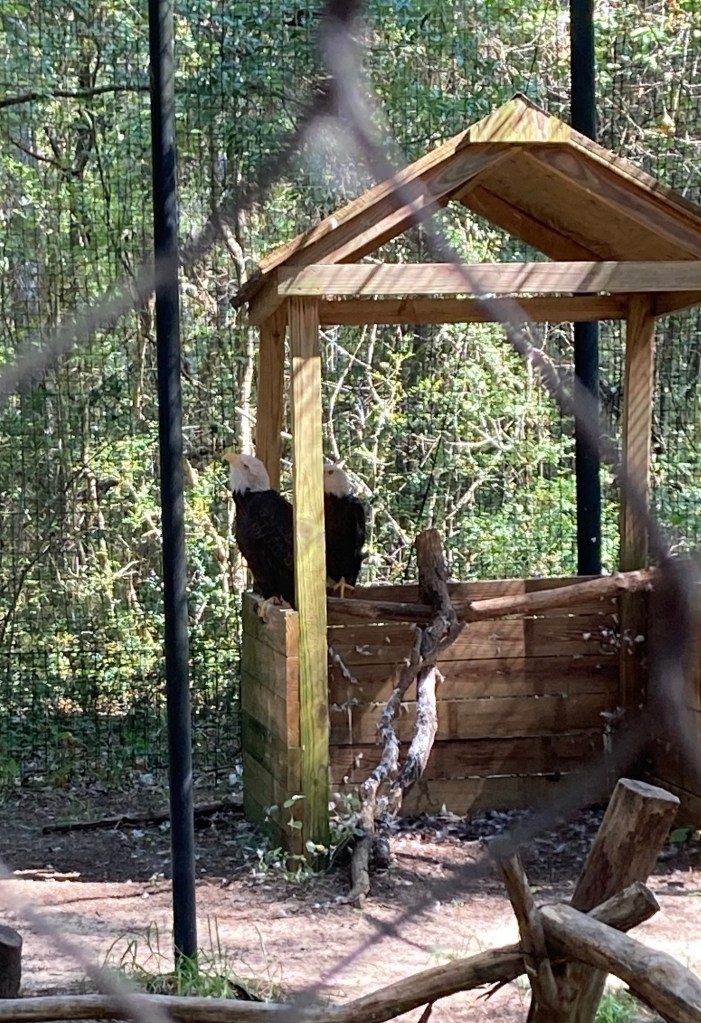
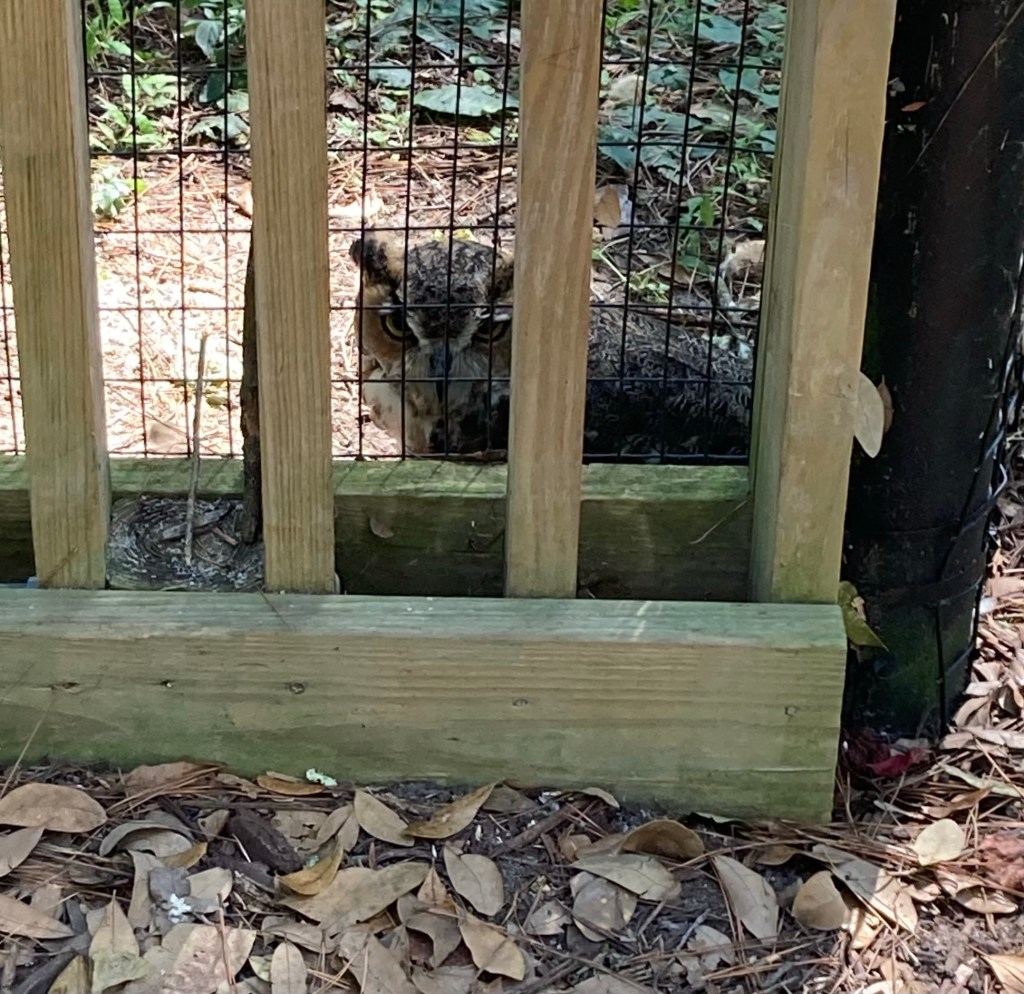
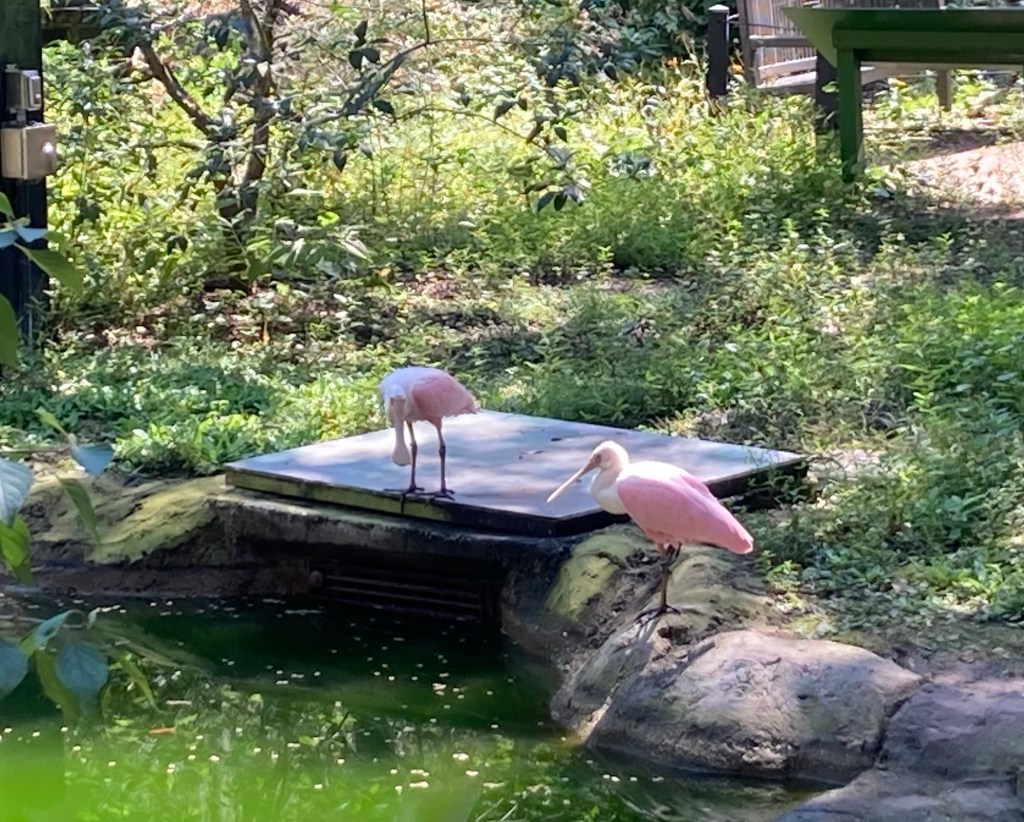
The farm and zoo are part of their mission to showcase animals native to the Southeast, and many of the zoo animals seemed to be rescued after some type of injury. Many of them were well camouflaged in their environments and/or difficult to capture through the metal enclosures, so my apologies if the animal photos feel mostly like an eye test or a Where’s Waldo exercise.
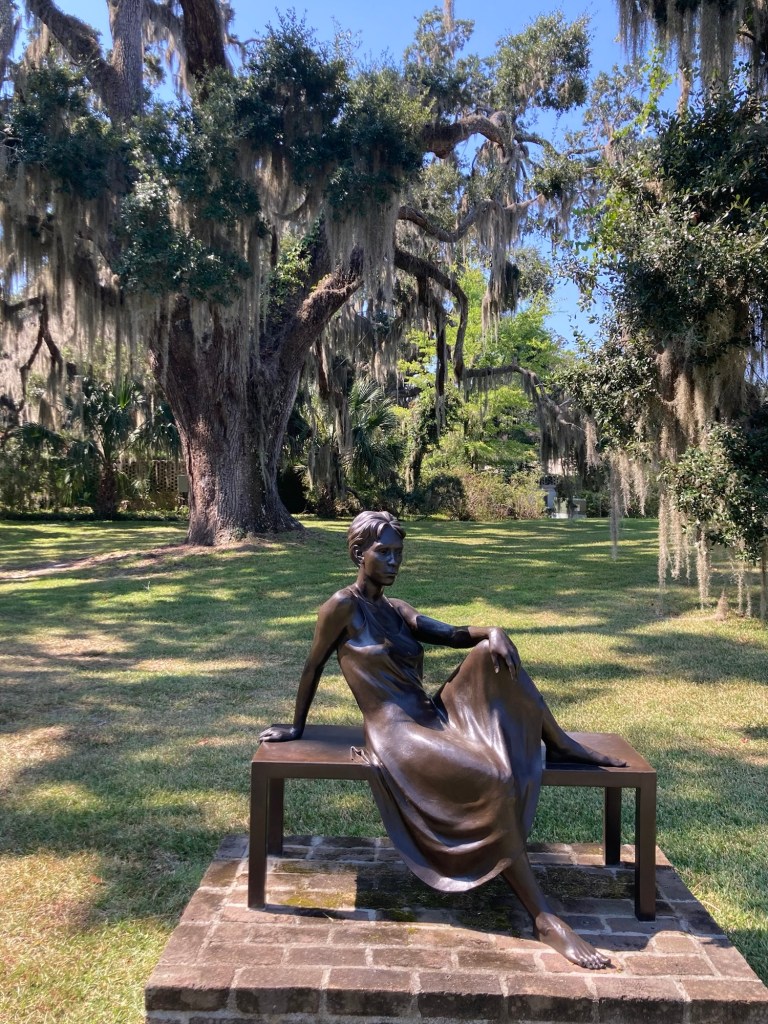
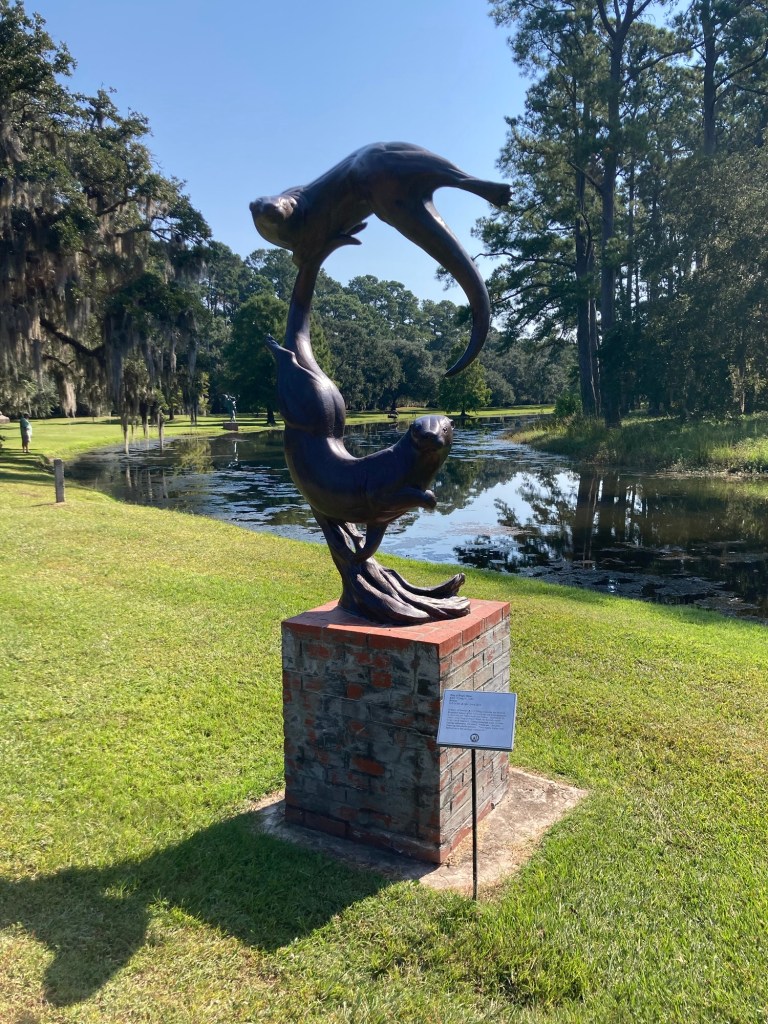
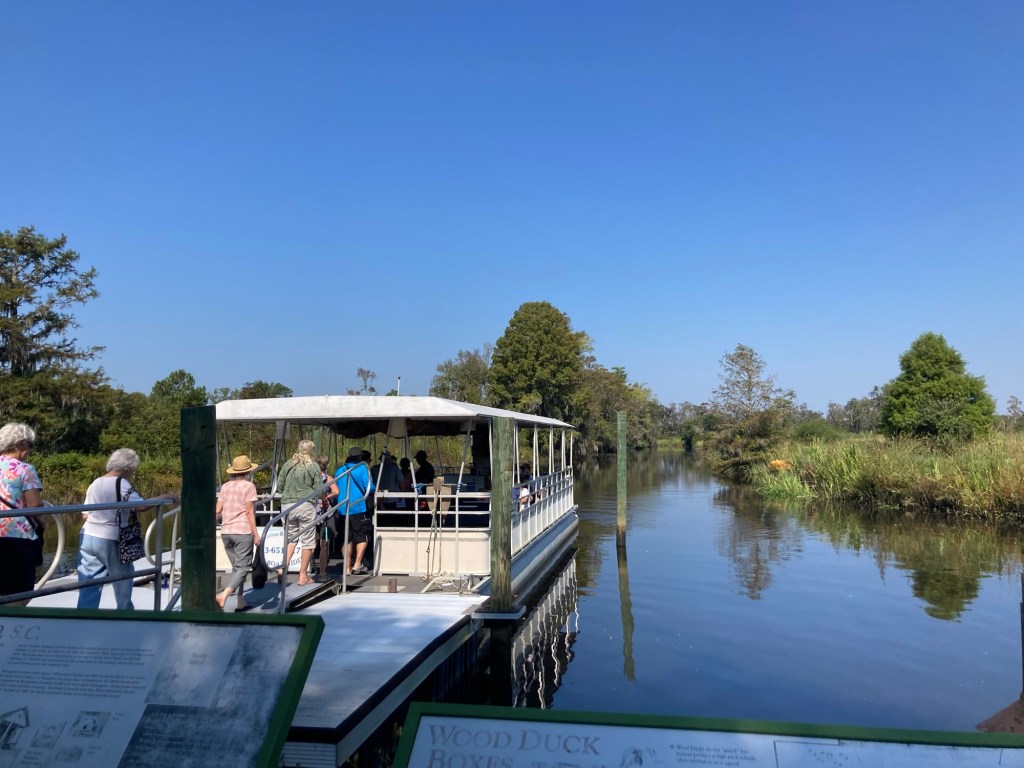
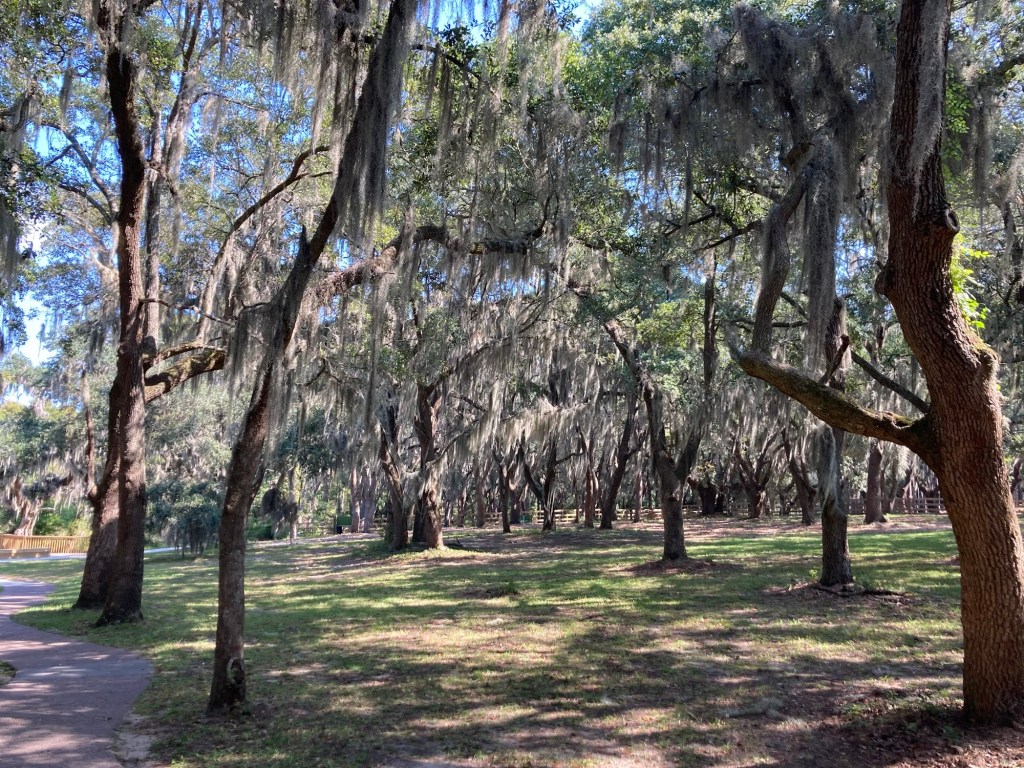
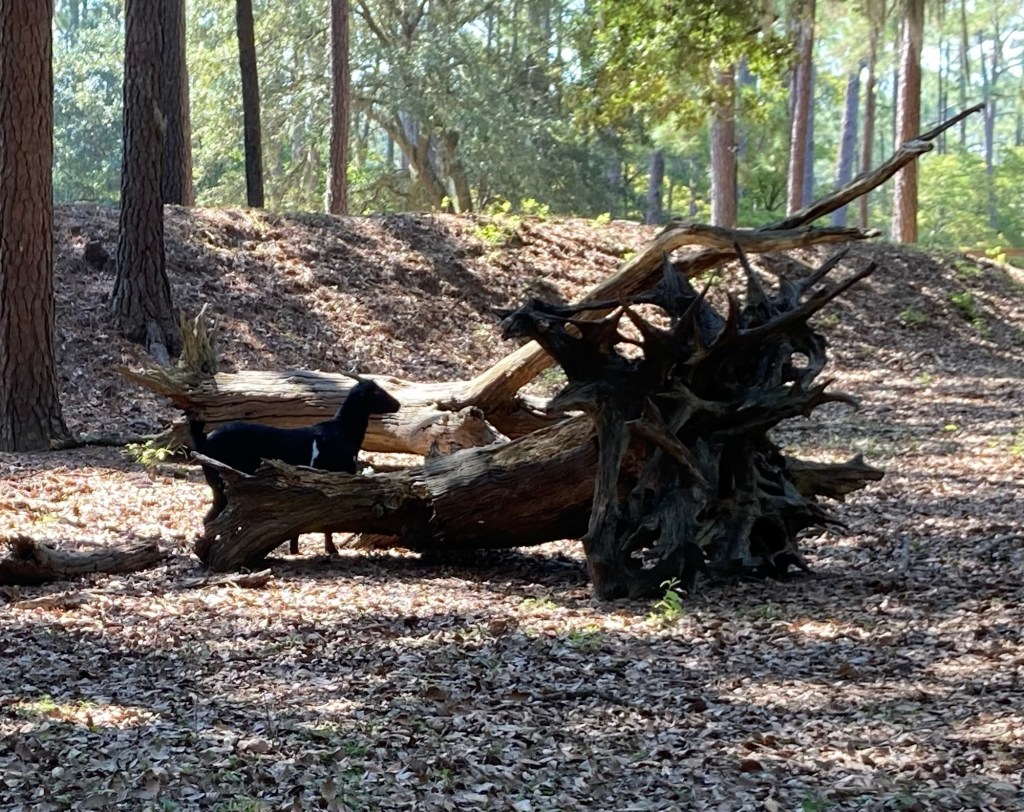
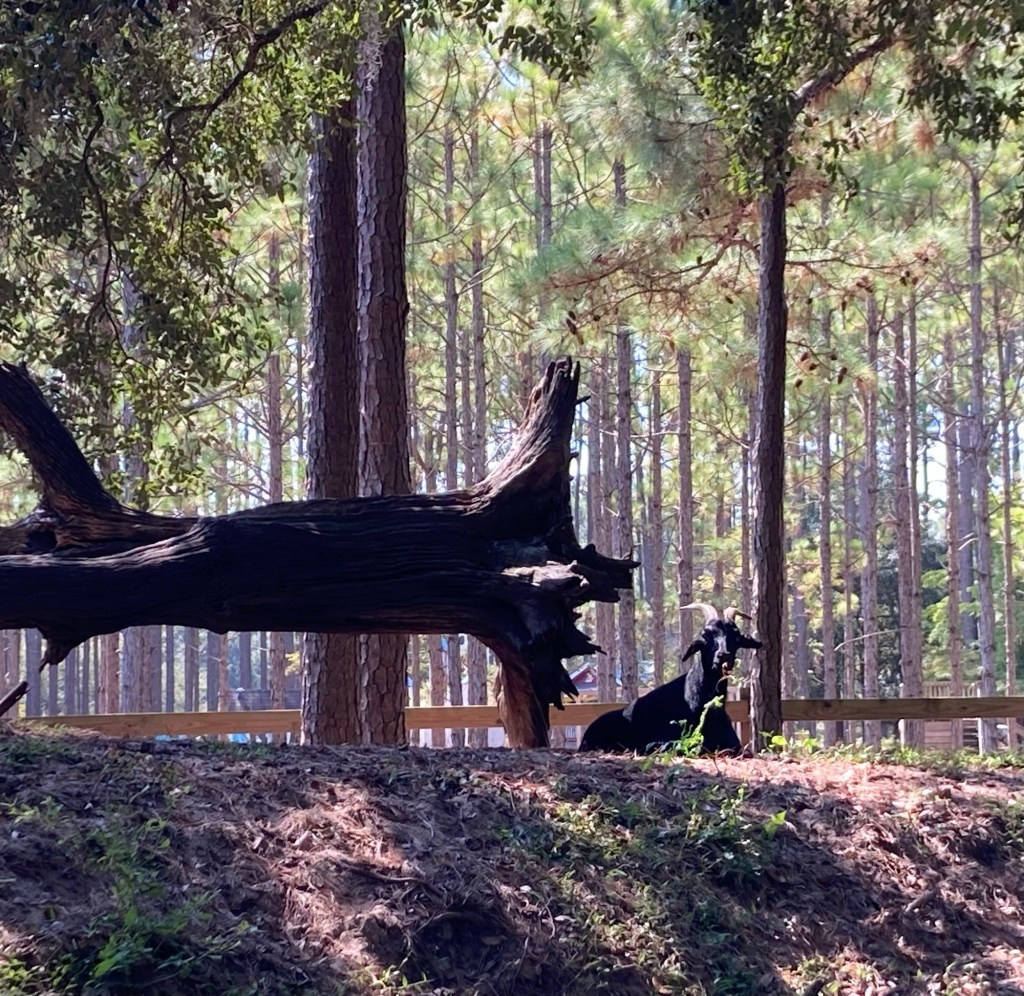
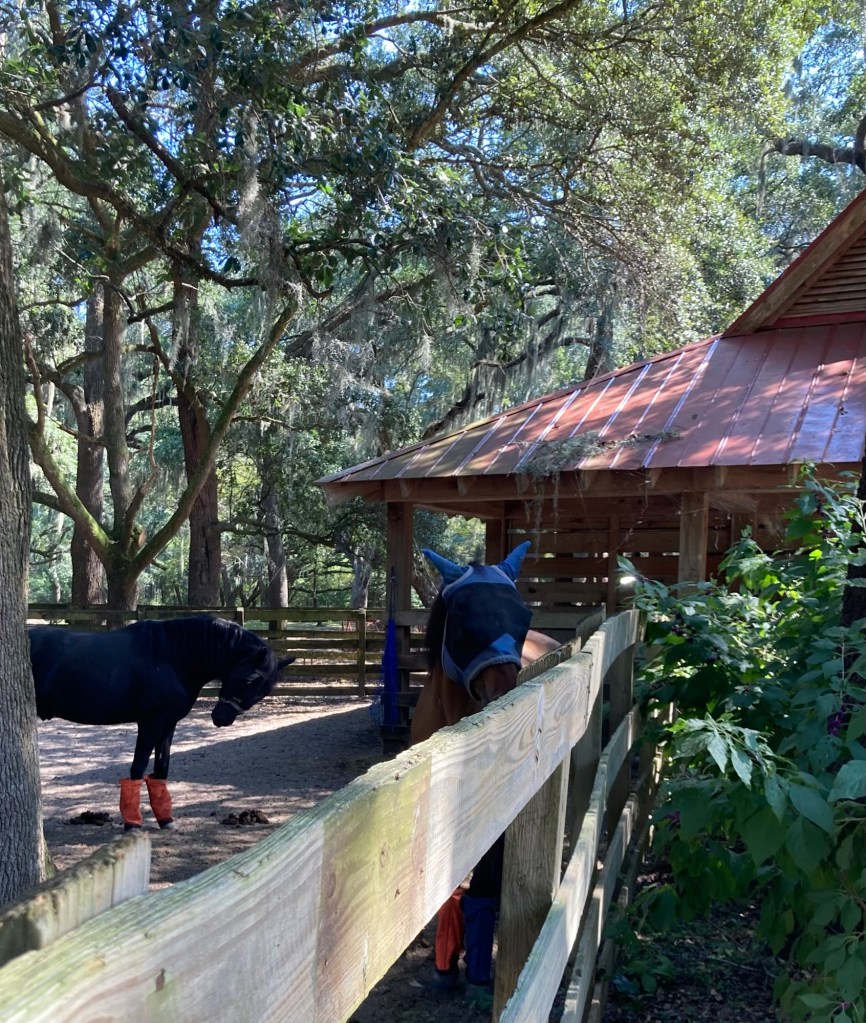
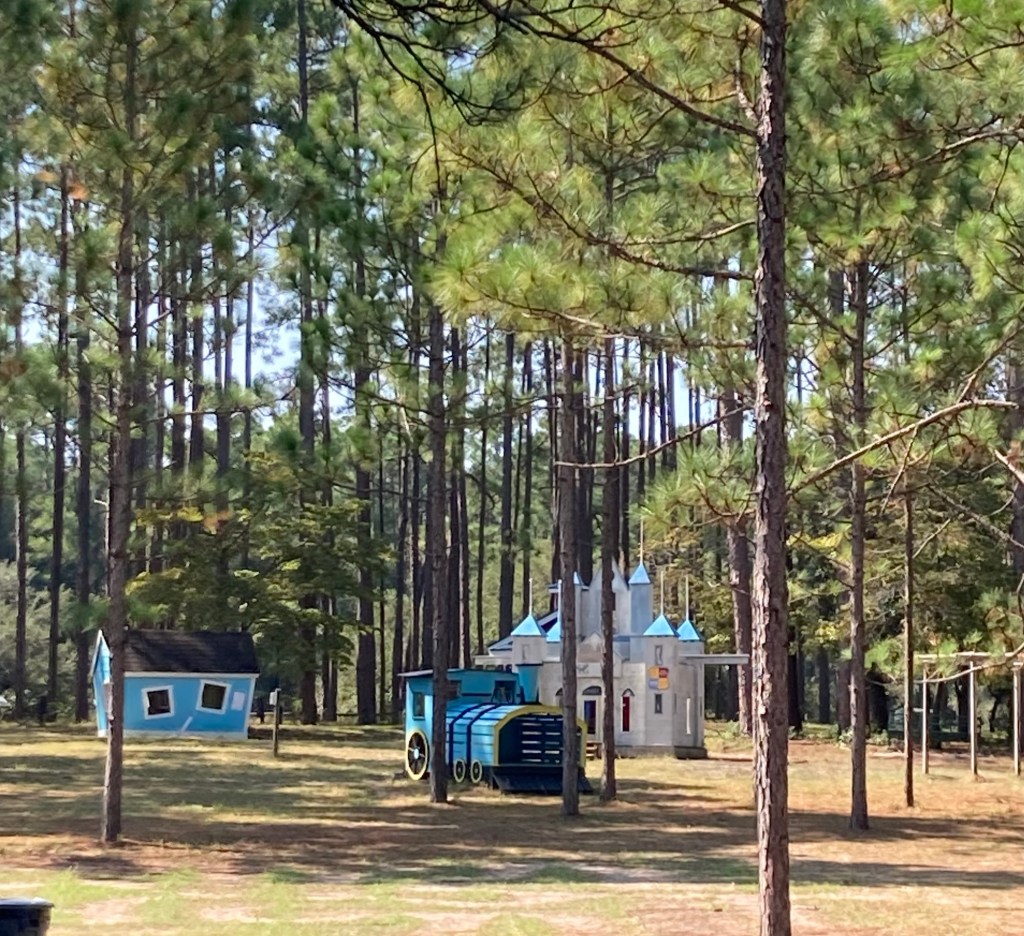
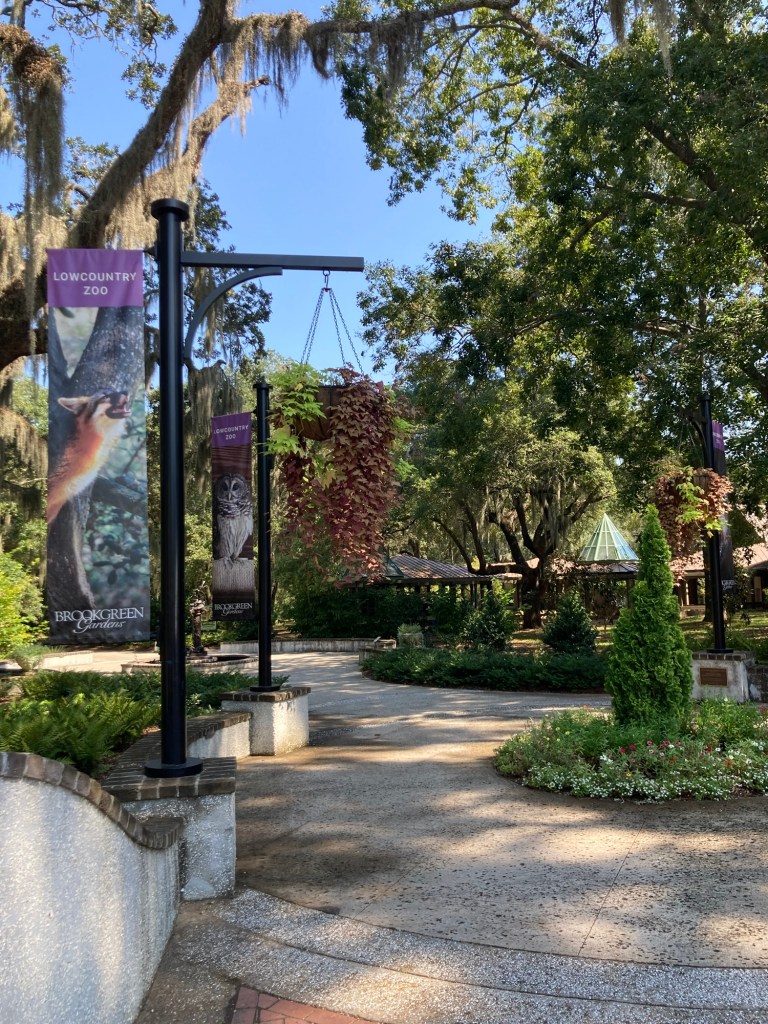
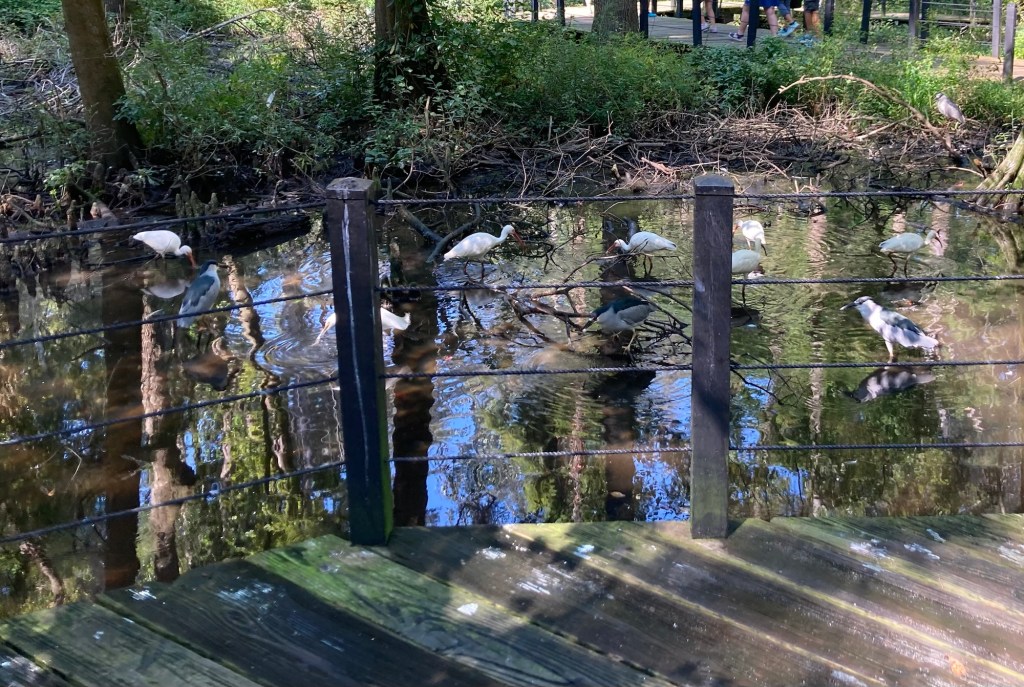
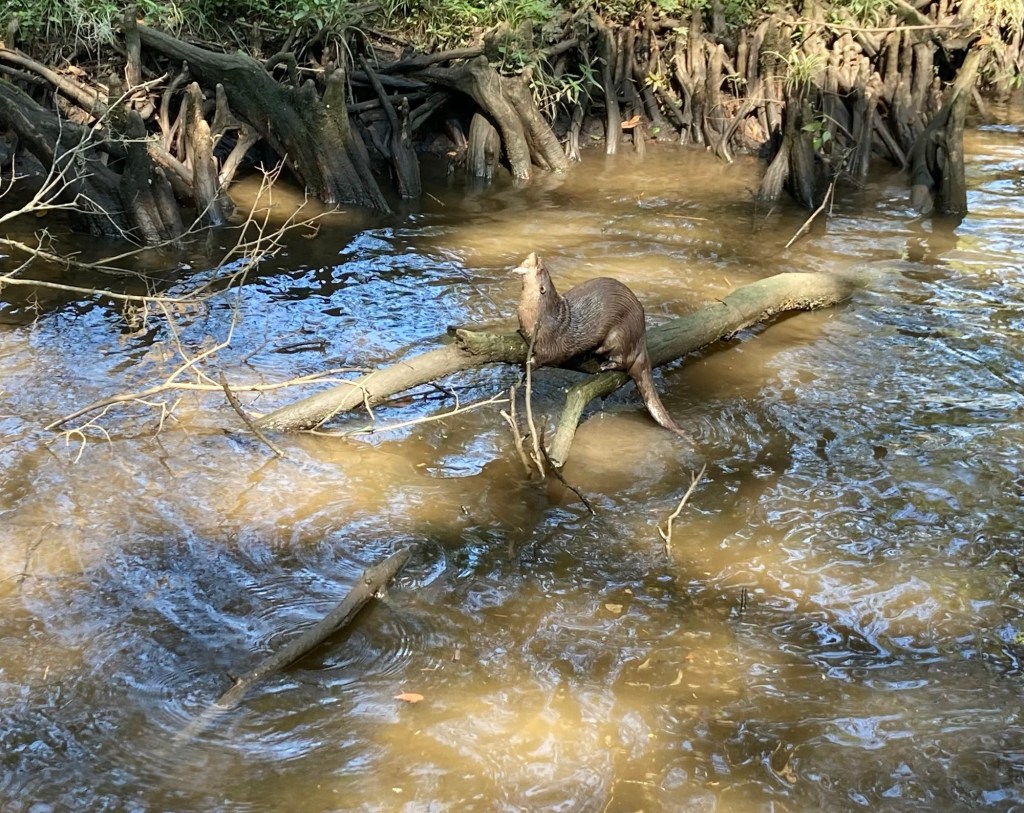
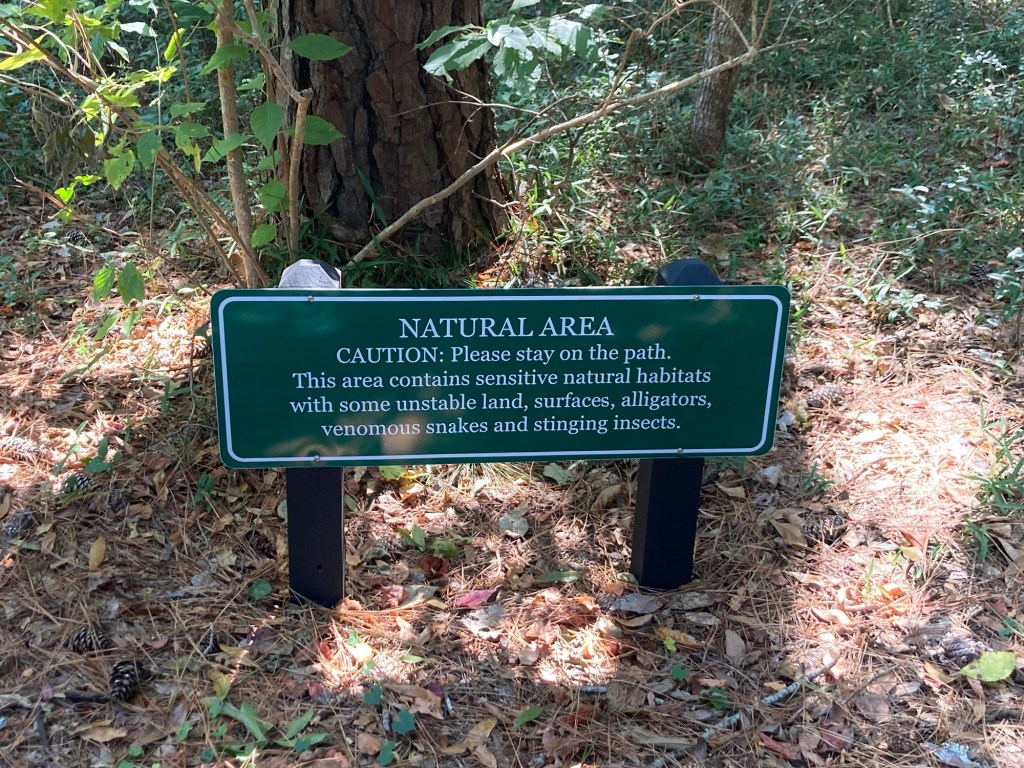
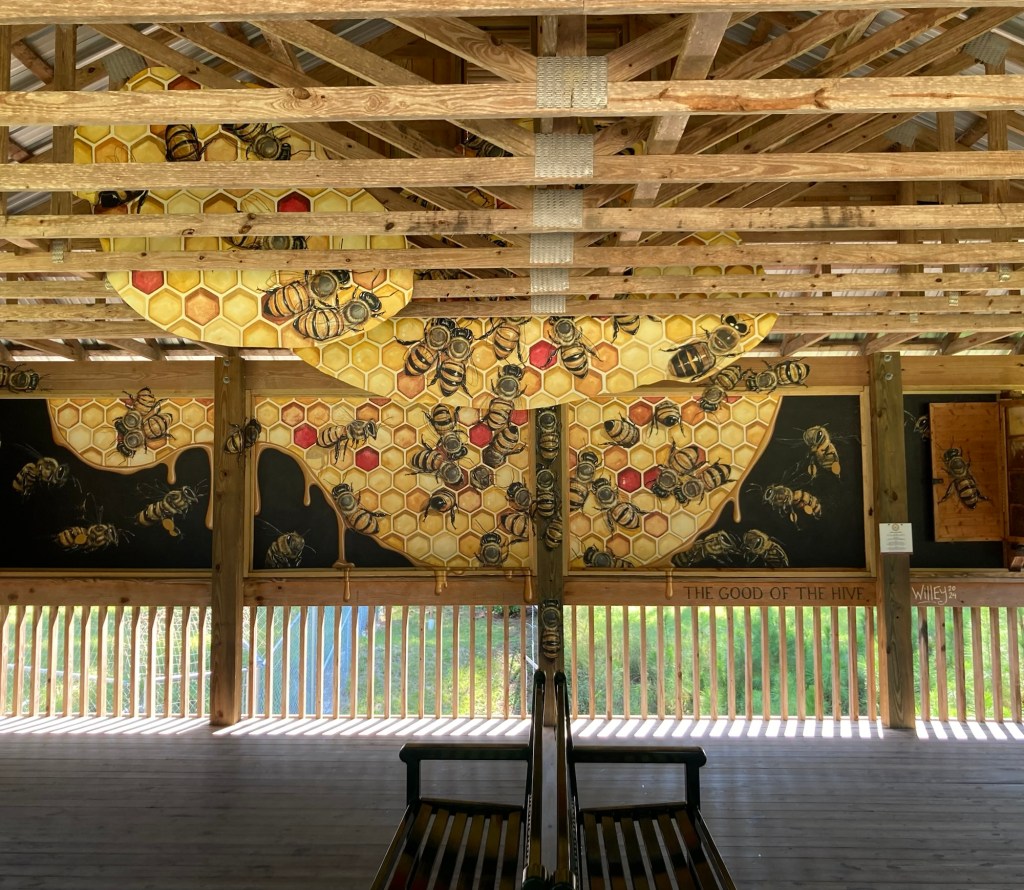
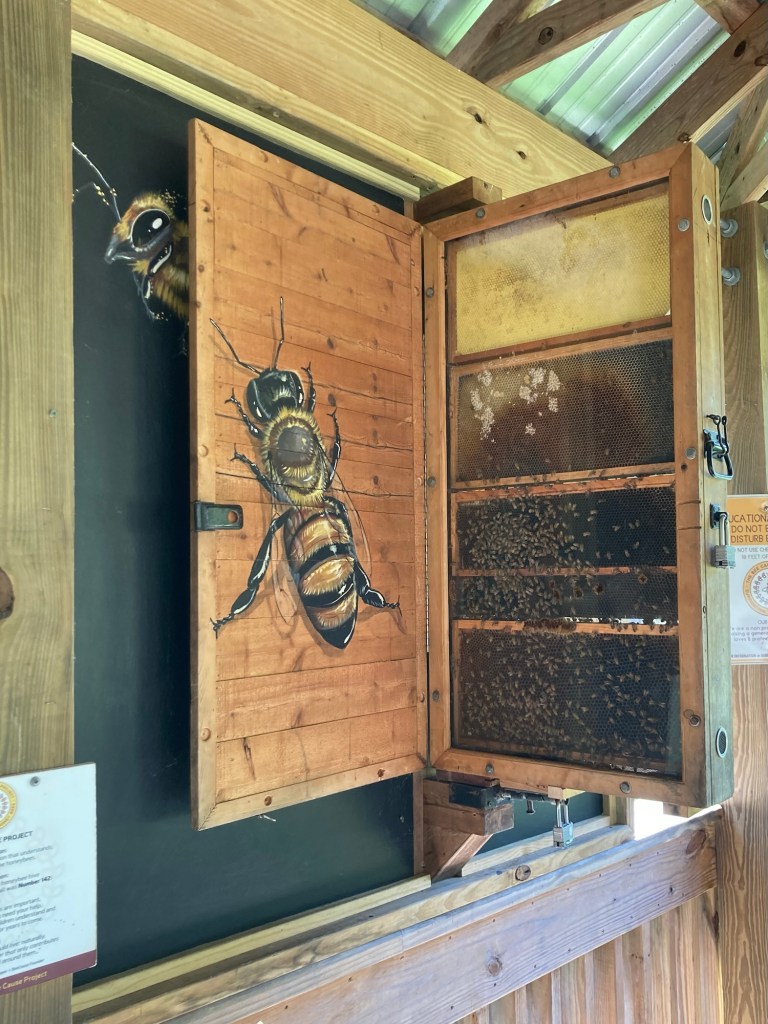
“Ring of Bright Water” by Kent Ullberg.“Presidential Eagle” by Sandy Scott, 2004.“Parade” by Rosie Sandifer, 2002. The potted plants are out as the gardens are setting up for a plant sale on Saturday.“Heron, Grouse, and Loon” by Elliot Offner, 1992, in front of the Leonard Pavilion.A boat loading for a cruise along the Waccamaw River, which borders one side of the gardensA boardwalk through part of the Lowcountry exhibit, which discussed life on a rice plantation More Live Oak trees with Spanish mossA view of a swamp area along the Waccamaw River. This area started as swamp was converted to rice fields and has now been converted back into a swamp.A goatOn the way out, he stopped chewing and “posed” while I got his photo.Two Marsh Tacky horses. This breed was brought over by Spanish settlers in the 1500s.A children’s play areaA floral butterfly created by garden staff and volunteers in celebration of the 50th anniversary of the book, “The Very Hungry Caterpillar.”The entrance to the zooMarsh birds, like egretsA river otter eating a fish that was thrown to himThis sign kept us alert.A red fox, reallyTwo bald eaglesBob spotted this barn owl. 2 Roseate Spoonbills A bee exhibit And hive
Last week, Bob and I drove to the town of Conway, South Carolina, to visit the Horry County Museum. The drive into Conway made us curious to see more. We drove back today to walk their Riverwalk along the Waccamaw River and Kingston Lake and check out their downtown. We got more than we bargained for and continue to be impressed with this town.
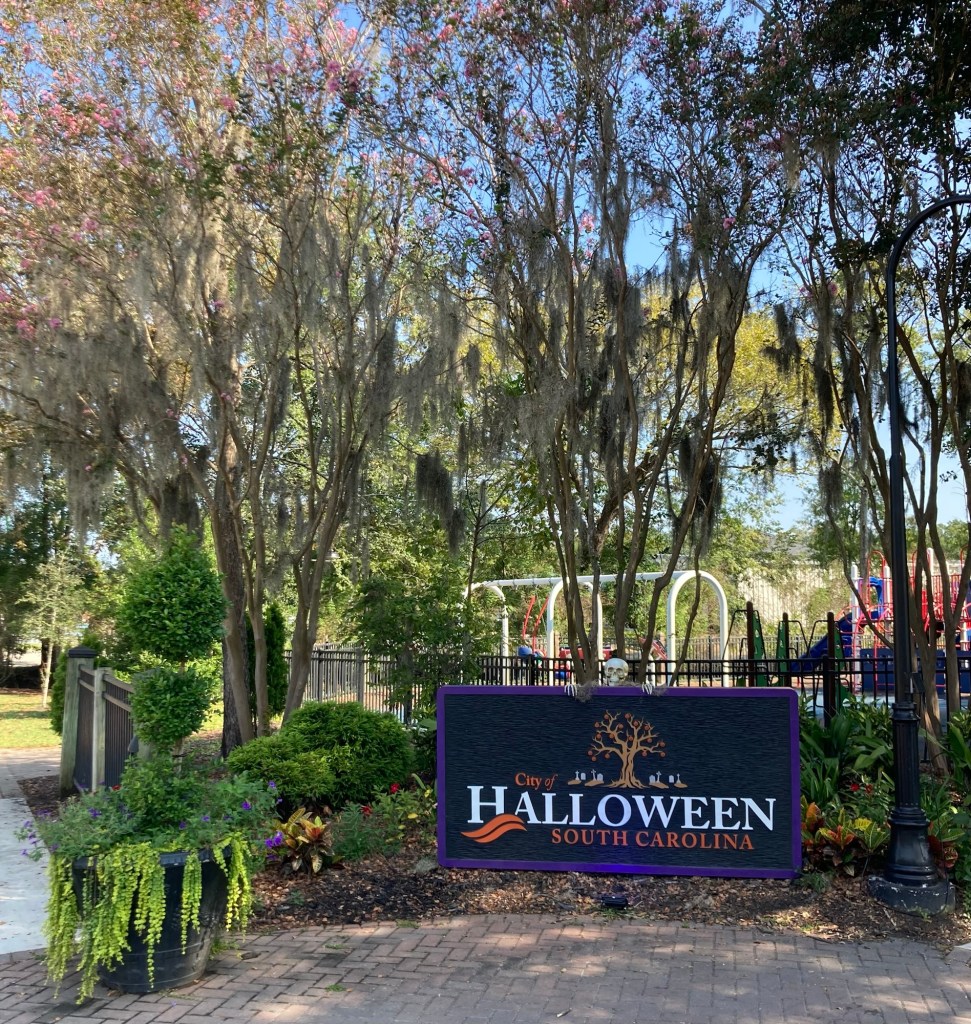
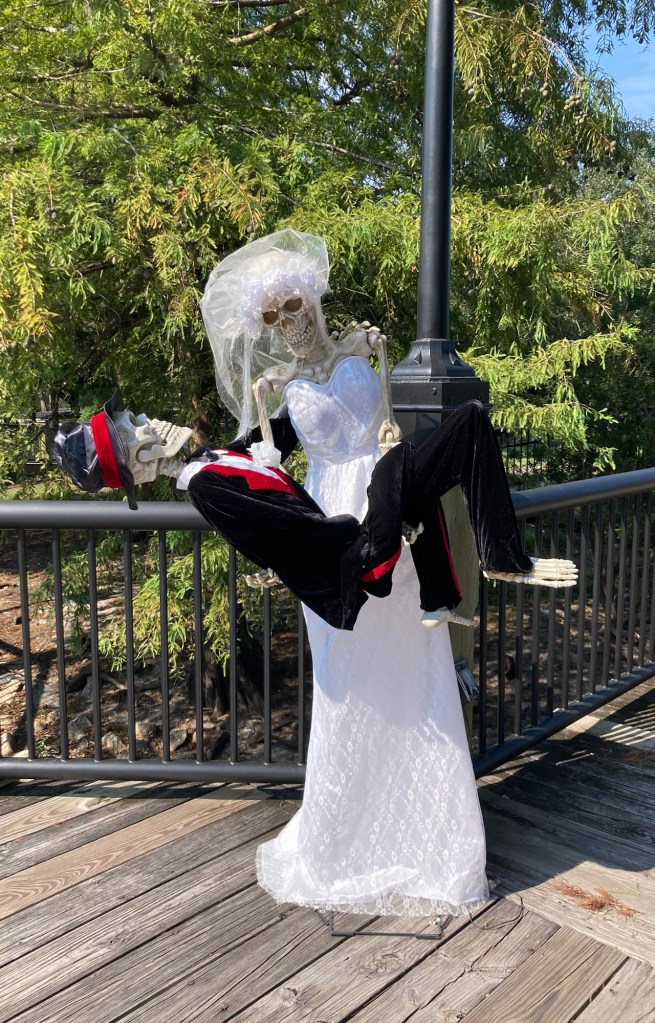
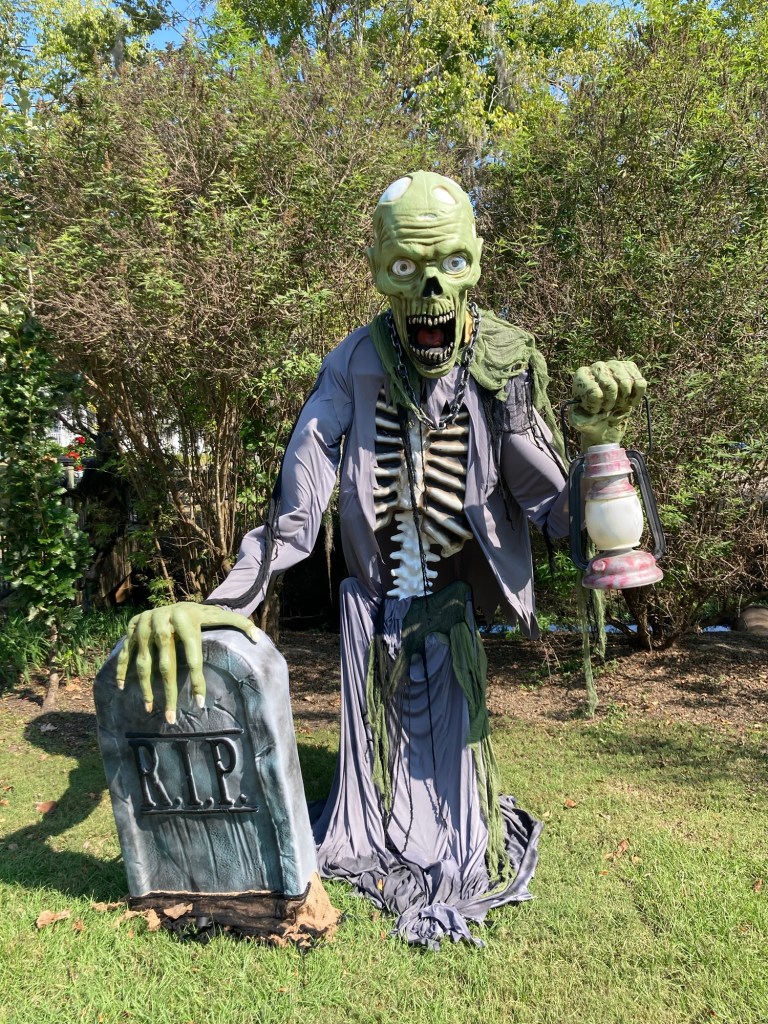
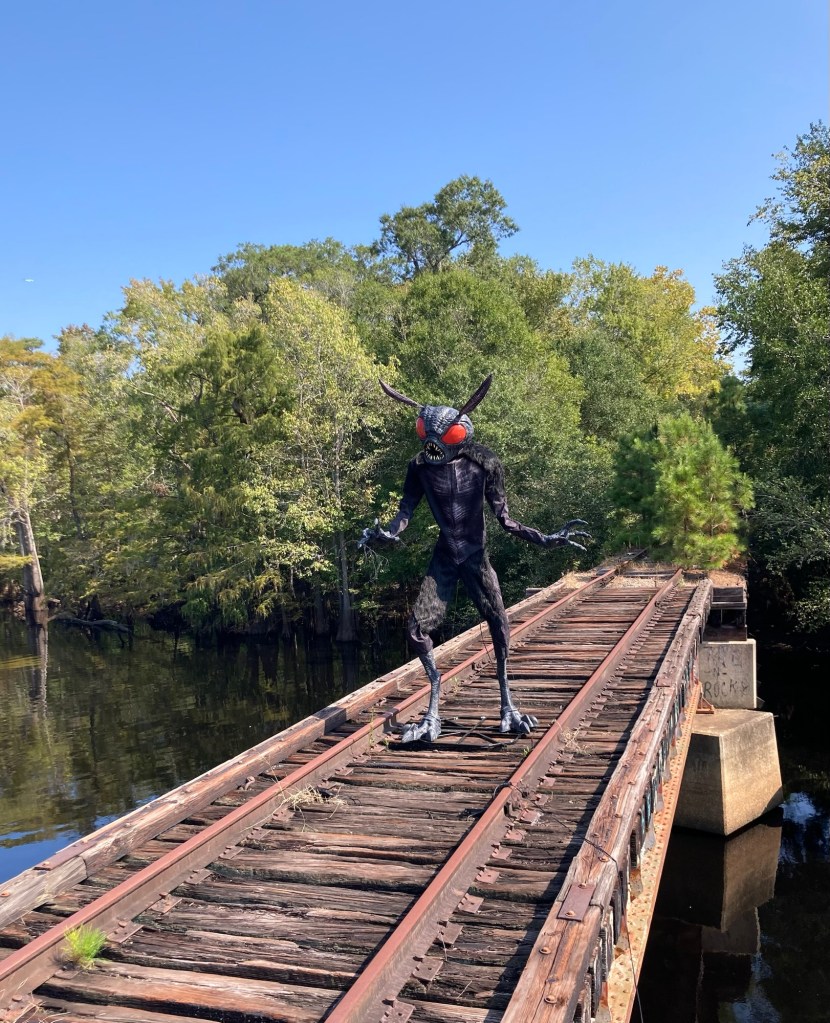
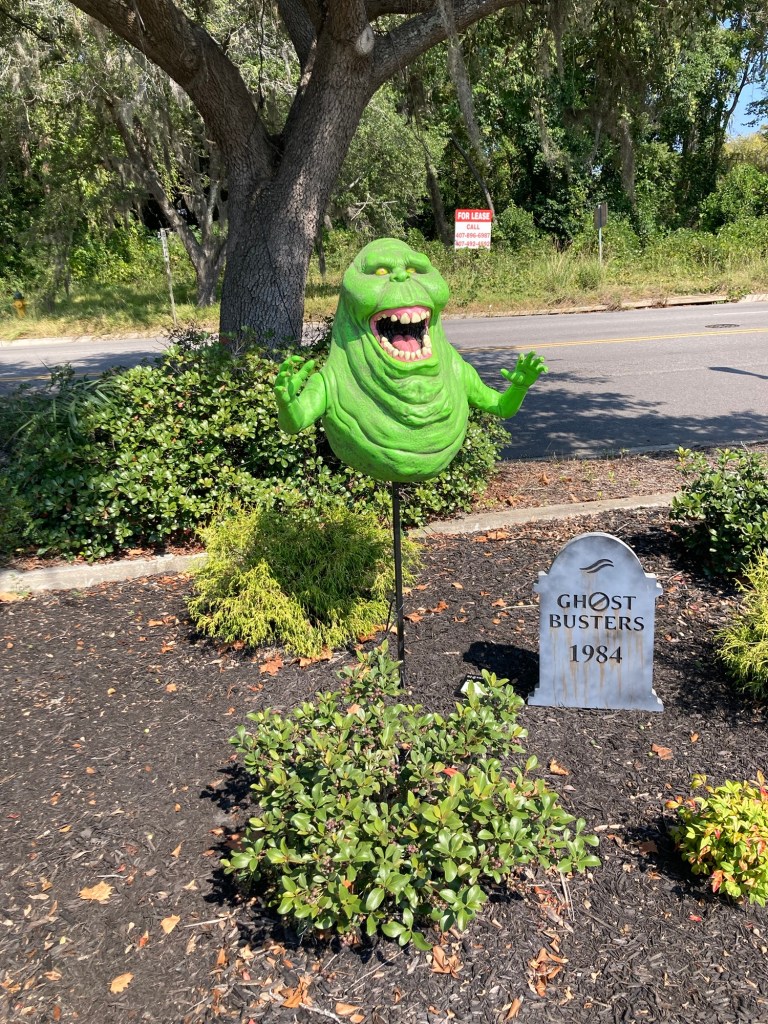
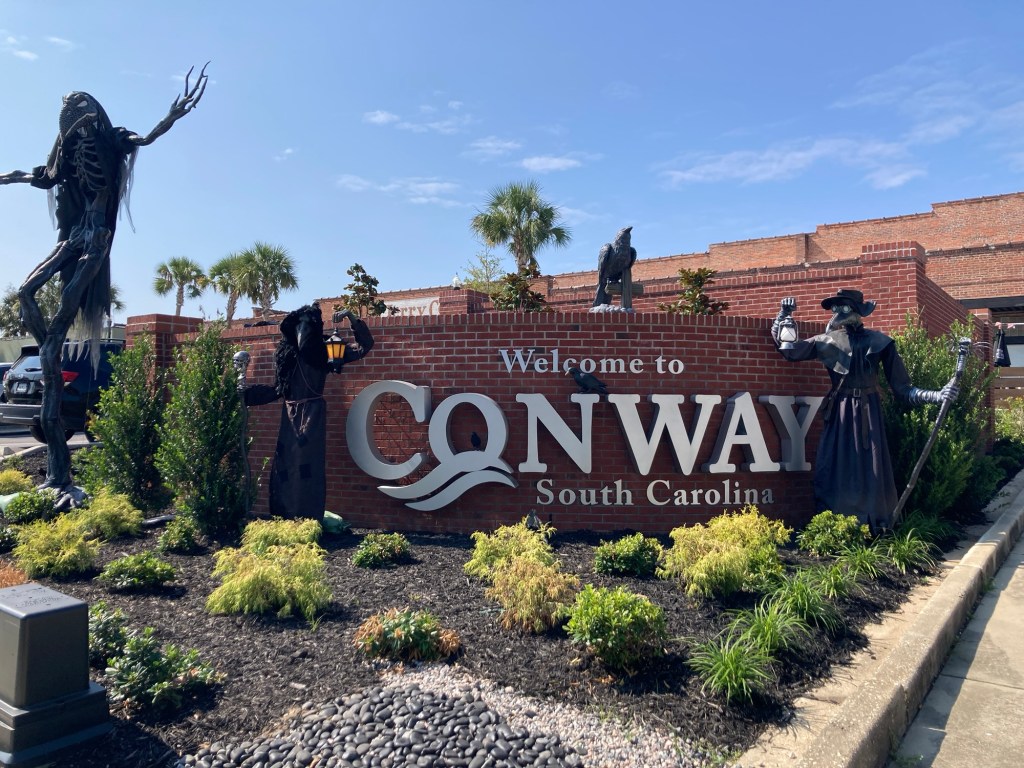
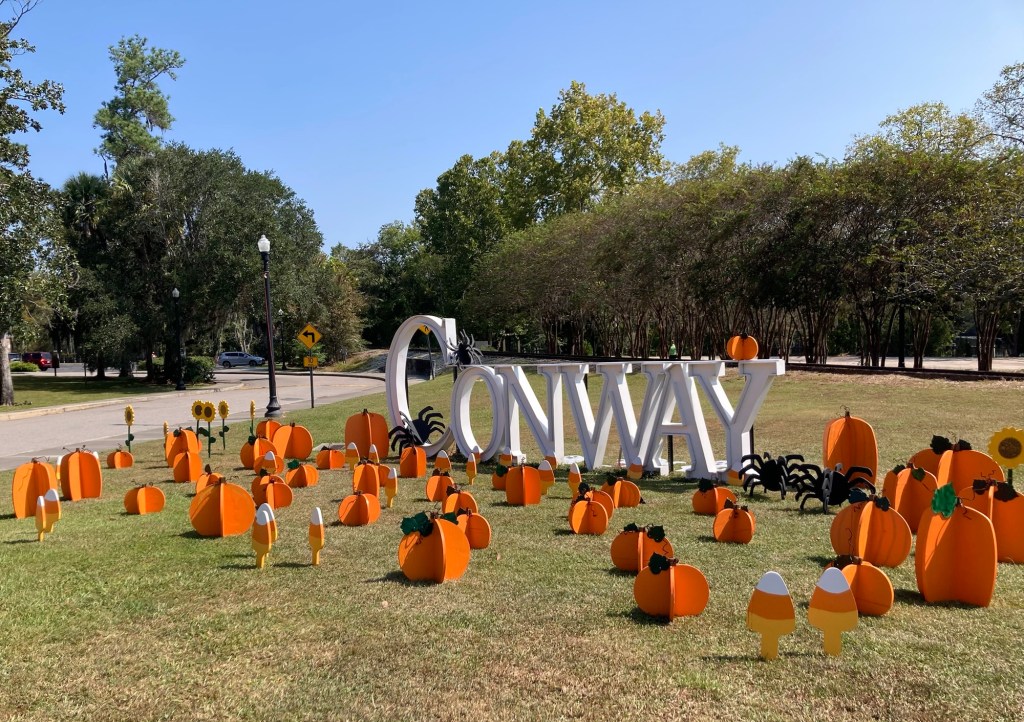
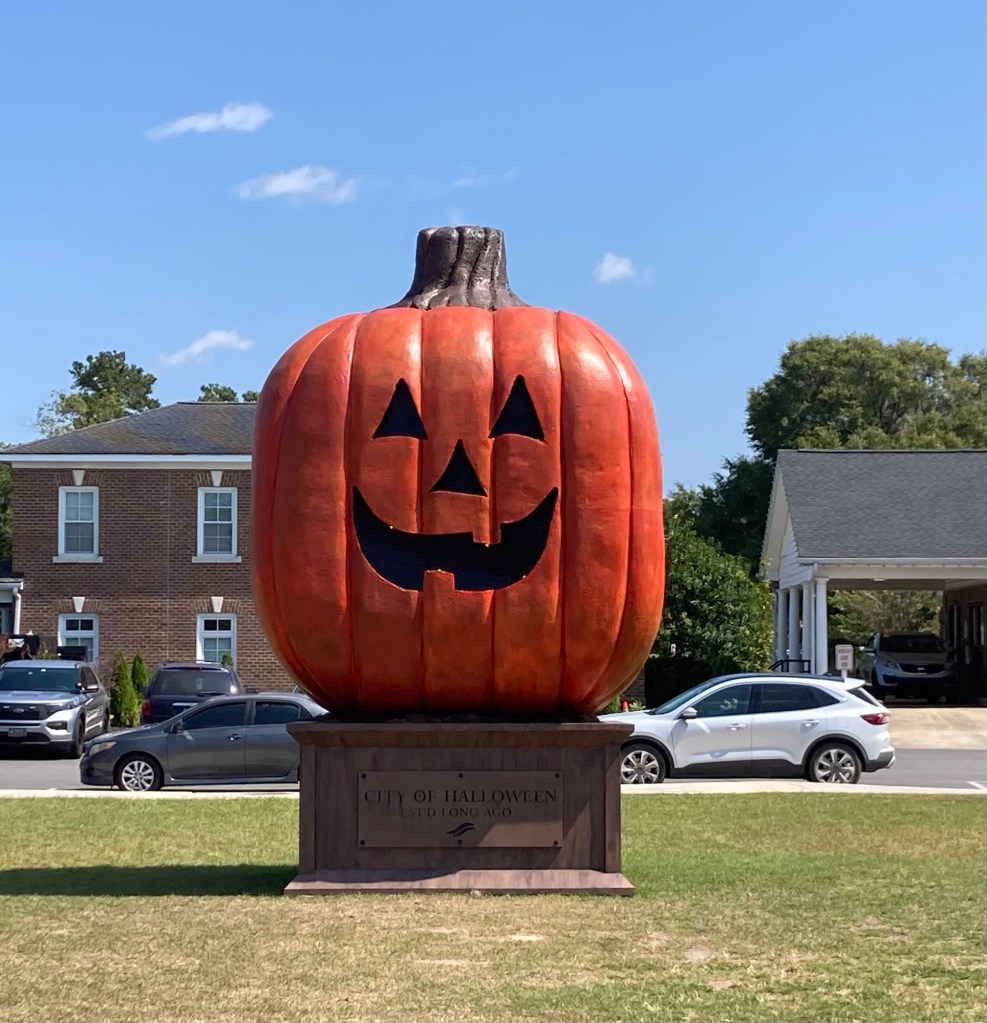
We had seen on the local news that they had put up a big pumpkin in their Town Square but didn’t know that they consider themselves the City of Halloween.
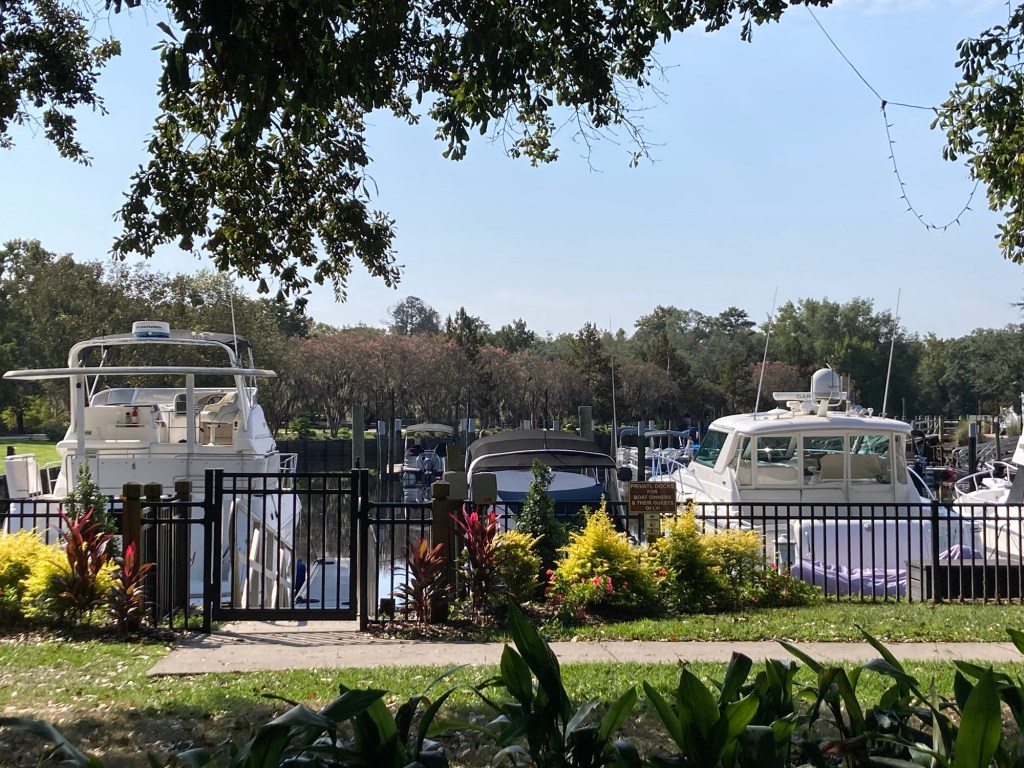
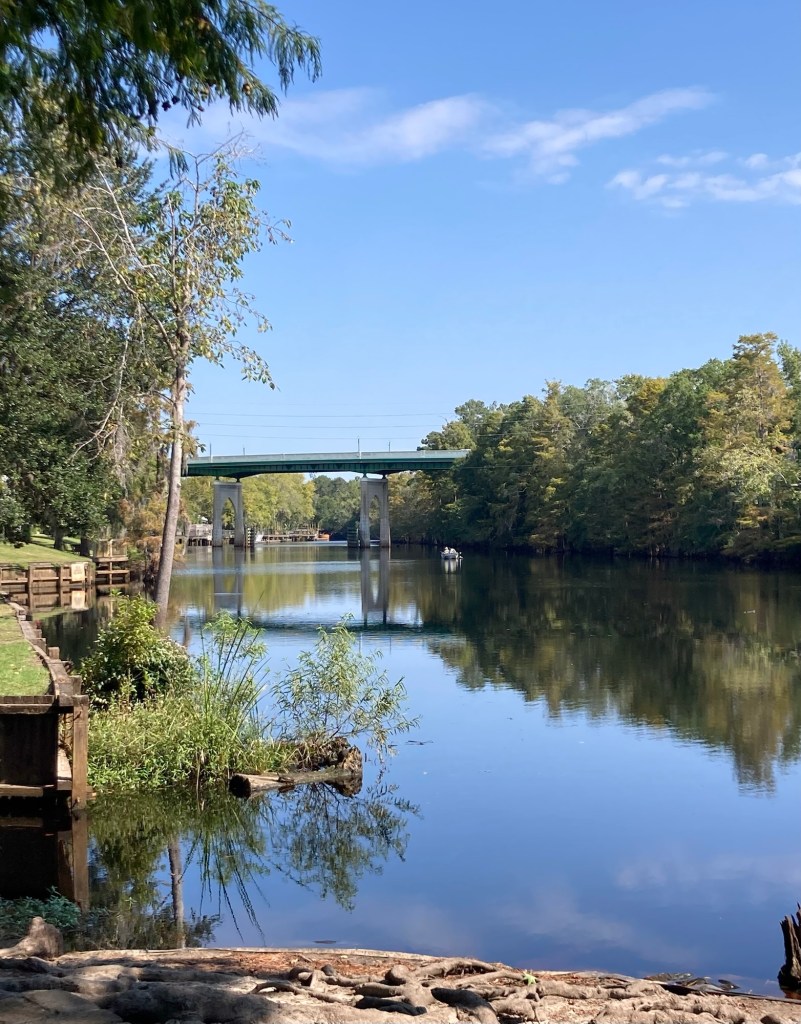
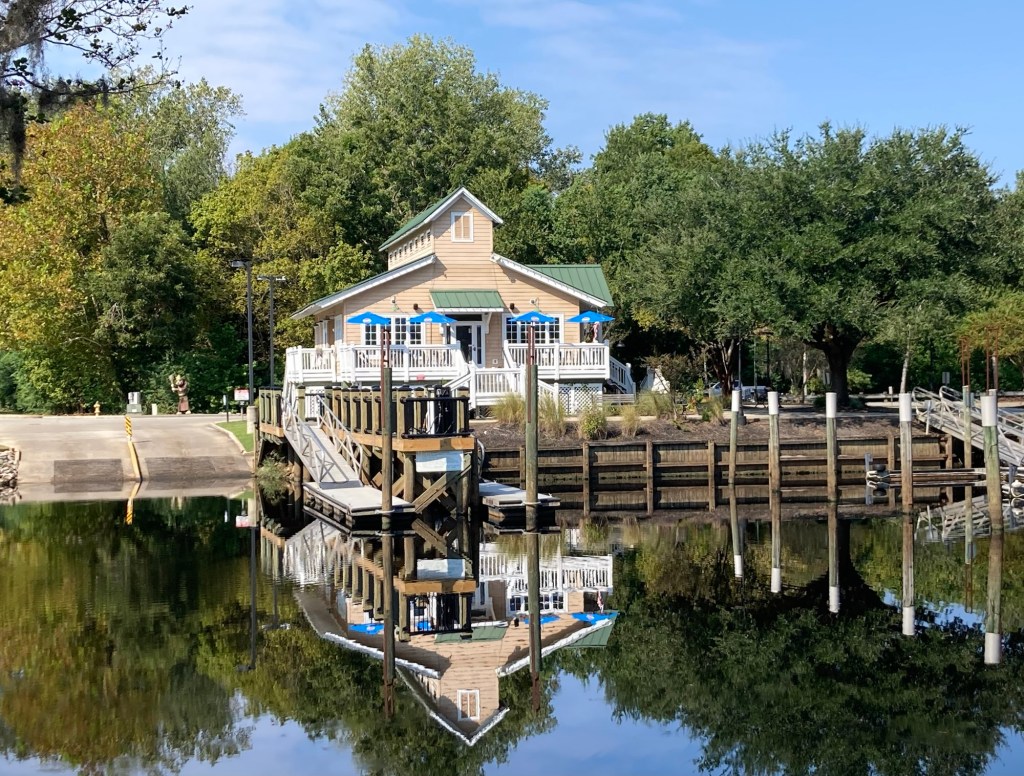
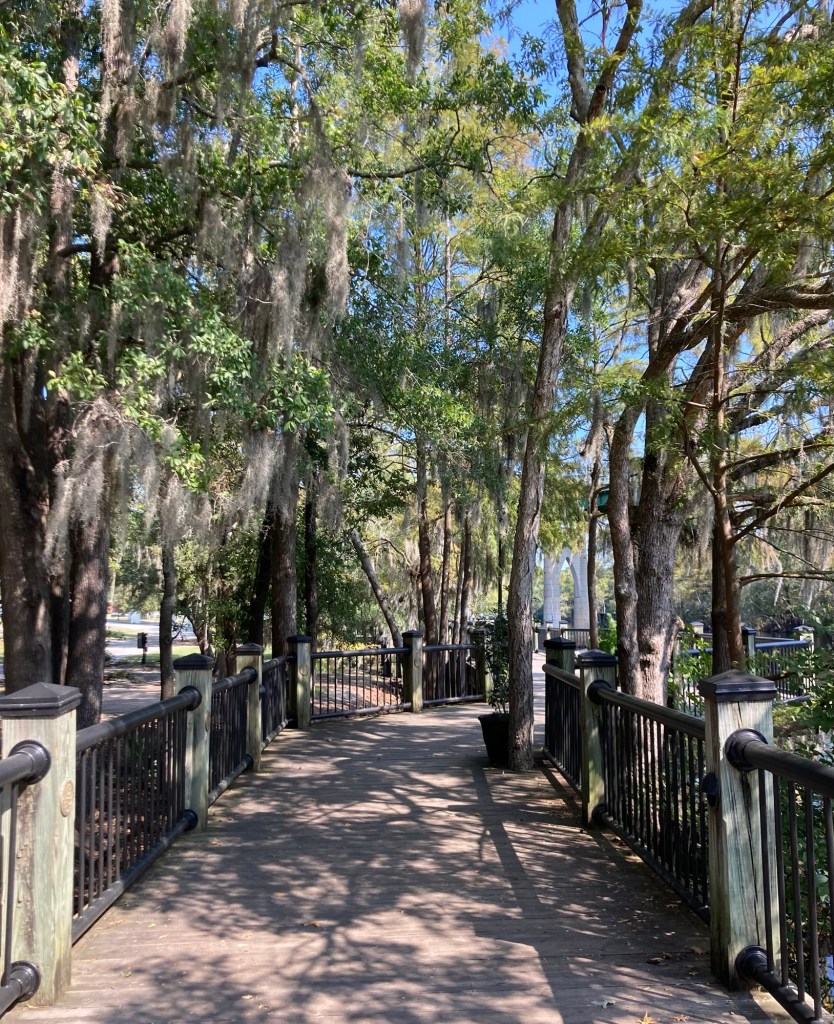
Based on what we saw on our walks, we would definitely consider them the City of Halloween for anywhere. We parked by the marina, which is close to the Riverwalk and downtown.
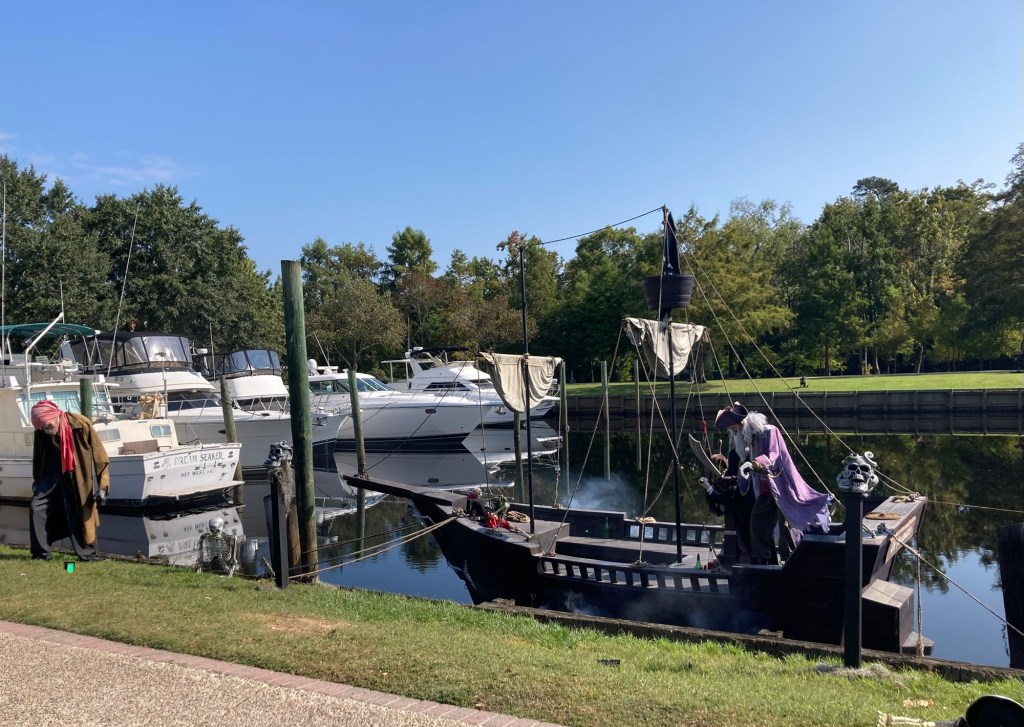
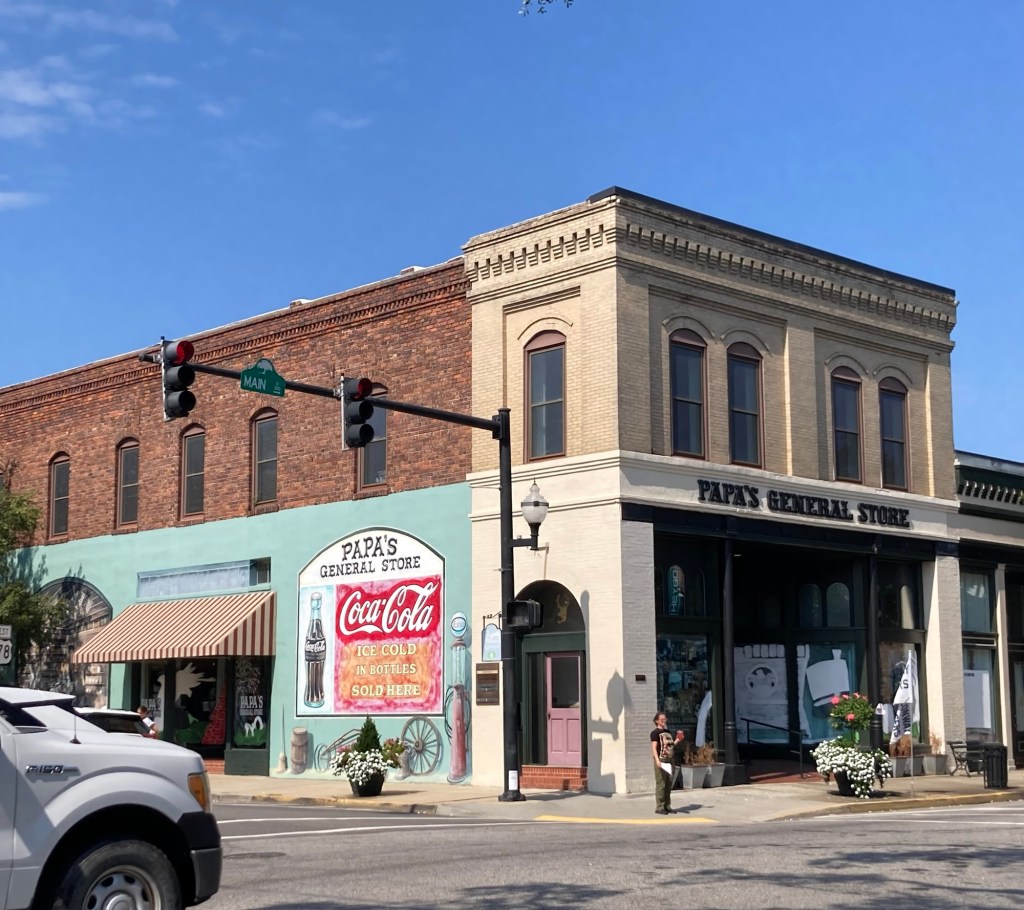
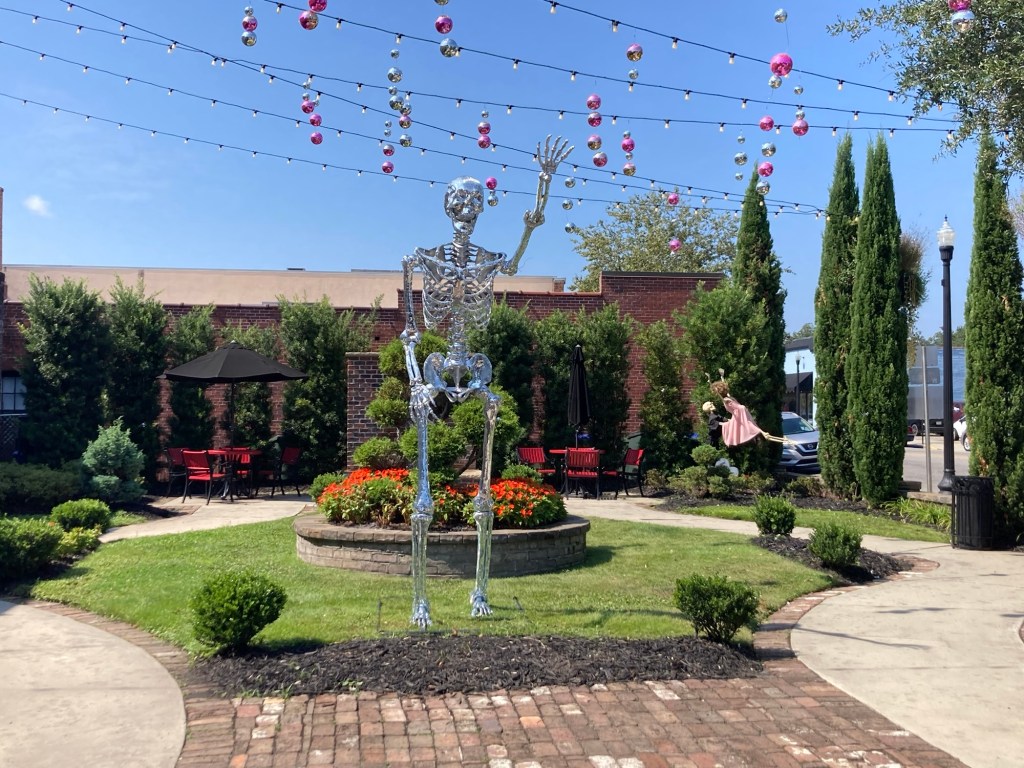
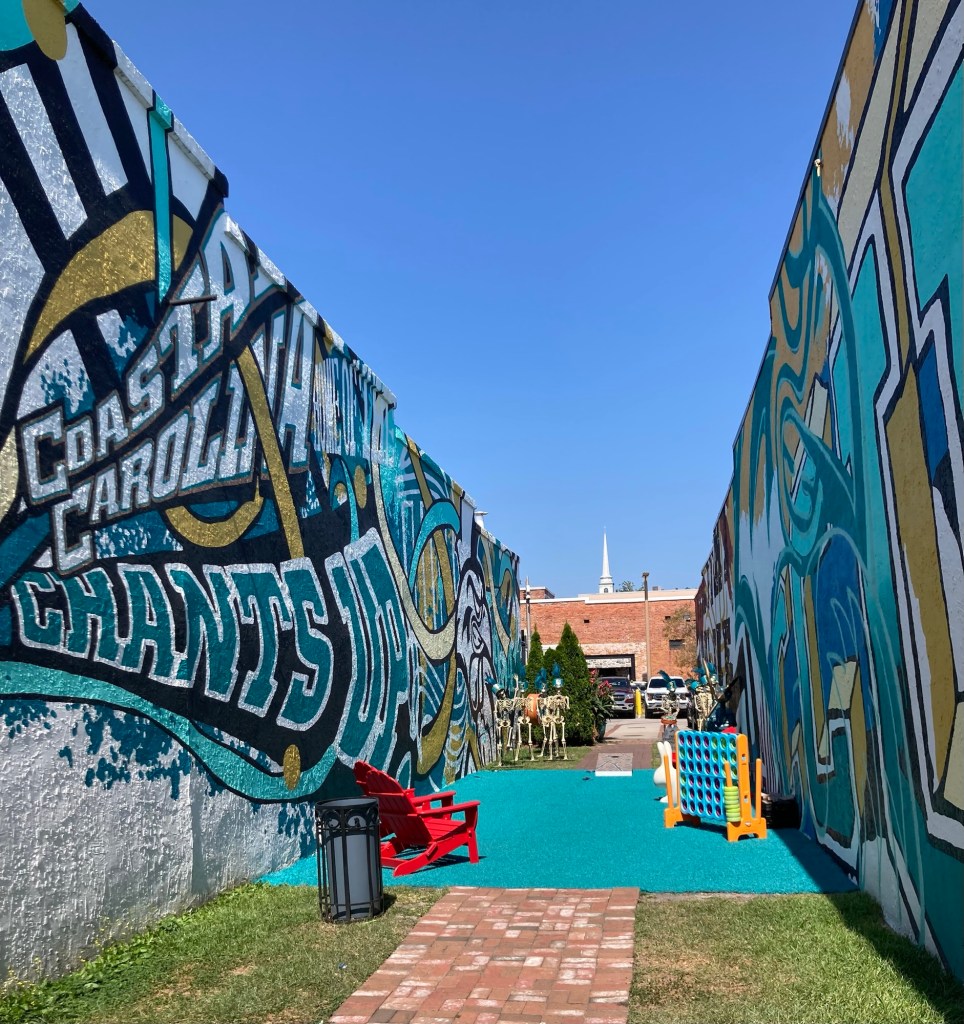
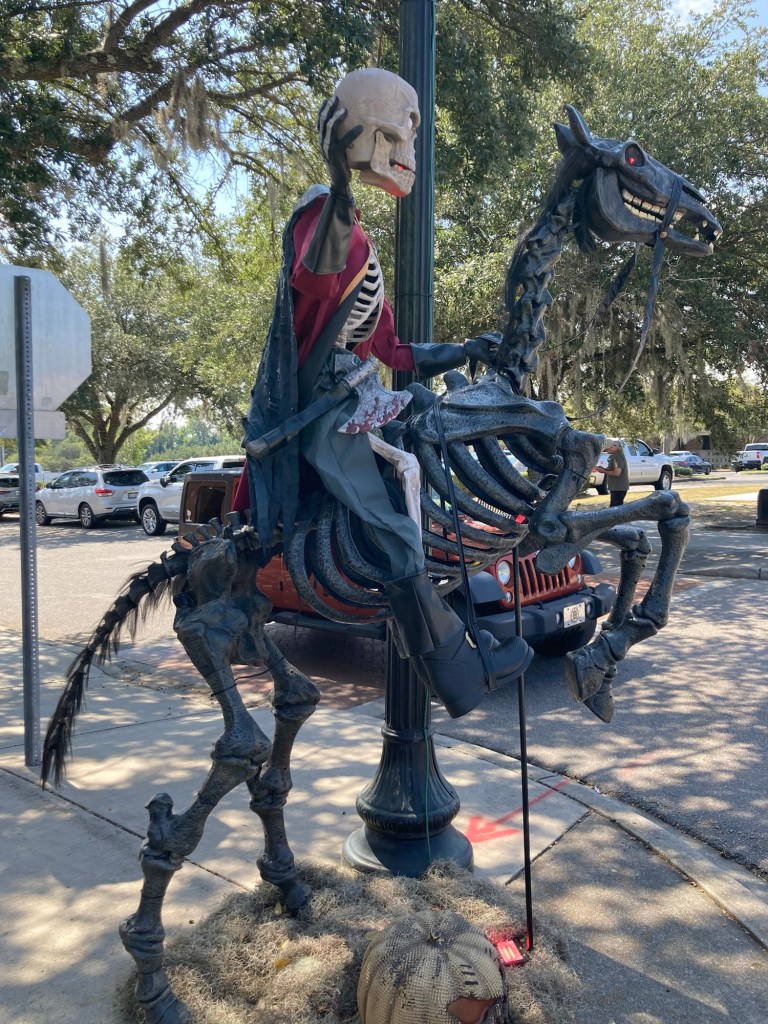
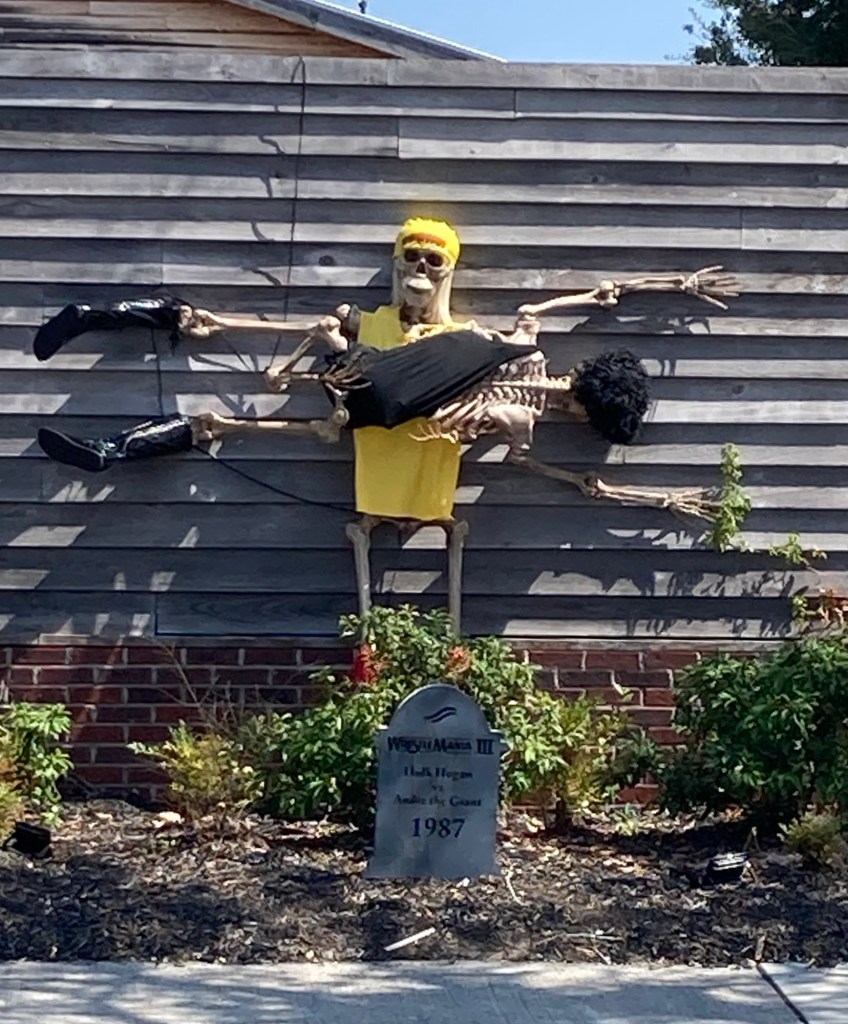
This was the first thing we saw when we pulled up. The boat was blowing smoke and music was playing.Almost all of the exhibits were playing recorded voices or other noises or exhibit-appropriate music.The pretty marinaLooking down the Waccamaw River towards the bridge we drove in onThe Conway Outpost at one end of the marina parking lotI loved that there was a boat going by right as I was taking this.Til death do us part…Say what?!The end of the lineThe shaded RiverwalkWho ya gonna call?The Halloween themed version of the downtown signAnother Conway sign just off of the RiverwalkThere are a number of murals on downtown buildings The downtown theaterAnother decorated park downtown Lots of alleys downtown. Many provide outside seating for restaurants, but this one is dedicated to the local Coastal Carolina University and space for relaxation and fun.This is in the Town Square which looked like booths were being set up for an event.Hulk Hogan was talking trash to Andre the Giant when we walked by.
One of the local places that our homeowners had told us about was Brookgreen Gardens. We finally got there today and will definitely be going back, as it is $25 per person but you can go back for 7 days on the same ticket as there is so much to see.
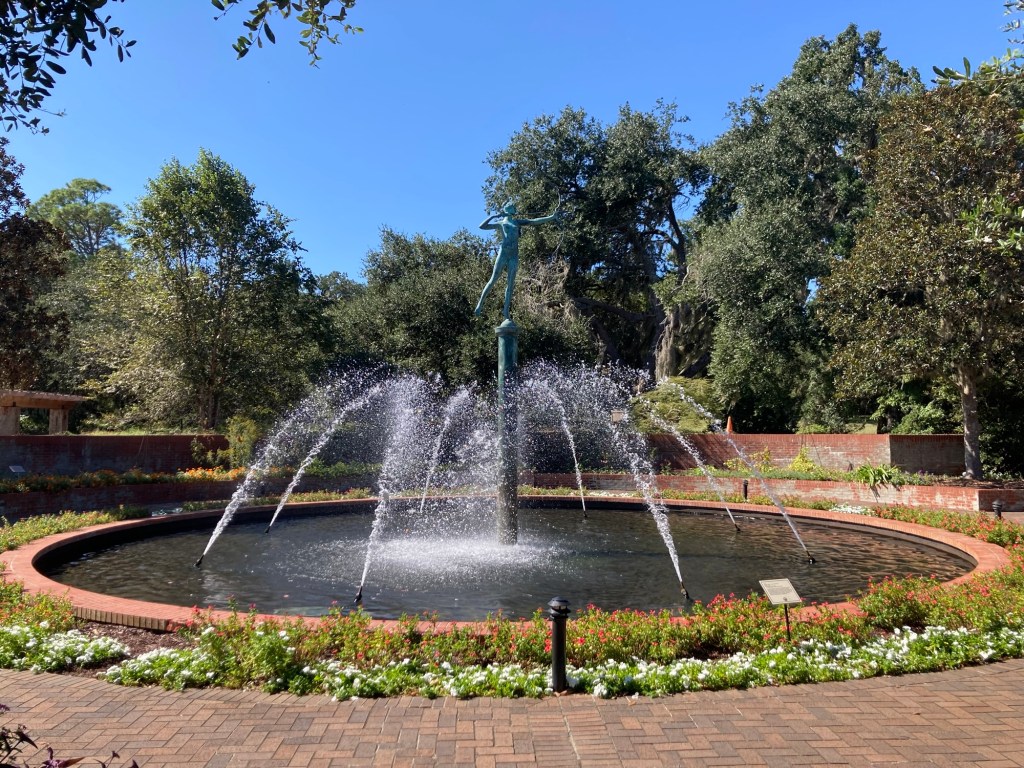
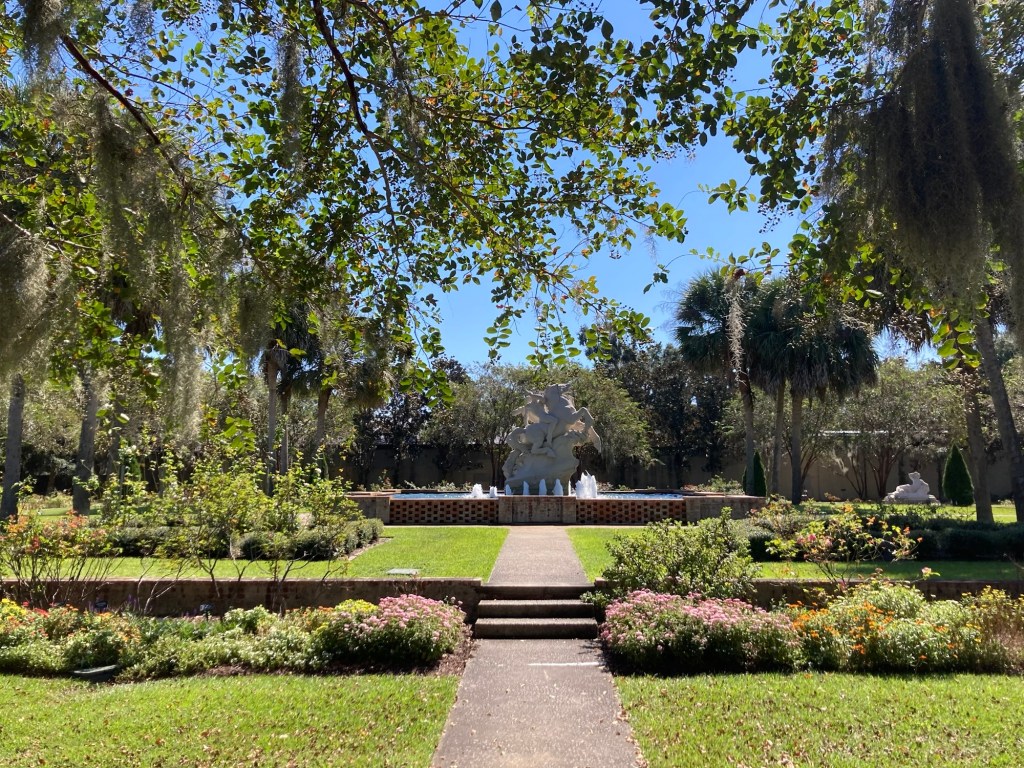
We both think it is one of, if not the best gardens we have ever visited. It is on land once owned by Archer Milton Huntington and his wife Anna Hyatt Huntington, a sculptress. We learned about them when we visited the nearby Huntington Beach State Park (also part of their former land) and toured the remains of their estate. The gardens portion of their property was incorporated as a not-for-profit corporation dedicated to the collection, exhibition, and preservation of American figurative sculptures and the plants and animals of the Southeast.
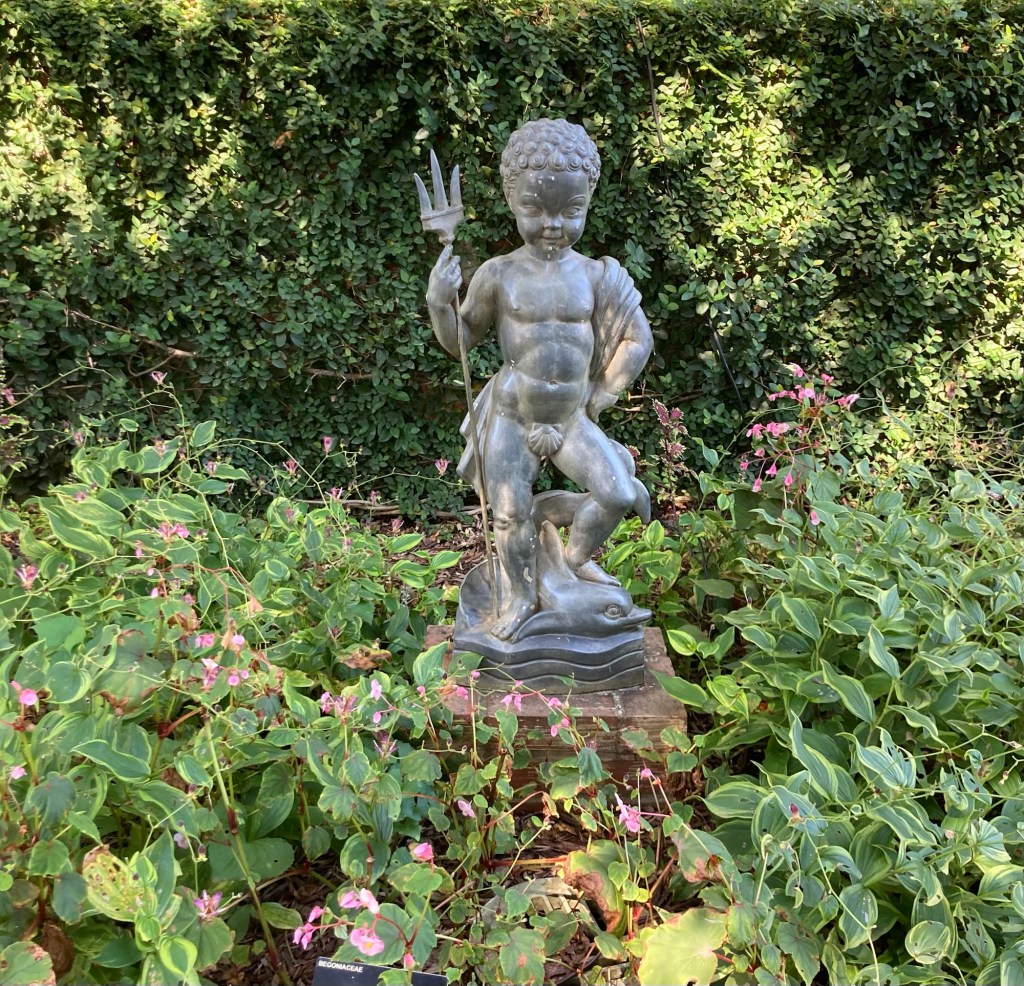
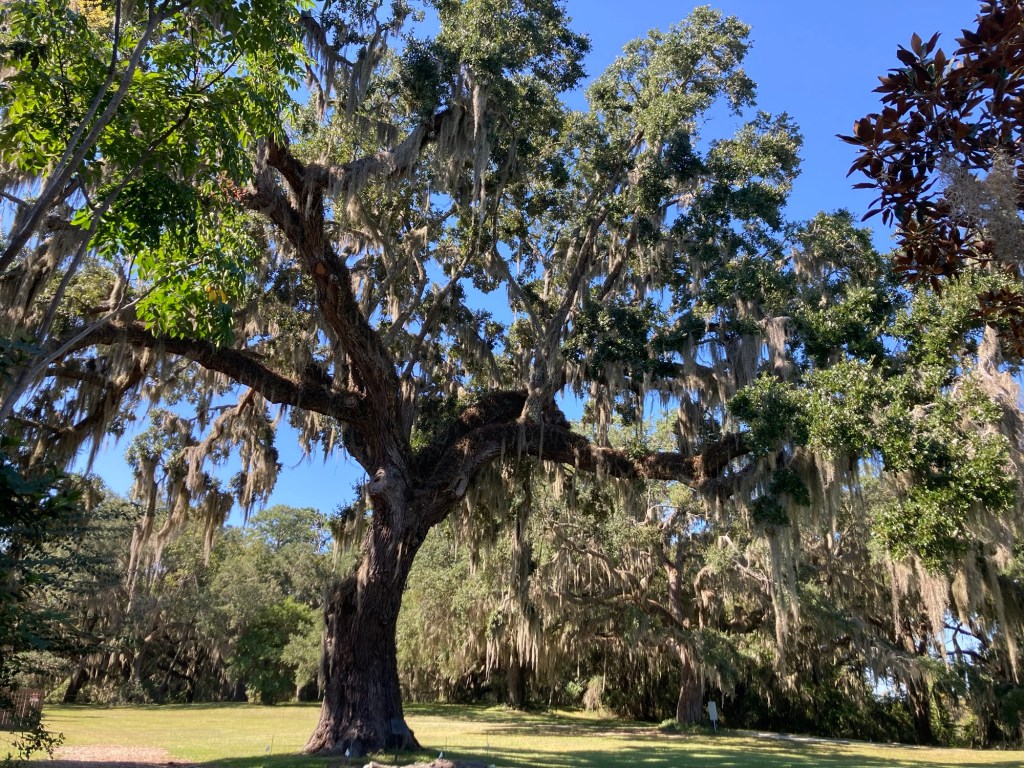
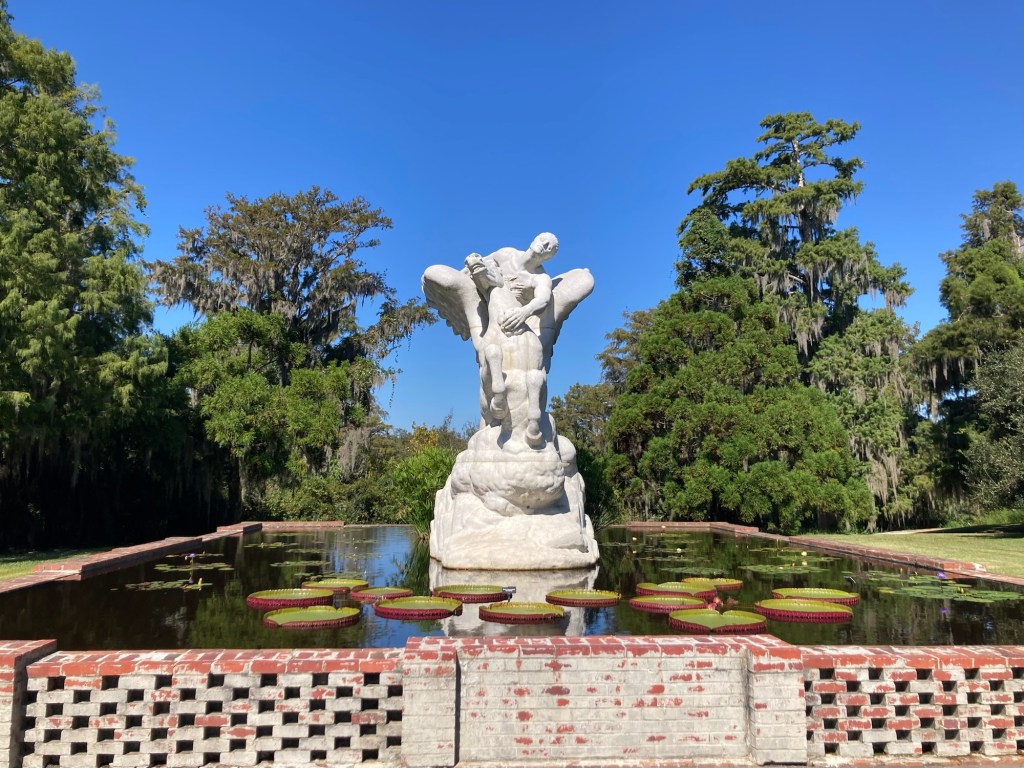
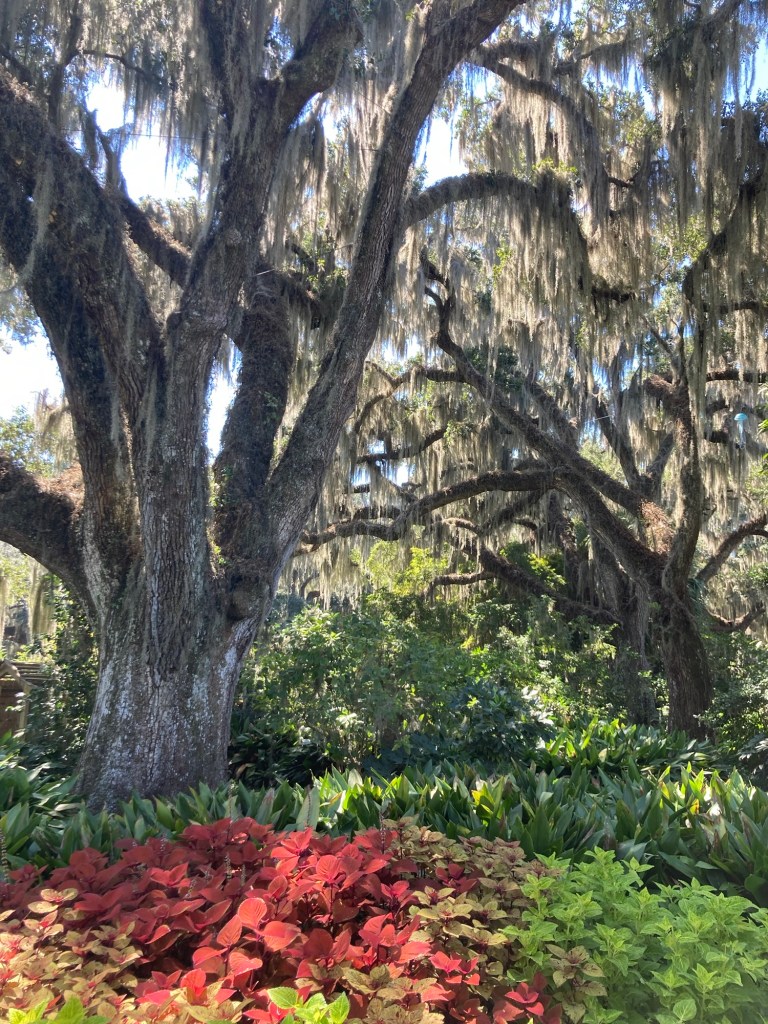
They have succeeded. Brookgreen Gardens was recently named one of the Top 10 Botanical Gardens in America, and the gardens contain the largest and most comprehensive collection of American figurative sculpture in the country with over 2,700 works by 425 artists. There are other gardens with perhaps more colorful and abundant flowers, but the sculptures, gardens, ponds, and wide-spreading live oak trees with Spanish moss, definitely make this a Top 10 site. And we haven’t even visited the Lowcountry grounds and zoo or any of the inside galleries. More to come.
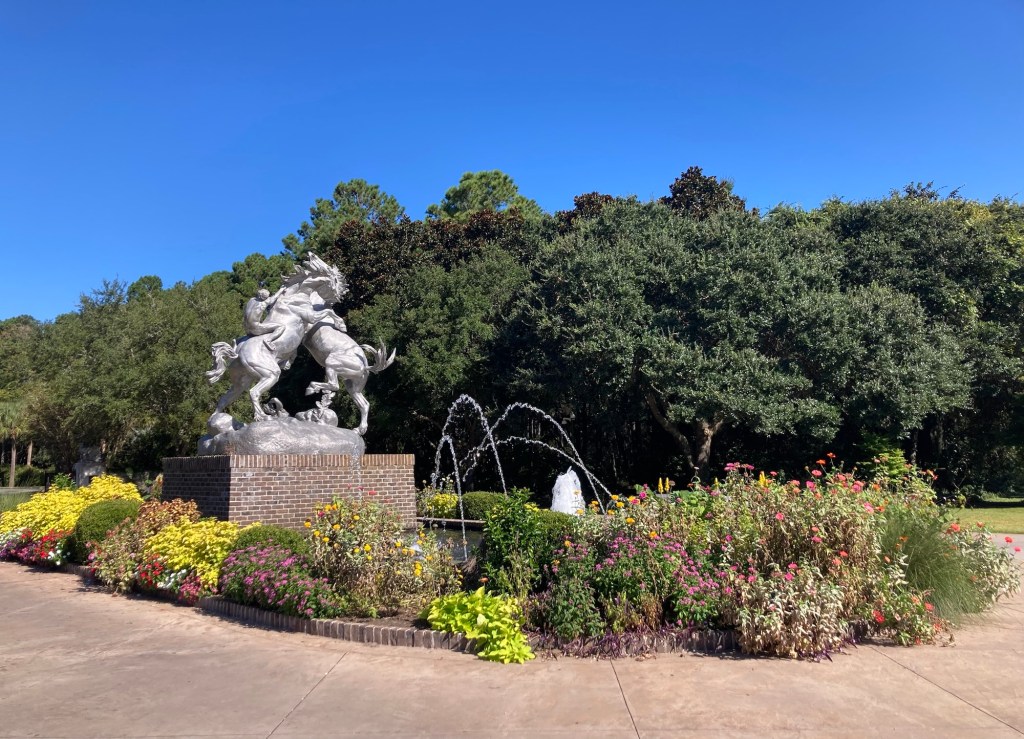
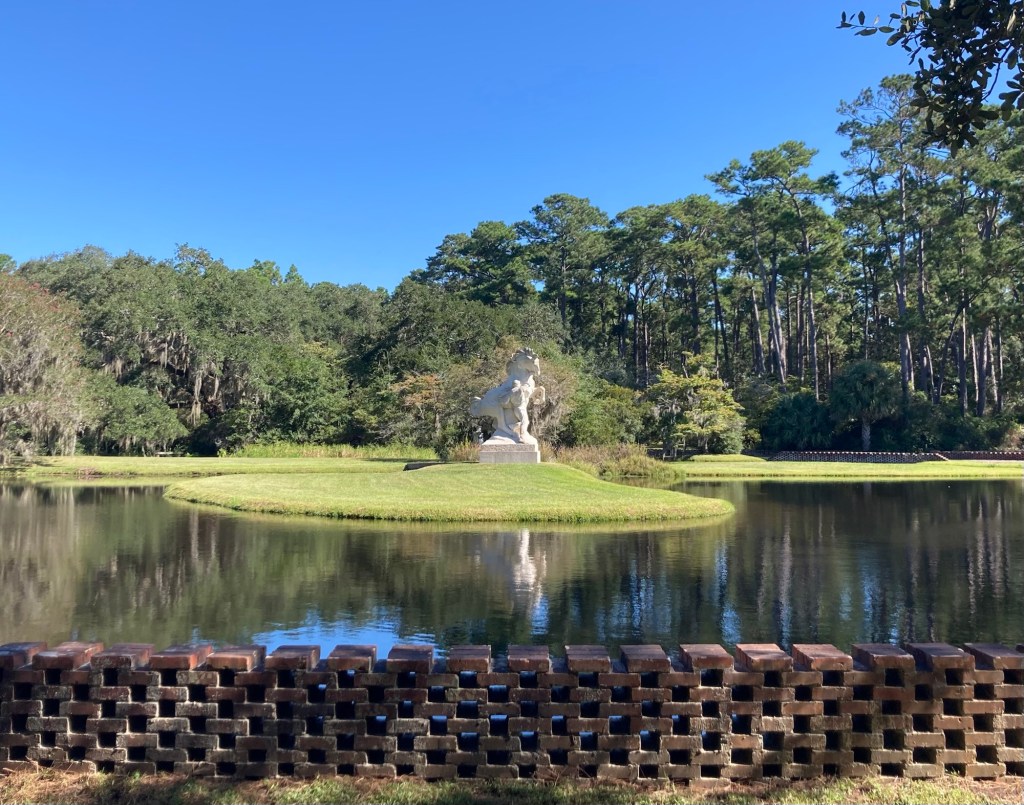
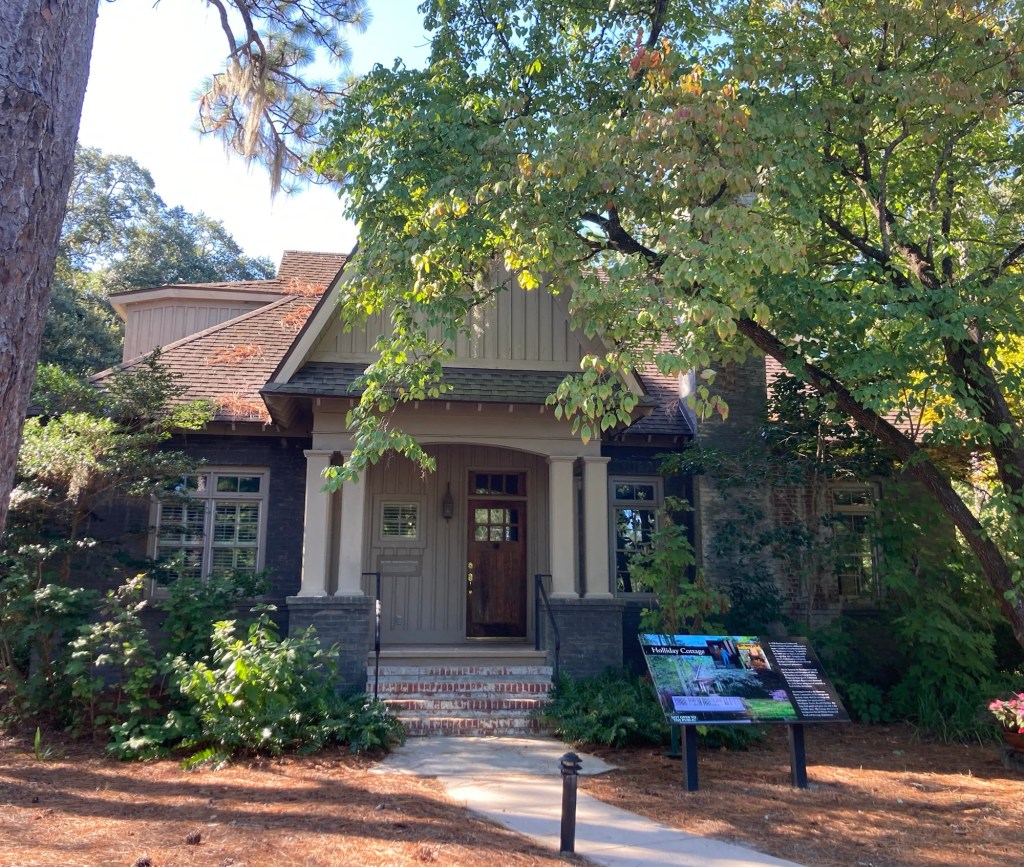
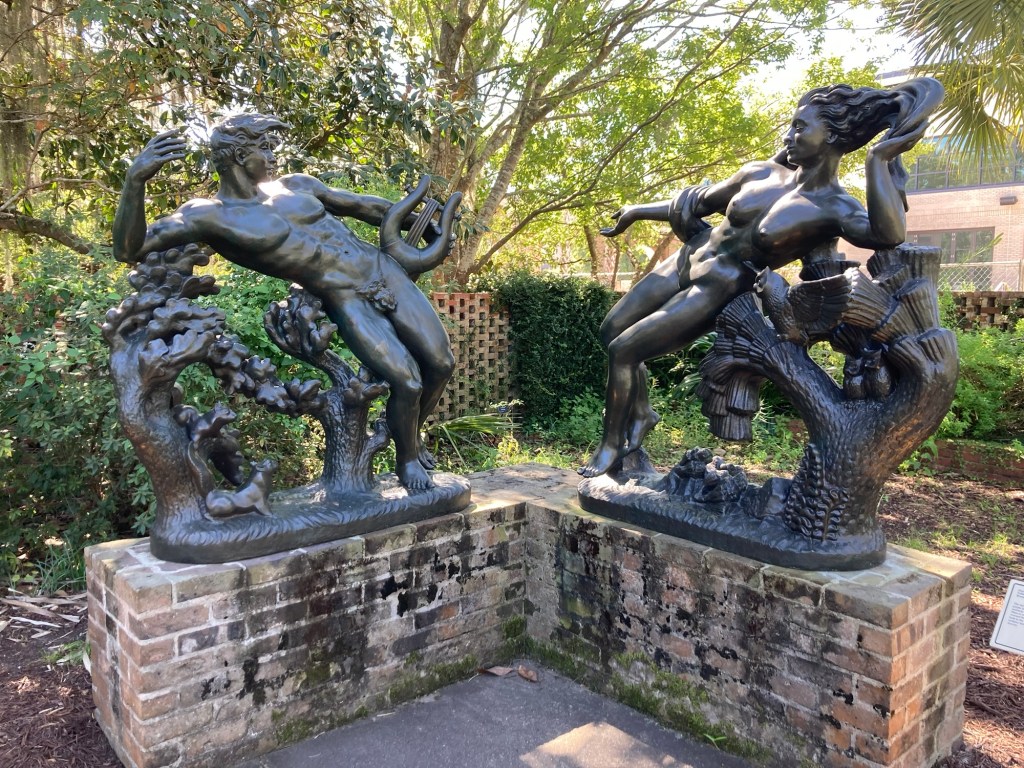
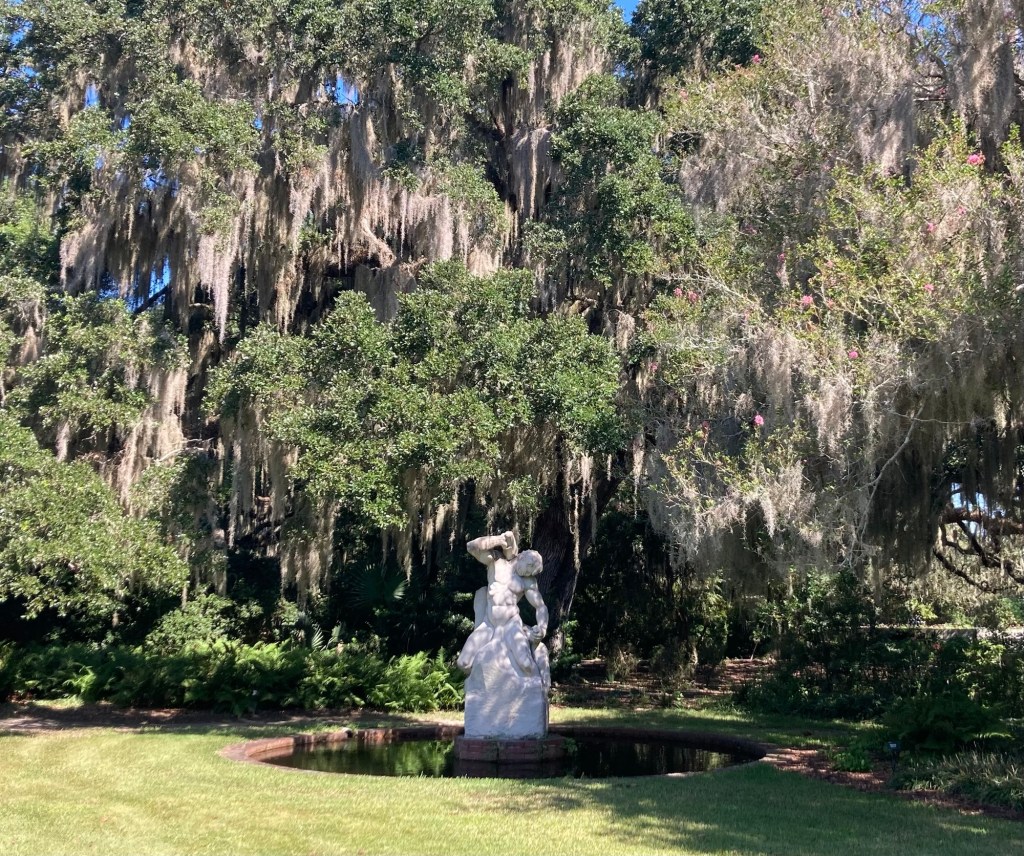
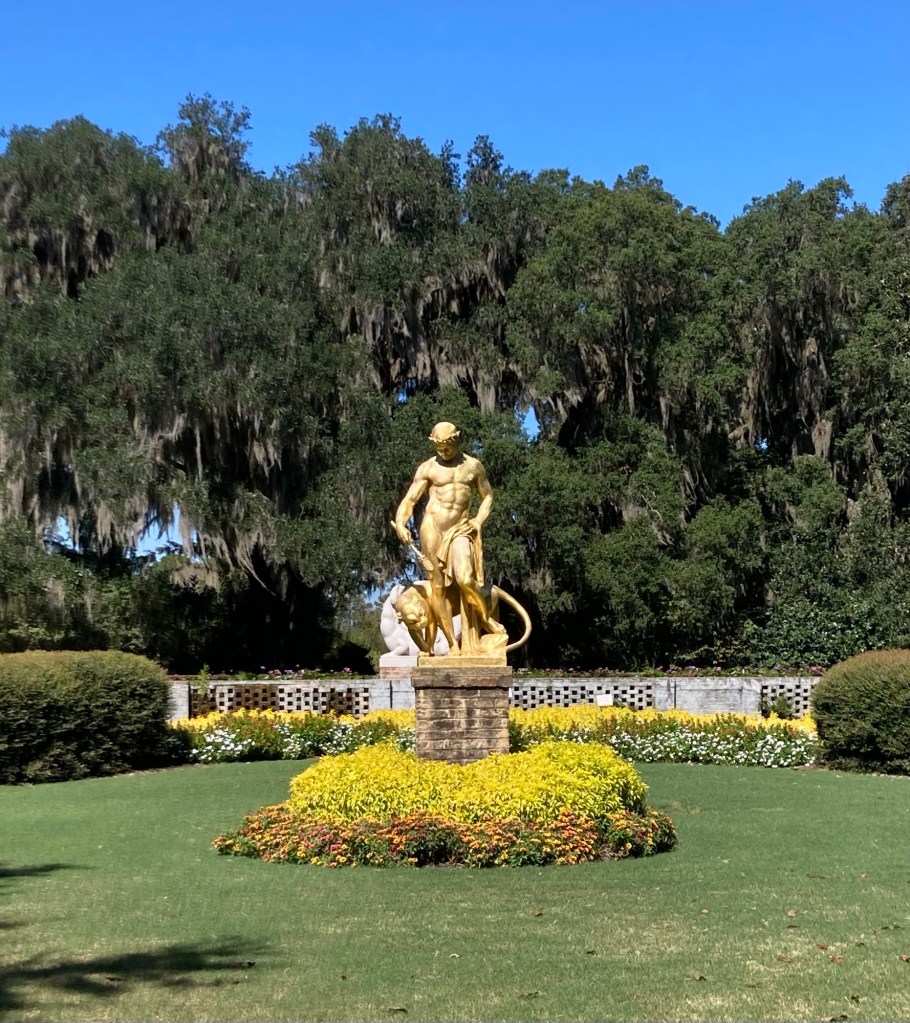
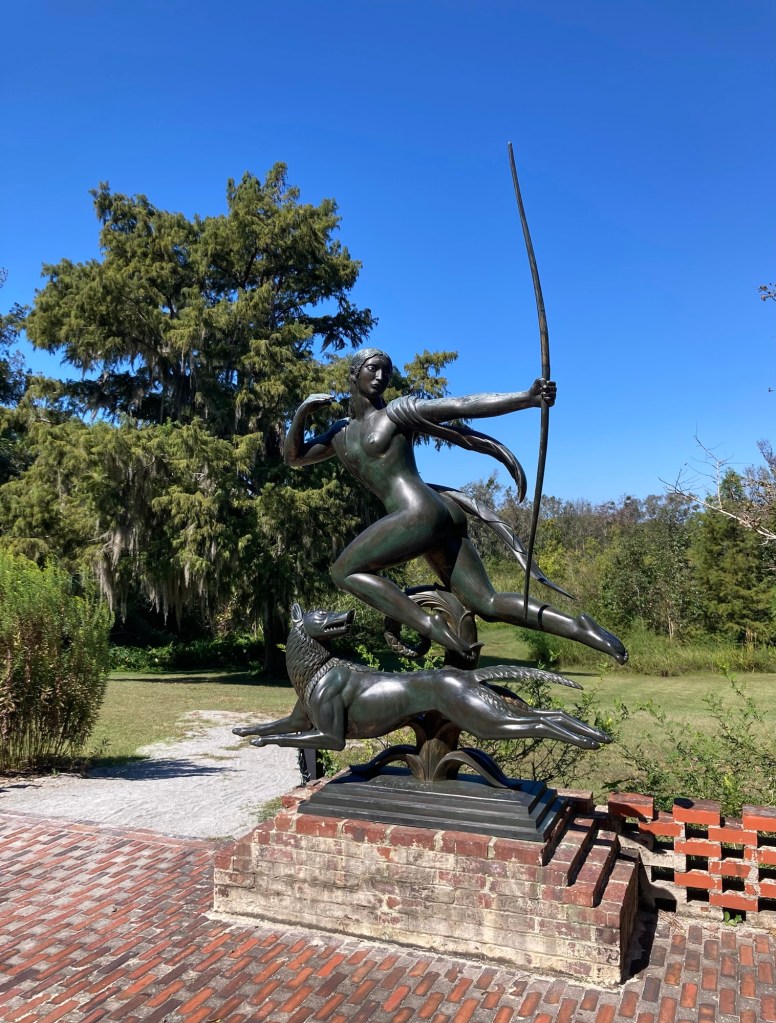
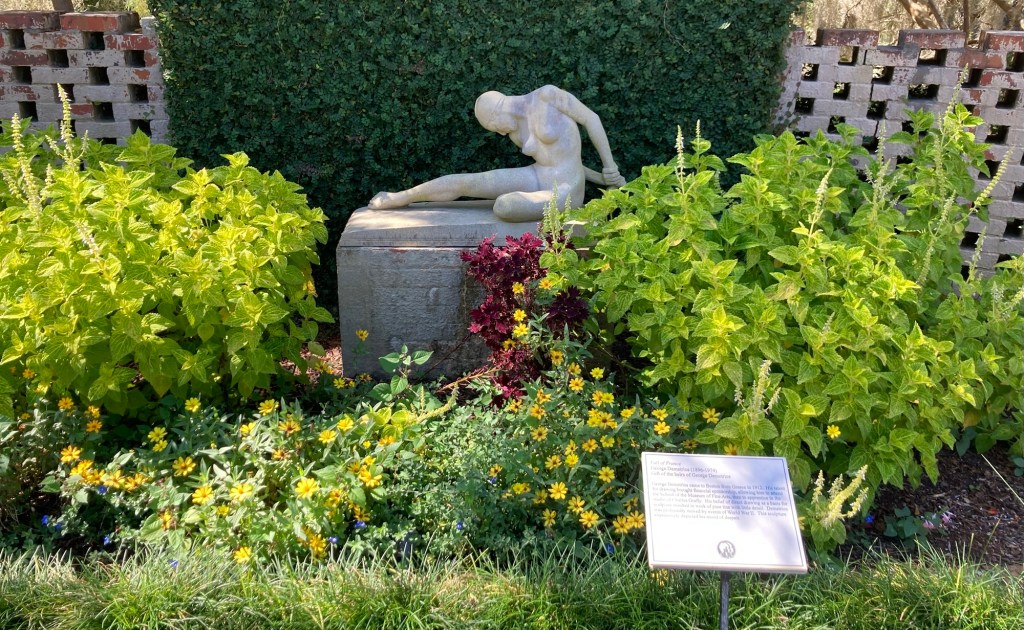
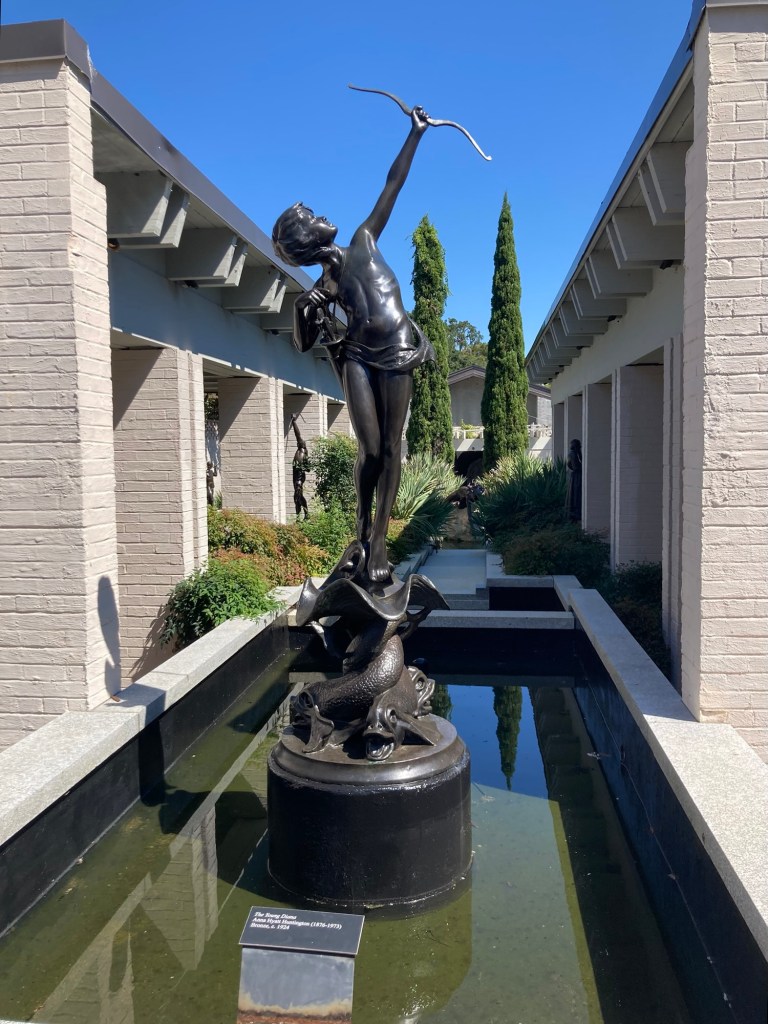
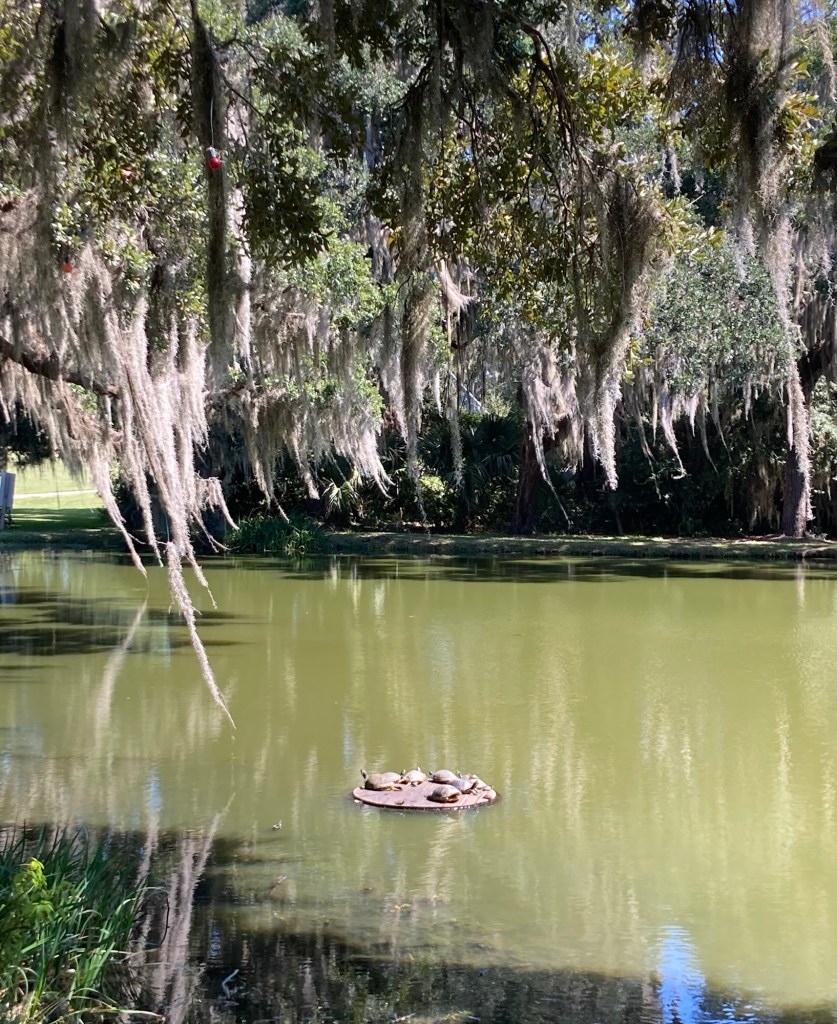
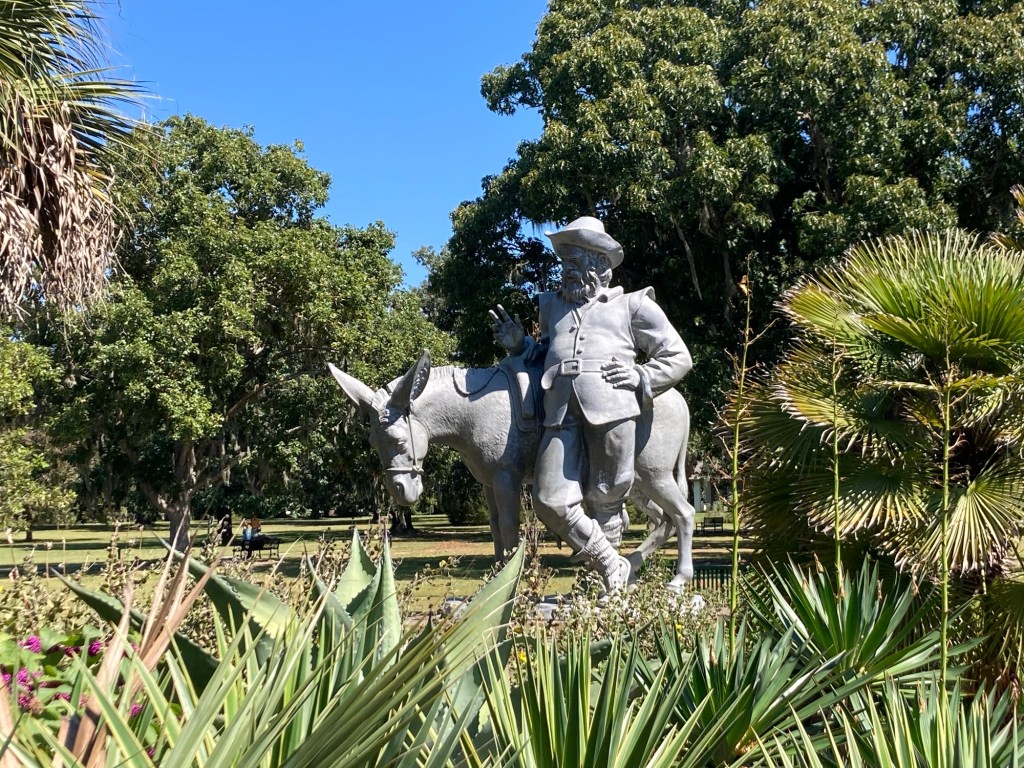
The entry off the highway into the parkThe sculpture “Youth Taming the Wild” as you enter into the actual gardensA house built in 1998 in collaboration with “Southern Living” magazine to help promote the park“Moondance” by Richard Hallier, 1944Interesting bit of history in the main parking lot where we parked for most of our visit The conservatory that is under construction “The Visionaries” sculpture to honor Arthur and Anna Huntington One of the most colorful gardens at Brookgreen. The sculpture is “Samson and the Lion” by Glen Derujinsky, 1949.“Orpheus and Eurydice” by Nathaniel Choate, 1952A fountain and one of many sculptures of the goddess Diana. This one was done in 1893 by Augustus Saint-Gaudens.“Neptune” by Wheeler Williams, 1939Live Oak tree with Spanish moss“Pegasus” by Laura Gardin Fraser, 1946-1954. It is the largest sculpture at Brookgreen.“Man Carving His Own Destiny “ by Albin Polasek, 1961.“Dionysus” by Edward McCartan, 1936“Diana” by Paul Manship, 1924“Fall of France” by George DemetriosThe sculpture in the fountain is “Riders of the Dawn” by Adolph Alexander Weinman“The Young Diana” by Anna Hyatt Huntington, 1924Loved the Spanish moss and the turtles“The Saint James Triad” by Richard McDermott Miller, 1997“Don Quixote” by Anna Hyatt Huntington, 1947“Sancho Panza” by Carl Paul Jennewein, 1971
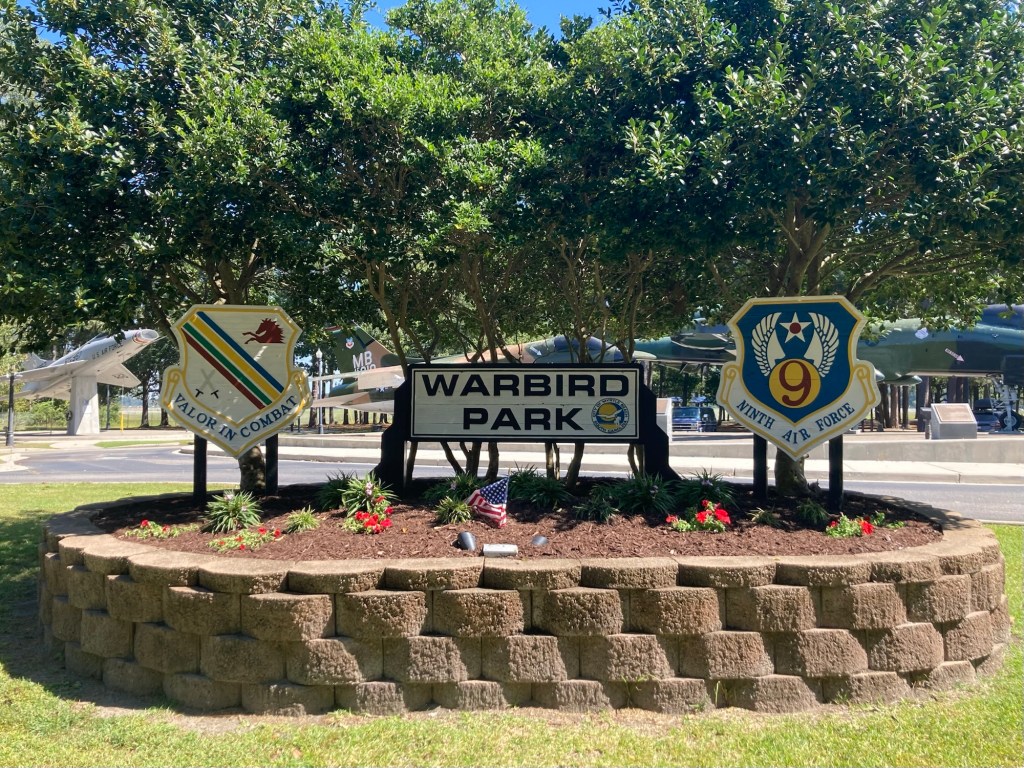
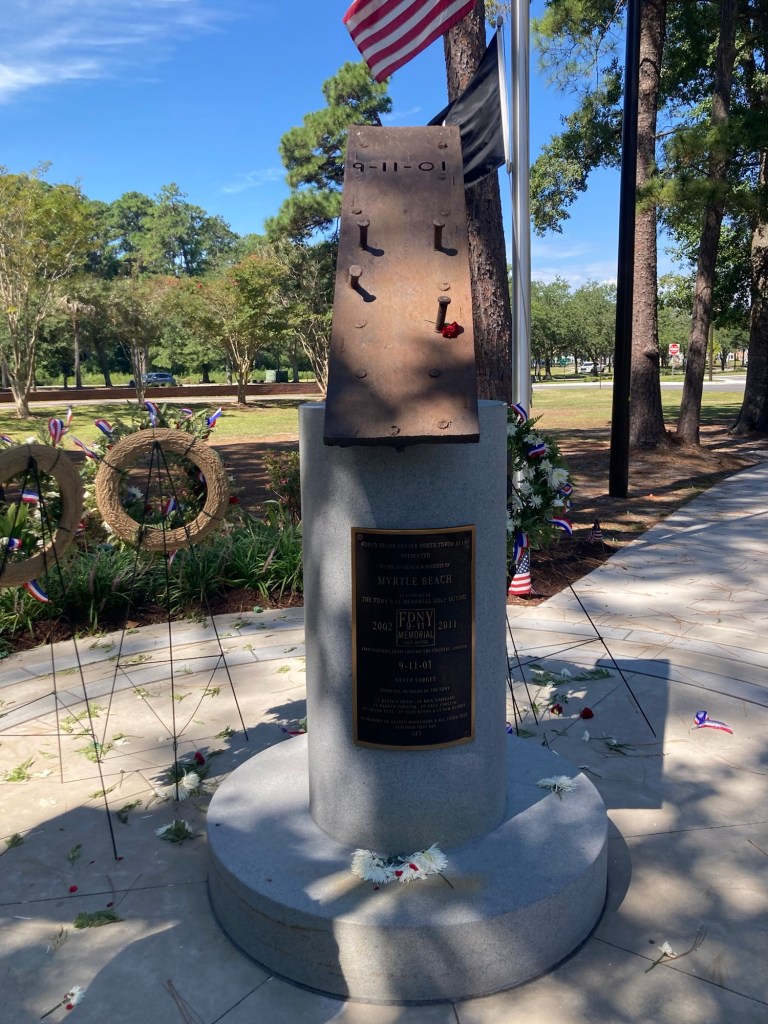
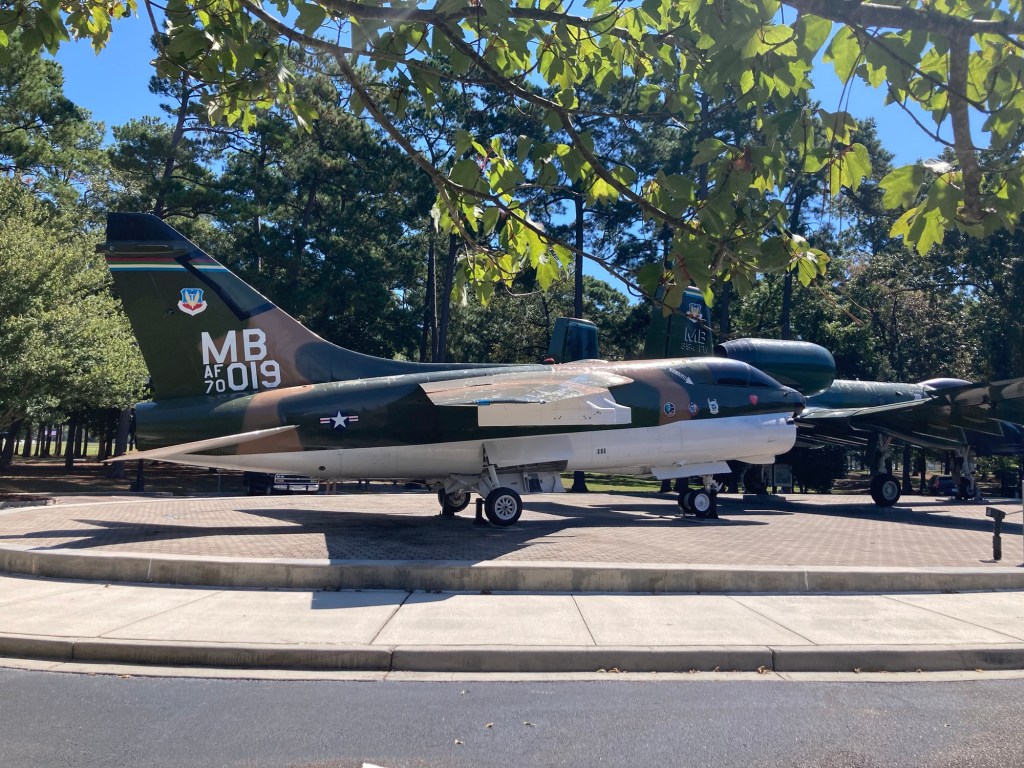
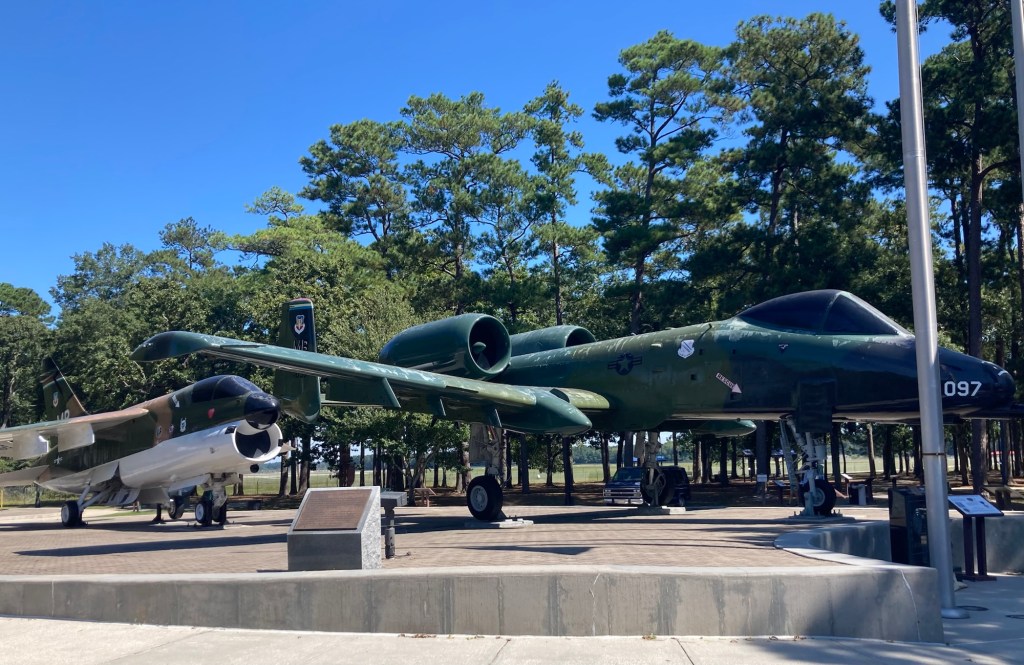
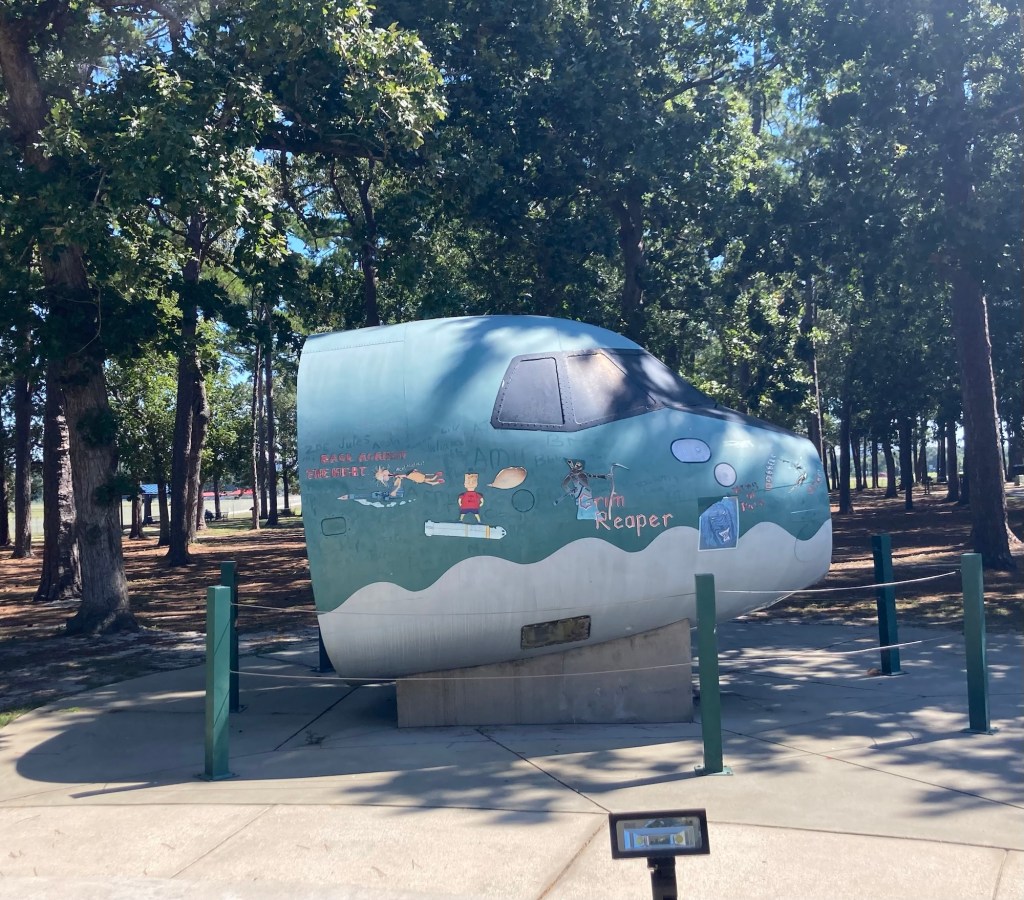
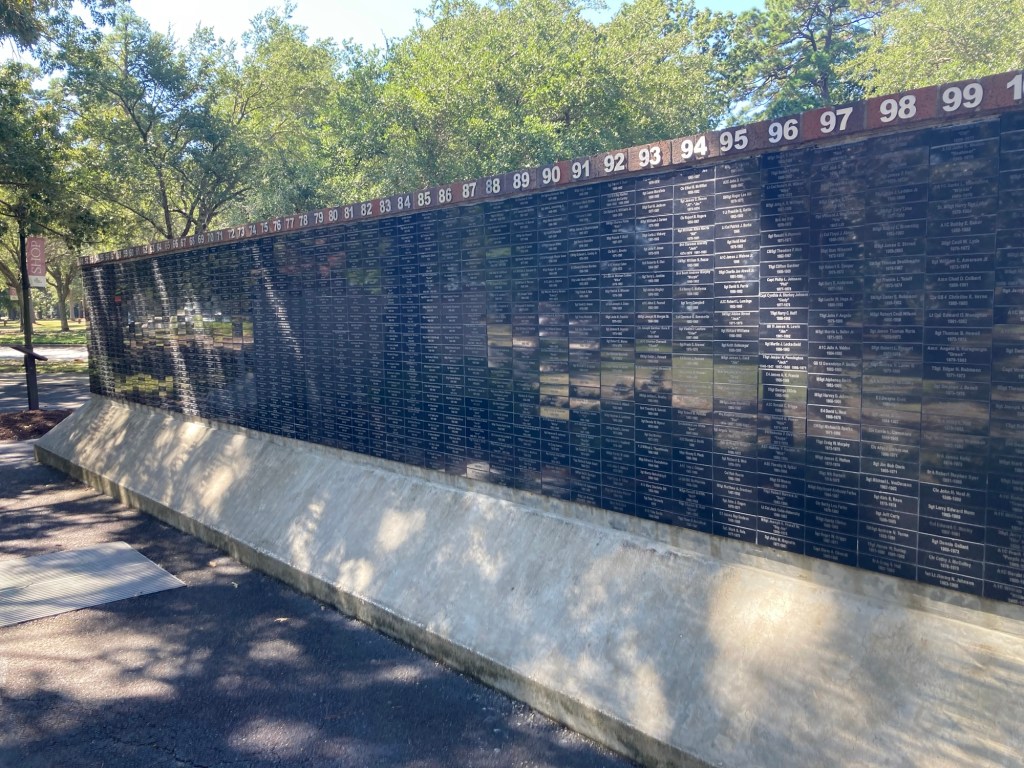
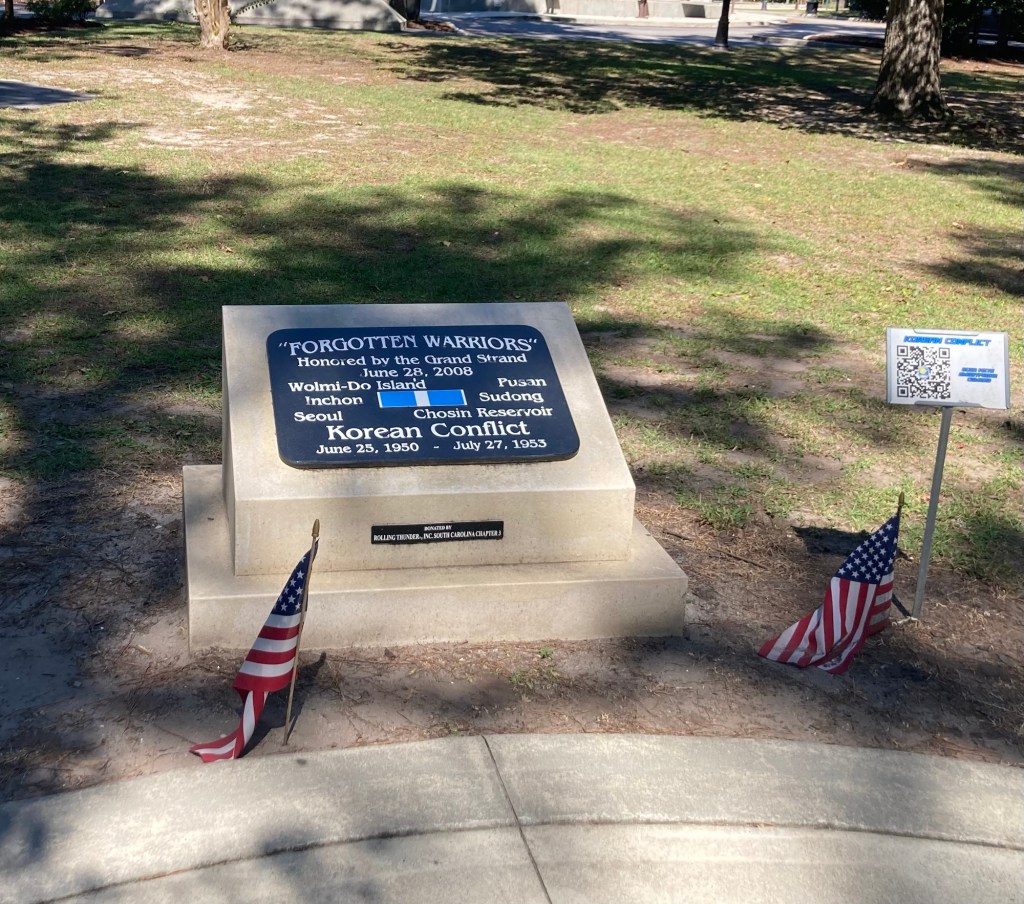
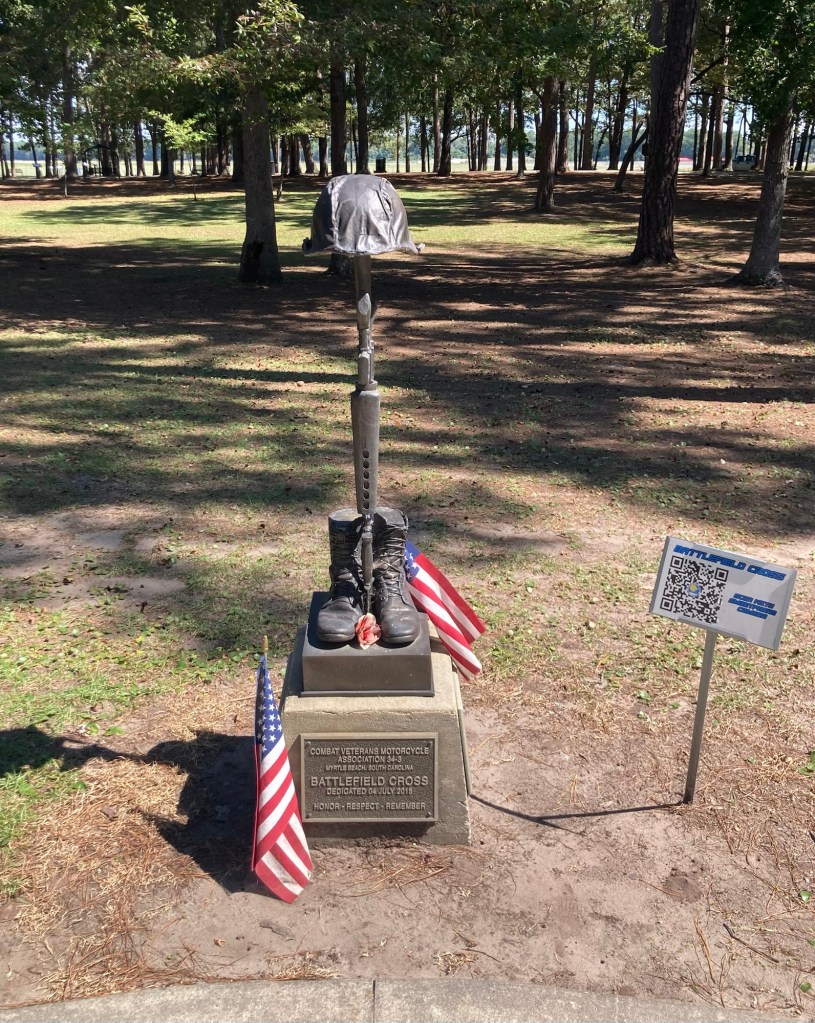
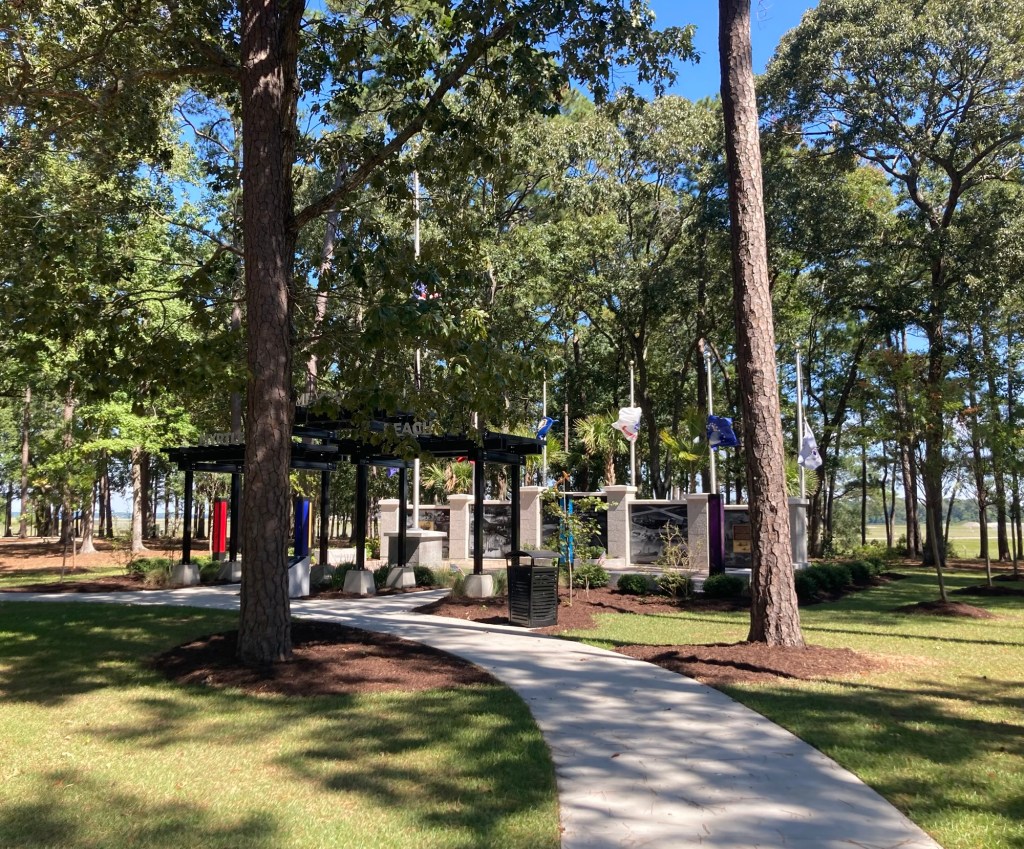
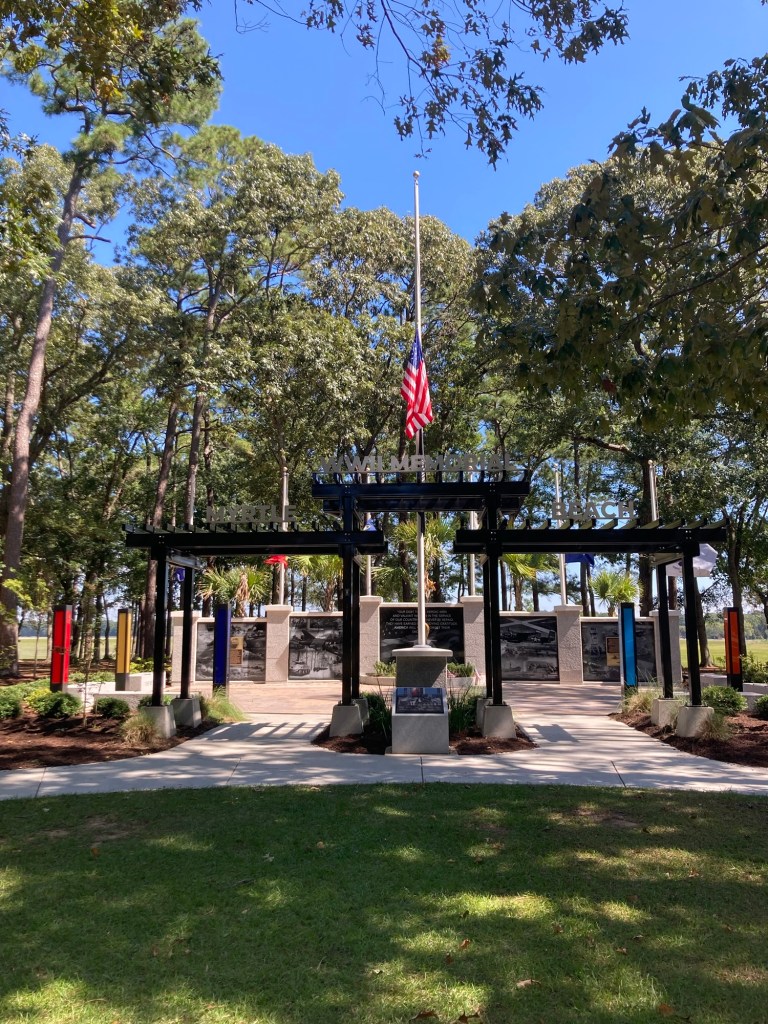
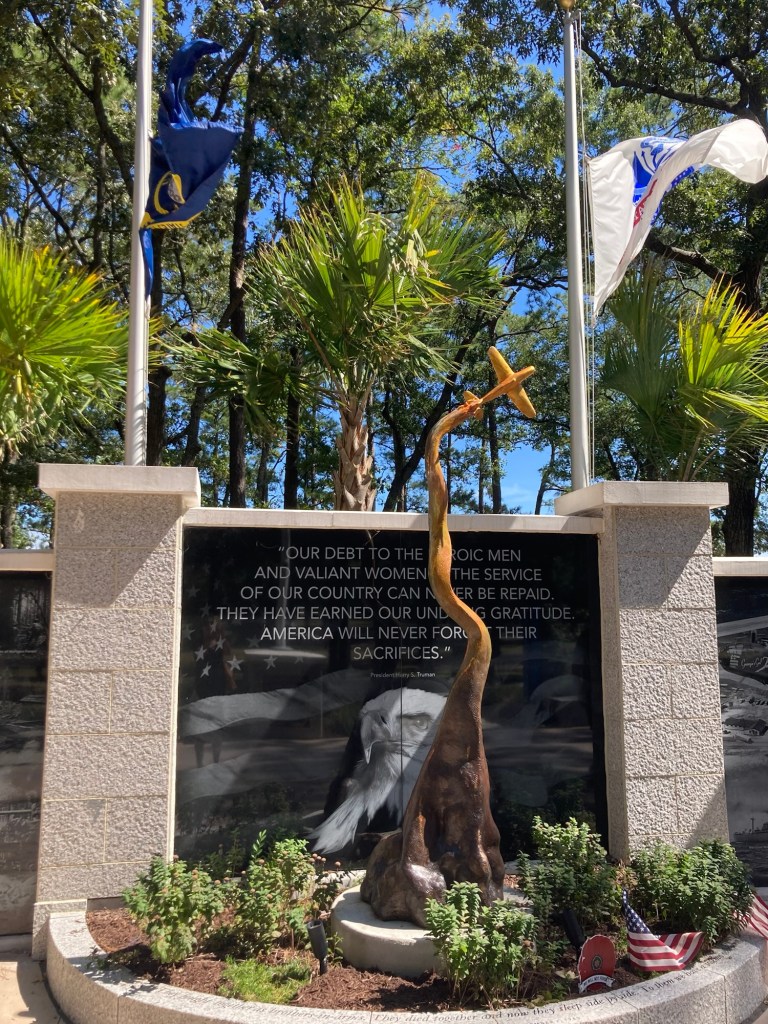
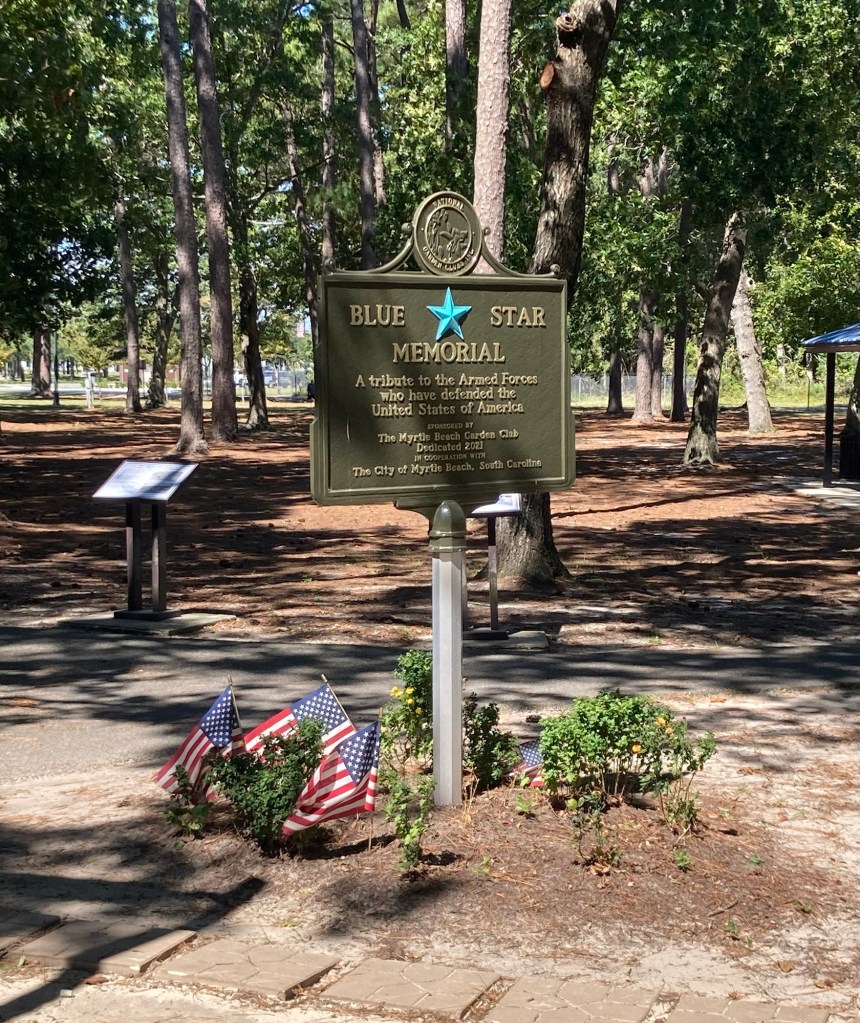
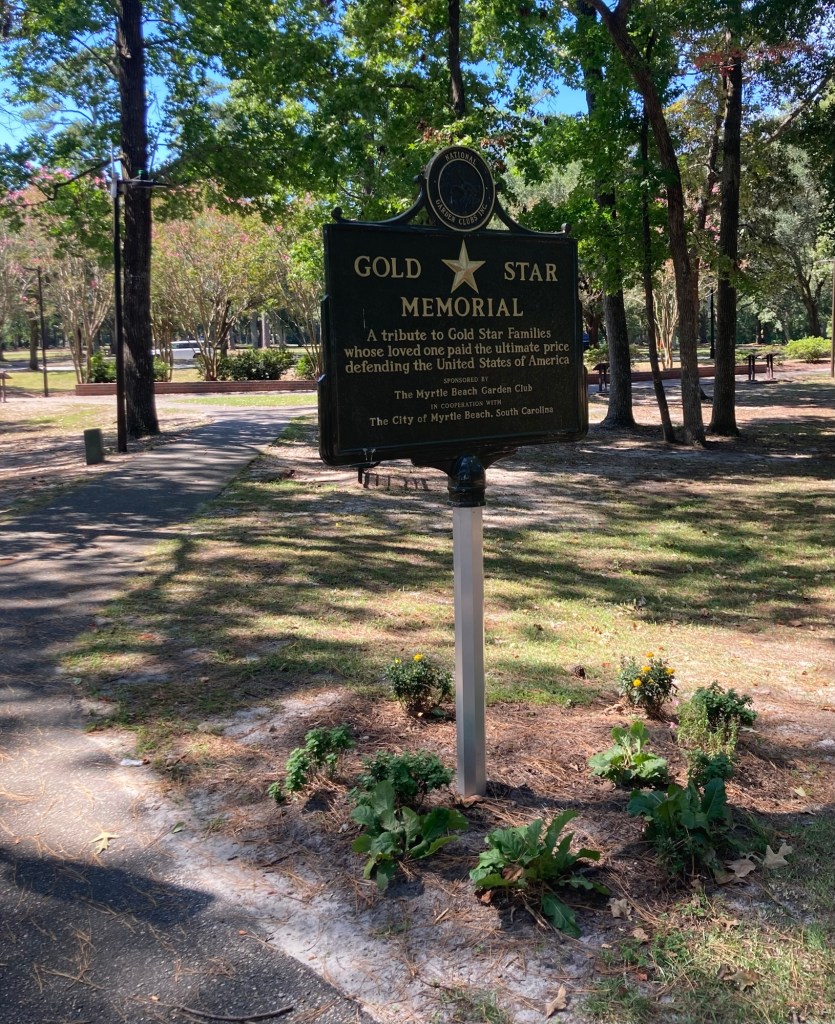
Bob and I visited Warbird Park today. It’s a small park on an old Air Force base behind Myrtle Beach International Airport that memorializes the contributions of local residents to the various wars in which the US has been involved. There is also a memorial to the victims of 9/11. It is a lovely little park near The Market Commons, where you can learn quite a bit about local war contributions, walk the lovely shaded paths, and/or watch planes leave from the airport.
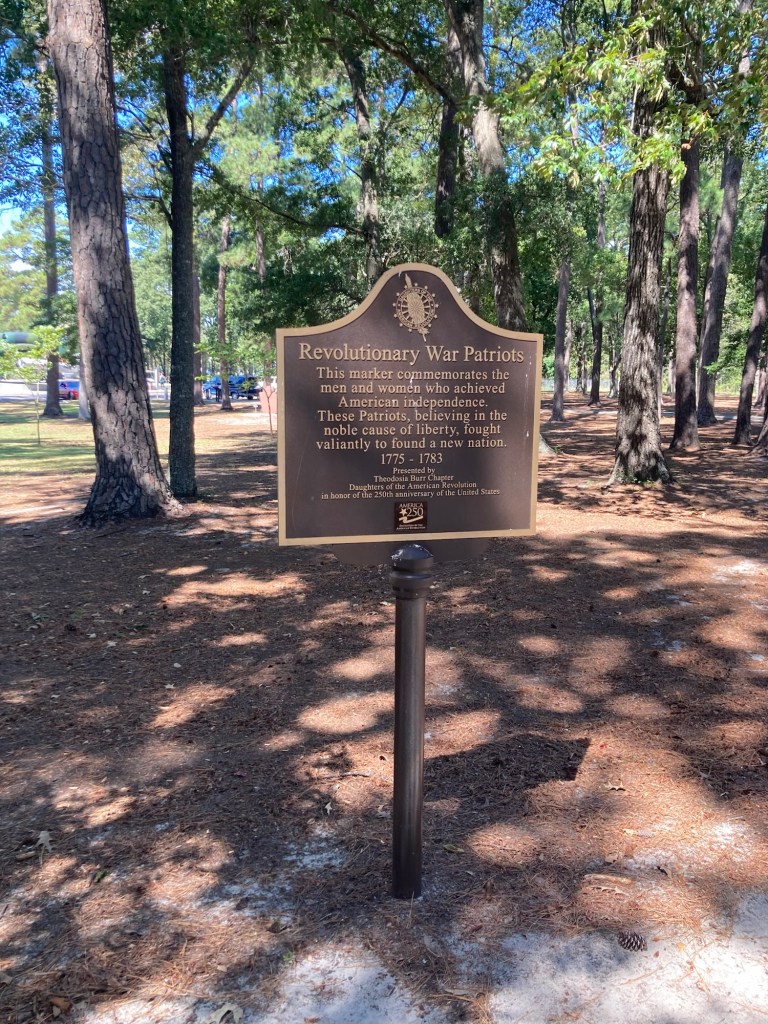
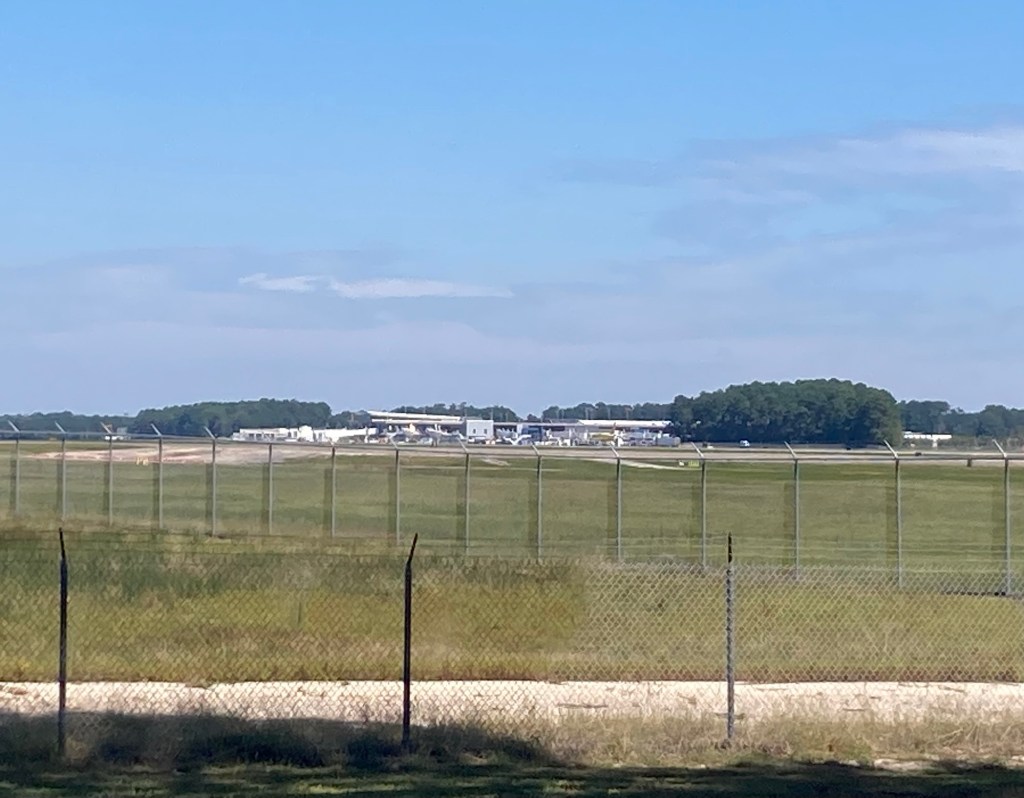
The street signage for the parkWalking up to the 9/11 MemorialA section of beam from the World Trade Center North TowerA F-1000 Super Sabre, used by the 354th Tactical Fighter wing for conflicts in the late 1950s and ‘60sLTV A-7 Corsair II, with inflight refueling and bombing capabilities, was adopted for use by the Air Force in the late 1960sFairchild A-10 Thunderbolt II, described as a tank killer, was first produced in 1975One of two parking spots reserved for those injured in combatThis is a display of the tradition of military aircraft nose art dating back to WWIIOne side of the Wall of RemembranceMemorial for the Korean WarMemorial for Prisoners of WarBattlefield Cross for fallen soldiers Walking up to the WWII Memorial A front view of the WWII Memorial The middle back section of the memorial A tribute to all Armed ForcesA tribute to families whose child has died in the Armed Forces while defending the USMemorial to Revolutionary War Patriots The view of the Myrtle Beach International Airport from the park
Like many cities throughout the country this week, there have been a number of events in the Myrtle Beach area to commemorate the heroes of 9/11. A couple of the memorials that we saw on the local news were for stair climbs to honor the sacrifice of the first responders on that terrible day.
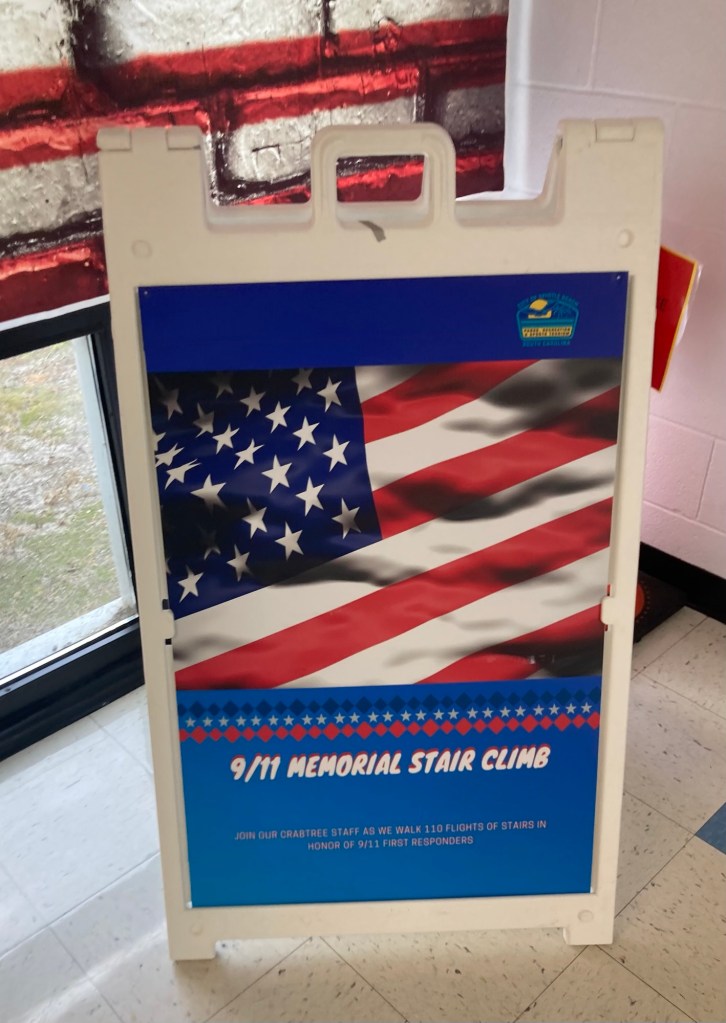
I had not done a stair climb before, but I was intrigued. These events (at least the ones I saw discussed for Myrtle Beach) encourage you to climb 110 flights of stairs, which represents the 110 floors of the World Trade Center. Some encourage you to wear gear as well.
I decided to do a memorial stair climb today at a local gym. They allowed members and non-members to come in this week during their operating hours to do the climb in one go or over several days.
Crabtree Memorial Gym
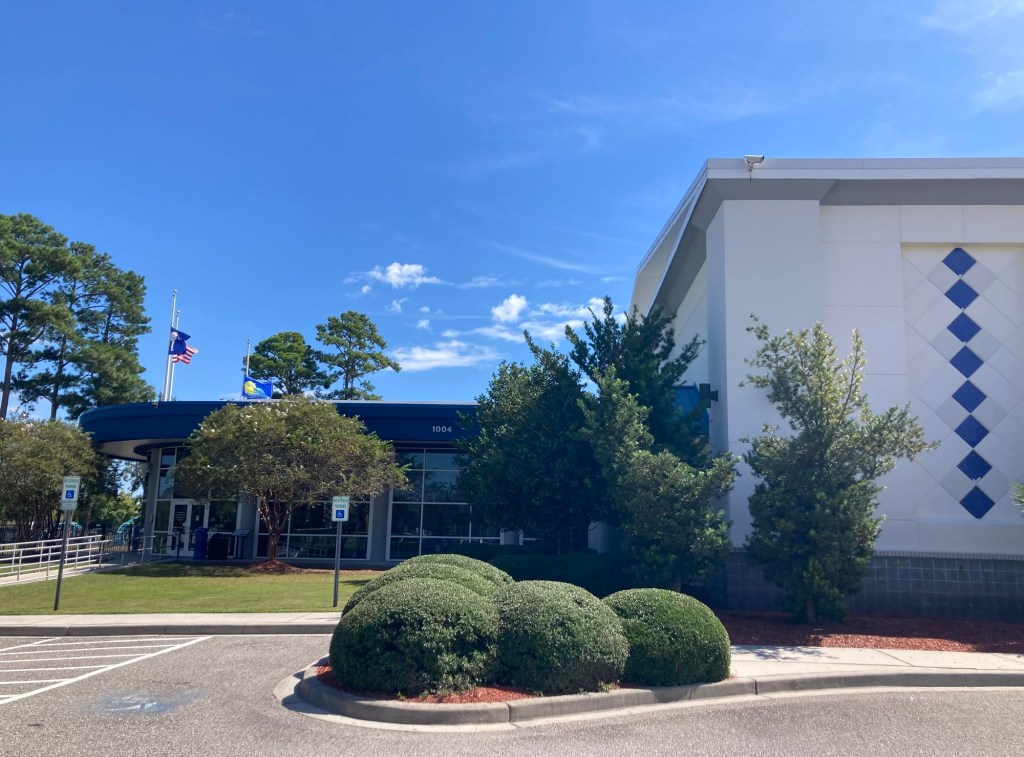
Crabtree Memorial Gym, where I did the climb, is a large multi-purpose facility across from The Market Commons retail and residential center that we were at the other day. It is named for Clem Crabtree who served as head of Morale, Welfare, and Recreation at the Myrtle Beach Air Force Base. In 1982, the Air Force named the gym in his honor.
The gym is currently owned and operated by the City of Myrtle Beach. It is open 7 days a week and offers sports, weightlifting, cardio equipment, and fitness classes. It is a two-story building. When I arrived, I was told where the stairwells were. I was to go up the one flight, walk down the hall, go down the 2nd stairwell, and repeat until I reached 110 or whatever other number I wanted to stop at.
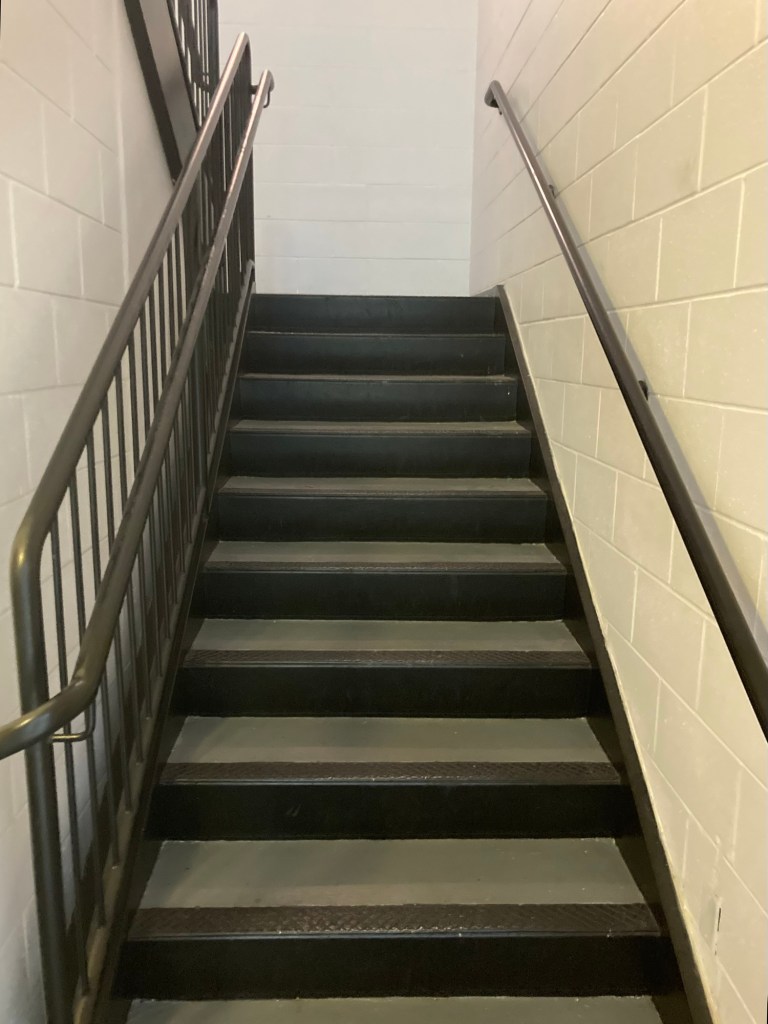
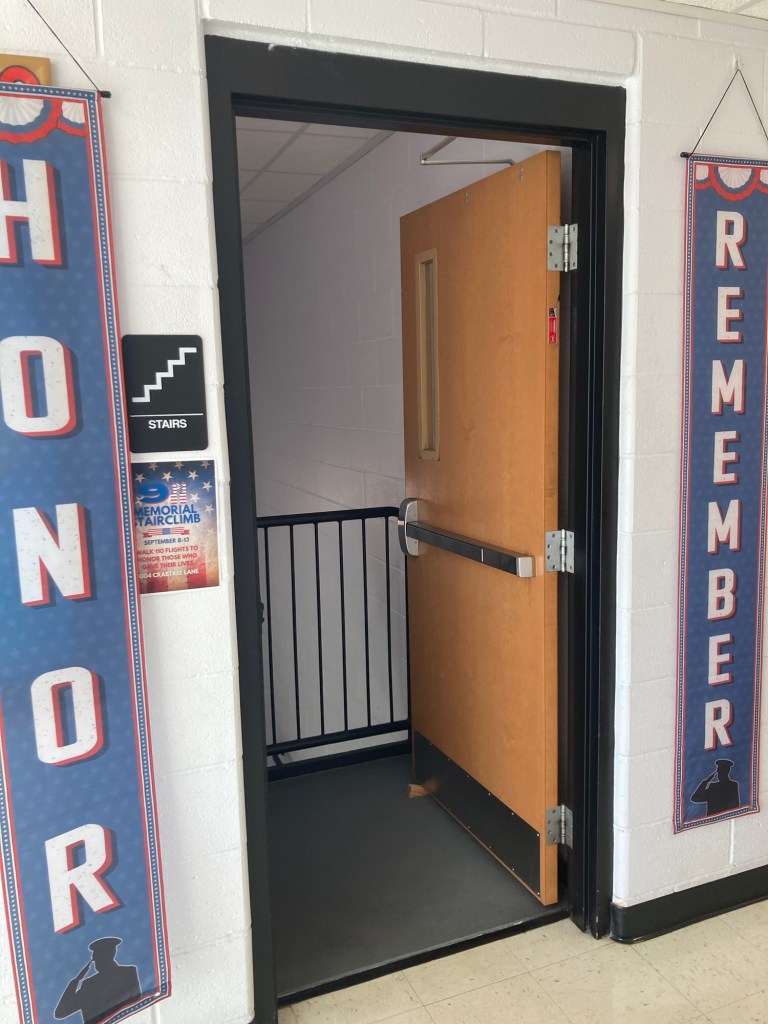
A sign by the stairwellThe first set of steps upThe entrance to the down stairwell
I had no idea how long the climb would take or how my legs would feel, but I wanted to do the full 110, if possible. I started a little after 10 am. One other woman also did part of the climb while I was there, having done some of the climb on two other days.
As it turned out, I didn’t have any problems. This is sort of my forte — unskilled athletic activities (those where you don’t need a lot of coordination) for long periods of time. My legs felt fine. It was good. Of course, I didn’t have the heavy gear, there was no fire or smoke, and I could listen to the music while I walked and climbed. Still, it took me about an hour and a half, so by the end I felt like I’d done something.
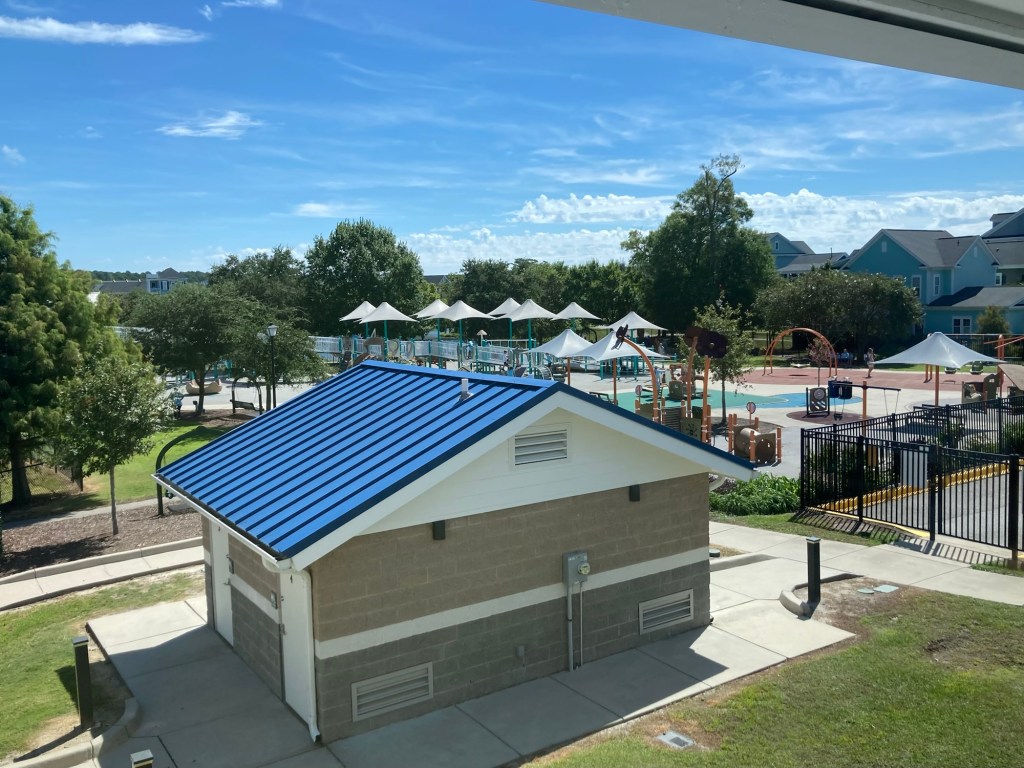
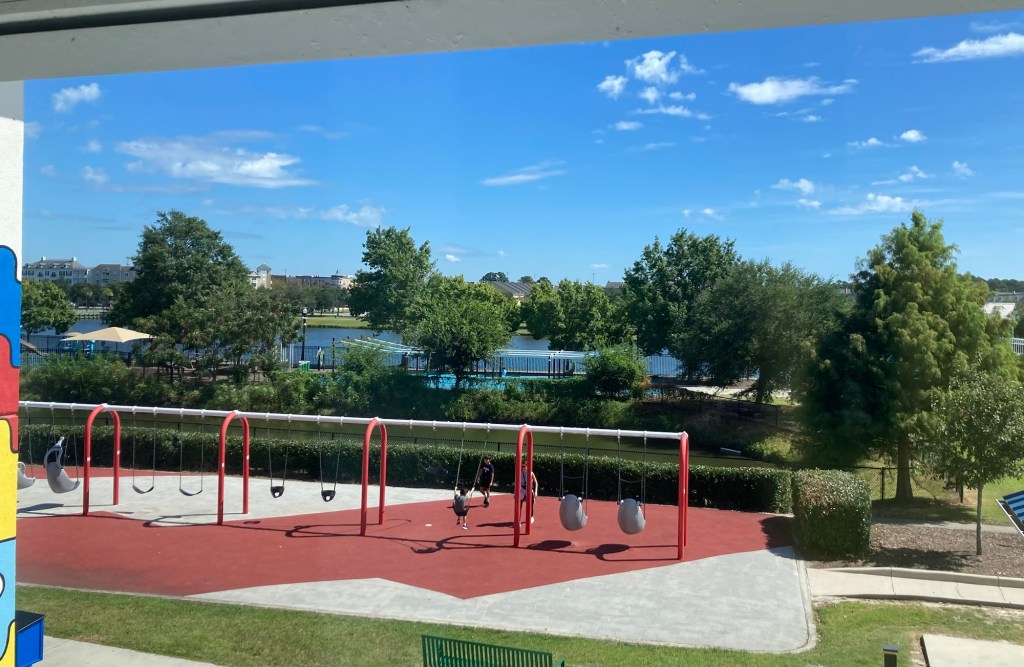
I also had a nice view out of the windows as I walked between the stairwells.
Bob and I drove 18 miles this morning to the Horry County Museum in Conway, South Carolina. Conway is the county seat of Horry County and home to Coastal Carolina University, which won the national championship in baseball in 2016.
Horry County Museum
As with most history museums, the building started out serving another purpose. In this case, the museum is in what used to be the Burroughs School.
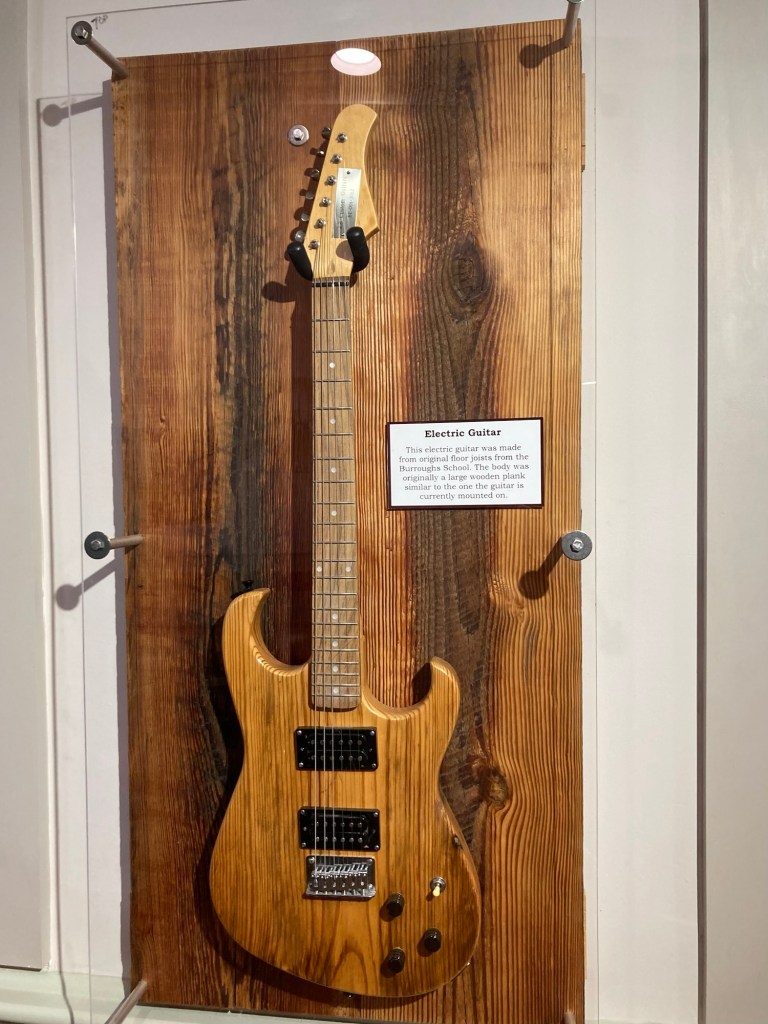
An electric guitar made from original floor joists from the Burroughs School
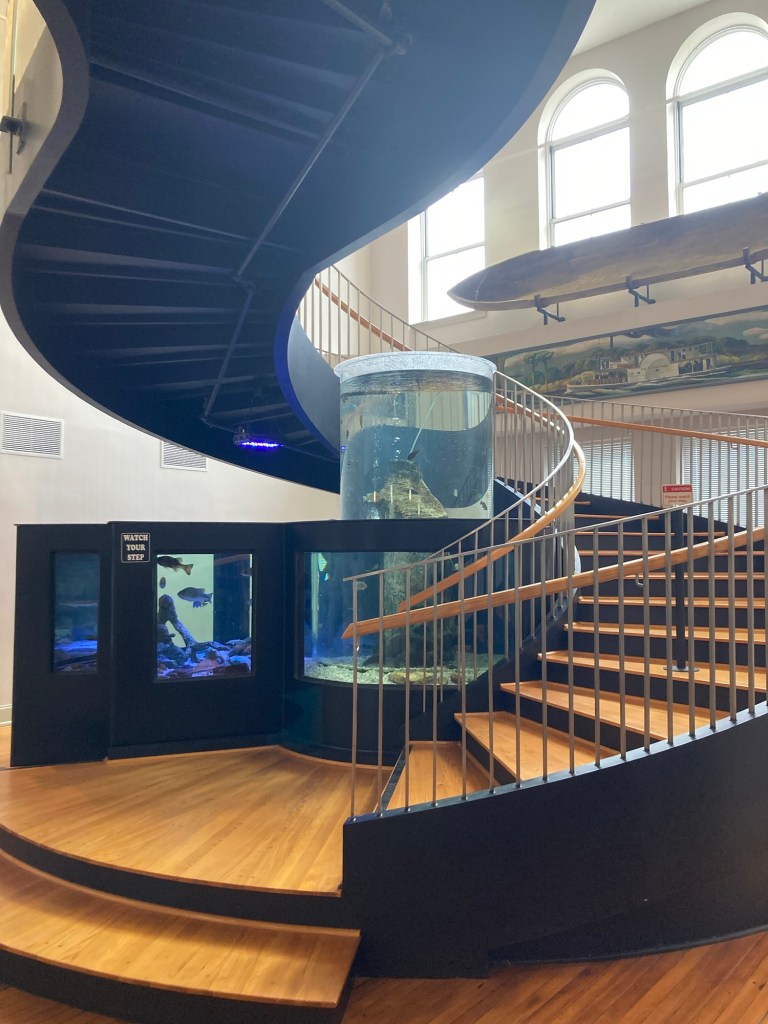
The museum was laid out well, attractive, with motion sensors so that lights came on only when needed. The guide at the front considered himself a bit of a comedian, as he said that we could take photos of anything in the museum except the fish as they were in the wetness protection program.
The undercover fish in the museum entrance
Horry County encompasses over 1,200 square miles of land, making it the largest county in South Carolina and one of the largest counties east of the Mississippi River. Many of the first colonists to settle the county came from Ireland, Scotland, and Wales.
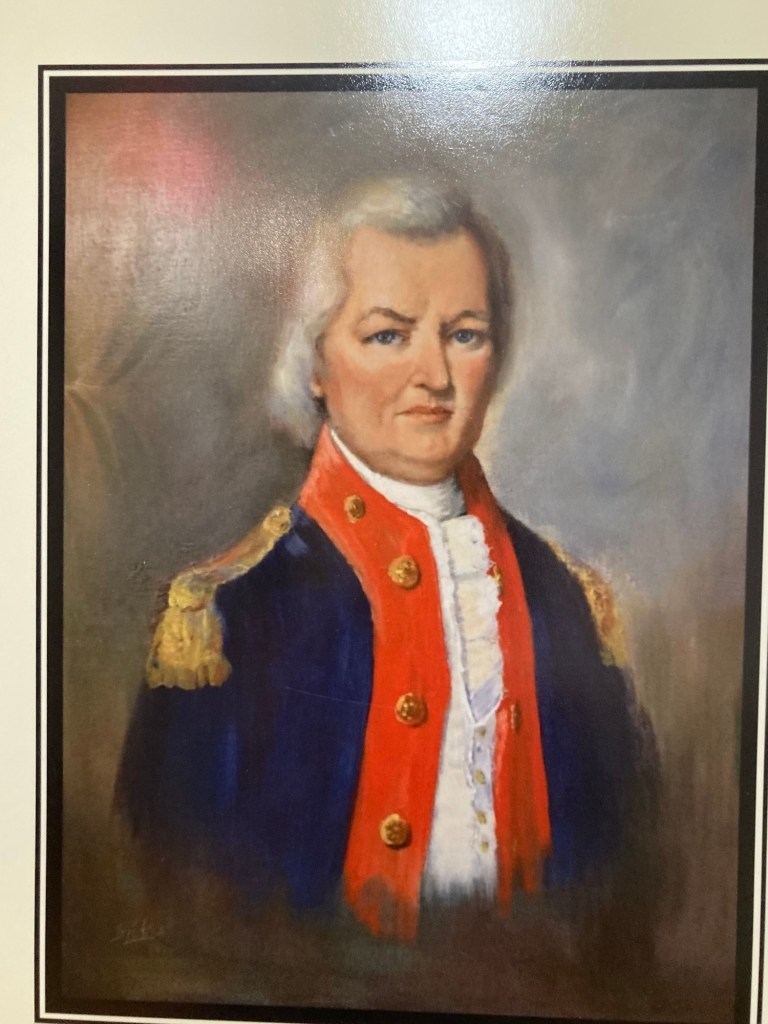
The county is named after Revolutionary War General Peter Horry.
General Horry
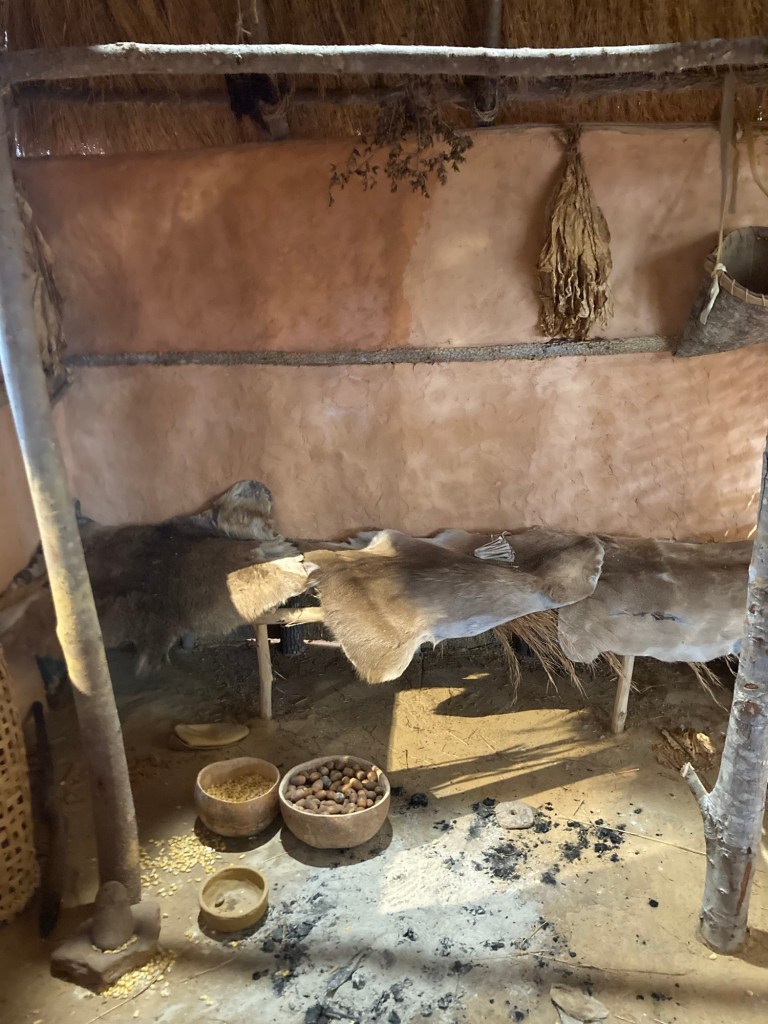
Prior to the British settlers, the area was home to the Waccamaw Indians, who are a recognized tribe by the state of South Carolina but not by the federal government, which means they are unable to enter into agreements with the federal government regarding self-government, religion, health care and gaming, among other things.
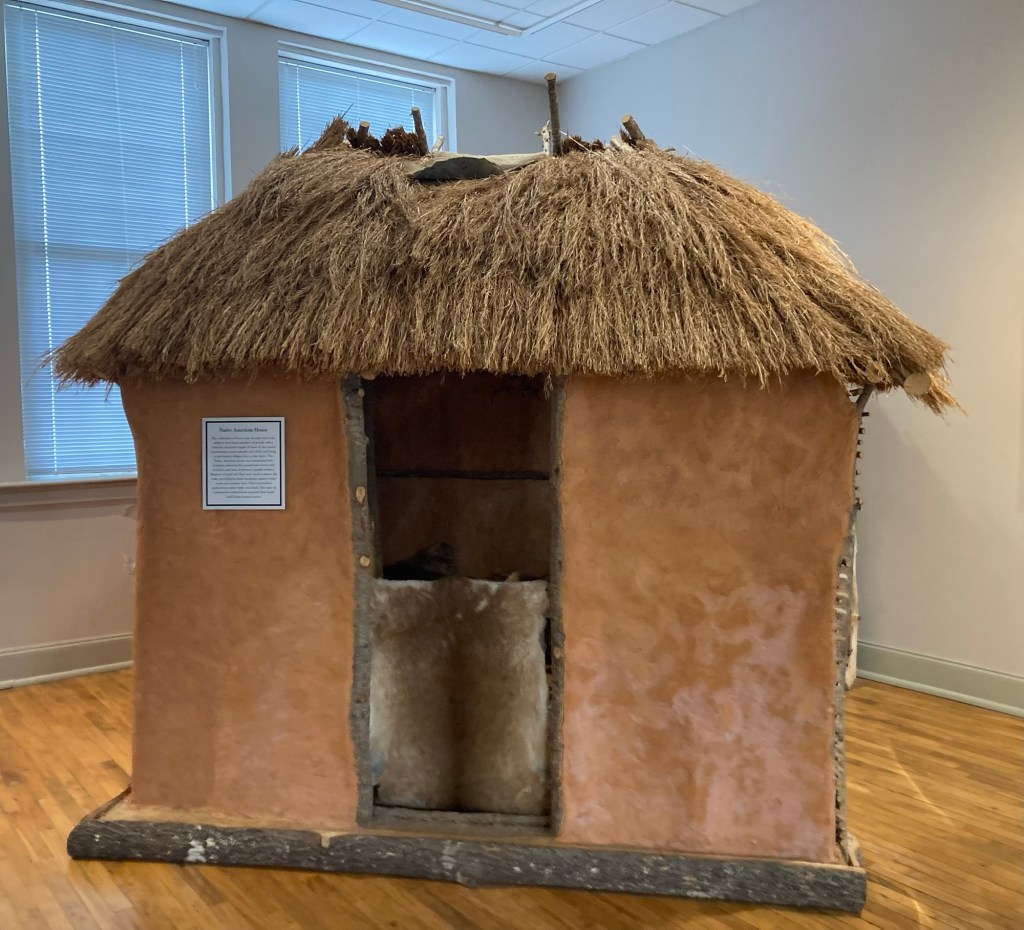
Acknowledgement of the original land owners. The rest of us are all immigrants.The outside of a Native American hutThe inside of the hut
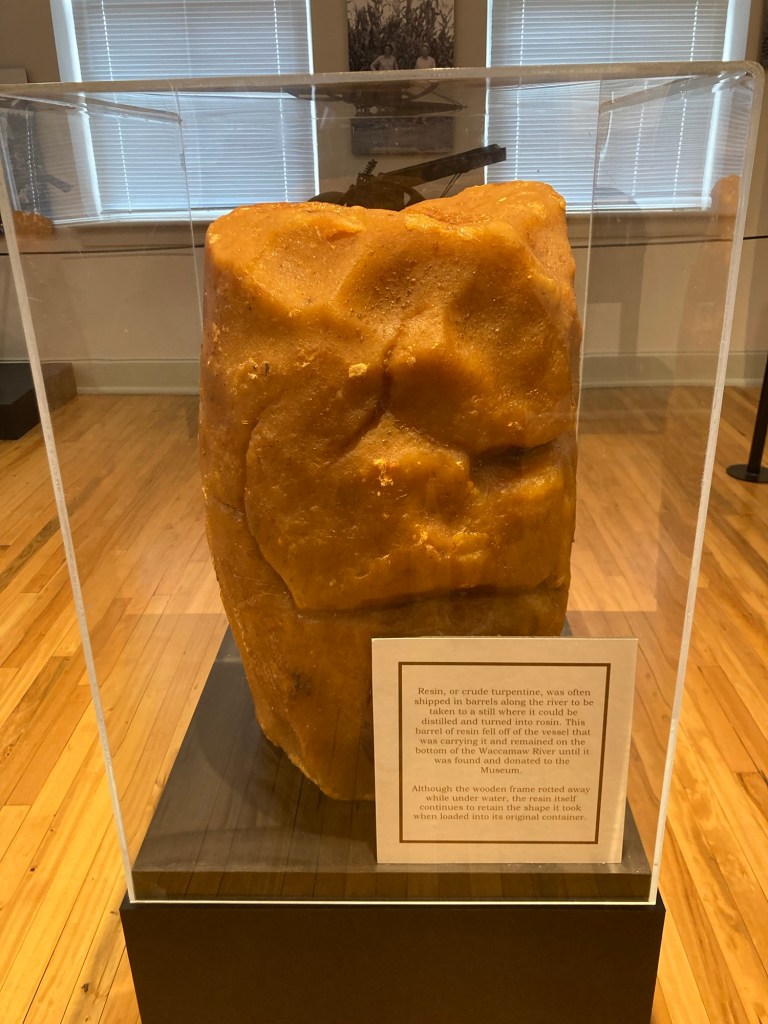
Although rice, cotton, and indigo were grown in the area, early important industries for Horry County were timber and turpentine.
A barrel of resin, or crude turpentine, that fell off the vessel that was carrying itA model of a turpentine still
Of course, every place has been involved in various wars over the years, so there were a number of exhibits related to that.
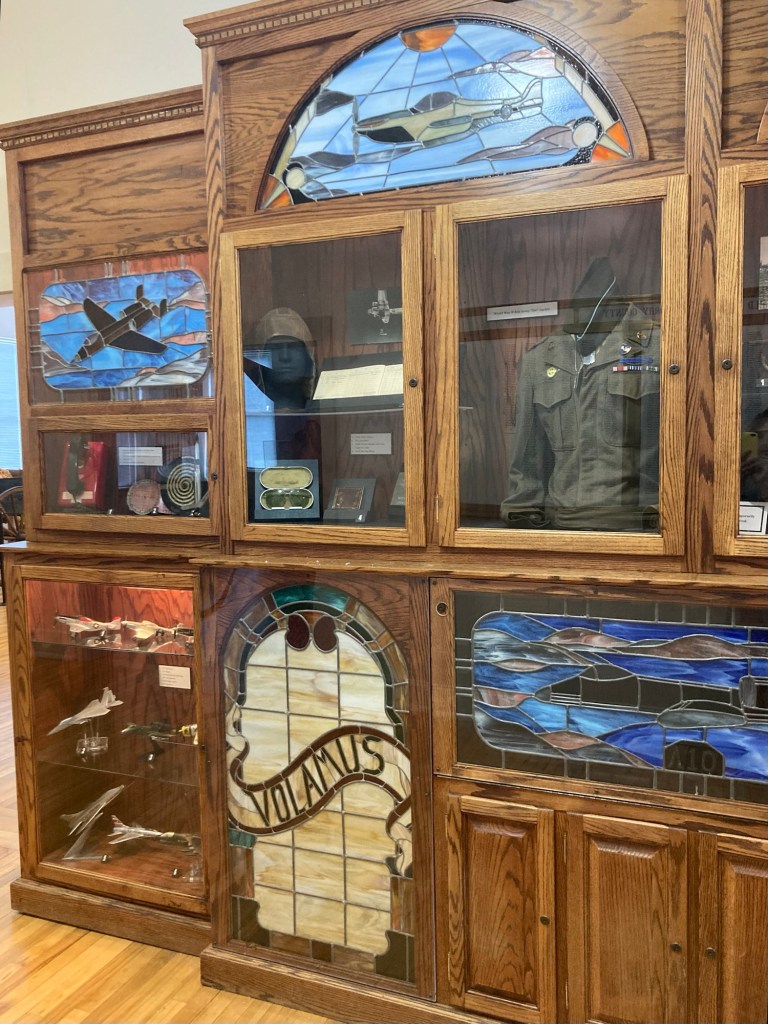
A display case made in 2002 to commemorate the Elliot White Springs Flight 77 Order of the Daedalians, which honors all local WWI aviators.
The stain glass panels in the case were taken from the Myrtle Beach Air Force Base, which closed in 1993.
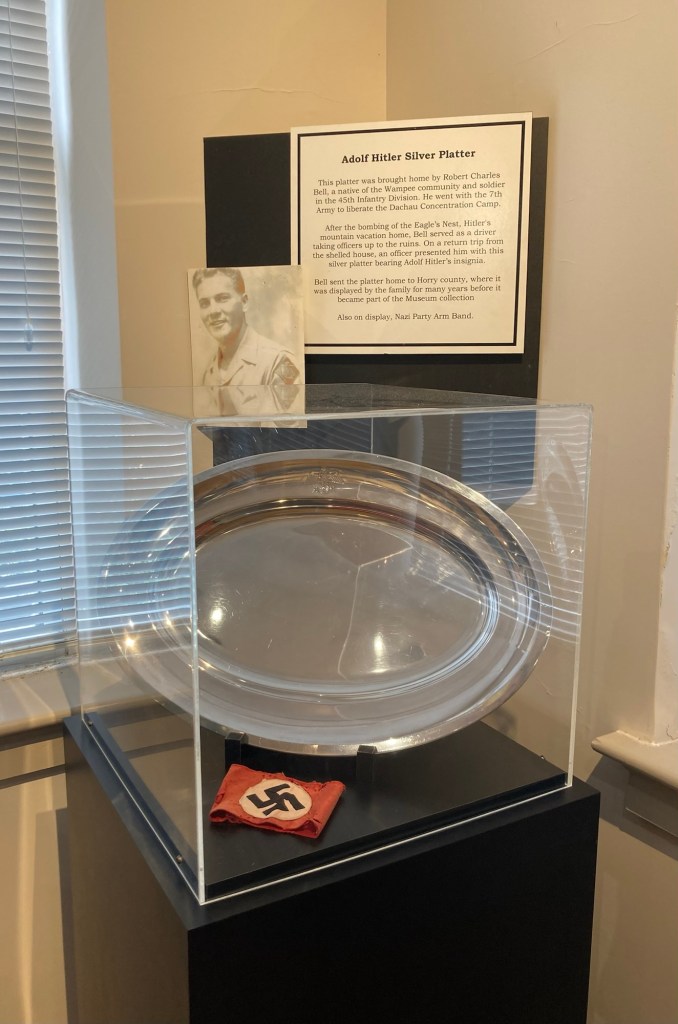
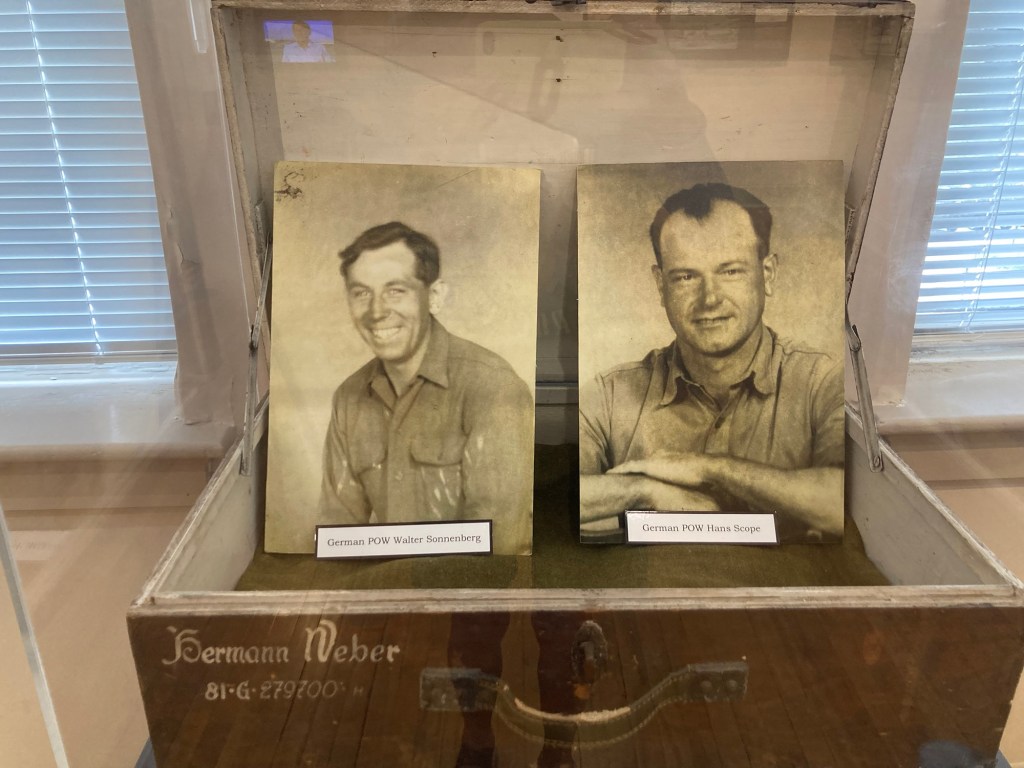
This is an Adolph Hitler silver platter, which was given to Robert Charles Bell, a soldier in the 45th Infantry Division, by an officer from Hitler’ mountain vacation home.Two German POWs who were held in the Myrtle Beach POW camp.
The Myrtle Beach Prisoner of War camp opened in 1944 and housed around 600 German POWs. There were 28 POW camps in South Carolina, and the POWs were used to fill gaps in industries, like timber or tobacco, from the US men at war.
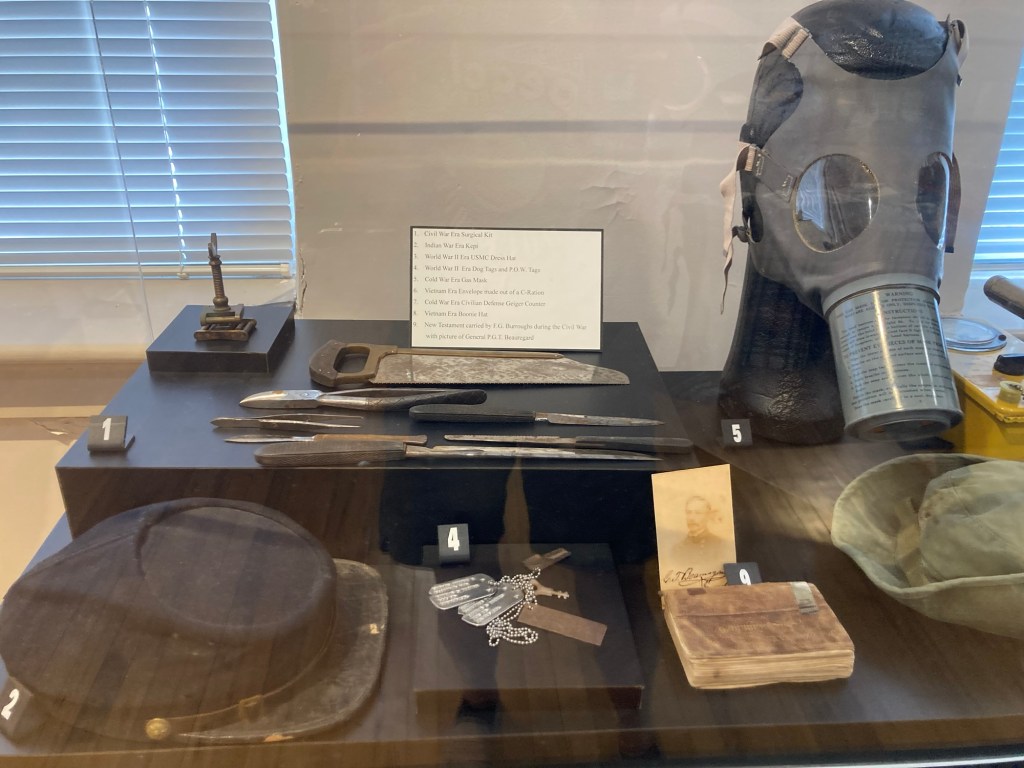
Various war-related items. The tools on top are from a Civil War surgical kit.
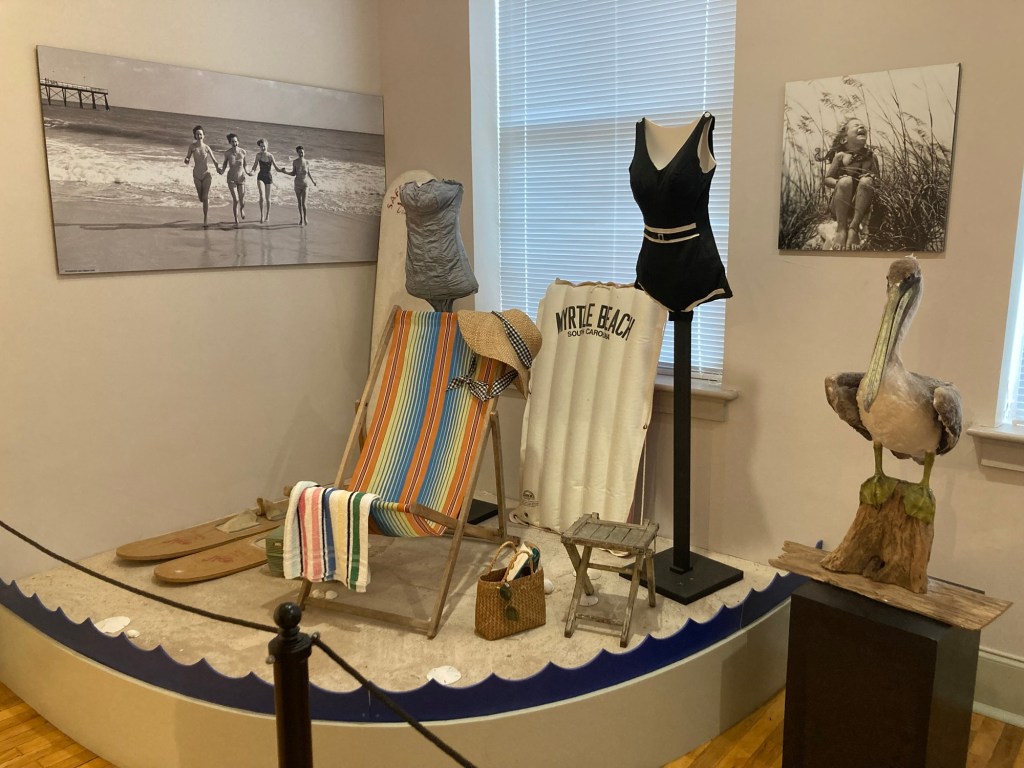
Another highlight of the museum was the role of water in the area — both in terms of driving industry options but also fueling the tourism industry.
Various types of sea shells Pageant contestants posing on the beachThe lure of the area
It was an impressive museum, very well presented, especially compared to many other history museums that we’ve visited. We also were intrigued with downtown Conway and will likely go back to explore that area as well as their Riverwalk.
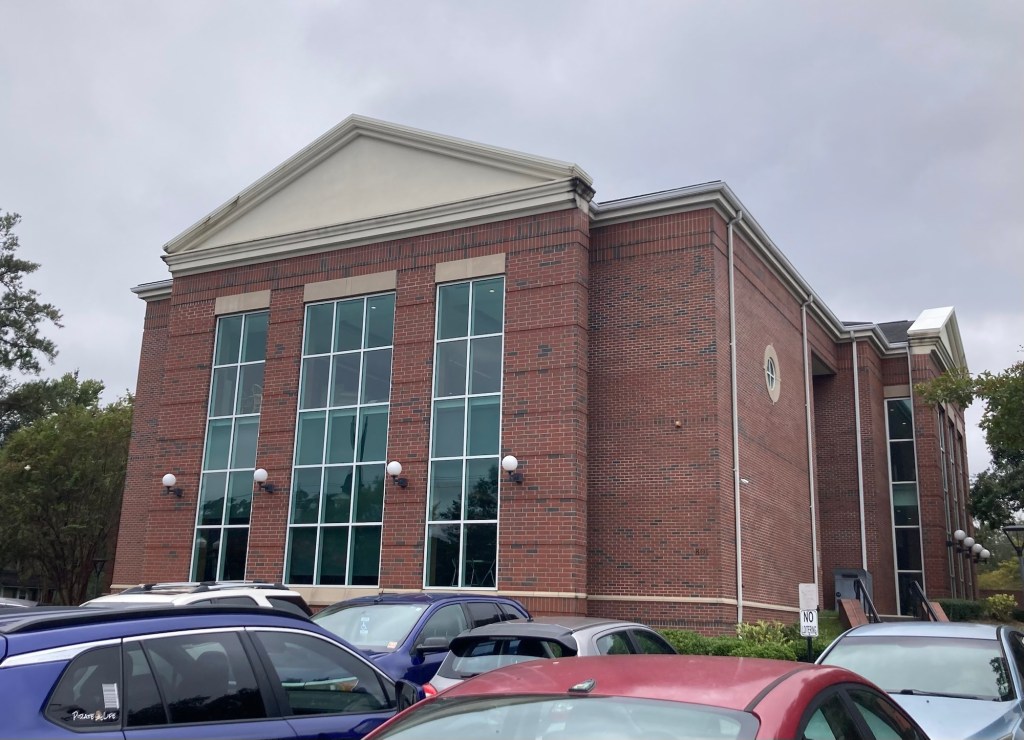
Almost forgot— next to the museum was their library which was quite busy.
Just as a quick note before I get into our recent activities and inactivities, Bob saw a shirt in a local store that was selling Murrells Inlet merchandise. The shirt had MISC in big letters for Murrells Inlet, South Carolina but also looking like the abbreviation misc for miscellaneous.
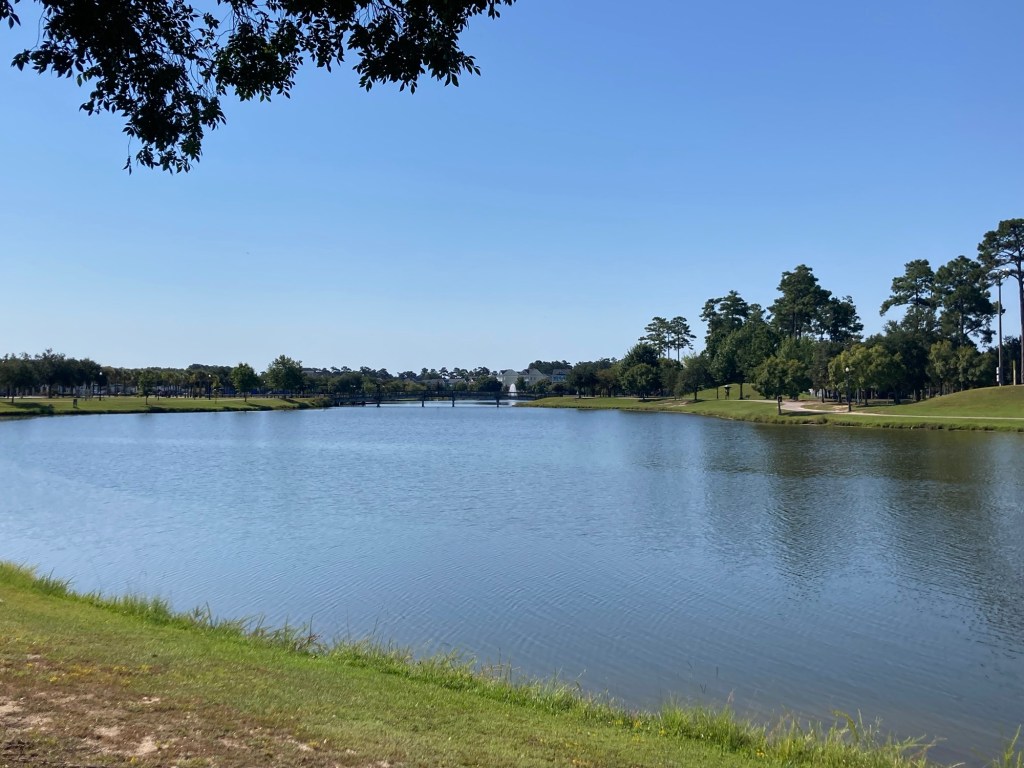
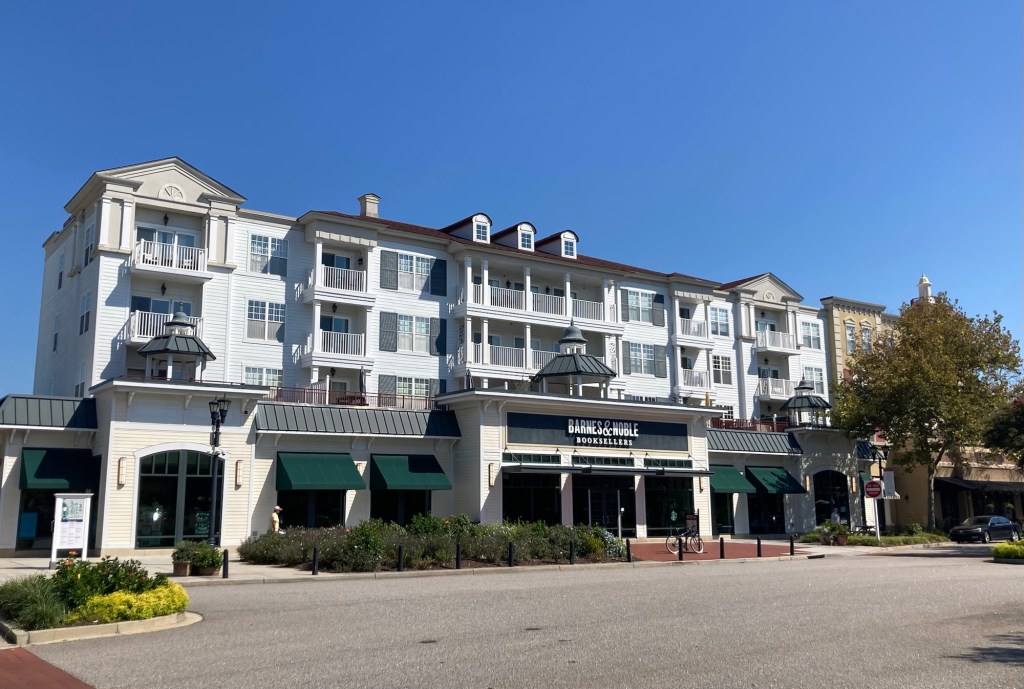
We’ve been having a relatively quiet past few days with some short outings as well as some planned and unplanned house duties with a lot of sports watching thrown in. On Friday, we drove to the new Market Common development. It’s very close to the Myrtle Beach Airport and has mixed retail and residential development as well as a nearby park with a lake and walking/exercise trail.
One entrance to the development The lake between the park and the development One of the exercise stations along the trailA Barnes and Noble with housing on top — that would be a dangerous place for me to live
Also on Friday we did our first run to the county garbage and recycling center, as the homeowners forgo curbside service. The facility is only a few miles from the house, and it accepts everything from garbage to batteries to cardboard to mixed recycling (paper, plastic, aluminum, and glass) to yard trimmings.
Saturday, Bob mowed the lawn, and I helped with getting the clippings in the bags to take to the garbage and recycling center. Unfortunately, while mowing he noticed that a portion of the front yard on one side by the back gate was very wet and there was some standing water under the gate.
He checked both the neighbor’s spigot and our spigot which are in that area. The neighbor’s spigot was off, but ours had been on, although it didn’t appear to be leaking water. We texted the homeowners and when they replied we talked by phone. They called their water utility who sent someone right out to check. Long story short, the utility guy thinks it was due to the spigot being on. I’m glad we didn’t wait longer to mow, as we are never on that side of the house. As of today (Monday), the standing water is gone but the ground is still squishy.
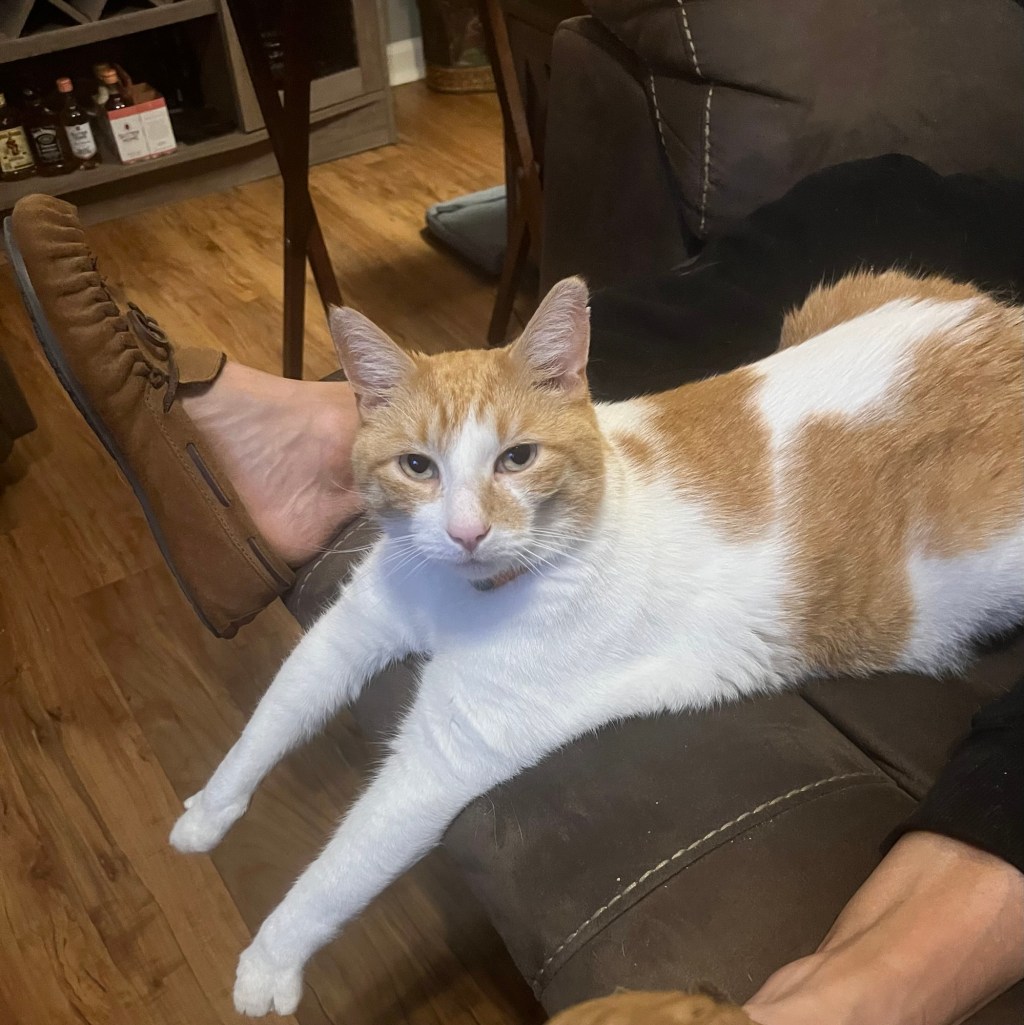
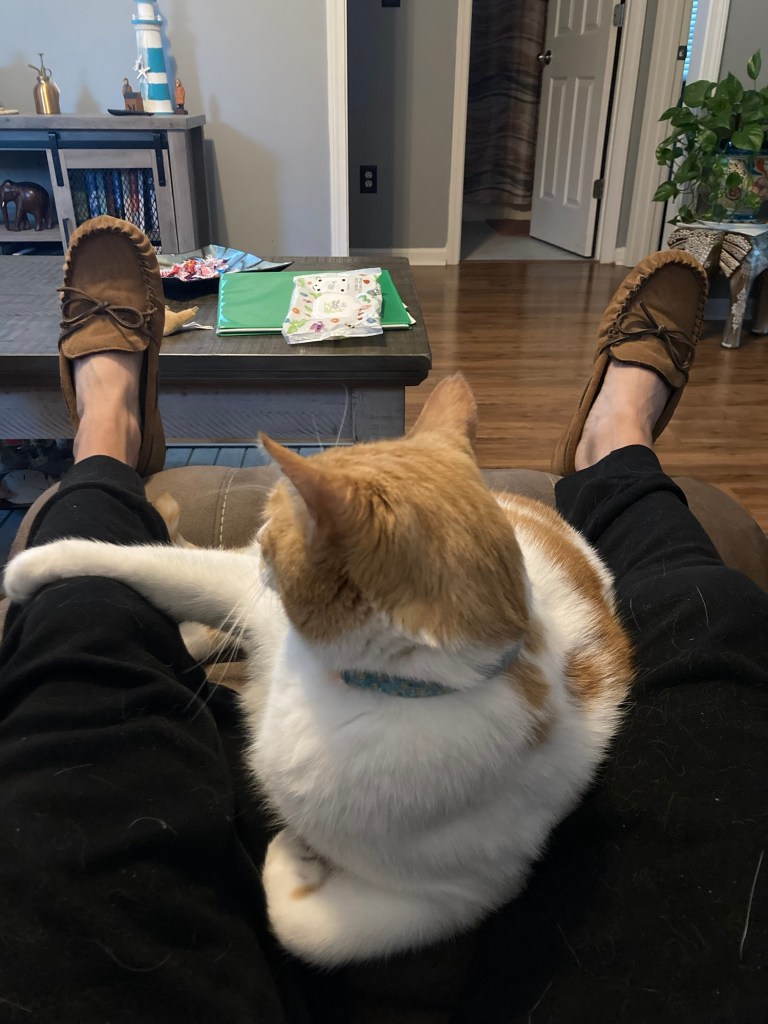
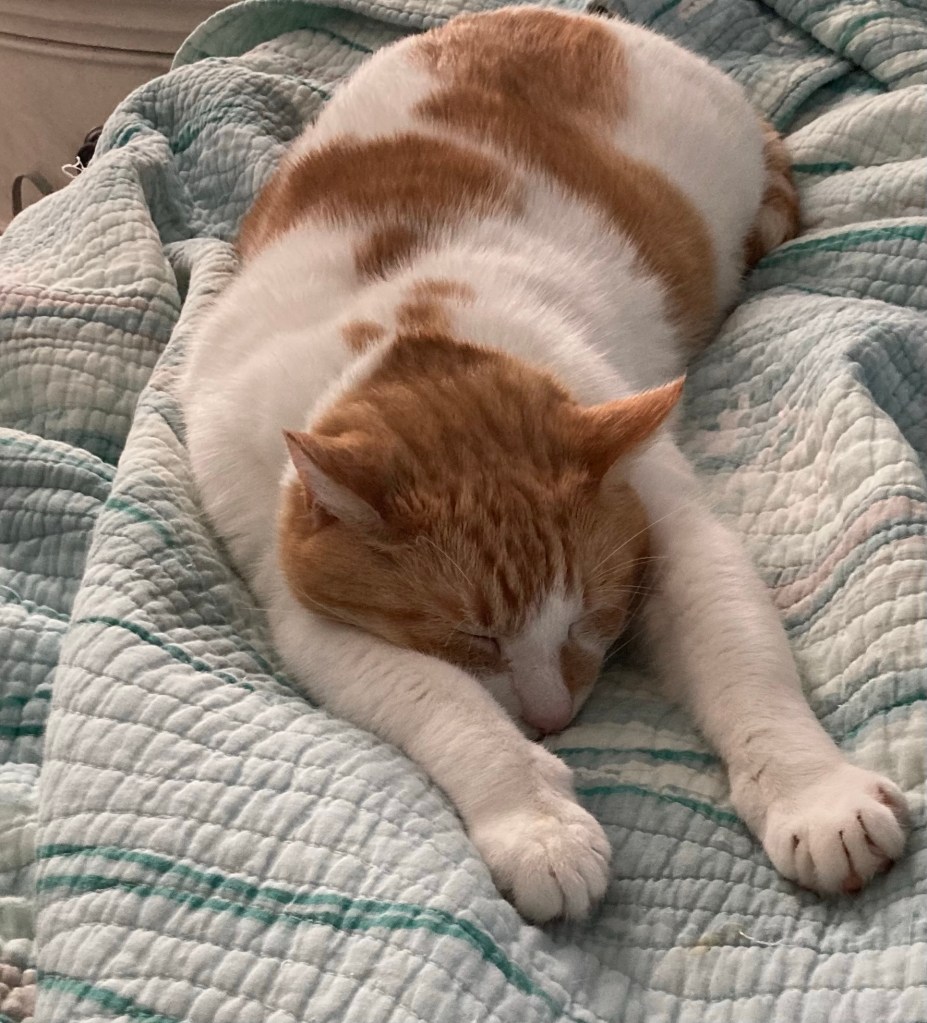
Otherwise, we spent most of the weekend watching various sports teams for college and professional American football and college volleyball. There were some good games, some of which went our way and some of which did not. Sunday it stormed here, so it felt like we had a good excuse to be inside. We also had Squeegee to entertain us. He’s not terribly active but very sweet, and he curls up in the cutest and/or funniest poses.
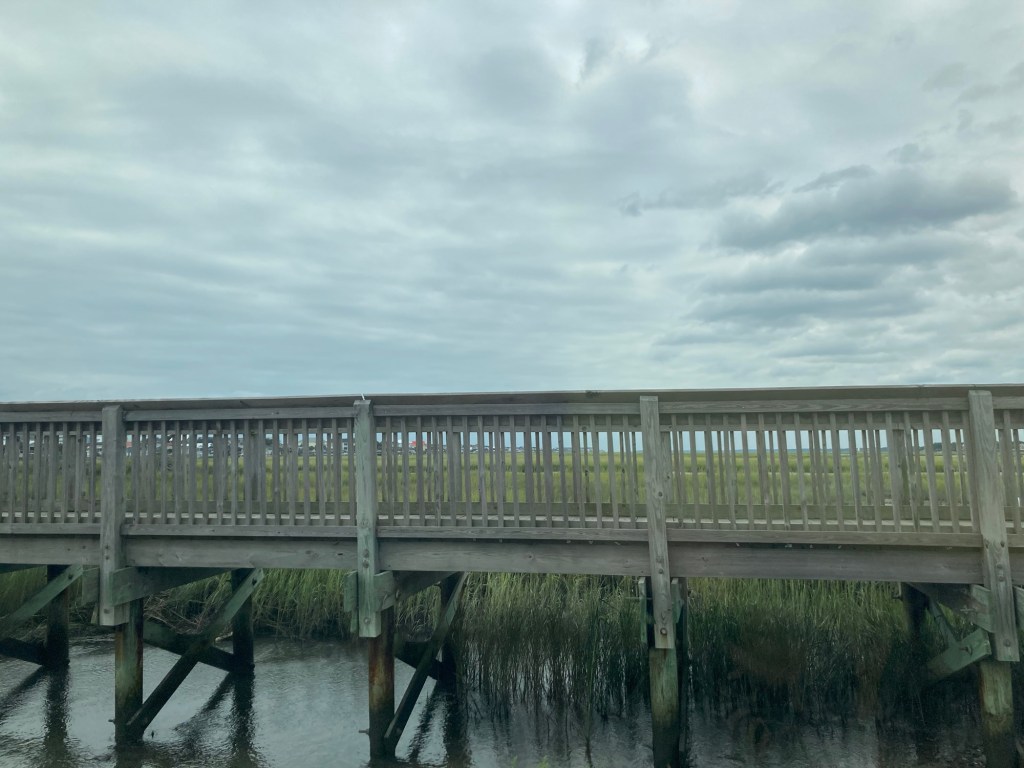
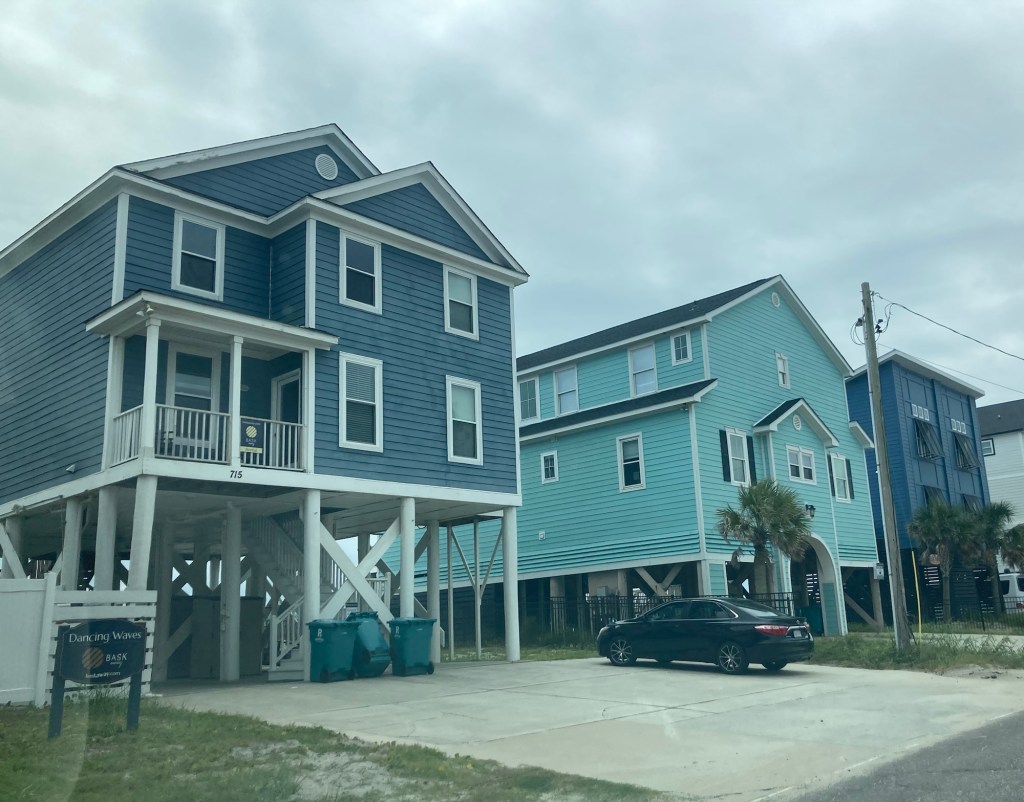
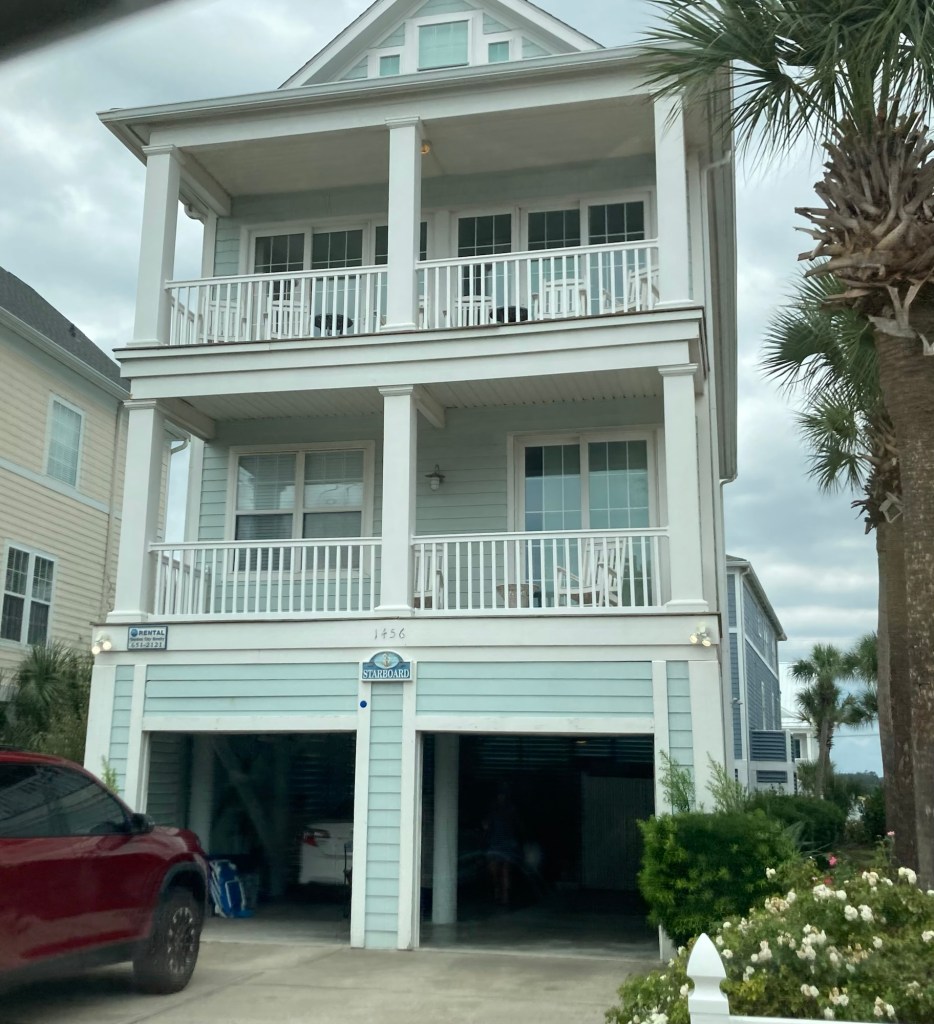
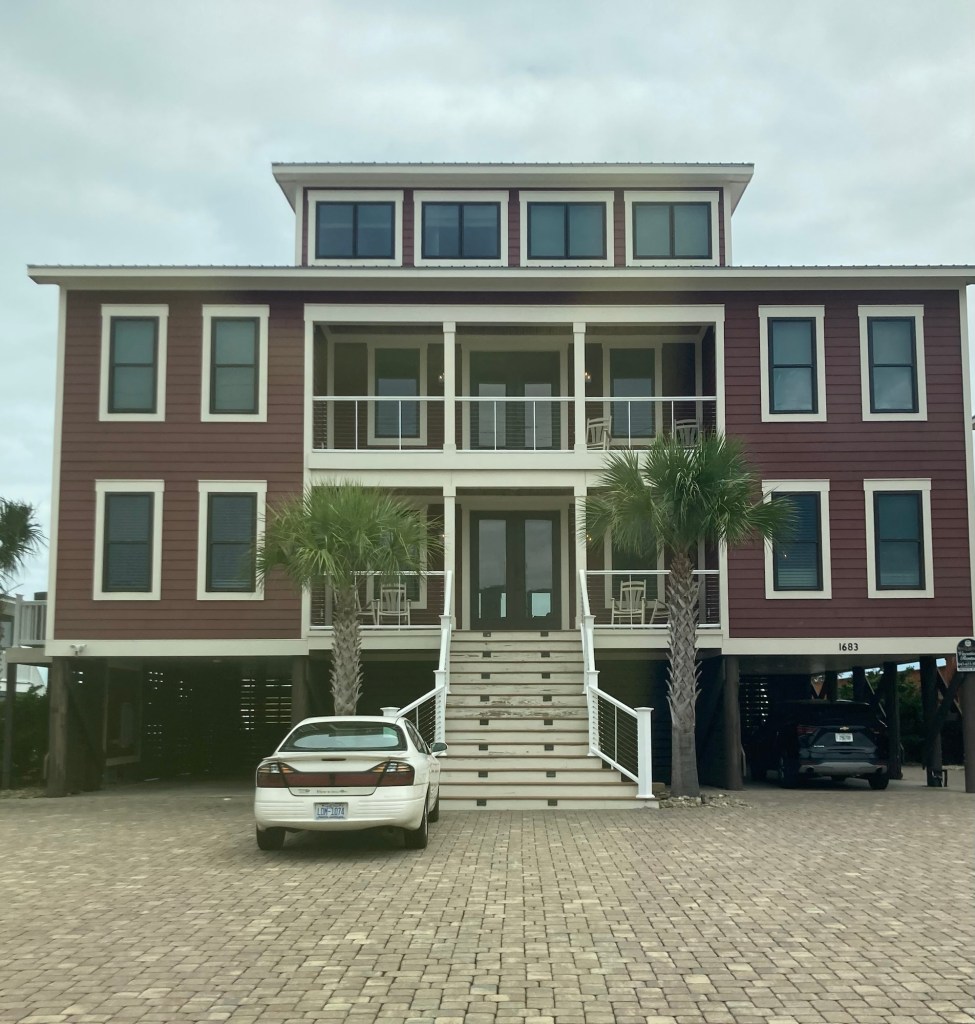
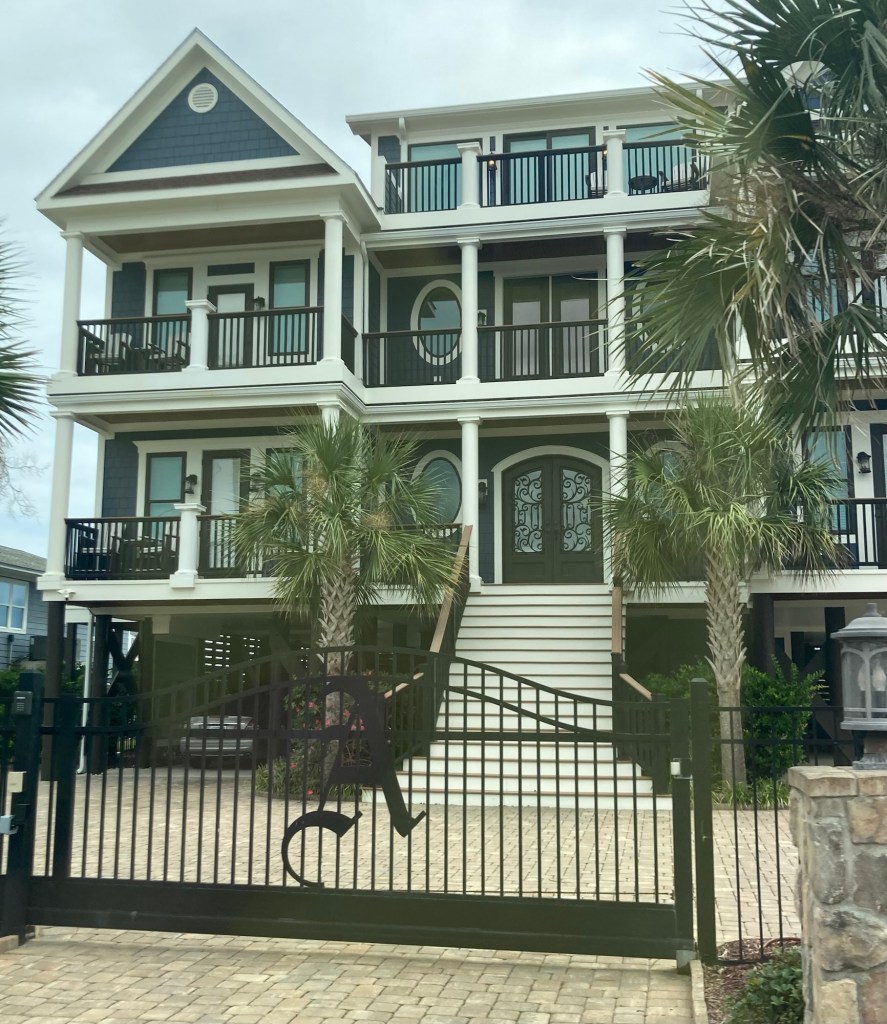
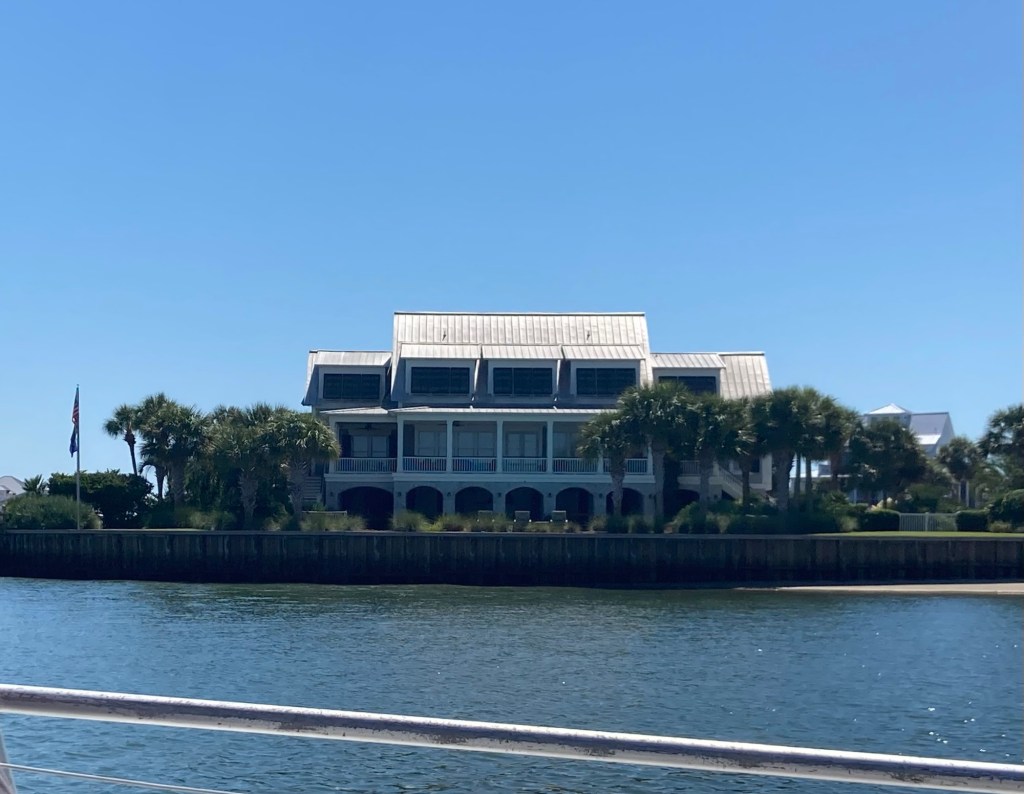
Today we drove over to Garden City, which was the area with all the big houses that we saw on our boat tour on Thursday. It is a community that basically runs along an isthmus that faces Murrells Inlet and the Atlantic. I took some photos of some of the houses on our drive.
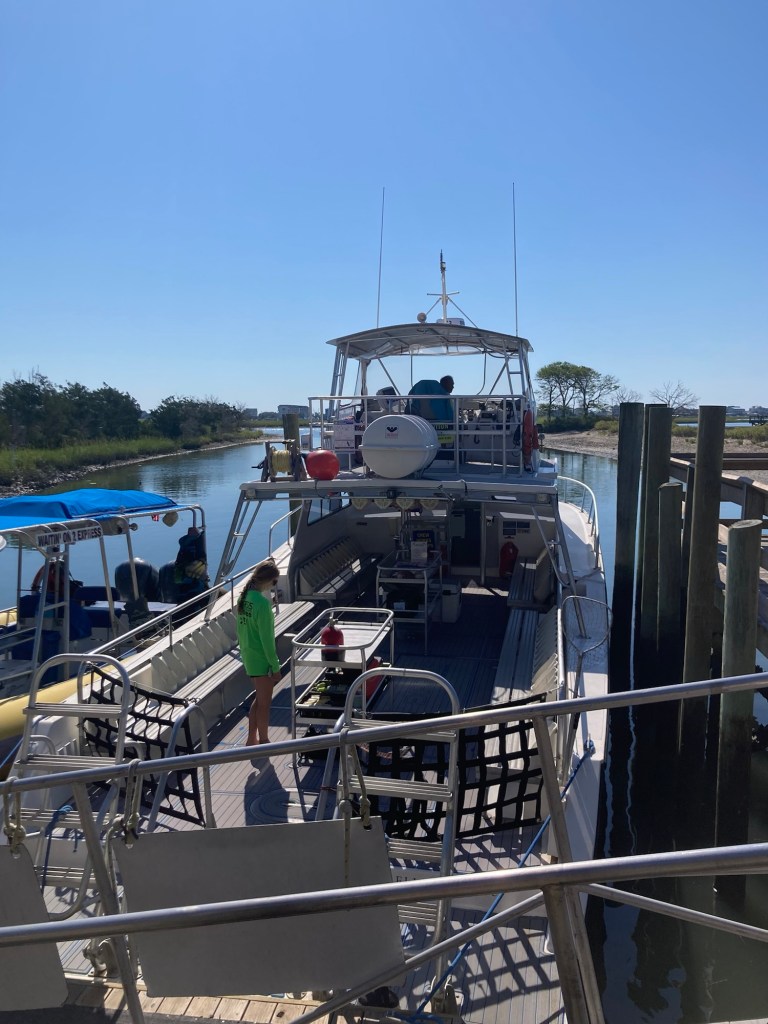
Bob and I set sail this morning with Express Watersports and about 12 other people on a 1.5 hour Dolphin Watch cruise from the Murrells Inlet Harbor. It was a beautiful day for a cruise, and we saw lots of dolphins (although successfully photographing them is a whole other matter).
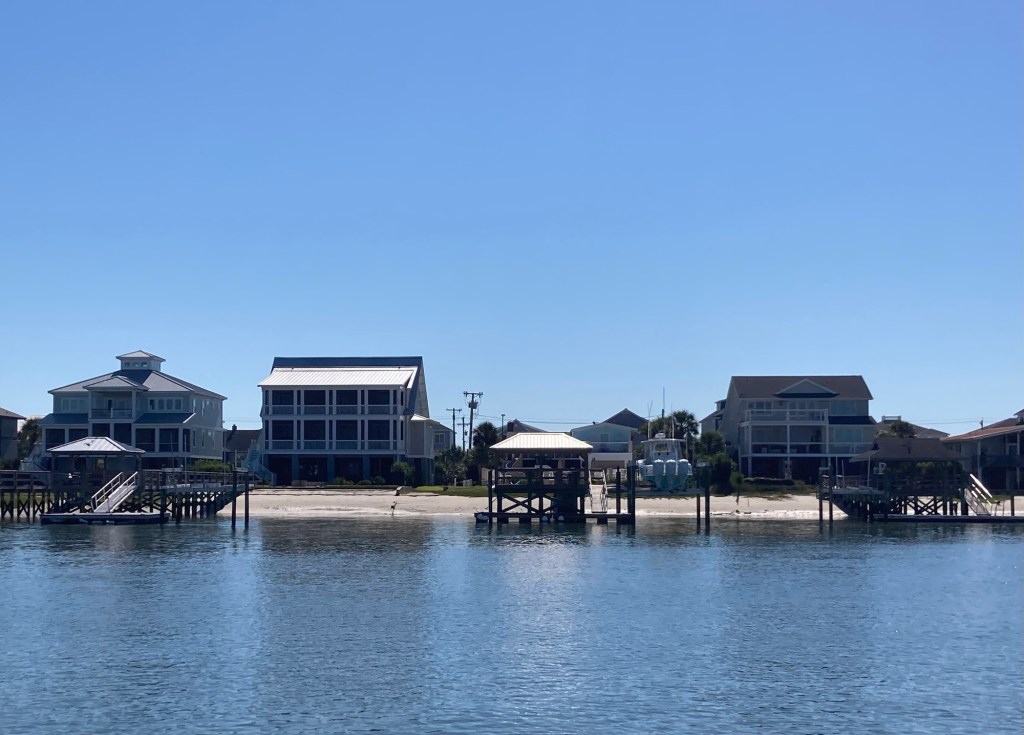
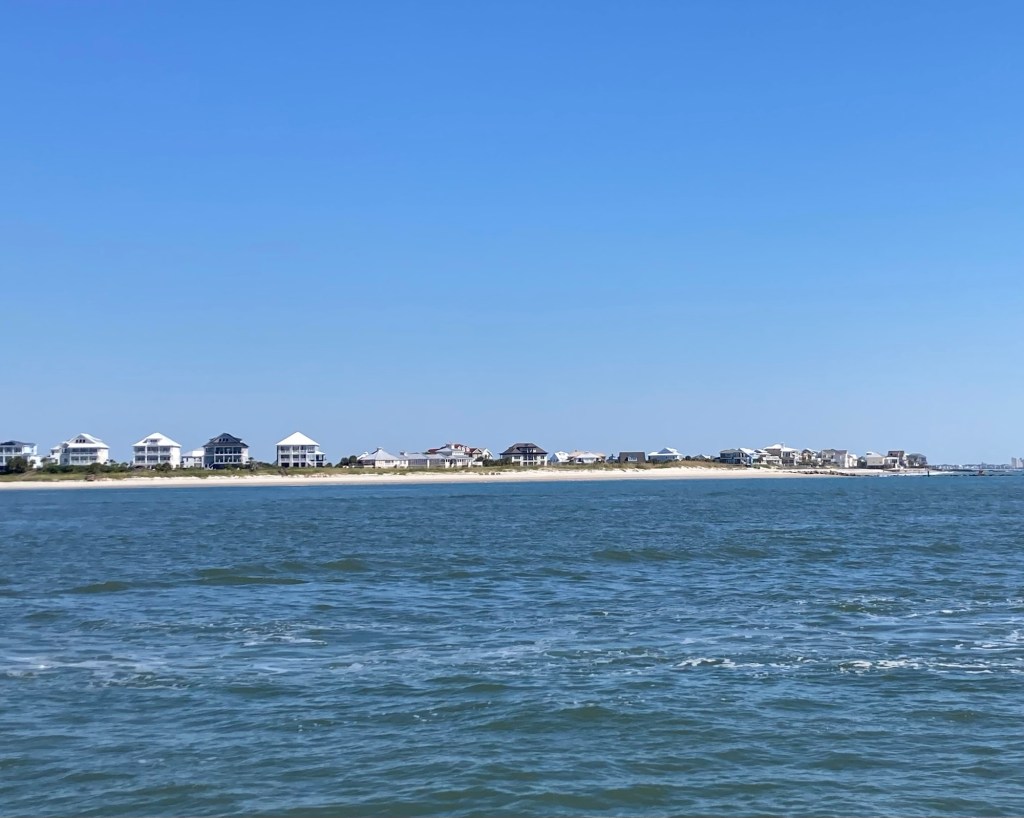
We did get lots of good pics of Murrells Inlet (the actual inlet not the town) as we sailed through that into the Atlantic Ocean. We also got a good view of much of the Grand Strand of beaches and the many large, lovely beach homes built along the coast. All of these multi-million dollar homes are required to have hurricane insurance, and that insurance does not cover anything on the ground level. You’ll see that most of the houses are built on stilts, but that still leaves the garage and its contents uncovered.
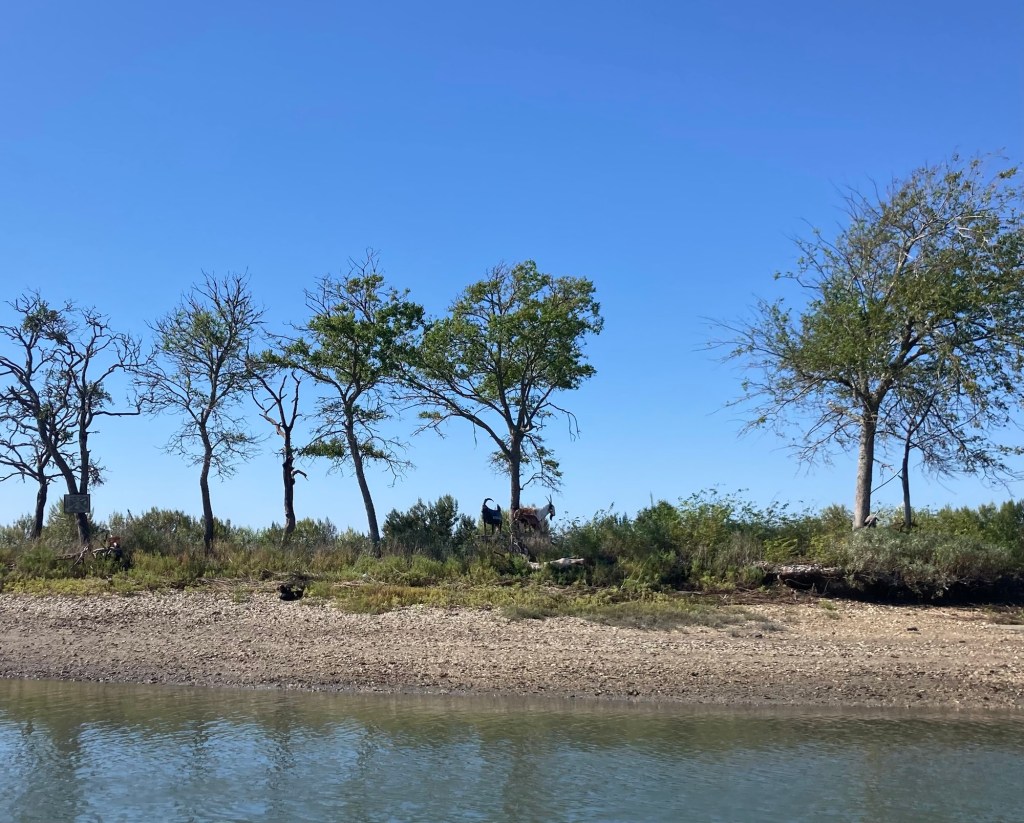
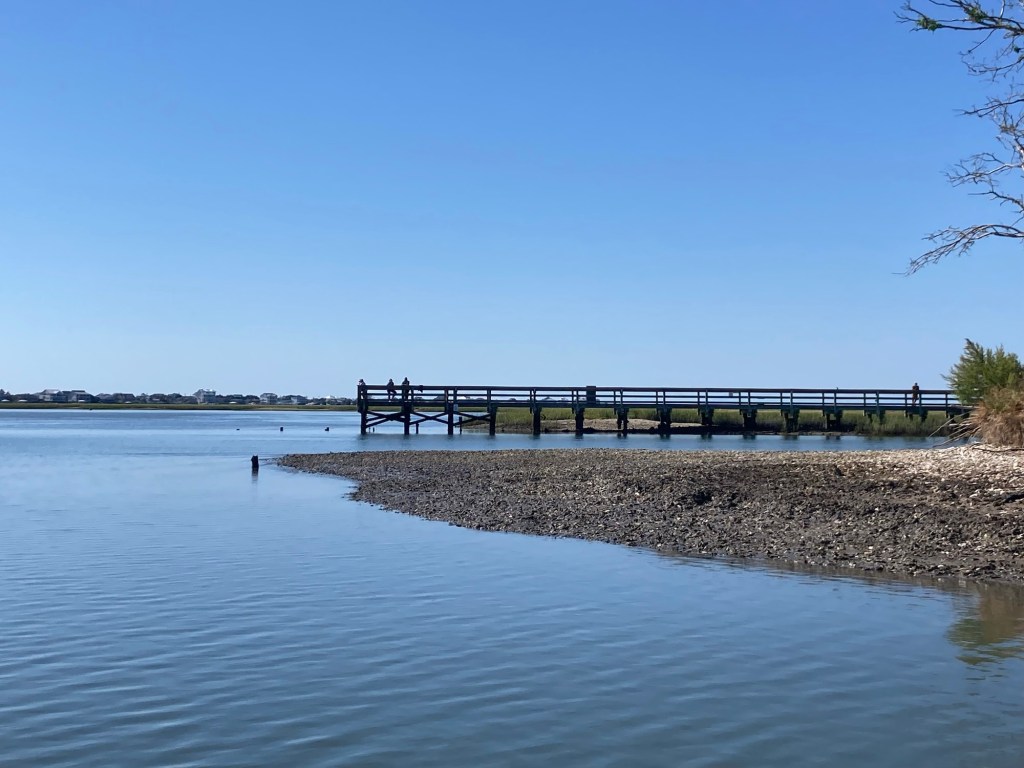
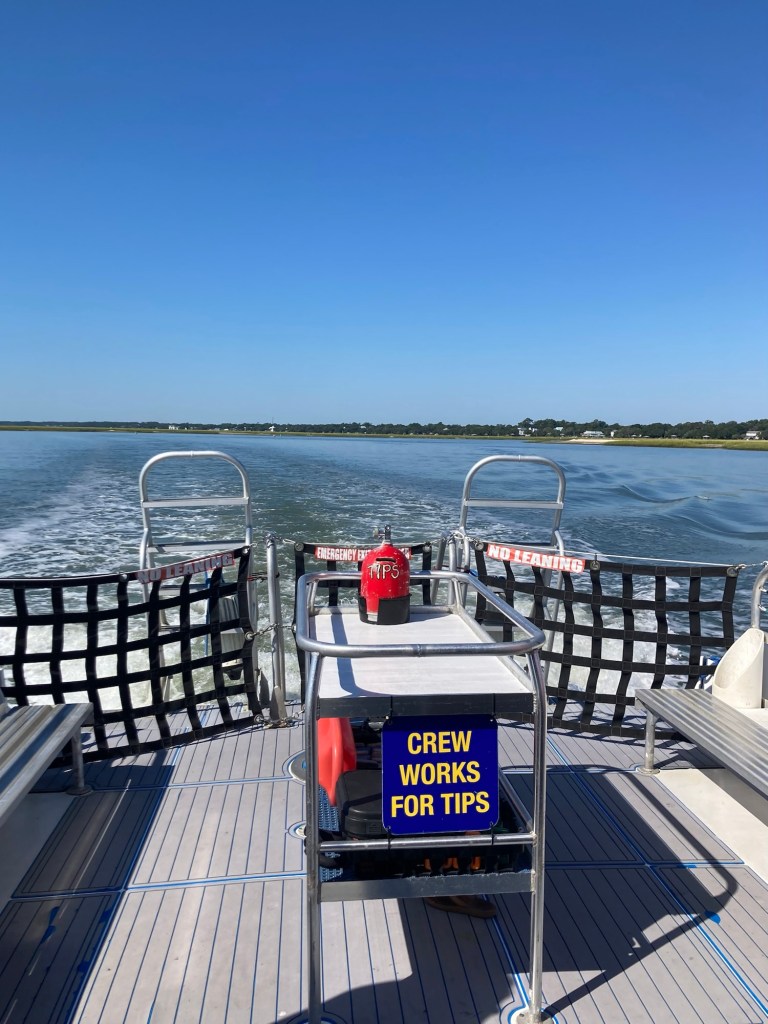
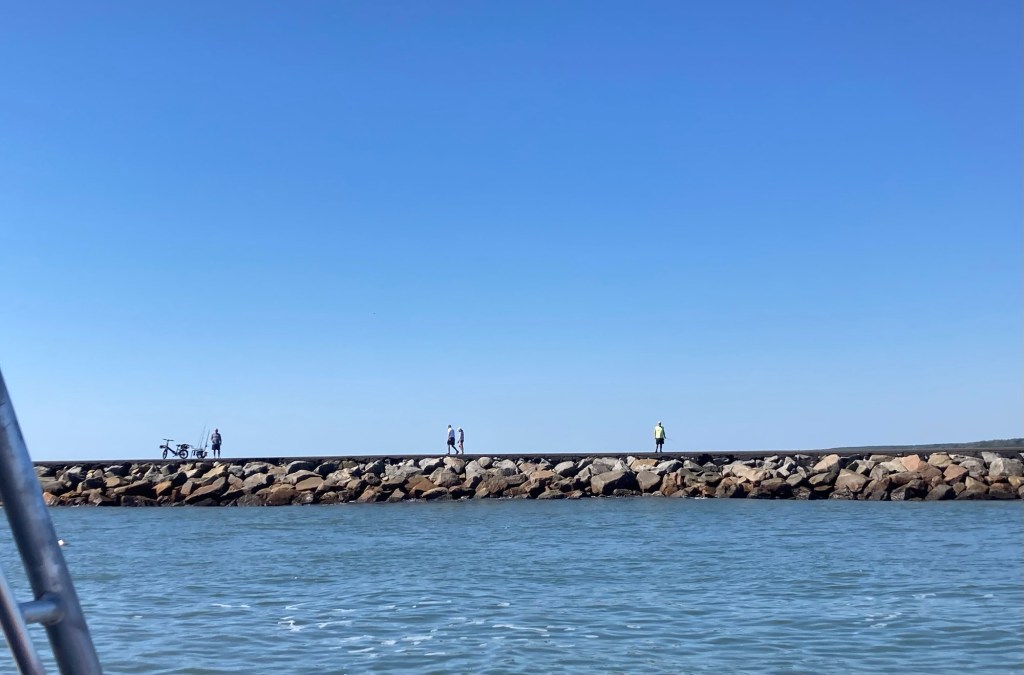
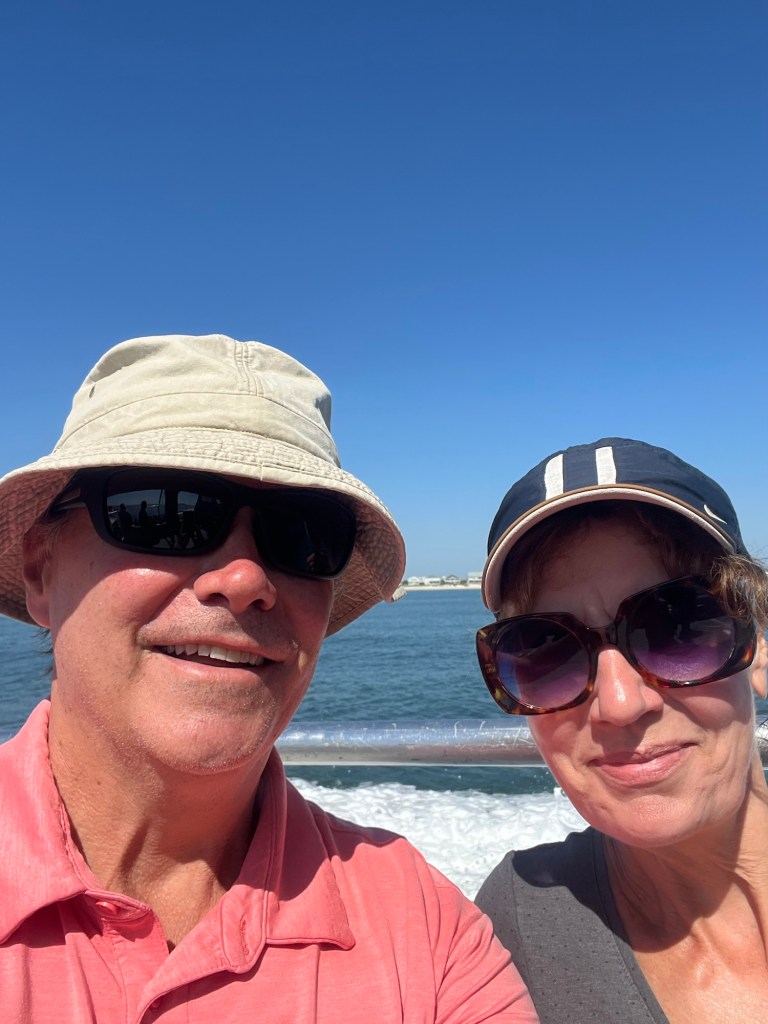
The Express Watersports office/shop where we checked in for the cruise Our boat with the captain on the upper deck and Piper, the tour narrator, on the main deckPulling out of the harbor, we passed Goat Island, which used to have real goats but now just has fake onesPeople fishing off the Murrells Inlet fishing pierLooking back towards Murrells InletA pointed reminderBeach houses in Garden City, a community across the water from Murrells InletA condominium complex and marina in Garden CityOne of the larger homesMore of the homes that go to the point where we move out of the bay and into the oceanThe rock jetty built by the Army Corps of Engineers to help protect the inner harborUs enjoying the cruise
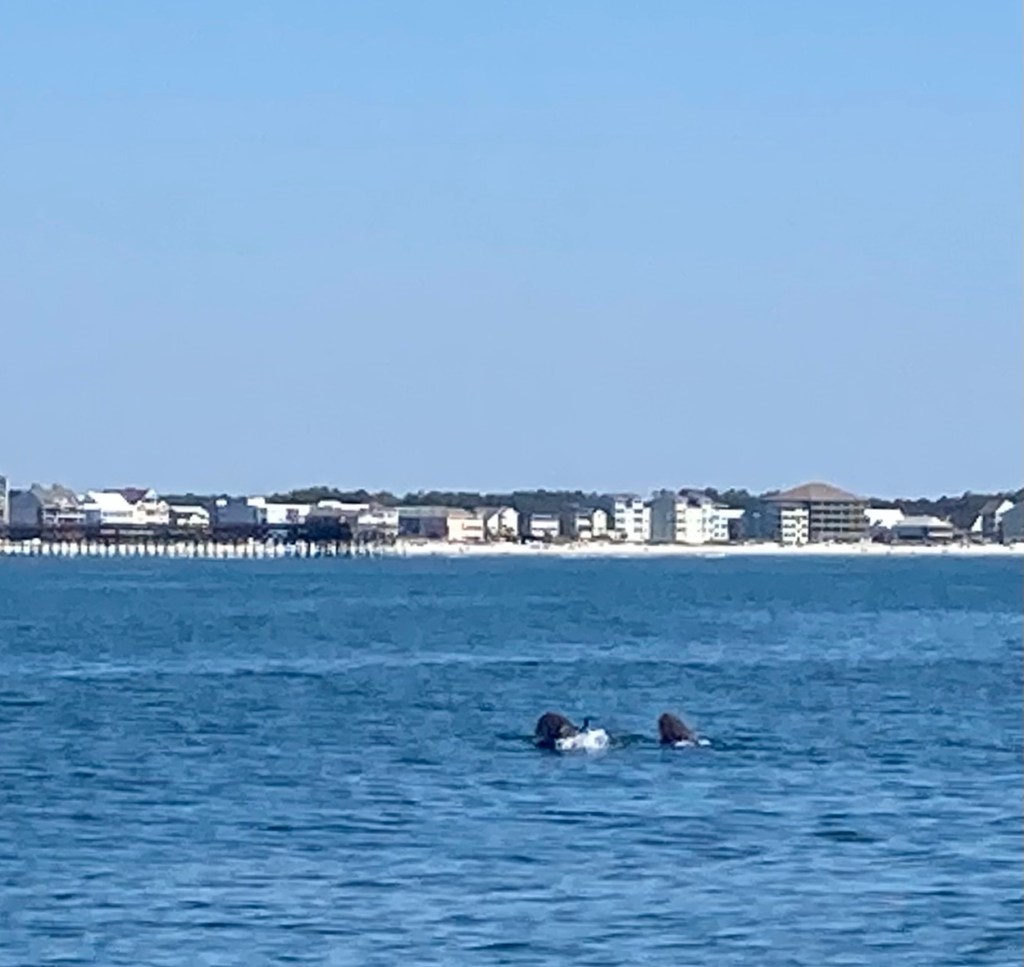
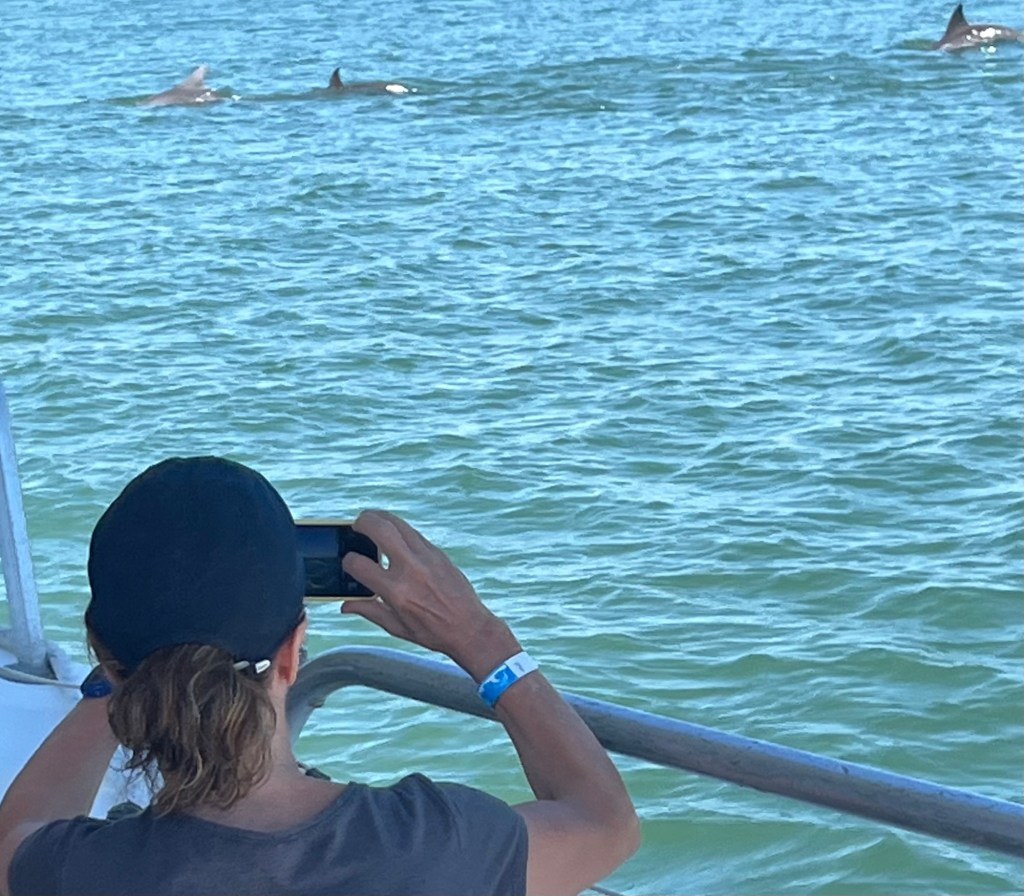
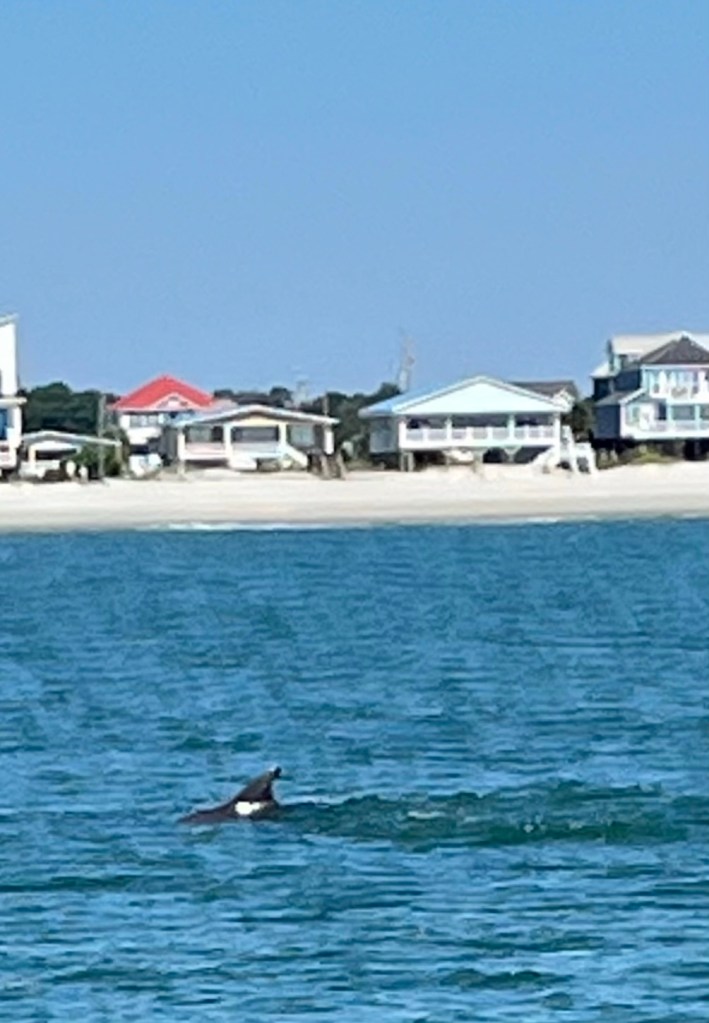
Once we got into the Atlantic across from some of the oceanside beach communities between Garden City and Myrtle Beach, we were able to catch glimpses of a number of dolphin in various pods around our boat. Unfortunately, for these slow-fingered photographers, they don’t pause their swimming to pose. The following shots are the best we could do, but they were fun to watch.
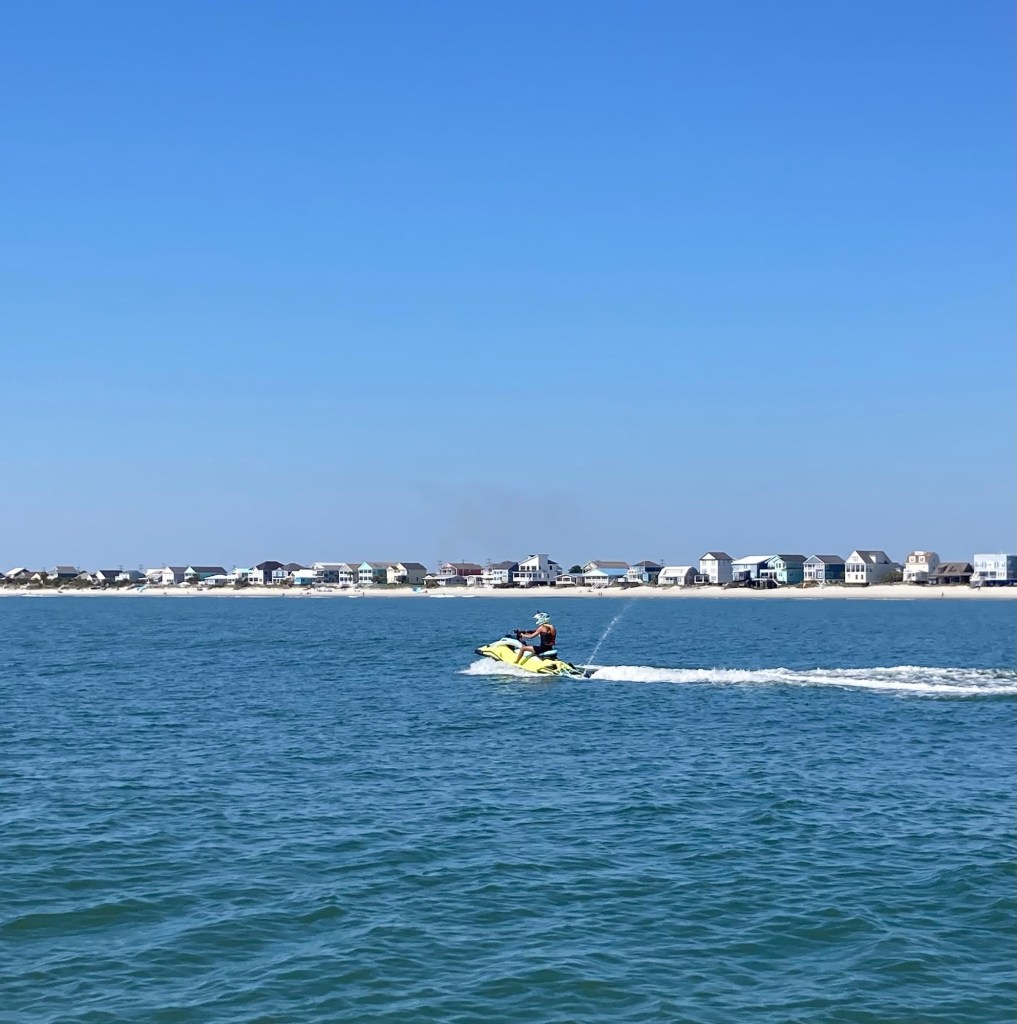
Bob got a pretty good photo of dolphins and one of me missing the shotThis guy was out there with them

































 Peckish Travels