Yesterday, Bob and I were reunited in Needham, Massachusetts, just in time for dinner after Bob flew from Cedar Rapids, Iowa, to Chicago and then onto Boston Logan Airport. His plane in was a bit late, so he caught an Uber for the approximately 40 minute ride from the airport, as he would have had to have waited about an hour to catch the next train from the South Station.
Prior to his arrival yesterday early evening, I walked onto the nearby Babson College to watch a kid’s performance of the musical “Beetlejuice.” I had seen signs up in the neighborhood and thought it would be a good thing to support. I think it was the culmination of a summer camp. It was cute. The sound wasn’t great, and I’m not sure I saw any future Meryl Streeps or Robert De Niros, but it was an entertaining 75 minutes, and we clapped for every song.
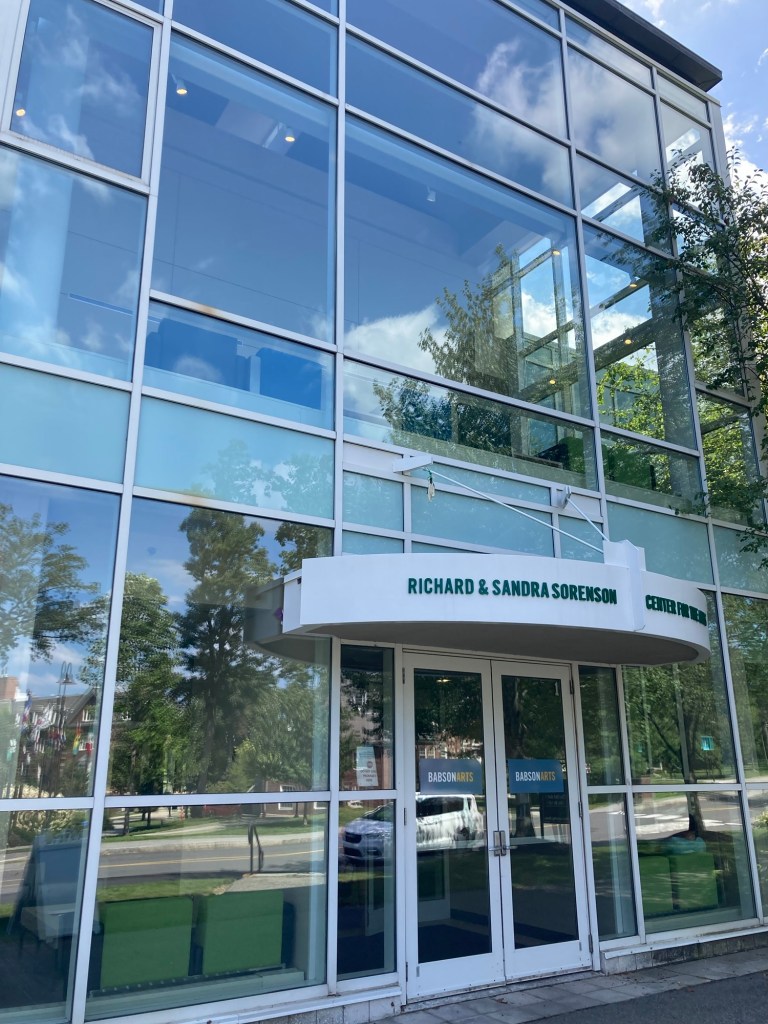
Today, we did a shop at Trader Joe’s, as Bob is cooking tonight (an onion and kale pizza with mozzarella and anchovies!). Yesterday, he had to settle for me warming up a Spanish omelette with some Spanish cheeses and bread.
Then, we drove about 10 minutes to the community of South Natick for a short walkabout.

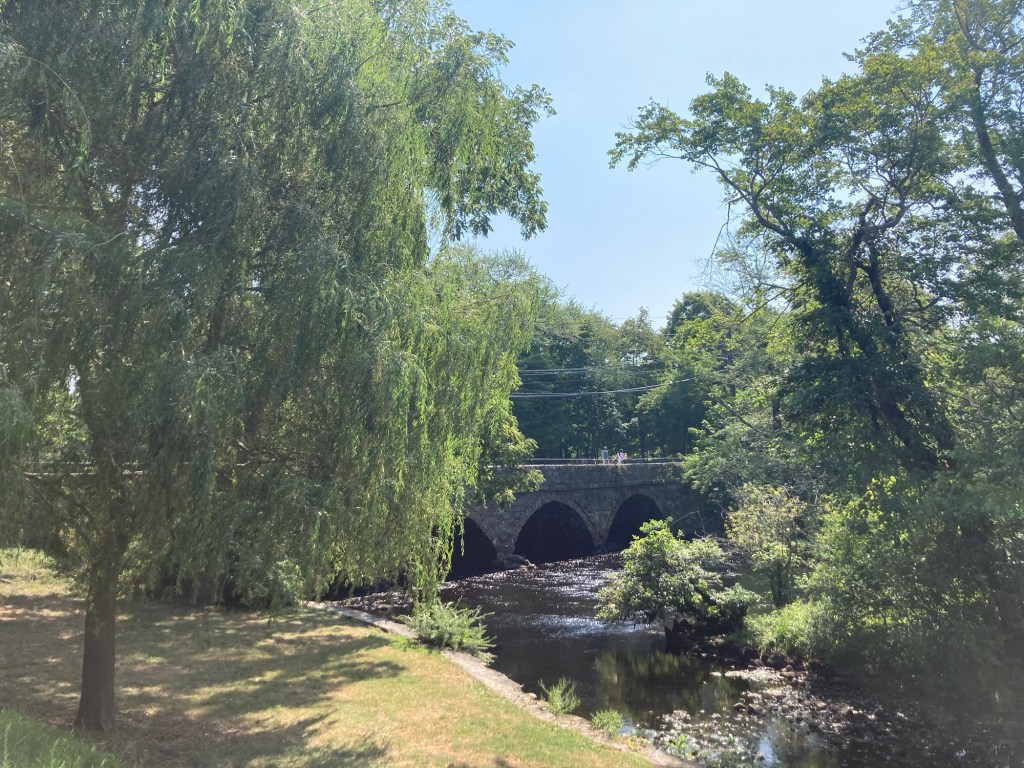
A sign near the dam noted that fish between here
and some dam in Boston are contaminated with PCBs.
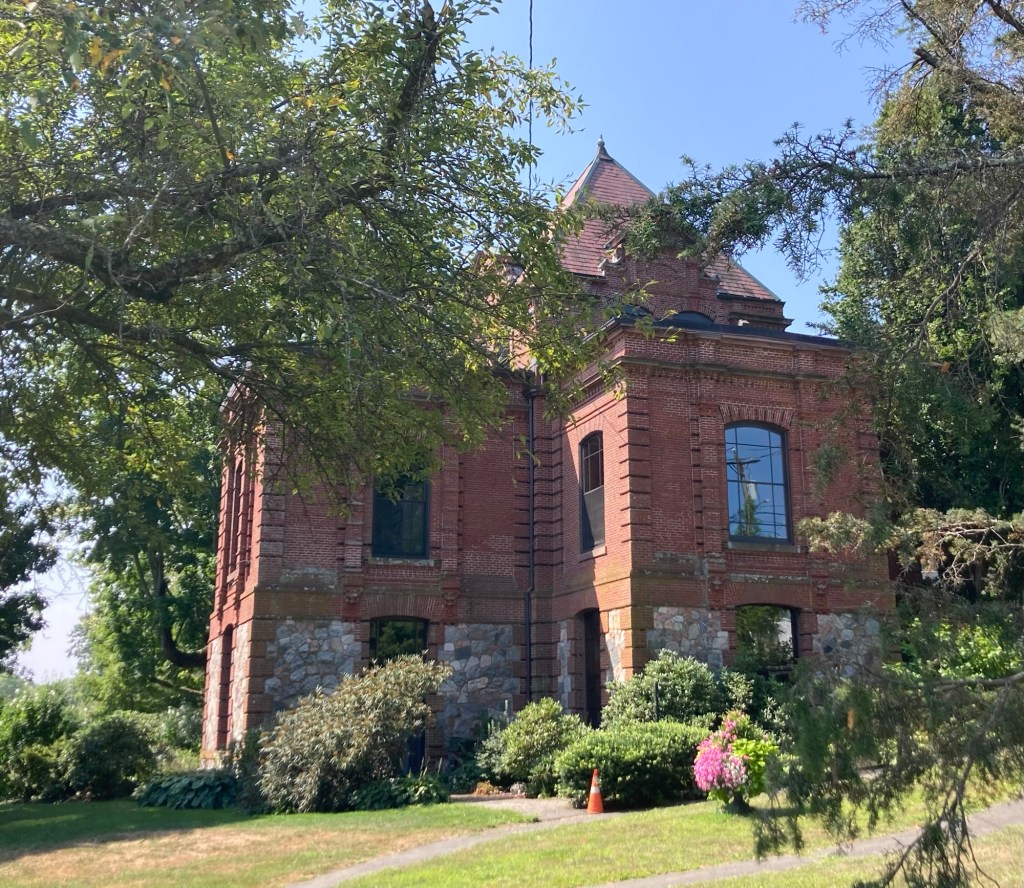
which is now the Natick History Museum
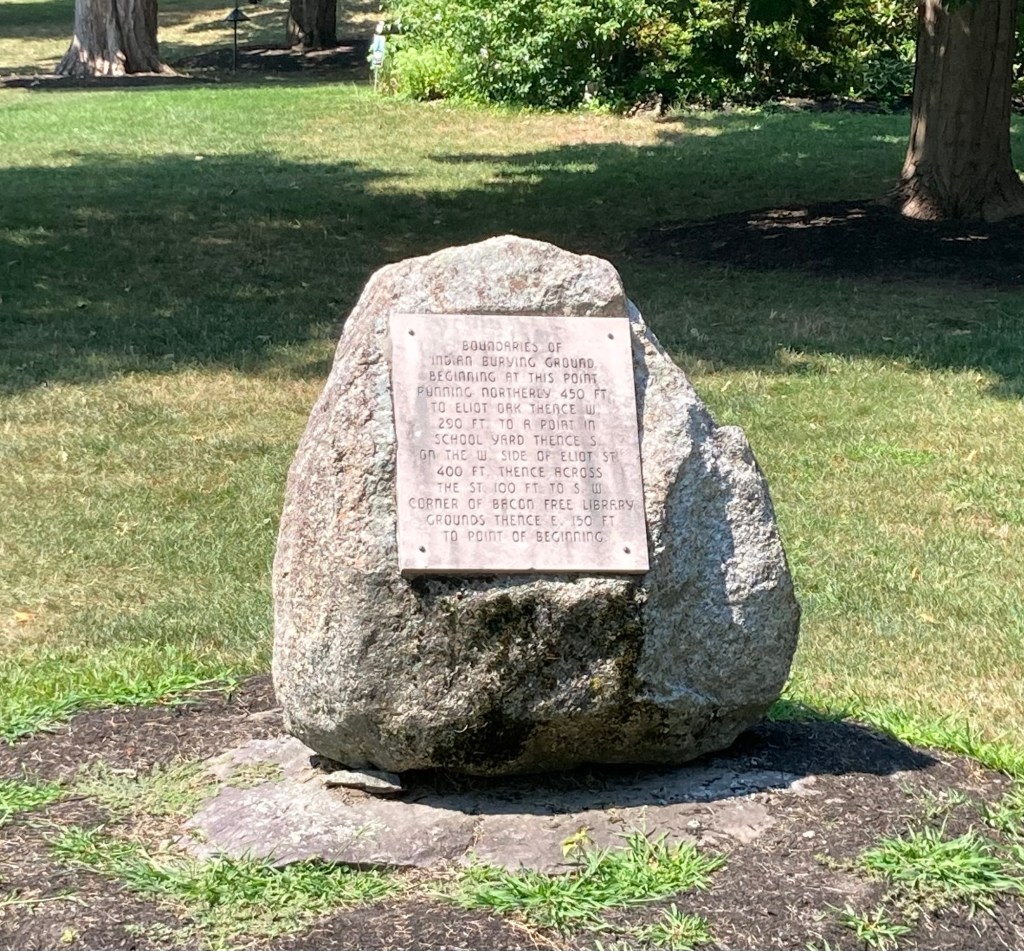
noting the boundaries on Indian burying grounds
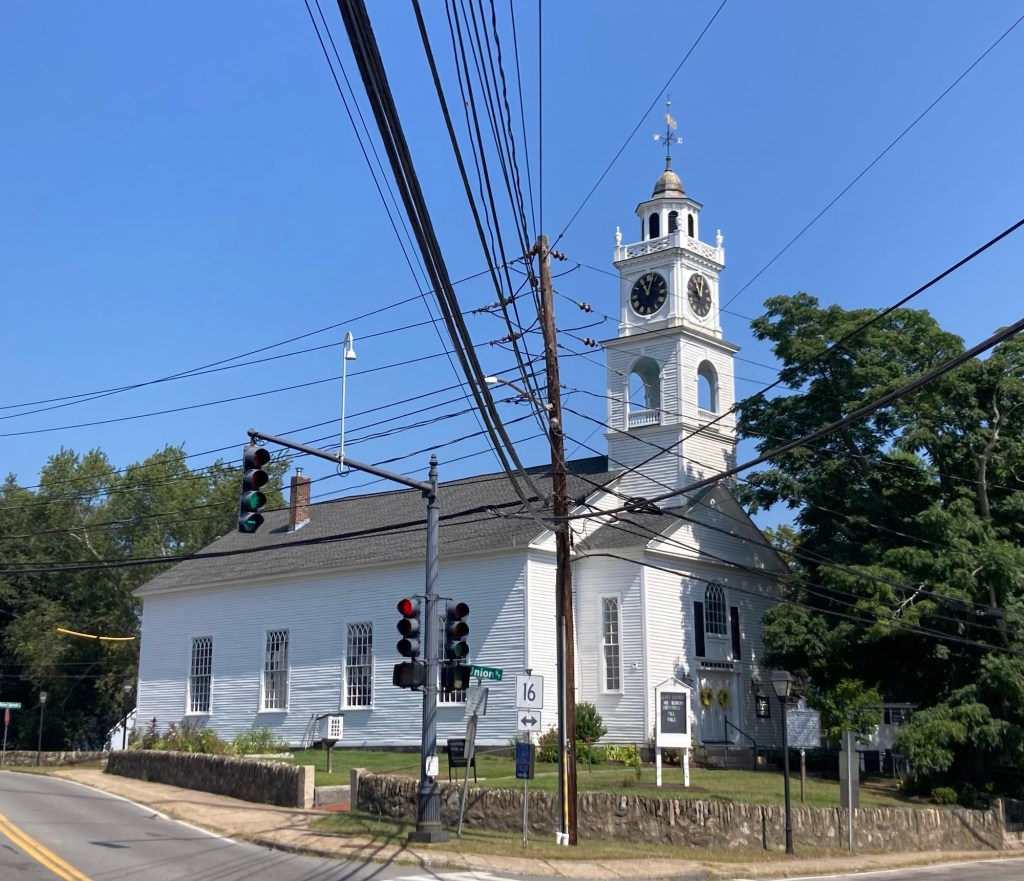
The sign in front of the church noted
that there are no Sunday services until fall.
In reading about the history of Natick, Wikipedia states that it was founded in 1651 by John Eliot, a Puritan missionary born in England, who received a commission and funds from England’s Long Parliament (from 1640-1660) to settle Massachusetts Indians, called Praying Indians, on land deeded from the settlement at Dedham (another nearby community).
Natick was the first of Eliot’s network of praying towns, which were self-governing under Indians but combined both Indian and Puritan culture and practices. These communities were created by the colonial government in a ring around Boston as a defensive strategy.
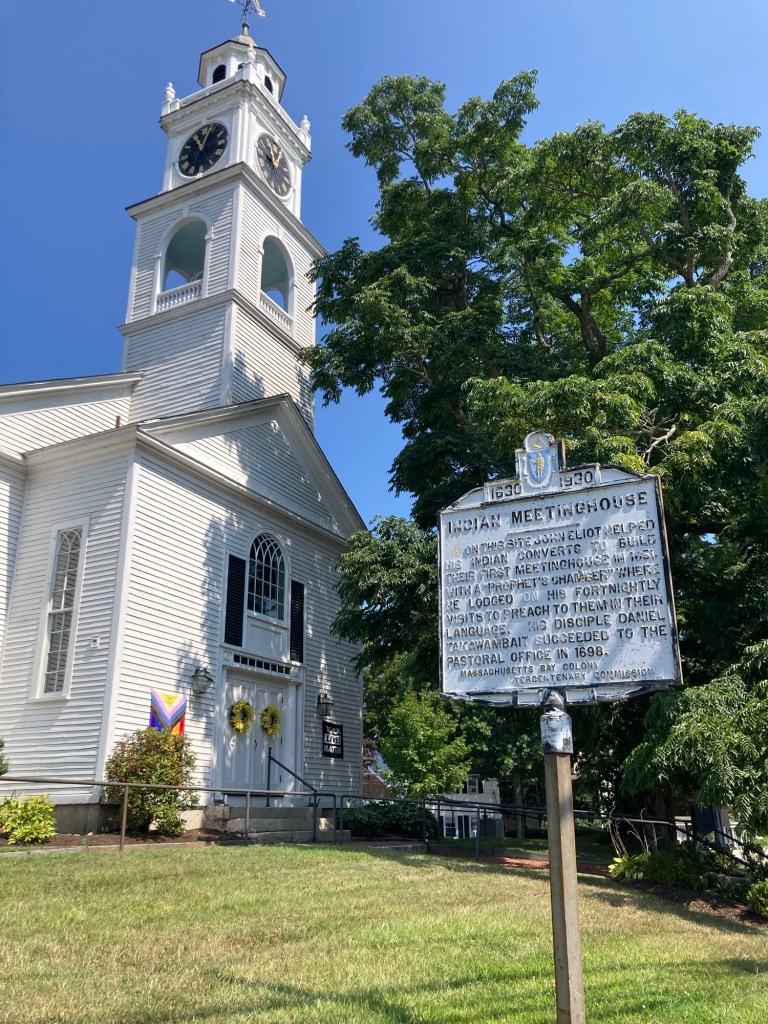
noting Eliot’s work with the Indians on this site.
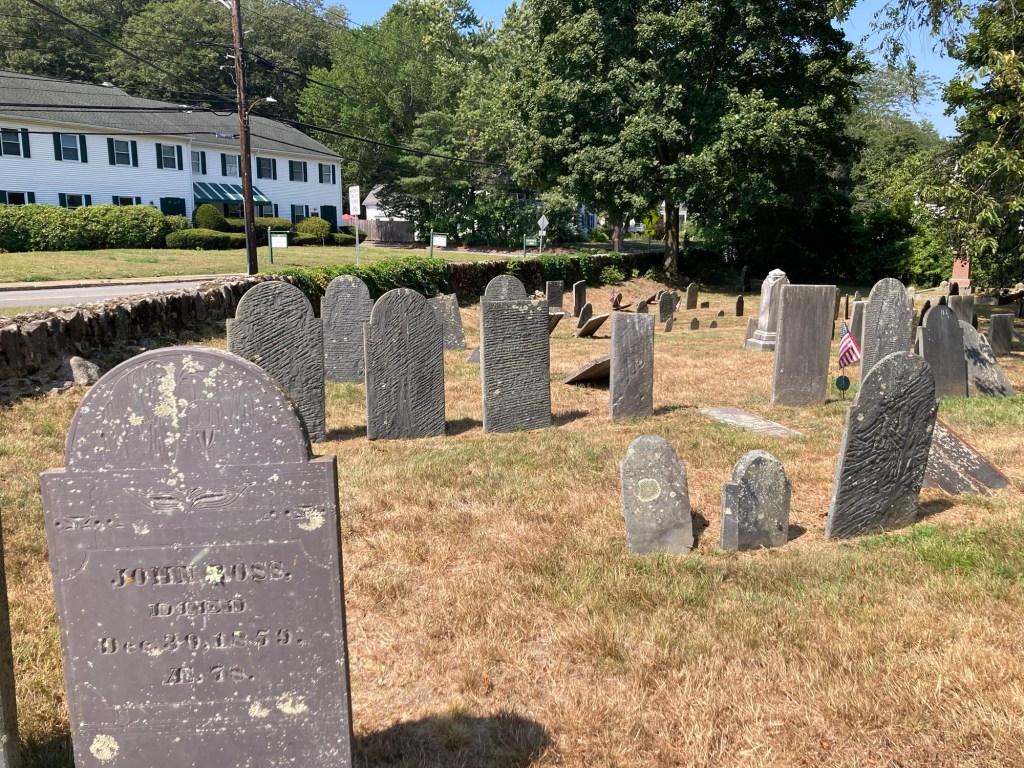
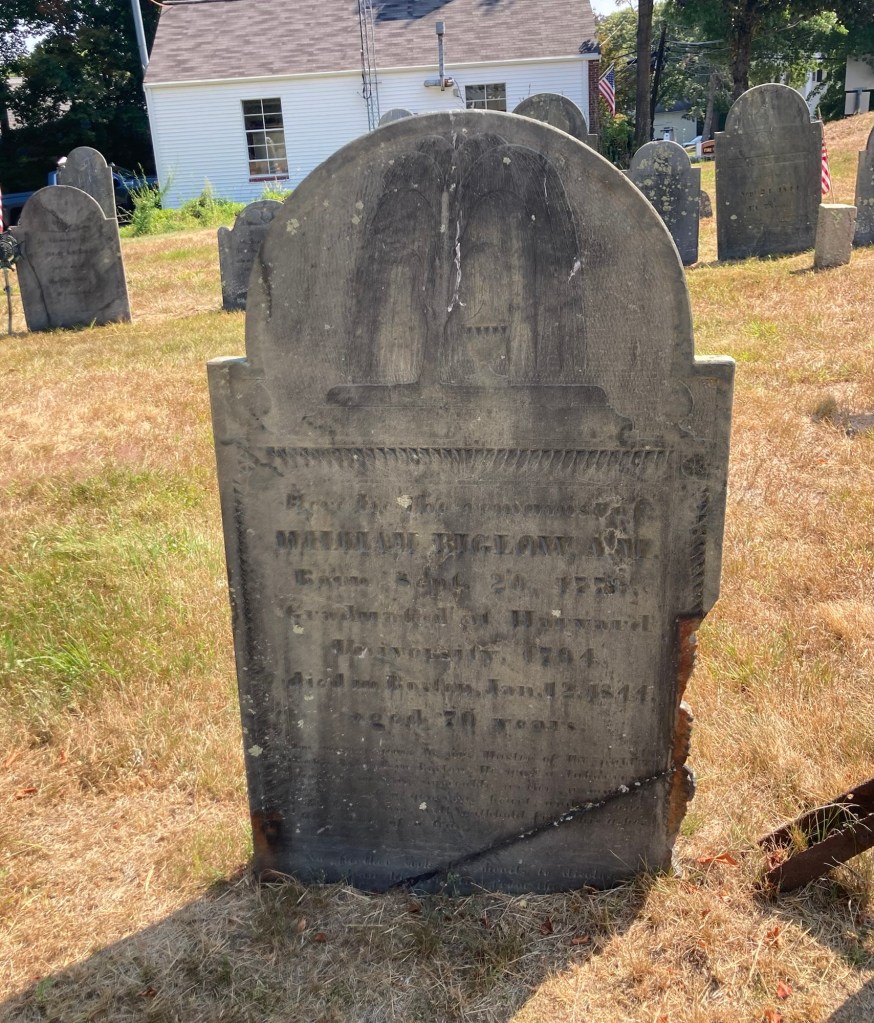
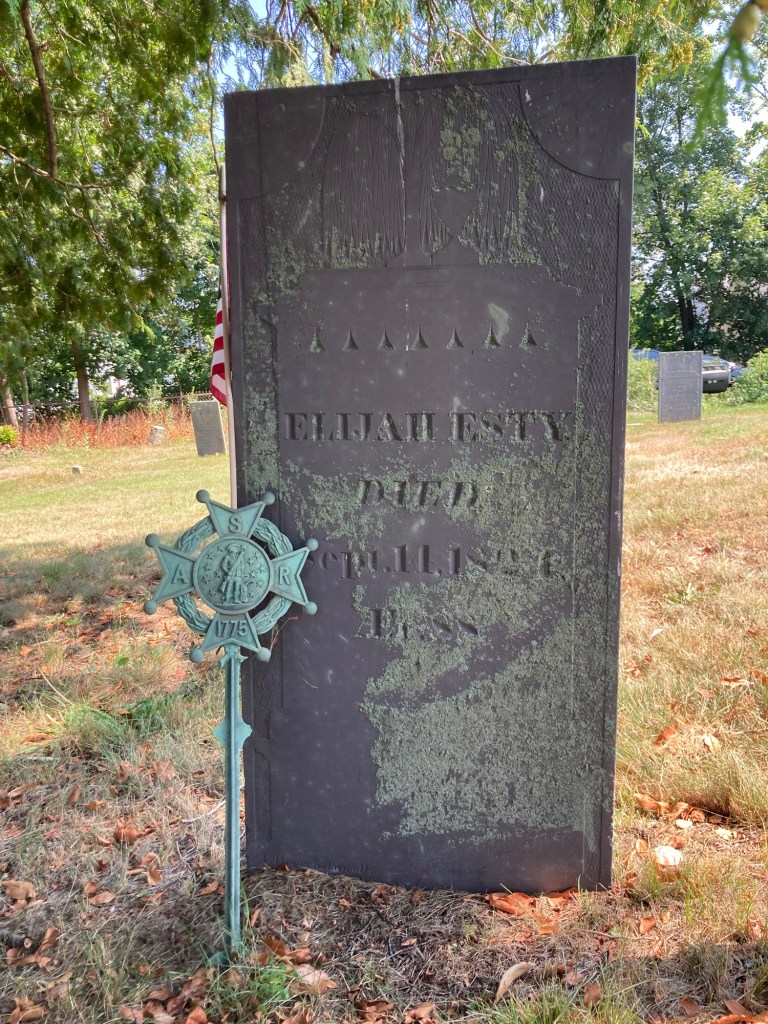
The degradation of the stones make them difficult to read.


through the small town center of South Natick
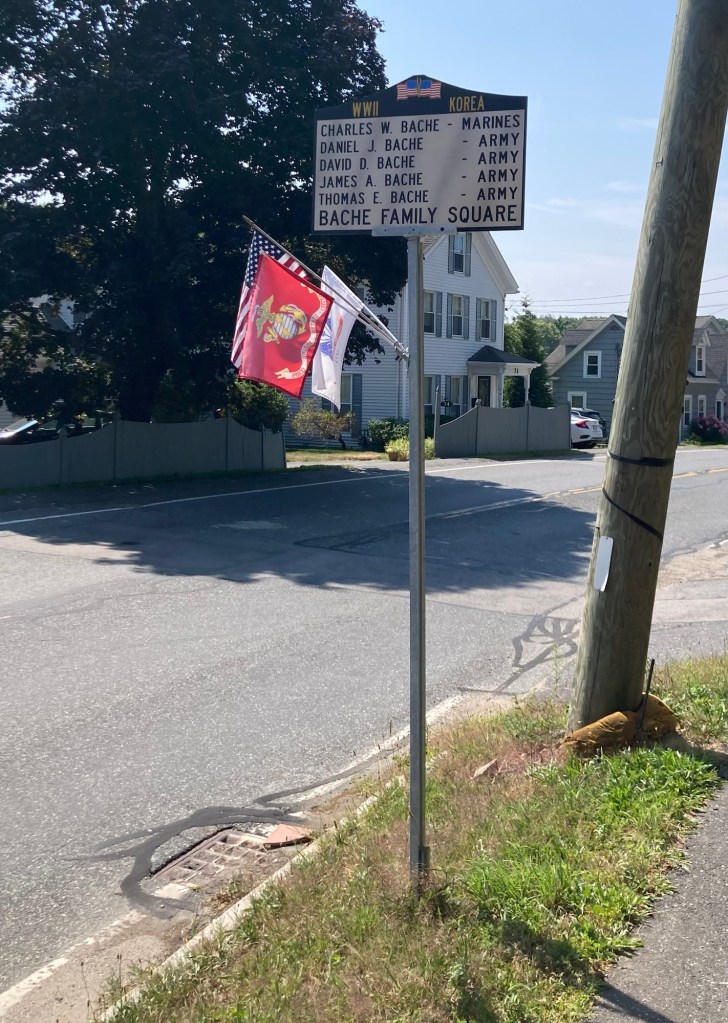
who served in WWII and Korean Wars
was located in a residential area along Eliot Street.
 Peckish Travels