Categories
Uncategorized

Guernsey…A Good Place to Wreck a Ship (6/16/25)

So maybe the local Visitors Bureau isn’t going to hire me to run their new add campaign, but based on the museum we visited today, it’s not an entirely inaccurate description. And I’ll try not to think about this on Saturday morning when we ferry to Poole, England.

As of today, Bob and I have been going by foot on all our excursions, which has kept us in one part of the island. Today, we ventured over to the West Coast of the island by bus to visit the Fort Grey Shipwreck Museum and the Guernsey Pearl gift shop. This eliminated the need for a 2.5 hour walk over and then back again as well as allowed us to check out the island bus service.

Bob had researched the schedules, and we caught the #62 bus on the road that runs in front of our little subdivision. The bus stop was pretty casual, being only indicated by paint on the road.
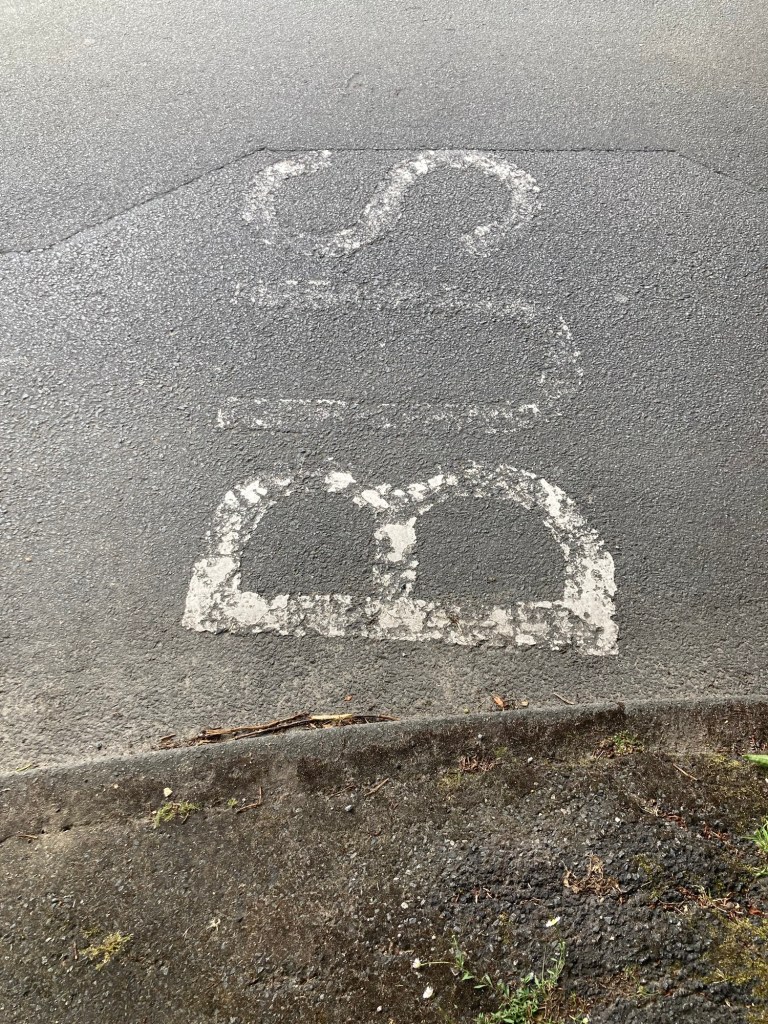
We stood on the sidewalk near the painted sign.

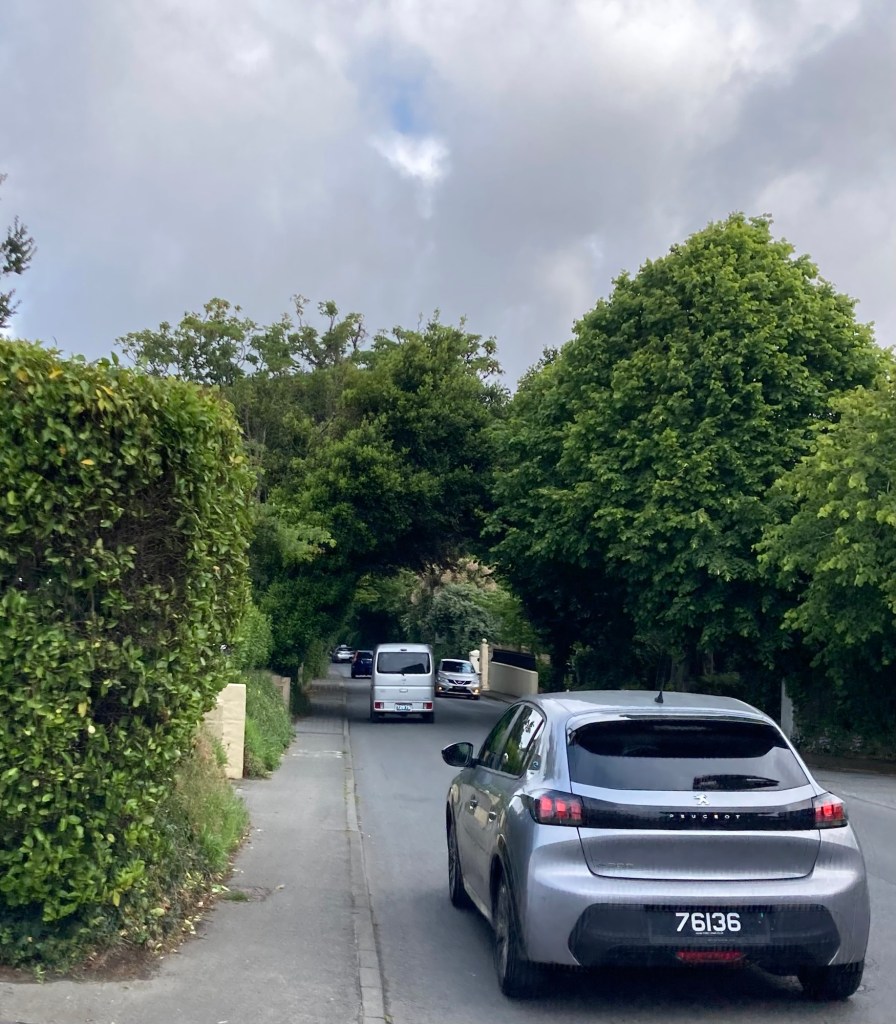
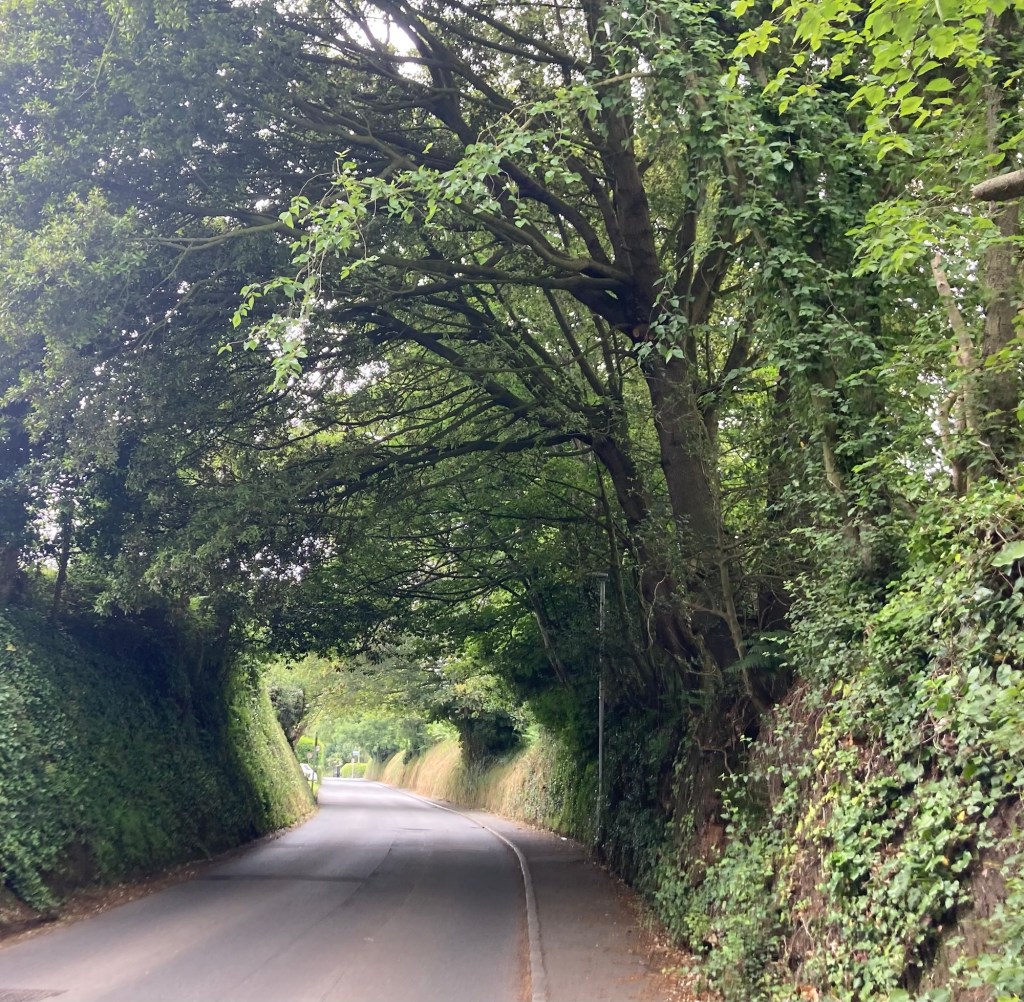
The bus ride was about $2 US each way for each of us. It was a good value, as the ride over was only about 25 minutes, and we got to watch oncoming traffic move onto the sidewalks to allow the bus to go by. With the limited road and sidewalk size, there is a lot of sharing and making way for others that takes place here. Definitely less stressful with locals behind the wrong-sided 😂 wheel.
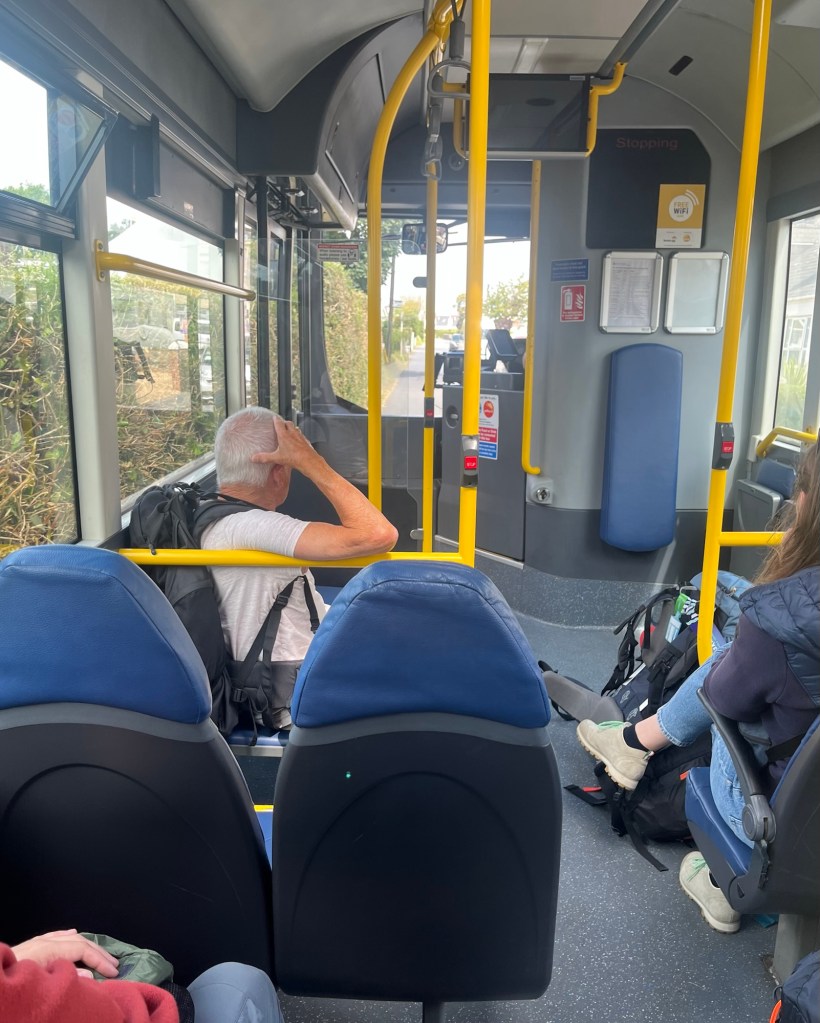
See how close the hedges are?

Anyhoo, the point of the trip was the Fort Grey Shipwreck Museum, but first, in through the gift shop. Unless paying with cash, you need to purchase the tickets to the museum in the Guernsey Pearl gift shop, which does sell pearls and other local gifts, like Guernseys (the sweater), potentially making the 5 pound cost for the museum much, much more expensive.

Quite a variety of pearls in stock,
But we managed to come out with just the museum tickets.
Walking up to the Guernsey Pearl, the gift shop is way in the back. There is a cafe on the right, and on the left is a building
which houses one of the many ships wrecked
in the waters around Guernsey.

This building contains what has been brought up of a Roman ship which sank in St Peter Port harbor after a fire on board. The ship dates to AD 280! The wreck was discovered by a diver in 1982 and was brought up by a team of divers and archaeologists between 1984 and 1986.
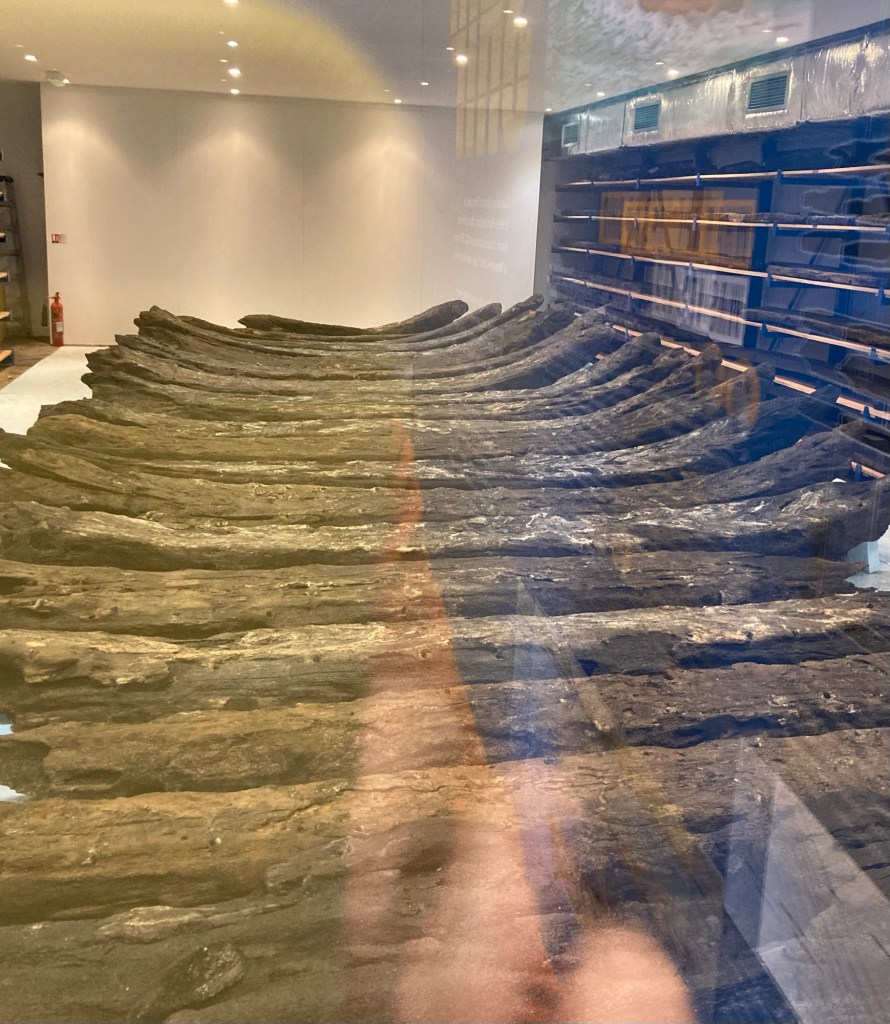
The main floor timbers (viewed through glass) from the very old ship. The bow is missing. The stern is at the far end of the room.
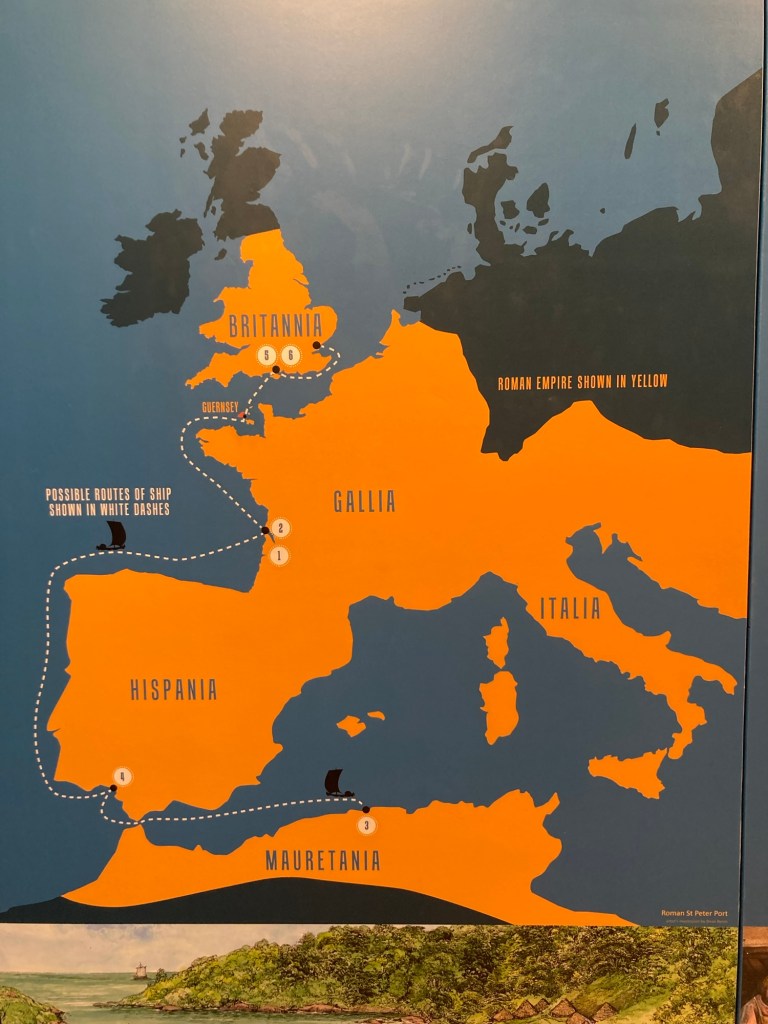
Based on what was recovered from the ship,
these are the stops that it had made before docking in Guernsey.

We then headed across the main road to the main portion of The Fort Grey Shipwreck Museum, which is located in Fort Grey, built in the early 1800s as part of a chain of coastal defenses for Guernsey to protect against possible attack from the French. It is named for the Governor of Guernsey during the time of its construction.

Fort Grey Shipwreck Museum,
referred to locally as the cup and saucer
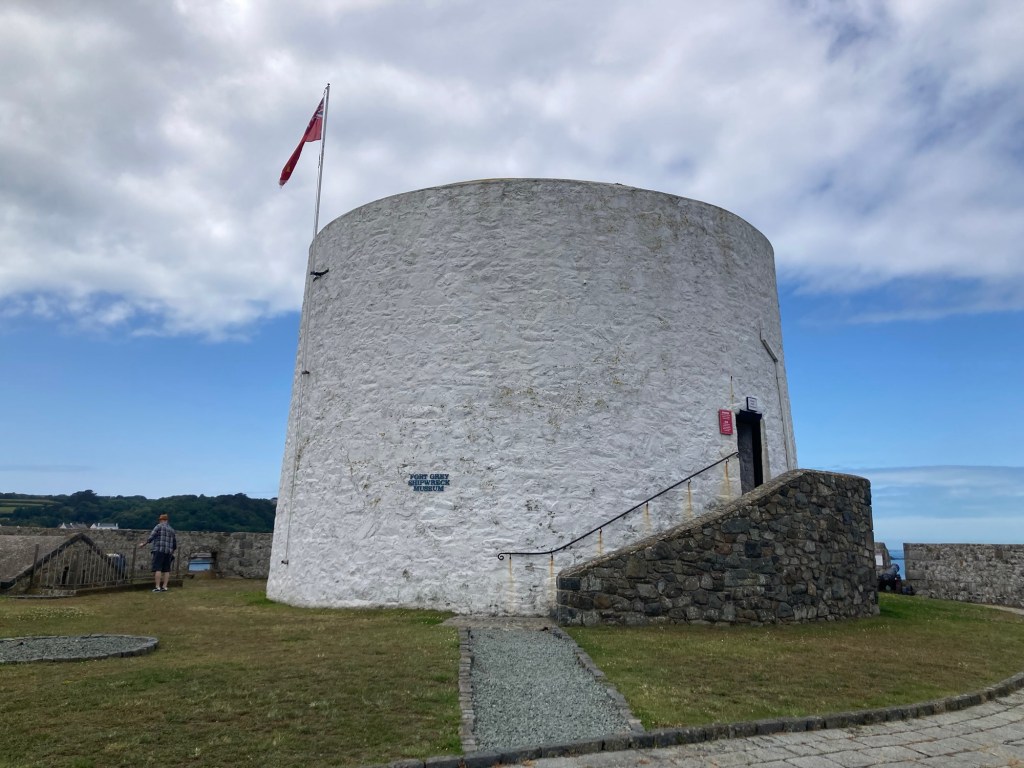
The museum is located in the cup part of the cup and saucer.

The museum provided information and items about general seafaring navigation as well as documenting all of the known shipwrecks in the waters surrounding Guernsey. One very helpful display noted that from the very earliest seafaring days, two of the world’s most important trade routes passed close to the island of Guernsey, from Britain and Northern Europe to the Mediterranean and from the English Channel to America. I guess this increased the chances of shipwrecks for this area.
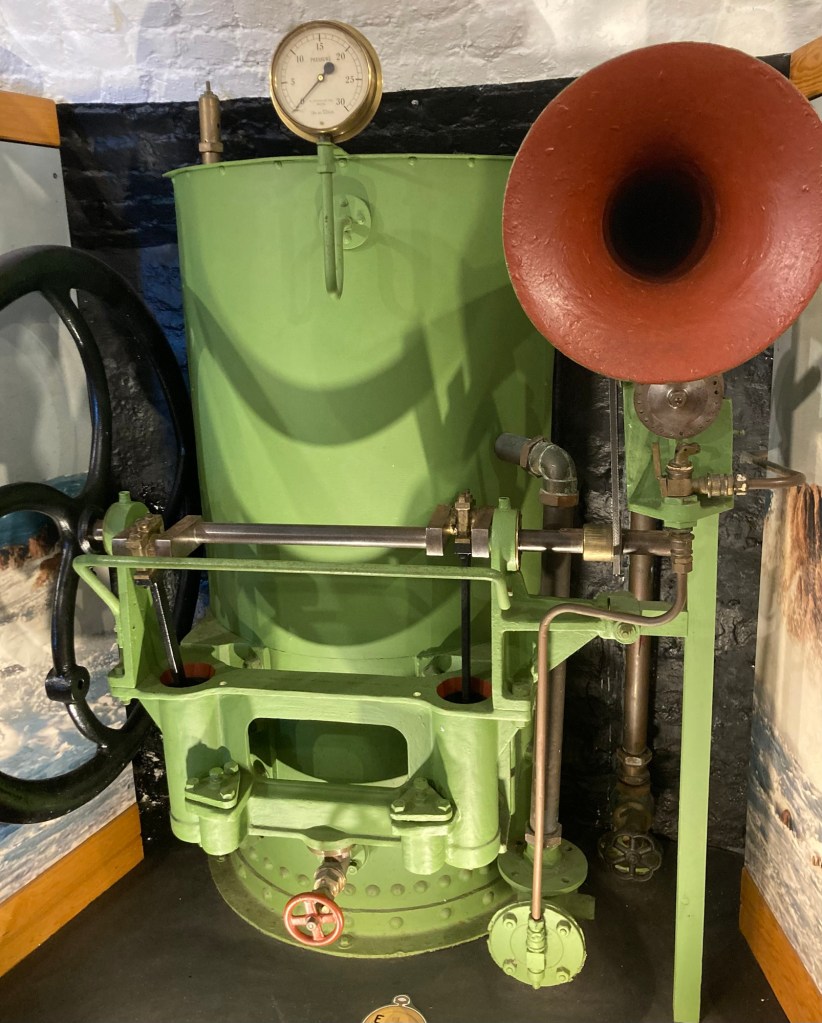
A foghorn
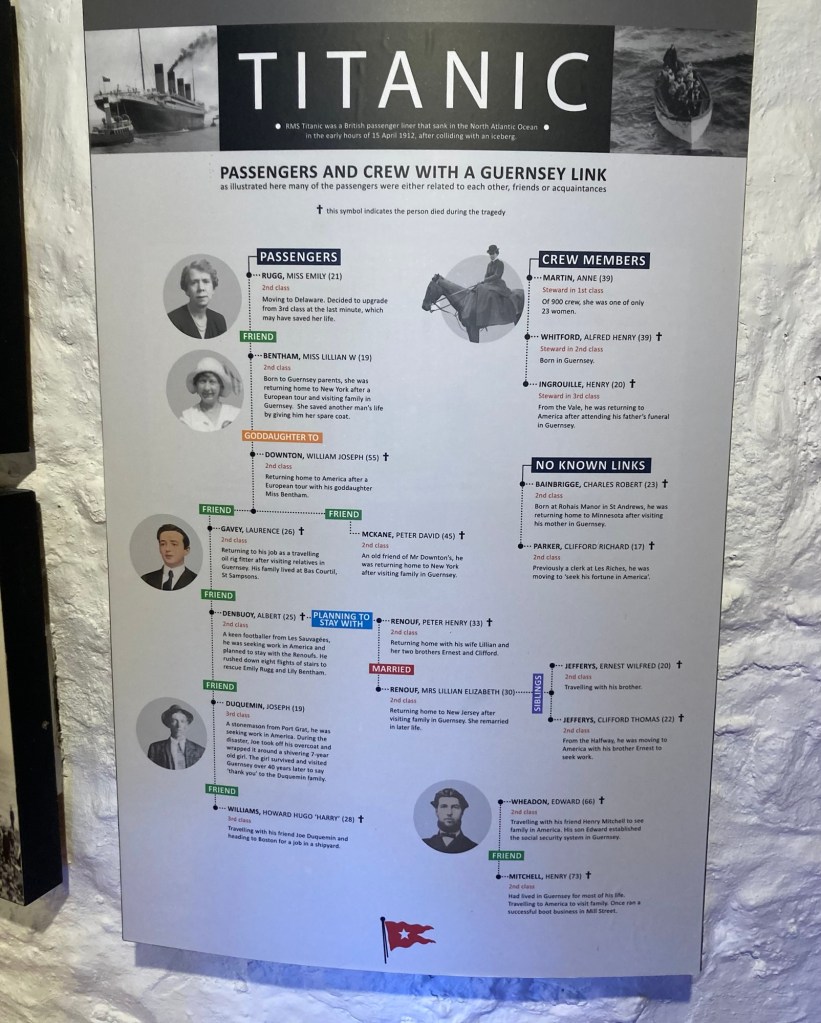
The Titanic didn’t go down near Guernsey,
but apparently a number of people related to Guernsey
were on board. Individuals with a cross perished with the ship.
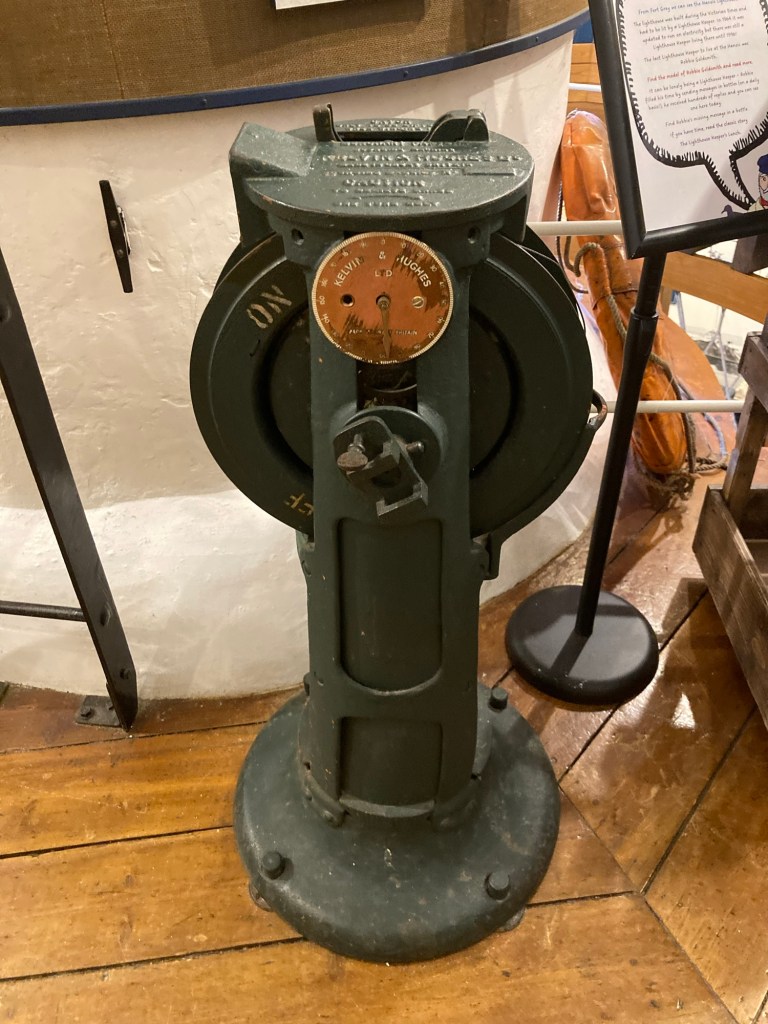
A ship’s sounding gear, which is used to find
the depth of water below a ship while underway.
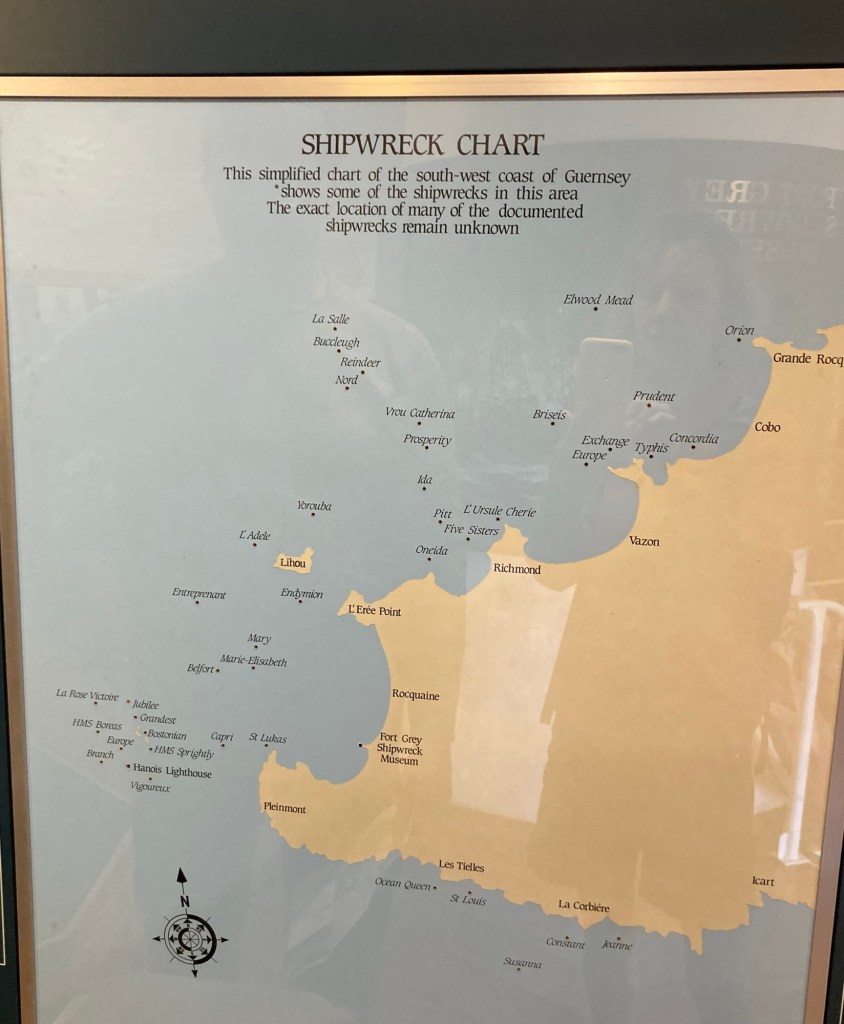
There were two lists of shipwrecks posted beside this map
which listed 110 shipwrecks,
with the exact date and name of the ship when known.
The earliest one listed had a date of pre 1309.
The last one listed was in 1978.

The lighting of the Hanoi Lighthouse in 1862 would have been a very helpful navigational tool in the area.
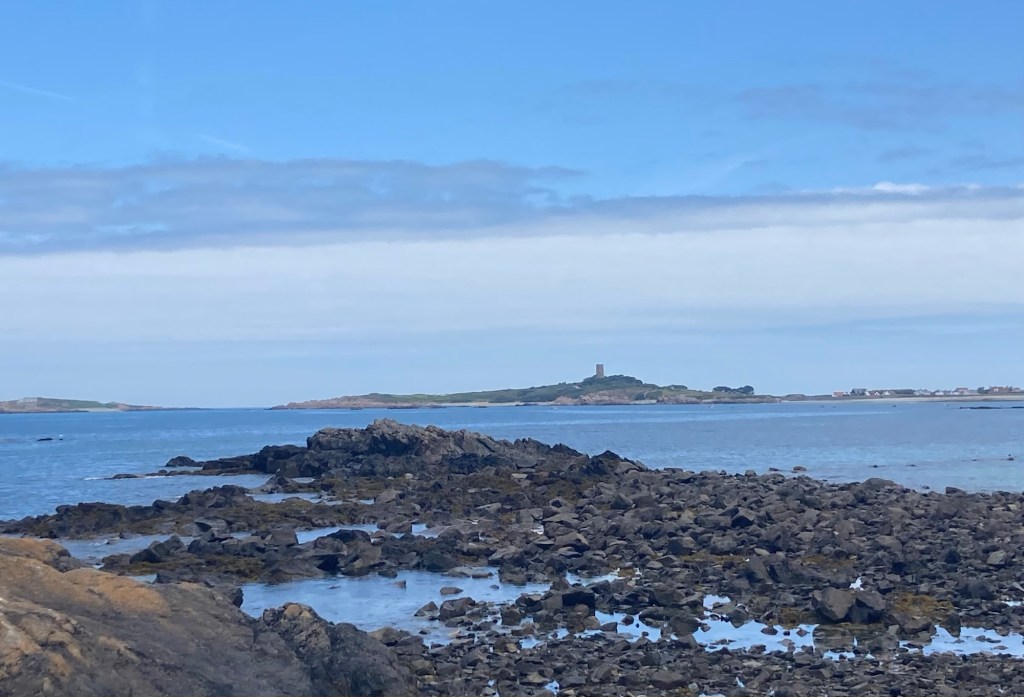
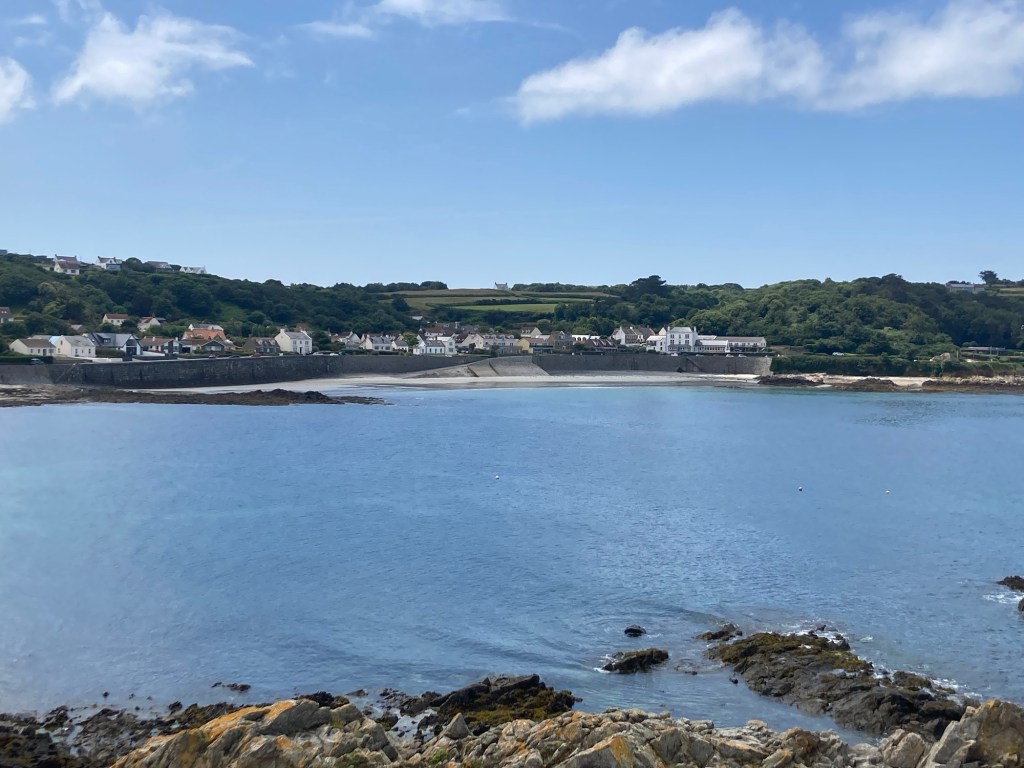
The Hanoi Lighthouse in Rocquaine Bay
Looking across to some of the homes along the coast

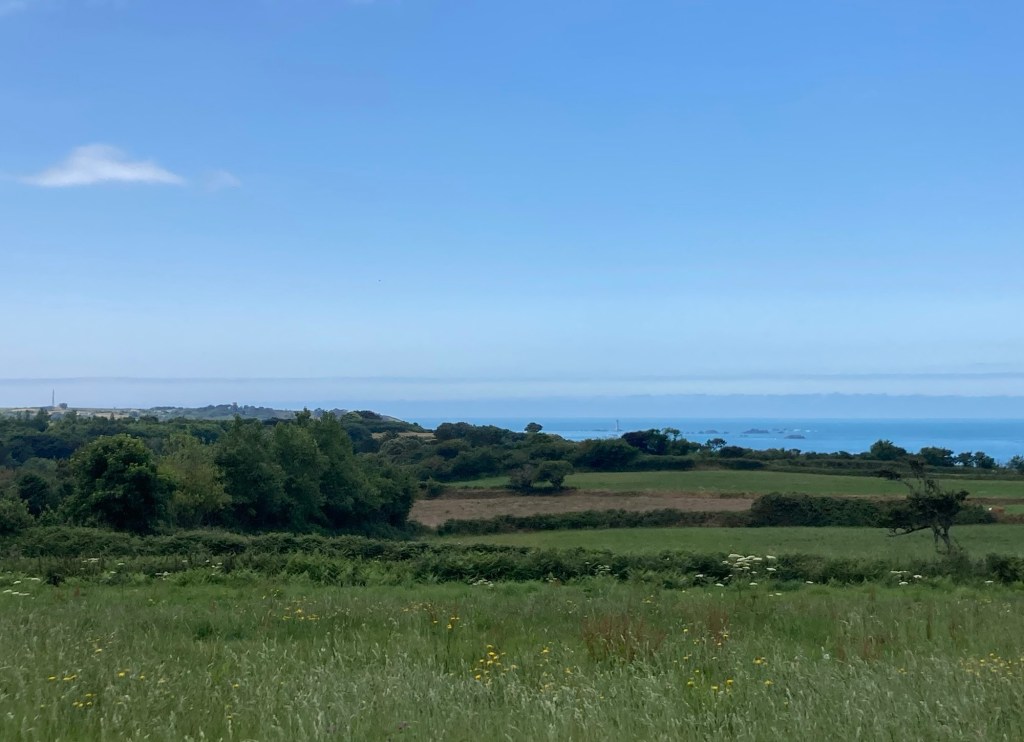
Some photos of the scenic bus ride on the way back to St Peter Port.
Categories
Uncategorized

A Walk in the Park…and More (6 13/25)

It’s a beautiful day here in Guernsey, probably the warmest one since our first day here. While the thermometer (weather app) is only saying 60 F, the wind is not making it cooler as it usually is and the sun has been out for most of the day.

Before I talk about today’s outing, a couple of items from the past two days. First, at 3:19 am on Thursday, June 12, our new grandniece, Mila Elise, made her debut, making our grandnephew, Harrison Alan, a big brother. We’re looking forward to seeing the whole family sometime next month when we’re back in the States.

At this housesit, one of our responsibilities has been tending to the garden, which happily has allowed us to have some fresh produce— mostly snap peas and Swiss chard. However, the other day after watering we noticed that there were a lot of strawberries that were ripe. So, we picked a bunch, and then Bob made the tart below based on a recipe I found in a magazine. It was awesome! Can’t wait to have some more tonight, along with some sautéed chard. (We are eating out of the garden with the homeowners’ permission, of course)

Strawberry Ricotta Tart

Today, we headed west from the house for almost an hour’s walk to the Folk and Costume Museum in Saumarez Park. This route also took us by Waitrose, our favorite grocery store here just due to size, as well as some attractive hotels and homes.

The St. Pierre Park Hotel, Spa, and Golf Resort
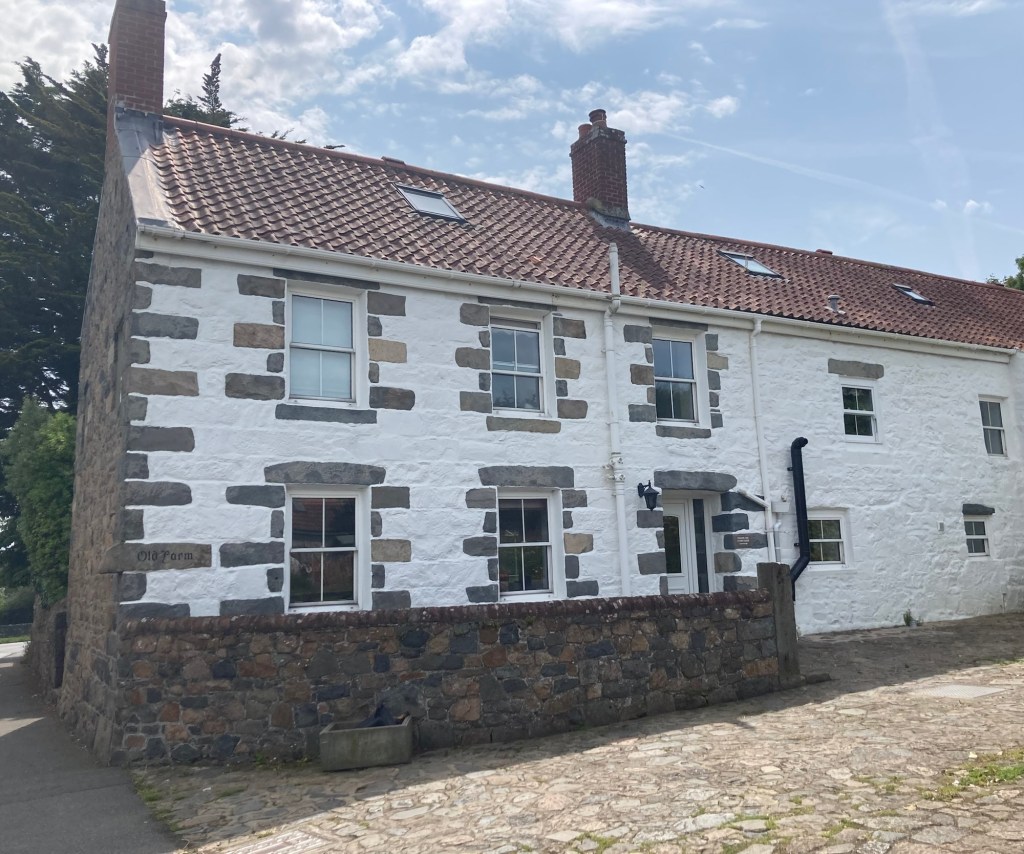
A home called The Old Farm
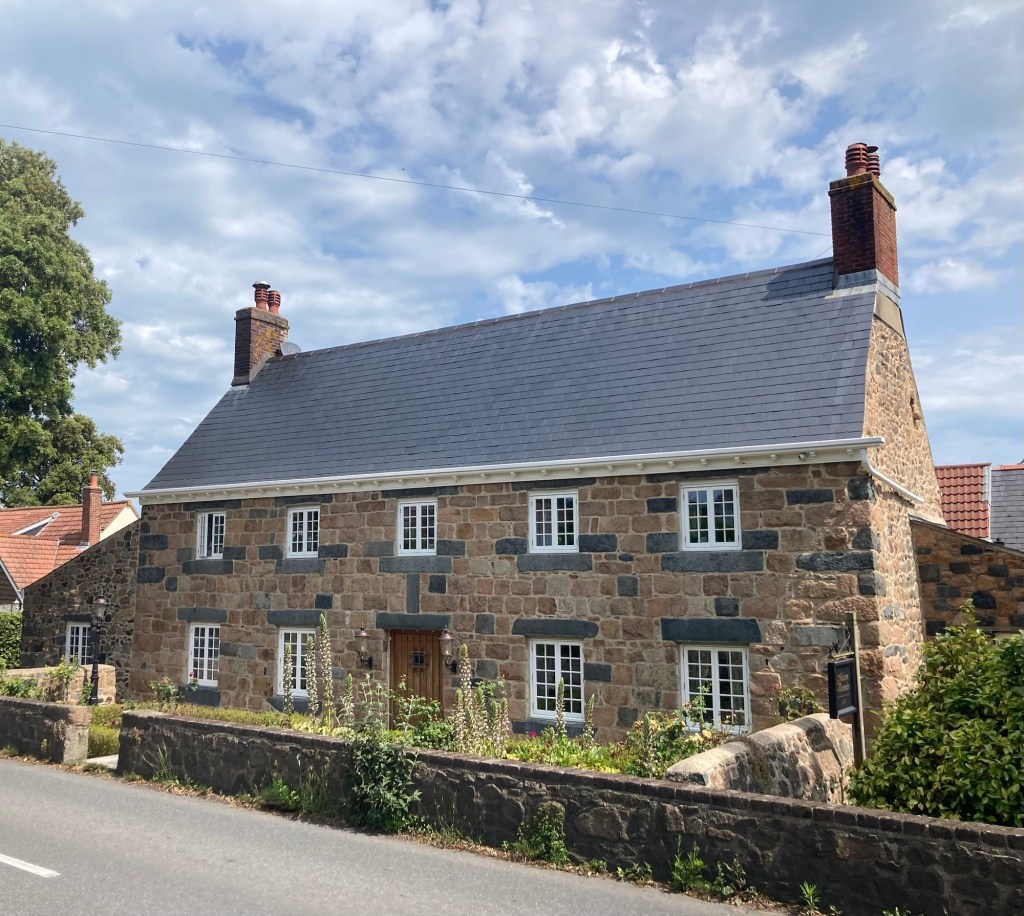
Just another house that I liked

Saumarez Park consists of the remains of what was one of the largest country estates on the island. It was designed by James Saumarez and his wife Jane beginning in 1875. The estate was purchased by the States of Guernsey in 1938. We specifically went to visit the free-entry Folk and Costume Museum, but ended up walking around most of the property.

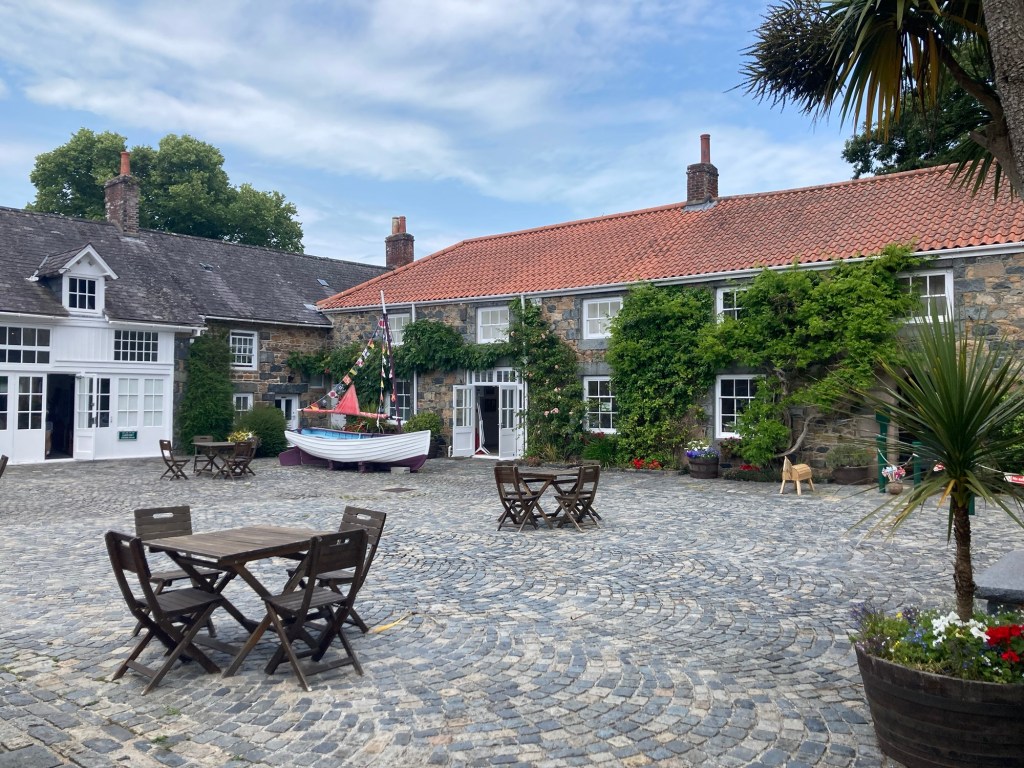
The lovely patio entrance to the Folk and Costume Museum, which provides information on life on the island
in an earlier period as well as costume exhibitions.
Typical island kitchen circa 1899.
Note the green bed between the fire and the window,
where children would sit during the day,
while at night sick or old family members would sleep on it.
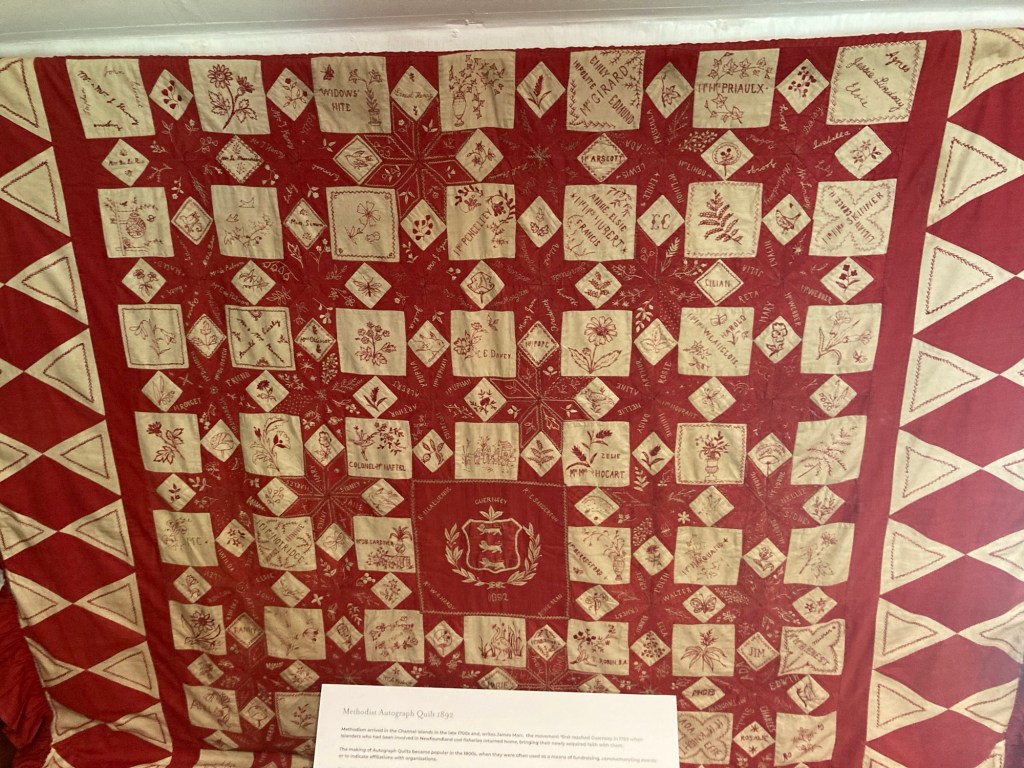
A Methodist autograph quilt from 1892.
Such quilts were popular in the 1800s
as a means of fundraising, commemorating events,
or showing affiliation with an organization.
A doll known as Colborne Alice or Cobo Sue doll.
The body was made of unbleached calico
and attached to a head made of vest or stockinette.
It would be stuffed with sawdust filling.

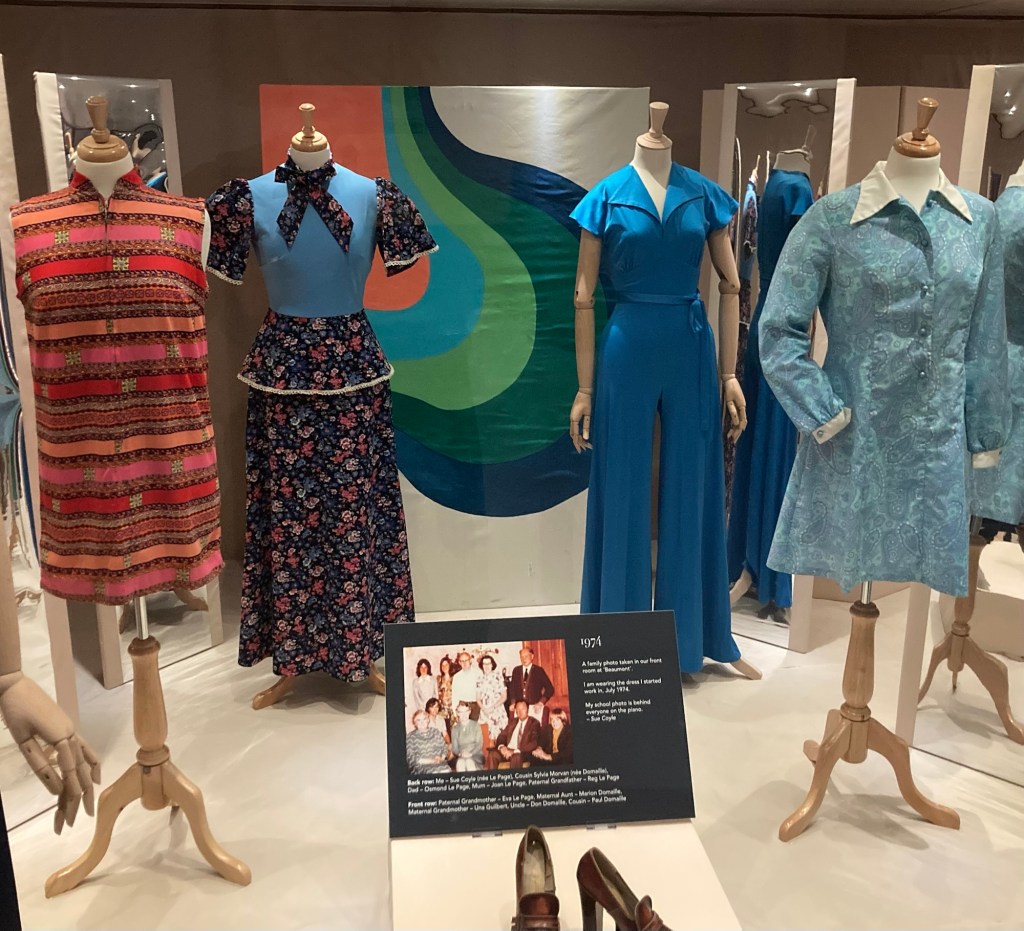
The costume exhibit was called From Cobblestones to Catwalks: 1970’s High Street and High Fashion. It seemed to primarily be based off donations from a local woman. It brought back scary fashion memories from that time.

Some of her clothes and platform shoes
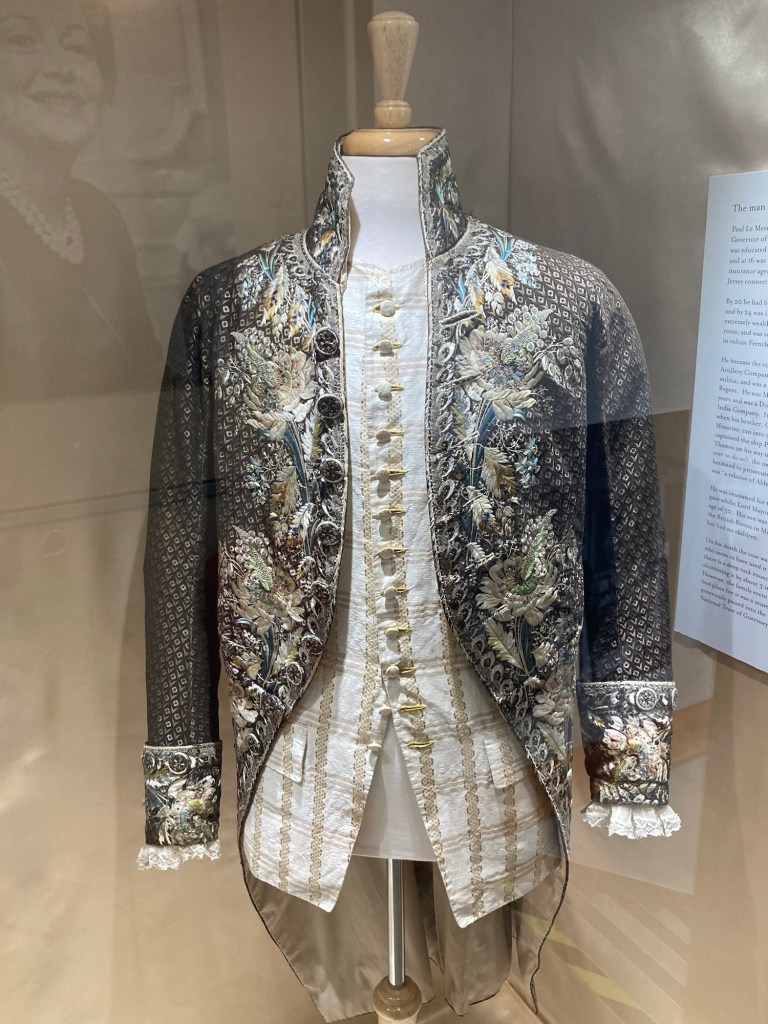
This was not a part of the 1970’s exhibit but part of their permanent collection, a court coat circa 1790.
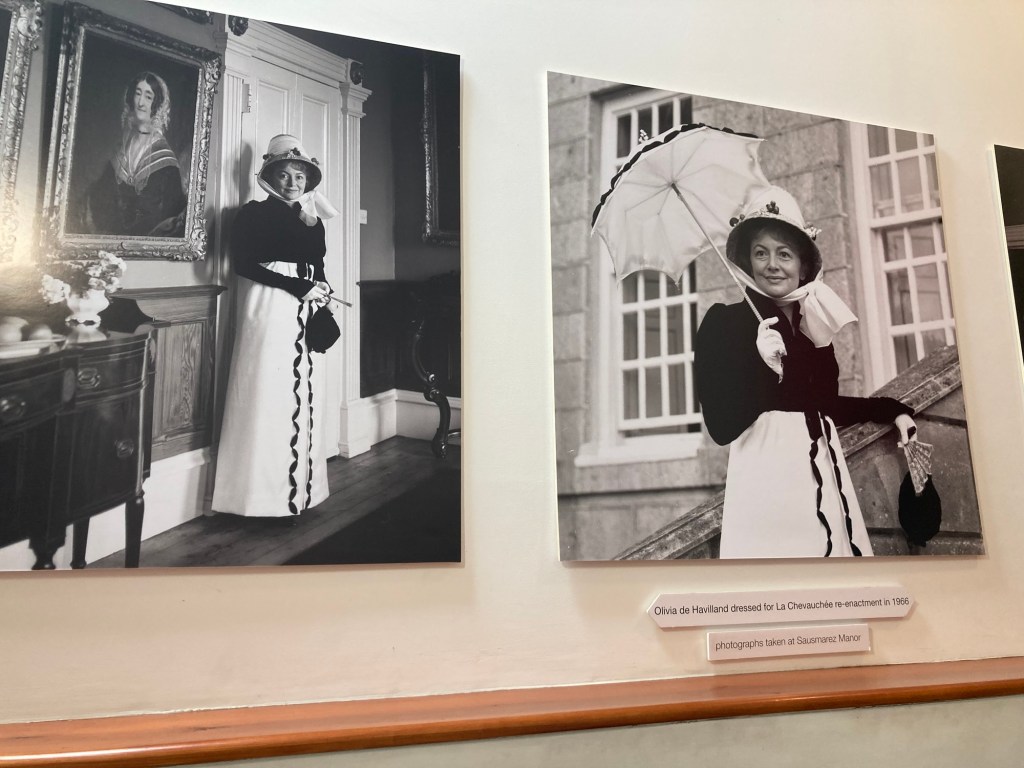
Olivia de Havilland in 1966 dressed for a reenactment of a parade that took place on the island every two years
to check the path of the king.
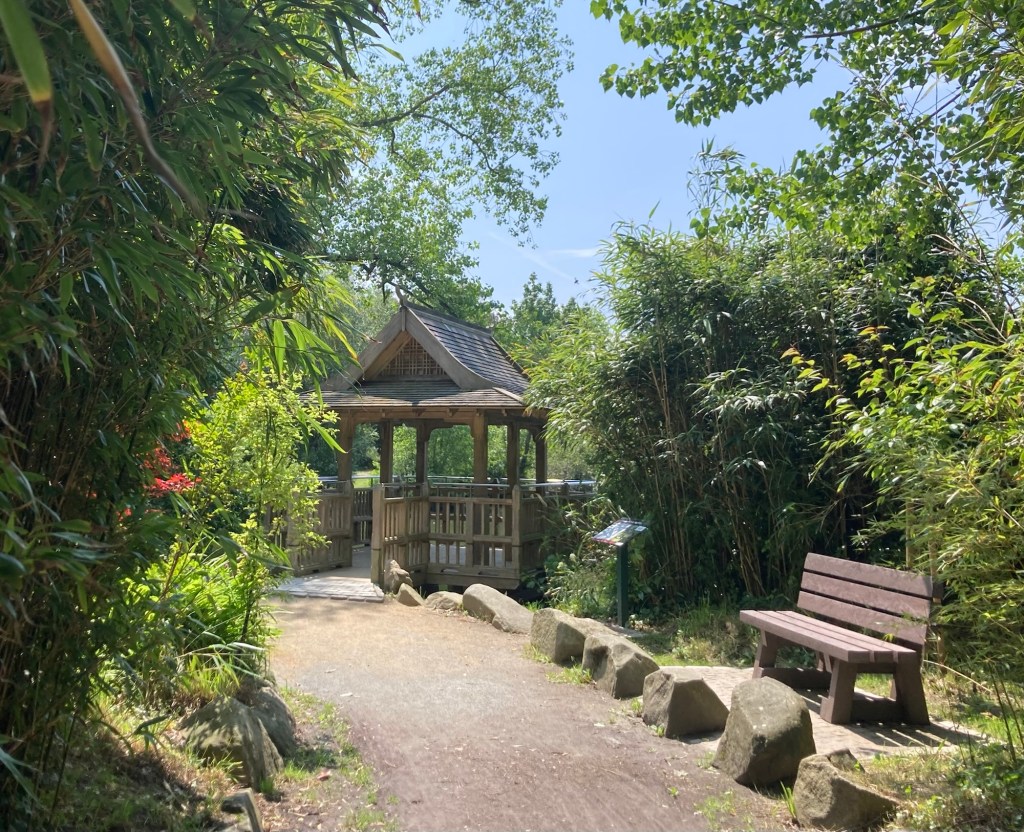
A Japanese fishing pavilion in the park
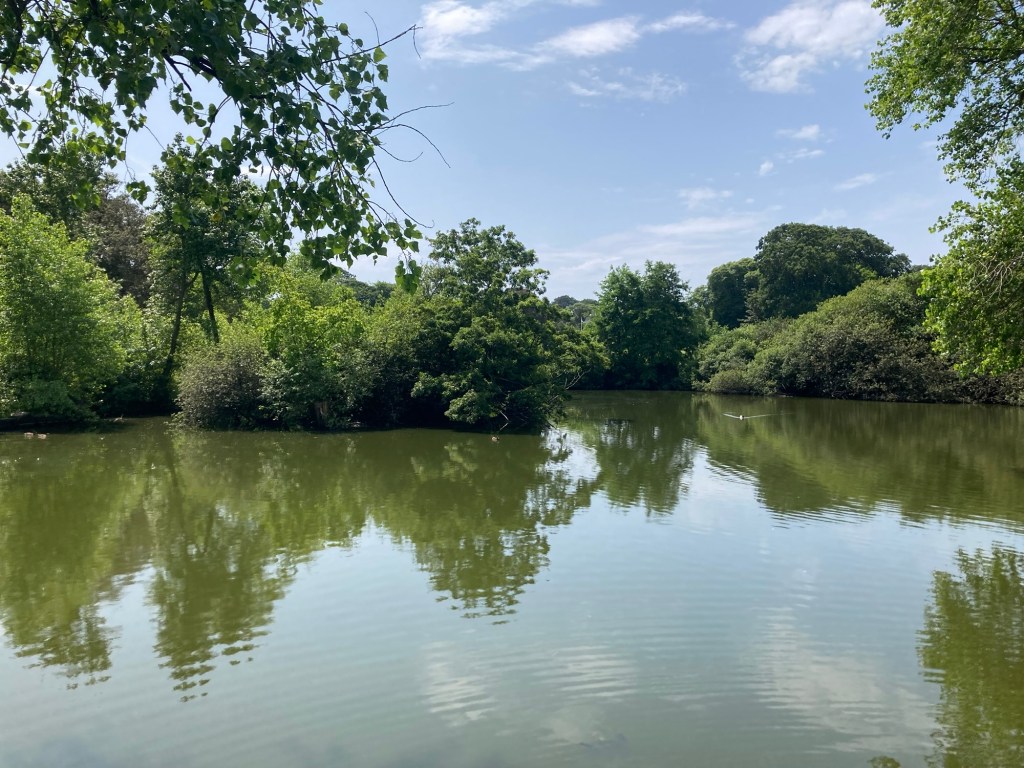
Looking onto the pond
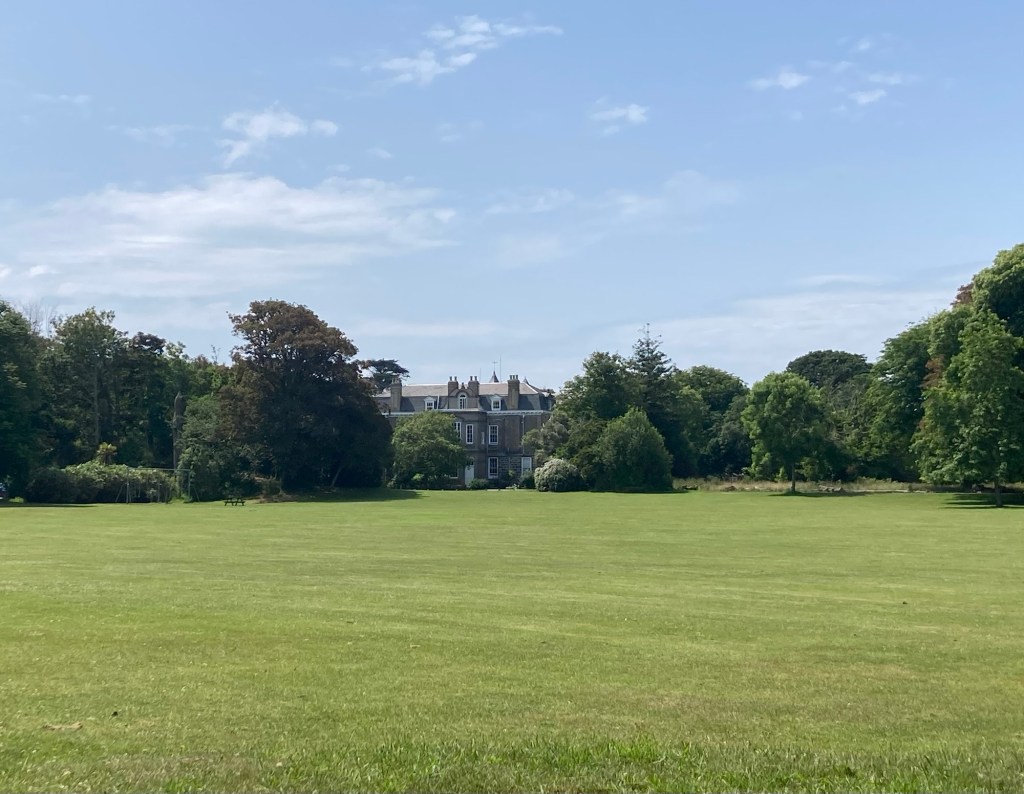
Looking across the great lawn towards the Saumarez Manor
A better look at the manor

Categories
Uncategorized

No Bunk-er, Another Day of Gardens and War (6/10/25)

There are a plethora of museums on Guernsey related to the German occupation during WWII. The castle near the harbor has four just on its own. We prefer to take advantage of as many free sites when we travel as we can; however, we don’t want to not get a sense of the place in which we are staying. We have been significantly helped during our stay with all of the WWII information that is out and freely available for the 80th anniversary of the liberation of the island. But we decided today to visit the Signal Headquarters Museum as it relates to the encoding and decoding of messages, which we enjoyed learning about at Bletchley Park in England a couple years ago.

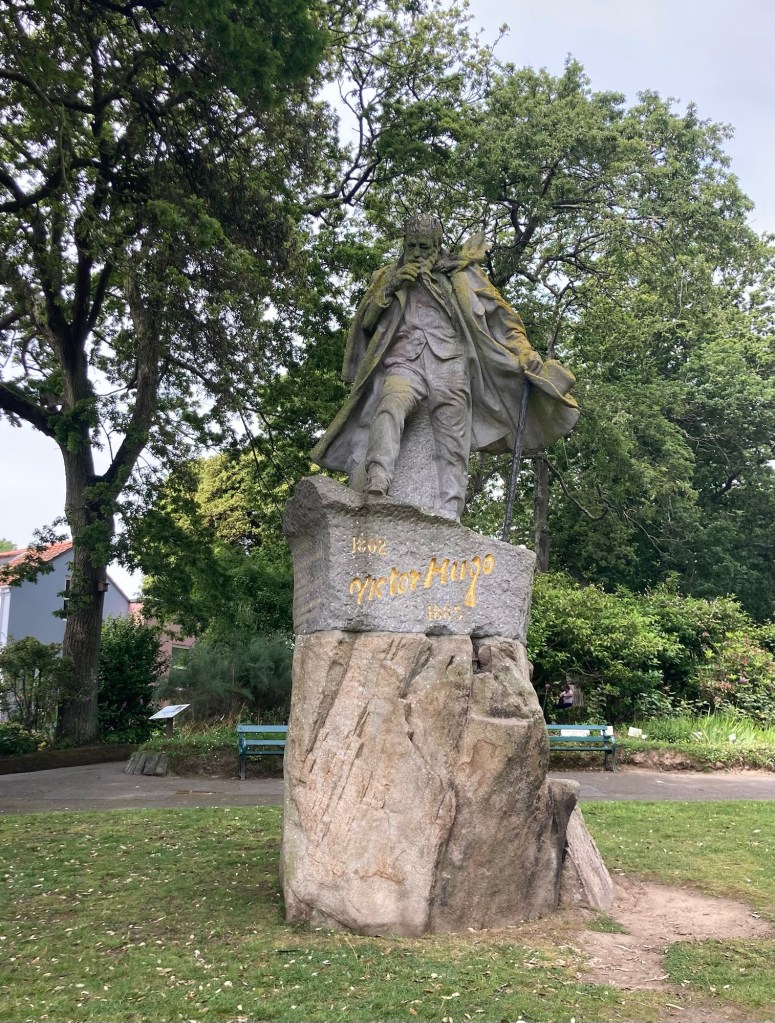
Before we headed to this museum, however, we wanted to right an oversight we had made on our first visit to the Candie Gardens, which was to miss seeing the statue of Victor Hugo that is there.

The Victor Hugo statue is in the gardens in front of the Guernsey Museum and Art Galkery in the Candie Gardens.

The entrance to the Guernsey Museum and Art Gallery
A drawing on the outside of the museum
indicating that The Beatles performed here
at the Candie Auditorium on the 8th of August 1963.
The statue to the writer Victor Hugo
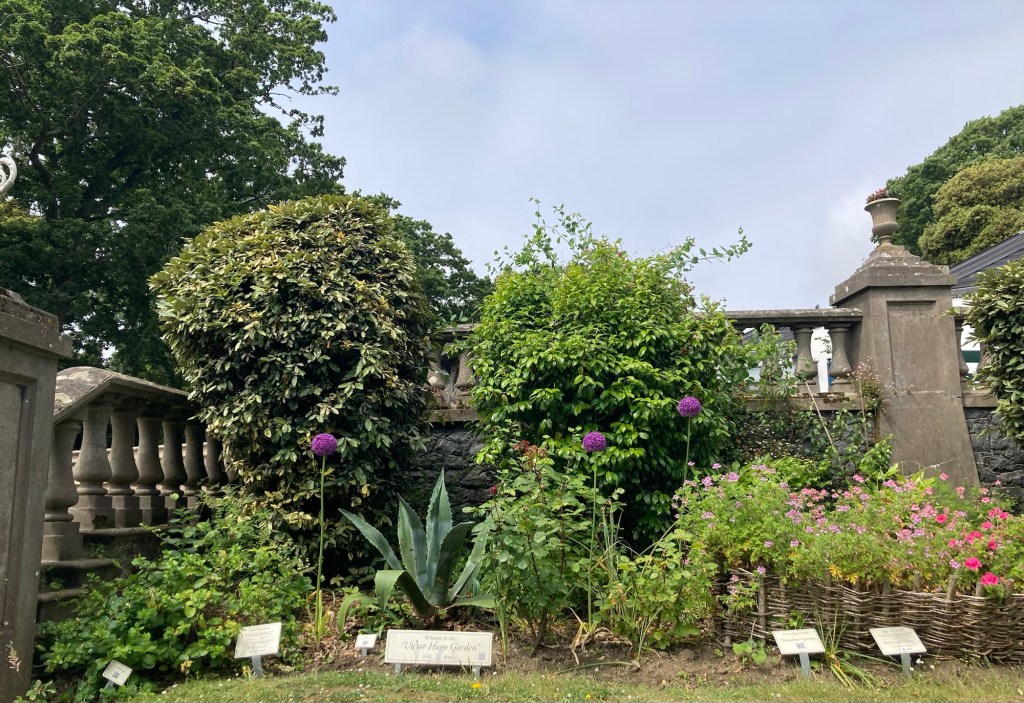
Part of the Victor Hugo Gardens near the statue
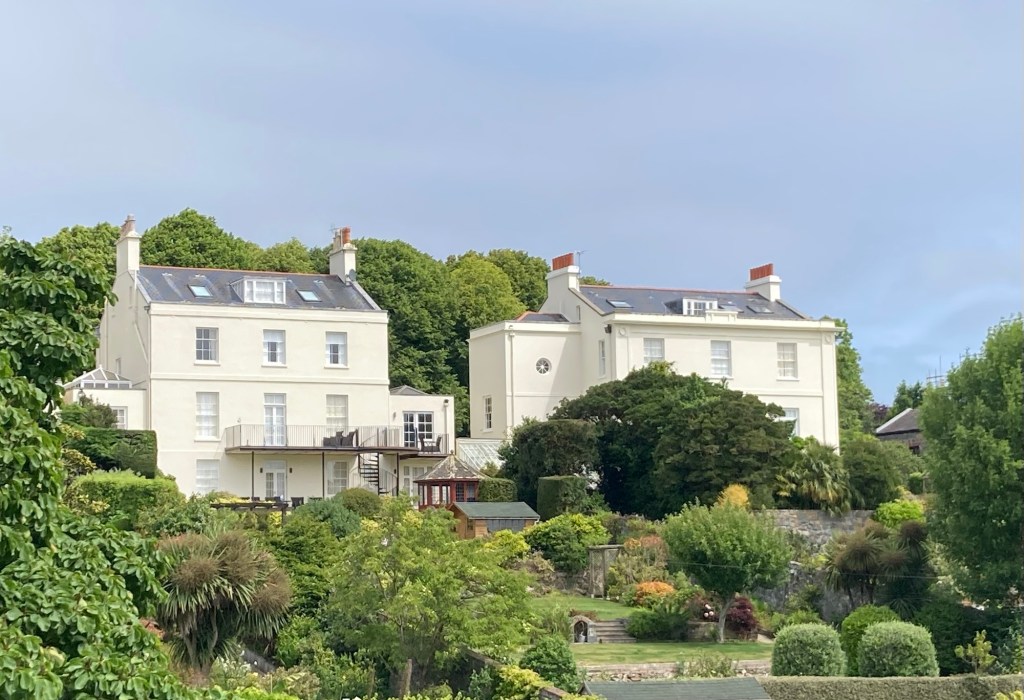
Two houses next to the Candie Gardens
with their own impressive gardens
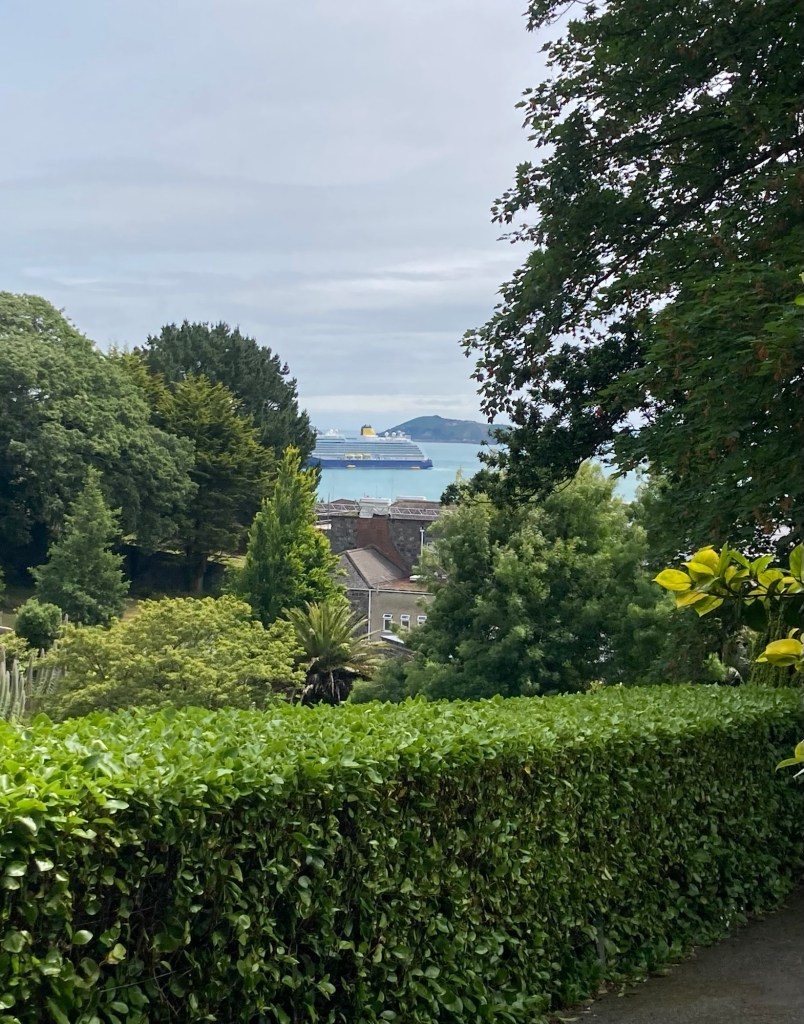
From the gardens, we spotted a cruise ship in the harbor

We had a relatively short walk (about 10 minutes) from Candie Gardens to the German Signal Headquarters Museum. As the name suggests, the museum was the headquarters for the German Naval Commander of the Channel Islands during WWII. The Signals HQ handled all the important radio signals traffic for the German forces during the occupation. The bunker complex was completed in February 1944 and housed powerful communications equipment and Enigma encoding machines.

Prior to the completion of the bunker,
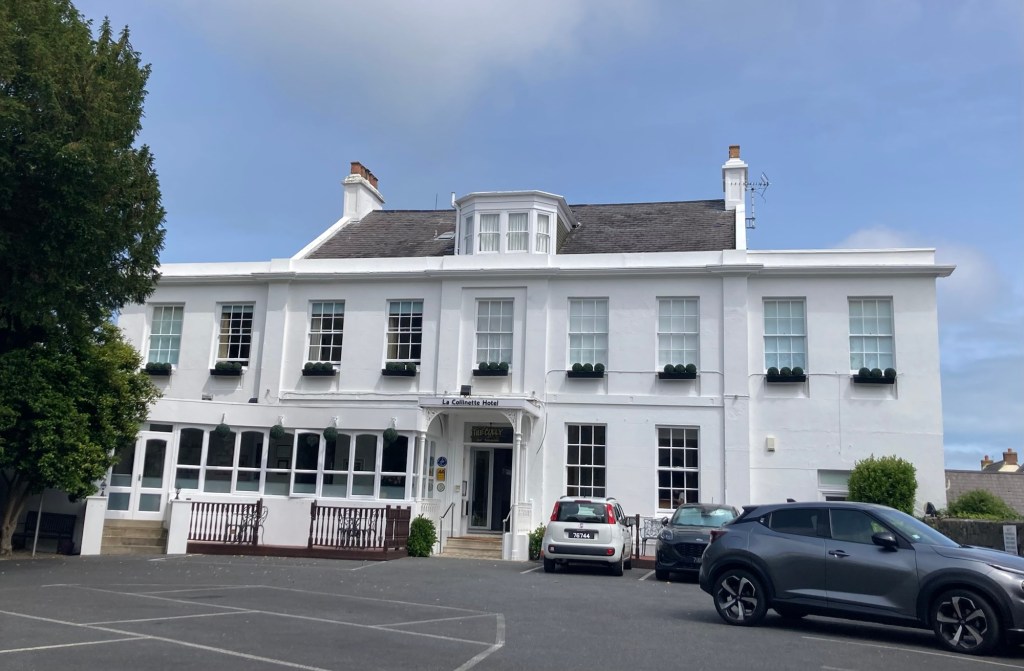
the Signals HQ was housed in what is now La Collinette Hotel
due to its elevated, strategic position on the island.
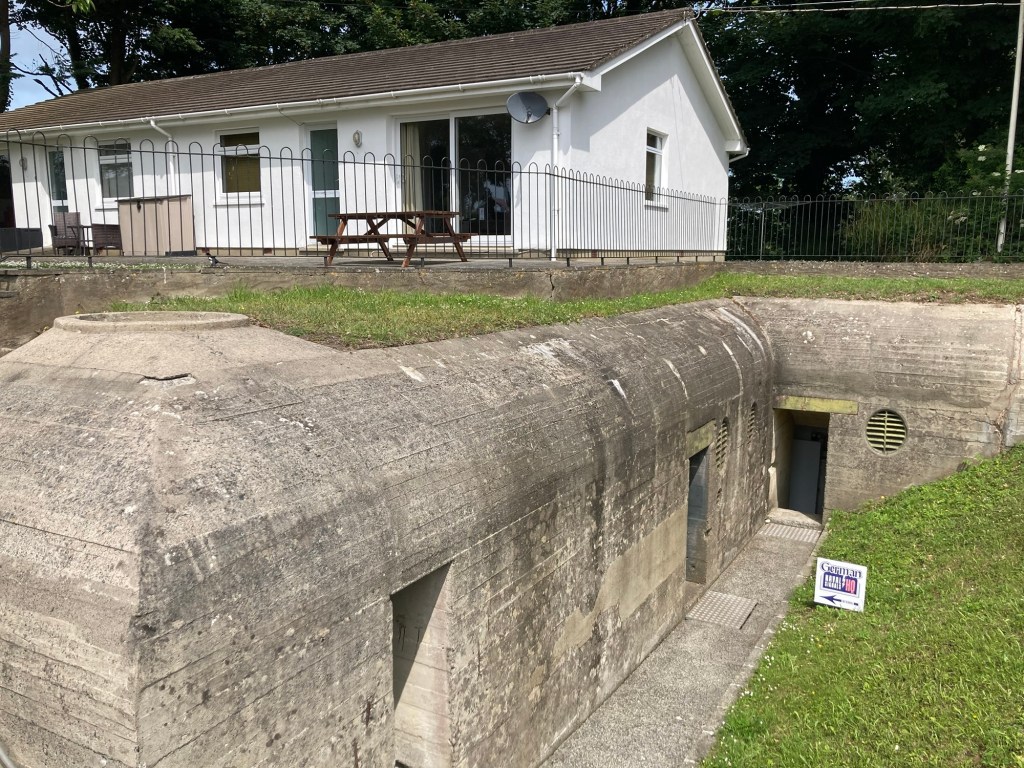
The bunker completed in 1944 as the Signal HQ
and now the museum
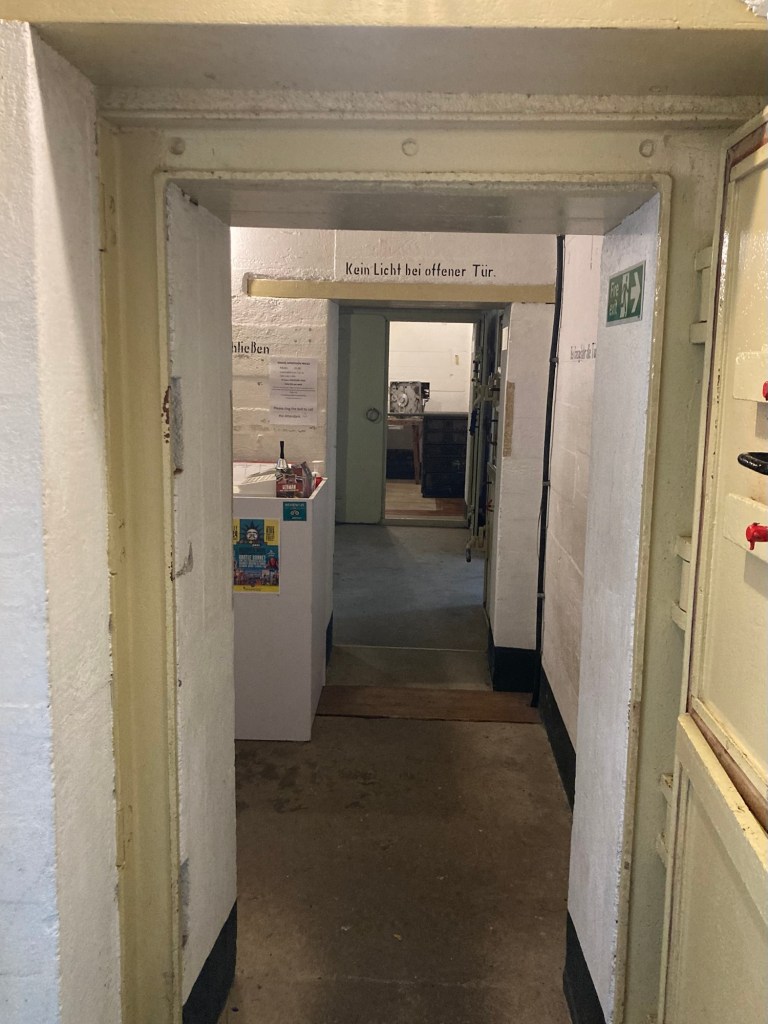
Entering into the bunker

The tour began with an 11 minute film, which showed how former German Naval Signals Officer Oberleutnant Willi Hagedorn, the lead officer for this command during WWII, returned to Guernsey to help guide the restoration of the bunker to accurately portray how it looked during the war.

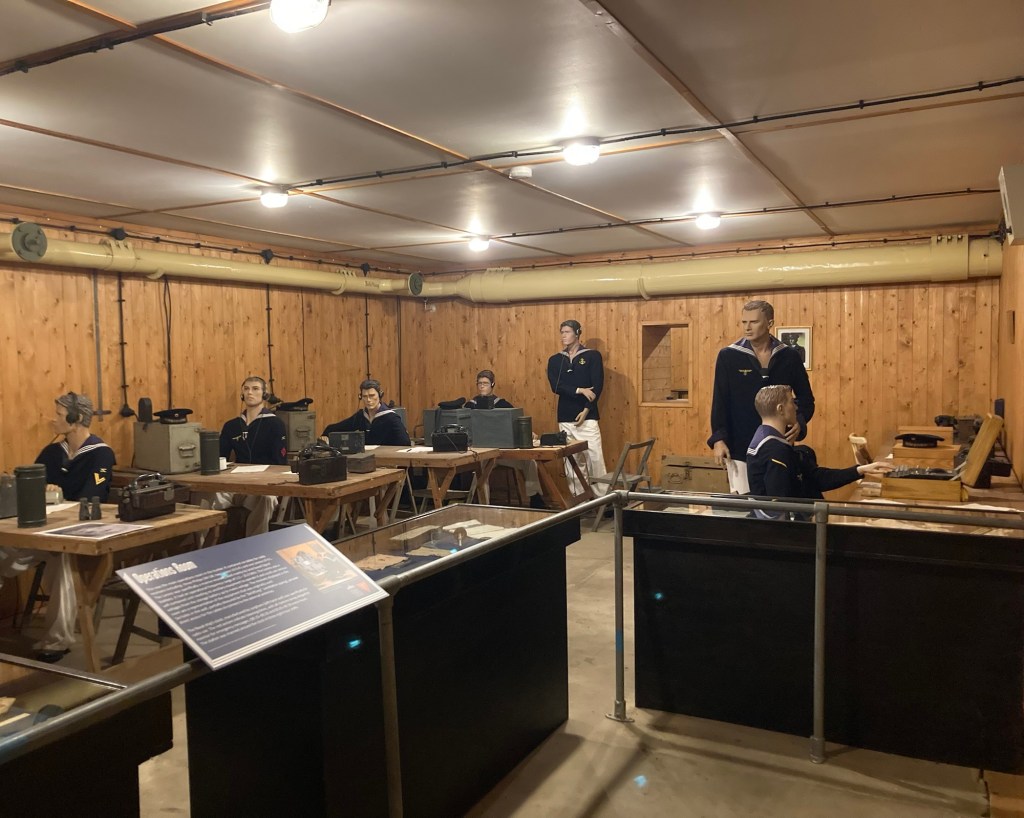
This is the main Operations Room in the bunker.
Radio operations were 24/7,
done in 8 hour shifts with 50 men at a time.
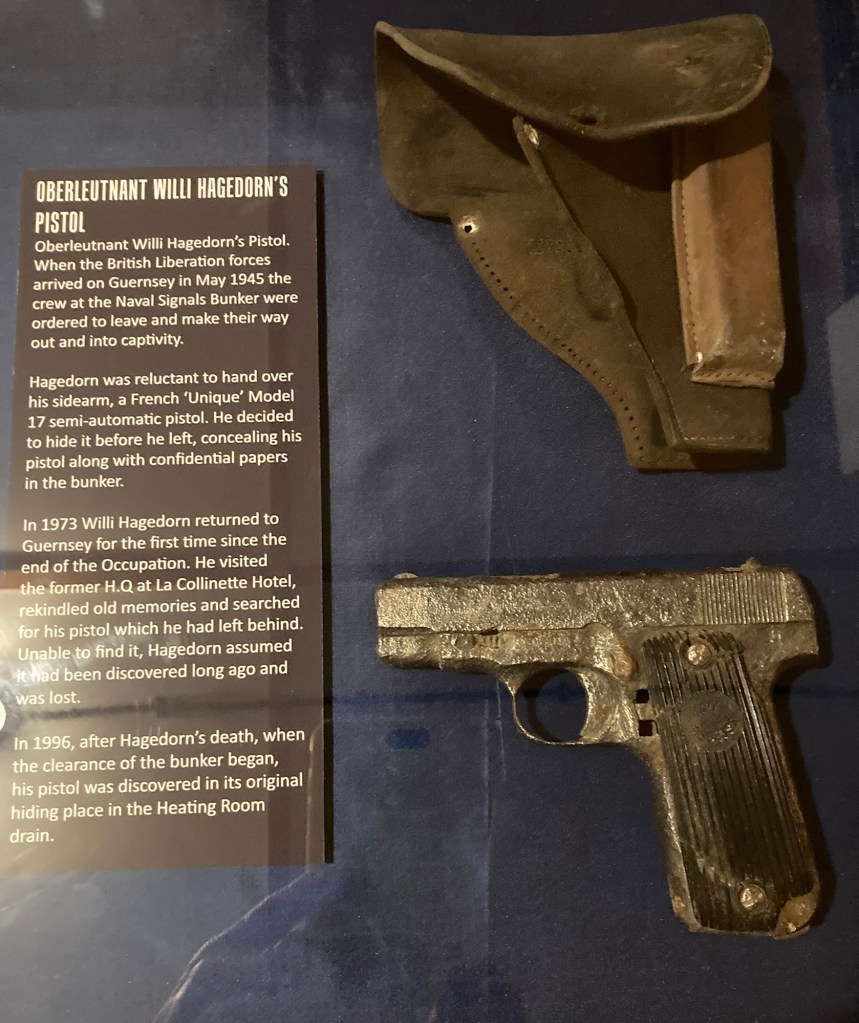
There were a number of items on display in the Operations Room. This is Oberleutnant Hagedorn’s gun that he hid in the bunker rather than having to hand it over to the Allies. While he searched for it upon his return to Guernsey,
it wasn’t found until restoration work was begun.
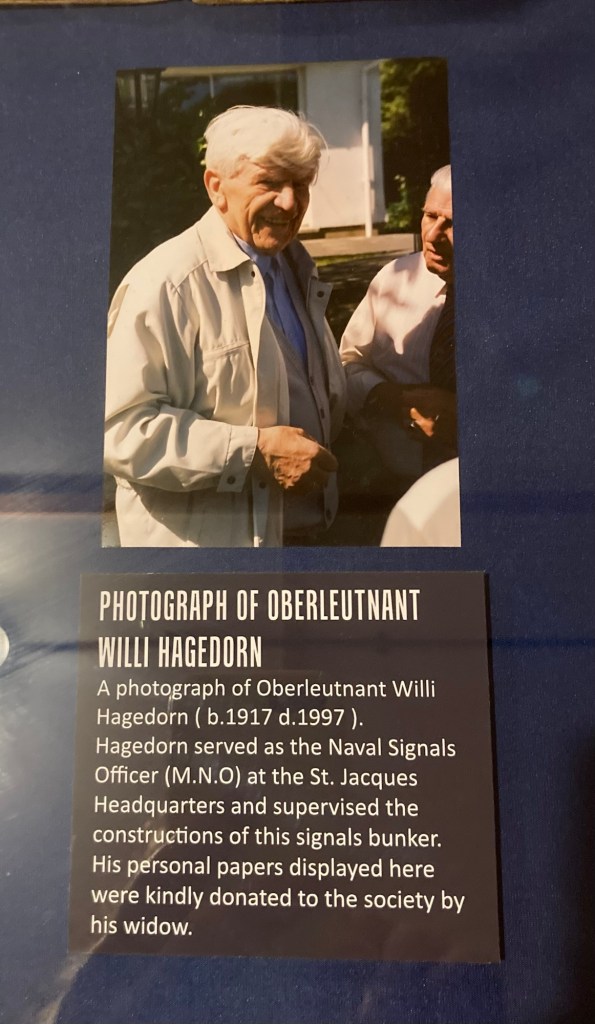
A photo of Willi Hagedorn
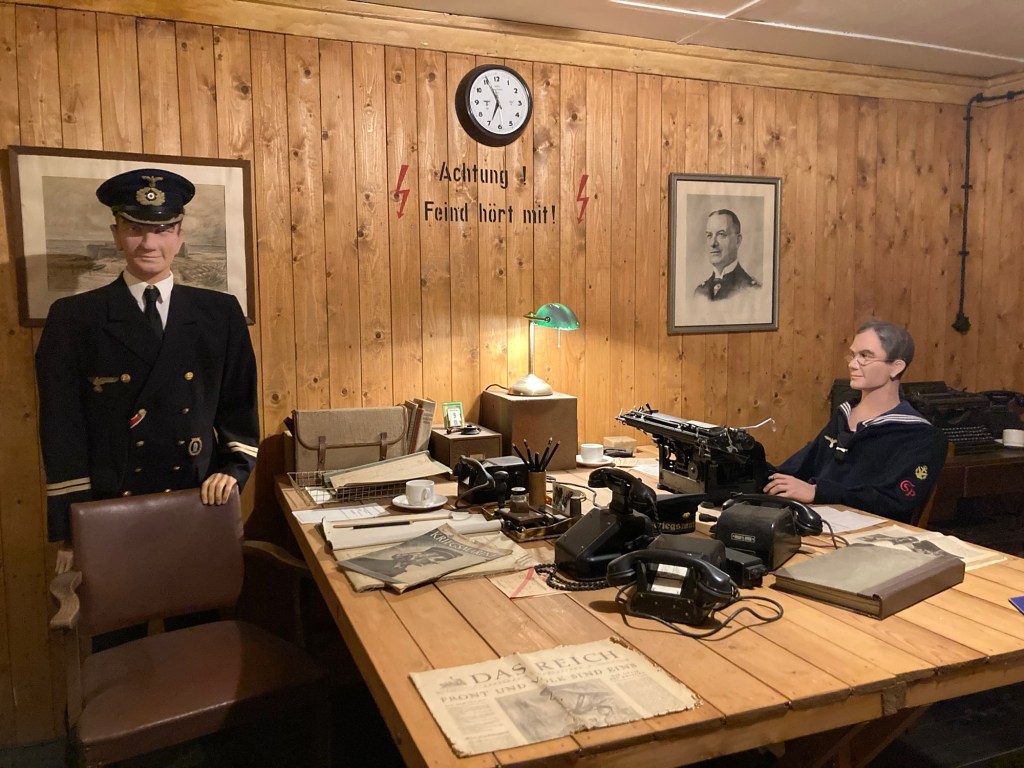
The Naval Signals Officer’s Office, the nerve center of the bunker and used by the Duty Officer for each shift
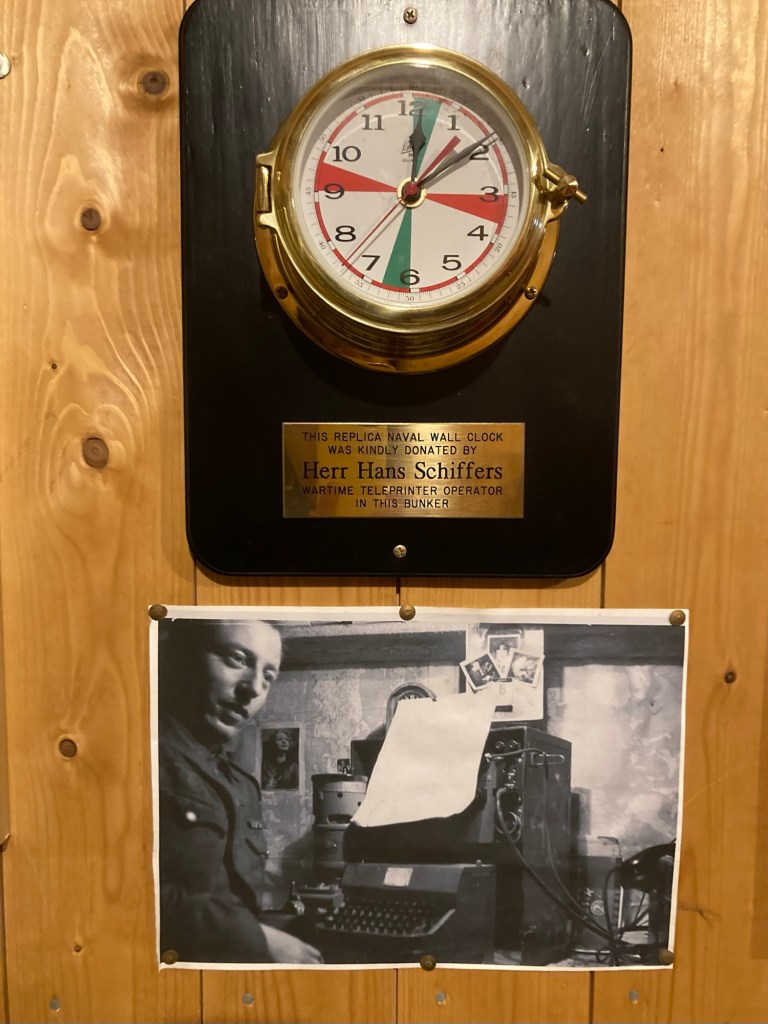
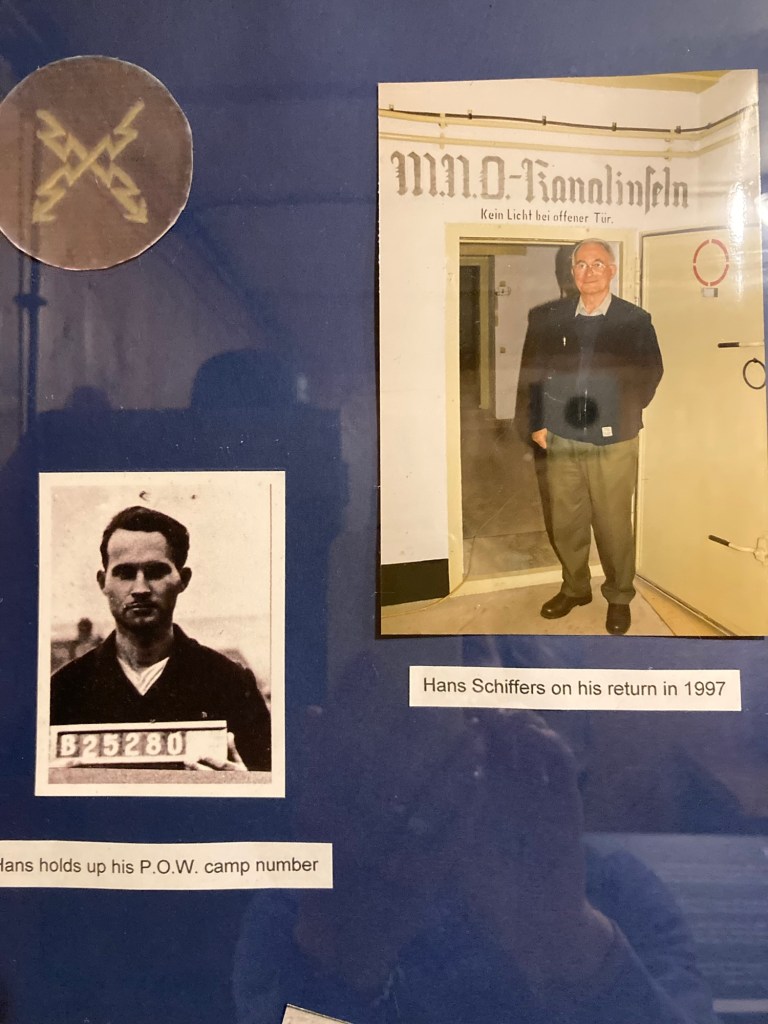
A naval war clock donated to the museum by Herr Hans Schiffers, one of the teleprinter operators during the war
Herr Schiffer’s POW photo after the occupation ended
as well as a photo from when he returned to Guernsey
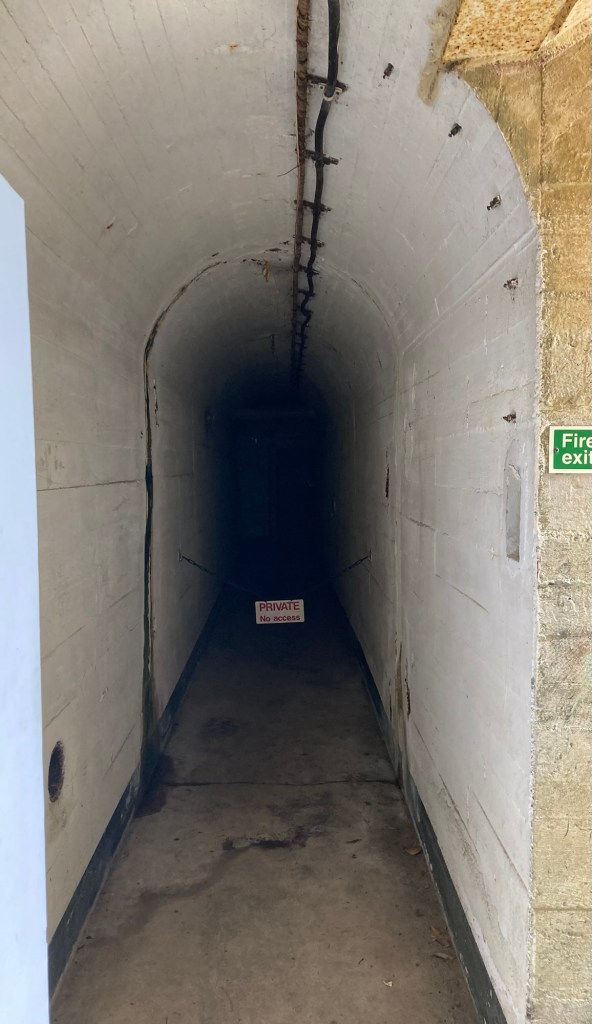
A tunnel to a second bunker that is not open to the public

Of course, the work that went on here is fascinating. The safe communication of war strategies seems like basic war planning 101 (no Signalgate here), but I also found the cooperation between the Germans who had served in Guernsey during the war to assist in the development of the museum and the receptiveness of the people whose island had been occupied by them to be just as interesting.

Categories
Uncategorized

Holy Cow, That’s a Small Chapel! (6/9/25)

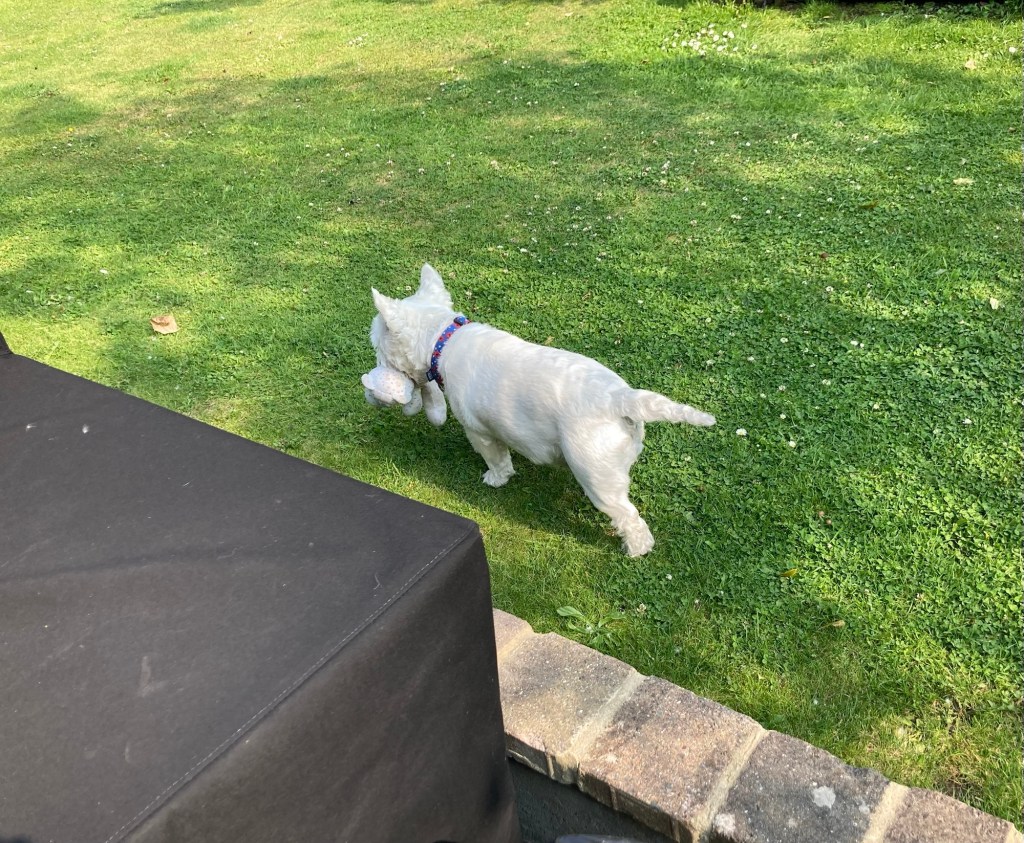
Before I talk about today’s walk, I wanted to share one of the cutest pet rituals we’ve seen while house sitting. Below is a photo of Daisy with her white stuffed bear toy. She goes to her basket every afternoon between five and six, picks up this toy and proceeds to walk the yard with it. If it’s raining, she just walks in the house with it. When she’s “patrolled” enough, she puts the toy down and doesn’t bother with it until the next day at around the same time.

Daisy on patrol

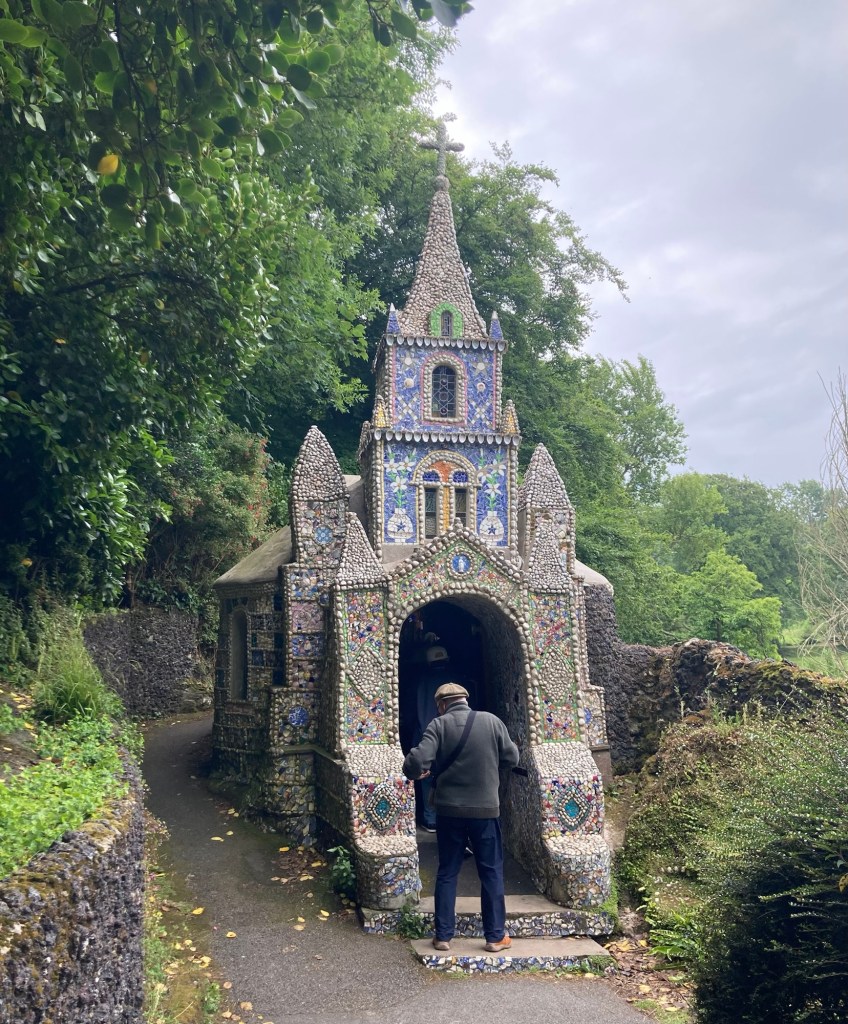
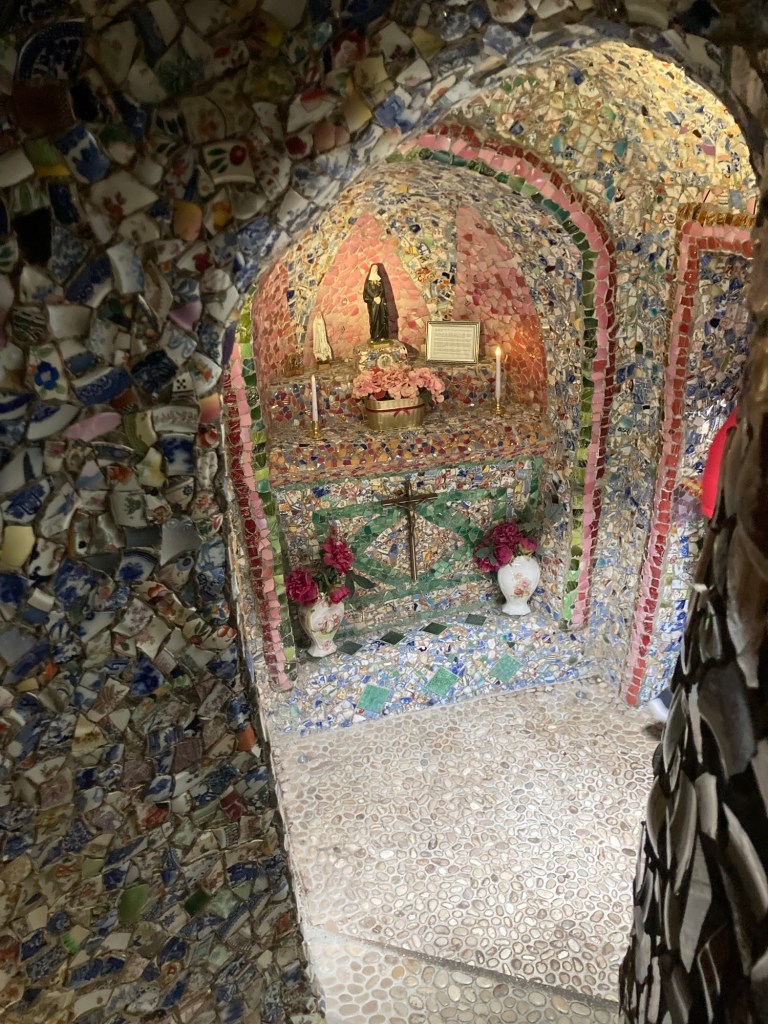
The focus of today’s outing was a visit to The Little Chapel, a colorful miniature grotto created in 1914. More on that later. We did get to it via a sidewalk that happily ran the length of a main road and then continued on all the way (about 45 minutes one way) to the chapel. On the way there and back, we were reminded in various ways about the cows for which the island is famous.

The Guernsey Dairy plant which processes the milk
received from cows around the island to make milk, butter, cheese, cream, buttermilk,and four flavors of ice cream.
Part of our often tree shaded route to the chapel
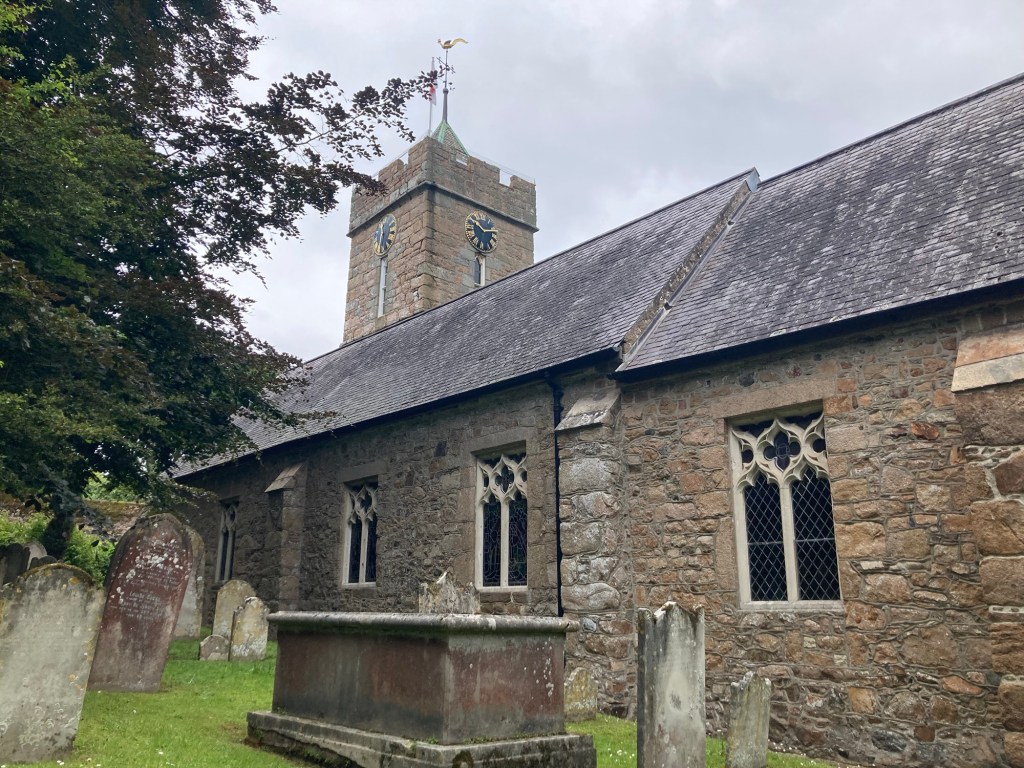
St. Andrews’s Parish Church and cemetery
Another view of the church and surrounding graves.
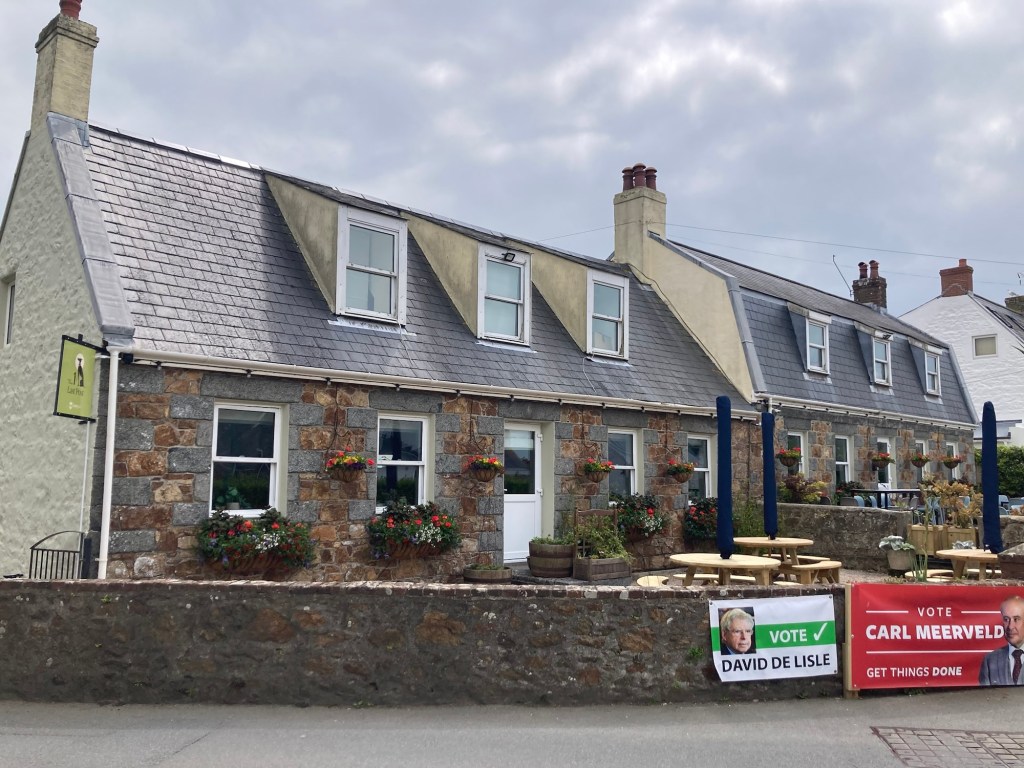
The Last Post Pub and signs for the upcoming election
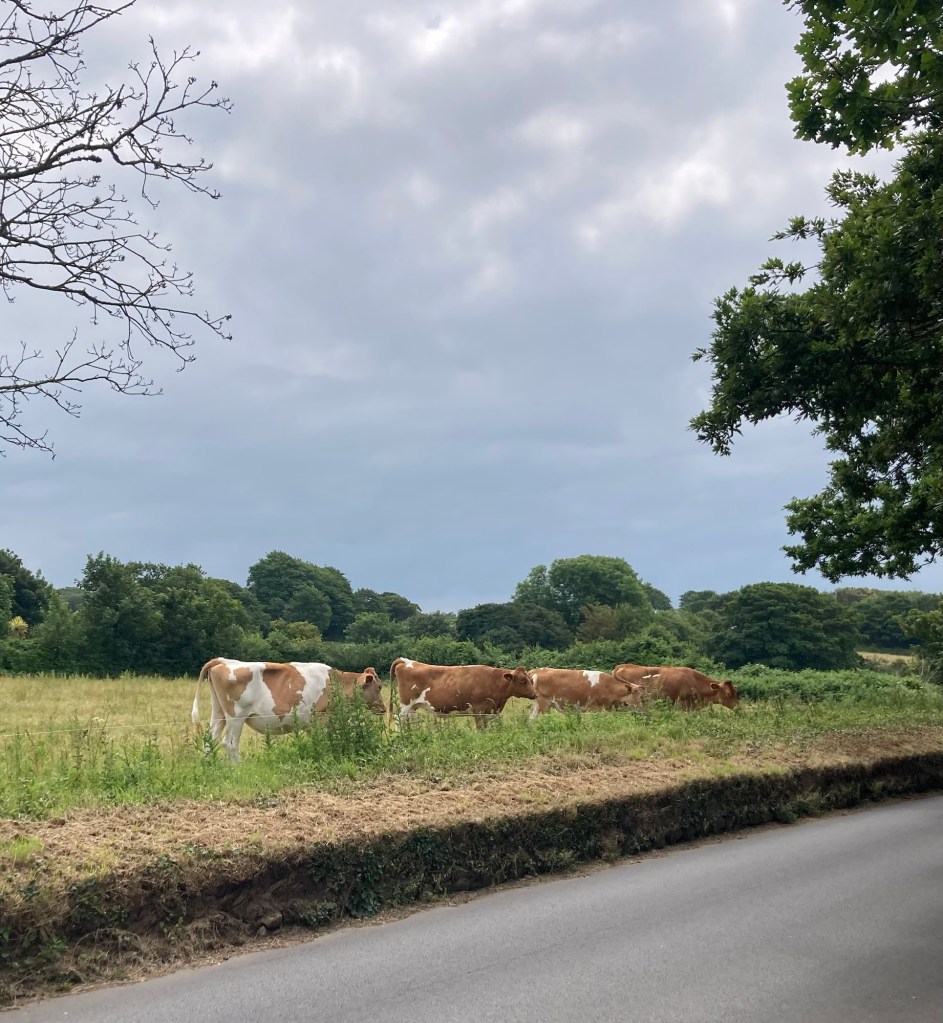
Guernsey Cows

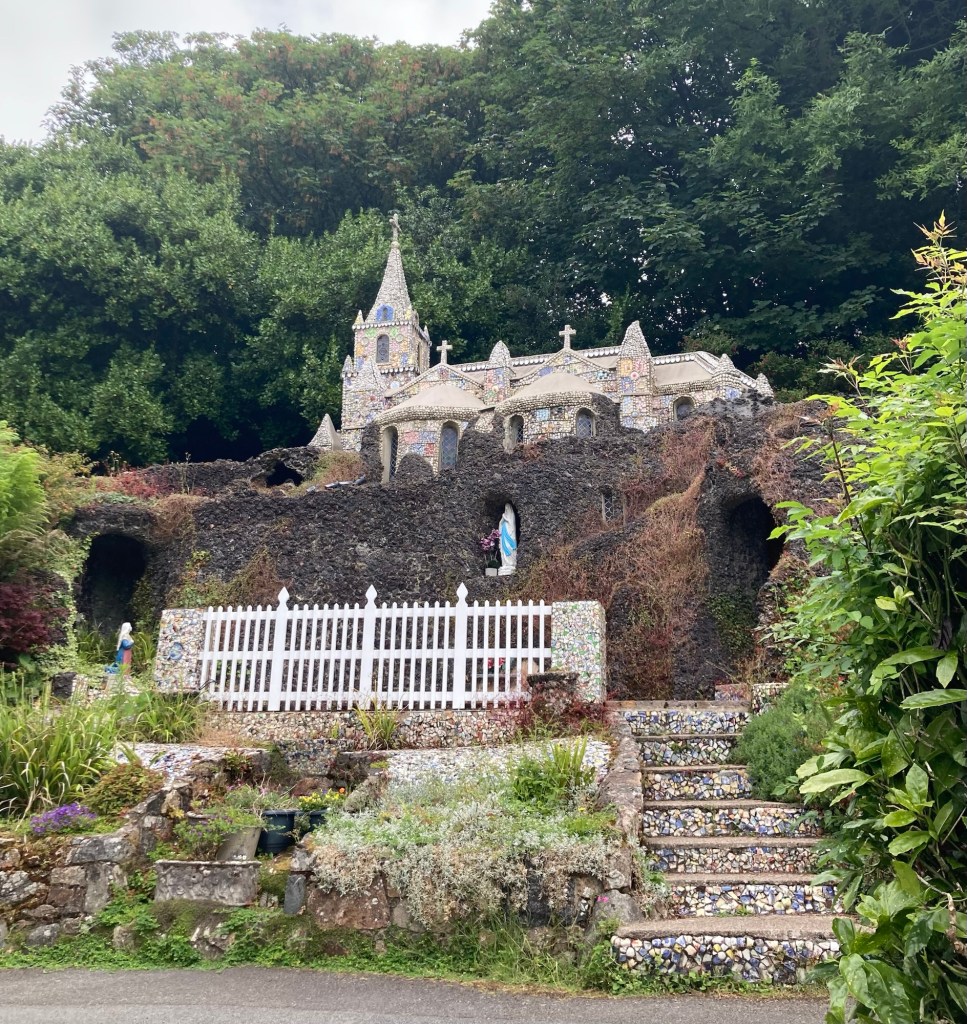
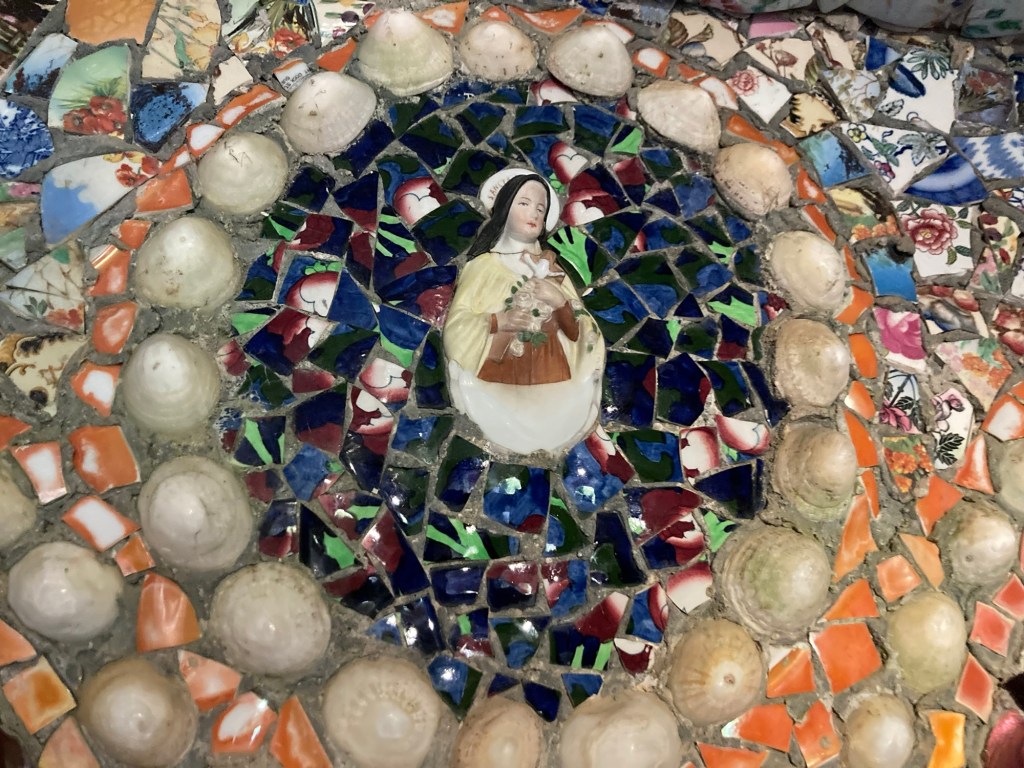
The Little Chapel is aptly named at just 16 ft by 9 ft. It is covered in broken pieces of pottery. It was built mostly by Brother Deodat Antoine of the Order of de la Salle. This was a Roman Catholic French Order founded in 1680 for the education of boys. The Order left France in 1904 when the French government banned all faith schools. Brother Deodat built The Little Chapel after having a vision to create his own version of the grotto of Our Lady of Lourdes. In 1914, he made his vision a reality, and we’re still talking about him.

Bob and I managed to see the chapel as we happened to time our visit in between two fairly sizable tour groups. The chapel is free to visit but takes donations. Also, posted signs indicated that ceramic pieces for the steps were donated by Wedgwood Barlaston, so likely added after the original chapel.

Looking up at The Little Chapel from the road below
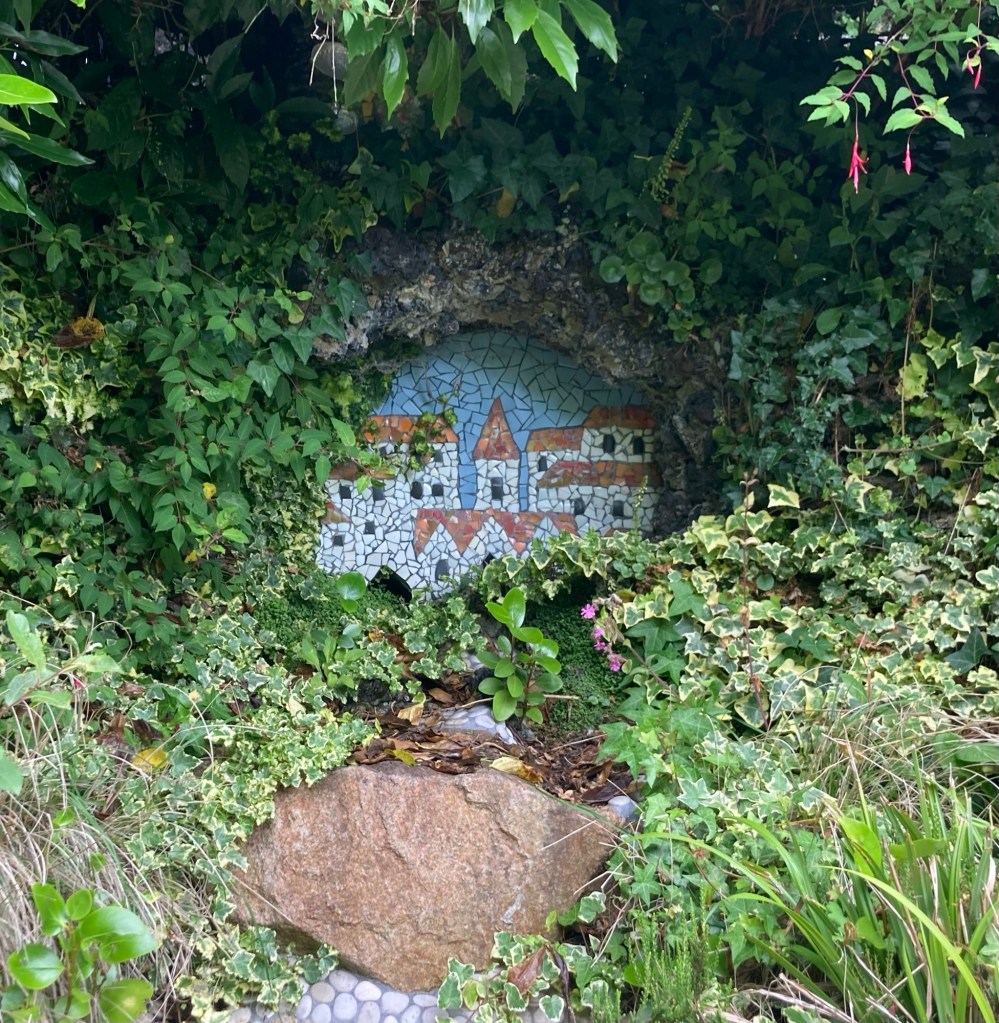
A mosaic on a rock going up to the chapel
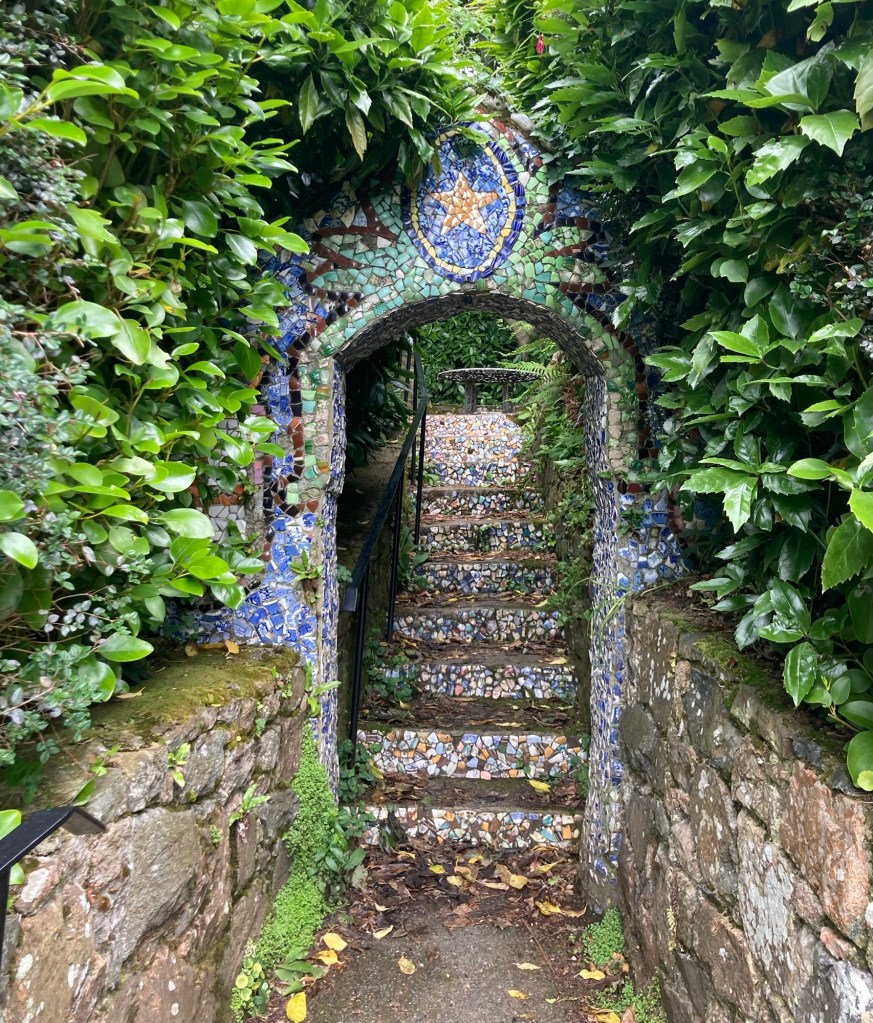
An entrance to one of the paths to the chapel
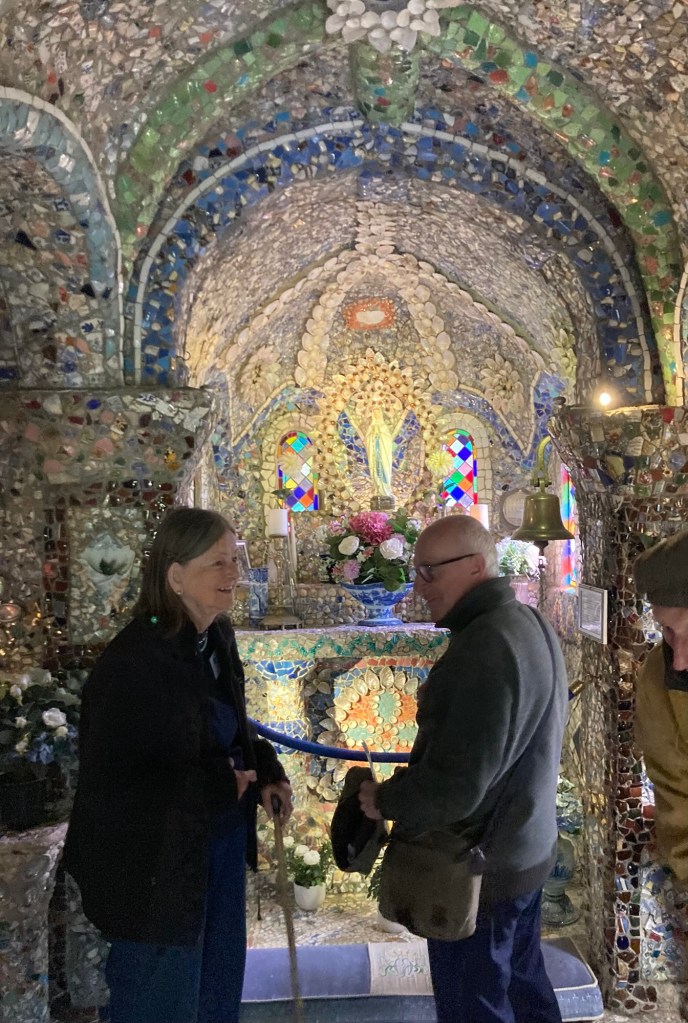
Heading into the chapel, which surprised us
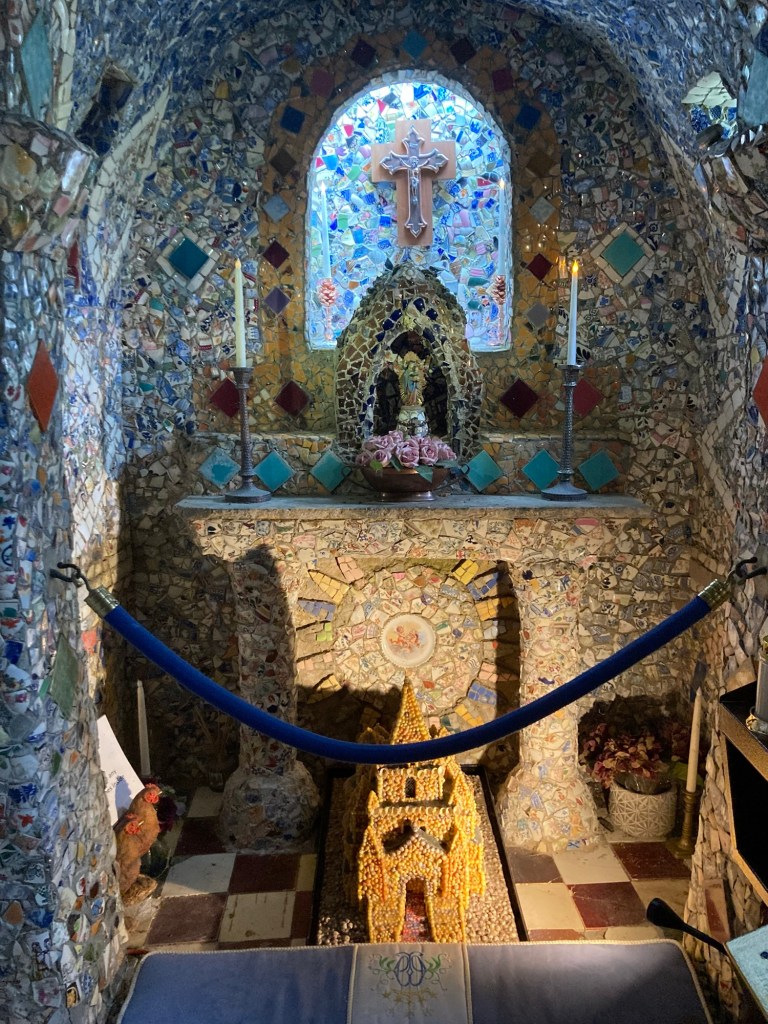
by having 3 different altars, each located on a different level.
Walking into the main level
One of the ceilings on the upper level
A ledge on the way down to the next level
The altar on the 2nd level
Descending to the altar on the 3rd level
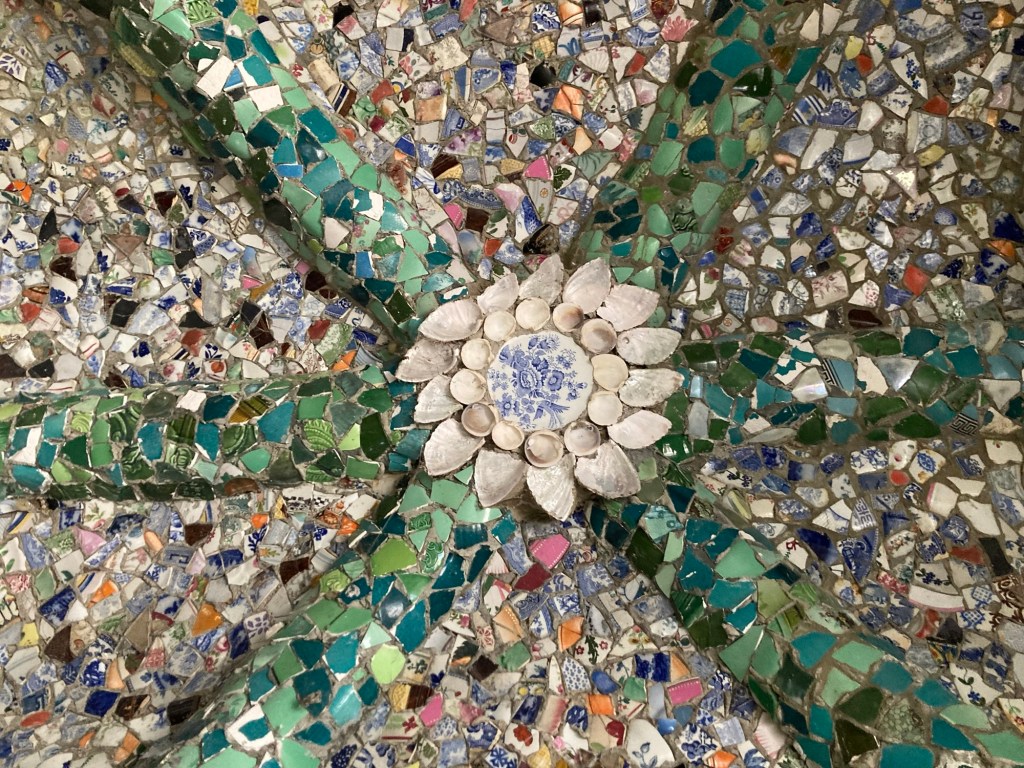
A close up of a mosaic

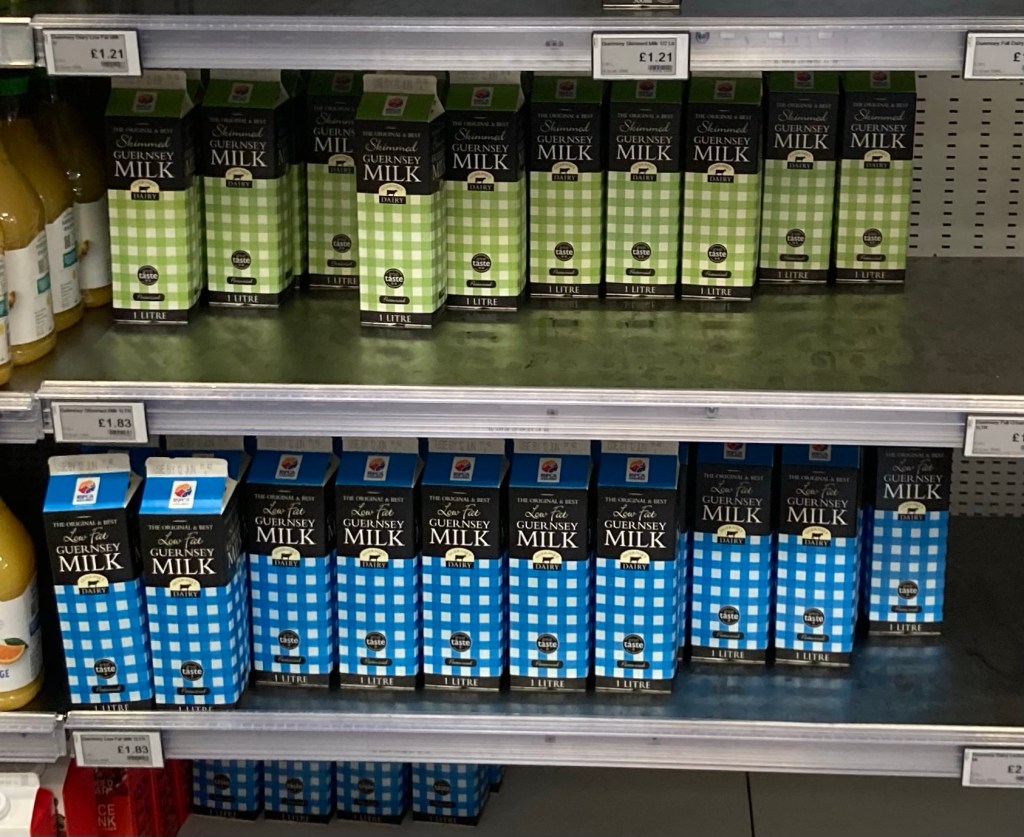
We walked the same route back and stopped at a Coop to pick up some groceries. I snapped a photo of the iconic gingham Guernsey milk cartons. I don’t think I’ve seen any other brand of milk in the stores.

Categories
Uncategorized

Gorgeous Guernsey (6/8/25)

If I had blogged yesterday, this would have been entitled gray and gusty Guernsey. Happily, today is a different story and just in time for their bimonthly summer themed seafront festival. The theme for today’s event was art, so lots of craft booths as well as music and food trucks or tents.

Before heading to the festival, we walked the dogs at Fort George and then headed towards Castle Cornet for a better photo of this important structure.

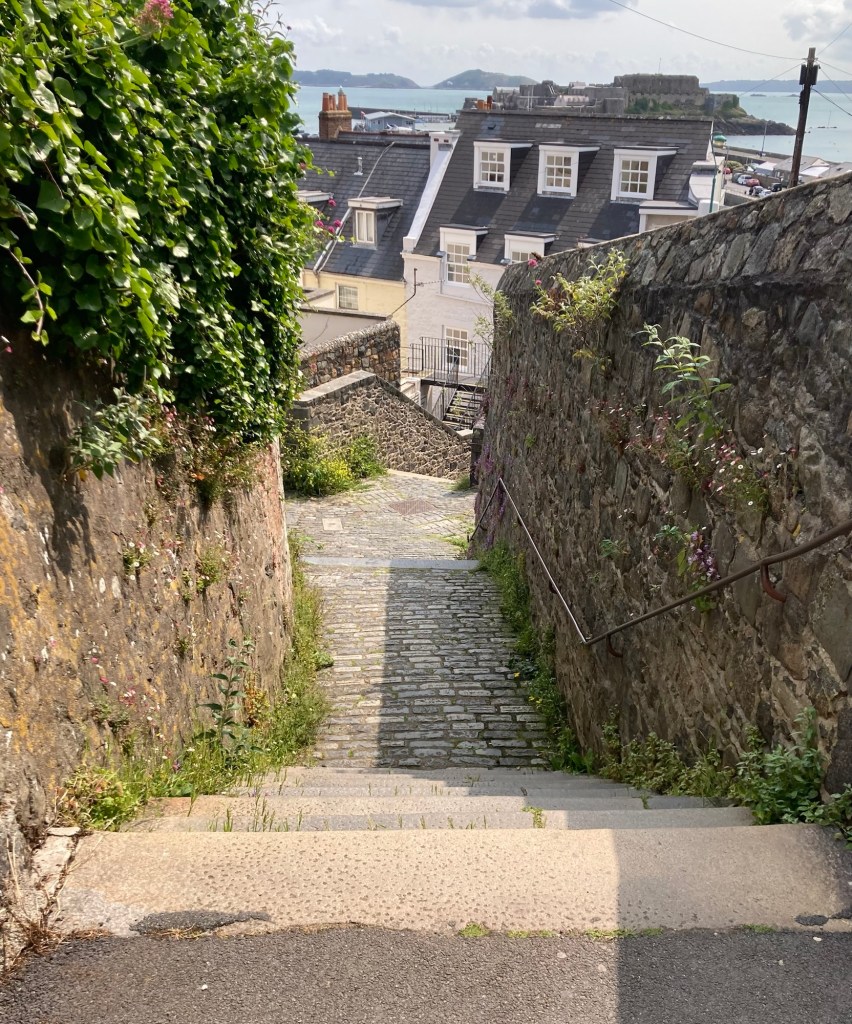
Heading down one of many sets of steps towards the seafront
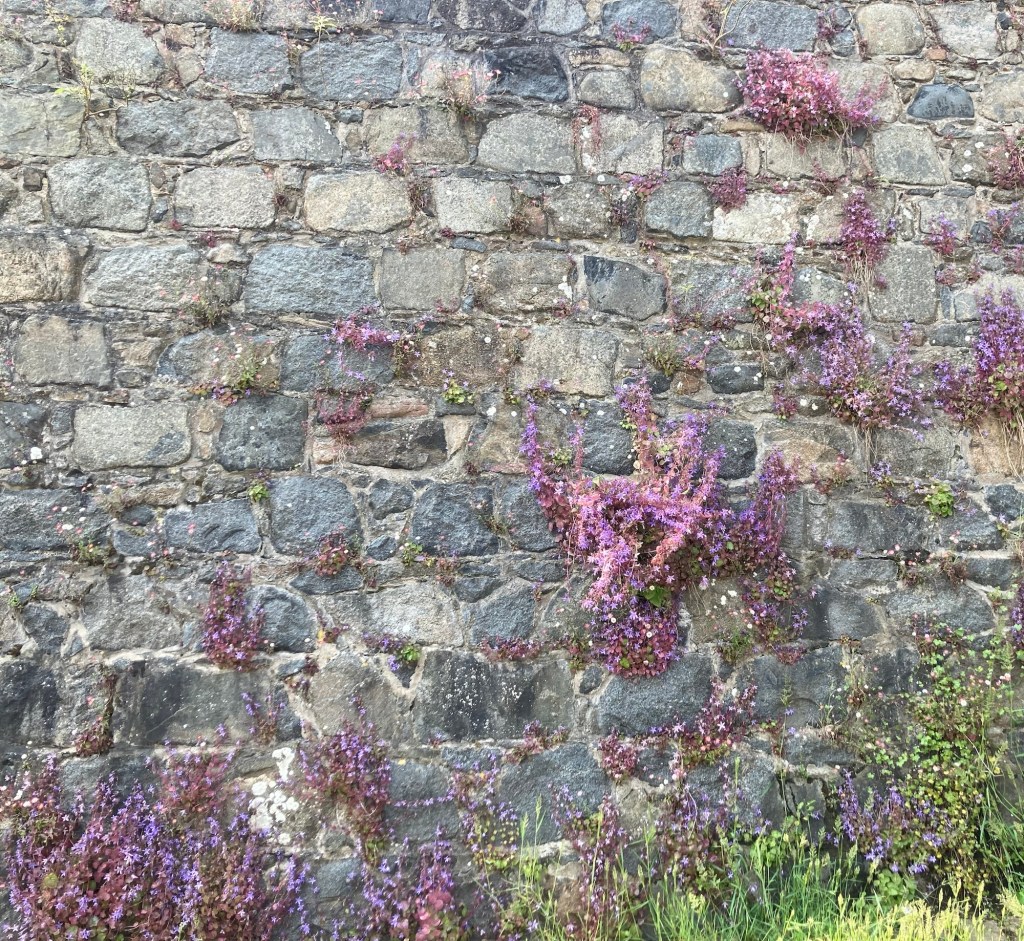
Pretty flowers growing out of the wall
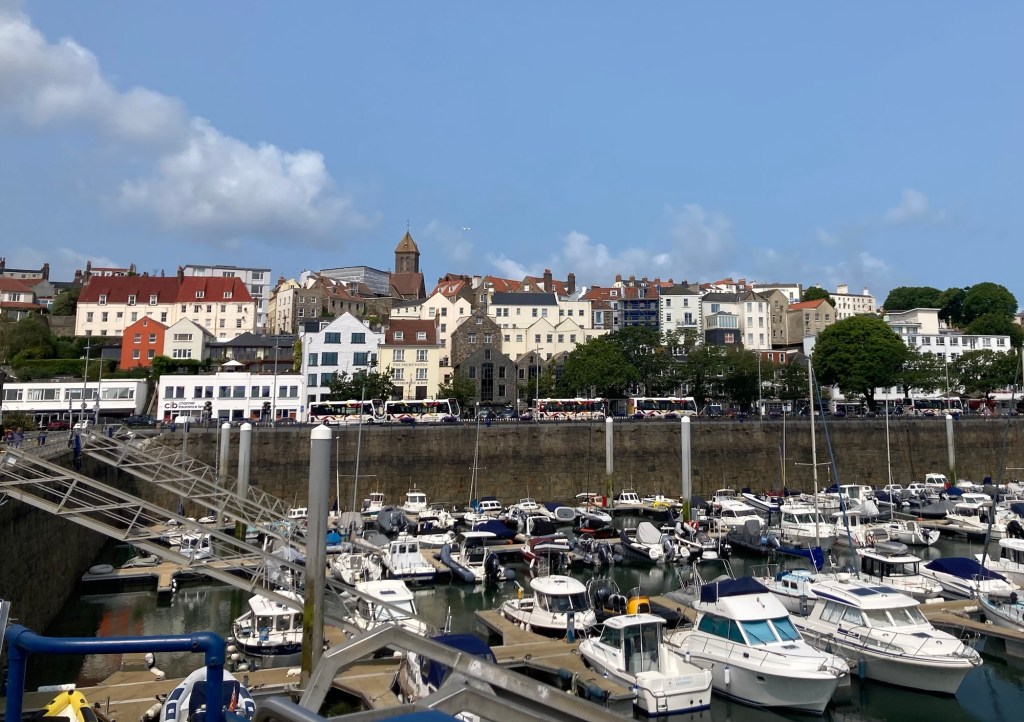
Looking across the harbor towards St Peter Port
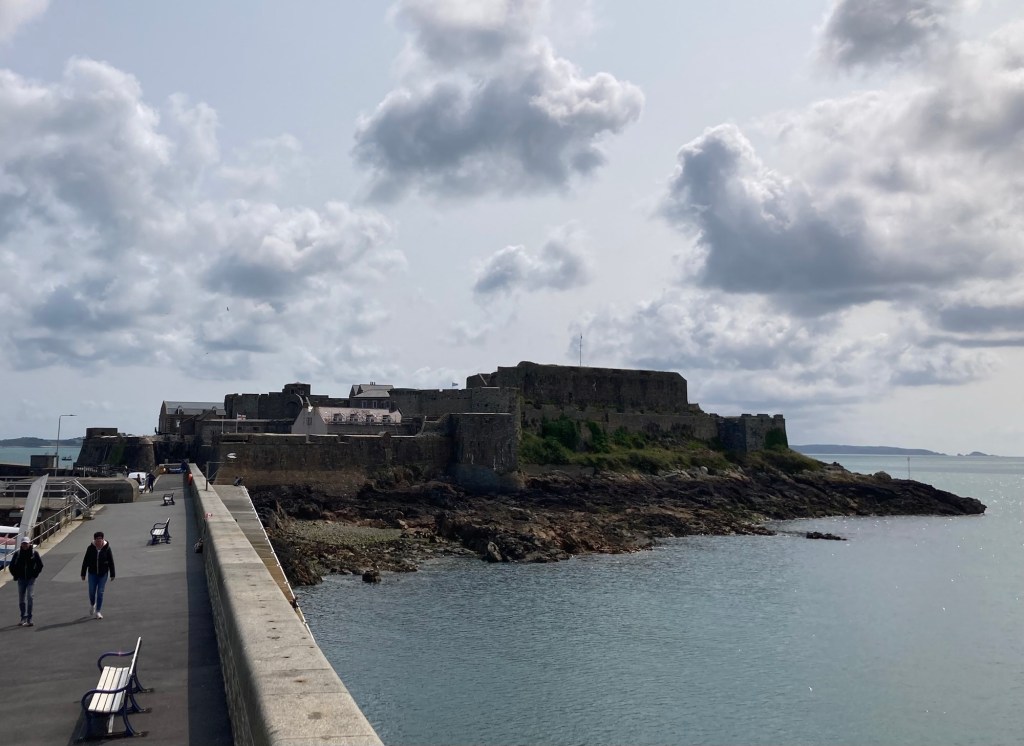
as we walk out to Castle Cornet
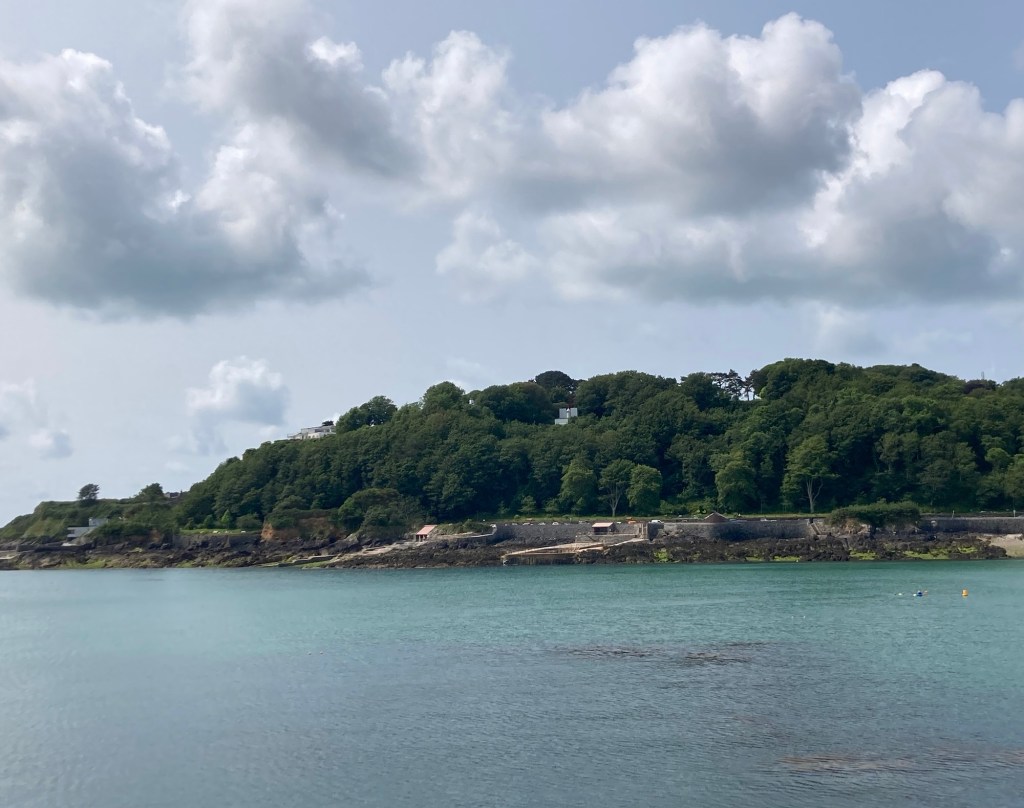
Looking back towards the part of Guernsey
where we had walked the dogs at Fort George earlier

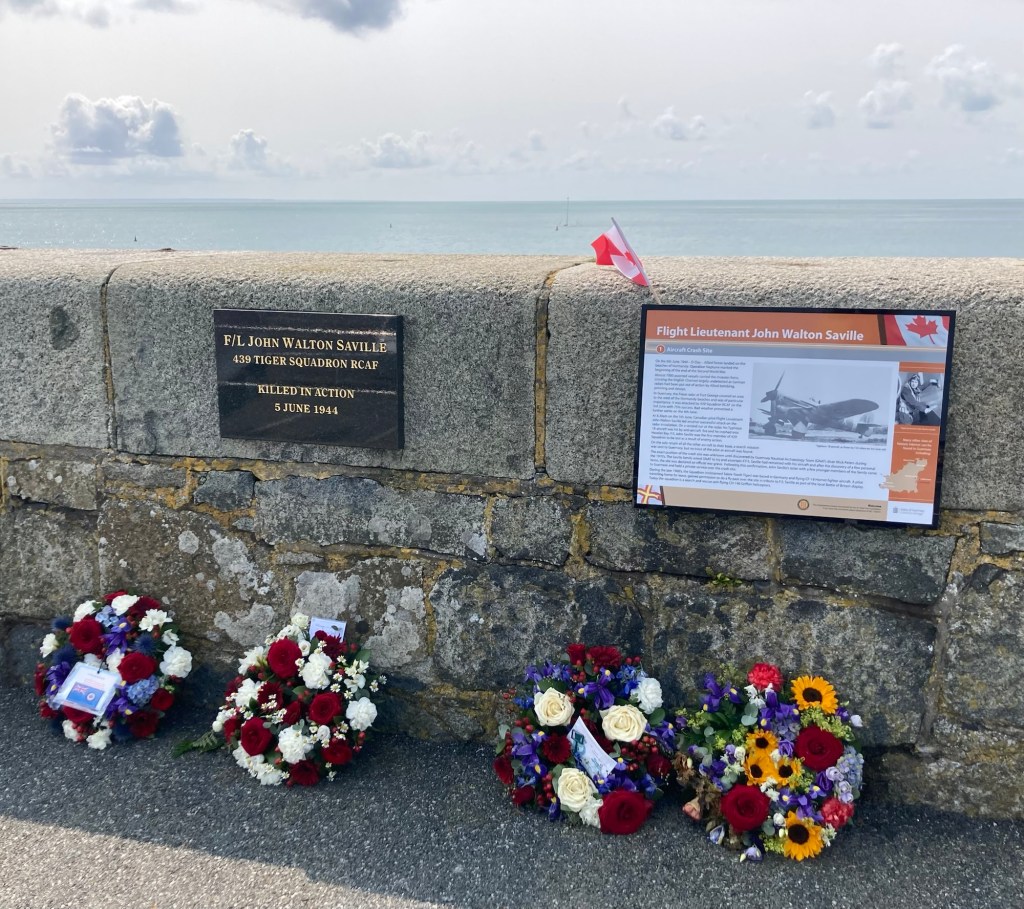
Castle Cornet has guarded St Peter Port for over 800 years. Construction was started in the 13th century and it has been extended and altered over the years as war and weaponry has changed. The Germans used Castle Cornet as part of the air defense cover of the harbor, and it is probably the only British castle to be strafed by the Royal Air Force.

Castle Cornet, which currently houses four museums
Flowers laid in a ceremony on the anniversary of D-Day
for the first member of the Guernsey squadron
to be lost due to enemy action
Another look at the tiered town of St Peter Port
as we walk back in from the castle
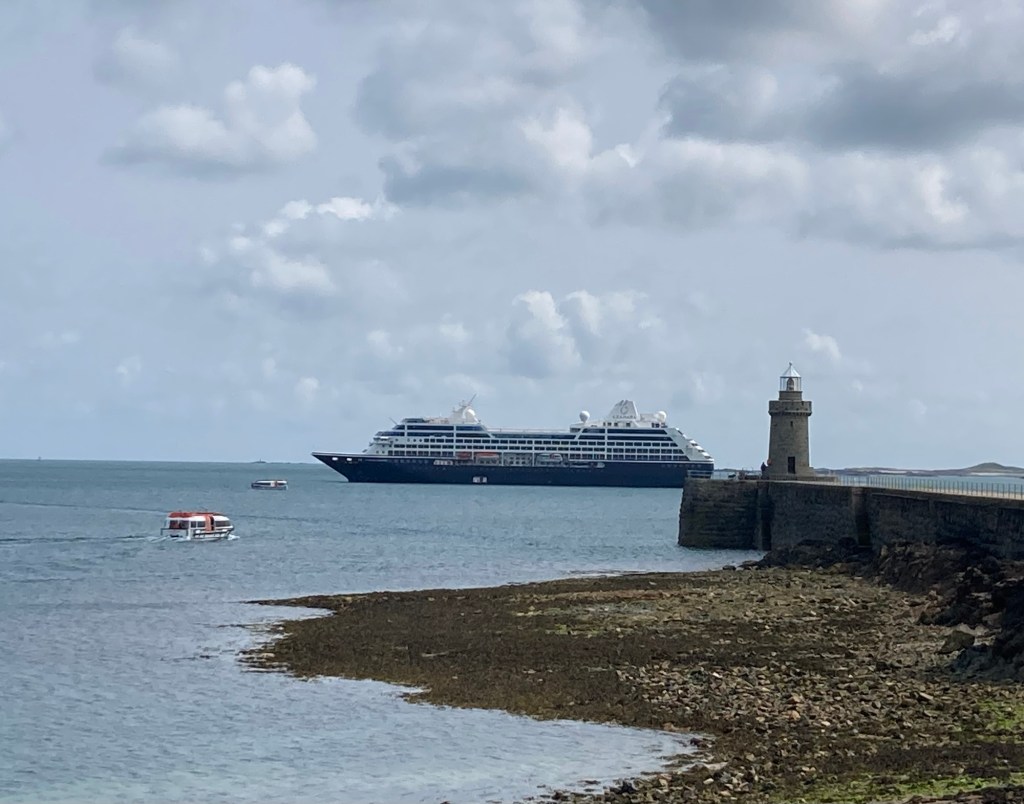
A island ferry boat, one of 2 cruise ships in port,
and a lighthouse near the castle
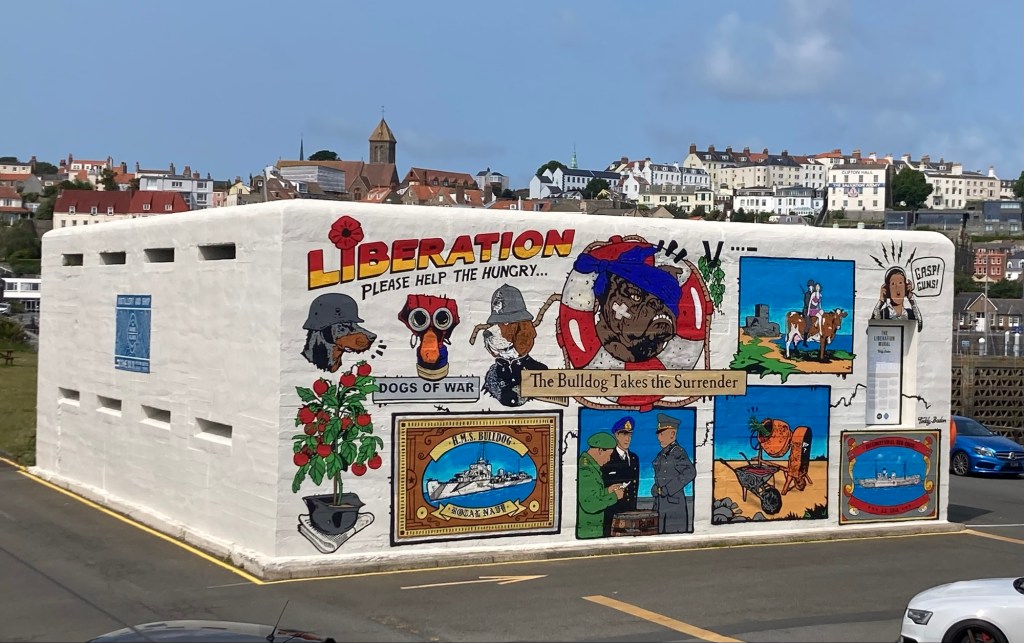
An artistic drawing relating to the island’s liberation
on a distillery building
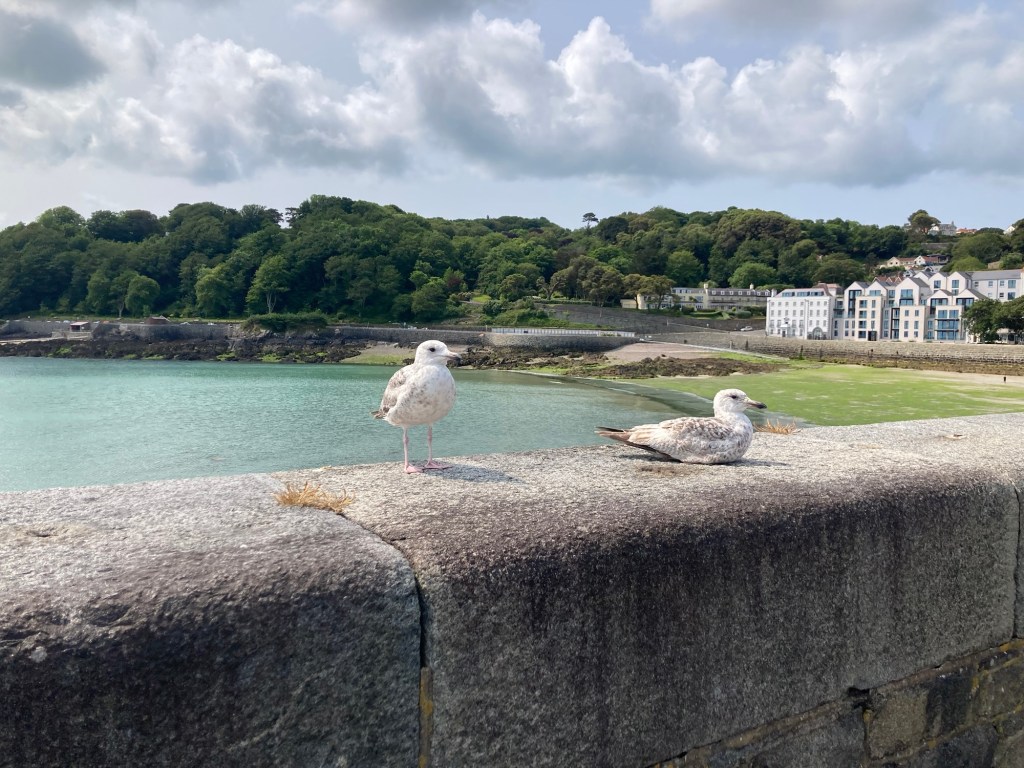
A couple of seagulls taking it all in
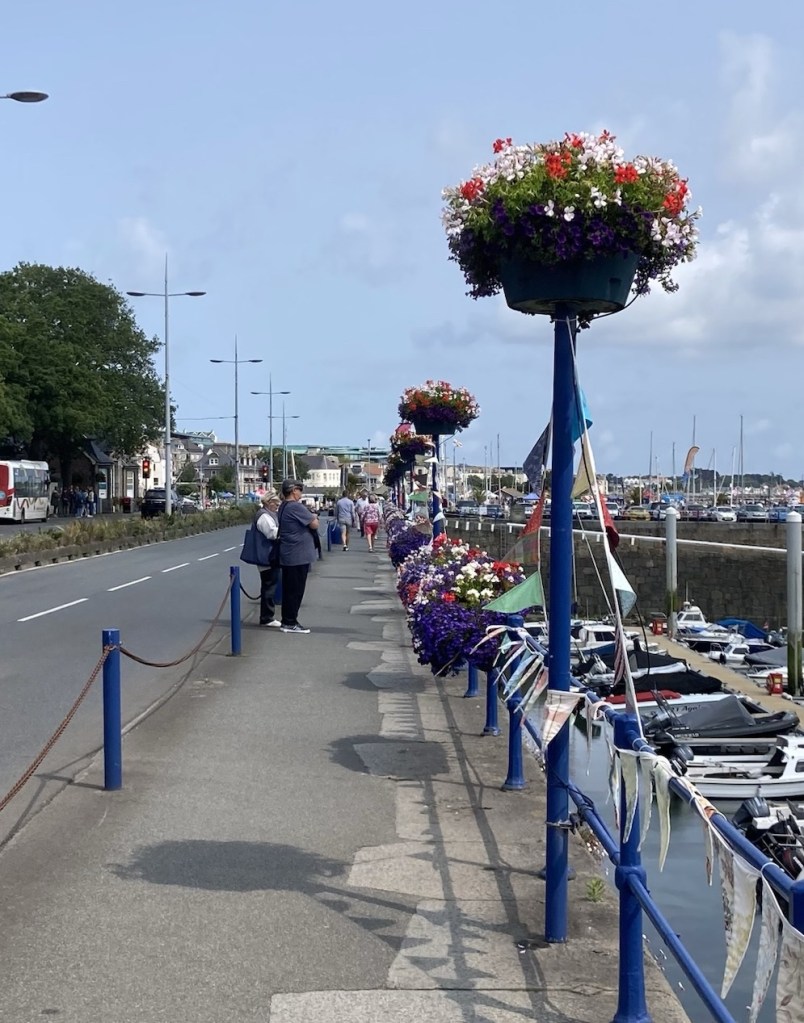
The flower adorned walk along the harbor
The line of stalls for the Seafront Festival
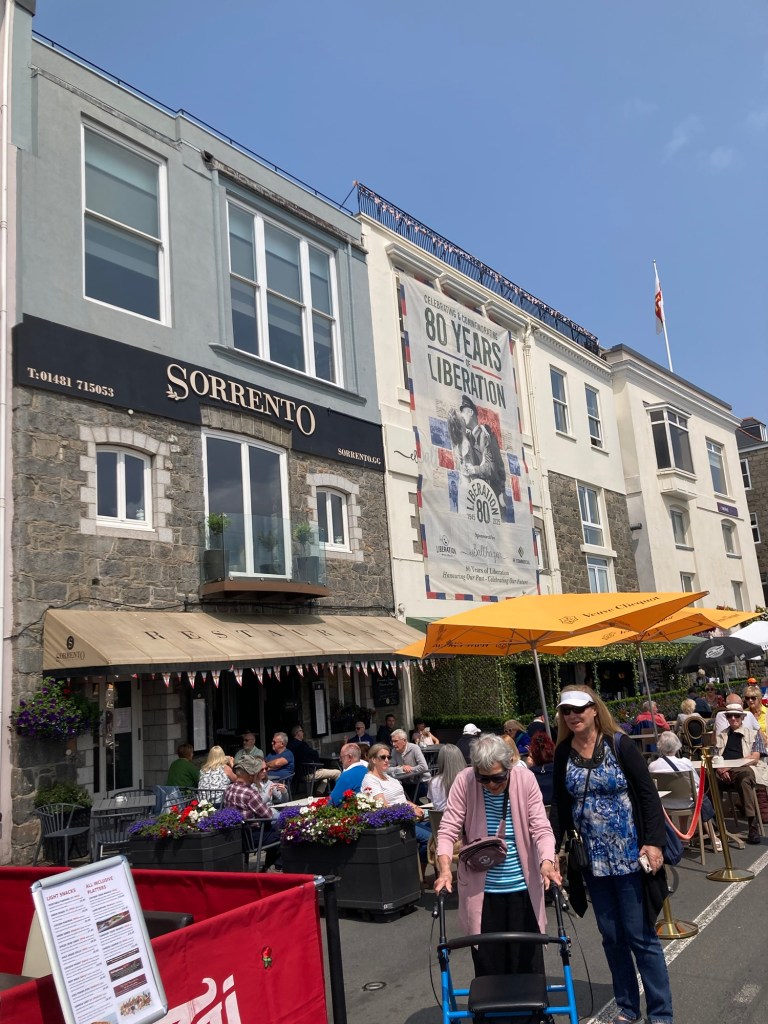
Some restaurants benefiting from the crowds
(cruise passengers, festival goers, or both)
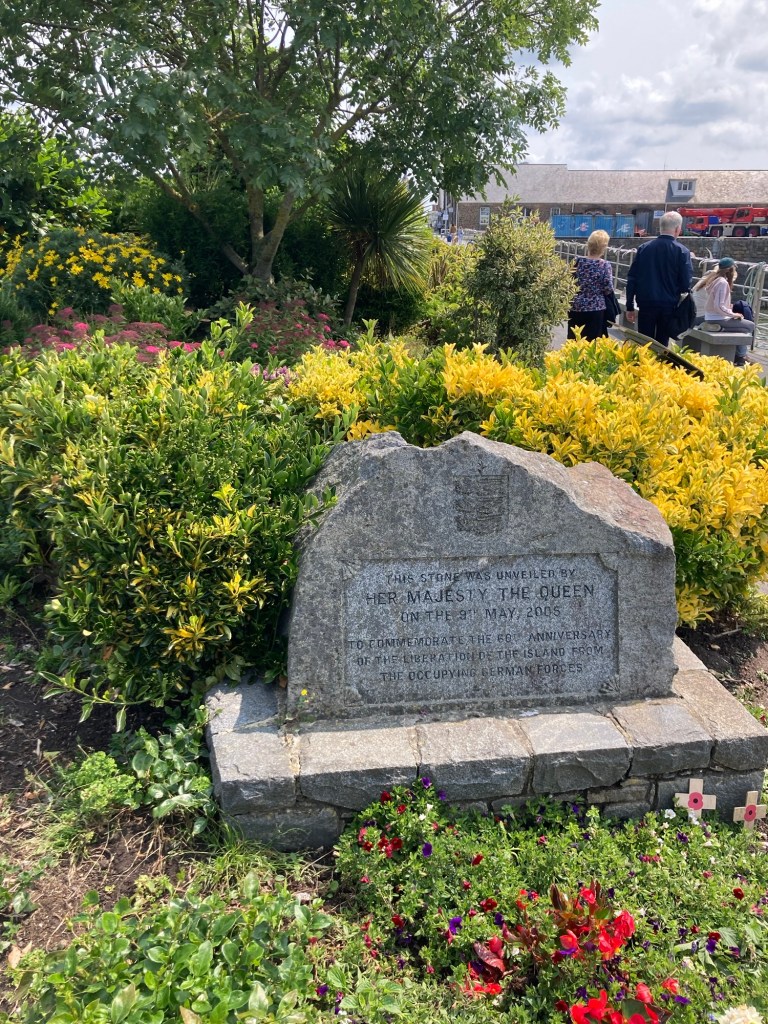
A marker commemorating the 60th anniversary
of the liberation of the island
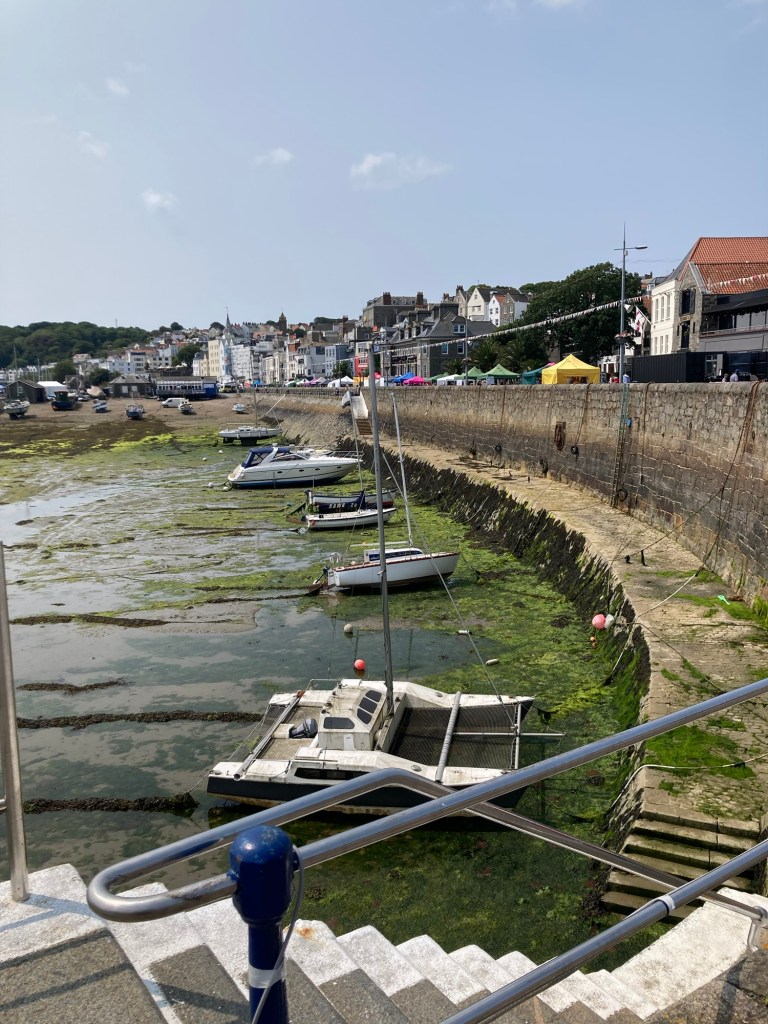
Low tide
Categories
Uncategorized

A Bit More of Guernsey (6/6/25)

Our version of D-Day had us walking the dogs after some more morning showers and then heading off to see some more sites in Guernsey that we had read about.

First a couple of photos of the very photogenic dogs.

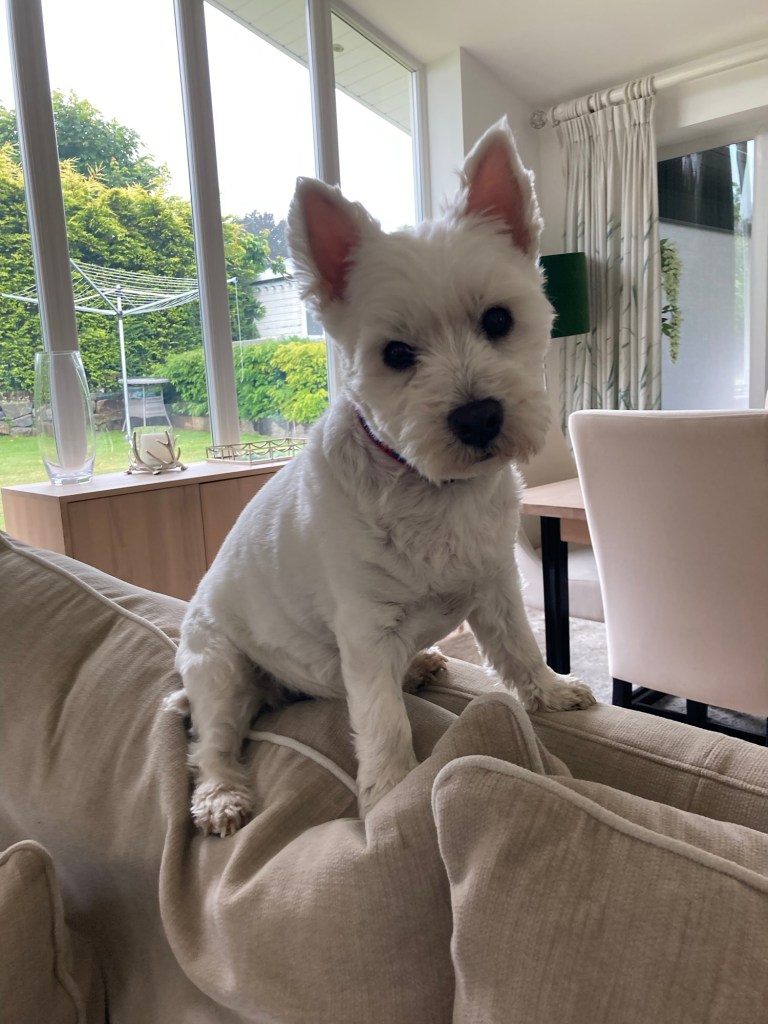
Rosie
Daisy with her pal

We wanted to visit the Candie Gardens, which also contain the Priaulx Library, but we found a tower and cemetery as well.

On the way to the gardens we passed a church that’s for sale.

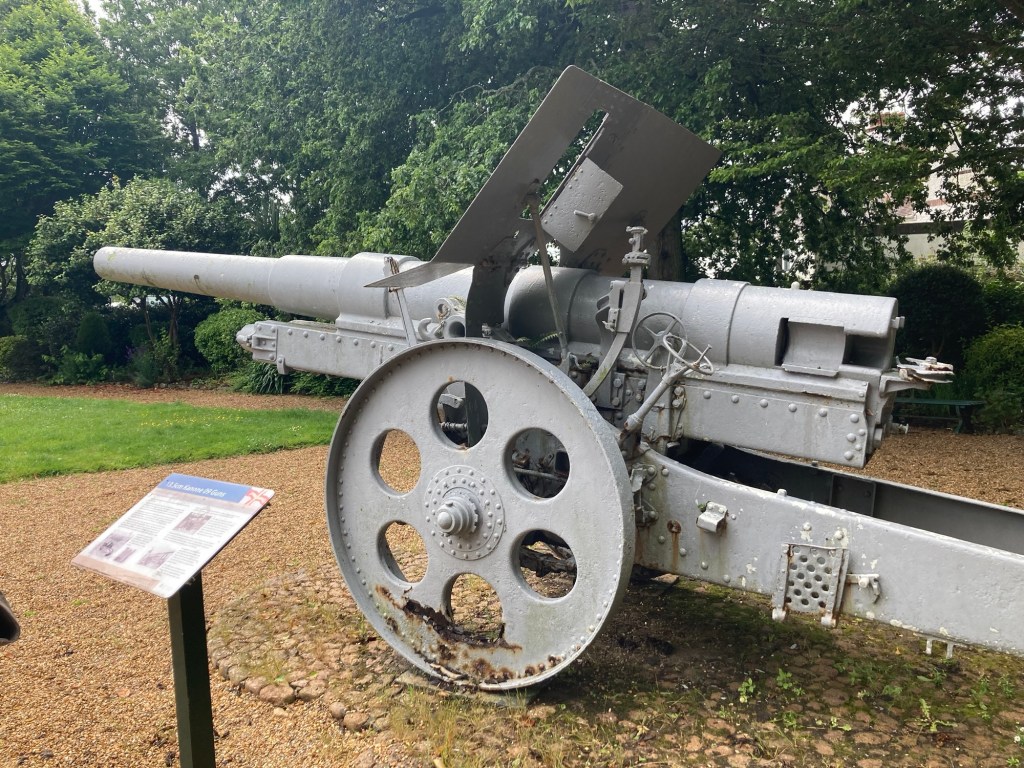
We also went into a small green space with Victoria Tower and some WWI military guns. The tower was built in 1848 to commemorate Queen Victoria and Prince Albert’s trip to the island in 1846. The German military guns were part of what England received or took after WWI. The best relics were kept for the British National War Museum and others given to dominion countries.

Victoria Tower, which you can climb
if you ask for a key at one of the local museums.
A 13.5cm Kanone 09 gun, one of four Guernsey received

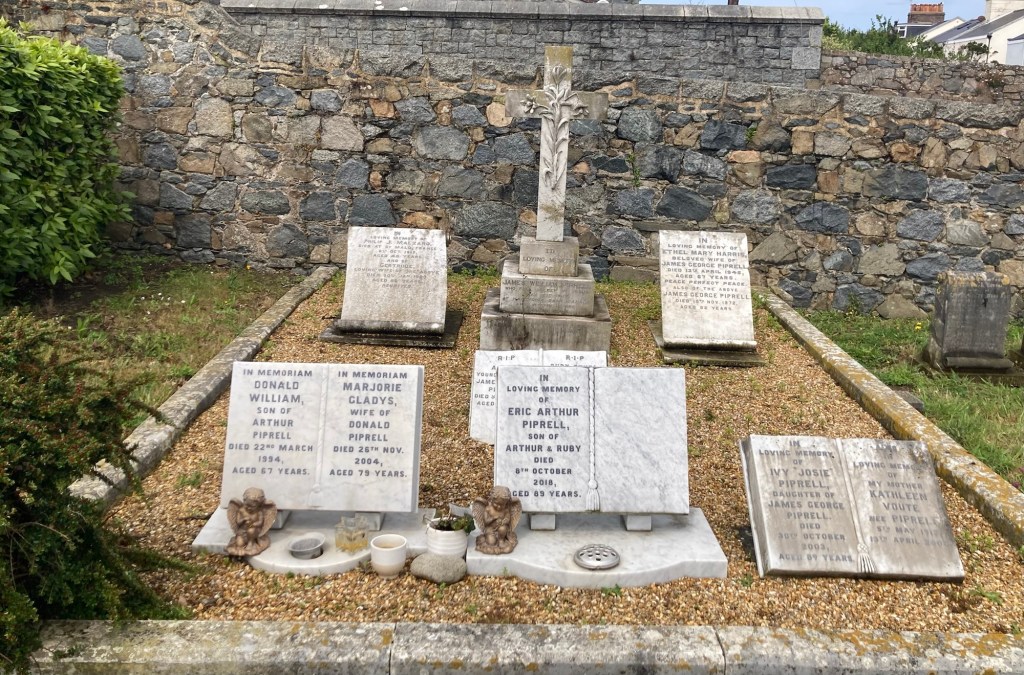
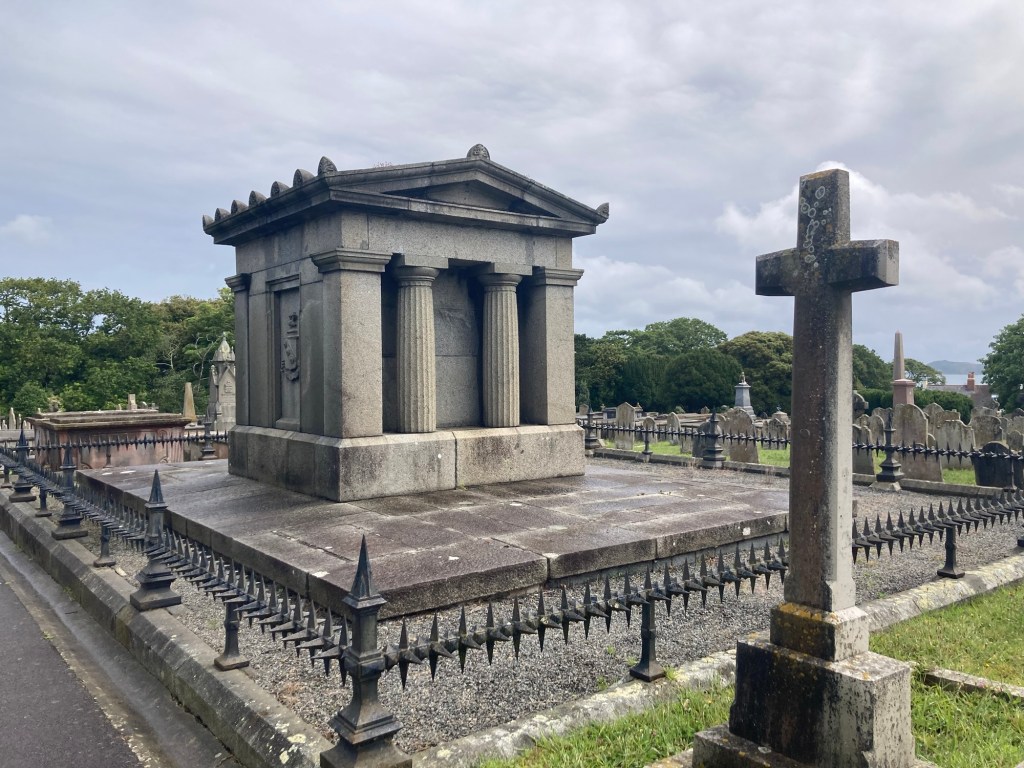
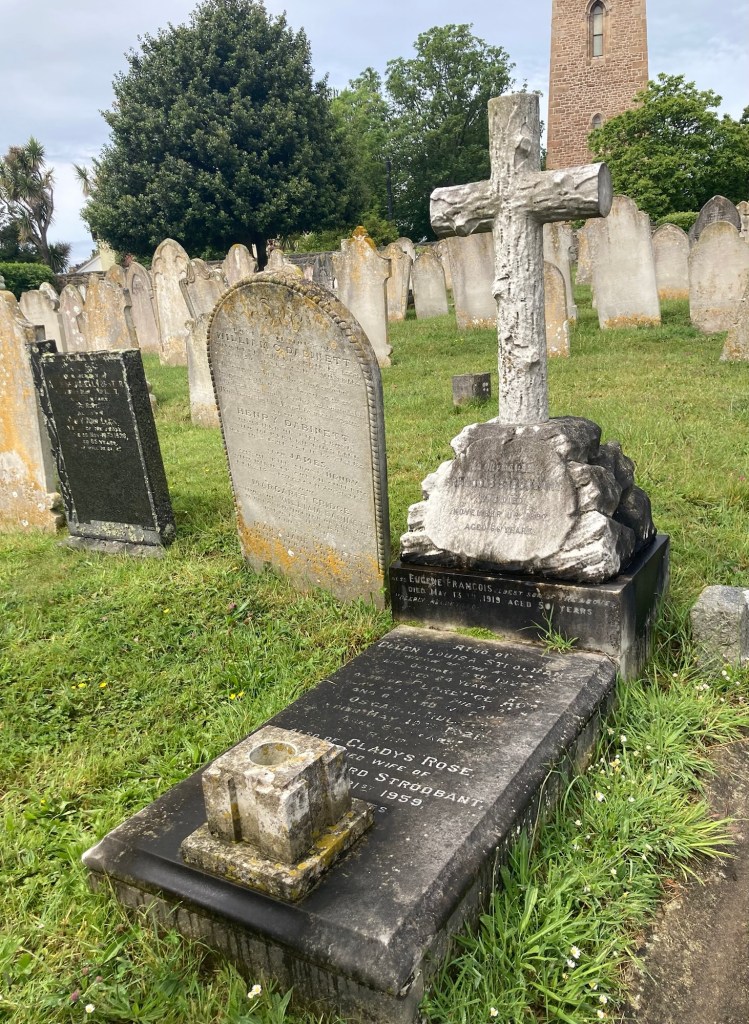
Across the street from the tower is the Candie Cemetery. It is a public cemetery which also contains five war graves as well as graves for the 60 victims of the 1832 cholera epidemic. Some photos of the different types of graves are below.

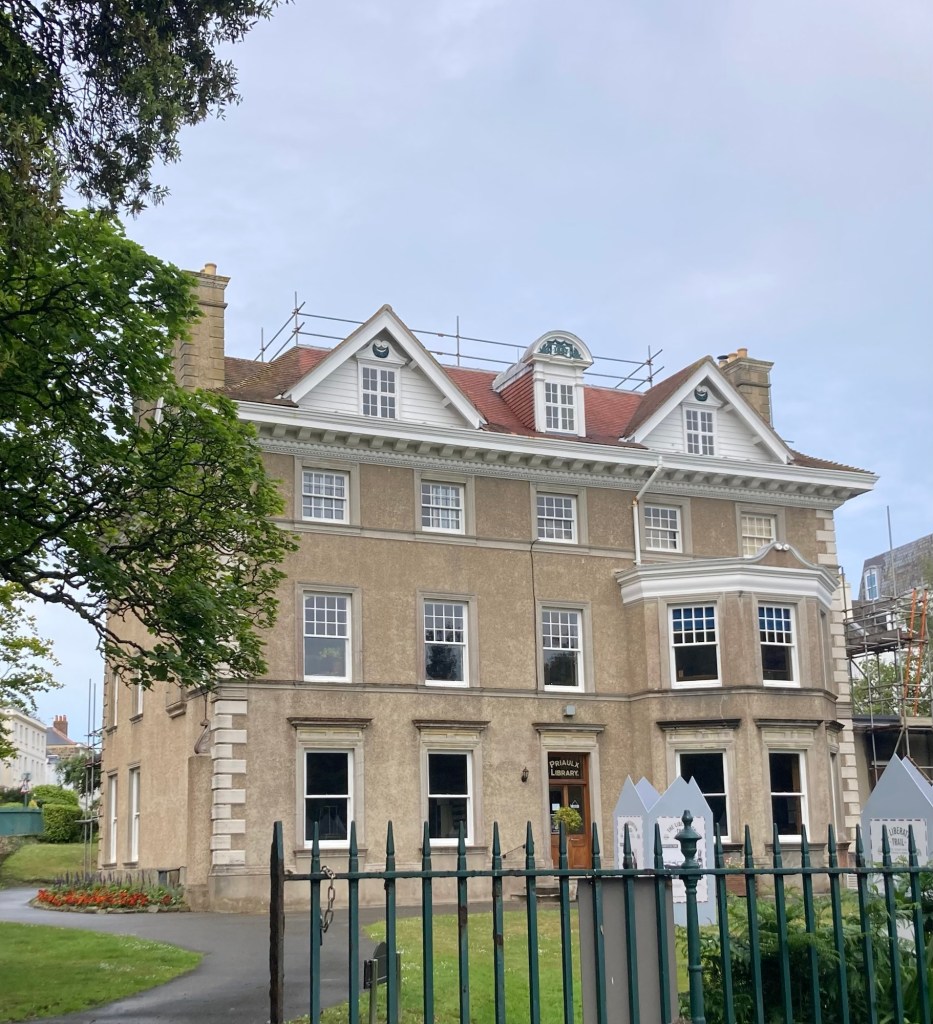
From the cemetery, it was a short walk to the Candie Gardens, which were established in 1894 in the grounds of Candie House, now the Priaulx Library. Admission to the garden is free.

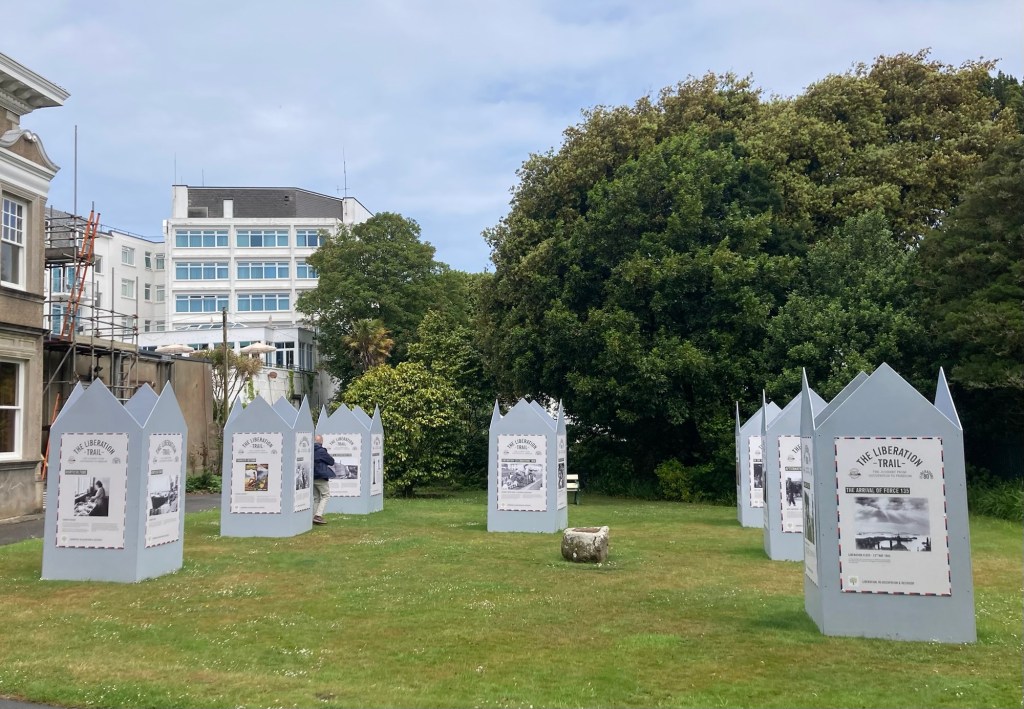
The library and gardens are participating in the Liberation Trail, section 7 of which we saw at the downtown library the other day, so we got to learn some facts from section nine of the trail, re-occupation and recovery.

Formerly the Candie House built at the end of the 18th century,
it is now the Priaulx Library
which is a lending library and local history center.
One of the rooms inside of the library
The Liberation Trail story boards in front of the library.
Along with information on the German surrender,
raising of the flag, and recovery information for the island,
it was noted that when King George VI and Queen Elizabeth landed at the airport on June 7, 1945,
it was the first time a British Queen had flown in an airplane.
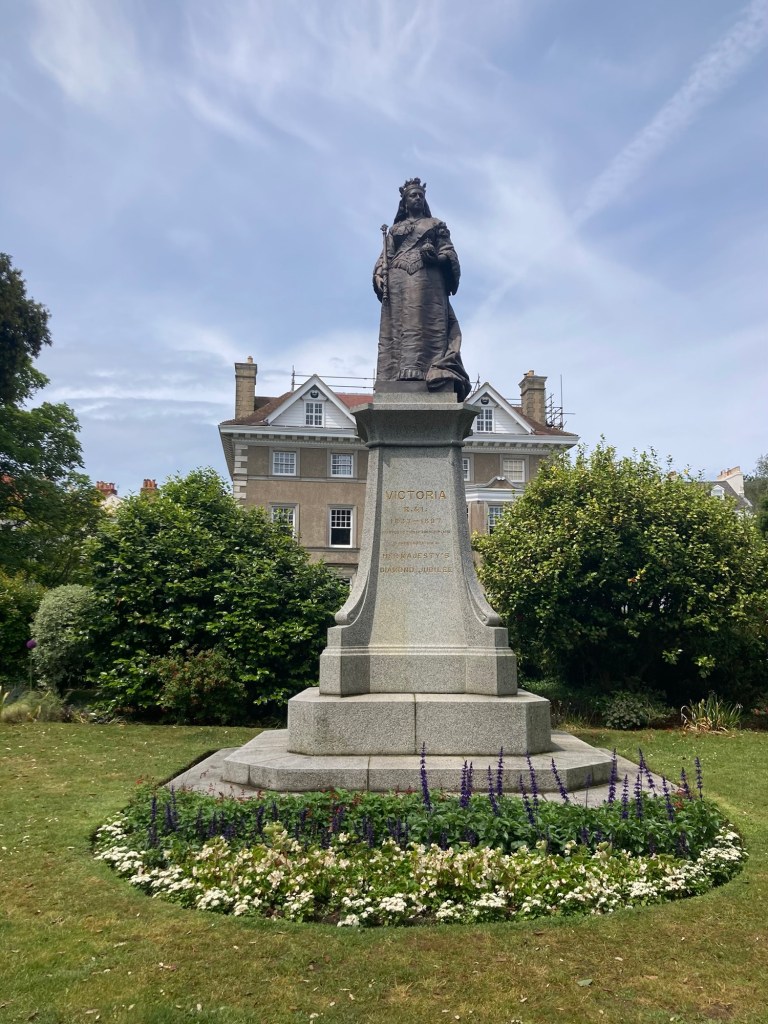
The statue of Queen Victoria at the top of the gardens

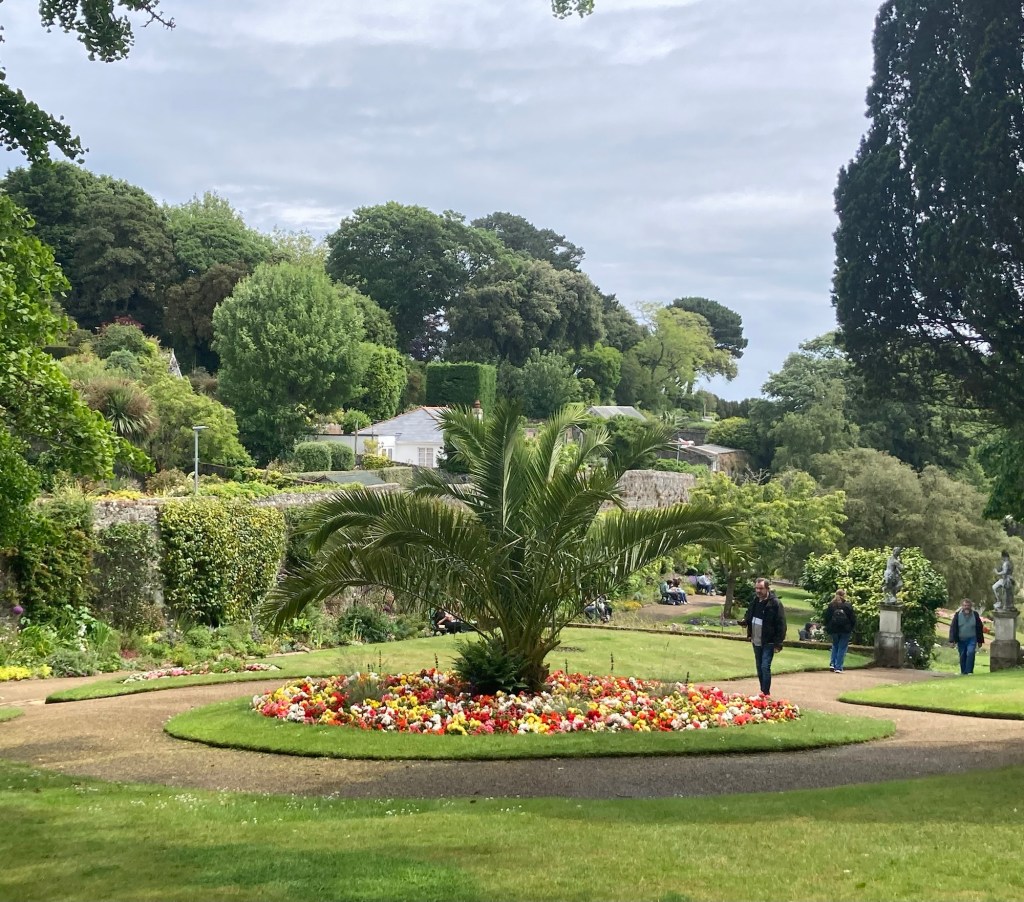
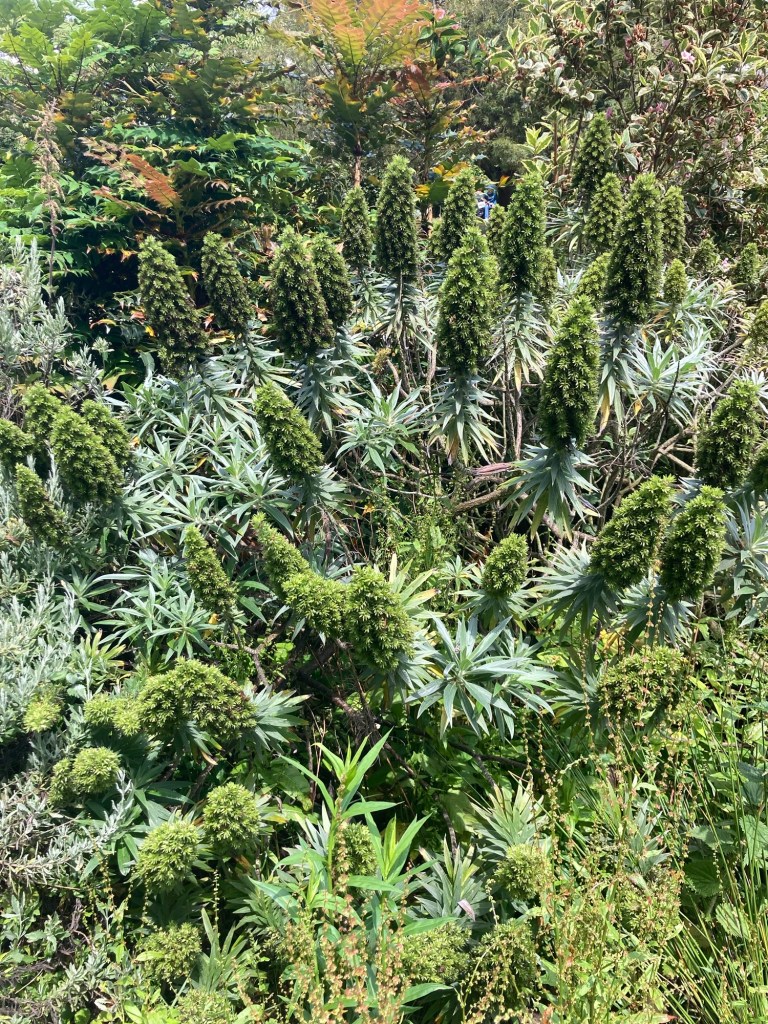
The following are some pics from the gardens.

A good view across the gardens and to the English Channel

After visiting the gardens, we walked to Cambridge Park, which ended up being a lovely green space with some sports fields and a nice walking trail. On the way we got more views of the Channel.

A walled walk. There are lots of stone walls on the island.
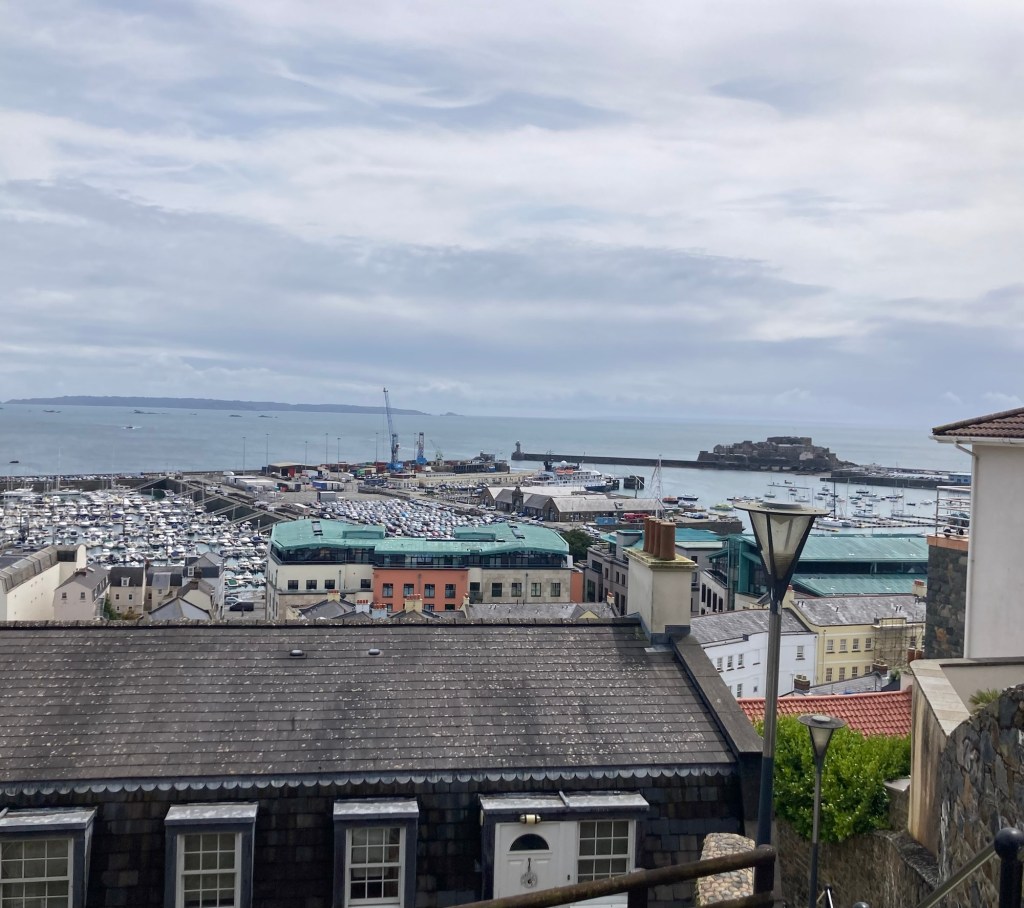
Looking across the downtown area and harbor to the Channel. Castle Cornet is on the right.
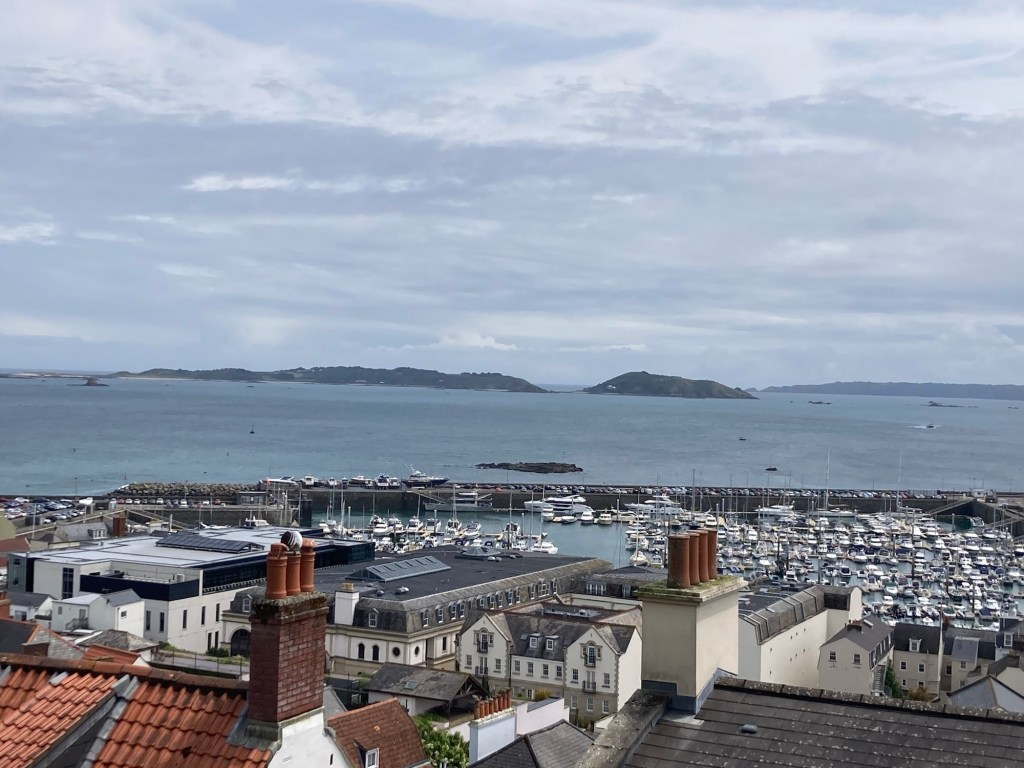
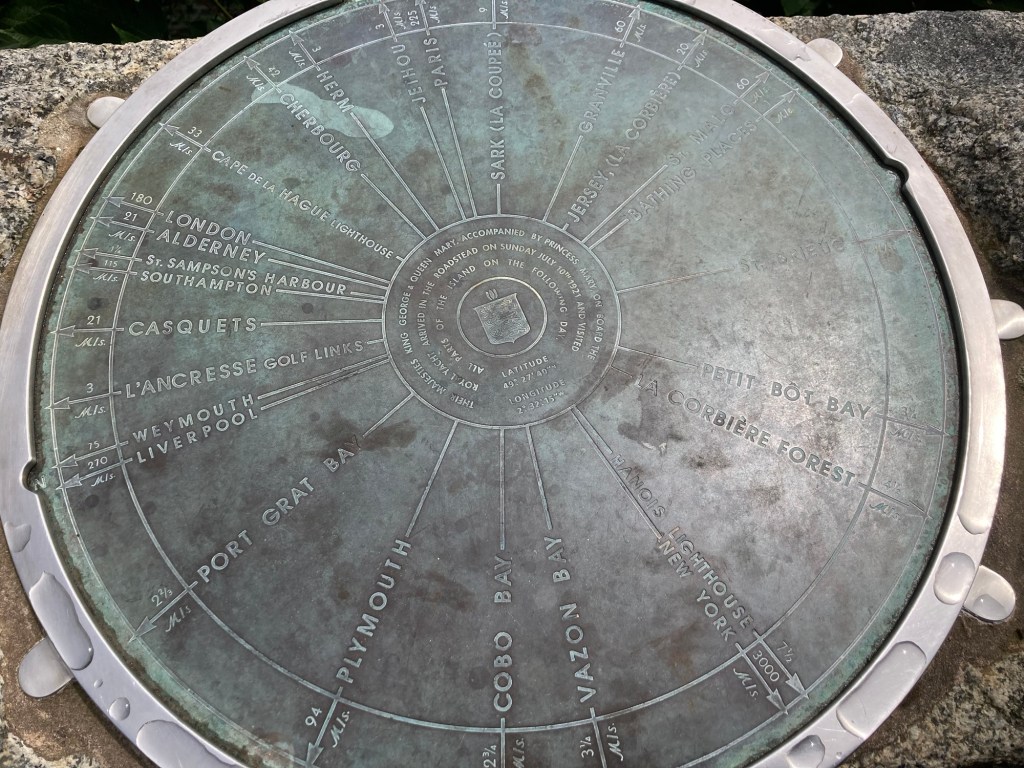
Another view, this time looking across to three of the islands across from Guernsey, Herm, Jethou, and Sark
This was a helpful aid nearby to identify what we were looking at

Categories
Uncategorized

Starting Out in St Peter Port (5/4/25)

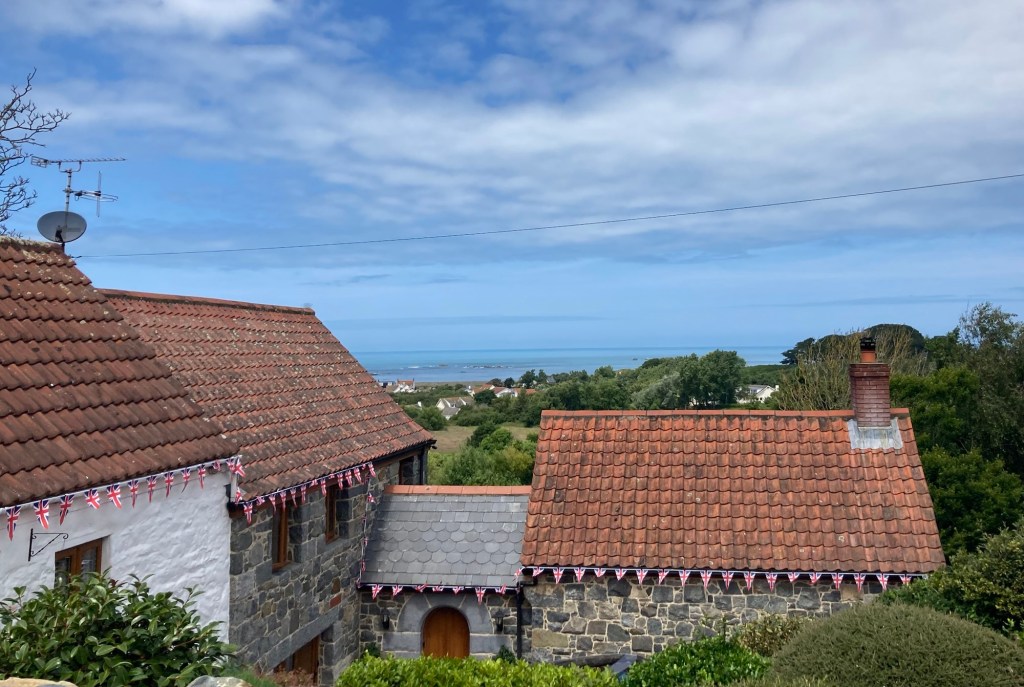
Where are we exactly? I often need to remind myself. Bob and I are currently in Guernsey, the second largest of the Channel Islands and located 27 miles from the coast of Normandy. The island has a land area of 24 square miles.

Guernsey is administered as part of the Bailiwick of Guernsey, a self-governing dependency of the British crown. It is not part of the United Kingdom. The island’s parliament and government is the States of Guernsey, and it has one town, St. Peter Port, where our current housesit is located.

Some fun facts about Guernsey that you may or may not know. While the island’s current largest industry is financial services, it is known for its cattle. Guernsey cattle are a breed of dairy cattle,and we passed a large dairy on the way in from the airport.

Guernsey was invaded and occupied by Nazi Germany during World War II. After 5 years of occupation, it was liberated on May 9, 1945, which is still celebrated as Liberation Day here.

Finally (at least until we learn more), the author Victor Hugo spent 15 years in exile on Guernsey, where he wrote “Les Miserables” among other of his works.

Since we are located in a small cul-de-sac type residential area, we got our first taste today of downtown St. Peter Port by walking about 30 minutes to their High Street to see their Old Town area and a bit of the harbor.

If you’ve hung on through all of that, the pics from today are below.

Space is at a premium on the island.
Typically only one side of the street has a sidewalk,
and the sidewalk is usually just wide enough for one person.
A corner cafe on the way down into the town center,
which meant a fairly steep uphill back to the house.
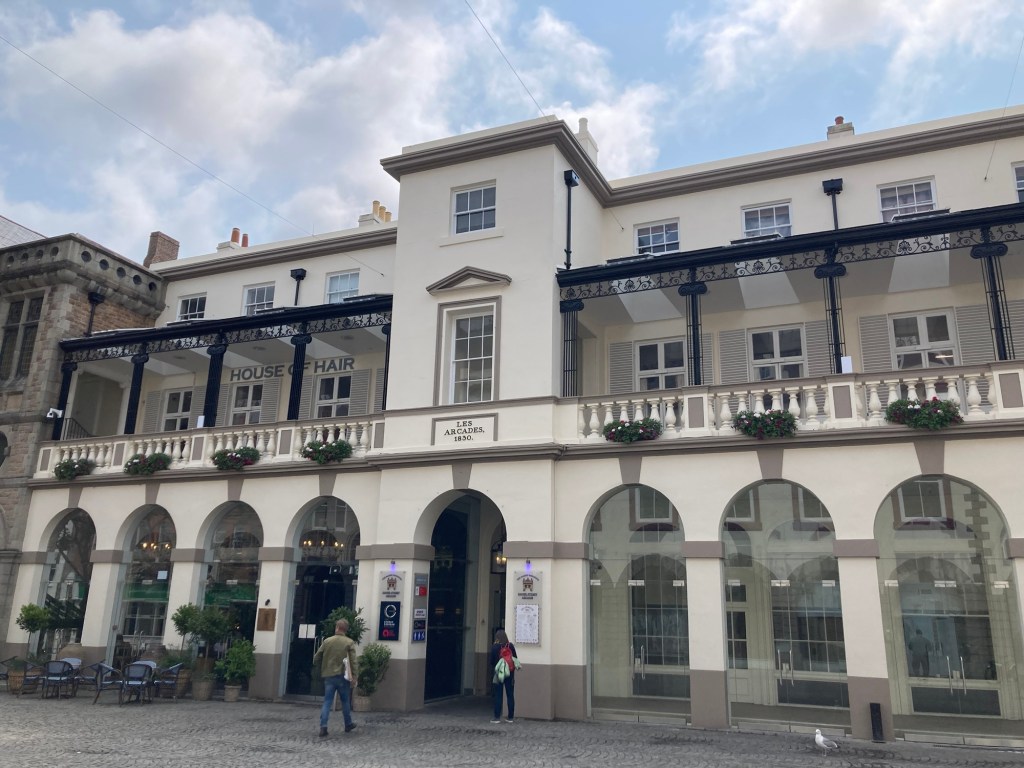
The Arcade Building that houses the Visitors Center
and other businesses

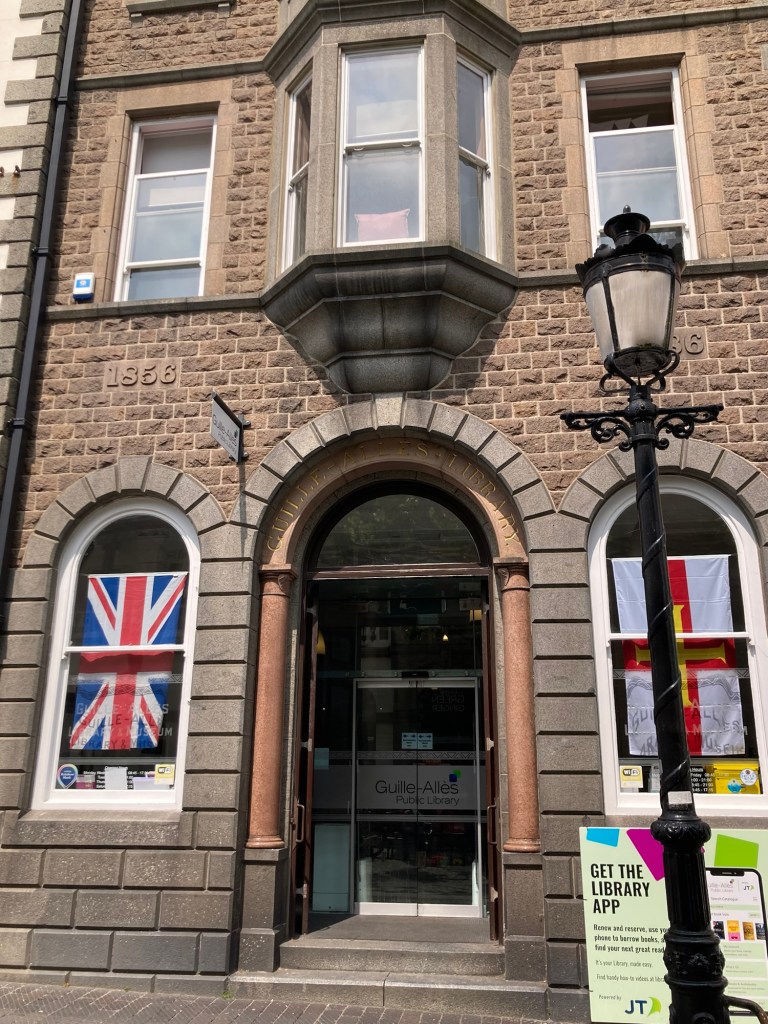
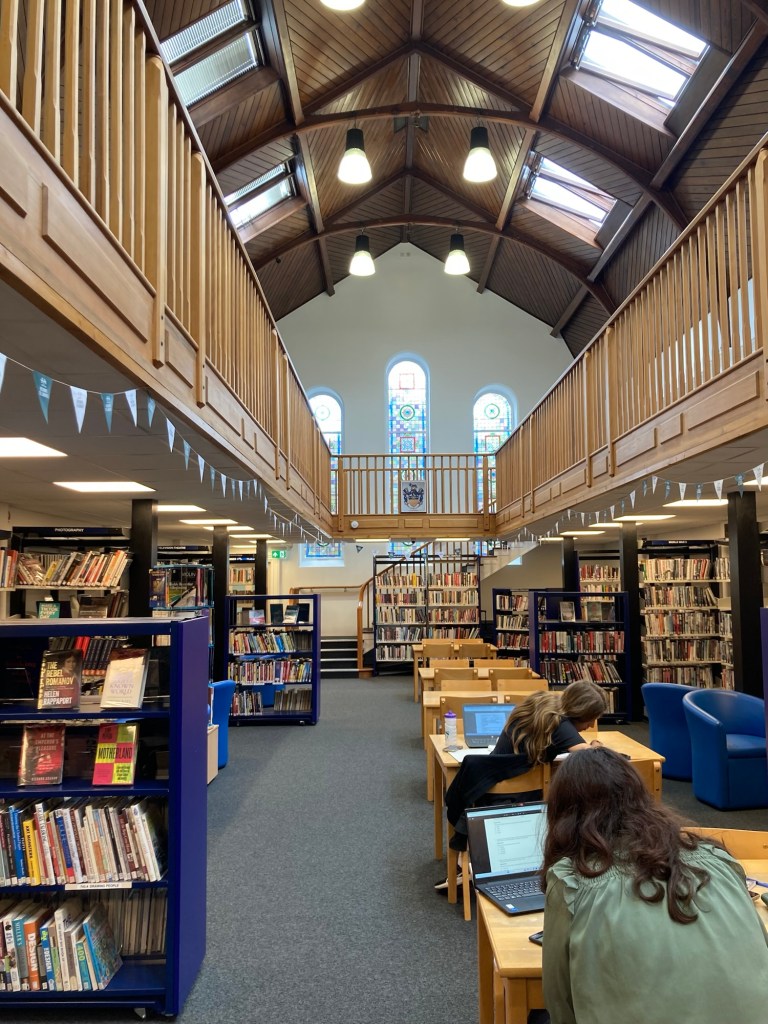
We stopped into the unassuming Guille-Alles Library and learned some information about its history as well as more about the German invasion of Guernsey during WWII.

The library founded in 1882 by Thomas Guille and Frederick Alles, who grew up together in Guernsey and made their fortune
in interior decorating in New York.
One of the floors of the small library

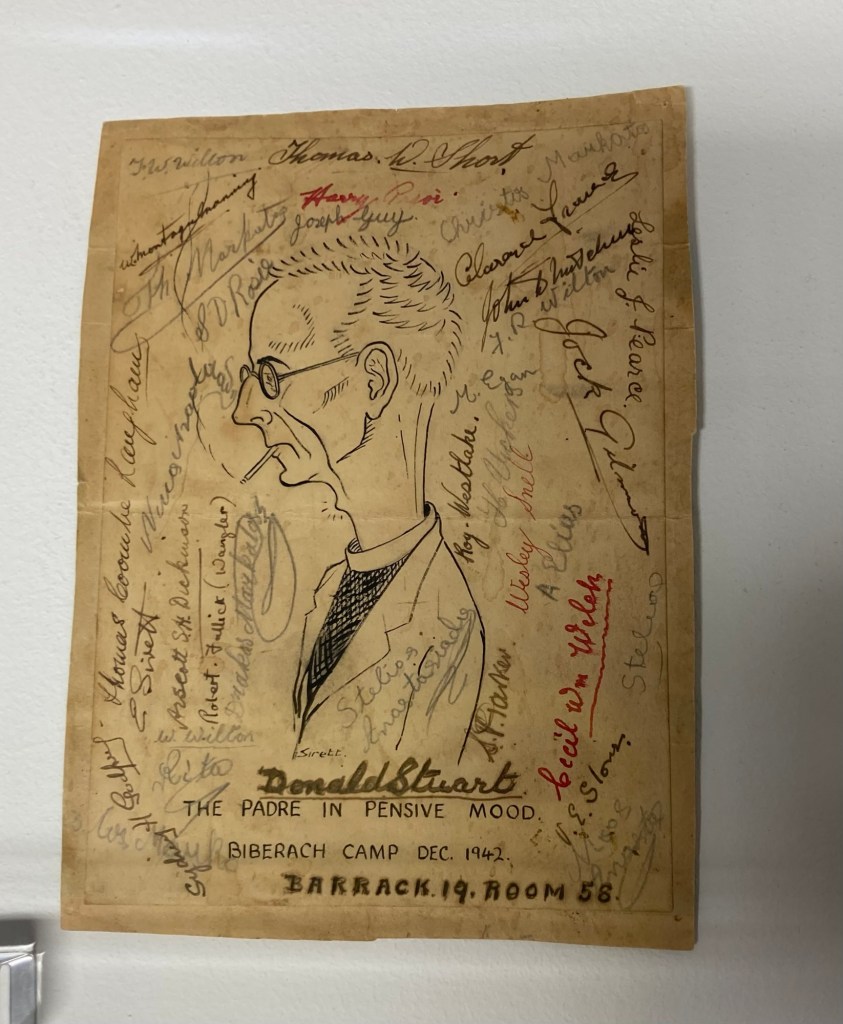
The library is one of the official stops on Guernsey’s Liberation Trail in celebration of their 80th year of liberation. There are 10 stops on the trail that we stumbled onto. The library stop is #7 called a Dark Chapter. One room of the library tells the story of the 2,500 Channel Islanders who Hitler ordered to be sent to internment camps, mostly in Germany. Individuals interned were those who were non-native Channel Islanders and specifically those born in England. The exhibit discussed what life was like in the camps, the resilience of those who endured them, and the history of the library during the occupation. It was an interesting exhibit.

A drawing made by Eric Sirett and signed
by other individuals that he was interned with.
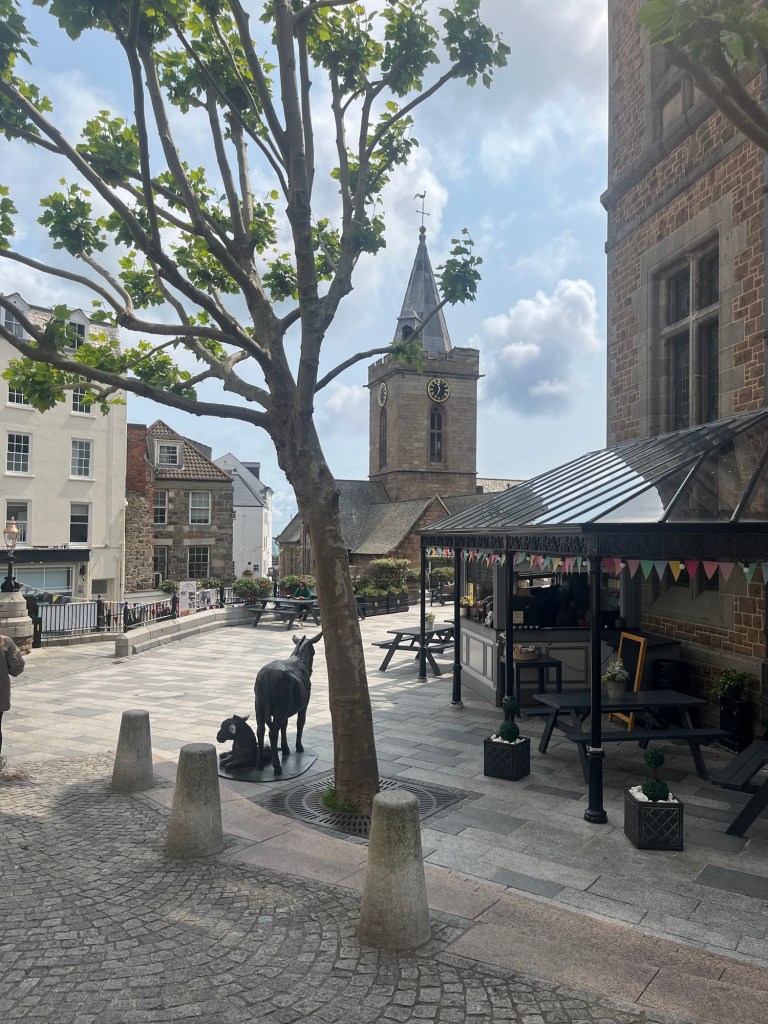
A cute town square across from the library
and view of the town church
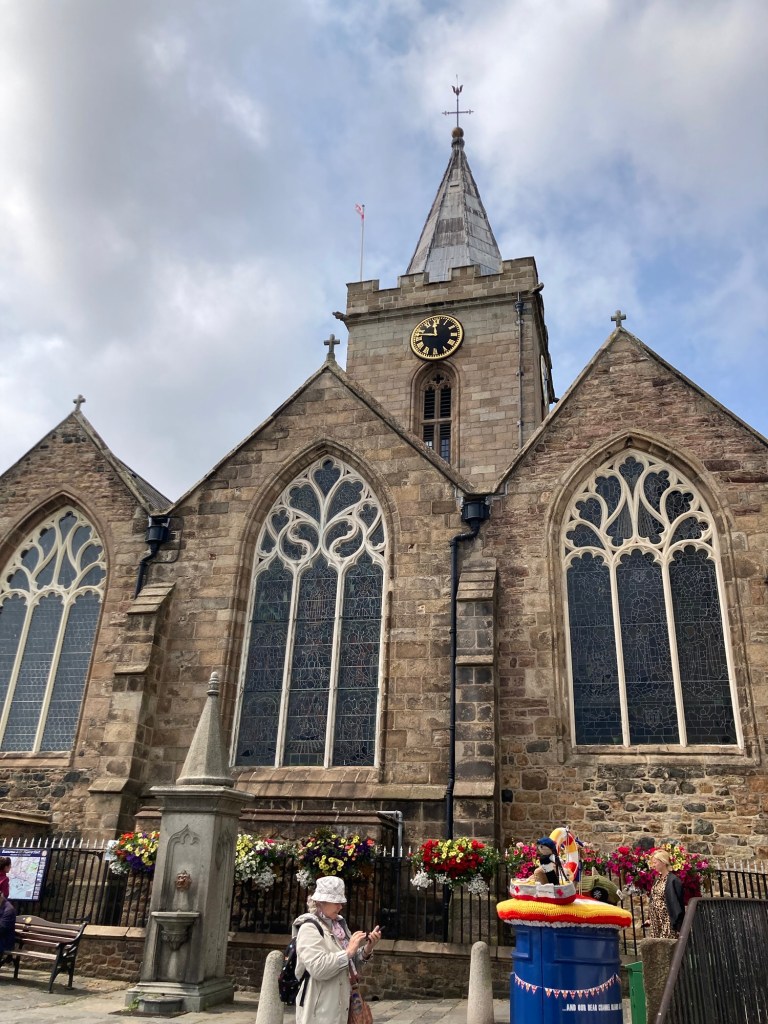
Closer view of the town church
A landmark by the harbor marking the liberation of the island
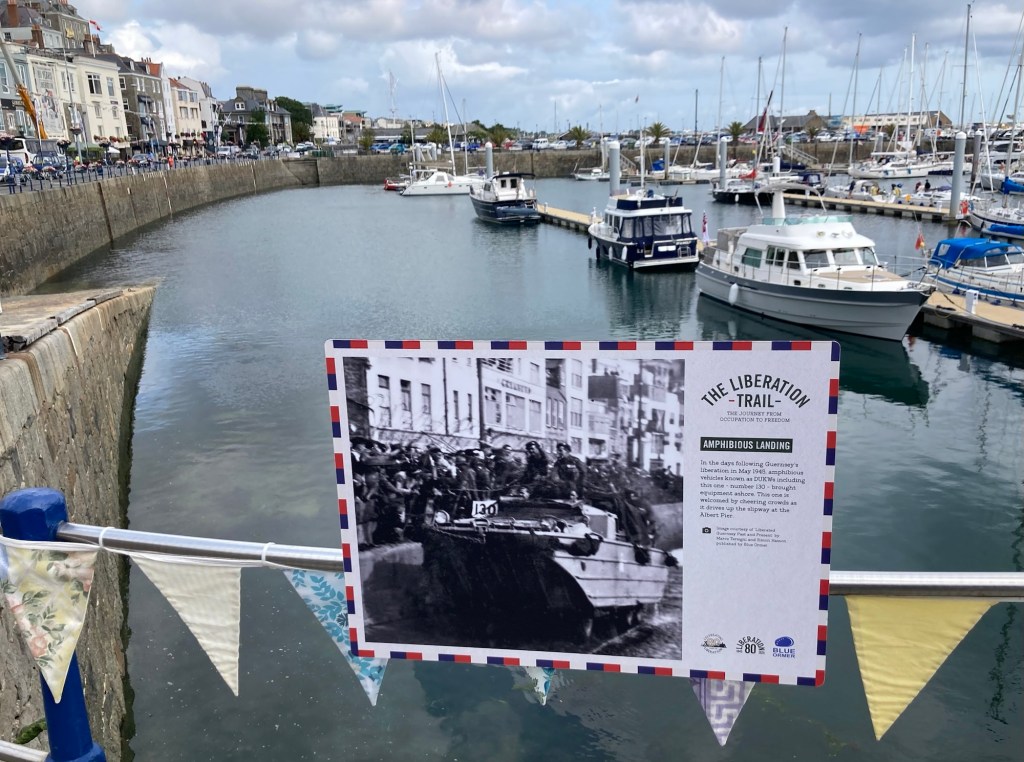
More information by the harbor about the island’s liberation,
this one showing crowds cheering an amphibious vehicle
bringing equipment ashore
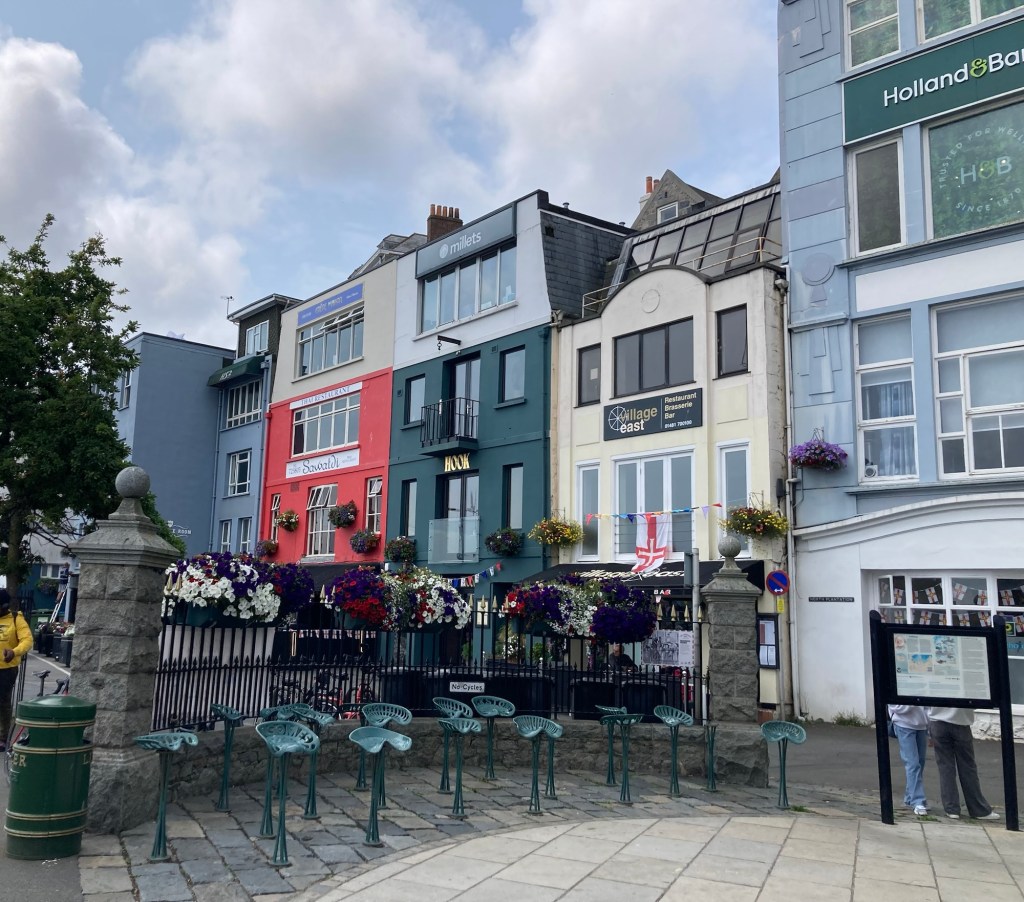
One of man cobblestone streets and banner adorned store fronts in the old town
The Guernsey flag in flowers.
The flag (consisting of a red St George’s cross
with a Norman cross inside it) was only created in 1985,
prompted by confusion at sporting events of Guernsey athletes competing under the same flag as England
Some seats on offer in a cute town square
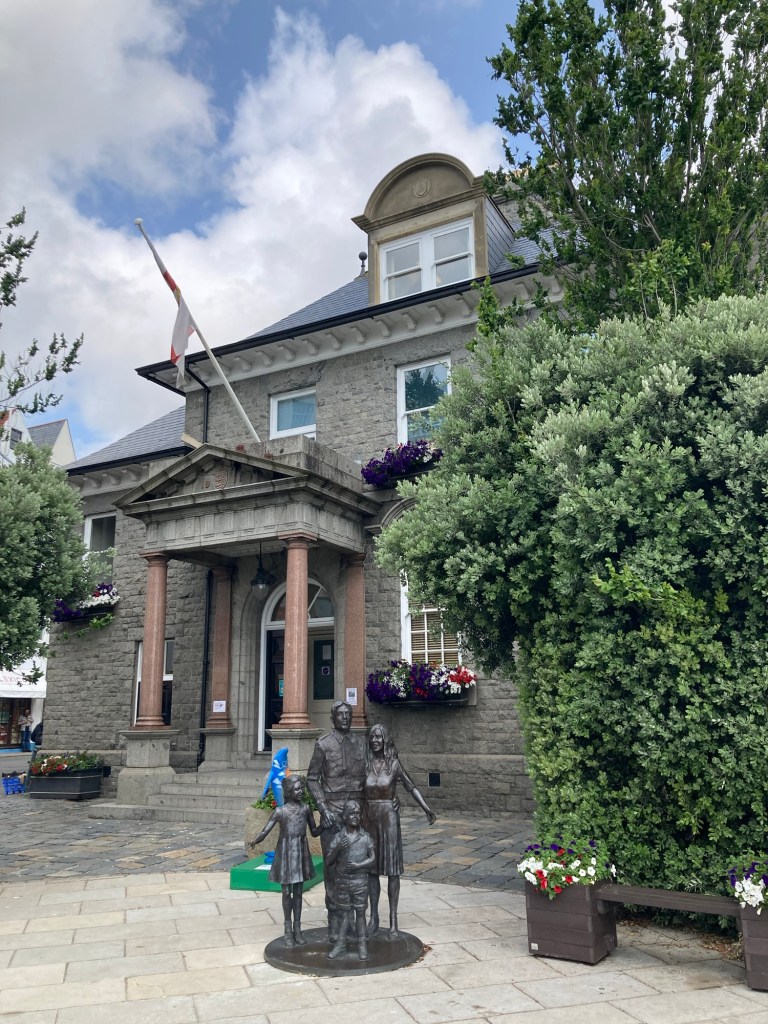
A Past, Present, and Future sculpture erected for the 75th anniversary of the island’s liberation
Categories
Uncategorized

Gatwick to Guernsey (6/2/25)

Bob and I had a good night at the Hilton Hotel near the Gatwick Airport on Sunday night. We had a drink in the lobby bar and then had dinner from groceries we had picked up in the M&S market in the airport. We had learned earlier Sunday that our scheduled 11:05 am Aurigny flight to Guernsey on Monday was delayed until 1:20 pm and had let our homeowners know.
Regardless of the delay, the airline still wanted us through security by 10:20 am. Being the overachievers that we are and the easiness of the check-in and security processes, we were through security by 9:20. We decided that with all the time to kill maybe we should have a breakfast at an airport restaurant.

I don’t remember the name of it, but the food and service were great. Bob had salmon and an egg on toast, and I had smashed avocado.
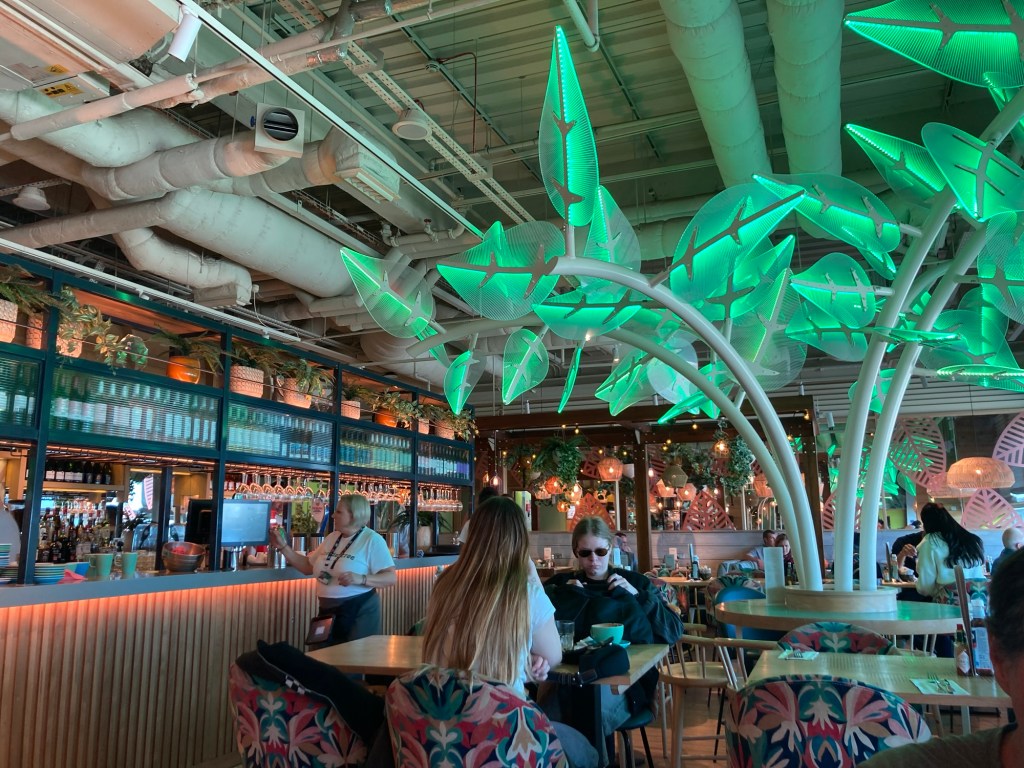
The bright, cheery restaurant at Gatwick

Gatwick is one of the airports that doesn’t post the departure gate for a flight until so many minutes prior to boarding, so our gate information wouldn’t be available until 12:40 or so. But we noticed that other flights to Guernsey were going from gates 1-5, so we decided to head there. We spent the next 3+ hours mostly in that area. I read a couple of free newspapers that were available, a UK paper and “The New York Times.” At one point, we checked to see if there was availability on the 11:20 flight, which was leaving at 12:40, but no luck.

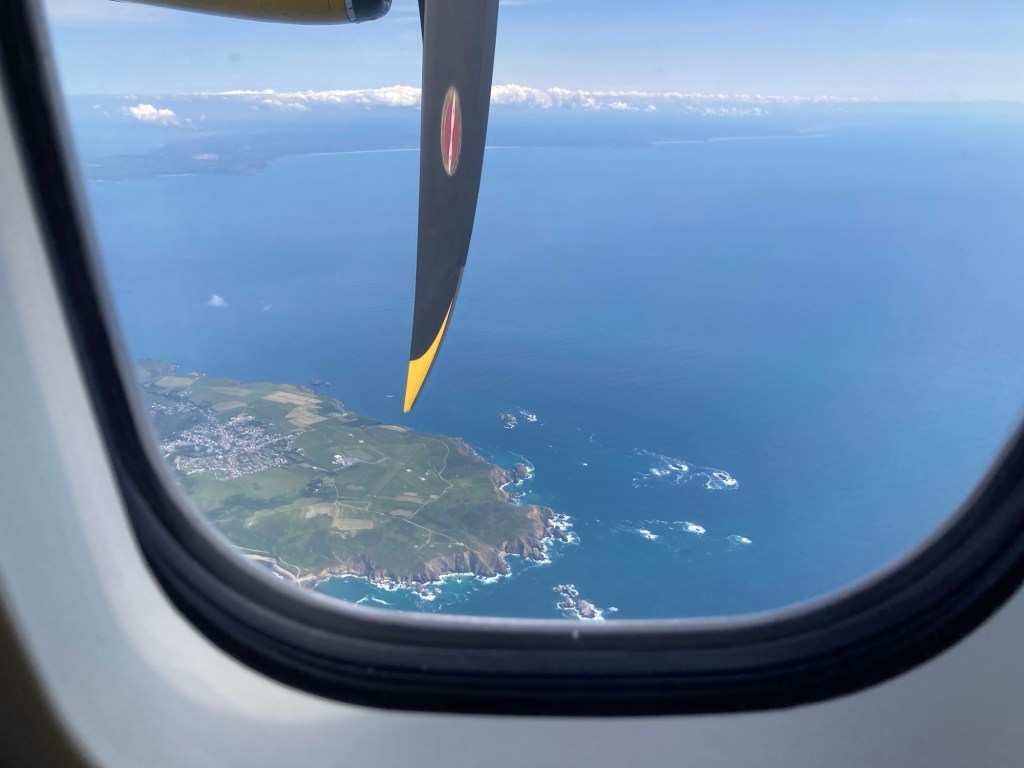
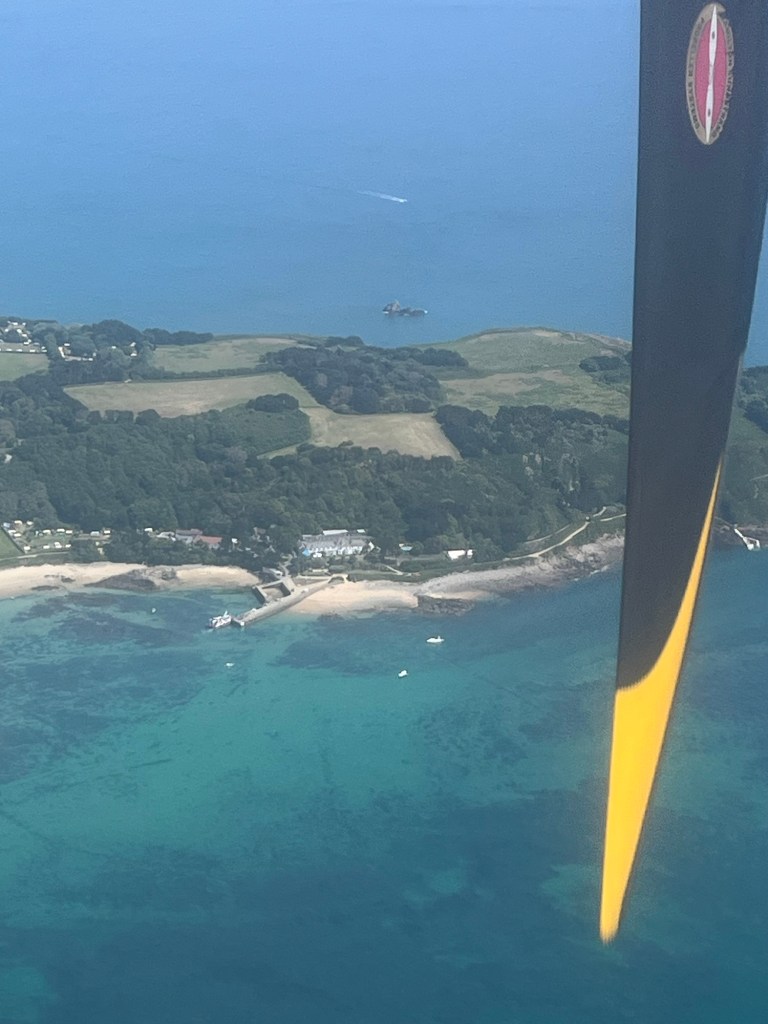
Long story short, we started boarding about 1:20 and got into the Guernsey airport about 3:00 on a fairly small plane about 70 seats). The delay was due to staffing shortages/illnesses. The weather was great, and we got some good shots of the island as we landed.

Our homeowners picked us up from the airport, showed us a couple of parks to walk the dogs and the closest grocery, and made us a lovely meal, including some peas from their garden.

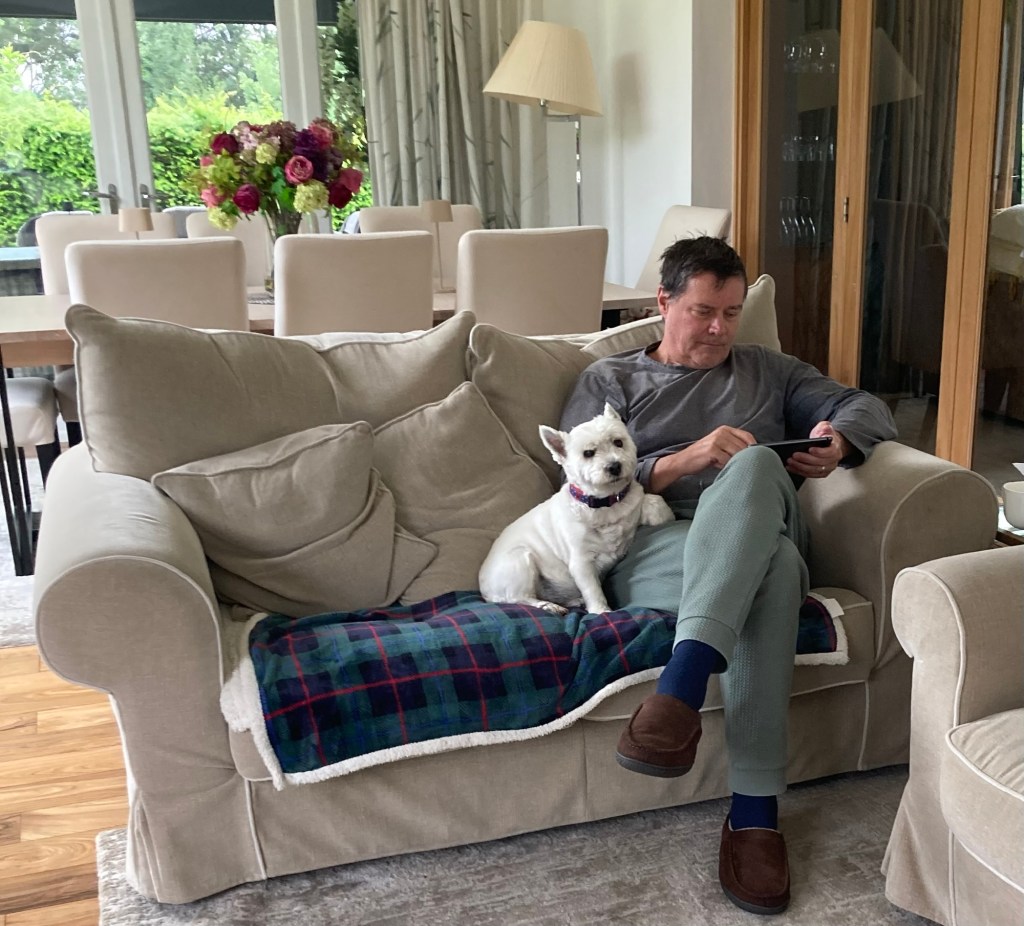
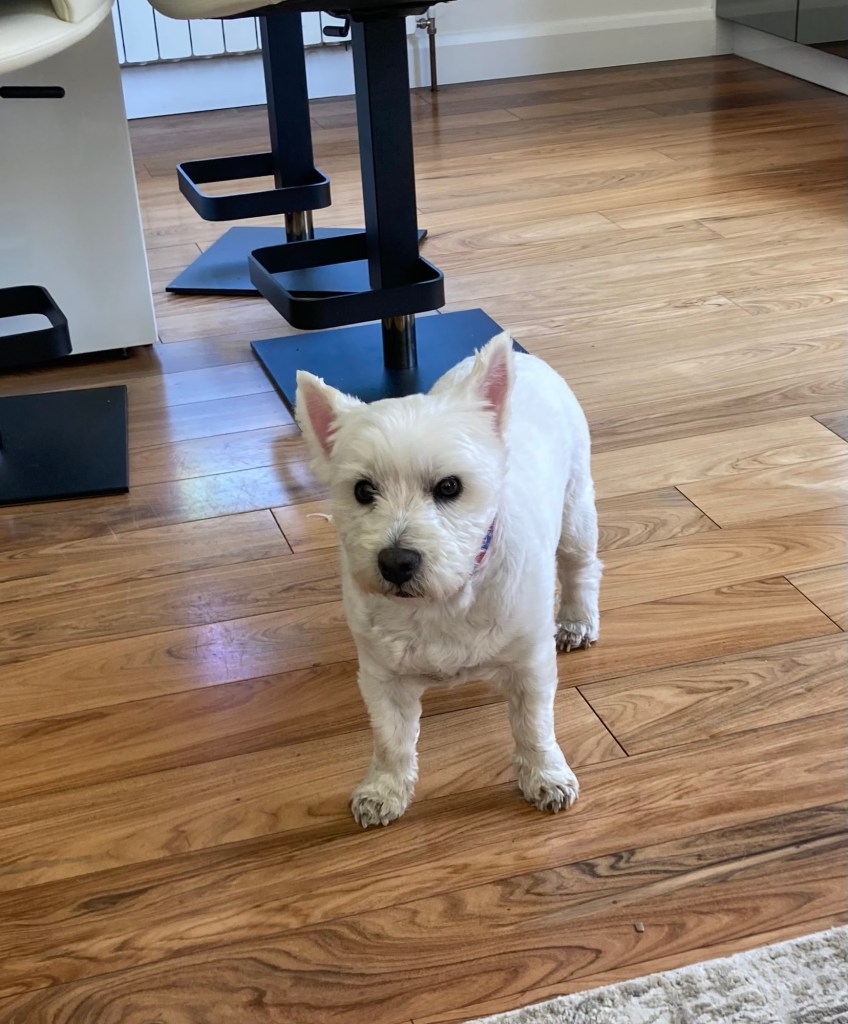
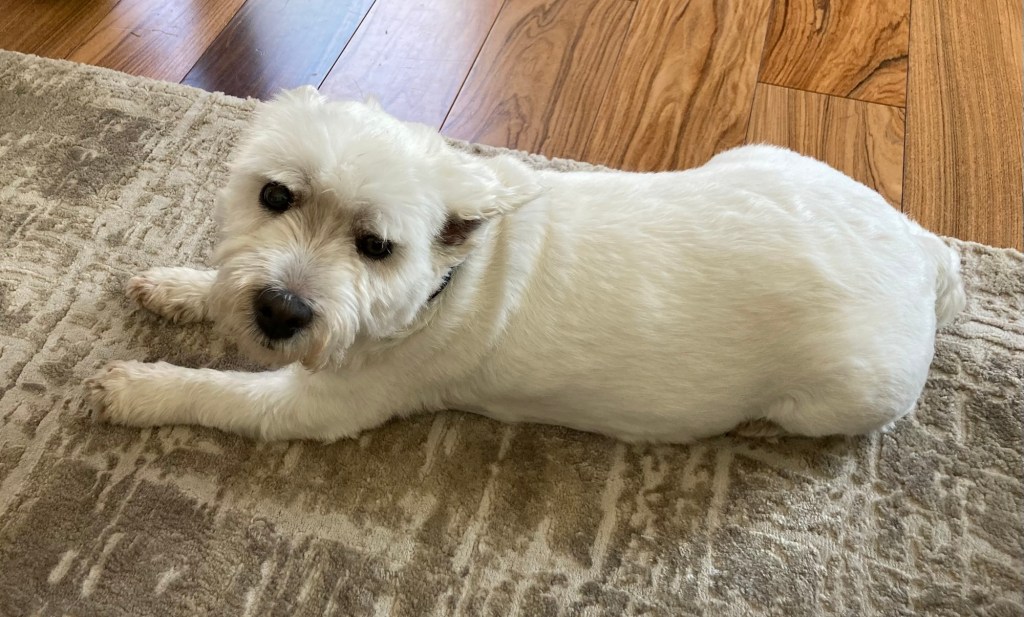
But most importantly, we got to meet Rosie and Daisie, their adorable Westies that we’ll be caring for until the 21st while their owners are having a belated birthday trip to Barbados.

Rosie (little bigger and pink ears)
Daisie, the smaller sister with brown ears