In looking up sites to visit in our current area, I had found Bramall Hall and Park, about a 40 minute walk from the house. The grounds are always open, but the house can only be toured Thursday through Sunday (6.5 pound/person entry). We decided to visit the house today.
We were able to take our usual neighborhood trail, continue onto the bridle trail we walked the other day, and then continue a bit further on the trail to reach the park and house. It was a good day for a walk, as the temps were in the low 60s F, and it may be the last non-rainy day for about a week.
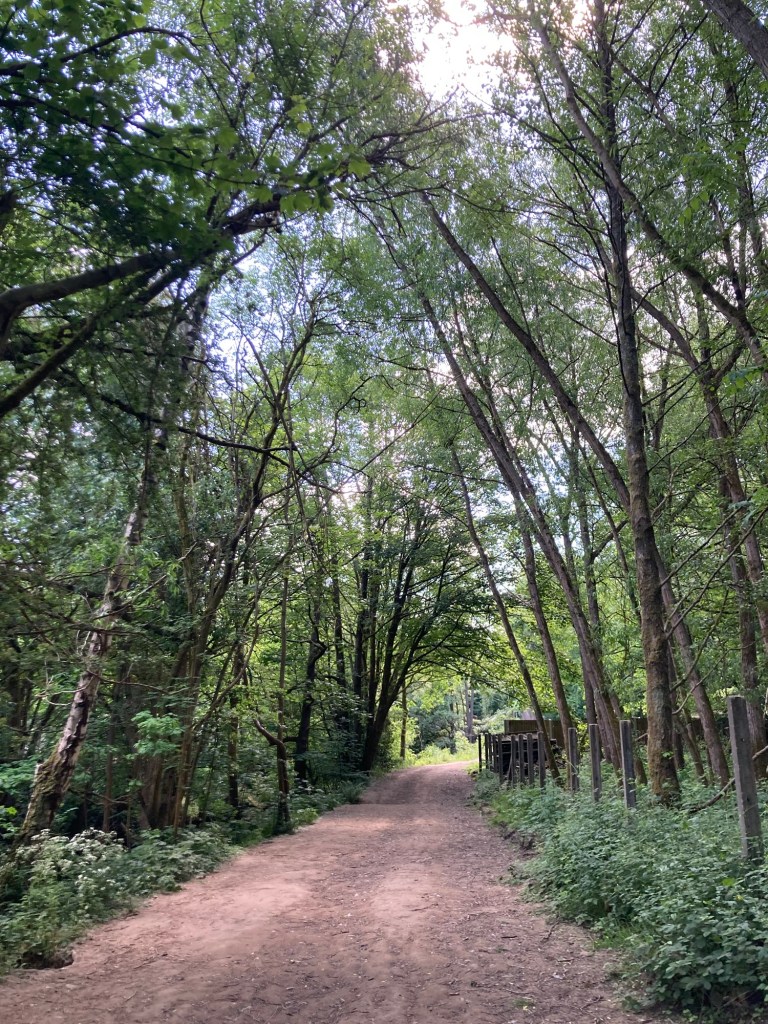
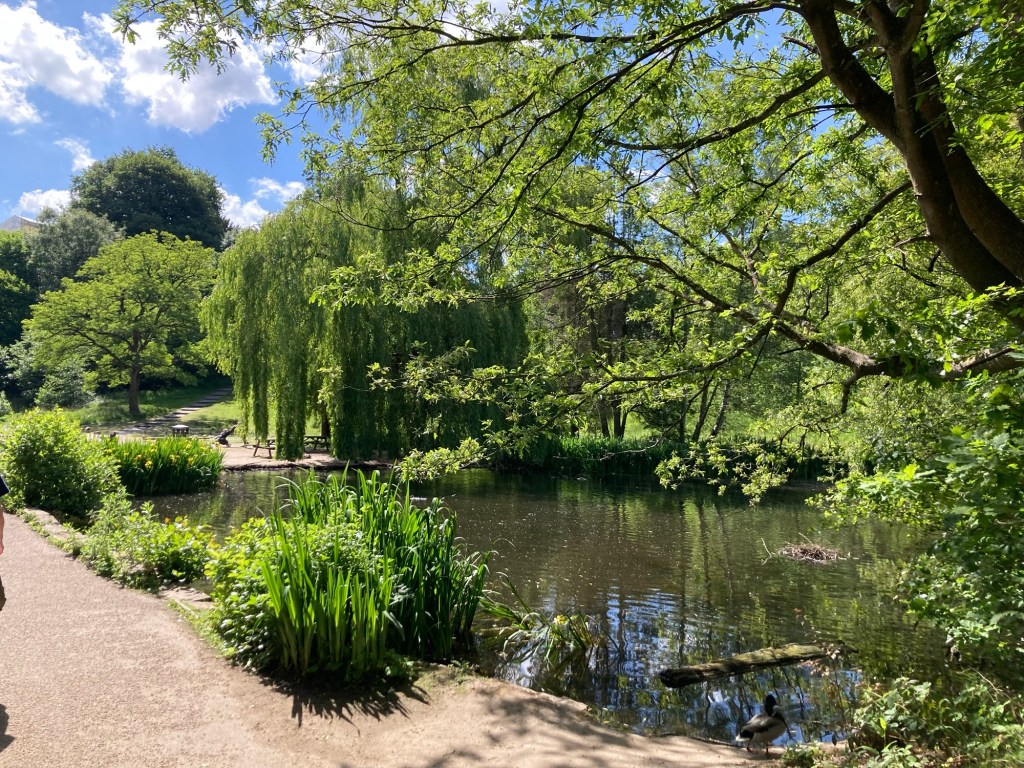
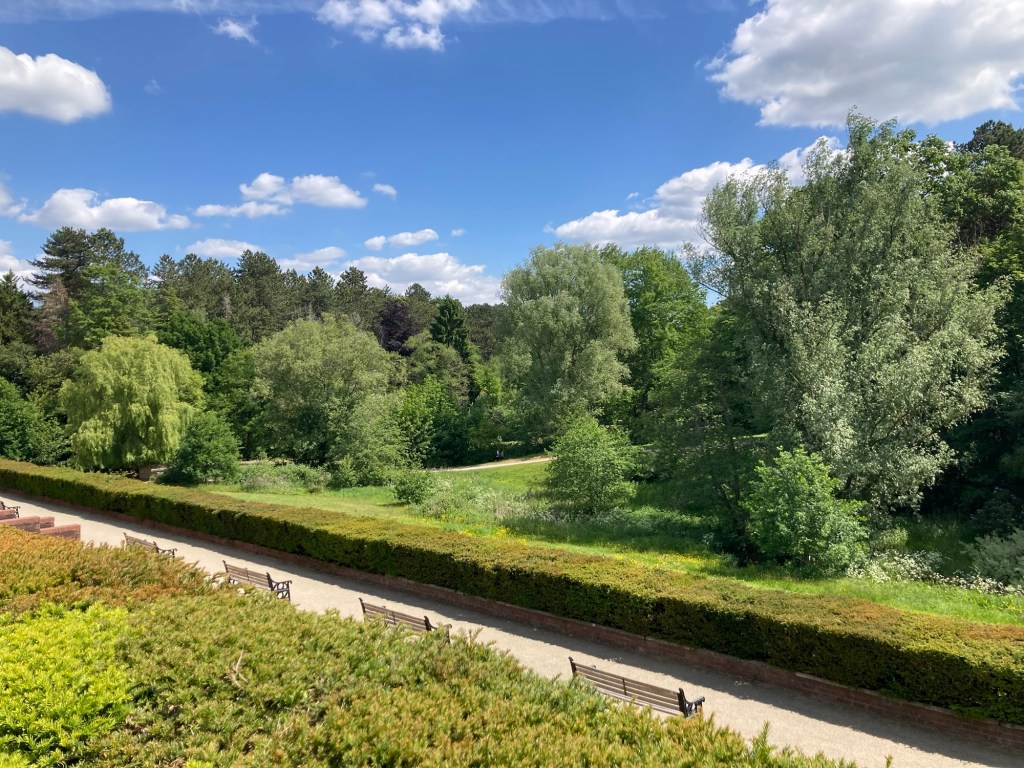
Bramhall Park (for some reason the name of the park has an h but the hall/house does not) is 51 acres and has a range of habitats, including formal parkland, woodland, and open grassland, through all of which runs Lady Brook, flanked by several ponds.

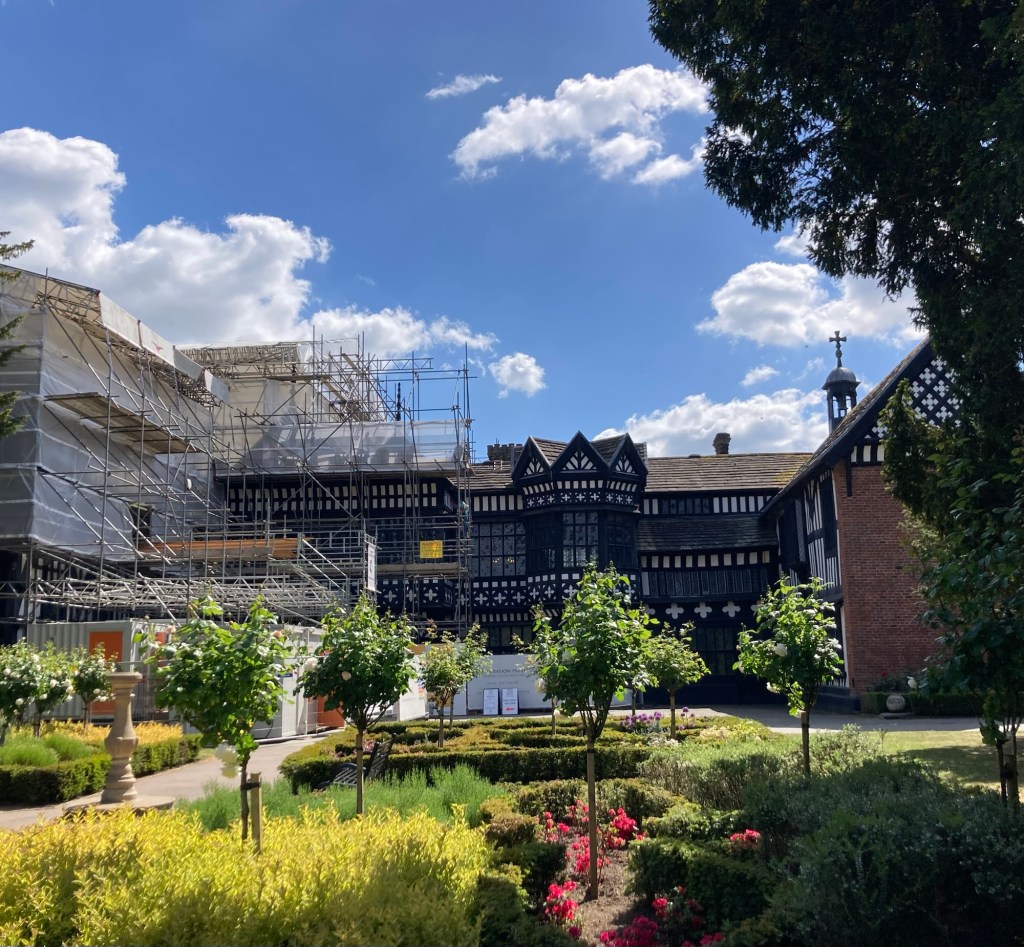
Bramall Hall is described as one of England’s finest timber framed buildings. It was built around 1370 as a single story medieval hall by Alice and John de Davenport, and by the 1600s it had become one of the largest homes in the area. It remained in the family for over 500 years. In 1883, Charles and Mary Nevill moved into the house when it was given to them as a wedding present by Charles’ father, the wealthy owner of Strines Print Works in nearby Stockport.
Happily for the good of the house, the roof is being refurbished. Unhappily for us, we didn’t get the best outside view of the house.
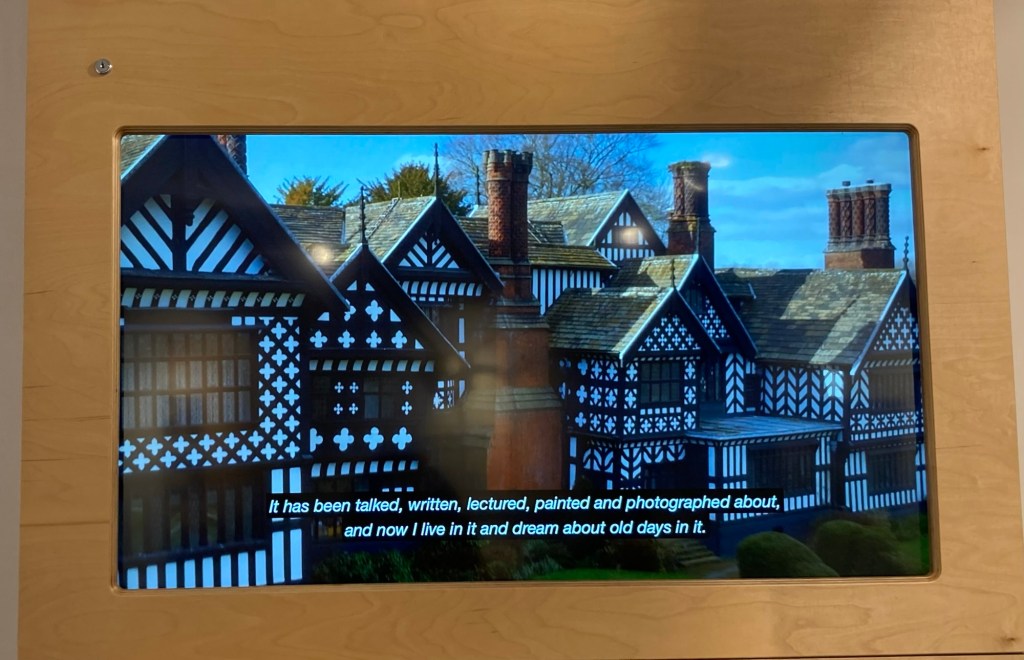
in the shop where we bought the tickets,
which provided a non-scaffolded view of the house
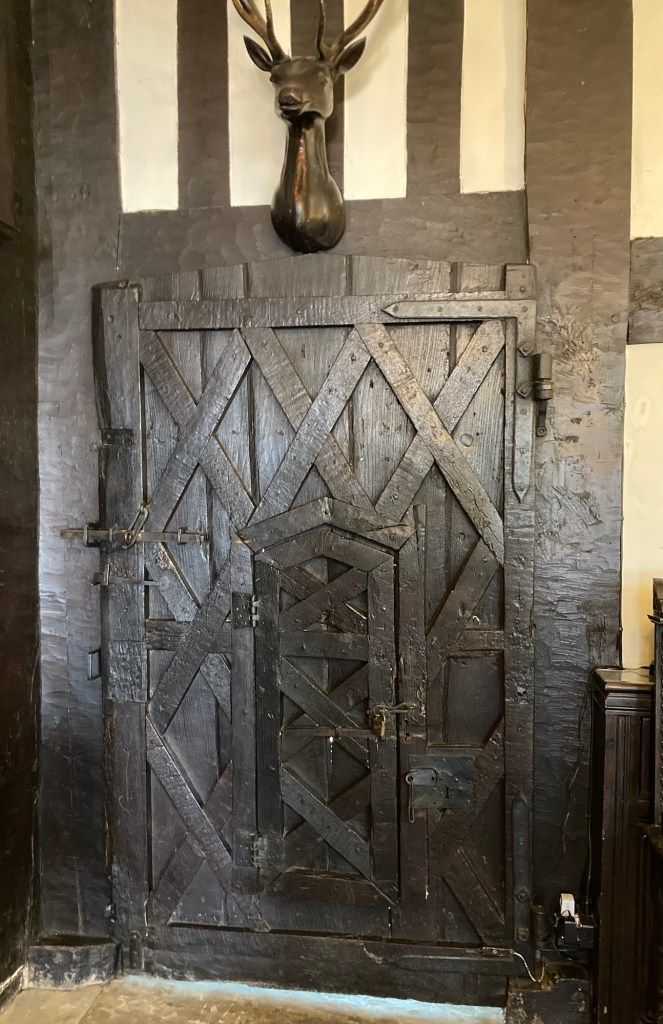
but which would have originally been used
to control entry into the home by allowing
for the identity of unexpected callers to be checked
and then requiring visitors to enter one at a time
in a crouched position.
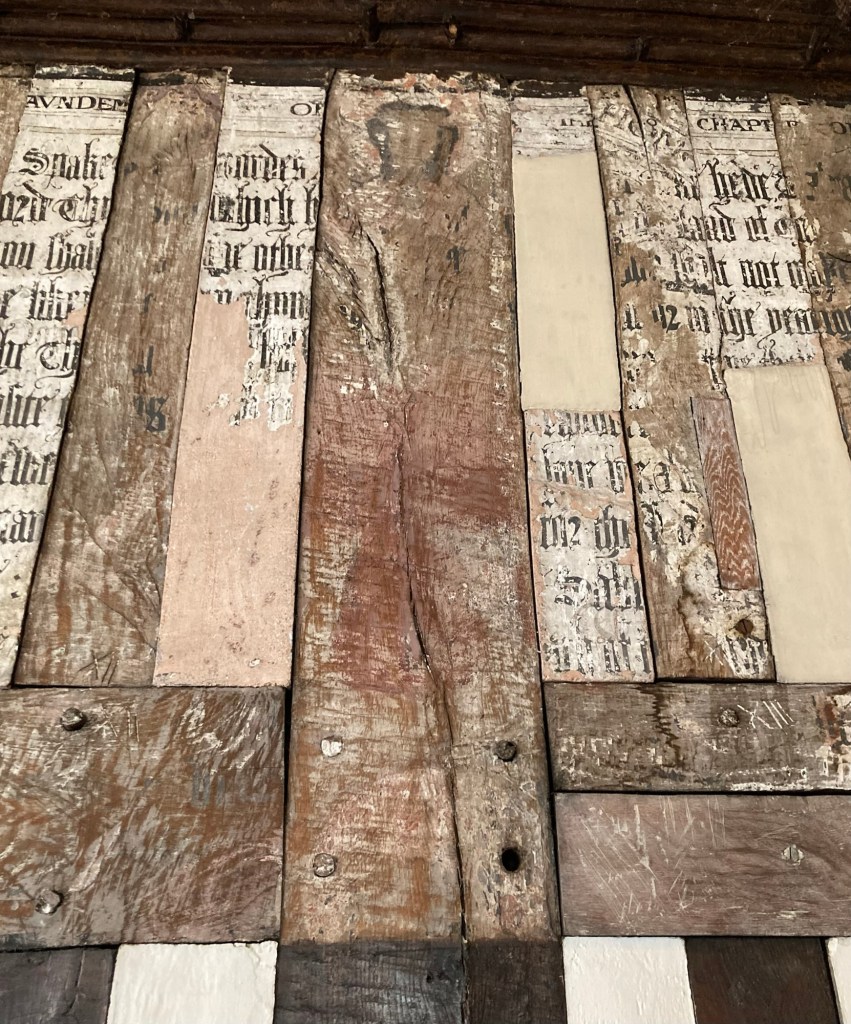
in between text for the 10 Commandments.
It won’t be the last instructional wall art
that we’ll see in the home.
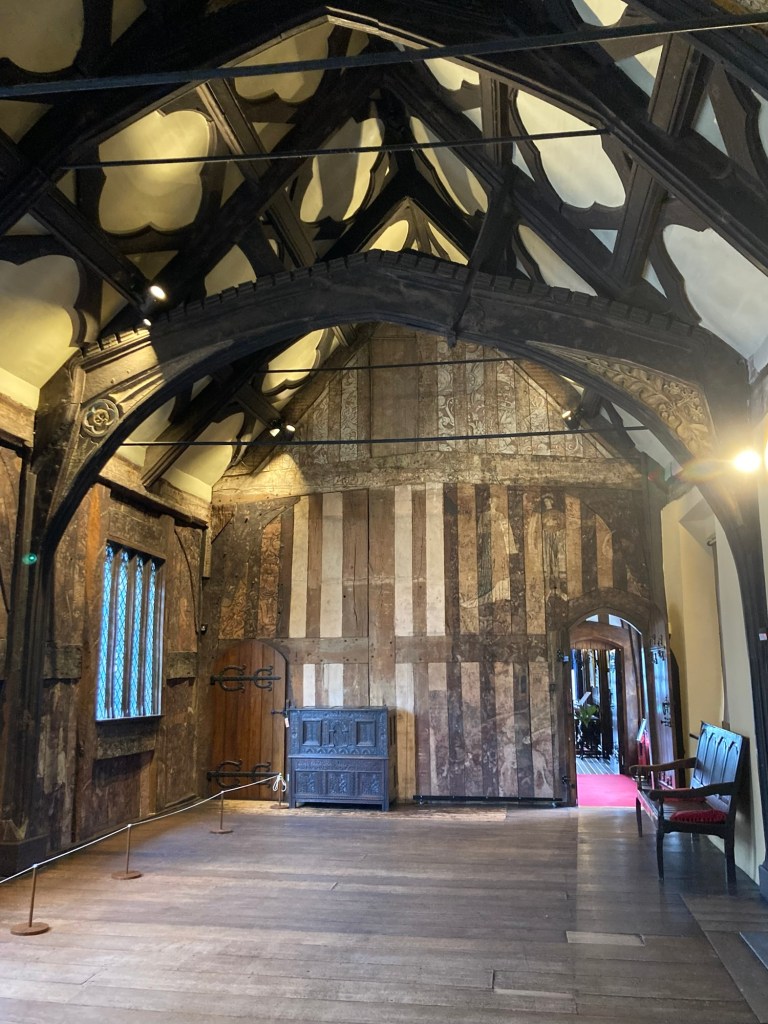
used in imitation of tapestry and dated to the 1530s.

which were both decorative and filled with moral messages.

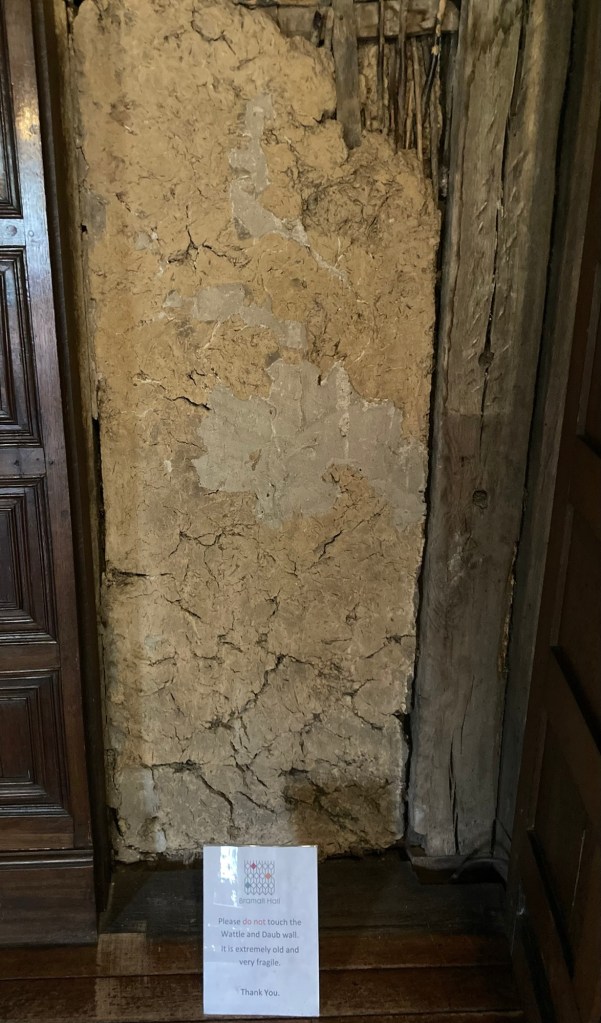
up until the mid-16th century , wattle (interlaced branches)
and daub (a clay mixture).
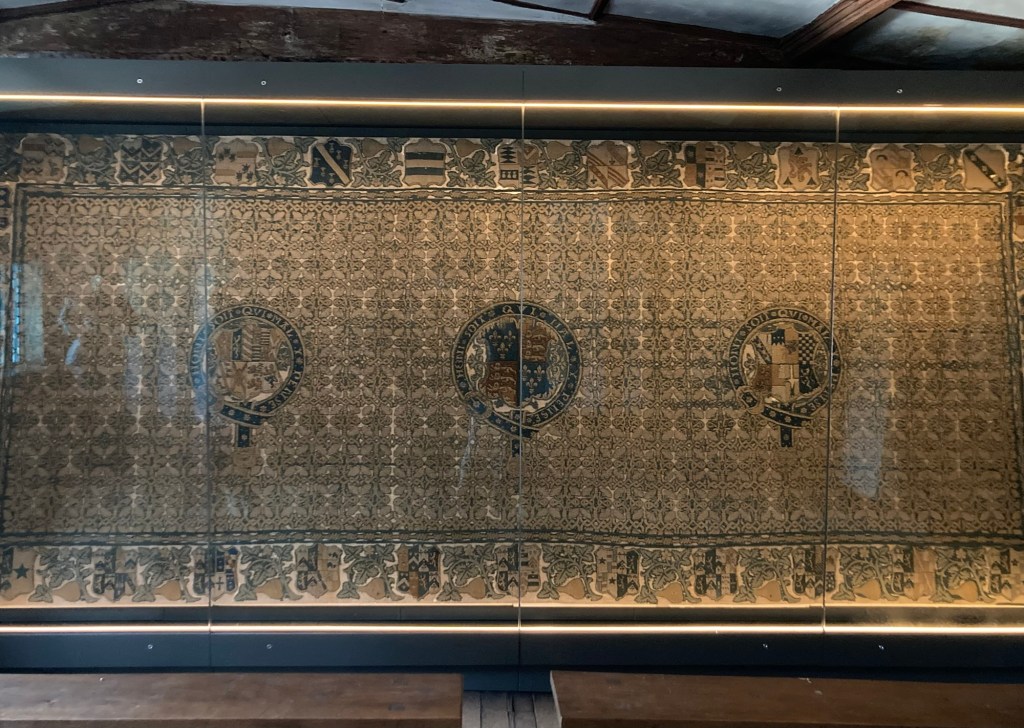
in 1560 by William Davenport III
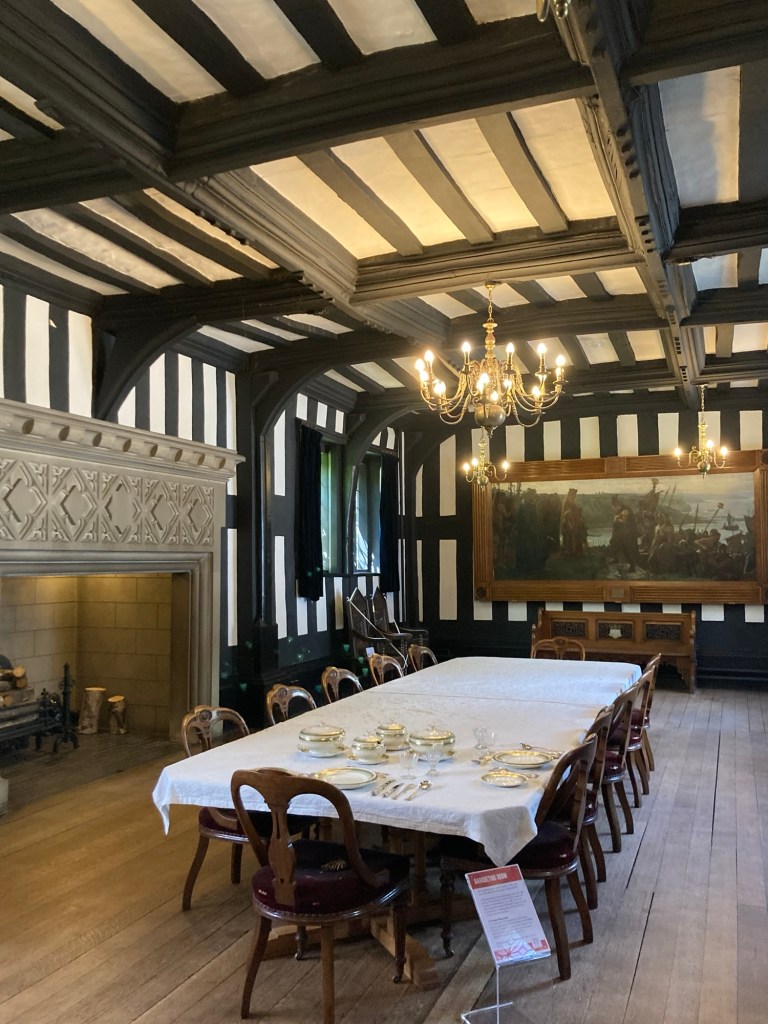
for the high table used in the great hall.
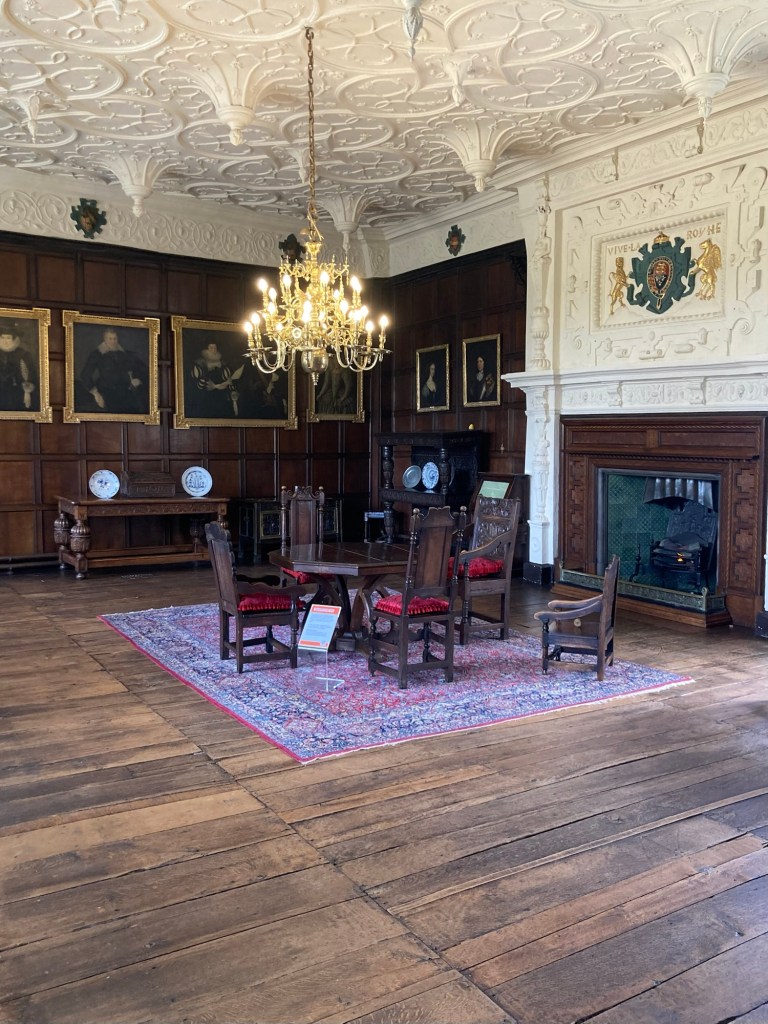
would withdraw to following dinner.
The plaster ceiling was a mark of wealth
in the Elizabethan age (late 1500s).
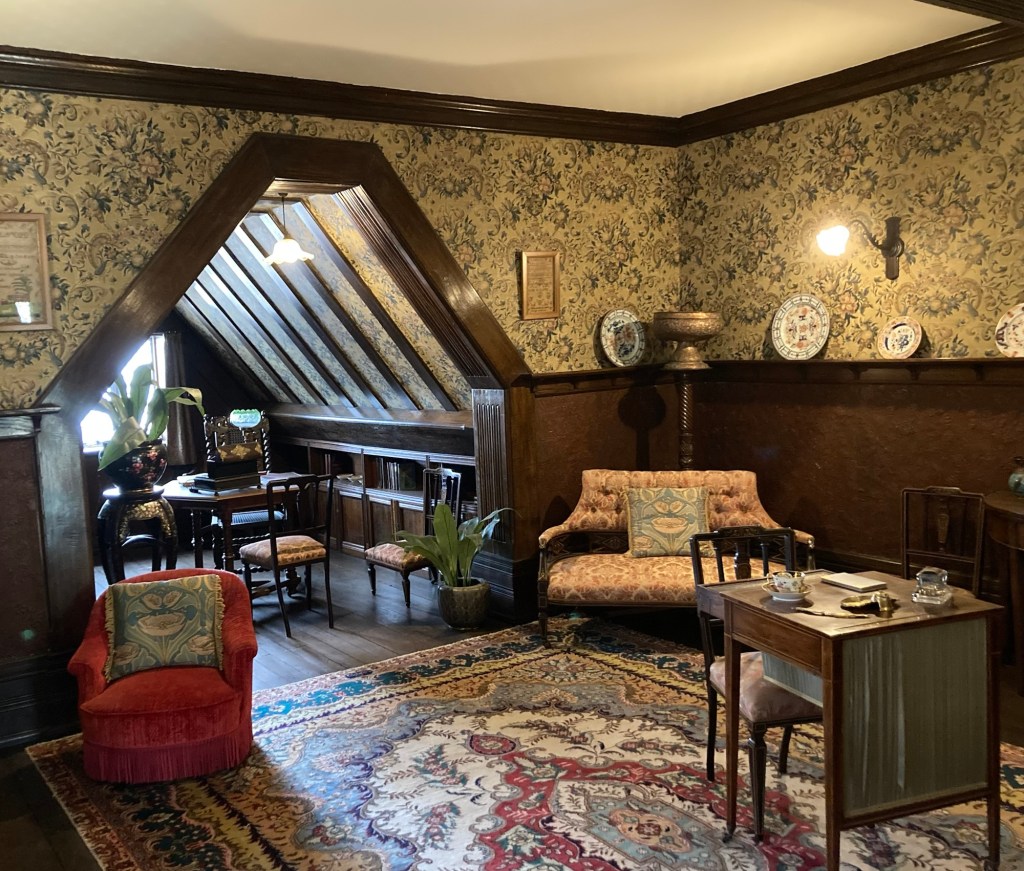
UK 2nd floor of the house

 Peckish Travels