First, Jax the cat has finally shown himself and can be quite the talker. He typically stays on the upper level (family bedrooms), but does come down to the main level when he hears us go into the room where his food is kept and/or if he’s in the mood for some petting or a short lap sit. He’s a cutie.

for a pet and a head rub
After a chill couple of days for Christmas, Bob and I headed out today to visit the Centers for Disease Control (CDC) Museum on its main campus on Emory University. It was about an hour walk from the house. A couple of highlights from the walk.
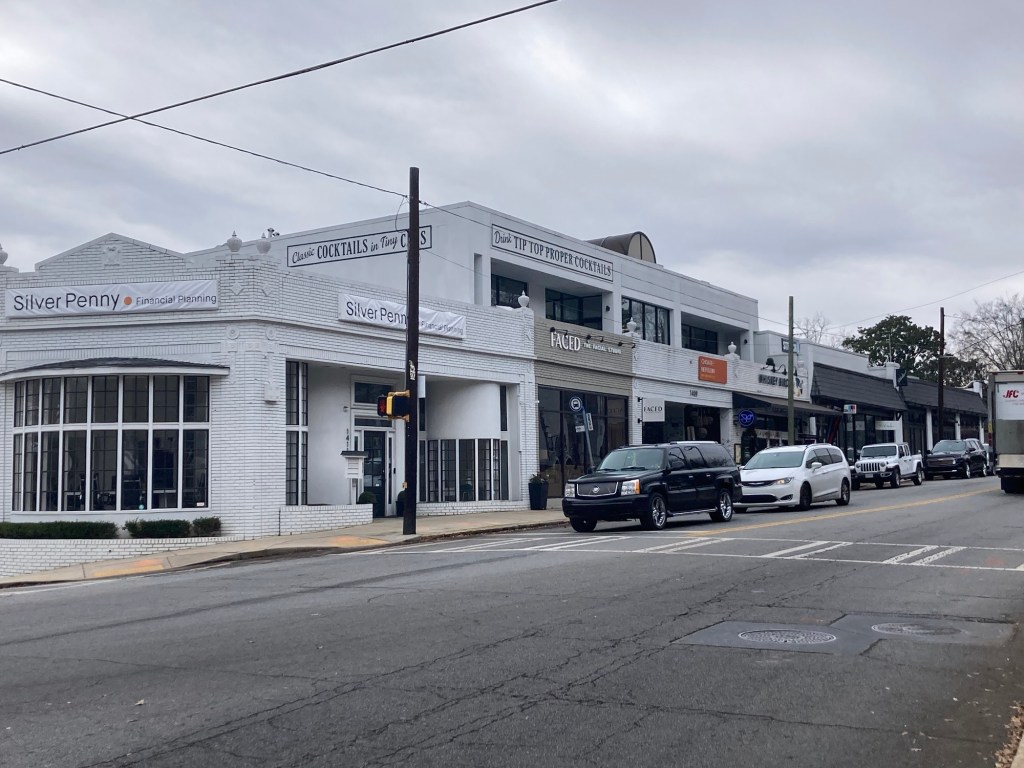
near where we’re staying.
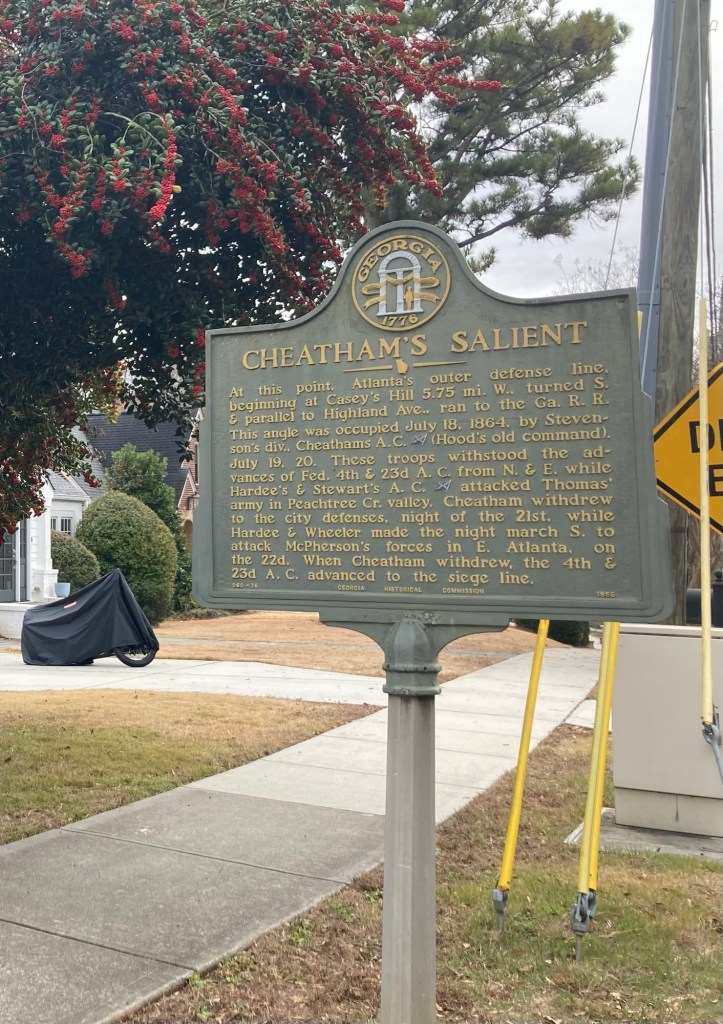

in the lovely neighborhoods we walked through
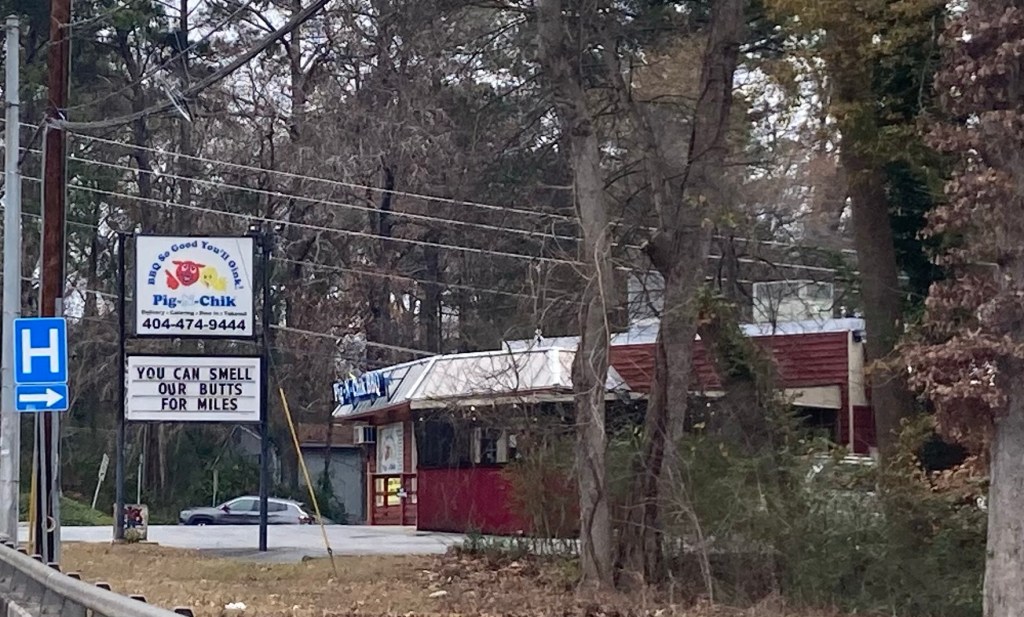
The CDC Museum is free and open to the public, although you must show a government-issued ID or a passport, if you are not from the US. You also go through security.
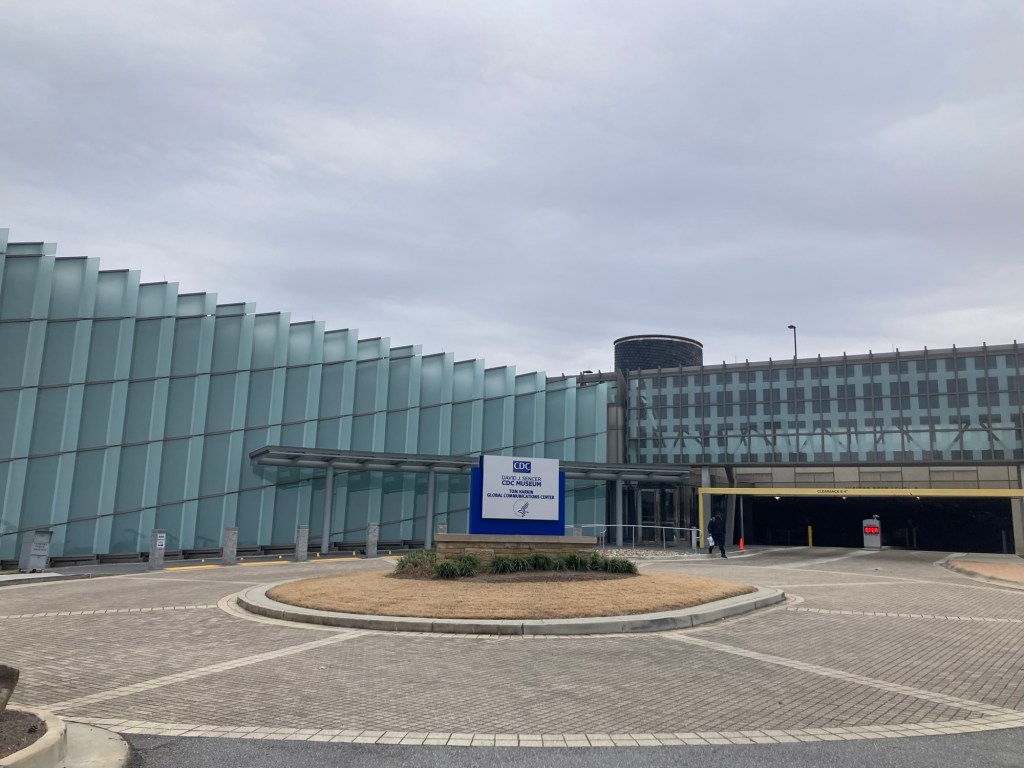
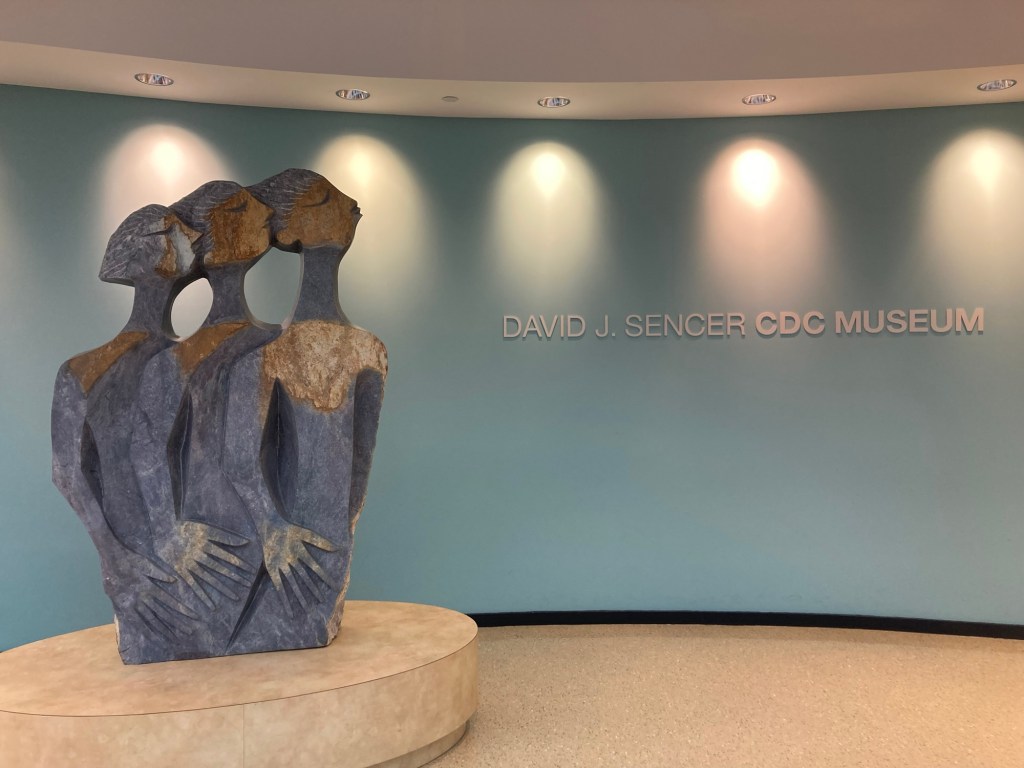
The museum has permanent exhibits on the history of the CDC, the different types of work it undertakes, and then a rotating exhibit. The current rotating exhibit was on Health as a Human Right and Health Disparities. The exhibits are on three levels.

with rotating information displayed on the monitors
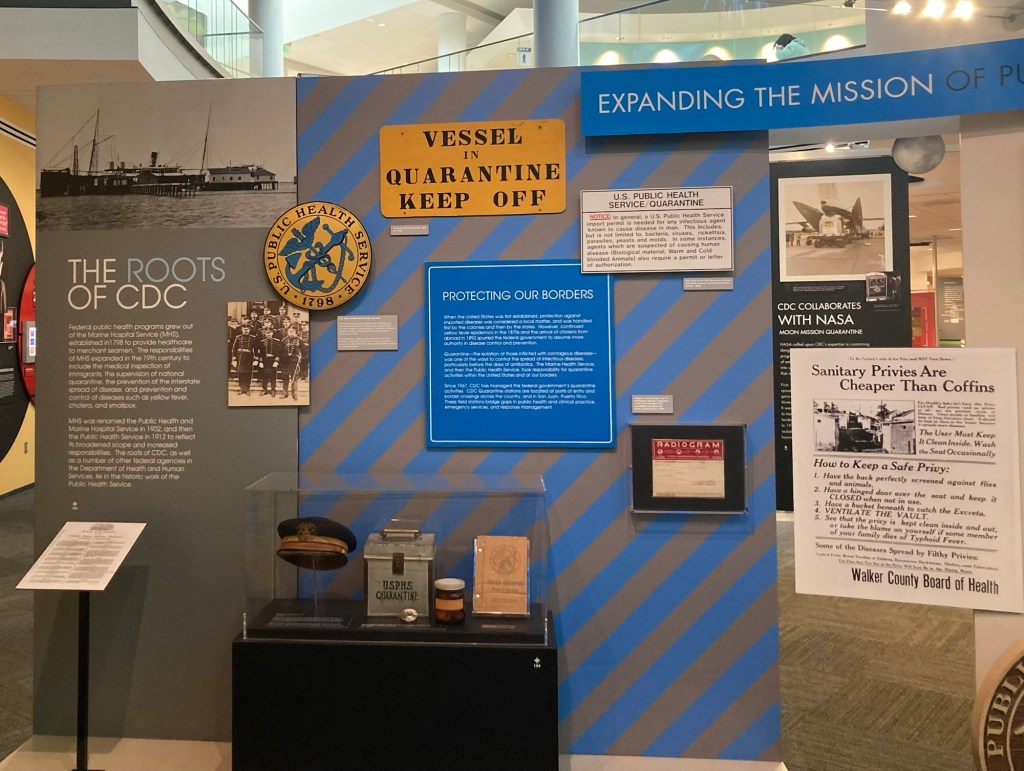
According to the exhibits, federal public health programs in the US grew out of the Marine Hospital Service established in 1798 to provide healthcare to merchant seamen. The MHS responsibilities expanded in the 19th century to include the medical inspection of immigrants, the prevention of the interstate spread of disease, and prevention and control of diseases. It was renamed the Public Health Service in 1912.
The CDC itself was established after WWII and opened on July 1, 1946. It is currently on a 45 acre campus of Emory University and is one of 13 major operating components of the Department of Health and Human Services. It is one of the few government agencies with headquarters outside of Washington, DC. Besides this main campus, it has 10 other major locations in the US and Puerto Rico, and its over 15,000 employees work in over 50 countries around the world. We generally hear about the agency during pandemics (Covid, AIDS, Ebola), but they do a lot to assess and improve the physical and environmental health of people around the world.
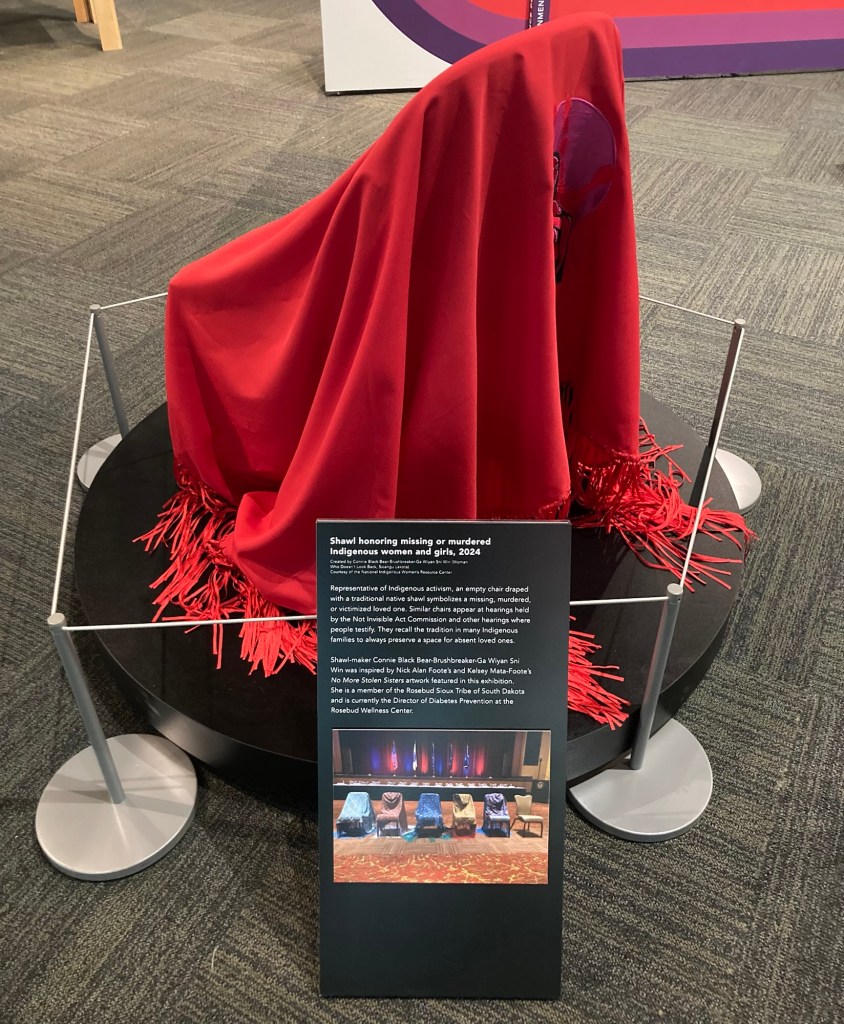
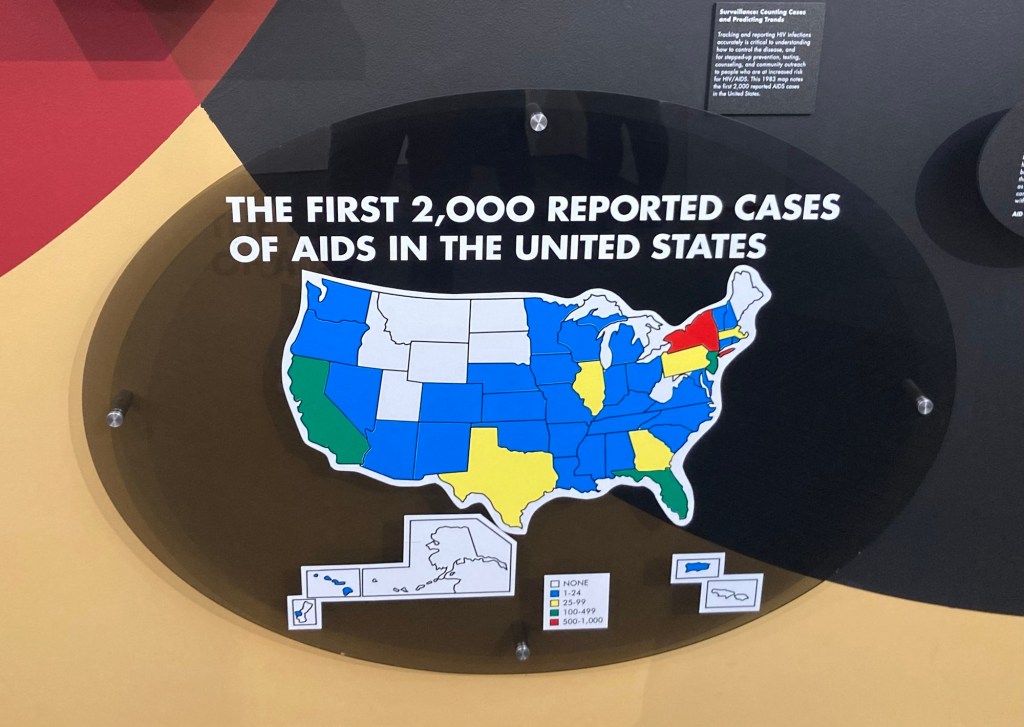
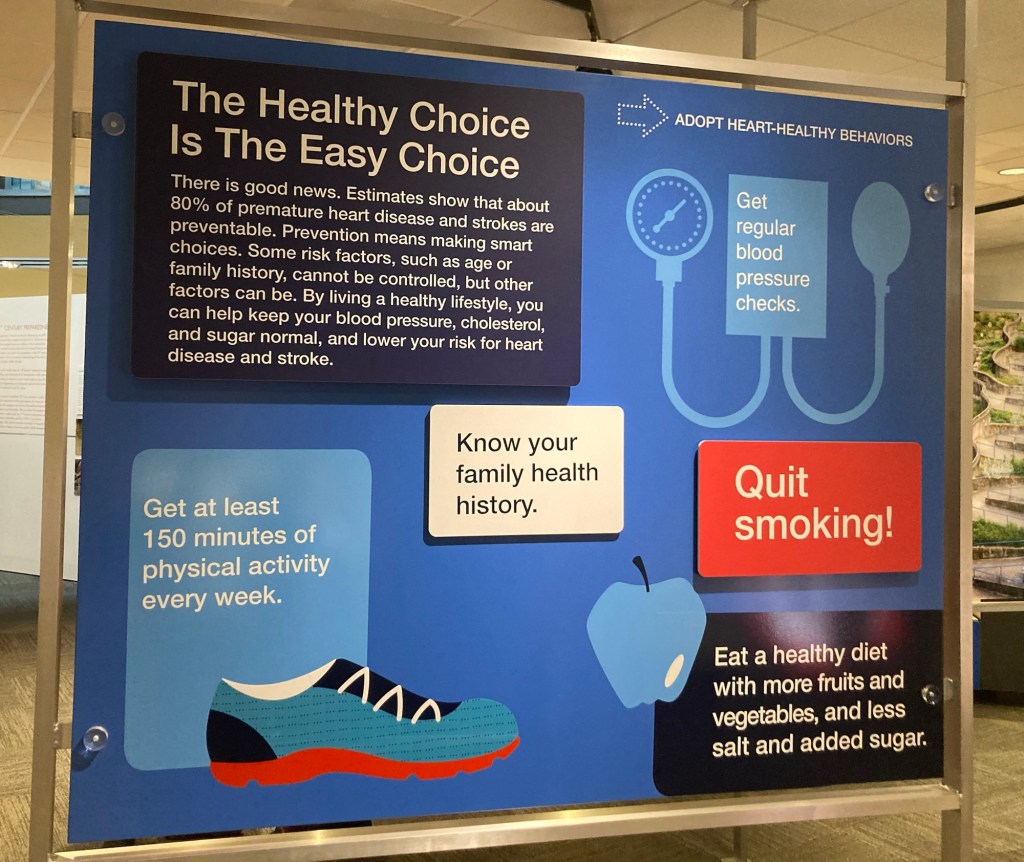
Below are some samples from the various exhibits.
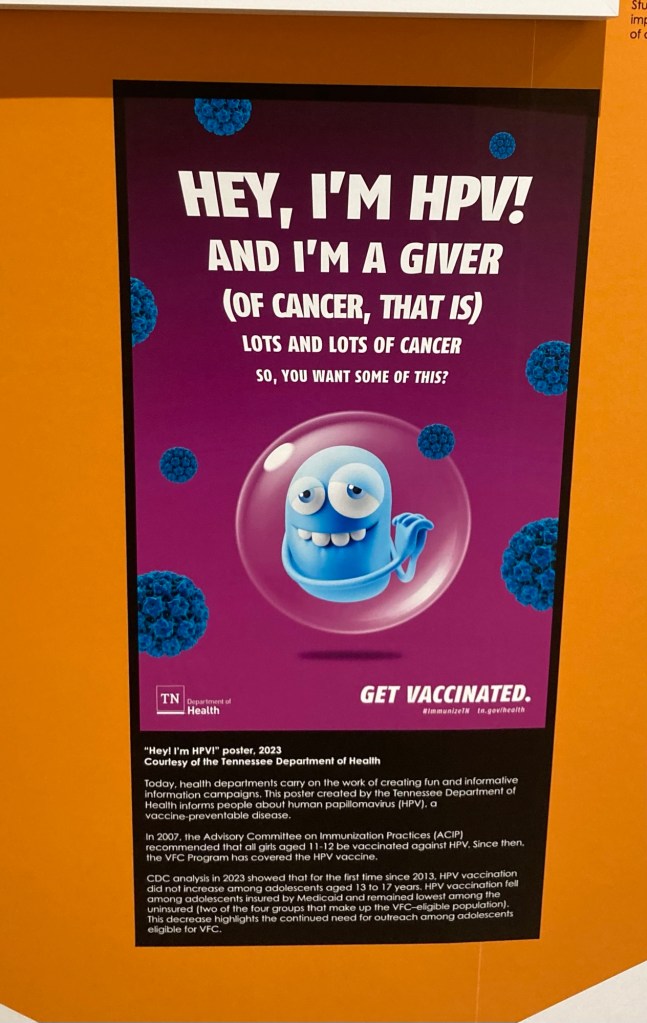
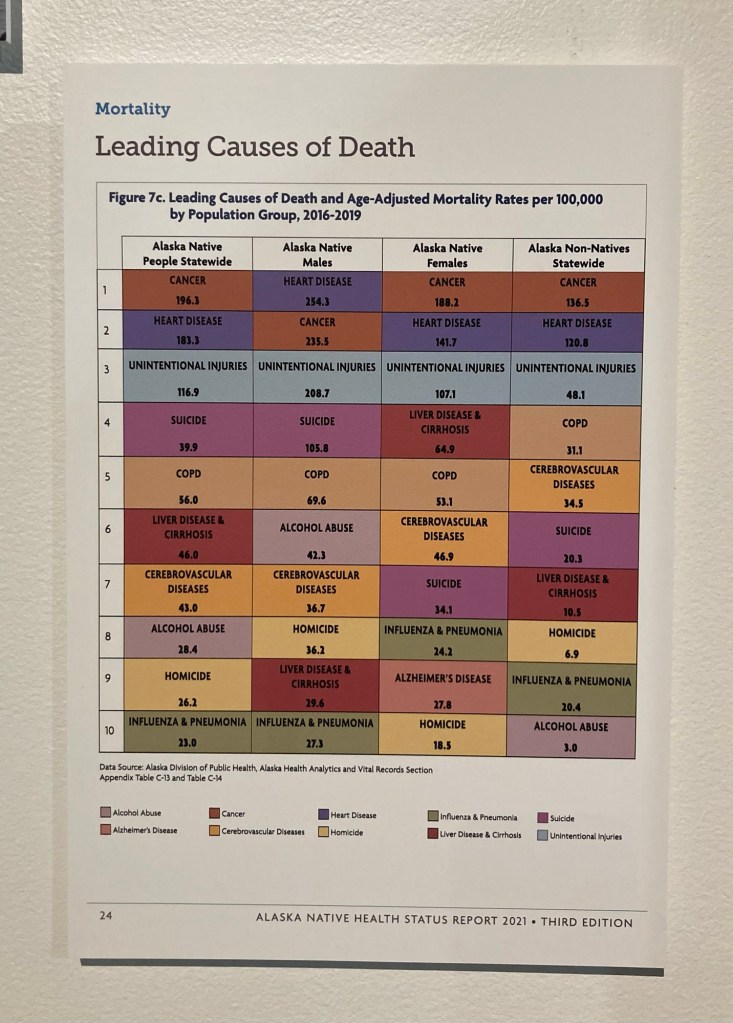
comparing disease rates between native
and non-native populations in Alaska
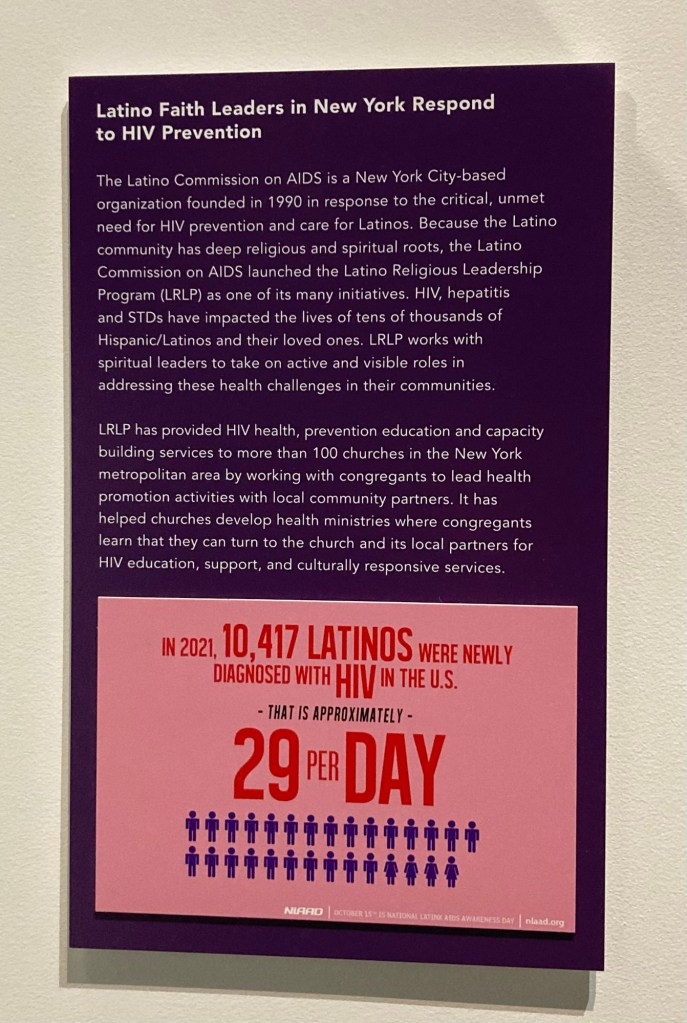
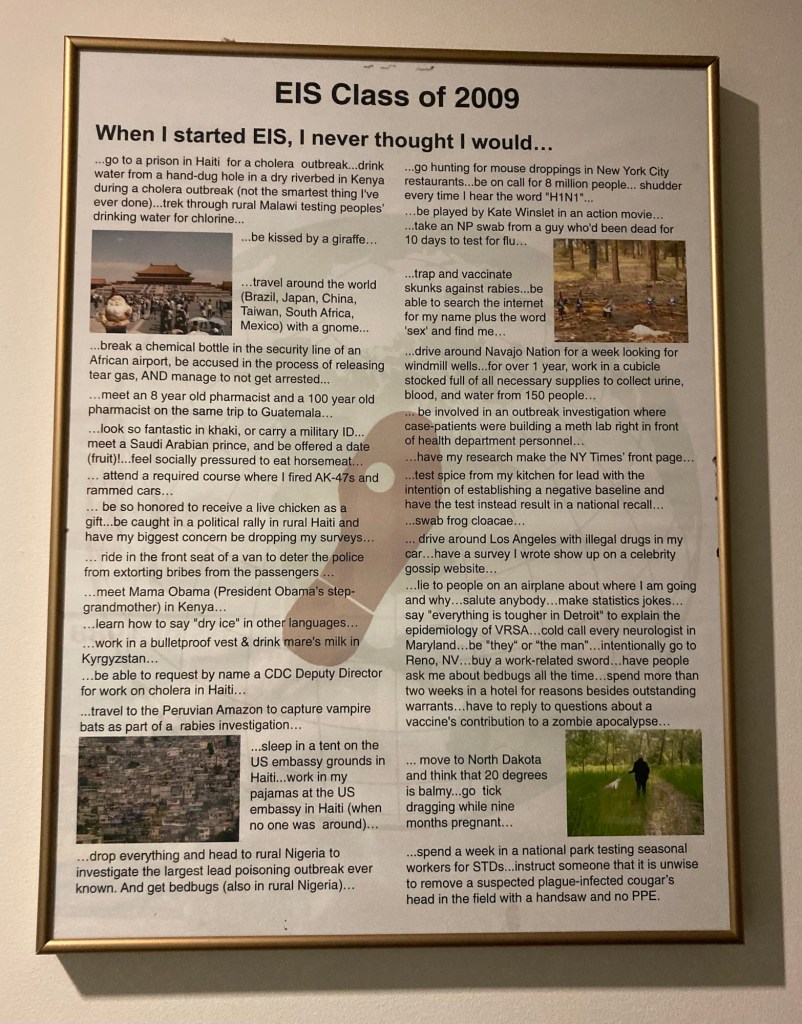
by the different classes of the Epidemic Intelligence Service.
The footprint is used to convey the amount of walking required
in field investigations of diseases.
It was really impressive to see the variety of work that they do, and the number of emerging diseases and terrorism events they have had to respond to even since 1946 (polio, Zika, anthrax scares, 9/11, AIDS, Ebola, TB, etc.). They do not get nearly the recognition they deserve for helping address public health needs on an ongoing basis as well as these more major events.
 Peckish Travels