Yesterday, Bob and I finally decided to check out the cafe at the Rigsbygate Sports Center that is in our neighborhood. In fact, we can hear people playing tennis when we’re in the back garden. The cafe was pretty low key with homemade cakes and folding tables and chairs, but they had a pretty impressive menu, and the staff were very nice. While there, we also learned that there is a bar as well that opens at 6 pm, but we’re not sure what days of the week. The cafe is open from 10-4, M-F.


that are across the sports complex from where we are staying
Last night, we went to the Moyse’s Hall Museum for a talk by a local historian who has written a book on the history of the Market Cross in Bury St Edmunds. The Moyse’s Hall Museum is a 12th century building in the town center that has been used as the town’s bridewell (jail), workhouse (place for poor people to work and live), and police station. It first opened as a museum in 1899. It currently contains artifacts from the town’s past and also hosts different events during the year.
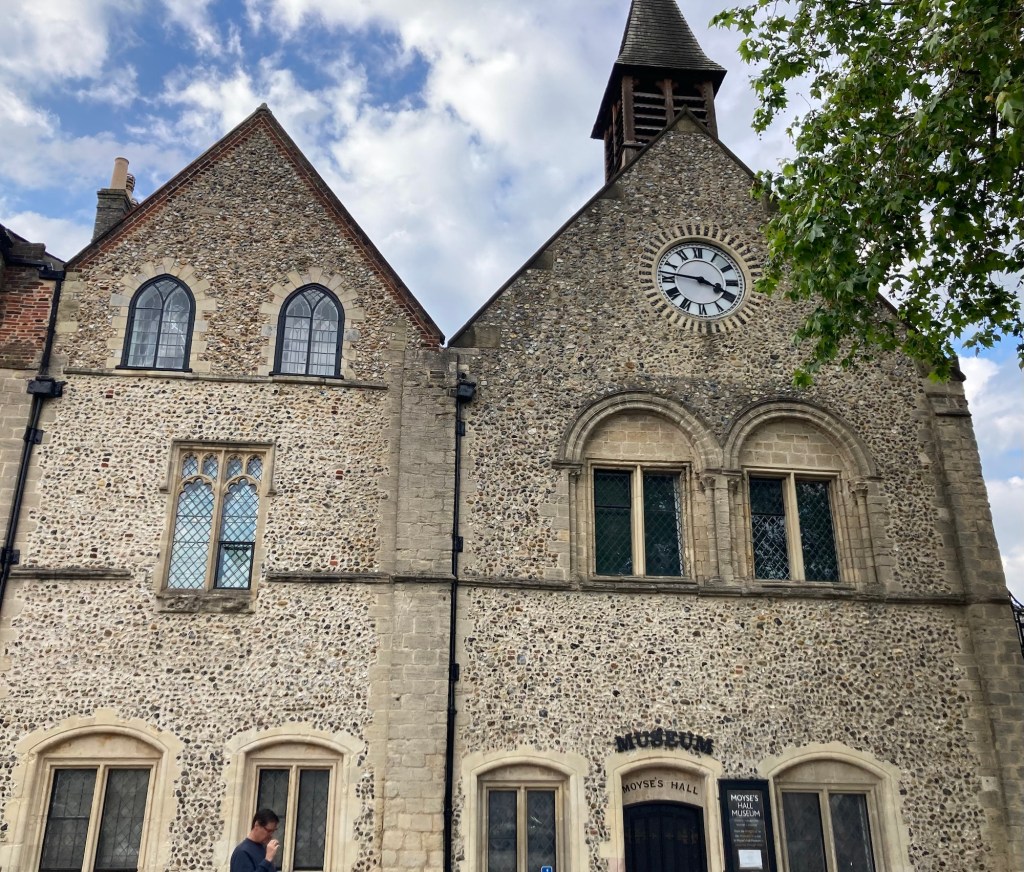
Adrian Tindall presented “A Neat and Beautiful Theatre,” the story of St Edmund’s Market Cross. He gave a very informative talk, especially for those of us confused as to why what appears to be a building is talked about as a cross.
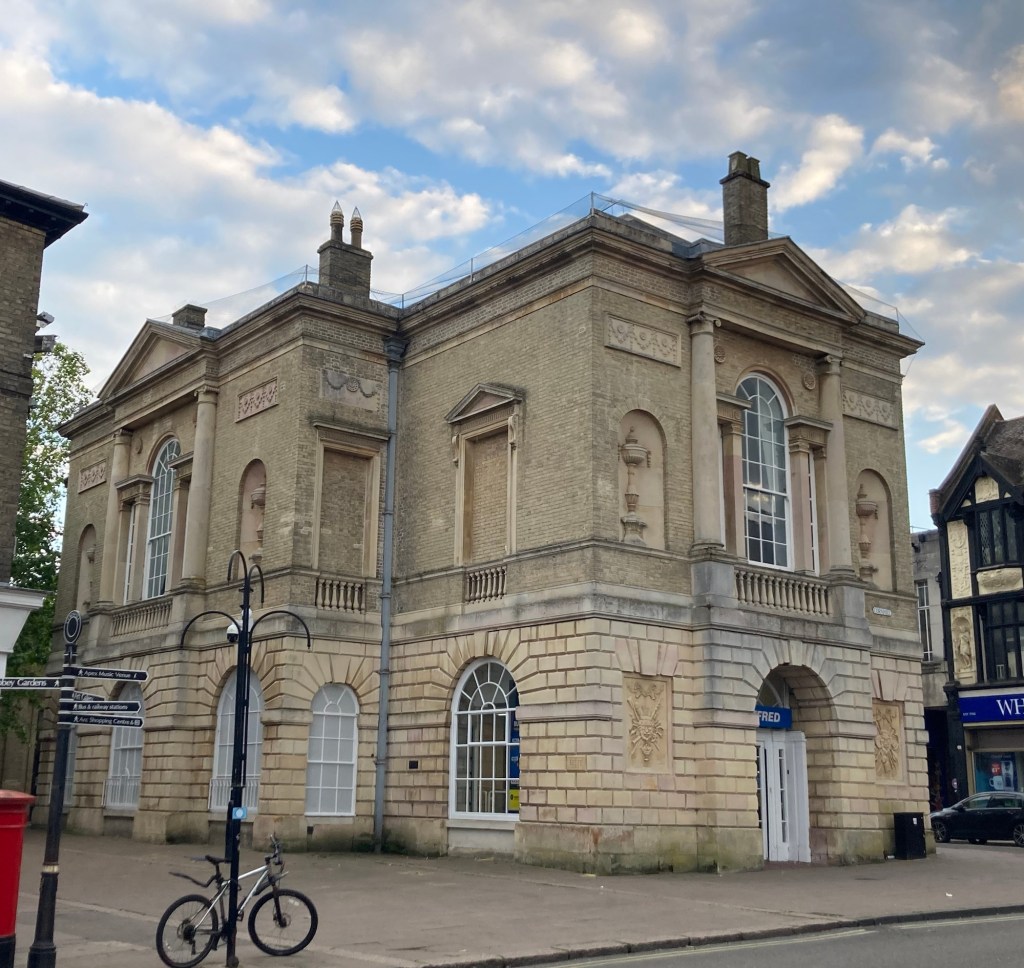
It turns out that a market cross actually began as a wooden and then stone cross, often attached to stone steps, at the highest point in a market area, where people could meet to trade but also pronouncements could be made or posted. This evolved into more sheltered structures to protect from the weather, and then these structures became more official buildings that might house other municipal type offices or space for artisans and even a place for touring actors groups to perform. Bury St Edmunds Market Cross had a similar evolution and was used as a theater until a bigger space was needed and the Theatre Royal was built. It hasn’t been used as the main center of trading for a long time and most recently served as an art gallery and then a space for creatives to work. Sadly today, the upper floors are empty and the ground floor houses a betting establishment.
On another note, a few weeks ago we were fortunate enough to be able to visit the Ickworth Estate with our friends. The Ickworth Estate was owned by the Hervey family. The patronage and support of the Hervey family was mentioned as being important for the building and/or maintenance of both theaters. It’s always fun for us to be somewhere long enough where we start hearing connections between the different places that we visit.
 Peckish Travels