Sunday night Bob and I walked about 40 minutes to our nephew’s house, where Bob prepared a great dinner, and we got to spend time with our nephew and his wife, (who made an amazing cheesecake for dessert) as well as our great nephew, Harrison, who is now walking.


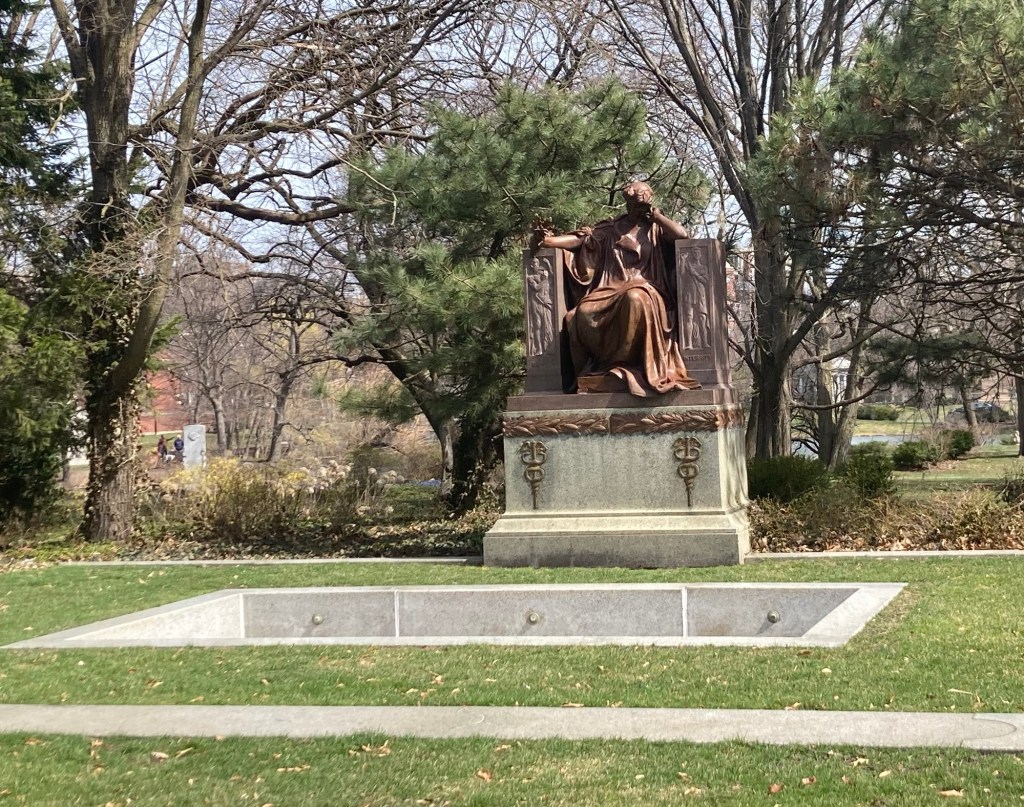
Today, we decided to finally checked out Graceland Cemetery, which we had heard a lot about. The 120-acre cemetery was established in 1860 and became the preeminent place of burial for Chicago’s elite. It is the final resting place for a number of people closely associated with Chicago, including architects, businessmen, and sports players and owners. The cemetery provides a helpful map and history of some of the most famous people there. We had a lovely day to stroll the grounds and admire the variety of headstones, monuments, and mausoleums.
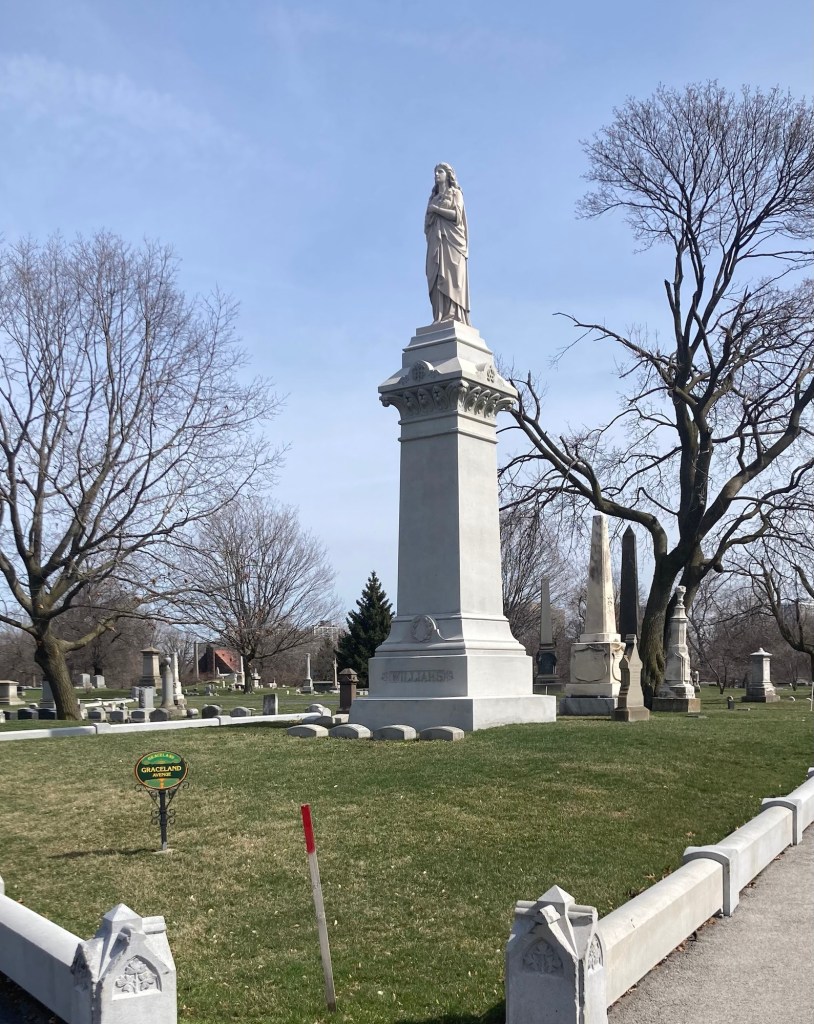
settled in Chicago when the population was 200

for Dexter Graves (1793-1845), a hotel owner.
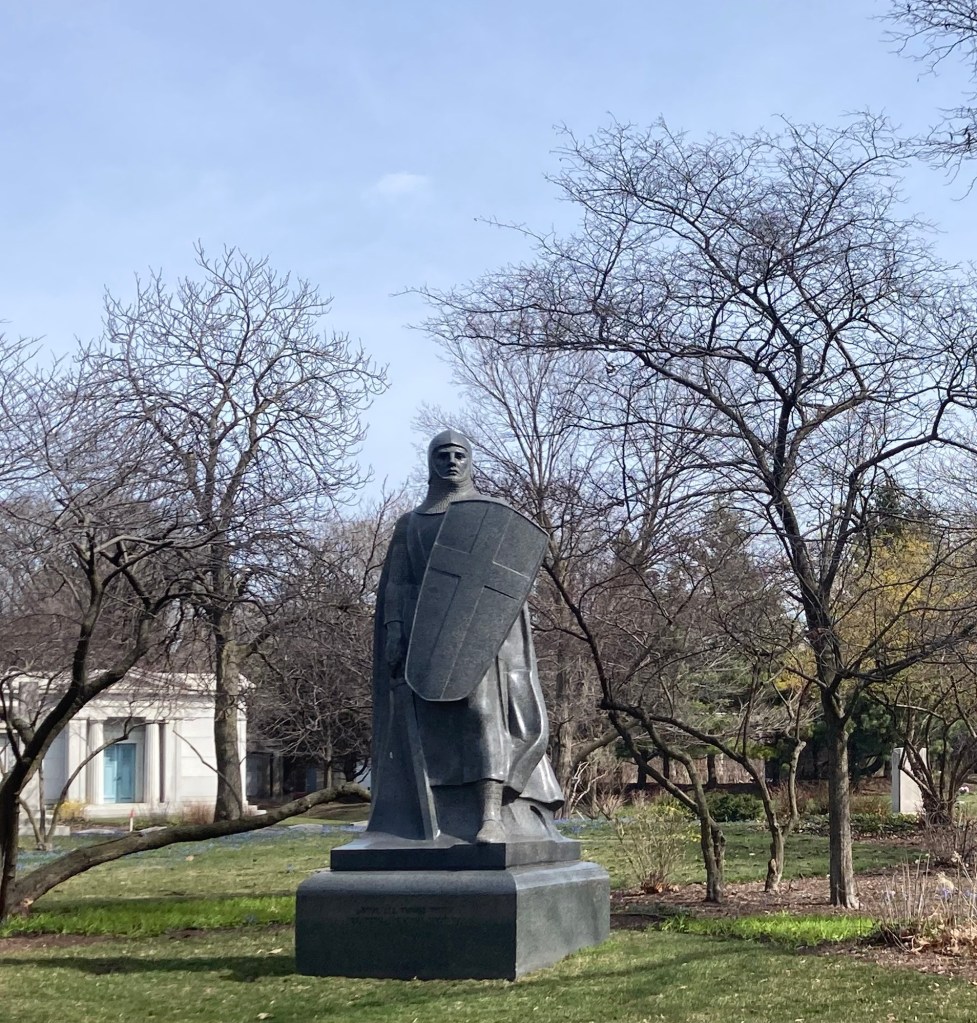
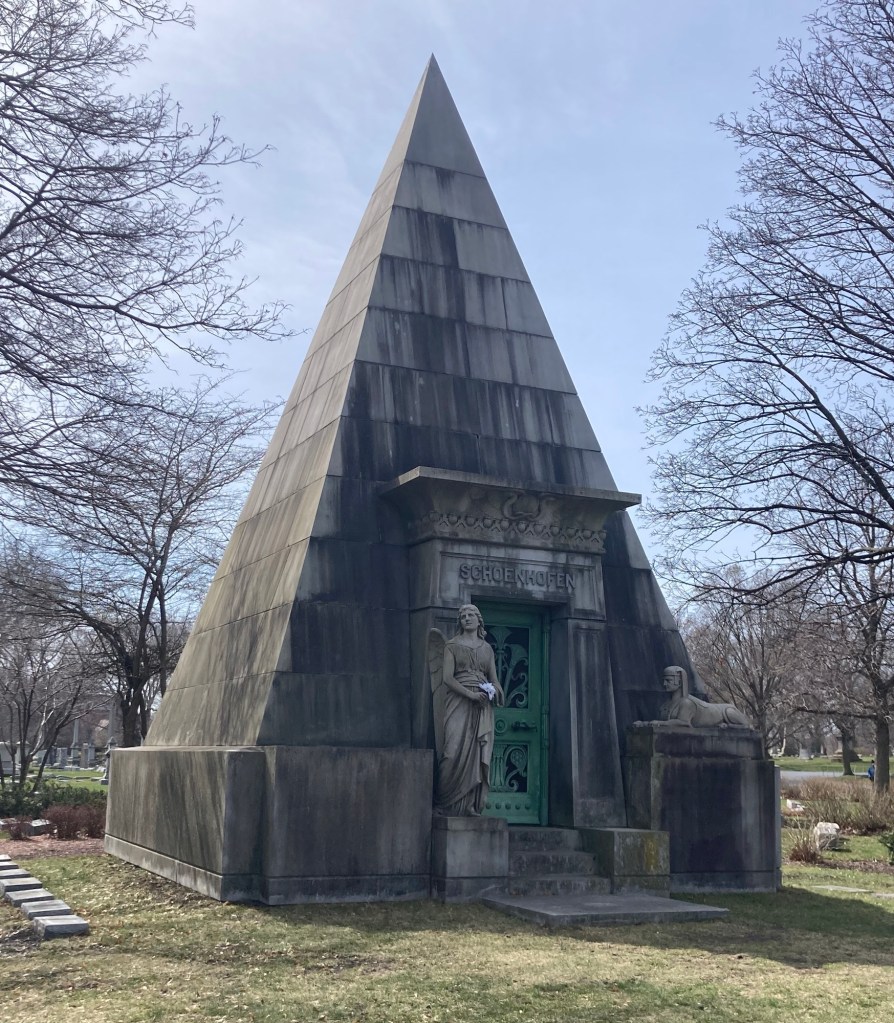
a Chicago brewer

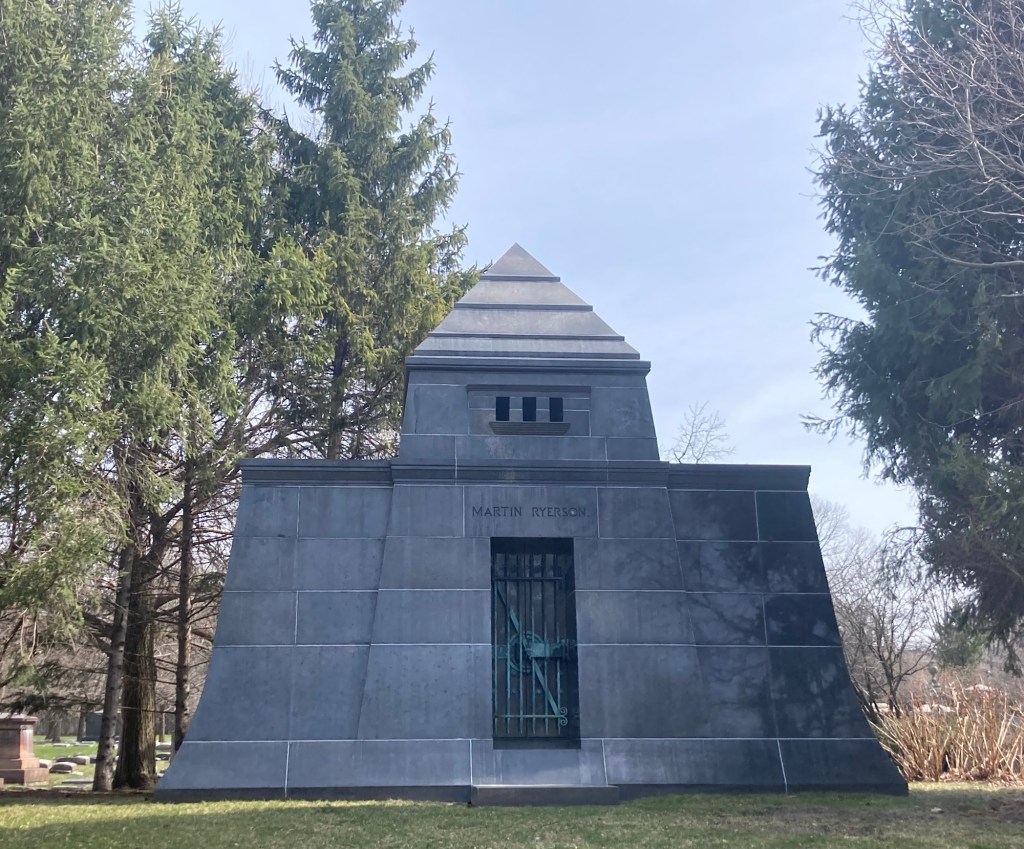
lumber baron and trustee of the Art Institute of Chicago
and an incorporator of the Field Museum
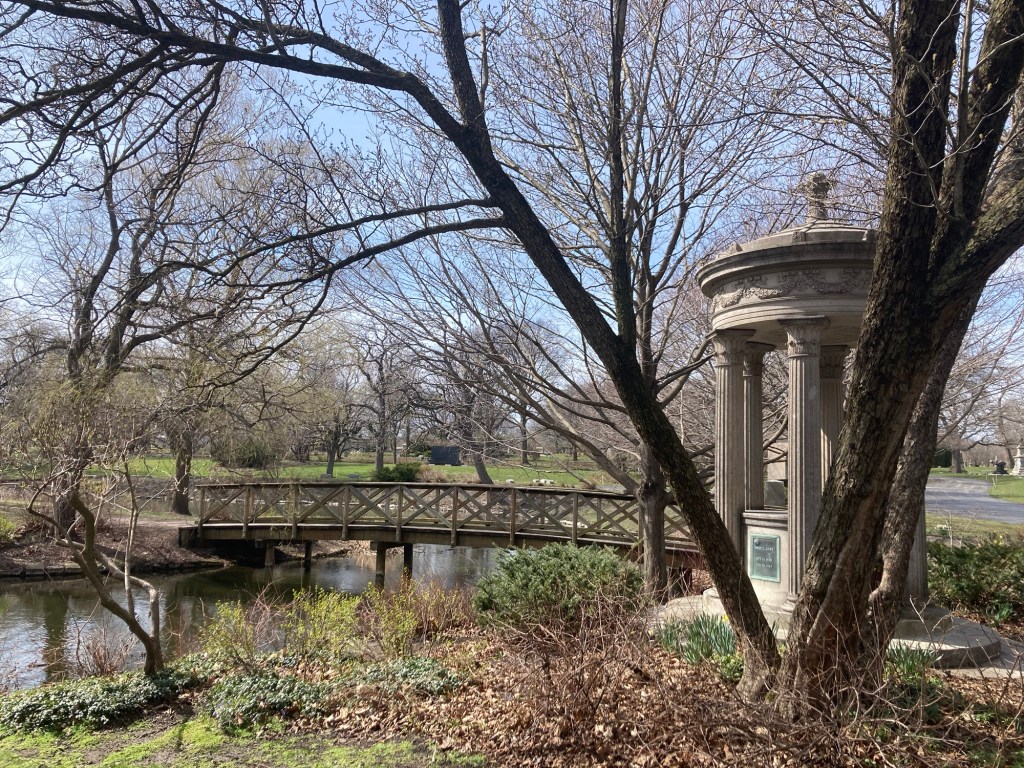
The bridge crosses over to a small island
where Daniel Burnham (1846-1912) is buried.
His 1909 Plan of Chicago is considered a landmark
in urban planning history.
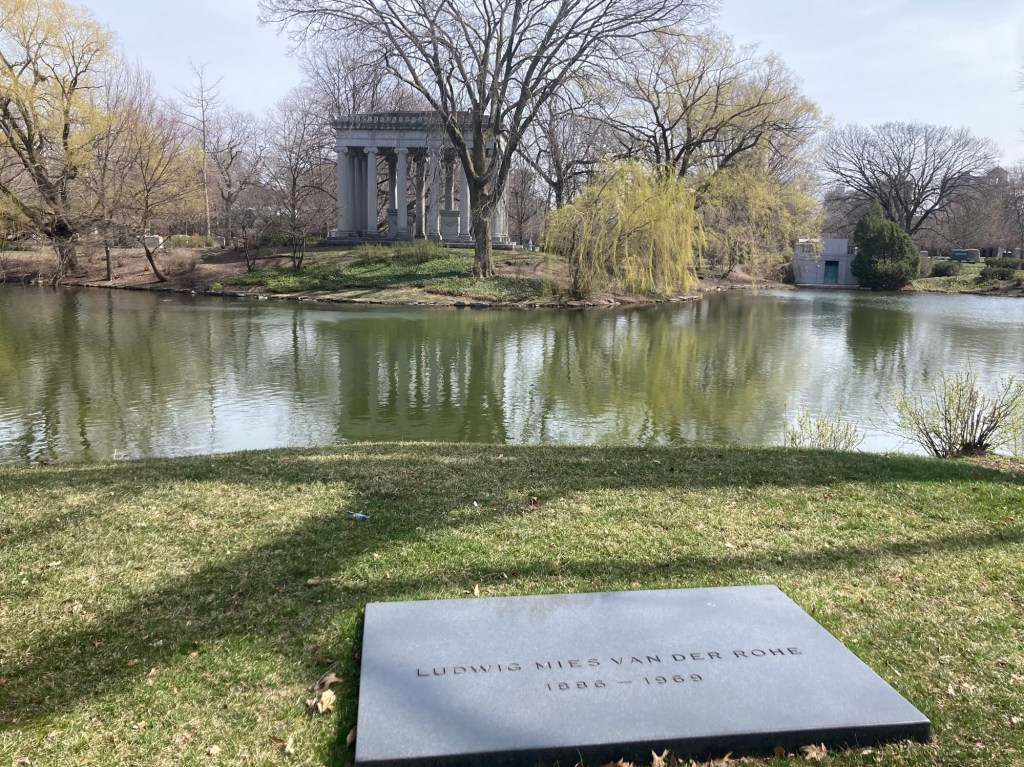

the first African American player to play for the Chicago Cubs,
known as Mr. Cub.
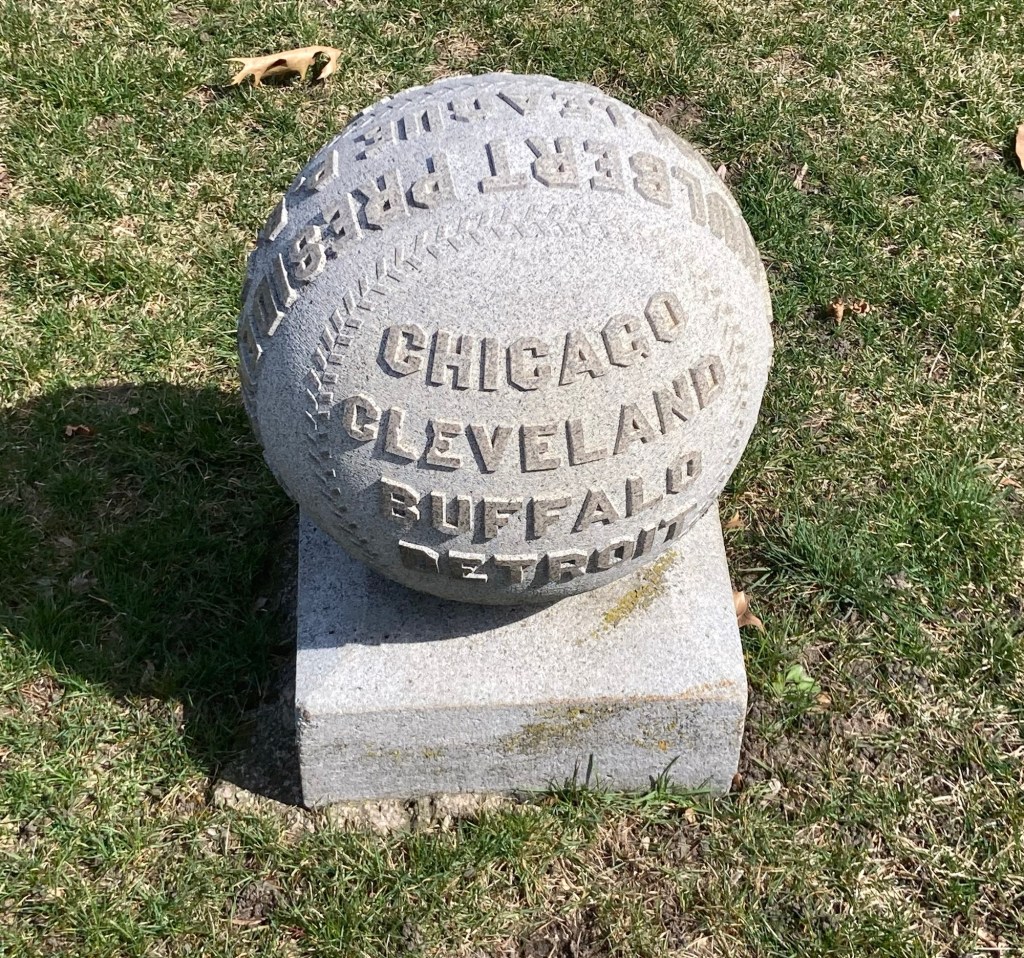
which became the Cubs.
It features the 8 original cities that comprised the National League.
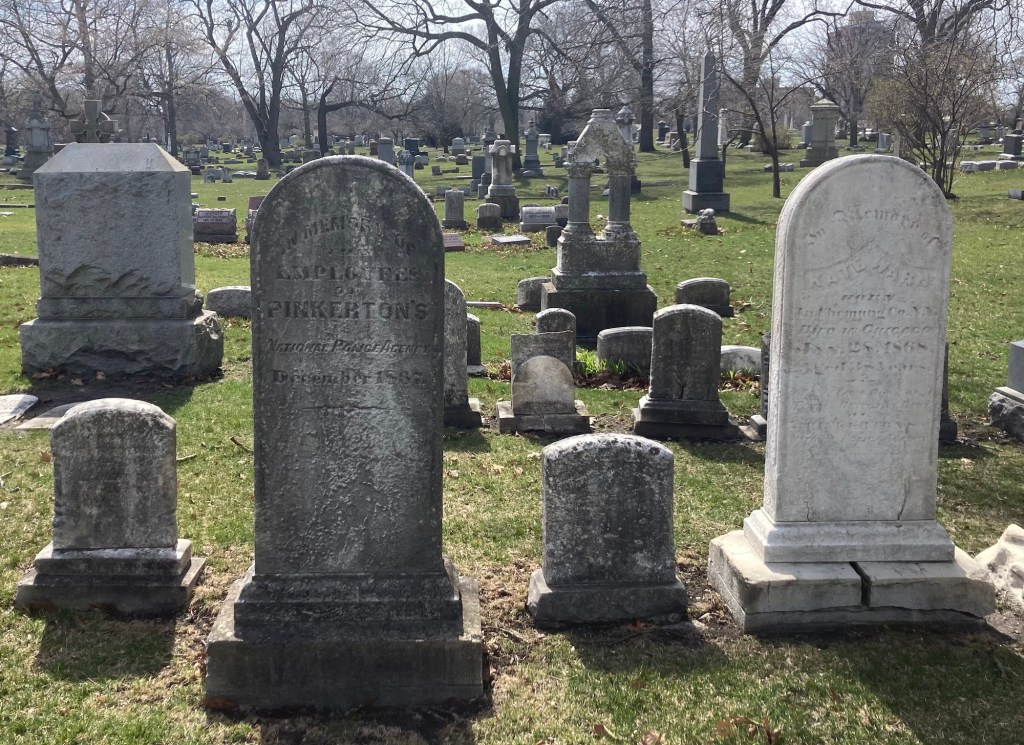
one of America’s first undercover agents
and guardian of President Lincoln, and Kate Warne,
described by Pinkerton as America’s first female detective
 Peckish Travels