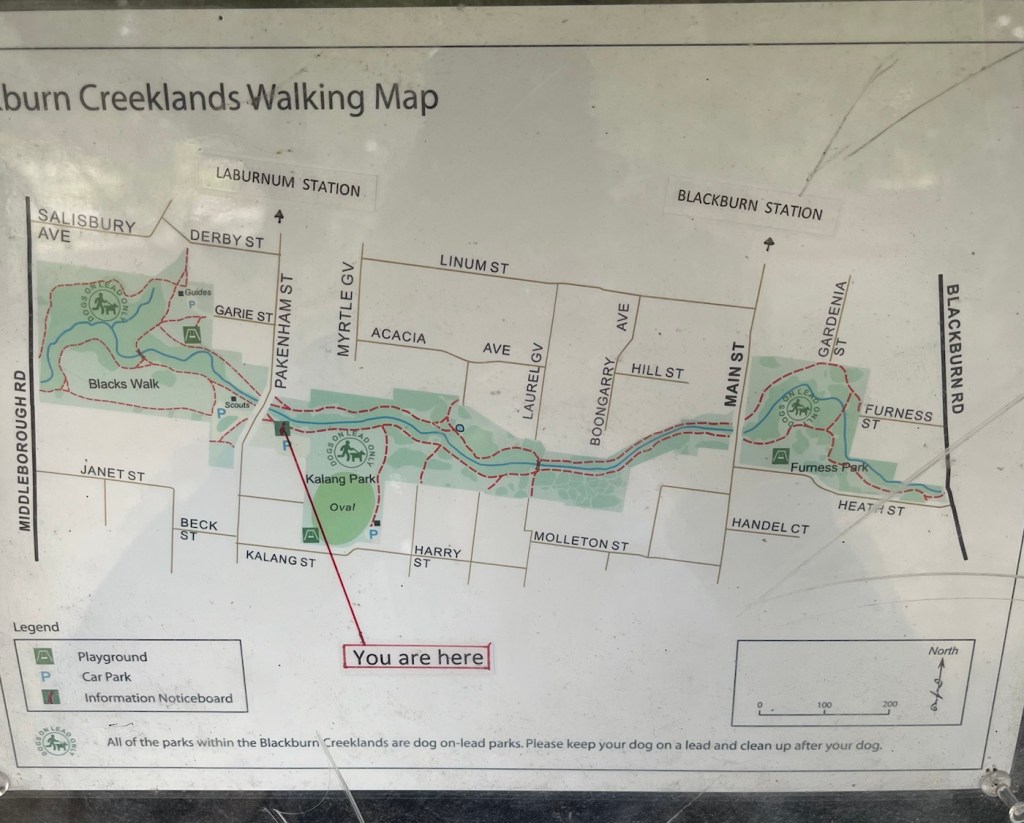
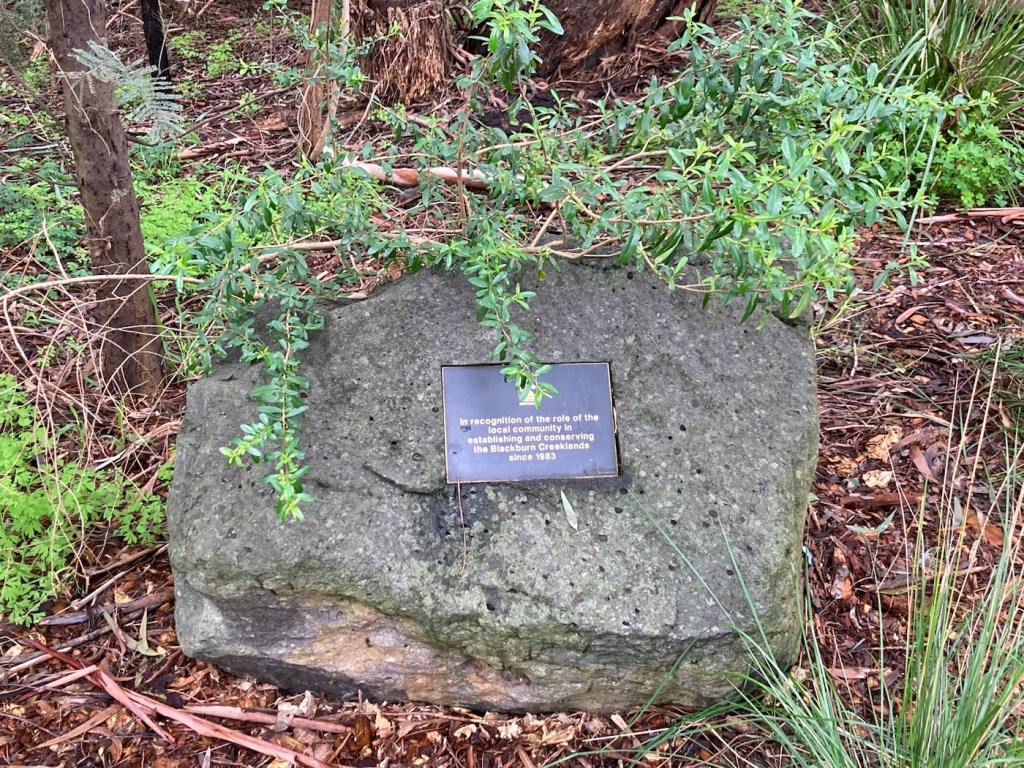
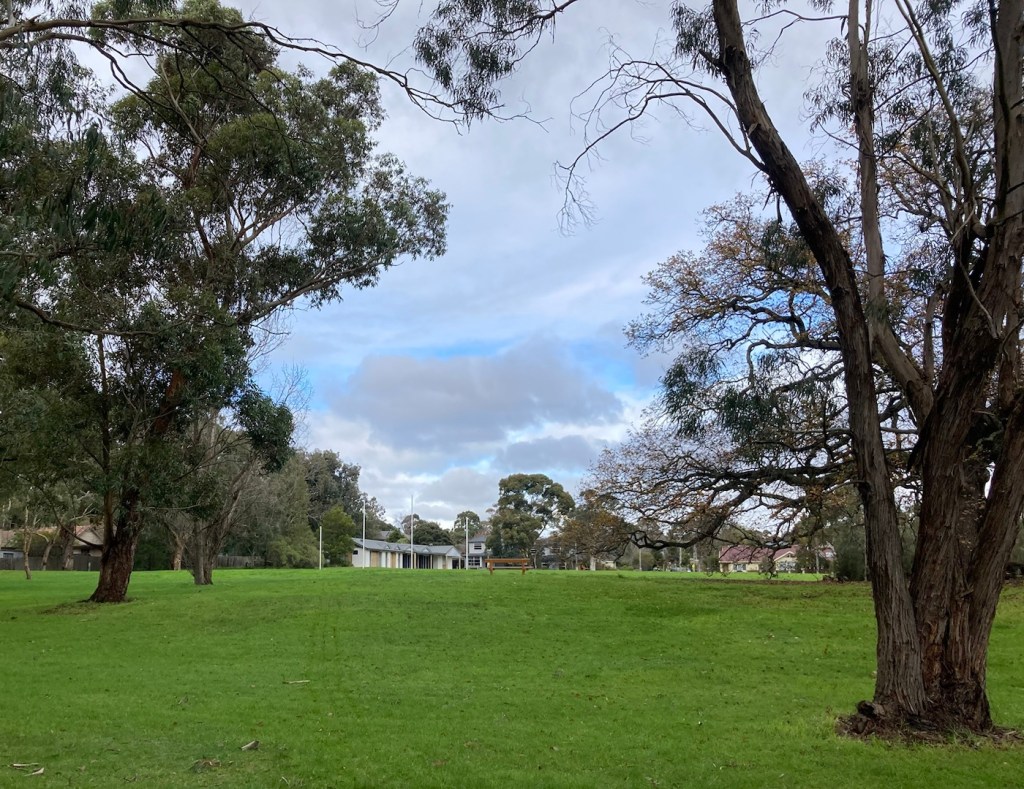
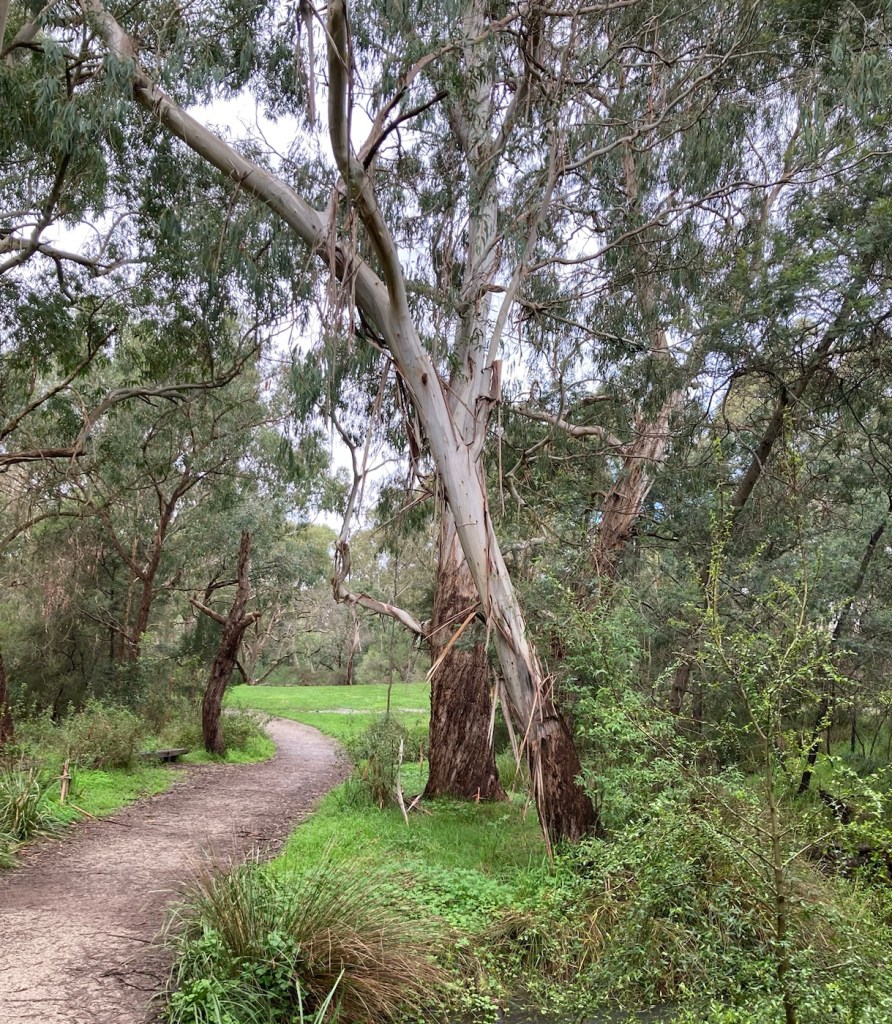
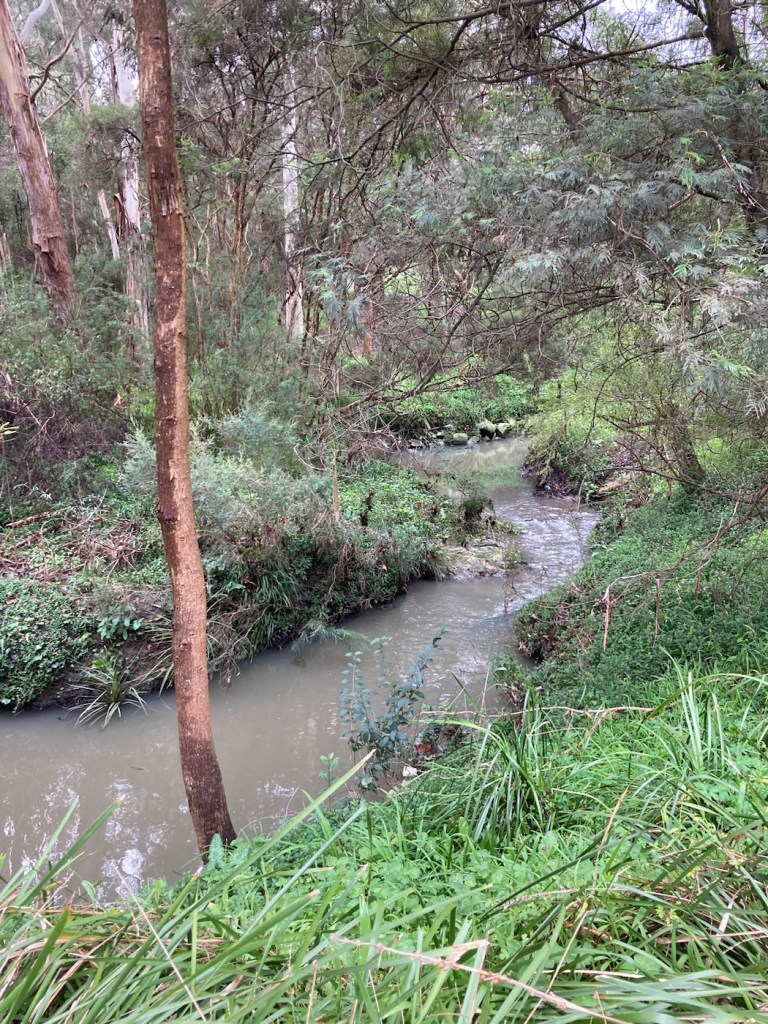
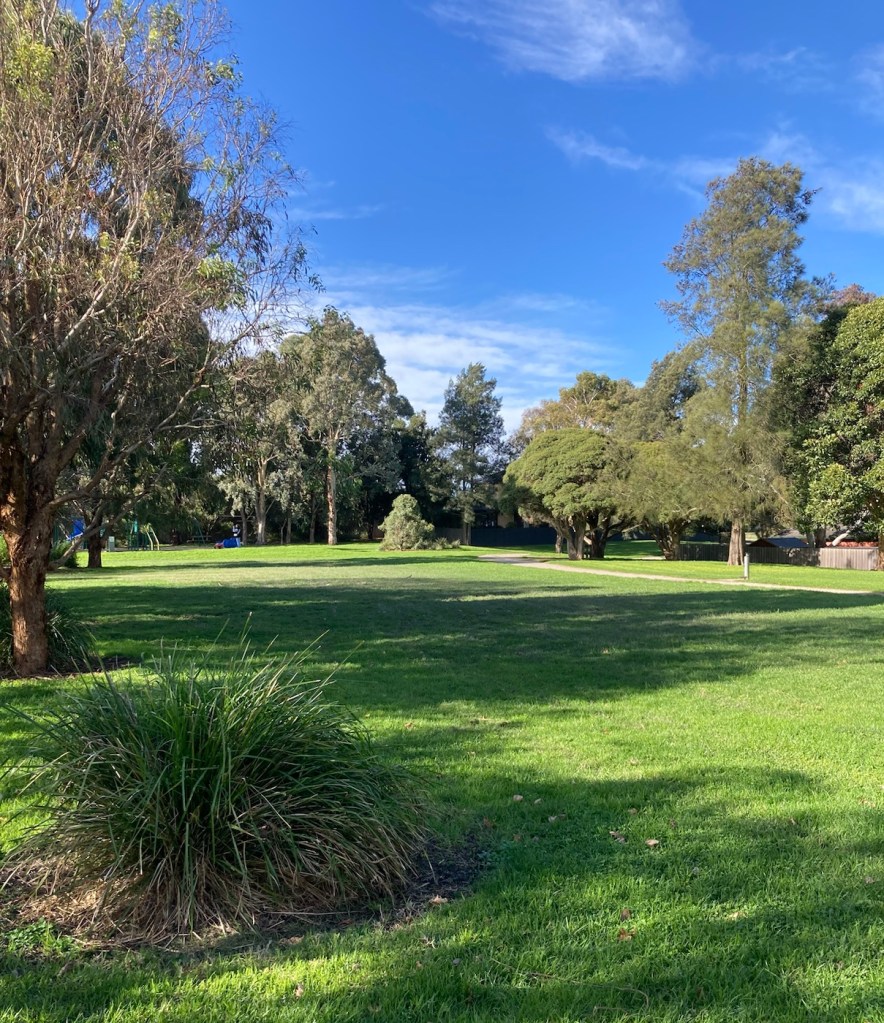
A week or so ago, Bob and I walked up to the Blackburn Lake Sanctuary to walk around the small lake there. Today, we visited a different part of the same ecosystem, a bushland corridor that runs east to west along Gardiners Creek in the Blackburn community of the city of Whitehorse. We walked the Blackburn Creeklands pathway that runs through two parks between the very busy Middleborough and Blackburn Roads.
It was a lovely short walk which allows you to feel you’ve escaped the traffic and gotten back into nature.
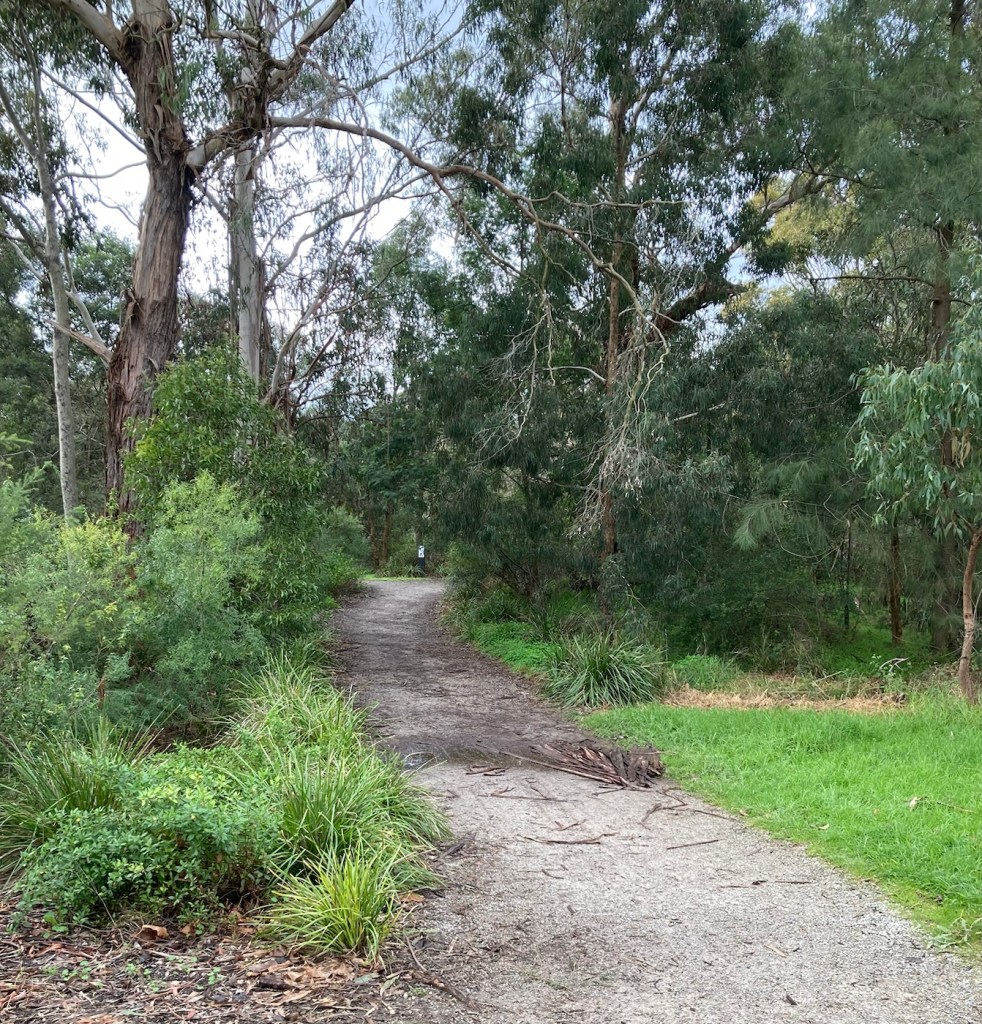
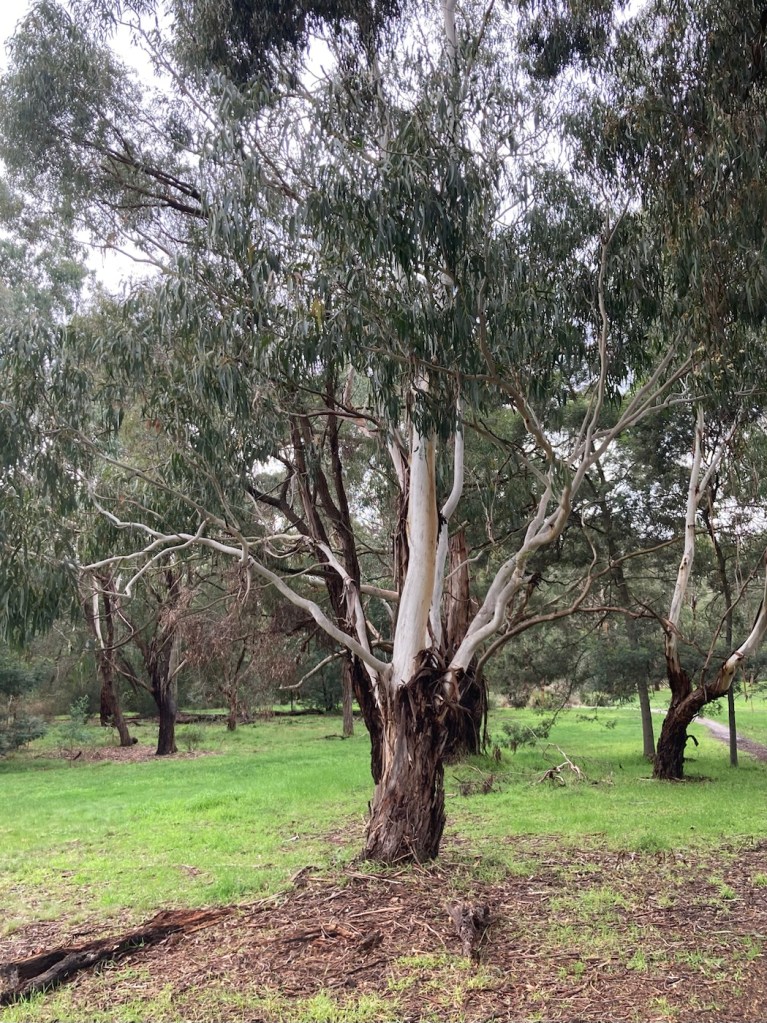
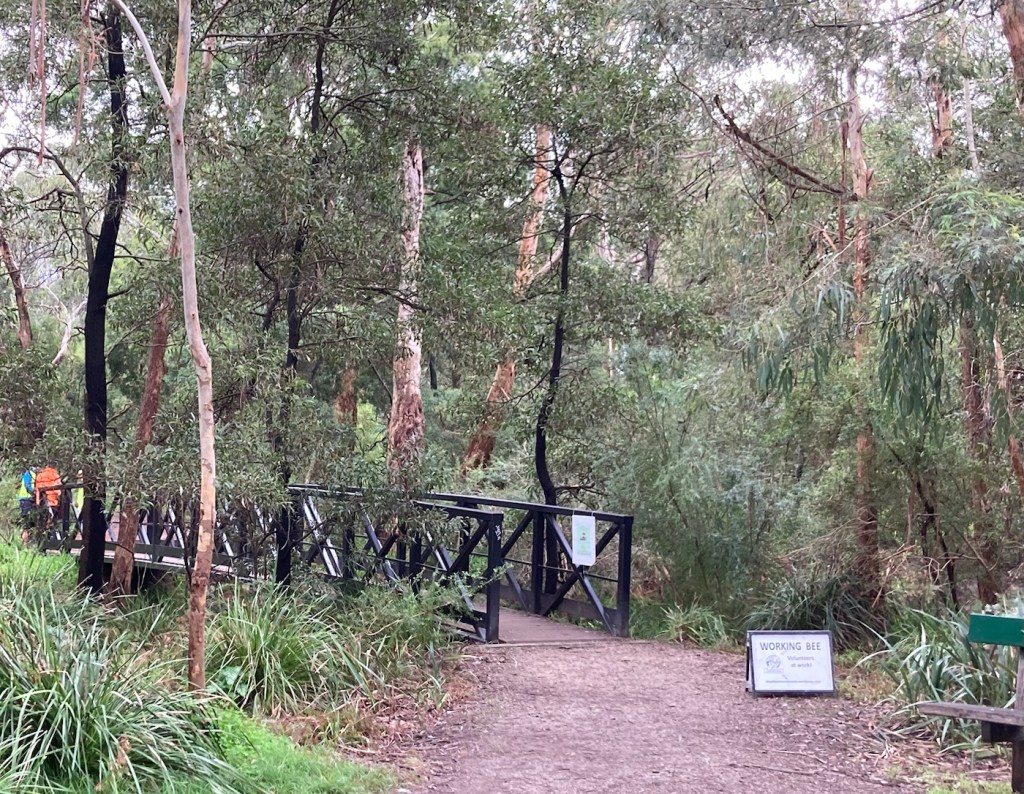
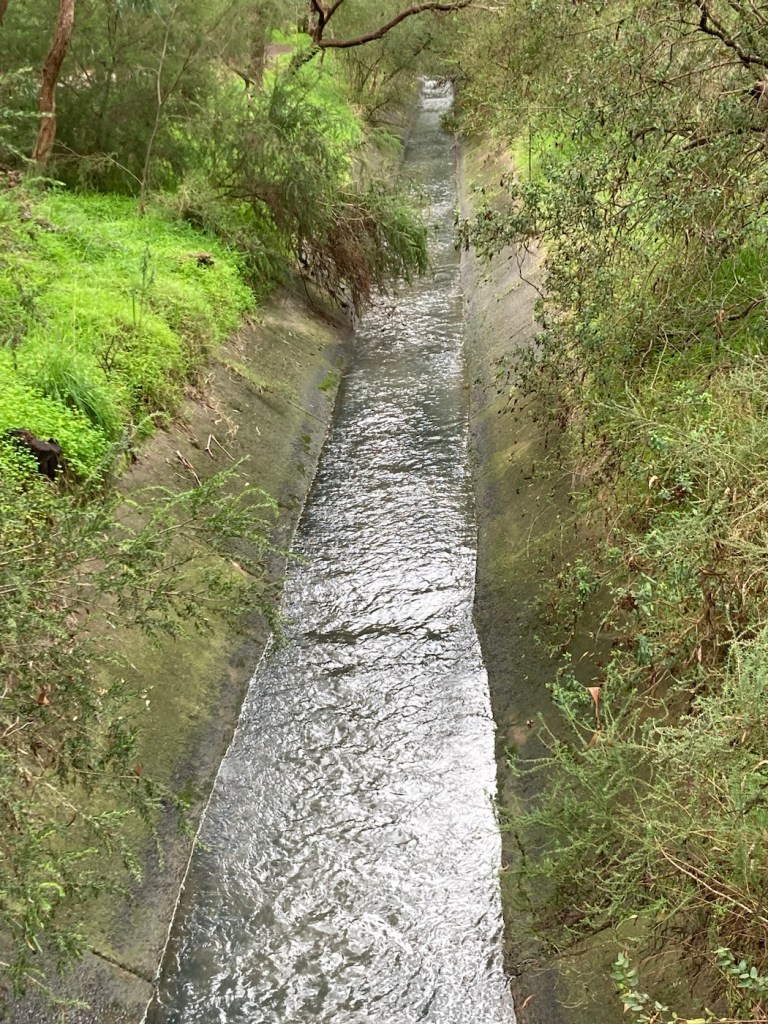
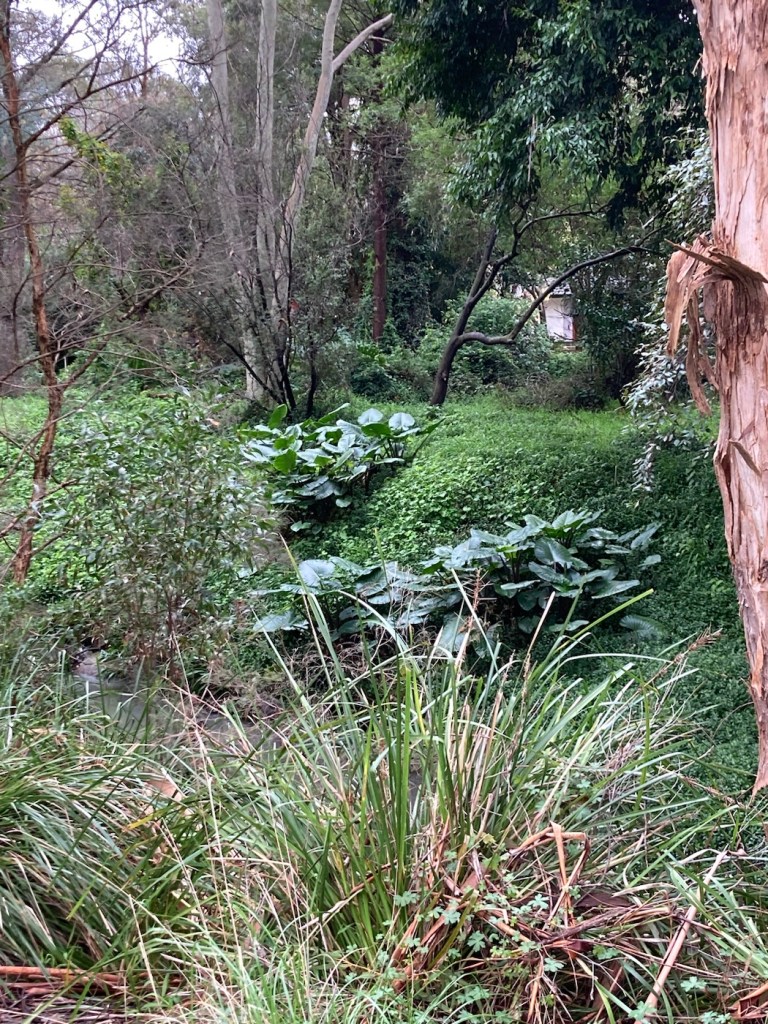
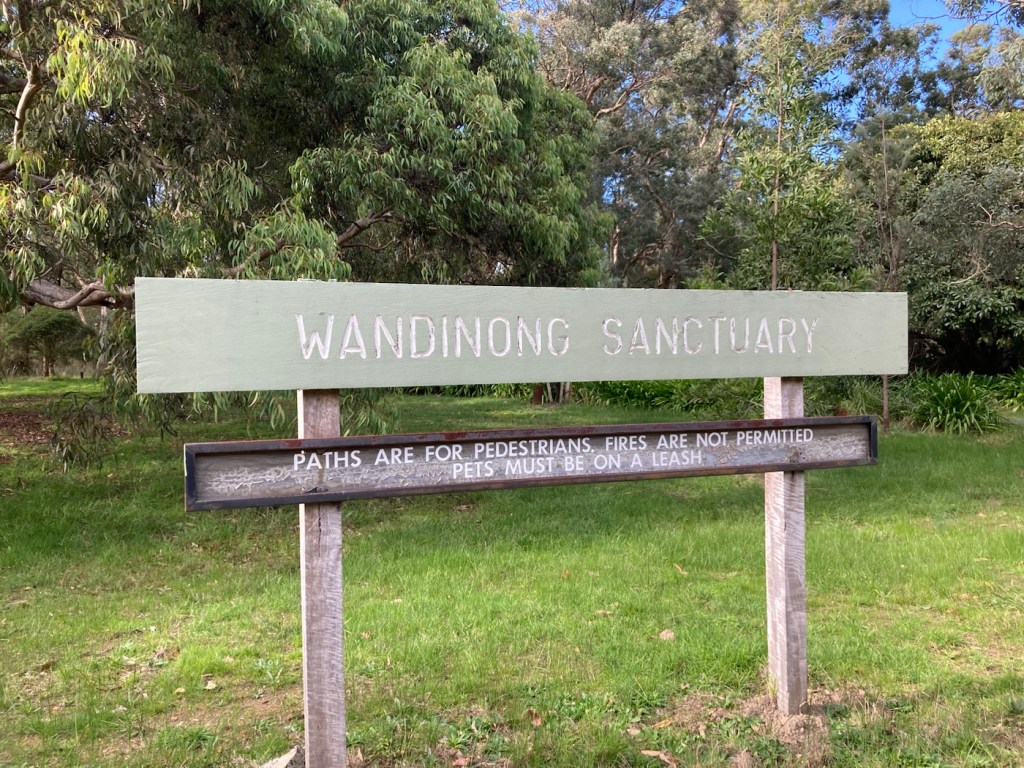
A map of the walk through the Bushland Corridor Beginning the walk off of Middleborough RoadRules of the park, although right after taking this photo we passed a guy with his dog off lead. Wherever we go, we always find people for whom the rules don’t seem to apply.A couple of our predominant memories of our time in Australia this visit will be the bark-stripping trees (our term) and the chatty birds.A bridge over the creek where some volunteers were working A stone with a plaque commemorating the work of the community in establishing the Blackburn Creeklands in 1983.Looking towards the cricket circle in Kalang ParkMore of the path and bark stripping treesThe brown creek and the lush green natural vegetation alongside itRunoff water being channeled into the creekMore beautiful green plants — it reminded us of New Zealand, where we always seemed to be surrounded by greenery.
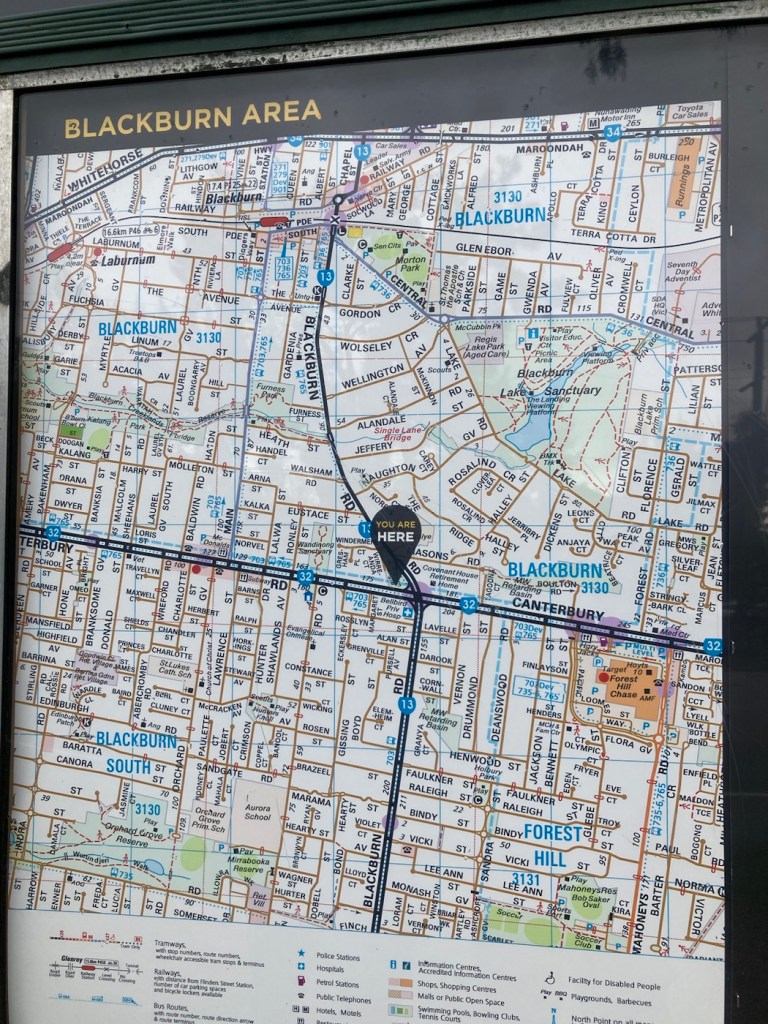
After we reached Blackburn Road, we headed back towards the house. On the way, we stumbled on a civic guide map showing us where we are situated in the larger community as well as a point of interest.
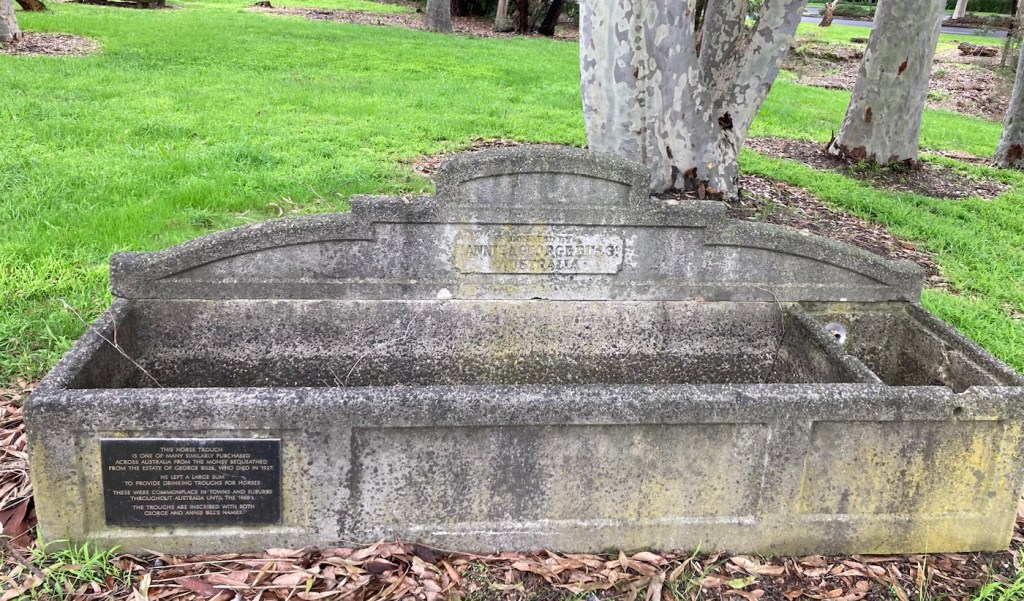
We saw one of these maps in Box Hill as well. “Our” current house would be off the bottom left part of the map.One of many horse troughs throughout Australia purchased with monies from the estate of George Bills, who died in 1927.
The Yarra River (once, per Wikipedia, the Yarra Yarra River) is a tidal river that flows through the heart of Melbourne. It is 150 miles long, flowing from the Yarra Ranges to Hobsons Bay. It continues to be used for container shipping, and the Port of Melbourne is the busiest on the continent.
Bob and I spent a non-active hour on the Yarra, cruising past much of the CBD to the port before returning. We used Melbourne River Cruises and were aboard the Yarra Queen, where we got to watch a captain in training. He did very well, although struggled a bit with the first docking.
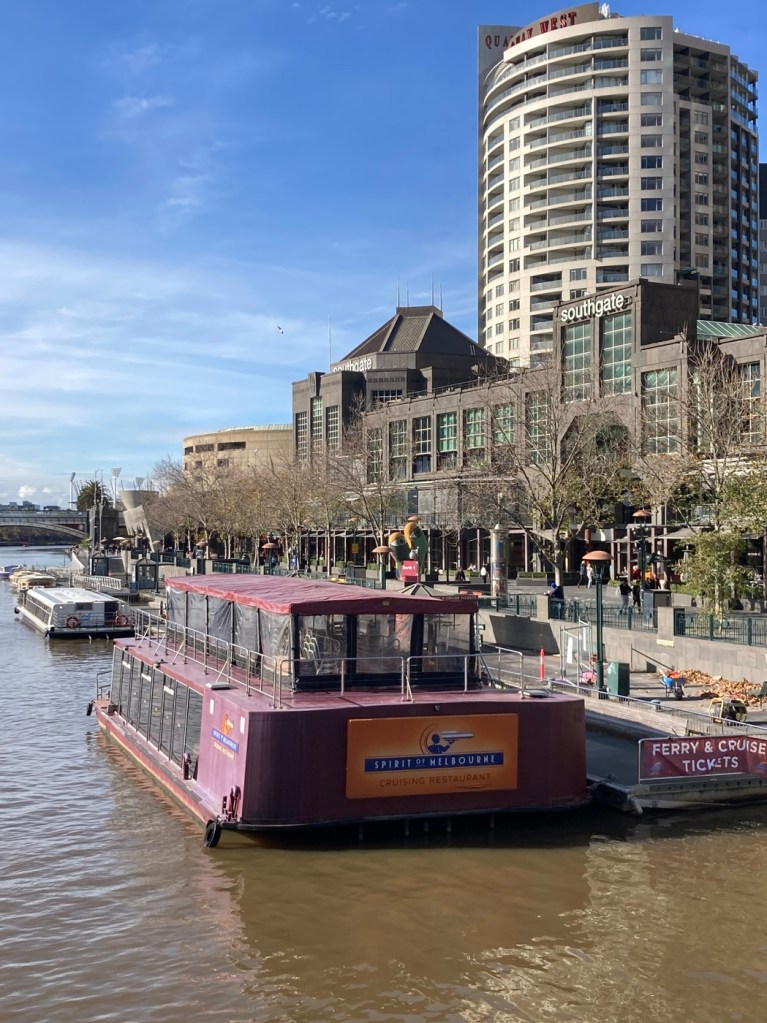
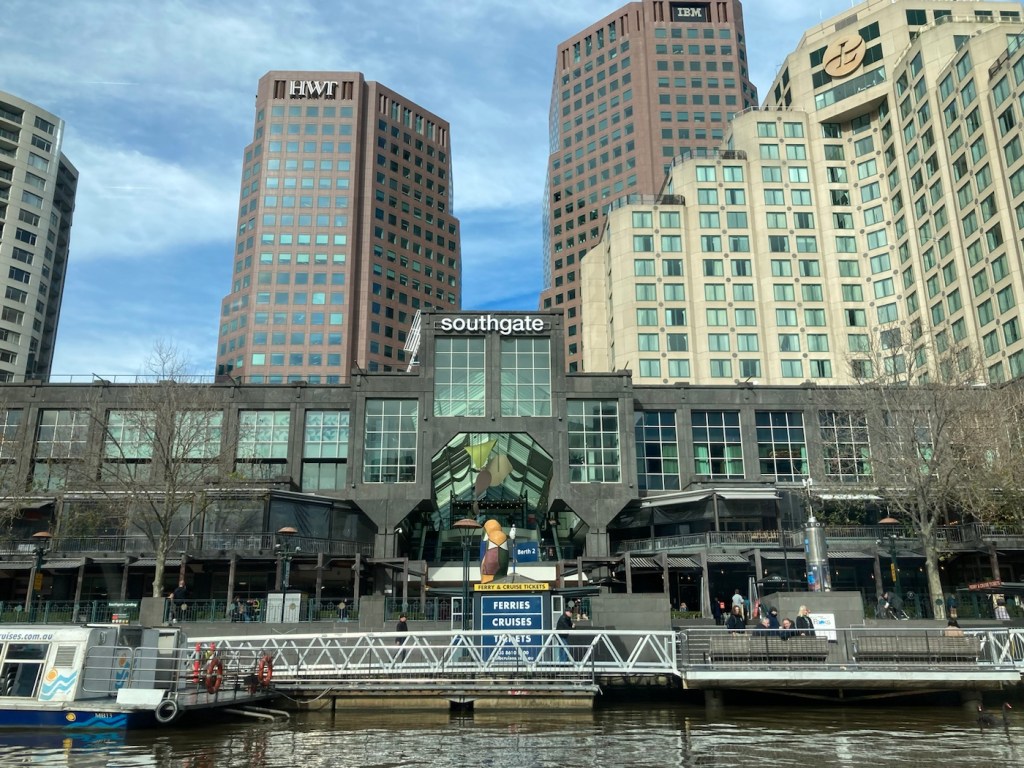
The company offers a number of tours. We went down river past Southgate shopping/retail complex, Melbourne convention center, Crown Casino, World Trade Center, waterfront residences, and the port. We also went under a number of bridges (auto and pedestrian), some of which were quite low.
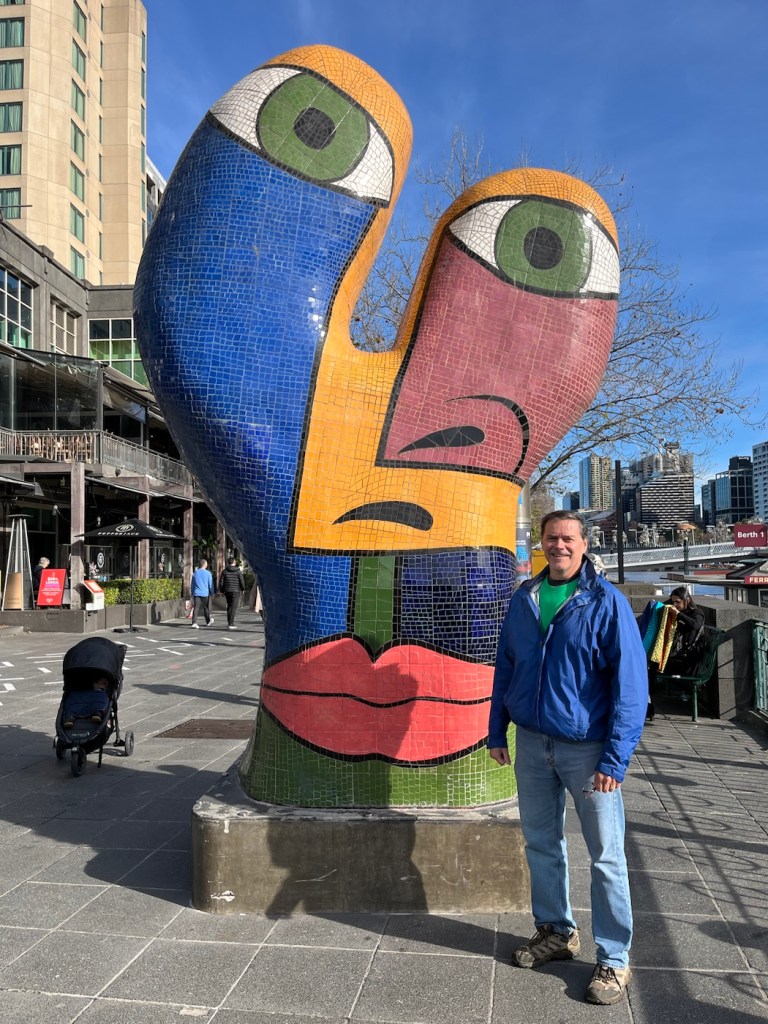
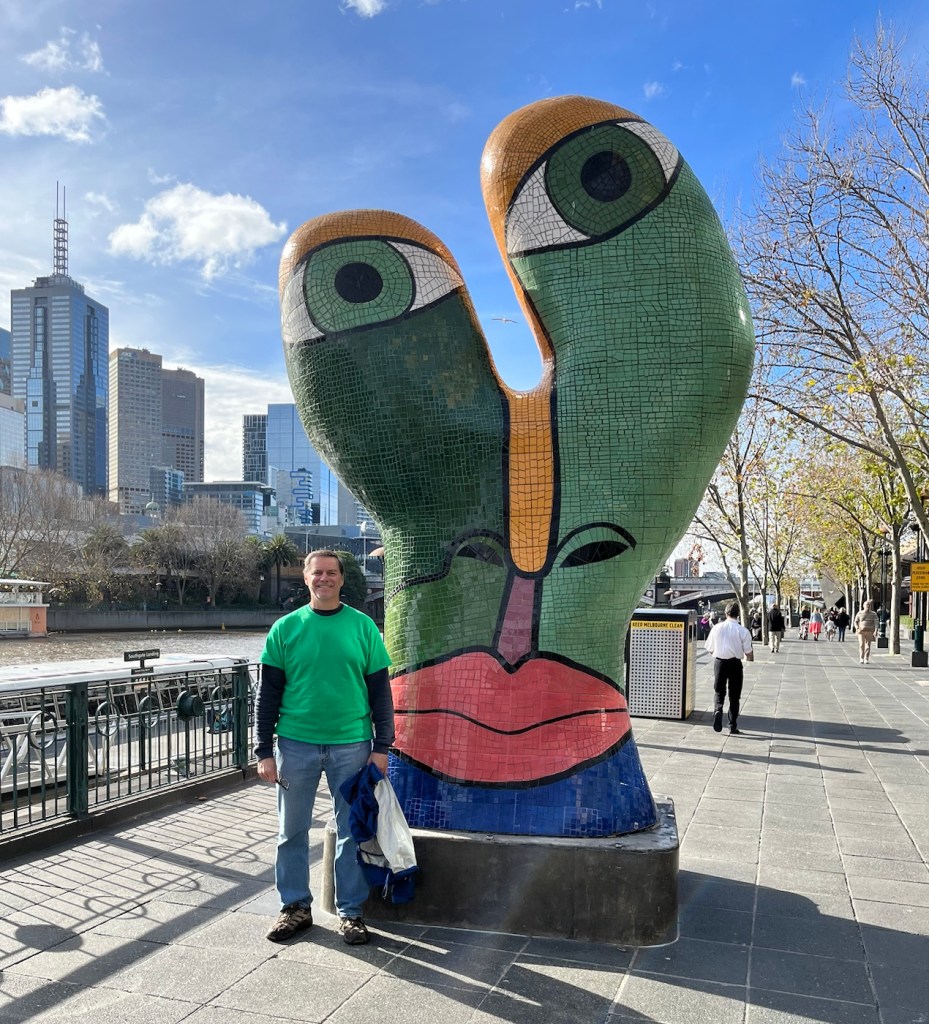
Below are photos of our excursion. First things first though as Bob found a big head statue!
Finally! It’s been awhile.The other side. You’ll have to ask Bob if this counts as 2.
Okay, now for the cruise photos.
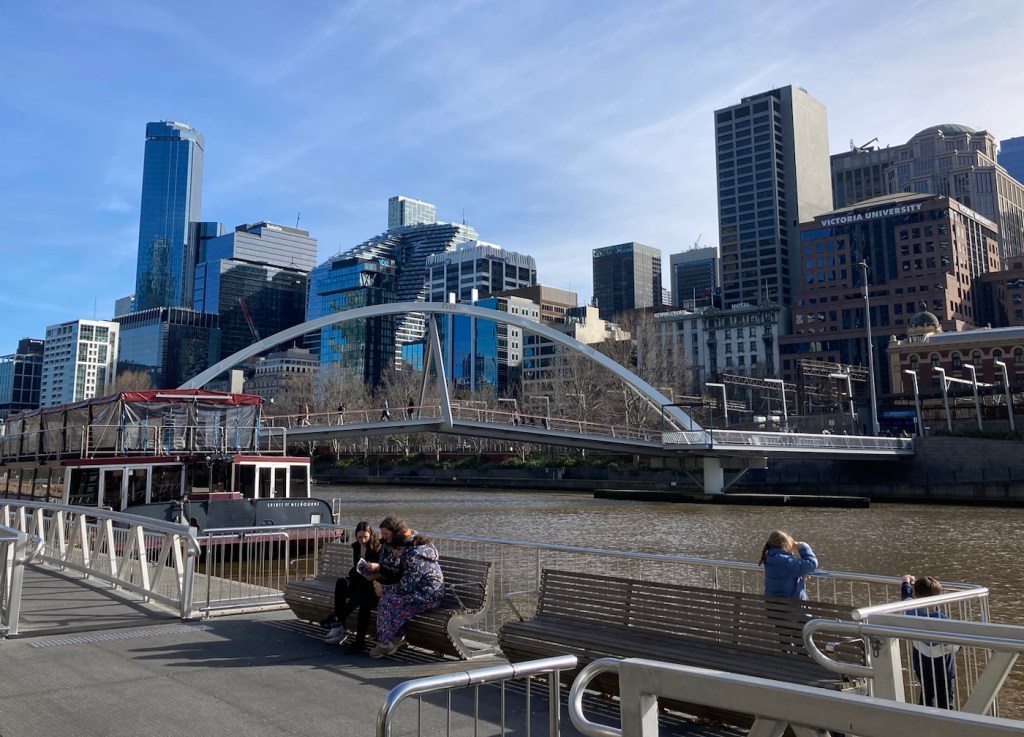
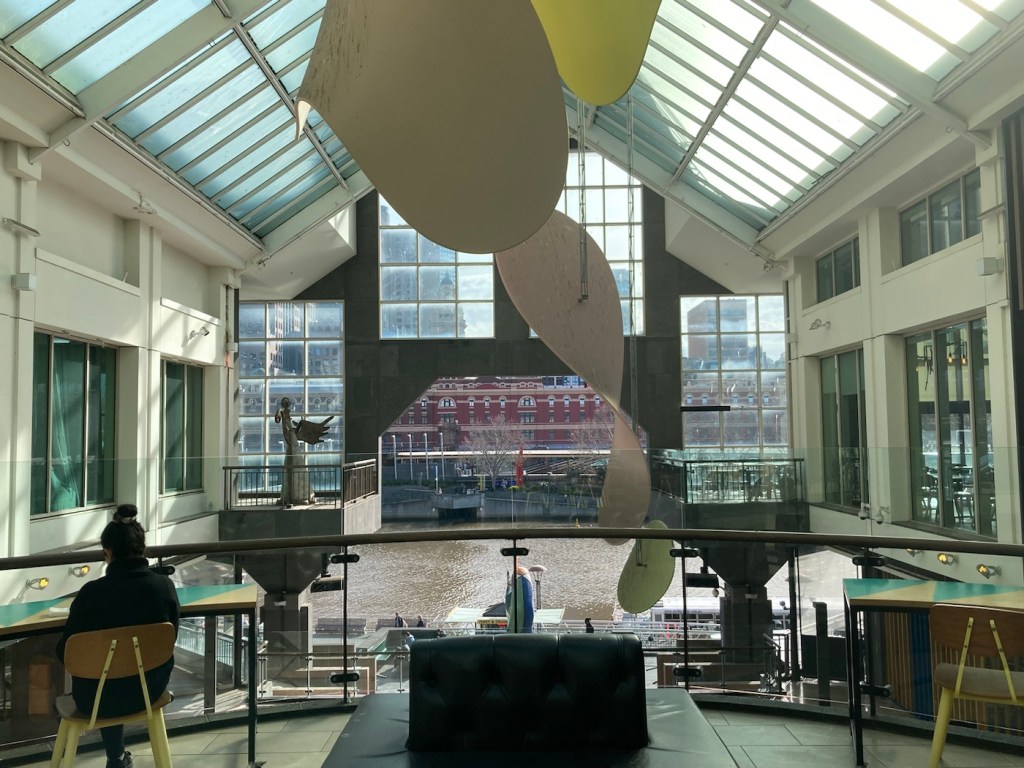
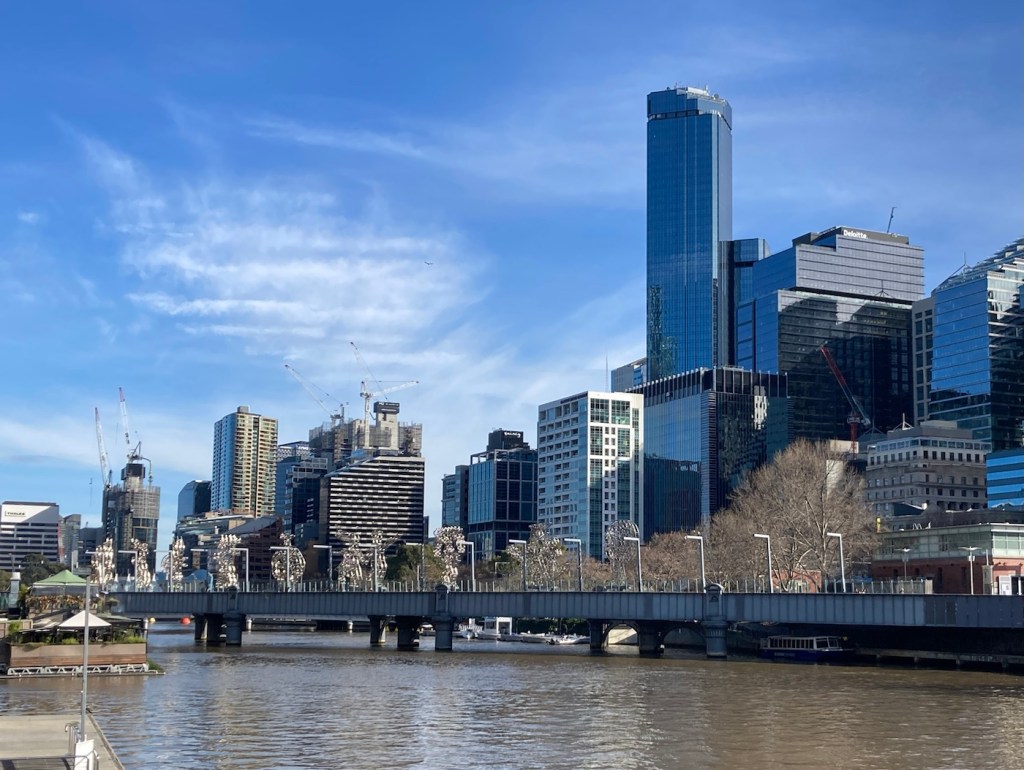
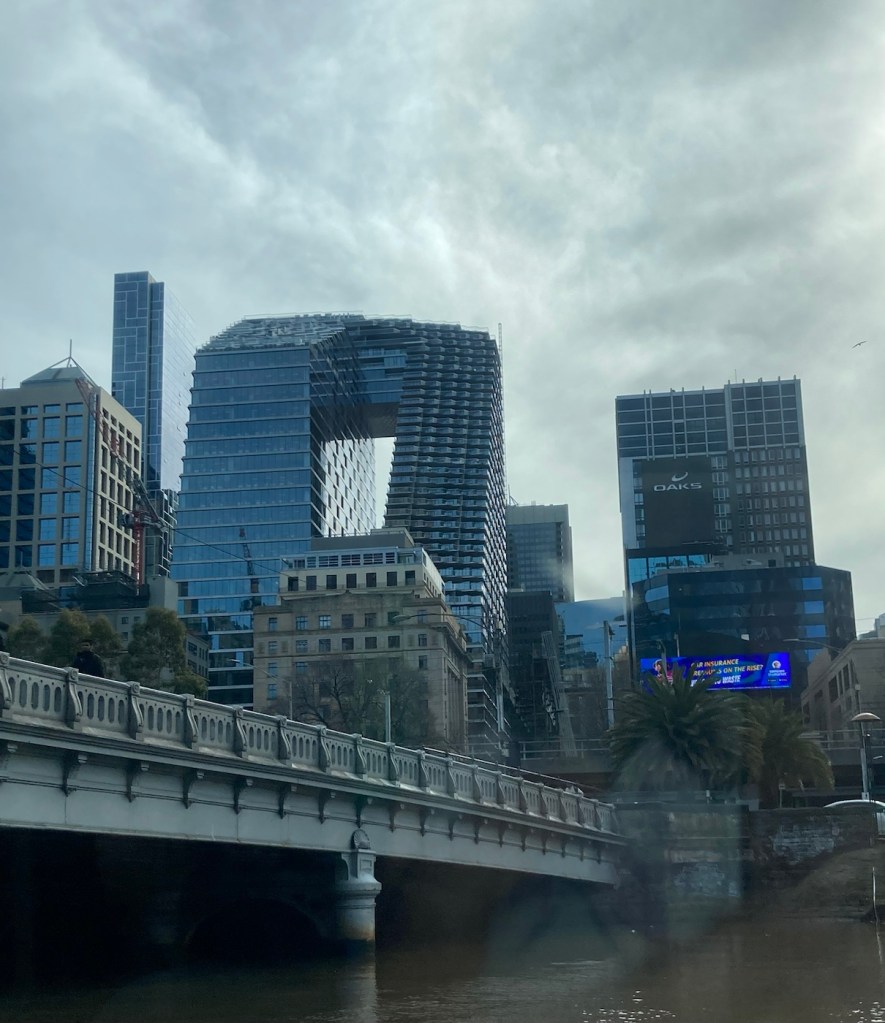
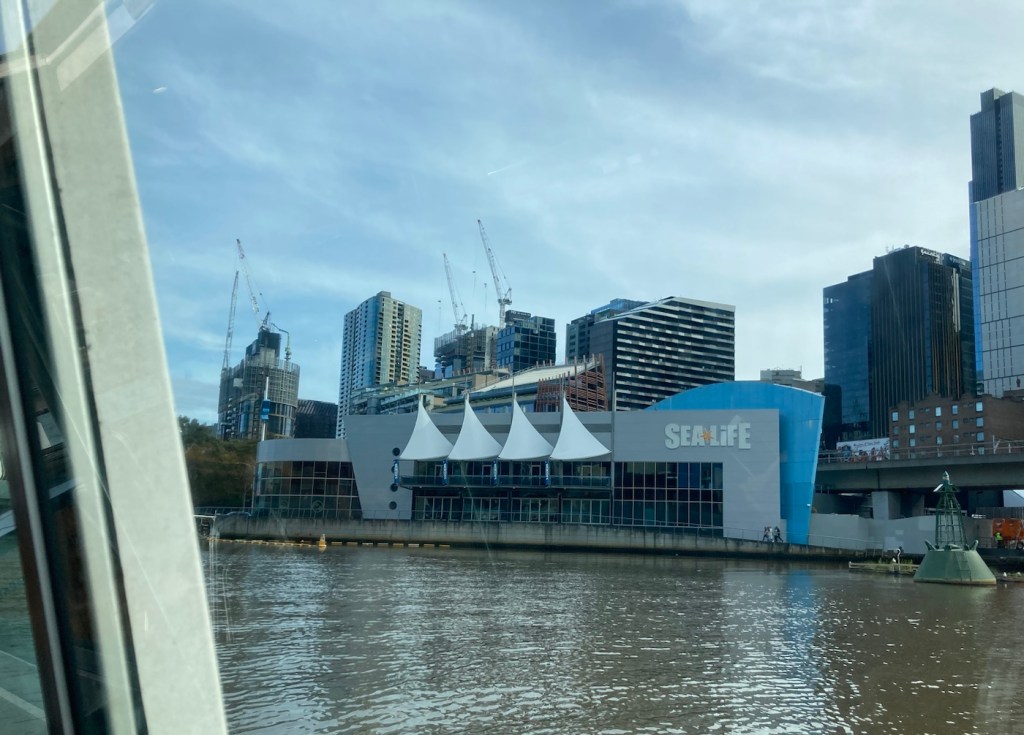
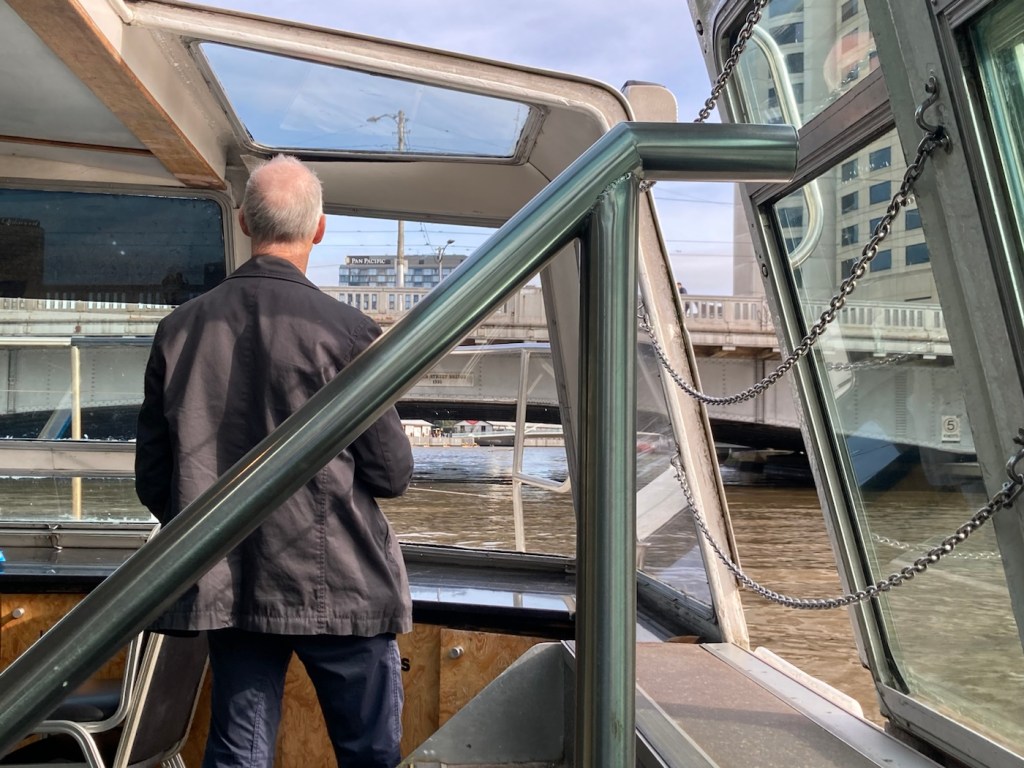
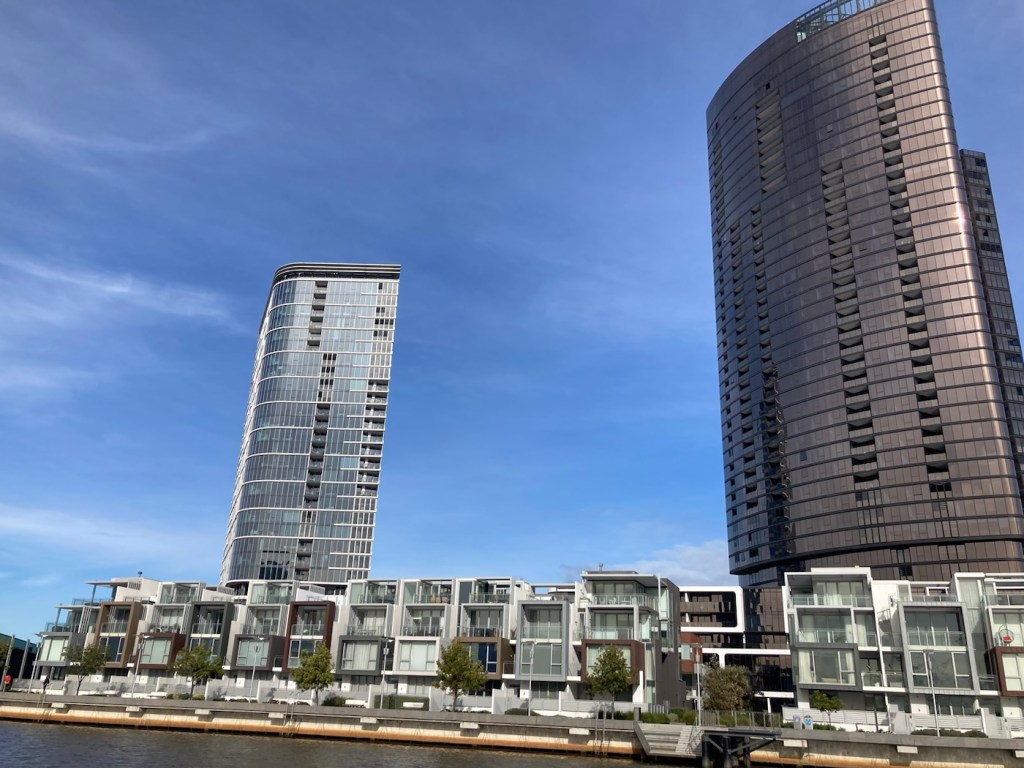
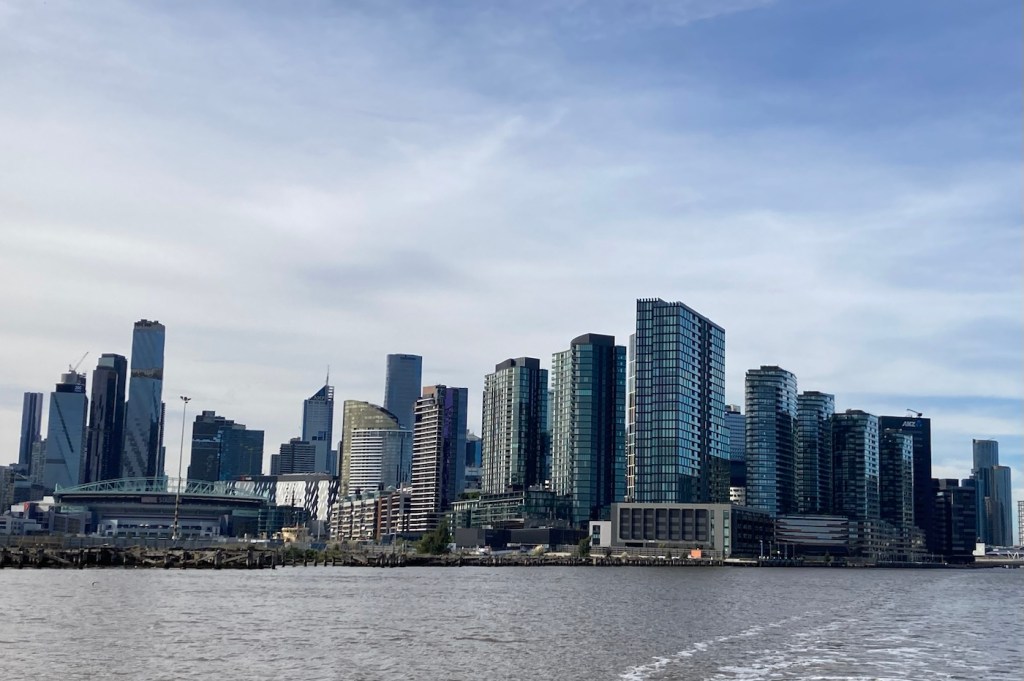
A photo from land of the Evan Walker Pedestrian BridgeA bar built into the bridge! Looking out towards the Yarra from inside the Southgate ComplexThe Sandridge Bridge with wire art installations representing the immigration processThe shorter white boat in front is the type of boat we were onHeading offSome of the interesting buildings in downtown The Melbourne Aquarium Looking ahead toward one of the low bridges we went underSome of the waterfront housing. One bedroom condos go for $500,000 Australian, per the captain.Impressive Melbourne skylineAnother pic with some of the port containers/ships in viewOne end of the Webb Pedestrian Bridge, modeled after an Aboriginal fish trap.
Bob and I ventured into Melbourne proper today to visit the Botanic Gardens and the Shrine of Remembrance. It was a good day to get out with temps in the lower 50s F but wind and rain predicted for mid afternoon.
We again took the tram in, as we knew that it runs every 10 minutes. We got to the stop just as it was pulling in. We had an hour ride in — from stop 66 to stop 5. It is slow but reliable.
We got off near Flinders Station and crossed the Yarra River to head towards the Botanic Gardens and Shrine of Remembrance.
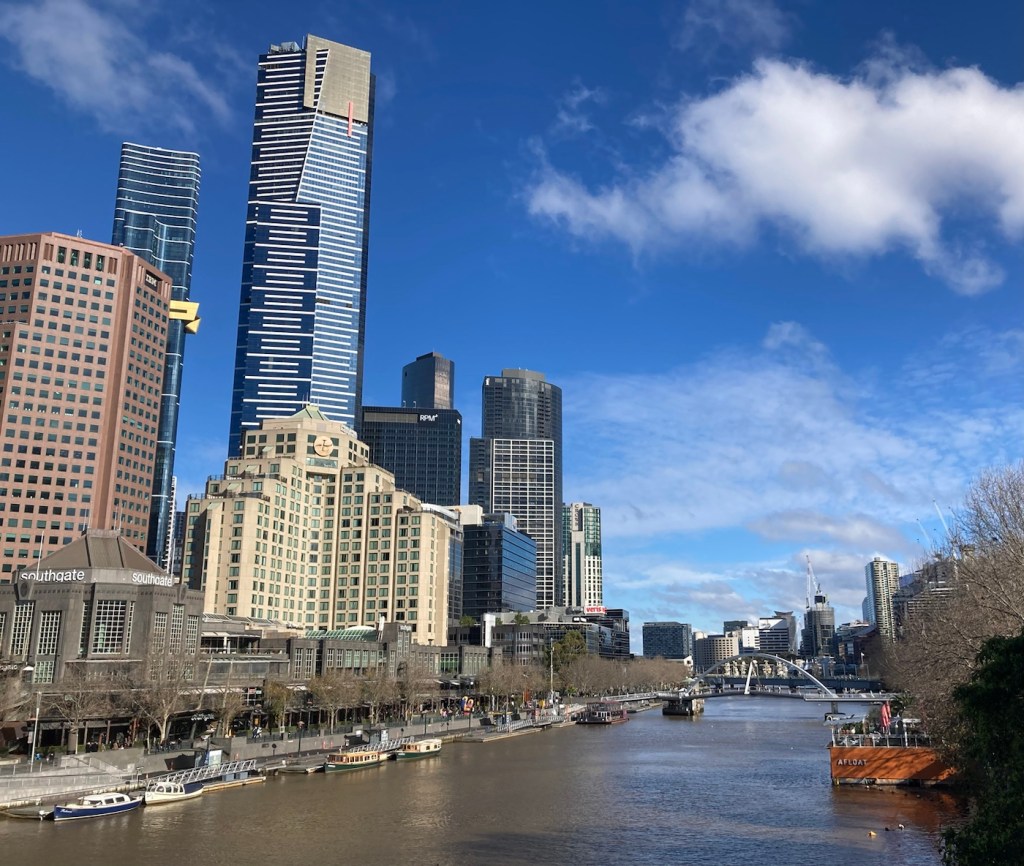
A view down the Yarra River
Before we made it to the Botanic Gardens, we walked through the lovely Alexandra Gardens, Victoria Gardens, and Kings Domain.
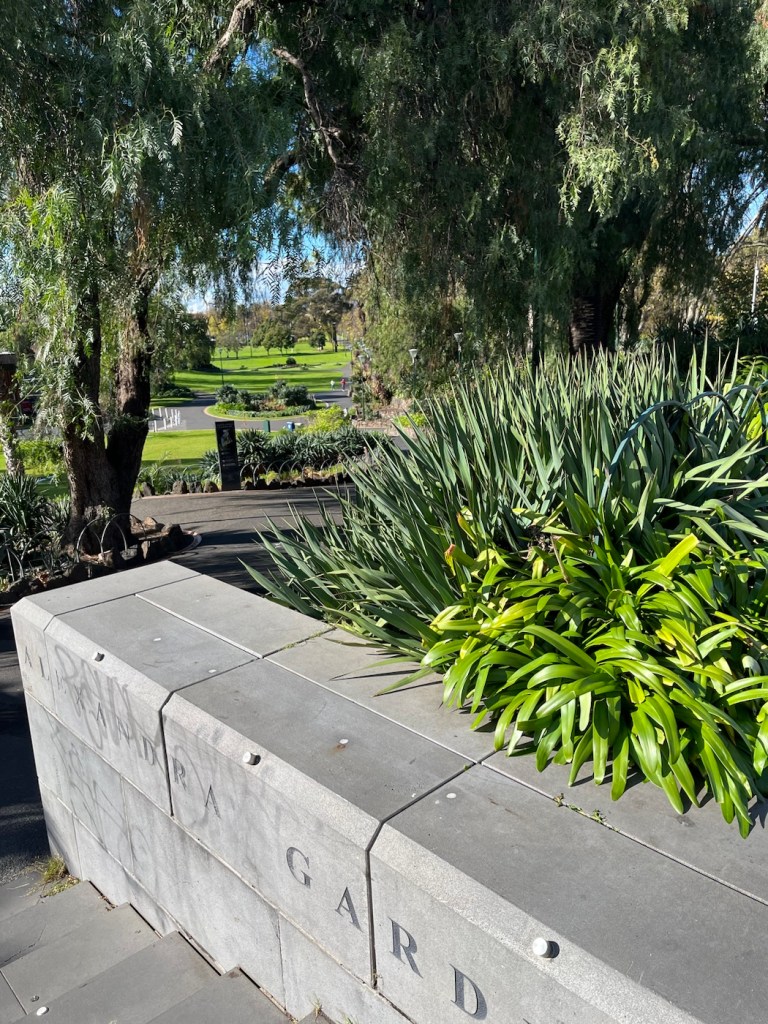
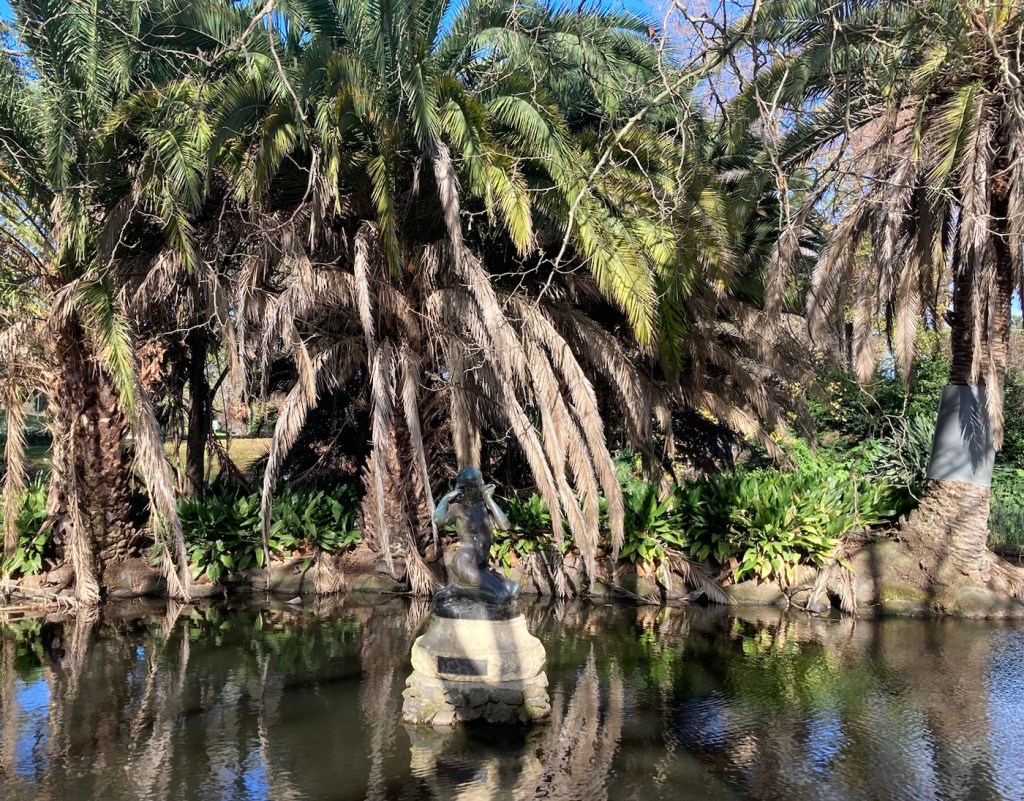
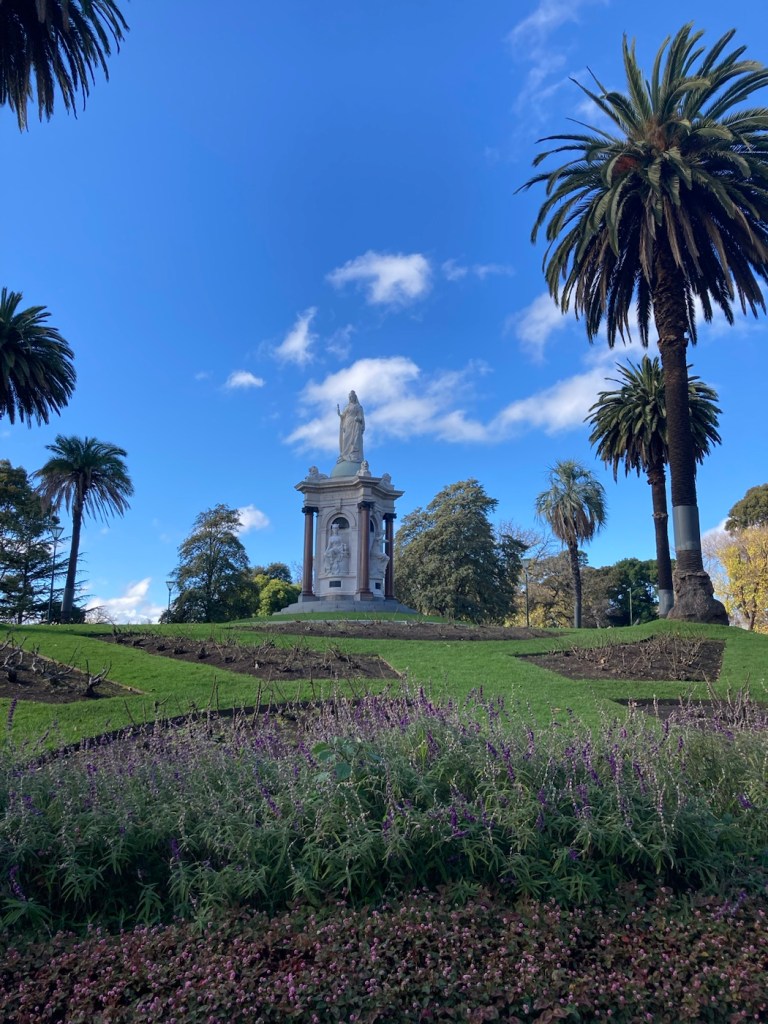
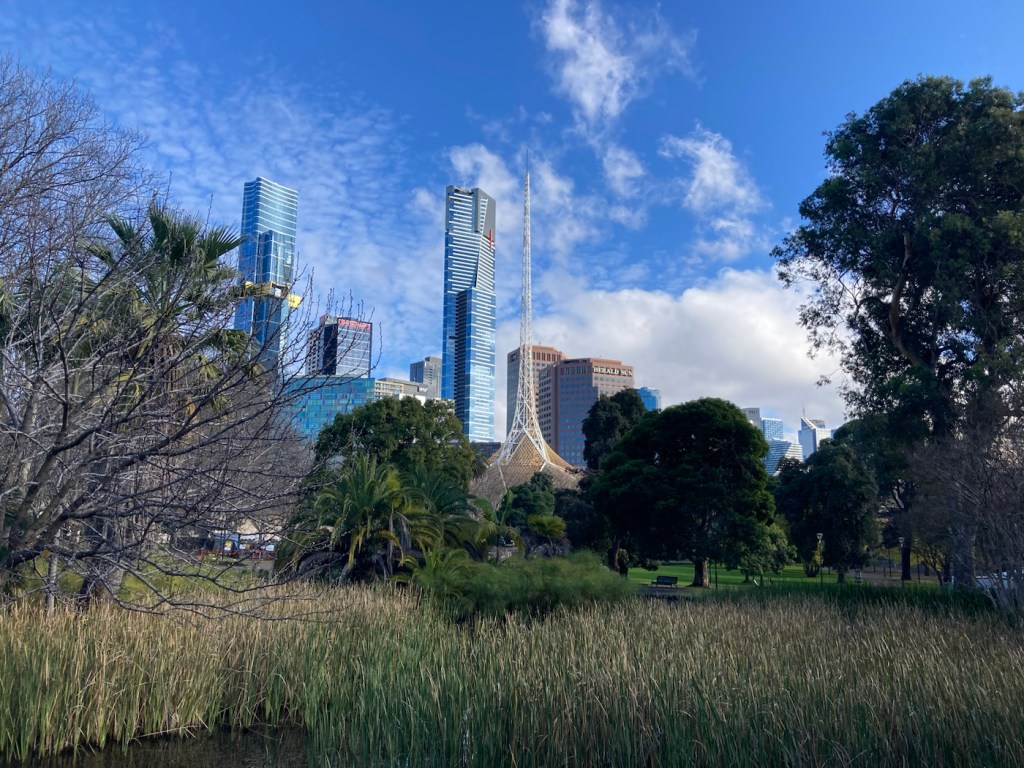
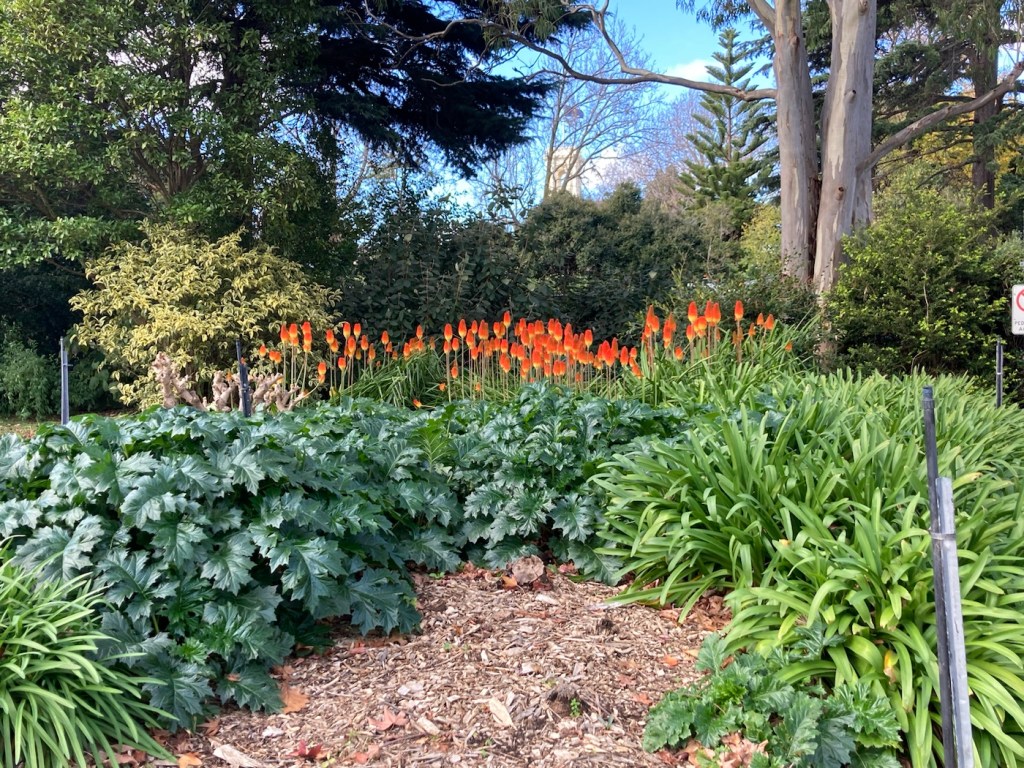
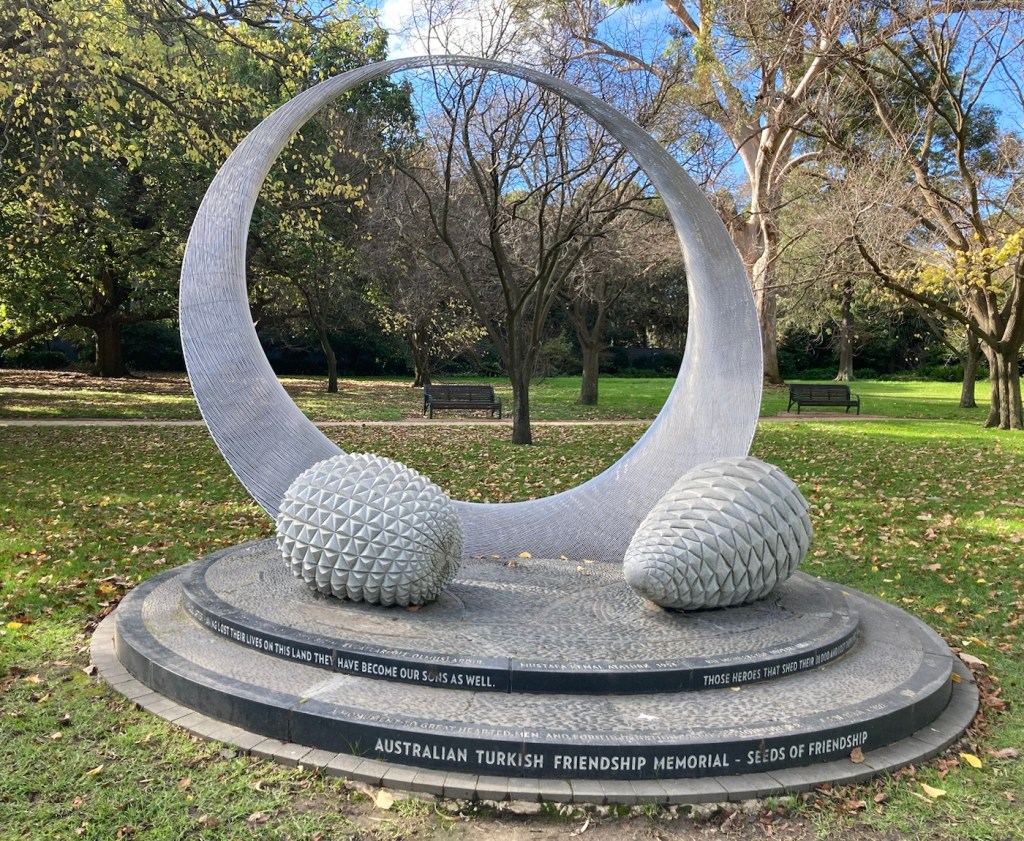
Entering the Alexandra Gardens A water nymph in a pond in Victoria GardensLooking up towards the Queen Victoria Monument in the Victoria GardensLooking back towards the City Center from the gardens. The interesting white tower is the top of the Melbourne Arts Center.Some lovely landscaping in the Kings Domain. I love the bright orange flowers.Seeds of Friendship Memorial in the Kings Domain
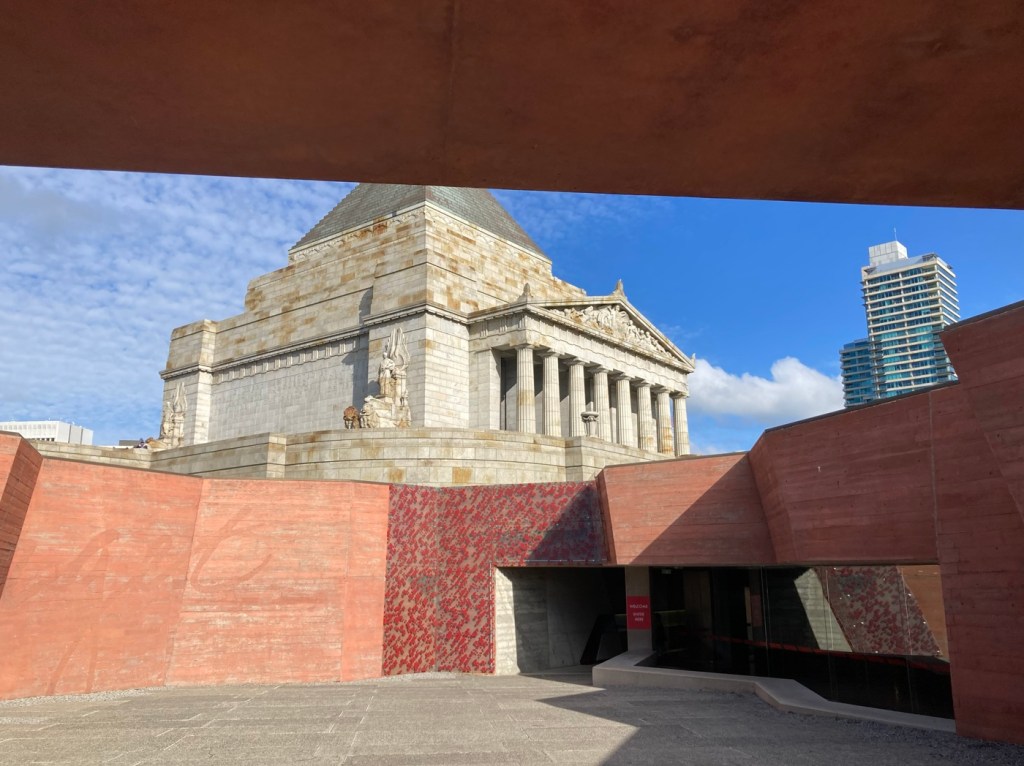
We saw signage for the Shrine of Remembrance, so we headed there next. It brought back memories of having stopped there in 2003 during a trip for our 10-year wedding anniversary. At the time, we visited Melbourne and Sydney and were on a city bus to St. Kilda when we saw the Shrine and decided to get off the bus to visit. It still impresses.
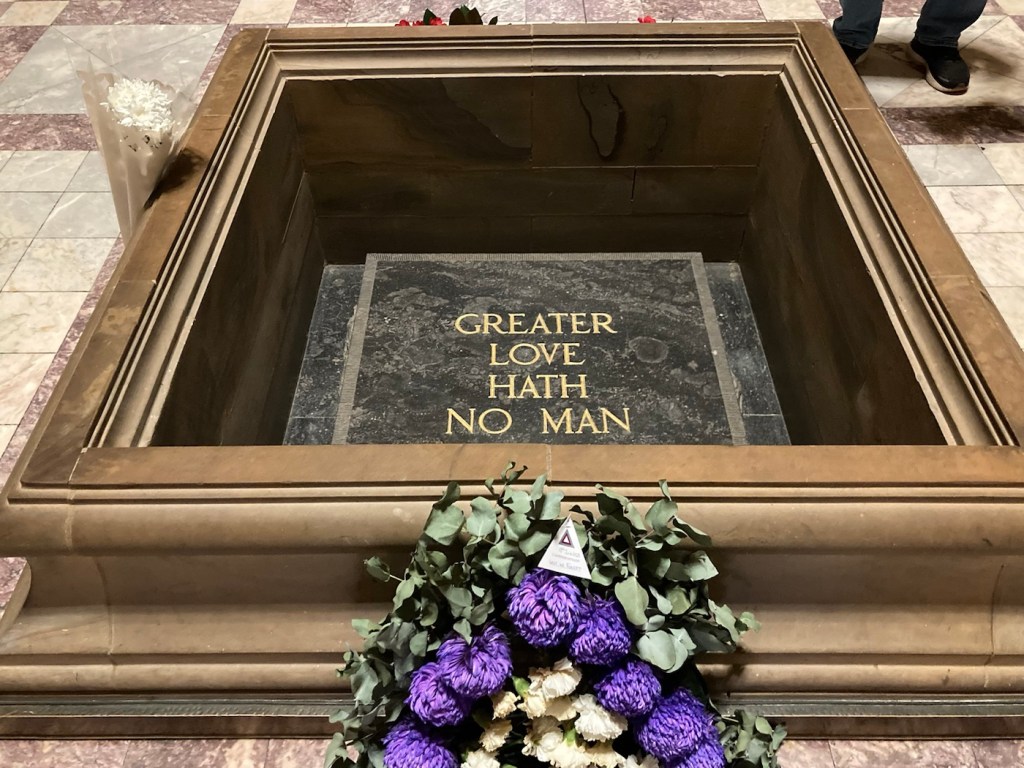
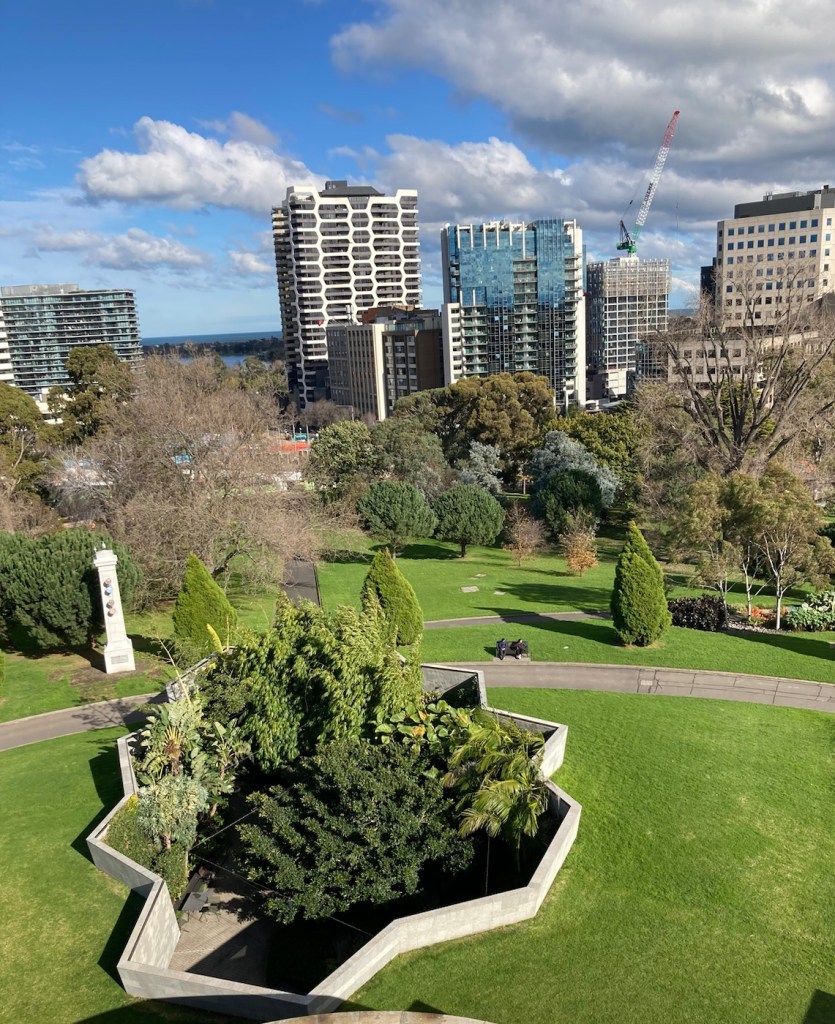
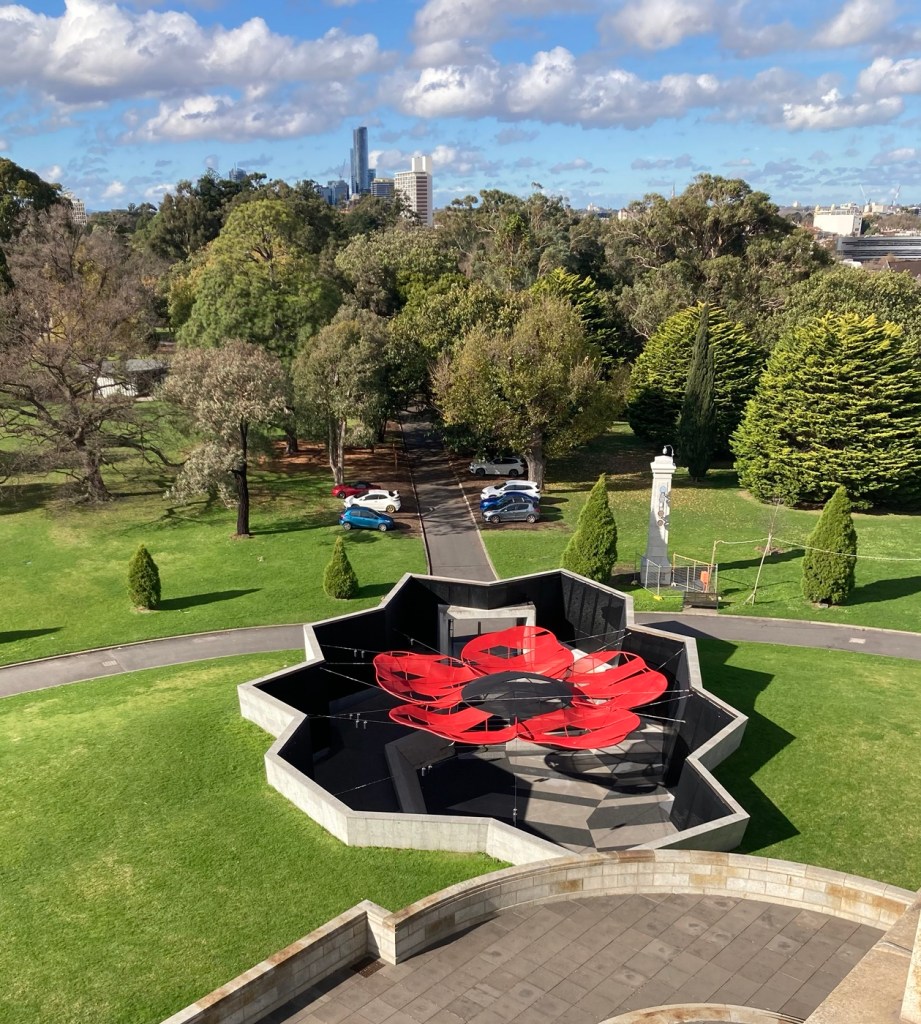
Walking down into the Shrine of Remembrance Visitors CenterThis is the crypt commemorating the fighting units of the 1st World War. It is in the center of the first floor and surrounded by the galleries of remembrance. The center statue is of father and son, the father who served in the 1st World War, and the son in the 2nd.This commemorative stone is in the center of the sanctuary on the floor above the crypt. It is illuminated by a skylight every half hour, so that it is illuminated at 11 am on the 11th day of the 11th month — Remembrance Day.The top floor of the shrine has an outdoor balcony, which provides a 360 degree look at the grounds and surrounding area.
Next, we were off to check out some of the Botanic Gardens. The Botanic Gardens were established in 1846 and contain over 8,500 plant species, representing 98% of the world’s sovereign nations. It was being enjoyed by many humans and pets on this Saturday, and amazingly, both the gardens and the shrine are free to visit.
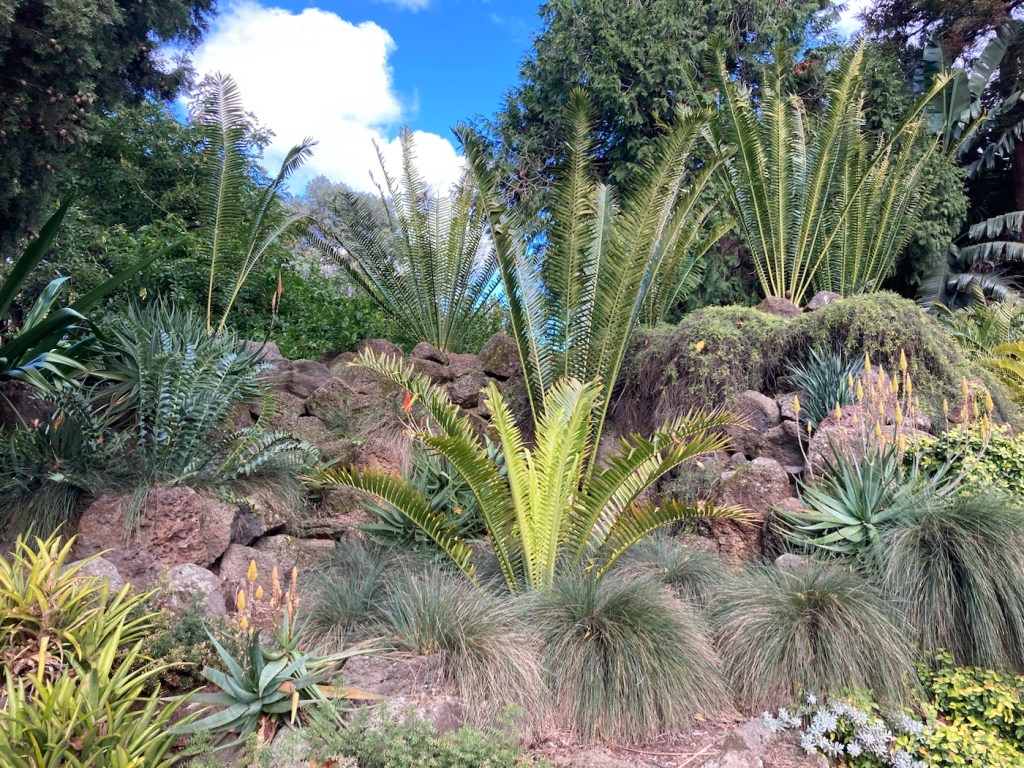
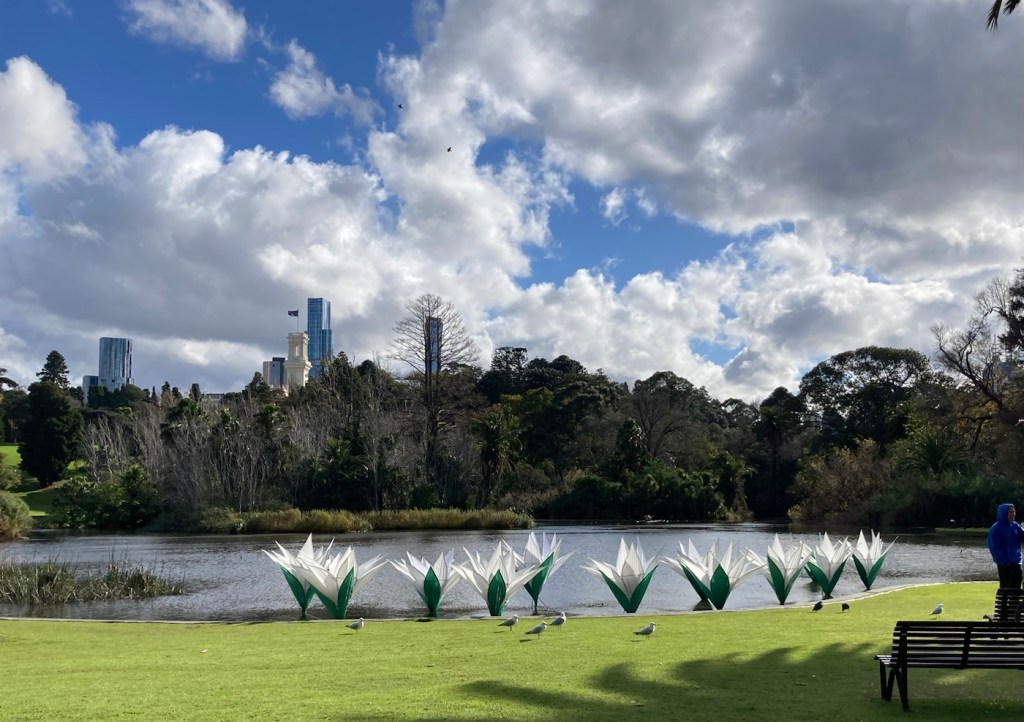
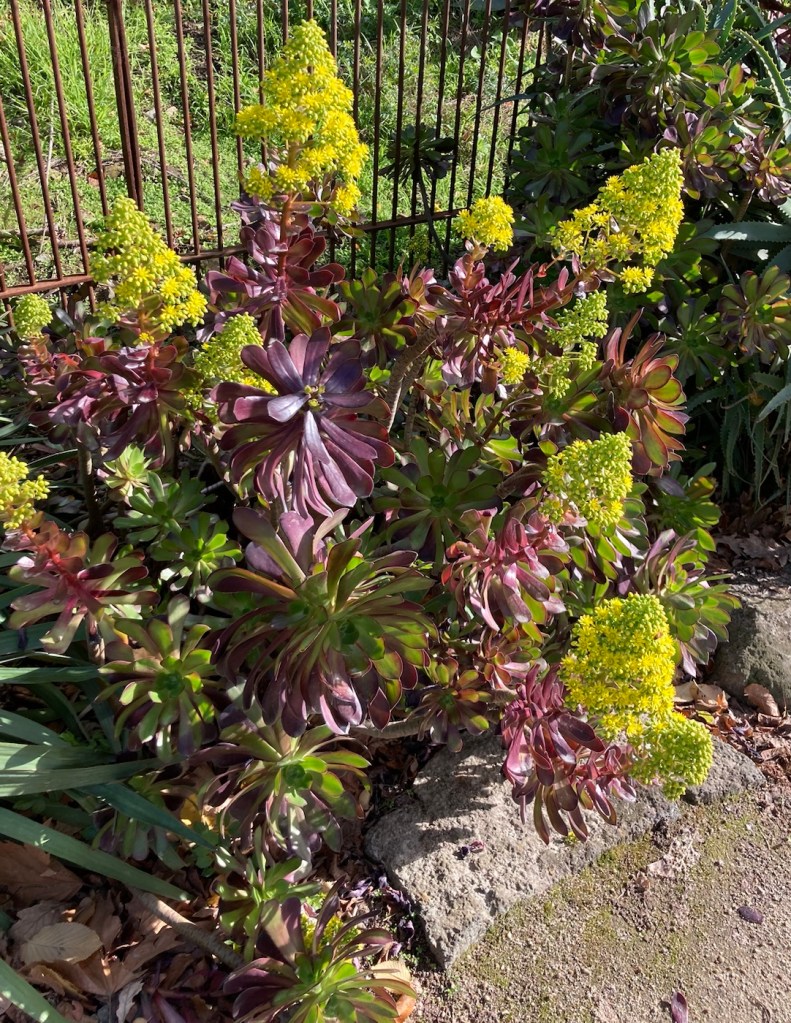
The Western Lawn of the gardens with some white lights set up for Lightscape, their winter festival.Beautiful landscaping within the gardensLooking across the ornamental lake towards the city centerOne example of the gorgeous and varied succulents along our walk to the train station.
We opted for the train/bus combo on the way back. The train was in the station when we got there and we caught the 735 bus (new one for us) when we got to Box Hill. All of that meant we were back in the house for about 20 minutes or so before the skies opened up. Good times and good timing!
On the two occasions when Bob and I have taken the tram to or from Burwood, we noticed an area closer to the city center that we thought looked like it might be interesting to explore a bit. Today, we used our recently topped-off Myki cards to catch the #75 tram to go from Stop #66, Burwood, to Stop #37, Tooronga Road in Camberwell.
Camberwell lies about 6 miles east of Melbourne’s CBD within the city of Boroondora local government area. It is apparently considered as one of Melbourne’s most prestigious and exclusive suburbs based on its grand, historic homes. We may have to go back to see those. We just checked out a local park and the Burke Road shopping strip as well as some municipal buildings.
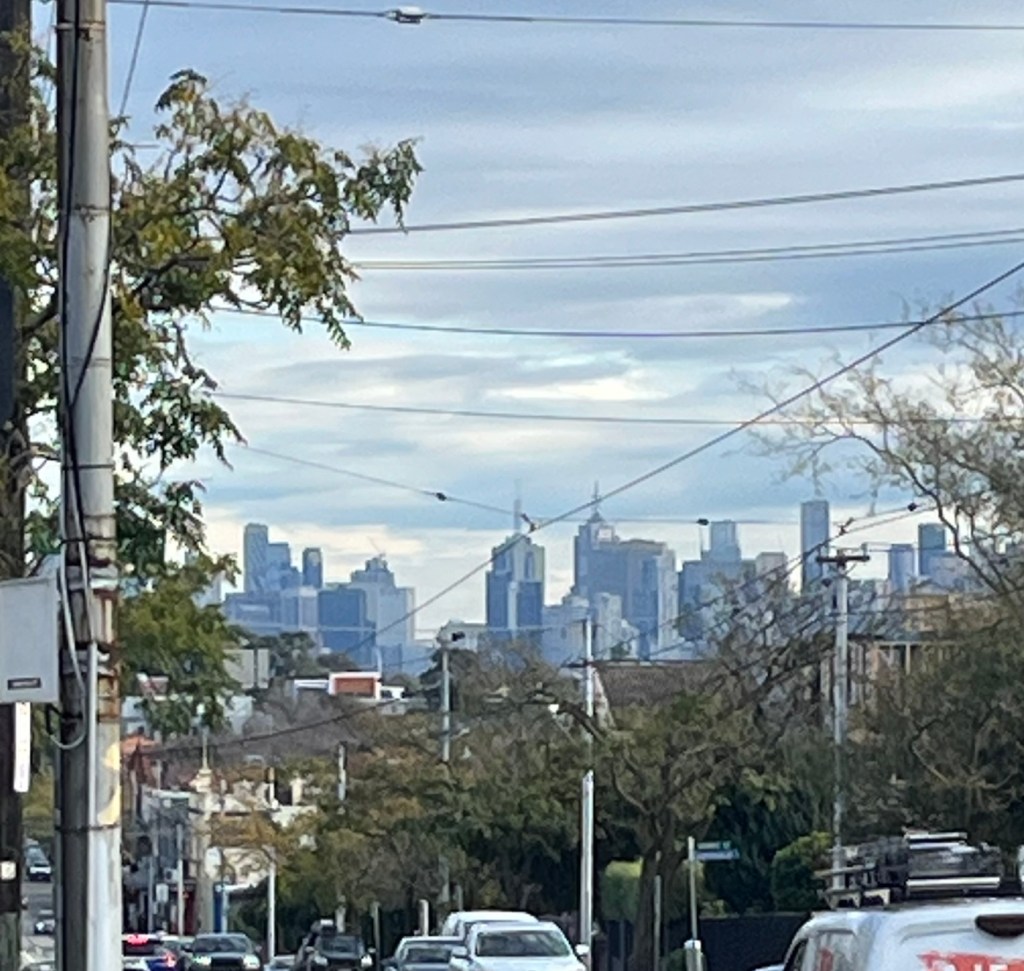
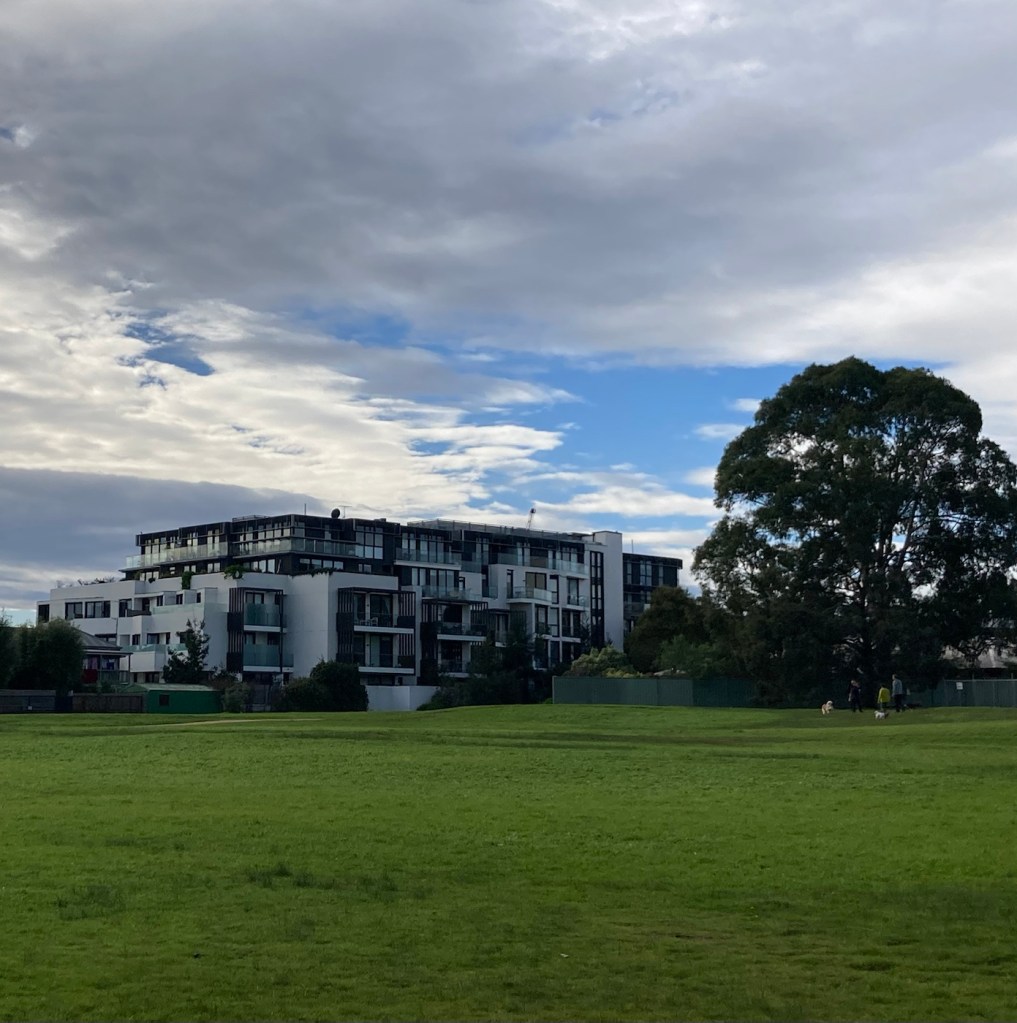
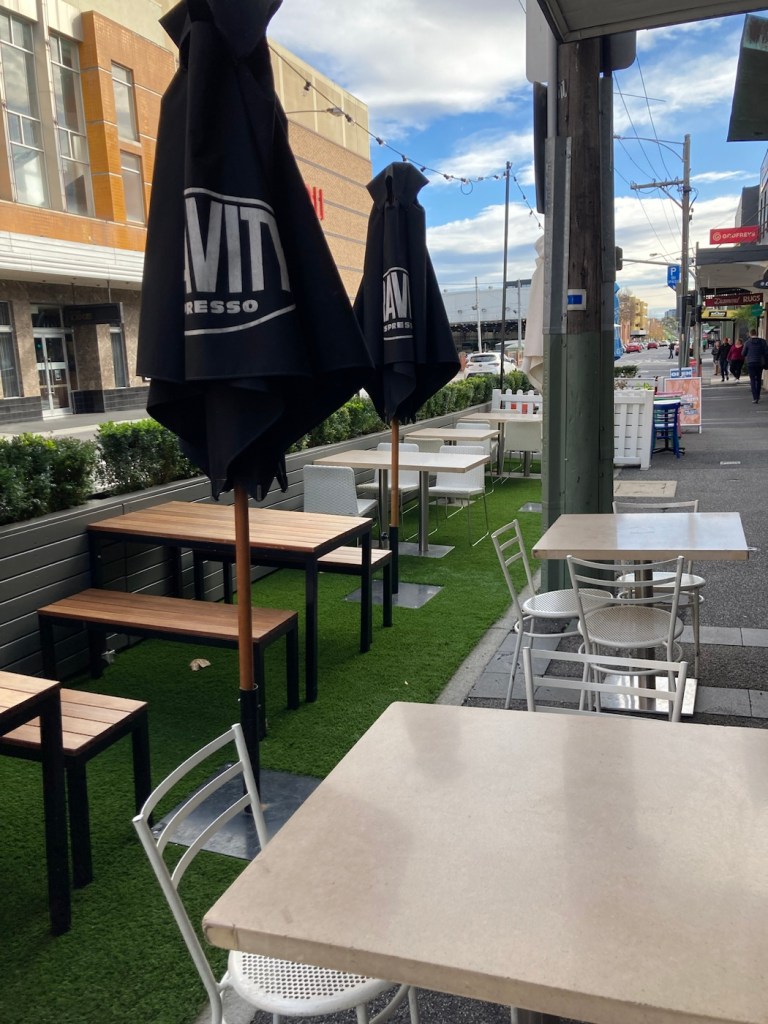
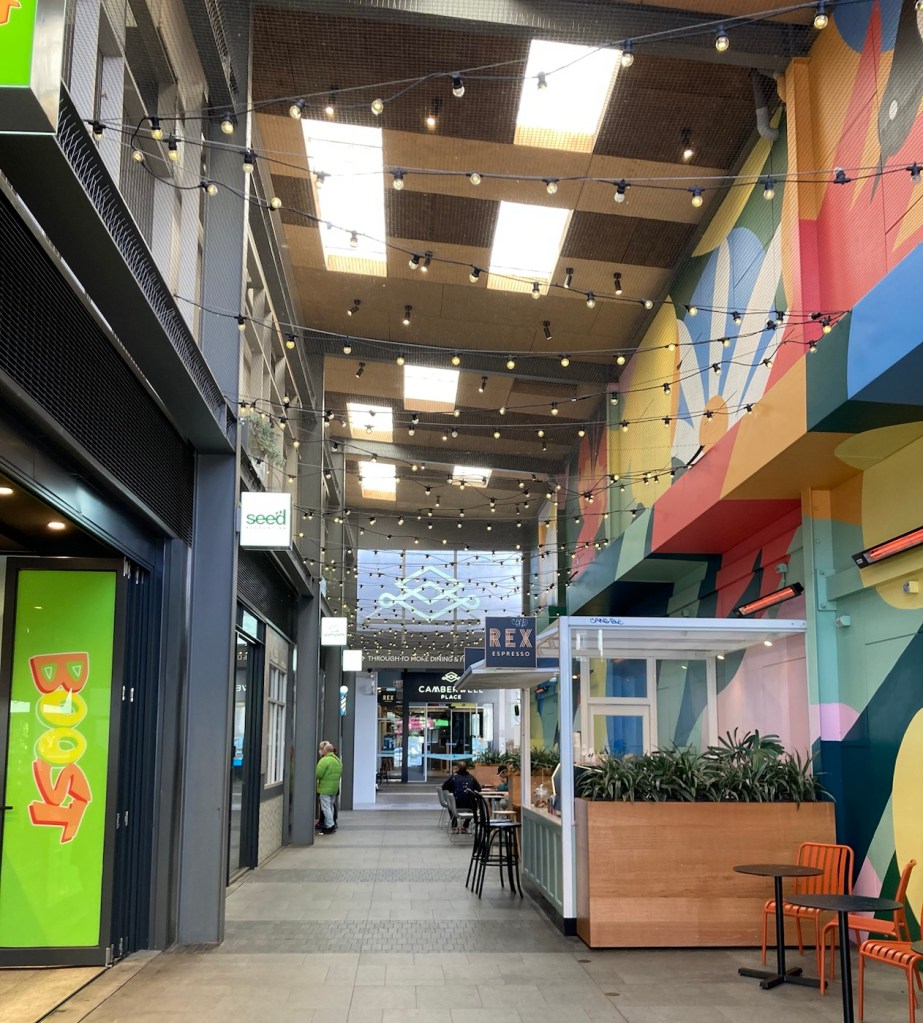
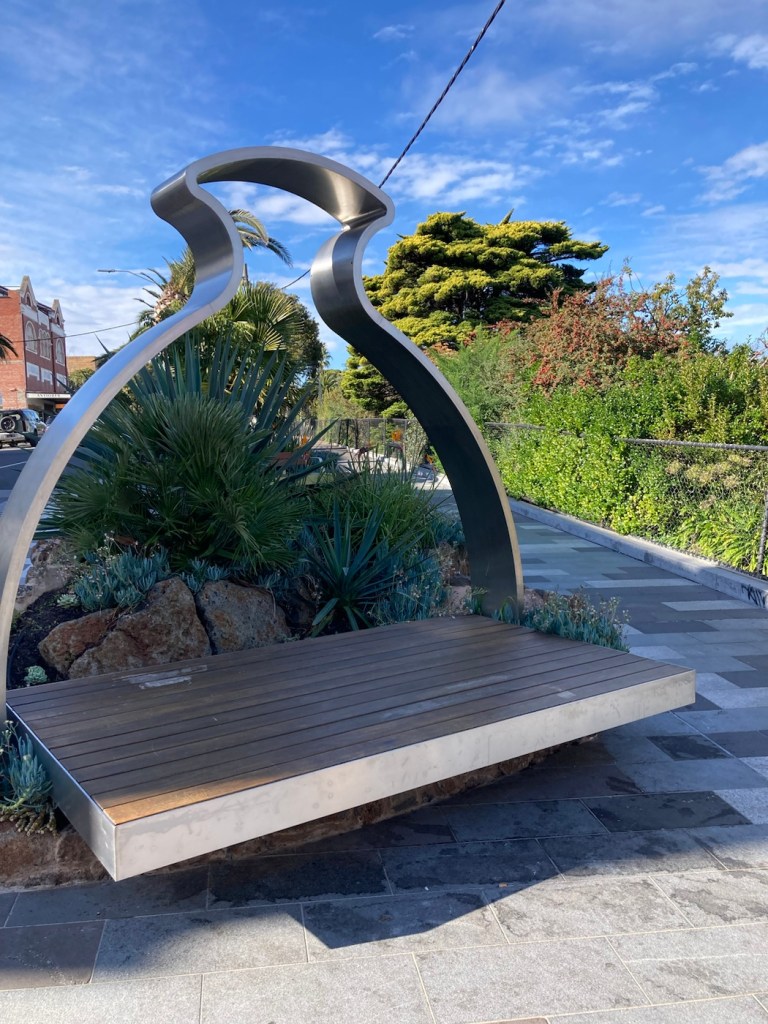
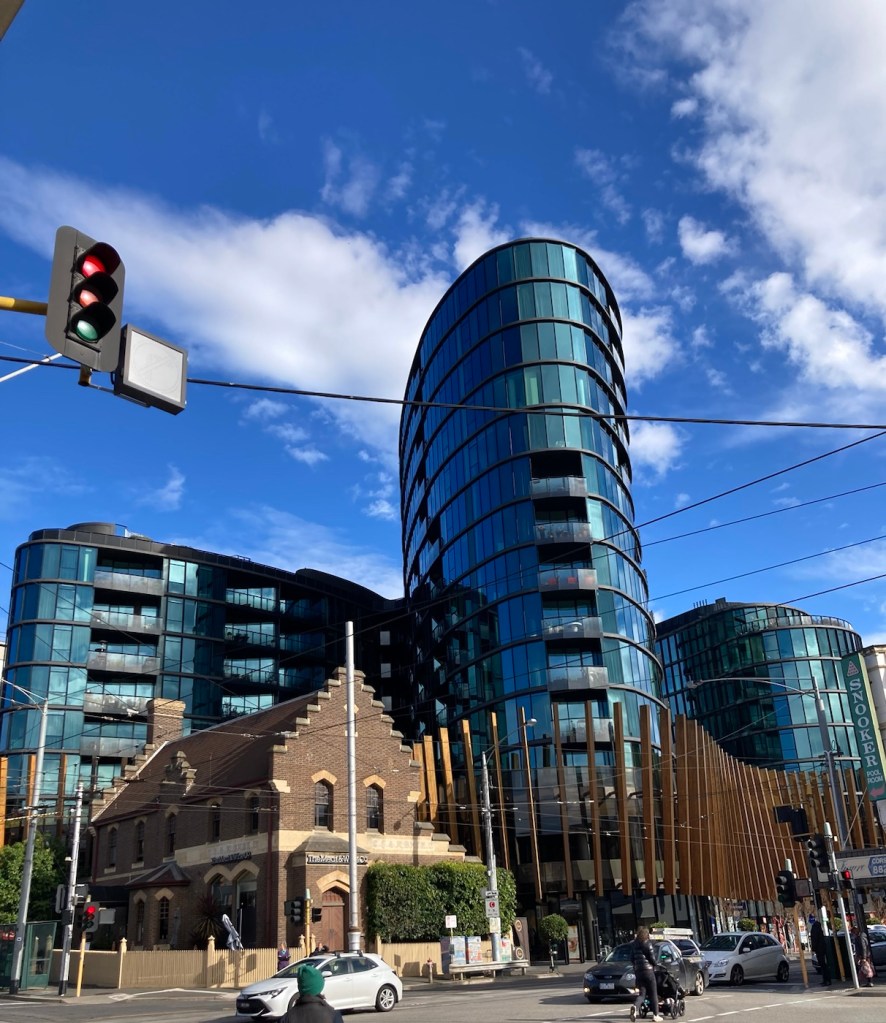
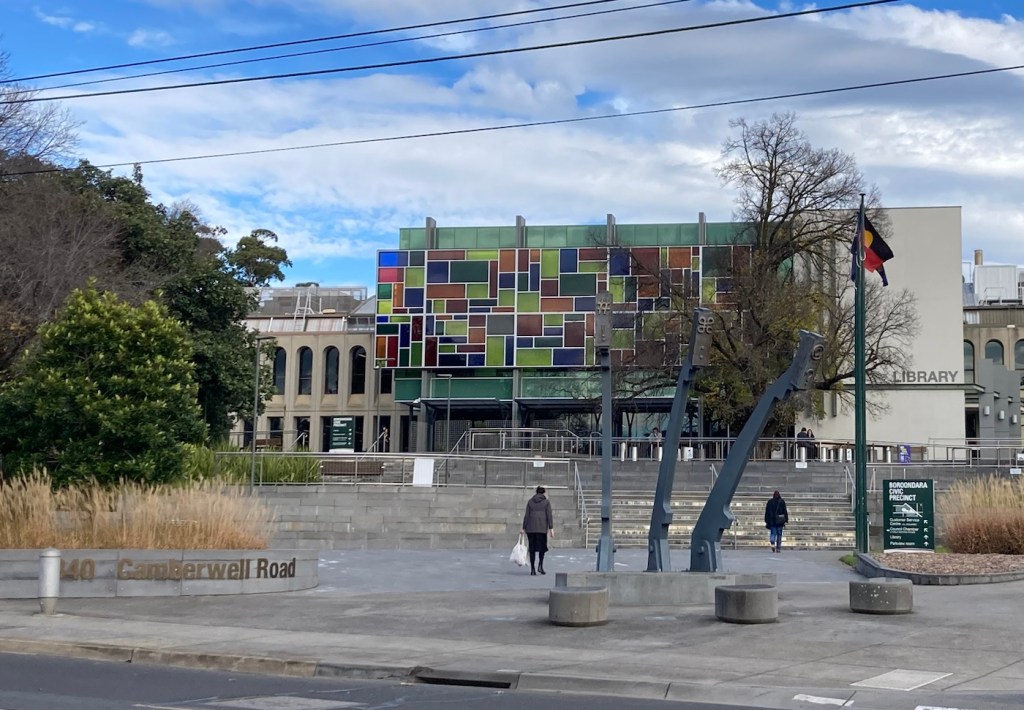
A view of the high rises in the CBD from our tram stop in Camberwell.Fritsch Holzer Park, opened in 1997 on the site of an old brickyardThe park is an off leash space for dogs, and is bordered by modern residences.The historic Rivoli Cinéma on Burke RoadLooking down some of the many outdoor seating areas for the restaurants along Camberwell RoadInside Camberwell Place with a number of food and retail shopsA nice bench and landscaping near the Camberwell Train Station, which serves three rail linesThe Camberwell Train Station A Meat and Wine shop in the brick building and an attractive modern residential building beside itA market in one of the malls on Burke StreetThe Camberwell City Library. The gray sculpture in front is three typewriter keys, for those who remember typewriters.Camberwell City Hall
Yesterday, was a seriously rainy day, and today was the coldest morning (37 F) in five years based on the local news. However, having been in most of the day yesterday except for a midday hair appointment, we were ready to head out in the sun today, brisk or not. It ended up being a nice day for a walk.
We headed to Box Hill to explore Box Hill Central that we’ve usually just breezed through on the way to catch a bus or train. We wanted to see what all was in the center, and we also wanted to top off our Myki cards for more local public transport travel in the future. Finally, we wanted to head to the Box Hill Gardens that we had noticed on Google Maps.
Box Hill is a suburb of Melbourne, about 9 miles east of the CBD, located in the city of Whitehorse local government area. It was founded as a township in the 1850s and was absorbed into Melbourne in the 1950s as part of Melbourne’s eastward expansion. It serves as a major transportation hub for the eastern suburbs and is otherwise notable today for its large Chinese community and home of the tallest high-rise buildings outside of the CBD.
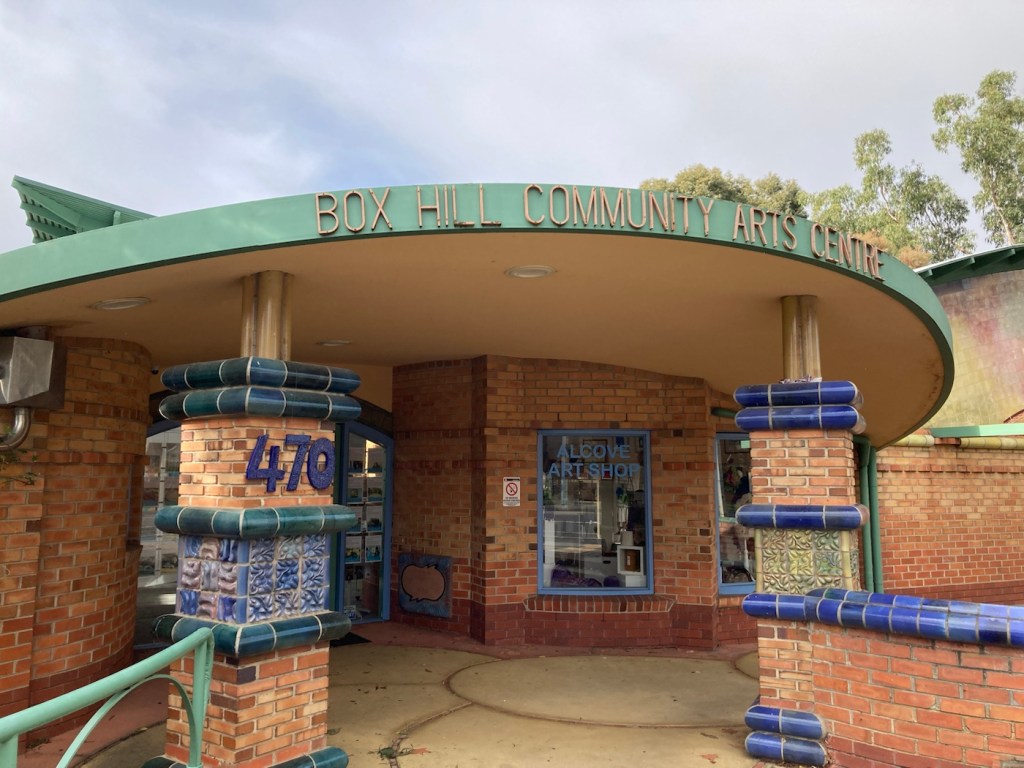
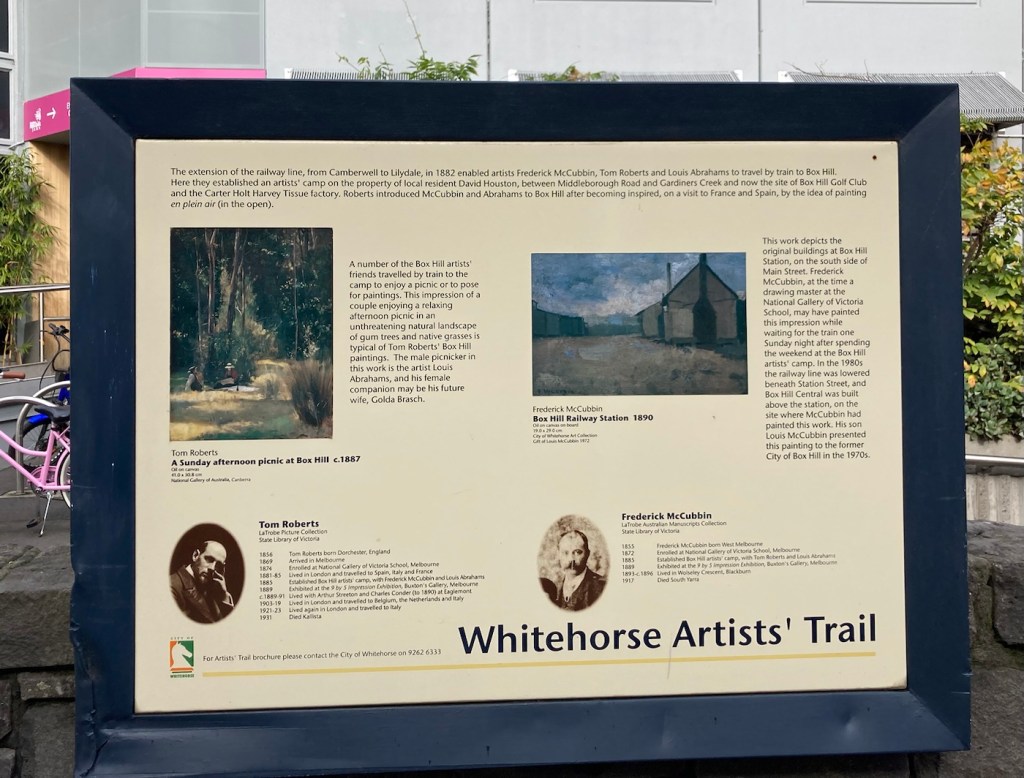
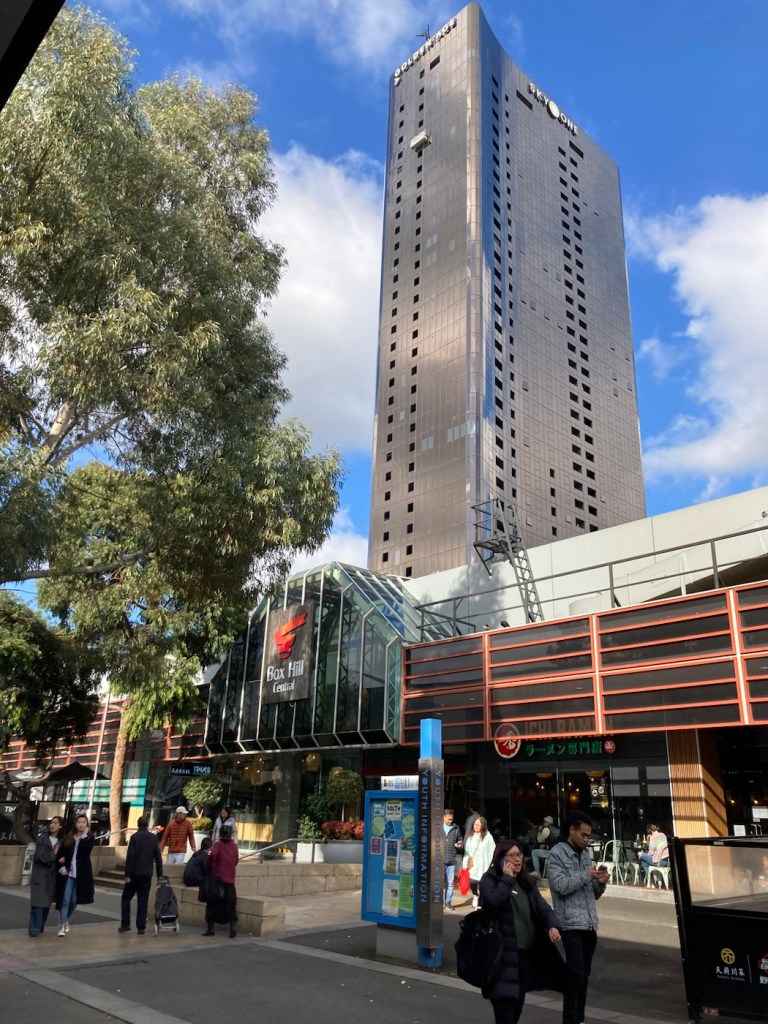
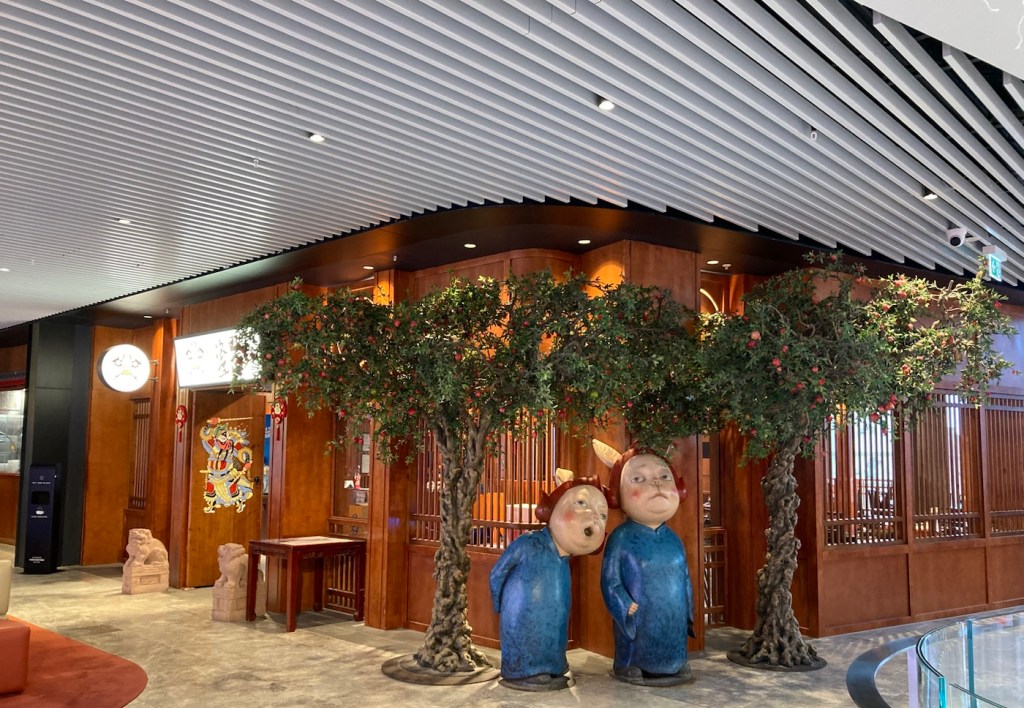
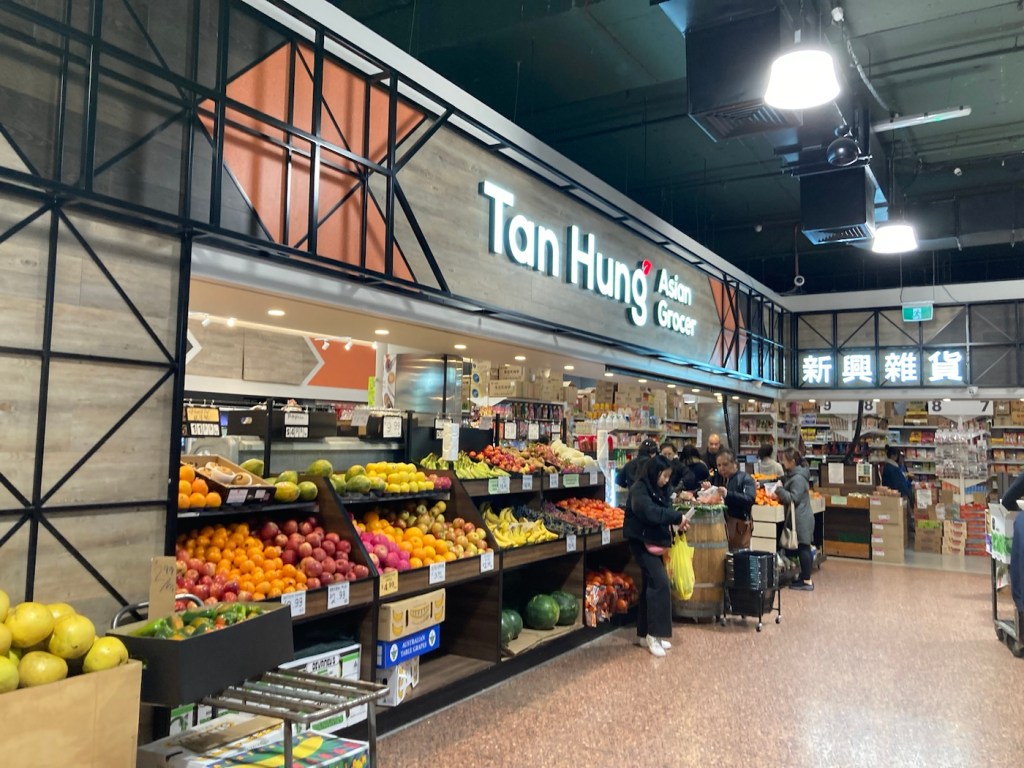
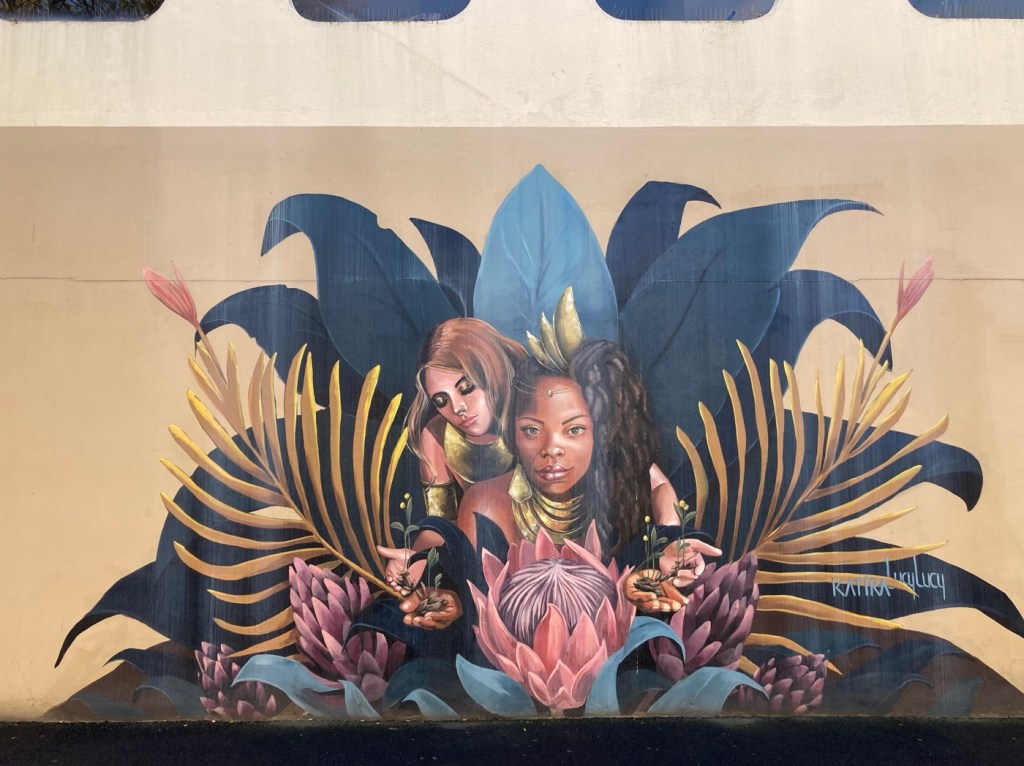
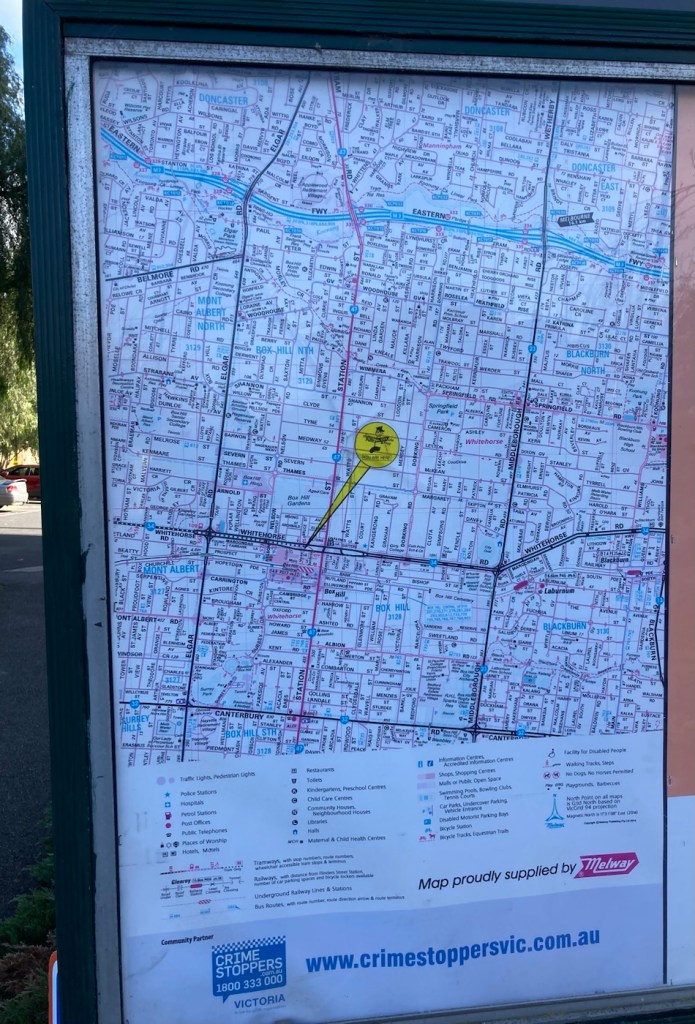
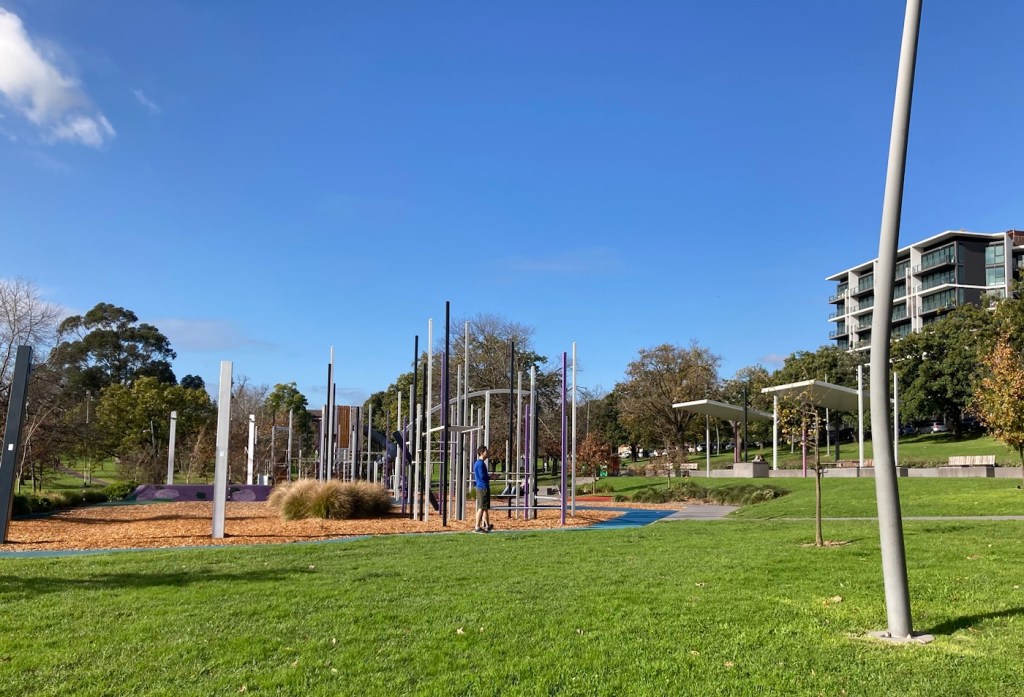
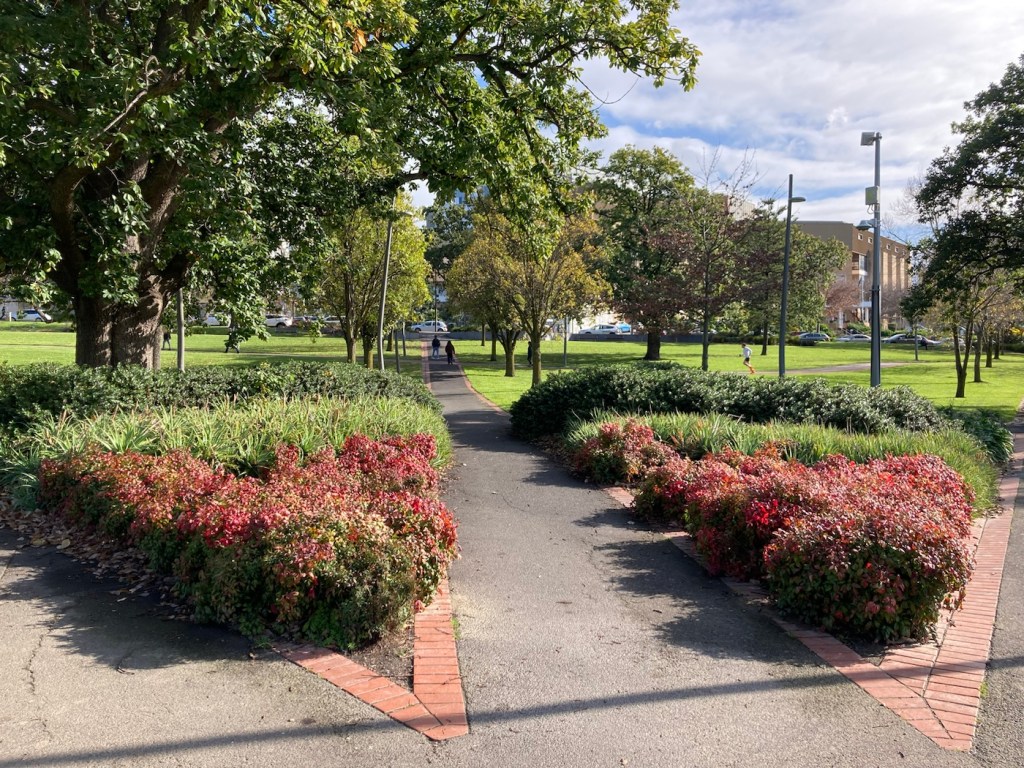
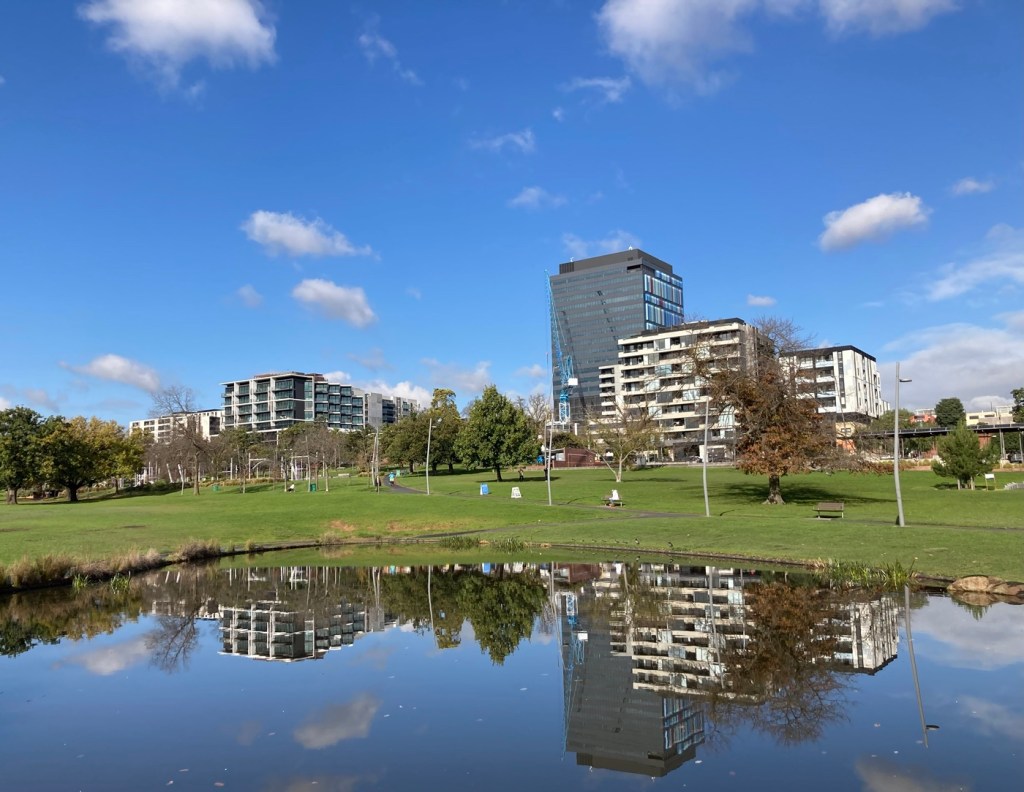
On the way towards Box Hill Central, we passed the attractive community arts center with a gift shop inside.A small park near Box Hill Central that provides information on Box Hill in the 1890s.We added to our artist trail collection with this board displaying artwork from two of the cofounders of the local art camp.Box Hill Central and the nearby Sky One Tower.We mistakenly went into the Sky One Tower first. We found a number of Asian restaurants, including this one with unique decorations.There were also a number of Asian groceries, bakeries, and restaurants inside of Box Hill Central.A different style of marketWe saw a number of murals in the area as well.Always nice to have a sense of where you are. The house we are at is off of the bottom of the map east of Station Road, which runs North/South on this map.One end of the the playground area in Box Hill Gardens.One of the well-landscaped entrances to a walking pathLooking across the pond and park grounds towards some of the high-rise buildings Looking the other direction on the small bridge over the pondThis was on a church as we were heading back towards the house. Good message.
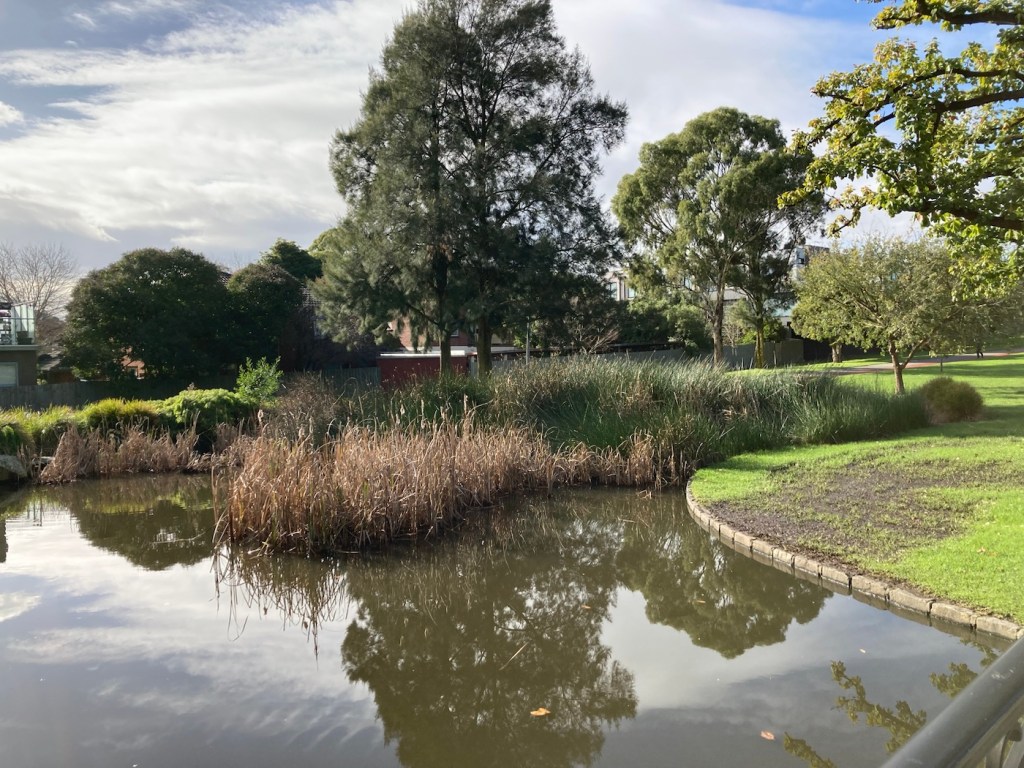
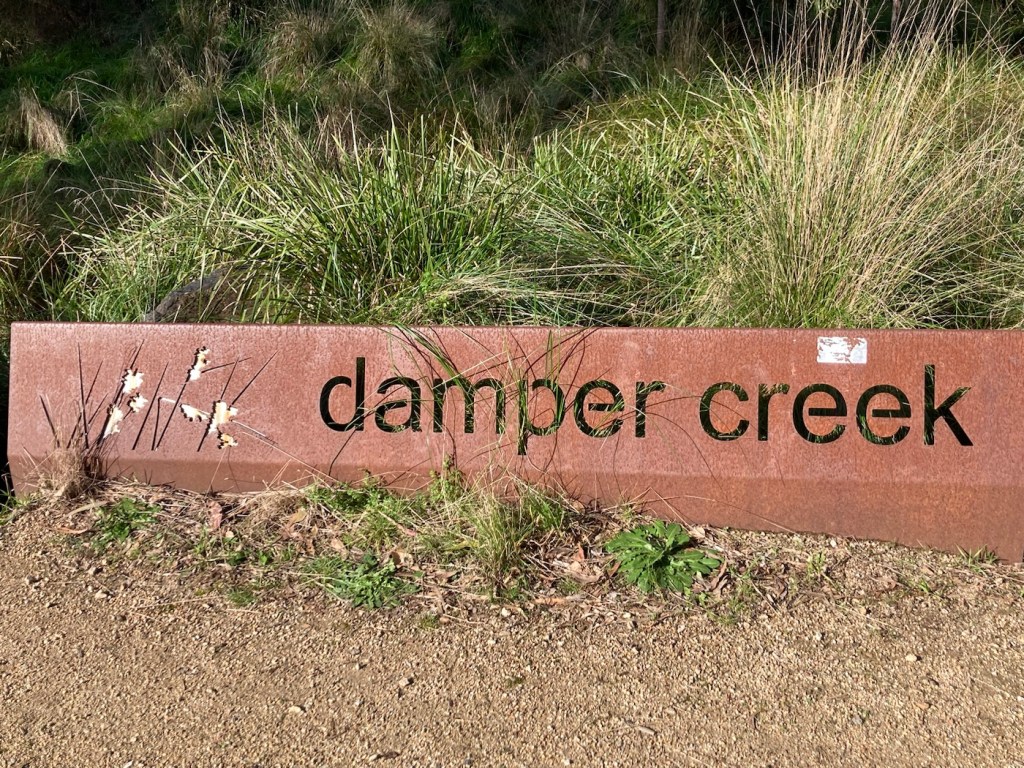
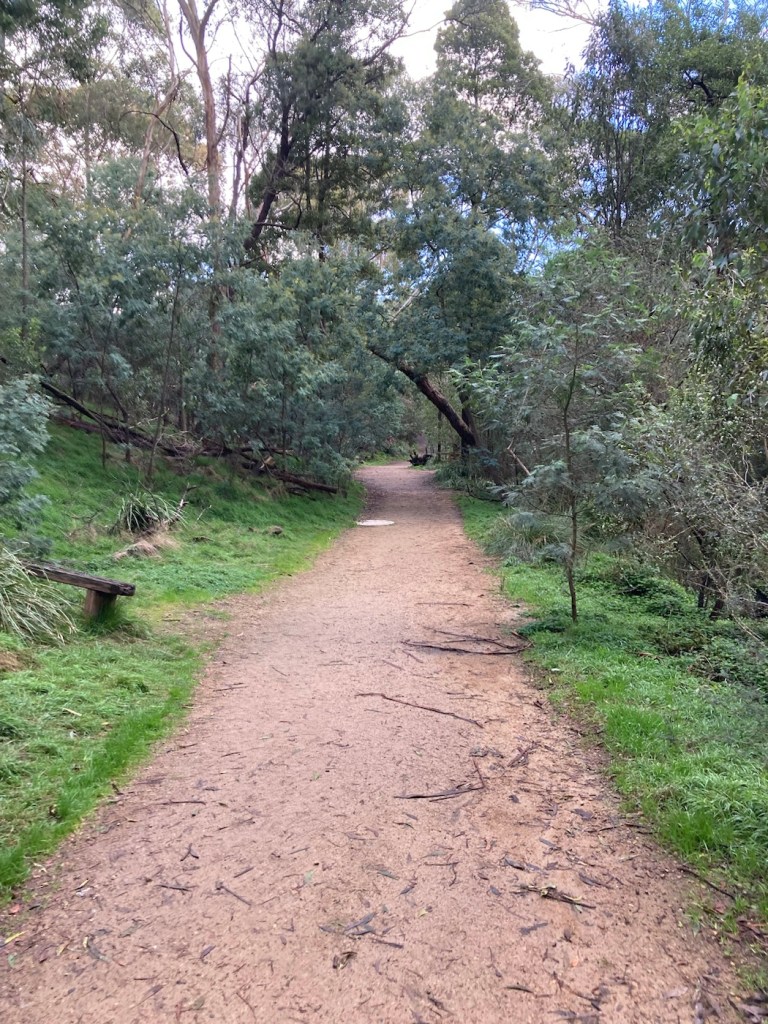
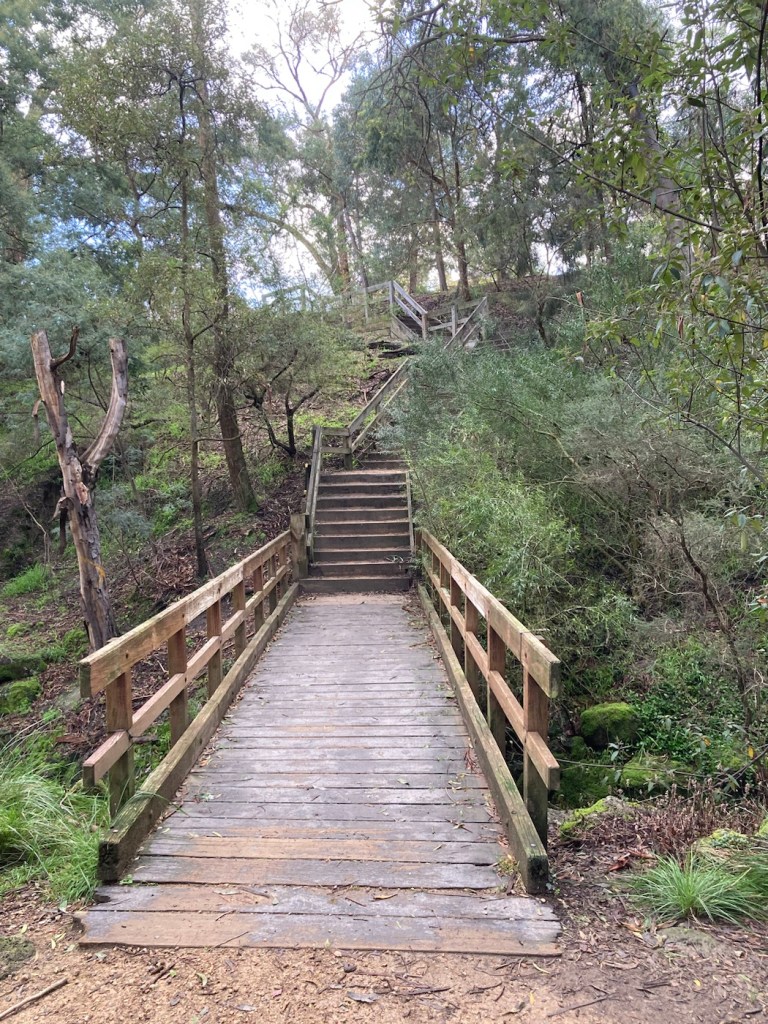
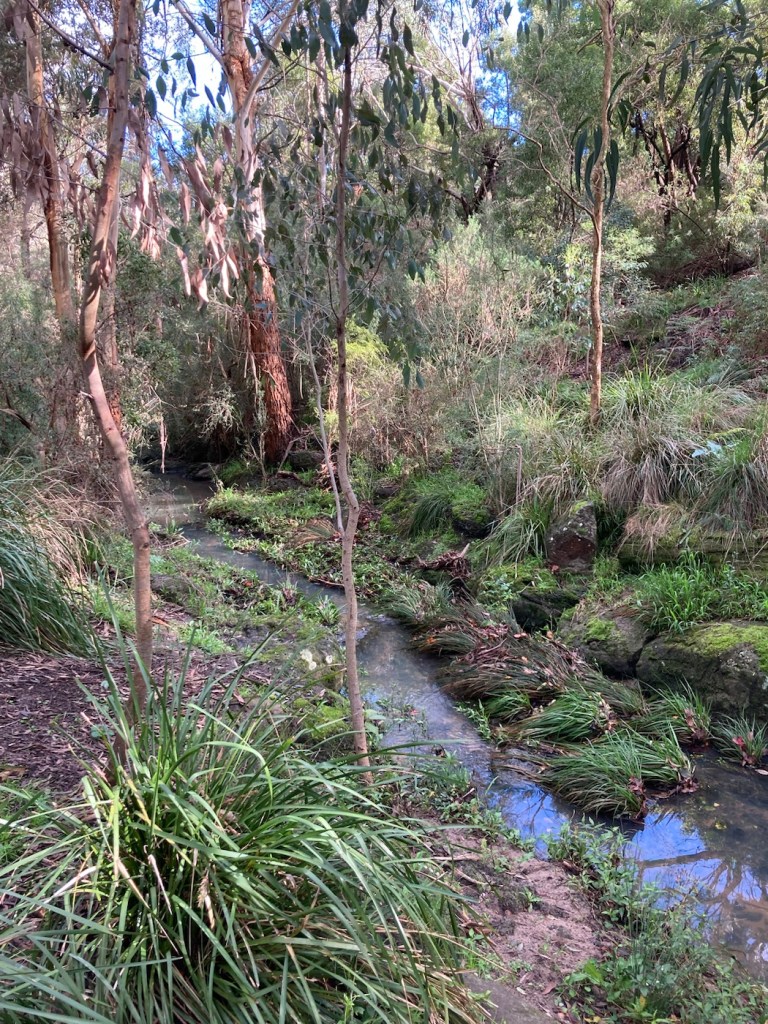
Bob and I walked a little over 30 minutes into the city of Monash (we’re in the city of Whitehorse) to check out the Damper Creek Reserve that we had seen on Google Maps. As we learned when we got there, Damper Creek is at the uppermost reaches of the Gardiners Creek sub catchment area of the Yarra River. The Reserve was established to provide an important wildlife corridor, protection of natural vegetation, as well as a green space for humans and their pets.
We thought it was lovely and wished it was longer. It felt worlds away from the busy street we needed to walk to get there.
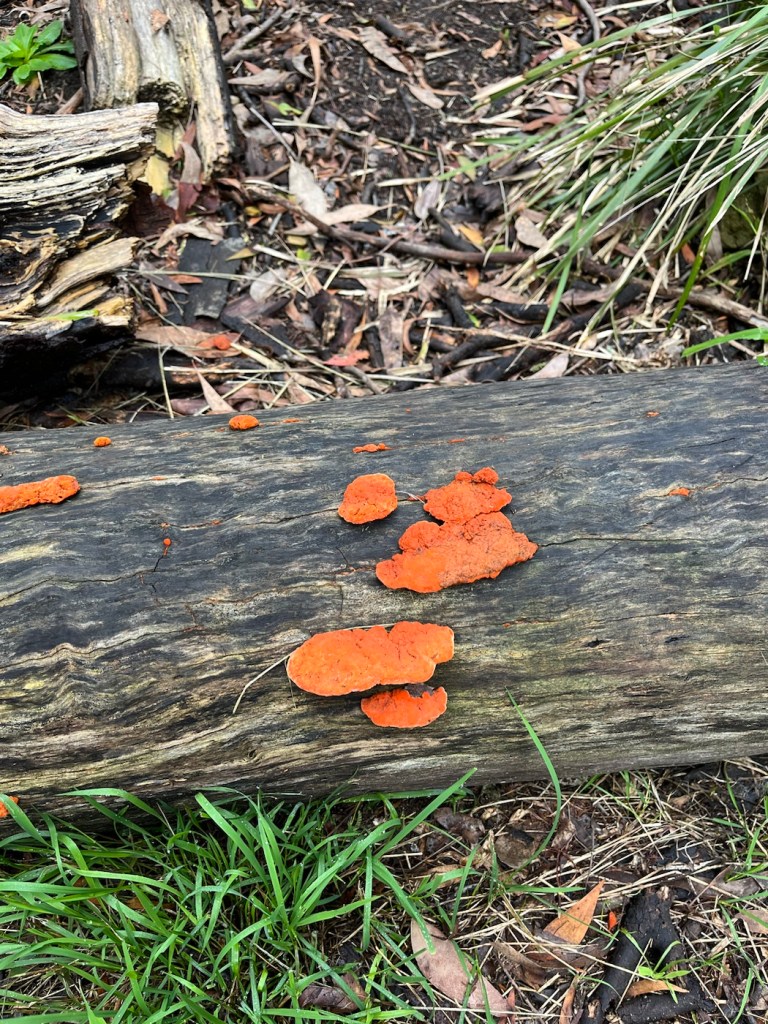
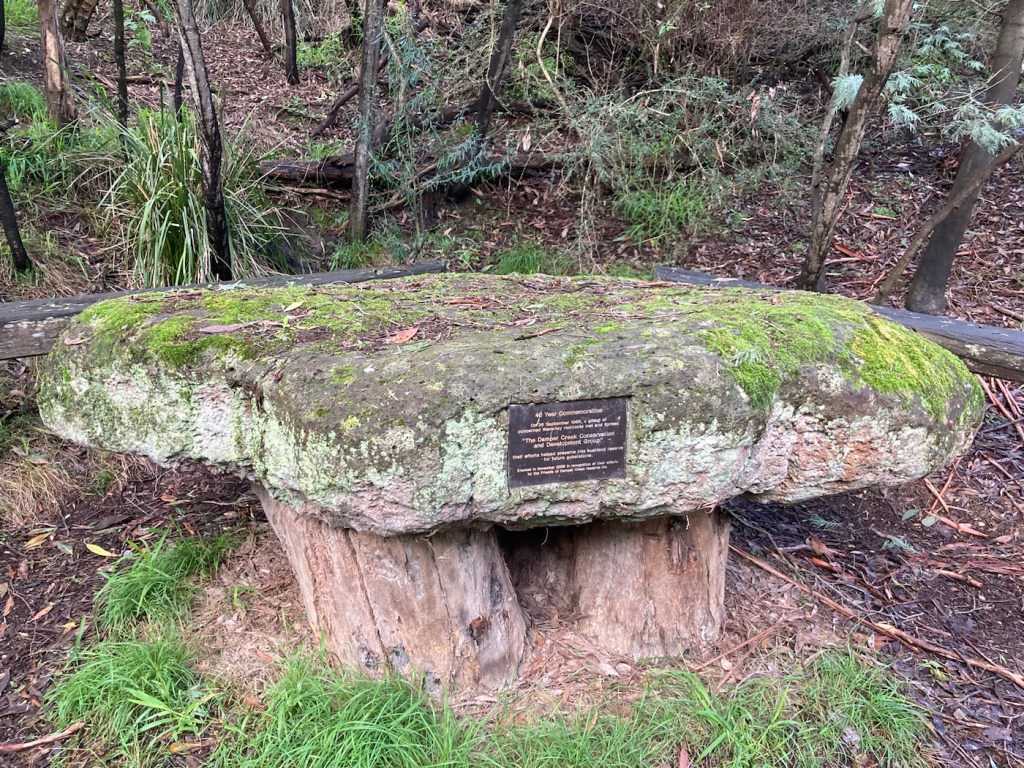
An attractive metal sign outside the reserveThe path in the reserve that ran alongside the creekA great walkway connecting the neighborhood to the trailOne of three photos of the creekLots of moss and vegetation along the creekLove the sound of running water over the rocksEver since a housesit in Brussels near a large forest, we have taken photos of unique mushrooms. We hadn’t seen any quite so bright orange before.A plaque marking the 40 year anniversary of the establishment of the reserve
The other purpose for the walk was to check out another train station near us, the Mount Waverly Station. It’s an alternative to the Box Hill train station that we have been using, although it is only served by one train line instead of 2 out of Box Hill. Still, the retail area around the Mount Waverly Station was cute.
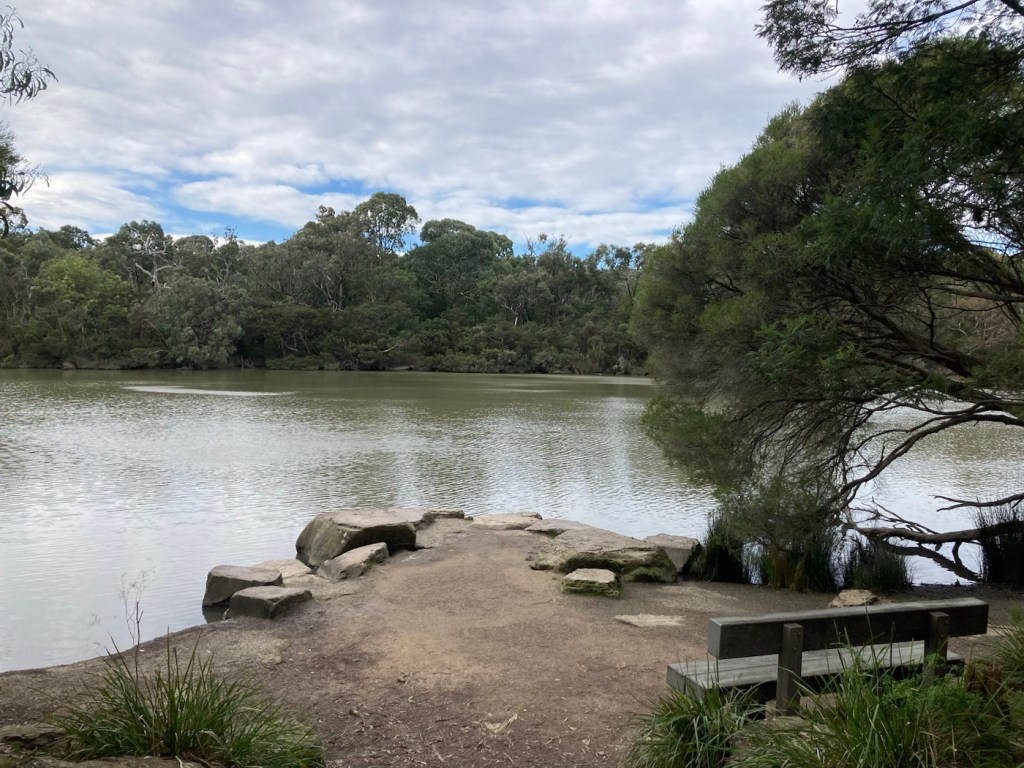
It is a windy day in Victoria, although not as bad in town as out in the surrounding areas. We headed out anyway to explore the Blackburn Lake Sanctuary that we had found on Google Maps. It seemed to be a decent size and, as it was about an hour’s walk from the house, would make for a good outing.
On the way to the sanctuary, our walk route took us on part of the Wurundjeri Trail that we had walked last week as well as by two other small parks.
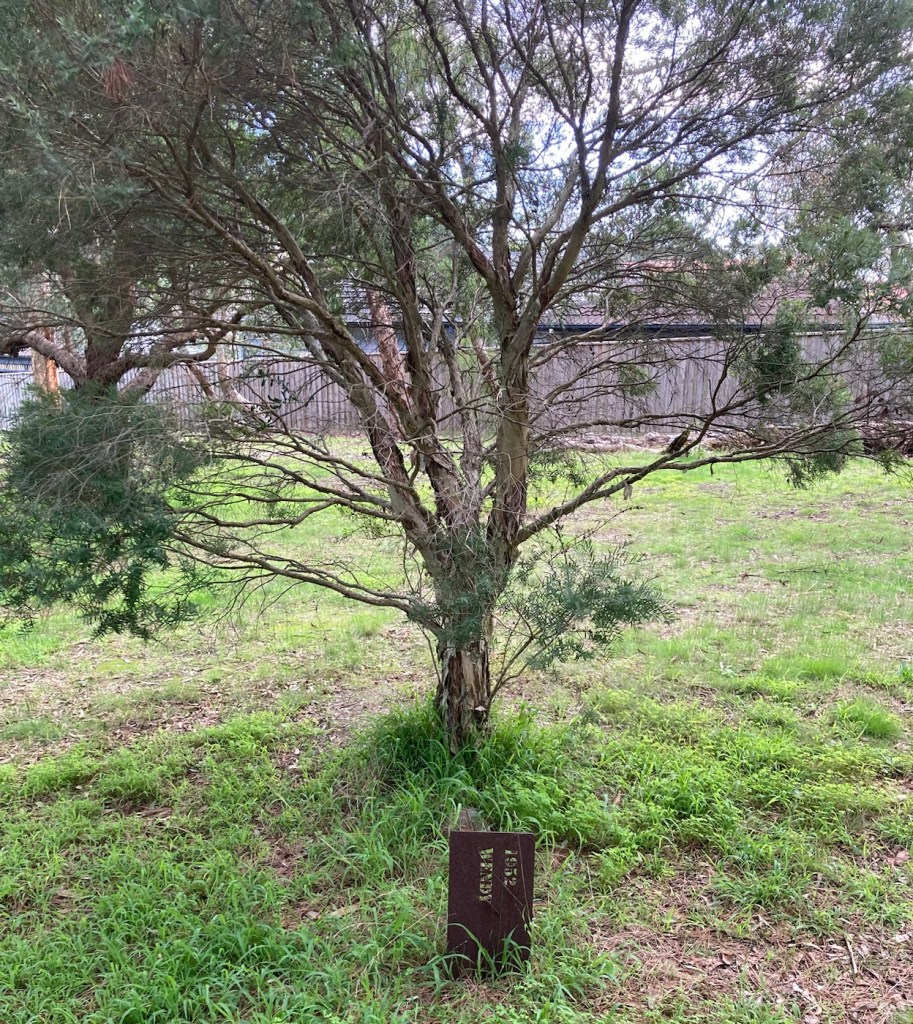
The lovely Shawlands Avenue Reserve This was the 2nd park that we passed on the way to Blackburn Lake Sanctuary. This land was given to the city in 1975 by Janet and Albert Hooke to be retained as a sanctuary for birds, wildflowers, and native plants.This is one of the 20 trees planted by Mrs. Hooke to commemorate the birth of each of her grandchildren. As the metal sign indicates, this one was for Wendy, who was born in 1952.
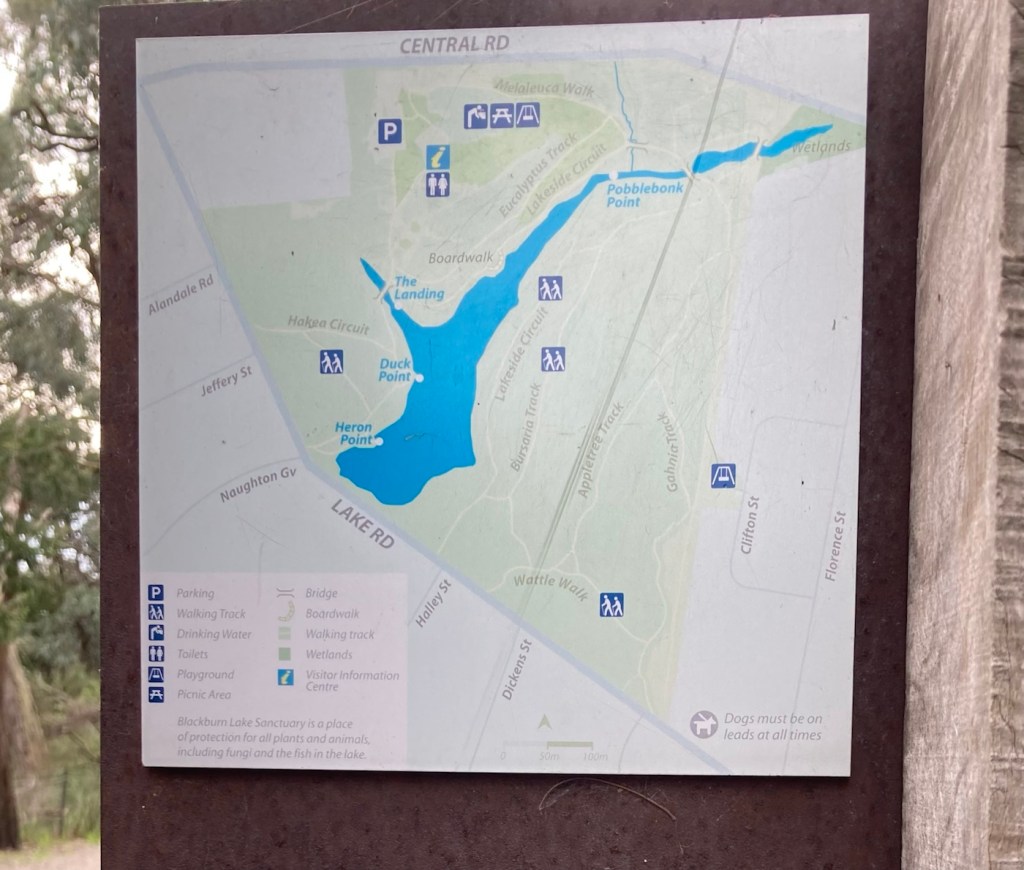
The Blackburn Lake Sanctuary is located at the edge of a lovely neighborhood. A sign at the sanctuary informed us that the natural watercourse here was dammed in 1888 by the Freehold Investment and Banking Company to create the current lake as a key feature of its Model Town Estate.
In the 1880s and 1890s, the area was a popular picnic spot. In the early 1900s, it was the site of a home “for aged, infirm, and feeble minded deaf mutes.” (So glad our understanding and terminology has progressed.). Local citizens began campaigning to protect the land from further development in the 1960s, and the area was classified as a significant landscape in 1976.
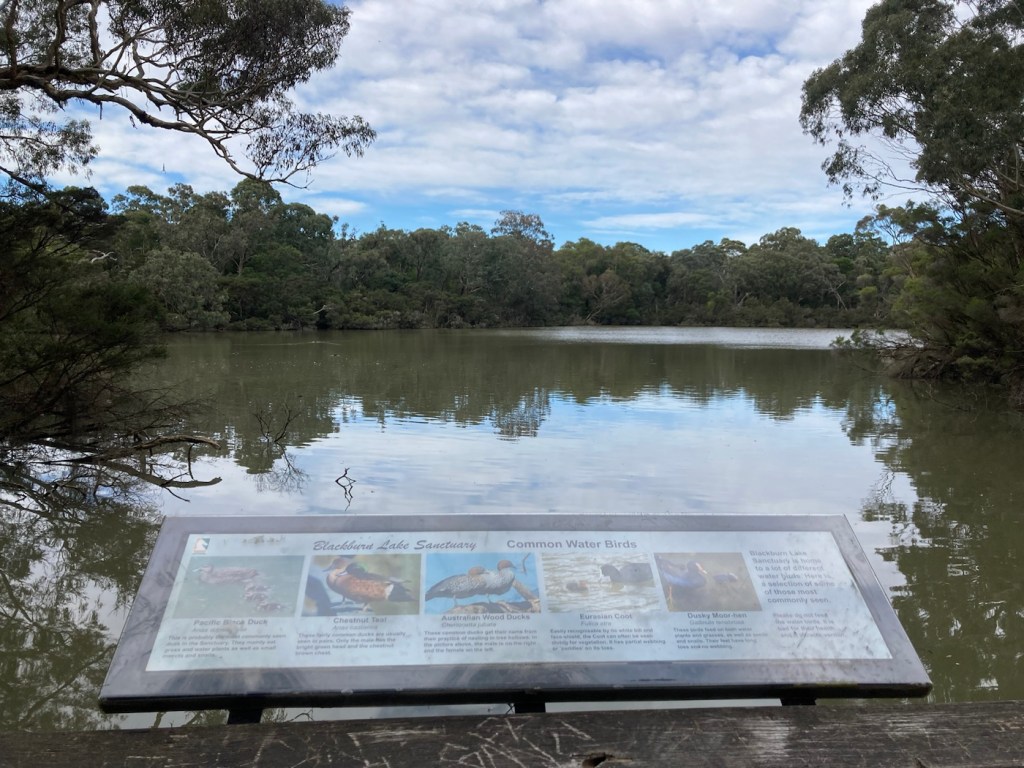
We enjoyed the short hike around the lake and a short chat with a local who was watching the ducks at one of the viewing areas near the lake.
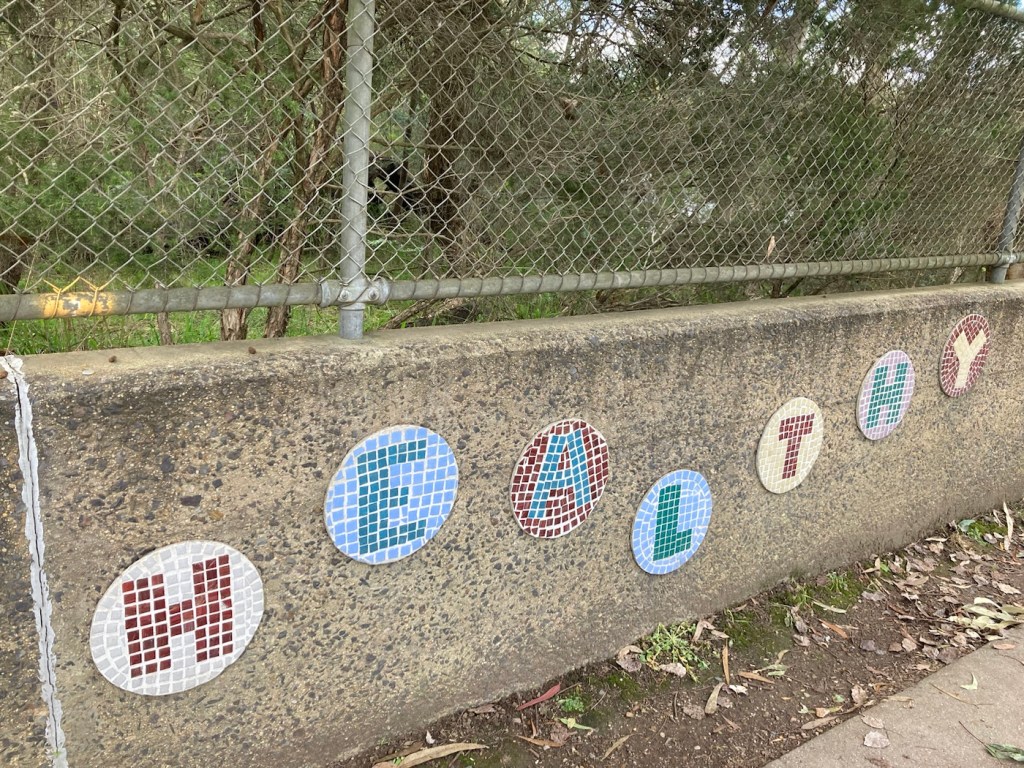
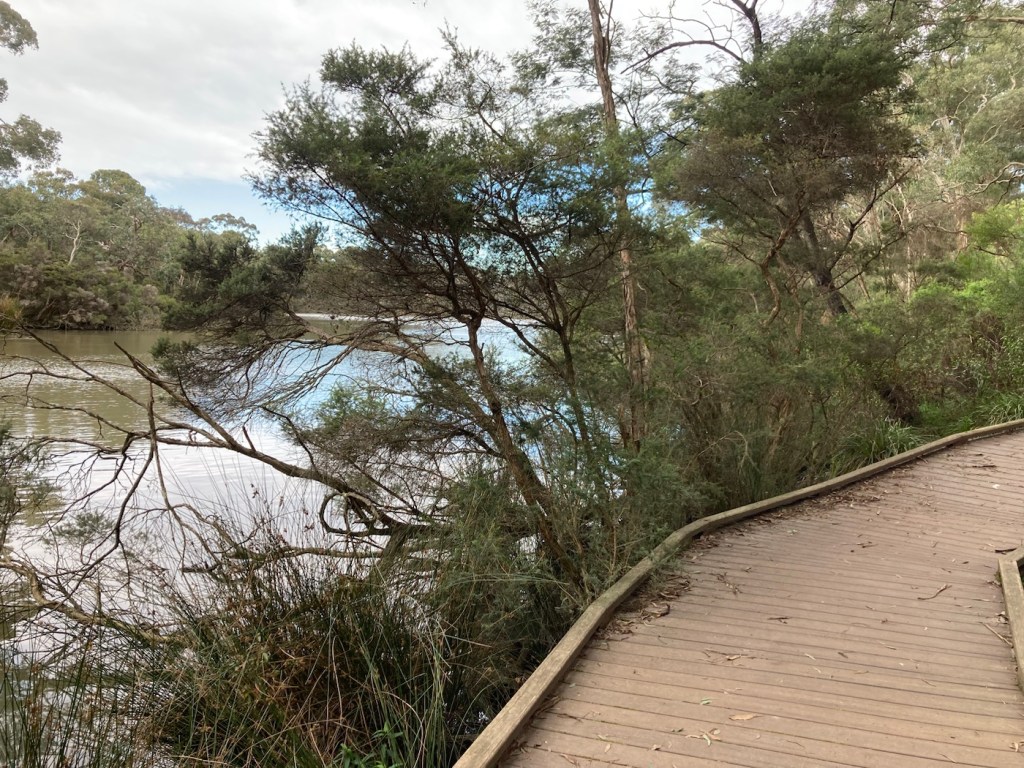
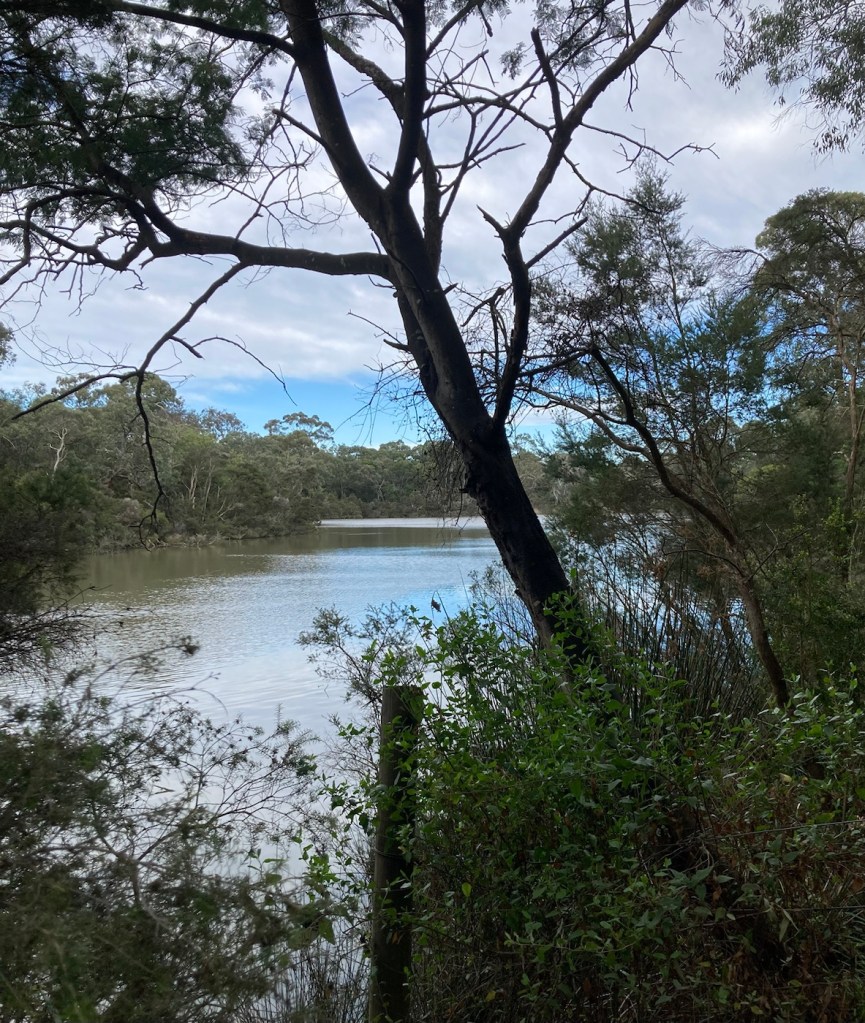
The wall and fencing around the sanctuary has a number of mosaic tiles that were a project between local students and artist. The full phrase says Healthy Waterways, and there are also tiles depicting local birds.A map of the sanctuary and various trails and other points of interest.Walking along the Lakeside Circuit TrailOne of the creek crossingsLooking at the lake from a boardwalkAnother view of the lakeA description of the ducks typically seen on the lake. The local gentleman I spoke with who was sitting here said that he’d only seen the Pacific Black Ducks today.The official Duck Point based on signage Another example of artwork from one of the co-founders of the local art camp. The painting is thought to have been painted in the vicinity of Blackburn Lake based on the body of water in the image.
Today we took the bus and train to downtown Melbourne to visit the Queen Victoria Market to see what they had and hopefully, find some bites to eat for dinner.
One note about the public transportation system here. As noted in a prior blog, there are a wealth of options — bus, tram, and, train. They run regularly and appear to be well maintained. Bob had researched the Myki card that we needed to purchase and use for all modes.
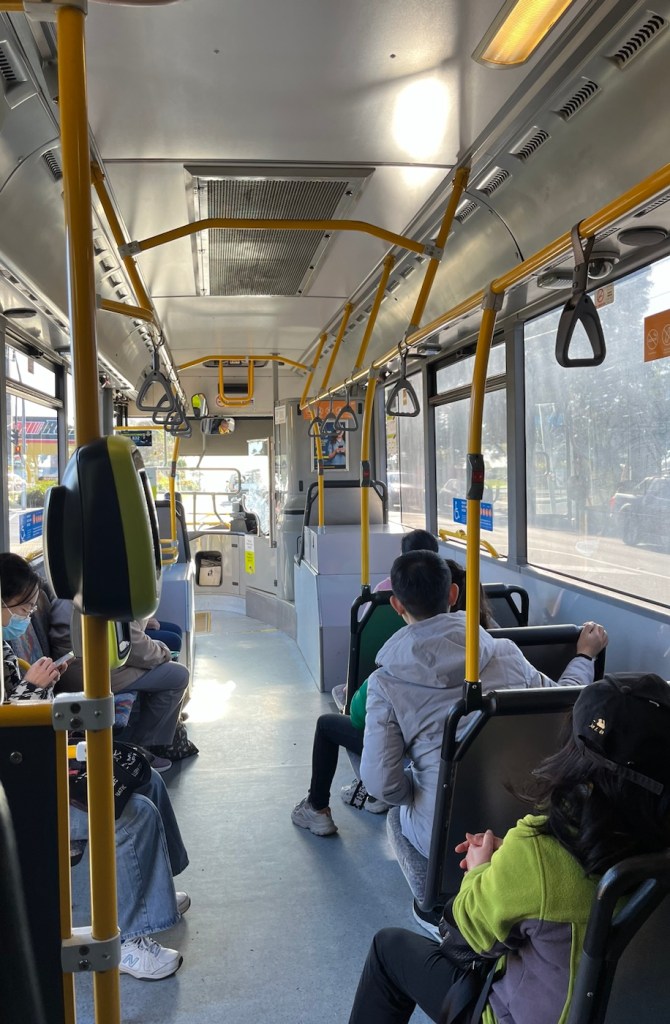
We feel like we have the transportation system pretty much down. The bus stop is a three minute walk, the bus to the train station takes 15 minutes, then a 20-25 minute train ride. All very easy with tapping on and off with the Myki.
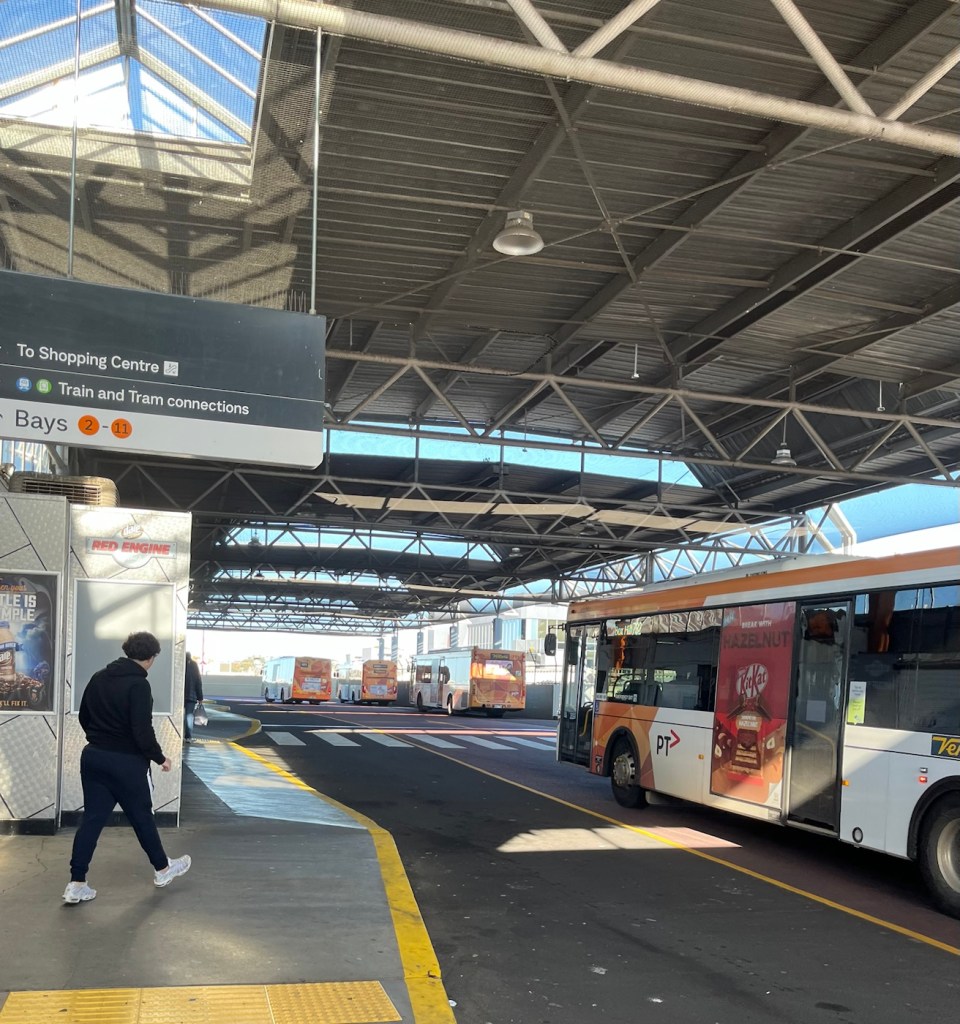
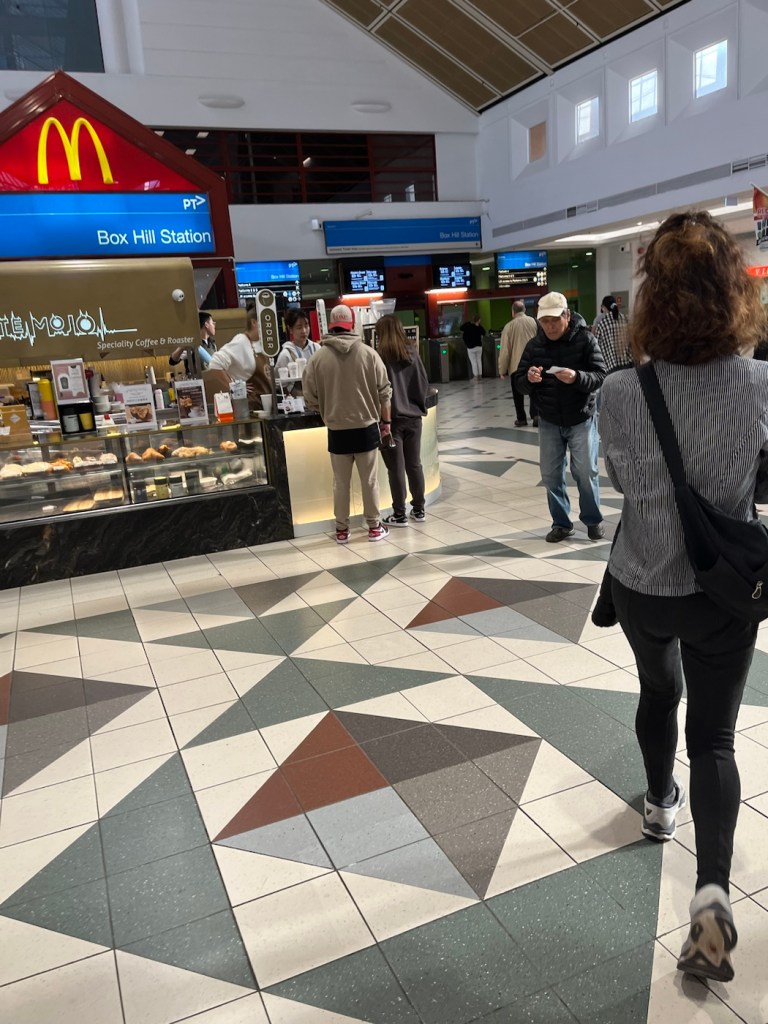
On our No. 733 bus to the Box Hill transportation center.At the bus bay area of the Box Hill Station Beth leading the way to the train section of the Box Hill StationOn the train to the city center.
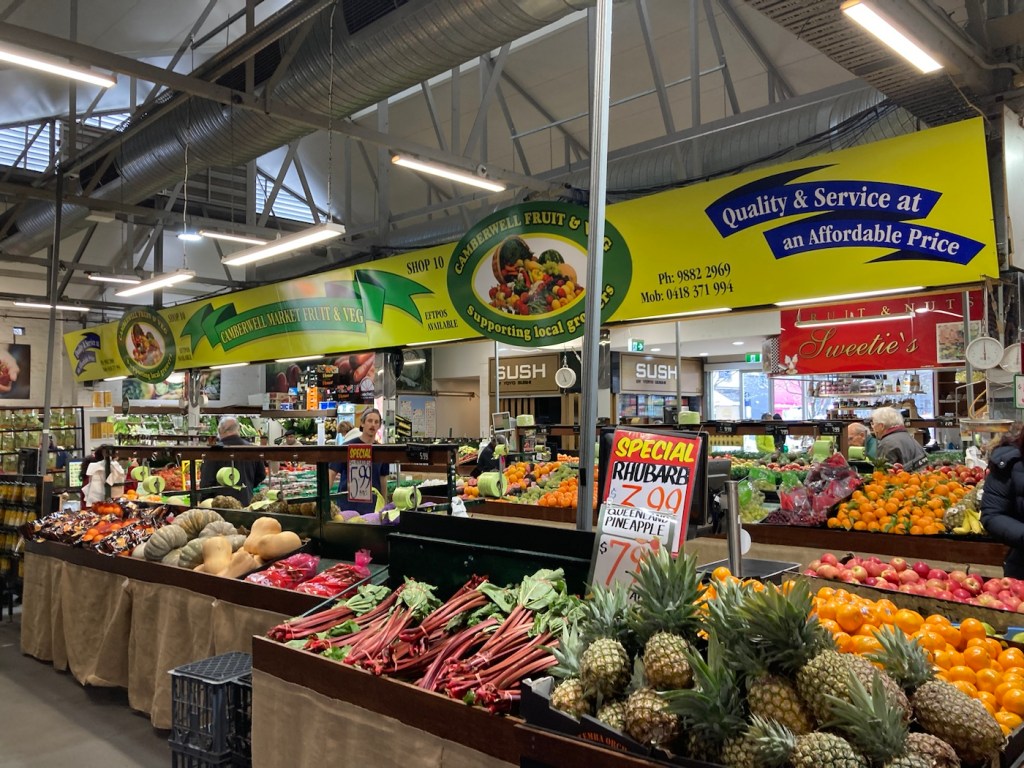
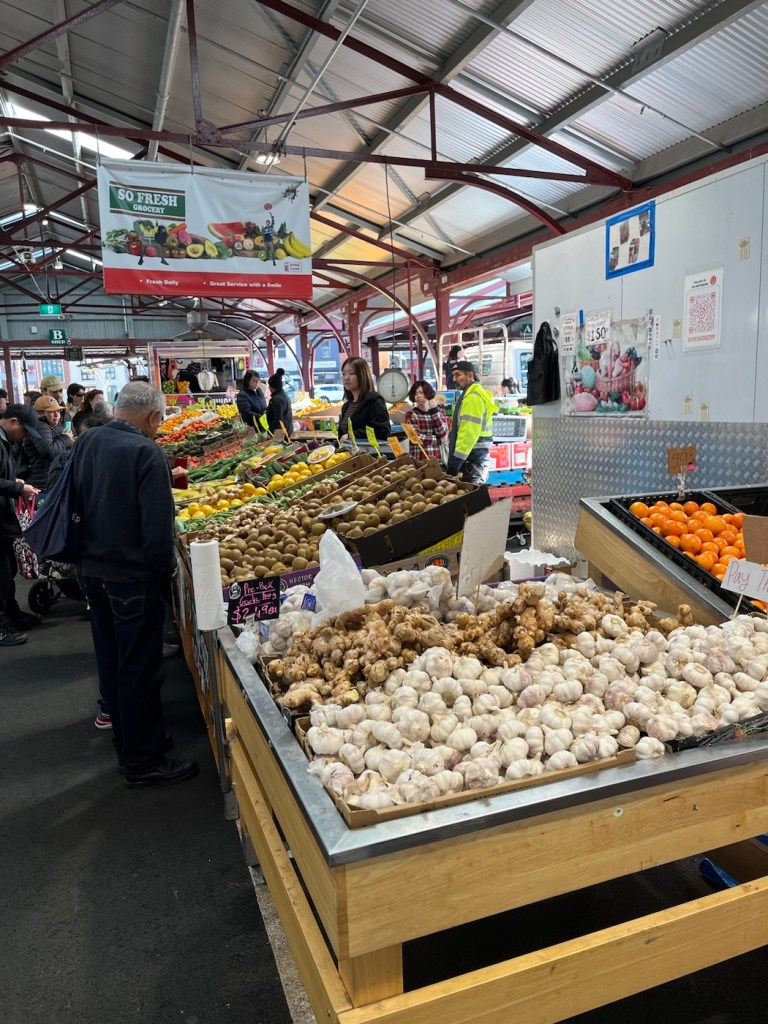
The Queen Victoria Market was pretty large. It contained a retail area of souvenirs and locally made goods, organic fruit and veg, conventional fruit and veg, a meat and seafood section, and a prepared food area. There was some construction going on in one area, so it seems like it will be growing. It has been operating since 1878 and is the largest open-air market in the southern hemisphere.
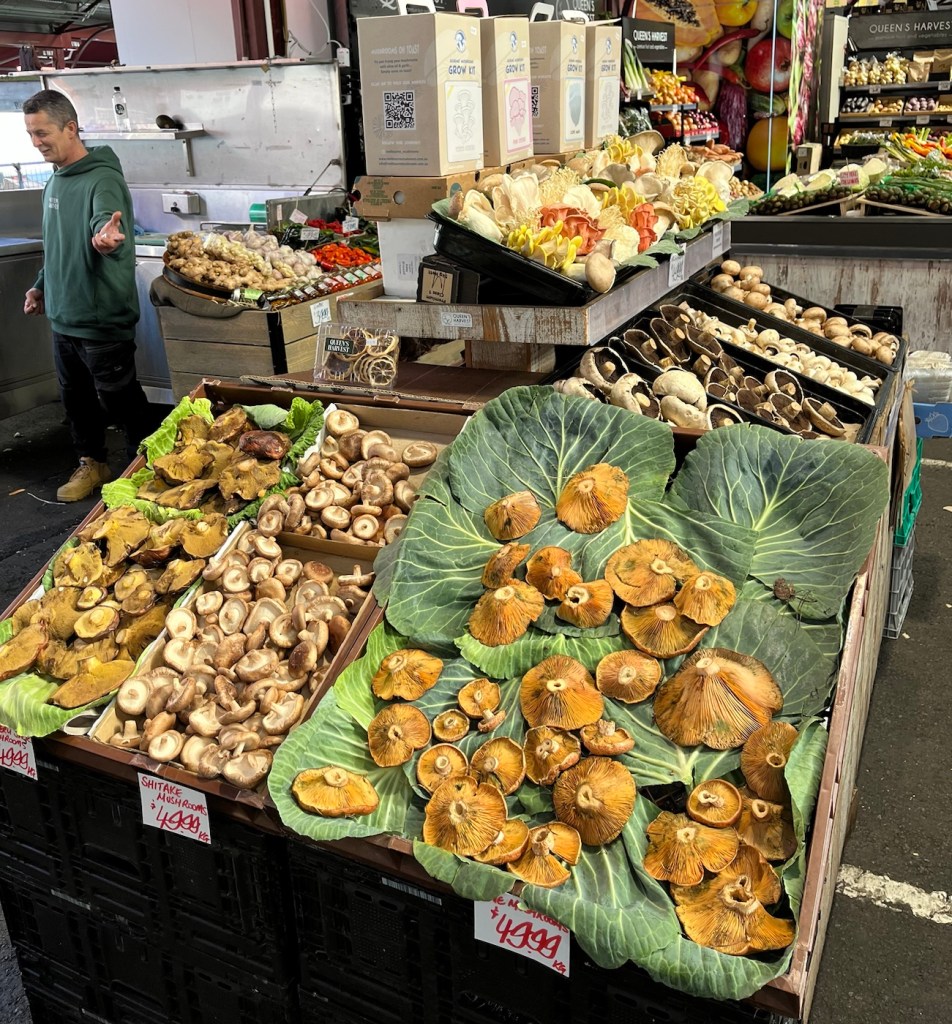
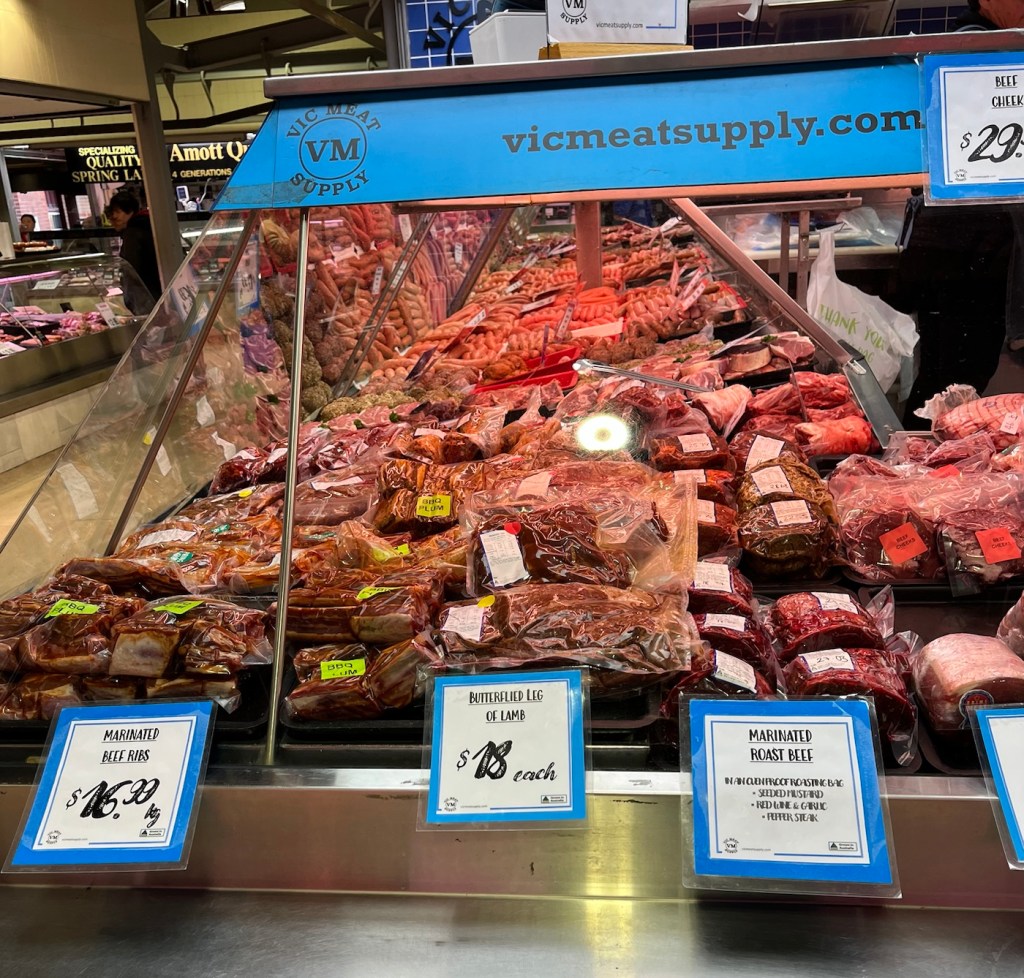
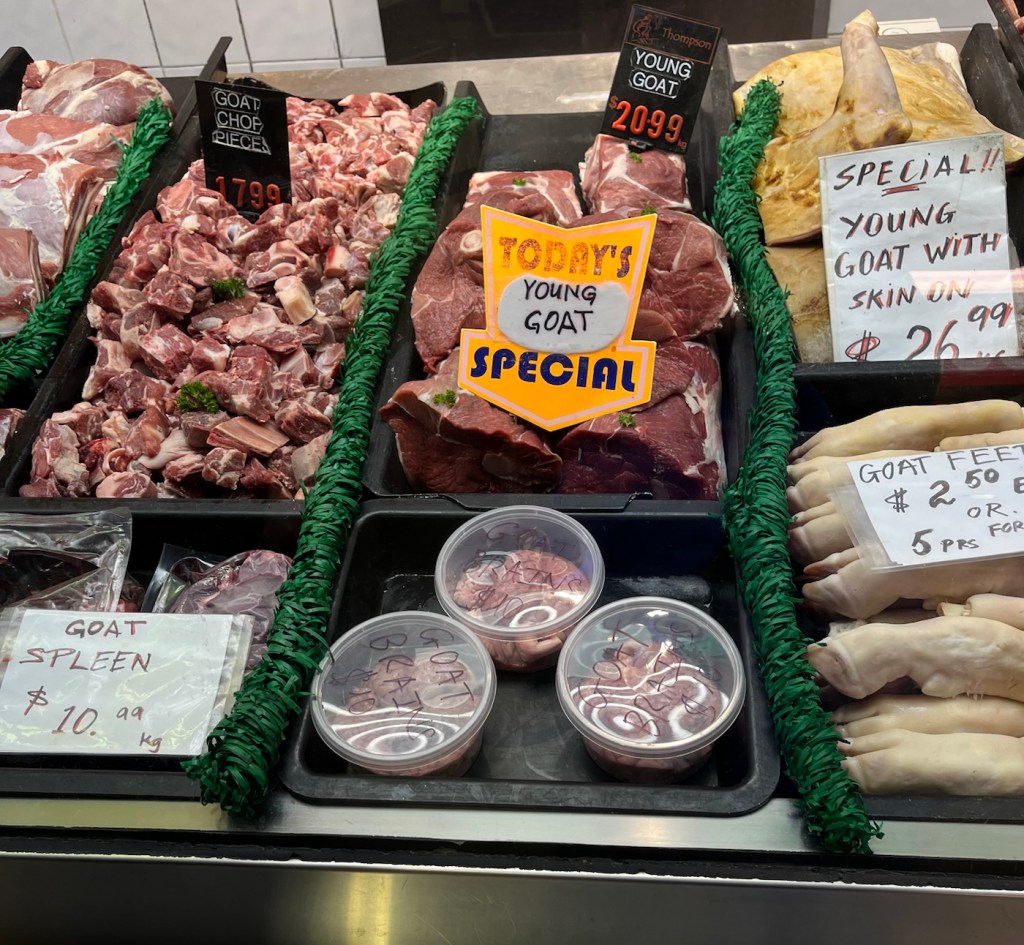
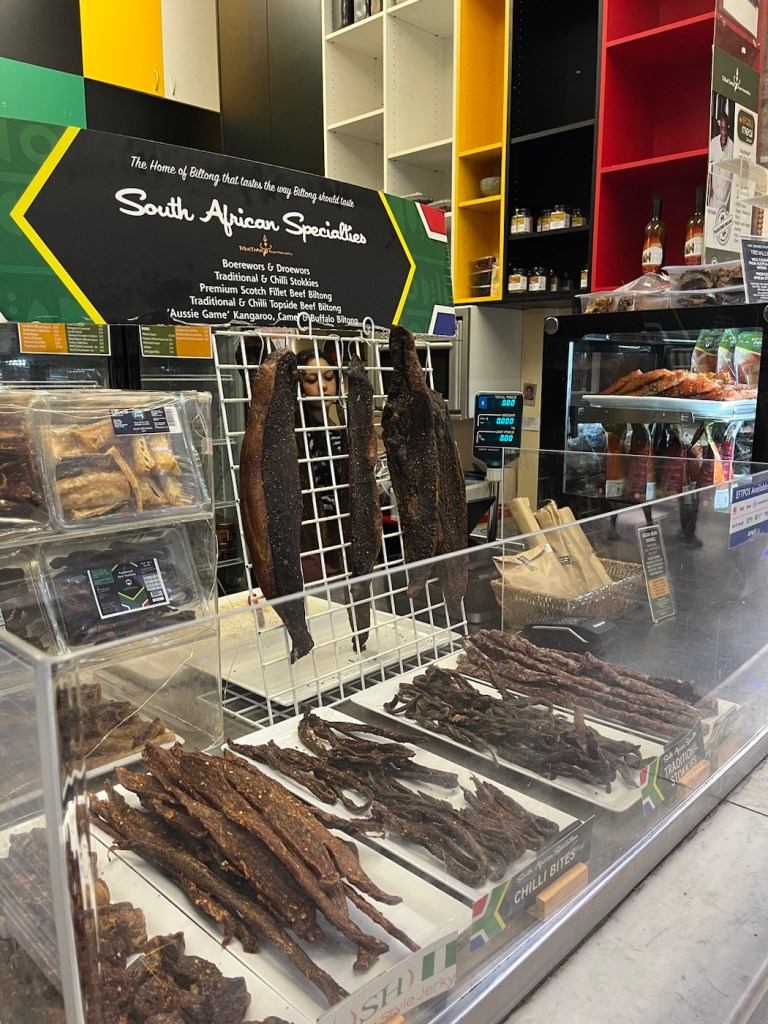
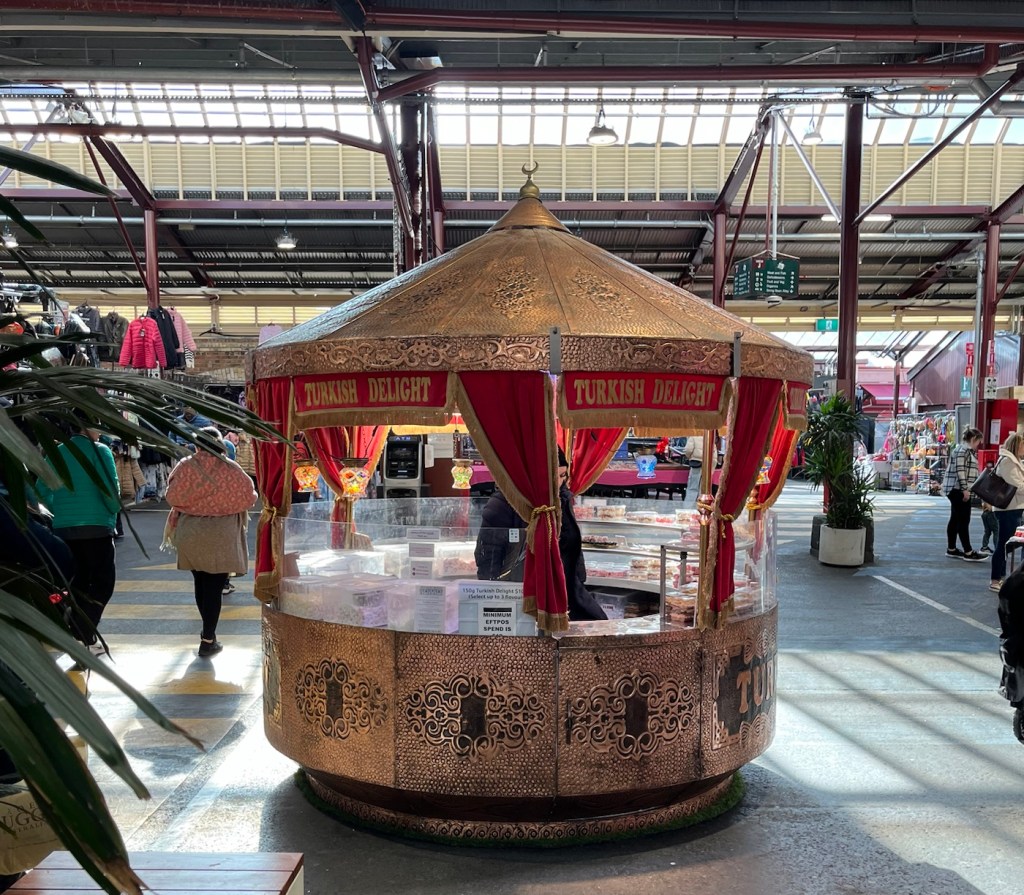
Looking down String Bean Alley at the market towards some of the city’s high rise buildings.An amazing selection of mushrooms.All kind of fruit and vegThat’s a lot of meat and only one of the shops!Today’s goat special, and they are selling all of the parts, including goat brains which are in the plastic containers.A little biltong, for South African dried meat aficionados.A cute Turkish delight booth
We bought some marinated seafood and salmon rolls to go with a carrot salad that Bob made for dinner. We also picked up some Turkish delight for dessert but not from the booth above. One thing we passed on was the souvenir kangaroo scrotum bottle opener that was on offer. 😳
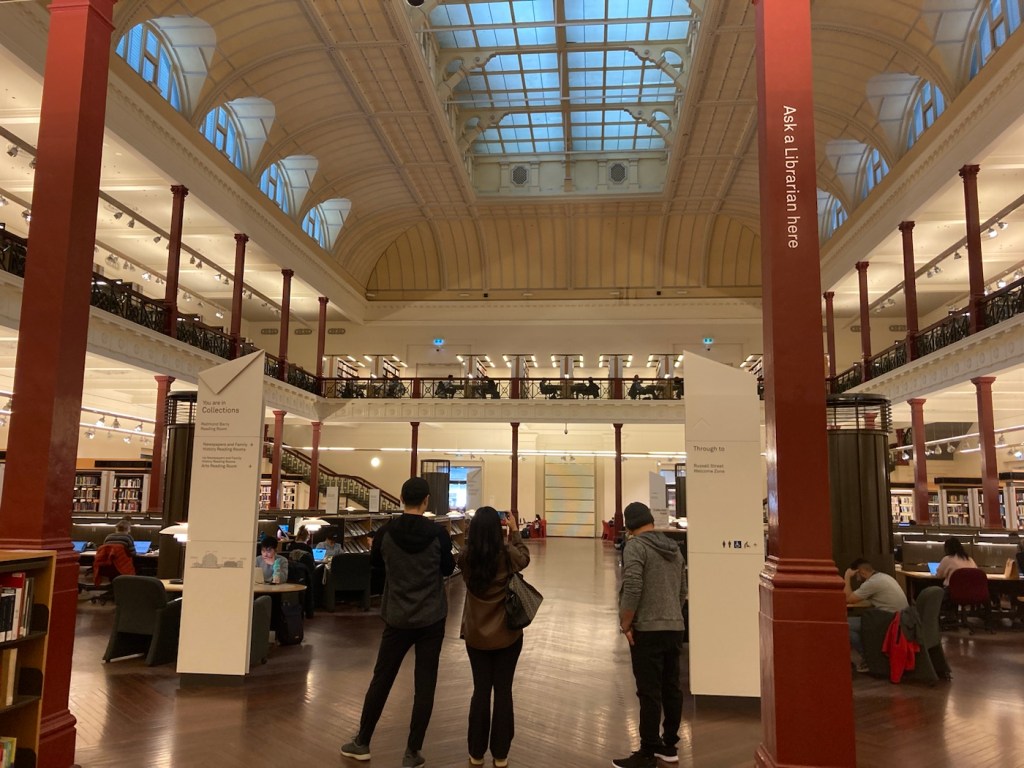
Bob and I took our first journey into Melbourne proper for a booked 1 hour tour of the Victoria State Library. We wanted to see the library, but it also gave us a chance to compare the various public transportation options from where we are staying.
We ended up taking the tram in and the train/bus combo back. The tram is easiest in the sense that you just have the one mode of transportation, but it doesn’t go any faster than normal traffic, and it makes a lot of stops. It was a 10 minute walk to catch the tram and then another 50 or 55 minutes on the tram, and then a 15 minute walk to the library.
On the way back, we caught the train at a station directly across from the library. We unknowingly caught a limited express train, so that was a bit stressful as we didn’t know if it would stop at the station we needed or not. Happily, it did, and that was only a 25 minute ride. We then walked out of the train station directly into the bus bays to catch the 733 bus back to the house. The bus came right after we got there, and that was a stress free 15 minute ride to our stop. It seemed much more efficient, and we’ll likely opt for that for any future trips into the city center.
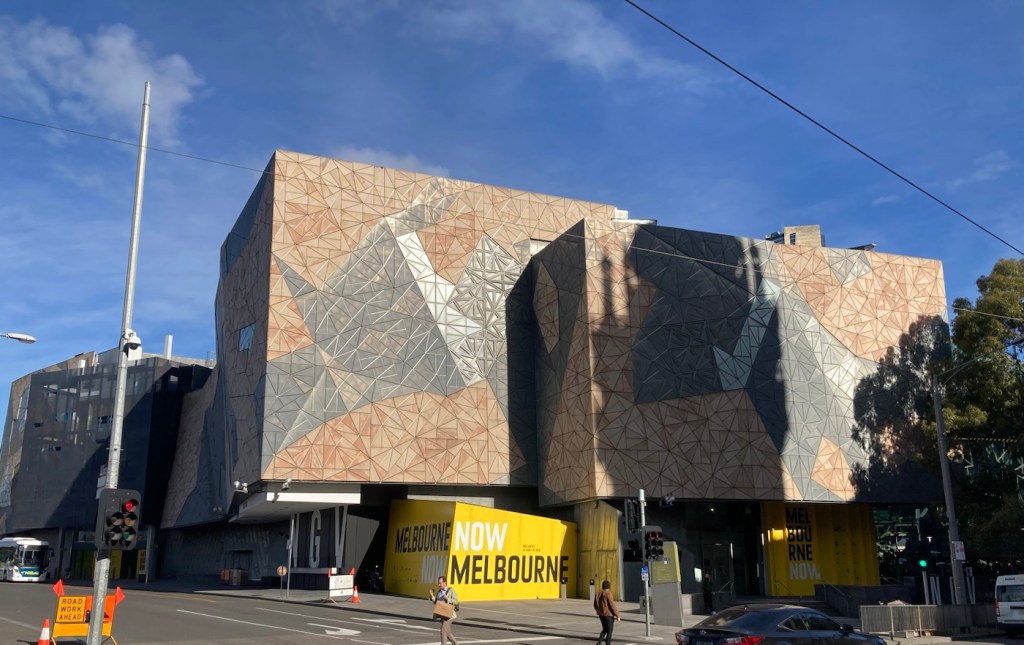
Federal Square, near where we got off the tram. It houses a number of art galleries and exhibition spaces.View of some of the city skyline from Federal Square plaza
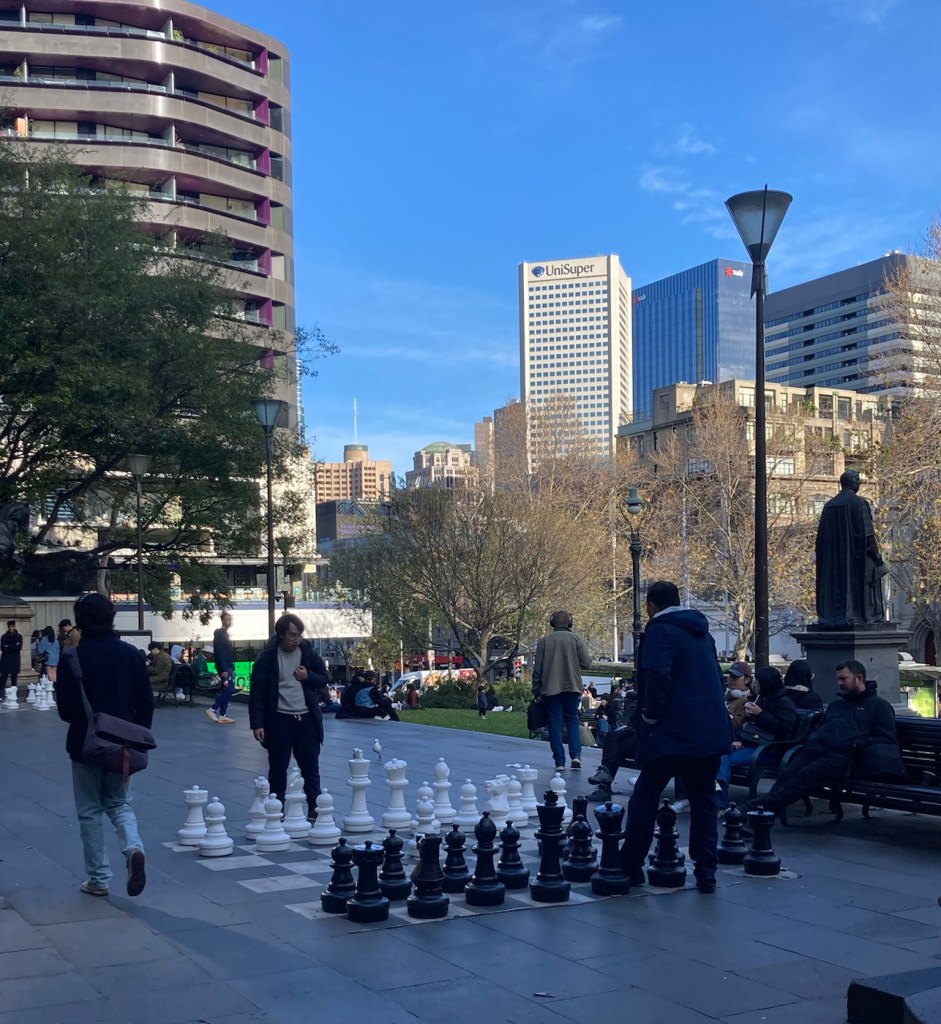
Per the guide, the library started with a collection of 3,846 books. It now has over 2,000,000 items. It is Australia’s oldest public library and one of the first free libraries in the world. It has an extensive collection of materials dedicated to the history, study, and practice of chess and and bridge, and many people come to the library to play chess, both inside and outside.
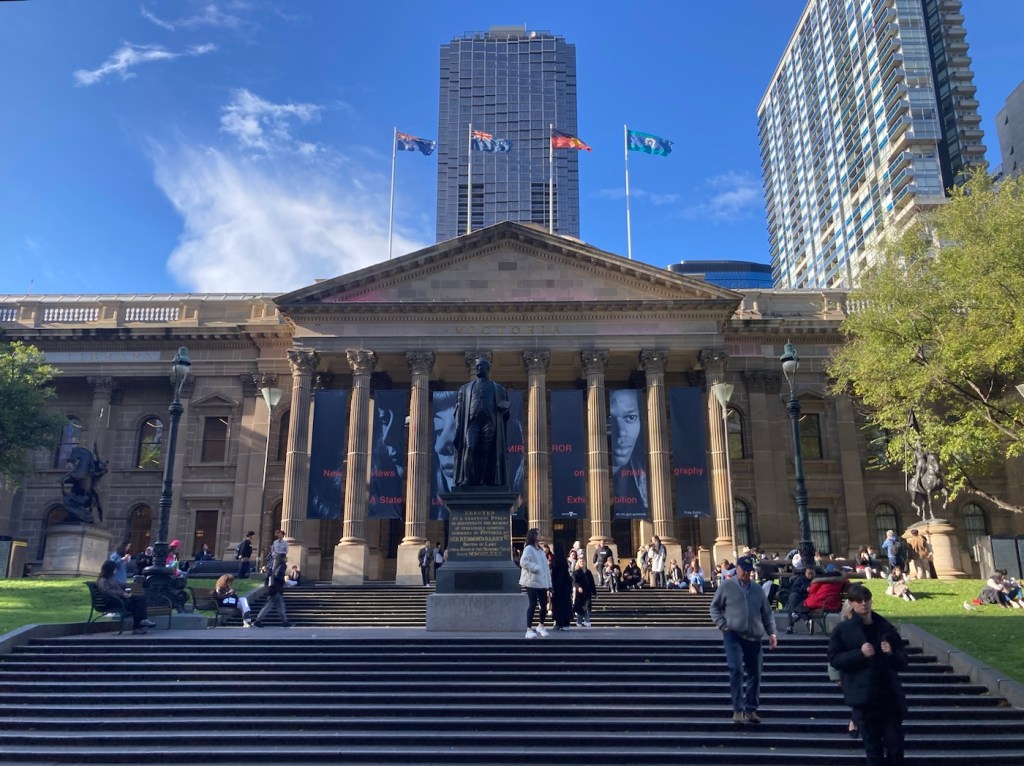
The front of the Victoria State Library with a statue of Sir Redmond Barry out front, who was a leading citizen and lawyer in Melbourne and instrumental in the founding of the library.
The library was established in 1854, and the original portion of the building would have just been the central section without the portico.
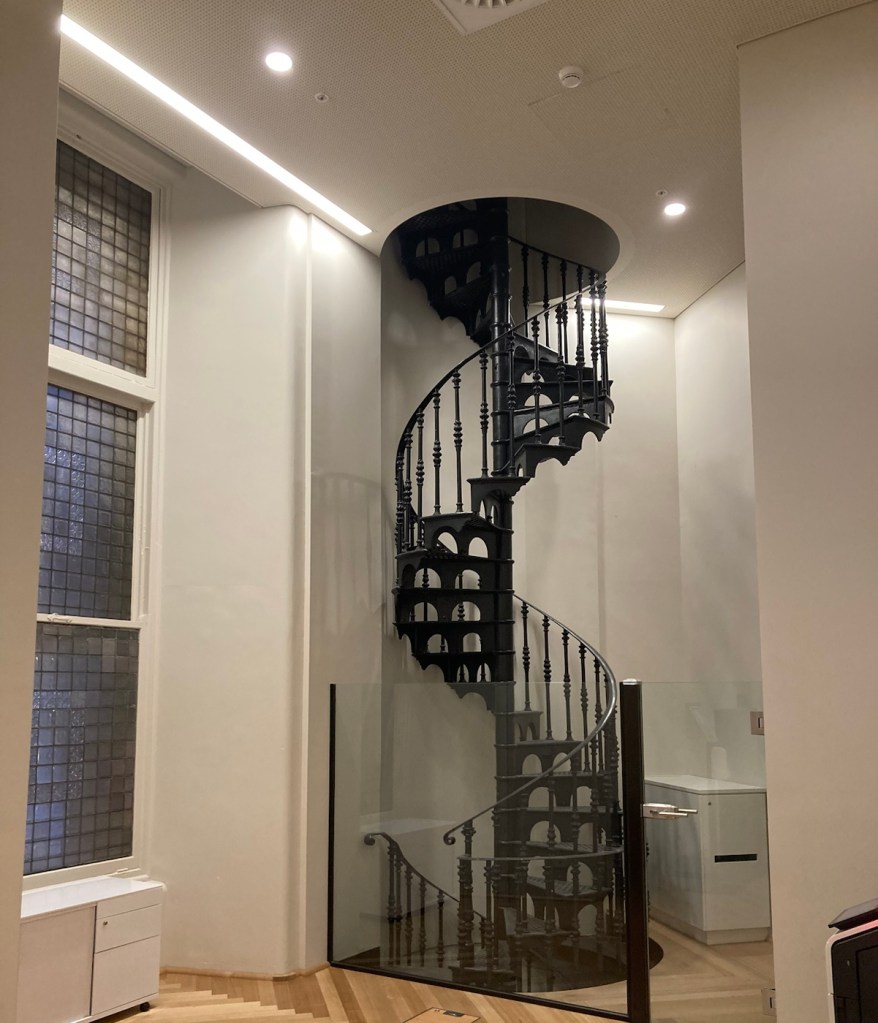
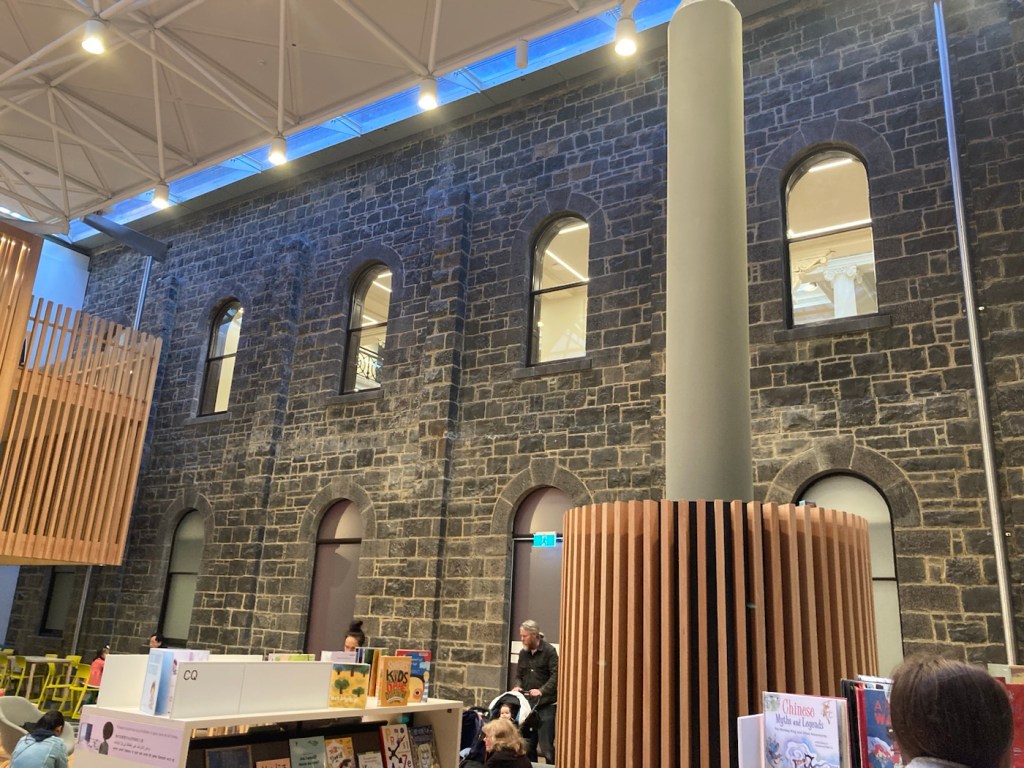
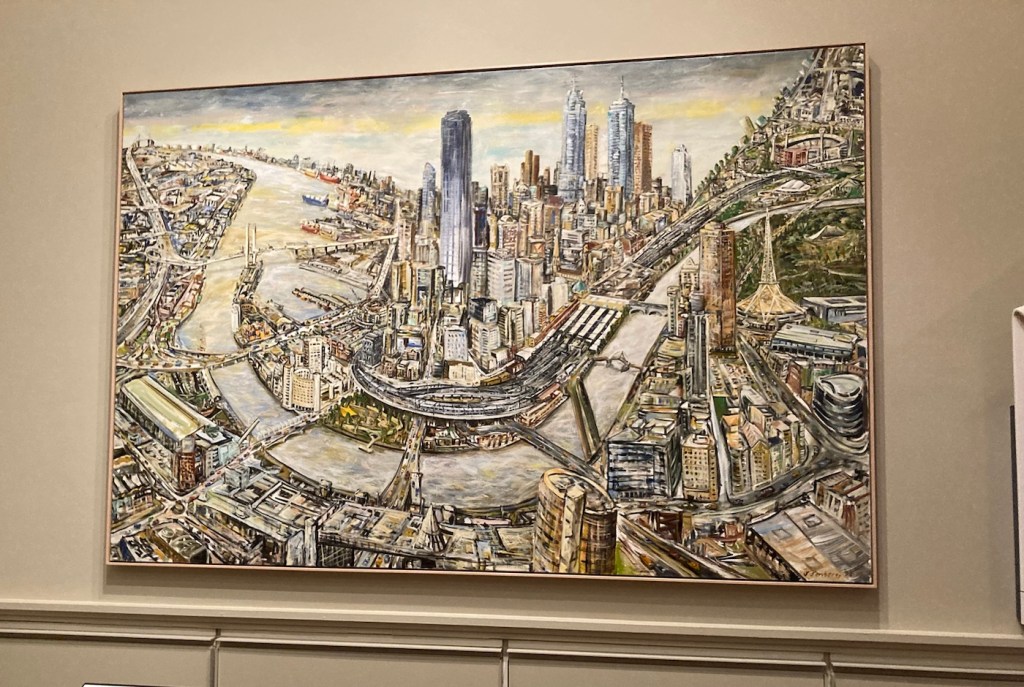
One of two large chess sets on the library terrace.Beautiful spiral staircases we’re added in 1913 on each side of the reading room and would have been used by the librarians to collect requested materials though not used today for safety reasons.One of the original outer walls of the library, which is now part of the Children’s room.The upper level of the original building, which was renovated in 2019.The view of the dome room from the 6th floor. This is based on the Library of Congress as well as the British Library.A painting of Melbourne by Jan Senbergs, an immigrant to Australia from Latvia.The Redmond Barry Reading RoomA tapestry by Keith Tyson in the Redmond Barry Reading Room
The Victoria State Library provides 2 public tours a day. We did today’s afternoon tour. Our guide seemed new and was a quiet talker. By the end, we were sure we would have seen more on our own, but we did learn some interesting information.
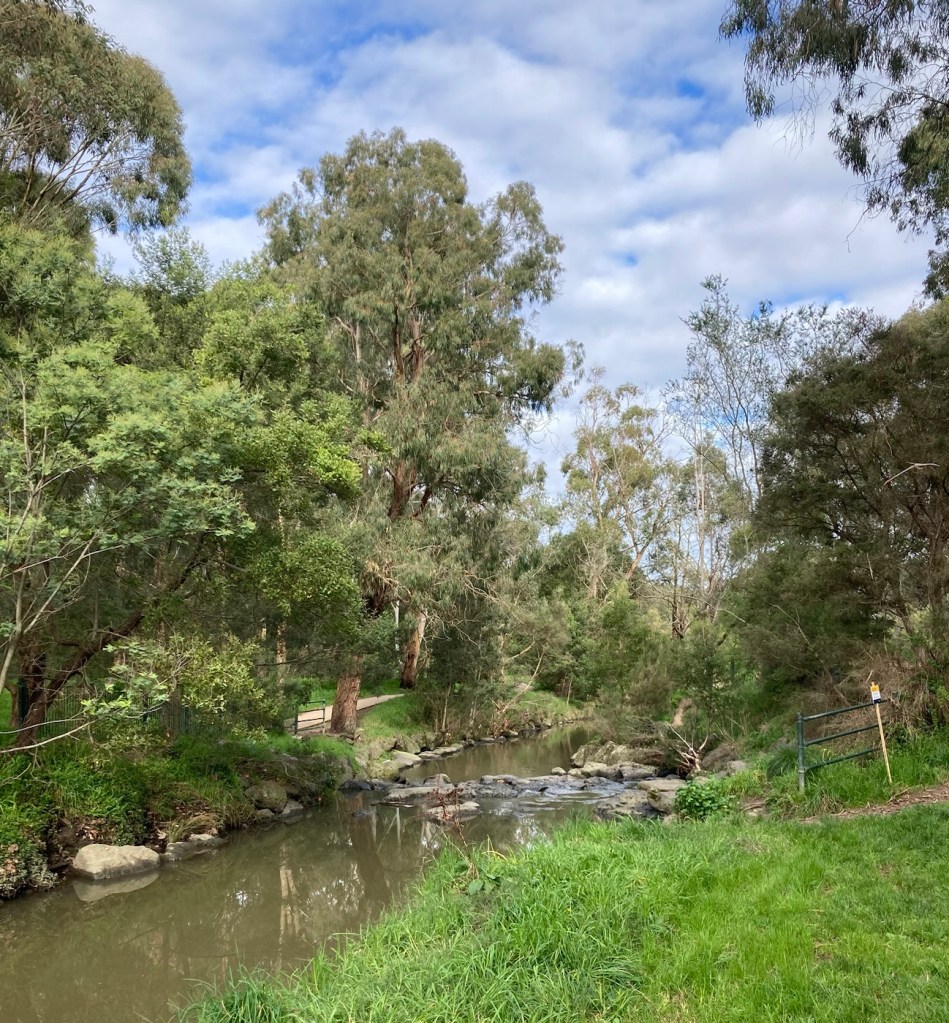
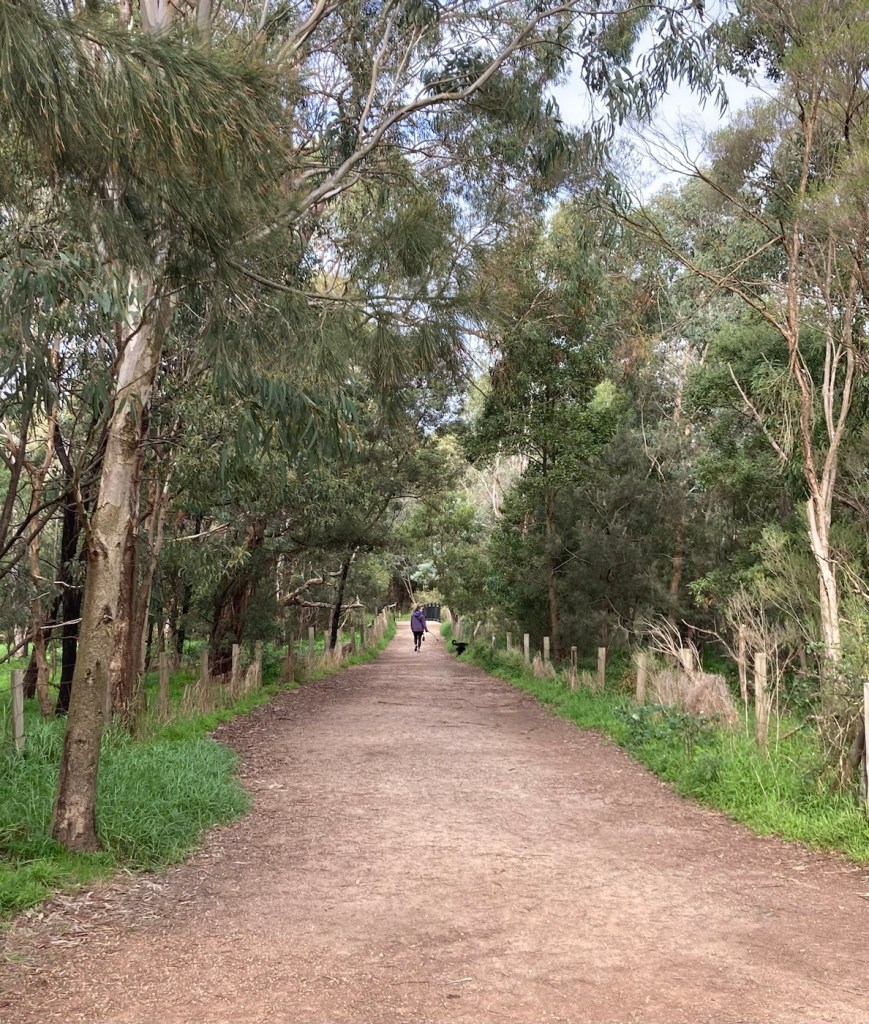
Today, we did a portion of the Gardiners Trail to the south of where we entered onto the trail. Maybe because it is Sunday here, we saw a number of people out walking their dogs (both on and off lead) on the first section of the trail. Today’s walk took us along Gardiners Creek, some wetlands, past a university, as well as residential and commercial areas, all while providing some art and a bit more history about the area.
Based on the Heritage Trail signs located along the path, we learned that John Gardiner, for whom the trail is named, immigrated to Australia with his family from Ireland in 1822. They originally settled in Tasmania before moving to the mainland following a drought. He became a prominent citizen in Melbourne and owned some of the land along which the trail lies. Interestingly, he later moved to England while his wife and sons remained in Australia.
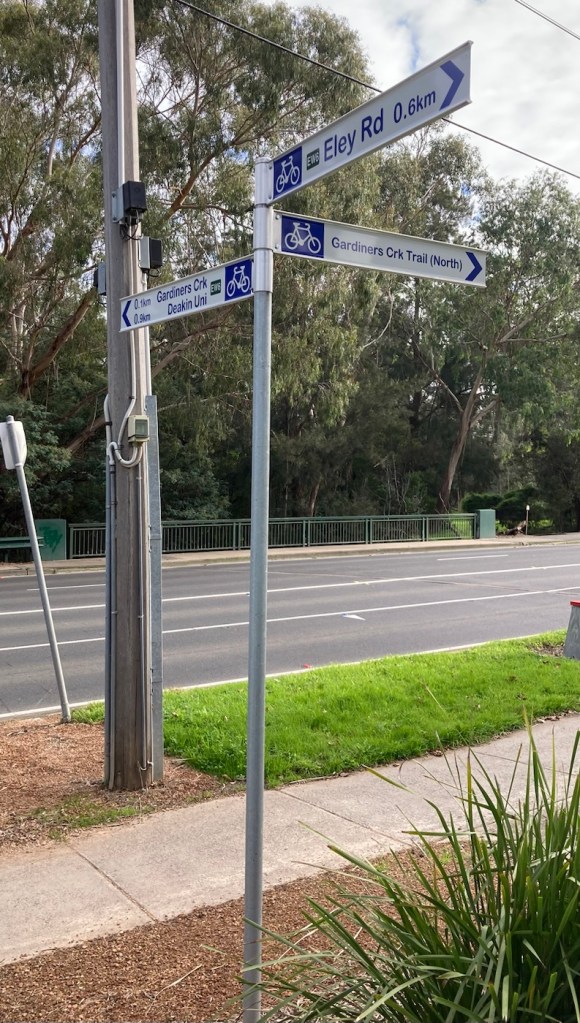
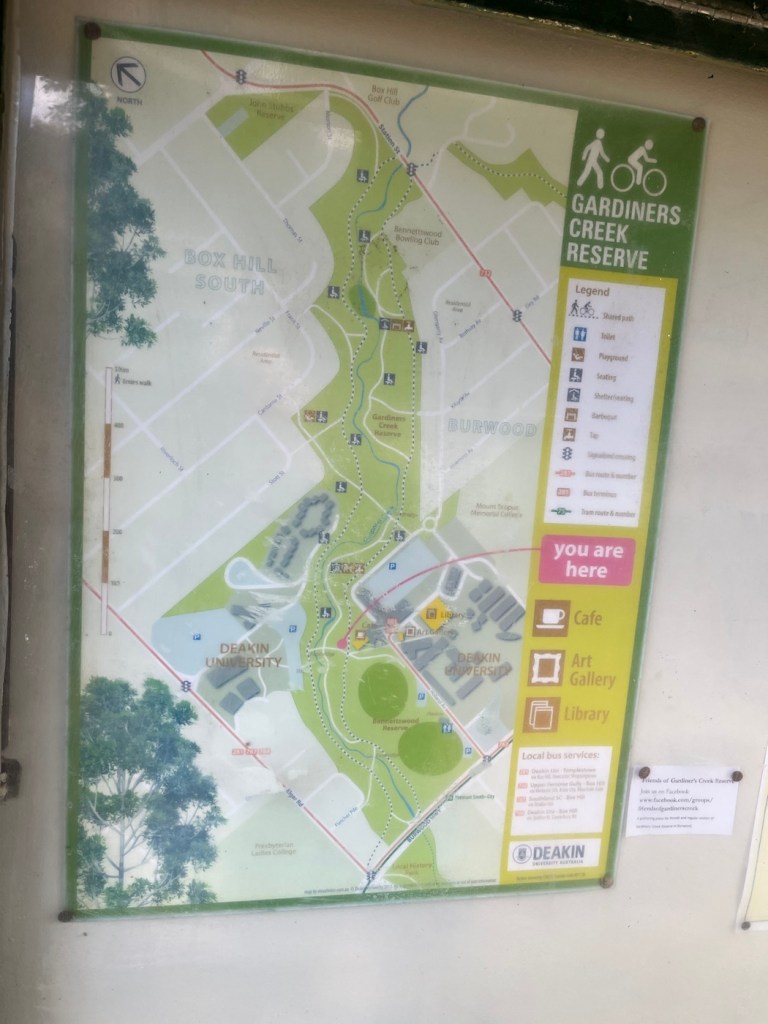
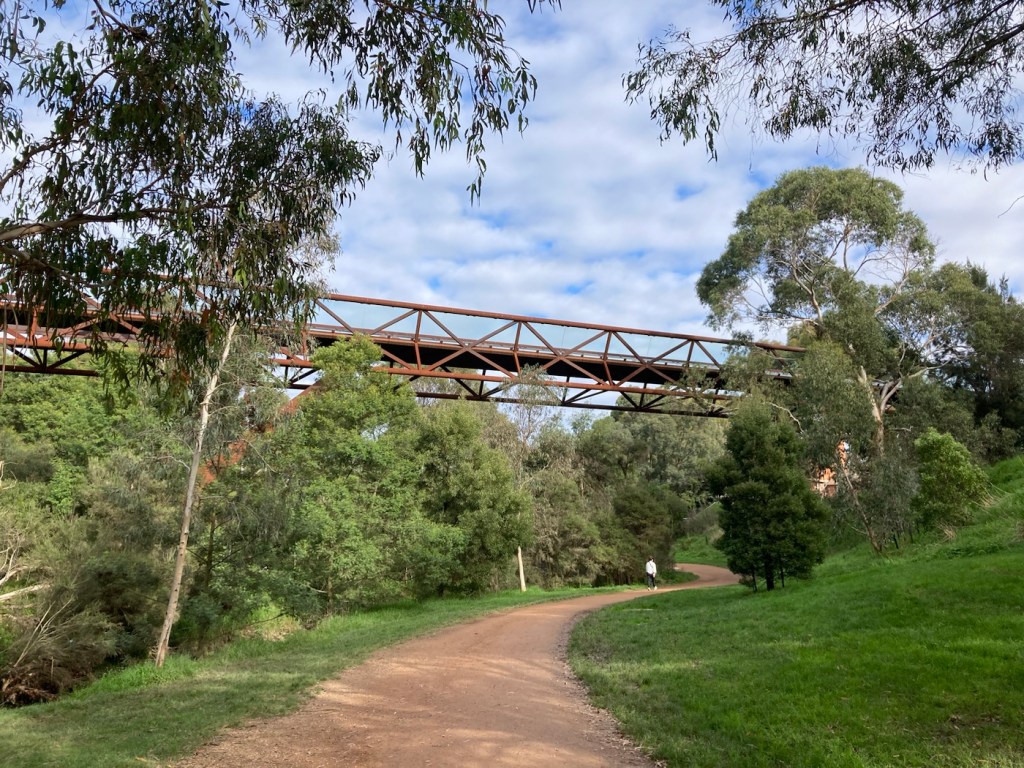
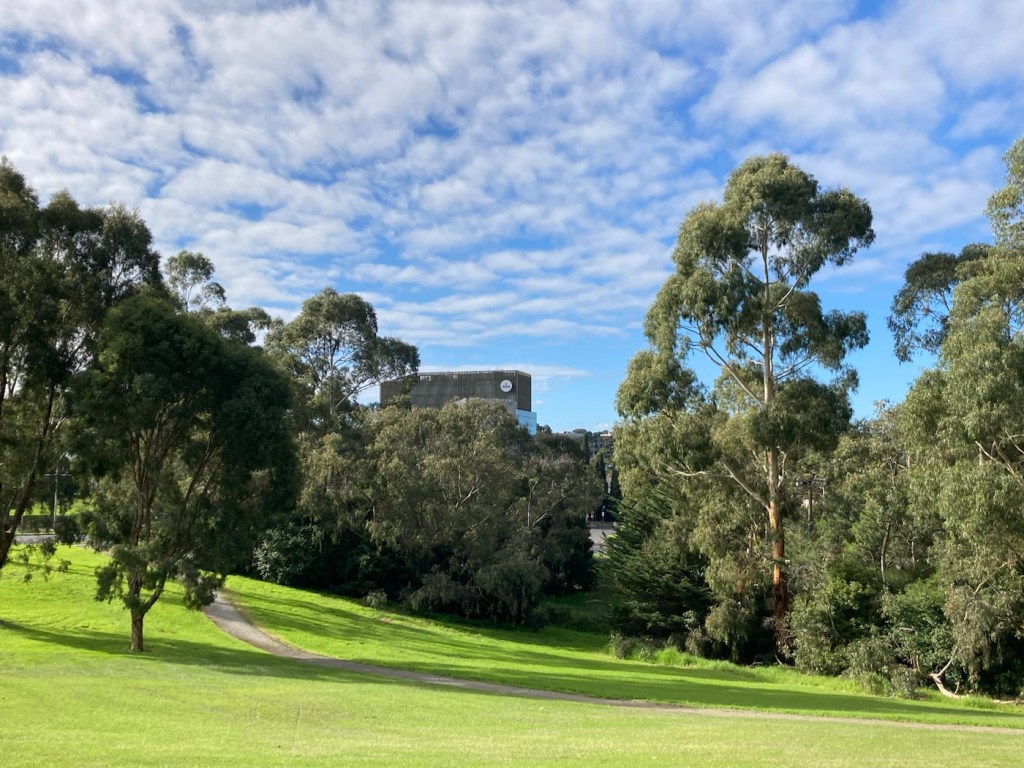
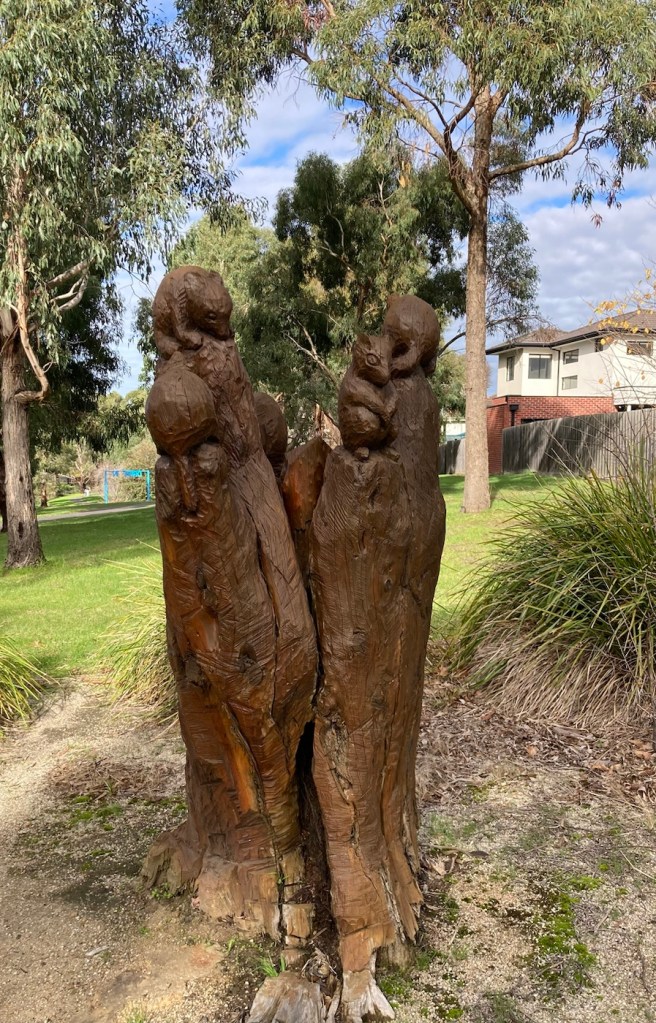
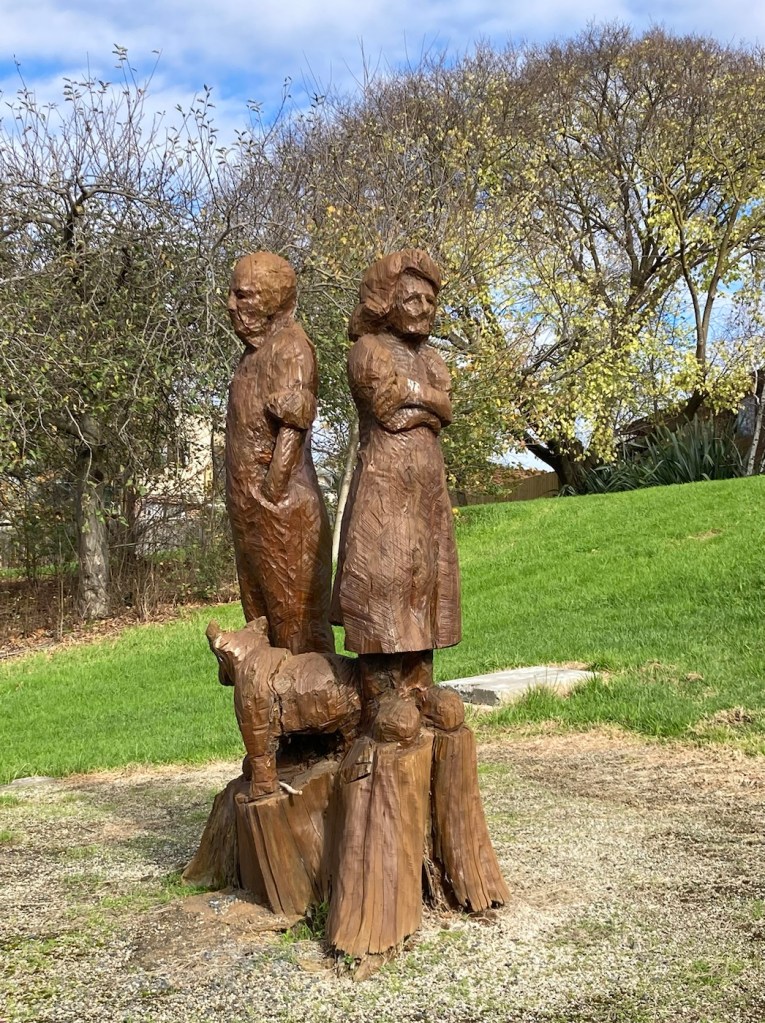
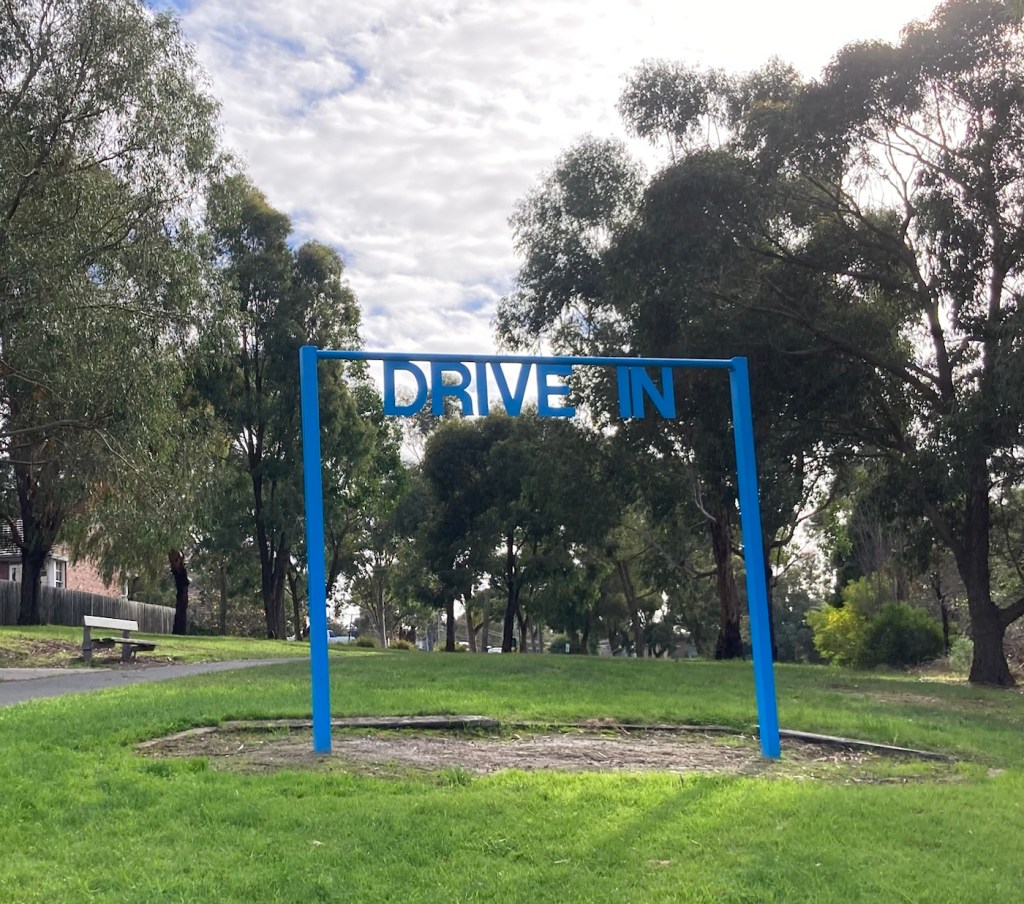
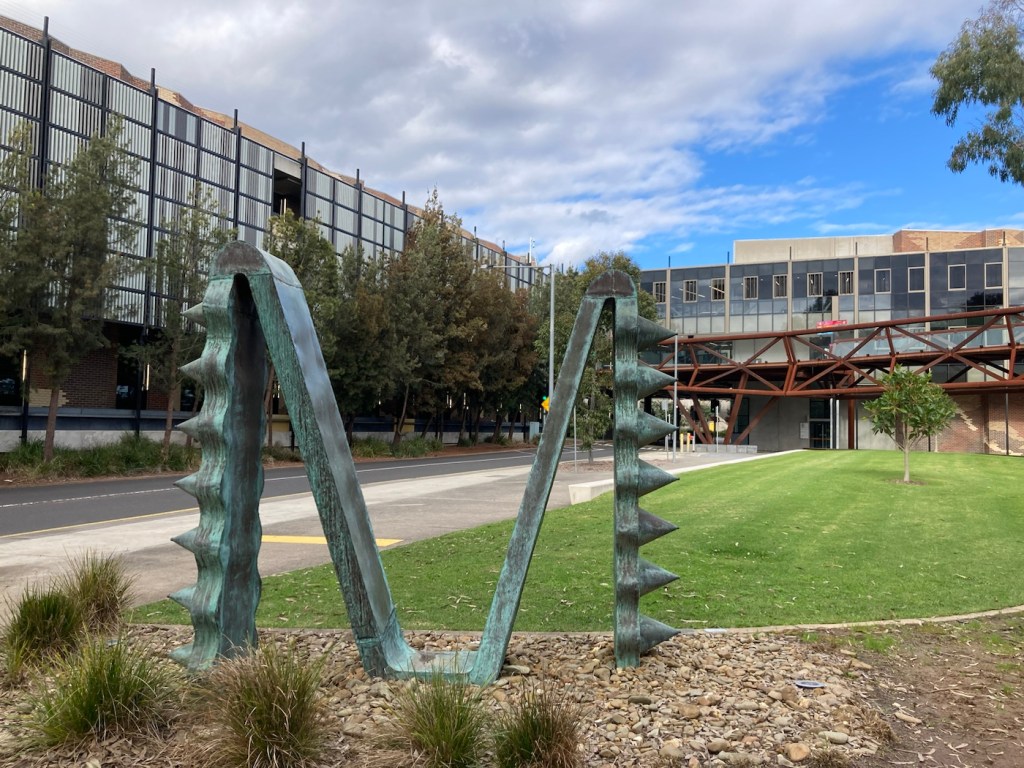
Signage directing us to the trail. Yesterday we went right. Today we crossed the road to go south.A map of a portion of the Gardiners Creek TrailGardiners CreekSome wetlands along the trailA view of the trail, other portions are paved.There were a number of bridges along the trail that connected the two sides of the creek. This trail seemed to be mainly for students of Deakin University to access both sides of campus.Some of the path is relatively narrow but some opens up onto lovely green spaces on either side of the trailExamples of tree sculptures along the trailDittoThis sign and the car sculpture below indicate the location of Australia’s first drive-in theater in 1954, which could hold up to 650 cars.Never heard of the car model “FJ Holden,” but it had 46% of the market in the 50’s in Australia.This is titles Geosculpture and is made of stone, cement, and steel. The stone represent different types of igneous, sedimentary, metamorphic, and molten rock.A lovely green park area between the trail and some commercial buildings A sculpture in front of the bridge and a couple of the buildings at Deakin University




























 Peckish Travels