We expected a rainy day today, and we got it, so we headed down North Terrace Street (where our hotel is also located) to visit some of Adelaide’s free indoor attractions. On our way, we saw a few statues of important individuals from South Australia as well as an impressive war memorial and Anzac Centenary Memorial Walk and Wall.
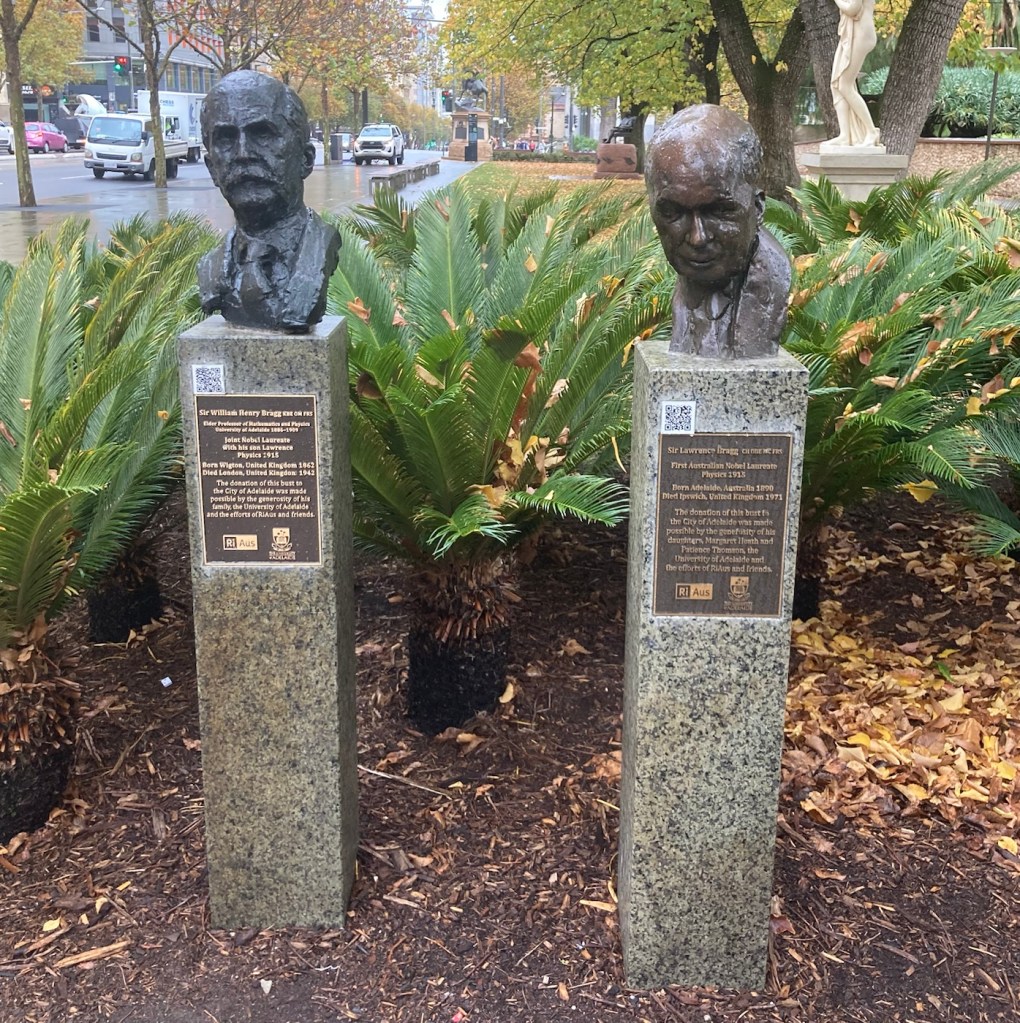
who shared the Nobel Laureate in Physics in 1915, Australia’s first in that field.
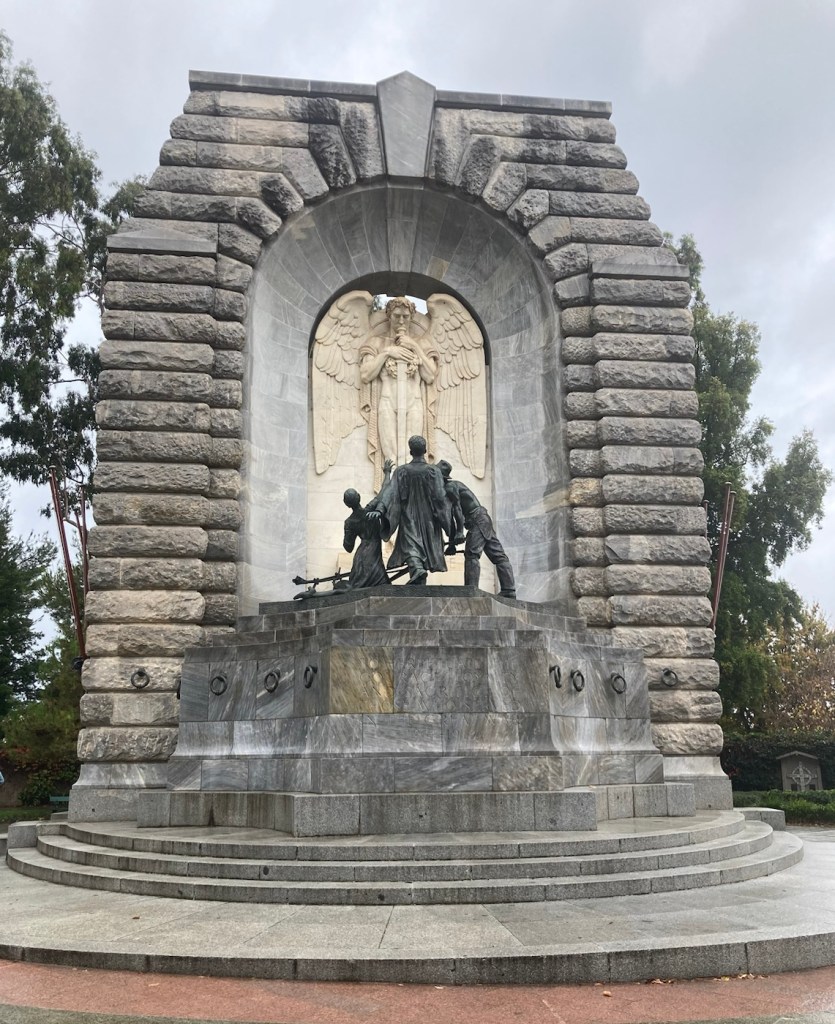
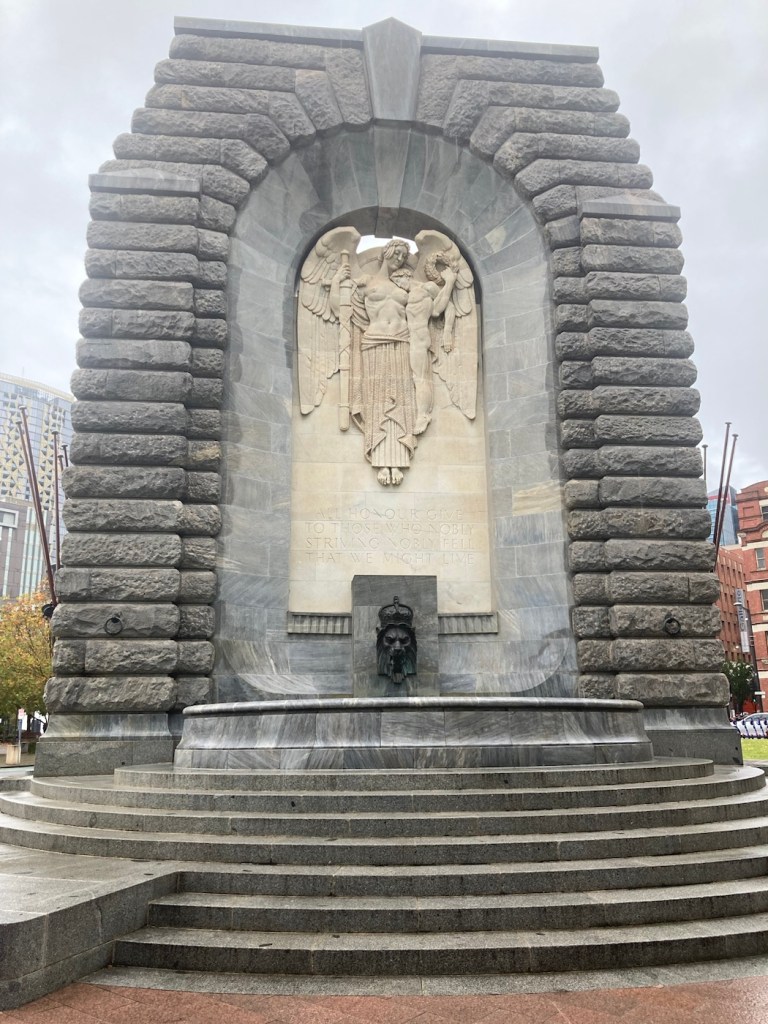
You can walk inside to see the names of South Australians
who died in the Great War.
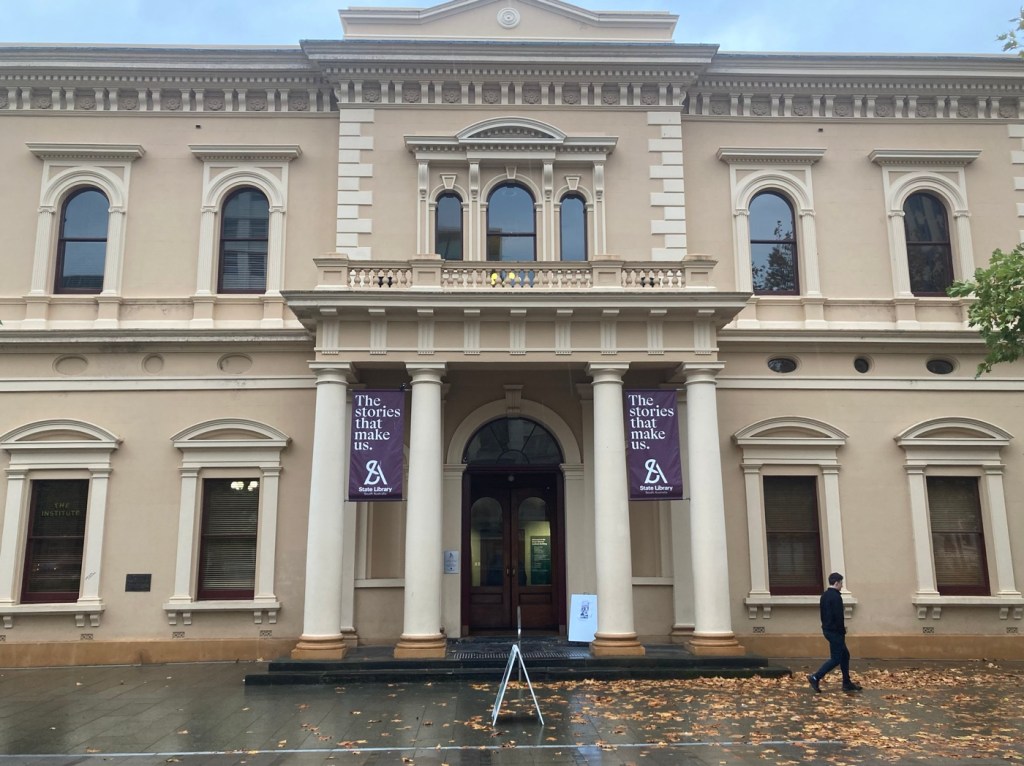
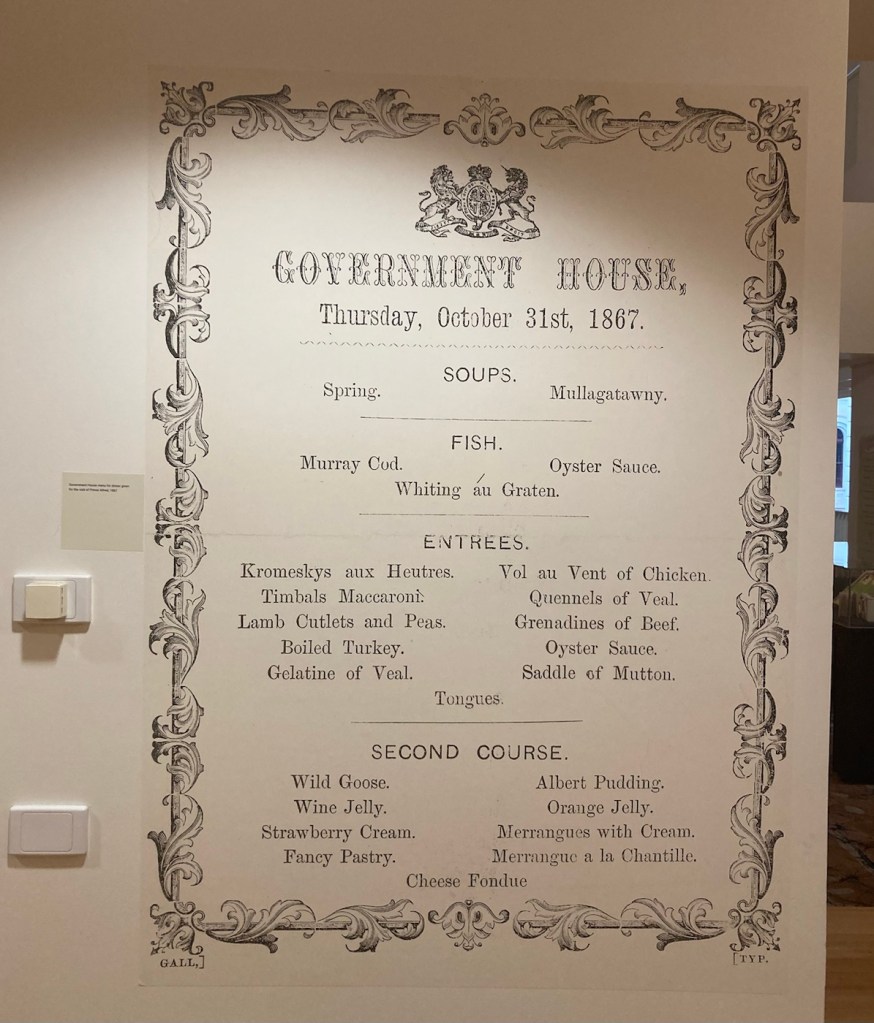
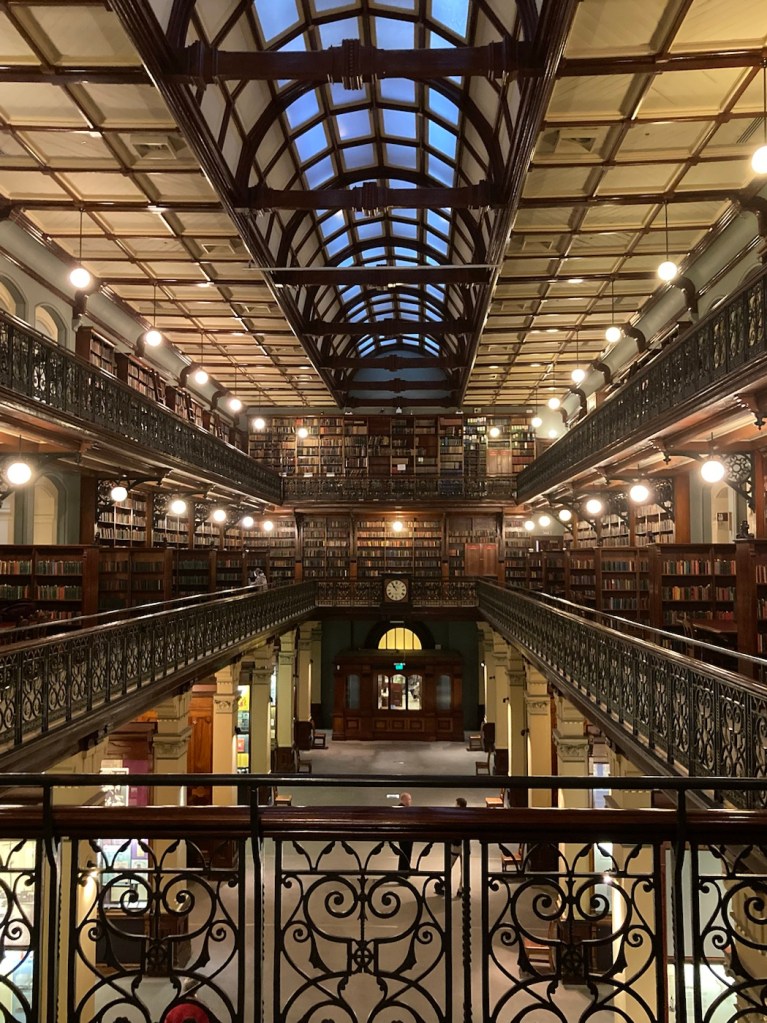
Our first stop was the State Library of South Australia. It was created in 1834 and their collections are focused on South Australiana, family history, and special collections. Parts of the library are under construction, but we still got to see a number of exhibits, including an interesting one on old menus.

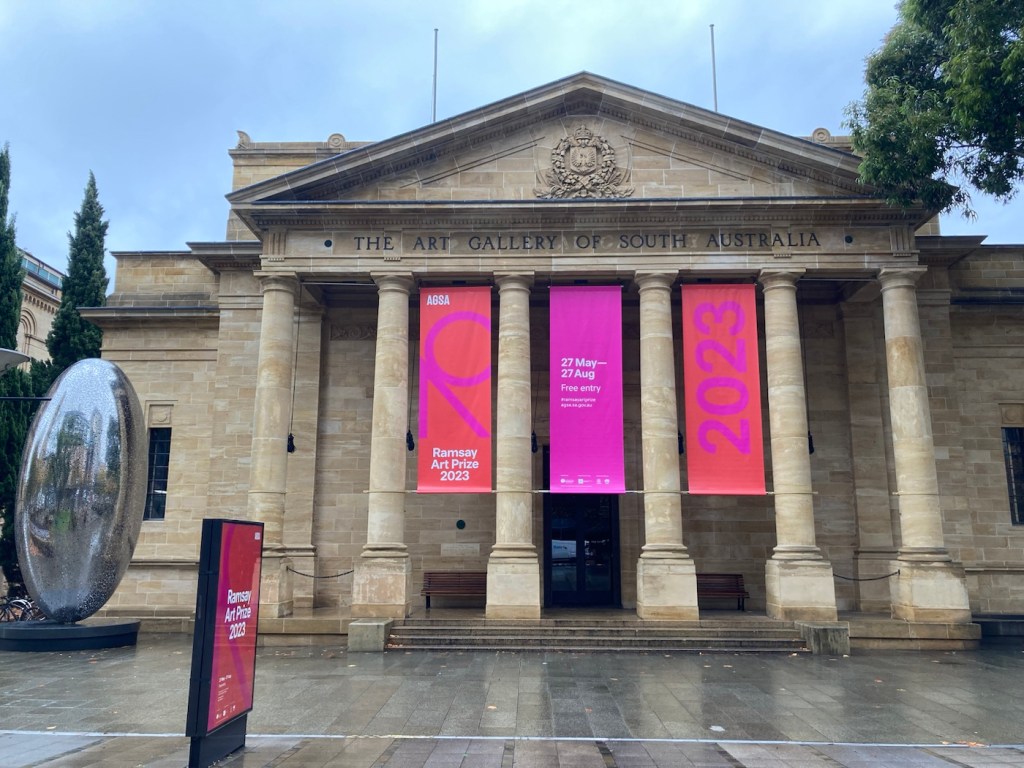
From the State Library, we walked down the block to the Art Gallery of South Australia. The gallery has one of the largest art museum collections in Australia, comprising almost 47,000 works of art spanning 2,000 years. We thought it might be focused exclusively on South Australian artists, but that wasn’t the case.
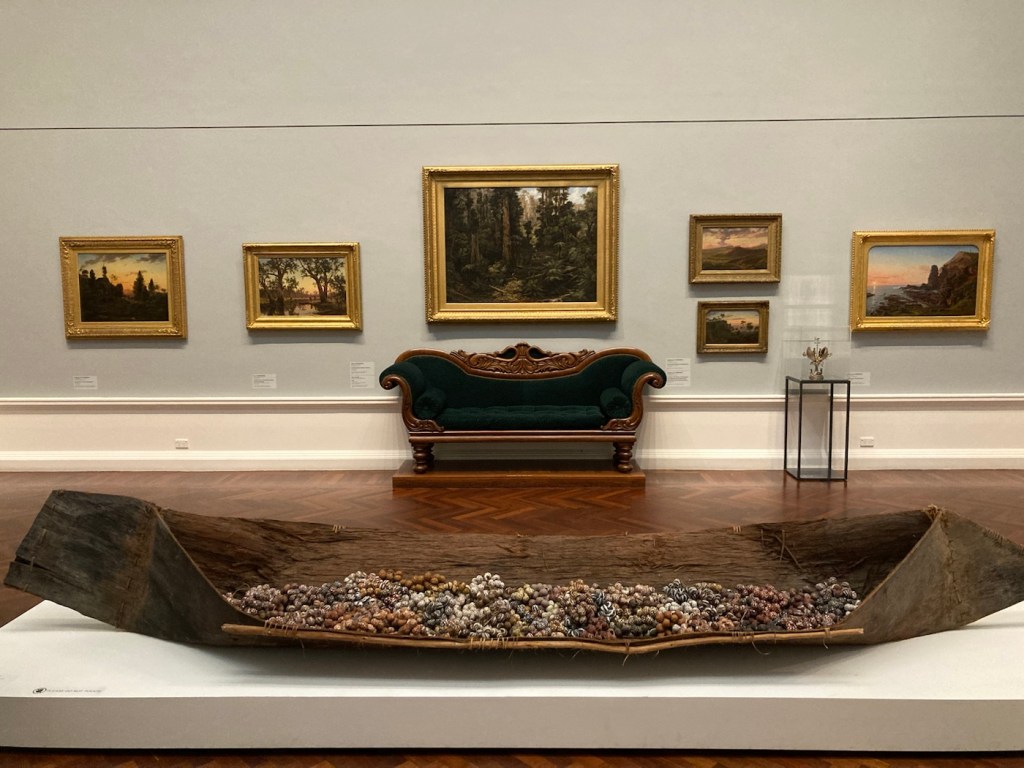
The canoe is by Johnny Bulunbulun from the Northern Territory.
It’s stitched bark and filled with hand painted snails shells.
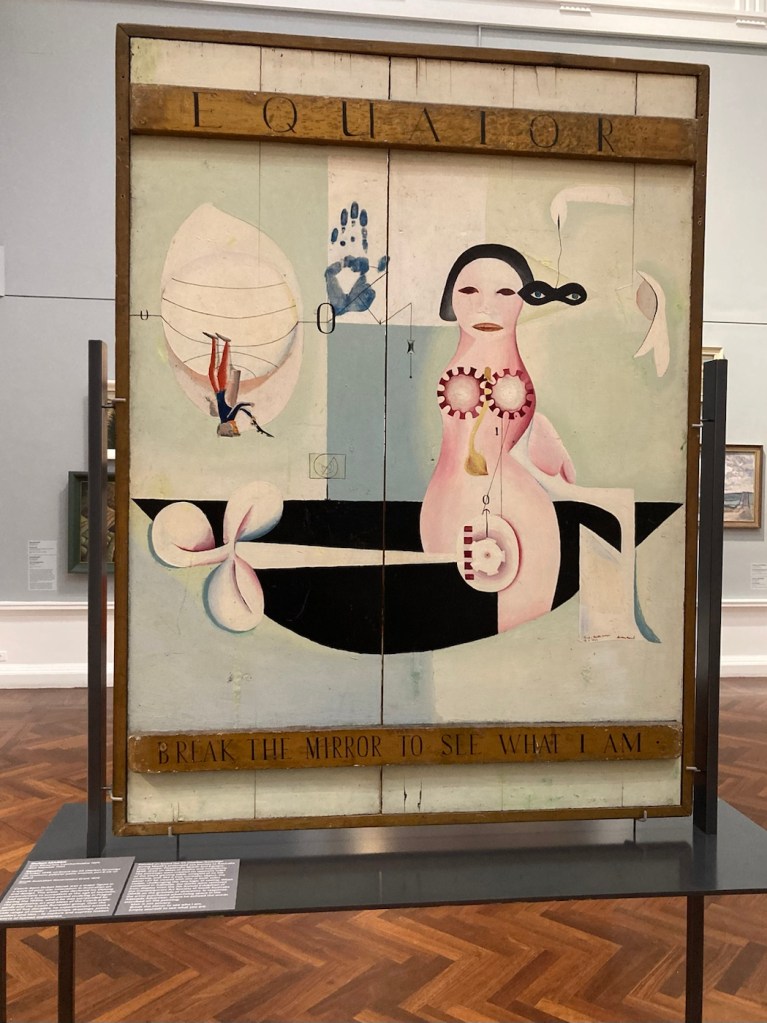
This one is titled, The Equator.
It was completed on the boat sailing to Sydney in 1948,
as his family immigrated to Australia.
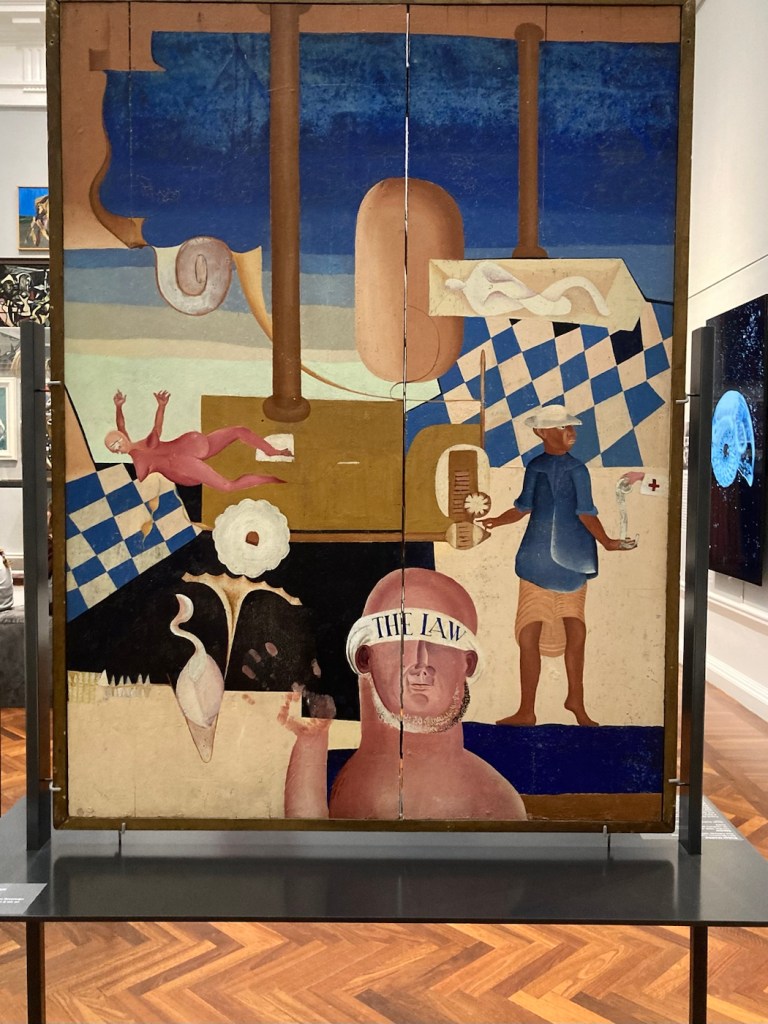
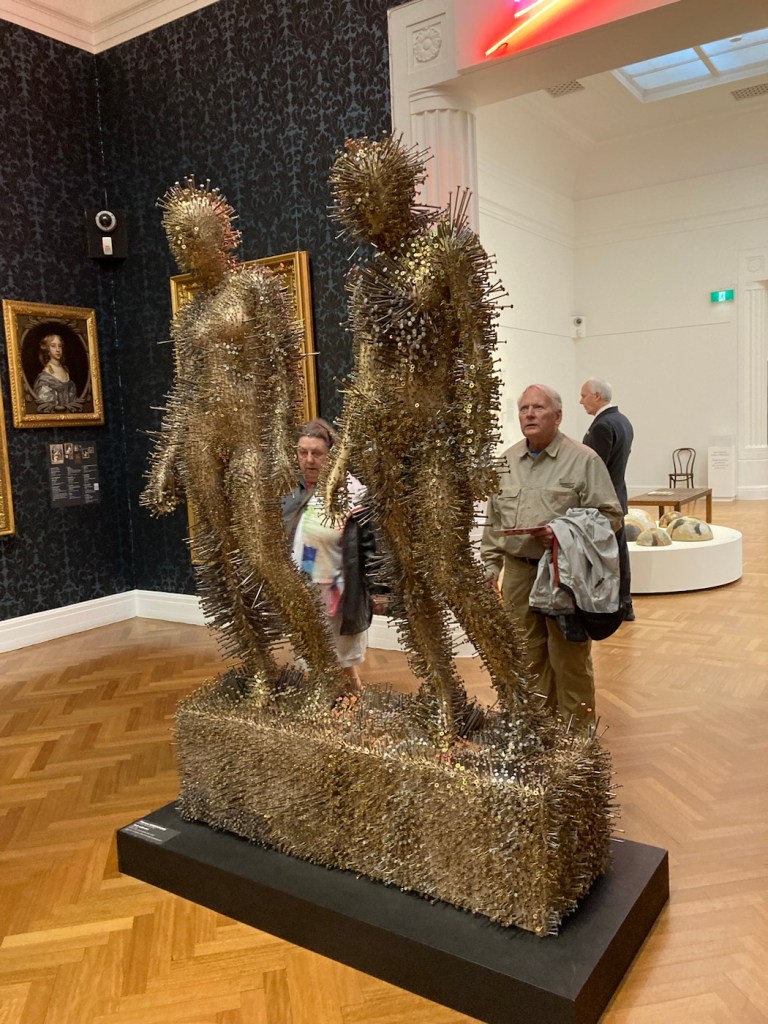
but based on its contents, you could say he either nailed it or screwed it up.
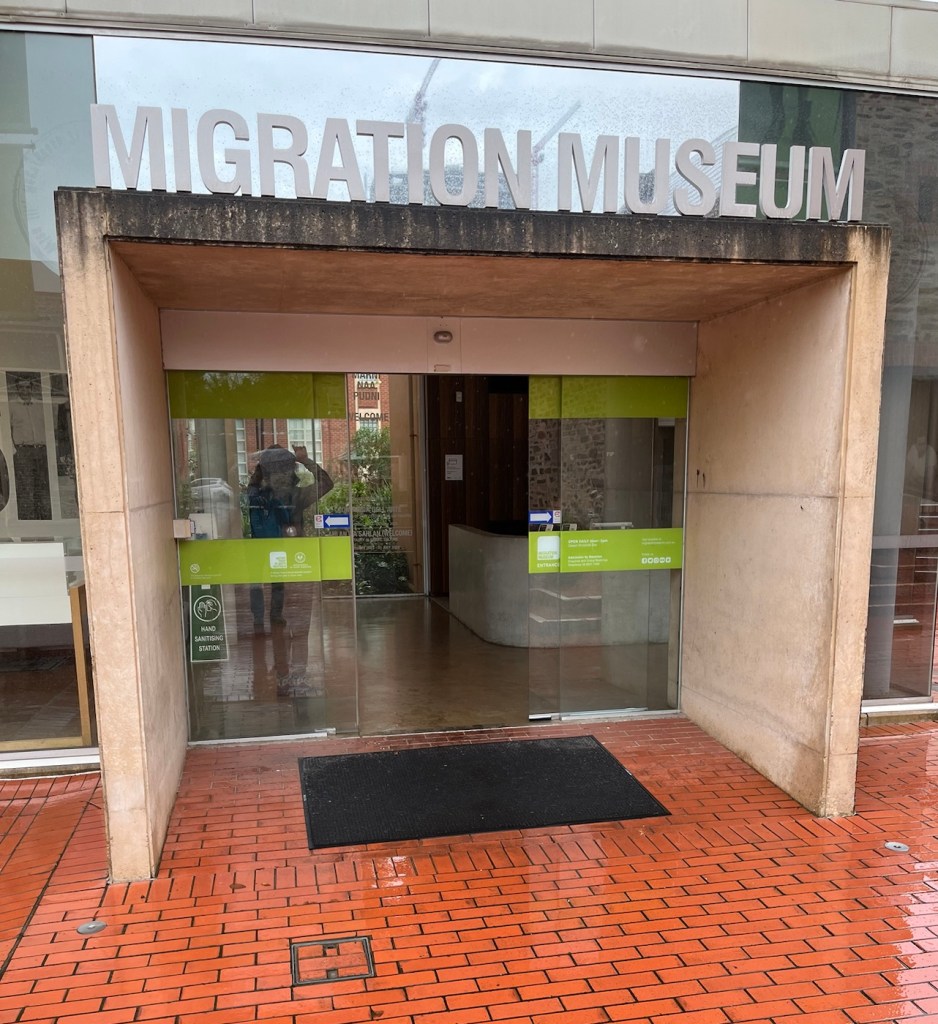
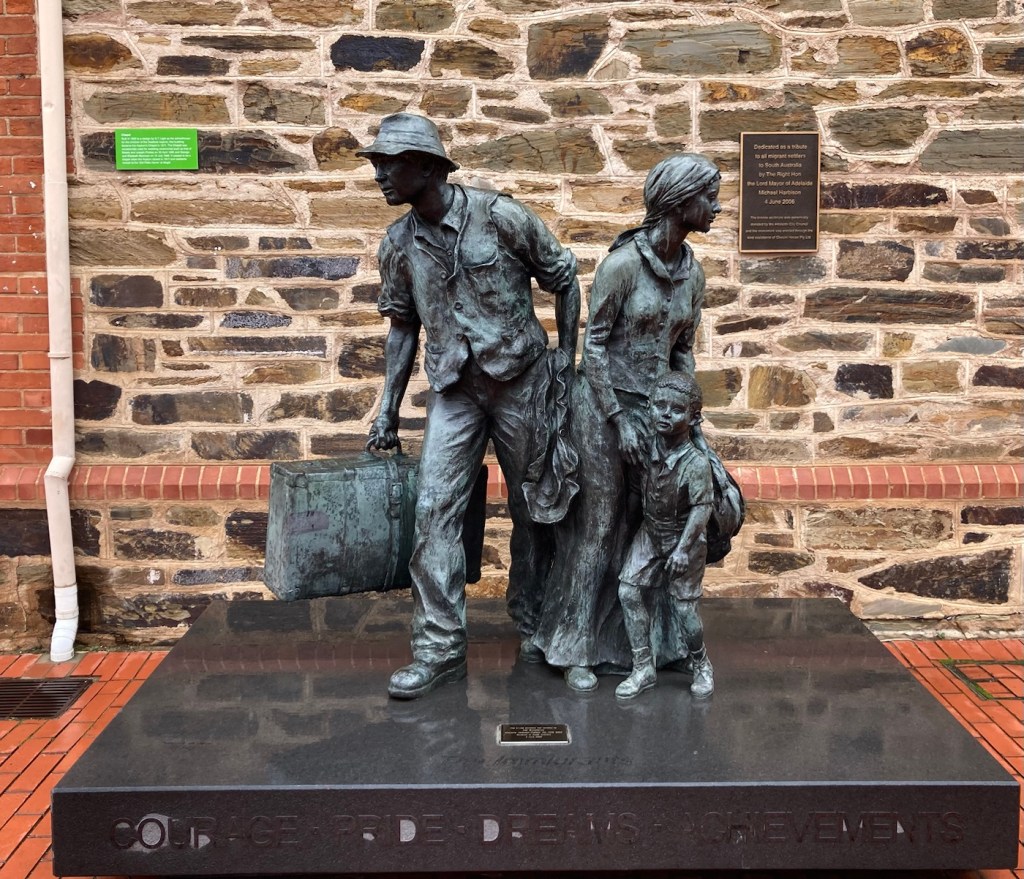
Our final stop was at the Migration Museum. This museum provided a good overview of the evolution of migration to Australia as well as the changing national migration policies. It celebrates cultural diversity and the contributions of the different immigrants to Australia.
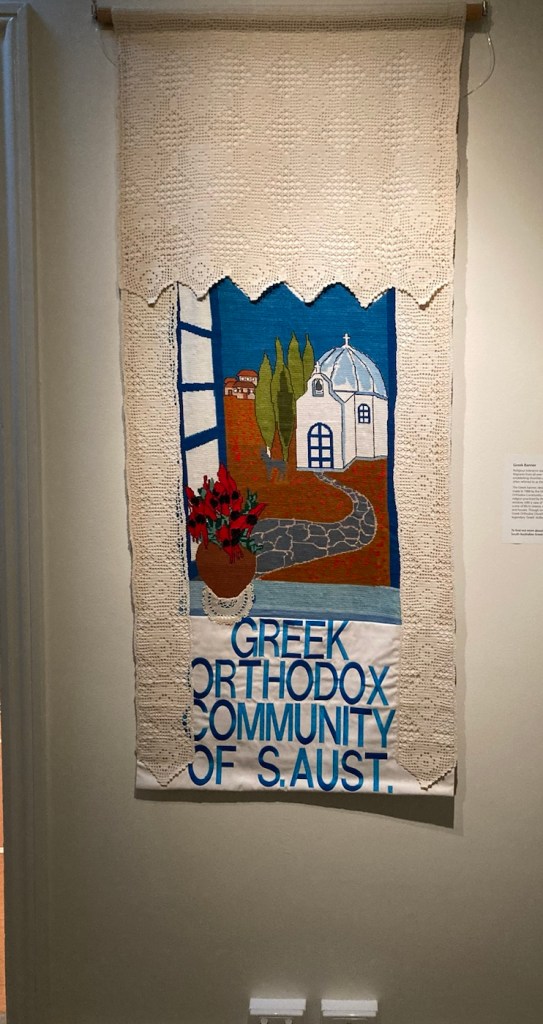
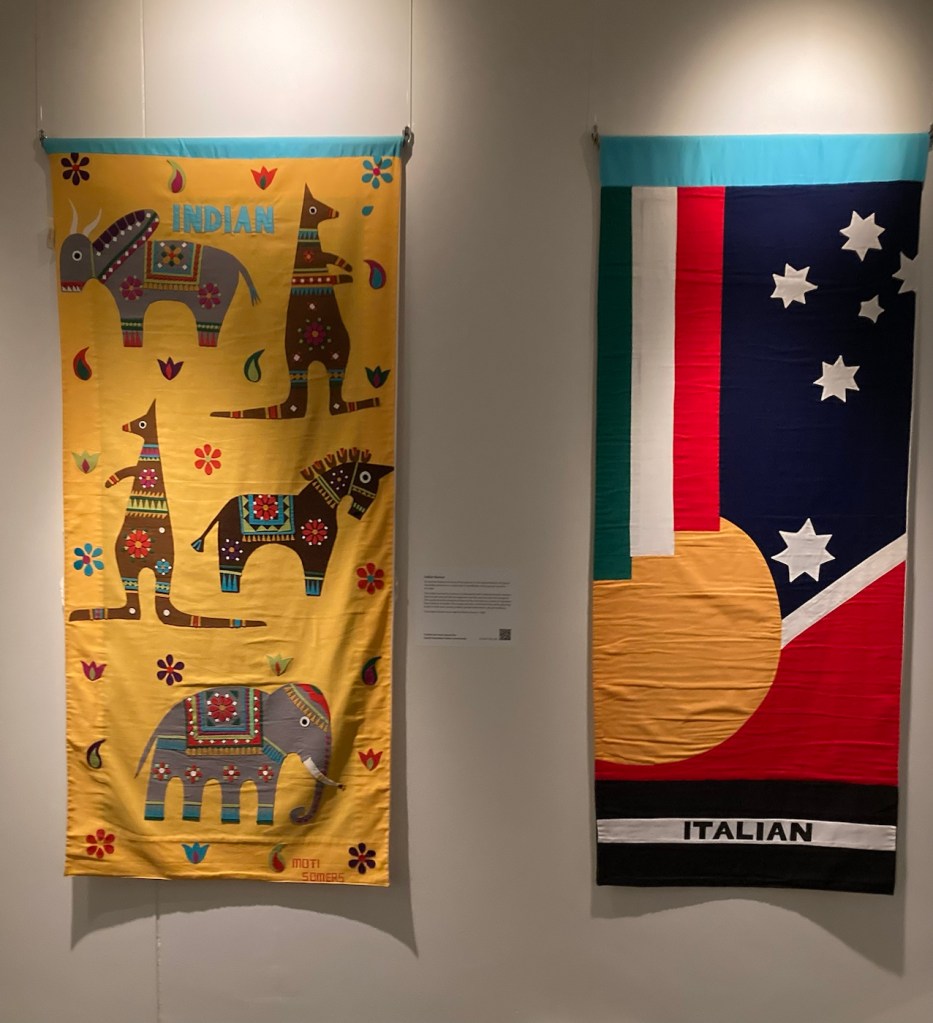
and others are presented via a slide projector onto the wall.
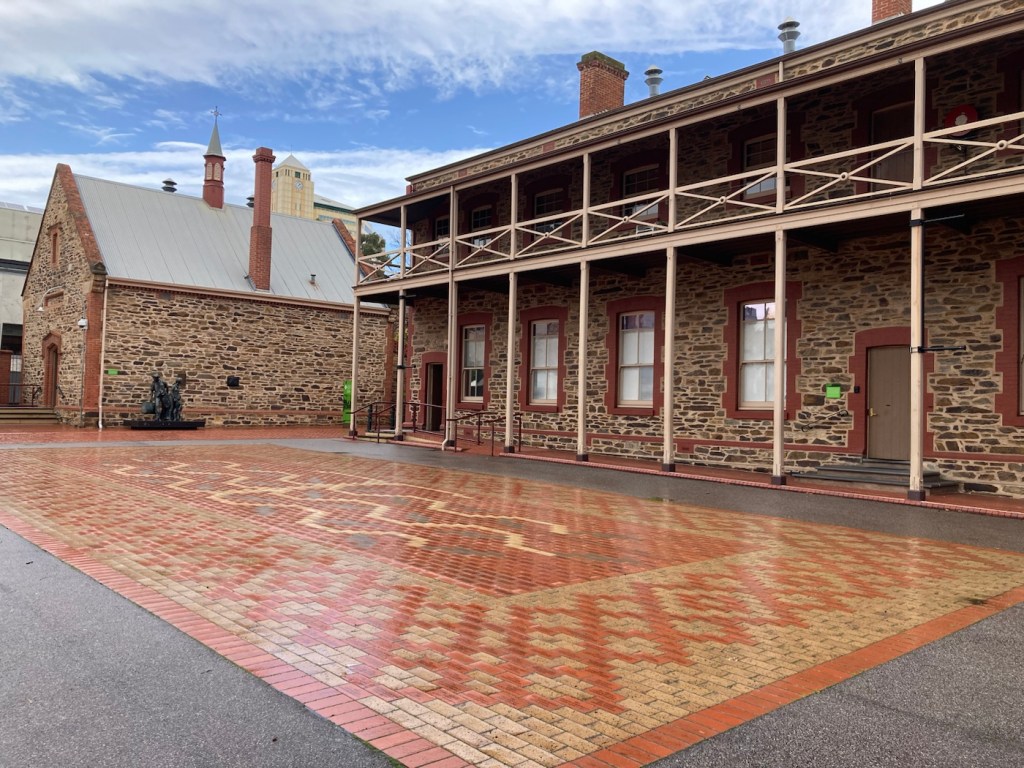
Each of the orange tiles contains a name or names of immigrants from over 90 countries who have shared their immigration experience.
 Peckish Travels