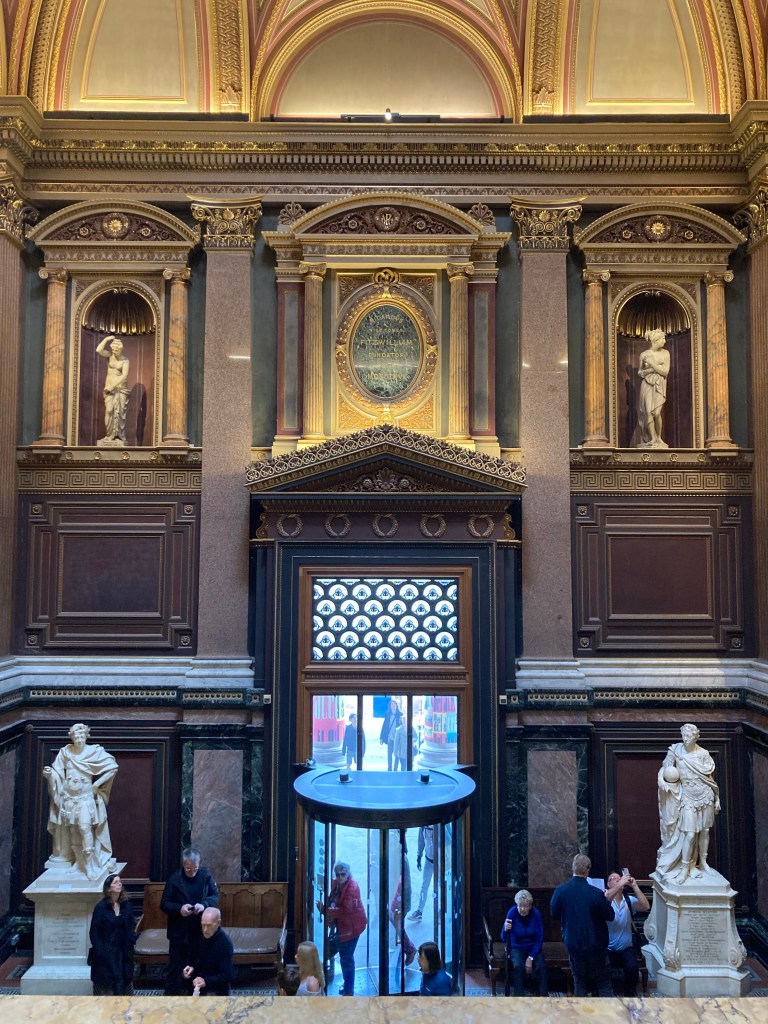
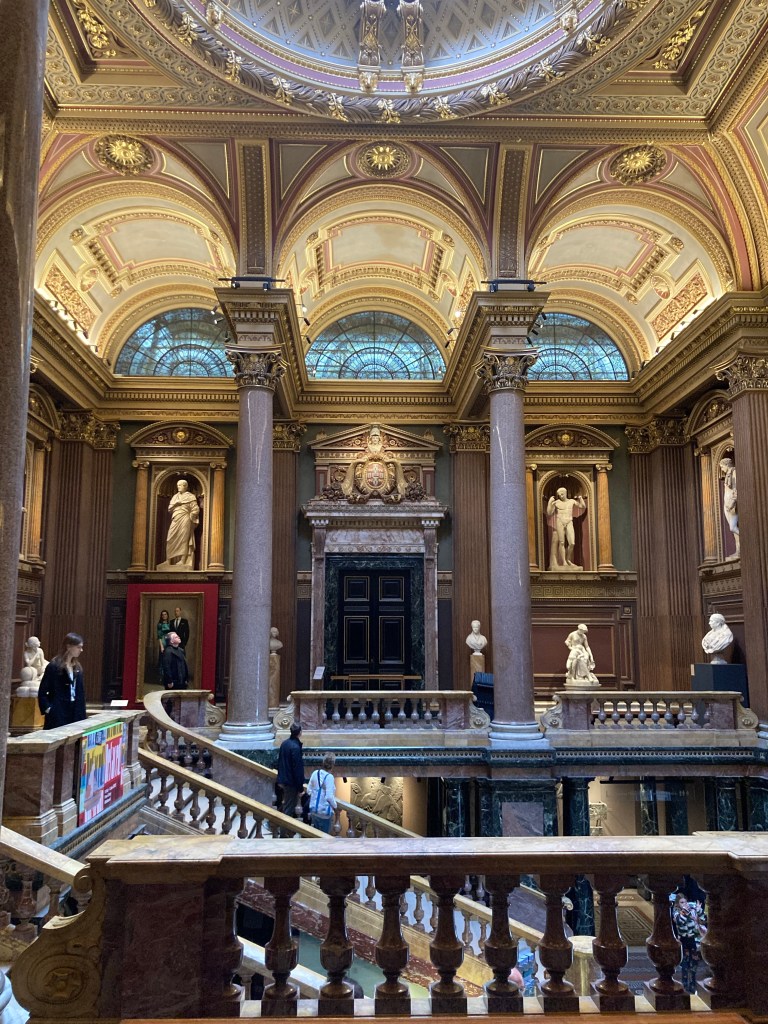
Today, we visited the Fitzwilliam Museum. We had heard about this museum from our homeowners as having an impressive collection that might require a visit or two. According to its website, the museum was started in 1816, when Richard, the Seventh Viscount Fitzwilliam of Merrion, bequeathed his works of art and library to the university along with £100,000. It currently houses over 500,000 works of art. The building itself is beautiful too.
The museum was a short walk from our house, just under a mile away. Along with many of the other museums associated with Cambridge University, it is free to visit, although we did give a donation when we reserved our timed entry tickets online. The museum has collections exhibited in approximately 25 rooms over two floors. We just perused the exhibits on the upper level today and hope to get back for a second visit.
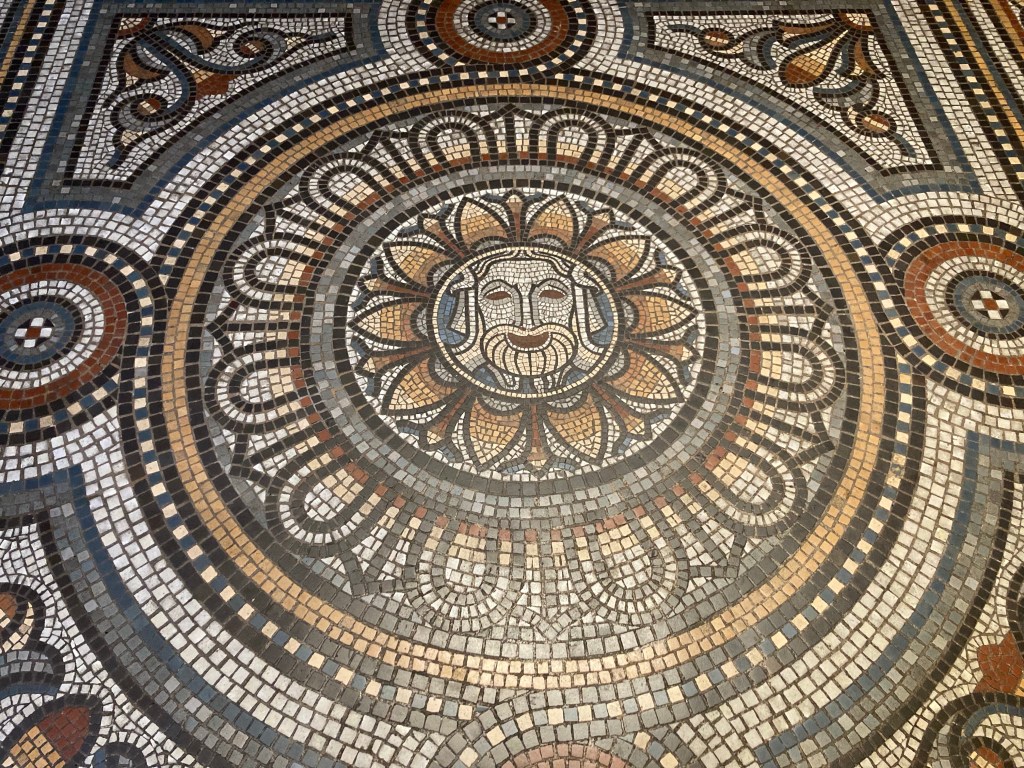
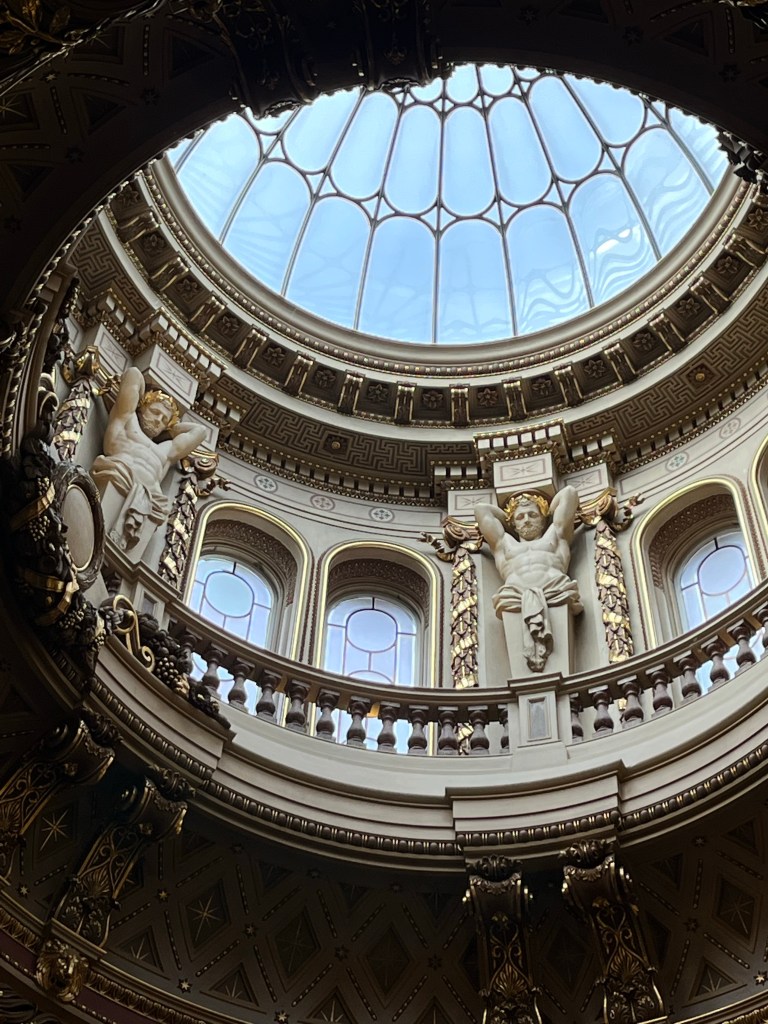
First, let’s start with the building.

with posters for their Defaced! Exhibit (more below).


of the University of Cambridge Judge Business School
During our visit today, we started with the current exhibit, Defaced! Money, Conflict, Protest, which focused on how the defacement of money (coins and paper) has been used through the ages as a form of protest. I can honestly say this had never crossed my mind, so it was an interesting exhibit to go through. There was a short video playing at the end of the exhibit which stated that physical money (coins and paper) currently only accounts for about 8% of the word’s money with the rest being stocks, bonds, bitcoin, etc.
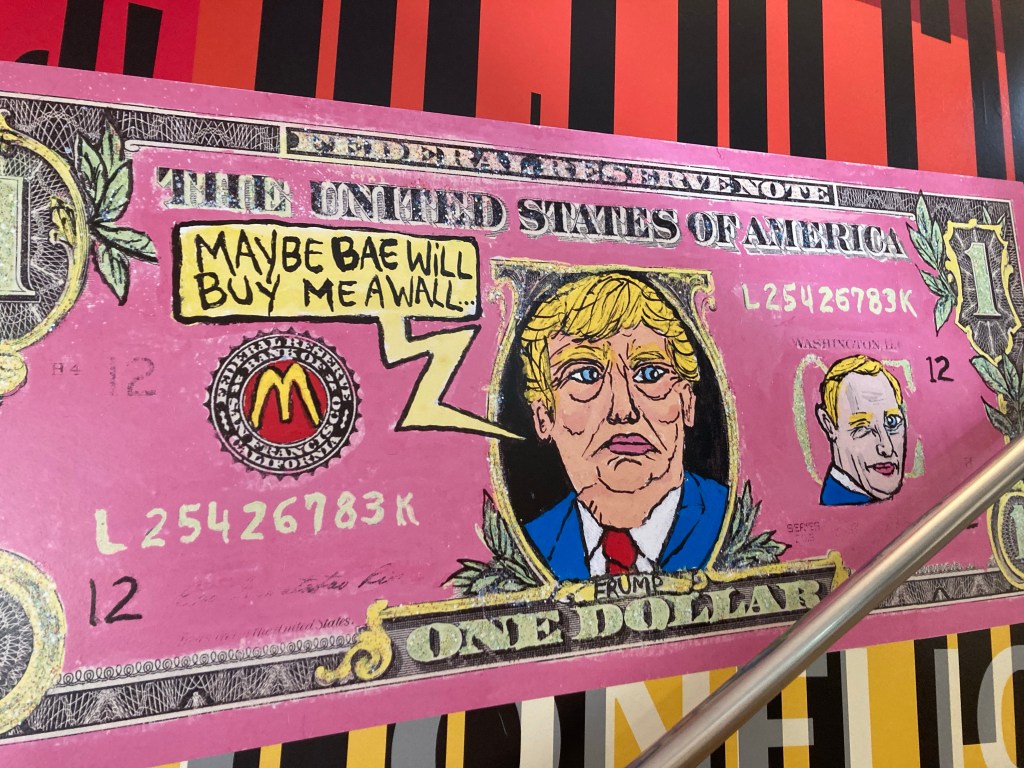
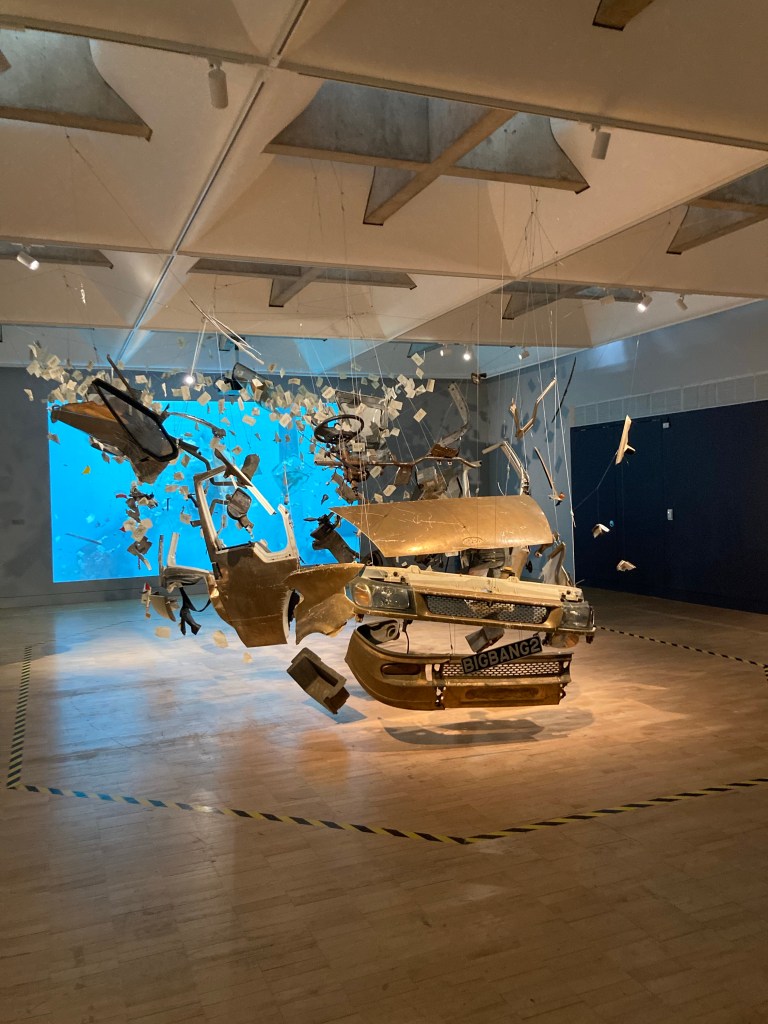

which made its own money to finance different charitable causes
as well as help pay down debt.
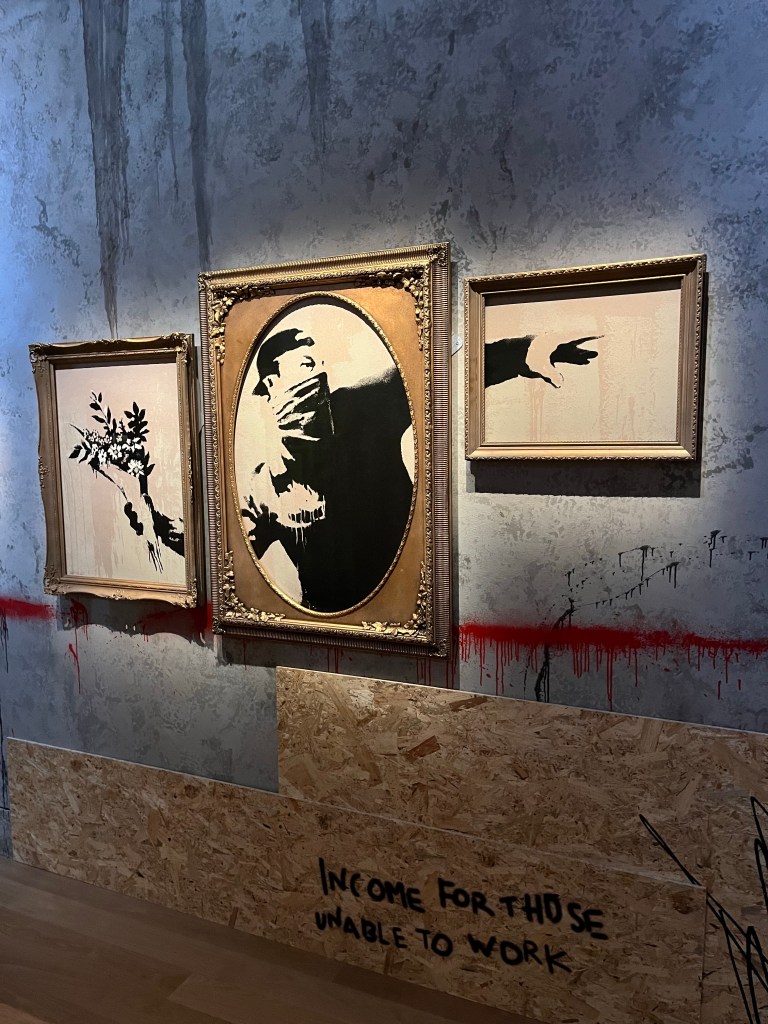
with flowers replacing something violent,
maybe like a Molotov cocktail.
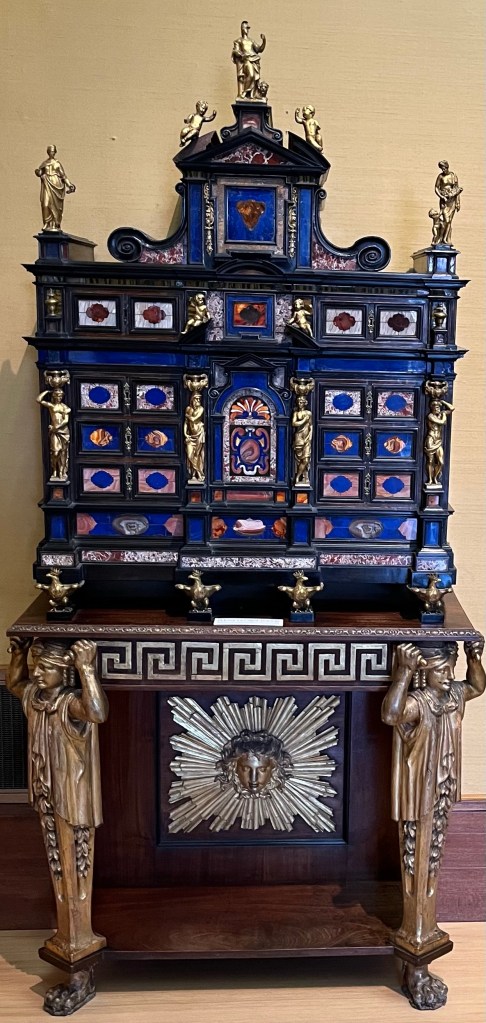
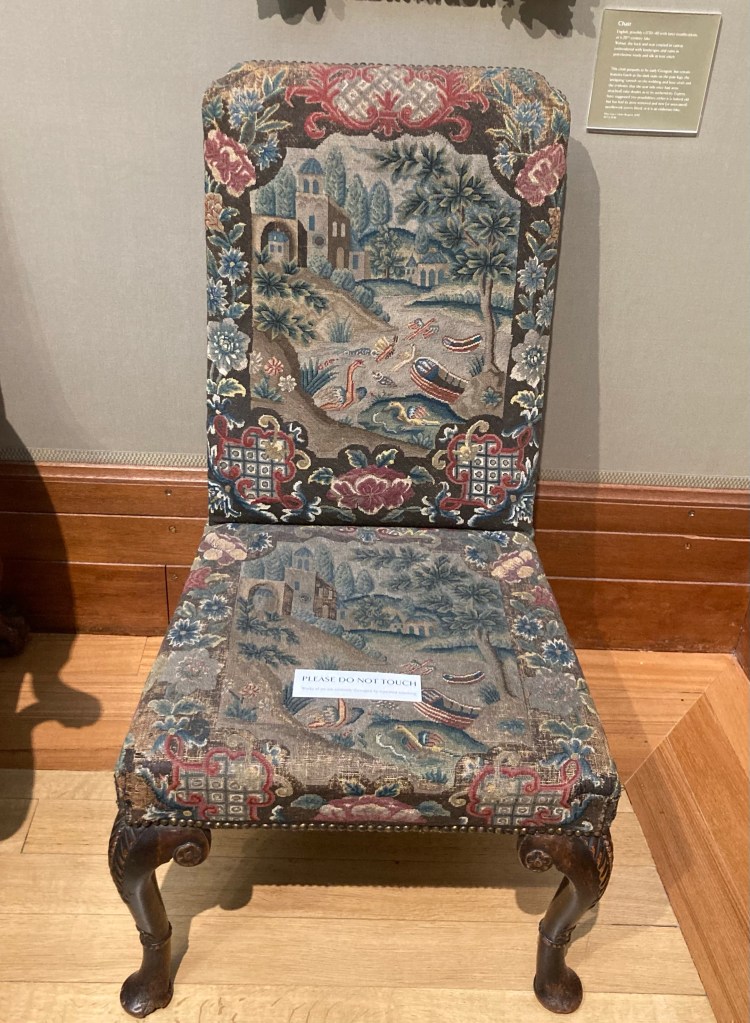
Then we moved on to check out Dutch, European, and Italian art as well as a room with flower paintings, inlaid furniture, and clocks.
 Peckish Travels