Yesterday, Saturday, was the first day that we hadn’t planned an outing the night before. After perusing all of the tourist literature we have accumulated, we decided to head out on Incheon Line 1 to the Dongchun-dong area for a quick peak in the Square One mall (I’m attempting to Christmas shop.) before walking about an hour to the Mt. Cheong-nyang mountain with it’s temple, observation platform, and Incheon Landing Operation Memorial Hall. Then we’d head into Ongnyeon-dong to visit their traditional market before catching the metro back at the Song-Do Station market in Ongnyeon-dong.
It ended up being a great outing even though the weather surprised us and what was to be a relatively mild 44 degree F winter day turned to snow and we ended up a bit wet and chilled by the time we returned.
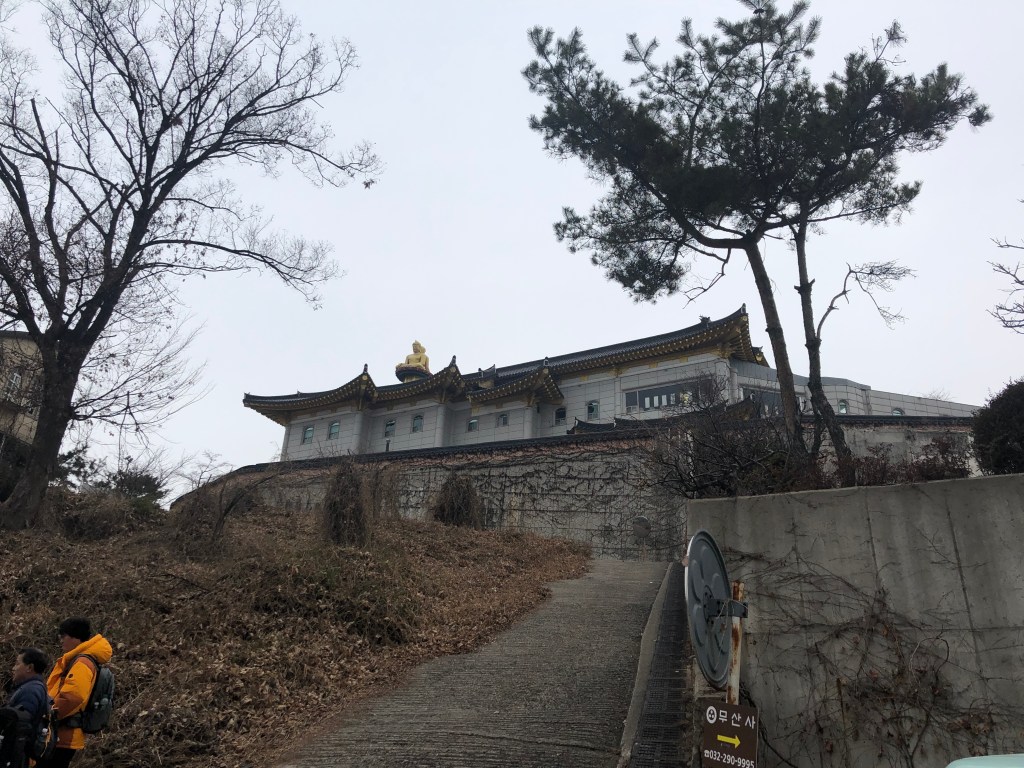
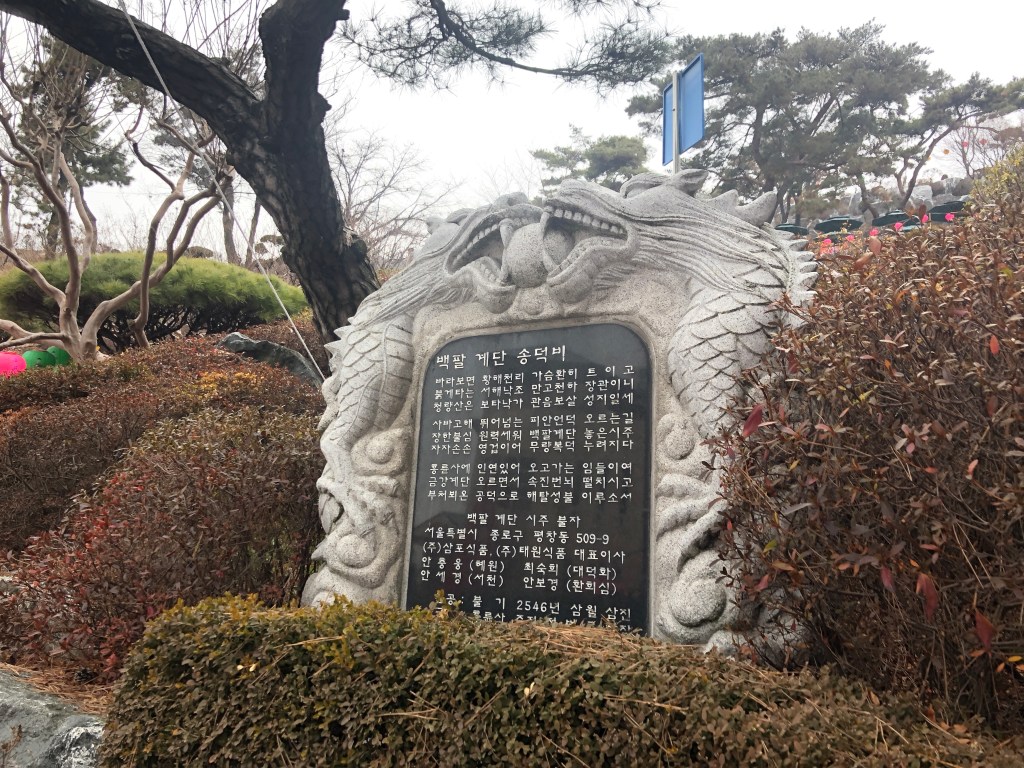
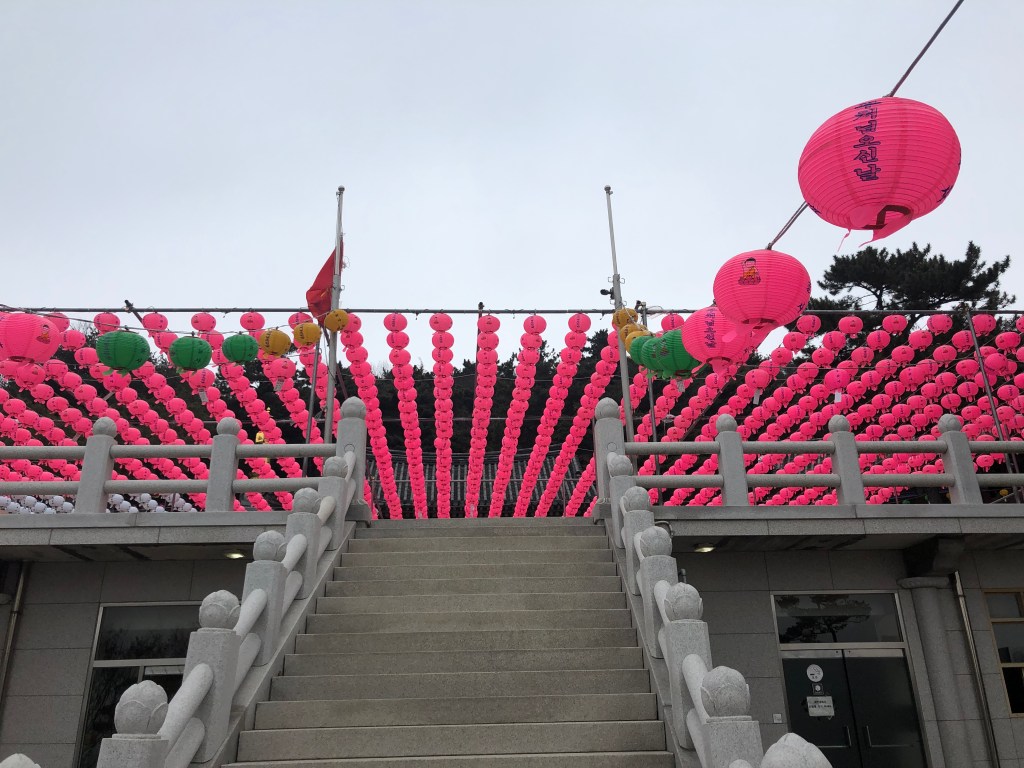
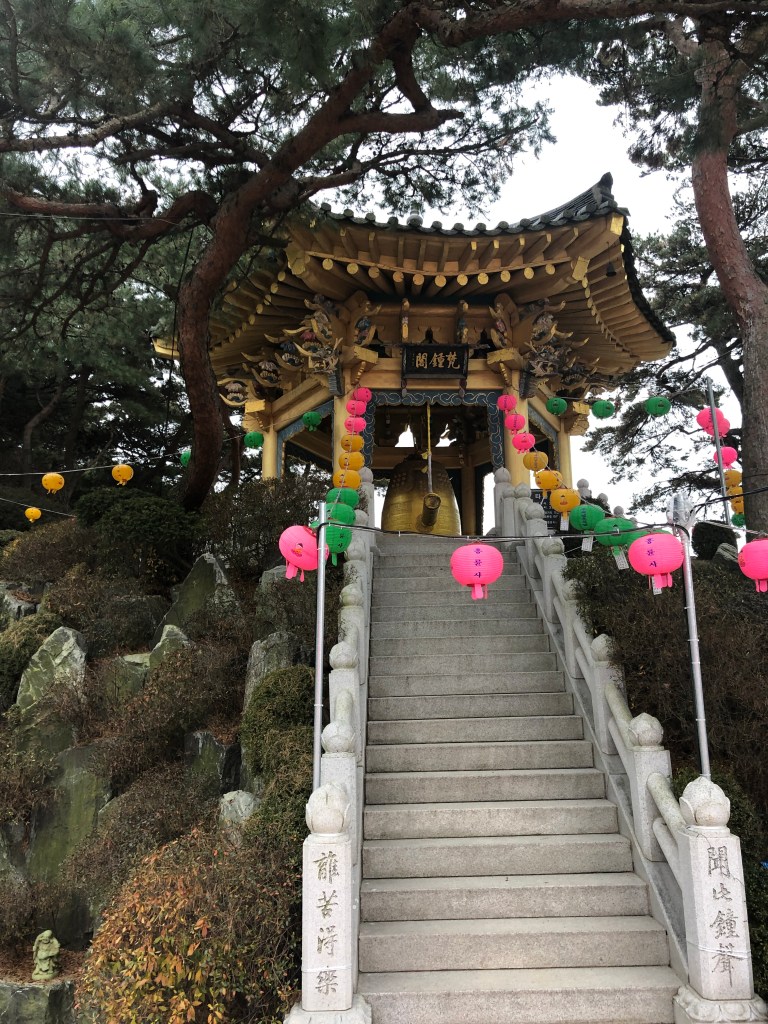
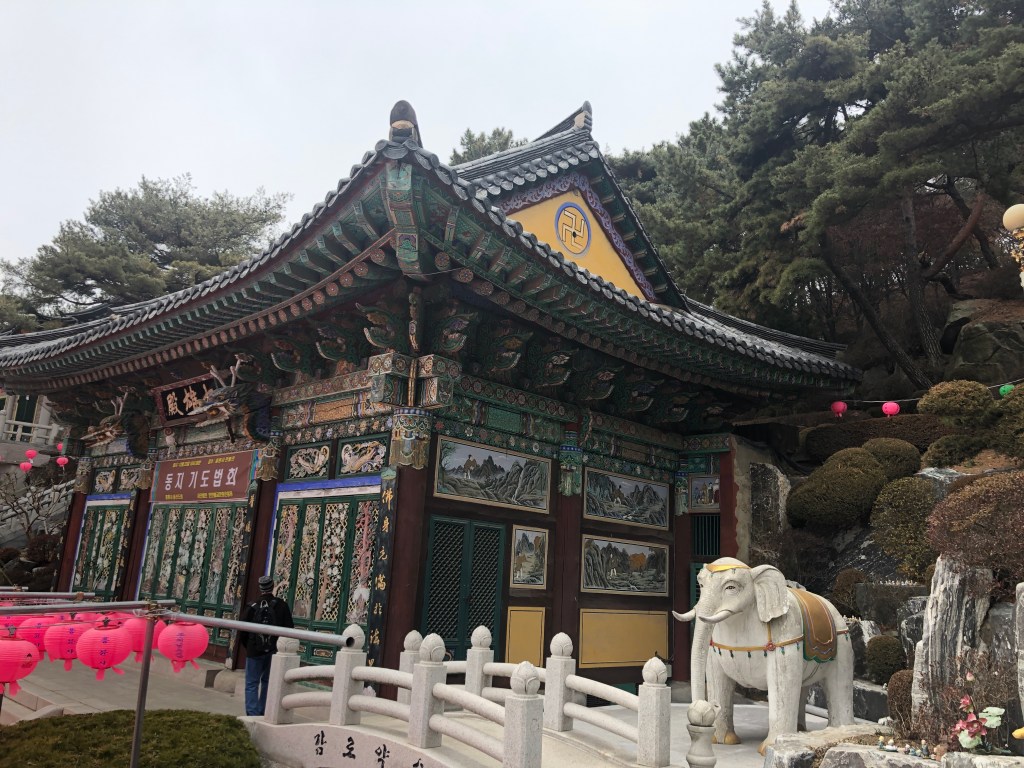
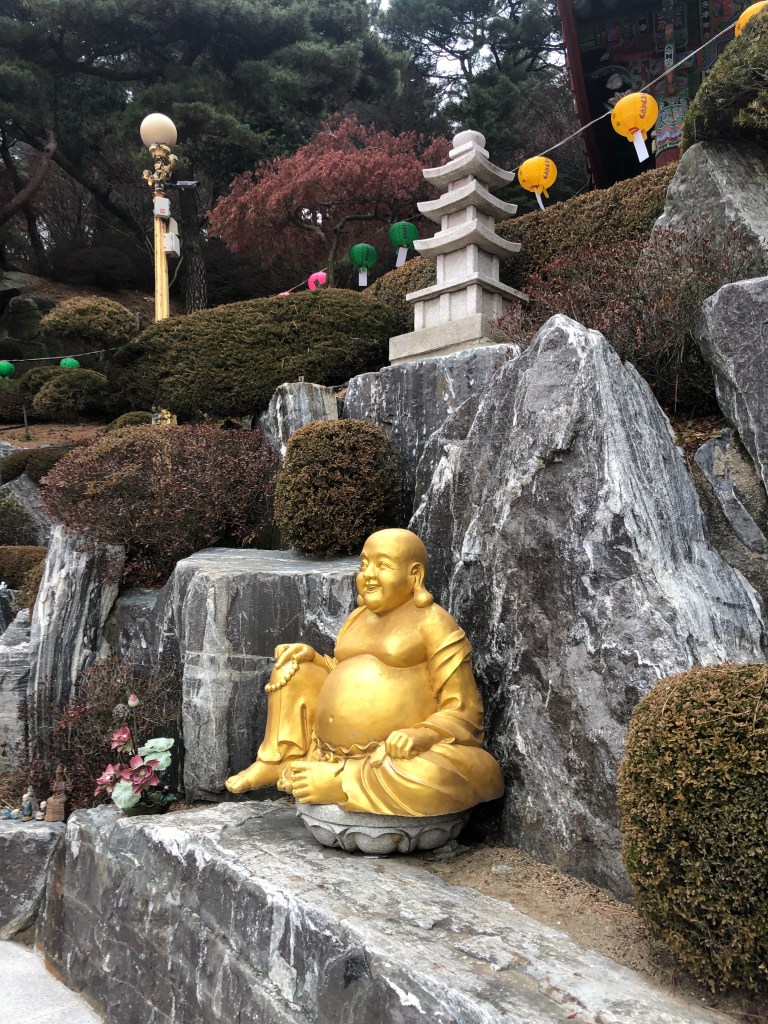
Our first glimpse of the Heungryungsa Temple. It is actually more of a complex with smaller temples beyond the larger temple. This one was hosting some youth event with lots of music, so we just peeked inside.More of the grounds. The 10 Thou Shalt Nots? A list of ways to focus on your breathing?The Buddhist gift shopBeautiful lanterns with wishes insideA big bell and gongThe inside of one of the smaller templesThe outside of one of the smaller templesA happy buddha
Immediately behind the temple grounds was a walking path up to an observation platform. Before heading up, we had looked down into one of the parking lots and saw an ambulance with 1-1-9 on the side. We figured somebody in one of the temples was having a medical issue. We continued on.
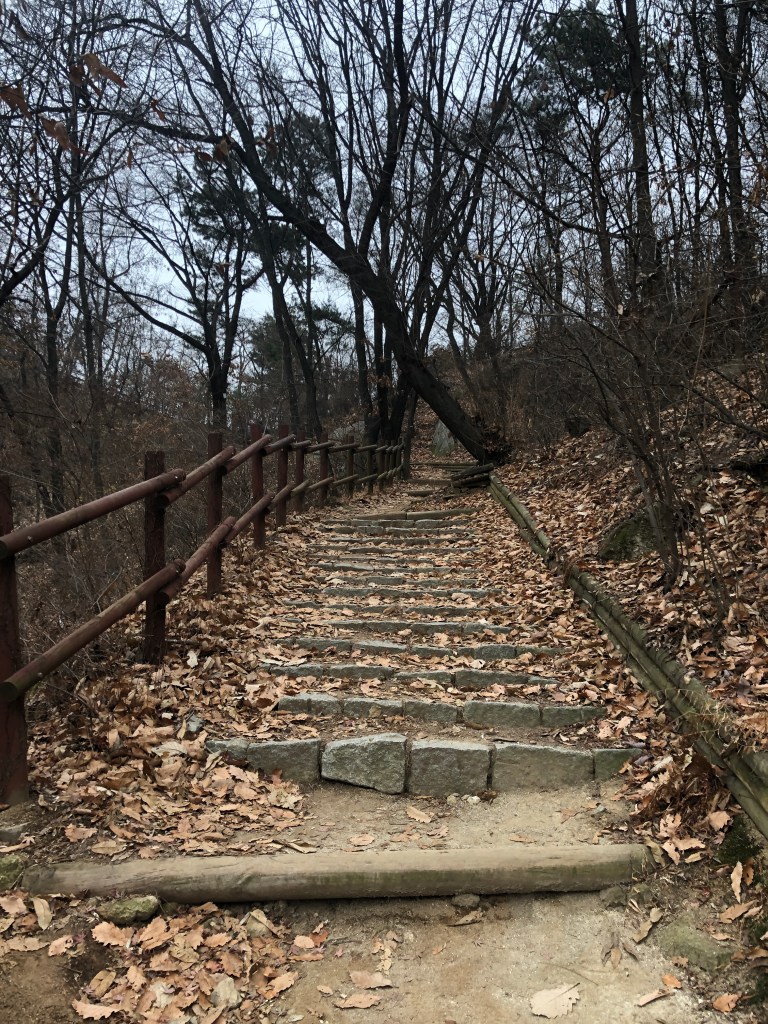
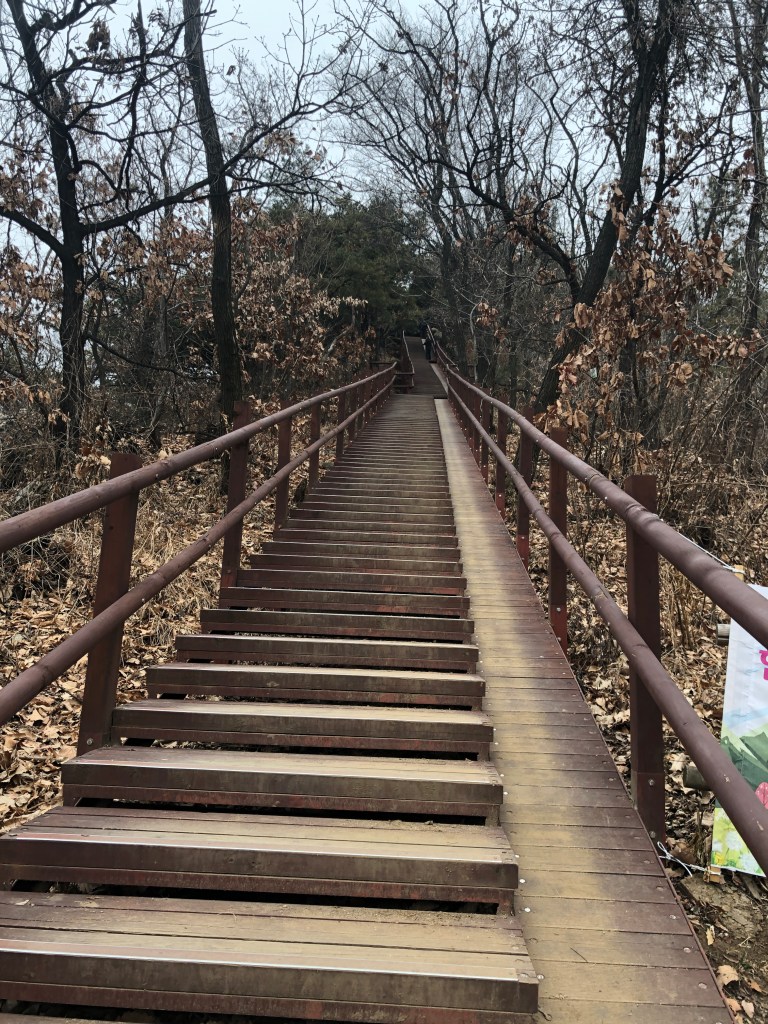
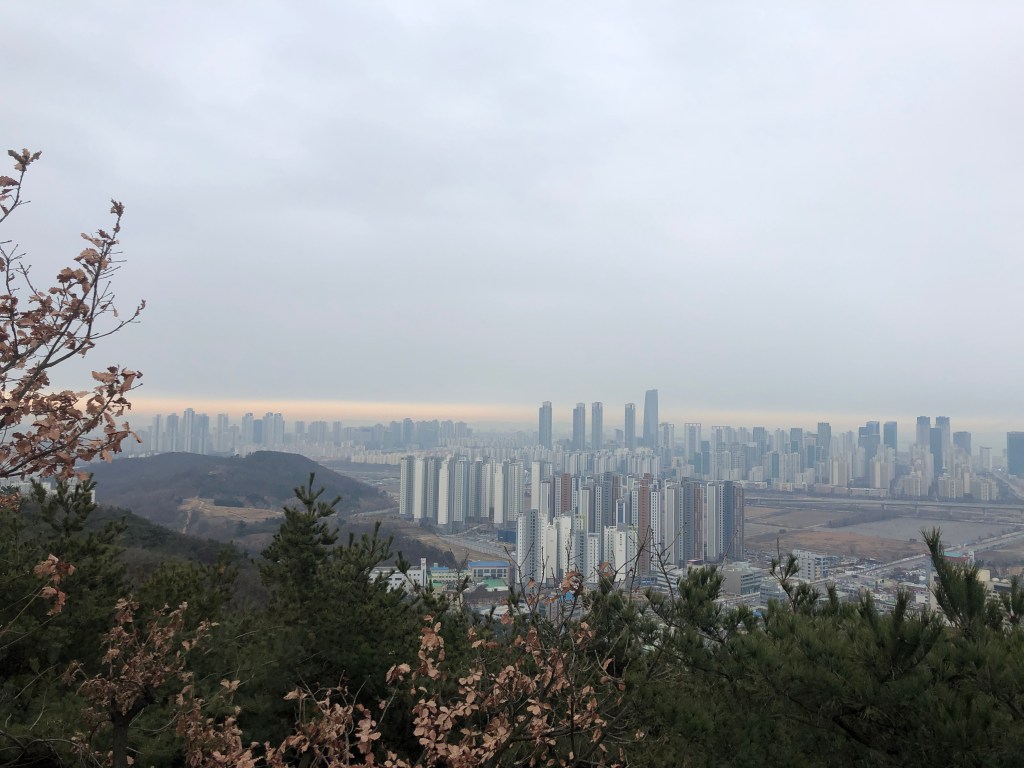
The start of the walk up from behind the temple groundsMore of the climb up. It was on the last set of these stairs that we saw a group of what seemed to be 20 rescue workers carrying a young man (20ish) down on a stretcher. We pulled over to the side as they went by. Not sure what happened. The man was awake though he even with the blanket he seemed cold. It is all stairs until the top. As you start back, there is some earthen path so not sure if he twisted an ankle or went out too far for a photo or what. But, 1-1-9 to the rescue!One of the views from the top on a wintry day.Another view, the bridge you see there is the Incheon Bridge which goes to the airport. This concrete bridge opened in 2009 and is South Korea’s longest-spanning cable-stayed bridge. It’s a little over 13 miles long.
I continue to be amazed by how little I know about history, and I even find it interesting. At some point, I learned about the Korean War, I think. Anyway, whatever facts went in have fallen behind other information that I either use more frequently or found more interesting. So, our whole trip to the Incheon Operation Landing Memorial was fairly informative even with the always interesting English translations.
It was a key battle in the Korean War that led to the recapture of Seoul which apparently fell to the North Koreans a number of times during the war. The Battle of Incheon was led by General MacArthur on behalf of the United Nations troops. It was code named Operation Chromite and took place in September of 1950. 1,350 were killed including 224 Americans (out of a total of 36,000+ Americans killed during the war).
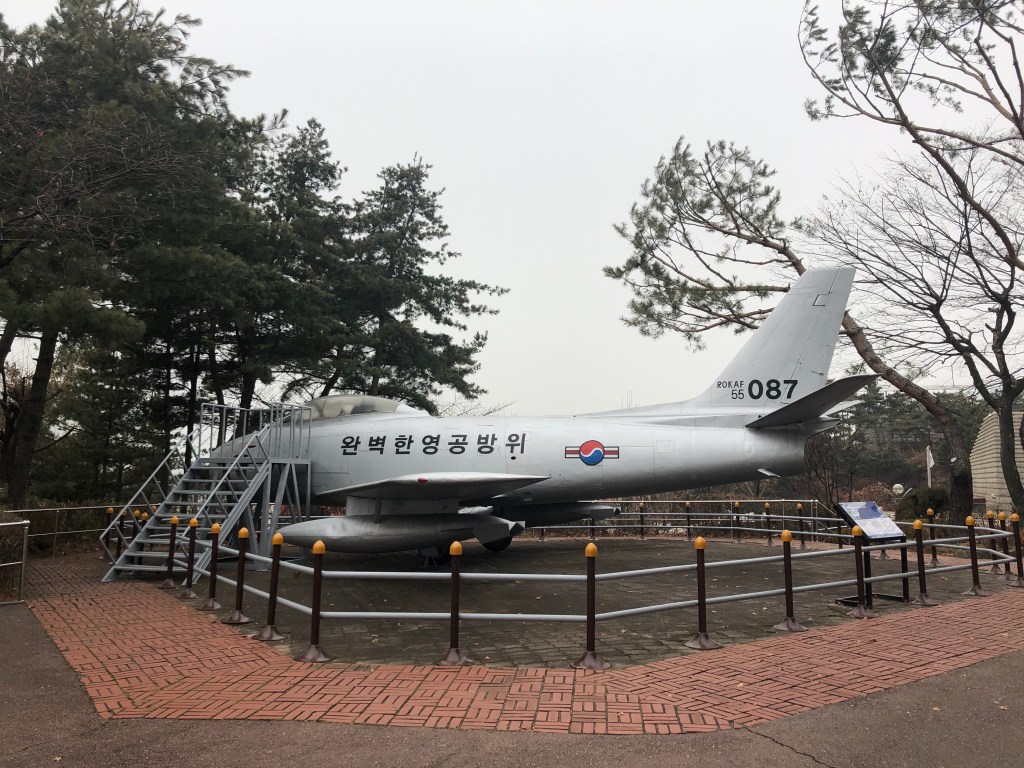
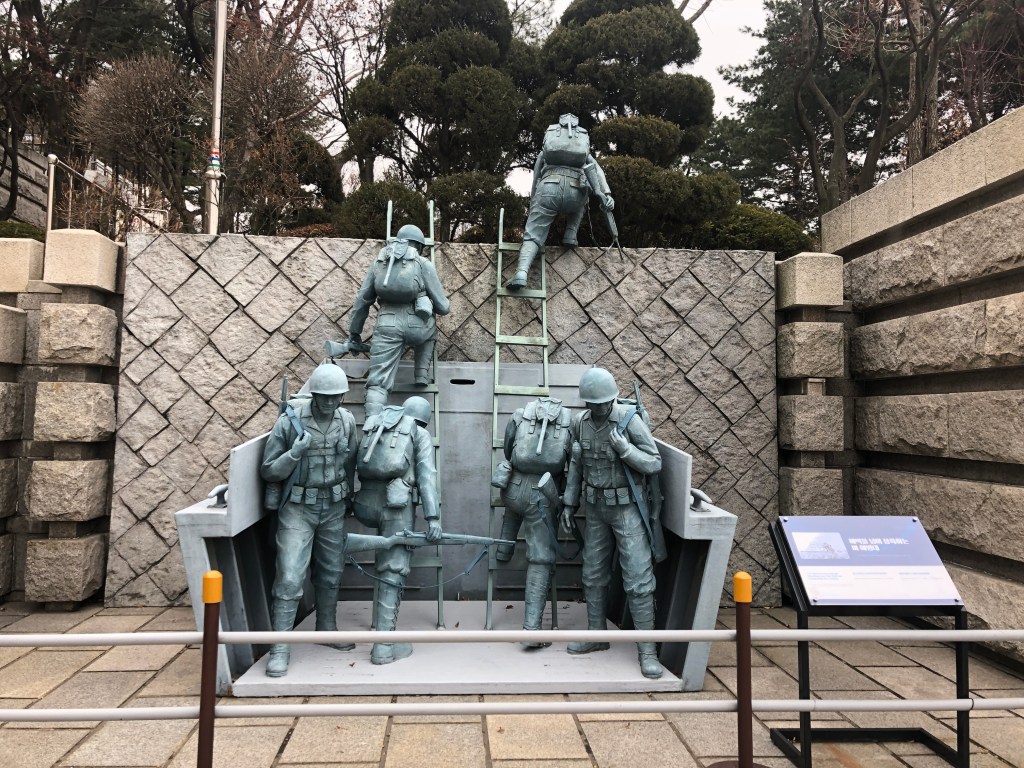
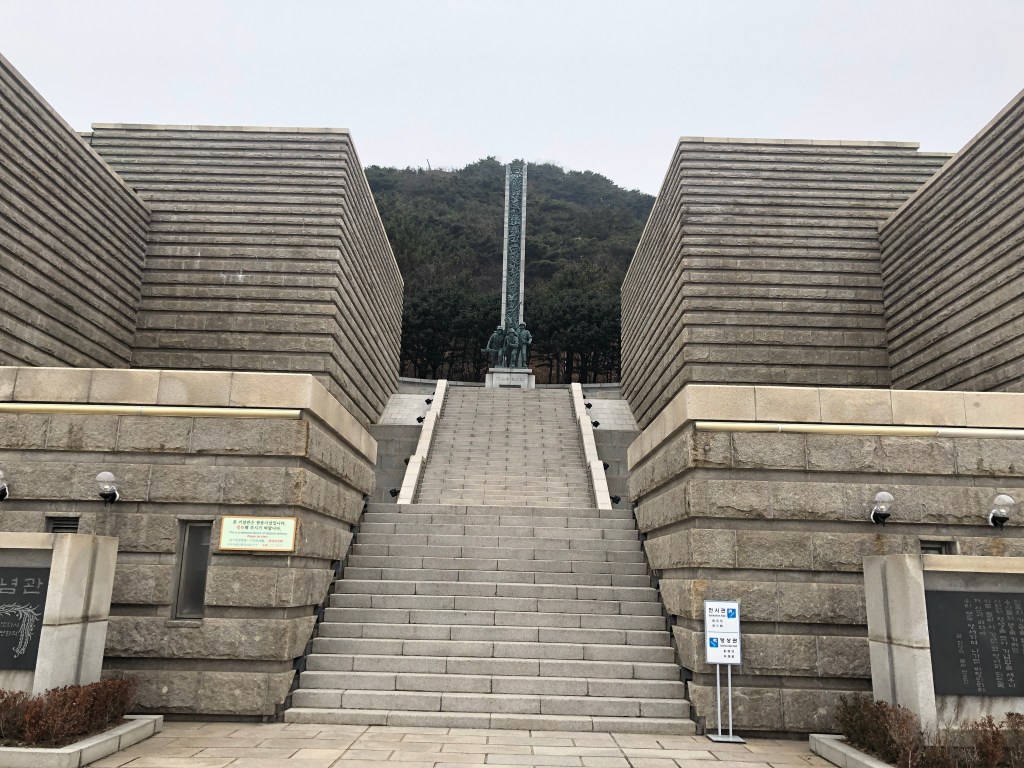
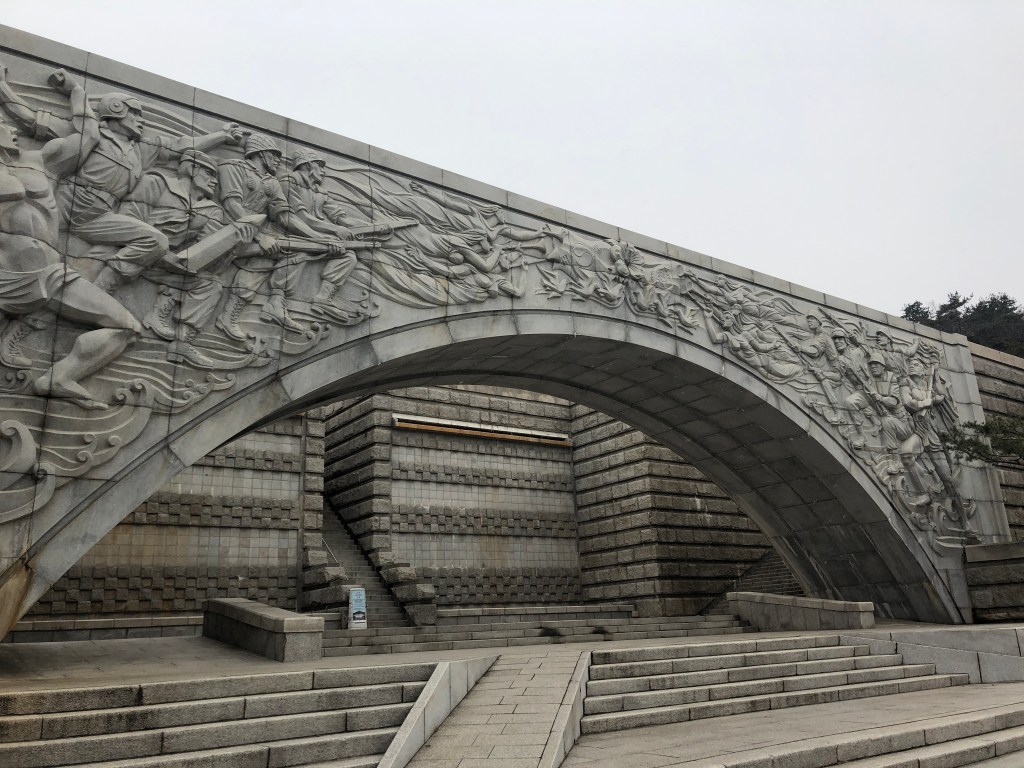
The Memorial displayed a number of military vehicles used during the war. See above and below.A reenactment of the UN forces coming ashore for the battleThe main memorial and column. In the middle level (up the first set of stairs) is an exhibition hall that provides more information on the battle.The initial entrance to the Memorial from the main street. We entered from a different side.
From the Memorial we walked to Ongnyeon-dong to try to find the traditional market.
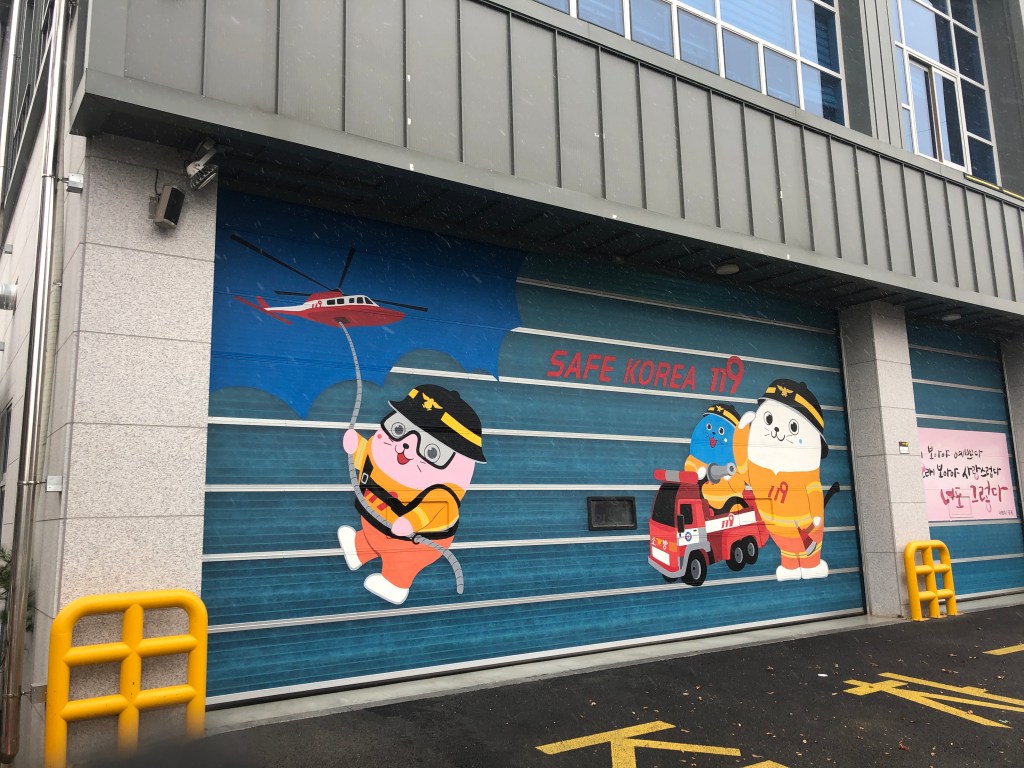
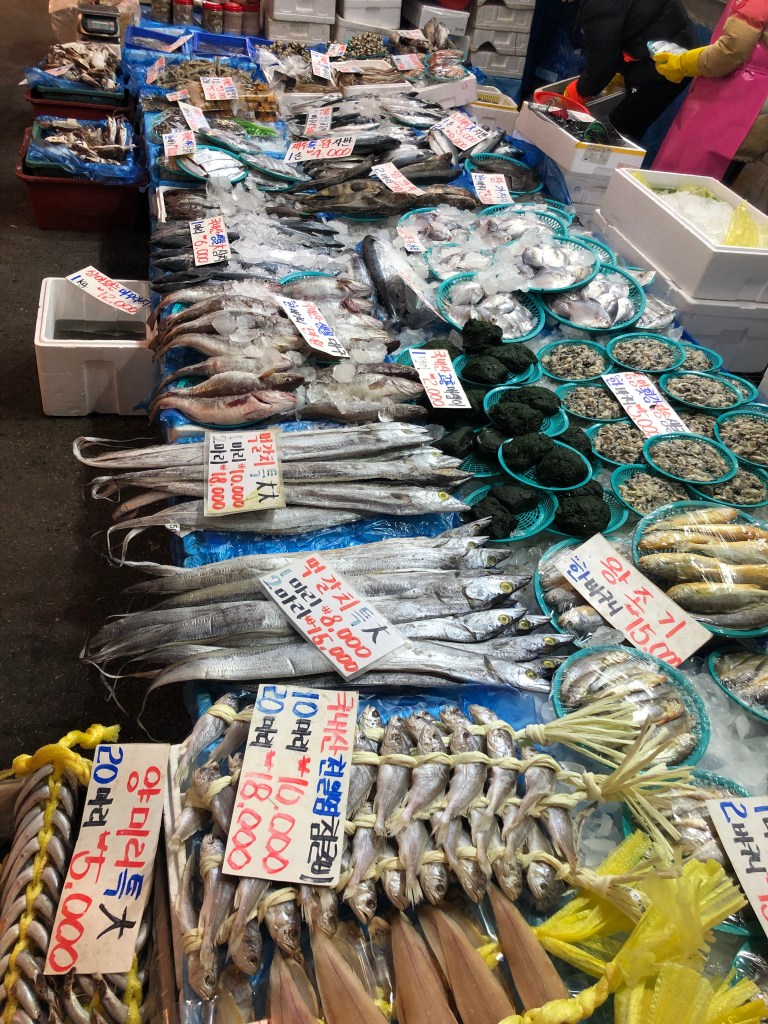
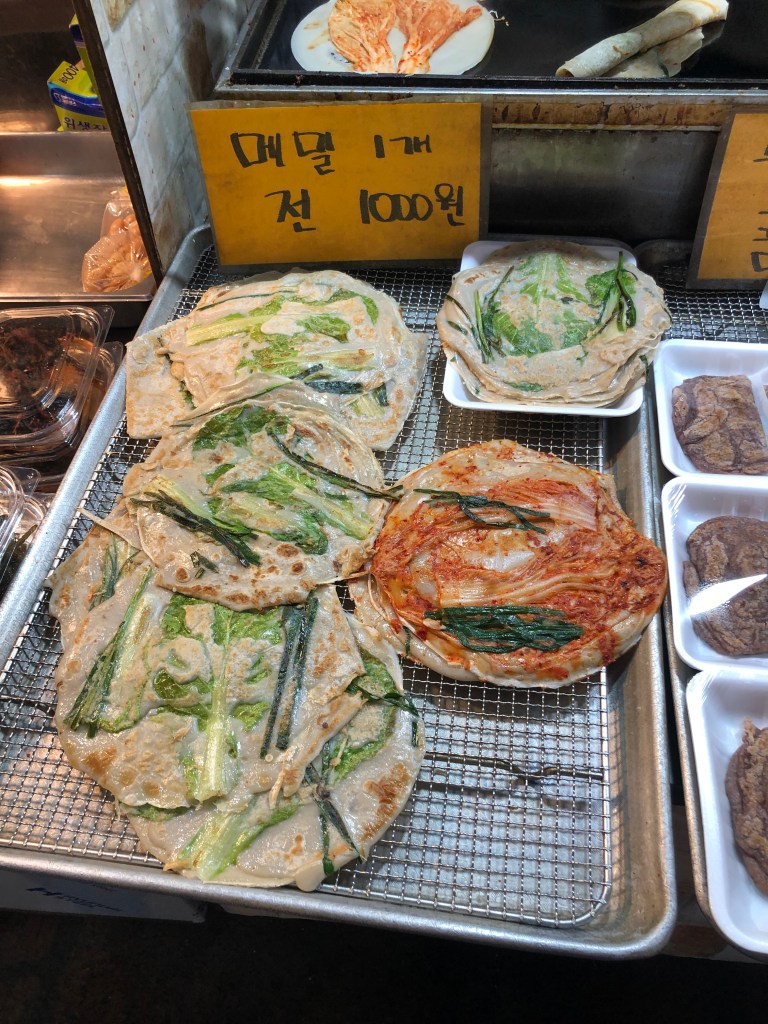
An fire rescue building and the ever present Incheon seals.We found the market — all kinds of fish and seaweedWell, these aren’t pretty, but we tried one anyway. We each got one of the green ones which were basically cabbage mixed into a kind of crepe and then grilled and served rolled up like a tortilla. It was very good. The red one is the same thing but with kimchi. They went for $1 a piece.
As Bob and I have traveled via metro/subway between Song-Do and Seoul, we have been listening to the pronunciation of the various stops. While I had noted that ‘s’ here is sometimes pronounced as ‘s’ like Song-Do, it is also sometimes pronounced as ‘sh.” Bob, on the other hand, noted that our region, Incheon, is pronounced “inch-on” and not “inch-ee-on” as we had been pronouncing it. So, there you have it. A linguistic lesson to introduce our long walk to see a bit more of Incheon proper.
A little more about the area in which we are staying, Song-Do or Songdo, we’ve seen it both ways. It is an International Business District, a smart city built from scratch on about 1,500 acres of reclaimed land along Incheon’s waterfront. Song-Do is 19 miles southwest of Seoul and along with Yeongjong and Cheongna it is part of the Incheon Free Economic Zone (IFEZ). I had noted some areas of interest while running, so on Friday we ventured out to explore some of the area more thoroughly. A bit of Song-Do. . .
The 1988 Summer Olympics were held in Seoul. It followed two Olympics marred by boycotts (Los Angeles and Sarajevo) and nearly 8,500 athletes from 159 countries participated. It saw the return of tennis to the Olympics and the addition of table tennis and archery. Big winners included Ben Johnson (later DQd for drug use), Sergey Bubka (what a fun name!), Flo Jo, and Jackie Joyner-Kersee.
Seoul has transformed the Olympic Space into a beautiful, art-filled park.
On Monday we ventured back into Seoul to do a walking tour along the old city wall that we had found in the information center near Central Park. This was an uneventful trip 1.45 hour trip in by train with 1 train change.
On Saturday, we headed out of Seoul proper for the suburb of Incheon, and more specifically Song-Do. It was about a 1.5 hour ride by train with a couple of changes. This city/ region has the most extensive network of metro lines that we’ve ever seen.
We said good-bye to our tour guide at the market and walked back to our hotel for a quick break before heading to the Seoul Tower. Bob found us a different walk back (Note: He’s using the Naver navigational app here as Google Map does not provide as detailed directions nor have many English translations. The Naver app even tells you about stairs, escalators, underground passageways, etc.) that took us along a stream in a pedestrian area below street level before coming back up.
Bob and I are together again for our first house sit (and actually first trip) in Asia. Our house sit is in Songdo, a suburb of Seoul, so we flew into Seoul and spent a day in the city center before starting our house sit.
We weren’t sure what to expect as we haven’t learned Korean but while we haven’t met a lot of people that speak English the signage does tend to be in both Korean and English which has been very helpful. Since we wanted to make the most of our first day not knowing how often we’d be coming into the city from our house sit, we arranged for a private walking tour with a local. This was a great way to see some of Seoul, get some good info on what we were seeing as well as learn some pointers for our visit.
We were to meet our guide at 10 am on Friday having arrived at our hotel about 8:00 pm on Thursday. Luckily, our room came with breakfast, so we had a very atypical breakfast (scrambled eggs but also kimchi, dumplings, salads, boiled rice) before heading off for our tour.
First, a couple of photos from our walk to the tour.
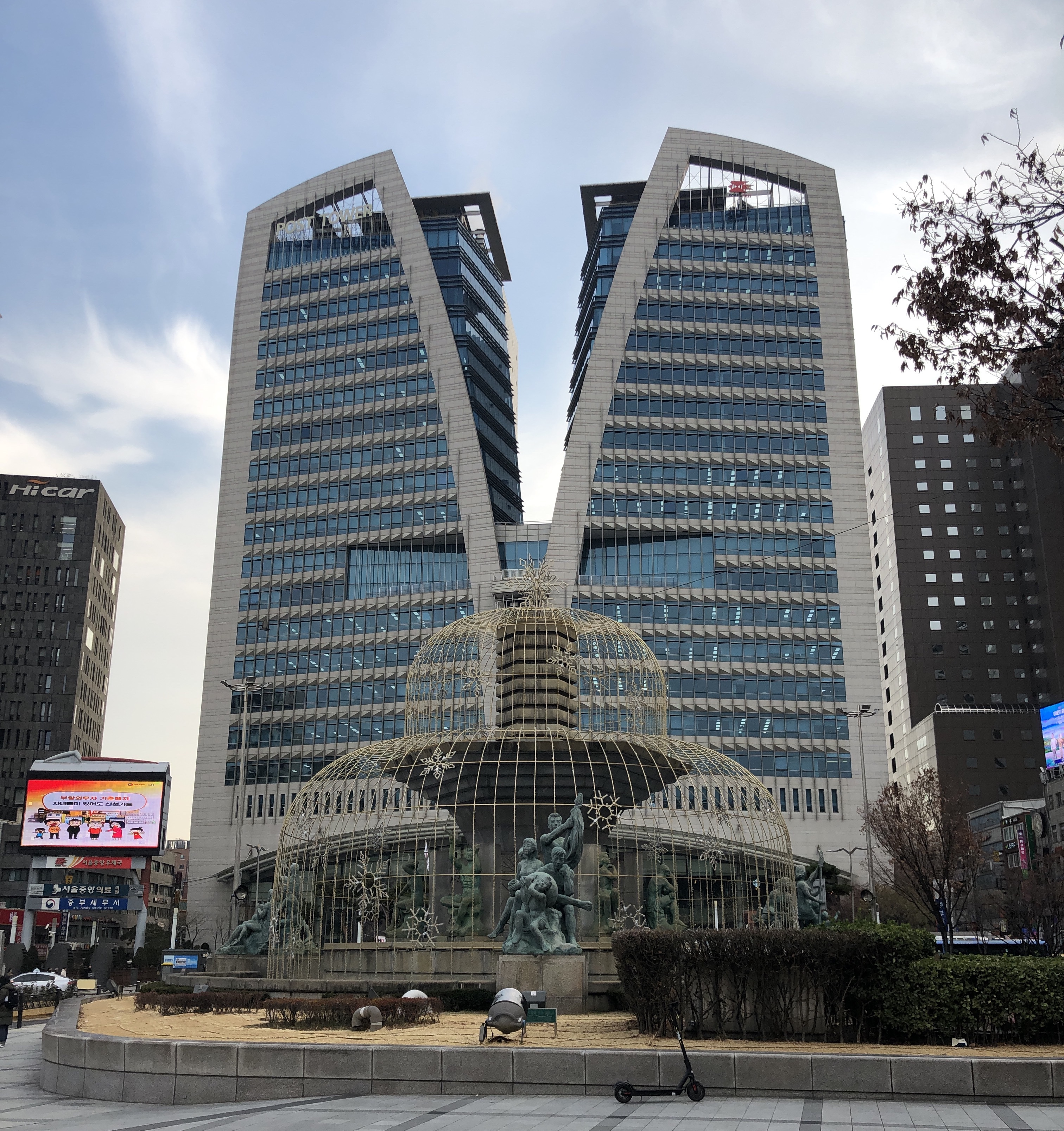
We loved this building as well as the wire gazebo and statue.
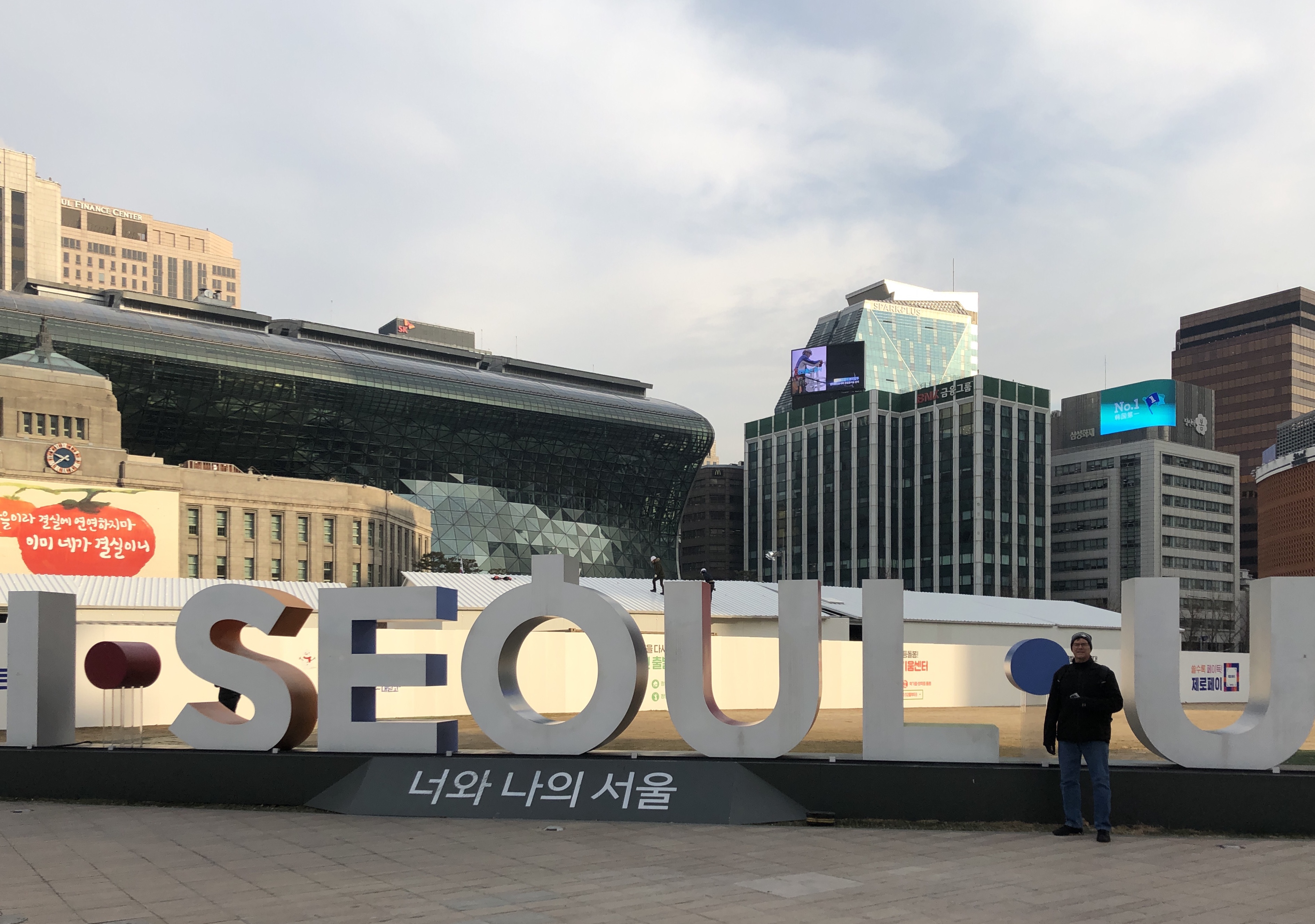
We saw this phrase around the central business area.
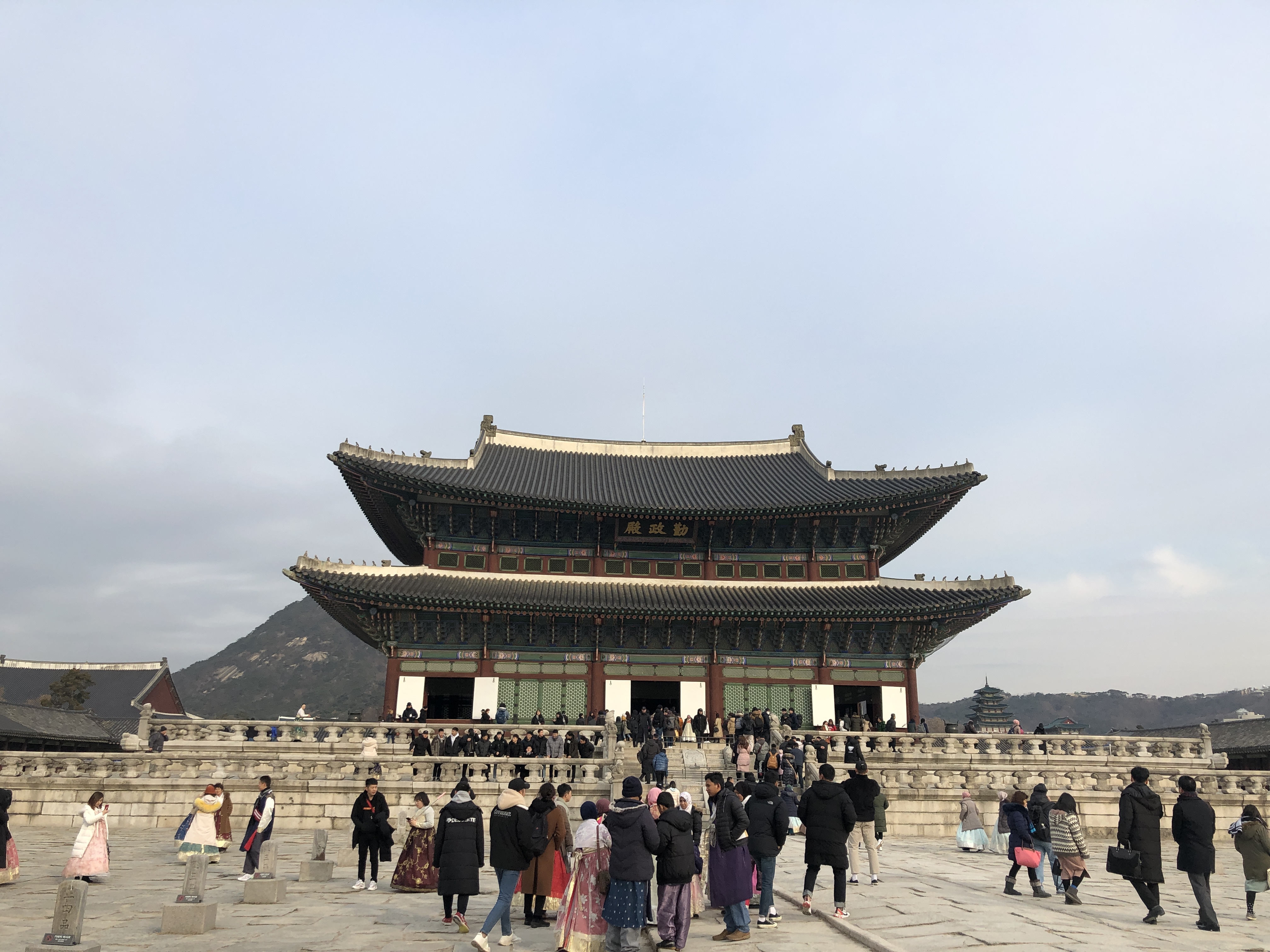
We met our guide just inside the entrance to the Gyeongbokgung Palace, the oldest of Seoul’s five palaces. She had informed us she would be in “blue padding” which apparently means a long blue (though really gray) padded jacket. She won us over by purchasing us each a hot pack (hand warmer) that they sell all over here. It was still in the 30s and our tour was mostly all outside, so they came in handy.
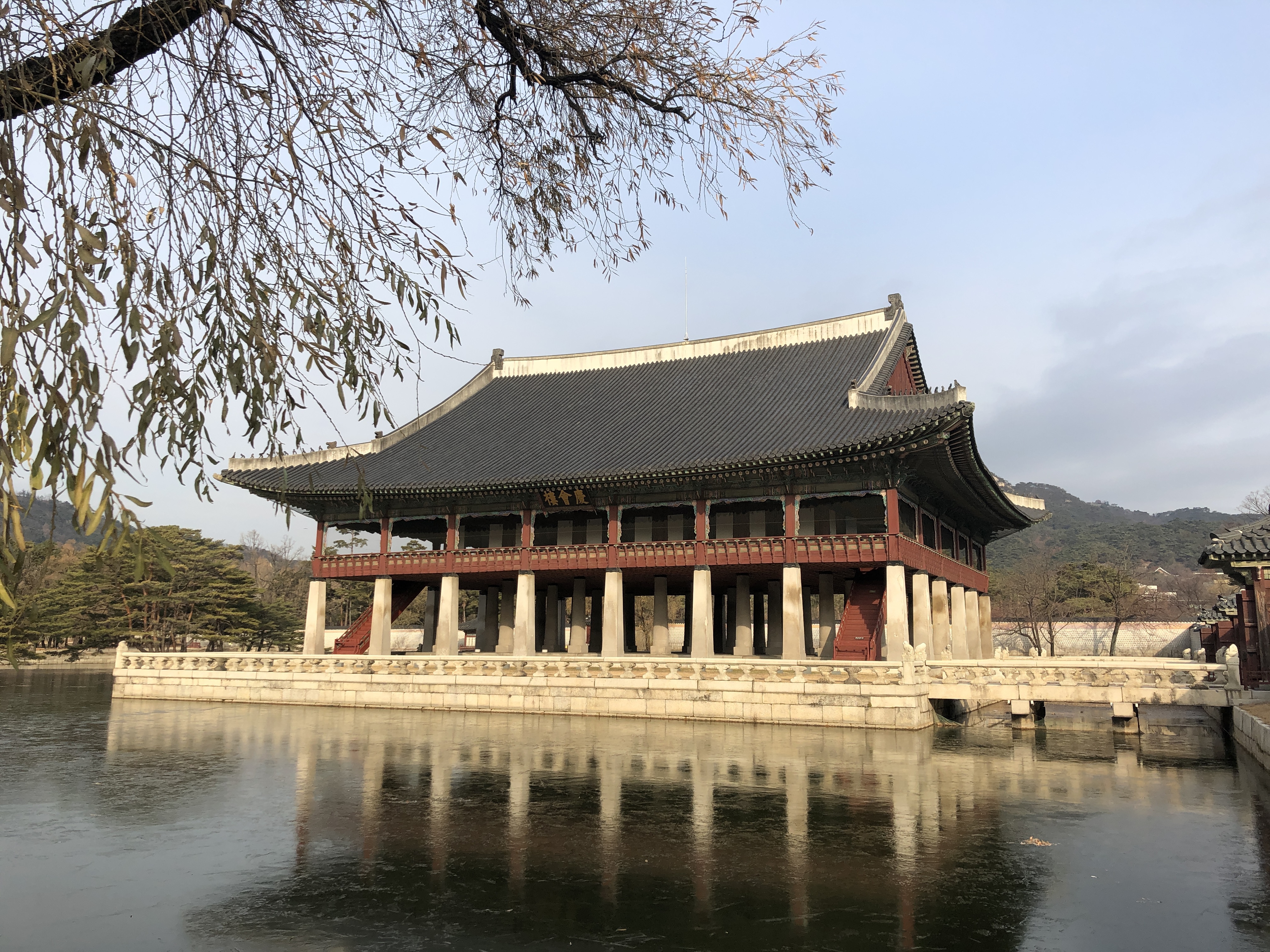
The palace and grounds were impressive, but truth in advertising, the buildings that we saw were built after WWII as the originals (already destroyed and rebuilt after a fire) were then destroyed again during the Japanese occupation during the war. Had they been original they would have dated back to the 1300s.
Other things of note: the grounds were used by the king but also by the government who dictated much of the king (and his family’s) behavior including determining when the king and queen could sleep together. Apparently this was to optimize chances for healthy offspring. For her part, the Queen was lucky enough to “get” to care for the household, including the 10-15 concubines typically kept by the king.
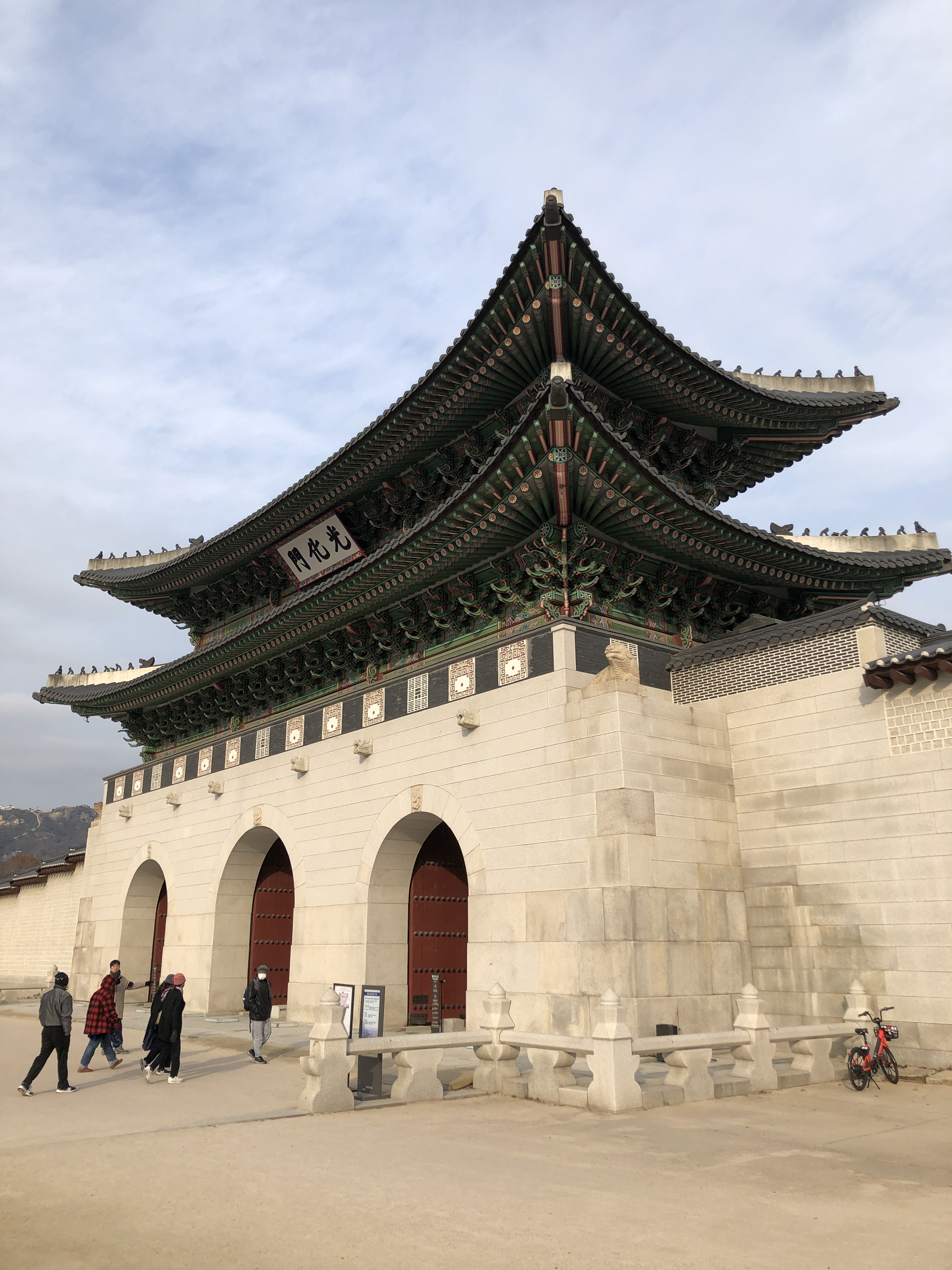
Entrance gate to the palace grounds
View of one of the palace buildings as you enter the gate.
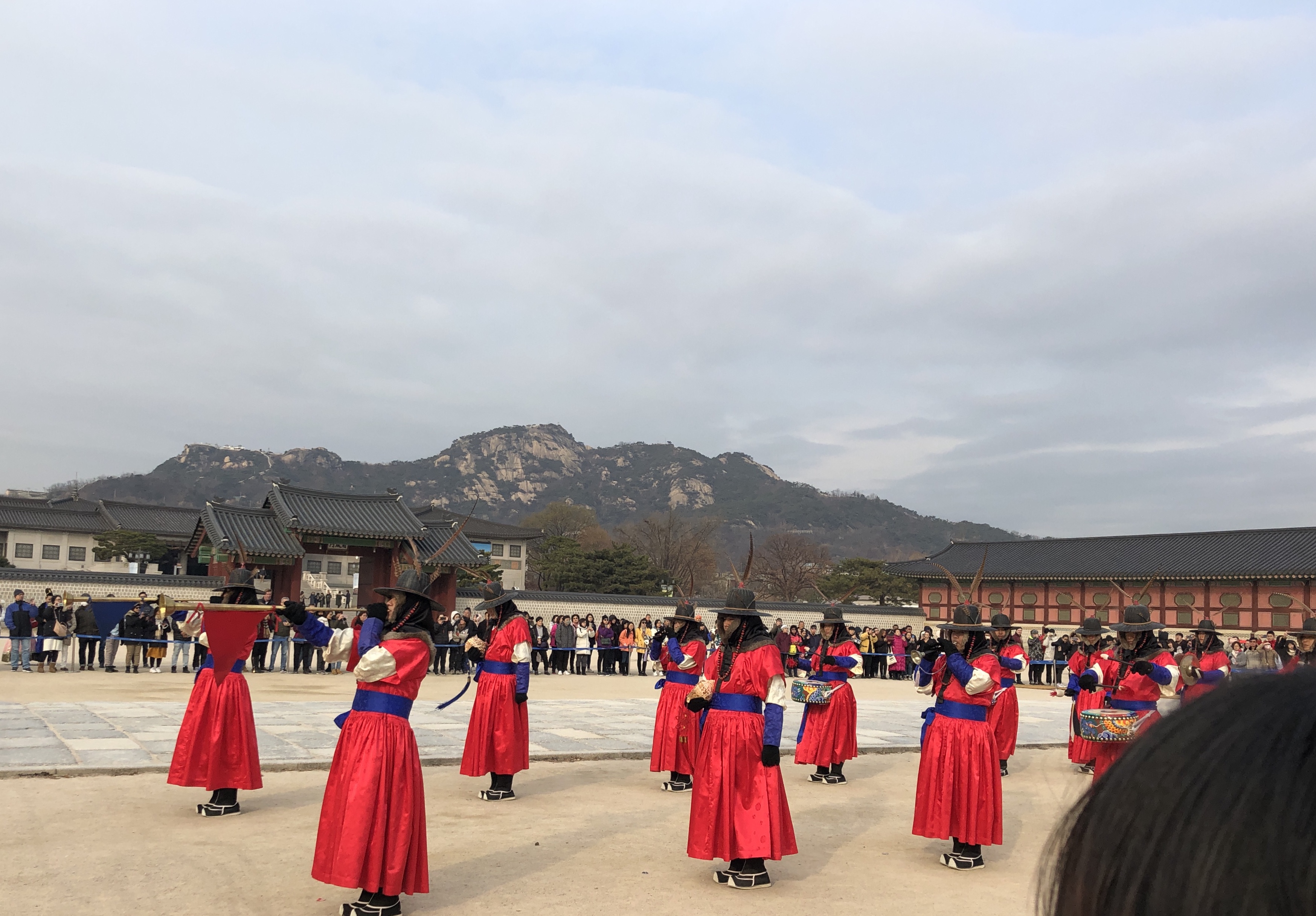
The changing of the guard ceremony— check out the head and footwear.
The king’s house and school — required to study at least 15 subjects
A large pavilion on the palace grounds used for events
Small structure on the grounds of the palace
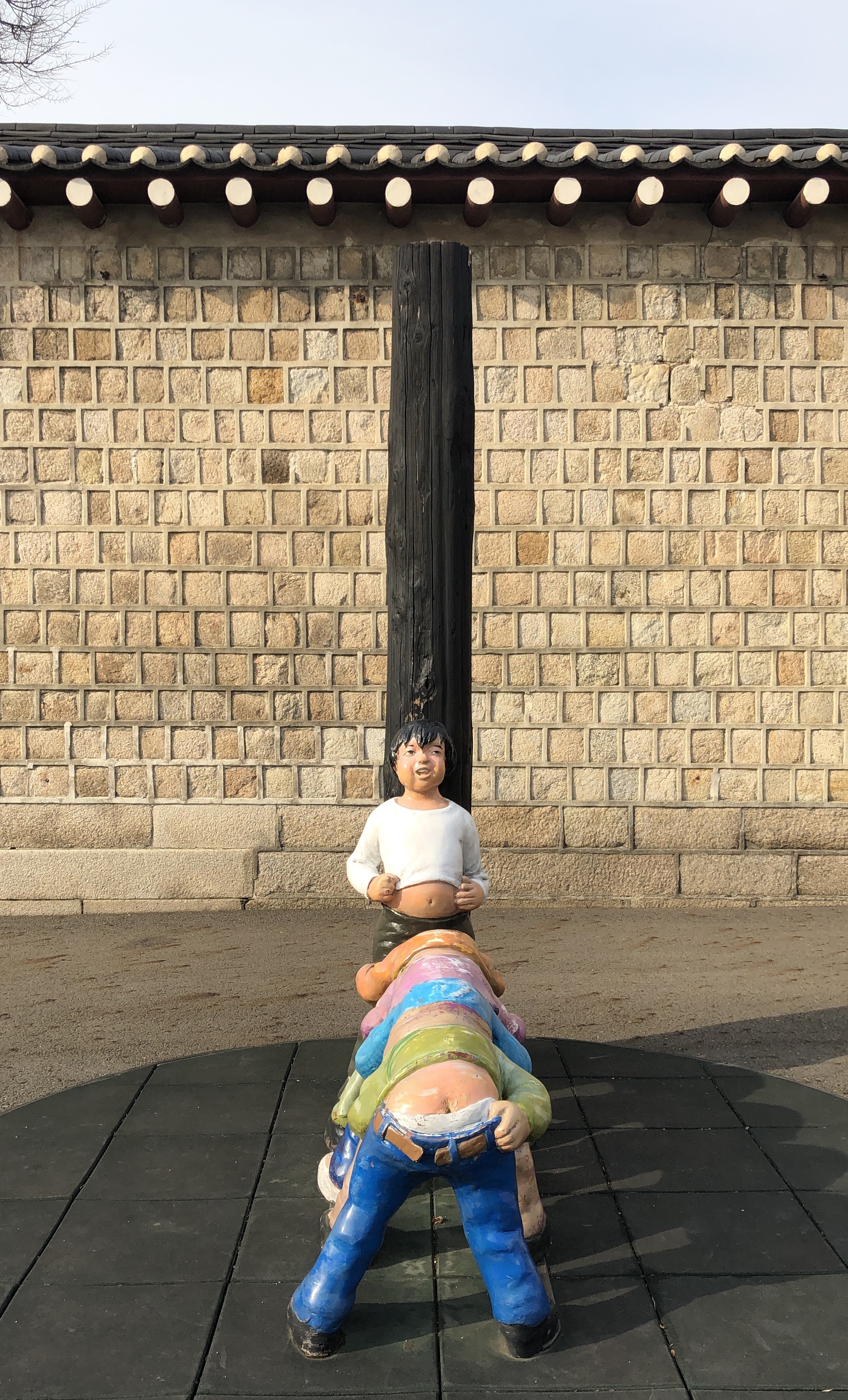
From the palace we walked to Bukchon Hanok Village, an area with traditional Korean houses, but on the way we saw this…
This is a statue of an actual game played by Korean children.
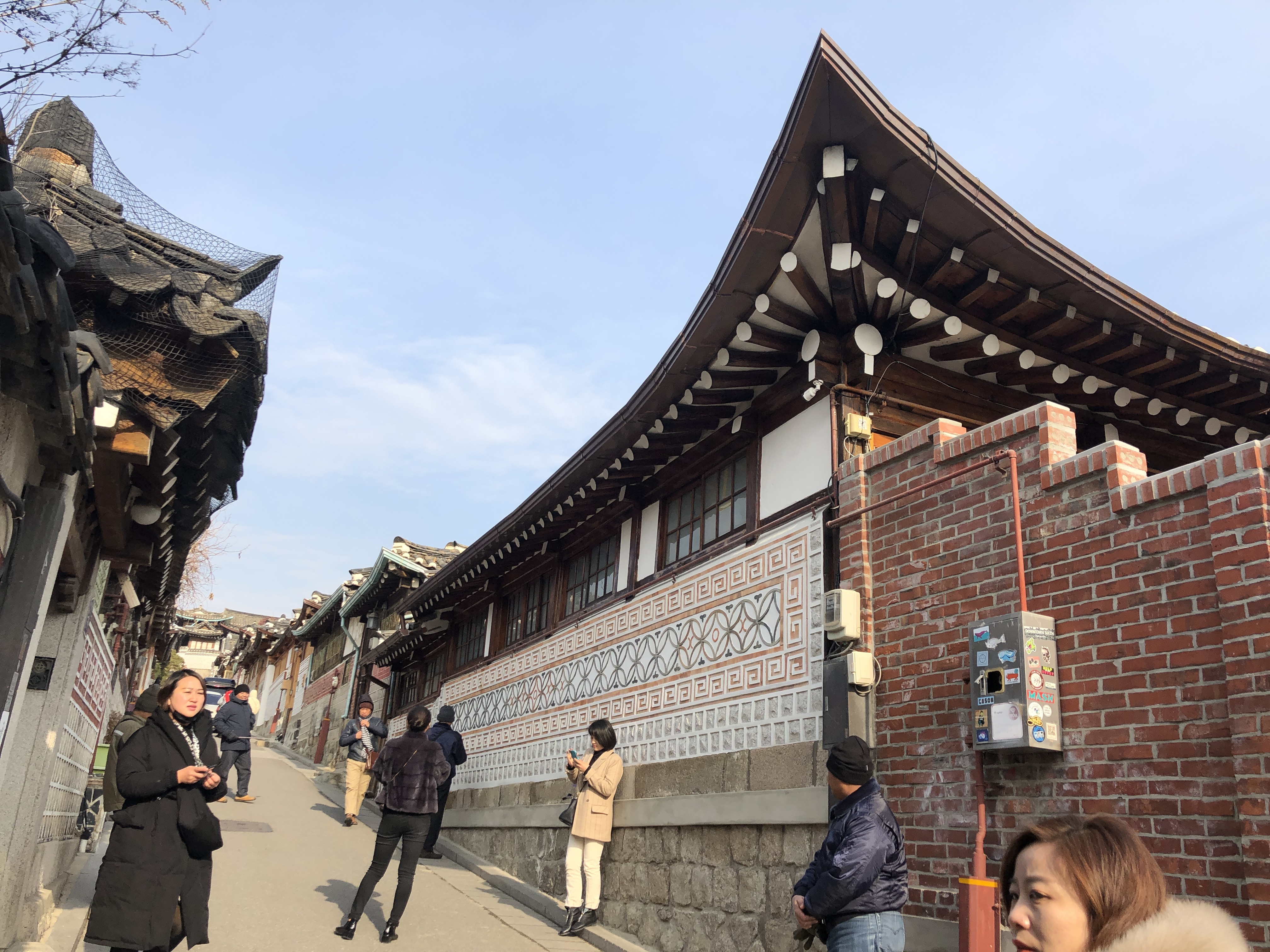
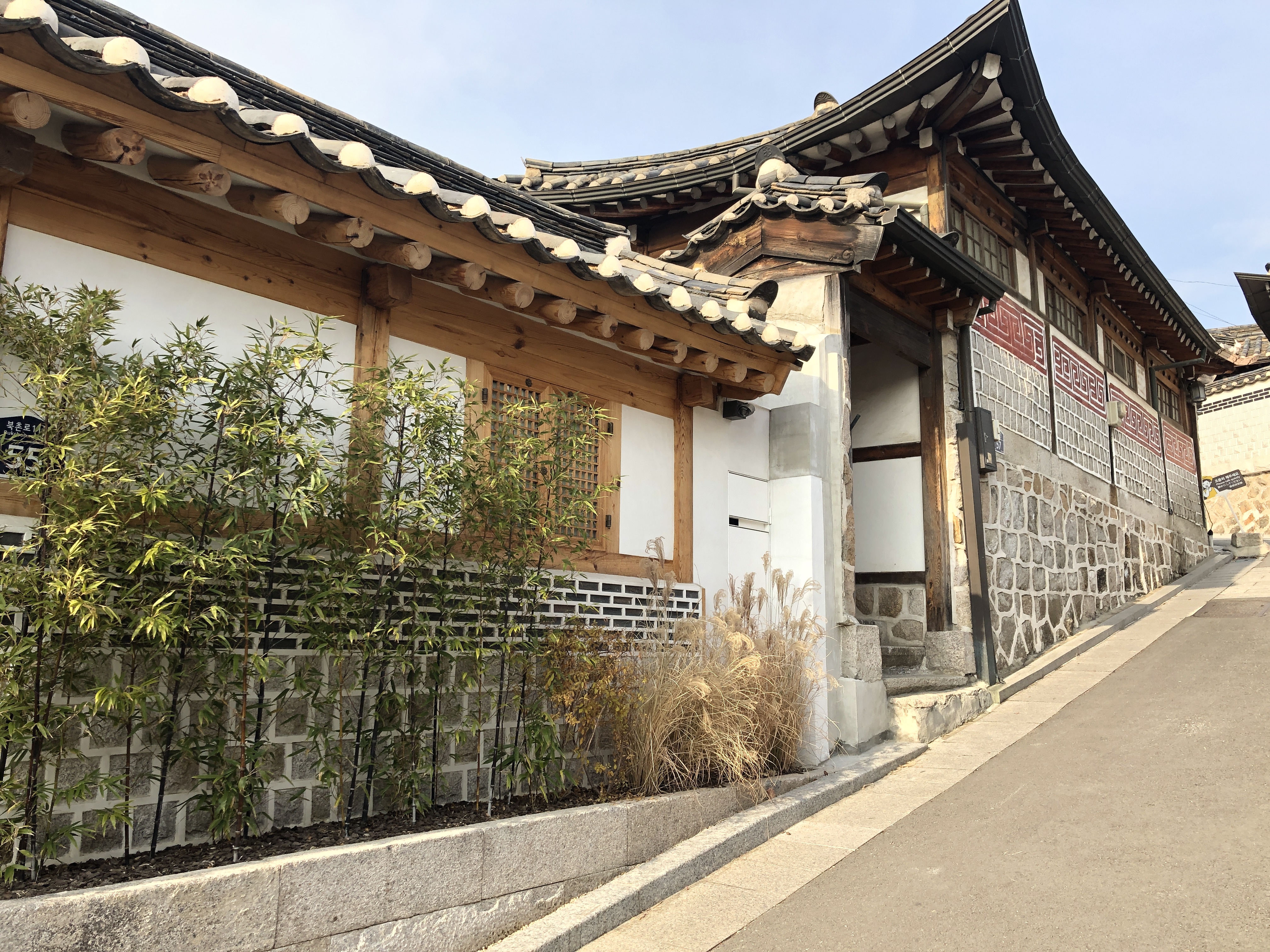
The Hanok Village was lovely and people live in the traditional-style homes that are obviously renovated and now have modern conveniences. (Interesting note: heating here is typically done through heating floors). Unfortunately, the people living here must deal with the groups of tourists that descend upon them to see their homes. Locals from the city walk around in yellow vests that read “quiet please.” Our guide said this was mostly for the Chinese tourists who tend to be quite loud. We have not seen many US, Canadian, nor European tourists.
One of the main roads with the traditional home styles
Another view
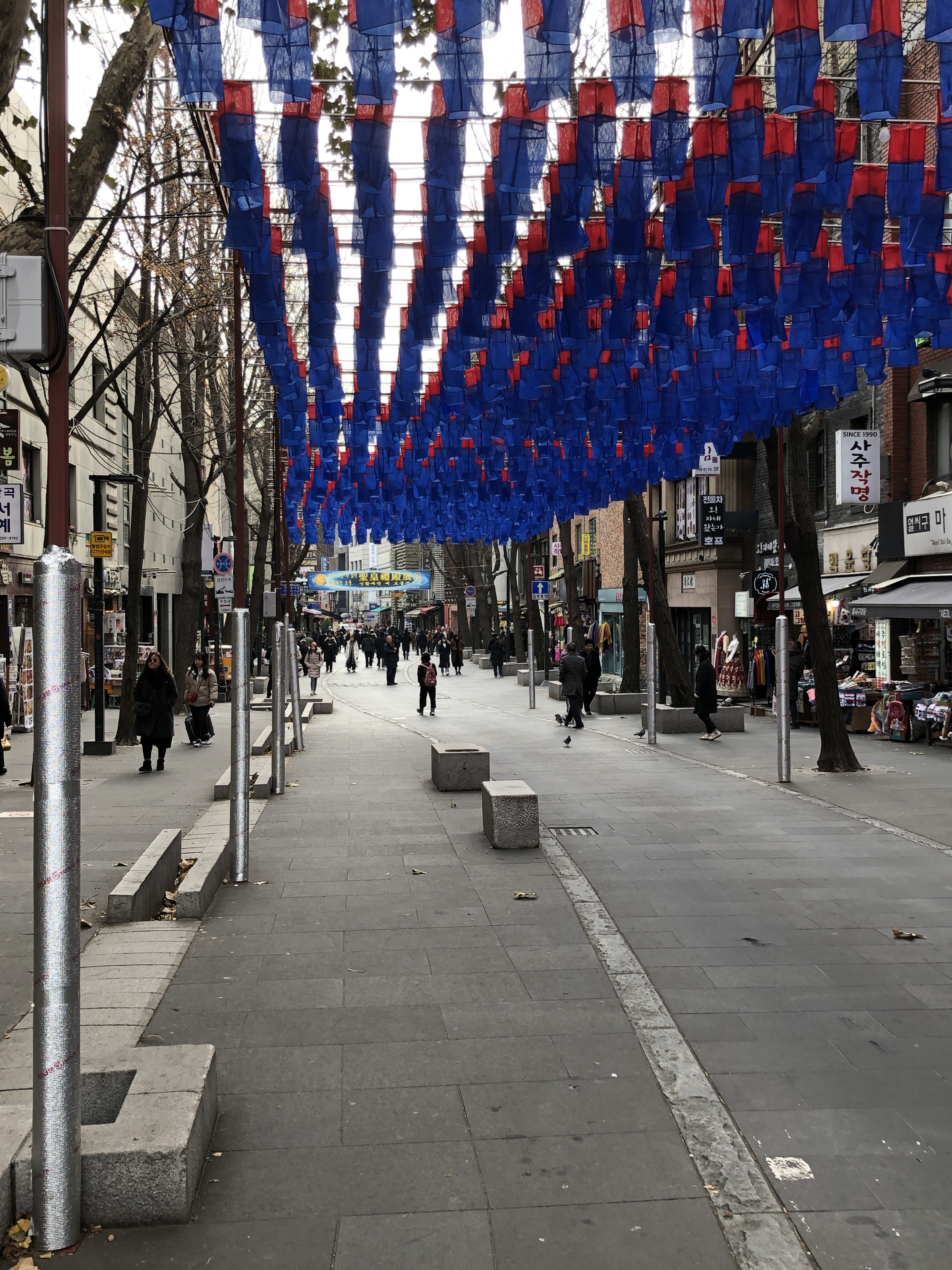
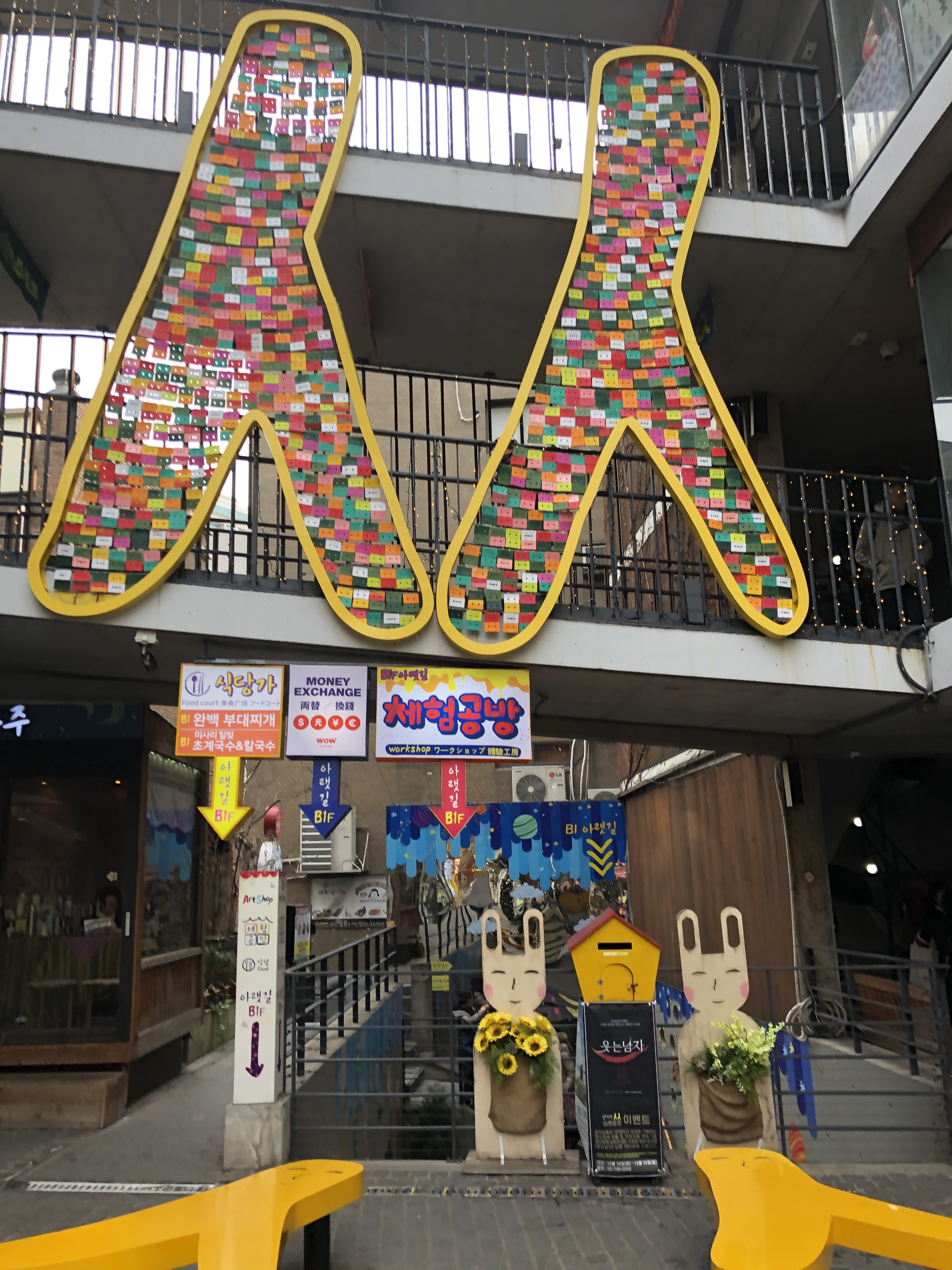
Our guide walked us through the popular shopping area of Insadong.
One of the streets decorated with lanterns
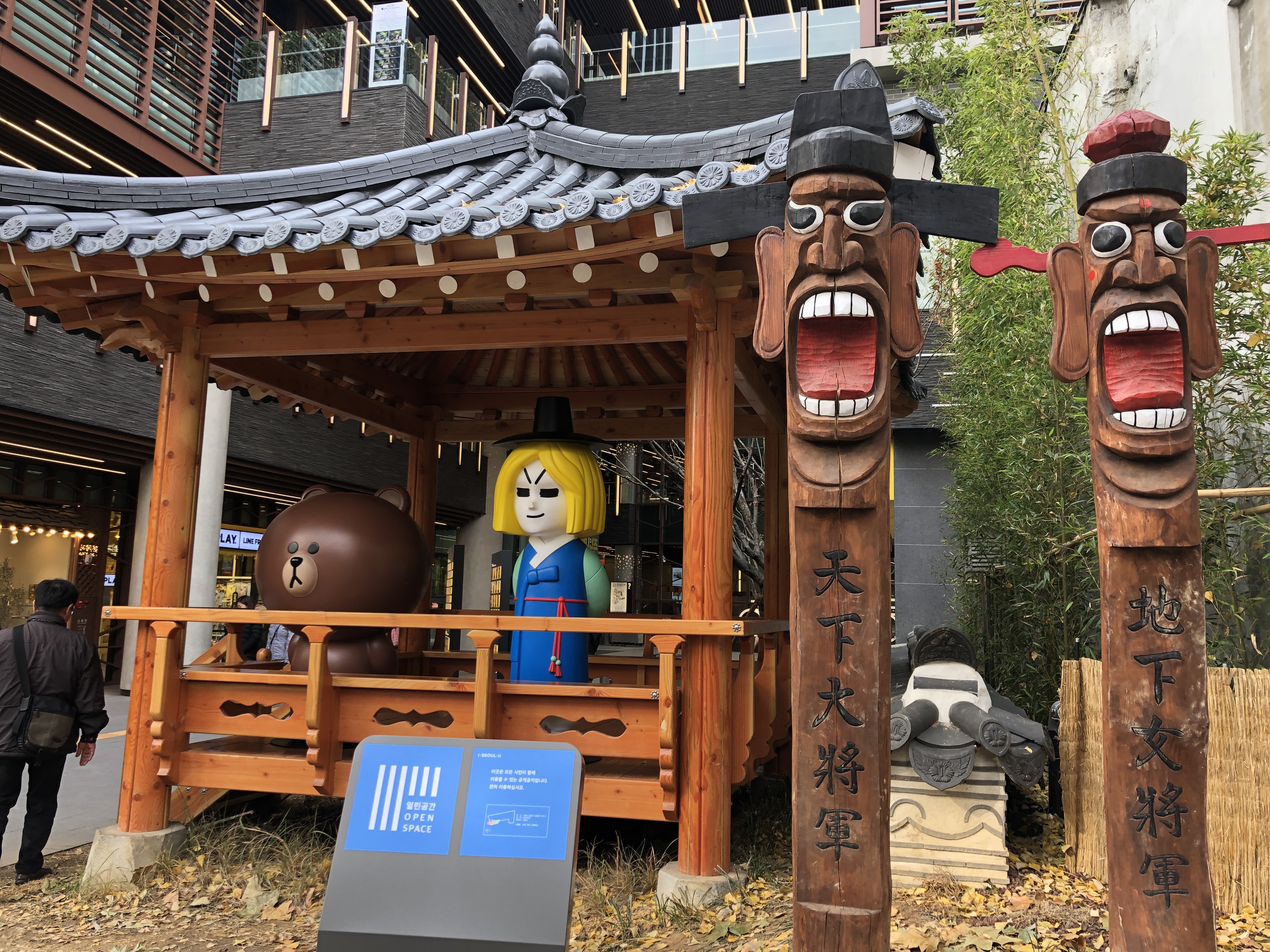
Cartoon type characters are everywhere
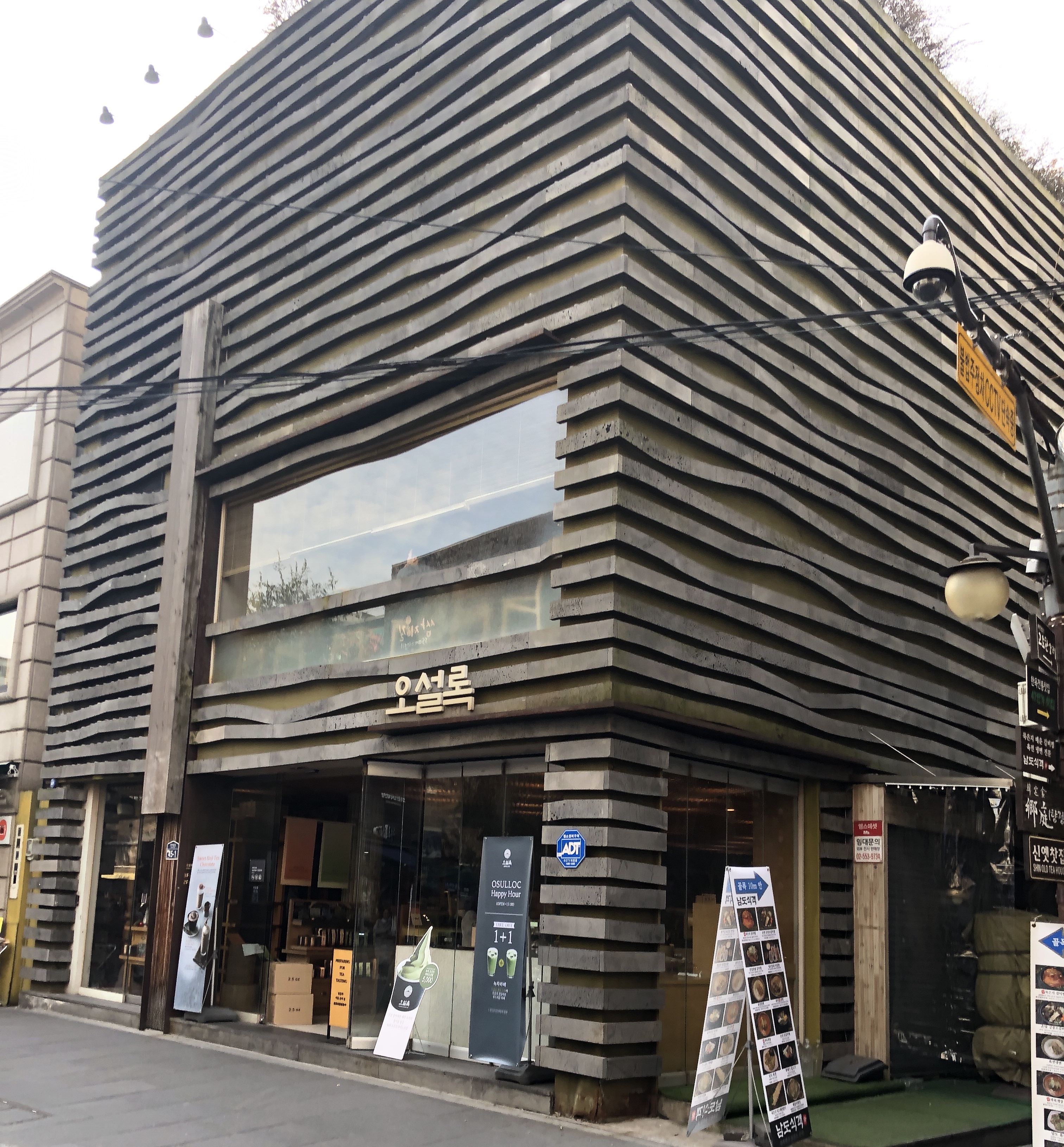
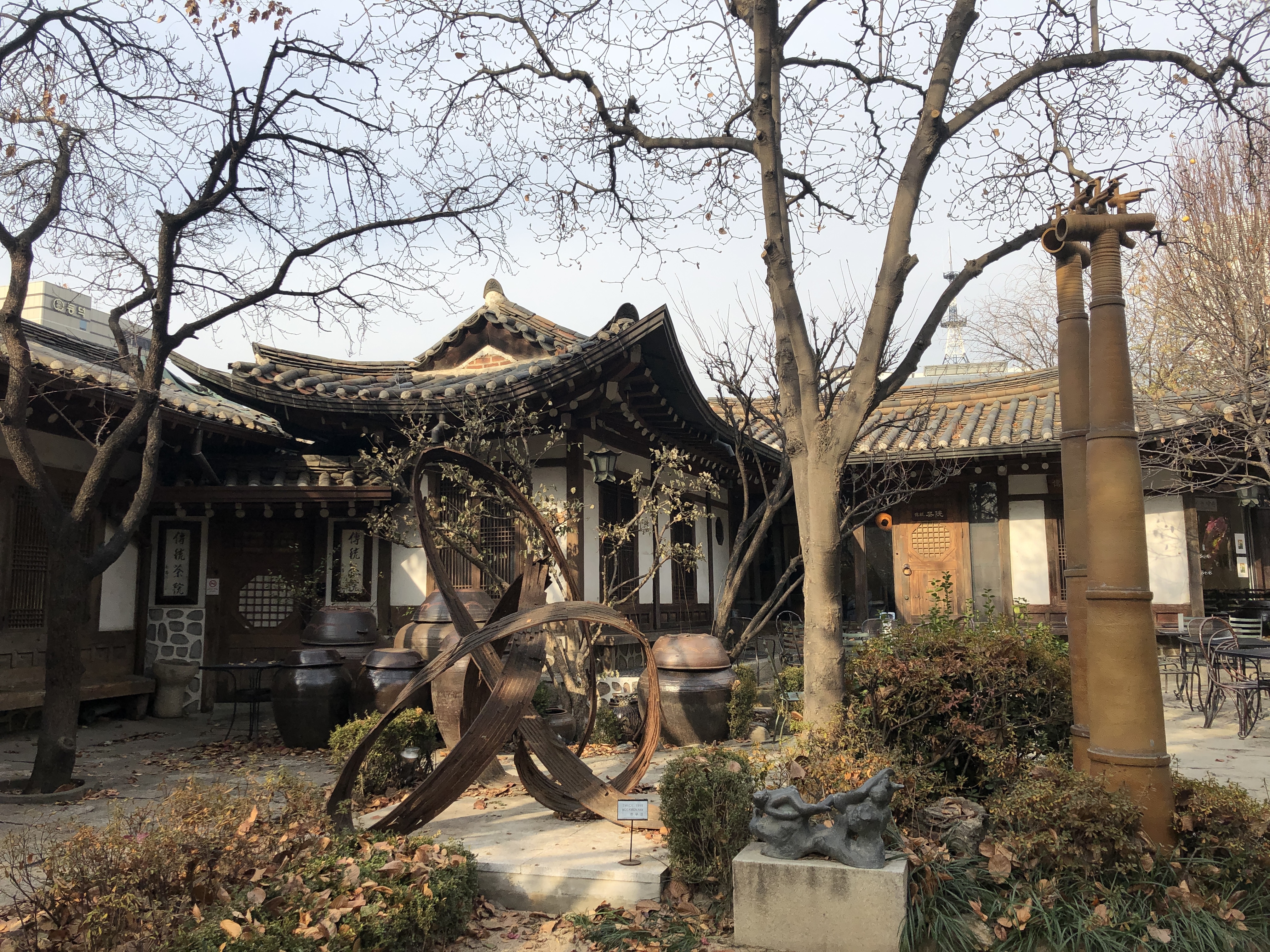
An attractive building that is a lovely tea shop
The letters are for the name of the complex. They are filled with cassette tapes.
A more traditional area of the shopping district
In the Insadong district is Jogyesa, Seoul’s most prominent Buddhist temple.
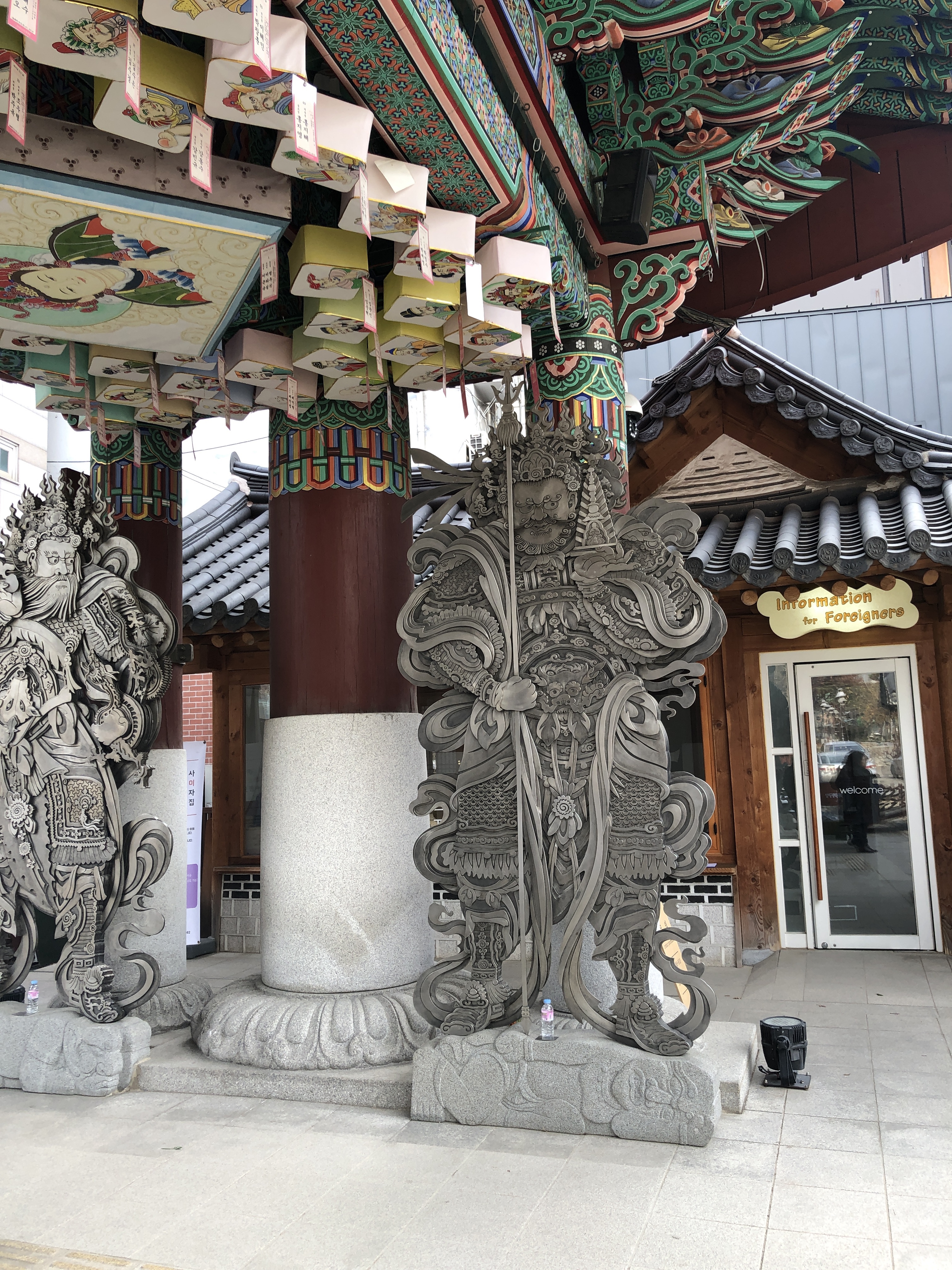
Part of the entrance to the temple grounds
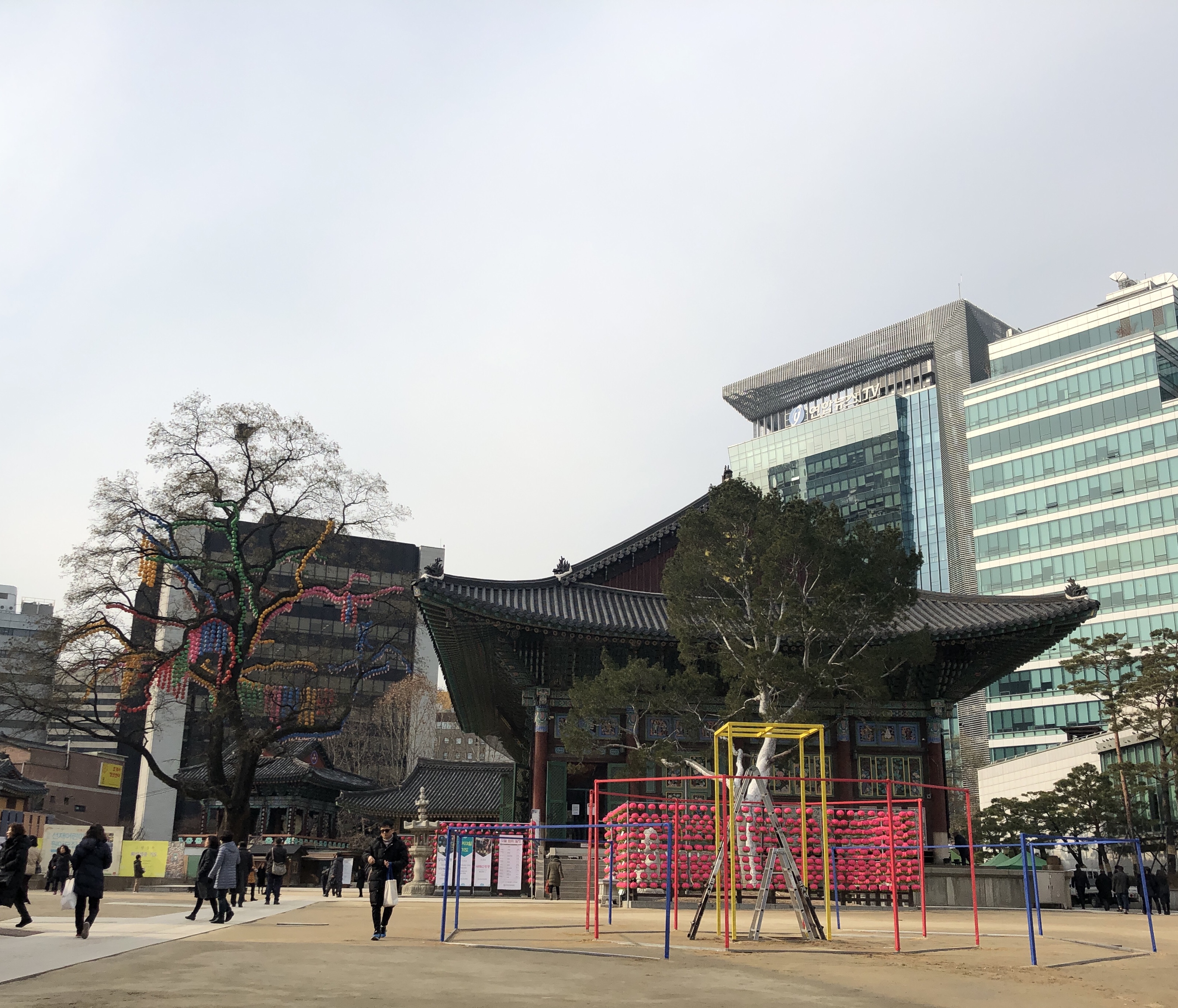
The temple and surrounding grounds
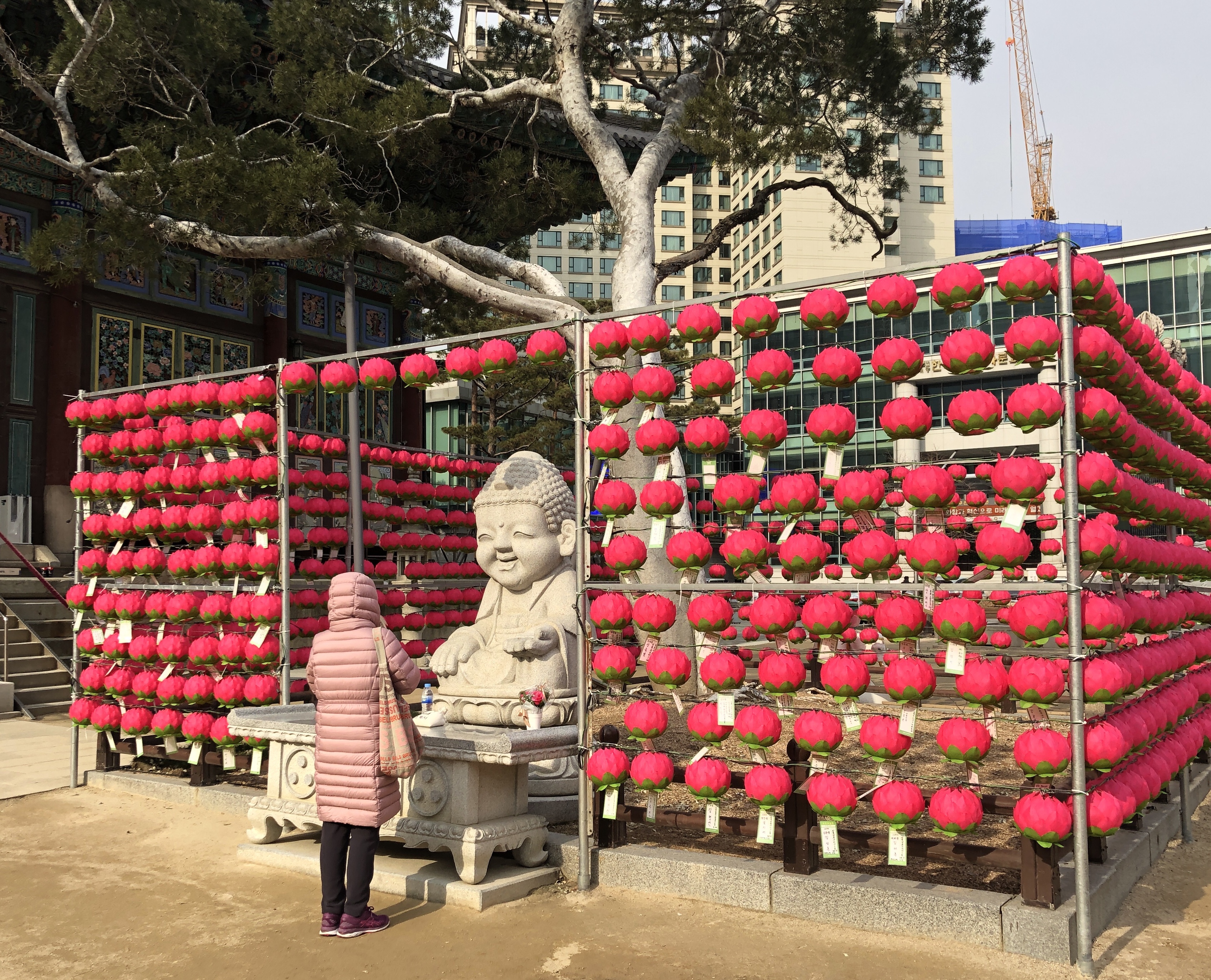
A baby Buddha surrounded by lovely lanterns
Inside the temple
A 400 year old tree with lanterns
We ended our tour with a trip to the market.
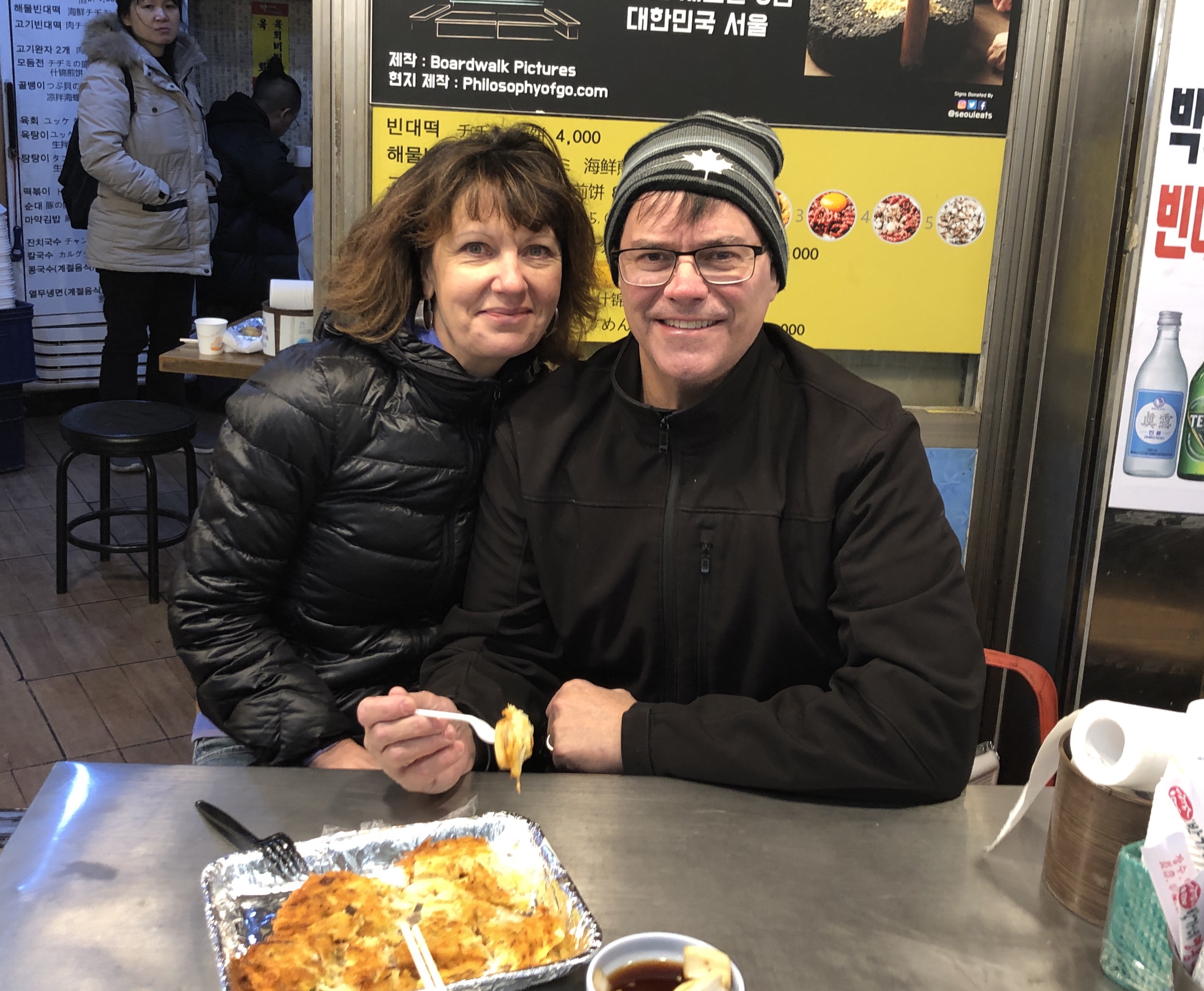
Trying a bean sprout and onion pancake. Best part, we were sitting on heated benches!
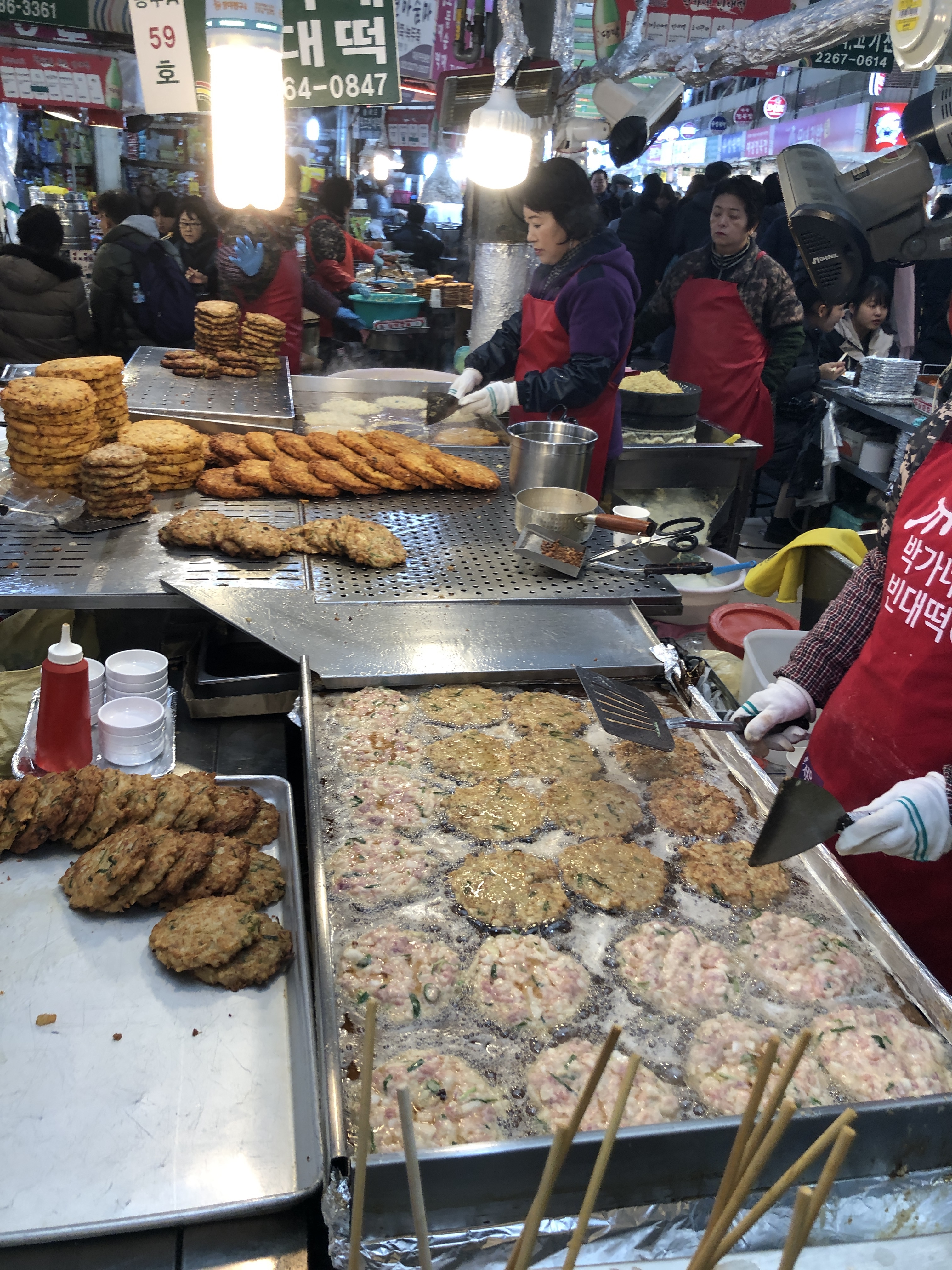
Pancakes in process, glad I didn’t see this before I ate one. This does not make me hungry.
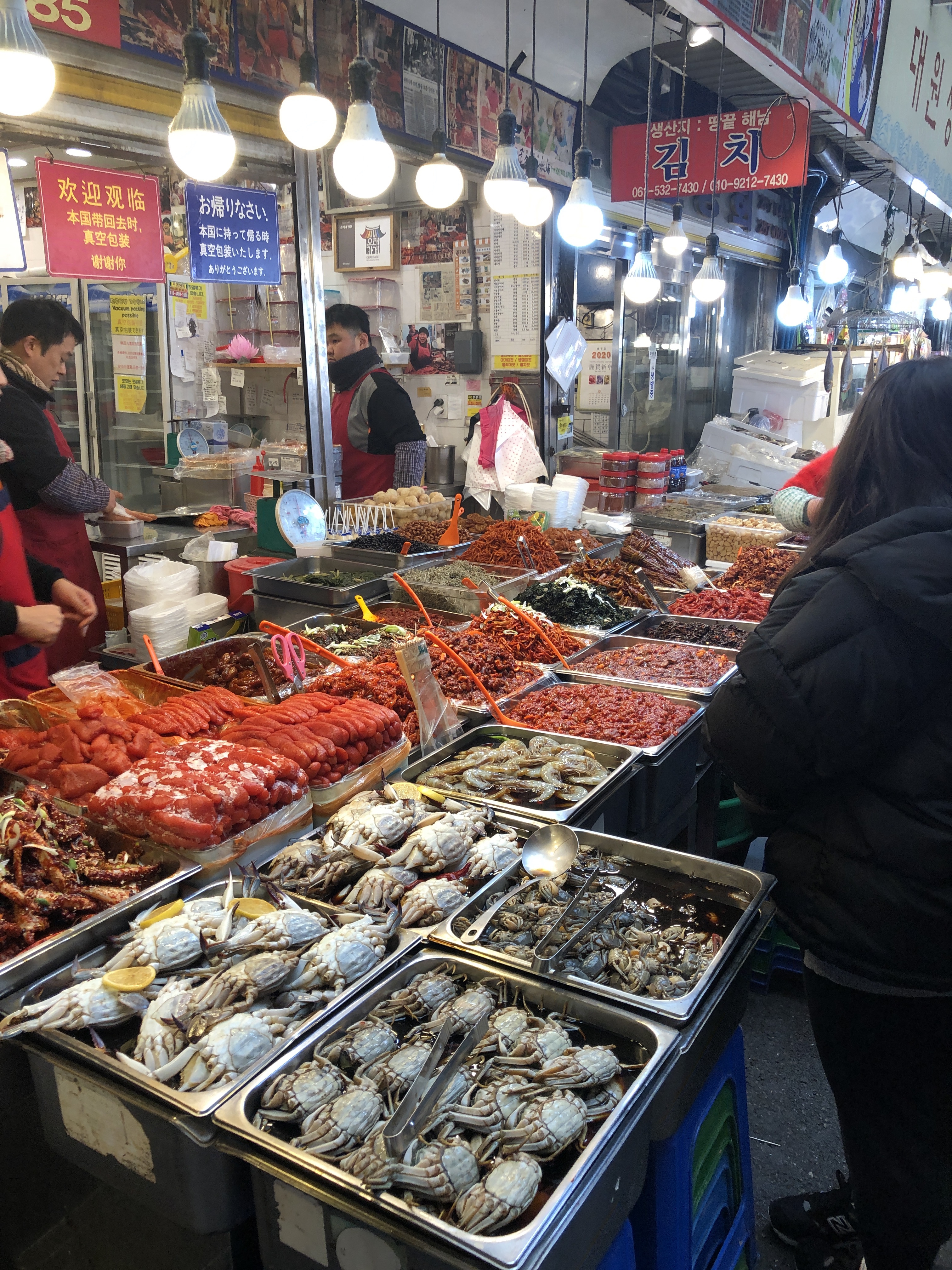
Fresh fish and kimchi
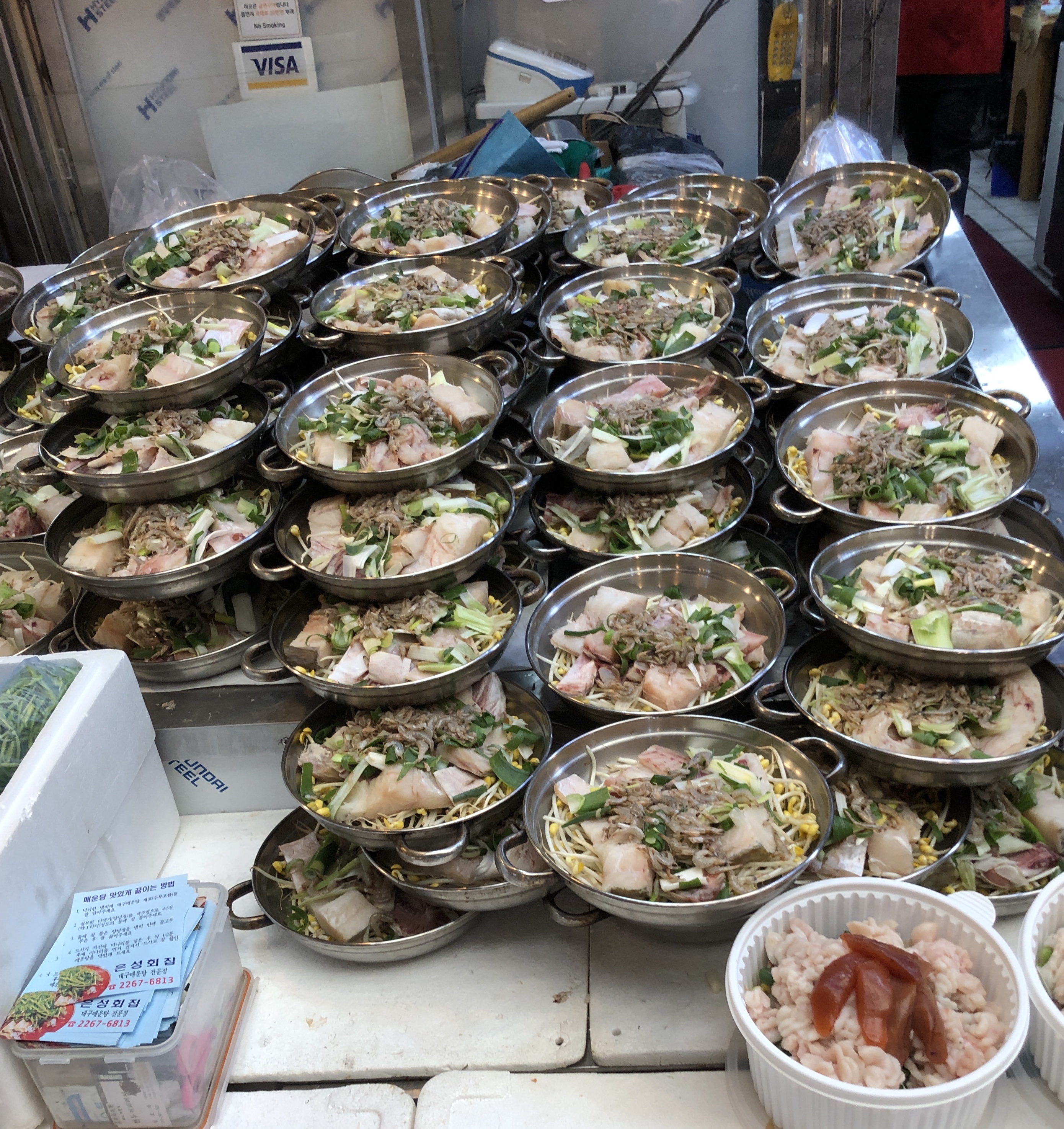
Fish stew ready for hot broth
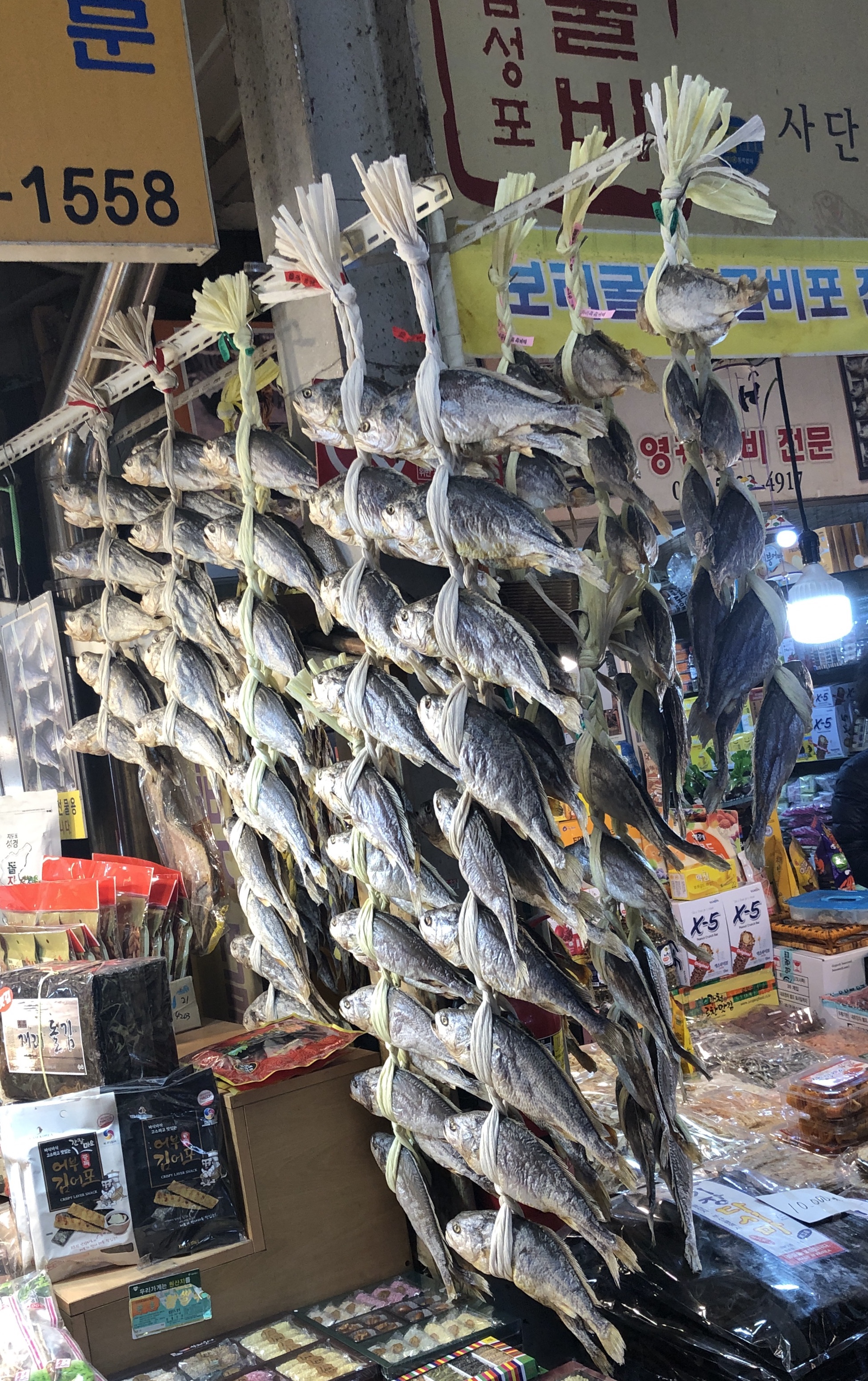
Drying whole fish
Stay tuned for scenes from our post tour outing on Friday.








 Peckish Travels